

Submitted:
04 August 2023
Posted:
07 August 2023
You are already at the latest version
Abstract
Producing cherry tomatoes became interesting to know watering volume and growing design on growth, yield, and quality of cherry tomatoes. The research aimed to intend the best treatment for each treatment of watering volume and Growing design on the productivity and quality of cherry tomato cultivar Ruby. The study is an experimental exploration using RCBD factorial. The treatment factors include: Growing Design (greenhouse, Rain shelter, Screen house) and Watering Volume (100% Etc, 75% ETc, 50% ETc). The result showed that root dry weight and root-shoot ratio were found higher in the screen house design, while fruit firmness was higher in the rain shelter design. Considering the effect of watering volume, higher fruit diameter, heavier fruit, fruits per plant, ultimate fruit & biological yield per plant, higher root & shoot biomass, root-shoot ratio, leaf chlorophyll content, greater fruit skin firmness and elasticity was noted in the 100% ETc treatment. In contrast, the growth rate was higher in 50% ETc treatment. Cultivating cherry tomatoes in a greenhouse using a watering volume of 100% ETc under the results is recommended. These conditions have led to better growth, higher fruit yield, and improved fruit quality, making them favorable options for successful cherry tomato production.
Keywords:
growth and yield
; growing design
; quality
; watering volume
1. Introduction
The cherry tomato is considered a likely ancestor of the cultivated tomato based on its widespread occurrence in Central America and the occurrence of a shorter length in flowers (Kittas et al., 2012; Lone et al., 2021). It originated in the Andes region, including Ecuador and Peru in South America, and spread worldwide after Spain’s settlement of the Americas. It has gained popularity as a cash crop in several Asian countries. However, India and Kashmir are still new growing regions where production and productivity are yet to be documented [3]. Tomatoes are one of the most essential basic vegetables grown worldwide. He produced 18.73 million tons of tomatoes in India, representing 10.44% of the world’s production in 2016. Tomatoes are rich in essential bioactive principles and attributes that benefit them and become vital members of the so-called “functional food” group [4]. The cherry tomato is one of the world’s major vegetable crops and an excellent nutritional source. It is rich in vitamin C and other phosphorus, iron, and calcium minerals. Consumer demand and market-driven competition ensure a high standard of nutritional value for cherry tomatoes [5]. It is a warm-season crop and usually has higher dry matter and soluble solids contents than traditional fresh tomato varieties. Acid and malic contribute most to the sweetness, sourness, and overall flavor intensity. [6]. It is a perennial in its natural habitat but often grows annually in temperate climates. Plant growth is typically indeterminate and can range up to 3 meters in height [7], [8].
Drought is one of the most influential and proven means of food preservation. Reducing the water movements in food materials by eradicating moisture inactivates or prevents the growth and proliferation of potentially pathogenic microorganisms, reduces enzymatic activity, and minimizes many adverse moisture-related reactions be kept at the limit. [9]. Although drying is effective in prolonging the shelf lifespan of produce, conventional drying inevitably leads to the loss of organoleptic and nutritional qualities due to undesired changes in structure and biochemical properties [10]. The lack of public information about cherry tomatoes, the small number of producers, and the lower productivity in Indonesia lead to the higher price of cherry tomatoes. Now a day, cherry tomatoes are typical in recent marketplaces but are still unusual in traditional markets [11]. Therefore, need to increase and expand production. Drought causes plants to lack water. Drought is a disorder in which soil water content is minimized for crop production growth. Drought is a term that describes whether plants are experiencing water shortages from their environment. Drought control might be produced by water deficit in the plant root zone [12].
Water volume reduces the oxygen level in the soil and creates environments that are very harmful to plant development [13]. Lack of oxygen adversely affects aerobic respiration, which causes a reduction in plant growth by disturbing the uptake of nutrients, hormonal balance, photosynthesis, and growth is stopped and thus reduces yield [14]. Flooding also induces stomatal closure, limiting the availability of CO2 for photosynthetic carbon metabolism and consequently encouraging oxidative stress through the accumulation of photosynthetic free radicals. Programmed cell death is also associated with waterlogging, which leads to airflow tissue formation and ethylene production. Flooding also induces changes in developmental programs through adaptive mechanisms such as regulation of gene expression and evolution of random numbers [15,16,17] modulation of ion uptake to mitigate flood stress [13].
Tomatoes planted in the field are frequently subjected to unfavorable environmental circumstances, including salt and drought, and tomato trees may become swamped by excessive rainfall from storms and extreme rains. 16% of tomato-producing areas in India are vulnerable to flooding and deforestation (Sun et al., 2022). In the coming years, it is anticipated that adverse environmental circumstances, such as waterlogging stress, will impact the production of crops like tomatoes. Therefore, a greater understanding of the numerous physiological, biochemical, and molecular mechanisms occurring in tomatoes during waterlogging stress is required to create management strategies to ensure plant survival and preserve yield.
Effective management of environmental control systems, such as evaporative cooling and shade, can stop the development of physiological stresses that impact production quality and final yield in stressful conditions. Numerous studies have demonstrated that modifying the microclimate in greenhouses to lower transpiration enhances plants’ physiological resiliency to stressful situations and ameliorates unfavorable external climatic conditions [19].
The Vos viewer bibliometric analysis of this research position is following:
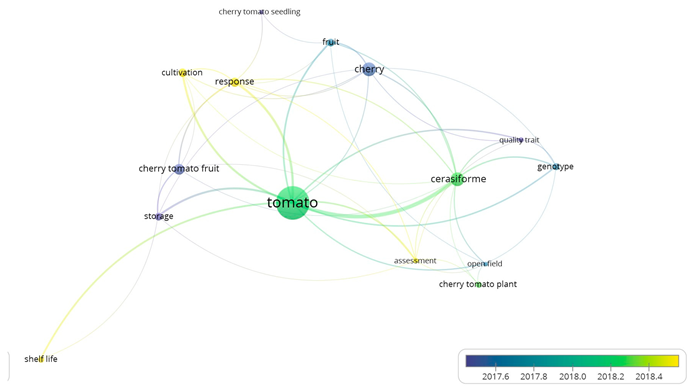
To visualize previous research related to this topic using VOSviewer with following keywords (Tomato, Cherry tomato, quality, cultivation, watering, growing design). The results revealed that there are significant number of researches related to cherry tomato. However, relatively few studies have examined the specific area of cherry tomato. The results of the VOSviewer analysis suggested that there is a need for further research into cherry tomato.
Cherry tomatoes are commonly grown in polyhouse conditions, but developing high-yielding, high-quality varieties suitable for outdoor cultivation has become essential to increasing the profitability of marginal outdoor growers (Chandni et al., 2020). This study’s objective was to ascertain the main effect and interaction of watering volume and Growing House on the growth and yield of Cherry tomatoes Cultivar Ruby
2. Materials and Methods
This research was conducted at the Green House and Field Laboratory of the Faculty of Agriculture, University of Padjadjaran from November 2022 – July 2023.
2.1. Sampling Procedure and Data Source & Collection
The seed of the cherry tomato cultivar Ruby was prepared on germination pot trays. The germination medium is a mixture of compost and fertile soil. The pot tray is according to the treatments of the experiment design. Pot tray germination is stored in the germination room or greenhouse of agronomy, Agricultural Faculty. Universitas Padjadjaran. Once the seed germinates three or four foliar, it is called a seedling. The seedlings are planted in a greenhouse, screen house, and open field to grow as treatments of experiment design.
Data source and collection are from primary dan secondary data. The primary data is collected from expository treatments of watering volume and Growing House factors in 3 levels and replications each. The secondary data is collected from Published books, journals, reports, and Institutions, either government or private. Texture measurement refers to the method of using a Texture Analyzer (Stable Micro Systems, Model: TA.TXT. Plus). Measurements were made at three points: the fruit’s top, middle, and bottom. The hardness value of tomatoes is calculated in units of g/force or Newtons [21].
2.2. Experiment Design
The research instruments are the Cherry tomato cultivar Ruby as the introduction plant planted in different Growing Design (GD) Greenhouse, Rain shelter, and Screen house by different Watering Volumes (WV) such as 100% ETC, 75% ETC, and 50% ETC based on Evapotranspiration and field capacity. The treatments are 9 with 3 replications = 27 treatments. Each treatment consisted 4 plants. All of plants are 108.
All treatments are replicated three times. Therefore, there are 27 treatments. The experiment design using Factorial Randomized Complete Block Design will be constructed by the mathematical linear model equation as follows:
Yijk = u + Wi + Pj + (Wi Pj) + rk + εijk
u = mean
Wi = the effect of watering volume factor
Pj = the effect of Growing House
rk = Replication
Wi Pj = the effect of the interaction of watering volume and Growing House
Once ANOVA reveals a significant effect, it will continue to find out the best treatment partially Post Hoc by Tukey Multiple range comparison test. Compared to LSD, LSD has a weakness in that it cannot test all treatment combinations (Gaspers. 2006). The Procedure of Tukey (HSD) is as follows:
- -
- Order treatments mean accordingly
- -
- The formula uses as follows
- -
- Test criteria
Compare the absolute value of two different means to distinguish the differences in the HSD score
If |µi - µj| > HSD005, means the test result is significant
If |µi - µj| < HSD005, means the test result is not significant
Parameter Measurement has been done toward Growth rate, plant height/shoot length, caulis (stem) diameter, leaf amount on the main stem, fruit water content, root-shoot ratio, root length.
Preparation, Nursery and Transplanting
Planting was done in three places: greenhouse, rain shelter, and screen house. Greenhouse measures 24 meters long, 17 meters wide, and 6 meters high. The greenhouse roof uses 200 microns of UV plastic material, while the greenhouse walls use a screen net with a density of 50 mesh. The rain shelter consists of 200 microns of UV plastic roof with a building size of 18.5 x 5 x 3.5 meters (length x width x height). As for the screen house, only the roof is covered with a screen net with a density of 50 mesh. The screen house measures 15 x 3.5 x 2.8 meters (length x width x height).
Seeding is done by preparing the seedling media, namely husk charcoal. The husk charcoal is doused with water until it feels moist. The seedbed media is put into the seed tray until it is complete. Each hole was filled with one Ruby cultivar cherry tomato seed. The planting hole is closed again with the seedling medium and watered until the media is moist. The planted seed tray is stored in the greenhouse.
Transplanting seedlings from seed trays to polybags is carried out when the seedlings are four weeks after sowing (WAS). The planting medium is saturated first. Then the seeds are planted and covered again with the media. After planting, the seedlings are watered. Polybags are arranged in double rows with a distance of 50 x 30 cm.
Watering Volume Application
Watering is made daily using a nutrient solution AB mixed with the composition Solution A consisting of potassium nitrate, calcium nitrate, and Fe. In contrast, Solution B consists of (NH4)2PO4, CuSO4, KNO3, MnSO4, ZnSO4, MgSO4, borax acid, KH2PO4, N, and Mo. A total of 2 liters each of Solution A and B is dissolved in 96 liters of water. The nutrient solution is sprinkled on the surface of the planting medium. The difference in the volume of Watering was made at the age of the plants 2 WAP. The amount of watering volume is based on plant evapotranspiration (ETc) which is calculated by the Soil Water Balance equation [22].
Etc = P+I-R-D-(Wn-1-Wn)
Information:
ETc: Evapotranspiration (mm)
P: Precipitation (mm)
I: Irrigation (volume of water given) (mm)
R: Runoff (Surface flow) (mm)
D: Drainage (Percolation) (mm)
Wn-1 : Media weight on day n-1 (g)
Wn: Weight of media on the nth day (g)
Because the experiment was carried out on polybags and watered manually, the equation can be simplified as follows:
Etc = P + I – D – (Wn-1– Wn)
At each location, the plant samples were used to measure total evapotranspiration (ETc). Each plant sample is equipped with a water storage container under the polybag to calculate the amount of percolation (D) resulting from Watering. Rainfall (P) is calculated by measuring the volume of water accommodated in the water storage container provided after rain. Then rainfall is measured by the formula:
H = VL x 1000
Information:
H: Rainfall height (mm)
V: Volume of water accommodated (ml)
L: Area of rainwater catchment area (mm2)
The weight of the planting medium (W) is calculated by weighing the weight of the planting medium and the plants.
3. Results
3.1. Observation of Weather within Research
The data analysis found that the growing design significantly influenced the growth rate of cherry tomatoes, while the watering volume did not have a significant effect, Figure 1. However, the interaction between the growing design and watering volume was significant for the cherry tomato’s growth rate, Figure 2. Among the different growing designs, the greenhouse recorded the highest growth rate of 61.39 g/week/plant, indicating that this environment was particularly conducive to the growth of cherry tomatoes. The rain shelter had a slightly lower growth rate of 53.39 g/week/plant, followed by the screen house, which showed a minimum growth rate of 50.94 g/week/plant
3.2. Grow Rate
The data analysis revealed that the growing design and watering volume significantly affected the fruit diameter of cherry tomatoes, Figure 3. In contrast, the interaction between growing design and watering volume did not significantly affect fruit diameter. The greenhouse exhibited the highest fruit diameter among the different growing designs, measuring 22.156 mm, followed by the rain shelter, which had a slightly lower fruit diameter of 21.532 mm. The screen house recorded a minimum fruit diameter of 20.430 mm. Regarding watering volume, the application of 100% ETC (Evapotranspiration Coefficient) resulted in a higher fruit diameter of 22.262 mm, indicating that providing the full watering requirement significantly impacted cherry tomato fruit diameter. The watering volume of 75% ETC produced a slightly lower fruit diameter of 21.351 mm. On the other hand, the watering volume of 50% ETC resulted in a lower fruit diameter of 20.504 mm
3.3. Fruit Diameter (mm)
Parameter Measurement has been done toward Growth rate, plant height/shoot length, caulis (stem) diameter, leaf amount on the main stem, fruit water content, root-shoot ratio, root length.
The data analysis indicated that both the growing design, watering volume, and their interactions significantly affect the single fruit weight of cherry tomatoes, Figure 4 and Figure 5. Among the different growing designs, the greenhouse exhibited the highest single-fruit weight, measuring 6.4 grams. It was followed by the rain shelter, which had a slightly lower single fruit weight of 6.1 grams. The screen house recorded the minimum single fruit weight of 5.4 grams. Regarding the watering volume, applying 100% ETC
3.4. Single Fruit Weight
(Evapotranspiration Coefficient) resulted in the maximum single fruit weight of 6.4 grams. The watering volume of 75% ETC produced a slightly lower single fruit weight of 5.9 grams. The watering volume of 50% ETC resulted in a lower single fruit weight of 5.4667 grams. These findings highlight the significance of both the growing design and the watering volume in determining the single fruit weight of cherry tomatoes. The greenhouse design, combined with a watering volume that meets or exceeds the ETC, is the most favorable combination for achieving a higher single-fruit weight.
3.5. Fruits per Plant
The data analysis reveals that the growing design and watering volume significantly influenced the number of fruits per plant in cherry tomatoes, Figure 6. In contrast, the interaction between growing design and watering volume did not show a significant effect. Among the different growing designs, the greenhouse exhibited the highest number of fruits per plant, averaging 50.05. This value was statistically similar to the number of fruits per plant recorded in the rain shelter, which was 49.41. On the other hand, the screen house had fewer fruits per plant, with an average of 47.08. Regarding the watering volume, applying 100% ETC (Evapotranspiration Coefficient) resulted in a higher number of fruits per plant, with an average of 51.7. The watering volume of 75% ETC followed closely behind with an average of 49.86 fruits per plant. However, when the watering volume was reduced to 50% ETC, the number of fruits per plant decreased to an average of 44.94.
3.6. Fruit Yield per Plant
The data analysis highlights the significant impact of growing design and watering volume on the fruit yield per plant of cherry tomatoes, Figure 7. The greenhouse design emerged as the most productive, with an average fruit yield per plant of 335.2. Following closely behind, the rain shelter demonstrated a slightly lower fruit yield per plant, averaging 303. In contrast, the screen house recorded the lowest fruit yield per plant, averaging 281.7. Regarding watering volume, providing 100% ETC (Evapotranspiration Coefficient) resulted in a higher fruit yield per plant, averaging 324.3. Similarly, a watering volume of 75% ETC exhibited a favorable impact, with an average fruit yield per plant of 308.5. However, a reduced watering volume of 50% ETC resulted in a lower fruit yield per plant, averaging 287.
3.7. Root Dry Weight
The study’s findings demonstrated that the amount of watering volume significantly impacted the root dry weight of cherry tomatoes, Figure 8. The highest root dry weight of 23.69 grams was observed when the plants received 100% of the estimated total water requirement (ETC), followed by 75% ETC, while the lowest root dry weight of 19.47 grams was recorded when the plants were subjected to 50% ETC. On the other hand, the specific growing design used in the experiment did not significantly affect the cherry tomato’s root dry weight. Furthermore, the interaction between these factors was also insignificant when considering the combined influence of watering volume and growing design
3.8. Shoot Dry Weight
The study’s showed that the watering volume, growing strategy, and their interaction significantly affected the dry weight of cherry tomato shoots, Figure 9 and Figure 10. When cherry tomatoes received 100% of the estimated total water requirement (ETC), they exhibited the highest shoot dry weight of 128.31 grams, statistically similar to the shoot dry weight of 126.97 grams observed at 75% ETC. However, the lowest shoot dry weight of 122.47 grams was recorded when the plants received 50% ETC. Regarding growing design, cherry tomatoes grown in a greenhouse displayed the maximum shoot dry weight of 131.11 grams, followed by 123.86 grams in a rain shelter, statistically similar to the shoot dry weight of 122.78 grams observed in a screen house.
3.9. Root-Shoot Ratio
The data analysis reveals that the growing design and watering volume significantly influenced the root-shoot ratio of cherry tomatoes, Figure 11. In contrast, the interaction between growing design and watering volume did not show a significant effect. The screen house demonstrated the highest root-shoot ratio, with an average of 0.175, statistically similar to the ratio observed in the rain shelter at 0.173. In contrast, the greenhouse had the lowest root-shoot ratio, averaging 0.162. Regarding watering volume, applying 100% ETC (Evapotranspiration Coefficient) resulted in a higher root-shoot ratio of 0.185, indicating a relatively greater proportion of root mass to shoot mass. The watering volume of 75% ETC exhibited a slightly lower root-shoot ratio, with an average of 0.165. Conversely, by reducing the watering volume to 50%, ETC decreased the root-shoot ratio to an average of 0.160.
3.10. Biological Yield per Plant
The data analysis reveals that the growing design and watering volume significantly influenced cherry tomatoes’ biological yield per plant, Figure 12. In contrast, the interaction between growing design and watering volume did not show a significant effect. Among the different growing designs, the greenhouse exhibited the highest biological yield per plant, averaging 992. It was followed by the rain shelter, which had a slightly lower biological yield per plant of 937. The screen house showed a biological yield per plant statistically similar to the rain shelter’s, with an average of 905. Regarding the watering volume, applying 100% ETC (Evapotranspiration Coefficient) resulted in a higher biological yield per plant, with an average of 963. The watering volume of 75% ETC showed a similar biological yield per plant, averaging 960. However, when the watering volume was reduced to 50% ETC, the biological yield per plant decreased to an average of 911.
3.11. hlorophyl Content
The data analysis reveals that both the growing design and watering volume significantly influenced the chlorophyll content of cherry tomatoes, Figure 13. In contrast, the interaction between the growing design and watering volume did not show a significant effect. The greenhouse exhibited the highest chlorophyll content, with an average of 42.74, followed by the rain shelter, with a slightly lower average of 41.81. Conversely, the screen house had the lowest chlorophyll content, measuring an average of 40.97. In terms of watering volume, applying 100% ETC resulted in higher chlorophyll content with an average of 43.50, while 75% ETC showed a slightly lower average of 41.822. However, by reducing the watering volume to 50%, ETC decreased the chlorophyll content to an average of 40.19. These findings emphasize the importance of both the growing design and appropriate watering volume in influencing the chlorophyll content of cherry tomatoes. The greenhouse design, combined with adequate watering according to or exceeding the ETC, is the most favorable combination for achieving higher chlorophyll content.
3.12. Fruit Tecture (Firmness and Elsaticity)
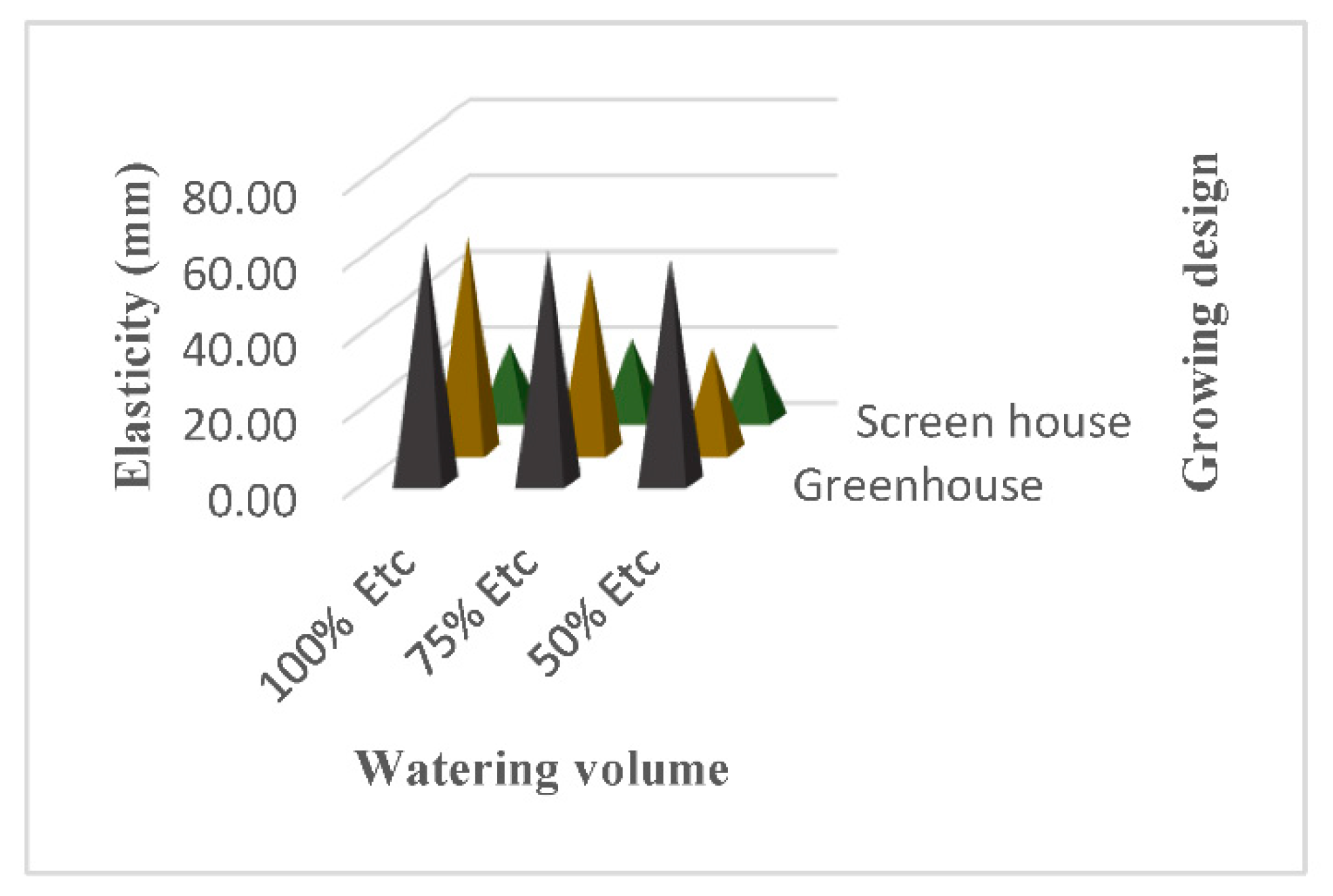
Concerning fruit firmness, the growing design significantly affected fruit firmness, Figure 14. The greenhouse exhibited the highest fruit firmness of 5.64 N, followed by the screen house with 4.93 N, statistically similar to the rain shelter with a strength of 4.82 N. Like the other samples, watering volume and the interaction between growing design and watering volume did not significantly affect fruit firmness. The greenhouse exhibits the highest elasticity of 36.73 mm, followed by 19.56 mm in the screen house, statistically similar to the elasticity of 17.76 mm in the rain shelter, Figure 15. Regarding watering volume, the maximum elasticity of 33.4 mm is observed with 100% ETC, followed by 21.97 mm with 75% ETC, statistically similar to the elasticity of 18.60 mm with 50% ETC.
4. Discussion
4.1. Growth Rate
As tomatoes have evolved strategies for water conservation during dry spells and effective water use during wet periods, cherry tomatoes are noted for their ability to handle changes in the water supply to some extent. In contrast [23] [24] resulted in a significant effect of watering on cherry tomato growth. Additionally, given the experimental conditions, the influence of watering amount may have been overshadowed by other environmental factors like soil composition, light exposure, and temperature variations that may have had a more significant impact on cherry tomato growth [25], [26]. The flexibility of cherry tomato plants may have prevented its direct effect on growth rate from being statistically significant in the study, even though adequate watering is necessary for optimal growth [27], [28].
4.2. Fruit Diameter
The spacing, trellising, and support structures that made up the growing design determined how cherry tomato plants develop and spread. Better availability of sunlight, enhanced air circulation, and effective fertilizer distribution provided by an optimized growing system encourage healthier and more robust plant growth, resulting in greater fruit diameter [29]. The amount of watering directly affects how much water and nutrients are available to the cherry tomato plants [30]. Adequate watering ensures a steady supply of vital plant nutrients, promoting photosynthesis and nutrient uptake. Optimal soil moisture levels also shield plants from wilting driven by stress and allow them to focus more energy on fruit development, which leads to larger leaf area and fruit diameters [1] even the similar findings reported by [31] for cherry tomato.
4.3. Single Fruit Weight
Different levels of environmental control are provided by growing systems, controlling temperature, humidity, and light exposure [32]. Every technique can produce different growing conditions, affecting the plant’s metabolism and, eventually, the fruit’s size and weight [33], [34]. The rise in temperature in polyhouse was due to the greenhouse effect [20], [35]. Additionally, the watering volume significantly impacts nutrient uptake and transport, as well as plant turgor pressure and cell expansion, which immediately affect fruit weight [36]. Because several growing strategies may maximize water distribution while others may inhibit it, the interaction between growing systems and watering volume can accentuate or decrease each element’s impacts, influencing general plant health and fruit development [37].
4.4. Fruits per Plant
A consistent moisture supply, necessary for ideal growth and fruit development, is ensured by adequate watering [16]. Different growing strategies can improve space usage, light exposure, and air circulation, which results in healthier plants and more fruit sets. Additionally, vigilant water management, in particular growth patterns, aids in avoiding overwatering or drought stress, which can negatively impact fruit yield [37]. Irrigation effect on processing tomatoes is complex; first, it increases the number of fruits per plant through the number of flowers and the percentage of fruit set and then enlarges the size of fruits [38], [39]. The number of fruits and fruit size of tomatoes are affected by water stress during different growing stages [40]. The improved yield as irrigation frequency increased in our experiment was mainly due to the increased fruit number[41].
4.5. Fruits Yield per Plant
Different growing methods affect the availability of nutrients, the health of the roots, airflow, and light exposure, all of which support healthier plants and greater fruit output [42]. Maintaining root health, controlling stress, and fostering optimum pollination and flowering all depend on the right amount of irrigation [43], [44]. With efficient space usage in various designs, cherry tomato plants can obtain sunshine and devote more energy to fruit growth [45]. Greenhouses produced vigorous growth and higher yield of better quality compared with field production, which suggested the superiority of greenhouse cultivation over traditional open-field production [46], [47]. Valenzano et al. (2008) resulted in more fruits in the greenhouse method
4.6. Biological Yield per Plant
Growing environments like greenhouses provide controlled conditions, optimizing temperature, humidity, and excessive rainfall, preventing waterlogging, and potential diseases, protecting from pests while allowing adequate airflow and protecting from adverse weather, enhancing overall plant health and productivity [25], [49], [50]. Varying watering volumes influence plant hydration, affecting nutrient uptake and photosynthesis [51]. Correctly matching growing designs with appropriate watering levels can create optimal conditions for cherry tomato plants, resulting in increased biological yield per plant [23]. Growing tomato plants under shade nets eliminated “sun scald” compared to plants grown without shading, enhancing biomass productivity [1]. Regular irrigation in all growth stages resulted in optimal performance [52]. Because of the high water requirement, the tomato plant is sensitive to deficit irrigation so any stress can reduce the plant growth and yield [53]
4.7. Root Dry Weight
Growing environments that are well thought out can offer the perfect conditions for root growth, resulting in longer and healthier roots. The choice of support structures and growing strategies strongly impacts the space for growing roots and the availability of nutrients. Inadequate watering prevents nutrient intake and limits roots’ growth [54]. In contrast, over-watering can cause soggy soil, which restricts the roots’ access to oxygen and damages their roots [55]. The roots can grow deeper into the ground to acquire more nutrients and water by finding the ideal balance between watering quantities [56]. By expanding their root architecture, plants strive to obtain water from deeper soil layers when there is a water shortage [57]. Also, roots are the primary sensors of water availability, regulating how they function and growth traits such as root length, spread, and the quantity and length of lateral roots [58], [59].
4.8. Shoot Dry Weight
Adequate watering is essential to deliver nutrients and hydration to promote shoot growth. Inadequate watering might reduce shoot growth, whereas proper watering promotes healthy shoot elongation [26], [33]. A well-designed growing house can assure adequate access to sunshine and space for shoot extension, boosting cherry tomato plants to rise higher and more potent [60]. These elements interact optimally when effectively balanced, providing the perfect conditions for cherry tomato plants to thrive [61]. Each cherry tomato plant gets appropriate access to sunlight utilizing an efficient growing strategy, providing optimum photosynthesis and energy production [62]. This sufficient energy fosters the formation of robust, extended stems and aggressive shoot growth [58]. Due to the limited soil moisture during a drought, plants cannot absorb as many nutrients, which results in shorter stem lengths [63]
4.9. Root Shoot Ratio
The balance between the plant’s above-ground shoot system and its root system is called the root-shoot ratio. A higher root-shoot ratio indicates a more robust allocation of resources and energy toward root growth. In contrast, a lower root-shoot ratio prefers shoot development. A reduced root-shoot ratio results from the plant allocating more resources to the above-ground sections due to water stress brought on by inadequate irrigation [44]. In contrast, regular, appropriate watering promotes healthy root growth and increases the root-shoot ratio because the roots can absorb more water and nutrients [36]. The root-shoot ratio of cherry tomato plants is directly impacted by growing design, which also significantly influences the spatial distribution of resources available to those plants [1]. An ideal growing arrangement can offer sufficient area for root growth, enabling the roots to explore more soil and access a larger water supply and nutrients. It encourages strong root growth, which raises the root-shoot ratio [25], [64].
4.10. Chlorophyl Content
Different growing techniques could affect the availability of nutrients and the growth of the roots, directly affecting chlorophyll synthesis [35], [45]. Water is a crucial component of photosynthesis [1], [29], [65]. Therefore, varying watering amounts impactd the overall water stress that the plants feel, which causes changes in chlorophyll production [66]. Lower chlorophyll content and lower photosynthetic activity can result from insufficient watering (Hassan et al., 2015). On the other hand, excessive watering might restrict the amount of oxygen available to the roots, preventing the creation of chlorophyll [68]. Additionally, chlorophyll production could be impacted by the quality of the water, particularly its pH and nutritional content [69].
4.11. Fruit Texteure (Firmness & Elasticity)
Growing designs provide controlled environments with regulated temperature, humidity, and light, promoting optimal growth conditions for cherry tomato plants [70]. This controlled environment can lead to fruits with stronger cell structures, resulting in higher firmness. This protection enhances the overall health of the plants, leading to more elastic and resilient cherry tomato fruits [21], [71]. The water supplied to cherry tomato plants directly influences their hydration and nutrient uptake [44]. Adequate watering ensures sufficient water availability, leading to well-hydrated and turgid plant cells. Proper hydration supports the development of strong and elastic fruit tissues [72]. Conversely, overwatering can lead to waterlogged roots and reduced oxygen availability, negatively impacting fruit quality[73]. By carefully managing watering volume, growers can enhance the strength and elasticity of cherry tomato fruits [4].
5. Conclusions
The study revealed that the greenhouse approach demonstrated the most favorable outcomes for cherry tomato cultivation among the different growing designs. The greenhouse-grown cherry tomatoes exhibited higher growth rates, maximum fruit diameter, increased fruits per plant, and superior fruit and biological yield. Additionally, the greenhouse design resulted in greater shoot biomass, elevated leaf chlorophyll content, and higher fruit elasticity. Regarding watering volume, the 100% ETc treatment was the most beneficial, leading to larger fruit size, heavier fruits, increased fruit yield, and enhanced root and shoot biomass. The combination of greenhouse growing design with 100% ETc watering volume is recommended for successful and improved cherry tomato production in the Jatinangor region, providing better growth, higher yield, and superior fruit quality, thereby supporting the increasing demand for cherry tomatoes in Indonesia.
Author Contributions
Conceptualization, Farhan Ahmad and Kusumiyati.; methodology, Farhan Ahmad, Kusumiyati, Muhammad Rabnawaz Khan, Ristina Siti Sundari.; software, Farhan Ahmad and Ristina Siti Sundari; validation, Kusumiyati and Muhammad Rabnawaz Khan; formal analysis, Farhan Ahmad and Ristina Siti Sundari; investigation, Farhan Ahmad, Kusumiyati, and Muhammad Rabnawaz Khan.; resources, Farhan Ahmad and Ristina Siti Sundari.; data curation, Farhan Ahmad.; writing—original draft preparation, Farhan Ahmad and Ristina Siti Sundari; writing—review and editing, Ristina Siti Sundari and Kusumiyati; visualization, Farhan Ahmad and Ristina Siti Sundari.; supervision, Kusumiyati and Muhammad Rabnawaz Khan.; project administration, Kusumiyati.; funding acquisition, Kusumiyati. All authors have read and agreed to the published version of the manuscript.
Acknowledgments
We thank you to Universitas Padjadjaran supporting along with research.
Conflicts of Interest
The authors declare no conflict of interest
References
- C. Kittas, N. Katsoulas, N. Rigakis, T. Bartzanas, and E. Kitta, “Effects on microclimate, crop production and quality of a tomato crop grown under shade nets,” J. Hortic. Sci. Biotechnol., vol. 87, no. 1, pp. 7–12, 2012. [CrossRef]
- S. Lone, K. Hussain, K. Z. Masoodi, S. Narayan, and S. Mazahir, “Distinctness, uniformity and stability testing of various cherry tomato accessions,” vol. 10, no. 2, pp. 2776–2788, 2021.
- L. D. Melomey, A. Danquah, S. K. Offei, K. Ofori, E. Danquah, and M. Osei, “Review on Tomato (Solanum lycopersicum, L.) Improvement Programmes in Ghana,” United Kingdom: Intechopen, 2019, pp. 49–69. [CrossRef]
- M. Z. Islam, Y. Lee, M. A. Mele, and I. Choi, “Effect of fruit size on fruit quality, shelf life and microbial activity in cherry tomatoes,” vol. 4, no. January, pp. 340–348, 2019. [CrossRef]
- S. Rahul, M. Rahman, M. Rakibuzzaman, M. N. Islam, and A. F. M. J. Uddin, “Study on growth and yield characteristics of twelve cherry tomato lines,” vol. 17, no. 01, pp. 1403–1409, 2018.
- R. D. Muttappanavar, A. T. Sadashiva, R. C. Vijendrakumar, B. N. Roopa, and P. T. Vasantha, “Combining Ability Analysis of Growth, Yield and Quality Traits in Cherry Tomato ( Solanum lycopersicum var. cersiforme ),” vol. 5, no. 4, p. 2014, 2014. [CrossRef]
- P. K. Singh, Z. Hussain, S. Raman, and N. Patel, “Pusa Golden Cherry Tomato-2 : New promising,” no. February, pp. 2–6, 2022.
- B. Kumar, P. Singh, R. P. Singh, R. N. Kewat, and R. P. Singh, “Evaluation of Quality Parameters at Ripening Stage in New Tomato ( Lycopersicon esculentum Mill.) Germplasms,” no. 7, pp. 117–122, 2018.
- P. A. Michailidis and M. K. Krokida, “Drying and Dehydration Processes in Food Preservation and Processing,” in Conventional Food Processing, 1st ed., S. Bhattacharya, Ed. John Wiley and Sons Ltd, 2015, pp. 1–31.
- H. T. N. Ha and N. M. Thuy, “Application of intermittent vacuum treatment on the osmotic dehydration of black cherry tomatoes (Solanum lycopersicum cv. OG),” J. Appl. Biol. Biotechnol., vol. 10, no. 5, pp. 136–142, 2022. [CrossRef]
- A. Pratiwi, Elisa Sastra, and Inggita Utami, “Growth Response of Oval Red Cherry Tomatoes (Solanum lycopersicum Var. Cerasiforme) to Different Frequency of Watering,” Bioeduscience, vol. 5, no. 3, pp. 183–187, 2021. [CrossRef]
- K. Rm, E. Mbega, and P. Ndakidemi, “Drought Tolerance Mechanisms in Plants : Physiological Responses Associated with Water Deficit Stress in Solanum lycopersicum Advances in Crop Science and Technology Drought Tolerance Mechanisms in Plants : Physiological Responses Associated with Water De,” no. July, 2018. [CrossRef]
- L. Liu, X. Shi, S. Zhang, Y. Shi, and Y. Long, “Saccharinity test on cherry tomatoes based on hyperspectral imaging,” Int. J. Des. Nat. Ecodynamics, vol. 15, no. 1, pp. 103–111, 2020. [CrossRef]
- V. Alfeo, D. Planeta, S. Velotto, R. Palmeri, and A. Todaro, “Cherry tomato drying: Sun versus convective oven,” Horticulturae, vol. 7, no. 3, pp. 1–12, 2021. [CrossRef]
- B. Valliyodan, H. Ye, L. Song, M. Murphy, J. G. Shannon, and H. T. Nguyen, “Genetic diversity and genomic strategies for improving drought and waterlogging tolerance in soybeans,” vol. 68, no. 8, pp. 1835–1849, 2017. [CrossRef]
- L. Sun et al., “Systematic analysis of the sugar accumulation mechanism in sucrose- and hexose- accumulating cherry tomato fruits,” BMC Plant Biol., vol. 22, no. 1, pp. 1–17, 2022. [CrossRef]
- J. I. E. Song et al., “The role of the seed coat in adaptation of dimorphic seeds of the euhalophyte Suaeda salsa to salinity,” 2016. [CrossRef]
- Sun, K., Bei, Y. Liu, and Z. Pan, “Humic Acid Improves Greenhouse Tomato Quality and Bacterial Richness in Rhizosphere Soil,” ACS Omega, 2022. [CrossRef]
- D. Dannehl, C. Huber, T. Rocksch, S. Huyskens-Keil, and U. Schmidt, “Interactions between changing climate conditions in a semi-closed greenhouse and plant development, fruit yield, and health-promoting plant compounds of tomatoes,” Sci. Hortic. (Amsterdam)., vol. 138, pp. 235–243, 2012. [CrossRef]
- C., D. Singh, S. Akhtar, and S. K. Dutta, “Effect of Microclimate on Yield and Quality Attributes of Cherry Tomato (Solanum lycopersicum L. var. cerasiforme) under Open Field and Polyhouse Conditions,” Int. J. Environ. Clim. Chang., vol. 11, no. June, pp. 24–30, 2020. [CrossRef]
- K. Devgan, P. Kaur, N. Kumar, and A. Kaur, “Active modified atmosphere packaging of yellow bell pepper for retention of physico-chemical quality attributes,” J. Food Sci. Technol., vol. 56, no. 2, pp. 878–888, 2019. [CrossRef]
- H. Liu et al., “Optimizing irrigation frequency and amount to balance yield, fruit quality and water use efficiency of greenhouse tomato,” Agric. Water Manag., vol. 226, no. April, p. 105787, 2019. [CrossRef]
- Y. Wu et al., “Responses of growth, fruit yield, quality and water productivity of greenhouse tomato to deficit drip irrigation,” Sci. Hortic. (Amsterdam)., vol. 275, no. July 2020, p. 109710, 2021. [CrossRef]
- J. I. Montero, “Evaporative cooling in greenhouses: Effect on microclimate, water use efficiency and plant respons,” Acta Hortic., vol. 719, pp. 373–383, 2006. [CrossRef]
- D. Dannehl, M. Josuttis, C. Ulrichs, and U. Schmidt, “The potential of a confined closed greenhouse in terms of sustainable production, crop growth, yield and valuable plant compounds of tomatoes,” J. Appl. Bot. Food Qual., vol. 87, pp. 210–219, 2014. [CrossRef]
- I. Romacho et al., “The growth and yield of cherry tomatoes in net covered greenhouses,” Acta Hortic., vol. 719, pp. 529–534, 2006. [CrossRef]
- H. A. Ahemd, A. A. Al-Faraj, and A. M. Abdel-Ghany, “Shading greenhouses to improve the microclimate, energy and water saving in hot regions: A review,” Sci. Hortic. (Amsterdam)., vol. 201, pp. 36–45, 2016. [CrossRef]
- Abhivyakti and, P. Kumari, “Impact of microclimatic modification on tomato quality through mulching inside and outside the polyhouse,” Agric. Sci. Dig. - A Res. J., vol. 35, no. 3, p. 178, 2015. [CrossRef]
- D. Molina-Aiz, D. L. Valera, A. López, A. J. Álvarez, and C. Escamirosa, “Effects of insect-proof screens used in greenhouse on microclimate and fruit yield of tomato (Solanum lycopersicum L.) in a mediterranean climate,” Acta Hortic., vol. 927, pp. 707–714, 2012. [CrossRef]
- E. Coyago-Cruz et al., “Yield response to regulated deficit irrigation of greenhouse cherry tomatoes,” Agric. Water Manag., vol. 213, no. June 2018, pp. 212–221, 2019. [CrossRef]
- E. Holcman, P. C. Sentelhas, and S. da C. Mello, “Microclimatic changes caused by different plastic coverings in greenhouses cultivated with cherry tomato in southern Brazil,” Rev. Bras. Meteorol., vol. 30, no. 2, pp. 125–133, 2015. [CrossRef]
- S. Hemming, F. de Zwart, A. Elings, A. Petropoulou, and I. Righini, “Cherry tomato production in intelligent greenhouses-sensors and ai for control of climate, irrigation, crop yield, and quality,” Sensors (Switzerland), vol. 20, no. 22, pp. 1–30, 2020. [CrossRef]
- K. Hussain et al., “Genetic variability studies in cherry tomato for growth, yield, and quality traits in open field conditions,” Int. J. Agric. Appl. Sci., vol. 2, no. 2, pp. 60–64, 2021. [CrossRef]
- A. Kaur and N. S. Dhillon, “Estimation of yield and quality traits of cherry tomato under the influence of micronutrients in protected condition Estimation of yield and quality traits of cherry tomato under the influence of micronutrients in protected condition,” no. March, pp. 3–7, 2022.
- R. Leyva et al., “Effects of climatic control on tomato yield and nutritional quality in Mediterranean screenhouse,” J. Sci. Food Agric., vol. 94, no. 1, pp. 63–70, 2014. [CrossRef]
- J. Zheng et al., “Responses of drip irrigated tomato (Solanum lycopersicum L.) yield, quality and water productivity to various soil matric potential thresholds in an arid region of Northwest China,” Agric. Water Manag., vol. 129, pp. 181–193, 2013. [CrossRef]
- Z. Pék, P. Szuvandzsiev, H. Daood, A. Neményi, and L. Helyes, “Effect of irrigation on yield parameters and antioxidant profiles of processing cherry tomato,” Cent. Eur. J. Biol., vol. 9, no. 4, pp. 383–395, 2014. [CrossRef]
- R. N. Barbagallo, I. Di Silvestro, and C. Patanè, “Yield, physicochemical traits, antioxidant pattern, polyphenol oxidase activity and total visual quality of field-grown processing tomato cv. Brigade as affected by water stress in Mediterranean climate,” J. Sci. Food Agric., vol. 93, no. 6, pp. 1449–1457, 2013. [CrossRef]
- L. Helyes, A. Lugasi, and Z. Pék, “Effect of irrigation on processing tomato yield and antioxidant components,” Turkish J. Agric. For., vol. 36, no. 6, pp. 702–709, 2012. [CrossRef]
- D. D. Nangare, Y. Singh, P. S. Kumar, and P. S. Minhas, “Growth, fruit yield and quality of tomato (Lycopersicon esculentum Mill.) as affected by deficit irrigation regulated on phenological basis,” Agric. Water Manag., vol. 171, pp. 73–79, 2016. [CrossRef]
- Liu, A. wang Duan, F. sheng Li, J. sheng Sun, Y. cong Wang, and C. tao Sun, “Drip Irrigation Scheduling for Tomato Grown in Solar Greenhouse Based on Pan Evaporation in North China Plain,” J. Integr. Agric., vol. 12, no. 3, pp. 520–531, 2013. [CrossRef]
- C. E. d. S. Oliveira, T. Zoz, A. Jalal, C. de C. Seron, R. A. da Silva, and M. C. M. T. Filho, “Tolerance of tomato seedling cultivars to different values of irrigation water salinity1,” Rev. Bras. Eng. Agric. e Ambient., vol. 26, no. 10, pp. 697–705, 2022. [CrossRef]
- L. Jarquín-Enríquez, E. M. Mercado-Silva, J. L. Maldonado, and J. Lopez-Baltazar, “Lycopene content and color index of tomatoes are affected by the greenhouse cover,” Sci. Hortic. (Amsterdam)., vol. 155, pp. 43–48, 2013. [CrossRef]
- M. Dorais, D. L. Ehret, and A. P. Papadopoulos, “Tomato (Solanum lycopersicum) health components: From the seed to the consumer,” Phytochem. Rev., vol. 7, no. 2, pp. 231–250, 2008. [CrossRef]
- V. Cantore et al., “Combined effect of deficit irrigation and strobilurin application on yield, fruit quality and water use efficiency of ‘cherry’ tomato (Solanum lycopersicum L.),” Agric. Water Manag., vol. 167, pp. 53–61, 2016. [CrossRef]
- Harmanto, V. M. Salokhe, M. S. Babel, and H. J. Tantau, “Water requirement of drip irrigated tomatoes grown in greenhouse in tropical environment,” Agric. Water Manag., vol. 71, no. 3, pp. 225–242, 2005. [CrossRef]
- M. Qasim, I. Ahmad, and T. Ahmad, “Optimizing fertigation frequency for Rosa hybrida L.,” Pakistan J. Bot., vol. 40, no. 2, pp. 533–545, 2008.
- V. Valenzano, A. Parente, F. Serio, and P. Santamaria, “Effect of growing system and cultivar on yield and water-use efficiency of greenhouse-grown tomato,” J. Hortic. Sci. Biotechnol., vol. 83, no. 1, pp. 71–75, 2008. [CrossRef]
- E. Coyago-Cruz et al., Study of commercial quality parameters, sugars, phenolics, carotenoids and plastids in different tomato varieties, vol. 277. Elsevier Ltd, 2019. [CrossRef]
- M. P. N. Gent, “Effect of degree and duration of shade on quality of greenhouse tomato,” HortScience, vol. 42, no. 3, pp. 514–520, 2007. [CrossRef]
- D. Harel, H. Fadida, A. Slepoy, S. Gantz, and K. Shilo, “The effect of mean daily temperature and relative humidity on pollen, fruit set and yield of tomato grown in commercial protected cultivation,” Agronomy, vol. 4, no. 1, pp. 167–177, 2014. [CrossRef]
- A. Ozbahce and A. F. Tari, “Effects of different emitter space and water stress on yield and quality of processing tomato under semi-arid climate conditions,” Agric. Water Manag., vol. 97, no. 9, pp. 1405–1410, 2010. [CrossRef]
- Y. Zhai, Q. Yang, and M. Hou, “The effects of saline water drip irrigation on tomato yield, quality, and blossom-end rot incidence—a 3a case study in the South of China,” PLoS One, vol. 10, no. 11, pp. 1–17, 2015. [CrossRef]
- H. Abdel-Razz, A. Ibrahim, M. Wahb-Allah, and A. Alsadon, “Response of Cherry Tomato (Solanum lycopersicum var. cerasiforme) to Pruning Systems and Irrigation Rates under Greenhouse Conditions,” Asian J. Crop Sci., vol. 5, no. 3, pp. 275–285, 2013. [CrossRef]
- S. Walter, H. Heuberger, and W. H. Schnitzler, “Sensibility of different vegetables to oxygen deficiency and aeration with H2O2 in the rhizosphere,” Acta Hortic., vol. 659, pp. 499–508, 2004. [CrossRef]
- D. Kapoor, S. Bhardwaj, M. Landi, A. Sharma, M. Ramakrishnan, and A. Sharma, “The impact of drought in plant metabolism: How to exploit tolerance mechanisms to increase crop production,” Appl. Sci., vol. 10, no. 16, 2020. [CrossRef]
- S. Asadi, M. H. Lebaschy, A. Khourgami, A. Hosein, and S. Rad, “Effect of drought stress on the morphology of three Salvia sclarea populations,” Ann. Biol. Res., vol. 3, no. 9, pp. 4503–4507, 2012.
- M. Maleki, H. Ebrahimzade, M. Gholami, and V. Niknam, “The effect of drought stress and exogenous abscisic acid on growth, protein content and antioxidative enzyme activity in saffron (Crocus sativus L.),” African J. Biotechnol., vol. 10, no. 45, pp. 9068–9075, 2011. [CrossRef]
- C. Salazar, C. Hernández, and M. T. Pino, “Plant water stress: Associations between ethylene and abscisic acid response,” Chil. J. Agric. Res., vol. 75, no. August, pp. 71–79, 2015. [CrossRef]
- C. Hidayat, B. Frasetya, and I. N. Syamsudin, “Adjustment of phosphorus concentration to increase growth and yield of cherry tomato using hydroponic drip system,” J. Agro, vol. 5, no. 2, pp. 140–147, 2018. [CrossRef]
- K. Razmjoo, P. Heydarizadeh, and M. R. Sabzalian, “Effect of salinity and drought stresses on growth parameters and essential oil content of Matricaria chamomila,” Int. J. Agric. Biol., vol. 10, no. 4, pp. 451–454, 2008.
- M. Farooq, S. M. A. Basra, A. Wahid, Z. A. Cheema, M. A. Cheema, and A. Khaliq, “Physiological role of exogenously applied glycinebetaine to improve drought tolerance in fine grain aromatic rice (Oryza sativa L.),” J. Agron. Crop Sci., vol. 194, no. 5, pp. 325–333, 2008. [CrossRef]
- S. Gheidary, D. Akhzari, and M. Pessarakli, “Effects of salinity, drought, and priming treatments on seed germination and growth parameters of Lathyrus sativus L.,” J. Plant Nutr., vol. 40, no. 10, pp. 1507–1514, 2017. [CrossRef]
- M. Teitel, “The effect of screened openings on greenhouse microclimate,” Agric. For. Meteorol., vol. 143, no. 3–4, pp. 159–175, 2007. [CrossRef]
- N. Katsoulas and C. Kittas, “Impact of Greenhouse Microclimate on Plant Growth and Development with Special Reference to the Solanaceae,” Eur. J. Plant Sci. Biotechnol., vol. 2, no. 1, pp. 31–44, 2008.
- A. Rostami Ajirloo and E. Amiri, “Responses of Tomato Cultivars to Water-Deficit Conditions (Case Study: Moghan Plain, Iran),” Commun. Soil Sci. Plant Anal., vol. 49, no. 18, pp. 2267–2283, 2018. [CrossRef]
- M. Al Hassan, M. Martínez Fuertes, F. J. Ramos Sánchez, O. Vicente, and M. Boscaiu, “Effects of salt and water stress on plant growth and on accumulation of osmolytes and antioxidant compounds in cherry tomato,” Not. Bot. Horti Agrobot. Cluj-Napoca, vol. 43, no. 1, pp. 1–11, 2015. [CrossRef]
- V. Ezin, R. De La Pena, and A. Ahanchede, “Flooding tolerance of tomato genotypes during vegetative and reproductive stages,” Brazilian J. Plant Physiol., vol. 22, no. 2, pp. 131–142, 2010. [CrossRef]
- M. A. Soleh, M. Ariyanti, I. R. Dewi, and M. Kadapi, “Chlorophyll fluorescence and stomatal conductance of ten sugarcane varieties under waterlogging and fluctuation light intensity,” Emirates J. Food Agric., vol. 30, no. 11, pp. 935–940, 2018. [CrossRef]
- Van Der Ploeg and, E. Heuvelink, “Influence of sub-optimal temperature on tomato growth and yield: A review,” J. Hortic. Sci. Biotechnol., vol. 80, no. 6, pp. 652–659, 2005. [CrossRef]
- M. Joung and Y. Shin, “Physicochemical quality, antioxidant compounds, and activity of ‘Beta Tiny’ and ‘TY Nonari’ cherry tomatoes during storage,” Korean J. Food Sci. Technol., vol. 53, no. 1, pp. 63–71, 2021. [CrossRef]
- P. Tsouvaltzis, S. Gkountina, and A. S. Siomos, “Quality Traits and Nutritional Components of Cherry Tomato in Relation to the Harvesting Period, Storage Duration and Fruit Position in the Truss,” Plants, vol. 12, no. 2, 2023. [CrossRef]
- L. D. Melomey, A. Danquah, S. K. Offei, K. Ofori, E. Danquah, and M. Osei, “Review on Tomato (Solanum lycopersicum, L.) Improvement Programmes in Ghana,” Recent Adv. Tomato Breed. Prod., no. January, 2019. [CrossRef]
Figure 1.
Temperature (a) and Humidity at cites (b).
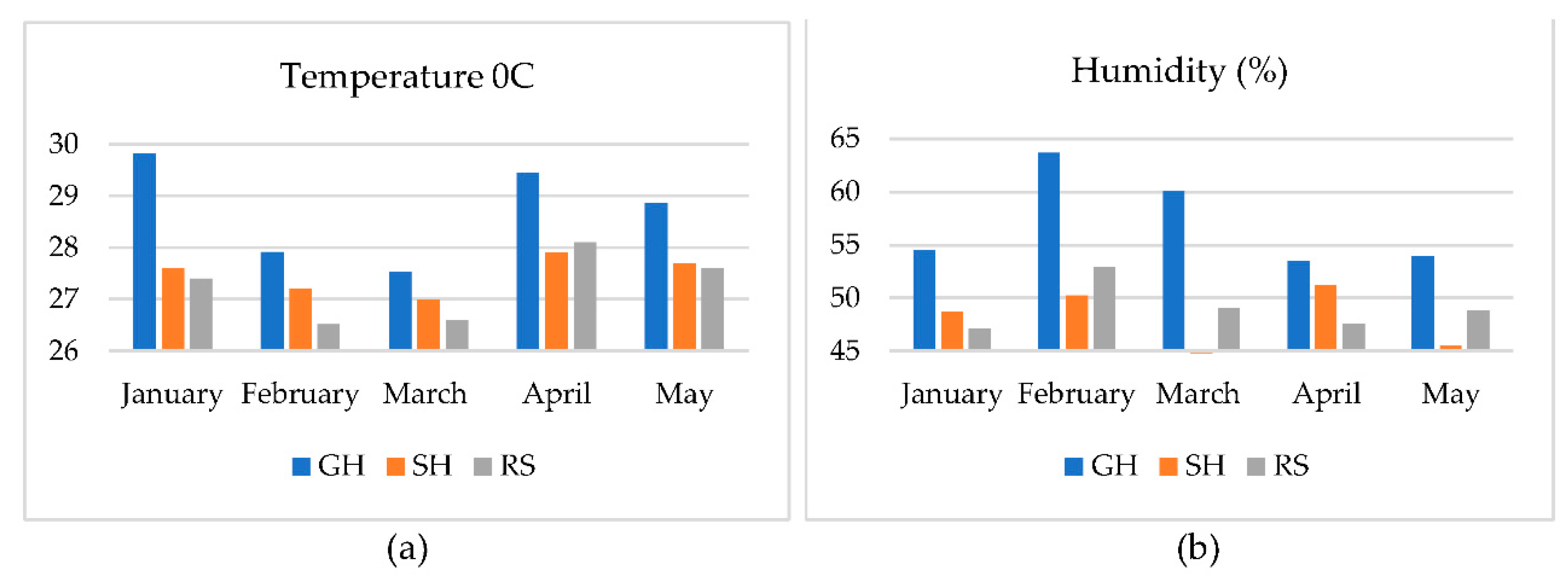
Figure 2.
Wind Speed (a) and Light Intensity at cites (d) Note: GH = Greenhouse, SH = Screen House, RS = Rain Shelter.
Figure 2.
Wind Speed (a) and Light Intensity at cites (d) Note: GH = Greenhouse, SH = Screen House, RS = Rain Shelter.
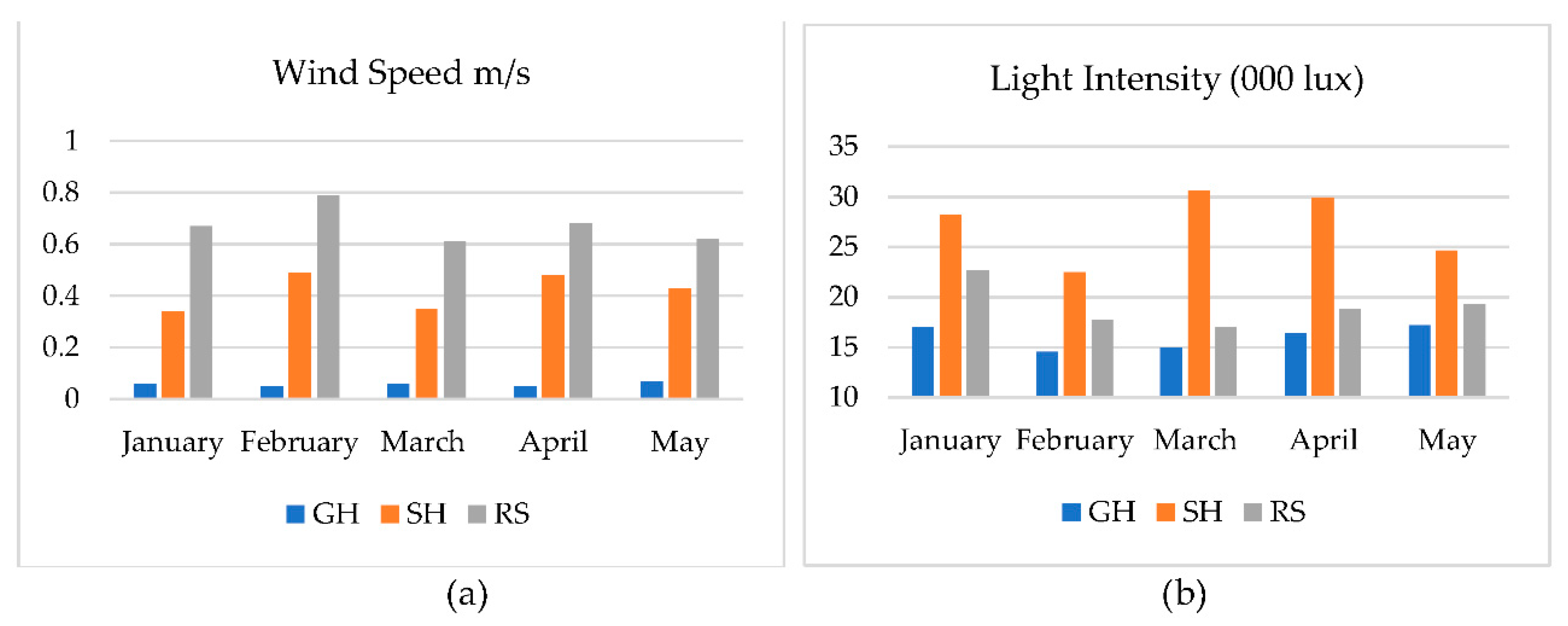
Figure 3.
The main effect of watering volume and growing design on the growth rate of cherry tomato Ruby cultivar (e) and Interaction of watering volume and growing design in the growth rate of cherry tomato Ruby cultivar (f).
Figure 3.
The main effect of watering volume and growing design on the growth rate of cherry tomato Ruby cultivar (e) and Interaction of watering volume and growing design in the growth rate of cherry tomato Ruby cultivar (f).
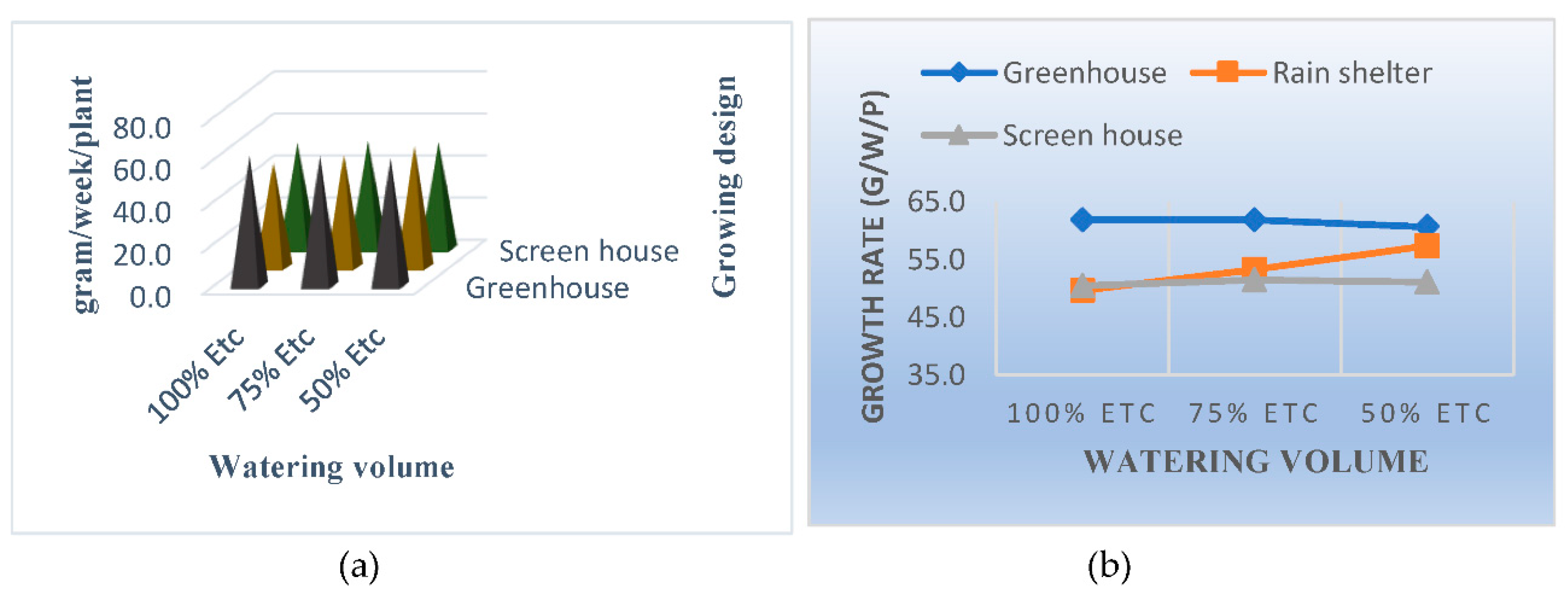
Figure 4.
The main effect of watering volume and growing design on fruit diameter of cherry tomato Ruby cultivar.
Figure 4.
The main effect of watering volume and growing design on fruit diameter of cherry tomato Ruby cultivar.
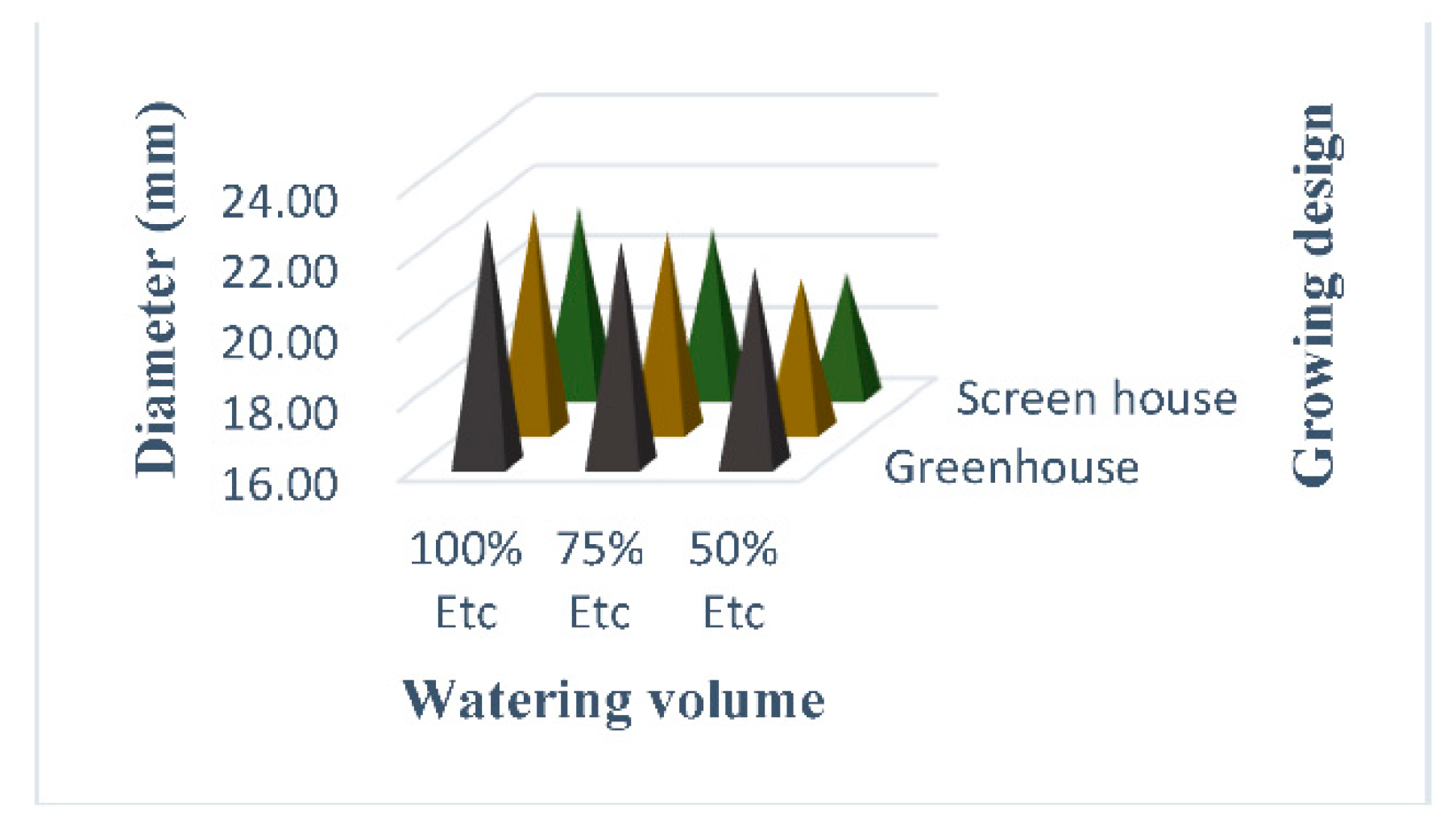
Figure 5.
The main effect of watering volume and growing design in single fruit weight of cherry tomato Ruby cultivar (a) and Interaction of watering volume and growing design in single fruit weight of cherry tomato Ruby cultivar (b).
Figure 5.
The main effect of watering volume and growing design in single fruit weight of cherry tomato Ruby cultivar (a) and Interaction of watering volume and growing design in single fruit weight of cherry tomato Ruby cultivar (b).
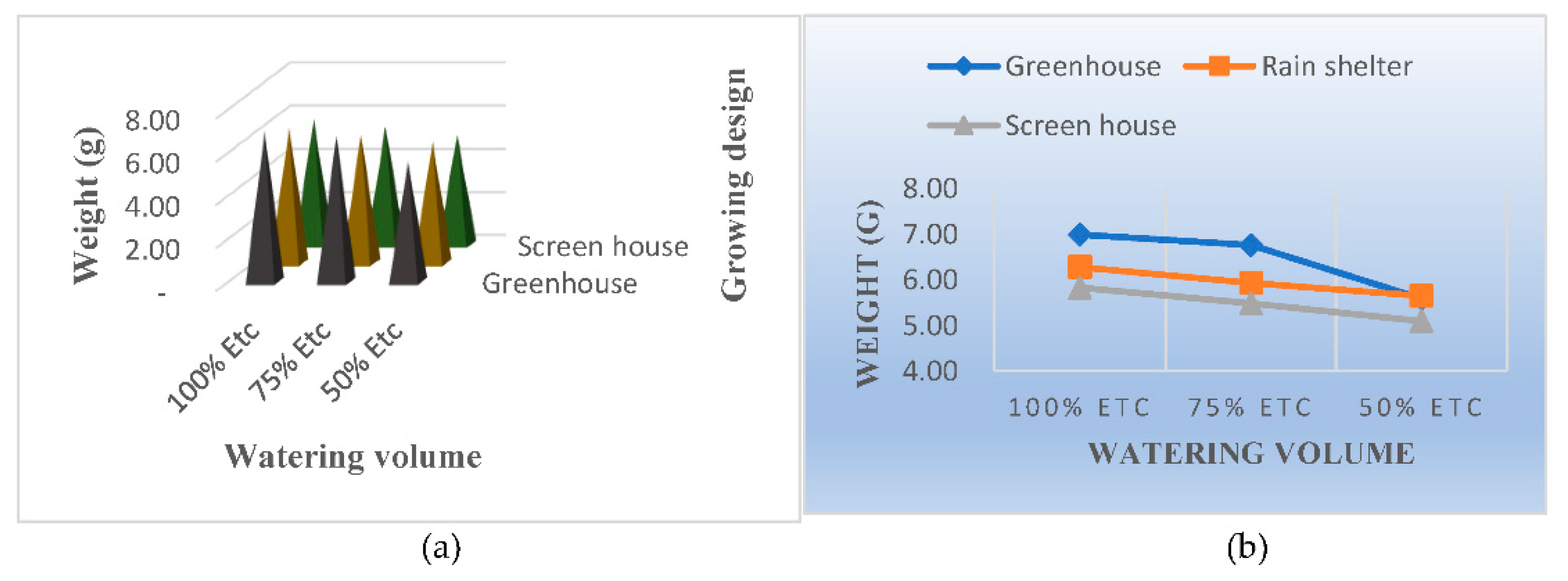
Figure 6.
The main effect of watering volume and growing design in a number of fruits per plant of the cherry tomato Ruby cultivar.
Figure 6.
The main effect of watering volume and growing design in a number of fruits per plant of the cherry tomato Ruby cultivar.
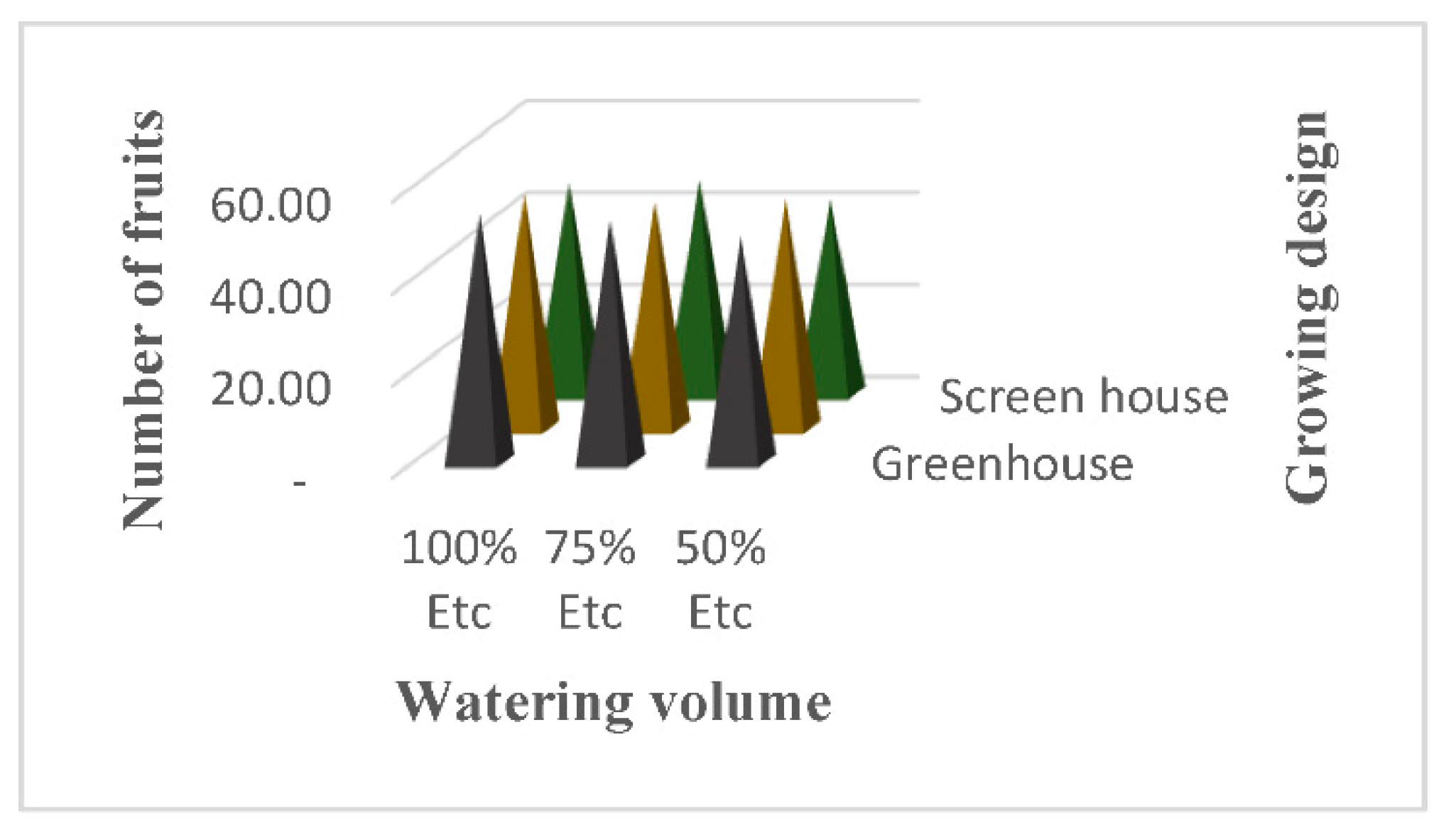
Figure 7.
The main effect of watering volume and growing design in fruit yield per plant of cherry tomato Ruby cultivar.
Figure 7.
The main effect of watering volume and growing design in fruit yield per plant of cherry tomato Ruby cultivar.
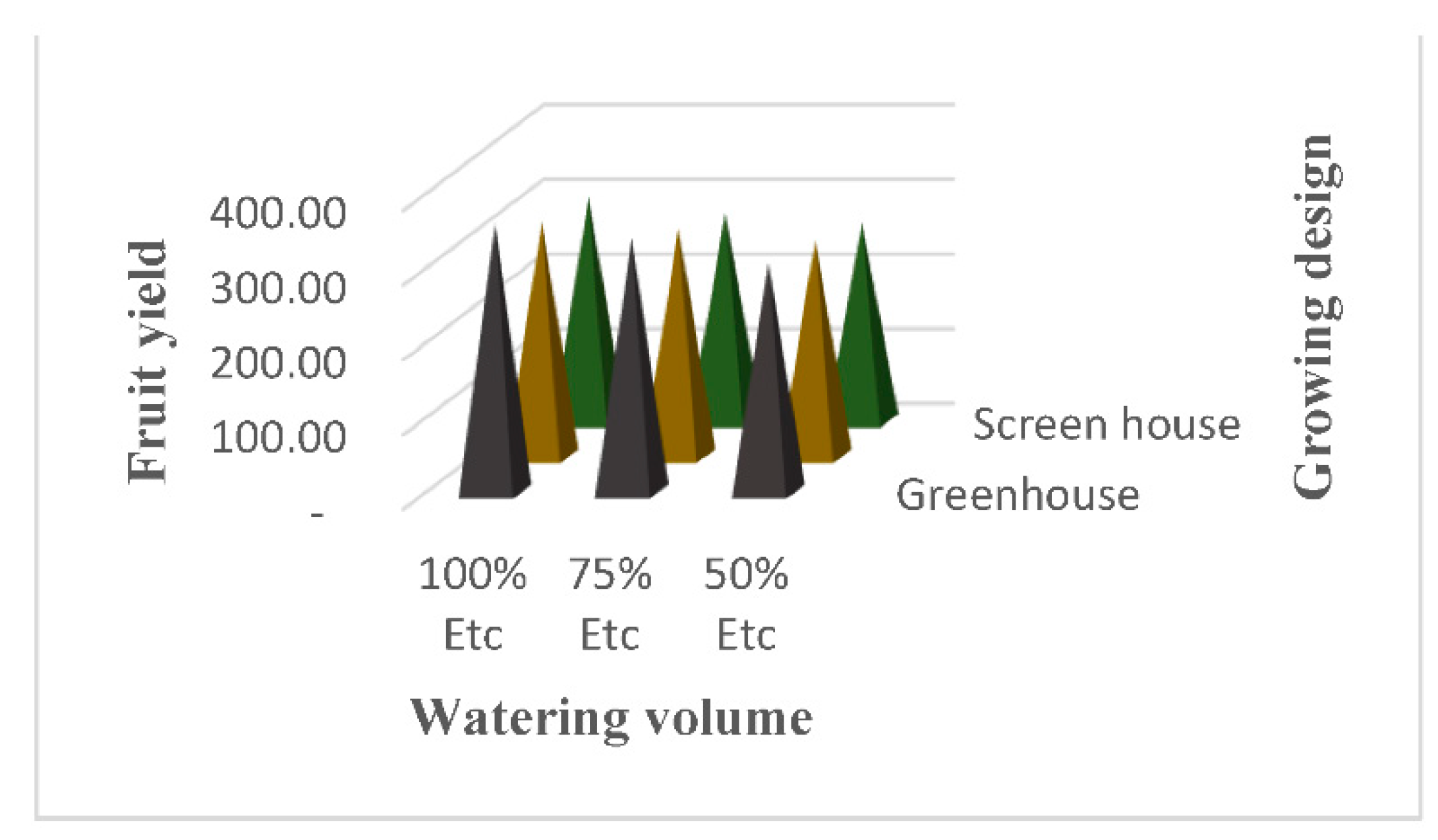
Figure 8.
The main effect of watering volume and growing design in root dry weight of cherry tomato Ruby cultivar.
Figure 8.
The main effect of watering volume and growing design in root dry weight of cherry tomato Ruby cultivar.
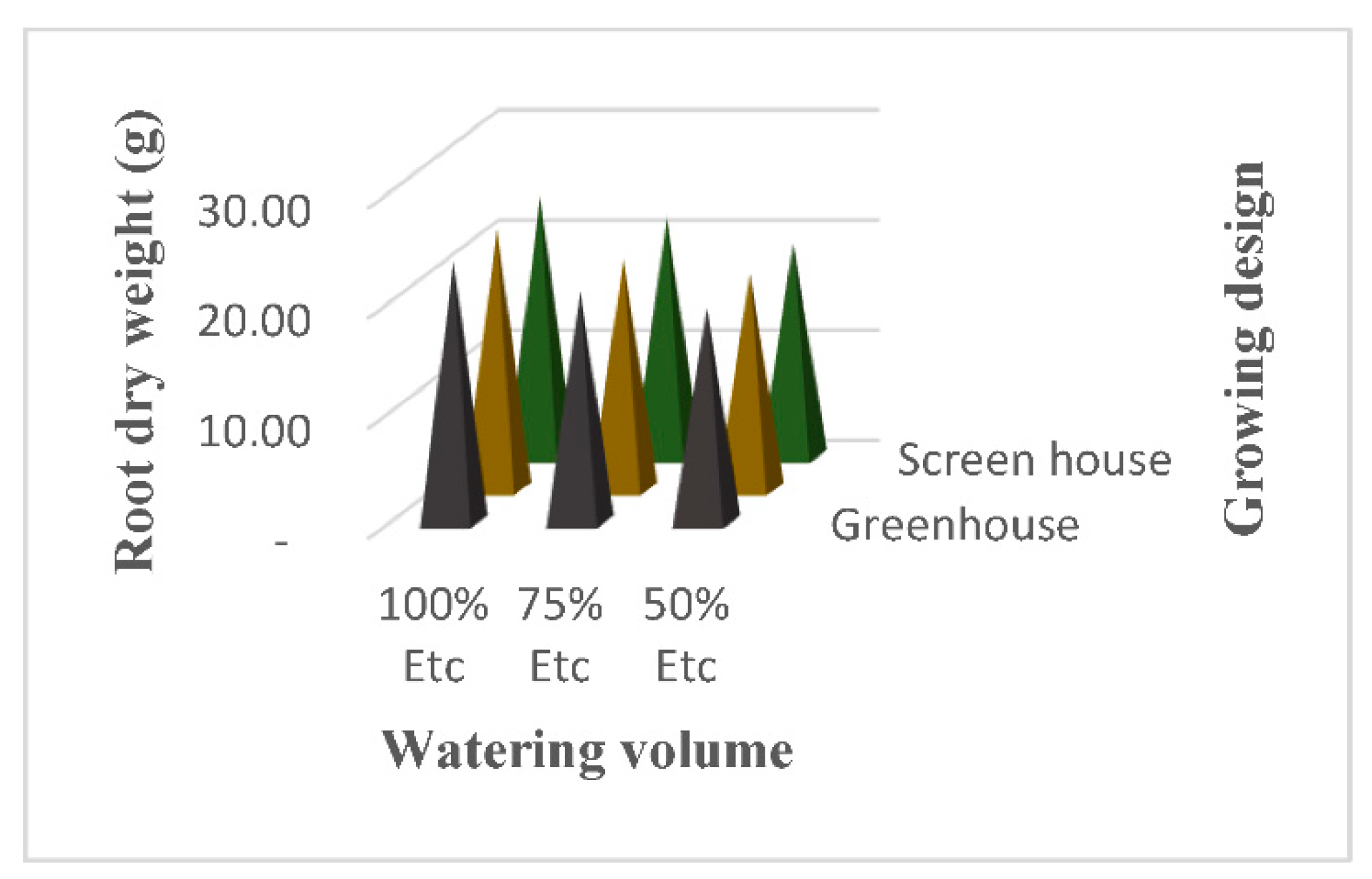
Figure 9.
The main effect of watering volume and growing design on shoot dry weight of cherry tomato Ruby cultivar (a) and Interaction of watering volume and growing design in single fruit weight of cherry tomato Ruby cultivar (b).
Figure 9.
The main effect of watering volume and growing design on shoot dry weight of cherry tomato Ruby cultivar (a) and Interaction of watering volume and growing design in single fruit weight of cherry tomato Ruby cultivar (b).
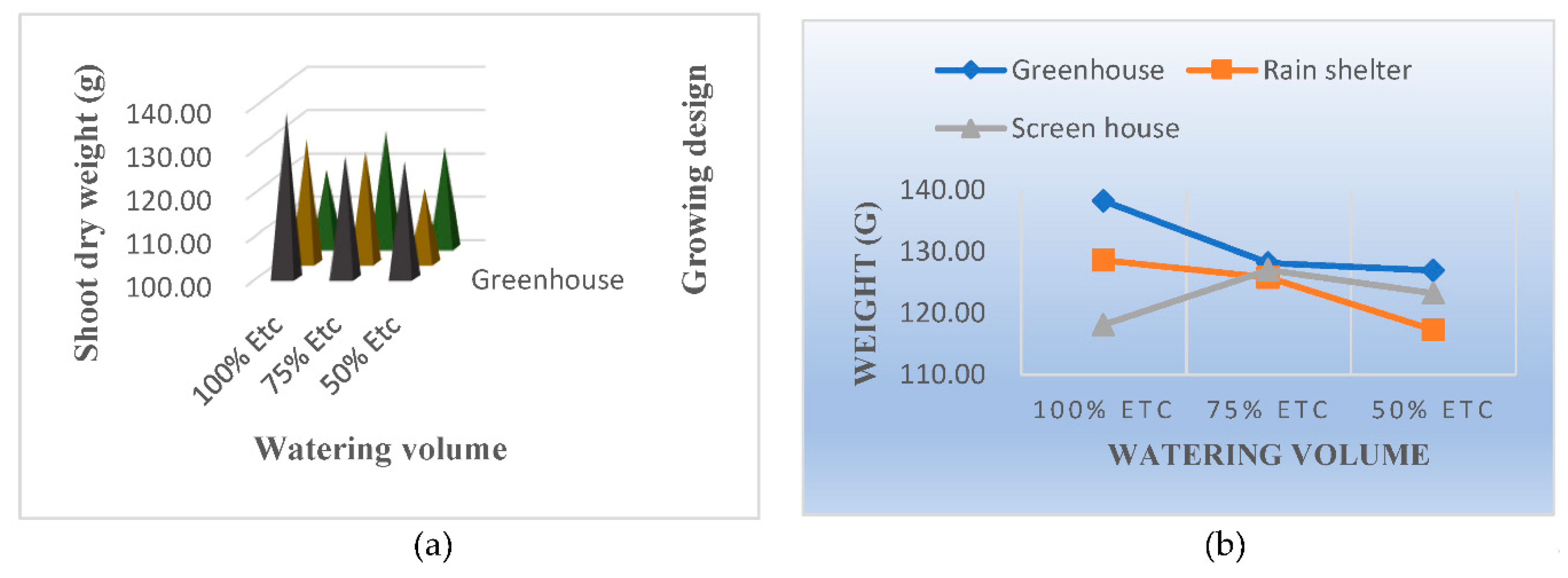
Figure 10.
The main effect of watering volume and growing design in cherry tomato Ruby cultivar.
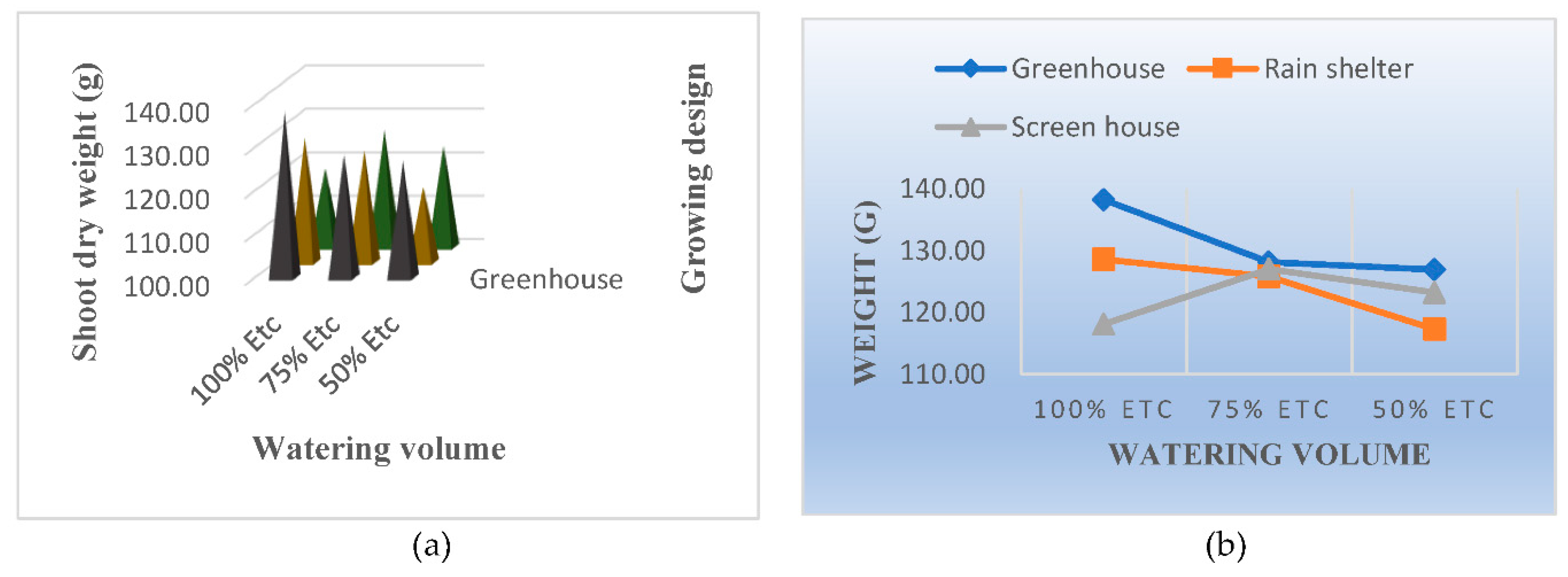
Figure 11.
The main effect of watering volume and growing design in biological yield per plant of cherry tomato Ruby cultivar.
Figure 11.
The main effect of watering volume and growing design in biological yield per plant of cherry tomato Ruby cultivar.
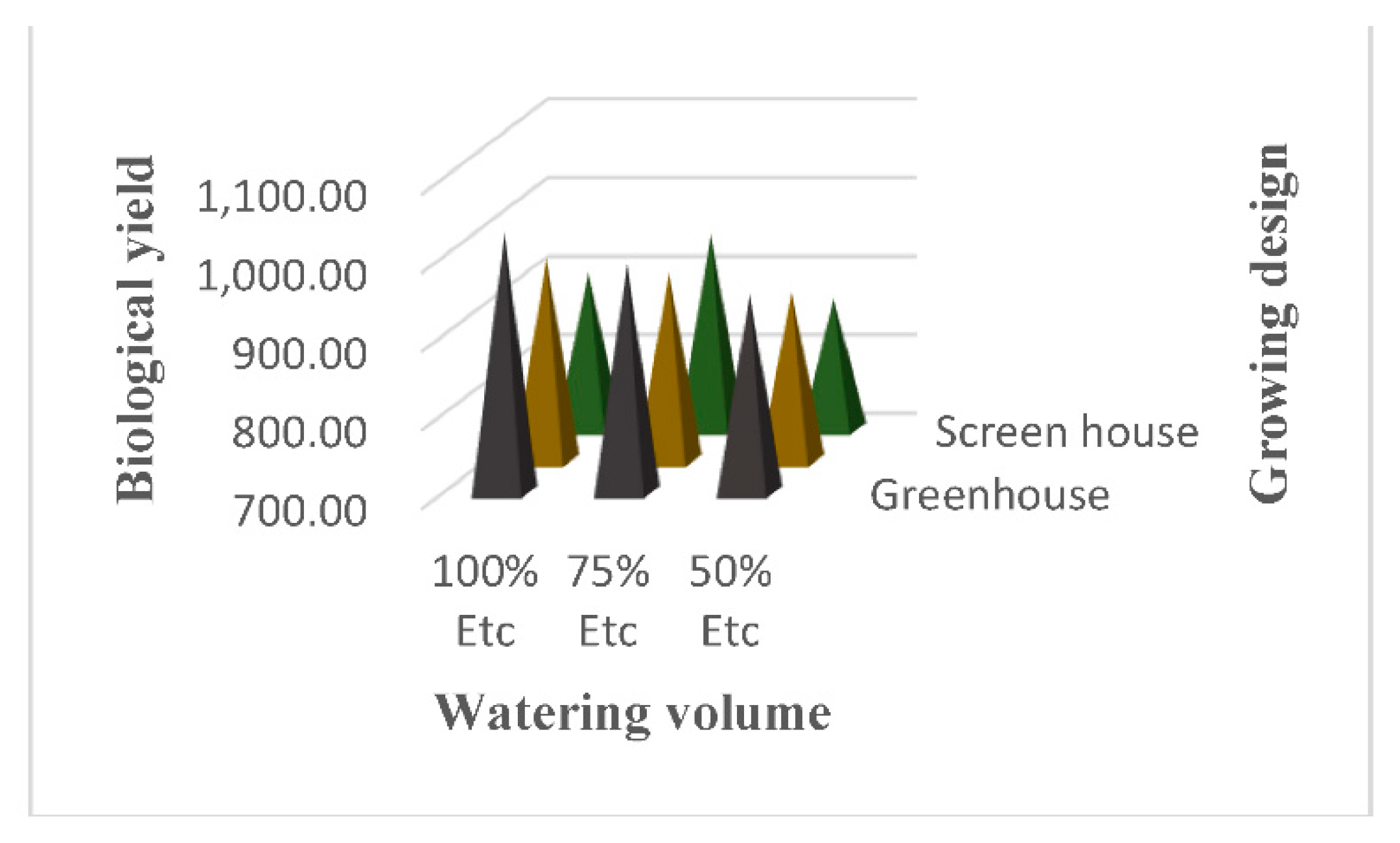
Figure 12.
The main effect of watering volume and growing design in chlorophyll content of cherry tomato leaf Ruby cultivar.
Figure 12.
The main effect of watering volume and growing design in chlorophyll content of cherry tomato leaf Ruby cultivar.
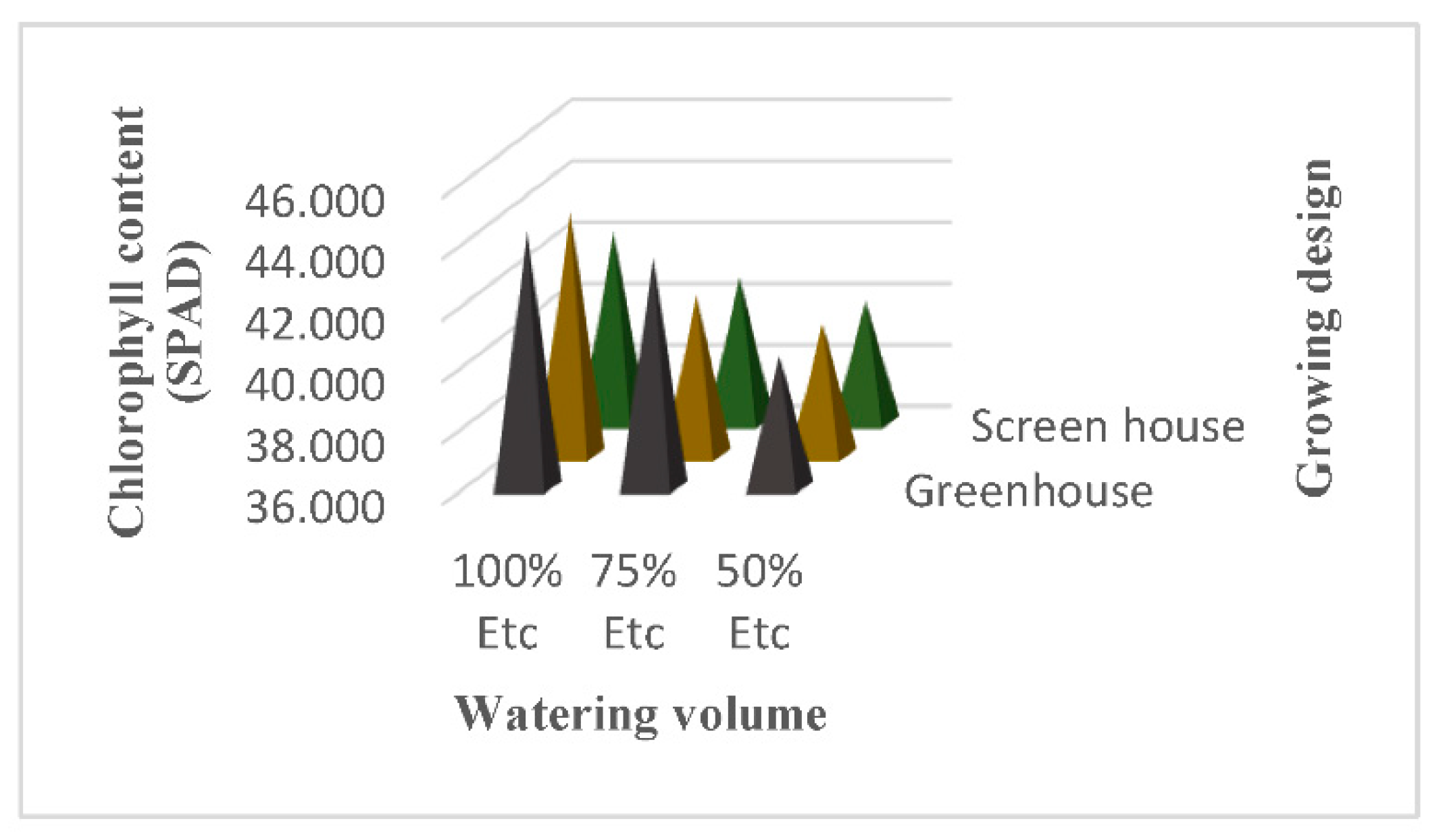
Figure 13.
The main effect of watering volume and growing design in fruit firmness of cherry tomato Ruby cultivar.
Figure 13.
The main effect of watering volume and growing design in fruit firmness of cherry tomato Ruby cultivar.
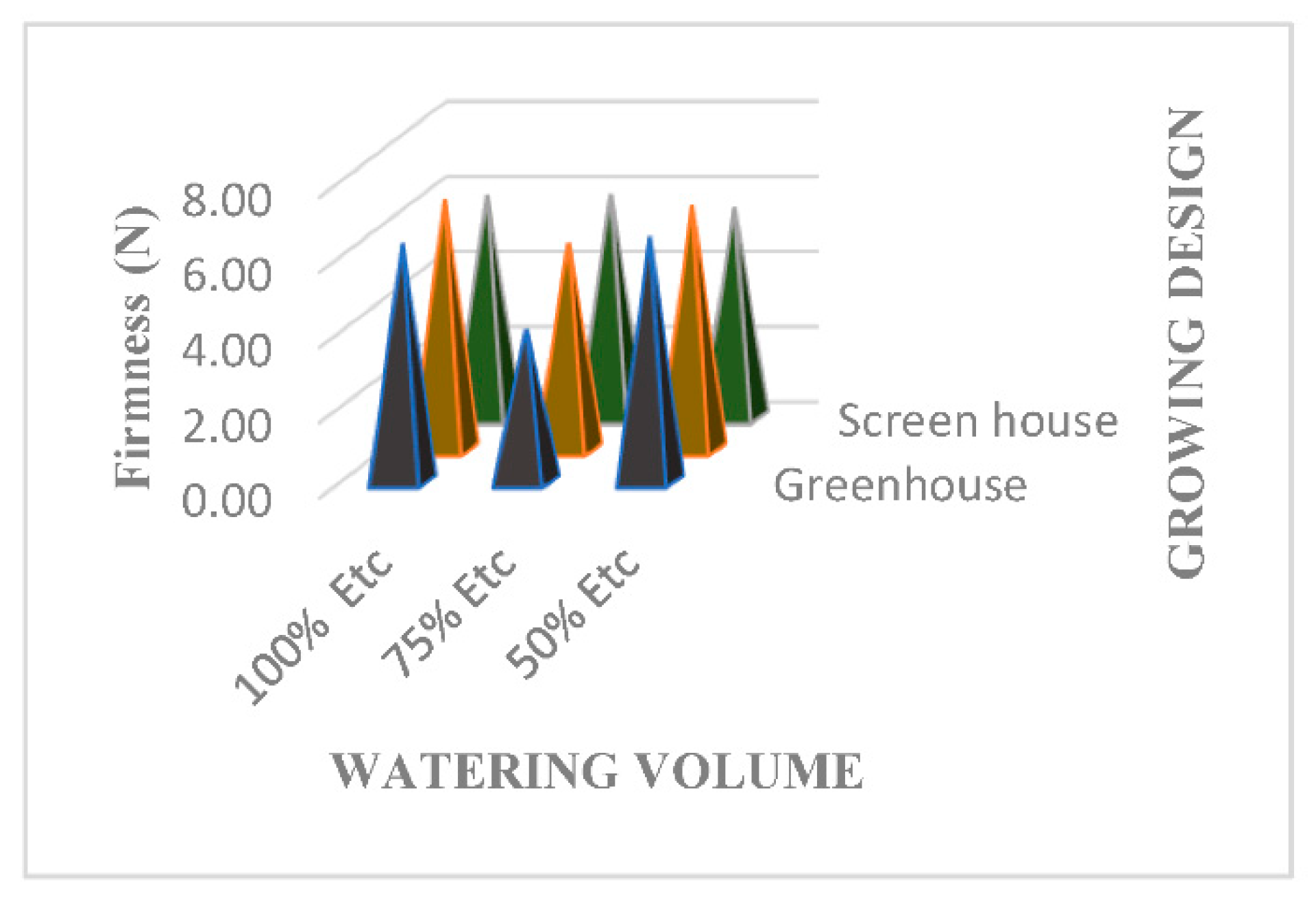
Figure 14.
The main effect of watering volume and growing design in the elasticity of cherry tomato Ruby cultivar.
Figure 14.
The main effect of watering volume and growing design in the elasticity of cherry tomato Ruby cultivar.
Disclaimer/Publisher’s Note: The statements, opinions and data contained in all publications are solely those of the individual author(s) and contributor(s) and not of MDPI and/or the editor(s). MDPI and/or the editor(s) disclaim responsibility for any injury to people or property resulting from any ideas, methods, instructions or products referred to in the content. |
© 2023 by the authors. Licensee MDPI, Basel, Switzerland. This article is an open access article distributed under the terms and conditions of the Creative Commons Attribution (CC BY) license (http://creativecommons.org/licenses/by/4.0/).
Copyright: This open access article is published under a Creative Commons CC BY 4.0 license, which permit the free download, distribution, and reuse, provided that the author and preprint are cited in any reuse.


