

Submitted:
02 August 2023
Posted:
04 August 2023
You are already at the latest version
Abstract
Urban planning and transportation policies are vital to creating sustainable and liveable cities. Transit-orientated development (TOD) has emerged as a prominent approach, emphasising the establishment of neighbourhoods with convenient access to public transportation and promoting car-free lifestyles. TOD initiatives aim to improve public transit efficiency, reduce dependence on private vehicles, and encourage walkability and connectivity within communities. By prioritising TOD, cities can effectively address transportation challenges, alleviate congestion, mitigate carbon emissions, and improve residents' overall quality of life. This research paper investigates the connection between proximity to transit stations and local living habits. Specifically, it examines the human mobility of residents living within a 15-minute walk distance of transit stations in Auckland, New Zealand, a car-dependent city striving to transition into a sustainable TOD model. The objective is to determine whether people living near transit stations are more inclined to participate in local activities and exhibit a higher proportion of trips within a radius of 15 minutes. The results illustrate that approximately 54% of the residents show dominant local mobility patterns. However, only about 16 stations out of 34 show their local residents have prominent collective 'local' travel patterns. By understanding the connection between proximity to transit stations and local mobility patterns, urban planners and designers can make informed decisions to improve the built environment and optimise the land use mix. This research offers insights to support the creation of vibrant and people-centric urban environments, facilitating the development of sustainable and liveable cities.
Keywords:
Transit-Orientated Development (TOD)
; Transit Proximity
; Human Mobility
; Locality
; Auckland
; New Zealand
1. Introduction
In the face of the formidable challenge of climate change, the urgency of transitioning to a more sustainable lifestyle has become a top priority for numerous cities worldwide. Central to this transformation is the concept of Transit Orientated Development (TOD), which Peter Calthorpe proposed as a strategic approach to a sustainable urban land development model in the 1990s. After decades of experimentation and improvement, it has been recognised and widely adopted worldwide. The main idea of TOD is to create an efficient, intensive, comfortable, and green urban space centred on a bus, metro, or other hub station within walking distance of 400-800 metres in 5-10 minutes, which concentrates on different urban functions, including office, entertainment, residence, shopping, etc. (Calthorpe Peter, 1993). Promotes the coordinated development of urban transportation and land development, thus optimising the urban spatial structure and improving urban residents’ quality of life and happiness (Liu Chang et al., 2011).
Despite criticism of the potential negative impacts of gentrification and displacement of low-income residents (Padeiro et al., 2019), it is essential to recognise that if planned carefully, TOD can bring many advantages. These include improved accessibility, patterns of ridership, and increased land value around transit developments, which are crucial in providing better access to job opportunities and economic prospects, particularly for low-income citizens (Singh et al., 2018). However, it is not always true that TOD builds on transport-focused planning and has adequately integrated with a diversity of facilities, such as the diversity of the site and housing use and the "walkability" needed to create a vibrant, sustainable community. In many cases, TOD developments should not be classified as TOD but as mere "Bedroom Communities" with transit (Irvine, 2009).
Considering this, it becomes evident that the effectiveness of TOD is fundamentally based on integrating transportation infrastructure and land use planning. The strategic placement of transit stations as focal points within the community is crucial to facilitate easy access to transportation options for residents, promoting a shift towards increased use of public transportation and reduced dependence on private cars (Griffiths & Curtis, 2017). Therefore, it is evident that the success of a TOD community is closely linked to the presence of vibrant and higher-density development in proximity to rail stations, encouraging public transit systems for longer trips and supporting local living through well-planned walkable neighbourhoods. When residents have convenient access to public transportation and all essential services, it naturally encourages them to adopt more sustainable lifestyles and reduce the need to travel by private vehicle for their daily needs.
Traditionally, TOD research has been primarily a broad and ideological concept, focusing on community-orientated urbanism, and has shifted to a narrower and operational perspective, focusing on ridership and built environment indicators. These indicators include the function of the station location (Chen Lijun et al., 2012), the flow of passengers into and out of the station (Chen Yanyan et al., 2017), accessibility of the transport nodes (Ma et al., 2018), number of entrances and exits of the stations (Huang Yaxian, 2022), among others. The dominant focus has been on policy, planning, and transportation issues, strongly emphasising density and destination accessibility as crucial factors influencing travel behaviour and transit use in the TOD. However, ethnographic and qualitative studies on the social and cultural aspects of TOD living have yet to be studied much.
However, paying more attention to understanding people’s daily mobility patterns when living near transit stations is essential. Studies have shown that pedestrian travel behaviour can be diversified by the combined effects of the built environment and pedestrian proximity to public transport stops (Fruin, 1979; O’Sullivan & Morrall, 1996) and that efficient and convenient public transport options can significantly influence residents’ daily lives, activity preferences, and community involvement (Pongprasert & Kubota, 2017). While the traditional approach has been quantitative, delving into how residents’ mobility patterns are influenced by their proximity to transit facilities has yet to be thoroughly analysed, which can offer valuable insights for TOD planning and design.
Therefore, based on the consideration mentioned above, this study explores the correlation between the proximity of residents to transit stations and their mobility patterns, using Auckland, the largest city in New Zealand, as the study area. Auckland is known for its significant dependence on cars but strives for more sustainable future growth. It serves as an essential case study to investigate the potential impact on the engagement of residents in local activities due to their proximity to rail stations. Auckland is confronted with a pressing challenge of urban development growth, leading to significant traffic congestion due to the predominant reliance on private cars as the primary mode of transportation among its residents. To better manage the enormous pressure on Auckland’s urban growth, the Auckland Council has developed the "Unitary Plan", a comprehensive framework for managing the city’s natural and physical resources, including land development(Auckland Unitary Plan, n.d.). Although not explicitly stated, the plan adopts an approach that prioritises concentrating growth in compact, pedestrian-friendly urban centres to combat urban sprawl, reflecting innovative growth principles. The concept of smart growth advocates the creation of dense, transit-orientated, and walkable communities that promote bicycle usage, integrate neighbourhood schools, facilitate complete streets, and encourage mixed-use developments with diverse housing options. As an embodiment of this vision, the City Rail Link (CRL) project stands as a key testament to Auckland’s commitment to a more sustainable mode of transportation, particularly the TOD model. The CRL addresses the lack of direct transport options between the suburbs by updating the existing rail network with additional connecting links to incentivise a shift towards sustainable commuting practices (City Rail Link, n.d.). Considering this, we argue that Auckland demonstrates its commitment to transforming the urban landscape sustainably by fostering compact, walkable, and transit-orientated neighbourhoods to mitigate the adverse impacts of uncontrolled growth. In other words, Auckland is making an effort to build TOD. However, what remains to be clarified is whether this change will result in the projected outcome of fostering a compact and sustainable urban lifestyle for people.
To better understand the current state of the neighbourhood near Auckland city rail stations in promoting local living, we use mobile location data collected for 2019 to analyse the behaviour of residents who live within a 15-minute walkable distance from the rail station. We focus on their frequency of visits, derived from their mobile location data points, within the walkable area around the station. We will then compare the proportion of these local visits to all other visits found within Auckland City at different spatial scales. By studying residents’ mobility patterns and the proportion of their local visits, we can gain valuable insights into the level of engagement and activity within the neighbourhood near the rail station. This analysis will help assess the current effectiveness of neighbourhoods near trains in encouraging local living and reducing travel distance. In other words, the objective is to discern which neighbourhoods are more likely to have a well-developed built environment that fosters greater local engagement, leading to more sustainable living practices. On the contrary, the research finding will pinpoint the least effective neighbourhoods near rail stations that require significant improvements in their built environment.
The contribution of this study is multifaceted. First, we employ a novel approach using the ’locality’ measure to assess local neighbourhood engagements. This innovative methodology allows for a more nuanced understanding of the level of engagement in the context of walkable distance. Second, identifying neighbourhoods with more vital local engagements and higher likelihoods of well-developed built environments can serve as positive examples and models for further investigating significant factors that support other communities to emulate. Third, by identifying the least effective neighbourhoods regarding the built environment and local engagement, the study offers a valuable tool for targeted interventions and resource allocation. This data-driven approach can assist policymakers and stakeholders in prioritising efforts and investments to uplift these communities and facilitate their transition to more sustainable practices.
2. Review of the literature
The literature on Transit-Oriented Development (TOD) has grown significantly over the years, reflecting the increasing interest and attention to the concept among researchers, practitioners, and policymakers. TOD, which emerged as early as the mid-1800s in England and the U.S., gained popularity due to Peter Calthorpe’s pioneering work in the 1990s (Calthorpe Peter, 1993). His application of TOD principles to cities like Portland, Sacramento, and San Diego helped establish the importance of creating compact, mixed-use, and walkable urban environments around transit stations to reduce car dependency and improve.
The success and effectiveness of TOD depend on various factors, such as quality of transit services, diverse land uses, well-designed streets and public spaces, affordable housing and supportive policies. Among these multifaceted critical dimensions, proximity is one of the most vital factors influencing the outcomes of transit-orientated development (TOD). Early researchers laid the foundation for TOD evaluation with the "3D" principles proposed by Cervero (Cervero & Kockelman, 1997), which emphasised density, diversity, and pedestrian-friendly spatial design. These principles highlighted the importance of a compact and mixed-use urban environment with convenient access to public transport, which inherently involves proximity to transit stations. Later, Cervero expanded on this with the "5D" principle, adding "Destination Accessibility" and "Distance to Transit" as critical factors (Cervero R & Murakami J, 2008). These additions further underscored the importance of proximity in determining the effectiveness of TOD, as being close to transit stations improves the accessibility of the destination and encourages transit use.
Proximity in this context is the distance between transit stations and various destinations, such as residential, commercial, employment, recreational and civic uses. Its significance lies in its ability to reduce the environmental and social consequences of heavy reliance on private vehicles, making it a critical factor in successfully implementing TOD initiatives. Several studies have found proximity affects travel behaviour, mode choice, and trip generation of TOD residents, workers, and visitors (Nasri & Zhang, 2019; Olaru & Curtis, 2015; Park et al., 2018). It also affects the value of land, properties and the development potential of TOD areas (Kay et al., 2014; Sim et al., 2015). Proximity is often measured by the distance or time from the transit stations to different land uses or by the area or radius of the TOD areas. However, there is yet to be a consensus on the optimal or standard proximity for TOD, as different studies have used different definitions and proximity measurements depending on the context, data availability, and research objectives.
The literature on TOD and proximity can be categorised into three main themes: the impact of proximity on (1) travel behaviour and mode choice; (2) planning and development; and (3) value of land and property value. Studies focussing on travel behaviour and mode choice have consistently found a positive relationship between proximity to transit stations and transit use and a negative relationship between proximity and car use (Kwoka et al., 2015). This means that people living or working closer to transit stations are more inclined to use public transit and less likely to drive for their trips. However, several factors influence the strength and significance of this relationship. These include the type of transit service available (e.g., heavy rail, light rail, bus rapid transit), the purpose of the trip (e.g., work-related or non-work-related), the surrounding land use (e.g., residential or commercial), the density and diversity of land use around transit stations, the availability and quality of pedestrian and bicycle facilities, parking supply and pricing, the sociodemographic characteristics of travellers (e.g., income, age), and the overall regional context (e.g., urban form and travel culture) (Hess & Almeida, 2007; Lund, 2006).
Another line of research focuses on TOD’s objective of promoting compact, mixed-use, and walkable urban forms around transit stations to create liveable, sustainable, and equitable communities. While proximity plays a crucial role in influencing the type, intensity, and quality of land uses around transit stations(Nasri & Zhang, 2014), other critical factors like market demand, policy incentives, institutional coordination, public participation and social equity also shape the land use planning and development of TOD areas (Jacobson & Forsyth, 2008).
Lastly, many studies explore TOD’s goal of capturing the value of transit access and generating revenue for transit agencies, local governments, and private developers. These studies consistently report a positive relationship between proximity to transit stations and land or property value (Utami et al., 2022). In simpler terms, land or properties closer to transit stations generally have higher values than those farther away. As with travel behaviour and mode choice, the magnitude and significance of the proximity-land value relationship are influenced by various factors, including the type of transit service available, the property type (e.g., residential, commercial, industrial), the density and diversity of land use around transit stations, the quality and availability of pedestrian and bicycle facilities, parking supply and pricing, the sociodemographic characteristics of buyers or renters (e.g., income, age), and the regional context (e.g., urban form and market conditions )(Berawi et al., 2020; Dziauddin, 2019; Higgins & Kanaroglou, 2018; Nasri & Zhang, 2019; Tontisirin & Anantsuksomsri, 2021).
As TOD gained traction, scholars developed comprehensive quantitative evaluation methods to assess its impact. Vale introduced the node and place index, along with the pedestrian accessibility index, to evaluate TOD sites in Lisbon(Vale, 2015). Similarly, Singh quantified the TOD index concept proposed by Evans and Pratt (Evans & Pratt, 2007) by evaluating 21 rail stations in the Nijmegen urban area(Singh et al., 2017). Other researchers, such as He Fan and Zhao Pengjun et al., also used various metrics, including residential population density, job density and rail traffic flow, to evaluate TOD stations in different regions, notably Beijing(He Fan, 2018; Pengjun et al., 2019).
While employing various methodologies to understand TOD, a consistent and dominant conclusion emerged: the influence of TOD extended beyond transportation and covered residents’ daily lives. Renne made a significant discovery, revealing the impact of population density, urban design, and spatial diversity in shaping residents’ travel patterns and overall well-being within TOD areas(Renne, 2009). Echoing this, Zhao Pengjun et al. found that residents’ choices of activities within TOD areas profoundly affected the built environment(Zhao Pengjun et al., 2016). Similarly, Mark R. Steven illuminated a correlation between residents’ walking choices and factors such as land use diversity, proximity to public transport, and destination accessibility (Stevens, 2017).
Based on this collective consensus, analysing the mobility patterns of residents living near TOD stations can serve as a valid indicator of the station’s performance within the TOD framework. In other words, a higher prevalence of dominant mobility patterns within the walkable buffer around a rail station can signify that the station’s amenities, development, and diverse activities are more effective, potentially fostering a successful TOD with minimal barriers. In contrast, nearby residents’ lack of local involvement may indicate the need for more significant investment to transform it into a sustainable TOD community. This approach has the potential to provide valuable information for effective urban planning and development strategies, ensuring that TOD not only improves transportation but also positively impacts the daily lives of urban residents.
Therefore, our research objectives aim to address two main questions: 1) the relationship between living proximity to rail stations and travel patterns, and 2) which transit stations support a higher locality trend in alignment with TOD principles. In addition to these questions, we examine the average travel distances of people living near transit stations. We apply an Ordinary Least Squares (OLS) regression model to test the significance of each factor. The regression analysis results will help us understand the impact of proximity to rail stations on mobility patterns and local engagement.
3. Methodology
The research is centred around the concept of Transit-Oriented Development (TOD). The aim of TOD initiatives is to create neighbourhoods where residents can easily access essential services by walking or cycling, promoting a more local lifestyle. In this study, the term "locals" refers to people living within a 15-minute walking distance (1,200m) from rail stations, and this term will be used throughout the paper. The analysis of the mobility patterns and local engagement of these locals provides valuable insights into how well the neighbourhoods align with TOD objectives. The study’s focus is to determine the level of support that existing rail stations in Auckland City offer for promoting local living. A higher prevalence of local activities and a reduced dependence on long-distance travel indicate successful alignment with TOD principles. Such outcomes suggest that residents have convenient access to amenities and services within their immediate vicinity. To achieve this, the research methodology involves analysing human mobility patterns related to rail stations to assess their effectiveness in fostering local living in the city.
This section introduces the study area and the mobile location dataset used for this research. Next, we explain the process of identifying the homelocation of mobile phone users. We then compare the dynamics of visitor patterns, distinguishing between activities within the 15-minute walking area and those outside the walkable distance. Additionally, we calculate the average individual travel distance. Subsequently, we conducted a collective analysis of the overall trend in mobility behaviour for each home grid and station area, followed by a discussion of their characteristics in the current urban context. To strengthen and validate our findings, we employ Ordinary Least Squares (OLS) regression to empirically examine the relationship between the average travel distance of residents and their mobility patterns.
Figure 1 provides an outline of the structure of the study, illustrating the sequence of steps from the introduction of the study area and the data set to the implementation of the OLS regression analysis. Focusing on the mobility patterns and local engagement of "locals" within the 15-minute walking distance of rail stations, we aim to understand how well the neighbourhoods around each rail station in Auckland align with the TOD principles. A higher prevalence of local activities and a reduced dependence on long-distance travel suggest successful alignment with TOD objectives, indicating easier access to amenities and services within the immediate vicinity.
3.1. Study area and data
The Auckland City Rail System in New Zealand has a historical background dating back to the mid-19th century with the construction of the first rail network. However, patronage of the rail system increased significantly during the early twentieth century. In 2016, a substantial upgrade proposal for the rail network was confirmed, and funding was secured for implementation starting in 2020. The city rail link project is scheduled to be completed by 2025(City Rail Link, n.d.). For our analysis of mobility patterns within urban areas, we used the city rail data set provided by the New Zealand data service, which the Government Information Services of the Department of Internal Affairs lead. This data set includes geolocation information for all city rail stations. We focus specifically on stations within the limits of Auckland City, including 34 stations in our study.
In addition to the city rail dataset, we obtained location data for mobile applications from a third-party vendor, Quadrant(Quadrant | Location Data, n.d.), covering users in Auckland during 2019. To maintain consistency and exclude data influenced by the Covid-19 pandemic disruption on human mobility, we excluded data from 2020 onwards. The data set contained 14,410,353 location traces submitted by 64,034 users. To further ensure that the data have minimal skewness, we excluded ’power’ users, defined as those within the top 1% based on the number of observations and users with fewer than ten observations, as meaningful activity space cannot be inferred in such cases. Following this process, we retained 4,220,351 observations from 11,569 users for our analysis.
Each data point in our data set contains three attributes: a unique user identifier, specific geographical information, and a timestamp that indicates when the data point was generated. To address the variations in geographical precision resulting from using different smartphones(Crampton et al., 2013; Joel Shelton et al., 2021), we aggregated all data points into 300-meter hexagonal grid cells. This choice of 300-meter resolution serves multiple purposes: It resolves the issue of uneven geographical precision, ensures data privacy and ethical sensitivity, and provides sufficient observations in individual grid cells for subsequent analysis. It is important to note that the selection of this aggregation resolution was considered appropriate for the Auckland case. However, it is essential to emphasise that the decision on the grid cell size is ultimately at the researchers’ discretion, considering its relevance to the research question.
After completion of the aggregation process, we obtained 12,032 grid cells within the Auckland city boundary, each cell representing an urban location and serving as the analysis unit. We applied the "homelocator" R package(Chen & Poorthuis, 2021) using the temporal characteristics and frequency of the datapoint to infer the "homelocation" grid, a 300m x 300m area of the mobile users. Subsequently, we used the aggregated data set to construct home-to-destination networks for individual users based on their movement flows between their homes and various urban places. The analysis focuses on the difference between the proportion of local and distant visits from mobile location users who reside near the rail station. In this research, we define activity points within the 15-minute buffer (1,200m radius) from the station as "local" engagement, while activity points falling outside the walkable buffer are defined as "distant" activity engagement. This approach allows us to assess the correlation between proximity to rail stations and behavioural patterns.
3.2. Measures of ’locality’
The methodology’s core revolves around analysing the percentage of local activity versus distant activity in the daily mobility patterns of residents who reside within the 15-minute walkable area. We develop the ’locality’ index on three scales, employing the following metrics to achieve this.
- Individual Mobility (I.M.) - calculated directly as the ratio of residents’ activity points falling within the 15-minute walkable area relative to the total activity points detected.
- Home Grid Mobility (HGM) - calculated as the average ratio of the total residents’ I.M. per home grid location.
- Station Mobility (S.M.) - Calculated as the average ratio of the total HGM of each home grid location per station area.
- Travel Distance (T.D.) - Calculated directly as the average distance of all trips from each user.
Using home-to-destination networks derived from our aggregated mobile location data, our primary objective is to identify mobile phone users whose inferred home locations are near any of the rail stations in Auckland. Subsequently, we collect all data points sent by these anonymised users throughout 2019 within the Auckland boundary. For each user, we compare the total number of visits made within the 15-minute walkable zone around their inferred home location and the total visits made in all surrounding neighbourhoods. Users with more than 50% of their visited locations within the 15-minute buffer are classified as "local." On the other hand, users who travel farther away for their daily needs are considered "non-local." This approach allows us to analyse individual behaviour patterns around all the stations.
In addition to individual analysis, we also investigate collective trends by assessing the likelihood of each grid mainly being a "local" location or a "traveller" location. We achieve this by averaging the identified users’ travelling tendencies within each grid pattern. Furthermore, we compare and average all individual user patterns based on each station’s vicinity. This analysis provides valuable information on the impact and differences between each station on user behaviour patterns. To go further into specificity, we conducted distance analysis for each mobile phone user, measuring the average distance they travel for all their trips originating from their inferred home location grid centroids. This analysis helps us better understand specific behaviour patterns in proximity to each of the rail stations.
3.3. OLS regression analyst
To further examine the relationship between proximity to rail stations and individual mobility behaviour, we use an OLS regression model, which allows us to quantitatively assess the statistically significant impact of each user’s percentage of local versus distant activity on the average travel distance of residents.
In the OLS regression model, we use the following variables (we standardised all the variables to facilitate comparisons between variables; the meaning of the variables mentioned above will not be repeated here):
Explained variable:
- Travel Distance (T.D.)
Core Explanatory Variables:
- Dummy Variable of Local (dum_local) - This is a 0-1 dummy variable judged by whether the proportion of all activities of this user that occur locally exceeds 50%. If, for example, the ratio exceeds 50%, then this user is labelled 1; otherwise, it is 0.
- Individual Mobility (I.M.) – This variable could show an individual’s local activity, as it is the percentage of all observed activities that occur locally.
Control variables:
- Home Grid Mobility (HGM)
- Station Mobility (S.M.)
4. Results
Using the data set we acquired for 2019, we could identify the inferred home locations of 10,804 users near transit stations. The result shows a clear trend in which the CBD has the highest population, exemplified by stations such as Britomart, Grafton, and Kingsland. These areas have the highest housing density neighbourhoods(Auckland CBD, Auckland Central, n.d.), and the population gradually decreases toward the city’s periphery. Figure 2 shows the spatial distribution of residents near each transit station area.
4.1. The ratio of ’local’ vs. ’distant’ activities for transit-proximity residents
To understand how living near transit stations affects residents’ daily mobility habits, we compared the total visited locations for each resident. This analysis was based on geolocated mobile location data that included all visited locations. Specifically, we compared the percentage of locations visited within the 15-minute walkable area around the transit stations. The result highlighted that approximately 54% of residents residing near transit stations have a predominant – above 50% – of their visited locations within the walkable area of 15 minutes, as illustrated in Figure 3A below. The graph shows fewer residents who engage entirely in the local area and only in distant locations.
To better understand the implications of residents’ mobility habits in a geographical context, we averaged the percentage of all residents in each home location grid. Each grid is a 300m x 300m hexagonal unit area, and each station’s 15-minute walking buffer (1,200m radius) contains approximately 75-77 home location grids. Averaging the residents in each home grid location illustrates the geographical relationship with transit stations, revealing the collective trend of the residents in each home location grid. The distribution of the average percentage of residents engaged in activity more locally or in distant areas is shown in Figure 3A. The results have illustrated a random mix of the rate of more locally engaged home location grids about the station’s walkable zone. However, visualising the home location grids with 50% of the residents as local vs. non-local illustrates a pattern. Homes closer to the transit station tend to have more locals, while commuter-prone home location grids are farther away from the walkable buffer, as shown in Figure 3B.
We further evaluate the collective mobility pattern trend for each neighbourhood within each walkable buffer based on the understanding that factors influencing people’s mobility are based on multifaceted attributes. The cooperative movement for each neighbourhood of transit can shed light on the performance of the neighbourhood in serving local residents. In other words, the higher level of local participation in activities among local residents can be a valid indicator of the satisfactory level of essential and leisure services provided. Therefore, we average all residents’ mobility percentages to engage in local activities within the 15-minute walkable area. The result illustrates a powerful trend, highlighting that the most vibrant local engagement is found in the Auckland CBD and its adjacent neighbourhoods, and the second group is around Henderson, the main centre in West Auckland (Figure 4A). The local solid engagement trend corresponds to the major centres in the Auckland area.
A resident’s yearly average travel distance is calculated to understand better the impact of living near a transit station on the annual travel distance. As indicated in Figure 4B, the study findings relate to "the mobility of local stations". In particular, the central business area (CBD) is characterised by a higher proportion of local participation, which means that residents in this area generally travel shorter distances. This study provides convincing evidence that living near transit stations is related to a shorter annual travel distance for individuals. However, the situation in Henderson differs from the CBD area. Although residents near transit stations in the Henderson area exhibit greater participation in local activities (local engagement), there is no strong correlation between this local participation and individual annual travel distances. Living close to the Henderson stations can encourage more local trips and activities. Still, it sometimes only leads to significantly reduced individual annual travel distances compared to other areas.
4.2. Regression Analysis (OLS)
We obtain the regression results in Table 1 in the regression analysis section. It can be observed that Table 1 contains two regressions, the difference being whether or not dummy variables are introduced. In this study’s focus on keeping the differences between locals and commuters, we are interested in the results of regression A, where the dummy variables are introduced. In simple terms, Regression A allows us to examine the relationship between proximity to rail stations and individual mobility behaviour while differentiating between locals and commuters.
The expression for its sample regression equation is:
Regression A’s coefficients for the variables "dum_local" and "I.M. "are negative and statistically significant at the 1% significance level. This indicates that if the user is "local", the average travelling distance will be less than that of commuters, and the difference between the two is significant. Moreover, the coefficient for Individual Mobility (I.M.) indicates that for every unit increase when the user is identified as "local", the average travel distance decreases by 0.613 units. In other words, a higher percentage of local activities for "local" users is associated with reduced average travel distances. Please note that all variables are standardised, so the size of the regression coefficients has no real meaning, and their absolute values reflect only the extent to which the independent variable affects the dependent variable.
5. Discussions
Our study contributes significantly to understanding the impact on mobility patterns of people living near urban rail stations, employing a quantitative lens and harnessing the benefits of mobility data in research. We created "locality" measures based on the engagement level of residents living near transit stations, using their frequency of visits as a proxy for local activities. This approach sheds light on the influence of proximity to transit stations on individuals’ travel behaviour and annual travel distance in Auckland City, New Zealand. Using mobility data, we quantified the concept of "locality" at different spatial scales, individual, home location, and the 15-minute walking distance around rail stations. We analyse the degree to which people participate in local activities within the vicinity of rail stations compared to outside the walkable area. Additionally, we analysed the collective trend of the homelocation area (using 300m x 300m grids) and the walkable neighbourhood around stations to understand how well these areas are aligned with TOD principles in supporting local residents’ needs.
Our research findings highlight that more than 54% of locals exhibit a higher level of participation in local activity. Specifically, our data analysis of mobile phone apps reveals that more than 50% of their travels recorded in 2019 took place within the walkable vicinity of the rail station – essentially within the accessible area of their neighbourhood. Furthermore, when we examined the collective trend based on homelocations, we observed a robust radial pattern, indicating that a higher number of local residents are located closer to the station, and there is a gradual decrease in local involvement as we move toward the periphery of the walkable area. Similarly, the collective trend based on each station’s walkable neighbourhood showed a corresponding pattern, indicating that stations near the CBD and Henderson – the largest suburb centre in West Auckland – have more residents with a higher locality tendency. The observed high local mobility suggests that the neighbourhood’s development around these rail stations better aligns with TOD concepts (Calthorpe Peter, 1993, Cervero & Kockelman, 1997). The fact that locals show higher local engagement reflects that the neighbourhood design and land use promote active transportation modes like walking and cycling, making essential services easily accessible on foot or by bike. This trend aligns with the likelihood of higher service levels in the CBD and the surrounding major centres, further emphasising the impact of proximity on mobility patterns and local engagement. Conversely, the least local mobility pattern has been found around Swanson Station and Penrose Station (Figure 4A). Swanson is at the west end of the east-west line with very minimal facilities to support activities other than transit, while Penrose station is located in the middle of an industrial area where daily essential services are limited.
Our study has also revealed an interesting pattern among locals for Auckland CBD and Henderson. We found that the locals there tend to have a shorter average travel distance, implying that they do not need to travel long distances for their daily activities. This observation provides further evidence that in these larger centres, essential amenities are easily accessible within a walkable distance, promoting local living and sustainable community development. In other words, our findings suggest that Auckland CBD and Henderson stations have urban developments around transit stations that better foster local living and sustainable communities, potentially more in line with the TOD principles. On the other hand, neighbourhoods such as the areas around Swanson and Penrose stations may require more significant investment and critical transformation to achieve a more sustainable community model.
The findings of our study not only substantiate the aims of TOD but also demonstrate congruence with the principles underpinning sustainable communities and the concept of "living local". "Living local" entails establishing environmentally sustainable and self-sufficient communities where essential amenities and services are conveniently accessible to residents, typically within a 15-minute walking or cycling radius from their residences (Byrne, 2021; Gilbert & Woodcock, 2022). These communities, often denoted as "15-minute cities," strive to minimise long commutes and automobile reliance, encouraging active transportation and curbing carbon emissions.
In addition to the mobility analysis through mobile locational data, our regression result further supports our previous findings, indicating that the average travel distance of "local" residents is significantly less than that of "commuter" residents. This result aligns with numerous studies on sustainable communities, demonstrating that well-supported neighbourhoods can significantly impact residents’ travel behaviour, reducing car dependency and, consequently, less travel distance (Deka & Fei, 2019). This reduction in car usage contributes to lowering carbon emissions.
We acknowledge the complexity of building a successful TOD and promoting sustainable urban living, which cannot be simplified to hinge solely on proximity. While proximity is the focus of our analysis, our study also explores the underlying concepts of TOD in the context of sustainable living within compact and walkable neighbourhoods. Using mobile locational data, our analysis was conducted with a much finer spatial resolution in a longitudinal study than other data sources such as travel surveys or census data (Galpern et al., 2018). This approach allowed us to gain deeper insights into the dynamics of people’s movement, mobility patterns, and impacts on sustainable living with more comprehensive coverage of all the places individuals visit.
However, it is essential to note that the results of this study may be influenced by social, technical, and data-related challenges (Filazzola et al., 2022). Notably, data collected through mobile phones can be susceptible to social biases, especially if older individuals do not use or have access to mobile devices (Siła-Nowicka et al., 2016). Furthermore, the dataset used in this study may only partially represent a segment of the Auckland, New Zealand population, as it includes only mobile phone users who consented to share their location information, potentially introducing sample bias. Additionally, the mobility trajectory data do not provide socioeconomic details for each user.
Moreover, the precision of the data may vary depending on the types of mobile phone devices and applications people use (Sekulić et al., 2021). The method used to identify possible home locations of mobile phone users, involving the "homelocator" package in R (Chen & Poorthuis, 2021) has limitations, as accuracy depends on the reliability and resolution of location data, which may vary among users and mobile devices. As a result, the findings of the mobility analysis cannot lead to a definitive conclusion on whether a geolocated data point represents actual activity, primarily due to the limitation of the dataset, which needs more information on the trip activities.
Despite these limitations associated with data collected using mobile phones, the spatial information obtained is much more accurate, detailed, and up-to-date than census data (Warkentin & Orgeron, 2020). This has allowed us to draw meaningful conclusions and gain valuable insights into the relationship between proximity, TOD, and sustainable living in compact, walkable neighbourhoods.
However, it’s important to note that our study design did not include factors such as land use, density of development, services provided, and connectivity - all of which are crucial attributes that support sustainable local living. Future research could gain deeper insights by incorporating these aspects through the use of additional data sources or conducting qualitative surveys. By examining the type of trips made locally or over longer distances and the level of local involvement among different demographics, researchers can obtain a more comprehensive understanding of mobility patterns and sustainable living in urban areas.
Similarly, while the collective local mobility pattern offers valuable insights, it cannot directly establish a connection with actual urban development. Instead, it provides an inferred likelihood of the condition. To improve the precision of the research findings, it would be beneficial to incorporate other data sources that contain more detailed information on the types of development. Despite these limitations, our study offers valuable insights into the impact of proximity on mobility patterns and local engagement around transit stations. Future research should address these limitations by incorporating diverse data sources and conducting more comprehensive surveys to ensure a representative analysis of TOD and sustainable living in urban areas.
6. Conclusions
In conclusion, this study highlights the significant role of proximity to transit stations in shaping mobility patterns and promoting sustainable living in Auckland City. The findings provide compelling evidence that residents who live near transit stations exhibit higher levels of local involvement, suggesting a likely preference for active transportation and reduced dependence on cars. Additionally, the study establishes a clear association between living near transit stations and shorter individual travel distances, aligning with the overarching goals of TOD and fostering sustainable urban development. Although proximity to transit stations is a crucial determinant, it is vital to recognise that successful TOD and sustainable communities require a holistic approach considering various factors, such as land use, density of development, and connectivity. The observed correlation between local engagement and TOD principles underscores the effectiveness of existing rail stations in promoting sustainable mobility patterns and enhancing community connectivity. It emphasises the importance of planning and designing neighbourhoods that actively encourage the use of public transport, allowing residents to access essential services and activities within a walkable distance, thus reducing their dependence on cars and fostering more sustainable urban living.
However, as transportation options evolve, it is imperative to reassess the traditional half-mile or 15-minute walking area as the sole measure of proximity. The emergence of e-mobility and other complex factors influencing human behaviour necessitates re-evaluating the concept of proximity within the context of TOD. Future research should explore innovative ways to redefine proximity to better reflect changing mobility patterns and preferences. Additionally, incorporating diverse data sources and qualitative surveys into future studies will provide a more comprehensive understanding of how various factors influence mobility patterns and sustainable living in urban areas.
In summary, this study makes a valuable contribution to urban planning and transportation by highlighting the critical role of proximity to transit stations in fostering sustainable mobility patterns and community connectivity. Recognising the importance of local engagement and considering the evolving landscape of transportation options, this research lays the groundwork for more informed and sustainable city development strategies. Ultimately, promoting living in close proximity to transit stations and designing higher-density neighbourhoods to maximise opportunities for a wider population will play a pivotal role in creating more liveable, resilient, and sustainable cities for the future.
References
- Auckland CBD, Auckland Central. (n.d.). Retrieved , 2023. 29 July. Available online: https://aucklandcentral.co.nz/suburbs/auckland-cbd/.
- Auckland Unitary Plan. (n.d.). Retrieved , 2023. 29 July. Available online: https://www.aucklandcouncil.govt.nz/plans-projects-policies-reports-bylaws/our-plans-strategies/unitary-plan/Pages/default.aspx.
- Berawi, M.A.; Miraj, P.; Saroji, G.; Sari, M. Impact of rail transit station proximity to commercial property prices: utilizing big data in urban real estate. J. Big Data 2020, 7, 1–17. [Google Scholar] [CrossRef]
- Byrne, J. (2021). The 15 minute city: Possible or problematic? Planning News, 47(4), 24–25. Available online: https://search.informit.org/doi/10.3316/informit.823838209370846.
- Calthorpe Peter. (1993). The Next American Metropolis: Ecology, Community, and the American Dream. Princeton Architectural Press.
- Cervero, R.; Kockelman, K. Travel demand and the 3Ds: Density, diversity, and design. Transp. Res. Part D Transp. Environ. 1997, 2, 199–219. [Google Scholar] [CrossRef]
- Cervero R, & Murakami J. (2008). Rail + Property Development: A model of Sustainable Transit Finance and Urbanism.
- Chen, L.; Wang, Z.; Chen, X. Integration-oriented Functional Classification Method for Urban Railway Stations. J. Transp. Eng. Inf. 2012, 10, 49–55. [Google Scholar]
- Chen, Q.; Poorthuis, A. Identifying home locations in human mobility data: an open-source R package for comparison and reproducibility. Int. J. Geogr. Inf. Sci. 2021, 35, 1425–1448. [Google Scholar] [CrossRef]
- Chen, Y. , Zhang, N., & Lu, Y. A New Classification Approach to Urban Rail Stations Based on External Connections. Urban Rapid Rail Transit 2017, 30, 51–55. [Google Scholar] [CrossRef]
- City Rail Link. (n.d.). Retrieved , 2023. 29 July. Available online: https://at.govt.nz/projects-roadworks/city-rail-link/.
- Crampton, J. W. , Graham, M., Poorthuis, A., Shelton, T., Stephens, M., Wilson, M. W., & Zook, M. (2013). Beyond the Geotag? Deconstructing “Big Data” and Leveraging the Potential of the Geoweb. SSRN Electronic Journal. [CrossRef]
- Deka, D.; Fei, D. A comparison of the personal and neighborhood characteristics associated with ridesourcing, transit use, and driving with NHTS data. J. Transp. Geogr. 2019, 76, 24–33. [Google Scholar] [CrossRef]
- Dziauddin, M.F. Estimating land value uplift around light rail transit stations in Greater Kuala Lumpur: An empirical study based on geographically weighted regression (GWR). Res. Transp. Econ. 2019, 74, 10–20. [Google Scholar] [CrossRef]
- Evans, J. E., & Pratt, R. H. (2007). Transit oriented development, Transit Cooperative Research Program (TCRP) report 95: Traveler response to transportation system changes handbook. Transport Research Board of the National Academies, USA, 17.
- Filazzola, A.; Xie, G.; Barrett, K.; Dunn, A.; Johnson, M.T.J.; MacIvor, J.S. Using smartphone-GPS data to quantify human activity in green spaces. PLOS Comput. Biol. 2022, 18, e1010725. [Google Scholar] [CrossRef] [PubMed]
- Public transportation: Planning, operations and management: Georpe E. Gray and Lester A. Hoel (Editors), Prentice-Hall, Inc., Englewood Cliffs, NJ 07632, 1979, $29.95. Transp. Res. Part A: Gen. 1979, 13, 368–369. [CrossRef]
- Galpern, P.; Ladle, A.; Uribe, F.A.; Sandalack, B.; Doyle-Baker, P. Assessing urban connectivity using volunteered mobile phone GPS locations. Appl. Geogr. 2018, 93, 37–46. [Google Scholar] [CrossRef]
- Gilbert, H.; Woodcock, I. Local Living and Travel Time based Urbanism. Urban Policy Res. 2022, 40, 304–320. [Google Scholar] [CrossRef]
- Griffiths, B.; Curtis, C. Effectiveness of Transit Oriented Development in Reducing Car Use: Case Study of Subiaco, Western Australia. Urban Policy Res. 2017, 35, 391–408. [Google Scholar] [CrossRef]
- He Fan. (2018). Evaluation Method of the Development in Metro Station Area Based on TOD in Beijing [Master Thesis]. Beijing University of Technology.
- Hess, D.B.; Almeida, T.M. Impact of Proximity to Light Rail Rapid Transit on Station-area Property Values in Buffalo, New York. Urban Stud. 2007, 44, 1041–1068. [Google Scholar] [CrossRef]
- Higgins, C.; Kanaroglou, P. Rapid transit, transit-oriented development, and the contextual sensitivity of land value uplift in Toronto. Urban Stud. 2018, 55, 2197–2225. [Google Scholar] [CrossRef]
- Huang Yaxian. (2022). The Research on Land Use Surrounding Different Types of Urban Rail Transit Stations of the City Based on Transit-Oriented Development [Master’s thesis, Beijing Jiaotong University]. [CrossRef]
- Irvine, S. (2009). Transit Oriented Development: When is a TOD not a TOD?
- Jacobson, J.; Forsyth, A. Seven American TODs: Good Practices for Urban Design in Transit-Oriented Development Projects. J. Transp. Land Use 2008, 1. [Google Scholar] [CrossRef]
- Shelton, J.J.; Naresh, Y.V.; Solomon, A.A.; Daniel, C. Experimental and analytical investigation of geo-grid confined RC beams with glass fiber reinforced concrete. Structures 2021, 34, 487–497. [Google Scholar] [CrossRef]
- Kay, A.I.; Noland, R.B.; DiPetrillo, S. Residential property valuations near transit stations with transit-oriented development. J. Transp. Geogr. 2014, 39, 131–140. [Google Scholar] [CrossRef]
- Kwoka, G.J.; Boschmann, E.E.; Goetz, A.R. The impact of transit station areas on the travel behaviors of workers in Denver, Colorado. Transp. Res. Part A: Policy Pr. 2015, 80, 277–287. [Google Scholar] [CrossRef]
- Liu, C.; Pan, H.; Jia, X. The Influence of Rail Transit on the Planning and Development of Metroplitan Peri-urban Areas. Urban Plan. Forum 2011, 6, 60–67. [Google Scholar]
- Lund, H. Reasons for Living in a Transit-Oriented Development, and Associated Transit Use. J. Am. Plan. Assoc. 2006, 72, 357–366. [Google Scholar] [CrossRef]
- Ma, X.; Chen, X.; Li, X.; Ding, C.; Wang, Y. Sustainable station-level planning: An integrated transport and land use design model for transit-oriented development. J. Clean. Prod. 2018, 170, 1052–1063. [Google Scholar] [CrossRef]
- Nasri, A.; Zhang, L. The analysis of transit-oriented development (TOD) in Washington, D.C. and Baltimore metropolitan areas. Transp. Policy 2014, 32, 172–179. [Google Scholar] [CrossRef]
- Nasri, A.; Zhang, L. How Urban Form Characteristics at Both Trip Ends Influence Mode Choice: Evidence from TOD vs. Non-TOD Zones of the Washington, D.C. Metropolitan Area. Sustainability 2019, 11, 3403. [Google Scholar] [CrossRef]
- Olaru, D.; Curtis, C. Designing TOD precincts: accessibility and travel patterns. Eur. J. Transp. Infrastruct. Res. 2015, 15, 6–26. [Google Scholar]
- O’Sullivan, S.; Morrall, J. Walking Distances to and from Light-Rail Transit Stations. Transp. Res. Rec. J. Transp. Res. Board 1996, 1538, 19–26. [Google Scholar] [CrossRef]
- Padeiro, M.; Louro, A.; da Costa, N.M. Transit-oriented development and gentrification: a systematic review. Transp. Rev. 2019, 39, 733–754. [Google Scholar] [CrossRef]
- Park, K.; Ewing, R.; Scheer, B.C.; Khan, S.S.A. Travel Behavior in TODs vs. Non-TODs: Using Cluster Analysis and Propensity Score Matching. Transp. Res. Rec. J. Transp. Res. Board 2018, 2672, 31–39. [Google Scholar] [CrossRef]
- Pengjun, Z., Yunshu, L., & Jia, L. (2019). Evaluation of TOD Planning Based on Residents’ Activities-Taking Beijing as An Example. Architectural Practice, 158–169.
- Pongprasert, P.; Kubota, H. Factors Affecting Residents Living near Transit stations to Use Non-Motorized Access Mode: Case study about Daily Travel in Bangkok, Thailand. J. East. Asia Soc. Transp. Stud. 2017, 854–873. [Google Scholar]
- Quadrant | Location Data. (n.d.). Retrieved , 2023. 29 July. Available online: https://www.quadrant.io/.
- Renne, J.L. From transit-adjacent to transit-oriented development. Local Environ. 2009, 14, 1–15. [Google Scholar] [CrossRef]
- Sekulić, S.; Long, J.; Demšar, U. A spatially aware method for mapping movement-based and place-based regions from spatial flow networks. Trans. GIS 2021, 25, 2104–2124. [Google Scholar] [CrossRef]
- Siła-Nowicka, K.; Vandrol, J.; Oshan, T.; Long, J.A.; Demšar, U.; Fotheringham, A.S. Analysis of human mobility patterns from GPS trajectories and contextual information. Int. J. Geogr. Inf. Sci. 2016, 30, 881–906. [Google Scholar] [CrossRef]
- Sim, E.; Krause, A.; Winson-Geideman, K. The impact of transit-oriented development (TOD) on residential property prices: the case of Box Hill, Melbourne. Pac. Rim Prop. Res. J. 2015, 21, 199–214. [Google Scholar] [CrossRef]
- Singh, Y. J., Flacke, J., Zuidgeest, M., Van Maarseveen, M. (2018). 5 Planning for Transit Oriented Development (TOD) Using a TOD Index. In GIS in Sustainable Urban Planning and Management (1st ed.). CRC Press. [CrossRef]
- Singh, Y.J.; Lukman, A.; Flacke, J.; Zuidgeest, M.; Van Maarseveen, M. Measuring TOD around transit nodes - Towards TOD policy. Transp. Policy 2017, 56, 96–111. [Google Scholar] [CrossRef]
- Stevens, M.R. Does Compact Development Make People Drive Less? J. Am. Plan. Assoc. 2016, 83, 7–18. [Google Scholar] [CrossRef]
- Tontisirin, N.; Anantsuksomsri, S. Measuring transit accessibility benefits and their implications on land value capture: a case study of the Bangkok Metropolitan Region. Ann. Reg. Sci. 2021, 67, 415–449. [Google Scholar] [CrossRef]
- Utami, C.F.; Mizuno, K.; Hasibuan, H.S.; Soesilo, T.E.B. Modeling Land Value in Peripheral Metropolitan: An Empirical Study in Jakarta Metropolitan Area. ACE 2022, 16. [Google Scholar] [CrossRef]
- Vale, D.S. Transit-oriented development, integration of land use and transport, and pedestrian accessibility: Combining node-place model with pedestrian shed ratio to evaluate and classify station areas in Lisbon. J. Transp. Geogr. 2015, 45, 70–80. [Google Scholar] [CrossRef]
- Warkentin, M.; Orgeron, C. Using the security triad to assess blockchain technology in public sector applications. Int. J. Inf. Manag. 2020, 52, 102090. [Google Scholar] [CrossRef]
- Zhao Pengjun, Li Nanhui, & Li Shengxiao. (2016). The Impacts of the Built Environment on Residents’ Activities and Travel Behavior in TOD Areas: A Case Study of Beijing. Urban Development Studies, 23(6), 45–51.
Figure 1.
Research Design.
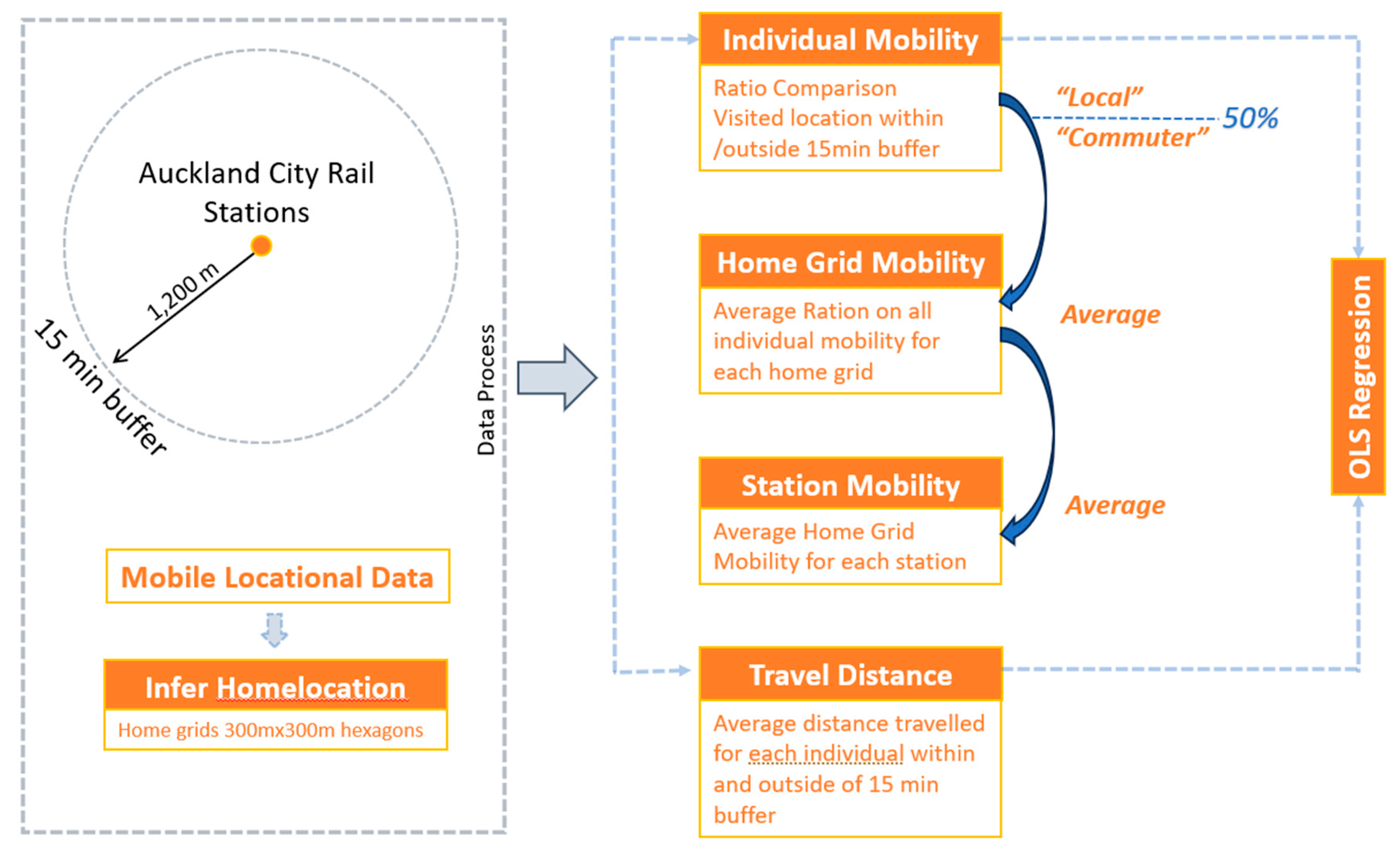
Figure 2.
Inferred Homelocation Near Transit Station.
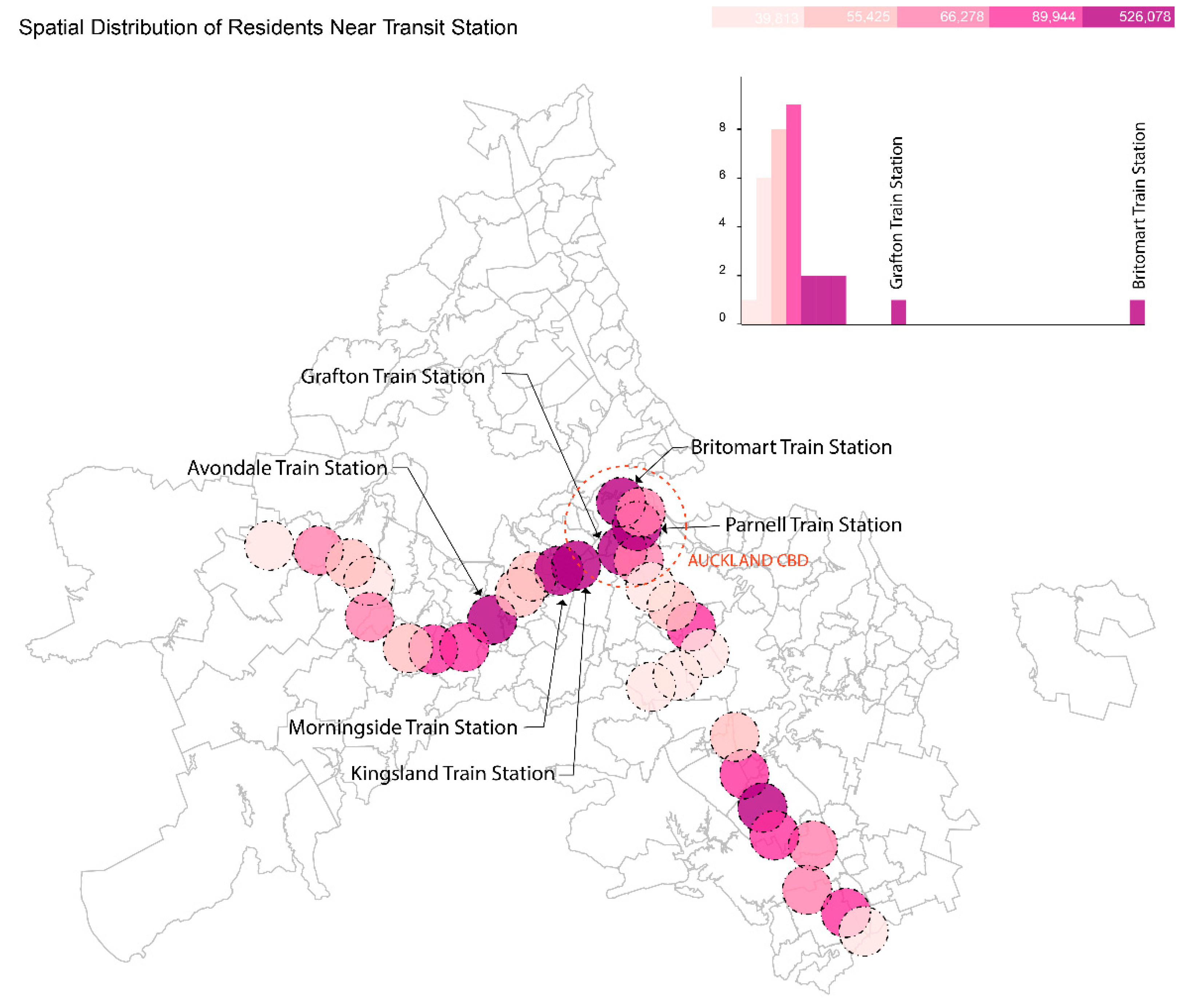
Figure 3.
A.) Locals Individual Ratio %, B.) Locals vs non-locals per Homelocation Grid.
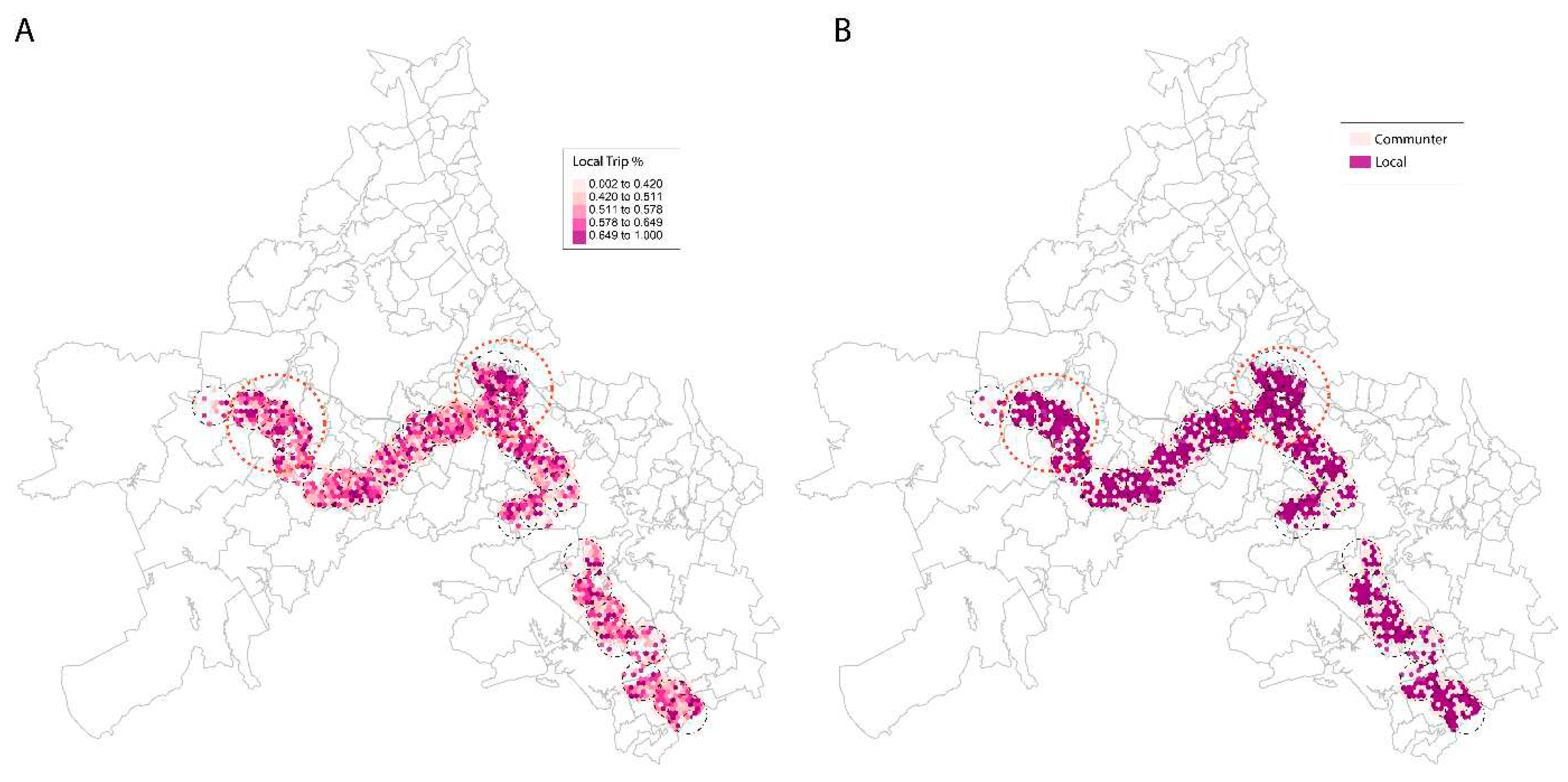
Figure 4.
A.) Locality Mobility per station B.) Locals’ Average Annual Travel Distance.
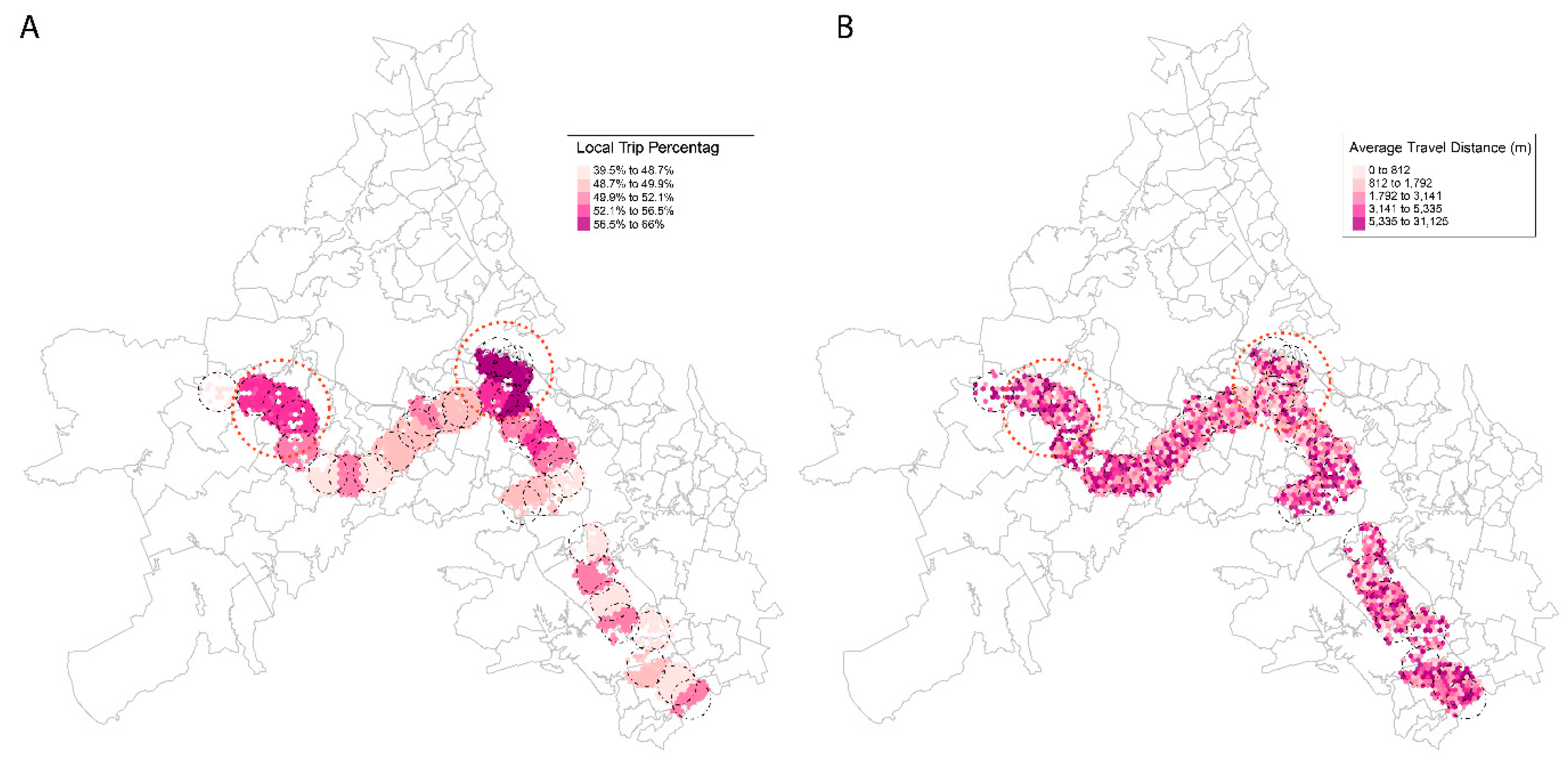

Table 1.
Regression Model Result.
| Regression A | Regression B | |
|---|---|---|
| T.D. | T.D. | |
| dum_local | -0.172*** | |
| (0.0288) | ||
| I.M. | -0.613*** | -0.687*** |
| (0.0156) | (0.00934) | |
| HGM | 0.232*** | 0.236*** |
| (0.00978) | (0.00977) | |
| S.M. | -0.0831*** | -0.0821*** |
| (0.00820) | (0.00822) | |
| _cons | 0.0933*** | -5.22e-11 |
| (0.0175) | (0.00770) | |
| N | 10804 | 10804 |
| adj. R-sq | 0.362 | 0.36 |
| F | 1531.89 | 2024.24 |
Note: Standard errors in parentheses * p<0.05, ** p<0.01, *** p<0.001.
Disclaimer/Publisher’s Note: The statements, opinions and data contained in all publications are solely those of the individual author(s) and contributor(s) and not of MDPI and/or the editor(s). MDPI and/or the editor(s) disclaim responsibility for any injury to people or property resulting from any ideas, methods, instructions or products referred to in the content. |
© 2023 by the authors. Licensee MDPI, Basel, Switzerland. This article is an open access article distributed under the terms and conditions of the Creative Commons Attribution (CC BY) license (http://creativecommons.org/licenses/by/4.0/).
Copyright: This open access article is published under a Creative Commons CC BY 4.0 license, which permit the free download, distribution, and reuse, provided that the author and preprint are cited in any reuse.


