

Submitted:
18 September 2025
Posted:
21 September 2025
You are already at the latest version
Abstract
Mobility is defined as "the ability to move, change place or position, thus opposing immobility." Essentially, it refers to movement. When applied to the "urban" factor, it encompasses "all movements of people and goods within a city through public or private transportation." Metropolitan expansion, as observed in African cities—particularly Greater Lomé—exacerbates various urban planning issues, including urban sprawl, increasing mobility demands, rising nuisances (pollution, congestion), and social injustice, especially through the gentrification of central and peripheral working-class neighborhoods. Solving these issues requires identifying their causes to find appropriate solutions. This study focuses on "Practices and Challenges of Mobility in Greater Lomé: An Analysis of Urban Dynamics." This study analyzes urban mobility dynamics in Greater Lomé through a participatory methodology, with a particular focus on home-to-work travel and modal choices influenced by socio-economic factors. It has thus involved one or more identified target groups, such as the general public, a specific demographic group, or stakeholders, to achieve the objective and collect data— which is the case here. Through a survey conducted among 450 households, findings reveal that walking remains the primary mode of transportation (over 50%), while personal motorcycles and motorcycle taxis account for 80% of motorized trips. Public transport, dominated by the Lomé Transport Company (SOTRAL), remains marginal (less than 3% of trips). Furthermore, statistical tests, such as the Chi-squared test to measure the association between transport modes and household socio-economic characteristics, as well as variance analyses (ANOVA) and logistic regressions, helped refine the interpretation of the results. All analyses were conducted using SPSS software version 26. The analysis reveals that urban mobility in Lomé faces major challenges, including the lack of adequate infrastructure, the predominance of informal transport, and the inefficiency of public transport. Compared to other African cities such as Accra, Dakar, Ouagadougou, and Cotonou, Lomé exhibits significant disparities that require structural reforms. Among the recommendations proposed are the improvement of pedestrian infrastructure, the regulation of informal transport, and the integration of sustainable transport solutions such as Bus Rapid Transit (BRT). The study also highlights the role of digital innovations, such as mobile booking applications, in optimizing urban travel. By incorporating these solutions, Greater Lomé could significantly enhance the accessibility, safety, and efficiency of its transport system.
Keywords:
practices and challenges
; home-to-work travel
; urban dynamics
; accessibility
; Greater Lomé
1. Introduction
Urban mobility is a major challenge in African cities due to rapid urbanization and sustained population growth. The expansion of urban centers leads to increasing transportation needs, exposing populations to challenges such as road congestion, inadequate infrastructure, and rising travel costs [1]. The lack of structured public transport networks and the heavy reliance on informal transport modes further exacerbate these difficulties, limiting access to essential services and deepening socio-economic inequalities.
In West Africa, cities such as Dakar, Accra, Ouagadougou, Cotonou, and Lomé face similar challenges in urban mobility. They are characterized by a strong reliance on informal transport modes and inadequate infrastructure. The low motorization rate makes non-motorized transport modes, such as walking and cycling, essential [2]. However, these modes are often overlooked in urban planning policies due to a lack of suitable infrastructure and insufficient safety measures for vulnerable users [3]. Meanwhile, the proliferation of motorcycle taxis and informal minibuses, although offering travel flexibility, generates issues related to road safety, regulation, and pollution [4].
Some African cities have attempted to integrate these modes into more organized systems. In Dakar, the implementation of the Bus Rapid Transit (BRT) system and the introduction of Tata buses aim to structure public transport and reduce congestion. In Accra, where private minibuses known as “trotros” account for approximately 70% of motorized trips, bus stations have been modernized, and dedicated bus corridors have been developed to improve traffic flow. Ouagadougou, on the other hand, has a strong reliance on individual motorcycles, which represent more than 60% of motorized trips, with adapted infrastructure to support this mode of transport [5].
Compared to these cities, Lomé relies mainly on informal transportation, with limited accessibility to public services and a lack of infrastructure for soft mobility modes (walking, cycling). More than 50% of urban trips are made on foot, highlighting the need to develop suitable infrastructure for these users while providing viable alternatives [2]. However, public transport, particularly those operated by the Société des Transports de Lomé (SOTRAL), covers only a small fraction of motorized trips (less than 3%), leaving room for motorcycle taxis and personal motorcycles, which account for nearly 80% of motorized journeys [6]. This situation exacerbates inequalities in access to infrastructure and contributes to road insecurity. Despite the importance of urban mobility for the development of Greater Lomé, existing studies suffer from a lack of consolidated data on residents’ movements. The absence of centralized and updated databases limits the ability to develop public policies that align with local realities. Additionally, comparative studies with other African cities are rare, preventing an effective assessment of strategies that could be adapted to Lomé. This gap underscores the need for a more systematic and quantitative approach to better understand mobility practices and constraints in the city.
This study aims to analyze urban mobility practices in Greater Lomé, with a particular focus on home-to-work trips, preferred modes of transportation, and the constraints faced by users. It is structured around the following questions:
- What are the challenges related to the accessibility and efficiency of the main modes of transportation?
- How do mobility dynamics influence urban organization and access to infrastructure?
- What solutions can be considered to improve the fluidity and sustainability of travel in the city?
To address these questions, a methodology combining quantitative surveys of 450 households and semi-structured interviews with a representative sub-sample was adopted.
2. Methodology
2.1. Study Area
The study area is located in the extreme south of Togo, within the Maritime region. It holds a strategic position along the Gulf of Guinea coastline in West Africa and serves as the country’s main urban and economic hub. Geographically, this area extends between latitudes 6°12’ and 6°21’ North and longitudes 1°05’ and 1°15’ East, encompassing the Commune of Lomé as well as the surrounding municipalities of Golfe and Agoè-Nyivé.
Greater Lomé experiences a humid tropical climate characterized by two rainy seasons and two dry seasons. According to the final results of the RGPH-5 published in 2023, the population of Greater Lomé stands at 2,188,376 inhabitants, accounting for approximately 27% of the national population, estimated at 8,095,498 inhabitants. This exceptional demographic concentration reinforces Greater Lomé’s status as the nerve center of Togo’s urban dynamics, presenting major challenges related to rapid urbanization, mobility, territorial planning, infrastructure access, and resource management [7].
This sustained urban growth, often uncontrolled in peripheral areas, makes the study area particularly relevant for an in-depth analysis of sustainable urban development issues (Figure 1).
Figure 1 illustrates the study area, covering a space of 425.6 km², bordered to the north and northwest by the Zio Prefecture, to the west by the Avé Prefecture, to the east by the Lacs and Zio Prefectures, and to the south by the Atlantic Ocean. The study area encompasses the entire territory of the Golfe Prefecture and Agoè-Nyivé Prefecture. Lomé, the capital and main city of Togo, which concentrates economic, political, and administrative functions, is located at the southwestern edge of the country within the Maritime region. It is bordered to the south by the Gulf of Guinea, stretching for 22.4 km. Greater Lomé consists of seven (7) municipalities in the Golfe Prefecture and six (6) municipalities in the Agoè-Nyivé Prefecture. The administrative division into these thirteen (13) municipalities replaced the former historical communes. Given its expansion, Greater Lomé falls into the category of tropical coastal cities that have not yet reached the limits of their spatial development. All these municipalities benefit from relatively favorable geographical conditions for daily mobility. The morphological units of Lomé consist of a lateritic plateau with clay-sand formations belonging to the continental terminal [10]. The lateritic plateau connects to the lagoon through a steep slope, which sometimes takes the form of a true cliff. The city was established between the lagoon to the north, the Atlantic Ocean to the south, the village of Bè to the east, and the Aflao-Ghana border to the west.
2.2. Data Collection and Analysis
Before the main data collection, a preliminary survey was conducted with 30 randomly selected households across different areas of the city to test the clarity of the questionnaire, identify potential ambiguities, and adjust formulations to improve response quality. This initial phase helped refine questions related to transportation modes used and the constraints faced by users. The optimal sample size was determined using Cochran’s formula 1977 [11], ensuring adequate statistical representativity while maintaining a 5% margin of error.
where:
- n is the sample size,
- Z is the Z-score corresponding to the confidence level (1.96 for a 95% confidence level),
- is the estimated proportion of the population with the characteristic of interest (0.5 when information is unknown to maximize variance),
- e is the margin of error (set at 0.05, or 5%).
Applying these values:
Considering the total household population in Greater Lomé (estimated at around 500,000), the final sample of 450 households was adjusted to ensure balanced coverage of different urban and socio-economic areas.The adopted sampling method is based on stratification according to two main criteria: geographic distribution and household socio-economic level. Three broad categories of zones were identified: the city center, suburban neighborhoods, and peripheral areas, allowing for an overview of differences in access to transport infrastructure. The sampling also considered the diversity of household socio-economic conditions to include various profiles in terms of income and preferred modes of transportation. Data collection was conducted through face-to-face interviews, administered using electronic tablets to minimize input errors and ensure better response management. A response rate of 87% was achieved, corresponding to 391 fully completed questionnaires. To reduce survey biases, several strategies were implemented, including a detailed explanation of the study objectives to participants, adaptation of survey schedules according to respondent availability, and triangulation of information sources. The latter involved comparing questionnaire data with direct field observations and semi-structured interviews conducted with a sub-sample of 20 individuals. To ensure data validation, several methods were applied. Source triangulation allowed for comparison of survey results with previous studies and official statistics to assess their consistency. An exploratory data analysis was conducted to detect potential outliers or inconsistencies, particularly by cross-checking reported distances with travel times.
The analysis confirms that income level is strongly correlated with the choice of transportation mode. Similarly, travel time influences the preference for certain motorized modes. Logistic regression highlights a negative impact of cost on the frequency of use of a transportation mode, with statistical significance (p < 0.05). The study results highlight several specific challenges for each transportation mode used in Greater Lomé. For pedestrians, the lack of appropriate infrastructure is a major issue. In several neighborhoods, sidewalks are either nonexistent or obstructed by street vendors, forcing pedestrians to walk on the roadway and increasing their exposure to accidents. Additionally, the insufficient number of secure pedestrian crossings and inadequate signage further heighten risks for these users. Motorcycle taxis, which account for a significant share of motorized travel, also present challenges in terms of safety and regulation. The lack of adequate training for drivers and failure to comply with traffic rules contribute to a high rate of accidents involving this mode of transport. Moreover, pricing often remains arbitrary due to the lack of strict regulation, leading to inequalities among users.
Finally, formal public transport, particularly buses operated by the Société des Transports de Lomé (SOTRAL), suffers from limited territorial coverage and a lack of appeal. With less than 3% of trips made by bus, this mode struggles to compete with motorcycle taxis due to long waiting times, restricted service routes, and an insufficient number of available vehicles. As a result, a significant portion of residents turn to informal transport solutions, exacerbating urban congestion and inequalities in access to mobility services. These findings underscore the need for tailored reforms to improve travel fluidity and safety in Greater Lomé. Better planning of pedestrian infrastructure, stricter regulation of informal transport, and strengthening formal public transport are essential levers for more efficient and inclusive urban mobility.
2.3. Specific Challenges of Transportation Modes
The analysis of data from the field survey has identified several major challenges related to the main transportation modes used in Greater Lomé. These challenges concern pedestrian infrastructure, the regulation of informal transport, and the limited accessibility of public transport.
2.3.1. Pedestrian Mobility: A Severe Lack of Adequate Infrastructure
Walking is the primary mode of urban transportation in Lomé, accounting for more than 50% of trips. However, this mode is significantly constrained by the lack of appropriate infrastructure. Many main roads do not have secure sidewalks, and where they exist, they are often obstructed by informal commercial activities, forcing pedestrians onto the roadway. Furthermore, the absence of clearly marked and protected pedestrian crossings on major roads increases the risk of accidents. The field study reveals that 67% of surveyed pedestrians report feeling unsafe while walking in the city due to unpredictable driver behavior and the lack of specific infrastructure.
2.3.2. Motorcycle Taxis: Safety Issues and Insufficient Regulation
Motorcycle taxis, which account for nearly 60% of motorized trips, pose major challenges in terms of safety and regulation. The profession remains largely informal, with drivers often lacking proper training and widespread disregard for traffic rules. The absence of helmet use, excessive speeding, and the lack of designated parking areas further increase accident risks. The survey revealed that more than 40% of motorcycle taxi users have been involved in a traffic incident. Additionally, the lack of standardized fare pricing creates uncertainty for passengers, who must negotiate prices for each trip.
2.3.3. Public Transport: Limited Coverage and Low Attractiveness
Formal public transport, particularly buses operated by the Société des Transports de Lomé (SOTRAL), covers only a small portion of mobility needs. Less than 3% of motorized trips are made by bus, mainly due to insufficient availability, irregular schedules, and a limited route network restricted to major roads. The survey indicates that users perceive this mode as unreliable, primarily due to long waiting times (up to an average of 30 minutes) and the low number of available vehicles. As a result, most residents turn to motorcycle taxis or personal vehicles, exacerbating road congestion and inequalities in access to transportation.
3. Results
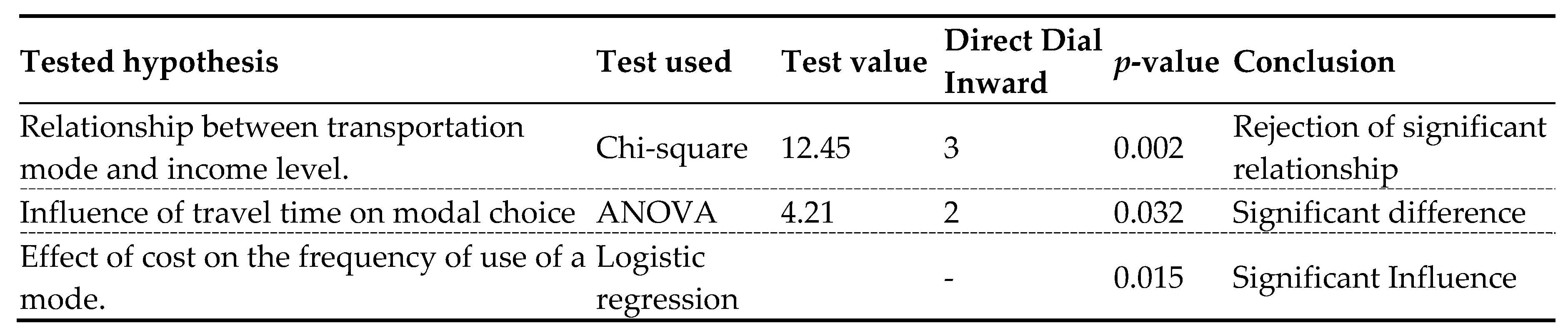
The key results of the Chi-square test and variance analyses (ANOVA) are presented in Figure 2 below:
Figure 2.
Statistical test results on factors influencing transport choices; Source [12].
Figure 2.
Statistical test results on factors influencing transport choices; Source [12].
3.1. Transport Modes Used
Walking is by far the most popular mode of transportation among Lomé residents, with more than half of all trips made on foot. However, this predominance is not a deliberate choice but rather a result of a significant lack of viable alternatives. The quality of pedestrian infrastructure is inadequate, characterized by the absence of sidewalks along many major roads, the obstruction of roadside areas by informal vendors, and pedestrian-unfriendly signage [12].
The structure of collective transport depends on the vehicles used and the available infrastructure. These vary widely, resembling different means of transporting people and goods from one place to another. With urban space expanding, travel distances are increasing, and walking remains the only truly accessible mode for the majority of the population [13] cited by [14].
Figure 3.
Modal Share in Greater Lomé; Source: [12].
Figure 3.
Modal Share in Greater Lomé; Source: [12].
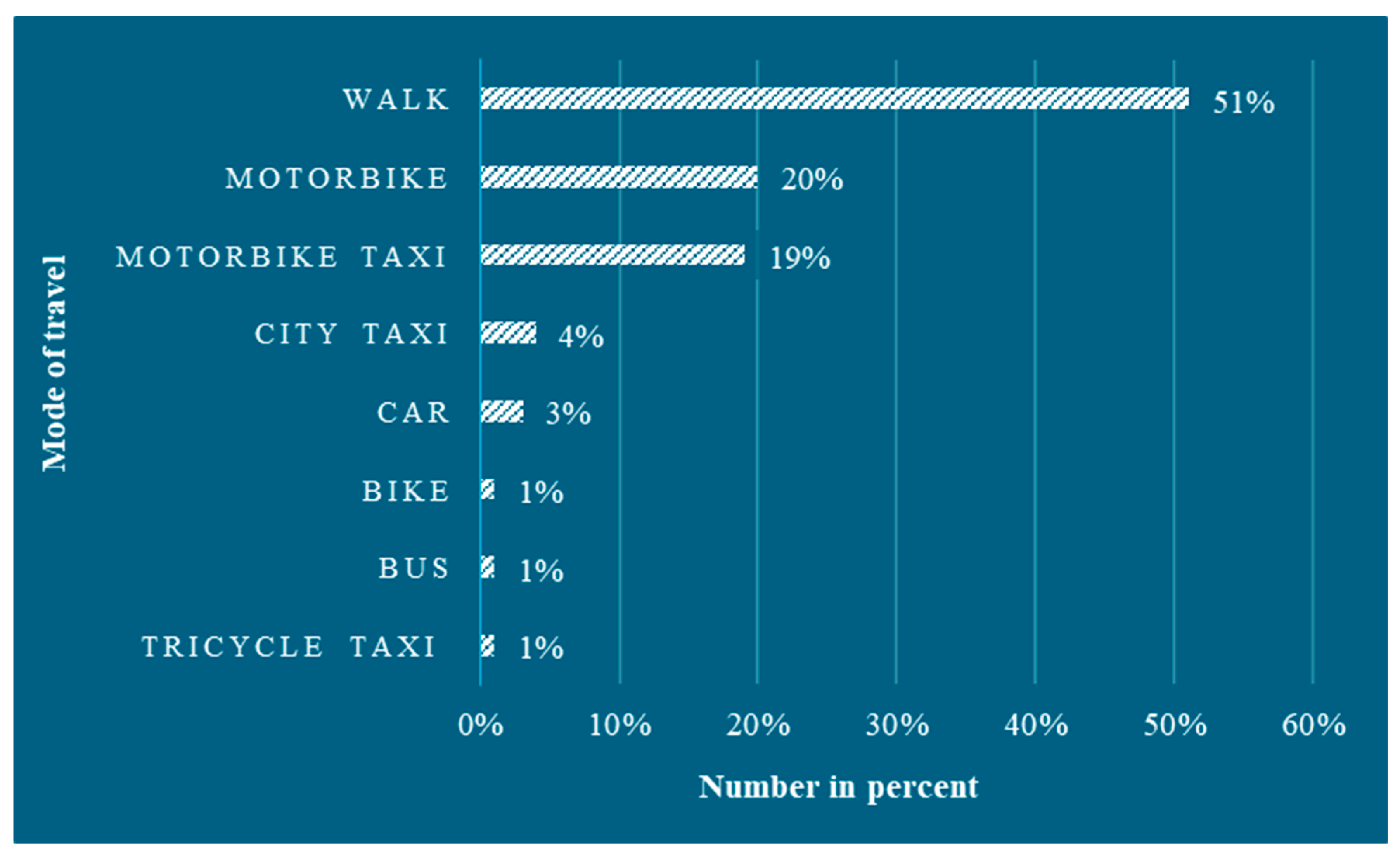
Motorized trips account for 48% of total transportation in Lomé, with a strong predominance of individual motorcycles and motorcycle taxis, which together represent 80% of motorized travel. Nearly 60% of trips are made using motorcycle taxis or personal motorcycles, often covering distances greater than 5 km. Private cars account for only 6% of motorized trips, primarily due to high purchase costs, including significant taxation on private cars—something not applied to motorcycles. Public transport (buses and minibuses) represents only 3% of motorized travel, with less than 1% attributed to SOTRAL, reflecting its limited presence in the capital and likely its lack of competitiveness in terms of availability and travel speed compared to motorcycle taxis.
By integrating external data, the modal distribution in Greater Lomé can be compared to trends observed in other African cities. Studies conducted in Accra and Dakar highlight a similar dominance of informal transport, with a high modal share of motorcycle taxis and minibuses [2]. These references help contextualize Lomé’s situation within a broader framework, demonstrating that heavy reliance on informal transport is not an exception but rather a common trend in West African capitals.
The findings of this research indicate that walking accounts for more than 50% of trips, though this percentage varies significantly across different neighborhoods. In central areas (Golfe 1 and Agoè-Nyivé 4), walking represents 59% of travel, whereas in Golfe 6, where home-to-work distances are longer, it drops to 37%. This variability highlights the critical role of local infrastructure in promoting active transportation.
Comparing modal behaviors across the municipalities of Greater Lomé reveals specific local constraints. The modal share of walking fluctuates between 37% in Golfe 6, a large residential area in the southeast, and 59% in Golfe 1 and Agoè-Nyivé 4 (Figure 4).
This difference can also be explained by mobility patterns—when a higher share of trips are internal to a municipality, they are more likely to be made on foot, provided the distances between residential areas and key attraction points allow for it. The availability of other transport modes, particularly private cars and motorcycles, also plays a role. Motorcycles and motorcycle taxis are the most widely used transport modes after walking, with some minor variations. Private motorcycles are more commonly used for travel in peripheral municipalities such as Agoè-Nyivé 1 and 3, whereas motorcycle taxis are the preferred option in more central areas like Golfe 2, 3, and 4.
The study reveals that motorcycle taxis are widely used in areas where public transport is least developed. In Golfe 2, 3, and 4, where SOTRAL has limited coverage, motorcycle taxis account for more than 60% of trips. Conversely, in Golfe 7, where residents have higher purchasing power, private cars are more prevalent. This differentiation highlights the impact of socio-economic conditions on modal choices. Private car usage is proportionally higher in Golfe 7—the wealthiest municipality in western Lomé—and Golfe 3, where activities are more dispersed due to the presence of a military center. Transportation choices are not determined solely by geographical factors; they can also be influenced by the purpose of each trip (Figure 5).
For trips related to school or studies, residents of Lomé predominantly travel on foot (about 80%). This is largely because children and most students do not have driving permits or the financial means to afford motorized transport. In contrast, for work commutes, shopping, or leisure activities, the share of pedestrian travel decreases to around 25%, with motorcycles or motorcycle taxis becoming the preferred transport modes.
3.2. Reasons for Travel Among Lomé’s Population
In the streets of the municipality, people are constantly on the move throughout the day, using different modes of transport for various purposes. This urban population engages in continuous travel, shaped by diverse mobility needs. According to [15], “Mobility is determined by the main reasons for daily trips, which may include accompaniment, leisure, shopping, schooling, medical care, and work.” These reasons justify travel and define the individuals who undertake them. [16] emphasized that “People do not travel simply for the sake of movement.” Instead, travel purposes reflect an individual’s daily activity schedule, which itself depends on specific life cycle characteristics. This study provides insights into the categories of people concerned and the motivations behind their travel (Figure 6).
Figure 6 illustrates the motivations behind the movements of Lomé’s population. Homes serve as flow generators, shaping trips that generally follow a pendulum pattern toward the city center. Field research reveals that 49% of respondents cite work as the primary reason for their daily travel, while 11% travel for commercial purposes, and 31% for school-related activities. Cyclical movements—including daily mobility—imply both a continuous renewal of the process over time and a return to the starting point [17]. This type of mobility aligns with so-called “constrained” trips, which are the necessary daily movements urban workers must undertake. More than 50% of these trips occur during specific peak hours. Mobility is primarily shaped by people’s activities and how they are structured in time and space. “Constrained” reasons—such as work and education—are distinct from “non-constrained” reasons—like shopping or leisure—where timing and destinations can be adjusted (Figure 7).
In Greater Lomé, over 80% of travel is due to necessary reasons. The most frequent trips are related to school or university, accounting for 50% of residents’ movements (including the return home as part of the study-related activity). Work-related travel makes up 34% of all trips. The daily travel pattern is characterized by three peak periods: between 6 AM and 8 AM, around 2 PM, and 5 PM. The morning peak, which represents about 27% of the day’s movements, corresponds to departures for school and work (students typically leave around 6 AM). The 2 PM peak is associated with school returns, while the 5 PM peak and subsequent trips are mainly related to work returns.
3.3. Accessibility to Transport Modes and Cost
Urban space is considered a system of functional elements—housing, economic activities, educational and leisure locations—connected by a network of movement and mobility. This space imposes the concept of accessibility, which, according to [15], is “one of the most important factors in the functioning of a territory.” The key driver of accessibility is distance, as it primarily coordinates movements and is linked to the physical aspect of the area. “A place is more accessible if the sum of distances separating it from other locations is low” [9]. Other socio-economic indicators can be associated with distance to better understand accessibility. These include population density, available modes of transport, transport infrastructure, employment numbers, the location of schools, health facilities, and commercial centers, as well as resource utilization. In the studied area, accessibility is heavily influenced by the available transport modes. To reach downtown for work, commerce, or study, urban residents rely on various transportation means. Transport infrastructure in Lomé is unevenly distributed, particularly affecting pedestrians. Sidewalks, where they exist, are often in poor condition, compromising user safety. Additionally, the lack of well-marked pedestrian crossings on major roads puts walkers at high risk of accidents. A 2023 [18] reveals that nearly 35% of road deaths in sub-Saharan Africa involve pedestrians—an alarming statistic that highlights the urgent need for intervention.
3.3.1. Factors Influencing Transport Mode Choice
The most important factor in choosing a mode of transport in Greater Lomé is cost, followed closely by safety, then ease of access and reliability (Figure 8).
It is interesting to note that these criteria evolve based on people’s primary activities and age. Ease of access, safety, and comfort become the dominant factors for older individuals, whereas cost remains the most significant criterion for students and job seekers. Among the various transport modes, personal cars are the most attractive option.
3.3.2. User Perception of Transport Modes
The perception of different transport modes was gathered by asking survey respondents to rank them in order of preference. Personal cars emerged as the most attractive option, primarily due to their comfort and safety, followed by personal motorcycles. City taxis were also preferred over motorcycle taxis, reflecting the strong emphasis on road safety and the negative image associated with motorcycles in this regard (Figure 9).
Fieldwork allowed respondents to provide information on how they access artisanal transport options, with the following possibilities:
- By the roadside
- At a designated stop
- Using a mobile app (such as Gozem or others)
Results are in Figure 10.
Field survey data reveals low adoption of mobile apps like Gozem for booking artisanal transport (Figure 9). Most vehicles are contacted directly by users on the roadside, whereas taxi-tricycles are more likely to be found at designated stops or booked via an app.
This reluctance can be attributed to several factors:
- Traditional habits of hailing transport on the roadside,
- Limited digital literacy among users,
- Restricted mobile internet access in certain areas of Greater Lomé.
During the public opinion survey, respondents shared their views on whether a mobile app could improve their mobility in Greater Lomé. The results indicate hesitation, with notable age-based differences—younger users tend to be more open, whereas gender and occupation were not significant factors. Those who responded “yes” identified essential functions they would expect from such an app. Additionally, field studies highlight that traffic on major roads (Boulevard Gnassingbé, Boulevard 13 Janvier, Boulevard 30 Août, Boulevard Jean Paul II, and Boulevard du Mono) is dominated by two-wheeled transport modes. While survey results show limited adoption of booking apps, promoting them could be a viable strategy to enhance urban mobility in Lomé alongside structural transport reforms. Experiences from similar cities suggest that gradual digitalization of informal transport services can serve as a lever for improving safety, accessibility, and travel efficiency.
3.3.3. Cost, Duration, and Average Daily Travel Distance by Mode
Figure 11 presents the characteristics of trips in Greater Lomé based on transport mode. There is a clear distinction in travel distances. Shorter trips are primarily made using non-motorized modes such as walking or cycling. Longer trips are carried out via buses, city taxis, or personal cars. Here, cost, distance, and travel time refer to the entire journey, including access to and distribution from the main mode. Given the limited development of intermodal transport, the cost contributions of access/distribution modes are considered negligible.
The analysis of costs and distances traveled highlights significant differences between the various modes of transport used in Lomé. This study provides a better understanding of users’ modal choices according to their economic constraints and the nature of their journeys. Buses, with an average cost of 211 CFA francs, are the most affordable mode of transport for long distances (9,080 m on average). The reduced fare for school and professional buses (140 CFA francs for 6,216 m) indicates the existence of preferential pricing for certain categories of users. However, despite their low cost, these modes remain little used due to insufficient network, scarcity of vehicles and high waiting times. The individual motorcycle, with an estimated cost of 133 CFA francs, represents an economical alternative for intermediate journeys (5,427 m). It avoids the additional costs associated with public or private transport services. Motorcycle taxis and tricycle taxis, with similar costs (376 and 378 FCFA, respectively), are preferred for short and medium-distance trips (3,928 m and 6,404 m). Their flexibility and immediate availability make them a popular mode of transportation, despite costing almost three times more than a personal motorcycle. The private car, with an average cost of 320 CFA francs for 6,530 m, is used by a minority of users. This cost, which only takes into account fuel costs, masks higher expenses related to car purchase, maintenance and taxation. These charges, combined with frequent traffic jams, limit car use to the wealthy classes. The city taxi is the most expensive mode of transport, with an average fare of 481 CFA francs for 8,525 m. Its high cost is explained by the lack of price regulation and private operation without subsidies. Although it offers more comfort and is suitable for long-distance journeys, its accessibility remains restricted to users with a larger transport budget.
The analysis of the distances travelled shows that the most expensive modes are often associated with longer journeys. The city taxi and bus cover the longest distances (8,525 m and 9,080 m respectively). However, although the bus offers a favourable cost per kilometre, it is under-utilised due to its low frequency and limited territorial coverage. Intermediate modes, such as motorcycles and taxi-tricycles, are used for medium distances, offering a compromise between speed and cost. Conversely, walking and cycling are reserved for the shortest journeys (1,720 m and 2,876 m respectively), but their use is constrained by the lack of suitable infrastructure and the risk of accidents in traffic dominated by motorcycles.
The study reveals a strong reliance on motorcycle taxis and personal motorcycles, despite relatively high costs in the long run. The development of the public transport network, in particular through the increase in the number of buses and the regulation of the informal sector, could be a viable and economical alternative to reduce urban congestion and improve accessibility to transport services. The establishment of infrastructure adapted to non-motorised modes (walking and cycling) would encourage their use and reduce the pressure on informal transport. In addition, a revision of bus fares could improve their attractiveness by ensuring a better balance between accessibility and profitability. This analysis therefore highlights the need for an integrated transport policy, combining better bus accessibility, stricter regulation of informal transport and increased investment in pedestrian and cycling infrastructure.
Such an approach would improve the fluidity of travel while ensuring greater equity of access to the different modes of transport. The use of data from [19] on the cost of public transport makes it possible to compare bus fares with informal alternatives. Although the average cost of the bus is low (211 FCFA), it remains underused due to high travel time and insufficient frequency. In comparison, formal public transport in other cities such as Dakar or Abidjan benefits from more structured services with subsidised fares that encourage its adoption. The study highlights that motorcycle taxis are preferred despite their relatively high average cost (376 FCFA per trip) because of their flexibility. Moreover, the comparison between costs and distances shows that the bus is the most cost-effective option in terms of cost per kilometer. However, its lack of accessibility and reliability pushes users towards more expensive alternatives. This observation underlines the need to strengthen the public transit offer in order to better meet urban mobility needs (Figure 12).
The time it takes to access the different modes of transportation, including the time it takes to walk to the vehicle and the waiting time before departure, is a determining factor in the choice of mode of travel. In sub-Saharan Africa, studies on the pricing of informal transport [20] show that motorcycle taxis and tricycle taxis are often perceived as more expensive than buses. However, their almost immediate accessibility compensates for this disadvantage, especially in areas where public transport is limited. These findings underline the need for better regulation of fares in order to reduce inequalities in access to mobility and ensure a fairer offer. In addition, a further analysis reveals that more than 60% of motorcycle taxi journeys are for distances of less than 5 km, while buses and city taxis are used more for longer journeys. This tariff segmentation penalises users with short-distance mobility needs and who do not have affordable alternatives. Tighter price regulation, combined with an improvement in the supply of local public transport, could reduce these disparities and encourage a more balanced distribution of demand between the different modes of transport.
In addition, the time it takes to access the vehicles varies depending on the mode used. For a private vehicle, it is generally one to two minutes, while it can reach about twenty minutes for a bus, especially during rush hour (Figure 13). This gap can be a barrier to the adoption of certain modes of transport, especially when faster alternatives are perceived as more affordable or logistically accessible. In order to optimise the user experience, it would be relevant to improve the frequency of buses, to develop infrastructure that promotes intermodality and to strengthen fare regulation to offer a balance between accessibility, cost and speed.
However, the constraints imposed by working time regulations that must be observed—situations themselves dependent on the distances to be traveled, the modes of transport, and the concentration of trips (home-work) in both time and specific routes—influence the choice of public transport and shape the daily rhythm of the population.
3.4. Motorized Two-Wheelers: A Dominant Mode of Transport on the Roads of Greater Lomé
Mobility on the main roads is dominated by two-wheeled motorized transport, which accounts for 47% of road traffic. Next come city taxis and private cars, making up 35% of transportation modes. Active modes of transport, particularly walking and cycling, rank third, representing 7% and 5% of trips, respectively. Finally, the numbers for tricycles and buses are the smallest, accounting for just 4% and 2% of all transportation modes recorded during the morning rush hour. However, the number of pedestrians should be considered with caution, as counting them accurately was challenging due to a lack of appropriate technical means. Furthermore, pedestrians do not follow fixed routes, and their travel purposes are highly variable.
Figure 14.
Modal share on the main roads of Greater Lomé; Source [12].
Figure 14.
Modal share on the main roads of Greater Lomé; Source [12].
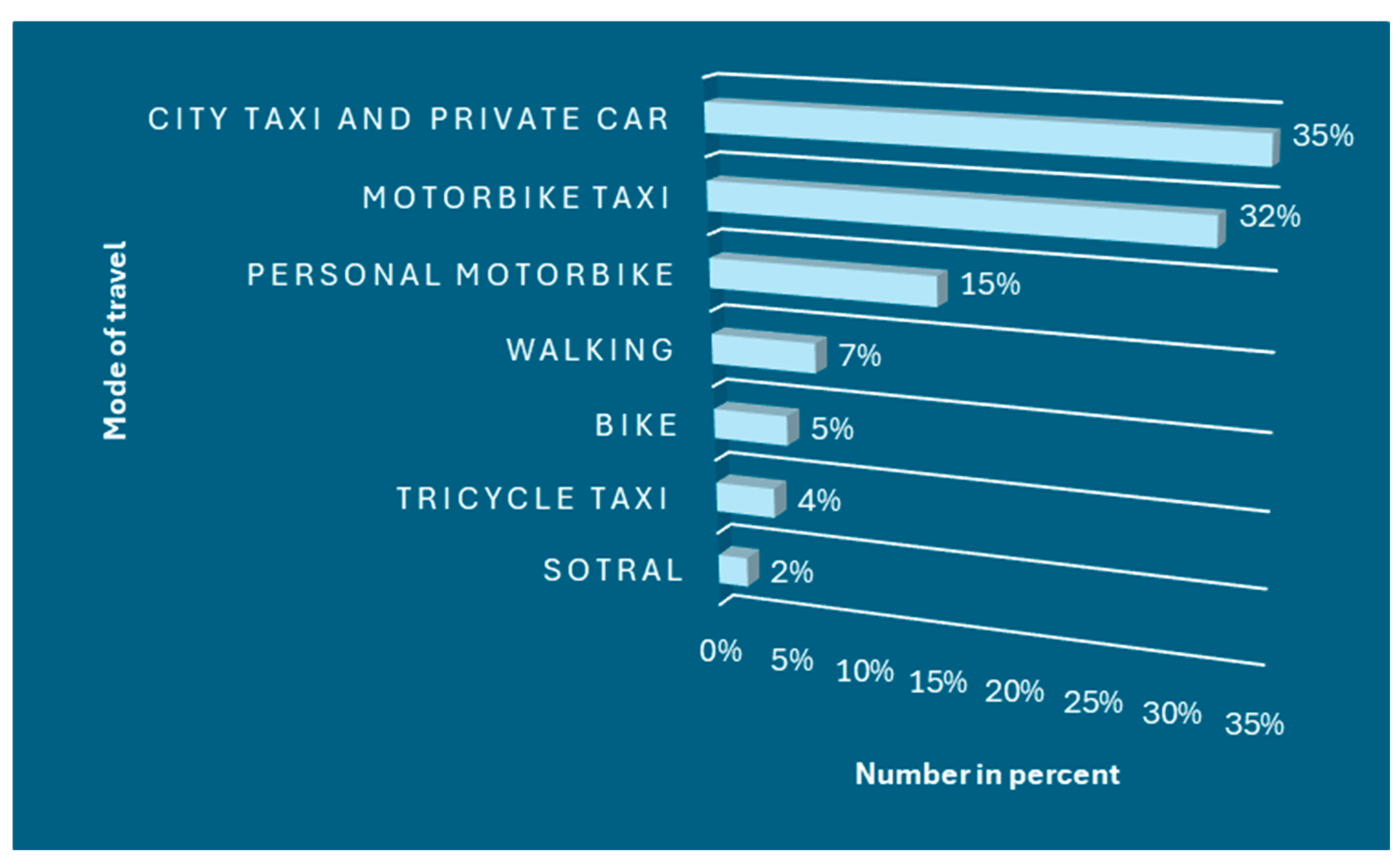
Traffic on the roads of Greater Lomé is very dense. These roads serve as the city’s central arteries, channeling all flows from the northern suburbs toward the downtown area. This congestion is largely due to the increasing motorization of the population, most of whom live far from the city center. The high predominance of motorcycles and moto-taxis in urban transportation also makes walking riskier. The drivers of these vehicles often disregard pedestrian right-of-way, speeding through intersections and sometimes occupying spaces designated for walking. As a result, 67% of pedestrians surveyed in field studies reported feeling unsafe when walking in the city.
3.4.1. Profiles of Active Mode Users on the Main Roads of Greater Lomé
The results of the field survey conducted among users show that active modes of transport involve more men than women (Figure 15).
According to the results of Figure 15, nearly 70% of users of soft mobility modes are men (68%). This can be explained by the fact that many women do not enjoy cycling, and even fewer are willing to walk long distances. Women are more commonly seen walking short distances for nearby domestic activities. For longer distances, they often prefer using moto-taxis. However, there are female street vendors who travel long distances in search of customers to sell their goods. Within this group, there are more young people than elderly individuals (Figure 16).
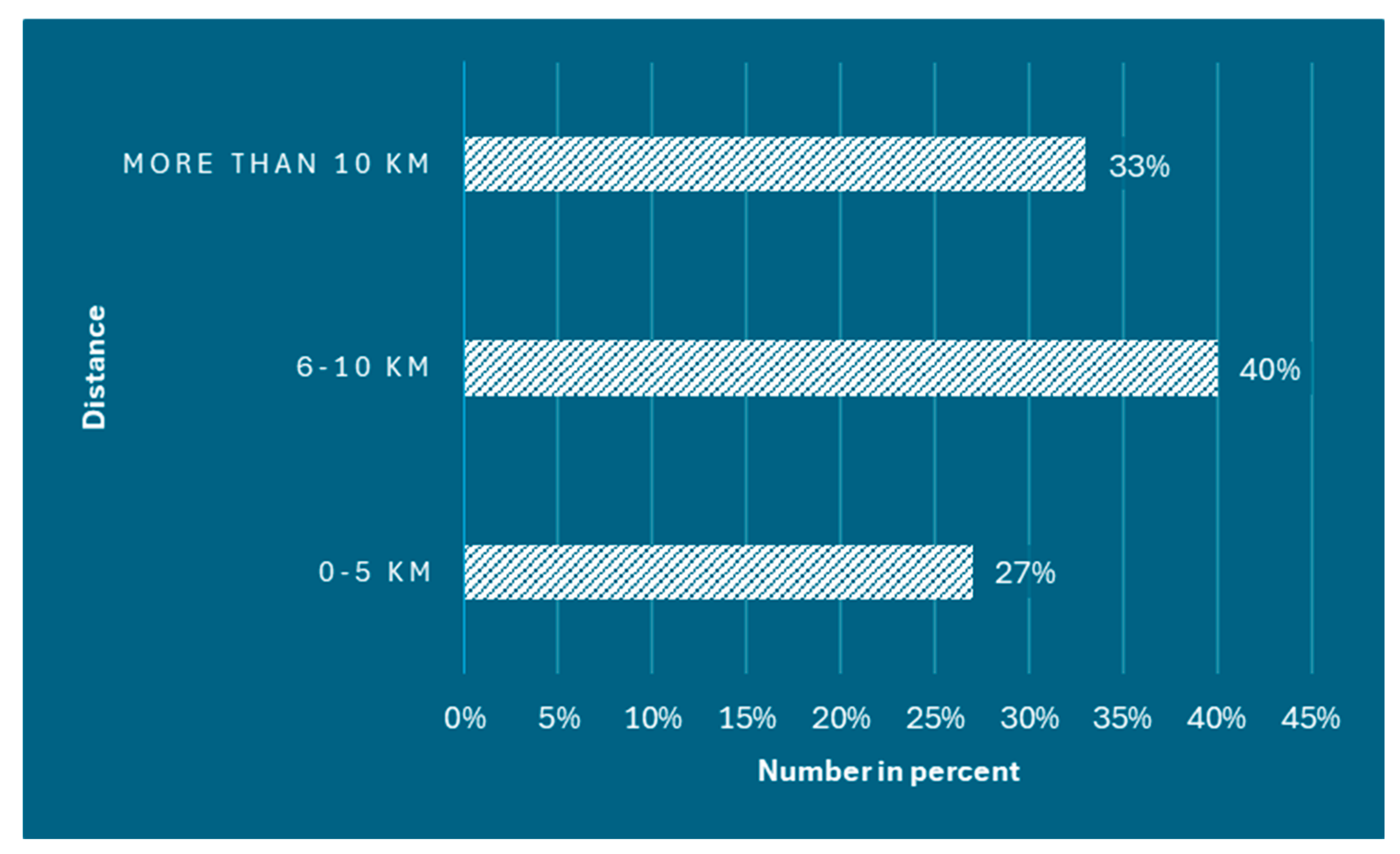
Analysis of Figure 16 shows that the age group between 18 and 25 years is the most numerous (46.7%). This group consists of students and apprentices who primarily use soft mobility modes for their travel. As a low-income demographic, walking or cycling is their most affordable means of transportation. They are followed by the 25 to 40-year-old age group (26.7%), which includes many housewives, artisans, and merchants who move around with their goods. The 40 and older age group (20%) consists of retirees and some elderly individuals who make short trips to meet their socioeconomic needs. A significant portion of these surveyed soft mobility users; travel long distances (Figure 17).
The majority of surveyed users travel a distance between 6 and 10 km, representing 40% of respondents. Those covering more than 10 km (34%) primarily use bicycles, while others opt for motorcycles for part of their journey, depending on their financial means, and continue by walking for the remaining distance. Finally, those traveling less than 5 km, accounting for 27%, are mainly pedestrians. However, pedestrians using these modes face significant difficulties.
4. Discussion
The results of this study confirm trends observed in other African cities such as Accra [2] and Nairobi [21], where informal modes of transport, particularly moto-taxis, dominate urban travel. The analysis highlights the prevalence of walking trips in Lomé, which account for 51% of all journeys, due to a lack of adequate infrastructure and reliance on informal modes for long distances. This situation underscores the need to improve pedestrian infrastructure, similar to initiatives undertaken in Accra, where sidewalk renovations and enhancements to pedestrian crossings led to a 23% reduction in accidents between 2018 and 2022 [22]. In several cities in sub-Saharan Africa, such as Dakar and Nairobi, paratransit (collective taxis) accounts for nearly 90% of urban travel [20]; [23]. This dependence results from the inadequacy of formal public transportation, leading to congestion and limited accessibility. The lack of reliable public transport forces residents in the outskirts of Lomé to travel long distances on foot or rely on unregulated moto-taxis, exacerbating inequalities in access to essential services. By comparison, in Accra and Kumasi, the quality of transport infrastructure and high costs limit access to these services for a large portion of the population [21] ; [24]. Integrating informal transport into a more structured framework remains a major challenge for improving mobility in Lomé.
Reforms undertaken in Cotonou and Ouagadougou illustrate potential improvements. In Cotonou, the registration of Zemidjans requires drivers to wear numbered vests and join professional unions, facilitating their identification and reducing fare disputes [25]. Ouagadougou has introduced mandatory identification and road safety training for drivers, enhancing service quality and reducing accidents [26]. Moreover, the rise of mobile applications is gradually transforming mobility practices in sub-Saharan Africa. The growing adoption of smartphones and mobile payment services [27] facilitates the integration of digital solutions such as Gozem. This digitalization offers several advantages, including improved user safety through driver identification and trip tracking, the reduction of abusive pricing, and cost optimization via real-time fare comparisons.
Similar initiatives, such as SafeBoda in Uganda and Yango in Côte d’Ivoire, have helped structure the moto-taxi market and enhance user satisfaction [23]. However, the weakness of formal public transport remains a major barrier to mobility in Lomé, where it accounts for only 2% of trips [19]. In Ouagadougou, urban connectivity has been strengthened through a network of cooperative-run minibuses, while the modernization of bus stations in Cotonou has improved the organization of collective transport flows [28]. Lomé could draw inspiration from these models to establish a minibus network tailored to user needs. The experience of cities such as Dar es Salaam and Lagos demonstrates that targeted investments, combined with effective transport governance, can lead to significant improvements. The development of Bus Rapid Transit (BRT) systems has reduced travel times and enhanced user accessibility [29]; [30]. A gradual transition toward these innovations, supported by awareness campaigns, could encourage better regulation of informal transport in Lomé.
Finally, an analysis of World Bank data on urban mobility [1] reveals disparities between Lomé’s municipalities. In Ouagadougou, private motorcycles dominate in suburban areas, while moto-taxis are more prevalent in urban centers—similar to the dynamics observed in Agoè-Nyivé. Understanding these variations could help design transport solutions adapted to local realities. By drawing inspiration from the reforms implemented in Cotonou and Ouagadougou, Lomé could initiate a progressive restructuring of its urban transport system. Regulating moto-taxis, developing a collective transport network, and integrating digital technologies are key priorities for improving accessibility, safety, and transparency in urban travel.
5. Conclusions
This study highlights the predominant role of informal transport modes and walking in urban mobility in Lomé, a trend widely shared by other African metropolises. It underscores the need for an integrated approach to strengthen infrastructure dedicated to non-motorized transport, reform the public transport sector, and structure paratransit to improve the safety and efficiency of travel. A comparative analysis with cities like Dar es Salaam and Lagos shows that initiatives such as Bus Rapid Transit (BRT) significantly reduce travel time and transport costs, offering relevant courses of action for Lomé. Unlike previous studies, which are often descriptive, this research takes a quantitative and comparative approach to home-to-work travel practices. The survey conducted among 450 households, combined with an analysis of costs, distances, and travel times, provides essential empirical data for evaluating the effectiveness of different transport modes. By comparing Lomé’s situation with those of Dakar, Accra, and Ouagadougou, the study highlights strategic recommendations, including the regulation of informal transport and the improvement of infrastructure for non-motorized users. These findings thus provide a solid foundation for guiding public policies toward more inclusive and sustainable urban mobility. To address the identified challenges, several measures must be implemented. Securing sidewalks, installing pedestrian crossings at dangerous intersections, and conducting awareness campaigns on pedestrian priority are essential to improving mobility for vulnerable users. For moto-taxis, mandatory driver training, fare regulation, and a secure identification system would help enhance passenger safety. Regarding public transport, increasing the number of buses, extending routes to peripheral neighborhoods, and creating dedicated lanes would promote better accessibility and optimize travel flows. However, the governance and financing of urban transport projects remain major challenges. A holistic approach that incorporates the needs of the most vulnerable users, particularly pedestrians and cyclists, is essential. Moreover, digital innovations, such as Gozem, present promising opportunities to structure informal transport, similar to the success of Uber and Grab in Asia. In this perspective, implementing structural reforms and increasing investments in non-motorized infrastructure are crucial steps toward establishing a sustainable and inclusive urban transport system in Lomé.
Author Contributions
Conceptualization, A.P. (Abelim Passoli); Methodology, A.P. and C.A. (Abelim Passoli); Software, A.P. and C.A. (Abelim Passoli); Validation, A.P. and C.A. (Abelim Passoli); Formal Analysis, A.P. and C.A. (Abelim Passoli); Investigation, A.P. and C.A. (Abelim Passoli); Resources, A.P. and C.A. (Abelim Passoli); Data Curation, A.P. (Abelim Passoli); Writing—Original Draft, A.P.; Writing—Review & Editing, A.P. (Abelim Passoli); Visualization, C.A.; Project Administration, A.P. (Abelim Passoli). All authors have read and approved the published version of the manuscript.
Funding
Not applicable.
Institutional Review Board Statement
Not applicable.
Informed Consent Statement
Not applicable.
Data Availability Statement
The data is contained within the article.
Conflicts of Interest
The authors declare no conflict of interest.
References
- World Bank. (2022). Urban mobility in West Africa. Washington, DC: World Bank Group.
- Diaz Olvera, L., Kane, C., & Suka, D. (2015). Urban mobility in West Africa: A comparative analysis. Transport Studies Journal, 23(4), 112–134.
- World Health Organization. (2011). Road safety and urban infrastructure in Sub-Saharan Africa. Geneva: WHO. Available online: https://www.who.int/violence_injury_prevention/publications/road_traffic/africa_infrastructure/en/.
- Alawi, A. (2017). Informal transport and regulation in Africa. Bamako: African Editions.
- Klopp, J., & Behrens, R. (2017). Africa’s transport challenges: Policies and solutions. Cambridge: Cambridge University Press. https://www.cambridge.org/core/books/africas-transport-challenges/ ...
- SSATP. (2019). Sustainable Urban Transport in Africa. World Bank.
- INSEED. (2022). Final results of the Fifth General Census of Population and Housing (RGPH-5), November 2022. National Institute of Statistics and Economic and Demographic Studies. https://inseed.tg/resultats-definitifs-du-rgph-5-novembre-2022/.
- DGSCN. (2010). Multiple Indicator Cluster Survey (MICS) – Final Report. Lomé, Togo: Directorate General of Statistics and National Accounting.
- Togbedji, T. (2020). Studies on Urban Mobility Dynamics in West Africa. Lomé: University Press.
- Blivi, A. (1998). Urban Morphology and Geography of Lomé. Lomé: University Editions.
- Cochran, W. G. (1977). Sampling techniques (3rd ed.). New York: Wiley.
- Passoli, A., et al. (2024). Fieldwork on mobility practices and challenges in Greater Lomé. Lomé.
- Diaz Olvera, L., & Kane, C. (2002). Urban Mobility and Transport in West Africa. Paris: CNRS Editions. Available at: https://www.editions.cnrs.fr/livre/9782271060000.
- Suka, D. (2021). Urban mobility in African cities: Challenges and solutions (p. 131). Dakar: African Editions.
- Edoh, K. (2014). Daily Mobility in Africa: Challenges and Perspectives. Abidjan: African University Editions.
- Amar, G. (1993). Transport and Development in Black Africa: An Economic Geography Essay. Paris: Karthala.
- Quénot-Suarez, H. (2011). Cyclical Mobility and Urban Transport. Paris: CNRS Editions.
- World Health Organization. (2023). Road Safety in Sub-Saharan Africa. Geneva: WHO. Available at: https://www.who.int/news-room/fact-sheets/detail/road-traffic-injuries ...
- SSATP. (2019). Sustainable Urban Transport in Africa. World Bank.
- Jennings, G., & Behrens, R. (2017). Paratransit in Sub-Saharan Africa: Current trends and future prospects. London: Routledge. https://www.routledge.com/Paratransit-in-Sub-Saharan-Africa-Current-Trends-and-Future-Prospects/Jennings-Behrens/p/book/9781138287846.
- Salon, D., & Gulyani, S. (2010). Mobility, accessibility, and poverty in African cities: Evidence from Nairobi and Accra. World Bank Report. Washington, DC: World Bank.
- Ghana Transport Ministry. (2023). Pedestrian infrastructure improvement in Accra. Accra: Government of Ghana.
- Gathara, P. (2018). Regulating informal transport in East Africa: Challenges and successes. African Transport Review, 17(2), 55–78.
- World Bank. (2012). World development report 2012: Gender equality and development. Washington, DC: World Bank Group.
- Ministry of Transport of Benin. (2023). Regulation of Zemidjans in Cotonou. Cotonou: Government of Benin.
- Ministry of Transport of Burkina Faso. (2023). Reforms and modernization of urban transport in Ouagadougou. Ouagadougou: Government of Burkina Faso.
- GSMA. (2023). Mobile Technology and Transportation in Africa. GSMA Intelligence Report. Available at: https://www.gsma.com/mobileeconomy/.
- PMUD-GN. (2025). Final report of the Environmental and Social Management Framework (ESMF) of the Sustainable Urban Mobility Project of Grand Nokoué. Cotonou, Benin: Ministry of Infrastructure and Transport.
- African Development Bank. (2021). Urban mobility strategies in Africa. Abidjan: African Development Bank Group. https://www.afdb.org/en/documents/document/urban-mobility-strategies-in-africa-2021-110693.
- SSATP. (2019). Sustainable Urban Transport in Africa. World Bank.
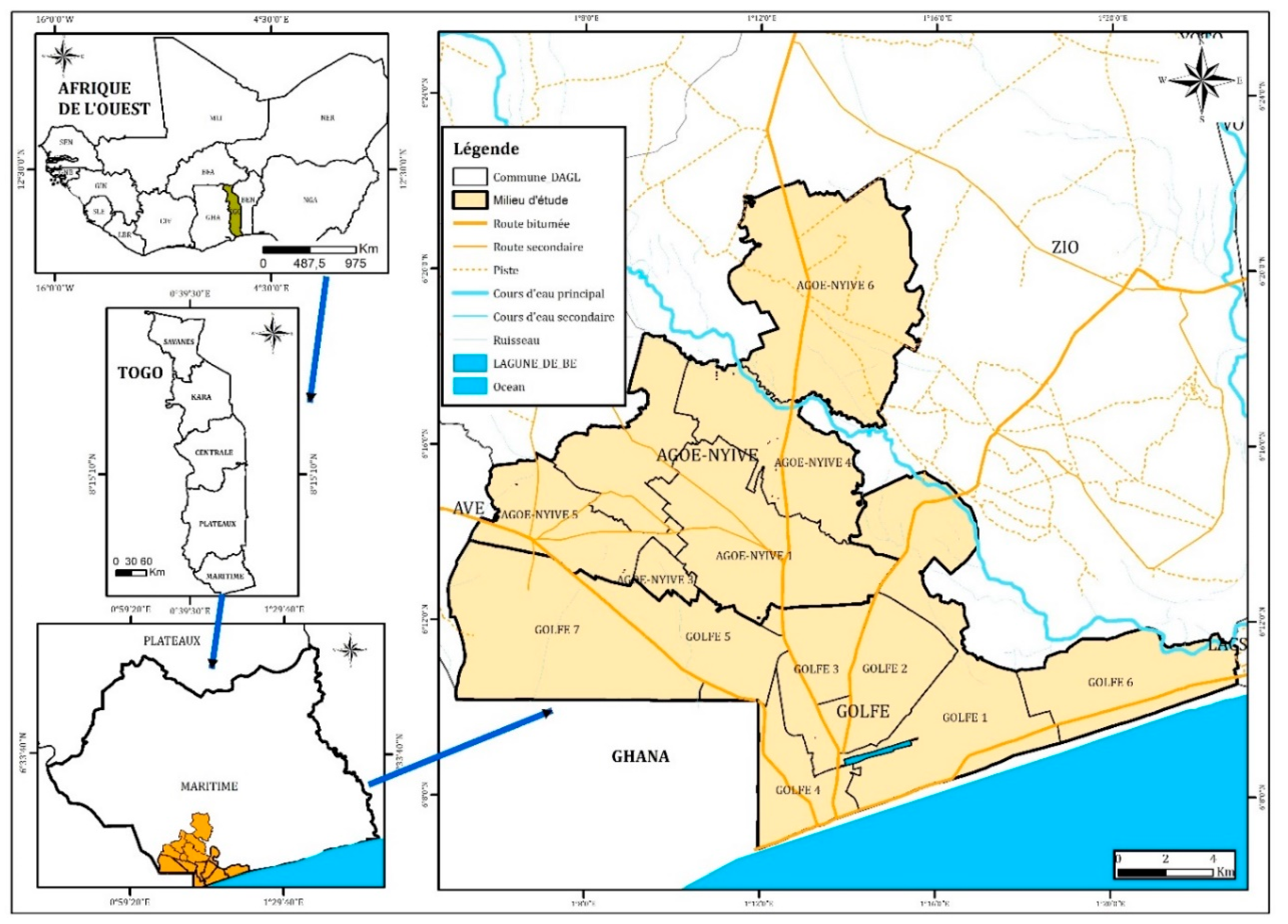
Figure 4.
Modal Shares of Transportation in Each Municipality of Greater Lomé; Source [12].
Figure 4.
Modal Shares of Transportation in Each Municipality of Greater Lomé; Source [12].
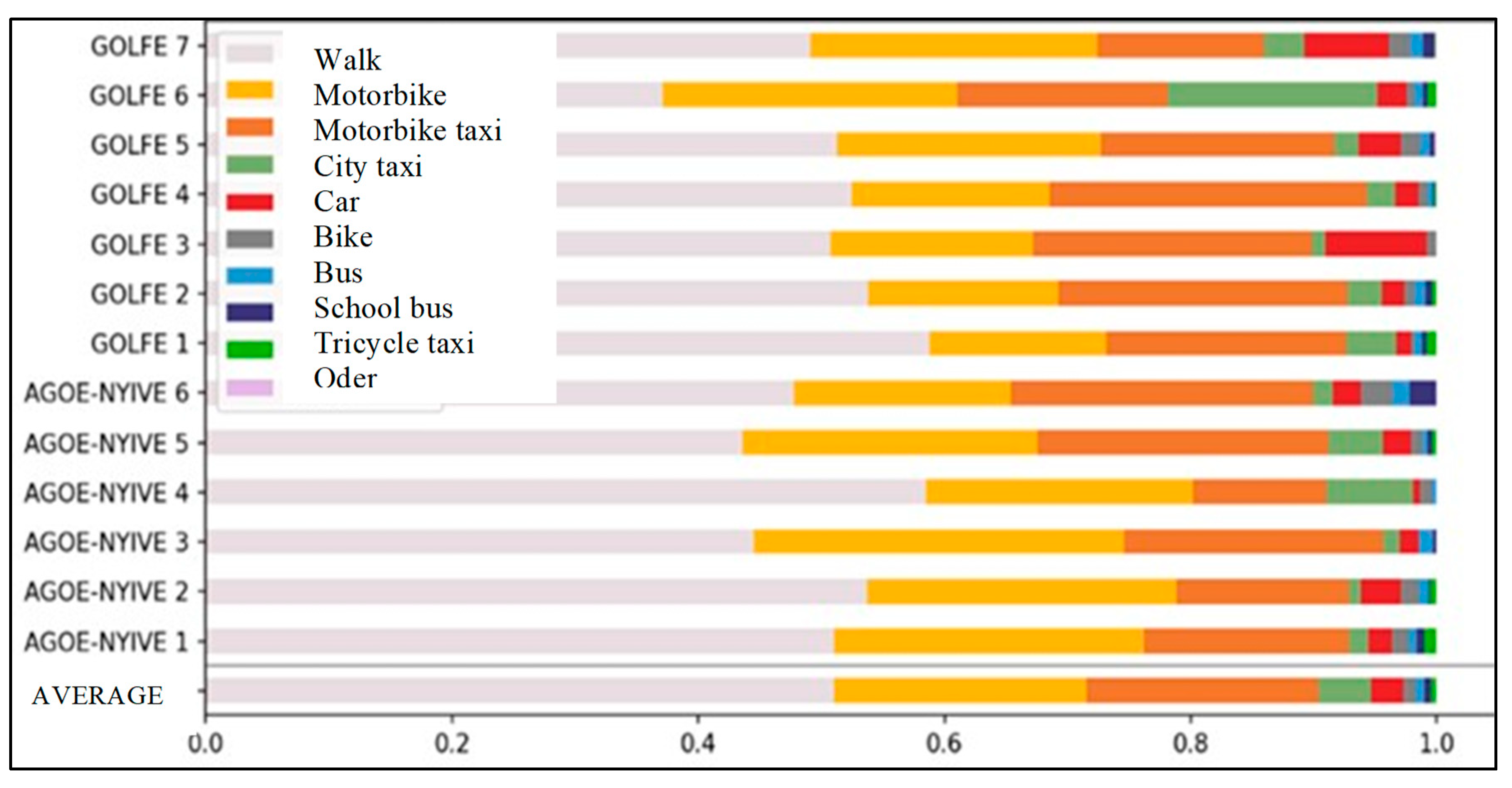
Figure 5.
Modal Shares Based on Travel Purposes Source [12].
Figure 5.
Modal Shares Based on Travel Purposes Source [12].
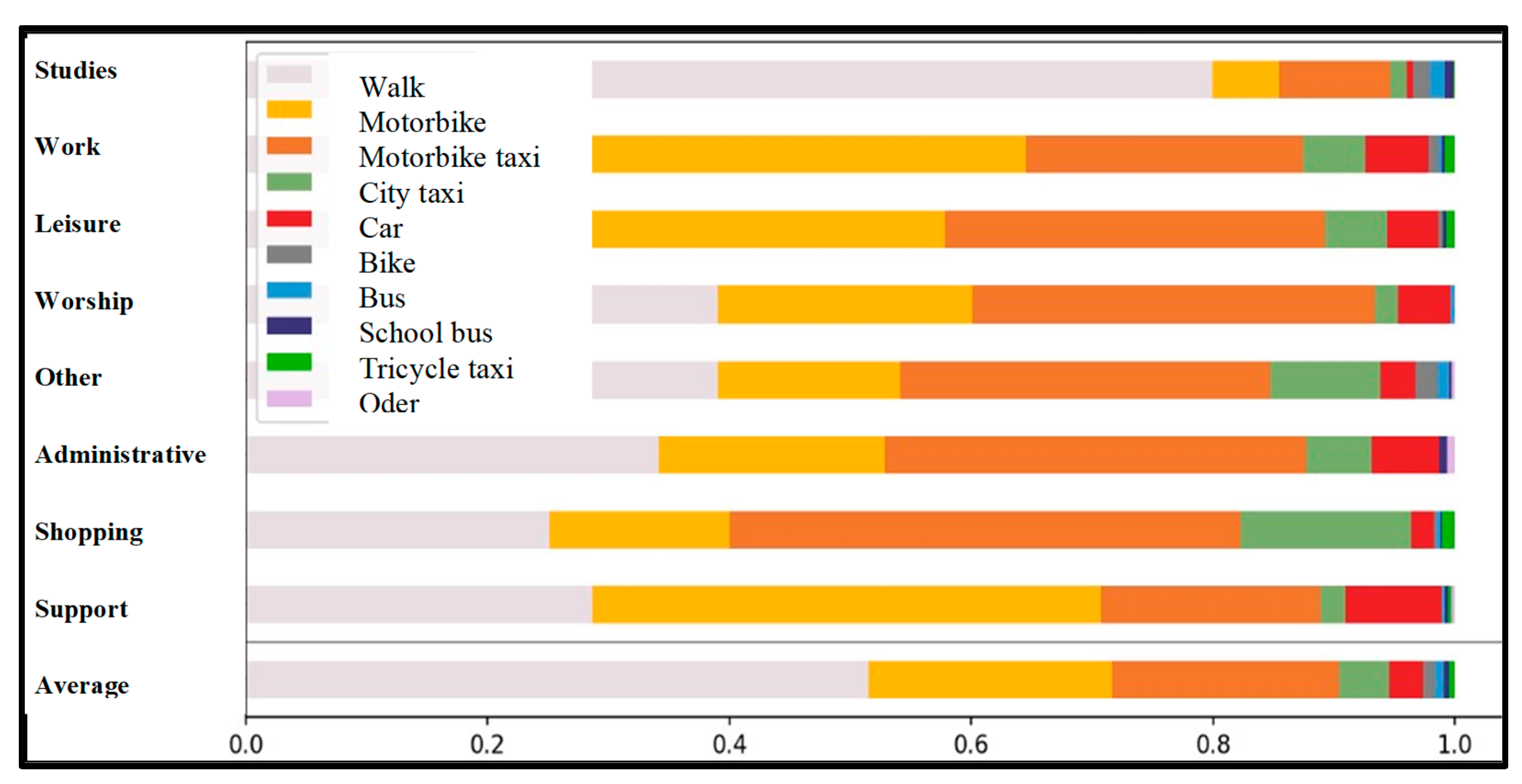
Figure 6.
Reasons for Travel in Greater Lomé; Source [12].
Figure 6.
Reasons for Travel in Greater Lomé; Source [12].
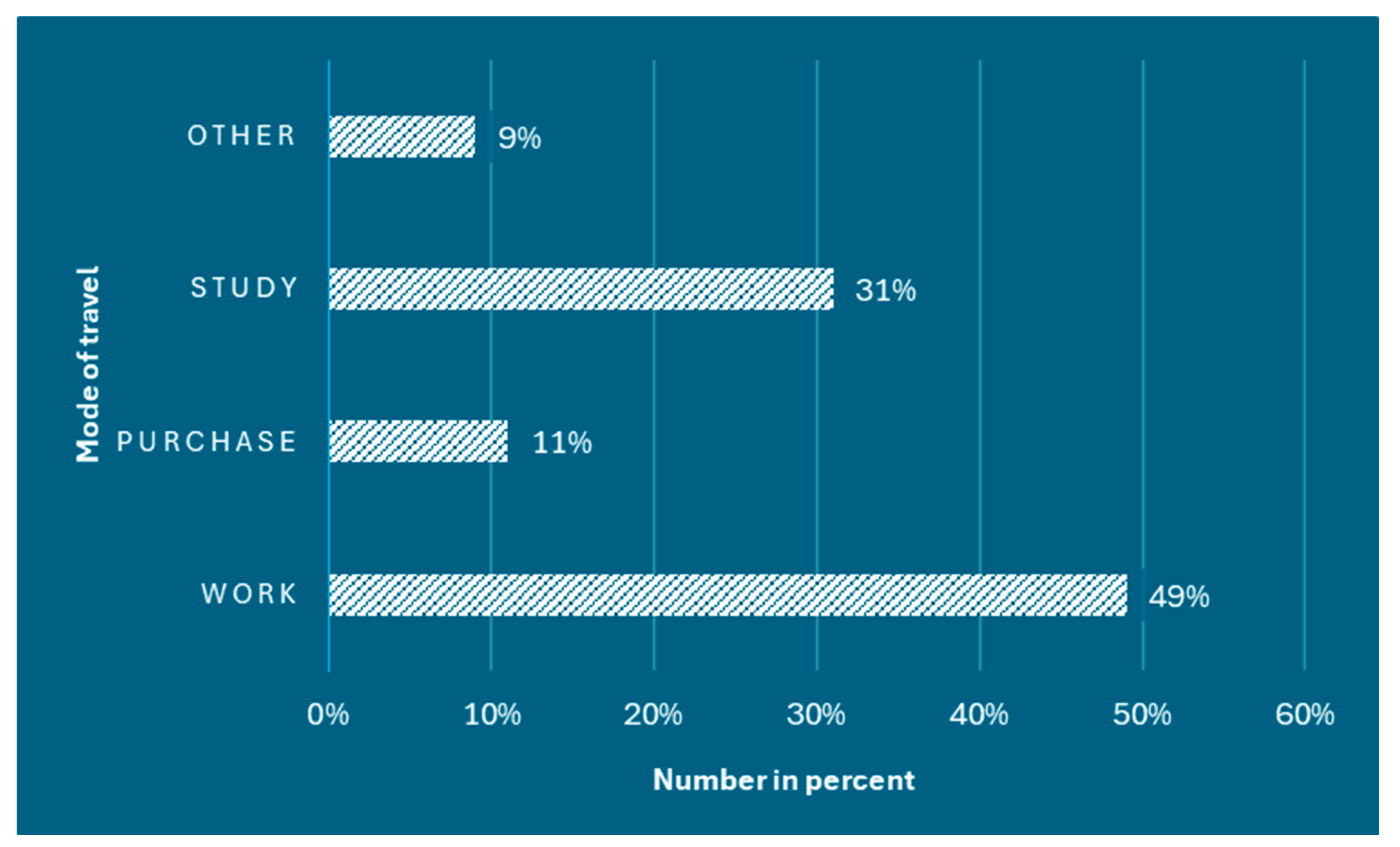
Figure 7.
Hourly Distribution of Travel and Associated Reasons; Source [19].
Figure 7.
Hourly Distribution of Travel and Associated Reasons; Source [19].
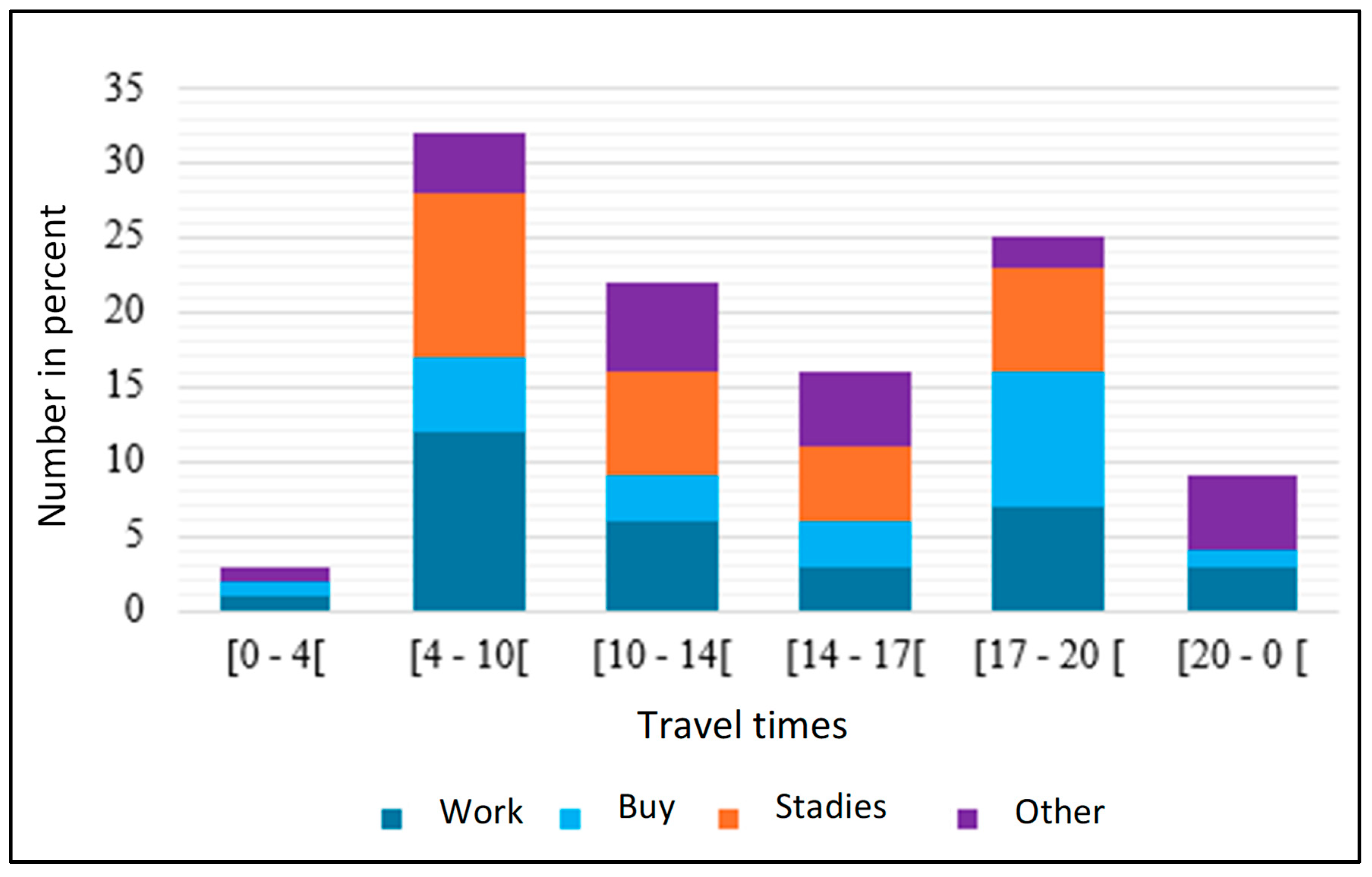
Figure 8.
Criteria for Choosing a Mode of Transport; Source [12].
Figure 8.
Criteria for Choosing a Mode of Transport; Source [12].
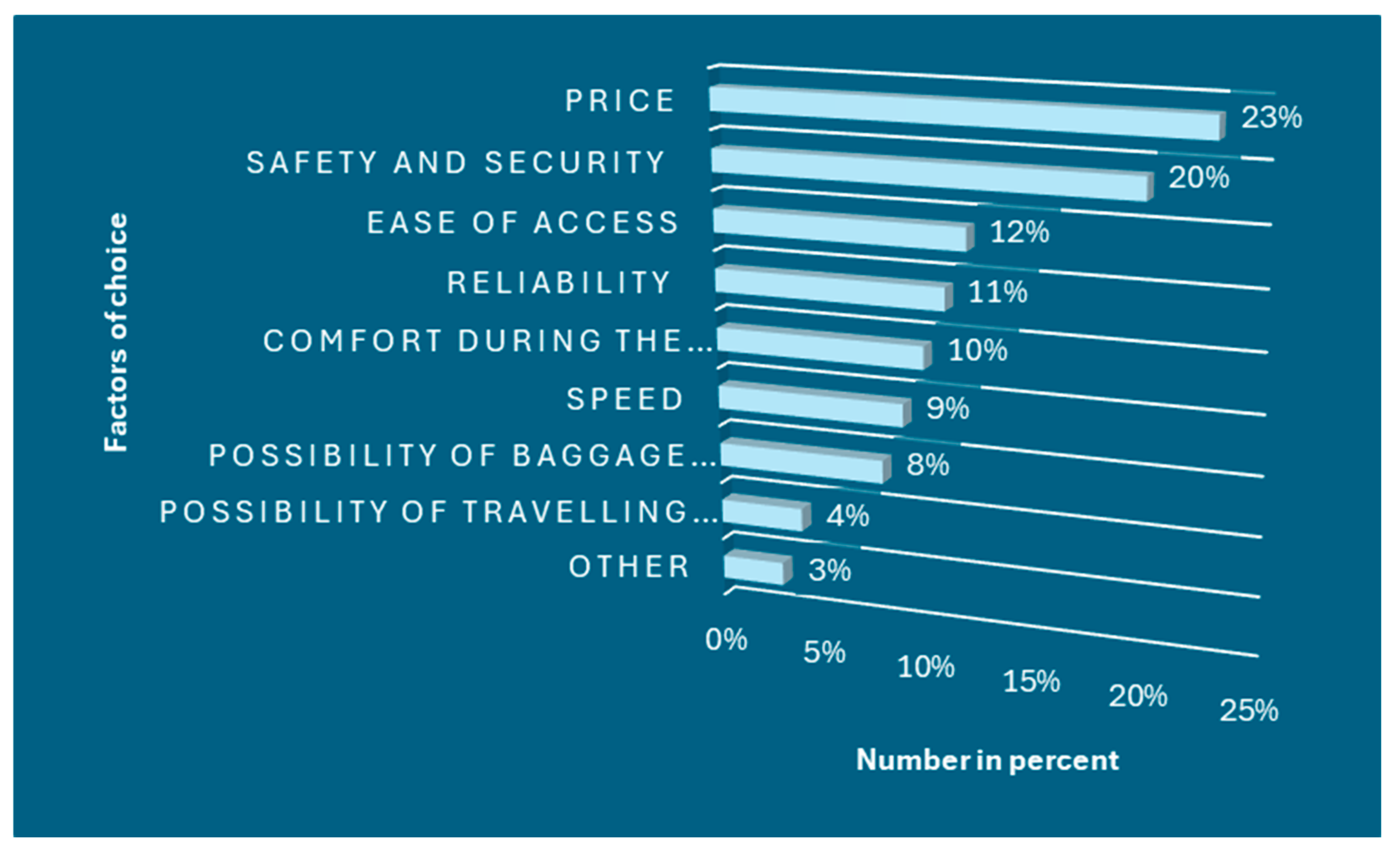
Figure 9.
Preferred Modes of Transport ; Source [12].
Figure 9.
Preferred Modes of Transport ; Source [12].
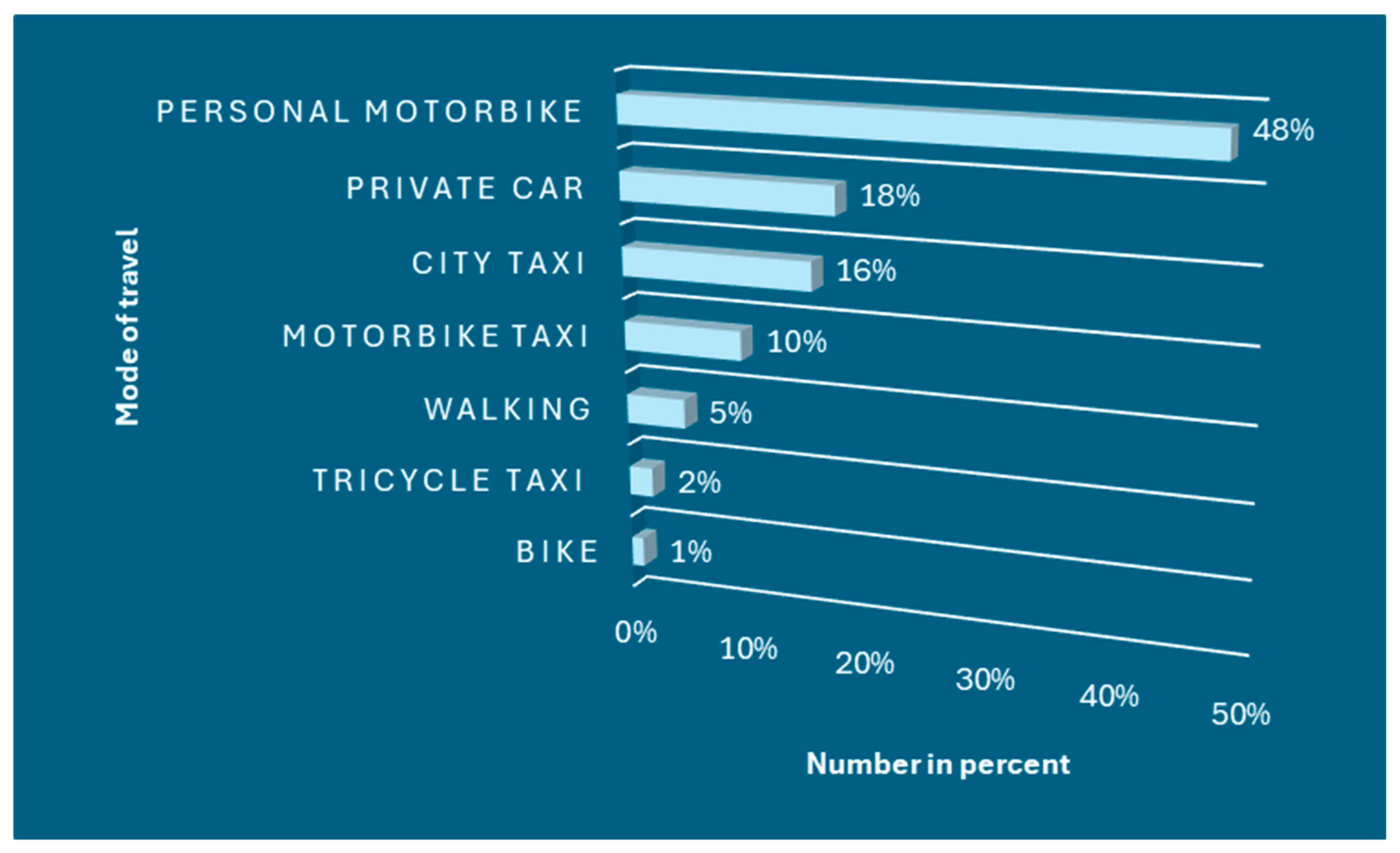
Figure 10.
Booking Methods for Artisanal Transport; Source: [12].
Figure 10.
Booking Methods for Artisanal Transport; Source: [12].
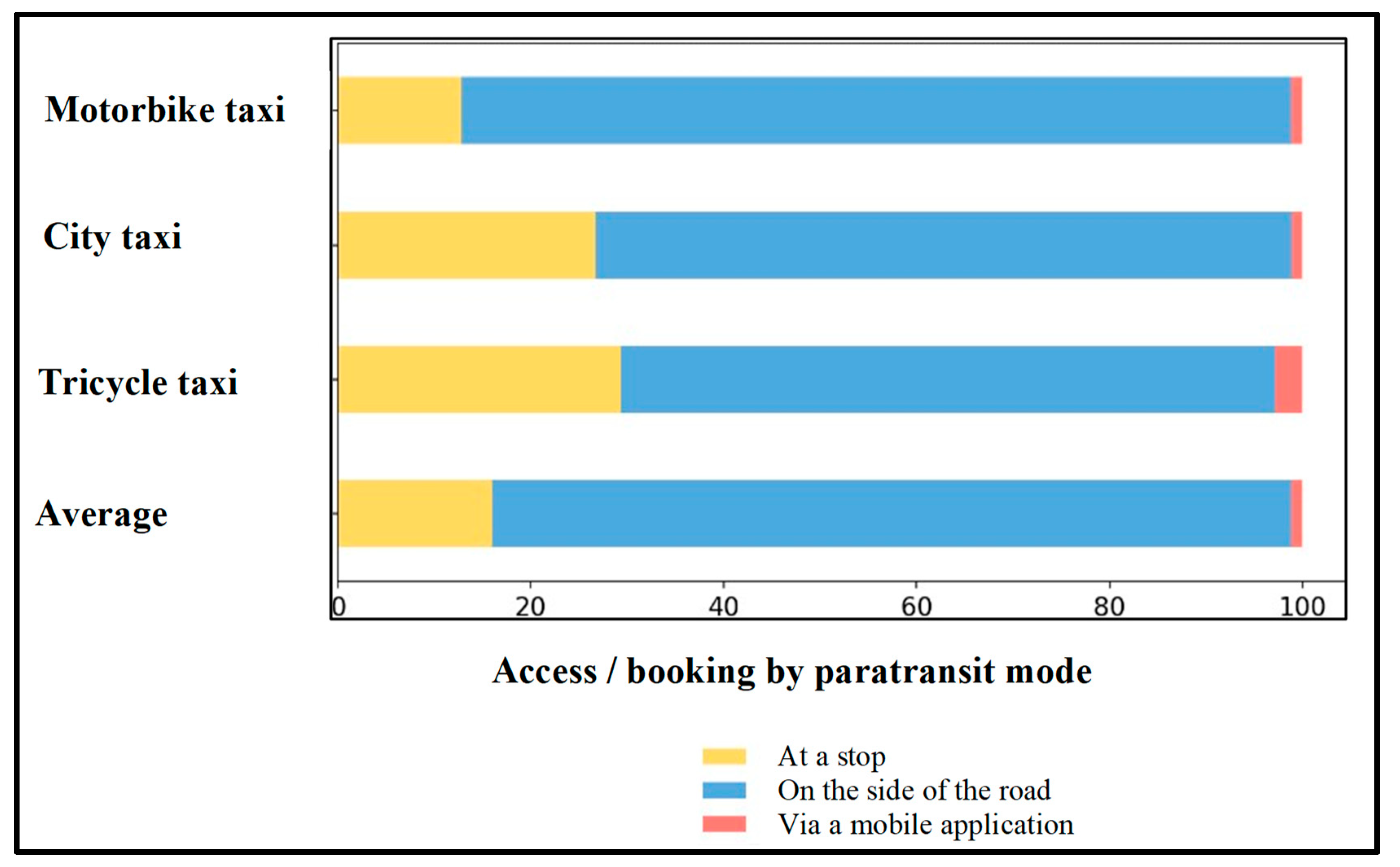
Figure 11.
Cost, Duration, and Average Daily Travel Distance by Mode; Source [12].
Figure 11.
Cost, Duration, and Average Daily Travel Distance by Mode; Source [12].
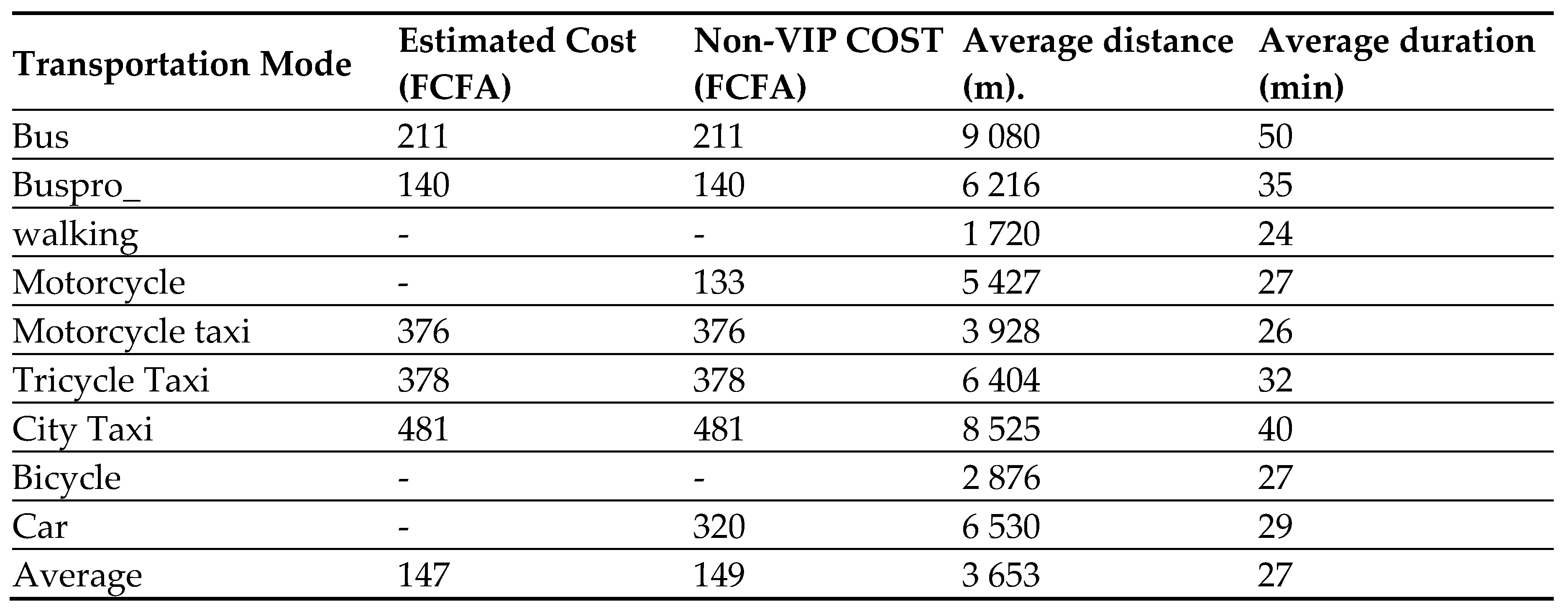
Figure 12.
Distribution of the number of journeys by price and mode; Source [12].
Figure 12.
Distribution of the number of journeys by price and mode; Source [12].
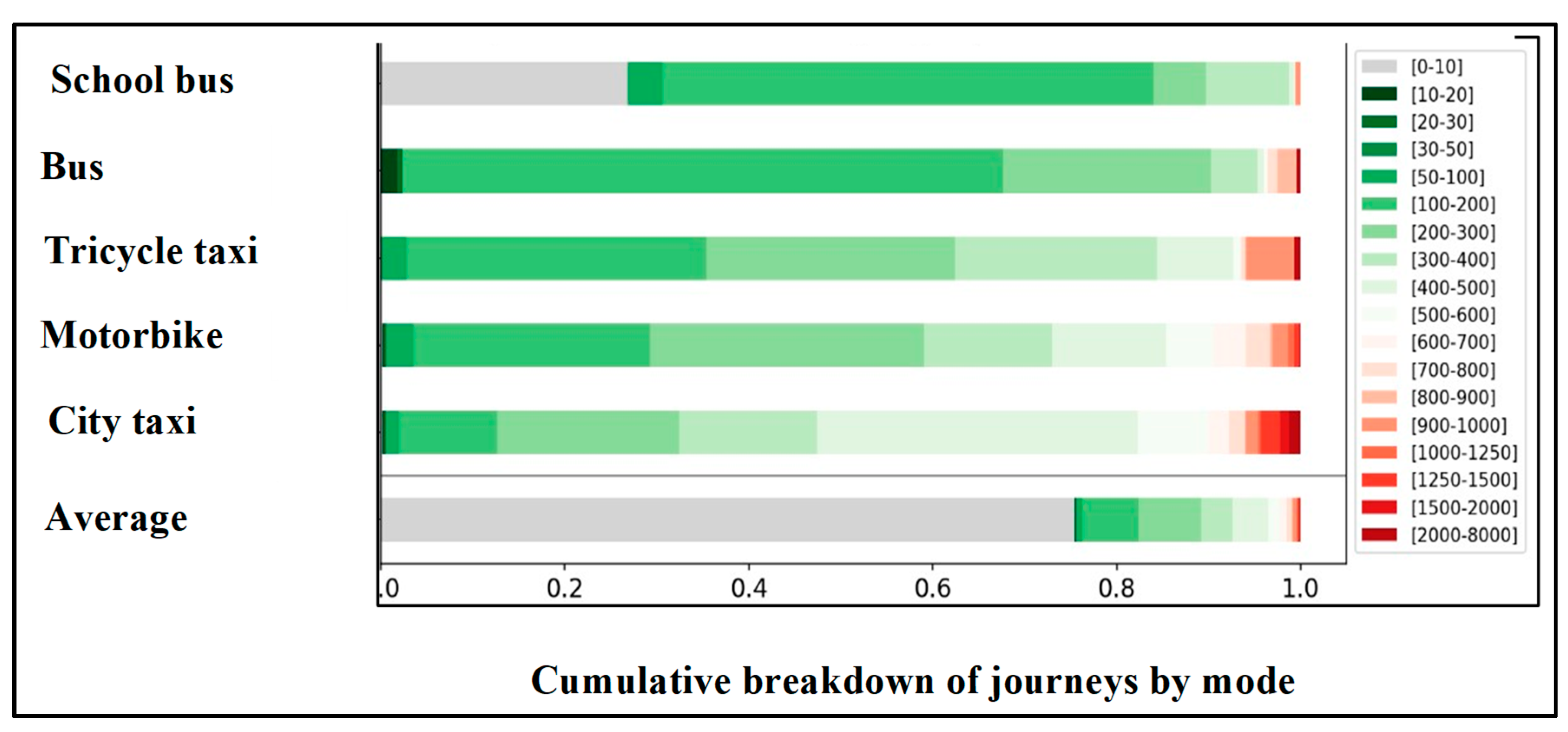
Figure 13.
Access time by mode; Source [12].
Figure 13.
Access time by mode; Source [12].
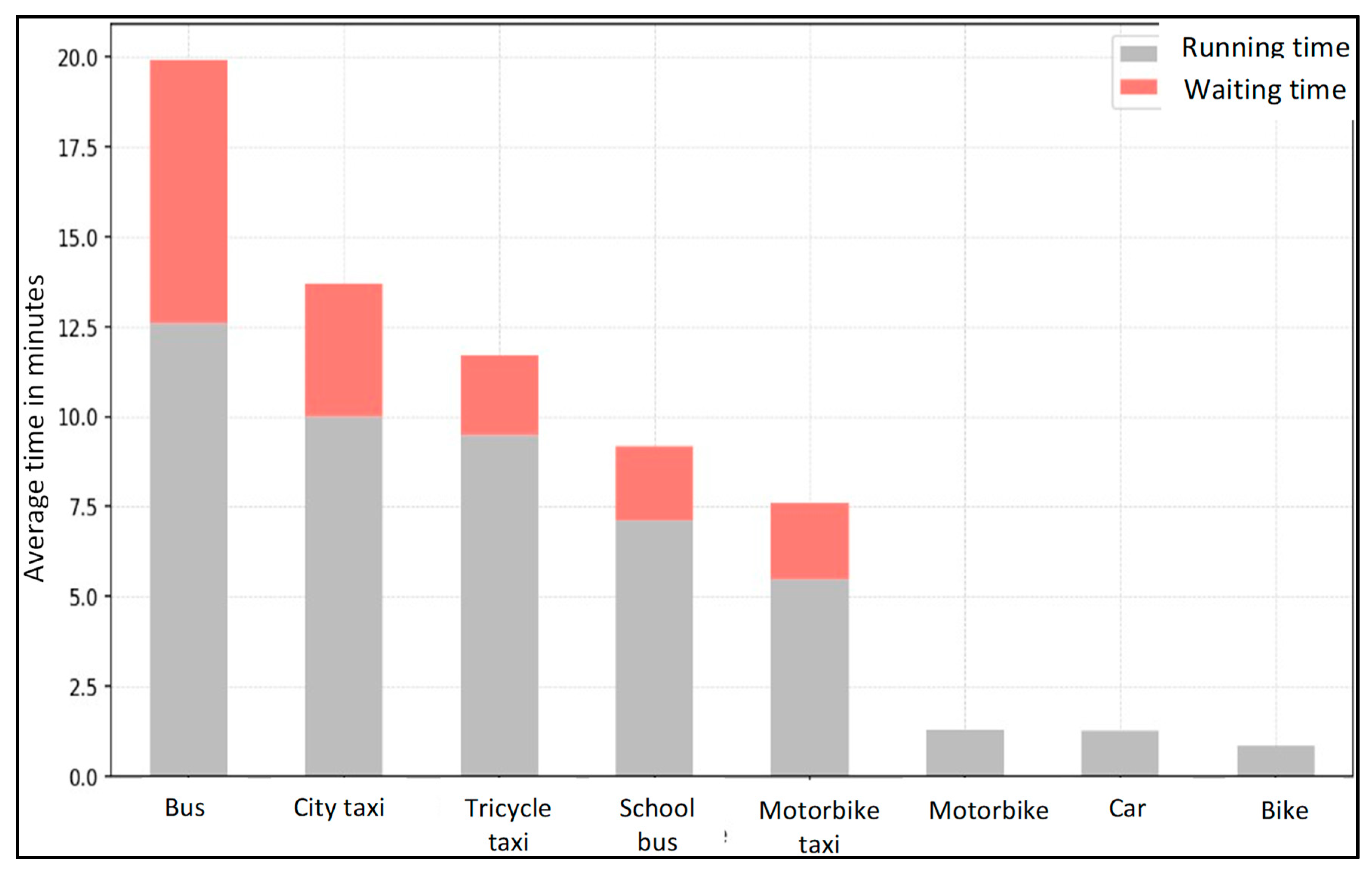
Figure 15.
Distribution of surveyed pedestrians and cyclists by gender; Source [12].
Figure 15.
Distribution of surveyed pedestrians and cyclists by gender; Source [12].
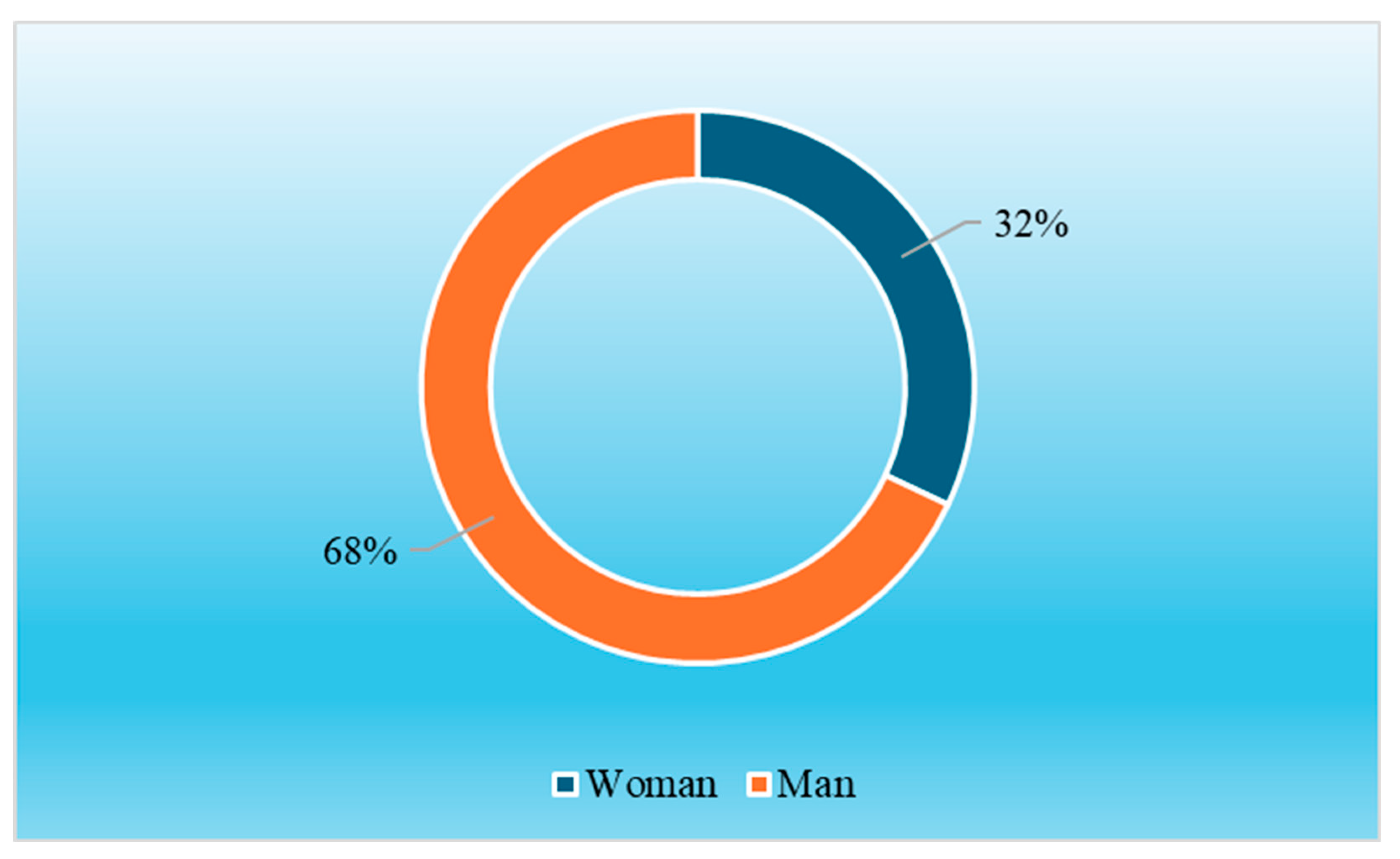
Figure 16.
Distribution of users of soft mobility modes by age; Source [12].
Figure 16.
Distribution of users of soft mobility modes by age; Source [12].
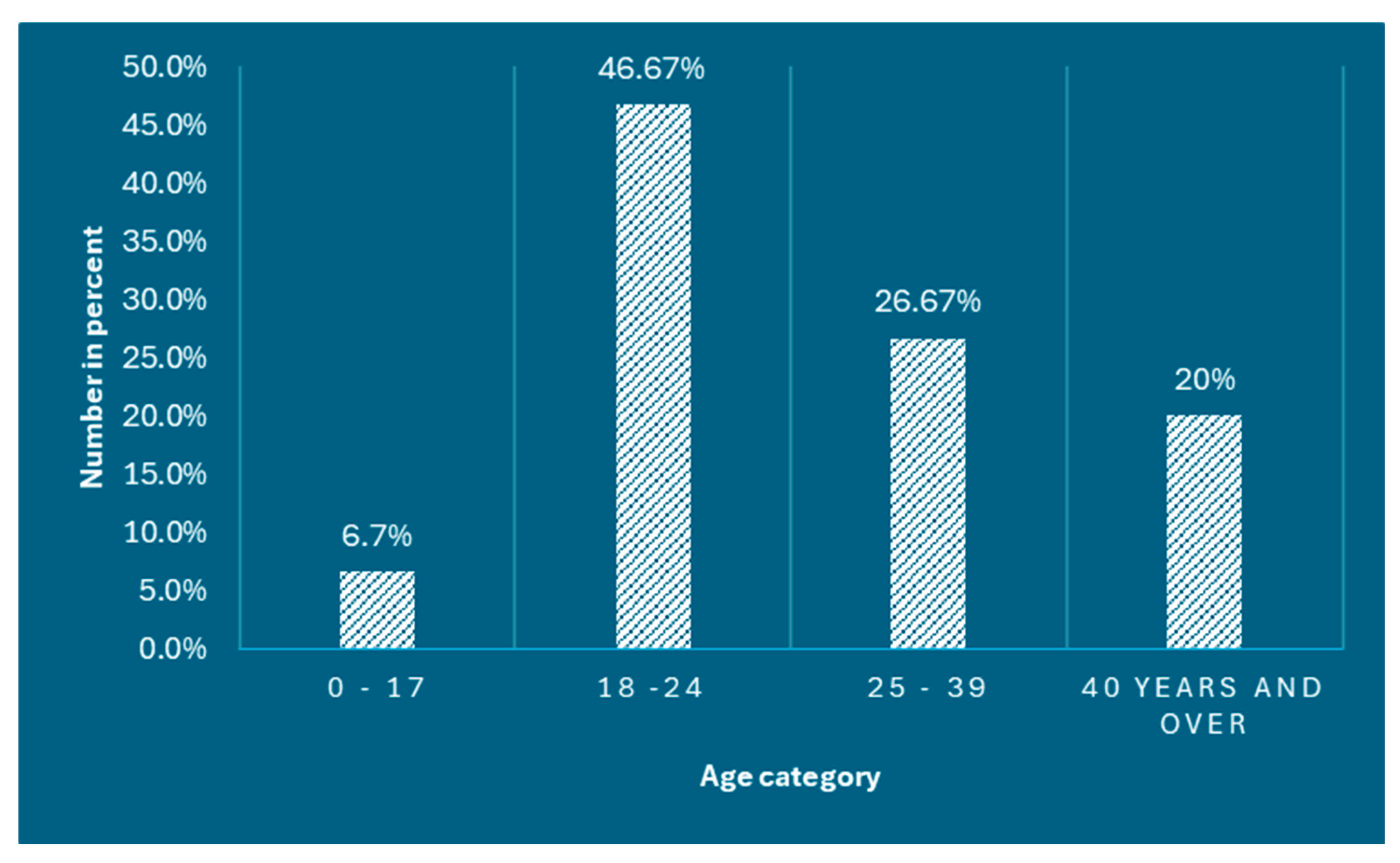
Figure 17.
Distribution of users of soft mobility modes by distance traveled; Source [12].
Figure 17.
Distribution of users of soft mobility modes by distance traveled; Source [12].
Disclaimer/Publisher’s Note: The statements, opinions and data contained in all publications are solely those of the individual author(s) and contributor(s) and not of MDPI and/or the editor(s). MDPI and/or the editor(s) disclaim responsibility for any injury to people or property resulting from any ideas, methods, instructions or products referred to in the content. |
© 2025 by the authors. Licensee MDPI, Basel, Switzerland. This article is an open access article distributed under the terms and conditions of the Creative Commons Attribution (CC BY) license (http://creativecommons.org/licenses/by/4.0/).
Copyright: This open access article is published under a Creative Commons CC BY 4.0 license, which permit the free download, distribution, and reuse, provided that the author and preprint are cited in any reuse.


