

Submitted:
28 July 2023
Posted:
02 August 2023
You are already at the latest version
Abstract
The sudden onset of natural hazards such as a flash flood events can be devastating to a country or region, often affecting numerous communities, and humanitarian supply chains play a major role in enabling the timely recovery of economic and social activities. However, the uncertainty and suddenness of natural disasters such as flash floods, as well as the potential for aftershocks, require humanitarian supply chains to be resilient during the relief process. This research first adopts the Delphi and literature review methods to identify the key indicators in the humanitarian supply chain to form an evaluation index system. Then, taking the 2021 mega-flash flood event which affected four cities in the mountainous region under the jurisdiction of the Zhengzhou municipal government, the ANP method is used to calculate the weights of each indicator and combines the weighted results with the Multi-styling and stereotyping method under Pythagorean fuzzy (PFs-VIKOR) to make an evaluation of the resilience of the humanitarian supply chain in the relief process. The findings suggest that policy makers and decision makers should pay close attention to the coordination of the parties involved in the humanitarian supply chain and improve the level of resilience of the entire supply chain by enhancing the resource scheduling capacity and responsiveness. At the same time, the VIKOR evaluation of the 4 cities highlighted the humanitarian supply chain in Dengfeng City to be most effective in this event due to the close cooperation and positive response of all parties involved in the humanitarian supply chain. The findings of this research provide some useful suggestions and guidance to the various practitioners involved in the humanitarian supply chain. Furthermore, the evaluation of the performance of the four cities in this mega-flash flood event provides some helpful indication of the importance of the various emergency measures which can help to inform policy recommendations for the Zhengzhou municipal government.
Keywords:
Humanitarian Supply Chain
; Supply Chain Resilience Evaluation
; Flood Disaster
; MCDM
; ANP-PFs-VIKOR
1. Introduction
Flash flooding events can have a devastating impact on a country's production and the lives of its citizens. Over the past 50 years, more than 11,000 weather, climate and water-related disasters have been reported, causing more than 2 million deaths and $3.64 trillion in economic losses, according to the World Meteorological Organization's official website. This represents a global average of 115 deaths and $202 million in economic losses per day. Of these, tropical cyclones cause the greatest economic damage, followed by floods [1]; Meanwhile, statistics from the Chinese Ministry of Water Resources and the National Disaster Reduction Center of the Ministry of Emergency Management show that between 1991 and 2020, the average annual number of people killed or missing due to floods in China reached 2,020, totaling more than 60,000 deaths, and the average annual direct economic loss caused 160.4 billion yuan, totaling about 4.81 trillion yuan [2]; In recent years, climate change and the rapid increase in population and economic activity have led to a significant increase in the frequency and severity of floods [3]. Due to their rapid onset and unpredictability, flash flooding in particular can result in thousands of people being stranded and can undermine the infrastructure of a country or region. The devastating impact of flash flooding on a country underscores the importance of the humanitarian supply chain in providing emergency relief to affected areas. Humanitarian supply chains involve the planning, execution, and control of goods, medical supplies, and information needed from their production to the affected areas based on humanitarianism in the context of disaster relief as well as post-disaster reconstruction [4]. In recent years, an increasing number of scholars have devoted themselves to the study of humanitarian supply chains. Zhou Lei proposed that humanitarian supply chains have operational characteristics such as relief and gratuitousness, and that different stakeholders need to be differentiated and studied in order to deepen the implementation of humanitarian supply chains in post-disaster reconstruction [5]; Yang Jinglei et al. compared the differences between humanitarian logistics and general commercial logistics in three aspects: implementation environment, constituent elements and operational links, and proposed that humanitarian supply chains have higher requirements for behavioral standards and codes of conduct for management and control due to their own specificity and complexity [6].
In recent years, the frequent occurrence of natural disasters and public health events has led to frequent disruptions in supply chains, and scholars have gradually realized the importance of building resilient supply chains. After discussing how natural disasters and public health events affect supply chains and economic activities across industries, Jia Dianan suggested that enhancing supply chain resilience is the key to economic recovery [7]; Zhuo Xian proposed the theory that enhancing resilience is a key factor in promoting supply chain stability, and pointed out that enhancing supply chain resilience can make supply chain operations more efficient and robust [8]; From this perspective, improving supply chain resilience has become a focus of attention in recent times. At the same time, humanitarian supply chains play a major role in rescue and relief during sudden natural disasters or public health events. Ali Anjomshoae et al. (2022) suggested that in order to overcome future supply chain disruptions due to pandemics and large-scale disasters, efforts to establish relevant indicators for evaluating the resilient performance of humanitarian supply chains and to assess them are crucial [9]. Hence, the resilience of humanitarian supply chains impacts the efficiency of disaster relief as well as post-disaster reconstruction and economic recovery, and an evaluation of it is useful to support the decision-making requirements of relevant key stakeholders and policy makers.
The multi-criteria decision making method (MCDM) is the method mostly used to study the resilience of humanitarian supply chains. Peng et al. (2014) used a system dynamics model to simulate and predict post-disaster traffic road damage and information system delays [10]; Sharma S K et al. (2022) undertook a vulnerability and resilience assessment of humanitarian supply chains using fuzzy DEMATEL method [11]; Dubey et al. (2020) discussed humanitarian supply chain performance indicators from the perspective of agility, and improving the evaluation index system [12]; In a literature review on humanitarian supply chains, Ali Anjomshoae et al. (2022) suggested that the multi-criteria decision making method (MCDM) has been widely applied to research models for the evaluation of humanitarian supply chains, which includes both qualitative and quantitative methods [9]. Agarwal S et al (2020) used fuzzy SWARA and fuzzy WASPAS methods to make an evaluation of resilience barriers in humanitarian supply chains [13]. Lu Wang (2022) used quantitative Bayesian analysis (BN) to assess the performance of Zimbabwe's humanitarian supply chain in the context of a major natural disasters [14].
In conclusion, the existing literature has considered the evaluation indicators in terms of their governance and performance, but there lacks insights from receiving these rescue services. Meanwhile, their continues to be some uncertainty in the evaluation of humanitarian supply chain performance due to shortcomings in the collection of data and application of the fuzzy logic theory. While the existing literature has used many qualitative and quantitative MCDM methods to assess the resilience of humanitarian supply chains, few studies have integrated fuzzy logic theory to evaluate the resilience of humanitarian supply chains. In order to fill these research gaps, this research adds to the evaluation of performance by adding service quality to the index system to make the evaluation more comprehensive; furthermore, it adds the fuzzy theory to evaluate the resilience of the supply chain to make the results more applicable to the actual situation. Therefore, the purpose of this research is as follows:
- To add the perspective of service quality to construct an evaluation index system that is more complete and comprehensive;
- To integrate the fuzzy theory into the evaluation method to make the evaluation results closer to the real life situation;
- To Evaluate the performance of humanitarian supply chain resilience using an ensemble ANP-fuzzy VIKOR method.
In this paper, we first establish a humanitarian supply chain resilience evaluation index system including 13 key indicators and 5 classification levels after using literature reading method and expert scoring method. Following this, the results of a questionnaire survey of experts in the humanitarian supply chain field, combined with the ANP methods was used to establish the weights of each indicator. Then four cities affected by floods in the 2021 Henan mega-flash flood event were studied to evaluate the resilience of humanitarian supply chains using the VIKOR method under Pythagorean fuzzy. Resource dispatching capacity F7, coordination among participating organizations F3, responsiveness F6, timeliness of transportation F8, and active government participation F1 are five key indicators that affect the resilience of humanitarian supply chains; and the ranking of humanitarian supply chain performance in the four study areas is derived. The results of this research give some reference and data support to relevant participants and governments, and the evaluation study on humanitarian supply chain resilience is also helpful to enhance and improve supply chain performance.
2. Literature Review
This review will be developed from the following two aspects: firstly, we systematically review the literature related to humanitarian supply chain resilience, and propose, analyze and introduce the key indicator system; secondly, through literature review, we introduce which MCDM methods are applied in existing humanitarian supply chain resilience evaluation articles.
2.1. Definition of indicators
The humanitarian supply chain is a process of moving materials from the supply side to the demand side that involves multiple relevant participants and relief providers in a complex internal and external environment. In this research, after conducting an extensive literature review and consulting with humanitarian supply chain experts using the Delphi method, and considering various factors, an index system for the assessment of resilience is constructed from the following aspects: 1. organizational involvement, 2. reliability, 3. agility, 4. cost factors, and 5. service quality, described as follows.
2.1.1. Organizational involvement
Humanitarian supply chains are different from commercial supply chains in that they have the characteristics of not being profit driven and instead, focused on being relief-oriented. At the same time, humanitarian relief may be led by governmental organizations, NGOs or UN relief organizations, and involves many other participants including the affected community members. Therefore, unlike previous supply chains in which suppliers were selected through market mechanisms, the selection of suppliers in humanitarian supply chains requires the joint participation of the government and the market [15].
Active government involvement (F1). In general, the government is the main initiator of humanitarian relief, and according to the statistics of 2015, the Chinese government has participated in humanitarian aid operations more than 200 times. Humanitarian relief has time-concentrated and labor-intensive demand characteristics, and the government has an absolute advantage in mobilizing human, material and financial resources. Therefore, the government plays a leading, organizing, and coordinating role in humanitarian relief, which can form the hierarchical structure and operating rules of the humanitarian supply chain [15]. Authoritative governance is at the core of the humanitarian supply chain and can ensure the effective coordination of the relationships among the participating organizational parties and thus promote the performance of the entire supply chain.
Active participation of NGOs (F2). Non-governmental organizations (NGOs) are organizations established by agreement, independent of government, to engage in international activities to meet needs that cannot be met by the market, state, or society [16]. In resource-limited situations, it is critical that NGOs use or manage resources effectively [35]. In recent years, NGOs have also become central members of the humanitarian supply chain. For example, in the case of the flash flooding events in the Henan Province, more than 430 civilian relief organizations went to Henan to respond to the disaster.
Coordination among participating organizations (F3). The individual members of the humanitarian relief supply chain are both independent and interconnected, and building a humanitarian supply chain with mutual trust and collaboration can effectively improve supply chain resilience [18]. Cao Ke-Yan et al. (2008) concluded that establishing partnerships among humanitarian relief providers can promote goal congruence among supply chain members, thus contributing to the synergistic development of humanitarian supply chains and improving their operational resilience [17]. Zhao Wenhong et al. (2010) argued that an effectively coordinated logistics operation mechanism is key to humanitarian supply chains in emergencies, and cooperation among relief organizations is particularly important [18]. Yang, K. (2010) suggested that the degree of coordination among relief organizations is closely related to the effectiveness of relief [19], and therefore, the establishment of an effectively coordinated organization is beneficial to enhance the resilience effect of humanitarian supply chains.
2.1.2. Reliability
The reliability of humanitarian supply chain organizations is a key factor in determining the resilience of this supply chain. Reliability refers to the ability of an organization to deliver the exact supplies to the disaster victims at the right time and at the fastest rate. Due to the urgent nature of humanitarian relief, there is no guarantee of orderliness in the delivery of supplies, which can lead to untimely or erroneous delivery of supplies [20]. Humanitarian supply chain reliability is about ensuring that supplies are delivered accurately to the people being rescued [21]. Uncertainty in the relief process has the potential to cause disruptions throughout the supply chain, and reliability is one way to ensure that the supply chain is functioning properly [22].
Logistics provider reliability (F4). Humanitarian logistics is an important way to ensure that supplies reach the rescued communities accurately and speedily [23]. Secondary disasters often occur in the humanitarian relief process, especially after natural disasters [24]. For example, aftershocks occur during earthquake relief, sudden secondary flooding during flood relief, and other situations. Once a humanitarian logistics network suffers a disruption in a rescue, the most important task is to quickly restore transport capacity [25]. Therefore, the reliability of the logistics provider is the basis for ensuring the reliability of the entire supply chain.
Material supplier reliability (F5). The provision of supplies in the humanitarian supply chain ensures the outcome and efficiency of the overall humanitarian response [28]. The types of supplies needed in the rescued areas vary widely and the quantity demanded is high, often requiring a large number of different necessities and medical relief supplies [29]. The suddenness of disasters in the rescued areas [30] leads to the inability of many material suppliers to supply sufficient quantities of materials in the short term [31], causing disruptions in the entire supply chain. Therefore, the reliability of the entire material suppliers is closely related to the resilience of the entire humanitarian supply chain.
2.1.3. Agility
Agility in the supply chain is necessary in disaster relief and rescue. In emergency relief, an agile and flexible supply chain ensures that the supply chain can react quickly and adjust to the appropriate state in the event of an emergency [32]. According to Dan'Asabe Godwin Geyi et al: agility has a positive impact on the operational performance of the supply chain [30]. Agility is now gaining attention as an important influencing factor in assessing supply chain resilience in a constantly fluctuating and unpredictable environment [35]. The availability of agility in humanitarian supply chains is a key indicator to evaluate their resilience [33].
Responsiveness (F6). In humanitarian supply chains, factors such as supply capacity, infrastructure, delivery time, material stockpiles, and demand variations may affect response capacity [36]. Responsiveness is more reflected in response time in humanitarian supply chains, including procurement time, order delivery time, lead time, and transportation time [37]. Also, inventory stocking and environmental adaptability are direct manifestations of responsiveness. Reducing response time is a key step to improving the overall performance of the supply chain [38]. Reducing the delivery time of suppliers, minimizing the waiting time for relief, and improving the efficiency of material transportation and unloading can most directly reduce response time. According to Sahebjamnia et al.( 2017), responsiveness is one of the most important performance indicators of humanitarian supply chain agility [35].
Resource Scheduling Capability (F7). Resource scheduling capability is an important factor in measuring supply chain agility and an efficiency capability that requires collaboration among all parties in the humanitarian supply chain. Since resources are scarce in humanitarian relief, efficient and quality-assured resource scheduling can reduce the waste of relief resources while improving relief efficiency. Harshala Shingne (2023) et al. argue that the use of cloud computing can effectively improve the accuracy and punctuality of resource scheduling [36]; while Samiksha Mathur et al. (2023) suggest that high-tech products such as artificial intelligence (AI), machine learning, and deep learning can significantly improve the efficiency of resource scheduling [37]. This also reveals that members of humanitarian supply chains should negotiate and use AI and big data to help improve the resource scheduling capabilities of the supply chain and make humanitarian supply chains more agile.
Timeliness of transportation (F8). Timely transportation of relief supplies to the affected party is a critical point in humanitarian relief. Humanitarian relief supplies are high-volume and multi-disciplinary in nature. The capacity of transport vehicles and the state of road infrastructure are key factors affecting the timeliness of transport, and Ghorbani and Ramezanian (2020) noted that the lack of suitable transport vehicles can severely affect humanitarian supply chain activities and thus their agility [38]. The type and number of transport vehicles should be adjusted in a timely manner according to the quantity and type of emergency supplies and equipment. The use of aircraft and drones can effectively improve the timeliness of transportation in the case of sudden disasters that disrupt roads. At the same time, natural disasters are destructive and may lead to obstruction of transportation routes and failure to deliver supplies as scheduled; therefore, the integrity of roads and other infrastructure will also directly affect the timeliness of transportation [43].
2.1.4. Cost Factor
The cost factor is the main indicator of financial performance in the supply chain. Costs in the supply chain are mainly derived from order delivery costs, warehousing and inventory costs, supply chain management costs, procurement costs, transportation costs, and marketing costs [40]. Compared to traditional commercial supply chains, humanitarian relief is a process of mobilizing human, material, and financial resources in a short period of time and dispatching and allocating resources, and the emergency management costs in humanitarian supply chain management costs can be significantly higher [23]. For humanitarian organizations, it is difficult to quantify the costs associated with serving the affected population [46]. The main criterion to be considered in disaster relief inventory management is the cost of deprivation, which is related to the value of the suffering of the affected population due to lack of access to relief supplies [48]. Low-cost supply chains are more resilient and sustainable; therefore, the cost factor is a key indicator to assess the resilience of humanitarian supply chains.
Transportation Costs (F9). Disasters can be highly disruptive to transportation networks, which severely affects the delivery of emergency supplies and equipment. Blocked transportation routes can significantly increase transportation costs [49], and reliable and low-cost transportation is particularly important for humanitarian supply chains. In addition, disaster sites are often in mountainous and riverine areas with remote locations, while unpredictable demand in local supply chains will increase transportation costs in humanitarian chains [50].
Inventory costs (F10). Inventory costs are a relatively large part of supply chain costs, which include inventory investment, fixed and variable costs, and holding costs [51]. Also, due to the uncertainty of demand, it is not possible to determine the lead time for supplying materials [45], so the humanitarian supply chain needs to maintain a portion of fixed inventory of materials, leading to an increase in inventory costs. Natural disasters have uncertainty in frequency and magnitude of occurrence and require high inventory costs, and these result in a significant financial burden [47].
Material Mobilization and Procurement Costs (F11). It is difficult to establish supply purchase orders and criteria before a disaster occurs. The unpredictability of the timing and quantity of material requirements adds to the complexity between suppliers and relief organizations [54]. Therefore it is difficult to control the cost of raising and procuring supplies. To change this situation, an increasing number of humanitarian organizations are entering into long-term contracts with suppliers [52 53]. Such contracts can control the cost of raising and procuring emergency supplies and ensure that a certain amount of supplies are available in the case of a disaster. Reducing the cost of material collection and procurement can effectively reduce the cost of humanitarian supply chains and increase their resilience.
2.1.5. Quality of service
Service quality in humanitarian supply chains is presented from the perspective of the rescued. Most of the previous studies on humanitarian supply chains have focused on the supplier and humanitarian relief party perspectives. While the rescued parties are also key nodal members of the overall supply chain, Ali Anjomshoae et al. (2022) suggested that the existing humanitarian supply chain literature has little consideration of the perceptions of the served parties and hoped that future research could include the perspective of the served parties to consider their performance levels [50]. Meanwhile, as the willingness of the demand side is increasingly valued, many studies on the evaluation of supply chain resilience have included the demand side perspective [55]. In this research, service quality in humanitarian supply chains is considered from two perspectives:
Supply of necessities for life (F12). In humanitarian relief, supplies are scarce and inaccessible [56] The affected people need a certain amount of necessities for post-disaster emergency survival. The lack of survival supplies can lead to injury or death of the affected people in non-disaster situations. Therefore, the availability of necessities is a key indicator for the quality of humanitarian supply chain services and can usefully be evaluated by the rescued people.
Timely arrival of rescue supplies (F13). Affected community members have an urgent need for medical and other relief supplies, for example, when Wuhan was hit by the new coronavirus in 2019, the local people had an urgent need for masks and disinfection tools [57]. The timely arrival of relief supplies can ensure the survival of people, and at the same time can effectively reduce fear levels and enhance the satisfaction levels of those rescued.

Table 1.
summarises the findings of the literature review.
| Standard | Indicator | Descriptions |
|---|---|---|
| Organizational involvement AReliability B | Active government involvement (F1) | Government plays a major role in the humanitarian supply chain |
| Active participation of NGOs (F2) | NGOs are gaining ground in the humanitarian supply chain | |
| Coordination among participating organizations (F3) | Coordination among supply chain members is important for humanitarian supply chain resilience | |
| Logistics provider reliability (F4) | Logistics providers can accelerate the relief process and improve the resilience of the humanitarian supply chain | |
| Agility C | Material supplier reliability (F5) | Timely supply of materials helps to speed up the rescue process and enhance rescue efficiency |
| Responsiveness (F6) | Rapid supply chain response enhances supply chain agility | |
| Resource Scheduling Capability (F7) | Having the ability to quickly dispatch resources makes the humanitarian supply chain more resilient | |
| Cost Factor D Quality of service E |
Timeliness of transportation (F8) | Timely transportation allows for smooth relief efforts and further improves supply chain resilience performance |
| Transportation Costs (F9) | Lower transportation costs can lead to increased supply chain revenue and increased supply chain operability | |
| Inventory costs (F10) Material Mobilization and Procurement Costs (F11) |
Reducing inventory costs contributes to a sustainable supply chain, thereby increasing its resilience Lower material raising and procurement costs allow for more material to be raised on the same budget, and increased material availability helps improve supply chain performance |
|
| Supply of necessities of life (F12) | The main function of the humanitarian supply chain is to provide the necessities of life to the relief workers | |
| Timely arrival of rescue supplies (F13) | The timely arrival of relief supplies can protect the lives and livelihoods of those waiting for help |
2.2. Review of humanitarian supply chain assessment methods
In previous studies, many methods have been used to assess humanitarian supply chain resilience (refer to Table 2). Sharifyazdi, Mehdi et al. (2018) used a target planning approach and proposed that a combination of pre-positioning relief items in the interior and anticipating relief items on board ships and at the docks could help improve the efficiency of relief operations as well as improve supply chain resilience [54]. Altay, Nezih et al. (2018) used the dynamic capability view (DCV) to conceptualize a theoretical model of the humanitarian supply chain (HSC) in different phases before and after a disaster to investigate the impact of supply chain agility (SCAG) and supply chain resilience (SCRES) on performance, mediated by organizational culture [55]. Singh, Rajesh Kumar et al. (2018) identified and analyzed factors for developing resilience in humanitarian supply chains using the fuzzy MICMAC approach [56]. Wang Zhile et al. (2019) developed a model based on a spatially explicit proxy, which was used to assess deviations between the supply and demand of humanitarian relief goods in disaster-affected areas at pre-determined times [57]. Nezhadroshan Ali Mehdi et al. (2021) proposed a scenario-based stochastic likelihood objective planning method to solve the humanitarian logistics network design problem for the integration of warehouses and distribution centers to improve the efficiency of humanitarian logistics [58]. Nayak, Rakesh et al. (2022) conducted an empirical study of immature economies using an agile integrated approach framework for efficient management of humanitarian logistics and supply chain management (HLSCM). Through this agile framework, inefficiencies in humanitarian supply chains were identified and improvement methods were proposed [59]. Rahman Md Mostafizur et al. (2022) used Interpretive Structural Modeling (ISM) to assess the barriers in the humanitarian supply chain in coastal Bangladesh under the influence of cyclones [60]. Giedelmann-L Nicolas et al. (2022) used a dynamic systems model approach to compare centralized and decentralized supply chain configurations and applied it to humanitarian supply chains to provide applicable inventory management strategies for food relief in relief operations [61]. Bag assessed the weights of humanitarian supply chain barriers in a big data-driven context by means of a fuzzy full explanatory structural model (F-T-ISM) [62].
Based on the systematic literature review, we found that the current research in humanitarian supply chain resilience mainly focuses on the following three aspects: 1. studying the relationship between various elements in the humanitarian supply chain; 2. analyzing each element in the humanitarian supply chain and evaluating the most critical influencing factors through evaluation methods; 3. using fuzzy theory to make improvements to the evaluation methods to achieve evaluation results closer to the actual. We also found that the previous studies on the humanitarian supply chain have been very useful. In addition, we found that the previous studies on the resilience of humanitarian supply chains were mostly from the perspective of "providers" and rarely from the perspective of "recipients". This suggests that there is some room for improvement in the study of humanitarian supply chain resilience. Therefore, based on the above findings, this research considers the "recipient" perspective and the relationship between the factors to make a comprehensive assessment of humanitarian supply chain resilience using the ANP-PFs-VIKOR approach.
Table 2.
Comparative analysis of previous studies and the present study.
| References | Description | Method |
|---|---|---|
| [54] | A combination of pre-positioning relief items in the mainland and anticipating them on board ships and at terminals is proposed to help improve the efficiency of disaster relief operations as well as the resilience of the supply chain. | Goal Planning |
| [55] | The impact of supply chain agility (SCAG) and supply chain resilience (SCRES) on performance, mediated by organizational culture, was investigated | DCV |
| [56] | Fuzzy MICMAC methodology was used to identify and analyze the factors that develop resilience in humanitarian supply chains | Fuzzy-MICMAC |
| [60] | Interpretive Structural Modeling (ISM) to assess the barriers in the humanitarian supply chain in coastal Bangladesh under the influence of cyclones | ISM |
| [61] | Use a dynamic systems model approach to compare centralized and decentralized supply chain configurations and apply them to humanitarian supply chains | Dynamic System Model |
| [62] | Weighting of humanitarian supply chain barriers in a big data-driven context assessed by fuzzy full explanatory structural model (F-T-ISM) | F-T-ISM |
| Proposed method | Thirteen representative indicators were selected to evaluate humanitarian supply chain resilience factors, and the VIKOR evaluation method was used to rank the resilience of humanitarian supply chains in five typical disaster areas | PFs-ANP-VIKOR |
3. Methods
As shown in Figure 1, this research is divided into the following three steps to assess humanitarian supply chain resilience: in the first stage, the key indicators of humanitarian supply chain resilience are identified based on the views of experts and the findings from a review of the literature; in the second stage, the interrelationships between the indicators are determined using the combined results from a Delphi study, questionnaire survey and an extensive literature review while the weights of the indicators are derived using the ANP method; in the third stage, the results of the indicator weights obtained in stage 2 are brought into the calculation of VIKOR, and the Pythagorean fuzzy theory (PFs) is used to fuzzify the VIKOR method. Meanwhile, in order to make the values of VIKOR parameters more reasonable, this research uses the idea of minimization of deviation to solve the parameters and make some improvements to the VIKOR method. Meanwhile, four typical areas threatened by flood disasters in Zhengzhou are selected to evaluate and rank the resilience of their humanitarian supply chains.
3.1. ANP method
The ANP method focuses on the feedback relationship of interdependence and mutual influence among indicators [63], and establishes the judgment matrix by expert scoring, and calculates the unweighted matrix, weighted supermatrix and limit supermatrix in turn to obtain the weights of each indicator [64].
Step 1: 1. Construct the judgment matrix
Using the findings from a review of the literature review, expert scoring method, and questionnaire survey, the relative importance between factors was derived in a two-by-two comparison. Then a judgment matrix, was constructed to determine the relative importance between the lower level and the upper level indicators and assigned.
2. Calculate the weight vector
The steps are as follows:
- (1)
- Element normalization process. = ,(i,j=1,2,…..,n)
- (2)
- Summing the normalized matrices by rows: =
- (3)
- For=, normalized, ,(i,j=1,2,…,n)
Step 2: Consistency check
The consistency test can be a good way to avoid the problem of reliability reduction due to unreasonable setting of the number weight.
1.Calculate the maximum eigenvalue
,denotes the ith component of vector;
2.Calculate the consistency index CI
3. Calculate consistency ratio
When CR≤0.1, the judgment matrix can be obtained with good consistency.
Step 3: Build Super Matrix
Let there be elements,,,…,,in the control layer of ANP, and under the control layer, there are element groups,,,…,in the network layer. where has elements ,…,,(i=1,…,N). Taking the control layer element (s=1,…,m) as the criterion and the element (l=1,…, ) in as the sub-criterion, the elements in the element group are compared in terms of their influence on e_jl for indirect dominance, i.e., the judgment matrix is constructed and the sorting vector ,…, ) is obtained by the characteristic root method, and is
Here the column vector of is the ranked vector of the degree of influence of the elements ,…, inon the elements ,…, in. If the elements in are not affected by the elements in , then=0, so that the final supermatrix W under can be obtained
Step 4: Construct the weighted supermatrix
Using as a criterion, the judgment matrix is constructed for each group of elements(j=1,…,N)under and the importance comparison is performed to obtain the normalized feature vector ,(j=1,…,N). The set of vectors unrelated to gets a ranking vector component of 0, which gives the weighting matrix that
Weight the elements of the supermatrix W, ),where )= ,(i=1,…,N;j=1,…,N)
Step 5: Construct the limit supermatrix
Let the elements of the (weighted) supermatrix W be , then reflects the one-step dominance of i over j. The dominance of i over j can also be obtained by , which is called the two-step dominance. When=exists, the jth column of is the limit relative ranking vector of each element to element j in the network layer under .
3.2. Pythagoras (PFs) fuzzy theory
Pythagorean Fuzzy Sets ("PFs"), are built on top of Intuitionistic Fuzzy Sets ("IFs"). Both PFs and IFs quantify the decision maker's linguistic description of the decision criterion using affiliation, non-affiliation, and hesitancy values. PFs describe fuzzy phenomena where the sum of affiliation and non-affiliation exceeds 1 and the sum of squares does not exceed 1, and can accommodate more uncertainty than IFs. It also describes the hesitation of the expressed decision maker in terms of affiliation and non-affiliation, which is much closer to the actual decision-making situation than Ifs, and thus it is a powerful tool for explaining the uncertainty phenomenon and better modeling the real decision-making situation.
3.2.1. Pythagorean fuzzy set definition
Assuming that is a nonempty set, there exists a fuzzy set that
are the subordination and non-subordination values in the fuzzy set, respectively, and for any there is , . For any there is a hesitant function ,.
3.2.2. Pythagorean fuzzy set arithmetic rule
Assuming that and are two Pythagorean fuzzy numbers, denoted as, ,, respectively
Then there are,
3.2.3. Comparison of fuzzy numbers and the Hemming distance
Let P be a Pythagorean fuzzy number, then the score function of P is as follows:
A larger value of means a larger . According to this rule one can have the following judgment:
If ,then
If ,then
If ,then
To better illustrate the gap between two fuzzy numbers, the Hemming distance is measured here using the following formula:
3.2.4. Pythagorean fuzzy weighted averaging
In Pythagorean fuzzy theory, Yager proposed Pythagorean fuzzy weighted averaging (PWFA).
andare the judgments given by the decision maker and is the fixed weight of the decision maker's decision, .
3.2.5. Fuzzy semantic transformation
In this research, based on the results of existing research literature, the fuzzy language was transformed into binary fuzzy numbers to facilitate the later numerical clarity process. Table 3 gives the reference scale for fuzzy semantic transformations, which is divided into a total of seven levels, very low (VL), low (L), low (ML), medium (M), high (MH), high (H), and very high (VH).
Table 3.
Pythagorean Fuzzy Semantic Transformation Scale.
| Fuzzy Natural Semantics | ) |
|---|---|
| Very low (VL) | (0.15,0.85) |
| Low (L) | (0.25,0.75) |
| Moderately low (ML) | (0.35,0.65) |
| Medium (M) | (0.55,0.45) |
| Moderately high (MH) | (0.65,0.35) |
| High (H) | (0.75,0.25) |
| Very high (VH) | (0.85,0.15) |
3.3. PFs- VIKOR steps
Before we introduce the specific steps of the VIKOR method, let's define the meaning of the specific symbols in the formula as follows:
—— Attribute weights for the jth evaluation indicator;
—— The total set of attribute values for the benefit type;
—— Aggregate set with attribute values of cost type;
—— Positive ideal solutions for each alternative under criterion j;
——Negative ideal solutions for each alternative under criterion j;
—— Group benefit value for the ith alternative;
—— Individual regret value for the ith alternative;
—— VIKOR value for the ith alternative.
Step 1: Obtain the initial fuzzy evaluation matrix
Suppose the problem has n decision criteria, evaluation schemes , and the fuzzy semantic evaluation result of each scheme is given by e experts, . The final fuzzy evaluation results constitute the initial fuzzy evaluation matrix R (all elements in R are PFs).
is the expert weight, and in this paper, we use the length of work experience to determine the expert weights.
is the working time of the expert.
Step 2: Calculate the Pythagorean fuzzy number positive ideal solution PFPIS and the Pythagorean fuzzy number negative ideal solution PFNIS.
where, is a Pythagorean fuzzy number that can be expressed as .
Step 3: Calculate the group benefit value and individual regret value of each program.
where is the weight calculated by ANP, 0≤≤1,且=1.
Step 4: Calculate the final VIKOR value for each scenario.

Where, ,,, .
∈[0,1] denote the decision coefficients, When , it indicates that the decision maker prefers the group view; , indicating that the decision maker is more biased toward personal view; , indicating that there is no clear preference of the decision maker. In this paper, we use parameter coefficient approach.
Step 5: Rank the alternatives according to the calculated 、 and , 、 and are cost variables, the smaller the value, the better the alternative.
4. Methodological research
4.1. Study areas
The Zhengzhou City municipal area is located in the north-central part of Henan Province, where the middle and lower reaches of the Yellow River divide, with a total area of 7,567 square kilometers. Four of the cities in this region, Xinmi, Xingyang, Dengfeng and Gongyi, are located in the mountainous area to the west of Zhengzhou City, and are known as the "Mountainous 4" (as shown in Figure 2). In the period of July 17-21, 2021, precipitation in the four cities exceeded the historical value of extremely heavy rainfall. Because of many houses, bridges and roads have been built across the river, blocking the release of water from the river during flood peaks and exacerbating the rise in river levels .The flooding and landslides led to more than 40,000 houses being destroyed, resulting in 251 people being killed in the 4 cities. The disaster caused 40.9 billion yuan of economic losses in Zhengzhou City.
4.2. Data collection
In this research, the expert survey method and literature review methods were first used to establish an evaluation index system containing 5 levels and 13 key indicators. In the questionnaire survey, experts were invited anonymously to participate, preserving their heterogeneity [68]. A questionnaire was then used to gather expert opinions on the humanitarian supply chain. A total of two types of questionnaires were set up, the first questionnaire was used in the ANP calculation, in which the experts compared the 13 indicator factors based on the 1-9 scale methodology two by two, and using the results a comparison matrix was derived to be used in the calculation of the weights of the indicators of the evaluation of the resilience of the humanitarian supply chain. This questionnaire was distributed in March-April 2023. The second questionnaire was used in the calculation of VIKOR ordering, and the experts carry out semantic evaluation of the four disaster areas in Zhengzhou according to the established index system (the semantic evaluation table is shown in Table 5), and the evaluation results are used in the calculation of the group benefit value and the individual regret value . This questionnaire was distributed in May-June 2023. Scholars generally believe that the number and experience of experts have a decisive impact on the accuracy of the evaluation results, and some scholars suggest that selecting a group of 5-12 experts with more than 5 years of work experience to conduct the evaluation can make the evaluation results more accurate [65 66]. Therefore, this research distributed questionnaires to 18 experts in the field of humanitarian supply chain and finally collected 14 valid responses. In order to ensure the accuracy and reliability of the findings, the experts selected included scholars in the field of humanitarian supply chain, managers of governmental relief organizations, and staff members of the International Red Cross relief organizations. The details of the expert group are shown in Figure 3:
4.3. Modeling based on the ANP-PFs-VIKOR approach
Step 1: Calculate Indicator Weights
Based on the questionnaire, an initial judgment matrix was derived and the results are shown in the annex. The weights were solved according to the steps of the ANP method presented in 3.1 above. At the same time, we use Figure 4 to represent the weights of each indicator so that we can show the importance of each indicator more clearly.The weighting results are shown in the table 4 below,
Table 4.
ANP weights and rankings.
| Standard | Weight | Indicator | Weight | Rank |
|---|---|---|---|---|
| Organizational involvement A | 0.2813 | Active government involvement (F1) | 0.0987 | 5 |
| Active participation of NGOs (F2) Coordination among participating organizations (F3) |
0.05730.1474 | 8 1 |
||
| Reliability B Agility C |
0.1663 0.3777 |
Logistics provider reliability (F4) | 0.0832 | 6 |
| Material supplier reliability (F5) | 0.0831 | 7 | ||
| Responsiveness (F6) | 0.1174 | 3 | ||
| Resource Scheduling Capability (F7) Timeliness of transportation (F8) |
0.1253 0.1129 |
2 4 |
||
| Cost Factor D Quality of service E |
0.1223 0.0524 |
Transportation Costs (F9) | 0.0559 | 9 |
| Inventory costs (F10) Material Mobilization and Procurement Costs (F11) Supply of necessities of life (F12) Timely arrival of rescue supplies (F13) |
0.0238 0.0426 0.0337 0.0187 |
12 10 11 13 |
Step 2: Obtain the PFs-VIKOR initial evaluation matrix
The experts conducted semantic evaluations of each evaluation object, and the semantic evaluations were converted into the initial evaluation matrix (Table 5).
Table 5.
Initial evaluation matrix.
| Xingyang | Gongyi | Dengfeng | Xinmi | |||||
|---|---|---|---|---|---|---|---|---|
| F1 | 0.6113 | 0.1521 | 0.5500 | 0.2025 | 0.7500 | 0.0625 | 0.6113 | 0.1521 |
| F2 | 0.5110 | 0.2406 | 0.5500 | 0.2025 | 0.6982 | 0.0917 | 0.5974 | 0.1631 |
| F3 | 0.3973 | 0.3660 | 0.4971 | 0.2546 | 0.6500 | 0.1225 | 0.5500 | 0.2025 |
| F4 | 0.4500 | 0.3025 | 0.5110 | 0.2406 | 0.7500 | 0.0625 | 0.6113 | 0.1521 |
| F5 | 0.4500 | 0.3025 | 0.4971 | 0.2546 | 0.7500 | 0.0625 | 0.6113 | 0.1521 |
| F6 | 0.3973 | 0.3660 | 0.4500 | 0.3025 | 0.6500 | 0.1225 | 0.5110 | 0.2406 |
| F7 | 0.3973 | 0.3660 | 0.4111 | 0.3492 | 0.7500 | 0.0625 | 0.6113 | 0.1521 |
| F8 | 0.5500 | 0.2025 | 0.6500 | 0.1225 | 0.5500 | 0.2025 | 0.6500 | 0.1225 |
| F9 | 0.5974 | 0.1631 | 0.5500 | 0.2025 | 0.7500 | 0.0625 | 0.5500 | 0.2025 |
| F10 | 0.4500 | 0.3025 | 0.5500 | 0.2025 | 0.6500 | 0.1225 | 0.5110 | 0.2406 |
| F11 | 0.6500 | 0.1225 | 0.6500 | 0.1225 | 0.4500 | 0.3025 | 0.6500 | 0.1225 |
| F12 | 0.4500 | 0.3025 | 0.4500 | 0.3025 | 0.6982 | 0.0917 | 0.5500 | 0.2025 |
| F13 | 0.5500 | 0.2025 | 0.4500 | 0.3025 | 0.7500 | 0.0625 | 0.6113 | 0.1521 |
Step 3:Calculate positive and negative ideal solutions and ,The results of the calculations are shown in Table 1 in the AppendixIII
Step 4:Calculate the Heming distance between and , and .
Based on Eq. 13, the sea-mining distances between and , and were calculated (as shown in AppendixIII Table 2), and the ratio of the two sea-mining distances was calculated (as shown in AppendixIII Table 3).
Step 5: Calculate the group benefit value and individual regret value for each scenario.
According to Eqs. (20-21) and combined with the weight calculated by ANP method, the group benefit value , individual regret value and VIKOR value are calculated, and the results are shown in Table 6.
5. Discussion
Flash floods are extremely sudden and unpredictable. The resilience of humanitarian supply chains is important in flood-prone areas. Resilient humanitarian supply chains can respond quickly to natural disasters such as floods, mitigating in a timely manner the damage they cause to areas and the inconvenience and harm they cause to residents. In this research, ANP-PFs-VIKOR was used to evaluate the resilience of humanitarian supply chains in four county-level cities under Zhengzhou City, which were severely affected by floods. The weighting of the indicators is shown in Table 4, and the results of the evaluation of the resilience of humanitarian supply chains in the four regions are shown in Table 6.
5.1. ANP Discussion
Coordination between participating organizations (F3) is the most important indicator as can be seen in Table 4. Agarwal et al. (2020) identified the lack of interagency coordination and collaboration as the most important difficulty to overcome in reducing HSC risk [68]. The findings of Agarwal et al. are consistent with the findings of this paper. Among the members of the humanitarian supply chain, the government is the main initiator and various humanitarian relief related non-governmental organizations are the main participants. The ability to work closely and coordinate between initiators and participants affects the efficiency of the humanitarian response, which in turn affects the level of resilience of the humanitarian supply chain as a whole. John L, Gurumurthy A, Soni G and Jain V et al. have also suggested that lack of coordination between organizations can lead to the fatalities of those waiting for rescue [69]. Therefore, humanitarian supply chain managers should pay particular attention to the relationships among organizations in order to achieve the goal of a clear division of labour and close cooperation at all levels of the organization.
Resource Scheduling Capability (F7) is the second key indicator. Resource Scheduling Capability refers to the integrated capacity of members of the humanitarian supply chain to procure, plan, transport and distribute emergency supplies, such as medical supplies and food, from the place of supply to the affected area in a rational manner. Therefore, members of the humanitarian supply chain should pay close attention to this indicator and use a number of methods to improve it. Samiksha Mathur et al. (2023) suggested that the application of emerging technological achievements such as machine learning, AI, and big data in the supply chain can significantly improve resource scheduling capabilities. Therefore, the resilience level of humanitarian supply chains can be improved by applying emerging technological achievements in supply chains.
Response capacity (F6) is the third most important indicator.Ding X-F and Liu H-C et al. also suggested that emergency response capacity has a significant role in humanitarian supply chain and emergency relief [70]. The findings of this study are consistent with those in this research. The responsiveness of the supply chain affects the agility of the supply chain, and the agility of the humanitarian supply chain is important as it determines the efficiency and level of the humanitarian supply chain. The overall efficiency of a humanitarian supply chain will enable it to respond quickly to emergencies, thereby increasing the overall level of resilience of the humanitarian supply chain. Ding X-F et al. suggested that establishing an emergency supply system is an important way to improve emergency response capabilities [70]. Humanitarian supply chain managers should therefore improve the resilience performance of humanitarian supply chains by establishing timely and efficient emergency supply systems.
5.2. PFs-VIKOR discussion
From the ranking of 、 and in Table 6, it can be seen that the resilience level of humanitarian supply chains in the four regions is ranked: Dengfeng>Xinmi>Gongyi>Xingyang
Dengfeng City had the best performance in humanitarian supply chain resilience during the flooding, mainly because of the local government's rapid integration and planning at the time of the event. On the "Zhengzhou" 7.20 "extraordinarily heavy rainfall disaster" investigation report shows that at 20:00 on the 19th Dengfeng City, a sudden rainstorm triggered by flooding to start Ⅳ emergency response, and at 23:30 analyzed that this flood may cause more serious disasters, quickly upgraded to Ⅰ level emergency response. The Dengfeng City Flood Control and Drought Relief Command, in conjunction with local non-governmental humanitarian relief organizations, quickly carried out resource dispatch as well as emergency response, gaining the initiative in disaster response and disposal [71]. In contrast, the Xingyang municipal government only activated its Level I emergency response at 4:00 on the 21st, failing to cooperate with local non-governmental humanitarian organizations such as the Red Cross in a timely and effective manner, and failing to carry out an effective emergency response at the same time. These make Xingyang's humanitarian supply chain weak in terms of Agility and Reliability . What's more, according to the State Council Disaster Investigation Group investigation shows that on July 20, Xingyang City, Cuimiao Township, Wang Zongdian village flood flow rose to 768 cubic meters / second, the flood rose 7.15 meters, resulting in the death of 23 people. Analysis of the reasons found that the Xingyang municipal government failed to rationalize the flood control command system, the responsibilities of the subordinate units were unclear, and failed to achieve close coordination and mutual cooperation of the flood control units. This resulted in a failure to achieve a rapid response to the floods and the timely deployment of emergency resources to the most affected areas.
We found that the root cause of the failure to respond to the floods in a timely manner was a lack of awareness of the extreme flood hazard risks in the region and poor command of flood control efforts by both governmental and nongovernmental organizations. Xinmi, Gongyi, and Xingyang all failed to activate their emergency response in a timely manner, and most government staff in all three areas were complacent and negligent. Therefore, a series of emergency rescue training under sudden-onset disasters should be carried out to enhance the risk awareness of governmental organizations; at the same time, emergency evacuation drills should be carried out for local residents to improve their self-protection ability in the event of a disaster. Through the joint efforts of both relief organizations and those being rescued, the number of casualties and economic losses could be minimized while contributing to a higher level of resilience in the humanitarian supply chain.
The study above concluded that coordination among participating organizations (F3), resource scheduling capacity (F7), and responsiveness (F6) are the three most critical indicators affecting the resilience of humanitarian supply chains, and therefore decision makers need to pay increased attention to these three indicators, based on which program optimization and decision making are ordered. At the same time, this study is based on the rescue activities carried out in the 4 cities in the mountainous area of Zhengzhou in the event of a mega-flood. The results of the study bring certain policy insights to the emergency management of Zhengzhou City, and the results of the study can provide certain emergency management recommendations to the municipal government of Zhengzhou City.
6. Conclusions and Recommendations
This research has assessed the resilience of humanitarian supply chains in four cities in the mountainous region of Zhengzhou using the ANP-PFs-VIKOR approach. The weights of the indicators were derived through ANP analysis. The four cities were analysed and ranked using the VIKOR analysis, demonstrating that the ANP-PFs-VIKOR method has strong operability in such practical applications. In response to the findings, this research makes the following recommendations:
(1) Improving the agility of humanitarian supply chains. The analysis of the findings in the ANP section leads to the conclusion that agility is the most significant influencing factor on the resilience of humanitarian supply chains. Therefore, all parties in the humanitarian supply chain should pay close attention to this indicator, improve responsiveness and speed of response, and improve resource mobilization, so as to ensure that the humanitarian supply chain has agility.
(2) Improving service quality in humanitarian supply chains. In recent years Ali Anjomshoae et al. (2022) suggested that the quality of service for those rescued should be considered in the humanitarian supply chain [9]. Therefore, all parties involved should give more consideration to the perspectives of those rescued, and take more account of their demands and needs, so as to improve the service quality and enhance the resilience level of the humanitarian supply chain.
(3) Improving the coordination of participating organizations in humanitarian relief. The analysis of the ANP results shows that the coordination of participating organizations is the most important factor affecting the resilience of the humanitarian supply chain. Jony L. et al. argue that the introduction of coordination mechanisms in humanitarian supply chains significantly increases the efficiency of the entire supply chain and contributes to its resilience level [72]. Therefore, in the process of emergency and humanitarian relief, a coordination mechanism should be introduced to enable close cooperation between the participating organizations.
Notwithstanding these important findings, there are some shortcomings in this research which need to be acknowledged. The impacts of flooding events on countries and local populations are of a continuous nature, and how to quickly restore the local economy and the living standards of the population to pre-disaster conditions after a sudden flood should also be an issue for the humanitarian supply chain to consider. This research has only considered the emergency relief phase of the humanitarian supply chain in the event of a flash flood, and future research could look deeper from the perspective of how to quickly restore the affected area to the state it was in before the event. This should also include on how learning from the experience of the events could lead to improved resilience.
Appendix I
This section is the original questionnaire.
Table 1.
Questionnaire.
| Active government involvement (F1) | Active participation of NGOs (F2) | Coordination among participating organizations (F3) | Logistics provider reliability (F4) | Supply of necessities of life (F12) | Timely arrival of rescue supplies (F13) | ||||
|---|---|---|---|---|---|---|---|---|---|
| Organizational involvement A | Active government involvement (F1) | 0 | |||||||
| Active participation of NGOs (F2) | 0 | ||||||||
| Coordination among participating organizations (F3) | 0 | ||||||||
| Reliability B | Logistics provider reliability (F4) | ||||||||
| Material supplier reliability (F5) | |||||||||
| Agility C | Responsiveness (F6) | ||||||||
| Resource Scheduling Capability (F7) | |||||||||
| Timeliness of transportation (F8) | |||||||||
| Cost Factor D | Transportation Costs (F9) | ||||||||
| Inventory costs (F10) | |||||||||
| Material Mobilization and Procurement Costs (F11) | |||||||||
| Quality of service E | Supply of necessities of life (F12) | 0 | |||||||
| Timely arrival of rescue supplies (F13) | 0 |
Appendix Ⅱ
ANP methodology expert evaluation results
Table 1.
Unweighted supermatrix.
| F1 | F2 | F3 | F4 | F5 | F6 | F7 | F8 | F9 | F10 | F11 | F12 | F13 | |
|---|---|---|---|---|---|---|---|---|---|---|---|---|---|
| F1 | 0.49 | 0.49 | 0.49 | 0.49 | 0.49 | 0.49 | 0.49 | 0.49 | 0.49 | 0.49 | 0.49 | 0.49 | 0.49 |
| F2 | 0.27 | 0.11 | 0.25 | 0.27 | 0.11 | 0.27 | 0.21 | 0.17 | 0.27 | 0.27 | 0.27 | 0.26 | 0.26 |
| F3 | 0.63 | 0.63 | 0.63 | 0.63 | 0.63 | 0.63 | 0.63 | 0.63 | 0.63 | 0.63 | 0.63 | 0.63 | 0.63 |
| F4 | 0.41 | 0.42 | 0.42 | 0.41 | 0.42 | 0.41 | 0.42 | 0.42 | 0.42 | 0.42 | 0.47 | 0.42 | 0.42 |
| F5 | 0.43 | 0.43 | 0.43 | 0.41 | 0.42 | 0.41 | 0.42 | 0.43 | 0.48 | 0.42 | 0.42 | 0.44 | 0.43 |
| F6 | 0.61 | 0.62 | 0.61 | 0.61 | 0.51 | 0.61 | 0.64 | 0.61 | 0.64 | 0.63 | 0.62 | 0.54 | 0.61 |
| F7 | 0.83 | 0.83 | 0.84 | 0.80 | 0.82 | 0.81 | 0.82 | 0.83 | 0.84 | 0.84 | 0.82 | 0.79 | 0.83 |
| F8 | 0.50 | 0.50 | 0.50 | 0.50 | 0.50 | 0.50 | 0.50 | 0.50 | 0.50 | 0.50 | 0.50 | 0.50 | 0.50 |
| F9 | 0.28 | 0.28 | 0.28 | 0.28 | 0.28 | 0.28 | 0.28 | 0.28 | 0.28 | 0.28 | 0.28 | 0.12 | 0.11 |
| F10 | 0.11 | 0.12 | 0.13 | 0.11 | 0.12 | 0.11 | 0.12 | 0.12 | 0.12 | 0.14 | 0.11 | 0.12 | 0.12 |
| F11 | 0.22 | 0.24 | 0.24 | 0.22 | 0.21 | 0.22 | 0.23 | 0.23 | 0.22 | 0.24 | 0.22 | 0.23 | 0.29 |
| F12 | 0.11 | 0.12 | 0.13 | 0.11 | 0.12 | 0.11 | 0.12 | 0.12 | 0.12 | 0.14 | 0.11 | 0.12 | 0.12 |
| F13 | 0.09 | 0.09 | 0.09 | 0.09 | 0.09 | 0.09 | 0.09 | 0.09 | 0.09 | 0.09 | 0.09 | 0.09 | 0.09 |
Table 2.
weighted supermatrix.
| F1 | F2 | F3 | F4 | F5 | F6 | F7 | F8 | F9 | F10 | F11 | F12 | F13 | |
|---|---|---|---|---|---|---|---|---|---|---|---|---|---|
| F1 5 | 0.09 | 0.09 | 0.09 | 0.09 | 0.09 | 0.09 | 0.09 | 0.09 | 0.09 | 0.09 | 0.09 | 0.09 | 0.09 |
| F2 8 | 0.06 | 0.06 | 0.06 | 0.06 | 0.06 | 0.06 | 0.06 | 0.06 | 0.06 | 0.07 | 0.06 | 0.06 | 0.07 |
| F3 2 | 0.13 | 0.13 | 0.13 | 0.13 | 0.13 | 0.13 | 0.13 | 0.13 | 0.13 | 0.13 | 0.13 | 0.13 | 0.13 |
| F4 6 | 0.08 | 0.08 | 0.08 | 0.08 | 0.08 | 0.08 | 0.08 | 0.08 | 0.08 | 0.08 | 0.08 | 0.08 | 0.08 |
| F5 7 | 0.08 | 0.07 | 0.07 | 0.08 | 0.08 | 0.08 | 0.08 | 0.08 | 0.08 | 0.08 | 0.07 | 0.07 | 0.08 |
| F6 3 | 0.12 | 0.12 | 0.12 | 0.11 | 0.11 | 0.11 | 0.14 | 0.11 | 0.14 | 0.11 | 0.10 | 0.09 | 0.11 |
| F7 1 | 0.16 | 0.16 | 0.16 | 0.16 | 0.16 | 0.16 | 0.16 | 0.16 | 0.16 | 0.16 | 0.16 | 0.16 | 0.16 |
| F8 4 | 0.11 | 0.10 | 0.11 | 0.10 | 0.10 | 0.11 | 0.10 | 0.10 | 0.09 | 0.09 | 0.11 | 0.09 | 0.10 |
| F9 9 | 0.05 | 0.05 | 0.05 | 0.05 | 0.05 | 0.05 | 0.05 | 0.05 | 0.06 | 0.05 | 0.06 | 0.05 | 0.05 |
| F10 12 | 0.02 | 0.02 | 0.03 | 0.01 | 0.02 | 0.03 | 0.02 | 0.02 | 0.02 | 0.02 | 0.02 | 0.02 | 0.02 |
| F11 10 | 0.04 | 0.04 | 0.04 | 0.04 | 0.04 | 0.02 | 0.03 | 0.03 | 0.04 | 0.04 | 0.03 | 0.04 | 0.04 |
| F12 11 | 0.03 | 0.03 | 0.03 | 0.03 | 0.02 | 0.03 | 0.02 | 0.02 | 0.03 | 0.04 | 0.03 | 0.03 | 0.02 |
| F13 13 | 0.01 | 0.01 | 0.01 | 0.02 | 0.01 | 0.02 | 0.01 | 0.01 | 0.01 | 0.01 | 0.01 | 0.01 | 0.01 |
Table 3.
weighted extremal supermatrix.
| F1 | F2 | F3 | F4 | F5 | F6 | F7 | F8 | F9 | F10 | F11 | F12 | F13 | |
|---|---|---|---|---|---|---|---|---|---|---|---|---|---|
| F1 | 0.10 | 0.09 | 0.09 | 0.11 | 0.08 | 0.10 | 0.11 | 0.09 | 0.08 | 0.09 | 0.09 | 0.09 | 0.09 |
| F2 | 0.06 | 0.06 | 0.07 | 0.06 | 0.06 | 0.07 | 0.06 | 0.06 | 0.06 | 0.07 | 0.06 | 0.06 | 0.07 |
| F3 | 0.13 | 0.12 | 0.12 | 0.11 | 0.12 | 0.12 | 0.11 | 0.13 | 0.11 | 0.12 | 0.11 | 0.12 | 0.12 |
| F4 | 0.09 | 0.08 | 0.08 | 0.09 | 0.08 | 0.08 | 0.08 | 0.08 | 0.09 | 0.08 | 0.07 | 0.08 | 0.08 |
| F5 | 0.08 | 0.07 | 0.07 | 0.08 | 0.08 | 0.08 | 0.08 | 0.08 | 0.08 | 0.08 | 0.07 | 0.09 | 0.08 |
| F6 | 0.11 | 0.11 | 0.10 | 0.11 | 0.11 | 0.10 | 0.12 | 0.09 | 0.11 | 0.12 | 0.10 | 0.09 | 0.11 |
| F7 | 0.15 | 0.16 | 0.17 | 0.16 | 0.16 | 0.15 | 0.17 | 0.16 | 0.16 | 0.17 | 0.15 | 0.16 | 0.15 |
| F8 | 0.11 | 0.10 | 0.08 | 0.10 | 0.09 | 0.09 | 0.10 | 0.10 | 0.09 | 0.09 | 0.11 | 0.09 | 0.10 |
| F9 | 0.04 | 0.04 | 0.04 | 0.04 | 0.05 | 0.04 | 0.05 | 0.05 | 0.06 | 0.04 | 0.04 | 0.04 | 0.05 |
| F10 | 0.02 | 0.01 | 0.02 | 0.01 | 0.02 | 0.02 | 0.02 | 0.02 | 0.02 | 0.02 | 0.01 | 0.01 | 0.02 |
| F11 | 0.03 | 0.04 | 0.04 | 0.03 | 0.03 | 0.02 | 0.03 | 0.03 | 0.04 | 0.04 | 0.03 | 0.04 | 0.04 |
| F12 | 0.03 | 0.03 | 0.02 | 0.03 | 0.02 | 0.03 | 0.02 | 0.01 | 0.03 | 0.01 | 0.03 | 0.03 | 0.02 |
| F13 | 0.01 | 0.01 | 0.01 | 0.02 | 0.01 | 0.01 | 0.01 | 0.01 | 0.01 | 0.01 | 0.01 | 0.01 | 0.01 |
Appendix III
PFs-VIKOR methodology expert evaluation results
Table 1.
Positive ideal solution and negative ideal solution Calculation results
| F1 | 0.7500 | 0.0625 | 0.5500 | 0.2025 |
| F2 | 0.6982 | 0.0917 | 0.5110 | 0.2406 |
| F3 | 0.6500 | 0.1225 | 0.3973 | 0.3660 |
| F4 | 0.7500 | 0.0625 | 0.4500 | 0.3025 |
| F5 | 0.7500 | 0.0625 | 0.4500 | 0.3025 |
| F6 | 0.6500 | 0.1225 | 0.3973 | 0.3660 |
| F7 | 0.7500 | 0.0625 | 0.3973 | 0.3660 |
| F8 | 0.6500 | 0.1225 | 0.5500 | 0.2025 |
| F9 | 0.5500 | 0.2025 | 0.7500 | 0.0625 |
| F10 | 0.4500 | 0.3025 | 0.6500 | 0.1225 |
| F11 | 0.4500 | 0.3025 | 0.6500 | 0.1225 |
| F12 | 0.6982 | 0.0917 | 0.4500 | 0.3025 |
| F13 | 0.7500 | 0.0625 | 0.4500 | 0.3025 |
Table 2.
Hemming distance
| Xingyang | Gongyi | Dengfeng | Xinmi | ||
|---|---|---|---|---|---|
| F1 | 0.0848 | 0.1115 | 0.0000 | 0.0848 | 0.1115 |
| F2 | 0.0884 | 0.0762 | 0.0000 | 0.0562 | 0.0884 |
| F3 | 0.0729 | 0.0628 | 0.0000 | 0.0470 | 0.0729 |
| F4 | 0.1362 | 0.1237 | 0.0000 | 0.0848 | 0.1362 |
| F5 | 0.1362 | 0.1272 | 0.0000 | 0.0848 | 0.1362 |
| F6 | 0.0729 | 0.0718 | 0.0000 | 0.0592 | 0.0729 |
| F7 | 0.1373 | 0.1377 | 0.0000 | 0.0848 | 0.1373 |
| F8 | 0.0470 | 0.0000 | 0.0470 | 0.0000 | 0.0470 |
| F9 | 0.0200 | 0.0000 | 0.1115 | 0.0000 | 0.1115 |
| F10 | 0.0000 | 0.0248 | 0.0718 | 0.0125 | 0.0718 |
| F11 | 0.0718 | 0.0718 | 0.0000 | 0.0718 | 0.0718 |
| F12 | 0.1009 | 0.1009 | 0.0000 | 0.0762 | 0.1009 |
| F13 | 0.1115 | 0.1362 | 0.0000 | 0.0848 | 0.1362 |
Table 3.
Distance Ratio of Heming.
| Xingyang | Gongyi | Dengfeng | Xinmi | |
|---|---|---|---|---|
| F1 | 0.7610 | 1.0000 | 0.0000 | 0.7610 |
| F2 | 0.9998 | 0.8615 | 0.0000 | 0.6354 |
| F3 | 1.0003 | 0.8618 | 0.0000 | 0.6451 |
| F4 | 1.0000 | 0.9081 | 0.0000 | 0.6227 |
| F5 | 1.0000 | 0.9342 | 0.0000 | 0.6227 |
| F6 | 1.0003 | 0.9849 | 0.0000 | 0.8130 |
| F7 | 1.0001 | 1.0029 | 0.0000 | 0.6177 |
| F8 | 1.0000 | 0.0000 | 1.0000 | 0.0000 |
| F9 | 0.1794 | 0.0000 | 1.0000 | 0.0000 |
| F10 | 0.0000 | 0.3449 | 1.0000 | 0.1745 |
| F11 | 1.0000 | 1.0000 | 0.0000 | 1.0000 |
| F12 | 1.0000 | 1.0000 | 0.0000 | 0.7548 |
| F13 | 0.8183 | 1.0000 | 0.0000 | 0.6227 |
References
- The official website of the World Meteorological Organization.
- National Disaster Reduction Center of the Ministry of Water Resources and the Ministry of Emergency Management.
- Howe, N.P.; Bundell, S. Flood risk rises as people surge into vulnerable regions. Nature 2021. [Google Scholar] [CrossRef]
- Shan, J. New field of GS1:Humanitarian relief logistics. Barcode and Information System, (In Chinese). 2017; 28. [Google Scholar]
- Lei, Z. Research on humanitarian supply chain for post-disaster relief. Jiangsu business theory (In Chinese). 2012, 8, 147–149. [Google Scholar]
- Jinglei, Y.; Linli, X. Comparative analysis of humanitarian logistics and commercial logistics. Port Economy (In Chinese). 2009, 7, 45–47. [Google Scholar]
- Dian'an, J. From Epidemic Shock: Supply Chain Resilience is the Key to Recovery - An Interview with Mr. Jia Dian'an of Baker & McKenzie Beijing. China Money Market 2020, 5, 68–72. [Google Scholar]
- Xian, Z. Enhancing resilience is the key to ensure the stability of industrial chain supply chain. Economic Daily News (In Chinese). 2020, 10, 20(011). [Google Scholar]
- Anjomshoae, A.; Banomyong, R.; Mohammed, F.; Kunz, N. A systematic review of humanitarian supply chains performance measurement literature from 2007 to 2021. International Journal of Disaster Risk Reduction 2022, 72, 102852. [Google Scholar] [CrossRef]
- Peng, M.; Peng, Y.; Chen, H. Post-seismic supply chain risk management: A system dynamics disruption analysis approach for inventory and logistics planning. Computers & Operations Research 2014, 42, 14–24. [Google Scholar]
- Sharma, S.K.; Routroy, S.; Singh, R.K.; Nag, U. Analysis of supply chain vulnerability factors in manufacturing enterprises: a fuzzy DEMATEL approach. International Journal of Logistics Research and Applications 2022, 1–28. [Google Scholar] [CrossRef]
- Dubey, R.; Bryde, D.J.; Foropon, C.; Graham, G.; Giannakis, M.; Mishra, D.B. Agility in humanitarian supply chain: an organizational information processing perspective and relational view. Ann Oper Res 2020. [Google Scholar] [CrossRef] [PubMed]
- Agarwal, S.; Kant, R.; Shankar, R. Evaluating solutions to overcome humanitarian supply chain management barriers: A hybrid fuzzy SWARA. Fuzzy WASPAS approach International Journal of Disaster Risk Reduction 2020, 51, 101838. [Google Scholar] [CrossRef]
- Wang, L.; Ding, Y.; Wang, Y. A Bayesian Network Method for Humanitarian Supply Chain Performance Evaluation. IFAC-PapersOnLine 2022, 55, 3088–3093. [Google Scholar] [CrossRef]
- David, J.; Yue, X. A study of supply chain performance in humanitarian relief - Perspectives on authoritative governance, market competition and partner cooperation. Economic Management, (In Chinese). 2013; 35, 171–178. [Google Scholar]
- Tatham, P.; Kovács, G. The application of “swift trust” to humanitarian logistics. Int. J. Prod. Econ. 2010, 126, 35–45. [Google Scholar] [CrossRef]
- Keyan, C.; Junwei, L.; Yuhao, Y. An empirical study on the relationship between organizational trust, knowledge sharing and organizational performance. Beijing: Research Management (In Chinese). 2008. [Google Scholar]
- Wenhong, Z. HARA Changhong. A study on the relationship between firms' ability to influence government/industry and new product performance. Science Research (In Chinese). 2011, 29, 906–913. [Google Scholar]
- Kai, Y. A preliminary study on the international humanitarian relief coordination mechanism under the framework of the United Nations. In Shanghai: International Outlook; 2010. [Google Scholar]
- Roh, S.; Lin, H.H.; Jang, H. Performance indicators for humanitarian relief logistics in Taiwan. Asian J. Shipp. Logist. 2022, 38, 173–180. [Google Scholar] [CrossRef]
- Lu, Q.; Goh, M.; De Souza, R. De Souza A SCOR framework to measure logistics performance of humanitarian organizations. Journal of Humanitarian Logistics and Supply Chain Management 2016, 6, 222–239. [Google Scholar] [CrossRef]
- Wang, W.; Huang, L.; Liang, X. On the simulation-based reliability of complex emergency logistics networks in post-accident rescues. International Journal of Environmental Research and Public Health 2018, 15, 79. [Google Scholar] [CrossRef] [PubMed]
- Larrea, O. Key performance indicators in humanitarian logistics in Colombia. IFAC Proceedings Volumes 2013, 46, 211–216. [Google Scholar] [CrossRef]
- Caiyun, C. Analysis of international rescue coordination for major natural disasters. Journal of Jinling Institute of Science and Technology (Social Science Edition) 2013, 27, 57–62. [Google Scholar]
- Larrea, O. Key performance indicators in humanitarian logistics in Colombia. IFAC Proceedings 2013, 46, 211–216. [Google Scholar] [CrossRef]
- Maharjan, R.; Hanaoka, S. Warehouse location determination for humanitarian relief distribution in Nepal. Transportation Research Procedia 2017, 25, 1151–1163. [Google Scholar] [CrossRef]
- Wang, Z.; Zhang, J. Agent-based evaluation of humanitarian relief goods supply capability. International Journal of Disaster Risk Reduction 2019, 36, 101105. [Google Scholar] [CrossRef]
- Oloruntoba, R.; Kovács, G. A commentary on agility in humanitarian aid supply chains. Supply Chain Management 2015, 20, 708–716. [Google Scholar] [CrossRef]
- Haavisto, I.; Goentzel, J. Measuring humanitarian supply chain performance in a multi-goal context. J. Humanit. Logist. Supply Chain Manag. 2015, 5, 300–324. [Google Scholar] [CrossRef]
- Geyi, D.G.; Yusuf, Y.; Menhat, M.S.; Abubakar, T.; Ogbuke, N.J. Agile capabilities as necessary conditions for maximising sustainable supply chain performance: An empirical investigation. Int. J. Prod. Econ. 2019, 222, 107501. [Google Scholar] [CrossRef]
- Chern, J.-H. An empirical study on the performance evaluation of indicators for the Nonprofit organizations─an example of 300 major foundations in Taiwan; Nation Defense University, 2002. [Google Scholar]
- Kazancoglu, I.; Ozbiltekin-Pala, M.; Mangla, S.K.; Kazancoglu, Y.; Jabeen, F. Role of flexibility, agility and responsiveness for sustainable supply chain resilience during COVID-19. J. Clean. Prod. 2022. [Google Scholar] [CrossRef]
- Ahn, S.; Rhim, H.; Seog, S.H. Response time and vendor–assembler relationship in a supply chain. European Journal of Operational Research 2008, 184, 652–666. [Google Scholar] [CrossRef]
- Fushou, W. Research on supply chain decision making and monitoring based on response time; (In Chinese). Hubei: Huazhong University of Science and Technology, 2006. [Google Scholar]
- Sahebjamnia, N.; Torabi, S.A.; Mansouri, S.A. A hybrid decision support system for managing humanitarian relief chain. Decision Support Systems 2017, 95, 12–26. [Google Scholar] [CrossRef]
- Shingne, H.; Shriram, R. Heuristic deep learning scheduling in cloud for resource-intensive internet of things systems. Comput. Electr. Eng. 2023, 108. [Google Scholar] [CrossRef]
- Mathur, S.; Chaba, Y.; Noliya, A. Performance Analysis of Support Vector Machine Learning Based Carrier Aggregation Resource scheduling in 5G Mobile Communication. Procedia Comput. Sci. 2023, 218, 2776–2785. [Google Scholar] [CrossRef]
- Ghorbani, M; Ramezanian, R. Ghorbani M; Ramezanian, R. Integration of carrier selection and supplier selection problem in humanitarian logistics. Computers & Industrial Engineering 2020, 144, 106473. [Google Scholar]
- Darvishan, A.; Lim, G.J. Dynamic network flow optimization for real-time evacuation reroute planning under multiple road disruptions. Reliability Engineering & System Safety 2021, 214, 107644. [Google Scholar]
- Shang, Q. Research on the effectiveness of supply chain cost control of Suning.com based on entropy value method; Hunan Institute of Technology, 2022. [Google Scholar] [CrossRef]
- Whybark, D.C. Issues in managing disaster relief inventories. Int. J. Prod. Econ. 2007, 108, 228–235. [Google Scholar] [CrossRef]
- Das, R.; Hanaoka, S. Relief inventory modelling with stochastic lead-time and demand. Eur. J. Oper. Res. 2014, 235, 616–623. [Google Scholar] [CrossRef]
- Balcik, B.; Beamon, B.M. Facility location in humanitarian relief. Int. J. Logist. Res. Appl. 2008, 11, 101–121. [Google Scholar] [CrossRef]
- Holguín-Veras, J.; Pérez, N.; Jaller, M.; Van Wassenhove, L.N.; Aros-Vera, F. On the appropriate objective function for post-disaster humanitarian logistics models. J. Oper. Manag. 2013, 31, 262–280. [Google Scholar] [CrossRef]
- Chen, D.; Fang, X.; Li, Y.; Ni, S.; Zhang, Q.; Sang, C.K. Three-level multimodal transportation network for cross-regional emergency resources dispatch under demand and route reliability. Reliability Engineering & System Safety 2022, 222, 108461. [Google Scholar]
- Beamon, B.M.; Balcik, B. Performance measurement in humanitarian relief chains. Int. J. Public Sect. Manag. 2008, 21, 4–25. [Google Scholar] [CrossRef]
- Ye, F.; Xu, X. Cost allocation model for optimizing supply chain inventory with controllable lead time. Comput. Ind. Eng. 2010, 59, 93–99. [Google Scholar] [CrossRef]
- Li, S.; Murat, A.; Huang, W. Selection of contract suppliers under price and demand uncertainty in a dynamic market. Eur. J. Oper. Res. 2009, 198, 830–847. [Google Scholar] [CrossRef]
- Merckx, G.; Chaturvedi, A. Short vs. long-term procurement contracts when supplier can invest in cost reduction. Int. J. Prod. Econ. 2020, 227, 107652. [Google Scholar] [CrossRef]
- Ghavamifar, A.; Torabi, S.A.; Moshtari, M. A hybrid relief procurement contract for humanitarian logistics. Transportation Research Part E: Logistics and Transportation Review 2022, 167. [Google Scholar] [CrossRef]
- Yu, W. Research on realization mechanism and management strategy of supply chain low carbon innovation considering consumer preference; Shandong University of Science and Technology, 2020. [Google Scholar]
- Wang, Z.; Zhang, J. Agent-based evaluation of humanitarian relief goods supply capability. International Journal of Disaster Risk Reduction 2019, 36. [Google Scholar] [CrossRef]
- Jiazhen, H.; Jiawei, Z.; Shiyan, X. Analysis of strategic stockpiling and rotational storage of emergency medical supplies--Taking masks as an example. Shanghai Management Science 2023, 45, 43–49. [Google Scholar]
- Sharifyazdi, M.; Navangul, K.A.; Gharehgozli, A.; Jahre, M. On- and offshore prepositioning and delivery mechanism for humanitarian relief operations. Int. J. Prod. Res. 2018, 56, 6164–6182. [Google Scholar] [CrossRef]
- Altay, N.; Gunasekaran, A.; Dubey, R.; Childe, S.J. Agility and resilience as antecedents of supply chain performance under moderating effects of organizational culture within the humanitariansetting: a dynamic capability view. production planning & control 2018, 29, 1158–1174. [Google Scholar]
- Singh, R.K.; Gupta, A.; Gunasekaran, A. Analysing the interaction of factors for resilient humanitarian supply chain. international journal of production research 2018. [Google Scholar] [CrossRef]
- Zhile, W.; Jihai, Z. Agent-based evaluation of humanitarian relief goods supply capability. international journal of disaster risk reduction 2019. [Google Scholar]
- Nezhadroshan, A.M.; Fathollahi-Fard, A.M.; Hajiaghaei-Keshteli, M. A scenario-based possibilistic-stochastic programming approach to address resilient humanitarian logistics considering travel time and resilience levels of facilities. Int. J. Syst. Sci. Oper. Logist. 2020, 8, 321–347. [Google Scholar] [CrossRef]
- Rakesh, N.; Sonal, C. Operational excellence in humanitarian logistics and supply chain management through leagile framework: a case study from a non-mature economy. production planning & control 2022. [Google Scholar]
- Mostafizur, R.M.; Farah, T.; Mahmuda, M.; Abedin, Z.; Aryal, A.; Raj, K. Assessing Barriers in Humanitarian Supply Chains for Cyclone in Coastal Areas of Bangladesh: An Interpretive Structural Modeling (ISM) Approach. Sustainability 2022. [Google Scholar]
- Giedelmann, L.N; Guerrero, W.J.; Solano-Charris, E.L. System dynamics approach for food inventory policy assessment in a humanitarian supply chain. Int. J. Disaster Risk Reduct. 2022. [Google Scholar] [CrossRef]
- Bag, S.; Gupta, S.; Wood, L. Big data analytics in sustainable humanitarian supply chain: barriers and their interactions. Ann. Oper. Res. 2020, 319, 721–760. [Google Scholar] [CrossRef]
- Wang, Z.; Chen, L.; Wan, C.; Qu, Y.; Cornélissen, G.; Halberg, F. In vitro circadian ANP secretion by gene transferring cells encapsulated in polycaprolactone tubes: gene chronotherapy. Peptides 2004, 25, 1259–1267. [Google Scholar] [CrossRef]
- Chen, L.; Gao, M.; Liang, K. Identification of factors affecting the synergy of multiple subjects in the development and utilization of "urban minerals" based on ANP-BPNN[J]. Management Review 2023, 35, 16–27. [Google Scholar]
- Steurer, J. The Delphi method: an efficient procedure to generate knowledge. Skeletal Radiol 2011, 40, 959–61. [Google Scholar] [CrossRef]
- Belton, I.; MacDonald, A.; Wright, G.; Hamlin, I. Improving the practical application of the Delphi method in group-based judgment: A six-step prescription for a well-founded and defensible process. Technological Forecasting and Social Change 2019, 147, 72–82. [Google Scholar] [CrossRef]
- Yang, X.; Xu, Z.; Xu, J. Large-scale group Delphi method with heterogeneous decision information and dynamic weights. Expert Systems with Application 2023, 213, 118782. [Google Scholar] [CrossRef]
- Agarwal, S.; Kant, R.; Shankar, R. Evaluating solutions to overcome humanitarian supply chain management barriers: A hybrid fuzzy SWARA – Fuzzy WASPAS approach. International Journal of Disaster Risk Reduction 2020, 51, 101838. [Google Scholar] [CrossRef]
- John, L.; Gurumurthy, A.; Soni, G.; Jain, V. Modelling the inter-relationship between factors affecting coordination in a humanitarian supply chain: a case of Chennai flood relief. Ann Oper Res 2019, 283, 1227–58. [Google Scholar] [CrossRef]
- Ding, X.-F.; Liu, H.-C. A 2-dimension uncertain linguistic DEMATEL method for identifying critical success factors in emergency managementg. Applied Soft Computin 2018, 71, 386–95. [Google Scholar] [CrossRef]
- Investigation report on the "20 July" exceptionally heavy rainstorm disaster in Zhengzhou.
- John, L.; Gurumurthy, A.; Soni, G.; Jain, V. Modelling the Inter-Relationship between Factors Affecting Coordination in a Humanitarian Supply Chain: A Case of Chennai Flood Relief. Ann. Oper. Res. 2019, 283, 1227–1258. [Google Scholar] [CrossRef]
Disclaimer/Publisher’s Note: The statements, opinions and data contained in all publications are solely those of the individual author (s) and contributor (s) and not of MDPI and/or the editor (s). MDPI and/or the editor (s) disclaim responsibility for any injury to people or property resulting from any ideas, methods, instructions or products referred to in the content. |
Figure 1.
Comprehensive evaluation model developmental methodology.
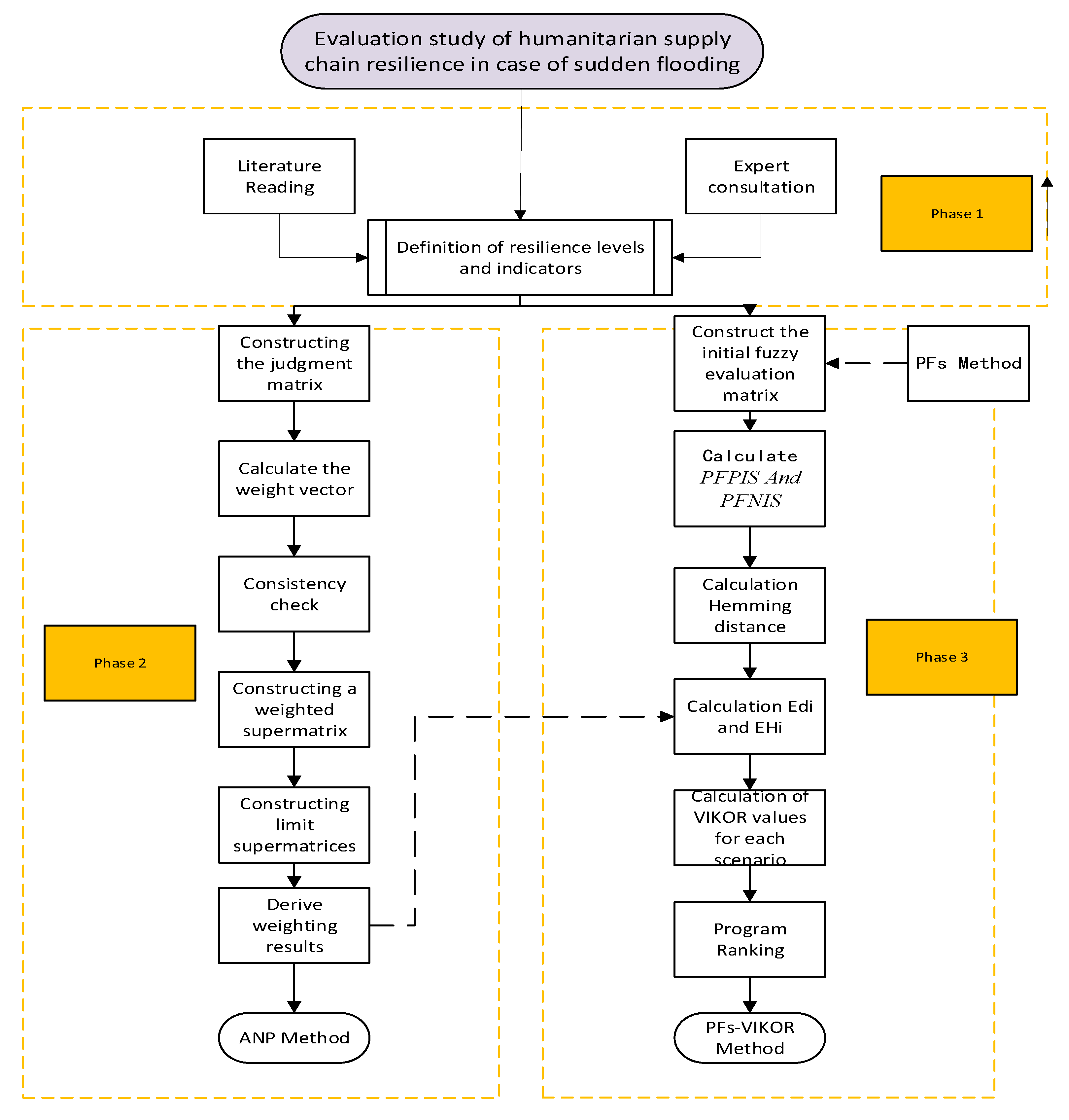
Figure 2.
Map of the study area.
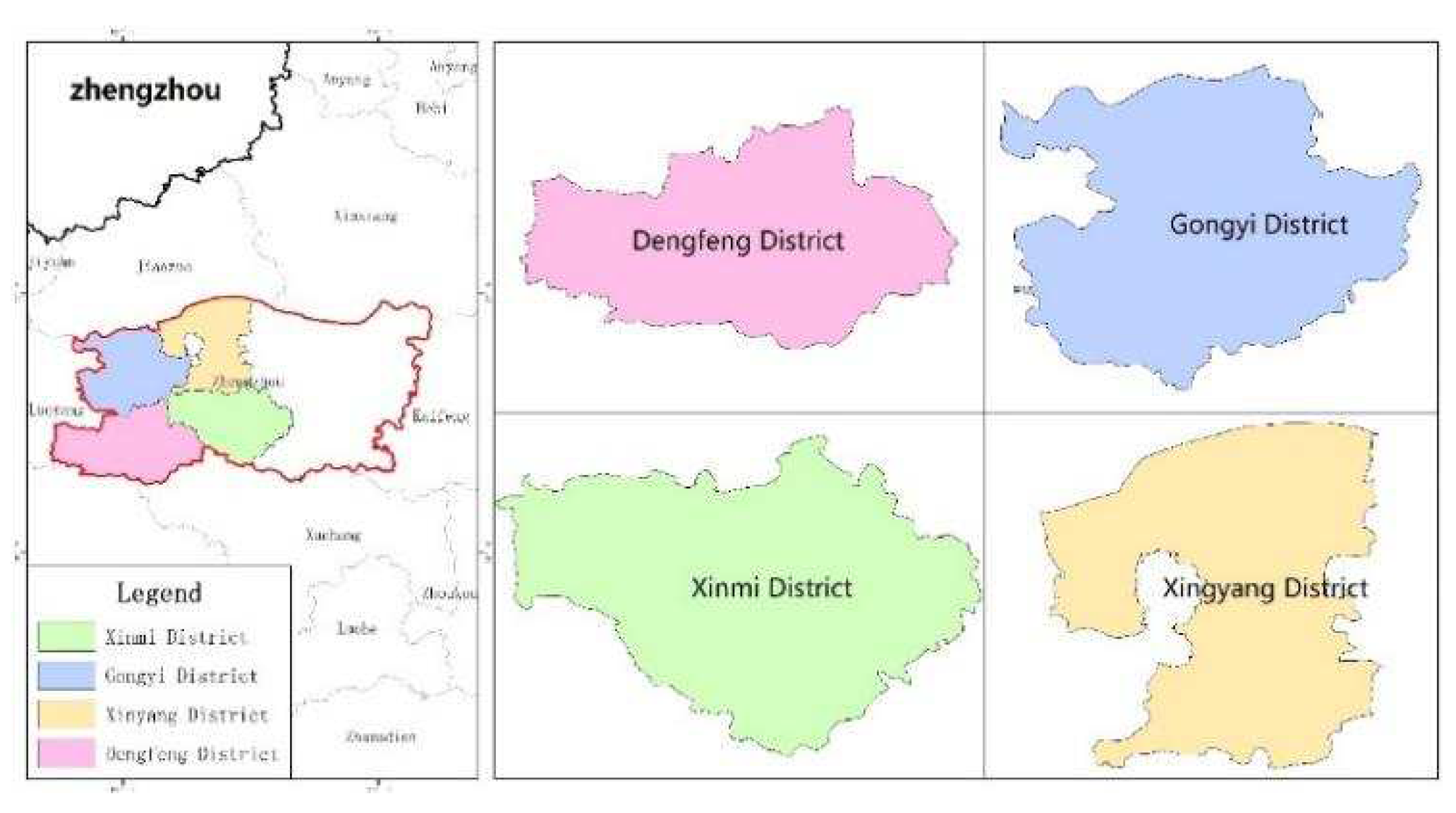
Figure 3.
Characterization of the situation of the Panel of Experts.
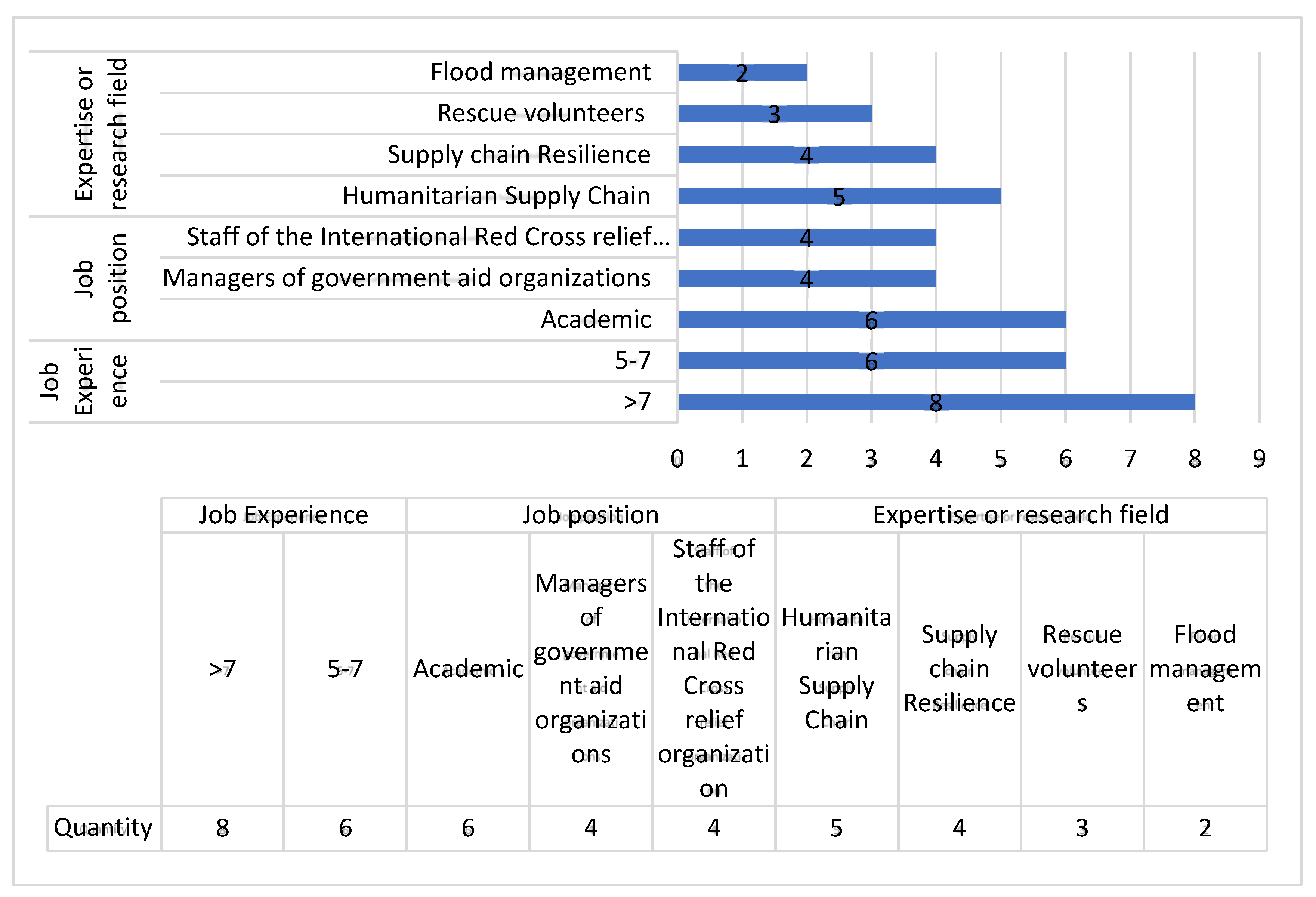
Figure 4.
ANP weights.
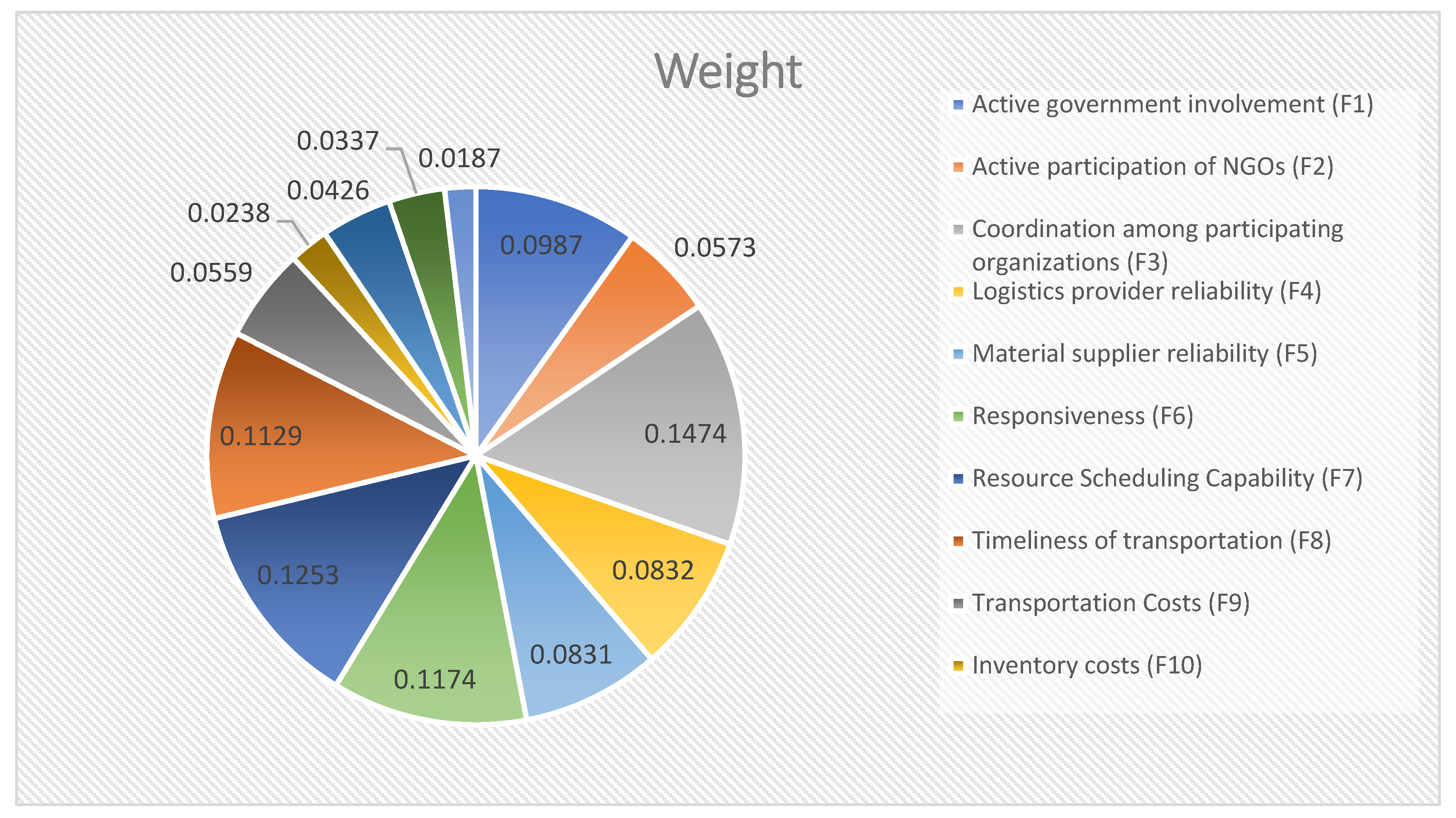
Table 6.
Group benefit value , individual regret value and VIKOR value and rank.
| rank | rank | rank | ||||
|---|---|---|---|---|---|---|
| Xingyang | 0.4986 | 4 | 0.1018 | 4 | 0.5221 | 4 |
| Gongyi | 0.3739 | 3 | 0.0930 | 3 | 0.4365 | 3 |
| Xinmi | 0.2859 | 2 | 0.0811 | 2 | 0.4279 | 2 |
| Dengfeng | 0.2701 | 1 | 0.0605 | 1 | 0.4008 | 1 |
Disclaimer/Publisher’s Note: The statements, opinions and data contained in all publications are solely those of the individual author(s) and contributor(s) and not of MDPI and/or the editor(s). MDPI and/or the editor(s) disclaim responsibility for any injury to people or property resulting from any ideas, methods, instructions or products referred to in the content. |
© 2023 by the authors. Licensee MDPI, Basel, Switzerland. This article is an open access article distributed under the terms and conditions of the Creative Commons Attribution (CC BY) license (http://creativecommons.org/licenses/by/4.0/).
Copyright: This open access article is published under a Creative Commons CC BY 4.0 license, which permit the free download, distribution, and reuse, provided that the author and preprint are cited in any reuse.


