

Submitted:
30 July 2023
Posted:
01 August 2023
You are already at the latest version
Abstract
Bisphenol A is a remarkable chemical compound for its many applications mainly in the plastics industry, but also for its toxic effects on the environment and human health. BPA (4,4-isopropylidenediphenol) is an anthropogenic compound, moderately soluble in water (120 – 300 mg/l) at room temperature, and highly soluble in alkaline solutions, ethanol and acetone. BPA can bioconcentrate, bioaccumulate and biomagnify through food webs until it reaches humans. To prevent this, effective strategies are sought to allow its removal from the environment, through physico-chemical or enzymatic methods, advanced oxidation, adsorption and biodegradation, ultrasonic degradation. This article shows a comparative study regarding adsorption of BPA on Active carbon and zeolitic tuff, ZTC. In this paper, the characterization of the zeolitic tuff Rupea adsorbent, was carried out from an elemental and mineralogical point of view, pore size and elemental distribution, using SEM, EDAX, and XRD analysis. The pore size varies from 30 nm to 10 µm, atomic ratio Si/Al≥4, and the 80 % of mineralogical composition represent Ca Clinoptilolite zeolites Ca Clinoptilolite zeolite ((Na1.32K1.28Ca1.72Mg0.52)(Al6.77Si29.23O72)(H2O)26.84).
Also, a comparative study of the adsorbtion capacity of bisphenol A from synthetic solutions on activated carbon type - Norit GAC 830 W, GAC, as well as on Clinoptilolite-type zeolitic tuff, ZTC, Rupea, was carried out. The experiments were carried out at a temperature of 20 ºC, a pH of 4.11; 6.98 and 8.12, and ionic strength being assured using KCl of 0.01 M, and 0.1 M. The adsorption capacities of GAC and ZTC tend to 115 mg/g and 50 mg/g respectively, at 8.12 pH and ionic strength of 0 M. The Langmuir mathematical model most faithfully describes the adsorption equilibrium of BPA. The maximum adsorption capacity for both adsorbents increases with increasing pH, and decreases with increasing ionic strength.
Keywords:
bisphenol A
; adsorption
; activated carbon
; zeolite clinoptilolite
; sustainable materials
; water treatment
1. Introduction
Bisphenol A (BPA) produced over 3,8 million tones/year is mainly used as monomer to produce polycarbonate, a precursor of epoxy resins [1] and vinyl ester resins [2]. Plastic packaging that comes into contact with water and food is a source of BPA in household wastewater and natural water sources [3]. BPA, a persistent organic pollutant present in various types of water, is confirmed as an endocrine disruptor, therefore it is essential to be effectively removed from the environment, to protect both the natural environment and human health [4,5]. Following the evaluation of the BFA pollution level, the European Union decided to introduce the Drinking Water Directive in 2020 (2020/2184), which aims to protect the quality of drinking water. This directive introduced the obligation to monitor and reduce the content of BPA in drinking water to a level lower than 2.5 micrograms/L.
In this context, technological processes must be identified to include the use of materials or methods aimed at removing BPA up to the level required by the legislation in force.
Researchers have studied and used different methods/techniques to remove BPA contained in wastewater. They found that BPA is difficult to be treated with conventional wastewater treatment methods, because of its structure, which allows molecules to escape primary and secondary treatment facilities. Thus, there is a need to use advanced BPA removal techniques, which include physicochemical or enzymatic methods, adsorption [6,7], advanced oxidation [8,9], photocatalysis [10,11], ultrasonic degradation [12,13], photodegradation [14].
To evaluate the efficiency of BPA degradation, rapid analysis methods for BPA monitoring are essential, the techniques that allow monitoring the BPA removal time during different water treatment processes: HPLC (high performance liquid chromatography), LC/MS (liquid chromatography). - mass spectrometry), capillary electrophoresis [15].
This article contains the latest investigations aimed at the removal and degradation of BPA by adsorption. Depending on the interaction of the adsorbate with the adsorbent surface, adsorption can be physical, in the case of the formation of weak van der Walls bonds between the adsorbate and the adsorbent surface, or chemical, which is based on strong ionic or covalent bonds [16].
Adsorption is an effective technique for removing BPA from effluents because it involves low cost, is environmentally friendly, uses a wide range of adsorbents with high reusability, and exhibits easy operation [17,18]. The adsorbate is retained on the adsorbent, the material that performs the adsorption (solid/liquid). The use of adsorbents has the advantage of retaining substances in low concentrations and of selecting certain substances. Adsorbents can be inorganic or organic materials, porous substances with high specific surface area. Inorganic materials such as clay minerals, zeolites, nanomaterials were used for BPA adsorption, and activated carbon, graphene, polymers, agricultural waste as organic materials [17].
Porous carbonaceous materials (PCMs) have a large number of interconnected pores throughout the matrix, and their properties, such as chemical stability, large surface area, easy processability, and hierarchical porosity, make them interesting for research. Porous carbonaceous materials have different forms, such as soft and hard mesoporous carbons, porous nanocarbons, activated carbon, and heteroatom-doped mesoporous carbons [19]. Adsorption on activated carbon has been investigated for pollutant removal, due to its high performance and low cost.
Activated carbon produced from shrimp shell generated by seafood industries has a large specific surface area and abundant active sites, its production involving low costs. The adsorption capacity of activated carbon is affected by the preparation conditions: heating rate, time and gas flow, but various agents can be used to improve the structure and to increase the specific surface during the preparation of this adsorbent. CO2 and NaHCO3 are activated carbon activators, which favor physical activation by removing the blockage of the activated carbon surface, and increasing the adsorption capacity, respectively by increasing the porosity, specific surface area and functional groups on the carbon surface. Magnetically activated carbon is created by doping magnetic elements into activated carbon during pyrolysis, which can be easily separated by a magnetic field. The researchers determined a maximum adsorption performance (98.01%) of BPA on SS@C.AC-M, obtained at pH 2.0, and at an initial BPA concentration of 25 mg L−1[20].
The use of pretreated activated carbon fibers for BPA adsorption resulted in 98-99.9% removal of BPA in the aqueous phase, under the optimal conditions of pH 7, 15°C and 2 minutes. The process follows the second-order kinetic model and Langmuir adsorption isotherms, as determined by the researchers [21]. In the presence of NaCl, CaCl2 and MgCl2 ionic salts, ACF exhibits a maximum BFA adsorption of 100 mg/L for MgCl2, and 10 mg/L for NaCl and CaCl2.
Zeolites exhibit excellent thermal stability, good generation performance, incombustibility and high adsorption capacity. Hydrophobicity is required for zeolites to remove hydrophobic pollutants. Researchers have developed methods to transform the hydrophilicity of zeolites into hydrophobicity, by patching a hydrophobic organic polymer layer on zeolites, ion exchange, anchoring organic groups, inorganic functional groups, acid leaching followed by calcination [22]. In recent years, a wide variety of surfactant-modified β – cyclodextrin, Cu/Fe bimetallic zeolites with improved adsorption capacities and cost-effectiveness have been developed.
The efficient removal of BPA from aqueous solution was investigated by the researchers using a zeolite imidazole framework, which demonstrated a good adsorption capacity of BPA molecules. Highly porous ZIF-8 was used in the experiments that included the factors: BPA concentrations, pH, doses of ZIF-8 and contact time. The combination of these factors led to the best performance, with a BPA removal efficiency of 99.93% [23].
Surfactant-modified zeolites show high BPA adsorption. BPA was adsorbed on natural zeolite modified with the cationic surfactant didodecyldimethylammonium bromide, with and without pretreatment of the zeolite with NaCl and HCl. BPA molecules can be adsorbed by the modified zeolite by interacting with the zeolite surface, by making bonds between the metal atoms in the zeolite, the surfactant and the oxygen atom in the OH group of BPA. The adsorbate–adsorbent interaction mechanism may include electrostatic attraction, hydrophobic interactions with the surfactant, and chemisorption [24].
NaX synthetic zeolites modified with β – cyclodextrin can improve BPA adsorption. The adsorption kinetics of BPA followed the pseudo-second order model, indicating electron exchange. BPA adsorption corresponds to the Langmuir isotherm, monolayer adsorption, with hydrogen bonding for the formation of host-guest complexes. The maximum adsorption capacity for BPA was 32.7 mg/g, indicating that NaX–CD can be an effective adsorbent, according to the study [25]. BPA was effectively removed using T-Hβ(25, 50) zeolites, which showed a high adsorption capacity, because their pore size is larger than the size of the BPA molecule, the adsorption process being according to the model Redlich-Peterson, and the maximum adsorption capacity having the value of 117.62 mg/g [22].
In this paper, the characterization of the zeolitic tuff - type Clinoptilolite, ZTC, Rupea adsorbent, was carried out from an elemental and mineralogical point of view, pore size and element distribution. It was also realised a comparative study of the removal efficiency of bisphenol A from synthetic solutions on activated carbon type - Norit GAC 830 W, GAC, and on Clinoptilolite-type zeolitic tuff, ZTC, Rupea.
The adsorption isotherms were drawn, and the mathematical models that best describe the adsorption process, as well as the mechanisms underlying the adsorption process, were identified.
The influence of Ci, pH and ionic strength on the adsorption capacity of the adsorbents used was studied.
Considering the harmful effect of BPA on life, it is essential that it is used as little as possible, and that the most efficient, cost-effective and environmentally friendly techniques are used to remove it, degrade it efficiently, quickly and without negative side effects.
2. Materials and Methods
2.1. Chemicals and equipments
Chemical reagents used were provided by Sigma Aldrich: bidphenol A solution 99%, methanol, hydrochloric acid, glycol, diacid potassium phosphate and monoacid sodium phosphate, potassium chloride. The adsorbent materials used in the study are activated carbon type - Norit GAC 830 W, GAC, and zeolitic tuff type Clinoptilolite, Rupea, ZTC, produced by Zeolites Development SRL, Rupea Romania, both of which are sanitary approved in accordance with the requirement of the drinking water standard EN 12915 / 2003.
Ther characteristic of avtivated charcoal Norit GAC 830 W were showed in Table 1.
To maintain the pH at constant values of 4.11, 6.98 and 8.12, buffer solutions prepared from hydrochloric acid and glycol, and diacid potassium phosphate and monoacid sodium phosphate were used in well-established ratios, respectively. The ionic strength values were assured using KCl.
The concentrations of bisphenol A, BFA, were determined with a high-performance liquid chromatograph (HPLC) from the company Agilent, Series 1100, equipped with a UV-DAD detector.
The investigation of the ZTC was carried out with the help of the scanning electron microscope QUANTA INSPECT F50, equipped with a field emission electron gun - FEG (field emission gun) with a resolution of 1.2 nm, and an energy dispersive X-ray spectrometer (EDS) with a resolution of MnK of 133 eV.
For the investigation of the samples, and for a good conduction from the electrical point of view, the samples were metallized for 60 seconds with gold.
The structural information regarding ZTC was obtained by X-ray diffraction (XRD) technique, carried out in air, at room temperature, with the help of PANalytical Empyrean (Almelo, Netherlands) equipment provided with a characteristic Cu X-ray tube (λ Cu Kα1 = 1.541874 Å). Two samples (P0 and P1) were scanned in the 2θ angle range of 10-80°, with a scan increment of 0.02° and a time of 100 s/step. Phase identification and Rietveld quantitative phase analysis were performed, using the X′Pert High Score Plus 3.0 software (PANalytical, Almelo, The Netherlands).
Other instruments used were: Jenway 370 pH-meter, analytical balance Precisa type XB 120 A, analog orbital shaker VELP.
2.2. Preparation of samples
Synthetic solutions of BPA with concentrations between 1-300 mg/L were used. The stock solution was prepared by weighing 0.1 g of solid BPA, then by dissolving it in ethanol and adding distilled water until the required volume of solution was obtained. The ratio solid /lichid in the systems were 1g adsorbant/1L solution. The experiments were carried out at a temperature of 20 ºC, and a pH of 4.11; 6.98 and 8.12. For maintaining the pH at the preset value, there were used buffer solutions of hydrochloric acid and glycol for pH 4.11 and diacid potassium phosphate and monoacid sodium phosphate in well-established ratio, for 6.98 and 8.11. The ionic strength was assured using KCl, the final concentration in the studied sites were 0.01 M, and 0.1M.
Adsorption capacity (qe) of adsorbents is calculated with the relations [16]:
where: C0 and Ce represent the initial and equilibrium concentration of the BPA solution; mg/L, V – the volume of the solution, L; and m -mass of the adsorbent, g.
2.3. Adsorption isotherms
Comparative study of experimentally obtained isotherms with Langmuir and Freudlich type isotherms for BPA on GAC) and ZTC.
2.3.1. Langmuir type isotherm
The experimentally obtained isotherms were compared with theoretical Langmuir type and empirical Freundlich type isotherms [21,27].
The characteristic equation of the Langmuir isotherm is:
where: q = adsorption capacity at equilibrium, mmolg/g; qm = maximum adsorption capacity for a certain set of conditions at equilibrium, when the entire monomolecular layer is occupied, mmol/g; Ce = concentration of the solute in the system at equilibrium; mmol/L; b = constant that depends on the nature of the system; equilibrium constant, adsorption coefficient.
The Langmuir equation can be written in linearized form as follows:
The constant b and the maximum adsorption capacity, "qm" can be determined from experimental data, if 1/q is graphically represented as a function of 1/Ce.
The graphical representation is a straight line that intersects Oy at the point (0.1/qm), from which qm can be determined. Knowing qm, "b" is determined from the value of the tangent of the angle that the line makes with the Ox axis.
2.3.2. Freundlich type isotherm
The characteristic equation of the Freundlich isotherm is [21,27]:
where: n and K represent constants specific to each system, which depend on the working temperature. The constants K and n can be determined from experimental data, if represented graphically:
qe = KCe1/n
log qe = f(logCe)
A straight line is obtained. The intersection with Oy is log K, and the tangent of the angle formed with the abscissa is 1/n. From here, the two constants K, n are obtained, and then the isotherm is drawn.
The linearization of the equation is obtained by logarithmization:
log qe = log K + (1/n) log Ce
3. Result
3.1. ZTC Adsorbant characterisation
3.1.1. SEM and EDAX Analysis for ZTC
The morphological aspect of the ZTC sample is shown in the HRSEM high-resolution scanning electron microscopy images (secondary electron images – SEI) in Figure 1a–f:
From a microstructural point of view, a lamellar structure can be observed with platelet thicknesses of up to 100 nm. The pore size varies from 30 nm to 10 µm, which proves that ZTC can adsorb a very large range of compounds from water, including BFA
The EDAX spectrum highlighted the presence of the main elements: O, Mg, Al, Si, K, Ca and Fe, and the high content of silicon, atomic ratio Si/Al≥4 as can be seen from Figure 2 and Table 2.
The distribution of the elements in the internal structure of the zeolites is highlighted in Figure 3. From the analysis of the EDAX spectrum, it could be observed that 46% of the image content was unallocated at 23609 Pixels, 20% of the image content showing Si, O, Al, Fe and K can be seen, at a resolution of 10033 Pixels, and 34% of the image containing Si, and Al can be seen with a resolution of 17558 Pixels. In Figure 3a, one can see the SEM image of the ZTC that was subjected to analysis. A more prominent area is identified, which can be associated with a crystallized area. The overall image of the distribution of all the component elements is presented in Figure 3b. One can observe a virtually uniform distribution of some elements present in the zeolite structure, such as Si, Al, Ca, K (see Figure 3c–e,i), but we can also observe some agglomerations of elements, such as Fe and Mn in certain areas (Figure 3f,j). The latter elements are concentrated precisely in that area where the prominence appears.
3.1.2. XRD Analysis of ZTC
In the case of sample P1, one can see the characteristic diffraction maxima of Ca Clinoptilolite zeolite ((Na1.32K1.28Ca1.72Mg0.52)(Al6.77Si29.23O72)(H2O)26.84) identified by PDF file 00-089-7535 accompanied by Phlogopite-1M (KMg3Si3AlO10(OH)2) identified by PDF file 00-010-0495. It was also possible to highlight the presence of Albite ((Na0.84Ca0.16 )Al1.16Si2.84 O8) identified by PDF file 01-076-0927, as well as traces of crystalline SiO2 identified by PDF file 04-020-9990. The sample marked P0 shows the same mineral phases identified above
Following Rietveld processing, the proportion of phases could be highlighted and the results are centralized in Table 3.
3.2. Adsorption Equilibrium
3.2.1. Adsorbtion isotherm for differents pH values
The isotherms for GAC and ZTC at pH = 8.12 are shown in Figure 5.
As expected, activated carbon has a much higher adsorption capacity for BFA than zeolite. However, the adsorption capacity is not the only criterion that must be taken into account when choosing the adsorbent to use. To the same extent, we must also take into account the consumption of raw materials, energy, water, the carbon footprint, the duration of the life cycle, and last but not least, its cost.
The carbon footprint in the production of activated carbon is very large, taking into account the fact that it is obtained from plant material or coal through heat treatment at 800-900 ⁰C, for 2-10 hours. So, we have a high consumption of energy, and only 25% of the mass used results in the form of activated carbon, the rest being gases that reach the atmosphere, carbon dioxide being the main component. The duration of the life cycle for the stage of using activated carbon can last between several months to several years, each reactivation involving additional costs and energy consumption. Zeolite is a mineral adsorbent, which does not require special preparation techniques, it has a much longer lifetime, it can reach decades, having a much higher mechanical resistance. Desorption of organic compounds takes place at moderate temperatures without considerable mass loss. For drinking water purification, the market price for activated charcoal is ∼1200 EUR/ton [28], while the price of zeolite does not exceed 200 EURO/ton.
Taking into account the above-mentioned, it seems that the zeolite option is worth being taken into connsideration.
The isothermes of reaction were showed for three different pH values pH = 4.11; 6.98 and 8.12, for both adsorbents (Figure 6a,b). Langmuir and Freundlich adsorption isotherms were performed to explain BPA adsorption. They explain the interactions between the adsorbent molecules and the adsorbate molecules and the adsorption capacity. Adsorption can occur monolayer or multilayer.
The maximum adsorption capacity for both adsorbants increase with pH increasing for GAC to the values of 71 mg/g, 98 mg/ and 113 mg/g, and for ZTC, to the values of 50 mg/g, 20 mg/g and 12 mg/g, for pH values of 4.11, 6.98 and 8.12, respectively.
The increase is less significant in the acid pH range, almost imperceptible, for ZTC, after which it increases suddenly in the basic range. It seems that the affinity of GAC and ZTC for the proton is much higher. The active centers which have been occupied with protons before, then reject the BPA molecules, thus reducing the adsorption capacity in the acidic media. A high pH, BPA, being a phenolic compound, dissociates and forms hydrophobic anions.
For identifying the mecanism of assorption process, the experimental data were compared with the Langmuir and Freudlich mathematical model.
In Table 4, Table 5 and Table 6 there are showed the mathematique/cal ecuations charactersitic for Langmuir and Freudlinch models for BPA on GAC and ZTC, and the values of the specific parameters determined on matehmatical models.
As it can be seen from Table 6, the experimental data for both GAC and ZTC, the R2 coefficients have values above 0.99 for the Langmuir mathematical model in all cases studied. In the case of the Freudlinch model, The R2 coefficients are between 0.9064 and 0.9711. The experimental data show a linearity compatible with the Langmuir isotherm, indicating that the Langmuir mathematical model most faithfully describes the adsorption equilibrium of BPA.
3.2.2. The influence of ionic strength on the adsorption process
The presence of potassium chloride ions in higher or lower concentration influences the adsorption process, as it can be seen in Figure 7a,b.
Regarding GAC, we can observe that, at pH 8.12, the adsorption capacity decreases by 4.2% at an ionic strength of 0.01 M KCl, and by 20%, for an ionic strength of 0.1 M KCl. As the pH decreases, it can be observed that the competition for active centers increases, protons also intervene, which determine a more pronounced decrease in the maximum adsorption capacity. Ionic strength influence as well the adsorption capacity at 0.01 M it represents 91.5% and 96.7l%, and at an ionic strength of 0.1M it represents 68% and 73% of the initial capacity at pH 6.98 and 4.11, respectively.
Regarding ZTC, we can see that the present ionic strength affects more the maximum adsorption capacity, compared to activated carbon, and this is accentuated as the pH decreases. It can be observed that, at an ionic strength of 0.01 M, the maximum adsorption capacity decreases to 79%, 30% and 58% of the initial capacity, and, at an ionic strength of 0.1M, it reaches 42%, 45.2% and 45%, and, at pH 4.11, 6.98 and 8.12 respectively. Unlike GAC, zeolite has an important ion exchange capacity, so a large part of the active centers react with potassium cations, thus occupying the active centers. Activated carbon does not have an important adsorption capacity for potassium cations, and therefore, their effect is much smaller.
4. Discussion
BPA is an endocrine disruptor with negative effects on humans and living organisms, so it needs to be removed from domestic and industrial wastewater. Among the BPA removal technologies, traditional and advanced methods, adsorption can satisfactorily remove this pollutant, because it is an effective method which involves low cost, it is environmentally friendly, (it) uses/using a wide range of adsorbents with high reusability, and it exhibits easy operation. The adsorbents used in this study: activated carbon and Rupea zeolite, showed a good BPA removal capacity.
From specialized studies, it was highlighted that pure adsorbents demonstrated a lower adsorptivity compared to chemically or functionally modified adsorbents. As a future direction of research, the adsorption of BPA on adsorbents developed by modification with different functional groups can be studied, with the reservation to monitor the possible secondary effect of pollution, generated by the added reactive substances. Another aspect that must be taken into account is the loss of adsorption sites by adsorbents after several cycles of the adsorption process, and their transformation into waste that generates secondary pollution.
5. Conclusions
Volcanic tuff zeolite from Rupea is a mineral that is found in extensive deposits in Romania and whose exploitation costs are very low. As mineralogical composition, it is made up of minerals of the type: Clinoptilolite in a proportion of over 80%, it having a ratio of Si to Al greater than 4, which explains the high adsorption capacity for different ionic and molecular species. It has a uniform distribution of the main elements which make up its composition, but there are also crystalline agglomerations that The pore size extends over a very large range of sizes, from a few tens of nm to tens of micrometers. This proves their dimensional compatibility for a very large range of components. Even if clinoptilolite is recognized for its high ion exchange capacity, studies have shown that it can also retain organic compounds such as BPA. The retention mechanism is very well described by the Langmuir mathematical model. This mathematical model also describes very well the adsorption of BPA on GAC.
From the studies carried out, it can be seen that GAC has a BPA adsorption capacity of over 70 mg/g at acidic pH and it tends to 115 mg/g at slightly basic pH. ZTC has a maximum adsorption capacity of around 12 mg/g at pH 4.11, and this tends to 50 mg/g at a pH of 8.12. The ionic strength determines the decrease in the adsorption capacity for both GAC and ZTC, more pronounced for ZTC, under conditions of low pH, and, at an ionic strength of 0.1 M, it can decrease a lot to a maximum of 5 mg/g. At basic pH at the same ionic strength, the capacity can reach over 22mg/g. If the ionic strength tends to 0 capacity, the adsorption capacity of zeolite can tend to 50 mg/g, and that of GAC tends to 115 mg/g. In choosing the adsorbent, one must take into account not only its technical performance, but also its life cycle costs and carbon footprint. Although zeolite does not have a very high adsorption capacity, it has a much longer cotton life, a reduced carbon footprint and costs 6-7 times lower than GAC.
Author Contributions
For research articles with several authors, a short paragraph specifying their individual contributions must be provided. The following statements should be used “Conceptualization, D.S.S. and M.S methodology, D.S.S.; software, D.S.S; validation, D.S.S., L.C. and M.S.; formal analysis, A.M.D.; investigation, A.M.D., R.T., A.I.N., L.C.; resources, D.S.S.; writing—original draft preparation, D.S.S. and M. S.; writing—review and editing, D.S.S.; visualization, A.I.N. and R.T.; supervision, D.S.S.; project administration, A.M; funding acquisition, D.S.S., A.M.D. All authors have read and agreed to the published version of the manuscript.” Please turn to the CRediT taxonomy for the term explanation. Authorship must be limited to those who have contributed substantially to the work reported.
Acknowledgments
This work has been funded by the European Social Fund from the Sectoral Operational Programme Human Capital 2014-2020, through the Financial Agreement with the title "Training of PhD students and postdoctoral researchers in order to acquire applied research skills - SMART", Contract no. 13530/16.06.2022 - SMIS code: 153734.
References
- Hoekstra, E.; Simoneau, C. Release of bisphenol A frompolycarbonate—a review. Critic. Rev. Food Sci. Nutr. 2013, 53, 386–402. [Google Scholar] [CrossRef] [PubMed]
- Vasiljevic, T.; Harner, T. Bisphenol A and its analogues in outdoor and indoor air: Properties, sources and global levels. Sci. Total Environ. 2021, 789, 148013, Bibcode: 2021ScTEn.789n8013V. [Google Scholar] [CrossRef] [PubMed]
- Michałowicz, J. Bisphenol A – Sources, toxicity and biotransformation. Environ. Toxicol. Pharmacol. 2014, 37, 738–758. [Google Scholar] [CrossRef]
- Gao, C.; Zeng, Y.H.; Li, C.Y.; Li, L.; Cai, Z.H.; Zhou, J. Bisphenol A biodegradation by Sphingonomas sp. YK5 is regulated by acyl-homoserine lactone signaling molecules. Sci. Total Environ 2021, 802, 149898. [Google Scholar] [CrossRef]
- Dura-Pahontu, A.M.; Draganescu, R.; Stefan, D.S.; Stefan, M. Preliminary study regarding the influence of bfa on some microorganisms. U.P.B. Sci. Bull. Series B 2022, 84, 4, 73–82. [Google Scholar]
- Bhatnagar, A.; Anastopoulos, I. Adsorptive removal of bisphenol A (BPA) from aqueous solution: A Review. Chemosphere 2016, 168, 885–902, 1e18. [Google Scholar] [CrossRef]
- López-Ramón, M.V.; Ocampo-Pérez, R.; Bautista-Toledo, M.I.; Rivera-Utrilla, J.; Moreno-Castilla, C.; Sánchez-Polo, M. Removal of bisphenols A and S by adsorption on activated carbon clothes enhanced by the presence of bacteria. Sci. Total Environ. 2019, 669, 767–776. [Google Scholar] [CrossRef]
- Sharma, J.; Mishra, I.; Kumar, V. Degradation and mineralization of Bisphenol A (BPA) in aqueous solution using advanced oxidation processes: UV/H2O2 and oxidation systems. J. Environ. Manag. 2015, 156, 266e275. [Google Scholar] [CrossRef]
- Zhang, A.; Li, Y. Removal of phenolic endocrine disrupting compounds from waste activated sludge using UV, H2O2, and UV/H2O2 oxidation processes: effects of reaction conditions and sludge matrix. Sci. Total Environ. 2014, 493, 307e323. [Google Scholar] [CrossRef]
- Fu, X.; Yang, R.; Zhou, G.; Chen, X.; Liu, X.; Chi, Y.; Chi, J.; Li, X.; Fang, H.; Li, H.; Li, W. New progress in photocatalytic degradation of bisphenol A as representative endocrine disrupting chemicals. Curr. Opin. Green Sustain. Chem. 2022, 100629. [Google Scholar] [CrossRef]
- Shen, J.; Shi, A.; Lu, J.; Lu, X.; Zhang, H.; Jiang, Z. Optimized fabrication of Cu-doped ZnO/calcined CoFe‒LDH composite for efficient degradation of bisphenol a through synergistic visible-light photocatalysis and persulfate activation: Performance and mechanisms. Environ. Pollut. 2023, 323, 121186. [Google Scholar] [CrossRef]
- Gao, Y.; Zhang, J.; Zhou, J.; Chu, W.; Gao, N. An expected formation of TCNM from chlorination of bisphenol A with ultrasonic pretreatment: A new nitrogen source for N-DBP from N2 in air. Chem. Eng. J. 2021, 429(1), 132326. [Google Scholar] [CrossRef]
- Meng, L.; Gan, L.; Gong, H.; Su, J.; Wang, P.; Li, W.; Chu, W.; Xu, L. Efficient degradation of bisphenol A using High-Frequency Ultrasound: Analysis of influencing factors and mechanistic investigation. J. Clean. Prod. 2019, 232, 1195–1203. [Google Scholar] [CrossRef]
- Barros, M.M.P.; Almeida, K.J.C.; Conceição, M. V. S.; Pereira, D.H.; Botelho, G. Photodegradation of bisphenol A by ZnS combined with H2O2: Evaluation of photocatalytic activity, reaction parameters, and DFT calculations. J. Mol. Liq. 2023, 371, 121096. [Google Scholar] [CrossRef]
- Wu, Y.; Liu, Y.; Gao, X.; Gao, K.; Xia, H.; Luo, M.; Wang, X.; Ye, L.; Shi, Y.; Lu, B. Monitoring bisphenol A and its biodegradation in water using a fluorescent molecularly imprinted chemosensor. Chemosphere 2015, 119, 515–523. [Google Scholar] [CrossRef] [PubMed]
- Yadav, S.; Shrivastava, V.; Dixit, L.; Pritam, A. Ultrasonic cavitation tailored wastewater purification and desalination using thick sand of highly permeable deep aquifer, Colloids Surf. A Physicochem. Ehg. Asp. 2020, 585, 124107. [Google Scholar] [CrossRef]
- Chirag Batukbhai Godiya, B. J. Removal of bisphenol A from wastewater by physical, chemical. Environ. Chem. Lett. 2022, 20, 1801–1837. [Google Scholar] [CrossRef]
- Zare EN, M. A. Water decontamination usingbio-based, chemically functionalized, doped, and ionic liquid enhance-denhanced adsorbents: review. Environ Chem Lett 2021, 19, 3075–3114. [Google Scholar] [CrossRef]
- Bhawna, J. BNanoporous Carbon Materials for Energy Harvesting, Storage, and Conversion; Springer Link, 2023; pp. 41–63. [Google Scholar]
- Fatemeh Fazeli Zafar, B. B. Adsorption kinetics analysis and optimization of Bisphenol A onto magnetic activated carbon with shrimp shell based precursor. Biomass and Bioenergy 2022, 166, 106604. [Google Scholar] [CrossRef]
- Srivastavaa, A.; Singha, M.; Karsauliyaa, K.; Mondalb, D.P.; Kharec, P.; Singhb, S.; Singha, S.P. Effective elimination of endocrine disrupting bisphenol A and S from drinking water using phenolic resin-based activated carbon fiber: adsorption, thermodynamic and kinetic studies. Environ. Nanotechnol. Monit. Manag. 2020, 14, 100316. [Google Scholar] [CrossRef]
- Luo, L.; Zheng, L.; Zhang, X.; Jiang, F.; Xia, L.; Dai, J.; Meng, D. The dealuminated zeolites via acid leaching and followed calcination method for removal of hydrophobic bisphenol A. J. Solid State Chem. 2022, 305, 122640. [Google Scholar] [CrossRef]
- Mahmad, A.; Zango, Z.U.; Noh, T.U.; Usman, F.; Aldaghiri, O. A.; Ibnaouf, K.H.; Shaharun, M.S. Response surface methodology and artificial neural network for prediction and validation of bisphenol a adsorption onto zeolite imidazole framework. Groundw. Sustain Dev. 2023, 21, 100925. [Google Scholar] [CrossRef]
- Rakhym, A.B.; Seilkhanova, G.A.; Mastai, Y. Physicochemical evaluation of the effect of natural zeolite modification with didodecyldimethylammonium bromide on the adsorption of Bisphenol-A and Propranolol Hydrochloride. Microprous Mesoporous Mater. 2021, 318, 111020. [Google Scholar] [CrossRef]
- Bandura, L.; Bialoszewska, M.; Malinowski, S.; Franus, W. Adsorptive performance of fly ash-derived zeolite modified by β-cyclodextrin for ibuprofen, bisphenol A and caffeine removal from aqueous solutions – equilibrium and kinetic study. Appl. Surf. Sci. 2021, 562, 150160. [Google Scholar] [CrossRef]
- Norit Gac 830 W: Datasheet | PDF | Specification (Technical Standard) | Carbon (scribd.com).
- Zeeshan, M.; Shah, J.; Rasul, J.M.; Iqbal, M. Removal of Bisphenol-A from Aqueous Samples Using Graphene Oxide Assimilated Magnetic Silica Polyaniline Composite. J. Inorg. Organomet. Polym. Mater. 2021, 31, 2073–2082. [Google Scholar] [CrossRef]
- Tibor, S.T.; Grande, C.A. Industrial production of activated carbon using circular bioeconomy principles: Case study from a Romanian company. Clean. Eng. Technol. 2022, 7, 100443. [Google Scholar] [CrossRef]
Figure 1.
The SEM analisys for ZTC.
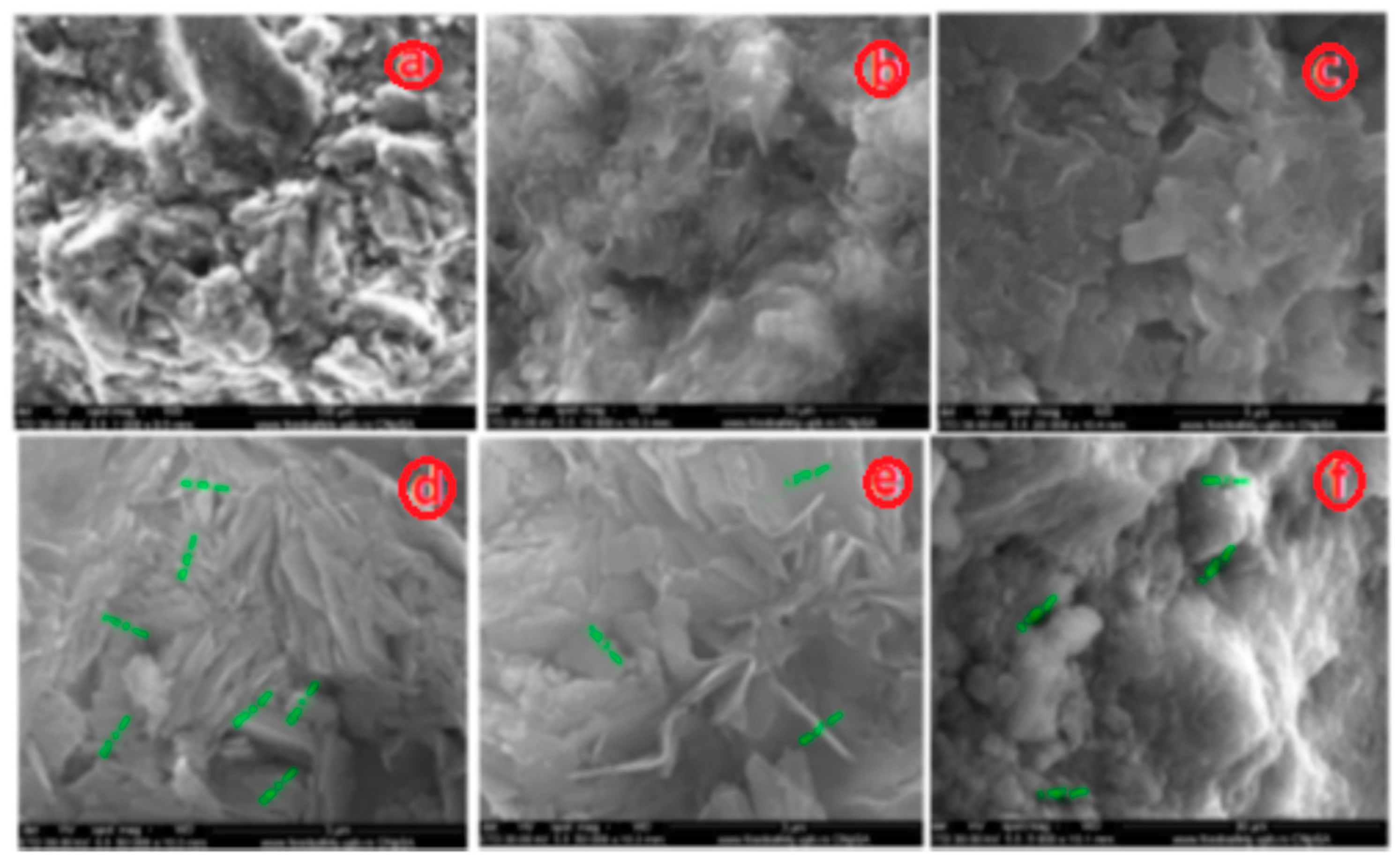
Figure 2.
EDAX spectrum specific to ZTC.
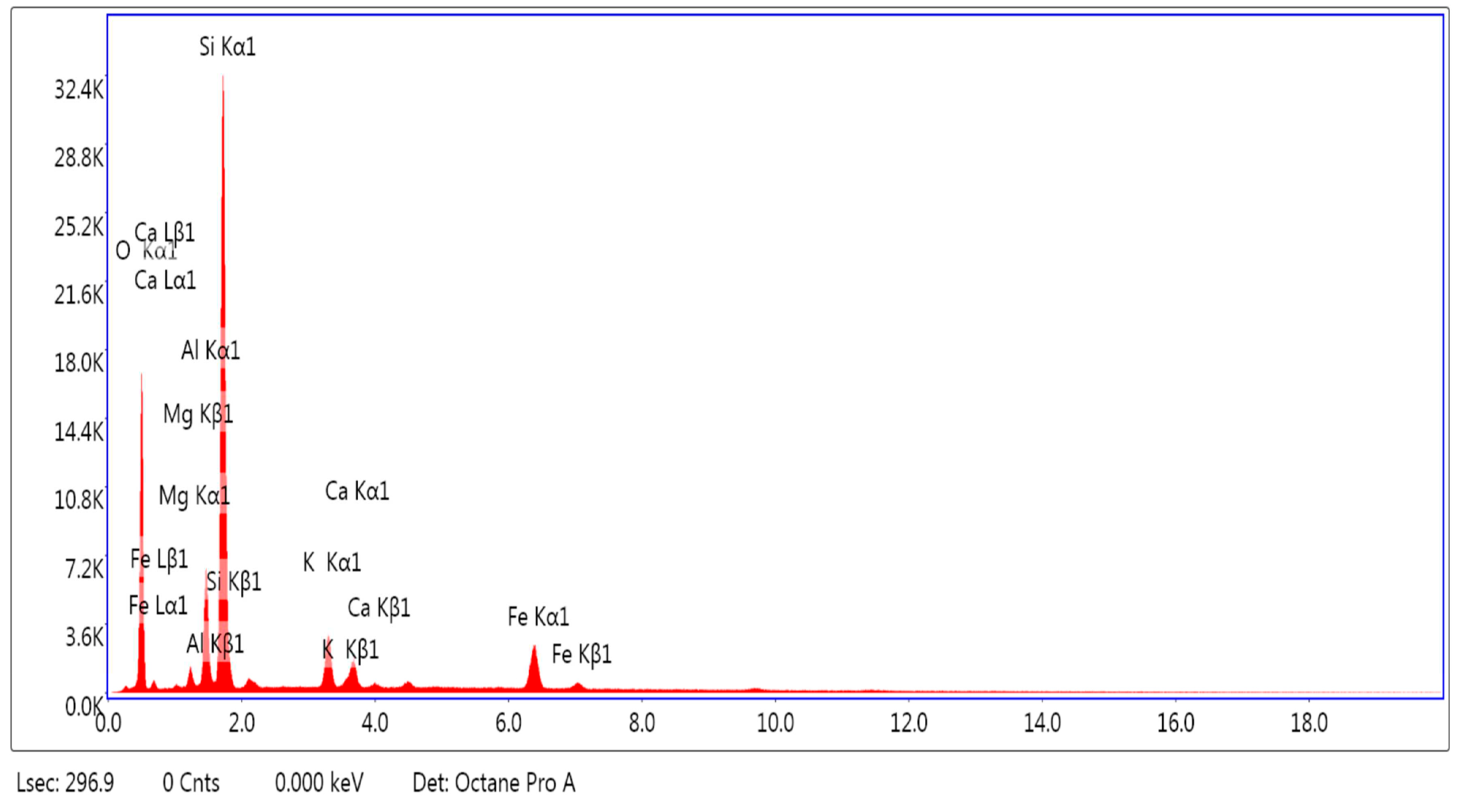
Figure 3.
The EDAS distribution of elements in the internal structure of the ZTC.
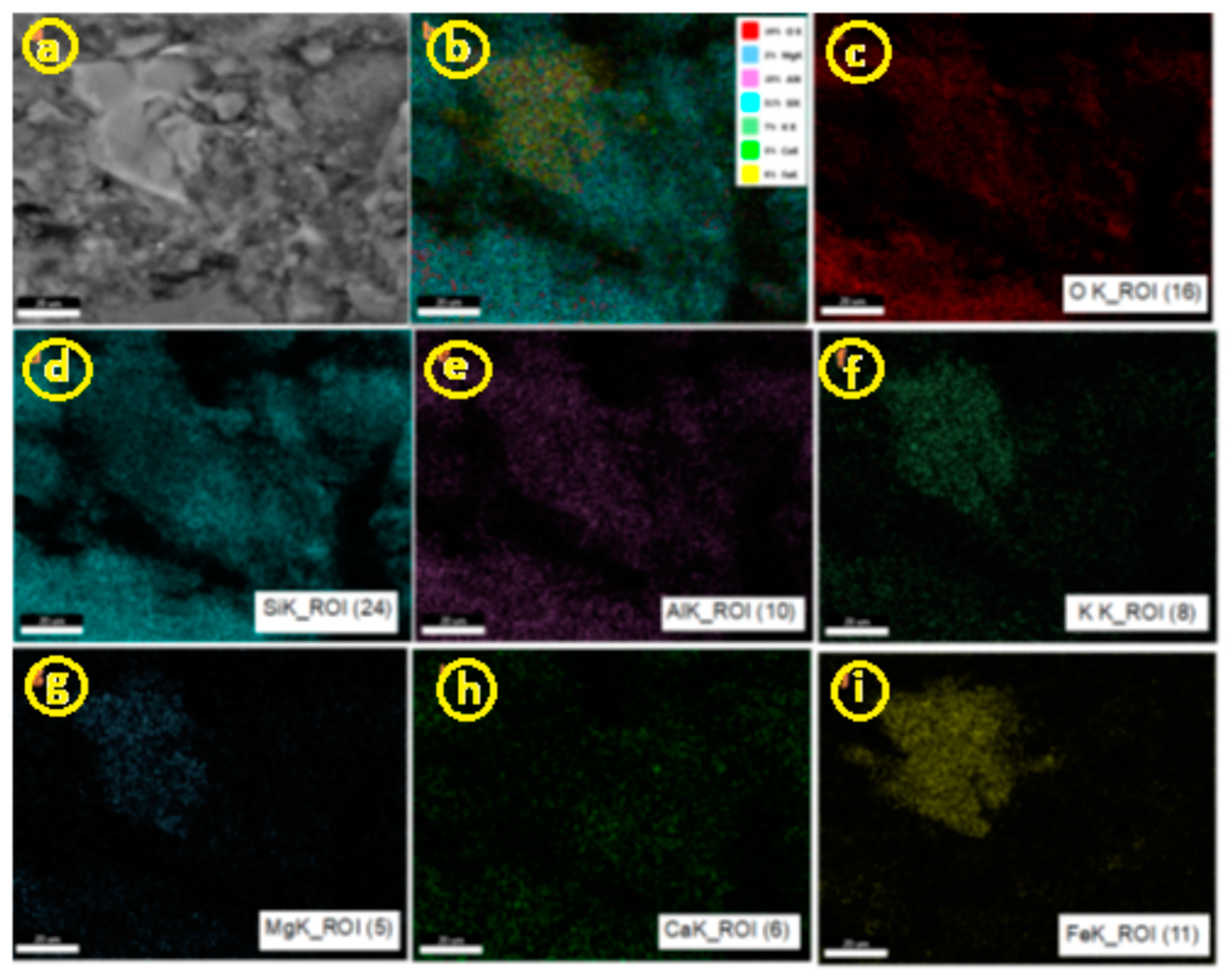
Figure 4.
Characteristic ZTC diffractograms, samples P0 and P1.
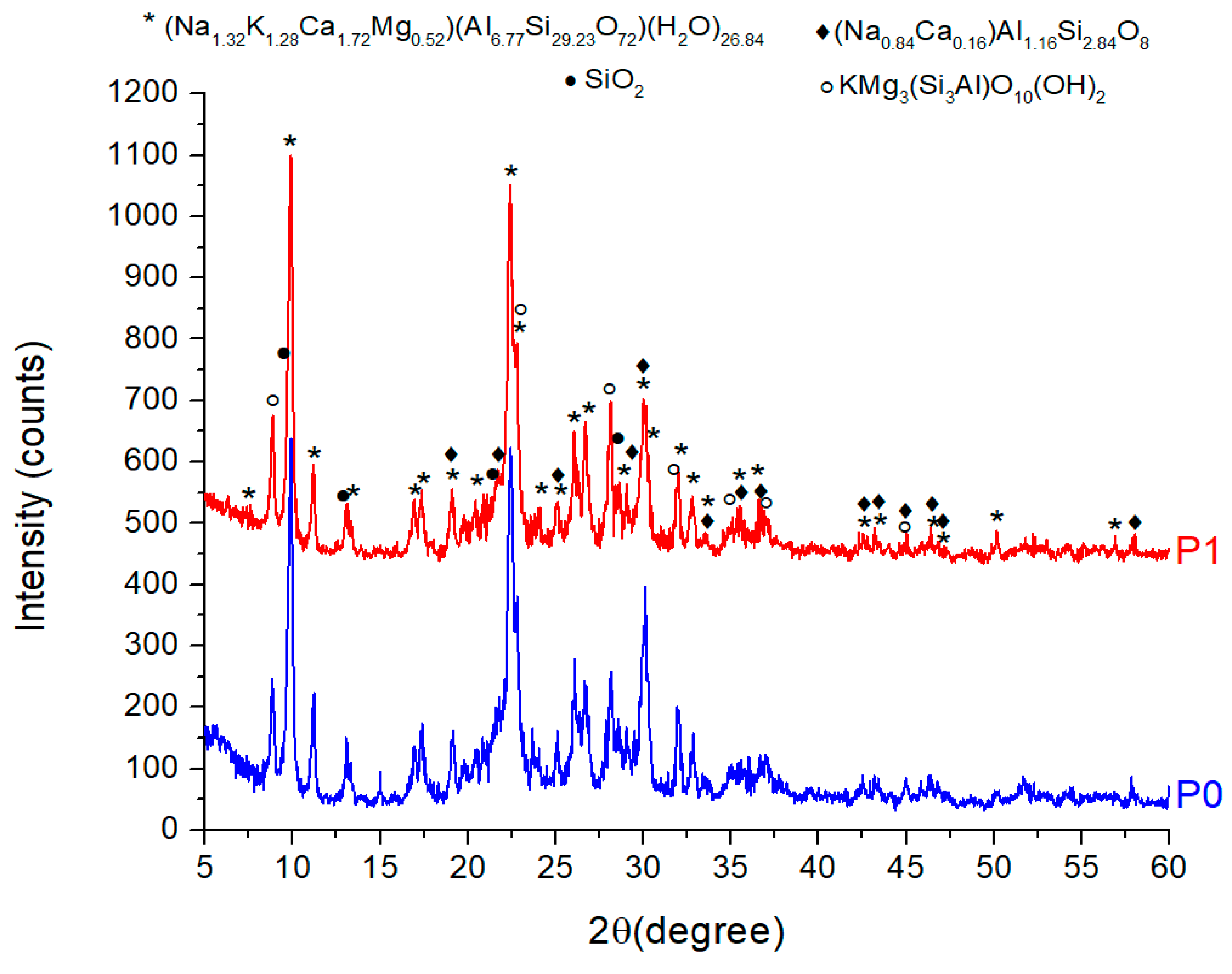
Figure 5.
Adsorbtion izotherm for GAC and ZTC at 25 ⁰C, I = 0 M, and pH=8.12.
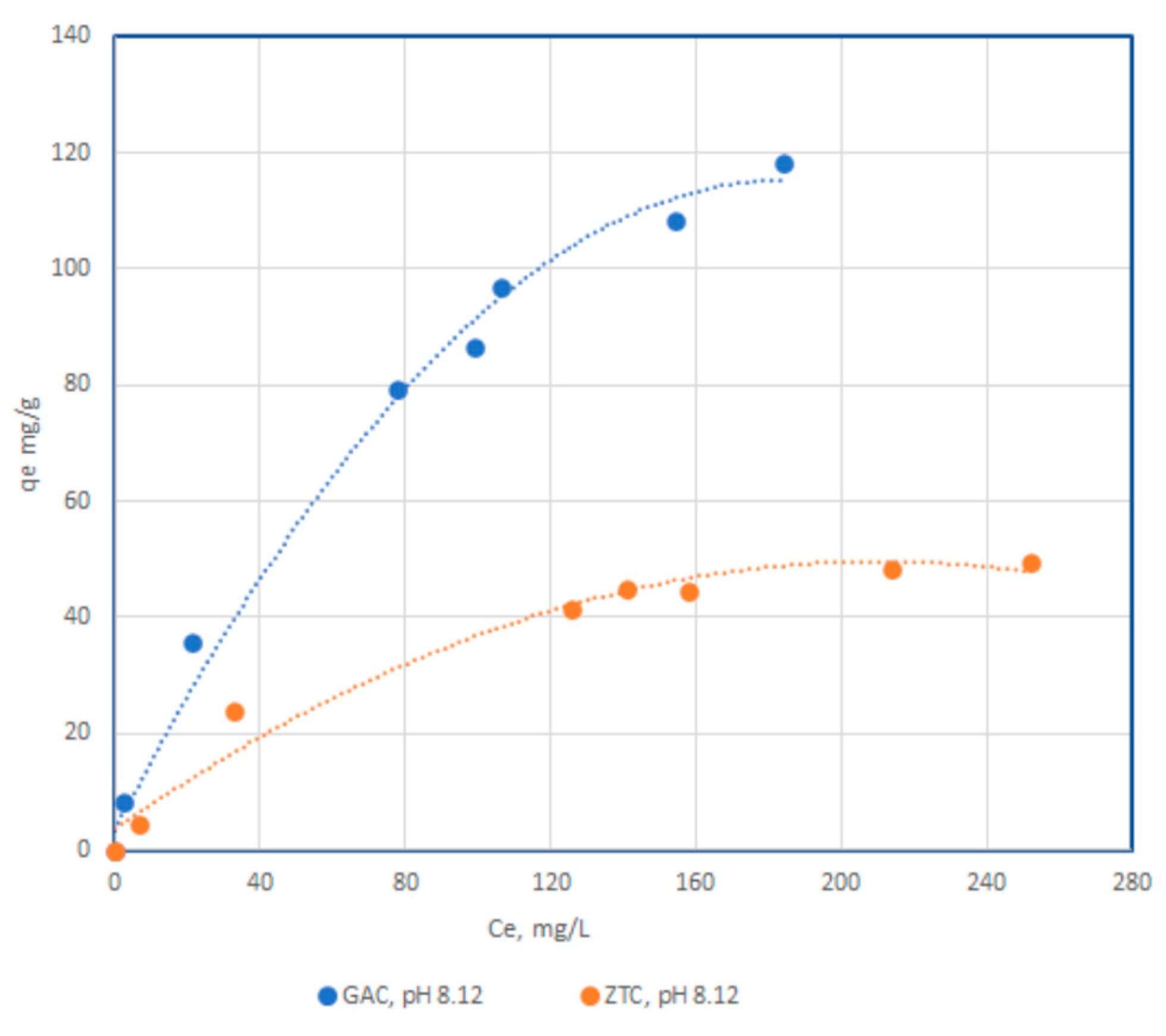
Figure 6.
Adsorption isotherms at 25⁰C, ionic strength 0 M: a) for GAC and b) ZTC at three pH values 4.11, 6.98 and 8.12.
Figure 6.
Adsorption isotherms at 25⁰C, ionic strength 0 M: a) for GAC and b) ZTC at three pH values 4.11, 6.98 and 8.12.
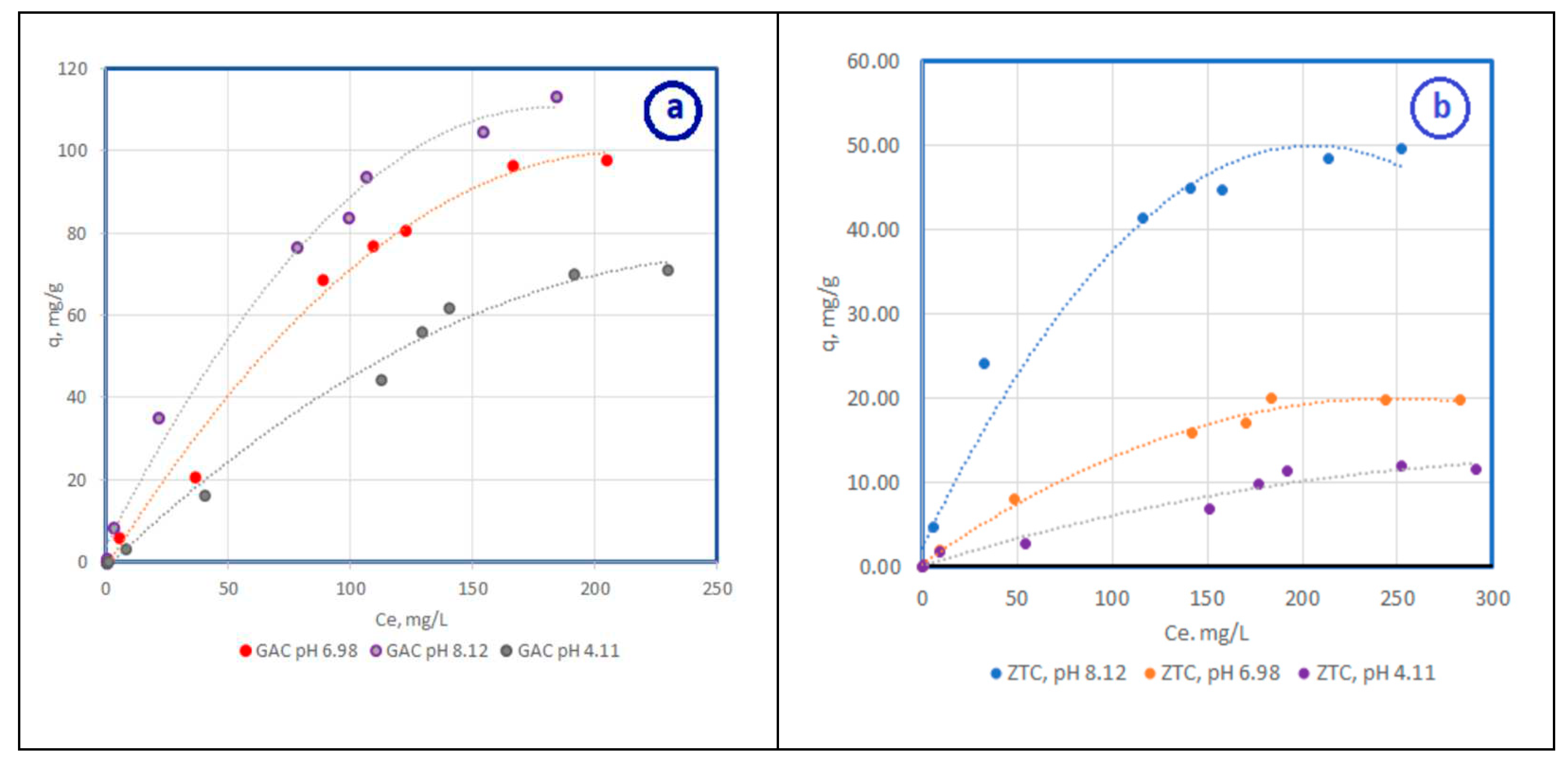
Figure 7.
The Variation of the maximum adsobtion capacity of BPA for ionic strength as KCl for 0, 0.01, and 0.1 M for: a) GAC and b) ZTC for pH 4.11, 6.98 and 8.12.
Figure 7.
The Variation of the maximum adsobtion capacity of BPA for ionic strength as KCl for 0, 0.01, and 0.1 M for: a) GAC and b) ZTC for pH 4.11, 6.98 and 8.12.
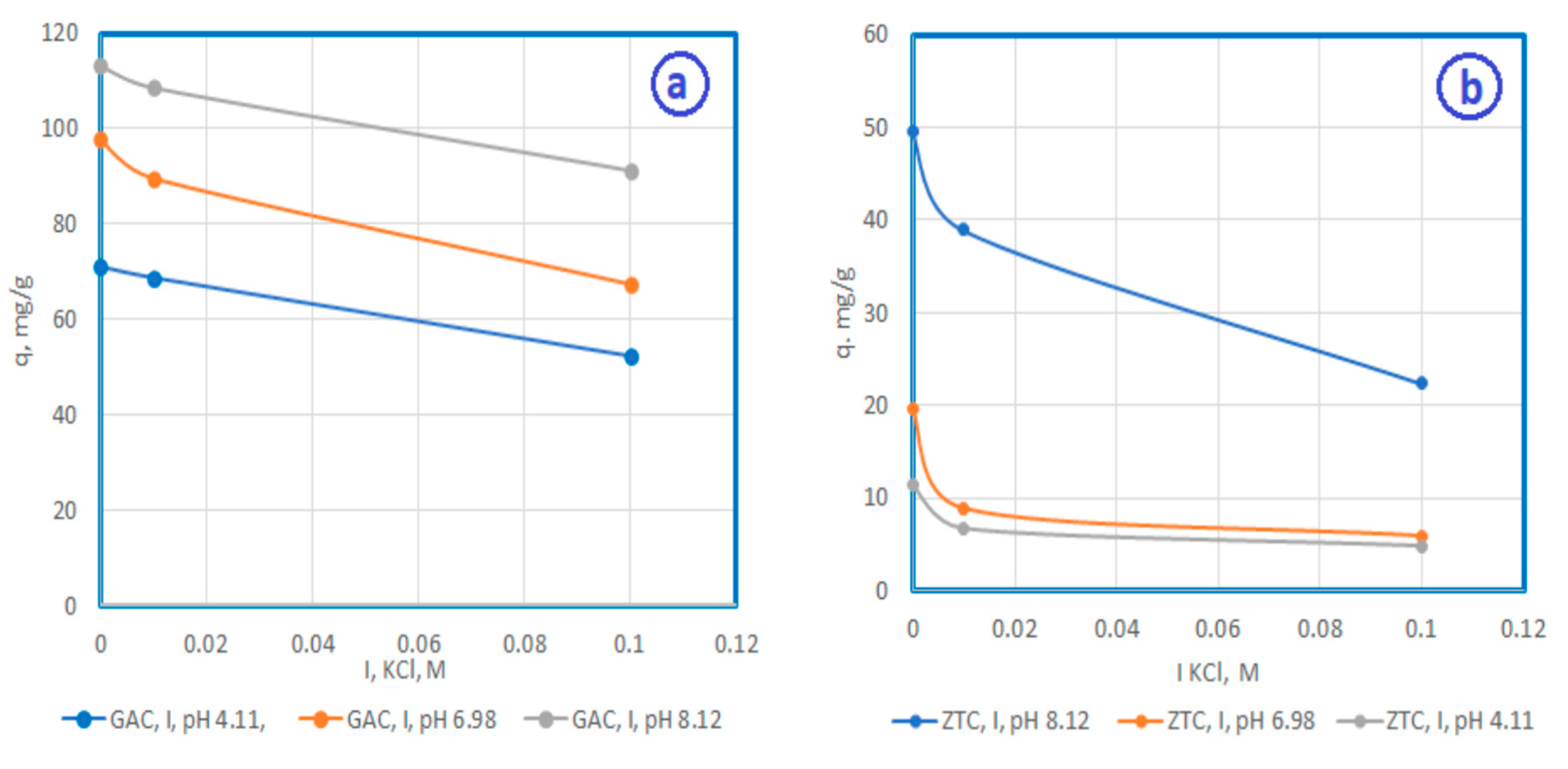

Table 1.
The technical specification(datasheet) of activated carbon type - Norit GAC 830 W, GAC [26].
Table 1.
The technical specification(datasheet) of activated carbon type - Norit GAC 830 W, GAC [26].
| No Crt. | Specification | Active charcoal Norit GAC 830 W |
|---|---|---|
| 1 | Particle size >2.36 mm | Max 15 % in mass unit |
| 2 | Particle size <0.6 mm | Max 5 % in mass unit |
| 3 | Moisture | Max 5 % |
| 4. | Iodine number | 957 |
| 5 | Methylene blue adsorption | 20 g/100g |
| 6 | Ash content | 12 % |
| 7 | Total surface area, BET analises | 1100 m2/g |
| 8 | Apparent density | 500 kg/m3 |
Table 2.
Elemental composition and weight and atomic percent of the component elements for ZTC.
| Element | Weight % | Atomic % |
|---|---|---|
| O K | 50.40 | 65.81 |
| MgK | 1.37 | 1.18 |
| AlK | 6.77 | 5.24 |
| SiK | 30.85 | 22.95 |
| K K | 3.45 | 1.84 |
| CaK | 2.11 | 1.10 |
| FeK | 5.05 | 1.89 |
Table 3.
Proportion of cristals in ZTC.
| No. | Compound | Chemical formula | PDF file | Quantity (%) | |
|---|---|---|---|---|---|
| P0 | P1 | ||||
| 1 | Clinoptilolite Ca | (Na1.32K1.28Ca1.72Mg0.52)(Al6.77Si29.23O72)(H2O)26.84 | 00-089-7535 | 80.3 | 80.8 |
| 2 | Phlogopite-1M | (KMg3Si3AlO10(OH)2) | 00-010-0495 | 9.7 | 11.7 |
| 3 | Albite | (Na0.84Ca0.16)Al1.16Si2.84O8 | 01-076-0927 | 8.3 | 5.2 |
| 4 | Quartz | SiO2 | 04-020-9990 | 1.7 | 2.3 |
Table 4.
The characteristic liniarized equations according to the Langmuir and Freudlinch models for BPA on GAC.
Table 4.
The characteristic liniarized equations according to the Langmuir and Freudlinch models for BPA on GAC.
| pH | Liniar Langmuir equations | Liniar Freudlinch equations |
|---|---|---|
| 4.11 | = 2.0223 + 2.6403 | log qe = 0.5830 log Ce + 1.0567 |
| 6.98 | =1.196 + 2.3293 | log qe = 0.5582 log Ce + 0.9144 |
| 8.12 | = 0.29 + 2.0039 | log qe = 0.5852 log Ce + 0.4713 |
Table 5.
The characteristic liniarized equations according to the Langmuir and Freudlinch models for BPA on ZTC.
Table 5.
The characteristic liniarized equations according to the Langmuir and Freudlinch models for BPA on ZTC.
| pH | Liniar Langmuir equations | Liniar Freudlinch equations |
|---|---|---|
| 4.11 | =4.181 +19.253 | log qe = 0.7661 log Ce +1.3215 |
| 6.98 | = 1.8256 +10.045 | log qe = 0.9063 log Ce +1.0016 |
| 8.12 | = 1.2897 +3.4878 | log qe = 1.0309 log Ce +0.4886 |
Table 6.
The values of the equilibrium parameters qm, b and R2 characteristic of the Langmuir equation and respectively K, n and R2 characteristic of the Freundlich equation for BPA cations on GAC and ZTC.
Table 6.
The values of the equilibrium parameters qm, b and R2 characteristic of the Langmuir equation and respectively K, n and R2 characteristic of the Freundlich equation for BPA cations on GAC and ZTC.
| Adsorbent | Langmuir isotherm | Freundlich isotherm | ||||
|---|---|---|---|---|---|---|
| qm, mg/g | b | R2 | K | n | R2 | |
| CA pH 4,11 | 84.5 | 1.3 | 0.9996 | 11.37 | 1.71 | 0.9064 |
| CA pH 6,98 | 95.78 | 1.94 | 0.9996 | 8.21 | 1.79 | 0.9588 |
| CA pH 8,12 | 111.34 | 6.91 | 0.9965 | 2.96 | 1.70 | 0.9392 |
| Zeolite pH 4,11 | 11.60 | 4.6 | 0.9961 | 20.96 | 1.3 | 0.9701 |
| Zeolite pH 6,98 | 22.21 | 5.5 | 0.9992 | 10.04 | 1.1 | 0.9711 |
| Zeolite pH 8,12 | 63.9 | 2.7 | 0.9995 | 10.73 | 0.97 | 0.9147 |
Disclaimer/Publisher’s Note: The statements, opinions and data contained in all publications are solely those of the individual author(s) and contributor(s) and not of MDPI and/or the editor(s). MDPI and/or the editor(s) disclaim responsibility for any injury to people or property resulting from any ideas, methods, instructions or products referred to in the content. |
© 2023 by the authors. Licensee MDPI, Basel, Switzerland. This article is an open access article distributed under the terms and conditions of the Creative Commons Attribution (CC BY) license (https://creativecommons.org/licenses/by/4.0/).
Copyright: This open access article is published under a Creative Commons CC BY 4.0 license, which permit the free download, distribution, and reuse, provided that the author and preprint are cited in any reuse.


