

Submitted:
17 July 2023
Posted:
18 July 2023
You are already at the latest version
Abstract
The quality and safety of fermented milk products, which make up a sizeable portion of human nutrition, are greatly influenced by both the milk itself and the starting cultures employed to ferment it. Lactic acid bacteria (LAB) create a variety of metabolites throughout the fermentation process, altering the organoleptic properties of the substrates. The final product’s nutritional value and digestibility are enhanced by fermentation of the raw materials, which also adds vitamins, vital amino acids, and fatty acids. The quality and safety of fermented milk products, which make up a sizeable portion of human nutrition, are greatly influenced by both the milk itself and the starting cultures employed to ferment it. The inhibition of the growth of pathogenic microbes, which lowers the likelihood of the emergence of foodborne diseases, is another crucial function of LAB. A variety of pathogenic bacteria are frequently present in raw (unpasteurized) milk, and other raw materials; these pathogenic bacteria should be removed during the fermentation process. As a result, a variety of LAB metabolites, such as hydrogen peroxide, organic acids, and bacteriocins, function as bio preservative agents, enhancing food safety and lengthening the shelf life of the finished products.
Keywords:
dairy products
; health benefits
; lactobacillus
; microorganisms
; milk adulteration
; nutrients
Introduction
Dairy products or milk products, also known as lacticinia, are food products made from milk [1]. These products provide essential elements required for the human body as it's a good source of calcium, vitamin D, proteins, and other necessary nutrients. Along with this, it also serves as a source of phosphorus, potassium, magnesium, and various vitamins viz. vitamin A (retinols), vitamin B12 (cyanocobalamin), and riboflavin [2]. Milk and its derivatives are the most essential component of the diet, particularly during childhood and adolescence as it helps in promoting muscular, neurologic, and skeletal development and is consumed by several million people worldwide [3,4]. In specific, the fat portion of milk which is composed of saturated fatty acids and its minor components, especially calcium and oligosaccharides, has been an active scope of research for their prospective role in the health area [5]. There are different types of fermented milk and derived products which have been manufactured in all parts of the world each with its characteristic history and nature depends very much on the pre-treatment of the milk, type of milk used, factors like temperature, climate, conditions required for fermentation and on the relevant technological treatments [6,7,8].
India is considered the world’s largest milk producer, with 22 percent of global production, followed by the United States of America, China, Pakistan, and Brazil [9]. The highest milk-producing countries are New Zealand, the United States of America, Germany, France, Australia, and Ireland. The highest milk deficit countries are China, Italy, the Russian Federation, Mexico, Algeria, and Indonesia [10]. The food and agriculture organization of the United Nations states different age groups categorized as children, adults, older adults, school children and adolescents, and pregnant women require different micronutrients in milk. Calcium, magnesium, vitamin A, and Vitamin B12 are the main micronutrients needed 41-57%, 28-46%, 22-25%, and 60-139% of the respective micronutrients for children. 22-29%, 11-13%, 18-22%, 52% of respective micronutrients for adults. 22%, 12-14%, 18%, 52% of respective micronutrients for older adults. 22-41%, 13-28%, 18-22%, 52-69% of respective micronutrients for the school children and adolescents, and 24%, 13%, 14%, 48% for respective micronutrients for the pregnant women [11].
Microorganisms are important in the production of dairy products like yogurt. Lactobacillus a gram-positive bacterium is one of the fermenting bacteria [12]. Even though dairy products should be absent from pathogens such as Listeria monocytogenes and Salmonella. Fermented dairy products are available for consumers in a wide range. Most of these fermented dairy products are produced industrially and a small section of these products are homemade [13]. The production of these products has become a very important part of economic stability worldwide and the demand for these products is incrementing day by day. The first-ever example of fermented milk was assumption-based and known to be produced coincidentally by nomads Under the impact of various microorganisms, the milk turned sour and coagulated. Fortunately, it was showing non-toxic, harmless, and acidifying type bacteria [14]. The nature of the fermented milk products is dependent mostly on the pre-treatment of the milk, the type of milk used, conditions required for fermentation, temperature, and the ensured industrial treatments. Curd, yogurt, cheese, kefir, and kumis are the most regularly used dairy products [15]. In this paper, we discussed milk and dairy products and their health benefits, microbes responsible for fermentation, and adulteration of milk.
Fluid Milk, and Cultured Dairy Products
The primary ingredients in dairy products is fluid milk. Milk constitutes a complex element. Mostly dominated by a 98% 0f triacylglycerols (TAGs) milk fat, with small amounts of monoglycerides, diglycerides, and free fatty acids, and with a small number of various other lipid classes. Milk lipids constitute more than 400 separate fatty acids [16]. Twenty are the major components while the remainder is minor and trace quantities. The other constituents include cerebrosides and sterols (cholesterol and cholesterol esters), fat-soluble A, D, and E vitamins, tocopherol (antioxidants), carotene (pigments), ketones (flavor components) and aldehydes, lactones, and, phospholipids (0.8% phosphatidylcholine, phosphatidylethanolamine), and sphingomyelin (SM) are also present. The breed of the cattle, stages, and intervals of milking, lactation period, season, nutritional content, feed various udder quarters, age, weather, health state, estrus cycle, exercise, and gestation length all have an impact on the milk’s composition [17]. Standard plate count (SPC) measures the total number of bacteria present in milk, and if a large number of bacteria are present, it affects the milk’s shelf life and quality. For instance, a high number of coliform bacteria indicates that the milk was not properly cleaned, milked, or processed. Laboratory pasteurized count (LPC) is a bacteria present after the pasteurization takes place in the laboratory using 62.8 ° C for 30 minutes and counting the bacteria using the SPC method. The standard count is 500 CFU/ml. If the SPC of LPC becomes 750 CFU/ml it reduces the shelf life and quality of the milk. Preliminary incubation count determines the growth of bacteria by resisting refrigeration conditions at 10 ° C for 18 hr. and followed by an SPC test. Somatic cell count is measuring the white blood cell content in the milk[18].
A high white blood cell count completely changes the nature of the milk including the test or flavor becoming salty. Pasteurized milk ordinance standards are not higher than 750,000 cells/ml of individual milk. The lactic acid content of milk is measured using titratable acidity with a normal value of 0.13% - 0.16%. a lower value indicates the presence of chemicals [19]. Temperature is another factor that changes the nature of milk if exceeds 7 ° C according to PMO standards. The flavor is another parameter of the milk quality. The elevated number of bacteria in the milk completely changes the flavor into bitter, sour, or acid. For the indication of the quality of milk but not as criteria appearance of the milk is necessary with a recommended standard White, no debris, clean, and filter screen of 2 or less sediment test [20]. Drugs or any antibiotics used in cattle are not used for milking during the 12 months of treatment. Adulteration using water is illegal when the freezing point becomes above − 0.530 ° Hortvet scale during the cyroscope test. Sediment test by drawing 1 pint of the sample through a cotton disk and assigning a grade of 1-4 to the filter. A grade of 1 or 2 is acceptable while 4 is a bad value. Fat and milk-solids, not fat (MSNF) recommended concentration in the milk is 3.25% fat and 8.25% MSNF [21].
Figure 1.
Percent of essential micronutrients of milk for various age groups. Micronutrients are needed for the body in different age groups. Children, adults, older adults, school children and adolescents, and pregnant women require a different number of micronutrients in milk. Calcium, magnesium, vitamin A, and Vitamin B12 in different amounts are relevant according to their age need.
Figure 1.
Percent of essential micronutrients of milk for various age groups. Micronutrients are needed for the body in different age groups. Children, adults, older adults, school children and adolescents, and pregnant women require a different number of micronutrients in milk. Calcium, magnesium, vitamin A, and Vitamin B12 in different amounts are relevant according to their age need.
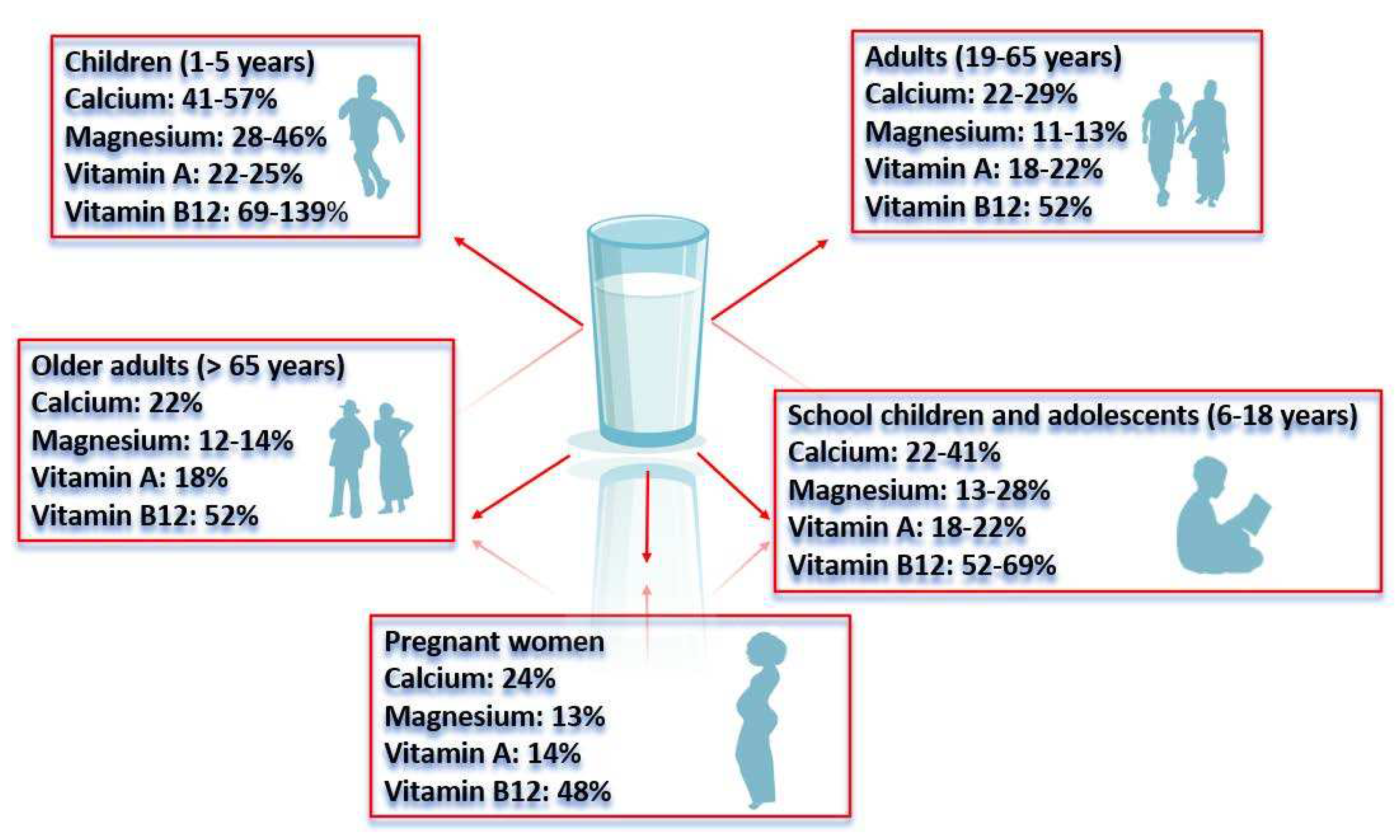
Cultured Dairy Products
There are different types of fermented dairy products prepared by various microbial strains. This process is considered one of the ancient practices to extend the shelf-life of milk, and people have been doing it for thousands of years now [22]. Fermentation of carbohydrates present in milk is done by microbes, which mainly convert lactose to lactic acid and some other products. Because of the acid precipitation of proteins present in milk; fermented products have a thicker consistency than milk and factors like low pH, and high acidity impede the growth of microbes (bac.) including pathogens [23].
It's difficult to consider the specificity of the origin of the production of fermented milk, but it’s safe to assume that it could date to more than 10,000 y ago as the way of life of humans changed from food assembly to food production. This change also included the domestication of the most common dairy animals which includes Cow, Sheep, Buffalo, Goat, and Ewe [24,25]. Nowadays, fermented milk and its derivatives production are done in many countries in a huge variety. The production of fermented milk and its derivatives is economically important in many countries [26,27].
Yogurt is the most regularly used dairy product. To produce Yoghurt, the milk is heated up to 80°C to kill the additional bacteria which might be present and can have the ability to denature proteins. After that, milk is allowed to cool slowly at around 45°C, and then bacteria are inoculated in it and is followed by fermentation at room temperature. Generally, it can be produced by using any type of milk, but the most considered type is cow's milk [28]. Adding to it, yogurt can be produced from different varieties of milk which include skimmed, dried, semi-skimmed, evaporated, and the whole. The bacteria used are Lactobacillus delbrueckii subsp. Bulgaricus and Streptococcus Salivarius subsp. Thermophilus. In case of the unavailability of bacteria, a spoonful of yogurt can also be used as it contains the required bacteria. Some probiotic bacteria are also responsible for instance, Lactobacillus bulgaricus, Streptococcus salivarius, and Streptococcus thermophiles, and it is generally referred to as bioyogurt. Collectively, these bacteria are also called Lactic Acid Bacteria or LAB [29].
There is different evidence that supports that the intake of ‘probiotic’ microorganisms is very helpful in maintaining a desired favorable microbial profile and leads to various therapeutic benefits. The lactose present in the milk is fed by bacteria which leads to the release of lactic acid as its waste product. Then, the curdling of protein is caused by the lactic acid which is produced by feeding bacteria that is, the Casein present in milk gets converted into a solid mass commonly known as curd [30]. The taste of yogurt and its jelly-like texture is imparted by the fermentation of lactose sugar into lactic acid. Lactic acid formation leads to the increased acidity of yogurt which itself is beneficial to prevent the proliferation of other undesirable pathogenicity-causing bacteria. To complete this process of fermentation, two or more bacterial cultures can be used together. Yogurt is then flavored and sweetened, or the fruits can be added at the bottom [31].
Industrially, the yogurt is produced in large quality and is affected by various factors that are, the standardization of milk, milk additives, choice of culture, de-aeration, choice of milk, homogenization, heat-treatment, and plant design. The milk which is used to produce yogurt must have the highest bacteriological quality and must have a low content of substance and bacteria which can obstruct the growth of the yogurt culture. It must be free from sterilizing agents, bacteriophages, and antibiotics [32]. The standardization should be made for the fat and dry solid contents of milk and additives (sweeteners, sugar) can be used. For retaining the stability and viscosity of yogurt, the air content of milk should be as low as possible. Homogenization is done to prevent the creaming of milk during incubation time which leads to a uniform distribution. The heat is provided to milk before incubation to enhance the properties as a substrate for bacterial culture. Various yogurt cultures are available which can be selected based on their production [33].
Curds are milk proteins or casein. Curd is produced by coagulation of the milk which can be achieved by mixing edible acidic substances into the milk, like vinegar or lemon juice. The addition of these substances to the milk leads to the curdle formation and forms two discrete parts. The liquid part is the whey, and the solid milk is the curd. Often, the old milk might get soured itself and discrete without any addition of any acidic substance. The reason behind it is the special bacteria responsible, as raw milk generally contains Lactobacillus [34]. Lactobacilli are the genus of bacteria that converts sugars into lactic acid with the process known as fermentation. The sugar contained by Lactobacillus is lactose, a disaccharide that is also known as compound sugar and has a β-1, 4- the glycosidic bond between glucose and galactose. Lactose of the milk is converted into lactic acid which gives the sour taste to curd by Lactobacillus [35].
Cheese is a fermented milk product with the historical purpose of preservation of milk. Its making process gradually occurs in three main stages: In its first stage, milk is changed into liquid whey and solid curd by coagulating the milk protein, casein. The coagulation of milk protein and casein is done through two methods: acidification and proteolysis [36]. Acidification takes place when the bacteria producing lactic acid ferment the disaccharide lactose to produce lactic acid. Earlier, it can be done by naturally existing lactic acid bacteria in milk, but nowadays, because of the advancement in dairy industries, the standardization of the process is done by adding domesticated bacterial cultures, which involve Lactobacillus sp., Strains of Lactococcus lactis, and Streptococcus thermophilus. The production of acid by these bacteria leads to the slow coagulation of milk protein, and casein. The enzyme involved in this process is chymosin (the active ingredient in rennet) [37]. It helps in removing the portion having a negative charge that results in faster aggregation of milk protein, casein. In the second stage, the separation of curd takes place which contains casein and milk fat. Based on the type of cheese, the curd can be heated, salted, pressed, and changed into different sizes and shapes. Cheese is transformed from fresh cheese into myriad flavors, and textures during the aging stage. The variety of microbes leads to the diversity in the flavors and textures of cheese. The flavor of the cheese is associated with the catabolism of amino acids. The catabolism of various amino acids gives a variety of flavors, for instance, branched-chain amino acids are converted to malty, fruity, and sweaty flavors [38].
Kefir is a fermented milk beverage and has its ancient origin in Eastern Europe. Kefir has a high alcohol content because mare's milk contains more sugars than other kinds of milk. It is common in countries such as Mongolia, Kazakhstan, and some regions of Bulgaria and Russia. It is spontaneously made by fermentation of lactose to lactic acid and alcohol. This is prepared by inoculating the raw milk with gelatinous white/yellow grains which have an irregular shape and are known as kefir grains [39]. These Kefir grains have diversifying microbial composition including species of lactic acid bacteria, yeast, acetic acid bacteria, and mycelial fungi. Lactic acid bacteria included in kefir are Leuconostoc mesenteroides, Lactobacillus parakefiri, Lactobacillus fermentum, Lactobacillus brevis and Lactococcus lactis, Lactobacillus acidophilus, Lactobacillus helveticus, Lactobacillus casei, Lactobacillus kefiri. Acetic acid bacteria include Acetobacter rasens, and Acetobacter aceti. Yeasts include Kluyveromyces marxianus, Torula kefir, Candida lambica, and Saccharomyces exiguous [40].
Kefir and Kumis are almost similar dairy products, but kumis is produced from liquid starter culture whereas Kefir is produced from kefir "grains". Depending on the content of lactic acid, kumis is of three types- strong, moderate, and light. Strong kumis: generated by lactic acid bacteria such as Lactobacillus rhamnosus. Lactobacillus bulgaricus [41]. There is acidification in milk which ranges from pH 3.6–3.3 and the conversion ratio of lactose into lactic acid is about 80–90%. Moderate kumis: It involves Lactobacillus bacteria such as L. Casei, L. fermentum L. Acidophilus, and L. Plantarum. And has restricted acidification properties which lower the pH 4.5–3.9 at the end of the process and the conversion ratio averages 50%. Light kumis: It is a slightly acidified product (pH 4.5–5.0) and the bacteria involved includes Streptococcus thermophilus and Streptococcus cremoriscremoris [42].
Ayran is one of the common drinkables a fermented diluted or beverage product of yogurt. Even though the preparation of Ayran is completely different from other drinkable yogurt products and does not contain fruit syrup, sweeteners, sugar, aroma compounds, and colorings. Ayran is produced by adding water into the yogurt to decrease the sour taste, this was claimed by Göktürks during the war and so many countries adopt this idea, and currently become the appropriate definition for the preparation of Ayrani [43]. In Turkey, Ayran is the most consumable yogurt product and claimed an additional definition “Ayran is a drinkable fermented product prepared by the addition of water to yogurt or by the addition of yogurt culture to standardized milk.” [44]. Aryan preparation is classified into two in Turkey i.e., homemade, and industrially made. From 1 million tons of Ayran consumption annually only 15-25% is industrially made Ayran whereas the rest is homemade Ayran [45].
Microorganisms Streptococcus thermophilus and Lactobacillus delbrueckii subsp.Bulgaricus is responsible for the fermentation process, which has a tremendous effect on giving flavor and texture to Ayran milk. To begin the process starter bacteria selection is important for the high quality of the product and therefore mixed strain yogurt cultures (slow fermenting starter cultures & Low-viscosity culture strains) are preferable for a stable product [46]. Temperature and starter culture is one of the factors to change the pH of the Ayran due to this both factors must be controlled to have a stable pH of the yield. pH 4.2- pH 4.4 is preferable to have a high viscosity of the product. The microflora used for the production of Ayran and yogurt is similar. Although, during industrially Ayran production the composition of the microflora is stable, which means only contains yogurt bacteria and no chance for the growth of other bacteria but in homemade Ayran there is a chance of contamination or growth of other bacteria, and this change or fluctuate the pH and texture of the Ayran. For instance, yeasts like Kluyveromyces and Saccharomyces, are often present in the final product [47].
Butter is the minimum fat component of 80% of the milk and 16% water and 2% non-fat milk solid [48]. There is various classification of butter, sweet cream salted, sweet cream unsalted, cultured salted butter, cultured unsalted, or traditional sour cream butter. Before the eighteenth century, wood materials were used to make butter. After the construction of butter-making equipment in a modern way, butter-making get better attention, and barrel churn was innovated [49]. The microbiological quality is one of the major importance for the quality of butter. The coliform count in the butter is < 1 CFU/ml. From various types of fatty acids in butter fat, Octadecadienoic acids are present in a significant amount: there are traces of octadecatrienoic acids, hexadecadienoic acid, and highly unsaturated fatty acids C20 (Arachidonic acid) and C22 (Docosanoic acid) [50]. Traces of dihydroxy stearic acid and hydroxypalmitic acid have been. According to studies 66% of one octadecenoic acid content is normal linoleic acid, and the remainder consists of the cis-9, trans-12, or the trans-9, cis-12 isomers; other positional and geometric isomers are also present, whereas a small proportion of the octadecenoic acid consists, vaccenic acid, oleic acid, trans-11, 12 isomers. The composition of the butter fat may vary depending on different factors. For instance, the fatty acid composition of butter fat varied according to the season due to the difference in the feed of the animals in different seasons, the iodine number units become high during summer than in the winter season. The duration of lactation and the age of the animal and animal species are also other factors [51].
β-carotene or other carotenoid pigments which are directly transferred to the butterfat without change in the feed of the cows plays a major role in the content of Vitamin A. 1 IU of vitamin A is the amount possessing the biological activity of 0.6 μg of pure β-carotene or the biological equivalent of 0.3 μg retinol. The green feedstuff of the cow is the source of the carotenes [52]. For instance, vitamin A content always increases in the summer when the dairy herds are in pasture and decreases in winter when there are no green feedstuffs. The green feeding of the cow and the variation of the content of Vitamin A is directly proportional. The appearance of the yellow color due to carotene pigment indicates the presence of vitamin A. The vitamin content of butter fat is usually between 6–12 mg/g, whereas the carotene content in butter fat is 2–10 mg/ g [53]. The firmness of the butter mainly depends on the content of milk fat. Primarily the animal diet is the main factor in changing the milk fat composition. The fatty acid composition has seasonal variation according to the green feed in different seasons. The amount of saturated fatty acid in the milk decreases whereas unsaturated fatty acid increases due to green fodder. The physical characteristics of the fat are maintained by the structure of the triglycerides in the milk fat along with the fatty acid composition. The softening point of the fat increases during interesterification [54].
Ghee is a clarified butter fat prepared from several cattle species like buffalo, goat, cow, and camel also prepared from mixed milk. The fermentation or heating process of milk, cream, or butter is the processing method that gives a special flavor. Ghee can be easily digested due to its short chain fatty acid content and is known as superior fat to other fats [55]. Ghee contains ingredients such as glycerides in mixed milk, phospholipids, sterol esters, free fatty acids, hydrocarbons, sterols, carotenoids, fat-soluble vitamins, are minor constituents whereas charred casein and traces of calcium, phosphorus, and iron are small constituents of ghee cholesterol constitutes 0.5% of the remaining 2% constituents of the ghee [56]. Ghee contains a unique flavor which increases its acceptance due to the flavoring compounds like free fatty acids, lactones, and carbonyls. Ghee is consumed by all age groups due to its nutrients. The major nutrients are vitamins A, D, E, K, and linolenic and arachidonic acid fatty acids, cholesterol level ranges between 0.2–0.4%. The ghee composition is ~98 % triglycerides; 4-6 ug/g carbonyl, 0 to 80 mg/l00 phospholipids, 0.1-0.2% monoglycerides, 1-10 mg/100 g free fatty acids, 1-2% diglycerides, cholesterol, 1.8-2.3u M/g alcohols, fat-soluble vitamins, and O.8 uM /g glyceryl ethers are minor constituents [57]. Animal feed is important for the level of nutrients. For instance, the level of fat-soluble vitamin A, carotene, and tocopherols mainly depends on the green feed of the animal [58].
Ghee is not contaminated easily like other dairy products and can be kept outside the refrigerator for a long time. lactose or casein are removed from the ghee which is also comfortable for consumers that are intolerant of these components [59]. Ghee mainly constitutes a fat-soluble vitamin A and E [60,61]. Vitamin K and conjugated linoleic acid are beneficial for health to treat diseases like cancer and viral diseases [62]. Due to the high nutritional value of ghee, it becomes the athlete’s main energy source. The medium chain fatty acid is used to burn excess fats and helps to reduce obesity [63]. The unique flavor and easy digestibility of ghee are due to the presence of Butyric acid: a short fatty acid that is another component in ghee other than oil products [64]. The fiber in the body is converted to butyric acid by the beneficial intestinal bacteria used for the production of energy and intestinal wall support [65].
Lactic acid bacteria and yeasts play a great role in the fermentation process of ghee. Lactic acid bacteria species such as Lactobacillus helveticus, Lactobacillus perolens, Lactobacillus brevis, Lactobacillus paracasei, Lactobacillus acetotolerans, Lactobacillus plantarum, Lactobacillus sp., Lactococcus raffinolactis, Lactococcus lactis subsp. lactis and Streptococcus salivarius. The acetic acid bacteria such as Acetobacter aceti, Acetobacter lovaniensis, Acetobacter orientalis, and Acetobacter pasteurianus. yeasts in the fermentation process like Brettanomyces custersianus, Candida silvae, Geotrichum sp., Issatchenkia occidentalis, Issatchenkia orientalis, Kluyveromyces marxianus, Saccharomyces cerevisiae, and Trichosporon asahii [66].

Table 1.
The composition of species identified milk and various classes of milk.
| Milk type | Mineral constituent | Health benefits |
| Cow milk | 3-4% fat, 3.5% protein, 5% lactose, a good source of calcium, proteins, and nutrients such as vitamin B12 | weight loss, building strong bones and teeth, boosting the immune system, reducing fat. |
| Buffalo milk | twice of cow milk, 2:1 fat to protein ratio in buffalo milk, high calcium content | supports bone health, and antioxidant activity, and improves heart health. |
| Camel milk | similar composition to cow milk, Rich in vitamin C, unsaturated fatty acids, and B vitamins | lower blood sugar and improve insulin sensitivity, immune boosting |
| Sheep milk | higher fat and protein contents than goat and cow milk, higher lactose content than milk from cows, buffaloes, and goats | boosts immunity, regulates blood pressure, and prevents birth defects, and bone mineral density. |
| Goat milk | similar composition to cow milk | built strong bones, anti-inflammatory properties, metabolism booster, and improve nutrient uptake efficiency. |
| Yak milk | 15 and 18 percent solid content, 5.5 to 9 percent fat, and 4 to 5.9 percent protein | The antioxidative effect, Favorable for infants, helps to gain weight, Absorbs Calcium & Vitamin B |
| Equine milk | low in proteins (particularly caseins) and ashes and rich in lactose, low levels of fat and protein | Smooth digestion, beauty treatments, overcoming eczema, good for bone health, maintaining blood pressure, and detoxifying the body. |
| Standardized milk | 4.5% fat | Nutritive value |
| Toned milk | 3.0 % fat | Reduces high blood pressure, and promotes easy digestion. |
| Double Toned milk | 1.5 % fat | Rich in vitamin D, helps in weight loss |
| Skimmed milk | Not more than.0.5 %, Potassium source, | helps in lowering blood pressure |
| Full Cream | 6.0 %, a Good source of calcium | maintain healthy teeth. |
(Source: Dairy production and products: Milk composition (fao.org) accessed on August 14/2022, FSSAI Categorization of Milk Products and their Standards - Food Safety Mantra Blog accessed on August 14/2022, 6 Incredible Cow Milk Benefits | Organic Facts accessed on September 12/2022, Buffalo Milk: Nutrition, Benefits, and How It Compares (healthline.com) accessed on September 12/2022, 6 Surprising Benefits of Camel Milk (And 3 Downsides) (healthline.com) accessed on September 12/2022, 7 Amazing Benefits of Sheep Milk | Organic Facts accessed on September 12/2022, 9 Surprising Goat Milk Health Benefits | Organic Facts accessed on September 12/2022, Yak Milk Benefits (nutriarena.com) accessed on September 12/2022, 9 Incomparable Health Benefits of Horse Milk #1 Proven - DrHealthBenefits.com accessed on September 12/2022.
Adulteration of Milk
Milk adulteration is the removal or adding of substance into the milk to increase or decrease the quality and to decrease the quantity of the milk. Milk easily can be adulterated, especially in underdeveloped and developing countries. Lack of control in the market, weak law enforcement, lack of knowledge or proper awareness, also acquiring greater profit are the main factors for the high adulteration in the world [67]. The adulteration may have a negative health impact on the consumers. Common chemical aulterants are ammonium sulfate, sugar, salt, starch, formalin, hydrated lime, water, sodium carbonate, caustic soda, chlorine, H2O2 and non-milk proteins, urea, refined oil, and common detergents. Some countries practice the production of Synthetic milk by mixing caustic soda, common detergents, refined oil, and urea to meet the deficit of milk, but have a huge health impact [68].
Water is one of the common adulterants of milk targeted to increase the quantity of the milk but affects the nutritive value. During adulteration water cleanliness is another issue for the consumers, the contaminated water leads to develop various diseases in the users [69]. Hydrogen peroxide is used in adulteration for preservation or to keep the milk fresh for a long time. It is a poisonous chemical and harmful to human health by penetration of peroxide into the gastrointestinal and causes inflammation to the intestine and leads to damage to the organ. An antioxidant in our body become malfunctions and leads to aging by disturbing the natural immunity [70]. Chlorine is used after the adulteration of milk using water. It helps to increase or compensate for the diluted milk but also changes the acid-base balance of the milk. This adulteration leads to the development of atherosclerosis or blocked the arteries and causes heart problems, lowers blood pH [71].
Melamine is a compound used to increase the protein content falsely and followed by the addition of milk powder. This adulteration leads to the development of renal failure and even death [72]. Milk powder is added to fresh milk as an adulterant. This adulteration is done in a country that has an excess amount of milk powder and helps to balance the fluid milk [73]. Urea is used as an adulterant also for the preparation of synthetic milk. Adulteration of milk using urea is to maximize the consistency of the milk and non-protein nitrogen content, for optimizing the contents of solid nonfat presence in the milk, and to increase the whiteness of the natural milk. Urea led to various health hazards such as acidity, ulcers, indigestion, cancers, heart, and liver damage. Urea is removed from the body by the work of the kidney; therefore, the kidney does extra work to remove this area, and this leads to the failure of the kidney. The production of ammonia in milk develops sensory disturbances, loss of acquired speech, and regression [74].
Non-milk proteins such as soluble wheat proteins, pea, and soy are used as an adulterant in dairy products, milk, and milk powder. BRW (bovine rennet whey) is used in milk powder [75]. Fats from the milk are removed and used for other purposes by manufacturers due to their high price and Fats from other sources or non-milk fat like vegetable oils are used in place of milk fat and this adulteration leads to the complication of health [76]. Detergents are used as an adulterant to emulsify and dissolve the oil in water giving a frothy solution, the characteristic white color of milk (Singuluri & Sukumaran, 2014). It increases the cosmetic nature of milk, and this adulteration leads to gastrointestinal disease [77]. Low-valued milk adulteration is the addition of high-valued milk to low-valued milk to compensate for the diluted milk [78]. For instance, goat milk is adulterated with cow milk for profit, and cow milk is added to buffalo, ewes, and sheep milk [79]. Even though this milk adulteration practice's impact on health has not been explained, some may have allergies for instance cow milk but still, it is an ethical concern [80].
Milk adulteration using starch and sometimes rice flour, arrowroot, and wheat flour, aims on increasing the solid-not-fat (SNF) concentration. During adding of starch, the appropriate amount must be added otherwise the high amounts of starch in the milk becomes undigested in the colon and causes diarrhea. The accumulation of starch in the body of a diabetic patient may be fatal [81]. Food colors are dyes, pigments, or substances used to give extra color to food, and this harms health [82]. Neutralizers help to decrease the acidic effect. For instance, adulterant sodium hydroxide is used in synthetic milk to decrease its acidity. Synthetic milk contains caustic soda which hindered the use of essential amino acids and lysine by depriving the body mainly seen in babies needed by a growing baby [83]. Caustic soda is also constituting sodium which is harmful to hypertension and heart problems patients. Synthetic milk is not advised for a pregnant woman due to high adulteration of the milk like substitute of milk fat, refined oil is mixed, and detergents to dissolve the oil in water and to give a frothy solution, Carbonates lead to the disruption of signaling that maintain development and reproduction and carbonates and bicarbonates leads to the gastrointestinal problem like gastric ulcer, electrolytes disturbance, colon ulcer and diarrhea [84].
Preservatives such as Sodium carbonate (Na2CO3), Formalin, Sodium azides, Sodium bicarbonate (NaHCO3), Boric acid, Benzoic acid, and Salicylic acid uses to preserve the milk for a long time and prevent the growth of microorganisms and spoilage of milk. Even though these chemicals are hazardous to health and can lead to death. The symptoms like vomitation, diarrhea, and abdominal pain may develop [85]. Antibiotics are used in animals for the treatment of mastitis disease. 80% of veterinarians use antibiotics. Antimicrobial residues have existed in the milk which contains antibiotics. After the treatment of the veterinarian, aromatic amines, tetracycline, gentamicin residues, chloramphenicol residues, neomycin residues, sulfamethazine residues, aflatoxin M1 contamination, etc. are also a concern as milk adulterants. The administration of antibiotics via Intramammary infusion leads to milk contamination. The major health impacts of this contamination are interference in intestinal flora such as sulfamethazine residues, allergic reactions, high antibiotic resistance, may have carcinogenic properties, tissue damage, and urticaria due to a Very low amount of penicillin residue [86].
Liquid Whey is used as an adulterant to increase the volume of the milk. Milk powder and liquid milk are mostly mixed with low-priced rennet whey and are commonly found in milk. For excess profit, the manufacturers produce whey using cheap muriatic acid which is hazardous to the health. adultering UHT (ultra-high temperature) milk using rennet whey solid leads to the development of low blood pressure [87]. Sugar is used as an adulterant in water-diluted milk to increase the density of the milk or lactometer reading of the milk or SNF (solid nonfat) content of the milk [88]. Pesticides are used for the preservation of milk by killing, inhibiting, and resisting the growth of microorganisms. Pesticides are hazardous and carcinogenic [89].
Activity of Lactic Acid Bacteria (LAB)
Lactic acid bacteria are a gram-positive bacterium under the family of Lactobacillaceae which can convert sugar into lactic acid, or ferment carbohydrates and produce lactic acid as the end product. Lactic acid bacteria are mainly used in the production of several foods including dairy products in the fermentation process due to their harmless property and are recognized as safe microorganisms (GRAS) [90,91,92]. LAB can be existed in the milk either purposely inoculated as a starter culture or spontaneously, sometimes milk is known as the natural habitat of LAB. A procedure known as back slopping is the fermentation of milk by LAB by spontaneous growing in the milk and this was a traditional method of preparation for a long time, for instance, lben and artisanal cheese, kurut, and kumis [93]. It helps to prolong the shelf life of a fermented dairy product, preserve the nutritious component of the milk, healthy and yields a good quality of milk and dairy product [94]. The fermentation takes place by the bioactive compounds in the Lactic acid bacteria [95].
LAB includes various unrelated bacteria but most are grouped under the families of Streptococcaceae and Lactobacillaceae, being the most important genera in the first family are Lactococcus, Leuconostoc, and Pediococcus, whereas Lactobacillus in the second family [96]. To process industrialized milk fermentation, process a sequence of activities performed for the selection of a starter LAB a process isolation, selection, and confirmation will be done. The properties of each strain of LAB have been established such as, acidifying milk and generating flavor and texture by proteolytic activity [97]. To initiate the desired fermentation, process a starter LAB culture is carefully selected and added (Figure 2). LAB has a tremendous effect on the economy. In industry using the starter culture LAB for the fermentation process helps in the standardization and product quality [98].
Dairy products are mainly produced by the fermentation process by the effect of a controlled manufacturing environment containing microorganisms, milk can be easily converted into different dairy products with different flavors and textures [99,100]. Most LAB starter culture's primary technological requirement is the production of lactic acid and volatile flavored compounds, also the growth of the bacterial helps for the breaking down of protein or proteolysis and lipid break down or lipolysis of the raw material, and inhibition of pathogenic and spoilage microorganisms. These starter cultures help in the maintenance of the shelf life, organoleptic, rheological, and safety properties of fermented products. They all functioned well maintained by high densities of starter cultures in the milk [101]. To maximum growth in milk, lactic acid bacteria convert lactose sugar into galactose and glucose which is used as a carbon source, and free amino acids and small peptides are the nitrogen source. These amino acids are essential for growth [102,103]. In raw milk, free amino acids have existed with small peptides that help the growth of lactic acid bacteria increasing the cell density corresponding to 25% of those found in fully-grown milk cultures [104,105,106]. The protein content of Bovine milk is 3.0- 3.5% (w/w), and about 80% of it consists of αs1-, αs2-, ß-and k-casein. The major organic nitrogen source for lactic acid bacteria to grow in milk is caseins [107].
Proteolytic System and Properties of LAB for Milk Fermentation
The proteolytic system of the strain Lactococcus has been studied for several years, although the study of a proteolytic system of bacteria started due to their high involvement in the industrial production of food. The proteolytic activity in lactic acid bacteria takes place by the involvement of extracellular proteinase (s), extracellular peptidases, amino acids and peptide transport systems, and intracellular peptidases enzyme (Figure 1). Lactococci constitute the cell envelope proteinase which is responsible for the degradation of casein during the pathway. The breakdown of casein has varied technological importance, and this creates huge attention for researchers' study over the last few years and determines its biochemical, genetic properties, and immunological have been determined [108,109,110]. The Lactococcal proteinases enzyme of Lactococcus lactis strains have the characteristics of high molecular weight proteins (80-145 kDa molecular size), a pH optimum close to 6.0, Ca++-ions, in low concentration, either activated or stabilized activity, [109] and, inhibited by phenyl methyl sulphonyl-fluoride of diisopropyl-fluorophosphate, both specific inhibitors of serine-type proteinases [111].
Proteolytic activity of L.lactis subsp. Cremoris MLI takes place by the whole or partial release from the cell by treatment of lysozyme or by incubation in a Ca++-free buffer [112]. A different strain of L. lactis attached the proteinase system on the cell wall until genetic studies of proteinases and the corresponding genes were undertaken. Lactic acid bacteria present a size restriction between 4 and 6 amino acid residues of peptides [113,114,115,116]. Hydrolysis is important for the conversion of large peptides into smaller products. The size of the peptides is much smaller than those generated from caseins by the proteinases [117,118,119,120,121,122]. The second stage of the casein breakdown is taken over by several peptidases. Various type of peptidase enzymes are extracted and purified from lactic acid bacteria such as general aminopeptidase C [123,124] aminopeptidase A [125], di-peptidases [126,127,128], tri-peptidases [129,130], X-prolyl dipeptidyl aminopeptidase [131,132], prolidases [133], prolyl aminopeptidases [134] and endopeptidases [135,136,137]. The amino acid and peptide contain three transport systems in addition to passive diffusion [138]. Those are secondary transport systems that take most of the amino acids by coupling with pmf (proton motive force). For instance, glycine, leucine isoleucine, valine, serine, methionine, threonine, alanine, lysine isoleucine, and valine are transported by proton motive force [139,140,141], and primary transport system catalyzes the uptake of asparagine glutamate, aspartate, and glutamine and driven by adenosine triphosphate (ATP) [142], Arginine is taken up in exchange for ornithine with 1:1 stoichiometry [143,144,145] by the concentration gradient of two amino acids driving force, and without the energy to translocate the arginine in the system.
Lactic acid bacteria have different properties, those properties are helpful in dairy production. For instance, for preservation, acid production, flavor formation, texture development, and health-promoting. The conversion takes place by the proteolytic activity of the bacteria in the milk. This conversion gives an acidic taste and pleasant smell to the converted milk product, such as cheese and yogurt. Microorganisms grow in milk and any milk products, and this causes the spoilage of the milk [146]. During the growth of the LAB in the milk, acid production takes place and this in turn helps for the antimicrobial activity in the milk and the property known as preservative property. This acidification helps the milk protection from spoilage microorganism growth and pathogens proliferation. Apart from acid production bacteria produces bacteriocins which are antimicrobial metabolites. Bacteriocins are produced at the lag phase of bacterial growth. Both bacteriocins and acids are used for food preservation and are known as safe natural preservatives [147]. Carbohydrate is metabolized by BAL and gives organic acid as the product. Sugars are converted by Homofermentative species of LAB into lactic acid in the milk, whereas acetic acid, lactic acid, CO2, and ethanol are produced by the heterofermentative species lactose conversion. Lactobacillus paracasei subsp. Paracasei CHB2121 produces 192 g/L lactic acids from a medium containing 200 g/L of glucose, with 3.99 g/(L.h) productivity, and 0.96 g/g yield, with 96.6% L(+)-lactic acid optical purity. The strain is also used for the industrial production of lactic acid [148]. Ten strains of lactobacillus were investigated for their acid production in different de Mann Rogosa Sharpe (MRS) broth, skimmed milk, and Jerusalem artichoke media and Lactobacillus casei Shirota produced the highest acid, and Lactobacillus rhamnosus VT1 the lowest. Two Lactococcus lactis strains L. lactis subsp. lactis biovar. diacetylactis suppresses the bacterial pathogens E. coli and Salmonella enteritidis strains by fast acid production which resulted in rapid pH reduction [149,150] and this makes lactis subsp. lactis biovar. diacetylactis strains to use as starter culture 2% (v/v) Lactobacillus casei AST18 inhibits the growth of Penicillium sp. Lactobacillus casei AST18 can produce antifungals like lactic acid and cyclo-(Leu-Pro), increasing the yield of lactobacillus.
LAB extracted from raw milk of ewe, goat and cow have antifungal activity against Kluyveromyces lactis, Penicillium expansum, Mucor plumbeus, Penicillium expansum, and Pichia anomala. Especially, Lactobacillus spp. colonies have the highest antifungal activity mainly due to the production of organic acids or ethanol which fungi are sensitive to resist, also acetic acid has certain antifungal activity [151]. The main reason for the availability of various fermented milk products is the use of LAB strain and technology. For instance, one of the criteria for the variety of cheese types is the addition of LAB strains in the ripening process. LAB is classified into two main categories starters, and non-starters. Lactococcus, Leuconostoc, Streptococcus, and Lactobacillus are starter cultures for yogurt preparation [152]. Starter cultures produce acid and help during ripening, whereas nonstarter culture helps only in the ripening process. Many cheese products are produced from the bacteria Lactobacillus helveticus which is a dairy niche species and specialized milk species also give a flavor [153,154] cheese ripening is mainly performed by the activity of nonstarter LAB bacteria. The process takes place by the enzyme release of LAB that participates in the transformation of curd in cheese. Nonstarter LAB population is uncontrol, hence strain selection is important to give a specific cheese flavor [155]. Both starter and nonstarter culture help with flavor development during the ripening process. Cheese flavor development by LAB takes several steps like metabolism of lactose, lactate, and citrate, lipolysis, and proteolysis where the liberation of free fatty acids and degradation of casein, respectively and followed by amino acid catabolism [156] Streptococcus thermophilus and Lactobacillus bulgaricus are the most common LAB cultures used in yogurt manufacture. The synergistic effect produces volatile metabolites responsible for the varied flavor of yogurt and produces more aromatic compounds and lactic acid [157].
Health Benefits of Dairy Products
Milk and milk products have a tremendous effect on health. various studies show the benefits of dairy products such as optimizing child growth, the strength of bone, muscle building, low-density lipoprotein cholesterol, prevention of tooth decay, and lowering blood pressure, cancer, diabetes, and obesity. Some studies show the benefits might also provide by organic milk and by probiotic microorganisms using milk products as a vehicle [158]. The health benefits or nutritional benefits of dairy products are mostly dependent on the major elements present in them like Calcium, Sodium, Potassium, Chloride, Phosphorus, and Magnesium. Sources of these major elements are cow, sheep, goat, and human. Calcium constitutes about 1.5-2 % of the whole-body mass of an adult human, 99% parts of it are present in teeth and bones in the form of Calcium phosphate and the left 1% part is present in cell membranes, fluids present in the extracellular matrix as well as in the structure of the intracellular matrix. Milk is the main source of Calcium. It plays a crucial role in the regulation of the various vital functions like activation of enzymes and hormones, clotting factors present in the blood, and most importantly balancing the ideal cardiac rhythm [159,160]. Sodium is required for maintaining or regulating the osmotic pressure in the body and it acts as a cation in the fluids of the extracellular matrix. Another most important function of Sodium is to facilitate the movement of molecules/substances through the cell membrane via active transport.
The source of sodium is cream and cheese. Chloride, its main role is to balance the electrolytes in the body, and it acts as an extracellular anion [161]. The intake of sodium, potassium, and chloride in the form of milk is directly related to the nutritional value of infants. It plays a very important role in the growth and development of infants. Magnesium acts as a cofactor for various enzymes and is involved in processes like bone growth, the transmission of neuromuscular, and muscle contraction. The deficiency of magnesium leads to the disease known as osteoporosis [162]. Other than the major elements, some trace elements are also present in dairy products but at low concentrations and constitute about 0.01% of the whole-body mass. Among the total essential minerals, 14 out it is trace elements that are: iron, silicon, boron, molybdenum, nickel, selenium, copper, zinc, chromium, fluorine, arsenic, manganese, nickel, and selenium. Some of the trace elements among these are toxic in nature but because it is present in low concentration in milk, it does not reach the threshold of causing disease or health hazard and can be easily consumed [163]. Milk and milk products have a vital role in the maintenance and increasing efficiency and long functionality and beauty of our various organs through their constituent’s micro and macro nutrients which are very vital. For instance, liver, bone, brain, pancreas, stomach, skin, oral teeth, etc. (Figure 3).
For many decades milk and milk products have been a crucial part of the human diet and give an immense health benefit [164,165]. For the development of bones, dietary calcium is considered the most important factor even before birth. Calcium is associated with an increase in bone size, the overall skeletal growth. Calcium intake is also known for the prevention of osteoporosis and for lowering the risk of fractures in adults [166]. Dairy products also function in balancing metabolically active muscle mass and muscle protein synthesis [167]. It is also responsible for facilitating improvement in the composition of the body, reduction in body fat, or weight loss [168]. Dairy products in association with cancer have both positive as well as negative outcomes because of the presence of different bioactive compounds in them. The positive factor is directly related to the importance and requirement of calcium, and lactoferrin in our body [169]. The World Cancer Research Fund (WCRF) reports states the analysis which shows the probability that dairy products reduce the risk of Bladder Cancer, Colorectal cancer, Gastric cancer, and Breast Cancer [170].
Milk and its alternative consumption are also known to contribute to oral hygiene by inhibiting biofilms, tooth remineralization, by inhibiting bacterial colonization because of the presence of a vast array of proteins in it. It makes teeth stronger and promotes overall oral health [171]. As we know that dairy products are rich in fats, and various nutrients, mainly vitamin D, and their high intake is directly tagged up with the increased function of the lungs [172]. Adding to it, its low-fat intake is directly linked to the reduction in the risk of kidney diseases. Dairy product consumption is also associated with better brain health, calcium not only helps in bone strengthening but also plays a crucial role in the betterment of the brain. It is considered a great source for protecting the brain from oxidative stress. So, overall dairy product consumption is very important for the growth and development of our body as it is associated with the enhancement of almost every part of our body [173].
Conclusion
The bioprocessing of various dairy products and the microorganisms associated with the product at the Industrial level has been extensively studied since earlier decades. Fermentation property helps in standardization and maintains product quality. The common factors involved in adulteration are water, hydrogen peroxide, chlorine, melamine, milk powder, urea, non-milk protein & fats, detergents, low-valued milk, starch, food colors, neutralizers, preservatives, antibiotics, whey, sugar, and pesticides. They can reduce the actual health benefits that are provided by milk. Dairy products help in providing balance to muscle protein synthesis, some contribute to oral hygiene, some for the betterment of the brain, and some are even associated with cancers. Further research is required to get a better understanding of these dairy products. Its therapeutic properties still need to be explored in a better manner as dairy products have a direct link with human health. It can be a potent source of benefit for the future health sector, food industry, and pharmaceutical industry.
Author Contributions
Writing—original draft: P.R., A.B., and S.S., Supervision: A.B., S.S., P.R., and H.R Conceptualization: H.R., writing—editing: H.R., K.G., and A.B. All authors have read and agreed to the published version of the manuscript.
Funding
This research received no external funding.
Acknowledgments
We gratefully thank Fuad Ameen from King Saud University, Riyadh, Saudi Arabia, College of Science, for providing facility, support, and encouragement.
Conflicts of Interest
The authors declare no conflict of interest.
References
- de los Reyes-Gavilán, C.G.; Fernández, M.; Hudson, J.A.; Korpela, R. Role of microorganisms present in dairy fermented products in health and disease. Biomed Res Int 2015, 1–2. [Google Scholar] [CrossRef] [PubMed]
- Wouters, J.T.; Ayad, E.H.; Hugenholtz, J.; Smit, G. Microbes from raw milk for fermented dairy products. Intl Dairy J 2002, 12, 91–109. [Google Scholar]
- Soukoulis, C.; Panagiotidis, P.; Koureli, R.; Tzia, C. Industrial yogurt Manufacture: Monitoring of fermentation process and improvement of Final product quality. J Dairy Sci 2007, 90, 2641–2654. [Google Scholar] [PubMed]
- Button, J.E.; Dutton, R.J. Cheese microbes. Curr Biol 2012, 22, 587–589. [Google Scholar] [CrossRef]
- Visioli, F.; Strata, A. Milk, Dairy Products, and Their Functional Effects in Humans: A Narrative Review of Recent Evidence. Adv. Nutr. Int. Rev. J. 2014, 5, 131–143. [Google Scholar] [CrossRef]
- Kapaj, A.; Deci, E. World Milk Production and Socio-Economic Factors Effecting Its Consumption. In Dairy in human health and disease across the lifespan; Academic Press: Cambridge, MA, USA, 2017; pp. 107–115. [Google Scholar] [CrossRef]
- Wodajo, H.D.; Gemeda, B.A.; Kinati, W.; Mulem, A.A.; van Eerdewijk, A.; Wieland, B. Contribution of small ruminants to food security for Ethiopian smallholder farmers. Small Rumin. Res. 2020, 184, 106064. [Google Scholar] [CrossRef]
- Borawski, P.; Kalinowska, B.; Mickiewicz, B.; Parzonko, A.; Klepacki, B. ; James Changes in the Milk Market in the United States on the Background of the European Union and the World. Eur. Res. Stud. J. 2021, XXIV, 1010–1033. [Google Scholar] [CrossRef]
- Douphrate, David, I. ; Hagevoort, G.R.; Nonnenmann, M.W.; Kolstrup, C.L.; Reynolds, S.J.; Jakob, M.; Kinsel, M. The dairy industry: a brief description of production practices, trends, and farm characteristics around the world. Journal of agromedicine 2013, 18, 187–197. [Google Scholar] [CrossRef]
- Witthuhn, R.C.; Schoeman, T.; Britz, T.J. Characterisation of the microbial population at different stages of Kefir production and Kefir grain mass cultivation. Intl Dairy J 2005, 15, 383–389. [Google Scholar] [CrossRef]
- Story, M.; French, S. Food Advertising and Marketing Directed at Children and Adolescents in the US. Int. J. Behav. Nutr. Phys. Act. 2004, 1, 3–3. [Google Scholar] [CrossRef]
- Dairy processing and quality assurance; Chandan, Ramesh, C., Kilara, A., Shah, N.P., Eds.; John Wiley & Sons, 2009. [Google Scholar]
- Teneva-Angelova, T.; Balabanova, T.; Boyanova, P.; Beshkova, D. Traditional Balkan fermented milk products. Eng. Life Sci. 2018, 18, 807–819. [Google Scholar] [CrossRef]
- Fusco, V.; Chieffi, D.; Fanelli, F.; Logrieco, A.F.; Cho, G.; Kabisch, J.; Böhnlein, C.; Franz, C.M.A.P. Microbial quality and safety of milk and milk products in the 21st century. Compr. Rev. Food Sci. Food Saf. 2020, 19, 2013–2049. [Google Scholar] [CrossRef]
- Wouters, J.T.; Ayad, E.H.; Hugenholtz, J.; Smit, G. Microbes from raw milk for fermented dairy products. Int. Dairy J. 2002, 12, 91–109. [Google Scholar] [CrossRef]
- Mehta, B.M. Chemical Composition of Milk and Milk Products. In Handbook of food chemistry; Springer: Berlin, Heidelberg, 2015; pp. 511–553. [Google Scholar] [CrossRef]
- Lusk, J.L. External validity of the food values scale. Food Qual. Preference 2011, 22, 452–462. [Google Scholar] [CrossRef]
- Martin, N.H.; Ranieri, M.L.; Murphy, S.C.; Ralyea, R.D.; Wiedmann, M.; Boor, K.J. Results from raw milk microbiological tests do not predict the shelf-life performance of commercially pasteurized fluid milk. J. Dairy Sci. 2011, 94, 1211–1222. [Google Scholar] [CrossRef]
- Serafeimidou, A.; Zlatanos, S.; Laskaridis, K.; Sagredos, A. Chemical characteristics, fatty acid composition and conjugated linoleic acid (CLA) content of traditional Greek yogurts. Food Chem. 2012, 134, 1839–1846. [Google Scholar] [CrossRef]
- Chandan, R.C. Dairy ingredients for food processing: an overview. Dairy ingredients for food processing 2011, 3–33. [Google Scholar]
- Chandan, R.C. Dairy ingredients for food processing: an overview. Dairy ingredients for food processing 2011, 3–33. [Google Scholar]
- Tamang, J.P.; Cotter, P.D.; Endo, A.; Han, N.S.; Kort, R.; Liu, S.Q.; Mayo, B.; Westerik, N.; Hutkins, R. Fermented foods in a global age: East meets West. Comprehensive Reviews in Food Science and Food Safety 2020, 19, 184–217. [Google Scholar]
- Wouters, J.T.; Ayad, E.H.; Hugenholtz, J.; Smit, G. Microbes from raw milk for fermented dairy products. Int. Dairy J. 2002, 12, 91–109. [Google Scholar] [CrossRef]
- Floros, J.D.; Newsome, R.; Fisher, W.; Barbosa-Cánovas, G.V.; Chen, H.; Dunne, C.P.; German, J.B. Feeding the world today and tomorrow: the importance of food science and technology: an IFT scientific review. Comprehensive Reviews in Food Science and Food Safety 2010, 9, 572–599. [Google Scholar] [PubMed]
- Tamime, A. Fermented milks: a historical food with modern applications–a review. Eur. J. Clin. Nutr. 2002, 56, S2–S15. [Google Scholar] [CrossRef]
- Fernández, L.; Escobedo, S.; Gutiérrez, D.; Portilla, S.; Martínez, B.; García, P.; Rodríguez, A. Bacteriophages in the Dairy Environment: From Enemies to Allies. Antibiotics 2017, 6, 27. [Google Scholar] [CrossRef]
- Abdelgadir, W.S.; Ahmed, T.K.; Dirar, H.A. The traditional fermented milk products of the Sudan. International Journal of Food Microbiology 1998, 44, 1–13. [Google Scholar] [CrossRef]
- Shiby, V.K.; Mishra, H.N. Fermented Milks and Milk Products as Functional Foods—A Review. Crit. Rev. Food Sci. Nutr. 2013, 53, 482–496. [Google Scholar] [CrossRef] [PubMed]
- Shiby, V.K.; Mishra, H.N. Fermented Milks and Milk Products as Functional Foods—A Review. Crit. Rev. Food Sci. Nutr. 2013, 53, 482–496. [Google Scholar] [CrossRef]
- Kalsoom, M.; Rehman, F.U.; Shafique, T.A.L.H.A.; Junaid, S.A.N.W.A.L.; Khalid, N.; Adnan, M.; Zafar, I.R.F.A.N.; et al. Biological importance of microbes in agriculture, food and pharmaceutical industry: A review. Innovare Journal Life Sciences 2020, 8, 1–4. [Google Scholar] [CrossRef]
- Robinson, R.K.; Lucey, J.A.; Tamime, A.Y. Manufacture of yoghurt. Fermented milks 2006, 53–75. [Google Scholar]
- Marshall, V.M.; Tamime, A.Y. Starter cultures employed in the manufacture of biofermented milks. Int. J. Dairy Technol. 1997, 50, 35–41. [Google Scholar] [CrossRef]
- Hickisch, A.; Beer, R.; Vogel, R.; Toelstede, S. Influence of lupin-based milk alternative heat treatment and exopolysaccharide-producing lactic acid bacteria on the physical characteristics of lupin-based yogurt alternatives. Food Res. Int. 2016, 84, 180–188. [Google Scholar] [CrossRef]
- Wouters, J.T.; Ayad, E.H.; Hugenholtz, J.; Smit, G. Microbes from raw milk for fermented dairy products. Int. Dairy J. 2002, 12, 91–109. [Google Scholar] [CrossRef]
- Chen, C.; Zhao, S.; Hao, G.; Yu, H.; Tian, H.; Zhao, G. Role of lactic acid bacteria on the yogurt flavour: A review. Int. J. Food Prop. 2017, 20, S316–S330. [Google Scholar] [CrossRef]
- Mc Mahon, D.J.; Oberg, C.J.; Mc Manus, W. Functionality of Mozzarella cheese. Aust. J. Dairy Technol. 1993, 48, 99–104. [Google Scholar]
- Santarelli, M.; Bottari, B.; Malacarne, M.; Lazzi, C.; Sforza, S.; Summer, A.; Neviani, E.; Gatti, M. Variability of lactic acid production, chemical and microbiological characteristics in 24-hour Parmigiano Reggiano cheese. Dairy Sci. Technol. 2013, 93, 605–621. [Google Scholar] [CrossRef]
- Smit, G.; Smit, B.A.; Engels, W.J. Flavour formation by lactic acid bacteria and biochemical flavour profiling of cheese products. FEMS microbiology reviews 2005, 29, 591–610. [Google Scholar] [PubMed]
- Liu, S. Milk Fermentation with Kefir Grains and Health Benefits. 2021, 152–170. [CrossRef]
- Kabak, B.; Dobson, A.D.W. An Introduction to the Traditional Fermented Foods and Beverages of Turkey. Crit. Rev. Food Sci. Nutr. 2011, 51, 248–260. [Google Scholar] [CrossRef]
- Yvon, M.; Rijnen, L. Cheese flavour formation by amino acid catabolism. Intl Dairy J 2001, 11, 185–201. [Google Scholar]
- Ardö, Y. Flavour formation by amino acid catabolism. Biotechnol Adv 2006, 24, 238–242. [Google Scholar] [CrossRef] [PubMed]
- Nilsson, L.-E.; Lyck, S.; Tamime, A.Y. Production of drinking products; 2006; pp. 95–127. [Google Scholar] [CrossRef]
- Köksoy, A.; Kılıç, M. Effects of water and salt level on rheological properties of ayran, a Turkish yoghurt drink. International Dairy Journal 2003, 13, 835–839. [Google Scholar] [CrossRef]
- Makwana, M.; Hati, S. Fermented Beverages and Their Health Benefits. In Fermented beverages; Woodhead Publishing, 2019; pp. 1–29. [Google Scholar] [CrossRef]
- Nilsson, L.-E.; Lyck, S.; Tamime, A.Y. Production of Drinking Products; 2006; pp. 95–127. [Google Scholar] [CrossRef]
- Deshwal, G.K.; Tiwari, S.; Kumar, A.; Raman, R.K.; Kadyan, S. Review on factors affecting and control of post-acidification in yoghurt and related products. Trends Food Sci. Technol. 2021, 109, 499–512. [Google Scholar] [CrossRef]
- Pădureţ, S. The Effect of Fat Content and Fatty Acids Composition on Color and Textural Properties of Butter. Molecules 2021, 26, 4565. [Google Scholar] [CrossRef]
- Budhkar, Y.A.; Bankar, S.B.; Singhal, R.S. Microbiology of cream and butter. Encyclopedia of Food Microbiology 2014, 2, 728–737. [Google Scholar]
- Sharma, A.; Noda, M.; Sugiyama, M.; Ahmad, A.; Kaur, B. Production of functional buttermilk and soymilk using Pediococcus acidilactici BD16 (alaD+). Molecules 2021, 26, 4671. [Google Scholar] [CrossRef] [PubMed]
- Collier, R.J.; Beede, D.K.; Thatcher, W.W.; Israel, L.A.; Wilcox, C.J. Influences of Environment and Its Modification on Dairy Animal Health and Production. J. Dairy Sci. 1982, 65, 2213–2227. [Google Scholar] [CrossRef]
- Sruamsiri, S. Agricultural wastes as dairy feed in Chiang Mai. Anim. Sci. J. 2007, 78, 335–341. [Google Scholar] [CrossRef]
- Elgersma, A. Grazing increases the unsaturated fatty acid concentration of milk from grass-fed cows: A review of the contributing factors, challenges and future perspectives. European journal of lipid science and technology 2015, 117, 1345–1369. [Google Scholar] [CrossRef]
- Ozdemir, U.; Kilic, M. INFLUENCE OF FERMENTATION CONDITIONS ON RHEOLOGICAL PROPERTIES AND SERUM SEPARATION OF AYRAN. J. Texture Stud. 2004, 35, 415–428. [Google Scholar] [CrossRef]
- Sserunjogi, M.L.; Abrahamsen, R.K.; Narvhus, J. A Review Paper: Current Knowledge of Ghee and Related Products. Int. Dairy J. 1998, 8, 677–688. [Google Scholar] [CrossRef]
- Mehta, B.M. Butter, butter oil, and ghee. In Gourmet and health-promoting specialty oils; AOCS Press, 2009; pp. 527–559. [Google Scholar]
- Wani, A.D.; Prasad, W.; Khamrui, K.; Jamb, S. A review on quality attributes and utilization of ghee residue, an under-utilized dairy by-product. Future Foods 2022, 100131. [Google Scholar]
- Nozière, P.; Graulet, B.; Lucas, A.; Martin, B.; Grolier, P.; Doreau, M. Carotenoids for ruminants: From forages to dairy products. Anim. Feed. Sci. Technol. 2006, 131, 418–450. [Google Scholar] [CrossRef]
- Kwak, H.S.; Ganesan, P.; Mijan, A.M. Butter, ghee, and cream products. Milk and Dairy Products in Human Nutrition: Production, Composition and Health 2013, 390–411. [Google Scholar]
- Sindhuja, S.; Prakruthi, M.; Manasa, R.; Shivananjappa, M. Health benefits of ghee (clarified butter) - A review from ayurvedic perspective. IP J. Nutr. Metab. Heal. Sci. 2020, 3, 64–72. [Google Scholar] [CrossRef]
- St-Onge, M.-P.; Bosarge, A. Weight-loss diet that includes consumption of medium-chain triacylglycerol oil leads to a greater rate of weight and fat mass loss than does olive oil. Am. J. Clin. Nutr. 2008, 87, 621–626. [Google Scholar] [CrossRef]
- Nosaka, N.; Suzuki, Y.; Nagatoishi, A.; Kasai, M.; Wu, J.; Taguchi, M. Effect of Ingestion of Medium-Chain Triacylglycerols on Moderate- and High-Intensity Exercise in Recreational Athletes. J. Nutr. Sci. Vitaminol. 2009, 55, 120–125. [Google Scholar] [CrossRef] [PubMed]
- Kumar, A.; Upadhyay, N.; Padghan, P.V.; Gandhi, K.; Lal, D.; Sharma, V. Detection of vegetable oil and animal depot fat adulteration in anhydrous milk fat (Ghee) using fatty acid composition. MOJ Food Processing & Technology 2015, 1, 00013. [Google Scholar]
- Bugaut, M. Occurrence, absorption and metabolism of short chain fatty acids in the digestive tract of mammals. Comp. Biochem. Physiol. Part B: Comp. Biochem. 1987, 86, 439–472. [Google Scholar] [CrossRef]
- Ongol, M.P.; Asano, K. Main microorganisms involved in the fermentation of Ugandan ghee. Int. J. Food Microbiol. 2009, 133, 286–291. [Google Scholar] [CrossRef] [PubMed]
- Ongol, M.P.; Asano, K. Main microorganisms involved in the fermentation of Ugandan ghee. Int. J. Food Microbiol. 2009, 133, 286–291. [Google Scholar] [CrossRef]
- Afzal, A.; Mahmood, M.; Hussain, I.; Akhtar, M. Adulteration and Microbiological Quality of Milk (A Review). Pak. J. Nutr. 2011, 10, 1195–1202. [Google Scholar] [CrossRef]
- Hattersley, J.G. The Negative Health Effects of Chlorine. The Journal of Orthomolecular Medicine 2000, 15, 2nd. [Google Scholar]
- Afzal, A.; Mahmood, M.; Hussain, I.; Akhtar, M. Adulteration and Microbiological Quality of Milk (A Review). Pak. J. Nutr. 2011, 10, 1195–1202. [Google Scholar] [CrossRef]
- E. Watt, B.; Proudfoot, A.T.; Vale, J.A. Hydrogen Peroxide Poisoning. Toxicol. Rev. 2004, 23, 51–57. [Google Scholar] [CrossRef] [PubMed]
- Cheng, Y.; Dong, Y.; Wu, J.; Yang, X.; Bai, H.; Zheng, H.; Ren, D.; Zou, Y.; Li, M. Screening melamine adulterant in milk powder with laser Raman spectrometry. J. Food Compos. Anal. 2010, 23, 199–202. [Google Scholar] [CrossRef]
- Guan, R.-F.; Liu, D.-H.; Ye, X.-Q.; Yang, K. Use of fluorometry for determination of skim milk powder adulteration in fresh milk. J. Zhejiang Univ. B 2005, 6, 1101–1106. [Google Scholar] [CrossRef]
- Haasnoot, W.; Marchesini, G.R.; Koopal, K. Spreeta-Based Biosensor Immunoassays to Detect Fraudulent Adulteration in Milk and Milk Powder. J. AOAC Int. 2006, 89, 849–855. [Google Scholar] [CrossRef]
- Mudgil, D.; Barak, S. Synthetic milk: a threat to Indian dairy industry. Carpathian J Food Sci Technol 2013, 5, 64–8. [Google Scholar]
- Jha, S.N.; Matsuoka, T. Detection of adulterants in milk using near infrared spectroscopy. Journal of Food Science and Technology 2004, 41, 313–316. [Google Scholar]
- Sukumaran, M.K.; Singuluri, H. Milk Adulteration in Hyderabad, India–A comparative study on the levels of different adulterants present in milk. Indian Journal of Dairy Science 2014, 68. [Google Scholar]
- Haasnoot, W.; Smits, N.G.; Kemmers-Voncken, A.E.; Bremer, M.G. Fast biosensor immunoassays for the detection of cows' milk in the milk of ewes and goats. J. Dairy Res. 2004, 71, 322–329. [Google Scholar] [CrossRef] [PubMed]
- Pappas, C.; Tarantilis, P.; Moschopoulou, E.; Moatsou, G.; Kandarakis, I.; Polissiou, M. Identification and differentiation of goat and sheep milk based on diffuse reflectance infrared Fourier transform spectroscopy (DRIFTS) using cluster analysis. Food Chem. 2008, 106, 1271–1277. [Google Scholar] [CrossRef]
- Das, S.; Goswami, B.; Biswas, K. Milk Adulteration and Detection: A Review. Sens. Lett. 2016, 14, 4–18. [Google Scholar] [CrossRef]
- Sukumaran, M.K.; Singuluri, H. Milk Adulteration in Hyderabad, India–A comparative study on the levels of different adulterants present in milk. Indian Journal of Dairy Science 2014, 68. [Google Scholar]
- Qi, X.; Tester, R.F. Fructose, galactose and glucose–In health and disease. Clinical nutrition ESPEN 2019, 33, 18–28. [Google Scholar] [CrossRef]
- Stich, E. Food color and coloring food: quality, differentiation and regulatory requirements in the European Union and the United States. In Handbook on Natural Pigments in Food and Beverages; Woodhead Publishing, 2016; pp. 3–27. [Google Scholar]
- Nyakayiru, J.; van Lieshout, G.A.A.; Trommelen, J.; van Kranenburg, J.; Verdijk, L.B.; Bragt, M.C.E.; van Loon, L.J.C. The glycation level of milk protein strongly modulates post-prandial lysine availability in humans. Br. J. Nutr. 2019, 123, 545–552. [Google Scholar] [CrossRef] [PubMed]
- Singh, P.; Gandhi, N. Milk preservatives and adulterants: processing, regulatory and safety issues. " Food Reviews International 2015, 31, 236–261. [Google Scholar] [CrossRef]
- Recio, I.; Garcı́a-Risco, M.R.; López-Fandiño, R.; Olano, A.; Ramos, M. Detection of rennet whey solids in UHT milk by capillary electrophoresis. International Dairy Journal 2000, 10, 333–338. [Google Scholar] [CrossRef]
- De Briyne, N.; Atkinson, J.; Borriello, S.P.; Pokludová, L. Antibiotics used most commonly to treat animals in Europe. Vet. Rec. 2014, 175, 325. [Google Scholar] [CrossRef]
- Das, S.; Goswami, B.; Biswas, K. Milk Adulteration and Detection: A Review. Sens. Lett. 2016, 14, 4–18. [Google Scholar] [CrossRef]
- Singh, P.; Gandhi, N. Milk preservatives and adulterants: processing, regulatory and safety issues. Food Reviews International 2015, 31, 236–261. [Google Scholar] [CrossRef]
- Al-Waili, N.; Salom, K.; Al-Ghamdi, A.; Ansari, M.J. Antibiotic, Pesticide, and Microbial Contaminants of Honey: Human Health Hazards. Sci. World J. 2012, 2012, 1–9. [Google Scholar] [CrossRef]
- Sharma RO HI, T.; Sanodiya, B.S.; Bagrodia DE EP IK, A.; Pandey MU KE SH WA, R.; Sharma AN JA, N.A.; Bisen, P.S. Efficacy and potential of lactic acid bacteria modulating human health. International Journal of Pharma and Bio Sciences 2012, 3, 935–948. [Google Scholar]
- Steele, J.; Broadbent, J.; Kok, J. Perspectives on the contribution of lactic acid bacteria to cheese flavor development. Curr. Opin. Biotechnol. 2013, 24, 135–141. [Google Scholar] [CrossRef]
- Liu, S.-N.; Han, Y.; Zhou, Z.-J. Lactic acid bacteria in traditional fermented Chinese foods. Food Res. Int. 2011, 44, 643–651. [Google Scholar] [CrossRef]
- Widyastuti, Y.; Febrisiantosa, A. The Role of Lactic Acid Bacteria in Milk Fermentation. Food Nutr. Sci. 2014, 05, 435–442. [Google Scholar] [CrossRef]
- Griffiths, M.W.; Tellez, A.M. Lactobacillus helveticus: the proteolytic system. Front. Microbiol. 2013, 4, 30. [Google Scholar] [CrossRef] [PubMed]
- Mathur, H.; Beresford, T.P.; Cotter, P.D. Health Benefits of Lactic Acid Bacteria (LAB) Fermentates. Nutrients 2020, 12, 1679. [Google Scholar] [CrossRef] [PubMed]
- Kongo, *!!! REPLACE !!!*; Marcelino, J. Kongo; Marcelino, J. Lactic acid bacteria as starter-cultures for cheese processing: past, present and future developments. Lactic acid bacteria-R & D for food, health and livestock purposes 2013, 1–22. [Google Scholar]
- Kok, D.J.; De Vos, W.M. The proteolytic system of lactic acid bacteria. Genetics and biotechnology of lactic acid bacteria 1994, 169–210. [Google Scholar]
- Sheeladevi, A.; Ramanathan, N. Lactic acid production using lactic acid bacteria under optimized conditions. Int. J. Pharm. Biol. Arch 2011, 2. [Google Scholar]
- Sandine, W.E.; Elliker, P.R. Microbially induced flavors and fermented foods. Flavor in fermented dairy products. Journal of Agricultural and Food Chemistry 1970, 18, 557–562. [Google Scholar] [CrossRef]
- Law, B.A.; Sezgin, E.; Sharpe, M.E. Amino acid nutrition of some commercial cheese starters in relation to their growth in peptone-supplemented whey media. J. Dairy Res. 1976, 43, 291–300. [Google Scholar] [CrossRef]
- Leroy, F.; De Vuyst, L. Lactic acid bacteria as functional starter cultures for the food fermentation industry. Trends Food Sci. Technol. 2004, 15, 67–78. [Google Scholar] [CrossRef]
- Leroy, F.; De Vuyst, L. Lactic acid bacteria as functional starter cultures for the food fermentation industry. Trends Food Sci. Technol. 2004, 15, 67–78. [Google Scholar] [CrossRef]
- Hugenholtz, J.; Kleerebezem, M. Metabolic engineering of lactic acid bacteria: overview of the approaches and results of pathway rerouting involved in food fermentations. Curr. Opin. Biotechnol. 1999, 10, 492–497. [Google Scholar] [CrossRef]
- Harutoshi, T. Exopolysaccharides of Lactic Acid Bacteria for Food and Colon Health Applications:. In Lactic acid bacteria-R & D for food, health and livestock purposes; IntechOpen, 2013. [Google Scholar] [CrossRef]
- Thomas, T.D.; Pritchard, G.G. (). Proteolytic enzymes of dairy starter cultures. FEMS Microbiol. Rev. 1987, 46, 245–268. [Google Scholar] [CrossRef]
- Kok, J. Genetics of the proteolytic system of lactic acid bacteria. FEMS Microbiology Reviews 1990, 7, 15–41. [Google Scholar] [CrossRef] [PubMed]
- Law, B.A.; Kolstad, J. Proteolytic systems in lactic acid bacteria. Antonie van Leeuwenhoek 1983, 49, 225–245. [Google Scholar] [CrossRef]
- Crow, V.; Coolbear, T.; Gopal, P.; Martley, F.; McKay, L.; Riepe, H. The role of autolysis of lactic acid bacteria in the ripening of cheese. Int. Dairy J. 1995, 5, 855–875. [Google Scholar] [CrossRef]
- Law, B.A.; Kolstad, J. Proteolytic systems in lactic acid bacteria. Antonie van Leeuwenhoek 1983, 49, 225–245. [Google Scholar] [CrossRef] [PubMed]
- Thomas, T.D.; Pritchard, G.G. Proteolytic enzymes of dairy starter cultures. " FEMS Microbiology Reviews 1987, 3, 245–268. [Google Scholar] [CrossRef]
- Dhasmana, S.; Das, S.; Shrivastava, S. Potential nutraceuticals from the casein fraction of goat’s milk. J. Food Biochem. 2021, 46, e13982. [Google Scholar] [CrossRef]
- Coolbear, T.; Reid, J.R.; Pritchard, G.G. Stability and specificity of the cell wall-associated proteinase from Lactococcus lactis subsp. cremoris H2 released by treatment with lysozyme in the presence of calcium ions. Applied and Environmental Microbiology 1992, 58, 3263–3270. [Google Scholar] [CrossRef]
- Law, B.A. Peptide Utilization by Group N Streptococci. J. Gen. Microbiol. 1978, 105, 113–118. [Google Scholar] [CrossRef] [PubMed]
- Bolotin, A.; Wincker, P.; Mauger, S.; Jaillon, O.; Malarme, K.; Weissenbach, J.; Ehrlich, S.D.; Sorokin, A. The Complete Genome Sequence of the Lactic Acid Bacterium Lactococcus lactis ssp. lactis IL1403. Genome Res. 2001, 11, 731–753. [Google Scholar] [CrossRef]
- Rice, G.H.; Stewart, F.H.C.; Hillier, A.J.; Jago, G.R. The uptake of amino acids and peptides byStreptococcus lactis. J. Dairy Res. 1978, 45, 93–107. [Google Scholar] [CrossRef]
- Smith; Selby, J. ; Hillier, A.J.; Lees, G.J.; Jago, G.R.. The nature of the stimulation of the growth of Streptococcus lactis by yeast extract. Journal of Dairy Research 1975, 42, 123–138. [Google Scholar] [CrossRef]
- Monnet, V.; Bockelmann, W.; Gripon, J.C.; Teuber, M. Comparison of cell wall proteinases from Lactococcus lactis subsp. cremoris AC1 and Lactococcus lactis subsp. lactis NCDO 763." Applied microbiology and biotechnology 1989, 31, 112–118. [Google Scholar] [CrossRef]
- Monnet, V.; Le Bars, D.; Gripon, J.-C. Specificity of a cell wall proteinase from Streptococcus lactis NCDO763 towards bovine β-casein. FEMS microbiology letters 1986, 36, 127–131. [Google Scholar] [CrossRef]
- Monnet, V.; Bockelmann, W.; Gripon, J.C.; Teuber, M. Comparison of cell wall proteinases from Lactococcus lactis subsp. cremoris AC1 and Lactococcus lactis subsp. lactis NCDO 763." Applied microbiology and biotechnology 1989, 31, 112–118. [Google Scholar] [CrossRef]
- Reid, J.R.; Ng, K.H.; Moore, C.H.; Coolbear, T.; Pritchard, G.G. Comparison of bovine β-casein hydrolysis by PI and PIII-type proteinases from Lactobacillus lactis subsp. cremoris. Applied Microbiology and Biotechnology 1991, 36, 344–351. [Google Scholar] [CrossRef] [PubMed]
- Visser, S.; Exterkate, F.A.; Slangen, C.J.; de Veer, G.J.C. Comparative study of action of cell wall proteinases from various strains of Streptococcus cremoris on bovine αs1-, β-, and κ-casein. Applied and Environmental Microbiology 1986, 52, 1162–1166. [Google Scholar] [CrossRef] [PubMed]
- Visser, S.; Robben, A.J.P.; Slangen, C.J. Specificity of a cell-envelope-located proteinase (PIII-type) from Lactococcus lactis subsp. cremoris AM1 in its action on bovine β-casein. Applied microbiology and biotechnology 1991, 35, 477–483. [Google Scholar] [CrossRef] [PubMed]
- Neviani, E.C.Y.B.; Boquien, C.-Y.; Monnet, V.; Thanh, L.P.; Gripon, J.-C. Purification and characterization of an aminopeptidase from Lactococcus lactis subsp. cremoris AM2. Applied and Environmental Microbiology 1989, 55, 2308–2314. [Google Scholar] [CrossRef]
- Wohlrab, Y.; Bockelmann, W. Purification and characterization of a second aminopeptidase (PepC-like) from Lactobacillus delbrueckii subsp. bulgaricus B14. International Dairy Journal 1993, 3, 685–701. [Google Scholar] [CrossRef]
- Exterkate, F.A.; de Veer, G.J.C.M. Purification and Some Properties of a Membrane-Bound Aminopeptidase A from Streptococcus cremoris. Appl. Environ. Microbiol. 1987, 53, 577–583. [Google Scholar] [CrossRef]
- Hwang, I.K. .; Kaminogawa, S.; Yamauchi, K. Purification and properties of a dipeptidase from Streptococcus cremoris. Agricultural and Biological Chemistry 1981, 45, 159–165. [Google Scholar]
- van Boven, A.; Tan, P.S.T.; Konings, W.N. Purification and Characterization of a Dipeptidase from Streptococcus cremoris Wg2. Appl. Environ. Microbiol. 1988, 54, 43–49. [Google Scholar] [CrossRef]
- Wohlrab, Y.; Bockelmann, W. Purification and characterization of a dipeptidase from Lactobacillus delbrueckii subsp. bulgaricus. Int. Dairy J. 1992, 2, 345–361. [Google Scholar] [CrossRef]
- Bacon, C.L.; Wilkinson, M.; Jennings, P.V.; Ni Fhaolain, I.; O'Cuinn, G. Purification and characterisation of an aminotripeptidase from cytoplasm of Lactococcus lactis subsp. cremoris AM2. Int. Dairy J. 1993, 3, 163–177. [Google Scholar] [CrossRef]
- Bosman, B.W.; Tan, P.S.T.; Konings, W.N. Purification and characterization of a tripeptidase from Lactococcus lactis subsp. cremoris Wg2. Applied and environmental microbiology 1990, 56, 1839–1843. [Google Scholar] [CrossRef]
- Atlan, D.; Laloi, P.; Portalier, R. X-prolyl-dipeptidyl aminopeptidase of Lactobacillus delbrueckii subsp. bulgaricus: characterization of the enzyme and isolation of deficient mutants. Applied and Environmental Microbiology 1990, 56, 2174–2179. [Google Scholar]
- Bockelmann, W.; Fobker, M.; Teuber, M. Purification and characterization of the X-prolyl-dipeptidyl-aminopeptidase from Lactobacillus delbrueckii subsp. bulgaricus and Lactobacillus acidophilus. International Dairy Journal 1991, 1, 51–66. [Google Scholar]
- Booth, M.; Ni Fhaoláin, I.; Jennings, P.V.; O'Cuinn, G. Purification and characterization of a post-proline dipeptidyl aminopeptidase fromStreptococcus cremorisAM2. J. Dairy Res. 1990, 57, 89–99. [Google Scholar] [CrossRef]
- El Abboudi, M.; El Soda, M.; Pandian, S.; Simard, R.; Olson, N. Purification of X-prolyl dipeptidyl aminopeptidase from Lactobacillus casei subspecies. Int. J. Food Microbiol. 1992, 15, 87–98. [Google Scholar] [CrossRef]
- Khalid, N.M.; Marth, E.H. Purification and Partial Characterization of a Prolyl-Dipeptidyl Aminopeptidase from Lactobacillus helveticus CNRZ 32. Appl. Environ. Microbiol. 1990, 56, 381–388. [Google Scholar] [CrossRef] [PubMed]
- Kiefer-Partsch, B.; Bockelmann, W.; Geis, A.; Teuber, M. Purification of an X-prolyl-dipeptidyl aminopeptidase from the cell wall proteolytic system of Lactococcus lactis subsp. cremoris. Appl. Microbiol. Biotechnol. 1989, 31. [Google Scholar] [CrossRef]
- Lloyd, R.J.; Pritchard, G.G. Characterization of X-prolyl dipeptidyl aminopeptidase from Lactococcus lactis subsp. lactis. Microbiology 1991, 137, 49–55. [Google Scholar] [CrossRef]
- Meyer, J.; Jordi, R. Purification and Characterization of X-Prolyl-Dipeptidyl-Aminopeptidase from Lactobacillus lactis and from Streptococcus thermophilus. J. Dairy Sci. 1987, 70, 738–745. [Google Scholar] [CrossRef]
- Miyakawa, H.; Kobayashi, S.; Shimamura, S.; Tomita, M. Purification and Characterization of an X-Prolyl Dipeptidyl Aminopeptidase from Lactobacillus delbrueckii ssp. bulgaricus LBU-147. J. Dairy Sci. 1991, 74, 2375–2381. [Google Scholar] [CrossRef]
- Zevaco, C.; Monnet, V.; Gripon, J.-C. Intracellular X-prolyl dipeptidyl peptidase from Lactococcus lactis spp. lactis: purification and properties. Journal of Applied Bacteriology 1990, 68, 357–366. [Google Scholar] [CrossRef]
- Kaminogawa, S.; Azuma, N.; Hwang, I.-K.; Suzuki, Y.; Yamauchi, K. Isolation and characterization of a prolidase from Streptococcus cremoris H61. " Agricultural and biological chemistry 1984, 48, 3035–3040. [Google Scholar] [CrossRef]
- Baankreis, R.; Exterkate, F.A. Characterisation of a Peptidase from Lactococcus lactis ssp* cremoris HP that Hydrolyses Di- and Tripeptides Containing Proline or Hydrophobic Residues as the Aminoterminal Amino Acid. Syst. Appl. Microbiol. 1991, 14, 317–323. [Google Scholar] [CrossRef]
- Driessen, A.J.; Poolman, B.; Kiewiet, R.; Konings, W. Arginine transport in Streptococcus lactis is catalyzed by a cationic exchanger. . Proc. Natl. Acad. Sci. 1987, 84, 6093–6097. [Google Scholar] [CrossRef] [PubMed]
- Poolman, B.; Driessen, A.J.; Konings, W.N. Regulation of arginine-ornithine exchange and the arginine deiminase pathway in Streptococcus lactis. J. Bacteriol. 1987, 169, 5597–5604. [Google Scholar] [CrossRef] [PubMed]
- Thompson, J. Ornithine transport and exchange in Streptococcus lactis. J. Bacteriol. 1987, 169, 4147–4153. [Google Scholar] [CrossRef] [PubMed]
- Zacharof, M.; Lovitt, R. Bacteriocins Produced by Lactic Acid Bacteria a Review Article. APCBEE Procedia 2012, 2, 50–56. [Google Scholar] [CrossRef]
- Leroy, F.; De Vuyst, L. Lactic acid bacteria as functional starter cultures for the food fermentation industry. Trends Food Sci. Technol. 2004, 15, 67–78. [Google Scholar] [CrossRef]
- Moon, S.K.; Wee, Y.-J.; Choi, G.-W. A novel lactic acid bacterium for the production of high purity L-lactic acid, Lactobacillus paracasei subsp. paracasei CHB2121. Journal of bioscience and bioengineering 2012, 114, 155–159. [Google Scholar] [CrossRef]
- Zalán, Z.; Hudáček, J.; Štětina, J.; Chumchalová, J.; Halász, A. Production of organic acids by Lactobacillus strains in three different media. European Food Research and Technology 2010, 230, 395–404. [Google Scholar] [CrossRef]
- Mufandaedza, J.; Viljoen, B.; Feresu, S.; Gadaga, T. Antimicrobial properties of lactic acid bacteria and yeast-LAB cultures isolated from traditional fermented milk against pathogenic Escherichia coli and Salmonella enteritidis strains. Int. J. Food Microbiol. 2006, 108, 147–152. [Google Scholar] [CrossRef]
- Delavenne, E.; Mounier, J.; Déniel, F.; Barbier, G.; Le Blay, G. Biodiversity of antifungal lactic acid bacteria isolated from raw milk samples from cow, ewe and goat over one-year period. International Journal of Food Microbiology 2012, 155, 185–190. [Google Scholar] [CrossRef] [PubMed]
- Routray, W.; Mishra, H.N. Scientific and Technical Aspects of Yogurt Aroma and Taste: A Review. Compr. Rev. Food Sci. Food Saf. 2011, 10, 208–220. [Google Scholar] [CrossRef]
- Callanan, M.; Kaleta, P.; O'Callaghan, J.; O'Sullivan, O.; Jordan, K.; McAuliffe, O.; Sangrador-Vegas, A.; Slattery, L.; Fitzgerald, G.F.; Beresford, T.; et al. Genome Sequence of Lactobacillus helveticus, an Organism Distinguished by Selective Gene Loss and Insertion Sequence Element Expansion. J. Bacteriol. 2008, 190, 727–735. [Google Scholar] [CrossRef]
- Slattery, L.; O’callaghan, J.; Fitzgerald, G.; Beresford, T.; Ross, R. Invited review: Lactobacillus helveticus—A thermophilic dairy starter related to gut bacteria. J. Dairy Sci. 2010, 93, 4435–4454. [Google Scholar] [CrossRef]
- Settanni, L.; Moschetti, G. Non-starter lactic acid bacteria used to improve cheese quality and provide health benefits. Food Microbiol. 2010, 27, 691–697. [Google Scholar] [CrossRef] [PubMed]
- McSweeney, P.L.H.; Sousa, M.J. Biochemical pathways for the production of flavour compounds in cheeses during ripening: A review. Lait 2000, 80, 293–324. [Google Scholar] [CrossRef]
- Routray, W.; Mishra, H.N. Scientific and Technical Aspects of Yogurt Aroma and Taste: A Review. Compr. Rev. Food Sci. Food Saf. 2011, 10, 208–220. [Google Scholar] [CrossRef]
- Tunick, M.H.; Van Hekken, D.L. Dairy products and health : recent insights. ”Journal of agricultural and food chemistry 2015, 63, 9381–9388. [Google Scholar] [CrossRef]
- Sánchez, B.; Reyes-Gavilán, C.G.d.L.; Margolles, A.; Gueimonde, M. Probiotic fermented milks: Present and future. Int. J. Dairy Technol. 2009, 62, 472–483. [Google Scholar] [CrossRef]
- Zamberlin, Š.; Antunac, N.; Havranek, J.; Samaržija, D. Mineral elements in milk and dairy products. Mljekarstvo: časopis za unaprjeđenje proizvodnje i prerade mlijeka 2012, 62, 111–125. [Google Scholar]
- Massey, L.K.; Whiting, S.J. Dietary salt, urinary calcium and bone loss. Journal of Bone and Mineral Research 1996, 11, 731–736. [Google Scholar] [CrossRef] [PubMed]
- Rude, R.K. Magnesium Deficiency: A Cause of Heterogenous Disease in Humans. J. Bone Miner. Res. 1998, 13, 749–758. [Google Scholar] [CrossRef] [PubMed]
- Paulina, G.; Bencini, R. Dairy Sheep Nutrition Wallington; CABI Publications: United Kingdom, 2004; p. 222. [Google Scholar]
- Ganpule, A.; Yajnik, C.S.; Fall, C.H.; Rao, S.; Fisher, D.J.; Kanade, A.; Cooper, C.; Naik, S.; Joshi, N.; Lubree, H.; Deshpande, V.; Joglekar, C. Bone mass in Indian children–relationships to maternal nutritional status and diet during pregnancy: the Pune Maternal Nutrition Study. J Clin Endocrinol Metab 2006, 91, 2994–3001. [Google Scholar] [CrossRef]
- Dekker, P.J.; Koenders, D.; Bruins, M.J. Lactose-free dairy products: market developments, production, nutrition and health benefits. " Nutrients 2019, 11, 551. [Google Scholar] [CrossRef] [PubMed]
- Cole, Z.A.; Gale, C.R.; Javaid, M.K.; Robinson, S.M.; Law, C.; Boucher, B.J.; Crozier, S.R.; Godfrey, K.M.; Dennison, E.M.; Cooper, C. Maternal dietary patterns during pregnancy and childhood bone mass: a longitudinal study. J Bone Miner Res 2009, 24, 663–668. [Google Scholar] [CrossRef]
- Astrup, A.; Raben, A.; Geiker, N. The role of higher protein diets in weight control and obesity-related comorbidities. Int. J. Obes. 2014, 39, 721–726. [Google Scholar] [CrossRef]
- Abargouei, A.S.; Janghorbani, M.; Salehi-Marzijarani, M.; Esmaillzadeh, A. Effect of dairy consumption on weight and body composition in adults: a systematic review and meta-analysis of randomized controlled clinical trials. Int. J. Obes. 2012, 36, 1485–1493. [Google Scholar] [CrossRef]
- Lampe, J.W. Dairy products and cancer. J Am Coll Nutr. 2011, 30 (5 Suppl 1), 464S–70S. [Google Scholar] [CrossRef]
- Xiong, L.; Ren, F.; Lv, J.; Zhang, H.; Guo, H. Lactoferrin attenuates high-fat diet-induced hepatic steatosis and lipid metabolic dysfunctions by suppressing hepatic lipogenesis and down-regulating inflammation in C57BL/6J mice. Food Funct. 2018, 9, 4328–4339. [Google Scholar] [CrossRef]
- Merritt, J.; Qi, F.; Shi, W. Milk Helps Build Strong Teeth and Promotes Oral Health. J. Calif. Dent. Assoc. 2006, 34, 361–366. [Google Scholar] [CrossRef]
- McKeever, T.M.; A Lewis, S.; A Cassano, P.; Ocké, M.; Burney, P.; Britton, J.; A Smit, H. The relation between dietary intake of individual fatty acids, FEV1 and respiratory disease in Dutch adults. Thorax 2007, 63, 208–214. [Google Scholar] [CrossRef] [PubMed]
- Gopinath, B.; et al. Carbohydrate nutrition is associated with the 5-year incidence of chronic kidney disease. J Nutr 2011, 141, 433–439. [Google Scholar] [CrossRef] [PubMed]
- Sies, H. Oxidative stress: From basic research to clinical application. Am. J. Med. 1991, 91, S31–S38. [Google Scholar] [CrossRef] [PubMed]
Figure 2.
Schematic representation of lactic acid fermentation of Lactobacillus bacteria. The lactic acid fermentation that takes place by LAB is the reduction of glucose without the utilization of oxygen. Glycolysis involves the conversion of glucose into glucose 6 phosphate, Fructose 1,6-bisphosphate, Glyceraldehyde 3-phosphate, Pyruvate is the conjugate base of pyruvic acid, formed lactic acid and goes to the Kreb cycle then amino acid will form which gives to a proteinaceous toxin bacteriocin will be produced at G6P phase.
Figure 2.
Schematic representation of lactic acid fermentation of Lactobacillus bacteria. The lactic acid fermentation that takes place by LAB is the reduction of glucose without the utilization of oxygen. Glycolysis involves the conversion of glucose into glucose 6 phosphate, Fructose 1,6-bisphosphate, Glyceraldehyde 3-phosphate, Pyruvate is the conjugate base of pyruvic acid, formed lactic acid and goes to the Kreb cycle then amino acid will form which gives to a proteinaceous toxin bacteriocin will be produced at G6P phase.
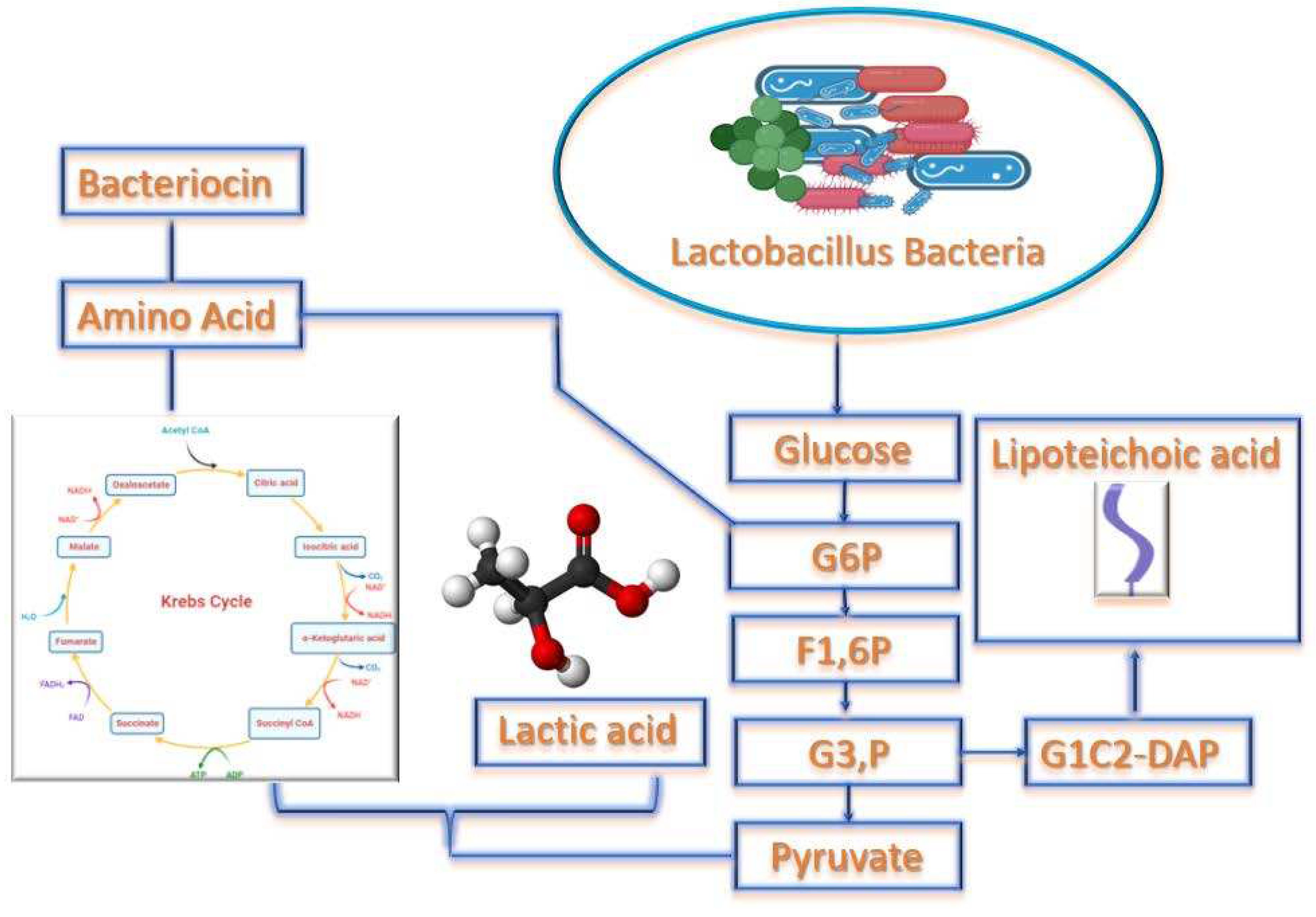
Figure 3.
The health benefits of various dairy products. Dairy and dairy products have tremendous health benefits for a human. Due to the nutrients available in milk and dairy products like micronutrients and macronutrients human health is maintained through the healthy development of organs and high life expectancy.
Figure 3.
The health benefits of various dairy products. Dairy and dairy products have tremendous health benefits for a human. Due to the nutrients available in milk and dairy products like micronutrients and macronutrients human health is maintained through the healthy development of organs and high life expectancy.
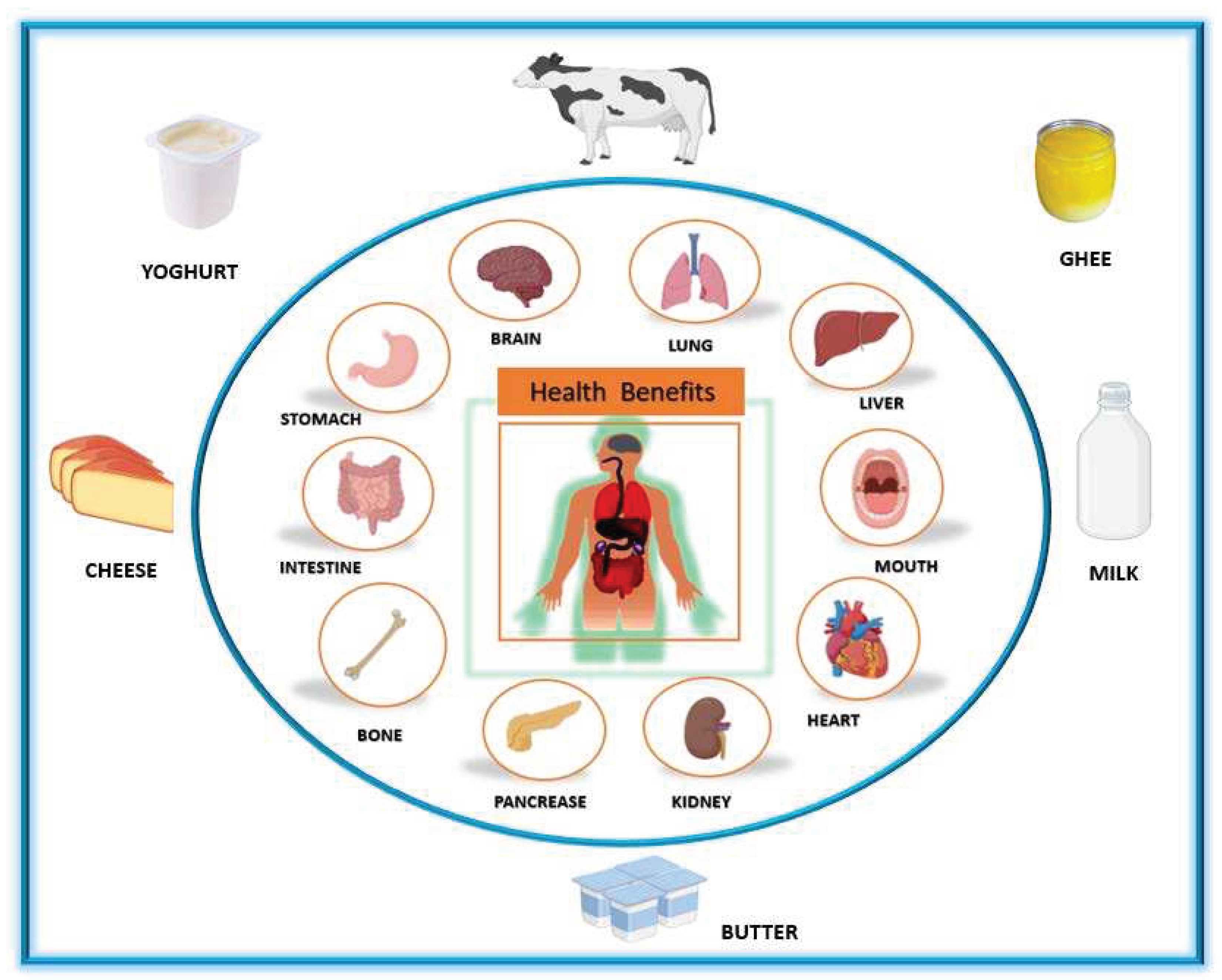
Disclaimer/Publisher’s Note: The statements, opinions and data contained in all publications are solely those of the individual author(s) and contributor(s) and not of MDPI and/or the editor(s). MDPI and/or the editor(s) disclaim responsibility for any injury to people or property resulting from any ideas, methods, instructions or products referred to in the content. |
© 2023 by the authors. Licensee MDPI, Basel, Switzerland. This article is an open access article distributed under the terms and conditions of the Creative Commons Attribution (CC BY) license (http://creativecommons.org/licenses/by/4.0/).
Copyright: This open access article is published under a Creative Commons CC BY 4.0 license, which permit the free download, distribution, and reuse, provided that the author and preprint are cited in any reuse.


