

Submitted:
09 July 2023
Posted:
11 July 2023
You are already at the latest version
Abstract
The number of fishers working on commercial fishing vessels worldwide is approximately 159,800 according to the Food and Agriculture Organization of the United Nations. The International Labour Organization estimates that the mean annual number of deaths during fishing is approximately 24,000. Most guidelines for the prevention of marine accidents have been developed with a focus on vessels involved in international navigation. As these guidelines may have parts that are unsuitable for application in small-scale boats operating in coastal areas, appropriate modifications are required. This study analyzed quantitative data on 1,790 marine accidents that occurred in trap fishery, a globally common type of fishery, and data obtained through a survey of 101 fishers in South Korea. A guideline to reduce the rate of fatal accidents was developed using the Bayesian network, a method used for the analysis of accidents, as suggested in the formal safety assessment protocol. The results of data analysis and the developed guidelines are expected to be beneficial to all fishers involved in trap fishery across many countries worldwide.
Keywords:
commercial fishing vessel
; trap fishing
; Bayesian network
; formal safety assessment
; prevention manual
1. Introduction
Fishery is an occupation with the lowest level of safety [1], and on average approximately 24,000 deaths are estimated to occur every year [2]. In addition, the rate of fatal accidents in the fishing sector is 115 times higher than those of other fatal accidents in the UK and 25 times higher than the national averages of Australia and USA [3]. In South Korea, the target country of this study, the rate of accidents in the fishing sector was 2.37 times higher compared to the total mean rate of industrial accidents (1.49% vs. 0.63%) in 2021 [4].
Previous studies on marine accidents in fishing vessels include classification according to the type of fishery and fishing methods [5], analysis based on specific situations [6,7], analysis of those caused by human error as the main cause [8,9], analysis of statistical data [1], analysis using the fault tree analysis [10], development of a safety management system for fishing vessels through the use of checklists [11], and risk assessment of coastal fishing vessels [12]. Studies on such varied themes have been continuously conducted, and on a global scale, the International Maritime Organization (IMO) and the Food and Agriculture Organization (FAO) of the United Nations have made continuous efforts to reduce the rate of marine accidents in fishing vessels through the development of regulations and safety measures.
However, despite the ceaseless efforts of international organizations, the outcome of which includes the International Convention on Standards of Training, Certification and Watchkeeping for Fishing Vessel Personnel (STCW-F), Torremolinos Convention, and the Code for Responsible Fishing, the rate of accidents in the fishing sector remains relatively high compared to other industrial sectors [13]. While there are various reasons for the consistently high rate of accidents, the most representative ones are discussed below.
First, in the case of policies on maritime safety suggested by the IMO, most of them have been developed and revised for vessels involved in international navigation with the majority of such vessels being merchant ships [11]. Thus, it is necessary to modify the specific parts of the suggested preventive polices to reflect the operational environment and scale of fishing vessels. For instance, the crashing and capsizing of merchant ships are accidents that directly lead to critical environmental pollution and significant financial loss, which is not the case for fishing vessels. In fishing vessels, owing to the characteristics of the operational environment, the same marine accident (crashing, capsizing, etc.) far more frequently leads to injury, disease, and death of an individual fisher but rarely causes environmental pollution or significant financial loss. Hence, the accident analysis, management, and prevention manual should be specific according to the type of vessel even in the case of an identical form of marine accident.
Second, for merchant ships that show a high proportion of international navigation, accidents often occur in regions outside the native country leading to relevant international laws being continuously developed or revised. Contrastingly, the number of domestic fishing vessels far exceeds that of deep-sea fishing vessels, and marine accidents are managed by respective countries in most cases with a strong tendency to develop their own specific preventive measures. Hence, the rate of accidents and preventive measures in fishery significantly vary across countries.
With this background, This study thus focuses on fatal accidents among marine accidents in fishing vessels and the development of a manual for accident prevention. The study flow is as follows.
First, data on fatal accidents were collected to perform a reliable cause–effect analysis, based on which marine accidents involving fishers were quantitatively classified. Second, a survey was conducted among fishers to ascertain the direct and indirect causes of fatal accidents, and data were analyzed. Third, analyzed data were used as nodes in the Bayesian network, a method suggested in the formal safety assessment (FSA), to deduce the rate of fatal accidents [14] and thereby develop a guideline to prevent them.
2. Materials and Methods
2.1. Target Country and Type of Fishery
2.1.1. Target Country (South Korea)
The Port of Busan (latitude 35°05′ N and longitude 129°03′ E) is located in South Korea. Numerous vessels pass through the Port of Busan as it is among the global top ten ports in terms of traffic for international trade. Moreover, fishery is highly developed and active in South Korea with ≥ 65,000 fishing vessels registered annually (≥ 85% of all registered vessels) [15]. As the main sites of fishing mostly overlap with the courses used by merchant ships, there is an urgent need to develop a guideline to prevent marine accidents in fishing vessels.
2.1.2. Trap Fishery
For this study, we selected trap fishery that shows the third highest rate of fatal accidents (12%) and the highest rate of death [16]. In addition, trap fishery is performed across many countries worldwide and hence it allows efficient sharing of research data.
2.2. Data on Marine Accidents (Data on Approved Payment of Accident Compensation Insurance)
Despite its association with human life, which should receive the top priority, marine accidents that mainly occur in fishing vessels rarely lead to a maritime accident inquiry as the impact of the outcome on the global economy and environment is insignificant. In many cases, therefore, the payment of compensation is the only independent solution. As a result, there is a lack of data on the detailed cause and effect of fatal accidents in fishing vessels, which could have a negative impact on the development of necessary guidelines.
The authors of this study obtained cooperation from various institutions to collect reliable data regarding fatal accidents among marine accidents in fishing vessels. This led to the acquisition of data from the National Federation of Fisheries Cooperatives (NFFC) of South Korea [17] on the approved payment of accident compensation based on the Fishermen’s and Fishing Vessel’s Accident Compensation Act [16]. Data obtained were from 2016 to 2020, and contained the records of payments of accident compensation made to fishers in accidents. The records indicated the sum of the payment and the cause and effect of the accident. As all fishers must have the accident compensation insurance to work in trap fishery, such data were adequately reliable with respect to the cause, effect, and rate of accidents.
2.3. Survey Data
A survey was conducted among 101 fishers working in trap fishery for eels, crabs, and other fish, and data on indirect causes of accidents were obtained [18]. Data were analyzed and verified as described in Section 2.2. For instance, while such data may confirm that an injury (effect) was due to a trip (direct cause), what caused the trip (indirect cause) cannot be identified. An analysis of such data can only be achieved through a field investigation or survey.
To develop a guideline to reduce the rate of accident, a process to reduce the probability of direct causes must precede, and for this, data obtained through the survey were analyzed.
2.4. Formal Safety Assessment
The IMO has developed the FSA as a methodology for preventive measures on marine accidents. The FSA is a structured and systematic methodology, aimed at enhancing maritime safety, including protection of life, health, marine environment, and property using risk analysis and cost benefit assessment [14]. In this study, as the FSA concerns the overall field of maritime industry in addition to the protection of life, only necessary parts of it related to the analysis of fatal accidents in fishing vessels were selectively applied. The Bayesian network technique, which is prescribed in the standard test procedure 2.1 (STP 2.1) for risk analysis methods, was used to deduce the rate of fatal accidents in fishing vessels.
2.5. Bayesian Network Technique
The Bayesian network technique is widely used as an approach based on conditional probability for modelling and interpreting events with uncertainty [19]. The Bayesian model expresses the conditional probability across variables composed of cause and effect nodes. It is a directed acyclic graph expressing dependency across variables as directional edges, and has advantages as predictions are made through prior probability and backward chaining. Recently, the technique has received increased attention for the modelling of phenomena related to personal and organizational factors [20].
To apply the Bayesian network, the first step is to understand the logic of conditional probability. Conditional probability is the probability of an event leading to another event. Hence, the probability of Event A during the incidence of Event B is referred to as the ‘conditional probability of Event A given that Event B has occurred,’ which is expressed as P(A|B) (Note: P(A|B) may vary under the influence of Event B, and P(A|B) and P(B|A) are generally different). As such, the relationship between prior probability and posterior probability for two probability variables can be expressed in defining the relationship between the conditional and marginal probabilities as follows:
where, is the prior probability calculated for an event preceding Event B; is the prior probability for Event B; is the crossover probability that satisfies both events; A occurs given that B has occurred; is the posterior probability for Event A given that Event B has occurred; is the likelihood function for Event A given that Event B has occurred [21].
3. Quantitative Classification of the Status of Fatal Accidents in Trap Fishery
To identify and analyze the cause of a fatal accident, suitable data should first be collected, followed by a process to quantitatively classify data to suit the purpose of analysis.
The cause and effect of fatal accidents were classified in multiple dimensions using data on the payments of accident compensation. It should be noted that the terms related to accidents such as trip, stuck, etc. are the official codes in the Guide of Records and Classification for Industrial Accidents provided by the Korean Occupational Safety Health Agency (KOSHA) [22].
3.1. Status of Fatal Accidents by Type of Fishing
Data on the approved payment of accident compensation based on the Fishermen’s and Fishing Vessel’s Accident Compensation Act [16] showed that the rate of fatal accidents for the recent five years (2016–2020) in trap fishery was the third highest across all types of fishing at 1,790 out of 14,873 accident victims (12.0%) (Figure 1).
In addition, the number of deaths was the highest in trap fishery among the five main types of fishing at 87 out of 1,790 (4.86%) (Table 1).
As previously mentioned, trap fishery, a passive type of fishing compared to active types such as gill-net and purse-seine fishery, was selected in this study because it displays the highest rate of death and has the highest proportion of fishers. The purpose of choosing trap fishery was to prevent discordance in the sharing of procedures used and results obtained with other researchers worldwide.
3.2. Status of Fatal Accidents in Trap Fishery
The number of victims of fatal accidents in the past five years was 1,790. The number of injured was the highest (n = 1,578; 88.2%), followed by disease (n = 125; 7.0%) and death (n = 87; 4.9%). The annual mean of number of accident victims, injured, diseased, and dead were 358, 315.5, 25.0, and 17.4, respectfully (Table 2).
Here, disease is a condition inflicted by repeated movements caused by long-term living on board, which is regarded as equivalent to injury and other transient outcomes of an accident.
3.3. Status of Fatal Accidents by Area of Fishing
Among the 1,790 fatal accidents, 919 were coastal and 871 were offshore in the past five years. The numbers of injury, disease, and death for coastal accidents were 166 (90.3%), 11.2 (6.1%), and 6.6 (3.6%). The respective numbers for offshore accidents were 149.6 (85.9%), 13.8 (7.9%), and 10.8 (6.2%) (Table 3).
Data indicated that coastal accidents led to an outcome of injury with a high probability, whereas offshore accidents led to disease or death with a high probability. The deviation may be attributed to various causes, and is most likely to be the difference in sea areas that allow fishing operations. Hence, even for an identical accident, the time required for treatment could be less in offshore accidents, compared to coastal accidents, due to the difference in the distance from land. The probability of an offshore accident leading to death may also be higher than that of a coastal accident due to the unpredictable maritime climate.
3.4. Status of Fatal Accidents According to Fishery Process
The fishery process was broadly classified into fishing and boat maintenance. Analysis revealed that the number of fatal accidents was 1,717 (95.9%) during fishing and 73 (4.1%) during boat maintenance. Most accidents were shown to occur during fishing (Table 4).
Additionally, for both fishing and boat maintenance, the number of accidents leading to injury was the highest. In the past five years, no death occurred during boat maintenance (Table 5).
3.5. Status of Fatal Accidents According to Direct Causes
The Fishermen’s and Fishing Vessel’s Accident Compensation Act specifies that insurance paid according to the classification of the type of industrial accident based on the respective codes designated by KOSHA (referred to as ‘direct causes’ hereinafter) [22]. These direct causes of accidents include trip/slip, stuck (e.g., in a net hauler), bump/hit (e.g., by fishing gear), falling from height (e.g., to the storage chamber or outside the vessel), crumble (e.g., from fishing gear), crushed, unnatural posture (e.g., single repeated posture), exposure to extreme temperatures (e.g., long-term exposure to sunlight), exposure to chemicals, and disease (due to long-term operation in fishery).
In the recent five years, the following direct causes exhibited a far higher number of accidents among the 1,790 accident victims: trip/slip (n = 511; 28.5%), bump/hit (n = 390; 21.8%) and stuck (n = 319; 17.8%). For others, the records did not indicate accurate causes (Table 6).
3.6. Status of Fatal Accidents According to Direct Causes Based on Fishery Process
Analysis of direct causes indicate that during fishing, the number of accidents was the highest for trip/slip (n = 494; 28.7%), followed by bump/hit (n = 382; 22.2%), and stuck (n = 305; 17.7%). During boat maintenance, the number of accidents was the highest for trip/slip (n = 17; 23.3%), followed by stuck (n = 14; 19.2%) and exposure to chemicals (n = 10; 13.7%) (Table 7). Direct causes varied slightly between fishing and boat maintenance. Results revealed specific direct causes of accidents in each fishery process, and accordingly, a suitable prevention manual can be developed.
4. Analysis of Survey Data
As described in Section 1, although indirect causes leading to direct causes remain unknown, direct causes and outcomes of accidents can be identified using data on payments of accident compensation. Therefore, data obtained through a survey were used to determine the circumstances that led to direct causes according to fishers currently working in trap fishery [23].
A total of 101 fishers responded to the survey, including 92 males (91.1%) and nine females (8.9%). Among the 101 respondents, 89 fishers had a career length of ≥ 10 years, which indicates that the survey participants were a group of reliable experts.
4.1. Analysis of Indirect Causes
Based on the responses obtained from the participants of the survey, indirect causes leading to direct causes were classified into four factors: personal, managerial, mechanical, and environmental.
First, among the personal factors of indirect causes leading to direct causes, personal carelessness was the highest at 32.0%, followed by “busy brain by repetitive work” and sleep insufficiency at 22.0% (Figure 2), indicating that fishers were aware of the importance of carefulness in preventing accidents, and that an improvement can be achieved through safety education.
Among the managerial factors of indirect causes, “work practice of poor safety precautions” was the highest at 37.0%, followed by inadequacy of education on hazard factors at 28.0% (Figure 3). The personal and managerial factors shared similar contexts, and there is a high probability for improvement.
Among the mechanical factors of indirect causes, decrepit equipment or poor maintenance was the highest at 29.0%, followed by systematic error of fishing equipment at 20% (Figure 4). As these factors are directly associated with financial aspects, improvements are likely to be a challenge, even though fishers are aware of the risk of accidents. Nonetheless, these causes are not completely beyond control and continuous efforts toward prevention is expected to lead to improvements.
Among the environmental factors of indirect causes, poor environment such as waves (water depth) was the highest at 27.0%, followed by “high tensile strength and enormous amount of rope (fishing gear)” at 23.0% (Figure 5). The environmental factors are an unavoidable part of the fishing operation and are mostly beyond control. Environmental and personal factors are closely associated, and improvements can be achieved with the determination of the ship owner or captain to accord safety the top priority.
4.2. Analysis of Indirect Causes Based on Accident Cases
Based on each accident case reported by the survey participants, indirect causes leading to direct causes of accidents were analyzed. The three most frequent direct causes are presented as follows.
4.2.1. Trip/Slip
- Case of accident
- Trip on the deck due to the loss of balance during fishing caused by poor weather conditions or waves from neighboring vessels
- Slip caused by a fishing product such as mucus
- Trip during preparation for sail caused by the collision of the ship with the dock
- Slip in the engine room caused by such substances as oil due to wearing of non-safety shoes
- 2.
- Indirect causes
- Slippery deck with sea water, secretion from fish, etc.
- Various uneven structures on the deck floor and narrow passage caused by the loading of the trap
- Sudden movement of the ship due to wind or vessel traffic
- No protective equipment (safety helmet or shoes)
- Personal carelessness
- 3.
- Preventive measures
- Safety shoes with hard sole and high friction should be used despite discomfort instead of light and comfortable shoes
- Risk factors on the deck should be removed by cleaning away neglected and unnecessary fishing gear
- Sudden ship movements should be anticipated and risky movements should be avoided
- While moving heavy cargo (such as a box containing fish), the frequency of movement rather than distance moved should be increased
4.2.2. Bump/Hit
- Case of accident
- Bump into a structure due to sudden ship movements caused by poor weather conditions or waves from neighboring vessels
- Hit by a rope detached by fishing gear during fishing due to excessive tension or ship movements
- Hit by a cut rope due to high tension
- Hit by fishing gear that gets stuck in the middle of release or misconnected
- Bump into heavy cargo during maintenance work in the engine room due to the movement of cargo
- 2.
- Indirect causes
- Sudden ship movement and slippery deck
- Narrow passage and engine room
- Continuous fluctuation of tension in fishing gear during retrieval due to the movement of the ship
- Speedy operation and narrow workspace during the release of fishing gear
- Unskillful rope operation and inappropriate site of operation
- Cutting of a worn-out rope on fishing gear
- Getting insensitive to environmental changes due to long hours of repetitive work
- Device error or misjudgment on a boat with one or two fishers, who simultaneously perform(s) ship steering, catch manipulation, and separation of fishing gear
- No protective equipment (safety helmet or shoes)
- Personal carelessness
- 3.
- Preventive measures
- The presence of a rotating device or machine in the vicinity should be checked during movement
- A cushion to reduce shock should be installed with a warning sign in areas of frequent bumping
- The change in rope tension should be carefully monitored during the retrieval of fishing gear to prevent hits
- The safety distance from fishing gear during release should be adequately wide
- The state of abrasion of the rope attached to fishing gear should be carefully monitored, and maintenance should be performed periodically
4.2.3. Stuck
- 1.
- Case of accident
- Body part (e.g., hand) stuck due to unskillful or careless handling of catch equipment
- Body part stuck in the hauler as a glove or part of the work suit is pulled into the machine
- Body part (e.g., foot) stuck during anchoring
- Body part (e.g., hand) stuck in the engine room during ship maintenance
- 2.
- Indirect causes
- Long hours of repetitive work
- Ignorance of safety during work
- Unskillful handling of catch equipment and poor work performance
- Inadequate management by the field supervisor
- No protective equipment (safety helmet or shoes)
- Personal carelessness
- 3.
- Preventive measures
- Prior training on the use of catch equipment should be thorough and each fisher should be fully aware of the risks of work
- An emergency stop button should be installed with a warning sign to minimize the scope of accident
- Right-sized work suit should be worn to prevent it from being pulled into a machine
- The location of work during fishing should be rotated to refresh the fisher’s attention
5. Bayesian Network Analysis of Fatal Accidents in Trap Fishery
As described in Section 1, fatal accidents are most critical among marine accidents in fishing vessels, and despite ceaseless efforts, the rate of fatal accidents has not been reduced. A Bayesian network was constructed based on results of accident classification for trap boats (see Section 3 and Section 4), which were incorporated as nodes. The primary goal of the Bayesian network in this study was to deduce the rate of death for trap boats, while the final goal was to verify the change in rate of death according to the application of the prevention manual developed in this study.
5.1. Status of Approved Payments of Accident Compensation for Death
The seriousness of a fatal accident can be determined based on payment of compensation. Table 8 and Figure 6 show the payments of accident compensation for and their trend. Compared to injury or disease, the payments caused by death are markedly higher.
Only 4.9% (87 out of 1,790 cases) of accidents led to death in the past five years, but the approved insurance payments were 3-fold higher than the sum of payments for accidents that led to injury and disease. It was thus determined that preventive measures should be taken predominantly for fatal accidents leading to death among marine accidents in fishing vessels as they cause a far higher financial loss compared to those leading to injury or disease, apart from loss of human lives.
5.2. Construction of a Bayesian Network of Fatal Accidents
A Bayesian network was constructed by selecting various causes of accidents based on data classified in Section 3. Each node was mutually correlated.
As shown in Figure 7, the network development was limited to fatal accidents that occur in fishing vessels in trap fishery. The conditions were set to maximally resemble the actual work environment by assuming that accidents occur between coastal and offshore regions and between fishing and boat maintenance activities.
The nodes (pink) of direct causes of death incorporated only three most frequent causes (trip/slip, stuck, and bump/hit), while the remaining causes were represented by others. Direct causes were converged to three causes because these accounted for approximately 70% of the total, which implied the predominant need for guidelines. In addition, the rate of accidents for other causes was relatively low and the inadequacy of quantitative/qualitative data on the case of accidents were unsuitable for the development of guidelines. The analysis of causes other than the three main causes will be performed in the future after adequate data accumulation.
The calculation for each node was based on the logic of conditional probability. The deduced rate of fatal accidents leading to death in trap fishery in fishing vessels was 0.42%.
5.3. Deduction of Rate of Fatal Accidents According to Direct Causes
As shown in Figure 7, the calculation based on conditional probability indicated that the probabilities of trip/slip, bump/hit and stuck were 1.6, 1.2, and 0.99%, respectively. The rate of death on the final node can be reduced by reducing the probability of the three main direct causes through the elimination of indirect causes leading to them.
The prevention manual was developed based on results of field investigation and survey to reduce the three main direct causes. All fishers considered safety checklist (CL) and protective equipment (PE) as essential preventive measures.
Table 9 and Figure 8 show the composition of nodes. It was assumed that CL was followed and PE was applied to reduce the probability of direct causes. If P(X), the conventional probability of direct causes without adherence to a manual, is 100%, the rates of reduction are 20, 10, and 25% for the use of PE, CL, and concurrent use of PE and CL, respectively. Here, at 50% adherence to the two measures simultaneously, the changed P(X) can be calculated through Bayesian logic using Eq. 1 as follows:
P(X) = [(P(X)∣PE(Y), CL(Y)) × PE(Y) × CL(Y)] + [(P(X)∣PE(Y),
CL(N)) × PE(Y) × CL(N)] + [(P(X)∣PE(N), CL(Y)) × PE(N) × CL(Y)] + [(P(X)∣PE(N), CL(N)) × PE(N) × CL(N)] = [0.75 × 0.5 × 0.5] + [0.8 × 0.5 × 0.5] + [0.9 × 0.5 × 0.5] + [0.99 × 0.5 × 0.5] = 0.1875 + 0.2 + 0.225 + 0.2475 = 0.86
Hence, the probability of direct causes can be reduced by 14.0% at 50% adherence to both CL and PE.
5.3.1. Deduction of Rate of Death Due to Trip/Slip
Trip/slip is the most frequent cause leading to injury in trap fishery. Table 10 presents the rate of death with adherence to each or both preventive measures. In the absence of a preventive measure (0% adherence), the rate of death by trip/slip was 0.0064%. However, with adherence to each or both preventive measures, the rate of death reduced marginally.
Assuming 50% adherence to both CL and PE, the rate of death decreased by 14.1% to 0.0055%. Assuming 100% adherence, the rate of death decreased by 25.0% to 0.0048%. Figure 9 shows the Bayesian network indicating the rate of death due to trip/slip (left) and at 50% adherence to both CL and PE (right).
5.3.2. Deduction of Rate of Death Due to Bump/Hit
Bump/hit is the second most frequent direct cause of accidents after trip/slip in trap fishery. As shown in Table 11, in the absence of a preventive measure (0% adherence), the rate of death by bump/hit was 0.012%, which indicated that, while the rate of bump/hit accidents was lower compared to trip/slip accidents, the rate of death was comparatively higher.
As specified in Section 5.3.1, assuming 50% adherence to both CL and PE, the rate of death decreased by 8.3% to 0.011%, and assuming 100% adherence, the rate of death decreased by 23.3% to 0.0092%. Figure 10 shows the rate of death due to bump/hit (left) and the rate of death at 50% adherence to both CL and PE (right) in the Bayesian network.
5.3.3. Deduction of Rate of Death Due to Stuck
Stuck is the third most frequent direct cause of accidents in trap fishery. As shown in Table 12, in the absence of a preventive measure (0% adherence), the rate of death by stuck was 0.013%, the highest among the three direct causes to indicate a need for suitable preventive measures.
As with other causes, assuming 50% adherence to both CL and PE, the rate of death decreased by 15.4% to 0.011%; assuming 100% adherence, the rate of death decreased by 26.2% to 0.0096%. Figure 11 shows the rate of death due to stuck (left), and the rate of death at 50% adherence to both CL and PE (right) in the Bayesian network.
6. Prevention Manual
The multiple dimensions of fatal accidents in trap fishery were analyzed. Results revealed that the three most frequent direct causes of accidents through quantification were trip/slip, bump/hit, and stuck. The rate of death deduced in the Bayesian network was the highest for stuck, followed by bump/hit and trip/slip.
Results predicted that applying the same preventive measures to all causes of accidents would be slightly inefficient, indicating a need to develop various preventive measures for each cause of accident. Hence, for trip/slip with a high incidence of accidents but a relatively low rate of death, preventive measures should include numerous personal and managerial factors to reduce the rate of accidents. In contrast, for stuck with a high rate of death compared to the incidence of accidents, preventive measures should focus on mechanical and environmental factors to minimize the rate of death in addition to including personal and managerial factors to reduce the rate of accidents.
6.1. Preventive Measures for Each Direct Cause
6.1.1. Trip/Slip
- Safety shoes with hard sole and high friction should be used despite discomfort instead of light and comfortable shoes
- Risk factors on the deck should be removed by cleaning away neglected and unnecessary fishing gear
- Sudden ship movements should be anticipated and risky movements should be avoided
- While moving heavy cargo, the frequency of movement rather than the distance moved should be increased
- Risk awareness should be increased and risk factors should be removed through the implementation of safety regulations and CL
6.1.2. Bump/Hit
- The presence of a rotating or heated device in the vicinity should be checked during movement
- The change in rope tension should be carefully monitored during the retrieval of fishing gear to prevent hits
- The safety distance from fishing gear during release should be adequately wide
- The state of abrasion of the rope attached to fishing gear should be carefully monitored, and maintenance should be performed periodically
- A cushion to reduce shock should be installed with a warning sign in areas of frequent bumping
- Unstable operation of catch equipment should be prevented using components with set specifications
- A facility to fix fishing gear in place should be installed to prevent crumble during ship movement
- Risk awareness should be increased and risk factors should be removed through the implementation of safety regulations and CL
6.1.3. Stuck
- An emergency stop button should be installed with a warning sign to minimize the intensity of the accident
- A safety bar should be installed around a device in operation to improve the work environment
- Right-sized work suit should be worn to prevent it from being pulled into a machine
- Fishing should not be performed during poor weather conditions
- The location of work during fishing should be rotated to refresh the fisher’s attention
- Risk awareness should be increased and risk factors should be removed through the implementation of safety regulations and CL
6.2. Safety Regulations and Safety Checklist
Safety education prior to fishing including an explanation of the CL can help the captain and fishers to be notified of potential risks during fishing. As presented in Section 5, the use of CL is a way to reduce the rate of accidents. Safety regulations and CL to prevent accidents during fishery as suggested by the National Institute of Fisheries Science (NIFS) are described in this section [23]. Their simultaneous use with preventive measures are likely to be effective.
6.2.1. General Safety Regulations
- Designated work suit and protective gear should be worn during work
- The work suit should always be tidy without any flappy parts
- Protective gear such as gloves, safety shoes, and safety helmet should be worn appropriately according to their respective purposes of use
- A life vest should be worn during poor weather conditions and during work that requires the body to be exposed to an area outside the ship
- A safety belt should be worn with an attached safety rope during work at heights
- The fishing facility and work tools should be inspected prior to use.
- The vicinity of the workplace and the passage should be kept clean and tidy at all times
- Care should be taken during walking
- a)
- The guard rail should be used while climbing up and down the stairs
- b)
- A ladder should be used for work at heights
- c)
- Jumping from a height should be avoided
- d)
- Slipping can occur on the deck at any time, and hence running should be avoided and carefulness practiced
- e)
- Stepping or crossing over places where fishing nets or buoy lines are stationed should be avoided
- f)
- Passage through the space under heavy operating equipment in the work place such as cranes used for lifting fishing products should be avoided
- 9.
- Chats and pranks should be avoided
- 10.
- One should not be overconfident about skills and be careless
- 11.
- Machines should be handled only by authorized persons
- 12.
- The catch facility should not be operated or controlled after consuming alcohol
- 13.
- The areas marked as hazardous should increase alertness and should be accessed only by authorized persons
- 14.
- Safety regulations and warning signs should be placed around hazardous substances
- 15.
- Work should be stopped on detecting instability while performing a high-risk task
- 16.
- The captain should provide adequate education on safety regulations to fishers prior to engaging them in operations
6.2.2. Safety Regulations for Catch Equipment
- Prior to work, the supervisor should provide education on work methods, risk factors, and signaling to all fishers
- The hauler should be controlled by a designated fisher, who should check the lever position and operational status prior to use
- The safety of connections of all ropes, loops, and hooks should be checked
- The hauler should be operated according to the instructions of the coordinator
- The fisher close to the hauler should keep a safe distance from rotating parts and rope and avoid approaching the interior of a device with protective railing
- The hauler should be stopped immediately with ropes untied when normal operation cannot proceed due to the entanglement of fishing gear
- Stepping over fishing gear that is released or retrieved should be avoided
- If the person controlling the hauler has to leave the control station, he or she should notify another fisher and switch off the power
- The hauler should never be accelerated or stopped suddenly (except in an emergency)
- Periodic maintenance such as checking hydraulic oil should be strictly implemented
6.2.3. Pre-sailing Checklist
| Ship name: | Date: | Person in charge: | Signature: | |
| 1. Wearing of a suitable work suit | ㅁ | |||
| 2. Wearing of safety helmet and safety shoes with high friction | ㅁ | |||
| 3. Wearing of a life vest during deck work | ㅁ | |||
| 4. Use of designated mooring such as a safe ladder while entering and exiting the ship | ㅁ | |||
| 5. Tidying up of materials (hose, mooring rope, fishing gear, etc.) on the passage and deck | ㅁ | |||
| 6. Use of paint to mark danger in a caved-in area or a bump to cause a fall on the deck | ㅁ | |||
| 7. Immediate elimination or alleviation of wet or slippery passage or deck | ㅁ | |||
6.2.4. Pre-fishing checklist
| Ship name: | Date: | Person in charge: | Signature: | |
| 1. Suitable health status check of those participating in fishing | ㅁ | |||
| 2. Education on the catch facility and training on methods of use | ㅁ | |||
| 3. Tidy work suit without flappy sleeves | ㅁ | |||
| 4. Safety helmet and safety shoes with high friction | ㅁ | |||
| 5. Checking of objects that can come between the operational lever and the work place on the deck | ㅁ | |||
| 6. Checking of hand signals with the deck supervisor | ㅁ | |||
| 7. Checking of the operational direction of the lever | ㅁ | |||
| 8. Checking of the position and methods of use of the emergency stop button on catch equipment | ㅁ | |||
| 9. Checking of ropes and fishing gear connected to catch equipment | ㅁ | |||
| 10. Inspection of viscosity and volume of hydraulic oil | ㅁ | |||
| 11. Adequate rest to allow a high level of concentration during fishing | ㅁ | |||
7. Conclusions
The outcome of marine accidents can be broadly classified into human, environmental and financial aspects. Marine accidents in commercial fishing vessels rarely cause critical environmental pollution or significant financial losses; however, the rate of fatal accidents has remained consistently high despite continuous efforts to prevent them. This study was conducted to reduce fatal accidents in fishing vessels through the use of an independent prevention manual for each cause of accident. Trap fishery was selected as the representative type of fishery.
The purpose of this study was to reduce the rate of accidents with a focus on the most frequent fatal accidents in fishery. Relevant data were analyzed quantitatively and qualitatively, and based on the findings, a prevention manual for each main cause of accident was developed.
Although the process of investigation was intense, the prevention manual may appear universal and simple. The contents of the manual were drawn from results of quantitative data analysis and a field investigation involving a survey among 101 fishers to ensure adequately reliable evidence. Furthermore, the rate of accidents deduced using the Bayesian network comprising nodes representing the identified aspects suggested that the probability of reduction of fatal accidents in fishing vessels increased significantly based on the level of adherence to preventive measures.
In a follow-up study, we will compare the rate of reduction of accidents and results of the Bayesian network analysis to refine details of the developed prevention manuals. In addition, the application of the developed manuals to all types of fisheries will be explored. Based on the recommendations of this study, we expect that the rate of marine accidents in fishing vessels will decrease with the active participation of fishers.
Author Contributions
Conceptualization, S.-H.K(FA).; methodology, K.-J.R.; software, S.-H.L.; analysis, S.-H.K.; writing—original draft preparation, Y.-W.L.; writing—reviewing and editing, K.-H.L.; supervision, S.-H.K(FA). All authors have read and agreed to the published version of the manuscript.
Funding
This research received no external funding.
Institutional Review Board Statement
Not applicable.
Informed Consent Statement
Not applicable.
Data Availability Statement
The data used to support the findings of this study are available from the corresponding author upon request.
Acknowledgments
This research was supported by the ‘Development and demonstration of data platform for AI-based safe fishing vessel design (20220210)’ of the Ministry of Oceans and Fisheries, Republic of Korea.
Conflicts of Interest
The authors declare no conflict of interest.
References
- Jin, D.; Thunberg, E. An Analysis of Fishing Vessel Accidents in Fishing Areas off the Northeastern United States. Saf. Sci. 2005, 43, 523–540. [Google Scholar] [CrossRef]
- FAO. Food and Agriculture Organization of the United Nations. Fisheries Department. The State of World Fisheries and Aquaculture. 2000, Vol. 3. Available online: https://www.fao.org/3/X8002E/X8002E00.htm.
- Uğurlu, F.; Yıldız, S.; Boran, M.; Uğurlu, Ö.; Wang, J. Analysis of Fishing Vessel Accidents with Bayesian Network and Chi-square Methods. Ocean Eng. 2020, 198, 106956. [Google Scholar] [CrossRef]
- KOSIS. “Korea Statistical Information Service.” Statistic Database for Fisheries Production. 2023. Available online: https://kosis.kr/statHtml/statHtml.do?orgId=101&tblId=DT_1EW0003&vw_cd=MT_ZTITLE&list_id=K2_7&scrId=&seqNo=&lang_mode=ko&obj_var_id=&itm_id=&conn_path=MT_ZTITLE&path=%252FstatisticsList%252FstatisticsListIndex.do (accessed on 20 April 2023).
- Kim, S.H.; Kim, H.S.; Lee, Y.W. The causes and counterplan for marine casualties of fishing boats according to the fishing types. J. Korean Soc. Fish. Ocean Technol. 2020, 56, 246–257. [Google Scholar] [CrossRef]
- Davis, B.; Colbourne, B.; Molyneux, D. Analysis of fishing vessel capsizing causes and links to operator stability training. Saf. Sci. 2019, 118, 355–363. [Google Scholar] [CrossRef]
- Pitman, S.J.; Wright, M.; Hocken, R. An analysis of lifejacket wear, environmental factors, and casualty activity on marine accident fatality rates. Saf. Sci. 2019, 111, 234–242. [Google Scholar] [CrossRef]
- Rothblum, A.M. Human error and marine safety. In Proceedings of the National Safety Council Congress and Expo, Orlando, FL, USA,, October 2000; Vol. 7. [Google Scholar]
- Wang, J.; Pillay, A.; Kwon, Y.S.; Wall, A.D.; Loughran, C.G. An analysis of fishing vessel accidents. Accid. Anal. Prev. 2005, 37, 1019–1024. [Google Scholar] [CrossRef] [PubMed]
- Kim, S.H.; Kim, H.S.; Kang, I.K.; Kim, W.S. An analysis on marine casualties of fishing vessel by FTA method. J. Korean Soc. Fish. Ocean Technol. 2017, 53(4), 430–436. [Google Scholar] [CrossRef]
- Piniella, F.; Fernández-Engo, M.A. Towards a system for the management of safety on board artisanal fishing vessels: Proposal for check-lists and their application. Saf. Sci. 2009, 47, 265–276. [Google Scholar] [CrossRef]
- Lee, Y.W. Risk assessment for fisher’s safety in coastal composite fishing vessels. J. Korean Soc. Fish. Ocean Technol. 2019, 55, 145–151. [Google Scholar] [CrossRef]
- Blanc, M. Tools for improved fishing vessel safety: The Torremolinos Protocol and the STCW-F Convention. Fish. Newsl.-S. Pac. Comm. 2006, 116, 30. Available online: http://www.spc.int/DigitalLibrary/Doc/FAME/InfoBull/FishNews/116/FishNews116_30_Blanc.pdf (accessed on 20 April 2023).
- IMO. Guidelines for formal safety assessment (FSA) for use in the IMO rule-making process. MSC/Circ.1023-MEPC/Circ.392. 2002, pp. 1–54. Available online: https://wwwcdn.imo.org/localresources/en/OurWork/HumanElement/Documents/1023-MEPC392.pdf.
- KMST. . “Korea Maritime Safety Tribunal.” Statistics of marine accident. 2023. Available online: https://www.kmst.go.kr/web/stcAnnualReport.do?menuIdx=126.
- Accident Compensation Insurance Act for Fishing Vessel Members and Fishing Vessels. Enforcement on 16th Dec. 2021, Law No. 18290, partially revised on 15th Jun. 2021. Available online: https://www.law.go.kr/%EB%B2%95%EB%A0%B9/%EC%96%B4%EC%84%A0%EC%9B%90%EB%B0%8F%EC%96%B4%EC%84%A0%EC%9E%AC%ED%95%B4%EB%B3%B4%EC%83%81%EB%B3%B4%ED%97%98%EB%B2%95.
- NFFC. National Federation of Fisheries Cooperatives. 2023. Available online: http://www.suhyup.co.kr.
- NIFS. “National Institute of Fisheries Science.” Safety accident prevention guideline. 2023. Available online: https://www.nifs.go.kr/board/actionBoard0047View.do?MENU_ID=M0000179&BBS_ID=20230328145209150NOC.
- Yang, Z.; Bonsall, S.; Wang, J. Fuzzy Rule-Based Bayesian Reasoning Approach for Prioritization of Failures in FMEA. IEEE Trans. Reliab. 2008, 57, 517–528. [Google Scholar] [CrossRef]
- Trucco, P.; Cagno, E.; Ruggeri, F.; Grande, O. A Bayesian belief network modelling of organisational factors in risk analysis: A case study in maritime transportation. Reliab. Eng. Syst. Saf. 2008, 93, 845–856. [Google Scholar] [CrossRef]
- Kitson, N.K.; Constantinou, A.C.; Guo, Z.; Liu, Y.; Chobtham, K. A survey of Bayesian network structure learning. Artif. Intell. Rev. 2023, 1–94. [Google Scholar] [CrossRef]
- Korean Occupational Safety Health Agency (KOSHA). Guide of Records and Classification for Industrial Accident. 2016, pp. 1–64. Available online: https://www.kosha.or.kr/kosha/data/guidanceW.do.
- Petursdottir, G.; Hannibalsson, O.; Turner, J.M. Safety at sea as an integral part of fisheries management. In FAO Fish. Circ.; 2001; p. 964. Available online: https://www.ntsb.gov/news/events/Documents/2010_Fishing_Vessel_Safety_FRM-29-FAO-Pub-966.pdf.
Figure 1.
Status of fatal accidents by type of fishing.
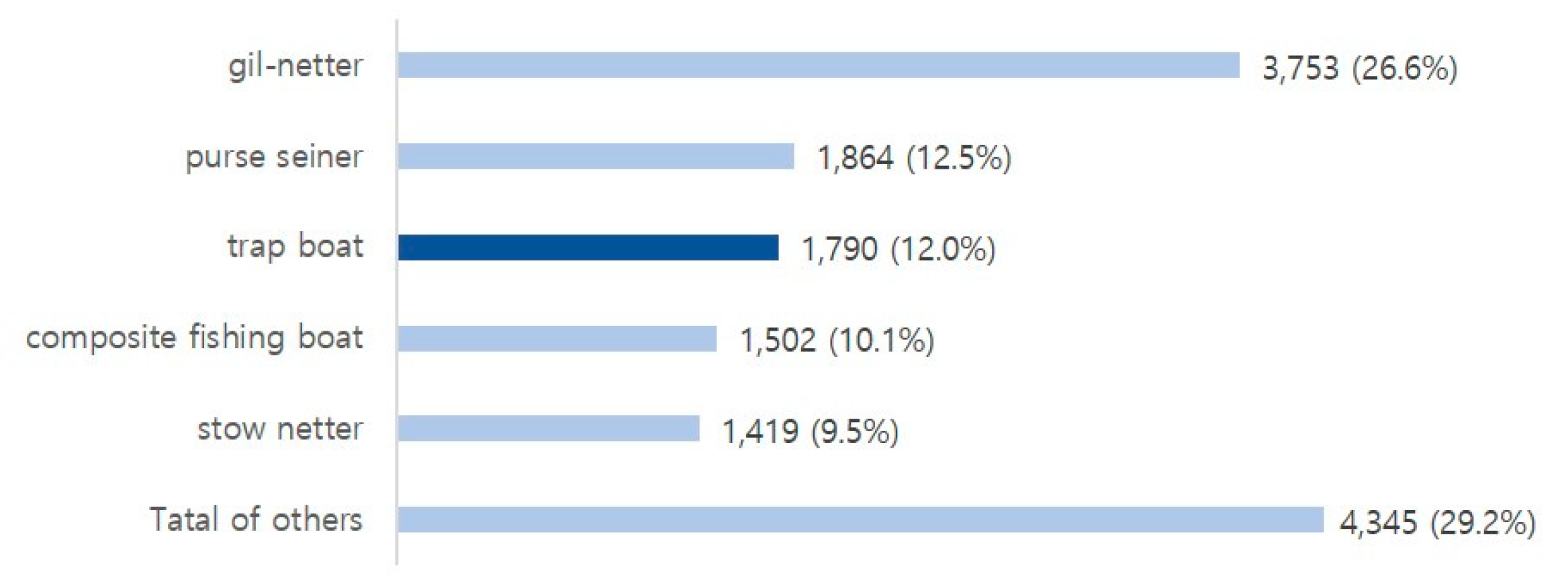
Figure 2.
Personal factors of indirect causes.
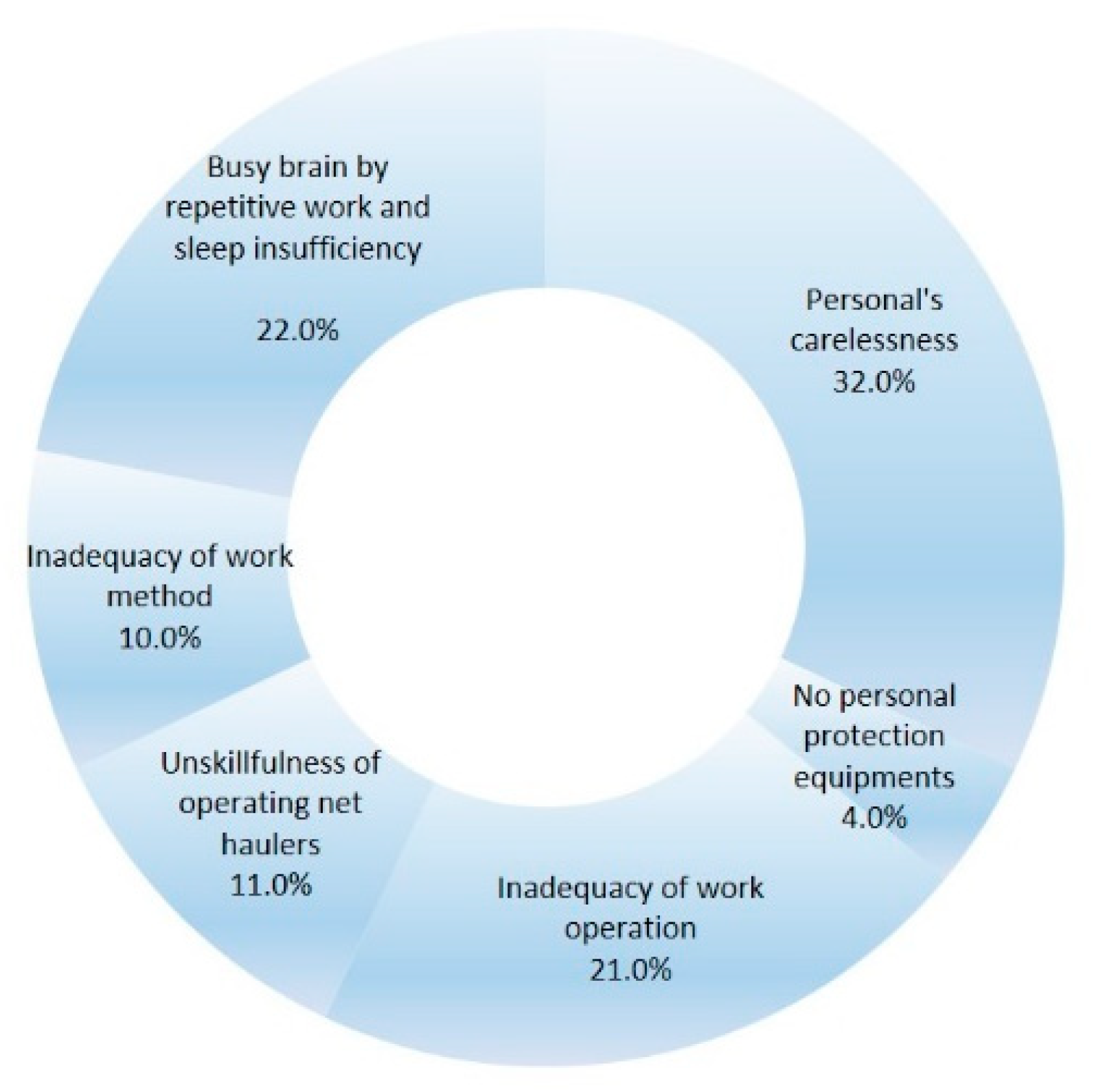
Figure 3.
Managerial factors of indirect causes.
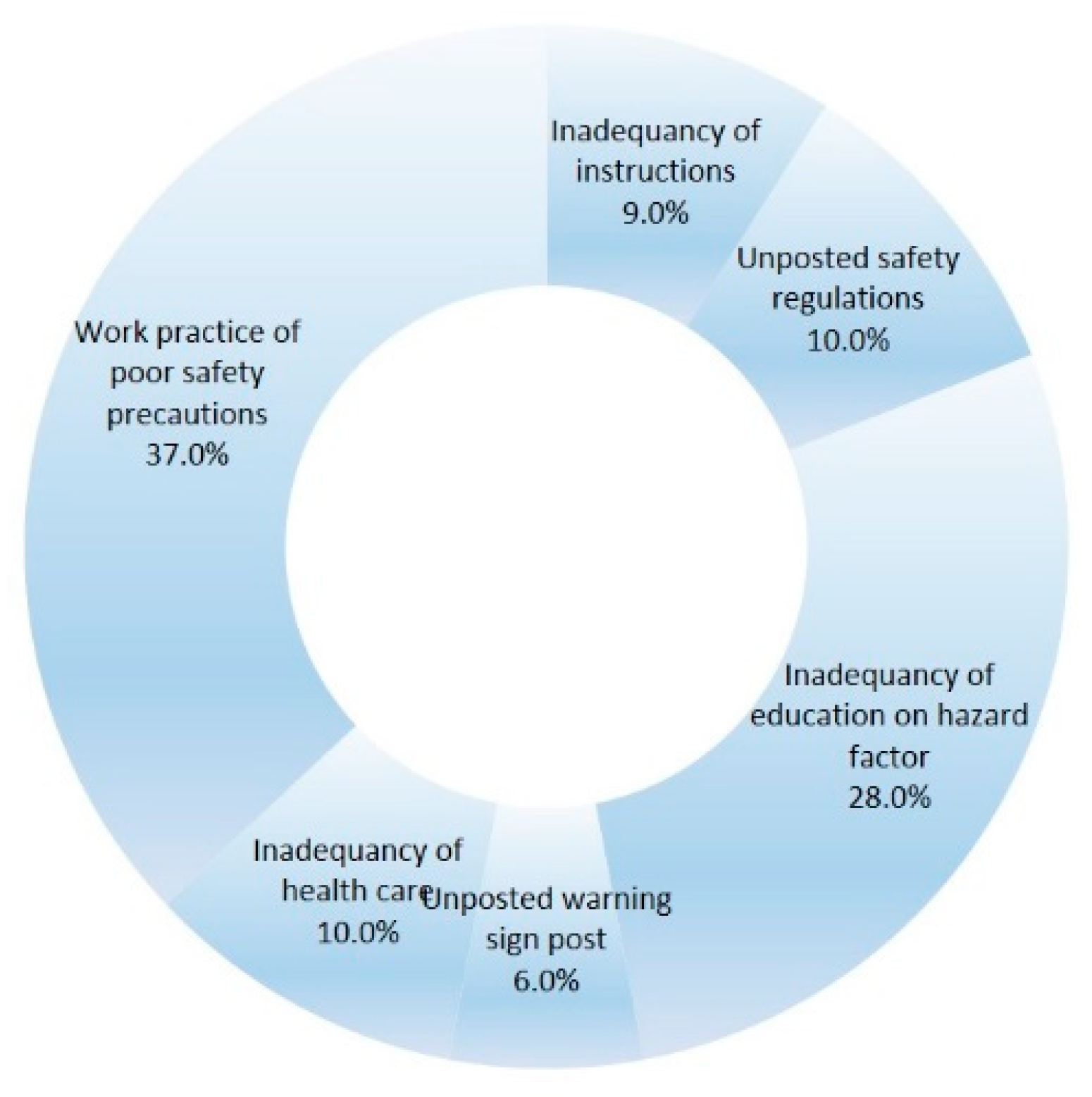
Figure 4.
Mechanical factors of indirect causes.
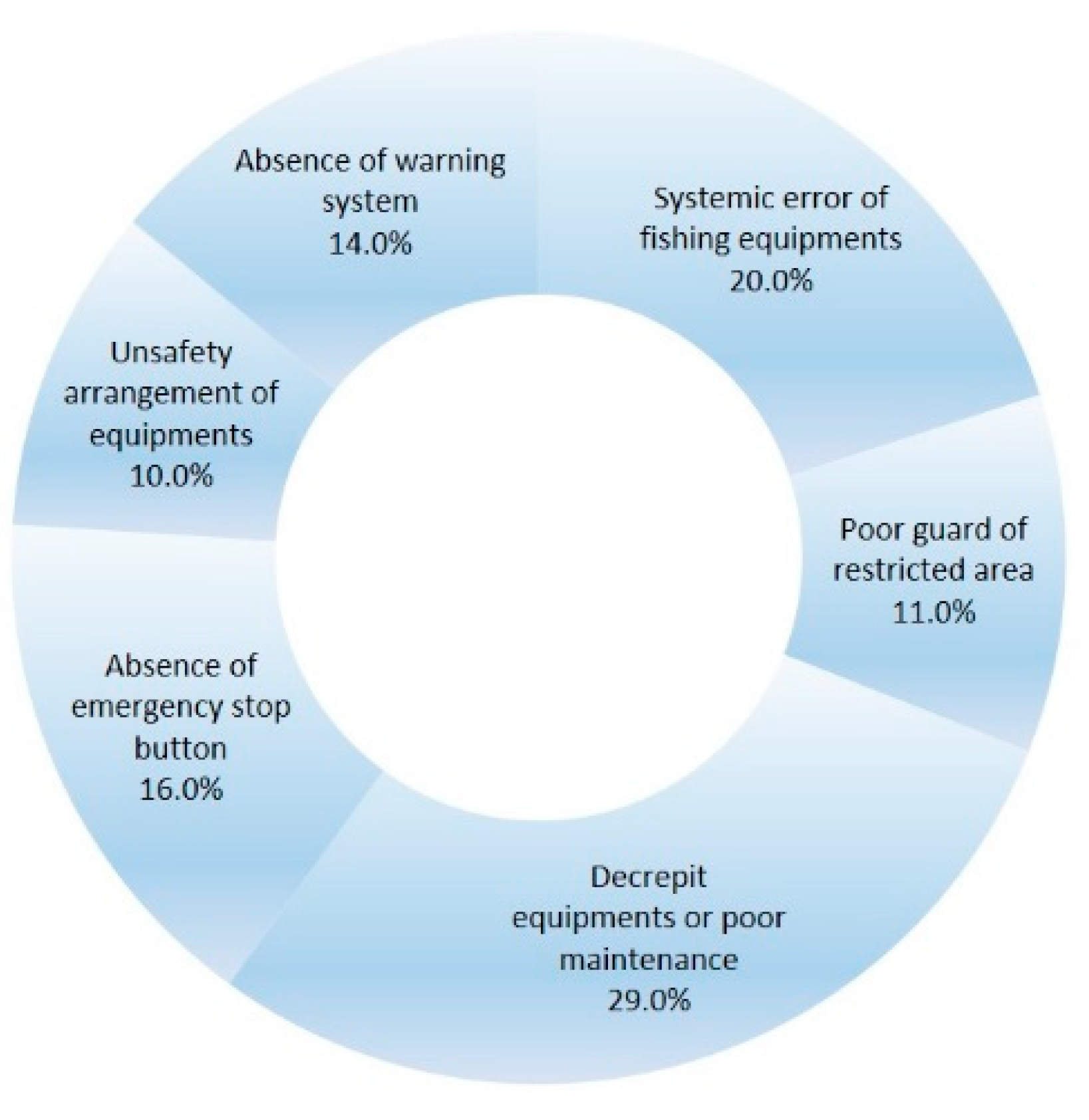
Figure 5.
Environmental factors of indirect causes.
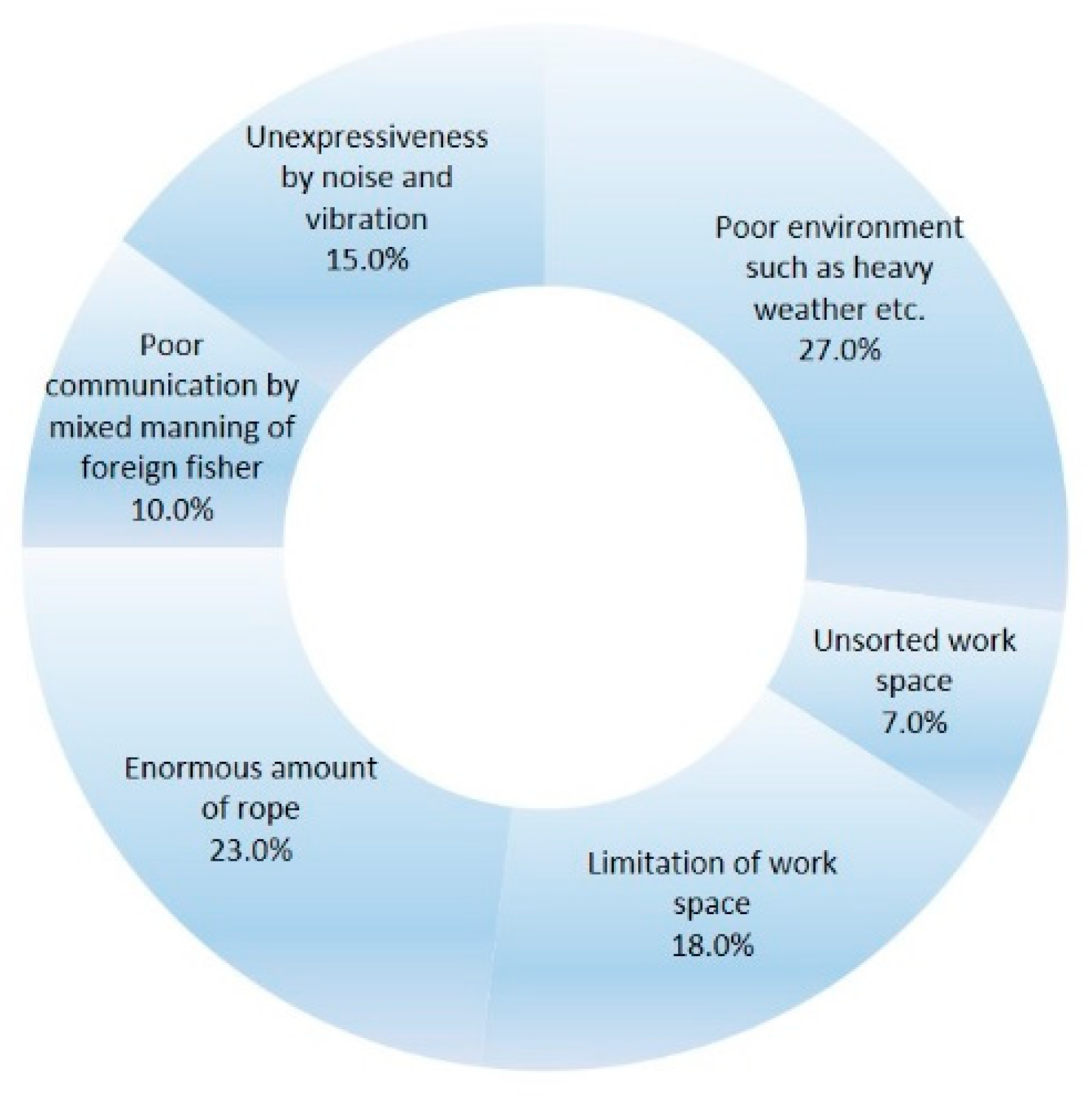
Figure 6.
Status of payments of accident compensation for injury, disease, and death.
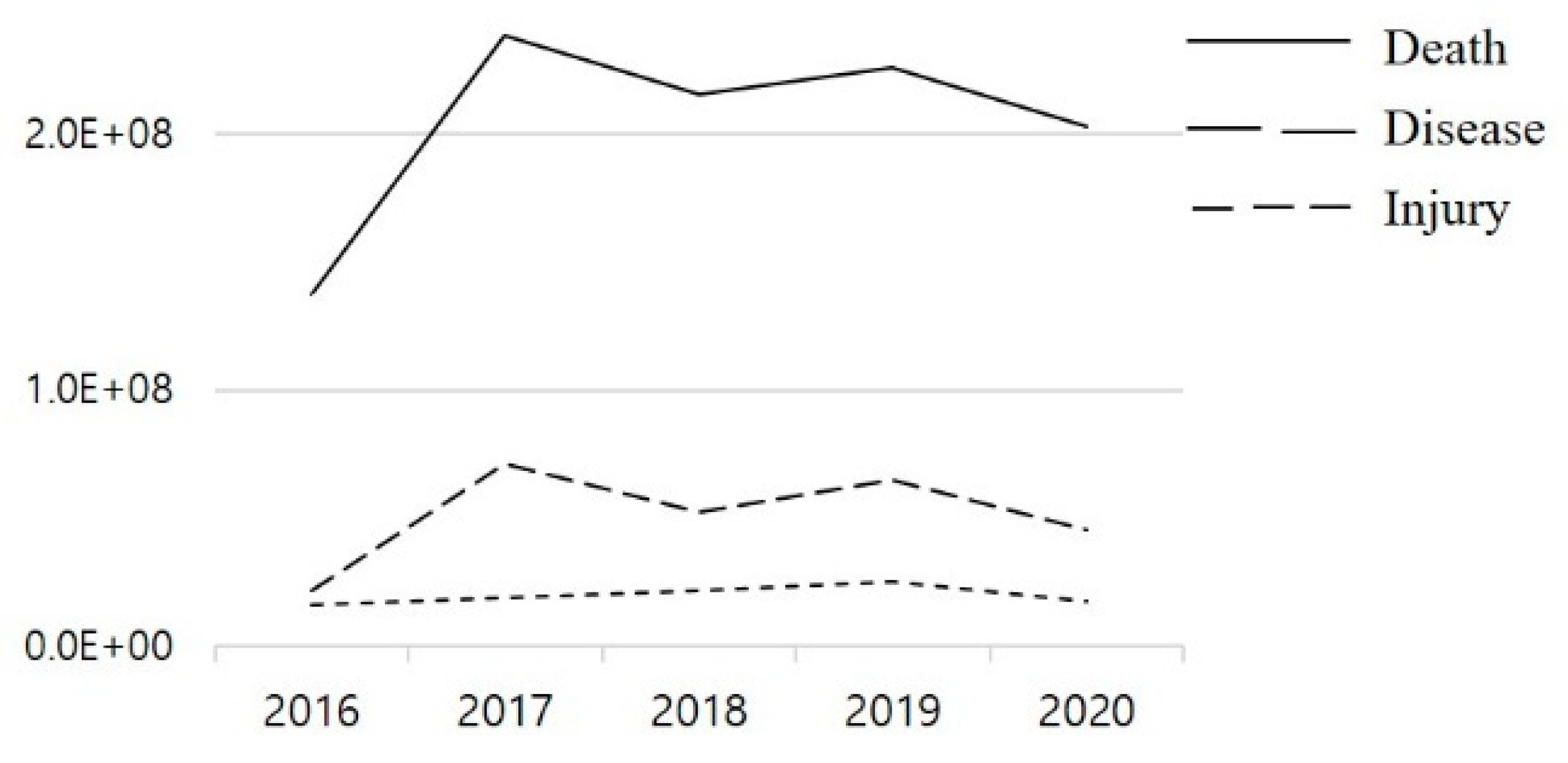
Figure 7.
Bayesian network of fatal accidents.
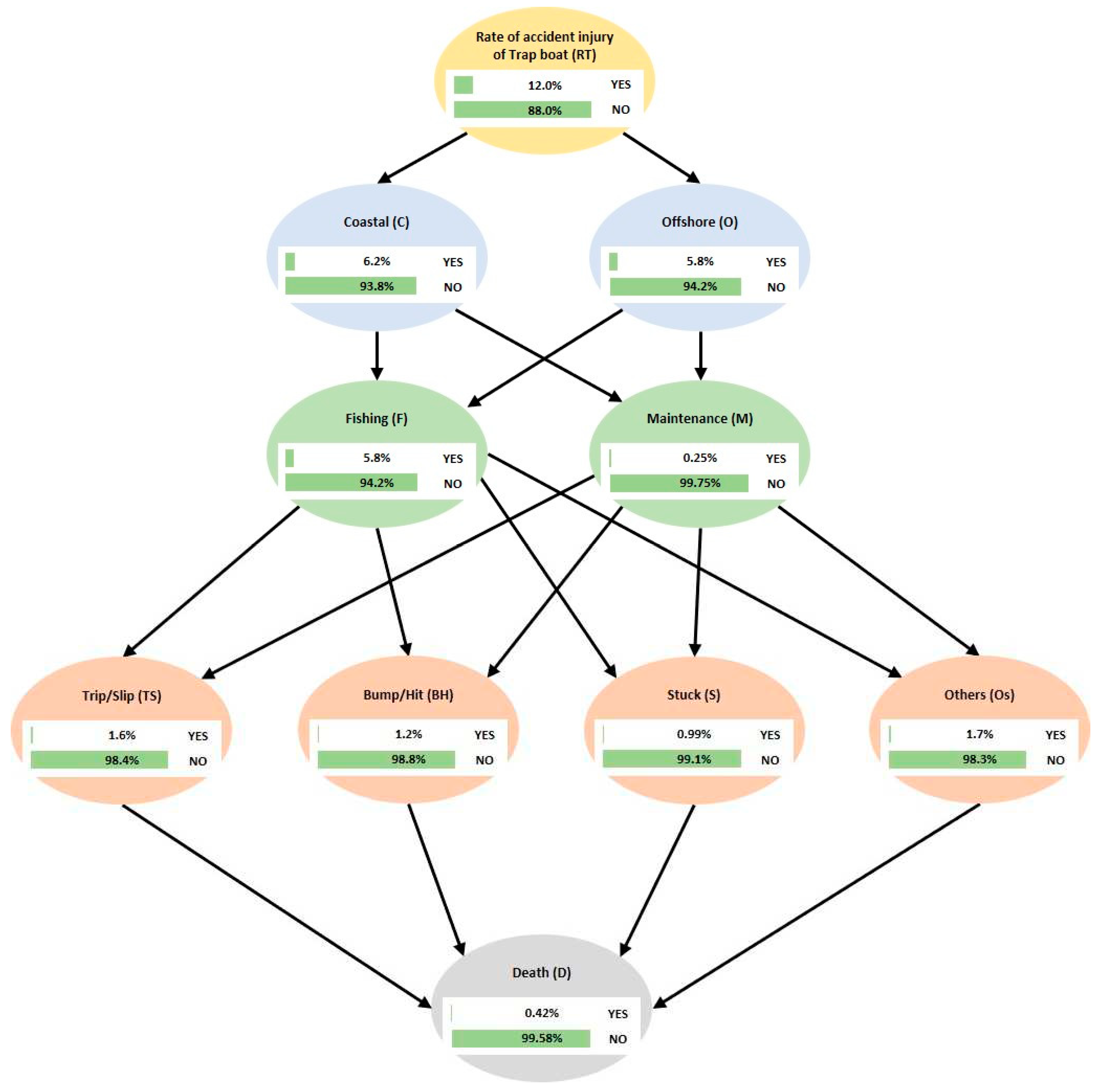
Figure 8.
An example of rate of accidents while adhering to the prevention manual.
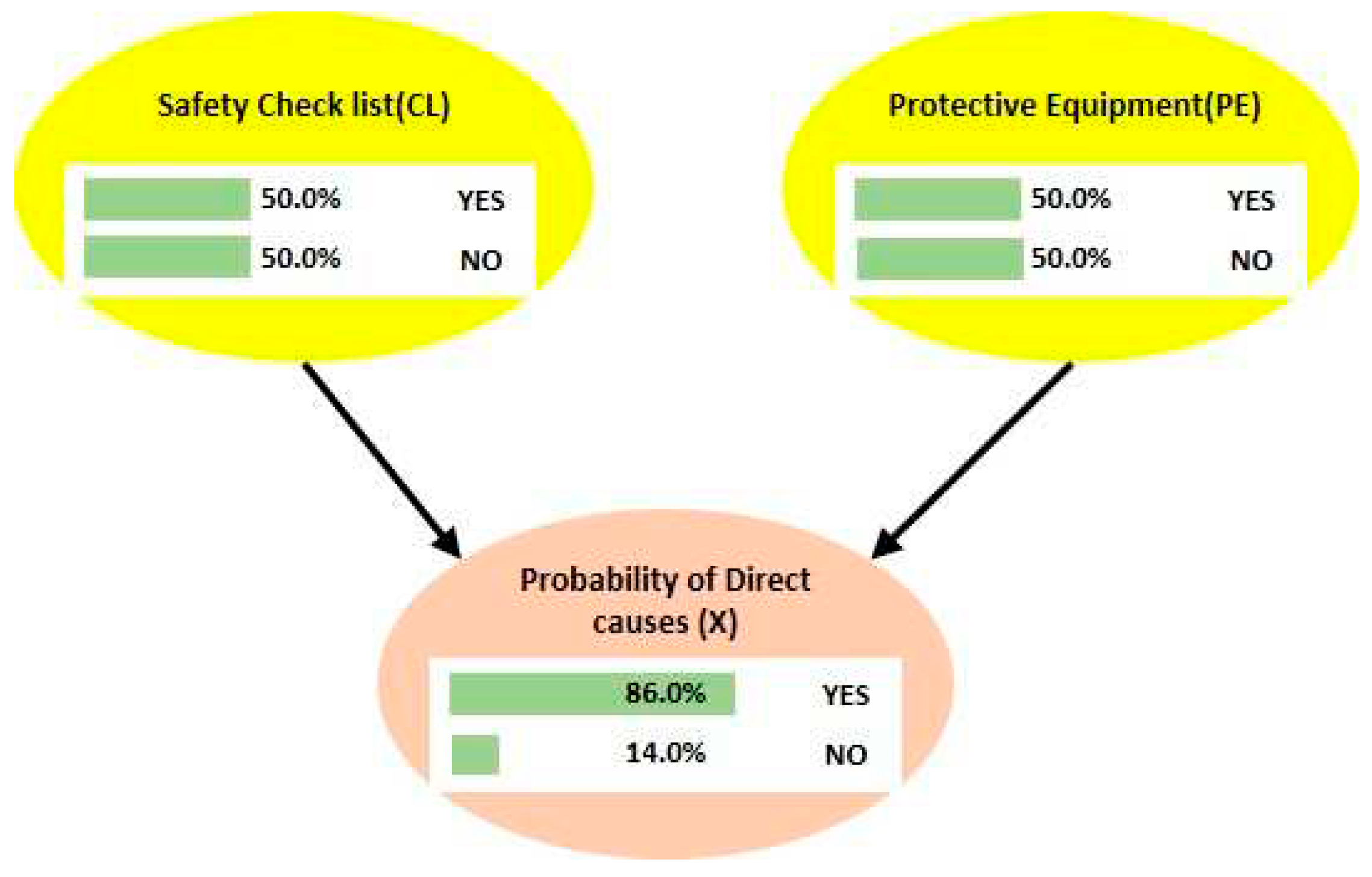
Figure 9.
Reduction in the rate of death at 50% adherence to the prevention manual. Unit: %.
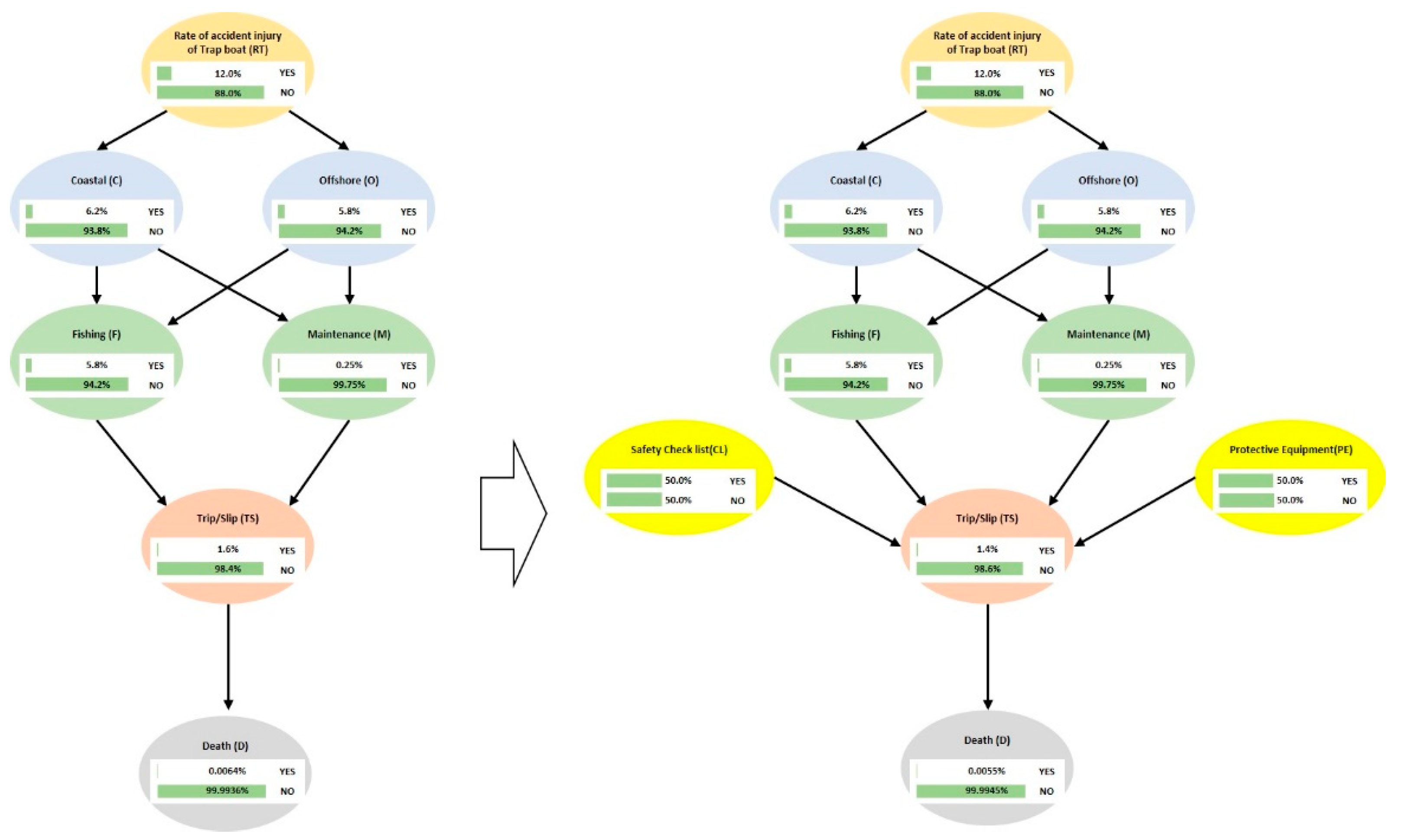
Figure 10.
Reduction in the rate of death at 50% adherence to the prevention manual. Unit: %.
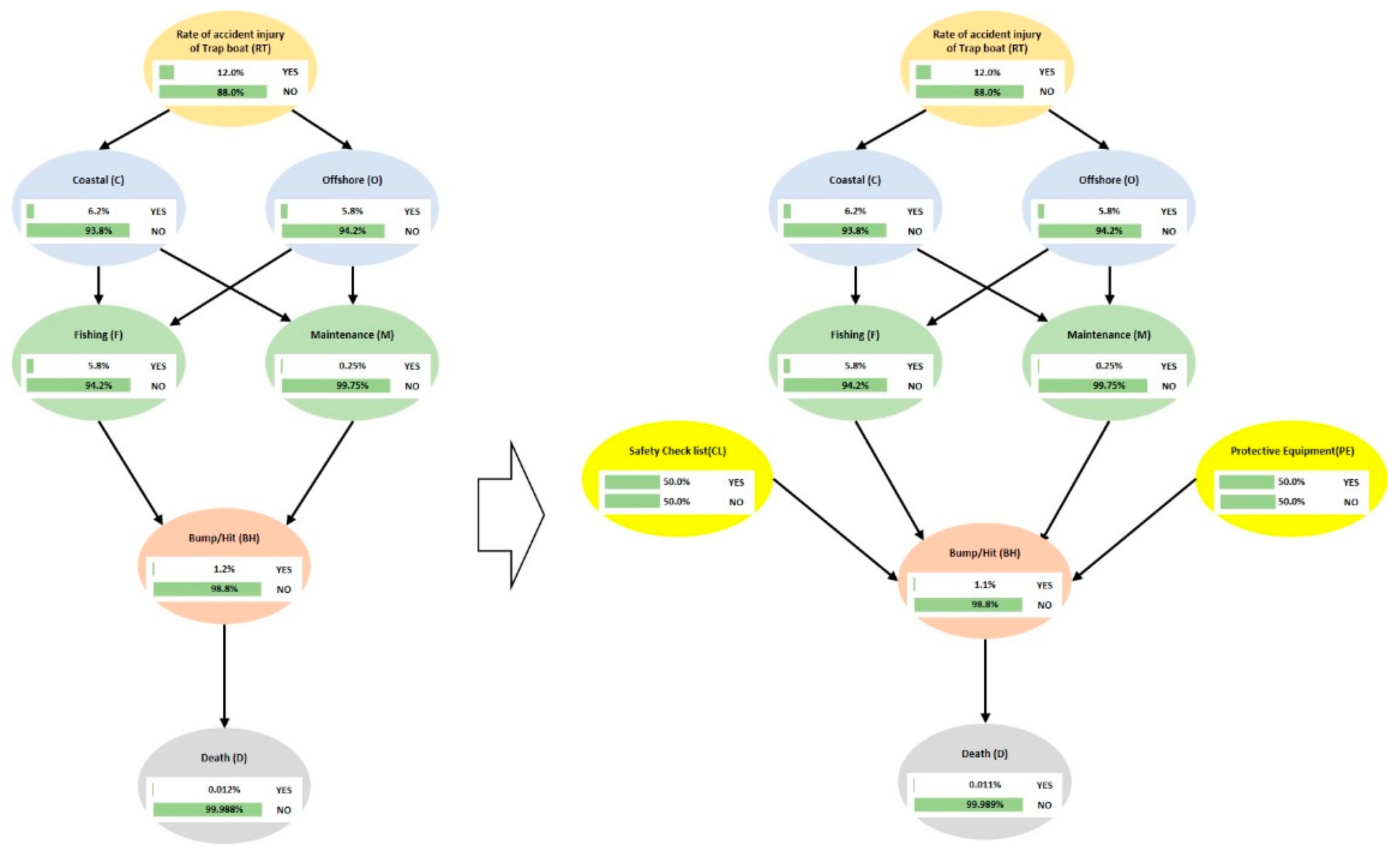
Figure 11.
Reduction in the rate of death at 50% adherence to the prevention manual. Unit: %.
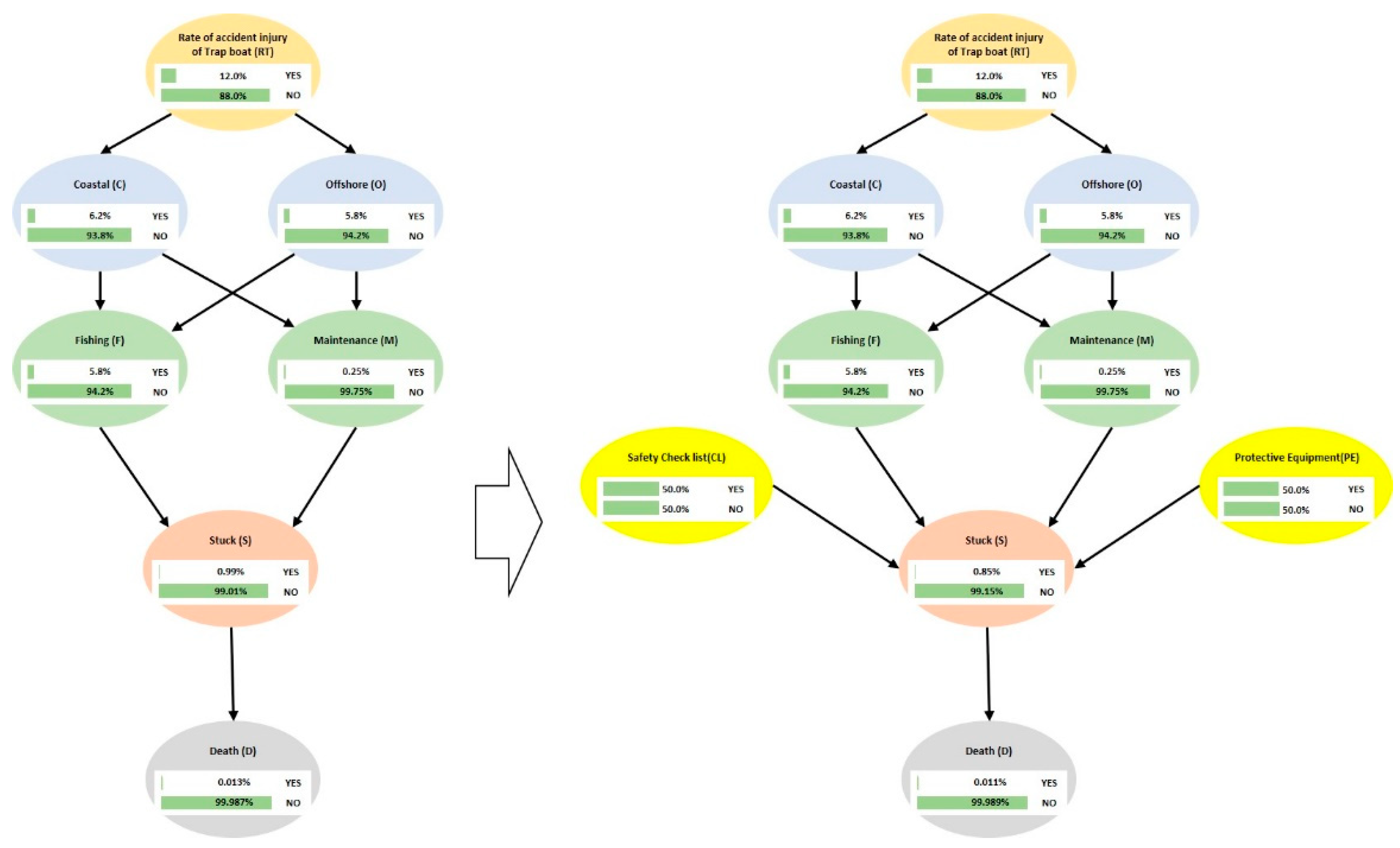

Table 1.
Status of rate of death. Unit: number (%).
| Type of ship | Accident victims | Deaths | Rate of fatal accidents |
|---|---|---|---|
| gill- netter | 3,753 | 159 | (4.02) |
| purse seiner | 1,864 | 43 | (2.31) |
| trap boat | 1,790 | 87 | (4.86) |
| composite fishing boat | 1,502 | 39 | (2.60) |
| stow netter | 1,419 | 58 | (4.09) |
| others | 4,345 | 202 | (4.65) |
| Total | 14,873 | 588 | (3.95) |
Table 2.
Status of fatal accidents in each year. Unit: number (%).
| Year | 2016 | 2017 | 2018 | 2019 | 2020 | Total | |
|---|---|---|---|---|---|---|---|
| Outcome | |||||||
| Injury | 313 | 338 | 324 | 341 | 262 | 1,578 (88.2) | |
| Disease | 14 | 21 | 27 | 33 | 30 | 125 (7.0) | |
| Death | 18 | 25 | 22 | 14 | 8 | 87 (4.9) | |
| Total | 345 | 384 | 373 | 388 | 300 | 1,790 (100.0) | |
Table 3.
Status of fatal accidents according to area of fishing. Unit: number (%).
| Coastal / Offshore | |||||||
|---|---|---|---|---|---|---|---|
| Year | 2016 | 2017 | 2018 | 2019 | 2020 | Total | |
| Outcome | |||||||
| Injury | 137/176 | 173/165 | 178/146 | 180161 | 162/100 | 830 (90.3)/748 (85.9) | |
| Disease | 8/6 | 8/13 | 12/15 | 14/19 | 14/16 | 56 (6.1)/69 (7.9) | |
| Death | 5/13 | 4/21 | 11/11 | 10/4 | 3/5 | 33 (3.6)/54 (6.2) | |
| Total | 150/195 | 185/199 | 201/172 | 204/184 | 179/121 | 919 (100.0)/871 (100.0) | |
Table 4.
Status of fatal accidents according to process of fishery. Unit: number (%).
| Year | 2016 | 2017 | 2018 | 2019 | 2020 | Total | |
|---|---|---|---|---|---|---|---|
| Fishery process | |||||||
| Fishing | 333 | 367 | 351 | 377 | 289 | 1,717 (95.9) | |
| Boat maintenance | 12 | 17 | 22 | 11 | 11 | 73 (4.1) | |
| Total | 345 | 384 | 373 | 388 | 300 | 1,790 (100.0) | |
Table 5.
Status of accident outcomes according to the process of fishery. Unit: number (%).
| Fishery process | Fishing | Boat maintenance | Total | |
|---|---|---|---|---|
| Outcome | ||||
| Injury | 1,507 (87.0) | 71 (97.3) | 1,578 (87.4) | |
| Disease | 123 (7.9) | 2 (2.7) | 125 (7.7) | |
| Death | 87 (5.1) | 0 (0.0) | 87 (4.9) | |
| Total | 1,717 (100.0) | 73 (100.0) | 1,790 (100.0) | |
Table 6.
Status of fatal accidents according to direct causes. Unit: number (%).
| Year | 2016 | 2017 | 2018 | 2019 | 2020 | Total | |
|---|---|---|---|---|---|---|---|
| Direct causes | |||||||
| Trip/Slip | 100 | 106 | 112 | 105 | 88 | 511 (28.5) | |
| Stuck | 64 | 61 | 75 | 62 | 57 | 319 (17.8) | |
| Bump/Hit | 82 | 83 | 69 | 91 | 65 | 390 (21.8) | |
| Falling from height | 19 | 27 | 21 | 18 | 12 | 97 (5.4) | |
| Crumble/Crushed | 2 | 3 | 1 | 2 | 1 | 9 (0.5) | |
| Unnatural posture | 17 | 22 | 18 | 29 | 23 | 109 (6.1) | |
| Exposure to extreme temperatures | 0 | 8 | 2 | 2 | 4 | 16 (0.9) | |
| Exposure to chemicals | 10 | 7 | 17 | 13 | 9 | 56 (3.1) | |
| Disease | 16 | 20 | 24 | 28 | 18 | 106 (5.9) | |
| Others | 35 | 47 | 34 | 38 | 23 | 177 (9.9) | |
| Total | 345 | 384 | 373 | 388 | 300 | 1,790 (100.0) | |
Table 7.
Status of fatal accidents according to direct causes of fishery processes. Unit: number (%).
Table 7.
Status of fatal accidents according to direct causes of fishery processes. Unit: number (%).
| Fishery process | Fishing | Boat maintenance | Total | |
|---|---|---|---|---|
| Direct causes | ||||
| Trip/Slip | 494 (28.7) | 17 (23.3) | 511 (28.4) | |
| Stuck | 305 (17.7) | 14 (19.2) | 319 (17.8) | |
| Bump/Hit | 382 (22.2) | 8 (11.0) | 390 (21.7) | |
| Falling from height | 92 (5.3) | 5 (6.8) | 97 (5.4) | |
| Crumble/Crushed | 9 (0.6) | 0 (0.0) | 9 (0.6) | |
| Unnatural posture | 105 (5.7) | 4 (5.5) | 109 (5.7) | |
| Exposure to extreme temperatures | 9 (0.5) | 7 (9.6) | 16 (0.9) | |
| Exposure to chemicals | 46 (2.6) | 10 (13.7) | 56 (3.1) | |
| Disease | 106 (6.2) | 0 (0.0) | 106 (5.9) | |
| Others | 169 (10.5) | 8 (11.0) | 177 (10.6) | |
| Total | 1,717 (100.0) | 73 (100.0) | 1,790 (100.0) | |
Table 8.
Status of approved payments of accident compensation for injury, disease, and death. Unit: USD.
Table 8.
Status of approved payments of accident compensation for injury, disease, and death. Unit: USD.
| Year | 2016 | 2017 | 2018 | 2019 | 2020 | 5-year average | |
|---|---|---|---|---|---|---|---|
| Outcome | |||||||
| Injury | 13,480.8 | 15,898.8 | 17,885.8 | 20,808.4 | 14,562.7 | 16,527.3 | |
| Disease | 4,660.4 | 43,267.2 | 26,020.8 | 33,187.5 | 23,136.5 | 26,054.5 | |
| Death | 96,272.0 | 139,101.3 | 135,117.4 | 134,147.8 | 131,221.4 | 127,172.0 | |
Table 9.
An example of rate of accidents while adhering to the prevention manual. Unit: %.
| YES PE (Y) |
YES CL (Y) |
YES PE (Y) + CL (Y) |
NO PE (N) + CL (N) |
|
|---|---|---|---|---|
| Probability of occurrence of a direct | 0.8 | 0.9 | 0.75 | 0.99 |
| Probability of occurrence of an indirect cause | 0.2 | 0.1 | 0.25 | 0.01 |
Table 10.
Variations in the rate of death based on adherence to the prevention manual. Unit: %.
| Adherence to prevention manual | CL | PE | CL + PE |
|---|---|---|---|
| 0.0 | 0.0064 | 0.0064 | 0.0064 |
| 20.0 | 0.0062 | 0.0061 | 0.0060 |
| 50.0 | 0.0061 | 0.0057 | 0.0055 |
| 70.0 | 0.0059 | 0.0055 | 0.0052 |
| 100.0 | 0.0057 | 0.0051 | 0.0048 |
Table 11.
Variations in the rate of death according to the adherence to the prevention manual. Unit: %.
Table 11.
Variations in the rate of death according to the adherence to the prevention manual. Unit: %.
| Adherence to prevention manual | CL | PE | CL + PE |
|---|---|---|---|
| 0.0 | 0.012 | 0.012 | 0.012 |
| 20.0 | 0.012 | 0.012 | 0.012 |
| 50.0 | 0.012 | 0.011 | 0.011 |
| 70.0 | 0.011 | 0.011 | 0.010 |
| 100.0 | 0.011 | 0.0098 | 0.0092 |
Table 12.
Variations in the rate of death according to the adherence to the prevention manual. Unit: %.
Table 12.
Variations in the rate of death according to the adherence to the prevention manual. Unit: %.
| Adherence to prevention manual | CL | PE | CL + PE |
|---|---|---|---|
| 0.0 | 0.013 | 0.013 | 0.013 |
| 20.0 | 0.013 | 0.012 | 0.012 |
| 50.0 | 0.012 | 0.012 | 0.011 |
| 70.0 | 0.012 | 0.011 | 0.010 |
| 100.0 | 0.012 | 0.010 | 0.0096 |
Disclaimer/Publisher’s Note: The statements, opinions and data contained in all publications are solely those of the individual author(s) and contributor(s) and not of MDPI and/or the editor(s). MDPI and/or the editor(s) disclaim responsibility for any injury to people or property resulting from any ideas, methods, instructions or products referred to in the content. |
© 2023 by the authors. Licensee MDPI, Basel, Switzerland. This article is an open access article distributed under the terms and conditions of the Creative Commons Attribution (CC BY) license (http://creativecommons.org/licenses/by/4.0/).
Copyright: This open access article is published under a Creative Commons CC BY 4.0 license, which permit the free download, distribution, and reuse, provided that the author and preprint are cited in any reuse.