

Submitted:
25 June 2023
Posted:
26 June 2023
You are already at the latest version
Abstract
To achieve higher crop yields and maintain environmental conservation, it becomes imperative to adopt novel agricultural methods that improve both the quantity and quality of produce. The above study focused on investigating the effectiveness of integrated use of biogas slurry (BS) and inorganic nutrigation on spinach growth and nutrient uptake through drip irrigation. Under field conditions and using a split plot design, spinach was cultivated with seven different treatments: biogas slurry nutrigation (BSN) (T1), integrated inorganic + organic nutrigation: 40% Recommended dose of fertilizer (RDF) +BSN (T2), 60% RDF +BSN (T3), 80% RDF +BSN(T4), 100% RDF(T5), slurry broadcasting (SB) (T6), and control(T7). The results showed that spinach grown with T4 80% RDF +BSN exhibited optimum plant height and leaf count compared to spinach under other treatments and was at par with T5 100% RDF for crop parameters. T5 treated plants demonstrated the longest roots, followed by T4 treated plants. The biomass produced by T4 was at par with T5 in the first (T4= 4.60 tonha-1, T5 =4.67 tonha-1) and second harvesting(T4= 6.69 tonha-1, T5 =6.89 tonha-1).In terms of macronutrient content in spinach leaves, significant differences were found only for nitrogen (N),potassium (K), while the phosphorus contents were not significantly influenced. Incorporating biogas slurry into the soil modifies microbial enzyme activities, specifically dehydrogenase and phosphatase. Normally, alkaline phosphatase shows greater activity than acidic phosphatase, but the addition of biogas slurry equalized the enzymatic activity of both, establishing a harmonized enzymatic profile. Fertilizing spinach with integrated Biogas slurry nutrigation + inorganic nutrigation not only improves growth and development to a similar extent as inorganic fertilizer but also enhances the nutrient content of the spinach, contributes to environmental preservation, and reduces production costs.
Keywords:
Biogas slurry
; Drip
; Nutrigation
; Spinach
; Phenology
; Nutrient uptake
; Microbial properties
1. Introduction
Modern agricultural practices prioritize enhancing both the quantity and quality of crop yields, all while ensuring environmental preservation is taken into careful consideration. These methods ought to ensure an increase in food production for the growing population in a sustainable manner [29]. The majority of the growth in energy consumption is occurring in rapidly developing economies, with China and India collectively contributing to half of the global energy demand increase. The fastest-growing energy source is renewable energy, which is responsible for 40% of the rise in primary energy. By 2040, the world's energy mix is anticipated to be the most diverse it has ever been, reflecting a wide range of energy sources [7]. In order to achieve this objective, there is a need for rapid growth in the utilization of various forms of existing renewable energy sources. To accomplish this goal, it is essential to accelerate the adoption and utilization of diverse renewable energy sources in order to facilitate rapid progress in achieving sustainable agriculture practices. The anaerobic digestion of agricultural and livestock waste is a proven and dependable method for generating bio energy and recovering valuable resources. As sustainable energy systems gain traction in developing nations, it is anticipated that the production of by-products will increase concurrently. In India, efforts encompassing various renewable energy sources have been undertaken, including the National Biogas and Manure Management Program (NBMMP) during the twelfth five-year plan (2012-2017). The Indian government aims to establish 6.5 lakh biogas plants nationwide with a budget of Rs. 650 crore, focusing on enhancing biogas production and managing organic waste efficiently. The by-product generated from the input feedstock of the biogas production process ranges from 5% to 80%, depending on the type of feedstock used. This leaves a significant amount of residue that needs to be effectively managed to achieve both financial and ecological benefits in the biogas production process [16]. Currently, inadequate application and storage methods, such as utilizing unlined earthen drains and pits, create potential pathways for nutrient loss. These results in suboptimal utilization of digestate, hindering its effective use [25].Biogas digestate is highly concentrated in organic matter and plant nutrients, making it an excellent soil amendment. Biogas digest liquid can be used as an alternative source of nutrient in place of chemical fertilizer as it increases the nitrogen use efficiency and does not have adverse environmental effect. DBGS (Digestate biogas slurry) is a high-quality liquid organic fertilizer produced by anaerobic fermentation [15,16,32]. It contains valuable nutrients such as nitrogen, phosphorus, and potassium [18,21] Thus, LFBD (Liquefied fraction of biogas digestate) can be an environmentally sustainable alternative to chemical fertilizers. Previous studies [22] have indicated that digestate was primarily utilized in furrow irrigation and flood irrigation practices, resulting in both wastage of digestate and environmental pollution. Several research gaps exist in this field. Limited information is available on drip nutrigation using the liquefied fraction of biogas digestate (LFBD). The nutrient-enriched biogas digestate liquid is often discarded as waste instead of being utilized. Utilizing this liquid as a fertilizer can increase production and address the problem of secondary pollution caused by the low utilization rate of biogas slurry. Given the current emphasis on organic farming in India, the utilization of biogas digestate aligns with government priorities. Dry bio slurry application has significant environmental impacts; including ammonia and greenhouse gas emissions, as well as surface runoff of nutrients. Surface application of bio slurry can result in nitrogen losses through ammonia volatilization. Offensive odors from livestock farming or organic farming are also a major concern. Liquid fraction of a biogas digestate used in drip nutrigation, effectively meets the criteria of applying the right nutrient, at the right rate, at the right time, and in the right place. This practice significantly improves the overall sustainability of the system. Drip nutrigation, is a sophisticated and efficient method of applying fertilizers through irrigation systems, shows great promise. By integrating soluble fertilizers into irrigation water, drip nutrigation harmonizes the application of water and plant nutrients. This approach ensures that an adequate supply of nutrients and water reaches the plant root zone, satisfying plant demands during various growth stages. Drip irrigation, when combined with measured quantities of irrigation water and managed fertilizer concentrations, can maximize crop yield and quality while minimizing nutrient leaching below the rooting zone. Food security encompasses both food availability and quality, with nutritious foods, such as leafy vegetables, supplying essential carbohydrates, protein, and vitamins for a healthy lifestyle. In India, Palak or spinach beet (Beta vulgaris L. var. bengalensis) is extensively cultivated and recognized as one of the most popular leafy vegetables. Farmers have a tendency to use more nitrogenous fertilizers in an effort to improve the output of greens, but doing so may cause anti nutrient components to build up in the greens beyond what is acceptable. Utilizing biogas slurry as an alternative nutrient and irrigation source can improve NUE while minimizing environmental harm. Developing agro technologies, implementing efficient water use practices like micro irrigation and incorporating drip nutrigation can enhance crop productivity and sustainability. The utilization of biogas digestate liquid as a fertilizer and the design of filtration systems to address clogging challenges are crucial areas of research. Therefore, in order to increase the production of greens and improve their edible quality, it is necessary to replace the inorganic nutritional requirements with organic nutrient sources. The primary focus of the study was to identify the most effective combination of biogas slurry nutrigation and inorganic fertilizers as a basal fertilizer for spinach production, utilizing the filtrate obtained from the newly developed filter system.
2. Material and Methods
2.1. Experiment Location
The field experiment was conducted in Rabi(non-monsoon) season of 2022 in the experimental farm of Water Technology Centre, ICAR-Indian Agricultural Research Institute, New Delhi (Latitude28° 38' 14.4''and Longitude 77° 9' 1.8''). The area of the field was 441 m2. The biogas slurry sample was collected from the biogas plant installed in IFS (integrated farming system) by, division of Agronomy in ICAR- Indian Agricultural Research Institute (IARI), New Delhi. Samples of the biogas slurry were obtained using a sampler. The biogas slurry was then analyzed in the Soil and Plant Quality Laboratory in Water Technology Centre for the following parameters using the standard methods.
2.2. Experimental Design
Existing micro irrigation filters are inefficient for organic fertigation due to their inability to effectively filter out fine debris present in organic manure solutions, leading to frequent clogging and hindered fertigation. The developed cascade filter system consists of three polyethylene tanks with a surface area of 1.96 m2 and a volume of 200 liters each. These tanks are positioned at different heights and filled with a mixture of pebbles, gravel, and sand in a ratio of 3:1:1.5. In the laboratory setup, the tanks were connected using 25 mm CPVC pipes, and an outlet valve was installed on the last tank, which was filled with sand media. A Nylon mesh with a size of 400 was placed before the outlet valve to ensure effective filtration. The diluted biogas digestate and water ratio at 1:2 was applied to the above filter system. The filter system was subjected to three consecutive batch operations with a loading rate of 0.06 m³ day⁻¹ m⁻².The filtrate of the digestate was then applied as nutrigation in the field through drip irrigation installed in the field. The experiment was conducted using a split plot design, with a total of seven numbers of treatments viz.T1: Biogas slurry nutrigation (BSN); T2 : BSN along with 40% of the recommended dose of fertilizer(40%RDF+BSN); T3: 60%RDF +BSN; T4: 80%RDF+ BSN; T5:100%RDF; T6: slurry broadcasting(SB); and T7: control (no urea or BGS (Biogas slurry)application) with three numbers of replications.The crop under investigation was Spinach (Pusa All green variety). The plot size for each treatment was 3 m x 7 m (21 m2). The irrigation was carried out using a drip lateral to lateral spacing of 50 cm, and the emitters were spaced at 30 cm intervals along the lines. The experimental design employed was a split plot design, and the slurry application was performed twice a week. The recommended dose of fertilizer for the experiment was 120 kg ha-1 of nitrogen (N), 60 kg ha-1 of phosphorus (P), and 50 kg ha-1 of potassium (K). The application of digestate nutrigation as both a base dressing and side dressing was carried out in the fields using drip irrigation prior to sowing, between the 28th and 29th of September, 2022. Treatment T1 (BSN) received weekly nutrigation with digestate twice between 4th October and 1st November, prior to the first harvesting on 7th November. Treatments T2 (40% RDF + BSN), T3 (60% RDF + BSN), T4 (80% RDF + BSN), and T5 (100% RDF) were nutrigated once a week with inorganic fertilizer and biogas slurry using the drip irrigation system. The second harvesting of the crop took place on 21st November, with three rounds of biogas digestate nutrigation for T1 (BSN) and two rounds for treatments T2, T3, T4, and T5 between the first and second harvesting. The same procedure was repeated between the second and third harvesting on 4th December. The fourth and final harvesting occurred on 15th December. The irrigation was provided with a weekly water application of 25-30 mm per hectare a week. The study investigates the effects of various treatments on spinach growth and yield. The treatments included different combinations of Biogas slurry nutrigation, recommended doses of fertilizer, slurry broadcasting, and control. The experiment aimed to determine the optimal approach for enhancing spinach production, with specific attention given to the nutrient levels and irrigation requirements.
2.3. Sampling and Analysis
The sample of biogas slurry was collected from biogas slurry plant. The biogas slurry samples were characterized in soil and water plant quality lab of Water Technology Centre, IARI New Delhi for electrical conductivity (EC), pH, total nitrogen, total phosphorous, total potassium, and turbidity before and after passing through the developed filter. For analyzing the soil properties before and after experimentation, plot-wise soil samples were drawn from 0-15 cm layer and analyzed for bulk density and porosity apart from macronutrients. Conductivity and pH of biogas slurry were analyzed within two hours of sampling by digital conductivity and pH meter, respectively. Turbidity measurements were taken using a turbidity meter to assess the turbidity levels of the biogas slurry prior to and following the filtration procedure. Afterwards, the slurry was oven-dried at 60°C for 48 hours, smashed to roughly below 2 mm size and analyzed for nitrogen, phosphorus and potassium contents by Kjeldahl’s method vanado molybdate phosphoric yellow color method and flame photometer method, respectively[1].Each analysis was done in three replications and the mean values were considered for reporting. Soil samples were analyzed for organic carbon, available nitrogen, phosphorus ,potassium by Walkley and Black’s wet oxidation method[12], alkaline permanganate oxidation method Subbaiah and Asija 1956[1] Olsen’s method using spectrophotometer and Flame photometry respectively[12].To maintain the accuracy of the analytical data, careful standardization, measurements of procedural blanks, and analysis of duplicate samples were implemented.
2.4. Agronomical Analysis
Throughout the experimental period, the height of the plant, the area of leaves, and the count of leaves were recorded. For every treatment in each replicated plot, two plants were chosen for the observations of plant height and number of leaves. The height of the Plant was measured from the crop base to the apex of the last two leaves. Leaf area was determined using a leaf area meter. At the end of the experiment, leaves from the treatments were collected for nutrient accumulation analysis. The harvested leaves were analyzed for macro nutrients, nitrogen (N), phosphorus (P), potassium (K). For the above-ground biomass assessment, the stands of spinach per replication were harvested and dried manually under sunlight until the leaves reached a constant mass. Additionally, the roots of the spinach plants were washed, measured, and recorded to evaluate the comparative effects of the treatments.
2.5. Microbiological Analysis
Soil samples were collected from the respective plots at a depth of 0 to 15 cm, to analyse the activity of soil dehydrogenase (DHA), acid and alkaline phosphatase, and soil microbial biomass carbon (MBC). The standardmethod was used to estimate dehydrogenase activity [8]. Screw-capped glass tubes weighing 6 g were used to collect the Soil samples. To the tubes, 1 mL of triphenyltetrazolium chloride (3%) and a pinch of calcium carbonate were added. The tubes were sealed and incubated in the dark at 30°C for 24 hours. After the initial incubation period, a volume of 10 mL methanol was introduced, followed by thorough mixing. The resulting mixture was then incubated again in the absence of light for an additional 30 minutes.The solution containing the extracted triphenylformazan (TPF) was then filtered using Whattman No. 1 filter paper. The absorbance of the clear solution was measured at 485 nm, and the activity was calculated as g TPF per gram of soil. The activities of acid and alkaline phosphatase enzymes were determined using p-nitrophenyl phosphate disodium (0.1 M) as the substrate, [27].Microbial biomass carbon (MBC) was measured using the chloroform fumigation-extraction process [31].
2.6. Statistical Analysis
The impact of biogas slurry on the yield and quality of spinach was examined using a one-way ANOVA. The statistical significance of the treatment was evaluated using the 'F' test with a significance level of 5%. Mean values were then compared using the Critical Difference (CD) method, at a 95% confidence level. The data, which included the number of leaves and leaf area (LA) for all treatments, were combined and analyzed for any significant relationships using Microsoft Excel.
3. Results
3.1. Weather conditions
Throughout the duration of the experiment, the average minimum temperatures ranged from 5°C to 26.2°C, while the average maximum temperatures varied between 23°C and 36°C. The highest recorded rainfall, measuring 95.7 mm, occurred during the second week after sowing. During the study, an evaporative demand ranging from 1.4 mm to 5.1 mm was observed, surpassing the average amount of rainfall received. This higher evaporative demand necessitated supplementary irrigation to support crop growth.
Figure 1.
Weather data during the cropping period (28th September to 15th December).
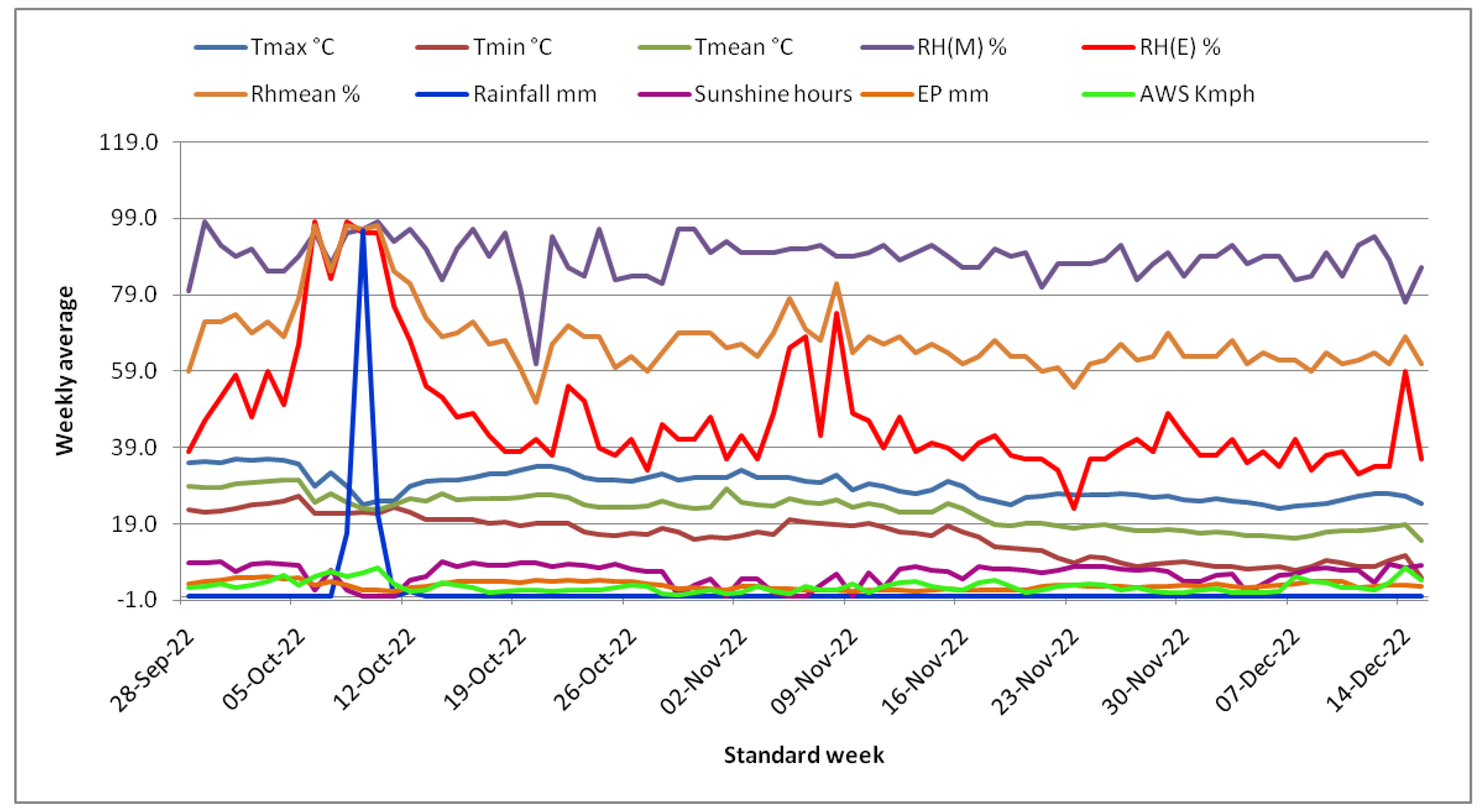

Table 1.
Physico-chemical composition of biogas slurry before and after filtration.
| Parameters | Before filtration | After filtration |
|---|---|---|
| EC (ds /cm) | 1.84 | 1.46 |
| pH | 8.518 | 7.62 |
| Turbidity (NTU) | 639 | 199 |
| Total Nitrogen (mg/l) | 22303 | 78.25 |
| Total Phosphorous (mg/l) | 9834 | 45.23 |
| Total Potassium (mg/l) | 2899 | 39.65 |
Table 2.
Physico-chemical composition of Soil before the experiment.
| Soil parameters | Values |
|---|---|
| Physical properties | |
| particle size distribution | |
| Sand (%) | 71 |
| Silt (%) | 14 |
| Clay(%) | 15 |
| Textural class | Sandy Loam |
| Bulk density (g/cc) | 1.52 |
| Mean Weight Diameter | 0.98 |
| Geometric Weight Diameter | 0.54 |
| Chemical properties | |
| Macro nutrients | |
| Available Nitrogen (kg/ha) | 125.66 |
| Available Phosphorous (kg/ha) | 26.55 |
| Available Potassium (kg/ha) | 281.41 |
| Organic Carbon (%) | 0.43 |
| pH | 7.21 |
| EC | 0.29 |
3.2. Spinach growth
3.2.1. Plant height
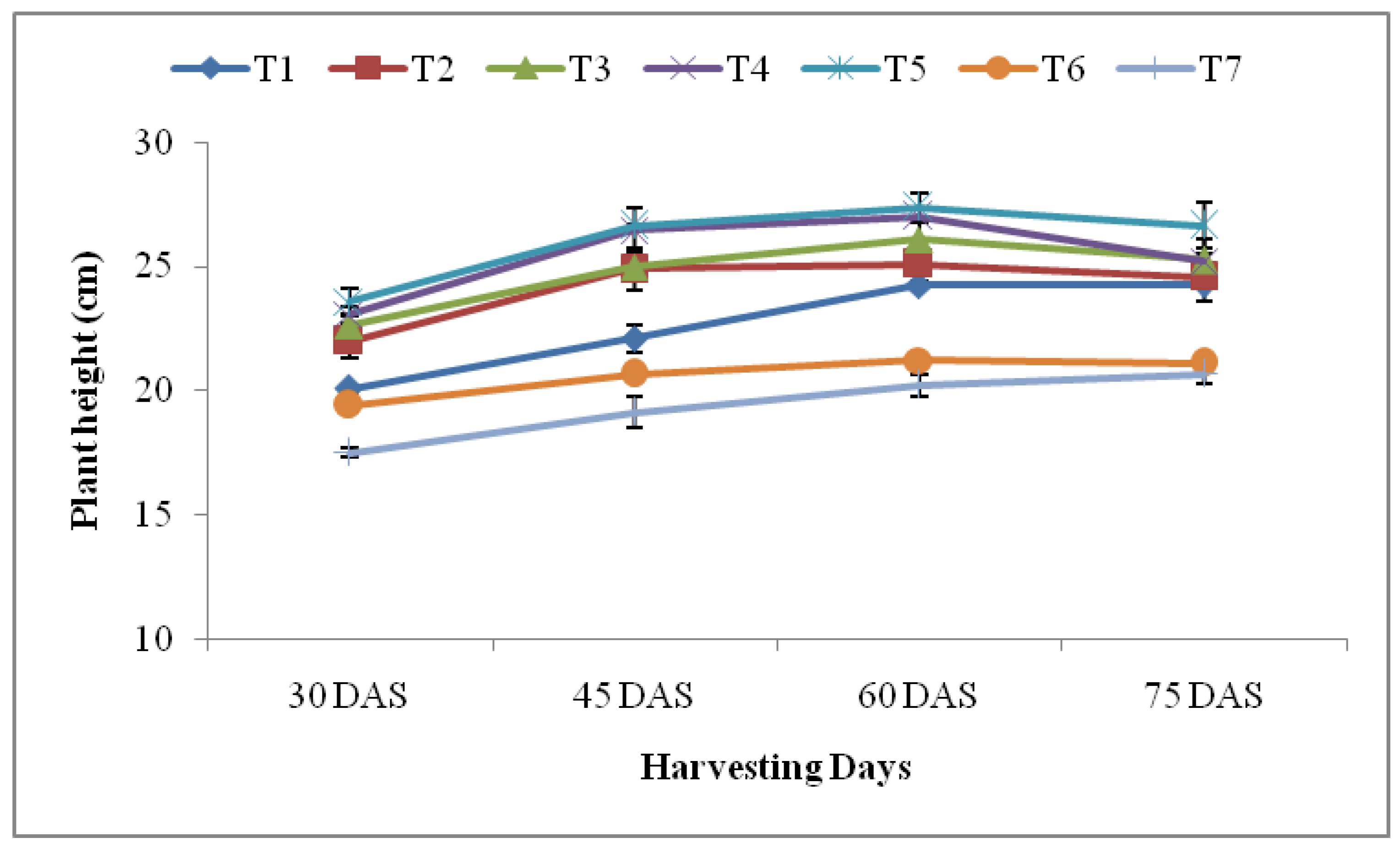
A brief review of the data reveals a clear trend, as the crop age increased; the height of the plants also demonstrated a corresponding increase. The graph illustrates the mean plant height (in centimeters) under different treatments over time. Initially, the growth rate was rapid until 60 days after sowing (DAS), after which it gradually slowed down until harvest. This decline in growth rate could be attributed to the cessation of nutrigation after the third harvest. The results demonstrated significant variations in plant height based on the different nutrigation treatments. During the first harvest at 30 DAS, the height of spinach plants ranged from 17.5 ± 0.13 cm to 23.58 ± 0.51 cm. By the end of the experiment, the heights ranged from 20.65 ± 0.35 cm to 26.65 ± 0.93 cm. Within the initial 30 DAS, there were notable differences in plant height between spinach cultivated with Biogas slurry nutrigation (T1) and those grown with integrated organic + inorganic nutrigation (T2, T3, T4, T5 representing 40%, 60%, 80%, and 100% RDF, respectively). Treatments T6 (SB) and T7 (CO) consistently exhibited lower plant heights throughout the entire planting period. T1 (BSN) recorded a plant height of 21.99 cm. The tallest plant height was observed in T5 (100% RDF) at 23.58 cm, followed by T4 (80% RDF + BSN) at 23.06 cm. However, there were no significant differences in plant height between T2 (40% RDF + BSN) at 21.99 cm and T3 (60% RDF + BSN) at 22.63 cm during the first harvest (30 DAS), with a critical difference (C.D) value of 0.875. Additionally, it was observed that T4 (23.06 cm) was on par with T3 and T5 (100% RDF). In terms of subsequent harvests, the tallest plant height was recorded during the third harvest at 24.46 cm, followed by the fourth harvest at 23.95 cm, while the second harvest measured 23.83 cm. However, the second and fourth harvests showed no significant difference. Treatment T5 (100% RDF) consistently recorded the tallest plant height, followed by T4 (80% RDF + BSN) across all harvests.
Figure 2.
Comparison of spinach plant height under different fertilization methods: biogas slurry nutrigation, integrated organic + inorganic nutrigation, slurry broadcasting and control (with standard error intervals).
Figure 2.
Comparison of spinach plant height under different fertilization methods: biogas slurry nutrigation, integrated organic + inorganic nutrigation, slurry broadcasting and control (with standard error intervals).
3.2.2. Leaf Count
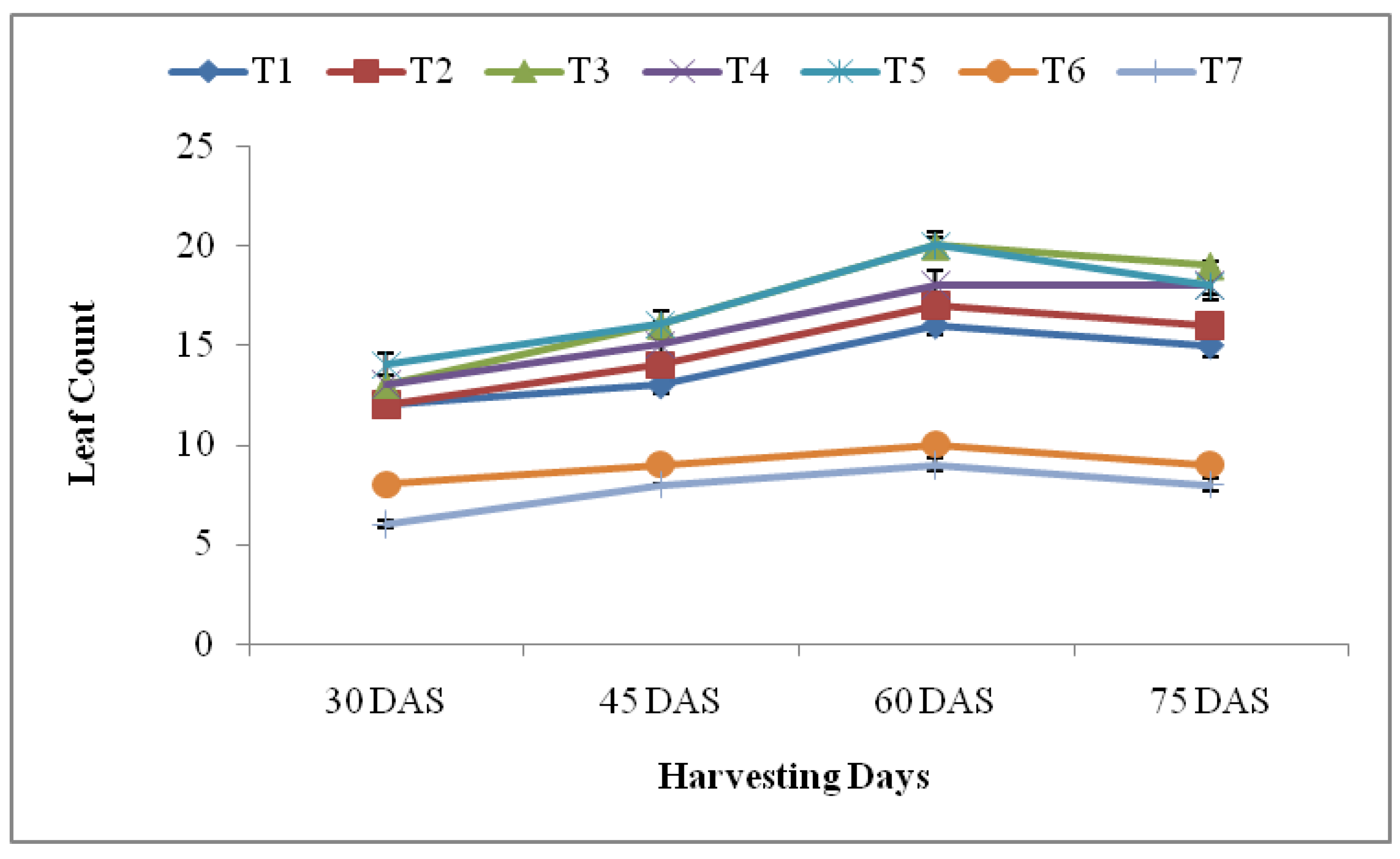
The growth of plants, that the number of leaves was significantly affected by different nitrogen sources. The results clearly demonstrated that the treatments had a significant impact on the number of spinach leaves. Among the treatments, the use of biogas slurry nutrigation consistently resulted in an increased number of leaves throughout the experiment. During the first harvest, the treatment T5 (100% RDF) exhibited the highest number of leaves per plant (14). This result was statistically similar to T4 (80% RDF+BSN) and T3 (60% RDF+BSN), both showing a leaf count of 13. On the other hand, the lowest number of leaves per plant (8) was observed in T7 (CO) during the same harvest. In the second harvest, T3 (60% RDF+BSN) and T5 (100% RDF) had the highest number of leaves per plant (16), which was at par with T4 (80% RDF+BSN). Throughout subsequent harvests, T7 (CO) consistently had the lowest leaf count. In the third harvest, T1 (BSN) and T2 (40% RDF+BSN) showed statistically similar results with a leaf count of 14. The number of leaves increased with each successive cutting and had a positive correlation with plant height. This can be attributed to the availability of higher nutrient levels and growth substances throughout the entire crop growth period. Similar findings regarding increased leaf number in spinach have been reported in a study by[13]. However, in the fourth harvest, the mean number of leaves (14.714) was observed to be lower than in the third harvest (15.714). This may be due to an increase in leaf area, resulting in higher nutrient assimilation and subsequently fewer leaves being produced. The number of leaves per plant varied across treatments and harvests, with significant differences observed. The highest leaf count was reported in the third harvest, followed by the fourth and second harvests. Treatment T5 (100% RDF) had the maximum leaf count, followed by T4 (80% RDF). The increase in leaf number was influenced by the harvest time and plant height, suggesting the importance of nutrient availability and growth substances in promoting leaf growth throughout the crop's growth period.
Figure 3.
Comparison of spinach plant leaf count under different fertilization methods: biogas slurry nutrigation, integrated organic + inorganic nutrigation slurry broadcasting and control (with standard error intervals).
Figure 3.
Comparison of spinach plant leaf count under different fertilization methods: biogas slurry nutrigation, integrated organic + inorganic nutrigation slurry broadcasting and control (with standard error intervals).
3.2.3. Leaf Area
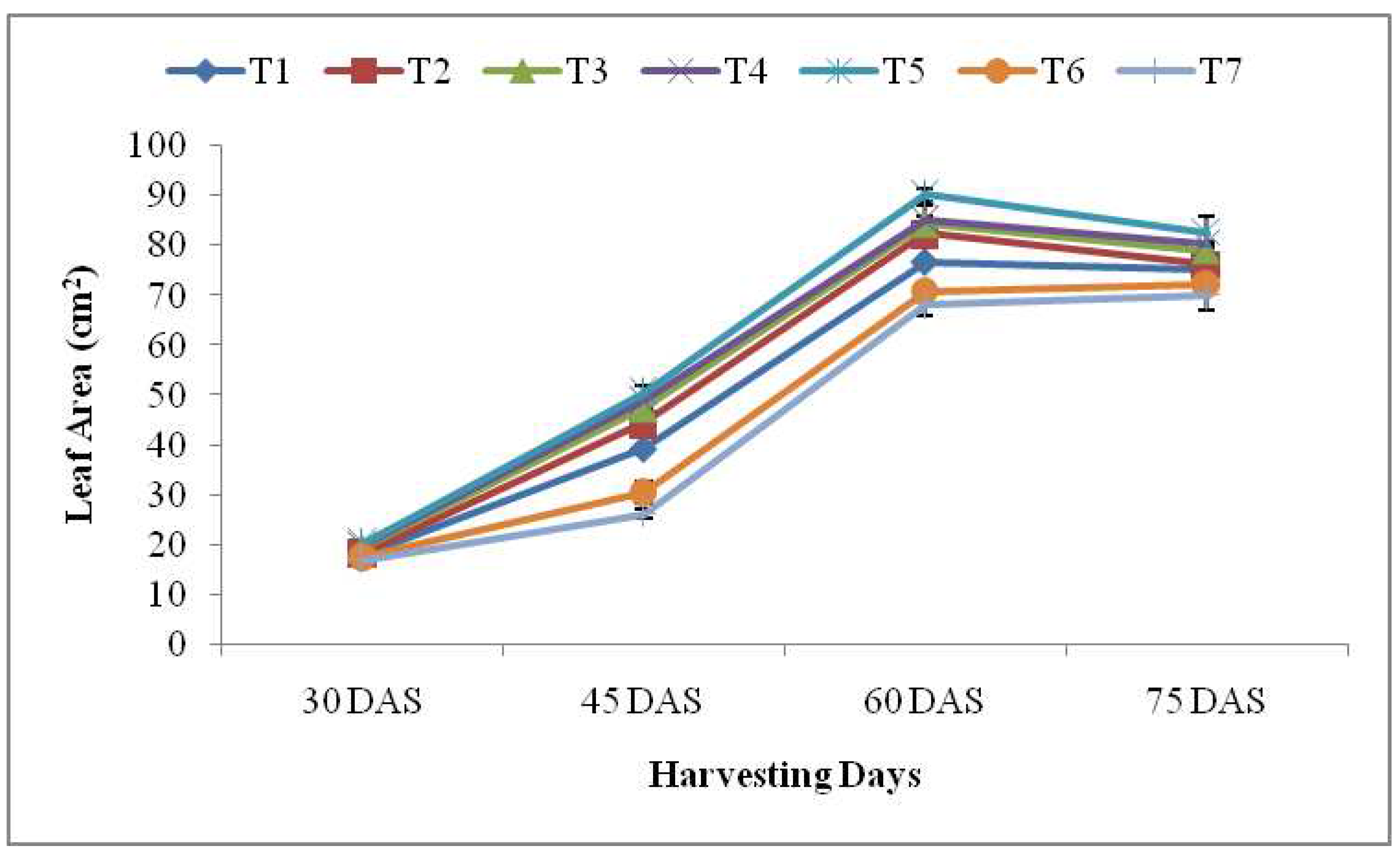
The leaf area of plants was significantly influenced by different nutrigation sources. In the third harvest, treatment T5 (100% RDF) showed the highest recorded leaf area, measuring 90.23 cm2. This was followed by T4 (80% RDF+BSN) with a leaf area of 85.28 cm2, which was statistically similar to T3 (60% RDF+BSN) in the same harvest, with an area of 84.33 cm2. Conversely, the lowest leaf areas were observed in T7 (CO) during the first harvest (17.06 cm2) and T6 (SB) (17.54 cm2).The presence of readily available nitrogen in the plots with Integrated Organic + Inorganic Fertilizer treatments may have contributed to the higher leaf area observed in those plants. Treatment T5 (100% RDF) exhibited an increase in leaf area due to the sufficient supply of nitrogen and other nutrients, which likely stimulated greater metabolic activity within the leaves. This, in turn, could have facilitated the synthesis of carbohydrates and phytohormones, leading to an overall increase in leaf area. These findings are consistent with previous studies [17,24] which reported similar results.Treatment T5 (100% RDF), characterized by an adequate supply of nitrogen and nutrients, consistently demonstrated the highest leaf areas across all harvests. Treatment T4 (80% RDF+BSN) showed comparable leaf areas to T5 (100% RDF) throughout all the harvests. The third harvest, which occurred at 60 days after sowing (DAS), recorded the maximum leaf area. The leaf area of the plants was significantly influenced by the nutrigation sources. Treatment T5 (100% RDF) showed the highest leaf area, attributed to sufficient nitrogen and nutrient supply, resulting in increased metabolic activity and synthesis of carbohydrates and phytohormones. Treatment T4 (80% RDF+BSN) exhibited similar leaf areas to T5 (100% RDF) across all harvests. The third harvest had the highest leaf area.
Figure 4.
Comparison of spinach plant leaf area under different fertilization methods: biogas slurry nutrigation, integrated organic + inorganic nutrigation, slurry broadcasting and control (with standard error intervals).
Figure 4.
Comparison of spinach plant leaf area under different fertilization methods: biogas slurry nutrigation, integrated organic + inorganic nutrigation, slurry broadcasting and control (with standard error intervals).
3.2.4. Root Length and Biomass
The root length of spinach between the treatments under Biogas Slurry Nutrigation (BSN),(Integrated Organic + Inorganic Fertilizer, and Control treatments is illustrated in Figure 5. Significant differences were observed in the dry mass and wet mass, and root length of spinach between the treatments. The economic yields of spinach were determined by measuring the fresh leaf and total mass. The total aboveground fresh mass after 30 days of sowing was considered as the yield. The Control plants had the lowest fresh and dry mass, measuring 34.775± 0.558 g and 4.678± 0.09g, respectively. Regarding root length, the plants from T5 (100 % RDF) plots exhibited longer roots (16.525 cm) consistently higher in all the harvest compared to other treatment plants but T5(100 % RDF) (13.69 cm) was statistically at par with T4 (80% RDF +BSN) in the first (13.2 cm)and the third harvestingT5(100 % RDF) =17.45cm , T4(80% RDF +BSN) =17.02cm). The treatment T1 (BSN) which was solely biogas nutrigation was seem to be at par with treatment T2 (60 % RDF+BSN) in the third harvesting (T1 BSN =14.8cm, T2 40 % RDF+BSN = 15.01cm) and the biomass was found to be highest in the T5 100 % RDF (5.723 ton/ha) which was seen to be at par with treatment T4 80% RDF +BSN (5.524 ton/ha). The Biogas Digestate broadcasting treatment demonstrated some improvement compared to the CO treatment.(Figure 6)T1 recorded the biomass (3.61 ton/ha). The lowest biomass was recorded for T7 CO (1.869 ton/ha) followed by T6 SB (2.071 ton/ha).The use of treatment T4 (80% RDF +BSN) resulted in fresh mass production comparable to that of the plot treated solely with chemicals (T5)100% RDF. The control treatment (CO) exhibited the lowest fresh and dry mass.
Figure 5.
Comparison of spinach plant root length under different fertilization methods: biogas slurry nutrigation, integrated organic + inorganic nutrigation, slurry broadcasting and control (no fertigation + no broadcasting) (with standard error intervals).
Figure 5.
Comparison of spinach plant root length under different fertilization methods: biogas slurry nutrigation, integrated organic + inorganic nutrigation, slurry broadcasting and control (no fertigation + no broadcasting) (with standard error intervals).
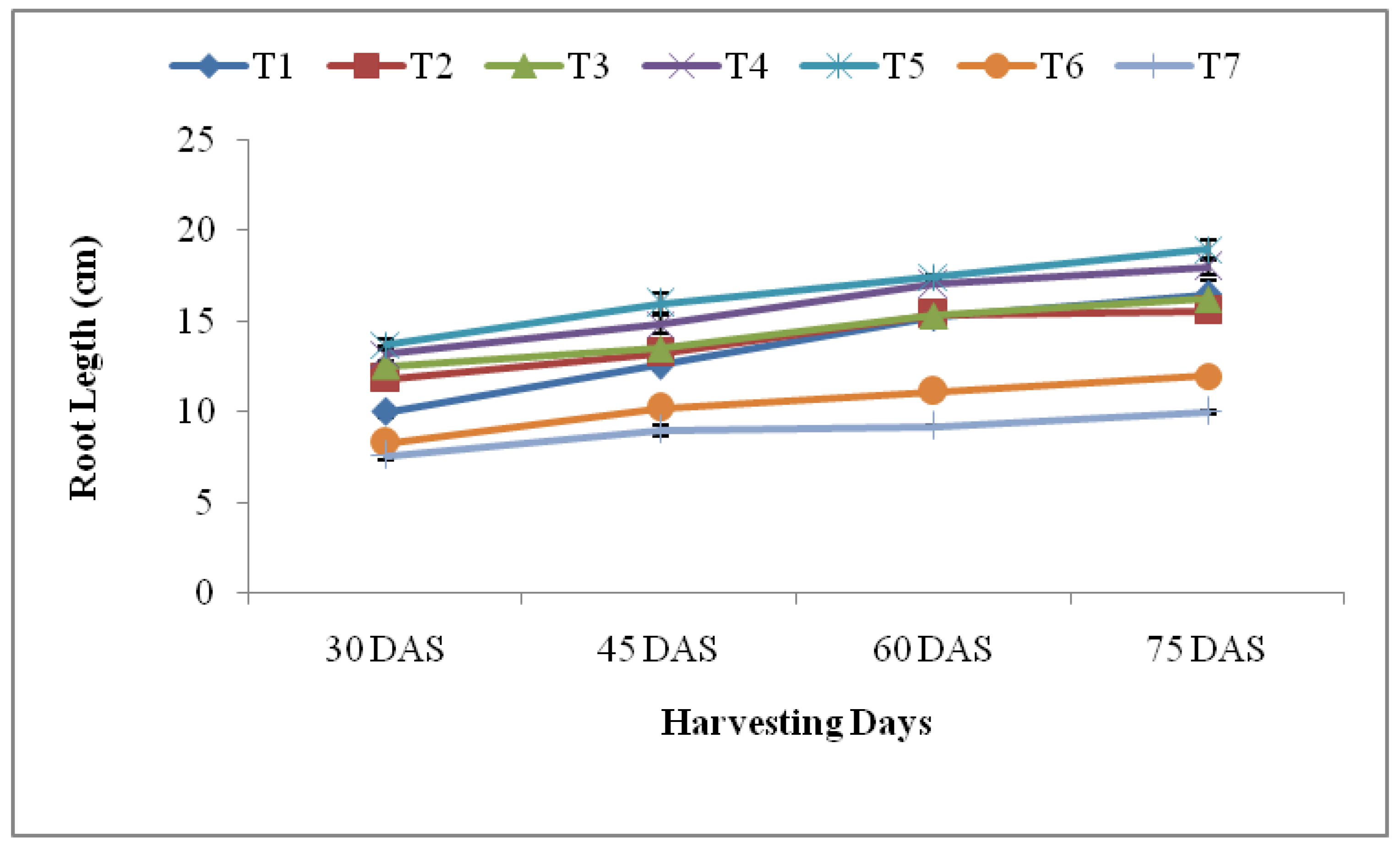
Figure 6.
Comparison of spinach Biomass under different fertilization methods: biogas slurry nutrigation, integrated organic + inorganic nutrigation ,slurry broadcasting and control (with standard error intervals).
Figure 6.
Comparison of spinach Biomass under different fertilization methods: biogas slurry nutrigation, integrated organic + inorganic nutrigation ,slurry broadcasting and control (with standard error intervals).
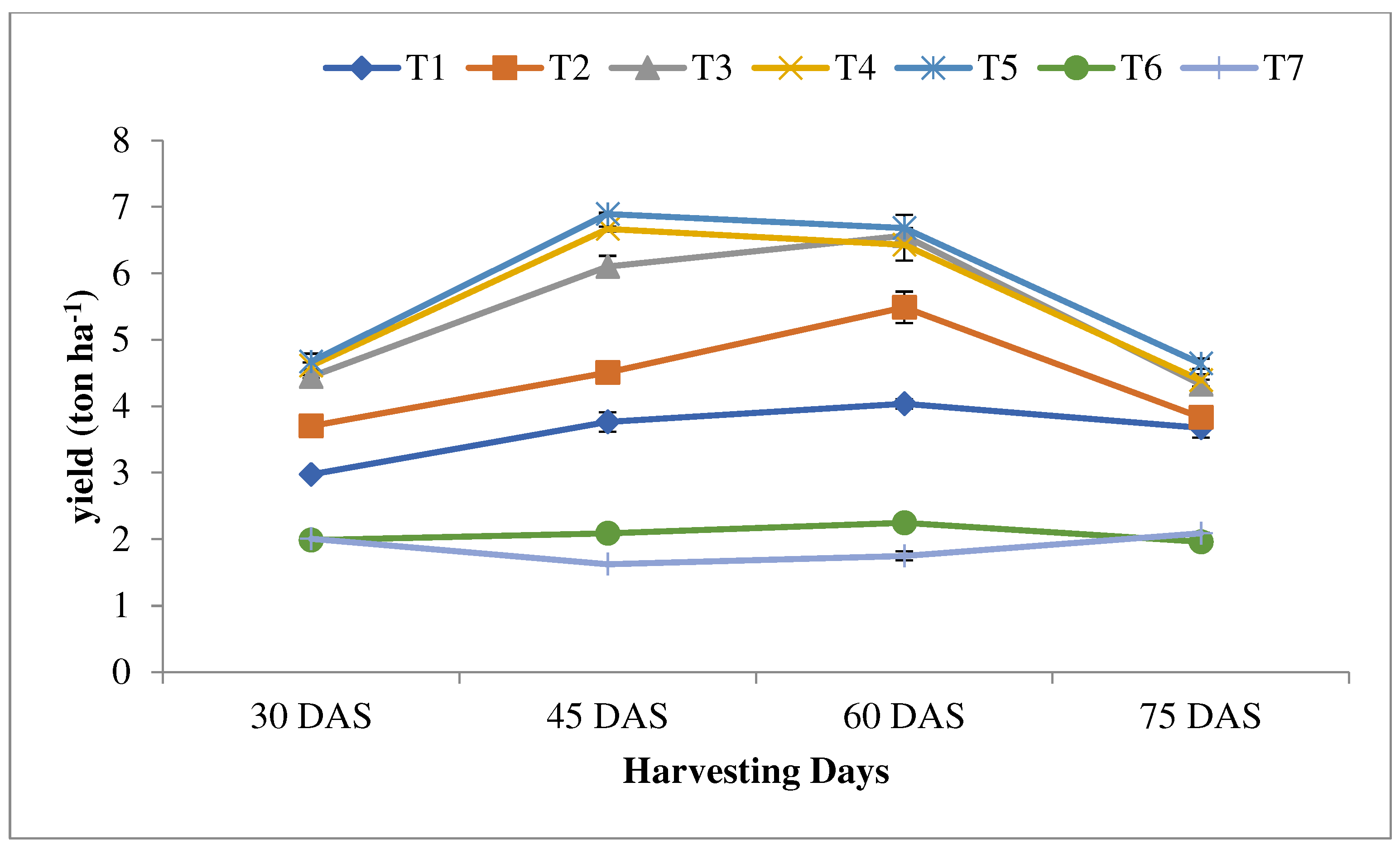
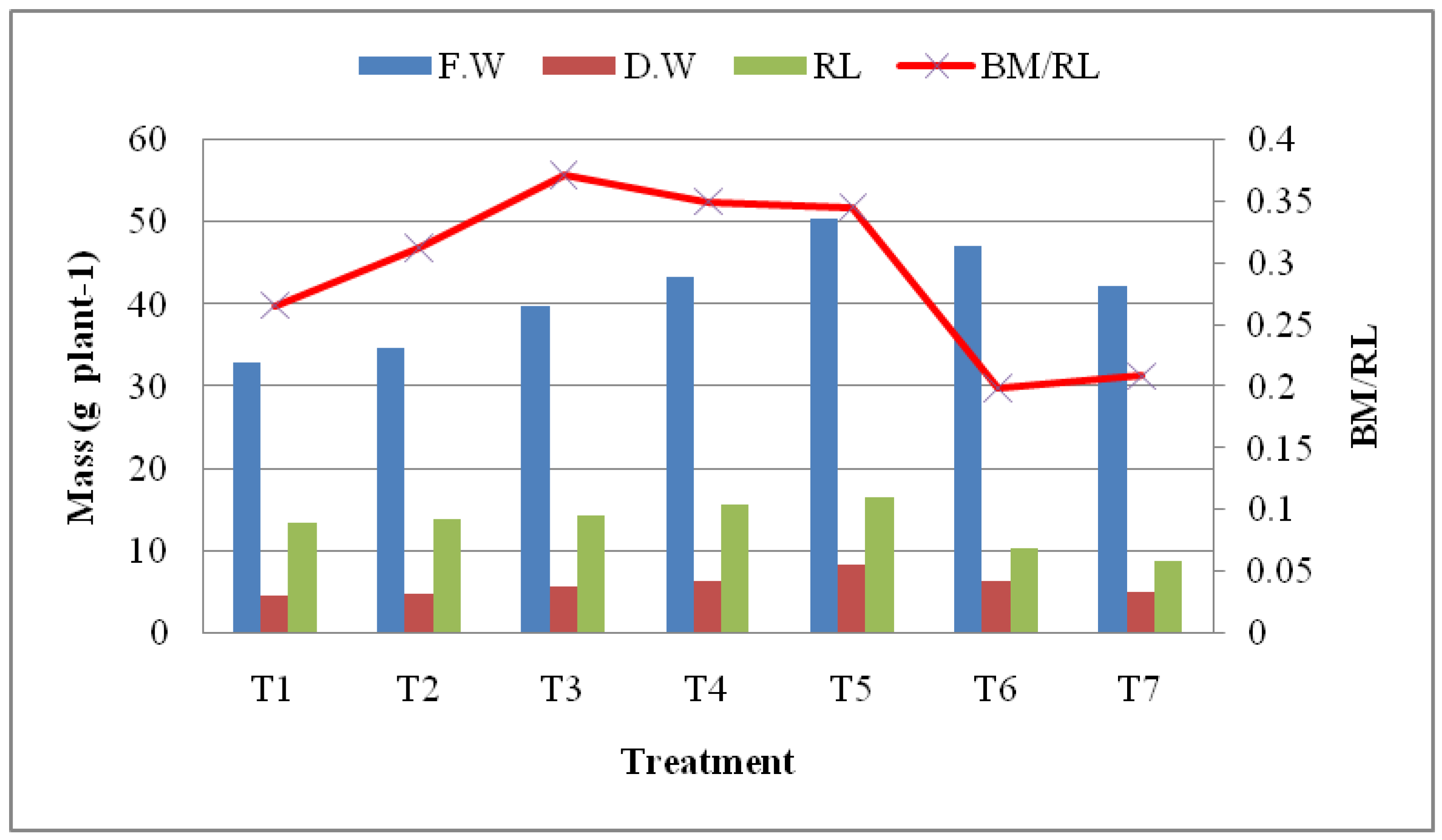
Comparing the treatments, it becomes apparent that those with higher nutrient inputs, namely T3 (60% RDF +BSN), T4 (80% RDF + BSN), and T5 (100% RDF), generally display higher BM/RL values. This indicates more productive root growth. Specifically, T3 and T4, which involve 60% and 80% RDF respectively, demonstrate relatively higher BM/RL values compared to the lower RDF treatments, T2 (40% RDF + BSN) and T1 (BSN). Interestingly, T5 (100% RDF) exhibits a slightly lower BM/RL value, suggesting comparable root growth to the lower RDF treatments.
In contrast, the treatments involving SB (T6) and CO (T7) yield lower BM/RL values, indicating less robust root growth compared to the treatments with nutrient inputs. These findings imply that nutrient availability through fertigation positively influences the biomass-to-root length ratio, thereby enhancing root growth and productivity.
3.3. Spinach nutrient uptake
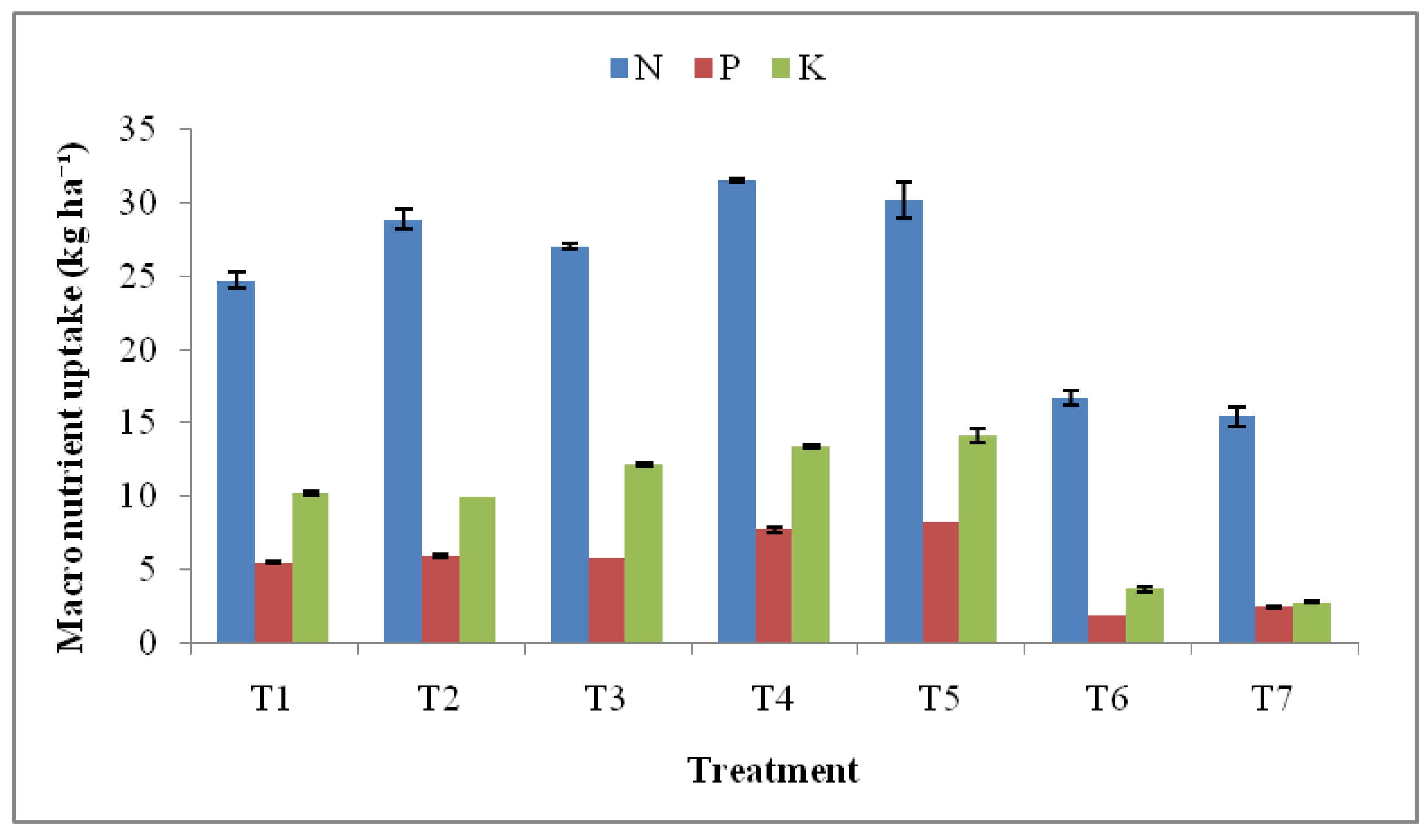
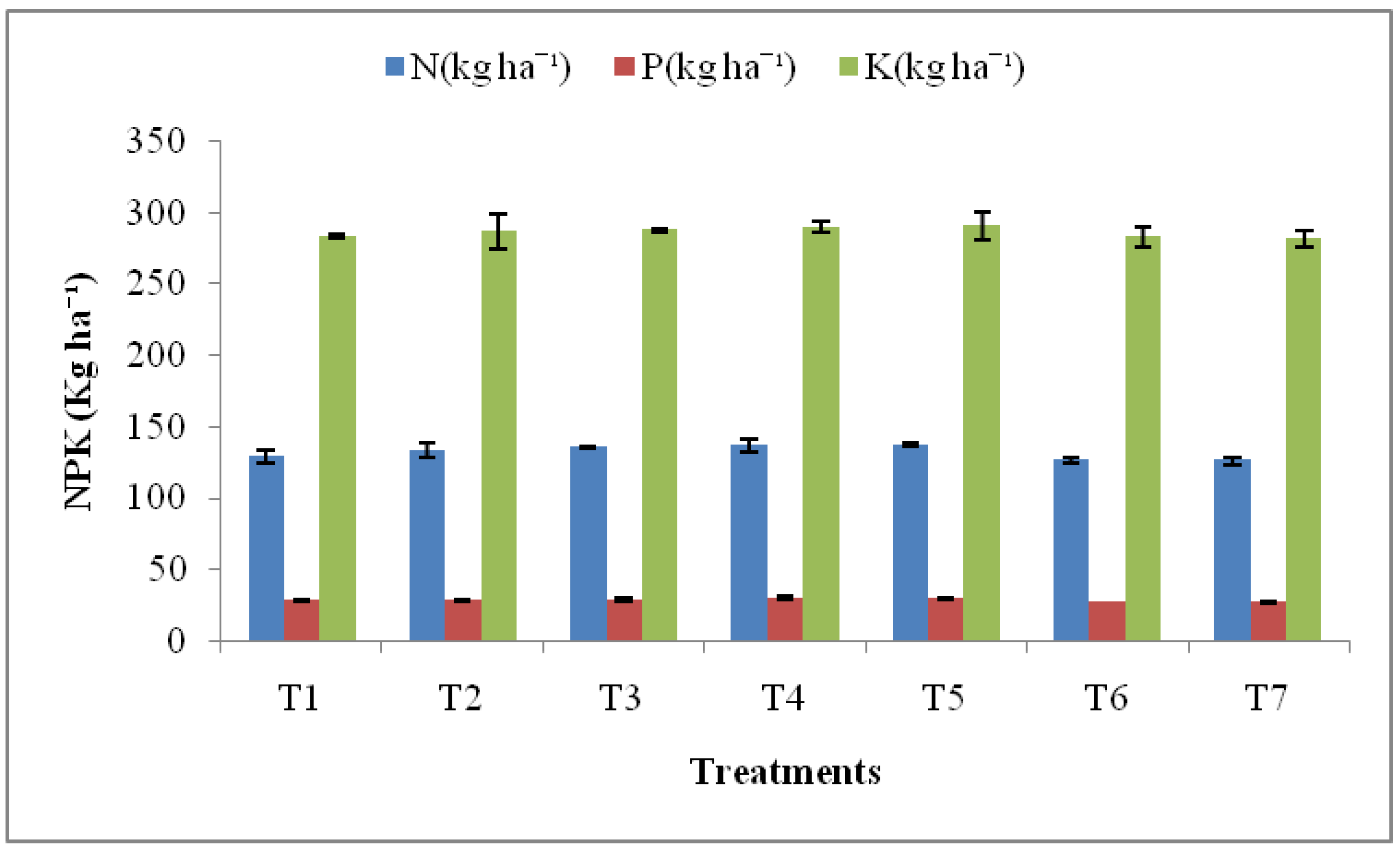
Accumulation of macronutrients (N, P, and K) in spinach leaves under the treatments biogas slurry nutrigation, integrated organic + inorganic fertilizer, and control (no fertigation + no broadcasting) is shown in Figure 7. The comparison of nitrogen (N) uptake across different treatments, namely T1 (BSN), T2 (40%RDF+BSN), T3 (60%RDF+BSN), T4 (80%RDF+BSN), T5 (100%RDF), T6 (SB), and T7 (CO), using the provided critical difference (C.D.) value of 1.304, indicates significant variations in N uptake among the treatments. T2 (40%RDF +BSN), T3 (60%RDF + FS nutrigation), T4 (80%RDF + FS nutrigation), and T5 (100%RDF) exhibit higher N uptake compared to T1 (FS nutrigation). However, T2 (40%RDF+BSN) and T1 (BSN), as well as T3 (60%RDF+BSN) and T1 (BSN), are significantly different from each other, indicating that T2 (40%RDF +BSN) and T3 (60%RDF+BSN) have higher N uptake than T1 (BSN). T4 (80% RDF +BSN) shows significantly higher N uptake compared to T2 (40%RDF+BSN), while T5 (100%RDF), shows significantly lower N uptake compared to T4 (80% RDF +BSN). T6 (SB) and T7 (CO) have significantly lower N uptake compared to T2 (40%RDF+BSN). T6 (SB) and T7 (CO) do not differ significantly in N uptake. These findings suggest that the choice of treatment significantly influences N uptake in the study.Higher application rates of RDF combined with BSN (T2, T3, and T4) result in increased P uptake, while the absence of fertilization T1 (BSN) results in comparatively lower P uptake in comparison to various other treatments in the study. (T7) and the use of slurry broadcasting (T6) lead to significantly lower P uptake. T5 (100%RDF) exhibits the highest P uptake among all treatments.
Figure 7.
Comparison of spinach BM/RL ratio under different fertilization methods: biogas slurry nutrigation, integrated organic + inorganic nutrigation, slurry broadcasting and control (with standard error intervals).
Figure 7.
Comparison of spinach BM/RL ratio under different fertilization methods: biogas slurry nutrigation, integrated organic + inorganic nutrigation, slurry broadcasting and control (with standard error intervals).
The comparison of potassium (K) uptake among the treatments, using a critical difference (C.D.) value of 0.307, reveals several significant differences. T1 (BSN) consistently exhibits lower K uptake compared to T3 (60% RDF +BSN), T4 (80% RDF+BSN) and T5 (100%RDF) .T1 (BSN) also shows higher K uptake compared to T6 (SB) and T7 (CO). T2 (40 %RDF+BSN) demonstrates higher K uptake than T6 (SB) and T7 (CO) but T2 (40% RDF +BSN)(9.92) is at par with T1(BSN)(10.16) in terms of K uptake, but it is significantly different from T3(60%RDF+BSN) in terms of K uptake. These findings highlight the importance of specific treatments in influencing K uptake, with T4 (80 %RDF+BSN) consistently showing higher uptake compared to other treatments. Notably, Inorganic fertilizers led to a significantly higher accumulation of Kin spinach leaves compared to solely biogas slurry nutrigation. The results indicate that the treatments had a significant effect only on K and N accumulation, while P accumulations were not significantly influenced.
Figure 8.
Comparison of spinach macro nutrient under different fertilization methods: biogas slurry nutrigation, integrated organic + inorganic nutrigation, slurry broadcasting and control (with standard error intervals).
Figure 8.
Comparison of spinach macro nutrient under different fertilization methods: biogas slurry nutrigation, integrated organic + inorganic nutrigation, slurry broadcasting and control (with standard error intervals).
3.4. Effect on soil
The NPK uptake in the soil showed no significant difference between the treatments during the experiment. However, there was a slight movement towards the neutral and higher range in the soil pH. This shift is crucial as it plays a vital role in the adsorption of plant nutrients, leading to a reduction in leaching. At the experiment the inorganic fertilizer treated soil recorded the maximum NPK uptake as compared to the BSN, SB, CO. These findings align with the study conducted[26], which found that inorganic fertilizer leachates had considerably higher nitrogen concentrations compared to biogas digestate derived from maize and pig manure. It is anticipated that the leachate from the inorganic fertilizer treatment would exhibit the highest nitrogen levels since inorganic fertilizers typically contain higher nutrient contents that are readily available, unlike the biogas digestate and control treatments [11].
Figure 9.
Comparison of soil nutrient uptake under different fertilization methods: biogas slurry nutrigation, integrated organic + inorganic nutrigation, slurry broadcasting and control (no fertigation + no broadcasting) (with standard error intervals).
Figure 9.
Comparison of soil nutrient uptake under different fertilization methods: biogas slurry nutrigation, integrated organic + inorganic nutrigation, slurry broadcasting and control (no fertigation + no broadcasting) (with standard error intervals).
3.5. Microbiological parameters
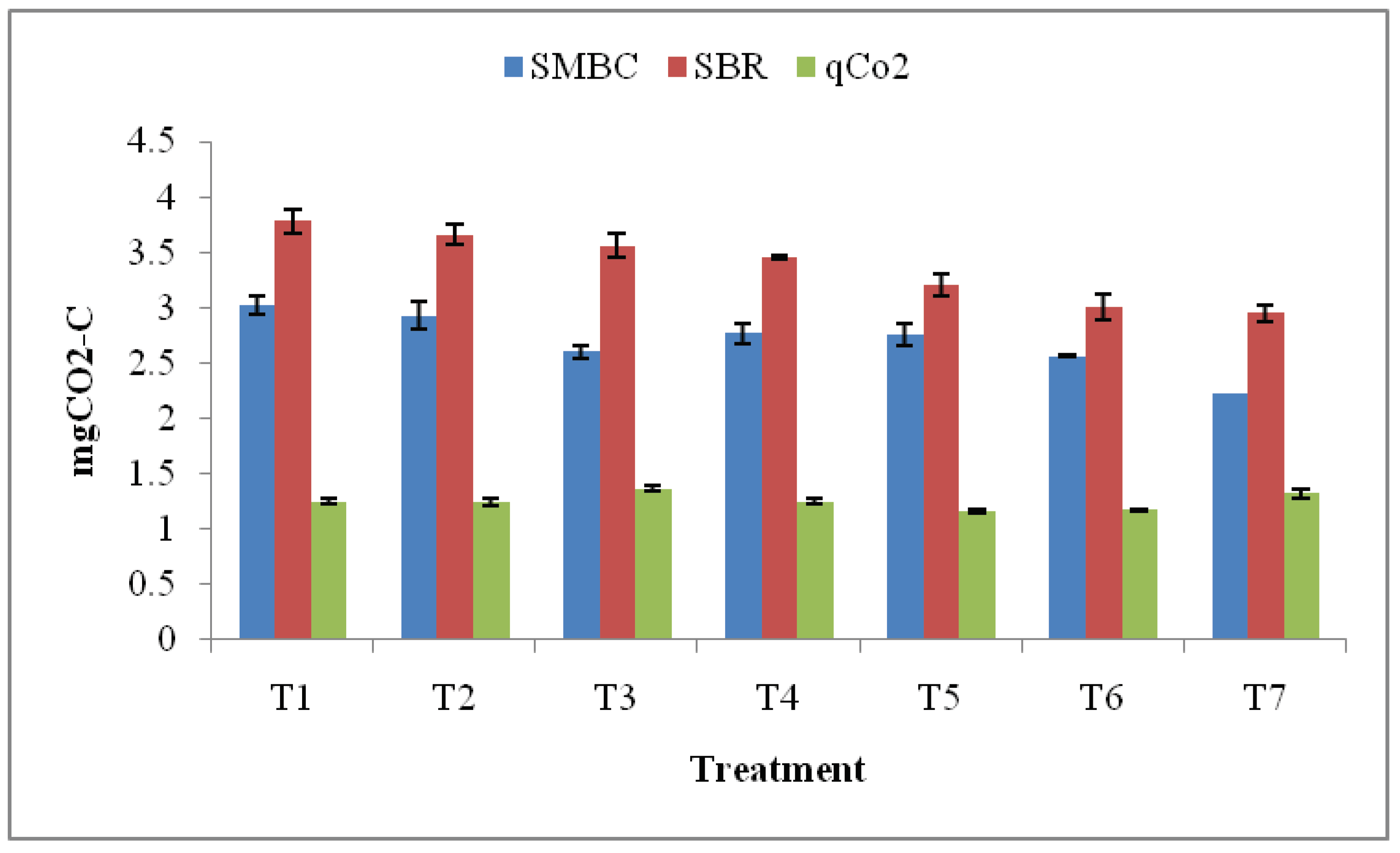
Differences in treatments and variations in nutrigation practices led to a range of dehydrogenase (DHA) activity levels in the soil, ranging from 0.71 to 0.80 g TPF per gram of soil per hour. The treatments that incorporated BSN demonstrated higher DHA activity compared to the treatment with 100% RDF Prior to nutrigation, the soil's DHA activity was recorded as 0.61 g TPF per gram of soil per hour. Among the treatments, T7 (Control) exhibited the lowest DHA activity at 0.71, while all the treatments involving BSN demonstrated favorable dehydrogenase activity. In terms of phosphatase enzymes, alkaline phosphatase was found to be more dominant than acid phosphatase in the phosphatase community. The alkaline phosphatase activity ranged from 62.73 to 86.45 μg of p-nitro phenol (PNP) formed per gram of soil per hour, while the acid phosphatase activity ranged from 44.38 to 68.53 μg PNP formed per gram of soil per hour. Similar to the trend observed for DHA, both alkaline and acid phosphatase were higher in the BSN nutrigation treatments compared to the 100% RDF treatment. The application of BSN positively influenced alkaline phosphatase activity. The levels of soil microbial biomass carbon (SMBC) varied between 2.23 and 3.02 mg of CO2-C per kilogram of soil per day, while soil basal respiration ranged from 2.95 to 3.78 mg of CO2-C per kilogram of soil per day. T1 (BSN) exhibited higher SMBC levels with lower soil basal respiration and a low metabolic quotient, indicating shifts in microbial populations.
Table 3.
Effect of different treatment on soil dehydrogenase activity (μg TPF formed g-1 soil h-1), alkaline phosphatase (μg PNP formed g-1 soil h-1) and acid phosphatase (μg PNP formed g-1 soil h-1).
Table 3.
Effect of different treatment on soil dehydrogenase activity (μg TPF formed g-1 soil h-1), alkaline phosphatase (μg PNP formed g-1 soil h-1) and acid phosphatase (μg PNP formed g-1 soil h-1).
| Treatment | Mean Dehydrogenase (μg TPF formed g -1 soil h-1) | Mean Alkaline Phosphatase (μg PNP formed g-1 soil h-1) | Mean Acid Phosphatase (μg PNP formed g-1 soil h-1) |
|---|---|---|---|
| T1 (BSN) | 0.780 | 68.53 | 86.45 |
| T2 (40% RDF+BSN) | 0.760 | 58.68 | 79.85 |
| T3(60% RDF+BSN) | 0.798 | 60.18 | 77.35 |
| T4(80% RDF+BSN) | 0.807 | 57.87 | 79.69 |
| T5(100% RDF) | 0.610 | 57.22 | 78.71 |
| T6 ( Slurry Broadcasting) | 0.747 | 52.73 | 70.61 |
| T7 (Control) | 0.712 | 44.38 | 62.73 |
Figure 10.
Comparison of soil microbial biomass carbon (mgCO2-C kg-1 day-1), soil basal respiration (mgCO2-C kg-1 day-1), and qCO2 (mgCO2-C mg-1 microbial biomass C) under different treatments. Error bars indicating the standard error between the treatments.
Figure 10.
Comparison of soil microbial biomass carbon (mgCO2-C kg-1 day-1), soil basal respiration (mgCO2-C kg-1 day-1), and qCO2 (mgCO2-C mg-1 microbial biomass C) under different treatments. Error bars indicating the standard error between the treatments.
4. Discussion
The treatment of digestate is gaining growing importance as a means to meet environmental regulations and, potentially, achieve the objectives set forth by Agenda 2030 for sustainable development [30].The productivity of plants, including their yield, height, leaf count, biomass, and nutrient absorption capacity, serves as an indicator of the fertilization potential of soil amendments. Biogas digestate, being an environmentally-friendly organic soil amendment, contains significant quantities of essential plant nutrients, making it a valuable resource for promoting plant growth [10] The experiment demonstrated that management practices have a significant impact on plant height at different growth stages, ranging from 30 days after sowing (DAS) to the final harvest. Generally, plant height increased as the plants progressed towards the later stages of growth. Spinach plants receiving the 100% recommended dose of inorganic fertilizer (RDF) demonstrated superior height compared to those treated with a blend of inorganic and organic fertilizers or exclusively organic fertilizer. Subsequently, the T4 (80% RDF +BSN) treatment, resulted in relatively taller plants. This indicates that the presence of a higher proportion of inorganic fertilizer played a significant role in promoting increased plant height, while the addition of biogas slurry as an organic fertilizer supplement also positively impacted plant growth. This could be attributed to the readily available nutrients in inorganic fertilizers. A similar finding was reported in a study involving cabbage transplants after 90 days [14]. The cutting management technique also had a significant influence on plant height at the final harvest stage. In the last harvest, all the treatments resulted in significantly lower plant height compared to the third harvest. This could be due to the breakdown of apical dominance caused by the cutting, which stimulated the plants to produce more side shoots and leaves. Repeated cuttings can lead to the loss of photosynthates that would otherwise be used for plant growth [9]. Researchers have also documented evidence showing a decrease in plant height with an increased number of cuttings [28].Organic materials have the characteristic of releasing plant nutrients gradually while also storing them for an extended period [20]. The number of leaves showed an incremental pattern with each subsequent cutting and exhibited a positive correlation with plant height. The lower leaf count observed in the fourth harvest could be attributed to an expansion in leaf area, which potentially resulted in higher nutrient assimilation and consequently fewer leaves being produced. Due to enhanced availability of nutrients from readily soluble inorganic fertilizer compared to organic sources. Organic sources are considered slow release fertilizer as mineralization has to occur for the nutrients specially nitrogen to become available [4]. The maximum leaf area was found to be T5 (100%RDF) followed by treatmentT4 (80 %RDF+ BSN)was at par with, treatment T3 (60 %RDF+ BSN).An increase in the ratio of plant root length to biomass indicates a higher level of nutrient absorption and enhanced stress tolerance in plants [6].In order to help crops cope with abiotic stresses like water stress during different stages of plant development, the application of soil amendments, including organic fertilizers, that facilitate proper growth and development of root systems is essential [23]. These soil amendments play a crucial role in promoting favorable biomass growth and distribution in crops, ultimately leading to improved overall growth. Consequently, the utilization of such soil amendments, particularly organic fertilizers, will contribute to the promotion of optimal biomass growth and its effective distribution throughout crops. Plants that were fertilized with inorganic nutrient sources demonstrated superior nutrient uptake in terms of nitrogen (N), phosphorus (P), and potassium (K). This can be attributed to the combined effect of increased accumulation of dry matter and nutrient content, resulting from enhanced nutrient availability through chemical fertilizers. Similar findings were reported in amaranthus [19] and in spinach[5], where increased nutrient uptake was observed with the application of chemical fertilizers. In the case of spinach variety All green, based on the analytical data, it can be concluded that the leaves from the third harvest exhibit superior nutritional quality. However, when considering factors such as yield and economic considerations, it may be more beneficial to leave the crop for further harvests. Significant differences were observed in N uptake, with higher rates of inorganic fertilizer combined with slurry nutrigation resulting in increased N uptake. P uptake was also influenced by the treatments, with lower uptake observed in the absence of fertilization. However, the treatments did not significantly affect P accumulation. Regarding K uptake, there were significant differences among the treatments, with inorganic fertilizers leading to higher accumulation compared to solely slurry nutrigation. In summary, the treatments had significant effects on N and K accumulation, while the impact on P accumulation was not significant. The findings regarding macronutrient (NPK) leaf accumulation in the present study were in contrast to those reported for maize [3],in their study, the application of biogas digestate significantly increased the accumulation of all macronutrients in maize plants.Soil microbial enzymes are indicative of the biological dynamics within the soil. When extraneous substances are introduced to the soil, these enzymatic activities are expected to undergo modifications. The addition of biogas slurry at varying proportions aligns with the inherent microbial activities, as evidenced by the quantification of dehydrogenase and phosphatase actions. Normally, alkaline phosphatase exhibits higher activity compared to acidic phosphatase in such soil conditions. However, the incorporation of biogas slurry product has equalized the enzymatic activity of both alkaline and acidic phosphatase, thereby establishing a balanced enzymatic profile.
5. Conclusion
The study observed distinct changes in the morphological growth of spinach plants in response to different treatments, including biogas slurry nutrigation, integrated inorganic + organic nutrigation, slurry broadcasting and control. The integrated use of biogas slurry nutrigation with the inorganic fertilizer (80%RDF +BSN)when compared with inorganic fertilizer (100% RDF) as a soil amendment resulted at par in most of the cases for the biomass, leaf count, and improved plant stands compared to indicating the effectiveness of Biogas slurry recycling in agricultural soil. However, inorganic fertilizer demonstrated a higher leaf area compared to integrated use of biogas slurry nutrigation with the inorganic fertilizer suggesting that leaf area contribution to soil recycling may be relatively low. The increase in the number of leaves with drip irrigation emphasized the importance of nutritional supplements during the vegetative stages, regardless of the type of soil amendment used. Fertilizing crops with integrated use of biogas slurry nutrigation with the inorganic fertilizer T4 (80%RDF +BSN) can offer advantages in terms of crop growth and environmental preservation. When leafy vegetables with similar nutritional requirements to spinach are fertilized with combined use of organic and inorganic nutrigation, positive responses in biomass and nutrient absorption can be expected. It is worth noting that a reduction in leaf area may have a negative impact on market value. This study demonstrates the potential for sustainable spinach production and highlights the financial benefits of using integrated use of biogas slurry nutrigation with the inorganic fertilizer as a nutrient source in spinach cultivation.
Author Contributions
Conceptualization- SS; Execution – RY,SS,AD,KL,MK investigation- RY and SS; methodology-SS,MK, KL , AD , RY ,ARS and APS; validation- RY,SS,KL ,AD, ARS, MK , KKB, HLK ; formal analysis- RY,AD, MK, ARS and APS; resources- KL, MK, KKB ,HLK ARS, APS,RKS and RS ; data curation- RY writing-RY,SS and AD; review and editing-SS, AD, KL, MK,HLK KKB ,RKS and RS; visualization-SS; supervision-SS; All authors have read and agreed to the published version of the manuscript.
Funding
No funding available.
Acknowledgments
The authors are grateful to Director, ICAR-IARI, and New Delhi for providing fellowship to RY and Project Director, Water Technology Centre and Professor, Water Science and Technology, ICAR-IARI , New Delhi for providing required facilities during the research programme.
Conflicts of Interest
Authors declare no conflict of interest.
References
- APHA. Standard Methods for the Examination of Water and Wastewater. In 20th Edn. American Public Health Association; American Water Works Association and Water Environmental Federation: Washington, DC, 1998.
- Baral, K.R.; Labouriau, R.; Olesen, J.E.; Petersen, S.O. Nitrous oxide emissions and nitrogen use efficiency of manure and digestate applied to spring barley. Agric. Ecosyst. Environ. 2017, 239, 188–198. [Google Scholar] [CrossRef]
- Barbosa, D.B.P.; Nabel, M.; Jablonowski, N.D. Biogas-digestate as nutrient source for biomass production of Sida hermaphrodita, Zea mays L. and Medicago sativa L. J. Energy Proc. 2014, 59, 120–126. [Google Scholar] [CrossRef]
- Bharad, S.G.; Korde, S.D.; Pravina, S.; Baviskar, M.N. Effect of organic manure and number of cutting on growth, yield and quality of Indian spinach. Asian, J. Hort. 2013, 8, 60–64. [Google Scholar]
- Bhattacharjee, M.; Gautam, B.; Sarma, P.K.; Hazarika, *!!! REPLACE !!!*; M, *!!! REPLACE !!!*; Goswami, R.K.; Kakati, N. Effect of organic sources of nutrients on growth yield and quality of spinach beet( Beeta vulgaris var bengalensis Hort.)cv All Green. Trends. Biosci. 2017, 10, 1490–1496. [Google Scholar]
- Blaha, L. The importance of root -shoot ratio for crops production. HSOA J. Agron. Agric. Sci. 2019, 2, 012. [Google Scholar] [CrossRef]
- BP energy outlook. BP Energy Economics. 2018. Available online: https:// www.bp.com/energyoutlook.
- Casida L.E., Jr.; Klein, D.A.; Santoro, T. Soil dehydrogenase activity. Soil Science 1964, 98, 371–376. [Google Scholar] [CrossRef]
- Fu, J. Effects of different harvest start times on leafy vegetables (Lettuce, Pak Choi and Rocket) in a reaping and regrowth system. 2008.
- Głowacka, A.; Szostak, B.; Klebaniuk, R. Effect of Biogas digestate and mineral fertilisation on the soil properties and yield and nutritional value of switchgrass forage. Agron. J. 2020, 10, 490. [Google Scholar] [CrossRef]
- Han, S.H.; An, Y.J.; Hwang, J.; Kim, S.B.; Park, B. The effects of organic manure and chemical fertiliser concentrations of yellow poplar (Liriodendron tulipifera Lin.) in a nursery system. Journal of forest science and technology 2016, 12, 137–143. [Google Scholar] [CrossRef]
- Jackson, M.L. Soil Chemical Analysis; Prentice Hall of India Pvt., Ltd.: New Delhi, 1973. [Google Scholar]
- Jha, M.K.; Jana, J.C. Evaluation of vermicompost and farmyard manure in nutrient management of spinach (Beta vulgaris var. bengalensis). Indian Journal of Agricultural Sciences 2009, 79, 538–541. [Google Scholar]
- Sarker, M.Y.; Azad, A.K.; Hasan, M.K.; Nasreen, A.; Naher, Q.; Baset, M.A. Effect of Plant Spacing and Sources of Nutrients on the Growth and Yield of Cabbage. Pakistan Journal of Biological Sciences 2002, 5, 636–639. [Google Scholar] [CrossRef]
- Martínez-Suller, L.; Provolo, G.; Brennan, D.; Howlin, T.; Carton, O.T.; Lalor, S.T.J.; Richards, K.G. A note on the estimation of nutrient value of cattle slurry using easily determined physical and chemical parameters. Irish Journal of Agricultural Food Research 2010, 49, 93–97. Available online: http://hdl.handle.net/11019/171.
- Moller, K.; Muller, T. Effects of anaerobic digestion on digestate nutrient availability and crop growth: a review. Eng. Life Sci. 2012, 242–257. [Google Scholar] [CrossRef]
- Norman, Q.A.; Edwardsa, C.A.; Biermanb, P.; Metzgerc, J.D.; Lucht, C. Effects of vermicomposts produced from cattle manure, food waste and paper waste on the growth and yield of peppers in the field. Pedobiologia 2005, 49, 297–306. [Google Scholar] [CrossRef]
- Saunders, O.E.; Fortuna, A.M.; Harrison, J.H.; Whitefield, E.; Cogger, C.G.; Kennedy, A.C.; Bary, A.I. Comparison of raw dairy manure slurry and an aerobically digested slurry as N sources for grass forage production. Int. J. Agron. 2012, 1–10. [Google Scholar] [CrossRef]
- Preetha, D. Biotic enrichment of organic wastes from ayurveda prepareation. M.Sc (Ag); Kerla Agriculture University: Thrissur, 2003. [Google Scholar]
- Purbajanti, E.D.; Slamet, W.; Fuskhah, E. Rosiyda Effects of organic and inorganic fertilizers on growth, activity of nitrate reductase and chlorophyll contents of peanuts (Arachis hypogaea L.). IOP Conference Series: Earth and Environmental Science 2019, 250, 12048. [Google Scholar] [CrossRef]
- Valencia-Gica, R.B.; Yost, R.S.; Porter, G. Biomass production and nutrient removal by tropical grasses subsurface drip-irrigated with dairy effluent. Grass Forage Sci. 2012, 67, 337–349. [Google Scholar] [CrossRef]
- Garg, R.N.; Pathak, H.; Das, D.K.; Tomar, R.K. Use of flyash and biogas slurry for improving wheat yield and physical properties of soil. J. Environ. Monit. Assess. 2005, 107, 1–9. [Google Scholar] [CrossRef]
- Seo, D.H.; Seomun, S.; Choi, Y.D.; Jang, G. Root development and stress tolerance in rice: the key to improving stress tolerance without yield penalties. Int. J. Mol. Sci. 2020, 21, 1807–1819. [Google Scholar] [CrossRef]
- Sharma, J.; Agarwal, S. Impact of organic fertilizers on growth, yield and quality of spinach beet. Indian Journal of Plant Sciences 2014, 3, 37–43. [Google Scholar]
- Sharpley, A.; Moyer, B. Phosphorus forms in manure and compost and their release during simulated rainfall. Journal of Environmental Quality 2000, 29, 1462–1469. [Google Scholar] [CrossRef]
- Svoboda, N.; Taube, F.; Wienforth, B.; Kluß, C.; Kage, H.; Herrmann, A. Nitrogen leaching losses after biogas residue application to maize. Soil &TillageRes. 2013, 130, 69–80. [Google Scholar] [CrossRef]
- Tabatabai, M.A. Soil Enzymes. In Methods of Soil Analysis: Part 2 Microbiological and Biochemical Properties; Page, A.L., Ed.; The American Society of Agronomy: Madison, WI, 1994; pp. 775–833. [Google Scholar] [CrossRef]
- Tehlan, S.K.; Thakral, K.K. Effect of different levels of nitrogen and leafcutting on leaf and seed yield of coriander (Coriandrum sativum). J. Spices.Aromat.Crops. 2008, 17, 180–182. Available online: https://updatepublishing.com/journal/index.php/josac/article/view/4915.
- Tiang, J.; Bryks, B.C.; Yada, R.Y. Feeding the world into the future–food and nutrition security: the role of food science and technology. Front. Life Sci. 2016, 9, 155–166. [Google Scholar] [CrossRef]
- U. N. Transforming Our World; The 2030 Agenda for Sustainable Development; U.N.: New York, USA, 2015. [Google Scholar]
- Vance, E.D.; Brookes, P.C.; Jenkinson, D.S. An extraction method for measuring soil microbial biomass C. Soil Biology and Biochemistry 1987, 19, 703–707. [Google Scholar] [CrossRef]
- Zhang, G.Q. Biogas Technology and Application; Chemical Industry Press: Beijing, 2008. [Google Scholar]
Disclaimer/Publisher’s Note: The statements, opinions and data contained in all publications are solely those of the individual author(s) and contributor(s) and not of MDPI and/or the editor(s). MDPI and/or the editor(s) disclaim responsibility for any injury to people or property resulting from any ideas, methods, instructions or products referred to in the content. |
© 2023 by the authors. Licensee MDPI, Basel, Switzerland. This article is an open access article distributed under the terms and conditions of the Creative Commons Attribution (CC BY) license (http://creativecommons.org/licenses/by/4.0/).
Copyright: This open access article is published under a Creative Commons CC BY 4.0 license, which permit the free download, distribution, and reuse, provided that the author and preprint are cited in any reuse.


