

Submitted:
21 June 2023
Posted:
21 June 2023
You are already at the latest version
Abstract
In recent years, gamification has captured the attention of researchers and educators, particularly in science education, where students often express negative emotions. Gamification methods aim to motivate learners to participate in learning by incorporating intrinsic and extrinsic motivational factors. However, the effectiveness of gamification has yielded varying outcomes, prompting researchers to explore adaptive gamification as an alternative approach. Nevertheless, there needs to be more research on adaptive gamification approaches, particularly concerning motivation, which is the primary objective of gamification. In this study, we developed and tested an adaptive gamification environment based on specific motivational and psychological frameworks. This environment incorporated adaptive criteria, learning strategies, gaming elements, and all crucial aspects of science education for six classes of 3rd-grade students in primary school. We employed a quantitative approach to gain insights into the motivational impact on students and their perception of the adaptive gamification application. We aimed to understand how each game element experienced by students influenced their motivation. The findings of our study revealed encouraging results in terms of increased motivation and engagement among students, as well as the influence of different game elements when connected with an individual's profile based on a multidimensional adaptive framework.
Keywords:
Adaptive Gamification
; Science Education
; Adapted game Elements
; Students' Motivation
1. Introduction
Educators have consistently prioritized students’ active participation in the classroom as a fundamental aspect [1]. With the dynamic influence and continuous progress of technology, it is essential to develop innovative learning environments that cater to the requirements and interests of contemporary learners, thereby fostering an engaging and inspiring educational experience. The attainment of high levels of student engagement and motivation is of great importance, as research has demonstrated its positive impact on academic achievement [2,3]. In recent years, there has been a notable increase in the utilization of digital games across various domains, including academia. This trend has sparked the interest of researchers and practitioners, leading to the emergence of a novel approach known as gamification. The Covid-19 pandemic has further highlighted an ongoing challenge wherein numerous students struggle to effectively regulate their motivation, particularly within digital learning settings [4,5].
Promoting science education is crucial for the progress of our society and the development of individuals who possess scientific literacy, enabling them to comprehend and appreciate the intricacies of the world. Science education nurtures essential learning skills and fosters attitudes that emphasize the significance of evidence-based decision-making while nurturing social and environmental consciousness. These benefits extend to individuals regardless of their future involvement in the fields of science and technology [6,7]. Students at all educational levels have consistently encountered challenges when grasping scientific concepts [8,9]. The complexity associated with comprehending and understanding science-related concepts often leads to negative emotions, unfavourable experiences, and diminished motivation for learning among students [10,11].
The increasing popularity of games in our society has sparked significant interest among educators and instructional developers in a concept known as gamification. Although the term “gamification” was initially introduced in 2008, it was not until 2010 that it gained broader acceptance [12]. Since then, its popularity has continued to grow steadily and remains a central concept today [13]. Gamification in education refers to “incorporating game mechanics, aesthetics, and the cognitive and behavioural aspects associated with games into non-game-related educational content” [14]. This approach aims to engage and motivate students, address challenging situations, and enhance the learning experience through digital materials.
Extensive research has solidified the understanding that gamification holds significant potential to influence and drive desired changes in behaviour [13,15]. Despite being applied for nearly a decade, the existing literature on gamification reveals varied outcomes concerning its effectiveness in enhancing learning and motivation. These mixed results suggest that the commonly employed “one size fits all” approach to gamification, which assumes similar reactions from all users toward gamification elements, may be insufficient [16,17]. The lack of adaptation of game elements and the absence of an appropriate didactic approach tailored to the individual needs of each learner, combined with the frequent presentation of repetitive game elements, can contribute to higher levels of abandonment over time [18]. Furthermore, the absence of a well-defined and carefully planned design can also result in negative outcomes [19,20,21]. It is essential to consider these parameters when designing a gamified app [22] and implementing it in a classroom setting [23].
Previous studies have powerfully shown that for gamification to be effective, it should be adapted to align with users’ expectations and individual preferences [24,25,26]. Indeed, adapting game elements to cater to individual preferences can be challenging, considering the diverse range of learners and their varying motivations for learning. However, it is essential to note that adaptive gamification, which involves tailoring game elements based on individual user actions, preferences, and characteristics [27], is still a relatively new concept. There are currently only a limited number of approaches described in the literature, and even fewer specifically designed to be content-specific and not generically [25,28].
The development of the adaptive gamification environment to teach scientific concepts related to the water cycle was based on a framework encompassing adaptive criteria, learning strategies, gaming elements, and all vital aspects of the learning process related to specific science education [28]. Our main objectives are to understand primary education students’ motivation and engagement when utilizing an adaptive gamified application specified for science-related content and the motivational impact game elements had on students. More specifically, our research questions are:
- What was the motivational impact of this adaptive gamification environment on the students regarding science education?
- How did the adaptive game elements motivate students?
2. Literature Review
2.1. Adaptable Gamification and Science Education
Overall, the interaction and correlation between students and science education in schools is often described as problematic. It is believed that there is a decline in motivation, attitudes, and interest, mainly as students grow up. Similar thoughts are derived when considering gender differences favouring boys. The motivation to learn science is seen as an influential factor in the development of scientific literacy among individuals [29]. Motivation is crucial in science education and in acquiring scientific knowledge and skills [29]. Empirical studies have already established a connection between motivation to engage in science and academic performance [30,31]. Even though motivation towards science can impact the learning process [32], it is essential to note that various factors, like personal interests, personality traits, and cognitive style, can contribute to individual motivation [31,33].
In recent years, gamification has gained considerable attention as a concept that has been shown to enhance student engagement and motivation to learn, particularly in various fields and science education [13,34]. This aspect has become even more crucial as learners need to be more engaged with traditional teaching methods compared to the past [11]. The concept of gamification utilizes game elements and mechanics, known for their ability to motivate and engage players over extended periods, and applies them to non-game contexts. Its main goal is to replicate the same level of motivation and engagement for other purposes beyond gaming [35]. In addition, technological developments have facilitated the expansion of gamification into digital environments. This includes using applications or platforms that leverage digital devices such as computers, tablets, or smartphones [36]. As a result, science gamification applications have noticed a noticeable increase [13]. Unlike other educational games, the primary objective of these applications is not solely focused on learning, although learning is an indirect outcome. The main goal is to modify learner behaviour or attitude within a specific context [37] p. 759).
Nevertheless, it is essential to note that motivation varies among individuals, and different people can be motivated by various elements in specific ways. Consequently, in a gamified environment, interactions with the game can impact individuals differently based on their unique motivational factors [22]. Additionally, it is worth mentioning that gamification has its challenges, as several studies have raised concerns regarding its impact on learning outcomes [38,39] and the effects of their incentives in the long term [18]. Given the conflicting findings presented in the literature on the impact of gamification on education, including science education [40,41], researchers have begun to turn their attention to adapting gamified environments to meet students’ individual characteristics [42,43].
As per the Horizon Report 2021[44], adaptive learning uses technologies that track students’ progress and modify instructional approaches by leveraging data and various information. Adaptive learning technologies “dynamically adapt the level or type of course content based on an individual’s abilities or skill acquisition. This process involves automated interventions and interventions from instructors, all aimed at accelerating the learner’s performance” [45]. Adaptive gamification enhances learner participation by adapting and integrating different game elements and mechanics according to the user’s characteristics [27]. Adaptive gamification is designed to incorporate specific elements responsive to the learner. Including all elements relevant to different types of learners carries the risk of creating an excessive user interface overload [46].
Seaborn and Fels [47] highlighted the challenges the adaptive gamification approach faces, specifically regarding the interplay between gamification mechanisms, dynamics, and user characteristics. They noted the need for an ideal gamification system seamlessly integrating game elements. Consequently, the real issue lies in devising a practical design and implementation of adaptive gamification that addresses these concerns.
2.2. Gaming Elements
Game mechanics are a crucial component of gamification applications. According to Kapp [14], game application elements encompass various aspects, including challenges, badges, points, storytelling, etc. These mechanics are employed to enhance engagement and motivation within the gamified experience. Given their influence on students’ behaviour, engagement, and motivation, it is crucial to recognize, select, and apply game elements within gamification. Carefully considering and implementing these elements can significantly impact the overall effectiveness and success of the gamified experience [14,48]. Designing a successful gamification system is complex and contains several inherent difficulties. It is important to note that incorporating numerous game elements simultaneously only sometimes guarantees a practical gamification experience [49]. Indeed, within the literature, different terminologies are used to define what could be the same game element. This variation arises because some works employ definitions at different levels of abstraction. For example, “progression” and “level” may refer to the same game element, depending on how the gamification system is structured or conceptualized. It highlights the need for clarity and consensus in defining and categorizing game elements to ensure effective communication and understanding in gamification research and practice [50].
Furthermore, despite the growing utilization of gamification in education [51], the assessment of the impact of the various game elements in education needs to be supported by factual, empirical findings. More rigorous empirical studies and research in this area are necessary to understand better how specific game elements impact learning outcomes and student engagement. Following the call for a deeper understanding of incentives in such contexts [52], it is strongly suggested [53] that additional studies explore the degree to which game mechanics influence the overall motivations of participants in idea contests. This highlights how specific game mechanics impact individuals’ motivations and engagement in collaborative innovation processes such as idea contests.
2.3. Framework
The framework approach employed in the adaptive gamification environment aligns with the suggestions made by Zourmpakis et al. [28]. This framework revolves around two key factors. The first factor is the player model, which categorizes students’ preferences for playing modes and game elements into six categories based on the Hexad model [54,55]. The categories are [56]:
- Achievers: They are primarily driven by a sense of competence. They enjoy engaging in new experiences and taking on challenges to demonstrate their abilities and accomplishments.
- Player: They are primarily motivated by external rewards. The rewards the system provides highly influence them, significantly impacting their behaviour, even if unrelated to their main progress or objectives. The reward system is crucial in motivating and shaping their engagement within the gamification environment.
- Philanthropists: are primarily motivated by a sense of purpose. They derive satisfaction from helping others and are willing to offer assistance without expecting anything in return. Their motivation is driven by the desire to contribute and positively impact others rather than seeking personal rewards or gains.
- Disruptors: They are primarily motivated by change. Disruptors tend to push the system’s boundaries, either in a negative manner, such as by spoiling the game for others, or in a positive manner, such as by identifying flaws and working towards improving the system. They desire to challenge and disrupt the status quo, seeking ways to bring change and innovation within the gamified environment.
- Socializers: They are primarily motivated by the need for relatedness. Socializers are intrinsically motivated by interactions with other players and establishing relationships with them (social relatedness). They find fulfilment and enjoyment in engaging with others, fostering social connections, and building community within the gamification context. Interpersonal interactions and social engagement are central to motivating and satisfying their gaming experience.
- Free spirits: They are mainly motivated by autonomy and self-expression. They have a strong desire to be in control of their actions and decisions, preferring to explore the system independently rather than being tightly regulated or controlled. They value the freedom to express themselves and engage with the gamified environment in ways that align with their preferences and interests. Autonomy and the opportunity for self-expression are critical drivers of motivation for free spirits.
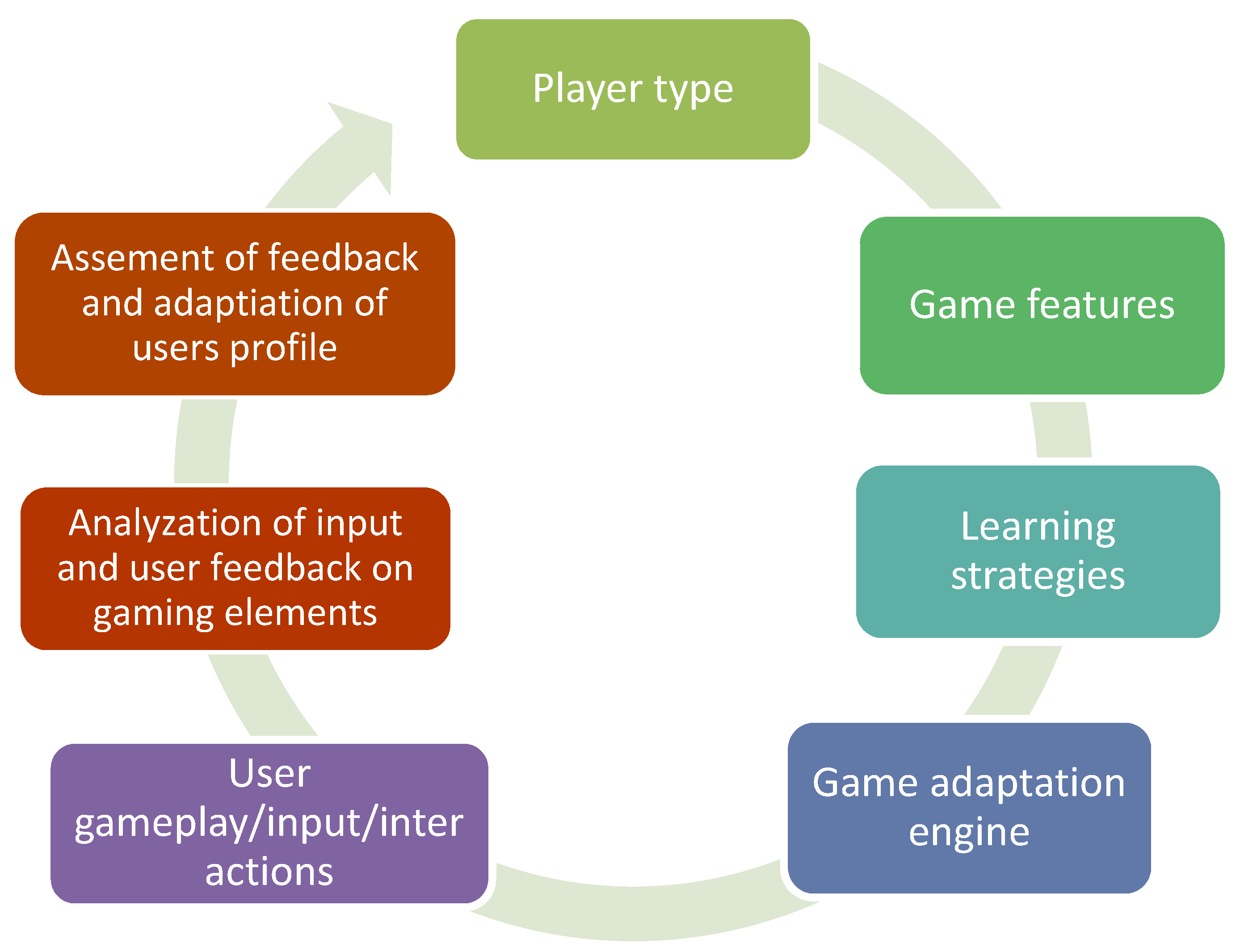
The second factor in the proposed framework is learning strategies. Learning strategies significantly shape the learning process’s goals, objectives, paths, and stages. However, due to the potential burden of switching between learning strategies and the nature of science education, the framework focuses on only two preferred learning strategies. This approach aims to reduce the workload associated with adaptation and familiarize students with both learning strategies if adaptation is required. The chosen learning strategies also share common aspects, facilitating the transition between them if necessary. The proposed approach encompasses two adaptation processes: the adaptation of game elements and the adaptation of the learning process. Three main points are considered in adapting the game elements: user feedback, profiling, and adaptation. The system continuously updates the player’s profile throughout the course. This is achieved through in-app dialogues designed to gather the user’s feedback and opinions regarding the game elements. At the end of the lesson, the user is asked questions based on their updated profile. These questions help to customize the game elements and allow the user to select a game element from the second and third-player categories, based on their ranking, to be included.
The basic architecture of the proposed adaptive gamification is as follows:
- The user completes a questionnaire using the Hexad model to create the initial player profile.
- The system selects and applies game elements to the environment based on the player’s profile.
- The player’s profile is updated throughout the course through in-app dialogues to gather feedback and preferences.
- At the end of the lesson, the user is asked questions based on their updated profile to customize the game elements.
- The user selects a game element from the second and third player categories to be included according to the ranking.
- The system adjusts the gamified environment based on the selected game element and updates the player’s profile accordingly.
This basic architecture allows for the personalized adaptation of game elements based on the user’s preferences and feedback, enhancing the overall gamification experience. The framework utilized in the adaptive gamification environment aligns with and builds upon the work conducted by Zourmpakis et al. (2023). For a comprehensive understanding of the adaptive gamification framework, including additional details and explanations, we recommend referring to the research conducted by Zourmpakis et al. (2023).
Figure 1.
The architecture of the adaptive gamification environment from the proposal of Zourmpakis et al. [28].
Figure 1.
The architecture of the adaptive gamification environment from the proposal of Zourmpakis et al. [28].
Based on the provided guidelines and methodology, an adaptive gamification environment called “Water Cycle” was developed using the Unity3D game engine. This gamification application focuses on teaching phenomena related to the water cycle, explicitly melting, freezing, boiling, and evaporation.
The “Water Cycle” application is designed as an open-world simulation environment incorporating avatars. After the user completes the questionnaire and creates a profile, they are presented with a text that describes the game’s story based on their profile and the chosen learning strategy.
In the case of exploratory learning, the user assumes the role of a friend of a policewoman, assisting her in investigating various natural phenomena. On the other hand, if problem-solving learning is selected, the user takes on the role of a police officer’s assistant and is assigned tasks to solve specific cases related to the water cycle.
Figure 2 illustrates the user’s freedom to navigate and explore the application. Users can interact with non-player characters, engage in conversations, collect materials, conduct experiments, and observe real-life phenomena and sounds. This immersive environment provides users with a rich and interactive experience, allowing them to actively participate and learn about the water cycle through various activities and interactions.
3. Methodology
This quantitative study was conducted in primary schools of Heraklion, Crete, Greece. This research was carried out with the main purpose of defining the motivational impact of primary students on the use of adaptive gamification environments in science education based on their views. The students’ views regarding the game elements they used were also examined.
In this study, we utilized a semi-experimental design with a convenience sample. It occurred in 6 3rd-grade classes in 3 different schools in Heraklion. Students in all classes were taught similarly, using the adaptive gamification application, which ran exclusively on computers. The students that collectively took part were 80. Each class followed four lessons. The concepts taught were coagulation, melting, evaporation, and boiling. The research was implemented in 2 phases. In the first phase, the four teaching interventions were implemented. In the second phase, the students completed the questionnaire. Each class’s teachers conducted the lessons. The elementary teachers were trained beforehand using a theoretical framework centred on integrating technology into the educational process. The teacher training was therefore designed based on the TPASK (Technological Pedagogical Science Knowledge) model [57] as it enables the analysis and development of a multi-faceted phenomenon such as technology integration while helping to formulate the kind of knowledge that teachers need in order to integrate technology while teaching science concepts into the actual classroom setting. During the research process, we systematically followed all national and international rules for ethics and ethics in research [58], and permission was obtained from the Ethics Committee of the PTPE of the University of Crete.
We initiated the process by considering the primary research inquiries when developing the questionnaire. We then proceeded by consulting the pertinent literature in the field, explicitly referring to Rajendran et al. [59], Halim et al. [60], and Melkersson & Lundin [61] for guidance, insights and for designing the survey questionnaire. Furthermore, specific questions were appropriately revised for technological advancements and research on their content or context. Taggart et al. [62] suggested that involving experts in developing a questionnaire can enhance its content validity. In creating the questionnaire for this particular study, we employed an iterative approach, which involved the research team in generating the items and sought input from educational technology experts at the University of Crete to review the questionnaire items. The development process encompassed multiple cycles of iteration until the final version was reached.
The Likert scale was used as a measurement for data collection. All categories of questions were scored from 1 to 5 (Strongly Disagree, Disagree, Neither agree nor disagree, Agree, Strongly agree). In total, the questionnaire provided included two categories of questions. In the first category, there were questions about students’ motivation and views on learning science using the adaptive gamification application and their motivation regarding game mechanisms and elements. Regarding the second category, there were questions about all the elements and mechanisms included in the application. However, before answering about a mechanism, students were asked to select whether they had encountered or used that particular element. Students answered only about game elements they had encountered and used in the app. Each item had the same six appropriately tailored questions. The questionnaire included nine questions for Category 1 and 66 questions (11 items) for Category 2.
It should be noted that in 2 out of the six classes, students are more than the computers by a few. In order to avoid splitting the classes in half, some students were grouped the first time based on their profiling and, more accurately, their dominant type. This was done to ensure that the grouped students would have most of their characteristics relative to each other. Though this ensured that most students had similar characteristics, not all students that were put together liked teamwork necessarily. As such, though the grouped students had roughly similar characteristics based on their primary player type, some had to cooperate even though they would not want it. However, students in the Free Spirits category were not grouped as this would have substantially affected their experience. The results were analyzed using the SPSS statistical package.
4. Results
The first category had nine items, graded on a Likert-type scale of 1 to 5, with the intent to examine students’ motivation and views about learning science using the adaptive gamification application. The information collected was organized into Table 1, as presented below, and was subjected to descriptive analysis.
Based on Table 1, students showed their substantially high levelled likeness for learning science while using the adaptive gamification application (M= 4,53), with 92,5% of them agreeing or agreeing (Q1). Though students seem to be highly interested in learning science concepts in the school setting (Q2) (M=4,36) and even showed a preference for science education and would rather spend more time in it than other subjects (M=3,99), nearly half of them (45%, agree or agree) consider the traditional teaching that occurs in the classroom regarding science education to be dull (Q6). Furthermore, this impacts their level of confidence in learning, as students expressed feeling more assured in understanding natural phenomena through an enjoyable approach (M = 4.30) (Q5). A significant 52.5% of students strongly agreed with this notion. However, in contrast to traditional classroom teaching methods, students reported a significant increase in their interest in learning through the adaptive gamification environment (Mean= 4.41) (Q7). Only a tiny percentage (5%) expressed disagreement with this statement.
Additionally, students displayed higher motivation and perceived the application as a valuable learning tool for studying science (mean = 4.34) (Q4). Moreover, 85.5% of students agreed or strongly agreed that the application fostered a greater desire to learn and excel (Q8). Finally, using the application positively affected students’ nervousness (mean = 3.84), with nearly two-thirds of students agreeing or strongly agreeing that they felt more relaxed and less nervous while engaging in the learning process (Q9).
The second category aimed to assess the impact of game elements and mechanisms students encounter in the adaptive gamification environment on their motivation. This category comprised 11 sub-categories, each representing a distinct game element. Within each sub-category, six questions were modified to convey the same meaning. At the start of each sub-category, the initial question was to establish whether the student had encountered that specific element in their playthroughs. If the student had not encountered it, they would mark “NO” and move on to the following sub-category, skipping the current one. If the student answered affirmatively, they would respond to the following five questions within that sub-category. Like the first category, the descriptive analysis examined all the questions.
Table 2 presents the first two game elements, namely badges and currency. Among the 80 students, it was found that 60 students had encountered badges in at least one of their playthroughs, while 61 students had experienced the currency mechanism at some point during their learning process. In the case of the badges element, students admitted to being fond of the application since it contained badges (M=4,23), with almost half of them strongly agreeing with the notion. Furthermore, the participants expressed their strong fondness for the badges (M=4.55), with no one expressing disagreement or strong disagreement. They also demonstrated significant effort in actively seeking to obtain badges while using the app (M=4.33). The majority of students were successful in acquiring the desired badges (M=4.03). However, almost one out of three students (36.9%) agreed or strongly agreed that they experienced nervousness while attempting to collect badges.
Regarding the in-app currency, the students were highly interested in earning money (M=4.31) and actively pursued it within the game (M=4.25). However, their fondness for the application decreased slightly due to the currency mechanism (M=3.79). This decline could be attributed to their inability to earn the desired amount of money, as only about half admitted to achieving this goal (50.8% agreed or strongly agreed). Additionally, over 34.4% of participants reported feeling stressed while trying to acquire money (agreed or strongly agreed).
As indicated in Table 3, the following game elements include the storytelling/cases element and points. The data from Table 3 reveals that most students experienced these elements, with 72 students reporting the point element, while only 3 out of 80 individuals did not report encountering the storytelling/cases element. The cases/storytelling game element appears to be highly appreciated, as nearly 9 out of 10 students (88.3%) agreed or strongly agreed that they enjoyed solving cases (M=4.47) and liked the application more because of the inclusion of this specific game element (89.6%)(M=4.47). Furthermore, a similarly high percentage of participants expressed their active and enthusiastic engagement with this element (89.6% agree or agree) (M=4.42) and reported success in following the story and solving the cases (90.9%, agree or absolutely agree)(M=4.51). However, almost 3 out of 10 individuals (29.9% agree or absolutely agree) admitted feeling nervous while attempting to solve the cases.
Regarding the points element, the majority of participants expressed their fondness for it (M=4.39), and nearly 8 out of 10 individuals (80%, agree or absolutely agree) appreciated the adaptive gamification environment more because it included this specific game element (M=4.14). Most students were highly focused and made significant efforts to accumulate points (M=4.39). However, not all students successfully attained the desired points, as approximately 2 out of 3 (67%) agreed or strongly agreed that they could collect the points they wanted (M=3.93). Furthermore, almost 1 out of 3 participants (33%) reported feeling nervous (agree or strongly agree) while trying to earn points.
Table 4 presents the motivation levels related to the gift and levels of game elements. According to Table 4, a small number of students (24 participants) encountered or noticed the gift game element, whereas most students (76 out of 80) experienced the level mechanism. As indicated in Table 4, a few students (24 participants) encountered or noticed the gift game element. However, despite the limited exposure to this element, the students showed a strong affinity towards it (M=4.50) and liked the application because of its inclusion (M=4.54). Surprisingly, none of these students disagreed with the gift game element (disagree or absolutely disagree). Most students actively engaged with the gift game element and tried to acquire gifts (M=4.21). Two out of three students (66.7% agree or absolutely agree) reported successfully collecting a significant number of the gifts they desired (M=4.00). However, similar to previous findings, almost three out of ten individuals (29.2%) experienced significant stress (agreed or absolutely agreed) while engaging with the gift game element. The levels element was also well-received, with 84.2% of participants liking this specific game element (M=4.39).
Additionally, 80.5% of students were fond of the application because it included the element of the level (M=4.24) (agreed or absolutely agreed). Furthermore, a significant majority of students (81.5%) actively attempted to reach higher levels during their playthrough (M=4.33), with nearly two out of three students (66.7%) successfully achieving this goal (agreed or absolutely agreed) (M=3.76). The stress levels associated with levelling up were relatively low, as only about one out of five students (22.3%) absolutely agreed or agreed that they felt nervous while trying to progress to higher levels.
Based on the data in Table 5, 61 students came across the promotion element, while 57 students cooperated with other peers and essentially used the cooperation element. The promotion element was highly regarded, as most students expressed their fondness for this element (M=4.43) and approved of the adaptive gamification environment because of its inclusion (M=4.30). Additionally, nearly three out of four individuals (77.1%, agree or absolutely agree)) actively made an effort to get promoted during their gameplay (M=4.13), and approximately seven out of ten students (72.1%, agree or absolutely agree) successfully achieved their desired promotion (M=4.00). However, it is worth noting that a fair number of students (31.1% agree or absolutely agree) reported feeling stressed concerning the promotion element. The cooperation element garnered significant appreciation, as many individuals expressed their fondness for working with other students (86% agree or absolutely agree) (M=4.26).
Similarly, the same percentage of students liked the application specifically because it included the cooperation mechanism (86% agree or absolutely agree) (M=4.36). However, it is worth noting that the negative responses for both questions were around 10%, one of the highest among all the other game elements. Furthermore, a substantial majority of students (80.7%) agreed or absolutely agreed that they actively tried to cooperate with their peers (M=4.09), and the same percentage believed that they were successful in achieving cooperation based on their perspective (M=4.25). Unfortunately, the stress levels reported by the students concerning the cooperation element were relatively high, with 42.1% agreeing or agreeing that they felt stressed. This could be understood considering that a few students were not keen on working together, leading to higher stress levels than other game elements.
The following two game elements, as highlighted in Table 6, include challenges and customization. According to the methodology employed in the adaptive gamification environment, all profiles created by the dominant player type and the two higher player types lead to the inclusion of the challenges in all possible profiles. As depicted in Table 6, all participants noticed and experienced the element of the challenge, while only 25 individuals encountered the customization element. Students demonstrated a strong affinity for the element of the challenge, with 88.8% agreeing or agreeing that they enjoyed facing and overcoming challenges (M=4.39). Furthermore, 85.1% of students agreed or absolutely agreed that including challenges in the application made them appreciate it more (M=4.24). Most students actively worked to overcome the challenges they encountered (M=4.31), and most expressed satisfaction in successfully overcoming the challenges they set out to do(M=4.03). However, like other game elements, nearly 3 out of 10 students reported feeling nervous while attempting to resolve the challenges.
Regarding the customization element, students displayed a significant fondness for the ability to change their appearance (M=4.08). However, they could have appreciated the adaptive gamification environment more due to the inclusion of this game mechanism (M=3.81). 15% of the students stated that they did not like or dislike the application because it contained this element, the highest among all other elements. This response is understandable, considering the data presented in Table 6. Although students actively tried to change their appearance (M=4.04), only a few could do so to the extent they desired, as more than half of the students stated that they could not achieve their desired customization (57.7%, absolutely disagree or disagree). Fortunately, the stress levels associated with the customization element were similar to some of the other game elements, with 23.1% of students reporting significant stress levels (agree or absolutely agree).
Table 7 illustrates the last game element included in the application, the roles game element. According to the data, almost all participants (except for 2) noticed and experienced the roles game element. This element received highly positive feedback (M=4.47), with 91.1% of participants (agree or absolutely agreeing) expressing their liking for having a role in the application. Additionally, an almost similar percentage (93.6%, agree or absolutely agreeing) expressed fondness for the application due to the inclusion of this element (M=4.53). Students showed great interest and actively engaged in “playing” their roles (M=4.45), with approximately 8 out of 10 students (80.7%, agree or absolutely agreeing) succeeding in improving their role during gameplay (M=4.22). However, nearly 1 out of 4 individuals reported feeling nervous to a significant degree (agree or absolutely agree) while participating in their assigned roles.
4. Discussion
The current research study provides valuable insights into the field of adaptive gamification, particularly in the context of science education. While limited research exists on gamification in science education [13], and even fewer studies focus specifically on students’ motivation using adaptive gamification applications, most existing studies generally compare gamification and adaptive gamification in a general manner [63]. This study acknowledges that students’ motivational aspects can be influenced by their activities and the specific domain or content [50]. Therefore, drawing generalized conclusions about the affordances of adaptive gamification becomes challenging. The objective of this study is to offer an understanding of the motivational impact of a domain-specific adaptive gamification framework on students in the field of science education, as well as how the gaming elements they encountered influenced them.
In terms of motivational aspects, the findings of this study indicate that participants displayed a higher level of motivation toward learning science when using an adaptive gamification environment. Students strongly preferred the application as a means of learning science, with no students disagreeing or strongly disagreeing. They also reported an increased interest in learning through this approach, with only a tiny percentage (5%) expressing disagreement. These results demonstrate that students felt motivated and highly interested in learning science when incorporating the adaptive gamification environment. Additionally, a significant portion of students found traditional classroom lessons boring. However, the data suggests that it is not the content that discourages students from learning science, as they demonstrated a high interest in learning natural phenomena and even preferred science over other subjects. Students associated their confidence with the “fun” aspect of learning, indicating that a more engaging and enjoyable learning approach can significantly impact their level of engagement and confidence. This is evident because students believed they could learn science concepts through the application and were willing to enhance their understanding of natural phenomena through its use. This finding aligns with previous studies indicating that gamification environments, which offer an enjoyable approach to learning, can enhance student engagement and foster a greater willingness to engage with similar applications in the future [64]. Furthermore, many students reported feeling less nervous during the learning process when using the adaptive gamification environment, which increased their attentiveness in the classroom and their readiness to improve their performance in science lessons.
In addition, we examined the impact of game elements on students’ motivation. It is important to note that the game elements and mechanisms were not implemented simultaneously in this adaptive gamification application. Unlike most previous studies that followed a single-dimensional personalization approach [63], our framework employed a multidimensional adaptive design. This design allowed for runtime adaptation, resulting in a more comprehensive personalization [28]. Based on our findings, it became evident that at least some students experienced adaptation in their profiles, leading to variations in the game elements they encountered. This was reflected in the number of elements reported by students and the possible combinations they experienced. These insights highlight the dynamic and personalized nature of the adaptive gamification approach used in this study [28].
Based on the findings, the adaptation process was largely successful, as students generally liked the game elements integrated into their lessons. However, the meagre negative ratings regarding the likeness and appreciation of the application suggest that either the adaptation was applied to a small number of individuals or it was implemented on a limited scale, such as switching between closely related user types (e.g., player and achiever) or adjusting the secondary and tertiary dominant user types. Nevertheless, regardless of the specifics, the multidimensional framework, which considered more than just a single user type, effectively enhanced students’ experiences and engagement. A similar study also supports this conclusion [63].
Additionally, it was observed that badges, storytelling/cases, gifts, and roles received the most positive feedback from students and contributed to their appreciation of the application. This suggests that students’ motivation is greatly influenced by their immersion in the storytelling aspect, the role they assume within the application, and the rewards that symbolize their status and self-improvement. The connection between immersion in storytelling/narrative elements and its positive impact on student engagement aligns with findings from other studies [65]. Similarly, the positive relationship between badges and student motivation and engagement has been documented in previous research [34]. These findings further support that these game elements effectively enhance students’ motivation and engagement in the learning process.
What is more, the satisfaction of individuals with using game elements did not necessarily impact their level of active engagement or fondness for the application. Lower scores in satisfaction did not lead to a corresponding decrease in likeness. However, user satisfaction was generally lower than active engagement and fondness, except for cases/storytelling, roles, and cooperation. This suggests that students were primarily satisfied by the immersive aspects of the application, which is consistent with the findings of Aldemir et al. [65], highlighting the importance of immersion for the storytelling element to affect motivation and engagement. The application has room for improvement concerning other game elements, particularly in customization, levels, and currency, which received lower satisfaction scores.
Regarding cooperation, it is not easy to draw confident conclusions about student satisfaction since it was also used by some students who may have yet to be inclined to use it. Students were less active in the cooperation element, but their satisfaction was higher. This indicates that even though some students did not put in their maximum effort to cooperate with others, possibly because they did not have a strong desire for it, the results were better than expected, resulting in higher satisfaction. We cannot make assumptions about the specific user types and their interactions with most of the game elements, as we need to have information about the profile of each user and the ability for user types to change during gameplay. However, all user profiles consistently utilized the challenges game element [28]. It was found that challenges received high approval rates among all user types, promoting high levels of active engagement and satisfaction [65]. This suggests that the intrinsic motivation for accomplishment has a noticeable effect on the achiever type [56] and across all user types. However, it is impossible to determine to what extent each user type is affected by this game element.
Moreover, games are commonly associated with stress reduction for individuals [66]. Based on our findings, most game elements did not induce high-stress levels, as the percentage of individuals who agreed or mostly agreed that a game element or mechanism made them anxious was generally below 30%. However, this differed for the cooperation, badges, and currency elements. The higher level of anxiety reported for the cooperation element can be understood since some students were required to cooperate even if they did not want to. Previous literature has shown that badges can generate a certain level of anxiety [61], which aligns with our results. However, the same does not apply to the current element. The anxiety associated with this element is likely a result of students being highly active and striving to earn money during their playthrough but ultimately failing to do so.
Consequently, not being able to accumulate enough money to make in-game purchases and acquire items they had set their minds on could contribute to their anxiety. Furthermore, the element of the challenge involved the use of timers, as difficulty and assistance were linked to time. However, students did not report higher stress levels than most other game elements, contrasting with findings from other research studies [67].
6. Limitations
The present study has certain limitations. Adaptive gamification was introduced to enhance the effectiveness of one-size-fits-all gamification. While we examined the motivational outcomes of students in the adapted gamification environment, we did not compare it to a one-size-fits-all gamification approach. As a result, this study cannot provide definitive results on whether this objective was achieved. Additionally, our findings are limited to the specific game elements incorporated in our adaptive gamification approach. We did not include every game element mentioned in gamification literature, such as leaderboards and team chat. Different outcomes may be observed with the integration of various game elements.
Moreover, in this study, we did not consider other essential user characteristics regarding gamification, such as gender difference (). Moreover, each learning course was carried out by the teacher of that class. Though all teachers had been trained to use the adaptive gamification environment before teaching in the school setting, it is still possible to have affected students’ motivation from the learning experience. Furthermore, knowing students’ profiles would provide more insight into the accuracy of the Hexad typology, the frequency of profile changes, whether changes occurred collectively or individually, and the frequency of adjustments, particularly to the dominant profile. Additionally, it would offer a more detailed and precise understanding of how each game element affects each profile (Klock et al., 2020; Hallifax et al., 2019). Finally, this study needs to be more extensive concerning the context-dependency and generalizability of our results. The framework used was specifically designed for the science education learning environment, and results may differ in other domains, as Hallifax et al. (2019) suggested.
5. Conclusions
This article showcased the results of a quantitative semi-experimental investigation into the impact of adaptive gamification on learner motivation and perceptions in science education. The study was conducted in four primary schools located in Heraklion, Crete, Greece. The data collected and analyzed involved 80 students from six distinct classes who had completed four custom-designed learning modules focused on water cycle science concepts. These modules incorporated a specialized adaptive gamification framework tailored to the subject matter.
Our findings offer new perspectives and enhance the utilization of adaptive gamification. We discovered valuable insights into how to customize gamification, particularly by demonstrating that the Hexad user typology is one of the most relevant approaches for identifying user preferences regarding game elements. However, in this implementation, the adaptation of game elements and learning strategies was not solely based on a single user type. We recognized that motivations can be fluid and may change during gameplay. Therefore, the foundation for adaptation was the learner’s profile rather than a static adaptation that classifies individuals solely based on their user profiles after an initial selection, as proposed in the literature [55,68].
Nonetheless, since the appropriate game element is tailored to the specific learner profile, it still promotes self-determination. The results obtained by examining each game element emphasize that they have varying effects on learner motivation [67]. It is crucial to exercise caution when suggesting game elements to learners, as these elements may have conflicting impacts depending on their profiles [67].
According to Hallifax et al. [26], user motivation in tailored gamification is influenced by two significant factors: implementing a specific motivational strategy and selecting the user typology or profile. However, it is essential to note that teachers also play a crucial role. The inability to effectively utilize digital content from a pedagogical standpoint has been shown to impact students, leading to discouragement negatively and reduced learning motivation [69,70].
Thus, considering the influence of teachers’ views and attitudes is essential when introducing new teaching methodologies into the learning process. It is crucial to maximize a learning tool’s positive benefits on students’ motivation to learn [23,71]. Additionally, future research is recommended to examine personalization’s effects in user studies conducted over an extended period. This would enable investigating whether the enhanced user experience translates into improved performance over time. Alternatively, offering users the option to decide whether they want to use the system regularly would provide further insights into potential effects on user behaviour, and this aspect could be explored in future studies as well.
Additional studies that address our research’s limitations and explore the effectiveness of similar adaptive gamification applications in science education would be beneficial. These studies could validate and generalize the results while providing valuable insights for future design modifications to enhance the learning experience. Additionally, it is crucial to investigate learning achievements. Measuring both learning outcomes and motivational aspects is equally important to assess adaptive gamification’s effectiveness in education comprehensively. By examining the impact on learning outcomes, such as knowledge retention and skill acquisition, alongside motivational factors, we can better understand the overall effectiveness and potential benefits of implementing adaptive gamification in the learning process [64,72]. Consequently, properly developing applications for science teaching concepts is crucial for motivating students to participate and engage with the material [13,73] actively. Moreover, the development of similar content-specific adaptive gamification environments holds the potential to benefit other subject areas beyond science education.
Author Contributions
All co-authors contributed to data collection and/or analysis of project results. All authors have read and agreed to the published version of the manuscript.
Funding
This research received no external funding.
Data Availability Statement
The data presented in this study are available on request from the corresponding author.
Conflicts of Interest
The authors declare no conflict of interest.
References
- Amado, C.M.; Roleda, L.S. Game Element Preferences and Engagement of Different Hexad Player Types in a Gamified Physics Course. In Proceedings of the 2020 11th International Conference on E-Education, E-Business, E-Management, and E-Learning; Association for Computing Machinery, October 1 2020; pp. 261–267. [CrossRef]
- Gunuc, S. The Relationships between Student Engagement and Their Academic Achievement. International Journal on New Trends in Education and Their Implications October 2014, 5, 199–214. [Google Scholar]
- Wara, E.; Aloka, J.O.; Benson, C.O. Relationship between Emotional Engagement and Academic Achievement among Kenyan Secondary School Students. Academic Journal of Interdisciplinary Studies 2018, 7, 107–118. [Google Scholar] [CrossRef]
- Sakkir, G.; Dollah, S.; Ahmad, J. E-Learning in COVID-19 Situation: Students’ Perception. EduLine: Journal of Education and Learning Innovation 2021, 1, 9–15. [Google Scholar] [CrossRef]
- Tan, C. The Impact of COVID-19 on Student Motivation, Community of Inquiry and Learning Performance. Asian Education and Development Studies 2021, 10, 308–321. [Google Scholar] [CrossRef]
- Council, N.R. A Framework for K-12 Science Education: Practices, Crosscutting Concepts, and Core Ideas. 2012. [CrossRef]
- Obe, W.H. The Teaching of Science in Primary Schools; 7th ed.; Routledge, 2018.
- Bilal, E.; Erol, M. Hypothesis-Experiment-Instruction (HEI) Method for Investigation and Elimination of Misconceptions on Friction. Balkan Physics Letters 2010, 18, 269–276. [Google Scholar]
- Alesandrini, A.T.; Heron, P.R. Types of Explanations Students Use to Explain Answers to Conceptual Physics Questions. In Proceedings of the Physics Education Research Conference; American Association of Physics Teachers: Provo, July, 2019; pp. 21–25. [Google Scholar] [CrossRef]
- Brígido, M.; Borrachero, A.B.; Bermejo, M.L.; Mellado, V. Prospective Primary Teachers’ Self-Efficacy and Emotions in Science Teaching. European Journal of Teacher Education 2013, 36, 200–217. [Google Scholar] [CrossRef]
- Fortus, D.; Vedder-Weiss, D. Measuring Students’ Continuing Motivation for Science Learning. J Res Sci Teach 2014, 51, 497–522. [Google Scholar] [CrossRef]
- Rodrigues, L.F.; Oliveira, A.; Rodrigues, H. Main Gamification Concepts: A Systematic Mapping Study. Heliyon 2019, 5, e01993. [Google Scholar] [CrossRef] [PubMed]
- Kalogiannakis, M.; Papadakis, S.; Zourmpakis, A.-I. Gamification in Science Education. A Systematic Review of the Literature. Educ Sci (Basel) 2021, 11, 22. [Google Scholar] [CrossRef]
- Kapp, K.M. The Gamification of Learning and Instruction: Game-Based Methods and Strategies for Training and Education. Int J Gaming Comput Mediat Simul 2012, 4, 81–83. [Google Scholar] [CrossRef]
- Bai, S.; Hew, K.F.; Huang, B. Does Gamification Improve Student Learning Outcome? Evidence from a Meta-Analysis and Synthesis of Qualitative Data in Educational Contexts. Educ Res Rev 2020, 30, 100322. [Google Scholar] [CrossRef]
- Klock, A.C.T.; da Cunha, L.F.; de Carvalho, M.F.; Rosa, B.E.; Anton, A.J.; Gasparini, I. Gamification in E-Learning Systems: A Conceptual Model to Engage Students and Its Application in an Adaptive e-Learning System. In Proceedings of the Learning and Collaboration Technologies: Second International Conference; Vol. 9192; Springer International Publishing: Los Angeles, August, 2015; pp. 595–607. [Google Scholar] [CrossRef]
- Jagušt, T.; Botički, I.; So, H.J. Examining Competitive, Collaborative and Adaptive Gamification in Young Learners’ Math Learning. Comput Educ 2018, 125, 444–457. [Google Scholar] [CrossRef]
- Hassan, M.A.; Habiba, U.; Majeed, F.; Shoaib, M. Adaptive Gamification in E-Learning Based on Students’ Learning Styles. Interactive Learning Environments 2019, 29, 545–565. [Google Scholar] [CrossRef]
- Toda, A.M.; Valle, P.H.D.; Isotani, S. The Dark Side of Gamification: An Overview of Negative Effects of Gamification in Education. In Proceedings of the Communications in Computer and Information Science; Springer International Publishing, 2018; Vol. 832; pp. 143–156. [Google Scholar] [CrossRef]
- Koivisto, J.; Hamari, J. The Rise of Motivational Information Systems: A Review of Gamification Research. Int J Inf Manage 2019, 45, 191–210. [Google Scholar] [CrossRef]
- Bai, S.; Hew, K.F.; Huang, B. Does Gamification Improve Student Learning Outcome? Evidence from a Meta-Analysis and Synthesis of Qualitative Data in Educational Contexts. Educ Res Rev 2020, 30, 100322. [Google Scholar] [CrossRef]
- Botte, B.; Bakkes, S.; Veltkamp, R. Motivation in Gamification: Constructing a Correlation Between Gamification Achievements and Self-Determination Theory. In Proceedings of the International Conference on Games and Learning Alliance; Springer Science and Business Media Deutschland GmbH, 2020; Vol. 12517 LNCS; pp. 157–166. [Google Scholar] [CrossRef]
- Zourmpakis, A.I.; Papadakis, S.; Kalogiannakis, M. Education of Preschool and Elementary Teachers on the Use of Adaptive Gamification in Science Education. International Journal of Technology Enhanced Learning 2022, 14, 1–16. [Google Scholar] [CrossRef]
- Lopez, C.; Tucker, C. Toward Personalized Adaptive Gamification: A Machine Learning Model for Predicting Performance. IEEE Trans Games 2020, 12, 155–168. [Google Scholar] [CrossRef]
- Monterrat, B.; Lavoué, É.; George, S. Adaptation of Gaming Features for Motivating Learners. Simul Gaming 2017, 48, 625–656. [Google Scholar] [CrossRef]
- Hallifax, S.; Serna, A.; Marty, J.C.; Lavoué, É. Adaptive Gamification in Education: A Literature Review of Current Trends and Developments. In Proceedings of the Transforming Learning with Meaningful Technologies: 14th European Conference on Technology Enhanced Learning; Vol. 11722 LNCS; Springer International Publishing.: Delft, The Netherlands, September, 2019; pp. 294–307. [Google Scholar] [CrossRef]
- Codish, D.; Ravid, G. Personality Based Gamification – Educational Gamification for Extroverts and Introverts. In Proceedings of the 9th CHAIS Conference for the Study of Innovation and Learning Technologies: Learning in the Technological Era; Ra’anana: The Open University of Israel, 2015; pp. 36–44. [Google Scholar]
- Zourmpakis, A.-I.; Kalogiannakis, M.; Papadakis, S. A Review of the Literature for Designing and Developing a Framework for Adaptive Gamification in Physics Education. The International Handbook of Physics Education Research: Teaching Physics 2023, 1–26. [CrossRef]
- Glynn, S.M.; Brickman, P.; Armstrong, N.; Taasoobshirazi, G. Science Motivation Questionnaire II: Validation with Science Majors and Nonscience Majors. J Res Sci Teach 2011, 48, 1159–1176. [Google Scholar] [CrossRef]
- elayutham, S.; Aldridge, J.; Fraser, B. Development and Validation of an Instrument to Measure Students’ Motivation and Self-Regulation in Science Learning. https://doi.org/10.1080/09500693.2010.541529 2011, 33, 2159–2179. [CrossRef]
- Schumm, M.F.; Bogner, F.X. The Impact of Science Motivation on Cognitive Achievement within a 3-Lesson Unit about Renewable Energies. Studies in Educational Evaluation 2016, 50, 14–21. [Google Scholar] [CrossRef]
- Schönfelder, M.L.; Bogner, F.X. Between Science Education and Environmental Education: How Science Motivation Relates to Environmental Values. Sustainability 2020, 12, 1968. [Google Scholar] [CrossRef]
- Zeyer, A. Motivation to Learn Science and Cognitive Style. Eurasia Journal of Mathematics, Science and Technology Education 2010, 6, 121–128. [Google Scholar] [CrossRef] [PubMed]
- Zainuddin, Z.; Chu, S.K.W.; Shujahat, M.; Perera, C.J. The Impact of Gamification on Learning and Instruction: A Systematic Review of Empirical Evidence. Educ Res Rev 2020, 30, 100326. [Google Scholar] [CrossRef]
- Deterding, S. Gamification: Designing for Motivation. Interactions 2012, 19, 14–17. [Google Scholar] [CrossRef]
- Klock, A.C.T.; Ogawa, A.N.; Gasparini, I.; Pimenta, M.S. Does Gamification Matter? In : A Systematic Mapping about the Evaluation of Gamification in Educational Environments. In Proceedings of the ACM Symposium on Applied Computing; Association for Computing Machinery, April 9 2018; Vol. 7; pp. 2006–2012. [Google Scholar] [CrossRef]
- Landers, R.N. Developing a Theory of Gamified Learning. Simul Gaming 2014, 45, 752–768. [Google Scholar] [CrossRef]
- .De-Marcos, L.; Domínguez, A.; Saenz-De-Navarrete, J.; Pagés, C. An Empirical Study Comparing Gamification and Social Networking on E-Learning. Comput Educ 2014, 75, 82–91. [Google Scholar] [CrossRef]
- Rachels, J.R.; Rockinson-Szapkiw, A.J. The Effects of a Mobile Gamification App on Elementary Students’ Spanish Achievement and Self-Efficacy. Comput Assist Lang Learn 2018, 31, 72–89. [Google Scholar] [CrossRef]
- Rose, J.A.; O’Meara, J.M.; Gerhardt, T.C.; Williams, M. Gamification: Using Elements of Video Games to Improve Engagement in an Undergraduate Physics Class. Phys Educ 2016, 51, 055007. [Google Scholar] [CrossRef]
- Henukh, A.; Guntara, Y. Analyzing the Response of Learners to Use Kahoot as Gamification of Learning Physics. Gravity : Jurnal Ilmiah Penelitian dan Pembelajaran Fisika 2020, 6. [Google Scholar] [CrossRef]
- Santos, W.O.D.; Bittencourt, I.I.; Vassileva, J. Design of Tailored Gamified Educational Systems Based on Gamer Types. In Proceedings of the CONGRESSO BRASILEIRO DE INFORMÁTICA NA EDUCAÇÃO; SBC, Ed.; 2018; pp. 42–51. [Google Scholar] [CrossRef]
- Rapp, A.; Hopfgartner, F.; Hamari, J.; Linehan, C.; Cena, F. Strengthening Gamification Studies: Current Trends and Future Opportunities of Gamification Research. Int J Hum Comput Stud 2019, 127, 1–6. [Google Scholar] [CrossRef]
- Pelletier, K.; Brown, M.; Brooks, D.C.; Mccormack, M.; Reeves, J.; Arbino, N.; Bozkurt, A.; Crawford, S.; Czerniewicz, L.; Gibson, R.; et al. 2021 EDUCAUSE Horizon Report, Teaching and Learning Edition; 2021.
- Werbach, K.; Hunter, D.; Dixon, W. For the Win: How Game Thinking Can Revolutionize Your Business; Wharton digital press: Philadelphia, 2012. [Google Scholar]
- Monterrat, B.; Desmarais, M.; Lavoué, É.; George, S. A Player Model for Adaptive Gamification in Learning Environments. In Proceedings of the Artificial Intelligence in Education: 17th International Conference; Vol. 9112; Springer International Publishing: Madrid, June, 2015; pp. 297–306. [Google Scholar] [CrossRef]
- Seaborn, K.; Fels, D.I. Gamification in Theory and Action: A Survey. International Journal of Human Computer Studies 2015, 74, 14–31. [Google Scholar] [CrossRef]
- Nand, K.; Baghaei, N.; Casey, J.; Barmada, B.; Mehdipour, F.; Liang, H.-N. Engaging Children with Educational Content via Gamification. Smart Learning Environments 2019, 6, 1–15. [Google Scholar] [CrossRef]
- Fitz-Walter, Z.; Johnson, D.; Wyeth, P.; Tjondronegoro, D.; Scott-Parker, B. Driven to Drive? Investigating the Effect of Gamification on Learner Driver Behavior, Perceived Motivation and User Experience. Comput Human Behav 2017, 71, 586–595. [Google Scholar] [CrossRef]
- Hallifax, S.; Serna, A.; Marty, J.C.; Lavoué, G.; Lavoué, E. Factors to Consider for Tailored Gamification. In Proceedings of the Proceedings of the Annual Symposium on Computer- Human Interaction in Play; Association for Computing Machinery, Inc: Barcelona, Spain, October 17, 2019; pp. 559–572. [Google Scholar] [CrossRef]
- Scheiner, C.; Haas, P.; Bretschneider, U.; Blohm, I.; Leimeister, J.M. Obstacles and Challenges in the Use of Gamification for Virtual Idea Communities. In Gamification; Springer, Cham, 2017; pp. 65–76. [CrossRef]
- Majchrzak, A.; Malhotra, A. Towards an Information Systems Perspective and Research Agenda on Crowdsourcing for Innovation. The Journal of Strategic Information Systems 2013, 22, 257–268. [Google Scholar] [CrossRef]
- Scheiner, C.W. The Motivational Fabric of Gamified Idea Competitions: The Evaluation of Game Mechanics from a Longitudinal Perspective. Creativity and Innovation Management 2015, 24, 341–352. [Google Scholar] [CrossRef]
- Mora, A.; Riera, D.; González, C.; Arnedo-Moreno, J. Gamification: A Systematic Review of Design Frameworks. J Comput High Educ 2017, 29, 516–548. [Google Scholar] [CrossRef]
- Lavoué, É.; Monterrat, B.; Desmarais, M.; George, S. Adaptive Gamification for Learning Environments. IEEE Transactions on Learning Technologies 2019, 12, 16–28. [Google Scholar] [CrossRef]
- Tondello, G.F.; Wehbe, R.R.; Diamond, L.; Busch, M.; Marczewski, A.; Nacke, L.E. The Gamification User Types Hexad Scale. In Proceedings of the 2016 annual symposium on computer-human interaction in play; Association for Computing Machinery, Inc, October 16 2016; pp. 229–243. [Google Scholar] [CrossRef]
- Jimoyiannis, A. Designing and Implementing an Integrated Technological Pedagogical Science Knowledge Framework for Science Teachers Professional Development. Comput Educ 2010, 55, 1259–1269. [Google Scholar] [CrossRef]
- Petousi, V.; Sifaki, E. Contextualising Harm in the Framework of Research Misconduct. Findings from Discourse Analysis of Scientific Publications. International Journal of Sustainable Development 2020, 23, 149–174. [Google Scholar] [CrossRef]
- Rajendran, T.; Bin Naaim, N.A.; Yunus, M.M. Pupils Motivation And Perceptions Towards Learning English Using Quizvaganza. International Journal of Scientific and Research Publications 2019, 9, 220–227. [Google Scholar] [CrossRef]
- Halim, M.S.A.A.; Hashim, H.; Yunus, M.M. Pupils’ Motivation and Perceptions on ESL Lessons through Online Quiz-Games. J Educ Elearn Res 2020, 7, 229–234. [Google Scholar] [CrossRef]
- Melkersson, J.; Lundin, J. Gamification Badges vs Leaderboards as a Motivational Tool for University Students Learning a Second Language, Malmö University, 2022.
- Taggart, J.; Hood, N. Determinants of Autonomy in Multinational Corporation Subsidiaries. European Management Journal 1999, 17, 226–236. [Google Scholar] [CrossRef]
- Rodrigues, L.; Palomino, P.T.; Toda, A.M.; Klock, A.C.T.; Oliveira, W.; Avila-Santos, A.P.; Gasparini, I.; Isotani, S. Personalization Improves Gamification: Evidence from a Mixed-Methods Study. In Proceedings of the ACM on Human-Computer Interaction; ACM, October 6 2021; Vol. 5; pp. 1–25. [Google Scholar] [CrossRef]
- Papadakis, S.; Zourmpakis, A.I.; Kalogiannakis, M. Analyzing the Impact of a Gamification Approach on Primary Students’ Motivation and Learning in Science Education. In Proceedings of the International Conference on Interactive Collaborative Learning; Springer International Publishing., 2023; Vol. 633 LNNS; pp. 701–711. [Google Scholar] [CrossRef]
- Aldemir, T.; Celik, B.; Kaplan, G. A Qualitative Investigation of Student Perceptions of Game Elements in a Gamified Course. Comput Human Behav 2018, 78, 235–254. [Google Scholar] [CrossRef]
- Carlier, S.; Van der Paelt, S.; Ongenae, F.; De Backere, F.; De Turck, F. Empowering Children with ASD and Their Parents: Design of a Serious Game for Anxiety and Stress Reduction. Sensors 2020, Vol. 20, Page 966 2020, 20, 966. [Google Scholar] [CrossRef]
- Reyssier, S.; Hallifax, S.; Serna, A.; Marty, J.C.; Simonian, S.; Lavoue, E. The Impact of Game Elements on Learner Motivation: Influence of Initial Motivation and Player Profile. IEEE Transactions on Learning Technologies 2022, 15, 42–54. [Google Scholar] [CrossRef]
- Hallifax, S.; Lavoué, E.; Serna, A. To Tailor or Not to Tailor Gamification? In An Analysis of the Impact of Tailored Game Elements on Learners’ Behaviours and Motivation. In Proceedings of the International Conference on Artificial Intelligence in Education; Springer, 2020; Vol. 12163 LNAI; pp. 216–227. [Google Scholar] [CrossRef]
- Bozkurt, A.; Sharma, R.C. Education in Normal, New Normal, and Next Normal: Observations from the Past, Insights from the Present and Projections for the Future. Asian Journal of Distance Education 2020, 15, i. [Google Scholar] [CrossRef]
- Ferdig, R.E.; Baumgartner, E.; Hartshorne, R.; Kaplan-Rakowski, R.; Mouza, C. Teaching, Technology, and Teacher Education During the COVID-19 Pandemic: Stories from the Field; AACE, 2019; ISBN 9781939797490.
- Teo, T. Pre-Service Teachers’ Attitudes towards Computer Use: A Singapore Survey. Australasian Journal of Educational Technology 2008, 24, 413–424. [Google Scholar] [CrossRef]
- Mekler, E.D.; Brühlmann, F.; Tuch, A.N.; Opwis, K. Towards Understanding the Effects of Individual Gamification Elements on Intrinsic Motivation and Performance. Comput Human Behav 2017, 71, 525–534. [Google Scholar] [CrossRef]
- Xezonaki, A. Gamification in Preschool Science Education. Advances in Mobile Learning Educational Research 2022, 2, 308–320. [Google Scholar] [CrossRef]
Figure 2.
Water Cycle in-game environment.
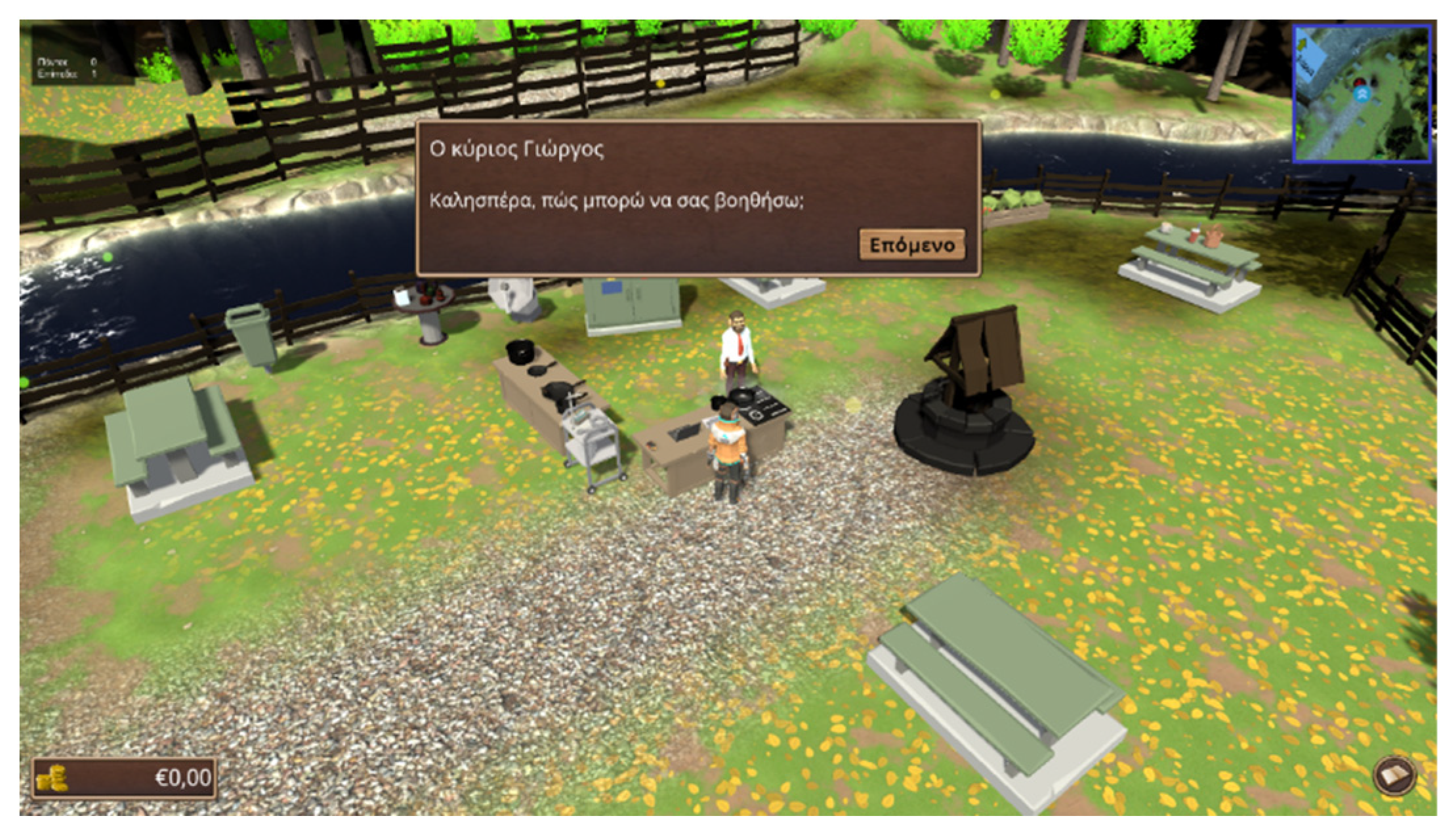

Table 1.
Students’ motivation and views about learning science using the adaptive gamification application.
Table 1.
Students’ motivation and views about learning science using the adaptive gamification application.
| Questions | AbsolutelyDisagree | Disagree | Neither Agree nor Disagree |
Agree | StronglyAgree | Mean average | Std Deviation |
|---|---|---|---|---|---|---|---|
|
0 | 0 | 7,5 | 32,5 | 60,0 | 4,53 | ,636 |
|
0 | 3,8 | 7,5 | 37,5 | 51,3 | 4,36 | ,783 |
|
5 | 2,5 | 22,5 | 28,8 | 41,3 | 3,99 | 1,097 |
|
2,5 | 2,5 | 6,3 | 36,3 | 52,5 | 4,34 | ,899 |
|
1,3 | 2,5 | 13,8 | 30,0 | 52,5 | 4,30 | ,892 |
|
26,3 | 11,3 | 17,5 | 12,5 | 32,5 | 3,14 | 1,613 |
|
0 | 5,0 | 6,3 | 31,3 | 57,5 | 4,41 | ,822 |
|
7,5 | 1,3 | 6,3 | 30,0 | 55,0 | 4,24 | 1,139 |
|
10,0 | 2,5 | 21,3 | 26,3 | 40,0 | 3,84 | 1,267 |
Table 2.
Badges and currency.
| Sub-category | Students’ Motivation for Badges | Students’ Motivation for Currency | ||||||||
|---|---|---|---|---|---|---|---|---|---|---|
| Questi ons |
11. I liked the app because it had badges | 12. I was actively trying to get badges | 13. I collected the badges I wanted to collect | 14. I loved collecting badges | 15. I got nervous when I was trying to collect badges (reversed question) | 16. I liked the app because it had currency/money | 17. I was actively trying to earn money | 18. I earned the money I wanted to raise | 19. I liked to earn money | 20. I was stressed when I was trying to save money (reversed question) |
| Participants answered | 60 | 60 | 60 | 60 | 60 | 61 | 61 | 61 | 61 | 61 |
| Absolutely Disagree | 5,0 | 0 | 3,3 | 0 | 46,7 | 6,6 | 4,9 | 13,1 | 0 | 36,1 |
| Disagree | 0 | 3,3 | 10,0 | 0 | 6,7 | 9,8 | 3,3 | 11,5 | 1,6 | 19,7 |
| Do not agree nor Disagree | 10,0 | 11,7 | 15,0 | 11,7 | 10,0 | 19,7 | 8,2 | 24,6 | 19,7 | 9,8 |
| Agree | 36,7 | 33,3 | 23,3 | 21,7 | 18,3 | 26,2 | 29,5 | 19,7 | 24,6 | 18,0 |
| Absolutely Agree | 48,3 | 51,7 | 48,3 | 66,7 | 18,3 | 37,7 | 54,1 | 31,1 | 54,1 | 16,4 |
| Mean | 4,23 | 4,33 | 4,03 | 4,55 | 2,55 | 3,79 | 4,25 | 3,44 | 4,31 | 2,59 |
| Std. Deviation | ,998 | ,816 | 1,164 | ,699 | 1,641 | 1,240 | 1,075 | 1,385 | ,847 | 1,532 |
Table 3.
Cases/storytelling and points.
| Sub-category | Students’ Motivation for the Cases/Storytelling | Students’ Motivation for Points | |||||||||
|---|---|---|---|---|---|---|---|---|---|---|---|
| Questions | I liked the game because it had cases | I was actively trying to solve the cases | I investigated and solved the cases to the best of my ability | I liked solving cases | I used to get nervous when I was trying to solve cases (reversed question) | I liked the app because it had points | I was actively trying to score points | I collected the points I wanted to collect | I liked to score points | I used to get nervous when I was trying to score points (reversed question) | |
| Participants answered | 77 | 77 | 77 | 77 | 77 | 72 | 72 | 72 | 72 | 72 | |
| Absolutely Disagree | 1,3 | 2,6 | 3,9 | 1,3 | 40,3 | 4,2 | 4,2 | 5,6 | 5,6 | 41,7 | |
| Disagree | 1,3 | 1,3 | 0 | 1,3 | 13,0 | 0 | 2,8 | 9,7 | 1,4 | 20,8 | |
| Do not agree nor Disagree | 7,8 | 6,5 | 5,2 | 9,1 | 16,9 | 13,9 | 1,4 | 16,7 | 4,2 | 8,3 | |
| Agree | 28,6 | 31,2 | 23,4 | 26,0 | 13,0 | 41,7 | 33,3 | 22,2 | 26,4 | 11,1 | |
| Absolutely Agree | 61,0 | 58,4 | 67,5 | 62,3 | 16,9 | 40,3 | 58,3 | 45,8 | 62,5 | 18,1 | |
| Mean | 4,47 | 4,42 | 4,51 | 4,47 | 2,53 | 4,14 | 4,39 | 3,93 | 4,39 | 2,43 | |
| Std. Deviation | ,804 | ,879 | ,912 | ,821 | 1,535 | ,954 | ,972 | 1,237 | 1,042 | 1,555 | |
Table 4.
Gifts and levels.
| Sub-category | Students’ Motivation for Gifts | Students’ Motivation for Levels | |||||||||
|---|---|---|---|---|---|---|---|---|---|---|---|
| Questions | I liked the app because it had gifts | I was actively trying to get gifts | I collected the gifts I wanted to collect | I like collecting gifts | I used to get nervous when I was trying to collect gifts (reversed question) | I liked the app because it had levels | I was actively trying to climb levels | I raised to the level I wanted to | I liked going up levels | I used to get nervous when I was trying to go up levels (reversed question) | |
| Participants answered | 24 | 24 | 24 | 24 | 24 | 76 | 76 | 76 | 76 | 76 | |
| Absolutely Disagree | 0 | 8,3 | 8,3 | 0 | 41,7 | 1,3 | 2,6 | 9,2 | 1,3 | 47,4 | |
| Disagree | 0 | 0 | 0 | 0 | 12,5 | 0 | 5,3 | 9,2 | 1,3 | 21,1 | |
| Do not agree nor Disagree | 4,2 | 8,3 | 25,0 | 12,5 | 16,7 | 17,1 | 10,5 | 18,4 | 13,2 | 9,2 | |
| Agree | 37,5 | 29,2 | 16,7 | 25,0 | 16,7 | 36,8 | 19,7 | 22,4 | 25,0 | 3,9 | |
| Absolutely Agree | 58,3 | 54,2 | 50,0 | 62,5 | 12,5 | 44,7 | 61,8 | 40,8 | 59,2 | 18,4 | |
| Mean | 4,54 | 4,21 | 4,00 | 4,50 | 2,46 | 4,24 | 4,33 | 3,76 | 4,39 | 2,25 | |
| Std. Deviation | ,588 | 1,179 | 1,251 | ,722 | 1,503 | ,831 | 1,038 | 1,325 | ,865 | 1,533 | |
Table 5.
Promotion and cooperation.
| Sub-Category | Students’ Motivation for Promotion | Students’ Motivation for Cooperation | ||||||||
|---|---|---|---|---|---|---|---|---|---|---|
| Questions | I liked the app because I could get promoted | I was actively trying to get promoted | I got the promotions I wanted in the app | I liked getting promoted | I used to get nervous when I was trying to get promoted (reversed question) | I liked the app because I could collaborate with/help other students | I actively tried to cooperate with/help other students | I cooperated/ helped the other students I wanted to help | I liked working with/helping other students | I was stressed when trying to cooperate/help other students (reversed question) |
| Participants answered | 61 | 61 | 61 | 61 | 61 | 57 | 57 | 57 | 57 | 57 |
| Absolutely Disagree | 1,6 | 3,3 | 6,6 | 1,6 | 42,6 | 5,3 | 7,0 | 1,8 | 5,3 | 38,6 |
| Disagree | 0 | 6,6 | 6,6 | 1,6 | 16,4 | 5,3 | 5,3 | 7,0 | 3,5 | 14,0 |
| Do not agree nor Disagree | 14,8 | 13,1 | 14,8 | 6,6 | 9,8 | 3,5 | 7,0 | 10,5 | 5,3 | 5,3 |
| Agree | 34,4 | 27,9 | 24,6 | 32,8 | 9,8 | 22,8 | 33,3 | 26,3 | 31,6 | 14,0 |
| Absolutely Agree | 49,2 | 49,2 | 47,5 | 57,4 | 21,3 | 63,2 | 47,4 | 54,4 | 54,4 | 28,1 |
| Mean | 4,30 | 4,13 | 4,00 | 4,43 | 2,51 | 4,33 | 4,09 | 4,25 | 4,26 | 2,79 |
| Std. Deviation | ,843 | 1,087 | 1,225 | ,826 | 1,619 | 1,123 | 1,184 | 1,023 | 1,078 | 1,719 |
Table 6.
Challenges and customization.
| Sub-Category | Student Motivation for the Challenges | Student Motivation for Customization | ||||||||
|---|---|---|---|---|---|---|---|---|---|---|
| Questions | I liked the app because it had challenges | I was actively trying to overcome challenges | I overcame the challenges I wanted to overcome | I liked to overcome challenges | I used to get nervous when I was trying to overcome challenges (reversed question) | I liked the game because of the change in appearance | I was actively trying to change my appearance | I managed to change my appearance as many times as I wanted | I liked to change my appearance | I used to get anxious when I tried to change my appearance (reversed question) |
| Participants answered | 80 | 80 | 80 | 80 | 80 | 26 | 26 | 26 | 26 | 26 |
| Absolutely Disagree | 2,5 | 3,8 | 6,3 | 2,5 | 51,3 | 11,5 | 0 | 42,3 | 0 | 50,0 |
| Disagree | 2,5 | 1,3 | 7,5 | 5,0 | 11,3 | 3,8 | 11,5 | 15,4 | 4,0 | 7,7 |
| Do not agree nor Disagree | 10,0 | 11,3 | 13,8 | 3,8 | 8,8 | 19,2 | 15,4 | 19,2 | 32,0 | 19,2 |
| Agree | 38,8 | 27,5 | 22,5 | 28,8 | 13,8 | 23,1 | 30,8 | 7,7 | 16,0 | 15,4 |
| Absolutely Agree | 46,3 | 56,3 | 50,0 | 60,0 | 15,0 | 42,3 | 42,3 | 15,4 | 48,0 | 7,7 |
| Mean | 4,24 | 4,31 | 4,03 | 4,39 | 2,30 | 3,81 | 4,04 | 2,38 | 4,08 | 2,23 |
| Std. Deviation | ,917 | ,988 | 1,232 | ,961 | 1,562 | 1,357 | 1,038 | 1,499 | ,997 | 1,423 |
Table 7.
Roles.
| Sub-Category | Student Motivation for the Roles | ||||
|---|---|---|---|---|---|
| Questions | I liked the game because I had a role | I was actively trying to “play” my role | I wanted and succeeded in improving my role within the application | I liked having a role within the app | I was nervous when I had a role within the app (reversed question) |
| Participants answered | 78 | 78 | 78 | 78 | 78 |
| Absolutely Disagree | 1,3 | 0 | 9,0 | 0 | 48,7 |
| Disagree | 5,1 | 2,6 | 2,6 | 2,6 | 10,3 |
| Do not agree nor Disagree | 5,1 | 9,0 | 7,7 | 6,4 | 12,8 |
| Agree | 32,1 | 29,5 | 19,2 | 32,1 | 10,3 |
| Absolutely Agree | 61,5 | 59,0 | 61,5 | 59,0 | 17,9 |
| Mean | 4,53 | 4,45 | 4,22 | 4,47 | 2,38 |
| Std. Deviation | ,716 | ,767 | 1,255 | ,734 | 1,589 |
Disclaimer/Publisher’s Note: The statements, opinions and data contained in all publications are solely those of the individual author(s) and contributor(s) and not of MDPI and/or the editor(s). MDPI and/or the editor(s) disclaim responsibility for any injury to people or property resulting from any ideas, methods, instructions or products referred to in the content. |
© 2023 by the authors. Licensee MDPI, Basel, Switzerland. This article is an open access article distributed under the terms and conditions of the Creative Commons Attribution (CC BY) license (http://creativecommons.org/licenses/by/4.0/).
Copyright: This open access article is published under a Creative Commons CC BY 4.0 license, which permit the free download, distribution, and reuse, provided that the author and preprint are cited in any reuse.


