

Submitted:
19 June 2023
Posted:
20 June 2023
You are already at the latest version
Abstract
Objective: The objective of this review was to establish a modified meta-ethnography framework by integrating the traditional phases with methods from social constructivist grounded theory. The modified version was required to identify methods which can ensure analytic generalisability and honour critical inquiry. Method: A narrative synthesis review was undertaken using 4 electronic databases. Articles were located that described the methods and methodologies of meta-ethnography and social constructivist grounded theory. A synthesis was undertaken which integrated the methods of social constructivist grounded theory. Results: The meta-ethnography was undertaken in 5 phases: (1) The positionality of the researcher and the area of interest identified. (2) Identifying what is relevant. (3) Reading the study and determining how studies are related. (4) The iterative process of idea generation required for theory generation. And (5) Expression of the theory, model, or process. Conclusion: The current study provides a useful tool to support the development of a substantive theory (a theory in one area) which can be used then to consider its application in other areas. This approach will help create new lines of research and aid the explanation of problems in other areas.
Keywords:
Review
; Grounded Theory
; Social Constructivism
; Meta-ethnography
; Qualitative
Key points
- Different philosophical world views can provide reasons for creating variants of established qualitative methodologies. A good example of this is grounded theory. One variant of grounded theory particularly suited to theory development and research with oppressed groups is social constructivist grounded theory. The current research considers the methods of social constructivist grounded theory and integrated them into a variant of meta-ethnography. The result of this process provides an adapted meta-ethnographic approach situated as a social constructivist.
- Meta-ethnography was originally designed as a theory generating review process. However, despite framework developments many meta-ethnography reviews develop thematic based results. The current framework was developed to account for the need to change the linear phases of meta-ethnography into iterative phases of theory development.
- Qualitative research is often written within a specific population group. This provides unique insight towards the culture, language, behaviours, and actions of the group. Capturing this information helps illustrate how they experience the world and interact with others. Meta-ethnography was originally designed to only include a few studies so that unique world views could be honoured. Social constructivist meta-ethnography employs methodological self-consciousness as a method to honour these unique perspectives including perspectives of oppressed groups.
Introduction
Meta-ethnography was originally developed to reveal findings beyond the meaning from the included studies it uses (Campbell et al., 2011; Cunningham et al., 2019). One particular purpose of this type of review is to generate theory and develop conceptual models (Noblit & Hare, 1988). This feature makes it unique (Grant & Booth, 2009). Whilst the development of a model, process or theory is a goal of meta-ethnography, often, greater emphasis and consideration is made towards developing a thematic synthesis illustrated with a presentation of themes. Findings which appear consistent or common across studies are used as a basis of the interpretation (France et al., 2019b) and provide ‘a storyline’ of the review findings (France et al., 2019a). Many recent examples of meta-ethnography demonstrate this. For instance (Bell et al., 2022; Sellevold et al., 2022; Sveen et al., 2022) provide information that is presented using a thematic synthesis. However, the research provides limited considerations to the output of a model or theory. Certainty assessment tools like CerQual (https://www.cerqual.org/) may contribute to the thematic synthesis representing the output or ‘final step’ in meta-ethnography. Similar statements from past researchers support this view. For instance, meta-ethnography reviews can demonstrate meticulous search strategies, including high numbers of empirical studies, but present little interpretive work (Campbell et al., 2011; Thorne, 2017). Further to this, many examples of meta-ethnography demonstrate a lack of conceptual innovation (Lee et al., 2015). Importantly, the later phases of meta-ethnography (including the theory development phase) are associated with the least amount of guidance from frameworks (Sattar et al., 2021). One way to ensure theory generation as an output of meta-ethnography is to create a variant of the approach.
A variant of meta-ethnography should position the work within a philosophical stance. The stance selected should be considered for how it will influence the phases undertaken and what modifications to the traditional phases are needed. Grounded theory is one empirical qualitative methodology that has been used in different ways to develop theory and concepts from emergent research areas. Interestingly, specific methods from grounded theory have been integrated into the phases of meta-ethnography. For instance, both Toye et al. (2014) and Sattar et al (2021) consider the need for constant comparison method. Whilst this may enhance the review, it also creates problems. The main problem is selecting one method rather than a complete methodology (Weed, 2017). A complete methodology would require further considerations around how phases of meta-ethnography are adapted to account for the iterative processes involved with grounded theory.
Grounded theory is valuable because it allows the development of a theory in one area (substantive theory) to aid the explanation of problems in other areas (general theory) (Alemu et al., 2014). Grounded theory has specific methods to ensure robust development of a theory and, as a result, achieve analytical generalisability (Firestone, 1993). However, there are different versions of grounded theory, and each assumes a different world view. Social constructivist grounded theory is one type of grounded theory developed by Kathy C. Charmaz (1939-2020). The defining purpose of the methodology is to construct a theory which can provide abstract understanding of phenomena under consideration (Charmaz & Thornberg, 2021). The methodology requires rigorous analysis and conceptualisation of the data using comparative methods (Charmaz & Belgrave, 2019).
Page and Thomas (2009) identified three studies that have used grounded theory as a review synthesis technique. However, on closer inspection of these studies it was noted that the methods and details fall short of a review framework or methodology. Additionally, the studies provide no possibility of replication or attempt to situate the work within a paradigm like social constructivism. Two studies used a worked example to illustrate their approach. Finfgeld (1999) terms their approach as meta-interpretation. This approach was designed to combine grounded theory methods from Strauss and Corbin (1990) with meta-ethnography. The work provided a lack of detail around phases undertaken and provided limited consideration towards the iterative processes involved in grounded theory. Kearney (2001) provides limited details of the processes involved in the review methodology. But Kearney states that it is situated it within Strauss and Cobrin’s (1990) grounded theory framework. Finally, research by Eaves (2001) looked to merge different forms of grounded theory synthesis together. However, each past attempt has not provides phases (steps) of how to undertake the approach. Further, each past attempt has not identified how the philosophical view is accounted for or how an iterative process of theory development is achieved. More recently, Soundy and Heneghan (2022) provide initial insight into how a social constructivist meta-ethnography would differ from a traditional meta-ethnography (France et al., 2019a). The work by Soundy and Heneghan (2022) highlights the importance of developing and testing ideas. However, the work recommends authors follow phases of meta-ethnography and the authors do not identify broader needs found in social constructivist grounded theory. For instance, how critical inquiry (Charmaz, 2017; 2021) can be integrated into the approach. Further research is needed to achieve this.
Given the above, and to the best of the authors knowledge the development of a modified framework for meta-ethnography has not yet been established. Further research is needed that can identify a modified framework that includes all essential processes of social constructivist grounded theory. This includes how iterative processes are undertaken and how critical inquiry is honoured. A review methodology that uses different techniques of analysis would be suited to this task. Given the above, the purpose of this research was to use a review of methodological literature that integrates social constructivist grounded theory with meta-ethnography. The aim of this paper will be to generate a modified framework for a social constructivist meta-ethnography.
Materials and Methods
A narrative synthesis review was undertaken (Popay et al., 2006). A PRISMA flow diagram (Page et al., 2020) was used to support the reporting of the search process.
Study eligibility
Studies were included if they considered methodology or methods of social constructivist grounded theory or meta-ethnography. Articles were included if they presented a framework of meta-ethnography or social constructivist grounded theory. Articles were also considered if they provided information on the methods, techniques, or analytical approaches. The included articles were required to be able to contribute to the construction of phases for a social constructivist meta-ethnography. Articles that looked to critique, compare or contrast methodologies were excluded. Articles that provided a brief commentary or had a mixed purpose (not solely to describe methods) and articles comparing existing types of grounded theory were excluded. Information was restricted to peer reviewed articles or funded programs of work that looked to develop methods. Information regarding philosophy was considered sufficient from the included studies and therefore articles considering philosophy were excluded. Articles from the same author were included to a point where the addition of the authors work did not appear to add value to understanding the development of a modified framework.
Search strategy
A systematic search strategy was employed by a single reviewer. Four electronic databases were searched from inception until June 2023. These included Medline, CINAHL, PsychInfo, and SportDiscus. Key words included: grounded theory, social constructivist grounded theory, methodology, method, technique, meta-ethnography, framework, and design. Standard Boolean operators were used. Electronic search engines were also searched for the output contained within the first 20 pages of results from GoogleScholar and ScienceDirect. Citation chasing and searching for articles by the 5 most mentioned authors and 3 most common journals was undertaken
Study selection and extraction
The studies were selected by the author. The author collated and summarized and identified findings by focus of teach study on social constructivist grounded theory or meta-ethnography.
Synthesis
A summary of the output of results and details of included studies was provided. Results were synthesised in several steps. First, a matrix table was created. The table contrasted the traditional 7 phases of meta-ethnography within the rows against two columns. The first column represented statements from meta-ethnographic studies and the second column represented statements from social constructivist grounded theory studies. Methodological considerations that spanned multiple phases or represented part of an iterative process was identified in italics. The next step in the analysis was to identify how phases could be modified to account for an iterative phase of idea generation and theory development. A final step was undertaken to reduce the phases and present the revised framework identifying key and critical references within the presentation of this information. An audit trail can be obtained from the author regarding this process.
Results
Search output
A total of 1068 records were identified following the electronic search. From this a total of 31 articles were identified this included 18 articles considering meta ethnography (Atkins et al., 2008; Britten et al., 2002; Cahill et al., 2018; Campbell et al., 2011; Dixon-woods et al., 2005; Everhart & Johnston, 2017; France et al., 2019a;2019b; Hernández-Hernández & Sancho-Gil, 2017; Lee et al., 2016; Noblit & Hare, 1988; Noblit, 2019; Pound et al., 2005; Rice, 2002; Sattar et al., 2021; Soundy & Heneghan, 2022; Toye et al., 2013;2014) and 14 articles considering social constructivist grounded theory (Buckley and Waring, 2013; Charmaz, 2006; 2012; 2017;2021; Charmaz & Belgrave, 2021; Charmaz & Thornberg 2021; Fassinger, 2005; Hutchinson et al., 2011; Johansson, 2019; Thornberg, 2012; Tie et al., 2019; Urcia, 2021; Weed, 2017). Figure 1 provides a PRISMA flow diagram that details the approach.
Synthesis
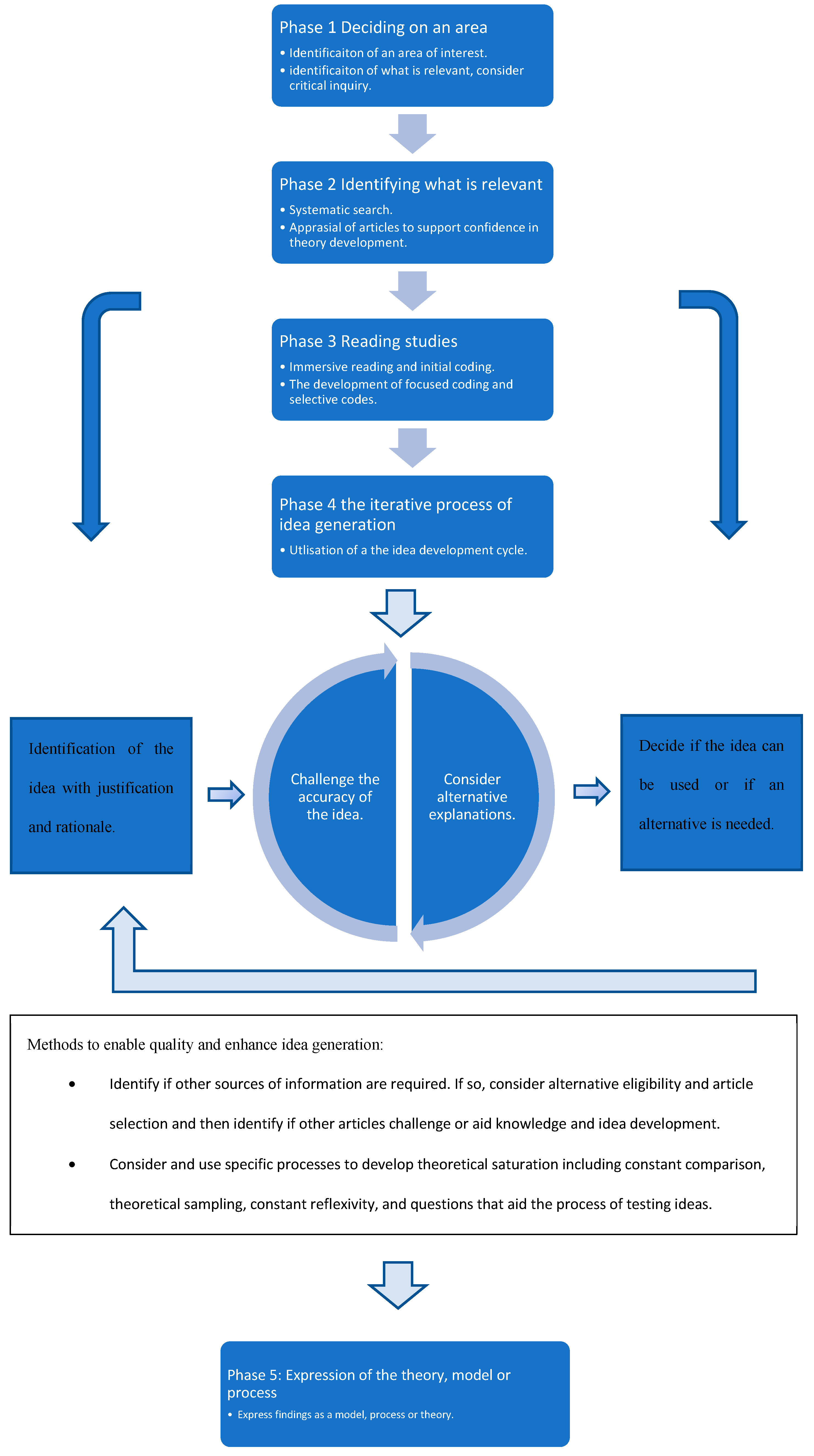
An integrated framework for social constructivist meta-ethnography was identified and presented within 5 phases. Figure 2 provides a summary of these phases. Bullet points are used from phase 2 to provide a succinct style that enables researchers to better understand and follow the steps required. This is consistent with other framework presentations.
Phase 1 The positionality of the researcher and the area of interest identified
The positionality of the researcher is one aspect which has been considered important for meta-ethnographers (Noblit, 2019). Social constructivism assumes a pragmatist ontology and relativist epistemology (Mohajan & Mohajan, 2022). Social constructivist grounded theory identifies that reality is social, fluid and to some extent indeterminate and seeks to understand peoples’ actions to solve emergent problems (Charmaz, 2017). Communication is central to gaining meaning and knowledge creation and that understanding evolves through negotiation between groups and from socially agreed upon ideas. The researcher within social constructivist grounded theory is identified as an embodied and situated knowledge producer that accepts multiple perspectives (Charmaz, 2021). Attention is paid to language, processes, multiple perspectives, and it bonds what is researched with the researcher.
The social constructivist meta-ethnographer should consider past sources of information as provisional and fallible (Charmaz & Thornberg, 2021) and assume a critical stance to earlier identified theory and findings (Charmaz, 2021). The concept of critical inquiry is important to these latter aspects. Critical inquiry includes inequality and injustice, culture, prior meaning, viewing data as problematic, consider the researchers own philosophical worldview and that of others and considering if and how voices are silenced or limited (Charmaz, 2017). These practices will help generate strong reflexivity and can be integrated into the following processes of analysis (Charmaz, 2021).
With the above in mind, the requirement of this phase is to identify an area of interest and the team involved considering the task identified and if the team members can address the task (Tie et al., 2019). The meta-ethnographer needs to acknowledge how different social, historical, cultural, or environmental factors may feed into the aims and the analytical procedures. It is essential that the evidence base for area of interest is understood (France et al., 2019a; Soundy & Heneghan, 2022). The team involved could include a librarian, clinicians, clients, patients, or a policy maker (Toye et al., 2014). Experienced qualitative reviewers or experts in grounded theory methodology may also prove valuable. Finally, the research team should become familiar with the approach ensuring the whole approach is used and not just a method from it. For instance, the application of constant comparison (Hutchinson et al., 2011; Weed, 2017).
Phase 2 identifying what is relevant
This phase provides an opportunity to search for articles and undertake critical appraisal. Specific considerations are given below:
2a Search strategy
- A systematic phase of searching should be undertaken initially using previously identified methods (France et al., 2019a; Soundy & Heneghan, 2022).
- Searching should also be considered as part of iterative processes required that enable the analytic focus to emerge. Phase 4 provides considerations needed for further searching.
2b Critical appraisal
- For this framework quality and confidence will focus on questions that relate to establishing a robust resultant model, process, or theory. A requirement is not made for the traditional appraisal of articles. Soundy and Heneghan (2022) consider the reason for this choice further.
- The following questions could be one way to ensure quality within this type of meta-ethnography. These questions are taken from Soundy and Heneghan (2022) and Toye et al., (2013). They represent one aspect of this process that helps meet the aims of critical inquiry (Charmaz, 2021). The questions can be asked at this point in the process but also during later searching. The questions include: (a) Are considerations and information given by the selected articles made sufficiently well so that concepts can be translated? (b) Do findings provide a context for the culture, environment, and setting? (c) Are the findings relevant and useful given the focus or aims of the analysis now? (d) Do the questions asked or aims from the paper selected align to those sought by the meta-ethnographer? And (e) To what extent do the findings give theoretical insight and context of interpretation made?
- The questions will provide a rationale to include or exclude an article. They should also be used as part of a reflexive process. Answers should be documented to help consider the focus, aims, and thought processes or conversations. The questions can be re-used within phase 4 when further searching occurs.
Phase 4: The iterative process of idea generation required for theory generation
The idea development phase is taken from Soundy and Heneghan (2022) which describes an iterative process important for the development of theory.
Identification of the idea
- The idea development cycle will test information developed using the information gained from the above phase and methods used including methods identified in phase 3a. This should be considered as an iterative process.
- The processes of idea generation should take place with the following in mind. First, Charmaz (2017) identifies the importance of abduction as a central process for social constructivist grounded theory and defines it as “imagining all possible theoretical explanations for the puzzling observations and then testing the explanations in experience against new empirical data.” (p 38). To aid this process the development of a constant comparison technique (Weed, 2017) is needed which will include consistently comparing that which is generated with other codes, other empirical work or other knowledge identified by theoretical sampling. Confidence in the ideas created is developed by using constant comparison (Charmaz, 2017). Consider preconceived ideas or theory carefully, each pre-conceived idea should earn its way into the analysis (Charmaz, 2006). When considering past ideas or theory consider if these concepts help you understand your data and how they fit different aspects. Is interpretation possible without this understanding? If they are needed why?
- Specific questions can also aid this process. The questions are adapted from Charmaz (2021) and focus on your own questions: What codes provide the best account for the data? What direction does this take you in? can you make further comparisons between codes? Does anything appear missing?
- The meta-ethnographer should create defendable findings by showing how the ideas are supported by the studies included and achieve the concept of resonance. The concept of resonance is that the concepts and ideas generated give insight to others beyond their own area of interest (Charmaz, 2006; 2014)
- Further searching can be undertaken which continues and works with new idea development and stops at the point of theoretical sampling in a similar way to social constructivist grounded theory (Charmaz, 2021). Searching should consider and answer the following questions (Soundy & Heneghan, 2022): What articles provide the greatest insight or challenge to the idea generated? What other types or articles or research are needed? This should include articles that consider concepts related to the idea, past models, or theories (Soundy & Heneghan, 2022).
Phase 5: Expression of the theory, model or process
- Findings should be expressed as a discipline specific theory, model or process (Soundy and Henghan, 2022). The expression should be accessible for different audiences, and it needs to be accessible for policy makers and for practitioners (France et al., 2019a). Charmaz (2006; 2014) supports this as an outcome for grounded theory and suggests the expression can also create new lines of research as well as revealing pervasive processes and practice.
- The discussion section should include a summary of findings as well as identify strengths and weaknesses, reflexivity, and recommendations (France et al., 2019a; Sattar et al., 2021). It should also provide consideration and limitations in particular around the extent to which recognition of the cultural context has been considered (France et al., 2019b) or critical inquiry established.
Discussion
The current study has provided a separate framework for meta-ethnography that honours a specific world view and draws on the theory generating processes from social constructivist grounded theory. This work is aimed at supporting researchers in creating theory from past empirical qualitative investigations and accounting for the iterative processes involved and associated with social constructivist grounded theory. This guidance demonstrates one way to develop theory from the original meta-ethnographic approach. It moves beyond past attempts (Finfgeld, 1999) and accounts for the involvement of iterative processes (Soundy & Heneghan, 2022). The early search phases of the social constructivist meta-ethnography utilise established methods for the approach (France et al., 2019a), whilst later phases bring rigor to the iterative processes needed for theory development (Charmaz, 2021). The methods identified within the current review accommodate the need for additional searching to be undertaken and consider the importance of identifying differences in the context within each study. Both accommodating theory and being able to utilise context (establish critical inquiry) are important considerations for qualitative reviews moving forward (Sutton et al., 2019). Social constructivist meta-ethnography provides usable techniques that provide the researcher with specific considerations from social constructivist grounded theory. The framework identified is suitable for application to different reporting formats and it is hoped that it provides a useful addition for authors who would like to focus on theory development and critical inquiry. The guidance highlights the importance of asking questions during the approach and recording answers to the question posed. This is designed to establish an audit trail of ideas, decisions and directions when using specific techniques. The framework is useful to guard against misusing methods (Thorne, 2015) and ensuring a full range of processes are used as intended for the approach (Weed, 2017). The framework is also useful as it provides valuable considerations around the world view of the research which can frame the focus of the meta-ethnography (Toy et al., 2014).
Limitations
A single author conducted a review for literature and the author accepts the limitations identified as a result. The search undertaken was not exhaustive or conducted by a group of researchers. A single paradigmatic viewpoint is taken, although this is also an advantage and provides clarity for the methodology. The development of a modified framework may draw questions such as at what point does an adapted meta-ethnography no longer represent a meta-ethnography (France et al., 2014). Finfgeld (1999) renamed the mixing grounded theory with meta-ethnography as meta-interpretation. Other approaches only used specific methods from grounded theory, therefore did not adopt a methodology (Toye et al., 2014). However, given the nature of meta-ethnography to generate theory and considerations for this addressed in past research Soundy and Heneghan (2022) it is believed that identifying a modified version has the same merits as it does for variants of grounded theory.
Conclusion
This review has been undertaken using a rigorous approach and has been able to integrate different forms of inquiry that can supplement each other. Social constructivist meta-ethnography uses specific methods to generate and test theory in an iterative process and establish critical inquiry.
- Supplementary online material: None.
- Funding details: No funded was provided for this research.
- Disclosure statement: The author reports there are no competing interests to declare.
- Data deposition: Not applicable.
References
- Ahrens, A., Zaščerinska, J. (2014). Factors that influence sample size in educational research. Education in a Changing Society. [CrossRef]
- Alemu, G., Stevens, B., Ross, P., Chandler, J. (2015). The use of a constructivist grounded theory method to explore the role of socially-constructed metadata (web 2.0) approaches. Qualitative and Quantitative Methods in Libraries (QQML), 4: 517-540.
- Atkins, S., Lewin, S., Smith, H., Engel, M., Fretheim, A., & Volmink, J. (2008) Conducting a meta-ethnography of qualitative literature: lessons learnt. BMC Medical Research Methodology 8: 1-10.
- Bell, Z., Scott, S., Visram, S., Rankin, J., Bambra, C., Heslehurst, N. (2022). Experiences and perceptions of nutritional health and wellbeing amongst food insecure women in Europe: A qualitative meta-ethnography. Social Science and Medicine, 311; 115313.
- Britten, N., Campbell, R., Pope, C., Donovan, J., Morgan, M., Pill, R. (2002) Using meta ethnography to synthesise qualitative research: a worked example. Journal of Health Services Research & Policy, 7: 209-215.
- Buckley, C. A., & Warig (2013). Using diagrams to support the research process: examples from grounded theory. Qualitative Research, 13: 148-172.
- Cahill, M., Robinson, K., Pettigrew, J., Galvin, R., Stanley, M. (2018). Qualitative synthesis: A guide to conducting a meta-ethnography. British Journal of Occupational Therapy, 81; 129-137.
- Campbell, R., Pound, P., Morgan, M., Daker-White, G., Britten, N., Pill, R., et al. (2011) Evaluating meta-ethnography: systematic analysis and synthesis of qualitative research. Health Technology Assessment, 15; 1-64.
- Charmaz, K. (2006). Constructing grounded theory: A practical guide through qualitative analysis. London: Sage.
- Charmaz K. (2012). The power and potential of grounded theory. Medical Sociology Online, 6: 2-15.
- Charmaz, K. (2014). Constructing grounded theory. 2nd Ed. Thousand Oaks, CA: Sage.
- Charmaz K. (2017). The power of constructivist grounded theory for critical inquiry. Qualitive Inquiry, 23; 34-45.
- Charmaz, K. (2021). Chapter 8. The genesis, grounds, and growth of constructivist grounded theory. In J. M. Morse., Bowers, B. J., Charmaz, K., Clarke, A. E., Cobin, J., Poor, C. J., Stern, P. N. (Eds.). Developing grounded theory the second generation revisited (2nd edition). Routledge.
- Charmaz, K., Belgrave, L. L. (2019). Thinking about data with grounded theory. Qualitative Inquiry, 25: 743-753.
- Charmaz, K., Thornberg, R. (2021). The pursuit of quality in grounded theory. Qualitative Research in Psychology, 18; 305-327.
- Cunningham, M., France, E. F., Ring, N., Uny, I., Duncan, E. A. S., Roberts, R. J. (2019). Developing a reporting guideline to improve meta-ethnography in health research: the eMERGe mixed methods study. Health Services and Delivery Research, NIHR Journal Library.
- Doyle, L. H. (2003) Synthesis through meta-ethnography: paradoxes, enhancements and possibilities. Qualitative Research 3(3): 321-44.
- Dixon-Woods, M., Kirk, D., Agarwal, S., Annandale, E., Arthur, A., Harvey, J., Hsu, R., et al. (2005). Vulnerable groups and access to health care: a critical interpretive review. Report for the National Co-ordinating Centre for NHS Service Delivery and Organisation R & D (NCCSDO).
- Eaves, Y. D. (2001). A synthesis technique for grounded theory data analysis. Journal of Advanced Nursing, 35: 654-663.
- Everhart, N., Johnston, M. P. (2017). Meta-ethnography and its potential for theory building in library and information science. Library and Information Research, 41; 32-44.
- Fassinger, R. E. (2005). Paradigms, praxis, problems, and promise: Grounded theory in counselling psychology research. Journal of Counseling Psychology, 52; 156–166.
- Finfgeld, D. J. (1999). Courage as a process of pushing beyond the struggle. Qualitative Health Research, 9: 803-814.
- Firestone, W. A. (1993). Alternative arguments for generalising from data as applied to qualitative research. Educational Researcher, 22: 16-23.
- France, E. F., Uny, I., Ring, N., Turley, R. L., Maxwell, M., Duncan, E. A. S et al., (2019a). A methodological systematic review of meta-ethnography conduct to articulate the complex analytical processes. BMC Medical Research Methodology, 19; 35.
- France, E. F., Uny, I., Ring, N., Turley, R., Maxwell, M., Duncan, E. A. S et al. (2019b). A methodological systematic review of meta-ethnography conduct to articulate the complex analytical phases. BMC Medical Research Methodology, 19: 35.
- Grant, M. J., Booth, A. (2009). A typology of reviews: an analysis of 14 review types and associated methodologies. Health Information and Libraries Journal, 26; 91-108.
- Hernández-Hernández, F., & Sancho-Gil, J. M. (2017). Using meta-ethnographic analysis to understanding and represent youth’s notions and experiences in and out of secondary school. Ethnography and Education, 12(2), 178–193.
- Hutchison, A. J., Johnston, L., Breckon, J. (2011): Grounded Theory Based Research within Exercise Psychology: A Critical Review, Qualitative Research in Psychology, 8:3, 247-272.
- Johansson, CB. (2019). Introduction to qualitative research and grounded theory. International Body Psychotherapy Journal, 18: 94-99.
- Kearney, M. H. (2001). Enduring love: a grounded form theory of women’s experience of domestic violence, Research Nursing and Health, 24: 270-282.
- Kim, B. (2001). Social constructivism. In M. Orey (Ed.), Emerging perspectives on learning, teaching, and technology. Available from Website: http://www.coe.uga.edu/epltt/SocialConstructivism.htm.
- Lee, R. P., Hart, R. I., Watson, R. M., Rapley, T. (2015). Qualitative synthesis in practice: some pragmatics of meta-ethnography. Qualitative Research, 15; 334-350.
- Liu, C. H. , Matthews, R. (2005). Vygotsky’s philosophy: Constructivism and its criticism examined. International Education Journal, 6(3), 386-399.
- Mills, J. , Bonner, A., Francis, K. (2006). The development of constructivist grounded theory. International Journal of Qualitative Methods, 5; 25-35.
- Mohajan, D., Mohajan, H. K. (2022). Constructivist grounded theory: A new research approach in social science. Research Advances in Education, 1: 8-14.
- Morse, J., Clark, L. (2019). The nuances of grounded theory sampling and the pivotal role of theoretical sampling. In A. Bryant, K Charmaz (Eds). Sage handbook of current developments in grounded theory. London: Sage.
- Noblit, G. W. & Hare, R. D. (1988) Meta-ethnography: Synthesising Qualitative Studies. Newbury Park, CA: Sage.
- Page, M. J., McKenzie, J. E., Bossuyt, P. M., Boutron, I., Hoffmann, T. C., Mulrow, C. D., et al. (2020). The PRISMA 2020 statement: an updated guideline for reporting systematic reviews. British Medical Journal, 202.
- Popay, J., Roberts, H., Sowden, A., Petticrew, M., Arai, L., Rodgers, M. et al. (2006). Guidance on the conduct of narrative synthesis in systematic reviews. A produce from the ESRC methods programme. Lancaster University Press. Lancaster UK.
- Pound, P., Britten, N., Morgan, M., Yardley, L., Pope, C., Daker-White, G. et al. (2005) Resisting medicines: a synthesis of qualitative studies of medicine taking. Social Science & Medicine, 61: 133-55.
- Polit, D. F., Beck, C. T. (2010). Generalization in quantitative and qualitative research: Myths and strategies. International Journal of Nursing Studies, 47; 1451-1458.
- Rice, E. H. (2002) The collaboration process in professional development schools: results of a meta-ethnography, 1990-1998. Journal of Teacher Education 53: 55-67.
- Sattar, R., Lawton, R., Panagioti, M., Johnson, J. (2021). Meta-ethnography in healthcare research: a guide to using a meta-ethnographic approach for literature synthesis. BMC Medical Services Research, 21:50.
- Sellevold, V. L., Hamre, L. L., Bondas, T. E. (2022). A meta-ethnography of language challenges in midwifery care. European Journal of Midwifery, 6; 41.
- Sveen, S., Anthun, K. S., Batt-Rawden, K. B., Tingvold, L. (2022). Immigrants’ experiences of volunteering; a meta-ethnography. Nonprofit and Voluntary Sector Quarterly, 52:569-588.
- Strauss, A., Corbin, J. (1990). Basics of qualitative research: Grounded theory procedures and techniques. Newbury Park, CA, Sage.
- Sutton, A., Clowes, M., Preston, L., Booth, A. (2019). Meeting the review family: exploring review types and associated information retrieval requirements. Health Information and Libraries Journal, 36: 202-222.
- Toye, F., Seers, K., Allcock, N., Briggs, M., Carr, E., & Barker, K. (2014). Meta-ethnography 25 years on: Challenges and insights for synthesising a large number of qualitative studies. BMC Medical Research Methodology, 14: 80.
- Toye, F., Seers, K., Allcock, N., Briggs, M., Carr, E., Andrews, J et al. (2013) ‘Trying to pin down jelly’ – Exploring intuitive processes in quality assessment for meta-ethnography. BMC Medical Research Methodology 13: 46. [CrossRef]
- Thorne S (2017) Metasynthetic madness: What kind of monster have we created? Qualitative Health Research, 27: 3–12.
- Thornberg R. (2012). Informed grounded theory. Scandinavian Journal of Education, 56: 243-259.
- Tie, Y. C., Birks, M., Francis, K. (2019). Grounded theory research: A design framework for novice researchers. Sage Open Medicine, 7: 1-8.
- Weed M. (2017). Capturing the essence of grounded theory: the importance of understanding commonalities and variants, Qualitative Research in Sport, Exercise and Health, 9:1, 149-156.
Figure 1.
The PRISMA flow diagram (Page et al., 2020).
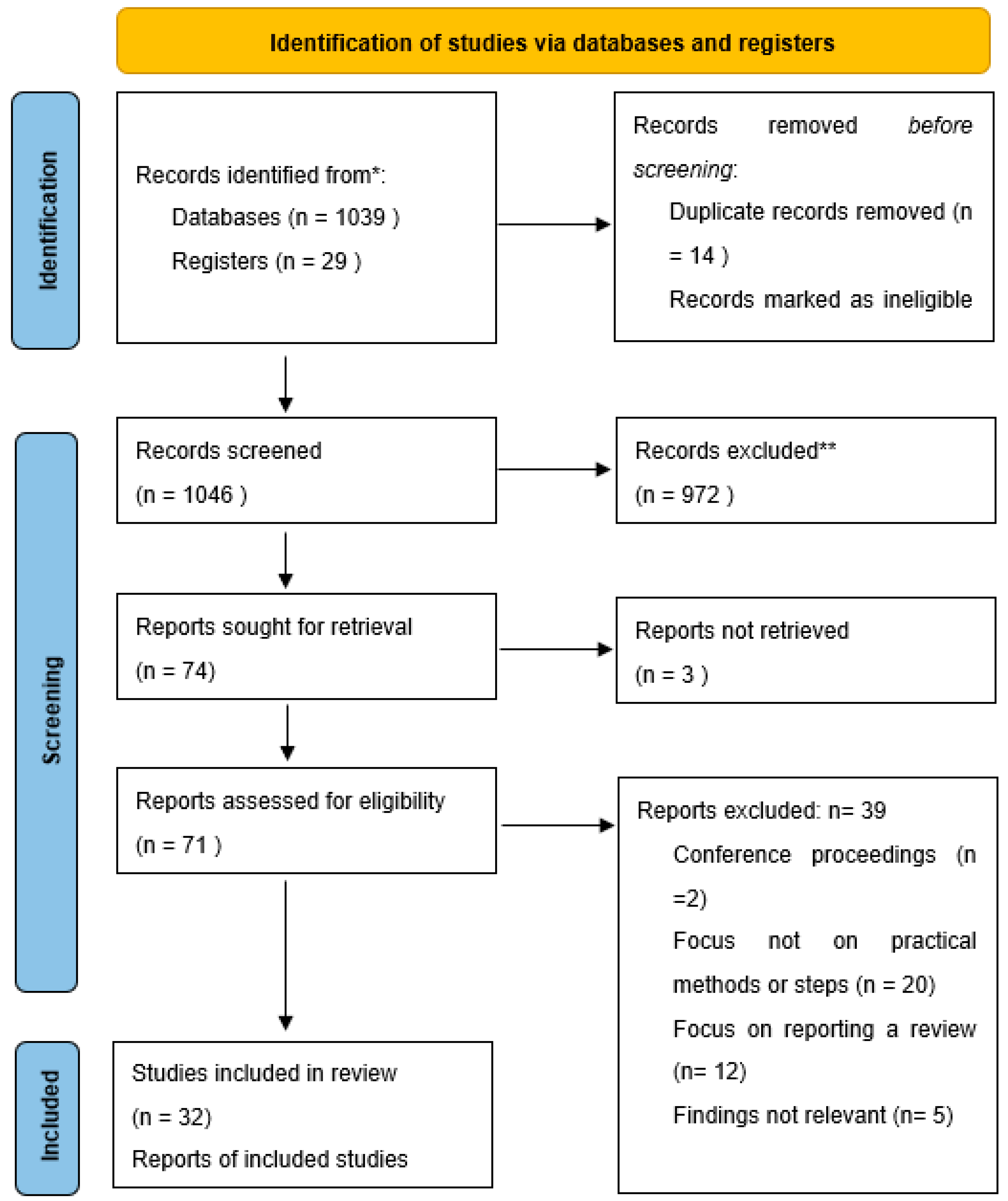
Figure 2.
A modified framework for social constructivist meta-ethnography.
Disclaimer/Publisher’s Note: The statements, opinions and data contained in all publications are solely those of the individual author(s) and contributor(s) and not of MDPI and/or the editor(s). MDPI and/or the editor(s) disclaim responsibility for any injury to people or property resulting from any ideas, methods, instructions or products referred to in the content. |
© 2023 by the authors. Licensee MDPI, Basel, Switzerland. This article is an open access article distributed under the terms and conditions of the Creative Commons Attribution (CC BY) license (http://creativecommons.org/licenses/by/4.0/).
Copyright: This open access article is published under a Creative Commons CC BY 4.0 license, which permit the free download, distribution, and reuse, provided that the author and preprint are cited in any reuse.


