

Submitted:
15 June 2023
Posted:
15 June 2023
You are already at the latest version
Abstract
Aptamers are synthetic single stranded oligonucleotides that exhibit selective binding properties to specific targets, thereby providing as powerful basis for the development of selective and sensitive (bio)chemical assays, such as biosensors. Electrochemical biosensors, utilizing aptamers as biological recognition elements, namely aptasensors, are at the forefront of current research. They exploit the combination of the unique properties of aptamers with the advantages of electrochemical detection with the view to fabricate inexpensive and portable analytical platforms for rapid detection in point-of-care (POC) applications or on-site monitoring. The immobilization of aptamers on suitable substrates is of paramount importance with the aim to retain their functionality and optimize the sensors’ sensitivity. This work describes different immobilization strategies for aptamers on the surface of semiconductor-based working electrodes, including metal oxides, conductive polymers and carbon allotropes. These are presented as platforms with tunable band gaps and different surface morphologies for the preparation of low cost, highly versatile aptasensor devices in analytical chemistry. A survey of the current literature is provided, discussing each analytical method. Future trends envisage for aptamer-based biosensing using semiconductors are also outlined.
Keywords:
aptasensors
; electrochemical
; semiconductors
; carbon
; metal oxides
; organic
; conductive polymers
1. Introduction
The aptamers are a category of synthetic single stranded DNA or RNA oligonucleotides, that are currently investigated as molecular probes for a variety of organic and inorganic target species. They are normally 15-80 based long and are produced via a process termed Systematic Evolution of Ligands by Exponential Enrichment (SELEX) [1,2,3]. Aptamers are also coined chemical antibodies as they were initially developed to replace traditional antibodies, but with multiple advantages. Unlike antibodies, which specifically target proteins or other analytes, aptamers have a much wider scope of applications as they can target different ions, organic and inorganic molecules, proteins, viruses, bacteria, or cells. In addition, aptamers are inexpensive and easy to chemically synthesize, have small size and flexible structure, and, unlike antibodies, are stable and do not suffer from batch-to-batch variations. Once the aptamer sequence is selected, it can be reproduced with high precision [4]. Aptamers are also easily modified with different functional groups of molecules; for instance, redox reporters, such as the organometallic compound of ferrocene and the organic dye methylene blue. These probes are commonly attached on the one end of aptamers to facilitate electron transfer in electrochemical sensing applications [5,6]. Another end of the aptamer can be modified by various groups, such as biotin, -SH (thiol) or -NH2 (amino) groups thus allowing its immobilization on various surfaces. An additional advantage of aptamers is their ability to distinguish between molecules closely related to each other, such as conformational isomers, amino acids with mutations in the corresponding DNA sequences or even targets with different functional groups. Their main difference to antibodies lies in specific three-dimensional interaction that drives the formation of aptamer-target complexes, as illustrated in Figure 1, that can refold to their original conformation when optimal conditions are restored [7].
Aptamers can fold in secondary structures, such as stems, loops, bugles, pseudoknots, G-quadruplexes and kissing hairpins, that allow for the detection of the target molecule, by utilizing primarily hydrogen bonding and Van der Walls interactions [8].
Electrochemical aptasensors, were first introduced in 2004 as robust, low-cost, fast, multi-analyte devices with excellent potential for miniaturization [9,10]. In recent years, electrochemical aptasensors are commonly used for the selective and sensitive detection of analytes, such as small molecules, metal-ions, proteins and cells [11,12]. Currently, several electrochemical detection techniques have been utilized, including amperometry, electrochemical impedance spectroscopy (EIS), potentiometry (such as FET/MOSFETs) as well as voltammetry (including cyclic voltammetry) [13]. Within voltammetry the use of differential pulse voltammetry (DPV) and square wave voltammetry (SWV) is commonly used due to limitations of capacitive current, providing detailed signal analysis [14]. One of the most common electrochemical set-ups in this regard is an integrated screen-printed sensing platform, comprising a working electrode (WE), a reference electrode (RE) and a counter electrode (CE). Screen printed sensors are usually preferred as they reduce the undesired effects of the ohmic drop, decrease sample consumption, allow higher rates of mass transport, reduce the double layer capacitance and enhance the signal-noise ratio [15,16]. Aptamers, can be immobilized on the working electrode via several routes, including physisorption, chemisorption, or by utilizing biocoatings, such as avidin or one of its derivatives [17]. In general, the immobilization of the aptamers on the working electrode surface is advantageous compared to them being dispersed in solution. It allows for lower cost, signal amplification, sensor regeneration, patterning and long-term storage.
For immobilizing aptamers on electrode surfaces, a number of materials have been utilized including gold, platinum, carbon, metal oxides, conducting polymers as well as metal organic frameworks (MOFs). Semiconductor surfaces have attracted considerable interest within the electrochemical community since the landmark study of TiO2-based water splitting [18] that elucidated the properties of semiconductor electrolyte surfaces. In addition, transition metal oxides are more suitable for large-scale commercialization compared with noble metals due to their wide availability, low cost and excellent stability. Oxides of metals such as Ti, Cu, Zn, have been routinely used, allowing for good stability and sensitivity of the respective sensors. For example, TiO2 surfaces have been routinely used as working electrode materials [19]. These can be produced either as thick or thin films, with their surface morphology manipulated to allow for different roughness, porosity as well as microscale and nanoscale features unique for various applications. Moreover, they offer low toxicity, biocompatibility and are corrosion resistant offering also low fabrication costs. Another feature is that via doping their electron transport properties can be fine-tuned, which in turn can enhance signal transfer. For example, nanostructured TiO2 surfaces support good electron transport between the bioreceptor and analyte due to the electron-accepting character of TiO2. It is known that TiO2 anatase nanoparticle monolayers show good electronic connectivity with the substrate, allowing for their use as electrode materials. Moreover, anatase thin films, show chemical resistance towards moderate acid and alkali solutions making them suitable in electrochemical biosensors.
Moreover, ZnO nanostructured materials exhibit useful properties such as high electrical conductivity, low toxicity, cost-effectiveness, and chemical stability [20,21]. CuO, has also been utilized in aptasensing, as it offers good electrochemical activity, as well as the ability to stimulate electron transfer reactions at lower potentials. Other metal oxides, such as WO3 and NiO, have also been used. For example, WO3 has been used as semiconducting electrode within electrochemical research showing excellent stability [22]. Furthermore, NiO exhibits a high isoelectric point (Ip), good ionic conductivity and capacitive action, making it suitable for the electrochemical transduction of DNA based sensing [23,24,25].
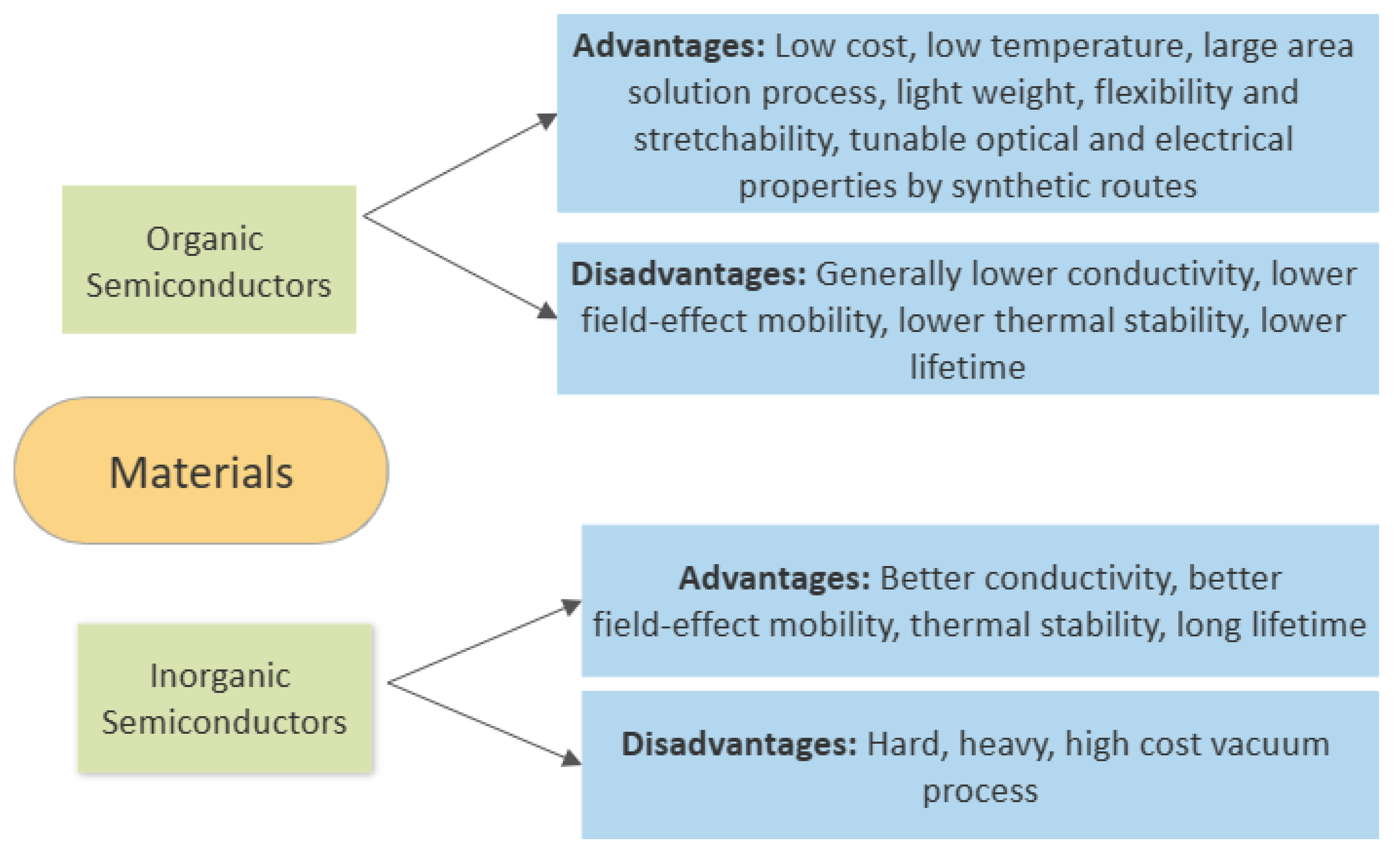
Other semiconducting candidates for use in electrochemical aptasensing are carbon allotropes [26], with semiconducting properties, such as carbon nanotubes (CNTs), fullerenes- a n-type semiconductor-, graphene oxide (GO) and reduced graphene oxide (RGO). In particular, the level of conductivity in carbon nanotubes, varies with chirality, ranging from metallic ‘armchair’ nanotubes to semiconducting ‘zigzag’ or ‘chiral’ patterns. In general, semiconducting single-walled carbon nanotubes (SWCNTs) are used twice as frequently as metallic ones. Nevertheless, growing SWCNTs of a unique desired chirality has not yet been realized industrially. Finally, biocompatible conjugated polymers, i.e., polymers with a π-conjugated, semiconducting backbone, have also been used for biomolecule immobilization, offering improved electrical conductivity and tailorable transport characteristics for biological applications [27,28,29]. Some other examples of organic semiconductor materials are 6,13-Bis((triisopropylsilyl)ethynyl)pentacene (TIPS-pentacene), regioregular poly(3-hexylthiophene-2,5-diyl), commonly known as P3HT, poly(3,4-ethylenedioxythiophene) polystyrene sulfonate, i.e. PEDOT:PSS, C10- dinaphtho[2,3-b:2′,3′-f]thieno[3,2-b]thiophene (DNTT) and C8[1]benzothieno[3,2-b][1]- benzothiophene (BTBT). These materials offer the advantage of low weight, flexibility and stretchability compared to inorganic semiconductor materials, but still exhibit lower conductivity, lower field-effect mobility, lower thermal stability, and lower lifetime. In the subsequent sections, working electrode modification will be reviewed towards electrochemical aptasensing based on semiconducting materials or hybrid structures, exploring metal-semiconductor combinations, or combinations of different semiconducting platforms.
2. Carbon Allotropes Within Electrochemical Aptasensing
In general, natural carbon allotropes such graphite, as well as synthetic ones including fullerenes, carbon nanotubes (CNTs) and graphene, have received significant attention within electrochemical biosensing due to their unique electrical properties and technological importance [30]. Fullerenes exhibit a large surface area that can be appropriately functionalized, as well as strong electron accepting capacity, taking up electrons and releasing them to the transducer [31]. This is due to a 1.8 eV gap between the lowest unoccupied (LUMO) and highest occupied (HOMO) molecular orbitals as seen in Figure 2.
Furthermore, while fullerenes, such as the buckminsterfullerenes C60, C70 and C80, have good solubility in non-polar organic solvents, such as toluene and hexane at ~280K, functionalization with thiol and amino groups leads to enhanced water solubility [33,34]. The first electrodes involving the use of C60 [35] were prepared by drop-casting C60 on carbon electrodes, to improve their performance and then coated with a Nafion film for protection. In general, fullerenes can be modified via the C=C bonds, with C6o having 30 single and 60 aromatic double bonds. As a result, bonds with amino acids, hydroxyl and carboxyl groups can be readily formed. In particular, Cassell et al. [36] studied the interaction between DNA and fullerene using C60-N,N-Dimethylpyrrolidinium iodide as a complexing agent utilizing the DNA phosphate groups. Moreover, the use of surfactants can prevent DNA/fullerene hybrids from aggregation. Other C60-Pan nanocomposites have also been used within aptasensing providing large surface area, and excellent electric performance. Within this frame, a simple electrochemical aptasensor was proposed for the detection of Mycobacterium tuberculosis (MTB) as illustrated in Figure 3 [37]. In this regard, the sandwich reaction of the target MPT64 antigen is utilized between the capture aptamer (APT I) and the tracer label, i.e., the gold nanoparticle (GNP) decorated C60-PAn nanocomposite, i.e., GNP-C60-Pan (APT II). The detection signal was then enhanced by the electrochemical oxidation of ascorbic acid (AA) to dehydroascorbic acid (DHA) through the redox nanoprobe C60-Pan.
CNTs have been used along with fullerenes for electrochemical biosensing. CNTs are strong, durable, and lightweight rolled-up graphene sheets, with their chirality determining their electrical properties. Thus while ‘armchair’ carbon nanotubes are always semiconducting, ‘zig-zag‘ ones exhibit higher conductivity. Modifying their surfaces with -COOH, -NH2, -F, or other groups promotes their dispersion in a variety of solvents and polymers enabling their wider use. Aptamers can self-assemble on the walls of carbon nanotubes using their nucleic acid bases via π-π stacking interactions. This allows the formation of a hybrid material that has excellent applications in biosensing [38]. An example is illustrated in Figure 4 in which DNA aptamers specific to cellular prions (PrPc) are immobilized, via an amide linkage, on the surface of semiconducting multi-walled carbon nanotubes, whose conductivity varies with chirality [39].
In another application, multiwalled carbon nanotubes (MWCNTs) were utilized for the immobilization of DNA aptamers specific for cellular prions (PrPc). For this purpose, 4th generation polyamidoamine dendrimers (PAMAM G4) were utilized along with a ferrocenyl redox marker between the DNA aptamer and dendrimer. This allowed for the electrochemical detection of PrPc in spiked blood plasma with a limit of detection (LOD) 0.5 pM and a dynamic range 1 pM to 10 µM. The recovery was 85 % at 1 nM prions [41].
A similar approach, using conducting polypyrrol (PPY) layers at a gold surface for immobilization of dendrimers and DNA aptamers, allowed detection of PrPc with LOD of 0.8 pM. This is lower by a factor of 103 in comparison with the immobilization of aptamers at flat PPY layers. The electrochemical aptasensor allowed detection of cellular prions in a spiked blood plasma with recovery of 90 % [42]. In another work, Zelada-Guillén et al. [43] developed a potentiometric aptasensor utilizing single-walled carbon nanotubes (SWCNTs) for the detection of Salmonella Typhi (Figure 5). In sequence, aptamers were chemisorbed on the carboxylated SWCNTs by using a five-carbon amine spacer, i.e. the 1-pentylamine molecule (CH3(CH2)4NH2) and an amine group (-(CH2)5NH2) at the 3’ end. The potentiometric response time of the biosensor was shorter than 60 s and the working range extended from 0.2 CFU/mL (1 CFU in 5 mL PBS) to 106 CFU/mL. In this regard, the rapid response time, indicates a fast affinity equilibrium between the aptamer and the target, i.e., Salmonella Typhi.
In a different piece of work, Zelada-Guillén et al. [44] utilized again SWCNTs, demonstrating the potentiometric label-free detection and identification of E. coli in milk and apple juice, reaching sensitivity as low as 6 CFU/mL and 26 CFU/mL respectively. Similarly, for the detection of whole cell Salmonella Enteritis and Salmonella Typhimurium [45], the immobilization of an amino-modified DNA aptamer on a COOH-rich MWCNTs modified ITO electrode was proposed. The preparation was evaluated using voltammetric techniques. The detection limits were 55 CFU/mL for S. Enteritidis and 67 CFU/mL for S. Typhimurium. Moreover, Zou et al. [46] prepared an aptasensor for the detection of diclofenac by using a glassy carbon electrode (GCE) covered by MWCNTs (Figure 6). NH2-terminated aptamers have been covalently attached to the MWCNTs through carboxyl groups activated by EDC/NHS. Upon incubation with the pharmaceutical diclofenac, they achieved a LOD of 162 fM.
Moreover, carbon quantum dots (CQDs) have been studied for both electrochemical and photoelectrochemical biosensing, as a promising new class of metal-free, low-cost, nanosized light-harvesters. CQDs are composed of quasi-spherical carbon nanoparticles with sizes below 10 nm and display semiconductor-like properties. CQDs-WS2-modified glassy carbon electrodes have been prepared with the view to fabricate label-free electrochemical aptasensors for the determination of sulfamethazine [47]. The aptamers were electrostatically adsorbed using cationic polyethyleneimine and a [Ru(NH3)6]3+ redox probe was employed. The aptasensors showed a wide linear response between 10 pM to 1.0 μM and a low detection limit of 4.0 pM.
Finally, Cheng et al. [48] prepared a photoelectrochemical (PEC) aptasensors for the detection of thrombin using a carboxyl modified aptamer, covalently immobilized on an ITO electrode which was sensitized with a photoactive matrix based on TiO2 loaded with CQDs. This resulted in a stable aptasensors with a linear response between 1.0 to 250 pM and a LOD of 0.83 pM. An interesting approach has been discussed by Kulikova et al. [49] that prepared an electrochemical aptasensors for the detection of kanamycin. In this work a -NH2 modified DNA aptamers mixed with an oligolactide derivative of thiacalix[4]arene in a cone configuration were immobilized on a glassy carbon electrode modified with carbon black in a chitosan matrix. The LOD was determined to be 0.3 nM, while the method was validated in spiked milk and yogurt samples with recovery rates of over 90%. Aptasensors based on carbon nanomaterials have been extensively reported also in the review by Evtugyn et al. [17].
3. Inorganic Metal Oxide-Based Semiconductors
Both inorganic and organic semiconductor materials, have been successfully utilized in electrochemical biosensing, including metal oxide semiconductors, polymers with semiconducting backbones, conjugated polymers and polymers semiconducting dyes. A comparison between organic and inorganic semiconductors, with their respective advantages and limitations, is made in Table 1.
In general, metal oxide materials are highly competitive in the biosensor market based on their versatile morphologies, such as nanosheets, nanorods, flower-like particles or nanowires and their chemical stability [50,51]. Moreover, they can be easily prepared via several cost-effective methods including sol-gels, sonochemical precipitation, chemical etching and hydrothermal approaches. In addition, metal oxides, have excellent physiochemical properties and can combine in composite structures [52]. Several semiconductors, especially TiO2 and ZnO, have attracted considerable attention due to their low toxicity and electrochemical sensitive properties. Other examples include CuO, NiO, and WO3 [53]. The major functionalization routes have been both based on electrostatic interactions as well as covalent bonding. Within aptasensing a combination of metal oxides with other metals or carbon allotropes has been routinely used [54].
Nadzirah et al. [55] used TiO2 NPs for the preparation of electrodes towards E. coli detection. The aptamers were immobilized using (3-aminopropyl) triethoxysilane (APTES). The obtained biosensor showed high sensitivity for the detection of single-stranded DNA from E. coli O157:H7, detecting concentrations as low as 0.1 pM of DNA in bacterial lyses with high specificity and reproducibility. Karimipour et al. [56] also investigated the use of TiO2 NPs, alone or in combination with rGO, to explore synergistic effects for the adsorption of aptamer molecules for the detection of prostate specific antigen (PSA). It is shown that glassy carbon electrodes modified with a rGO-TiO2 nanocomposite exhibited best performance leading to a stable aptasensors with a LOD of 29.4 fM. In another work by Muniandy et al. [57], again a rGO-TiO2 nanocomposite, lead once more to a stable aptasensor configuration allowing for the detection of Salmonella enterica serovar Typhimurium with a linear range of 10 to 108 CFU/mL and a LOD of 10 CFU/mL.
Finally, Zhang et al. [58] introduced an electrochemical aptasensor based on gold electrodes coated with a composite based on polyacrylic acid and hollow TiO2 spheres for the detection of lysozyme (Figure 7). In general, thin functional polymeric films contain amino groups (–NH2), carboxyl groups (–COOH), and hydroxyl groups (–OH) to support biomolecule immobilization. In the case of the polyacrylic acid, an abundance of carboxyl groups, along with the large surface area and hydroxyl groups of TiO2 (-OH), support the aptamer immobilization via bovine serum albumin (BSA). EIS showed that the TiO2@PPAA aptasensor was highly sensitivity towards lysozyme with a limit of detection of 0.015 ng/mL (1.04 pM) within a range of 0.05-100 ng/mL
Other metal oxides, such as ZnO nanorods have also been used for the aptasensing of thrombin using ferrycyanide ions as a redox marker [59]. In particular, the 30-mer aptamers were electrostatically adsorbed. Upon detection of thrombin, the aptamer-thrombin complexes slowed down the diffusion of the ferrycyanide ions through the surface layer, leading to a decrease of the peak current and charge transfer resistance. At optimum conditions, the LOD was measured to be 3 pM for EIS measurements, and 10 pM for CV measurements. Moreover, Rahimi et al. [60] chemisorbed amino-modified DNA aptamers on a glassy carbon sensitized with a Cu2O carbon quantum dot nanocomposite for the detection of wheat flour aflatoxin B1 (Figure 8). An LOD of 0.9 ± 0.04 ng/mL was found with acceptable reproducibility and good stability.
Another electrochemical aptasensor was prepared for the detection of tetracycline [50] based on carbon nanotube modified WO3 electrode for increased conductivity. This in turn was functionalized with Au nanoparticles via electrodeposition thus utilizing the Au-S bond for the immobilization of thiolated aptamers. The aptasensors showed excellent selectivity in the presence of coexisting pollutants with a liner range of (0.1 nM–100 nM) and a low detection limit (4.8 × 10− 2 nM).
Finally, an aptasensor for the detection of progesterone of human serum samples was prepared using a carbon quantum dot-NiO-Au nanofiber architecture in combination with multiwall carbon nanotubes (f-MWCNTs) on a carbon electrode [24]. This provided a carboxyl rich immobilization matrix for the immobilization of aptamers. The aptamer-progesterone conjugates lead to a decrease of the redox peak current in the presence of a [Fe(CN)6]3–/4– with increasing progesterone concentration. This was a result of the hindered electron transfer on the sensing interface. Using DPV the aptasensors exhibited a dynamic range concentration from 0.01 to 1000 nM and a LOD of 1.86 pM.
4. Other Inorganic Semiconductors (PbS, CdS, ZnS, CdT)
Other semiconducting materials, such as PbS, CdS, ZnS, CdT semiconducting quantum dots (QDs), have been utilized in electrochemical aptasensing, but primarily as aptamer redox tags (Figure 9) frequently encapsulated in MOFs such as PbS@ZIF-8 and CdS@ZIF-8 [53,61].
For their successful application they must possess stability and high reversibility in their redox process, as well as an appropriate potential window, depending on the composition of the working electrode. The application of MOFs in aptamer-based biosensor has been recently reviewed by Evtugyn et al. [62].
Hansen et al. [63] demonstrated the use of CdS and PbS quantum dots for the detection of both thrombin and lysozyme proteins via electrochemical stripping voltammetry. In this work the thiolated aptamers were conjugated to either thrombin or lysozyme, and decorated with CdS and PbS quantum dots respectively. They were then immobilized on an Au working electrode. Their single step displacement by the target proteins, resulted in metal peaks, allowing for the identification of the target proteins.
5. Organic Semiconductors
Organic semiconductors are excellent candidates for electrochemical biosensing due to their versatile chemical behavior, as well as ease of synthesis for numerous applications [64,29]. Conjugated polymers (CPs), offer high electrical conductivity, tunable charge transport properties as well as flexible modification. Furthermore, they can provide the basis for wearable and smart skin biosensing devices as they can be designed to provide both flexibility (bending, twisting, and folding) as well as stretchability, with a tensile strain (ε) of at least 10%. CPs used in sensors are mostly polypyrrole, polyaniline(PANI) and polythiophene as well as poly(3,4-ethylenedioxythiophene):poly(styrene sulfonate) (PEDOT:PSS), which has the highest conductivity amongst solution processed polymers [65]. Conductive polymers are often produced as thin films by chemical or electrochemical synthesis [66]. Within the field of electrochemical aptasensing, several devices have been prepared using organic polymers. In particular, a conductive paper-based impedimetric) aptasensor was prepared for the detection of carcinoembryonic antigens (CEA) both in spiked buffer solutions and human serum [67]. For this purpose, the paper was modified using graphene ink and poly (3,4-ethylenedioxythiophene):poly(styrenesulfonate) (PEDOT:PSS) using simple and continuous coating process, while APTES, succinic anhydride and BSA were used for the aptamer immobilization as can be seen in Figure 10. This resulted in an LOD of 0.45 ng/mL and 1.06 ng/mL in both types of samples, respectively.
Another label-free electrochemical aptasensors for the detection of dopamine [68] was prepared on a graphene-polyaniline (GR-PANI) nanocomposite film, that allowed the chemisorption of aptamers with phosphate groups at the 5’ end via phosphoramidate bonds utilizing the amino groups of the substrate (Figure 11). Using [Fe(CN)6]4−/3− as a redox probe, SWV was utilized leading to a linear response of 0.007–90 nM and an LOD of 1.98 pM. The electrochemical aptasensor was successfully tested for human serum samples.
Finally, Jolly et al. [69] developed an aptasensors for the detection of α-methylacyl-CoA racemase (AMACR; P504S), an emerging biomarker for prostate cancer. In this work the gold electrodes and a polypyrrole (PPy)–polyethylene glycol (PEG) platform was used, for enhanced antifouling. The aptamers were polyhistidine modified and immobilized on the electrodes via a Nα,Nα-Bis(carboxymethyl)-L-lysine (ANTA)/Cu2+ redox complex covalently attached to the PPy-PEG adduct. This process was mediated by electro-oxidation of amine groups present on the one of the PEG ends chains. The LOD was 0.15 fM and 1.4 fM in spiked buffer and human plasma samples respectively.
It is worth noting that the functionalization of organic semiconductors with amine groups, allows for improved biocompatibility towards sensor implants because of the cationic charging around the amine group. In particular, Šafaříková et al. [70], evaluated the biocompatibility of a variety of organic/polymer semiconductors such as P3HT, TIPS-pentacene, PEDOT:PSS and 3,6-Bis(5-(benzofuran-2-yl)thiophen-2-yl)-2,5-bis(2-ethylhexyl)pyrrolo[3,4-c]pyrrole-1,4(2H,5H)-dione, i.e. DPP(TBFu)2, in terms of stability and cell adhesion, concluding that all materials were stable in aqueous media with sufficient protection, while their ability for cell adhesion could be improved via self-assembled deposition of collagen IV. Finally, commercially available, organic dyes such as methylene blue (MB), azure A, azure B or neutral red are readily electropolymerized, producing redox polymers with semiconducting backbones which efficiently mediate charge transport and redox reactions, with demonstrated utility in biosensing [[71,[72,[73]. For example, an aptasensor for detection of mycotoxin aflatoxin M1 (AFM1) was developed [72] on the base of GCE covered with electropolymerized Neutral red (NR) in the presence of polycarboxylated pillar[5]arene. DNA aptamers specific to AFM1 were covalently immobilized on the carboxylic groups of the pillar[5]arene by means of carbodiimide chemistry (Figure 12). AFM1 induced decrease of the cathodic peak related to the NR.
The aptasensor allowed detection of AFM1 with LOD of 0.5 ng/L. The electrochemical aptasensor has been verified in a spiked milk samples and allowed detection of AFM1 in a range of 40–160 ng/kg, which is below of the maximal residue limit (MRL) established by EU (50 ng/kg). Additionally, an electrochemical DNA sensor for detection of the chemotherapeutic drug idarubicin was reported [73]. In this work DNA from fish sperm with incorporated MB was immobilized at the electropolymerized layers of Azure B at the surface of GCE (Figure 13). The MB poses a well resolved redox peak that has been affected by doxorubicin. This highly sensitive biosensor allowed detection of the idarubicin with LOD of 0.3 fM. While it is not the aptasensor, but DNA sensor, the approach based on the combination of the polymerized layer with MB is rather useful for sensor development.
6. Conclusions
Aptasensors have attracted substantial interest for electrochemical biosensing, as an environmentally friendly and cost-effective approach to detecting analytes of clinical, nutritional, and environmental interest. They have the potential for high sensitivity and selectivity in target recognition being able to even differentiate the chirality of a molecule and its secondary structure. Moreover, the ability of DNA aptamers to regenerate over several detections’ cycles, allows for their incorporation in reusable electrochemical devices. This advantage, in combination with the use of highly versatility, low-cost semiconducting platforms for point of care (POC) diagnostics has become an increasingly popular area of research studies. Nevertheless, there are still drawbacks within electrochemical aptasensing, including the fact that there are still biomarkers for which suitable aptamers have not yet been identified. In addition, aptamers are relatively sensitive to their environment, including salt content and pH, that can affect both the aptamer structure and interaction with the target molecule, thus careful fine-tuning for the aptasensor construction is required. In this regard, further intensive research is required to overcome technical limitations that slow down the progression of novel electrochemical aptasensing platforms to the POC or other applications.
Author Contributions
Conceptualization, L.B., A.E. and T.H.; formal analysis, L.B., O.D., A.E., V.S. and T.H.; funding acquisition, L.B., A.E. and T.H.; project administration, L.B. and T.H. writing—original draft, L.B., O.D., A.E. and T.H.; writing—review & editing, L.B., O.D., A.E., V.S. and T.H. All authors have read and agreed to the published version of the manuscript.
Funding
This work was funded under European Union’s Horizon 2020 research and innovation program through the Marie Skłodowska-Curie grant agreement No 101007299 and by Science Agency VEGA, project No. 1/0445/23 (to T.H.).
Institutional Review Board Statement
Not applicable.
Informed Consent Statement
Not applicable.
Data Availability Statement
Not applicable.
Conflicts of Interest
The authors declare no conflict of interest.
References
- Zhuo, Z.; Yu, Y.; Wang, M.; Li, J.; Zhang, Z.; Liu, J.; Wu, X.; Lu, A.; Zhang, G.; Zhang, B. Recent advances in SELEX technology and aptamer applications in biomedicine. Int. J. Mol. Sci. 2017, 18, 2142. [Google Scholar] [CrossRef]
- Tuerk, C.; Gold, L. Systematic evolution of ligands by exponential enrichment: RNA ligands to bacteriophage T4 DNA polymerase. Science 1990, 249, 505–510. [Google Scholar] [CrossRef]
- Ellington, A.D.; Szostak, J.W. In vitro selection of RNA molecules that bind specific ligands. Nature 1990, 346, 818–822. [Google Scholar] [CrossRef] [PubMed]
- Arshavsky-Graham, S.; Heuer, C.; Jiang, X.; Segal, E. Aptasensors versus immunosensors-Which will prevail? Eng. Life Sci. 2022, 22, 319–333. [Google Scholar] [CrossRef] [PubMed]
- Kang, D.; Zuo, X.; Yang, R.; Xia, F.; Plaxco, K.W.; White, R.J. Comparing the properties of electrochemical-based DNA sensors employing different redox tags. Anal. Chem. 2009, 81, 9109–9113. [Google Scholar] [CrossRef] [PubMed]
- Catanante, G.; Mishra, R.K.; Hayat, A.; Marty, J.-L. Sensitive analytical performance of folding based biosensor using methylene blue tagged aptamers. Talanta 2016, 153, 138–144. [Google Scholar] [CrossRef] [PubMed]
- Yang, S.; Li, H.; Xu, L.; Deng, Z.; Han, W.; Liu, Y.; Jiang, W.; Zu, Y. Oligonucleotide aptamer-mediated precision therapy of hematological malignancies. Mol. Ther. Nucleic Acids 2018, 13, 164–175. [Google Scholar] [CrossRef] [PubMed]
- Bernat, V.; Disney, M.D. RNA structures as mediators of neurological diseases and as drug targets. Neuron 2015, 87, 28–46. [Google Scholar] [CrossRef] [PubMed]
- Villalonga, A.; Mayol, B.; Villalonga, R.; Vilela, D. Electrochemical aptasensors for clinical diagnosis. A review of the last five years. Sens. Actuat. B Chem. 2022, 369, 132318. [Google Scholar] [CrossRef]
- Ikebukuro, K.; Kiyohara, C.; Sode, K. Electrochemical detection of protein using a double aptamer sandwich. Anal. Lett. 2004, 37, 2901–2909. [Google Scholar] [CrossRef]
- Hianik, T.; Wang, J. Electrochemical aptasensors – Recent achievements and perspectives. Electroanalysis 2009, 21, 1223–1235. [Google Scholar] [CrossRef]
- Abd-Ellatief, R.; Abd-Ellatief, M.R. Electrochemical aptasensors: Current status and future perspectives. Diagnostics 2021, 11. [Google Scholar] [CrossRef]
- Bard, A. J.; Faulkner, L. R.; White, H. S. Electrochemical Methods: Fundamentals and Applications, 3rd ed.; Wiley, USA, 2022; ISBN 9781119334071. [Google Scholar]
- Girault, H.H. Analytical and Physical Electrochemistry, 1st ed.; EPFL Press: Lausanne, Switzerland, 2004; p. 315. [Google Scholar]
- Renedo, O.D.; Alonso-Lomillo, M.A.; Martínez, M.J.A. Recent developments in the field of screen-printed electrodes and their related applications. Talanta 2007, 73, 202–219. [Google Scholar] [CrossRef] [PubMed]
- García-Miranda Ferrari, A.; Rowley-Neale, S.J.; Banks, C.E. Screen-printed electrodes: Transitioning the laboratory in-to-the field. Talanta Open 2021, 3, 100032. [Google Scholar] [CrossRef]
- Evtugyn, G.; Porfireva, A.; Shamagsumova, R.; Hianik, T. Advances in electrochemical aptasensors based on carbon nanomaterials. Chemosensors 2020, 8, 96. [Google Scholar] [CrossRef]
- Fujishima, A.; Honda, K. Electrochemical photolysis of water at a semiconductor electrode. Nature 1972, 238, 37–38. [Google Scholar] [CrossRef] [PubMed]
- Bertel, L.; Miranda, D.A.; García-Martín, J.M. Nanostructured titanium dioxide surfaces for electrochemical biosensing. Sensors 2021, 21, 6167. [Google Scholar] [CrossRef] [PubMed]
- Shetti, N.P.; Bukkitgar, S.D.; Reddy, K.R.; Reddy, C.V.; Aminabhavi, T.M. ZnO-based nanostructured electrodes for electrochemical sensors and biosensors in biomedical applications. Biosens. Bioelectron. 2019, 141, 111417. [Google Scholar] [CrossRef]
- Bukkitgar, S.D.; Kumar, S.; Pratibha; Singh, S. ; Singh, V.; Raghava Reddy, K.; Sadhu, V.; Bagihalli, G.B.; Shetti, N.P.; Venkata Reddy, C.; Ravindranadh, K.; Naveen, S. Functional nanostructured metal oxides and its hybrid electrodes – Recent advancements in electrochemical biosensing applications. Microchem. J. 2020, 159, 105522. [Google Scholar] [CrossRef]
- Song, J.; Lin, X.; Jiang, N.; Huang, M. Carbon-doped WO3 electrochemical aptasensor based on Box-Behnken strategy for highly-sensitive detection of tetracycline. Food Chem. 2022, 367, 130564. [Google Scholar] [CrossRef]
- Chen, X.; Yang, Z.; Ai, L.; Zhou, S.; Fan, H.; Ai, S. Signal-off photoelectrochemical aptasensor for S. aureus detection based on graphite-like carbon nitride decorated with nickel oxide. Electroanalysis 2022, 34, 310–315. [Google Scholar] [CrossRef]
- Samie, H.A.; Arvand, M. Label-free electrochemical aptasensor for progesterone detection in biological fluids. Bioelectrochemistry 2020, 133, 107489. [Google Scholar] [CrossRef] [PubMed]
- Mohan, S.; Srivastava, P.; Maheshwari, S.N.; Sundar, S.; Prakash, R. Nano-structured nickel oxide based DNA biosensor for detection of visceral leishmaniasis (Kala-azar). Analyst 2011, 136, 2845–2851. [Google Scholar] [CrossRef] [PubMed]
- Georgakilas, V.; Perman, J.A.; Tucek, J.; Zboril, R. Broad family of carbon nanoallotropes: classification, chemistry, and applications of fullerenes, carbon dots, nanotubes, graphene, nanodiamonds, and combined superstructures. Chem. Rev. 2015, 115, 4744–4822. [Google Scholar] [CrossRef]
- Rahman, M.A.; Kumar, P.; Park, D.-S.; Shim, Y.-B. Electrochemical sensors based on organic conjugated polymers. Sensors 2008, 8, 118–141. [Google Scholar] [CrossRef]
- Hopkins, J.; Fidanovski, K.; Lauto, A.; Mawad, D. All-organic semiconductors for electrochemical biosensors: An overview of recent progress in material design. Front. Bioeng. Biotechnol. 2019, 7, 237. [Google Scholar] [CrossRef]
- Kim, K.; Yoo, H.; Lee, E.K. New opportunities for organic semiconducting polymers in biomedical applications. Polymers. 2022, 14. [Google Scholar] [CrossRef]
- Hirsch, A. The era of carbon allotropes. Nat. Mater. 2010, 9, 868–871. [Google Scholar] [CrossRef]
- Yang, X.; Ebrahimi, A.; Li, J.; Cui, Q. Fullerene-biomolecule conjugates and their biomedicinal applications. Int. J. Nanomedicine 2014, 9, 77–92. [Google Scholar] [CrossRef]
- Pilehvar, S.; De Wael, K. Recent advances in electrochemical biosensors based on fullerene-C60 nano-structured platforms. Biosensors 2015, 5, 712–735. [Google Scholar] [CrossRef]
- Bardhan, N.M. 30 years of advances in functionalization of carbon nanomaterials for biomedical applications: A practical review. J. Mater. Res. 2017, 32, 107–127. [Google Scholar] [CrossRef]
- Thirumalraj, B.; Palanisamy, S.; Chen, S.-M.; Lou, B.-S. Preparation of highly stable fullerene C60 decorated graphene oxide nanocomposite and its sensitive electrochemical detection of dopamine in rat brain and pharmaceutical samples. J. Colloid Interface Sci. 2016, 462, 375–381. [Google Scholar] [CrossRef] [PubMed]
- Compton, R.G.; Spackman, R.A.; Wellington, R.G.; Green, M.L.H.; Turner, J. A C60 modified electrode: Electrochemical formation of tetra-butylammonium salts of C60 anions. J. Electroanal. Chem. 1992, 327, 337–341. [Google Scholar] [CrossRef]
- Cassell, A.M.; Scrivens, W.A.; Tour, J.M. Assembly of DNA/fullerene hybrid materials. Angew. Chem. Int. Ed. Engl. 1998, 37, 1528–1531. [Google Scholar] [CrossRef]
- Bai, L.; Chen, Y.; Bai, Y.; Chen, Y.; Zhou, J.; Huang, A. Fullerene-doped polyaniline as new redox nanoprobe and catalyst in electrochemical aptasensor for ultrasensitive detection of Mycobacterium tuberculosis MPT64 antigen in human serum. Biomaterials 2017, 133, 11–19. [Google Scholar] [CrossRef]
- Ferrier, D.C.; Honeychurch, K.C. Carbon nanotube (CNT)-based biosensors. Biosensors 2021, 11, 486. [Google Scholar] [CrossRef]
- Hianik, T. Aptamer-based biosensors. In Encyclopedia of Interfacial Chemistry: Surface Science and Electrochemistry, Wandelt, K., Ed.; Elsevier: Amsterdam, The Netherlands, 2018; Volume 7, pp. 11–19. [Google Scholar]
- Hianik, T.; Porfireva, A.; Grman, I.; Evtugyn, G. EQCM biosensors based on DNA aptamers and antibodies for rapid detection of prions. Protein Pept. Lett. 2009, 16, 363–367. [Google Scholar] [CrossRef]
- Miodek, A.; Castillo, G.; Hianik, T.; Korri-Youssoufi, H. Electrochemical aptasensor of human cellular prion based on multiwalled carbon nanotubes modified with dendrimers: A platform for connecting redox markers and aptamers. Anal. Chem. 2013, 85, 7704–7712. [Google Scholar] [CrossRef]
- Miodek, A.; Castillo, G.; Hianik, T.; Korri-Youssoufi, H. Electrochemical aptasensor of cellular prion protein based on modified polypyrrole with redox dendrimers. Biosens. Bioelectron. 2014, 56, 104–111. [Google Scholar] [CrossRef] [PubMed]
- Zelada-Guillén, G.A.; Riu, J.; Düzgün, A.; Rius, F.X. Immediate detection of living bacteria at ultralow concentrations using a carbon nanotube based potentiometric aptasensor. Angew. Chem. Int. Ed. Engl. 2009, 48, 7334–7337. [Google Scholar] [CrossRef] [PubMed]
- Zelada-Guillén, G.A.; Blondeau, P.; Rius, F.X.; Riu, J. Carbon nanotube-based aptasensors for the rapid and ultrasensitive detection of bacteria. Methods 2013, 63, 233–238. [Google Scholar] [CrossRef]
- Hasan, M.R.; Pulingam, T.; Appaturi, J.N.; Zifruddin, A.N.; Teh, S.J.; Lim, T.W.; Ibrahim, F.; Leo, B.F.; Thong, K.L. Carbon nanotube-based aptasensor for sensitive electrochemical detection of whole-cell Salmonella. Anal. Biochem. 2018, 554, 34–43. [Google Scholar] [CrossRef]
- Zou, Y.; Griveau, S.; Ringuedé, A.; Bedioui, F.; Richard, C.; Slim, C. Functionalized multi-walled carbon nanotube-based aptasensors for diclofenac detection. Front. Chem. 2021, 9, 812909. [Google Scholar] [CrossRef] [PubMed]
- Wang, Y.; Gong, C.; Zhu, Y.; Wang, Q.; Geng, L. Signal-on electrochemical aptasensor for sensitive detection of sulfamethazine based on carbon quantum dots/tungsten disulfide nanocomposites. Electrochim. Acta 2021, 393, 139054. [Google Scholar] [CrossRef]
- Cheng, W.; Pan, J.; Yang, J.; Zheng, Z.; Lu, F.; Chen, Y.; Gao, W. A photoelectrochemical aptasensor for thrombin based on the use of carbon quantum dot-sensitized TiO2 and visible-light photoelectrochemical activity. Microchim. Acta 2018, 185, 263. [Google Scholar] [CrossRef]
- Kulikova, T.; Gorbatchuk, V.; Stoikov, I.; Rogov, A.; Evtugyn, G.; Hianik, T. Impedimetric determination of kanamycin in milk with aptasensor based on carbon black-oligolactide composite. Sensors. 2020, 20, 4738. [Google Scholar] [CrossRef]
- Song, H.; Zhang, Y.; Wang, S.; Huang, K.; Luo, Y.; Zhang, W.; Xu, W. Label-free polygonal-plate fluorescent-hydrogel biosensor for ultrasensitive microRNA detection. Sens. Actuat. B Chem. 2020, 306, 127554. [Google Scholar] [CrossRef]
- Hernández-Cancel, G.; Suazo-Dávila, D.; Medina-Guzmán, J.; Rosado-González, M.; Díaz-Vázquez, L.M.; Griebenow, K. Chemically glycosylation improves the stability of an amperometric horseradish peroxidase biosensor. Anal. Chim. Acta 2015, 854, 129–139. [Google Scholar] [CrossRef] [PubMed]
- Visa, M.; Andronic, L.; Enesca, A. Behavior of the new composites obtained from fly ash and titanium dioxide in removing of the pollutants from wastewater. Appl. Surf. Sci. 2016, 388, 359–369. [Google Scholar] [CrossRef]
- Şerban, I.; Enesca, A. Metal oxides-based semiconductors for biosensors applications. Front. Chem. 2020, 8, 354. [Google Scholar] [CrossRef]
- Ma, X.; Li, X.; Zhang, W.; Meng, F.; Wang, X.; Qin, Y.; Zhang, M. Carbon-based nanocomposite smart sensors for the rapid detection of mycotoxins. Nanomaterials 2021, 11, 2851. [Google Scholar] [CrossRef]
- Nadzirah, S.; Azizah, N.; Hashim, U.; Gopinath, S.C.B.; Kashif, M. Titanium dioxide nanoparticle-based interdigitated electrodes: A novel current to voltage DNA biosensor recognizes E. coli O157:H7. PLoS One 2015, 10, e0139766. [Google Scholar] [CrossRef]
- Karimipour, M.; Heydari-Bafrooei, E.; Sanjari, M.; Johansson, M.B.; Molaei, M. A glassy carbon electrode modified with TiO2(200)-rGO hybrid nanosheets for aptamer based impedimetric determination of the prostate specific antigen. Mikrochim. Acta 2018, 186, 33. [Google Scholar] [CrossRef] [PubMed]
- Muniandy, S.; Teh, S.J.; Appaturi, J.N.; Thong, K.L.; Lai, C.W.; Ibrahim, F.; Leo, B.F. A reduced graphene oxide-titanium dioxide nanocomposite based electrochemical aptasensor for rapid and sensitive detection of Salmonella enterica. Bioelectrochemistry 2019, 127, 136–144. [Google Scholar] [CrossRef] [PubMed]
- Zhang, Z.; Zhang, S.; He, L.; Peng, D.; Yan, F.; Wang, M.; Zhao, J.; Zhang, H.; Fang, S. Feasible electrochemical biosensor based on plasma polymerization-assisted composite of polyacrylic acid and hollow TiO2 spheres for sensitively detecting lysozyme. Biosens. Bioelectron. 2015, 74, 384–390. [Google Scholar] [CrossRef] [PubMed]
- Evtugyn, G.; Cherkina, U.; Porfireva, A.; Danzberger, J.; Ebner, A.; Hianik, T. Electrochemical aptasensor based on ZnO modified gold electrode. Electroanalysis 2013, 25, 1855–1863. [Google Scholar] [CrossRef]
- Rahimi, F.; Roshanfekr, H.; Peyman, H. Ultra-sensitive electrochemical aptasensor for label-free detection of Aflatoxin B1 in wheat flour sample using factorial design experiments. Food Chem. 2021, 343, 128436. [Google Scholar] [CrossRef] [PubMed]
- Grabowska, I.; Hepel, M.; Kurzątkowska-Adaszyńska, K. Advances in design strategies of multiplex electrochemical aptasensors. Sensors 2021, 22, 161. [Google Scholar] [CrossRef]
- Evtugyn, G.; Belyakova, S.; Porfireva, A.; Hianik, T. Electrochemical aptasensors based on hybrid metal-organic frameworks. Sensors. 2020, 20, 6963. [Google Scholar] [CrossRef]
- Hansen, J.A.; Wang, J.; Kawde, A.-N.; Xiang, Y.; Gothelf, K. V; Collins, G. Quantum-dot/aptamer-based ultrasensitive multi-analyte electrochemical biosensor. J. Am. Chem. Soc. 2006, 128, 2228–2229. [Google Scholar] [CrossRef] [PubMed]
- Pavel, I.-A.; Lakard, S.; Lakard, B. Flexible sensors based on conductive polymers. Chemosensors 2022, 10, 97. [Google Scholar] [CrossRef]
- Fan, X.; Nie, W.; Tsai, H.; Wang, N.; Huang, H.; Cheng, Y.; Wen, R.; Ma, L.; Yan, F.; Xia, Y. PEDOT:PSS for flexible and stretchable electronics: Modifications, strategies, and applications. Adv. Sci. 2019, 6, 1900813. [Google Scholar] [CrossRef]
- Malinauskas, A. Self-doped polyanilines. J. Power Sources 2004, 126, 214–220. [Google Scholar] [CrossRef]
- Yen, Y.-K.; Chao, C.-H.; Yeh, Y.-S. A Graphene-PEDOT:PSS modified paper-based aptasensor for electrochemical impedance spectroscopy detection of tumor marker. Sensors 2020, 20, 1372. [Google Scholar] [CrossRef]
- Liu, S.; Xing, X.; Yu, J.; Lian, W.; Li, J.; Cui, M.; Huang, J. A novel label-free electrochemical aptasensor based on graphene–polyaniline composite film for dopamine determination. Biosens. Bioelectron. 2012, 36, 186–191. [Google Scholar] [CrossRef]
- Jolly, P.; Miodek, A.; Yang, D.-K.; Chen, L.-C.; Lloyd, M.D.; Estrela, P. Electro-engineered polymeric films for the development of sensitive aptasensors for prostate cancer marker detection. ACS Sensors 2016, 1, 1308–1314. [Google Scholar] [CrossRef]
- Šafaříková, E.; Švihálková Šindlerová, L.; Stříteský, S.; Kubala, L.; Vala, M.; Weiter, M.; Víteček, J. Evaluation and improvement of organic semiconductors’ biocompatibility towards fibroblasts and cardiomyocytes. Sens. Actuat. B Chem. 2018, 260, 418–425. [Google Scholar] [CrossRef]
- Barsan, M.M.; Ghica, M.E.; Brett, C.M.A. Electrochemical sensors and biosensors based on redox polymer/carbon nanotube modified electrodes: a review. Anal. Chim. Acta 2015, 881, 1–23. [Google Scholar] [CrossRef]
- Smolko, V.; Shurpik, D.; Porfireva, A.; Evtugyn, G.; Stoikov, I.; Hianik, T. Electrochemical aptasensor based on Poly(Neutral Red) and carboxylated Pillar[5]arene for sensitive determination of Aflatoxin M1. Electroanalysis 2018, 30, 486–496. [Google Scholar] [CrossRef]
- Goida, A.; Kuzin, Y.; Evtugyn, V.; Porfireva, A.; Evtugyn, G.; Hianik, T. Electrochemical sensing of idarubicin—DNA interaction using electropolymerized azure B and methylene blue mediation. Chemosensors 2022, 10, 33. [Google Scholar] [CrossRef]
Figure 1.
The scheme of aptamer functionality. Adapted from [7].
Figure 1.
The scheme of aptamer functionality. Adapted from [7].
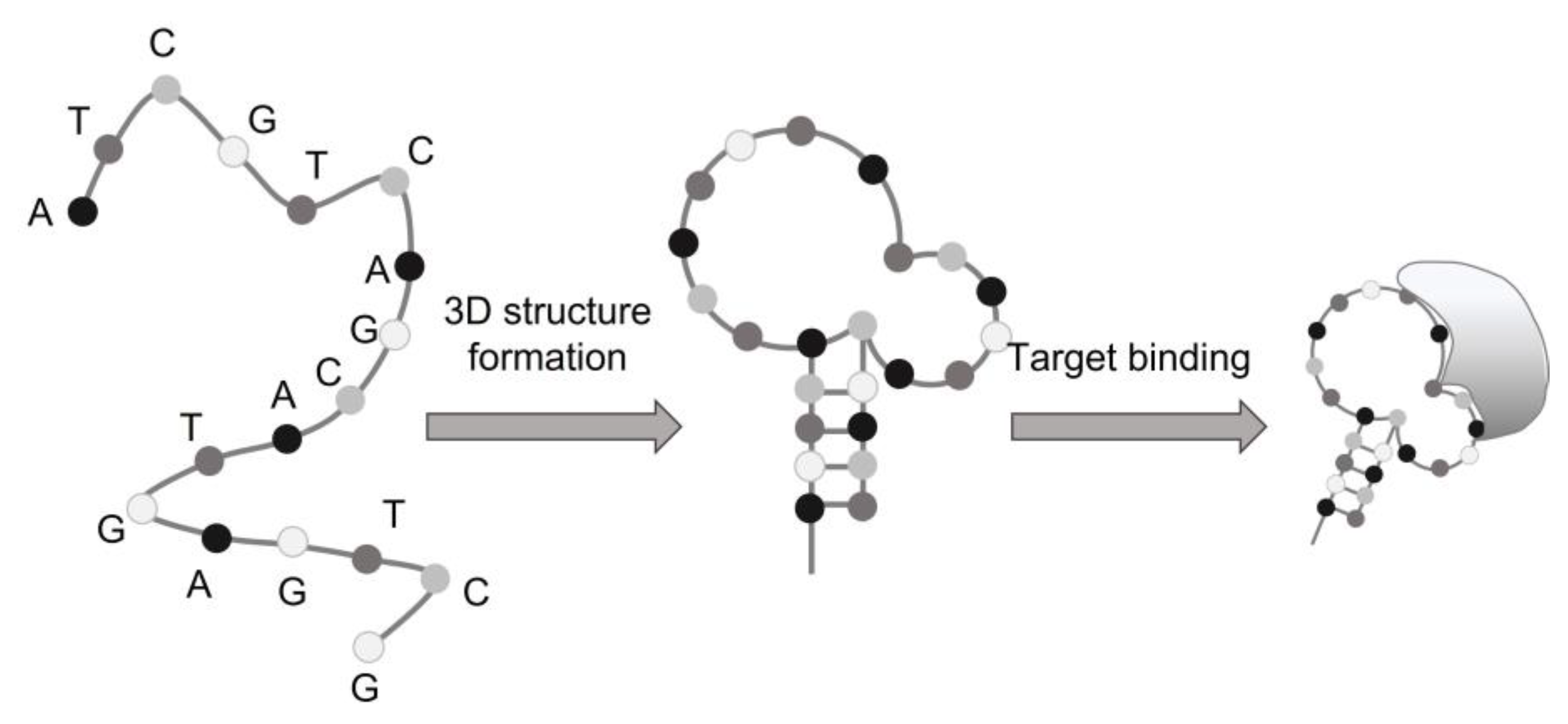
Figure 2.
HOMO and LUMO gap in fullerene-C60. Adapted from [32].
Figure 2.
HOMO and LUMO gap in fullerene-C60. Adapted from [32].

Figure 3.
Schematic diagram of the preparation of the electrochemical aptasensor. APTI: 5’ -SH-(CH2)6-TGGGAGCTGATGTCGCATGGGTTTTGATCACATGA-3’, APTII: 5’ -SH-(CH2)6-TTCGGGAATGATTATCAAATTTATGCC CTCTGAT-3’. Adapted from [37] with permission of Elsevier.
Figure 3.
Schematic diagram of the preparation of the electrochemical aptasensor. APTI: 5’ -SH-(CH2)6-TGGGAGCTGATGTCGCATGGGTTTTGATCACATGA-3’, APTII: 5’ -SH-(CH2)6-TTCGGGAATGATTATCAAATTTATGCC CTCTGAT-3’. Adapted from [37] with permission of Elsevier.
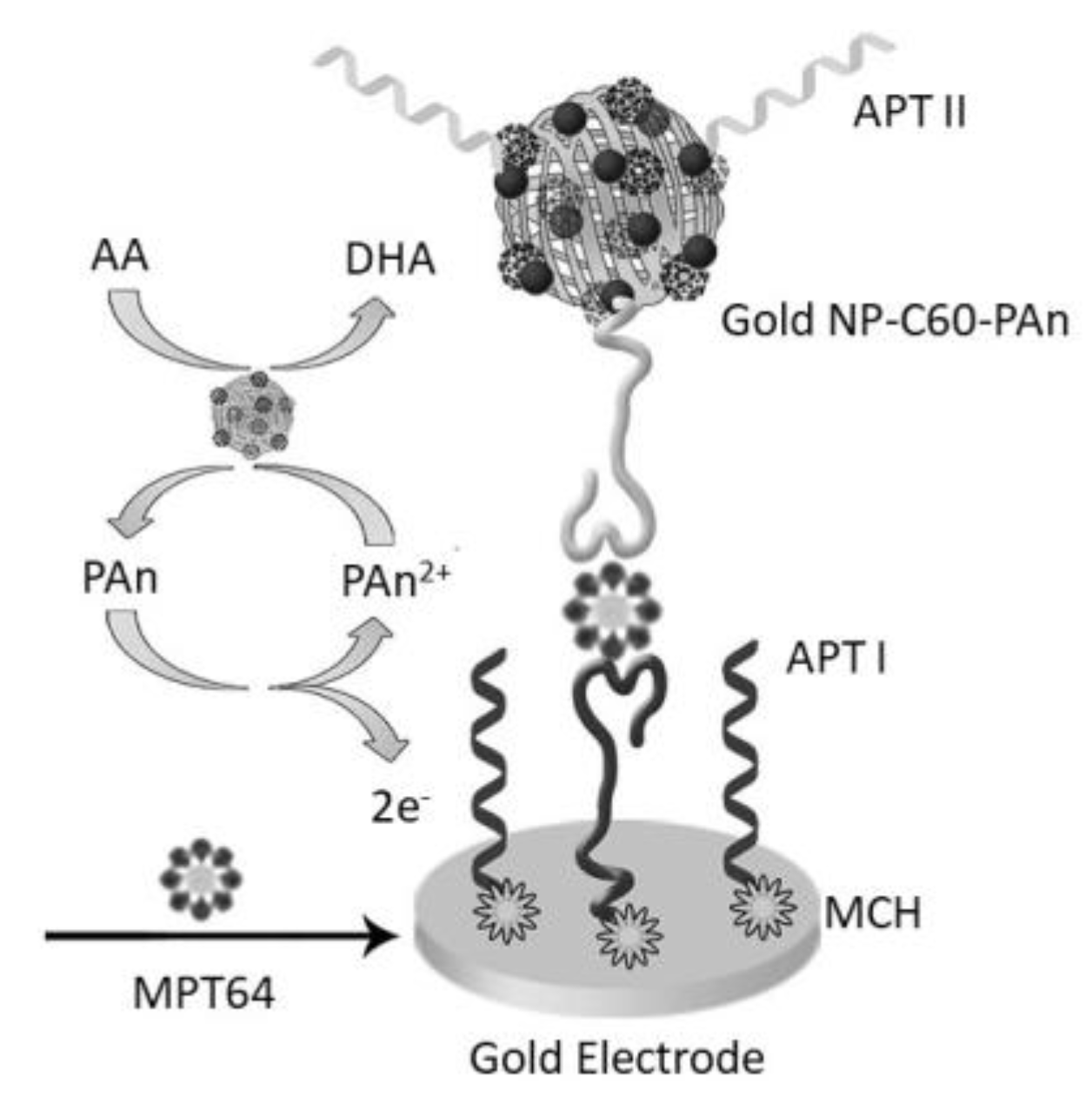
Figure 4.
Schematic representation of a working electrode based on cellular prions immobilized on carbon nanotubes. Partially adapted from [40] with permission of Eureka Science.
Figure 4.
Schematic representation of a working electrode based on cellular prions immobilized on carbon nanotubes. Partially adapted from [40] with permission of Eureka Science.
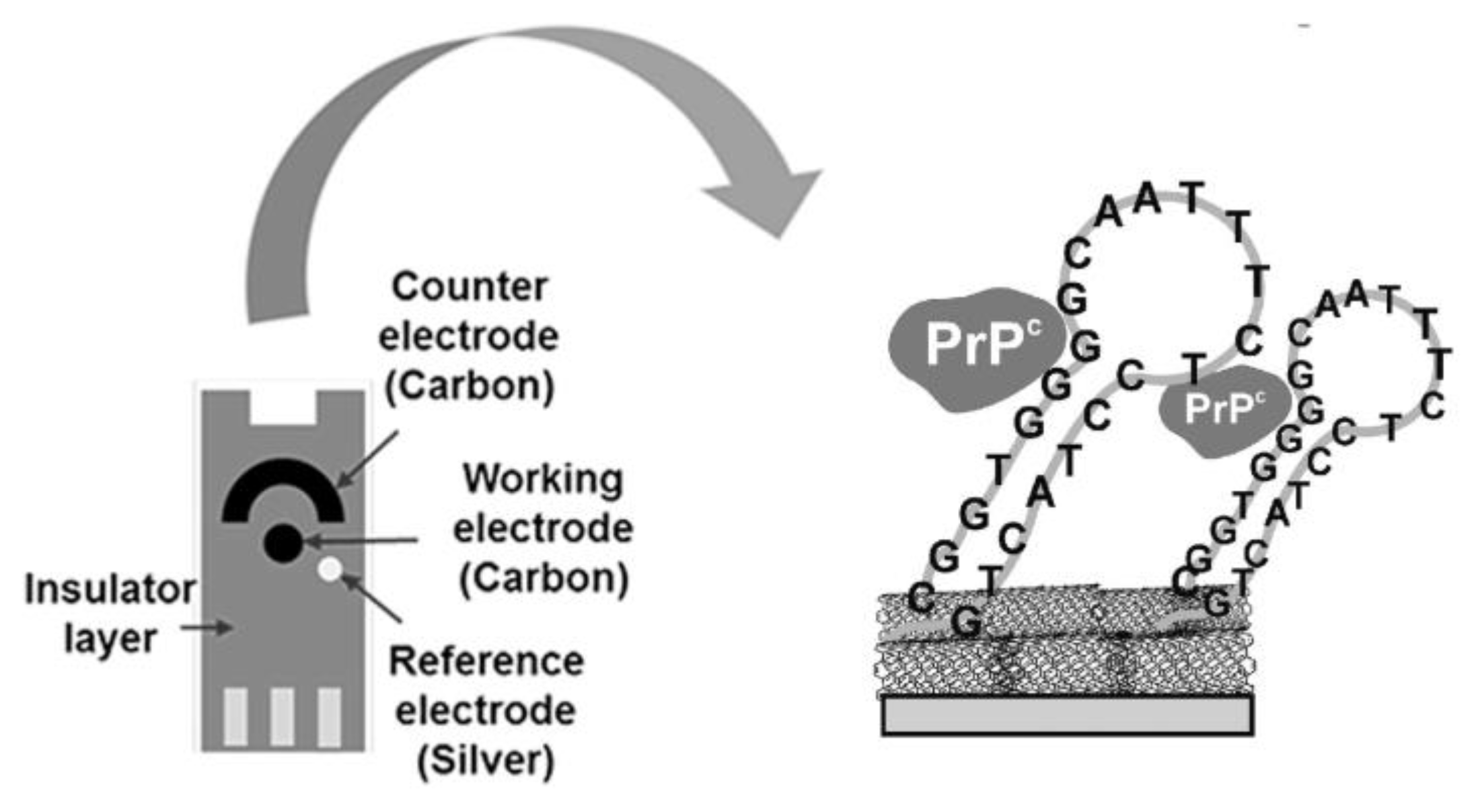
Figure 5.
Schematic representation of the interaction between Salmonella Typhi and the hybrid aptamer-SWCNTs system. Adapted from [43] with permission of Wiley-VCH.
Figure 5.
Schematic representation of the interaction between Salmonella Typhi and the hybrid aptamer-SWCNTs system. Adapted from [43] with permission of Wiley-VCH.
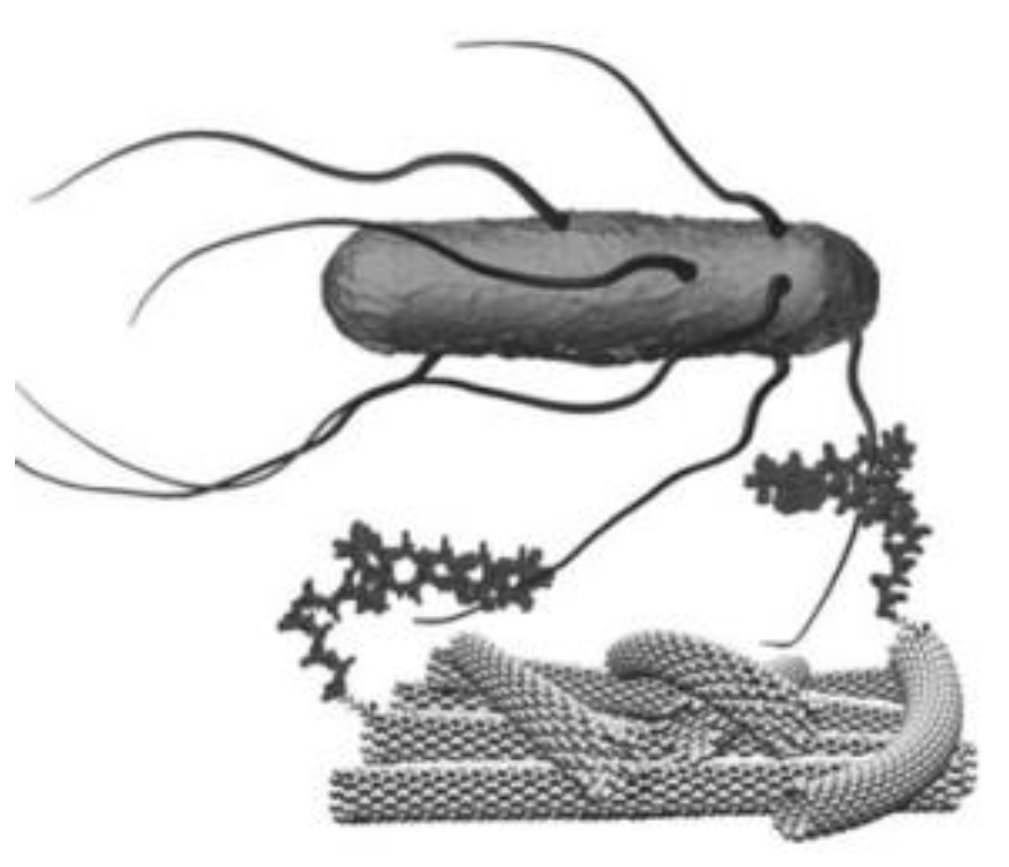
Figure 6.
Immobilization of aptamers on the carboxyl functionalized MWCNTs towards diclofenac detection. Adapted from [46].
Figure 6.
Immobilization of aptamers on the carboxyl functionalized MWCNTs towards diclofenac detection. Adapted from [46].
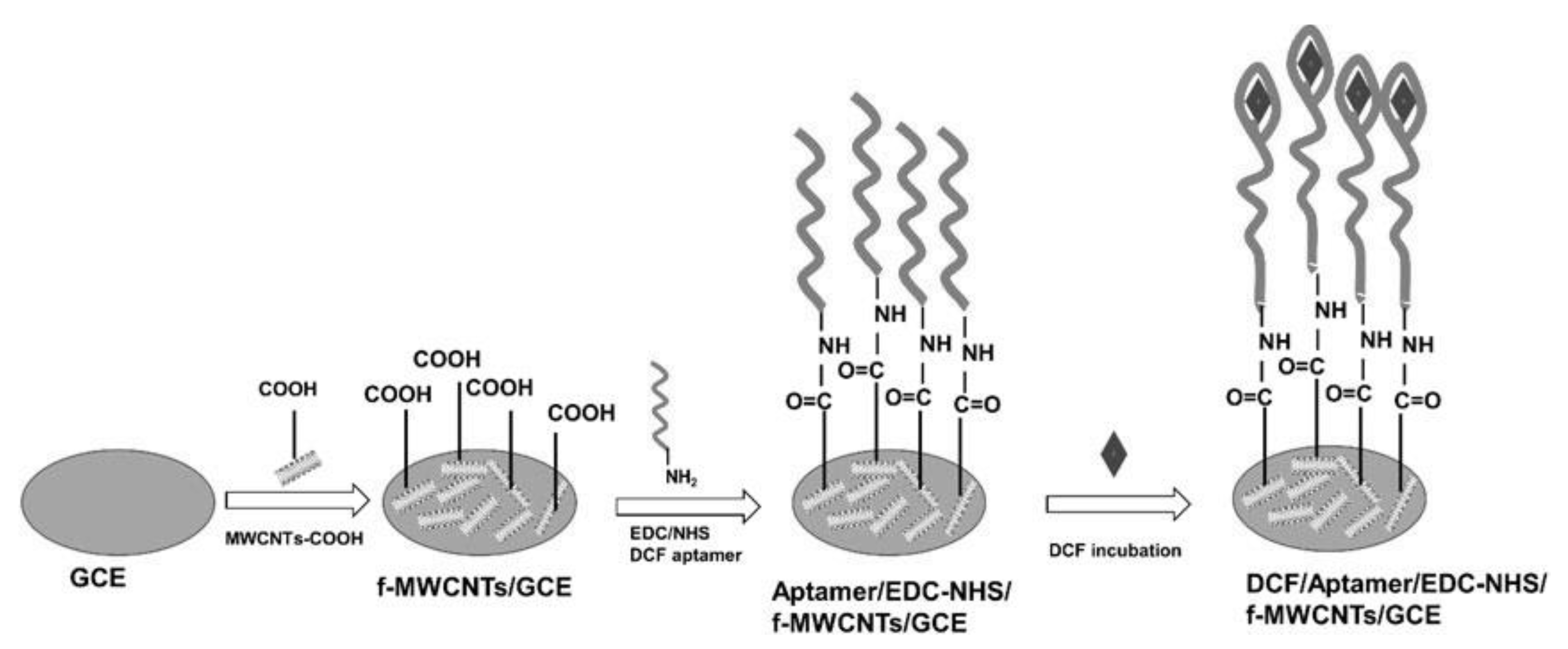
Figure 7.
Schematic representation of a lysozyme detecting biosensor based on TiO2@PPAA. Adapted from [58] with permission of Elsevier.
Figure 7.
Schematic representation of a lysozyme detecting biosensor based on TiO2@PPAA. Adapted from [58] with permission of Elsevier.
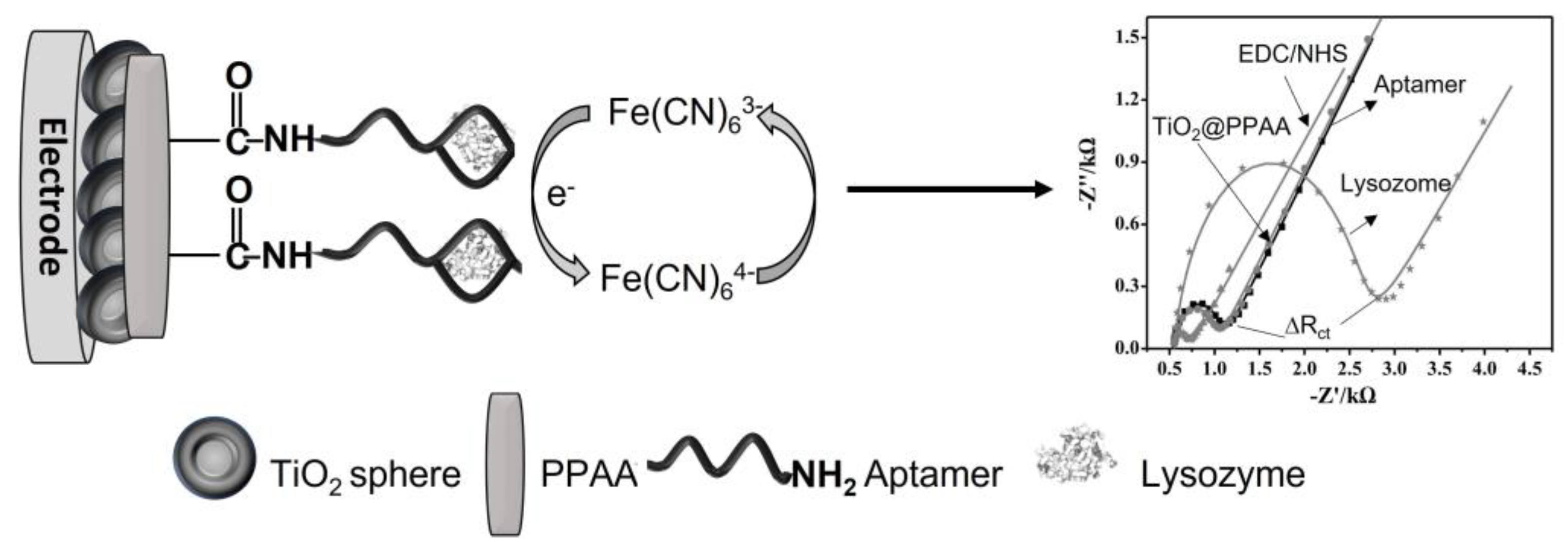
Figure 8.
Scheme of construction and performance stages of aptasensor for detection of aflatoxin B1. Adapted from [60] with permission of Elsevier.
Figure 8.
Scheme of construction and performance stages of aptasensor for detection of aflatoxin B1. Adapted from [60] with permission of Elsevier.
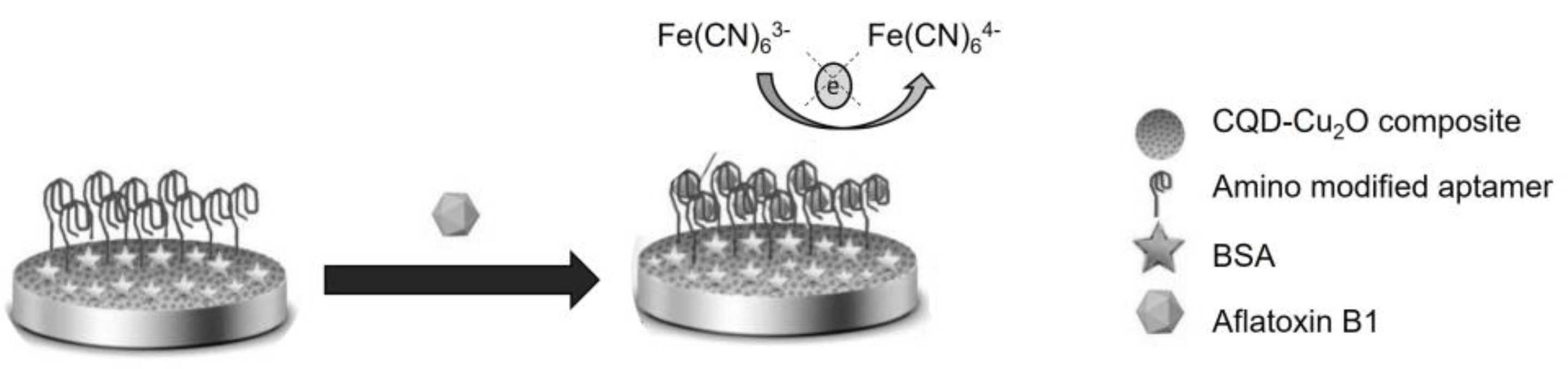
Figure 9.
General sensing mechanism of electrochemical aptasensors based on quantum dots. Adopted from [61].
Figure 9.
General sensing mechanism of electrochemical aptasensors based on quantum dots. Adopted from [61].
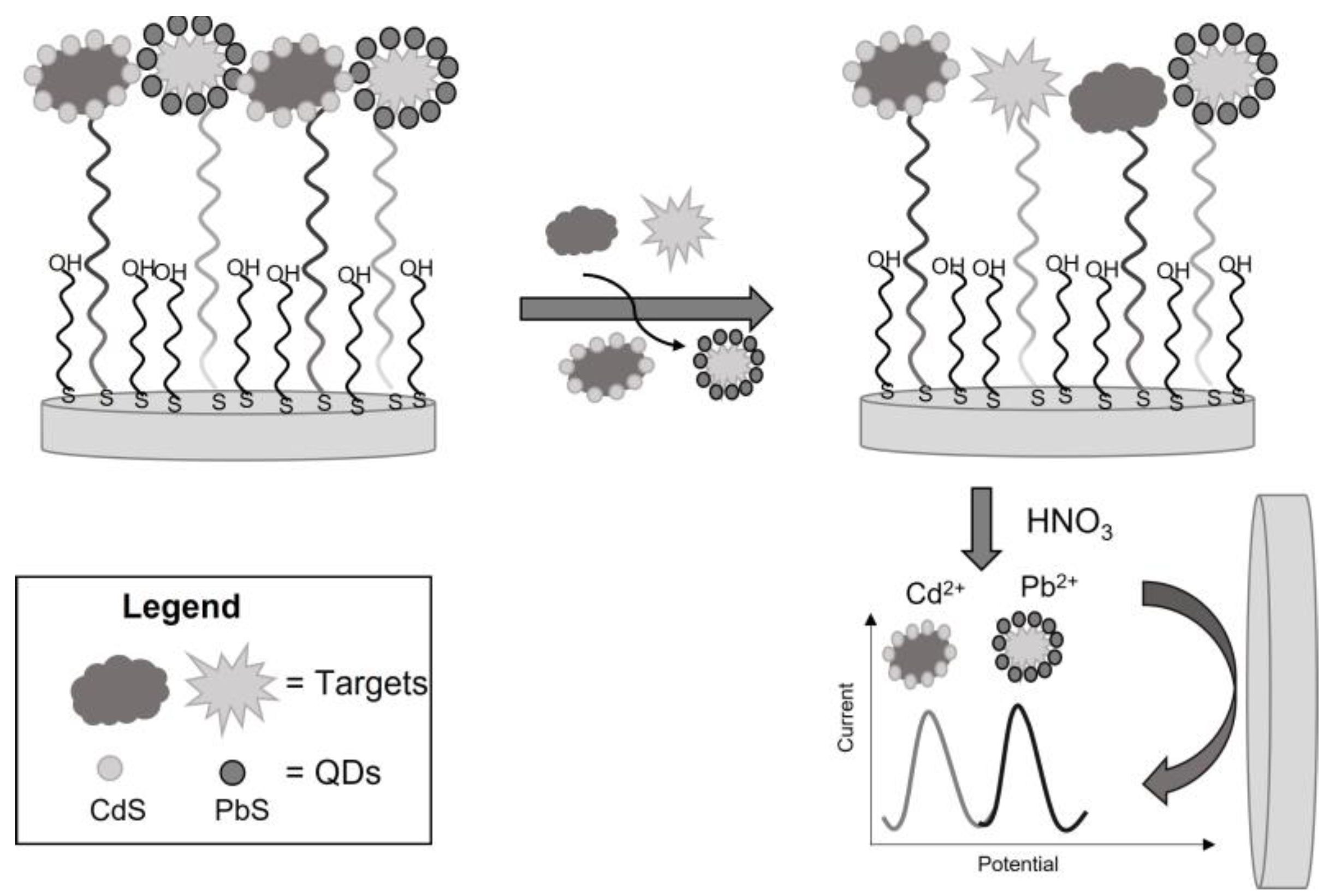
Figure 10.
Surface functionalization process of the conductive paper-based electrochemical aptasensor. Adapted from [67].
Figure 10.
Surface functionalization process of the conductive paper-based electrochemical aptasensor. Adapted from [67].
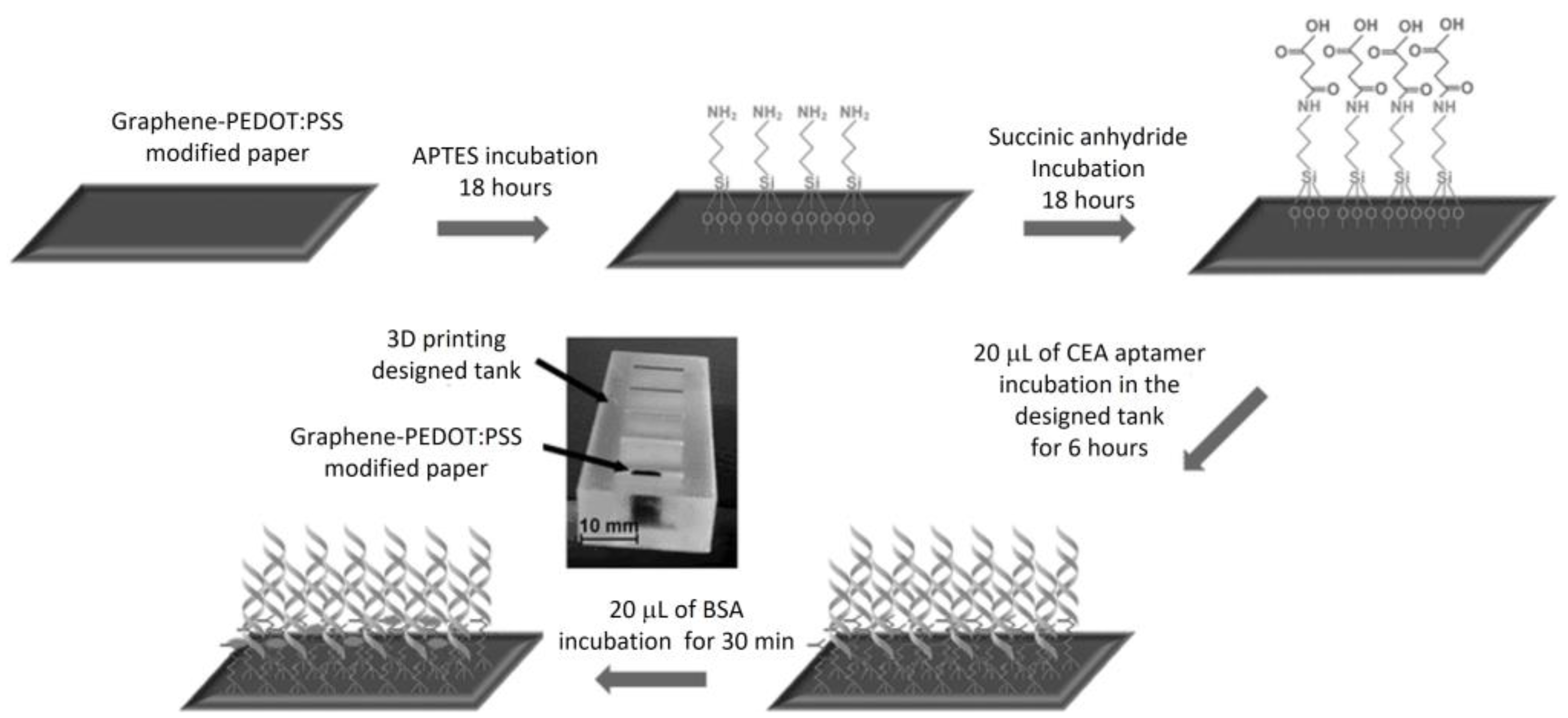
Figure 11.
Schematic illustration of the dopamine electrochemical aptasensor based on GR-PANI nanocomposites film. Adapted from [68] with permission of Elsevier.
Figure 11.
Schematic illustration of the dopamine electrochemical aptasensor based on GR-PANI nanocomposites film. Adapted from [68] with permission of Elsevier.
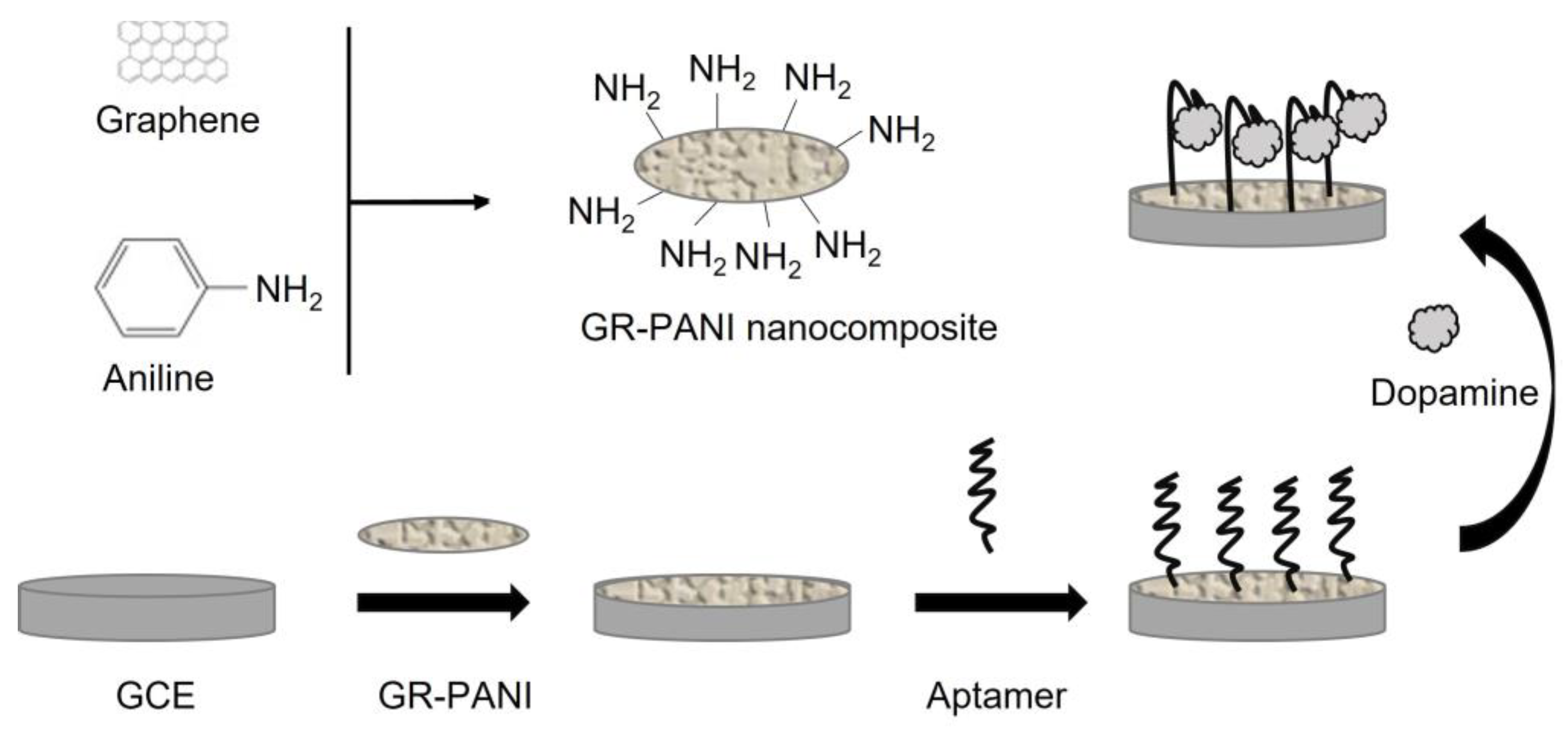
Figure 12.
The scheme of aptasensor based on electropolymerized neutral red (NR) at presence of pillar[5]arene (P[5]A-COOH). The NH2-modified DNA aptamers specific to aflatoxin M1 (AFM1) were covalently attached to the carboxylic group of P[5]A-COOH activated by carbodiimide chemistry. Adopted from [72] with permission of Wiley-VCH. conversion.
Figure 12.
The scheme of aptasensor based on electropolymerized neutral red (NR) at presence of pillar[5]arene (P[5]A-COOH). The NH2-modified DNA aptamers specific to aflatoxin M1 (AFM1) were covalently attached to the carboxylic group of P[5]A-COOH activated by carbodiimide chemistry. Adopted from [72] with permission of Wiley-VCH. conversion.
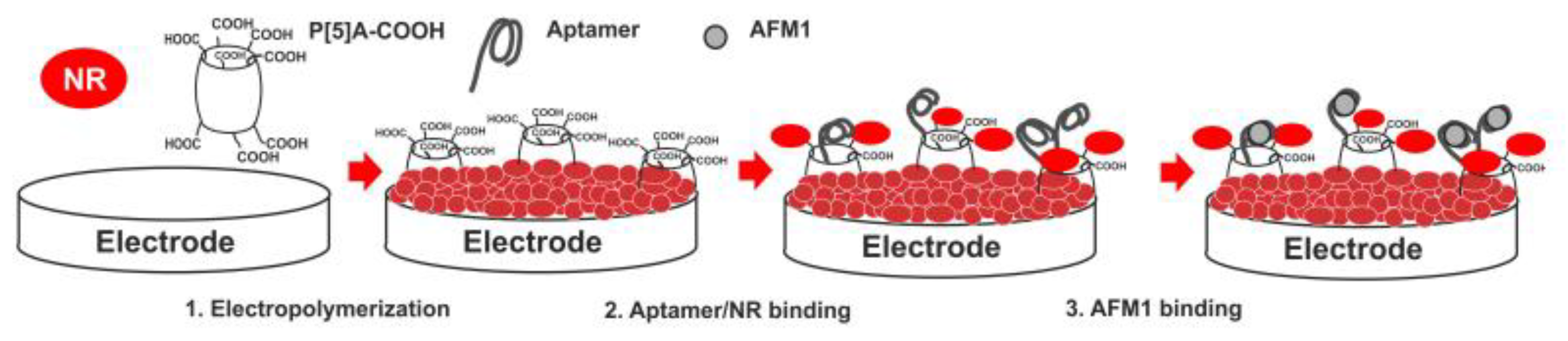
Figure 13.
The scheme of DNA sensor based on electropolymerized layers of Azure B with entrapped DNA-MB complexes for detection of idarubicin. Adopted from [73].
Figure 13.
The scheme of DNA sensor based on electropolymerized layers of Azure B with entrapped DNA-MB complexes for detection of idarubicin. Adopted from [73].
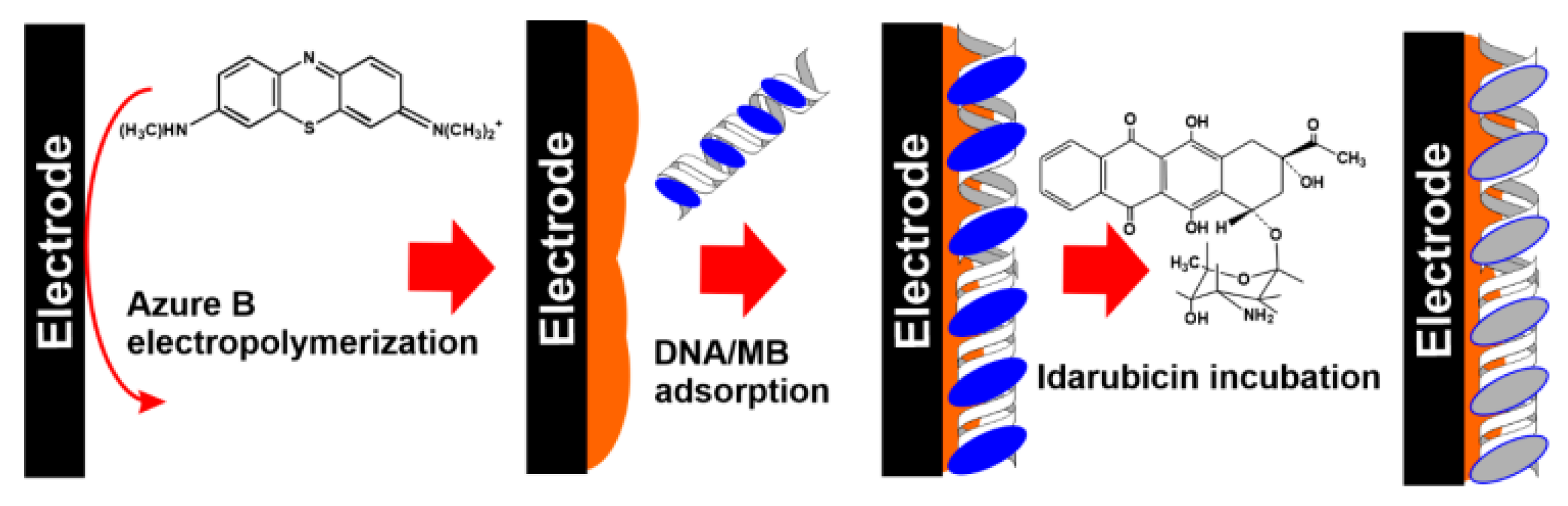

Table 1.
Comparison between organic and inorganic semiconductors.
 |
Disclaimer/Publisher’s Note: The statements, opinions and data contained in all publications are solely those of the individual author(s) and contributor(s) and not of MDPI and/or the editor(s). MDPI and/or the editor(s) disclaim responsibility for any injury to people or property resulting from any ideas, methods, instructions or products referred to in the content. |
© 2023 by the authors. Licensee MDPI, Basel, Switzerland. This article is an open access article distributed under the terms and conditions of the Creative Commons Attribution (CC BY) license (http://creativecommons.org/licenses/by/4.0/).
Copyright: This open access article is published under a Creative Commons CC BY 4.0 license, which permit the free download, distribution, and reuse, provided that the author and preprint are cited in any reuse.


