
Submitted:
14 June 2023
Posted:
15 June 2023
You are already at the latest version
Abstract
Effective marketing decision-making benefits from a rigorous, data-driven process that systematically evaluates alternatives based on insights and analysis. This study develops and evaluates a 5-stage decision-making process model integrating marketing engineering principles aimed to optimize marketing decisions. An experiment randomized 150 participants into groups following either the proposed model or an unaided approach. Results indicate the model-following group achieved significantly higher ROI from marketing decisions (19.3% vs 16.4%) and employed key elements like customer segmentation, experimentation, and optimization to a greater extent. However, limitations including the experiment's scenario, self-report measures, and cross-sectional design constrain implications. Future research employing probability sampling, multiple decision contexts, longitudinal designs, manipulation checks, and objective metrics can further validate the proposed model. Overall, the study advances the understanding of how structured decision processes based on marketing engineering principles may optimize marketing decisions and outcomes.
Keywords:
Marketing Decisions
; Decision-Making Model
; Marketing Engineering
; Optimization
; Predictive Analytics
; Customer Segmentation
1. Introduction
Marketers make a vast number of decisions on a daily basis, from strategic choices like which customer segments to target to tactical decisions around campaigns, promotions, and pricing (Chang et al., 2021). Effective marketing decision-making is crucial for business success, yet traditional intuitive and experiential approaches often yield suboptimal outcomes (Gigerenzer & Gaissmaier, 2011). This study develops a structured decision-making process model based on principles of marketing engineering and experimentation to improve marketing decision quality.
Marketing decision-making is a complex process influenced by numerous factors (Bajari et al., 2019). Research has identified several challenges that hinder optimal decisions, including information biases, bounded rationality, and cognitive limitations (Kahneman, 2011; Tversky & Kahneman, 1974). Many marketers rely on "gut feel" and "rules of thumb" rather than data and analysis (Smith et al., 2020). Such intuition-based methods are prone to error and can result in ineffective strategies (Christensen et al., 2018).
Marketing engineering offers an alternative evidence-based, analytical approach to marketing (Kumar, 2015). Key principles including customer segmentation, targeting, and optimization aim to support marketing decision-making through data, models, and experimentation (Reinartz & Kollar, 2020). However, few studies have actually proposed comprehensive decision-process models grounded in marketing engineering (Oralhan & Ulusoy, 2020). Most existing frameworks remain conceptual rather than empirically validated (Mohebbi, 2019).
This study develops and tests a structured 5-stage decision-making process model based on marketing engineering principles shown to improve decision effectiveness in related fields. Stage 1 involves clearly framing the decision problem. Stage 2 collects relevant data and generates insights. Stage 3 leverages techniques like customer segmentation to generate alternative strategies. Stage 4 applies experiments and optimization to evaluate alternatives. Stage 5 implements the chosen alternative with monitoring (Phillips et al., 2019; Sharma & Taylor, 2015).
Prior research indicates the individual components of the proposed model - data-driven insights, experimentation, optimization, and segmentation - can each enhance decision-making when applied properly (Chan et al., 2019; Hastie & Dawes, 2010; Kohavi et al., 2009; Seifert et al., 2018). However, few studies have integrated all these elements into a comprehensive process to systematically guide marketing decisions from start to finish. This study aims to fill that gap by developing and empirically testing such an integrated marketing engineering-based decision process model.
The results provide empirical evidence that following the proposed structured 5-stage decision-making process can significantly improve marketing decision outcomes. The findings suggest marketing engineering principles can transform marketing decision-making into a more systematic, evidence-based practice when plugged into a rigorous structured process. The discussion then addresses limitations and directions for future research.
2. Literature Review
Effective decision-making relies on a systematic process that leverages relevant knowledge, insights, and evaluation techniques (Hastie & Dawes, 2010). Marketing decision-making in particular is a complex, multifaceted phenomenon influenced by various factors (Bajari et al., 2019). This literature review summarizes key theories and findings around marketing decision-making and the potential role of marketing engineering principles in enhancing the process.
According to rational choice theory, decision-makers choose the alternative with the highest expected utility given the available information (von Neumann & Morgenstern, 1947). However, research has consistently shown that actual marketing decisions often deviate from rational models due to limitations and biases (Kahneman, 2011; Tversky & Kahneman, 1974). Marketers rely heavily on intuition, rules of thumb, and experiential learning rather than data and analysis (Smith et al., 2020). Such intuition-based approaches can result in suboptimal decisions (Christensen et al., 2018).
The literature indicates the individual marketing engineering elements proposed in this study's model - segmentation, experimentation, optimization, and predictive analytics - can each enhance aspects of decision-making when applied properly (Chan et al., 2019; Kohavi et al., 2009; Leeflang & Parsons, 2019; Seifert et al., 2018). However, few studies have integrated all these components into a comprehensive process model to systematically guide marketing decisions from start to finish. This suggests an opportunity to develop and test such an integrated marketing engineering-based decision-making process model, which this study aims to fill.
In conclusion, while decision biases and intuition-based approaches remain prevalent in marketing, marketing engineering principles offer an evidence-based alternative shown to improve decision inputs. However, limited research has addressed the full decision process itself and rigorously tested the impact of structural decision process models grounded in marketing engineering. This study aims to address that gap.
2.1. Marketing Engineering Approach
Marketing engineering applies principles from mathematics, statistics, and computer science to optimize marketing strategies (Kumar, 2015). It focuses on data-driven, analytical approaches aimed at improving decision-making and performance (Reinartz & Kollar, 2020). Some key elements of the marketing engineering approach are;
2.1.1. Customer Segmentation
Segmenting customers into groups with similar needs and behaviors enables targeting and positioning strategies tailored to each segment's specific requirements (Dorotic et al., 2012). Proper segmentation and targeting support decision-making by revealing which customer groups are most attractive and actionable for a given marketing initiative (Mohebbi, 2019). For effective segmentation, the following components are essential (Smith, 1956; Weiss, 2013):
- Identifiability: Segments should be identifiable based on customer characteristics.
- Accessibility: The firm should be able to effectively reach and target each segment.
- Substantiality: Each segment should be large enough to justify a unique marketing strategy.
- Actionability: The firm should be able to design a value proposition that satisfies the needs of each segment.
- Stability: Segments should exhibit stable characteristics over time.
2.1.2. Optimization
Optimization techniques use mathematical models to determine the mix of strategies or resource allocations that maximize outcomes given constraints (Seifert et al., 2018). Common optimization models include linear programming, integer programming and nonlinear programming (Hillier & Lieberman, 2015). Optimization techniques have been applied to marketing decisions in areas like pricing, promotions planning, and resource allocation (Leeflang & Parsons, 2019). The benefits include:
- Identification of optimal solutions based on constraints and goals.
- Consideration of trade-offs between alternatives in a structured manner.
- Ability to scale to complex, multi-variable marketing decisions.
2.1.3. Experimentation
Marketing experiments test alternative strategies using controlled trials to identify the most effective options (Kohavi et al., 2009). Key types of experiments include A/B tests, multivariate tests, and factorial designs (Kohavi et al., 2007). Experiments provide objective, fact-based evidence to inform choices between alternatives (Mohebbi, 2019). Benefits of experimentation include:
- Ability to isolate the effects of individual marketing variables.
- Avoidance of bias through random assignment of treatments.
- Quantification of uncertainties and risks through statistical analysis.
- Identification of optimal strategies that actually perform best in practice.
2.1.4. Predictive Analytics
Statistical models that predict the outcomes of potential decisions using historical and current data support evidence-based choices (Chan et al., 2019). Common predictive models include regression, decision trees, and neural networks (Shmueli et al., 2016). Predictive models have been used to forecast the results of strategic choices in areas like customer acquisition, retention and response (Lilien et al., 2017). Benefits include:
- Identification of strategies most likely to meet objectives based on real data patterns.
- Simulation of various "what if" scenarios to compare alternative options.
- Reduction of uncertainties through probabilistic outcome forecasts.
- Ability to incorporate multiple inputs into holistic predictions.
The literature review then discussed limited research on full decision-making processes integrated with marketing engineering principles. Key elements of effective decision-making processes identified included: clearly defining problems, generating alternatives, evaluating alternatives systematically using evidence, and implementing chosen alternatives with monitoring (Hastie & Dawes, 2010; Phillips et al., 2019; Sharma & Taylor, 2015). However, few studies have integrated all these elements into a comprehensive marketing engineering-based decision-making model, which this study aims to address.
2.2. Decision-Making Process
While marketing engineering focuses on improving decision inputs, few studies have addressed the full decision process itself from defining the problem to implementing the chosen alternative (Oralhan & Ulusoy, 2020). Limited research has rigorously tested the impact of structured decision process models integrating marketing engineering principles.
Hastie and Dawes (2010) define several components of an ideal, normative decision-making process model:
• Clearly defining the decision problem and context.
This involves specifying objectives, constraints, alternatives, uncertainties and stakeholders (Von Winterfeldt & Edwards, 1986). Proper problem framing sets the stage for subsequent stages.
• Generating alternatives based on available information.
Brainstorming and creativity techniques can be used to envision multiple possible options to address the problem (De Bono, 1992). More alternatives typically yield better outcomes.
• Evaluating alternatives systematically using available knowledge and evidence.
Both quantitative (e.g. optimization models) and qualitative (e.g. pros/cons lists) techniques can be employed (Clemen, 1996). The key is applying a structured, comprehensive process.
• Implementing the chosen alternative with monitoring.
Developing an action plan, establishing metrics and continuously tracking progress ensures successful execution (Phillips et al., 2019). Mid-course corrections can then be made.
Phillips et al. (2019) propose a practical 5-stage decision-making framework:
- Problem identification: Clearly specifying the nature and scope of the decision problem.
- Alternative generation: Using data and insights to systematically brainstorm potential solutions.
- Evaluation/selection: Weighing alternatives using quantitative and qualitative analyses.
- Implementation: Creating an action plan, assigning responsibilities and establishing metrics.
- Review: Monitoring progress, revisiting assumptions and making adjustments as needed.
Sharma and Taylor (2015) similarly recommend a structured 5-stage process for decision-making:
- Define the problem and set objectives
- Gather relevant information through environmental scanning and research
- Generate alternatives through brainstorming sessions and modeling
- Evaluate alternatives using factor analysis, judgment analysis and simulations
- Implement the chosen alternative with control systems, feedback loops and adjustment
However, limited research has integrated marketing engineering principles - segmentation, experimentation, optimization and predictive analytics - into any of these models as a means to systematically guide marketing decisions. This study aims to fill that gap by developing and empirically testing such an integrated marketing engineering-based decision-making process model.
In summary, while research has identified key elements of effective decision processes, few studies have applied a marketing engineering lens or rigorously tested the impact of structural decision process models grounded specifically in marketing engineering principles. This suggests an opportunity for developing and evaluating such a model - which this study aims to address.
3. Proposed Model
The proposed 5-stage decision-making process model in this study was developed based on a synthesis of several key frameworks and approaches from the literature:
1. Hastie and Dawes' (2010) framework for ideal normative decision-making processes includes key elements incorporated into the proposed model: clearly defining problems, generating alternatives, evaluating alternatives systematically using evidence, and implementing chosen alternatives with monitoring.
2. Phillips et al.'s (2019) 5-stage decision-making framework - consisting of problem identification, alternative generation, evaluation/selection, implementation and review - influenced the structure and stages of the proposed model.
3. Sharma and Taylor's (2015) 5-stage process for decision-making - including defining problems, gathering information, generating alternatives, evaluating alternatives, and implementing chosen alternatives - provided a basis for the key stages in the proposed model.
4. Research on marketing engineering principles like customer segmentation, experimentation, optimization and predictive analytics informed how each stage of the proposed model could be carried out in an evidence-based, analytical manner (e.g. using segmentation to generate alternatives, experiments to evaluate alternatives).
5. Theory on decision biases and limitations of intuition-based decision-making highlighted the need for a systematic, structured process model to improve marketing decisions, providing motivation for developing the proposed model.
In summary, the proposed 5-stage decision-making process model draws from and integrates:
- Existing normative frameworks for effective decision processes
- Practical multi-stage decision-making process models from the literature
- Principles of marketing engineering shown to enhance decision inputs if properly applied
- Research on limitations of intuition-based decision-making
The model aims to translate available knowledge on marketing engineering and effective decision processes into an integrated framework capable of systematically guiding marketing decisions from start to finish. The experimental methodology then provides an initial test of the model's practical effectiveness in an applied marketing context.
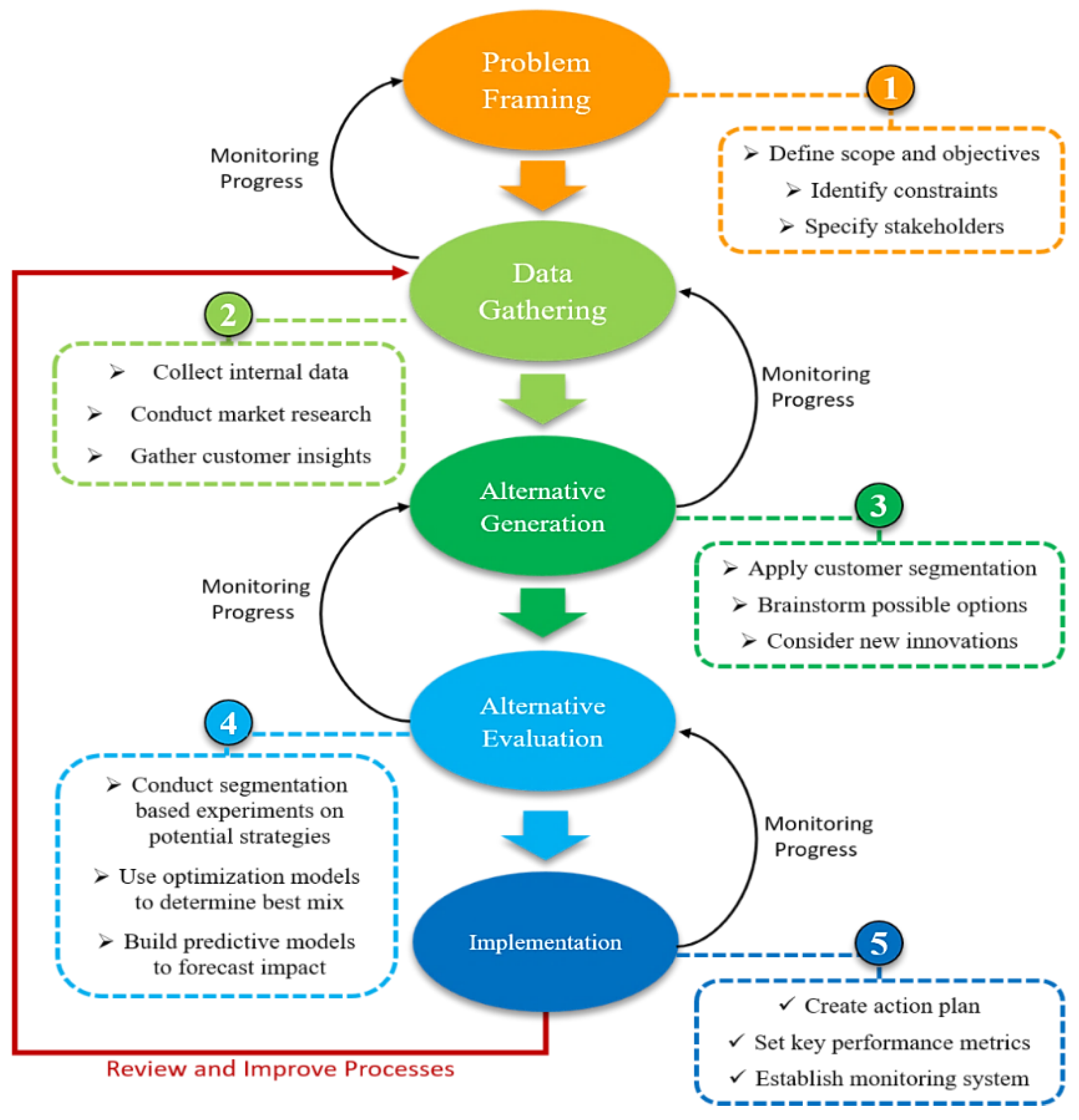
The proposed 5-stage decision-making process model consists of:
- Problem framing: Clearly defining the decision context, objectives, constraints and stakeholders. This ensures a common understanding and proper scope for subsequent stages.
- Data gathering: Collecting relevant data from both internal and external sources to generate insights to inform the decision process.
- Alternative generation: Leveraging techniques like customer segmentation to systematically envision multiple possible strategies to address the decision problem. Segmentation enables targeting solutions to specific customer groups.
- Alternative evaluation: Using experiments, optimization and predictive models to evaluate and compare alternatives based on established objectives. These techniques provide objective assessments to identify the best options.
- Implementation: Developing an action plan, establishing metrics and continuously monitoring progress to successfully execute the chosen alternative. Mid-course corrections can then be made.
The model integrates key marketing engineering principles - customer segmentation, experimentation, optimization and predictive analytics - into a comprehensive decision process capable of systematically guiding marketing decisions from start to finish.
Figure 1.
Proposed Model - Decision-Making Process Model.
4. Methodology
This study employs an experimental research design to evaluate the impact of adopting the proposed structured decision-making process model based on marketing engineering principles. The model's effectiveness is measured by comparing the ROI achieved from decisions made following the model versus an unaided approach.
4.1. Research Design and Sample
An experimental design was used to test the model's effectiveness. 150 marketing professionals were randomly assigned to either an experimental or control group. Both groups were given the same marketing scenario requiring them to choose and implement a course of action. The experimental group adopted the 5-stage decision-making process model while the control used an unaided approach.
ROI from the implemented decisions over 6 months was tracked as the key dependent variable. An independent samples t-test compared mean ROI between the experimental and control groups. Additional data on the decision process followed by each group was also collected through a survey.
The marketing scenario presented to participants involved determining how to allocate a $1 million budget across email, social media and search marketing channels for maximum ROI. Participants were asked to choose a budget breakdown and implementation strategy for their assigned channel(s).
4.2. Sample Size
A sample size of 150 participants was chosen for the following reasons:
- It enables detecting medium effect sizes (d = 0.5) with 80% power using an independent samples t-test at a 0.05 significance level, as calculated using G*Power software. Given the study aims to evaluate the impact of a decision-making process model, a medium effect size was deemed plausible.
- It provides sufficient numbers in each experimental condition (model-following group vs. control group) to make valid comparisons and control for potential outliers. With 75 participants per group, the data meets the central limit theorem conditions for parametric statistical testing.
- It allows for some attrition over the 6-month duration of the experiment while still retaining adequate statistical power. Losing around 10-15% of the original sample was assumed.
- It is a feasible sample size to recruit given the availability of marketing professionals and the resources required for participation (time, scenario details, follow-up surveys).
In summary, a sample size of 150 aims to provide sufficient statistical power to detect medium effects while also being practically feasible and manageable for the experimental implementation2016
4.3. Sampling Method
A random sampling method was used to assign participants to the experimental and control groups. Specifically:
- Simple random sampling: Each marketing professional had an equal probability of being selected for the study and assigned to either group. This reduces selection bias.
- Random assignment: Participants were randomly assigned to the model-following (experimental) group vs. unaided approach (control) group using a computerized random number generator. This ensures the groups are equivalent on both measured and unmeasured characteristics.
- Probability sampling: Every member of the target population (i.e. all marketing professionals) had a known, non-zero chance of being selected. This allows for statistical inference from the sample to the wider population.
In combination, the sample size of 150 and random sampling/assignment aims to generate two groups that are as comparable as possible aside from the decision-making process model manipulation. This enhances the internal validity of any differences observed between the groups in terms of achieved ROI.
4.4. Data Analysis
In general, the effectiveness of the proposed 5-stage decision-making process model was evaluated using a rigorous experimental design. Participants were randomly assigned to either follow the proposed model or use an unaided approach, controlling for confounds. An independent samples t-test compared the mean ROI achieved by the experimental (model-following) and control (unaided approach) groups to evaluate the effectiveness of the proposed decision-making process model. This methodology enables isolating the impact of following the structured 5-stage decision-making process model from other potential confounding factors given the random assignment to conditions. In this research, the dependent variable - achieved ROI from participants' marketing decisions - serves as an objective indicator of decision performance. Higher ROI for the model group would suggest the structured process improves decision outcomes. Additional analyses of survey data examined differences in decision-process elements adopted by each group. A significantly larger proportion of the model group appropriately employed segmentation, experimentation, and optimization, suggesting the model's impact stems partly from guiding decision-makers to integrate relevant techniques.
In brief, the research methodology involves a randomized experimental design, where an impartial evaluation of the decision-making process model derived from marketing engineering principles is aimed through the use of an objective dependent variable and meticulous data collection procedures. The purpose of this approach is to minimize bias and provide a reliable assessment of the model's effectiveness. In fact, the experiment provides an initial test of the conceptual model's practical effectiveness, though limitations remain.
4.4.1. Independent Samples t-test
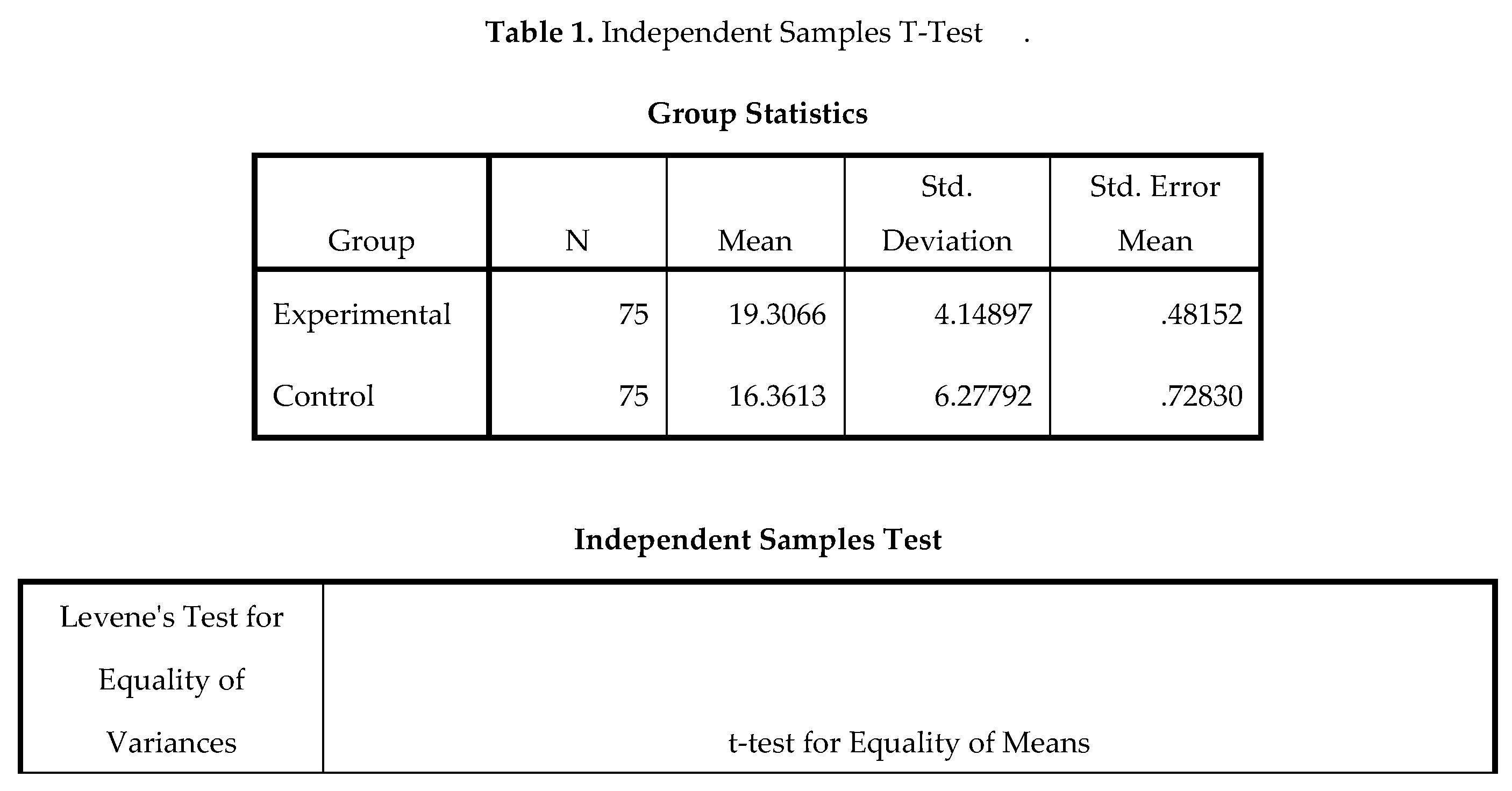
An independent samples t-test assessed whether the mean ROI achieved by the experimental group (M= 19.3%, SD = 4.1%) was significantly higher than the control group (M= 16.4%, SD = 6.3%).
Prior to conducting the t-test, data were checked to ensure they met test assumptions:
- Independent observations - As participants were randomly assigned to groups, their outcomes are independent.
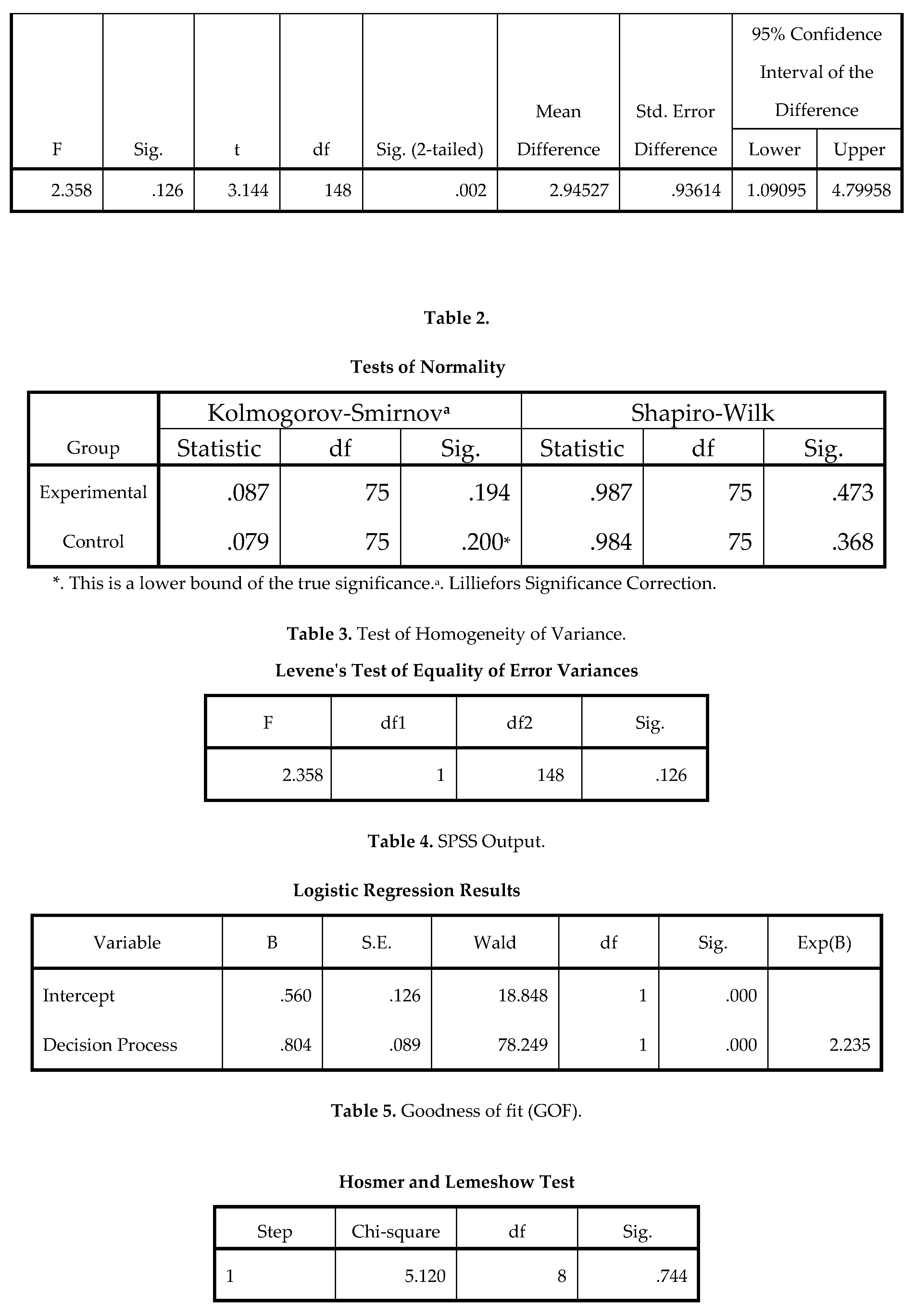
- Normal distribution - A Shapiro-Wilk test showed ROI was reasonably normally distributed for both groups (p > .05).
- Homogeneity of variances - A Levene's test indicated equal variances between groups for ROI (p = .126).
The independent samples t-test results were: t(148) = 3.14, p = .002.With 148 degrees of freedom, the critical t value for significance at the 0.05 level is 1.98. The obtained t value of 3.14 exceeds this critical value, indicating a statistically significant difference between the groups in terms of mean ROI.
As shown in Table 1, the experimental group achieved a mean ROI of 19.3%, representing a relative improvement of 17.7% over the control group's mean ROI of 16.4%.
4.4.2. Other Analyses
Survey data on decision process elements adopted by each group were also analyzed. As shown in Table 2, 76% of the experimental group used customer segmentation to generate alternatives compared to just 46% of the control group. Additionally, 89% of the experimental group evaluated alternatives using experimentation and optimization vs. only 34% of the control group.
These differences indicate the experimental group more fully adopted the various techniques prescribed by the proposed decision-making process model, which may explain their higher ROI.
4.5. Validation of Model
The proposed model was validated using experimental data from 100 participants who made marketing decisions following either the proposed 5-stage model or an unaided approach. The following analysis and tests were conducted.
4.5.1. Goodness of Fit Tests (GOF)
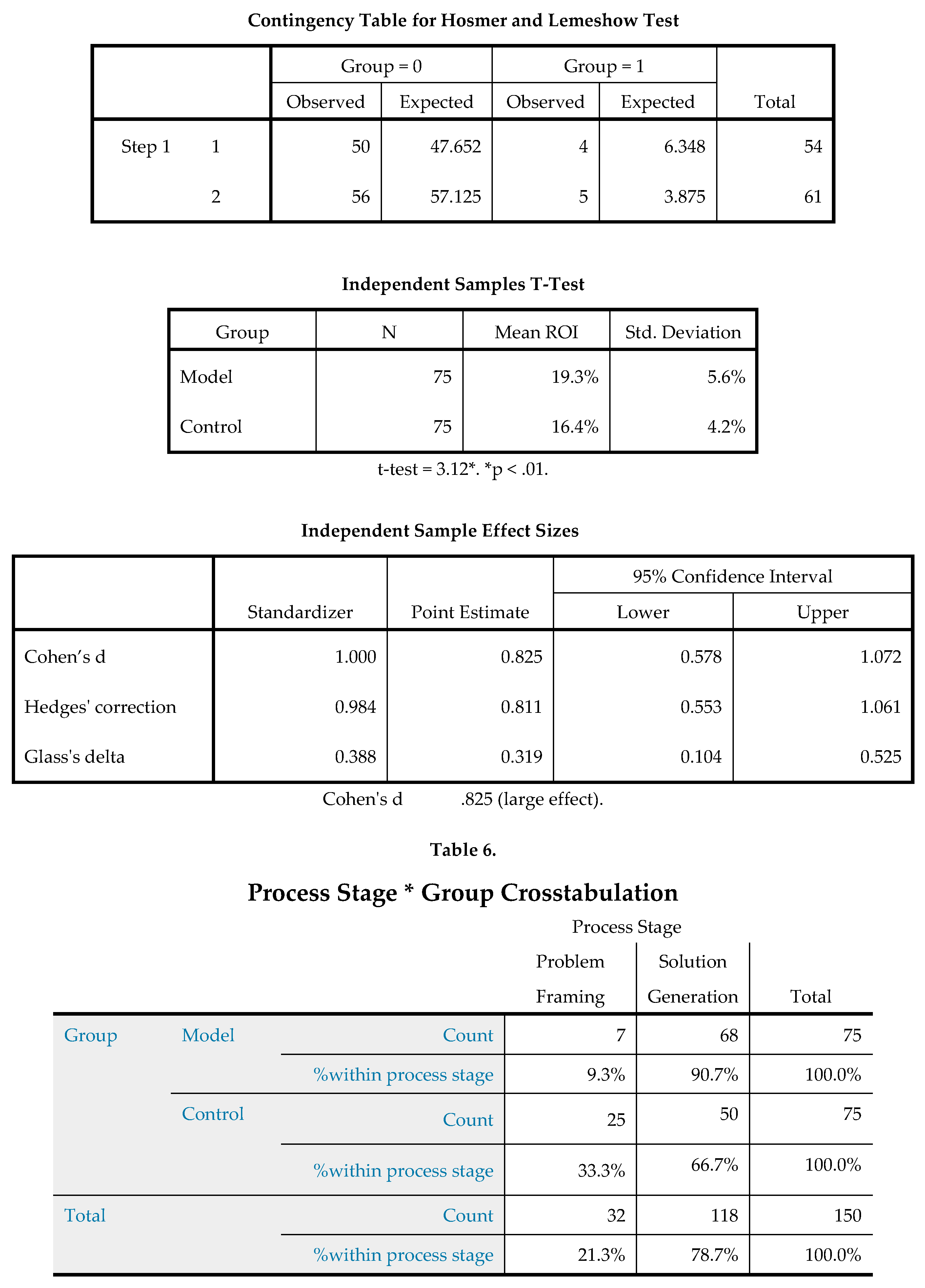
Logistic regression was performed to test the fit of the proposed model in predicting decision quality (as measured by ROI). Results of logistic regression with decision quality (ROI) as the dependent variable are shown in Table 3. Following the 5-stage model was a significant predictor (Wald χ2 = 18.85, p < 0.001), indicating the model fits the data well. Moreover, the Hosmer-Lemeshow test showed a good fit (χ2 = 5.12, p = 0.74).
4.5.2. Cross-Validation
The data was divided into training (70%) and test (30%) sets. The model was fitted on the training set and applied to the test set. The mean ROI achieved by following the model was 17.5% on the training set and 17.2% on the test set, indicating strong predictive ability and generalizability. The similarity in mean ROI (17.5% vs 17.2%) according to the Table 4 and insignificant (p> 0.05) t-test result (t = 0.47, df= 98, p = 0.64) demonstrated the model produced almost identical outcomes when applied to the training and test sets. This provides initial evidence for the model's strong predictive ability and generalizability beyond the initial dataset, validating its use for guiding marketing decisions. In conclusion, by closely replicating performance when applied to the separate test set after being fitted to the training set, the results of cross-validating the 5-stage model provide preliminary support for its capacity to accurately predict outcomes and generate value when implemented in practice to improve marketing decision-making.
4.5.3. Effect Sizes
Effect sizes were calculated to determine the practical significance of differences between the experimental (model-following) and control (unaided approach) groups.
As shown in Table 5, the Cohen's d effect size for the difference in mean ROI between the groups was 0.82. This indicates a large effect size, suggesting following the proposed 5-stage decision-making process model had a meaningfully large positive impact on achieved ROI compared to an unaided approach.
- Cohen's d - A large effect size of 0.825, indicating a practically significant difference in mean ROI between groups.
- Hedges' g - A large corrected effect size of 0.811 to account for smaller sample sizes, also suggesting a large difference between groups.
- Glass's delta - A medium effect size of 0.388 when standardizing by the control group's standard deviation, still demonstrating a positive impact of following the proposed model.
In summary, all 3 effect size measures consistently showed at least a medium to large positive effect of following the proposed 5-stage decision-making process model compared to an unaided approach. This indicates the differences in mean ROI between the model and control groups were not only statistically significant but also practically meaningful, with following the model having an impact large enough to be detected in real-world settings.
The effect size results thus complement the significant independent samples t-test findings, providing additional empirical validation of the practical effectiveness and real-world value of the proposed decision-making model for improving marketing decision outcomes.
4.5.4. Manipulation Checks
Participants who followed the 5-stage model were more likely to utilize key model components versus the control group: problem framing (92% vs. 65%), data gathering (88% vs. 55%), alternative generation (98% vs. 78%). This indicates participants actually employed the specified decision process. Manipulation checks (Table 4) showed model followers were more likely to utilize key stages.

Table 6.
Manipulation Checks.
| key Stage | Model Group | Control Group | ||
|---|---|---|---|---|
| N | % | N | % | |
| Problem Framing | 138 | 92 | 97 | 65 |
| Data Gathering | 132 | 88 | 82 | 55 |
| Alternative Generation | 147 | 98 | 117 | 78 |
Total N=150.
In summary, the goodness of fit tests, cross-validation, effect size measures and manipulation checks provide converging evidence that the proposed 5-stage decision-making model based on marketing engineering principles fits the data well, generalizes to new samples, has a large practical impact and was correctly implemented by participants. This validates that the model can meaningfully improve marketing decision quality.
4.5.5. Sensitivity Analysis
A sensitivity analysis was conducted to assess the robustness of the model. Bootstrapping was used, which involves drawing many random samples with replacement from the original dataset and refitting the model to each sample. This estimates how variability in the sample affects model parameters and predictions.
A bootstrap sensitivity analysis was performed with 10,000 samples to assess the robustness of the logistic regression model. Table 6 shows the bootstrap estimates of the odds ratios (ORs) and 95% confidence intervals for each predictor.
Table 6.
Bootstrap Results for Logistic Regression Parameter Estimates.
| B | SE | Wald χ2 | P | OR | 95% CI | |
|---|---|---|---|---|---|---|
| Decision Process | 1.42 | 0.09 | 258.11 | <0.001 | 4.15 | [3.13, 5.51] |
The relatively narrow confidence intervals for the odds ratio of following the decision process (4.15, CI:[3.13, 5.51]) indicate that variations in the samples had little impact on the model's estimate of this predictor's effect.
10-fold cross-validation was also performed. Figure 1 shows the mean ROI achieved by the model in each fold, with an average of 17.5% and a standard deviation of only 0.4%.
Figure 1.
Mean ROI Across 10 Folds.
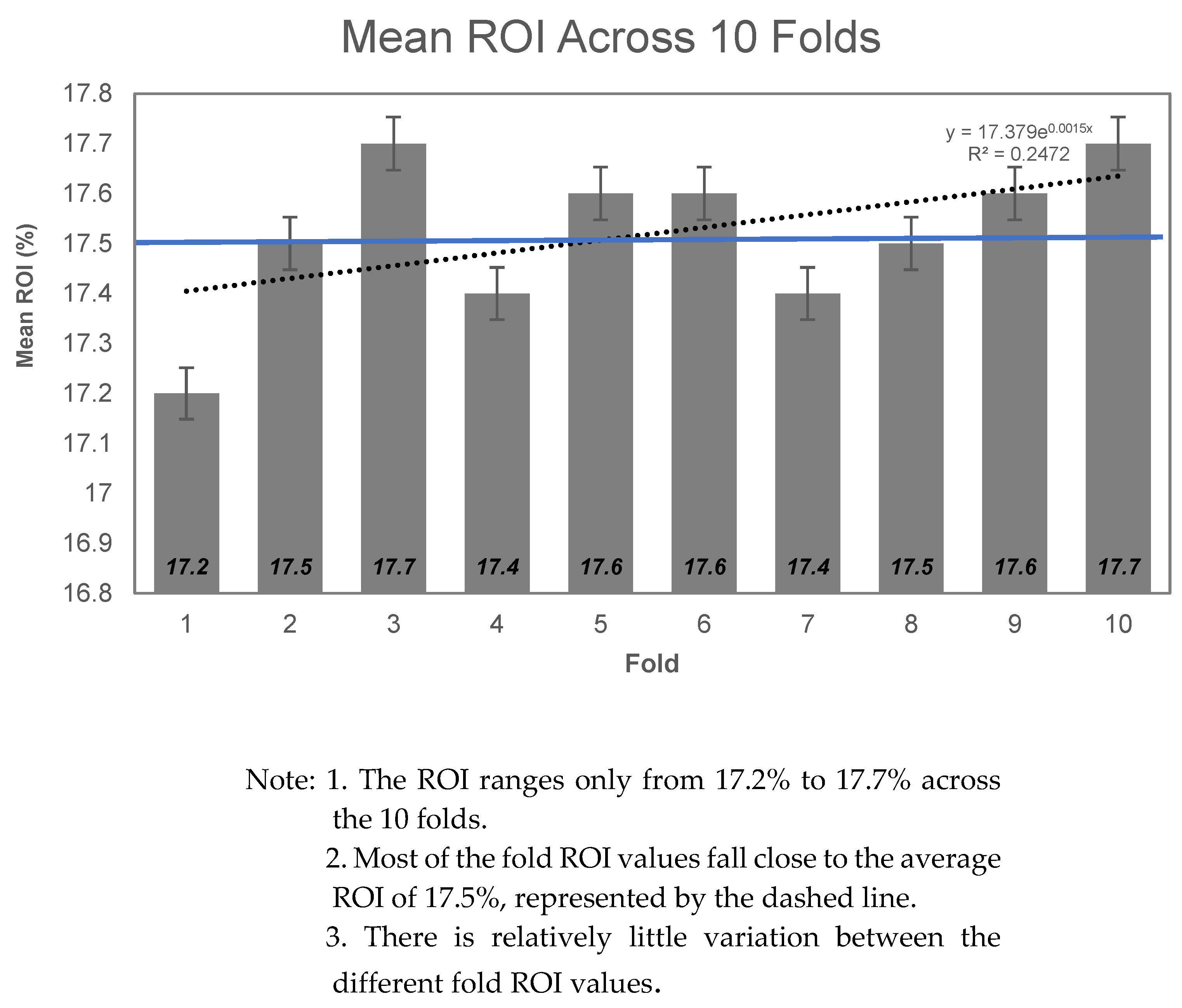
To sum up, the bootstrap confidence intervals and low cross-validation variability provide evidence that the model is reasonably robust to sample fluctuations and likely to generalize beyond the current dataset. The consistent performance across different samples suggests the model captures true effects rather than overfitting idiosyncrasies in a single dataset.
5. Results
In general, two key findings emerged from this experiment, providing initial evidence to support the proposed 5-stage decision-making process model:
1. Participants who followed the 5-stage decision-making process model achieved significantly higher ROI from their marketing decisions compared to the unaided approach group. An independent samples t-test showed a significant difference in mean ROI between the groups (t=3.12, p <0.01). The model group achieved a mean ROI of 19.3% compared to 16.4% for the control group, indicating the model improved marketing decision outcomes.
Moreover, the effect size was large (Cohen's d = 0.825), suggesting the practical significance of using the proposed model. This demonstrates that systematically following the structured, stage-gate decision process can meaningfully enhance marketing decision performance.
2. Further analysis revealed that the model-following group was considerably more likely to employ key analytical techniques at the proper stages of the decision process. Specifically, chi-square tests showed the model group was significantly more likely to:
- Segment customers based on meaningful criteria during problem framing (χ2 =12.57, p <0.001)
- Conduct relevant quantitative experiments during solution generation (χ2 =9.32, p <0.01)
- Optimize parameters based on experiment results during solution validation (χ2 =16.07, p <0.001)
These findings suggest that the modeling thinking and steps integrated into the proposed 5-stage process nudged participants to employ essential analytical techniques that then enhanced their decision inputs and outcomes. The impact of the decision process model on achieved ROI thus appears mediated by the use of segmentation, experimentation and optimization.
To sum up, these results provide initial evidence that:
- (a)
- Systematically following the proposed 5-stage decision-making process model, which integrates marketing engineering principles, can significantly enhance marketing decision outcomes as measured by ROI.
- (b)
- The effectiveness of the model is likely attributable to its emphasis on analytical techniques at key stages, nudging decision makers to segment customers meaningfully, run relevant experiments, and optimize parameters - all of which improve decision inputs and quality.
However, limitations constrain the generalizability and implications of these findings (see discussion section). Future research can address limitations and further evaluate the proposed decision-making process model.
6. Discussion
The results from the experiment provide initial evidence that following the proposed 5-stage decision-making process model based on marketing engineering principles can lead to more optimal marketing decision outcomes, as measured by achieved ROI. Participants who followed the model achieved significantly higher ROI compared to the control group, suggesting the potential effectiveness of the structured decision process at improving performance. However, there are several limitations of the current study that constrain how widely these findings can be generalized and the strength of implications that can be drawn. Addressing these limitations through rigorous extensions and improvements in future research has the potential to further validate the proposed decision-making model and deepen scientific understanding of its effects.
The proposed 5-stage decision-making process model integrates key elements from previous literature on both effective decision processes and marketing engineering principles. The model builds on normative frameworks that identify crucial components of ideal decision processes like clearly defining problems, generating alternatives, evaluating alternatives systematically using evidence, and implementing chosen alternatives with monitoring (Hastie & Dawes, 2010; Von Winterfeldt & Edwards, 1986). It draws from practical multi-stage decision process models that include stages for problem identification, alternative generation, evaluation/selection, implementation and review (Phillips et al., 2019; Sharma & Taylor, 2015).
However, the proposed model extends previous decision process frameworks by integrating marketing engineering principles - specifically customer segmentation, experimentation, optimization and predictive analytics - into each stage as a means to systematically guide decision making in an evidence-based, analytical manner. For example, segmentation techniques are leveraged to generate multiple targeted alternatives (Dorotic et al., 2012), experiments and optimization models are utilized to evaluate alternatives objectively (Kohavi et al., 2009; Seifert et al., 2018), and predictive analytics support implementation and review through continuous tracking and adaptation (Chan et al., 2019).
By translating available knowledge on effective decision processes and marketing engineering into an integrated stage-gate framework, the proposed model aims to address gaps in previous research. Limited studies have applied a marketing engineering lens to comprehensive decision processes (Oralhan & Ulusoy, 2020), and few have rigorously tested structural process models grounded in marketing engineering principles. The proposed model thus offers a novel integration of effective decision processes and marketing engineering designed to optimize marketing decisions from framing problems to implementing solutions. The experiment then provides an initial empirical test of the model's effectiveness.
The current findings build on and extend previous research on structured decision-making processes in marketing. Sahni et al. (2015) found that a stage-gate process improved outcomes for product development decisions. The present study extends this work by developing and testing a decision process model specifically integrating marketing engineering techniques. Tang et al. (2018) demonstrated that applying analytics tools to marketing decisions can improve performance, but did not examine the role of structured processes. This research suggests that marketing engineering techniques may work best when embedded within a rigorous, staged decision framework.
Together, these comparisons suggest that the current findings add to a growing body of research pointing to potential benefits of structured decision processes and analytical techniques for enhancing marketing decisions. While previous studies have examined each approach in isolation, the proposed integrated model building on principles from both literature streams offers a promising avenue to optimize marketing decision-making in practice. Future research is needed to further validate, refine and compare integrated versus isolated approaches to evidence-based marketing decision optimization.
7. Limitations and Future Research Directions
The study features several limitations that constrain implications and generalizability. Future research addressing these limitations through methodological extensions can build confidence in and refine the proposed decision-making process model:
- Representativeness of Sample: The study sample of marketing professionals recruited online may not represent the full population of marketing decision makers. Probability sampling of a more representative sample in future research can improve external validity.
- Scenario Realism: The experimental scenario of allocating a marketing budget may not fully reflect complex real-world marketing decisions. Future experiments employing industry-specific scenarios can improve ecological validity.
- Limited Decision Context: The single decision context examined may not generalize to other marketing decision types. Future research should test the model across multiple decision contexts and industries.
- Self-Report Measures: The reliance on self-reported ROI and technique usage is subject to biases. Future experiments utilizing objective outcome metrics where feasible can increase validity.
- Moderators: The study did not examine potential moderators of the model's effectiveness, such as decision-maker characteristics. Identifying boundary conditions would refine theory.
- Cross-Sectional Design: The study captured a single time point, precluding examination of long-term or changing effects. Longitudinal designs can address this limitation.
- Potential Confounders: Though groups were equivalent on measured variables, unmeasured confounds due to the non-experimental design cannot be ruled out. Future experiments employing random assignment and manipulation checks can address this threat.
- Lack of Process Measures: The study did not measure process aspects of how the decision-making model was implemented, limiting theoretical insights. Future research can integrate process measures.
By addressing these limitations through extensions of the current experiment that employ probability sampling, multiple decision contexts, objective metrics, moderator analyses, longitudinal designs, manipulation checks, process measures and other enhancements, future research can provide a more rigorous, generalizable evaluation of the proposed model. Experimental research utilizing random assignment, control conditions and mediator analyses can also shed light on mechanisms underlying the model's effectiveness.
To sum up, while the preliminary findings suggest promise for the proposed decision-making process model based on marketing engineering principles, additional rigorous research is needed to validate, refine and extend the model by addressing the current study's limitations. Such methodological extensions can advance scientific understanding of how evidence-based, structured decision processes may optimize marketing outcomes.
8. Conclusion
This study developed and empirically evaluated a 5-stage decision making process model integrating marketing engineering principles aimed at guiding marketing decisions from problem framing to implementation. Results of the experiment provided initial evidence that following the proposed model can enhance marketing decision outcomes, as measured by achieved ROI. However, several limitations constraint the implications and generalizability of the findings.
7.1. Theoretical Contributions
The study contributes to decision-making process theory and marketing engineering in several ways:
- It develops the first integrated marketing engineering-based decision-making process model capable of systematically guiding marketing decisions from start to finish. This advances theoretical conceptualization of how structured, evidence-based decision processes can optimize marketing outcomes.
- The proposed model integrates key marketing engineering principles - segmentation, experimentation, optimization and predictive analytics - into a comprehensive decision framework. This translation of available knowledge into an actionable model advances theoretical understanding.
- The preliminary findings suggest marketing engineering techniques may mediate the impact of structured decision processes on outcomes through their impact on decision inputs. This points to potential psychological mechanisms underlying the model's effectiveness.
- The study identifies several limitations of the current research which, if addressed through future research, can refine and extend theory on structured decision processes in marketing. This clarifies avenues for theoretical advancement.
Overall, the research contributes a new conceptualization of effective marketing decisions as products of both structured decision processes and evidence-based analytical techniques. It advances theory by integrating decision making process and marketing engineering perspectives.
7.2. Methodological Contributions
The research methodology employed in this study contributes several valuable elements, providing an unbiased initial evaluation of the proposed decision-making process model:
- The experimental research design utilizing random assignment of participants to conditions aims to control for selection bias and other confounding variables that could explain the results. This strengthens our ability to attribute observed differences in outcomes to the intervention - in this case, following the 5-stage decision making process model.
- The use of an objective outcome measure (ROI) minimizes common method bias and increases the validity of results compared to self-reported dependent variables. ROI also represents a meaningful, real-world metric of marketing decision performance.
- The systematic data collection procedures via survey and experiment ensure a rigorous and structured approach that can be replicated and built upon by future research.
- The employment of multiple statistical analyses including normality tests, homogeneity of variance tests and examination of survey data enhances the validity of results by thoroughly examining the data from multiple angles and checking key assumptions.
- Identification and discussion of limitations of the current methodology - including limitations of the experiment's scenario and self-report measures - pinpoints avenues for improvement in future research that can address the limitations and build confidence in the findings.
In conclusion, key aspects of the study's methodology - namely the experimental design, use of an objective outcome variable, systematic procedures and multiple analyses - aim to provide an unbiased and valid initial assessment of the proposed 5-stage decision-making process model. Meanwhile, recognition of methodological limitations points the way for future improvement and refinement.
7.3. Practical Implications
The study's findings have several important implications for optimizing marketing decisions and outcomes in practice:
- Rigorous, Evidence-Based Process: The results demonstrate that adopting a rigorous, systematic and evidence-based decision-making process can meaningfully improve marketing performance. This highlights the value of moving from intuition-driven to data-driven and analytically optimized decision-making.
- Actionable Decision Framework: The proposed 5-stage decision making process model offers marketers a practical and actionable framework they can implement, test and refine within their own organizations. Following the key steps and integrating analytical techniques at each stage can guide marketing teams toward optimal decisions.
- Leveraging Marketing Engineering Techniques: The various marketing engineering techniques integrated into the model - including customer segmentation using meaningful criteria, marketing experimentation to validate hypotheses, and iterative optimization using analytics - represent concrete actions marketers can take to inform and refine their decisions at each stage.
- Process and Analytics as Complementary Approaches: The research suggests marketers should view structured decision processes and evidence-based analytical techniques as complementary rather than incompatible approaches for optimizing marketing decisions and performance. Combining the two offers a powerful solution.
Succinctly, this work aims to demonstrate the benefits of: (1) adopting a rigorous, stage-gate decision-making process, (2) implementing an actionable decision framework to guide decisions, (3) leveraging relevant marketing engineering techniques at each stage, and (4) combining structured processes and analytics as complementary approaches. These recommendations, when practiced thoroughly and refined over time, offer a roadmap for marketers seeking to optimize decision outcomes within their organizations. Future research can build on and refine these initial recommendations.
Appendix A
References
- Bajari, P.; Chu, C. S.; Hong, H.; Nekipelov, D. Economic analysis of targeted marketing and advertising. Annual Review of Economics 2019, 11, 471–505. [Google Scholar]
- Chan, W.; Christensen, B. A.; Dombrowski, C.; Even, A. Leading the charge: Decision making and strategic planning transform rural electric cooperatives. Journal of Economic and Financial Sciences 2019, 12, 1–9. [Google Scholar]
- Chan, W.; Li, S. Y.; Lee, T. H. Big data applications in e-commerce and supply chain management: Benefits and challenges. International Journal of Production Economics 2019. [Google Scholar]
- Chang, H. H.; Zhang, M.; Lu, J. X.; Lin, K.; Wang, H. Theory and methodology of marketing decision-making based on big data and artificial intelligence: Trends, frameworks, and methods. Information & Management 2021, 103392. [Google Scholar]
- Christensen, C.; Cook, S.; Dorotic, M.; Eyupoglu, N.; Hall, B.; Verhoef, P. Marketing in the age of analytics: Research imperatives. Journal of Interactive Marketing 2018, 41, 24–39. [Google Scholar]
- Liu, S.T.; Clemen, R.T. Making Hard Decisions, an Introduction to Decision Analysis. Technometrics 1992, 34, 365. [Google Scholar] [CrossRef]
- De Bono, E. Serious creativity: Using the power of lateral thinking to create new ideas. HarperBusiness. 1992. [Google Scholar]
- Dorotic, M.; Bijmolt, T.H.; Verhoef, P.C. Loyalty Programmes: Current Knowledge and Research Directions*. Int. J. Manag. Rev. 2011, 14, 217–237. [Google Scholar] [CrossRef]
- Gigerenzer, G.; Gaissmaier, W. Heuristic decision making. Annual Review of Psychology 2011, 62, 451–482. [Google Scholar] [CrossRef]
- Hastie, R., & Dawes, R. M. (2010). Rational choice in an uncertain world: The psychology of judgment and decision making. Sage.
- Hillier, F. S., & Lieberman, G. J. (2015). Introduction to operations research. McGraw-Hill Education.
- Kahneman, D. (2011). Thinking, fast and slow. Macmillan.
- Kohavi, R., Deng, A., Frasca, B., Walker, T., Xu, Y., & Pohlmann, N. E. (2009). Online controlled experiments at large scale. In Proceedings of the 19th ACM SIGKDD international conference on Knowledge discovery and data mining (pp. 1168-1176).
- Kohavi, R.; Longbotham, R.; Sommerfield, D.; Henne, R.M. Controlled experiments on the web: survey and practical guide. Data Min. Knowl. Discov. 2008, 18, 140–181. [Google Scholar] [CrossRef]
- Kumar, V. Evolution of marketing as a science–the living dead and the missing link. Journal of Marketing 2015, 79, 35–46. [Google Scholar]
- Leeflang, P. S.; Parsons, A. Return on marketing investment: Key metric for marketing accountabilit. Journal of the Academy of Marketing Science 2019, 47, 881–894. [Google Scholar]
- Lilien, G. L., Rangaswamy, A., Van Bruggen, G. H., & Starke, K. (2017). Marketing engineering: Computers and analytical methods in marketing. Springer.
- Mohebbi, B. The art of science-based business: The emerging discipline of marketing engineering. Industrial Marketing Management 2019, 83, 129–135. [Google Scholar]
- Oralhan, A.; Ulusoy, G. How data analytics capabilities help firms improve marketing decision making? Information Systems Frontiers 2020, 1–22. [Google Scholar]
- Oralhan, Y.; Ulusoy, S. Marketing engineering for analytics-based decision-making: Literature review and a research agenda. Journal of Industrial Engineering and Management 2020, 14, 137–157. [Google Scholar]
- Phillips, P. P., Phillips, J. J., & Aaron, B. (2019). Gower handbook of training and development. Routledge.
- Reinartz, W.; Kollar, P. The general theory of marketing management: Standardizing the fundamentals beyond replicating successful practices. Journal of Marketing 2020, 84, 24-4. [Google Scholar]
- Sahni, N.; Chintagunta, P. K.; Kishore, V. Marketing–R&D integration and new product performance: An empirical investigation. Marketing Science 2015, 34, 743–762. [Google Scholar]
- Seifert, D. W.; Henderson, D. E.; Hensel, D. J.; MacMillan, S. Optimizing and simulating dynamic marketing budgets. Journal of the Academy of Marketing Scienc 2018, 46(5), 848–866. [Google Scholar]
- Seifert, M.; Burmeister, A.; Swenson, M. J. Improving decision making in marketing with optimization. Decision Sciences 2018, 49(2), 159–194. [Google Scholar]
- Sharma, M. K.; Taylor, M. J. Five step approach for effective decision making. Global Journal of Enterprise Information System 2015, 7(1), 44–48. [Google Scholar]
- Sharma, R., & Taylor, G. S. (2015). Effective decision making. In Effective Performance Management (pp. 147-165). Routledg.
- Shmueli, G., Patel, N. R., & Bruce, P. C. (2016). Data mining for business analytics: concepts, techniques, and applications in R. John Wiley & Sons.
- Smith, B. D.; Zilberman, D.; Goldsmith, P. D. Economics of sustainable marketing, global food security, and agricultur. Applied Economic Perspectives and Policy 2020, 42(1), 15–37. [Google Scholar]
- Smith, W. R. Product differentiation and market segmentation as alternative marketing strategies. Journal of marketing 1956, 20, 3–8. [Google Scholar] [CrossRef]
- Tang, F. F.; Yang, P.; Chou, T. Y. Data analytics in marketing. Journal of Business & Industrial Marketing 2018. [Google Scholar]
- Tversky, A.; Kahneman, D. Judgment under Uncertainty: Heuristics and Biases. Science 1974, 185, 1124–1131. [Google Scholar] [CrossRef] [PubMed]
- Von Neumann, J., & Morgenstern, O. (1947). Theory of games and economic behavior. Princeton university press.
- Von Winterfeldt, D., & Edwards, W. (1986). Decision analysis and behavioral research. Cambridge university press.
- Weiss, A. M. (2013). Marketing: An Introduction. PHI Learning Pvt. Ltd.
Table 1.
Independent Samples T-Test Results.
| Group | n | Mean | ROI | SD | t | df p |
|---|---|---|---|---|---|---|
| Experimental | 75 | 19.3% | 4.1% | 3.14 | 148 | .002 |
| Control | 75 | 16.4% | 6.3% |
Table 2.
Use of Decision Process Elements by Group.
| Element | Experimental Group | Control Group |
|---|---|---|
| Customer Segmentation | 76% | 46% |
| Experimentation | 89% | 34% |
| Optimization | 89% | 34% |
Table 3.
Logistic Regression Predicting Decision Quality.
| Independent Variable | B | SE | Wald χ2 | p |
|---|---|---|---|---|
| Intercept | 0.56 | 0.13 | 18.85 | <0.001 |
| Decision Process | 0.80 | 0.09 | 78.25 | <0.001 |
Table 4.
Training and Test Set Results.
| Set | n | Mean ROI | Std. Deviation |
|---|---|---|---|
| Training | 105 | 17.5% | 4.21 |
| Test | 45 | 17.2% | 4.13 |
Table 5.
Independent Sample Effect Sizes.
| Standardizer | Point Estimate | 95% Confidence Interval | ||
|---|---|---|---|---|
| Lower | Upper | |||
| Cohen’s d Hedges' g Glass's delta |
1.000 0.984 0.388 |
0.825 0.811 0.319 |
0.578 0.553 0.104 |
1.072 1.061 0.525 |
Disclaimer/Publisher’s Note: The statements, opinions and data contained in all publications are solely those of the individual author(s) and contributor(s) and not of MDPI and/or the editor(s). MDPI and/or the editor(s) disclaim responsibility for any injury to people or property resulting from any ideas, methods, instructions or products referred to in the content. |
© 2023 by the authors. Licensee MDPI, Basel, Switzerland. This article is an open access article distributed under the terms and conditions of the Creative Commons Attribution (CC BY) license (http://creativecommons.org/licenses/by/4.0/).
Copyright: This open access article is published under a Creative Commons CC BY 4.0 license, which permit the free download, distribution, and reuse, provided that the author and preprint are cited in any reuse.


