
Submitted:
14 June 2023
Posted:
14 June 2023
You are already at the latest version
Abstract
Nanosystems-based antifungal agents have emerged as an effective strategy to address issues related to drug resistance, drug release, and toxicity. Among the different materials used for drug delivery, multifunctional polymers have proven to be ideal due to their versatility. This review provides an overview of the various types of nanoparticles used in antifungal drug delivery systems, with a particular emphasis on the types of polymers used. The review focuses on the application of drug delivery systems and the release behavior of these systems. Furthermore, the review summa-rizes the critical physical properties and relevant information utilized in antifungal polymer nanomedicine delivery systems, and briefly discusses the application prospects of these systems.
Keywords:
Antifungal
; Drug delivery
; Polymers
; Nanometer
1. Introduction
Fungi comprise millions of species on earth, with approximately 400 causing human diseases [1,2,3]. These infections can affect various parts of the body, including the skin, nails, soft tissues, lungs, blood, and brain [4,5,6,7,8]. Pathogenic fungi cause approximately 100 million infections worldwide every year, resulting in more than 60,000 deaths [9,10]. Unlike bacterial pathogens, fungal infections are mainly treated with five classes of drugs, namely, azoles (for systemic and superficial fungal infections) [11,12], polyenes (for severe systemic fungal infections) [13], echinocandins (for intractable fungal infections) [14,15], allylamines (which inhibit squalene epoxidase activity and disrupt the ergosterol synthesis pathway) [16], and antimetabolites (which inhibit fungal RNA and DNA synthesis) [17].
Although currently available antifungal drugs have demonstrated high efficacy in treating superficial and invasive fungal infections, their usage is often associated with side effects and limitations. Allylamines, for example, are mostly used for treating superficial fungal infections [18], while resistance to azoles is becoming increasingly prevalent [19,20]. Additionally, polyenes may cause infusion-related reactions [21]. Furthermore, these drugs may exhibit higher levels of toxicity when administered in vivo, which is a common challenge associated with antifungal drug therapies.
In addition to exploring new antifungal drug species, researchers are investigating the potential applications of nanotechnology in antifungal drug delivery [22]. Nanosystems-based drug delivery can achieve high local drug concentrations at the targeted site, thereby facilitating antifungal effects through various mechanisms, such as interfering with fungal membrane integrity through charge interactions, promoting the formation of reactive oxygen species (ROS), and altering the permeability of fungal cell membranes [23,24,25]. As a result, drug delivery nanosystems have emerged as an ideal mode of drug delivery [26].
Nanosystems typically exhibit submicrometer-sized structures and their behavior can be influenced by several factors, such as the mode of administration, blood circulation time, and human immunity. Furthermore, the physicochemical properties of nano drug delivery systems play a critical role in the release behavior of drugs. Researchers have conducted numerous studies on the matrix of antifungal drug delivery nanosystems, which include liposomes and lipoid vesicles [27], microemulsions, polymers [28], dendrimers, and inorganic materials (e.g., silicon-based [29], carbon materials, and metals [30]). These structures have been explored for their potential to enhance drug delivery efficiency, specificity, and safety.
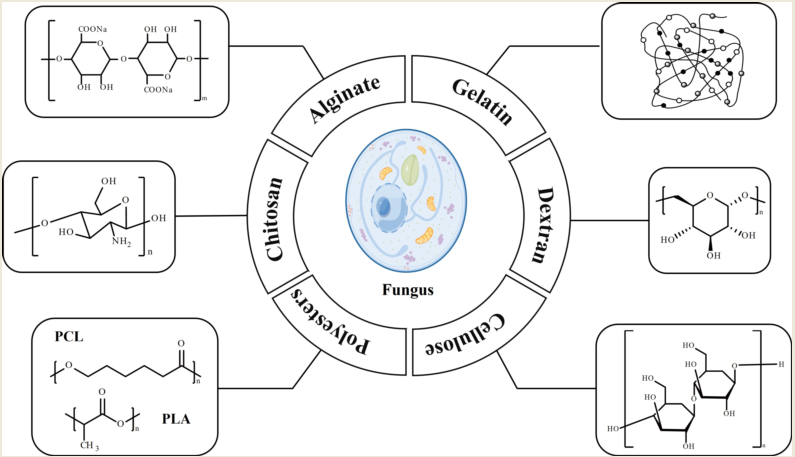
This review focuses on a comprehensive analysis of polymeric materials commonly used in antifungal drug delivery systems, including chitosan (CS), sodium alginate (SA), gelatin, dextran (Dex), cellulose, and polyester. Although other polymer materials, such as heparin, chitin, and hyaluronic acid, can also be used to design antifungal drug delivery nanosystems, we did not discuss them in this review due to limited research in this area.
Nanoscale fibers formed by electrospinning, mostly used in dressings, are also included in This review, and nanostructures have a larger specific surface area and enable more rapid release at sites such as wounds, mucous membranes, etc., therefore, we attribute them to antifungal drug delivery nanosystems.
In addition to presenting some interesting and important research works, our review includes a table summarizing antifungal drug delivery nanosystems in recent years, following the introduction of each polymer material. As mentioned earlier, the toxic side effects of current antifungal drugs cannot be ignored, especially for in vivo administration, and antifungal drug delivery nanosystems can help address this issue. The table provides a general overview of how drugs are involved in fungal drug delivery nanosystems, as well as the physical properties (such as size, potential, mode of binding, release behavior, etc.) of these nanosystems. The "In vivo study" column indicates whether the article includes experimental results from in vivo studies (Y) or not (N). We hope that these works will inspire researchers in designing nanosystems for fungal drug delivery.
2. Polymers for Antifungal Drug Delivery Nanosystems
Polymers have been extensively studied and applied in biomedicine and are generally divided into two categories: degradable and non-degradable. The degradability of certain polymers can allow for different release requirements of drug delivery systems. Nanopolymer systems offer many advantages in antifungal drug delivery, such as the ability to improve drug loading, the ability to chemically bond drugs to functional groups on the polymer surface, and some polymers even possess inherent antifungal properties [31]. Herein, we will introduce the key roles of some representative polymer materials in antifungal drug delivery nanosystems.
2.1. Chitosan
CS is a chitin-derived polysaccharide with high biocompatibility and biodegradability [32,33]. Researchers have extensively studied the antibacterial properties of CS due to its amino and positive electrical properties. The antibacterial activity of chitosan and its derivatives may originate from the interaction between positively charged chitosan molecules and negatively charged residues on the surface of fungal cell walls. The methods for preparing CS nanoparticles (CSNPs) include ion crosslinking of low-concentration CS acid solution and tripolyphosphate by ultrasonic and mechanical stirring, 1-(3-Dimethylaminopropyl)-3-ethyl carbodiimide hydrochloride(EDC)/N-Hydroxy succinimide(NHS) crosslinking and redox with metal ions [34]. These methods can be used to prepare antifungal drug delivery nanosystems.
As a drug-releasing nanosystem, CS can deliver a variety of antifungal factors (such as essential oil [35], fluconazole [36], ceftriaxone, imidazolium zinc [37], berberine [38], enzyme, etc.). CS-based nanospheres (CSNPs) can encapsulate poorly water-soluble drugs to improve their solubility. For example, Su Ma et al. encapsulated curcumin (Cur) into CSNPs. Positively charged NPs tend to bind to negatively charged surfaces [39] (such as many biofilms on the surface of microorganisms). Therefore, positively charged CSNPs can deliver Cur to the biofilm and release the drug, thus directly affecting the internal cells. Thus, CSNP-Cur exhibits higher anti-biofilm activity than free Cur and improves its delivery efficiency.
Yasser A. et al. [37] obtained a nanosystem encapsulating several essential oils through CSNPs. In addition to delivering imidazolium, this drug delivery nanosystem can also deliver O. syriacum essential oil (OSEO) containing multiple essential oils and a new active complex Zn (II) Salen. CSPNs significantly enhanced the antibacterial activity of Zn (II) Salen and OSEO. This study demonstrates the applicability of CSNPs as drug delivery nanosystems for multiple types of drugs. In addition, chitosan exhibits good delivery performance for metal nanoparticles. Biao et al. obtained electrons from silver ions through amino groups in CS to form silver nanoparticles [40]. More interestingly, there are differences in the morphology of Ag-CS produced by the system at different pH values. The reaction system obtained triangular nanosheets at pH=4.0, while nanoparticles with monodispersity and stability were obtained at pH=5.0. Recent studies have shown the potential of the morphology of nanosheets in antifungal applications. Sanchari Saha et al. peeled off MoSe2/CS nanosheets with synergistic antibacterial effects in the liquid phase [41]. MoSe2/CS nanosheets cause fungal cell death through membrane damage, membrane depolarization, metabolic inactivation, and cytoplasmic leakage, without requiring more complex modifications and external NIR-assisted photothermal action, as shown in Figure 1. In addition to its excellent antifungal activity, MoSe2/CS nanosheets have a high degree of biocompatibility with mammalian cells. The excellent antifungal performance of MoSe2/CS nanosheets indicates that they are a promising new type of antifungal agent with potential applications in various biomedical applications. These applications are particularly important given the threat of fungal pathogens.
We present the statistics in Table 1 for the research of chitosan for antifungal drug delivery nanosystems in recent years. The amino groups carried by chitosan endow the antifungal delivery system prepared from chitosan with natural antibacterial effects. Although most studies have shown the great potential of chitosan-based drug carriers, the research on their post-administration effects is still in the exploratory stage. Most studies lack in vivo antifungal results.
2.2. Alginate
SA is a widely studied biopolymer with non-toxic, biocompatible, nonimmunogenic, biodegradable, and mucus adhesive properties [42,43,44,45]. SA can be chelated with Ca or other divalent cations to form a gel through the side carboxylic acid part of the G unit. This gel structure is called 'egg-box' structure [46,47]. Therefore, alginate biopolymers can be used to stabilize inorganic metal nanoparticles, and this delivery method is not toxic [48]. That makes SA widely used in antifungal drug delivery nanosystems [47,49].
Abid S et al. prepared SA microspheres with calcium chloride as a crosslinking agent through ion gel technology and used them to coat MgO-CuO nanoparticles loaded with nystatin [50]. Microspheres reduce the specific surface area and reactivity of metal nanoparticles in the human body, providing a safe and improved release mechanism, thereby reducing the toxicity of nanoparticles in direct contact with the human body. At the same time, the nystatin composite loaded microspheres system enables the sustained release of the antifungal agent, which helps to prevent or minimize the occurrence of infection.
The cross-linking properties of SA and divalent cations are commonly used to cross-link with Ca2+ ions to form microspheres. Microspheres of different sizes can be obtained through ultrasound and water/oil (W/O) emulsification. The microspheres are directly used to encapsulate drugs for delivery and release. These microspheres are used to encapsulate drugs for delivery and release directly. For example, María J. Martín et al. used alginate microspheres as nystatin carriers for oral mucosal drug delivery, enabling the microspheres to come into close contact with the mucosal surface, as shown in Figure 2 [56]. These Nys-loaded microspheres were successfully prepared by emulsification/internal gelation method, showing a significant inhibitory effect on the growth of Candida albicans, indicating its potential clinical use without systemic absorption or tissue damage.
The (1-4) -linked β-d-mannuronic acid (M Unit) and α-l-glucuronic acid (G unit) of SA exhibit anionic properties. They provide mucus penetration for nanoparticles through repulsive interactions with negatively charged sialic acid in the mucosal layer [57]. Vaishnavi et al. coated CS nanospheres with SA, enabling nanoparticles to exhibit better retention efficiency, loading capacity, release kinetics, and corneal permeability [58]. Due to changes in the particle size and surface energy of nanoparticles, they can effectively penetrate the thick mucin layer, which can effectively treat fungal keratitis and deep corneal ulcers.
We present the statistics in Table 2 for the research of alginate for antifungal drug delivery nanosystems in recent years. Sodium alginate has gained much attention in the application of drug delivery as a marine source natural polymer. But in the construction of nanosystems, current preparation methods mostly use divalent cations to interact with sodium alginate to become nanoparticles. DPI-related data were also not available in some studies. The ion-chelating properties of sodium alginate make it easier to form microspheres. The size of the nanoparticles is not easily controlled, and the size distribution is wide. Researchers may be able to find more efficient ways of dispersion in the future. The abundant hydroxyl groups on the molecular chains of alginate can also serve as an entry point for its modification, thereby endowing alginate with new functions.
2.3. Gelatin
Gelatin is a product of incomplete hydrolysis of collagen extracted from animals. However, the hydrolyzed polypeptides have different lengths and usually have a certain width of molecular weight distribution. Gelatin is easily absorbed by the human body due to its hydrolysate being amino acids, resulting in nutritional value. However, gelatin nanomaterials themselves are not antibacterial, and the solubility of gelatin in water is not stable, which is easily affected by temperature. Therefore, gelatin and its modified products are often used as carriers of antibacterial drugs. Compared to synthetic polymer materials, gelatin nanomaterials have lower biological toxicity in terms of antifungal activity. The abundant active groups in gelatin make it easy for nanomaterials to improve their mechanical and rheological properties through crosslinking and chemical modification [59].
In the nanoscale range, gelatin can be made into nanoparticles and nanofibers as carriers of antifungal drugs (such as amp B, Daptomycin[65], Polymyxin B[66], Tobramycin, Vancomycin, etc. [67].).
Hassan M et al. synthesized gelatin nanoparticles by dissolvent method and loaded them with chidamycin and chloramphenicol to improve the antifungal properties of external gauze [68]. The two-step solvent removal method creates gelatin nanoparticles (GNPs) with a low aggregation trend within a limited size range. GNPs contain spectinomycin and chloramphenicol to enhance the treatment of bacterial and fungal infections. The results showed that gelatin nanoparticles loaded with research antibiotics and cellulose cotton gauze treated with these particles exhibited higher antibacterial activity against the bacteria and fungi studied. This is due to the presence of drugs, the safety of nanostructures, and their biocompatibility with skin cells.
V. Aparna et al. innovatively used AutoDock software to calculate and select modified gelatin A nanoparticles to deliver Amp B [69]. Under the action of cross-linking agents, modified gelatin nanoparticles were prepared and delivered to macrophages to treat intracellular fungal infections. Amp B Loaded Gelatin A NPs and Carboxymethylated ɩ- Carrageenan is combined to achieve the treatment of intracellular Clostridium smooth infection. CMC-Amp B-GNP exhibits appropriate stability, cell compatibility, and blood compatibility.
Although gelatin cannot maintain structural stability in an aqueous environment, some researchers have also achieved the preparation of nanoscale fibers using an electrospinning process. Chetna Dhand et al. used drugs rich in hydroxyl groups to improve the water stability of gelatin nanofibers, and prepared polydopamine crosslinked gelatin nanofibers as scald wound dressings, as shown in Figure 3 [67]. The method can be extended to impart broad-spectrum antibacterial activity by binding to an antibiotic mixture and retaining long-term antibacterial activity. It was further demonstrated that the electrospun gelatin loaded with vancomycin was directly electrospinned onto the bandage gauze, then cross-linked, and its efficacy was examined in an animal model simulating the pathophysiology of human burn wounds. The results confirmed that polydopamine cross-linking did not interfere with wound healing; however, the incorporation of vancomycin enhances wound closure and reduces inflammation. In addition to delivering drugs, researchers have also used polyvinyl alcohol and gelatin blends to improve the properties of gelatin nanofibers [70]. This preparation method makes the selection of gelatin nanofibers for drug delivery more extensive.
We present the statistics in Table 3 for the research of gelatin for antifungal drug delivery nanosystems in recent years. Gelatin consists of a variety of amino acids and has the properties of partial proteins. Since gelatin possesses ampholyte properties can respond in different pH environments. It is commonly used to constitute a drug delivery system with a targeting effect. Due to the presence of polar groups in collagen molecules, nanoparticles with smaller particle sizes are not easily formed, usually all with particle sizes above 100 nm. Gelatin has a relatively short degradation time, and achieving a stable controlled release system requires modification of collagen, the large number of active groups on the molecule provides a great potential for modification. The complex groups of gelatin are more prone to cross-linking and forming a network to achieve drug delivery. However, the interactions between the chains of gelatin molecules are strong, and aggregation between particles is easily formed. Moreover, the rapid degradation of gelatin is not easy to achieve long-term drug release.
2.4. Dextran
Dextran is a non-toxic, biocompatible, biodegradable, and hydrophilic natural polysaccharide [73,74]. Dextran can enhance the stability of the drug delivery system and avoid accumulation in blood circulation. Activating macrophages and neutrophils can increase the content of leukocytes, cytokinins, and special antibodies, comprehensively stimulating the immune system of the body. Due to the rich hydroxyl groups in dextran, it can directly bind to biologically active molecules [75,76,77]. In addition, dextran acts as a nanosystem and can form hydrogels [78], films [79], and other systems for drug release. Dextran is easily modified by chemical means and can be derived and modified by etherification, esterification, amidation, and oxidation. The chemical modification rate is as high as 30 %, which can also maintain the biodegradability of the skeleton [80,81]. These advantages provide a basis for designing and preparing antifungal drug delivery nanosystems [82,83].
Cristina et al. found in their research that, although dextran itself does not possess antifungal properties, it significantly enhances the stability, magnetic behavior, and biocompatibility of inorganic nanoparticles when coated with dextran on the surface of iron oxide nanoparticles [84]. In addition, by utilizing the drug loading properties of dextran to load curcumin onto nanoparticles, the antifungal properties of the oxidized nanoparticles were synthesized to enhance the antibacterial activity of cerium dioxide nanoparticles by changing the pH value (i.e., ion balance) of the local environment. In addition, dextran-coated cerium dioxide nanoparticles can enhance the antibacterial activity of nano-ceria by changing the pH value of the local environment (ion balance). In addition to being used as a coating material for nanoparticles, dextran can also be used to synthesize stable silver nanoparticles through chemical reduction and other methods. The reduced silver nanoparticles have good antibacterial properties. Milorad et al. synthesized dextran sulfate stabilized silver nanoparticles (AgNPs-DSS) using a chemical reduction green synthesis method [85]. DS provides structural stability for AgNPs-DSS as a capping agent. Although there are uncertainties in organisms and other factors, AgNPs-DSS have an inhibitory effect on fungi at low concentrations.
S. Anusuya et al. obtained β-d-glucan particles in an uncomplicated manner, as shown in Figure 4 [86]. Although this study, in addition to testing against fungi, only β-d-glucan was simply characterized. However, the simple process and uncomplicated composition make it reasonable to believe in the potential application of β-d-glucan particles in biomedicine. Researchers have further enhanced the application potential of dextran through modification. For example, Tuchilus et al. synthesized cationic amphiphilic glucan derivatives with long alkyl groups at the reducing end of the polysaccharide chain [87]. The quaternary ammonium group is connected to the main chain of the main dextran, thereby obtaining a modified dextran with broad-spectrum application potential as an external antifungal agent.
We present the statistics in Table 4 for the research of dextran for antifungal drug delivery nanosystems in recent years. As one of the components of fungal cell walls, glucan has been relatively less studied in the delivery of antifungal drugs. Moreover, nanosystems composed of dextran release rapidly after drug loading and are not suitable for situations where long-term antifungal activity is required. However, as a nontoxic natural macromolecule, glucan is believed to have a positive impact on human immunity. Therefore, there is rich research potential for the application of dextran in antifungal aspects. Researchers can modify the long-term drug loading properties of dextran through chemical modifications to extend the drug release time.
2.5. Cellulose
Cellulose, the major component that makes up the cell walls of plants and algae and part of the microbial capsule [93,94], can be obtained by cellulose extraction and artificial synthesis [95,96]. Cellulose can be prepared into cellulose nanoparticles and nanofibers [100,101]. However, cellulose itself is not anti-fungal, and it is often necessary to synergize it with other antibacterial drugs or antibacterial polymers [102,103,104]. Cellulose units contain three hydroxyl groups. These groups can also be transformed into various functionalities without affecting cellulose structure [102,105]. Cellulose has been widely studied due to its wide source and simplicity of preparation [97,98,99]. Therefore, nano cellulose is widely used in antifungal applications, such as wound dressings and drug carriers [106].
Carla Vilela X et al. combined bacterial nanocellulose (BNC) with monomers of antibacterial polymers (poly[2-(methacryloyloxy)ethyl] trimethyl ammonium chloride, PMETAC) to prepare layered nanofilms for the treatment of fungal infections. This cationic nanocomposite PMETAC/BN materials have UV-blocking properties, high water absorption capacity, thermal stability up to 200 °C, and good mechanical properties. PMETAC/BN has no cytotoxicity to HaCaT cells and can inactivate Candida albicans.
Researchers have extensively studied modified cellulose derivatives. Rimpy et al. prepared fluconazole containing 3D scaffolds by modifying plant-derived nanocellulose with tetraethyl orthosilicate (TEOS) [107]. The swelling, porosity, and tensile strength of TEOS-modified nanocellulose scaffolds were significantly improved. Silica groups added to nanocellulose enhanced mucoadhesive strength, antifungal properties, and ex vivo vaginal penetration ability of lyophilized scaffolds. TEOS-modified nanocellulose scaffolds also exhibited prolonged drug release behavior in SVF buffer up to 24 h, being histologically safe and less cytotoxic to Vero cell lines. Therefore fluconazole loaded TEOS modified cellulose scaffolds have great potential for vaginal drug delivery applications.
Ahmed S. et al. prepared a nanocomposite based on gold nanoparticles and carboxymethylcellulose against Aspergillus through a green-friendly chemical reduction method, as shown in Figure 5 [108]. According to cell cycle analysis, CMC AuNPs induced apoptosis and necrosis of liver cancer cells and arrested the cell cycle at G1 / G0 phase. Ultimately, the as-prepared nanocomposite CMC AuNPs exhibit good antibacterial, antifungal, and anticancer activities and can be used in pharmaceutical and medical fields. Megha et al used stabilizing agent hydroxypropyl methylcellulose (HPMC) to limit particle growth during fungal drug griseofulvin (GF) composite synthesis adsorbed on the surface of hydrophilic diatoms [109]. This study provides a unique structure with a diatom onto which hydrophobic drugs can be immobilized to improve drug delivery. The nanoparticle drug release rate after controlling the particle size with HPMC was significantly increased.
We present the statistics in Table 5 for the research of cellulose for antifungal drug delivery nanosystems in recent years. Cellulose has a large molecular weight in natural polysaccharide polymers, and there is a lack of cellulosic enzymes in the human body. Generally, it does not introduce toxicity other than drugs after taking cellulose preparations. On the other hand, cellulose drugs cannot be degraded by the human body if implanted in the body. Therefore, in antifungal applications, nano systems composed of cellulose are typically only used for surface fungal infections. How to modify cellulose so that it can be degraded and absorbed in vivo is an important research direction.
2.6. Polyesters
Polyester materials are the most widely used biodegradable synthetic polymer materials [116,117,118]. Among them, hydroxy acids and lactone polymers represented by polylactic acid (PLA) were first used in the biomedical field and have been certified by the US Food and Drug Administration (FDA) [119]. Polyester-based materials are more hydrophobic in molecular structure and more stable in structure than hydrophilic macromolecules like polysaccharides, giving them unique advantages for applications as drug delivery nanosystems [120,121,122]. The development of electrospinning technology has made up for the shortcomings of polyesters in poor thermal stability during processing [123,124]. Therefore, polyester materials and their copolymers have been widely studied in antifungal applications [125,126,127]. In terms of antifungal applications, polyesters can be applied in the biomedical field as antibacterial drug dressings by preparing nanofibrous membranes using electrospinning technology [128,129,130]. We present the statistics in Table 6 for the research of polyesters for antifungal drug delivery nanosystems in recent years.
Raul Machado et al. made bovine lactoferrin (bLF) and PLA form uniform, smooth nanofibers (fiber minimum diameter of 380 nm) by electrospinning technique [131]. The final formed nanofibrous membranes had porosity up to 80%. The high porosity and uniform fibers enabled a slow and uniform release of bLF mixed in PLA at 60 days. bLF-PLLA membranes did not induce cytotoxicity in human fibroblasts and 20 wt.% of bLF-PLLA membranes were able to induce cell proliferation even after 24 h of indirect contact. The composite membranes showed very potent antifungal activity against the filamentous fungus A.nidulans. Polylactic acid nanofibers can also be given more possibilities by more complex coaxial electrospinning. B. Jalvo et al. prepared a core-shell nanocomposite membrane with polylactic acid as the core, as shown in Figure 6 [132]. Chitosan on the fiber surface makes the nanofibers positively charged and not prone to microbial colonization. Such that bacteria in contact with the chitosan membrane surface undergo cellular damage.
Nanofibrous membranes can be used for antifungal drug delivery in superficial layers such as oral cavity and skin. Copolymers of polylactic acid can also be used for drug delivery by forming nanoparticles that are more widely applied. A novel nanoantibiotic system based on mesoporous silica encapsulated in PLA nanoflowers (PLA-NFs) was developed by Blanca Jalvo et al. [140] This mesoporous silicate has a two-dimensional hexagonal porous array and high surface area sensitivity. Such mesoporous silicates exhibit 2D porous hexagonal arrays and high sensitivity of the surface area. The nanoantibiotic system combines polylactic acid nanoflowers with mesoporous silica, which enables the antimicrobial drug (levofloxacin) to be released in a controlled manner under a pH environment. PLA-NFs exhibited a rather fast degradation rate during hydrolysis under an acidic environment, allowing the drug (Levofloxacin; LVX) in the delivery system to be released under controlled conditions.
Due to the limitations of polylactic acid in mechanical properties, current researchs on polylactic acid nanoscale antifungal is mostly synergistic with other polymers. Polylactic acid-glycolic acid (PLGA) exhibits excellent drug loading and antifungal properties. Researchers have characterized the drug-loading properties of PLGA nanoparticles for antifungal drugs such as butenolone (BT) and Amp B[125,134,135]. In addition, Some researchers explored the enhancement of oral absorption of Amp B by PLGA-PEG nanoparticles [136]. Due to the excellent degradation properties of PLA and PLGA, they are metabolized in the human body within a few weeks and are likely not to cause significant environmental residues [137].
Besides PLA, PCL has also been used by researchers to design antifungal drug delivery nanosystems. Vanessa et al. loaded 4-Neroliyl chloride methanol (4-NC) with PCL, which showed high encapsulation efficiency (100%) for 4-NC [138]. PCL nanoparticles, while retaining 4-NC antifungal activity, also reduced cytotoxicity, increased the stability and solubility of the substance, and increased the efficacy of 4-NC.
Compared with liposomes, PCL has a slower and more stable release behavior. Prepared Mn-loaded PCL nanocapsules with a simple cost-effective technique by R. S. Abdel-Rashid et al. [139]. The resulting nanocapsules represent a good route to deliver MNS due to their small particle size, slow biphasic release rate, high % EE and high stability. In addition to the above advantages, the nanocapsules have good antifungal activity, dual effects on superficial and deep fungal infections, and biphasic release mode. Therefore, PCL nanocapsules can enhance antifungal activity, minimize side effects, and reduce dosage and administration frequency.
PCL would also be used by researchers for electrospinning. Mehrez E et al. blended PCL and peppermint oil (PO) nanoemulsion to prepare uniform nano-sized PO nanoemulsion, as shown in Figure 7 [142]. The electrospinning technique was used to prepare PCL nanofibrous mats loaded with PO nanoemulsion. This nanofibrous mat has good and significant antibacterial and antifungal activity against a variety of human pathogens. The absolute inhibition of biofilm formation was enhanced for the successful encapsulation of the highest concentration of PO nanoemulsion. Because nanofibrous mats are coated with smooth nanofibrous morphology as well as strong antibacterial activity, they can play a role in superficial antifungal therapy such as acne and skin diseases and wound healing.
Polysaccharide-based antifungal drug delivery nanosystems often have higher re-lease rates, and it is often difficult to achieve a longer cycle of drug delivery behavior (weeks). While polyester materials do not have a rich range of modified groups, their stability provides unique advantages when drug delivery systems require slower and more stable delivery behavior.

Table 6.
Polyesters for antifungal drug delivery nanosystems.
| Polymers | Other components | Loaded drugs | Fungal | Zeta potential(mV) | Diameters | Loading content (LC) | Encapsulation efficiency (EE) | Drug release | PDI | Antifungal efficacy | In vivo study | Ref |
|---|---|---|---|---|---|---|---|---|---|---|---|---|
| PLA | / | Bovine Lactoferrin | Aspergillus nidulans | / | 495 ± 127 nm | 20wt% | / | 17.7±4.4% (7weeks) | / | Significantly inhibit mycelium growth | N | [131] |
| PLA | Mesoporous silica nanoparticles | Levofloxacin | Candida albicans | / | 5.4nm | 33.3wt% | 0.9832 | 92% (280min) | / | ZOI: 43 mm at 72 h | N | [140] |
| PLA | Polyacrylonitrile/cellulose | Chitin | Aspergillus niger | -10.5±1.3 | 350-400nm | 15 wt% | / | / | / | > 99% for fungal spores (> 2 µm) | N | [132] |
| PLA | Cellulose nanofibrils | Silver nanoparticles | Fusarium/Aspergillus/ Curvularia | / | 1.44±0.32μm | <0.1wt% | / | / | / | inhibition > 95% | N | [129] |
| PLA | Poly(lactic-co-glycolic acid) | Amp B | Candida albicans | -10.9 ± 1.9 | 343.17 ± 24.74nm | 0.057 | 0.85 | 45.6% (48h) | / | inhibition: 99.65% | Y | [125] |
| PLA | Poly(lactic-co-glycolic acid) | Amp B | Candida albicans | -10.9 ± 1.9 | 287.8 ± 8.64 | 5.7 ± 0.12% | 85 ± 2.4% | / | 85 ± 2.4 | diffusion distance: 1.55 ± 0.11 μm | Y | [135] |
| PLA | / | Carvacrol | Candida albicans | 1.54 ± 1.07 μm | 28 wt% | / | 90% (150h) | / | inhibition: 92–96% | N | [128] | |
| PLA | PEG | Amp B | Candida albicans | / | 25.3 ± 2.7 nm | 40mg/batch | 56.5 ± 3.9% | 59.4 ± 5.7% (24h) | / | inhibition: 90.8% | Y | [136] |
| PLA | Poly(lactic-co-glycolic acid) | Butenafine | Candida albicans, Aspergillus niger | -20.3 | 267.21 ± 3.54 nm | 0.01 | 72.43 ± 3.11% | 42.76 ± 2.87% (48h) | 0.227 | ZOI: 20.54 ± 1.8 mm at 48 h | N | [134] |
| PLA | Cashew gum | Amp B | Candida albicans | -24.3 ± 2.3 | 1025 ± 143 nm | 0.091 | 0.897 | 52.2 ± 3.9% (168h) | 0.307 | MIC: 0.25 μg/mL | N | [133] |
| PLA | / | Hypocrellin A | Candida auris | / | 699 nm | 0.02 | / | / | inhibition: 99.9% | Y | [130] | |
| PCL | Squalene | Squalene | Candida albicans | -48 ± 2.00 | 254 ± 6.81 nm | 30.98 ± 2.20% | 86.09 ± 0.28% | 85% (4 h) | 0.23 ± 3.03 | inhibition: 92.47% | Y | [141] |
| PCL | / | Peppermint oil | Candida albicans/ Aspergillus niger | / | / | / | / | / | / | ZOI: 20.6 mm at 48 h | N | [142] |
| PCL | / | Essential oils | Candida albicans | -11±1 | 200 nm | 52±3% | 84±6 | / | 0.09±0.02 | inhibition: 89% | N | [143] |
| PCL | / | 4-Nerolidylcatechol | Microsporum canis | -9.30 ± 0.17 | 143.5 ± 1.36 nm | / | 1 | / | 0.232±0.00 | MIC: 0.625 μg/mL. MFC: 0.625 μg/mL. | Y | [138] |
| PCL | / | Miconazole nitrate | Candida albicans | –31.22 ± 2.1 | 89 ± 3.63 nm | 24.1 ± 0.65% | 98 ± 5.21% | 90% (48h) | 0.35 | MIC: 0.75 μg/mL | N | [144] |
| PCL | / | Diphenyl diselenide | Candida albicans | -10.1 ± 2.21 | 240 ± 52 nm | 5.07±0.14mg/g | 0.98 | / | 0.17± 0.08 | MIC: 0.5 μg/mL | Y | [145] |
| PCL | / | Amp B | / | 0 | 183 nm | 5mg/mL | 0.86 | 78% (48h) | 0.211 | / | N | [146] |
| PCL | Pluronic | Chloramphenicol | Candida | -22.4 | 123.5 nm | / | 0.983 | 88% (96h) | / | MIC: 2 μg/mL | Y | [147] |
| PCL | Polyethyleglicol | Am B | Albicans/ Glabrata/ Auris | -8.8±0.1 | 226 nm | 16.40 ± 0.18 wt% | / | 38% (100h) | 0.25 | MIC: 0.11 μg/mL | N | [148] |
3. Summary and Conclusions
In our review of research on polymers, we found that the inherent antifungal properties of most polymers are not ideal. While cationic polymers have a broad range of antibacterial properties, their effectiveness against fungal infections is limited. Therefore, researchers often utilize polymers as carriers for efficient delivery of antibacterial drugs, constructing antifungal agent delivery nanosystems to combat fungal infections. This approach improves the bioavailability of antifungal drugs, prevents excessive administration due to low absorption efficiency, and reduces the drug metabolism burden on patients. Moreover, the sustained release delivery nanosystems composed of polymers exhibit high stability, minimizing the toxicity of antifungal drugs and reducing adverse reactions during treatment. By manipulating the length of the molecular chains, the degradation of the polymer can be slowed down in vivo or on the body surface. Loading antifungal drugs onto these polymer systems enables sustained drug release, maintaining a stable drug concentration and prolonging the drug's efficacy. We also consider scaffolds prepared using nanofibers as a type of antifungal nano drug delivery system. Polymer scaffolds are commonly employed as dressings for treating superficial fungal infections. Researchers have utilized electrospinning technology to transform long-chain polymers into nanofibers, which possess strong adhesion capabilities due to their high specific surface area and surface charge density. This improves their binding with fungi and enhances drug delivery efficiency. Electrospinning allows for the incorporation of other macromolecules or small molecules into the polymer, ensuring more uniform drug loading and release and enhancing the antibacterial effect.
Given the complex and diverse types and sites of fungal infections, different factors must be taken into account when treating infections in vivo or on the body surface. Therefore, the use of antifungal drugs presents numerous complex challenges in practical applications. The diversity of polymers provides us with a range of solutions for addressing these challenges. Whether selecting polysaccharides, protein, or polyesters-based polymers as nanodrug delivery carriers, the ultimate goal is to achieve improved therapeutic effects with fewer side effects in antifungal therapy. When designing antifungal agent delivery nanosystems using polymers, researchers should carefully choose suitable carriers based on the specific scenarios they encounter. In this selection process, we hope that this review can offer valuable guidance and assistance.
Acknowledgment
This work was funded by National Key R&D Program of China (2023YFC2410403)
References
- Köhler, J.R.; Casadevall, A.; Perfect, J. The spectrum of fungi that infects humans. Cold Spring Harb Perspect Med 2014, 5, a019273. [CrossRef]
- American Academy of Microbiology Colloquia Reports. In One Health: Fungal Pathogens of Humans, Animals, and Plants: Report on an American Academy of Microbiology Colloquium held in Washington, DC, on October 18, 2017; American Society for Microbiology.Copyright 2019 American Academy of Microbiology.: Washington (DC), 2019.
- Denning, D.W.; Kneale, M.; Sobel, J.D.; Rautemaa-Richardson, R. Global burden of recurrent vulvovaginal candidiasis: A systematic review. The Lancet Infectious Diseases 2018, 18, e339-e347. [CrossRef]
- Clancy, C.J.; Nguyen, M.H. Emergence of Candida auris: An International Call to Arms. Clinical Infectious Diseases 2016, 64, 141-143. [CrossRef]
- Chan, J.F.; Lau, S.K.; Yuen, K.Y.; Woo, P.C. Talaromyces (Penicillium) marneffei infection in non-HIV-infected patients. Emerg Microbes Infect 2016, 5, e19. [CrossRef]
- Latgé, J.P.; Chamilos, G. Aspergillus fumigatus and Aspergillosis in 2019. Clin Microbiol Rev 2019, 33. [CrossRef]
- McCarty, T.P.; Pappas, P.G. Invasive Candidiasis. Infectious Disease Clinics of North America 2016, 30, 103-124. [CrossRef]
- Binder, U.; Maurer, E.; Lass-Flörl, C. Mucormycosis – from the pathogens to the disease. Clinical Microbiology and Infection 2014, 20, 60-66. [CrossRef]
- Rokas, A. Evolution of the human pathogenic lifestyle in fungi. Nature Microbiology 2022, 7, 607-619. [CrossRef]
- Du, W.; Gao, Y.; Liu, L.; Sai, S.; Ding, C. Striking Back against Fungal Infections: The Utilization of Nanosystems for Antifungal Strategies. International Journal of Molecular Sciences 2021, 22. [CrossRef]
- Dellenbach, P.; Thomas, J.L.; Guerin, V.; Ochsenbein, E.; Contet-Audonneau, N. Topical treatment of vaginal candidosis with sertaconazole and econazole sustained-release suppositories. International Journal of Gynecology & Obstetrics 2000, 71, 47-52. [CrossRef]
- Gayam, V.; Khalid, M.; Dahal, S.; Garlapati, P.; Gill, A. Hyperacute liver injury following intravenous fluconazole: A rare case of dose-independent hepatotoxicity. Journal of Family Medicine and Primary Care 2018, 7.
- Young, G.A.R.; Bosly, A.; Gibbs, D.L.; Durrant, S. A double-blind comparison of fluconazole and nystatin in the prevention of candidiasis in patients with leukaemia. European Journal of Cancer 1999, 35, 1208-1213. [CrossRef]
- Torre, P.d.l.; Meyer, D.K.; Reboli, A.C. Anidulafungin: A novel echinocandin for candida infections. Future Microbiology 2008, 3, 593-601. [CrossRef]
- Singal, A. Butenafine and superficial mycoses: Current status. Expert Opinion on Drug Metabolism & Toxicology 2008, 4, 999-1005. [CrossRef]
- Gupta, A.K.; Stec, N.; Summerbell, R.C.; Shear, N.H.; Piguet, V.; Tosti, A.; Piraccini, B.M. Onychomycosis: A review. Journal of the European Academy of Dermatology and Venereology 2020, 34, 1972-1990. [CrossRef]
- Ryder, N.S. Squalene epoxidase as a target for the allylamines. Biochemical Society Transactions 1991, 19, 774-777. [CrossRef]
- Crawford, F.; Hollis, S. Topical treatments for fungal infections of the skin and nails of the foot. Cochrane Database of Systematic Reviews 2007. [CrossRef]
- Mohd-Assaad, N.; McDonald, B.A.; Croll, D. Multilocus resistance evolution to azole fungicides in fungal plant pathogen populations. Mol Ecol 2016, 25, 6124-6142. [CrossRef]
- Mohr, J.; Johnson, M.; Cooper, T.; Lewis, J.S.; Ostrosky-Zeichner, L. Current Options in Antifungal Pharmacotherapy. Pharmacotherapy: The Journal of Human Pharmacology and Drug Therapy 2008, 28, 614-645. [CrossRef]
- Roemer, T.; Krysan, D.J. Antifungal drug development: Challenges, unmet clinical needs, and new approaches. Cold Spring Harb Perspect Med 2014, 4. [CrossRef]
- Gupta, R.; Xie, H. Nanoparticles in Daily Life: Applications, Toxicity and Regulations. J Environ Pathol Toxicol Oncol 2018, 37, 209-230. [CrossRef]
- Mu, L.; Feng, S.S. A novel controlled release formulation for the anticancer drug paclitaxel (Taxol®): PLGA nanoparticles containing vitamin E TPGS. Journal of Controlled Release 2003, 86, 33-48. [CrossRef]
- Peer, D.; Karp, J.M.; Hong, S.; Farokhzad, O.C.; Margalit, R.; Langer, R. Nanocarriers as an emerging platform for cancer therapy. Nature Nanotechnology 2007, 2, 751-760. [CrossRef]
- Choi, H.; Lee, D.G. Lycopene induces apoptosis in Candida albicans through reactive oxygen species production and mitochondrial dysfunction. Biochimie 2015, 115, 108-115. [CrossRef]
- Erdoğar, N.; Akkın, S.; Bilensoy, E. Nanocapsules for Drug Delivery: An Updated Review of the Last Decade. Recent Pat Drug Deliv Formul 2018, 12, 252-266. [CrossRef]
- Panahi, Y.; Farshbaf, M.; Mohammadhosseini, M.; Mirahadi, M.; Khalilov, R.; Saghfi, S.; Akbarzadeh, A. Recent advances on liposomal nanoparticles: Synthesis, characterization and biomedical applications. Artificial Cells, Nanomedicine, and Biotechnology 2017, 45, 788-799. [CrossRef]
- Farrag, Y.; Ide, W.; Montero, B.; Rico, M.; Rodríguez-Llamazares, S.; Barral, L.; Bouza, R. Preparation of starch nanoparticles loaded with quercetin using nanoprecipitation technique. International Journal of Biological Macromolecules 2018, 114, 426-433. [CrossRef]
- Asefa, T.; Tao, Z. Biocompatibility of Mesoporous Silica Nanoparticles. Chemical Research in Toxicology 2012, 25, 2265-2284. [CrossRef]
- Frank, L.A.; Contri, R.V.; Beck, R.C.; Pohlmann, A.R.; Guterres, S.S. Improving drug biological effects by encapsulation into polymeric nanocapsules. Wiley Interdiscip Rev Nanomed Nanobiotechnol 2015, 7, 623-639. [CrossRef]
- Liu, R.; Zhao, J.; Han, Q.; Hu, X.; Wang, D.; Zhang, X.; Yang, P. One-Step Assembly of a Biomimetic Biopolymer Coating for Particle Surface Engineering. Advanced Materials 2018, 30, 1802851. [CrossRef]
- Cheung, R.C.F.; Ng, T.B.; Wong, J.H.; Chan, W.Y. Chitosan: An Update on Potential Biomedical and Pharmaceutical Applications. Marine Drugs 2015, 13, 5156-5186.
- Zhang, H.; Wu, X.; Quan, L.; Ao, Q. Characteristics of Marine Biomaterials and Their Applications in Biomedicine. Marine Drugs 2022, 20, 372.
- Chan, L.C.; Cox, B.G. Kinetics of Amide Formation through Carbodiimide/N-Hydroxybenzotriazole (HOBt) Couplings. The Journal of Organic Chemistry 2007, 72, 8863-8869. [CrossRef]
- de Carvalho, S.Y.B.; Almeida, R.R.; Pinto, N.A.R.; de Mayrinck, C.; Vieira, S.S.; Haddad, J.F.; Leitão, A.A.; Guimarães, L.G.d.L. Encapsulation of essential oils using cinnamic acid grafted chitosan nanogel: Preparation, characterization and antifungal activity. International Journal of Biological Macromolecules 2021, 166, 902-912. [CrossRef]
- El Rabey, H.A.; Almutairi, F.M.; Alalawy, A.I.; Al-Duais, M.A.; Sakran, M.I.; Zidan, N.S.; Tayel, A.A. Augmented control of drug-resistant Candida spp. via fluconazole loading into fungal chitosan nanoparticles. International Journal of Biological Macromolecules 2019, 141, 511-516. [CrossRef]
- Hassan, Y.A.; Khedr, A.I.M.; Alkabli, J.; Elshaarawy, R.F.M.; Nasr, A.M. Co-delivery of imidazolium Zn(II)salen and Origanum Syriacum essential oil by shrimp chitosan nanoparticles for antimicrobial applications. Carbohydrate Polymers 2021, 260, 117834. [CrossRef]
- Liu, Q.; Gao, L.; Qin, Y.; Ji, N.; Dai, L.; Xiong, L.; Sun, Q. Incorporation of oxidized debranched starch/chitosan nanoparticles for enhanced hydrophobicity of corn starch films. Food Packaging and Shelf Life 2023, 35, 101032. [CrossRef]
- Ong, T.H.; Chitra, E.; Ramamurthy, S.; Ling, C.C.S.; Ambu, S.P.; Davamani, F. Cationic chitosan-propolis nanoparticles alter the zeta potential of S. epidermidis, inhibit biofilm formation by modulating gene expression and exhibit synergism with antibiotics. PLoS ONE 2019, 14, e0213079. [CrossRef]
- Biao, L.; Tan, S.; Wang, Y.; Guo, X.; Fu, Y.; Xu, F.; Zu, Y.; Liu, Z. Synthesis, characterization and antibacterial study on the chitosan-functionalized Ag nanoparticles. Materials Science and Engineering: C 2017, 76, 73-80. [CrossRef]
- Saha, S.; Gilliam, M.S.; Wang, Q.H.; Green, A.A. Eradication of Fungi Using MoSe2/Chitosan Nanosheets. ACS Applied Nano Materials 2022, 5, 133-148. [CrossRef]
- Hosseini, S.M.; Hosseini, H.; Mohammadifar, M.A.; Mortazavian, A.M.; Mohammadi, A.; Khosravi-Darani, K.; Shojaee-Aliabadi, S.; Dehghan, S.; Khaksar, R. Incorporation of essential oil in alginate microparticles by multiple emulsion/ionic gelation process. International Journal of Biological Macromolecules 2013, 62, 582-588. [CrossRef]
- Paques, J.P.; van der Linden, E.; van Rijn, C.J.M.; Sagis, L.M.C. Preparation methods of alginate nanoparticles. Advances in Colloid and Interface Science 2014, 209, 163-171. [CrossRef]
- Zhang, H.; Cheng, J.; Ao, Q. Preparation of Alginate-Based Biomaterials and Their Applications in Biomedicine. Marine Drugs 2021, 19, 264.
- Wei, Q.; Zhou, J.; An, Y.; Li, M.; Zhang, J.; Yang, S. Modification, 3D printing process and application of sodium alginate based hydrogels in soft tissue engineering: A review. International Journal of Biological Macromolecules 2023, 232, 123450. [CrossRef]
- Wang, Y.; Zhao, Y.; He, J.; Sun, C.; Lu, W.; Zhang, Y.; Fang, Y. Doubling growth of egg-box structure during Calcium-mediated molecular assembly of alginate. Journal of Colloid and Interface Science 2023, 634, 747-756. [CrossRef]
- Zheng, J.; Han, Y.; Wei, L.; Li, M.; Zhu, L. Sludge-derived biopolymers for in-situ synthesis of magnetic ALE-Fe-Zr composites for phosphate removal. Chemical Engineering Journal 2023, 456, 140842. [CrossRef]
- Augustine, R.; Rajarathinam, K. Synthesis and characterization of silver nanoparticles and its immobilization on alginate coated sutures for the prevention of surgical wound infections and the in vitro release studies. International Journal of Nanodimensions 2012, 2, 205-212.
- Maestrelli, F.; Jug, M.; Cirri, M.; Kosalec, I.; Mura, P. Characterization and microbiological evaluation of chitosan-alginate microspheres for cefixime vaginal administration. Carbohydrate Polymers 2018, 192, 176-183. [CrossRef]
- Abid, S.; Uzair, B.; Niazi, M.B.K.; Fasim, F.; Bano, S.A.; Jamil, N.; Batool, R.; Sajjad, S. Bursting the Virulence Traits of MDR Strain of Candida albicans Using Sodium Alginate-based Microspheres Containing Nystatin-loaded MgO/CuO Nanocomposites. Int J Nanomedicine 2021, 16, 1157-1174. [CrossRef]
- Ma, S.; Moser, D.; Han, F.; Leonhard, M.; Schneider-Stickler, B.; Tan, Y. Preparation and antibiofilm studies of curcumin loaded chitosan nanoparticles against polymicrobial biofilms of Candida albicans and Staphylococcus aureus. Carbohydrate Polymers 2020, 241, 116254. [CrossRef]
- Andersen, T.; Mishchenko, E.; Flaten, G.E.; Sollid, J.U.E.; Mattsson, S.; Tho, I.; Škalko-Basnet, N. Chitosan-Based Nanomedicine to Fight Genital Candida Infections: Chitosomes. Marine Drugs 2017, 15, 64.
- Alshubaily, F.A.; Al-Zahrani, M.H. Appliance of fungal chitosan/ceftriaxone nano-composite to strengthen and sustain their antimicrobial potentiality against drug resistant bacteria. International Journal of Biological Macromolecules 2019, 135, 1246-1251. [CrossRef]
- Khan, M.K.; Khan, B.A.; Uzair, B.; Iram Niaz, S.; Khan, H.; Hosny, K.M.; Menaa, F. Development of Chitosan-Based Nanoemulsion Gel Containing Microbial Secondary Metabolite with Effective Antifungal Activity: In vitro and in vivo Characterizations. Int J Nanomedicine 2021, 16, 8203-8219. [CrossRef]
- Tan, Y.; Ma, S.; Ding, T.; Ludwig, R.; Lee, J.; Xu, J. Enhancing the Antibiofilm Activity of β-1,3-Glucanase-Functionalized Nanoparticles Loaded With Amphotericin B Against Candida albicans Biofilm. Frontiers in Microbiology 2022, 13. [CrossRef]
- Martín, M.J.; Calpena, A.C.; Fernández, F.; Mallandrich, M.; Gálvez, P.; Clares, B. Development of alginate microspheres as nystatin carriers for oral mucosa drug delivery. Carbohydrate Polymers 2015, 117, 140-149. [CrossRef]
- Sarmento, B.; Ribeiro, A.; Veiga, F.; Sampaio, P.; Neufeld, R.; Ferreira, D. Alginate/chitosan nanoparticles are effective for oral insulin delivery. Pharm Res 2007, 24, 2198-2206. [CrossRef]
- Bhosale, V.A.; Srivastava, V.; Valamla, B.; Yadav, R.; Singh, S.B.; Mehra, N.K. Preparation and Evaluation of Modified Chitosan Nanoparticles Using Anionic Sodium Alginate Polymer for Treatment of Ocular Disease. Pharmaceutics 2022, 14. [CrossRef]
- Begines, B.; Ortiz, T.; Pérez-Aranda, M.; Martínez, G.; Merinero, M.; Argüelles-Arias, F.; Alcudia, A. Polymeric Nanoparticles for Drug Delivery: Recent Developments and Future Prospects. Nanomaterials 2020, 10. [CrossRef]
- Spadari, C.C.; de Bastiani, F.; Lopes, L.B.; Ishida, K. Alginate nanoparticles as non-toxic delivery system for miltefosine in the treatment of candidiasis and cryptococcosis. Int J Nanomedicine 2019, 14, 5187-5199. [CrossRef]
- Ma, X.; Zhang, S.; Yang, Y.; Tong, Z.; Shen, T.; Yu, Z.; Xie, J.; Yao, Y.; Gao, B.; Li, Y.C.; et al. Development of multifunctional copper alginate and bio-polyurethane bilayer coated fertilizer: Controlled-release, selenium supply and antifungal. International Journal of Biological Macromolecules 2023, 224, 256-265. [CrossRef]
- Spadari, C.d.C.; de Bastiani, F.W.M.d.S.; Lopes, L.B.; Ishida, K. Alginate nanoparticles as non-toxic delivery system for miltefosine in the treatment of candidiasis and cryptococcosis. International Journal of Nanomedicine 2019, 14, 5187-5199. [CrossRef]
- Ahmed, T.A.; Alzahrani, M.M.; Sirwi, A.; Alhakamy, N.A. Study the Antifungal and Ocular Permeation of Ketoconazole from Ophthalmic Formulations Containing Trans-Ethosomes Nanoparticles. Pharmaceutics 2021, 13, 151.
- Abdelghany, S.; Alkhawaldeh, M.; AlKhatib, H.S. Carrageenan-stabilized chitosan alginate nanoparticles loaded with ethionamide for the treatment of tuberculosis. Journal of Drug Delivery Science and Technology 2017, 39, 442-449. [CrossRef]
- Germovsek, E.; Barker, C.I.; Sharland, M. What do I need to know about aminoglycoside antibiotics? Archives of disease in childhood - Education & practice edition 2017, 102, 89. [CrossRef]
- Zavascki, A.P.; Goldani, L.Z.; Li, J.; Nation, R.L. Polymyxin B for the treatment of multidrug-resistant pathogens: A critical review. Journal of Antimicrobial Chemotherapy 2007, 60, 1206-1215. [CrossRef]
- Dhand, C.; Venkatesh, M.; Barathi, V.A.; Harini, S.; Bairagi, S.; Goh Tze Leng, E.; Muruganandham, N.; Low, K.Z.W.; Fazil, M.H.U.T.; Loh, X.J.; et al. Bio-inspired crosslinking and matrix-drug interactions for advanced wound dressings with long-term antimicrobial activity. Biomaterials 2017, 138, 153-168. [CrossRef]
- Ibrahim, H.M.; Taha, G.M.; El-Alfy, E.A.; El-Bisi, M.K. Enhancing antibacterial action of gauze by adding gelatin nanoparticles loaded with spectinomycin and chloramphenicol. Cellulose 2022, 29, 5677-5688. [CrossRef]
- Aparna, V.; Melge, A.R.; Rajan, V.K.; Biswas, R.; Jayakumar, R.; Gopi Mohan, C. Carboxymethylated ɩ-carrageenan conjugated amphotericin B loaded gelatin nanoparticles for treating intracellular Candida glabrata infections. International Journal of Biological Macromolecules 2018, 110, 140-149. [CrossRef]
- Ilhan, E.; Cesur, S.; Sulutas, R.B.; Pilavci, E.; Dalbayrak, B.; Kaya, E.; Arisan, E.D.; Tinaz, G.B.; Sengor, M.; Kijeńska-Gawrońska, E.; et al. The Role of Multilayer Electrospun Poly(Vinyl Alcohol)/Gelatin nanofibers loaded with Fluconazole and Cinnamaldehyde in the Potential Treatment of Fungal Keratitis. European Polymer Journal 2022, 176, 111390. [CrossRef]
- Asgari, Q.; Alishahi, M.; Davani, F.; Caravan, D.; Khorram, M.; Enjavi, Y.; Barzegar, S.; Esfandiari, F.; Zomorodian, K. Fabrication of amphotericin B-loaded electrospun core–shell nanofibers as a novel dressing for superficial mycoses and cutaneous leishmaniasis. International Journal of Pharmaceutics 2021, 606, 120911. [CrossRef]
- Ambrosio, J.A.R.; Pinto, B.C.d.S.; Godoy, D.d.S.; Carvalho, J.A.; Abreu, A.d.S.; da Silva, B.G.M.; Leonel, L.d.C.; Costa, M.S.; Beltrame Junior, M.; Simioni, A.R. Gelatin nanoparticles loaded methylene blue as a candidate for photodynamic antimicrobial chemotherapy applications in Candida albicans growth. Journal of Biomaterials Science, Polymer Edition 2019, 30, 1356-1373. [CrossRef]
- Wang, S.; Fontana, F.; Shahbazi, M.A.; Santos, H.A. Acetalated dextran based nano- and microparticles: Synthesis, fabrication, and therapeutic applications. Chem Commun (Camb) 2021, 57, 4212-4229. [CrossRef]
- Hernández-Rivas, M.; Guzmán, E.; Fernández-Peña, L.; Akanno, A.; Greaves, A.; Léonforte, F.; Ortega, F.; G. Rubio, R.; Luengo, G.S. Deposition of Synthetic and Bio-Based Polycations onto Negatively Charged Solid Surfaces: Effect of the Polymer Cationicity, Ionic Strength, and the Addition of an Anionic Surfactant. Colloids and Interfaces 2020, 4, 33.
- P, S.; C.R, R.; Sundaran, S.P.; Binoy, A.; Mishra, N.; A, S. In-vitro evaluation on drug release kinetics and antibacterial activity of dextran modified polyurethane fibrous membrane. International Journal of Biological Macromolecules 2019, 126, 717-730. [CrossRef]
- De Marco Castro, E.; Calder, P.C.; Roche, H.M. β-1,3/1,6-Glucans and Immunity: State of the Art and Future Directions. Molecular Nutrition & Food Research 2021, 65, 1901071. [CrossRef]
- Abid, M.; Naveed, M.; Azeem, I.; Faisal, A.; Faizan Nazar, M.; Yameen, B. Colon specific enzyme responsive oligoester crosslinked dextran nanoparticles for controlled release of 5-fluorouracil. International Journal of Pharmaceutics 2020, 586, 119605. [CrossRef]
- Qu, J.; Liang, Y.; Shi, M.; Guo, B.; Gao, Y.; Yin, Z. Biocompatible conductive hydrogels based on dextran and aniline trimer as electro-responsive drug delivery system for localized drug release. Int J Biol Macromol 2019, 140, 255-264. [CrossRef]
- Delvart, A.; Moreau, C.; D'Orlando, A.; Falourd, X.; Cathala, B. Dextran-based polyelectrolyte multilayers: Effect of charge density on film build-up and morphology. Colloids Surf B Biointerfaces 2022, 210, 112258. [CrossRef]
- Vercauteren, R.; Bruneel, D.; Schacht, E.; Duncan, R. Effect of the Chemical Modification of Dextran on the Degradation by Dextranase. Journal of Bioactive and Compatible Polymers 1990, 5, 4-15. [CrossRef]
- Fu, Y.; Zhang, J.; Wang, Y.; Li, J.; Bao, J.; Xu, X.; Zhang, C.; Li, Y.; Wu, H.; Gu, Z. Reduced polydopamine nanoparticles incorporated oxidized dextran/chitosan hybrid hydrogels with enhanced antioxidative and antibacterial properties for accelerated wound healing. Carbohydrate Polymers 2021, 257, 117598. [CrossRef]
- Prasher, P.; Sharma, M.; Singh, S.K.; Haghi, M.; MacLoughlin, R.; Chellappan, D.K.; Gupta, G.; Paudel, K.R.; Hansbro, P.M.; George Oliver, B.G.; et al. Advances and applications of dextran-based nanomaterials targeting inflammatory respiratory diseases. Journal of Drug Delivery Science and Technology 2022, 74, 103598. [CrossRef]
- Chen, H.; Wang, H.; Wei, Y.; Hu, M.; Dong, B.; Fang, H.; Chen, Q. Super-resolution imaging reveals the subcellular distribution of dextran at the nanoscale in living cells. Chinese Chemical Letters 2022, 33, 1865-1869. [CrossRef]
- Chircov, C.; Ștefan, R.-E.; Dolete, G.; Andrei, A.; Holban, A.M.; Oprea, O.-C.; Vasile, B.S.; Neacșu, I.A.; Tihăuan, B. Dextran-Coated Iron Oxide Nanoparticles Loaded with Curcumin for Antimicrobial Therapies. Pharmaceutics 2022, 14, 1057.
- Cakić, M.; Glišić, S.; Nikolić, G.; Nikolić, G.M.; Cakić, K.; Cvetinov, M. Synthesis, characterization and antimicrobial activity of dextran sulphate stabilized silver nanoparticles. Journal of Molecular Structure 2016, 1110, 156-161. [CrossRef]
- Anusuya, S.; Sathiyabama, M. Preparation of β-d-glucan nanoparticles and its antifungal activity. International Journal of Biological Macromolecules 2014, 70, 440-443. [CrossRef]
- Tuchilus, C.G.; Nichifor, M.; Mocanu, G.; Stanciu, M.C. Antimicrobial activity of chemically modified dextran derivatives. Carbohydrate Polymers 2017, 161, 181-186. [CrossRef]
- Finbloom, J.A.; Raghavan, P.; Kwon, M.; Kharbikar, B.N.; Yu, M.A.; Desai, T.A. Codelivery of synergistic antimicrobials with polyelectrolyte nanocomplexes to treat bacterial biofilms and lung infections. Science Advances 2023, 9, eade8039, doi:doi:10.1126/sciadv.ade8039.
- Tran, T.-T.; Hadinoto, K. Ternary nanoparticle complex of antibiotic, polyelectrolyte, and mucolytic enzyme as a potential antibiotic delivery system in bronchiectasis therapy. Colloids and Surfaces B: Biointerfaces 2020, 193, 111095. [CrossRef]
- Sakima, V.T.; Barbugli, P.A.; Cerri, P.S.; Chorilli, M.; Carmello, J.C.; Pavarina, A.C.; Mima, E.G. Antimicrobial Photodynamic Therapy Mediated by Curcumin-Loaded Polymeric Nanoparticles in a Murine Model of Oral Candidiasis. Molecules 2018, 23. [CrossRef]
- Tiyaboonchai, W.; Limpeanchob, N. Formulation and characterization of amphotericin B–chitosan–dextran sulfate nanoparticles. International Journal of Pharmaceutics 2007, 329, 142-149. [CrossRef]
- Cheow, W.S.; Kiew, T.Y.; Yang, Y.; Hadinoto, K. Amorphization Strategy Affects the Stability and Supersaturation Profile of Amorphous Drug Nanoparticles. Molecular Pharmaceutics 2014, 11, 1611-1620. [CrossRef]
- Tian, W.; Gao, X.; Zhang, J.; Yu, J.; Zhang, J. Cellulose nanosphere: Preparation and applications of the novel nanocellulose. Carbohydrate Polymers 2022, 277, 118863. [CrossRef]
- Chen, S.; Xia, Y.; Zhang, B.; Chen, H.; Chen, G.; Tang, S. Disassembly of lignocellulose into cellulose, hemicellulose, and lignin for preparation of porous carbon materials with enhanced performances. Journal of Hazardous Materials 2021, 408, 124956. [CrossRef]
- Lehrhofer, A.F.; Goto, T.; Kawada, T.; Rosenau, T.; Hettegger, H. The in vitro synthesis of cellulose – A mini-review. Carbohydrate Polymers 2022, 285, 119222. [CrossRef]
- Ahmad, H. Celluloses as support materials for antibacterial agents: A review. Cellulose 2021, 28, 2715-2761. [CrossRef]
- Zainal, S.H.; Mohd, N.H.; Suhaili, N.; Anuar, F.H.; Lazim, A.M.; Othaman, R. Preparation of cellulose-based hydrogel: A review. Journal of Materials Research and Technology 2021, 10, 935-952. [CrossRef]
- Thakur, V.K.; Thakur, M.K.; Gupta, R.K. Graft copolymers from cellulose: Synthesis, characterization and evaluation. Carbohydrate Polymers 2013, 97, 18-25. [CrossRef]
- Li, Y.; Tian, Y.; Zheng, W.; Feng, Y.; Huang, R.; Shao, J.; Tang, R.; Wang, P.; Jia, Y.; Zhang, J.; et al. Composites of Bacterial Cellulose and Small Molecule-Decorated Gold Nanoparticles for Treating Gram-Negative Bacteria-Infected Wounds. Small 2017, 13, 1700130. [CrossRef]
- Esmaeili, A.; Haseli, M. Electrospinning of thermoplastic carboxymethyl cellulose/poly(ethylene oxide) nanofibers for use in drug-release systems. Materials Science and Engineering: C 2017, 77, 1117-1127. [CrossRef]
- Henschen, J.; Li, D.; Ek, M. Preparation of cellulose nanomaterials via cellulose oxalates. Carbohydrate Polymers 2019, 213, 208-216. [CrossRef]
- Singh, K.; Arora, J.K.; Sinha, T.J.M.; Srivastava, S. Functionalization of nanocrystalline cellulose for decontamination of Cr(III) and Cr(VI) from aqueous system: Computational modeling approach. Clean Technologies and Environmental Policy 2014, 16, 1179-1191. [CrossRef]
- Yuan, Z.; Cheng, J.; Lan, G.; Lu, F. A cellulose/Konjac glucomannan–based macroporous antibacterial wound dressing with synergistic and complementary effects for accelerated wound healing. Cellulose 2021, 28, 5591-5609. [CrossRef]
- Forero-Doria, O.; Polo, E.; Marican, A.; Guzmán, L.; Venegas, B.; Vijayakumar, S.; Wehinger, S.; Guerrero, M.; Gallego, J.; Durán-Lara, E.F. Supramolecular hydrogels based on cellulose for sustained release of therapeutic substances with antimicrobial and wound healing properties. Carbohydrate Polymers 2020, 242, 116383. [CrossRef]
- Božič, M.; Liu, P.; Mathew, A.P.; Kokol, V. Enzymatic phosphorylation of cellulose nanofibers to new highly-ions adsorbing, flame-retardant and hydroxyapatite-growth induced natural nanoparticles. Cellulose 2014, 21, 2713-2726. [CrossRef]
- Li, J.; Cha, R.; Mou, K.; Zhao, X.; Long, K.; Luo, H.; Zhou, F.; Jiang, X. Nanocellulose-Based Antibacterial Materials. Advanced Healthcare Materials 2018, 7, 1800334. [CrossRef]
- Rimpy; Ahuja, M. Fluconazole-loaded TEOS-modified nanocellulose 3D scaffolds – Fabrication, characterization and its application as vaginal drug delivery system. Journal of Drug Delivery Science and Technology 2022, 75, 103646. [CrossRef]
- Doghish, A.S.; Hashem, A.H.; Shehabeldine, A.M.; Sallam, A.-A.M.; El-Sayyad, G.S.; Salem, S.S. Nanocomposite based on gold nanoparticles and carboxymethyl cellulose: Synthesis, characterization, antimicrobial, and anticancer activities. Journal of Drug Delivery Science and Technology 2022, 77, 103874. [CrossRef]
- Thakkar, M.; Islam, M.S.; Railkar, A.; Mitra, S. Antisolvent precipitative immobilization of micro and nanostructured griseofulvin on laboratory cultured diatom frustules for enhanced aqueous dissolution. Colloids and Surfaces B: Biointerfaces 2020, 196, 111308. [CrossRef]
- Vilela, C.; Oliveira, H.; Almeida, A.; Silvestre, A.J.D.; Freire, C.S.R. Nanocellulose-based antifungal nanocomposites against the polymorphic fungus Candida albicans. Carbohydrate Polymers 2019, 217, 207-216. [CrossRef]
- Bellmann, T.; Luber, R.; Kischio, L.; Karl, B.; Pötzinger, Y.; Beekmann, U.; Kralisch, D.; Wiegand, C.; Fischer, D. Bacterial nanocellulose patches as a carrier for hydrating formulations to improve the topical treatment of nail diseases. International Journal of Pharmaceutics 2022, 628, 122267. [CrossRef]
- Azzaoui, K.; Mejdoubi, E.; Lamhamdi, A.; Jodeh, S.; Hamed, O.; Berrabah, M.; Jerdioui, S.; Salghi, R.; Akartasse, N.; Errich, A.; et al. Preparation and characterization of biodegradable nanocomposites derived from carboxymethyl cellulose and hydroxyapatite. Carbohydrate Polymers 2017, 167, 59-69. [CrossRef]
- Kaur, K.; Kumar, P.; Kush, P. Amphotericin B loaded ethyl cellulose nanoparticles with magnified oral bioavailability for safe and effective treatment of fungal infection. Biomedicine & Pharmacotherapy 2020, 128, 110297. [CrossRef]
- Kapileshwari, G.R.; Barve, A.R.; Kumar, L.; Bhide, P.J.; Joshi, M.; Shirodkar, R.K. Novel drug delivery system of luliconazole - Formulation and characterisation. Journal of Drug Delivery Science and Technology 2020, 55, 101302. [CrossRef]
- Robles, E.; Salaberria, A.M.; Herrera, R.; Fernandes, S.C.M.; Labidi, J. Self-bonded composite films based on cellulose nanofibers and chitin nanocrystals as antifungal materials. Carbohydrate Polymers 2016, 144, 41-49. [CrossRef]
- Schmücker, C.; Stevens, G.W.; Mumford, K.A. Liquid marble formation and solvent vapor treatment of the biodegradable polymers polylactic acid and polycaprolactone. Journal of Colloid and Interface Science 2018, 514, 349-356. [CrossRef]
- Gupta, P.K.; Gahtori, R.; Govarthanan, K.; Sharma, V.; Pappuru, S.; Pandit, S.; Mathuriya, A.S.; Dholpuria, S.; Bishi, D.K. Recent trends in biodegradable polyester nanomaterials for cancer therapy. Materials Science and Engineering: C 2021, 127, 112198. [CrossRef]
- Elsawy, M.A.; Kim, K.-H.; Park, J.-W.; Deep, A. Hydrolytic degradation of polylactic acid (PLA) and its composites. Renewable and Sustainable Energy Reviews 2017, 79, 1346-1352. [CrossRef]
- Ajioka, M.; Enomoto, K.; Suzuki, K.; Yamaguchi, A. The basic properties of poly(lactic acid) produced by the direct condensation polymerization of lactic acid. Journal of environmental polymer degradation 1995, 3, 225-234. [CrossRef]
- Darie-Niță, R.N.; Râpă, M.; Frąckowiak, S. Special Features of Polyester-Based Materials for Medical Applications. Polymers 2022, 14, 951.
- Liu, J.-Y.; Zhang, L.-M. Preparation of a polysaccharide–polyester diblock copolymer and its micellar characteristics. Carbohydrate Polymers 2007, 69, 196-201. [CrossRef]
- Wu, J.; Zhang, Z.; Gu, J.g.; Zhou, W.; Liang, X.; Zhou, G.; Han, C.C.; Xu, S.; Liu, Y. Mechanism of a long-term controlled drug release system based on simple blended electrospun fibers. Journal of Controlled Release 2020, 320, 337-346. [CrossRef]
- Duygulu, N.E.; Ciftci, F.; Ustundag, C.B. Electrospun drug blended poly(lactic acid) (PLA) nanofibers and their antimicrobial activities. Journal of Polymer Research 2020, 27, 232. [CrossRef]
- Castro-Aguirre, E.; Iñiguez-Franco, F.; Samsudin, H.; Fang, X.; Auras, R. Poly(lactic acid)—Mass production, processing, industrial applications, and end of life. Advanced Drug Delivery Reviews 2016, 107, 333-366. [CrossRef]
- Yang, M.; Xie, S.; Adhikari, V.P.; Dong, Y.; Du, Y.; Li, D. The synergistic fungicidal effect of low-frequency and low-intensity ultrasound with amphotericin B-loaded nanoparticles on C. albicans in vitro. International Journal of Pharmaceutics 2018, 542, 232-241. [CrossRef]
- Li, Z.; Liu, L.; Chen, B.; Zhao, T.; Ran, L.; Yuan, X.; Cao, Z.; Wu, T. Structure and antimicrobial properties of long-chain branched poly (lactic acid). Journal of Biomedical Materials Research Part A 2019, 107, 2458-2467. [CrossRef]
- Yin, J.; Xu, L.; Ahmed, A. Batch Preparation and Characterization of Electrospun Porous Polylactic Acid-Based Nanofiber Membranes for Antibacterial Wound Dressing. Advanced Fiber Materials 2022, 4, 832-844. [CrossRef]
- Scaffaro, R.; Lopresti, F.; D’Arrigo, M.; Marino, A.; Nostro, A. Efficacy of poly(lactic acid)/carvacrol electrospun membranes against Staphylococcus aureus and Candida albicans in single and mixed cultures. Applied Microbiology and Biotechnology 2018, 102, 4171-4181. [CrossRef]
- Yan, D.; Yao, Q.; Yu, F.; Chen, L.; Zhang, S.; Sun, H.; Lin, J.; Fu, Y. Surface modified electrospun poly(lactic acid) fibrous scaffold with cellulose nanofibrils and Ag nanoparticles for ocular cell proliferation and antimicrobial application. Materials Science and Engineering: C 2020, 111, 110767. [CrossRef]
- Liu, X.; Guo, C.; Zhuang, K.; Chen, W.; Zhang, M.; Dai, Y.; Tan, L.; Ran, Y. A recyclable and light-triggered nanofibrous membrane against the emerging fungal pathogen Candida auris. PLoS Pathog 2022, 18, e1010534. [CrossRef]
- Machado, R.; da Costa, A.; Silva, D.M.; Gomes, A.C.; Casal, M.; Sencadas, V. Antibacterial and Antifungal Activity of Poly(Lactic Acid)–Bovine Lactoferrin Nanofiber Membranes. Macromolecular Bioscience 2018, 18, 1700324. [CrossRef]
- Jalvo, B.; Mathew, A.P.; Rosal, R. Coaxial poly(lactic acid) electrospun composite membranes incorporating cellulose and chitin nanocrystals. Journal of Membrane Science 2017, 544, 261-271. [CrossRef]
- Richter, A.R.; Carneiro, M.J.; de Sousa, N.A.; Pinto, V.P.T.; Freire, R.S.; de Sousa, J.S.; Mendes, J.F.S.; Fontenelle, R.O.S.; Feitosa, J.P.A.; Paula, H.C.B.; et al. Self-assembling cashew gum-graft-polylactide copolymer nanoparticles as a potential amphotericin B delivery matrix. International Journal of Biological Macromolecules 2020, 152, 492-502. [CrossRef]
- Alshehri, S.; Imam, S.S. Formulation and evaluation of butenafine loaded PLGA-nanoparticulate laden chitosan nano gel. Drug Delivery 2021, 28, 2348-2360. [CrossRef]
- Yang, M.; Du, K.; Hou, Y.; Xie, S.; Dong, Y.; Li, D.; Du, Y. Synergistic Antifungal Effect of Amphotericin B-Loaded Poly(Lactic-Co-Glycolic Acid) Nanoparticles and Ultrasound against Candida albicans Biofilms. Antimicrobial Agents and Chemotherapy 2019, 63, e02022-02018, doi:doi:10.1128/AAC.02022-18.
- Radwan, M.A.; AlQuadeib, B.T.; Šiller, L.; Wright, M.C.; Horrocks, B. Oral administration of amphotericin B nanoparticles: Antifungal activity, bioavailability and toxicity in rats. Drug Deliv 2017, 24, 40-50. [CrossRef]
- Hauser, M.; Nowack, B. Probabilistic modelling of nanobiomaterial release from medical applications into the environment. Environment International 2021, 146, 106184. [CrossRef]
- Greatti, V.R.; Oda, F.; Sorrechia, R.; Kapp, B.R.; Seraphim, C.M.; Weckwerth, A.C.V.B.; Chorilli, M.; Silva, P.B.D.; Eloy, J.O.; Kogan, M.J.; et al. Poly-ε-caprolactone Nanoparticles Loaded with 4-Nerolidylcatechol (4-NC) for Growth Inhibition of Microsporum canis. Antibiotics 2020, 9, 894.
- Abdel-Rashid, R.S.; Helal, D.A.; Alaa-Eldin, A.A.; Abdel-Monem, R. Polymeric versus lipid nanocapsules for miconazole nitrate enhanced topical delivery: In vitro and ex vivo evaluation. Drug Deliv 2022, 29, 294-304. [CrossRef]
- Abdelbar, M.F.; Shams, R.S.; Morsy, O.M.; Hady, M.A.; Shoueir, K.; Abdelmonem, R. Highly ordered functionalized mesoporous silicate nanoparticles reinforced poly (lactic acid) gatekeeper surface for infection treatment. International Journal of Biological Macromolecules 2020, 156, 858-868. [CrossRef]
- AbouSamra, M.M.; Basha, M.; Awad, G.E.A.; Mansy, S.S. A promising nystatin nanocapsular hydrogel as an antifungal polymeric carrier for the treatment of topical candidiasis. Journal of Drug Delivery Science and Technology 2019, 49, 365-374. [CrossRef]
- El-Naggar, M.E.; Abdelgawad, A.M.; Abdel-Sattar, R.; Gibriel, A.A.; Hemdan, B.A. Potential antimicrobial and antibiofilm efficacy of essential oil nanoemulsion loaded polycaprolactone nanofibrous dermal patches. European Polymer Journal 2023, 184, 111782. [CrossRef]
- Kapustová, M.; Puškárová, A.; Bučková, M.; Granata, G.; Napoli, E.; Annušová, A.; Mesárošová, M.; Kozics, K.; Pangallo, D.; Geraci, C. Biofilm inhibition by biocompatible poly(ε-caprolactone) nanocapsules loaded with essential oils and their cyto/genotoxicity to human keratinocyte cell line. International Journal of Pharmaceutics 2021, 606, 120846. [CrossRef]
- Abdel-Rashid, R.S.; Helal, D.A.; Alaa-Eldin, A.A.; Abdel-Monem, R. Polymeric versus lipid nanocapsules for miconazole nitrate enhanced topical delivery: In vitro and ex vivo evaluation. Drug Delivery 2022, 29, 294-304. [CrossRef]
- Zimmermann, E.S.; Ferreira, L.M.; Denardi, L.B.; Sari, M.H.M.; Cervi, V.F.; Nogueira, C.W.; Alves, S.H.; Cruz, L. Mucoadhesive gellan gum hydrogel containing diphenyl diselenide-loaded nanocapsules presents improved anti-candida action in a mouse model of vulvovaginal candidiasis. European Journal of Pharmaceutical Sciences 2021, 167, 106011. [CrossRef]
- Saqib, M.; Ali Bhatti, A.S.; Ahmad, N.M.; Ahmed, N.; Shahnaz, G.; Lebaz, N.; Elaissari, A. Amphotericin B Loaded Polymeric Nanoparticles for Treatment of Leishmania Infections. Nanomaterials 2020, 10, 1152.
- Kalita, S.; Kandimalla, R.; Devi, B.; Kalita, B.; Kalita, K.; Deka, M.; Kataki, A.; Sharma, A.; Kotoky, J. Dual delivery of chloramphenicol and essential oil by poly-ε-caprolactone–Pluronic nanocapsules to treat MRSA-Candida co-infected chronic burn wounds. RSC Advances 2017, 3, 1749-1758. [CrossRef]
- Arias, E.R.; Angarita-Villamizar, V.; Baena, Y.; Parra-Giraldo, C.; Perez, L.D. Phospholipid-Conjugated PEG-b-PCL Copolymers as Precursors of Micellar Vehicles for Amphotericin B. Polymers 2021, 13, 1747.
Figure 1.
MoSe2/Chitosan Nanosheets, Reprinted with permission from [41]. Copyright 2022 American Chemical Society.
Figure 1.
MoSe2/Chitosan Nanosheets, Reprinted with permission from [41]. Copyright 2022 American Chemical Society.
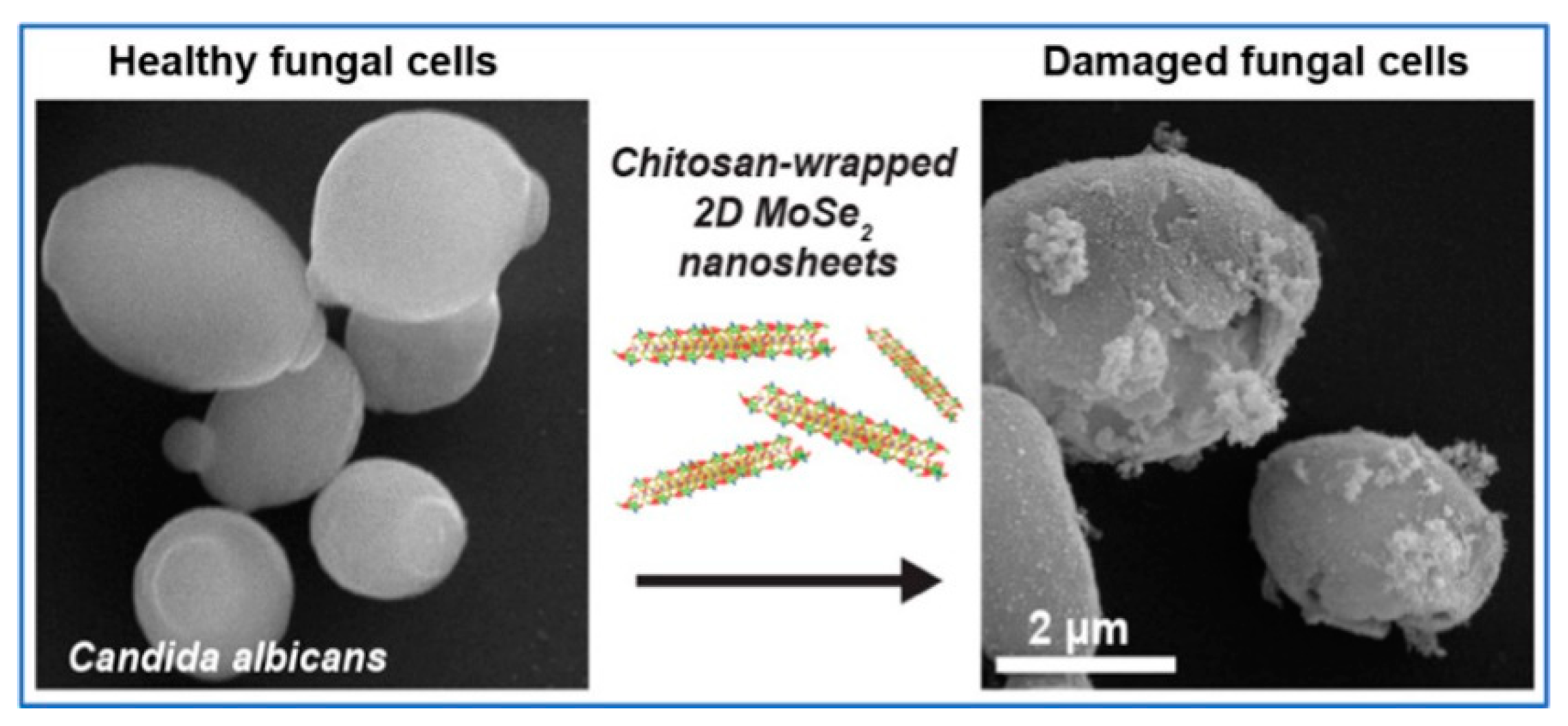
Figure 2.
Scanning electron microscope micrographs of the freeze-dried unloaded alginate microspheres (A), unloaded CS-coated microspheres (C), unloaded hydrogel microspheres (E), drug-loaded alginate microspheres (B), drug-loaded CS coated microspheres (D) and drug-loaded hydrogel microspheres (F). Published by Elsevier, 2015[56].
Figure 2.
Scanning electron microscope micrographs of the freeze-dried unloaded alginate microspheres (A), unloaded CS-coated microspheres (C), unloaded hydrogel microspheres (E), drug-loaded alginate microspheres (B), drug-loaded CS coated microspheres (D) and drug-loaded hydrogel microspheres (F). Published by Elsevier, 2015[56].
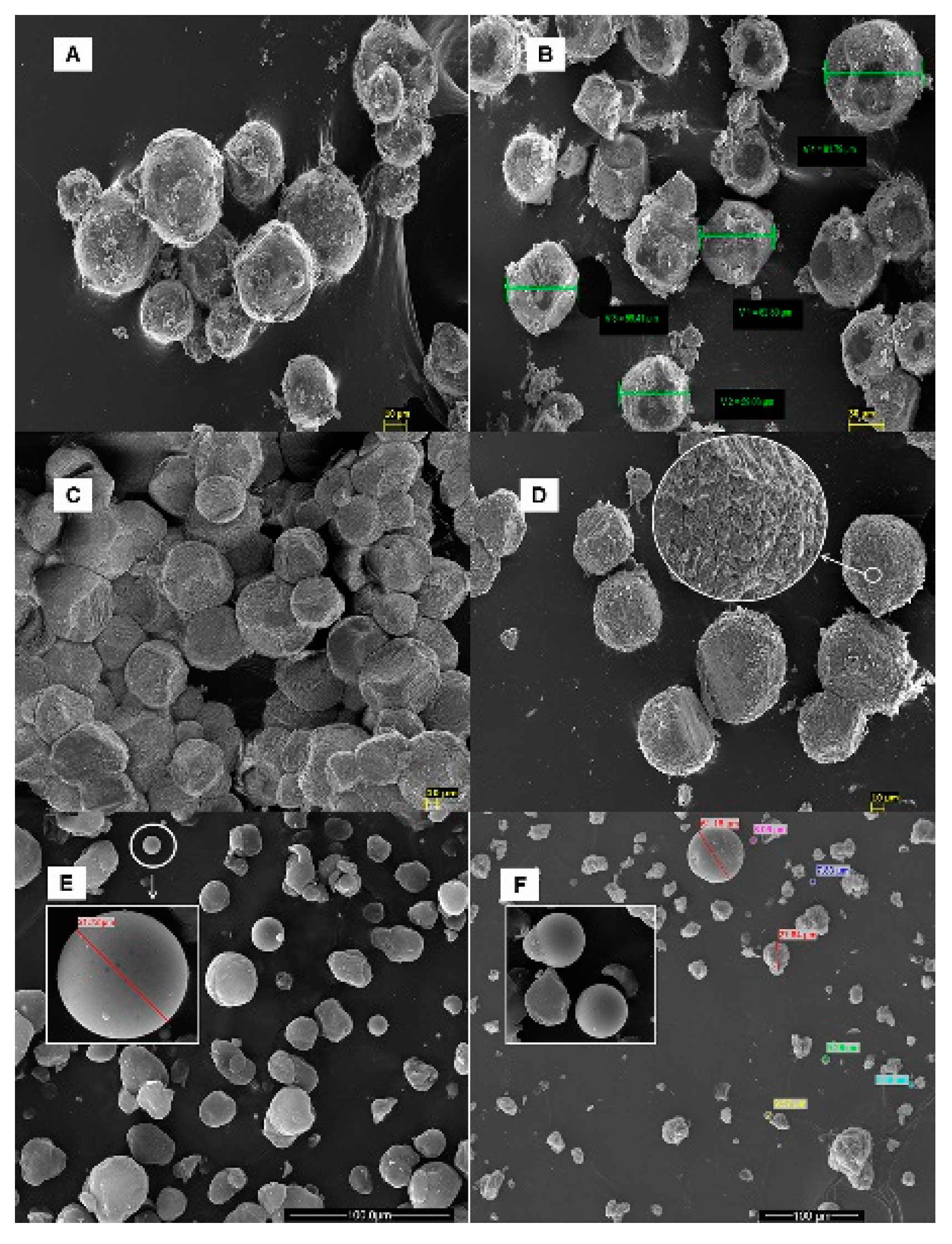
Figure 3.
Schematic showing (a) Electrospinning set-up used to prepare polydopamine crosslinked polyhydroxy antimicrobials loaded gelatin nanofiber mats. (b) Different non-covalent interactions are involved among dopamine, gelatin chains, and polyhydroxy antimicrobials in dopamine and antibiotic-loaded gelatin mats. (c) Other covalent interactions involved in polydopamine crosslinked antibiotic-loaded gelatin mats are responsible for the enhanced antimicrobial durability of wound dressings. , Published by Elsevier, 2017[67].
Figure 3.
Schematic showing (a) Electrospinning set-up used to prepare polydopamine crosslinked polyhydroxy antimicrobials loaded gelatin nanofiber mats. (b) Different non-covalent interactions are involved among dopamine, gelatin chains, and polyhydroxy antimicrobials in dopamine and antibiotic-loaded gelatin mats. (c) Other covalent interactions involved in polydopamine crosslinked antibiotic-loaded gelatin mats are responsible for the enhanced antimicrobial durability of wound dressings. , Published by Elsevier, 2017[67].
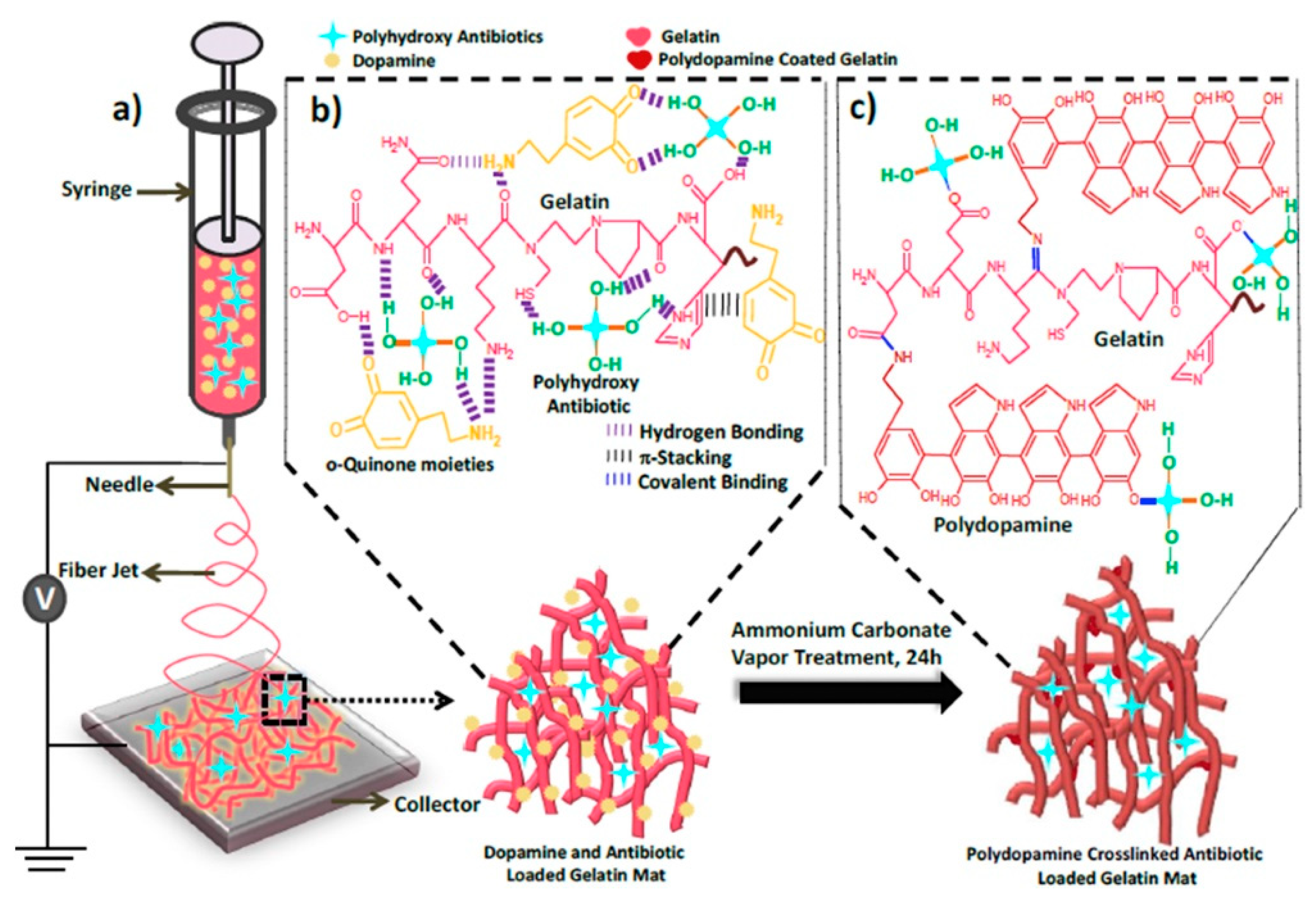
Figure 4.
SEM images of β-glucan (a) and β-glucan nanoparticle (b) Published by Elsevier, 2014. [86].
Figure 4.
SEM images of β-glucan (a) and β-glucan nanoparticle (b) Published by Elsevier, 2014. [86].
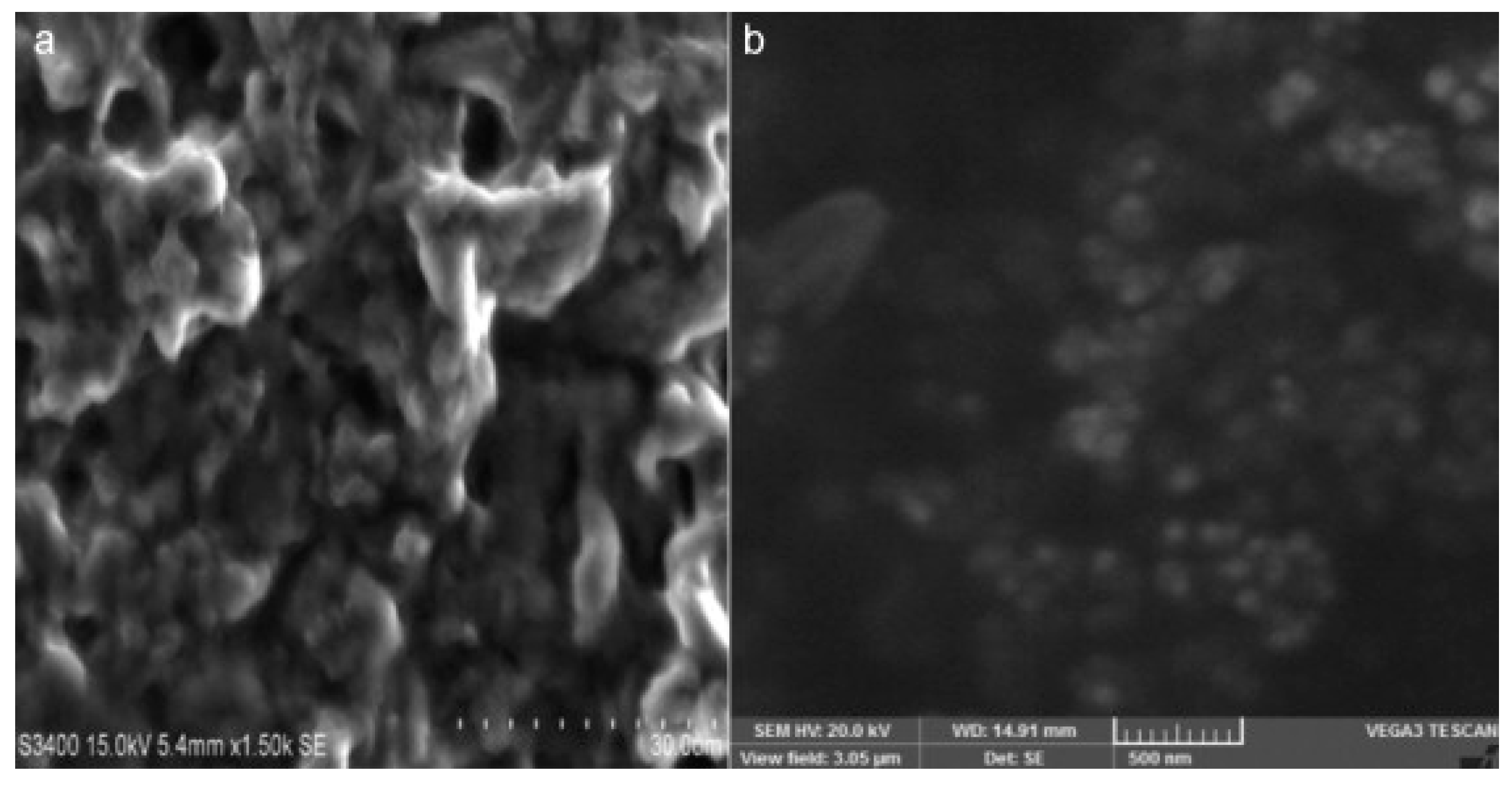
Figure 5.
Nanocomposite based on gold nanoparticles and carboxymethyl cellulose) Published by Elsevier, 2022. [108].
Figure 5.
Nanocomposite based on gold nanoparticles and carboxymethyl cellulose) Published by Elsevier, 2022. [108].
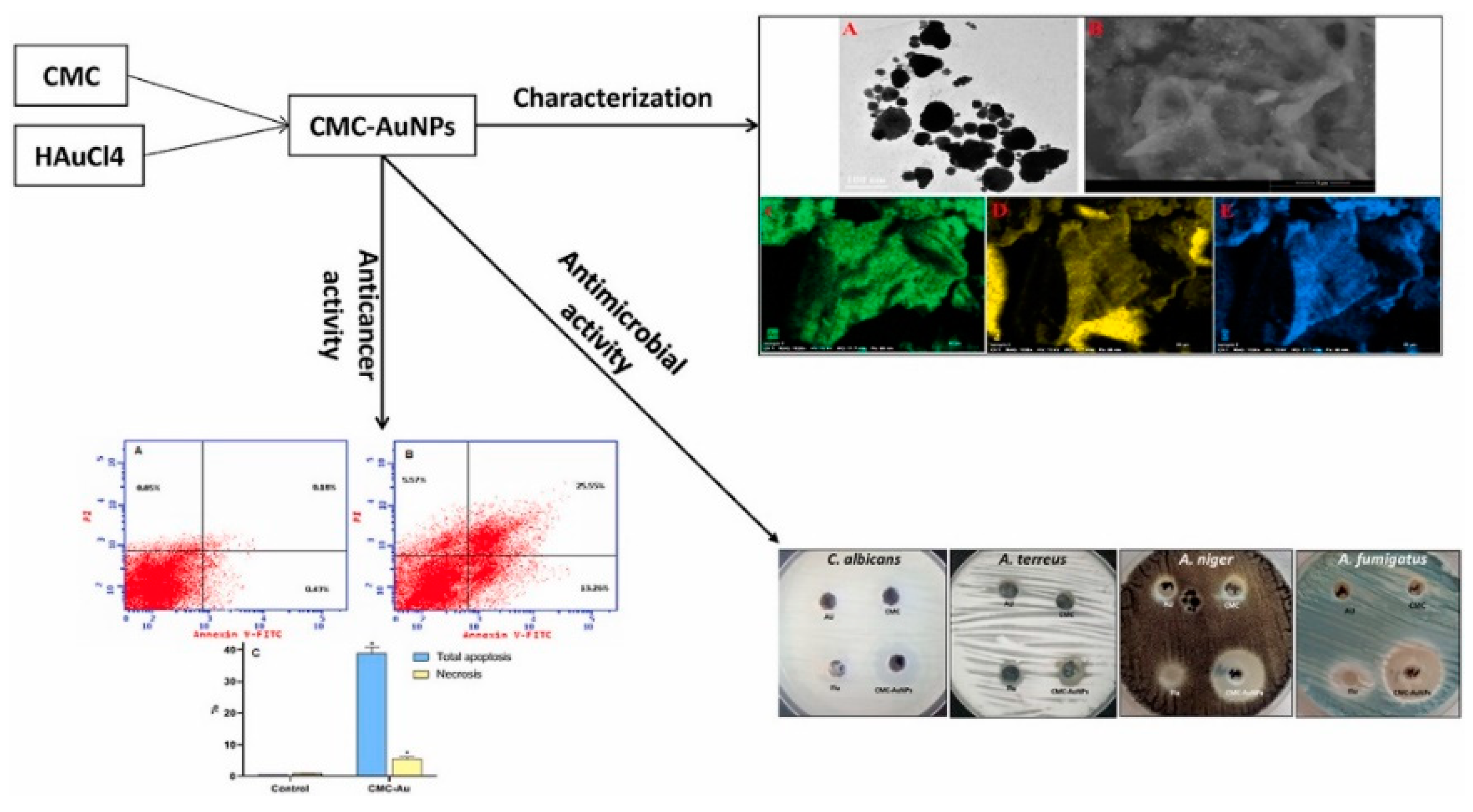
Figure 6.
SEM micrographs of (A) neat PLA, (B) PAN/CNCH2SO4- 20@PLA, (C) PAN/CNCBE- 20@PLA, and (D) PAN/ChNC-20@PLA electrospun membranes. TEM images of (E) PAN@PLA core-shell fibers, (F) PAN/CNCH2SO4-5@PLA, (G) PAN/CNCBE-15@PLA, and (H) PAN/ChNC-20@PLA coaxial membranes showing NC on the fiber surface. Published by Elsevier, 2022. [132].
Figure 6.
SEM micrographs of (A) neat PLA, (B) PAN/CNCH2SO4- 20@PLA, (C) PAN/CNCBE- 20@PLA, and (D) PAN/ChNC-20@PLA electrospun membranes. TEM images of (E) PAN@PLA core-shell fibers, (F) PAN/CNCH2SO4-5@PLA, (G) PAN/CNCBE-15@PLA, and (H) PAN/ChNC-20@PLA coaxial membranes showing NC on the fiber surface. Published by Elsevier, 2022. [132].
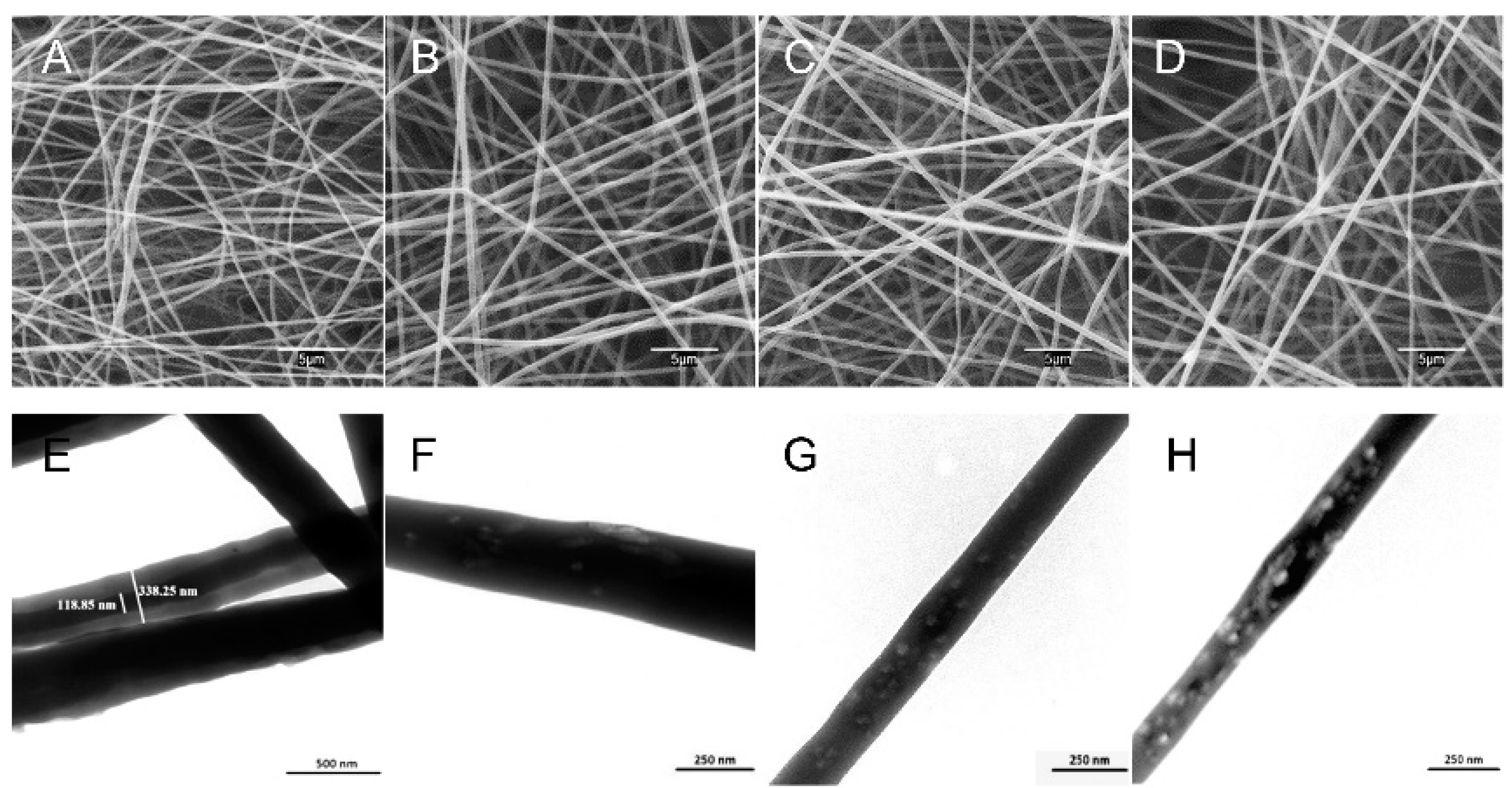
Figure 7.
Potential antimicrobial and antibiofilm efficacy of essential oil nanoemulsion loaded polycaprolactone nanofibrous dermal patches Published by Elsevier, 2023[142].
Figure 7.
Potential antimicrobial and antibiofilm efficacy of essential oil nanoemulsion loaded polycaprolactone nanofibrous dermal patches Published by Elsevier, 2023[142].
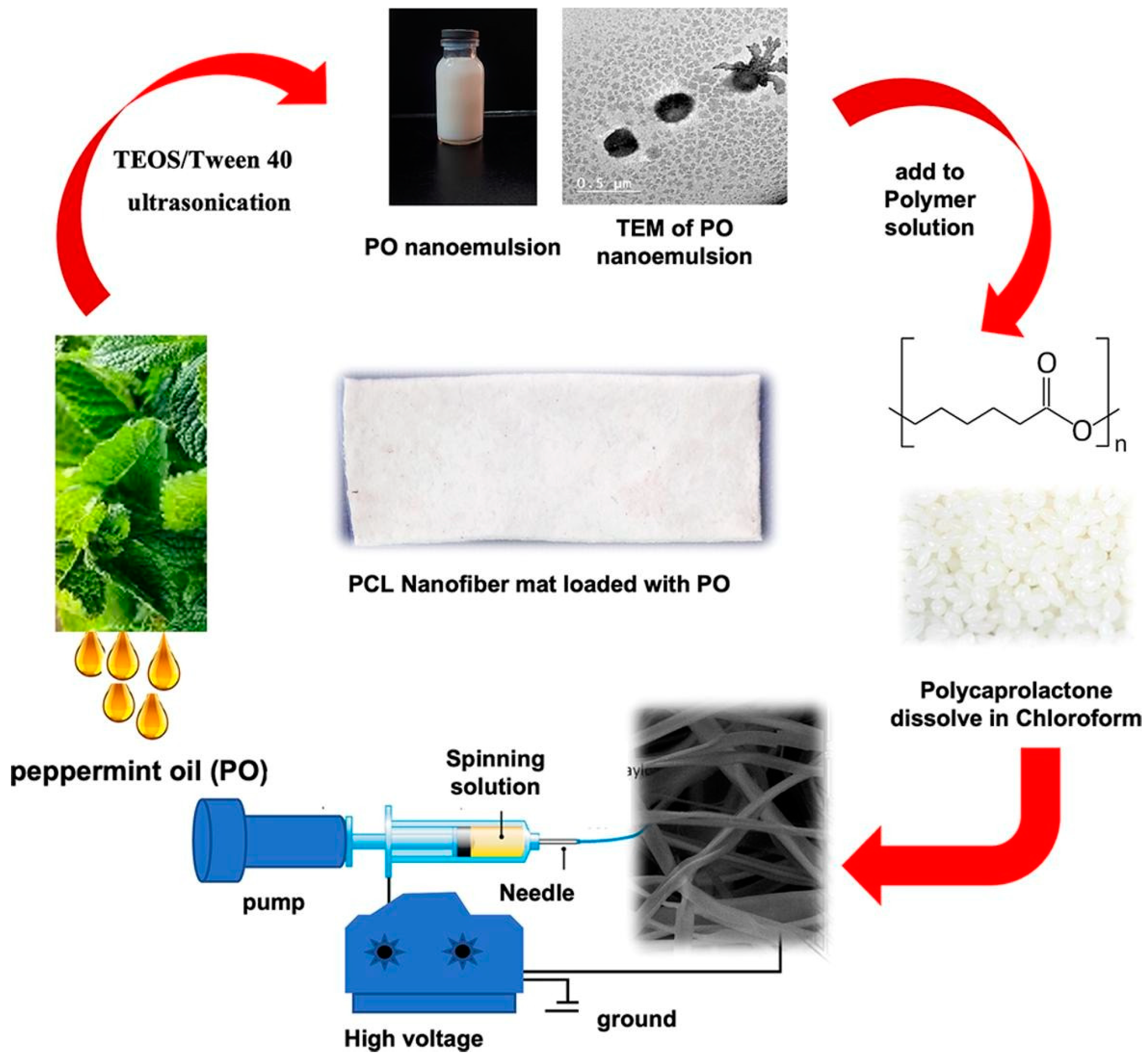
Table 1.
Chitosan for antifungal drug delivery nanosystems.
| Loaded drugs | Other components | Fungal | Zeta potential (mV) | Diameters | Loading content (LC) | Encapsulation efficiency (EE) | Drug release | PDI | Antifungal efficacy | In vivo study | Ref |
|---|---|---|---|---|---|---|---|---|---|---|---|
| O. syriacum essential oil (OSEO) and imidazolium-Zn(II)Salen | / | Candida albicans | +58.39 | 120.15 ±62.65 nm | 0.2241 | 35.17 %, | 80%(50h) | 0.31-0.39 | ZOI: 29.48 ± 1.26 mm; MIC; 3.25–45.25 μg/mL | N | [37] |
| Iron oxide nanoparticles/ chlorhexidine (CHX) | / | Candida albicans /Aspergillus flavus | +18.10 ± 0.82 | 33.6 ± 10.7 nm | / | / | / | 1.25 ±0.06 | MIC: 400 μg/mL | N | [51] |
| Cinnamic acid grafted CS | cinnamic acid grafted chitosan | M. canis | -69.74 | 263.0±81.4nm | / | 0.8493 | / | / | inhibition: 53.96%, MIC: 200 μg/mL | N | [35] |
| Metronidazol | / | C. albicans | +10.6 ± 1.3 | 188.7nm | / | 12μg/mg | 63%(8h) | / | MIC: 18 to 36 μg/mL | N | [52] |
| Fluconazole (Flu) | / | C. albicans | +3.36 | 82 nm | 0.602 | 0.787 | 8.12%(94h) | / | MIC: 1.25mg/mL,ZOI: 22.3 ± 1.6 mm | N | [36] |
| Ceftriaxone | / | / | +32 ±2.4 | 56 nm | 0.5437 | 0.7943 | 8.12%(94h) | / | ZOI: 19.5 ± 0.6 mm | N | [53] |
| Secondary Metabolites from P. fluorescens | / | Candida albicans /Aspergillus niger /Trichophyton tonsurans /Aspergillus flavis | +27.9 | 83.74±1.33nm | 90.29±1.73% | / | 7%(12h) | 0.34 | ZOI: 23.5±1.1 mm | Y | [54] |
| AmB | / | C. albicans | +15.84 ± 1.41 | 174.47±5.12 nm | 3.05% ± 0.13% | / | 80.6%(25h) | 0.17 | MIC: 1 μg/mL | N | [55] |
Table 2.
Alginate for antifungal drug delivery nanosystems.
| Loaded drugs | Other components | Fungal | Zeta potential(mV) | Diameters | Loading content (LC) | Encapsulation efficiency (EE) | Drug release | PDI | Antifungal efficacy | In vivo study | Ref |
|---|---|---|---|---|---|---|---|---|---|---|---|
| Nystatin (Nys) | / | C. albicans | -37.42±1.07(pH 7.5); -35.22 ± 1.40(pH 5.5) | 24.41 μm | Surface 7.63±1.81% /Inside 17.45 ± 2.34% |
Surface 07.63±1.81 /Inside 17.45±2.34 | About 62%(18h) | / | exhibited a marked fungicidal activity | Y | [56] |
| Voriconazole | Chitosan | / | -24 ± 0.9 | 185 ±1nm | 10.38 ±0.87% | 91.31 ± 1.05% | About 68%(50h) | / | / | N | [58] |
| Miltefosine | / |
C.albicans /C.gattii. |
-39.7±5.2 | 279.1±56.7 nm | / | 81.70±6.64% | 55.24%(181h) | / | MIC: 0.03 to 2 µg/mL | Y | [60] |
| Sodium selenate | / | Fusarium oxysporum Schltdl | -7.25 | 80 nm | / | / | About 60%(40h) | / | / | N | [61] |
| Miltefosine | / | Galleria mellonella caterpillars | -39.7±5.2 | 279.1±56.7 nm | About 80% | 81.70%±6.64 | 55.24%(181h) | / | MIC: 0.03 µg/mL | Y | [62] |
| Ketoconazole | poloxamer 407, carbopol 940 | Candida albicans | +82.2 ± 64.94 | 34.8 ± 73.34 nm | / | 97.5 ± 41.95% | 43.75±5.38%(6h) | / | / | Y | [63] |
| Ethionamide | Chitosan | Mycobacterial | -24 ± 9 | 324 ± 62 nm | 0.59 | About100%(80h) | 0.35 ± 0.09 | MIC: 0.43 µg/mL | N | [64] |
Table 3.
Gelatin for antifungal drug delivery nanosystems.
| Loaded drugs | Other components | Fungal | Zeta potential (mV) | Diameters | Loading content (LC) | Encapsulation efficiency (EE) | Drug release | PDI | Antifungal efficacy | In vivo study | Ref |
|---|---|---|---|---|---|---|---|---|---|---|---|
| Spectinomycin | / | / | / | 250.9 nm | 0.1-0.5g/100mL | / | / | / | ZOI: 22mm | N | [68] |
| Fluconazole/ Cinnamaldehyde | Poly(Vinyl Alcohol) | Candida albicans | / | 334 ± 56 nm | 0.2 + 2.6 wt% | 73.84%(CA) and 68.58%(FLU) | CA87%(8h) /FLU61%(12h) | / | ZOI: 36 ± 1mm | N | [70] |
| Amp B | carboxymethyl ɩ-carrageenan | Candida glabrata | -25 ± 5.3 | 343 ± 12 nm | 2wt % | 78 ± 0.68% | 99% (40days) | < 0.3 | No viable C. glabrata was detected in Macrophage cells. | N | [69] |
| Amp B | polyethylene oxide | Candida tropicalis/ Candida krusei/ Candida parapsilosis/Candida glabrata/ Candida dubliniensis/ Aspergillus flavus | / | 351 ± 73 nm | 0-9% | / | 78% (11h) | / | ZOI: 19 ± 0.5mm | N | [71] |
| Mmethylene blue | / | Candida albicans | +30.8 | 100 nm | 3.13% to 6.75% | 84.0% ± 1.3 | 48% (180h) | 0.107 | / | N | [72] |
| Daptomycin/ Polymyxin B/ Tobramycin/ Vancomycin/ Caspofungin/Amp B | polydopamine | Candida albicans | / | 998 ± 250 nm | 0.005 | / | 80% (24h) | / | ZOI: 31mm | Y | [67] |
Table 4.
Dextran for antifungal drug delivery nanosystems.
| Loaded drugs | Other components | Fungal | Zeta potential(mV) | Diameters | Loading content (LC) | Encapsulation efficiency (EE) | Drug release | PDI | Antifungal efficacy | In vivo study | Ref |
|---|---|---|---|---|---|---|---|---|---|---|---|
| Tobramycin/AgNPs | / | Pseudomonas aeruginosa(PA) | -39.2±1.5 | 167.2 ± 3.56 nm | >75% | Ag>95%/Tob78±2.5% | / | 0.241±0.008 | MIC: 2 μg/ mL | Y | [88] |
| Ciprofloxacin (CIP) /mucolytic enzyme papain (PAP) | / | PA | -51.0 ± 1.9 | 223 ± 99 nm | / | 0.88 | 100%(40min) | 0.51 ± 0.05 | / | N | [89] |
| Curcumin (CUR) | poly-lactic acid | / | +35(±7.23) | 248 (±86.39) | / | 0.7381 | 50%(16h) | 0.21 (± 0.09) | / | Y | [90] |
| Amp B | poly-lactic acid | / | 37 | 644±52nm | / | 0.56 | 100%(5min) | 0.27 | / | Y | [91] |
| Itraconazole (ITZ) | / | / | (-) 47 ± 0.8 | 400 ± 120nm | 65 ± 6 | 93 ± 2 | / | / | / | N | [92] |
Table 5.
Cellulose for antifungal drug delivery nanosystems.
| Loaded drugs | Other components | Fungal | Zeta potential(mV) | Diameters | Loading content (LC) | Encapsulation efficiency (EE) | Drug release | PDI | Antifungal efficacy | In vivo study | Ref |
|---|---|---|---|---|---|---|---|---|---|---|---|
| [2-(methacryloyloxy)ethyl] trimethylammonium chloride solution | / | Candida albicans | / | / | 0.4 | / | / | / | inhibition > 99.9% | N | [110] |
| Fluconazole | tetraethyl orthosilicate | Candida albicans | RNF-25.4±1.13 /WNF-24.4±1.15 | RNF for 441.7 nm /WNF for 407.7 nm | 1%w/v | / | 30% (24h) | 0.735 for RNF /0.655 for WNF | ZOI: 39mm | Y | [107] |
| ciclopirox olamine and Boswellia serrata | / | Candida albicans, Candida parapsilosis | / | / | 10.1 ± 3.1 % | 10.0 ± 2.2 % | 79.1 ± 17.7 % (48 h) | / | ZOI: 20mm | N | [111] |
| gold nanoparticles | / | C.albicans,A.terreus,A. niger, andA. fumigatus | -3.16 | 54.49 nm | / | / | pH5.5, >45%. pH 7 <5% pH 9 <1%. | / | MIC: 20 μg/ml | N | [108] |
| hydroxyapatite | lysine | Candida albicans | / | 600 nm | 50-70% | / | / | / | ZOI: 28 mm | N | [112] |
| Griseofulvin | diatom | / | -13 ± 2 mV | 2–3 ± 0.5 μm | / | / | / | 0.675 | / | N | [109] |
| Amp | / | Candida albicans | -16.10 ± 2.6 mV | 150 ± 9.23 nm | 5 μg/mL | 60 ± 2% | 18 ± 2.1 % (12h) | 0.258±0.005 | MIC: 0.145 ± 0.01µg/mL | Y | [113] |
| Lliconazole | Polyvinyl alcohol | Candida albicans, Aspergillus niger | -14.6–32.3mV | 300-600 nm | 0.01 | 70–80% | up to 8 h | 0.108-0.497 | strong antifungal activity | N | [114] |
| Citin’ nanocrystals | / | Aspergillus | / | 60 nm | 0-10 % | / | / | / | inhibition: 98.87% | N | [115] |
Disclaimer/Publisher’s Note: The statements, opinions and data contained in all publications are solely those of the individual author(s) and contributor(s) and not of MDPI and/or the editor(s). MDPI and/or the editor(s) disclaim responsibility for any injury to people or property resulting from any ideas, methods, instructions or products referred to in the content. |
© 2023 by the authors. Licensee MDPI, Basel, Switzerland. This article is an open access article distributed under the terms and conditions of the Creative Commons Attribution (CC BY) license (http://creativecommons.org/licenses/by/4.0/).
Copyright: This open access article is published under a Creative Commons CC BY 4.0 license, which permit the free download, distribution, and reuse, provided that the author and preprint are cited in any reuse.


