

Submitted:
06 June 2023
Posted:
07 June 2023
You are already at the latest version
Abstract
As the major greenhouse gas, CO2 gas emission has been noticeably increased over the past decades resulting in global warming and climate change. As a result, it is imperative to reduce the excess CO2 in the atmosphere to hold “the increase in the global average temperature to well below 2°C (ideally 1.5°C) above pre-industrial levels set by the Paris Agreement on climate change. Among many ways, CO2 capture technology is considered as the most promising technology among the available technologies. Porous materials such as carbons, silica, zeolites, hollow fibers, and alumina are widely used as CO2 sorbents. However, among the available porous sloid sorbents, porous silica-based materials grabbed a significant attention due to their unique properties including high surface area, pore volume, good thermal and mechanical stability, and low cost. Therefore, development of porous silica materials as a promising CO2 absorbent is a continuously expanding research area in the current moment. Herein, we aim to visualize a full picture of the porous silica-based materials for CO2 capture. This review presents a comprehensive study of existing CO2 capture techniques and highlights the recent progress of different porous silica materials and synthesis processes. CO2 adsorption capacities of unmodified porous silica materials are less effective as compared with functionalized silica materials. Various research activities have been reported about functionalization of pours silica using amine groups. Therefore, in this review, different synthesis routes of amine-functionalized porous silica materials, CO2 adsorption capacities, gas selectivity and reusability were discussed. Moreover, the research challenges associated with the porous silica materials and future research directions are summarized.
Keywords:
CO2 Capture Technologies
; CO2 Adsorption
; Porous Silica
; Amine Functionalized Porous Silica
; Decarbonization.
1. Introduction
With exponential growth of industrialization, global warming and climate change have become a global concern and drawn much attention in recent decades [1]. As a solution for these key issues, research activities are developed for capturing carbon dioxide (CO2), the major greenhouse gas. However, atmospheric CO2 measured at NOAA’s Mauna Loa Atmospheric Baseline Observatory peaked for 2021 at a monthly average of 419 parts per million (ppm) and it is reported as the highest level since accurate measurements began 63 years ago [2].
The increase of CO2 concertation results climate change such as rise of global temperature and sea levels, alternative of rainfall patterns, extinction of species, natural disasters such as severe weather events, ranging from flash floods, hurricanes, freezing winters, severe droughts, heat waves, urban smog, and cold streaks [3].
The main types of CO2 stationary emission sources are power plants, refineries, chemical and petrochemical, iron and steel, gas processing, and cement industries. Due to the growth of industrialization and population, the emission of CO2 has been drastically increased to approach an irreversible climate change level. To tackle these issues, the international communities led by the United Nation reached a landmark international accord, the Paris Agreement, that was adopted by nearly every nation in 2015 to address climate change and its related issues. Countries around the globe made their “nationally determined contributions” of greenhouse gas reduction and plans to pursue their domestic measures. Different approaches are considered and employed in different countries in order to reduce CO2 emissions and those are indicated in Table 1.
Each of the above-mentioned approaches possesses pros and cons. Among these approaches, the CO2 capture and storage (CSS) can be used to reduce CO2 emissions by 85-90% from large emission sources [4]. CCS includes different CO2 capture, separation, transport, storage technologies, and chemical conversion which are discussed in detail below.
2. CO2 Capture
2.1. CO2 capture technologies
Capture and sequestration of CO2 (CCS) from aforementioned stationary emission sources has been identified as a paramount option for the issues of global warming and climate change. CCS includes four primary steps known as CO2 capture, compression, transport, and storage, therefore, developing an efficient and economically feasible technology for the capture and sequestration of CO2 produced by anthropogenic emissions is critically important. CO2 capture is the central part of the CCS technology process and gained around 70–80% of the total expensive. However, CSS methods can be classified as for example, (i) Post-combustion (ii) Pre-combustion, and (iii) Oxy-fuel combustion (Oxygen-fired combustion) [5,6].
In post-combustion capture technology, it collects and separates the CO2 from the emission gases of a combustion system [7,8,9,10,11]. Firstly, flue gas (mainly consists of CO2, H2O and N2) passes through denitrification and desulphurization treatments. As the next step, the flue gas is fed to an absorber which contains solvent. Herein, CO2 regeneration occurs. Then the CO2-rich absorbent is sent to a CO2-stripper unit to release the CO2 gas. Also, CO2-lean absorbent is sent back to the CO2-absorber unit [1]. Next, the captured CO2 is then compressed into supercritical fluid and then transported [1] as shown in Figure 1.
Pre-combustion capture is a technology where CO2 is captured before the combustion process and CO2 is generated as an intermediate co-product of conversion process [12]. The pre-combustion technologies are mainly used in power plants, production of fertilizers and natural gas [13,14].
In oxyfuel combustion, the carbon-based fuel consumes in re-circulated flue gas and oxygen (O2) stream. CSS capture technology is considered expensive due to the high cost of O2 separation and production. However, the capture and separation of CO2 are reasonably easy compared to other methods and is considered as an energy-saving method [15].
Among the currently available technologies, post-combustion capture has grabbed much attention because it can be easily accomplished, applicable for large scale- power plants, easily managed and required short time for CO2 capture compared to other available methods [1]. Post-combustion capture uses different methods for gas separation, and collects CO2 by adsorption/desorption, as shown in Table 2, including absorption [6,16], adsorption [6,17] membrane-based technologies [18,19], and cryogenics [20]. Table 2 also depicts the efficiency, advantages and disadvantages of the different types of post-combustion capture technologies.
Absorption process mainly uses liquids to capture CO2. During adsorption, once CO2 is separated from the gas, the sorbent should be regenerated by using a stripper, heating, or depressurization. Also, this method is considered as the most established process for CO2 separation [21]. In general, adsorbents can be divided into two types, namely, chemical and physical adsorbents (see Table 2 for details).
2.2. Criteria for Selecting CO2 Sorbent Material
Certain economical and technical properties are required in order to select the best solid adsorbent candidate for a particular CO2 capture application. These criteria are listed and described below.
- Adsorption capacity for CO2:
The equilibrium adsorption capacity of a sorbent material is represented by its equilibrium adsorption isotherm. The adsorption capacity is an important parameter when considering the cost. Besides, it causes to reduce the sorbent quantity, and it’s the size of the adsorption column. However, to enhance the adsorption capacity of solid sorbents, functionalization has been carried out with existing monoethanolamine (MEA) [24]. The CO2 working capacity should be in the range of 2-4 mmol/g of the sorbent [25].
- Selectivity for CO2:
The adsorption selectivity or selectivity of CO2 is explained as the sorption uptake ratio of a target gas species compared to another type (as example N2) contained in a gaseous mixture under given operation conditions. Therefore, it depends on the purity of the adsorbed gas in the effluent [21]. However, the purity of CO2 influences transportation and sequestration and, therefore, this criterion plays an important role in CO2 sequestration [24].
- Adsorption and desorption kinetics:
It is necessary to have fast adsorption/desorption kinetics for CO2 and it controls the cycle time of a fixed-bed adsorption system. Fast kinetics results in a sharp CO2 breakthrough curve in which effluent CO2 concentration changes are measured as a function of time, while slow kinetics provides a distended breakthrough curve. However, both fast and slow adsorption and desorption kinetics impact on the amount of sorbent required. In functionalized solid sorbents, the overall kinetics of CO2 adsorption mainly depend on the functional groups present, as well as the mass transfer or diffusional resistance of the gas phase through the sorbent structures. The porous support structures of functionalized solid sorbents also can be tailored to minimize the diffusional resistance. The faster an adsorbent can adsorb CO2 and be desorbed, the less of it will be needed to capture a given volume of flue gas [24].
- Mechanical strength of sorbent particles:
The sorbent must show the stable microstructure and morphological structure in adsorption and regeneration steps. Mainly disintegration of the sorbent particles occurs due to the high volumetric flow rate of flue gas, vibration, and temperature. Apart from that, this could also happen due to abrasion or crushing. Therefore, a sufficient mechanical strength of a sorbent particles is required to keep CO2 capture process cost-effective [24].
- Chemical stability/tolerance towards impurities:
Solid CO2 capture sorbents such as amine-functionalized sorbents should be stable in an oxidizing environment of flue gas and should be resistant to common flue gas contaminants [24].
- Regeneration of sorbents:
The regeneration of the sorbent is energy saving and is one of the most important parameters required for improving energy efficiency [26]. Regeneration can be achieved through the adjustment of the thermodynamics of the interaction between CO2 and the solid adsorbent [24]. Considering regeneration, physisorption is mostly favored as compared with chemisorption since later involves high energy consumption for regeneration.
- Sorbent costs:
The production cost is the main key point when considering industrial applications at reasonable gas selectivity and adsorption performance [24].
2.3. Liquid amine for CO2 capture
Development of solvents for CO2 chemical absorption is a major area of research [27]. The ideal solvent should have a high CO2 absorption capacity and react rapidly and reversibly with CO2 with minimal heat requirement. The solvent should exhibit the following properties such as stability in oxidative and thermal environment, low vapor pressure, toxicity, flammability, and reasonable production cost [27].
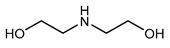
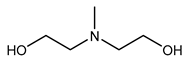
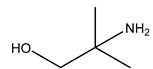
Recently, a most promising CO2 capture method with chemical absorption is by using liquid amine which can be divided mainly into two groups known as simple alkanolamines and sterically hindered amines [28]. Examples for simple alkanolamines are monoethanolamine (MEA), diethanolamine (DEA) and triethanolamine (TEA) [29,30]. Furthermore, alkanolamines are the most widely used sorbents for CO2 capture. The structures of alkanolamines include primary, secondary, ternary amines containing at least one hydroxyl (-OH) group and amine group-(N-R) as shown in Table 3.
However, these different amine classes have different reaction kinetics with CO2, CO2 absorption capacity and equilibria, stability and corrosion [28]. Advantages and disadvantages among the alkanolamines are shown in Table 3. As shown in equation 1 and 2 below, both primary and secondary amines react with CO2 to form a carbamate and protonated amine, consuming approximately two moles of amine per mole of CO2 according to the zwitterion mechanism [31]. According to equation 3, tertiary amines react with CO2 gas molecules in the presence of H2O while forming bicarbonates.
where R1, R2 and R3 are aryl/alkyl groups
However, García-Abuín et al. [32] observed that MEA produced a mixture of carbamate and bicarbonate as the main reaction products during absorption. The absorption reaction started with the reversible reactions between MEA and CO2 to form carbamate at low CO2 loading, followed by the CO2 hydration to form HCO3−/CO32− under high CO2 loading, and accompanied by the hydrolysis of carbamate.

Table 3.
Comparison between different liquid amines.
| Criteria | Alkanolamines | Sterically hindered Amines | ||
| Primary | Secondary | Tertiary | ||
| Examples | Monoethanolamine (MEA) | Diethanolamine (DEA) | N-methyldiethanolamine (MEDA) | 2-amino-2-methyl-1- propanol (AMP) |
| Structure | 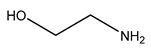 |
 |
 |
 |
|
CO2 loading at 59.85 °C (mol CO2/mol amine) |
0.426 (MEA 30 wt %) [33] |
0.404 (DEA 30 wt %) [33] |
0.141 (TEA 30 wt %) [33] |
0.466 (AMP 30 wt %) [33] |
| Regeneration efficiency (%) at 90 °C | 75.5 [34] |
84.89 [34] |
95.09 [34] |
|
| Advantages | ● Inexpensive solvent ● Reversible absorption ● High selectively (between acid and other gases) ● Reacts with CO2 more rapidly [33] |
● Inexpensive solvent ● Reversible absorption ● High selectively (between acid and other gases) ● Reacts with CO2 more rapidly [33] |
● Inexpensive solvent ● Reversible absorption ● High selectively (between acid and other gases) ● High CO2 absorption capacity ● Requires low regeneration energy [33] |
● High CO2 absorption capacity ● Requires low regeneration energy [34] |
| Disadvantages | ● Lower CO2 absorption capacity ● Requires high regeneration energy ● Oxidative degradation occurs in the presence of other gas components ● Corrosive ● High capital costs [33] |
● Lower CO2 absorption capacity ● Requires high regeneration energy ● Oxidative degradation occurs in the presence of other gas components ● Corrosive ● High capital costs [33] |
● Reaction rate with CO2 is low compared to MEA and DEA ● Corrosive ● High capital costs [33] |
● Low reaction rate [34] |
The mechanism of CO2 capture into MEA solution with different CO2 loadings is shown in Figure 2.
According to Table 3, there are three categories of alkanolamines that show increased capital costs due to requirement of specialized and expensive materials for construction [28]. On the contrary, degradation of alkanolamine causes operational, and environmental problems including high amount of absorbent required, corrosion of equipment, and demanding of energy [24].
MEA is considered as a well-established solvent to separate CO2 because it can be regenerated easily [35]. On the other hand, Rinprasertmeechai et al. [33] reported the order of CO2 absorption capacity of the different alkanolamines as MEA > DEA > TEA. Moreover, they have further reported the regeneration ability of the amines in the following order: TEA > > DEA > MEA. According to Table 3, it is clearly shown that, MEA gave the lowest regeneration efficiency of 75.75 % in the first cycle, whereas, TEA offered the highest regeneration performance of 95.09 % [33]. As shown in Table 3, MEA reacts with CO2 more rapidly compared to MEDA due to the formation of carbamate but MEDA has a higher CO2 absorption capacity and requires lower energy to regenerate CO2 [36]. However, Wang et al. [37] found that, when MEA and MEDA are mixed with the appropriate ratio, the energy consumption for CO2 regeneration is reduced significantly.
Sterically hindered amines are based on primary or secondary amines, with alkyl groups attached to the amino group, which is inhibited from reacting with CO2 through the effect of steric hindrance [28]. One example of sterically hindered amines is 2-amino-2-methyl-1- propanol (AMP) which reduces the stability of the formed carbamate due to the formation of weak bonds, promoting hydrolysis to form bicarbonate and reducing regeneration energy, but it also releases free amine molecules to react with CO2, thus increasing absorption capacity as shown in Table 3. Dave et al. [38] compared the CO2 absorption of different amine solvents such as MEA, MEDA and NH3 at various concentrations. They showed that 30wt% AMP-based process has the lowest overall energy requirement over other solvents such as 30% MEA, 30% MEDA, 2.5% NH3, and 5% NH3.
Recently, ionic liquids (IL) have gained attention due to their properties such as very low vapor pressure, thermal stability, and non-toxicity [39]. The widely used ILs are bis(trifluoromethylsulfonyl)imide (TF2N), tetrafluoroborate (BF4) and hexafluorophosphate (PF6). The main drawbacks of the ILs are high viscosity and they reduce to their blended solutions containing IL and alkanolamines. However, due to the reduction of high viscosity, some rewards are gained such as, increase of energy efficiency, absorption rate, and CO2 absorption capacity [40,41].
2.4. Comparison between major non-carbonaceous solid sorbents for CO2 capture and importance of silica materials
Because of disadvantages present in the aqueous amine absorption processes including low contact area between gas and liquid, low CO2 loading, and absorbent corrosion, as an alternative option, solid adsorption has achieved concern of researchers and industries in recent years [42,43]. A variety of solid adsorbents have been proposed according to their structures and compositions, adsorption mechanisms, and regeneration [43]. Although solid sorbents are inexpensive, they reduce heat capacity, show fast kinetics, increase CO2 adsorption capacity and selectivity, and exhibit high thermal, chemical, and mechanical stability [43].
However, it is important to improve the CO2 selectivity and adsorption capacity of a solid sorbent when targeting large volumes of combustion emissions. Recently, most of the commercially available adsorbents are activated carbons, silica, zeolites, hollow fibers, and alumina [6]. These materials show different pore structures, specific surface areas, and surface functional groups, and thus their application fields are highly specific. Table 4 tabulates some typical non-carbonaceous dry adsorbents used for CO2 capture.
As mentioned earlier, carbonaceous adsorbents such as activated carbon have been widely used for CO2 capture due to their wide availability, low cost, and high thermal stability. However, weak CO2 adsorption of carbonaceous materials in the range of 50–120 °C leads to high sensitivity in temperature and relatively low selectivity in operation [44]. Therefore, much researchs have focused on non-carbonaceous materials such as mesoporous silica, zeolites, etc. due to their advantages shown in Table 4.
Zeolites are aluminosilicates with a particularly ordered 3-dimensional (3D) microporous structures which have high crystallinity and surface area [44]. The adsorption efficiencies of zeolites are largely affected by their size, charge density, and chemical composition of cations in their porous structures [37]. Literature has reported the change of CO2 adsorption of zeolites by altering their composition as Si/Al ratio [45] and the exchange with alkali and alkaline-earth cations in the structure of zeolites. However, zeolites present several drawbacks such as relatively low CO2/N2 selectivity and high hydrophilicity [46]. Apart from the above, zeolites show reduced CO2 adsorption capacity when CO2/N2 mixtures contain moisture and zeolites require high temperatures (> 300 °C) for regeneration [47].
Recently, metal organic frameworks (MOF) have attracted much attention owing to their unique properties such as controllable pore structure and high surface area [48]. However, the MOFs show decreased adsorption capacities when exposed to gas mixtures [46]. Moreover, previous reports indicate that MOFs are promising materials for CO2 capture in laboratory settings; however, further research is required to confirm their practical applicability [49]. Furthermore, water vapor negatively affects the application of these sorbents. Also, water vapor is adsorbed competitively on physisorbents, and thus decreasing their CO2 adsorption capacity [50].
Ordered mesoporous silica materials are good candidates because of their high surface area, high pore volume, tunable pore size and good thermal and mechanical stability. So far, mesoporous silica includes the families of MCM (Mobil Company Microporous: M41S, Santa Barbara Amorphous type material (SBA-n), anionic surfactant- template mesoporous silica (AMS) [44]. However, the CO2 adsorption capacities of them observed at atmospheric pressure are not high. Therefore, many studies based on the synthesis and modification of silica materials containing nano-porous and mesoporous materials for efficient CO2 capture have been recently reported [51,52].
Several reviews have recently focused on the potential applications of porous silica materials as CO2 adsorbents. Reddy et al. [53] reported the CO2 adsorption based on porous materials and in this review, it has mainly reported about MOFs, clay-based adsorbents, porous carbon-based materials and polymer-based adsorbents. However, this recently published review did not mention porous silica materials. Liu et al. [54] also discussed about different porous materials (including pours silica) for post-combustion CO2 capture but there is limited literature reported about synthesis methods. Therefore, there is a need to identify the best performing porous silica materials and synthesis methods among the thousands of synthesized silica-based materials. Therefore, this review is mainly aimed to discuss the adsorption of CO2 gas onto different types of porous silica materials and functionalized silica materials. In addition, overview of synthesis processes and comparison between the adsorption capacities are also deeply discussed. Finally, the technical challenges and the future research directions of the porous silica materials for CO2 adsorption are also presented in this review.
3. CO2 separation methods
There are two general mechanisms involved in the CO2 capturing using solid sorbents which are known as chemisorption and physisorption. Table 5 represents the comparison between chemisorption and physisorption. However, the difference between the two mechanisms is interactions between the gas molecules and the sorbent surface in adsorption which is shown in Figure 3.
The process of CO2 capturing using solid adsorbent involves in selective separation [24]. The important parameters for sloid sorbents are surface tension, pore size, temperature and pressure [24,60]. Adsorption process involves a repeated cycle of adsorption and desorption which is also known as regeneration. The different types of adsorption are shown in Figure 4 such as (i) Pressure Swing Adsorption (PSA) (ii) Temperature Swing Adsorption (TSA) (iii) Electric Swing Adsorption (ESA) and (iv) Vacuum Swing Adsorption (VSA).
Adsorption and desorption occur at low temperature range(40-120 oC) and high temperature range (120-360 oC) in the TSA process, respectively [3]. VSA process involves CO2 uptake at high pressure and ESA conducts by performing the adsorption–desorption by changing the electrical supply [3]. Activated carbons, MOF, zeolites, activated alumina, and silica gel are mainly used sorbents in TSA and PSA processes while ESA is considered less costly compared to those of both TSA and VSA [60].
In contrast, microwave-swing adsorption (MWSA) process has gained much attention in terms of energy management. The main advantage of MWSA is, unlike conventional heating where solids heat through conduction and convection, microwaves are able to provide energy to materials in a direct transfer of the energy to the adsorbent without being absorbed by the adsorbent [62].
4. CO2 adsorption using mesoporous silica materials (Physisorbents)
4.1. Description about mesoporous silica materials
The mesoporous silica materials are used for a wide variety of applications. Apart from the CO2 adsorption, those materials are used in various fields such as catalytic and wastewater treatment applications [63]. Mesoporous silica has unique properties such as uniformity of pore distribution (with size between 0.7 and 50 nm), high surface area, (around 1000 m2/g) and good thermal stability [64]. The very first synthesized mesoporous silica material is M41S, in the 1990s [65]. However, development of surfactants and synthesis protocols have been able to prepare many types of mesoporous silicas such as MCM-41, SBA-15, SBA-16, FDU-2, MCM-50, KIT-5, etc. with a variety of pore geometries like cubic, and hexagonal, and morphologies like rods, spheres, and discs [66].
In 1990, Mobil Oil Corporation discovered molecular sieves of M41S family consisting of silicate/aluminosilicate [67]. In general, these materials are prepared via the sol-gel method. Three well-defined structural arrangements were identified after studying the effect of surfactant concentration and those are: hexagonal structure (MCM-41), cubic structure (MCM-48), and lamellar structure (MCM-50). Therefore, these materials (M41S family) exhibit mesoporous arrays with amorphous walls of about 10 Å (1 nm) [67]. Moreover, the structural ordering of these M41S family materials can be changed with increasing hydrothermal synthesis temperature and time [67]. These, M41S molecular sieves have attracted great attention in different applications such as catalysis area [68], adsorption [67] and controlled release of drugs [69]. The main advantage of this group is their unique chemical structure consisting with high density of functional silanol groups (Si–OH), pore size, and shape can be modeled during the synthesis process and internal surface can be easily modified with organic and/or inorganic groups [67,70,71].
Santa Barbara Amorphous family (SBA) prepared silica-based materials with well-ordered mesoporous firstly, in 1998 [67]. The material group consists of SBA-2 (hexagonal close-packed array), SBA-12 (three-dimensional hexagonal network), SBA-14 (cubic structure), SBA-15 (two-dimensional hexagonal), and SBA-16 (structured in cubic cage) [67,72]. These nanostructured mesoporous materials are composed of silica-based framework with uniform and well-ordered mesopores, large pores, thick porous walls, high surface area, and high thermal stability [71,73]. Most widely investigated members of the SBA-n family in the literature are SBA-15 and SBA-16. The SBA-15- and SBA-16-based mesoporous arrays are widely utilized as adsorbents [71], catalysts or catalytic [74] and drug deliveries [75].
The Fudan University synthesized mesoporous materials family (FDU-n)-based mesoporous silica arrays have well-ordered mesostructures and pore arrangements, high surface area, large and uniform distribution of pore diameter, amorphous pore-wall structures, and thermal and mechanical stability [76]. FDU-1-based mesoporous materials have a 3D face-centered cubic (FCC) structure with large cage-like mesopores while FDU-2 mesoporous array possesses a mesostructured FCC unit cell and well-ordered 3D architecture [71].
On the contrary, the mesoporous material series of the KIT-n family, where n = 1, 5, or 6 are mainly represented by the KIT-1, KIT-5, and KIT-6. However, KIT-1-based mesoporous silicas exhibit a 3D architecture in a disordered framework with high surface area, large pore volume and pore diameter, and thermal and hydrothermal stability [77]. KIT-5-based nanostructured mesoporous materials have a well-ordered 3D cage-like mesopores in a face centered close-packed cubic lattice architecture [71]. In addition, KIT-6 shows a 3D mesoporous amorphous walls with large pore size, uniform pore distribution, high surface area, and thermal stability [71].
Besides, mesoporous silica materials of the M41S, SBA-n, FDU-n, and KIT-n families are used in a wide range of applications such as separation, catalyze, drug release adsorption, sensors, matrix solid phase dispersion (MSPD) and/or solid-phase extraction [71].
4.2. Synthesis procedures
Initially, Stöber et al. [78] discovered an effective method for the synthesis of monodispersed silica particles. This process consists of hydrolysis of tetraethyl orthosilicate (TEOS) using ammonia as a catalyst in water and ethanol solution. This method leads to the synthesis of silica particles [79]. In this reaction, TEOS undergoes a hydrolysis in ethanol/ammonia solution. As a result, it produces silanol monomer (-Si-OH) with the epoxy groups (-Si-OEt) as shown in equation 4. As the next step, as shown equation 5, silanol groups undergoes condensation to produce branched siloxane clusters, which causes to initiate the nucleation and growth of silica particles. Simultaneously, silanol monomers may react with the unhydrolyzed TEOS via the condensation (equation 6) and also participate in the nucleation and growth of silica particles [30]. Moreover, particle size of Stöber silica depends on the concentration of the aqueous ammonia solution and water in ethanol ration [30].
Many experimental factors (such as pH) control the interactions, silica condensation rate, the assembly kinetics and also the nucleation and growth rates [67,80]. The pH is an important factor that influences the charges of silica species. Rates of hydrolysis of silane and condensation of the siloxane bond depend strongly on the charge states. Hydrolysis of the Si–OR bond in silanes could be catalyzed by acid and base conditions but its rate is very slow near the neutral conditions [80].
Sakamoto et al. [81] prepared silica nano particles (NPs) via the evaporation and self-assembly of silicate and quaternarytrialkylmethylammonium as a surfactant. This study shows that size of NPs is dependent on the ratio between the surfactant and silica precursor. Apart from that, Sihler et al. [82] used dye-stabilized emulsion to synthesize SiO2 NPs. Moreover, this synthesis method provides silica capsules and sub particles with exact size control. Monodispersed colloidal silica NPs (diameter of 15-25 nm) were prepared by Murray et al. [83]. In this study, as the silica source, octadecyltrimethoxysilane (OTMS) was used.
In order to increase the pore volume and loading capacity of prepared hollow mesoporous SiO2, researchers have used simple synthesis methods called soft and hard templating methods [84]. Template synthesis of mesoporous materials typically enroll in mainly three steps: template preparation, template directed synthesis of the target materials (sol gel, precipitation, hydrothermal synthesis) and template removal [85].
The hard-templating method involves in nano-casting which uses pre-synthesized mesoporous solids [87]. Hard templating is a facile synthesis method for the fabrication of porous materials with a stable porous structure. The structure replication is very straightforward [85]. This approach utilizes porous ‘‘hard templates’’ (usually mesoporous silica). The pores of these templates are impregnated with a precursor compound for the desired product which is then thermally converted into the product in-situ. The template is finally removed to yield the desired mesoporous material as a negative structural replica of the hard template [85]. However, the method is costly and a time-consuming method. Moreover, the mesoporous parameters such as meso structure and the pore sizes are difficult to change [86].
In contrast, soft templating method, cationic and anionic surfactants or block co-polymers were used as templates [80]. During the synthesis, surfactant or block co-polymers is used as a soft template. Also, the increase of surfactant micelle concentration causes the formation of large assembly or self-assembly of 3D mesoporous [30]. Different 3D micelle structures can be obtained by varying solvent, ratio between the aqueous and non-aqueous and the combination between the co-solvents. Moreover, without any phase separation, silica source interacts with structure directing agent (SDA) because interactions between ions or charged molecules play an important role in the formation of well-defined porous nanostructures [87].
The soft templating method mainly depends on the self-assembly of the surfactant [85]. The process is based on the interactions between inorganics. The mesoporous structure of the final material is obtained after the removal of the pore-templating surfactant or block co-polymers by low-temperature calcination (up to 600 °C) or by different washing techniques (extraction) [85]. Figure 5 represents the synthesis mechanism of mesoporous silica in the presence of a cationic surfactant. The synthesis process of mesoporous silica is carried out using TEOS as the silica source [30]. In this process, surfactant plays a major role such as defining the pore size and pore volume of silica [30]. Cationic surfactant forms micelle structures with water and which leads to arrange the cationic “heads” of the surfactant molecules to the outer side. It resulted in the hydrophobic “tails” collected in the center of each micelle. As the next step, silica molecules cover the micelle surface. Finally, surfactant is removed via calcination or extraction and it resulted in porous silica [30,88,89].
According to Figure 6, Titania-incorporated organosilica-mesostructures (Ti-MO) were synthesized via condensation method using silica precursors ([3-(trimethoxysilyl) propyl] isocyanurate and tetraethylorthosilicate) and titanium precursor (titaniumisopropoxide) in the presence of the triblock copolymer, Pluronic P123. The method consists of removing template mainly using two independent steps (i) extraction with a 95% ethanol solution (ii) calcination of sample at 350 ◦C. This method changes the adsorption and enhanced the structural properties such as specific surface area, micro-porosity, and pore volume.
The synthesis of MCM-41 and SBA-15 are preformed using cetrimoniumbromide (CTAB) and Pluronic P123 surfactant. The CTAB is an ionic surfactant and acts as stearidonic acid (SDA) and which causes the formation of a hexagonal array of mesostructured composites [12]. However, as the final step, surfactants are removed by heating in air at high temperatures or by solvent extraction to obtain MCM-41 and SBA-15 [30]. The detailed description about the mechanism was reported by Wu et al. [79] and Hao et al. [90]. Paneka and co-workers have reported the synthesis of MCM-41 from fly ash using a hydrothermal process. However, synthesis of MCM-41 shows reduced BET surface area and increased pore volume, and pore size [91].
Recently, Singh and Polshettiwar [92] reported the synthesis of silica nano-sheets using ammonium hydroxide. They have developed a method to synthesize silica nano-sheets using lamellar micelles as soft templates in a water-cyclohexane solvent mixture. Zhang et al. [19] also reported the large-scale synthesis of mesoporous silica nanoparticles. Reported data shows that various morphologies and particle sizes have been obtained during the synthesis. For synthesis process, the reaction occurred at atmospheric pressure with a sol−gel technique using CTAB as a template.
4.3. Importance of micro-porosity and CO2 adsorption capacity of the different mesoporous silica materials
The textural properties such as surface area, pore diameter and volume of mesoporous materials are usually determined by the study of nitrogen adsorption-desorption isotherms. The specific surface area is calculated using the volume adsorbed at different relative pressure data by the Brunauer-Emmett-Tellet (BET) method [67]. Apart from that, the pore volume and pore size distribution are usually determined using the Barrett-Joyner-Halenda (BJH) method [67].
However, the textural properties are important parameters when considering CO2 adsorption using physisorbent materials. However, microporosity of the physisorbents plays a major role in CO2 gas adsorption because it involves in diffusion of CO2 gas molecules with sorbent [94]. Table 7 represents the textural properties and CO2 absorption capacity recorded for different types of ordered mesoporous silica materials studied.
MCM-41 has high porosity and ordered hexagonal pore structure arrangement. However, it showed low CO2 adsorption capacity of 0.63 mmol/g at 25 °C and 1 bar (see Table 7). This behavior may be due to the weak chemical interactions (physical interaction) between MCM-41 and CO2 gas molecules because the existing hydroxyl groups are not capable of forming interactions or lack/ missing of adsorption sites for CO2 [96]. Apart from the above, Son et al. [96] prepared the KIT-6, SBA-15, SBA-16, MCM-48 and MCM-41 and their textural properties of the materials are tabulated in Table 7. Pore size of mesoporous materials are varied in the descending order of KIT-6 > SBA-15 > SBA-16 > MCM-48 > MCM-41. According to the aforementioned data, KIT-6 exhibits the largest pore volume among the other sorbents. These combined features of large pore size and large pore volume would enable KIT-6 to better accommodate the bulky polyethyleneimine (PEI) with little hindrance and allow higher loadings inside silica particles than other silica supported materials. Besides, Zeleˇnák and co-workers prepared three mesoporous silica materials with different pore sizes (3.3 nm MCM-41; 3.8 nm SBA-12; 7.1 nm SBA-15) [97]. During their studies, amine functionalization was investigated with the effect of pore size and pore architecture on CO2 sorption. According to the reported data, SBA-15 showed the highest CO2 adsorption of 1.5 mmol/g. This may be due to the highest amine surface density in SBA-15 [97].
Lashaki and Sayari [98] also investigated the impact of the support pore structure on the CO2 adsorption performance of SBA-15 silica. In this study, SBA-15 silica supports are used to obtain different pore sizes and intra-wall pore volumes. These materials were functionalized further with triamine through dry and wet grafting. CO2 sorption measurements showed the positive impact of support with large pore size and high intra wall pore volume on adsorptive properties, with the former being dominant. Large pore volume influenced to load more amine groups, CO2 uptakes and CO2/N2 ratios and faster kinetics. When the intra-wall pore volume decreased by 53%, it caused a reduction of CO2 uptake capacity up to 63% and CO2/ N2 ratios up to 62% and slower adsorption kinetics. Also, it was inferred that, large pore size and/or high intra-wall pore volume of the support improved the adsorptive properties via enhanced amine accessibility [98].
Table 6.
The textural properties and CO2 absorption capacity of different types of ordered mesoporous silica materials.
Table 6.
The textural properties and CO2 absorption capacity of different types of ordered mesoporous silica materials.
| Types of mesoporous silica | Structure |
Silica Source |
Surfactant/ Block co-polymer |
BET Specific surface area (m2/g) | Pore volume (cm3/g) | Pore size (nm) |
Adsorption capacity (mmol/g) |
Adsorption Conditions | Ref. | |
| Temp. (°C) | Pressure (bar) | |||||||||
| KIT-5 | 3D-cubic | TEOS | Pluronic P123 | 711 | 1.05 | 8.04 | 0.48 | 30 | 1 | [99] |
| KIT-6 | 3D-cubic | TEOS | Pluronic P123 | 895 | 1.22 | 6.0 | - | - | - | [96] |
| MCM – 41 | Hexagonal | Na2SiO3 | CTAB | 994 | 1.00 | 3.03 | 0.63 | 25 | 1 | [95] |
| Na2SiO3 | CTAB | 993 | 1.00 | 3.1 | 0.63 | 25 | 1 | [100] | ||
| Na2SiO3 | CTAB | 980 | 0.92 | 4.08 | [92] | |||||
| MCM 48 | Cubic | SiO2 | CTAB | 1287 | 1.1 | 3.5 | 25 | 1 | [101] | |
| SBA-15 | 2D hexagonal | TEOS | P123 | 1254 | 2.44 | 11.4 | - | - | - | [102] |
| SBA-16 | Cubic cage | TEOS | Pluronic F127 | 736 | 0.75 | 4.1 | - | - | - | [96] |
| SNS | TEOS | Pluronic F127 | 394 | 0.10 | 21.1 | 2.06 | 25 | 1 | [103] | |
| SNT | TEOS | Pluronic F127 | 319 | 0.07 | 26.0 | 2.46 | 25 | 1 | [103] | |
where CTAB: cetyltrimethylammoniumbromide and hexadecyltrimethylammoniumbromide, F127: tri-block copolymer F127, Na2SiO3: sodium silicate, P123: triblock copolymer (Pluronic P123), SiO2: silica, SNS: silica nano spheres, SNT: silica nano tube, TEOS: tetraethyl orthosilicate.
Table 7.
CO2 adsorption capacities and structural properties of amine functionalized silica-based adsorbents.
Table 7.
CO2 adsorption capacities and structural properties of amine functionalized silica-based adsorbents.
| Silica-based sorbent | Amine types |
CO2 adsorption performance capacity (mmol/g) |
Conditions | BET Specific surface area (m2/g) | Pore volume (cm3/g) | Pore size (nm) | Preparation methods | Ref | |
| Temperature (°C) | Pressure (bar) | ||||||||
| DWSNT | - | 0.1 | 25 | 83 | 0.58 | Immobilization | [126] | ||
| DWSNT | APTMS | 1.0 | 25 | 112 | 0.72 | Immobilization | [126] | ||
| DWSNT | MAPTMS | 1.5 | 25 | 114 | 0.79 | Immobilization | [126] | ||
| DWSNT | DEAPTMS | 1.8 | 25 | 68.9 | 0.49 | Immobilization | [126] | ||
| DWSNT | AEAPTMS | 2.25 | 25 | 60.9 | 0.45 | Immobilization | [126] | ||
| HAS | Aziridines | 3.25 | 25 | 71 | 5 | 0.15 | [127] | ||
| HPS | PEI | 2.44 | 75 | 1 | 0.5 | 0.009 | Impregnation | [128] | |
| HVMCM-41 | PEHA | 4.07 | 105 | 1 | Impregnation | [125] | |||
| KIT-6 | PEHA | 4.48 | 105 | 1 | Impregnation | [125] | |||
| MCM-41 | EDA | 1.19 | 35 | Impregnation | [129] | ||||
| MCM-41 | DETA | 1.43 | 35 | Impregnation | [129] | ||||
| MCM-41 | TEPA | 1.96 | 35 | Impregnation | [129] | ||||
| MCM-41 | PEHA | 2.34 | 35 | Impregnation | [129] | ||||
| MCM-41 | MEA (3%) | 11.39 | 25 | 426 | 0.42 | 3.12 | Impregnation | [130] | |
| MCM-41 | PEI | 0.39 | 40 | 0.15 | 443 | 0.340 | 2.95 | Impregnation | [49] |
| MCM-41 | PEI | 0.22 | 75 | 1 | 590 | 1.4 | 13.6 | Impregnation | [122] |
| MCM-41 | PEIAziridine | 0.98 | 75 | 1 | In-situ grafted polymerization | [131] | |||
| MCM-41 | APTS | 94 | 25 | 1 | 10 | 0.01 | Grafting | [116] | |
| MCM-41 | APTS | 2.48 | 20 | 1 | 17 | 0.04 | 20.1 | Grafting | [133] |
| MCM-41 | PEHA | 4.5 | 105 | 1 | Impregnation | [122] | |||
| MCM-41 | MEA | 0.89 | 25 | 1 | 19 | 0.82 | Impregnation | [100] | |
| MCM-41 | DEA | 0.80 | 25 | 1 | 13 | 0.07 | Impregnation | [100] | |
| MCM-41 | TEA | 0.63 | 25 | 1 | 213 | 0.17 | Impregnation | [100] | |
| MCM-41 | Branched PEI | 1.08 | 100 | 1 | 6 | 0 | - | Impregnation | [95] |
| MCM-41 | Branched PEI | 0.79 | 100 | 1 | 12 | 0.04 | - | Impregnation | [95] |
| MCM-41 | Branched PEI – (30 wt%) | 0.70 | 100 | 1 | 80 | 0.14 | - | Impregnation | [95] |
| MCM-41 | Branched PEI | 28 | 100 | 1 | 104 | 0.12 | 2.05 | Impregnation | [95] |
| MCM-41 | Branched PEI | 17.5 | 100 | 1 | 291 | 0.17 | 2.05 | Impregnation | [95] |
| MCM-41 | TEPA | 1.24 | 25 | 1 | 11 | 0.05 | 1.8 | Impregnation | [134] |
| MCM-48 | APTES | 0.62 | 25 | 1.01 | 1072 | 0.52 | 2.9 | Grafting | [101] |
| MCM-48 | TRI | 0.46 | 25 | 1.01 | 698 | 0.39 | 2.6 | Grafting | [101] |
| MCM-48 | TRI | 0.44 | 25 | 1.01 | 463 | 0.23 | 2.5 | Grafting | [101] |
| MsiNTs | PEI | 2.75 | 92 | 52.4 | 0.17 | 12.4 | Impregnation | [135] | |
| OMS | PEI | 1.4 | 25 | 352 | 0.79 | Grafting | [122] | ||
| SAB-15 | PEHA | 4.0 | 105 | 1 | Impregnation | [125] | |||
| SBA-15 | PEI | 0.65 | 25 | 683 | 1.19 | 8.5 | Impregnation | [124] | |
| SBA-15 | PEI/Zr4 | 1.34 | 25 | 642 | 1.08 | 8.6 | Impregnation | [124] | |
| SBA-15 | PEI/Zr7 | 1.56 | 25 | 674 | 1.23 | 9.5 | Impregnation | [124] | |
| SBA-15 | PEI/Zr14 | 1.41 | 25 | 601 | 0.69 | 7.0 | Impregnation | [124] | |
| SBA-15 | PEI/Ti1.4 | 0.24 | 25 | 510 | 0.39 | 4.4 | Impregnation | [124] | |
| SBA-15 | NH2OH | 1.65 | 25 | 1 | 435.6 | 0.54 | 6.85 | Grafting | [136] |
| SBA-15 | APTMS | 1.46 | 25 | 0.15 | 82 | 0.16 | 5 | Grafting | [137] |
| SBA-15 | TEPA | 2.45 | 70 | 5 | 0.03 | Grafting | [102] | ||
| SBA-15 | AMP | 1.79 | 70 | 372 | 0.21 | Grafting | [122] | ||
| SBA-15(0.2µm) | PEI | 5.84 | 100 | 1 | 590 | 1.44 | 13.6 | Impregnation | [122] |
| SBA-15 (1.5µm) | PEI | - | 100 | 1 | 746 | 0.80 | 7.2 | Impregnation | [122] |
| SBA-15 (25µm) | PEI | 5.81 | 100 | 1 | 580 | 0.95 | 10.5 | Impregnation | [122] |
| SiO2 | APTES | 4.3 | 30 | 67 | 0.51 | In-situ polymerization | [29] | ||
| SiO2 | AEAPTMS | 5.7 | 30 | 45 | 0.37 | In-situ polymerization | [29] | ||
| SiO2 | TRI | 5.6 | 30 | 25 | 0.22 | In-situ polymerization | [29] | ||
| SiO2 | APTES | 0.5 | 30 | 216 | 1.11 | Grafting | [29] | ||
| SiO2 | AEAPTMS | 0.3 | 30 | 206 | 1.10 | Grafting | [29] | ||
| SiO2 | TRI | 0.8 | 30 | 172 | 0.99 | Grafting | [29] | ||
| SMCM-41 | MEA | 10.40 | 25 | 405 | 0.39 | 3.01 | Impregnation | [130] | |
| SBA-15 | TEPA | 4.5 | 75 | 1 | 121.1 | 0.327 | Impregnation | [138] | |
| MPSM | TEA | 4.27 | 75 | 1 | 34 | 0.08 | 9.5 | Impregnation | [50] |
| MCM-41 | TRI | 1.74 | 25 | 0.05 | 678.3 | 1.47 | Grafting | [139] | |
| MCM-41 | APTES | 1.20 | 30 | 1 | 1045.21 | 2.59 | 30 | Grafting | [140] |
| MCM-41 | PEI | 0.98 | 30 | 1 | 6.6 | 0.01 | 0.8 | Grafting | [141] |
| MCM-41 | PEI | 4.68 | 45 | 1 | 894 | 1.28 | 5.1 | Grafting | [118] |
| MCM-41 | PEI | 2.92 | 50 | 0.1 | 508 | 0.98 | 2.54 | Impregnation | [142] |
| MCM-41 | TEPA | 2.25 | 50 | 0.1 | 431 | 0.83 | 2.21 | Impregnation | [142] |
| MCM-41- KOH | PEI- | 3.38 | 50 | 0.1 | 391 | 1.08 | 2.33 | Impregnation | [142] |
| MCM-41- Ca(OH)2 | PEI- | 3.81 | 50 | 0.1 | 411 | 1.12 | 2.50 | Impregnation | [142] |
| MCM-41- CsOH | PEI- | 5.02 | 50 | 0.1 | 306 | 0.91 | 2.14 | Impregnation | [142] |
| MCM-41- KOH | TEPA- | 3.93 | 50 | 0.1 | 322 | 0.97 | 2.15 | Impregnation | [142] |
| MCM-41- Ca(OH)2 | TEPA- | 3.76 | 50 | 0.1 | 405 | 0.94 | 2.31 | Impregnation | [142] |
| PET- CsOH | TEPA- | 5.42 | 50 | 0.1 | 293 | 0.97 | 2.61 | Impregnation | [142] |
| MCM 48 | PEI | 1.09 | 80 | 0.24 | 79.3 | 0.02 | 1.68 | Impregnation | [143] |
| MCM-41 | PEI | 1.23 | 80 | 0.24 | 59.1 | 0.02 | 1.80 | Impregnation | [143] |
| SBA-15 | PEI | 1.07 | 80 | 0.24 | 62.1 | 0.01 | 5.2 | Impregnation | [143] |
| SBA-15 | PEI | 1.77 | 0 | 1 | 783 | 0.03 | 7.0 | Impregnation | [144] |
| SBA-15 | PEI | 1.26 | 45 | 0.15 | 399 | 0.79 | 8.2 | Impregnation | [145] |
| MCM 41 | PEI | 3.53 | 25 | 1 | 24 | 0.012 | Impregnation | [146] | |
| MCM 41 | APTS | 2.41 | 25 | 1 | 736 | 0.37 | Grafting | [146] | |
| SBA-15 | PEI | 1.84 | 25 | 1.2 | 195 | 0.39 | 7.0 | Grafting | [147] |
| SBA-15- APES | 1.78 | 25 | 1.2 | 190 | 0.37 | 7.2 | Grafting | [147] | |
| SBA-15- APES | PEI | 1.54 | 25 | 1.2 | 24 | 0.21 | 2.7 | Grafting | [147] |
| OMS | PEI | 2.43 | 25 | 1.2 | 167 | 0.33 | 7.6 | Grafting | [147] |
| OMS- APES | 3.03 | 25 | 1.2 | 180 | 0.37 | 7.2 | Grafting | [147] | |
| OMS- APES | PEI | 1.18 | 25 | 1.2 | 39 | 0.18 | 2.3 | Grafting | [147] |
| OMS- NCC | Amidoxime | 5.54 | 120 | 1 | 315 | 0.69 | 9.3 | [148] | |
| MPS-MCC* | 2.41 | 120 | 302 | 0.44 | 7.0 | [149] | |||
| MPS-MCC** | 3.85 | 120 | 285 | 0.40 | 6.7 | [149] | |||
| OMS- MgO | 4.71 | 120 | 1 | 261 | 0.48 | 7.25 | [150] | ||
| OMS-CaO | 3.85 | 120 | 1 | 163 | 0.25 | 6.76 | [150] | ||
| SiO2- Al2O3 | APTS | 2.64 | 25 | 1 | 740 | 1.24 | 5.1 | Grafting | [151] |
| SiO2- Al(NO3)3 | APTS | 0.78 | 25 | 1 | 319 | 0.63 | 2.9 | Grafting | [151] |
| OMS-Ti | 0.81 | 25 | 1 | 487 | [90] | ||||
| MsiNTs | APTES | 2.87 | 25 | 1.2 | 293 | 0.79 | 22 | Grafting | [103] |
| SNS | APTES | 2.13 | 25 | 1.2 | 210 | 0.31 | 19.6 | Grafting | [103] |
| Al(NO3)3 | AP | 0.98 | 25 | 1 | 359 | 0.62 | 10.0 | [152] | |
| OMS-Al-Zr | 2.60 | 60 | 1 | 441 | 0.61 | 6.9 | [153] | ||
Where, ** MCC- mesoporous silica with amidoxime functionalities, *MCC-mesoporous silica with cyanopropyl groups, APTMS: 3-[2-(2-aminoethylamino)ethylamino]propyltrimethoxysilane, AEAPTMS: [3-(2-aminoethyl) aminopropyl]trimethoxysilane, AMP: 2-amino-2-methyl-1-propanol, AP: 3-aminopropyltriethoxysilane, APTMS: (3-aminopropyl) trimethoxysilane, APTS: 3-aminopropyltrimethoxysilane, DEA: diethanolamine, DEAPTMS: [3-(diethylamino) propyl]trimethoxysilane, DETA: diethylenetriamine, DWSNT: double-walled silica nano tube, EDA: ethylenediamine, HPS: Hierarchically porous silica, MAPTMS: [3-(methylamino) propyl]trimethoxysilane, MCC: microcrystalline cellulose, MEA: monoethanolamine, MPSM: monodispersed porous silica microspheres, MsiNTs: mesoporous silica nanotubes, NCC: nanocrystalline cellulose, OMS: ordered mesoporous organosilica, OMS: Oxide-templated silica monoliths, PEHA: pentaethylenehexamine, PEI: polyethylenimine, SNS: silica nano spheres,TEA: triethanolamine, TEPA: tetraethylenepentamine, TRI: 3-[2-(2-Aminoethylamino)ethylamino]propyltrimethoxysilane.
5. Chemisorbents (amine functionalized Si-based materials) – application at low and high temperature CO2 sorption
In the physisorption process, CO2 molecules attach to the pore walls through the weak Van der Waals and pole–pole interactions [104]. However, the unmatched pore size of the mesoporous silica and small dimeter of CO2 gas molecule causes low CO2 adsorption capacities. The heat of adsorption of physisorption process ranges from -25 to -40 kJ/mol [105], which is approximately closer to the heat of sublimation [106]. Recently, it has been reported about the mesoporous silica materials with improved CO2 sorption capacity with amine functionalization [107]. However, the adsorption capacity of CO2 depends on the nature of the amine groups and the spacing between the amino silanes [108]. Figure 7 represents the different types of amino silanes- and polymer containing amino groups used during the functionalization of mesoporous silicas for enhanced adsorption or separation.
5.1. Synthesis procedures
Recently, the improvement of amine-based adsorbents was conducted by three approaches: the preparation of supports with high amine loadings, use of amine with high nitrogen content and use of effective methods for amine introduction [44]. Synthesis methods of amine functionalized silica materials have three main pathways including impregnation, grafting, and in situ polymerization as shown in Figure 8.
In impregnation, amines are physically trapped in the pores of silica materials as shown in Figure 8. Moreover, performance of amine-silica adsorbents is influenced by the pore structure of silicas. However, Chen et al. [109] and Chen et al. [110] have reported that the CO2 adsorption capacities follow the order of decreasing pore diameter. Moreover, surfactant, surface functional groups, amine types and heteroatom incorporation affect the impregnation process [54]. In this method, the amine loading is affected by the total pore volume of the silica materials and the density of the amine. Moreover, if the amount of amine exceeds the capacity of the support, the amine species will agglomerate. The main advantage of this method is its simplicity and involvement of its mild synthesis procedure. Further, large amount of amine species is cooperated with mesoporous silica due to the large pore volume of the porous silica materials [111].
Grafting occurs between an aminosilane with silica to introduce amine groups as shown in Figure 8 where the amines are grafted on the silica surface via covalent bonds [112]. Mainly, three methods are used for the grafting of amine onto a silica support which are, post-synthesis grafting, direct synthesis by co-condensation (one pot synthesis), and anionic template synthesis [113]. In a typical process, silica is dispersed in a solvent and then amino silanes were added and the mixture is heated under reflux. However, the amount of amine incorporated is related to the number of hydroxyl groups on the silica surface [111]. In-situ polymerization is another promising method for functionalizing porous silica such as hyperbranched aminosilica (HAS). This category of supported sorbents can be considered as a hybrid of the grafting and impregnation [114].
In contrast, toxic solvents (toluene) are used for grafting process. Therefore, because of the simplicity, low cost, environmental friendliness, and convenience for large scale production, the impregnating technique is widely used [116]. However, in order to overcome the challenges caused by grafting, researchers have recently investigated the aminosilane gas-phase grafting and supercritical fluid impregnation [117].
Supercritical fluid impregnation is considered to be one of the most effective, simple and reproducible methods for producing homogeneous, covalently bonded and high-density silane [117]. López-Aranguren et al. [117] synthesized functionalized silica via supercritical CO2 grafting of aminosilanes. For this study, silica gels (4.1 and 8.8 nm pore diameter), mesoporous silica MCM-41 (3.8 nm pore diameter) and mono- and di-aminotrialkoxysilane were chosen.
5.2. Comparison of adsorption capacities
Nigar et al. [101] have synthesized the ordered mesoporous (MCM-48) silica with different silane molecules including 3-triethoxysilylpropylamine, 3-(2-aminoethylamino) propyl] trimethoxysilane and 2-[2-(3-trimethoxysilylpropylamino)ethylamino]ethylamine. Herein, silane groups were covalently bound with the silica groups as shown in Figure 9. The functionalization caused the reduction of the surface area and the pore volume compared to the non-functionalized MCM-48 (1287 m2/g and 1.1 cm2/g) (see Table 7). Most importantly, it is clearly seen that, with the increment of number amine groups in silane molecules caused a decrease of CO2 absorption capacity governed through chemisorption [101].
Moreover, Park et al. [29] synthesized functionalized silica using the silane molecules as similar to the studies conducted by Niger et al. [101]. However, they have compared in-situ polymerization and grafting. According to the data reported here, (see Table 7) it is shown that, sorbent prepared through in-situ polymerization show enhanced CO2 adsorption capacity. Ahmed et al. [95] reported a detailed study about functionalization of mesoporous Si-MCM-41 with different loadings of PEI. According to that, with the increment of PEI loading, the CO2 adsorption capacity increased (see Table 7). This behavior is suggested as the branched PEI exhibits high density of amino groups as potential CO2-affinity sites and the hierarchical mesoporous structure of Si-MCM-41 makes these sites accessible by improving the dispersion of PEI [121].
Gargiulo and co-workers reported the effect of temperature on CO2 adsorption capacity on SBA- 15 and PEI. CO2 adsorption were evaluated at 25, 40, 55, and 75 °C temperatures [122]. According to the experimental data, a significant dependence of the CO2 adsorption capacity on temperature was observed (Table 7). The effect of pore dimension on CO2 adsorption over amine-modified mesoporous silicas were reported by Heydari-Gorji et al. [102]. The pore lengths of the silica supports were 25, 1.5, and 0.2 μm. It showed that the small pore size of silica materials exhibited the highest adsorption capacities which are caused by enhanced amine accessibility inside the pores. Heydari-Gorji and Sayari, [123] investigated the PEI impregnation for CO2 removal applications. It demonstrated that PEI functionalized silica materials were thermally stable at mild temperatures. On the contrary, the adsorbent was stable after long-term exposure to gas mixtures (CO2 and O2) due to the presence of CO2. Amine groups are protected from oxygen attack, because of rapid formation of carbamate and bicarbonate structures. Kuwahara et al. [124] synthesized poly(ethyleneimine)/silica composite adsorbents by incorporating zirconium (Zr) into the silica support. According to the results observed, Zr sites show an increase in the CO2 adsorbent capacity (see table 7), regenerability, and stability.
Apart from that, Kishor and Ghoshal [125] investigated the effect of the structural parameters of the silicas and amine-functionalized silicas such as pore size, pore-volume, and surface area on the CO2 sorption capacity. For this study, various silicas such as KIT-6, MCM-41, SBA-15, and HV-MCM-41 were used. Wet impregnation method was used by them to prepare the pentaethylenehexamine (PEHA) functionalized silicas. The CO2 capture capacities of the amine-functionalized silicas were measured at 105 °C and 1 bar pressure conditions (see Table 7). The KIT-6 showed the highest CO2 capture capacity of 4.48 mmol/g of CO2 at 105 °C and 1 bar pressure) among all the sorbents investigated (MCM-41 < HVMCM-41 < SBA-15 < KIT-6). Furthermore, KIT-6 showed enhanced amine density distribution due to large pore volume. All the other silica sorbents remained stable up to ten adsorption-desorption cycles.
In contrast, Sim and co-workers [147] have studied the CO2 absorption capacity of the silica-based composites papered using SBA-15 and organosilica as silica precursors and N-[3-(trimethoxysilyl)propyl]ethylenediamine as an aminosilane precursor. Herein, PEI was grafted to the silica composites. Results exhibited that, organosilica composites sample (see Table 7) showed the highest CO2 adsorption capacity, selectivity and reproducibility. Another silica composite was prepared by Dassanayake et al. [148] using nano-crystaline cellulose. According to the reported data, nano-crystalline cellulose mesoporous silica showed high CO2 absorption capacity (see Table 7), recyclability and thermal stability. Authors further reported that, synthesis process is relatively cheap and simple compared to other composites studied. Gunathilake et al., [149] have prepared the microcrystalline cellulose (MCC) mesoporous silica composites. Prepared composites-based sorbent materials showed biocompatibility, biodegradability, non-toxicity, cyclic stability, and thermal and mechanical stability. Herein, two MCC-mesoporous silica composites were prepared as follows; MCC-mesoporous silica with cyanopropyl groups were first synthesized and then cyanopropyl groups were converted into the amidoxime functionalities. CO2 adsorption was evaluated at 25 and 120 oC. According to the results, MCC- mesoporous silica with amidoxime functionalities exhibited the highest absorption capacity (see Table 7) at 120 oC due to the oxime and amine groups in amidoxime functionality and hydroxyl groups in MCC which serve as active sites while assuring highest CO2 adsorption.
On the other hand, Rao et al. [146] determined the effect of impregnation and grafting of the amine-functionalized MCM-41. The results exhibited that (Table 7) grafted sorbents showed highest thermal stability than the impregnation ones. They concluded that, adsorbents modified by impregnation showed higher amine-loading efficiencies and thus higher CO2 adsorption capacities whereas those prepared by the grafting had better thermal and cyclic stability.
Moreover, Tang and co-workers have investigated the effect of inorganic alkalis such as (KOH, Ca(OH)2 and CsOH) on the CO2 absorption capacity [142]. The results showed that all the three kinds of inorganic alkali-containing adsorbents exhibit higher CO2 adsorption capacities than tetraethylenepentamine (TEPA) and PEI modified samples (see Table 7). This may be due to the introduction of inorganic alkali which changes the chemical adsorption mechanism between adsorbate-CO2 and the adsorbent surface due to the increase of hydroxyl groups. Also, they reported that CO2 adsorption capacities have a linear dependence relationship with the amounts of alkali adsorbents. Apart from that, Gunathilake and Jaroniec [150] reported the incorporation of magnesium oxide and calcium oxide into mesoporous silica surface (OMS) and applied those materials for CO2 sorption at ambient and elevated temperatures. The materials were synthesized using sol−gel method. However, the resulted composite sorbents performed relatively high adsorption capacities (see Table 7). It suggested that MgO and CaO caused an increase of physisorption of CO2 via microspores plus chemisorption via hydroxyl groups. Those synthesized CaO-SiO2 and MgO-SiO2 composites showed high surface area, basic surface properties and high thermal and chemical stability.
Alumina materials also possess high surface area, porosity, and thermal and mechanical stability. Therefore, recently, researchers have used the amine-grafted mesoporous silica and impregnated alumina as solid sorbents for CO2 capture [151]. Alumina-based materials for CO2 capture includes basic Al2O3, amine-impregnated oramine-modified mesoporous Al2O3 and Al2O3–organosilica [151]. Gunathilake et al. [151] synthesized Al2O3–organosilica by introducing three different silica precursors such as tris [3-(trimethoxysilyl)propyl] isocyanurate (ICS), 1,4-bis(triethoxysilyl)benzene (BTEB), and bis(triethoxysilyl)ethane (BTEE)). In this study, two alumina precursors aluminum nitrate nanahydrate and aluminum isopropoxide were used whereas grafting of amine groups was performed using 3-aminopropyltriethoxysilane (APTS). According to the results obtained of this study, SiO2- Al2O3 showed the highest absorption capacity (Table 7) and the adsorption properties of the materials depend on the surface area of the sample, alumina precursor, and structure and functionality of the organosilica bridging group. Besides, Choi et al. [154] used epoxy-functionalized PEI for the synthesis of CO2 sorbents. According to the reported data, epoxy-functionalized PEI exhibited a CO2 capacity of 2.2 mmol/g at 120 °C and 100% regeneration capability at similar temperature. This can be attributed to the heat resistant properties of epoxy butane which enhanced the CO2 capture capacity and thermal stability of the silica-epoxy-PEI sorbent.
However, according to the reported data by Hu et al. [155], Li4SiO4 exhibited attractive prospects for CO2 capture and the main advantage is high CO2 sorption capacity (theoretical sorption capacity of 0.367 g CO2/g sorbent) and lower regeneration temperature (< 750 °C) in comparison with other reported materials such as CaO which requires a regeneration temperature of over 900 °C [155].
5.3. Sorbent selectivity, regeneration and stability in the cyclic CO2 adsorption –desorption runs
During industrial applications, high adsorption capacity along with good regenerability of the sorbents in the cyclic adsorption–desorption process is of vital importance [119]. The practical application of an adsorbent requires high sorption capacity, easy regeneration, stability in normal atmosphere, as well as stable performance during cyclic use for a long-term operation.
For instance, Ahmed et al. [95] reported a detailed study about functionalization of mesoporous MCM-41 with different loadings of polyethylenimine (PEI). In this study, the selectivity measurement was conducted for CO2 over N2 and H2. According to the results obtained, the adsorption capacities of N2 and H2 on 50 wt% PEI-Si-MCM- 41 were obtained as 3.89 mg/g and 6.51 mg/g, respectively (see Table 8). Table 8 represents the summary of gas selectivity values of previous studies done for porous SiO2.
Wang et al. [156] prepared SBA-15 using two template removal methods which are, silica: ethanol extraction and conventional high-temperature calcination. Then, the resulted silicas were subjected to amine (3-aminopropyl) grafting and studied for their CO2 adsorption properties. The aim of this study was to increase the surface silanol density, and hence the grafted amine loading leads directly to increased CO2 adsorption capacity and CO2/N2 selectivity. According to the reported data, CO2/N2 selectivity changed from 46 to 13 (see Table 8) and these results ensured that solvent extraction also leads to an enhancement in CO2/N2 selectivity. Also, the authors performed a test to measure the stability of amine-SBA-15 (solvent extracted). According to the results, after each adsorption step, amine-SBA-15 (solvent extracted) was regenerated under a vacuum.
In industrial applications of adsorbents, it is important to remain stable during cyclic operations. This section summarizes the reported studies on sorbent regeneration and stability in cyclic CO2 adsorption –desorption runs by amine–silica composites and reported data is tabulated in Table 9. The regeneration of the amine-impregnated and grafted silica composites was mainly conducted by pressure and temperature swing adsorptions. Typically, the sorbent was regenerated at a temperature of 50 ∼120 °C in N2, He, or Ar flow. As depicted in Table 9, the amine-impregnated silica composites show loss of CO2 capture capacity in the cyclic CO2 sorption –desorption runs, due to amine leaching from the silica surface and degradation [112]. Amine leaching is closely related to the amine types introduced and the operation temperature, while the degradation of amine is related to the operation temperature and gas atmosphere [111].
Therefore, Guo et al. [128] have conducted the adsorption/desorption cycles for hierarchically porous silica (HPS) grafted PEI at 75 °C. In this experiment, the modelled flue gas flow rate was maintained at 70 mL/min and the CO2 partial pressure was maintained at 1 bar. According to the data, adsorption capacities are similar in eight adsorption/desorption cycles, showing that the aforementioned sorbents have good stability and regenerability.
Wang et al. [119] investigated the regenerability of the amine modified MCM-41 (MCM-41-TEPA and MCM-41-AMP). Authors have conducted fifteen cycles to verify the regenerability. According to the reported data, after fifteen cycles, the adsorption capacity decreased from 3.01 mmol/g to 2.88 mmol/g and it was shown that both sorbents showed good regenerability. This may be due to the hydrogen-bonding interactions among TEPA, AMP and MCM-41, TEPA.
Kishor and Ghoshal [125] measured the stability of the pentaethylenehexamine (PEHA) impregnated KIT-6. The sorbent was aged for 6 months, and its adsorption performance was explored at 90−105 °C. According to the results, PEHA impregnated KIT-6 showed sorption capacities of 4.0 and 4.3 mol CO2/ kg at 90 and 105 °C at 1 bar even after 6 months. Also, the sorption performance of adsorbent was tested for ten consecutive adsorption/desorption cycles. The sorption capacity of the sorbent decreased by less than 4% in 90−105 °C at 1 bar without any structural degradation. Moreover, the results exhibited that, PEHA impregnated KIT-6 have better sorption performance than those of earlier reported adsorbents, except for silica aerogel.
Liu and co-workers carried out regeneration test for zeolite-mesoporous silica-supported-amine hybrids sorbent [162]. According to the reported data, after 10 cycles, the adsorption capacity demonstrated almost no change, therefore, the sample performed a very stable cyclic adsorption-desorption performance. In contrast, López-Aranguren et al. [131] examined the regeneration of CO2 from branched PEI - mesoporous silica.
Table 9.
Summary of stability of silica-based adsorbent studied in past performance capacity.
| Synthesis method | Type of silica-based sorbent | Amine type | Regeneration condition | Stability performance | References | ||
| Temperature (°C) | Types of gas flow | No. of cycles (cyclic runs) | Capacity loss (%) | ||||
| Impregnated | MCM-41 | PEHA | 100 | N2 | 15 | Less than 1 | [161] |
| MCM-41 | TEPA +AMP | 100 | N2 for 60 min | 15 | 4.32 | [119] | |
| SBA-15 | PEI-linear | 100 | Ar | 12 | 13.5 | [162] | |
| SBA-15 | Acrylonitrile-modified TEPA | 100 | N2 | 12 | 1.1 | [163] | |
| HMS | PEI-linear | 75 | N2 for 100 min | 4 | 1.6 | [164] | |
| MCF | PEI- branched | 115 | Ar for 20 min | 10 | 32 | [165] | |
| MCF | PEI | 100 | H2 | 10 | 5 | [166] | |
| MCF | Guanidinylated poly(allylamine) | 120 | He | 5 | 17 | [52] | |
| Fumed silica | PEI-linear | 55 | N2 for 15min | 180 | Stable | [167] | |
| MCM-41 | TEPA | 100 | N2 | 10 | 3.43 | [168] | |
| Silica fume | Diisopropanolamine | 50 | N2 | 10 | 7 | [169] | |
| Nano- SiO2 | PEI- branched | 120 | N2 | 30 | 10.5 | [170] | |
| Nano- SiO2 | PEI- branched | 120 | N2 | 30 | 19.4 | [171] | |
| Mesoporous-SiO2 | APTS | 120 | Air for 30 min | 11 | 4.3 | [172] | |
| Porous SiO2 | PEI | 100 | N2 for 30 min | 20 | 5 | [173] | |
| Silica aerogel | TEPA | 75 | Ar for 20 min | 10 | 3.9 | [174] | |
| Porous SiO2 | TEPA | 75 | He for 20 min | 10 | 2 | [175] | |
| SNT | PEI | 110 | N2 for 40 min | 10 | 3.3 | [134] | |
| KCC-1- SiO2 | TEPA | 110 | N2 | 21 | 1.2 | [176] | |
| Mesoporous multilamellar SiO2 |
PEI | 110 | N2 | 10 | 3.7 | [177] | |
| Silica aerogel | TEPA | 80 | Ar for 30 min | 100 | 12 | [176] | |
| Mesoporous SiO2 |
DEA | 90 | N2 | 10 | 12 | [172] | |
| Grafting | SBA-15 | AP | 90 | Vacuum | 10 | 1 | [178] |
| SBA-15 | DEAPTMS | 120 | N2 for 10 min | 100 | 7.2 | [179] | |
| MCM-48 | 2-[2-(3-trimethoxysilyl propylamino) ethylamino] ethylamine |
- | N2 | 20 | Stable | [100] | |
| KIT-6 | APTES | 120 | He | 10 | Stable | [99] | |
| MCF | TRI | 150 | N2 for 30 min | 5 | 1.9 | [180] | |
| HMS | APTS | 110 | N2 for 180 min | 3 | Less than 1 | [181] | |
| MCM-41 | APTS | 105 | N2 for 90 min | 10 | Stable | [117] | |
In this study, CO2 adsorption/desorption cycles showed that the uptake measured in the first cycle was successfully maintained even after 20 cycles. Zhang et al. [177] examined the stability of the adsorbents based on linear PEI supported on silica. According to the reported data, the adsorbent maintained its adsorption capacity, but the adsorption capacity reduced by approximately 5.6% when the temperature was increased to 100 °C, which was attributed to amine leaching. Furthermore, Subagyono et al. [165] found that the branched PEI containing adsorbent showed a decrease in CO2 adsorption –desorption capacity during cycling which is attributed to the by-product formation.
6. Technical Challenges and Future Trends
Facing financial and technical challenges are the main barriers for CO2 commercial utilization. From technical aspects, technologies are not sufficient for all large point sources and also, largescale development should consider regarding the eco-friendliness. One of the major challenges associated with CCS is moving CO2 storage to remote sites using CO2 pipeline networks from the location it is captured to the storage site. These pipelines are costly, difficult to obtain permits and cause lot of environmental problems. As a suggestion, industries can be moved to remote storage sites.
There are several studies on the requirements and a working definition for carbon dioxide capture (CCS). Overall, it is required to develop some advanced physical adsorbents which have high CO2 selectivity and gas uptake. Stability (over 1000 cycles), CO2 affinity, scalability, reusability, resistance against surface erosion and additionally required energy are the major concerns in carbon capture. The sorbent cost is the most significant part of an air capture system; however, it is difficult to estimate the cost of a particular sorbent in lab scale experiments. According to the reported data, the value of a kilogram of sorbent is equal to the net present value of the CO2 revenue collected during its lifetime. Therefore, it is necessary for a sorbent to possess constant stability and performance for its lifetime [181].
The other main challenges associated with sorbents are stability, kinetics, and sorbent capacity. However, thermodynamically, many sorbents are strong enough to capture CO2 from ambient air and allowed for easy regeneration. Despite the reported data, further studies on stability, kinetics and capacity are still needed to be improved in SiO2-based adsorbents. Another factor is sorbent loading and unloading cycles since it is an important factor for reducing the cost. Also, kinetics is affected by binding energies and also by diffusion into porous materials and by the geometry of sorbent materials. According to the researchers, many sorbents require longer sorption times. Therefore, improved kinetics can lower the cost. High adsorption capacity can reduce the cost of CO2 capture by reducing the amount of sorbent required. Physisorbents that selectively separate CO2 from gaseous mixtures formed a revolution in CCS since it requires less energy for recycling, with enhanced CO2 capacity. It is evident that a new generation of physisorbent materials is urgently required to address the carbon capture applications.
As a solution, amine-based sorbents are widely used during CCS. However, amine sorbent depends on the molecular weight of the sorbent and pore sizes of the sorbent. To improve the capacity of moisture-swing sorbents, the ion exchange resins can be prepared with a higher charge density, and materials with different of cation distances can be used under different humidity conditions. The potential of solid sorbents to remove CO2 from flue gas is huge, compared to conventional liquid amine processes in terms of regeneration energy and significant cost reduction. However, as discussed previously, solid sorbents also have limitations and challenges to be addressed and solved before these can be deployed commercially in post-combustion CO2 capture.
There is limited literature on CO2 capture behavior of the silica-based materials synthesis using different low-cost silica sources such as rice husk. These sources lead to the reduction of production cost. Nevertheless, novel silica-based materials such as lithium orthosilicate (Li4SiO4), silica nano tubes, silica nano spheres, silica-based composites and silica aero gels lead to high CO2 gas capture at elevated temperatures. Therefore, researchers should have focused on different silica-based materials for CO2 capture.
Besides, currently, the majority of researchers have used sol gel, perception and hydrothermal process for synthesis of silica-based sorbent. However, apart from the aforementioned methods, microwave treatment can be used which is a cost effective and time serving method. Moreover, different surfactants can be used for the preparation of silica with different pore sizes and morphologies. On the contrary, another issue raised with silica-based sorbent is the lack of literature on kinetic studies regarding the CO2 adsorption and the removal of CO2 from the natural gas sources at different temperatures. Moreover, silica-based sorbents need to be used with simulation work with the process design which might lead to successful deployment in industrial applications.
7. Conclusions
Here, a review on capture and the separation of CO2 gas using different technologies is presented. Though chemical absorption is an energy intensive process, owing to the huge amount of relapsed CO2 in power plants, chemical absorption is definitely more suitable than physical absorption to achieve a better CO2 capture. Thus, due to the simplicity and lower regeneration energy requirements, sorption has been used a lot in the post-combustion CO2 capture applications. This review paper is mainly focused on SiO2-based adsorbents used in this process. Apart from that, amine-functionalized SiO2 possesses higher CO2 selectivity over other gases and high CO2 adsorption capacities which make them ideal candidates for CO2 capture. Moreover, some of the experimental studies on these sorbents have been reported, compared and discussed. However, the performance of currently available amine functionalized SiO2 should be further developed and improved in terms of stability, gas selectivity and resistivity to thermal degradation. Furthermore, the review pointed out some of the barriers and opportunities for CO2 capture technology. More effective materials for CO2 capture and storage are required to minimize the emissions of greenhouse gases.
Author Contributions
Conceptualization, S.M.A, C.A.G., Y.D., R.S.D, and E.C.; methodology, S.M.A, C.A.G.; software, S.M.A, O.H.P.G, C.A.G.; validation, S.M.A, C.A.G., Y.D., and R.S.D.; formal analysis, S.M.A, C.A.G.; investigation, S.M.A, C.A.G. Y.D., R.S.D, and E.C.; resources, S.M.A, C.A.G.; data curation, S.M.A, C.A.G..; writing—original draft preparation, S.M.A, O.H.P.G, C.A.G. and R.S.D.; writing—review and editing, S.M.A, C.A.G., Y.D., R.S.D, and E.C.; visualization, S.M.A, C.A.G., Y.D., and R.S.D; supervision, C.A.G. Y.D., R.S.D, and E.C.; project administration, C.A.G. Y.D., R.S.D, and E.C.; All authors have read and agreed to the published version of the manuscript.”.
Funding
E.-B. Cho acknowledges supports under the National Research Foundation of Korea (NRF-2022R1I1A2054213). .
Acknowledgments
The authors would like to express their gratitude to the Department of Chemical and Process Engineering, University of Peradeniya. This study was supported by the Human Resource Development Programs for Green Convergence Technology funded by the Korea Ministry of Environment (MOE).
Conflicts of Interest
The authors declare no conflict of interest.
References
- Osman, A.I.; Hefny, M.; Maksoud, M.A.; Elgarahy, A.M.; Rooney, D.W. Recent advances in carbon capture storage and utilisation technologies: a review. Environ. Chem. Lett. 2020, 1-53. [CrossRef]
- Ahn, D. Quantifying the Emissions of Carbon Dioxide (CO2), Carbon Monoxide (Co), and Nitrogen Oxides (Nx) from Human Activities: Top-Down and Bottom-Up Approaches Doctoral dissertation, University of Maryland, College Park, USA, 2021.
- Gunawardene, O.H.; Gunathilake, C.A.; Vikrant, K.; Amaraweera, S.M. Carbon Dioxide Capture through Physical and Chemical Adsorption Using Porous Carbon Materials: A Review. Atmosphere. 2022, 13(3), .397. [CrossRef]
- Leung, D.Y.; Caramanna, G.; Maroto-Valer, M.M. An overview of current status of carbon dioxide capture and storage technologies. Renewable Sustainable Energy Rev. 2014. 39, 426-443. [CrossRef]
- Omoregbe, O.; Mustapha, A.N.; Steinberger-Wilckens, R.; El-Kharouf, A.; Onyeaka, H. Carbon capture technologies for climate change mitigation: A bibliometric analysis of the scientific discourse during 1998–2018. Energy Reports. 2020. 6, 1200-1212. [CrossRef]
- Lee, S.Y.; Park, S.J.; A review on solid adsorbents for carbon dioxide capture. J. Ind. Eng. Chem. 2015. 23, 1-11. [CrossRef]
- Bui, M.; Gunawan, I.; Verheyen, V.; Feron, P.; Meuleman, E.; Adeloju, S. Dynamic modelling and optimisation of flexible operation in post-combustion CO2 capture plants—A review. Comput. Chem. Eng. 2014. 61, 245-265. [CrossRef]
- Cotton, A.; Patchigolla, K.; Oakey, J.E.; Minor and trace element emissions from post-combustion CO2 capture from coal: Experimental and equilibrium calculations. Fuel. 2014. 117, 391-407. [CrossRef]
- Goto, K.; Yogo, K.; Higashii, T.; A review of efficiency penalty in a coal-fired power plant with post-combustion CO2 capture. Appl. Energy. 2013.111, 710-720. [CrossRef]
- Zhang, N.; Pan, Z.; Zhang, Z.; Zhang, W.; Zhang, L.; Baena-Moreno, F.M.; Lichtfouse, E. CO2 capture from coalbed methane using membranes: a review. Environ. Chem. Lett. 2020. 18(1), 79-96. [CrossRef]
- Sreenivasalu, B.; Gayatri, D.V.; Sreedhar, I.; Ragharan, K.V. A journey into the process and engineering aspects of carbon capture technologies. Renew. Sustain. Energy Rev. 2015, 41, 1324–1350. [CrossRef]
- Singh, J.; Bhunia, H.; Basu, S.; Development of sulfur-doped carbon monolith derived from phenol-formaldehyde resin for fixed bed CO2 adsorption. Environmental and Innovation. 2020. 20, 101104. [CrossRef]
- Sánchez, J.M.; Maroño, M.; Cillero, D.; Montenegro, L.; Ruiz, E.; Laboratory-and bench-scale studies of a sweet water–gas-shift catalyst for H2 and CO2 production in pre-combustion CO2 capture. Fuel. 2013. 114, 191-198. [CrossRef]
- Babu, P.; Kumar, R.; Linga, P. A new porous material to enhance the kinetics of clathrate process: application to precombustion carbon dioxide capture. Environ. Sci. Technol. 2013. 47(22), 13191-13198. [CrossRef]
- Wienchol P.; Szlȩk A.; Ditaranto M.; Waste-to-energy technology integrated with carbon capture—challenges and opportunities. Energy. 2020. 198:117352. ISSN 0360-5442. [CrossRef]
- Kim, Y.E.; Moon, S.J.; Yoon, Y.I.; Jeong, S.K.; Park, K.T.; Bae, S.T.; Nam, S.C.; Heat of absorption and absorption capacity of CO2 in aqueous solutions of amine containing multiple amino groups. Separation and Purification Technology. 2014. 122, 112-118. [CrossRef]
- Roth, E.A.; Agarwal, S; Gupta, R.K.; Nanoclay-based solid sorbents for CO2 capture. Energy and fuels. 2013. 27(8), 4129-4136. [CrossRef]
- Kenarsari, S.D.; Yang, D.; Jiang, G.; Zhang, S.; Wang, J.; Russell, A.G.; Wei, Q.; Fan, M. Review of recent advances in carbon dioxide separation and capture. Rsc Advances. 2013. 3(45), 22739-22773. [CrossRef]
- Zhang, X.; He, X.; Gundersen, T. Post-combustion carbon capture with a gas separation membrane: parametric study, capture cost, and exergy analysis. Energy and Fuels.2013. 27(8), 4137-4149. [CrossRef]
- Scholes, C.A.; Ho, M.T.; Wiley, D.E.; Stevens, G.W.; Kentish, S.E. Cost competitive membrane—cryogenic post-combustion carbon capture. Int. J. Greenh. Gas Control., 2013. 17, 341-348. [CrossRef]
- Khraisheh, M.; Mukherjee, S.; Kumar, A.; Al Momani, F.; Walker, G.; Zaworotko, M.J.; An overview on trace CO2 removal by advanced physisorbent materials. Journal of environmental management. 2020. 255, 109874. [CrossRef]
- Anwar, M.N.; Fayyaz, A.; Sohail, N.F.; Khokhar, M.F.; Baqar, M.; Khan, W.D.; Rasool, K.; Rehan, M.; Nizami, A.S. CO2 capture and storage: a way forward for sustainable environment. Journal of environmental management. 2018. 226, 131-144. [CrossRef]
- Xu, G.; Liang, F.; Yang, Y.; Hu, Y.; Zhang, K.; Liu, W. An improved CO2 separation and purification system based on cryogenic separation and distillation theory. Energies. 2014. 7(5), 3484-3502. [CrossRef]
- Samanta, A.; Zhao, A.; Shimizu, G.K.; Sarkar, P.; Gupta, R. Post-combustion CO2 capture using solid sorbents: a review. Ind. Eng. Chem. Res.2012. 51(4), 1438-1463. [CrossRef]
- Patel, H.A.; Byun, J.; Yavuz, C.T. Carbon dioxide capture adsorbents: chemistry and methods. Chem. Sus. Chem, 2017.10(7), 1303-1317. [CrossRef]
- Sumida, K.; Rogow, D.L.; Mason, J.A.; McDonald, T.M.; Bloch, E.D.; Herm, Z.R.; Bae, T.H.; Long, J.R. Carbon dioxide capture in metal–organic frameworks. Chemical reviews. 2012. 112(2), 724-781. [CrossRef]
- Reynolds, A.J.; Verheyen, T.V.; Adeloju, S.B.; Meuleman, E.; Feron, P. Towards commercial scale postcombustion capture of CO2 with monoethanolamine solvent: key considerations for solvent management and environmental impacts. Environ. Sci. Technol. 2012.46(7), 3643-3654. [CrossRef]
- Mumford, K.A.; Wu, Y.; Smith, K.H.; Stevens, G.W. Review of solvent based carbon-dioxide capture technologies. Front Chem Sci Eng. 2015. 9(2), 125-141. [CrossRef]
- Park, J.H.; Celedonio, J.M.; Seo, H.; Park, Y.K. Ko, Y.S. A study on the effect of the amine structure in CO2 dry sorbents on CO2 capture. Catalysis Today. 2016. 265, 68-76. [CrossRef]
- Gunathilake, C.; Gangoda, M.; Jaroniec, M. Mesoporous alumina with amidoxime groups for CO2 sorption at ambient and elevated temperatures. Ind. Eng. Chem. Res. 2016., 55(19), 5598-5607. [CrossRef]
- Lv, B.; Guo, B.; Zhou, Z.; Jing, G. Mechanisms of CO2 capture into monoethanolamine solution with different CO2 loading during the absorption/desorption processes. Environ. Sci. Technol. 2015. 49(17), 10728-10735. [CrossRef]
- García-Abuín, A.; Gomez-Diaz, D.; Lopez, A.B.; Navaza, J.M.; Rumbo, A.NMR characterization of carbon dioxide chemical absorption with monoethanolamine, diethanolamine, and triethanolamine. Ind. Eng. Chem. Res. 2013. 52(37), 13432-13438. [CrossRef]
- Kim, Y.E.; Lim, J.A.; Jeong, S.K.; Yoon, Y.I.; Bae, S.T.; Nam, S.C. Comparison of carbon dioxide absorption in aqueous MEA, DEA, TEA, and AMP solutions. Bulletin of the Korean Chemical Society. 2013. 34(3),.783-787. [CrossRef]
- Rinprasertmeechai, S.; Chavadej, S.; Rangsunvigit, P.; Kulprathipanja, S. Carbon dioxide removal from flue gas using amine-based hybrid solvent absorption. Int. J. Chem. Eng. 2012. 6, 296-300.
- Aaron, D.; Tsouris, C. Separation of CO2 from flue gas: a review. Sep Sci Technol. 2005. 40(1-3), 321-348. [CrossRef]
- Songolzadeh, M.; Soleimani, M.; Takht Ravanchi, M.; Songolzadeh, R. Carbon dioxide separation from flue gases: a technological review emphasizing reduction in greenhouse gas emissions. The Scientific World Journal. 2014. 2014. [CrossRef]
- Wang, M.; Lawal, A.; Stephenson, P.; Sidders, J.; Ramshaw, C. Post-combustion CO2 capture with chemical absorption: A state-of-the-art review. Chem Eng Res Des. 2011. 89(9), 1609-1624. [CrossRef]
- Dave, N.; Do, T.; Puxty, G.; Rowland, R.; Feron, P.H.M.; Attalla, M.I. CO2 capture by aqueous amines and aqueous ammonia–A Comparison. Energy Procedia. 2009. 1(1), 949-954. [CrossRef]
- Zeng, S.; Zhang, X.; Bai, L.; Zhang, X.; Wang, H.; Wang, J.; Bao, D.; Li, M.; Liu, X.; Zhang, S. Ionic-liquid-based CO2 capture systems: structure, interaction and process. Chemical reviews. 2017. 117(14),.9625-9673. [CrossRef]
- Borhani, T.N.; Wang, M. Role of solvents in CO2 capture processes: The review of selection and design methods. Renewable Sustainable Energy Rev. 2019. 114, 109299. [CrossRef]
- Aghaie, M.; Rezaei, N.; Zendehboudi, S. A systematic review on CO2 capture with ionic liquids: Current status and future prospects. Renewable Sustainable Energy Rev. 2018. 96, 502-525. [CrossRef]
- Jin, X.; Ge, J.; Zhang, L.; Wu, Z.; Zhu, L.; Xiong, M. Synthesis of Hierarchically Ordered Porous Silica Materials for CO2 Capture: The Role of Pore Structure and Functionalized Amine. Inorganics. 2022. 10(7), 87. [CrossRef]
- Zagho, M.M.; Hassan, M.K.; Khraisheh, M.; Al-Maadeed, M.A.A.; Nazarenko, S. A review on recent advances in CO2 separation using zeolite and zeolite-like materials as adsorbents and fillers in mixed matrix membranes (MMMs). Chemical Engineering Journal Advances. 2021. 6, 100091. [CrossRef]
- Yu, C.H.; Huang, C.H.; Tan, C.S. A review of CO2 capture by absorption and adsorption. Aerosol and Air Quality Research. 2012. 12(5), 745-769. [CrossRef]
- Kumar, S.; Bera, R.; Das, N.; Koh, J. Chitosan-based Zeolite-Y and ZSM-5 porous biocomposites for H2 and CO2 storage. Carbohydr. Polym. 2020. 232, 115808. [CrossRef]
- Kumar, S.; Srivastava, R.; Koh, J. Utilization of zeolites as CO2 capturing agents: Advances and future perspectives. J. CO2 Util. 2020. 41, 101251. [CrossRef]
- Balashankar, V.S.; Rajendran, A. Process optimization-based screening of zeolites for post-combustion CO2 capture by vacuum swing adsorption. ACS Sustain. Chem. Eng. 2019. 7(21), 17747-17755. [CrossRef]
- Avci, G.; Erucar, I.; Keskin, S. Do new MOFs perform better for CO2 capture and H2 purification? Computational screening of the updated MOF database. ACS Applied Materials & Interfaces. 2020. 12(37), 41567-41579. [CrossRef]
- Modak, A.; Jana, S. Advancement in porous adsorbents for post-combustion CO2 capture. Microporous Mesoporous Mater. 2019. 276, 107-132. [CrossRef]
- Le, M.U.T.; Lee, S.Y.; Park, S.J. Preparation and characterization of PEI-loaded MCM-41 for CO2 capture. Int. J. Hydrog. Energy. 2014. 39(23), 12340-12346. [CrossRef]
- Kim, M.I.; Choi, S.J.; Kim, D.W.; Park, D.W. Catalytic performance of zinc containing ionic liquids immobilized on silica for the synthesis of cyclic carbonates. J Ind Eng Chem. 2014. 20(5), 3102-3107. [CrossRef]
- Alkhabbaz, M.A.; Khunsupat, R.; Jones, C.W. Guanidinylated poly (allylamine) supported on mesoporous silica for CO2 capture from flue gas. Fuel. 2014. 121, 79-85. [CrossRef]
- Reddy, M.S.B.; Ponnamma, D.; Sadasivuni, K.K.; Kumar, B.; Abdullah, A.M. Carbon dioxide adsorption based on porous materials. RSC Advances. 2021. 11(21), 12658-12681. [CrossRef]
- Liu, R.S.; Shi, X.D.; Wang, C.T.; Gao, Y.Z.; Xu, S.; Hao, G.P.; Chen, S.; Lu, A.H. Advances in Post-Combustion CO2 Capture by Physical Adsorption: From Materials Innovation to Separation Practice. Chem Sus Chem. 2021. 14(6), 1428-1471. [CrossRef]
- Boot-Handford, M.E.; Abanades, J.C.; Anthony, E.J.; Blunt, M.J.; Brandani, S.; Mac Dowell, N.; Fernández, J.R.; Ferrari, M.C.; Gross, R.; Hallett, J.P.; Haszeldine, R.S. Carbon capture and storage update. Energy Environ. Sci. 2014. 7(1), 130-189. [CrossRef]
- MacFarlane, D.R.; Tachikawa, N.; Forsyth, M.; Pringle, J.M.; Howlett, P.C.; Elliott, G.D.; Davis, J.H.; Watanabe, M.; Simon, P.; Angell, C.A. Energy applications of ionic liquids. Energy Environ. Sci. 2014.7(1), 232-250. [CrossRef]
- Patel, H.A.; Byun, J.; Yavez, C.T. Carbon dioxide capture adsorbents: Chemistry and Methods. Chem Sus Chem 2017, 10, 1303–1317. [CrossRef]
- Tuci, G.; Iemhoff, A.; Ba, H.; Luconi, L.; Rossin, A.; Papaefthimiou, V.; Palkovits, R.; Artz, J.; Pham-Huu, C.; Giambastiani, G. Playing with covalent triazine framework tiles for improved CO2 adsorption properties and catalytic performance. Beilstein journal of nanotechnology. 2019. 10(1), 1217-1227. [CrossRef]
- Madden, D.G.; O’Nolan, D.; Chen, K.J.; Hua, C.; Kumar, A.; Pham, T.; Forrest, K.A.; Space, B.; Perry, J.J.; Khraisheh, M.; Zaworotko, M.J. Highly selective CO2 removal for one-step liquefied natural gas processing by physisorbents. Chemical Communications. 2019.55(22), 3219-3222. [CrossRef]
- Balsamo, M.; Budinova, T.; Erto, A.; Lancia, A.; Petrova, B.; Petrov, N.; Tsyntsarski, B. CO2 adsorption onto synthetic activated carbon: Kinetic, thermodynamic and regeneration studies. Separation and purification technology. 2013. 116, 214-221. [CrossRef]
- Sreenivasalu, B.; Gayatri, D.V.; Sreedhar, I.; Ragharan, K.V. A journey into the process and engineering aspects of carbon capture technologies. Renew. Sustain. Energy Rev. 2015, 41, 1324–1350. [CrossRef]
- Cherbanski, R.; Komorowska-Durka, M.; Stefanidis, G.D.; Stankiewicz, A.I. Microwave Swing Regeneration Vs Temperature Swing Regeneration Comparison of Desorption Kinetics. Ind. Eng. Chem. Res.2011. 50(14), 8632-8644. [CrossRef]
- Maity, A.; Belgamwar, R.; Polshettiwar, V. Facile synthesis to tune size, textural properties and fiber density of dendritic fibrous nanosilica for applications in catalysis and CO2 capture. Nature protocols. 2019.14(7), 2177-2204. [CrossRef]
- Miricioiu, M.G.; Niculescu, V.C. Fly ash, from recycling to potential raw material for mesoporous silica synthesis. Nanomaterials. 2020. 10(3), 474. [CrossRef]
- Wan, Ying, Dongyuan Zhao. On the controllable soft-templating approach to mesoporous silicates. Chemical reviews. 2007. 107, no. 7 (2007): 2821-2860. [CrossRef]
- Narayan, R.; Nayak, U.Y.; Raichur, A.M.; Garg, S. Mesoporous silica nanoparticles: A comprehensive review on synthesis and recent advances. Pharmaceutics.2018. 10(3), 118. [CrossRef]
- Costa, J.A.S.; de Jesus, R.A.; Santos, D.O.; Mano, J.F.; Romao, L.P.; Paranhos, C.M. Recent progresses in the adsorption of organic, inorganic, and gas compounds by MCM-41-based mesoporous materials. Microporous and Mesoporous Materials, 2020. 291, 109698. [CrossRef]
- Brezoiu, A.M.; Deaconu, M.; Nicu, I.; Vasile, E.; Mitran, R.A.; Matei, C.; Berger, D. Heteroatom modified MCM-41-silica carriers for Lomefloxacin delivery systems. Microporous and Mesoporous Materials, 2019. 275, 214-222. [CrossRef]
- Jesus, R.A.; Rabelo, A.S.; Figueiredo, R.T.; Da Silva, L.C.; Codentino, I.C.; Fantini, M.C.D.A.; Araújo, G.L.B.D.; Araújo, A.A.S.; Mesquita, M.E. Synthesis and application of the MCM-41 and SBA-15 as matrices for in vitro efavirenz release study. J Drug Deliv Sci Technol. 2016, 31, 153-159. [CrossRef]
- Liu, Y.; Li, C.; Peyravi, A.; Sun, Z.; Zhang, G.; Rahmani, K.; Zheng, S.; Hashisho, Z. Mesoporous MCM-41 derived from natural Opoka and its application for organic vapors removal. J. Hazard. Mater. 2021. 408, 124911. [CrossRef]
- Costa, J.A.S.; Paranhos, C.M. Mitigation of silica-rich wastes: an alternative to the synthesis eco-friendly silica-based mesoporous materials. Microporous and Mesoporous Materials, 2020. 309, 110570. [CrossRef]
- Björk, E.M. Synthesizing and characterizing mesoporous silica SBA-15: A hands-on laboratory experiment for undergraduates using various instrumental techniques. J. Chem. Educ.,2017. 94(1), 91-94. [CrossRef]
- Martínez, M.L.; Ponte, M.V.; Beltramone, A.R.; Anunziata, O.A. Synthesis of ordered mesoporous SBA-3 materials using silica gel as silica source. Materials Letters, 2014. 134, 95-98. [CrossRef]
- López-Mendoza, M.A.; Nava, R., Peza-Ledesma, C.; Millán-Malo, B.; Huirache-Acuña, R.; Skewes, P.; Rivera-Muñoz, E.M. Characterization and catalytic performance of Co-Mo-W sulfide catalysts supported on SBA-15 and SBA-16 mechanically mixed. Catalysis Today, 2016. 271, 114-126. [CrossRef]
- Gonzalez, G.; Sagarzazu, A.; Cordova, A.; Gomes, M.E.; Salas, J.; Contreras, L.; Noris-Suarez, K.; Lascano, L. Comparative study of two silica mesoporous materials (SBA-16 and SBA-15) modified with a hydroxyapatite layer for clindamycin controlled delivery. Microporous and Mesoporous Materials, 2018.256, 251-265. [CrossRef]
- Wu, Q.; Li, Y.; Hou, Z.; Xin, J.; Meng, Q.; Han, L.; Xiao, C.; Hu, D.; Duan, A.; Xu, C. Synthesis and characterization of Beta-FDU-12 and the hydrodesulfurization performance of FCC gasoline and diesel. Fuel processing technology, 2018.172, 55-64. [CrossRef]
- Sanaeishoar, H.; Sabbaghan, M.; Mohave, F.; Nazarpour, R. Disordered mesoporous KIT-1 synthesized by DABCO-based ionic liquid and its characterization. Microporous and Mesoporous Materials, 2016.228, 305-309. [CrossRef]
- Stöber W.; Fink A.; Bohn E. Controlled growth of monodisperse silica spheres in micron size range. J. Colloid Interface Sci, 1968. 26, 62-69. [CrossRef]
- Choma, J.; Jamioła, D.; Augustynek, K.; Marszewski, M.; Gao, M.; Jaroniec, M. New opportunities in Stöber synthesis: preparation of microporous and mesoporous carbon spheres. J. Mater. Chem. 2012. 22(25), 12636-12642. [CrossRef]
- Wu, S.H.; Mou, C.Y.; Lin, H.P. Synthesis of mesoporous silica nanoparticles. Chem Soc Rev. 2013. 42(9), 3862-3875. [CrossRef]
- Sakamoto, S.; Yoshikawa, M.; Ozawa, K.; Kuroda, Y.; Shimojima, A.; Kuroda, K. Formation of single-digit nanometer scale silica nanoparticles by evaporation-induced self-assembly. Langmuir. 2018. 34(4), 1711-1717. [CrossRef]
- Sihler, S.; Nguyen, P.L.; Lindén, M.; Ziener, U. Green chemistry in red emulsion: Interface of dye stabilized emulsions as a powerful platform for the formation of sub-20-nm SiO2 nanoparticles. ACS Appl. Mater. Interfaces. 2018. 10(28), 24310-24319. [CrossRef]
- Murray, E.; Born, P.; Weber, A.; Kraus, T. Synthesis of Monodisperse Silica Nanoparticles Dispersable in Non-Polar Solvents. Adv. Eng. Mater. 2010. 12(5), 374-378. [CrossRef]
- Mandal, M.; Kruk, M.Family of single-micelle-templated organosilica hollow nanospheres and nanotubes synthesized through adjustment of organosilica/surfactant ratio. Chem. Mater.2012, 24(1), 123-132. [CrossRef]
- Savic, S.; Vojisavljevic, K.; Počuča-Nešić, M.; Zivojevic, K.; Mladenovic, M.; Knezevic, N. Hard Template Synthesis of Nanomaterials Based on Mesoporous Silica. Metall. Mater. Eng. 2018, 24(4). [CrossRef]
- Zhao, T.; Elzatahry, A.; Li, X.; Zhao, D. Single-micelle-directed synthesis of mesoporous materials. Nat. Rev. Mater. 2019, 4(12), 775-791. [CrossRef]
- Khan, A.H.; Ghosh, S.; Pradhan, B.; Dalui, A.; Shrestha, L.K.; Acharya, S.; Ariga, K. Two-dimensional (2D) nanomaterials towards electrochemical nanoarchitectonics in energy-related applications. Bulletin of the Chemical Society of Japan. 2017, 90(6), 627-648. [CrossRef]
- Yamamoto, E.; Kuroda, K. Colloidal mesoporous silica nanoparticles. Bulletin of the chemical society of Japan. 2016, 89(5), 501-539. [CrossRef]
- Kim, H.J.; Yang, H.C.; Chung, D.Y.; Yang, I.H.; Choi, Y.J.; Moon, J.K. Functionalized mesoporous silica membranes for CO2 separation applications. J. Chem. 2015, 2015. [CrossRef]
- Gunathilake, C.; Kalpage, C.; Kadanapitiye, M.; Dassanayake, R.S.; Manchanda, A.S.; Gangoda, M. Facile synthesis and surface characterization of titania-incorporated mesoporous organosilica materials. J. Compos. Sci. 2019. 3(3), 77. [CrossRef]
- Hao, P.; Peng, B.; Shan, B.Q.; Yang, T.Q.; Zhang, K. Comprehensive understanding of the synthesis and formation mechanism of dendritic mesoporous silica nanospheres. Nanoscale Adv. 2020, 2(5), 1792-1810. [CrossRef]
- Panek, R.; Wdowin, M.; Franus, W.; Czarna, D.; Stevens, L.A.; Deng, H.; Liu, J.; Sun, C.; Liu, H.; Snape, C.E. Fly ash-derived MCM-41 as a low-cost silica support for polyethyleneimine in post-combustion CO2 capture. J. CO2 Util.2017, 22, 81-90. [CrossRef]
- Singh, B.; Polshettiwar, V. Solution-phase synthesis of two-dimensional silica nanosheets using soft templates and their applications in CO2 capture. Nanoscale,2019, 11(12), 5365-5376. [CrossRef]
- Li, Y.; Wang, X.; Cao, M. Three-dimensional porous carbon frameworks derived from mangosteen peel waste as promising materials for CO2 capture and supercapacitors. J. CO2 Util. 2018, 27, 204-216. [CrossRef]
- Ahmed, S.; Ramli, A.; Yusup, S. Development of polyethylenimine-functionalized mesoporous Si-MCM-41 for CO2 adsorption. Fuel Processing Technology, 2017, 167, 622-630. [CrossRef]
- Son, W.J.; Choi, J.S.; Ahn, W.S. Adsorptive removal of carbon dioxide using polyethyleneimine-loaded mesoporous silica materials. Microporous and Mesoporous Materials.2008, 113(1-3), 31-40. [CrossRef]
- Zeleňák, V.; Badaničová, M.; Halamova, D.; Čejka, J.; Zukal, A.; Murafa, N.; Goerigk, G. Amine-modified ordered mesoporous silica: effect of pore size on carbon dioxide capture. Chemical Engineering Journal, 2008, 144(2), 336-342. [CrossRef]
- Lashaki, M.J.; Sayari, A. CO2 capture using triamine-grafted SBA-15: The impact of the support pore structure. Chemical Engineering Journal, 2018, 334, 1260-1269. [CrossRef]
- Kishor, R.; Ghoshal, A.K. APTES grafted ordered mesoporous silica KIT-6 for CO2 adsorption. Chemical Engineering Journal, 2015, 262, 882-890. [CrossRef]
- Ahmed, S.; Ramli, A.; Yusup, S. CO2 adsorption study on primary, secondary and tertiary amine functionalized Si-MCM-41. Int. J. Greenh. Gas Control.2016, 51, 230-238. [CrossRef]
- Nigar, H.; Garcia-Baños, B.; Peñaranda-Foix, F.L.; Catalá-Civera, J.M.; Mallada, R.; Santamaría, J. Amine-functionalized mesoporous silica: A material capable of CO2 adsorption and fast regeneration by microwave heating. AIChE Journal. 2016, 62(2), 547-555. [CrossRef]
- Heydari-Gorji, A.; Yang, Y.; Sayari, A. Effect of the pore length on CO2 adsorption over amine-modified mesoporous silicas. Energy and Fuels.2011, 25(9), 4206-4210. [CrossRef]
- Gunathilake, C.; Manchanda, A.S.; Ghimire, P.; Kruk, M.; Jaroniec, M. Amine-modified silica nanotubes and nanospheres: synthesis and CO2 sorption properties. Environ. Sci. 2016, 3(4), 806-817. [CrossRef]
- Cabriga, C.K.C.; Clarete, K.V.R.; Zhang, J.A.T.; Pacia, R.M.P.; Ko, Y.S.; Castro, J.C. Evaluation of biochar derived from the slow pyrolysis of rice straw as a potential adsorbent for carbon dioxide. Biomass Convers. Biorefinery 2021. [CrossRef]
- Wang, J.; Yuan, X.; Deng, S.; Zeng, X.; Yu, Z.; Li, S.; Lia, K. Waste polyethylene terephthalate (PET) plastics-derived activated carbon for CO2 capture: A route to a closed carbon loop. Green Chem. 2020, 22, 6836–6845. [CrossRef]
- Berger, A.H.; Bhown, A.S. Comparing physisorption and chemisorption solid sorbents for use separating CO2 from flue gas using temperature swing adsorption. Energy Proc. 2011, 4, 562–567. [CrossRef]
- Moni, P.; Chaves, W.F.; Wilhelm, M.; Rezwan, K. Polysiloxane microspheres encapsulated in carbon allotropes: A promising material for supercapacitor and carbon dioxide capture. Journal of colloid and interface science, 2019, 542, 91-101. [CrossRef]
- Hahn, M.W.; Jelic, J., Berger, E.; Reuter, K.; Jentys, A.; Lercher, J.A. Role of amine functionality for CO2 chemisorption on silica. The Journal of Physical Chemistry B,2016, 120(8), 1988-1995. [CrossRef]
- Chen, C.; Yang, S.T.; Ahn, W.S.; Ryoo, R. Amine-impregnated silica monolith with a hierarchical pore structure: enhancement of CO2 capture capacity. Chemical Communications, 2009, (24), 627-3629. [CrossRef]
- Chen, C.; Son, W.J.; You, K.S.; Ahn, J.W.; Ahn, W.S. Carbon dioxide capture using amine-impregnated HMS having textural mesoporosity. Chemical Engineering Journal, 2010, 161(1-2), 46-52. [CrossRef]
- Chen, C.; Zhang, S.; Row, K.H.; Ahn, W.S. Amine–silica composites for CO2 capture: A short review. Journal of energy chemistry, 2017, 26(5), 868-880. [CrossRef]
- Wei, J.; Liao, L.; Xiao, Y.; Zhang, P.; Shi, Y. Capture of carbon dioxide by amine-impregnated as-synthesized MCM-41. Journal of Environmental Sciences, 2010, 22(10), 1558-1563. [CrossRef]
- Chew, T.L.; Ahmad, A.L.; Bhatia, S. Ordered mesoporous silica (OMS) as an adsorbent and membrane for separation of carbon dioxide (CO2). Adv. Colloid Interface Sci.2010, 153(1-2), 43-57. [CrossRef]
- Li, W.; Choi, S.; Drese, J.H.; Hornbostel, M.; Krishnan, G.; Eisenberger, P.M.; Jones, C.W. Steam-stripping for regeneration of supported amine-based CO2 adsorbents. Chem Sus Chem, 2010, 3(8), 899-903. [CrossRef]
- Bollini, P.; Didas, S.A.; Jones, C.W. Amine-oxide hybrid materials for acid gas separations. J. Mater. Chem.2011, 21(39), 15100-15120. [CrossRef]
- Li, Y.; Sun, N.; Li, L.; Zhao, N.; Xiao, F.; Wei, W.; Sun, Y.; Huang, W. Grafting of amines on ethanol-extracted SBA-15 for CO2 adsorption. Materials, 2013, 6(3), 981-999. [CrossRef]
- Lopez-Aranguren, P.; Builes, S.; Fraile, J.; Vega, L.F.; Domingo, C. Understanding the performance of new amine-functionalized mesoporous silica materials for CO2 adsorption. Ind. Eng. Chem. Res.2014, 53(40), 15611-15619. [CrossRef]
- Sanz, R.; Calleja, G.; Arencibia, A.; Sanz-Perez, E.S. CO2 capture with pore-expanded MCM-41 silica modified with amino groups by double functionalization. Microporous and Mesoporous Materials. 2015. 209, 165-171. [CrossRef]
- Wang, X.; Guo, Q.; Zhao, J.; Chen, L. Mixed amine-modified MCM-41 sorbents for CO2 capture. Int. J. Greenh. Gas Control.2015, 37, 90-98. [CrossRef]
- Jung, H.; Lee, C.H.; Jeon, S.; Jo, D.H.; Huh, J.; Kim, S.H. Effect of amine double-functionalization on CO2 adsorption behaviors of silica gel-supported adsorbents. Adsorption. 2016, 22(8), 1137-1146. [CrossRef]
- Fillerup, E.; Zhang, Z.; Peduzzi, E.; Wang, D.; Guo, J.; Ma, X.; Wang, X.; Song, C. CO Capture from Flue Gas Using Solid Molecular Basket Sorbents. The Pennsylvania State University. 2012. [CrossRef]
- Gargiulo, N.; Peluso, A.; Aprea, P.; Pepe, F.; Caputo, D. CO2 adsorption on polyethylenimine-functionalized SBA-15 mesoporous silica: isotherms and modeling. J. Chem. Eng. Data. 2014. 59(3), 896-902. [CrossRef]
- Heydari-Gorji, A.; Sayari, A.; Thermal, oxidative, and CO2-induced degradation of supported polyethylenimine adsorbents. Ind. Eng. Chem. Res., 2012. 51(19), 6887-6894. [CrossRef]
- Kuwahara, Y.; Kang, D.Y.; Copeland, J.R.; Brunelli, N.A.; Didas, S.A.; Bollini, P; Sievers, C.; Kamegawa, T.; Yamashita, H.; Jones, C.W. Dramatic enhancement of CO2 uptake by poly (ethyleneimine) using zirconosilicate supports. J. Am. Chem. Soc.2012. 134(26), 10757-10760. [CrossRef]
- Kishor, R.; Ghoshal, A.K. Amine-modified mesoporous silica for CO2 adsorption: the role of structural parameters. Ind. Eng. Chem. Res., 2017. 56(20), 6078-6087. [CrossRef]
- Ko, Y.G.; Lee, H.J.; Oh, H.C.; Choi, U.S. Amines immobilized double-walled silica nanotubes for CO2 capture. J. Hazard. Mater. 2013. 250, 53-60. [CrossRef]
- Choi, S.; Drese, J.H.; Eisenberger, P.M.; Jones, C.W. Application of amine-tethered solid sorbents for direct CO2 capture from the ambient air. Environ. Sci. Technol. 2011. 45(6), 2420-2427. [CrossRef]
- Guo, X.; Ding, L.; Kanamori, K.; Nakanishi, K.; Yang, H. Functionalization of hierarchically porous silica monoliths with polyethyleneimine (PEI) for CO2 adsorption. Microporous and Mesoporous Materials, 2017. 245, 51-57. [CrossRef]
- Liu, Z.; Teng, Y.; Zhang, K.; Chen, H.; Yang, Y. CO2 adsorption performance of different amine-based siliceous MCM-41 materials. J. Energy Chem. 2015. 24(3), 322-330. [CrossRef]
- de Carvalho, L.S.; Silva, E.; Andrade, J.C.; Silva, J.A.; Urbina, M.; Nascimento, P.F.; Carvalho, F.; Ruiz, J.A. 2015. Low-cost mesoporous adsorbents amines-impregnated for CO2 capture. Adsorption. 2015, 21(8), 597-609. [CrossRef]
- López-Aranguren, P.; Builes, S.; Fraile, J.; López-Periago, A.; Vega, L.F.; Domingo, C. Hybrid aminopolymer–silica materials for efficient CO2 adsorption. RSC advances. 2015, 5(127), 104943-104953. [CrossRef]
- Mello, M.R.; Phanon, D.; Silveira, G.Q.; Llewellyn, P.L.; Ronconi, C.M. Amine-modified MCM-41 mesoporous silica for carbon dioxide capture. Microporous and Mesoporous Materials. 2011. 143(1), 174-179. [CrossRef]
- Ahmed, S.; Ramli, A.; Yusup, S.; Farooq, M. Adsorption behavior of tetraethylenepentamine-functionalized Si-MCM-41 for CO2 adsorption. Chem Eng Res Des. 2017. 122, 33-42. [CrossRef]
- Niu, M.; Yang, H.; Zhang, X.; Wang, Y.; Tang, A. Amine-impregnated mesoporous silica nanotube as an emerging nanocomposite for CO2 capture. ACS Appl. Mater. Interfaces. 2016, 8(27), 17312-17320. [CrossRef]
- Ullah, R.; Atilhan, M.; Aparicio, S.; Canlier, A.; Yavuz, C.T. 2015. Insights of CO2 adsorption performance of amine impregnated mesoporous silica (SBA-15) at wide range pressure and temperature conditions. Int. J. Greenh. Gas Control. 2015, 43, 22-32. [CrossRef]
- Sánchez-Vicente, Y.; Stevens, L.A.; Pando, C.; Torralvo, M.J.; Snape, C.E.; Drage, T.C.; Cabañas, A. 2015. A new sustainable route in supercritical CO2 to functionalize silica SBA-15 with 3-aminopropyltrimethoxysilane as material for carbon capture. J. Chem. Eng.2015, 264, 886-898. [CrossRef]
- Zhao, A.; Samanta, A.; Sarkar, P.; Gupta, R. 2013. Carbon dioxide adsorption on amine-impregnated mesoporous SBA-15 sorbents: experimental and kinetics study. Ind. Eng. Chem. Res. 2013.52(19), 6480-6491. [CrossRef]
- Gholami, M.; Talaie, M.R.; Aghamiri, S.F. Direct synthesis of bi-modal porous structure MCM-41 and its application in CO2 capturing through amine-grafting. Korean Journal of Chemical Engineering. 2014.31(2), 322-326. [CrossRef]
- Loganathan, S.; Tikmani, M.; Ghoshal, A.K. Novel pore-expanded MCM-41 for CO2 capture: synthesis and characterization. Langmuir.2013, 29(10), 3491-3499. [CrossRef]
- Kassab, H.; Maksoud, M.; Aguado, S.; Pera-Titus, M.; Albela, B. Bonneviot, L. Polyethylenimine covalently grafted on mesostructured porous silica for CO2 capture. RSC advances. 2012, 2(6), 2508-2516. [CrossRef]
- Teng, Y.; Li, L.; Xu, G.; Zhang, K.; Li, K. Promoting effect of inorganic alkali on carbon dioxide adsorption in amine-modified MCM-41. Energies. 2016. 9(9), 667. [CrossRef]
- Sharma, P.; Seong, J.K.; Jung, Y.H.; Choi, S.H.; Park, S.D.; Yoon, Y.I. Baek, I.H. Amine modified and pelletized mesoporous materials: Synthesis, textural–mechanical characterization and application in adsorptive separation of carbondioxide. Powder technology. 2012, 219, 86-98. [CrossRef]
- Yan, X.; Komarneni, S.; Yan, Z. CO2 adsorption on Santa Barbara Amorphous-15 (SBA-15) and amine-modified Santa Barbara Amorphous-15 (SBA-15) with and without controlled microporosity. J. Colloid Interface Sci. 2013, 390(1), 217-224. [CrossRef]
- Sanz, R.; Calleja, G.; Arencibia, A.; Sanz-Pérez, E.S. Amino functionalized mesostructured SBA-15 silica for CO2 capture: Exploring the relation between the adsorption capacity and the distribution of amino groups by TEM. Microporous and Mesoporous Materials. 2012. 158, 309-317. [CrossRef]
- Rao, N.; Wang, M.; Shang, Z.; Hou, Y.; Fan, G.; Li, J. CO2 adsorption by amine-functionalized MCM-41: a comparison between impregnation and grafting modification methods. Energy and Fuels. 2018. 32(1), 670-677. [CrossRef]
- Sim, K.; Lee, N.; Kim, J.; Cho, E.B.; Gunathilake, C.; Jaroniec, M. CO2 adsorption on amine-functionalized periodic mesoporous benzenesilicas. ACS applied materials & interfaces. 2015, 7(12), 6792-6802. [CrossRef]
- Dassanayake, R.S.; Gunathilake, C.; Dassanayake, A.C.; Abidi, N.; Jaroniec, M. Amidoxime-functionalized nanocrystalline cellulose–mesoporous silica composites for carbon dioxide sorption at ambient and elevated temperatures. J. Mater. Chem. A. 2017, 5(16), 7462-7473. [CrossRef]
- Gunathilake, C.; Dassanayake, R.S.; Abidi, N.; Jaroniec, M. Amidoxime-functionalized microcrystalline cellulose–mesoporous silica composites for carbon dioxide sorption at elevated temperatures. J. Mater. Chem. A., 2016, 4(13), 4808-4819. [CrossRef]
- Gunathilake, C.; Jaroniec, M. Mesoporous calcium oxide–silica and magnesium oxide–silica composites for CO2 capture at ambient and elevated temperatures. J. Mater. Chem. A., 2016, 4(28), 10914-10924. [CrossRef]
- Gunathilake, C., Dassanayake, R.S., Kalpage, C.S. and Jaroniec, M. Development of Alumina–Mesoporous Organosilica Hybrid Materials for Carbon Dioxide Adsorption at 25° C. Materials. 2018, 11(11), 2301. [CrossRef]
- Gunathilake, C.; Gangoda, M.; Jaroniec, M. 2013. Mesoporous isocyanurate-containing organosilica–alumina composites and their thermal treatment in nitrogen for carbon dioxide sorption at elevated temperatures. J. Mater. Chem. A. 2013, 1(28), 8244-8252. [CrossRef]
- Gunathilake, C.; Jaroniec, M. Mesoporous alumina–zirconia–organosilica composites for CO2 capture at ambient and elevated temperatures. J. Mater. Chem. A. 2015,3(6), 2707-2716. [CrossRef]
- Choi, W.; Min, K.; Kim, C. Ko, Y.S.; Jeon, J.W.; Seo, H.; Park, Y.K.; Choi, M. Epoxide-functionalization of polyethyleneimine for synthesis of stable carbon dioxide adsorbent in temperature swing adsorption. Nature communications. 2016 7(1), 1-8. [CrossRef]
- Hu, Y.; Liu, W.; Yang, Y.; Qu, M.; Li, H. 2019. CO2 capture by Li4SiO4 sorbents and their applications: current developments and new trends. J. Chem. Eng. 2019. 359, 604-625. [CrossRef]
- Wang, L.; Yang, R.T. Increasing selective CO2 adsorption on amine-grafted SBA-15 by increasing silanol density. J. Phys. Chem. C .2011. 115(43), 21264-21272. [CrossRef]
- Rafigh, S.M.; Heydarinasab, A., 2017. Mesoporous chitosan–SiO2 nanoparticles: synthesis, characterization, and CO2 adsorption capacity. ACS Sustain. Chem. Eng. 2017. 5(11), 10379-10386. [CrossRef]
- Yang, J.; Li, J.; Wang, W.; Li, L.; Li, J. Adsorption of CO2, CH4, and N2 on 8-, 10-, and 12-membered ring hydrophobic microporous high-silica zeolites: DDR, silicalite-1, and beta. Ind. Eng. Chem. Res.2013, 52(50), 17856-17864. [CrossRef]
- Zohdi, S.; Anbia, M.; Salehi, S. Improved CO2 adsorption capacity and CO2/CH4 and CO2/N2 selectivity in novel hollow silica particles by modification with multi-walled carbon nanotubes containing amine groups. Polyhedron. 2019, 166, 175-185. [CrossRef]
- Fernandes, J.; Fernandes, A.C.; Echeverría, J.C.; Moriones, P.; Garrido, J.J.; Pires, J. Adsorption of gases and vapours in silica based xerogels. Colloids and Surfaces A: Physicochemical and Engineering Aspects. 2019, 561, 128-135. [CrossRef]
- Liu, X.; Gao, F.; Xu, J.; Zhou, L.; Liu, H.; Hu, J. Zeolite@ Mesoporous silica-supported-amine hybrids for the capture of CO2 in the presence of water. Microporous and Mesoporous Materials. 2016, 222, 113-119. [CrossRef]
- Wei, L.; Jing, Y.; Gao, Z.; Wang, Y. 2015. Development of a pentaethylenehexamine-modified solid support adsorbent for CO2 capture from model flue gas. Chinese Journal of Chemical Engineering.2015, 23(2), 366-371. [CrossRef]
- Yan, X.; Zhang, L.; Zhang, Y.; Yang, G.; Yan, Z. Amine-modified SBA-15: effect of pore structure on the performance for CO2 capture. Industrial & Engineering Chemistry Research. 2011,50(6), 3220-3226. [CrossRef]
- Zhang, X.; Qin, H.; Zheng, X.; Wu, W. Development of efficient amine-modified mesoporous silica SBA-15 for CO2 capture. Materials Research Bulletin. 2013, 48(10), 3981-3986. [CrossRef]
- Chen, C.; Son, W.J.; You, K.S.; Ahn, J.W.; Ahn, W.S. Carbon dioxide capture using amine-impregnated HMS having textural mesoporosity. Chemical Engineering Journal. 2010, 161(1-2), 46-52. [CrossRef]
- Subagyono, D.J.; Marshall, M.; Knowles, G.P.; Chaffee, A.L. CO2 adsorption by amine modified siliceous mesostructured cellular foam (MCF) in humidified gas. Microporous and mesoporous materials. 2014, 186, 84-93. [CrossRef]
- Ma, J.; Liu, Q.; Chen, D.; Wen, S.; Wang, T. CO2 adsorption on amine-modified mesoporous silicas. J. Porous Mater. 2014, 21(5), 859-867. [CrossRef]
- Zhang, H.; Goeppert, A.; Prakash, G.S.; Olah, G. Applicability of linear polyethylenimine supported on nano-silica for the adsorption of CO2 from various sources including dry air. RSC Advances. 2015, 5(65), 52550-52562. [CrossRef]
- Wang, X.; Chen, L.; Guo, Q. Development of hybrid amine-functionalized MCM-41 sorbents for CO2 capture. Chemical Engineering Journal.2015, 260, 573-581. [CrossRef]
- Liu, J.L.; Lin, R.B. Structural properties and reactivities of amino-modified silica fume solid sorbents for low-temperature CO2 capture. Powder technology. 2013, 241, 188-195. [CrossRef]
- Li, K.; Jiang, J.; Tian, S.; Yan, F.; Chen, X. Polyethyleneimine–nano silica composites: a low-cost and promising adsorbent for CO2 capture. J. Mater. Chem. A. 2015, 3(5), 2166-2175. [CrossRef]
- Li, K.; Jiang, J.; Yan, F.; Tian, S.; Chen, X. The influence of polyethyleneimine type and molecular weight on the CO2 capture performance of PEI-nano silica adsorbents. Applied energy. 2014, 136, 750-755. [CrossRef]
- Quang, D.V.; Hatton, T.A.; Abu-Zahra, M.R. Thermally stable amine-grafted adsorbent prepared by impregnating 3-aminopropyltriethoxysilane on mesoporous silica for CO2 capture. Ind. Eng. Chem. Res.2016, 55(29), 7842-7852. [CrossRef]
- Zeng, W.; Bai, H. High-performance CO2 capture on amine-functionalized hierarchically porous silica nanoparticles prepared by a simple template-free method. Adsorption. 2016,22(2), 117-127. [CrossRef]
- Linneen, N.N.; Pfeffer, R.; Lin, Y.S. CO2 adsorption performance for amine grafted particulate silica aerogels. Chemical Engineering Journal. 2014,254, 190-197. [CrossRef]
- Le, Y.; Guo, D.; Cheng, B.; Yu, J. Amine-functionalized monodispersed porous silica microspheres with enhanced CO2 adsorption performance and good cyclic stability. J. Colloid Interface Sci. 2013, 408, 173-180. [CrossRef]
- Singh, B.; Polshettiwar, V. 2016. Design of CO2 sorbents using functionalized fibrous nanosilica (KCC-1): insights into the effect of the silica morphology (KCC-1 vs. MCM-41). J. Mater. Chem. A. 2016, 4(18), 7005-7019. [CrossRef]
- Zhang, L.; Zhan, N.; Jin, Q.; Liu, H.; Hu, J. Impregnation of polyethylenimine in mesoporous multilamellar silica vesicles for CO2 capture: a kinetic study. Ind. Eng. Chem. Res.2016, 55(20), 5885-5891. [CrossRef]
- Zhou, L.; Fan, J.; Cui, G.; Shang, X.; Tang, Q.; Wang, J.; Fan, M. Highly efficient and reversible CO2 adsorption by amine-grafted platelet SBA-15 with expanded pore diameters and short mesochannels. Green Chemistry. 2014, 16(8),4009-4016. [CrossRef]
- Mittal, N.; Samanta, A.; Sarkar, P.; Gupta, R. Postcombustion CO2 capture using N-(3-trimethoxysilylpropyl) diethylenetriamine-grafted solid adsorbent. Energy Sci. Eng.2015, 3(3), 207-220. [CrossRef]
- Yao, M.; Dong, Y.; Feng, X.; Hu, X.; Jia, A.; Xie, G.; Hu, G.; Lu, J.; Luo, M.; Fan, M. The effect of post-processing conditions on aminosilane functionalizaiton of mesocellular silica foam for post-combustion CO2 capture. Fuel. 2014,123, 66-72. [CrossRef]
- Ko, Y.G.; Lee, H.J.; Kim, J.Y.; Choi, U.S.; 2014. Hierarchically porous aminosilica monolith as a CO2 adsorbent. ACS Appl. Mater. Interfaces.2014. 6(15), 12988-12996. [CrossRef]
- Shi, X.; Xiao, H.; Azarabadi, H.; Song, J.; Wu, X.; Chen, X.; Lackner, K.S. Sorbents for the direct capture of CO2 from ambient air. Angewandte Chemie International Edition. 2020. 59(18), 6984-7006. [CrossRef]
Figure 1.
Schematic representation of post-combustion technology (Reprinted with permission from Osman et al. [1]).
Figure 1.
Schematic representation of post-combustion technology (Reprinted with permission from Osman et al. [1]).
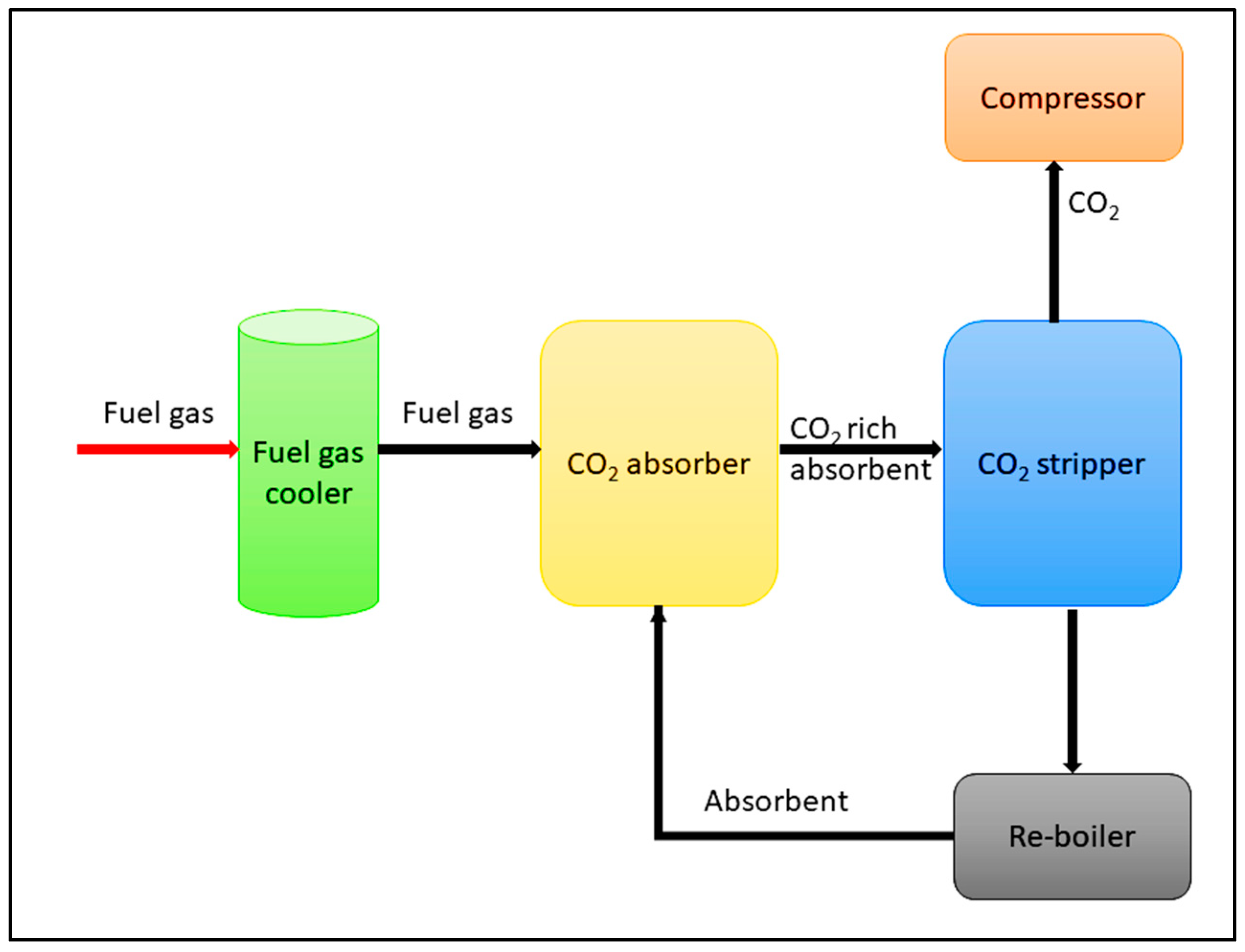
Figure 2.
Mechanism of CO2 capture into MEA solution (Reprinted with permission from Lv et al. [31]).
Figure 2.
Mechanism of CO2 capture into MEA solution (Reprinted with permission from Lv et al. [31]).
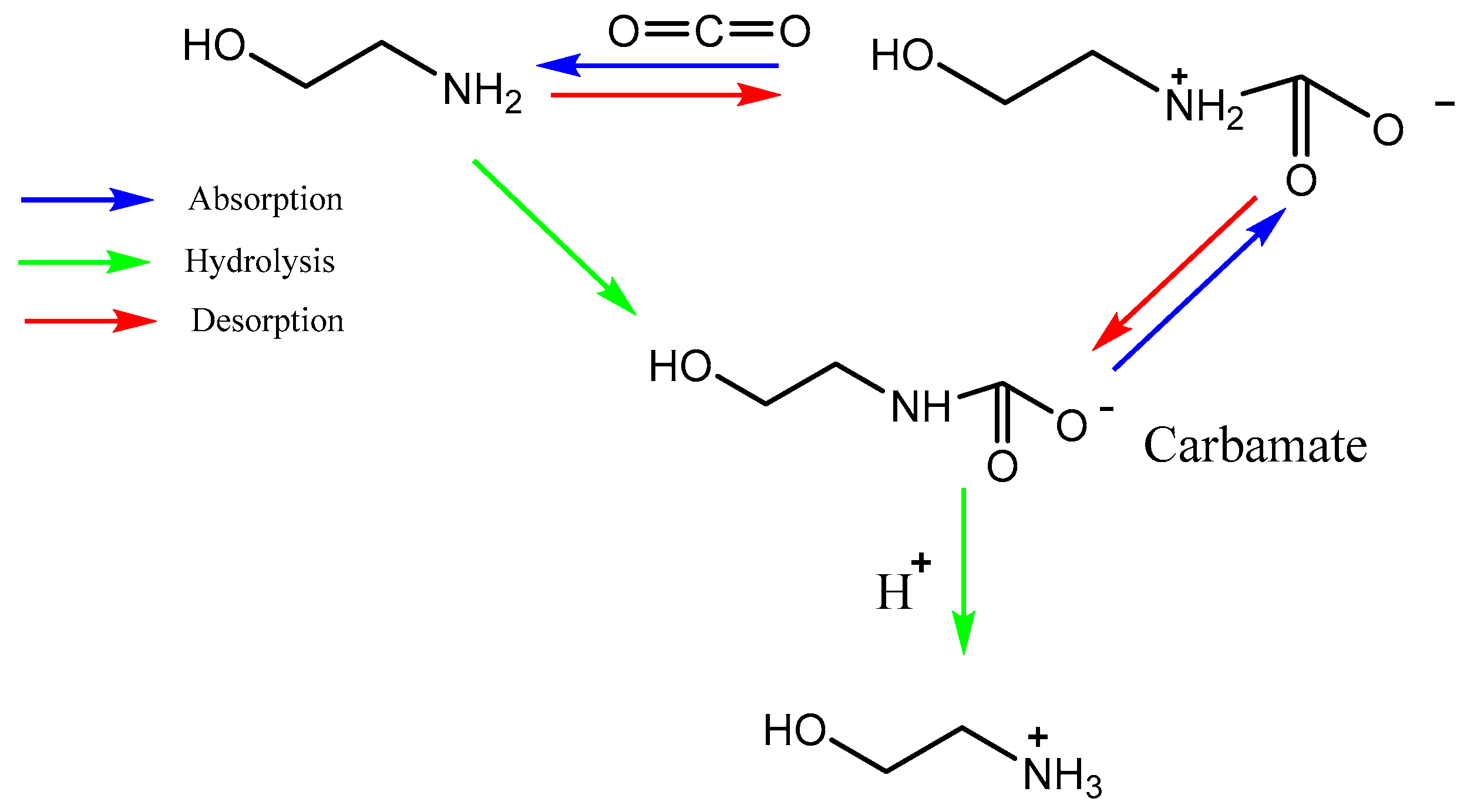
Figure 3.
Schematic representation of (a) physisorption and (b) chemisorption
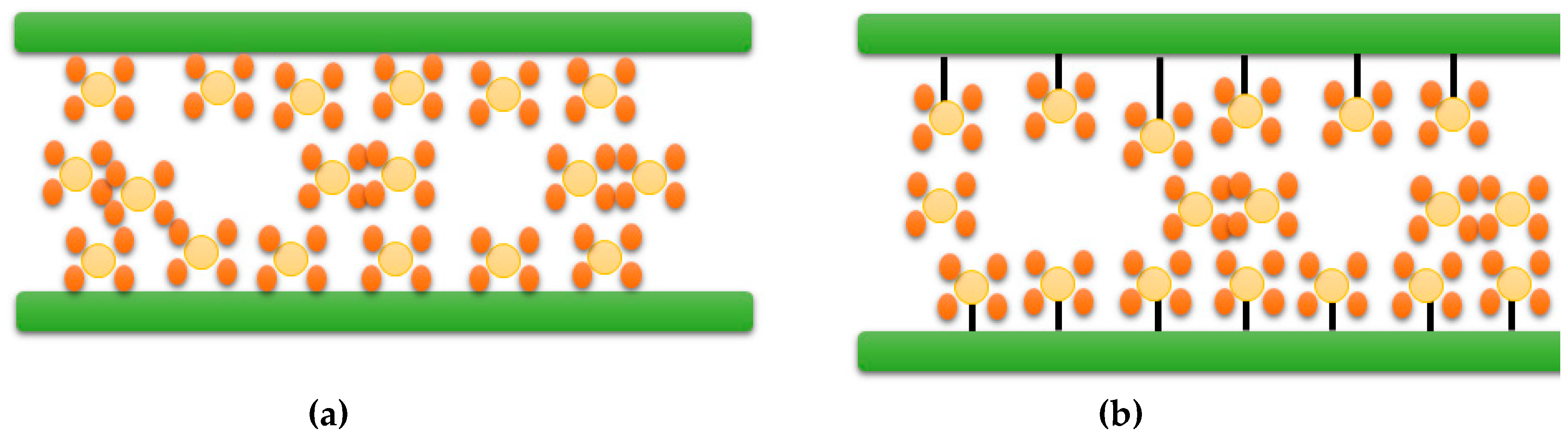
Figure 4.
The different types of adsorption processes
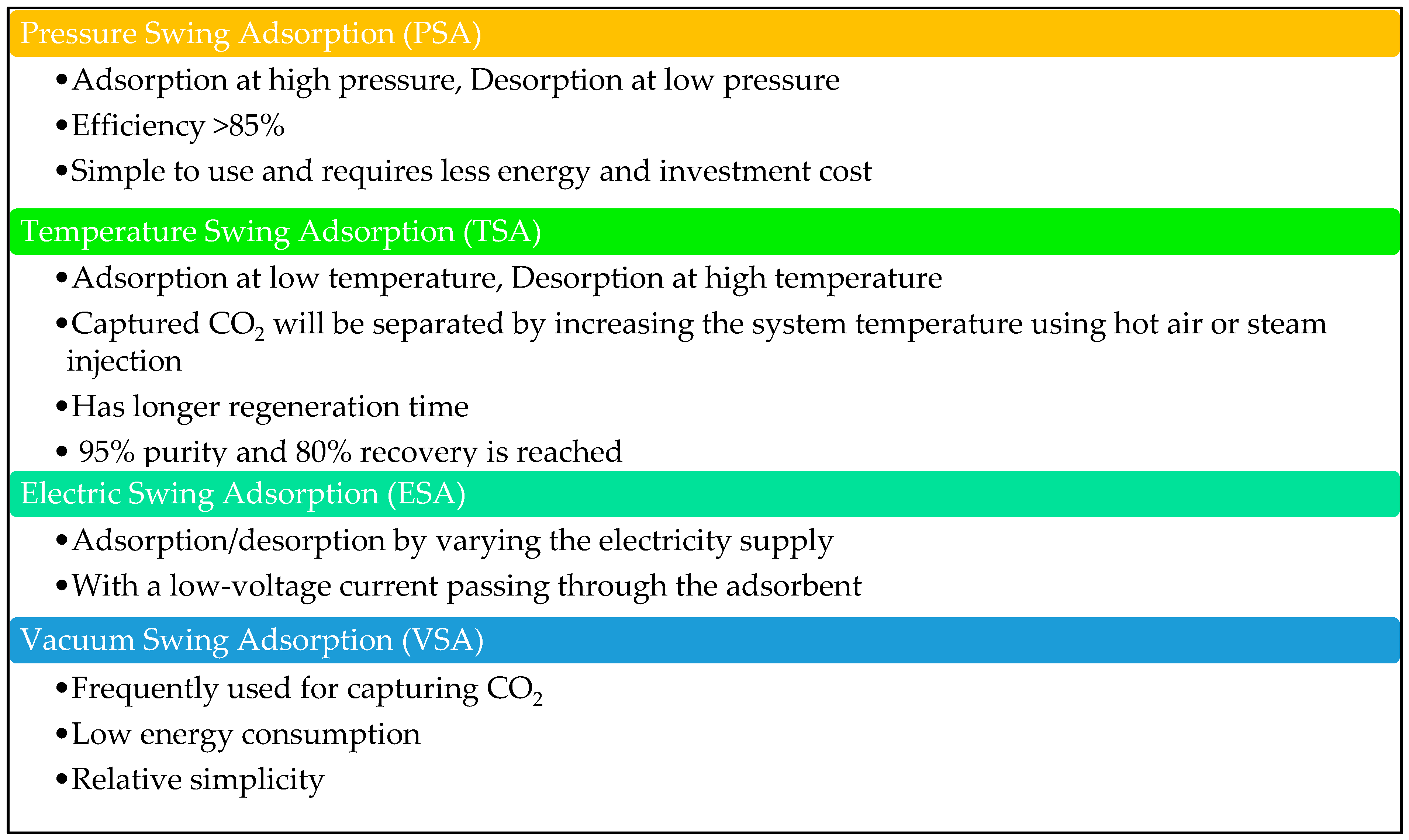
Figure 5.
Mechanism for the synthesis of mesoporous silica in the presence of a cationic surfactant (Reprinted with permission from Kim et al. [89]).
Figure 5.
Mechanism for the synthesis of mesoporous silica in the presence of a cationic surfactant (Reprinted with permission from Kim et al. [89]).
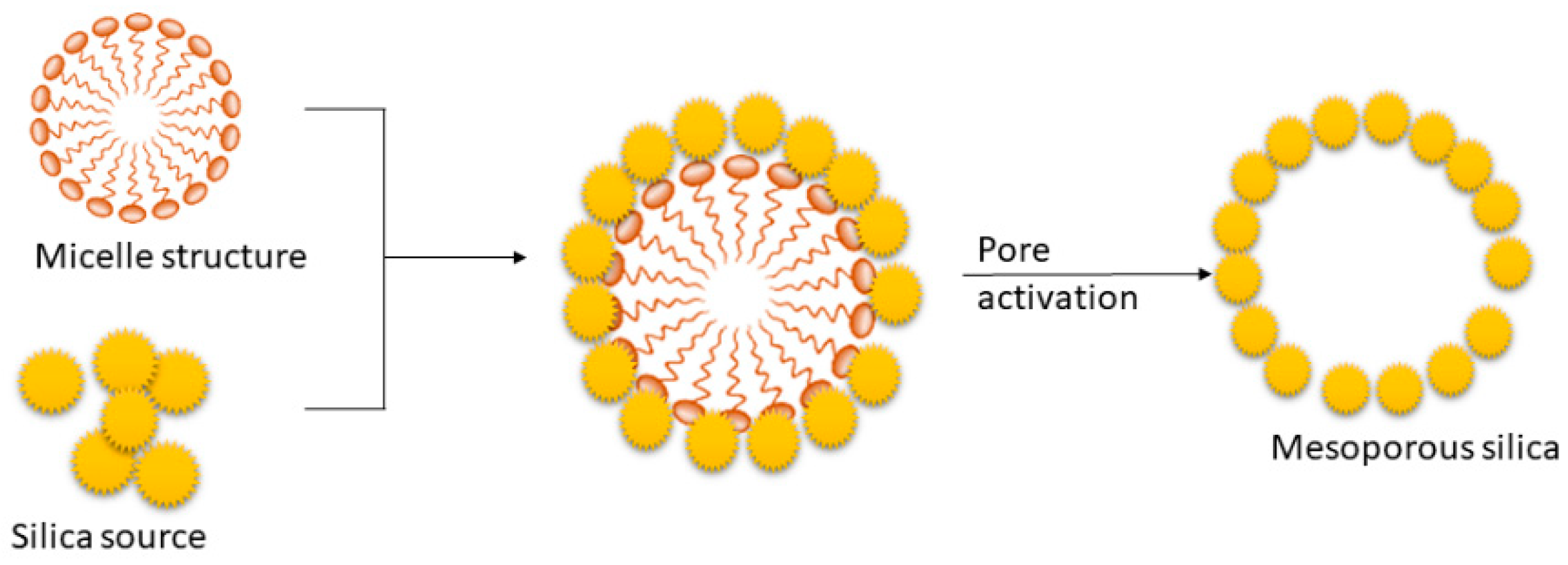
Figure 6.
Mechanism for the synthesis of mesoporous silica using block copolymer (Re-printed with permission from Gunathilake et al. [90]).
Figure 6.
Mechanism for the synthesis of mesoporous silica using block copolymer (Re-printed with permission from Gunathilake et al. [90]).
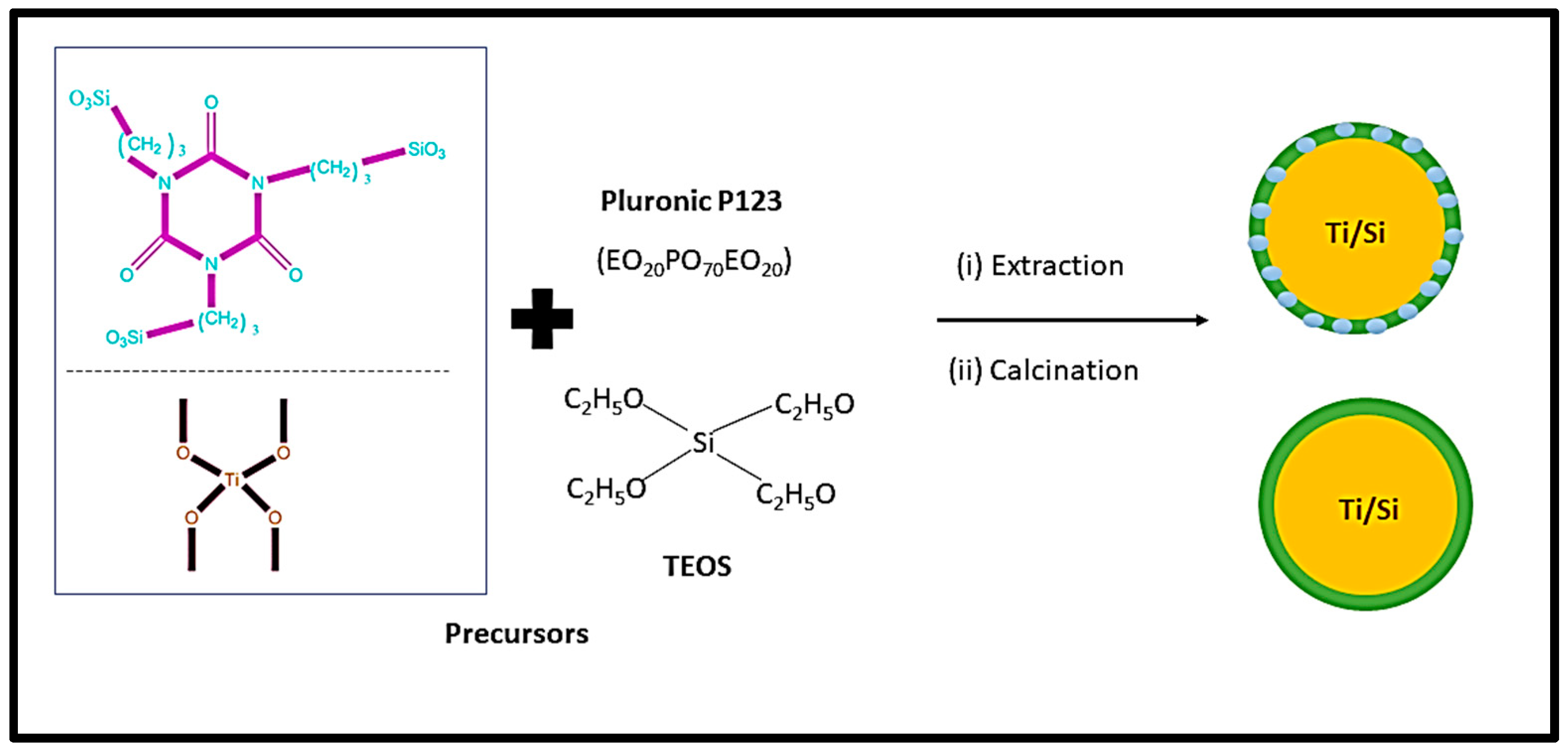
Figure 7.
Various amino silane- and polymer-containing amino groups used in the functionalization of mesoporous silicas.
Figure 7.
Various amino silane- and polymer-containing amino groups used in the functionalization of mesoporous silicas.
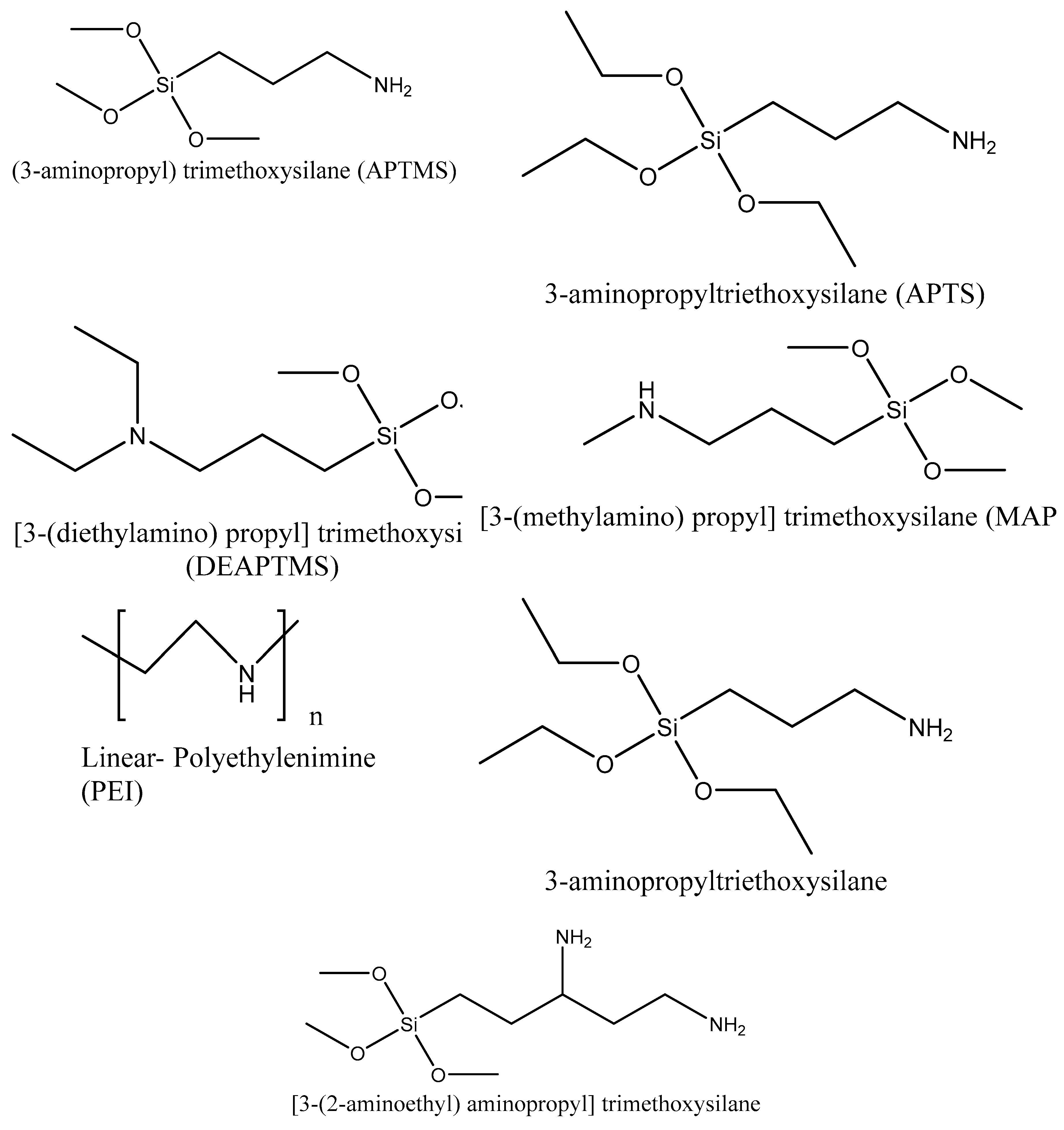
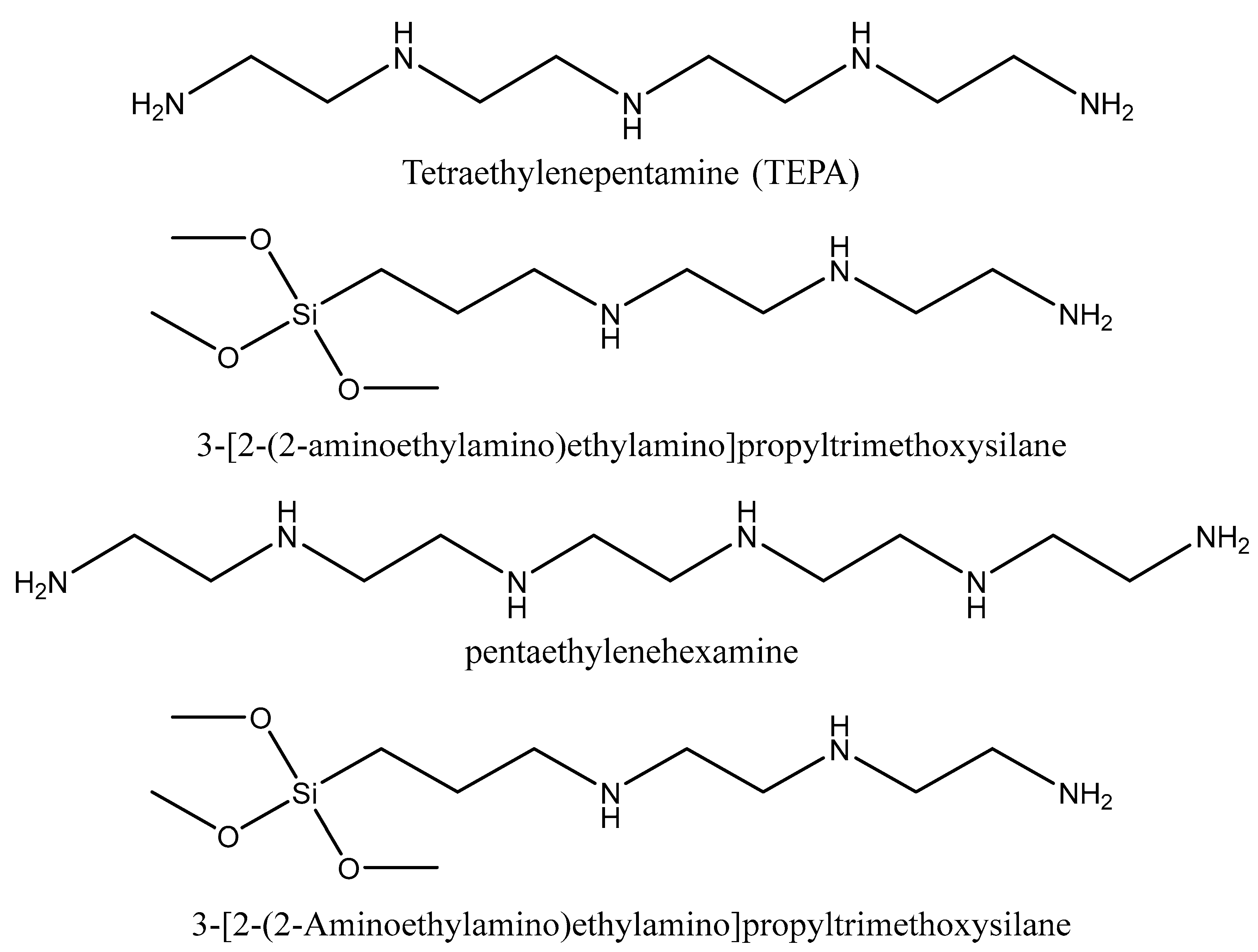
Figure 8.
Different types of synthesis processes of amine-functionalized silica materials (Schematic shows supported amines (yellow) in the pores (blue)) (Reprinted with permission from Bollini et al. [115]).
Figure 8.
Different types of synthesis processes of amine-functionalized silica materials (Schematic shows supported amines (yellow) in the pores (blue)) (Reprinted with permission from Bollini et al. [115]).
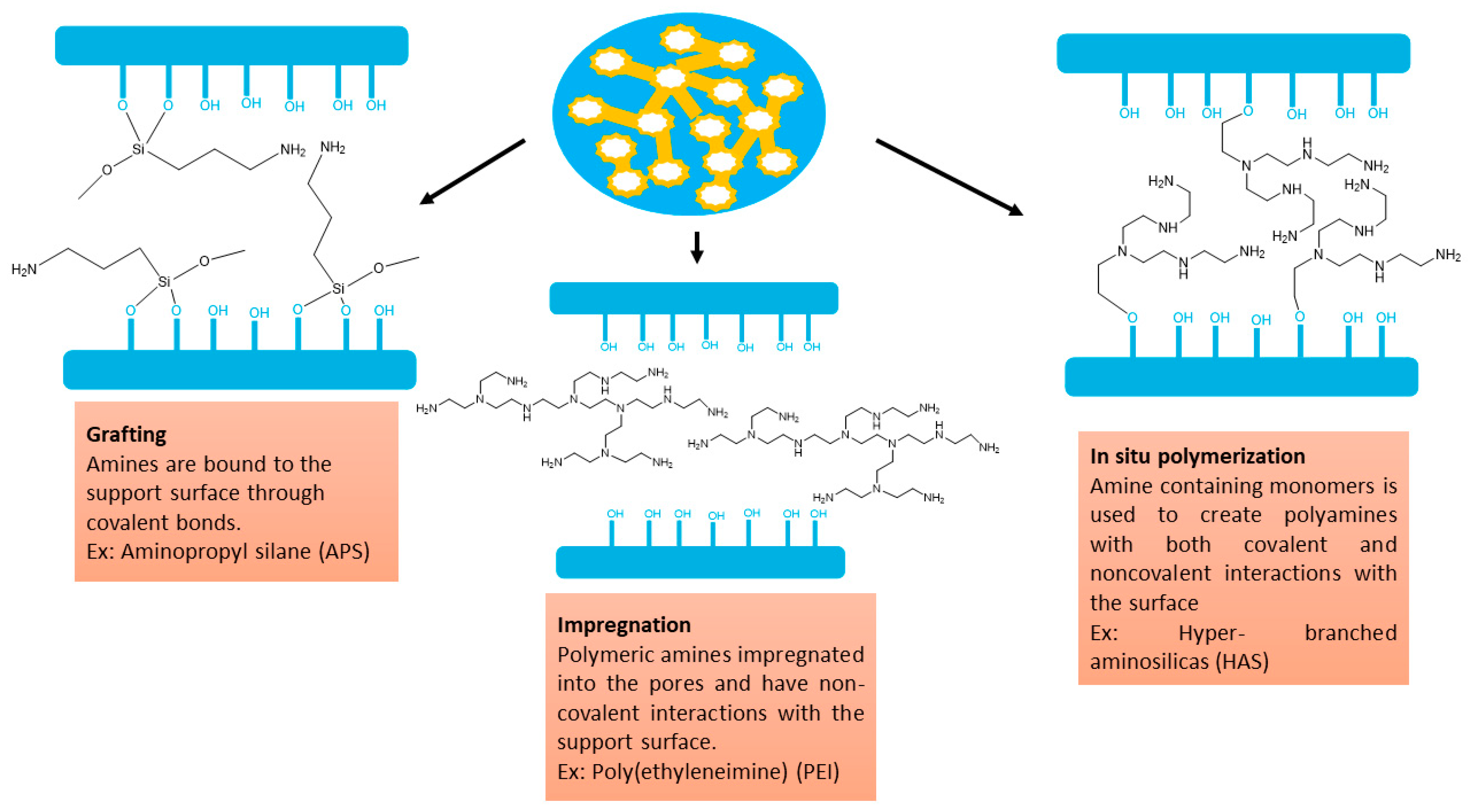
Figure 9.
Schematic representation of the covalent bonding through the alkyl-silyl linkages and formation of carbamates (Reprinted with permission from Nigar et al..
Figure 9.
Schematic representation of the covalent bonding through the alkyl-silyl linkages and formation of carbamates (Reprinted with permission from Nigar et al..
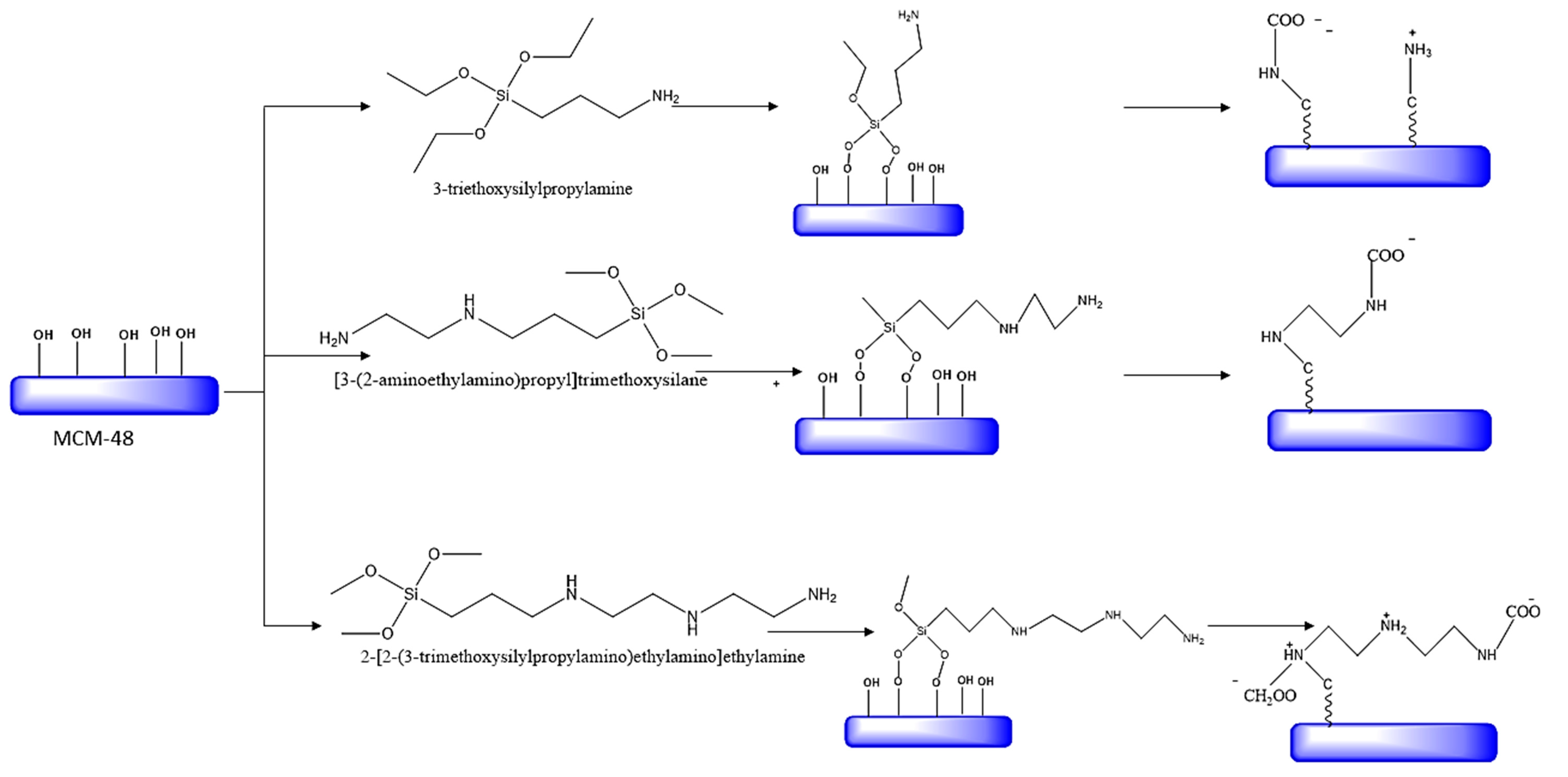
Table 1.
Different approaches used in different countries in order to reduce the CO2 emissions.
| Type of approach | Details | References |
|---|---|---|
| Improve energy efficiency and promote energy conservation |
|
[4] |
| Increase of usage of low carbon or clean fuels such as natural gas, hydrogen or nuclear power; Substitution for Power generation |
|
[4] |
| Deploy renewable energy |
|
[4] |
| CO2 capture and storage |
|
[4] |
Table 2.
Comparison of different post-combustion capture technologies for CO2 capture.
| Technology | Types | Examples | Efficiency (%) | Advantages | Disadvantages | Ref. |
|---|---|---|---|---|---|---|
| Absorption | Chemical | Amines Caustics |
> 90 | ● Ability to regenerate ● Established method ● Very flexible ● Reacts rapidly ● High absorption capacities |
● High energy requirement for regeneration ● Environmental problems ● High boiling point ● Equipment corrosion |
[21,22] |
| Physical | Selexol Rectisol fluorinated solvents |
|||||
| Adsorption | Chemical | Metal Oxides Si based materials |
>85 | ● Recyclable ● Cost effective ● High stability ● Adjustable catalytic site and pore sizes ● Low energy consumption ● Suitable for separating CO2 from dilute streams |
● High energy cost ● Limited to process feed rates ● Loss of material and pressure drop ● Decreased catalytic efficiency ● Low adsorption capacities |
[6,21] |
| Physical | Carbons Zeolites Si based materials |
|||||
| Membrane-based technologies | Organic Cellulose derivatives Polyamides |
Polyphenyleneoxide, Polydimethylsiloxane |
>80 | ● Simple device ● Easy production process and process flow scheme ● Low energy consumption ● No phase changes ● Capable of maintaining the membrane structure |
● Requires a high-cost module and support materials ● Not suitable for large volumes of emission gases ● Reduced selectivity and separation ● Pressure drops across the membrane ● Less durability |
[6,21] |
| Inorganic | Metallic Ceramics |
|||||
| Cryogenic distillation | ● Low capital investment ● High reliability ● Recovery with high purity of CO2 ● Liquid CO2 production ● Not requiring solvents or other components ● Easily scalable to industrial-scale applications |
● High energy consumption | [6,21,23] |
Table 4.
Advantage and disadvantages of non-carbonaceous adsorbents.
| Material types | Examples | Advantages | Disadvantages |
|---|---|---|---|
|
Pours silica materials |
M41S SBA-n AMS |
● High specific surface area, Pore volume, and good thermal and mechanical properties | ● High molecular diffusion resistance ● Decreased adsorption capacity at high temperature [42] |
| Zeolites | NaY 13X |
● Low production cost ● Large micropores/mesopores ● Medium CO2 adsorption capacity at room temperature |
● Low CO2 adsorption capacity ● Moisture-sensitivity ● High energy consumption [6,43] |
|
Metal organic frameworks (MOFs) |
M-MOF- 74 IRMOF-6 USO-2-Ni Zn4O(BDC)3 (MOF-5) USO-1-Al(MIL-53) |
● Large specific surface area ● Ease of controlling pore sizes ● High selectivity of CO2 |
● Low CO2 adsorption capacity at the partial pressure ● High production cost ● Complicated synthesis process ● Moisture-sensitivity ● Unstable at high temperature [6] |
|
Alkali-based dry adsorbents |
● Possible adsorption and desorption at a low temperature and wet conditions | ● Low adsorption capability (3–11 wt.%) ● High-temperature reactions ● Requires high temperatures during desorption Complicated operation [6] |
|
|
Metal oxides-based adsorbents |
CaO, MgO | ● Dry chemical adsorbents ● Adsorption/desorption at medium to high temperatures |
● High energy consumption ● High cost for regeneration ● Complicated process [6] |
Table 5.
Comparison between chemisorption and physisorption. .
| Chemisorption | Physisorption | |
|---|---|---|
| Description | ● Chemical reaction occurs between the solid sorbents and CO2 | ● Depends on the physical properties of CO2 and the ability to engage in noncovalent interactions with the solid sorbent |
| Chemical Bonding | ● Covalent Bonding-Occur between functional groups and CO2 in the surface | ● Week Vander-walls forces-London and Dispersion forces, Occur inside pore walls |
| Advantages | ● High selectivity | ● Low recycling energy requirements ● High working capacity ● High selectivity even in wet environments ● Fast |
| Disadvantages | ● High energy required for recycling and the breakage of the chemical bonds ● Slow reactivity |
● Poor selectivity in binary or mixed gas applications |
| References | [55,56] | [57,58,59] |
Table 8.
Summary of gas selectivity values of previous studies done for porous SiO2.
| Porous SiO2 material | Gas mixture | Selectivity value | Pressure (bar) | Temperature (°C) |
Reference |
|---|---|---|---|---|---|
|
PEI- MCM-41 |
CO2 , N2 and H2 | 25.56 | 1 | 100 | [95] |
| SBA-15 | CO2/N2 | 123 | 1 | 25 | [156] |
| SBA-15 (calcination) | CO2/N2 | 55 | 1 | 25 | [156] |
| Mesoporous chitosan−SiO2 nanoparticles | - | 15.46 | 1 | 25 | [157] |
| hydrophobic microporous high-silica zeolites | CH4:N2 = 50%:50% | 36.5 | 1 | 25 | [158] |
| Hollow silica spherical particles (HSSP) | CO2/N2 | 8.5 | 4 | 25 | [159] |
| microporous silicaxerogel | CO2/CH4 | 60 | 6 | 25 | [160] |
| Silica based xerogels | C2H4/C2H6 | 20 | 6 | 25 | [160] |
Disclaimer/Publisher’s Note: The statements, opinions and data contained in all publications are solely those of the individual author(s) and contributor(s) and not of MDPI and/or the editor(s). MDPI and/or the editor(s) disclaim responsibility for any injury to people or property resulting from any ideas, methods, instructions or products referred to in the content. |
© 2023 by the authors. Licensee MDPI, Basel, Switzerland. This article is an open access article distributed under the terms and conditions of the Creative Commons Attribution (CC BY) license (http://creativecommons.org/licenses/by/4.0/).
Copyright: This open access article is published under a Creative Commons CC BY 4.0 license, which permit the free download, distribution, and reuse, provided that the author and preprint are cited in any reuse.


