

Submitted:
05 June 2023
Posted:
05 June 2023
You are already at the latest version
Abstract
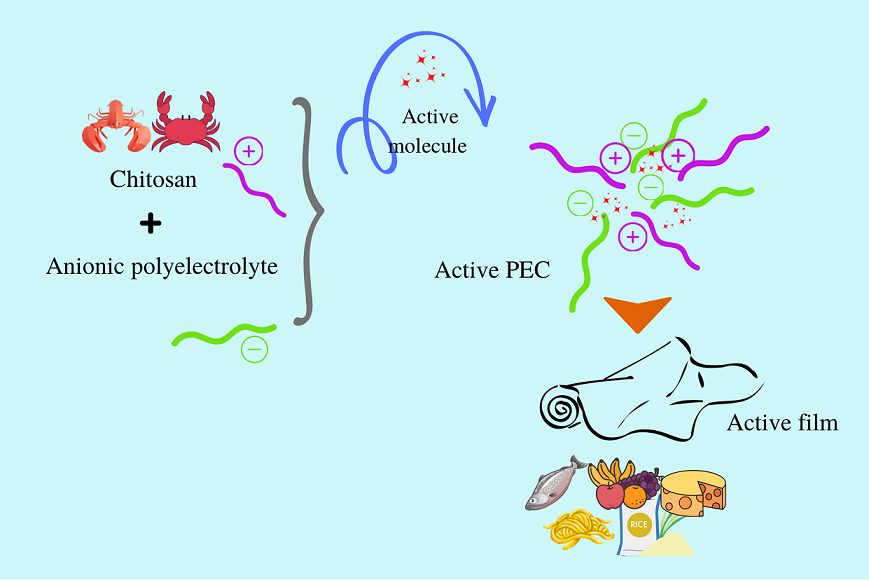
The current challenges in the food packaging field are, on one side, replacing plastic from non-renewable sources with biopolymers and, on the other hand, generating a packaging material with attractive properties for the consumer. Nowadays, the consumer is concerned ecologically; the food packaging industry must ahead satisfy their needs. In this sense, incorporating several compounds with properties such as antioxidant, antimicrobial, or nutraceutical properties results attractive for the consumers. However, many of these properties can be diminished, so an encapsulation system is required. A good encapsulating system is crucial for these purposes, so polyelectrolyte complexes (PECs) can be used with that finality. Nowadays, PECs are eye-catching in many fields because of their fascinating properties, which make them very attractive, mainly for being used as encapsulating systems. Hence, this paper reviews the use of PECs in food packaging where chitosan forms polyelectrolyte complexes.
Keywords:
chitosan
; polyelectrolyte complexes
; food packaging
1. Introduction
Nowadays, the planet is in a critical position because industries generate thousands of tons of waste. The marine industry is no stranger to this issue since this type of factory generates waste which could produce diseases adding to the bad smell caused. In the current scene (2020), due to the pandemic caused by COVID-19, the production of food and marine products decreased because of the lockdown, which caused precariousness in feeding; however, this had a little increase in 2021 [1].
According to FAO data, world production of crustaceans reached around 11 million tons in 2020; the above implies that the amount of waste generated is important [1]. Currently, the reuse of waste is a common necessity to diminish environmental damage. In this way, the use of waste of crustaceans is used for obtaining chitin and then chitosan. Chitin is a polysaccharide that is present in the hard outer shells of shrimp and lobsters, mainly. From the alkaline hydrolysis of chitin, it obtains chitosan [2]. Chitosan is a recognized linear polysaccharide biopolymer with amine and hydroxyl groups in its chemical structure, providing unique features to modify it chemically [3,4,5]. In addition, chitosan presents antimicrobial characteristics, which turn into a biopolymer attractive for application in various fields, from the pharmaceutical to the food industry [6,7,8,9].
Another hand, during the last decade, the application of nanotechnology from environmentally friendly materials has emerged as a new field that utilizes nanoscale materials to deliver drugs, genes, and imaging agents. Thus, a wide variety of studies regarding nanoaggregates in several applications have been published [10,11,12].
Among the different types of nanoaggregates systems that have been elaborated can be named: polymeric micelles, nanoparticles, polymer conjugates, and polyelectrolyte complexes (PECs) (Figure 1).
These systems are mainly used as carriers or reservoirs of bioactive molecules. Among the polymeric systems stand out PECs, which can generate two environments in one structure: hydrophilic and hydrophobic. Charged polymers with negative and positive charges constitute PECs. The interaction between these two charged polymers generates a stable structure named polyelectrolyte complexes, and such structures form holes capable of accommodating the small molecules [13]. The use of these systems covers a wide range of fields, for example, encapsulating colorants under unfavorable conditions [14]; the development of a biosensor [15]; intensification and stabilization of anthocyanins [16]; controlled releasing and keeping vitamin D3 [17]; transport of multivalently charged compounds [18], are some examples.
This review provides a contemporary look at polyelectrolyte complexes chitosan-based focused on using PECs in food packaging and shares several promising outcomes.
2. Polyelectrolyte complexes: a brief look
PECs (polyelectrolyte complexes) are generated through the long-range electrostatic interactions through charged polymers, known as polyelectrolyte (PE). These PEs are formed by repeating units carrying charge when dissolved in water, i.e., they lead to polycation or polyanion through the counterion release. Thermodynamically, it is well known that the release of the counterion is the managing force in PECs generation [19]. These interactions between the PEs lead to the formation of vacancies in the PECs formed; thereby, the PECs are capable of generating encapsulating systems, which could improve the bioavailability and the distribution of active compounds. For that, one of the significant applications of these systems is as a carrier for the delivery systems (Figure 2).
Several factors must be considered in the formation process of PECs, such as length of the chain of PE, charge density, stability, pH, concentration, mixing ratio, molecular weight, hydrophobicity, and ionic strength; some factors to take into account [20,21,22,23]. The stoichiometry of the PEs involved determines the solubility property of these systems. It is well-known that non-stoichiometric mixtures of polyelectrolytes guide to the formation of water-soluble PECs, that comprise a neutral core trapping 1:1 mixture of oppositely charged polymeric structures encircled by a shell of excess polyelectrolyte chains. In this context, the knowledge of the molecular weight is essential since polyelectrolytes used must have significantly different molecular weights [24]. On the other hand, stoichiometric combination of polyelectrolytes guide to unstable shell-deficient PECs, which flocculate due to the hydrophobic attraction between neutral coacervates [25]. In this context, solubility is managed by the stoichiometry of the PEs involved, which determines the final application of PECs.
At the technological level, PECs are highly used because of their unique characteristics, such as water solubility and formation of vacancies which allow the building of systems for encapsulation, stabilization, and release of different substrates such as drugs, enzymes, antioxidants, cells, among others. In this sense, PECs have been extensively utilized as delivery systems in diverse applications including pharmaceutical and biomedical [26,27] and as a remover of metals in aqueous waste [28,29,30,31].
2.1. Polyelectrolyte complexes using biopolymers
The use of biopolymers in several fields of knowledge has already been diversified over several years due to the relevance of generating biodegradable systems with the aim of causing the minimum impact on the environment. Therefore, the use of biopolymers in the generation of polyelectrolyte complexes is not a novelty, and various works have been published using biopolymers in this type of systems [32,33,34]. In this sense, chitosan has been widely studied as part of polyelectrolyte complexes because its positive charge can be used as a polycation. In the case of polyanions from biopolymers for application in PECs systems, alginate, pectin, hyaluronic acid, gum Arabic, and gellan gum are some of them that have been used for this purpose [35,36,37,38,39,40,41,42].
The application of nanotechnology in different areas is well known. One of those applications is related to transporting substances such as drugs, genes, and imaging agents. Thus, a wide variety of studies regarding nanoaggregates in several applications have been published [10,12,43,44]. Currently, the use of different types of nanoaggregates has been developed. As previously noted, the PECs systems are a type of nanostructure highly attractive due to their carrying capacity active non-soluble in aqueous medium compounds. Studies have been developed using PECs as nanostructures for carriers or delivery systems in this context.
Sadeghzadeh et al. [45] developed nanocarriers coated with chitosan and folic acid to deliver umbelliprenin. This substance is used for its highlighted cytotoxicity and, in this work, was used for studying potential anti-cancer effects. The results show an excellent bonding percentage between chitosan and folic acid, while the trapped and delivery of the umbelliprenin showed a positive answer, as seen in Figure 3.
Following the carriers, Almeida et al. [46] investigated nanostructured carriers using chitosan and chloroaluminum phthalocyanine as photosensitize. The goal was to functionalize the surface of nanocarriers using chitosan to enhance the biological activity of the transporter. The outcomes were promising in the carrier’s area.
Aqueous pollution is a topic of great interest. Several methods have been studied through the years. In this way, nanotechnology has been used as a powerful tool. For instance, Freire et al. [47] studied the adsorption capacity of removal dyes from an aqueous dispersion. The results showed that the nanocomposites reveal an extensive surface area. The adsorption capacity of dyes displayed by nanocomposites was highlighted against anionic dyes, as seen in the Fe3O4–chitosan nanocomposite in Figure 4.
In the same way, Albishri et al. [48] investigated nanostructures using sodium magnesium silicate hydroxide/sodium magnesium silicate hydrate modified with chitosan. The finality of the above was to investigate the capacity to remove dyes from aqueous media, and the results showed that the nanocomposites presented an excellent removal and adsorption capacity for dyes.
Using magnetite, [49] developed magnetic nanostructures based on chitosan. The aim was to obtain a biomaterial with magnetic properties for potential medical applications. Hernández-López et al. [50] developed a nanostructured edible coating using chitosan with α-pinene, intending to generate a material capable of preserving bell pepper on the postharvest quality and of studying their resistance against the fungus Alternaria alternata. The evidence suggested that the nanostructures did not alter flavonoids and the antioxidant capacity in bell peppers. In general, the parameters obtained showed that the nanostructured edible coating presented good results to be potentially applicated to bell peppers (Figure 5).
Nanostructures carried out with graphene, multiwalled carbon, and chitosan were carried out through self-assembled to obtain an electrochemical sensor for sensitive determination of bisphenol A in milk samples. The systems carried out showed highlighted characteristics in electrocatalytic activity and conductivity. The combined effect of graphene, multiwalled carbon, and chitosan was responsible for this new electrochemical sensor showing good stability, repeatability, and reproducibility. The results showed that this sensor has the potential to be used for BPA identification in dairy samples con excellent accuracy and precision parameters [51].
Sharma et al. [52] worked in a non-invasive topical formulation to be used in the treatment of damaged retinal vessels. This formulation consisted of nanocarriers constituted of chitosan (CS) modified 5-fluorouracil. 5-fluorouracil is a drug highly used in medicine since it has anti-cancer, anti-fibrotic, and anti-angiogenic effects. This drug has poor permeability, which is necessary to carry out several modifications. In this case, the authors of this work used chitosan as a modification tool. The results obtained were promising. The tests showed that the nanocarrier system works perfectly. The chemical modification using chitosan improves the modulated release of the drug in the sense that the drug administration can be less often. Figure 6 shows all steps involved in this study.
The employment of mesoporous silica nanoparticles has been studied as a nanocarrier. In the study of Shakeran et al. [53] they developed a system where the nanoparticles were modified with 3-triethoxysilylpropylamine and chitosan (Figure 7). Thus, they obtained a biocompatible, biodegradable, and with high surface area nanocarrier. This nanocarrier was developed to transport methotrexate, a known drug used for cancer therapy. The results of this group were promising since the drug transported and loaded in this type of nanocarrier showed that the viability of cancer breast cells was reduced.
In a different work, Tian et al. [54] developed a PEC system using pectin and chitosan to obtain a carrier for the delivery system; Figure 8 shows an SEM image of this formulation. The results showed that the system presents excellent properties such as mechanical strength, stability, and biodegradability.
The utilization of PECs as remover pollutants has been used too. The system formed by lignosulfonates as polyanion; chitosan as polycation and Fe/Pd bimetallic particles was formulated. The results in the adsorption on methylene blue and malachite green dyes showed good behavior of the PECs used. The initial dye concentration was decreased [55].
Cyclodextrin and chitosan have also been used to form supramolecular polyelectrolyte complexes (SPEC). Evangelista et al. [32] successfully developed a system using cyclodextrin-grafted chitosan (polycation) derivative and carrageenan (polyanion) to transport drugs. They used silver sulfadiazine as a drug model. In vitro results showed that SPEC had activity against Gram-positive and Gram-negative bacteria.
Nanogels based on polyelectrolyte complexes were developed by Le et al. (2022). This material is a thermoresponsive one. The researchers combinate functionalized hyaluronic acid with diethyl aminoethyl dextran or poly-L-lysine from the above. Depending on the mixture, different hydrophobicity grades were obtained for the PECs. Figure 9 shows a scheme of PEC developed. The encapsulation of curcumin as a drug model was used. The research indicated that the systems presented a great thermoresponsive, stability and encapsulation. With this, it improves the solubility of curcumin in an aqueous medium.
Table 1 shows some applications using PECs based on biopolymers as encapsulating systems.
3. Active food packaging
Today’s consumer is more demanding regarding the quality of packaged food, leading to the food packaging industry’s generation of packaging with more characteristics such as intelligent, antimicrobial packaging for food preservation. In this sense, a large number of works have been reported about it. Incorporating different types of structures into a matrix has various purposes, named some: increasing the resistance, porosity, and flexibility of the material [63,64,65,66,67]. The enhancement of the shelf life of the food is of great importance to the consumer. In this way, diverse structures have been introduced with antimicrobial properties, such as nanoparticles, natural products, and essential oils [68,69,70,71,72].
The remarkable characteristics of nanoparticles, such as size, and antimicrobial properties, for example, are desirable for the food packaging industry. Kowsalya et al. [73] developed Ag nanoparticles and poly(vinyl alcohol) to form nanofibers to be used in films for food packaging. The system exhibited a high antimicrobial capacity against several bacteria for being applied in fruit packaging. With these results, the potential shelf life of the product could be increased, as can be observed in Figure 10.
Halloysites are tubular clay nanoparticles widely studied to form part of different systems. Thanks to the tubular shape of the halloysite, it can be used as an encapsulating agent. Alkan Tas et al. [74] developed a film of polyethylene coating with these tubular nanoparticles and incorporated carvacrol, which has antimicrobial characteristics, intending to improve the final material regarding the quality and security of the food. The outmes of this investigation revealed that the halloysite incorporated in the film allowed the release through the time of carvacrol. These results could enhance the quality of food and increase its shelf life.
The incorporation of more than one active compound has been studied too. In this work by Motelica et al. [75] ZnO nanoparticles were incorporated into alginate films (Figure 11 a)). The authors incorporated citronella essential oil into the above formulation to observe if the combination of these compounds generated a synergic effect. This study aimed to obtain an active biofilm with improved characteristics. The results showed improved water barrier properties; meanwhile, the antibacterial activity against B. cereus showed promising results. The active films were tested on soft cheese displaying that the shelf life was extended over 14 days. Figure 11 b) and c) show the films obtained and films tested on soft cheese, respectively.
Food packaging based on biodegradable materials is a subject of interest to decrease the waste from non-biodegradable materials. In this study, Abarca et al. [76] incorporated nisin and EDTA into a gelatin matrix to obtain a biodegradable film with antimicrobial properties. The results showed an important antimicrobial effect against Escherichia coli. In another study of chitosan-gelatin and pectin-chitosan, films and coatings were made. The authors incorporated lemongrass essential, Zn, or ZnO as active compounds into the films. The thermal results showed high stability. Regarding mechanical properties, the films chitosan-gelatin showed good characteristics for practical applications.
On the other hand, the antibacterial effect was tested, and the results showed a synergic effect between the active compounds incorporated into the films. The novelty of this study is that they tested the coating over boxes containing raspberries. The best microbiological behavior was founded in boxes coated in chitosan-gelatin emulsion with ZnO. The shelf life of the fruit was prolong with all formulations studied from four to eight days [69].
Zn nanoparticles carvacrol loaded were developed to be incorporated in films made with fish scale-derived gelatin and sodium alginate (Figure 12 a)). The mechanical properties of the film were improved, showing a good elongation to break. On the other hand, the solubility of the film in water decreased; meanwhile, the thermal stability was improved too. Regarding the antibacterial activity of the films, the findings indicated that a good response was noted against E. coli and S. aureus, whereas the carvacrol release from the films in different food simulants showed excellent results, as can be observed in Figure 12 b). The researchers believe this film might be used as food packaging in strawberries for postharvest quality [77].
Various kinds of active films have been developed across the years to improve specific poor characteristics of biofilms, such as elasticity, barrier properties, and toughness. With the passing of the years, many substances have been used with this goal. In this sense, zein protein has been used by Ullah et al. [78] together with polycaprolactone through electrospun nanofiber sheets to be incorporated into halloysite nanotubes (HNT). In addition, they incorporate β-caryophyllene, which is a bicyclic sesquiterpene with high anti-inflammatories, antibacterial, and antioxidant properties, among others. Figure 13 shows SEM images of the nanofibers studied. This work showed that the mechanical and thermal characteristics of nanofiber sheets were enhanced by adding halloysite. The material was tested on strawberries in storage conditions, and the results were encouraging since the moisture was observed to be delayed. These results show that the material generated can fortify the film.
Collagen is a highlighted material in food packaging. Tang et al. [79] developed collagen films modified by quinones obtained through the oxidation of phenolic acids to improve collagen performance. The results showed that collagen was successfully modified. The films with collagen modification showed improved properties, such as increased resistance to enzyme degradation; the mechanical and thermal properties were improved too. The antioxidant capacity of the modified material was highlighted. On the other hand, the antimicrobial capacity against E. coli and S. aureus showed promising findings in modified films.
Ali et al. [80] developed films based on Arabic gum crosslinked with butyl acrylate and hydroxyethyl methacrylate. These researchers aimed to obtain films self-stick loaded with cinnamon essential oil to be potentially used as active packaging in the vapor phase. The encapsulation and release results of cinnamon oil showed a good performance. The antimicrobial activity assessment showed relevant results against E. coli inoculated in string cheese.
3.1. Food packaging using polyelectrolyte complexes systems chitosan based
The current pace of life has led the industry to improve its products. The food packaging industry is no stranger to that. The current consumer demands that food has a long shelf life, and the industry has adjusted to this requirement. In this sense, films based on PECs offer multiple opportunities to obtain a material with remarkable properties.
Food packaging generates a large amount of waste because a large part is non-biodegradable-based materials, causing significant environmental damage. Great efforts it is made to diminish this kind of residue. Using biodegradable polymers as potential replacements in food packaging materials is the alternative for this severe situation. In this matter, chitosan, PLA (polylactic acid), and PHB (polyhydroxybutyrate) are the most biodegradable polymers studied. Among them, chitosan has been widely investigated in the most diverse areas because of some prominent properties such as low toxicity, biocompatibility, cost-effective production, and high availability characteristics; it turns an excellent alternative to form part of multiple materials [81,82,83,84,85,86,87,88]. Figure 14 shows the utilization of chitosan as a bionanocomposite in skin healing processes.
In this sense, the studies about using chitosan in the food packaging industry have been widely covered. The antimicrobial properties of chitosan have been a great advantage when choosing what material to use because of the possibility of potentiating the shelf life of packaged food, as was reviewed in the previous section.
The attractive properties of PECs of achieving encapsulation turn it highly desired substances since they give unique properties. Because of that, PECs films in food packaging have been studied too. Kurek et al. [89] evolved a film based on PEC with chitosan and pectin as PEs. Into the PECs, they put blackcurrant powder (from blackcurrant waste) as a pH indicator and for its antioxidant properties. This work showed that blackcurrant was successfully incorporated in PECs, and changes of colors were recorded to different pH values, from acid to alkaline, showed high effectivity to be used as smart food packaging.
The use of PECs in food packaging pointed to obtaining smart materials. In this sense, Şen et al. [90] and Torres Vargas et al. [91] studied a film based on PECs using alginate and yucca starch with the incorporation of extracts of natural origin (anthocyanin and betanin from the exocarp of the black eggplant and the mesocarp of beet) as an indicator. The goal was to generate a smart material. The outcomes indicated that the films prepared effectively have a sensor property because of the addition of natural extracts. Good general properties of films based on PECs were obtained for this group—good thermal, surface, and antioxidant properties.
Cinnamon essential oil emulsions were stabilized by gum Arabic modified with octenyl succinic anhydride. Gum Arabic is an anionic polyelectrolyte, while chitosan is a cationic polyelectrolyte. Thus, in this work, the authors prepared chitosan-based polyelectrolyte films. The active substance, cinnamon essential oil, was highly retained in the films—this enhanced antimicrobial activity against E. coli and S. aureus [92]. Figure 15 shows the growth-inhibiting activity of the different concentrations used.
The water vapor barrier is an essential characteristic in films for food packaging applications. Unfortunately, the biopolymers have poor barrier properties, which can be improved through chemical modification or combination with other compounds.
Looking to improve these properties, Chi & Catchmark [93] developed films with polyelectrolyte complexes system using crystalline nanocellulose, chitosan, and carboxymethyl cellulose. The films were successfully developed. The goal of combining these three biomaterials is mainly to enhance the characteristics of the films, such as mechanical and barrier properties.
Jamróz et al. [94] successfully developed films using chitosan and furcelleran. Furcelleran is an anionic polysaccharide sourced from the red algae Furcellaria lumbricalis. Figure 16 a) shows possible interactions between chitosan and furcelleran. The films obtained through the generation of PECs exhibited good thermal, mechanical, and barrier properties; the graphics of the last two properties are shown in Figure 16 b). The final material could be used in food packaging applications.
The system formed by chitosan and gellan gum, both polyelectrolytes, was studied to obtain PECs multilayer films with the integration of thyme essential oil for obtaining a material that could be used for food packaging [95]. The mechanical properties of the films, flexibility in particular, were enhanced thanks to the incorporation of thyme essential oil; however, the water barrier properties were decreased. The insertion of thyme essential oil as an antimicrobial agent was observed, and the films showed high antimicrobial activity. This study incorporated the antimicrobial agent into the multilayer films in coram emulsion and nanoemulsion. In the latter, it is observed a stronger antimicrobial activity.
The use of complexes, as has already been said above, is for encapsulated active compounds. In this sense, Teixeira-Costa et al. [96] generated PECs with chitosan and alginate through microcapsules. Assai pulp oil is an encapsulated compound, and its high polyphenols content is among its characteristics. The microcapsules were satisfactorily obtained, showing an excellent antioxidant capacity (Figure 17). The authors pointed out that this material could be applied to films for food packaging.
The use of cellulose for food packaging applications is vast. In this way, cationic hydroxyethyl cellulose was blended with sodium alginate. The researchers obtained uniform films with antimicrobial activity. This combination may be employed as a material for food packaging with added value since this material could increase the shelf life of food [97].
Eugenol is a phenolic derivative obtained from oil clove with wide antioxidant, antifungal, and antibacterial properties. In the work of Riyandari et al. [98] they studied the release of eugenol from polyelectrolyte complex films formed by chitosan and alginate. The outcomes exhibited that the release of eugenol was commanded by alginate concentration. The thermal, mechanical, water permeability and antioxidant characterization showed that those films could be applied as antioxidant material in food packaging.
The increase in shelf life is a subject of high interest for today’s consumers. In this way, Lai et al. [99] utilized hypromellose-graft-chitosan (hydroxypropyl methylcellulose) and carmellose sodium (sodium carboxymethyl cellulose ) to form polyelectrolyte complex films. The transparent films generated showed good properties such as barrier, mechanical and antibacterial activity. Figure 18 a) shows the films obtained and the mechanical properties graphically. The density of the films is shown too. However, the most highlighted characteristic of the films was that they showed luminescent properties, allowing the consumer to see changes in the packaging in frozen stores, for example. Figure 18 b) shows the photos obtained for the films studied.
Keeping food fresh is a human necessity to avoid food waste, and the freshness in food is a parameter critical to the consumer. In fruits and vegetables, this variable is significant. Chiang et al. [100] developed PEC edible coating through chitosan and pectin to be applied in fruits. The tests carried out on fruits showed excellent barrier properties. These results are auspicious, as shown in Figure 19 since they indicate that this could be a material to be applied to fruits increasing their shelf life.
Chitosan and alginate have been used in many studies as PEC systems. In this case, Ty et al. [101] used this system together with cinnamon essential oil as a film for food packaging meat pork in storage conditions. Keeping the meat in good condition for several days is challenging for the industry, and the researcher found that the final material presents good antioxidant and antimicrobial characteristics. The application of PEC over meat showed a reduction in microbiota, and the shelf life of raw meat was prolonged by at least twelve days.
Using plasticizers on biodegradable films is crucial since these films have poor mechanical properties. Thus, deep eutectic solvents are nowadays a promising alternative. They are known to be sustainable, biodegradable, thermally stable, low volatility, and non-flammable, among some attractive characteristics for plasticizers in food packaging films. Teixeira-Costa et al. [102] utilized choline chloride as a deep eutectic solvent on chitosan films. PEC microcapsules of chitosan-alginate containing açaí oil were added to these films, which are recognized for their antioxidant properties. The homogeneous films obtained resulted in good mechanical and antioxidant properties. Figure 20 a) shows the films obtained, and Figure 20 b) shows the antioxidant activity results. The researchers observed that incorporating açaí oil microparticles influenced properties such as flexibility, thickness, and crystallinity. Regarding using a deep eutectic solvent on the films, they observed that the mechanical properties experimented with excellent results. The results showed that this study is an excellent alternative that could be applied to food packaging.
Tragacanth gum is a polysaccharide water-soluble, odorless, tasteless obtained from dried sap of several species. This compound presents good barrier properties. Chitosan and tragacanth gum, in combination, were used to fabricate films oriented to the food packaging industry. The results showed that the films presented good mechanical properties. The shelf life of strawberries was increased using chitosan/tragacanth gum PEC films compared to polyethylene films. These results show an attractive alternative to using a PEC film to replace plastic non-biodegradable in food packaging [103].
4. Overview
Currently, the damage caused to the environment due to the accumulation of waste from food packaging is huge. Hence, the actual challenge of this industry is the use of biodegradable materials to diminish environmental damage. At the same time, the consumer is becoming more demanding, which means that the industry must rise to the challenge. Using PEC systems as encapsulating agents in food packaging is auspicious since these systems can protect, deliver, and release to the interest compound. Antioxidants, antimicrobials, thermoresponsive, and sensors are fascinating in the food packaging industry. In this review, it has been shown various studies that use PECs systems using chitosan in films to achieve a material attractive to the consumer. The use of chitosan in these systems turns into a very interesting product; since the fascinating properties of chitosan, such as low cost, antimicrobial, and biocompatible, it has become a coveted biopolymer. So, the PEC systems using chitosan in food packaging are promising since generating a final biomaterial with attractive properties.
Author Contributions
Conceptualization, N.A.; investigation, N.A., R.L.A., C.LF.; writing—original draft preparation, N.A.; writing—review and editing N.A., R.L.A., C.LF. All authors have read and agreed to the published version of the manuscript.
Funding
This research was funded by ANID Fondecyt Iniciación 11200569 (N.Alvarado).
Institutional Review Board Statement
Not applicable.
Informed Consent Statement
Not applicable.
Data Availability Statement
Not applicable.
Conflicts of Interest
The authors declare no conflict of interest.
References
- FAO El estado mundial de la pesca y la acuicultura 2022. Hacia la transformación azul.; Rome, 2022; ISBN 0000000340472.
- Kumari, S.; Rath, P.; Sri Hari Kumar, A.; Tiwari, T.N. Extraction and characterization of chitin and chitosan from fishery waste by chemical method. Environ. Technol. Innov. 2015, 3, 77–85. https://doi.org/10.1016/j.eti.2015.01.002. [CrossRef]
- Shahid-ul-Islam; Butola, B.S. Recent advances in chitosan polysaccharide and its derivatives in antimicrobial modification of textile materials. Int. J. Biol. Macromol. 2019, 121, 905–912. https://doi.org/10.1016/j.ijbiomac.2018.10.102. [CrossRef]
- Negm, N.A.; Hefni, H.H.H.; Abd-Elaal, A.A.A.; Badr, E.A.; Abou Kana, M.T.H. Advancement on modification of chitosan biopolymer and its potential applications. Int. J. Biol. Macromol. 2020, 152, 681–702. https://doi.org/10.1016/j.ijbiomac.2020.02.196. [CrossRef]
- Wang, W.; Xue, C.; Mao, X. Chitosan: Structural modification, biological activity and application. Int. J. Biol. Macromol. 2020, 164, 4532–4546. https://doi.org/10.1016/j.ijbiomac.2020.09.042. [CrossRef]
- Abd El-Hack, M.E.; El-Saadony, M.T.; Shafi, M.E.; Zabermawi, N.M.; Arif, M.; Batiha, G.E.; Khafaga, A.F.; Abd El-Hakim, Y.M.; Al-Sagheer, A.A. Antimicrobial and antioxidant properties of chitosan and its derivatives and their applications: A review. Int. J. Biol. Macromol. 2020, 164, 2726–2744. https://doi.org/10.1016/j.ijbiomac.2020.08.153. [CrossRef]
- Duan, C.; Meng, X.; Meng, J.; Khan, M.I.H.; Dai, L.; Khan, A.; An, X.; Zhang, J.; Huq, T.; Ni, Y. Chitosan as A Preservative for Fruits and Vegetables: A Review on Chemistry and Antimicrobial Properties. J. Bioresour. Bioprod. 2019, 4, 11–21. https://doi.org/10.21967/jbb.v4i1.189. [CrossRef]
- Ke, C.L.; Deng, F.S.; Chuang, C.Y.; Lin, C.H. Antimicrobial actions and applications of Chitosan. Polymers (Basel). 2021, 13, 1–21. https://doi.org/10.3390/polym13060904. [CrossRef]
- Flórez, M.; Guerra-Rodríguez, E.; Cazón, P.; Vázquez, M. Chitosan for food packaging: Recent advances in active and intelligent films. Food Hydrocoll. 2022, 124, 107328–107343. https://doi.org/10.1016/j.foodhyd.2021.107328. [CrossRef]
- Czajkowska-Kośnik, A.; Szekalska, M.; Winnicka, K. Nanostructured lipid carriers: A potential use for skin drug delivery systems. Pharmacol. Reports 2019, 71, 156–166. https://doi.org/10.1016/j.pharep.2018.10.008. [CrossRef]
- Ravindran Girija, A.; Balasubramanian, S.; Bright, R.; Cowin, A.J.; Goswami, N.; Vasilev, K. Ultrasmall Gold Nanocluster Based Antibacterial Nanoaggregates for Infectious Wound Healing. ChemNanoMat 2019, 5, 1176–1181. https://doi.org/10.1002/cnma.201900366. [CrossRef]
- Rengifo, A.F.C.; Santos, S.C.; de Lima, V.R.; Agudelo, A.J.P.; da Silva, L.H.M.; Parize, A.L.; Minatti, E. Aggregation behavior of self-assembled nanoparticles made from carboxymethyl-hexanoyl chitosan and sodium dodecyl sulphate surfactant in water. J. Mol. Liq. 2019, 278, 253–261. https://doi.org/10.1016/j.molliq.2018.12.125. [CrossRef]
- Rumyantsev, A.M.; Jackson, N.E.; De Pablo, J.J. Polyelectrolyte Complex Coacervates: Recent Developments and New Frontiers. Annu. Rev. Condens. Matter Phys. 2021, 12, 155–176. https://doi.org/10.1146/annurev-conmatphys-042020-113457. [CrossRef]
- Gençdağ, E.; Özdemir, E.E.; Demirci, K.; Görgüç, A.; Yılmaz, F.M. Copigmentation and stabilization of anthocyanins using organic molecules and encapsulation techniques. Curr. Plant Biol. 2022, 29, 100238–100248. https://doi.org/10.1016/j.cpb.2022.100238. [CrossRef]
- Rassas, I.; Braiek, M.; Bonhomme, A.; Bessueille, F.; Rafin, G.; Majdoub, H.; Jaffrezic-Renault, N. Voltammetric glucose biosensor based on glucose oxidase encapsulation in a chitosan-kappa-carrageenan polyelectrolyte complex. Mater. Sci. Eng. C 2019, 95, 152–159. https://doi.org/10.1016/j.msec.2018.10.078. [CrossRef]
- Tan, C.; Dadmohammadi, Y.; Lee, M.C.; Abbaspourrad, A. Combination of copigmentation and encapsulation strategies for the synergistic stabilization of anthocyanins. Compr. Rev. Food Sci. Food Saf. 2021, 20, 3164–3191. https://doi.org/10.1111/1541-4337.12772. [CrossRef]
- Xiang, C.; Gao, J.; Ye, H.; Ren, G.; Ma, X.; Xie, H.; Fang, S.; Lei, Q.; Fang, W. Development of ovalbumin-pectin nanocomplexes for vitamin D3 encapsulation: Enhanced storage stability and sustained release in simulated gastrointestinal digestion. Food Hydrocoll. 2020, 106, 105926–105935. https://doi.org/10.1016/j.foodhyd.2020.105926. [CrossRef]
- Shah, S.; Leon, L. Structural transitions and encapsulation selectivity of thermoresponsive polyelectrolyte complex micelles. J. Mater. Chem. B 2019, 7, 6438–6448. https://doi.org/10.1039/c9tb01194c. [CrossRef]
- Fu, J.; Schlenoff, J.B. Driving Forces for Oppositely Charged Polyion Association in Aqueous Solutions: Enthalpic, Entropic, but Not Electrostatic. J. Am. Chem. Soc. 2016, 138, 980–990. https://doi.org/10.1021/jacs.5b11878. [CrossRef]
- Kulkarni, A.D.; Vanjari, Y.H.; Sancheti, K.H.; Patel, H.M.; Belgamwar, V.S.; Surana, S.J.; Pardeshi, C. V. Polyelectrolyte complexes: mechanisms, critical experimental aspects, and applications. Artif. Cells, Nanomedicine Biotechnol. 2016, 44, 1615–1625. https://doi.org/10.3109/21691401.2015.1129624. [CrossRef]
- Shovsky, A.; Varga, I.; Makuška, R.; Claesson, P.M. Formation and stability of water-soluble, molecular polyelectrolyte complexes: Effects of charge density, mixing ratio, and polyelectrolyte concentration. Langmuir 2009, 25, 6113–6121. https://doi.org/10.1021/la804189w. [CrossRef]
- Jha, P.K.; Desai, P.S.; Li, J.; Larson, R.G. pH and salt effects on the associative phase separation of oppositely charged polyelectrolytes. Polymers (Basel). 2014, 6, 1414–1436. https://doi.org/10.3390/polym6051414. [CrossRef]
- Yin, D.; Pan, W.; Liang, D. Synergistic and antagonistic effect of chain lengths below and above critical value on polyelectrolyte complex. Polymer (Guildf). 2019, 181, 121734–121741. https://doi.org/10.1016/j.polymer.2019.121734. [CrossRef]
- Schatz, C.; Lucas, J.M.; Viton, C.; Domard, A.; Pichot, C.; Delair, T. Formation and properties of positively charged colloids based on polyelectrolyte complexes of biopolymers. Langmuir 2004, 20, 7766–7778. https://doi.org/10.1021/la049460m. [CrossRef]
- Prabhu, V.M. Interfacial tension in polyelectrolyte systems exhibiting associative liquid–liquid phase separation. Curr. Opin. Colloid Interface Sci. 2021, 53, 101422–101421. https://doi.org/10.1016/j.cocis.2021.101422. [CrossRef]
- Dubashynskaya, N. V.; Petrova, V.A.; Romanov, D.P.; Skorik, Y.A. pH-Sensitive Drug Delivery System Based on Chitin Nanowhiskers–Sodium Alginate Polyelectrolyte Complex. Materials (Basel). 2022, 15, 1–12. https://doi.org/10.3390/ma15175860. [CrossRef]
- Jagtap, P.; Patil, K.; Dhatrak, P. Polyelectrolyte Complex for Drug Delivery in Biomedical Applications: A Review. IOP Conf. Ser. Mater. Sci. Eng. 2021, 1183, 12007–12017. https://doi.org/10.1088/1757-899x/1183/1/012007. [CrossRef]
- Kwame, B.J.; Kang, J.-H.; Yun, Y.-S.; Choi, S.-H. Facile Processing of Polyelectrolyte Complexes for Immobilization of Heavy Metal Ions in Wastewater. ACS Appl. Polym. Mater. 2022, 4, 2346–2354.
- Chan, K.; Morikawa, K.; Shibata, N.; Zinchenko, A. Adsorptive removal of heavy metal ions, organic dyes, and pharmaceuticals by dna–chitosan hydrogels. Gels 2021, 7, 1–10. https://doi.org/10.3390/gels7030112. [CrossRef]
- Esfahani, A.R.; Zhang, Z.; Sip, Y.Y.L.; Zhai, L.; Sadmani, A.H.M.A. Removal of heavy metals from water using electrospun polyelectrolyte complex fiber mats. J. Water Process Eng. 2020, 37, 101438–101445. https://doi.org/10.1016/j.jwpe.2020.101438. [CrossRef]
- Shrestha, R.; Ban, S.; Devkota, S.; Sharma, S.; Joshi, R.; Tiwari, A.P.; Kim, H.Y.; Joshi, M.K. Technological trends in heavy metals removal from industrial wastewater: A review. J. Environ. Chem. Eng. 2021, 9, 105688–105705. https://doi.org/10.1016/j.jece.2021.105688. [CrossRef]
- Evangelista, T.F.S.; R.S., A.G.; Nascimento, K.N.S.; dos Santos, S.B.; Costa Santos, M. de F.; Montes D’Oca, C.D.R.; dos S. Estevam, C.; Gimenez, I.F.; Almeida, L.E. Supramolecular polyelectrolyte complexes based on cyclodextrin-graftedchitosan and carrageenan for controlled drug release.pdf. Carbohydr. Polym. 2020, 245, 116592–116604. https://doi.org/10.1016/j.carbpol.2020.116592. [CrossRef]
- Ishihara, M.; Kishimoto, S.; Nakamura, S.; Sato, Y.; Hattori, H. Polyelectrolyte complexes of natural polymers and their biomedical applications. Polymers (Basel). 2019, 11, 672–683. https://doi.org/10.3390/polym11040672. [CrossRef]
- Udoetok, I.A.; Faye, O.; Wilson, L.D. Adsorption of Phosphate Dianions by Hybrid Inorganic-Biopolymer Polyelectrolyte Complexes: Experimental and Computational Studies. ACS Appl. Polym. Mater. 2020, 2, 899–910. https://doi.org/10.1021/acsapm.9b01123. [CrossRef]
- da Silva, C.E.P.; de Oliveira, M.A.S.; Simas, F.F.; Riegel-Vidotti, I.C. Physical chemical study of zein and arabinogalactans or glucuronomannans polyelectrolyte complexes and their film-forming properties. Food Hydrocoll. 2020, 100, 105394–105404. https://doi.org/10.1016/j.foodhyd.2019.105394. [CrossRef]
- Raik, S. V.; Gasilova, E.R.; Dubashynskaya, N. V.; Dobrodumov, A. V.; Skorik, Y.A. Diethylaminoethyl chitosan–hyaluronic acid polyelectrolyte complexes. Int. J. Biol. Macromol. 2020, 146, 1161–1168. https://doi.org/10.1016/j.ijbiomac.2019.10.054. [CrossRef]
- Meng, X.; Lu, Y.; Gao, Y.; Cheng, S.; Tian, F.; Xiao, Y.; Li, F. Chitosan/alginate/hyaluronic acid polyelectrolyte composite sponges crosslinked with genipin for wound dressing application. Int. J. Biol. Macromol. 2021, 182, 512–523. https://doi.org/10.1016/j.ijbiomac.2021.04.044. [CrossRef]
- Rosales, T.K.O.; Fabi, J.P. Pectin-based nanoencapsulation strategy to improve the bioavailability of bioactive compounds. Int. J. Biol. Macromol. 2023, 229, 11–21. https://doi.org/10.1016/j.ijbiomac.2022.12.292. [CrossRef]
- Strauch, A.; Rossa, B.; Köhler, F.; Haeussler, S.; Mühlhofer, M.; Rührnößl, F.; Körösy, C.; Bushman, Y.; Conradt, B.; Weinkauf, S.; et al. Jo ur n Pr e of. J. Biol. Chem. 2022, 102753–102789. https://doi.org/10.1016/j.jece.2023.109909. [CrossRef]
- Xue, W.; Liu, B.; Zhang, H.; Ryu, S.; Kuss, M.; Shukla, D.; Hu, G.; Shi, W.; Jiang, X.; Lei, Y.; et al. Controllable fabrication of alginate/poly-L-ornithine polyelectrolyte complex hydrogel networks as therapeutic drug and cell carriers. Acta Biomater. 2022, 138, 182–192. https://doi.org/10.1016/j.actbio.2021.11.004. [CrossRef]
- Chen, T.; Li, S.; Zhu, W.; Liang, Z.; Zeng, Q. Self-assembly pH-sensitive chitosan/alginate coated polyelectrolyte complexes for oral delivery of insulin. J. Microencapsul. 2019, 36, 96–107. https://doi.org/10.1080/02652048.2019.1604846. [CrossRef]
- Le, H. Van; Le Cerf, D. Colloidal Polyelectrolyte Complexes from Hyaluronic Acid: Preparation and Biomedical Applications. Small 2022, 18, 2204283–2204308. https://doi.org/10.1002/smll.202204283. [CrossRef]
- Xu, N.; Huangfu, X.; Li, Z.; Wu, Z.; Li, D.; Zhang, M. Nanoaggregates of silica with kaolinite and montmorillonite: Sedimentation and transport. Sci. Total Environ. 2019, 669, 893–902. https://doi.org/10.1016/j.scitotenv.2019.03.099. [CrossRef]
- Yang, J.; Hu, D.; Zhu, F.; Ma, Y.; Yan, D. High-efficiency blue-emission crystalline organic lightemitting diodes sensitized by “hot exciton” fluorescent nanoaggregates. Sci. Adv. 2022, 8, 1–14. https://doi.org/10.1126/sciadv.add1757. [CrossRef]
- Sadeghzadeh, F.; Motavalizadehkakhky, A.; Mehrzad, J.; Zhiani, R.; Homayouni Tabrizi, M. Folic acid conjugated-chitosan modified nanostructured lipid carriers as promising carriers for delivery of Umbelliprenin to cancer cells: In vivo and in vitro. Eur. Polym. J. 2023, 186, 111849–111861. https://doi.org/10.1016/j.eurpolymj.2023.111849. [CrossRef]
- Almeida, E.D.P.; Santos Silva, L.A.; de Araujo, G.R.S.; Montalvão, M.M.; Matos, S.S.; da Cunha Gonsalves, J.K.M.; de Souza Nunes, R.; de Meneses, C.T.; Oliveira Araujo, R.G.; Sarmento, V.H.V.; et al. Chitosan-functionalized nanostructured lipid carriers containing chloroaluminum phthalocyanine for photodynamic therapy of skin cancer. Eur. J. Pharm. Biopharm. 2022, 179, 221–231. https://doi.org/10.1016/j.ejpb.2022.09.009. [CrossRef]
- Freire, T.M.; Fechine, L.M.U.D.; Queiroz, D.C.; Freire, R.M.; Denardin, J.; Ricardo, N.; Rodrigues, T.; Gondim, D.; Junior, I.; Fechine, P. Magnetic Porous Controlled Fe 3 O 4 – Chitosan Nanostructure : An Ecofriendly Adsorbent for Efficient Removal of Azo Dyes. Nanomaterials 2020, 10, 1194–1218. https://doi.org/10.3390/nano10061194. [CrossRef]
- Albishri, W.S.; Katouah, H.A.; Katouah, H.A. Department of Chemistry , Faculty of Applied Sciences , Umm Al- Herein , sodium magnesium silicate hydroxide / sodium magnesium hydrothermal method . After that , the synthesized nanostructures aqueous media . The synthesized nanostructures and their chit. Aranbian J. Chem. 2023, 1–46. https://doi.org/10.1016/j.arabjc.2023.104804. [CrossRef]
- Abdel-Bary, A.S.; Tolan, D.A.; Nassar, M.Y.; Taketsugu, T.; El-Nahas, A.M. Chitosan, magnetite, silicon dioxide, and graphene oxide nanocomposites: Synthesis, characterization, efficiency as cisplatin drug delivery, and DFT calculations. Int. J. Biol. Macromol. 2020, 154, 621–633. https://doi.org/10.1016/j.ijbiomac.2020.03.106. [CrossRef]
- Hernández-López, G.; Ventura-Aguilar, R.I.; Correa-Pacheco, Z.N.; Bautista-Baños, S.; Barrera-Necha, L.L. Nanostructured chitosan edible coating loaded with α-pinene for the preservation of the postharvest quality of Capsicum annuum L. and Alternaria alternata control. Int. J. Biol. Macromol. 2020, 165, 1881–1888. https://doi.org/10.1016/j.ijbiomac.2020.10.094. [CrossRef]
- Zou, J.; Yuan, M.M.; Huang, Z.N.; Chen, X.Q.; Jiang, X.Y.; Jiao, F.P.; Zhou, N.; Zhou, Z.; Yu, J.G. Highly-sensitive and selective determination of bisphenol A in milk samples based on self-assembled graphene nanoplatelets-multiwalled carbon nanotube-chitosan nanostructure. Mater. Sci. Eng. C 2019, 103, 109848–109858. https://doi.org/10.1016/j.msec.2019.109848. [CrossRef]
- Sharma, D.S.; Wadhwa, S.; Gulati, M.; Kumar, B.; Chitranshi, N.; Gupta, V.K.; Alrouji, M.; Alhajlah, S.; AlOmeir, O.; Vishwas, S.; et al. Chitosan modified 5-fluorouracil nanostructured lipid carriers for treatment of diabetic retinopathy in rats: A new dimension to an anticancer drug. Int. J. Biol. Macromol. 2023, 224, 810–830. https://doi.org/10.1016/j.ijbiomac.2022.10.168. [CrossRef]
- Shakeran, Z.; Keyhanfar, M.; Varshosaz, J.; Sutherland, D. Biodegradable nanocarriers based on chitosan-modified mesoporous silica.pdf. Mater. Sci. Eng. C 2021, 118, 111526–111543. https://doi.org/10.1016/j.msec.2020.111526. [CrossRef]
- Tian, L.; Singh, A.; Singh, A.V. Synthesis and characterization of pectin-chitosan conjugate for biomedical application. Int. J. Biol. Macromol. 2020, 153, 533–538. https://doi.org/10.1016/j.ijbiomac.2020.02.313. [CrossRef]
- Lu, H.; Li, Y.; Wang, Y.; Meng, L.; Li, X. Magnetic polyelectrolyte complex (PEC)-stabilized Fe/Pd bimetallic particles for removal of organic pollutants in aqueous solution. Mater. Res. Express 2019, 6, 096113–096126. https://doi.org/10.1088/2053-1591/ab336e. [CrossRef]
- Le, H. Van; Dulong, V.; Picton, L.; Le Cerf, D. Thermoresponsive nanogels based on polyelectrolyte complexes between polycations and functionalized hyaluronic acid. Carbohydr. Polym. 2022, 292, 119711–119721. https://doi.org/10.1016/j.carbpol.2022.119711. [CrossRef]
- Okagu, O.D.; Jin, J.; Udenigwe, C.C. Impact of succinylation on pea protein-curcumin interaction, polyelectrolyte complexation with chitosan, and gastrointestinal release of curcumin in loaded-biopolymer nano-complexes. J. Mol. Liq. 2021, 325, 115248–115260. https://doi.org/10.1016/j.molliq.2020.115248. [CrossRef]
- Teixeira-Costa, B.E.; Silva Pereira, B.C.; Lopes, G.K.; Tristão Andrade, C. Encapsulation and antioxidant activity of assai pulp oil (Euterpe oleracea) in chitosan/alginate polyelectrolyte complexes. Food Hydrocoll. 2020, 109, 106097–106105. https://doi.org/10.1016/j.foodhyd.2020.106097. [CrossRef]
- Zhang, Y.; Ma, J.; Xu, Q. Polyelectrolyte complex from cationized casein and sodium alginate for fragrance controlled release. Colloids Surfaces B Biointerfaces 2019, 178, 439–444. https://doi.org/10.1016/j.colsurfb.2019.03.017. [CrossRef]
- Ortiz, J.A.; Sepúlveda, F.A.; Panadero-Medianero, C.; Murgas, P.; Ahumada, M.; Palza, H.; Matsuhiro, B.; Zapata, P.A. Cytocompatible drug delivery hydrogels based on carboxymethylagarose/chitosan pH-responsive polyelectrolyte complexes. Int. J. Biol. Macromol. 2022, 199, 96–107. https://doi.org/10.1016/j.ijbiomac.2021.12.093. [CrossRef]
- Vossoughi, A.; Matthew, H.W.T. Encapsulation of mesenchymal stem cells in glycosaminoglycans-chitosan polyelectrolyte microcapsules using electrospraying technique: Investigating capsule morphology and cell viability. Bioeng. Transl. Med. 2018, 3, 265–274. https://doi.org/10.1002/btm2.10111. [CrossRef]
- Rao, S.S.; Venkatesan, J.; Yuvarajan, S.; Rekha, P.D. Self-assembled polyelectrolyte complexes of chitosan and fucoidan for sustained growth factor release from PRP enhance proliferation and collagen deposition in diabetic mice. Drug Deliv. Transl. Res. 2022, 12, 2838–2855. https://doi.org/10.1007/s13346-022-01144-3. [CrossRef]
- Souza, V.G.L.; Mello, I.P.; Khalid, O.; Pires, J.R.A.; Rodrigues, C.; Alves, M.M.; Santos, C.; Fernando, A.L.; Coelhoso, I. Strategies to Improve the Barrier and Mechanical Properties of Pectin Films for Food Packaging: Comparing Nanocomposites with Bilayers. Coatings 2022, 12, 108–128. https://doi.org/10.3390/coatings12020108. [CrossRef]
- Liu, F.; Zhu, K.; Ma, Y.; Yu, Z.; Chiou, B.-S.; Jia, M.; Chen, M.; Zhong, F. Collagen films with improved wet state mechanical properties by mineralization. Food Hydrocoll. 2023, 139, 108579–108588. https://doi.org/10.1016/j.foodhyd.2023.108579. [CrossRef]
- Marangoni Júnior, L.; Rodrigues, P.R.; Silva, R.G. da; Vieira, R.P.; Alves, R.M.V. Improving the mechanical properties and thermal stability of sodium alginate/hydrolyzed collagen films through the incorporation of SiO2. Curr. Res. Food Sci. 2022, 5, 96–101. https://doi.org/10.1016/j.crfs.2021.12.012. [CrossRef]
- Ardjoum, N.; Chibani, N.; Shankar, S.; Salmieri, S.; Djidjelli, H.; Lacroix, M. Incorporation of Thymus vulgaris essential oil and ethanolic extract of propolis improved the antibacterial, barrier and mechanical properties of corn starch-based films. Int. J. Biol. Macromol. 2023, 224, 578–583. https://doi.org/10.1016/j.ijbiomac.2022.10.146. [CrossRef]
- Lee, J.H.; Jeong, D.; Kanmani, P. Study on physical and mechanical properties of the biopolymer/silver based active nanocomposite films with antimicrobial activity. Carbohydr. Polym. 2019, 224, 115159–115166. https://doi.org/10.1016/j.carbpol.2019.115159. [CrossRef]
- Huang, X.; Ge, X.; Zhou, L.; Wang, Y. Eugenol embedded zein and poly(lactic acid) film as active food packaging: Formation, characterization, and antimicrobial effects. Food Chem. 2022, 384, 132482–132491.
- Jovanović, J.; Ćirković, J.; Radojković, A.; Mutavdžić, D.; Tanasijević, G.; Joksimović, K.; Bakić, G.; Branković, G.; Branković, Z. Chitosan and pectin-based films and coatings with active components for application in antimicrobial food packaging. Prog. Org. Coatings 2021, 158, 106349–106359. https://doi.org/10.1016/j.porgcoat.2021.106349. [CrossRef]
- Li, T.; Liu, Y.; Qin, Q.; Zhao, L.; Wang, Y.; Wu, X.; Liao, X. Development of electrospun films enriched with ethyl lauroyl arginate as novel antimicrobial food packaging materials for fresh strawberry preservation. Food Control 2021, 130, 108371–108381. https://doi.org/10.1016/j.foodcont.2021.108371. [CrossRef]
- Saedi, S.; Shokri, M.; Kim, J.T.; Shin, G.H. Semi-transparent regenerated cellulose/ZnONP nanocomposite film as a potential antimicrobial food packaging material. J. Food Eng. 2021, 307, 110665–110677. https://doi.org/10.1016/j.jfoodeng.2021.110665. [CrossRef]
- Severo, C.; Anjos, I.; Souza, V.G.L.; Canejo, J.P.; Bronze, M.R.; Fernando, A.L.; Coelhoso, I.; Bettencourt, A.F.; Ribeiro, I.A.C. Development of cranberry extract films for the enhancement of food packaging antimicrobial properties. Food Packag. Shelf Life 2021, 28, 100646–100654. https://doi.org/10.1016/j.fpsl.2021.100646. [CrossRef]
- Kowsalya, E.; Mosa Christas, K.; Balashanmugam, P.; Tamil Selvi, A.; Jaquline Chinna Rani, I. Biocompatible silver nanoparticles/poly(vinyl alcohol) electrospun nanofibers for potential antimicrobial food packaging applications. Food Packag. Shelf Life 2019, 21, 100379–100386. https://doi.org/10.1016/j.fpsl.2019.100379. [CrossRef]
- Alkan Tas, B.; Sehit, E.; Erdinc Tas, C.; Unal, S.; Cebeci, F.C.; Menceloglu, Y.Z.; Unal, H. Carvacrol loaded halloysite coatings for antimicrobial food packaging applications. Food Packag. Shelf Life 2019, 20, 100300–100305. https://doi.org/10.1016/j.fpsl.2019.01.004. [CrossRef]
- Motelica, L.; Ficai, D.; Oprea, O.; Ficai, A.; Trusca, R.D.; Andronescu, E.; Holban, A.M. Biodegradable alginate films with zno nanoparticles and citronella essential oil-a novel antimicrobial structure. Pharmaceutics 2021, 13, 1020–1043. https://doi.org/10.3390/pharmaceutics13071020. [CrossRef]
- Abarca, R.L.; Medina, J.; Alvarado, N.; Ortiz, P.A.; López, B.C. Biodegradable gelatin-based films with nisin and EDTA that inhibit Escherichia coli. PLoS One 2022, 17, 1–19. https://doi.org/10.1371/journal.pone.0264851. [CrossRef]
- Li, Y.; Shan, P.; Yu, F.; Li, H.; Peng, L. Fabrication and characterization of waste fish scale-derived gelatin/sodium alginate/carvacrol loaded ZIF-8 nanoparticles composite films with sustained antibacterial activity for active food packaging. Int. J. Biol. Macromol. 2023, 230, 123192–123206. https://doi.org/10.1016/j.ijbiomac.2023.123192. [CrossRef]
- Ullah, A.; Sun, L.; Wang, F.; Nawaz, H.; Yamashita, K.; Cai, Y.; Anwar, F.; Khan, M.Q.; Mayakrishnan, G.; Kim, I.S. Eco-friendly bioactive β-caryophyllene-halloysite nanotubes loaded.pdf. Food Packag. Shelf Life 2023, 35, 101028–101044. https://doi.org/10.1016/j.fpsl.2023.101028. [CrossRef]
- Tang, P.; Zheng, T.; Yang, C.; Li, G. Enhanced physicochemical and functional properties of collagen films cross-linked with laccase oxidized phenolic acids for active edible food packaging. Food Chem. 2022, 393, 133353–133362. https://doi.org/10.1016/j.foodchem.2022.133353. [CrossRef]
- Ali, E.A.B.; Nada, A.A.; Al-Moghazy, M. Self-stick membrane based on grafted gum Arabic as active food packaging for cheese using cinnamon extract. Int. J. Biol. Macromol. 2021, 189, 114–123. https://doi.org/10.1016/j.ijbiomac.2021.08.071. [CrossRef]
- Hou, B.; Qi, M.; Sun, J.; Ai, M.; Ma, X.; Cai, W.; Zhou, Y.; Ni, L.; Hu, J.; Xu, F.; et al. Preparation, characterization and wound healing effect of vaccarin-chitosan nanoparticles. Int. J. Biol. Macromol. 2020, 165, 3169–3179. https://doi.org/10.1016/j.ijbiomac.2020.10.182. [CrossRef]
- Azmana, M.; Mahmood, S.; Hilles, A.R.; Rahman, A.; Arifin, M.A. Bin; Ahmed, S. A review on chitosan and chitosan-based bionanocomposites: Promising material for combatting global issues and its applications. Int. J. Biol. Macromol. 2021, 185, 832–848. https://doi.org/10.1016/j.ijbiomac.2021.07.023. [CrossRef]
- Saheed, I.O.; Oh, W. Da; Suah, F.B.M. Chitosan modifications for adsorption of pollutants – A review. J. Hazard. Mater. 2021, 408, 124889–124904. https://doi.org/10.1016/j.jhazmat.2020.124889. [CrossRef]
- Li, M.X.; Li, W.; Xiong, Y.S.; Lu, H.Q.; Li, H.; Li, K. Preparation of quaternary ammonium-functionalized metal–organic framework/chitosan composite aerogel with outstanding scavenging of melanoidin. Sep. Purif. Technol. 2023, 316, 123785–123799. https://doi.org/10.1016/j.seppur.2023.123785. [CrossRef]
- Zhang, Y.; Xu, K.; Li, J.; Liu, B.; Wang, B. Hydrogen inhibition effect of chitosan and sodium phosphate on ZK60 waste dust in a wet dust removal system: A feasible way to control hydrogen explosion. J. Magnes. Alloy. 2021, 13, 1–11. https://doi.org/10.1016/j.jma.2021.11.017. [CrossRef]
- Neetha, A.S.; Rao, K. V. Broccoli-shaped nano florets-based gastrointestinal diseases detection by copper oxide chitosan. Mater. Today Chem. 2023, 30, 101503–101516. https://doi.org/10.1016/j.mtchem.2023.101503. [CrossRef]
- Teixeira-Santos, R.; Lima, M.; Gomes, L.C.; Mergulhão, F.J. Antimicrobial coatings based on chitosan to prevent implant-associated infections: A systematic review. iScience 2021, 24, 103480–103502. https://doi.org/10.1016/j.isci.2021.103480. [CrossRef]
- Aranaz, I.; Alcántara, A.R.; Civera, M.C.; Arias, C.; Elorza, B.; Caballero, A.H.; Acosta, N. Chitosan: An overview of its properties and applications. Polymers (Basel). 2021, 13, 3256–3282. https://doi.org/10.3390/polym13193256. [CrossRef]
- Kurek, M.; Benbettaieb, N.; Ščetar, M.; Chaudy, E.; Repajić, M.; Klepac, D.; Valić, S.; Debeaufort, F.; Galić, K. Characterization of food packaging films with blackcurrant fruit waste as a source of antioxidant and color sensing intelligent material. Molecules 2021, 26, 2569–2583. https://doi.org/10.3390/molecules26092569. [CrossRef]
- Şen, F.; Uzunsoy, İ.; Baştürk, E.; Kahraman, M.V. Antimicrobial agent-free hybrid cationic starch/sodium alginate polyelectrolyte films for food packaging materials. Carbohydr. Polym. 2017, 170, 264–270. https://doi.org/10.1016/j.carbpol.2017.04.079. [CrossRef]
- Torres Vargas, O.L.; Galeano Loaiza, Y.V.; González, M.L. Effect of incorporating extracts from natural pigments in alginate/starch films. J. Mater. Res. Technol. 2021, 13, 2239–2250. https://doi.org/10.1016/j.jmrt.2021.05.091. [CrossRef]
- Xu, T.; Gao, C.C.; Feng, X.; Wu, D.; Meng, L.; Cheng, W.; Zhang, Y.; Tang, X. Characterization of chitosan based polyelectrolyte films incorporated with OSA-modified gum arabic-stabilized cinnamon essential oil emulsions. Int. J. Biol. Macromol. 2020, 150, 362–370. https://doi.org/10.1016/j.ijbiomac.2020.02.108. [CrossRef]
- Chi, K.; Catchmark, J.M. Improved eco-friendly barrier materials based on crystalline nanocellulose/chitosan/carboxymethyl cellulose polyelectrolyte complexes. Food Hydrocoll. 2018, 80, 195–205. https://doi.org/10.1016/j.foodhyd.2018.02.003. [CrossRef]
- Jamróz, E.; Janik, M.; Juszczak, L.; Kruk, T.; Kulawik, P.; Szuwarzyński, M.; Kawecka, A.; Khachatryan, K. Composite biopolymer films based on a polyelectrolyte complex of furcellaran and chitosan. Carbohydr. Polym. 2021, 274, 118627–118637. https://doi.org/10.1016/j.carbpol.2021.118627. [CrossRef]
- Zhang, X.; Liu, D.; Jin, T.Z.; Chen, W.; He, Q.; Zou, Z.; Zhao, H.; Ye, X.; Guo, M. Preparation and characterization of gellan gum-chitosan polyelectrolyte complex films with the incorporation of thyme essential oil nanoemulsion. Food Hydrocoll. 2021, 114, 106570–106580. https://doi.org/10.1016/j.foodhyd.2020.106570. [CrossRef]
- Teixeira-Costa, B.E.; Silva Pereira, B.C.; Lopes, G.K.; Tristão Andrade, C. Encapsulation and antioxidant activity of assai pulp oil (Euterpe oleracea) in chitosan/alginate polyelectrolyte complexes. Food Hydrocoll. 2020, 109, 106097–106106. https://doi.org/10.1016/j.foodhyd.2020.106097. [CrossRef]
- Şen, F.; Kahraman, M.V. Preparation and characterization of hybrid cationic hydroxyethyl cellulose/sodium alginate polyelectrolyte antimicrobial films. Polym. Adv. Technol. 2018, 29, 1895–1901. https://doi.org/10.1002/pat.4298. [CrossRef]
- Riyandari, B.A.; Suherman; Siswanta, D. The physico-mechanical properties and release kinetics of eugenol in chitosan-alginate polyelectrolyte complex films as active food packaging. Indones. J. Chem. 2018, 18, 82–91. https://doi.org/10.22146/ijc.26525. [CrossRef]
- Lai, W.F.; Zhao, S.; Chiou, J. Antibacterial and clusteroluminogenic hypromellose-graft-chitosan-based polyelectrolyte complex films with high functional flexibility for food packaging. Carbohydr. Polym. 2021, 271, 118447–118456. https://doi.org/10.1016/j.carbpol.2021.118447. [CrossRef]
- Chiang, H.C.; Eberle, B.; Carlton, D.; Kolibaba, T.J.; Grunlan, J.C. Edible Polyelectrolyte Complex Nanocoating for Protection of Perishable Produce. ACS Food Sci. Technol. 2021, 1, 495–499. https://doi.org/10.1021/acsfoodscitech.1c00097. [CrossRef]
- Ty, Q.; Li, S.; Zeng, Z.; Liu, Y.; Wang, C.; Chen, S.; Hu, B.; Li, C. Cinnamon essential oil liposomes modified by sodium alginate-chitosan application chilled pork preservation. Int. J. Food Sci. Tecnol. 2023, 58, 939–953. https://doi.org/10.1111/ijfs.16140. [CrossRef]
- Teixeira-Costa, B.E.; Ferreira, W.H.; Goycoolea, F.M.; Murray, B.S.; Andrade, C.T. Improved Antioxidant and Mechanical Properties of Food Packaging Films Based on Chitosan/Deep Eutectic Solvent, Containing Açaí-Filled Microcapsules. Molecules 2023, 28, 1507–1529. https://doi.org/10.3390/molecules28031507. [CrossRef]
- Goudar, N.; Vanjeri, V.N.; Hiremani, V.D.; Gasti, T.; Khanapure, S.; Masti, S.P.; Chougale, R.B. Ionically Crosslinked Chitosan/Tragacanth Gum Based Polyelectrolyte Complexes for Antimicrobial Biopackaging Applications. J. Polym. Environ. 2022, 30, 2419–2434. https://doi.org/10.1007/s10924-021-02354-5. [CrossRef]
Figure 1.
Scheme of different types of nanoaggregates systems.
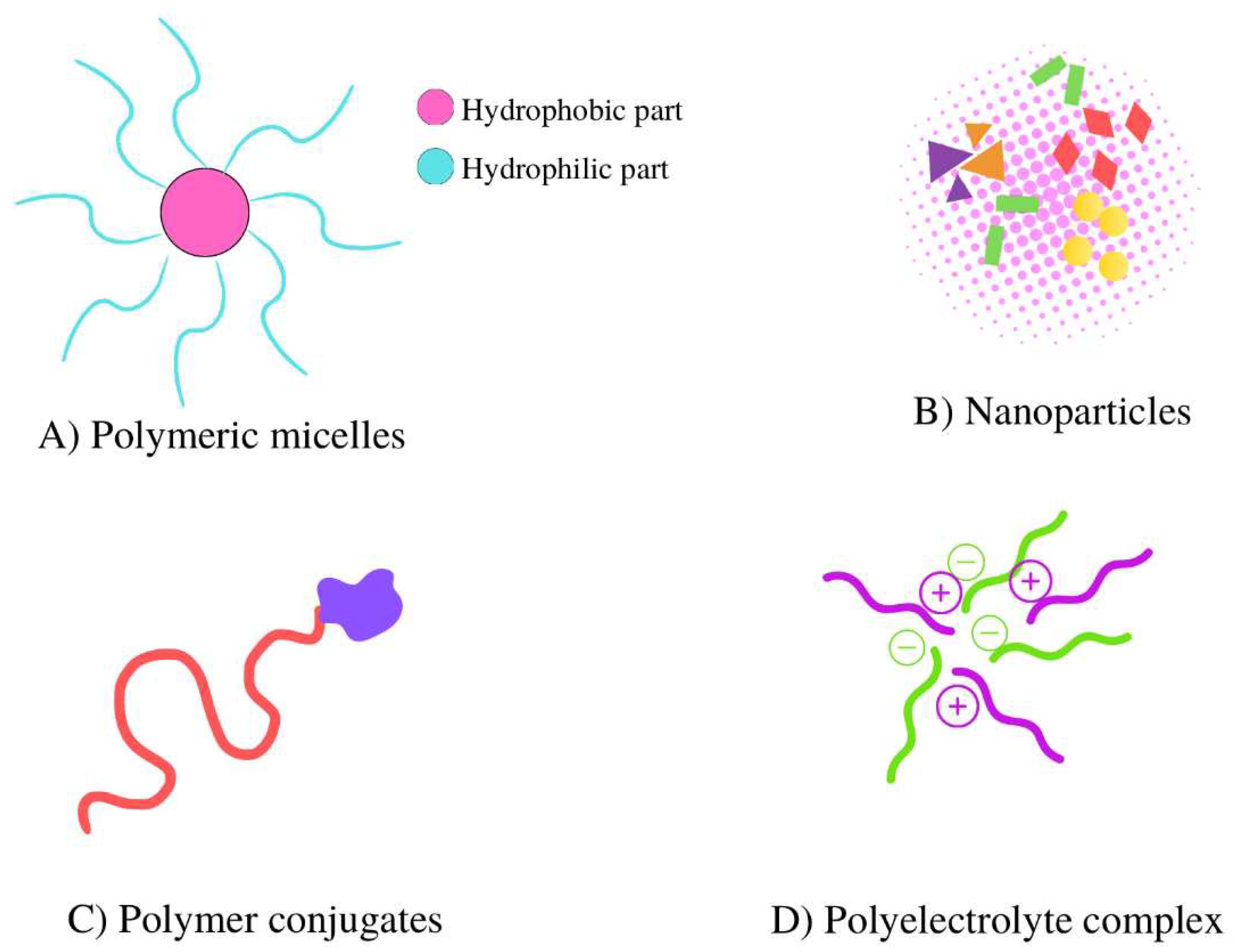
Figure 2.
Scheme of formation of PEC system.
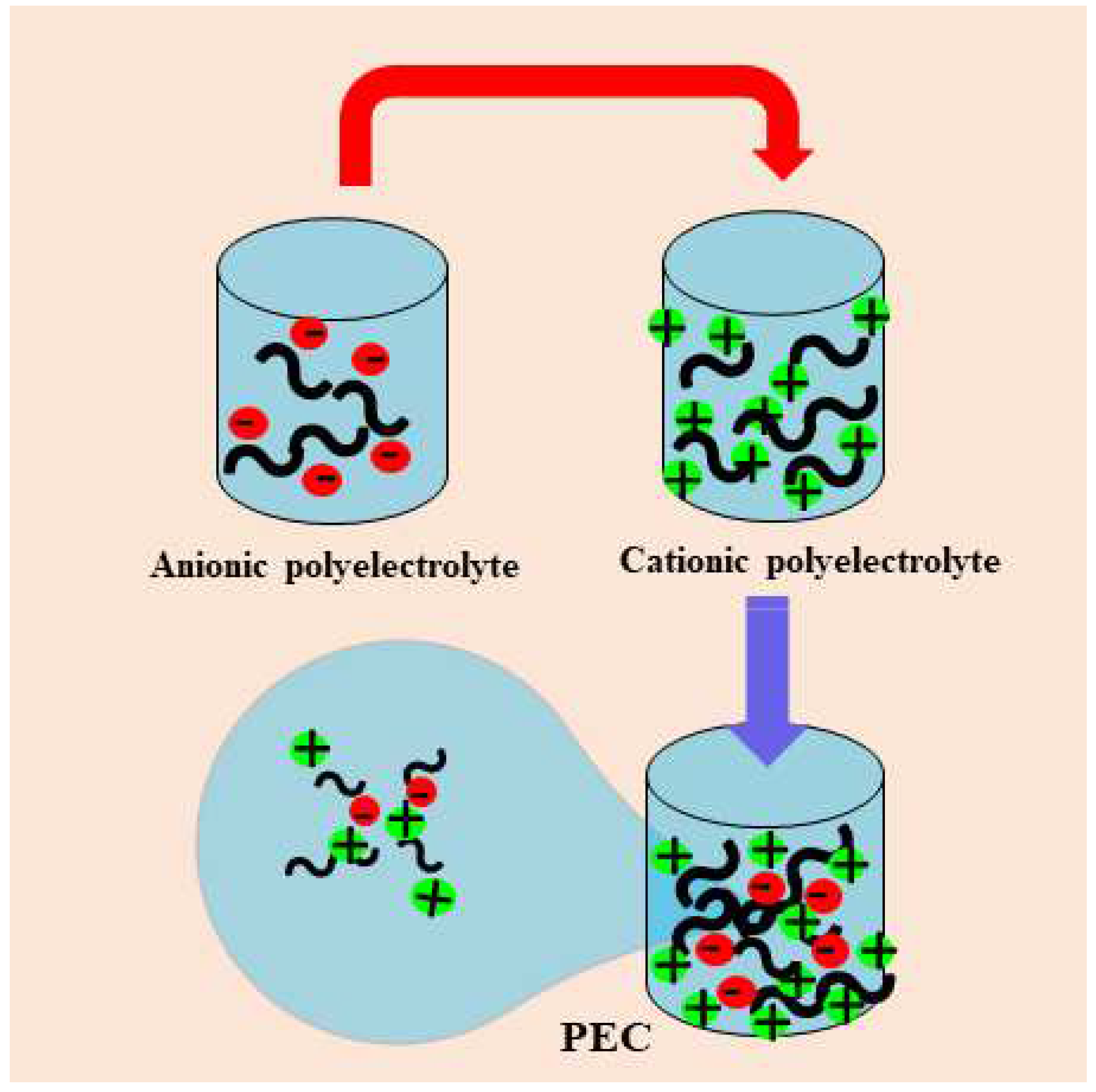
Figure 3.
In vitro drug release profiles of umbelliprenin from nanocarriers coated with chitosan and folic acid in PBS solution. (Reproduced with permission from Ref. [45]. Copyright 2023 Elsevier).
Figure 3.
In vitro drug release profiles of umbelliprenin from nanocarriers coated with chitosan and folic acid in PBS solution. (Reproduced with permission from Ref. [45]. Copyright 2023 Elsevier).
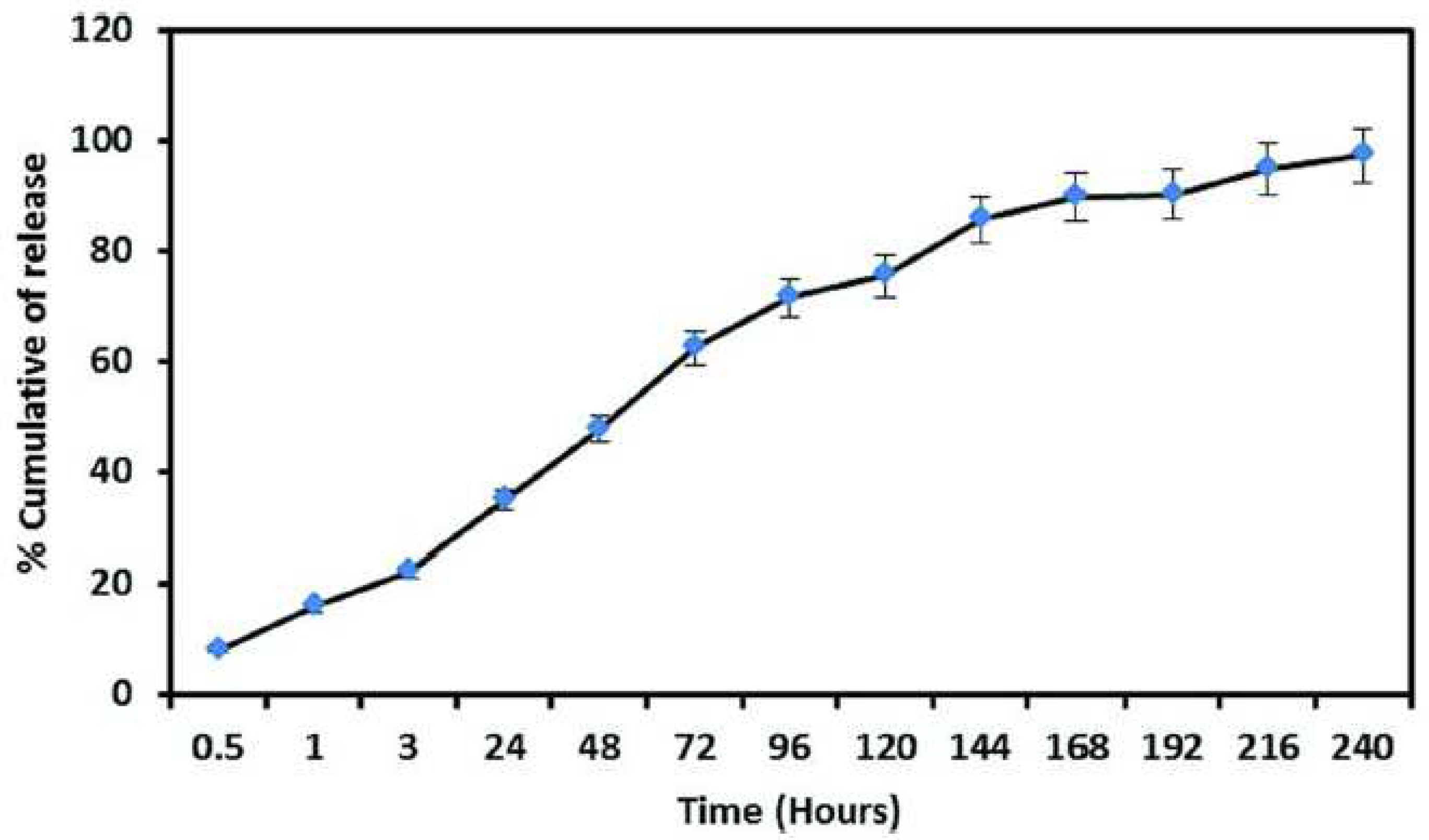
Figure 4.
Adsorption capacity of RB5 and MO at different pH levels: (a) ChM (chitosan- Fe3O4 nanoparticles); (b) ChM GL (chitosan- Fe3O4 Glutaraldehyde) and (c) ChM ECH (chitosan- Fe3O4 Epichlorohydrin). (Reproduced with permission from Ref. [47]. Copyright 2020 MDPI).
Figure 4.
Adsorption capacity of RB5 and MO at different pH levels: (a) ChM (chitosan- Fe3O4 nanoparticles); (b) ChM GL (chitosan- Fe3O4 Glutaraldehyde) and (c) ChM ECH (chitosan- Fe3O4 Epichlorohydrin). (Reproduced with permission from Ref. [47]. Copyright 2020 MDPI).
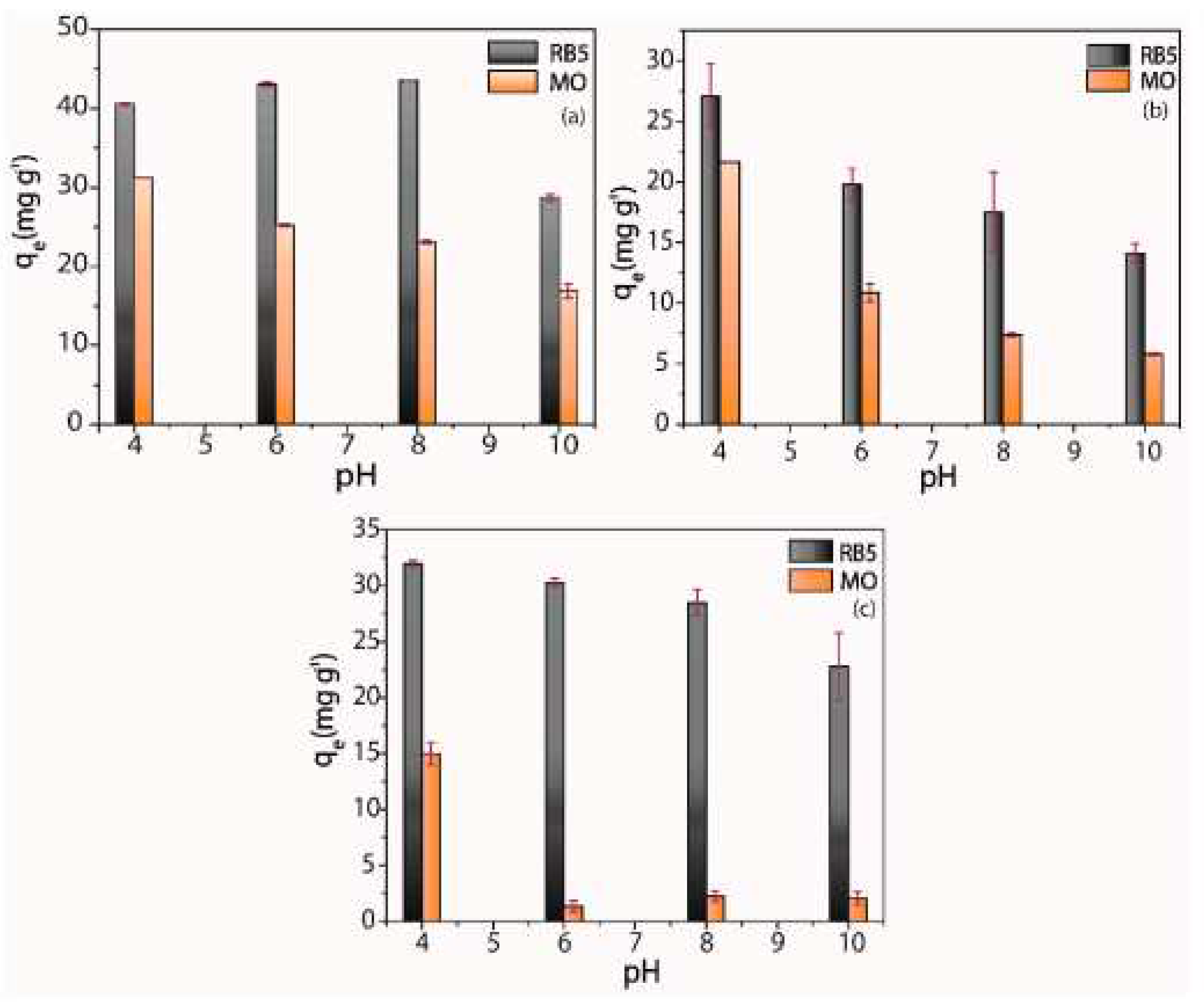
Figure 5.
State of intermediate maturity 0 days (a), 21 days after different formulations with chitosan-α-pinene used. (Reproduced with permission from Ref. [50]. Copyright 2020 Elsevier).
Figure 5.
State of intermediate maturity 0 days (a), 21 days after different formulations with chitosan-α-pinene used. (Reproduced with permission from Ref. [50]. Copyright 2020 Elsevier).
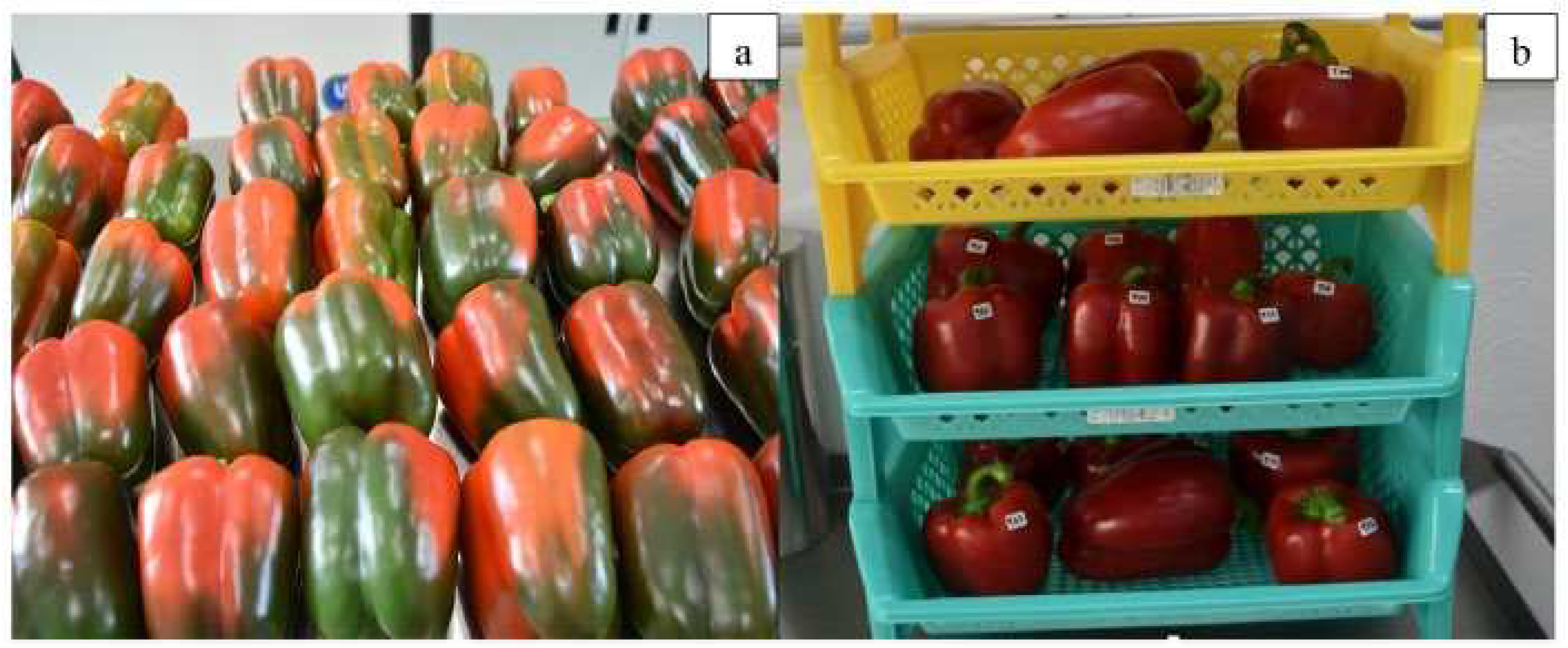
Figure 6.
Schematic representation of steps involved in the research. (Reproduced with permission from Ref. [52]. Copyright 2023 Elsevier).
Figure 6.
Schematic representation of steps involved in the research. (Reproduced with permission from Ref. [52]. Copyright 2023 Elsevier).
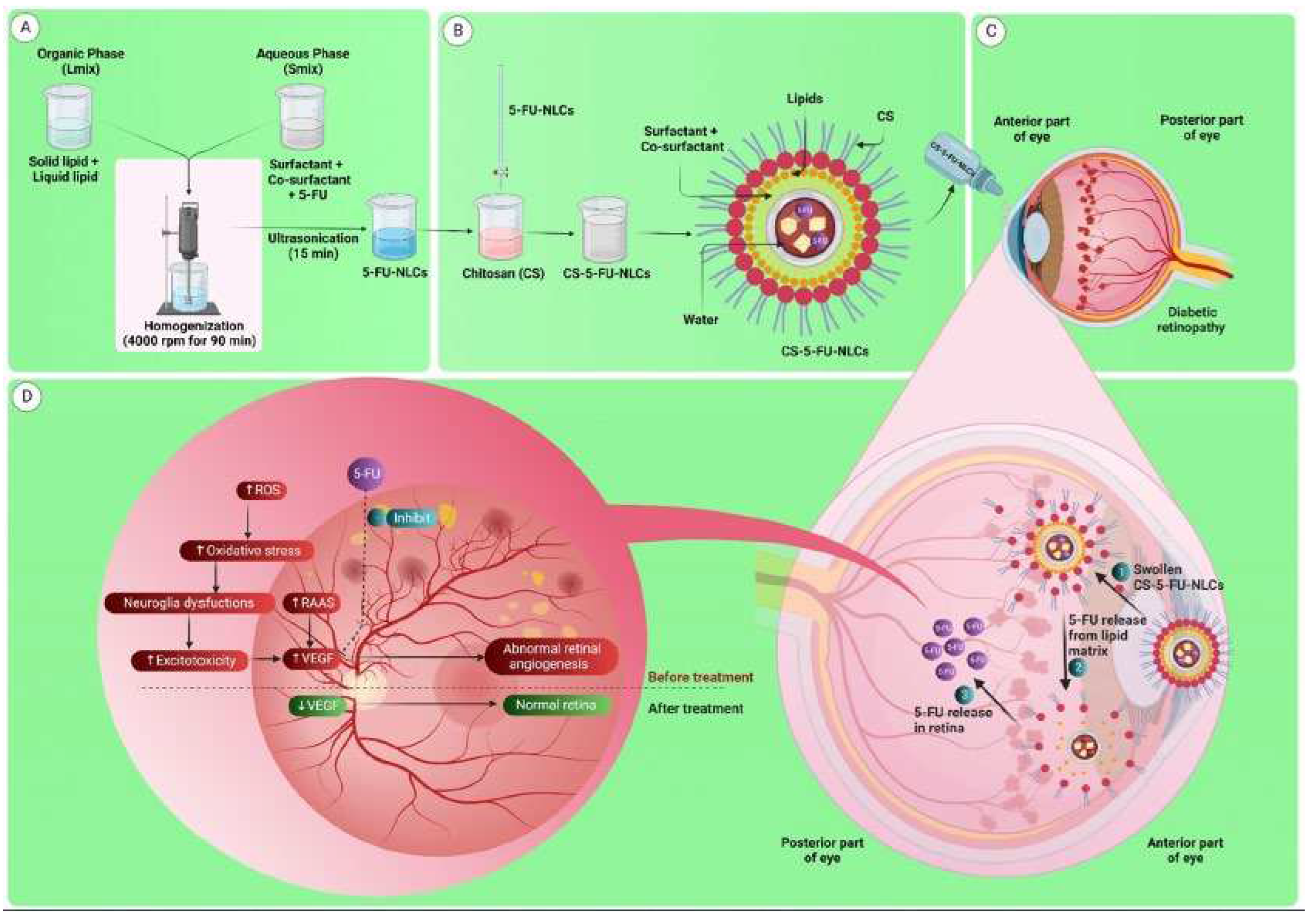
Figure 7.
Visual representation of the multistep modification of mesoporous silica nanoparticles (MNS) with 3-triethoxysilylpropylamine (APTES) and chitosan. (Reproduced with permission from Ref. [53]. Copyright 2021 Elsevier).
Figure 7.
Visual representation of the multistep modification of mesoporous silica nanoparticles (MNS) with 3-triethoxysilylpropylamine (APTES) and chitosan. (Reproduced with permission from Ref. [53]. Copyright 2021 Elsevier).
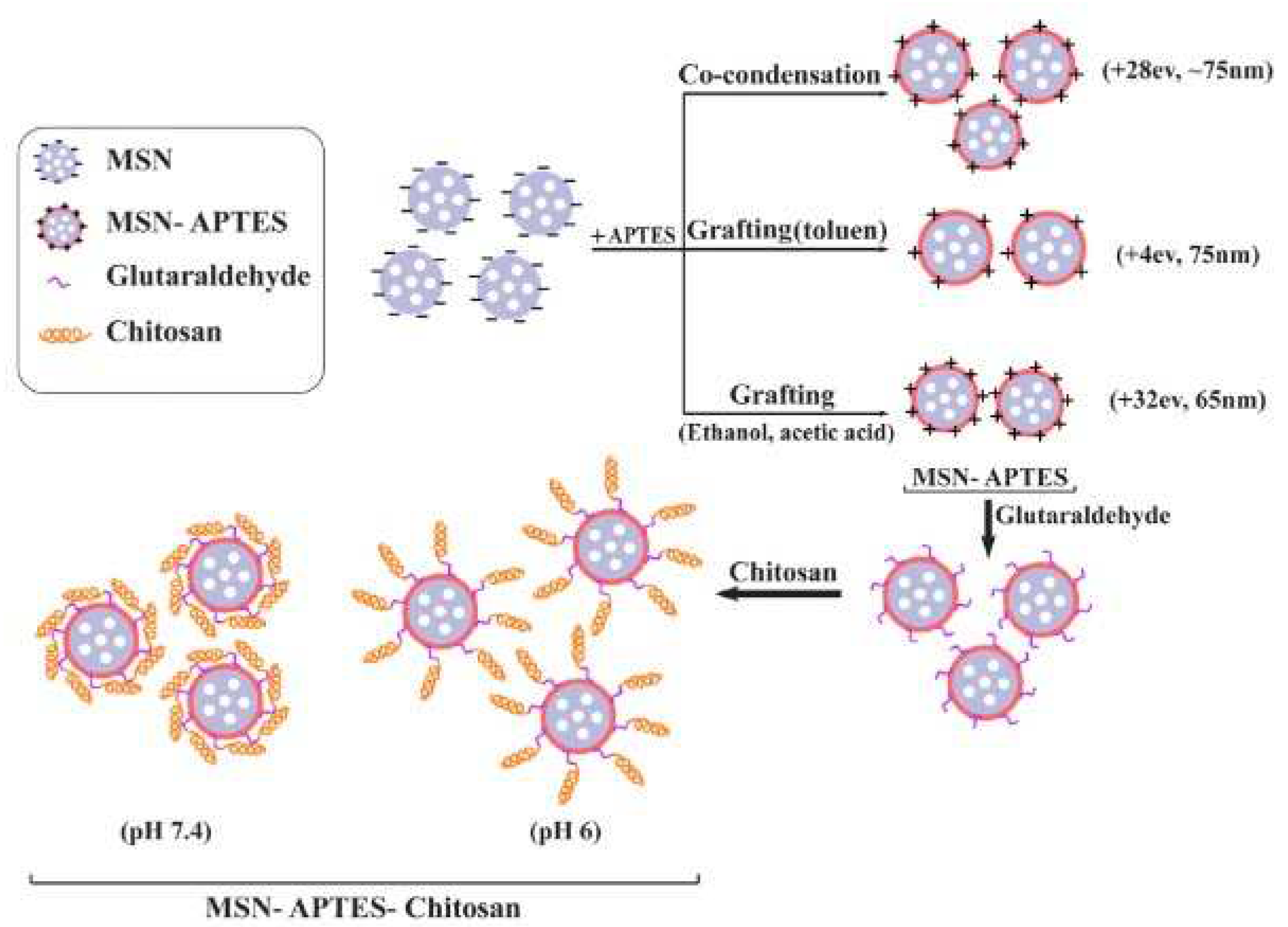
Figure 8.
SEM image of pectin-chitosan conjugate. (Reproduced with permission from Ref. [54]. Copyright 202 Elsevier).
Figure 8.
SEM image of pectin-chitosan conjugate. (Reproduced with permission from Ref. [54]. Copyright 202 Elsevier).
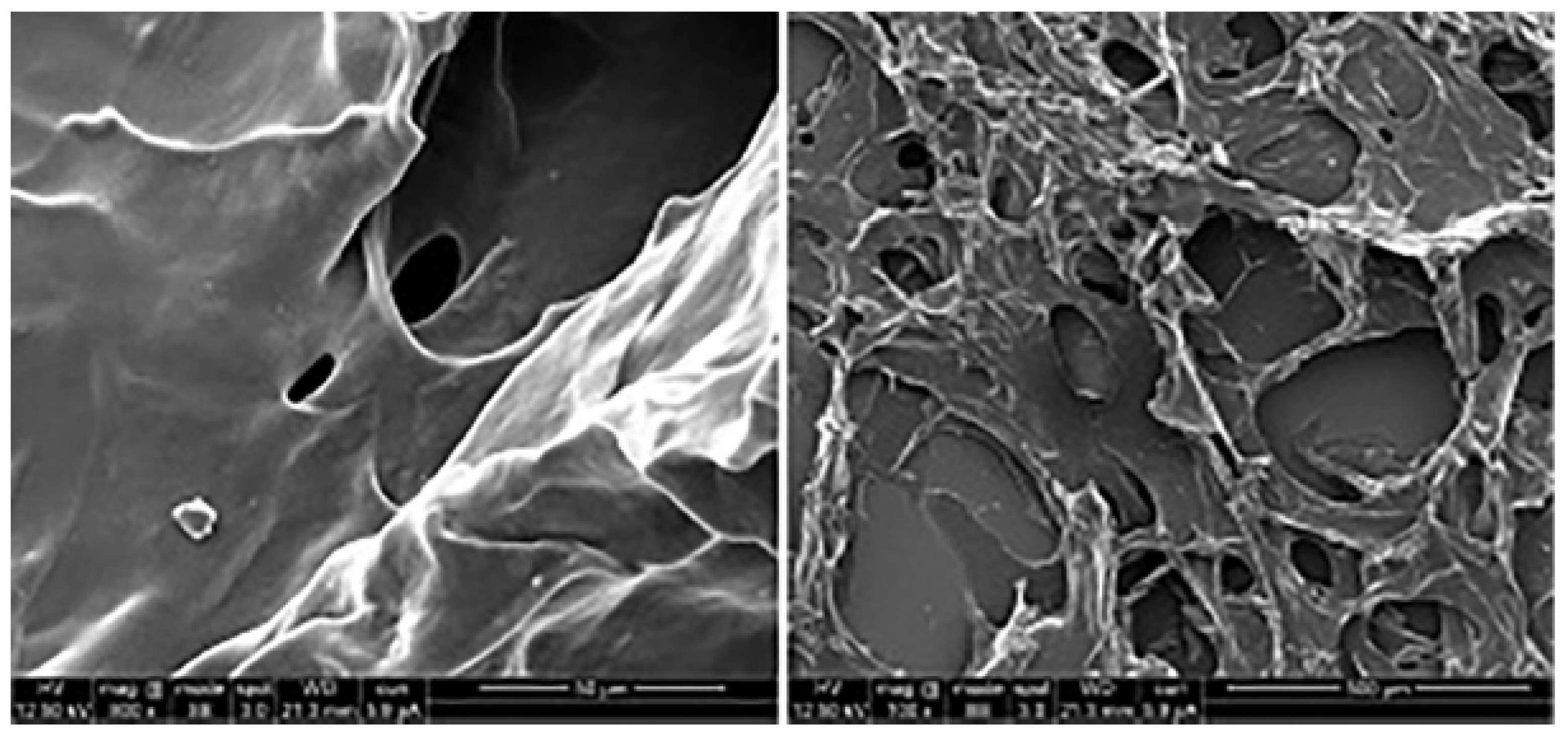
Figure 9.
Scheme of PEC formation. (Reproduced with permission from Ref. [56]. Copyright 2022 Elsevier).
Figure 9.
Scheme of PEC formation. (Reproduced with permission from Ref. [56]. Copyright 2022 Elsevier).
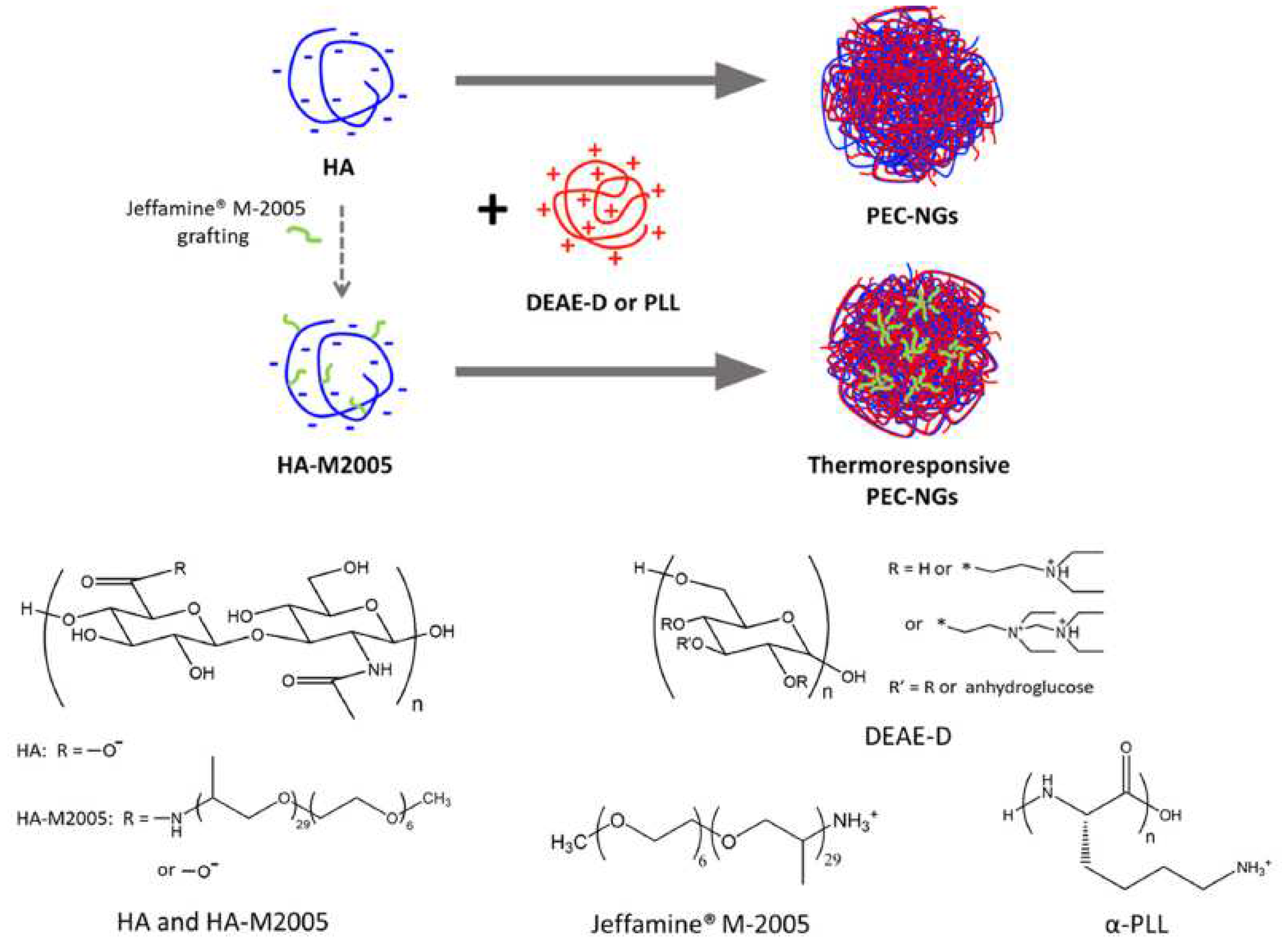
Figure 10.
Preservation effect of AgPVA (Ag nanoparticles and poly(vinyl alcohol)) nanofibers on fruits. (a–c) & (d–f) uncoated and coated lemons, and (g–i) & (j–l) uncoated and coated strawberries. (Reproduced with permission from Ref. [73]. Copyright 2019 Elsevier).
Figure 10.
Preservation effect of AgPVA (Ag nanoparticles and poly(vinyl alcohol)) nanofibers on fruits. (a–c) & (d–f) uncoated and coated lemons, and (g–i) & (j–l) uncoated and coated strawberries. (Reproduced with permission from Ref. [73]. Copyright 2019 Elsevier).
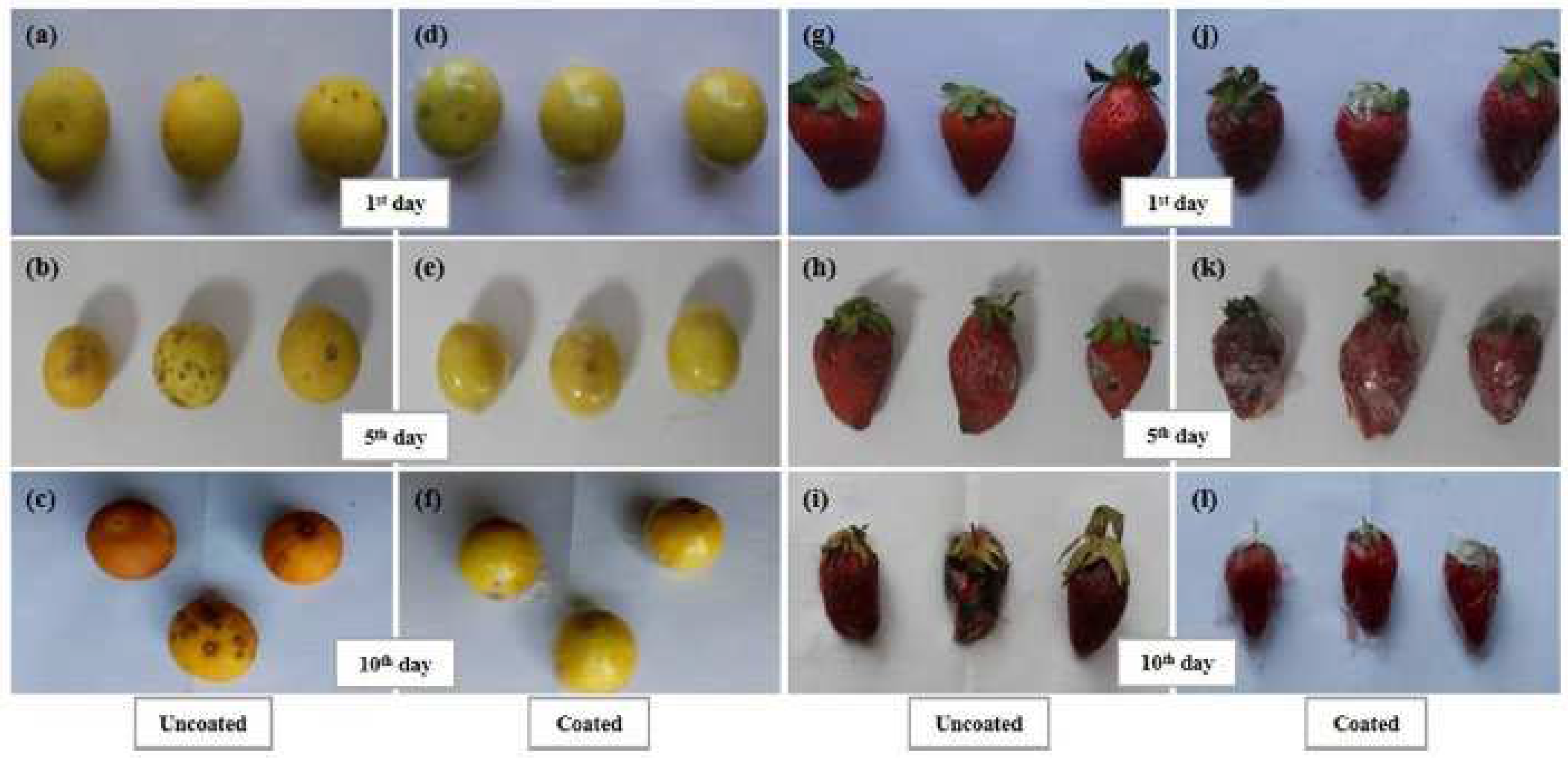
Figure 11.
a) Schematic representation of ZnO-alginate films; b) transparency of the films in the different formulations studied (AZ: ZnO-Alginate-Citronella); c) Visual appearance of soft cheese bits packaged in alginate control film and AZ1–AZ4 films. (Reproduced with permission from Ref. [75]. Copyright 2021 MDPI).
Figure 11.
a) Schematic representation of ZnO-alginate films; b) transparency of the films in the different formulations studied (AZ: ZnO-Alginate-Citronella); c) Visual appearance of soft cheese bits packaged in alginate control film and AZ1–AZ4 films. (Reproduced with permission from Ref. [75]. Copyright 2021 MDPI).
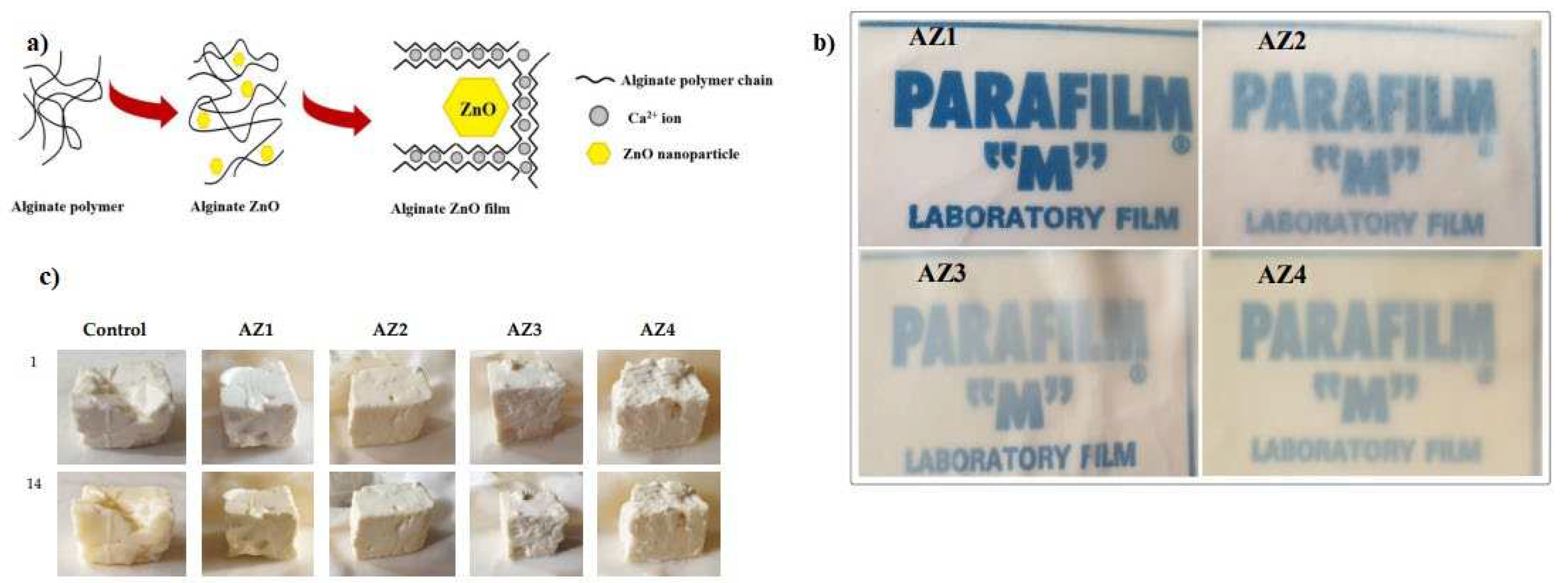
Figure 12.
a) Photographs of pure and different composite films; b) cumulative release of carvacrol from different composite films into different food simulants (50 % ethanol and n-hexane). (Reproduced with permission from Ref. [77]. Copyright 2023 Elsevier).
Figure 12.
a) Photographs of pure and different composite films; b) cumulative release of carvacrol from different composite films into different food simulants (50 % ethanol and n-hexane). (Reproduced with permission from Ref. [77]. Copyright 2023 Elsevier).
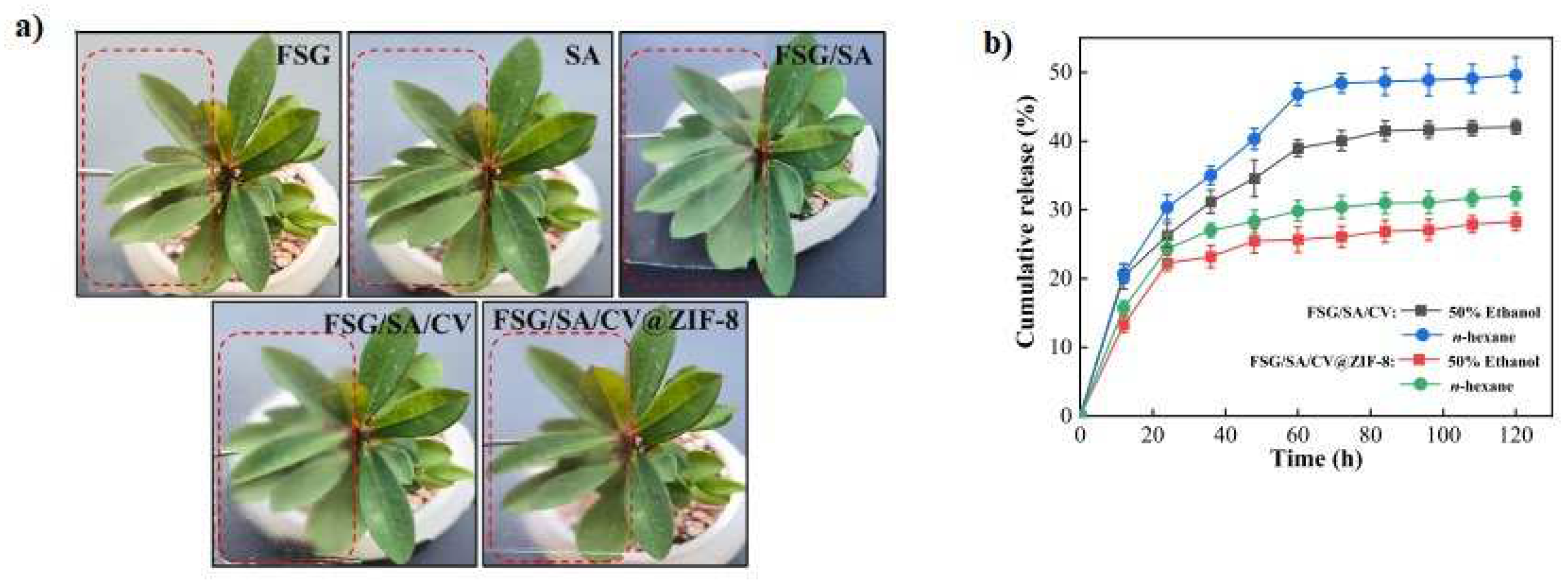
Figure 13.
SEM images of the neat and BC-HNT (β-caryophyllene-halloysite nanotubes) loaded Zein/PCL (polycaprolactone) nanofibers as a function of composting time. (Reproduced with permission from Ref. [78]. Copyright 2023 Elsevier).
Figure 13.
SEM images of the neat and BC-HNT (β-caryophyllene-halloysite nanotubes) loaded Zein/PCL (polycaprolactone) nanofibers as a function of composting time. (Reproduced with permission from Ref. [78]. Copyright 2023 Elsevier).
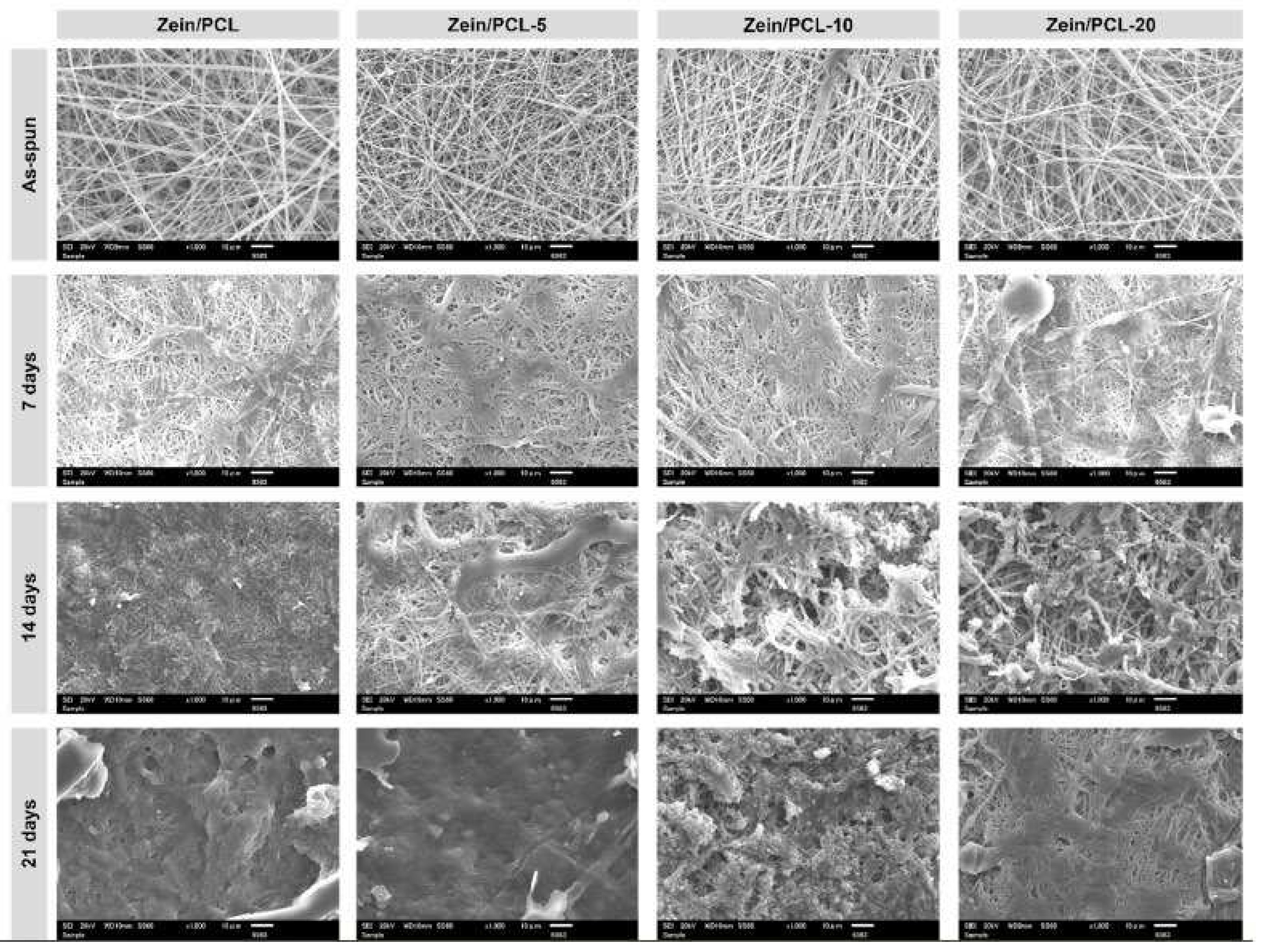
Figure 14.
Wound skin healing process using chitosan-based bionanocomposites. (Reproduced with permission from Ref. [82]. Copyright 2021 Elsevier).
Figure 14.
Wound skin healing process using chitosan-based bionanocomposites. (Reproduced with permission from Ref. [82]. Copyright 2021 Elsevier).
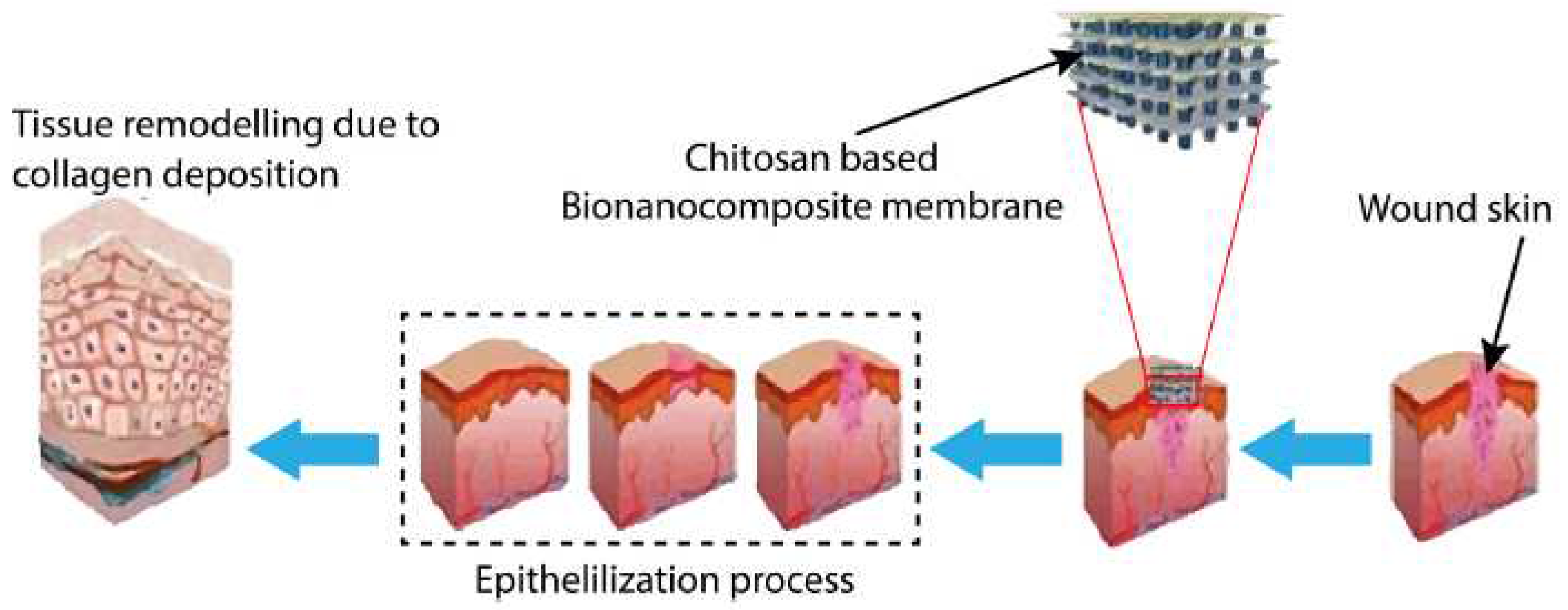
Figure 15.
The growth-inhibiting activity of chitosan-based films on E. coli (A) and S. aureus (B). (Reproduced with permission from Ref. [92]. Copyright 2020 Elsevier).
Figure 15.
The growth-inhibiting activity of chitosan-based films on E. coli (A) and S. aureus (B). (Reproduced with permission from Ref. [92]. Copyright 2020 Elsevier).
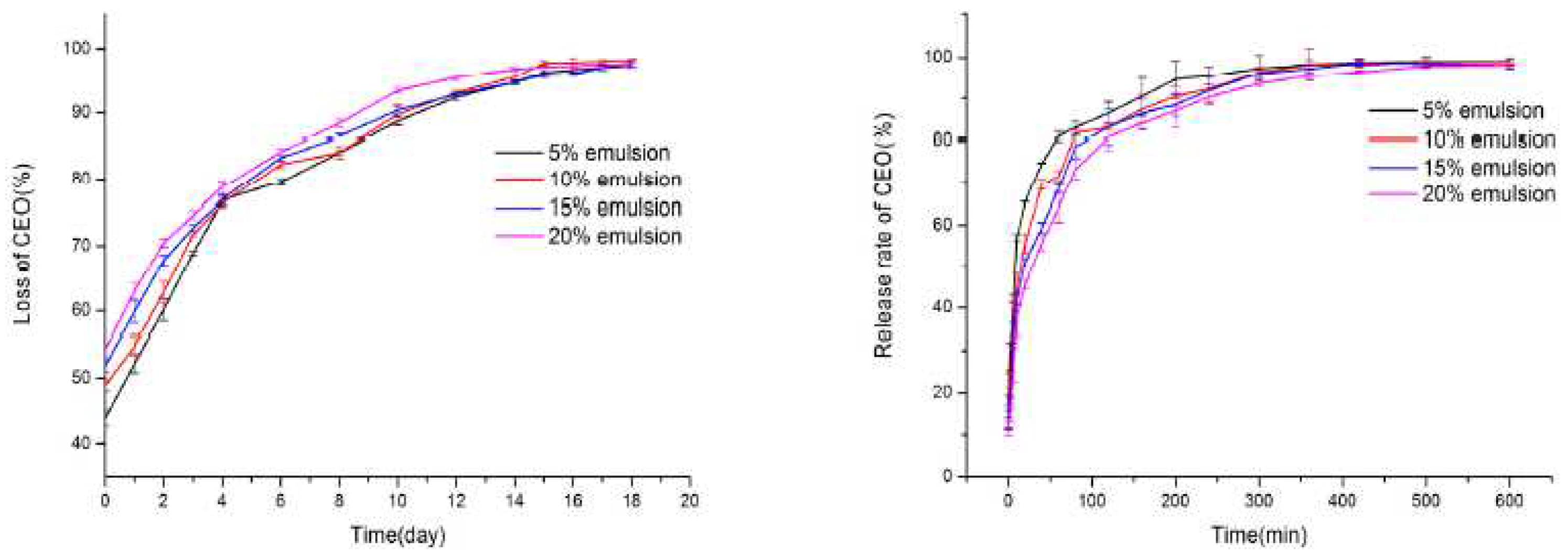
Figure 16.
a) Scheme of potential interaction between furcellaran and chitosan; b) Mechanical properties ((A) Maximum breaking load; (B) tensile strength; (C) elongation at break; (D) modulus of elasticity) and (E) water vapor transition rate of furcelleran, chitosan films, and their complex. (Reproduced with permission from Ref. [94]. Copyright 2021 Elsevier).
Figure 16.
a) Scheme of potential interaction between furcellaran and chitosan; b) Mechanical properties ((A) Maximum breaking load; (B) tensile strength; (C) elongation at break; (D) modulus of elasticity) and (E) water vapor transition rate of furcelleran, chitosan films, and their complex. (Reproduced with permission from Ref. [94]. Copyright 2021 Elsevier).
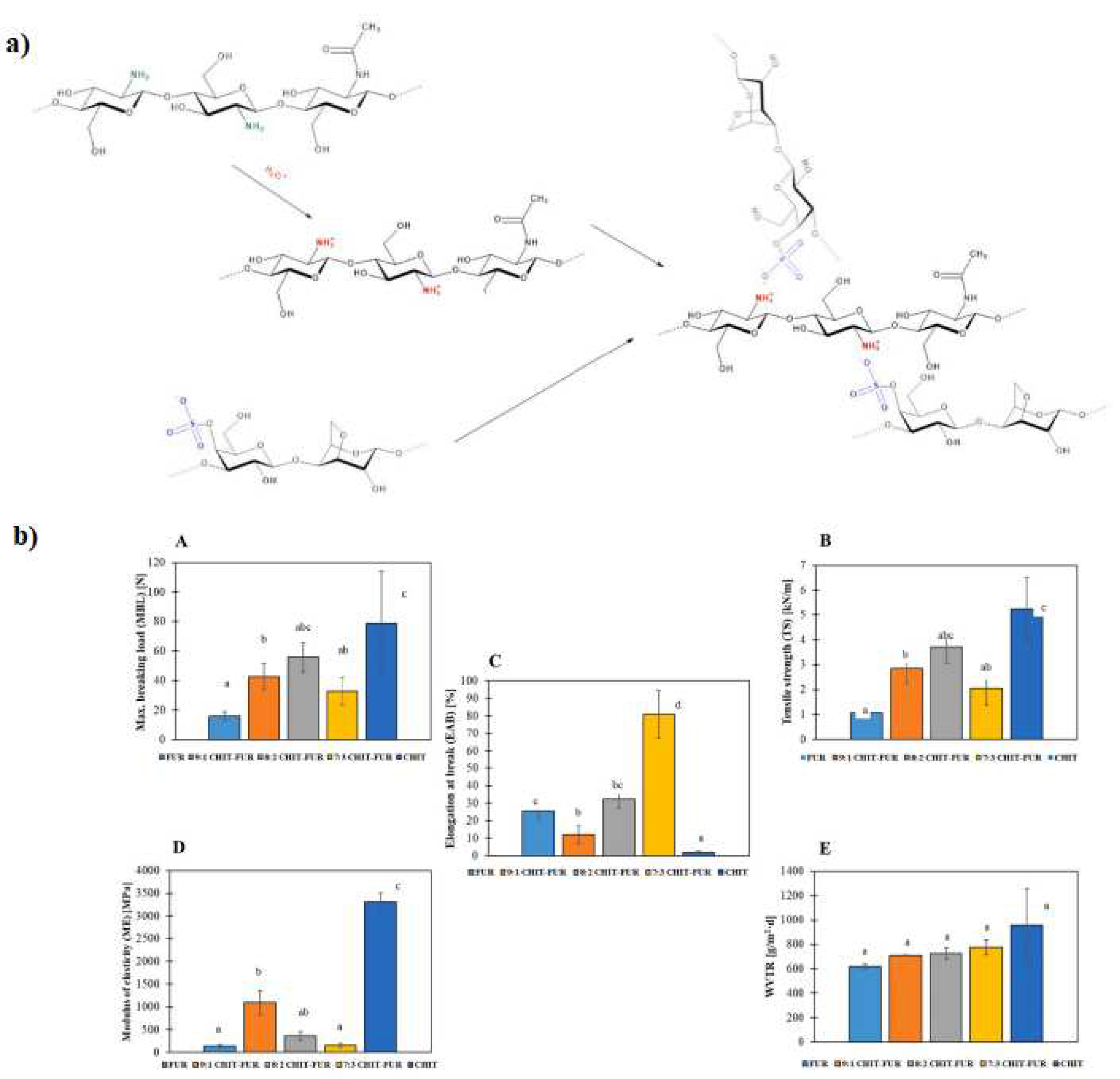
Figure 17.
Antioxidant activity for AO (Assai pulp oil), the control and CC (Alginate-chitosan/AO) PEC. (Reproduced with permission from Ref. [96]. Copyright 2020 Elsevier).
Figure 17.
Antioxidant activity for AO (Assai pulp oil), the control and CC (Alginate-chitosan/AO) PEC. (Reproduced with permission from Ref. [96]. Copyright 2020 Elsevier).
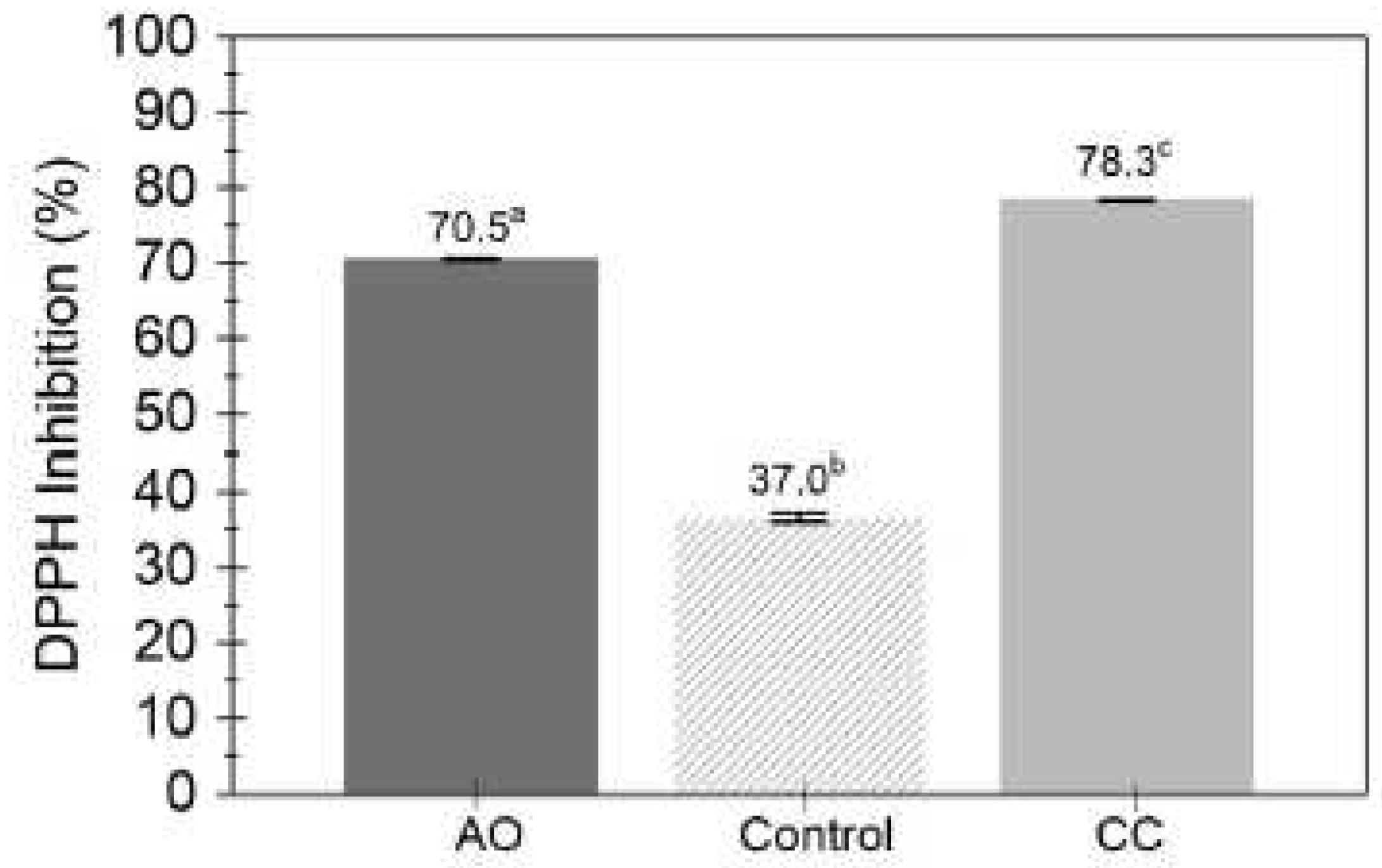
Figure 18.
a) A) schematic diagram showing the procedure for film preparation. (B) Photos of films with different ratios of hypromellose-graft-chitosan (HC) and carmellose sodium. The (C) thickness, (D) density, and (E) stress-strain curves of different film samples; b) Photos of the bag generated, as well as the bag containing (iii, iv) fresh chicken meat, (v, vi) frozen chicken meat, and (vii, viii) thawed frozen chicken meat, under (i, iii, v, vii) white light and (ii, iv, vi, viii) UV light. (Reproduced with permission from Ref. [99]. Copyright 2021 Elsevier).
Figure 18.
a) A) schematic diagram showing the procedure for film preparation. (B) Photos of films with different ratios of hypromellose-graft-chitosan (HC) and carmellose sodium. The (C) thickness, (D) density, and (E) stress-strain curves of different film samples; b) Photos of the bag generated, as well as the bag containing (iii, iv) fresh chicken meat, (v, vi) frozen chicken meat, and (vii, viii) thawed frozen chicken meat, under (i, iii, v, vii) white light and (ii, iv, vi, viii) UV light. (Reproduced with permission from Ref. [99]. Copyright 2021 Elsevier).
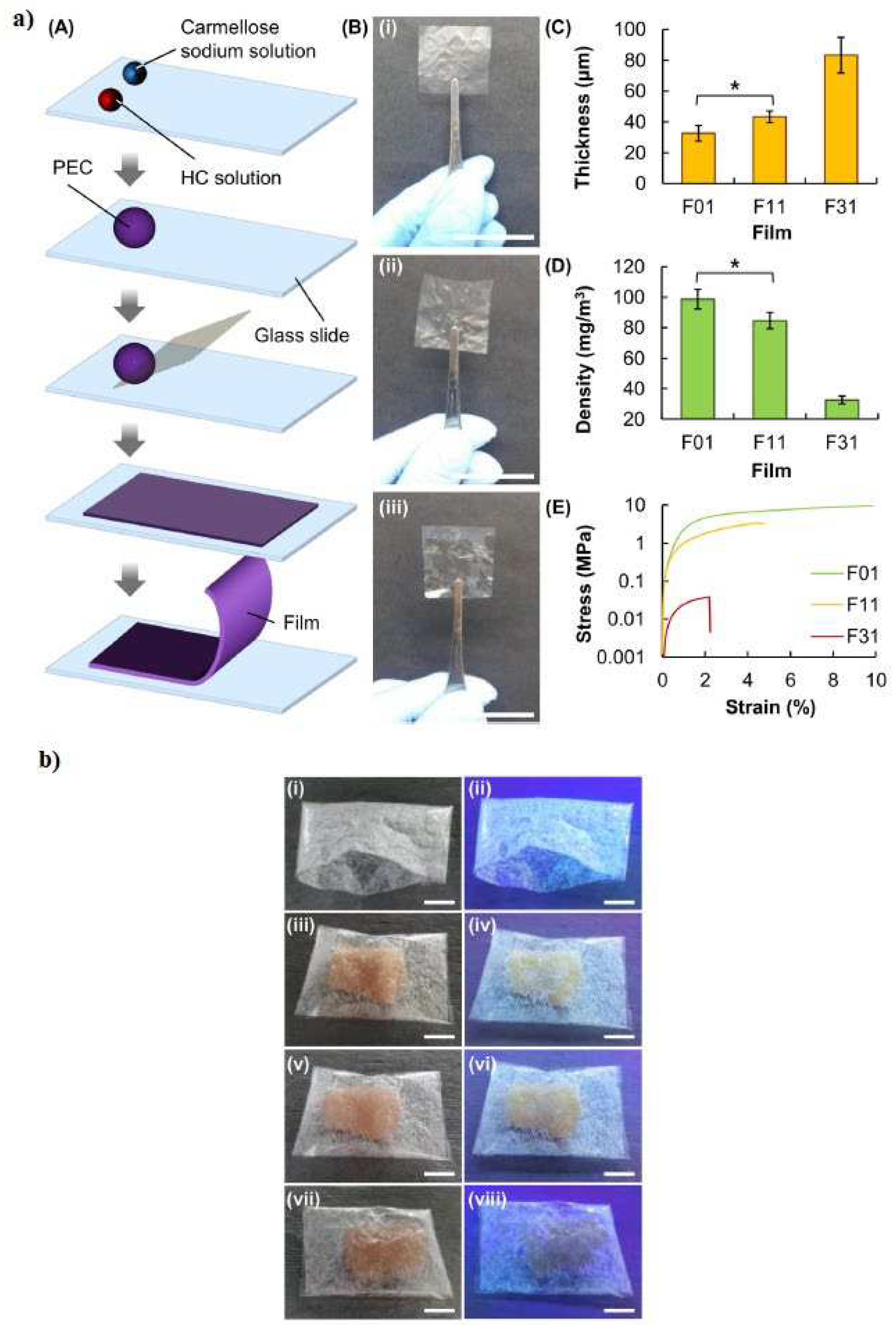
Figure 19.
(a) Comparison of CH (Chitosan)/PT (Pectin)-coated and uncoated banana ripening as a function of time. Bananas were aged under ambient conditions. (b) Comparison of CH/PT-coated and uncoated apple browning as a function of time under ambient conditions. (Reproduced with permission from Ref. [100]. Copyright 2021 American Chemical Society).
Figure 19.
(a) Comparison of CH (Chitosan)/PT (Pectin)-coated and uncoated banana ripening as a function of time. Bananas were aged under ambient conditions. (b) Comparison of CH/PT-coated and uncoated apple browning as a function of time under ambient conditions. (Reproduced with permission from Ref. [100]. Copyright 2021 American Chemical Society).
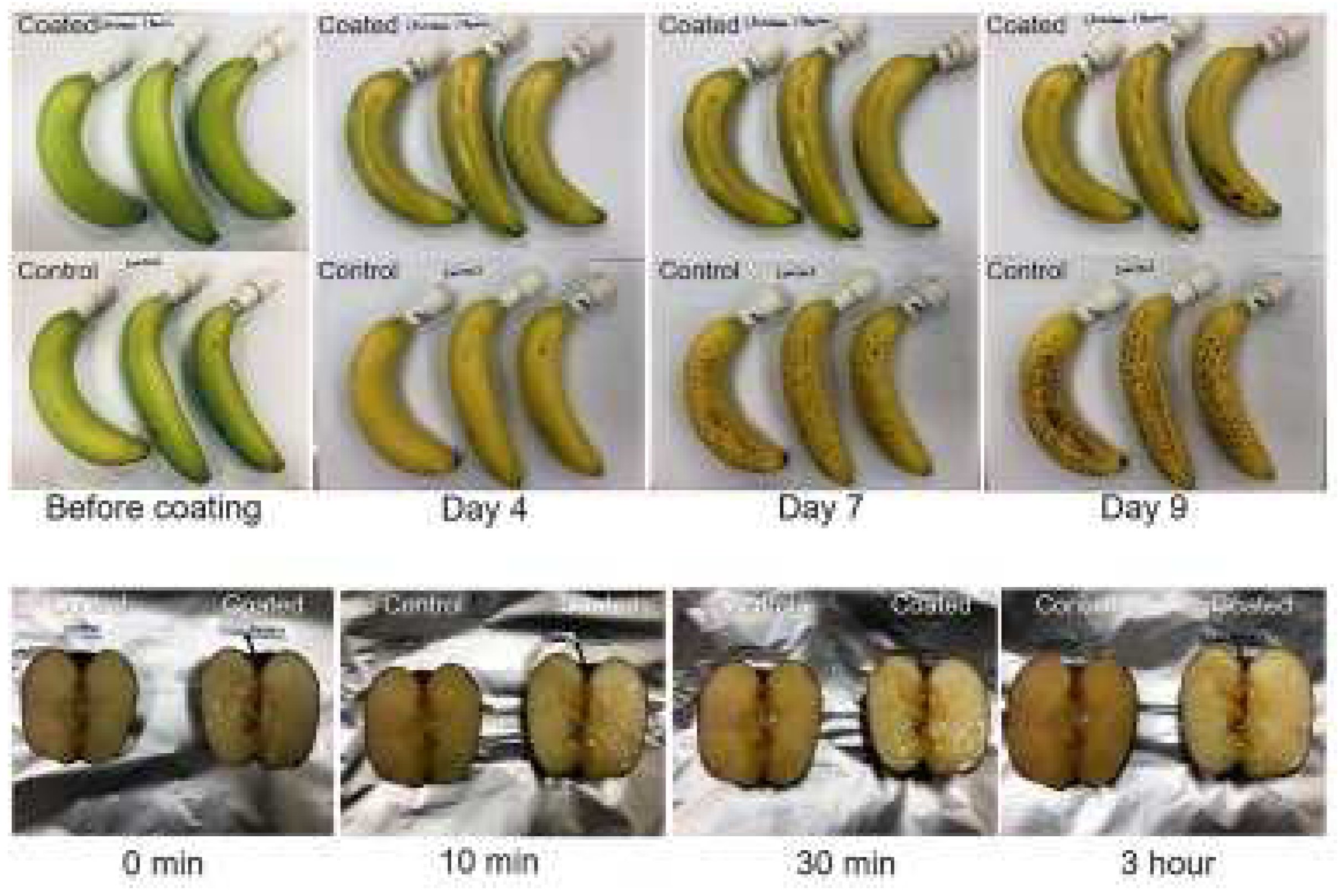
Figure 20.
a) Photographs of sample films (a) F0/0 (chitosan) and (b) F5/0 (Chitosan-deep eutectic solvent) films; b) Antioxidant activity of açaí oil (Reproduced with permission from Ref. [102]. Copyright 2023 MDPI).
Figure 20.
a) Photographs of sample films (a) F0/0 (chitosan) and (b) F5/0 (Chitosan-deep eutectic solvent) films; b) Antioxidant activity of açaí oil (Reproduced with permission from Ref. [102]. Copyright 2023 MDPI).
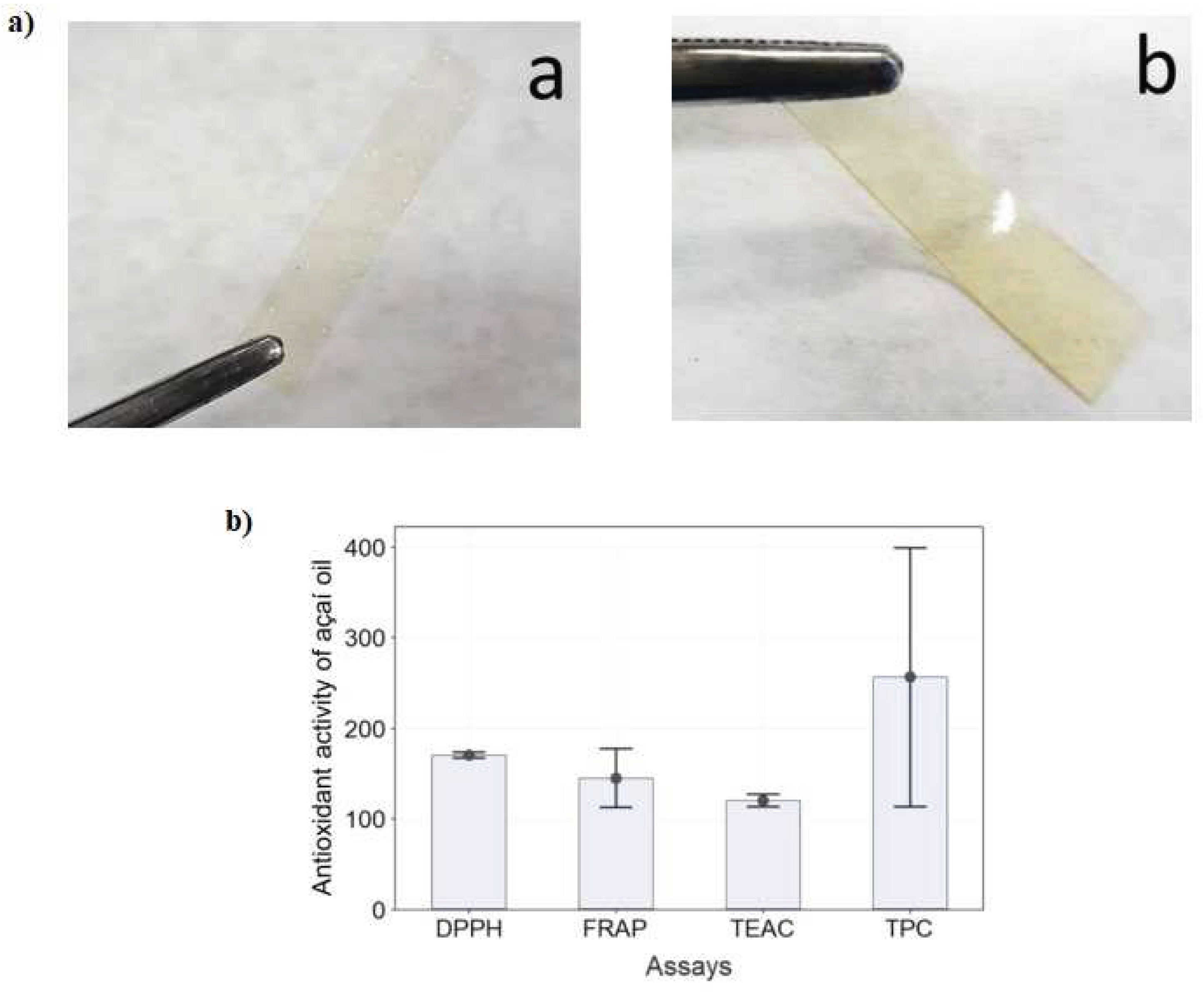

Table 1.
Some polyelectrolyte complex systems are based on biopolymers and their applications as encapsulant agents. (A brief survey from 2018 to 2023 years).
Table 1.
Some polyelectrolyte complex systems are based on biopolymers and their applications as encapsulant agents. (A brief survey from 2018 to 2023 years).
| Polyelectrolyte complex system/encapsulated molecule | Application | Ref. |
| Pea-protein succinylated-Chitosan/curcumin | Delivery of curcumin in a gastrointestinal system | [57] |
| Chitosan-alginate/assai pulp oil | Active food packaging | [58] |
| Casein-sodium alginate/vanillin | Delivery systems in various areas, such as food packaging, textile, cosmetic | [59] |
| Carboxymethylagarose-chitosan/diclofenac sodium | Wound dressing for transdermal drug delivery, tissue engineering. | [60] |
| Glycosaminoglycans-chitosan/mesenchymal stem cells | Applications in bioprinting, modular tissue engineering, or regenerative medicine. | [61] |
| Chitosan-fucoidan/platelet-rich plasma | Use in diabetic wound care. | [62] |
Disclaimer/Publisher’s Note: The statements, opinions and data contained in all publications are solely those of the individual author(s) and contributor(s) and not of MDPI and/or the editor(s). MDPI and/or the editor(s) disclaim responsibility for any injury to people or property resulting from any ideas, methods, instructions or products referred to in the content. |
© 2023 by the authors. Licensee MDPI, Basel, Switzerland. This article is an open access article distributed under the terms and conditions of the Creative Commons Attribution (CC BY) license (http://creativecommons.org/licenses/by/4.0/).
Copyright: This open access article is published under a Creative Commons CC BY 4.0 license, which permit the free download, distribution, and reuse, provided that the author and preprint are cited in any reuse.


