

Submitted:
02 June 2023
Posted:
05 June 2023
You are already at the latest version
Abstract
The evolution of transportation has been inextricably tied to the progress of civilization. Through innovation, the automobile business has been working to improve safety, quality, and compliance with environmental regulations. Electric vehicles have made significant strides in this area, but optimizing their efficiency requires a special focus because they expend energy that can be recovered in a variety of ways. Energy harvesting, a cutting-edge technology that captures wasted energy from vehicles, has recently received a lot of attention as it constitutes a means to improve the efficiency of electric vehicles. Dissipated energy can be converted into electricity using regenerative energy recovery systems and put to various uses. This study tenders a thorough examination into energy recovery technologies which could be applied to the various types of energy dissipated in electric vehicles. Firstly, the paper investigates the possible sources of energy recoverable from an electric vehicle, as well as the various types of energy dissipated. Secondly, the article examines the energy recovery technologies most frequently used in vehicles, categorizing them according to the type of energy and application. Finally, it determines that with further research and development, energy harvesting holds considerable potential for improving the energy efficiency of electric vehicles. New and innovative methods for capturing and utilizing wasted energy in electric vehicles can be established. The potential benefits of applying energy recovery systems in electric vehicles is a vital issue for the automobile industry to focus on due to the potential benefits involved. The ongoing progress currently being made in this field is expected to play a significant role in shaping the future of transportation.
Keywords:
electric vehicle
; energy harvesting
; thermal energy
; mechanical energy
1. Introduction
The process of collecting energy from different sources and using it to power electronic devices is known as energy harvesting. In the setting of electric vehicles (EVs), energy harvesting sources can supplement the main battery to extend the distance a vehicle can cover. There are several possible energy sources that an EV can harvest, including:
- -
- Regenerative braking, suspension, and rolling energy generated during braking can be captured and stored in the vehicle’s battery.
- -
- Kinetic energy recovery: energy from the motion of the vehicle which can be captured and stored.
- -
- Waste heat recovery: energy from the heat generated by the vehicle powertrain and other systems which can be captured and reused to generate power.
Overall, energy harvesting sources can help to improve EV efficiency and reduce reliance on the primary battery, resulting in an increased range of distance and a reduced impact on the environment. The electrification of powertrains is one of the cutting-edge technologies used in the automotive industry to mitigate pollution resulting from greenhouse gas emissions from vehicles in transportation. However, further, and deeper study is required to improve fuel efficiency in these kinds of vehicles. The ability to recover the energy expended, whether from a thermal, vibratory, or other type of source fuelling an electric car, would be a valuable and innovative addition to this field of study. When circulating in towns, electric vehicles use 83% of the energy supplied by the battery for propulsion, with 21% lost in aerodynamics, 18% lost in rolling resistance, and 27% lost during braking. On highways, these vehicles use 87% of battery power, with 45% lost in aerodynamics, 22% lost in rolling resistance, and 7% lost during braking [1]. The energy recovery systems that are employed in the automotive sector are methods for recovering energy from the vehicle that would otherwise be wasted. The recovered energy can be stored and then used again as required, thus reducing the need for an alternative energy source, and hence improving vehicle efficiency. These systems can operate for a broad range of technologies present in automotive powertrains [2]. The automotive business has traditionally concentrated on more conventional ways of improving vehicle fuel efficiency, such as engine efficiency or aerodynamics. Manufacturers have only recently recognized that these recovery systems offer a cost-effective alternative for improving efficiency, and as a result these systems are now being developed.
2. Related works
A great variety of sectors can benefit from energy recovery practices, not least the automotive industry. Most studies on energy harvesting focus only on a single aspect of energy generation.
The authors in [3] specifically examine how energy can be recovered from shock absorbers. The significance of regenerative dampers is emphasised, and an assessment is made of the potential for recovery methods for energy generated by automotive vibration. The different types of regenerative shock absorbers are then categorised and summarised. The technologies employed in regenerative shock absorber systems are categorized and evaluated in [4]. The article reviews three modes of operation for these systems: direct drive, indirect drive, and hybrid drive, and assesses the feasibility for implementation of each type. The aim of the study is to analyze the performance of regenerative shock absorbers by subjecting vehicle suspension systems to various types of road excitations. The results in [5] indicate that there is significant promise for energy recovery from automobile suspension vibration with hydraulic and electrical regenerative structures showing exceptional performance and exhibiting significant growth potential. The authors of [6] examine vehicle energy dispersal and the potential for recovering that energy by using a regenerative shock absorber, and also review various innovative works regarding energy recovery across all sectors. The authors of [7] provide an overview of the different energy harvesting techniques used in roads and bridges, such as photovoltaic cells, solar collectors, geothermal, thermoelectric, electromagnetic, and piezoelectric systems. The harvested energy can be used to produce electricity, heat, or cool buildings, melt ice, power wireless sensors, and monitor structure conditions. The research compares different energy harvesting technologies taking into consideration power output, cost-effectiveness, technology readiness level, benefits, and drawbacks. The authors of [8] provide a thorough examination of roadway energy harvesting technologies, including the harvesting principle, prototype development, implementation efforts, and economic factors of each technology. According to the research, several of these technologies are advanced enough to generate electrical power on their own at the roadside. [9] examines various energy harvesting concepts for the railway industry, both on-board and wayside, classifying harvesters by the source of energy harvested and critically analyzing the benefits and drawbacks of each type. The review identifies the most promising energy harvesting solutions and advocates for additional research in this field. [10] examines energy harvesting technologies for various land transportation uses, showing various energy harvesting systems in terms of design, simulation, and experimentation. The authors of [2] concentrate on the technical aspects of energy recovery systems and their potential to reduce carbon emissions. Energy recovery systems are classified here based on the energy sources and methods used to harvest and store it. A critical assessment of factors such as weight, size, and cost is carried out, but the emphasis is on vehicles powered by internal combustion engines.
This article aims to provide an overview of potential sources of energy harvesting and the recovery technologies appropriate for each type of energy. It will classify each source based on the type and amount of energy available, the target application, methods, applicable technologies, and efficiency. The purpose is to give the reader a comprehensive understanding of the energy harvesting landscape, an overview of possible energy harvesting sources as well as recovery technologies for each form of energy. Each source will be classified according to the type and amount of energy accessible, the intended application, methods, applicable technologies, and efficiency. The goal is to provide the reader with a thorough grasp of the energy harvesting landscape.
3. Methodology
Figure 1 depicts the flowchart approach used in this study. There is a summary of the studies and other contributions related to energy harvesting in electric cars which emphasises the contribution made by the review. Possible sources of energy harvesting in electric vehicles, as well as the different kinds of energies and technologies for harvesting them are also discussed. There is a growing interest in this topic due to its importance to the automotive industry and the need for new avenues to reduce environmental impact. This has led to an increased focus on further research in this area. This study also includes several applications for recovered energy and deals with the challenges associated with implementing the solutions suggested in this field.
Section 4 focuses on the possible energy sources available in an electric vehicle. This part delves into the various energy sources that can be harvested and their potential for energy recovery. Section 5 investigates the various systems and technologies that are appropriate for recovering each form or source of energy. This section offers a thorough examination of the designs, simulations, and experiments used to determine the viability of these systems. Section 6 relates to the use of recovered energy and investigates the various ways in which it can be used to power various applications. Finally, Section 5 concludes the review with a summary of the main findings and the research impact for the area of energy harvesting.
4. Potential energy sources
In an electric vehicle, energy is stored in the battery, which functions as the vehicle’s primary power source (Figure 2). The battery is used to power the electric motor, which drives the wheels and propels the car forward. However, some of the energy stored in the battery is dissipated or lost in various sections of the vehicle due to thermal or vibrational causes. These losses can be collected and recycled as alternative energy sources, increasing the total efficiency of the electric vehicle. The interaction between the ground and the wheel, the braking system, the shock absorber, the electric motor and battery, and the aerodynamic drag are all possible sources for energy recovery. These energy sources are depicted in a diagram that illustrates the flow of energy from the battery used in an electric car. The aim of energy recovery is to convert these losses into usable energy that can then be reused to power the vehicle or stored in the battery for later use.
Energy flows from the battery to the electric motor, which then converts this electrical energy into mechanical energy to drive the wheels in an electric car. The electric motor is driven by an inverter, which converts the direct current (DC) from the battery to the alternating current (AC) required by the motor. When the vehicle is braking or coasting, the electric engine can function as a generator, converting some of the vehicle’s kinetic energy back into electrical energy. This energy is then stored in the battery and used to power the engine later. Furthermore, the vehicle may have auxiliary systems that require electrical energy to function, such as air conditioning or heating. This energy is derived from the battery as well. In summary, energy flows from the battery to the electric motor in an electric car, with energy captured during braking or coasting and used to recharge the battery.
4.1. Interaction ground/wheel
In a vehicle, the interaction between the wheel and the ground creates a major source of energy loss. Rolling resistance is the force that resists the direction of movement the tyre makes on the traction surface during this interaction. Rolling resistance is caused by deformation in the tyre when it comes into contact with the ground, and results in a loss of mechanical energy. Fortunately, using suitable technologies, this energy can be captured and transformed into a new source of energy and adding to efficiency. The tyre, as the final component of the driveline, is critical in this respect [11]. The study of mechanical energy loss through contact has been a topic of interest for researchers, who aim to find ways to harness this energy for practical use [12].
4.2. Braking system
Various studies [13] have recorded the conversion of kinetic energy into thermal energy caused by the friction between the brake disc and pads during the braking process. These studies have recorded a wide range of braking temperatures, with temperatures as low as 150°C reported in works such as [14] and [15]. Temperatures between 150°C and 300°C have been measured by others, including [16,17,18,19,20,21], while temperatures above 300°C have been documented by [22,23,24,25]. Furthermore, braking can cause triboelectrification, which provides another possible source of recoverable energy [26]. As a result, the energy recovered from the braking mechanism can be divided into two types: thermal energy and triboelectric energy.
4.3. Shock absorber
Another form of energy loss in a vehicle that can be recovered is that of the shock absorber. The shock absorber is critical in delivering a comfortable ride and maintaining vehicle stability. It absorbs road bumps and vibrations, reducing the discomfort for passengers and wear on vehicle components. Because of its internal hydraulic resistance, the shock absorber transforms kinetic energy into heat energy. This heat energy can be recovered and converted into power. Through the piezoelectric effect, the shock absorber can also be used as a power source. The piezoelectric effect is the generation of an electric charge because of mechanical tension exerted on certain materials. As a result, the shock absorber can be integrated into a vehicle as a piezoelectric energy harvester. The car suspension facilitates the transmission of force and torque between the vehicle body and wheels. The automobile suspension, a key component that supports both the vehicle body and the wheels, helps to mitigate the impact caused by uneven road surfaces and guarantees a pleasant driving experience in the vehicle body [27]. Both the tyres and the vehicle suspension usually absorb vibrational energy, though the tyres only absorb a small amount due to their limited damping ability. The suspension absorbs and dissipates the main amount of vibrational energy [28].
4.4. Electric motor and battery
The main source of power in an electric vehicle is the electric motor. The motor converts the electrical energy from the battery into mechanical energy that propels the car. However, this process is not completely efficient, and some of the electrical energy from the battery is wasted as heat or sound. Furthermore, the battery suffers energy losses due to internal resistance and temperature changes, which impact the capacity. Consequently, the losses from an electric vehicle motor and battery are potential sources of energy that can be recovered and used for other purposes. The heat produced by the battery and electric motor can be used as a source of thermal energy. Several investigations have shown that these components contain heat. Battery temperatures below 40°C have been reported in references [29,30,31,32,33,34,35,36]. Meanwhile, studies such as [37,38,39,40,41,42,43,44] measured temperatures ranging from 40°C to 60°C, with [45] and [46] recording temperatures higher than 60°C. Temperature changes in electric motors can be classified into three groups: less than 50°C, as seen in [47], between 50°C and 100°C, as seen in [48,49,50,51,52,53,54], and above 100°C, as seen in [55,56,57,58,59,60]. Table 1 summarises the classification of available energy sources according to various criteria. The reviews state that operating temperatures of Li-ion batteries typically range from -20°C to 60°C, with an ideal range of 20°C to 40°C for optimal performance and lifespan. The authors also note that temperature management is critical for preventing thermal runaway and ensuring safe operation of the battery system. Overall, the review supports the idea that careful temperature management is essential for the optimal performance, safety, and lifespan of electric vehicle batteries, and highlights the importance of ongoing research and innovation in battery thermal management to improve the efficiency and sustainability of electric vehicles.
4.5. Aerodynamic drag source
Aerodynamic drag is the resistance to motion produced by the air that surrounds a vehicle. It is a significant contributor to vehicle fuel usage and is caused by the interaction between the vehicle and the air it moves through. Aerodynamic drag can be decreased by streamlining the vehicle shape, reducing its frontal area, and optimizing its body design to minimize airflow turbulence. This reduction in drag results in less energy loss, which leads to lower fuel usage and lower emissions. Engineers can optimize the aerodynamic drag of a vehicle to reduce its effect on fuel consumption by controlling the airflow over the vehicle surface and through the underbody.
Aerodynamic drag happens when a vehicle is in motion and encounters resistance from the air relative to its speed. This opposing force, which causes a loss of momentum, can significantly affect vehicle fuel consumption and emissions. To offset this, aerodynamic drag can be reduced or captured [63]. Recovering and utilizing this dynamic energy would be an asset for improving the total energy efficiency in an electric vehicle.
5. Applicable technologies
Figure 3 shows the two major forms of energy that can be recovered from an electric vehicle: thermal energy and mechanical energy. There are specific technologies available to successfully recover these sources of energy, which have different levels of efficiency and have undergone simulation or experimental testing. Table 2 categorizes the various sources of recoverable energy and the technologies most appropriate for capturing them based on the efficiency and the method applied.
5.1. Thermal energy recovery
Heat is produced as a by-product by various processes taking place in an electric vehicle, such as braking, battery, and motor operations. It is captured by means of thermal energy recovery. This heat energy can used to enhance the vehicle overall energy efficiency. The most suitable technology for capturing and utilizing this thermal energy is determined by the process efficiency and whether it is applied through simulation or experiment. Thermal energy recovery technologies used in electric cars include thermoelectric generators, waste heat recovery systems, and heat pumps. With the help of a heat pump, the recovered thermal energy can also be used to heat the passenger compartment, offering a more comfortable experience for passengers.
5.2. Thermoelectric generator module (TEG)
The Thermoelectric Generator (TEG) module is a device that uses thermoelectric effects to transform heat energy into electrical energy. TEGs can be used in electric vehicles to capture and convert waste heat escaping from the vehicle into usable electricity. This waste heat is generated by the battery, the electric motor, and the braking system. The reconverted energy can then be used to power the car or be stored for later use. TEGs have been studied and used in different projects where they demonstrated their potential for increasing the total energy efficiency of electric vehicles. TEGs are made up of a succession of thermoelectric modules that are sandwiched between two heat exchangers. Each module is made up of several pairs of semiconductor materials that convert a part of the heat that passes through them directly into electrical energy [73]. Figure 4 shows a TEG module type used in [74].
Thermoelectric generator modules (TEGs) are often used to recover some of the thermal energy lost from a source. Research has been carried out into the use of TEGs in the automotive industry in particular, specifically for the purpose of enhancing energy efficiency and decreasing emissions. Investigations such as [2] and [74], propose TEGs for installation onto the exhaust system of an internal combustion engine vehicle. Another study [75] suggests installing TEGs on both the exhaust and the motor of an internal combustion engine vehicle. Additionally, a simulation study presented in [16] examines the potential for TEGs to recover the heat lost during braking, when the brake pads come into contact with the disc.
5.3. Piezoelectric transducer
Piezoelectric transducers transform mechanical energy into electrical energy and vice versa. They operate by the piezoelectric effect, which states that when certain materials are subjected to varying amounts of mechanical stress, an electrical charge is generated. Piezoelectric transducers can be used to recover vehicle waste energy recovery and to convert vibrational energy from the vehicle into electrical energy. Ceramic materials, like those shown in Figure 5, are an example of the piezoelectric material used to make piezoelectric transducers.
Piezoelectric transducers have been widely investigated for energy harvesting applications in automobiles. The authors of [76] employed a dynamical model which used the device modes to identify the optimal potential for harvesting energy. The model identified the vibrational frequencies of the energy harvested. The relationship between flexure and pressure has also been studied in [77] to assess the performance of a ceramic piezoelectric harvester for use in vehicles. The authors of [78] conducted research to determine the best locations for harvesting energy from a vehicle with piezoelectric devices. The authors in [65] used wind pressure and vibrations occurring during driving to generate electricity to power micro-sensors on the vehicle. Furthermore, as demonstrated in [69] and [70], piezoelectric technology could be used to recover waste energy from the vertical movement of the vehicle shock absorbers.
5.4. Heat pump (HP) – Positive Temperature Coefficient (PTC)
A heat pump (HP) is a mechanism that moves heat from a low-temperature source to a higher-temperature sink. This can be accomplished in a variety of ways, including the use of a positive temperature coefficient (PTC) sensor. A PTC thermistor is a resistor with a positive temperature coefficient, which means its resistance rises with temperature. The PTC thermistor, when used in a heat pump system, can regulate the temperature of the heat source, and increase the efficiency of the heat transfer process. A heat pump can also help improve the energy efficiency of an electric vehicle, reduce emissions, and increase passenger comfort by capturing and reusing the thermal energy produced by the vehicle. The implementation of thermal management systems has been proposed as a means to enhance the energy efficiency of electric vehicles. To reduce the consumption of energy required for heating [79] proposes a phased control technique for multi-source distributed heat. This method employs a variety of heat sources, including battery waste heat cooling, engine waste heat cooling, and heat pump air conditioning, to gradually warm the car. To address the issue of thermal comfort and residual heat in car electronics, the authors of [80] combine heat pump, battery cooling, and residual engine heat recovery. Furthermore, [81] suggests a prototype of a high voltage positive temperature coefficient (PTC) heater for electric vehicles, which employs a closed-loop test system comprised of an air channel, an environment chamber, a DC power supply, and a data acquisition system.
5.5. Mechanical energy recovery
Mechanical energy recovery is the conversion of kinetic energy, lost during an object’s motion, into another type of energy that can be reused. This refers to the conversion of kinetic energy, lost during braking, into electrical energy that can be stored in the vehicle battery in electric cars. Regenerative braking systems, flywheel energy storage systems, and hydraulic energy recovery systems are some of the technologies available for recovering mechanical energy from an electric vehicle. These systems are intended to convert braking energy into electrical energy, which can then be stored and reused to power the vehicle.
5.6. Triboelectric nanogenerator (TENG)
The Triboelectric Nanogenerator (TENG) is a cutting-edge energy harvesting device that converts mechanical energy into electricity by harnessing the power by the triboelectric effect. This concept is based on the interaction of two materials with opposing electrostatic properties. TENGs have received a lot of attention due to their ability to gather energy from a variety of sources, including human motion and environmental energy. TENGs have been suggested for use in a variety of applications, including wearable devices, sensors, and energy harvesting systems [61,85]. In the automotive sector, studies such as [12,61] investigated the use of TENGs to recover energy from wheel rotation. These plans differ in structure, design, and location, with some TENGs placed inside the wheel and others on the outside of it as illustrated in Figure 6.
Several studies, including [26], have used the triboelectric nanogenerator (TENG) to recover waste energy during braking. The research suggests using a disc shaped TENG that is subjected to pressure during braking when the brake pads make contact with the rotating disc.
5.7. Regenerative shock absorber
A regenerative shock absorber is a form of shock absorber that converts energy from vehicle oscillation into electrical energy. This mechanism converts mechanical energy from the suspension system into electrical energy via a generator, such as a linear alternator. The recovered energy can then be used to power different vehicle systems or be stored in a battery. To increase the energy efficiency of electric vehicles, researchers have suggested using regenerative shock absorbers. Vehicle suspension vibrations can be used to recover energy. The waste energy recovery potential of typical passenger vehicle suspensions ranges from 100W to 400W, indicating a large potential for energy recovery. This potential is proportional to the intensity of the vibrations, with stronger vibrations implying a higher potential [10]. Regenerative shock absorber systems come in a variety of configurations and include hydraulic and mechanical systems. A mechanical-electromagnetic-hydraulic coupling system is one suggested system, and includes components such as a hydraulic cylinder, non-return valve, accumulator, hydraulic motor, generator, and pipeline [66]. The system operates by converting external excitation energy into electrical energy via an energy conversion mechanism. When the pistons of the hydraulic cylinder are driven towards each other by external excitation, the oil flows through the valve system for rectification and then through the accumulator to weaken the fluctuations. This results in a constant flow of oil to drive the hydraulic motor and generate electricity (Figure 7) [66].
5.8. Wind turbine
Wind turbines can be used to produce electricity for electric cars. They can transform mechanical energy into electrical energy, which can then be used to power electric vehicles. Energy generated by wind turbines is used for electric vehicles to increase range and decrease reliance on grid energy. Wind turbine energy harvesting can provide enough energy to completely power an electric car in certain cases, enabling it to run on clean, renewable energy. The incorporation of wind turbines into electric vehicles holds promise as an anticipated development in the effort to attain environmentally friendly, sustainable transportation solutions.
Different wind turbine installations are suggested for harvesting wind energy in [63,64]. The power generation process is depicted in Figure 8 with a wind turbine model, which converts wind power into electrical energy via a small wind power generator and an air duct.
Table 2 classifies suitable technologies for different types of energy by considering several criteria. These include the energy source, the type of energy to be retrieved, the harvesting methods, efficiency measures, and whether the technology has undergone experimentation or simulation. Table 3 provides the results of a comprehensive examination of the advantages and disadvantages associated with each recovery technology.
6. Use of recovered energy
Energy recovery is the conversion of energy losses that occur at different stages in systems powered by an energy source into the form of energy that is available through specially designed devices and can be reused when required [83]. The recovered energy can then be used to increase range, charge various electrical devices such as sensors/instruments, or serve as an alternative heat source in the cockpit (Figure 9). The following are some typical applications for recovered energy:
- -
- -Increasing car kilometric range: Recovered energy can be used to extend the range of electric vehicles. This is especially helpful when the battery power is low, and a boost is required.
- -
- -Battery recharge: The recovered energy can be used to fill the electric vehicle battery. This increases not only the range but also the battery lifespan.
- -
- -Improving car performance: The recovered energy can also be used to boost the performance of an electric vehicle. This involves boosting acceleration power and increasing maximum speed as well as reducing vehicle weight.
- -
- -
- -Fuel efficiency: The recovered energy can be used to enhance the vehicle’s fuel efficiency. The use of fossil fuels is reduced by using recovered energy to power the car, resulting in lower emissions and a more sustainable future. The energy recovered from different sources in electric vehicles can be used in a variety of ways to improve vehicle overall efficiency and performance.
6.1. Range extension
The process of increasing the distance that a vehicle can drive on a single charge or fueling is referred to as range extension. In the case of electric vehicles, this is accomplished by increasing battery capacity or lowering energy usage through various means which can include optimized aerodynamics, lighter weight, and efficient powertrain components. Recovered energy can also help to extend range by enabling the vehicle to recapture energy that would otherwise be lost during braking or system operation. This energy can then be employed to recharge the battery and power the vehicle electrical systems. Efforts have been made in research to extend the range of electric vehicles using energy recovery techniques such as regenerative braking [10]. Despite their low fuel consumption and environmental effect, electric vehicles encounter range challenges due to battery energy density limitations [84]. Furthermore, the operation of air conditioning systems and certain battery characteristics can reduce the range of electric cars even further in extreme hot and cold climates [85,86].
6.2. Monitoring sensors
Monitoring sensors are critical for measuring and tracking the quantity of energy recovered and reused in recovery systems. These sensors are used to measure a variety of parameters, including power output, temperature, speed, and other critical variables. Monitoring sensors guarantee that the energy recovery system operates efficiently and effectively. These sensors also cater for real-time system adjustments, guaranteeing maximum energy recovery and utilization. Monitoring sensors, which are often rated in watts or milliwatts, can be powered by energy harvesting systems, and most energy harvesting devices can provide the required energy. Displacement sensors, pressure sensors, distance sensors, weather sensors, omnidirectional sensors, and mobile sensors in intelligent transportation systems can enhance road safety and reduce the likelihood of accidents, saving lives and minimizing economic losses. These sensors are typically installed in vehicles and are powered by either battery or wired electricity [10,76,77,78].
6.3. Cockpit heating/cooling
Energy recovery can be used as an alternative energy source to heat and cool vehicle cockpits, lowering fuel usage and pollution. The range of electric cars can be extended by using recovered energy instead of conventional energy sources, and it can enhance both comfort and safety for passengers. Some research has also concentrated on utilizing residual heat from a heat pump to heat the passenger compartment, thus providing a convenient solution for both winter and summer temperature adjustments [10].
6.4. Power supply for low-power devices
Energy recovery can be used to power low-power devices such as sensors and instruments, which are frequently found in transportation systems. These devices have low energy requirements, typically measured in watts or milliwatts, which can be easily met by energy harvesting systems. The use of recovered energy as a power source reduces reliance on battery or wired power, resulting in better system efficiency and lower costs. The use of recovered energy improves transportation safety while also palliating environmental effect. The 12V service battery in a car powers accessories such as the fan, radio, signals, and other devices. The recovery system can recharge this battery if required. Furthermore, using energy recovery systems as a power source for these low-power devices can reduces power consumption and costs while also simplifying power supply because energy recovery systems can be installed close to the low-power devices.
7. Technical challenges and future work
Energy recovery system implementation in transportation systems encounters a number of technical challenges that must be addressed in order to guarantee optimal performance and reliability. Optimizing energy harvesting methods, integrating energy harvesting systems into other vehicle components, and creating efficient energy storage systems are among these challenges. Furthermore, additional study and development is required to address problems such as energy efficiency, cost, and the durability of energy recovery systems in different environments. Addressing these issues and continuously improving energy recovery systems will be critical for the broad acceptance and success of these systems in the transportation industry.
In terms of comfort and limited room, the implementation of energy recovery systems in electric vehicles requires special consideration. The position of thermal energy recovery technologies must not interfere with the efficiency of the motor or battery and must not endanger passengers. The distribution of regenerative and mechanical braking forces must also be taken into account. To be readily replaced, the size of a regenerative shock absorber must be similar to that of a conventional shock absorber. Because of the installation of pipes and turbines, the position of recovery systems from aerodynamics must also be optimized.
Vehicle energy recovery systems must be optimized in order to balance regeneration efficiency and driving comfort. Most studies have concentrated solely on prototype performance, but real-world road evaluations are required to assess the actual performance of energy regeneration. A novel railway energy harvesting tie suggested in a paper [87] and aimed at improving rail safety and connectivity by bringing intelligence to the railway is one example of this. The system is intended for uses that require trackside power in remote areas and tunnels, where electrical power is required but difficult to supply for wayside safety devices, wireless communication systems, and health monitoring systems.
8. Conclusion
The implementation of energy recovery systems in transportation can potentially transform the way we travel. The potential benefits of these systems, including improved efficiency, cost-effectiveness, and sustainability, make them an important area of focus for the future of transportation. However, there are still several technical challenges that need to be addressed, such as optimizing energy harvesting techniques, integrating systems into other components of the vehicle, and developing efficient energy storage systems. Furthermore, more research and development are necessary to address concerns like energy efficiency, cost, and durability in various environments. Despite these challenges, a widespread acceptation and improvement of energy recovery systems in transportation are crucial for a more sustainable and efficient future. This review highlights the potential of energy recovery for electric vehicles through various sources, including the battery, motor, brakes, wheel-ground interaction, aerodynamics, and shock absorbers. This recoverable energy can feature thermal and mechanical forms and be studied for different applications. It is crucial to continue researching and developing these systems to fully realize their potential for transportation.
References
- U.S. Department of Energy, “Where the Energy Goes: Electric Cars”, Office of Energy Efficiency and Renewable Energy, 2020.
- A.G. Buenaventura, and B. Azzopardi, “Energy recovery systems for retrofitting in internal combustion engine vehicles: A review of techniques”, Renewable and Sustainable Energy Reviews, vol. 41, pp. 955-964, 2015.
- P. Zheng, R. Wang, and J. Gao, “A Comprehensive Review on Regenerative Shock Absorber Systems”, Journal of Vibration Engineering & Technologies, vol. 8, pp. 225–246, 2020. [CrossRef]
- R. Zhang, X. Wang, and S. John, “A Comprehensive Review of the Techniques on Regenerative Shock Absorber Systems”, Energies, 2018. [CrossRef]
- P. Zheng, J. Gao, R. Wang, J. Dong, and J. Diao, “Review on the Research of Regenerative Shock Absorber”, 24th International Conference on Automation and Computing (ICAC), Newcastle Upon Tyne, UK, 2018.
- S. Tiwari, M.K. Singh, and A. Kumar, “Regenerative Shock Absorber: Research Review”, International Journal of Engineering Research & Technology, vol. 9, no. 15, 2020.
- H. Wang, A. Jasim, and X. Chen, “Energy harvesting technologies in roadway and bridge for different applications – A comprehensive review”, Applied Energy, vol. 212, pp. 1083-1094, 2018. [CrossRef]
- M. Gholikhani, H. Roshani, S. Dessouky, and A. Papagiannakis, “A critical review of roadway energy harvesting technologies”, Applied Energy, vol. 261, no. 1114388, 2020. [CrossRef]
- N. Bosso, M. Magelli, and N. Zampieri, “Application of low-power energy harvesting solutions in the railway field: a review”, Vehicle System Dynamics, vol. 59, no. 16, pp. 841-871, 2020. [CrossRef]
- H. Pan, L. Qi, Z. Zhang, and J. Yan, “Kinetic energy harvesting technologies for applications in land transportation: A comprehensive review”, Applied Energy, vol. 286, 2021. [CrossRef]
- P. Farhadi, A. Golmohammadi, A.S. Malvajerdi, and G. Shahgholi, “Tire and soil effects on power loss: Measurement and comparison with finite element model results”, Journal of Terramechanics, vol. 92, pp. 13-22, 2020. [CrossRef]
- T. Guo, G. Liu, Y. Pang, B. Wu, F. Xi, J. Zhao, T. Bu, X. Fu, X. Li, C. Zhang, and Z.L. Wang, “Compressible hexagonal-structured triboelectric nanogenerators for harvesting tire rotation energy”, Extreme Mechanics Letters, vol. 18, pp. 1-8, 2018. [CrossRef]
- Belhocine, and O.I.Abdullah, “Finite element analysis (FEA) of frictional contact phenomenon on vehicle braking system”, Mechanics Based Design of Structures and Machines, 50:9, 2961-2996, 2022. [CrossRef]
- M.J. Han, C.H. Lee, T.W. Park, J.M. Park, and S.M. Son, “Coupled thermo mechanical analysis and shape optimization for reducing uneven wear of brake pads”, International Journal of Automotive Technology, vol. 18, no. 6, pp. 1027-1035, 2017. [CrossRef]
- F.H.F. Zum Hagen, M. Mathissen, T. Grabiec, T. Hennicke, M. Rettig, J. Grochowicz, R. Vogt, and T. Benter, “Study of Brake Wear Particle Emissions: Impact of Braking and Cruising Conditions”, Environmental science & technology, 53(9), pp. 5143–5150, 2019. [CrossRef]
- H. Liu, C. Wen, A.C.Y. Yuen, Y. Han, S.C.P. Cheung, S. Kook, and G.H. Yeoh, “A novel thermal management system for battery packs in hybrid electrical vehicles utilising waste heat recovery”, International Journal of Heat and Mass Transfer, vol. 195, 2022. [CrossRef]
- G. Riva, G. Perricone, and J. Wahlström, “A Multi-Scale Simulation Approach to Investigate Local Contact Temperatures for Commercial Cu-Full and Cu-Free Brake Pads”, Lubricants, vol. 7, no. 9, pp. 1-8, 2019. [CrossRef]
- Borawski, “Simulation Study of the Process of Friction in the Working Elements of a Car Braking System at Different Degrees of Wear”, Acta Mechanica et Automatica, vol. 12, no. 3, pp. 221-226, 2018. [CrossRef]
- M. Eriksson, F. Bergman, and S. Jacobson, “Surface Characterization of Brake Pads after Running Under Silent and Squealing Conditions”, Wear, vol. 232, no. 2, pp. 163-167, 1999. [CrossRef]
- V. Ricciardi, A. Travagliati, V.Schreiber, M. Klomp, V. Ivanov, K. Augsburg, and C. Faria, “A Novel Semi-Empirical Dynamic Brake Model for Automotive Applications”, Tribology International, vol. 146, pp. 106223, 2020. [CrossRef]
- M. Tauviqirrahman, M. Muchammad, T. Setiazi, B. Setiyana, and J. Jamari, “Analysis of the effect of ventilation hole angle and material variation on thermal behavior for car disc brakes using the finite element method”, Results in Engineering,Volume 17, 2023. [CrossRef]
- Borawski, “Research in Impact of Cargo Vehicle Load Weight on Braking System Element Heating Process in Single Emergency Stopping”, Engineering for Rural Development, pp. 578-584, 2020. [CrossRef]
- M. Polajnar, M. Kalin, I. Thorbjornsson, J.T. Thorgrimsson, N. Valle, and A. Botor-Probierz, “Friction and wear performance of functionally graded ductile iron for brake pads”, Wear, vol. 382-383, pp. 85-94, 2017. [CrossRef]
- Belhocine, and M.Bouchetara,”Thermomechanical modelling of dry contacts in automotive disc brake”, International Journal of Thermal Sciences, vol. 60, pp. 161-170 2012. [CrossRef]
- P. Grzes, “Maximum temperature of the disc during repeated braking applications”, Advances in Mechanical Engineering, 11(3), 2019. [CrossRef]
- <sup>26. </sup>C.B. Han, W. C.B. Han, W. Du, C. Zhang, W. Tang, L. Zhang, and Z.L. Wang, “Harvesting energy from automobile brake in contact and non-contact mode by conjunction of triboelectrication and electrostatic-induction processes”, Nano Energy, vol. 6, pp. 59-65, 2014. [CrossRef]
- W. Wu, S. Zhang, and Z. Zhang, “Mathematical Simulations and On-Road Experimentations of the Vibration Energy Harvesting from Mining Dump Truck Hydro-Pneumatic Suspension”, Shock Vib., 2019. [CrossRef]
- <sup>28. </sup>Y. Zhang, K. Y. Zhang, K. Guo, D. Wang, C. Chen, and X. Li, “Energy conversion mechanism and regenerative potential of vehicle suspensions”, Energy, vol. 119, pp. 961-970, 2017. [CrossRef]
- X. Han, H. Zou, C. Tian, M. Tang, and Y. Yan, “Numerical study on the heating performance of a novel integrated thermal management system for the electric bus”, Energy, vol. 186, 2019. [CrossRef]
- P. Ding, Z. Wang, Y. Wang, and K. Li, “A distributed multiple-heat source staged heating method in an electric vehicle”, Renewable Energy, vol. 150, pp. 1010-1018, 2020. [CrossRef]
- M. Al-Zareer, I. Dincer, and M.A. Rosen, “Novel thermal management system using boiling cooling for high-powered lithium-ion battery packs for hybrid electric vehicles”, Journal of Power Sources, vol. 363, pp. 291-303, 2017. [CrossRef]
- Y. Zhang, F. Liang, S. Li, C. Zhang, S. Zhang, X. Liu, S. Zhao, S. Yang, Y. Xia, J. Lin, B. Guo, H. Cheng, M. Wang, M. Jiang, and D. Wang, “A review on battery thermal management and its digital improvement-based cyber hierarchy and interactional network”, International Journal of Energy Research, vol. 46, no. 9, pp. 11529-11555, 2022. [CrossRef]
- J.H. Ahn, H. Kang, H.S. Lee, H.W. Jung, C. Baek, and Y. Kim, “Heating performance characteristics of a dual source heat pump using air and waste heat in electric vehicles”, Applied Energy, vol. 119, pp. 1-9, 2014. [CrossRef]
- Y. Maral, M. Aktas, O. Erol, R. Ongun, and F. Polat, “An examination about thermal capacities of thermoelectric coolers in battery cooling systems”, The Journal of Engineering Research, vol. 6, pp. 703-710, 2017.
- Y. Liu, S. Yang, B. Guo, and C. Deng, “Numerical analysis and design of thermal management system for lithium ion battery pack using thermoelectric coolers”, Advances in Mechanical Engineering, vol. 2014, 2014. [CrossRef]
- L. Feng, S. Zhou, Y. Li, Y. Wang, Q. Zhao, C. Luo, G. Wang, and K. Yan, “Experimental investigation of thermal and strain management for lithium-ion battery pack in heat pipe cooling”, Journal of Energy Storage, vol. 16, pp. 84-92, 2018. [CrossRef]
- C. Lan, J. Xu, Y. Qiao, and Y. Ma, “Thermal management for high power lithium-ion battery by minichannel aluminum tubes”, Applied Thermal Engineering, vol. 101, pp. 284-292, 2016. [CrossRef]
- H. Zou, W. Wang, G. Zhang, F. Qin, C. Tian, and Y. Yan, “Experimental investigation on an integrated thermal management system with heat pipe heat exchanger for electric vehicle”, Energy Conversion and Management, vol. 118, pp. 88-95, 2016. [CrossRef]
- J. Smith, M. Hinterberger, C. Schneider, and J. Koehler, “Energy savings and increased electric vehicle range through improved battery thermal management”, Applied Thermal Engineering, vol. 101, pp. 647-656, 2016. [CrossRef]
- Y. Lyu, A.R.M. Siddique, S.H. Majid, M. Biglarbegian, S.A. Gadsden, and S. Mahmud, “Electric vehicle battery thermal management system with thermoelectric cooling”, Energy Reports, vol. 5, pp. 822-827, 2019. [CrossRef]
- S. Wiriyasart, C. Hommalee, S. Sirikasemsuk, R. Prurapark, and P. Naphon, “Thermal management system with nanofluids for electric vehicle battery cooling modules”, Case Studies in Thermal Engineering, vol. 18, 2020. [CrossRef]
- F. Liu, F. Lan, and J. Chen, “Dynamic thermal characteristics of heat pipe via segmented thermal resistance model for electric vehicle battery cooling”, Journal of Power Sources, vol. 321, pp. 57-70, 2016. [CrossRef]
- C. Hu, H. Li, Y. Wang, X. Hu, and D. Tang, “Experimental and numerical investigations of lithium-ion battery thermal management using flat heat pipe and phase change material”, Journal of Energy Storage, vol. 55, 2022. [CrossRef]
- Z. Rao, Z. Qian, Y. Kuang, and Y. Li, “Thermal performance of liquid cooling based thermal management system for cylindrical lithium-ion battery module with variable contact surface”, Applied Thermal Engineering, vol. 123, pp. 1514-1522, 2017. [CrossRef]
- J. Zhao, Z. Rao, Y. Huo, X. Liu, and Y. Li, “Thermal management of cylindrical power battery module for extending the life of new energy electric vehicles”, Applied Thermal Engineering, vol. 85, pp. 33-43, 2015. [CrossRef]
- Z. Tian, W. Gan, X. Zhang, B. Gu, and L. Yang, “Investigation on an integrated thermal management system with battery cooling and motor waste heat recovery for electric vehicle”, Applied Thermal Engineering, vol. 136, pp. 16-27, 2018. [CrossRef]
- Z. Tian, B. Gu, W. Gao, and Y. Zhang, “Performance evaluation of an electric vehicle thermal management system with waste heat recovery”, Applied Thermal Engineering, vol. 169, 2020. [CrossRef]
- J. Huang, S. Shoai Naini, R. Miller, D. Rizzo, K. Sebeck, S. Shurin, and J. Wagner, “A Hybrid Electric Vehicle Motor Cooling System-Design, Model, and Control”, IEEE Transactions on Vehicle Technology, vol. 68, no. 5, pp. 4467-4478, 2019. [CrossRef]
- B. Sun, S. Gao, C. Ma, and J. Li, “System power loss optimization of electric vehicle driven by front and rear induction motors”, International Journal of Automotive Technology, vol. 19, no. 1, pp. 121-134, 2018. [CrossRef]
- X. Liu, C. Zheng, C. Liu, and P.W.T. Pong, “Experimental Investigation of a Johnson Noise Thermometry Using GMR Sensor for Electric Vehicle Applications”, IEEE Sensors Journal, vol. 18, no. 8, pp. 3098-3107, 2018. [CrossRef]
- Q. Chen, and X. Yang, “Calculation analysis of thermal loss and temperature field of in-wheel motor in micro-electric vehicle”, J. Mech. Sci. Technol., vol. 28, no. 8, pp. 3189-3195, 2014. [CrossRef]
- J.L. Huang, Y. Xuan, L. Zhang, and T.G. Liu, “Analysis on the design and temperature field of switched reluctance motor for electric vehicle”, Journal of Physics: Conference Series, 2021. [CrossRef]
- L. Li, G. Zhu, Y. Zhao, N. Jia, M. Xue, and Y. Li, “Design and analysis of different cooling schemes of a flux-modulated permanent magnet in-wheel motor for electric vehicle applications”, IET Electr. Power Appl., vol. 15, no. 3, pp. 348-358, 2021. [CrossRef]
- B. Sun, S. Gao, C. Ma, and J. Li, “System power loss optimization of electric vehicle driven by front and rear induction motors”, Int. J. Automot. Technol., vol. 19, no. 1, pp. 121-134, 2018. [CrossRef]
- N. Putra, and B. Ariantara, “Electric motor thermal management system using L-shaped flat heat pipes”, Applied Thermal Engineering, vol. 126, pp. 1156-1163, 2017. [CrossRef]
- K. Lee, H. Cha, and Y. Kim, “Development of an interior permanent magnet motor through rotor cooling for electric vehicles”, Applied Thermal Engineering, vol. 95, pp. 348-356, 2016. [CrossRef]
- S. Shoai Naini, R.S. Miller, D. Rizoo, and J. Wagner, “A Model Reference Adaptive Controller for an Electric Motor Thermal Management System in Autonomous Vehicles”, SAE Int. J. Electrified Vehicles, vol. 12, no. 1, 2022. [CrossRef]
- Q. Chen, H. Shao, J. Huang, H. Sun, and J. Xie, “Analysis of Temperature Field and Water Cooling of Outer Rotor In-Wheel Motor for Electric Vehicle”, IEEE Access, vol. 7, pp. 140142-140151, 2019. [CrossRef]
- Y. Gai, M. Kimiabeigi, Y.C. Chong, J.D. Widmer, X. Deng, M. Popescu, J. Goss, D.A. Staton, and A. Steven, “Cooling of automotive traction motors: Schemes, examples, and computation methods”, IEEE Trans. Ind. Electron., vol. 66, no. 3, pp. 1681-1692, 2019. [CrossRef]
- F. Guo, and C. Zhang, “Oil-cooling method of the permanent magnet synchronous motor for electric vehicle”, Energies, vol. 14, no. 15, 2019. [CrossRef]
- Y. Mao, D. Geng, E. Liang, and X. Wang, “Single-electrode triboelectric nanogenerator for scavenging friction energy from rolling tires”, Nano Energy, vol. 15, pp. 227-234, 2015. [CrossRef]
- W. Seung, H.J. Yoon, T.Y. Kim, M. Kang, J. Kim, H. Kim, S.M. Kim, and S.W. Kim, “Dual Friction Mode Textile-Based Tire Cord Triboelectric Nanogenerator”, Advances in Functional Materials, vol. 30, no. 39, 2020. [CrossRef]
- A.W. Huluka, and C.H. Kim, “Numerical Study on Aerodynamic Drag Reduction and Energy Harvest for Electric Vehicle: A Concept to Extend Driving Range”, in IOP Conference Series: Materials Science and Engineering, 2019. [CrossRef]
- H. Jiang, A. Li, S. Ma, and L. Chen, “Design and performance analysis of airflow energy recovery device of electric vehicle”, Journal of Jiangsu University Natural Science Edition, vol. 38, no. 2, pp. 125-132, 2017. [CrossRef]
- X. Li, Z. Li, C. Bi, B. Liu, and Y. Su, “Study on wind energy harvesting effect of a vehicle-mounted piezo-electromagnetic hybrid energy harvester”, IEEE Access, vol. 8, pp. 167631-167646, 2020. [CrossRef]
- M.Y. Iqbal, Z. Wu, W. Tie, G. Li, J. Zhiyong, and H. GuiCheng, “A High-Efficiency Energy Harvesting by Using Hydraulic Electromagnetic Regenerative Shock Absorber”, Mechanics & Machinery Science, vol. 105, pp. 276-294, 2021. [CrossRef]
- Z. Wang, T. Zhang, Z. Zhang, Y. Yuan, and Y. Liu, “A high-efficiency regenerative shock absorber considering twin ball screws transmissions for application in range-extended electric vehicles”, Energy, Buildings, and Environment, vol. 1, no. 1, pp. 36-49, 2020. [CrossRef]
- W. Salman, L. Qi, X. Zhu, H. Pan, X. Zhang, S. Bano, Z. Zhang, and Y. Yuan, “A high-efficiency energy regenerative shock absorber using helical gears for powering low-wattage electrical device of electric vehicles”, Energy, vol. 159, pp. 361-372, 2018. [CrossRef]
- B. Lafarge, S. Grondel, C. Delebarre, and E. Cattan, “A validated simulation of energy harvesting with piezoelectric cantilever beams on a vehicle suspension using Bond Graph approach”, Mechatronics, vol. 53, pp. 202-214, 2018. [CrossRef]
- Y.L.A. Morangueira, and J.C.D.C. Pereira, “Energy harvesting assessment with a coupled full car and piezoelectric model”, Energy, vol. 210, 2020. [CrossRef]
- Y. Tabbai, A. Alaoui-Belghiti, R. El Moznine, F. Belhora, A. Hajjaji, and A. El Ballouti, “Friction and wear performance of disc brake pads and pyroelectric energy harvesting”, Int J Precis Eng Manuf Green Technol, vol. 8, no. 2, pp. 487-500, 2021. [CrossRef]
- K.M. Saqr, M.K. Mansour, and M.N. Musa, “Thermal design of automobile exhaust based thermoelectric generators: Objectives and challenges”, International journal of automotive technology, 9 (2), pp. 155-160, 2008. [CrossRef]
- R.T. Sanjana, K.V. Praveen, and S. Pranupa, “Design of Automotive Waste Heat Recovery System for Battery Charging Application”, SASTECH Journal, 16(1), pp. 25-28, 2017.
- M.A. Zoui, S. Bentouba, D. Velauthapillai, N. Zioui, and M. Bourouis, “Design and characterization of a novel finned tubular thermoelectric generator for waste heat recovery”, Energy, vol. 253, 2022. [CrossRef]
- Coulibaly, N. Zioui, S. Bentouba, S. Kelouwani, and M. Bourouis, “Use of thermoelectric generators to harvest energy from motor vehicle brake discs”, Case Studies in Thermal Engineering, vol. 28, 2021. [CrossRef]
- N. Zioui, and A. Mahmoudi, “Modal analysis and modelling approach for piezoelectric transducers based energy harvesting applications”, International Journal of Modelling Identification and Control, 36(04):304-314, 2020. [CrossRef]
- N. Zioui, A. Djabali, and L. Toubal, ”Energy recovery using piezoelectric cells: A comparison of compression and flexure”, International Journal of Mechanical & Mechatronics Engineering, 21(03), 2021.
- N. Zioui, and A. Mahmoudi, ”Recovery of automotive vibrational energy by piezoelectric conversion: comparison of transducer locations within a vehicle”, International Journal of Mechanical & Mechatronics Engineering, 21(03), 2021.
- P. Ding, Z. Wang, Y. Wang, and K. Li, “A distributed multiple-heat source staged heating method in an electric vehicle”, Renew Energy, vol. 150, pp. 1010-1018, 2020. [CrossRef]
- Z. Tian, and B. Gu, “Analyses of an integrated thermal management system for electric vehicles”, Interntional journal Energy Research, vol. 43, pp. 5788-5802, 2019. [CrossRef]
- M.H. Park, and S.C. Kim. “Effects of geometric parameters and operating conditions on the performance of a high-voltage PTC heater for an electric vehicle”, Applied Thermal Engineering, vol. 143, pp. 1023-1033, 2018. [CrossRef]
- J. Caban, “Technologies of using energy harvesting systems in motor vehicles - Energy from exhaust system”, Engineering for Rural Development, 2021. [CrossRef]
- U. Aksu, and R. Halicioglu, “A review study on energy harvesting systems for vehicles”, Tehnički glasnik, vol. 12, no. 4, pp. 251-259, 2018. [CrossRef]
- R. Tu, Y.J. Gai, B. Farooq, D. Posen, and M. Hatzopoulou, “Electric vehicle charging optimization to minimize marginal greenhouse gas emissions from power generation”, Applied Energy, vol. 277, 2020. [CrossRef]
- Z. Zhang, D. Wang, C. Zhang, and J. Chen, “Electric vehicle range extension strategies based on improved AC system in cold climate – A review”, International Journal of Refrigeration, vol. 88, pp. 141-150, 2018. [CrossRef]
- S. Barcellona, L. Piegari, A. Villa, “Passive hybrid energy storage system for electric vehicles at very low temperatures”, Journal of Energy Storage, vol. 25, 2019. [CrossRef]
- Y. Pan, L. Zuo, and M. Ahmadian, “A half-wave electromagnetic energy-harvesting tie towards safe and intelligent rail transportation,” Applied.Energy, vol. 313, 2022. [CrossRef]
Figure 1.
The flowchart of this research.
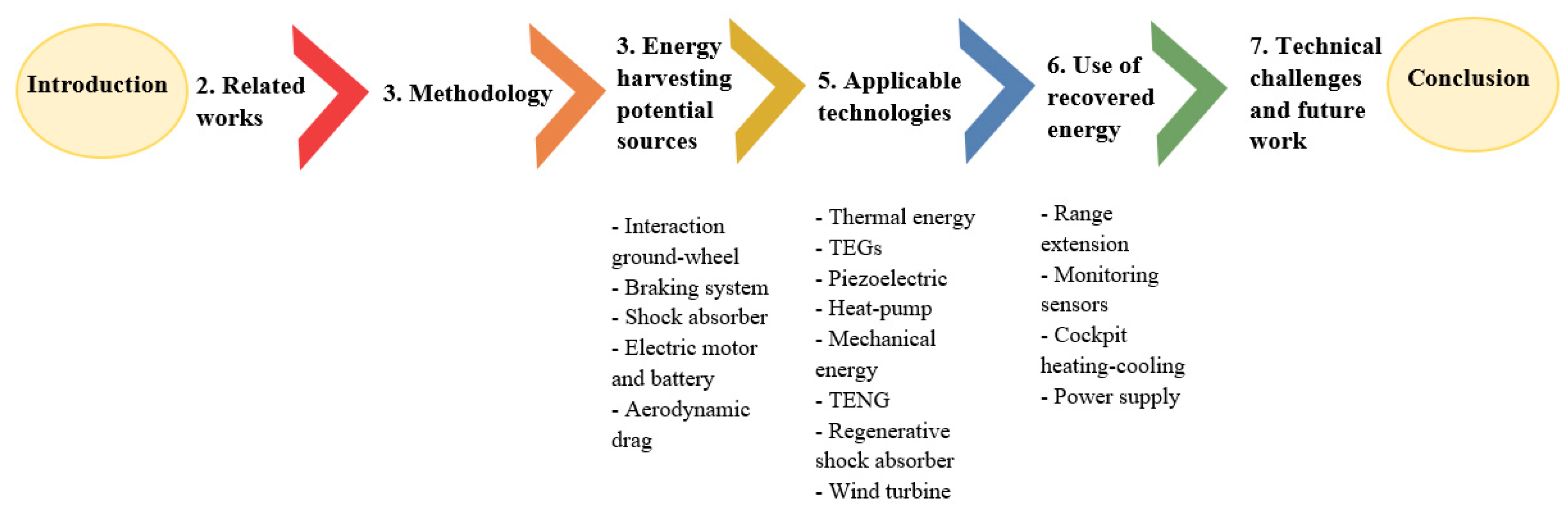
Figure 2.
Energy flow in electric vehicle.
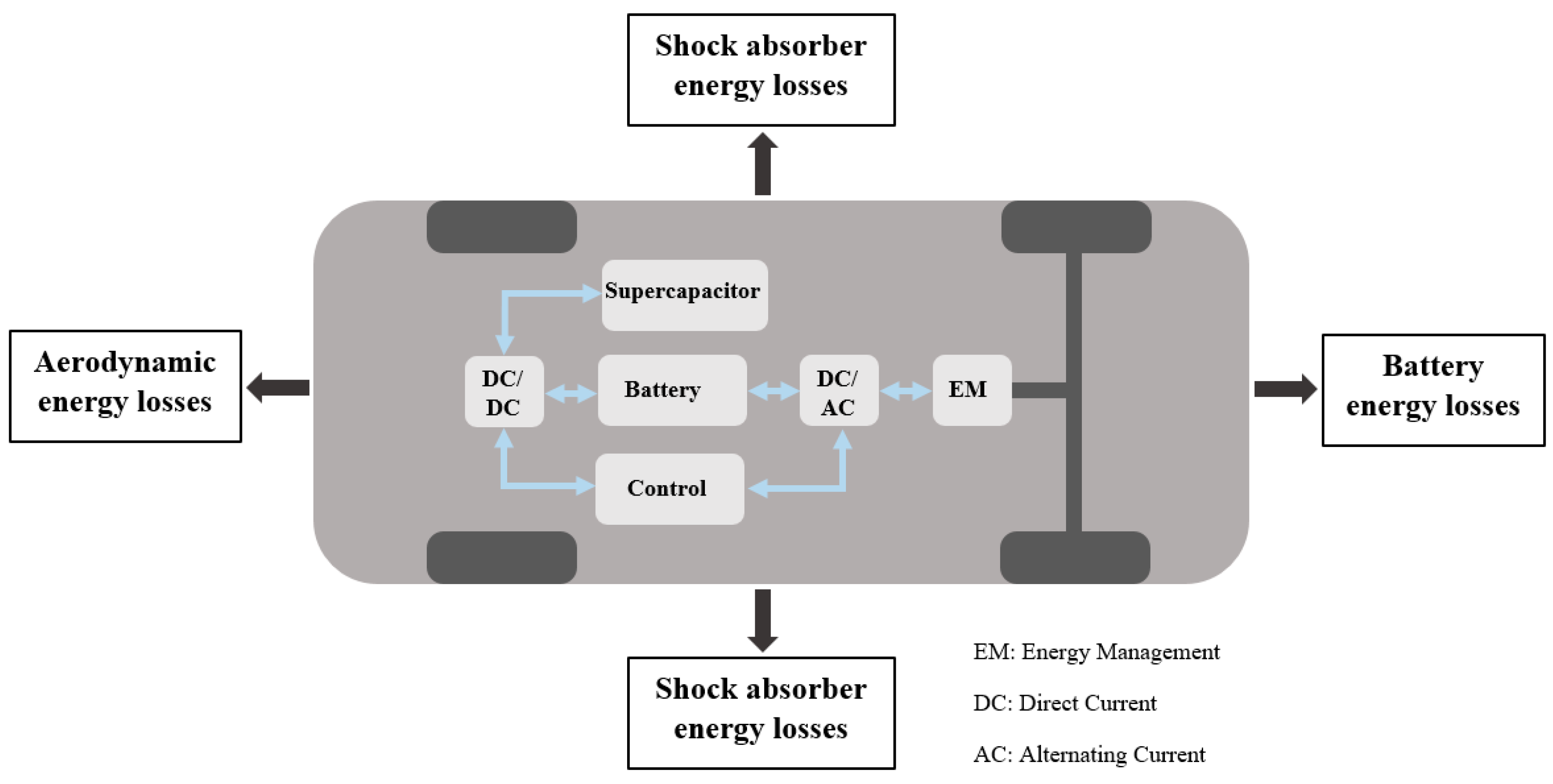
Figure 3.
Type of energy recoverable with processes of recovery.
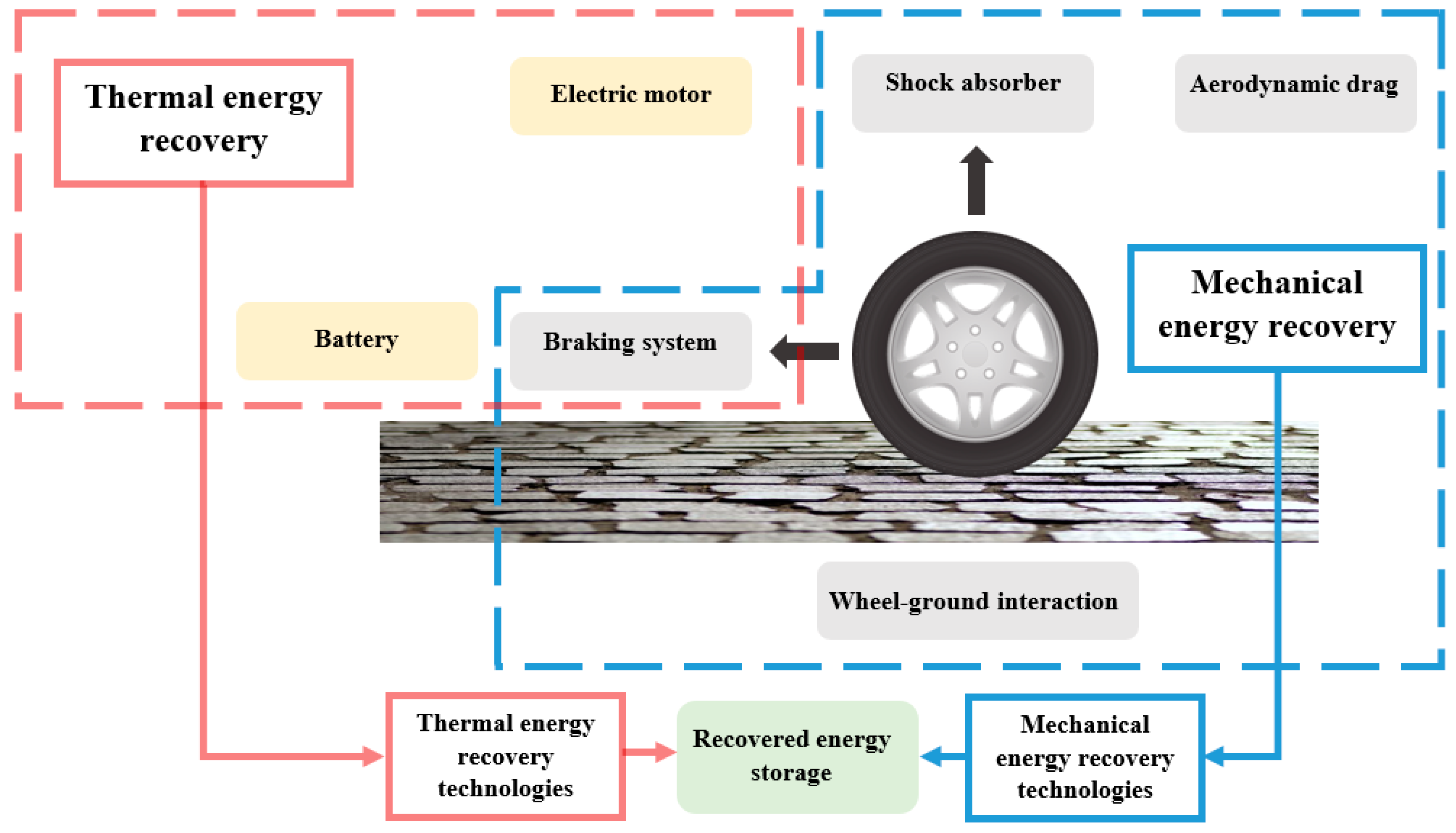
Figure 4.
Model of a thermoelectric generator module [74].
Figure 4.
Model of a thermoelectric generator module [74].
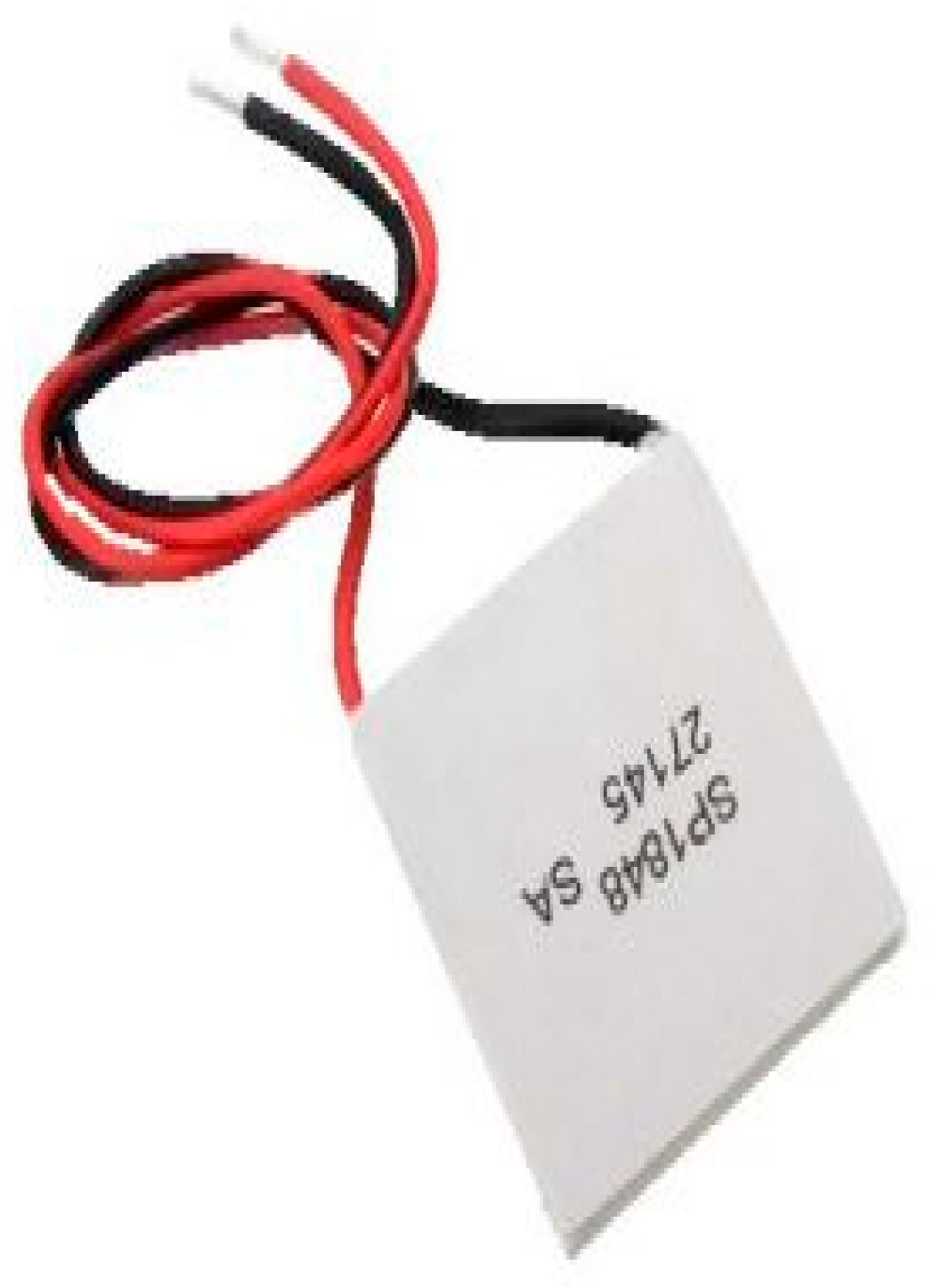
Figure 5.
Piezoelectric transducer KPSG100 [74].
Figure 5.
Piezoelectric transducer KPSG100 [74].
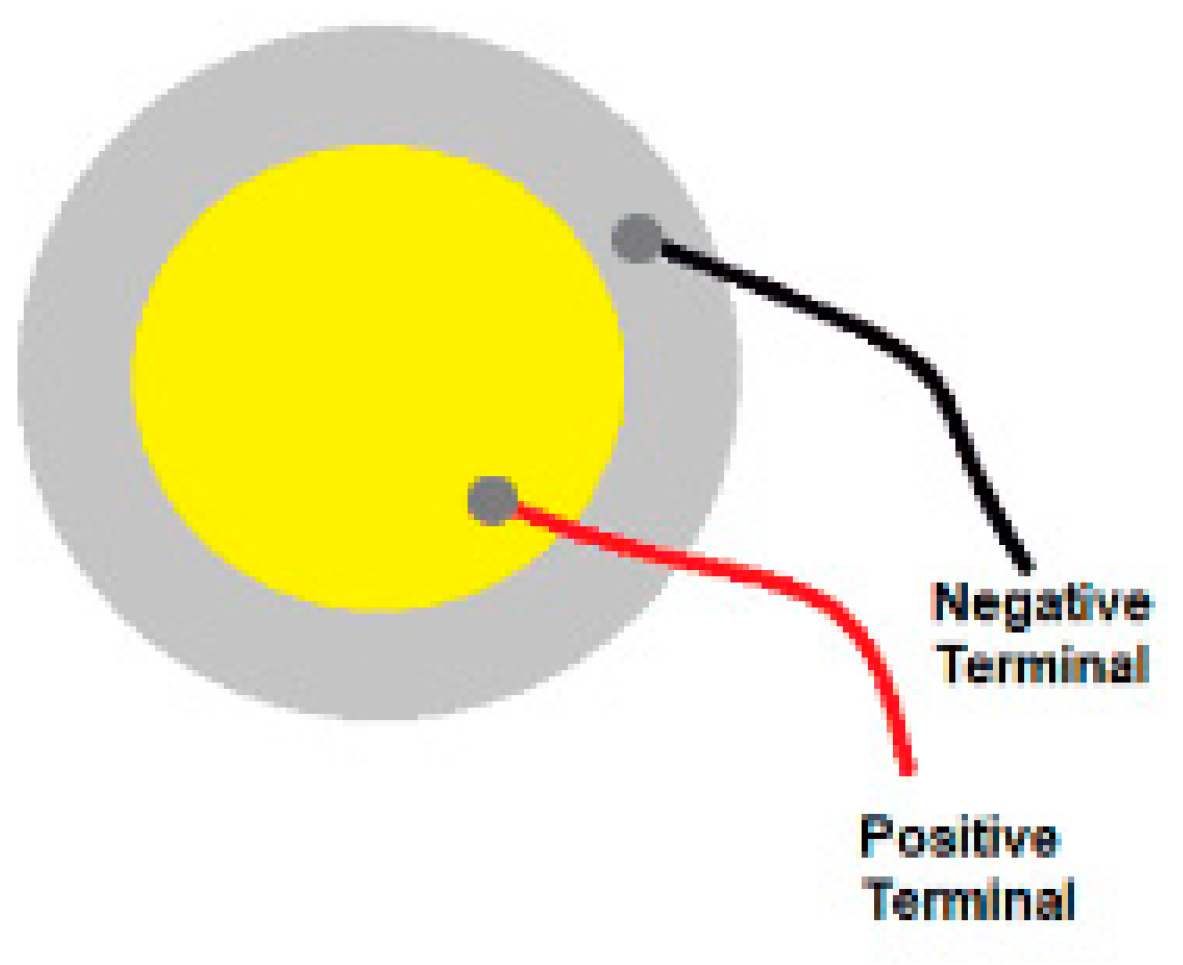
Figure 6.
TENG installed: (a) outside the tyres, (b) inside the tyres.
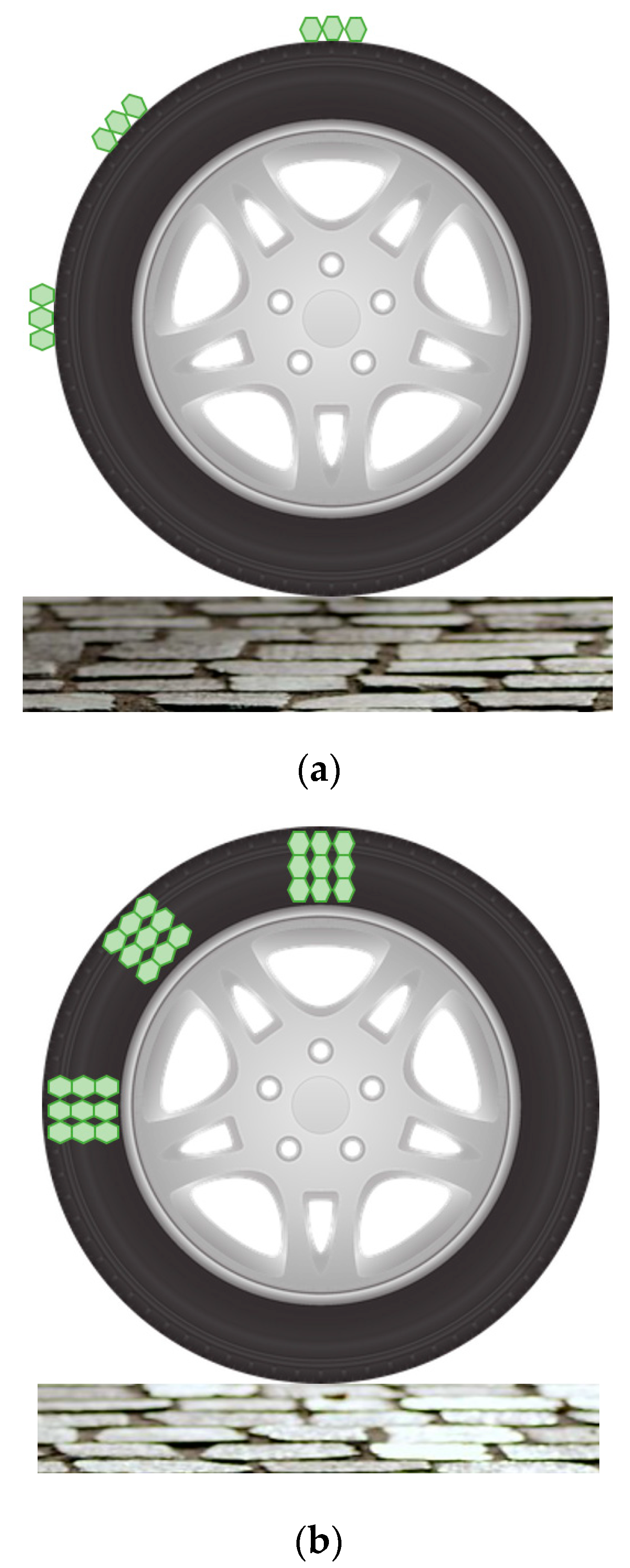
Figure 7.
The working principle of energy regenerative electromagnetic hydraulic shock absorber (Image adapted from [66]).
Figure 7.
The working principle of energy regenerative electromagnetic hydraulic shock absorber (Image adapted from [66]).
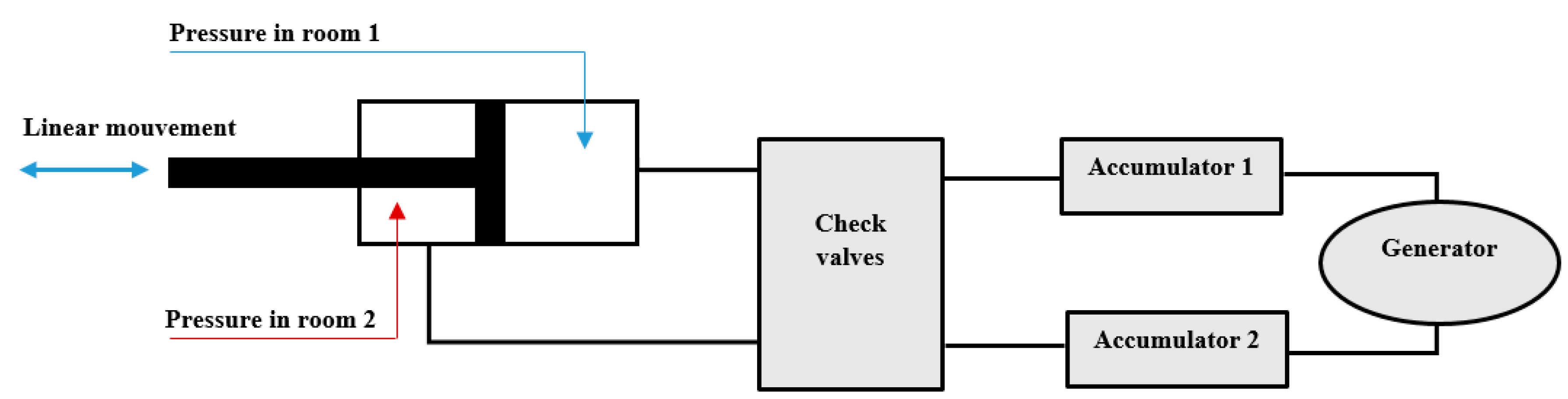
Figure 8.
Diagram of the wind energy recovery system in an air duct.
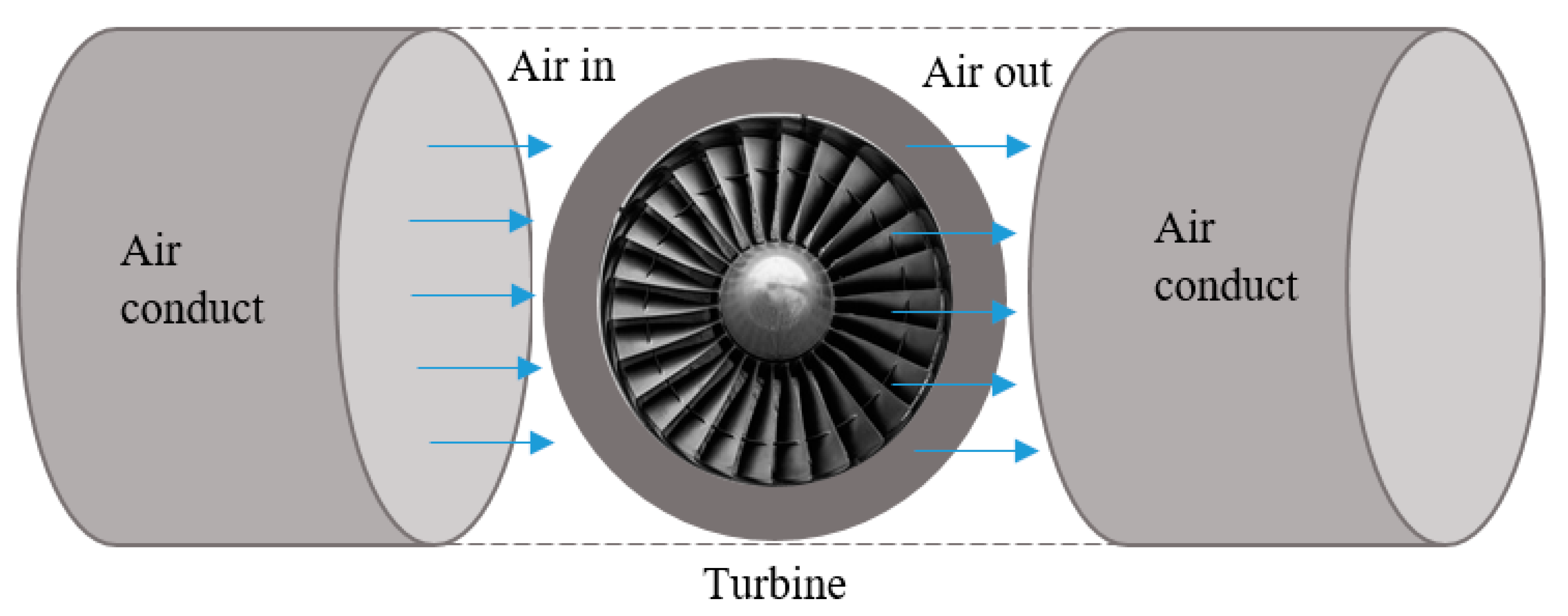
Figure 9.
Use of recovered energy.
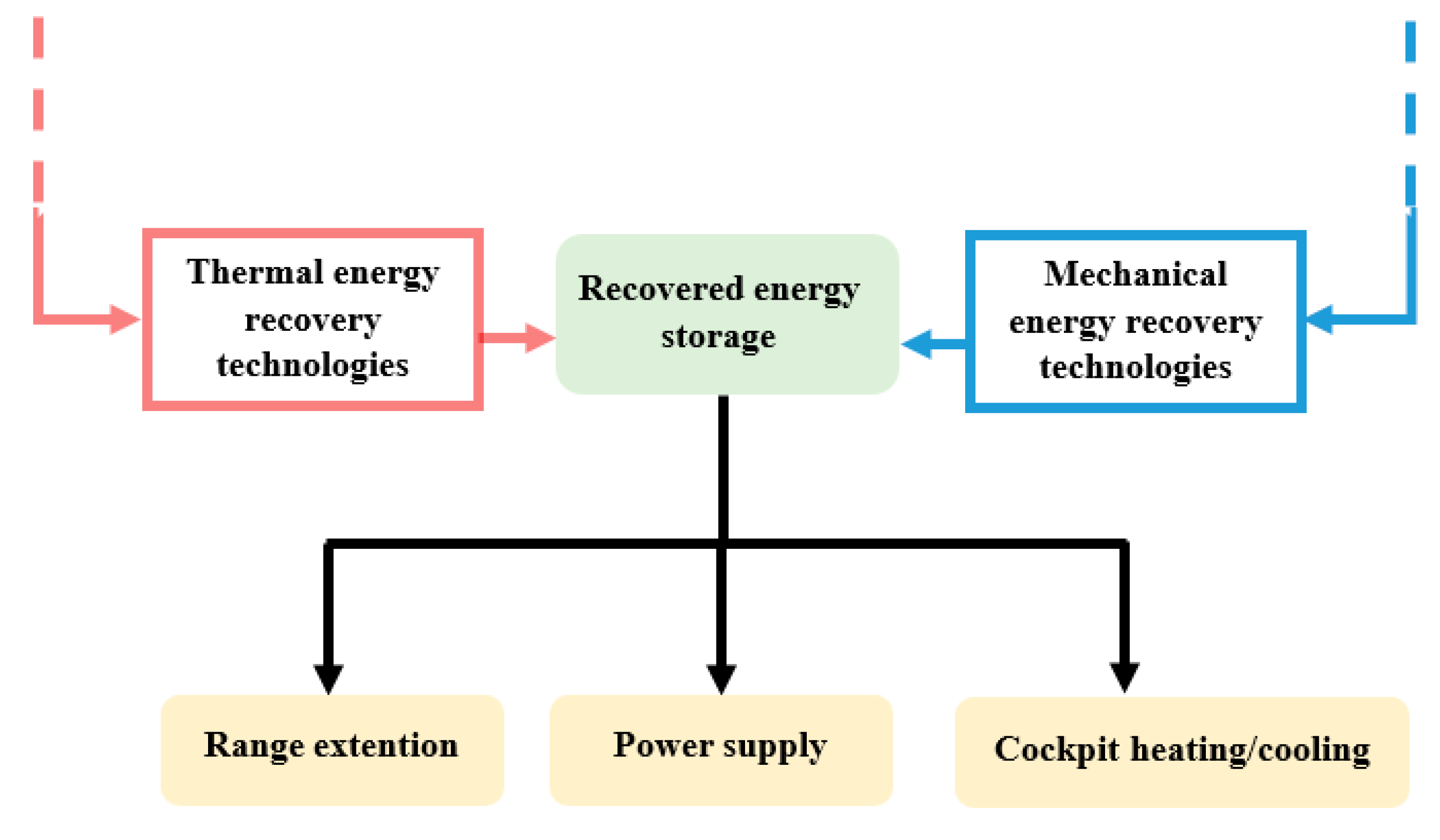

Table 1.
Classification of available energy sources according to a) energy source, b) value of available energy, c) type of energy, d) Experimental / simulation, and e) targeted application.
Table 1.
Classification of available energy sources according to a) energy source, b) value of available energy, c) type of energy, d) Experimental / simulation, and e) targeted application.
| References | Sources | Temperature or amount of energy available | Energy type | Expérimental/Simulation | Targeted application |
|---|---|---|---|---|---|
| [12] | Wheel-ground interaction | Vibration energy | Simulation | Energy harvesting | |
| [61] | Wheel-ground interaction | Vibration energy | Experimental | Energy harvesting | |
| [62] | Wheel-ground interaction | Vibration energy | Simulation and experimental | Energy harvesting | |
| [63], [64] | Aerodynamic drag | Vibration energy | Simulation | Energy harvesting | |
| [65] | Aerodynamic drag | Vibration energy | Simulation and experimental | Energy harvesting | |
| [66], [67], [68], [69] | Shock absorber | Vibration energy | Experimental | Energy harvesting | |
| [70] | Shock absorber | Vibration energy | Simulation | Energy harvesting | |
| [71], [72] | Braking system | [30 °C; 300 °C] | Thermal energy | Simulation | Energy harvesting |
| [26] | Braking system | Vibration energy | Experimental | Energy harvesting | |
| [29], [30] | Battery | < 40 °C | Thermal energy | Experimental | Energy management |
| [31], [36] | Battery | < 40 °C | Thermal energy | Simulation | Energy management |
| [37] | Battery | [40 °C; 60 °C] | Thermal energy | Simulation | Energy management and harvesting |
| [38] | Battery | [40 °C; 60 °C] | Thermal energy | Experimental | Energy management and harvesting |
| [45] | Battery | > 60 °C | Thermal energy | Simulation | Energy management and harvesting |
| [46] | Battery | > 60 °C | Thermal energy | Experimental | Energy management and harvesting |
| [47] | Electric motor | < 50 °C | Thermal energy | Simulation | Energy management and harvesting |
| [48] | Electric motor | [50 °C;100 °C] | Thermal energy | Simulation | Energy management |
| [49] | Electric motor | [50 °C; 100 °C] | Thermal energy | Experimental | Energy management |
| [55], [56] | Electric motor | > 100 °C | Thermal energy | Simulation | Energy management |
Table 2.
Classification of suitable technologies for each type of energy according to a) the energy source, b) the type of energy to be recovered, c) harvesting technologies, d) the efficiency measure, and e) Experimental / simulation.
Table 2.
Classification of suitable technologies for each type of energy according to a) the energy source, b) the type of energy to be recovered, c) harvesting technologies, d) the efficiency measure, and e) Experimental / simulation.
| References | Sources | Type of energy | Harvesting technologies | Efficiency measurement | Experimental/ Simulation |
|---|---|---|---|---|---|
| [12] | Ground-wheel interaction | Vibration | Triboelectric nanogenerator |
|
Simulation |
| [61] | Ground-wheel interaction | Vibration | Triboelectric nanogenerator |
|
Experimental |
| [62] | Ground-wheel interaction | Vibration | Triboelectric nanogenerator |
|
Simulation and experimental |
| [63], [64] | Aerodynamic drag | Vibration | Wind turbine |
|
Simulation |
| [65] | Aerodynamic drag | Vibration | Piezoelectric transducer |
|
Simulation and experimental |
| [69] | Shock absorber | Vibration | Piezoelectric transducer |
|
Simulation |
| [67] | Shock absorber | Vibration | Mechanical type shock absorber |
|
Experimental |
| [68] | Shock absorber | Vibration | Linear motor type shock absorber |
|
Experimental |
| [71] | Braking system | Thermal | Pyroelectric material PZT |
|
Simulation |
| [82] | Braking system | Electromagnetic | Faraday disc | Simulation | |
| [72] | Braking system | Thermal | Thermoelectric generator |
|
Simulation |
| [26] | Braking system | Vibration | Triboelectric nanogenerator |
|
Experimental |
Table 3.
Advantages and disadvantages of each recovery technology.
| Technology | Disadvantages | Advantages |
|---|---|---|
| TEG | Low output performance Conversion efficiency low |
Continuous energy recuperation Faster engine warm-up |
| Heat pump & PTC | Performance dependence on outdoor temperatures, and the need for additional heating in very cold weather | Rapid heating and Low energy consumption |
| Piezoelectric | Transducer array and high cost for high energy output | Use for both energy harvesting and sensors |
| Wind turbine | Installation in the vehicle & dependent on topography, weather, and environment. | No power source required & does not degrade air quality |
| Regenerative shock absorber | Easy to retrofit & no space or significant weight added | Best results for heavy and off-road vehicles |
| TENG | Low durability High frictional damage |
High efficiency at low frequency; Low cost, low density, light weight. |
Disclaimer/Publisher’s Note: The statements, opinions and data contained in all publications are solely those of the individual author(s) and contributor(s) and not of MDPI and/or the editor(s). MDPI and/or the editor(s) disclaim responsibility for any injury to people or property resulting from any ideas, methods, instructions or products referred to in the content. |
© 2023 by the authors. Licensee MDPI, Basel, Switzerland. This article is an open access article distributed under the terms and conditions of the Creative Commons Attribution (CC BY) license (http://creativecommons.org/licenses/by/4.0/).
Copyright: This open access article is published under a Creative Commons CC BY 4.0 license, which permit the free download, distribution, and reuse, provided that the author and preprint are cited in any reuse.


