
Submitted:
14 June 2024
Posted:
18 June 2024
You are already at the latest version
Abstract
Early in the middle of the 1800s. Up until about 1900, the automotive land speed record 1 was held by an electrical vehicle. Unfortunately, internal combustion engine vehicles did not do 2 well in the market due to their high cost, limited speed, and short range in the 20th century, which 3 resulted in a global fall in their use as private motor vehicles. Since there are no fuel emissions into 4 the environment, there are important uses for electrical vehicles, Electric cars, or EVs, have a closed 5 circuit, cheap operating costs, no maintenance requirements, and excellent performance. The goal 6 of this project is to assess the current state of electric vehicles and the issues surrounding the global 7 advancement of electric vehicle technology. Because of the changing climate.8
Keywords:
Internal Combustion Engine Vehicles
; Hybrid Electric Vehicles
; Battery Electric Vehicle
; Electric Vehicles
; Plug-in Electric Vehicles
; Plug-in Hybrid Electric Vehicles
; Electric Drive Vehicle
; Permanent Magnet Synchronous Motor
; State-of-Charge
; Battery Thermal Management System
; lithium-ion batteries
1. Introduction
Since the internal combustion engine was developed and used in wheeled automobiles towards the end of the 19th century, as illustrated in Figure 1 below, motorcars have been a source of pollution due to the emissions of greenhouse gases (GHGs) and carbon-based emissions into the environment. It is thought that driving an electrical vehicle can signifi-cantly lower greenhouse gas emissions. However, EVs’ limited driving range, high initial cost as compared to traditional fossil-fueled cars, and charging issues make them difficult to utilize. Growing concerns are raised by harmful emissions, transportation operations, and investment by various OEMs.In the next years, there will be more affordable EVs. The global adoption of electric vehicles can be aided by the following factors: advancements in technology, lower vehicle costs, incentives for buying vehicles, parking benefits, and well-developed public charging infrastructure. The entire share of EVs in the market is limited due to the extremely low manufacturing of EVs. Electric vehicles (EVs) can be classified as: i) electric two-wheelers (E2Ws), such as electric bicycles and scooters; ii) three-wheelers, such as E-rickshaws; and iii) four-wheelers, which include electric cars. The electric car manufacturer uses cutting-edge technology to create automobiles that are cheap. The only market-leading manufacturers of BEVs and HEVs [1].
1.1. Background
Diverse frameworks in disparate geographic places define EV. The framework in-cludes the following: household activity pattern, hybrid particle swarm optimization, ant colony optimization, driving pattern recognition, stochastic model, trip prediction model, probabilistic model, fuzzy based model, data mining model, forecasting model, distributed optimization, hybrid particle swarm optimization, and multi-objective classification of electric vehicles.
1.1.1. Types of Electric Vehicles
Numerous nations have seen economic revitalization, and the global EV industry is expanding at an impressive rate. Hybrid Electric Vehicles (HEV), Plug-in Hybrid Electric Vehicles (PHEV), and Battery Electric Vehicles (BEV) are the three categories into which the vehicles can be divided.
- a.
- An engine plus an electric motor make up a hybrid electric vehicle. Here, as seen in Figure 2 below, the engine and the energy produced during braking and deceleration are used to charge the batteries. Within them.
- b.
- As a result of combining an electric motor and a combustion engine as a power converter, these cars are currently known as hybrids. Hybrid electric vehicle technology is widely used because of its many benefits, including providing modern performance without the need for charging reliance on infrastructure. Through the concept of electrification of the powertrain, they can also significantly lower fuel consumption.various HEVa series hybrids, power-split hybrids, and parallel hybrids. The electric motor in a series hybrid is the only source of power for the wheel. Either the generator or the battery provides the motor with power. Here, an IC engine is used to charge the batteries so that an electric motor can run. The computer determines how much power comes from the engine/generator or the battery. The battery pack is energized by both the use of regenerative braking and the engine/generator [2]. Larger battery packs and massive motors paired with small internal combustion engines are typical features of the HEV series. They are supported by ultra-caps, which work to increase the battery’s efficiency and reduce loss.
The advantages of using a series hybrid drive train are
- i.
- The electric motor’s ideal torque-speed characteristic eliminates the need for several gears.
- i.
- The internal combustion engine and drive wheels can work within their specific, small optimum region thanks to a mechanical decoupling mechanism. Still.
A series hybrid drive train has some disadvantages.
- i.
- As a result of the energy being transferred twice—from mechanical to electrical and back again—the total efficiency will be lowered.
- ii.
- Because it is the only source of torque for a driven wheel, a large traction motor and two electric machines are needed in this situation. Due to their ample area for their big engine/generator combination, these vehicles are frequently employed military vehicles, buses, and commercial vehicles [3].Compared to a series HEV drivetrain, there is less flexibility in the mutual positioning of powertrain components and less energy waste when the engine of a parallel hybrid is directly connected to the wheels. In this case, the engine, the motor, or the combustion of the engine and motor provide the power.
- Plug-in hybrid electric vehicle
An electric motor and an internal combustion engine make up a plug-in hybrid electric vehicle (PHEV). as depicted in Figure 3 underneath. These cars run on gasoline and feature a sizable rechargeable battery that is fed energy to charge it. Plug-in hybrid electric vehicles offer the following advantages: Launched in China in 2015, the largest solar-powered charging station can charge up to 80 electric vehicles in a single day. Additionally, a pilot study was started in Shanghai to test the electric vehicle’s capacity to use the electric grid as a sustainable power source. In 2015, Japan also added more solar-powered photovoltaic electric charging points than gasoline stations. In 2018, the top five nations selling electric vehicles were China, European nations, Globally, a lot of research has been done on hybrid electric cars. Galus and Andersson (2008) published related research using an agent-based approach, whereas Waraich et al. (2013) employed micro-simulation for plug-in hybrid electric vehicles based on individual objectives and technical restrictions. Yang et al., 2007 [2] developed model-based non-linear observers (MBNOs) specifically for hybrid electric vehicles (HEVs) to estimate the torque of permanent magnet synchronous motors. Wu et al., 2016 [3] studied the stochastic framework for plug-in electric vehicle energy storage and smart home energy management. solar energy power source. For the best control, an 85 kWh battery pack from Tesla and a 24 kWh battery pack from Nissan Leaf provide approximately 493.6 percent and 175.89 percent less power. Ideal management. By constructing a feed-forward model to investigate the best energy management technique, Zou et al., 2013 [4] investigated the heavy-duty parallel hybrid electric vehicle in China and found that the dynamic programming algorithm increases the hybrid-electric truck’s mileage. A different study conducted in China by Hu et al., 2017 [5] found that convex programming with an optimal control scheme is incredibly accurate compared to dynamic programming, which operates at a speed of about 200 times faster. In essence, the 0.85usd daily cost is less than that of the hypothetical PHEV scenario. In a related work, Wu et al., 2016 [6] in Chengdu, China, optimized the distribution of electric power among utility grids using a stochastic dynamic programming problem. demand for electricity at home and plug-in electric car batteries. In a study carried out in China, Hu et al., 2016 [7] discovered that as fuel cell service life advances, capacity choice can be flexible and life cycle cost can be reduced. Their method outperformed the current one by 1.4 percent when they used a 10 Ah Oli battery. The life cycle cost of Li batteries, both large and small, is higher. According to Bashash et al., 2011 [8], a PHEV’s charge pattern is optimized by the multi-objective genetic algorithm. Not only does it reduce the need for gasoline and energy, but it also lessens the overall decline in battery health during a 24-hour realistic drive cycle. The ideal charge pattern’s Parfrontfont is is derived from this optimization’s outcomes. According to this Pareto typeface, the battery deterioration and energy cost must be kept to a minimum in order to provide rapid charging of PHEVs. The electrochemistry-biased model of anode-side SEI formation in lithium-ion batteries is used to reach the result. One of the main factors controlling the battery’s deterioration is SEI development. In a study on the effects of PHEV penetration into the power grid, Hadley and Tsvetkova, 2009 [9] discovered that the kind of generation utilized to recharge PHEVs and emissions is highly dependent on the location and time of recharge. According to driving patterns, Kelly et al., 2012 [10] examined the PHEV’s load profile charging and gasoline usage in the USDOT’s National Household Travel Survey. information. They used data from 17,000 electric cars to track the state of charge (SOC) of the batteries in order to calculate the quantity, quality, and timing of gasoline use for a fleet of plug-in hybrid electric vehicles. They also looked at the features of PHEVs in terms of charging time, location, battery size, and charging rate. [11] carried undertaken a similar analysis on the difficulties and potential legislative solutions for integrating PHEVs into the electrical grid.
- b. Battery electric vehicle
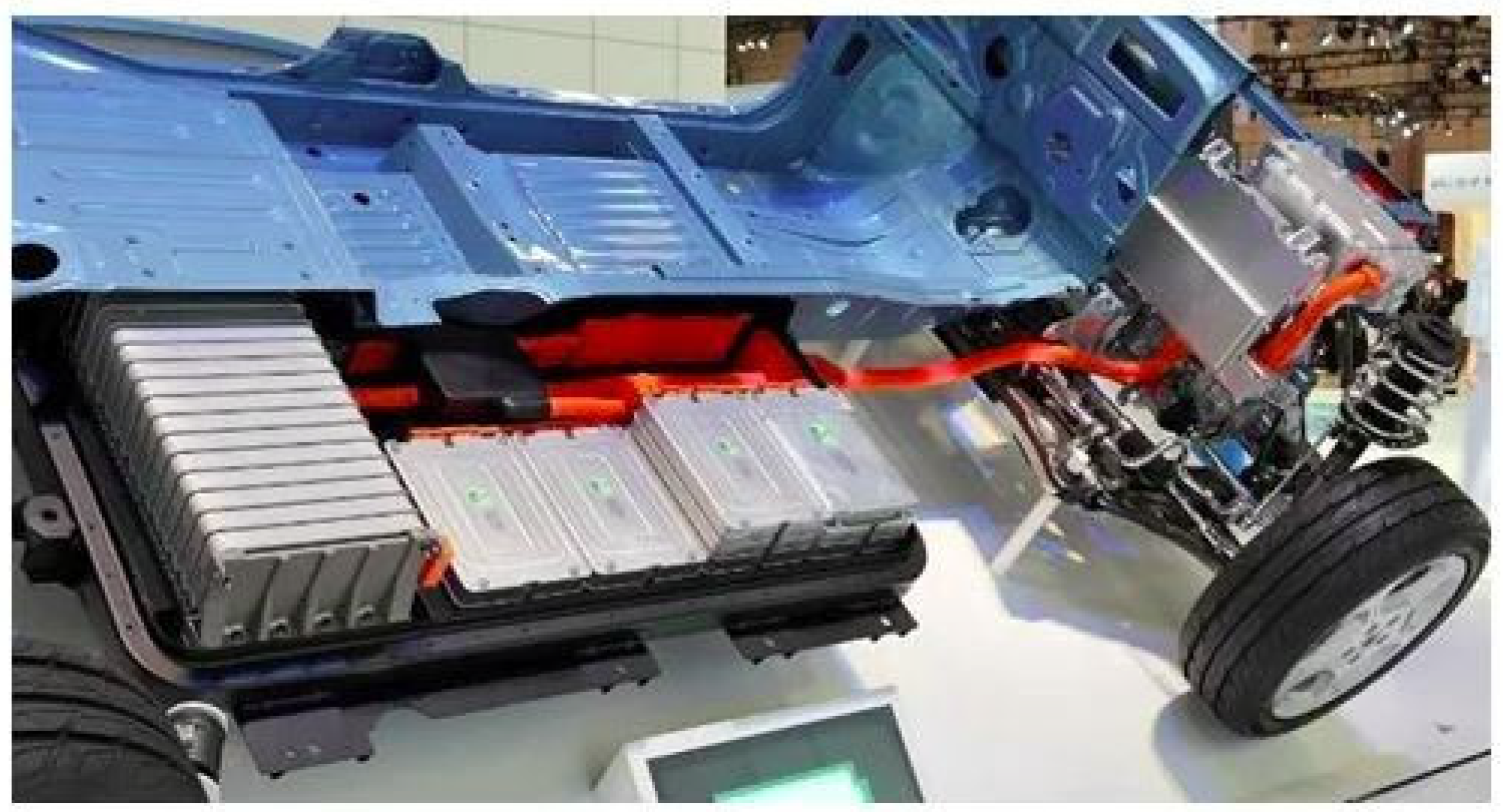
The battery-electric car, commonly known as the Bea V, is an all electric car. Figure 4 below illustrates how it works. Instead of a gasoline engine, it is powered by large capacity rechargeable battery packs that can be charged externally. The internal electronics and electric motor of a battery-electric vehicle are powered by chemical energy that is stored in rechargeable batteries. In addition to lowering carbon dioxide emissions from the fleet of light-duty cars, BEVs could lessen reliance on fossil fuel-powered automobiles (Andwari et al., 2017) [12]. According to market estimates, BEVs accounted for over 70 percent of commerce in 2017 and are predicted to continue to expand in the years to come. Even though BEVs outsold PHEVs in several countries until 2014, PHEV sales have increased significantly over the previous two years to nearly equal BEV sales. Lead-acid batteries, nickel-metal hydride batteries, and lithium-ion batteries are the three types of batteries that are now available on the market. Similar categories of literature examine the comparative approach to estimation. The two-step technique developed by Andy et al., 2010 [20] divides road traffic and demands into a hierarchy of clusters organically and automatically. Then, stations are assigned to the demand cluster through optimization using linear programming. This work is thought to be helpful for establishing a refund fuelling mechanism for BEVs in an urbanized area and for city planning purposes. A comparative analysis of the estimating technique and various methodologies utilized in hybrid and battery electric vehicles was conducted by Cuma Koroglu, 2015 [21]. BEVs, or battery electric vehicles, meet two requirements. For example, a battery powers an electric motor in place of the ICEV and the tank, and when the battery is not in use, the vehicle is plugged into the charging port [22,23,24].The lead-acid battery’s SOC can be estimated using the method described in [25,26,27,28]. look at the conventional techniques such open circuit voltage and ampere-hour (Ah) counting. The Fuzzlogic-based approach was utilized to estimate the state of charge (SOC) of sealed lead-acid batteries. Robotat Salmasi, 2007 [29] used the locally linear model tree (LOLIMOT) approach, a type of neuro-fuzzy network, to determine the SOC online. Lithium-ion batteries are taken into consideration by hybrid and electric cars because of their high power, extended lifespan, and energy [30,31].An electric vehicle (EV) can be classified according to its technological attributes, such as its driving range, battery charging time, and maximum load capacity. The consumer is upset by two crucial features: the charge time and the driving range. The capacity of the battery and the types of batteries used are the primary factors that affect charging time. With each charge, the driving range might range from 20 to 400 kilometers [32]. Similar to this, some EVs have a top speed of 160 km/h and a charging time of less than 8, albeit some have higher top speeds. Tanzania is one of the emerging nations where the hybrid electric vehicle has been a growing interest in recent days due to the significant improvement in EVs. In future, a lot of innovations are expected to change the EV scenario as EV manufacturers look forward to reducing the production cost.
1.2. Hybridisation Factor
The cars can also be categorized based on how hybridized they are. Mileage, some-times expressed as miles per gallon (MPG) or miles per gallon gasoline equivalent (MPGe), is improved via hybridization of automobiles. Plug-in hybrid electric vehicles (PHEVs) can use MPGe since 33.7 kWh of electrical energy is equal to one gallon of gasoline [33].The ratio of the total power from the electric motor to the overall power is known as the hybridization factor for electric or hybrid vehicles.where PEM stands for total electrical power motor and PIEC is the total power of an internal combustion engine. HF is 0 for a conventional car.
2. Objective of the Research
2.1. To Identify the Existing Situation of Electric Electrical Vehicles
Due to the low power of a single transaction, electric vehicles do not have any trans-actions in the electricity market [34]. Several writers [35,36,37,38,39,40] examined an exogenous current practice for the estimation of current that was predetermined for shifting scenarios. It is important to have flexible load and intelligent charging procedures in order to fully utilize an electric vehicle. According to a different research by [41], EV users banded together to inform the aggregator about timing and energy requirements.
While the battery level satisfies the energy need, the timeliness requirement establishes the deadline for finishing a charging procedure. According to a related study by [42], a decentralized framework and a central.The stochastic simulation approach of an electric vehicle was examined by Brady and Mahony, 2016 [43] in order to generate a dynamic trip itinerary and charging profile for the purpose of EV propulsion in the real world. They came to the conclusion that both the accuracy of the parking time distribution and the model as a whole would rise with greater parking time distribution circumstances. After researching a few electric vehicle owners, Morrissey et al., 2016 [44] found that they prefer to charge their cars at home in the evening, when demand for power is at its highest. In a single, large-scale Irish energy market, Foley et al., 2013 [45] examined the effects of EV charging under peak and off-peak charging scenarios. They discovered that peak charging is more harmful than off-peak charging.Doucette and Mc Culloch, 2011 [46] conducted a study on the BEV and the PHEV to determine their carbon dioxide emission level and compared their results with CO2 emission from Ford Focus. Steinhilber et al., 2013 [47] studied the essential tools and strategies for introducing new technology and innovation by exploring key barriers to an EV in two countries. Yu et al., 2012 [48] introduced a driving pattern recognition technique for evaluating the driving range of the EVs based on the trip segment partitioning algorithm. Hayes et al., 2011 [49] investigated different driving conditions and topographies by building up a vehicle model. Salah et al., 2015 [50] studied the EVs charging impact on Swiss distribution substation and found that higher penetration level and dynamic tariff increases the risk of overloads at some locations. These parameters are then compared with each other by their range type. The impact of various classifications of charging methodology of electric vehicles on the national grid and the storage utilization has been presented by [51,52,53,54,55] studied the model-based non-linear observers for estimating the torque of permanent magnet synchronous motor for hybrid electric vehicles. The maximum transmissible torque method is determined by [56,57] for increasing the antiskid execution of the torque control framework and to improve the stability of the Electric vehicles. Lu et al., 2013 [58] made a review of key issues for Li-ion battery management in an Electric vehicle. The issue such as the voltage of the battery cell, battery state estimation (battery SOC, SOH, DOD, and SOF), battery equalization, and uniformity and fault analysis of the battery can provide motivation for the research and design of the battery management system. Reviews on optimal manage- ment strategies, energy management systems, and the declining approaches for electric vehicles were studied by [59,60,61]. EVs can also interact with the grid via charging and discharging. Different modes of interfacing with the grid, are Grid-to-Vehicle (G2V), Vehicle to Grid (V2G), and Vehicle to Building (V2B). While the car discharges power to the grid in V2G, the EV receives grid power in G2V. The capacity to regulate the two-way flow of electrical energy between a car and an electric grid at regular intervals is a feature of vehicle-to-grid technology (V2G). The vehicle to grid system refers to the integration of electric vehicles into the electrical grid. Here, energy enters and exits the car, transforming it into a transportable battery bank. Energy is transferred from the battery to a building in V2B.As the EV market grows, the adoption of EVs should be the main focus, rather than only the intervention. It’s also critical to take into account the discrepancy between intended and actual behavior. The main research gap in the current study is consumer awareness and abilities for assessing and comparing the cost and financial value of EVs. Policymakers and marketing experts may find it useful to understand the financial benefit and cost of electric vehicles (EVs) as a result of future research on customer education.
2.2. The Problem Concerning the Rise of Electric Vehicle Technology worldwide
- Vehicle servicing
In order to take proper care of the electric car, a trained technician should be available to repair, maintain, and find troubleshoot the electric vehicle. They must be able to apply their skills to rectify the problem as quickly as possible.
- High capital cost
The battery packs of an electric vehicle are expensive, and also it needs replacement more than once in its lifetime. Gas- powered cars are cheap when compared with electric vehicles.
- Consumer perception.
In order to draw in new business and keep hold of current clientele, consumer impres-sion is essential. Even if the selection of electric cars on the market is expanding and is predicted to do so for some time, purchasing an electric car is still not as easy as it once was. Thus, customers should be aware of what the business is offering them through social media, advertising, or other channels. Studies reveal that the adoption of electric vehicles can be directly impacted by a lack of understanding of government programs, the financial advantages, and car technology.
- Raw materials for batteries
Lithium, nickel, phosphate, manganese, graphite, and cobalt are among the rare earth elements used as raw materials in EV batteries. The materials aluminum, copper, and steel are needed for an internal combustion engine. Palladium, rhodium, and platinum are needed by combustion car catalyzers in order to filter harmful gasses. These are all rare materials, and there might not be enough of them to be used in the manufacturing of batteries. The lithium-ion batteries alone use five million tons of nickel annually, which might eventually result in ten to twenty times as much use of cobalt and lithium.
- Battery lifespan/efficiency
The fuel tank and gasoline engine of a conventional car are typically replaced with electric motors, batteries, chargers, and controllers to make an electric car. Since EV batteries are made to last a long period, they eventually wear out. For their batteries, the majority of manufacturers currently provide warranties of eight years or 100,000 miles.
2.3. Driving Range of Electric Vehicle
A driving range is recognized as the main barrier of Electric vehicle typically because EVs has a smaller range as compared with the equivalent ICE vehicle. The distance an electric vehicle can travel on a full charge or full tank is considered a significant drawback to uptake the EV in the global market. Most of the BEVs give less than 250 kilometers of driving range between recharges. Nevertheless, 400 km is an option for some of the most recent models [68]. Because internal combustion engines that run on liquid gasoline are now available, plug-in hybrid electric vehicles (PHEVs) may travel 500 km or more. The choice to take a long-distance trip might not be available to the driver, therefore they must carefully plan their route. Because of this, the driving range’s size acts as a barrier. Charging time Charging time is closely related to the issue of driving range. With a slow charger, the EV can take up to 8 h for a full charge from the empty state using a 7 kW charging point. The charging time mainly depends upon the size of the battery. Bigger the size of car batteries, the longer the time it takes to recharge the battery from empty to full state. Also, the charging time of the battery directly depends on the charging rate of the charge point. The higher the charging price of the charge point, the lower will be the time taken by the battery to get fully charged. In the current scenario, rapid chargers are used to charge the vehicle in a faster way reducing the time required. The commercially available electric cars are compatibles with charge points having a higher maximum charge rate than they can handle. This indicates that the battery can be charged at a maximum rate it can handle without any fault. However, the charging rate of the battery with a rapid charger reduces with a decrease in temperature or at cold temperature. The EV chargers are categorized in accordance with the charging speed at which their battery gets recharged. Three basic methods of charging electric vehicles exist: DC fast, Level 1, and Level 2. Level 1 charging makes use of an integrated converter to convert AC to DC, enabling the use of a regular 120 V plug. The EV can be charged in 8 hours using 120 V outlets, giving it a range of about 120–130 kilometers. In essence, level 1 charging takes place at home or at the office. Usually, 240 V outlets are available for charging in public spaces or workplaces, where level 2 chargers are installed. The battery may be charged in 4 hours for a 120–130 km range. When using DC fast charging, the charging station with the fastest fast charging setup is where the AC to DC conversion takes place way. It can charge the battery in 30 min for a range of 145 km.
- Safety requirements of electric vehicle
The Electric vehicle must meet the safety standard as specified by state or local regula-tion. The batteries should also meet the testing standards that are subject to conditions like overcharge, temperature, short circuit, fire collision, vibration, humidity, and water immersion. The design of these vehicles should be such that they should have safety features like detecting a collision, short circuits, and should be insulated from high voltage lines. The government of India intends to fund the nation’s EV charging infrastructure in an effort to hasten the electric vehicle revolution in that nation. Re-cently, the ministry of electricity made it clear that an EV charging station does not need a license to operate in India, which might improve the infrastructure of EV charg-ing stations around the country. In addition to offering incentives and exemptions to EV consumers and lowering the relevant rate of Goods and Services Tax (GST) on Li-ion batteries, the government should also offer incentives to transition the public transportation industry to electric cars.
- Charging infrastructure
More charging infrastructure is required for a larger number of electric vehicles and hence, higher demands for electrical energy. Due to the lack of existing charging infrastructure,the sale of the electric vehicle is low. From an engineering perspective, EV makers should recognize the value of charging batteries so that discharge batteries can be swapped out with fully charged ones. The charging station can schedule battery charging for off-peak hours at a discounted electricity rate. Since owners would need to charge their electric vehicle at home before leaving for the day, there ought to be a way to set up a charging station for this car. When there is no infrastructure for charging at home, people would much rather charge their cars at work or at an appropriate station, which may require them to stop for up to three hours. Like home and work, this kind of setting is perfect.option. It may also be noted that for fast charging of 30 min or less, the EV must be capable of taking high current and voltage or both. This will not only increase the cost of the EV but also have a negative impact on the life of the battery. So, a combination of slow and fast chargers could be the best option for EVs.
- Battery recycling
Although they are typically designed to last only as long as the vehicle, electric ve-hicle batteries eventually run out of power. When a battery needs to be replaced after its warranty has expired, replacing the old battery with a new one increases costs. However, manufacturers do not provide accurate information on replacement battery pricing. Batteries’ chemical components, such as lithium, nickel, cobalt, man-ganese, and titanium, not only make the supply chain more economical but also pose environmental risks when the battery pieces are scrapped.
3. Research Scope
The primary goals of the research are to determine the current state of electric vehicles, address issues related to the global advancement of electric vehicle technology, and develop a suitable solution to the problems associated with operating battery-powered vehicles.
4. Methodology
We have researched the several kinds of electric cars that are now on the road world-wide. In addition, we now understand the obstacles facing EVs in the global market. In the proposed approach, many optimization techniques are also discussed. The goal of this research is to determine the current state of electric vehicles and the issues surrounding the development of electric vehicle technology, as was indicated in the Introduction section. This idea leads to the investigation of a fictitious situation in which, by 2040, all cars on the planet would have been replaced by plug-in hybrid electric vehicles (PHEVs) and pure electric vehicles (PEVs).
5. Result and Discussion
5.1. Less Petroleum Use
A PHEV uses between 30 and 60 percent less oil than a traditional car. Plug-in hybrids lessen reliance on oil since most electricity is generated domestically. Greenhouse gas emission A PHEV often produces fewer greenhouse gas emissions than a traditional car. However, the method used to generate electricity affects how much gas is released. For instance, power plants using hydropower and nuclear energy are cleaner than those using coal.
5.2. Recharging Takes Time
Recharging can take one to four hours when using a 240 V home or public charger, however it can take many hours when using a 120 V domestic outlet. An item can be quickly charged to up to 80 percent of its capacity in about 30 minutes. Still, these vehicles don’t need to be plugged in. They only run on gasoline, but they won’t operate as effectively or for as long without a charge. For combined city-highway travel, the Environmental Protection Agency provides a fuel efficiency estimate that accounts for the usage of a plug that can run on gasoline, electricity, or a combination of the two.
6. Conclusions
Though the components of batteries used in electric vehicles are taken from brine or mines in the desert, these vehicles do not typically affect the environment. The mining industry is not significantly impacted by this extraction. Since the use of EVs is expected to rise in the near future, the development of efficient batteries is given top importance. Better BTMS is challenged by the heat degradation of the batteries, which impacts the EV’s range. Controlling the battery cell’s temperature in order to prolong its life is the primary goal of the BTMS. When it comes to energy storage in electric vehicles, Li-ion batteries are typically the favored choice. Numerous issues exist, including low efficiency at both high and low temperatures and a loss in electrode life at higher temperature the direct effect on the performance, reliability, cost, and protection of the vehicle, and safety issues related to thermal runaway in lithium-ion batteries. For an electric car to be successful over the long run, one of the most important pieces of technology is an efficient thermal battery management system. The ideal operating temperatures for Li-ion batteries are typically between 25 and 40 degrees Celsius. The life of these batteries is shortened when their temperature rises above 50 °C.
Author Contributions
Conceptualization, A.M., and A.M.; data curation, A.M.; formal analysis, A.M.; methodology, A.M. ; software, A.M.; supervision, A.M.; validation, A.M.; visualization, A.M.; writing—original draft, A.M.,; writing—review and editing, A.M., the author have read and agreed to the published version of the manuscript.
Funding
This research received no external funding.
Informed Consent Statement
Informed consent was obtained from all subjects involved in the study.
Data Availability Statement
This article is about all types of electric transportation vehicles.This data can be found here: at https://en.wikipedia.org/wiki/Electric_vehicle_industryand Electric car use by country.This data can be found here: at https://en.wikipedia.org/wiki/Electric_car_use_by_country and climate and energy.This data can be found here: at https://www.ucsusa.org/ and Electric vehicles.This data can be found here: at https://nptel.ac.in/ and climate and energy. This data can be found here: at https://www.ucsusa.org/ and Electric vehicles market.This data can be found here: at www.indiaenvironmentportal.org.in..
Acknowledgments
First, I sincerely express my sincere thankfulness to ALMIGHTY GOD, who provides the wisdom, power, protection, and spiritual guidance necessary to complete this effort. Thanks also to my mother for her financial and emotional assistance.I also want to thank SRM University,AP Library for providing me with a resource that allowed me to get firsthand experience with a plug-in hybrid electric car.
Conflicts of Interest
The author declare that there is no known competing financial interests or personal relationships that could have appeared to influence the work reported in this paper.
Abbreviations
The following abbreviations are used in this manuscript:
| ICEV | Internal Combustion Engine Vehicles |
| HEV | Hybrid Electric Vehicles |
| BEV | Battery Electric Vehicle |
| AEV | All-Electric Vehicles |
| EVs | Electric Vehicles |
| PEVs | Plug-in Electric Vehicles |
| PHEVs | Plug-in Hybrid Electric Vehicles |
| FY | Fiscal Year |
| OEM | Original Equipment Manufacturer |
| MBNOs | Model-Based Non-Linear Observers |
| PMSM | Permanent Magnet Synchronous Motor |
| MTTE | Maximum Transmissible Torque Estimation |
| V2G | Vehicle-to-Grid |
| UBIS | User–battery interaction style |
| EDV | Electric Drive Vehicle |
| SOC | State-of-Charge |
| SOF | State-of-Function |
| SOH | State-of-Health |
| DOD | Depth of Discharge |
| NiMh | Nickel Metal Hydride Battery |
| LOLIMOT | Locally Linear Model Tree |
| CP | Convex Programming |
| DP | Dynamic Programming |
| SDP | Stochastic Dynamic Programming |
| TWDPNN | Time weighted dot product based nearest neighbor |
| MPSF | Modified Pattern Sequence Forecasting |
| SVR | Support Vector Regression |
| RF | Random Forest |
| BTMS | Battery Thermal Management System |
| HF | Hybridisation Factor |
References
- M.D. Galus, G. Andersson Demand management of grid connected plug-in hybrid electric vehicles (PHEV) IEEE energy, 2030 (2008), pp. 1–8,.
- R.A. Waraich, M.D. Galus, C. Dobler, M. Balmer, G. Andersson, K.W. Axhausen Plug-in hybrid electric vehicles and smart grids: investigations based on a microsimulation Transp. Res. Part C: Emerg. Technol., 28 (2013), pp. 74–86,.
- X. Yu, T. Shen, G. Li, K. Hikiri Regenerative braking torque estimation and control approaches for a hybrid electric truck Proceedings of the 2010 American Control Conference, IEEE (2010), pp. 5832–5837.
- X. Yu, T. Shen, G. Li, K. Hikiri Model-based drive shaft torque estimation and control of a hybrid electric vehicle in energy regeneration mode Proceedings of the 2009 ICCAS-SICE, IEEE (2009), pp. 3543–3548.
- Y. Zou, H. Shi-jie, L. Dong-ge, G. Wei, X.S. Hu Optimal energy control strategy design for a hybrid electric vehicle Discr. Dyn. Natl. Soc., 2013 (2013), pp. 1–2.
- X.Hu,C.M.Martiez, Y. YangCharging, power management, and battery degradation mitigation in plug-in hybrid electric vehicles: a unified cost-optimal approach Mech. Syst. Signal Process, 87 (2017), pp. 4–16.
- X. Wu, X. Hu, X. Yin, S. MouraStochastic Optimal energy management of Smart home with PEV energy storage IEEE Trans. Smart Grid, 9 (3) (2016), pp. 2065–2075.
- Z. Hu, J. Li, L. Xu, Z. Song, C. Fang, M. Ouyang, et al. Multi-objective energy management optimization and parameter sizing for proton exchange membrane hybrid fuel cell vehicles Energy Convers. Manag., 129 (2016), pp. 108–121.
- S. Bashash, S.J. Moura, J.C. Forman, H.K. Fathy Plug-in hybrid electric vehicle charge pattern optimization for energy cost and battery longevity J. Power Sources, 196 (1) (2011), pp. 541–549.
- S.W. Hadley, A.A. Tsvetkova Potential impacts of plug-in hybrid electric vehicles on regional power generation Electr. J., 22 (10) (2009), pp. 56–68.
- J.C. Kelly, J.S. MacDonald, G.A. Keoleian Time-dependent plug-in hybrid electric vehicle charging based on national driving patterns and demographics Appl. Energy, 94 (2012), pp. 395–405.
- A.K. Srivastava, B. Annabathina, S. Kamalasadan The challenges and policy options for integrating plug-in hybrid electric vehicle into the electric grid Electr. J., 23 (3) (2010), pp. 83–91.
- A.M. Andwari, A. Pesiridis, S. Rajoo, R. Martinez-Botas, V. Esfahanian A review of battery electric vehicle technology and readiness levels Renew. Sustain. Energy Rev., 78 (2017), pp. 414–430.
- N.C. Wang, Y. Qin Research on state of charge estimation of batteries used in electric vehicle Proceedings of the Asia-Pac Power Energy Eng Conference (2011).
- N. Watrin, B. Blunier, A. Miraoui Review of adaptive systems for lithium batteries state-charge and state-of-health estimation Proceedings of the 2012 IEEE Transportation Electrification Conference and Expo (ITEC), IEEE (2012),.
- W.Y. Chang The state of charge estimating methods for battery: a review ISRN Appl. Math., 2013 (2013).
- J. Zhang, J. Lee A review on prognostics and health monitoring of Li-ion battery J. Power Sources, 196 (15) (2011), pp. 6007–6014.
- S.M. Rezvanizaniani, Z. Liu, Y. Chen, J. Lee Review and recent advances in battery health monitoring and prognostics technologies for electric vehicle (EV) safety and mobilityJ. Power Sources, 256 (2014), pp. 110–124.
- T. Wang, M.J.J. Martinez, O. Sename Hinf observer-based battery fault estimation for HEV application Eng. Powertrain Control Simul. Model., 3 (2012), pp. 206–212.
- H.G. Park, Y.J. Kwon, S.J. Hwang, H.D. Lee, T.S. Kwon A study for the estimation of temperature and thermal life of traction motor for commercial HEV Proceedings of the 2012 IEEE Vehicle Power and Propulsion Conference, IEEE (2012), pp. 160–163.
- Ip, S. Fong, E. Liu Optimization for allocating BEV recharging stations in urban areas by using hierarchical clustering Proceedings of the 2010 6th International conference on advanced information management and service (IMS), IEEE (2010), pp. 460–465.
- M.U. Cuma, T. Koroglu A comprehensive review on estimation strategies used in hybrid and battery electric vehicles Renew. Sustain. Energy Rev., 42(2015), pp. 517–531.
- S.F. Tie, C.W. Tan A review of energy sources and energy management system in electric vehicles Renew. Sustain. Energy Rev., 20 (2013), pp. 82–102.
- M. Peng, L. Liu, C. Jiang A review on the economic dispatch and risk management of the large- scale plug-in electric vehicles (PHEVs)-penetrated power systems Renew. Sustain Energy Rev., 16 (2012), pp. 1508–1515, 10.1016/j.rser.2011.12.009.
- S. Amjad, S. Neelakrishnan, R. Rudramoorthy Review of design considerations and technological challenges for successful development and deployment of plug-in hybrid electric vehicles Renew. Sustain Energy Rev., 14 (2010), pp. 1104–1110. [CrossRef]
- S. Sato, A. Kawamura A new estimation method of state of charge using terminal voltage and internal resistance for lead acid battery Proceedings of the Power Conversion Conference-Osaka 2002 (Cat. №02TH8579), 2, IEEE (2002), pp. 565–570.
- A.R.P. Robat, F.R Salmasi State of charge estimation for batteries in HEV using locally linear model tree (LOLIMOT) Proceedings of the 2007 International Conference on Electrical Machines and Systems (ICEMS), IEEE (2007), pp. 2041–2045.
- F. Pei, K. Zhao,Y. Luo, X. Huang Battery variable current-discharge resistance characteristics and state of charge estimation of electric vehicle Proceedings of the 2006 Sixth World Congress on Intelligent Control and Automation, 2, IEEE (2006), pp. 8314–8318.
- M. Becherif, M.C. Péra, D. Hissel, S. Jemei Estimation of the lead-acid battery initial state of charge with experimental validation Proceedings of the 2012 IEEE Vehicle Power and Propulsion Conference, IEEE (2012), pp. 469–473.
- T.W. Wang, M.J. Yang, K.K. Shyu, C.M. Lai Design fuzzy SOC estimation for sealed lead-acid batteries of electric vehicles in Reflex TM Proceedings of the 2007 IEEE International Symposium on Industrial Electronics, IEEE (2007), pp. 95–99.
- W. Chen, W.T. Chen, M. Saif, M.F. Li, H. Wu Simultaneous fault isolation and estimation of lithium-ion batteries via synthesized design of Luenberger and learning observers IEEE Trans. Control Syst. Technol., 22 (1) (2013), pp. 290–298.
- J. Kim, G.S. Seo, C. Chun, B.H. Cho, S. Lee OCV hysteresis effect-based SOC estimation in extended Kalman filter algorithm for a LiFePO 4/C cell Proceedings of the 2012 IEEE International Electric Vehicle Conference, IEEE (2012), pp. 1–5.
- P.R. Shukla, S. Dhar, M. Pathak, K. Bhaskar Electric vehicle scenarios and a roadmap for India. Promoting low carbon transport in India Centre on Energy, Climate and Sustainable Development Technical University of Denmark (2014) UNEP DTU Partnership.
- R.J. Bessa, M.A. Matos Economic and technical management of an aggregation agent for electric vehicles: a literature survey Eur. Trans. Electr. Power, 22 (3) (2012), pp. 334–350.
- N. Daina, A. Sivakumar, J.W. Polak Modelling electric vehicles use: a survey on the methods Renew. Sustain. Energy Rev., 68 (2017), pp. 447–460.
- F. Koyanagi, Y. Uriu Modeling power consumption by electric vehicles and its impact on power demand Electr. Eng. Jpn., 120 (4) (1997), pp. 40–47.
- J.E. Kang, W.W. Recker An activity-based assessment of the potential impacts of plug-in hybrid electric vehicles on energy and emissions using 1-day travel dataTransp. Res. Part D: Transp. Environ., 14 (8) (2009), pp. 541–556.
- J. Dong, C. Liu, Z. Lin Charging infrastructure planning for promoting battery electric vehicles: an activity-based approach using multiday travel data Transp. Res. Part C: Emerg. Technol., 38 (2014), pp. 44–55.
- C. Weiller Plug-in hybrid electric vehicle impacts on hourly electricity demand in the United States Energy Policy, 39 (6) (2011), pp. 3766–3778 Proceedings of the 2010 American Control Conference, IEEE (2010), pp. 5832–5837.
- J. Axsen, K.S. Kurani Anticipating plug-in hybrid vehicle energy impacts in California: constructing consumer-informed recharge profiles Transp. Res. Part D: Transp. Environ., 15 (4) (2010), pp. 212–219.
- Sundström, C. Binding Charging service elements for an electric vehicle charging service provider Proceedings of the Power and Energy Society General Meeting, 2011, IEEEIEEE (2011), pp. 1–6.
- M.D. Galus, M.G. Vayá, T. Krause, G. Andersson The role of electric vehicles in smart grids Wiley Interdiscip. Rev.: Energy Environ., 2 (4) (2013), pp. 384–400.
- J. Brady, M O’Mahony Modelling charging profiles of electric vehicles based on real-world electric vehicle charging data Sustain. Cities Soc., 26 (2016), pp. 203–216.
- P. Morrissey, P. Weldon, M. O Mahony Future standard and fast charging infrastructure planning: an analysis of electric vehicle charging behavior Energy Policy, 89 (2016), pp. 257–270.
- Foley, B. Tyther, P. Calnan, B.O. Gallachoir Impacts of electric vehicle charging under electricity market operations Appl. Energy, 101 (2013), pp. 93–102. v.
- R.T. Doucette, M.D. McCulloch Modeling the prospects of plug-in hybrid electric vehicles to reduce CO2 emissions Appl. Energy, 88 (2011), pp. 2315–2323.
- Y. Hai, T. Finn, M. Ryan Driving pattern identification for EV range estimation Proceedings of the IEEE International Electric Vehicle Conference (IEVC) (2012), pp. 1–7.
- G. Hayes John, R.P.R. Oliveira de, V. Sean, G Egan Michael Simplified electric vehicle power train models and range estimation Proceedings of the IEEE Vehicle Power and Propulsion Conference (VPPC) (2011), pp. 1–5.
- F. Salah, J.P. Ilg, C.M. Flath, H. Basse, C. Van Dinther Impact of electric vehicles on distribution substations: a Swiss case study Appl. Energy, 137 (2015), pp. 88–96.
- N. Hartmann, E.D. Ozdemir Impact of different utilization scenarios of electric vehicles on the German grid in 2030 J. Power Sources, 196 (4) (2011), pp. 2311–2318.
- F. Yang, Y. Sun, T. Shen Nonlinear torque estimation for vehicular electrical machines and its application in engine speed control Proceedings of the 2007 IEEE International Conference on Control Applications, IEEE (2007), pp. 1382–1387.
- X. Yu, T. Shen, G. Li, K. Hikiri Regenerative braking torque estimation and control approaches for a hybrid electric truck A comprehensive review on estimation strategies used in hybrid and battery electric vehicles Renew. Sustain. Energy Rev., 42 (2015), pp. 517–531.
- X. Yu, T. Shen, G. Li, K. Hikiri Model-based drive shaft torque estimation and control of a hybrid electric vehicle in energy regeneration mode Proceedings of the 2009 ICCAS-SICE, IEEE (2009), pp. 3543–3548.
- X. Yu, T. Shen, G. Li, K. Hikiri Model-based drive shaft torque estimation and control of a hybrid electric vehicle in energy regeneration mode Proceedings of the 2009 ICCAS-SICE, IEEE (2009), pp. 3543–3548.
- D. Yin, Y. Hori A novel traction control of EV based on maximum effective torque estimation Proceedings of the 2008 IEEE Vehicle Power and Propulsion Conference, IEEE (2008), pp. 1–6.
- D. Yin, Y. Hori A new approach to traction control of EV based on maximum effective torque estimation Proceedings of the 2008 34th Annual Conference of IEEE Industrial Electronics, IEEE (2008), pp. 2764–2769.
- D. Yin, S. Oh, Y. Hori A novel traction control for EV based on maximum transmissible torque estimation Proceedings of the IEEE Transactions on Industrial Electron (2009).
- L. Lu, X. Han, J. Li, J. Hua, M. Ouyang A review on the key issues for lithium-ion battery management in electric vehicles J. Power Sources, 226 (2013), pp. 272–288 ics, 56(6), 2086–2094.
- Panday, H.O. Bansal A review of optimal energy management strategies for hybrid electric vehicle Int. J. Veh. Technol., 2014 (2014), pp. 1–19.
- Y. Yong, V.K. Ramachandaramurthy, K.M. Tan, N. Mithulananthan A review on the state-of-the-art technologies of electric vehicle, its impacts and prosp,ects Renew. Sustain. Energy Rev., 49 (2015), pp. 365–385.
- D.B. Richardson Electric vehicles and the electric grid: a review of modeling approaches, Impacts, and renewable energy integration Renew. Sustain. Energy Rev., 19 (2013), pp. 247–254.
Figure 1.
Robert Anderson’s Electric Vehicle, 1832.
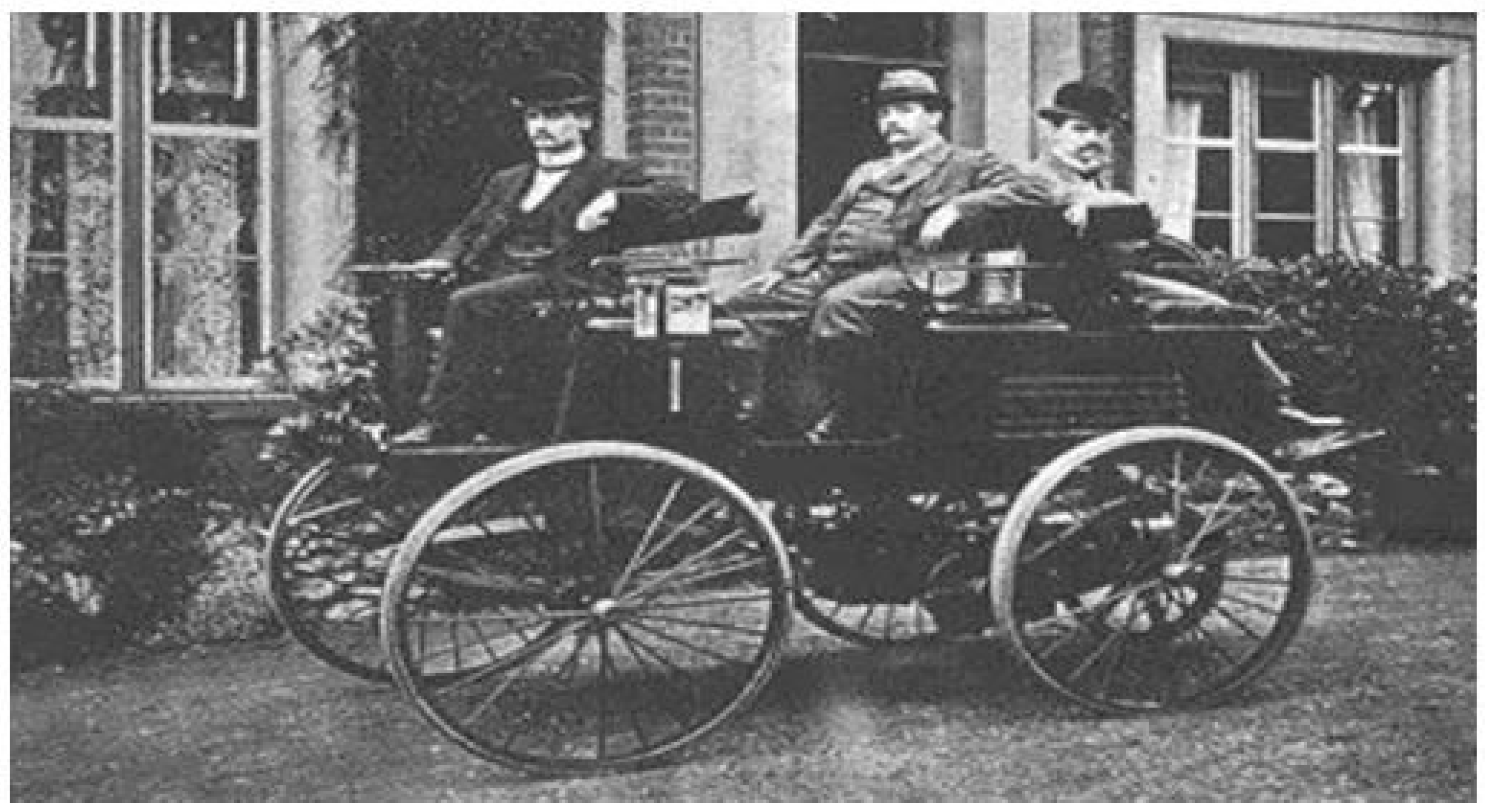
Figure 2.
Hybrid electric vehicle.
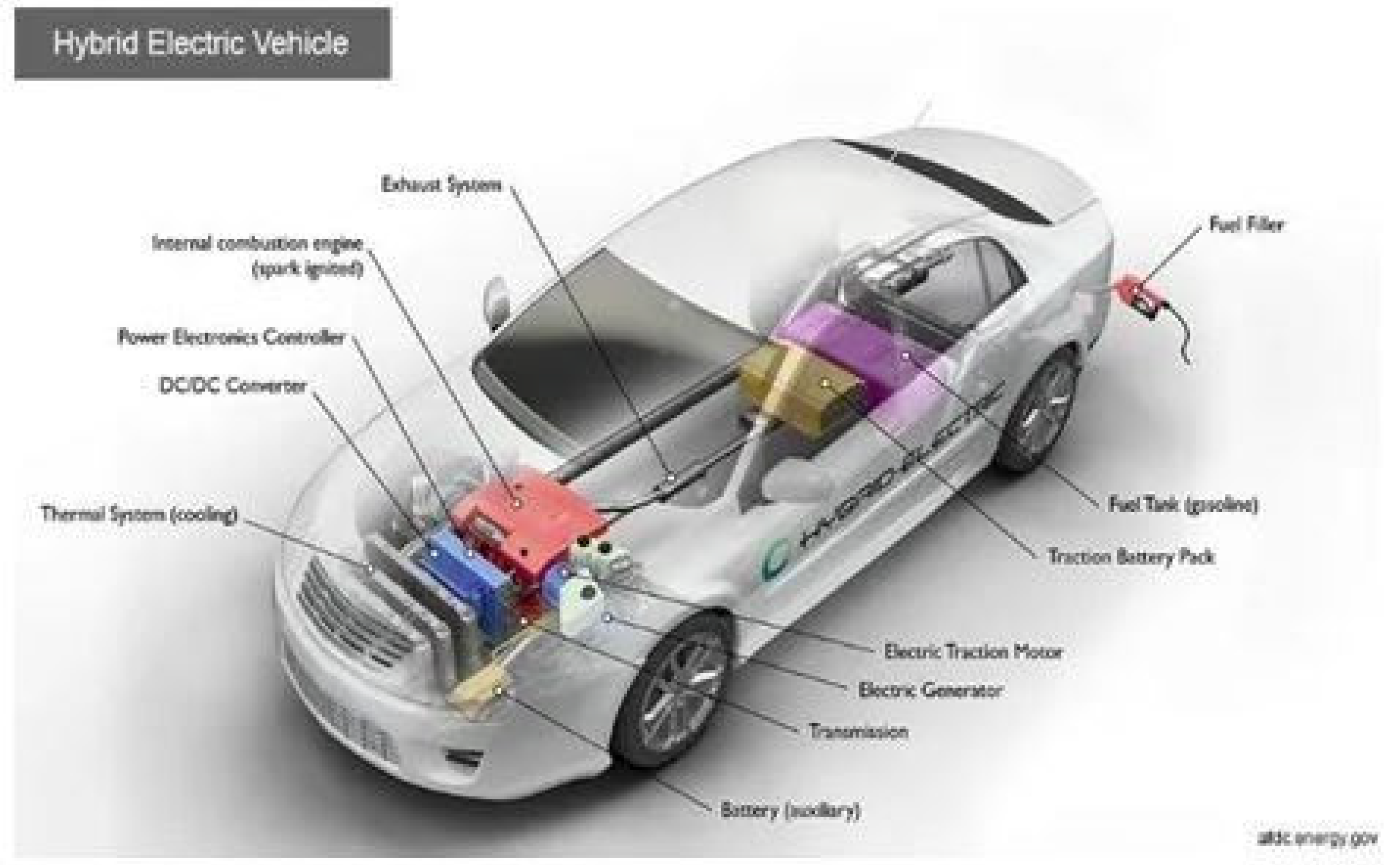
Figure 3.
Plug-in hybrid electric vehicle.
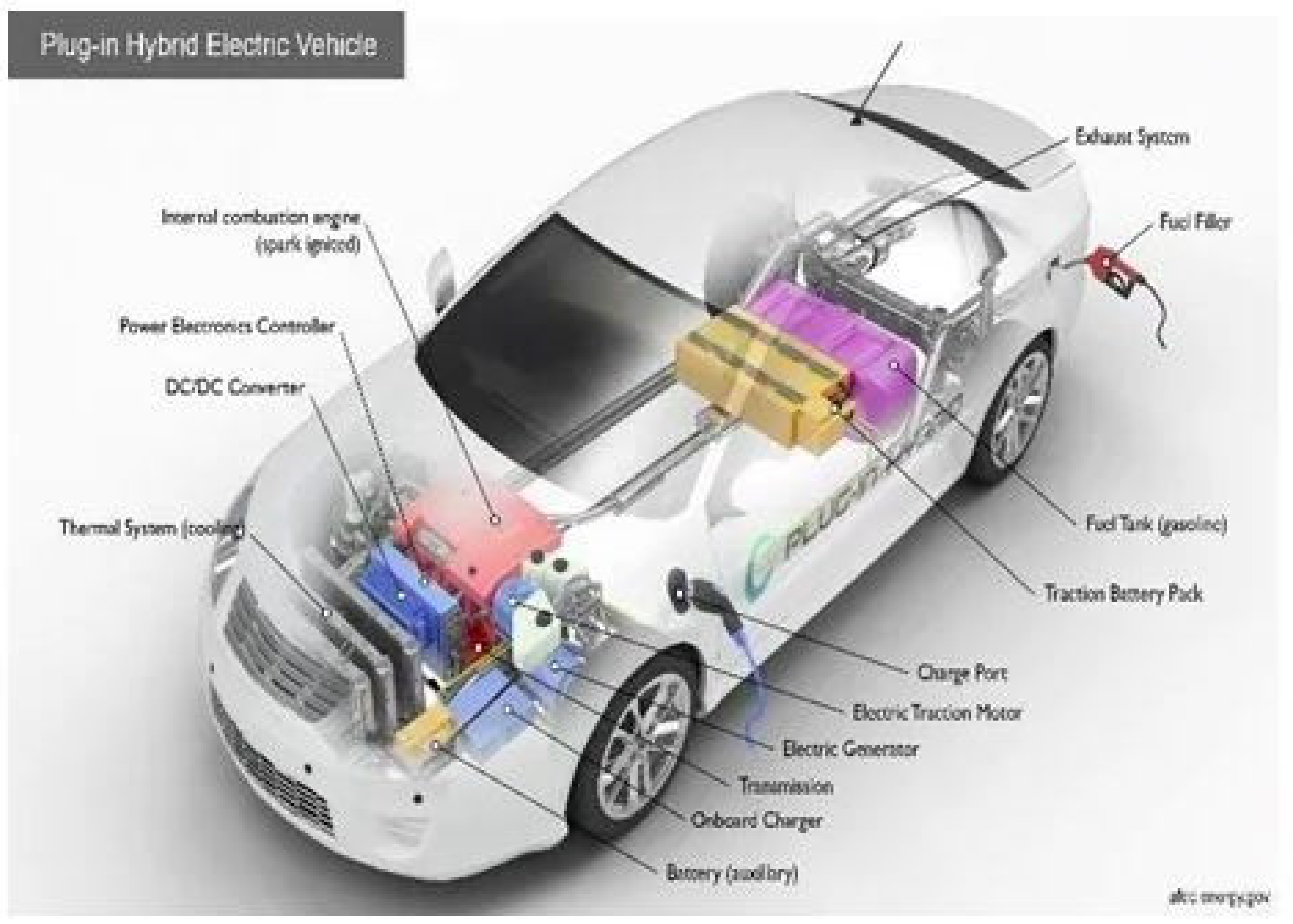
Figure 4.
Battery electric vehicle.
Disclaimer/Publisher’s Note: The statements, opinions and data contained in all publications are solely those of the individual author(s) and contributor(s) and not of MDPI and/or the editor(s). MDPI and/or the editor(s) disclaim responsibility for any injury to people or property resulting from any ideas, methods, instructions or products referred to in the content. |
© 2024 by the authors. Licensee MDPI, Basel, Switzerland. This article is an open access article distributed under the terms and conditions of the Creative Commons Attribution (CC BY) license (http://creativecommons.org/licenses/by/4.0/).
Copyright: This open access article is published under a Creative Commons CC BY 4.0 license, which permit the free download, distribution, and reuse, provided that the author and preprint are cited in any reuse.


