

Submitted:
25 May 2023
Posted:
02 June 2023
You are already at the latest version
Abstract
Background: Streptococcus agalactiae or Group B Streptococcal colonization of the gastrointestinal and genital tracts of pregnant women usually remains asymptomatic; even if it is the critical determinant of infection in neonates and young infants. It causes early and late onset of invasive Group B Streptococcus (GBS) disease manifesting as septicemia, meningitis and pneumonia. Now it is recognized as an important cause of maternal and neonatal morbidity and mortality in many parts of the world including Ethiopia where the magnitude of the problem has been little studied. The aim of this study was to assess the prevalence of GBS colonization, to identify associated risk factors and antimicrobial susceptibility pattern among pregnant women at selected health facilities of Wolaita Sodo Town, Southern Ethiopia. Methodology: A health facility based cross-sectional study design was conducted at WSUCSH & Wolaita Sodo Health Center from June to August, 2022. A total of 279 pregnant women who were in ANC follow up with at 35-37 weeks of gestation were included. For GBS isolation, recto-vaginal swabs were inoculated in 1ml Todd-Hewitt broth medium supplemented with 10μg/ml colistin and 15μg/ml nalidixic acid and followed by identification of isolates based on colonial morphology, gram stains, catalase reaction and CAMP tests. Antimicrobial susceptibility testing was performed using modified Kirby–Bauer disk diffusion method. All collected data were organized in Epi info 4.6.0.2, then transfer tabulated using SPSS version 20. Logistic regression analysis was used to see the association between variables. Finally, the p-value < 0.05 were considered statistically significant. Results: In present study, 279 pregnant mothers included and their age was between 15 to 38 years with a mean of 26.5 ± 4.5 years. Of all participants, the highest 120 (43.01%) were housewives. The overall carriage rate of GBS was 67(24.0%). GBS colonization showed a statistically significant association with college and above levels of maternal education [AOR= 6.610, 95% CI (1.724 - 25.349), P=0.01]. High susceptibility of GBS isolate was seen to Penicillin G & Chloramphenicol (92.5%) for each, Ampicillin, and Ceftriaxone (89.6%) each, following Vancomycin (74.62%), and Erythromycin (77%). Relatively, GBS showed high resistance to Tetracycline (88 %). Conclusion: In this study, the overall prevalence of GBS colonization was 24.0%. College and above educational level was statistically significant with GBS colonization. This study used to give attention to the management of pregnant women by making GBS culture one of the routine diagnoses during ANC follow-up and to prevent infection by early detection.
Keywords:
GBS
; Antibiotic susceptibility pattern
; pregnant women
; Wolaita Sodo
; Ethiopian
1. Introduction
Streptococcus agalactiae (GBS) is typical microbiota of healthy adults' female genital tracts and anal areas, with the gastrointestinal tract acting as a natural reservoir and source of vaginal colonization. Pregnancy-related diseases such as urinary tract infection, bacteremia, chorioamnionitis, postpartum endometritis, preterm labor, preterm rupture of membranes, and perinatal transfer of the organism are all possible outcomes of maternal GBS colonization. GBS's ability to rise from the lower genital tract and colonize the upper genital tract has been linked to intrauterine infection [1,2,3,4].
Approximately 10–30% of pregnant women are colonized with GBS in the vaginal area, and 60% of their babies are infected through the birth canal. The main risk factor for early-onset invasive GBS disease is maternal GBS colonization in the genitourinary or gastrointestinal tract and transfer to the newborn during labor and delivery. Antibiotic resistance among GBS isolates has been a concern due to the extensive use of intrapartum antibiotic prophylaxis to avoid early-onset GBS illness [2,3,5]. One of the contributing reasons is asymptomatic GBS recto-vaginal colonization in women. Although little is known about its epidemiology and risk in resource-poor nations, it is the most important pathogen of newborn illnesses as it accounts for a considerable part of all mortality.
Group B streptococcus (GBS) infections are major public health problems in humans worldwide. Worldwide mortality is decreasing from 12.7 million in 1990 to 6.3 million in 2013, but continuous effective measures should be made to decrease the mortality of newborns in developing countries [6]. In Africa, the mortality rate is 4 times higher compared to America and Europe. So strategies for the prevention of GBS have a crucial role in mortality [6,7].
Group B streptococcus colonization of pregnancy is different; in different study of countries, in the Americas (19.7 %) [7] and Europe (19.0 %) [6]. Reduced by almost 80% in the United States, cases fell from 1.8 cases per 1,000 live births in the early 1990s to 0.23 cases per 1,000 live births in 2015 [2]. In the United States and Europe, GBS is the major cause of mortality and morbidity. It can be found in the vaginal microbiota of up to 30% of pregnant women and can be transmitted to the infant via a perinatal transmission [8]. Southeast Asia shows the lowest mean prevalence around (11.1%) [7]. The estimated mean prevalence of GBS colonization shows 17.9 % overall and in Africa high rate recorded
GBS has the potential to thrive in a variety of diverse host environments [9]. The most common cause of early-onset newborn sepsis followed by S. agalactiae became the main infectious cause of early newborn morbidity and mortality.
In sub-Saharan Africa, the prevalence of Kampala in central Uganda was 3.9% prevalence of GBS [10] and Democratic Republic of Congo, women at 35 - 37 weeks of gestation that were enrolled in the study, 24 (23.07%) were found to be GBS carriers[1]. In another study of sub-Saharan Africa Province, Sri Lanka GBS vaginal colonization in the 100 specimens was 18% (18 vaginal and 0 rectal) in another study 49% [11] (37 vaginal and 27 rectal) from Hospitals in Kenya were positive for GBS [12]. Overall GBS was identified in 60/292 (20.5%) of participants among the positive isolates from Kenya hospital [12].
The problem is particularly immense in developing countries like Ethiopia that do not have quality microbiological laboratory facilities to isolate pathogens and determine their antimicrobial susceptibility pattern, in addition to the presence of fake drugs in circulation, and misuse of antimicrobials by health care providers, unskilled practitioners, and patients
Effectively use of intrapartum antibiotic prophylaxis (IAP) has direct impact around 80% reductions in early onset GBS disease. So a strategy on IAP evaluation for prevention of EOD should be done in developed countries and to decrease burden of GBS disease, development of vaccine or other preventive plan should be considered [13].
There are many studies conducted in different cities of Ethiopia that show a high prevalence of the disease in mothers. However, there is no strategic plan developed to minimize the disease.
Different studies conducted in Ethiopia indicated Addis Ababa's prevalence of GBS colonization among pregnant women was 14.6% [14]. Jimma prevalence of GBS colonization among pregnant women was 19.0 % [2]. Gondar prevalence of GBS colonization among pregnant women was 7.0% [15]. Nekemte prevalence of GBS colonization among pregnant women was 12% [3].
GBS infection is one of the challenging problems; much research has been done in the world this research showed the prevalence of GBS, and their antimicrobial pattern has changed from place to place and from time to time. So it needs to update epidemiological data for a given place and time [16]. Therefore, the main aim of this study will be to determine the prevalence of GBS bacteria in pregnant women and an antimicrobial susceptibility test in Wolaita Sodo town, Southern Ethiopia. The result of this study may show the currently updated burden of the disease and the importance of the possible findings of the study, we evaluated the prevalence of GBS in pregnant mothers in Wolaita Sodo town, Southern Ethiopia. And as provide updated information for responsible bodies to formulate policies, to implement prevention plans by universal screening for GBS in ANC units; and also effective use of prophylaxis to prevent early GBS infection.
2. Materials and Methods
2.1. Study Area
The study was conducted in Wolaita Sodo town, which is located 327 km from Addis Ababa and 129 km from Hawassa. There are two general public hospitals, one governmental specialized hospital (WSUCSH), and three government health centers. In this study, two health facilities WSUCSH and Wolaita Sodo Health Center [17]
Wolaita Sodo Health Center under SNNPR Health Bureau and gives outpatient service (ANC) follow for adult OPD, pediatric OPD, delivery service, TB patient follow-up, HIV counseling, and screening unit, and Health package service.
WSUCSH is a teaching and referral hospital of Wolaita Sodo University in the Health College sciences which started community service in 2009. It has about 500 beds and also it has more than 300 health workers and it gives service to an average of about 1000,000 patients annually [17].
2.2. Study Design and Period
A health facility-based cross-sectional design was conducted at the ANC clinic of Wolaita Sodo University Comprehensive Specialized Hospital and Wolaita Sodo Health Center from the period of June to August 2022.
2.3. Study Population
All pregnant mothers who attended ANC follow up at WSUCSH and Wolaita Sodo Health Center in sodo town and who were in their 35 to 37 weeks of gestational period.
2.4. Sample size determination
The sample size was calculated by using a single population proportion formula calculation considering the following assumptions.
By using a 95% confidence level, the Z value was 1.96, 5% margin of error (d)
The proportion from others =20.9% prevalence of GBS colonization among pregnant women previously done Hawassa by Musa Mohammed [18].
P= estimated prevalence rate= (20.9%) α = 0.05 (level of significance)
n= the required sample size no response rate = 10%
=254 + (10% contingency) = 279
2.5. Sampling Method
The study participants were enrolled by using a systematic sampling technique until a sample size of 279 was achieved. The first participant was selected by the lottery method and by using the formula K=N/n (K= 462/279=2 from Wolaita Sodo Health Center and K=614/279=2.2 WSUCSH) in three months period. Therefore, every two individuals are taken from two data collection institution. Individual participants were selected randomly in every Kth interval during the study period.
2.6. Data Collection
The data on socio-demographic variables and other relevant information were collected by using a predesigned and pretested structured questionnaire and by reviewing medical records. The questionnaire was adapted from other similar studies and initially prepared in English and was translated to Amharic and then translated back to English by another translator to check for consistency. Informed consent was obtained from each study participant after explaining the purpose and procedure of the study. The questionnaire was administered by the attending midwives and nurses and pregnant women with gestational age from 35-37 weeks were interviewed.
Specimen Collection
Specimens were collected as per the ACOG committee opinion and American Society for Microbiology (ASM) protocols. A vaginal-rectal swab was sampled from the mother at the point of ANC and labor by trained midwives using a sterile cotton swab. Using an aseptic technique by applying sterile cotton-tipped swabs in separate sterile tubes at the site of the rectum and vagina, the vagina swab from the mucosal secretions of the lower-third part was obtained. Thereafter, the rectum swab was carefully inserted into the anal sphincter and gently rotated to touch the anal crypts. Within 30 minutes using sterile cotton swabs the vaginal swab was taken for samples placed in Amies transport media and was transported to the Microbiology Laboratory of WSUCSH within an hour of collection. Samples were transported in an ice box. All samples were cultured within an hour of arrival in the laboratory following standard bacteriological techniques (5).
2.7. Laboratory Procedures
2.7.1. Culture and Identification of Group B Streptococci
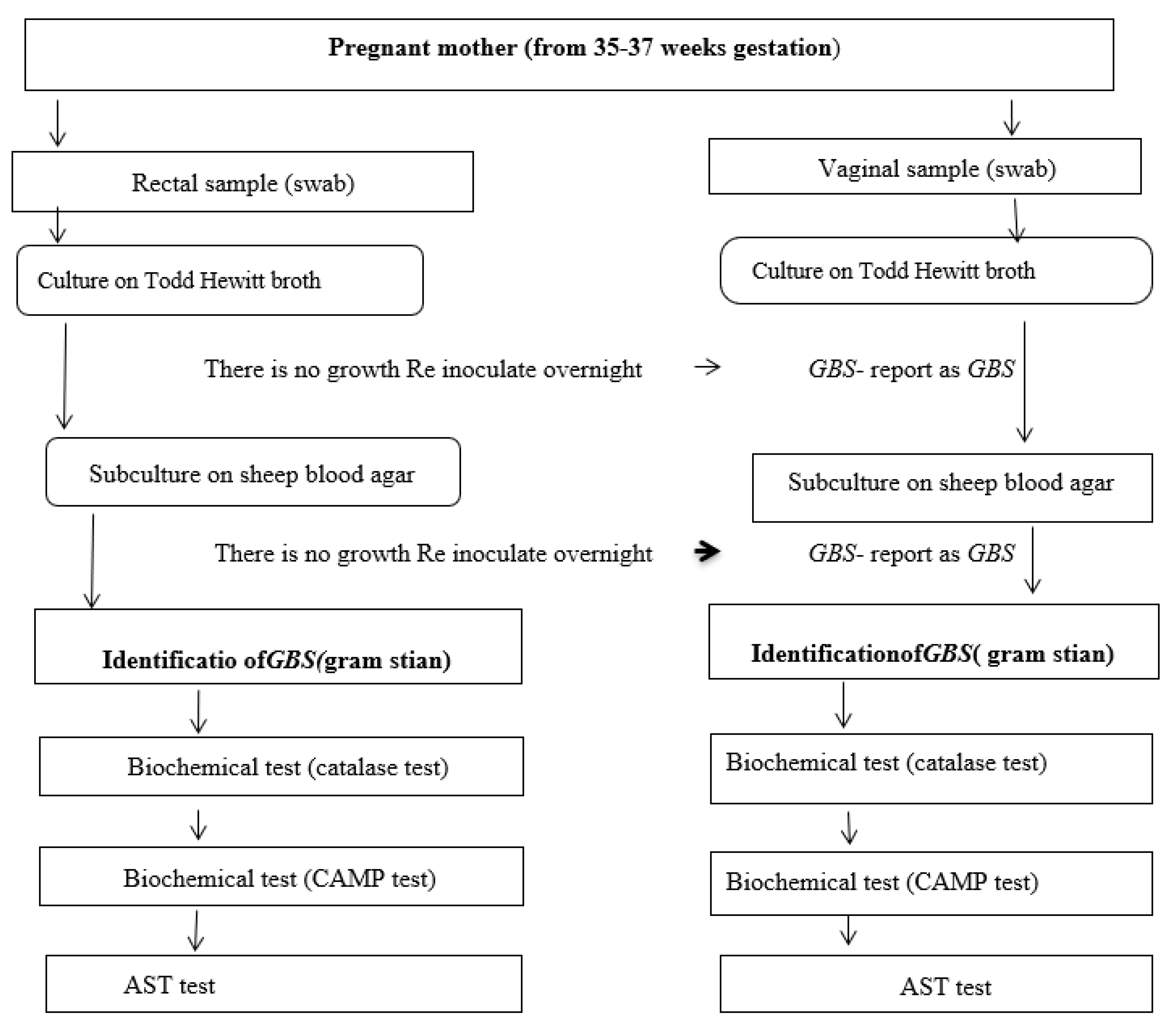
The Todd-Hewitt broth, an enrichment medium for GBS and swabs were inoculated in 1ml broth supplemented with 10μg/ml colistin and 15 μg/ml nalidixic acid to prevent contaminant growth and was incubated at 37°C aerobically for 18– 24 h then sub-cultured onto sheep blood agar plates and re-incubated at 37 °C . After 24 h, the culture inspected for growth and all negative culture plates re-incubated for an additional 18–24 h and then re-observed. Plates that show growth were identified by their characteristic appearance and biochemical tests such as catalase and CAMP testing; those with no growth was discarded or reported as negative.
CAMP testing was performed on sheep blood agar plate (SBAP) by streaking of S.aureus down the middle of SBAP and the test organism was then streaked perpendicular to the Staphylococcal streak. And the streaks did not touch. CAMP factor produced by S. agalactiae and β lysine produced by S. aureus act synergistically on SBAP to produce enhanced hemolysis. After incubation overnight under candle jar atmospheres, the SBAP was examined for an arrowhead shaped zone of enhanced lysis Christie, Atkins, and Munch-Petersen (CAMP) factors. Those are Gram-positive cocci in gram stain, catalase-negative in Biochemical tests and CAMP positive was identified as S. agalactiae [19].
Figure 1.
Flow chart diagram showing Culture isolation and laboratory identification of GBS.
2.7.2. Antimicrobial Susceptibility Testing (AST)
Kirby Bauer's disc diffusion technique was used to test the Antibiotic susceptibility test (AST). The media used was Muller Hinton agar (MHA) supplemented with 5 % sheep blood. From a fresh non-selective agar plate pure colonies were selected and transferred to 5 mL Sterile normal saline and thoroughly mixed to make the suspension homogeneous Turbidity was adjusted using a McFarland densitometer to match with a 0.5 McFarland Standard, then inoculated following the standard over the entire surface of an MHA plate using a sterile swab. Then using sterile forceps, the antibiotic discs were placed on MHA by considering the 24 mm distance between each disk and 15 mm from the border, zone of Inhibition was measured by the metric scale and reported as susceptible (S), intermediate (I), or resistance (R). Using the updated guideline (CLSI 2021), [20] the following antibiotics disks were used for Group B streptococcus susceptibility; Penicillin G 10IU, Ampicillin 10, Erythromycin 15 Clindamycin 2, Ceftriaxone 30, Ciprofloxacin 5, chloramphenicol 30, Clindamycin 2, Vancomycin 30 and Tetracycline 30.
2.8. Data Quality Control
To assure the quality of the data a pre-test was done and 5% of the total sample was out of the study area. The training was given for the data collectors on an interview and recto-vaginal swab sample collection instruction for two days, and on how to clean, sterilize, and reusable laboratory materials for laboratory attendants for two days by the investigator participants was oriented on how to collect recto-vaginal swab samples by trained data collectors. The specimens were transported to the WSUCSH Central Laboratory within 30 minutes of collection in a cold chain (ice-box at 4°C) and immediately processed and inoculums density for bacterial suspension for the antimicrobial susceptibility testing was standardized to 0.5 McFarlane Supervision was undertaken during the whole phase of the study period by the investigator and Medical Microbiologist. All culture media was prepared following the manufacturer's instructions. All media was checked for sterility and performance.
Reference Strain S. aureus (ATCC-25923) was used as quality control throughout the study for culture, antimicrobial susceptibility testing, and a CAMP test. E. fecalis (ATCC -25212) and S. pyogenes (ATCC 19615), was used as a negative control for CAMP testing. Was used to check the quality of the culture media and antimicrobial disks, which were obtained from the EPHI Sample, were collected and processed aseptically by using a standard operating procedure
2.9. Methods of Data Analysis
Data were entered, cleaned, and processed into Epi 4.6.0.2, to transfer tabulated using SPSS version 20, Logistic regression analysis was used to see the association between variables finally the 'P' value was less than 0.05 which was considered statistically significant.
3. Results
3.1. Socio-Demographic Characteristics
A total of two hundred seventy-nine (279) pregnant women (from 35 to 37 weeks of gestation) were enrolled from June to August 2022 with a total response rate of 100%. The age of the study participants was between 15 to 38 years with a mean age with SD of 26.5 (± 4.5) years. Most of the study participants were in age categories from 25-29 years 135 (48.4%). The majority of the study participants were married 249 (89.2%) and the largest proportion of study subjects was urban residents 260 (93.2%). Of all participants, the highest proportion 120 (43.01%) were housewives followed by civil servants 64(22.9%), student 50(17.9%) and merchants 45(16.0%). A socio-demographic characteristic of study participants were summarized in Table 1 below.
3.2. Obstetric and Clinical Characteristics
Regarding obstetric and clinical characteristics of study participants; 173 (62.0%) were primigravida and the remaining 106 (38%) were multigravida. Of the total of 279 study participants, 51 (18.3%) had a history of abortion and 13(4.7%) women had a history of preterm labor. Among the 279 pregnant women included in the study 58 (20.8%), were at a gestational age of 35, 146 (52.3%) were at the gestational age of 36 and the rest 75 (26.9%) were at 37 weeks of gestational age. History of hormonal contraceptive usage had reported by 223 (79.9%) of the study participants.
3.3. Group B Streptococcus Colonization
The overall prevalence of GBS colonization among pregnant women at 35–37 weeks of gestation was 24% (67/279). The prevalence of GBS in the two health institutions was 37 (55.2%) from WSUCSH and 30 (44.8%) from Sodo Health Center respectively.
3.4. Factors Associated with Maternal Group B Streptococci Colonization
The assessment of the association of the socio-demographic, obstetric, and clinical characteristics with GBS colonization’s was demonstrated in (Table 3) below. During the study period, a total of 279 mothers were screened for GBS colonization and GBS was confirmed in 67 (24.0 %) of the study participants. In this study, the highest prevalence of GBS observed in the age group between 25-35 years 32.4/135 (48.4%), housewife 32/120(26.67%), and college and above education status 15/58 (25.9%) based on History of contraceptive usage high rate of GBS observed in those with contraceptive usage history 53/223(23.8%) compared with non-users. Out of 67, GBS-colonized pregnant women 34(19.7%) were Primigravida and 33 (31.1%) were multigravida. On the other hand, mothers who were at 37 weeks of gestation were 25 (33.33%) %) culture positive for GBS and those women with no history of abortion had an 11.5% rate of colonization as compared to those women with a recent history of abortion which were (33.3%). Variables candidate for multivariate logistics regression were selected by considering p<0.25 from the bivariate model. Multivariable logistic regression analysis showed that mothers whose educational status was at the college level and above had a significant association with an increased risk of GBS colonization (P=0.01). In this study educational status, gravidity, maternal age and gestational age showed an association with GBS colonization in binary logistic regression but not in multi-logistic regression.
3.5. Antimicrobial Susceptibility pattern of GBS Isolates
The susceptibility patterns of GBS (n = 67) isolated from pregnant women were tested against nine antimicrobial agents are presented in Table 4. A high susceptibility rate of GBS isolate was seen for Penicillin G & Chloramphenicol (92.5%) for each, Ampicillin and Ceftriaxone (89.6%) following, Vancomycin (74.62%) and Erythromycin (77%). Relatively, GBS showed high resistance to Tetracycline (88%), Ciprofloxacin (55.22 %), and Clindamycin (23.9%). respectively. Regarding, the antibiogram of GBS isolates revealed that Susceptibility to all antibiotics was observed in 2 (2.98%) of GBS isolates and one or more antibiotic resistance was observed in 65 (97.01%) tested GBS isolates. According to the study, the most active drugs for GBS isolates were Penicillin, Chloramphenicol, Ampicillin, and Ceftriaxone with susceptibility results of 92.5%, 92.5%, 89.6%, and 74.62%, respectively. Moreover, 5(7.46%) isolates of GBS showed intermediate susceptibility to Erythromycins and Chloramphenicol, Vancomycin 6(8.9%) for each and 2(2.98%) showed for Tetracycline.
4. Discussion
The overall prevalence of Group B streptococcus (GBS) in the present study among pregnant women was 24.0%. Such a result in this study is comparable with studies worldwide ranging from 10-30% in the USA, [7] 6.5-36% in Europe [6] 7.1-16% in Asia [8], and 11.9-31.6% in Africa[16]. This study is also relatively similar to studies conducted in different parts of Ethiopia; 20.9% in Hawassa Health Centers [21], 19% in Jimma Hospital [22], and 14.6% in different health centers in Addis Ababa [14]. The rate of GBS colonization in this study is lower than the study conducted in Brazil at 28.4 % [23] and South Africa at 30.9 % [24].
The rate of GBS found in this study and some countries of Europe is comparable, for example in Italy two studies done and reported GBS rates as 17.9% [23], and 18% [25]. In Switzerland and Poland, positivity rates were 21% [26] and 17.2% [27] respectively, the study done in the Netherlands shows 21% [28]. However, a Lower GBS colonization rate was recorded from Istanbul and Elazin in Turkey giving 8% [29] and 8.7% [14], respectively, a study in Northern Greece reported the lowest rate of 6.6% [30].
GBS colonization is an important cause of infection in pregnant women and is associated with adverse outcomes in their newborns; however, there have been limited studies available in Ethiopia [14]. It also has variable prevalence and susceptibility against commonly prescribed drugs in different geographic locations.
Providing adequate knowledge for pregnant women on GBS risk factors plays a crucial role in decreasing the morbidity and mortality related to maternal GBS infections The geographical differences, variability in the sample size, and methods employed for GBS detection might be possibly explained the disparities.
In this study socio-demography (age, residence, education status, marital status, income, and occupation); Obstetrics and clinical characteristics (gravidity; gestational age; history of Preterm PROM, preterm labor, contraceptive use; history of abortion; UTI pregnancy STI pregnancy and any antibiotic) has no relation to the GBS colonization. Similar finding was reported from studies done Italy and reported GBS rate as 17.9% [23], Poland positivity rate was 17.2% [27]. But college and the above level were significantly associated with maternal colonization (p=0.01) as the study done in Poland [31] and Bangladesh [27]. Maternal age and, gestational weeks, were identified as risk factors for GBS colonization [23,25,27,31] in studies done before but no association was seen in the current study Thailand researchers reported that lower maternal age and lower gestational age were risks for colonization by GBS [29].
The relationship between these factors and GBS colonization however showed marked inconsistencies. In some studies, colonization increased with age reported [26], while other reports confirmed younger age groups showed the highest [14,29]. The possible reason for this difference seems to be seasonal differences globally, the availability of laboratory facilities for detecting GBS, and also the shorter study period mentioned.
In this study maternal age, Gravid and gestational weeks, showed association with GBS colonization in binary logistic regression, and college and above the educational level on multi-logistic regression to show.
The susceptibility pattern of GBS isolates to Penicillin (92.5%), Vancomycin (74.62%), ampicillin (89.6%), Ceftriaxone (89.6%), Chloramphenicol (92.5.%), Erythromycin (77%), Clindamycin (76.11%) and is comparable with previous studies conducted in different countries in which similar records were found from Tanzania [32], USA, (72), Canada [33] and Lebanon [34] in this study.
However high resistance was observed in Tetracycline (88. %), Ciprofloxacin (55.22%), and Clindamycin (23.88%), in which similar records were found from Lebanon [34], USA [35,36], Tanzania [32] Canada [33] and in this study. Erythromycin (14.92%), Vancomycin (16.41%), Ceftriaxone and Ampicillin (10.4%), and, GBS resistant with reduced Penicillin susceptibility have been detected. Penicillin is the first agent for the prevention and treatment of GBS infections; however, nowadays GBS strains with reduced susceptibility to Penicillin have been reported periodically as seen in this study.
To prevent GBS Erythromycin and Clindamycin are the alternative antibiotics for Penicillin allergic pregnant women with a high risk of anaphylaxis.
The rising of GBS strains resistant to Erythromycin and Clindamycin from time to time is complicating the management of pregnant women who are allergic to Penicillin [30]. In contrast to reports from many other countries, the highest susceptibility in the present study was seen to Erythromycin (77%) and Clindamycin (76.11%) and only a few isolates were resistant to Erythromycin and Clindamycin. In this study, 15% Erythromycin and 24% Clindamycin resistance was reported which is similar to studies done in Ethiopia Gondar showing that 22.7% Erythromycin is resistant and 17.6% to 18.2% resistant to Clindamycin [37]. Also in South Africa, 17.2% Clindamycin and 21.1% Erythromycin resistance were reported [38]. In Tanzania, 17.6% [39] and USA 21.0% [40] of Clindamycin resistance was reported which is comparable to our study.
Generally, in contrast to this study, worldwide studies reported a high resistance rate to Erythromycin which ranges from 18 to 54% [27]. Absence or low antibiotic resistance of GBS strains in the present study may indicate the suitability of Penicillin, Ampicillin, and Chloramphenicol for Ethiopia to prevent GBS until the vaccine is available on the market.
Similar to the present study low level of resistance to Erythromycin was reported in Australia (6.4%) [41], Brazil (4.1%) [42], Thai-Myanmar border (8.5%) [31], and France (4%) [27]. No resistance to Chloramphenicol is observed in this study and 2 (7.5%) and 3(10.4%) of the isolates showed resistance to Penicillin and Ampicillin respectively.
High resistance to Tetracycline (88%) in this study was reported and similar reports from other countries, Brazil (83%) [30], Australia (85.9%) [39], Kuwait (89.5%) [36], Canada (89%) [33], and Island (85%) [43] also reported.
CDC approved patients can take Penicillin or Ampicillin if they are not allergic to Penicillin. Clindamycin or Vancomycin is the drug of choice for those who had a major Penicillin allergy and Ceftriaxone for a minor allergy to Penicillin [44]. Because, it is difficult for developing a vaccine for GBS due to multiple serotypes are found and vary in geographical location [45]. Nowadays Clindamycin and Erythromycin resistance which are first-line drugs for those with a penicillin allergy, increased rapidly [45].
Resistance to Erythromycin ranged from 7 to 40 % and Clindamycin from 3 to 26.4 % and related to some serotypes [29,40,46]. Inappropriate use of antimicrobial drugs leads to the high resistance of drugs. In Ethiopia, peoples easily go to pharmacy shops without a prescription to buy antibiotics and this type of use of antibiotics might responsible for the high drug resistance rates observed currently.
4.1. The Strengths of This Study
In this studies more valid method used to identify GBS colonization, which is culture, presence of THB, primary selective broth media for isolation of GBS, 10μg/ml colistin and 15 μg/ml nalidixic, one of the antibiotics which make the primary media to be selective for isolation of the bacteria, makes our isolation adequate to indicate maximum carriage rate.
4.2. Limitations of the Study
- No serotyping was done and using only disc diffusion for antibiotic susceptibility test was conducted.
- Failure to assess the outcome on neonates whose mother detected to be colonized by GBS on the study.
5. Conclusions
The prevalence of GBS in the current study was 24.0%. Among 279 pregnant women the carriage rate of GBS was high among those aged 25-29 years. College and above level of maternal education were significantly associated factors to maternal colonization in the current study [AOR= 6.610, 95% CI (1.724 - 25.349), P=0.01]. The highest susceptibility was shown for penicillin and chloramphenicol each (92.5%). High resistance was observed against Tetracycline (88%), Ciprofloxacin (55.22%). The overall prevalence of GBS in the current study is rationally high enough. Therefore, there were a need for screening of pregnant mothers near term delivery and to determine their antibiotic susceptibility so as to set appropriate intervention mechanisms, like early diagnosis, proper management and treatment is very important to reduce GBS infection of neonates and newborns.
Author Contributions
AK had contributed to conceptualization, methodology, software, validation, supervision formal analysis and writing—review and editing, BG had contributed to conceptualization, methodology, software, validation, supervision, formal analysis, writing—review and editing investigation, resources, data curation, writing—original draft preparation, visualization, project administration and funding acquisition. SS had contributed to conceptualization, methodology, software, validation, supervision formal analysis and writing—review and editing, WW had contributed to formal analysis, writing—review and editing investigation, resources, data curation, writing—original draft preparation, visualization, project administration and funding acquisition, and TS had contributed to writing—review and editing, investigation, resources, data curation, writing—original draft preparation, visualization, project administration and funding acquisition, All authors read and approved the final manuscript.
Funding
This research received no external funding.
Institutional Review Board Statement
Ethical clearance was obtained from the Institutional Review Board of College of Health Sciences and Medicine, Wolaita Sodo University. A formal permission letter was written to each selected health facility from Wolaita sodo town health office. Code numbers are used to ensure the confidentiality of participants' information. Any participant who is not voluntary was not forced to be included as a study subject.
Informed Consent Statement
The objective of the study was explained to clients, and written consent was obtained.
Data Availability Statement
All relevant data are within the article, but any additional data required are available from the corresponding author upon request.
Acknowledgments
The authors thank Wolaita Sodo University, for providing permission to conduct the study. The authors would also like to thank South Nations, Nationalities and Peoples Region Health Bureau Regional Laboratory Institute for supporting culture media, reagents and antimicrobial disks, and all ANC staffs of the Wolaita Sodo University Comprehensive Specialized Hospital for their awareness and cooperation during sample collection. Finally, all study participants, data collectors and supervisors were acknowledged.
Disclosure
None of the authors declared any conflicts of interest in this work
References
- Liesse Iyamba J-M, Mongane PM, Lukukula CM, Ngbandani BK, Tshimpangila JD, Vihembo GM; et al. Vaginal Colonization and Antibiotic Susceptibility Pattern of Group B Streptococcus Isolated from Pregnant Women in Maternit Des Soeurs de Pauvres de Bergame de Kimbanseke, Kinshasa, Democratic Republic of Congo. Advances in Microbiology 2021, 11, 335–341.
- Mengist A, Kannan H, Abdissa A. Prevalence and antimicrobial susceptibility pattern of anorectal and vaginal group B Streptococci isolates among pregnant women in Jimma, Ethiopia. BMC research notes 2016, 9, 351.
- Mengist HM, Zewdie O, Belew A, Dabsu R. Prevalence and drug susceptibility pattern of group B Streptococci (GBS) among pregnant women attending antenatal care (ANC) in Nekemte Referral Hospital (NRH), Nekemte, Ethiopia. BMC research notes 2017, 10, 388.
- LAMMLER SS, I.W. T. WIBAWAN, E. OTT, V. BOPP and A. MARTINEZ-TAGLE. Comparison of streptococci of serological group B isolated from healthy carriers and active disease in Chile. J Med Microbiol 1995, 42.
- Leykun Y., Genet C, Mulu W. Group B Streptococci Vaginal-Recto Colonization, Vertical Transmission to Newborns, Antimicrobial Susceptibility Profile and Associated Factors in Selected Health Facilities of Bahir Dar City. Infection and Drug Resistance 2021, 14, 5457–5472. [CrossRef]
- Centers for Disease Control and Prevention (CDC). Perinatal group B streptococcal disease after universal screening recommendations--United States, 2003-2005. 2007 Jul 20; 56(28):701-5. MMWR Morbidity & Mortal Weekly Report 2007, 56, 701–708.
- Nishihara Y, Dangor Z, French N, Madhi S, Heyderman R. Challenges in reducing group B Streptococcus disease in African settings. Arch Dis Child 2017, 102, 72–77. [CrossRef] [PubMed]
- Kwatra G, Cunnington MC, Merrall E, Adrian PV, Ip M, Klugman KP; et al. Prevalence of maternal colonisation with group B streptococcus: A systematic review and meta-analysis. The Lancet Infectious Diseases 2016, 16, 1076–1084. [CrossRef]
- Perinatal group B streptococcal disease after universal screening recommendations--United States, 2003-2005. MMWR Morbidity and mortality weekly report 2007, 56, 701–705.
- Plainvert C, Anselem O, Joubrel C, Marcou V, Falloukh A, Frigo A; et al. Persistence of group B Streptococcus vaginal colonization and prevalence of hypervirulent CC-17 clone correlate with the country of birth: A prospective 3-month follow-up cohort study. European journal of clinical microbiology & infectious diseases : Official publication of the European Society of Clinical Microbiology 2021, 40, 133–140.
- Tumuhamye J, Steinsland H, Bwanga F, Tumwine JK, Ndeezi G, Mukunya D; et al. Vaginal colonization with antimicrobial-resistant bacteria among women in labor in central Uganda: Prevalence and associated factors. Antimicrobial resistance and infection control 2021, 10, 37. [CrossRef] [PubMed]
- Dilrukshi GN, Kottahachchi J, Dissanayake D, Pathiraja RP, Karunasingha J, Sampath MKA; et al. Group B Streptococcus colonisation and their antimicrobial susceptibility among pregnant women attending antenatal clinics in tertiary care hospitals in the Western Province of Sri Lanka. Journal of obstetrics and gynaecology : The journal of the Institute of Obstetrics and Gynaecology 2021, 41, 1–6.
- Jisuvei SC, Osoti A, Njeri MA. Prevalence, antimicrobial susceptibility patterns, serotypes and risk factors for group B streptococcus rectovaginal isolates among pregnant women at Kenyatta National Hospital, Kenya; a cross-sectional study. BMC infectious diseases 2020, 20, 302.
- Nishihara Y, Dangor Z, French N, Madhi S, Heyderman R. Challenges in reducing group B Streptococcus disease in African settings. Archives of disease in childhood 2017, 102, 72–77. [CrossRef] [PubMed]
- Assefa S, Desta K, Lema T. Group B streptococci vaginal colonization and drug susceptibility pattern among pregnant women attending in selected public antenatal care centers in Addis Ababa, Ethiopia. BMC pregnancy and childbirth 2018, 18, 135.
- Gizachew M, Tiruneh M, Moges F, Adefris M, Tigabu Z, Tessema B. Newborn colonization and antibiotic susceptibility patterns of Streptococcus agalactiae at the University of Gondar Referral Hospital, Northwest Ethiopia. BMC pediatrics 2018, 18, 378.
- Arain FR, Al-Bezrah NA, Al-Aali KY. Prevalence of maternal genital tract colonization by group B streptococcus from Western Province, Taif, Saudi Arabia. Journal of Clinical Gynecology and Obstetrics 2015, 4, 258–264. [CrossRef]
- WSUCSH, Co. Wolaita Sodo University Comprehensive Specialized Hospital Healthcare Quality Progress. 2022. [Google Scholar]
- Musa Mohammed1 DA, Yimtubezinash Woldeamanuel2, Demissie A. Prevalence of group B Streptococcus colonization among pregnant women attending antenatal clinic of Hawassa Health Center. thiopian Journal of Health Development 2012, 26, 36–42.
- Shiferawu S, Mekonen M, Baza D, Lera T. Prevalence of Group b Streptococcus, Its Associated Factors and Antimicrobial Susceptibility Pattern Among Pregnant Women Attending Antenatal Care at Arbaminch Hospital, South Ethiopia. American Journal of Health Research 2019, 7, 104. [CrossRef]
- M100 Performance Standards for Antimicrobial Susceptibility Testing. Juanita Smit. 1/13/2021.;31st Edition.
- Mengist A, Kannan H, Abdissa A. Prevalence and antimicrobial susceptibility pattern of anorectal and vaginal group B Streptococci isolates among pregnant women in Jimma, Ethiopia. BMC research notes 2016, 9, 1–5.
- Melo SCCSd, Costa AB, Silva FTRd, Silva NMMG, Tashima CM, Cardoso RF; et al. Prevalence of Streptococcus agalactiae colonization in pregnant women from the 18 th Health Region of Paraná State. Revista do Instituto de Medicina Tropical de São Paulo 2018, 60.
- Bolukaoto JY, Monyama CM, Chukwu MO, Lekala SM, Nchabeleng M, Maloba MR; et al. Antibiotic resistance of Streptococcus agalactiae isolated from pregnant women in Garankuwa, South Africa. BMC research notes 2015, 8, 1–7.
- Poyart C, Jardy L, Quesne G, Berche P, Trieu-Cuot P. Genetic basis of antibiotic resistance in Streptococcus agalactiae strains isolated in a French hospital. Antimicrobial agents and chemotherapy 2003, 47, 794–797. [CrossRef]
- Cockerill FR, Wikler MA, Alder J, Dudley M, Eliopoulos G, Ferraro M; et al. Performance standards for antimicrobial susceptibility testing: Twenty-second informational supplement. Clinical and Laboratory Standards Institute 2012, 32, M100–S22.
- Blumberg HM, Stephens DS, Modansky M, Erwin M, Elliot J, Facklam RR; et al. Invasive group B streptococcal disease: The emergence of serotype V. Journal of Infectious Diseases 1996, 173, 365–373. [CrossRef] [PubMed]
- Flaherty RA, Borges EC, Sutton JA, Aronoff DM, Gaddy JA, Petroff MG; et al. Genetically distinct Group B Streptococcus strains induce varying macrophage cytokine responses. PLoS ONE 2019, 14, e0222910.
- Khan MA, Faiz A, Ashshi AM. Maternal colonization of group B streptococcus: Prevalence, associated factors and antimicrobial resistance. Annals of Saudi medicine 2015, 35, 423–427. [CrossRef] [PubMed]
- Valkenburg-Van Den Berg AW, Sprij AJ, Oostvogel PM, Mutsaers JA, Renes WB, Rosendaal FR; et al. Prevalence of colonisation with group B Streptococci in pregnant women of a multi-ethnic population in The Netherlands. European Journal of Obstetrics & Gynecology and Reproductive Biology 2006, 124, 178–183.
- El Aila NA, Tency I, Claeys G, Saerens B, Cools P, Verstraelen H; et al. Comparison of different sampling techniques and of different culture methods for detection of group B streptococcus carriage in pregnant women. BMC infectious diseases 2010, 10, 1–8.
- Alemseged G, Niguse S, Hailekiros H, Abdulkadir M, Saravanan M, Asmelash T. Isolation and anti-microbial susceptibility pattern of group B Streptococcus among pregnant women attending antenatal clinics in Ayder Referral Hospital and Mekelle Health Center, Mekelle, Northern Ethiopia. BMC Research Notes 2015, 8, 1–8.
- Ayata A, Güvenç H, Felek S, Aygün AD, Kocabay K, Bektas S. Maternal carriage and neonatal colonisation of group B streptococci in labour are uncommon in Turkey. Paediatric and perinatal epidemiology 1994, 8, 188–192. [CrossRef] [PubMed]
- El-Kersh TA, Al-Nuaim LA, Kharfy TA, Al-Shammary FJ, Al-Saleh SS, Al-Zamel FA, Detection of genital colonization of group B streptococci during late pregnancy. Saudi medical journal 2002, 23, 56–61.
- Strus M, Pawlik D, Brzychczy-Włoch M, Gosiewski T, Rytlewski K, Lauterbach R; et al, Group B streptococcus colonization of pregnant women and their children observed on obstetric and neonatal wards of the University Hospital in Krakow, Poland. Journal of medical microbiology 2009, 58, 228–233. [CrossRef]
- Rausch A-V, Gross A, Droz S, Bodmer T, Surbek DV. Group B Streptococcus colonization in pregnancy: Prevalence and prevention strategies of neonatal sepsis. 2009.
- Schmidt J, Halle E, Halle H, Mohammed T, Gunther E, Colonization of pregnant women and their newborn infants with group B streptococci in the Gondar College of Medical Sciences. Ethiopian medical journal 1989, 27, 115–119.
- Verani JR, McGee L, Schrag SJ. Prevention of perinatal group B streptococcal disease: Revised guidelines from CDC, 2010. Department of Health and Human Services, Centers for Disease Control and …; 2010.
- Savoia D, Gottimer C, Crocilla C, Zucca M. Streptococcus agalactiae in pregnant women: Phenotypic and genotypic characters. Journal of Infection 2008, 56, 120–125. [CrossRef] [PubMed]
- Fatemi F, Chamani L, Pakzad P, Zeraati H, Rabbani H, Asgari S. Colonization rate of group B Streptococcus (GBS) in pregnant women using GBS agar medium. Acta Medica Iranica 2009, 25–30.
- Assefa S, Desta K, Lema T. Group B streptococci vaginal colonization and drug susceptibility pattern among pregnant women attending in selected public antenatal care centers in Addis Ababa, Ethiopia. BMC pregnancy and childbirth 2018, 18, 1–9.
- De Steenwinkel FD, Tak HV, Muller AE, Nouwen JL, Oostvogel PM, Mocumbi SM. Low carriage rate of group B streptococcus in pregnant women in Maputo, Mozambique. Tropical Medicine & International Health 2008, 13, 427–429.
- Tsolia M, Psoma M, Gavrili S, Petrochilou V, Michalas S, Legakis N. et al. Group B streptococcus colonization of Greek pregnant women and neonates: Prevalence, risk factors and serotypes. Clinical microbiology and infection 2003, 9, 832–838. [CrossRef] [PubMed]
- YektaKooshali MH, Hamidi M, Tousi SMTR, Nikokar I. Prevalence of group B streptococcus colonization in Iranian pregnant women: A systematic review and meta-analysis. International Journal of Reproductive BioMedicine, 2018; 16.
- Garland SM, Kelly N, Ugoni AM. Is antenatal group B streptococcal carriage a predictor of adverse obstetric outcome? Infectious diseases in obstetrics and gynecology 2000, 8, 138–42. [CrossRef]
- Tsui M, Ip M, Ng P, Sahota DS, Leung T, Lau T. Change in prevalence of group B Streptococcus maternal colonisation in Hong Kong. Hong Kong Med J 2009, 15, 414–419.

Table 1.
Socio-demographic characteristics among pregnant women at selected Health facility of Wolaita Sodo Town, Southern Ethiopia from June to August 2022 (n=279).
Table 1.
Socio-demographic characteristics among pregnant women at selected Health facility of Wolaita Sodo Town, Southern Ethiopia from June to August 2022 (n=279).
| Socio-demographic characteristics | Categories | Frequency | Percentage (%) |
|---|---|---|---|
| Health Institutions | |||
| WSU Comprehensive Specialized Hospital | -- | 169 | 60.6% |
| Sodo Health Center | -- | 110 | 39.4% |
| Age groups | 15-19 | 23 | 8.2% |
| 20-24 | 53 | 19.0% | |
| 25-29 | 135 | 48.8% | |
| 30-34 | 48 | 17.2% | |
| ≥ 35 | 20 | 7.1% | |
| Residence | Urban | 260 | 93.2% |
| Rural | 19 | 6.8% | |
| Educational status | Primary | 166 | 59.5% |
| Secondary | 55 | 19.7% | |
| College& above | 58 | 20.8% | |
| Marital status | Married | 249 | 89.2% |
| Divorced | 6 | 2.2 | |
| Single | 21 | 7.5% | |
| Widowed | 3 | 1.1 | |
| Occupational status | Housewife | 120 | 43.01 |
| Civil servant | 64 | 22.9 | |
| Student | 50 | 17.9 | |
| Merchant | 45 | 16.0 | |
| Monthly income | 1300-3000 | 221 | 79.2 |
| 3100-5000 | 35 | 12.5 | |
| 5100-1000 | 20 | 20 | |
| ≥ 10000 | 3 | 1.1 |
Table 2.
Obstetric and clinical characteristics among pregnant women at a selected facility of Wolaita Sodo Town, Southern Ethiopia from June to August 2022 (n=279).
Table 2.
Obstetric and clinical characteristics among pregnant women at a selected facility of Wolaita Sodo Town, Southern Ethiopia from June to August 2022 (n=279).
| Variables | Categories | Frequency | Percent (%) |
|---|---|---|---|
| Number of gravidity | primigravida | 173 | 62.0 |
| Multigravida | 106 | 38 | |
| Gestational age (in weeks) | 35 | 58 | 20.8 |
| 36 | 146 | 52.3 | |
| 37 | 75 | 26.9 | |
| History of Contraceptive usage | Yes | 223 | 79.9 |
| No | 56 | 20.1 | |
| History of abortion | Yes | 51 | 18.3 |
| No | 228 | 81.7 | |
| History of preterm labor | Yes | 13 | 4.7 |
| No | 266 | 95.3 | |
| History of Pretermprolonged rupture of membranes | Yes | ----- | ----- |
| No | 279 | 100 | |
| Diagnosis of UTI during pregnancy | Yes | 33 | 11.8 |
| No | 246 | 88.2 | |
| Diagnosis of STI during pregnancy | Yes | 3 | 1.1 |
| No | 276 | 98.9 | |
| History of ANC visit | Yes | 279 | 100 |
| No | 0 | 0 | |
| History of any antibiotic use | Yes | 0 | 0 |
| No | 279 | 100 | |
| History of any chronic medical illness | Yes | 16 | 5.7 |
| No | 263 | 94.3 |
PROM: Prolonged Rupture of Membrane, ANC: Antenatal care, CMI: Chronic Medical Illness, UTI: Urinary Tract Infection, STI: Sexually Transmitted Infections.
Table 3.
Bivariate and Multivariate analysis of socio-demographic & obstetric factors among pregnant women at selected health facility for Wolaita Sodo town, Southern Ethiopian from June to August 2022 (n=279).
Table 3.
Bivariate and Multivariate analysis of socio-demographic & obstetric factors among pregnant women at selected health facility for Wolaita Sodo town, Southern Ethiopian from June to August 2022 (n=279).
| Characteristics | GBS | COR 95% CI | AOR 95% CI | P-value | ||
|---|---|---|---|---|---|---|
| Variables | Categories | Positive (%) | Negative (%) | |||
| Age group | 15-19 | 6(30.4) | 16(69.6) | 0.403(0.089,1.835 | 0.380(0.078,1.861) | 0.240 |
| 20-24 | 13(24.5) | 40(75.5) | 0.543(0.137,2.153) | 0.385 | ||
| 25-29 | 32(15.6) | 114(84.4) | 0.9589(0.258,3.560 | 0.949 | ||
| 30-34 | 12(47.9) | 25(52.1) | 0.192(0.050,0.741) | 0.300(0.072,1.254) | 0.099 | |
| >35 | 4 (15.0) | 17(85.0) | 1 | 1 | ||
| Educational Status | Primary | 49(30.7) | 117(69.3) | 1 | 1 | |
| Secondary | 3(3.6) | 52(96.4) | 0.812(0.413,1.596) | 0.545 | ||
| College & above | 15(25.9) | 43(74.1) | 6.047(1.642,22.370 | 6.610(1.724, 25.349) | 0.01 | |
| Occupational Status | Housewife | 32(26.7) | 88(73.3) | 0.770(0.376,1.578) | 0.475 | |
| Civil servant | 14(21.9) | 50(78.1) | 1.276(0.501,3.245) | 0.609 | ||
| Student | 10(20.0) | 40(80.0) | 0.770(0.317,1.870 | 0.564 | ||
| Merchant | 11(24.4) | 34(75.6 | 1 | 1 | ||
| Gravidity | Primigravida | 34(19.7) | 139(80.3) | 1 | 1 | |
| Multigravida | 33(31.1) | 73(68.9) | 0.499(0.286,0.871) | 1.761(0.941,3.296) | 0.077 | |
| Gestational age | 35 | 14(24.1) | 44(75.9) | 1 | 1 | |
| 36 | 28(19.2) | 118(80.8) | 1.433(0.671,3.061) | 0.352 | ||
| 37 | 25(33.3) | 50(66.7) | 2.204(1.166,4.164) | 1.509 (0.700,3.254) | 0.15 | |
| Contraception | Yes | 53(23.8) | 170(76.5) | 0.946(0.474,1.890) | 0.875 | |
| No | 14(25.0) | 42(75.0) | 1 | 1 | ||
| Abortion | Yes | 12(23.5) | 39(76.5) | 1.184(0.569,2.462) | 0.651 | |
| No | 55(24.1) | 173(75.9) | 1 | |||
| Preterm-labor | Yes | 5(38.5) | 8(61.5) | 0.698(0.208,2.345) | 0.561 | |
| No | 62(23.3) | 204(76.7) | 1 | 1 | ||
| UTI | Yes | 6(18.2) | 26(81.8) | |||
| No | 61(24.8) | 186(75.2) | 0.835(0.345,2.020) | 0.689 | ||
UTI: Unitary Tract Infection, COD: Crude Odds Ratio, AOR: Adjusted Odds Ratio.
Table 4.
Antimicrobial susceptibility patterns of GBS isolated from pregnant women at selected Health facility of Wolaita Sodo Town, Southern Ethiopia (n=67) .
Table 4.
Antimicrobial susceptibility patterns of GBS isolated from pregnant women at selected Health facility of Wolaita Sodo Town, Southern Ethiopia (n=67) .
| Antibiotics with disc potency | Susceptible (%) | Intermediate (%) | Resistant (%) |
|---|---|---|---|
| Penicillin G (10 IU) | 62(92.5%) | ----- | 5 (7.46%) |
| Ampicillin (10μg) | 60 (89.6%) | ----- | 7 (10.4%) |
| Erythromycin (15μg) | 52/ (77%) | 5/67 (7.46%) | 10/ (14.92%) |
| Clindamycin (2μg) | 51/ (76.11%) | ---- | 16/ (23.88%) |
| Vancomycin (30μg) | 50/ (74.62%) | 6 (8.9%) | 11 (16.41%) |
| Ceftriazone (30μg) | 60/ (89.6%) | ----- | 7/ (10.4%) |
| Ciprofloxacin (5μg) | 30/ (44.77%) | ----- | 37 (55.22%) |
| Chloramphenicol (30μg) | 62/ (92.5%) | 5/ (7.5%) | ------ |
| Tetracycline (2μg) | 6/ (8.9%) | 2/ (2.98%) | 59/ (88%) |
Disclaimer/Publisher’s Note: The statements, opinions and data contained in all publications are solely those of the individual author(s) and contributor(s) and not of MDPI and/or the editor(s). MDPI and/or the editor(s) disclaim responsibility for any injury to people or property resulting from any ideas, methods, instructions or products referred to in the content. |
© 2023 by the authors. Licensee MDPI, Basel, Switzerland. This article is an open access article distributed under the terms and conditions of the Creative Commons Attribution (CC BY) license (http://creativecommons.org/licenses/by/4.0/).
Copyright: This open access article is published under a Creative Commons CC BY 4.0 license, which permit the free download, distribution, and reuse, provided that the author and preprint are cited in any reuse.


