

Submitted:
30 May 2023
Posted:
31 May 2023
You are already at the latest version
Abstract
The use of saline water under drought conditions is critical for sustainable agricultural development in arid regions. Biochar used as a soil amendment to enhance soil properties such as water-holding capacity and the source of nutrition elements of plants. Therefore, the experiment was conducted to evaluate the effects of biochar application on the morpho-physiological traits and yield of tomatoes under combined salinity and drought stress into greenhouses. There were 16 treatments consist two water quality fresh and saline (0.9 and 2.3 dS m-1), three deficit irrigation levels (DI) 80, 60, and 40% addition 100% of ETc, and biochar application by rate 5% (BC5%) (w/w) and untreated soil (BC0%). The results indicated that the salinity and water deficit negatively affected morphological, physiological, and yield traits. In contrast, the application of biochar improved all traits. The interaction between biochar and saline water leads to decreased vegetative growth indices, leaf gas exchange, relative water content of leaves (LRWC), photosynthetic pigments, and yield, especially with the water supply deficit (60 and 40% ETc), where the yield decreased by 42.48% under the highest water deficit at 40% ETc compared to the control. The addition of biochar with freshwater led to significantly increased of vegetative growth, physiological, yield, WUE, and less proline content under all various water treatments compared to untreated soil. In general, biochar combined with DI and freshwater could be improve morpho-physiological attributes, to sustain the growth of tomato plants, and increase productivity in arid and semi-arid regions.
Keywords:
biochar
; salinity
; drought
; tomato
; water
; irrigation
; growth
; fruit
; yield
; photosynthesis.
1. Introduction
The tomato plant (Solanum lycopersicum L.) consider one of the most popular and consumed vegetables in the world. In Saudi Arabia, high yield of tomato is important to meet the increasing food demand. Tomatoes are rich in minerals and antioxidants such as phenols, lycopene, and vitamin C (VC) [1]. Salinity and drought the most factors prominent abiotic stressors limiting crop growth and productivity worldwide [2,3]. Saudi Arabia consider one of the driest areas in the world 85% of water resource consuming for agriculture, which more factors affecting agricultural activity [4]. Most of the soil in Saudi Arabia sandy and sandy loam soils, which have a low water holding capacity, a high infiltration rate, and a low clay content and therefore need careful management. One of the shifts that the Kingdom has witnessed is water conservation.
According to Chai, et al. [5] irrigated agriculture uses more than two-thirds of fresh water, making it the largest consumer of fresh water. Producing high quality food for an increasing global population and using water efficiently to irrigate crops is a major challenge for agriculture at present [6,7].Adaptation of modern strategy for water-saving consider the key to increasing water use efficiency without a decline in productivity [8]. When tomato plants subjected to water stress, they tend to reduce their leaf area and photosynthesis rate, which ultimately leads to reduced biomass accumulation and yield. Farooq, et al. [9] reported that drought stress can cause yield losses of 13% to 94%, depending on the intensity and duration of the drought.
Lahoz, et al. [10] reported the reduction in tomato yield by 16.4% with moderate water deficit (75% ETc) compared with full irrigation (100% ETc). Although drought stress often reduces yield and increases water use efficiency (WUE) [11]. Growing crops with saline soil or irrigating by saline water become a necessary measure to meet the increased food demand as a result of population increase, especially in areas where water supplies are often limited [12]. Soil salinization one of the most harmful abiotic stresses in the world. The affect more than 20% of the irrigated land in the world, which slows plant growth and, as a result, lowers agricultural production [13]. The number of salt-affected regions increases mainly due to various natural and human factors, such as low rainfall, high temperatures, high evapotranspiration, and poor management and quality of irrigation water [14,15]. Soil salinity significantly decrease crop yield, particularly in vegetable crops. This related to the fact that vegetable crops usually have a low tolerance to salinity stress[16]. Ors, et al. [17] found that the interaction between salinity and drought led to a negative effect on all Morpho-physiological traits of tomato seedlings. Drought and salinity stresses leads to the generation of reactive oxygen species (ROS) in organelles such as chloroplasts, peroxisomes, and mitochondria. Moreover, ROS one of the major factors responsible for poor plant growth and productivity as a result of the peroxidation of cellular membrane lipids and degradation of enzyme proteins and nucleic acids [18].
Addition of Biochar as an amendment was proposed as a method to improve long-term productivity and enhance water and fertilizer use efficiency. The international biochar initiative (IBI) defines biochar as a fine-grained organic material with a high carbon content that was produced through the pyrolysis process, which involves the thermal degradation of biomass at temperatures varied between 300 to 600 °C in the complete or partial absence of oxygen [19,20]. In recent years, the use of biochar in agricultural ecosystems obtained a lot of interest, the potential benefits of both yield and the environment for use the biochar [21,22]. Biochar and fertilizers may be the primary ways of enhancing soil fertility, water consumption efficiency, and crop yield in areas with limited water resources by reducing the negative consequences of drought stress. [23]. The addition of biochar enhances soil physical properties such as water holding capacity, structure, porosity, bulk density, and fertility [24,25]. Biochar increases soil water availability, resulting in reduced oxidative and osmotic stresses, thus improving plant growth and enhancing water uptake by plants [26]. Biochar has the potential to improve salt affected sandy soil quality under arid conditions, thereby increasing vegetative growth and yield as well as the WUE of tomato plants [27]. The addition of biochar improved poor soil and increased vegetative growth traits, yield, and biomass of plants under salt and drought stress [28]. In another study, adding biochar by rate of 4.8 t/ha led to an increase of the number tomato plant leaves, flowers, and fruit diameters, but this was not enough to make up for the reduction in fruit yield and increase levels of sodium ions that accumulated in the roots resulting from saline stress [29]. The main factor of using biochar relies on several factors, such as soil type, the amount of biochar added to the soil, and the physicochemical characteristics of biochar, which depend mainly on the type of feedstock and the pyrolysis conditions [27,30,31].
The majority of the studies were conducted under drought or salinity stress, with a few studies conducted under both drought and salinity stress. Most studies have shown that biochar has positive effects on the growth and yield of plants in areas affected by salinity and drought. Therefore, the aim of this study was to investigate the effect of salinity and drought stresses on the morpho-physiological, yield, and water use efficiency of tomato crops, as well as whether the use of palm frond biochar produced could alleviate the negative effects of these stresses.
2. Results and Discussion
2.1. Morphological Traits of Tomato Plants
Salinity and water deficits negatively affected on plant growth parameters, including plant height, leaf area, stem diameter, and wet and dry weight. On the other hand, the ap-plication of biochar improved all vegetative growth traits (Table 1). saline water impacted on plant vegetative growth attributes due to a nutritional imbalance [32]. Moreover, high salt concentration led to inadequate development of plant because osmotic stress and ion toxicity [33]. The addition of biochar increased the availability of nutrition elements, which may enhance the growth morphological part of plant [34]. Also, biochar increased soil water available consequently reduce the impact of osmotic stress[26].
Plant height, leaf area index, stem diameter, and wet and dry weights were significantly affected by the interaction between salinity, deficit irrigation, and biochar (Table 2). The addition of biochar positively effects on vegetative growth attributes in all irrigation treatments, especially when irrigated with freshwater. In contrast, the addition of biochar with saline water was decreased vegetative growth traits, especially when plants were subjected to water stress at 60% and 40% ETc (Table 2). The positive effects of biochar on vegetative growth traits attributed to the stimulation of microbial activity in the root zone and the enhanced ability of the soil to retain water [35]. In addition, the biochar contains high amounts of minerals such as calcium, magnesium, and inorganic carbon which beneficial for plant growth [36]. Akhtar, et al. [37] reported that biochar can increase soil water content and dilute ion concentration under salinity stress, maintaining a suitable environment for plant growth. Karabay, et al. [38] also found that the addition of biochar improved vegetative growth due to the reduction of oxidative and osmotic stresses.
2.2. Physiological Parameters.
Salinity and water deficits significantly decreased on leaf gas exchange traits (photosynthetic, conductivity, and transpiration rate) and LRWC, particularly with 60% and 40% ETc compared to by 80% and 100% ETc. The salinity and the highest water deficit (S 2.3 ds m-1 and 40% ETc) increased proline content in the leaves (Table 3). Many studies shown that salinity and drought adversely on plant growth, photosynthetic properties and, LRWC [39,40]. Ors, et al. [17] found that increasing salt concentration decreased gas exchange in the leaves of tomato seedlings. Agreed with the findings by Alhoshan, et al. [41] and Al-Harbi, et al. [42], deficit irrigation increased significant of the proline content and the increase of proline percentage was associated with increased the salinity and drought [43,44]. In contrast, the addition of biochar by 5% resulted in the highest leaf gas exchange traits, LRWC and the lowest proline content in the leaves of tomatoes compared to untreated plants (Table 3); which enhance gas exchange, LRWC, and the lowest proline content by increasing soil water available and salt leaching in the root zone. This reduces osmotic stress and enhances water uptake by the plant [26].
The addition of 5% biochar with freshwater led to the highest values of leaf gas exchange traits under all water deficit treatments and an addition of 100% ETc compared to untreated plants (without biochar), whereas the combination between salinity and deficit with 40% and 60% ETc negatively affected all leaf gas exchange traits (Figure 1A–C). The results presented in Figure 1D illustrated that the highest proline content was recorded in the leaves of tomatoes grown under biochar with saline water at the highest water deficit of 40% ETc, while the lowest proline content was observed in the leaves irrigated with fresh water at 100% ETc. The highest LRWC values were obtained in all irrigation levels with biochar and freshwater, compared to untreated plants (without biochar). In contrast, the lowest values of LRWC were found with biochar and irrigated with saline water under the highest water deficits of 40% and 60% ETc (Figure 1E). Alzahib, et al. [45] found that increasing salt concentration decreased transpiration rate by 70.55%, stomatal conductance by 7.13%, and photosynthetic rate by 72.34% in the leaves of tomato seedlings. And according to Akhtar, et al. [46] the addition of biochar significantly increased photosynthetic rate (Ph), relative water content (RWC), and the lowest proline content in tomato plants exposed to a water deficit. Similarly, Agbna, et al. [47] observed that adding biochar to stressed and unstressed tomato plants significantly improved photosynthetic and transpiration rates. Also, the use of biochar improved leaf gas exchange and LWRC under salinity and drought stresses, indicating that biochar helped plants retain firm leaves under abiotic stresses [48].
2.3. Photosynthetic Pigments
Compared to plants the which unirrigated by salinity and water deficit, that photosynthetic pigments traits (index of green leaves, chlorophyll A, chlorophyll B, total chlorophyll, and carotenoids) were reduced (Table 4). Decreased of chlorophyll could be due to damage to thylakoid membranes as a result of the destructive effect of reactive oxygen species (ROS) on chloroplasts [49]. Salinity and water deficits caused significant increase in the formation of ROS [50]. Another explanation for the decrease in chlorophyll content could be that the osmotic stress seriously damages the chloroplast layers by increasing the penetrability of the membrane [51]. For example, salt stress and drought have been shown to reduce the content of photosynthetic pigments in the leaves of tomatoes [26,50]. On the other hand, the addition of biochar resulted increased of the leaf green index, chlorophyll a, chlorophyll b, total chlorophyll, and carotenoids compared to untreated plants (BC 0%) (Table 4). Those results agreed with [52,53].
The highest values of leaf pigments traits (index of green leaves, chlorophyll A, chlorophyll B, total chlorophyll, and carotenoids) were recorded in plants treated with biochar and irrigated with fresh water under 100% of ETc compared to plants were irrigated with saline water, particularly under the highest water deficit of 40% ETc, which gave the lowest values (Table 5). Similar results with Nadeem, et al. [54], Kanwal, et al. [55], and Karabay, et al. [38], addition of the biochar increased chlorophyll content under salt stress and drought. Additionally, Kul, et al. [26] found that 5% of biochar applied improved the yield and growth characteristics of tomatoes grown under salinity. According to our results, the use of biochar increases the photosynthesis rate, an indication of increased chlorophyll content.
2.4. Fruit Yield (Kg m-2) and WUE (Kg m-3) of Tomato Plants
Tomato total yield and WUE differ with the application of biochar, saline irrigation water, and water deficit (Table 6). The results shown that the addition of biochar increased the total yield and WUE. In contrast, irrigated with saline water resulted decrease in total yield and WUE by 14.64% and 15.80%, respectively, compared to the control. Similarly, deficit irrigation at 40% ETc resulted decreased total yield by 28.38% and increased the WUE by 79.01% compared to full irrigation at 100% ETc. Water and salt stress, as expected, have a detrimental impact on growth and yield, which similar with the results of [16,56]. Most previous studies have shown that adding biochar could promote growth, increase yield, and improve WUE [47,57]. Guo, et al. [58] found that adding 50-ton ha-1 of biochar increased the yield and WUE of tomatoes by 55.23% and 45.33%, respectively, compared to untreated plants.
The addition 5% of biochar with freshwater increased the yield of tomato plants under different irrigation treatments by 4.60%, 16.74%, 8.67%, and 2.97% for 100%, 80%, 60%, and 40% ETc, respectively, compared to untreated plants (BC 0%). WUE increased by 97.02% for tomato plants which treated with biochar and irrigated with freshwater under deficit irrigation of 40% ETc compared full irrigation (Figure 2). The increase of yield and WUE with the biochar might be explained by its ability to retain water, improve of porosity, and provide nutrients of the plant under water stress conditions. The Increased of WUE with deficit irrigation could be attributed to reductions in TR and stomatal closure responses to salt and water stress [47,59]. In contrast, the addition of biochar reduced tomato yield by 42.48% when irrigated with saline water under the most severe stress conditions (40% ETc) compared to the control (Figure 2). We concluded that the negative effects of biochar addition on tomato yield in this study were most likely related to physiological drought resulting from the interaction between biochar, saline water, and water deficit, and the high pH of biochar. As a result, roots faced more difficult to absorb water, leading to a decrease in yield [60]. High pH can affect nutrient release into the soil, resulting in a decrease in yield[61,62]. According to Hazman, et al. [29], the addition of biochar to the soil improved some vegetative growth attributes but did not mitigate the negative effects of salt stress on tomato fruit yield.
2.5. WUE Improvement and Irrigation Water Savings
The results in Table 6 indicated that saline water was reduced the yield by 14.64% and the WUE by 15.80%. The results also shown the irrigation deficit of 40% of ETc reduced tomato yield by 28.38% while improving WUE by 79.01% compared to the control group (100% ETc). The addition of biochar by rate (BC5%) increased the yield and WUE of tomato plants by 2.7% and 1.11%, respectively. This increase of yield and WUE can be attributed to biochar behavior in soil promoting root growth in deeper layers of the soil. The result obtained Similarly, Obadi, et al. [11] indicated that the addition of biochar improved WUE and irrigation water savings for pepper plants.
3. Materials and Methods
3.1. Experimental Site
The experiment was conducted in September 2021 to June 2022 under greenhouse conditions at Almohous Farms in the Thadiq region 120 kilometers northwest of Riyadh, Saudi Arabia. average elevation of 722 m above sea level at latitude 25° 17′ 40′′ N and longitude 45° 52′ 55′′ E (Figure 3).
3.2. Treatments and Experiment Design
The experiment comprised of sixteen treatments combining two saline water treatments (0.9 and 2.3 dS m-1) and three deficit irrigation levels (80, 60, and 40%) based on crop evapotranspiration (ETc), an addition full irrigation 100% of ETc, and biochar application by rate 5% (w / w) (BC5%) and untreated soil (BC0%). Experiments were designed as a randomized complete block (Split-Split-Plot Design) with three replicates. Saline water was the main factor, irrigation levels were factors under the main, and biochar factors sub-under the main. The treatments were distributed as follows: [Number of experimental units = 2 irrigation water quality × 4 irrigation levels × 2 biochar × 3 replicates = 48 experimental units].
The commercial tomato (Tone Guitar, a hybrid tomato) used for this study, was carried out in the greenhouse. The tomato (Solanum lycopersicum L.) seeds were planted in foam pots filled with peat moss: vermiculite (1:1 v / v) medium on September 19, 2021. Under controlled conditions in a fiberglass greenhouse, and regular practices for seedling growth at a temperature of 25 ± 2 °C in the daytime and 20 ± 2 °C at nighttime (to protect seedlings from the cold). Four weeks after sowing, seedlings were transferred to a uniform size with five leaves to the sustainable greenhouse. The line was 6 m length with emitters spaced 0.5 m and 1 m between rows in the experimental unit. The temperature and relative humidity (RH) in the sustainable greenhouse were kept at 26 ± 1°C in the daytime, 19 ± 1 °C at night, and 75 ± 2% RH. Agricultural practices generally recommended for commercial tomato production under greenhouse conditions were employed, including soil sterilization, pest control, and fertilization. Fertilizers were applied by rate 285 kg N, 142 kg P, and 238 kg K per hectare.
The surface drip irrigation system was designed inside the greenhouse. Based on the daily amount of evapotranspiration and Kc values, irrigation levels were 40, 60, 80, and 100% of the crop water requirements (ETc) determined, according to [63]. The ETc was calculated according to the following equation:
where Eo is the evaporation from pan A (mm), Kp is the pan coefficient, and Kc is the crop coefficient. A soil sample was collected from the greenhouse at different depths (15 to 30 cm). A sample of sandy soil was air dried, passed through a 2-mm stainless steel mesh sieve, and then used for the physical and chemical properties analysis of the soil, as shown in Table 7.
3.3. Biochar Production
The biochar used in this experiment was prepared of date palm fronds at Al-Mohous Farms, 120 km northwest of Riyadh city. Biochar was produced by collecting and drying by sunlight, were cut into small pieces (15–20 cm). The biochar pieces were packed into the kiln. The kiln consisted of a tightly covered stainless-steel cylindrical container to reduce air volume and provide almost oxygen-free conditioning. The kiln underwent pyrolysis at a temperature of 450 °C ± 50 °C. The biochar was crushed manually and ground by an electrical grinder, and then sieved through 2 mm sieve before mixing with the greenhouse soil at designated rates. More details about the preparation of biochar from date palm [64,65]. The electrical conductivity (EC) and pH of the biochar were measured using a conductivity meter and a pH meter with a 1:25 (w: v) suspension in deionized water, respectively. Utilizing Micrometrics ASAP 2020 BET Surface Area and Porosity, the Brunauer-Emmett-Teller method (BET) was used to calculate the specific surface area (Micrometrics Instrument Co., Norcross, GA, USA). The chemical and physical properties of the obtained biochar are shown in Table 7.
3.4. The Measurements
3.4.1. Growth and Physiological Parameters
Plant growth parameters were measured, including plant height, stem diameter, and leaf area using a leaf area meter (LI-COR Model 3000A) and the fresh and dry weight of the plant (leaves and stems). The dry weight was determined by a digital weighing balance after drying at 70 °C until the dry weight remained constant using a forced-air oven. Leaf tissue is used for LRWC determination, measured as follows: Leaf discs are sampled to obtain the fresh weight, followed by flotation on deionized water for up to 4 hours to obtain the turgid weight. The dry weight is determined by oven-drying the leaves at about 85 °C until they reach a constant weight. LRWC is calculated through [66].
Three mature leaves from the upper canopy of the plant were selected from each experimental unit to measure plant photosynthesis rate (Pn), transpiration rate (Tr), and conductivity (Cond) using a portable photosynthesize (Li-Cor, Lincoln, NE, USA). Chlorophyll a (Chol-a), chlorophyll b (Chol-b), total chlorophyll, and carotenoids are determined spectrophotometrically (T 80 UV/Visible Spectrophotometer, PG Instruments Ltd., Lutterworth, UK) according to [67]. The (Chol-a), (Chol-b), total chlorophyll, and carotenoids were calculated according to the following equations
3.4.2. Total Yield and WUE
The amount of total yield, the weight of each fruit was measured using a digital balance throughout the harvesting time (kg /m-2). WUE was calculated as the ratio of total fresh fruit yield (TFFY, kg) to the cumulative amount of water applied (CIW, m-3) to the tomato plants throughout the growing season, according to [70]:
The yield reduction (YR%) and amount of water saved (%) were determined using Equations (8, 9), respectively, according to [71]. Calculation of WUE improvement using Equation (10) according to [11]:
where WCC is the water consumption of control (m-3/m-2) and WCT is the water consumption of treatment (m-3/ m-2).
3.5. Statistical Analysis
ANOVA was applied to statistically analyze the data using SAS software, and the revised least significant difference (LSD) test was performed at the 0.05 confidence level [72].
4. Conclusions
In this study, biochar addition enhanced morphological and physiological characteristics. The yield, and WUE of tomato plants irrigated by freshwater under various water deficit treatments were increased. Furthermore, the addition of biochar with saline water, especially at lower water supplies (40% ETc) decreased vegetative growth, physiological traits, photosynthetic pigments, yield, and WUE. Addition of biochar to sandy soil could be recommended as an effective strategy to improve the growth and production of tomato plants under salinity or drought without interaction between them.
Acknowledgments
This project was funded by the National Plan for Science, Technology and Innovation (MAARIFAH), King Abdulaziz City for Science and Technology, Kingdom of Saudi Arabia, Award Number (13-AGR 1104-02).
Conflicts of Interest
The authors declare on conflict of interest.
References
- Abdul-Hammed, M.; Bolarinwa, I.F.; Adebayo, L.O.; Akindele, S.L. Kinetics of the degradation of carotenoid antioxidants in tomato paste. Adv. J. Food. Sci. Technol. 2016, 11, 734–741. [Google Scholar] [CrossRef]
- Ahmad, P.; Ahanger, M.A.; Alam, P.; Alyemeni, M.N.; Wijaya, L.; Ali, S.; Ashraf, M. Silicon (Si) supplementation alleviates NaCl toxicity in mung bean [Vigna radiata (L.) Wilczek] through the modifications of physio-biochemical attributes and key antioxidant enzymes. J. Plant Growth Regul. 2019, 38, 70–82. [Google Scholar] [CrossRef]
- Yadav, S.; Modi, P.; Dave, A.; Vijapura, A.; Patel, D.; Patel, M. Effect of abiotic stress on crops. Sustainable crop production 2020, 3. [Google Scholar]
- Al-Omran, A.; Ibrahim, A.; Alharbi, A. Effects of biochar and compost on soil physical quality indices. Commun. Soil Sci. Plant Anal. 2021, 52, 2482–2499. [Google Scholar] [CrossRef]
- Chai, Q.; Gan, Y.; Zhao, C.; Xu, H.-L.; Waskom, R.M.; Niu, Y.; Siddique, K.H. Regulated deficit irrigation for crop production under drought stress. A review. Agron. Sustain. Dev. 2016, 36, 1–21. [Google Scholar] [CrossRef]
- Gong, X.; Liu, H.; Sun, J.; Gao, Y.; Zhang, H. Comparison of shuttleworth-wallace model and dual crop coefficient method for estimating evapotranspiration of tomato cultivated in a solar greenhouse. Agric. Water Manag. 2019, 217, 141–153. [Google Scholar] [CrossRef]
- Acquah, S.J.; Yan, H.; Zhang, C.; Wang, G.; Zhao, B.; Wu, H.; Zhang, H. Application and evaluation of Stanghellini model in the determination of crop evapotranspiration in a naturally ventilated greenhouse. Int. J. Agric. Biol. Eng. 2018, 11, 95–103. [Google Scholar]
- Alghamdi, A.G.; Al-Omran, A.; Alkhasha, A.; Alharbi, A.R. Impacts of biochar on hydro-Physical properties of sandy soil under differentirrigation regimes for enhanced tomato growth. Agronomy 2022, 12, 1762. [Google Scholar] [CrossRef]
- Farooq, M.; Wahid, A.; Kobayashi, N.; Fujita, D.; Basra, S. Plant drought stress: effects, mechanisms and management. Sustain. Agric. 2009, 153–188. [Google Scholar]
- Lahoz, I.; Pérez-de-Castro, A.; Valcárcel, M.; Macua, J.I.; Beltran, J.; Roselló, S.; Cebolla-Cornejo, J. Effect of water deficit on the agronomical performance and quality of processing tomato. Sci. Hortic. 2016, 200, 55–65. [Google Scholar] [CrossRef]
- Obadi, A.; AlHarbi, A.; Abdel-Razzak, H.; Al-Omran, A. Biochar and compost as soil amendments: effect on sweet pepper (Capsicum annuum L.) growth under partial root zone drying irrigation. Arab. J. Geosci. 2020, 13, 1–12. [Google Scholar] [CrossRef]
- Biswas, A.; Biswas, A. Comprehensive approaches in rehabilitating salt affected soils: a review on Indian perspective. Open transactions on geosciences 2014, 1, 13–24. [Google Scholar] [CrossRef]
- Riemann, M.; Dhakarey, R.; Hazman, M.; Miro, B.; Kohli, A.; Nick, P. Exploring jasmonates in the hormonal network of drought and salinity responses. Front. Plant Sci. 2015, 6, 1077. [Google Scholar] [CrossRef] [PubMed]
- Malhi, G.S.; Kaur, M.; Kaushik, P.; Alyemeni, M.N.; Alsahli, A.A.; Ahmad, P. Arbuscular mycorrhiza in combating abiotic stresses in vegetables: An eco-friendly approach. Saudi J. Biol. Sci. 2021, 28, 1465–1476. [Google Scholar] [CrossRef] [PubMed]
- Teh, K.-Y.; Ro, S.-C.; Ray, P. Mapping water salinity in coastal areas affected by rising sea level. In Technology Entrepreneurship and Sustainable Development; Springer, 2022; pp. 237–248. [Google Scholar]
- Yang, H.; Du, T.; Mao, X.; Ding, R.; Shukla, M.K. A comprehensive method of evaluating the impact of drought and salt stress on tomato growth and fruit quality based on EPIC growth model. Agric. Water Manag. 2019, 213, 116–127. [Google Scholar] [CrossRef]
- Ors, S.; Ekinci, M.; Yildirim, E.; Sahin, U.; Turan, M.; Dursun, A. Interactive effects of salinity and drought stress on photosynthetic characteristics and physiology of tomato (Lycopersicon esculentum L.) seedlings. S. Afr. J. Bot. 2021, 137, 335–339. [Google Scholar] [CrossRef]
- Bulgari, R.; Franzoni, G.; Ferrante, A. Biostimulants application in horticultural crops under abiotic stress conditions. Agronomy 2019, 9, 306. [Google Scholar] [CrossRef]
- Lehmann, J.; Joseph, S. Biochar for environmental management: science, technology and implementation; Routledge, 2015. [Google Scholar]
- Oni, B.A.; Oziegbe, O.; Olawole, O.O. Significance of biochar application to the environment and economy. Ann. Agric. Sci. 2019, 64, 222–236. [Google Scholar] [CrossRef]
- Alkharabsheh, H.M.; Seleiman, M.F.; Battaglia, M.L.; Shami, A.; Jalal, R.S.; Alhammad, B.A.; Almutairi, K.F.; Al-Saif, A.M. Biochar and its broad impacts in soil quality and fertility, nutrient leaching and crop productivity: A review. Agronomy 2021, 11, 993. [Google Scholar] [CrossRef]
- Liu, T.; Yang, L.; Hu, Z.; Xue, J.; Lu, Y.; Chen, X.; Griffiths, B.S.; Whalen, J.K.; Liu, M. Biochar exerts negative effects on soil fauna across multiple trophic levels in a cultivated acidic soil. Biol. Fertil. Soils. 2020, 56, 597–606. [Google Scholar] [CrossRef]
- Faloye, O.; Alatise, M.; Ajayi, A.; Ewulo, B. Effects of biochar and inorganic fertiliser applications on growth, yield and water use efficiency of maize under deficit irrigation. Agric. Water Manag. 2019, 217, 165–178. [Google Scholar] [CrossRef]
- Azeem, M.; Hayat, R.; Hussain, Q.; Ahmed, M.; Pan, G.; Tahir, M.I.; Imran, M.; Irfan, M. Biochar improves soil quality and N2-fixation and reduces net ecosystem CO2 exchange in a dryland legume-cereal cropping system. Soil Tillage Res. 2019, 186, 172–182. [Google Scholar] [CrossRef]
- 25. Baiamonte, G.; Crescimanno, G.; Parrino, F.; De Pasquale, C. Biochar amended soils and water systems: investigation of physical and structural properties. Appl. Sci. 2021, 11, 12108. [Google Scholar] [CrossRef]
- Kul, R.; Arjumend, T.; Ekinci, M.; Yildirim, E.; Turan, M.; Argin, S. Biochar as an organic soil conditioner for mitigating salinity stress in tomato. Soil Sci. Plant Nutr. 2021, 67, 693–706. [Google Scholar] [CrossRef]
- Usman, A.R.A.; Al-Wabel, M.I.; Abdulaziz, A.-H.; Mahmoud, W.-A.; EL-NAGGAR, A.H.; AHMAD, M.; Abdulelah, A.-F.; Abdulrasoul, A.-O. Conocarpus biochar induces changes in soil nutrient availability and tomato growth under saline irrigation. Pedosphere 2016, 26, 27–38. [Google Scholar] [CrossRef]
- Ali, S.; Rizwan, M.; Qayyum, M.F.; Ok, Y.S.; Ibrahim, M.; Riaz, M.; Arif, M.S.; Hafeez, F.; Al-Wabel, M.I.; Shahzad, A.N. Biochar soil amendment on alleviation of drought and salt stress in plants: a critical review. Environ. Sci. Pollut. Res 2017, 24, 12700–12712. [Google Scholar] [CrossRef] [PubMed]
- Hazman, M.Y.; El-Sayed, M.E.; Kabil, F.F.; Helmy, N.A.; Almas, L.; McFarland, M.; Shams El Din, A.; Burian, S. Effect of biochar application to fertile soil on tomato crop production under Saline irrigation regime. Agronomy 2022, 12, 1596. [Google Scholar] [CrossRef]
- Al-Wabel, M.I.; Al-Omran, A.; El-Naggar, A.H.; Nadeem, M.; Usman, A.R. Pyrolysis temperature induced changes in characteristics and chemical composition of biochar produced from conocarpus wastes. Bioresour. Technol. 2013, 131, 374–379. [Google Scholar] [CrossRef]
- Gabhi, R.; Basile, L.; Kirk, D.W.; Giorcelli, M.; Tagliaferro, A.; Jia, C.Q. Electrical conductivity of wood biochar monoliths and its dependence on pyrolysis temperature. Biochar 2020, 2, 369–378. [Google Scholar] [CrossRef]
- Chinnusamy, V.; Jagendorf, A.; Zhu, J.K. Understanding and improving salt tolerance in plants. Crop Sci. 2005, 45, 437–448. [Google Scholar] [CrossRef]
- Al-Harbi, A.R.; Al-Omran, A.M.; Alenazi, M.M.; Wahb-Allah, M.A. Salinity and deficit irrigation influence tomato growth, yield and water Use efficiency at different developmental stages. Int. J. Agric. Biol. Eng. 2015, 17. [Google Scholar]
- Arshad, U.; Raheel, M.; Ashraf, W.; Ur Rehman, A.; Zahid, M.S.; Moustafa, M.; Ali, M.A. Influence of Biochar Application on morpho-physiological attributes of tomato (Lycopersicon esculentum Mill) and soil Properties. Commun. Soil Sci. Plant Anal. 2023, 54, 515–525. [Google Scholar] [CrossRef]
- Zhu, X.; Chen, B.; Zhu, L.; Xing, B. Effects and mechanisms of biochar-microbe interactions in soil improvement and pollution remediation: a review. Environ. Pollut. 2017, 227, 98–115. [Google Scholar] [CrossRef]
- Antala, M.; Sytar, O.; Rastogi, A.; Brestic, M. Potential of karrikins as novel plant growth regulators in agriculture. Plants 2019, 9, 43. [Google Scholar] [CrossRef] [PubMed]
- Akhtar, S.S.; Andersen, M.N.; Naveed, M.; Zahir, Z.A.; Liu, F. Interactive effect of biochar and plant growth-promoting bacterial endophytes on ameliorating salinity stress in maize. Funct. Plant Biol. 2015, 42, 770–781. [Google Scholar] [CrossRef]
- Karabay, U.; Toptas, A.; Yanik, J.; Aktas, L. Does biochar alleviate salt stress impact on growth of salt-sensitive crop common bean. Commun. Soil Sci. Plant Anal. 2021, 52, 456–469. [Google Scholar] [CrossRef]
- Sahin, U.; Ekinci, M.; Ors, S.; Turan, M.; Yildiz, S.; Yildirim, E. Effects of individual and combined effects of salinity and drought on physiological, nutritional and biochemical properties of cabbage (Brassica oleracea var. capitata). Sci. Hortic. 2018, 240, 196–204. [Google Scholar] [CrossRef]
- Ekinci, M.; Ors, S.; Yildirim, E.; Turan, M.; Sahin, U.; Dursun, A.; Kul, R. Determination of physiological indices and some antioxidant enzymes of chard exposed to nitric oxide under drought stress. Russ. J. Plant Physiol. 2020, 67, 740–749. [Google Scholar] [CrossRef]
- Alhoshan, M.; Ramin, A.A.; Zahedi, M.; Sabzalian, M.R. Effects of water deficit on shoot, root and some physiological characteristics in some greenhouse grown potato cultivars. J. Crop Sci. Biotechnol. 2020, 1–12. [Google Scholar] [CrossRef]
- Al-Harbi, A.; Al-Omran, A.; Alqardaeai, T.; Abdel-Rassak, H.; Alharbi, K.; Obadi, A.; Saad, M. Grafting affects tomato growth, productivity, and water use efficiency under different water regimes. J. Agric. Sci. Technol. 2018, 20, 1227–1241. [Google Scholar]
- Gharsallah, C.; Fakhfakh, H.; Grubb, D.; Gorsane, F. Effect of salt stress on ion concentration, proline content, antioxidant enzyme activities and gene expression in tomato cultivars. AoB Plants 2016, 8. [Google Scholar] [CrossRef] [PubMed]
- Parveen, A.; Liu, W.; Hussain, S.; Asghar, J.; Perveen, S.; Xiong, Y. Silicon priming regulates morpho-physiological growth and oxidative metabolism in maize under drought stress. Plants 2019, 8, 431. [Google Scholar] [CrossRef] [PubMed]
- Alzahib, R.H.; Migdadi, H.M.; Al Ghamdi, A.A.; Alwahibi, M.S.; Ibrahim, A.A.; Al-Selwey, W.A. Assessment of morpho-physiological, biochemical and antioxidant responses of tomato landraces to salinity stress. Plants 2021, 10, 696. [Google Scholar] [CrossRef] [PubMed]
- Akhtar, S.S.; Li, G.; Andersen, M.N.; Liu, F. Biochar enhances yield and quality of tomato under reduced irrigation. Agric. Water Manag. 2014, 138, 37–44. [Google Scholar] [CrossRef]
- Agbna, G.H.; Dongli, S.; Zhipeng, L.; Elshaikh, N.A.; Guangcheng, S.; Timm, L.C. Effects of deficit irrigation and biochar addition on the growth, yield, and quality of tomato. Sci. Hortic. 2017, 222, 90–101. [Google Scholar] [CrossRef]
- Zhang, W.; Wei, J.; Guo, L.; Fang, H.; Liu, X.; Liang, K.; Niu, W.; Liu, F.; Siddique, K.H. Effects of two biochar types on mitigating drought and salt stress in tomato seedlings. Agronomy 2023, 13, 1039. [Google Scholar] [CrossRef]
- Mafakheri, A.; Siosemardeh, A.; Bahramnejad, B.; Struik, P.; Sohrabi, Y. Effect of drought stress on yield, proline and chlorophyll contents in three chickpea cultivars. Aust. J. Crop Sci. 2010, 4, 580–585. [Google Scholar]
- Kazerooni, E.A.; Maharachchikumbura, S.S.; Al-Sadi, A.M.; Rashid, U.; Kang, S.-M.; Lee, I.-J. Actinomucor elegans and Podospora bulbillosa positively improves endurance to water deficit and Salinity Stresses in tomato plants. J. Fungi 2022, 8, 785. [Google Scholar] [CrossRef]
- Tang, X.; Mu, X.; Shao, H.; Wang, H.; Brestic, M. Global plant-responding mechanisms to salt stress: physiological and molecular levels and implications in biotechnology. Crit. Rev. Biotechnol. 2015, 35, 425–437. [Google Scholar] [CrossRef]
- Zeeshan, M.; Ahmad, W.; Hussain, F.; Ahamd, W.; Numan, M.; Shah, M.; Ahmad, I. Phytostabalization of the heavy metals in the soil with biochar applications, the impact on chlorophyll, carotene, soil fertility and tomato crop yield. J. Clean. Prod. 2020, 255, 120318. [Google Scholar] [CrossRef]
- Liu, X.; Zhang, J.; Wang, Q.; Chang, T.; Shaghaleh, H.; Hamoud, Y.A. Improvement of photosynthesis by biochar and vermicompost to Enhance Tomato (Solanum lycopersicum L.) yield under greenhouse conditions. Plants 2022, 11, 3214. [Google Scholar] [CrossRef] [PubMed]
- Nadeem, S.M.; Imran, M.; Naveed, M.; Khan, M.Y.; Ahmad, M.; Zahir, Z.A.; Crowley, D.E. Synergistic use of biochar, compost and plant growth-promoting rhizobacteria for enhancing cucumber growth under water deficit conditions. J. Sci. Food Agric. 2017, 97, 5139–5145. [Google Scholar] [CrossRef] [PubMed]
- Kanwal, S.; Ilyas, N.; Shabir, S.; Saeed, M.; Gul, R.; Zahoor, M.; Batool, N.; Mazhar, R. Application of biochar in mitigation of negative effects of salinity stress in wheat (Triticum aestivum L.). J. Plant Nutr. 2018, 41, 526–538. [Google Scholar] [CrossRef]
- Alomran, A.; Louki, I.; Aly, A.; Nadeem, M. Impact of deficit irrigation on soil salinity and cucumber yield under greenhouse condition in an arid environment. 2013.
- Hossain, M.K.; Strezov, V.; Chan, K.Y.; Nelson, P.F. Agronomic properties of wastewater sludge biochar and bioavailability of metals in production of cherry tomato (Lycopersicon esculentum). Chemosphere 2010, 78, 1167–1171. [Google Scholar] [CrossRef] [PubMed]
- Guo, L.; Yu, H.; Niu, W.; Kharbach, M. Biochar promotes nitrogen transformation and tomato yield by regulating nitrogen-related microorganisms in tomato cultivation soil. Agronomy 2021, 11, 381. [Google Scholar] [CrossRef]
- Hou, J.; Zhang, J.; Liu, X.; Ma, Y.; Wei, Z.; Wan, H.; Liu, F. Effect of biochar addition and reduced irrigation regimes on growth, physiology and water use efficiency of cotton plants under salt stress. Industrial Crops and Products 2023, 198, 116702. [Google Scholar] [CrossRef]
- Wu, Z.; Fan, Y.; Qiu, Y.; Hao, X.; Li, S.; Kang, S. Response of yield and quality of greenhouse tomatoes to water and salt stresses and biochar addition in Northwest China. Agricultural Water Management 2022, 270, 107736. [Google Scholar] [CrossRef]
- Zhang, Y.; Idowu, O.J.; Brewer, C.E. Using Agricultural Residue Biochar to Improve Soil Quality of Desert Soils. Agriculture 2016, 6, 10. [Google Scholar] [CrossRef]
- Blok, C.; Van der Salm, C.; Hofland-Zijlstra, J.; Streminska, M.; Eveleens, B.; Regelink, I.; Fryda, L.; Visser, R. Biochar for horticultural rooting media improvement: evaluation of biochar from gasification and slow pyrolysis. Agronomy 2017, 7, 6. [Google Scholar] [CrossRef]
- Allen, R.G.; Pereira, L.S.; Raes, D.; Smith, M. Crop evapotranspiration-Guidelines for computing crop water requirements-FAO Irrigation and drainage paper 56. Fao, Rome 1998, 300, D05109. [Google Scholar]
- Al-Wabel, M.I.; Usman, A.R.A.; Al-Farraj, A.S.; Ok, Y.S.; Abduljabbar, A.; Al-Faraj, A.I.; Sallam, A.S. Date palm waste biochars alter a soil respiration, microbial biomass carbon, and heavy metal mobility in contaminated mined soil. Environmental Geochemistry and Health 2019, 41, 1705–1722. [Google Scholar] [CrossRef] [PubMed]
- Usman, A.R.; Abduljabbar, A.; Vithanage, M.; Ok, Y.S.; Ahmad, M.; Ahmad, M.; Elfaki, J.; Abdulazeem, S.S.; Al-Wabel, M.I. Biochar production from date palm waste: Charring temperature induced changes in composition and surface chemistry. Journal of Analytical and Applied Pyrolysis 2015, 115, 392–400. [Google Scholar] [CrossRef]
- Smart, R.E.; Bingham, G.E. Rapid estimates of relative water content. Plant physiology 1974, 53, 258–260. [Google Scholar] [CrossRef] [PubMed]
- Wellburn, A.R. The spectral determination of chlorophylls a and b, as well as total carotenoids, using various solvents with spectrophotometers of different resolution. Journal of plant physiology 1994, 144, 307–313. [Google Scholar] [CrossRef]
- Arnon, D.I. Copper enzymes in isolated chloroplasts. Polyphenoloxidase in Beta vulgaris. Plant physiology 1949, 24, 1. [Google Scholar] [CrossRef] [PubMed]
- Claussen, W. Proline as a measure of stress in tomato plants. Plant science 2005, 168, 241–248. [Google Scholar] [CrossRef]
- Lovelli, S.; Perniola, M.; Ferrara, A.; Di Tommaso, T. Yield response factor to water (Ky) and water use efficiency of Carthamus tinctorius L. and Solanum melongena L. Agricultural water management 2007, 92, 73–80. [Google Scholar] [CrossRef]
- Ahmed, A.F.; Yu, H.; Yang, X.; Jiang, W. Deficit irrigation affects growth, yield, vitamin C content, and irrigation water use efficiency of hot pepper grown in soilless culture. HortScience 2014, 49, 722–728. [Google Scholar] [CrossRef]
- Steel, R.G.D.; Torrie, J.H. Principles and procedures of statistics, a biometrical approach; McGraw-Hill Kogakusha, Ltd., 1980. [Google Scholar]
Figure 1.
Interaction effects between salinity (S), deficit irrigation (DI), and biochar (BC) on leaf photosynthetic rate (Ph) (A), transpiration rate (Tr) (B), conductivity (Cond) (C), proline (D), and LRWC (E) of tomato leaves. Columns with the same letter are not significantly different at the 0.05 probability level, according to the LSD test.
Figure 1.
Interaction effects between salinity (S), deficit irrigation (DI), and biochar (BC) on leaf photosynthetic rate (Ph) (A), transpiration rate (Tr) (B), conductivity (Cond) (C), proline (D), and LRWC (E) of tomato leaves. Columns with the same letter are not significantly different at the 0.05 probability level, according to the LSD test.
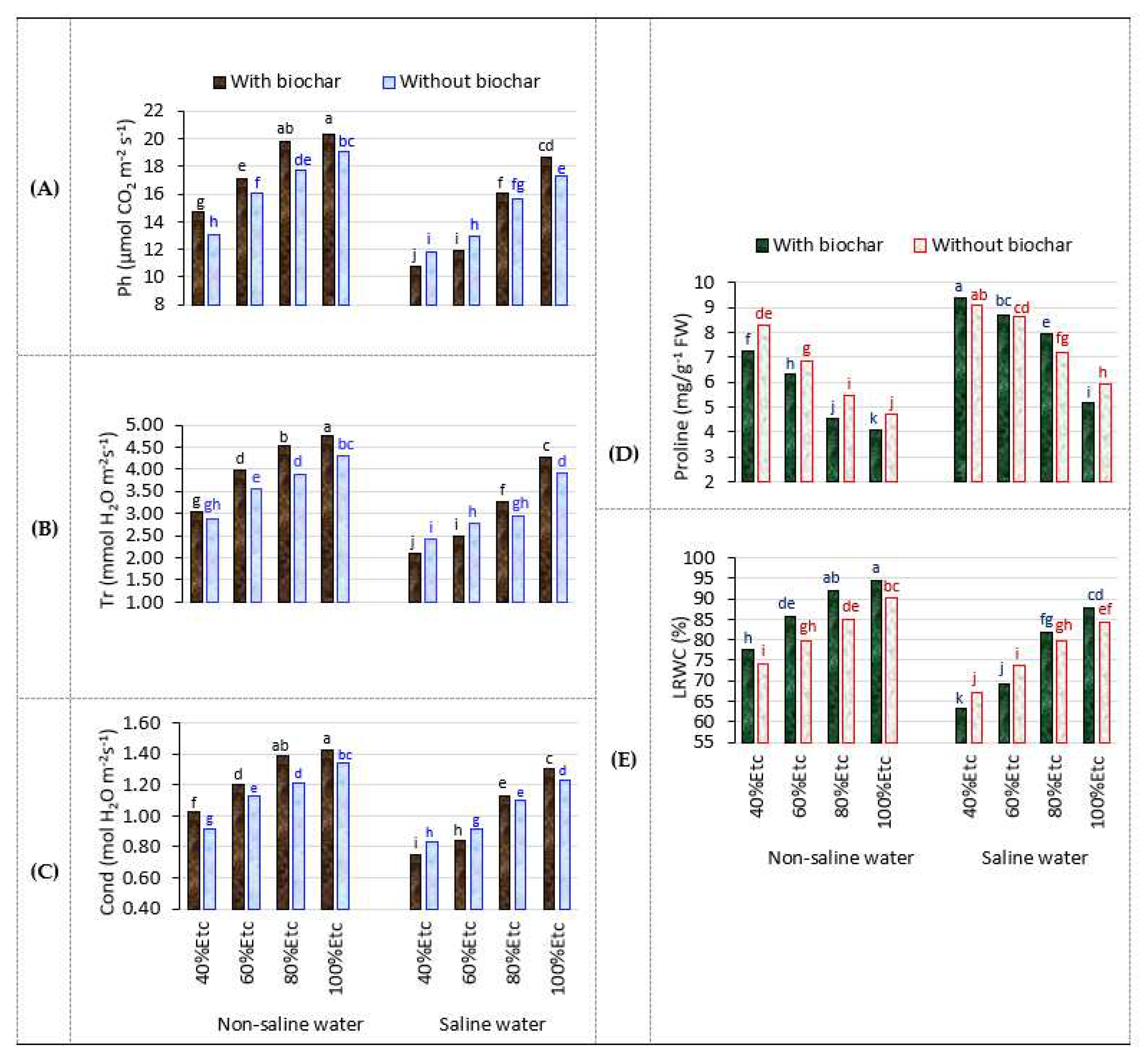
Figure 2.
Interaction effects between salinity (S), water deficit (ETc), and biochar (BC) on total fruit yield (kg m-2) (A) and water use efficiency (WUE) (kg m-3) (B) for tomato. Columns with the same letter are not significantly different at the 0.05 probability level, ac-cording to the LSD test.
Figure 2.
Interaction effects between salinity (S), water deficit (ETc), and biochar (BC) on total fruit yield (kg m-2) (A) and water use efficiency (WUE) (kg m-3) (B) for tomato. Columns with the same letter are not significantly different at the 0.05 probability level, ac-cording to the LSD test.
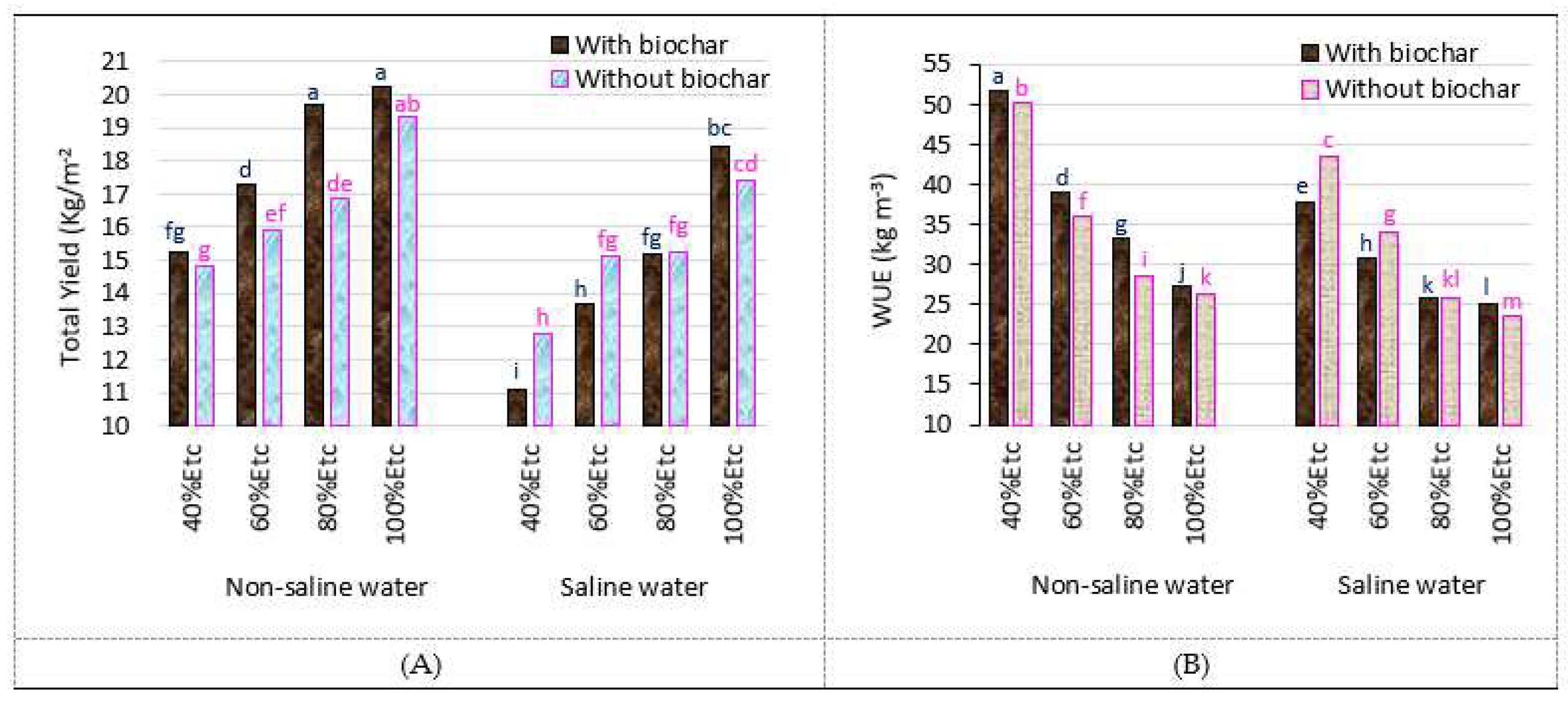
Figure 3.
The location of the experiment: (A) Saudi Arabia (B) Thadiq region (C) Almahous Farms (D) Greenhouse.
Figure 3.
The location of the experiment: (A) Saudi Arabia (B) Thadiq region (C) Almahous Farms (D) Greenhouse.
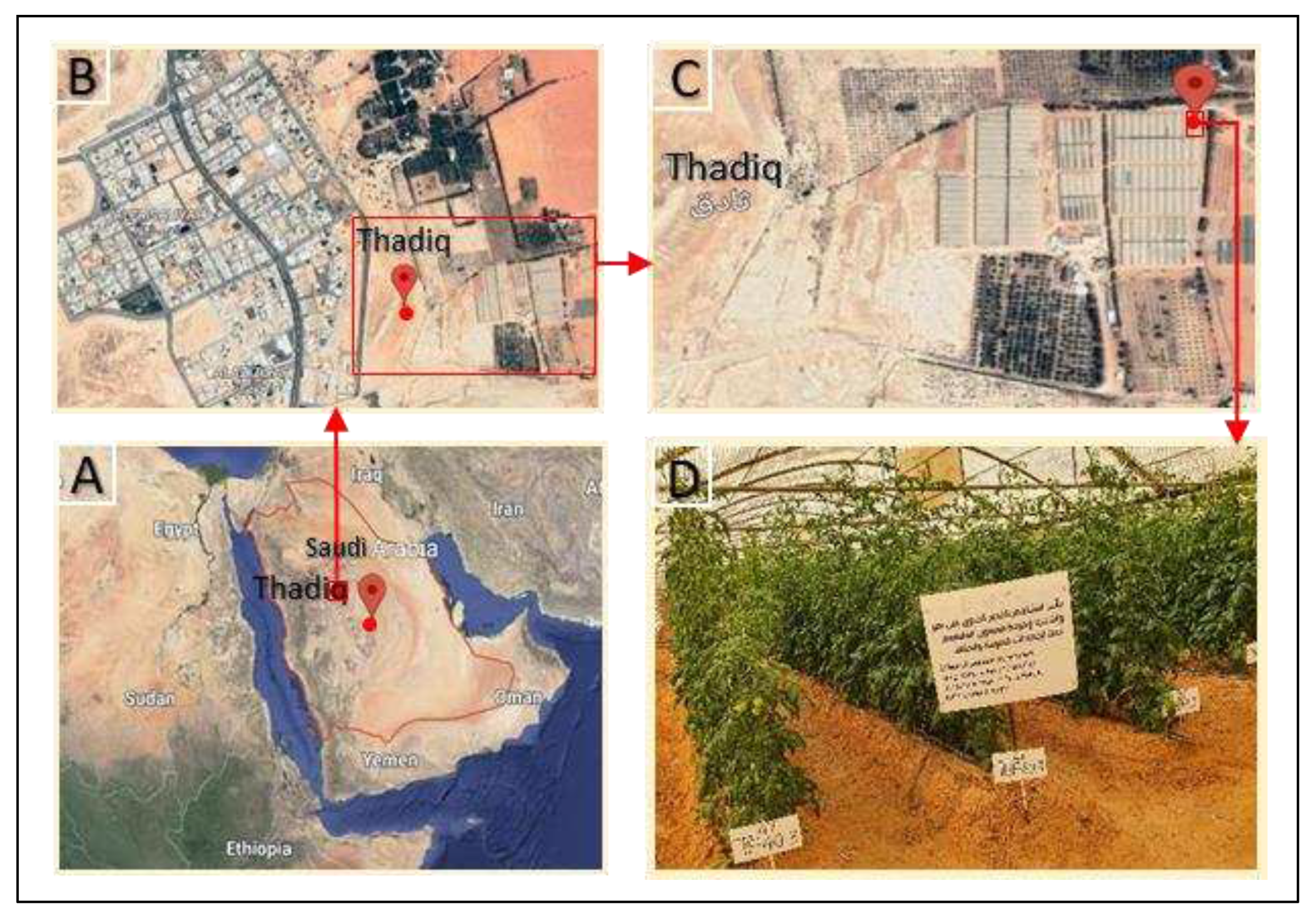

Table 1.
The effects of salinity (S), biochar (BC), and irrigation water levels on tomato plant morphological traits such as plant height (cm), leaf area index (cm2), stem diameter (mm), and fresh and dry weight (g).
Table 1.
The effects of salinity (S), biochar (BC), and irrigation water levels on tomato plant morphological traits such as plant height (cm), leaf area index (cm2), stem diameter (mm), and fresh and dry weight (g).
| Treatments | Plant height (cm) |
Leaf Area index (cm2) |
Stem diameter (mm) | fresh weight of plant (g) |
Dry weight of plant (g) |
|---|---|---|---|---|---|
| Salinity | |||||
| S 0.9 ds m-1 | 334.05 a | 7345.68 a | 15.65 a | 1769.50 a | 223.43 a |
| S 2.3 ds m-1 | 281.69 b | 6262.42 b | 12.36 b | 1393.03 b | 194.23 b |
| Irrigation Levels (%Etc) | |||||
| 100 | 359.01 a | 7867.46 a | 17.23 a | 1957.99 a | 241.08 a |
| 80 | 332.89 b | 7082.46 b | 14.87 b | 1737.82 b | 222.85 b |
| 60 | 283.87 c | 6454.43 c | 13.04 c | 1408.95 c | 197.23 c |
| 40 | 255.73 d | 5811.84 d | 10.89 d | 1220.31 d | 174.17 d |
| Biochar | |||||
| BC0% | 303.60 b | 6711.23 b | 13.58 b | 1542.35 b | 203.08 b |
| BC5% | 312.14 a | 6896.87 a | 14.43 a | 1620.19 a | 214.59 a |
According to the LSD test, values with the same letter are not significantly different at the 0.05 probability level.
Table 2.
Interaction effects between salinity (S), deficit irrigation (DI) and biochar (BC) on tomato plant morphological traits such as plant height (cm), leaf area index (cm2), stem diameter (mm), and fresh and dry weight (g).
Table 2.
Interaction effects between salinity (S), deficit irrigation (DI) and biochar (BC) on tomato plant morphological traits such as plant height (cm), leaf area index (cm2), stem diameter (mm), and fresh and dry weight (g).
| salinity | Irrigation Levels (%Etc) |
Biochar (%) |
height (cm) |
Leaf area index (cm2) |
stem diameter (mm) | fresh weight of plant (g) |
Dry weight of plant (g) |
|---|---|---|---|---|---|---|---|
| S0.9 ds m-1 | 100 | BC0% | 363.49 bc | 8054.68 b | 18.14 b | 1991.03 b | 234.75 c |
| BC5% | 383.82 a | 8547.19 a | 19.17 a | 2137.60 a | 255.00 ab | ||
| 80 | BC0% | 348.34 de | 7070.38 ef | 15.49 de | 1819.51 d | 221.15 de | |
| BC5% | 366.63 b | 7934.80 bc | 18.53 ab | 2067.97 ab | 265.52 a | ||
| 60 | BC0% | 310.89 g | 6818.79 fg | 13.85 fg | 1551.13 f | 210.94 ef | |
| BC5% | 334.07 f | 7573.61 cd | 16.09 d | 1722.16 e | 217.32 e | ||
| 40 | BC0% | 268.67 i | 6157.50 h | 11.58 hi | 1398.91 h | 181.76 h | |
| BC5% | 296.51 h | 6608.46 g | 12.38 h | 1467.74 gh | 201.03 fg | ||
| S2.3 ds m-1 | 100 | BC0% | 336.18 ef | 7222.09 de | 14.66 ef | 1794.42 de | 231.48 cd |
| BC5% | 352.55 cd | 7645.89 c | 16.94 c | 1908.91 c | 243.10 bc | ||
| 80 | BC0% | 304.21 gh | 6737.78 fg | 13.28 g | 1501.86 fg | 195.82 g | |
| BC5% | 312.35 g | 6586.88 g | 12.18 h | 1561.93 f | 208.91 ef | ||
| 60 | BC0% | 256.71 i | 6004.79 h | 11.33 i | 1229.00 i | 182.15 h | |
| BC5% | 233.79 j | 5420.54 i | 10.89 ij | 1133.52 j | 178.49 hi | ||
| 40 | BC0% | 240.33 j | 5623.81 i | 10.30 j | 1052.90 k | 166.56 i | |
| BC5% | 217.42 k | 4857.58 j | 9.30 k | 961.71 l | 147.34 j |
According to the LSD test, values with the same letter are not significantly different at the 0.05 probability level.
Table 3.
Effects of salinity (S), biochar (BC), and irrigation water levels on leaf gas exchange traits, proline content, and LRWC of tomato leaves.
Table 3.
Effects of salinity (S), biochar (BC), and irrigation water levels on leaf gas exchange traits, proline content, and LRWC of tomato leaves.
| Treatments | Photosynthesis Rate (µmol CO2 m-2 s-1) |
Transpiratio Rate (mmol H2O m-2s-1) |
Conductivity (mol H2O m-2s-1) |
Proline (mg/g-1 FW) | LRWC (%) |
|---|---|---|---|---|---|
| salinity | |||||
| S 0.9 ds m-1 | 17.23 a | 3.87 a | 1.20 a | 5.94 b | 84.84 a |
| S 2.3 ds m-1 | 14.38 b | 3.02 b | 1.01 b | 7.76 a | 75.84 b |
| Irrigation Levels (%Etc) | |||||
| 100 | 18.82 a | 4.31 a | 1.32 a | 4.97 d | 89.17 a |
| 80 | 17.29 b | 3.65 b | 1.20 b | 6.29 c | 84.61 b |
| 60 | 14.53 c | 3.21 c | 1.02 c | 7.62 b | 77.13 d |
| 40 | 12.58 d | 2.60 d | 0.88 d | 8.51 a | 70.46 d |
| Biochar | |||||
| BC0% | 15.45 b | 3.34 b | 1.08 b | 7.02 a | 79.20 b |
| BC5% | 16.16 a | 3.55 a | 1.13 a | 6.68 b | 81.48 a |
According to the LSD test, values with the same letter are not significantly different at the 0.05 probability level.
Table 4.
Effects of salinity (S), deficit irrigation (DI), and biochar (BC) on the leaf green index, chlorophyll-a, chlorophyll-b, total chlorophyll, and carotenoids of tomato plants.
Table 4.
Effects of salinity (S), deficit irrigation (DI), and biochar (BC) on the leaf green index, chlorophyll-a, chlorophyll-b, total chlorophyll, and carotenoids of tomato plants.
| Treatments | Leaf Green Index (SPAD) |
Chlorophyll a (mg/g−1 FW) | Chlorophyll b (mg/g−1 FW) | Total Chlorophyll (mg/g−1 FW) | Carotenoids (mg/g−1 FW) |
|---|---|---|---|---|---|
| salinity | |||||
| S 0.9 ds m-1 | 48.63 a | 2.55 a | 1.11 a | 3.66 a | 4.91 a |
| S 2.3 ds m-1 | 39.21 b | 2.28 b | 0.93 b | 3.21 b | 4.23 b |
| Irrigation Levels (%Etc) | |||||
| 100 | 53.91 a | 2.74 a | 1.17 a | 3.91 a | 5.26 a |
| 80 | 48.13 b | 2.57 b | 1.10 b | 3.68 b | 4.86 b |
| 60 | 39.78 c | 2.30 c | 0.93 c | 3.23 c | 4.35 c |
| 40 | 33.87 d | 2.05 d | 0.87 d | 2.92 d | 3.79 d |
| Biochar | |||||
| BC0% | 42.72 b | 2.36 b | 1.00 b | 3.36 b | 4.47 b |
| BC5% | 45.12 a | 2.47 a | 1.04 a | 3.51 a | 4.66 a |
According to the LSD test, values with the same letter are not significantly different at the 0.05 probability level.
Table 5.
Interaction effects between salinity (S), deficit irrigation (DI), and biochar (BC) on the leaf green index, chlorophyll-a, chlorophyll-b, total chlorophyll, and carotenoids of tomato plants.
Table 5.
Interaction effects between salinity (S), deficit irrigation (DI), and biochar (BC) on the leaf green index, chlorophyll-a, chlorophyll-b, total chlorophyll, and carotenoids of tomato plants.
| salinity | Irrigation Levels (%Etc) |
Biochar (%) |
Leaf Green Index (SPAD) |
Chlorophyll a (mg/g−1 FW) | Chlorophyll b (mg/g−1 FW) | Total Chlorophyll (mg/g−1 FW) | Carotenoids (mg/g−1 FW) |
|---|---|---|---|---|---|---|---|
| S 0.9 ds m-1 | 100 | BC0% | 57.80 b | 2.75 bc | 1.12 cd | 3.87 b | 5.34 c |
| BC5% | 60.80 a | 2.86 a | 1.29 a | 4.15 a | 5.77 a | ||
| 80 | BC0% | 48.43 d | 2.61 e | 1.06 de | 3.68 cd | 4.71 fg | |
| BC5% | 58.03 b | 2.82 ab | 1.26 ab | 4.09 a | 5.56 b | ||
| 60 | BC0% | 43.10 f | 2.27 h | 1.02 ef | 3.28 ef | 4.68 fg | |
| BC5% | 45.53 e | 2.63 de | 1.14 c | 3.77 bc | 4.98 de | ||
| 40 | BC0% | 35.97 i | 2.13 i | 0.92 g | 3.06 g | 3.98 i | |
| BC5% | 39.33 h | 2.31 gh | 1.06 de | 3.37 e | 4.25 h | ||
| S 2.3 ds m-1 | 100 | BC0% | 46.37 e | 2.64 de | 1.06 de | 3.71 cd | 4.85 ef |
| BC5% | 50.67 c | 2.69 cd | 1.22 b | 3.92 b | 5.11 d | ||
| 80 | BC0% | 41.17 g | 2.35 g | 1.01 f | 3.35 e | 4.53 g | |
| BC5% | 44.87 e | 2.51 f | 1.08 d | 3.59 d | 4.65 fg | ||
| 60 | BC0% | 36.97 i | 2.24 h | 0.91 g | 3.15 fg | 4.10 hi | |
| BC5% | 33.50 j | 2.05 j | 0.67 h | 2.72 h | 3.66 j | ||
| 40 | BC0% | 31.93 j | 1.90 k | 0.89 g | 2.79 h | 3.60 j | |
| BC5% | 28.23 k | 1.87 k | 0.61 i | 2.48 i | 3.32 k |
According to the LSD test, values with the same letter are not significantly different at the 0.05 probability level.
Table 6.
The effects of salinity (S), deficit irrigation (DI), and biochar (BC) on reduction in yield, saving water, total fruit yield (Kg m-2) and WUE (Kg m-3) (B) for tomato plants.
Table 6.
The effects of salinity (S), deficit irrigation (DI), and biochar (BC) on reduction in yield, saving water, total fruit yield (Kg m-2) and WUE (Kg m-3) (B) for tomato plants.
| Treatments | Total water applied (m-3/ m-2) |
Saving water (%) |
Total Yield (Kg/ m-2) |
Reduction in yield (%) |
WUE (kg m-3) |
Improvement in WUE (%) |
|---|---|---|---|---|---|---|
| salinity | ||||||
| S 0.9 ds m-1 | ------ | ------ | 17.42 a | 00.00 | 36.53 a | 00.00 |
| S 2.3 ds m-1 | ------ | ------ | 14.87 b | 14.64 | 30.76 b | -15.80 |
| Irrigation Levels (%Etc) | ||||||
| 100 | 0.738 | 0.00 | 18.85 a | 0.00 | 25.54 d | 00.00 |
| 80 | 0.591 | 19.92 | 16.74 b | 11.19 | 28.34 c | 10.96 |
| 60 | 0.443 | 39.98 | 15.50 c | 17.77 | 34.98 b | 36.96 |
| 40 | 0.295 | 60.03 | 13.50 d | 28.38 | 45.72 a | 79.01 |
| Biochar | ||||||
| BC0% | ------- | ------ | 15.93 b | 0.00 | 33.46 b | 0.00 |
| BC5% | ------- | ------ | 16.36 a | -2.70 | 33.83 a | 1.11 |
According to the LSD test, values with the same letter are not significantly different at the 0.05 probability level.
Table 7.
Physic-chemical properties of biochar and chemical properties of the soil at the experimental location (greenhouse)
Table 7.
Physic-chemical properties of biochar and chemical properties of the soil at the experimental location (greenhouse)
| Parameters | Unit | Biochar | Soil | |
|---|---|---|---|---|
| Surface area | m2 g-1 | 237.80 | --- | |
| PH | - | 8.82 | 7.27 | |
| EC (1:10) | dS m-1 | 3.71 | 2.46 | |
| OM | % | 30.33 | Cations (meql-1) | |
| N | % | 0.24 | Ca+2 | 10.92 |
| P | % | 0.22 | Mg+2 | 2.25 |
| K | % | 0.88 | K+ | 5.10 |
| C | % | 60.00 | Na+ | 3.8 |
| H | % | 3.44 | Anions (meql-1) | |
| Ca | % | 5.63 | CO32- | 0.11 |
| C/N ratio | - | 250:1 | Cl- | 2.50 |
| Moisture | % | 3.53 | HCO3- | 0.83 |
| Ash | % | 25.70 | SAR | 2.02 |
| Resident material | % | 47.90 | --- | |
Disclaimer/Publisher’s Note: The statements, opinions and data contained in all publications are solely those of the individual author(s) and contributor(s) and not of MDPI and/or the editor(s). MDPI and/or the editor(s) disclaim responsibility for any injury to people or property resulting from any ideas, methods, instructions or products referred to in the content. |
© 2023 by the authors. Licensee MDPI, Basel, Switzerland. This article is an open access article distributed under the terms and conditions of the Creative Commons Attribution (CC BY) license (http://creativecommons.org/licenses/by/4.0/).
Copyright: This open access article is published under a Creative Commons CC BY 4.0 license, which permit the free download, distribution, and reuse, provided that the author and preprint are cited in any reuse.


