

Submitted:
26 May 2023
Posted:
29 May 2023
You are already at the latest version
Abstract
Poultry eggs are a critical source of protein, vitamins, and minerals for people worldwide; facing the current global egg shortage is a significant concern. The shortage results from various factors, including avian flu outbreaks, changes in consumer demand, and supply chain disruptions caused by the COVID-19 pandemic. The economic crisis caused by the pandemic has also impacted the availability and affordability of eggs, particularly in low-income countries. The global egg shortage has implications for public health, particularly for vulnerable populations who rely on eggs for essential nutrients. One Health, an approach that recognizes the interconnectedness of human, animal, and environmental health, provides a useful framework for understanding and addressing the egg shortage. One Health approaches to the egg shortage involve collaboration between agriculture and environmental sectors to address the root causes of the lack and ensure the sustainable production and distribution of eggs. Addressing the global egg shortage requires a multifaceted approach considering the complex social, economic, and environmental factors. One Health perspectives offer a way to understand and address the interconnected factors contributing to the shortage to ensure access to affordable, nutritious eggs for all in a healthy way
Keywords:
Egg shortage
; Poultry supply chain
; Influenza
; Economic crisis
; One Health surveillance
1. Introduction
Poultry eggs and meat are the most abundant and primary animal protein sources in the human diet. The egg is regarded as a low-cost, entirely healthy food and a nutritional powerhouse. Both egg white and yolk are high in protein. It makes up about 12.6% of an egg's edible component. Eggs also include vitamins A, B, E, and K. Eggs are also high in selenium, an antioxidant crucial for thyroid function, our immune system, and mental health, and vitamin D, B6, B12, zinc, and iron[1]. The poultry industry is expanding and becoming more industrialized in many world regions. Growth has been driven by an expanding population, increased purchasing power, and urbanization[2].
Throughout the previous two decades, the worldwide chicken and egg trade has increased, and poultry meat and egg remain the most traded animal protein[3]. As for the poultry industry, egg production is now hampered by a severe shortage of its production worldwide. The cost of eggs and egg products is growing due to avian flu, supply concerns, rising fuel, feed, and packaging prices, and the cost of manufacturing, which are the main factors which lead to running short of eggs in several countries[4]. The higher price of eggs led to an increase in the price of food and bakery items that contain eggs as a component. This adds another hardship to consumers in the form of rising food prices. Since October 2021, about 21 million poultry cases have been reported to the World Organization for Animal Health (WOAH, formerly known as the OIE) in various parts of the world[5]. Although avian flu is not a new threat, wild birds don't typically get sick from the virus, but the current circulating strain seems more virulent[6]. Highly pathogenic avian influenza (HPAI) or “bird flu” is the chief culprit; it can spread swiftly from flock to flock and is fatal in hens. A global pandemic of HPAI viruses of the H5 and H7 subtypes is a global public health issue [7] and a significant economic loss in the chicken sector[8]. The avian flu outbreak is the worst in the history of the United States, Europe, and the United Kingdom (UK) and also 27 European countries (EU). It has crossed the Atlantic for the first time, reaching Canada and the United States (USA), according to the Global food consumer form[9].
The general concept of One Health (OH) is widely accepted[10]. It is a concept that recognizes the interconnectedness of human, animal, and environmental health. It emphasizes the need for collaboration between disciplines such as medicine, veterinary science, ecology, and public health to address health challenges that transcend species boundaries. At present, zoonotic diseases are increasing at an unparalleled pace because of the growing and unclear interface between humans and animals[11]. Emerging zoonotic infections is a perfect example of a zoonotic disease, emphasizing the importance of an OH strategy, in which experts in animal and human health care and research collaborate to solve interconnected problems[12]. Collaborations between human and animal health professionals at the clinical, diagnostic laboratory, public health, research, and training levels must be expanded and sustained in order to manage, prevent, and treat influenza.
The price and shortage of eggs can have a significant impact on a nation's economy, particularly in countries where eggs are a staple food and a significant source of protein for the population[13]. As egg availability declines and costs rise, households that rely on eggs as a primary source of protein may find it difficult to purchase enough to meet their nutritional needs. The shortage may severely impact poultry farmers, forcing them to slaughter birds or reduce production. This could result in lower income for poultry producers and, as a result, more economic hardship for their families. Therefore the ongoing crisis in the global egg supply can also be regarded as “eggflation”.
Despite the poultry sector, especially eggs being an integral part of the economy; regrettably, the price increase and scarcity have reduced consumer egg consumption. This study aims to highlight the scarcity of eggs the world is facing now with the OH perspective and economic crisis, which will enable us to explore the potentialities of this sub-sector.
2. Economic Loss Results from a Global Egg Shortage
The egg industry is adaptable and agile, but a confluence of economic and environmental circumstances in 2022 has made things difficult. Farmers will want to meet demand but confront time constraints and cost pressures. The increase in the price of eggs can lead to an increase in the cost of living, which can affect the purchasing power of the people and lead to inflation. In addition, if a country is reliant on imports of eggs, then a shortage or price increase can create trade imbalances, as the cost of importing eggs will increase. This can lead to a drain on foreign reserves and a weakening local currency. Furthermore, the egg industry is an essential component of the agricultural sector. The shortage of eggs can affect the livelihoods of farmers and suppliers, mainly if they rely on eggs for their income. The price increase can also shift the demand for other food items and affect the production of other agricultural products. Meanwhile, Eggs are a significant source of protein, and a shortage or price increase can lead to malnutrition, particularly among the low-income sections of the population. This can have a long-term impact on the health of the people and can lead to increased healthcare costs. Overall, a scarcity and hike in the price of eggs can result in a ripple effect on the economy, influencing various industries and causing significant harm to underprivileged communities that depend on eggs as a fundamental source of sustenance. The "eggflation" in many nations is illustrated country wise in the Figure 1.
2.1. USA
The USA is facing an exacerbating scarcity of eggs caused by a combination of factors, including the highest avian flu outbreak ever recorded globally and increasing fuel, feed, and packaging costs. According to an article in The “New York Times”, Since the start of 2022, HAI has killed around 58 million commercial and backyard flock birds spanning 47 states, including 44 million laying hens in the USA since the outbreak[4]. According to the “U.S. Bureau of Labor Statistics” consumer price index, revised on January 12, 2023, egg prices have increased by up to 59.9% year on year. The average cost for a dozen large Grade A eggs in the USA in January 2022 was $1.929. The average price had risen to $4.823 by January. Nonetheless, it is gradually reducing to $4.221 by February, but it is still high compared to 2022[14].
2.2. UK
According to data from the British Free Range Egg Producers Association (BFREPA), with about 38 million laying hens across the country, the UK is currently 92% self-sufficient in eggs. Flock size had decreased from 44 million to around 36.7 million birds by November 2022[15]. According to government data, up to September 2022, 213 million dozens of eggs were packed in UK egg-packing facilities during the third quarter of 2022. This is a 9.6% reduction from the third quarter of 2021 and a 4.1% decline from the second quarter of 2022. The number of eggs processed at packing stations in the third quarter of 2022 declined by 9.6% from the same quarter in 2021[16]. The price of eggs climbed 8.5% in January 2023 from December in UK after seasonal adjustment. While this was a significant and expected decline from December's commotion-causing an 11.1% surge, it did little to alleviate an astounding 79.1% year-over-year increase[17].
2.3. European Union (EU-27)
According to an article from Global Food Consumers’ forum, egg prices in the EU have increased by 75% in the previous six months due to supply issues. The 99% of French people who eat eggs this year may eat fewer eggs by up to 10%. “Franceinfo” reports that beginning September 2021, the cost of a box of six eggs has increased by 13 %. Farmers in France have been forced to butcher over 770,000 animals due to the spread of avian flu. As a result, fewer chickens are available to produce eggs, resulting in fewer eggs[9]. According to a recent European Commission report released on February 22 2023, grade A egg prices rose to 249.02 EUR/100 kg[18]. According to an article in “The Economic Times”, Egg prices rose the greatest in the Czech Republic, jumping 85% year on year, followed by two other Central European countries, Hungary (80%) and Slovakia (7%). Germany and Luxembourg (79%) were on the other end of the spectrum, with both reporting a relatively lower 18% growth[19]. According to Assosia data, a pack of six Staveley Large Free Range Eggs increased by 18.2% to £1.95 early this year, making a pack 30% more expensive than it was at the start of 2022[20].
2.4. Taiwan
Many countries are experiencing an egg shortage due to avian flu outbreaks, and Taiwan is also experiencing a severe egg shortage these days. According to an article in “Taipei Times”, by the end of last year, the number of egg-laying hens in Taiwan had fallen from 45 million to 33 million[21]. The NT$5 per kg price increase will raise the wholesale price of duck eggs to a record high of NT$80 per kg. According to a CNA report updated on 5th march 2023, the wholesale price of domestically produced eggs will climb by NT$3 from NT$52 (US$1.70) to NT$55 per catty (600 grams); it is a new high this month, while the farm gate price will also rise by NT$3 to NT$45.5 per catty; initially, it was NT$42.5 starting on Thursday (March 9) [22,23,24]. Price increases were implemented for the second time in a month due to an egg supply constraint. According to the most recent Council of Agriculture (COA) statistics, the current daily egg output is 112,000 boxes (200 eggs each box), which falls short of demand by 500,000 to 800,000 eggs per day. In March, the COA initiated an emergency operation to import five million eggs from Australia to address the short-term supply crisis.
2.5. Japan
An avian influenza outbreak and skyrocketing feed costs are behind a shortage of chicken eggs in Japan that has led to increasing prices. Egg prices are rising due to a lack of supply. According to an article in “Japan Times”, the country saw its first incidence in October 2022, and the disease has spread to more than half of the nation's prefectures. Moreover, According to financial research firm Teikoku Databank, the price of wholesale eggs per kilo in February doubled to ¥327 (Rs. 197) from the previous year, Because of Tori-infuruenza, also known as bird flu, throughout the rest of the world-Japan Times[25]. According to an agriculture ministry survey of 470 outlets across the country in February, a carton of 10 eggs cost an average of 262 yen ($1.92). This was an 8% rise over the previous month and a 25% increase above the average February price in recent years[26]. They've more than doubled to 326 yen by February 2023[27].On March 2, the agriculture ministry claimed that 15.02 million birds had to be exterminated across the country. The vast majority of these, 13.85 million, are laying hens.
2.6. India
In India, the Maharashtra animal husbandry department announced that the state is experiencing an egg shortage. As per the report of PTI news, Maharashtra consumes around 2.25 crore eggs per day and can generate 1 to 1.25 crore eggs per day. Hence, the state is experiencing a 1 million egg shortage daily[28]. According to The Associated Press, the national average price for a dozen eggs was $3.59 (293.57) in November, up from $1.72 (140.65) the previous year[29]. More than 43 million (4.3 crores) of the 58 million (5.8 crores) birds were slaughtered to control the previous year's infection. The prices have increased by about 25-35 per cent in just 3-4 months. To meet the current demand, eggs are being imported from Karnataka, Telangana, and Tamil Nadu.
2.7. Australia
Australia is facing a national egg shortage, causing prices to rise and retail supplies to be in limited supply. Numerous supermarkets limit the amount of cartons of eggs purchased by each customer. Australia's leading causes of shortages and price increases include increased feed costs, labor expenses, electricity costs, and poor weather (winter). Many farmers hesitate to increase production in an uncertain economic environment with rising interest rates and costs. According to the recent report of Global product prices, the whole average price is 2.95 USD; in March 2023, it rose to USD 4.52[30]. The shortage of eggs in the market is due to reduced production, and the pandemic avian influenza is the leading cause of the price rise.
2.8. Other Asian Countries
According to the department of statistics Malaysia (DOSM)[31], the chicken egg price is RM 6.56 per kg and RM 0.46 each in September 2022. According to CNA, Malaysia had an egg scarcity of 157 million in November and 118 million in October. For 30 grade A eggs, it used to cost less than RM11 (S$3.35) a tray. The price then increased to RM13.50- as per the report of Straits Times.
3. Major Reason for Egg Shortage
3.1. Avian Influenza (AI)
The AI comes under the Orthomyxoviridae family and comprises segmented viruses such as influenza types A, B, and C. These are enveloped viruses with negative-sense RNA genomes that have been segmented. The influenza A and B viruses' eight viral RNA segments are translated into 12 proteins. For all AI viruses, Only the Influenza virus A genus is known to infect birds (especially poultry)[34]. Seasonal influenza A and B viruses develop primarily to prevent human humoral immunity by amino-acid changes, insertions, or deletions coding for haemagglutinin and neuraminidase epitopes, allowing the viruses to avoid important antibodies created by past infections, vaccines, or both. This evolutionary procedure is referred to as antigenic drift, which is the phenomenon that causes annual influenza epidemics. After introducing severe acute respiratory syndrome coronavirus 2 (SARS-CoV-2), seasonal influenza virus circulation declined dramatically in 2020-21 but increased in 2021-22. Sporadic zoonotic infections with novel influenza A viruses from birds or pigs continue to pose pandemic risks[35]. The pandemic potential of influenza A viruses propagating among animals is influenced by host species-specific factors[36].
Infections with AI viruses in chicken result in two distinct types of the disease, characterized by their virulence. In most chicken species, the low pathogenic (LPAI) form causes minor symptoms, but the HPAI form causes very high mortality rates. HPAI viruses evolved from LPAI viruses through alterations in the hemagglutinin proteolytic cleavage site, which included mutation of several nonbasic to essential amino acids, duplication of essential amino acids, or recombination with insertion of cellular or viral amino acids[37] The term "HPAI" generally refers to strains that can cause an "intravenous pathogenicity index" (IVPI) greater than 1.2 or a mortality rate greater than 75% in a specific chicken population over ten days. According to this criteria, all HPAI strains isolated so far are of the H5 and H7 subtypes. Some viruses, however, can also be low pathogenic [35].
Recent global outbreaks of HPAI have curtailed egg supplies in the face of increased demand, fueling recent price rises. It continues to be a source of concern in the business, with marketers struggling to keep sufficient stocks on hand to meet current demand. This has become a concern in many countries, resulting in trade reductions and/or elimination for key importing and exporting countries. As illustrated in Figure 2, the EU, USA, and UK are experiencing one of their greatest bird flu crises this year, with each market culling millions of birds [38]. Domestic poultry throughout Asia and Europe and isolated African outbreaks will be affected from 2018 to 2021[39,40,41,42,43]. The disease and death of many birds, often exceeding 10,000 individuals, have been observed during the outbreaks from 2018 to 2021. There have been several outbreaks of avian influenza in the past; in recent years, 2022-2023 [44,45,46], several countries like the EU, USA, and UK have experienced outbreaks of avian influenza in poultry farms, resulting in large-scale culling of birds to prevent the spread of the virus. The severity and extent of any outbreaks depend on various factors, including the type of virus, the susceptibility of bird populations, and the effectiveness of control measures.
3.2. Cage-Free Laws
Recently, cage-free housing systems have garnered much interest in the USA since they give hens more room and other resources (such as litter areas, perches, and nest boxes) and are thought to be better for their well-being[47]. As of the end of 2019, around 80% of table egg-laying chickens are produced in cage systems (hence referred to as conventional production), with the other 20% made as specialty eggs, with cage-free being by far the most frequent specialty egg category (Egg Industry Center, 2019). Cage-free production, on the other hand, has grown considerably in recent years. According to data produced by the Egg Industry Center, the cage-free layer flock grew gradually from roughly 5% in 2009 to 11% in 2017, with accelerated growth following that year, reaching 20% in 2019. (Egg Industry Center, 2019). Its expansion has been spurred partly by new legislation protecting animal welfare [48]. The significant development in cage-free production is due to (1) recent regulation compelling farmers to move from conventional to cage-free production and (2) pledges by large egg buyers such as Mcdonald's, Starbucks, Walmart, and more than 200 restaurants and supermarkets to buy cage-free only products by 2025 (Markets Insider 2017).
If the pledges are kept, around 75% of the egg-laying flock must be cage-free by 2025. Most consumers are only willing to spend an extra $0.30 per dozen for cage-free eggs. Still, the average premium is $1.16 per dozen, indicating that only a tiny percentage of consumers are willing to pay significant dividends for the cage-free label, and the market share for cage-free eggs can grow above its current level, even at premiums as high as $1.00 per dozen[49]. The price of conventional eggs is likely to increase significantly, and most the fraction of people opt not to buy eggs because of the high price range.
3.3. Effects of Supply and Demand
The relationship between supply and demand can significantly impact the price and availability of eggs and thus contribute to an egg shortage. With the world's population growing, there is an increasing need for eggs and other food resources. Moreover, rising health concerns among these individuals contribute to the emergence of protein-rich or "keto" diets and increased awareness of eggs as an alternative protein source. If the supply does not meet the population's demand, the food will be scarce.
According to the foregoing findings, the production rate of eggs is decreasing while the demand rate remains constant, resulting in a shortage. To address this issue, many countries purchase eggs from other countries to meet their daily needs. In India, for example, there is an egg scarcity in Maharashtra; thus, the other states it is importing eggs from Karnataka, Telangana, and Tamil Nadu. Similarly, on March 10, 2023, Taiwan began importing eggs from eight countries, including the USA, Australia, Japan, Brazil, Turkey, Thailand, the Philippines, and Malaysia. Furthermore, according to the Observatory of economic complexity (OCE), the UK is also importing eggs from The USA (£506k or 27.9%), Spain (£84.4k or 48.1%), and Poland (£33.3k or 20.1%) (in November 2022)[50], and Japan is also importing eggs from Hong Kong (484 million), Singapore (14.5 million), Taiwan (4.75 million), and the USA (251,000), and were primarily imported from China (19 million), Taiwan (13.8 million), Germany (4.32 million), and the USA (1.58 million)[51].
In addition, in 2020, many countries experienced egg shortages due to the coronavirus disease 2019 (COVID-19) pandemic, which disrupted supply chains and led to changes in consumer demand. At the beginning of the pandemic, panic buying led to a surge in egg demand, causing shortages in some areas. However, as lockdowns and economic disruptions continued, demand for eggs declined, leading to oversupply in some regions and reduced production in others.
3.4. Supply Chain Difficulties
Supply chains (SCs) are multi-level, complex structures comprising several entities. SCs can exist, function globally or locally, and come in various configurations ranging from simple forward-flow production-distribution networks to closed-loop ones[52]. Shortages of supplies and transportation (such as package feed and fuel) have made it difficult for many national egg producers to meet current demand, resulting in price hikes between 2020 and 2022, before the outbreak of avian bird flu. In addition, chicken mortality provides reduced supply to stores when demand is increasing, resulting in a supply/demand conflict (shortage) that raises prices and leaves someone famished.
To summarize, producing chicken entails more than birds, feed, water, and land. The SCs are far more complicated. Looking at machines as a whole is also deceptive; in fact, if a chicken farm requires an automated feeding line, a proper understanding of the complexity emerges when we examine all of the components of that line, including the motor, the metal auger that carries the feed, and all of the tiny screws that hold the pipes together. The same may be valid for steel and plastic water lines and feed bins. The rationale may be extended to the chain's ultimate stages: chickens need plastic containers to be transported to supermarkets, retailers require fridges to keep chickens, and those fridges require spare parts and repair[53].
The egg sector is dealing with unresolved supply chain issues caused by the coronavirus pandemic, such as labour and construction expenses and a severe outbreak of HPAI that began in February[54]. According to the Department for Environment, Food, and Rural Affairs, the surge in avian influenza and rising costs for farmers due to the war in Ukraine has resulted in an egg shortage.
4. One Health (OH)
OH is a collaborative and trans-disciplinary approach to preserve human, animal, and environmental health through surveillance, prevention, and mitigation. The primary goal of OH is to achieve optimal health and sustainability for humans, animals, and the environment, all at the same time[55,56]. Yet, due to the substantial distance between animal and human health, multi-sectoral cooperation in surveillance and controlling new infectious diseases is difficult to achieve. To close this gap, the EU and the USA have contributed money to encourage interdisciplinary research under the OH paradigm, such as research on therapies for new zoonotic diseases and early warning systems of animal risks to humans. Given the importance of the OH strategy in minimizing the public health danger posed by new infectious diseases and current international trends, its implementation through multi-sectoral collaborative initiatives should be discussed regularly. It is crucial to continue investigating the epidemiology of human and avian influenza circulation and hazards by implementing and strengthening an OH strategy for influenza surveillance. In this regard, many organizations worked globally and regionally to combat these epidemics and pandemics.
For influenza, the World Health Organization (WHO), the Food and Agricultural Organization (FAO), and the World Organization for Animal Health are the three international organizations (OIE) most closely involved with the surveillance and management of avian flu and responsible for public health, food safety and animal health, respectively[57]. The 2010 Tripartite Agreement Concept Note outlined a collaborative strategic direction for the three organizations to pursue and their shared resolve to collaborate more closely in support of countries. FAO, OIE, and WHO reiterated their commitment in 2017, highlighting advances in zoonotic influenza prevention and control while committing to maintain this pace[58]. The WHO's Global Influenza Programme (GIP) establishes global influenza surveillance guidelines. Furthermore, GIP gathers and analyses global virological and epidemiological influenza monitoring data[59]. Due to the constantly evolving nature of influenza viruses, the Global Influenza Surveillance and Response System (GISRS) is also working to combat this threat. It is a WHO-coordinated network of public health laboratories. GISRS conducts year-round influenza virus surveillance, monitors influenza virus evolution, and makes recommendations for laboratory diagnostics, vaccinations, antiviral susceptibility testing, and risk assessment. Furthermore, GISRS acts as a worldwide alarm mechanism for introducing influenza viruses with pandemic potential and has more significant implications for other emerging respiratory diseases, such as SARS-CoV and the Middle East respiratory syndrome coronavirus (MERS-CoV) [60] In addition, Global Action Plan for Influenza Vaccines (GAP), which is a comprehensive strategy to eliminate worldwide shortages and inequitable access to pandemic influenza vaccinations through three primary approaches: increasing evidence-based seasonal vaccine usage, increasing vaccine production capacity; and promoting research and development of more effective vaccines[61]. The country-wise surveillance system of OH is also illustrated in Table 1.
5. Conclusions
The shortage and price increase of eggs can have a cascading effect on the economy, affecting multiple sectors. It can be particularly devastating for low-income sections of the population who rely on eggs as a primary source of nutrition. To address egg shortages, governments may take actions such as importing eggs from other countries, providing subsidies to farmers, or implementing policies to encourage increased production. Additionally, consumers may reduce their egg consumption or switch to alternative protein sources during a shortage. The egg scarcity has demonstrated to egg growers and food sector manufacturers that there is still much opportunity for development and an overall requirement for domesticated and localized supply chain fulfilment techniques. Importing eggs is not a solution for this type of shortage; every country should employ some measures to control influenza as it directly linked with poultry, egg and humans.
Author Contributions
All authors contributed to writing-original draft preparation, review and editing.‖
Funding
This research was funded by VtR Inc-CGU (SCRPD1L0221); DOXABIO-CGU (SCRPD1K0131), and CGU grant (UZRPD1L0011, UZRPD1M0081).
Institutional Review Board Statement
Not applicable‖
Informed Consent Statement
Not applicable
Conflicts of Interest
The authors declare no conflict of interest.
References
- Wang, J., Yue, H., Wu, S., Zhang, H., Qi, G.: Nutritional modulation of health, egg quality and environmental pollution of the layers. Anim. Nutr. 3, 91–96 (2017). [CrossRef]
- View of Major Problems and Challenges of Egg Production and Marketing in Bangladesh. https://journal.safebd.org/index.php/jafe/article/view/12/10.
- AGRIS. https://agris.fao.org/agris-search/index.do Accessed 21 March 2023.
- Egg Shortages and Price Increases Caused in Part by Bird Flu Outbreak - The New York Times. https://www.nytimes.com/2023/01/12/us/egg-shortage-us.html Accessed 21 March 2023.
- Egg prices on the rise: the effects of animal diseases – WOAH – World Organisation for Animal Health. https://www.woah.org/en/article/egg-prices-on-the-rise-the-effects-of-animal-diseases/ Accessed 23 March 2023.
- Blagodatski, A., Trutneva, K., Glazova, O., Mityaeva, O., Shevkova, L., Kegeles, E., Onyanov, N., Fede, K., Maznina, A., Khavina, E., Yeo, S.J., Park, H., Volchkov, P.: Avian influenza in wild birds and poultry: Dissemination pathways, monitoring methods, and virus ecology. Pathogens. 10, (2021). [CrossRef]
- Li, X., Zhang, Z., Yu, A., Ho, S.Y.W., Carr, M.J., Zheng, W., Zhang, Y., Zhu, C., Lei, F., Shi, W.: Global and local persistence of influenza A(H5N1) Virus. Emerg. Infect. Dis. 20, 1287–1295 (2014). [CrossRef]
- Otte, J., Hinrichs, J., Rushton, J., Roland-Holst, D., Zilberman, D.: Impacts of avian influenza virus on animal production in developing countries. CAB Rev. Perspect. Agric. Vet. Sci. Nutr. Nat. Resour. 3, (2008). [CrossRef]
- Worldwide egg shortage due to several reasons raises prices in global supermarkets - Global Food Consumers Forum. https://www.globalfoodconsumers.org/news/global-egg-scarcity/ Accessed 23 March 2023.
- Mackenzie, J.S., Jeggo, M.: The One Health Approach—Why Is It So Important? Trop. Med. Infect. Dis. 2019, Vol. 4, Page 88. 4, 88 (2019). [CrossRef]
- Debnath, F., Chakraborty, D., Deb, A., Saha, M., Dutta, S.: Increased human-animal interface & emerging zoonotic diseases: An enigma requiring multi-sectoral efforts to address. Indian J. Med. Res. 153, 577–584 (2021). [CrossRef]
- Ludwig, S., Zell, R., Schwemmle, M., Herold, S.: Influenza, a One Health paradigm-Novel therapeutic strategies to fight a zoonotic pathogen with pandemic potential. Int. J. Med. Microbiol. 304, 894–901 (2014). [CrossRef]
- Henchion, M., Hayes, M., Mullen, A.M., Fenelon, M., Tiwari, B.: Future Protein Supply and Demand: Strategies and Factors Influencing a Sustainable Equilibrium. Foods 2017, Vol. 6, Page 53. 6, 53 (2017). [CrossRef]
- Bureau of Labor Statistics Data. https://data.bls.gov/timeseries/APU0000708111 Accessed 24 March 2023.
- Egg producers continue to quit on weekly basis, sector warns - FarmingUK News. https://www.farminguk.com/news/egg-producers-continue-to-quit-on-weekly-basis-sector-warns_61952.html Accessed 21 March 2023.
- Historical statistic notices on UK egg production and prices, 2022 - GOV.UK. https://www.gov.uk/government/statistics/historical-statistic-notices-on-uk-egg-production-and-prices-2022 Accessed 25 March 2023.
- Egg prices continue to climb at slower pace alongside other food consumed at home, CPI reveals. https://www.feednavigator.com/Article/2023/02/14/egg-prices-continue-to-climb-at-slower-pace-alongside-other-food-consumed-at-home-cpi-reveals Accessed 21 March 2023.
- Eggs. https://agriculture.ec.europa.eu/farming/animal-products/eggs_en Accessed 22 March 2023.
- In the EU’s inflation crisis, the humble egg takes the cake - The Economic Times. https://economictimes.indiatimes.com/news/international/world-news/in-the-eus-inflation-crisis-the-humble-egg-takes-the-cake/articleshow/98545894.cms?from=mdr Accessed 30 March 2023.
- Why Are Eggs So Expensive RN?. https://www.delish.com/uk/food-news/a42952571/why-are-eggs-so-expensive/ Accessed 27 March 2023.
- Egg shortage calls for cooperation - Taipei Times. https://www.taipeitimes.com/News/editorials/archives/2023/03/06/2003795551 Accessed 27 March 2023.
- Egg prices in Taiwan to rise again as shortage continues - Focus Taiwan. https://focustaiwan.tw/business/202303050013 Accessed 27 March 2023.
- Egg prices in Taiwan sizzle to all-time high | Taiwan News | 2023-03-06 12:53:00. https://www.taiwannews.com.tw/en/news/4827709 Accessed 27 March 2023.
- Expatriate Division, Taipei Economic and Trade Office, Jakarta, Indonesia – News. https://www.ocac.gov.tw/OCAC/SubSites/Pages/Detail.aspx?site=bf7c679c-ac68-4740-84d2-4bc1f4735f8b&nodeid=1743&pid=51654996 Accessed 26 March 2023.
- Explained: After US and UK, why Japan is now facing egg shortage. https://www.firstpost.com/explainers/explained-after-us-and-uk-why-japan-is-now-facing-egg-shortage-12266472.html Accessed 24 March 2023.
- Egg prices on the rise as 15 million birds culled amid avian flu scare | The Asahi Shimbun: Breaking News, Japan News and Analysis. https://www.asahi.com/ajw/articles/14852803 Accessed 21 March 2023.
- High Egg Prices Are Hitting Japan (and Its Pancakes) - Unseen Japan. https://unseenjapan.com/rising-egg-prices-japan-pancakes/ Accessed 23 March 2023.
- State Facing Shortage Of Eggs: Official | Aurangabad News - Times of India. https://timesofindia.indiatimes.com/city/aurangabad/state-facing-shortage-of-eggs-official/articleshow/97077703.cms Accessed 22 March 2023.
- This Indian state is facing shortage of 1 crore eggs per day | Mint. https://www.livemint.com/news/india/maharashtra-is-facing-shortage-of-1-crore-eggs-per-day-11674013638100.html Accessed 22 March 2023.
- Australia - Eggs - price, March 2023 | GlobalProductPrices.com. https://www.globalproductprices.com/Australia/egg_prices/ Accessed 24 March 2023.
- Department of Statistics Malaysia Official Portal. https://www.dosm.gov.my/v1/index.php?r=column/cthemeByCat&cat=511&bul_id=MW9kdjRHZi9RUDRKeHh5WGQwN3ZkUT09&menu_id=bThzTHQxN1ZqMVF6a2I4RkZoNDFkQT09 Accessed 24 March 2023.
- Egg prices break all-time high, industry blames bulk social aid purchases - Economy - The Jakarta Post. https://www.thejakartapost.com/business/2022/08/24/egg-prices-break-all-time-high-industry-blames-bulk-social-aid-purchases.html Accessed 24 March 2023.
- Topic: Indonesia | The Star. https://www.thestar.com.my/tag/indonesia Accessed 25 March 2023.
- Capua, I., Alexander, D.J.: Avian influenza infection in birds: A challenge and opportunity for the poultry veterinarian. Poult. Sci. 88, 842–846 (2009). [CrossRef]
- Uyeki, T.M., Hui, D.S., Zambon, M., Wentworth, D.E., Monto, A.S.: Influenza. Lancet. 400, 693–706 (2022). [CrossRef]
- Long, J.S., Mistry, B., Haslam, S.M., Barclay, W.S.: Host and viral determinants of influenza A virus species specificity. Nat. Rev. Microbiol. 2018 172. 17, 67–81 (2018). [CrossRef]
- Lee, D.H., Criado, M.F., Swayne, D.E.: Pathobiological Origins and Evolutionary History of Highly Pathogenic Avian Influenza Viruses. Cold Spring Harb. Perspect. Med. 11, a038679 (2021). [CrossRef]
- Avian Influenza – WOAH – World Organisation for Animal Health. https://www.woah.org/en/disease/avian-influenza/#ui-id-2 Accessed 25 March 2023.
- Poen, M.J., Venkatesh, D., Bestebroer, T.M., Vuong, O., Scheuer, R.D., Oude Munnink, B.B., de Meulder, D., Richard, M., Kuiken, T., Koopmans, M.P.G., Kelder, L., Kim, Y.J., Lee, Y.J., Steensels, M., Lambrecht, B., Dan, A., Pohlmann, A., Beer, M., Savic, V., Brown, I.H., Fouchier, R.A.M., Lewis, N.S.: Co-circulation of genetically distinct highly pathogenic avian influenza A clade 2.3.4.4 (H5N6) viruses in wild waterfowl and poultry in Europe and East Asia, 2017-18. Virus Evol. 5, vez004–vez004 (2019). [CrossRef]
- Peyrot, B.M., Abolnik, C., Anthony, T., Roberts, L.C.: Evolutionary dynamics of the clade 2.3.4.4B H5N8 high-pathogenicity avian influenza outbreaks in coastal seabirds and other species in southern Africa from 2017 to 2019. Transbound. Emerg. Dis. 69, 3749–3760 (2022). [CrossRef]
- Baek, Y.G., Lee, Y.N., Lee, D.H., Shin, J.I., Lee, J.H., Chung, D.H., Lee, E.K., Heo, G.B., Sagong, M., Kye, S.J., Lee, K.N., Lee, M.H., Lee, Y.J.: Multiple Reassortants of H5N8 Clade 2.3.4.4b Highly Pathogenic Avian Influenza Viruses Detected in South Korea during the Winter of 2020-2021. Viruses. 13, (2021). [CrossRef]
- Adlhoch, C., Fusaro, A., Gonzales, J.L., Kuiken, T., Marangon, S., Niqueux, É., Staubach, C., Terregino, C., Guajardo, I.M., Chuzhakina, K., Baldinelli, F.: Avian influenza overview June – September 2022. EFSA J. 20, (2022). [CrossRef]
- Verhagen, J.H., Fouchier, R.A.M., Lewis, N.: Highly Pathogenic Avian Influenza Viruses at the Wild-Domestic Bird Interface in Europe: Future Directions for Research and Surveillance. Viruses. 13, (2021). [CrossRef]
- Adlhoch, C., Fusaro, A., Gonzales, J.L., Kuiken, T., Marangon, S., Niqueux, É., Staubach, C., Terregino, C., Aznar, I., Guajardo, I.M., Baldinelli, F.: Avian influenza overview March – June 2022. EFSA J. 20, (2022). [CrossRef]
- Sidik, S.M.: Why is bird flu so bad right now? Nature. (2022). [CrossRef]
- Agüero, M., Monne, I., Sánchez, A., Zecchin, B., Fusaro, A., Ruano, M.J., Del Valle Arrojo, M., Fernández-Antonio, R., Souto, A.M., Tordable, P., Cañás, J., Bonfante, F., Giussani, E., Terregino, C., Orejas, J.J.: Highly pathogenic avian influenza A(H5N1) virus infection in farmed minks, Spain, October 2022. Euro Surveill. 28, (2023). [CrossRef]
- Lin, X., Zhang, R., Jiang, S., El-Mashad, H., Xin, H.: Emissions of ammonia, carbon dioxide and particulate matter from cage-free layer houses in California. Atmos. Environ. 152, 246–255 (2017). [CrossRef]
- Trejo-Pech, C.J.O., Thompson, J.M.: Discounted cash flow valuation of conventional and cage-free production investments. https://doi.org/10.22434/IFAMR2020.0046. 24, 197–214 (2021). [CrossRef]
- Lusk, J.L.: Consumer preferences for cage-free eggs and impacts of retailer pledges. Agribusiness. 35, 129–148 (2019). [CrossRef]
- Eggs in United Kingdom | OEC - The Observatory of Economic Complexity. https://oec.world/en/profile/bilateral-product/eggs/reporter/gbr Accessed 25 March 2023.
- Eggs in Japan | OEC - The Observatory of Economic Complexity. https://oec.world/en/profile/bilateral-product/eggs/reporter/jpn Accessed 25 March 2023.
- Sazvar, Z., Tafakkori, K., Oladzad, N., Nayeri, S.: A capacity planning approach for sustainable-resilient supply chain network design under uncertainty: A case study of vaccine supply chain. Comput. Ind. Eng. 159, 107406 (2021). Accessed 25 March 2023. [CrossRef]
- Ferlito, C.: The Poultry Industry and Its Supply Chain in Malaysia: Challenges from the Covid-19 Emergency. https://www.academia.edu/43077829/The_Poultry_Industry_and_Its_Supply_Chain_in_Malaysia_Challenges_from_the_Covid_19_Emergency, (2020) Accessed 25 March 2023.
- Why egg prices are high, and won’t be going down soon - The Washington Post. https://www.washingtonpost.com/business/2023/01/10/egg-prices-avian-flu-inflation/ Accessed 26 March 2023.
- Prata, J.C., Rocha-Santos, T., Ribeiro, A.I.: An introduction to the concept of One Health. One Heal. Integr. Approach to 21st Century Challenges to Heal. 1–31 (2022). Accessed 26 March 2023. [CrossRef]
- Sharifi, H., Karamouzian, M.: Introducing \. Int. J. Heal. Policy Manag. 2, 101–102 (2014). Accessed 30 March 2023. [CrossRef]
- Chien, Y.J.: How Did International Agencies Perceive the Avian Influenza Problem? The Adoption and Manufacture of the ‘One World, One Health’ Framework. Pandemics Emerg. Infect. Dis. Sociol. Agenda. 46–58 (2013). [CrossRef]
- OIE, FAO and WHO enlarge their collaboration commitment to face health challenges – WOAH – World Organisation for Animal Health. https://www.woah.org/en/oie-fao-and-who-enlarge-their-collaboration-commitment-to-face-health-challenges/ Accessed 26 March 2023.
- WHO EMRO | Influenza surveillance | Influenza | Health topics. https://www.emro.who.int/health-topics/influenza/influenza-surveillance.html Accessed 27 March 2023.
- Global Influenza Strategy 2019–2030. https://www.who.int/publications/i/item/9789241515320 Accessed 27 March 2023.
- Geneva, Switzerland: Report of the second WHO Consultation on the Global Action Plan for Influenza Vaccines (GAP) P G A. Accessed 27 March 2023.
- USDA APHIS | 2022-2023 Detections of Highly Pathogenic Avian Influenza Accessed 27 March 2023.
- Yang, J.R., Teng, H.J., Liu, M.T., Li, S.Y.: Taiwan’s Public Health National Laboratory System: Success in Influenza Diagnosis and Surveillance. Heal. Secur. 15, 154–164 (2017). [CrossRef]
- Revised Action Plan 2021 for Avian Influenza | Department of Animal Husbandry & Dairying. https://dahd.nic.in/circulars/revised-action-plan-2021-avian-influenza Accessed 28 March 2023.
- European Influenza Surveillance Network (EISN). https://www.ecdc.europa.eu/en/about-us/partnerships-and-networks/disease-and-laboratory-networks/eisn Accessed 28 March 2023.
- Avian Influenza Control Programme in Indonesia. Annual Report 2008. https://www.fao.org/documents/card/fr/c/ec93e780-2529-4ea9-af88-a0fa5dd2f33f/ Accessed 28 March 2023.
- WOAH – World Organisation for Animal Health. https://www.woah.org/en/home/ Accessed 31 March 2023.
- Search Results for – WOAH – World Organisation for Animal Health. https://www.woah.org/en/?s=&_search=Japan Accessed 31 March 2023.
- Dutt Y, Dhiman R, Singh T, Vibhuti A, Gupta A, Pandey RP, Raj VS, Chang CM, Priyadarshini A. The Association between Biofilm Formation and Antimicrobial Resistance with Possible Ingenious Bio-Remedial Approaches. Antibiotics (Basel). 2022 Jul 11;11(7):930. [CrossRef]
- Mukherjee S, Mishra AK, Peer GDG, Bagabir SA, Haque S, Pandey RP, Raj VS, Jain N, Pandey A, Kar SK. The Interplay of the Unfolded Protein Response in Neurodegenerative Diseases: A Therapeutic Role of Curcumin. Front Aging Neurosci. 2021 Nov 19;13:767493. [CrossRef]
- Sadhu S, Rizvi ZA, Pandey RP, Dalal R, Rathore DK, Kumar B, Pandey M, Kumar Y, Goel R, Maiti TK, Johri AK, Tiwari A, Pandey AK, Awasthi A. Gefitinib Results in Robust Host-Directed Immunity Against Salmonella Infection Through Proteo-Metabolomic Reprogramming. Front Immunol. 2021 Mar 31;12:648710. [CrossRef]
- de Oliveira Ribeiro G, da Costa AC, Gill DE, Ribeiro ESD, Rego MODS, Monteiro FJC, Villanova F, Nogueira JS, Maeda AY, de Souza RP, Tahmasebi R, Morais VS, Pandey RP, Raj VS, Scandar SAS, da Silva Vasami FG, D'Agostino LG, Maiorka PC, Deng X, Nogueira ML, Sabino EC, Delwart E, Leal É, Cunha MS. Guapiaçu virus, a new insect-specific flavivirus isolated from two species of Aedes mosquitoes from Brazil. Sci Rep. 2021 Feb 25;11(1):4674. [CrossRef]
- Pandey RP, Mukherjee R, Chang CM. Emerging Concern with Imminent Therapeutic Strategies for Treating Resistance in Biofilm. Antibiotics (Basel). 2022 Apr 2;11(4):476. [CrossRef]
- Pandey RP, Mukherjee R, Priyadarshini A, Gupta A, Vibhuti A, Leal E, Sengupta U, Katoch VM, Sharma P, Moore CE, Raj VS, Lyu X. Potential of nanoparticles encapsulated drugs for possible inhibition of the antimicrobial resistance development. Biomed Pharmacother. 2021 Sep;141:111943. [CrossRef]
Figure 1.
Worldwide egg shortage.
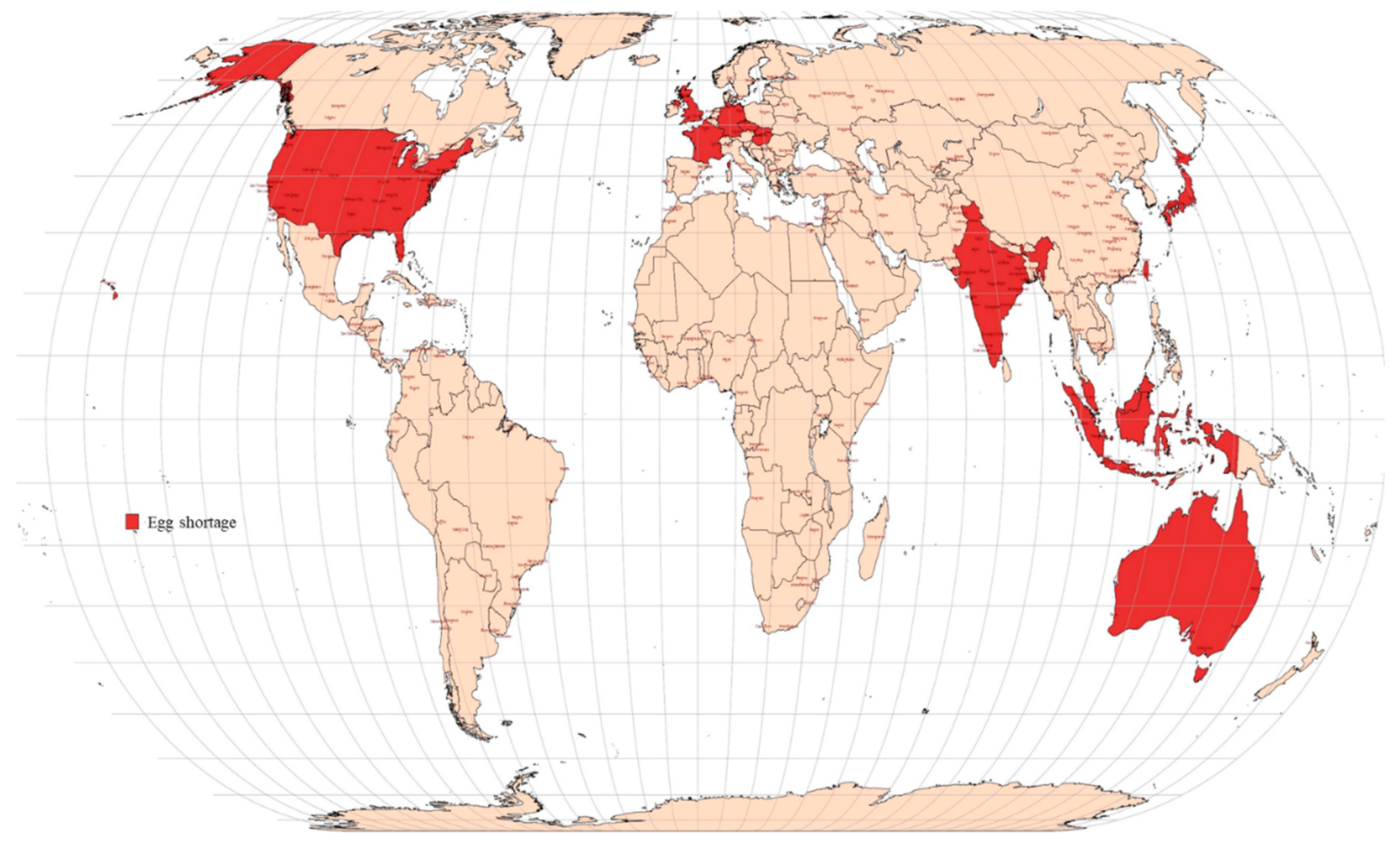
Figure 2.
Occurrence of highly pathogenic avian influenza (HPAI) outbreak events in poultry birds from 1 January 2018 to 9 March 2023. Accessed from the International Organization for Animal Health documented (OIE)[38,69,70,71,72,73,74].
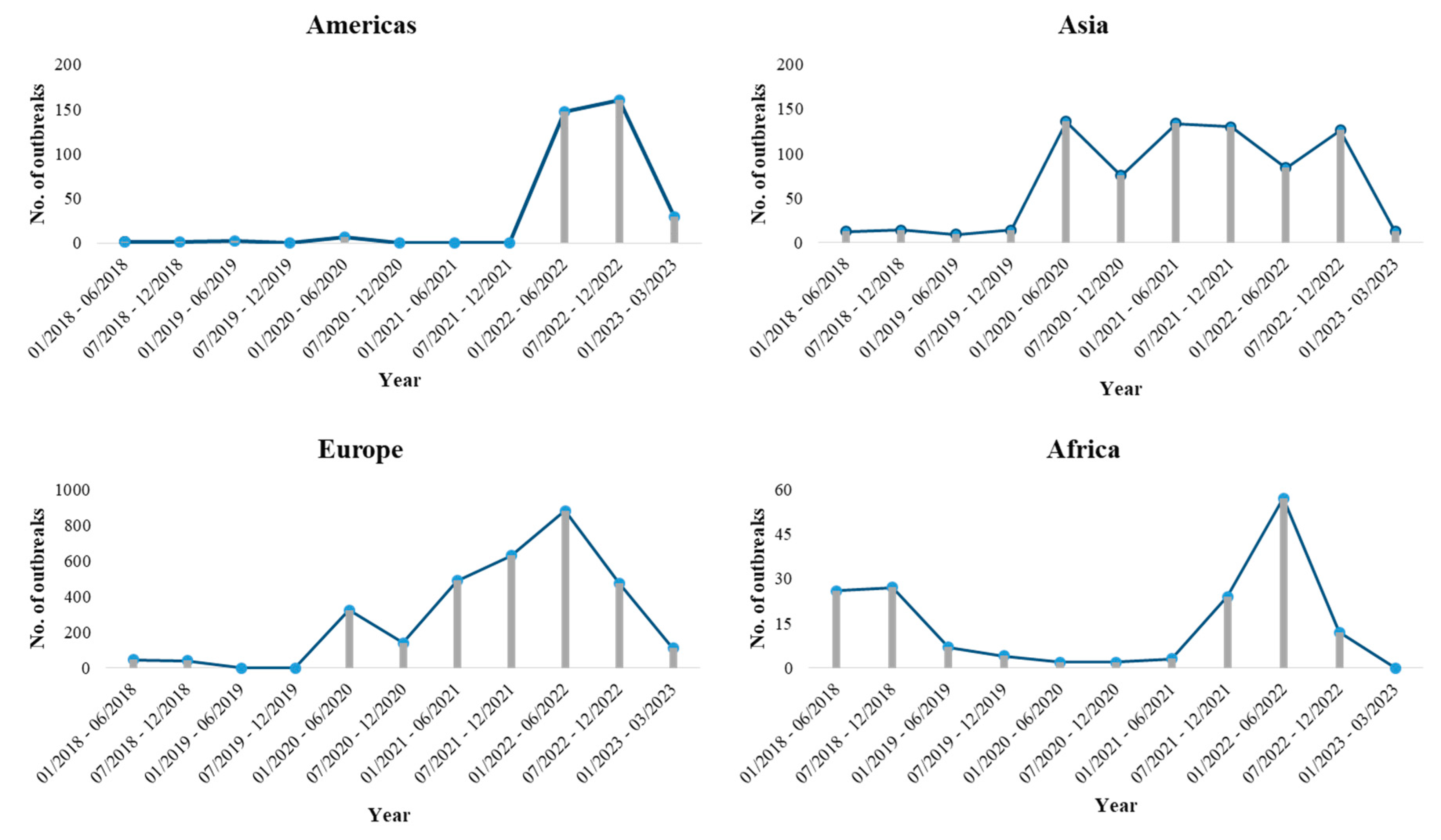

Table 1.
One Health surveillance system related to influenza in different nations.
| Country | Influenza surveillance programs | Work | References |
|---|---|---|---|
| USA | Animal & Plant Health Inspection Service (APHIS) | Work closely with State partners on surveillance, reporting, and controlling the disease | [62] |
| Taiwan | National Laboratory Influenza Surveillance System | Serves as a country-wide alert system for the emergence of novel influenza viruses with pandemic potential | [63] |
| India | Action Plan for Prevention, Control & Containment of Avian Influenza | Early detection, Assess temporal and spatial patterns | [64] |
| European region | European Influenza Surveillance Network (EISN) | Integrates influenza epidemiology and virological surveillance. | [65] |
| Indonesia | Participatory Disease Surveillance and Response (PDSR) | Culminate in a community-based animal disease prevention and control programme | [66] |
| Malaysia | National Surveillance Program for Avian Influenza and Malaysia Influenza Surveillance Protocol | Establish seasonal thresholds and reliable national trend data, provide platform for surveillance, describe the antigenic character and genetic makeup of virus | [67] |
| Japan | Avian Influenza Surveillance Programme | Detection and assessment of risk before outbreak | [68] |
Disclaimer/Publisher’s Note: The statements, opinions and data contained in all publications are solely those of the individual author(s) and contributor(s) and not of MDPI and/or the editor(s). MDPI and/or the editor(s) disclaim responsibility for any injury to people or property resulting from any ideas, methods, instructions or products referred to in the content. |
© 2023 by the authors. Licensee MDPI, Basel, Switzerland. This article is an open access article distributed under the terms and conditions of the Creative Commons Attribution (CC BY) license (http://creativecommons.org/licenses/by/4.0/).
Copyright: This open access article is published under a Creative Commons CC BY 4.0 license, which permit the free download, distribution, and reuse, provided that the author and preprint are cited in any reuse.


