

Submitted:
24 May 2023
Posted:
25 May 2023
You are already at the latest version
Abstract
Forestry workers play a crucial role in implementing forest management programs, but their outdoor work exposes them to rising temperatures caused by global climate change, which poses potential health risks related to heat. This study focuses on Indonesian forestry workers and examines the relationship between their knowledge of heat-related issues, risk perception, and precautionary behavior in dealing with increasing workplace heat exposure. Developing effective precautionary behavior is essential for preventing heat-related health disorders and promoting health protection programs. To facilitate a comprehensive comparison of the three variables, interviews were conducted with two groups of outdoor workers, comprising 210 forestry workers and 215 paddy farmers. The findings indicate that increasing knowledge about heat-related issues promotes precautionary behavior, and risk perception acts as a mediator between knowledge and behavior. Additionally, the study highlights that the emotion of "dread" intensifies perceived risk and predicts positive behavior change. To enhance heat-related knowledge, exploring the potential use of a "fear" tone is important. In conclusion, comprehensive strategies need to be implemented to promote precautionary behavior among vulnerable forestry workers, particularly manual laborers.
Keywords:
forestry worker
; climate change
; heat-related illness
; hot temperature
; outdoor worker
; slow-onset disaster
1. Introduction
The Intergovernmental Panel on Climate Change (IPCC) estimates that the average increase in global surface temperature from 1850–1900 to 2011–2020 was 1.09 ˚C (±0.15 ˚C) for the observed period and are likely to exceed 2 ˚C above pre-industrial levels by the 2040s [1]. Indonesia, located in the tropical region, has seen an increase in temperature in many parts of the country. The estimates of climate models indicate that Indonesia is one of the most susceptible nations to extreme heat [2,3]. The Indonesian Meteorology, Climatology, and Geophysical Agency (BMKG) indicates that most inland regions in Indonesia are anticipated to suffer a rise in the annual average temperature of more than 1.1˚C for the period 2020–2049 compared to 1976–2005 [4]. The Indonesian Central Bureau of Statistics’ (BPS) report on the country’s climate dynamics provides compelling evidence of a significant increase in temperature across almost all the archipelago’s regions. The study reveals a significant trend of elevated maximum temperatures in the provinces of East Nusa Tenggara (33.5°C in 2011 to 38.4°C in 2020), Riau Islands (32.6°C in 2011 to 37.5°C in 2020), and Central Sulawesi (34.1°C in 2011 to 37.4°C in 2020) [5,6]. This situation is alarming, considering the maximum temperature in the same region in 2012 was 32–33 ˚C.
The rise in temperature is known to have an adverse effect on human health [7,8]. The human body’s thermoregulatory system is responsible for regulating the exchange of heat between the body and the environment to maintain a homeostatic core temperature of 37 ˚C [9]. This system serves as a physiological mechanism to cope with the threat of heat exposure. However, prolonged exposure to high temperature can result in heat-related illness (HRI) [8,9] as well as occupational injuries [10,11]. HRI can lead to increased medical costs, reduced work productivity, reduced quality of life, and even fatalities [12]. Thus, climate change, particularly extreme heat, poses a significant challenge to public health and work productivity [13,14].
The forest plays a vital role in providing direct and indirect benefits to human livelihoods through its products and environmental services. While numerous studies have investigated the impacts of climate change on forests, such as decreased productivity and biodiversity [15,16], there has been a lack of in-depth analysis concerning the risk of heat exposure to the health of forestry workers, despite the fact that these outdoor workers are highly vulnerable to health problems and work-related injuries caused by prolonged exposure to extreme heat due to their predominantly outdoor activities [13,17]. This represents a significant gap in the literature, as forestry workers are at heightened risk due to their extended periods of outdoor work in hot and humid environments. Thus, it is critical to recognize that forestry workers face similar challenges with heat exposure, although studies on this topic are limited.
This research aims to investigate the association between heat-related knowledge, risk perception, and heat-exposure precautionary behavior among Indonesian forestry workers. According to the health belief model (HBM) [18,19], modifying precautionary behavior is crucial for the development of HRI prevention and promotion programs. The HBM theory places risk perceptions as one of the triggers for precautionary behavior [20]. Specifically, regarding risk perception related to heat, Yovi et al. [21] found that forestry workers often exhibit a high level of risk acceptance. They view the health risk connected with exposure to a hot environment as a natural consequence that must be accepted rather than a topic worth discussing. This risk acceptance attitude is suspected to potentially influence precautionary behavior, as seen in non-delayed risk events [22]. Additionally, while other factor may come into play, knowledge is the critical element for the successful design of health promotion and prevention programs [23,24]. Hence, workers must understand the risk they face and be aware of the appropriate and necessary preventive measures they need to take [10].
The findings of this study have practical implications for the development of effective heat illness prevention initiatives among forestry workers in Indonesia. Specifically, the study highlights the importance of knowledge and risk perception in promoting precautionary behavior and underscores the need for targeted strategies to address the unique vulnerabilities of forestry workers.
2. Materials and Methods
2.1. Hypothesis
Our theoretical exploration of the interrelations among knowledge, risk perception, and precautionary behavior reveals that knowledge and risk perception are significantly associated with the adoption of precautionary behavior [25,26,27]. Moreover, our exploration found that knowledge has an indirect effect on precautionary behavior by influencing individual risk perception [28]. Our hypothesis suggests that forestry workers, who have a higher propensity for accepting risks in response to only immediate risks, as observed in Yovi et al. [21], may require a more intensive intervention approach to increase their understanding of the significance of preventive actions in mitigating the long-term consequences of slow-onset disasters. We then propose the following hypotheses:
Hypothesis 1:
Heat-related knowledge positively predicts precautionary behavior.
Hypothesis 2:
Heat-related knowledge positively predicts risk perception.
Hypothesis 3:
Risk perception positively predicts precautionary behavior.
Hypothesis 4:
Risk perception mediates the relationship between knowledge and precautionary behavior.
Hypothesis 5:
External variable of sub-sector (participant group) moderates the relationships between knowledge and precautionary behavior.
The logical connections among these constructs are graphically depicted in Figure 1, highlighting the crucial role played by knowledge and risk perception in shaping the precautionary behavior.
2.2. Survey and Survey Participants
To address the research question regarding whether the effort required by forest workers differs from that of other outdoor workers operating in similar working environments (Hypotheses 5), we employed two distinct respondent cohorts: forest workers and paddy farmers. This research was based on cross-sectional survey data collected between June and August 2022 in Cilegon and Serang (Banten Province), and Jepara and Blora (Central Java Province). These provinces were chosen due to their status, whether as active forestry regions or significant rice producers. The observed increase in temperature at the climatology stations in these areas indicates a concerning trend of rising temperatures. For instance, the maximum air temperature during hot months in Semarang, Central Java, has escalated from 32.2 ˚C to 34.2–35.2 ˚C between 2012 and 2018 [29]. Similarly, during the same months in 2013 and 2017, the highest temperature in Cilegon, Banten, has surged from 31.8–32.9 ˚C ([30] to 32.7–33.4 ˚C [31]. Figure 2 shows the map of the study area.
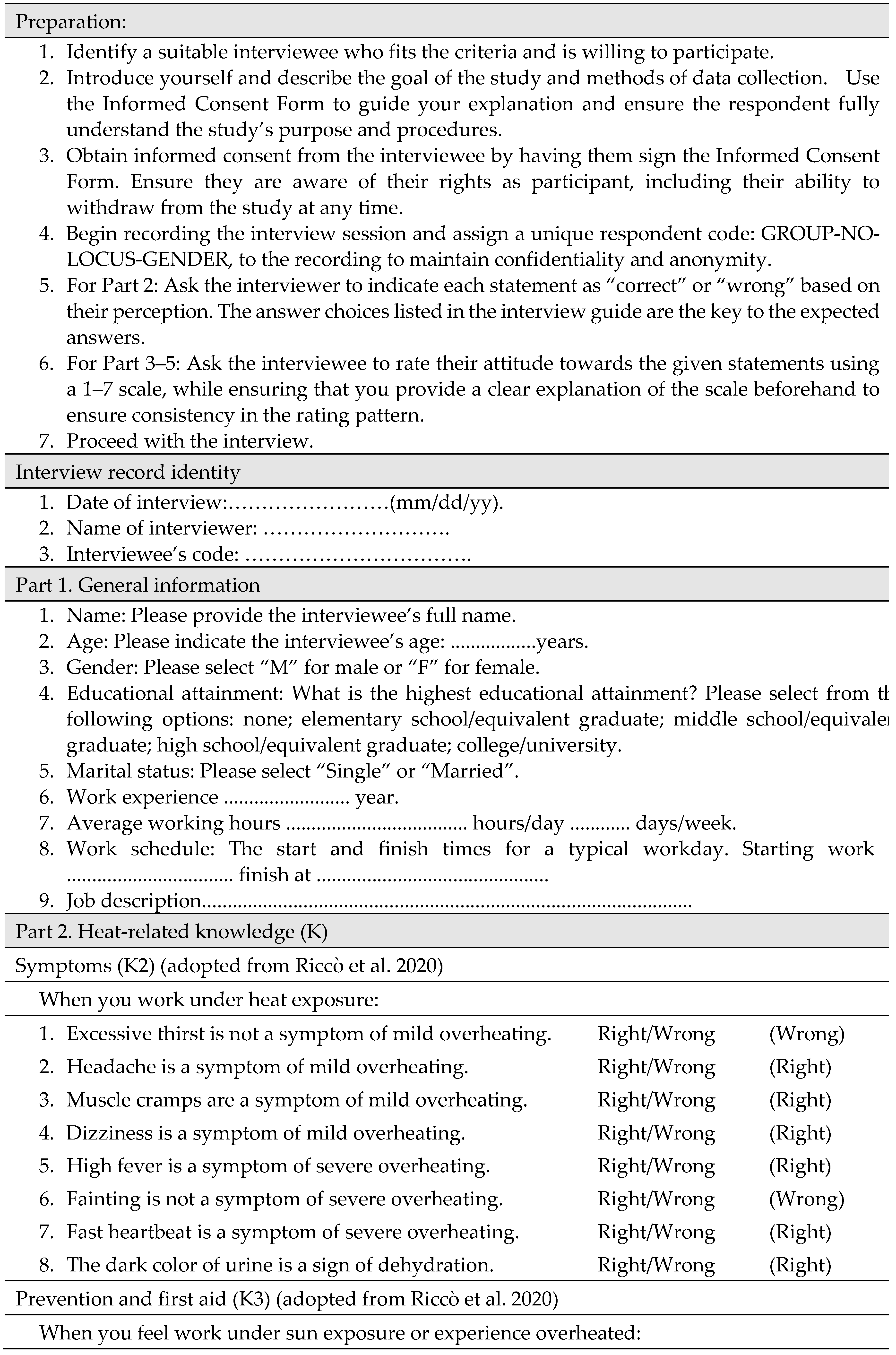
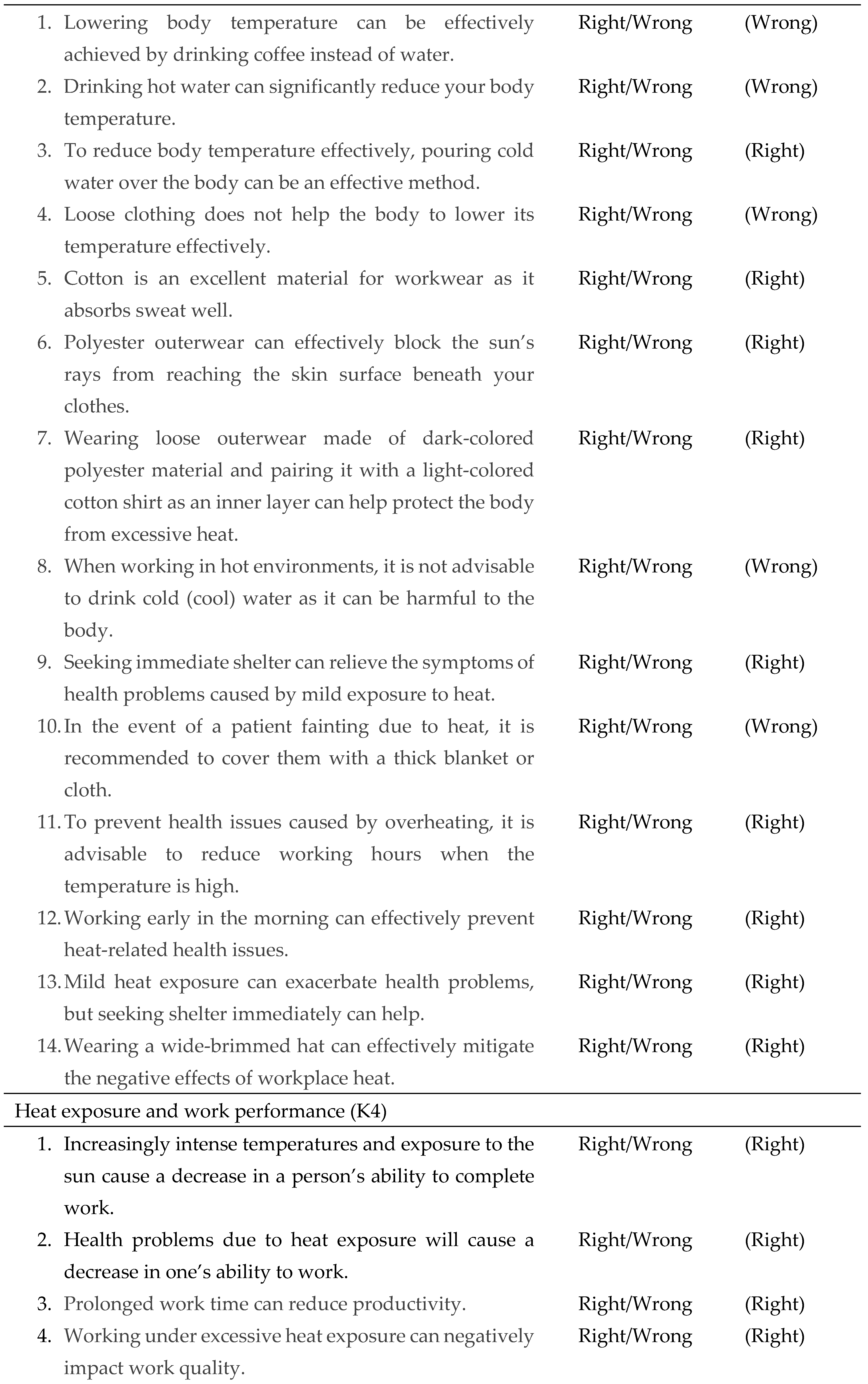
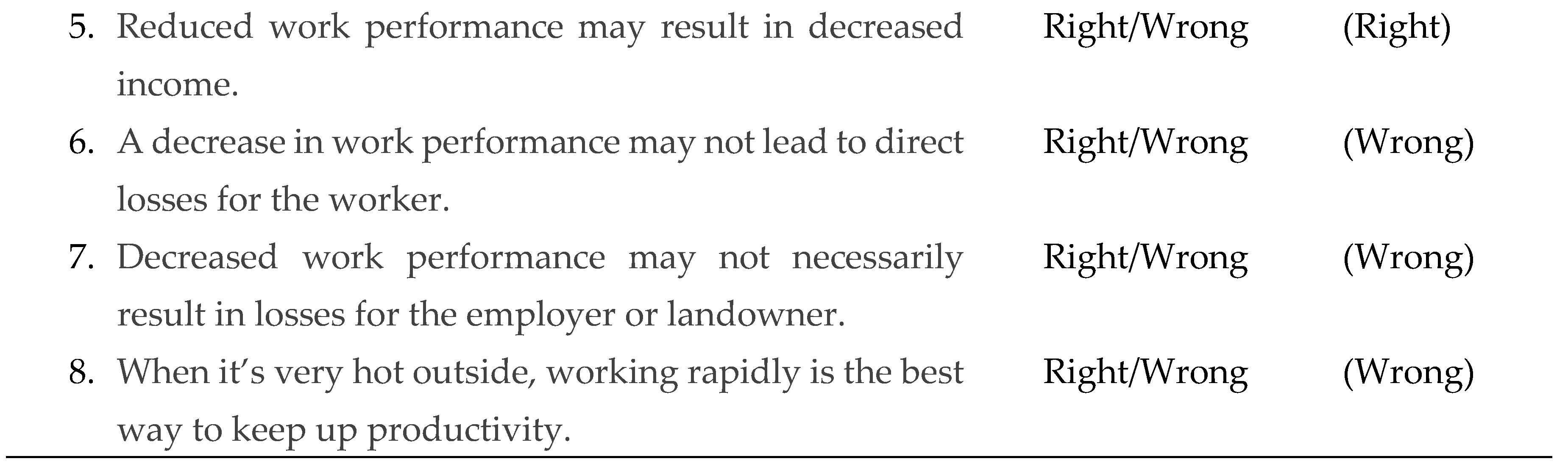
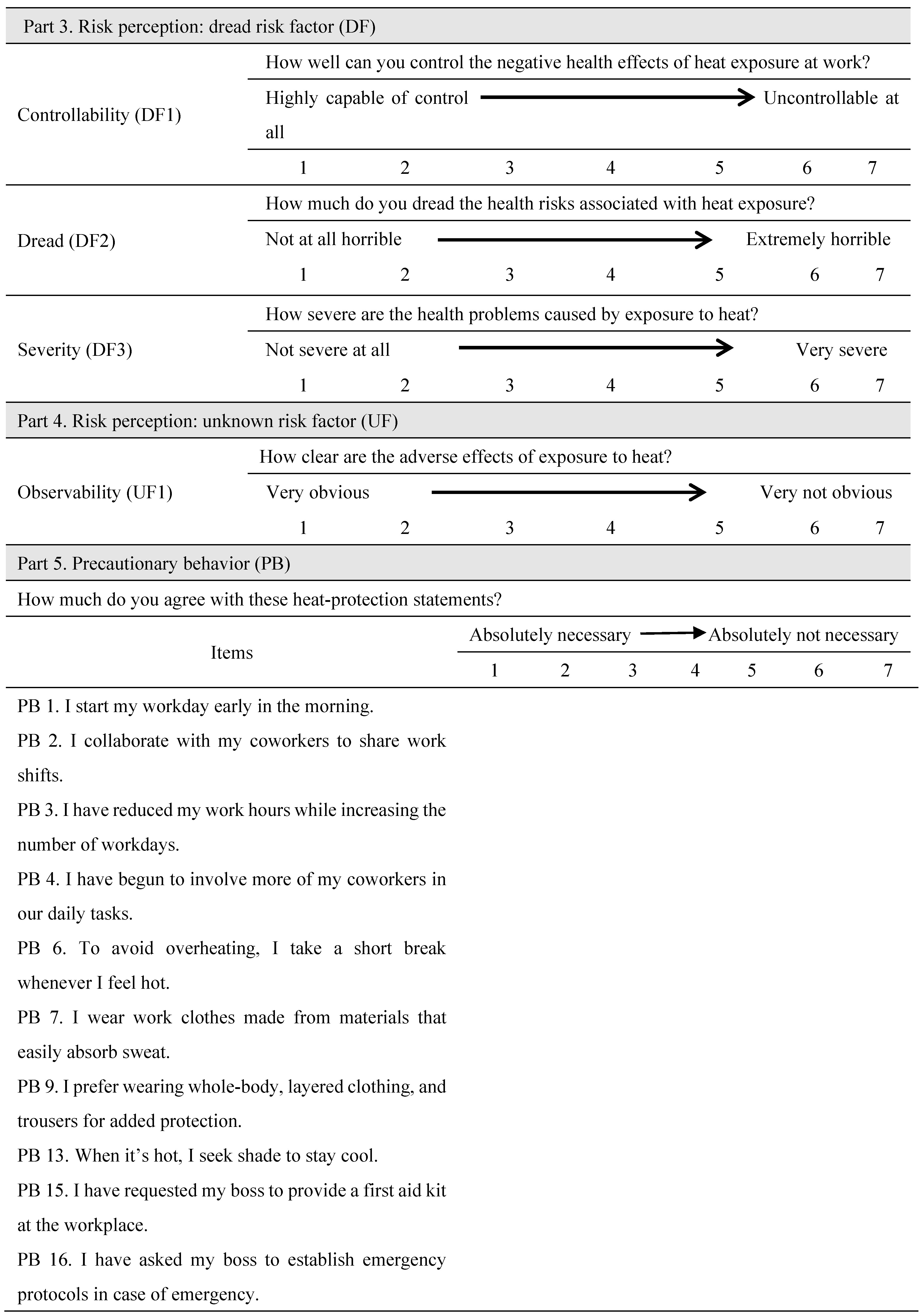
Four trained enumerators conducted face-to-face interviews with a validated questionnaire (Appendix A). The study was conducted according to the guidelines of the Declaration of Helsinki and approved by the Human Research Ethics Committee of the IPB University, with Protocol No. 03/IT3.KEPMSM-IPB/SK/2022. Informed consent was obtained from all subjects involved in the study.
In the end, 210 forestry workers and 215 paddy farmers participated in the survey. Table 1 shows the participants’ characteristics from the two groups.
Participants from both groups were actively engaged in intense physical activities while working outdoors. Most the forestry workers were hauling workers, tree fellers, and nursery workers. These occupations mainly required strenuous lifting, pulling, pushing, and carrying. In the farmer group, women were predominant, while men dominated the forestry worker group, likely due to the physically demanding nature of forestry work. Both worker groups typically started their workdays between 7:00 and 8:00 a.m. and worked for approximately 7 hours.
2.3. Models
This investigation employed partial least squares-structural equation modelling (PLS-SEM) to test and validate theoretical hypotheses. PLS-SEM is a suitable method for studying abstract concepts [32], such as heat-related knowledge, risk perception, and precautionary behavior. It is statistically robust and does not require large sample sizes or normally distributed data [33]. Three latent variables were developed in this study, namely heat-related knowledge, risk perceptions, and precautionary behavior (see Table 2). The complete questionnaire used in this study is accessible in the Supplementary Material.
Convergent validity of the reflective measurement model for knowledge, risk perception, and precautionary behavior was evaluated using criteria proposed by Henseler et al. [34] (the loading factor criterion was >0.50). The reliability of the measurement variables was evaluated using the composite reliability criterion of ≥0.7 [35]. This outer model evaluation was conducted to eliminate invalid and unreliable measurement variables from their respective latent variables. Further, the Mann-Whitney U statistical test was used to test the participants’ difference in knowledge, risk perception, and precautionary behavior. This non-parametric test was chosen due to the violation of normality as indicated by the Saphiro Wilk test (p>0.05).
Using the PLS-SEM with the SmartPLS© software, the correlation, mediation, and moderation interactions between heat-related knowledge, risk perception, and precautionary behavior were investigated. Valid and reliable items were then included in evaluating the structural model (inner model) to predict the relationship between latent variables. We looked at the inner model variance inflation factor (VIF) value, the coefficient of determination (R2), and the predictive relevance value (Q2) [35,36]. The VIF value between observed variables cannot exceed 10 [36]. The Q2>0 value for a particular endogenous latent variable implies that the PLS path model has predictive relevance for that construct [36]. In the Standardized Root Mean Square Residual (SRMR) testing model, the model is considered to have the goodness of fit if the SRMR value <0.10 [37]. The Normed Fit Index (NFI) value meets the criteria of >0.5 (50%) [38]. The hypothesis test (using the bootstrapping procedure) was performed with the t-statistics significance value >1.96 as the criterion [25].
In mediation evaluation, we utilized the Variance Accounted For (VAF) method [26] along with bootstrapping to analyse the distribution of indirect effects. The VAF value was not used as a criterion for testing mediation, but rather as a mean to assess the change in effect from direct to indirect relationships [36].
2.4. Latent variables
Heat-related Knowledge. The first latent variable, heat-related knowledge (K), was assessed using three measurement variables: symptoms of health problems caused by heat exposure (K2), heat exposure prevention and first aid (K3), and the impact of heat exposure on work performance (K4). The question items (Table 2) on these subscales were adapted from the work of Riccò et al. [10] and the High Occupational Temperature Health and Productivity Suppression (HOTHAPS) framework proposed by Kjellstrom et al. [39] with minor adjustments. Participants were asked to rate statements as true or false on this questionnaire. Each aspect had multiple questions, with eight question items for K2, 14 questions for K3, and eight questions for K4. Sample items for K2 included “The dark colour of urine is a sign of dehydration.” For K3, sample items included “Reducing work hours is an appropriate strategy to avoid heat-related health problems when the weather is hot”. And for K4, sample items included “Health problems due to heat exposure will cause a decrease in work productivity”. In total, the heat-related knowledge questionnaire comprised 30 questions, providing a comprehensive assessment of participants’ knowledge on this construct.
Risk Perception. A psychometric paradigm utilizing a 7-point Likert-type scale was employed to assess the perceived occupational health risks of working in a hot environment. The participants were asked to rate three key qualitative risk perception modulators [40] related to the dread risk factor (DF), which stands for the second latent variable. The variables for DF included controllability of the risk (controllable-uncontrollable; DF1); gut reaction to the risk (not dread-dread; DF2); and severity of consequences (low-high; DF3). The second risk element investigated was the unknown risk factor (UF), representing the third latent variable. The measurement variable for UF was observability of the impact of heat exposure on occupational health (observable-not observable; UF1). Participants with lower scores indicated a perception of the risk as controllable, not dreadful, having low risk and the impacts are observable.
Precautionary Behavior. To assess the precautionary behavior (PB) of individuals in anticipation of protecting against heat-related disorders, a 7-item scale was employed as the measuring tool for the fourth latent variable in the present study. There were 10 measurement variables for this latent variable. They were: starting work early in the morning (PB1), collaborating with coworkers to share work shifts (PB2), reducing work hours while increasing the number of workdays (PB3), involving more coworkers (PB4), taking short breaks when it’s hot (PB6), wearing work clothes that effectively absorb sweat (PB7), preferring whole-body layered clothing and trousers (PB9), seeking shade to stay cool (PB13), requesting the provision of a first aid kit (PB15), and asking for the establishment of emergency protocols (PB16).
3. Results
3.1. Structural Model Evaluation
The test results indicated that there is no multicollinearity between variables as the VIF of all variables was less than 10 (Table 3). The R2 value for the endogenous latent variable “precautionary behavior” is relatively moderate (40.7%), indicating that DF and UF have a relatively moderate influence on the PB variable. However, the impact of DF on UF or vice versa is relatively low (Table 4). The Q2>0 indicates that the model has a relevant predictive value (Table 5). The model fit indices suggest that the SRMR value is below 0.10, and the NFI shows that the model in this study accounts for 56.8% of the variance (Table 6).
3.2. Hypothesis Testing
Figure 3 shows the results of the test of the direct relationship between latent variables and the importance of the outer loadings of the selected reflective indicator variables. Table 7 presents the results of the indirect study on how latent variables are linked. The results of hypothesis testing revealed a t-value of 9.561 (> t-table = 1.96) and a p-value of 0.00 (<0.05) for the association between the latent variables “knowledge” and “precautionary behavior” (K→PB). Thus, Hypothesis 1 was accepted, indicating that heat-related knowledge significantly predicts positive precautionary behavior (O = 0.375). The link between the latent variable “knowledge” and the latent variable “dread risk factor” (K→DF) was also found to be statistically significant (Hypothesis 2), with t = 5.67 (>t-table = 1.96), p = 0.00 (<0.05), and an O = 0.264. It was also revealed that both dread and unknown risk factors could predict precautionary behavior with an original sample value of 0.387% (DF→PB) and 0.121% (UF→PB), respectively. The findings showed an association between “knowledge” and “precautionary behavior” mediated by “dread risk factor”, t = 5.28 (>t-table = 1.96) and p = 0.000 (0.05). This association confirmed the acceptability of Hypothesis 4: “dread risk factor” could mediate the association between workers’ knowledge of heat exposure and precautionary behavior (K→DF→PB) (O = 0.102) (Table 8).
We also carried out moderation tests (Table 9). The association between knowledge and precautionary behavior, as mediated by the participant group variable (K→Participant groups→PB), yielded a t = 2.19 (t-table = 1.96), and a p = 0.029 (>0.05) in this test. Thus, it was demonstrated that the participant group moderated the relationship between heat-related knowledge and precautionary behavior (Hypothesis 5; O = -0.112). In this investigation, age and gender were not found to moderate the relationship between knowledge and precautionary behavior.
4. Discussion
This research confirmed that knowledge has an immediate and significant impact on individuals’ attitudes toward risk and serves as a robust predictor that promotes precautionary behavior. These findings are consistent with previous research conducted by Beckmann et al. [41] who found a significant association between knowledge scores of urban citizens in Germany and heat risk perceptions. Additionally, a study on the COVID-19 outbreak suggest that individuals with higher levels of knowledge were more likely to adopt precautionary behavior [42].
We provide further evidence that, in slow-onset disasters, individuals’ perceptions of hazards play a crucial role in directly affecting precautionary behavior. This finding is in line with previous health studies [43,44] and provides additional evidence to support the hypothesis that an individual’s perception of risk mediates the relationship between knowledge and preventative behavior. As individual’s knowledge increases, their concern about the risk also intensifies, motivating them to adopt a preventative measure [45]. However, this finding should be interpreted with care as risk perceptions are a required but not always sufficient prerequisite for engaging in precautionary behavior. Higher risk perceptions may only predict precautionary behavior when people believe that effective preventive actions are accessible and are confident in their ability to engage in such actions [46].
Risk perception depends on a multitude of interrelated factors, which can be broadly categorized into two categories: fear (the dread risk factor) and familiarity (the unknown risk factor) [40]. “Dread” serves as a risk perception modulator that accurately reflects how risk is assessed; higher scores on the “dread” factor indicate greater perceived risk [40];. This study revealed that “dread” was the only risk perception modulator that significantly, albeit weakly (O = 0.102, p = 0.000), mediated the relationship between knowledge and adoption of precautionary behavior. Moreover, when comparing the dread risk factors (controllability, dread, and severity) to the unknown risk factor (observability), this study confirmed that dread had a functional role in exacerbating perceived risk and served as a predictor of positive behavior change. These findings are consistent with Harper et al. [47] and Ning et al. [42], who suggest that fear is a valuable function and predictor of positive behavior change. Thus, despite the unknown risk component not mediating the relationship between knowledge and precautionary behavior, this does not contradict the conclusion that risk perception can mediate this relationship.
The moderation analysis of this study revealed that neither age nor gender moderated the association between knowledge, risk perception, and precautionary behavior, which is consistent with the findings of Iorfa et al. [48]. However, previous studies have shown that women tend to have higher risk awareness compared to men [21,49] and a more likely to perceive health-related risk. A study in Italy found that women tend to answer a question regarding heat as a risk factor for depression and anxiety compared to men [50]. This heightened risk awareness in women may be influenced by affect heuristics that shape risk judgement [51,52,53]. The unbalanced gender ratio between male and female participants (1:2) in this study may contribute to possible bias in the findings.
The association between knowledge and precautionary behavior was significantly moderated negatively by the participant groups, reflecting worker characteristics and employment. Despite having higher knowledge level, the forestry workers group was less likely than the farmers to agree on precautionary behavior. This finding may be attributed to the fact that forestry work, mainly manual labor, is associated with significant occupational health and even safety problems [54,55]. Forestry workers, who are accustomed to direct contact with various sources of hazards that have immediate effects, have reported higher levels of fear and severity in incidents [56,57].
Occupational safety and health (OSH) problems caused by falling trees or saws tend to happen quickly and suddenly or are considered a “sudden disaster” [58]. In contrast, health problems caused by heat exposure tend to be delayed, noted as a “slow-onset disaster” [57,59,60]. Slow-onset catastrophes have effects that take years to appear and are typically identified long after the first sign of danger [61]. Because the impacts are often observed over several years and decades rather than in hours or days, people tend to eventually accept risk as a natural occurrence [60]. It is important to note that while workplace heat exposure could affect workers’ health, well-being, and productivity, as well as social and economic factors on a larger scale [8,11,62], acclimatization is possible [63]. However, despite acclimatization, workers in this position have little choice but to continue working to earn their livelihoods, making it difficult to mitigate heat exposure hazards.
Forestry workers are particularly susceptible to heat exposure due to the nature of their work, but they still perceive heat exposure as a minor issue. As a result, promoting precautionary behavior towards heat exposure will be more complex and intense for forestry workers compared to farmer. Forestry workers are particularly susceptible to heat exposure due to the nature of their work, but they still perceive heat exposure as a minor issue. Therefore, it is imperative to implement effectives strategies and techniques to manage heat exposure hazards in the forestry industry to ensure workers’ safety and well-being.
The moderation effect of participant groups revealed in this study strengthens the notion that negative experiences can be a valuable source of “knowledge” in relation to precautionary behavior. The severity of the personal consequences experienced in the past may be more influential than the “experiences” themselves in shaping an individual’s propensity to take preventative measures [63]. This finding is consistent with the research of Seimetz et al. [64], which noted that the perception of vulnerability to a specific risk, a positive belief (the distribution of benefits is greater than the risk), confidence in one’s abilities to perform the behavior, and a commitment to performing the precautionary behavior all play a role in determining whether a person will change their behavior.
Recommendation. In the context of outdoor workers in Indonesia, improving precautionary behavior necessitates an emphasis on knowledge acquisition. The importance of knowledge stems from its direct correlation with risk perception and the tendency to engage in precaution measures. By possessing a thorough understanding of potential hazards associated with severe heat exposure, workers can accurately identify the risks emerge from severe heat exposure in their workplace, leading to a heightened sense of awareness and engagement in preventive action.
Further, we concur with Slovic’s notion that “fear” best describes how one feels upon realizing their exposure to a particular risk [40]. Employing “fear language” has the potential to benefit Indonesian forest workers who have a high tolerance for risk and take pride in working in hazardous environments [21]. However, the use of fear-based language must be approached with caution and tailored to the audience’s characteristics and preferences [65].
Heat-related information must be enhanced to improve precautionary behavior and prevent the detrimental effects of heat exposure on occupational health and well-being. Beckmann and Hiete [62] imply that communication is instrumental in fostering a sense of risk, and another study in UK suggests that heat protection recommendations increase intention to implement protective behavior[66]. This information must be conveyed to the workers using an approach tailored to their characteristics and preferences, as risk communication strategies must account for individual, societal, and cultural factors to be effective [67]. In addition to content, messenger, and delivery channels, another aspect that needs to be considered in delivering information to improve knowledge is repetition. Repeatedly providing information has been proven to effectively increase the knowledge of forestry workers, especially those at the labour and field operator levels [68].
However, the efforts to exert precautionary behavior among workers to mitigate the impact of working in hot environment must be consistently maintained. According to Duckworth and Gross [69] the process is akin to climbing stairs: requiring consistent effort and the ability to continue or turn around on the stairway; otherwise, one will not reach his destination. We also recommend that programs be action-oriented rather than merely administrative to achieve the desire outcomes.
5. Conclusions
The findings of this study indicate that knowledge has a significant impact on an individual’s attitude towards heat exposure-related risks, thereby acting as a strong predictor of precautionary behavior. Additionally, it elucidates that an individual’s perception of risk mediates the relationship between knowledge and their adoption of precautionary measures. Specifically, the study found that the emotion of dread was the only modulator of risk perception that significantly, albeit weakly, mediated the relationship between knowledge and the adoption of precautionary measures. Notably, the forestry worker group, despite possessing better knowledge compared to other participant groups, demonstrated a lower inclination towards adopting precautionary behavior. This tendency may be attributed to the nature of their work, which involves inherent risks and hazards that may have more immediate and tangible effects. Therefore, the promotion of health and well-being among forestry workers necessitates a comprehensive understanding of the distinct risks and challenges they face. It requires concerted efforts to develop and implement effective strategies, approaches, and techniques to manage heat exposure-related hazards in the forestry sector.
Supplementary Materials
The following supporting information can be downloaded at the website of this paper posted on Preprints.org.
Author Contributions
Conceptualization, E.Y.Y. and A.N.; methodology, E.Y.Y., A.N., and B.K.; validation, E.Y.Y.; formal analysis, E.Y.Y. and B.K.; investigation, E.Y.Y.; data curation, E.Y.Y. and B.K.; writing—original draft preparation, E.Y.Y. and A.N.; writing—review and editing, E.Y.Y., A.N., and B.K.; visualization, E.Y.Y., A.N., and B.K.; supervision, E.Y.Y.; project administration, E.Y.Y. and A.N.; funding acquisition, E.Y.Y. and A.N. All authors have read and agreed to the published version of the manuscript.
Funding
This research was funded by the Global Disaster Preparedness Center (GDPC) of the American Red Cross (Research Plan 2022) and partially supported by UK Research and Innovation and the Global Challenges Research Fund through the Economic and Social Research Council [Cool Infrastructure: Living with Heat in the Offgrid Cities, Award ES/T008091/1].
Data Availability Statement
The data presented in this study are available on request from the corresponding author.
Acknowledgments
We thank Desnu Ramadhan Lesmana, Firyal Dhaifan Putra, Novandi Aldi Sadewa, and Noviyanti Permatasari for their valuable contributions in collecting the data. We extend our appreciation to Rifda Marwa Ufaira for her assistance in editing the paper.
Conflicts of Interest
The authors declare no conflict of interest. The funders had no role in the design of the study; in the collection, analyses, or interpretation of data; in the writing of the manuscript; or in the decision to publish the results.
Appendix A
Structured-interview Guidelines
References
- IPCC, ‘Climate Change 2022: Impacts, Adaptation and Vulnerability. Contribution of Working Group II to the Sixth Assessment Report of the Intergovernmental Panel on Climate Change.’, Cambridge, UK and New York, NY, USA, 2022. [CrossRef]
- T. K. R. Matthews, R. L. T. K. R. Matthews, R. L. Wilby, and C. Murphy, ‘Communicating the deadly consequences of global warming for human heat stress’, Proc Natl Acad Sci U S A, vol. 114, no. 15, pp. 3861–3866, Apr. 2017. [CrossRef]
- C. Mora et al., ‘Global risk of deadly heat’, Nat Clim Chang, vol. 7, no. 7, pp. 501–506, 2017. [CrossRef]
- Badan Meteorologi, Klimatologi, dan Geofisika (BMKG), ‘Perubahan Iklim: Proyeksi Perubahan Iklim.’, 2022. https://www.bmkg.go.id/iklim/?p=proyeksi-perubahan-iklim (accessed Sep. 18, 2022).
- BPS, ‘Statistical Yearbook of Indonesia 2013′, 2013.
- BPS, ‘Statistical Yearbook of Indonesia 2021′, 2021.
- T. Kjellstrom, D. T. Kjellstrom, D. Briggs, C. Freyberg, B. Lemke, M. Otto, and O. Hyatt, ‘Heat, Human Performance, and Occupational Health: A Key Issue for the Assessment of Global Climate Change Impacts’, Annu Rev Public Health, vol. 37, no. 1, pp. 97–112, Mar. 2016. [CrossRef]
- E. Oppermann, T. E. Oppermann, T. Kjellstrom, B. Lemke, M. Otto, and J. K. W. Lee, ‘Establishing intensifying chronic exposure to extreme heat as a slow onset event with implications for health, wellbeing, productivity, society and economy’, Curr Opin Environ Sustain, vol. 50, pp. 225–235, Jun. 2021. [CrossRef]
- J. Constance and B. Shandro, ‘Heat-related Illness’, in A Practical Guide to Pediatric Emergency Medicine: Caring for Children in the Emergency Department, N. E. Amieva-Wang, Ed., New York: Cambridge University Press, 2011, pp. 234–236. [Online]. Available: http://assets.cambridge.org/97805217/00085/frontmatter/9780521700085_frontmatter.
- M. Riccò et al., ‘Risk perception of heat related disorders on the workplaces: A survey among health and safety representatives from the autonomous province of Trento, Northeastern Italy’, J Prev Med Hyg, vol. 61, no. 2, pp. E66-75, 2020. [CrossRef]
- B. M. Varghese, A. B. M. Varghese, A. Hansen, P. Bi, and D. Pisaniello, ‘Are workers at risk of occupational injuries due to heat exposure? A comprehensive literature review’, Saf Sci, vol. 110, pp. 380–392, Dec. 2018. [CrossRef]
- M. T. Schmeltz, E. P. M. T. Schmeltz, E. P. Petkova, and J. L. Gamble, ‘Economic Burden of Hospitalizations for Heat-Related Illnesses in the United States, 2001–2010′, Int J Environ Res Public Health, vol. 13, no. 9. 2016. [CrossRef]
- C. D. Butler, ‘Climate Change, Health and Existential Risks to Civilization: A Comprehensive Review (1989–2013)’, Int J Environ Res Public Health, vol. 15, no. 10. 2018. [CrossRef]
- ILO, ‘Working on a warmer planet: The impact of heat stress on labour productivity and decent work’, Geneva, 2019. [Online]. Available: https://www.ilo.org/wcmsp5/groups/public/---dgreports/---dcomm/---publ/documents/publication/wcms_711919.
- S. M. Pawson et al., ‘Plantation forests, climate change and biodiversity’, Biodivers Conserv, vol. 22, no. 5, pp. 1203–1227, 2013. [CrossRef]
- C. Boisvenue and S. W. Running, ‘Impacts of climate change on natural forest productivity—evidence since the middle of the 20th century’, Glob Chang Biol, vol. 12, no. 5, pp. 862–882, 06. 20 May. [CrossRef]
- J. T. Spector, Y. J. J. T. Spector, Y. J. Masuda, N. H. Wolff, M. Calkins, and N. Seixas, ‘Heat Exposure and Occupational Injuries: Review of the Literature and Implications’, Curr Environ Health Rep, vol. 6, no. 4, pp. 286–296, 2019. [CrossRef]
- M. H. Becker, ‘The Health Belief Model and Sick Role Behavior’, Health Educ Monogr, vol. 2, no. 4, pp. 409–419, Dec. 1974. [CrossRef]
- C. L. Jones, J. D. C. L. Jones, J. D. Jensen, C. L. Scherr, N. R. Brown, K. Christy, and J. Weaver, ‘The Health Belief Model as an Explanatory Framework in Communication Research: Exploring Parallel, Serial, and Moderated Mediation’, Health Commun, vol. 30, no. 6, pp. 566–576, Jun. 2015. [CrossRef]
- M. Rosenstock, ‘The Health Belief Model and Preventive Health Behavior’, Health Educ Monogr, vol. 2, no. 4, pp. 354–386, Dec. 1974. [CrossRef]
- E. Y. Yovi, D. E. Y. Yovi, D. Abbas, and T. Takahashi, ‘Safety climate and risk perception of forestry workers: a case study of motor-manual tree felling in Indonesia’, Int J Occup Saf Ergon, vol. 28, no. 4, pp. 2193–2201, Oct. 2022. [CrossRef]
- S. Girma, L. S. Girma, L. Agenagnew, G. Beressa, Y. Tesfaye, and A. Alenko, ‘Risk perception and precautionary health behavior toward COVID-19 among health professionals working in selected public university hospitals in Ethiopia’, PLoS One, vol. 15, no. 10, p. e0241101, Oct. 2020, [Online]. Available. [CrossRef]
- J. E. Johnson, M. J. E. Johnson, M. Gulanick, S. Penckofer, and J. Kouba, ‘Does Knowledge of Coronary Artery Calcium Affect Cardiovascular Risk Perception, Likelihood of Taking Action, and Health-Promoting Behavior Change?’, J Cardiovasc Nurs, vol. 30, no. 1, 2015.
- K.Y. Kao, C. K.Y. Kao, C. Spitzmueller, K. Cigularov, and C. L. Thomas, ‘Linking safety knowledge to safety behavior: a moderated mediation of supervisor and worker safety attitudes’, Eur J Work Organ Psychol, vol. 28, no. 2, pp. 206–220, Mar. 2019. [CrossRef]
- N. K. Avkiran, ‘Rise of the Partial Least Squares Structural Equation Modeling: An Application in Banking’, in Partial Least Squares Structural Equation Modeling. Recent Advances in Banking and Finance., N. K. Avkiran and C. M. Ringle, Eds., Springer Link, 2018, p. 267.
- K. J. Preacher and A. F. Hayes, ‘Asymptotic and resampling strategies for assessing and comparing indirect effects in multiple mediator models’, Behav Res Methods, vol. 40, no. 3, pp. 879–891, 2008. [CrossRef]
- F. Taglioni et al., ‘The influenza A (H1N1) pandemic in Reunion Island: knowledge, perceived risk and precautionary behavior’, BMC Infect Dis, vol. 13, no. 1, p. 34, 2013. [CrossRef]
- H. Zhu and F. Deng, ‘How to Influence Rural Tourism Intention by Risk Knowledge during COVID-19 Containment in China: Mediating Role of Risk Perception and Attitude’, Int J Environ Res Public Health, vol. 17, no. 10. 2020. [CrossRef]
- BPS of Central Java Province, ‘Suhu Udara 2018–2020′, 2022. https://jateng.bps.go.id/indicator/151/694/1/suhu-udara.html (accessed Sep. 18, 2022).
- BPS of Cilegon City, ‘Keadaan Suhu Udara per Bulan di Kota Cilegon Tahun 2013′, 2013. https://cilegonkota.bps.go.id/statictable/2015/04/22/9/keadaan-suhu-udara-per-bulan-di- kota-cilegon-tahun-2013.html (accessed Sep. 18, 2022).
- BPS of Cilegon City, ‘Suhu Udara Menurut Bulan di kota Cilegon 2017′, 2017. https://cilegonkota.bps.go.id/indicator/151/75/1/suhu-udara-menurut-bulan-di-kota- cilegon-2017.
- L. Peng, J. L. Peng, J. Tan, L. Lin, and D. Xu, ‘Understanding sustainable disaster mitigation of stakeholder engagement: Risk perception, trust in public institutions, and disaster insurance’, Sustain Dev, vol. 27, no. 5, pp. 885–897, Sep. 2019. [CrossRef]
- J. F. Hair, C. M. J. F. Hair, C. M. Ringle, and M. Sarstedt, ‘Partial Least Squares Structural Equation Modeling: Rigorous Applications, Better Results and Higher Acceptance’, Long Range Plann, vol. 46, no. 1–2, pp. 1–12, 2013. [CrossRef]
- J. Henseler, C. M. J. Henseler, C. M. Ringle, and M. Sarstedt, ‘A new criterion for assessing discriminant validity in variance-based structural equation modeling’, J Acad Mark Sci, vol. 43, no. 1, pp. 115–135, 2015. [CrossRef]
- T. K. Dijkstra and J. Henseler, ‘Consistent Partial Least Squares Path Modeling’, MIS Quarterly, vol. 39, no. 2, pp. 297–316, Jan. 2015, [Online]. Available: https://www.jstor. 2662.
- J. F. Hair, G. T. M. J. F. Hair, G. T. M. Hult, R. C.M., and M. Sarstedt, A Primer on Partial Least Squares Structural Equation Modelling (PLS-SEM), 2nd Editio. SAGE Publications Inc, 2016. [Online]. Available: https://us.sagepub. 2445. [Google Scholar]
- T. Ramayah, C. T. Ramayah, C. Hwa, F. Chuah, H. Ting, and M. Memon, Partial Least Squares Structural Equation Modeling (PLS-SEM) using SmartPLS 3.0: An Updated and Practical Guide to Statistical Analysis. 2016.
- P. M. Bentler and D. G. Bonett, ‘Significance tests and goodness of fit in the analysis of covariance structures.’, Psychol Bull, vol. 88. American Psychological Association, US, pp. 588–606, 1980. [CrossRef]
- T. Kjellstrom, S. T. Kjellstrom, S. Gabrysch, B. Lemke, and K. Dear, ‘The “Hothaps” programme for assessing climate change impacts on occupational health and productivity: an invitation to carry out field studies’, Glob Health Action, vol. 2, no. 1, p. 2082, Nov. 2009. [CrossRef]
- P. Slovic, ‘Perception of Risk’, Science (1979), vol. 236, no. 4799, pp. 280–285, Apr. 1987. [CrossRef]
- S. K. Beckmann and M. Hiete, ‘Predictors Associated with Health-Related Heat Risk Perception of Urban Citizens in Germany’, Int J Environ Res Public Health, vol. 17, no. 3. 2020. [CrossRef]
- L. Ning et al., ‘The impacts of knowledge, risk perception, emotion and information on citizens’ protective behavior during the outbreak of COVID-19: a cross-sectional study in China’, BMC Public Health, vol. 20, no. 1, p. 1751, 2020. [CrossRef]
- de Zwart, I. K. Veldhuijzen, J. H. Richardus, and J. Brug, ‘Monitoring of risk perceptions and correlates of precautionary behavior related to human avian influenza during 2006–2007 in the Netherlands: results of seven consecutive surveys’, Int J Behav Med, vol. 16, no. 1, pp. 2193–2201, Oct. 2010. [CrossRef]
- E. Samadipour, F. E. Samadipour, F. Ghardashi, M. Nazarikamal, and M. Rakhshani, ‘Perception risk, preventive behavior and assessing the relationship between their various dimensions: A cross-sectional study in the Covid-19 peak period’, Int J Disaster Risk Reduc, vol. 77, p. 103093, 2022. [CrossRef]
- S. Mishra and D. Suar, ‘Do Lessons People Learn Determine Disaster Cognition and Preparedness?’, Psychol Dev Soc J, vol. 19, no. 2, pp. 143–159, Dec. 2007. [CrossRef]
- J. Brug, A. R. J. Brug, A. R. Aro, A. Oenema, O. de Zwart, J. H. Richardus, and G. D. Bishop, ‘SARS Risk Perception, Knowledge, Precautions, and Information Sources, the Netherlands’, Emerg Infect Dis journal, vol. 10, no. 8, p. 1486, 2004. [CrossRef]
- C. A. Harper, L. P. C. A. Harper, L. P. Satchell, D. Fido, and R. D. Latzman, ‘Functional Fear Predicts Public Health Compliance in the COVID-19 Pandemic’, Int J Ment Health Addict, vol. 19, no. 5, pp. 1875–1888, 2021. [CrossRef]
- S. K. Iorfa et al., ‘COVID-19 Knowledge, Risk Perception, and Precautionary Behavior Among Nigerians: A Moderated Mediation Approach’, Front Psychol, vol. 11. 2020. [Online]. Available: https://www.frontiersin.org/articles/10.3389/fpsyg.2020. 5667.
- J. Brug, A. R. J. Brug, A. R. Aro, A. Oenema, O. de Zwart, J. H. Richardus, and G. D. Bishop, ‘SARS Risk Perception, Knowledge, Precautions, and Information Sources, the Netherlands’, Emerg Infect Dis, vol. 10, no. 8, p. 1486, 2004. [CrossRef]
- M. Bonafede et al., ‘Perception Heat Stress: Results from a Pilot Study Conducted in Italy during the COVID-19 Pandemic in 2020′, Int J Environ Res Public Health, vol. 19, no. 13. 2022. [CrossRef]
- S. Mızrak, A. S. Mızrak, A. Özdemir, and R. Aslan, ‘Adaptation of hurricane risk perception scale to earthquake risk perception and determining the factors affecting women’s earthquake risk perception’, Nat Hazards, vol. 109, no. 3, pp. 2241–2259, 2021. [CrossRef]
- M. L. Finucane, A. M. L. Finucane, A. Alhakami, P. Slovic, and S. M. Johnson, ‘The affect heuristic in judgments of risks and benefits’, J Behav Decis Mak, vol. 13, no. 1, pp. 1–17, Jan. 2000. [CrossRef]
- K. Skagerlund, M. K. Skagerlund, M. Forsblad, P. Slovic, and D. Västfjäll, ‘The Affect Heuristic and Risk Perception—Stability Across Elicitation Methods and Individual Cognitive Abilities’, Front Psychol, vol. 11. 2020.
- K. P. Poulianiti, G. K. P. Poulianiti, G. Havenith, and A. D. Flouris, ‘Metabolic energy cost of workers in agriculture, construction, manufacturing, tourism, and transportation industries’, Ind Health, vol. 57, no. 3, pp. 283–305, 2019. [CrossRef]
- E. Y. Yovi and Y. Yamada, ‘Addressing Occupational Ergonomics Issues in Indonesian Forestry: Laborers, Operators, or Equivalent Workers.’, Croat J For Eng, vol. 40, no. 2, pp. 351–363, 2019. [CrossRef]
- E. Y. Yovi and W. Prajawati, ‘High risk posture on motor-manual short wood logging system in Acacia mangium plantation’, Jurnal Manajemen Hutan Tropika, vol. 21, no. 1, pp. 11–18, 2015. [CrossRef]
- H. Orom, R. J. W. H. Orom, R. J. W. Cline, T. Hernandez, L. Berry-Bobovski, A. G. Schwartz, and J. C. Ruckdeschel, ‘A Typology of Communication Dynamics in Families Living a Slow-Motion Technological Disaster’, J Fam Issues, vol. 33, no. 10, pp. 1299–1323, Jan. 2012. [CrossRef]
- R. Staupe-Delgado, ‘Progress, traditions and future directions in research on disasters involving slow-onset hazards’, Disaster Prev Manag, vol. 28, no. 5, pp. 623–635, Jan. 2019. [CrossRef]
- M. Meraklı and S. Küçükyavuz, ‘Risk aversion to parameter uncertainty in Markov decision processes with an application to slow-onset disaster relief’, IISE Trans, vol. 52, no. 8, pp. 811–831, Aug. 2020. [CrossRef]
- R. Nixon, ‘Slow Violence, Gender, and the Environmentalism’, J Commonw Postcolon Stud, vol. 13, no. 2, 2011.
- K. Morrison, ‘The role of traditional knowledge to frame understanding of migration as adaptation to the “slow disaster” of sea level rise in the South Pacific’, in Identifying emerging issues in disaster risk reduction, migration, climate change and sustainable development., K. Sudmeier-Rieux, M. Fernández, I. M. Penna, J. M., and J. C. Gaillard, Eds., Springer, 2017, pp. 249–266.
- S. K. Beckmann and M. Hiete, ‘Predictors Associated with Health-Related Heat Risk Perception of Urban Citizens in Germany’, Int J Environ Res Public Health, vol. 17, no. 3. 2020. [CrossRef]
- M. Schweiker, G. M. M. Schweiker, G. M. Huebner, B. R. M. Kingma, R. Kramer, and H. Pallubinsky, ‘Drivers of diversity in human thermal perception—A review for holistic comfort models’, Temperature, vol. 5, no. 4, pp. 308–342, Oct. 2018. [CrossRef]
- E. Seimetz, S. E. Seimetz, S. Kumar, and H.-J. Mosler, ‘Effects of an awareness raising campaign on intention and behavioral determinants for handwashing’, Health Educ Res, vol. 31, no. 2, pp. 109–120, Apr. 2016. [CrossRef]
- D. E. Whitmer and V. K. Sims, ‘Fear Language in a Warning Is Beneficial to Risk Perception in Lower-Risk Situations’, Hum Factors, p. 00187208211029444, Jul. 2021. [CrossRef]
- C. E. Lefevre, W. C. E. Lefevre, W. Bruine de Bruin, A. L. Taylor, S. Dessai, S. Kovats, and B. Fischhoff, ‘Heat protection behavior and positive affect about heat during the 2013 heat wave in the United Kingdom’, Soc Sci Med, vol. 128, pp. 282–289, 2015. [CrossRef]
- L. Hass, J. D. L. Hass, J. D. Runkle, and M. M. Sugg, ‘The driving influences of human perception to extreme heat: A scoping review’, Environ Res, vol. 197, p. 111173, 2021. [CrossRef]
- E. Y. Yovi, Y. E. Y. Yovi, Y. Yamada, M. Zaini, C. Kusumadewi, and L. Marisiana, ‘Improving the OSH knowledge of Indonesian forestry workers by using safety game application: Tree felling supervisors and operators’, Jurnal Manajemen Hutan Tropika, vol. 22, no. 1, pp. 75–83, 2016.
- L. Duckworth and J. J. Gross, ‘Behavior change’, Organ Behav Hum Decis Process, vol. 161, pp. 39–49, 2020. [CrossRef]
Figure 1.
Conceptual model of moderated mediation for the effects of heat-related knowledge and risk perception on precautionary behavior.
Figure 1.
Conceptual model of moderated mediation for the effects of heat-related knowledge and risk perception on precautionary behavior.
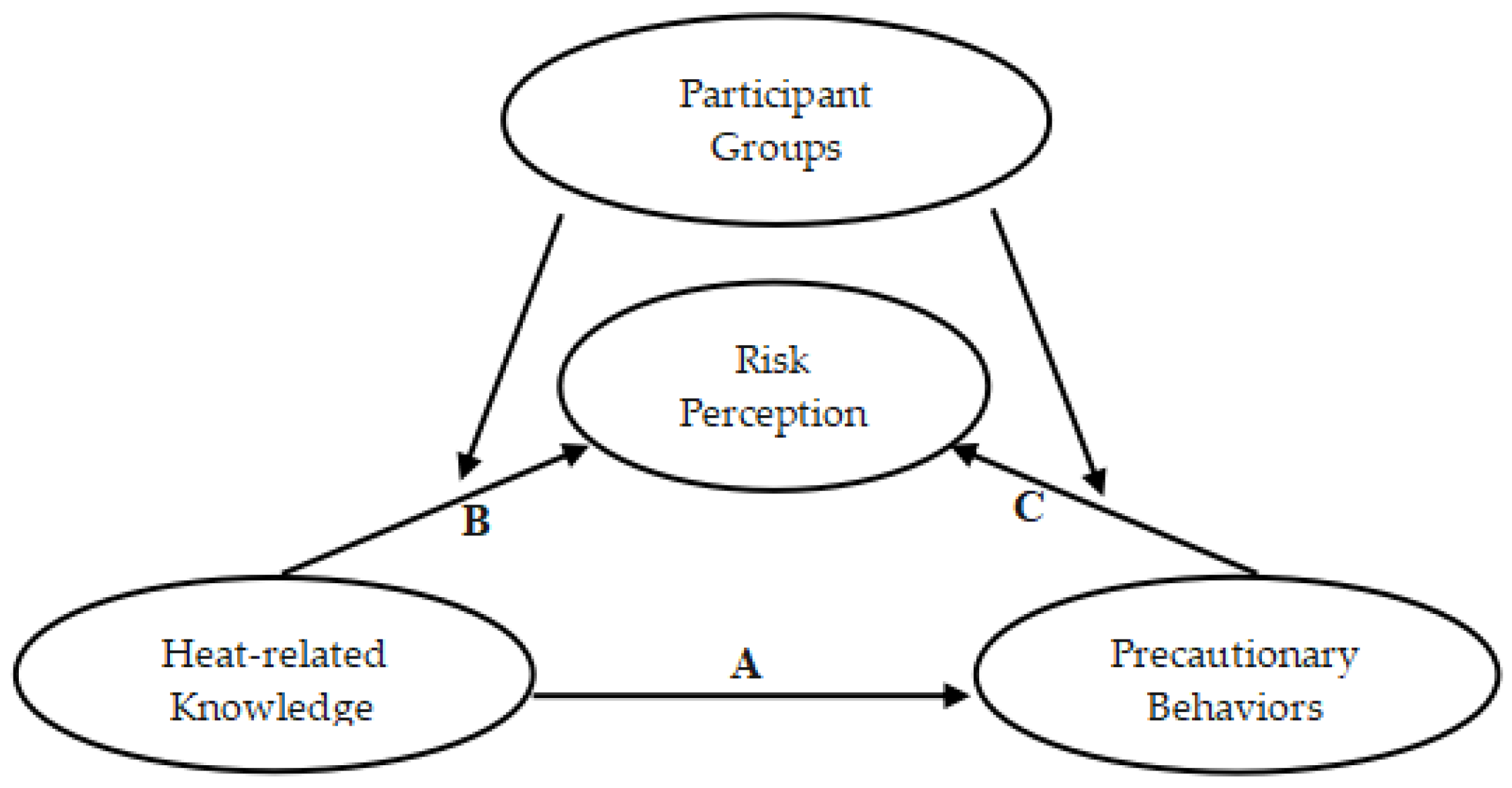
Figure 2.
The map of the study areas.
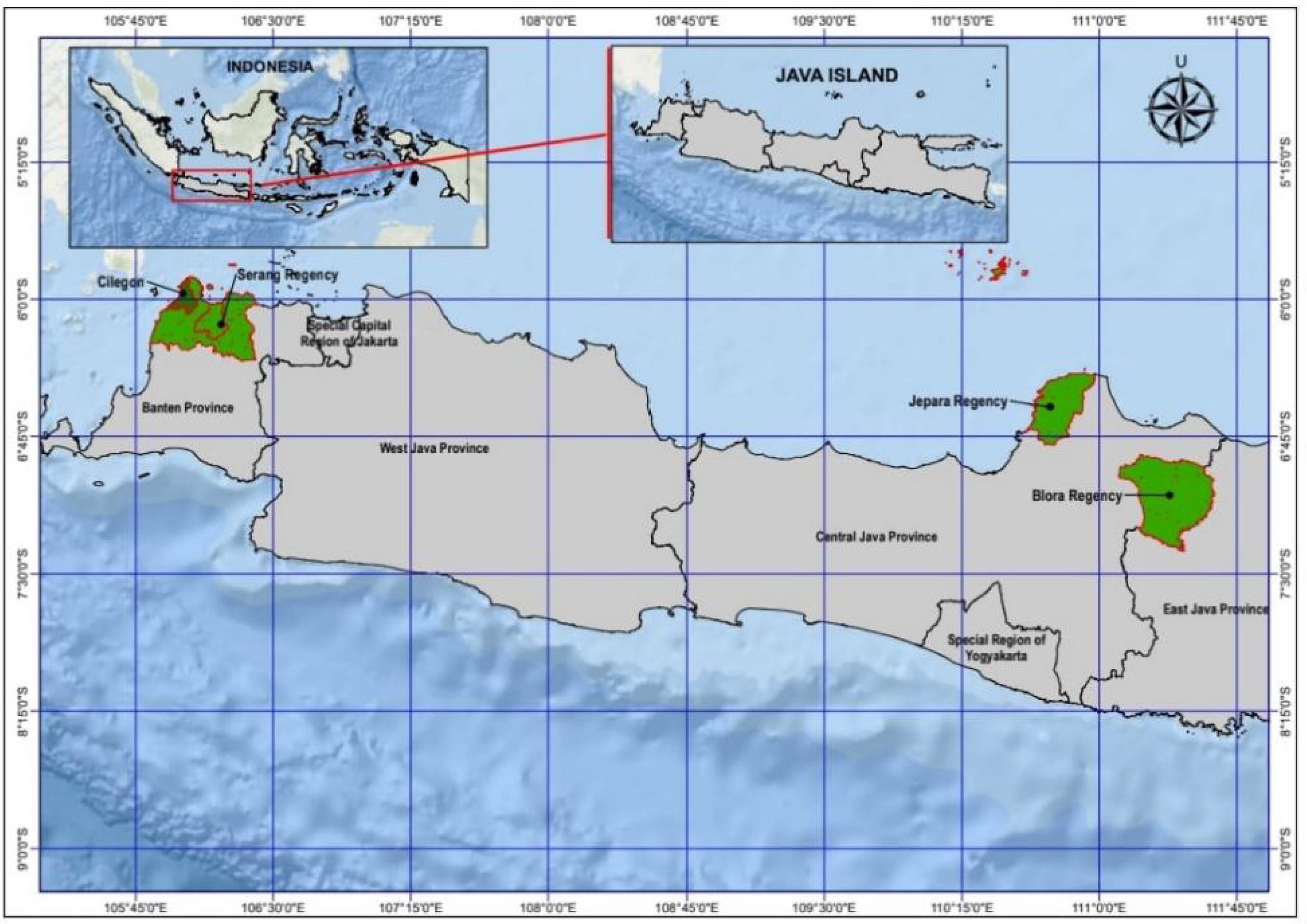
Figure 3.
Results of PLS algorithm selected measurement variables. Notes: K = knowledge; DF = dread risk factor; UF = unknown risk factor; PB = precautionary behavior; circle = latent variables (K, DF, UF, and PB); squares = measurement variables of each respective latent variables; single-headed arrow = the impact of one variable on another.
Figure 3.
Results of PLS algorithm selected measurement variables. Notes: K = knowledge; DF = dread risk factor; UF = unknown risk factor; PB = precautionary behavior; circle = latent variables (K, DF, UF, and PB); squares = measurement variables of each respective latent variables; single-headed arrow = the impact of one variable on another.
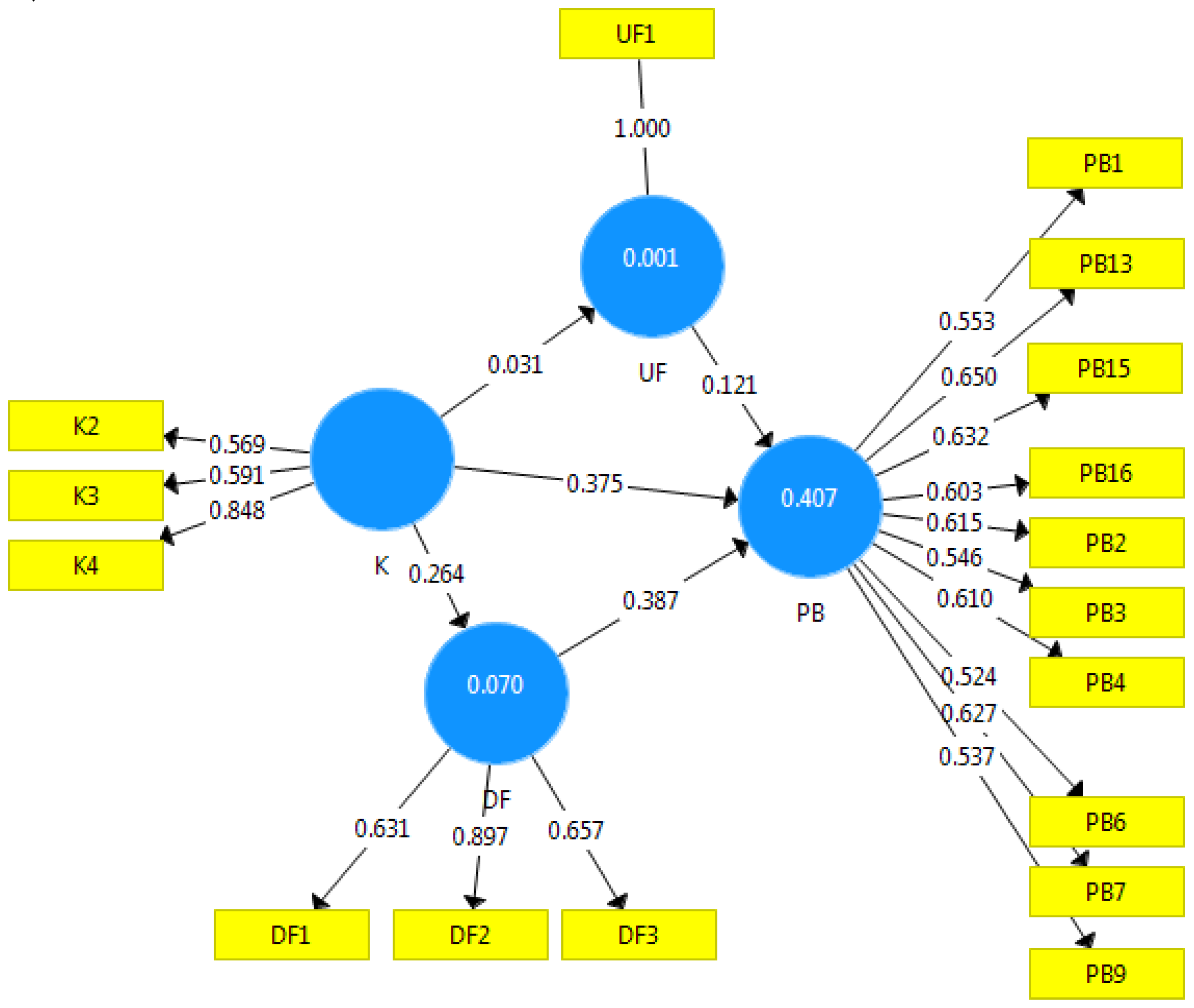

Table 1.
The two groups participants’ characteristics.
| Variables | Categories | Frequency | |
|---|---|---|---|
| Forestry workers | Paddy farmers | ||
| Age | Mean = 44; SD = 11 | Mean = 50; SD = 13 | |
| Gender | Female | 27 | 118 |
| Male | 183 | 97 | |
| Education | Elementary school | 123 | 168 |
| Middle-high school | 85 | 47 | |
| College degree | 2 | 0 | |
| Marital status | Single | 34 | 94 |
| Married | 176 | 121 | |
| Work experience | Mean = 9; SD = 8 | Mean = 9; SD = 8 | |
| Work hour/day | Mean = 7; SD = 1 | Mean = 7; SD = 1 | |
Table 2.
Heat-related knowledge, risk perception, and precautionary behavior variables.
| Variable | Sub-variable |
|---|---|
| Heat-related knowledge | Symptoms (K2) |
| Prevention and first aid (K3) | |
| Work performance (K4) | |
| Risk perception | |
| Dread risk factor (DF) | Controllability (DF1) |
| Dread (DF2) Severity (DF3) | |
| Unknown risk factor (UF) | Observability (UF1) |
| Precautionary behavior (PB) | I start my workday early in the morning (PB1) |
| I collaborate with my coworkers to share work shifts (PB2) | |
| I have reduced my work hours while increasing the number of workdays (PB3) | |
| I have begun to involve more of my coworkers in our daily tasks (PB4) | |
| To avoid overheating, I take a short break whenever I feel hot (PB6) | |
| I wear work clothes made from materials that easily absorb sweat (PB7) | |
| I prefer wearing whole-body, layered clothing, and trousers for added protection (PB9) | |
| When it’s hot, I seek shade to stay cool (PB13) | |
| I have requested my boss to provide a first aid kit at the workplace (PB15) | |
| I have asked my boss to establish emergency protocols in case of emergency (PB16) |
Table 3.
Collinearity assessment results between knowledge, dread factor (DF), unknown factor (UF), and precautionary behavior (PB).
Table 3.
Collinearity assessment results between knowledge, dread factor (DF), unknown factor (UF), and precautionary behavior (PB).
| Variable | VIF | Variable | VIF |
|---|---|---|---|
| Awareness of signs of health concerns associated with extreme heat-exposure in the workplace (K2) | 1.049 | I have reduced my work hours while increasing the number of workdays (PB3) | 1.257 |
| Heat exposure avoidance and first aid (K3) | 1.087 | I have begun to involve more of my coworkers in our daily tasks (PB4) | 1.344 |
| Heat exposure effect on work performance (K4) | 1.126 | To avoid overheating, I take a short break whenever I feel hot (PB6) | 1.441 |
| Controllability (DF1) | 1.118 | I wear work clothes made from materials that easily absorb sweat (PB7) | 1.777 |
| Dreadness (DF2) | 1.58 | I prefer wearing whole-body, layered clothing, and trousers for added protection (PB9) | 1.404 |
| Severity (DF3) | 1.44 | When it’s hot, I seek shade to stay cool (PB13) | 1.61 |
| Observability (UF1) | 1 | I have requested my boss to provide a first aid kit at the workplace (PB15) | 1.871 |
| I start my workday early in the morning (PB1) | 1.335 | I have asked my boss to establish emergency protocols in case of emergency (PB16) | 1.741 |
| I collaborate with my coworkers to share work shifts (PB2) | 1.357 |
Table 4.
Coefficient of determination (R2) calculation results.
| Variable | R2 | R2 Adjusted | |
|---|---|---|---|
| Dread risk factors (DF) | 0.07 | 0.068 | |
| Precautionary behavior (PB) | 0.407 | 0.403 | |
| Unknown risk factor (UF) | 0.001 | -0.001 |
Table 5.
Predictive relevance (Q2) calculation results.
| Variable | SSO | SSE | Q² (1-SSE/SSO) |
|---|---|---|---|
| Dread risk factors (DF) | 1,275.00 | 1,063.2 | 0.166 |
| Heat-related knowledge (K) | 1,275.00 | 1,228.2 | 0.037 |
| Precautionary behavior (PB) | 4,250.00 | 3,365.8 | 0.208 |
| Unknown risk factor (UF) | 425 | 1 |
Table 6.
Model fit analysis results.
| Value | Saturated Model | Estimated Model |
|---|---|---|
| Standardized Root Mean Square Residual (SRMR) | 0.097 | 0.098 |
| Normed Fit Index (NFI) | 0.568 | 0.561 |
Table 7.
Results of testing the direct relationship between latent variables.
| Variable | Original Sample (O) |
Sample Mean (M) | Standard Dev. (STDEV) |
T Statistics (|O/STDEV|) | P Values |
Sig. |
|---|---|---|---|---|---|---|
| DF→PB | 0.387 | 0.393 | 0.037 | 10.544 | 0 | Significant |
| K→DF | 0.264 | 0.269 | 0.047 | 5.671 | 0 | Significant |
| K→PB | 0.375 | 0.378 | 0.039 | 9.561 | 0 | Significant |
| K →UF | 0.031 | 0.03 | 0.048 | 0.641 | 0.522 | No Sig. |
| UF→PB | 0.121 | 0.119 | 0.038 | 3.203 | 0.001 | Significant |
Table 8.
Results of testing the indirect relationship between latent variables.
| Variable | Original Sample (O) | Sample Mean (M) | Standard Dev. (STDEV) | T Statistics (|O/STDEV|) | p values | Sig. |
|---|---|---|---|---|---|---|
| K→DF→PB | 0.102 | 0.105 | 0.019 | 5.281 | 0 | Significant |
| K→UF→PB | 0.004 | 0.004 | 0.006 | 0.603 | 0.547 | No sig. |
Table 9.
Results of moderation analysis of age, gender, and participant group variables.
| Moderation Variable | Original Sample (O) | Sample Mean (M) | Standard Dev. (STDEV) | T Statistics (O/STDEV|) | p values |
|---|---|---|---|---|---|
| Age (K→PB) | -0.028 | -0.031 | 0.051 | 0.544 | 0.587 |
| Gender (K→PB) | -0.025 | -0.014 | 0.051 | 0.495 | 0.621 |
| Participant groups (K→PB) | -0.112 | -0.103 | 0.051 | 2.194 | 0.029 |
Disclaimer/Publisher’s Note: The statements, opinions and data contained in all publications are solely those of the individual author(s) and contributor(s) and not of MDPI and/or the editor(s). MDPI and/or the editor(s) disclaim responsibility for any injury to people or property resulting from any ideas, methods, instructions or products referred to in the content. |
© 2023 by the authors. Licensee MDPI, Basel, Switzerland. This article is an open access article distributed under the terms and conditions of the Creative Commons Attribution (CC BY) license (https://creativecommons.org/licenses/by/4.0/).
Copyright: This open access article is published under a Creative Commons CC BY 4.0 license, which permit the free download, distribution, and reuse, provided that the author and preprint are cited in any reuse.


