
Submitted:
15 May 2023
Posted:
18 May 2023
You are already at the latest version
Abstract
Plums are primarily marketed for fresh consumption, canning, freezing, jam and jelly. Unfortunately, plum consumption has remained steady or declined. Consumers complain about a lack of flavor quality but are willing to pay for higher quality. Thus, lack of flavor and cold storage disorders are the main barriers to consumption. Plum cultivars are susceptible to gel breakdown, flesh browning and ‘off flavors’. Consumer acceptance and postharvest life are highly dependent on genotype, quality attributes, harvest date and proper postharvest handling. A consumer quality index (CQI) based on soluble solids concentration (SSC) and minimum firmness is proposed to maximize flavor and postharvest life. In most cases, late harvest increases quality attributes. Our work and industry experience demonstrated that using critical bruising thresholds (CBT) based on minimum firmness measured at harvest acts as a reliable predictor of how late to harvest safely for maximum visual and sensory quality. Plums are well adapted to late harvest because of their low susceptibility to bruising damage, but proper postharvest temperature management and marketing within the potential market life are necessary to maintain flavor and avoid the onset of storage disorders. Thus, to maximize flavor and postharvest life, a CQI based on SSC and minimum firmness measured at consumption is proposed. This article provides guidance on using this CQI, combined with proper postharvest handling techniques such as correct harvest date determination and temperature management, to maintain quality and increase consumption.
Keywords:
Plum consumption
; Consumer Quality Index
; flesh breakdown
; temperature management
; critical bruising thresholds
; maximum maturity
; late harvest
; firmness
; SSC
1. Introduction
Plum (Prunus salicina Lindell) is a fleshy fruit classified as a drupe, consisting of a single seed surrounded by a pericarp. The pericarp is differentiated into an outer skin or exocarp, a fleshy middle layer or mesocarp, and a hard, woody layer or endocarp surrounding the seed. The exocarp (skin) and mesocarp (flesh) is rich in carbohydrates (sugar alcohols and the soluble sugars sucrose, glucose and fructose), organic acids, fats, proteins, dietary fiber, minerals and vitamins. Nutrient concentrations have been reported for plums grown in the USA [1] (Table 1) and in Europe [2]. Plums are characterized by high concentrations of antioxidants and bio nutrients compared to other fruits [3,4,5,6]. All these fruit components have sensory, nutritional, and health-promoting qualities. The bioactive compounds can be categorized into phenolic compounds and tetraterpenoids that play a role in cellular metabolism and in the visual appearance (pigmentation and browning) and taste (astringency) of the fruit. Phenolic compounds are secondary metabolites that can be divided into phenolic acids and flavonoids [5,6]. These are the source of antioxidants, vitamin C and carotenoids. Chlorogenic and caffeic acids are abundant as primary contributors to phenolic acids. Flavonoids are a large group of structurally related compounds that include anthocyanins, flavones, flavonols, flavanones, flavan-3-ols and isoflavones. Anthocyanins are the most widespread of the flavonoid pigments and create the red or black color of plums.
Because of their high concentrations of phenolic acids, flavonoids, and anthocyanins, eating plums reduces generation of reactive oxygen species (ROSs) in human blood plasma and provides protection from several chronic diseases. In particular, plum fruit polyphenols have chemo-preventive properties against estrogen-independent and -dependent breast cancer cells, with small or no activity on normal cells [6,7], inhibition of growth and induction of differentiation of colon cancer cells [8], attenuation of oxidative stress and inflammation in in vitro and ex vivo studies, inhibition of tumor growth and metastasis of breast cancer in mice [9], prevention of risk factors for obesity-related metabolic disorders and cardiovascular disease in rats [10] and alteration of intestinal microbiota in rats [5,6,7,8,9,10,11]. Plums also have laxative and antihypertensive properties and are suitable for managing constipation and treating duodenal ulcers [5].
2. Materials and Methods
Developing Critical Bruising Thresholds and Maximum Maturity Tools:
To develop a safe protocol to determine how late an orchard can be harvested, we defined maximum maturity index as the latest stage at which plums can be harvested without suffering bruising damage during commercial postharvest handling. For this, we developed maximum maturity indices for plum cultivars using bruising susceptibility measurements according to fruit firmness. Bruising susceptibility was determined by subjecting fruit with different firmness to three industry-common bruising energy levels (G), measured with an IS-100 accelerometer (Techmark, E. Lansing, MI). The three dropping heights onto a surface of known characteristics simulated the impact bruising energy G levels detected in our previous packinghouse bruising potential survey.
3. Results
3.1. Fruit Quality Attributes and Consumer Acceptance
Plums undergo biochemical and physical ripening changes after reaching maturity [12,13,14]. Quality attributes such as sweetness (carbohydrates) increase, sourness (organic acids) perception and firmness decrease and fruit color changes from green to red or dark during ripening. Our previous work using one early, one mid and one late-season important cultivar grown at three locations indicated that in most plums, delaying harvest increased fruit size, intensified red color and improved flavor, increasing quality attributes attractive to consumers. During this survey, orchard did not affect sensory attributes, but harvest date and cultivar did. However, some bruising and decay problems were observed during cold storage and retail handling, indicating that a non-destructive approach to determine how late harvest can be carried out was important (Table 2).
Plum consumption has remained steady or even declined, while consumers complain of a lack of flavor quality. Thus, we decided to investigate these consumption barriers [19,20,21,22]. Consumer visual and sensory acceptance is mainly related to SSC, TA, SSC: TA, color, and firmness [9,15]. In plums, phenolic content (astringency) in the skin can cause consumers to reject some cultivars (8, 18). Our previous sensory work revealed that plum consumer acceptance reaches its maximum potential (80 to 90%) when fruit are consumed at a firmness of 0.9 to 1.8 kilos (ready to eat-soft). If plums are consumed at a higher firmness (less ripe-hard, 1.8 to 3.6 kilos), consumer acceptance falls from ~ 85% down to ~ 40% [18]. In general, consumer acceptance of most traditional plums is related to SSC, except for some early-season plums with high titratable acidity (TA), such as in some ‘Blackamber’ lots (> 0.7% TA,). In ‘Blackamber’ plums, consumer acceptance and market life were highly dependent on harvest date (Table 3). For plums within the most common industry ripe soluble solids concentration (RSSC) range (10.0 to 11.9%), ripe titratable acidity (RTA) played a significant role in consumer acceptance. Plums within this RSSC range combined with low RTA (≤ 0.60%) were disliked by 18% of consumers, while plums with RTA ≥ 1.00% were disliked by 60% of consumers. Plums with RSSC ≥ 12.0% had ∼75% consumer acceptance, regardless of RTA (Table 3). Our sensory work also determined that ripening treatment before consumption decreased TA by 30 to 40% from the TA measured at harvest. In some cases, this decrease in TA and increase in the SSC:TA ratio during ripening may increase the acceptability of plums that would otherwise be unacceptable. Ripening protocols prior to delivery to retail stores, at retail stores and at home have been developed and promoted [17,24,25].
New cultivars released, especially pluots, were selected based on their low TA, high SSC, low astringency in the skin and high consumer acceptance potential [21].
3.2. Barriers to Plum Consumption
Cold Storage Disorders that Limit Consumption: Gel breakdown, flesh translucency, flesh bleeding, flesh browning and/or ‘off flavor’ (Figure 1) normally appear after placing fruit at ripening temperatures (18°C to 25°C) following cold storage [22,26,27,28,29,30,31]. The onset and intensity vary among cultivars and are strongly affected by temperature management and harvest maturity [22,26,27]. Most plums and pluots are more susceptible to expression of these symptoms when stored at 5°C rather than 0°C (Table 4). Thus, market life, defined as when 20% of fruit show symptoms, varies by cultivar and storage temperature (Table 4). For example, the market life of ‘Blackamber’, ‘Fortune’ and ‘Angeleno’ plums stored at 0°C was > five weeks, while ‘Showtime,’ ‘Friar’ and ‘Howard Sun’ plums developed chilling injury symptoms within four weeks, even when stored at 0°C. In all plum cultivars, a much longer market life was achieved after storage at 0°C than at 5°C (Table 5). However, market-life potential is also affected by other factors such as orchard conditions, season and maturity. Pit burning symptoms that look like flesh browning disorders are associated with high temperatures during fruit maturation (heat damage) and are triggered during the growing season. Thus, when determining market life, it is critical to assess fruit condition on ripe fruit to detect this field problem prior to placing fruit in cold storage.
3.3. Preventing Cold Storage Injury
In all plum cultivars, longer market life was achieved when stored at 0oC than at 5oC (Table 4). Market life potential can also be extended by late harvest maturity [23,26,27]. Plums should be cooled in field bins using forced-air cooling, hydro-cooling or room cooling prior to packing. Then, packed plums should be cooled by forced-air cooling to near 0°C. A storage temperature of –1.1°C to 0°C with 85 to 95% RH should be used, with the longest market life at the lowest storage temperatures. However, to store plums at this low a temperature, high SSC and excellent thermostatic control are essential to avoid freeze damage [28]. Plum freezing point varies from –2 to –1°C, depending on SSC (Table 5).
Controlled atmosphere (CA) and/or modified atmosphere packaging (MAP) can retain fruit firmness and delay changes in ground color and decay in some cases. Because commercial outcomes have been erratic and even damaging, the reliable benefits provided by low temperature storage, CA and MAP have a limited commercial use [32,33].
3.4. The Lack of Plum Consumer Quality Index (CQI)
Establishing a Consumer Quality Index
In most plum cultivars, harvest date is determined by skin background color changes (green to dark or red) using a color chip guide to assess harvest maturity [12,14,16,23,34,35]. In new cultivars, full red or black color develops prior to harvest maturity, masking background color changes on the fruit skin and making this maturity index impractical. Using background color changes as a harvest maturity index only guarantees that in most cases, plums will ripen off the tree. However, this harvest maturity index does not assure that plums will reach minimum quality attributes to satisfy consumers or reach their maximum postharvest life. Therefore, to increase plum consumption, a consumer quality index (CQI) concept was needed. A consumer quality harvest index was developed, based on sensory work and critical bruising thresholds (CBT) that describe fruit susceptibility to physical abuse. Based on ‘in-store’ consumer test results, a minimum SSC of 11 to 12% for selected plum cultivars will satisfy at least 85% of consumers. Furthermore, our plum-trained panel segregated cultivars according to the perception of sensory characteristics by consistently allocating plum cultivars into tart, plum aroma, and sweet/plum flavor groups (19). For each flavor group, SSC was the main driver of consumer acceptance [19,20], except for cultivars in the tart group, when acidity was at least 0.7%.
4. Discussion
4.1. CBTs
Plums subjected to these energy bruising levels developed low number of bruises at the high energy level 245 G (very rare) only on fruit below 1.4 kilos [37] (Table 6). The use of the CBTs allows us to harvest later without inducing bruising, thereby maximizing potential fruit quality. Under specific conditions, the comparison of fruit damage susceptibility and packing line G-forces will help determine how late and how soft fruit can be harvested and packed without causing bruising. Maximizing fruit quality potential depends on the cultivar and/or orchard conditions.
Our recent work on transportation-derived stone fruit bruising damage indicated that packaging system and fruit firmness influence the amount of bruising damage during transportation. In general, tray-packed fruit tolerates transportation better than volume-filled. Fruit with firmness of 2.3 to 3.6 kilos on the weakest fruit position had up to 2% potential damage.
At retail, bruising potential was measured by placing an IS-100 recording accelerometer in the center of the top layer of a two-layer tray-packed box (45 cm x 36 cm x 16.5 cm box size, 48 fruit). Accelerations (G) and velocity changes (m/s) were measured during box handling, removal from the pallet and repalletization (Table 7). At this step, the force of impact varied from 32 G (7.6 cm drop) to 103 G (31 cm drop). Accelerations during box handling and retail display ranged from 19.6 to 34.7 G. Thus, accelerations at the retail level were lower than the CBT for many plums with firmness equal to or greater than 1.4 kg force.
In most cases, using these CBTs to determine harvest date allowed SSC to accumulate and exceed the proposed consumer quality index (CQI). This protocol maximizes the number of plums in the orchard exceeding the proposed CQI in most orchards (Table 8).
Harvesting and Handling Plums
In most plum cultivars grown in California, harvest date is determined by skin color changes as described for each cultivar [12]. A color chip guide is used to determine maturity for some cultivars. Firmness, measured by squeezing fruit in the palm of the hand (‘spring’), is also a useful maturity index for a few cultivars [12,36] especially those that achieve full color several weeks prior to harvest. Measurement of fruit firmness is recommended for plum cultivars where skin ground color is masked by full red or dark color development before maturation. Flesh firmness, measured using a penetrometer (eight mm tip), can be used to determine the proposed CBT and maximum maturity index, which is the stage at which fruit can be harvested without suffering bruising damage during postharvest handling. Plums are less susceptible to bruising than most peach and nectarine cultivars at comparable firmness.
- Application of CBTs-Consumer Quality Index in the Field
Plum fruits ripen from the top of the tree to the bottom, a consequence of light environment and canopy structure. Lower fruit can be delayed in maturity by as much as 10 to 14 days longer than well-exposed fruit at the top of the tree. Consequently, harvests are multiple: generally, two to four. The first harvest in plums is commonly the largest pick. Since many plum cultivars develop full color up to several weeks before commercial harvest and usually soften relatively slowly, it was important to develop a method by which a field laborer can easily determine fruit maturity and predict consumer quality potential. In such full-color cultivars, this is commonly done by limiting harvest to only a portion of the tree, usually segregated by light exposure: the top third of the tree in the first harvest, the middle third in the second, and so on, so that workers can proceed more quickly. Fruits are harvested into picking bags that can hold up to ∼20 kg fruit. The pickers dump the fruit into bulk bins that contain ~ 400 to 450 kg of fruit. The bulk bins are transported in the orchard on tractor-pulled trailers that hold three or four bins. Usually two tractors and bin-trailers are required for each harvest crew. When full, the bins are taken to a centralized shaded area and unloaded from the bin-trailers to await loading by forklift onto flatbed trailers for delivery to the packing facility.
5. Conclusions
We propose using a CQI to increase plum consumption. To support establishment of this CQI, we developed maximum maturity indices based on CBT for the most important plum cultivars, using bruising susceptibility measurements based on fruit impact firmness. These CTBs were calculated for different levels of fruit firmness and expressed as G (acceleration). These thresholds predict how much physical abuse fruit will tolerate at different firmness levels during packinghouse operations. The use of CBT allows later harvesting without inducing bruising, maximizing fruit quality attributes and consumer acceptance. As most plum cultivars are well-adapted to a late harvest, increased SSC can be achieved without jeopardizing the crop. We propose using CBTs as a tool to assist harvest decisions without inducing bruising during postharvest handling, thereby maximizing fruit orchard quality potential. This final decision of when to harvest should also consider other factors, such as fruit drop, environmental conditions, hand labor availability, market prices, distance to market, potential transportation damage and temperature management at the receiving location.
A controlled late-maturity harvest will allow fruit to gain sensory attributes and reduce cold storage damage, overcoming two primary plum consumption barriers. The establishment of this CQI combined with proper temperature management should assure highly flavored fruit for consumers.
Author Contributions
Carlos H. Crisosto: Project Administration, Funding acquisition, Conceptualization, investigation, Writing – Review & Editing.
Funding
This work was funded by the University of California Agriculture and Natural Resources.
Acknowledgments
The authors would like to recognize Ms. Gayle Crisosto and Mr. David Garner for their help during these studies.
Conflicts of Interest
The author declare that he has no known competing financial interests or personal relationships that could have appeared to influence the work reported in this paper.
References
- USDA Agricultural Research Service. (2019). FoodData Central. Available online: https://fdc.nal.usda.gov/fdc-app.html#/food-details/169949/nutrients, (accessed on 9 March 2023).
- Sánchez-Moreno, C.; Pascual-Teresa, S.; Ancos, B.; Cano, M.P. Nutritional values of fruits. In Handbook of Fruits and Fruit Processing; Barta, J., Cano, M.P., Gusek, T., Sidhu, J.S., Sinha, N.K., Eds.; Blackwell Publishing: Hoboken, New Jersey, 2006; pp. 29–44. [Google Scholar]
- Cevallos-Casals, B.A.; Byrne, D.; Okie, W.R.; Cisneros-Zevallos, L. Selecting new peach and plum genotypes rich in phenolic compounds and enhanced functional properties. Food Chem 2006, 96, 273–280. [Google Scholar] [CrossRef]
- FAO. (2020) FAOSTAT Database. Food and Agriculture Organization of the United Nations, Rome. Available online: www.fao.org/faostat/ (accessed on 23 January 2020).
- Vicente, A.R. , Manganaris, G.A., Ortiz, C.M., Sozzi, G.O., and Crisosto, C.H. 2014. Nutritional quality of fruit and vegetables. Chapter 5. In: Florkowski, Shewfeit, Brueckner and Prussia (Eds.), Postharvest Handling: A Systems Approach, 2nd Edition. Oxford: Academic Press, Elsevier, pp 69-122.
- Vizzotto, M.; Porter, W.; Byrne, D.; Cisneros-Zevallos, L. Polyphenols of selected peach and plum genotypes reduce cell viability and inhibit proliferation of breast cancer cells while not affecting normal cells. Food Chem 2014, 164, 363–370. [Google Scholar] [CrossRef] [PubMed]
- Noratto, G.; Martino, H.D.; Simbo, S.; Byrne, D.; Mertens-Talcott, S.U. Consumption of polyphenol-rich peach and plum juice prevents risk factors for obesity-related metabolic disorders and cardiovascular disease in Zucker rats. J Nutr Biochem 2015, 26, 633–641. [Google Scholar] [CrossRef]
- Tomás-Barberán, F.A.; Ruiz, D.; Valero, D.; Rivera, D.; Obón, C.; et al. Heath benefits from pomegranates and stone fruit including plums, peaches, apricots and cherries. In Bioactives in Fruit: Health Benefits and Functional Foods. Skinner, M., Hunter, D., Eds.; Wiley: Chichester, UK, 2013; pp. 125–167. [Google Scholar]
- Noratto, G.; Porter, W.; Byrne, D.; Cisneros-Zevallos, L. Identifying peach and plum polyphenols with chemopreventive potential against estrogen-independent breast cancer cells. J Agric Food Chem 2009, 57, 5219–5226. [Google Scholar] [CrossRef] [PubMed]
- Noratto, G.D.; Garcia-Mazcorro, J.F.; Markel, M.; Martino, H.S.; Minamoto, Y.; et al. Carbohydrate-free peach (Prunus persica) and plum (Prunus domestica) juice affects fecal microbial ecology in an obese animal model. PLoS One 2014, 9, e101723. [Google Scholar] [CrossRef] [PubMed]
- Lea, M.A.; Ibeh, C.; des Bordes, C.; Vizzotto, M.; Cisneros-Zevallos, L.; et al. Inhibition of growth and induction of differentiation of colon cancer cells by peach and plum phenolic compounds. Anticancer Res 2008 28, 2067–2076.
- Crisosto, C.H. (1994). Stone fruit maturity indices: a descriptive review. Postharvest News Inform 1994, 5, 65–68. [Google Scholar]
- Boruah, T.; Sas, D.; Dey, G.; Malik, I.A. Recent development in plum harvesting and handling. 2022. Chapter 7. In Handbook of Plum Fruit Production, Postharvest Science, and Processing Technology, 1st ed.; Amir Gull, A., Gulzar Ahmad Nayik, Sajad Mohd Wani, and Vikas Nanda. CRC Press. 2022.
- Kader, A.A. Fruit maturity, ripening, and quality relationships. Perishables Handling Newsletter 1995, 80, 2. [Google Scholar] [CrossRef]
- Anonymous. Fruit and Tree Nuts: Situation and Outlook Yearbook. United States Department of Agriculture, Economic Research Service, Washington, D.C., 1994, TFS-271.
- Crisosto, C.H. Developing maturity indices for full red plum cultivars. California Tree Fruit Agreement 1998 Research Report, pp. 34–48.
- Crisosto, C.H. Optimum procedures for ripening stone fruit. In Management of Fruit Ripening. University of California, Davis, Postharvest Horticulture Series 9, 1999; pp. 28–30.
- Crisosto, C.H.; Garner, D.; Crisosto, G.M.; Bowerman, E. Increasing ‘Blackamber’ plum (Prunus salicina Lindell) consumer acceptance. Postharvest Biol Technol 2004, 34, 237–244. [Google Scholar] [CrossRef]
- Crisosto, C.H.; Crisosto, G.M.; Echeverria, G.; Puy, J. 2007. Segregation of plum and pluot cultivars according to their organoleptic characteristics. Postharvest Biol Technol 2007, 44, 271–276. [Google Scholar] [CrossRef]
- Delgado, C.; Crisosto, G.M.; Heymann, H.; Crisosto, C.H. Determining the primary drivers of liking to predict consumers’ acceptance of fresh nectarines and peaches. J Food Sci 2013, 78, 605–614. [Google Scholar] [CrossRef] [PubMed]
- Gallardo, R.K.; Nguyen, D.; McCracken, V.; Yue, C.; Luby, J.; McFerson, J.R. An investigation of trait prioritization in rosaceous fruit breeding programs. HortScience 2012, 47, 771–776. [Google Scholar] [CrossRef]
- Lurie, S.; Crisosto, C.H. Chilling injury in peach and nectarine. Postharvest Biol Technol 2005, 37, 195–208. [Google Scholar] [CrossRef]
- Mitchell, F.G. Selecting and handling high quality stone fruit. California Tree Fruit Agreement, 1989 Research Report, 15 pp.
- Thompson, J.F.; Crisosto, C.H. Handling at destination markets. In Postharvest Technology of Horticultural Crops. University of California Agriculture and Natural Resources, Publication No. 3311. Kader, A.A., Thompson, J.F., Eds.; University of California: Davis, California, 2016; pp. 271–278. University of California: Davis, California.
- Valero, C.; Crisosto, C.H.; Slaughter, D. Relationship between nondestructive firmness measurement and commercially important ripening fruit stages for peaches, nectarines, and plums. Postharvest Biol Technol 2007, 44, 248–53. [Google Scholar] [CrossRef]
- Crisosto, C.H.; Mitchell, F.G.; Ju, Z.G. Susceptibility to chilling injury of peach, nectarine, and plum cultivars grown in California. HortScience 1999, 34, 1116–118. [Google Scholar] [CrossRef]
- Crisosto, C.H.; Crisosto, G.M.; Day, K.R. Market life update for peach, nectarine, and plum cultivars grown in California. Adv Hortic Sci 2008 22, 201–204.
- Mitchell, F.G.; Thompson, J.F.; Crisosto, C.H.; Kasmire, R.F. The commodity. In Commercial Cooling of Fruits, Vegetables, and Flowers. DANR Publication #21567. Thompson, J.F; Mitchell, F.G., Rumsey, T.R., Kasmire, R.F., Crisosto, C.H., Eds.; Postharvest Technology Center, UC Davis Department of Plant Sciences: Davis, California, 1998, pp.1-7.
- Manganaris, G.A.; Vicente, A.R.; Crisosto, C.H.; Labavitch, J.M. Effect of delayed storage and continuous ethylene exposure on flesh reddening of ‘Royal Diamond’ plums. J Sci Food Agric 2008, 88, 2180–2185. [Google Scholar] [CrossRef]
- Manganaris, G.A.; Vicente, A.R.; Martínez-García, P.J.; Crisosto, C.H. Peach and nectarine. Chapter 13. In Postharvest Physiological Disorders in Fruits and Vegetables. de Freitas, S.T.; Pareek, S., Eds.; CRC Press, Boca Raton, Florida, 2019, pp. 253–259.
- Manganaris, G.A. ; Vicente, A; Echeverria, G; C.H. Crisosto. Postharvest supply chain management protocols and handling of physiological disorders. Chapter 10. In Peach CABI Series: Crop Production Science in Horticulture; Manganaris, G.A.; Costa, G.; Crisosto, C.H., Eds.; CAB International, 2023, pp. 206–225.
- Crisosto, C.H.; Lurie, S.; Retamales, J. Stone fruits. In Modified and Controlled Atmospheres for the Storage, Transportation, and Packaging of Horticultural Commodities. Yahia, E.M. Ed.; CRC Press, Boca Raton, Florida, 2009; pp. 287–315.
- Manganaris, G.A.; Crisosto, C.H. Stone fruits. In Controlled and Modified Atmosphere for Fresh and Fresh-Cut Produce. Gil, M., Beaudry, R., Eds.; Academic Press: London, 2020; pp. 311–322.
- Crisosto, C.H.; Slaughter, D.; Cid, L.; Crisosto, G.M.; Garner, D.; Seguel, X.; Burke, R.; Saez, K. Determination of maximum maturity for stone fruit. 1996 Research Report, California Peaches, Plums, and Nectarines. California Tree Fruit Agreement, p. 17.
- Crisosto, C.H. , Slaughter, D.; Garner, D.; Davie, I. Developing maturity indices for full red color plums. 1997 Research Report, California Peaches, Plums, and Nectarines. California Tree Fruit Agreement, p.14.
- United States Department of Agriculture. 2017. USDA Grades and Standards of Plums (Prunus japonica). Available at: https://www.ams.usda.gov/grades-standards/plum-grades-and-standards, (accessed March 2023).
- Crisosto, C.H.; Slaughter, D.; Garner, D.; Boyd, J. Stone fruit critical bruising thresholds. J Am Pomol Soc 2001, 55, 76–81. [Google Scholar]
Figure 1.
Plum symptoms observed during cold storage: gel breakdown, flesh browning. Flesh bleeding, flesh translucency and overripe. (a) Plum showing fresh browning and gel breakdown overripe symptoms. (b) Sound plums on top and plum showing gel breakdown and translucency on the bottom. (c) Plum showing flesh bleeding. (d) Plum showing overripe symptoms. Photo courtesy of Dr. Carlos H. Crisosto.
Figure 1.
Plum symptoms observed during cold storage: gel breakdown, flesh browning. Flesh bleeding, flesh translucency and overripe. (a) Plum showing fresh browning and gel breakdown overripe symptoms. (b) Sound plums on top and plum showing gel breakdown and translucency on the bottom. (c) Plum showing flesh bleeding. (d) Plum showing overripe symptoms. Photo courtesy of Dr. Carlos H. Crisosto.
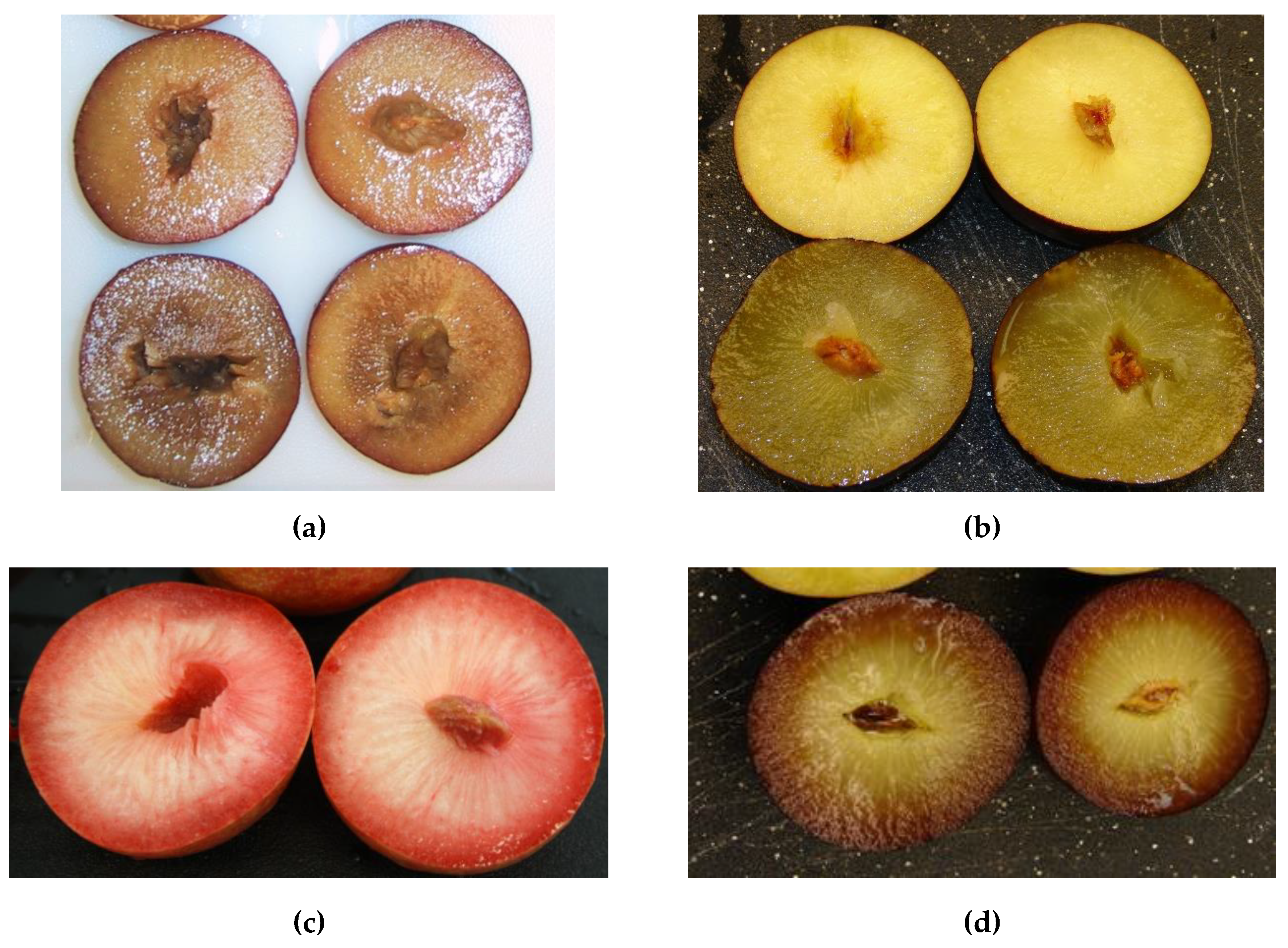

Table 1.
Japanese Plum Fruit Composition (based on 100 g raw halves).
| Name | Amount | Unit | Name | Amount | Unit |
| Water | Copper, Cu | ||||
| Energy | Selenium, Se | ||||
| Protein | Vitamin C, total ascorbic acid | ||||
| Total lipid (fat) | Thiamin | ||||
| Carbohydrate, by difference | Riboflavin | ||||
| Fiber, total dietary | Niacin | ||||
| Sugars, total including NLEA | Vitamin B-6 | ||||
| Calcium, Ca | Folate, total | ||||
| Iron, Fe | Folic acid | ||||
| Magnesium, Mg | Folate, food | ||||
| Phosphorus, P | Folate, DFE | ||||
| Potassium, K | Choline, total | ||||
| Sodium, Na | Vitamin B-12 | ||||
| Zinc, Zn | Vitamin B-12, added | ||||
| Carotene, beta | Vitamin A, RAE | ||||
| Carotene, alpha | Retinol | ||||
| Cryptoxanthin, beta | MUFA 16:1 | ||||
| Lycopene | MUFA 18:1 | ||||
| Lutein + zeaxanthin | MUFA 20:1 | ||||
| Vitamin E (alpha-tocopherol) | MUFA 22:1 | ||||
| Vitamin E, added | Fatty acids, total polyunsaturated | ||||
| Vitamin D (D2+D3) | PUFA 18:2 | ||||
| Vitamin K (phylloquinone) | PUFA 18:3 | ||||
| Fatty acids, total saturated | PUFA 18:4 | ||||
| SFA 4:0 | PUFA 20:4 | ||||
| SFA 6:0 | PUFA 20:5 n-3 (EPA) | ||||
| SFA 8:0 | PUFA 22:5 n-3 (DPA) | ||||
| SFA 10:0 | PUFA 22:6 n-3 (DHA) | ||||
| SFA 12:0 | Cholesterol | ||||
| SFA 14:0 | Alcohol, ethyl | ||||
| SFA 16:0 | Caffeine | ||||
| SFA 18:0 | Theobromine | ||||
| Fatty acids, total monounsaturated | |||||
Table 2.
Quality attribute changes for three cultivars growing in two locations and harvested at three maturities.
Table 2.
Quality attribute changes for three cultivars growing in two locations and harvested at three maturities.
| VARIETY | LOC-MAT-- | DATE | FIRM.(%) | S.S.C.(%) | T.A.(%) | SSC/A RATIO | COLOR | PHENOLmg/100ml | CO2 PEAK | C2H4 PEAK |
| PLUMS | ||||||||||
| Blackamber | 1-1 | 6/20 | 8.0 | 11.1 | 1.21 | 9.2 | 7.1 | 48.2 | 35 | 0.3 |
| 1-2 | 6/20 | 7.4 | 11.5 | 1.06 | 10.8 | 5.5 | 46.0 | 55 | 45 | |
| 1-3 | 6/20 | 6.1 | 12.2 | 0.71 | 17.2 | 2.5 | 40.5 | 69 | 115 | |
| 2-1 | 6/25 | 7.2 | 11.5 | 1.15 | 10.0 | 7.7 | 38.1 | 37 | 0.1 | |
| 2-2 | 6/25 | 6.4 | 11.5 | 0.81 | 14.2 | 5.3 | 34.5 | 35 | 0.2 | |
| 2-3 | 6/25 | 6.1 | 12.4 | 0.73 | 17.0 | 3.4 | 33.0 | 59 | 79 | |
| Friar | 1-1 | 7/12 | 8.8 | 13.7 | 0.95 | 14.2 | 5.1 | 62.8 | 35 | 0.1 |
| 1-2 | 7/12 | 8.4 | 14.8 | 0.78 | 19.0 | 3.5 | 57.4 | 39 | 0.8 | |
| 2-1 | 7/17 | 7.5 | 13.6 | 0.73 | 18.6 | 5.8 | 48.6 | 63 | 81 | |
| 2-2 | 7/17 | 6.7 | 15.3 | 0.61 | 25.1 | 2.8 | 60.6 | 64 | 98 | |
| 3-1 | 7/20 | 7.6 | 13.9 | 0.85 | 16.4 | 5.8 | 55.9 | 39 | 0.2 | |
| 3-2 | 7/20 | 7.4 | 15.4 | 0.72 | 21.4 | 3.7 | 54.8 | 59 | 76 | |
| Angeleno | 1-1 | 9/5 | 9.8 | 17.8 | 0.48 | 37.1 | 9.7 | 59.4 | 26 | 0.1 |
| 1-2 | 9/5 | 8.7 | 17.1 | 0.45 | 38.0 | 4.7 | 68.1 | 24 | 0.1 | |
| 2-1 | 9/14 | 8.2 | 17.8 | 0.48 | 37.1 | 5.8 | 57.7 | 28 | 0.1 | |
| 2-2 | 9/14 | 6.9 | 17.6 | 0.39 | 45.1 | 4.1 | 71.6 | 28 | 0.1 |
Mat.: Maturity; Firm.: Flesh firmness, 5/16-inch tip; S.S.C.: soluble solids content; T.A.: titratable acidity. Color: Peach & Nectarine C.T.F.A. color chips, low number is greener. Plums: U.C.D. red color chips, low number is darker.
Table 3.
Mature and ripe ‘Blackamber’ quality attribute changes at four harvest dates.
| At Harvest | After RipeningZ | ||||||||||
| Flesh color | |||||||||||
| Harvest | Fruit mass (g) | Cheek firmness(N) | L* | Chroma | Hue angle | SSC (%) | TA (%) | SSC: TA | SSC (%) | TA (%) | SSC: TA |
| 1 | 109.2 | 110 | 67.9 | 28.8 | 100.3 | 10.3 | 1.15 | 9.2 | 10.3 | 0.78 | 13.2 |
| 2 | 118.0 | 223 | 67.5 | 28.9 | 95.7 | 10.6 | 0.70 | 14.2 | 10.8 | 0.47 | 23.8 |
| 3 | 121.4 | 197 | 64.6 | 28.5 | 89.2 | 11.7 | 0.50 | 24.2 | 11.7 | 0.43 | 27.4 |
| 4 | 122.3 | 134 | 62.8 | 28.3 | 85.7 | 11.9 | 0.42 | 28.2 | 12.3 | 0.33 | 37.5 |
| <0.0001 | <0.0001 | 0.0001 | 0.6640 | 0.0001 | 0.0001 | <0.0004 | <0.0022 | <0.0092 | 0.0001 | 0.0001 | |
| 4.1Y | 2.22 | 1.4 | NS | 0.8 | 0.5 | 0.24 | 3.7 | 1.09 | 0.06 | 3.7 | |
ZFruit ripened at 20 °C and 85% RH until flesh firmness reached 8.9 to 17.8 N. YMean separation by LSD test at P > 0.05.
Table 4.
Effects of Storage Temperature on Market Life Potential of Plum Cultivars.
| Cultivar | Plant breeding program | Fruit type | 0°C | 5°C |
| Angeleno | Garabedian | Semi-free to freestone | 5 | 5 |
| Betty Anne | Zaiger | Clingstone | 5 | 5 |
| Blackamber | Weinberger | Freestone | ||
| Earliqueen | Zaiger | Clingstone | 3 | 2 |
| Friar | Weinberger | Freestone | 5 | 3 |
| Flavorich | Zaiger | Clingstone | 5 | 5 |
| Fortune | Weinberger | Semi-clingstone | 5 | 3 |
| Hiromi Red | Zaiger | Clingstone | 5 | 3 |
| Howard Sun | Chamberlin | Freestone | 4 | 1 |
| Joanna Red | Zaiger | Freestone | 5 | 5 |
| October Sun | Chamberlin | Semi-clingstone | 5 | 5 |
| Purple Majesty | Bradford | Clingstone | 5 | 3 |
| Showtime | Wuhl | Freestone | 5 | 3 |
Storage/shipping potential (weeks).
Table 5.
Relationship between Stone Fruit Soluble Solids Content (SSC) and the Freezing Point.
| (%) | (°F) | (°C) |
| 8.0 | 30.7 | –0.7 |
| 10.0 | 30.3 | –0.9 |
| 12.0 | 29.7 | –1.3 |
| 14.0 | 29.4 | –1.4 |
| 16.0 | 28.8 | –1.8 |
| 18.0 | 28.5 | –1.9 |
SSC Safe Freezing Point.
Table 6.
Minimum flesh firmness (measured at the weakest point on the fruit) necessary to avoid commercial bruising at three levels of physical handling (critical bruising index) expressed as height (cm) or G acceleration forces.
Table 6.
Minimum flesh firmness (measured at the weakest point on the fruit) necessary to avoid commercial bruising at three levels of physical handling (critical bruising index) expressed as height (cm) or G acceleration forces.
| Drop heightz | ||||
| (1.0 cm) | (5.1 cm) | (10.2 cm) | Weakest | |
| Cultivar | ~66 g | ~185 g | ~246 g | position |
| Blackamber | 0 | 0 | 3y | Tip |
| Fortune | 0 | 0 | 0 | Shoulder |
| Royal Diamond | 0 | 0 | 0 | Shoulder |
| Angeleno | 0 | 0 | 0 | Shoulder |
zDropped onto a 0.3 cm PVC belt. Damaged areas with a diameter equal to or greater than 2.5 mm were measured as bruises. yFruit firmness was measured with an eight mm tip penetrometer.
Table 7.
Acceleration and velocity change measured in the center position of the top tray of two-layer, tray-packed metric boxes dropped from different heights (cm) onto a solid countertop. Values given are means (± standard deviations).
Table 7.
Acceleration and velocity change measured in the center position of the top tray of two-layer, tray-packed metric boxes dropped from different heights (cm) onto a solid countertop. Values given are means (± standard deviations).
| Drop height (cm) | Acceleration (G) | Velocity change (m/s) |
| 7.6 | 32.4 (±3.0) | 1.10 (±0.02) |
| 15.2 | 58.2 (±4.2) | 1.64 (±0.06) |
| 22.9 | 89.1 (±2.7) | 2.18 (±0.13) |
| 30.1 | 103.6 (±11.6) | 2.54 (±0.21) |
Table 8.
Proposed consumer quality indexes based on firmness (eight mm tip) and minimum SSC for different plum cultivars measured at harvest.
Table 8.
Proposed consumer quality indexes based on firmness (eight mm tip) and minimum SSC for different plum cultivars measured at harvest.
| Cultivar | Firmness(lb) | Minimum SSC(%) |
| Blackamber | 7-9 | 10-12Z |
| Fortune | 7-9 | 11 |
| Friar | 7-9 | 11 |
| Royal Diamond | 7-9 | 11 |
| Angeleno | 6-9 | 12 |
| Betty Anne | 7-9 | 12 |
Z Plums with TA ≤ 0.60% after ripening have high consumer acceptance; however, if plums have > 12.0% SSC, TA does not play a role.
Disclaimer/Publisher’s Note: The statements, opinions and data contained in all publications are solely those of the individual author(s) and contributor(s) and not of MDPI and/or the editor(s). MDPI and/or the editor(s) disclaim responsibility for any injury to people or property resulting from any ideas, methods, instructions or products referred to in the content. |
© 2023 by the authors. Licensee MDPI, Basel, Switzerland. This article is an open access article distributed under the terms and conditions of the Creative Commons Attribution (CC BY) license (http://creativecommons.org/licenses/by/4.0/).
Copyright: This open access article is published under a Creative Commons CC BY 4.0 license, which permit the free download, distribution, and reuse, provided that the author and preprint are cited in any reuse.


