

Submitted:
15 May 2023
Posted:
16 May 2023
You are already at the latest version
Abstract
Dairy cattle predicted by genomic breeding values to be heat tolerant are known to have less milk production decline and lower core body temperature increases in response to elevated temperatures. In a study conducted at the University of Melbourne’s Dookie Robotic Dairy Farm during summer, we identified the most 20 heat-susceptible and 20 heat-tolerant cows in a herd of 150 Holstein Friesian lactating cows based on their phenotypic responses (changes in respiration rate, surface body temperature, panting score, and milk production). Hair samples were collected from the tip of the cows' tail following standard genotyping protocols. The results indicated variation in feed saved and HT genomic estimated breeding values (GEBVs) (P≤0.05) across age, indicating a potential for their selection. As expected, the thermotolerant group had higher GEBVs for HT and feed saved but lower for milk production. In general, younger cows had superior GEBVs for Balanced Performance Index (BPI), Type Weighted Index (TWI) and Australian Selection Index (ASI), whilst older cows were superior in fertility, feed saved (FS) and HT. The study demonstrated highly significant (P≤ 0.001) negative correlations (-0.28 to -0.74) between HT and GEBVs for current Australian Dairy cattle selection indices (BPI, TWI, ASI, HWI) and significant (P≤ 0.05) positive correlations between HT and GEBVs for traits like FS (0.45) and fertility (0.25). Genomic selection for HT will help improve cow efficiency and sustainability of dairy production under hot summer conditions. However, a more extensive study involving more lactating cows across multiple farms is recommended to confirm the associations between the phenotypic predictors of HT and GEBVs.
Keywords:
genomic selection
; genotyping
; heat stress
; robotic dairy
; selection index
1. Introduction
Animal agriculture remains an essential source of livelihood, income and food security in the developing world [1,2]. In the future, climate change and its negative impact on the quality of feed, water availability, animal and milk production, livestock diseases, animal reproduction and biodiversity [3,4,5] are expected to worsen, putting the livelihoods of millions at grave risk [6]. In the face of this challenge, climate-smart livestock breeding programmes should be pursued [7]. Research on livestock genomes should help improve heat tolerance (HT) [8], match genotypes with production environments [9], and select breeding stock to ameliorate the effects of heat stress (HS) [10]. Heat stress is the best-characterized stress with severe impacts on reproductive performance in dairy cattle among all the physiological stressors [11]. Heat stress led to $1 billion in losses annually to the United States dairy industry alone [12] two decades ago and is likely to be more costly today. More recent estimates indicate that HS exposure just during the dry period of the dam is estimated to cause $810 million in milk losses annually in the United States [13]. Late-gestation HS affects the development of the foetus reducing daughter survivability and milk production [14]. Furthermore, HS adversely affects the innate and adaptive immune functions of pregnant animals and their offspring, influencing growth rate, morbidity and mortality [15]. Physiologically, animals have developed coping mechanisms (acclimation, acclimatisation, and adaptation) to minimise the impact of such environmental stressors. Acclimation refers to a coordinated phenotypic response generated by the animal to a specific environmental stressor, while acclimatisation refers to a coordinated response to several simultaneous stressors. Adaptation involves genetic changes as adverse environments persist over several generations of a species [16]. A study of genetic differences between adapted animals provides valuable information on the genes associated with acclimation and acclimatisation [16]. Emerging strategies to improve heat tolerance (HT) of animals include introgression of thermotolerant genes [17]. Already an HT gene (SLICK), commonly found in heat-resistant cattle (e.g., Senepol, Brahman), have been introduced in dairy breeds such as the Holstein [18,19]. This gene confers better thermotolerance due to increased thermoregulatory ability, which reduces HS [20]. The effects of the SLICK allele mutation on the physiological responses to HS can be detected in Holstein calves as early as the preweaning stage of life [21]. Genomics comprises a set of valuable technologies implemented as selection tools in dairy cattle commercial breeding programs [22], and genomic selection uses genome-wide DNA markers to capture the effects of many mutations that influence variation in complex traits like HT. It allows young bulls and heifers to be selected on their GEBVs, thereby accelerating genetic gain [23]. Heat Tolerance Australian Breeding Values (HT ABVs) [24] provide estimates of the genetic merit of dairy cows and bulls. Genomic selection for HT should increase the resilience and welfare of dairy herds worldwide and the productivity of dairy farming in future, given the expected increased incidence and duration of HS conditions. Therefore, this research aimed to study the association between HT phenotypic markers of HT and genomic estimated breeding values for Australian dairy cattle production selection indices in a herd of Holstein Friesian cows.
2. Materials and Methods
The present experiment was approved by the University of Melbourne Faculty of Veterinary and Agricultural Science (FVAS) Animal Ethics Committee (AEC ID 1814645.1). The Australian dairy population is an ideal study model on HT because animals are predominantly kept outdoors on pastures where they experience the direct effects of weather elements [9]. The location of this study, experimental animals, their management, and data collection procedures have been previously published [6]. Briefly, we recorded weekly physiological and milk production data of 150 Holstein Friesian dairy cows kept at the University of Melbourne, Robotic Dairy Farm, at Dookie, North Victoria, Australia, between 1st December 2018 and 28th February 2019, with ambient temperatures ranging from 18 – 42°C and relative humidity 25 – 75%. Phenotypic data collected included respiratory rate (RR), panting score (PS) and surface body temperature (SBT). Respiration rate was recorded via time in seconds taken for standing cows to make five flank movements (as the animal inhales and exhales with each breadth [25] and calculated as respiration rate/minute. Animals were also observed for signs of drooling and/or open-mouth panting and these data were used to determine the PSs of all cows [26]. The surface body temperature of cows was determined non-invasively using an infrared thermal camera FLIR T1050sc 28 [27]. Daily milk production, milk quality (somatic cell count, milk fat and protein %), cow weights and concentrate intake were collected automatically by the robotic milking machine (Lely Automatic Milking System), identifying individual cows via Radio Frequency Identification (RFID) ear tags. Additionally, each cow is fitted with a transponder (Qwes-HR, Lely) that contains a rumination monitor. The rumination monitor uses a microphone to detect chewing sounds and differentiates between eating and rumination time. Based on their physiological (SBT, RR and PS) and milk production data blocked by stage of lactation, we selected the 20 most thermotolerant and 20 most thermo-susceptible cows out of the experimental herd over the summer period for genotyping (Table 1). To gauge the effect of age on the parameters studied, we grouped the cows into 3 age groups as follows (Group 1: < 5 years; Group 2: 5-7.0 years; Group 3: > 7 years).
Genomic applications enable the prediction of GEBVs of selection candidates based on their genotypes [30,31]. An Australian Breeding Value for HT (HT ABV) in Holstein and Jersey cows based on the magnitude of the decline of milk, fat, and protein yield per unit increase in THI has been developed [31] and was incorporated into Australian national genetic evaluations in December 2017 [20]. HT ABV allows farmers to identify animals with a greater ability to tolerate hot, humid conditions with less impact on milk production [25]. To enable us to estimate breeding values of experimental animals, hair samples were then collected from the tip of the tail according to a standard protocol for genotyping (Zoetis; https://genetics.zoetis.com/Australia).
3. Results
Variation in Genomic Estimated Breeding Values (GEBVs) by relative thermotolerance
There was no difference (P > 0.05) in most of the GEBVs (Table 2) between the phenotypically thermotolerant and thermos-susceptible cows. However, numerically thermotolerant groups were inferior in most of the studied GEBVs except, as expected, those of heat tolerance (HT) and Feed Saved (feed saved when a cow is smaller and needs less feed for maintenance and has a lower residual feed intake).
Variation in GEBVs of selection indices by age group
Balanced Performance Index (BPI), Health Weighted Index (HWI), Type Weighted Index (TWI) and Australian Selection Index (ASI) blends production, type and health traits for maximum profit. In present study, younger cows were superior to older cows in BPI, ASI, HWI, TWI, milk fat and milk protein GEBVs, whilst the reverse was true for HT (Table 3). Across age, there was not much variation in temperament and fertility GEBVs of experimental cows, but some variation was obtained in mastitis resistance and especially feed saved GEBVs (Figure 1).
Association of GEBVs of economic traits
In terms of associations between GEBVs of the studied traits presented in Table 4, we observed highly significant (p ≤ 0.01) negative correlations (from -0.28 to -0.74) between HT and current dairy industry economic performance indices (BPI, ASI, HWI, TWI, Milk, Milk protein and Milk fat content) with positive correlations (p ≤ 0.05) between HT and feed saved (+0.45) and fertility (+0.25). Variations between age and HT with some of the studied GEBVs are as shown in Figure 2 and Figure 3. Additionally, we found a large variation in feed saved and HT GEBVs (Figure 4 and Figure 5) and an effect of age on BPI GEBV (Figure 4). Younger dairy cows had better temperament than older cows which were also superior in HT GEBV (Figure 5). Finally, as shown in Figure 5, the yearlings were inferior to the older cows in feed saved GEBVs.
4. Discussion
Findings of GEBVs of HWI and TWI in the present study suggest that experimental cows were, on the average, superior in HWI (62) compared to TWI (34). The HWI allows farmers to fast-track traits such as fertility, mastitis resistance, and feed saved (efficiency), whilst the TWI enables farmers to fine-tune type traits to make a good herd even better. The average ASI GEBV of 25 obtained in the current study indicates that there is more room for improvement in selecting bulls to produce daughters with the most profitable combination of protein, fat and milk production. Heat Tolerance Australian Breeding value (HT GEBV) allows farmers to identify animals with a greater ability to tolerate hot, humid conditions with less impact on milk production and is expressed as a percentage with a base of 100 [29]. Dairy cows in the present study had HT GEBVs ranging from +93 to +112 with an average of +103. However, on average, there was no significant difference in HT GEBVs of the thermotolerant and thermos-susceptible groups. This means that even the cow with the best genetics in terms of heat tolerance is just 12% above the Australian dairy herd, with some 7% less tolerant than the average. This is confirmed by the negative association between HT and all the 3 economic selection indices (BPI, ASI and HWI), confirming that some of our experimental cows are genetically prone to heat stress. Although the heritability of HT is moderate at, on the average 0.19, genetic selection is expected to achieve significant progress[30].
Therefore, it will be important to consider HT as a critical component of the breeding objectives of dairy farmers in Australia. Additionally, HT is favourably correlated with fertility and unfavourably with production, meaning that high selection pressure for HT may improve fertility but compromise production. Significant (p ≤ 0.05) negative correlations (-0.39 to -0.69) were observed between HT and current dairy industry economic indices (BPI, TWI, ASI and milk production). In contrast, positive correlations were recorded between HT and feed saved (+0.44) and fertility (+0.27) in line with previous findings [31]. These findings confirm that HT EBV is not currently included in the BPI [17,31]. In future, dairy cattle breeders may want to choose bulls with high HT and BPI GEBVs to ameliorate the high environmental heat load, particularly during the summer months.
Another interesting finding was the large variation in feed saved and HT GEBVs indicating the potential for selecting cows in these traits. Feed saved is defined as the amount of feed that is saved through improved metabolic efficiency and reduced maintenance requirements [24]. Feed saved, an index of feed conversion efficiency is an important breeding goal because feed is a major cost variable in livestock production systems. Feed saved ABV has been available in Australia and included in the national selection indices since April 2015. The present study's findings indicate that the relatively younger experimental cows are less likely to be efficient in feed utilisation due to the negative correlation between feed saved and milk yield. Feed saved ABV allows one to breed cows with reduced maintenance requirements for the same amount of milk produced. Feed saved is included in each of the three indices (BPI, HWI, TWI) with the highest weighting in the HWI and is expressed in kilograms of dry matter of feed saved per cow per year, more or less than the average of zero. A positive number represents feed saved; a negative number represents extra feed consumed, which means that a lot needs to be improved with an average Feed saved GEBV of +26 in the current study. To improve feed efficiency in this herd, management will need to select bulls in future with positive Feed saved GEBVs. Heat-stressed animals consume less feed and produce less milk, and therefore there is a need for strategies to mitigate the impacts of HS on animal performance [30]. Consequentially, animals superior in Feed saved GEBVs should be more HT and adaptive to adverse effects of heat stress on foetal and mammary development arising from disruptions in placental function during pregnancy [11].
We also investigated the relationship between GEBVs of current dairy cattle performance indices and found a wide variation in Feed saved GEBVs (from -93 to +130) across age, indicating a potential for its selection. Such genetic variation provides flexibility to adapt to the changing environment and enhances the survival of the population over time [32]. Therefore, identifying and selecting animals that are thermotolerant is a viable alternative for reducing the adverse effects of HS on dairy cattle performance [33]. Moreover, the relatively thermotolerant group had somewhat higher GEBV for Feed saved and fat% but lower milk production potential. The breeding goal of Australian dairy breeding is clearly seen in the effect of age on BPI and temperament GEBVs of dairy cows, with younger dairy cows ranking better in these traits. On the other hand, older cows seem to be genetically more heat tolerant than younger cows which may be due to the negative antagonism between heat tolerance and milk yield so that with the current breeding objective increasing milk yields, younger cows are inferior in terms of the genetics for HT, and this needs to be corrected in future breeding programmes.
5. Conclusions
In the present study, we tested the reliability of GEBVs for HT under Australian natural summer by recording phenotypic data on Holstein Friesian lactating cows. In terms of the phenotypically relatively thermotolerant and thermos-susceptible groups, although we did not find significant differences between them due probably to a limitation in sample size, as expected, the thermo-susceptible group recorded relatively higher GEBVs for BPI, ASI, HWI, TWI, milk production, milk protein and milk fat. However, in line with their physiological response to heat stress, the thermotolerant group had a relatively higher GEBV for HT than the thermos-susceptible group. Genomic Estimated Breeding Values of BPI, TWI, ASI, and HWI are superior in younger cows, whilst older cows were superior in fertility, feed saved (FS) and heat tolerance (HT). Positive associations between HT and FS and FS and fertility GEBVs indicate that selection for HT may help improve cow efficiency and sustainability of production under hot summer conditions. An effective strategy to breed high-producing and adaptive ruminants to feed the growing world population under changing climatic conditions will greatly boost sustainable livestock production. Therefore, we recommend a more extensive study involving a larger number of lactating cows across multiple farms to confirm these associations to adopt and incorporate HT breeding values into various dairy economic performance indices for the selection of dairy cattle to improve efficiency, fertility and thermotolerance of future dairy cows.
Author Contributions
Conceptualization, R.O.-A., S.S.C., B.J.L. and F.R.D.; methodology, R.O.-A., B.J.L., F.R.D. and S.S.C.; investigation, R.O.-A., A.J., M.H.Z., A.A. and S.S.C.; formal analysis, R.O.-A., A.A., and S.S.C., writing—original draft preparation, R.O.-A. and S.S.C.; writing—review and editing, R.O.-A., S.S.C., B.J.L., and F.R.D.; supervision, S.S.C., B.L., and F.R.D.; project administration, S.S.C.; funding acquisition, R.O.-A. and S.S.C. All authors have read and agreed to the published version of the manuscript.
Funding
This study was partially funded by the Department of Foreign Affairs and Trade (https://www.dfat.gov.au/) through the Australia Awards Africa Postdoctoral Fellowship awarded to Dr Richard Osei-Amponsah, and by the Richard Nicolas Trust Fund 2018 awarded by Faculty of Veterinary and Agricultural Sciences, The University of Melbourne to Dr Surinder Singh Chauhan.
Acknowledgments
The authors are grateful to staff Dookie Robotic Dairy for managing cows and assistance with data collection. Dr. Thuy T. Nguyen of AgriBio and DataGene , Australia is sincerely appreciated for reading through the original draft and providing valuable feedback. We also thank the University of Ghana, Legon for granting one-year study leave to enable R.O.-A. to undertake the study.
Conflicts of Interest
The authors declare no conflict of interest.
References
- AUIBAR, The State of Farm Animal Genetic Resources in Africa. Towards Accelerated Agricultural Growth and Transformation by the Year 2025, ed. B.N. Nouala S, Mbole-Kariuki M, Nengomasha E and Tchangai P. 2019: African Union Interafrican Bureau for Animal Resources (AUIBAR), Nairobi, Kenya. 293.
- FAO, et al., The State of Food Security and Nutrition in the World 2021-Transforming food systems for food security, improved nutrition and affordable healthy diets for all. 2021: FAO, Rome,.
- Rojas-Downing, M.M.; Nejadhashemi, A.P.; Harrigan, T.; Woznicki, S.A. Climate change and livestock: Impacts, adaptation, and mitigation. Clim. Risk Manag. 2017, 16, 145–163. [Google Scholar] [CrossRef]
- Rahimi, J.; Mutua, J.Y.; Notenbaert, A.M.O.; Marshall, K.; Butterbach-Bahl, K. Heat stress will detrimentally impact future livestock production in East Africa. Nat. Food 2021, 2, 88–96. [Google Scholar] [CrossRef] [PubMed]
- Hendricks, J.; Mills, K.E.; Sirovica, L.V.; Sundermann, L.; Bolton, S.E.; von Keyserlingk, M. Public perceptions of potential adaptations for mitigating heat stress on Australian dairy farms. J. Dairy Sci. 2022, 105, 5893–5908. [Google Scholar] [CrossRef] [PubMed]
- Osei-Amponsah, R.; Dunshea, F.R.; Leury, B.J.; Cheng, L.; Cullen, B.; Joy, A.; Abhijith, A.; Zhang, M.H.; Chauhan, S.S. Heat Stress Impacts on Lactating Cows Grazing Australian Summer Pastures on an Automatic Robotic Dairy. Animals 2020, 10, 869. [Google Scholar] [CrossRef] [PubMed]
- Zhang, Y.W.; McCarl, B.A.; Jones, J.P.H. An Overview of Mitigation and Adaptation Needs and Strategies for the Livestock Sector. Climate 2017, 5, 95. [Google Scholar] [CrossRef]
- Freitas, P.H.F.; Wang, Y.; Yan, P.; Oliveira, H.R.; Schenkel, F.S.; Zhang, Y.; Xu, Q.; Brito, L.F. Genetic Diversity and Signatures of Selection for Thermal Stress in Cattle and Other Two Bos Species Adapted to Divergent Climatic Conditions. Front. Genet. 2021, 12, 604823. [Google Scholar] [CrossRef] [PubMed]
- Cheruiyot, E.; Nguyen, T.; Haile-Mariam, M.; Cocks, B.; Abdelsayed, M.; Pryce, J. Genotype-by-environment (temperature-humidity) interaction of milk production traits in Australian Holstein cattle. J. Dairy Sci. 2020, 103, 2460–2476. [Google Scholar] [CrossRef]
- Luo, H.; Li, X.; Hu, L.; Xu, W.; Chu, Q.; Liu, A.; Guo, G.; Liu, L.; Brito, L.F.; Wang, Y. Genomic analyses and biological validation of candidate genes for rectal temperature as an indicator of heat stress in Holstein cattle. J. Dairy Sci. 2021, 104, 4441–4451. [Google Scholar] [CrossRef]
- Collier, R.; Renquist, B.; Xiao, Y. A 100-Year Review: Stress physiology including heat stress. J. Dairy Sci. 2017, 100, 10367–10380. [Google Scholar] [CrossRef]
- St-Pierre, N.; Cobanov, B.; Schnitkey, G. Economic Losses from Heat Stress by US Livestock Industries. J. Dairy Sci. 2003, 86, E52–E77. [Google Scholar] [CrossRef]
- Ferreira, F.; Gennari, R.; Dahl, G.; De Vries, A. Economic feasibility of cooling dry cows across the United States. J. Dairy Sci. 2016, 99, 9931–9941. [Google Scholar] [CrossRef] [PubMed]
- Laporta, J.; Ferreira, F.; Ouellet, V.; Dado-Senn, B.; Almeida, A.; De Vries, A.; Dahl, G. Late-gestation heat stress impairs daughter and granddaughter lifetime performance. J. Dairy Sci. 2020, 103, 7555–7568. [Google Scholar] [CrossRef] [PubMed]
- Dahl, G.E.; Tao, S.; Laporta, J. Heat Stress Impacts Immune Status in Cows Across the Life Cycle. Front. Veter- Sci. 2020, 7, 116. [Google Scholar] [CrossRef] [PubMed]
- Collier, R.J.; Baumgard, L.H.; Zimbelman, R.B.; Xiao, Y. Heat stress: physiology of acclimation and adaptation. Anim. Front. 2019, 9, 12–19. [Google Scholar] [CrossRef] [PubMed]
- Pryce, J.E.; Haile-Mariam, M. Symposium review: Genomic selection for reducing environmental impact and adapting to climate change. J. Dairy Sci. 2020, 103, 5366–5375. [Google Scholar] [CrossRef] [PubMed]
- Dikmen, S.; Khan, F.A.; Huson, H.J.; Sonstegard, T.S.; Moss, J.I.; Dahl, G.E.; Hansen, P.J. The SLICK hair locus derived from Senepol cattle confers thermotolerance to intensively managed lactating Holstein cows. J. Dairy Sci. 2014, 97, 5508–5520. [Google Scholar] [CrossRef] [PubMed]
- Dikmen, S.; Mateescu, R.G.; A Elzo, M.; Hansen, P.J. Determination of the optimum contribution of Brahman genetics in an Angus-Brahman multibreed herd for regulation of body temperature during hot weather. J. Anim. Sci. 2018, 96, 2175–2183. [Google Scholar] [CrossRef]
- Jensen, L.; Jannaman, E.; Pryce, J.; De Vries, A.; Hansen, P. Effectiveness of the Australian breeding value for heat tolerance at discriminating responses of lactating Holstein cows to heat stress. J. Dairy Sci. 2022, 105, 7820–7828. [Google Scholar] [CrossRef]
- Carmickle, A.T.; Larson, C.C.; Hernandez, F.S.; Pereira, J.M.; Ferreira, F.C.; Haimon, M.L.; Jensen, L.M.; Hansen, P.J.; Denicol, A.C. Physiological responses of Holstein calves and heifers carrying the SLICK1 allele to heat stress in California and Florida dairy farms. J. Dairy Sci. 2022, 105, 9216–9225. [Google Scholar] [CrossRef]
- Gutierrez-Reinoso, M.A.; Aponte, P.M.; Garcia-Herreros, M. Genomic Analysis, Progress and Future Perspectives in Dairy Cattle Selection: A Review. Animals 2021, 11, 599. [Google Scholar] [CrossRef]
- Garner, J.B.; Douglas, M.L.; O Williams, S.R.; Wales, W.J.; Marett, L.C.; Nguyen, T.T.T.; Reich, C.M.; Hayes, B.J. Genomic Selection Improves Heat Tolerance in Dairy Cattle. Sci. Rep. 2016, 6, 34114. [Google Scholar] [CrossRef] [PubMed]
- Pryce, J.; Nguyen, T.; Axford, M.; Nieuwhof, G.; Shaffer, M. Symposium review: Building a better cow—The Australian experience and future perspectives. J. Dairy Sci. 2018, 101, 3702–3713. [Google Scholar] [CrossRef] [PubMed]
- Lowe, G.; Sutherland, M.; Waas, J.; Schaefer, A.; Cox, N.; Stewart, M. Infrared Thermography—A Non-Invasive Method of Measuring Respiration Rate in Calves. Animals 2019, 9, 535. [Google Scholar] [CrossRef] [PubMed]
- Gaughan, J.B.; Mader, T.L.; Holt, S.M.; Lisle, A. A new heat load index for feedlot cattle1. J. Anim. Sci. 2008, 86, 226–234. [Google Scholar] [CrossRef]
- Sathiyabarathi, M.; Jeyakumar, S.; Manimaran, A.; Jayaprakash, G.; Pushpadass, H.A.; Sivaram, M.; Ramesha, K.P.; Das, D.N.; Kataktalware, M.A.; Prakash, M.A.; et al. Infrared thermography: A potential noninvasive tool to monitor udder health status in dairy cows. Veter- World 2016, 9, 1075–1081. [Google Scholar] [CrossRef]
- Gaughan, J.B.; Mader, T.L.; Holt, S.M.; Lisle, A. A new heat load index for feedlot cattle1. J. Anim. Sci. 2008, 86, 226–234. [Google Scholar] [CrossRef]
- DataGene, Technote 20 Heat Tolerance ABV. Dairy Australia, 2017.
- Nguyen, T.T.T. , et al., Breeding for heat tolerance in Australian dairy cattle: From development to implementation. Agriculture Victoria, AgriBio, Centre for AgriBioscience, Bundoora, Victoria 3083, Australia, 2017.
- Nguyen, T.T.; Bowman, P.J.; Haile-Mariam, M.; Pryce, J.E.; Hayes, B.J. Genomic selection for tolerance to heat stress in Australian dairy cattle. J. Dairy Sci. 2016, 99, 2849–2862. [Google Scholar] [CrossRef]
- Berihulay, H.; Abied, A.; He, X.; Jiang, L.; Ma, Y. Adaptation Mechanisms of Small Ruminants to Environmental Heat Stress. Animals 2019, 9, 75. [Google Scholar] [CrossRef]
- Kumar, A.; Ashraf, S.; Goud, T.S.; Grewal, A.; Singh, S.; Yadav, B.; Upadhyay, R. Expression profiling of major heat shock protein genes during different seasons in cattle (Bos indicus) and buffalo (Bubalus bubalis) under tropical climatic condition. J. Therm. Biol. 2015, 51, 55–64. [Google Scholar] [CrossRef]
Figure 1.
Variation of GEBVs of temperament, mastitis resistance, feed saved and fertility GEBVs with age in Australian dairy cattle.
Figure 1.
Variation of GEBVs of temperament, mastitis resistance, feed saved and fertility GEBVs with age in Australian dairy cattle.
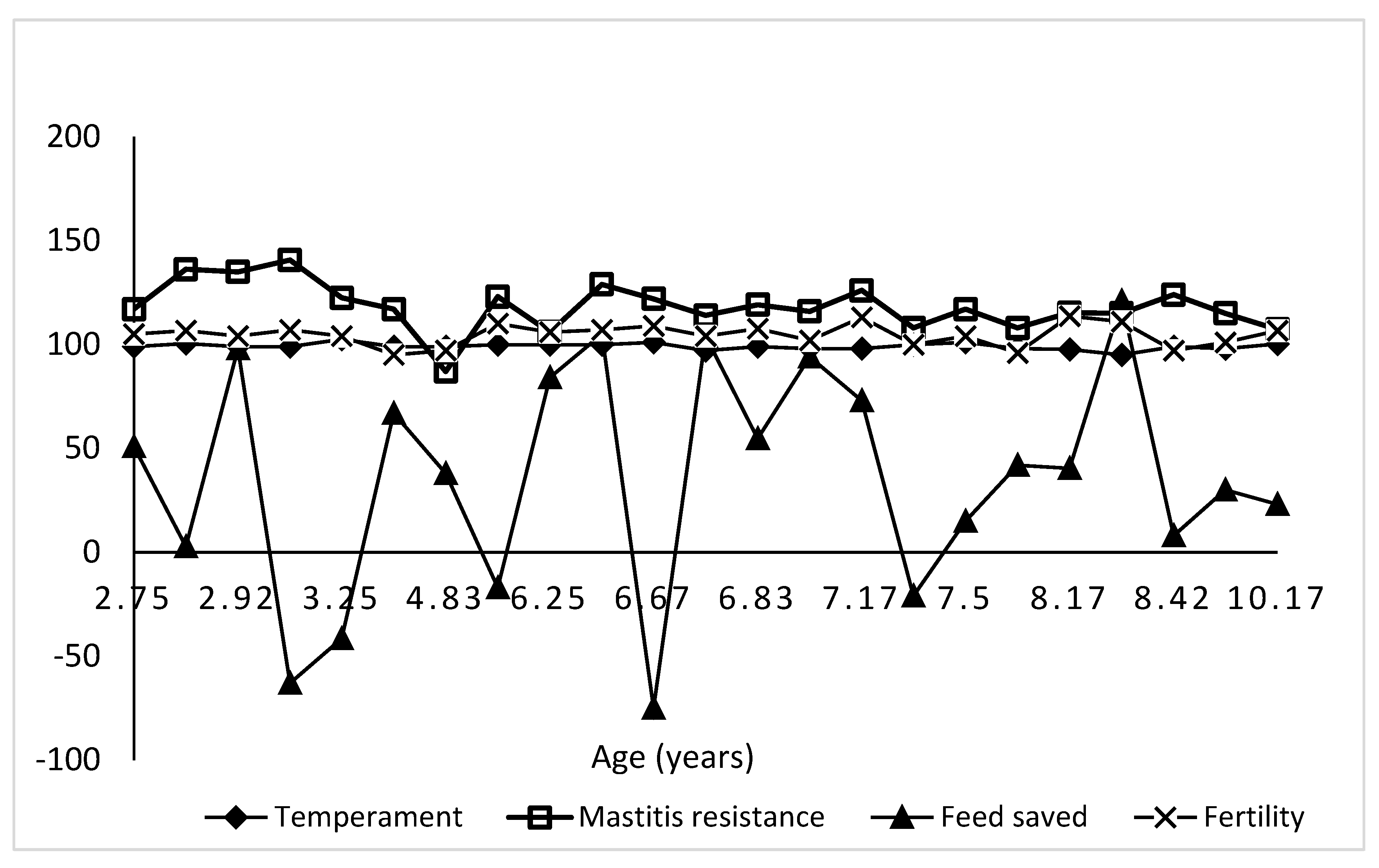
Figure 2.
Variation of temperament, mastitis resistance, feed saved, and fertility GEBVs with heat tolerance GEBVs of Holstein dairy cows.
Figure 2.
Variation of temperament, mastitis resistance, feed saved, and fertility GEBVs with heat tolerance GEBVs of Holstein dairy cows.
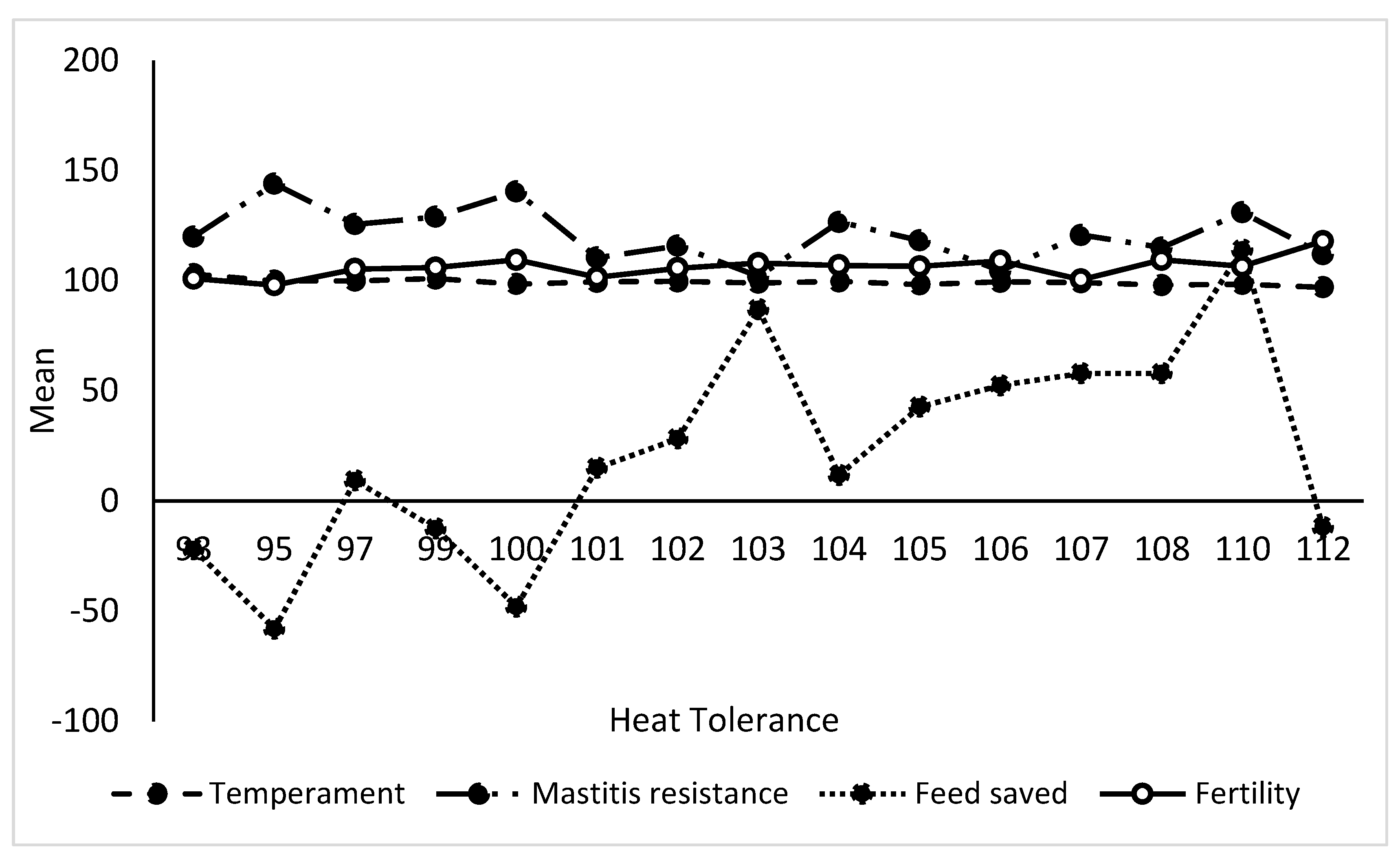
Figure 3.
Variation in BPI, ASI, HWI and TWI GEBV with Heat tolerance performance index.
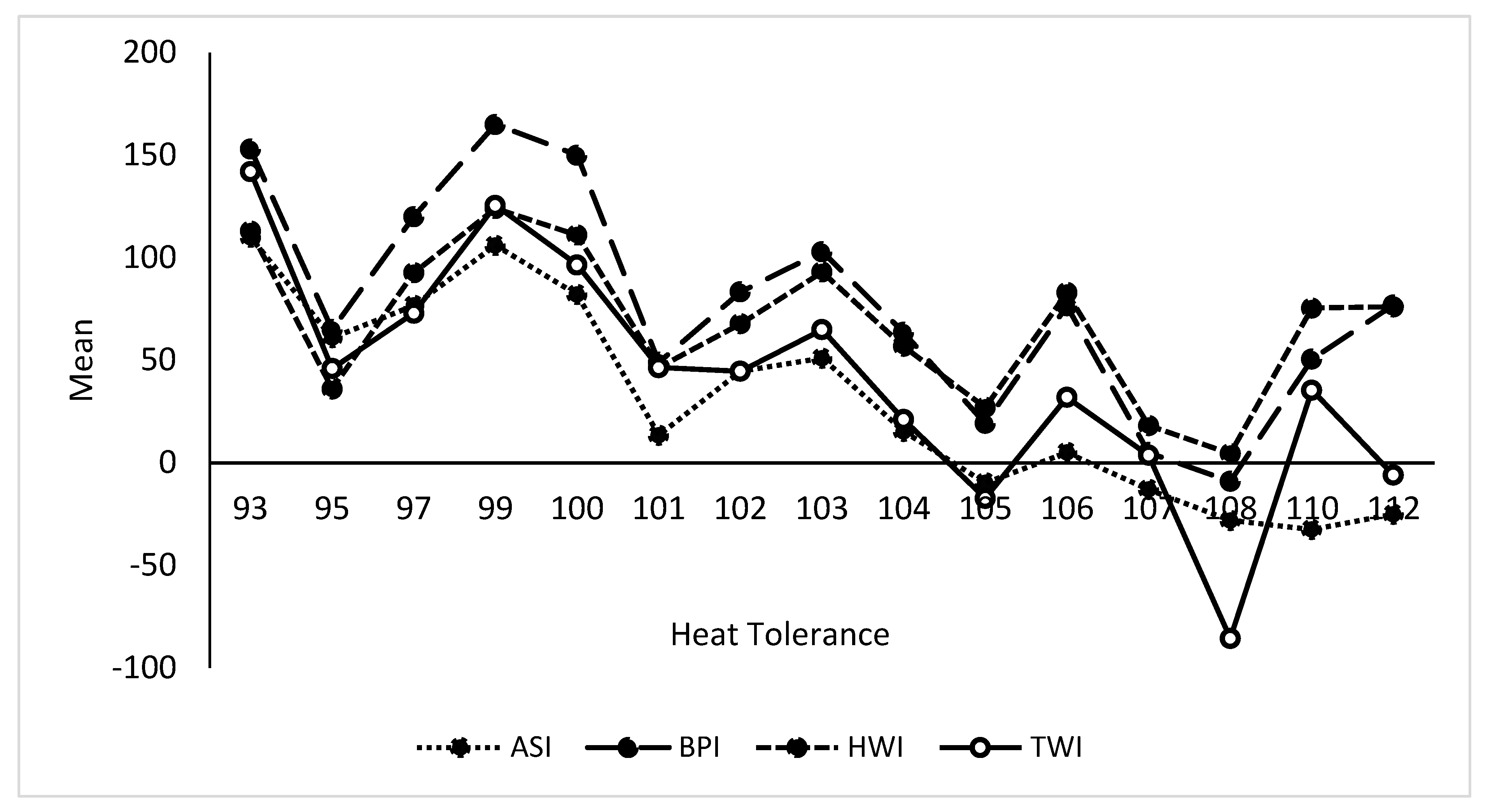
Figure 4.
Effect of age on the mean GEBVs of BPI (p < 0.05), ASI (p < 0.01), HWI (p = 0.09) and TWI (p < 0.01) in Australian dairy cattle.
Figure 4.
Effect of age on the mean GEBVs of BPI (p < 0.05), ASI (p < 0.01), HWI (p = 0.09) and TWI (p < 0.01) in Australian dairy cattle.
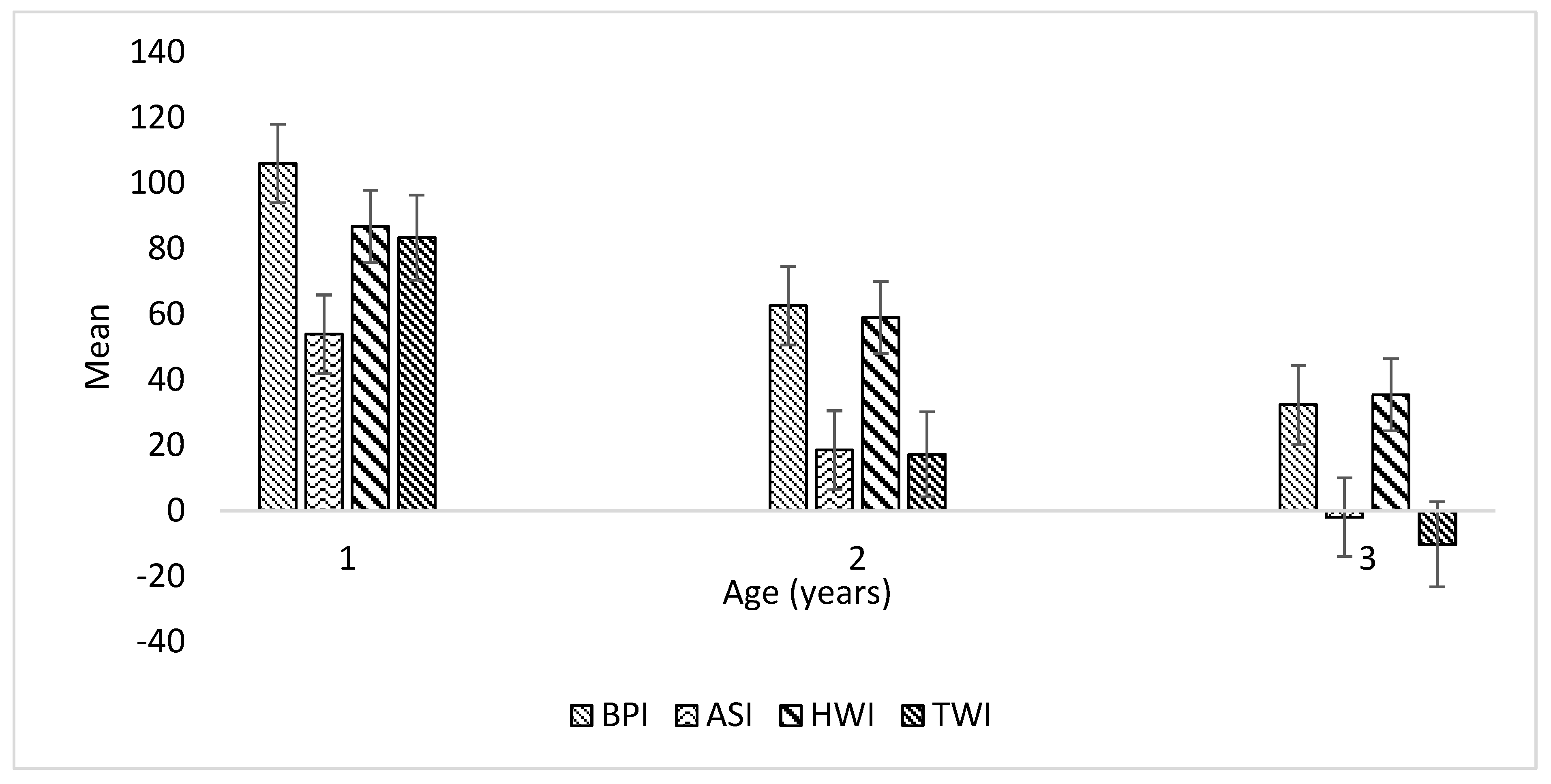
Figure 5.
Effect of age on mean GEBVs of temperament (p < 0.05), mastitis resistance (p < 0.01), feed saved (p = 0.06) and fertility (p = 0.5) in Australian dairy cattle.
Figure 5.
Effect of age on mean GEBVs of temperament (p < 0.05), mastitis resistance (p < 0.01), feed saved (p = 0.06) and fertility (p = 0.5) in Australian dairy cattle.
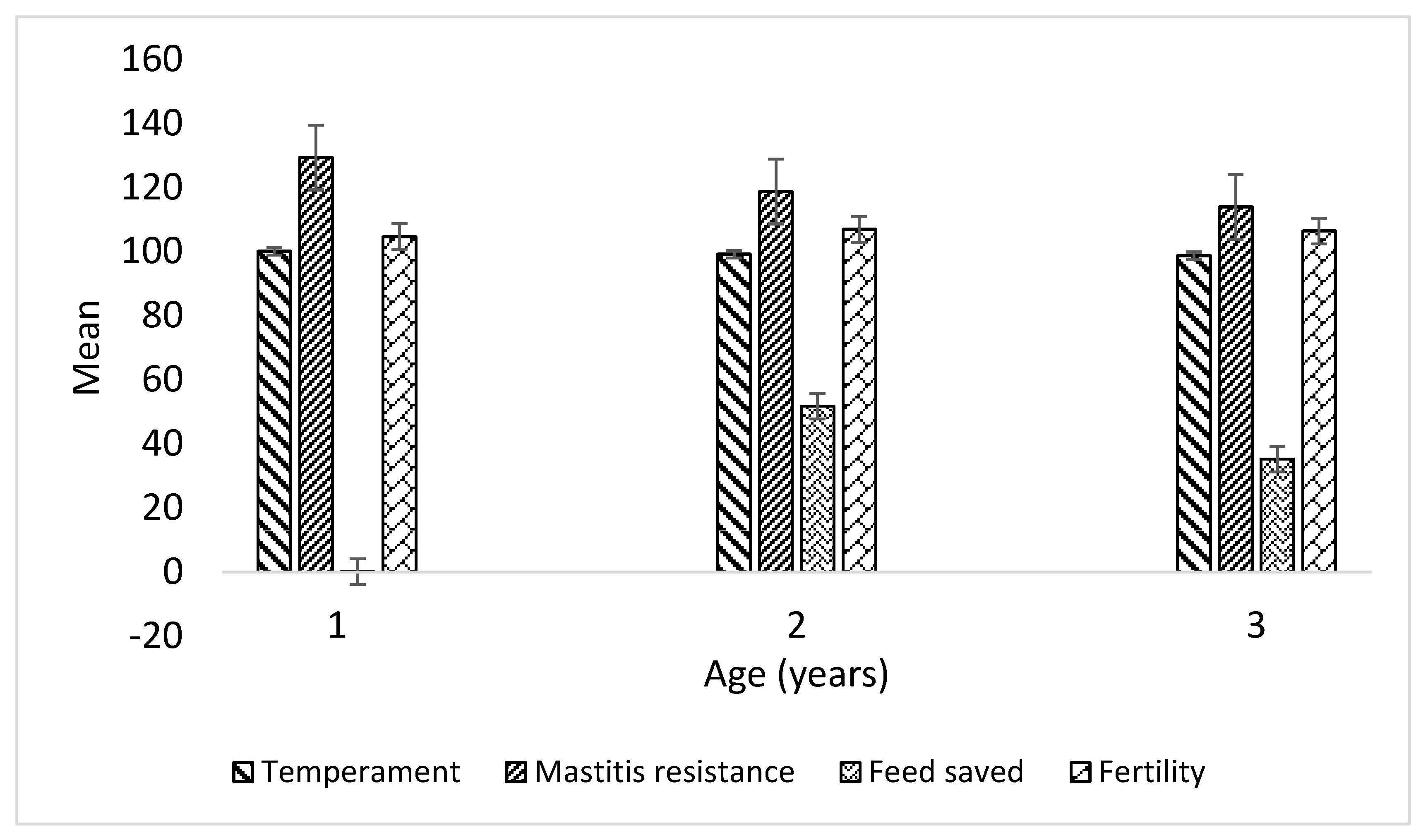

Table 1.
Mean (± SD) physiological and milk production data of experimental cows.
| Parameter | Group 1 (Thermo-susceptible) |
Group 2 (Thermotolerant) |
|---|---|---|
| Respiration rate (breadths min_1)# | 91.8 + 34.7 (303)* | 90.1 + 32.1 (313) |
| Panting score# | 2.0 + 0.8 (307) | 1.9 + 0.8 (317) |
| Daily Milk Production (kg/d) | 21.3 + 5.6b (341) | 30.0 + 6.9a (340) |
| Fat % | 4.4 + 0.9a (340) | 3.9 + 32.1b (313) |
| Protein % | 3.2 + 0.3a (340) | 3.0 + 0.2b (340) |
| Concentrate intake (kg/d) | 5.3 + 1.8b (322) | 6.2 + 1.6a (320) |
| Rumination time (mins) | 399.4 + 108.b (320) | 445.9 + 108.5 a (320) |
| Residual feed (kg/d) | 1.1 + 0.2a (322) | 0.7 + 0.8b (322) |
* Number of observations in brackets; # Within rows means followed by different superscripts are significantly (p ≤ 0.05) different. # Based on the scale used by Gaughan et al. [28].
Table 2.
Variation of Mean GEBVs (± SD) of selected traits with heat tolerance ability.
| Thermo-susceptible Group (n = 19) |
Thermotolerant Group (n = 20) |
Herd Average | |
|---|---|---|---|
| N (sample size) | 19* | 20 | 39.0 |
| BPI | 75.7 ± 19.2 | 63.2 ± 16.5 | 69.3 |
| ASI | 32.0 ± 12.5 | 19.0 ± 11.9 | 25.3 |
| HWI | 65.6 ± 15.3 | 58.4 ± 13.3 | 61.9 |
| TWI | 37.8 ± 21.5 | 29.5 ± 14.3 | 33.5 |
| Milk | 86.7 ± 68.7 | -14.1 ± 91.2 | 35.0 |
| Milk Protein | 4.4 ± 1.8 | 2.4 ± 1.6 | 3.3 |
| Milk Fat | 6.1 ± 1.6 | 0.25 ± 2.6 | 3.1 |
| HT | 102.4 ± 0.95 | 104.1 ± 0.93 | 103.2 |
| Feed Saved | 20.8 ± 12.0 | 31.5 ± 14.3 | 26.28 |
| Fertility | 106.0 ± 1.05 | 105.8 ± 1.38 | 105.9 |
* Bad genotyping results of one sample of the most thermo-susceptible group were discarded.
Table 3.
Variation in average GEBVs of selected traits with the age of dairy cattle.
| Age group | ||||
|---|---|---|---|---|
| < 5 years | years | > 7 years | Total/Overall | |
| N | 15 | 11 | 13 | 39.0 |
| BPI | 106.1a ± 21.3 | 62.6ab ± 17.6 | 32.4b ± 20.1 | 69.26 |
| ASI | 53.9 a ± 15.6 | 18.5ab ± 12.8 | -1.9b ± 10.4 | 25.33 |
| HWI | 86.9 ± 16.8 | 59.1 ± 13.1 | 35.5 ± 18.1 | 61.9 |
| TWI | 83.4a ± 17.9 | 17.3ab ± 20.1 | -10.2b ± 19.5 | 33.54 |
| Milk | 207.1a ± 79.0 | -175.3b ± 131.1 | 14.4ab ± 68.7 | 35.0 |
| Milk Protein | 9.0 a ± 1.7 | -0.18b ± 2.0 | -0.23b ± 1.5 | 3.33 |
| Milk Fat | 7.0 ± 3.0 | 1.2 ± 2.8 | 0.2 ± 2.2 | 3.10 |
| HT | 100.9 ± 1.2 | 103.9 ± 1.0 | 105.4 ± 0.80 | 103.2 |
| Feed Saved | -0.3 ± 15.04 | 51.7 ± 19.7 | 35.2 ± 11.0 | 26.28 |
| Fertility | 104.7 ± 1.43 | 106.91 ± 0.80 | 106.4 ± 1.91 | 105.9 |
GEBVs = Genomic Estimated Breeding Values; BPI = Balanced Performance Index; ASI = Australian Selection Index; HWI = Health Weighted Index; TWI = Type Weighted Index; HT= Heat tolerance; n = sample size. Means with different superscripts differ significantly (p ≤ 0.05) within row.
Table 4.
Pearson correlation coefficients between GEBVs of economic traits.
| BPI# | ASI | HWI | TWI | Milk | Protein | Fat | FS | Fertility | |
|---|---|---|---|---|---|---|---|---|---|
| ASI | 0.80** | ||||||||
| HWI | 0.97** | 0.64** | |||||||
| TWI | 0.95** | 0.77** | 0.92** | ||||||
| Milk | 0.11 | -0.05 | -0.13 | -0.02 | |||||
| Protein | 0.52** | 0.70** | 0.40** | 0.58** | 0.64** | ||||
| Fat | 0.61** | 0.80** | 0.46** | 0.56** | -0.02 | 0.46** | |||
| FS | -0.30 | -0.41** | -0.13 | -0.32* | -0.29 | -0.45** | 0.48** | ||
| Fertility | 0.51** | 0.02 | 0.62** | 0.30 | -0.28 | 0.18 | 0.04 | 0.03 | |
| HT | -0.43** | -0.70** | -0.28 | -0.45** | -0.33* | -0.74** | -0.59** | 0.45** | 0.25 |
# GEBVs = Genomic Estimated Breeding Values; BPI = Balanced Performance Index; ASI = Australian Selection Index; HWI = Health Weighted Index; TWI = Type Weighted Index; HT= Heat tolerance; FS = Feed Saved; n = sample size. ** = p < 0.01; * p < 0.05.
Disclaimer/Publisher’s Note: The statements, opinions and data contained in all publications are solely those of the individual author(s) and contributor(s) and not of MDPI and/or the editor(s). MDPI and/or the editor(s) disclaim responsibility for any injury to people or property resulting from any ideas, methods, instructions or products referred to in the content. |
© 2023 by the authors. Licensee MDPI, Basel, Switzerland. This article is an open access article distributed under the terms and conditions of the Creative Commons Attribution (CC BY) license (http://creativecommons.org/licenses/by/4.0/).
Copyright: This open access article is published under a Creative Commons CC BY 4.0 license, which permit the free download, distribution, and reuse, provided that the author and preprint are cited in any reuse.


