

Submitted:
28 April 2023
Posted:
03 May 2023
You are already at the latest version
Abstract
In recent years, artificial intelligence technology has widely influenced the field of design, bringing new ideas to efficiently and systematically solve urban renewal design problems. The purpose of this study is to create a stylized generation technology for building facade decoration in historic districts, which will aid in the design and control of district style and form. The goal is to use the technical advantages of conditional generative adversarial network (CGAN) in image generation and style transfer to create a method for independently designing a specific facade decoration style by interpreting image data of historical district facades. The research in this paper is based on the historical district of Putian in Fujian Province, through an experiment of image data acquisition, image processing and screening, model training, image generation, and style matching of the target area. The research found that: (1) CGAN technology can better identify and generate the decorative style of historical districts. It can realize the overall or partial scheme design of the facade; (2) in terms of adaptability, this method can provide a better scheme reference for historical district reconstruction, facade renovation, and renovation design projects. Especially for districts with obvious decorative styles, the visualization effect is better. In addition, it also has certain reference significance for the determination and design of the facade decoration style of a specific historical building; (3) This method can better learn the internal laws of the complex district style and form so as to generate a new design with a clear decoration style attribute. It can be extended to other fields of historical heritage protection to enhance practitioners' stylized control of the heritage environment and improve the efficiency and ability of professional design.
Keywords:
machine learning
; conditional generative adversarial network (CGAN)
; historic district
; facade design
; decoration style
; urban renewal
1. Introduction
1.1. Research Background
Urban organic renewal is a comprehensive renewal that integrates material renewal, life improvement, cultural regeneration, and social activation. It combines both material and non-material forms of renewal, focusing on urban infrastructure renewal and cultural shaping. Historic districts have the typicality and integrity of the style, the authenticity of the remains, and the functionality of the space. They are precious resources of urban cultural value and personality and are also the key drivers for the organic renewal of the city to maintain lasting vitality and sustainable development. In the face of changing cities, the renewal of historical districts often has more specific and complex requirements. In order to avoid the phenomenon of homogeneity in the appearance of districts, it has become difficult to establish a balanced framework that takes into account the goals and demands of multiple parties in the design of historic district appearance and form. As a key element in forming a specific architectural style, facade decoration is an important part of the style and form of the districts, and it is also the main level of the districts that directly conveys the urban cultural personality and humanistic memory to the outside world. The virtual-real relationship, door and window styles, decorative components, and colors on the facade will all affect the final effect of urban renewal, especially the renewal of historic districts. At present, a large number of historical buildings in the districts and modern buildings have great contradictions in their facade decoration styles, such as Fujian Putian Historic Districts [1], which affects the engine role of the historical districts in urban development. Therefore, how to coordinate the integration of architectural styles in the renewal of historic districts and how to accurately and efficiently improve the control of the layout, materials, and scale of decorative elements on facades in the process of street renovation have become more important issues at present.
In this context, this study found that conditional generative adversarial network (CGAN) technology can bring new convenience to this complicated work. It attempts to establish a systematic approach to automatically generate possibilities for stylized buildings in relation to historic districts. And this kind of generation can be targeted at individuals or in batches, maximizing design efficiency. At the same time, it can also provide more references for the repair of partially damaged historical building facades. At present, scholars have carried out research on machine learning image generation and conversion to quickly decompose and analyze image elements[2] and, at the same time, use the ability of machine learning facade style to transplant it to buildings in different places [3]. It can be seen that this research is constantly being explored, has achieved initial results, and is gradually being explored in urban renewal design.
1.2. Literature Review
The transformation of historic districts should be based on a thorough understanding of their characteristics and protection value. Only when we fully understand that historic districts are an important support for the urban historical spatial pattern, a place for the inheritance of architectural heritage culture, a place for the continuation of characteristic functions, and an important carrier of diverse humanities [4], can the protection of historical districts be effectively implemented. Through Tunxi Old Street in Huangshan City, Anhui Province [5], Pingyao Ancient City in Taiyuan City, Shanxi Province [6], Ancient Street in Suzhou City, Jiangsu Province [7], Sanfang Qixiang in Fuzhou City, Fujian Province [8], and Zhongshan Road Historic District in Xiamen City [9] for a summary of conservation practices. It is found that there are currently four main modes of space management and control: building renovation, functional development, and comprehensive governance. These districts are remodeled in a small-scale, gradual, and segmental manner, especially using the traditional renovation method of classifying and subdividing the building. However, this method will require a large number of people to work together for a longer period of time and a larger project budget.
With the wide application of big data and artificial intelligence technology, the disadvantages of the district renovation model that is commonly used in the early stage of the project are gradually highlighted, and there is a wave of machine learning-assisted production and life in various areas of the city. The generative adversarial network (GAN) is one of the methods of machine learning that was proposed by Professor Lan Goodfellow in 2014 [10]. It uses an artificial neural network as the framework to perform representation learning algorithms on data [11]. Due to the excellent potential of GAN in image generation, repair, recognition, and other processing [12], it was widely used in the fields of image, audio, and video at the beginning to improve processing efficiency [13]. For example, it provides an algorithm for generating images from text [14], enabling intuitive, scale-specific control over face images [15], and color mode conversion [16].
Due to the improvement of technology and the enhancement of computing power, a new model architecture version has been improved based on the research architecture of GAN, such as PadGAN, which is used to explore and optimize space and provide reference solutions [17]. SRGAN (Super-Resolution Generative Adversarial Network) is used for image super-resolution conversion [18], and CycleGAN [19] and Pix2pix are used for image-to-image synthesis and creation [20]. It is precisely because of the efficient working ability and strong self-generation ability of GAN that it has begun to widely penetrate into the application of traditional engineering majors such as architecture and urban planning. In the evolution of urban texture [21], the generation and evaluation of architectural planes [22], the interior layout [23], the exploration of architectural space [24], the deep organizational structure analysis and judgment of specific architectural works [25], the reconstruction of architectural topography [26], and other aspects have huge advantages and can actively innovate based on design aesthetics and preferences [27], bringing a new working mode and experience to the design field.
At present, GAN has also shown amazing adaptability in the exploration of historical building protection. Using GAN to reconstruct the color model for images of damaged cultural relics can more comprehensively and objectively evaluate the degree of damage to cultural relics [28,29], which provides a solution to strengthen the evaluation of painted images on historical building facades. At the same time, the powerful learning ability and computing power of GAN help to generate programmed architectural styles and assist building facade renovation [30,31]. This type of application of predefined style labels in specific areas to form the overall style control and guidance is not only required to realize the stylized renovation of the facade decoration of historical districts, but it is also an important content of urban renewal cultural inheritance. In view of the fact that the stylized decoration of building facades in historical districts involves the combination of various building components, the definition of elements, and cultural significance, it is far more special than ordinary buildings. Therefore, in order to balance the styles of old and new buildings in the district, the limitations and possibilities of GAN in the stylization of historic district facades still need to be continuously explored.
1.3. Problem Statement and Objectives
The facade decoration style involves multiple links of collection, arrangement, analysis, evaluation, and redesign of relevant elements. The two historical districts of Jimei School Village and Luofutian in Fujian are dynamic and continuous. The long-term urban construction has already greatly interfered with the decoration of building facades in the districts. Different building types appear in the same district, including modern reinforced concrete buildings, traditional residential buildings, and Western-style buildings. These building facade decoration elements often have their own characteristics in terms of materials and styles, which greatly increases the difficulty of manual on-site data collection, which is time-consuming and laborious, and the determination of style often involves the subjective judgment of the designer. In addition, unlike the facades of ordinary districts, the facades of historic districts have complex architectural patterns and high renovation costs. The requirements for element identification, scheme design, and construction of the facade decoration style are very strict, and the general steps are “data collection-style selection-schematic design-site construction-result acceptance.” Such a process leads to a very close relationship between cost control and design during the renovation process. According to the MacLeamy Curve[32], if there is a change in the early style choice, the pre-project planning or design stage has the most impact on the work that comes after, and it is easy to lose money and pay a high price(Figure 1).
In general, designers or engineers are frequently required to perform multiple complex tasks in order to solve the problem of stylized decoration of building facades in a district. The main problems focus on: (1) the architectural image with a certain style or context for the area. It is necessary to investigate, record, and collect. This often involves thousands or even tens of thousands of historical building entities; (2) classify and analyze the data to extract useful elements and symbols and their position information on the facade. It is inevitable to have subjective judgments; (3) evaluate and determine the characteristics of these elements so as to recombine and design the stylized buildings of the relevant district facades in the renovation so as to ensure the integrity of the district style. But in the face of huge data, timeliness is difficult to guarantee.
The objective of this research is to use CGAN technology to solve the above problems. The expected goals are:
(1) Using CGAN to quickly identify, decompose, analyze, test, and evaluate the style attributes of the elements in the building facade images in the historic district.
(2) Independently generate facade schemes and realize accurate, rapid, and large-scale architectural facade stylization.
(3) Explore the effectiveness of CGAN in the renewal design of historic districts.
This will minimize the workload of manual processing in the process of updating the huge historical districts, avoid the influence of subjective human preference judgment, improve the work efficiency of designers, and contribute to the overall cost control. At the same time, it is more conducive to maintaining the consistency of regional architectural styles in urban renewal or the renewal design of historical districts.
2. Materials and Research Strategy
2.1. Study Area
Putian city, Fujian Province is located on the southeast coast of China and is an important area along the world’s Maritime Silk Road, with rich architectural and cultural heritage. Putian Yuanxiang has a strong clan culture, prosperous maritime trade, and frequent cultural exchanges between China and the West. Therefore, in Fujian Putian can be seen everywhere in different styles of traditional Chinese architecture and Western-style buildings, and most of them are concentrated in the local historic district. In 2022 Putian City has completed the late assessment of the declaration of China’s National Historical and Cultural City, is constantly promoting the renewal of historical and cultural districts to create architectural forms rich in Putian style.
Putian-style architecture, as a branch of Minnan architectural style, is also an important addition to the Chinese regional architectural system. Its stylistic features are compatible with the characteristics of traditional architecture in Quanzhou, which focuses on external decoration, and contains the grandeur and majesty of official mansions in Fuzhou, on the basis of which it has formed its own unique architectural personality. Due to the large number of overseas Chinese from Putian to overseas, they will also bring the architectural style of their hometown to foreign countries, becoming a local Chinese businessmen overseas Chinese spiritual trust in their homes. Putian style architecture also broke through the limitations of the region to a larger stage. At the same time, it can be seen that most of the Putian-style buildings use a combination of brick and wood, the use of local materials and fit the natural aesthetic, to adapt to the contemporary requirements of sustainable development of architecture.Due to the rough, large-scale urban construction in the early days, the place we live in has gradually become a reinforced concrete arena, with thousands of cities and no characteristics. As a special area of urban cultural value, historic districts carry non-renewable historical information and will also face the most severe challenge of urban renewal. How to organize the urban context and transform the current style of the historic district has always been the focus of attention from all walks of life. Fujian Putian has recently insisted on the combination of protection and utilization through continuous investment, revitalization of the functions of historical districts, repair of historical buildings, and renovation of street facades to improve the quality of historical districts. The related enthusiasm for conservation renovation has swept through all of Putian and even the entire Fujian Province, while also playing out in other Chinese provinces and cities. By 2022, the number of historical and cultural districts in the country will exceed 1200 [1]. It is foreseeable that this will become a huge market in urban renewal.
Putian Luomutian Historical and Cultural District (hereinafter referred to as “Luomutian”) and Xinghuafu Historical and Cultural District (hereinafter referred to as “Xinghuafu”) are two representative provincial-level protected historical districts in Fujian Province (Figure 2). From the perspective of the main street interface, the downstairs section of Luomutian and Xinghuafu retains more original buildings but looks dilapidated due to time. The two districts present a facade style form rich in local characteristics in terms of shape, material and spatial scale., but at the same time, they both face the problem of decoration and transformation of the district facade.
The facade decoration directly affects the external representation and cultural shaping of the district style and is the starting point and focus of the historical district renovation project. At present, the common ways to transform the facades of historic districts include the following: demolition of buildings that conflict with the historical features; downgrading of large high-rise buildings; and stylized micro-renovation of existing buildings. The former two are more difficult to implement due to large investments and the difficulty of unifying public opinions. The stylized micro-renovation has little intervention in the status quo, less investment, and good results, and has become the main way to transform the style of the current neighborhood. Therefore, as early as 2014 and 2017, the official organization organized a general survey and identification of the architectural style elements of the two districts of Luomutian and Xinghuafu to evaluate and determine the style to be adopted for micro-renovation. However, it was difficult for the huge data collection and subjective style definition to be effectively promoted and recognized by relevant units for a while, and the project was repeatedly shelved. Situations like this generally exist in the case of historical district renovation, and some relevant planning texts even directly apply the styles of other places, which will cause irreversible mistakes and cultural value loss to urban renewal.
2.2. Methodology
This study aims to explore the application of conditional generative adversarial networks in the stylization of facade decoration of historic buildings and takes Putian, Fujian, as an example to conduct empirical research. On the one hand, this study adopts CGAN technology to identify and generate the decorative style of historical districts through image generation, style transfer, and other work, and to provide scheme design. On the other hand, this study also explores the adaptability of CGAN technology in historical district reconstruction, facade renovation, and renovation design projects, providing a better auxiliary basis. Especially for districts with obvious decorative styles, the visualization effect is better. At the same time, this study also provides a certain reference significance through the determination and design of the facade decoration style of a specific historical building. Therefore, this study has important practical value for enhancing practitioners’ stylized control of the heritage environment and improving the efficiency and ability of professional design.
The research method based on CGAN consists of five steps: data acquisition, data processing, model training, model evaluation, and model application (Figure 3). The specific method is as follows:
(1) Data collection.The object of this study is the image data of building facades in the Putian Historic District, Fujian Province. Through several field investigations and interviews with villagers, the researchers learned that the traditional wooden building facades in this area are the characteristic architectural features of this area. The materials and craftsmanship of the doors, windows, and walls of its building facades have unique local characteristics. However, at present, various architectural styles of wooden buildings and modern buildings are mixed together, failing to form a unified district style, and the status quo of district facades is relatively messy. Therefore, the researchers photographed and collected 109 traditional wooden building facades as samples for machine learning in the Putian historical district buildings in Fujian. These samples are representative buildings with historical authenticity and site memory that also have high historical and cultural value. The researchers took sample photos of these building facades to ensure the accuracy and completeness of the data and redrawn each sample as a facade rendering with a consistent color style, which will help improve the reliability of the research results and their practicality.
(2) Data processing. After data collection, the data needs to be preprocessed. First, clean and filter the data to remove noise and low-quality images to ensure the quality of the data. Secondly, label and classify the data, and classify the data according to the following three types of pictures:
1) Building Exterior Profile (BEP): It shows the outline of the building, including elements such as the facade and roof of the building;
2) Label images of facade functional elements (Facial Semantic Labeling, FSL): mark various functional elements in building facades, including doors, windows, walls, columns, railings, eaves, etc., as well as their positions and sizes;
3) The final effect of the building facade (Building Exterior, BE): present the final effect of the building facade, which can include elements such as color, texture, and details.Through this classification method, it can be prepared for the subsequent model training so that the model can more accurately analyze and identify the building facades of the historic district of Putian, Fujian.
(3) Model training. After the data processing is complete, it needs to be trained using a Conditional Generative Adversarial Network (CGAN) model. CGAN is a generative model that learns the mapping between input images and target styles during training. In this study, the researchers will use the CGAN model to generate images of historic building facades with a specific decorative style. Since the building facade contains many elements, the number of samples is limited. Therefore, in order to further improve the accuracy of the model, the task of building facade generation is split into two parts during the training process. That is, the generation from BEP to FSL and the generation from FSL to BE, and two models are trained for these two parts. This way of splitting tasks helps to improve the accuracy and stability of the CGAN model, and increases the controllability of fine-tuning. During the training process, we also need to choose an appropriate loss function and optimizer to improve the accuracy and stability of the model.
(4) Model evaluation. In order to evaluate the performance of the trained CGAN model, a model evaluation is required. Commonly used evaluation methods include looking at the LOSS value in the training log and looking at the test pictures of each generation in the model iteration. The combination of these two methods can have a basic impact on the accuracy of the model. If there are some problems, such as the generated image not matching the target style, obvious distortions, etc., it can be adjusted and tested repeatedly by changing the loss function, increasing the training data, and adjusting the network structure. In addition, the performance and applicability of the model can be further improved by using methods such as human evaluation and user surveys to evaluate the model. The choice of evaluation method can be determined in combination with specific application scenarios and research purposes.
(5) Model application. Finally, the trained CGAN model is applied to the stylized design of building facade decoration in Putian Historic District, Fujian Province. Specific applications include the overall or partial scheme design of the facade, the determination and design of the facade decoration style of a single historical building, the auxiliary basis for reconstruction of historical districts, facade renovation and renovation design, and other projects. At the same time, this method can also be extended to other fields of historical heritage protection and restoration to improve the efficiency and capability of professional design.
2.3. Material Handling
The two historic districts of Luofutian and Xinghuafu in Putian, Fujian Province, selected in this study are the main gathering places of Fujian Minnan culture and overseas Chinese culture. Here is a collection of rich humanities, art, and architectural heritage, reflecting the strong regional characteristics of Puxian-style architecture. This study focuses on the facades of the main streets in the district. Hundreds of buildings are branded with the style of the times, and the old and new buildings are mixed. Among these buildings, 1-3-story buildings are the main ones, but there are also 4-5-story high-rise buildings due to poor protection in recent years, which affects the overall look and feel of the district, and the whole street is facing the upcoming urban transformation. Therefore, it is important to evaluate the decorative style characteristics of building facades in districts as soon as possible. The researchers selected well-preserved historical buildings in the district to ensure the quality and reliability of the image dataset. A total of 153 building facade images were taken, of which 44 samples were removed due to reasons such as building occlusion or inappropriate shooting angles. There are 109 samples left for the experiment.
As shown in Figure 4, each experimental sample is divided into three types of pictures: BEP, FSL, and BE, and there are 109 pictures, respectively, totaling 327 pictures. These images have a uniform resolution of 512×512 pixels. According to the facade characteristics of different buildings, the researchers marked each image with different colors in the corresponding facade elements and functional segmentation diagrams. These markings include turquoise for doors (R93, G166, B149), blue for windows (R107, G157, B208), orange for guardrails (R238, G163, B36), and light red for walls (R230, G167, B188). The roof is tan (R188, G133, B43), and the columns are gray (R168, G149, B135). Each facade image contains some or all of these six types of elements, depending on the actual situation. These markers aid in machine training and recognition.
2.4 CGAN Model
The Conditional Generative Adversarial Network (CGAN) is a network framework based on the Generative Adversarial Network (GAN). CGAN consists of two confrontational models: a generator and a discriminator. Figure 5 shows the main principle of CGAN. The generator receives an input picture (Train A) and a random vector (Z) to generate a fake picture. At the same time, the discriminator marks another set of corresponding pictures (Train B) and random vectors as real pictures and marks fake pictures as 0. If the discriminator judges that the generated picture is fake, the discriminator will return the deviation value between the fake picture and the real picture to the generator, and the generator will be upgraded to generate a picture closer to the real picture. On the contrary, if the discriminator judges that the generated picture is real, then the discriminator will continue to learn from the training set to improve his or her recognition ability. Through confrontation training, the generator can finally generate fake pictures so as to achieve the goal of generating building elevations.
3. Results
3.1. Model Evaluation
Two methods are used for model evaluation: (1) statistics and judgment of the size and trend of the LOSS value in the training log; (2) checking the quality of the test images of each generation in the model iteration.In the first method, the loss value of each generation model during the model training process is counted to make a line chart. Among them, Model 1 represents the weight model from BEP to FSL, and Model 2 represents the weight model from FSL to BE (Figure 6). The loss value includes 5 indicators such as G_GAN, G_GAN_Feat, G_VCG, D_real, and D_fake, which respectively represent the following meanings:
1) G_GAN is the generator’s confrontation loss, which measures how similar the image the generator generated and the real image are;
2) G_GAN_Feat is the feature matching LOSS of the generator, which can help the generator generate more high-level features, such as texture and color, to make the generated image more realistic;
3) G_VCG is a visual consistency LOSS, which forces the generator to generate images with visual consistency, that is, the similarity of each pixel in the image space;
4) D_real and D_fake are the losses of the discriminator; D_real represents the probability that the real image is recognized as a real image by the discriminator, and D_fake represents the probability that the generated image is recognized as a fake by the discriminator.
In the training of the CGAN model, the downward trend of the loss value is an important indicator. Generally speaking, the LOSS functions commonly used in training CGAN include the CGAN loss function, feature matching loss function, image reconstruction LOSS function, etc., corresponding to the three indicators of D_fake, G_GAN_Feat, and G_VGG, respectively. In order to visually evaluate Model 1 and Model 2, the average value of the above three indicators can be used to calculate the slope, which is the rate at which the loss function decreases. It can be seen from the calculation that the slope of the loss value of Model 1 is -0.002, and the slope of the loss value of Model 2 is -0.010. Since the slope is negative, it can be determined that the loss value gradually decreases as the number of training steps increases. The slope of the loss value of Model 1 is closer to 0 than that of Model 2, indicating that the loss value of Model 1 decreases slowly during the training process, while the loss value decreases relatively quickly during the training process of Model 2. Therefore, it can be considered that the training effect of Model 2 is better than that of Model 1.
The second approach is to check the quality of the test images generated at each generation of the model iterations. Specifically, we select the 1st, 50th, 150th, and 200th epochs in the model training process, generate test pictures respectively, and compare them with real pictures to evaluate the degree of model restoration (Figure 7). Overall, the pictures generated after model 1 and model 2 training for 200 epochs are almost the same as the real pictures, and the accuracy is high. However, the results of Model 2 starting to be tested at the 50th epoch of training are already close to the real picture. However, model 1 still has some errors in the 50th and 150th epochs, mainly reflected in the lack of accuracy in the size and position of the windows on the building facade. However, at the end of the 200th epoch, the results of the test pictures of Model 1 also reached the level of real pictures. Therefore, in general, although the training effect of model 2 is better, model 1 also shows good training effects and performance.
3.2. Model Testing
Randomly select 20% of the pictures (22 pictures) from the 109 BEP training materials as further test samples to evaluate the performance of the trained Models 1 and 2. Specifically, the researchers first input these BEP test pictures into Model 1 to generate FSL. Then input the generated FSL into model 2 to generate BE and evaluate the quality of the generated image. As shown in Figure 8, the researchers found that in Test 1, there was an error in the column in the middle of the building’s facade. Model 1 did not generate columns coherently, causing subsequent models to continue this error. And in test 2, the column in model 1 was not connected to the eaves correctly in the middle part, but the generated result of Model 2 fixed this error. In test 3, both Models 1 and 2 performed relatively well, with no obvious errors. In test 4, the left and right sides of the eaves of the building facade generated by model 1 have color districts slightly beyond the building outline area, which makes Model 2 unable to generate horizontal eaves. In general, after testing, Models 1 and 2 are relatively stable in the model testing process, but there is still room for improvement. Especially for the generation of columns and eaves in building facades, higher accuracy is required, and in further applications, artificial correction may be required.
3.3. Model Comparison
In the field of deep learning, the performance comparison of models is usually based on the accuracy, efficiency, and robustness of their predictions. For the task of building facade appearance generation in this study, we evaluated the quality of both model 1 trained in this study and the model [30] trained in previous studies when generating test images. Specifically, the researchers found that in Tests 1 to 4, the model 1 trained in this study was more stable and accurate than the model in previous studies when generating architectural appearance (Figure 9). The reasons for this result are:
1) This study adopts a more detailed training plan and divides the entire training process into three stages: the pre-training period, the simulated annealing period, and the stabilization period. In the pre-training period, the model is preheated with a small learning rate (0.0001) in the first 40 epochs of training so that the model can learn the characteristics of the data as soon as possible. In the simulated annealing period, the model is trained from the 41st epoch to the 150th epoch, and the learning rate is gradually increased (the upper limit is 0.001). The process of simulating the gradual heating up of the model helps the model find a better solution in a wider search space. In the stable period, the learning rate of the model is gradually reduced from the 151st epoch to the 200th epoch of training (the lower limit is 0.00005), so that the model can converge more stably and prevent overfitting.
2) This study adopts a learning rate decay strategy that uses cosine annealing to decay the learning rate. Specifically, the learning rate slowly decreases during the last 25% of training. Then, with the help of the cosine function, the learning rate gradually decays to a smaller value (the decay rate of the cosine function is 0.5). In addition, techniques such as batch normalization (batch size 32) and dropout (probability 0.5) were used in this study to prevent overfitting.
3) In this study, the training data was screened and expanded to increase the diversity and quantity of the data, which is helpful to improve the generalization ability and robustness of the model.
Compared with the performance of the model 2 trained in this study and the model [30] trained in previous studies when generating test pictures, due to the different training samples, different building facade appearances are presented. In contrast, the appearance of building facades trained by samples from Putian Historic District, Fujian Province, is simpler in facade decoration. It is mainly composed of wooden walls and red tile roofs without too many facade decoration patterns, and the building has fewer terraces(Figure 10).
4. Discussion:Application of Model and Design of Historic District Scheme
4.1. Model Application
After model training, the researchers applied the model to the building exterior renovation design project of the Putian Historic District in Fujian. The project includes two parts: the overall scheme design of the facade and the renovation of the facade. The buildings that need to be renovated cover different types of single-storey, double-storey and multi-storey buildings. In Figure 11, the researchers show some of the building facades generated by the model. In addition, on the basis of the results generated in Figure 11, professionals can refer to the results generated by the model for the effect of architectural 3D modeling (Figure 12). Overall, the model completes the task of building appearance generation, unifying the building’s facades into the same style without obvious errors. Although the results generated by the model are of certain reference, it should be noted that the facade elements generated by the model are relatively single. In practical application, it is also necessary to consider the physical environment of the site, such as sunlight and wind flow, as well as the specific needs of users, so as to further supplement and optimize the opening and decoration of the building facade. Therefore, the model cannot replace the designer to complete all the design work.
4.2 Application of Multi-scheme Generation
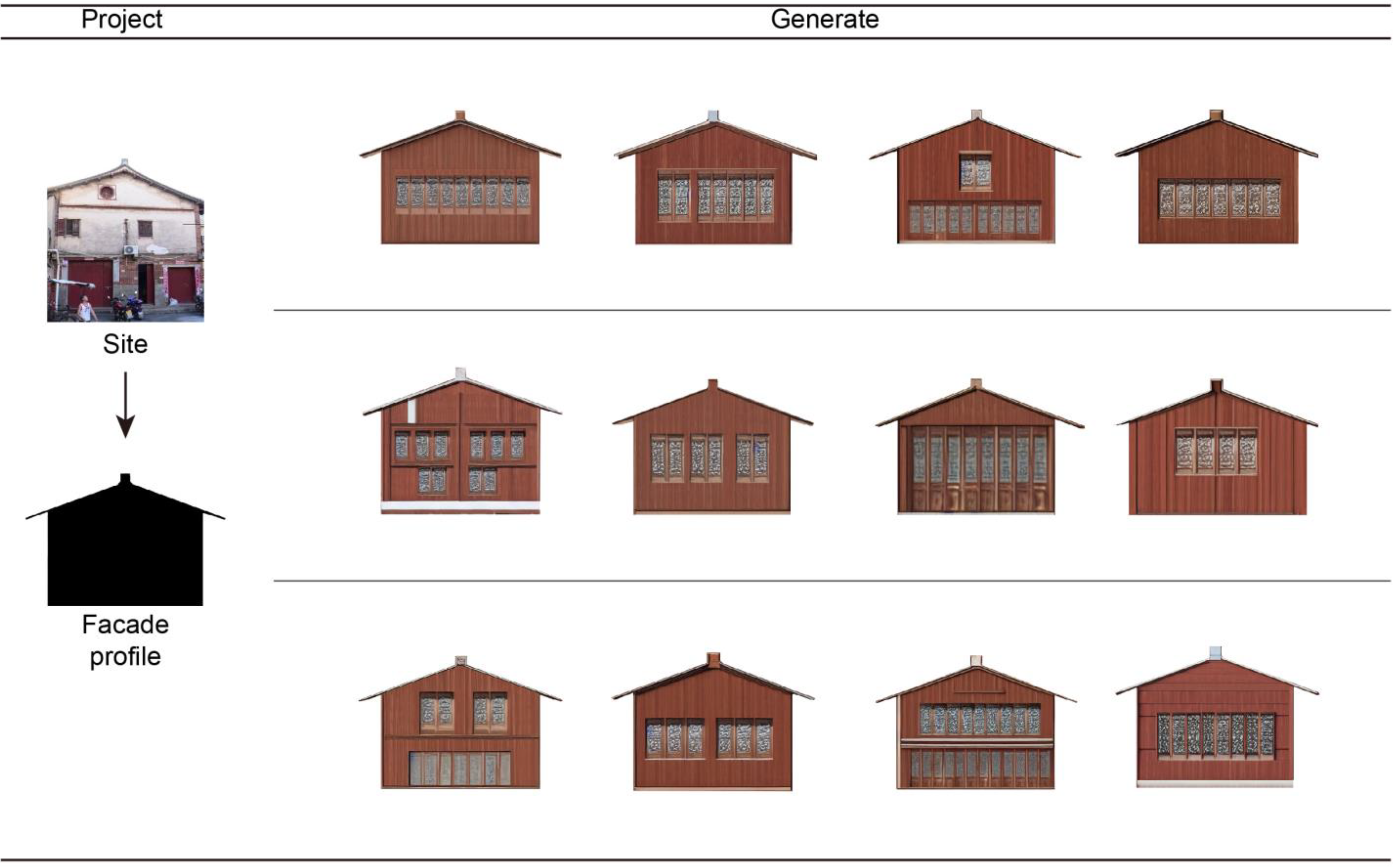
In addition to enabling facade generation for specific objects, the model can also generate multiple different results by varying the noise input in the CGAN model. In CGAN, the noise input is a random vector, and different images can be generated by changing the noise vector. The researchers also selected a building outline map in the historic district of Putian, Fujian Province, as a conditional input to ensure that the generated images are all in the same scene, but the design schemes can be different. When generating images using the CGAN model, researchers use multiple different random noise vectors to obtain a large variety of design options (Figure 13). By comparing the design schemes generated by different noise vectors, the researchers found that this method can provide infinite new ideas and inspirations for the design of building exteriors. At the same time, the optimal design scheme can also be selected according to user preferences and needs.
5. Conclusions
The purpose of this research is to explore the application of generative adversarial networks (CGAN) in the stylization of historical building facade decoration and take Putian, Fujian, as an example to explore. China’s urbanization rate exceeded 60% in 2019, and it has entered the post-urbanization era in an all-around way. Urban renewal has also transformed from large-scale incremental development to gradual stock quality improvement. As a place where the city’s humanistic atmosphere is concentrated, the renovation of its facade decoration style involves a wide range of areas and complex relationships, which has become an important issue for urban renewal. This study uses CGAN to construct a generative method for the stylization of building facades in historic districts and provides a design strategy for the current unified problem of historical building facade styles. The experimental results show that:
(1) For the facade decoration of historic buildings in Putian, Fujian, which is full of regional characteristics in this study, CGAN has demonstrated great comprehension ability and computing potential and completed the classification, analysis, and style reconstruction of facade decoration elements. Demonstrate that CGAN is effective for element processing in building facade images.
(2) From the result image independently generated by CGAN, it can be kept similar to the real image, which shows that CGAN has the ability to batch and uniformly process the stylization of historical building facades and helps to guide the aesthetics of architectural facade decoration styles in historical districts.
(3) CGAN is able to extract unspecified facade decoration styles from the provided image dataset and transplant them to new buildings through the style transfer capability, showing good results. This will help designers provide more choices in the decision-making of facade decoration style and can play a role in correcting some subjective judgments.
However, as far as the current application scenarios are concerned, the CGAN method still has certain limitations and deficiencies: (1) CGAN mainly optimizes facade decoration and generates design styles. Is it very important in terms of the cultural connotation of the district? (2) How can we construct more interesting labels in the data set so that CGAN can generate more novel design variants? (3) At present, CGAN has shown strong advantages in the preliminary design of the project. How to further extend it to the learning and control of the whole process of the project, including the inspection of the construction process and the calibration of the final results This will become the content of CGAN’s continuous improvement in the application of historical districts. Therefore, future research can continue to explore how to optimize the model structure and algorithm to further improve the generation effect and training efficiency. At the same time, the conditional generative confrontation network can be applied to the protection of cultural heritage in other fields, providing more technical support and methods for the protection and reuse of cultural heritage.
Supplementary Materials
The following supporting information can be downloaded at: https://data.mendeley.com/datasets/hp95rw6m6p/1 (accessed on 27 April 2023).
Author Contributions
Conceptualization, L.H.; methodology, L.Z. and Y.C.; software, Y.C. and L.Z.; validation, Y.C. and L.H.; formal analysis, L.H. and L.Z.; investigation, Y.C. and L.Z.; resources, L.H.; data curation, L.H.; writ-ing—original draft preparation, L.H.,Y.C. and L.Z.; writing—review and editing, L.H.,Y.C. and L.Z.; visual-ization, L.Z.; supervision, Y.C. and L.Z.; project administration, L.H.; funding acquisition, L.H. All authors have read and agreed to the published version of the manuscript.
Funding
This research was funded by Putian Science and Technology Program Project “Application Research of 3D Laser Scanning Technology in Digital Protection of Mazu Buildings” (grant number 2020GP001). Fujian Provincial Social Science Fund Project “Evidence-Based Research on the Age-appropriateness of Urban Community Parks under the Background of Active Aging” (grant number FJ2022C072). CITT(Guangzhou) Enterprise Key Funding Project “Information System Engineering and Construction Engineering Testing”(grant number GZWX-23-007).
Institutional Review Board Statement
Not applicable for studies not involving humans or animals.
Informed Consent Statement
Not applicable for studies not involving humans.
Data Availability Statement
The original code of the program cannot be released yet because our program is being used in other research. The training set for the machine learning for this article can be found online at https://data.mendeley.com/datasets/hp95rw6m6p/1 (accessed on 27 April 2023).
Conflicts of Interest
The authors declare no conflict of interest.
Appendix A
Machine learning environment configuration: the operating system is Windows 11 (X64), the Cuda version is 11.5, the deep learning framework is Pytorch, the graphics card is GeForce GTX 3070 (16G), and the processor is AMD Ryzen 9 5900HX (3.30 GHz).
References
- Editorial Team of the Ministry of Housing and Urban-Rural Development: Beautiful Urban and Rural Housing in China. Beijing: China Urban Publishing House, 2022:303.
- Yu, Q.; Malaeb, J.; Ma, W. Architectural facade recognition and generation through generative adversarial networks. 2020 International Conference on Big Data & Artificial Intelligence & Software Engineering (ICBASE). [CrossRef]
- Sun, C.; Zhou, Y.; Han, Y. Automatic generation of architecture facade for historical urban renovation using generative adversarial network. Building and Environment 2022, 212, 108781. [Google Scholar] [CrossRef]
- Zhang Yang. Discussion on the implementation mode of protection and renovation of historical and cultural blocks. World Architecture 2022, 12, 73–77. [Google Scholar] [CrossRef]
- Zhu Zixuan. Protection and Improvement Planning of Tunxi Old Street. Architectural Journal, 1996, 9, 10–14. [Google Scholar]
- 6. Zhang Yang, He Yi. “Between Poli and Li”: A Study on the Openness of Streets and Alleys in Historic Urban Areas——Taking Pingyao Ancient City’s Shuyuan Block as an Example. Modern Urban Studies.
- 7. Ruan Yisan, Shao Yong. The Characteristics and Protection of Ancient Towns in the South of the Yangtze River. Journal of Tongji University: Social Science Edition.
- Lin Zhaoxia. The Evolution of Space, Imagery and Inner Spirit of China’s Coastal Cities——Reflections on the Changes of “Three Lanes and Seven Alleys” in Historic Districts. Southeast Academic 2020, 6, 58–65. [Google Scholar]
- 9. Yuan Ying, Lu Yin. A Syntactic Study on the Spatial Pattern Evolution of Historic Commercial Blocks—A Case Study of Zhongshan Road in Xiamen. Planner.
- Goodfellow, I.; Pouget-Abadie, J.; Mirza, M.; Xu, B.; Warde-Farley, D.; Ozair, S.; Courville, A.; Bengio, Y. Generative adversarial networks. Communications of the ACM 2020, 63, 139–144. [Google Scholar] [CrossRef]
- Deng, L. Deep learning: methods and applications. Foundations and Trends® in Signal Processing 2014, 7, 197–387. [Google Scholar] [CrossRef]
- Isola, P.; Zhu, J.-Y.; Zhou, T.; Efros, A.A. Image-to-image translation with conditional adversarial networks. 2017 IEEE Conference on Computer Vision and Pattern Recognition (CVPR) 2017. [Google Scholar] [CrossRef]
- Ye Chen, Guan Wei. Application Review of Generative Adversarial Networks. Journal of Tongji University: Natural Science Edition, 2020, 48, 591–601. [Google Scholar]
- Duan Yaru, Zhao Jiayu, He Liming. Text-to-image generation algorithm based on generative adversarial networks. Computer System Applications 2023, 32, 348–357. [Google Scholar] [CrossRef]
- Karras, T.; Laine, S.; Aila, T. A style-based generator architecture for generative adversarial networks. IEEE Transactions on Pattern Analysis and Machine Intelligence 2021, 43, 4217–4228. [Google Scholar] [CrossRef]
- Navarro-Mateu, D.; Carrasco, O.; Cortes Nieves, P. Color-patterns to architecture conversion through conditional generative adversarial networks. Biomimetics 2021, 6, 16. [Google Scholar] [CrossRef]
- Chen, W.; Ahmed, F. PaDGAN: learning to generate high-quality novel designs. Journal of Mechanical Design 2020, 143. [Google Scholar] [CrossRef]
- Xiong, Y.; Guo, S.; Chen, J.; Deng, X.; Sun, L.; Zheng, X.; Xu, W. Improved srgan for remote sensing image super-resolution across locations and sensors. Remote Sensing 2020, 12, 1263. [Google Scholar] [CrossRef]
- Ji, W.; Guo, J.; Li, Y. Multi-head mutual-attention cyclegan for unpaired image-to-image translation. IET Image Processing 2020, 14, 2395–2402. [Google Scholar] [CrossRef]
- Mostafavi, F.; Tahsildoost, M.; Zomorodian, Z.S.; Shahrestani, S.S. An interactive assessment framework for residential space layouts using pix2pix predictive model at the early-stage building design. Smart and Sustainable Built Environment 2022. [Google Scholar] [CrossRef]
- 21. Lin Jinru, Dong Zhiyong. Application Research of Image-to-Image Generative Adversarial Network in Urban Texture Generation. Digital Intelligence Empowerment: Proceedings of the 2022 National Symposium on Teaching and Research of Architectural Digital Technology in Schools of Architecture. [CrossRef]
- Kim, S.; Park, S.; Kim, H.; Yu, K. Deep floor plan analysis for complicated drawings based on style transfer. Journal of Computing in Civil Engineering 2021, 35, 04020066. [Google Scholar] [CrossRef]
- Karadag, I. , Güzelci, O. Z., & Alaçam, S. EDU-ai: a twofold machine learning model to support classroom layout generation. Construction Innovation 2022. [Google Scholar] [CrossRef]
- Meng Shengyu, Xu Xinhui. Building Plane Image Generation and Latent Space Exploration Based on Generative Adversarial Network. Chinese Building Decoration 2022, 12, 87–92. [Google Scholar]
- Newton, D. Deep generative learning for the generation and analysis of architectural plans with small datasets. Blucher Design Proceedings 2019. [Google Scholar] [CrossRef]
- Chen Kai, Lei Shaohua, Dai Wen, Wang Chun, Liu Aili, Li Min. Terrain reconstruction method based on open source data and conditional generative adversarial network. Journal of Geoinformation Science 2023, 25, 252–264. [Google Scholar]
- Gan, Y.; Ji, Y.; Jiang, S.; Liu, X.; Feng, Z.; Li, Y.; Liu, Y. Integrating aesthetic and emotional preferences in social robot design: an affective design approach with kansei engineering and deep convolutional generative adversarial network. International Journal of Industrial Ergonomics 2021, 83, 103128. [Google Scholar] [CrossRef]
- Xin Yuanxue, Zhu Fengting, Shi Pengfei, et al. Image super-resolution reconstruction algorithm based on improved enhanced super-resolution generative adversarial network. Laser & Optoelectronics Progress 2022, 59, 0420002–0420002. [Google Scholar]
- Garozzo, R.; Santagati, C.; Spampinato, C.; Vecchio, G. Knowledge-based generative adversarial networks for scene understanding in cultural heritage. Journal of Archaeological Science: Reports 2021, 35, 102736. [Google Scholar] [CrossRef]
- Zhang, L. , Zheng, L., Chen, Y., Huang, L., & Zhou, S. CGAN-assisted renovation of the styles and features of street facades—a case study of the wuyi area in fujian, china. Sustainability 2022, 14, 16575. [Google Scholar] [CrossRef]
- Wang Haoyi, Yang Junran, Wu Ziyue, Zhang Ye. Research on street style generation method based on residents’ preference from the perspective of machine learning. New Architecture 2022, 06, 19–24. [Google Scholar] [CrossRef]
- As, I.; Pal, S.; Basu, P. Artificial intelligence in architecture: generating conceptual design via deep learning. International Journal of Architectural Computing 2018, 16, 306–327. [Google Scholar] [CrossRef]
Figure 1.
MacLeamy Curve’s cost change curve during the project implementation phase can explain the importance of identification and selection of facade decoration styles in the early stage of the project for the cost control of the entire historical building facade renovation
Figure 1.
MacLeamy Curve’s cost change curve during the project implementation phase can explain the importance of identification and selection of facade decoration styles in the early stage of the project for the cost control of the entire historical building facade renovation
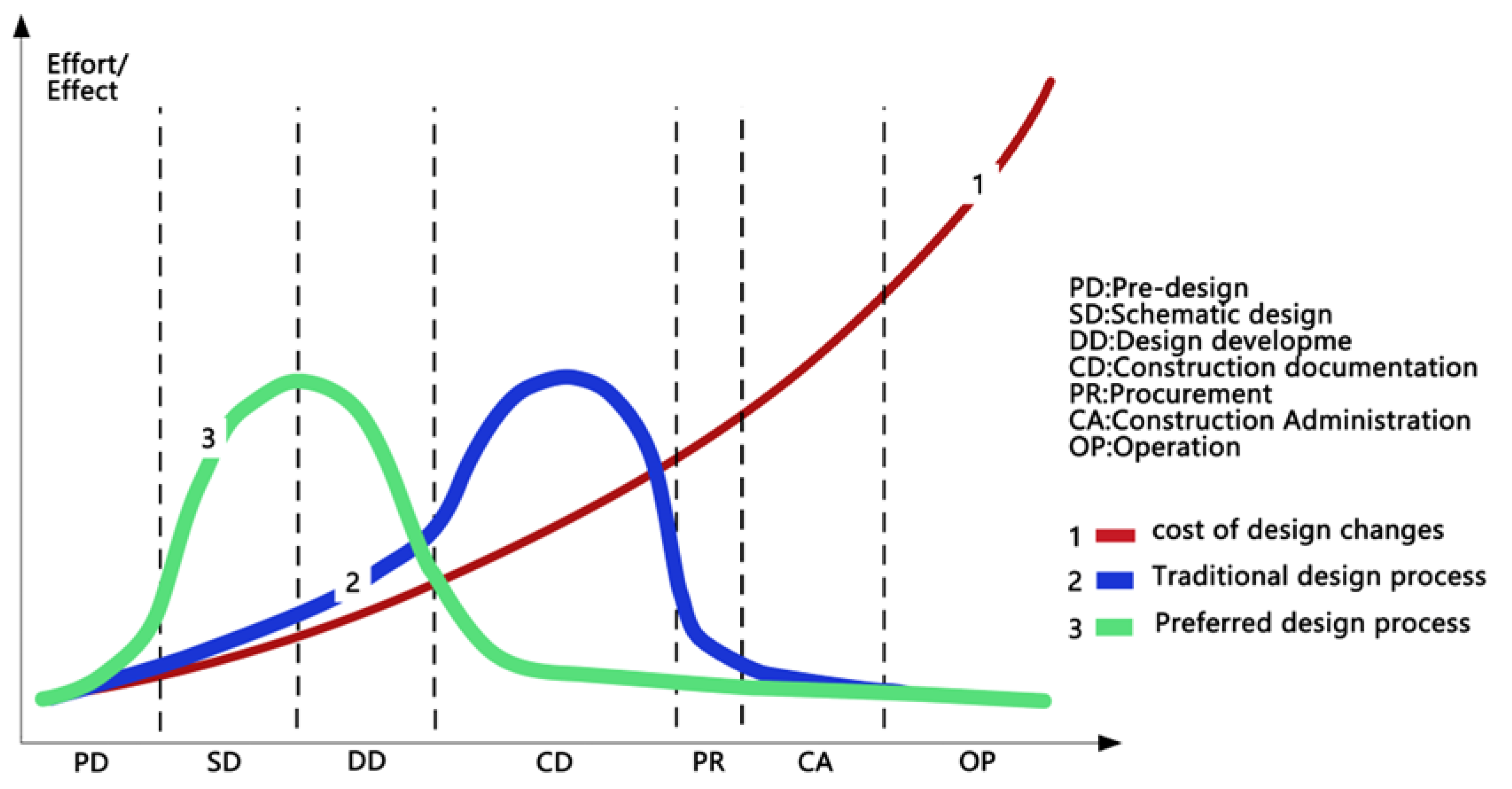
Figure 2.
Putian Luofutian Historic and Cultural District and Xinghuafu Historical and Cultural District.
Figure 2.
Putian Luofutian Historic and Cultural District and Xinghuafu Historical and Cultural District.
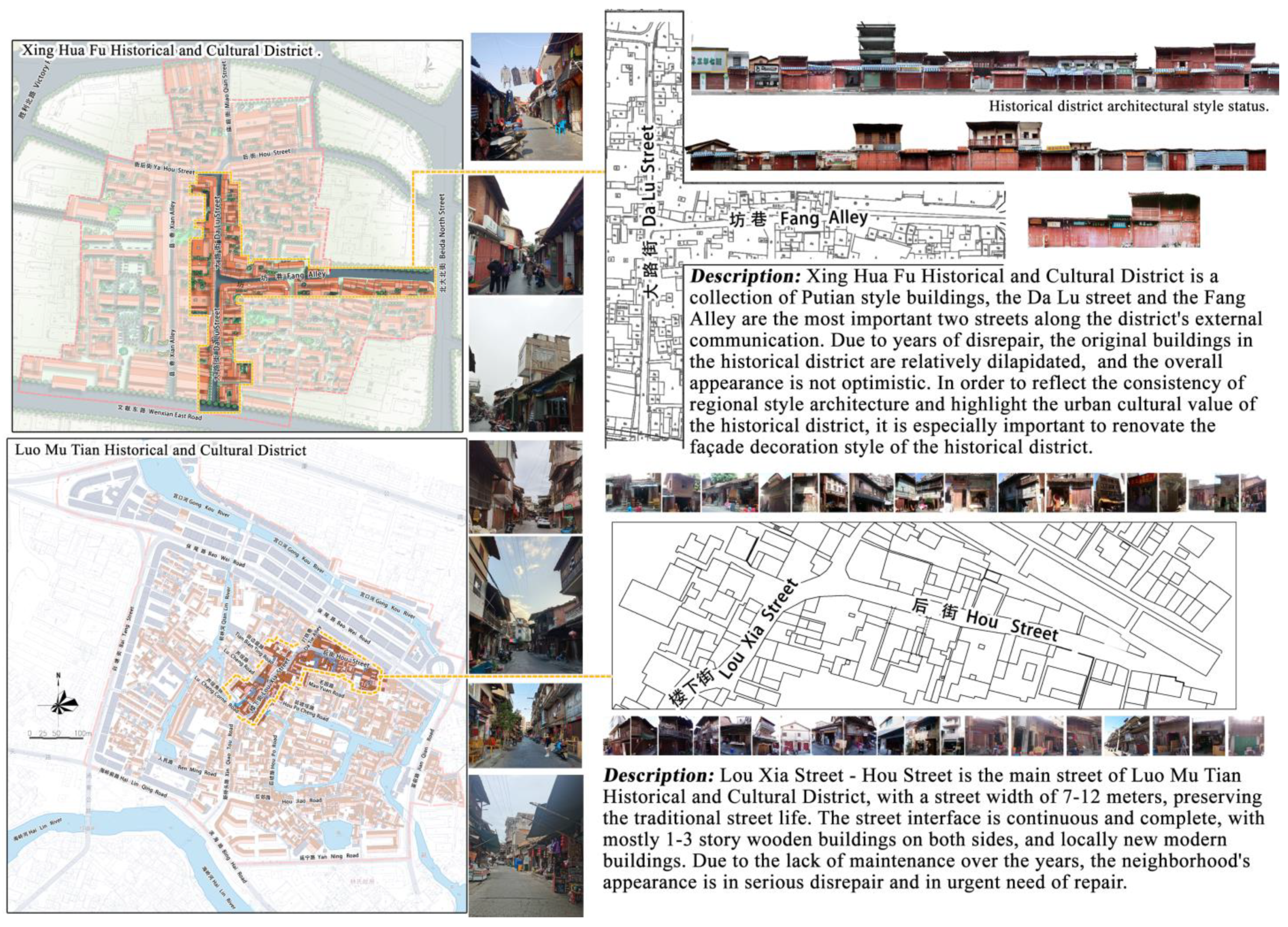
Figure 3.
Research Methodology Flowchart.
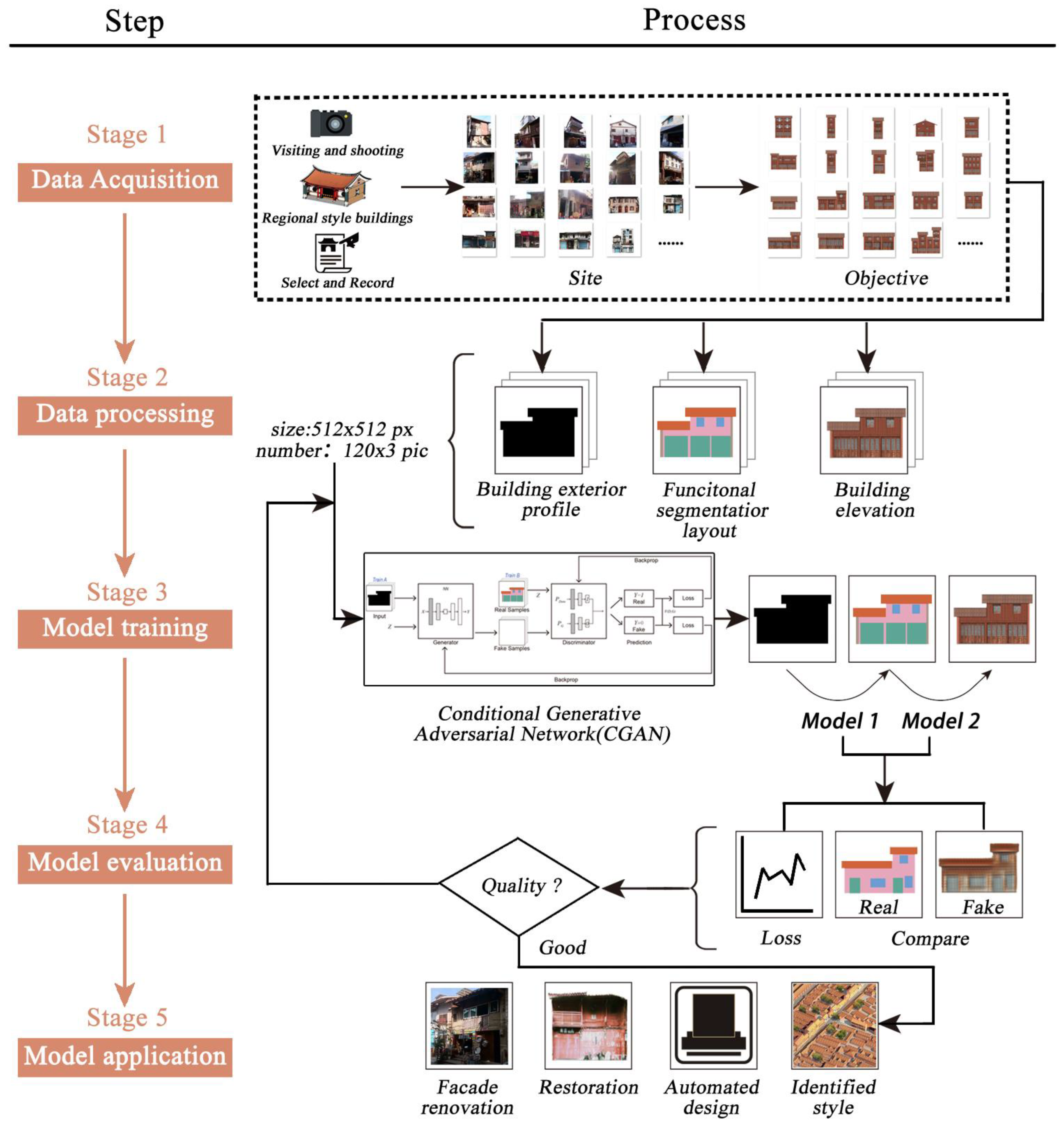
Figure 4.
Experimental Materials.
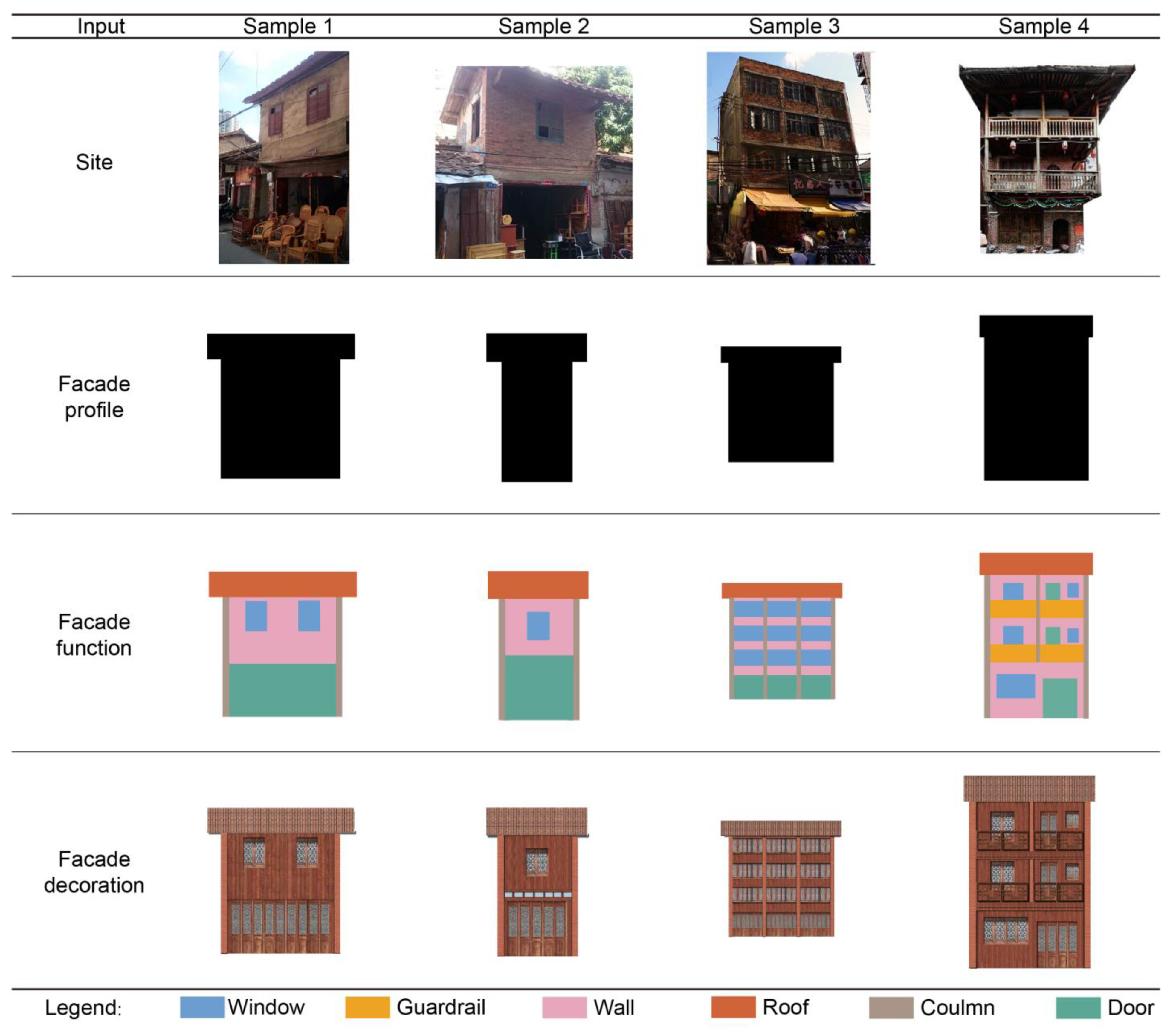
Figure 5.
CGAN model framework.
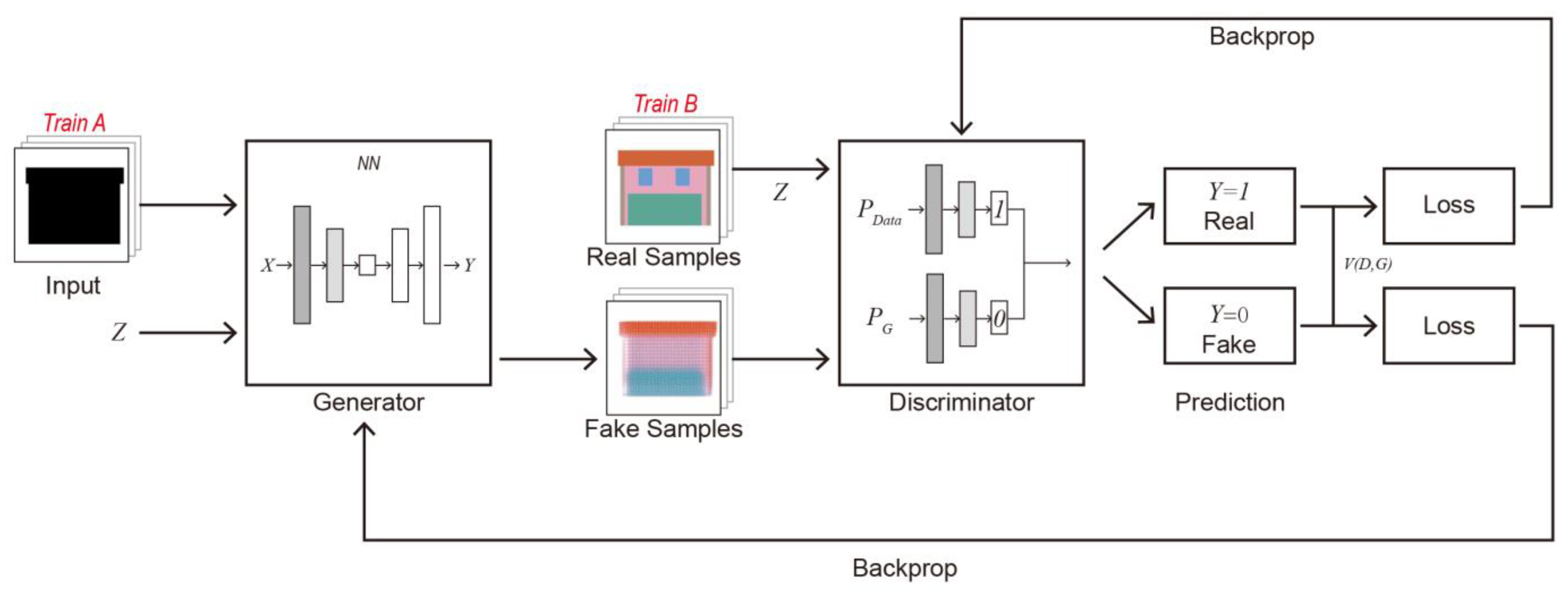
Figure 6.
Model training log LOSS value statistics.
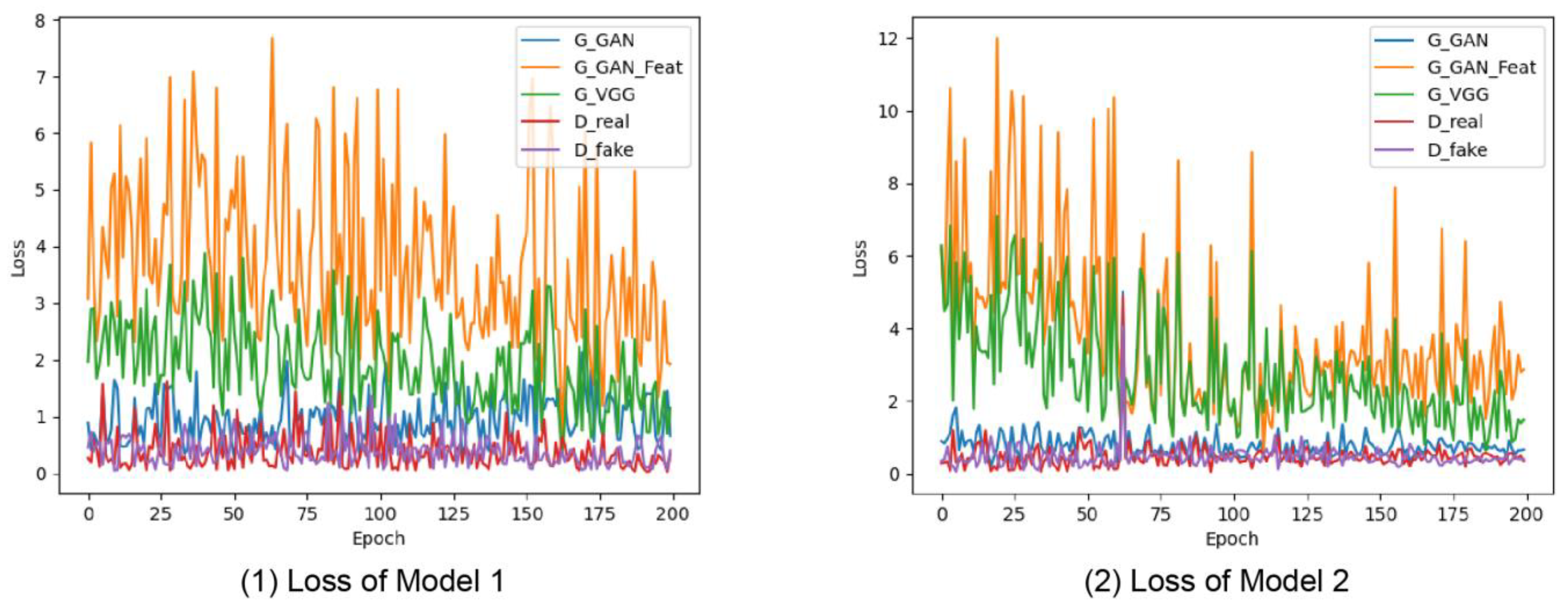
Figure 7.
Testing the model training process.
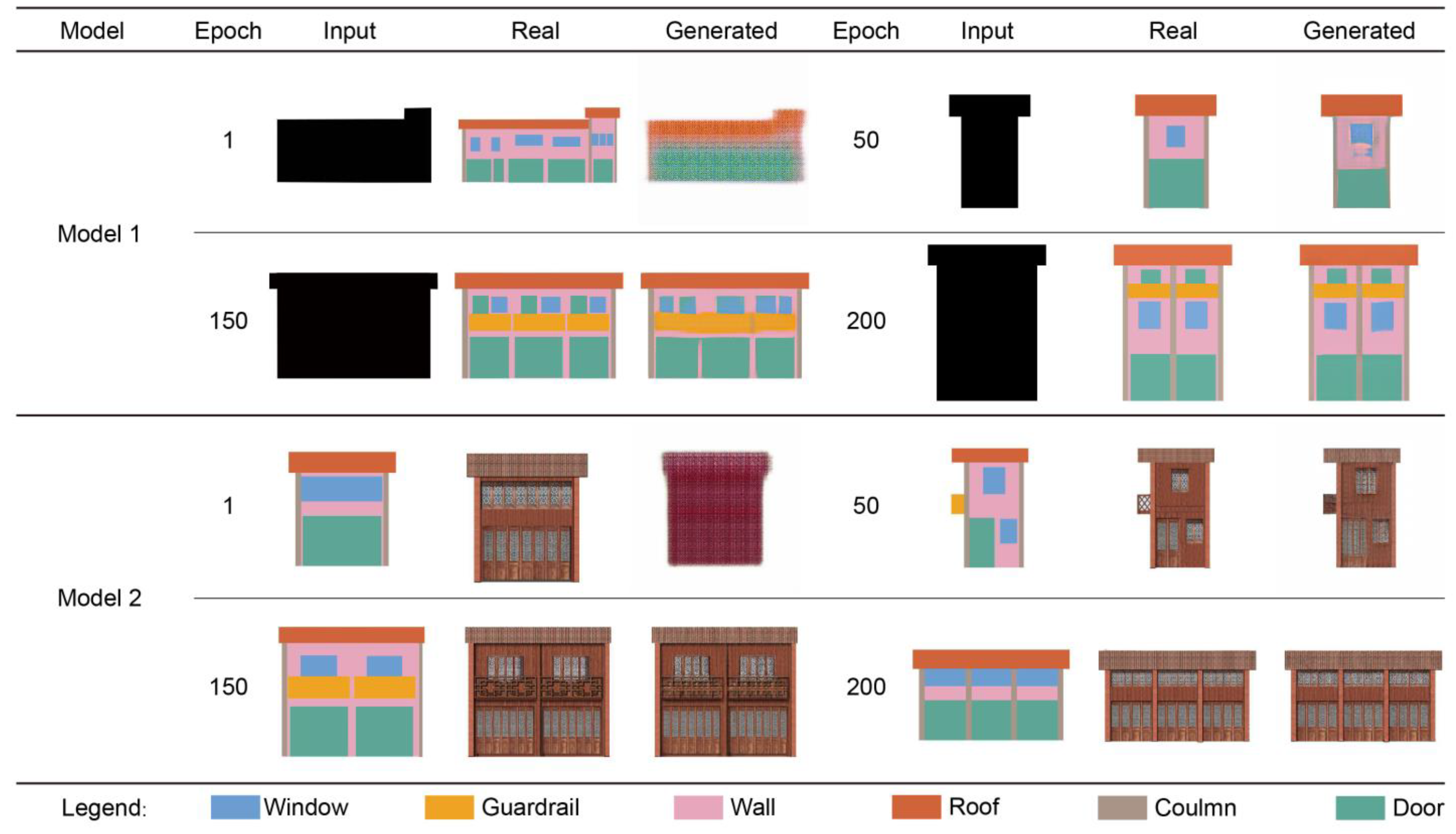
Figure 8.
Model 1 and Model 2 use the training material to test the quality of generation.
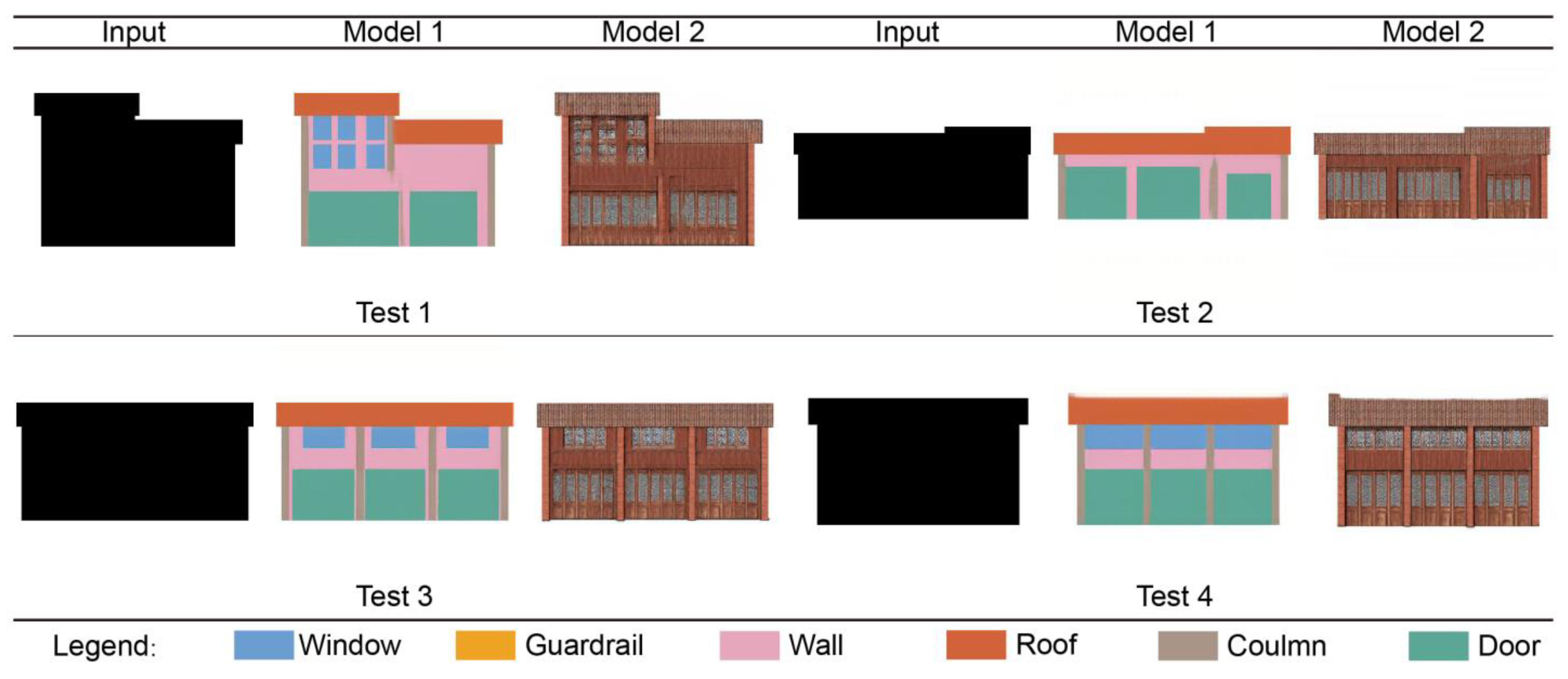
Figure 9.
Comparison of Model 1 in this study with models from previous studies.
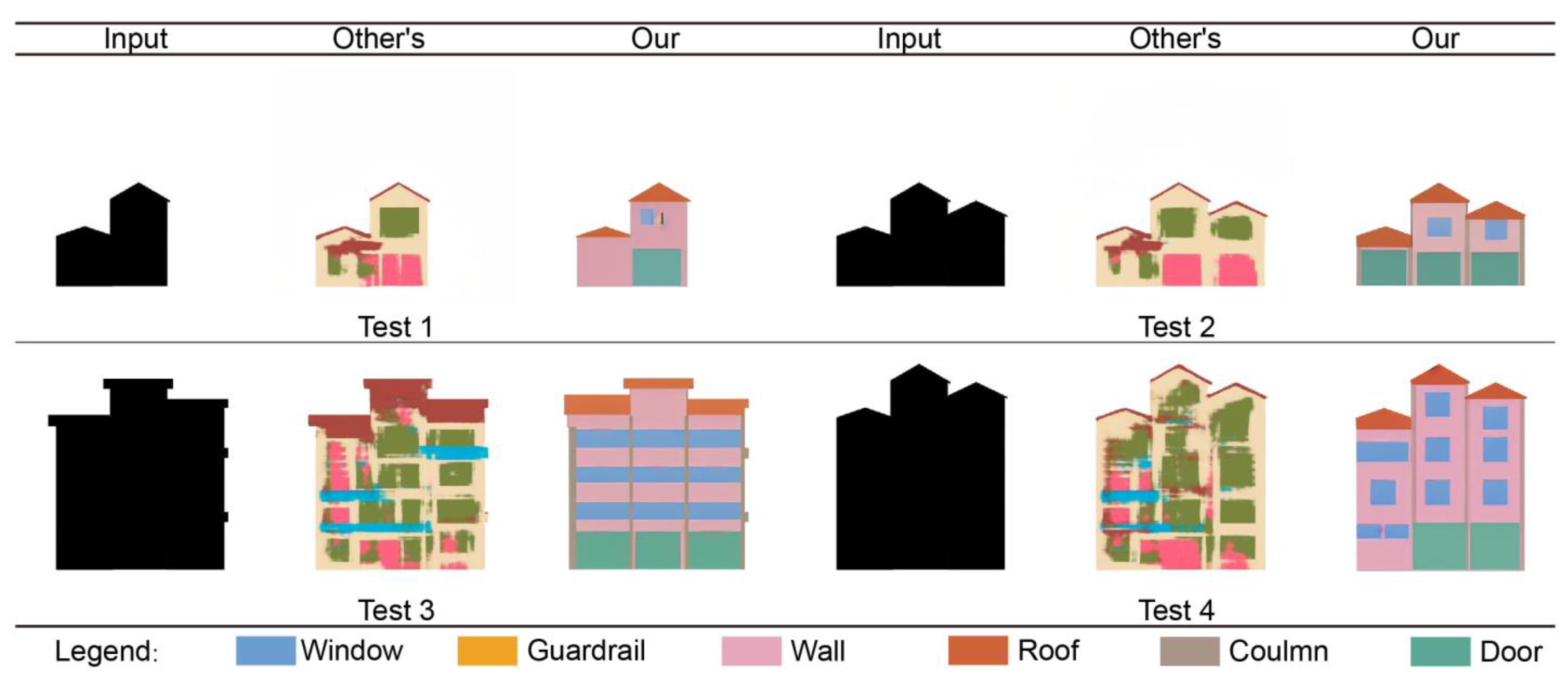
Figure 10.
Comparison of Model 2 in this study with models from previous studies.
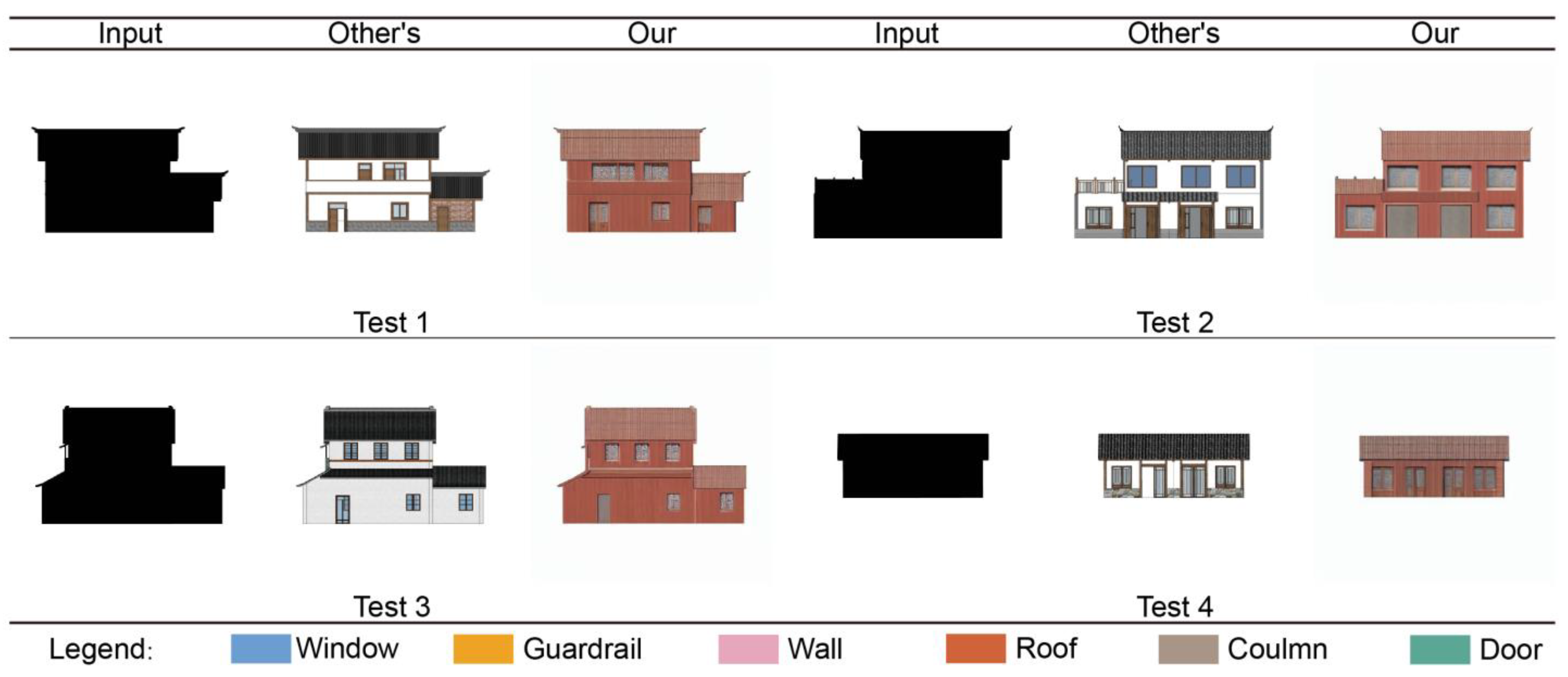
Figure 11.
Application of models according to field conditions on site.
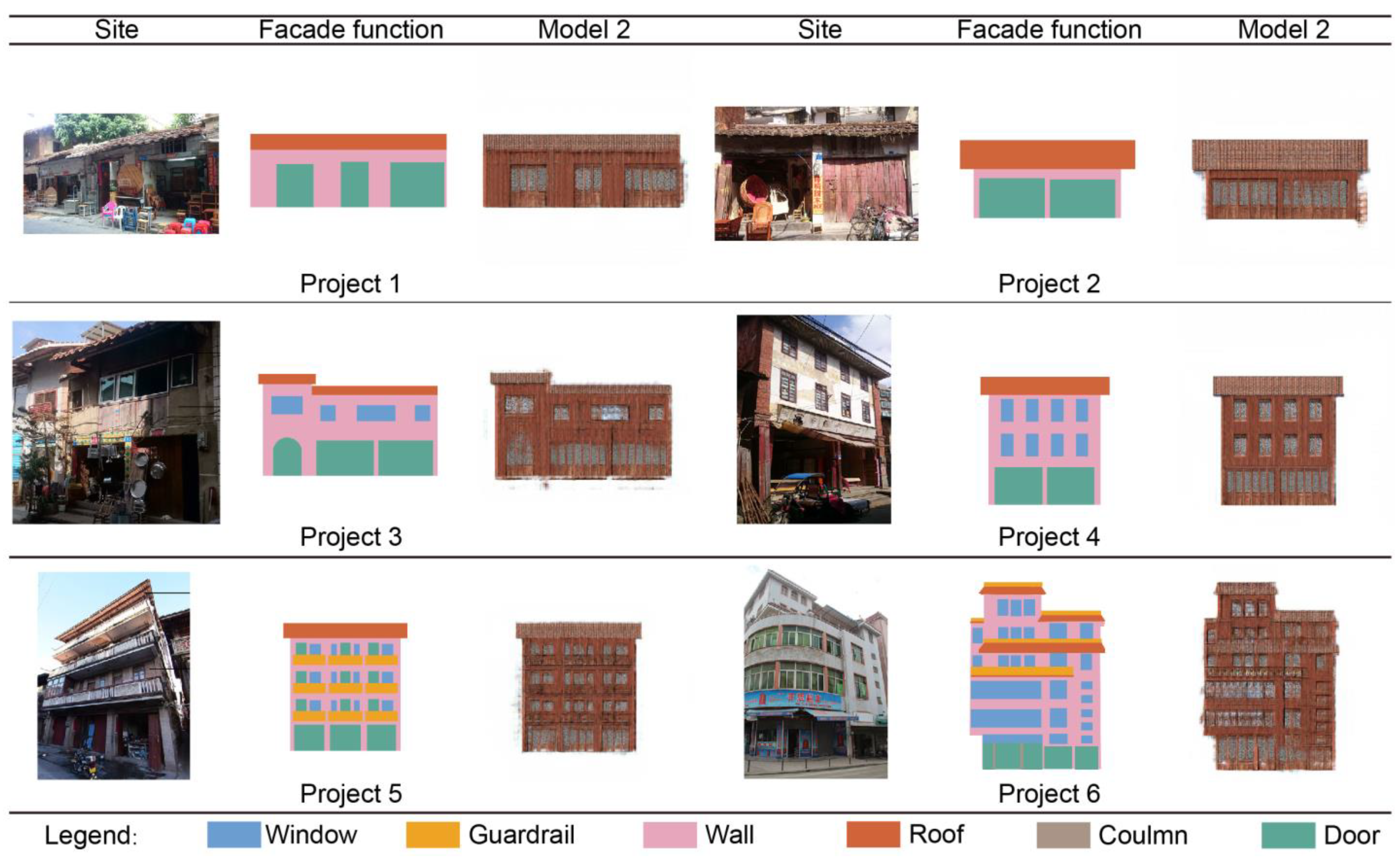
Figure 12.
The 3d model effect of the model application result.
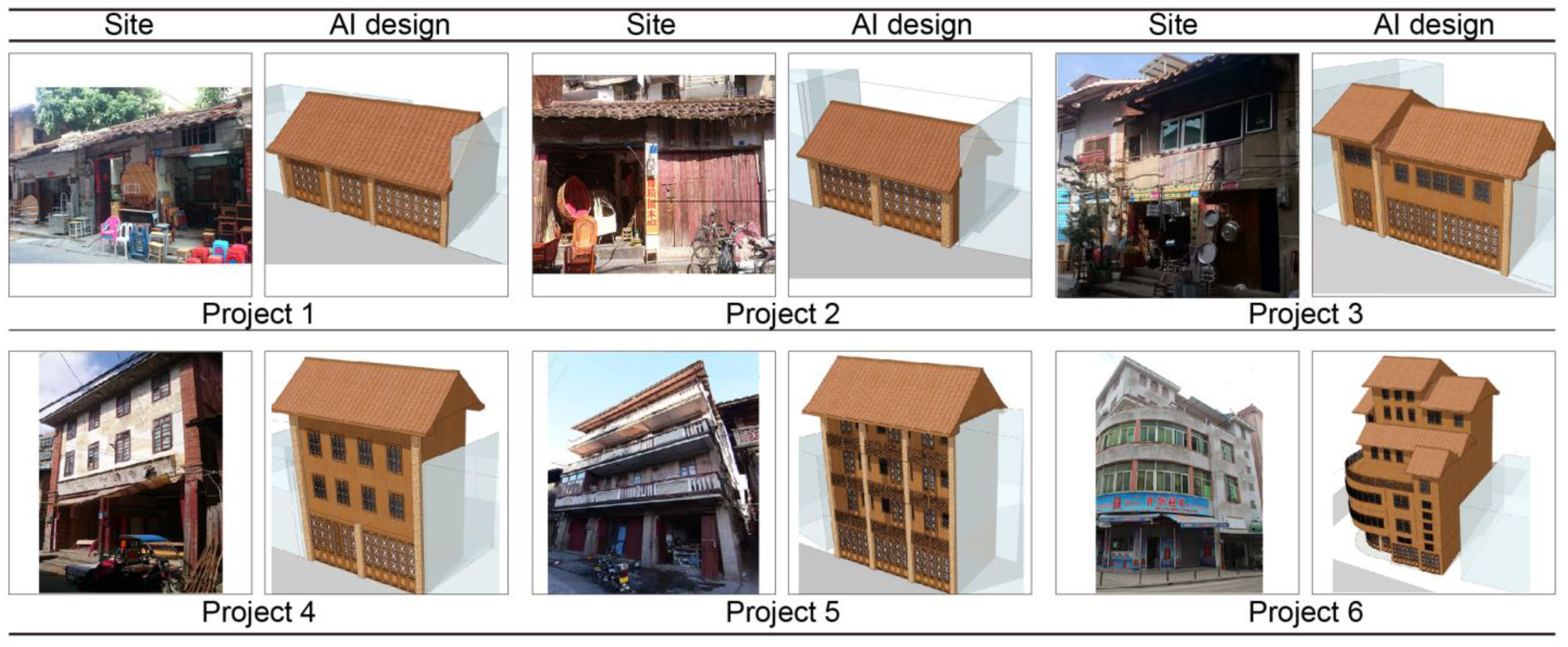
Figure 13.
Multiple results generated by the model under the same building outline.
Disclaimer/Publisher’s Note: The statements, opinions and data contained in all publications are solely those of the individual author(s) and contributor(s) and not of MDPI and/or the editor(s). MDPI and/or the editor(s) disclaim responsibility for any injury to people or property resulting from any ideas, methods, instructions or products referred to in the content. |
© 2023 by the authors. Licensee MDPI, Basel, Switzerland. This article is an open access article distributed under the terms and conditions of the Creative Commons Attribution (CC BY) license (http://creativecommons.org/licenses/by/4.0/).
Copyright: This open access article is published under a Creative Commons CC BY 4.0 license, which permit the free download, distribution, and reuse, provided that the author and preprint are cited in any reuse.


