

Submitted:
26 April 2023
Posted:
27 April 2023
You are already at the latest version
Abstract
In commercial terms, Virgin Olive Oil (VOO) is considered an exceptional food of excellent sensory and nutritional quality, for its taste and genuine odour and, as well as for its bioactive compounds, of a great interest for the health. This quality can be affected by oxidative degradation, chemical as well as enzymatic (activity of oxidative endogenous enzymes from polyphenol oxidase and peroxidase olive fruit type), of essential components during extraction and conservation of VOO. In the bibliography, the reduction of oxygen during the malaxation process and the storage of the oil has been studied in different ways. However, research about the reduction of oxygen in the crushing of olive fruit, malaxation of the paste and/or both at the same time in “real extraction condition” is scarce. The reduction of oxygen has been compared to control conditions (concentration of atmospheric oxygen of 21%). Batches of 200 kg of olive fruit, Picual cultivar, were used and the following treatments were applied: Control (21% O2 Mill - 21% O2 Mixer), “IM-NM”: Inerted milling -Normal malaxation (6.5% O2 Mill-21% O2 Mixer), “NM-IM”: Normal milling-Inerted malaxation (21% O2 Mill-4 % O2 Mixer) and “IM-IM”: Inerted milling-Inerted malaxation (5.5% O2 Mill-10% O2 Mixer). The parameters of commercial quality covered by Regulation: free acidity, peroxide value and absorbency in ultra-violet (k 232 and k270) did not suffer any change in relationship to the control, the oils belong to the comercial category of “Extra virgin olive oil”. The phenolic compounds are involved in the distinctive bitter and purgent taste and, their healthy properties and their oxidative stability, increased with the downsizing amounts of oxygen regarding control and the IM-NM, NM-IM and IM-IM treatments with an average of 4, 10 and 20 %, respectively. By contrast, total volatile compounds decrease between a 10-20 % in all oxygen reduction treatments. The volatile compounds arising from lipoxygenase pathway, which are responsable for the green and fruity notes of VOO, also decreased their concentration with the treatments, between 15-20%. The results show how the reduction of oxygen in the milling and malaxation stages of olive fruit can modulate the content of phenols, volatile compounds, carotenoids and chlorophyll pigments of the VOO avoiding the degradation of compound with sensorial and nutritional interest.
Keywords:
Olive oil quality
; extraction technology
; volatile compounds
; phenolic compounds
; carotenoid pigments
; chlorophyll pigments
; tocopherols and oxygen
1. Introduction
In commercial terms, Virgin Olive Oil (VOO) is considered an exceptional food of excellent sensory and nutritional quality [1,2,3,4]. Its genuine spicy and bitter taste and its characteristic green-fruity odour are evaluated by trade regulations joined by physical-chemical parameters: acidity, peroxide value and absorbency in ultra-violet at 232 and 270 nm. They constitute the criteria of commercial quality included in the current regulations (EEC/2568/91) [5]. Bioactive compounds present in the VOO, mainly phenolic compounds and tocopherols, have acquired great interest for health due to their antioxidant properties included in a nutritional claim published in 2012 by European Union: Commission Regulation (EU) nº 432/2012 [6]. Furthermore, phenolic compounds are related to bitter, spicy and astringent attributes, typical of the VOO and its concentration in edible vegetables without refining, like extra virgin olive oil, is considerably higher than refined oils. All of which contributed to an increase in the demand for high quality oils in recent times [7,8].
Nevertheless, this quality may be compromised or affected by certain factors, one of main is the oxidative degradation of chemical and/or enzymatic origin, it can be produced during the extraction process or storage of VOO [9]. In fact, the lipid oxidation has been considered as the major problem affecting edible oils with the formation of sensory defects like rancidity [10]. Simultaneously, the role of oxygen is critical in the VOO process for the development of aromatic notes such as green and fruity [11,12]. These enzymatic reactions are known as “Lipoxygenase pathway (LOX)” and, it starts catalysing the oxidations of the 1,4-pentadiene system of polyunsaturated fatty acids, specifically linolenic and linoleic acids, to produce the corresponding hydroperoxides. These hydroperoxides are key metabolites in the pathway, as they are the initiators of either desirable or undesirable oxidation reactions [13]. The desirable evolution is produced when the lyases catalyze the hydrolysis of hydroperoxides into aldehyde compounds with six atoms (hexanal, trans-2-hexenal and cis-2 hexenal). These aldehydes are reduced by the action of alcohol dehydrogenase (ADH) forming alcohols of six atoms of carbon (hexanol, cis-2-hexenol and trans-2-hexenol) and finally, the alcohol-acetyl-transferase (AAT) catalyzes the esterification of alcohols to corresponding esters (Hexyl acetate, Z-3-hexenyl acetate and E-2- hexenyl acetate) [14]. When the substrate of LOX enzyme is linoleic acid are synthesized saturated compounds and, when the substrate of LOX enzyme is linolenic acid are synthesized unsaturated compounds. An additional branch of the LOX pathway is active when the substrate is linolenic acid, through homolytic cleavage of 13-hydroperoxides, via an alkoxy radical giving rise to the formation of stabilized 1,3-pentene radicals. These last can dimerize leading to C10 hydrocarbons (known as pentene dimers) or couple with a hydroxyl radical present in the medium producing C5 alcohols, which can be enzymatically oxidized to corresponding C5 carbonyl compounds [15]. The importance of these volatile compounds originated by the LOX pathway for the green and fruity odour of VOO has been widely established and recently revised [1,3,4,14].
Concurrently, the oxygen acts as a cofactor in the oxidation of phenolic compounds by means of oxidative endogenous enzymes; in particular for olive fruit, polyphenol oxidase (PPO) and peroxidase (POX) enzymes. Both, PPO and POX activities, are able to oxidize main phenolic glycosides present in the fruit, especially secoiridoid compounds derived from oleuropein. The latter are formed by the hydrolysis of oleuropein, demethyloleuropein and ligstroside by means of endogenous β-glycosidases [16].
The oxidative enzymatic activities of olives mentioned: lipoxygenase, polyphenol oxidase and peroxidase are activated during the VOO extraction process. In particular, during the crushing process, they are activated after their release owing to cellular disruption of fruits, and during malaxation phase partition phenomena between oil and water and vice versa are responsible for the change in the composition of VOO (1).
The role of oxygen during the olive oil extraction process has been analyzed from various perspectives in the last decade. In particular, most of this research has focused on the malaxation phase at lab and industrial scale and, in Italian cultivar, mainly ‘Moraiolo´ and ‘Frantoio´. The modification of the oxygen concentration in the headspace of malaxer in order to improve the quality of VOO has been tested with different devices and approaches [12,17,18,19,20,21,22,23,24,25,26,27]. In general, the decrease of oxygen during malaxation reduces the oxidation of phenolic compounds [20,21,22,26] and chlorophylls [25]. However, the decrease of oxygen during malaxation is not significant for volatile compounds [12,20,22,[12,20,22,]. Studies that increase the concentration of oxygen during malaxation step have enhanced the concentration of volatile compounds [11,18,27,28]. The combining of high-power ultrasound pre-treatment with malaxation oxygen control to improve quantity and quality of extra virgin olive oil has been published by Iqdiam et al [29]. Most recently, the development of a malaxer with supervisory control and data acquisition system (SCADA) for oxygen and process duration monitoring made it possible to increase the values of tocopherols and total phenol content [30]. In addition, inert gas such as argon, nitrogen and carbon dioxide has been applied in vertical centrifugation and storage process to ensure an optimal preservation during the oil extraction and its storage over time [31,32].
Nevertheless, the crushing of the fruit has been poorly studied, compared to the malaxation of olive paste. As just described, once the fruit is crushed, the activation of metabolic pathways related to volatile and phenolic compounds is produced and its control during both steps: crushing and malaxation, is crucial for the final quality of VOO. The role of oxygen during crushing on volatile, phenol and sensory properties has been stated. In particular, the increase of oxygen during the crushing has been described by [11,28,29,30,31,32,33]; and reducing by Vezzaro et al [19] and Sánchez-Ortiz et al [12]. The present work aims to investigate the role of oxygen not only on volatile compounds and phenols, but also on quality parameters and other relevant minority compounds such as: chlorophylls and carotenoid pigments and tocopherol during crushing and malaxation at industrial scale in ‘Picual´ cultivar, one of the most widely distributed strains in the world. The novelty of this work lies in the study at industrial level of the crushing and malaxation steps jointly. For this purpose, the atmospheric oxygen (21% O2) during the crushing of fruit and the malaxation of the paste has been reduced by the application of nitrogen and the sealing of the mill and mixer. The results obtained are key for the development of new technological strategies for the modulation of the VOO characteristics depending on the target markets. The development of this type of strategy is fundamental because the olive oil extraction process is subject to precise regulations that only allow the use of oxygen, water and talc as technological coadjuvant.
2. Materials and Methods
2.1. Olive Fruits
Olive fruits of the cultivar ‘Picual´ from a traditional olive grove, were harvested in the experimental farm of IFAPA Center “Venta Del Llano” in Mengíbar (Jaén), Spain. Olive fruits (1000 kg) were collected with trunk shakers in early and mid-December 2021. They were named as trial 1 and trial 2. Olive fruits were put down in boxes of 25 kg and were processed within the next few hours (between 4-5 hours). The characteristics of olive fruit have been analyzed following “the guide for the determination of the characteristics of oil-olives” published by International Olive Council in COI/OH/Doc. No 1/2011 November 2011 [34].
2.2. Olive Oil Extraction and Treatments
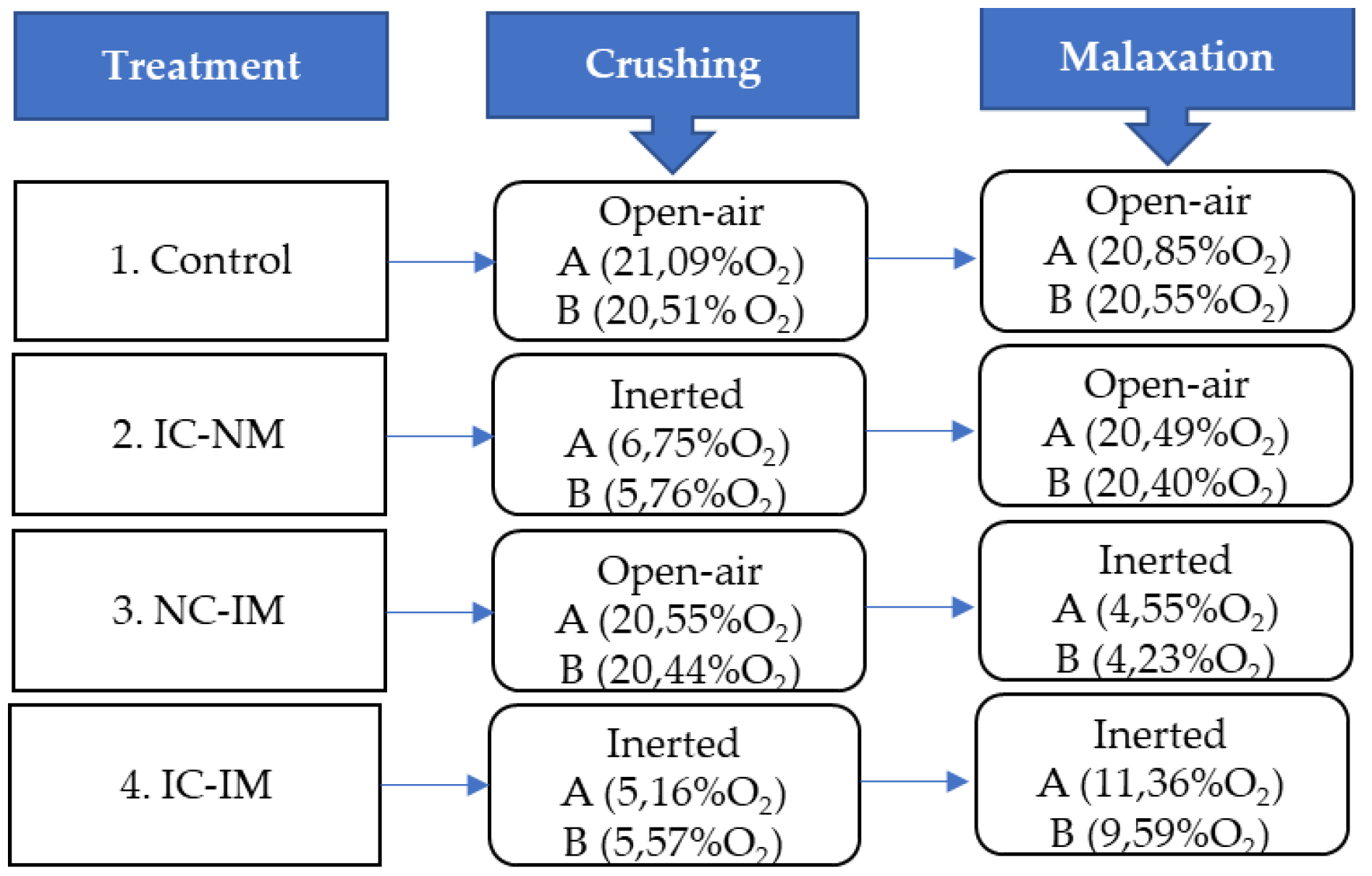
For the olive oil extraction in control conditions (21%O2) and with reduction of oxygen (inertisation) in crushing and/or malaxation, a system of extraction of the two phases with a hammer mill, horizontal mixer (350 l) and centrifugal extractor was used (Model Il Molinetto, Pieralisi, Italy). The modification of atmospheric oxygen concentration in the milling and malaxation of olive paste was performed introducing molecular nitrogen in the mill and mixer, previously sealed with polypropylene. The percentage of oxygen was monitored with a device called Oxybaby every ten minutes (WITT Gas, Germany). For each extraction trial, batches of 200 kg of olive fruit were processed. Figure 1 shows in parentheses the average level of oxygen in atmospheric conditions and the measures for each treatment and repetition (A and B) in milling and malaxation. Open air step is considered as “normal or control”. For each extraction trial, the olive paste was mixed during 30 minutes at 25 °C and the oils obtained after centrifugation were decanted, filtered and stored under frozen conditions (-20 °C) until analysis.
Figure 1.
Average percentage of oxygen in the experimental design for each treatment (1, 2, 3 and 4) used in the study during the crushing of the olive fruit and the malaxation of the olive paste.
Figure 1.
Average percentage of oxygen in the experimental design for each treatment (1, 2, 3 and 4) used in the study during the crushing of the olive fruit and the malaxation of the olive paste.
2.3. Chemicals
All solvents and reagents used were of HPLC grade or equivalent. α-, β-, and γ-Tocopherol, caffeic acid and standards for volatile compounds (Table S1) were purchased from Merck (Germany).
2.4. Quality Parameters Analysis
Free acidity, peroxide value and absorbency in ultra-violet at 232 and 270 nm were determined according to European Union Commission Regulations EEC/2568/91 and amendments with the international referee methods described by International Olive Council in COI/T.15/NC No 3/Rev. 16 June 2021 [35].
The content of free fatty acids was expressed as free acidity, calculated as the percentage of oleic acid. The samples were dissolved in a mixture of diethyl ether and ethanol and the free fatty acids present were titrated using a potassium hydroxide solution. The peroxide value was evaluated by titration and absorbency in ultra-violet at 232 and 270 nm which measures the presence of conjugated diene and triene systems resulting from oxidation or refining, respectively.
2.5. Minor Compounds
Tocopherols were determined according to the IUPAC method Nº 2.436 (1992) [36] with slight modification. Samples test were dissolved with propan-2-ol in hexane (0.5/99.5% v/v) and tocopherols were determined directly by HPLC analysis using an Agilent 1200 series equipped with an analytical column Lichrosphere Si 60 (Merck) 250 mm × 4.6 mm, with 5 µm of mean particle size and an UV detector. The wavelength of the UV detector set was 292 nm. The quantification was carried out by calibration factors determined for each tocopherol from the chromatography of solutions of standard tocopherols described in 2.3. section.
Chlorophylls and carotenoid pigments analysis were determined according to the protocol established by Mínguez-Mosquera et al. (1991) [37] using an UV-Visible spectrophotometer (Varian Cary 50 Bio) at 472 nm for carotenoids and 670 nm for chlorophylls with oils samples dissolved in cyclohexane (0.15 g * mL-1).
Total phenols content analysis was based on Folin-Ciocalteu reagent in accordance with Vázquez-Roncero et al. (1973) [38]. This colorimetric method is broadly applied for the determination of phenols using an aqueous methanol extract at 60% (v-v). The content is expressed in mg per kg-1 of caffeic acid.
The analysis of volatile compounds was based on the protocol published by Sánchez-Ortiz et al 2018 [39]. The extraction of volatiles was performed by Solid Phase Micro Extraction with fiber of divinylbenzene/carboxen/polydimethylsiloxane (DVB/CAR/PDMS) 50/30 µm (Supelco Co., Bellefonte, PA, USA), the volatiles absorbed were separated and identified on a Bruker model Scion 456-GC-TQMS system (Bruker, MA) equipped with a Supelcowax 10 capillary column (60 m × 0.25 mm i.d.; thick- ness, 0.25 µm; Sigma-Aldrich Co. LLC). The volatile compounds were identified at different levels following criteria defined by the metabolomics standard initiative [40]. In Table S1, metabolites were definitively annotated (level 1) by comparing the MS spectra and linear retention index (LRI) against available standards purchased from Sigma-Aldrich-Merck. Putative (or tentative) identifications (levels 2 and 3) were considered by comparing the MS spectra and LRI against existing databases (NIST 17 v2.3). Metabolites for which MS spectra and LRI which were not available in bibliography were labelled as “unknown” (level 4). Volatile compounds were quantified by calibration lines with standards (Level 1), and other volatile compounds were normalized by internal standards (Level 2, 3 and 4).
2.6. Statistical Analysis
The data obtained in triplicate were expressed as mean ± standard deviation. An analysis of variance was carried out to determine whether reductions of oxygen have an effect on the result obtained in the control and treatment VOOs. For this purpose, Tukey´s method was used with Statistix v.9. Moreover, to extract meaningful information from volatile compounds Principal Compound Analysis (PCA) was applied to the data matrix using MetaboAnalyst 5.0.
3. Results and Discussion
3.1. Quality Parameters
The data obtained in the characterization of the olive fruit used for the extraction of the VOO in this study are shown in the Table 1. Maturity index, weight medium, DMO (total oil content on a dry matter basis), FMO (total oil content on a fresh matter basis) and moisture of the cultivar Picual in two different harvesting date showed similar data in Trial A and B, with an average for both test of 3.56, 2.74, 54.51, 19.01, and 54.49, respectively. The results are consistent with the variety and the time of harvesting of the fruit [41].

Table 1.
Characterization of the fruit ‘Picual´ cultivar used in the tests A and B. HD (Harvest date), MI (maturity index), WM (Weight medium) DMO (total oil content on a dry matter basis), FMO (total oil content on a fresh matter basis) and Moisture.
Table 1.
Characterization of the fruit ‘Picual´ cultivar used in the tests A and B. HD (Harvest date), MI (maturity index), WM (Weight medium) DMO (total oil content on a dry matter basis), FMO (total oil content on a fresh matter basis) and Moisture.
| Trial | HD | MI | WM (g) |
FMO (%) |
DMO (%) |
Moisture (%) |
|---|---|---|---|---|---|---|
| A | 03/12/2021 | 3.76 | 3.09 | 19.45 | 56.82 | 43.18 |
| B | 15/12/2021 | 3.36 | 2.40 | 18.58 | 52.20 | 47.80 |
With respect to commercial quality included in the regulation, all data are displayed in the Table 2: free acidity, peroxide value and absorbency in ultra-violet at 232 and 270 nm. Free acidity was between 0.18 and 0.24, these values match with “Extra Virgin Olive Oil (EVOO)” commercial grade (≤ 0.80 % in oleic acid). Peroxide value expressed as milliequivalents of active oxygen per kilogram (mEq O2 per kg) of oil did not exceed 5.56 in any sample, corresponding with the high commercial quality “EVOO” (≤ 20.0 mEq O2/kg). The limits for absorbency in ultra-violet at 232 and 270 nm for the EVOO are ≤ 2.50 and ≤ 0.25, respectively. The maximum experimental values for these parameters were 1.79 for 232 nm and 0.18 for 270 nm. Both levels corresponding with EVOO grades too. Peroxide value and absorbency in ultra-violet at 232 and 270 nm evaluated the level of oxidation of oil. The decrease of oxygen in the different treatments applied in the oil extraction produced not effect on the parameters of oxidation. Parenti et al [24], in cultivar Frantoio at lab scale reported how the effect of blanketing with CO2 during malaxation did not produce significant differences in acidity and K270; however, oil produced in SC (Sealed conditions) showed a lower PV (Peroxide Value) and K232.
Table 2.
Quality parameters determined in A and B trials as described in Figure 1. (*) Free acidity in % m/m expressed in oleic acid. Peroxide value expressed in milleq. peroxide oxygen per kg/oil. Absorbency in ultra-violet at 232 and 270nm calculated for (K1%)1cm.
Table 2.
Quality parameters determined in A and B trials as described in Figure 1. (*) Free acidity in % m/m expressed in oleic acid. Peroxide value expressed in milleq. peroxide oxygen per kg/oil. Absorbency in ultra-violet at 232 and 270nm calculated for (K1%)1cm.
| Parameter*. | A Trial | |||
| Control | T1 (IC-NM) | T2 (NC-IM) | T3 (IC-IM) | |
| Free acidity | 0.22±0.03 | 0.20±0.03 | 0.18±0.00 | 0.20±0.03 |
| Peroxide value | 4.56±0.52 | 4.73±0.25 | 4.25±0.29 | 4.24±0.29 |
| K232nm | 1.70±0.11 | 1.64±0.04 | 1.58±0.01 | 1.65±0.03 |
| K270nm | 0.15±0.04 | 0.11±0.03 | 0.10±0.01 | 0.13±0.01 |
| B Trial | ||||
| Control | T1 (IC-NM) | T2 (NC-IM) | T3 (IC-IM) | |
| Free acidity | 0.24±0.00 | 0.23±0.00 | 0.22±0.00 | 0.21±0.00 |
| Peroxide value | 5.56±0.00 | 4.99±0.02 | 5.17±0.63 | 4.98±0.02 |
| K232nm | 1.75±0.02 | 1.79±0.06 | 1.76±0.03 | 1.74±0.02 |
| K270nm | 0.15±0.00* | 0.16±0.01 | 0.18±0.01 | 0.18±0.01 |
ANOVA RESULTS. Significant differences between treatments are shown with asterisk (*) for p<0.05.
3.2. Effect of the Treatments of Reduction of Oxygen on Minor Fraction of Virgin Olive Oil
As mentioned earlier, tocopherols, phenols, volatile compounds, chlorophylls and carotenoids pigments are closely linked to the sensory, biological and technological virgin olive oil properties. Tocopherols constitute a key group of antioxidant compounds and their levels may vary between 70 and 600 mg/kg in VOO [42]. Table 3 shows an average content in the four treatments of 285.95 and 373.93 mg*kg-1 for trial A and B, respectively. Three isoforms of tocopherols were identified in the VOOs: α-, β- and ɣ-tocopherol. α-Tocopherol represents more than 90% of total and, β- and ɣ -tocopherol, 2% and 5%, respectively. The analysis of tocopherols revealed that oxygen reduction does not significantly affect the content of these compounds, in fact, it has been described as extraction technology marginally affecting tocopherols concentration [43,44].
Table 3.
Content of α-tocopherol, β-tocopherol and ɣ-tocopherol in mg*kg-1 of oils in different treatments of inertization for A and B Trials as described in Figure 1.
Table 3.
Content of α-tocopherol, β-tocopherol and ɣ-tocopherol in mg*kg-1 of oils in different treatments of inertization for A and B Trials as described in Figure 1.
| A Trial | ||||
| Control | T1 (IC-NM) | T2 (NC-IM) | T3 (IC-IM) | |
| α-tocopherol | 257.24±8.11bc | 254.93±1.62c | 268.74±4.63ab | 271.57±4.33a |
| β-tocopherol | 6.34±0.33a | 6.05±0.04a | 6.19±0.45ab | 6.23±017a |
| ɣ-tocopherol | 16.51±0.68a | 16.07±0.07a | 17.00±0.44ab | 16.95±0.31a |
| Total | 280.10±9.09ab | 277.05±1.65b | 291.92±4.72ab | 294.75±4.61a |
| B Trial | ||||
| Control | T1 (IC-NM) | T2 (NC-IM) | T3 (IC-IM) | |
| α-tocopherol | 352.46±2.62a | 356.94±1.84a | 357.46±2.41a | 355.55±2.54a |
| β-tocopherol | 6.81±0.17a | 6.84±0.20a | 6.77±0.04a | 6.96±0.04a |
| ɣ-tocopherol | 14.39±0.12a | 14.80±0.52a | 14.58±0.12a | 14.14±0.05a |
| Total | 373.66±2.83a | 378.59±2.26a | 378.82±2.36a | 376.66±2.56a |
ANOVA Test. Significant differences between treatments are shown with different letters for p<0.05.
Concerning the pigments occurring in the VOO responsible for its characteristic colour, in the present study have been analyzed carotenoid and chlorophyll pigments (Table 4). A slight rise can be observed in the content of pigments from inertisation VOOs with respect to control treatment. The level of pigments in VOOs depends mainly on cultivar, ripeness, irrigation condition of the olive fruit and the conditions of the extraction process [45]. When the malaxation phase was carried out through blanketing with CO2 Parenti et al [24,25] reported a higher chlorophyll and phenols content than in the oil produced in sealed conditions with respect to the control (open air malaxation) confirming a similar effect.
Table 4.
Content of carotenoid and chlorophyll (mg*kg-1 of oil) in different treatments of inertization for A and B Trials as described in Figure 1.
Table 4.
Content of carotenoid and chlorophyll (mg*kg-1 of oil) in different treatments of inertization for A and B Trials as described in Figure 1.
| A Trial | ||||
| Control | T1 (IC-NM) | T2 (NC-IM) | T3 (IC-IM) | |
| Carotenes | 2.16±0.05c | 2.98±0.17a | 2.93±0.08a | 2.52±0.11b |
| Chlorophylls | 1.21±0.10a | 1.73±0.20a | 1.61±0.23a | 1.33±0.26a |
| B Trial | ||||
| Control | T1 (IC-NM) | T2 (NC-IM) | T3 (IC-IM) | |
| Carotenes | 7.94±0.11b | 8.36±0.16ab | 8.72±0.14a | 8.77±0.36a |
| Chlorophylls | 6.39±0.18c | 7.32±0.32b | 8.15±0.11ab | 8.81±0.54a |
ANOVA Test. Significant differences between treatments are shown with different letters for p<0.05.
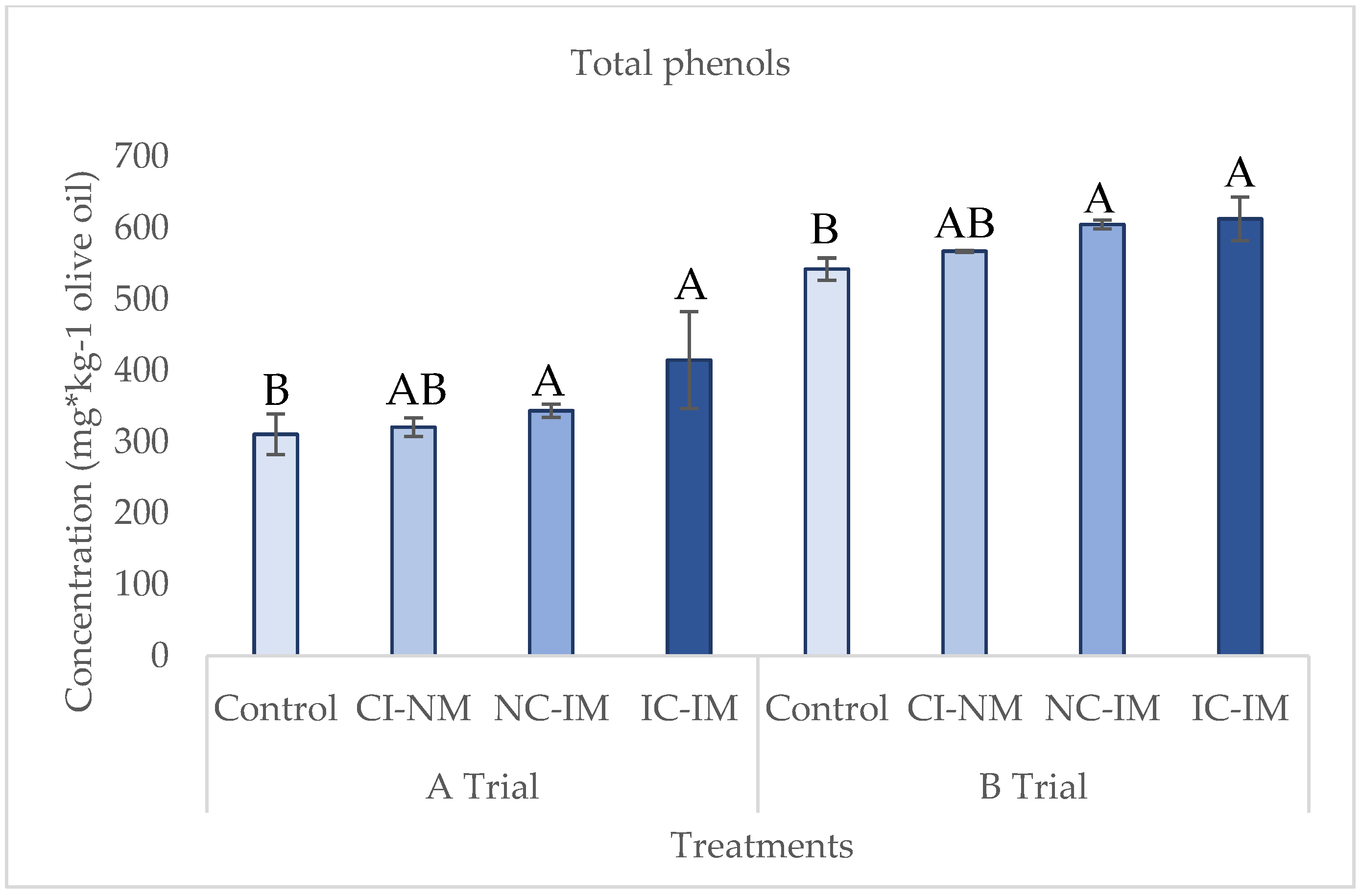
During the VOO extraction process there are compounds, such as phenolic and volatile compounds that undergo transformations via biochemical reactions triggered by the crushing of olive fruit, where endogenous enzymes and their substrate get in touch. In the case of phenolic compounds, oleuropein mainly, is hydrolysed by β-glucosidase giving rise to secoiridoid derivatives, more lipophilic [46]. These compounds along with the tocopherols are key antioxidant compounds of the oxidative stability of the VOO. And, moreover, together with volatile compounds they are responsible for positive organoleptic characteristics, like pungent, bitter and fruity. Specifically, the average total phenol content in the treatments (Figure 2) was between 311 and 613 mg/kg of oil. As the data shown, the effect of the reduction of oxygen during the global extraction process (Treatment 4, IC-IM) with respect to the control is statistically significant with an increase of 23% and 13% for trial A and B, respectively. As described in the introduction, the role of oxygen during the malaxation step on phenolic fraction has been established in previous studies in order to reduce the oxidation and damage of these compounds by endogenous oxidoreductases such as polyphenol oxidase and peroxidase. When the oxygen is limited in the malaxation step, an increase in phenol content has been reported in all the literature revised at lab, pilot and industrial scale [20,21,22,23,24,26,27], increasing this parameter by 50 percent in the work published by Parenti et al [25]. Unlike these studies, in the present study, the effect of the blanketing with nitrogen has been analysed either on the whole process or within the milling or malaxation steps and, the highest effect (23%) on total phenols were observed when the conditions of reduction of oxygen were performed over the whole process (crushing and malaxation) respect to the control. These results suggest that treatment could increase the oxidative stability and sensory properties such as bitter and pungent.
Figure 2.
Content of total phenols (mg*kg-1) for the inertization treatments. Significant differences between treatments are shown with different letters for p<0.05 (ANOVA Test).
Figure 2.
Content of total phenols (mg*kg-1) for the inertization treatments. Significant differences between treatments are shown with different letters for p<0.05 (ANOVA Test).
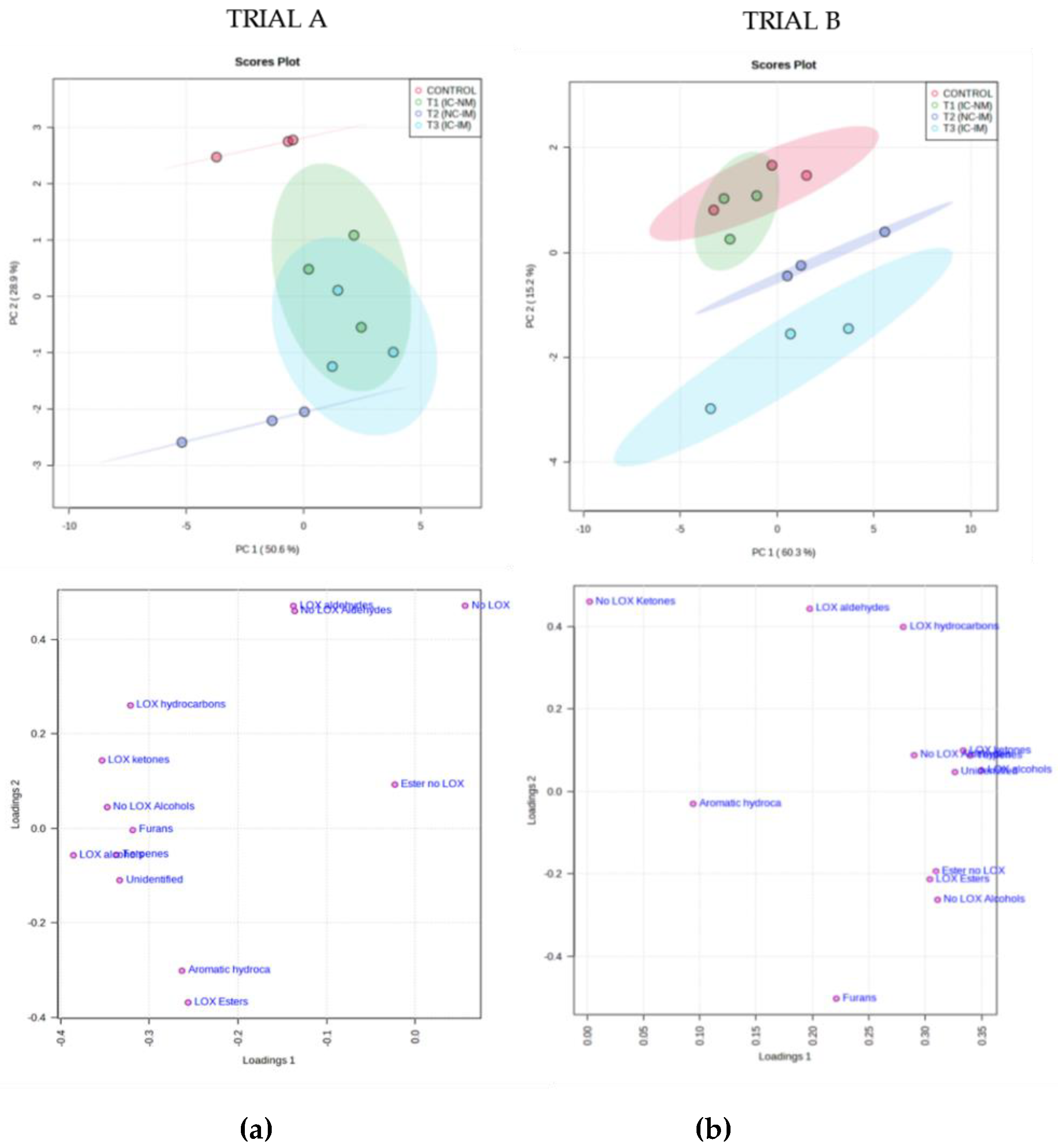
A contrary effect was found for volatile compounds: the final group of compounds analyzed during this study, as it has already been pointed out that, they are related to genuine and characteristic aroma of the VOO. Their biosynthesis through lipoxygenase (LOX) pathway during extraction process requires oxygen to catalyse the oxidation of free polyunsaturated fatty acid bearing 1-cis,4-cis-pentadiene system and, consequently the restriction of oxygen could compromise the biosynthesis of C6 and C5 compounds derivatives of the LOX pathway which related to green and fruity notes of VOO. Actually, as shown in Figure 3, LOX derivative volatile compounds from inerting treatments (IC-NM, NC-IM and IC-IM) go down between 15 and 20% regarding the control in A and B trials, respectively. Similar reductions have been described in treatments with decrease of oxygen in the malaxation phase [26]. In contrast, aroma biosynthesis during malaxation was minimally affected by the reduction of oxygen in Servili et al [22] and Masella et al [20]. These different results could be linked to the varietal difference and to ripening stage used in these studies, as reported by Sánchez-Ortiz et al [11] and [12]. Also, regarding LOX derivative volatile compounds, it should be noted that, there are no significant differences between inertization treatments: IC-NM, NC-IM and IC-IM (Figure 3). The effect of oxygen on all volatile compounds identified in this study was analyzed by the PCA model (Figure 4). In particular, 27 compounds were identified (determined) and grouped by their chemical nature in sum: furans, non-LOX aldehydes, non-LOX alcohols, non-LOX ketones, non-LOX esters, aromatic hydrocarbons, terpenes, un-identified, LOX-aldehydes, LOX-alcohols, LOX-esters, LOX-hydrocarbons and LOX esters (Table S1). In both trials: A and B, the different treatments were separated by a second component in score plot a and b from Figure 4. Thereby, the control treatment was related to LOX aldehydes in loading and score plots; and likewise, the Treatment 2 (NC-IM) was related to Aromatic hydrocarbons and LOX-ester. Finally, the treatments 1 and 3 were related to other groups of volatile. This data representation shown LOX aldehydes as possible marker of the reduction of oxygen. The LOX aldehydes are related to green odour of high quality VOO.
In conclusion, the decrease of oxygen in the different treatments applied in the crushing and the malaxation during the VOO extraction did not produce effect on the parameters of quality or tocopherols. Therefore, the decrease of oxygen in the overall process or within each stage of the extraction process could be used to modulate the content of phenol, pigments and volatile compounds. All of them are responsible for the sensorial properties (colour, taste and aroma) of high quality VOO depending on our target market. The results obtained are key for the development of new technological strategies for the modulation of the VOO characteristics.
Figure 3.
Content of volatile compounds (LOX derivative) (mg*kg-1) for the inertization treatments. Significant differences between treatments are shown with different letters for p<0.05 (ANOVA Test).
Figure 3.
Content of volatile compounds (LOX derivative) (mg*kg-1) for the inertization treatments. Significant differences between treatments are shown with different letters for p<0.05 (ANOVA Test).
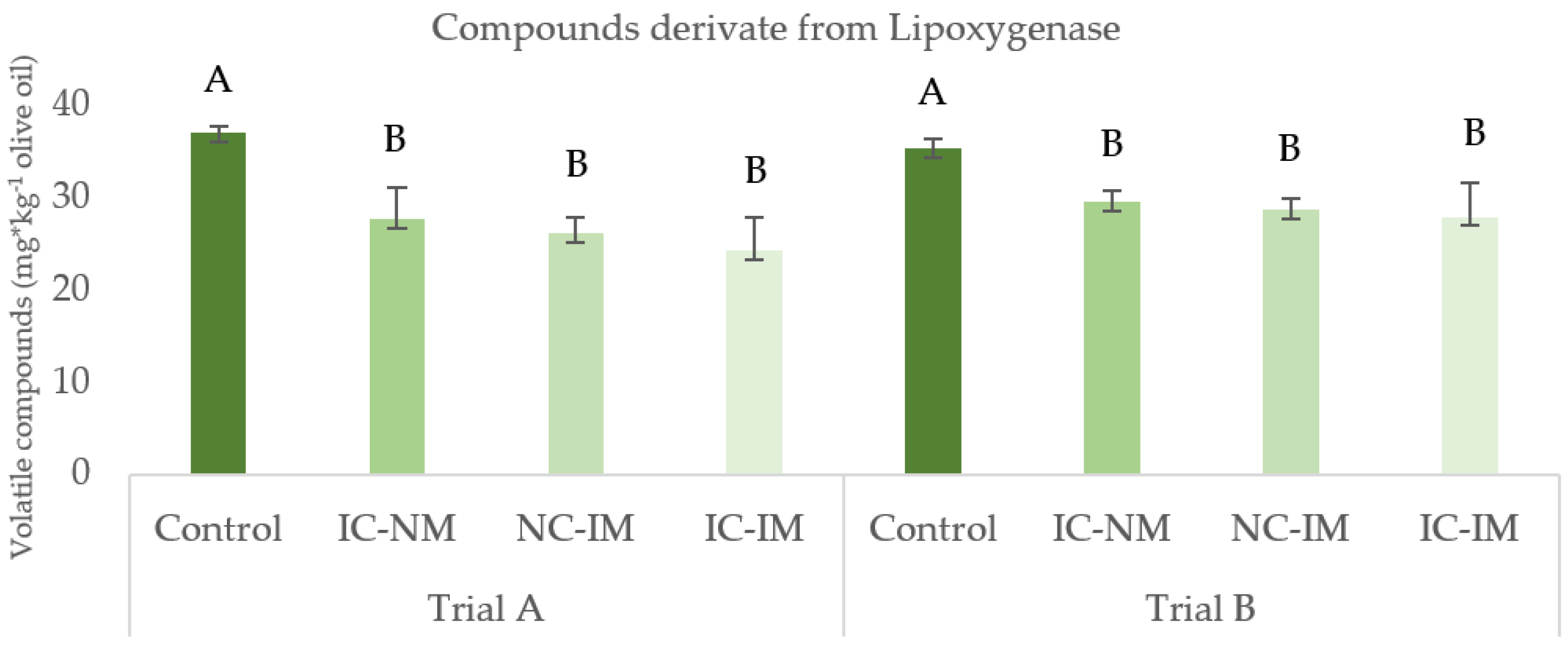
Figure 4.
PCA in the treatments at atmospheric normal conditions (21% of oxygen) and inerted conditions. Control: Normal milling- Normal malaxation (21% O2 Mill - 21% O2 Mixer), IM-NM: Inerted milling -Normal malaxation (6.5% O2 Mill-21% O2 Mixer), NM-IM: Normal milling-Inerted malaxation (21% O2 Mill-4 % O2 Mixer) and IM-IM: Inerted milling-Inerted malaxation (5.5% O2 Mill-10% O2 Mixer). Group label corresponding to: Furans: 3-methyl-furan; Adehydes no LOX: 2-methyl-butanal, 3-methyl-butanal, octanal, nonanal, (E,E)-2,4-hexadienal, benzaldehyde, (Z)-2-heptenal; Alcohol no LOX: Methanol, Ethanol, (Z)-2-Hepten-1-ol, Benzyl alcohol; Ketone no LOX: 4-methyl-2-pentanone, 6-methyl-5-hepten-2-one, 2-octanone; Ester no LOX: ethyl butyrate, butyl acetate, ethyl isovalerate; Aromatic hydrocarbons: Toluene, Ethylbenzene; Terpenes: α-Ocimene, (E)-4,8-Dimethylnona-1,3,7-triene; Aldehydes LOX: Hexanal, (Z)-2-Pentenal, (E)-2-Pentenal, (Z)-3-Hexenal, (E)-3-Hexenal, (Z)-2-Hexenal, (E)-2-Hexenal; Alcohol LOX: 1-Penten-3-ol, 1-Hexanol, (Z)-3-Hexen-1-ol; Esters LOX: Hexyl acetate, (Z)-3-Hexenyl acetate, LOX hydrocarbons: Pentene dimers; Ketone LOX: 2-Pentanone, 3-Pentanone,1-Penten-3-one. The level of identification is shown in Table S1.
Figure 4.
PCA in the treatments at atmospheric normal conditions (21% of oxygen) and inerted conditions. Control: Normal milling- Normal malaxation (21% O2 Mill - 21% O2 Mixer), IM-NM: Inerted milling -Normal malaxation (6.5% O2 Mill-21% O2 Mixer), NM-IM: Normal milling-Inerted malaxation (21% O2 Mill-4 % O2 Mixer) and IM-IM: Inerted milling-Inerted malaxation (5.5% O2 Mill-10% O2 Mixer). Group label corresponding to: Furans: 3-methyl-furan; Adehydes no LOX: 2-methyl-butanal, 3-methyl-butanal, octanal, nonanal, (E,E)-2,4-hexadienal, benzaldehyde, (Z)-2-heptenal; Alcohol no LOX: Methanol, Ethanol, (Z)-2-Hepten-1-ol, Benzyl alcohol; Ketone no LOX: 4-methyl-2-pentanone, 6-methyl-5-hepten-2-one, 2-octanone; Ester no LOX: ethyl butyrate, butyl acetate, ethyl isovalerate; Aromatic hydrocarbons: Toluene, Ethylbenzene; Terpenes: α-Ocimene, (E)-4,8-Dimethylnona-1,3,7-triene; Aldehydes LOX: Hexanal, (Z)-2-Pentenal, (E)-2-Pentenal, (Z)-3-Hexenal, (E)-3-Hexenal, (Z)-2-Hexenal, (E)-2-Hexenal; Alcohol LOX: 1-Penten-3-ol, 1-Hexanol, (Z)-3-Hexen-1-ol; Esters LOX: Hexyl acetate, (Z)-3-Hexenyl acetate, LOX hydrocarbons: Pentene dimers; Ketone LOX: 2-Pentanone, 3-Pentanone,1-Penten-3-one. The level of identification is shown in Table S1.
Supplementary Materials
The following supporting information can be downloaded at the website of this paper posted on Preprints.org.
Author Contributions
Conceptualization and methodology: A.S.O, A.B.G, M.P.A.H, A.J.M and G.B.M; software, A.S.O, A.J.M and G.B.M; validation, X.X., Y.Y. and Z.Z.; formal analysis, investigation and resources: A.S.O, A.B.G, M.P.A.H, A.J.M and G.B.M; data curation, A.S.O; writing—original draft preparation, A.S.O; writing—review and editing, A.S.O, A.B.G, M.P.A.H and G.B.M visualization, A.J.M and G.B.M.; supervision, A.S.O, A.B.G, M.P.A.H, A.J.M and G.B.M.; project administration and funding acquisition, G.B.M. All authors have read and agreed to the published version of the manuscript.
Funding
This research was funded by Andalusian Institute of Agricultural and Fisheries Research and Training (IFAPA), PP.AVA.AVA2019.011–Virgin olive oil: quality and differentiation.
Data Availability Statement
The data generated in this study can be provided by the corresponding author upon request.
Acknowledgments
We thank Justo Cárdenas, Juan Torres and Cristobal Cárdenas for technical assistance on the olive oil mechanical extraction process and Pedro García, Ana Sara Sánchez and Lourdes Granados for technical assistance on olive oil analysis.
References
- Angerosa, F. Influence of volatile compounds on virgin olive oil quality avaluated by analytical approaches and sensor panels. Eur J Lipid Sci Technol 2002, 104, 639–660. https://doi.org/10.1002/1438-9312(200210)104:9/10<639::AID-EJLT639>3.0.CO;2-U. [CrossRef]
- Visioli, F.; Franco, M.; Toledo, E.; Luchsinger, J.; Willett, W.C.; Hu, F.B.; Martinez-Gonzalez, M.A. Olive oil and prevention of chronic diseases: Summary of an International conference. Nutr. Metab. Cardiovasc. Dis. 2018, 28, 649–656. https://doi.org/10.1016/j.numecd.2018.04.004. [CrossRef]
- Cecchi, L.; Migliorini, M.; Mulinacci, N. Virgin olive oil volatile compounds: Composition, sensory characteristics, analytical approaches, quality control, and authentication. J. Agric. Food Chem. 2021, 69, 2013–2040. https://doi.org/10.1021/acs.jafc.0c07744. [CrossRef]
- Genovese, A.; Caporaso, N.; Sacchi, R. Flavor chemistry of virgin olive oil: An overview. Appl. Sci. 2021, 11, 1–21. https://doi.org/10.3390/app11041639. [CrossRef]
- European Union Commission Regulation (CEE) No 2568/91; 1991; p. 83;
- R.432/2012 Commission Regulation (EU) No 432/2012 of 16 May 2012 establishing a list of permitted health claims made on foods, other than those referring to the reduction of disease risk and to children’s development and health; 2012;
- Bendini, A.; Cerretani, L.; Carrasco-Pancorbo, A.; Gómez-Caravaca, A.M.; Segura-Carretero, A.; Fernández-Gutiérrez, A.; Lercker, G. Phenolic molecules in virgin olive oils: A survey of their sensory properties, health effects, antioxidant activity and analytical methods. An overview of the last decade. Molecules 2007, 12, 1679–1719. https://doi.org/10.3390/12081679. [CrossRef]
- El Riachy, M.; Priego-Capote, F.; León, L.; Rallo, L.; Luque de Castro, M.D. Hydrophilic antioxidants of virgin olive oil. Part 1: Hydrophilic phenols: A key factor for virgin olive oil quality. Eur. J. Lipid Sci. Technol. 2011, 113, 678–691. https://doi.org/10.1002/ejlt.201000400. [CrossRef]
- Jiménez-López, C.; Carpena, M.; Lourenço-lopes, C.; Gallardo-Gomez, M.; Lorenzo, J.M.; Barba, F.J.; Prieto, M.A.; Simal-gandara, J. Bioactive Compounds and Quality of Extra Virgin Olive Oil. Food 2020, 9, doi:doi:10.3390/foods9081014. [CrossRef]
- Velasco, J.; Dobarganes, C. Oxidative stability of virgin olive oil. Eur. J. Lipid Sci. Technol. 2002, 104, 661–676. https://doi.org/10.1002/1438-9312(200210)104:9/10<661::AID-EJLT661>3.0.CO;2-D. [CrossRef]
- Sánchez-Ortiz, A.; Bejaoui, M.A.; Herrera, M.P.A.; Márquez, A.J.; Maza, G.B. Application of oxygen during olive fruit crushing impacts on the characteristics and sensory profile of the virgin olive oil. Eur. J. Lipid Sci. Technol. 2016, 118. https://doi.org/10.1002/ejlt.201500276. [CrossRef]
- Sánchez-Ortiz, A.; Romero, C.; Pérez, A.G.; Sanz, C. Oxygen concentration affects volatile compound biosynthesis during virgin olive oil production. J. Agric. Food Chem. 2008, 56, 4681–4685. https://doi.org/10.1021/jf8004838. [CrossRef]
- Sánchez-Ortiz, A.; Pérez, A.G.; Sanz, C. Synthesis of aroma compounds of virgin olive oil: Significance of the cleavage of polyunsaturated fatty acid hydroperoxides during the oil extraction process. Food Res. Int. 2013, 54. https://doi.org/10.1016/j.foodres.2013.03.045. [CrossRef]
- Olías, J.M.; Pérez, A.G.; Rios, J.J.; Sanz, L.C. Aroma of virgin olive oil: biogenesis of the “green” odor notes. J. Agric. food Chem. 1993, 41, 2368–2373. https://doi.org/10.1021/jf00036a029. [CrossRef]
- Angerosa, F.; Camera, L.; d’Alessandro, N.; Mellerio, G. Characterization of Seven New Hydrocarbon Compounds Present in the Aroma of Virgin Olive Oils. J. Agric. Food Chem. 1998, 46, 648–653. https://doi.org/10.1021/jf970352y. [CrossRef]
- García-Rodríguez, R.; Romero-Segura, C.; Sanz, C.; Sánchez-Ortiz, A.; Pérez, A.G. Role of polyphenol oxidase and peroxidase in shaping the phenolic profile of virgin olive oil. Food Res. Int. 2011, 44, 629–635. https://doi.org/10.1016/j.foodres.2010.12.023. [CrossRef]
- Leone, A.; Romaniello, R.; Zagaria, R.; Tamborrino, A. Development of a prototype malaxer to investigate the influence of oxygen on extra-virgin olive oil quality and yield, to define a new design of machine. Biosyst. Eng. 2014, 118, 95–104. https://doi.org/10.1016/j.biosystemseng.2013.12.002. [CrossRef]
- Catania, P.; Vallone, M.; Pipitone, F.; Inglese, P.; Aiello, G.; La Scalia, G. An oxygen monitoring and control system inside a malaxation machine to improve extra virgin olive oil quality. Biosyst. Eng. 2013, 114, 1–8. https://doi.org/10.1016/j.biosystemseng.2012.10.009. [CrossRef]
- Vezzaro, A.; Boschetti, A.; Dell’Anna, R.; Canteri, R.; Dimauro, M.; Ramina, A.; Ferasin, M.; Giulivo, C.; Ruperti, B. Influence of olive (cv Grignano) fruit ripening and oil extraction under different nitrogen regimes on volatile organic compound emissions studied by PTR-MS technique. Anal. Bioanal. Chem. 2011, 399, 2571–2582. https://doi.org/10.1007/s00216-010-4636-1. [CrossRef]
- Masella, P.; Parenti, A.; Spugnoli, P.; Calamai, L. Malaxation of olive paste under sealed conditions. JAOCS, J. Am. Oil Chem. Soc. 2011, 88, 871–875. https://doi.org/10.1007/s11746-010-1739-y. [CrossRef]
- Tamborrino, A.; Clodoveo, M.L.; Leone, A.; Amirante, P.; Paice, A.G. The Malaxation Process: Influence on Olive Oil Quality and the Effect of the Control of Oxygen Concentration in Virgin Olive Oil. In Olives and Olive Oil in Health and Disease Prevention; Preedy, V.R., Watson, R.R., Eds.; 2010; pp. 77–83.
- Servili, M.; Taticchi, A.; Esposto, S.; Urbani, S.; Selvaggini, R.; Montedoro, G. Influence of the decrease in oxygen during malaxation of olive paste on the composition of volatiles and phenolic compounds in virgin olive oil. J. Agric. Food Chem. 2008, 56, 10048–10055. https://doi.org/10.1021/jf800694h. [CrossRef]
- Parenti, A.; Spugnoli, P.; Masella, P.; Calamai, L. Influence of the extraction process on dissolved oxygen in olive oil. Eur. J. Lipid Sci. Technol. 2007, 109, 1180–1185. https://doi.org/10.1002/ejlt.200700088. [CrossRef]
- Parenti, A.; Spugnoli, P.; Masella, P.; Calamai, L. Carbon dioxide emission from olive oil pastes during the transformation process: Technological spin offs. Eur. Food Res. Technol. 2006, 222, 521–526. https://doi.org/10.1007/s00217-005-0003-4. [CrossRef]
- Parenti, A.; Spugnoli, P.; Masella, P.; Calamai, L.; Pantani, O.L. Improving olive oil quality using CO2 evolved from olive pastes during processing. Eur. J. Lipid Sci. Technol. 2006, 108, 904–912. https://doi.org/10.1002/ejlt.200600182. [CrossRef]
- Migliorini, M.; Mugelli, M.; Cherubini, C.; Viti, P.; Zanoni, B. Influence of O2 on the quality of virgin olive oil during malaxation. J. Sci. Food Agric. 2006, 86, 2140–2146. https://doi.org/10.1002/jsfa.2588. [CrossRef]
- Servili, M.; Selvaggini, R.; Taticchi, A.; Esposto, S.; Montedoro, G. Air exposure time of olive pastes during the extraction process and phenolic and volatile composition of virgin olive oil. JAOCS, J. Am. Oil Chem. Soc. 2003, 80, 685–695. https://doi.org/10.1007/s11746-003-0759-0. [CrossRef]
- Veneziani, G.; García-González, D.L.; Esposto, S.; Nucciarelli, D.; Taticchi, A.; Boudebouz, A.; Servili, M. Effect of Controlled Oxygen Supply during Crushing on Volatile and Phenol Compounds and Sensory Characteristics in Coratina and Ogliarola Virgin Olive Oils. 2023.
- Iqdiam, B.M.; Abuagela, M.O.; Marshall, S.M.; Yagiz, Y.; Goodrich-Schneider, R.; Baker, G.L.; Welt, B.A.; Marshall, M.R. Combining high power ultrasound pre-treatment with malaxation oxygen control to improve quantity and quality of extra virgin olive oil. J. Food Eng. 2019, 244, 1–10. https://doi.org/10.1016/j.jfoodeng.2018.09.013. [CrossRef]
- Vallone, M.; Aiello, G.; Bono, F.; De Pasquale, C.; Presti, G.; Catania, P. An Innovative Malaxer Equipped with SCADA Platform for Improving Extra Virgin Olive Oil Quality. Sensors 2022, 22. https://doi.org/10.3390/s22062289. [CrossRef]
- Leone, A.; Romaniello, R.; Mangialardi, G.I.; Tamborrino, A. Modified atmosphere in head space of extra virgin olive oil tanks: Testing a prototype integrated storage system. Acta Hortic. 2015, 1071, 319–326.
- Sanmartin, C.; Venturi, F.; Macaluso, M.; Nari, A.; Quartacci, M.F.; Sgherri, C.; Flamini, G.; Taglieri, I.; Ascrizzi, R.; Andrich, G.; et al. Preliminary Results About the Use of Argon and Carbon Dioxide in the Extra Virgin Olive Oil (EVOO) Storage to Extend Oil Shelf Life: Chemical and Sensorial Point of View. Eur. J. Lipid Sci. Technol. 2018, 120. https://doi.org/10.1002/ejlt.201800156. [CrossRef]
- Angeloni, G.; Spadi, A.; Corti, F.; Guerrini, L.; Calamai, L.; Parenti, A.; Masella, P. Investigation of the Effectiveness of a Vertical Centrifugation System Coupled with an Inert Gas Dosing Device to Produce Extra Virgin Olive Oil. Food Bioprocess Technol. 2022. https://doi.org/10.1007/s11947-022-02884-3. [CrossRef]
- International Olive Council Guide for the Determination of the characteristics of oil-olives; 2011; p. 41;
- IOC (INTERNATIONAL OLIVE COUNCIL) Trade standard applying to olive oils and olive pomace oils. Int. Olive Counc. 2022, 15, 1–17.
- International Union of Pure and Applied Chemistry Commission on Oils, F. and D. Standard Methods for the Analysis of Oils, Fats and Derivatives 1st Supplement to the 7th Edition International Union of Pure and Applied Chemistry Commission on Oils, Fats and Derivatives. 1992, 151.
- Mínguez-Mosquera, M.I.; Rejano-Navarro, L.; Gandul-Rojas, B.; Sánchez-Gómez, A.H.; Garrido-Fernández, J. Color-pigment correlation in virgin olive oil. J. Food Qual. 1991, 69, 332–336.
- Vázquez-Roncero, A.; Janer del Valle, C.; Janer del Valle, M.L. Determinación de polifenoles totales del aceite de oliva. Grasas Aceites 1973, 24, 350–357.
- Sánchez-Ortiz, A.; Bejaoui, M.A.; Quintero-Flores, A.; Jiménez, A.; Beltrán, G. “Biosynthesis of volatile compounds by hydroperoxide lyase enzymatic activity during virgin olive oil extraction process.” Food Res. Int. 2018, 111, 220–228. https://doi.org/10.1016/j.foodres.2018.05.024. [CrossRef]
- Sansone, S.A.; Fan, T.; Goodacre, R.; Griffin, J.L.; Hardy, N.W.; Kaddurah-Daouk, R.; Kristal, B.S.; Lindon, J.; Mendes, P.; Morrison, N.; et al. The metabolomics standards initiative. Nat. Biotechnol. 2007, 25, 844–848. https://doi.org/10.1038/nbt0807-846b WE - Science Citation Index Expanded (SCI-EXPANDED). [CrossRef]
- Molina, F.; Cano, J.; Navas, J.F.; De La Rosa, R.; León Moreno, L. Determinación del momento óptimo de recolección en olivo; Córdoba, 2021;
- Deiana, P.; Filigheddu, M.R.; Dettori, S.; Culeddu, N.; Dore, A.; Molinu, M.G.; Santona, M. The chemical composition of Italian virgin olive oils. In Olives and Olive Oil in Health and Disease Prevention; INC, 2020; pp. 51–62 ISBN 9780128195284.
- Fadda, C.; Del Caro, A.; Sanguinetti, A.M.; Urgeghe, P.P.; Vacca, V.; Arca, P.P.; Piga, A. Changes during storage of quality parameters and in vitro antioxidant activity of extra virgin monovarietal oils obtained with two extraction technologies. Food Chem. 2012, 134, 1542–1548. https://doi.org/10.1016/j.foodchem.2012.03.076. [CrossRef]
- Squeo, G.; Tamborrino, A.; Pasqualone, A.; Leone, A.; Paradiso, V.M.; Summo, C.; Caponio, F. Assessment of the Influence of the Decanter Set-up During Continuous Processing of Olives at Different Pigmentation Index. Food Bioprocess Technol. 2017, 10, 592–602. https://doi.org/10.1007/s11947-016-1842-7. [CrossRef]
- Gandul-Rojas, B.; Gallardo-Guerrero, L.; Roca, M.; Aparicio-Ruiz, R. Chromatographic Methodologies: Compounds for Olive Oil Color Issues BT - Handbook of Olive Oil: Analysis and Properties. In; Aparicio, R., Harwood, J., Eds.; Springer US: Boston, MA, 2013; pp. 219–259 ISBN 978-1-4614-7777-8.
- García-Rodríguez, R.; Romero-Segura, C.; Sanz, C.; Sánchez-Ortiz, A.; Pérez, A.G. Role of polyphenol oxidase and peroxidase in shaping the phenolic profile of virgin olive oil. Food Res. Int. 2011, 44. https://doi.org/10.1016/j.foodres.2010.12.023. [CrossRef]
Disclaimer/Publisher’s Note: The statements, opinions and data contained in all publications are solely those of the individual author(s) and contributor(s) and not of MDPI and/or the editor(s). MDPI and/or the editor(s) disclaim responsibility for any injury to people or property resulting from any ideas, methods, instructions or products referred to in the content. |
© 2023 by the authors. Licensee MDPI, Basel, Switzerland. This article is an open access article distributed under the terms and conditions of the Creative Commons Attribution (CC BY) license (http://creativecommons.org/licenses/by/4.0/).
Copyright: This open access article is published under a Creative Commons CC BY 4.0 license, which permit the free download, distribution, and reuse, provided that the author and preprint are cited in any reuse.


