

Submitted:
23 April 2023
Posted:
24 April 2023
You are already at the latest version
Abstract
According to the eminent scholar, philosopher, and physician Avicenna, "the doctor has three tools: the word, the plant, the knife." The plant kingdom is recognized as humanity's earliest and most ancient healing source, employed for the management and prevention of illnesses.
Tracing back through history, the most ancient documented proof of plants' utilization in medicine dates back to a Sumerian clay slab discovered in Nagpur roughly 5000 years ago. This artifact included a compilation of twelve medicinal recipes that involved over 250 diverse plant species. Sumerian healers extracted powders and infusions from plant roots and stems, while also crediting healing properties to pears and figs. Additionally, they utilized dried and ground young shoots of willow and plum trees, pine and fir needles as a component in compresses and poultices. Often, powders from animal and mineral sources were blended with those extracted from dried and crushed plants. Notably, in addition to water, wine and beer served as solvents. Thus, at least 80 centuries ago, people utilized the most uncomplicated medicinal plant-based preparations for treatment [1].
The "Pen T'Sao," an ancient Chinese text on roots and herbs, authored by Emperor Shen Nung approximately 2500 BC, contains descriptions of 900 medicaments (comprising dried components of medicinal plants). Several of these substances are still in use today, including Rhei rhisoma, camphor, Theae folium, Podophyllum, great yellow gentian, ginseng, datura, cinnamon bark, and ephedra [2].
Regarding Kazakh folk medicine, an area that has yet to be fully explicated and substantiated, it can be stated that the traditional medicinal knowledge of the Kazakh people transcends the mere treatment of ailments and rests on robust theoretical underpinnings. Oteiboydak Tleukabyluly (1388-1478), an astute healer and prominent figure in Kazakh folk medicine during the 15th century, comprehensively explicated the secrets of the healing art in his medical and ethnographic work "Medical Narrative," which he composed between 1466 and 1473 at the behest of az-Zhanibek Khan, who held him in high esteem as a great healer. This medical encyclopedia delineates the functions of various organs of the human body and provides a catalogue of the primary diseases associated with them. Furthermore, it includes a meticulous description of the methods used in traditional medicine at present, such as setting bones, listening to the pulse, and incantations. Through practical experimentation and experimentation conducted in the steppe laboratory, the healer formulated a total of 1,108 different medicinal compounds, of which 858 were derived from medicinal plants, 318 were extracted from animal organs, and roughly 60 were sourced from metals. The moniker "Teacher without a teacher" was bestowed on Oteiboydak Tleukabylov, who discovered methods for treating 1,050 different diseases [3].
At present, the employment of phytotherapy has gained widespread acceptance on a global scale. According to the World Health Organization's (WHO) global review of national policies concerning traditional, complementary, and alternative medicine, as well as the regulation of herbal medicines, there is an evident growth in the European and Asian market for herbal medicines [4].
Kazakhstan boasts a natural flora of over 6,000 plant species [5]. The exact number of medicinal plant species present in Kazakhstan remains uncertain, as the list continues to expand annually. More than 150 plant species have been employed in both official and folk medicine for various ailments. This review focuses on a selection of medicinal plants growing within the territory of the Republic of Kazakhstan that have traditionally been used to alleviate skin diseases. In conducting this study (2010-2023), emphasis was placed on the plants' phytochemical composition, with a particular focus on the principal components responsible for their therapeutic effects against inflammatory skin conditions such as dermatitis, atopic dermatitis, and eczema.
Keywords:
medicinal plants
; ethnopharmacology
; skin diseases
; flora of Kazakhstan
; atopic dermatitis
; plant drugs
; anti-inflammatory activity
1. Introduction
According to the eminent scholar, philosopher, and physician Avicenna, “the doctor has three tools: the word, the plant, the knife.” The plant kingdom is recognized as humanity’s earliest and most ancient healing source, employed for the management and prevention of illnesses.
Tracing back through history, the most ancient documented proof of plants’ utilization in medicine dates back to a Sumerian clay slab discovered in Nagpur roughly 5000 years ago. This artifact included a compilation of twelve medicinal recipes that involved over 250 diverse plant species. Sumerian healers extracted powders and infusions from plant roots and stems, while also crediting healing properties to pears and figs. Additionally, they utilized dried and ground young shoots of willow and plum trees, pine and fir needles as a component in compresses and poultices. Often, powders from animal and mineral sources were blended with those extracted from dried and crushed plants. Notably, in addition to water, wine and beer served as solvents. Thus, at least 80 centuries ago, people utilized the most uncomplicated medicinal plant-based preparations for treatment [1].
The “Pen T’Sao,” an ancient Chinese text on roots and herbs, authored by Emperor Shen Nung approximately 2500 BC, contains descriptions of 900 medicaments (comprising dried components of medicinal plants). Several of these substances are still in use today, including Rhei rhisoma, camphor, Theae folium, Podophyllum, great yellow gentian, ginseng, datura, cinnamon bark, and ephedra [2].
Regarding Kazakh folk medicine, an area that has yet to be fully explicated and substantiated, it can be stated that the traditional medicinal knowledge of the Kazakh people transcends the mere treatment of ailments and rests on robust theoretical underpinnings. Oteiboydak Tleukabyluly (1388-1478), an astute healer and prominent figure in Kazakh folk medicine during the 15th century, comprehensively explicated the secrets of the healing art in his medical and ethnographic work “Medical Narrative,” which he composed between 1466 and 1473 at the behest of az-Zhanibek Khan, who held him in high esteem as a great healer. This medical encyclopedia delineates the functions of various organs of the human body and provides a catalogue of the primary diseases associated with them. Furthermore, it includes a meticulous description of the methods used in traditional medicine at present, such as setting bones, listening to the pulse, and incantations. Through practical experimentation and experimentation conducted in the steppe laboratory, the healer formulated a total of 1,108 different medicinal compounds, of which 858 were derived from medicinal plants, 318 were extracted from animal organs, and roughly 60 were sourced from metals. The moniker “Teacher without a teacher” was bestowed on Oteiboydak Tleukabylov, who discovered methods for treating 1,050 different diseases [3].
At present, the employment of phytotherapy has gained widespread acceptance on a global scale. According to the World Health Organization’s (WHO) global review of national policies concerning traditional, complementary, and alternative medicine, as well as the regulation of herbal medicines, there is an evident growth in the European and Asian market for herbal medicines [4].
Kazakhstan boasts a natural flora of over 6,000 plant species [5]. The exact number of medicinal plant species present in Kazakhstan remains uncertain, as the list continues to expand annually. More than 150 plant species have been employed in both official and folk medicine for various ailments. This review focuses on a selection of medicinal plants growing within the territory of the Republic of Kazakhstan that have traditionally been used to alleviate skin diseases. In conducting this study (2010-2023), emphasis was placed on the plants’ phytochemical composition, with a particular focus on the principal components responsible for their therapeutic effects against inflammatory skin conditions such as dermatitis, atopic dermatitis, and eczema.
Taraxacum officinaleWeb.Family – Compositae
Taraxacum officinale Web is a plant species commonly found in temperate climatic zones of Europe, Asia, and North America [6,7]. It can also be found in Kazakhstan, where it grows in various habitats such as wetlands, meadows, and roadsides, and occasionally in the steppes [8].
Dandelion (Taraxacum officinale Web.) is a plant with a rich chemical composition. Its constituents include β-carotene [9], chicory acid [10], inulin [11], sesquiterpene lactones, and triterpene compounds [12], as well as flavonoids [13] and fatty acids [14]. Dandelion also contains a variety of vitamins (A, C, D, E, and B), inositol, lecithin, and minerals, such as iron, magnesium, sodium, calcium, silicon, copper, phosphorus, zinc, and manganese [15].
Тraditional medicine has documented the tonic and diuretic properties of Taraxacum officinale, as well as its anthelmintic, anti-inflammatory, and sedative effects. Dandelion has also been shown to regulate metabolic disorders and leukoformula deviations, and has been used in the treatment of hepatitis, bronchitis, pneumonia, mastitis (as a local compress), and anemia. These therapeutic effects are attributed to the various phytochemical compounds present in dandelion, including sesquiterpene lactones, triterpene compounds, flavonoids, fatty acids, and vitamins and minerals such as vitamins A, C, D, E, and B, inositol, lecithin, and minerals like iron, magnesium, sodium, calcium, silicon, copper, phosphorus, zinc, and manganese [16,17,18,19].
Dandelion, being a versatile plant, has also found significant use in the field of dermatology owing to its potential in curing several skin diseases. Notably, Taraxacum officinale has been found to contain taraxasterol (1), a compound that exhibits therapeutic activity against melanoma [20].
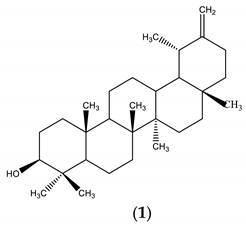
A mixture of sesquiterpene lactones present in dandelion has been found to exhibit therapeutic activity in the treatment of allergic and atopic dermatitis [21]. Additionally, the aqueous extract of dandelion has been observed to display high activity in inhibiting tyrosinase [22]. Dandelion extracts are commonly employed in the treatment of acne [23] and warts [24]. Furthermore, the ethyl acetate and n-butanol fractions of Taraxacum officinale Web. have exhibited anti-inflammatory and antibacterial properties [25], the chloroform extract has been shown to possess anticancer properties [26], polyphenolic compounds in dandelion have been found to have antioxidant properties [27,28], while methanol and petroleum ether extracts have been found to have choleretic effect [29].
Symphytum officinale L. Borage family – Boraginaсeae
Symphytum officinale L., commonly known as comfrey, is distributed across the humid meadow and lakeside regions of Asia, Europe, and America, as supported by reference [30]. Its occurrence has also been recorded in the northwestern and eastern regions of Kazakhstan, as documented in reference [31].
Symphytum officinale L. contains various chemical compounds including phenolic compounds, flavonoids, fatty acids, polysaccharides, purine derivatives, and triterpenes [32,33,34,35].
In terms of ethnopharmacology, preparations made from the roots, leaves, or entire aerial parts of comfrey have been traditionally used since ancient times to treat various internal ailments such as respiratory, gastrointestinal, and genitourinary disorders, as well as external conditions such as bruises and tumors, through the administration of tinctures, infusions, decoctions, compresses, and ointments [36,37].
The literature indicates the potential therapeutic effects of Symphytum officinale L. The plant has been reported to possess anti-inflammatory, anti-apoptotic, antitumor, neuroprotective, and antioxidant properties [38]. Furthermore, comfrey has been shown to facilitate bone regeneration [39].
Allantoin (2) and rosmarinic acid (3), identified as active compounds in comfrey, exhibit significant skin healing properties and have been applied in the treatment of a range of skin conditions:
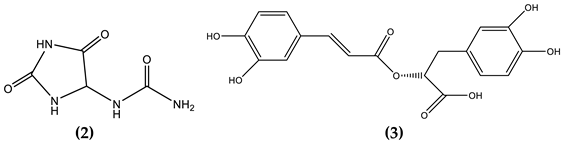
Allantoin (2) has been reported to stimulate cell proliferation and tissue repair, making it a promising therapeutic agent for wound healing. Several studies have demonstrated that allantoin can accelerate the healing process of wounds, reduce inflammation, and increase skin moisture, thus exhibiting a rejuvenating effect [40,41,42]. On the other hand, rosmarinic acid (3) possesses antimicrobial, anti-inflammatory, and antioxidant properties, which make it an effective treatment for various skin conditions, such as psoriasis, acne, and eczema. Studies have shown that rosmarinic acid can reduce oxidative stress and inhibit the production of inflammatory cytokines in the skin, leading to improved skin health [43]. Comfrey also contains tannins and pyrrolizidine alkaloids, which contribute to its anti-inflammatory and wound-healing effects [44,45].
Viscum album L. Family Beltflower – Lorantliaceae
Viscum album L., commonly known as white mistletoe, is an evergreen hemiparasitic plant that grows extensively in the Caucasus, Europe, and western and southern Asia [46,47].
Various chemical components have been identified in mistletoe through chemical studies, including viscotoxins (a mixture of amino acids), phenylpropanes, lignans, flavonoids, amines (viscalbin, norviscalbin, tyramine, β-phenylethylamine viscamine), α-viscol (β-amirin), β-viscol (lupeol), polysaccharides, lectins, fatty acids (oleic, linoleic, and palmitic acids), alcohols (pinit, inositol, quebrachite), resinous substances, and mineral salts [48,49,50,51]. Moreover, syringinin glycoside was detected in mistletoe bark [51]. Triterpene saponins (oleanolic and ursolic acids), vitamin C, carotene, vecerin, viscol, and choline derivatives (propionylcholine and acetylcholine) have also been found in this plant, the levels of which depend on the host tree on which the mistletoe grows, according to the authors of [52].
Viscum album L. has a rich ethnopharmacological history, with traditional uses including the treatment of various ailments such as epilepsy, anxiety, hypertension, internal bleeding, atherosclerosis, inflammation, and headaches. Additionally, it has been used as an antidote in some cultures [53,54].
Mistletoe-based preparations possess hypotensive and analgesic effects. For instance, a tincture of fresh mistletoe leaves, found in the “Akofit” preparation, is utilized to treat acute radiculitis [52]. The vasodilators “Omelen” and “Viskalen” are recommended for hypertension, while the liquid and dry extract “Reviscen” is useful for treating atherosclerosis, as it reduces blood pressure, dilates blood vessels, enhances cardiac activity, reduces nervous system excitability and intestinal atony, and acts as a hemostatic agent [55]. The active compound viscotoxin effectively combats cancer and inhibits its progression. The lectin present in mistletoe is a natural pesticide that hinders bacterial and parasitic infiltration into the body [56]. Additionally, Viscum album L. exhibits antioxidant [50], antitumor [54], antiviral, antibacterial, anti-inflammatory, antiepileptic, and immunostimulatory activity, and is also employed to treat neurological disorders [57,58,59,60]. Preparations containing white mistletoe are utilized in obstetric and gynecological practice and are prescribed for colpitis and prolonged uterine bleeding [61,62].
Mistletoe has shown promise in the field of dermatology, where it has been employed to manage various cutaneous conditions such as dermatitis [63], age-related pigmentation [64], moles, acne, and papillomas [62], as well as psoriasis and rashes [65].
Juglans regia L. Walnut family – Juglandaceae
This plant has been observed to grow in various regions across the globe, including East Asia, Europe, North Africa, and South America [66]. Its growth has also been documented in southern Kazakhstan and it is recognized as a protected species within the boundaries of the Sairam-Ugam State National Natural Park [67].
The chemical composition of walnut kernels is of significant nutritional value, given their abundant presence of polyunsaturated fatty acids (comprising up to 75% of total content), proteins, amino acids, as well as vitamins E, C, β-carotene, and essential minerals such as potassium, calcium, magnesium, sulfur, and phosphorus [68]. Further, walnut kernels are known to contain trace elements such as iron, zinc, and copper, which play a vital role in various biochemical processes within the human body [69]. The plant is also rich in fluorine salts, while the kernel partition contains trace amounts of organic substances, tannins, glycosides, alkaloids, and iodine.
The chemical composition of walnut leaves is characterized by the presence of various biologically active components, including trace amounts of iodine, α- and β-hydrojuglone, polyphenols, tannins, glycosides, flavonoids, terpenoids, vitamin C, carotene, vitamin B1, essential oils, and tannins [70,71,72,73,74,75]. Among these, polyphenolic compounds are the most prominent, with various derivatives of chlorogenic and hydroxycinnamic acids being the major components [76].
In a study by [77], it was demonstrated that the methanolic extract derived from the leaves of Juglans regia L. encompasses a cumulative 40 metabolites classified under megastigmane, tetralone, phenylpropanoid, neolignan, and juglone glycosides.
In traditional medicine, diverse components of Juglans regia L. are utilized to manage several ailments such as diabetes, infectious diseases, and periodontal disease [78]. Furthermore, the plant is reputed to have antipyretic, analgesic, anti-dandruff, and burn-healing properties [79,80]. Notably, the extract of walnut shell has demonstrated notable antibacterial and antibiofilm properties against coagulase-negative staphylococci [81]. Additionally, the lyophilized extract of the walnut septum has been reported to exhibit a marked antitussive, antioxidant, and anti-inflammatory effect [82].
The leaves of Juglans regia L. are traditionally used to alleviate skin inflammation and excessive sweating of the hands and feet. Moreover, they are recommended for the treatment of acne, warts, eczema, and psoriasis due to the presence of flavonoids, specifically quercetin derivatives, and tannins [83,84,85]. The high concentration of α-tocopherol in the leaves of J. regia contributes to its antioxidant effect, which promotes the repair of damaged skin and strengthens the epidermal layer [86].
Solanum dulcamara L. Solanaceae family – Solonaceae
Solanum dulcamara L. exhibits a wide distribution across all continents except Antarctica, with the highest concentration found in tropical and subtropical regions of Australia, Africa, and select areas of Asia, including China, India, and Japan, as well as Central and South America [87]. Notably, the plant is found ubiquitously throughout Kazakhstan.
S. dulcamara is known to contain various bioactive phytocomponents, including steroidal saponins, terpenes, flavonoids, carbohydrates (such as glucose, galactose, xylose, and rhamnose), lipids (specifically cholesterol), steroidal sapogenins (such as diosgenin, tigogenin, and yamogenin), and pigments (such as lycopene and lycoxanthin) [88]. Notably, steroid alkaloids and glycoalkaloids are the primary chemical markers for this plant genus [87]. Additionally, S. dulcamara has been found to contain steroidal alkaloids, including solanine (4) in immature fruits, solasodine in flowers, and β-solamarin in roots [89,90].
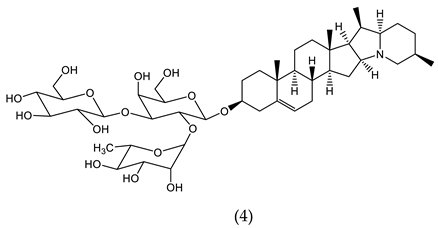
S. dulcamara stems have been traditionally employed in folk medicine as a narcotic agent and as a remedy for conditions such as rheumatism, migraine, and severe inflammation [91].
An ethyl acetate extract obtained from the ripe fruits of S. dulcamara demonstrates significant anti-inflammatory and antioxidant activity [92]. Moreover, S. dulcamara is reputed to possess a variety of therapeutic properties, including antimicrobial, analgesic, hepatoprotective, immunomodulatory, antitumor, and neurogenetic effects [93], as well as antioxidant [92], antihyperglycemic [94], antibacterial, and antimicrobial activity [95,96], and antirheumatic activity [97]. The aerial part of S. dulcamara is particularly rich in alkaloids, which contribute to its antibacterial activity against Streptococcus pyogenes, Staphylococcus epidermidis, and S. aureus.
S. dulcamara is a known remedy for the treatment of skin diseases and warts [98]. This plant is particularly rich in the alkaloid solanine, which is abundant in its immature fruits and has been traditionally used in Kenya to treat skin mycotic infections and other pathological conditions [99]. Saponins isolated from S. dulcamara possess remarkable antioxidant activity, as they are capable of absorbing free radicals. Due to their beneficial properties, saponins are often utilized in cosmetology, where they improve the rheological and foaming properties of body wash formulations, while reducing the risk of skin irritation [100]. The antioxidant properties of S. dulcamara are attributed to the presence of various phenolic compounds, flavonoids, anthocyanins, carotenoids - lycophyll (5), as well as hydroxy- and methoxy derivatives of coumarins [101].
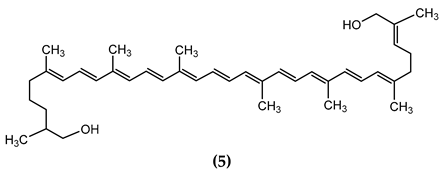
Through non-targeted LC/MS analysis, a comprehensive list of 83 metabolites has been identified in S. dulcamara fruit extracts, including 22 polyphenolic compounds comprising of 19 phenolic acid derivatives and 3 flavonoids (namely quercetin-3-O-rutinoside and kaempferol-3-O-rutinoside), 10 amides, 16 saponins, 14 steroid alkaloids, 6 lignans, and 15 other compounds [102]. Notably, the phenolic acids in these extracts are mainly composed of chlorogenic acid (6), caffeic acid and p-coumaric acid:
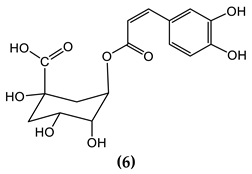
An investigation into the metabolites present in S. dulcamara found that unripe fruits contained a higher concentration of γ-solamarin, α-solazonin, α-solanine, abutiloside H, and solanandaine compared to ripe fruits. Moreover, methanol fruit extracts were found to exhibit significant potential in eliminating DPPH and hydroxyl radicals. Interestingly, the ability of methanol extracts to remove DPPH was found to be tissue-specific, with the outer tissue (skin) of the bittersweet fruits showing a higher antioxidant activity than the inner tissues (pulp and seeds), possibly due to the higher phenol content in the peel [102].
Pastinaca sativa L. Seler family – Apiaceae
Parsnip (Pastinaca sativa L.) is a plant species that is indigenous to Europe and Asia [103], and is also found growing in South Kazakhstan [104].
The root of parsnip is a rich source of numerous bioactive compounds, including coumarins, furanocoumarins, polyacetylenes, essential oils, terpenes, and flavonoids [103]. Additionally, parsnip root is a rich source of various minerals such as potassium, manganese, magnesium, phosphorus, zinc, and iron, as well as carotene, starch, pectin, vitamins, and sugars [105].
Parsnip has been employed in traditional medicine since antiquity. Avicenna’s Canon recommends its topical and oral use to alleviate headache, stomatitis, ophthalmitis, dermatitis, and fever [103].
In 986 AD, the therapeutic use of plants containing furanocoumarins was documented for the treatment of skin conditions such as leprosy and vitiligo [106]. To date, furanocoumarins continue to be utilized for the treatment of certain dermatological conditions. Recent investigations have revealed that heraclenol (7) and oxypeucedanine hydrate (8) elicit a mild stimulatory effect on melanogenesis without affecting cell proliferation, as evidenced by studies examining the effect of furanocoumarins on the skin [103]. Moreover, furanocoumarins have been employed in the treatment of vitiligo and psoriasis [107].
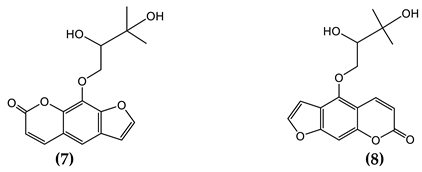
Numerous studies have demonstrated the pharmacological effects of P. sativa on various bodily systems, including the central nervous, respiratory, gastrointestinal, hepatic, skin, cardiovascular, and genitourinary systems [103], as well as its potential in mitigating stroke, atherosclerosis, and other coronary heart diseases. Additionally, P. sativa has been shown to have positive effects on cholecystitis, constipation, anorexia, stomach pain, bladder atony, spastic enterocolitis, mild insomnia, nephritis, dysuria, renal colic, endocrine disorders such as menstrual syndrome, rheumatism, vitamin deficiency, obesity, vascular diseases, infections, loss of appetite, dysmenorrhea, fever, atherosclerosis, detoxification, anemia, and diabetes [105]. Furthermore, furanocoumarins extracted from parsnips have the ability to dilate peripheral vessels and coronary vessels of the heart, eliminate spasms of the bronchi and smooth muscles of the abdominal cavity, and have a moderate sedative effect. In addition, P. sativa exhibits antioxidant and anticytolytic activities [108].
The dried seeds of P. sativa were subjected to steam distillation to isolate its essential oil, which was found to contain octyl acetate (78.49%) and octylhexanoate (6.68%) as its major constituents. Remarkably, this essential oil exhibited significant antioxidant activity [109].
Capsella bursa pastoris L. Cabbage family – Brassicaceae
Capsella bursa-pastoris L. is a wild plant with significant nutritional value that is fit for human consumption. This plant is widely distributed across many countries, including Cyprus, Europe, Saudi Arabia, Turkey, Pakistan, India, Iraq, Iran, China, Azerbaijan, and other Asian countries [110]. It is also commonly found in various regions of Kazakhstan.
Capsella bursa-pastoris L. contains a diverse range of chemical components including flavonoids, polypeptides, choline, acetylcholine, histamine, tyramine, fatty acids, sterols, organic acids, amino acids, sulforaphane, vitamins [111], and various trace elements. In addition, it contains phenolic compounds, flavonoids, tannins, saponins, alkaloids, and phytosterols [110,112,113,114], as well as volatile fractions consisting mainly of terpenoids, alkane hydrocarbons (such as nonacosane), and fatty acids (including palmitic and linoleic acids) [115].
In traditional medicine, Capsella bursa-pastoris L. has been used for centuries in China and Japan as a hemostatic, diuretic, and antipyretic agent [111]. The plant has been utilized for the treatment of conditions such as edema caused by nephritis, odynuria, hemaffetia, menorrhagia, chyluria, and hypertension [116]. The entire plant is used to make tea, which has been used as an antiscorbutic, astringent, diuretic, emmenagogue, hemostatic, hypotensive, tonic, stimulant, vasoconstrictor, and wound healing agent. This beverage has also been considered an excellent remedy for various types of bleeding, including those originating from the stomach, lungs, uterus, and kidneys. A homeopathic remedy for nosebleeds and urolithiasis is prepared from fresh Capsella bursa-pastoris L. plant [111].
Based on the literature, it has been reported that raw plant extracts and certain phytocomponents exhibit various pharmacological effects, such as anti-inflammatory, antispasmodic, antimicrobial, hepatoprotective, cardiovascular, anticancer, sedative, and antioxidant effects [110,113,117,118,119,120]. Furthermore, it has been suggested that these extracts possess infertility-reducing properties [121]. Extracts have also demonstrated inhibitory effects on acetylcholinesterase activity and significant antibacterial activity [113].
Capsella bursa-pastoris L. displays potent antioxidant activity attributed to its flavonoid compounds, namely quercetin, chrysoeriol, kaempferol, and isorhamnetin. In vitro studies have shown that its extracts possess antioxidant activity against various free radicals such as DPPH radicals, peroxyl radicals, hydroxyl radicals, and hydrogen peroxide [122]. Additionally, the plant extract has been found to have cytotoxic effects as reported by previous studies [112]. Furthermore, a moderate hepatoprotective activity has been observed with the extract containing specific flavonoids, including 4,7-dihydroxy-5-hydroxymethyl-6,8-diprenylflavonoid, chrysoeriol-7-O-d-glucopyranoside, sinensetin, and 6,8-diprenylgalangin [123].
Capsella bursa-pastoris L. has exhibited noteworthy efficacy in the treatment of eczema in dermatology [124]. Moreover, preparations derived from Capsella bursa-pastoris L. have been registered and recommended by the German Institute for Pharmaceuticals and Medicines for the adjunctive treatment of skin diseases and wounds [125].
Tanacetum vulgare L. Aster family – Asteraceae
Tanacetum vulgare L. is a widely recognized medicinal plant that is distributed across Northern Europe, North America, Russia, China, North Korea, Kazakhstan, and Japan [126,127].
T. vulgare is abundant in phenolic acids, flavonoids, and their derivatives [128]. The plant contains surface flavonoids, such as the methyl esters of flavones sutellarin and 6-hydroxyluteolin, as well as vacuolar flavonoids, including apigenin and luteolin 7-glucorinides. Additionally, it contains caffeic acid, glycosides, sterols such as β-sitosterol, stigmasterol, cholesterol, and campesterol, and triterpenes such as α-amirin, β-amirin, and taraxasterol [129].
In the traditional medicine of southeastern Serbia, T. vulgare flowers are commonly used to prepare tea with various therapeutic benefits such as antihelminthic, carminative, antispasmodic, abdominal organ stimulant, tonic, menstruation stimulant, antidiabetic, diuretic, and antihypertensive properties [130,131]. Apart from medicinal use, T. vulgare is also utilized in the production of balms, cosmetics, dyes, insecticides, drugs, and preservatives [132]. Furthermore, T. vulgare-based preparations have been used for the treatment of several conditions including hysteria, migraine, neuralgia, rheumatism, renal failure, and fever [129]. The same source highlights the antibacterial, antiviral, antifungal, anti-inflammatory, and immunomodulatory activity exhibited by T. vulgare.
The bioactive components of T. vulgare, including sesquiterpene lactones, volatile oils, flavonoids, and phenolic acids, have been found to possess antioxidant, anticancer, anti-inflammatory, and antiulcer properties [131].
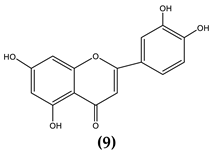
Taraxasterol (1) (see above), luteolin (9) and taraxic acid (a sesquiterpene lactone) present in T. vulgare are responsible for its anti-inflammatory and anti-allergic effects, making it a potential treatment for skin diseases such as atopic dermatitis, eczema, and psoriasis [133,134,135].
Inulin and chlorogenic acid (6) (see above) have demonstrated antioxidant, prebiotic, and anti-inflammatory effects, which suggest their potential use as a therapeutic approach for managing skin disorders like acne, rosacea, and photoaging [136,137,138].
Plantago major L. Family – Plantaginaceae
Plantago major L. (Plantain) is a widely recognized and extensively utilized medicinal plant. The genus Plantago L. comprises approximately 300 diverse species that flourish in temperate areas globally, including 16 plant species that occur in Kazakhstan [139,140]. In arid zones, P. major is comparatively scarce and is primarily found along riverbanks and in intensely irrigated crops.
Plantain is a botanical specimen that contains a diverse array of chemical constituents, including carbohydrates such as polysaccharides, pectic acid, mucus, mannitol, and sorbitol, lipids both saturated and unsaturated, nitrogen compounds like allantoin, essential and non-essential amino acids, caffeic acid derivatives, flavonoids including baicalein, scutellarein, luteolin, baicalin, apigenin, among others, phenolcarboxylic acids and their derivatives such as lilac, vanillic, ferulic, salicylic, benzoic, cinnamic, gentisic, chlorogenic, and neochlorogenic, iridoid glycosides like aucubin, catalpol, and aukubozid, terpenoids, alicyclic compounds like loliolid. Furthermore, the leaves of Plantain exhibit a significant concentration of phenols and their derivatives such as ferulic acid and tyrosol, tannins, and vitamin K. The seeds of Plantain contain organic acids like succinic acid, mucus, iridoids like aucubin, sterols such as β-sitosterol, stigmasterol, campesterol, saponins, alkaloids, tannins, flavonoids like isoquercitrin, and fatty oil. These findings have been reported in numerous sources [141,142,143,144].
Plantain has been recognized for centuries as possessing therapeutic properties. Various parts of the plant, including mature seeds, leaves, and juice, are used for medicinal purposes. Plantain leaves have been employed in the treatment of numerous diseases, including digestive, reproductive, and circulatory ailments, as well as inflammatory skin disorders [145] and urogenital and infectious diseases [146]. Moreover, plantain has been utilized for pain relief and to reduce fever [147].
The specific therapeutic effects of psyllium are attributed to its phytochemical components. The mucus, enzymes, and phytoncides present in psyllium provide an enveloping and mucolytic effect that restores the protective function of the ciliated epithelium in the respiratory tract, leading to increased secretion of bronchial mucus and liquefaction of sputum for easy expectoration. The glycoside plantagin inhibits the cough reflex [148]. The anti-inflammatory and analgesic effects of water extract from psyllium have been demonstrated by several studies [149,150]. Psyllium also possesses wound healing, antiulcer, antidiabetic, antidiarrheal, antibacterial, antiviral, antioxidant, and immunomodulatory properties [151]. A comprehensive overview of the medicinal properties and chemical components of psyllium published in journals between 1937 to 2015 was conducted and is available from PubMed, ScienceDirect, and Google Scholar [152]. A study on the antiviral activity of aqueous extract and pure compounds of Plantain revealed that while the aqueous extract of Plantain had negligible activity against the herpes virus, some pure compounds belonging to five different classes of chemicals found in the plant extracts exhibited potent antiviral activity. Among them, caffeic acid showed the highest activity against herpes simplex virus HSV-1, while chlorogenic acid had the strongest activity against adenovirus ADV-11. Recent pharmacological studies have reported a range of biological activities of Plantain extracts, including immunomodulatory, antioxidant, lipid-lowering, hypoglycemic, intestinal function, anti-cancer, anti-inflammatory, and anti-complementary activities [139].
According to the authors of a recent study [148], the hemostatic properties of Plantain can be attributed to its high content of vitamin K, which, along with tannins, facilitates blood clotting. Additionally, the plant’s anti-inflammatory, wound-healing, and ulcer-healing effects are linked to the presence of polysaccharides, pectin, tannins, benzoic acid, and salicylic acid. Plantain is also used in cosmetic dermatology to treat acne scars [137]. Polysaccharides stimulate the formation of interferon, while zinc and flavonoids aid in the normalization of phagocytosis. The combination of polysaccharides with enzymes and vitamins promotes regeneration. Organic and phenol carboxylic acids, flavonoids (such as derivatives of luteol quercetin and apigenin), ascorbic acid, copper, and zinc provide a pronounced antihypoxic effect. Plantain also regulates digestion and increases appetite, with iridoid glycosides such as aucubin and catalpol, as well as bitterness, stimulating glandular secretion. Furthermore, leaf extracts have sedative and hypotensive effects, while saponins, hydroxycinnamic acids, flavonoids, and pectin substances help to reduce blood cholesterol levels.
Plantain is prescribed in various forms, including roasted seeds, decoction, syrup, ointment, rinse, rectal enema, vaginal suppositories, eye and nasal drops, depending on the disease being treated. Galenic preparations are commonly used to treat respiratory diseases, gastric and duodenal ulcers, and kidney disease, while Plantain preparations are applied externally to treat inflammation of the oral cavity and nasopharynx, wounds, bruises, burns, and furunculosis. They also serve as a bacteriostatic and wound healing agent. P. major extracts are known to have a sedative and hypotensive effect, and the fresh leaf juice is effective in treating corneal wounds. P. major leaf juice has been found to inhibit the growth of pathogenic staphylococcus at a dilution of 1:2, Escherichia coli at a ratio of 1:4, and to retard the growth of hemolytic streptococcus at a ratio of 1:2. Plantaglucid, a preparation containing a mixture of Plantain polysaccharides, is commonly used to treat hypoacid gastritis and gastric ulcer during exacerbation and to prevent relapses [153].
Artemisia absinthium L. Aster family – Asteraceae
Artemisia absinthium L., a plant species commonly known as wormwood, is widely distributed in Asia, the Middle East, Europe, and North Africa. It grows everywhere in Kazakhstan [154,155,156].
A. absinthium is a plant species that possesses various biologically active compounds. The grass of this plant is utilized as a source material for oil production. The oil mainly consists of thujone esters, α- and β-thujone (10), camphene, α-cadinene, guaiazulene, (Z)-epoxycymene, (E)-sabinyl acetate, (Z)-chrysanthenyl acetate, as well as bitter sesquiterpenoid lactones, azulene group compounds, and tannins [157]. Moreover, it contains terpenoids (such as myrcene, germacrene D, camphor (10), chamazulene), flavonoids (quercetin, kaempferol, apigenin, artemetin, and rutoside), phenolic acids (chlorogenic, ferulic, gallic, coffee, syringic, vanillic, and caffeylquinic acid derivatives), and flavonoid glycosides [158]. The composition of the A. absinthium extract is dependent on the type of solvent utilized in the extraction process. The alcoholic extract, in particular, has a considerably higher concentration of flavonoids, phenols, and tannins in comparison to the aqueous and chloroform extracts [157].
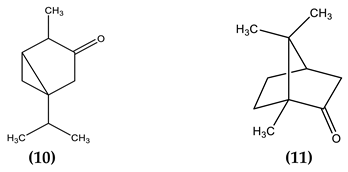
For thousands of years, A. absinthium has been utilized in traditional medicine for a wide range of ailments, particularly parasitic diseases and digestive disorders, as well as fever reduction [159]. The leaves are employed to alleviate fever, while the flowers are used to aid with stomach disorders and helminthiasis. The A. absinthium tincture is highly esteemed as a tonic and digestive aid. In a published paper [160], the wormwood herb is noted for its effectiveness in treating jaundice, constipation, obesity, splenomegaly, anemia, insomnia, bladder diseases, and non-healing wounds from traumas. Furthermore, the plant is utilized as a foundation for producing skin ointments and balms [159].
A. absinthium demonstrates a diverse array of biological activities, including but not limited to antibacterial, anti-inflammatory, hepatoprotective, antidepressant, antispasmodic, and antipyretic effects [161,162]. Moreover, it exhibits antimicrobial, antiviral, antistress, hepatoprotective, antioxidant, and anticancer effects [154,163].
In the field of dermatology, the essential oil derived from A. absinthium has been shown to expedite wound healing, diminish inflammation, and exhibit antimicrobial and wound-healing properties [164].
Agropyron repens L. Lacquer family – Gramineae
Agropyron repens L. is distributed widely across Europe, Asia, and Africa [165]. It can be found ubiquitously throughout Kazakhstan [166].
The chemical composition of the plant encompasses a broad spectrum of constituents, including carbohydrates such as fructose, glucose, inositol, and mannitol, as well as mucous substances, pectin, triticin, thianogenic glycosides, flavonoids, saponins, essential oil, monoterpenes (such as carvacrol, carvone, transanethol, thymol, and menthol), and sesquiterpenes. Additionally, the plant contains vanillin glucoside, iron, minerals, and significant quantities of silica. Among the phenolic compounds found in the plant are p-hydroxybenzoic, vanillic, and p-coumaric acids, as well as chlorogenic acid, p-hydroxycinnamic acids, and p-hydroxycinnamic acid esters. The rhizomes contain polysaccharides, glycosides such as quercetin and luteolin, phenolic glucosides, fatty acids, and amino acids (including γ-aminobutyric acid, proline, valine, asparagine, histidine, arginine, and tryptophan) [167,168]. Furthermore, the seeds of wheatgrass contain triticin, mucus, saponins, sugar alcohols (namely, mannitol, inositol, and 2-3% of the total composition), essential oils with polyacetylenes or carvone, a small amount of vanilloside (vanillin), phenol carboxylic acids, silicic acid, and silicates [169].
Agropyron repens L. has been used in folk medicine as a sedative diuretic to relieve pain and spasms in the urinary tract, and as a sedative and tonic [165,168,169,170]. The traditional medicinal use of Agropyron repens L. in urolithiasis has been scientifically validated, with confirmed pharmacological actions including hypoglycemic, hypolipidemic, anti-inflammatory, and antidiabetic effects, as well as effects on motility and benefits in urinary tract infections [165,168,171].
The presence of flavonoids, alkaloids, and coumarin in the composition of this plant suggests its potential activity in the treatment of skin diseases, such as inflammatory skin diseases, atopic dermatitis, and acne [172,173].
Matricaria recutita L. Aster family – Asteraceae
Matricaria Chamomilla L. contains a wealth of biologically active compounds, including flavonoids (such as apigenin and luteolin) and their glycosides, as well as coumarins (including gerniarin and umbelliferone) [176]. The essential oil extracted from chamomile flowers is composed of 52 different components, with the highest concentration of terpenoids, including β-farnesene, α-farnesene, α-bisabolol, chamazulene, and germancrene, as well as spiroether [174,177,178].
Matricaria Chamomilla L. has been widely employed in traditional medicine for treating a diverse range of ailments, including infections, neuropsychiatric disorders, respiratory tract, gastrointestinal and liver diseases. Furthermore, the plant possesses sedative, antispasmodic, antiseptic, and antiemetic properties [174].
Therapeutic indications for Matricaria Chamomilla L. encompass a diverse array of medical conditions, including inflammatory conditions, bacterial infections, and lesions of the skin and mucous membranes such as those found in the oral cavity, gastrointestinal tract, and respiratory tract. Additionally, the plant has been employed as a remedy for spasms and ulcers of the gastrointestinal tract, insomnia, and nervous breakdown [179,180,181,182,183,184,185]. Furthermore, the plant has demonstrated pain-relieving properties [186], wound-healing effects [187], and acted as a protective agent for the kidneys and liver [188].
Matricaria Chamomilla L. is regarded as a viable alternative owing to its abundance of bioactive secondary metabolites that have therapeutic potential for the treatment of diverse skin conditions, such as wounds, abscesses, and skin diseases. The plant’s therapeutic efficacy in treating skin conditions is attributed to the presence of α-bisabolol (12) and apigenin (13), a natural flavonoid:
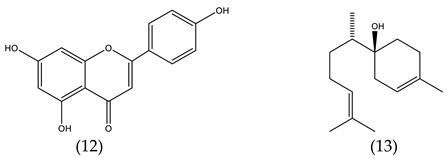
α-Bisabolol (12) possesses anti-inflammatory, antibacterial, and anti-irritant properties, making it suitable for use in a variety of products that provide protection against skin irritation caused by environmental factors. Due to its non-allergenic nature, it is widely used in hand and body lotions, aftershave creams, lipsticks, sun and after-sun care products, and baby care products [189,190]. On the other hand, apigenin (13) has been found to alleviate the symptoms of skin inflammatory diseases by protecting skin cells from oxidative stress-induced death. Apigenin also affects the synthesis of skin barrier factors and the influx of calcium ions. Therefore, it can potentially be used to treat skin inflammatory diseases and cancer [191].
Sorbus aucuparia L. Rose family – Rosaceae
Sorbus aucuparia L., a botanical species known for its nutritional and medicinal benefits, is considered a valuable source of edible fruits. This plant is characterized by its ability to thrive in cold and harsh environments, and is found in abundance across various regions spanning Northern Europe, the Caucasus, the Middle East, and East Asia [192,193,194,195].
Sorbi fructus, commonly known as Rowan fruits, serve as essential medicinal resources. The berries are harvested during their complete maturation phase, from August to September, before the advent of frost. During collection, it is advisable to exercise caution and avoid damaging the branches. The harvested raw materials are meticulously cleansed of their stalks and subsequently subjected to a drying process in well-ventilated rooms or dryers, employing a temperature range of 60-80ºC [196].
This fruit, popularly referred to as a “superfruit,” contains a diverse array of phytochemicals, comprising phenolic acids (neochlorogenic and chlorogenic acids), flavonoids, proanthocyanidins, iridoids, coumarins, hydrolysable tannins, carotenoids, and anthocyanins, as well as vitamins (ascorbic acid, α-tocopherol, B1, B2, P, PP, K, and folic acid) [195,197,198]. Furthermore, it harbors various sugars (glucose, fructose, sucrose, sorbitol alcohol, etc.), phospholipids, pectin, organic acids, bitter substances, sorbic and parasorbic acids, essential oil, and macro- and microelements. The leaves of the plant contain vitamin C and flavonoids, while rowan seeds contain fatty oil (up to 22%) and glycoside amygdalin; the bark contains tannins [199,200].
Throughout history, the fruits of Sorbus aucuparia L. have been utilized in traditional medicine to alleviate ailments related to cardiovascular and digestive systems. In addition to their medicinal applications, these fruits can be consumed raw or utilized in the production of jams, syrups, and as flavoring agents in alcoholic and non-alcoholic beverages, including beer and wine [201].
The fruit extracts derived from Sorbus aucuparia L. have demonstrated antioxidant [202] and antitumor activity [195]. The antioxidant activity is attributed to the presence of flavonoids, vitamins C and E [198], and anthocyanins [201,203] within their composition. Moreover, the authors of [201] have reported additional pharmacological effects of the fruit extracts, including antitumor, antiproliferative, antiviral, antibacterial, antifungal, and anti-inflammatory effects.
Within the field of dermatology, Rowan berries are recognized as a valuable multivitamin raw material for the treatment of allergic diseases and other skin ailments, owing to their wound-healing properties [204].
Eryngium planum L. Seler family – Apiaceae
The subgenera of Eryngium are predominantly distributed throughout Europe, Africa, and Asia, with certain subgenera exhibiting a widespread presence in Australia [205,206]. In Kazakhstan, Eryngium is found growing in the steppe regions of Northern Kazakhstan, as well as in the Dzungarian and Zailiyskiy Alatau mountain ranges [207].
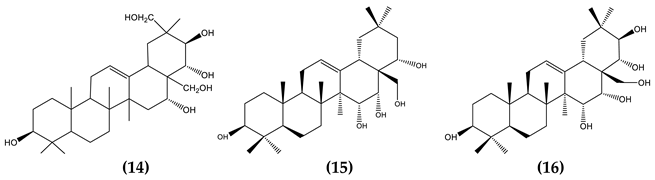
The aerial parts of Eryngium species are characterized by the presence of saponins, flavonoids, and essential oils, while the underground parts contain triterpene saponins, monoterpene glycosides, phenolic compounds such as flavonoids and phenolic acids, coumarin derivatives, terpene aldehyde esters, essential oils, and oligosaccharides [208,209]. The isolation of eringinol (14) from the aboveground parts of the plant was reported later [210]. Further studies on the phytochemical constituents of the plant were conducted on leaves and roots, leading to the isolation of various aglycones containing acetic, tigloic, butyric, and isovaleric acids at positions C16, C21, C22, or C28 [210,211]. Additionally, A1-barrigenol (15) and R1-barrigenol (16), a type of aglycone containing dimethylacrylic, angelic, and/or tigloic acids as acid fragments, were named eryngiumgenine AD and isolated from the roots of E. planum [209].
E. planum has a significant role in European and Asian traditional medicine for treating various inflammatory diseases. The plant’s aboveground parts are bioactive primarily due to the presence of polyphenols and saponins [212,213,214]. It has demonstrated potential for use in gastrointestinal diseases and exhibits antibacterial, analgesic, anthelmintic, anticonvulsant, and anticancer properties, highlighting its crucial importance in ethnopharmacology [215]. The aerial part of the plant collected during flowering is used for therapeutic purposes.
According to the results obtained from HPLC-MS analysis, flavonoids, particularly rutin and isoquercetin, are the major constituents of E. planum extracts [216]. Rutin is known to possess skin toning properties and to prevent the appearance of skin conditions such as rosacea and erythema. The anti-inflammatory effects of E. planum extracts may be attributed to the synergistic activity of ursolic acid and polyphenols such as rutin, chlorogenic acid, rosmarinic acid, genistin, and daidzein, which have been previously studied for their anti-inflammatory properties [217,218,219,220]. Notably, ursolic acid, which is abundant in concentrated extracts of the plant, exhibits antioxidant, antimicrobial, anti-inflammatory, and hypoglycemic activities [221].
Eryngium planum L. has potential applications in dermatology, particularly for the treatment of atrophic and purulent skin wounds when applied topically [222].
Ribes Nigrum L. Saxifrage family – Saxifragaceae
Ribes Nigrum L. is a diminutive perennial shrub indigenous to Central Europe and North Asia that has been widely cultivated globally, including in the United States [223]. Furthermore, it is known to thrive in the territory of Kazakhstan [224].
Fresh blackcurrant fruits are known to contain a diverse range of functional and biologically active compounds, including soluble sugars, flavonoids, organic acids, vitamins, polyamino acids, macro- and microelements, and unsaturated fatty acids [225,226]. Additionally, blackcurrants are a rich source of vitamin C [227]. Anthocyanins, a group of biologically active compounds, are prominently found in blackcurrant berries, as well as in its seeds and leaves [228]. Notably, blackcurrant seed oil is a valuable source of gamma-linolenic acid (γ-C18:3), stearidonic acid (C18:4), tocochromanols (primarily γ-tocopherol and α-tocopherol), and sitosterol [225].
The fruits, leaves, and shoots of Ribes nigrum, both in fresh and dried form, have been traditionally used as a multivitamin and general tonic for hypovitaminosis and beriberi, as well as for enhancing the immune system. In folk medicine, the leaves of Ribes nigrum have been used for treating various conditions, including kidney stones, gout, cystitis, urethritis, osteochondrosis, rheumatism, muscle and joint pain, exudative diathesis, eczema, and furunculosis [229]. Additionally, Ribes nigrum is also used in homeopathy [230]. In a study [231], a wide range of pharmacological actions of Ribes nigrum extract, rich in anthocyanins, has been indicated. Extracts containing more than 20% anthocyanins have been found to exhibit antioxidant, anti-inflammatory, phytoestrogenic activity, anti-postprandial hyperglycemic and anti-diabetic effects, and cardioprotective effects. Furthermore, the anthocyanin-rich fraction of black currant peel extract has been found to exhibit a strong cytotoxic effect on human liver cancer cells, and to have a positive effect on vision and eye health.
In the field of dermatology, blackcurrant leaves have been utilized for treating skin lesions resulting from atopic dermatitis, allergic itchy dermatoses (e.g., eczema, neurodermatitis, pruritus), while leaves and fruits have been used for managing psoriasis, scleroderma, lichen planus, vasculitis, and acne vulgaris [223,232]. Ribes nigrum may prove beneficial in treating various skin conditions, such as atopic dermatitis, psoriasis, and acne, owing to its higher anthocyanin content [233]. The antioxidant activity of blackcurrant, attributed to the presence of flavonoids and vitamin C, has been observed to modulate cancer and inflammation signaling pathways and absorb ultraviolet radiation [226]. Vitamin C has been shown to increase the transport protein under exposure to ultraviolet light. Furthermore, the presence of fatty acids in blackcurrant endows it with therapeutic potential for skin ailments [234].
Glycyrrhiza glabra L. Legume family – Fabaceae
Glycyrrhiza glabra L., commonly known as licorice, fragrant wood or mulaiti, is a small perennial plant that is native to Eurasia, North Africa and West Asia [235]. This plant is found ubiquitously in Kazakhstan [236,237]. The genus Glycyrrhiza is extensively distributed across the globe and encompasses over 30 species.
The root of Glycyrrhiza glabra L. is a significant medicinal component due to the presence of various isolated compounds. These include triterpene saponins such as the sweet saponin glycyrrhizin, flavonoids such as liquirtin which is the primary flavonoid glycoside, rhamnoliquirilin, liquiritigenin, prenillicoflavon A, glucoliquiritin apioside, 1-methoxyphaseolin, shinpterocarpin, shinflavanone, lycopyranocoumarin, glisoflavone, lycoarylcoumarin, coumarin-GU-12, isoflavonoids, and chaconne. Among these, glycyrrhizic acid is the primary biologically active component, and it is known to be 60 times sweeter than sugar cane [235,238].
Licorice root has been employed as a therapeutic agent by both ancient and modern medical practitioners. Its oral administration has demonstrated efficacy in the treatment of various disorders including gastric, duodenal and esophageal ulcers, inflammation, laxatives, mouth ulcers, antispasmodic, antitussive, sedative, and expectorant. The herb’s constituents make it a promising candidate for managing respiratory conditions such as asthma, acute and chronic bronchitis, and chronic cough. Furthermore, it has demonstrated potential in treating Addison’s disease. Topical application of licorice extracts has also been effective in treating inflammatory skin conditions, mouth ulcers, and maintaining oral hygiene [238,239,240]. Glycyrrhizin, one of the major bioactive components of licorice, is widely utilized in the commercial production of non-food sweeteners and flavors for candies and pharmaceuticals [240].
Numerous clinical and experimental studies have demonstrated that this substance possesses several pharmacological properties that are highly advantageous, including anti-inflammatory, antiviral, antimicrobial, antioxidant, anticancer, immunomodulatory, hepatoprotective, and cardioprotective effects [238].
The ethanolic extract derived from the root of Glycyrrhiza glabra L. exhibited noteworthy antibacterial activity against Propionibacterium acne and Pseudomonas aeruginosa. This property has led to the use of Glycyrrhiza glabra L. in dermatology for treating skin diseases, such as dermatosis and acne [241].
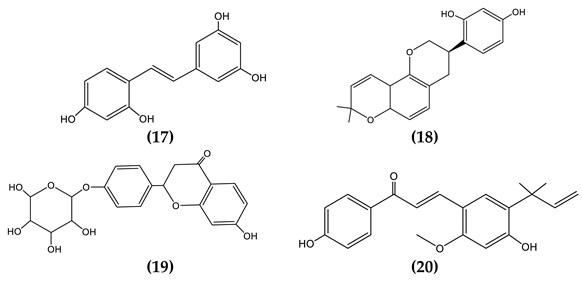
Multiple studies have demonstrated the efficacy of Glycyrrhiza glabra L. in treating various skin conditions such as hyperpigmentation, eczema, and psoriasis. The therapeutic effects can be attributed to the presence of flavonoid compounds like oxyresveratrol (17), glabridin (18), and liquiritin (19) [242]. Glycyrrhiza glabra L. also contains Licochalcone A (20), which has anti-inflammatory and antimicrobial properties and has been found to be effective in treating acne, inflammatory skin diseases, and other skin ailments [243,244,245].
Ononis spinosa L. Legume family – Fabaceae
Ononis spinosa L. has a wide distribution across Africa, Asia, and Europe. It is found in countries such as Algeria, Libya, Morocco, Tunisia, Afghanistan, Iran, Iraq, Palestine, Jordan, Lebanon, Syria, Turkey, Armenia, Azerbaijan, India, Denmark, Norway, Sweden, Great Britain, Austria, Belgium, Czechoslovakia, Germany, Hungary, the Netherlands, Poland, Switzerland, Estonia, Lithuania, Moldova, the European part of the Russian Federation, Albania, Bulgaria, Greece, Italy, Romania, France, Portugal, and Spain [246].
The root of O. spinosa is a reservoir of isoflavonoids, pterocarpans, and dihydroisoflavonoids, comprising formononetin, calicosin, pseudobaptigenin, medicarpin, maakiain, onogenin, and sativanon, with metabolites present in the form of glucosides, glucoside malonates, glucoside acetates, and free aglycones [247,248].
The roots, leaves, and flowers of O. spinosa have been utilized in folk medicine for their antitussive, laxative, and diuretic properties. Infusions of the plant have been employed to treat dropsy, urinary tract infections, inflammation, and rheumatism, while external applications have been used to promote wound healing and alleviate skin conditions such as eczema. In Iraq, the roots were valued for their diuretic, blood purifying, laxative, and expectorant qualities [246]. Additionally, ash derived from burned samples of O. spinosa has demonstrated activity against various Candida species [249].
Pharmacological investigations have demonstrated that O. spinosa exhibits noteworthy hepatoprotective and antitumor properties [250], and may be considered a potential therapeutic agent for the management of urinary tract infections and bladder stones [247].
O. spinosa has been utilized in dermatology for its efficacy in treating skin ailments such as dermatitis (eczema) and pruritus, while also possessing wound-healing properties beneficial in the treatment of burns [251].
Gnaphalium uliginosum L. Aster family – Asteraceae
Gnaphalium uliginosum L. is a member of the Compositae family, a group of flowering plants, and is commonly referred to as swamp cudweed or swamp cudweed. It has a wide distribution, including in Kazakhstan. [252,253].
Gnaphalium uliginosum L. is known to harbor a limited array of chemical constituents, comprising of approximately 125 compounds such as flavonoids, sesquiterpenes, diterpenes, triterpenes, phytosterols, anthraquinones, caffeylquinic and caffeylglucaric acids, flavonols, and carotenoids [254,255].
Marshweed, also known as Gnaphalium uliginosum L., has been used in traditional medicine to alleviate a variety of conditions, including gastric disorders, edema, wounds, prostatitis, lumbago, neuritis, and angina pectoris. Additionally, it has been utilized for its antihypertensive, diuretic, antipyretic, and antimalarial properties [252].
Pharmacological investigations on Gnaphalium uliginosum L. extracts have revealed various beneficial effects, such as antioxidant [256], antibacterial, antifungal, antitussive, expectorant, antifidant, cytotoxic, and hepatoprotective activities [257]. Additionally, this plant exhibits anti-inflammatory, antidiabetic, and antihypouricemic properties [252]. Gnaphalium uliginosum L. is employed in medical practice as a hypotensive and wound-healing agent for treating hypertension, gastric ulcer, and difficult-to-heal wounds [255]. Furthermore, oil extracts derived from this plant are useful for managing laryngitis, catarrh of the upper respiratory tract, and tonsillitis [258].
In the field of dermatology, the extract derived from Gnaphalium uliginosum L. has been employed to address conditions such as eczema and skin cancer [259,260].
Onopordum acanthium L. Aster family – Asteraceae
Onopordum acanthium L. is a widely distributed species of plants found across Africa (Algeria), Asia (Afghanistan, Iran, Iraq, Turkey, Armenia, Azerbaijan, Georgia, Russian Federation, Kazakhstan, Kyrgyzstan, Tajikistan, Turkmenistan, Uzbekistan, China, India, Pakistan), throughout Europe, Australia, New Zealand, and North and South America (Argentina, Chile, Uruguay) [261,262].
O. acanthium is a plant species that contains various phytochemical compounds, including saponins, alkaloids, sesquiterpene lactones, flavonoids, triterpenes, sterols, nitrogen-containing compounds, phenolic acids, coumarins, inulin, soluble sugars, proteins, and oils [262]. The fatty acid composition of the plant includes palmitic, stearic, oleic, and linoleic acids [263,264]. Additionally, phenolic, triterpene, and steroid compounds were detected in the aerial parts of O. acanthium, while the roots were found to contain sesquiterpene lactones and polyacetylenes [265].
In traditional medicine, various preparations of O. acanthium, including its powder, juice, and decoction of the aerial part, have been utilized as diuretics. This plant is known to stimulate the central nervous system and has demonstrated cardiotonic and hemostatic properties. Infusions of the leaves and inflorescences have also been employed to reduce swelling of various etiologies [265]. Furthermore, the extract derived from this plant has exhibited bactericidal, cardiotonic, and antitumor effects [266,267]. The extracts and isolated compounds from this plant have demonstrated a range of activities including anti-inflammatory, anti-radical, anti-proliferative, and antibacterial effects [265]. Additional activities noted for this plant include antioxidant and anti-inflammatory effects [268], as well as diuretic, dermatological, tonic, sedative, anticonvulsant, cardiotonic, hemostatic, and bactericidal effects, all without causing any side effects.
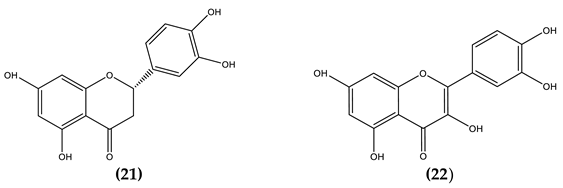
Eriodictyol (21) and quercetin (22) have been identified in the flowers of the plant, both of which possess potent antioxidant properties. Eriodictyol, in particular, has been found to protect skin cells from damage induced by UV radiation by inhibiting the MAPK signaling pathway, thereby exhibiting anti-aging effects. Quercetin, on the other hand, has been shown to support the body during periods of biological stress, including inflammation, allergies, itching, and weakened immunity [269].
The antitumor activity of extracts obtained from a combination of flowers and fruits, leaves, and roots of O. acanthium against A431 culture (epithelial carcinoma of the skin) was examined by the authors of [270]. Aqueous, n-hexane, chloroform, and water-methanol extracts were utilized in the study. The results revealed that the chloroform extract of leaves and roots displayed the highest activity.
O. acanthium extracts find applications in dermatology beyond skin cancer, such as in the treatment of furunculosis, purulent wounds, and lupus [271].
Thymus serpyllum L. Lamiaceae family – Lamiaceae
Thymus serpyllum L., commonly known as creeping thyme, Bogorodskaya grass, and thyme, is widely distributed in countries bordering the Mediterranean, parts of Central Europe, and Asia [272]. The plant is found in the forest and forest-steppe zones of the European part of Russia, as well as in Western and Eastern Siberia, the Urals, Transbaikalia, and central regions of Kazakhstan, including the Ulytau mountains [273].
The plant is a valuable source of essential oil and pharmacologically active polyphenolic compounds, as reported in literature [274]. Thymol is the major component of the essential oil, comprising up to 42% of the oil, alongside other constituents such as carvacrol, n-cymol, α-terpineol, and borneol. Additionally, tannins, bitterness, gum, triterpene compounds including ursolic and oleanolic acids, flavonoids, and a significant amount of mineral salts have been detected in the herb. The mature seeds of the plant have also been found to contain 33.6% fatty oil [272,275]. Thyme also exhibits a high content of flavonoid phenolic and carotenoid antioxidants, such as zeaxanthin, lutein, apigenin, naringenin, and luteolin (9) (see above), as reported previously [276].
Thymus serpyllum L., a medicinal herb with rich essential oil and pharmacologically active polyphenolic compounds, has a long-standing history of being used in official and folk medicine to treat various ailments. The herb, collected during the flowering period, is used as a medicinal raw material after being threshed and dried in the shade or dryers at a temperature of 35-40°C. Thyme preparations have demonstrated expectorant, antimicrobial, and antifungal properties. Thyme is also used to treat a range of ailments, including sore throat, stomatitis, periodontal disease, asthma, headaches, laryngitis, and digestive system disorders [274,277]. Thyme extract has been shown to possess antitumor and antioxidant activity. Additionally, thyme is used as an alexiteric, emmenagogue, analgesic, and sedative, and in the form of ointments and lotions for rheumatism and skin diseases [273,278,279,280].
Owing to its sedative and diuretic properties, formulations containing Thymus serpyllum L. can be employed for pruritic dermatoses [281]. Bulgarian herbalists advocate creeping thyme as a constituent of medicinal concoctions for treating eczema, neurodermatitis, urticaria, and as an external remedy to eliminate wrinkles [282].
Achillea millefolium L. Aster family – Asteraceae
Achillea millefolium L., commonly known as common yarrow, belongs to the Asteraceae family (Asteraceae Dumort.). The plant was referred to as “venus eyelashes” during the Middle Ages due to its leaves’ feathery appearance, while the whole plant was known as “soldier’s grass” for its use in treating wounds. There are over 100 different species of Achillea millefolium L., which are found in various regions worldwide, including North America, Europe, Asia, Australia, New Zealand, and the Middle East [283,284,285,286]. The plant is widespread in Kazakhstan and serves as a valuable source of nectar for honeybees [287].
The main components of A. millefolium are essential oils and phenolic compounds, monoterpenes, sesquiterpenes, lactones [288], amino acids, fatty acids, salicylic and succinic acids, ascorbic acid, folic acid, caffeic acid, and flavonoids [289]. The composition of the essential oil includes sesquiterpenoids: Achilles, acetylbalquinolide, caryophyllene, proazulene; monoterpenoids: camphor (11), thujol (10), (see above), cineole, pinene, borneol. In addition, alkaloids (the main of which is akhilein), flavonoids, including flavone glycosides apigenin (13) and luteolin (9) (see above) were found in the yarrow herb; tannins (α-phyloquinone), vitamins K, C, A, B; amines: choline, stakhidrin; esters (bornyl acetate, myrtenyl acetate), caryophyllene, organic acids (acetic, formic, malic, isovaleric, aconitic, coffee, chlorogenic), polyins (pontic epoxide, matrixar ester), cyclic alcohol viburnite (20%), menthol, geraniol [290,291,292,293,294]. Yarrow also contains sterols (mainly β-sitosterol, as well as stigmasterol, campesterol, cholesterol, taraxasterol and pseudotaraxasterol), coumarins, the biogenic amine betaine, inulin and other polysaccharides, which contain monosaccharides such as rhamnose, arabinose, xylose, mannose, glucose, galactose, ribose [295].
The bitter taste of A. millefolium can be attributed to the presence of sesquiterpene lactones in its essential oil. The quantity of essential oil produced by the plant is largely dependent on the growth stage. During the early stage of growth, the content of essential oil is 0.13%, which increases to 0.34% during flowering. The ratio of monoterpenes to sesquiterpenes also changes during the growing season, with an increase in the former and a decrease in the latter. Notably, the levels of α-pinene, β-pinene, and α-thujone show a marked increase, whereas those of sabinene, borneol, and bornyl acetate decrease [293,294].
In traditional medicine, yarrow has been employed to alleviate a variety of ailments including respiratory conditions (such as asthma and bronchitis), gastrointestinal disorders (including dyspepsia and hepatobiliary disorders), skin inflammation, and headaches. The aerial part of the plant, including leaves, stems, and inflorescences, is typically collected during the flowering phase for use as medicinal raw material. Yarrow is often administered as infusions, extracts, and potions to treat bleeding, flatulence, and gastrointestinal diseases such as gastritis, gastric ulcer, and duodenal ulcer. It is also consumed as a tea to stimulate appetite [286,289,296].
A. millefolium possesses various therapeutic properties such as disinfectant, anti-inflammatory, antispasmodic, anthelmintic, antibacterial, antioxidant and antimicrobial effects [297]. Additionally, the herb has demonstrated antiulcer and anticancer activities [298], while the experimental findings suggest that yarrow may stimulate thrombocytopoiesis, leading to an increase in the number of platelets in the blood [299].
Yarrow has long been utilized in traditional medicine as an effective treatment for various skin ailments, including acne, eczema, neurodermatitis, and urticaria. Moreover, yarrow is incorporated into medicinal preparations for vasculitis. Its therapeutic effects can be administered orally to prevent the recurrence of eczema [296,300,301,302].
Equisetum arvense L. Horsetail family – Equisetaceae
Equisetum arvense L., a herbaceous plant belonging to the Equisetaceae family, is widely distributed in North America, Europe, and Asia, including the territory of Kazakhstan [303,304].
Equisetum arvense L. contains more than 210 natural compounds distributed in various organs. These compounds include alkaloids, carbohydrates, proteins and amino acids, phytosterols, saponins, sterols, ascorbic acid, silicic acid, phenolic compounds, and their glycosides, tannins, flavonoids (such as apigenin, genquanin, luteolin, kaempferol, quercetin), triterpenoids, volatile oils, and other bioactive substances [305,306].
Equisetum arvense, a plant species from the Equisetaceae family, has been utilized in traditional medicine for its therapeutic properties. Its applications include the treatment of tuberculosis, renal and bladder catarrh, as well as a hemostatic agent to address excessive menstruation, nasal, pulmonary, and gastric bleeding, among others [307].
The water-alcohol extract of Equisetum arvense L. has demonstrated various biological activities including antioxidant [308], anti-inflammatory, antibacterial, and antimicrobial effects [309]. Studies have also reported its antiproliferative activity [310], as well as antifungal, vasodilating, hepatoprotective [311], neuro- and cardioprotective, cytotoxic, and anti-cellulite properties [312,313]. Additionally, Equisetum arvense L. has been traditionally used for its analgesic effects on rheumatism and frostbite, as well as its anti-inflammatory properties, which can improve blood circulation. This plant has been employed as a bath agent for skin diseases and incorporated into cosmetic products as a rejuvenating, moisturizing, anti-wrinkle, anti-acne, antiperspirant, and conditioning agent [314].
Equisetum arvense L. is recognized for its high content of silicon, a compound that is associated with promoting skin health. Silicon aids in maintaining skin firmness and elasticity, while its mild exfoliating properties help to eliminate dead skin cells and enhance skin texture [315,316]. The antioxidant potential of Equisetum arvense L. has been attributed to the presence of flavonoids such as quercetin, kaempferol, and isorhamnetin [317].
Humulus lupulus L. Hemp family – Cannabaceae
Humulus lupulus L., commonly known as hops, is a plant species that is widely distributed in temperate regions worldwide [318,319].
H. lupulus is a plant that contains a multitude of phytochemicals, with a high concentration found in the female inflorescences from which lupulin, a yellowish-brown granular powder, is obtained. Lupulin comprises bitter resins and essential oils, imparting the characteristic aroma and flavor of hops. The primary bitter acids found in hop resin are alpha acids (humulons) and beta acids (lupulones). The essential oils contain myrcene, linalool, and geraniol, which are the most important aromatic compounds. Additionally, lupulin contains polyphenols, such as kaempferol, quercetin, catechins, prenylnaringenin, hydroxycinnamic acid, and condensed tannins. Ferulic acid is the most representative compound in the phenolcarboxylic acid group. Hop seeds are rich in catechins (catechin, epicatechin), which are widely used in various industries, including pharmaceuticals, cosmetics, and nutraceuticals [318,320,321].
H. lupulus has a long history in traditional medicine, with records dating back to prehistoric times. It has been used to treat various ailments such as leprosy, toothache, fever, stomach issues, sleep disorders, and anxiety. Additionally, it has been utilized as a bowel function enhancer and to improve the pharmaceutical properties of certain drugs due to its antimicrobial and antifungal properties. Given the numerous health benefits of hop polyphenols, which include antioxidant and antimicrobial effects, they have the potential for therapeutic use [318,319].
Hop extract has been found to possess various pharmacological properties. For instance, it exhibits antitumor and anti-inflammatory effects, as evidenced by previous studies [322]. Moreover, the extract has been reported to possess antibacterial, anticollagenase, and antioxidant activity [323]. Additionally, hop extract has been found to possess antiallergic, antiviral, hepatoprotective, and antithrombogenic effects [320].
In dermatology, extracts of H. lupulus have been employed as an antipsoriatic medication [322]. Furthermore, they are used in the management of inflammatory skin disorders in adolescents, and hop cones are taken orally to address baldness, furunculosis, lichen, and scrofula [318,323].
Cichorium intybus L. Aster family – Asteraceae
Cichorium intybus L., a perennial herbaceous plant belonging to the Asteraceae family, is known by various common names such as roadside grass, blue flower, roadside cornflower, bride of the sun, and sun grass. Its recognizable feature is the inflorescences-baskets that exclusively comprise reed blue flowers. However, the said baskets only open during early morning hours or in cloudy weather. The term “chicory” is derived from the Latin word, meaning “entering the fields.” Due to its therapeutic properties, this plant has earned the monikers “king root,” “golden root,” and “cure for a hundred diseases” [324].
C. intybus L. exhibits a wide geographical distribution encompassing Northern and Central Europe, Siberia, Turkey, Afghanistan, Northern and Central China, South America, South Africa, Ethiopia, Madagascar, India, Australia, and New Zealand. This herbaceous plant is capable of thriving throughout the territories of the Commonwealth of Independent States, with the exception of the Far North region [325].
The roots of C. intybus L. contain 56-65% inulin (in terms of dry matter), the maximum accumulation of which is observed in autumn. Intibin glycoside gives specific bitterness to chicory roots. Proteins, sugars, pectin, sesquiterpene lactones (germacranolides: lactucin, lactucopicrin and 8-deoxylactucin) were also found in the roots; guayanolides: cycriosides B and C, sonchuside C), tannins and resinous substances, choline, carotene, vitamins B, B2, PP and C, from mineral elements - sodium, potassium, calcium, manganese, phosphorus, iron. Chicory roots contain taraxasterol (1) (see above), phenolic acids (chlorogenic (6) (see above), isochlorogenic, neochlorogenic, caffeic and cicoric acids) [324,326]. In the flowers of Cichorium intybus L., chicory glycoside was found, in the seeds - inulin and protocatechin aldehyde [327,328], prebiotic fructooligosaccharides, sesquiterpene lactones, caffeic acid derivatives (chicory acid, chlorogenic acid, isochlorogenic acid, dicapheoyltartaric acid), proteins, hydroxycoumarins, flavonoids, alkaloids, steroids, terpenoids, oils, volatile compounds, vitamins [329,330]. Aliphatic compounds and their derivatives make up the main fraction; terpenoids are somewhat less common in the plant. Chicory leaves contain inulin, vitamins A, B1, B2 and C, macro- and microelements (Ca, K, Mg, Na, Fe, Cu, Mn, Zn), phenolic compounds and others [325].
The aerial and subterranean portions of C. intybus L. are extensively employed in traditional medicine, such as in Chinese and Mongolian practices, as an agent for modulating the immune system, promoting bile secretion, protecting the liver, and reducing blood glucose levels. The plant is documented in the Chinese Pharmacopoeia and is utilized in the formulation of homeopathic remedies in Germany. The extract of chicory herb is a constituent of the LIV-52 complex preparation from India [331].
Published literature indicates that C. intybus L. exhibits a diverse range of pharmacological activities, including antiseptic and astringent properties, choleretic and diuretic effects, and beneficial effects on the nervous and cardiovascular systems. Additionally, its infusion has been employed for normalizing heart rhythm. According to the literature, preparations derived from C. intybus L. are effective in treating a variety of conditions affecting the gallbladder, liver, kidneys, and urinary system. Additionally, chicory preparations have been shown to exhibit potential therapeutic benefits in managing obesity, liver diseases, atherosclerosis, hypoacid gastritis, tachycardia, arrhythmia, and nephritis. The milky juice of the plant contains bitter substances that have been found to stimulate peristalsis of the gastrointestinal tract, increase the secretion of gastric and intestinal juice, and promote regular bowel movements and appetite. According to published literature, C. intybus L. has been found to possess a notable therapeutic effect in managing diabetes mellitus and in preventing it (antidiabetic effect). This effect is attributed to the presence of inulin, a natural sugar substitute that eliminates toxins and non-nutrient substances from the body. Preparations based on C. intybus L. exhibit diverse pharmacological activities, including anti-inflammatory, antioxidant, antiviral, choleretic, diuretic, hepatoprotective, and antibacterial effects, making them beneficial in treating colitis, gastritis, and enteritis. Decoctions of C. intybus L. roots have been reported to be effective in the treatment of helminthic invasion, anemia, malaria, scurvy, eczema, and tumors of the spleen [325,327,332,333,334,335,336,337]. Furthermore, some research indicates that C. intybus L. may modulate immune responses [329]. Infusions of C. intybus L. flowers have been found to possess antiseptic, anti-inflammatory, moisturizing, and nourishing properties, which are beneficial in treating inflammation of the skin and eyes [331].
A decoction of C. intybus L. is commonly used topically (in the form of baths, applications, and lotions) for the management of various skin diseases, including but not limited to eczema, urticaria, psoriasis, seboroid dermatitis, neurodermatitis, atopic dermatitis, vitiligo, acne, and furunculosis. Additionally, the herb is recognized for its efficacy in the care of dry skin [325,331].
Bidens tripartita L. Aster family – Asteraceae
Bidens tripartita L. is widely distributed in the European part of the CIS, Transcaucasia, Siberia, Central Asia (excluding Turkmenistan), and the southern region of the Far East. Its range also extends to North Africa and North America [338]. In Kazakhstan, this species is ubiquitous across its regions.
B. tripartita L. is a plant that is rich in various biologically active compounds, including essential oil, chlorophylls, flavonoids, cinnamic acid derivatives, tannins with a high polyphenol fraction content, polysaccharides, carotenoids, ascorbic acid, coumarins, chalcones, and minerals such as Zn, Sr, Se, and Mn. Flavonoids found in the plant include luteolin (9), butein, sulphuretin, sulphurein, cynaroside, auron, (+)-catechin, (-)-epicatechin, rutin, myricetin, 7-hydroxyflavone, esculetin, and umbelliferone, among others. These compounds have been identified in the plant’s grass and have been shown to possess various pharmacological properties [339,340,341,342,343,344,345].
In traditional medicine, water infusion and decoction of B. tripartita L. have been utilized for a considerable time period in combination with baths for the treatment of scrofula, rickets, exudative diathesis, and various pustular skin diseases such as acne and boils, as well as for the management of gout, arthritis, and articular rheumatism. They are also recommended for improving appetite and digestion, and for the treatment of liver and spleen disorders, colds, bronchitis, and diabetes mellitus [346,347]. Additionally, it is used as a diuretic, diaphoretic, and anti-inflammatory agent for urinary tract and kidney-related problems [339].
Preparations derived from B. tripartita L. exhibit a range of therapeutic effects, including anti-inflammatory, hemostatic, antiseptic, sedative, and wound-healing properties. Additionally, these preparations have been found to lower blood pressure and increase the amplitude of heart contractions [348,349]. The anti-allergic, anti-inflammatory, diuretic, and antispasmodic effects of the alcohol extract of B. tripartita L. have also been confirmed [350,351]. Furthermore, the herb’s diethyl ether extract has been shown to possess antimicrobial and antifungal activity [339], which supports the herb’s traditional use in treating skin diseases and mucocutaneous candidiasis caused by these microorganisms. The methanolic extract of B. tripartita L. exhibits antioxidant activity against cancer cells and has the ability to inhibit key enzymes, such as α-amylase and α-glucosidase. In addition, evidence suggests that the herb has antidiabetic activity, as well as antihyperglycemic and antioxidant effects [352].
The broad pharmacological effects of the series plant are attributed to its abundant content of various biologically active substances. Manganese ions in the plant’s enzyme systems are believed to impact hematopoiesis, blood coagulation, endocrine gland activity, liver cell function, blood vessel and bile duct tone, and may prevent intravascular thrombus formation while enhancing the series’ antimicrobial properties [348,349]. Flavonoids in the plant are responsible for its antiallergic and diuretic effects by affecting metabolic processes. Tannins, which possess pronounced antimicrobial properties, are thought to be responsible for the plant’s antimicrobial and anti-inflammatory properties. The presence of vitamin C can activate the function of the endocrine glands, improve metabolism, strengthen the immune system, and help treat viral infections. The essential oils present in the plant are effective in destroying pathogenic microflora and fungi, while zinc may improve appetite and digestion [346,347].
The extract derived from the sequence plant has been employed in the treatment of numerous skin conditions, including psoriasis, seborrhea, urticaria, diathesis, acne, pimples, wounds, and ulcers, as well as small cracks. This plant’s beneficial effects on the skin can be attributed to the presence of tannins, which can also aid in alleviating excessive sweating of the armpits and legs. Accordingly, the sequence is commonly used to prepare baths, lotions, and rubdowns for microbial eczema of the feet and epidermophytosis [342,346,347,353]. The mask derived from the sequence has been shown to eliminate oily sheen, tone the skin, and have a rejuvenating effect. Additionally, wiping the face with a decoction of the string has been demonstrated to reduce acne [348,349]. In cases of diathesis, the addition of a string infusion (from 10-30 g of grass) to a bath has been recommended [354].
The preparations derived from the tripartite series possess a range of pharmacological properties, including anti-inflammatory, sedative, desensitizing, and antibacterial effects. These preparations find applications in the treatment of various conditions, such as diathesis, gout, rickets, arthritis, acne, and boils. Though their use as a diuretic and diaphoretic is infrequent, the sequence has been experimentally found to lower blood pressure and slightly increase heart contraction amplitude. Furthermore, oil extracts from the herb are recommended for their tissue-regenerating effects on difficult-to-heal wounds. The sequence is also included in antiscrofulous collections [346,347].
Vaccinium myrtillus L. Cowberry family – Vacciniaceae
Vaccinium myrtillus L. is a plant species that is predominantly found in forested areas in Northern Europe and North America [355], as well as in Europe, Asia, and North America [356]. Its distribution in Kazakhstan is limited to the southwestern region of Altai, situated in Eastern Kazakhstan [357].
The fruits of Vaccinium myrtillus L. are a rich source of bioactive compounds such as phenolic acids (chlorogenic acid (6) being the most common), flavonoids (with isoquercetin being the predominant one), and resveratrol in the leaf extract [355,358]. In addition, they contain polyphenols, phenolic acids, and anthocyanins [359,360]. Moreover, they are a rich source of trace elements and other phytochemicals such as organic acids, sugars, vitamins, fibers, and phenolic compounds (both anthocyanins and non-anthocyanins), glycosides (arbutin and myrtilin), peryl alcohol, resins, triterpene alcohol, pyrocatechin and pyrogallic tannins, free hydroquinone, ascorbic acid, carotene, and organic acids (quinic, citric, lactic, malic, succinic, oxalic). They also contain retinol acetate, thiamine bromide, and pectin [361].
According to traditional medicinal practices, Vaccinium myrtillus L. flowers are utilized as ointments to treat a wide array of skin-related ailments, including but not limited to ulcers, eczema, burns, bruises, rashes, varicose veins, and acne [355]. Moreover, this plant has demonstrated blood glucose-lowering effects and has been shown to possess antioxidant, anti-inflammatory, and lipid-lowering properties, indicating its potential efficacy in treating chronic inflammatory conditions, including those linked to aging such as cancer and cardiovascular disease [362].
Blueberries are regarded as a valuable source of antioxidants, which have attributed to their utilization in managing numerous ailments (e.g., inflammation, cardiovascular disease, cancer, diabetes, and aging-related diseases) linked to augmented oxidative stress [355,359,360].
Blueberry leaves have been found to possess hypoglycemic effects, attributed to the presence of myrtilin glycoside which mimics insulin and regulates pancreatic function. However, prolonged use of the leaves is not recommended due to potential toxic effects of hydroquinone. Dried blueberries are known for their astringent properties while fresh blueberries are known to have carminative, anti-inflammatory, diuretic, hemostatic, antibiotic, and vitamin properties, and can regulate metabolism and digestive activity. In traditional medicine, blueberries have been used to treat various ailments such as bile duct and bladder stones, coughs, scurvy, and pulmonary tuberculosis. They have also been used to treat gastroenterocolitis and diarrhea, particularly in children. Due to their high content of vitamin C, blueberries have been used for the treatment of scurvy, and externally for stomatitis and pharyngitis, which are accompanied by oral cavity wounds and ulcers [363,364].
In traditional medicine, blueberry leaves have been utilized to treat a range of health conditions that are associated with oxidative stress, including skin conditions. The high antioxidant potential of blueberry seed oil, which contains chlorogenic acid, isoquercetin, and resveratrol, as well as α-linolenic, linoleic, and oleic acids, has been well established. Furthermore, a plant extract of isoquercetin has been found to have a dose-dependent inhibitory effect on edema caused by allergic contact dermatitis [355,365].
Chelidonium majus L. Poppy family – Papaveraceae
Chelidonium majus L., a plant species commonly known as greater celandine, is widely distributed across Asia, North America, and northwestern Africa [366].
The plant C. majus is known to contain a high concentration of isoquinoline alkaloids, with levels ranging from 0.27-2.25% in the aerial parts and 3-4% in the root. Over 70 compounds have been identified, including various alkaloids (such as chelidonin, chelerythrin, sanguinarine, berberine, protopine, allocryptopine, and koptisin), flavonoids (such as rutin, quercetin, and kaempferol), saponins, vitamins (such as vitamin A and C), mineral elements, a small amount of phytosterols (such as α-spinasterol and ergosterol), and aromatic and aliphatic acids (including chelidonic, caffeic, ferulic, polycoumaric, citric, malic, succinic, gentisic, p-hydroxybenzoic, and nicotinic acids) and their derivatives. Additionally, celandine contains polysaccharides, alcohols (1-hexocosanol, chelidoniol, and nonacosanol), choline, tyramine, histamine, and saponosides. It should be noted that a previous study provided the formulas of all organic components [367]. The content of most mineral elements in celandine ranged from 10 to 65%, with potassium (65%) and phosphorus (54%) being the most abundant [368,369,370].
C. majus has a long history of traditional use in Europe, Asia and Africa for various ailments, including those affecting the liver and bile ducts, as well as for the treatment of skin conditions such as warts, calluses, and eczema. Additionally, the plant has been used to treat stomach ulcers, tuberculosis, skin rashes, and oral infections. In traditional Chinese medicine and homeopathy, C. majus is used to alleviate congestion, pain, swelling, and jaundice [366,371].
Celandine extracts have been found to possess a broad spectrum of pharmacological activities including anti-inflammatory, antimicrobial, anticancer, antioxidant, hepatoprotective, natriuretic, and antidiuretic effects, corroborating some of the traditional medicinal uses of C. majus Additionally, the plant has demonstrated immunomodulatory, lipid-lowering, and radioprotective properties [367,368,371,372]. Moreover, the ethanolic extract of C. majus has been found to contain biologically active secondary metabolites with significant inhibitory effects against Alzheimer’s disease [366].
The use of the milky juice of the celandine herb in folk medicine and homeopathy to treat viral warts has been documented for many years. This juice is rich in alkaloids, with chelidonin being the predominant compound (23). Studies have demonstrated the antimicrobial, immunomodulatory, cytostatic, and cytotoxic effects of celandine alkaloids, including their activity against keratinocytes. Compounds such as chelidonine (23), sanguinarine (24), chelerythrine, coptisine, and protopin have been found to exhibit cytotoxic activity. Sanguinarine (24) has been shown to be particularly effective at inhibiting keratinocyte growth, suggesting that celandine may have potential as an additional therapy for malignant skin diseases [370].
Rosa sinnamotea L. Rose family – Rosaceae
Rose hips have considerable economic importance and are widespread garden plants across Europe, Asia, North America, and the Middle East. The distribution of wild roses in diverse regions of Kazakhstan exhibits heterogeneity. In particular, a greater range of species diversity has been observed in forest and forest-steppe zones [373]. There is a total of 21 distinct species of wild rose that grow in Kazakhstan, with five of them being present in Central Kazakhstan, including R. glabrifolia, R. laxa Retz., R. Acicularis Lindl., R. majalis Herrm. (R. cinnamomea L.), and R. pimpinellifolia L. (R. spinosissima L.) [374].
The fruits of Rosa Canina are highly valued by the food and pharmaceutical industries due to their rich composition of biologically and physiologically active compounds. These include a wide range of vitamins (C, B, P, PP, E, K), flavonoids, carotenes, carbohydrates (mono- and oligosaccharides), organic acids (tartaric, citric), polyunsaturated fatty acids, trace elements, and others [375,376]. The essential oil derived from rosehips is primarily composed of alcohols, monoterpenes, and sesquiterpenes [377]. Dog rose seeds are also a valuable source of crude oil, comprising approximately 15% of their total weight. To extract oil from the seeds, various methods are employed such as pressing, solvent extraction, ultrasonic, microwave, sub- and supercritical fluid extraction. Rosehip oil is considered particularly valuable due to its essential fatty acid content, tocopherols, phytosterols (β-sitosterol), and phenols, which contribute to its functional properties. The primary essential fatty acids present in rosehip oil are linoleic, linolenic, and oleic acids, while the γ-tocopherol isomer of tocols is the most abundant in the oil. Among the numerous health benefits of rosehip oil, its anti-cancer effects are particularly noteworthy. Additionally, the therapeutic effect of rosehip oil on skin diseases makes it a preferred ingredient in cosmetics [378].
Rose hips have a well-established history in traditional medicine as a preventative and treatment measure for colds and other infections, as well as a diuretic and therapy for various inflammatory disorders. In modern medical practice, dog rose (Rosa Canina L.) is incorporated into compositions and complexes for the treatment of inflammatory ailments, including but not limited to rheumatoid arthritis, reactive arthritis, osteoarthritis, and other types of arthritis. It is also utilized to combat upper respiratory tract infections, for the management of psoriasis, and to prevent oxidative stress in the oral cavity, among other applications [375].
The distinctive phytochemical composition of rose hips has garnered significant interest as a promising source for functional foods, natural medicines, and cosmo-nutraceuticals. In present times, rose hips are employed as a constituent in probiotic products [377].
The rose hip extract’s antioxidant activity is predominantly attributable to its ascorbic acid and polyphenolic compounds. Moreover, the extract manifests antimutagenic and anticancer properties [376].
Rosa Canina L. finds common application in cosmetology, where it is frequently utilized in conjunction with other biologically active compounds or herbal extracts. However, there are instances where it is employed as a sole ingredient, such as in a French patent that employs an extract of dog rose as an active agent for combating seborrhea, along with a cosmetic skincare strategy aimed at mitigating excess sebum production and associated dermatological manifestations [375].
Orchis maculata L. Orchid family – Orchidaceae
Spotted orchis is indigenous to countries with a cold, temperate subtropical climate, particularly in Central and Southern Europe and Asia [379]. Its distribution within Kazakhstan is primarily concentrated in the East Kazakhstan region [380].
Spotted orchis comprises a mucilaginous substance that harbors a high molecular weight polysaccharide, which decomposes to manose; in addition to dextrin, starch, proteins, bitterness, pentoses, methylpentosans, sucrose, loroglossin glycoside, and essential oil [381,382,383,384]. Furthermore, the plant houses alkaloids, saponins, tannins, phenolic compounds (such as gallic acid, catechin, chlorogenic acid, and syringic acid), terpenes, sterols, flavonoids, and anthocyanins [385,386]. Orchis mascula flowers’ ethanol extracts also encompass saponins, flavonoids, anthraquinone, terpenoids, tannins, cyanogenic glycosides, and cardiac glycosides [387]. These extracts exhibited a noteworthy antimicrobial effect against Salmonella paratyphi, Klebsiella oxytoca, or Staphylococcus aureus.
Orchis maculata L. contains anthocyanins and phenolic acids, which are potent antioxidants and have a nourishing impact. These compounds have the ability to inhibit collagenase, an enzyme that degrades collagen in the skin and hair. Catechin, for instance, acts on collagen and makes it resilient against the action of collagenase. Catechin also forms a complex with collagen, modifying its structure and making it resistant to enzyme degradation. Flavonoids, in general, contribute to scalp elasticity and nutrition, strengthen blood vessel walls, and enhance blood flow. Furthermore, polyphenols exhibit antimicrobial properties, which makes them a valuable ingredient in formulations used to treat mycoses [388]. The spotted orchis extract has been demonstrated to possess anti-inflammatory, antispasmodic, diuretic, enveloping, and immunomodulatory effects, as outlined in [381]. The enveloping effect can be attributed to the presence of loroglossin (25), a glycoside that protects inflamed tissues from excessive irritation [389].
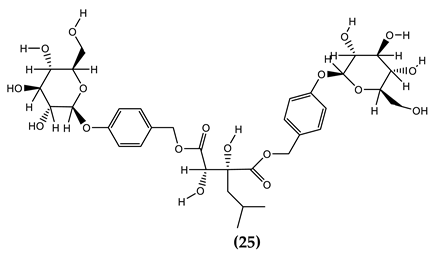
In dermatology, the oral use of Orchis maculata L. extract is prevalent in folk medicine for senile itching, skin tuberculosis, and other dermatoses accompanied by cachexia and chronic diseases of the respiratory and gastrointestinal tracts. The extract is also employed for the speedy healing of wounds and ulcers [382]. Additionally, cosmetic skincare products containing the extract and produced on an industrial scale are available [383].
Acorus calamus L. Aroid family – Araseae
Calamus marsh is a perennial plant containing aromatic compounds and is widespread in Central Asia, India, and the Himalayas. Although its distribution has significantly decreased in Europe, it remains a common plant in the northern marshy regions with a temperate climate [390]. It is found in Asia, Europe, and North America and is known to grow in Central Kazakhstan along the banks of rivers, swamps, and lakes, sometimes forming substantial thickets.
Calamus marsh is rich in various chemical compounds, including bitter glycoside acorin, essential oil (which contains proazulene), gum, resins, ascorbic acid, tannins, starch, and mucus. The dried rhizome of Calamus marsh contains yellow aromatic volatile oils comprising of small amounts of sesquiterpenes and their alcohols; choline, flavone, acoradin, galangin, acolamon, and isocolamon. Furthermore, it contains cineol, limonene, terpineol, azulene, eugenol, camphene, cadinene, ethanol, galangin, magnesium, zinc, tannin, terpenes, menthol, and camphor [391].
Calamus root is recognized in traditional medicine as a therapeutic agent for a range of ailments, such as arthritis, neuralgia, diarrhea, dyspepsia, and hair loss [390,392].
The plant has been found to possess potent antioxidant, anti-inflammatory, antiulcer, antimicrobial, and wound healing properties. It is employed in dermatology for the treatment of pyoderma, acne vulgaris, alopecia, and eczema [393,394,395]. The advantageous effect on the skin can be attributed to the presence of β-azarone (26), a phenylpropanoid class chemical compound:
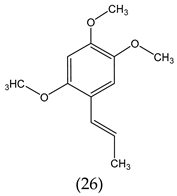
β-Azaron is known to play a role in the body’s natural defense against ultraviolet rays, but it has also been found to have carcinogenic properties and induce liver tumors. Calamus marsh, which contains varying amounts of β-azarone depending on the variety, has been traditionally used in Asian medicine for its anti-inflammatory properties, which can help alleviate skin itching, swelling, and redness. Meanwhile, European varieties of Calamus marsh are known to contain sesquiterpenoids, which possess psychoactive properties and display beneficial medicinal effects [396,397,398].
3. Conclusions
In our work, we conducted a literature search, which allowed us to conclude that the medicinal plants of the Flora of the Republic of Kazakhstan are rich in medicinal plants, which are widely used in medicine to create dosage forms and preparations. Most of these plants have a complex of biologically active substances that give them high biological activity. Many plants are essential for the treatment of a wide range of ailments, including skin conditions, and can be used as natural alternative medicines. In general, our results confirm the importance and value of medicinal plants of the flora of Kazakhstan for scientific and medical research.
Author Contributions
All authors conceptualized and designed this study: G.B., B.M., L.Yu., N.I. and M.D. - writing, review and editing; G.B., B.K., Yu.L., I.N., S.S., G.V., I.N. and M.D.—drafting and revision of the manuscript. All authors have read and agreed to the published version of the manuscript.
Funding
Grant financing of scientific and (or) scientific and technical projects of the Republic of Kazakhstan for 2021-2023 with a period of implementation of 36 months on the topic: “Phytochemical composition and development of drugs for the treatment of skin diseases”, IRN AP09057982.
Institutional Review Board Statement
Not applicable.
Informed Consent Statement
Not applicable.
Data Availability Statement
Not applicable.
Conflicts of Interest
The authors declare no conflict of interest.
References
- Kelly, K. History of medicine. Early civilizations prehistoric times to 500 c.e. (Facts on file); New York: NY, USA, 2009; pp. 29–50. [Google Scholar]
- Petrovska, B. B. Historical review of medicinal plants’ usage. Pharmacognosy reviews 2012, 6, 1–5. [Google Scholar] [CrossRef] [PubMed]
- Jumagaliyeva, K.V.; Sarmurzina, N.; Kairgalieva, G.K. History of traditional medicine of the Kazakh people. J. Samara Scientific Center of the RAS. Historical Sciences 2020, 1, 117–126. [Google Scholar] [CrossRef]
- 4. WHO Monographs on Medicinal Plants Widespread in CGM (NHH); 2010.
- Grudzinskaya, L.M.; Gemejiyeva, N.G.; Karzhaubekova, Zh.Zh. The Kazakhstan medicinal flora survey in a leading families volume. Bull. Karaganda University. Series “Biology. Medicine. Geography”. 2020, 4, 39–51. [Google Scholar] [CrossRef]
- Biel, W.; Jaroszewska, A.; Łysoń, E.; Telesiński, A. The chemical composition and antioxidant properties of common dandelion leaves compared to Sea buckthorn. Can. J. Plant Sci. 2017, 1–27. [Google Scholar] [CrossRef]
- Modaresi, M.; Resalatpour, N. The effect of Taraxacum officinale hydroalcoholic extract on blood cells in mice. Advances in Hematol. 2012, 2012. [Google Scholar] [CrossRef]
- Gemejiyeva, N. G.; Grudzinskaya, L. M. Current state and prospects for studies on the diversity of medicinal flora in Kazakhstan. Vegetation of Central Asia and Environs, /: 239–262. https, 1007. [Google Scholar]
- Khoo, H.-E.; Prasad, K.N.; Kong, K.-W.; Jiang, Y.; Ismail, A. Carotenoids and Their Isomers: Color Pigments in Fruits and Vegetables. Molecules. 2011, 16, 1710–1738. [Google Scholar] [CrossRef] [PubMed]
- Kenny, O.; Smyth, T.J.; Hewage, C.M.; Brunton, N.P. Quantitative UPLC-MS/MS analysis of chlorogenic acid derivatives in antioxidant fractionates from dandelion (Taraxacum officinale) root. Int. J. Food Sci.Technol. 2015, 50, 766–773. [Google Scholar] [CrossRef]
- Roberfroid, M.B. Concepts in functional foods: the case of inulin and oligofructose. J. nutrition. 1999, 129, 1398S–1401S. [Google Scholar] [CrossRef]
- Kisiel, W.; Barszcz, B. Further sesquiterpenoids and phenolics from Taraxacum officinale. Fitoterapia. 2000, 71, 269–273. [Google Scholar] [CrossRef]
- Jedrejek, D.; Lis, B.; Rolnik, A.; Stochmal, A.; Olas, B. Comparative phytochemical, cytotoxicity, antioxidant and haemostatic studies of Taraxacum officinale root preparations. Food Chem. Toxicol. 2019, 126, 233–247. [Google Scholar] [CrossRef]
- Zhang, Y.; Hu, Y. F.; Li, W. , Xu, G. Y.; Wang, K. R.; Li, L.; Wu, J. S. Updates and advances on pharmacological properties of Taraxacum mongolicum Hand.-Mazz and its potential applications. Food Chem. 2022, 373, 131380. [Google Scholar] [CrossRef] [PubMed]
- Ata, S.; Farooq, F.; Javed, S. Elemental profile of 24 common medicinal plants of Pakistan and its direct link with traditional uses. J Med Plants Res. 2011, 5, 6164–6168. [Google Scholar] [CrossRef]
- Sweeney, B.; Vora, M.; Ulbricht, C.; Basch, E. Evidence-based systematic review of dandelion (Taraxacum officinale) by natural standard research collaboration. J. Herbal Pharmacotherapy. 2005, 5, 79–93. [Google Scholar] [CrossRef]
- Modaresi, M. A comparative analysis of the effects of garlic, elderberry and black seed extract on the immune system in mice. J. Anim. Vet. Adv 2012, 11, 458–461. [Google Scholar] [CrossRef]
- Blumental, M.; Cladbery, A.; Brinkman, J. Herbal Medicine: Expanded Commission E Monographs: Integrative Medicine Communications: Newton, Mass, USA, 2000.
- Mahesh, A.; Jeyachandran, R.; Cindrella, L.; Thangadurai, D.; Veerapur, V.; Muralidhara Rao, D. Hepatocurative potential of sesquiterpene lactones of Taraxacum officinale on carbon tetrachloride induced liver toxicity in mice. Acta Biologica Hungarica. 2010, 61, 175–190. [Google Scholar] [CrossRef] [PubMed]
- Liu, W.; Yu, Q.; Wang, F.; Li, Y. , Zhang, G.; Tao, S. Taraxasterol attenuates melanoma progression via inactivation of reactive oxygen species-mediated PI3K/Akt signaling pathway. Human Experimental Toxicology. 2022, 41, 1–8. [Google Scholar] [CrossRef] [PubMed]
- Jovanović, M.; Poljački, M.; Mimica-Dukić, N.; Boža, P.; Vujanović, L. J.; Ðuran, V.; Stojanović, S. Sesquiterpene lactone mix patch testing supplemented with dandelion extract in patients with allergic contact dermatitis, atopic dermatitis and non-allergic chronic inflammatory skin diseases. Contact dermatitis. 2004, 51, 101–110. [Google Scholar] [CrossRef]
- Im, D. Y.; Lee, K. I. Nitric oxide production inhibitory and scavenging activity and tyrosinase inhibitory activity of extracts from Taraxacum officinale and Taraxacum coreanum. Korean J. Med. Crop Sci. 2011, 19, 362–367. [Google Scholar] [CrossRef]
- 23. Kadeeja, Sinoobiya T. T.; Shijikumar, P. S.; Sirajudheen, M. K.; Baboo, R. A review on pharmacological activity of dandelion plant. Inter. J. Pharm. Pharmaceutical Res.
- Singh, A.; Malhotra, S.; Subban, R. Dandelion (Taraxacum officinale)-hepatoprotective herb with therapeutic potential. Pharmacognosy Rev. 2008, 2, 163. [Google Scholar]
- Jeon, H. J.; Kang, H. J.; Jung, H. J.; Kang, Y. S.; Lim, C. J.; Kim, Y. M.; Park, E. H. Anti-inflammatory activity of Taraxacum officinale. J.ethnopharmacol. 2008, 115, 82–88. [Google Scholar] [CrossRef]
- Al-Eisawi, Z.; Abderrahman, S. M.; Al-Khalaf, I. F.; Al-Abbassi, R. : Bustanji, Y. K. Taraxacum officinale Extracts Exhibit Safe and Selective Anticancer Activity. Nat. Prod. J. 2022, 12, 69–77. [Google Scholar] [CrossRef]
- Epure, A.; Parvu, A.; Vlase, L.; Benedec, D.; Hanganu, D.; Vlase, A.; Oniga, I. Polyphenolic compounds, antioxidant activity and nephroprotective properties of Romanian Taraxacum officinale. Farmacia. 2022, 70, 47–53. [Google Scholar] [CrossRef]
- Pfingstgraf, I. O.; Taulescu, M.; Pop, R. M.; Orăsan, R.; Vlase, L.; Uifalean, A.; Pârvu, A. E. Protective effects of Taraxacum officinale L. (Dandelion) root extract in experimental acute on chronic liver failure. Antioxidants 2021, 10, 1–14. [Google Scholar] [CrossRef] [PubMed]
- Schütz, K.; Carle, R.; Schieber, A. Taraxacum – a review on its phytochemical and pharmacological profile. J. Ethnopharmacol. 2006, 107, 313–323. [Google Scholar] [CrossRef] [PubMed]
- Salehi, B.; Sharopov, F.; Boyunegmez, T.T.; Ozleyen, A.; Rodríguez-Pérez, C. ; M. Ezzat, S.; Martins, N. Symphytum species: A comprehensive review on chemical composition, food applications and phytopharmacology. Molecules. 2019, 24, 2272. [Google Scholar] [CrossRef]
- Prozorova, T.A.; Chernykh, I.B. Forage plants of Kazakhstan; Pavlodar: Almaty, KZ, 2004. (In Russian) [Google Scholar]
- Mahmoudzadeh, E.; Nazemiyeh, H.; Valizadeh, H.; Khaleseh, F.; Mohammadi, S.; Hamedeyazdan, S. Nanoencapsulation of n-butanol extract of Symphytum kurdicum and Symphytum asperrimum: Focus on phytochemical analysis, anti-oxidant and antibacterial activity. Iran. J. Basic Med. Sci. 2022, 25, 364. [Google Scholar] [CrossRef] [PubMed]
- Nastić, N.; Borrás-Linares, I.; Lozano-Sánchez, J.; Švarc-Gajić, J.; Segura-Carretero, A. Comparative assessment of phytochemical profiles of comfrey (Symphytum officinale L.) root extracts obtained by different extraction techniques. Molecules. [CrossRef]
- Cao, Z.; Guo, Y.; Liu, Z.; Zhang, H.; Zhou, H.; Shang, H. Ultrasonic enzyme-assisted extraction of comfrey (Symphytum officinale L.) polysaccharides and their digestion and fermentation behaviors in vitro. Process Biochem. [CrossRef]
- Vanitha, A.; Kavinprashantha, R.; Mugendhira-na, S.; Shashikanth, J. Conservation Of Symphytum Officinale L. At Cmprh Garden, Emerald. J. Univ. Shanghai Sci. Technol 2022, 24, 261–272. [Google Scholar] [CrossRef]
- Sowa, I.; Paduch, R.; Strzemski, M.; Zielińska, S.; Rydzik-Strzemska, E.; Sawicki, J.; Wójciak-Kosior, M. Proliferative and antioxidant activity of Symphytum officinale root extract. Nat.Prod. Res. 2018, 32, 605–609. [Google Scholar] [CrossRef]
- Trifan, A.; Zengin, G.; Sinan, K. I.; Skalicka-Woźniak, K.; Minceva, M.; Luca, S. V. Symphytum ibericum Steven: LC–HRMS/MS-based phytochemical profile, in vitro antioxidant and enzyme inhibitory potential. Chemical and Biological Technologies in Agriculture. 2022, 9, 1–12. [Google Scholar] [CrossRef]
- Le, V.; Dolganyuk, V.; Sukhikh, A.; Babich, O.; Ivanova, S.; Prosekov, A.; Dyshlyuk, L. Phytochemical analysis of Symphytum officinale root culture extract. Applied Sciences. 2021, 11, 4478. [Google Scholar] [CrossRef]
- Vaezi, S.; Haghighi, H.M.; Farzad, S.A.; Arabzadeh, S.; Kalalinia, F. Bone Regeneration by Homeopathic Symphytum officinale. Regenerative Engineering and Translational Medicine. 2020, 7, 548–555. [Google Scholar] [CrossRef]
- Seigner, J.; Junker-Samek, M.; Plaza, A.; D ‘Urso, G.; Masullo, M.; Piacente, S.; de Martin, R. A Symphytum officinale root extract exerts anti-inflammatory properties by affecting two distinct steps of NF-κB signaling. Frontiers in pharmacology. 2019, 10, 289. [Google Scholar] [CrossRef] [PubMed]
- Colobatiu, L.; Gavan, A.; Potarniche, A. V.; Rus, V.; Diaconeasa, Z.; Mocan, A.; Mihaiu, M. Evaluation of bioactive compounds-loaded chitosan films as a novel and potential diabetic wound dressing material. Reactive and Functional Polymers. 2019, 145, 104369. [Google Scholar] [CrossRef]
- Zanfirescu, A.; Marineci, C. D.; Păun, G.; Ungureanu, O. , Neagu, E., Chiriță, C.; Negreș, S. Chitosan supports containing Impatiens noli-tangere and Symphytum officinale hydroalcoholic extracts in burns treatment: antimicrobial and healing effects. Farmacia. 2021, 69, 948–953. [Google Scholar] [CrossRef]
- Habtemariam, S. The therapeutic potential of rosemary (Rosmarinus officinalis) diterpenes for Alzheimer’s disease. Evidence-Based Complementary and Alternative Medicine. [CrossRef]
- Middleton Jr, E.; Kandaswami, C. Effects of flavonoids on immune and inflammatory cell functions. Biochem. pharmacol. 1992, 43, 1167–1179. [Google Scholar] [CrossRef] [PubMed]
- Mahmoudzadeh, E.; Nazemiyeh, H.; Hamedeyazdan, S. Anti-inflammatory Properties of the Genus Symphytum L.: A Review. Iran. J. Pharmaceutical Res. [CrossRef]
- Yakimenko, O.V.; Grigorievskaya, A.Ya.; Ternovets, M.A. Mistletoe Viscum album L. (Loranthaceae) and “Witch’s Broom” (Proliferation). Bull. VSU, Series: Geography. Geoecology. 2019, 2, 82–85 (In Russian). (In Russian) [Google Scholar]
- Kleszken, E.; Timar, A. V.; Memete, A. R.; Miere, F.; Vicas, S. I. On overview of bioactive compounds, biological and pharmacological effects of mistletoe (Viscum album L). Pharmacophore. 2022, 13, 10–26. [Google Scholar] [CrossRef]
- Peñaloza, E.; Holandino, C.; Scherr, C.; Araujo, P.I.P.d.; Borges, R.M.; Urech, K.; Baumgartner, S.; Garrett, R. Comprehensive Metabolome Analysis of Fermented Aqueous Extracts of Viscum album L. by Liquid Chromatography−High Resolution Tandem Mass Spectrometry. Molecules 2020, 25, 4006. [Google Scholar] [CrossRef] [PubMed]
- Vergara-Barberán, M.; Lerma-García, M. J.; Nicoletti, M.; Simó-Alfonso, E. F.; Herrero-Martínez, J. M.; Fasoli, E.; Righetti, P. G. Proteomic fingerprinting of mistletoe (Viscum album L.) via combinatorial peptide ligand libraries and mass spectrometry analysis. J. Proteomics. [CrossRef]
- Pietrzak, W.; Nowak, R. Impact of Harvest Conditions and Host Tree Species on Chemical Composition and Antioxidant Activity of Extracts from Viscum album L. Molecules. 2021, 26, 3741. [Google Scholar] [CrossRef]
- Blinova, K.F. Botanical-pharmacognostic dictionary: a reference guide; Higher School: Moscow, RU, 2013. (In Russian) [Google Scholar]
- Kyosev, P. Medicinal plants: the most complete reference book; Eksmo: Moscow, RU, 2011; p. 888. (In Russian) [Google Scholar]
- Majeed, M.; Rehman, R. U. Phytochemistry, Pharmacology, and Toxicity of an Epiphytic Medicinal Shrub Viscum album L. (White Berry Mistletoe). Medicinal and Aromatic Plants: Healthcare and Industrial Applications. [CrossRef]
- Jäger, T.; Holandino, C.; Melo, M. N. D. O.; Peñaloza, E. M. C.; Oliveira, A. P.; Garrett, R.; Baumgartner, S. Metabolomics by UHPLC-Q-TOF Reveals Host Tree-Dependent Phytochemical Variation in Viscum album L. Plants. 2021, 10, 1726. [Google Scholar] [CrossRef]
- Gubanov, I. A.; Kiseleva, K. V.; Novikov, V. S.; Tikhomirov, V. N. Illustrated guide to plants in Central Russia; Creativity of scientific publications of KMK, Institute of Technological Research: Moscow, RU, 2004. (In Russian) [Google Scholar]
- Golovkin, B. N.; Rudenskaya, R. N.; Trofimova, I. A.; Schroeter, A. I.; Semikhov, V. F. Biologically active substances of plant origin; Science: Moscow, RU, 2002. (In Russian) [Google Scholar]
- Kwon, Y. S.; Chun, S. Y.; Kim, M. K.; Nan, H. Y.; Lee, C.; Kim, S. Mistletoe extract targets the STAT3-FOXM1 pathway to induce apoptosis and inhibits metastasis in breast cancer cells. Am. J. Chin. Med. 2021, 49, 487–504. [Google Scholar] [CrossRef]
- Pietrzak, W.; Nowak, R. Impact of Harvest Conditions and Host Tree Species on Chemical Composition and Antioxidant Activity of Extracts from Viscum album L. Molecules. 2021, 26, 3741. [Google Scholar] [CrossRef] [PubMed]
- Menke, K.; Schwermer, M.; Eisenbraun, J.; Schramm, A.; Zuzak, T. J. Anticancer effects of Viscum album Fraxini extract on medulloblastoma cells in vitro. Complementary Med. Res. 2021, 28, 15–22. [Google Scholar] [CrossRef] [PubMed]
- Szurpnicka, A.; Zjawiony, J. K.; Szterk, A. Therapeutic potential of mistletoe in CNS-related neurological disorders and the chemical composition of Viscum species. J. Ethnopharmacol. 2019, 231, 241–252. [Google Scholar] [CrossRef] [PubMed]
- Turova, A.D. Medicinal plants and their use. Medicine: Moscow, RU, 2013, p 203. (In Rissian).
- Sayakova, G. M.; Khamitova, A. E.; Olataeva, Z. N. Creation of new dosage forms from domestic plant materials of thick-fruited sophora (Sophora pachycarpa) and white mistletoe (Viscum album) as promising sources of biologically active substances. Bull. KazNMU. 2018, 4, 217–220; https://cyberleninkaru/article/n/sozdanie. (In Russian) [Google Scholar]
- Köse, B.; Erentürk, S. Drying characteristics of mistletoe (Viscum album L.) in convective and UV combined convective type dryers. Industrial. Crops Products. [CrossRef]
- Hah, Y. S.; Kim, E. J.; Goo, Y. M.; Kil, Y. S.; Sin, S. M.; Kim, S. G.; Yoon, T. J. Depigmenting Effects of Mistletoe (Viscum album var. coloratum) Extracts. J. Life Science. [CrossRef]
- Harati, K.; Behr, B.; Daigeler, A.; Hirsch, T.; Jacobsen, F.; Renner, M.; Becerikli, M. Curcumin and Viscum album extract decrease proliferation and cell viability of soft-tissue sarcoma cells: an in vitro analysis of eight cell lines using real-time monitoring and colorimetric assays. Nutrition and cancer. 2017, 69, 340–351. [Google Scholar] [CrossRef] [PubMed]
- Taha, N. A.; Al-Wadaan, M. A. (2021). Significance and use of walnut, Juglans regia Linn: A review. Adv. J. Microbiol. Res. 2021, 15, 1–10. [Google Scholar]
- Dzhangaliev, A.D.; Salova, T.N.; Turekhanova, R.M. Wild fruit plants of Kazakhstan; KazgosINTI: Almaty, KZ, 2001. [Google Scholar]
- Abdallah, I.B.; Tlili, N.; Martinez-Force, E.; Rubio, A.G.; PerezCamino, M.C.; Albouchi, A.; Boukhchina, S. Content of carotenoids, tocopherols, sterols, triterpenic and aliphatic alcohols, and volatile compounds in six walnuts (Juglans regia L.) varieties. Food. Chem. 2015, 173, 972–978. [Google Scholar] [CrossRef]
- Makarenkova, O. G.; Shevyakova, L. V.; Bessonov, V. V. Natural trace elements of nuts are an integral part of a healthy diet. Nutrition Issues. 2016, 85, 202–202 (In Russian). (In Russian) [Google Scholar]
- Bennacer, A.; Sahir-Halouane, F.; Aitslimane-Aitkaki, S.; Oukali, Z.; Oliveira, I. V.; Rahmouni, N.; Aissaoui, M. Structural characterization of phytochemical content, antibacterial, and antifungal activities of Juglans regia L. leaves cultivated in Algeria. leaves cultivated in Algeria. Biocatalysis and Agricultural Biotechnology. 2022, 40, 102304. [Google Scholar] [CrossRef]
- Vasipov, V.V.; Vytovtov, A.A. Walnut (Juglans Regia L.) - a promising source of biologically active substances. Food. Ecology. Quality (Proceedings of the XIII International Scientific and Practical Conference). 2016, 1, 223–228 (In Russian). (In Russian) [Google Scholar]
- Ivanova, R.A.; Elisovetskaya, D.S. Antioxidant activity of extracts from various types of unripe nuts Juglans Spp. Medicinal plants: biodiversity, technology, application; GSAU: Grodno, RU, 2014. (In Russian) [Google Scholar]
- Gupta, A.; Behl, T.; Panichayupakaranan, P. A review of phytochemistry and pharmacology profile of Juglans regia. Obesity Medicine. 2019, 16, 100142. [Google Scholar] [CrossRef]
- Paudel, P.; Satyal, P.; Dosoky, N.S.; Maharjan, S.; Setzer, W.N. Juglans regia and J. nigra, two trees important in traditional medicine: A comparison of leaf essential oil compositions and biological activities. Nat. Prod. Commun. 2013, 8, 1481–1486. [Google Scholar] [CrossRef] [PubMed]
- Rather, M.A.; Dar, B.A.; Dar, M.Y.; Wani, B.A.; Shah, W.A.; Bhat, B.A.; Ganai, B.A.; Bhat, K.A.; Anand, R.; Qurishi, M.A. Chemical composition, antioxidant and antibacterial activities of the leaf essential oil of Juglans regia L. and its constituents. Phytomedicine. 2012, 19, 1185–1190. [Google Scholar] [CrossRef]
- Bittner Fialová, S.; Rendeková, K.; Mučaji, P.; Nagy, M.; Slobodníková, L. Antibacterial activity of medicinal plants and their constituents in the context of skin and wound infections, considering European legislation and folk medicine - A review. Inter.J.Mol.Sci. 2021, 22, 10746. [Google Scholar] [CrossRef]
- Schwindl, S. , Kraus, B., Heilmann, J. Phytochemical study of Juglans regia L. leaves. Phytochemical study of Juglans regia L. leaves. Phytochemistry. 2017, 144, 58–70. [Google Scholar] [CrossRef] [PubMed]
- Boulfia, M.; Lamchouri, F.; Toufik, H. Mineral analysis, in vitro evaluation of alpha-amylase, alpha-glucosidase, and beta-galactosidase inhibition, and antibacterial activities of Juglans regia L. bark extracts. bark extracts. BioMed Res. Inter. 2021, 14. [Google Scholar] [CrossRef] [PubMed]
- Khattak, P.; Khalil, T. F.; Bibi, S.; Jabeen, H.; Muhammad, N.; Khan, M. A.; Liaqat, S. Juglans Regia (Walnut Tree) Bark in Dentistry: Walnut Tree Bark in Dentistry. Pakistan BioMedical J. 2022, 5, 152–156. [Google Scholar] [CrossRef]
- Al-Snafi, A. E. Chemical constituents, nutritional, pharmacological and therapeutic importance of Juglans regia-A review. IOSR J. Pharmacy. 2018, 8, 1–21 http://medutqeduiq/wp. [Google Scholar]
- Acquaviva, R.; D’Angeli, F.; Malfa, G.A.; Ronsisvalle, S.; Garozzo, A.; Stivala, A.; Ragusa, S.; Nicolosi, D.; Salmer,i M. ; Genovese, C. Antibacterial and anti-biofilm activities of walnut pellicle extract (Juglans regia L.) against coagulase-negative staphylococci. Nat. Prod. Res. 2021, 35, 2076–2081. [Google Scholar] [CrossRef]
- Fizeșan, I.; Rusu, M. E.; Georgiu, C.; Pop, A.; Ștefan, M. G.; Muntean, D. M.; Popa, D. S. Antitussive, antioxidant, and anti-inflammatory effects of a walnut (Juglans regia L.) septum extract rich in bioactive compounds. Antioxidants. [CrossRef]
- Bittner Fialová, S.; Rendeková, K.; Mučaji, P.; Nagy, M.; Slobodníková, L. Antibacterial activity of medicinal plants and their constituents in the context of skin and wound infections, considering European legislation and folk medicine - A review. Inter.J.Mol.Sci. 2021, 22, 10746. [Google Scholar] [CrossRef]
- Hussain, S. Z.; Naseer, B.; Qadri, T.; Fatima, T.; Bhat, T. A. Walnut (Juglans Regia)-Morphology, Taxonomy, Composition and Health Benefits (in book Fruits Grown in Highland Regions of the Himalayas: Nutritional Health Benefits); Springer: 2021, p 269-281. [CrossRef]
- Santos, A.; Barros, L.; Calhelha, R.C.; Dueñas, M.; Carvalho, A.M.; Santos-Buelga, C.; Ferreira, I. Leaves and decoction of Juglans regia L. : Different performances regarding bioactive compounds and in vitro antioxidant and antitumor effects Industrial Crops Products. 2013, 51, 430–436. [Google Scholar] [CrossRef]
- Pereira, J. A.; Oliveira, I.; Sousa, A.; Ferreira, I. C.; Bento, A.; Estevinho, L. Bioactive properties and chemical bookcomposition of six walnut (Juglans regia L.) cultivars. Food chem. toxicol, 2111. [Google Scholar] [CrossRef]
- Patel, P.; Prasad, A.; Srivastava, K.; Singh, S. S.; Chakrabarty, D.; Misra, P. Updates on steroidal alkaloids and glycoalkaloids in Solanum spp.: Biosynthesis, in vitro production and pharmacological values. Studies in Natural Products Chemistry. [CrossRef]
- Isabelle, P.; Monica, B. (). Highlighting the compounds with pharmacological activity from some medicinal plants from the area of Romania. Med. Aromat. Plants (Los Angeles).
- Sabudak, T.; Kaya, O.; Cukurova, E. A new biflavonoid from Solanum dulcamara L. and investigation of anti-hyperglycaemic activity of its fruit extract. Nat. Product Res. [CrossRef]
- Kumar, P.; Sharma, B. , Bakshi, N. Biological activity of alkaloids from Solanum dulcamara L. Nat. Product. Res. 2009, 23, 719–723. [Google Scholar] [CrossRef] [PubMed]
- Fallahzadeh, A. R.; Mohammadi, S. Assessment of the antinociceptive, anti-inflammatory, and acute toxicity effects of Solanum dulcamara essential oil in male mice. J. Babol University of Med. Sci. 2020, 22, 162–168. [Google Scholar] [CrossRef]
- Morais, M. G.; Saldanha, A. A.; Azevedo, L. S.; Mendes, I. C.; Rodrigues, J. P. C.; Amado, P. A.; dos Santos Lima, L. A. R. Antioxidant and anti-inflammatory effects of fractions from ripe fruits of Solanum lycocarpum St. Hil.(Solanaceae) and putative identification of bioactive compounds by GC–MS and LC-DAD-MS. Food Res. Inter. [CrossRef]
- Kowalczyk, T.; Merecz-Sadowska, A.; Rijo, P.; Mori, M.; Hatziantoniou, S.; Górski, K.; Sitarek, P. Hidden in plants - a review of the anticancer potential of the Solanaceae family in in vitro and in vivo studies. Cancers. 2022, 14, 1455. [Google Scholar] [CrossRef] [PubMed]
- Sabudak, T.; Kaya, O.; Cukurova, E. A new biflavonoid from Solanum dulcamara L. and investigation of anti-hyperglycaemic activity of its fruit extract. Nat. Product Res. [CrossRef]
- Kumar, P.; Sharma, B.; Bakshi, N. Biological activity of alkaloids from Solanum dulcamara L. Nat. prod. Res. 2009, 23, 719–723. [Google Scholar] [CrossRef] [PubMed]
- Fallahzadeh, A. R.; Mohammadi, S. Assessment of the antinociceptive, anti-inflammatory, and acute toxicity effects of Solanum dulcamara essential oil in male mice. J. Babol University of Med. Sci. 2020, 22, 162–168. [Google Scholar] [CrossRef]
- Gutiérrez-Grijalva, E.P.; López-Martínez, L.X.; Contreras-Angulo, L.A.; Elizalde-Romero, C. A.; Heredia, J.B. Plant alkaloids: structures and bioactive properties. Plant-Derived Bioactives: Chemistry and Mode of Action. [CrossRef]
- Mutlu, E.C.; Turker, A.U. Efficient plant regeneration of bittersweet [Solanum dulcamara L.], a medicinal plant. Acta Societatis Botanicorum Poloniae, /: file:///C.
- Neha, T.; Verma, S.K. Aspects of Phenolic Compounds in Pharmacological Activities of Solanum Family. Mol. Biol. 2020, 9, 1–5. [Google Scholar] [CrossRef]
- Nizioł-Łukaszewska, Z.; Bujak, T. Saponins as natural raw materials for increasing the safety of bodywash cosmetic use. J. Surfactants Detergents. 2018, 21, 767–776. [Google Scholar] [CrossRef]
- Khalighi, S. F.; Ahvazi, M.; Yazdani, D.; Kashefi, M. Cytotoxicity and antioxidant activity of five plant species of Solanaceae family from Iran. J. Med. Plants. 2012, 11, 43–53; https://wwwresearchgatenet/publication/267037238_Cytotoxicity_and_Antioxidant_Activity_of_Five_Plant_Species_of_Solanaceae_Family_from_Iran. [Google Scholar]
- Milutinović, M.; Nakarada, Đ.; Božunović, J.; Todorović, M.; Gašić, U.; Živković, S.; Mišić, D. Solanum dulcamara L. Berries: A Convenient Model System to Study Redox Processes in Relation to Fruit Ripening. Antioxidants. [CrossRef]
- Kenari, H. M.; Kordafshari, G.; Moghimi, M.; Eghbalian, F.; TaherKhani, D. Review of pharmacological properties and chemical constituents of Pastinaca sativa. J. pharmacopuncture. 2021, 24, 14. [Google Scholar] [CrossRef]
- Gemejiyeva, N. G.; Grudzinskaya, L. M. Current state and prospects for studies on the diversity of medicinal flora in Kazakhstan. In e-book Vegetation of Central Asia and Environs; Springer, 2018, 239-262. [CrossRef]
- Augustin, I. F.; Butnariu, M. A review about Pastinaca sativa L. ssp. sylvestris [Mill.] secondary metabolite diversity and inducibility. J. Appl. Biotechnol. Bioengineering. [CrossRef]
- Averill, K. M.; DiTommaso, A. Wild parsnip (Pastinaca sativa): a troublesome species of increasing concern. Weed Technol. 2007, 21, 279–287. [Google Scholar] [CrossRef]
- Winter, J. C.; Thieme, K.; Eule, J.C.; Saliu, E. M.; Kershaw, O.; Gehlen, H. Photodermatitis and ocular changes in nine horses after ingestion of wild parsnip (Pastinaca sativa). BMC Veterinary Res. 1186. [Google Scholar]
- Symonenko, N.; Shpychak, O.; Mishchenko, O.; Kyslychenko, V.; Shpychak, T.; Grashchenkova, S. Antioxidant and anti-cytolytic activity of parsnip (Pastinaca sativa L.) herb thick extract in conditions of catecholamine myocardiodystrophy in rats. ScienceRise: Pharmaceutical Science. 2022, 1, 70–76. [Google Scholar] [CrossRef]
- Jianu, C.; Goleț, I.; Stoin, D.; Cocan, I.; Lukinich-Gruia, A.T. Antioxidant activity of Pastinaca sativa L. ssp. sylvestris [Mill.] Rouy and Camus essential oil. Molecules. [CrossRef]
- Dar, M.A.; Ahad, P.; Masoodi, M.H. ; etc. Lady’s Purse (Capsella bursa-pastoris L.): Current Perspective on Its Ethnopharmacological, Therapeutic Potential, and Phytochemistry. In Edible Plants in Health and Diseases: Volume II: Phytochemical and Pharmacological Properties 2022, 425-455.
- Al-Snafi, A.E. The chemical constituents and pharmacological effects of Capsella bursa-pastoris-A review. Inter. J. Pharmacol. Toxicol. 2015, 5, 76–81. [Google Scholar]
- Riaz, I.; Bibi, Y.; Ahmed, N. Evaluation of nutritional, phytochemical, antioxidant and cytotoxic potential of Capsella bursa-pastoris, a wild vegetable from potohar region of Pakistan. Kuwait J. of Sci. 2021, 48. [Google Scholar] [CrossRef]
- Grosso, C.; Vinholes, J.; Silva, L.R.; etc. Chemical composition and biological screening of Capsella bursa-pastoris. Revista Brasileira de Farmacognosia 2011, 21, 635–643. [Google Scholar] [CrossRef]
- Cha, J.M.; Kim, D.H.; Lee, T.H.; Subedi, L.; Kim, S.Y.; Lee, K.R. Phytochemical Constituents of Capsella bursa-pastoris and Their Anti-inflammatory Activity. Nat. Prod. Sci. 2018, 24, 132–138. [Google Scholar] [CrossRef]
- Sushchuk, N.A.; Kolesnik, Yu.S.; Kislichenko, V.S. ; etc. Investigation of the component composition of volatile fractions of shepherd’s purse grass and black currant buds. Bull. Tajik National University. Natural Sciences Series, /3.
- Song, N.; Xu, W.; Guan, H.; Liu, X.; Wang, Y.; Nie, X. Several flavonoids from Capsella bursa-pastoris (L. ) Medic [J], 2007, 2, 218–222. [Google Scholar]
- Xie, L.K.; Xu, X.J.; Wu, X. ; etc. Capsella bursa-pastoris (L.) Medic. extract alleviate cataract development by regulating the mitochondrial apoptotic pathway of the lens epithelial cells. J. Ethnopharmacol. 2022, 284, 114783. [Google Scholar] [CrossRef]
- Hasan, R.N.; Ali, M.R.; Shakier, S.M.; etc. Antibacterial activity of aqueous and alcoholic extracts of Capsella Bursa against selected pathogenic bacteria. Am. J. BioScience 2013, 1, 6–10. [Google Scholar] [CrossRef]
- Cha, J.M.; Suh, W.S.; Lee, T.H.; Subedi, L.; Kim, S.Y.; Lee, K.R. Phenolic Glycosides from Capsella bursa-pastoris (L.) Medik and Their Anti-inflammatory Activity. Molecules 2017, 22, 1023. [Google Scholar] [CrossRef]
- Al-Snafi, A. E. The chemical constituents and pharmacological effects of Capsella bursa-pastoris-A review. Int. J.Pharmacology Toxicology. 2015, 5, 76–81. [Google Scholar]
- Lee, K.E.; Shin, J.; Hong, I.S.; etc. Effect of methanol extracts of Cnidium officinale Makino and Capsella bursa-pastoris on the apoptosis of HSC-2 human oral cancer cells. Experimental and therapeutic medicine 2013, 5, 789–792. [Google Scholar] [CrossRef]
- Kubínová, R.; Spačková, V.; Svajdlenka, E.; etc. Antioxidant activity of extracts and HPLC analysis of flavonoids from Capsella bursa-pastoris (L.) Medik. Ceska a Slovenska farmacie: casopis Ceske farmaceuticke spolecnosti a Slovenske farmaceuticke spolecnosti. 2013, 62, 174–176. [Google Scholar] [PubMed]
- Ma, Q.; Guo, Y.; Wei, R.; etc. Flavonoids from Capsella bursa-pastoris and their hepatoprotective activities in vitro. Revista Brasileira de Farmacognosia 2016, 26, 710–713. [Google Scholar] [CrossRef]
- Rahman, I.U.; Afzal, A.; Iqbal, Z.; etc. Traditional and ethnomedicinal dermatology practices in Pakistan. Clinics in dermatology. 2018, 36, 310–319. [Google Scholar] [CrossRef] [PubMed]
- Schulz, H. Utilisation of plant genetic resources for valuable raw materials in foods, cosmetics, and pharmaceutical products. Schriften zu Genetischen Ressourcen. 2003, 182–191. [Google Scholar]
- Uehara, A.; Akiyama, S.; Iwashina, T. Foliar flavonoids from Tanacetum vulgare var. boreale and their geographical variation. Natural product communications. 2015, 10, 403–405. [Google Scholar] [CrossRef]
- Aidarbayeva, D.K.; Sholpankulova, G.; Jarylkapova, S.; Shokanova, A. Natural resources of some medicinal plants of Kazakhstan. International Multidisciplinary Scientific GeoConference: SGEM. [CrossRef]
- Räisänen, R.; Primetta, A.; Nikunen, S.; Honkalampi, U.; Nygren, H.; Pihlava, J.M.; von Wright, A. Examining safety of biocolourants from fungal and plant sources-examples from Cortinarius and Tapinella, Salix and Tanacetum spp. and Dyed Woollen Fabrics. Antibiotics 2020, 9, 266. [Google Scholar] [CrossRef]
- Vilhelmova, N.; Simeonova, L.; Nikolova, N.; Pavlova, E.; Gospodinova, Z.; Antov, G.; Nikolova, I. Antiviral, cytotoxic and antioxidant effects of Tanacetum vulgare L. Crude Extract In Vitro. Folia Medica 2020, 62, 172–179. [Google Scholar] [CrossRef]
- Aćimović, M.; Puvača, N. Tanacetum vulgare L. - A Systematic Review. J. Agron. Technol. Eng. Manag. 2020, 3, 416–422. [Google Scholar]
- Ivănescu, B.; Tuchiluș, C.; Corciovă, A.; etc. Antioxidant, antimicrobial and cytotoxic activity of Tanacetum vulgare, Tanacetum corymbosum and Tanacetum macrophyllum extracts. Farmacia. 2018, 66, 282–288. [Google Scholar]
- Devrnja, N.; Anđelković, B.; Aranđelović, S.; etc. Comparative studies on the antimicrobial and cytotoxic activities of Tanacetum vulgare L. essential oil and methanol extracts. South African Journal of Botany 2017, 111, 212–221. [Google Scholar] [CrossRef]
- Zengin, G.; Cvetanović, A.; Gašić, U.; etc. Modern and traditional extraction techniques affect chemical composition and bioactivity of Tanacetum parthenium (L.) Sch. Bip. Industrial Crops and Products 2020, 146, 112202. [Google Scholar] [CrossRef]
- Choi, J.H.; Shin, K.M.; Kim, N.Y.; etc. Taraxinic acid, a hydrolysate of sesquiterpene lactone glycoside from the Taraxacum coreanum nakai, induces the differentiation of human acute promyelocytic leukemia HL-60 Cells. Biomedicines 2022, 10, 48. [Google Scholar] [CrossRef] [PubMed]
- Chen, J.; Wu, W.; Zhang, M.; Chen, C. Taraxasterol suppresses inflammation in il-1β-induced rheumatoid arthritis fibroblast-like synoviocytes and rheumatoid arthritis progression in mice. Int. J. Mol. Sci. 2019, 70, 274–283. [Google Scholar] [CrossRef] [PubMed]
- Kania-Dobrowolska, M.; Baraniak, J. Dandelion (Taraxacum officinale L.) as a source of biologically active compounds supporting the therapy of co-existing diseases in metabolic syndrome. Foods 2022, 11, 2858. [Google Scholar] [CrossRef]
- Kania-Dobrowolska, M.; Baraniak, J. Dandelion (Taraxacum officinale L.) as a Source of biologically active compounds supporting the therapy of co-existing diseases in metabolic syndrome. Foods 2022, 11, 2858. [Google Scholar] [CrossRef]
- Singh, A.; Malhotra, S.; Subban, R. Dandelion (Taraxacum officinale)-Hepatoprotective Herb with Therapeutic Potential. Pharmacognosy Reviews 2008, 2, 163. [Google Scholar]
- Ji, X.; Hou, C.; Guo, X. Physicochemical Properties, Structures, Bioactivities and Future Prospective for Polysaccharides from Plantago L. (Plantaginaceae): A Review. Int. J. Biol. Macromol. 2019, 135, 637–646. [Google Scholar] [CrossRef]
- Baitenov, M.S. Flora of Kazakhstan; Gylym: Almaty, KZ, 2001. (In Russian) [Google Scholar]
- Samuelsen, A.B. The traditional uses, chemical constituents and biological activities of Plantago major L. A review. J. Ethnopharmacol. 2000, 71, 1–21. [Google Scholar] [CrossRef]
- Kassaw, E.; Yohannes, T.; Bizualem, E. In vitro antibacterial activity of Plantago lanceolata against some selected standard pathogenic bacterial. Int. J. Biotechnol. 2018, 7, 44–50. [Google Scholar] [CrossRef]
- Samuelsen, A.B. The Traditional Uses, Chemical Constituents and Biological Activities of Plantago major L. A Review. J. Ethnopharmacol. 2000, 71, 1–21. [Google Scholar] [CrossRef] [PubMed]
- Nazarizadeh, A.; Mikaili, P.; Moloudizargari, M.; Aghajanshakeri, S.; Javaherypour, S. Therapeutic uses and pharmacological properties of Plantago major L. and its active constituents. and its active constituents. J. Basic Appl Sci Res. 2013, 3, 212–221. [Google Scholar]
- Abate, L.; Bachheti, R.K.; Tadesse, M.G.; Bachheti, A. Ethnobotanical Uses, Chemical Constituents, and Application of Plantago lanceolata L. J. Chem. 2022, 2022, 1532031. [Google Scholar] [CrossRef]
- Arslan, E.; Aygan, A.; Kocabaş, Y.Z. Antimicrobial Activity of Plantago major Grown in Kahramanmaraş Against Bacteria Causing Hospital Infections. Ecology.
- Kartini, K.; Wati, N.; Gustav, R.; Wahyuni, R.; Anggada, Y.F.; Hidayani, R. . Putra, S.E.D. Wound Healing Effects of Plantago major Extract and Its Chemical Compounds in Hyperglycemic Rats. Food Biosci. 2021, 41, 100937. [Google Scholar] [CrossRef]
- Iskandarova, Sh.F.; Murotov, Sh.B. Determination of biologically active substances of a dry extract obtained on the basis of plantain leaves. Science time 2018, 2, 48–51 (In Russian). (In Russian) [Google Scholar]
- Núñez Guillén, M.E.; da Silva Emim, J.A.; Souccar, C.; Lapa, A.J. Analgesic and Anti-Inflammatory Activities of the Aqueous Extract of Plantago major L. Int. J. Pharmacogn. 1997, 35, 99–104. [Google Scholar] [CrossRef]
- Najafian, Y.; Hamedi, S.S.; Farshchi, M.K.; Feyzabadi, Z. Plantago major in Traditional Persian Medicine and Modern Phytotherapy: A Narrative Review. Electron. Physician 2018, 10, 6390. [Google Scholar] [CrossRef]
- Samuelsen, A.B. The traditional uses, chemical constituents and biological activities of Plantago major L. A Review. J. Ethnopharmacol. 2000, 71, 1–21. [Google Scholar] [CrossRef]
- Adom, M.B.; Taher, M.; Mutalabisin, M.F.; etc. Chemical Constituents and Medical Benefits of Plantago major. Biomed. Pharmacother. 2017, 96, 348–360. [Google Scholar] [CrossRef]
- Nemereshina, O.N.; Gusev, N.F.; Malkova, T.L. Biologically active substances of the large plantain (Plantago major L.) of the steppe zone. News of the Orenburg State Agrarian University 2018, 3, 113–117 (In Russian). (In Russian) [Google Scholar]
- Yousefi, M.; Zahedi, S.; Reverter, M. ; etc. Enhanced growth performance, oxidative capacity and immune responses of common carp, cyprinus carpio fed with artemisia absinthium extract-supplemented Diet. Aquaculture 2021, 545, 737167. [Google Scholar] [CrossRef]
- Kabdulkarimova, K.K.; Dinzhumanova, R.; Olzhayeva, R.; etc. Determination of the chemical composition and antioxidant activity of Artemisia vulgaris and Artemisia absinthium growing in the conditions of the Semey Region. Open Access Maced. Determination of the chemical composition and antioxidant activity of Artemisia vulgaris and Artemisia absinthium growing in the conditions of the Semey Region. Open Access Maced. J. Med. Sci. 2022, 10(A), 1512–1519. [Google Scholar] [CrossRef]
- Dyusebaeva, M.A.; Kurmanbaeva, A.K.; Nurlybekova, A.K.; etc. Amino-acid and fatty-acid compositions of two Artemisia species. Chem. Nat. Compd. 2018, 54, 1208–1210. [Google Scholar] [CrossRef]
- Szopa, A.; Pajor, J.; Klin, P. ; etc. Artemisia absinthium L. - Importance in the history of medicine, the latest advances in phytochemistry and therapeutical, cosmetological and culinary uses. Plants, 2020, 9, 1063. [Google Scholar] [CrossRef] [PubMed]
- Batiha, G.E.S.; Olatunde, A.; El-Mleeh, A.; etc. Bioactive compounds, pharmacological actions, and pharmacokinetics of wormwood (Artemisia absinthium). Antibiotics 2020, 9, 353. [Google Scholar] [CrossRef] [PubMed]
- Amidon, C.; Barnett, R.; Cathers, J.; Chambers, B.; Hamilton, L.; Kellett, A.; Kennel, E.; Montowski, J.; Thomas, M.A.; Watson, B. Artemisia—An Essential Guide from the Herb Society of America; Caroline, A., Thomas, M., Kennel, E., Eds.; The Herb Society of America: Kirtland, OH, USA, 2014. [Google Scholar]
- Ahamad, J. A Pharmacognostic Review on Artemisia absinthium. Int. Res. J. Pharm. 2019, 10, 25–31. [Google Scholar] [CrossRef]
- Bordean, M.E.; Muste, S.; Marțiș, G.S.; Mureșan, V.; Buican, B.C. Health effects of wormwood (Artemisia absinthium L.): From Antioxidant to Nutraceutical. J. Agroalim. Proc. Technol. 2021, 27, 211–218. [Google Scholar]
- Hbika, A.; Daoudi, N.E.; Bouyanzer, A.; Bouhrim, M.; Mohti, H.; Loukili, E.H.; Kouda, A.; Tahiri, M.; Zaid, A. Artemisia absinthium L. Aqueous and Ethyl Acetate Extracts: Antioxidant Effect and Potential Activity In Vitro and In Vivo against Pancreatic α-Amylase and Intestinal α-Glucosidase. Pharmaceutics 2022, 14, 481. [Google Scholar] [CrossRef]
- Hbika, A.; Bouyanzer, A.; Saadi, M.; El Ammari, L.; Benali, M.; Majidi, L.; Zarrouk, A. Structural Study and Thermal Stability of Artemetin Extracted from Artemisia absinthium L. Chem. Data Collect. 2022, 40, 100880. [Google Scholar] [CrossRef]
- Benkhaled, A.; Boudjelal, A.; Napoli, E.; Baali, F.; Ruberto, G. Phytochemical Profile, Antioxidant Activity and Wound Healing Properties of Artemisia absinthium Essential Oil. Asian Pac. J. Trop. Biomed. 2020, 10, 496. [Google Scholar] [CrossRef]
- Chamorro, M.M.A.; Collado, S.A.V.; Márquez, D. Effectiveness of Using Renalof in the Elimination of Kidney Stones under 10 mm Located in the Renal-Ureteral Tract. Open J. Nephrol. 2021, 11, 78. [Google Scholar] [CrossRef]
- Atabayeva, S.; Sarsenbayev, B.; Prasad, M.N.V.; etc. Accumulation of Trace Metals in Grasses of Kazakhstan: Relevance to Phytostabilization of Mine Waste and Metal-Smelting Areas. AAJPSB Special Issue: Kazakhstan Plant Science and Biotechnology 2010, 1, 91–97. [Google Scholar]
- Neagu, E.; Păun, G.; Moroeanu, V.; Ungureanu, O.; Radu, G.L. Antioxidant and Antidiabetic Properties of Polyphenolic-Rich Extracts of Apium graveolens and Agropyrum repens. Rev. Roum. Chim. 2019, 64, 909–913. [Google Scholar] [CrossRef]
- Bortolami, M.; Di Matteo, P.; Rocco, D.; etc. Metabolic Profile of Agropyron repens (L.) P. Beauv. Rhizome Herbal Tea by HPLC-PDA-ESI-MS/MS Analysis. Molecules 2022, 27, 4962. [Google Scholar] [CrossRef] [PubMed]
- Tsubanova, N.A.; Barska, A.V.; Cherniavski, E.S. Clinical efficiency of preparations based on medical plant raw materials in the treatment of urolithiasis. Fam. Med 2019, 81, 80–87. [Google Scholar] [CrossRef]
- Al-Snafi, A.E. Chemical constituents and pharmacological importance of Agropyron repens–A review. Res. J. Pharmacology Toxicology 2015, 1, 37–41. [Google Scholar]
- Beydokthi, S. S.; Sendker, J.; Brandt, S.; Hensel, A. Traditionally used medicinal plants against uncomplicated urinary tract infections: hexadecyl coumaric acid ester from the rhizomes of Agropyron repens (L.) P. Beauv. with Antiadhesive Activity against Uropathogenic E. coli. Fitoterapia 2017, 117, 22–27. [Google Scholar] [CrossRef]
- Anghel, N.; Melinte, V. Polysaccharide-Based Matrix Doped with Plant Extract for Medical and Cosmetic Applications. Cellulose Chem. Technol. 2022, 56, 283–291. [Google Scholar] [CrossRef]
- Petrova, A. P.; Krasnov, E. A.; Saprykina, E. V.; Subbotina, Yu. A.; Ermilova, E. V. The Chemical Composition of Wheat Grass and the Study of Its Antioxidant Activity in Allergic Contact Dermatitis. Chem. Pharm. J. 2009, 43, 30–32. [Google Scholar] [CrossRef]
- El Mihyaoui, A.; Esteves da Silva, J. C.; Charfi, S.; etc. Chamomile (Matricaria chamomilla L.): A Review of Ethnomedicinal Use, Phytochemistry and Pharmacological Uses. Life 2022, 12, 479. [Google Scholar] [CrossRef] [PubMed]
- Makubaeva, A.I.; Adekenova, A.S.; Rakhataeva, A.; Mamyrkhan, H. Therapeutic and Cosmetic Agents Based on Biologically Active Substances of Matricaria chamomilla L. and Hypericum perforatum L. Chem. J. Kazakhstan 2020, 4, 105–112. [Google Scholar]
- Höferl, M.; Wanner, J.; Tabanca, N.; etc. Biological activity of Matricaria chamomilla essential oils of various chemotypes. Biological activity of Matricaria chamomilla essential oils of various chemotypes. Planta Med. Inter. Open 2020, 7, 114–121. [Google Scholar] [CrossRef]
- Obead, A.R. Novelty effect of extract of alcohol for Matricaria chamomilla on bacterial growth. Plant Archives 2019, 19, 1850–1852. [Google Scholar]
- Almosawi, M.B.H. A study of chemical composition and effective materials in chamomile flowers (Matricaria chamomilla). Plant Archives 2020, 20, 311–312. [Google Scholar]
- Asgharzade, S.; Rabiei, Z.; Rafieian-Kopaei, M. Effects of Matricaria chamomilla Extract on Motor Coordination Impairment Induced by Scopolamine in Rats. Asian Pac. J. Trop. Biomed. 2015, 5, 829–833. [Google Scholar] [CrossRef]
- Golkhani, S.; Vahdati, A.; Modaresi, M.; Edalatmanesh, M.A. The Effects of Matricaria Chamomilla Extract during Neonatal Period of Rats on Pituitary-Gonadal Hormone Axis and Changes in Testicular Tissue of Male Progenies. Middle East J. Fam. Med. 2017, 15, 126–132. [Google Scholar] [CrossRef]
- Rafraf, M.; Zemestani, M.; Asghari-Jafarabadi, M. Effectiveness of Chamomile Tea on Glycemic Control and Serum Lipid Profile in Patients with Type 2 Diabetes. J. Endocrinol. Invest. 2015, 38, 163–170. [Google Scholar] [CrossRef]
- Bayliak, M.M.; Dmytriv, T.R.; Melnychuk, A.V.; Strilets, N.V.; Storey, K.B.; Lushchak, V.I. Chamomile as a Potential Remedy for Obesity and Metabolic Syndrome. EXCLI J. 2021, 20, 1261. [Google Scholar] [CrossRef]
- Awaad, A.A.; El-Meligy, R.M.; Zain, G.M.; Safhi, A.A.; Al Qurain, N.A.; Almoqren, S.S. . Al-Saikhan, F.I. Experimental and Clinical Antihypertensive Activity of Matricaria Chamomilla Extracts and Their Angiotensin-Converting Enzyme Inhibitory Activity. Phytother. Res. 2018, 32, 1564–1573. [Google Scholar] [CrossRef]
- Silveira, E.S.; Bezerra, S.B.; Ávila, K.S.; Rocha, T.M.; Pinheiro, R.G.; de Queiroz, M.G.R. . Leal, L.K.A. Gastrointestinal effects of standardized brazilian phytomedicine (arthur de carvalho drops®) containing matricaria recutita, gentiana lutea and foeniculum vulgare. Pathophysiology 2019, 26, 349–359. [Google Scholar] [CrossRef] [PubMed]
- Dos Santos, D.S.; Barreto, R.D.S.S.; Serafini, M.R.; etc. Phytomedicines Containing Matricaria Species for the Treatment of Skin Diseases: A Biotechnological Approach. Fitoterapia 2019, 138, 104267. [Google Scholar] [CrossRef] [PubMed]
- Saidi, R.; Heidari, H.; Sedehi, M.; Safdarian, B. Evaluating the Effect of Matricaria Chamomilla and Melissa Officinalis on Pain Intensity and Satisfaction with Pain Management in Patients after Orthopedic Surgery. J. Herbmed Pharmacol. 2020, 9, 339–345. [Google Scholar] [CrossRef]
- Niknam, S.; Tofighi, Z.; Faramarzi, M.A.; Abdollahifar, M.A.; Sajadi, E.; Dinarvand, R.; Toliyat, T. Polyherbal Combination for Wound Healing: Matricaria Chamomilla L. and Punica Granatum L. DARU J. Pharm. Sci. 2021, 29, 133–145. [Google Scholar] [CrossRef] [PubMed]
- Hassan, D. Amerolative Influence of Chamomile (Matricaria recutita L.) on Synthetic Food Additive Induced Probable Toxicity in Male Albino Rats. J. Food Dairy Sci. [CrossRef]
- Gomes-Carneiro, M. R.; Dias, D. M.; De-Oliveira, A. C. A. X.; Paumgartten, F. J. Evaluation of Mutagenic and Antimutagenic Activities of α-Bisabolol in the Salmonella/Microsome Assay. Mutat. Res. Genet. Toxicol. Environ. Mutagen. 2005, 585, 105–112. [Google Scholar] [CrossRef] [PubMed]
- Tai, Y.; Wang, H.; Yao, P. ; etc. Biosynthesis of α-Bisabolol by Farnesyl Diphosphate Synthase and α-Bisabolol Synthase and Their Related Transcription Factors in Matricaria recutita L. Inter. J. Mol. Sci. [CrossRef]
- Yoon, J.H.; Kim, M.Y.; Cho, J.Y. Apigenin: A Therapeutic Agent for Treatment of Skin Inflammatory Diseases and Cancer. Inter. J. Mol. Sci. 2023, 24, 1498. [Google Scholar] [CrossRef]
- Minkhaidarov, V.Yu. Med. Food plants of the Far East, PGSHA, Ussuriysk, RU, 2015; 329 p. (In Russian).
- Shchulipenko, I.M.; Shchulipenko, L.I. Green pharmacy of nature: past and present. Phytotherapy, 2010, 4, 5–9 (In Ukrainian). (In Ukrainian) [Google Scholar]
- McAllister, H. The Genus Sorbus: Mountain Ash and Other Rowans; Royal Botanic Gardens, Kiew: Richmond, Surrey, UK, 2005. [Google Scholar]
- Lykholat, Y.L.; Didur, O.O.; Khromykh, N.O.; etc. Comparative analysis of the antioxidant capacity and secondary metabolites accumulation in the fruits of rowan (Sorbus aucuparia L.) and some closely related species. Ecology and Noospherology 2021, 32, 3–8. [Google Scholar] [CrossRef]
- Chikov, P.S. Medicinal plants, M.: Medicine, Moscow, Ru, 2002; 496 p. (In Russian).
- Isaikina, N.V.; Kalinkina, G.I.; Razina, T.G. ; etc. Sorbus aucuparia L. fruit is a source of the drug for increasing the efficiency of tumor chemotherapy. Rus. J.Bioorganic Chem. 2018, 44, 899–905. [Google Scholar] [CrossRef]
- Šavikin, K.P.; Zdunić, G.M.; Krstić-Milošević, D.B. ; etc. Sorbus aucuparia and Sorbus aria as a source of antioxidant phenolics, tocopherols, and pigments. Chemistry Biodiversity 2017, 14, 1700329. [Google Scholar] [CrossRef]
- Yakovlev, G.P.; Pancake, K.F. Medicinal plant material, Pharmacognosy, St. Petersburg: SpecLit, St. Petersburg, RU, 2004, 765 p. (In Russian).
- Bussmann, R.W.; Paniagua, Z.; Narel, Y.; etc. Plants in the spa–the medicinal plant market of Borjomi, Sakartvelo (Republic of Georgia), Caucasus. Indian J. Tradit. Knowl. 2017, 16, 25–34. [Google Scholar]
- Popoviciu, D.R.; Negreanu-Pîrjol, T. Carotenoid, Flavonoid and Total Phenolic Content of Sorbus torminalis Fruits. Rom. Arab. Int. J. Geobiodivers 2019, 3, 20–25. [Google Scholar]
- Sirotina, K.; Kazimova, K.; Shcherbakova, Y. ; etc. Study of the antioxidant activity of rowan extracts (Sorbus aucuparia) by biotesting method. In IOP Conference Series: Earth and Environmental Science 2022, 949, 1, 012032. [Google Scholar] [CrossRef]
- Razina, T.G.; Zueva, E.P.; Ulrich, A.V.; etc. Antitumor effects of Sorbus aucuparia L. extract highly saturated with anthocyans and their mechanisms. Bull. Experimental biology and medicine 2016, 162, 93–97. [Google Scholar] [CrossRef] [PubMed]
- KC, B.; Gyawali, S.; Luintel, S. ; etc. Sorbus cuspidata (Spach) Hedl. Rosaceae. In Ethnobotany of the Himalayas. [CrossRef]
- Wörz, A.; Diekmann, H. Classification and evolution of the genus Eryngium L. (Apiaceae-Saniculoideae): results of fruit anatomical and petal morphological studies. Plant Diversity and Evol. [CrossRef]
- Wörz, A. A new subgeneric classification of the genus Eryngium L.(Apiaceae, Saniculoideae). Botanische Jahrbücher für Systematik, Pflanzengeschichte und Pflanzengeographie. [CrossRef]
- Amantayeva, M.E.; Kozhanova, K.K. The study of plants of the genus Eryngium as promising sources for obtaining phytosubstances. Bull. KazNMU, 2019, 1, 449–451 (In Russian). (In Russian) [Google Scholar]
- Kartal, M.; Mitaine-Offer, A. C.; Abu-Asaker, M.; Miyamoto, T. , Calis, I.; Wagner, H.; Lacaille-Dubois, M. A. Two new triterpene saponins from Eryngium campestre. Chem. Pharm. Bull., 2005, 53, 1318–1320. [Google Scholar] [CrossRef]
- Dalar, A.; Türker, M.; Zabaras, D.; Konczak, I. Phenolic composition, antioxidant and enzyme inhibitory activities of Eryngium bornmuelleri leaf. Plant Foods for Human Nutrition, 2014, 69, 30–36; [Google Scholar] [CrossRef]
- Erdem, S. A.; Nabavi, S. F.; Orhan, I. E.; Daglia, M.; Izadi, M.; Nabavi, S. M. Blessings in disguise: a review of phytochemical composition and antimicrobial activity of plants belonging to the genus Eryngium. DARU J. Pharm. Sci., 2015, 23, 1–22. [Google Scholar] [CrossRef]
- Colloca, C. B.; Espinar, L. A.; Sosa, V. E. Triterpenoid saponins from Eryngium agavifolium. NPAIJ, 2014, 10, 61–68. [Google Scholar]
- Conea, S.; Vlase, L.; Chirila, I. Comparative study on the polyphenols and pectin of three Eryngium species and their antimicrobial activity. Cellul. Chem. Technol. [CrossRef]
- Kikowska, M.; Budzianowski, J.; Krawczyk, A.; Thiem, B. Accumulation of rosmarinic, chlorogenic and caffeic acids in in vitro cultures of Eryngium planum L. Acta Physiologiae Plantarum, 2012, 34, 2425–2433; [Google Scholar] [CrossRef]
- Kowalczyk, M.; Masullo, M.; Thiem, B.; Piacente, S.; Stochmal, A.; Oleszek, W. Three new triterpene saponins from roots of Eryngium planum. Nat. Prod. Res. 2014, 28, 653–660; [Google Scholar] [CrossRef] [PubMed]
- Rodrigues, T. L.; Silva, M. E.; Gurgel, E. S.; Oliveira, M. S.; Lucas, F. C. Eryngium Foetidum L. (Apiaceae): a literature review of traditional uses, chemical composition, and pharmacological activities. Evidence-Based Complementary and Alternative Medicine. [CrossRef]
- Paun, G.; Neagu, E.; Moroeanu, V.; Albu, C.; Savin, S.; Lucian Radu, G. Chemical and bioactivity evaluation of Eryngium planum and Cnicus benedictus polyphenolic-rich extracts. BioMed Res. Int., 2019, 2019, 10. [Google Scholar] [CrossRef] [PubMed]
- Chockalingam, N.; Muruhan, S. Anti-inflammatory properties of rosmarinic acid-a review. Int. J. Res. Pharm. Sci, 2017, 8, 656–662. [Google Scholar]
- Naveed, M.; Hejazi, V.; Abbas, M.; Kamboh, A. A.; Khan, G. J.; Shumzaid, M. . XiaoHui, Z. Chlorogenic acid (CGA): A pharmacological review and call for further research. Biomed. Pharmacotherapy. 2018, 97, 67–74; [Google Scholar] [CrossRef] [PubMed]
- Pan, M. H.; Lai, C. S.; Ho, C. T. Anti-inflammatory activity of natural dietary flavonoids. Food function, 2010, 1, 15–31. [Google Scholar] [CrossRef] [PubMed]
- Danciu, C.; Avram, S.; Pavel, I. Z.; Ghiulai, R.; Dehelean, C. A.; Ersilia, A. . Soica, C. Main isoflavones found in dietary sources as natural anti-inflammatory agents. Current drug targets, 2018, 19, 841–853; [Google Scholar] [CrossRef] [PubMed]
- Kashyap, D.; Tuli, H. S.; Sharma, A. K. Ursolic acid (UA): A metabolite with promising therapeutic potential. Life sciences, 2016, 146, 201–213. [Google Scholar] [CrossRef]
- Kuatbay, E.; Ustenova, G.; Arykbaeva, A. Prospects of the flat-leaved bluebird (Eryngium planum l.) In the prevention and treatment of dermatological diseases. Bull. Bashkir State Medical University.
- Gopalan, A.; Reuben, S. C.; Ahmed, S.; Darvesh, A. S.; Hohmann, J.; Bishayee, A. The health benefits of blackcurrants. Food function, 2012, 3, 795–809. [Google Scholar] [CrossRef]
- Magazhanov, Z. M.; Bektursunova, M. Z. Research on biologically active substances of some fruit crops growing in the southeast of Kazakhstan. Food Processing: Techniques and Technology, 2016, 43, 30–35. [Google Scholar]
- Pieszka, M.; Migdał, W.; Gąsior, R.; Rudzińska, M.; Bederska-Łojewska, D.; Pieszka, M.; Szczurek, P. Native oils from apple, blackcurrant, raspberry, and strawberry seeds as a source of polyenoic fatty acids, tocochromanols, and phytosterols: A health implication. J. of Chem. 2015. [Google Scholar] [CrossRef]
- Ma, E. Z.; Khachemoune, A. Flavonoids and their therapeutic applications in skin diseases. Archives of dermatological research, 2023, 315, 321–331. [Google Scholar] [CrossRef]
- Rani, L.; Sharma, N.; Singh, S.; Grewal, A. S. Therapeutic potential of vitamin c: an overview of various biological activities. Int. J. Pharm. Quality Assurance, 2019, 10, 605–612. [Google Scholar] [CrossRef]
- Teleszko, M.; Wojdylo, A. Comparison of Phenolic Compounds and Antioxidant Potential between Selected Edible Fruits and Their Leaves. J. Funct. Foods, 2015, 14, 736–746. [Google Scholar] [CrossRef]
- Popova, T. S.; Popov, D. M.; Tereshina, N. S. The study of flavonoids of buds and leaves of black currant by HPLC. Pharm. /: 1, 13–15. (In Russian) https, 2541; 1. [Google Scholar]
- Mikhailova, I. V.; Filippova, Yu. V.; Kuzmicheva, N. A.; Vinokurova, N. V.; Ivanova, E. V.; Voronkova, I. P. Black currant as a promising source of polyphenolic antioxidants. Int. Res. J.
- Cao, L.; Park, Y.; Lee, S.; Kim, D. O. Extraction, identification, and health benefits of anthocyanins in blackcurrants (Ribes nigrum L.). Appl. Sci., 2021, 11, 1863; [Google Scholar] [CrossRef] [PubMed]
- Staszowska-Karkut, M.; Materska, M. Phenolic composition, mineral content, and beneficial bioactivities of leaf extracts from black currant (Ribes nigrum L.), raspberry (Rubus idaeus), and aronia (Aronia melanocarpa). Nutrients, 2020, 12, 463. [Google Scholar] [CrossRef] [PubMed]
- Nanashima, N.; Horie, K.; Maeda, H.; Tomisawa, T.; Kitajima, M.; Nakamura, T. Blackcurrant anthocyanins increase the levels of collagen, elastin, and hyaluronic acid in human skin fibroblasts and ovariectomized rats. Nutrients, 2018, 10, 495; [Google Scholar] [CrossRef]
- Balić, A.; Vlašić, D.; Žužul, K.; Marinović, B.; Bukvić Mokos, Z. Omega-3 versus omega-6 polyunsaturated fatty acids in the prevention and treatment of inflammatory skin diseases. Int. J. M. Sci., 2020, 21, 741. [Google Scholar] [CrossRef] [PubMed]
- El-Saber Batiha, G.; Magdy Beshbishy, A.; El-Mleeh, A.; M. Abdel-Daim, M.; Prasad Devkota, H. Traditional uses, bioactive chemical constituents, and pharmacological and toxicological activities of Glycyrrhiza glabra L.(Fabaceae). Biomolecules, 2020, 10, 352. [Google Scholar]
- Ishmuratova, M. Y.; Imanbayeva, A. A.; Tuyakova, A. T.; Kopbaeva, G. B. Study of common licorice (Glycyrrhiza glabra) reserves in Atyrau and Western-Kazakhstan regions. Biosciences Biotechnol. Res.Asia, 2016, 13, 1429. [Google Scholar] [CrossRef]
- Alexyuk, P. G.; Bogoyavlenskiy, A. P.; Alexyuk, M. S.; Turmagambetova, A. S.; Zaitseva, I. A.; Omirtaeva, E. S.; Berezin, V. Adjuvant activity of multimolecular complexes based on Glycyrrhiza glabra saponins, lipids, and influenza virus glycoproteins. Arch. Virol, 2019, 164, 1793–1803. [Google Scholar] [CrossRef]
- Khan Ahmadi M, M.; Naghdi Badi, H.; Akhondzadeh, S.; Khalighi–Sigaroodi, F.; Mehrafarin, A.; Shahriari, S.; Hajiaghaee, R. A Review on Medicinal Plant of Glycyrrhiza glabra L. J. Med. Plants, 2013, 12, 1–12. [Google Scholar]
- Wang, K. L.; Yu, Y. C.; Chen, H. Y.; Chiang, Y. F.; Ali, M.; Shieh, T. M.; Hsia, S. M. Recent Advances in Glycyrrhiza glabra (Licorice)-Containing Herbs Alleviating Radiotherapy-and Chemotherapy-Induced Adverse Reactions in Cancer Treatment. Metabolites, 2022, 12, 535; [Google Scholar] [CrossRef]
- Parvaiz, M.; Hussain, K.; Khalid, S.; Hussnain, N.; Iram, N.; Hussain, Z.; Ali, M. A. A review: Medicinal importance of Glycyrrhiza glabra L. (Fabaceae family). Global J Pharmacol, 2014, 8, 8–13. [Google Scholar] [CrossRef]
- Anagha, K.; Manasi, D.; Priya, L.; Meera, M. Antimicrobial activity of yashtimadhu (Glycyrrhiza glabra L.)-a review. Int. J. Curr. Microbiol. App. Sci, 2014, 3, 329–336. [Google Scholar]
- Panichakul, T.; Rodboon, T.; Suwannalert, P.; Tripetch, C.; Rungruang, R.; Boohuad, N.; Youdee, P. Additive effect of a combination of Artocarpus lakoocha and Glycyrrhiza glabra extracts on tyrosinase inhibition in melanoma B16 cells. Pharmaceuticals, 2020, 13, 310. [Google Scholar] [CrossRef] [PubMed]
- Cerulli, A.; Masullo, M.; Montoro, P.; Piacente, S. Licorice (Glycyrrhiza glabra, G. Uralensis, and G. Inflata) and their constituents as active cosmeceutical ingredients. Cosmetics, 2022, 9, 7; [Google Scholar] [CrossRef]
- Pastorino, G.; Cornara, L.; Soares, S.; Rodrigues, F.; Oliveira, M. B. P. Liquorice (Glycyrrhiza glabra): A phytochemical and pharmacological review. Phytotherapy research, 2018, 32, 2323–2339. [Google Scholar] [CrossRef]
- Baumann, L. S. Less-known botanical cosmeceuticals. Dermatologic therapy, 2007, 20, 330–342. [Google Scholar] [CrossRef]
- Al-Snafi, A.E. The traditional uses, constituents and pharmacological effects of Ononis spinosa. IOSR J. Pharm., 2020, 10, 53–59. [Google Scholar]
- Gampe, N.; Darcsi, A.; Kursinszki, L.; Béni, S. Separation and characterization of homopipecolic acid isoflavonoid ester derivatives isolated from Ononis spinosa L. root. J. Chromatogr. B, 2018, 1091, 21–28. [Google Scholar] [CrossRef]
- Gampe, N.; Darcsi, A.; Lohner, S.; Béni, S.; Kursinszki, L. Characterization and identification of isoflavonoid glycosides in the root of Spiny restharrow (Ononis spinosa L.) by HPLC-QTOF-MS, HPLC–MS/MS and NMR. J. Pharm. Biomed. Anal., 2016, 123, 74–81. [Google Scholar] [CrossRef]
- Altuner, E.M.; Çeter, T.; Lşlek, C. Investigation of antifungal activity of Ononis spinosa L. ASH used for the therapy of skin infections as folk remedies. Mikrobiyoloji Bul. 2010, 44, 633–639. [Google Scholar]
- Thuwaini, M. M. Natural sources as promising future anticancer therapies-A review. GSC Biological and Pharmaceutical Sciences, 2022, 19, 84–113. [Google Scholar] [CrossRef]
- Stojković, D.; Dias, M. I.; Drakulić, D.; Barros, L.; Stevanović, M.; CFR Ferreira, I.; D. Soković, M. Methanolic extract of the herb Ononis spinosa L. is an antifungal agent with no cytotoxicity to primary human cells. Pharmaceuticals, 2020, 13, 78; [Google Scholar] [CrossRef]
- Zheng, X.; Wang, W.; Piao, H.; Xu, W.; Shi, H.; Zhao, C. The genus Gnaphalium L. (Compositae): phytochemical and pharmacological characteristics. Molecules, 2013, 18, 8298–8318; [Google Scholar] [CrossRef] [PubMed]
- Pozdnyakova, Ye.; Omarova, G.; Murzatayeva, A. ; Wild Plants of Central Kazakhstan with Antibiotic Properties and Effect. Intl. J. Agric. Biol.
- Shikov, A. N.; Kundracikova, M.; Palama, T. L.; Pozharitskaya, O. N.; Kosman, V. M.; Makarov, V. G.; Verpoorte, R. Phenolic constituents of Gnaphalium uliginosum L. Phytochem. Letters, 2010, 3, 45–47. [Google Scholar] [CrossRef]
- Olennikov, D. N.; Chirikova, N. K.; Kashchenko, N. I. Spinacetin, a new caffeoylglycoside, and other phenolic compounds from Gnaphalium uliginosum. Chem. Nat. Compd., 2015, 51, 1085–1090. [Google Scholar] [CrossRef]
- Sharonova, N. L.; Terenzhev, D. A.; Bushmeleva, K. N.; Gumerova, S. K.; Lyubina, A. P.; Fitsev, I. M.; Belov, T. G. Phytochemical Contents, Antimicrobial and Antioxidant Properties of Gnaphalium uliginosum L. Ethanolic Extract and Essential Oil for Agricultural Uses. Asian J. Chem., 2019, 11(31), 2672-2678.
- Lubsandorzhieva, P. B.; Rendyuk, T. D.; Dargaeva, T. D.; Ferubko, E. V. Pharmacognostic Study of Collection and Study of its Hepatoprotective Activity. Pharmacognosy J. [CrossRef]
- Shikov, A. N.; Kundracikova, M.; Palama, T. L.; Pozharitskaya, O. N.; Kosman, V. M.; Makarov, V. G.; Verpoorte, R. Phenolic constituents of Gnaphalium uliginosum L. Phytochemistry Letters, 2010, 3, 45–47. [Google Scholar] [CrossRef]
- Goun, E. A.; Petrichenko, V. M.; Solodnikov, S. U.; Suhinina, T. V.; Kline, M. A.; Cunningham, G.; Miles, H. Anticancer and antithrombin activity of Russian plants. J. Ethnopharmacol., 2002, 81, 337–342. [Google Scholar] [CrossRef]
- Sõukand, R.; Kalle, R.; Pieroni, A. Homogenisation of biocultural diversity: Plant ethnomedicine and its diachronic change in Setomaa and Võromaa, Estonia, in the last century. Biol., 2022, 11, 192; [Google Scholar] [CrossRef]
- Dimitrova-DyulgerovA, I.; Stoyanova, A. Lipid composition of carduus thoermeri weinm. Onopordum acanthium L. and Silybum marianum L., growing in Bulgaria. Bulgarian J. Agricult.Sci., 2014, 20, 622–627 https://wwwagrojournalorg/20/03. [Google Scholar]
- Al-Snafi, A. E. Constituents and pharmacology of Onopordum acanthium. IOSR J. Pharm., 2020, 10, 7–14. [Google Scholar]
- Bruno, M.; Maggio, A.; Rosselli, S.; Safder, M.; Bancheva, S. The metabolites of the genus Onopordum (Asteraceae): Chemistry and biological properties. Curr. Org. Chem., 2011, 15, 888–927; [Google Scholar] [CrossRef]
- Tonguc, M. U. H. A. M. M. E. T.; ERBAŞ, S. Evaluation of fatty acid compositions and some seed characters of common wild plant species of Turkey. Turkish Journal of Agriculture and Forestry, 2012, 36, 673–679. [Google Scholar] [CrossRef]
- Garsiya, E. R.; Konovalov, D. A.; Shamilov, A. A.; Glushko, M. P.; Orynbasarova, K. K. Traditional medicine plant, Onopordum acanthium L. (Asteraceae): chemical composition and pharmacological research. Plants, 2019, 8, 40; [Google Scholar] [CrossRef]
- Mobli, M.; Qaraaty, M.; Amin, G.; Haririan, I.; Hajimahmoodi, M.; Rahimi, R. Scientific evaluation of medicinal plants used for the treatment of abnormal uterine bleeding by Avicenna. Archives of gynecology and obstetrics, 2015, 292, 21–35; [Google Scholar] [CrossRef]
- Mamedov, N.; Mehdiyeva, N. P.; Craker, L. E. Medicinal plants used in traditional medicine of the Caucasus and North America. J. medicinally active plants, 2015, 4, 42–66; [Google Scholar] [CrossRef]
- Ryzhov, V. M.; Belchenko, A. S. Issues of diagnostics of prickly tartar fruit (Onopordum acanthium L.) as a promising medicinal plant raw material. Proceedings of the Samara Scientific Center of the Russian Academy of Sciences, 0: 1025-1029. URL: https://cyberleninka.ru/article/n/issledovanie-perspektivy-kompleksnoy-pererabotki-nadzemnoy-chasti-tatarnika-kolyuchego-onopordum-acanthium-l (view, 1025. [Google Scholar]
- Sharifi, N.; Souri, E.; Ziai, S. A.; Amin, G.; Amini, M.; Amanlou, M. Isolation, identification and molecular docking studies of a new isolated compound, from Onopordon acanthium: A novel angiotensin converting enzyme (ACE) inhibitor. J. Ethnopharmacol., 2013, 148, 934–939; [Google Scholar] [CrossRef]
- Csupor-Löffler, B.; Hajdú, Z.; Réthy, B.; Zupkó, I.; Máthé, I.; Rédei, T.; Hohmann, J. Antiproliferative activity of Hungarian Asteraceae species against human cancer cell lines. Part II. Phytotherapy Research: Int. J. Devoted to Pharmacological and Toxicological Evaluation of Natural Product Derivatives, 2009, 23, 1109–1115; [Google Scholar] [CrossRef]
- Naumov, S. Yu.; Vatanskaya, I. Yu. Medicinal plants in the flora of the Volga-Akhtuba floodplain. Scientific Notes of the Cape Martian Nature Reserve, /: (8), 112-117. (In Russian). https.
- Jovanović, A. A.; Ðordevic’, V. B.; Zdunic´, G. M.; Pljevljakušic´, D. S.; Šavikin, K. P.; Godevac, D. M.; Bugarski B., M. Optimization of the extraction process of polyphenols from Thymus serpyllum L. herb using maceration, heat- and ultrasound-assisted techniques. Sep. Purif. Technol.
- Orazbayeva, P. Z.; Akhmetalimova, A.M.; Ivasenko, S. A.; Loseva, I. V.; Ishmuratova, M. Yu. (2017). Distribution of some plants of the Thyme genus on the territory of Central Kazakhstan. In Modern aspects of the use of plant raw materials and raw materials of natural origin in medicine,.
- Jovanović, A. A.; Balanč, B.; Petrović, P.; Pravilović, R.; Djordjević, V. Pharmacological potential of Thymus serpyllum L.(wild thyme) extracts and essential oil: A review. J. Eng. Process. Manage., 2021, 13, 32–41. [Google Scholar] [CrossRef]
- Khudonogova, E. G.; Kiseleva, T. V. The content of essential oils in the aboveground part of creeping thyme. Siberian Bulletin of Agricultural Science, 2010, 7, 110–113 (In Russian). (In Russian) [Google Scholar]
- Konovalov, D. A.; Orobinskaya, V. N.; Pisarenko, O. N. Antioxidants of fruits and vegetables. Mod. Sci. Innovation.
- Goncharova, T. A. Encyclopedia of medicinal plants. M.: Publishing house of MSP, 2001. - Vol.1 - p 560; Vol.2 - p 528. (In Russian).
- Chaadaeva, H. H.; Boitsova, O. A. Anatomical features of the structure of Thymus serpyllum L., growing on the territory of the Orel region. Scientific notes of the Orel State University. Series: Natural, Technical and Medical Sciences.
- Bazuk, A. G.; Yurchenko, R. A.; Vinarsky, V. A.; Buzuk, G. N. Comparative pharmacognostic analysis of Thyme herb. Bull. Pharm., 2011, 3, 19–24 (In Russian). (In Russian) [Google Scholar]
- Jarić, S.; Mitrović, M.; Pavlović, P. Review of ethnobotanical, phytochemical, and pharmacological study of Thymus serpyllum L. Evidence-based complementary and alternative medicine, 2015, 2015, 101978. [Google Scholar] [CrossRef] [PubMed]
- Tadele, A.; Urga, K.; Gemeda, N.; Lemma, H.; Melaku, D.; Mudie, K. Antimicrobial activity of topical formulations containing Thymus vulgaris essential oil on major pathogens causing skin diseases. Ethiopian Pharmaceutical J. 2009, 26, 103–110. [Google Scholar] [CrossRef]
- Udintsev, S. N.; Zhilyakova, T. P.; Melnikov, D. P. Vegetable feed additives prospects for the use of Grass and Thyme meal. Pig Breeding, 2010, 5, 18–21 (In Russian). (In Russian) [Google Scholar]
- Gubanov I., A.; Kiseleva K., V.; Novikov V., S.; Tikhomirov V., N. Illustrated determinant of plants of Central Russia. Moscow: Association of Scientific Publications of the CMC, Institute of Technological Research, 2004, 3, 11 (In Russian). (In Russian) [Google Scholar]
- Dekker, J. The evolutionary ecology of weeds and invasive plants. Evolut Ecol, /: 12. https, 2696. [Google Scholar]
- Kurbanov, S. A. Agriculture : a textbook for universities; Yurayt Publishing House, Moscow, Russia, 2023; 252.
- Ivanović, M.; Grujić, D.; Cerar, J.; Islamčević Razboršek, M.; Topalić-Trivunović, L.; Savić, A.; Kolar, M. Extraction of Bioactive Metabolites from Achillea millefolium L. with Choline Chloride Based Natural Deep Eutectic Solvents: A Study of the Antioxidant and Antimicrobial Activity. Antioxidants, 2022, 11, 724. [Google Scholar] [CrossRef] [PubMed]
- Nesterova, S. G.; Ogar, N. P.; Inelova, Z. A.; Karamanidi, E. E. The family spectrum of the flora of the Toraigyr mountains. Bull. Treasury. Biolog. series, 2012, 54, 7–10 (In Russian). (In Russian) [Google Scholar]
- Karami, P.; Zandi, M.; Ganjloo, A. Evaluation of physicochemical, mechanical, and antimicrobial properties of gelatin-sodium alginate-yarrow (Achillea millefolium L.) essential oil film. J. Food Processing Preservation, 2022, 46, 16632. [Google Scholar] [CrossRef]
- Ayoobi, F.; Shamsizadeh, A.; Fatemi, I.; Vakilian, A.; Allahtavakoli, M.; Hassanshahi, G.; Moghadam-Ahmadi, A. Bio-effectiveness of the main flavonoids of Achillea millefolium in the pathophysiology of neurodegenerative disorders-a review. Iran. J. Basic Med. Sci. 2017, 20, 604. [Google Scholar] [CrossRef]
- Kiseleva, T. L. Kinetic synergism in phytotherapy: traditional drugs from the point of view of modern scientific concepts. Traditional medicine, 2011. [Google Scholar]
- Musaev, F. A.; Zakharova, O. A.; Musaeva, R. F. Medicinal plants (textbook). Inter. J. Exper. Education, /: (11-1), 77-78. https, 6220. [Google Scholar]
- Anishchenko, L. V. Encyclopedia of Medicinal Plants; AST: Moscow, 2017; (In Russian). ISBN 978-5-17-100053-0. [Google Scholar]
- Aslanova, D.; Karomatov, I. D. Yarrow is common in folk and scientific herbal medicine. Biology Integrative Med. 2018, 1, 167–186 (In Russian). (In Russian) [Google Scholar]
- Vazirinejad, R.; Ayoobi, F.; Arababadi, M. K.; Eftekharian, M. M.; Darekordi, A.; Goudarzvand, M.; Shamsizadeh, A. Effect of aqueous extract of Achillea millefolium on the development of experimental autoimmune encephalomyelitis in C57BL/6 mice. Indian J. Pharmacol. 2014, 46, 303. [Google Scholar] [CrossRef]
- Vitale, S.; Colanero, S.; Placidi, M.; Di Emidio, G.; Tatone, C.; Amicarelli, F.; D’Alessandro, A. M. Phytochemistry and Biological Activity of Medicinal Plants in Wound Healing: An Overview of Current Research. Molecules, 2022, 27, 3566; [Google Scholar] [CrossRef]
- Mohammadhosseini, M.; Sarker, S.D.; Akbarzadeh, A. Chemical composition of the essential oils and extracts of Achillea species and their biological activities: A review. J. Ethnopharmacol. 2017, 199, 257–315. [Google Scholar] [CrossRef] [PubMed]
- Masłowski, M.; Aleksieiev, A.; Miedzianowska, J.; Strzelec, K. Potential application of peppermint (Mentha piperita L.), german chamomile (Matricaria chamomilla L.) and yarrow (Achillea millefolium L.) as active fillers in natural rubber biocomposites. Int. J. Mol. Sci., 2021, 22, 7530. [Google Scholar] [CrossRef] [PubMed]
- Ali, S.I.; Gopalakrishnan, B.; Venkatesalu, V. Pharmacognosy, phytochemistry and pharmacological properties of Achillea millefolium L.: A review. Phytotherapy Research, 2017, 31, 1140–1161. [Google Scholar] [CrossRef] [PubMed]
- Applequist, W. L.; Moerman, D. E. Yarrow (Achillea millefolium L.): a neglected panacea? A review of ethnobotany, bioactivity, and biomedical research. Economic Botany, 2011, 65, 209–225. [Google Scholar] [CrossRef]
- Maver, T.; Maver, U.; Stana Kleinschek, K.; Smrke, D.M.; Kreft, S. A Review of Herbal Medicines in Wound Healing. Int. J. Dermatol. 2015, 54, 740–751. [Google Scholar] [CrossRef]
- Shi, C.; Wang, C.; Liu, H.; Li, Q.; Li, R.; Zhang, Y.; Liu, Y.; Shao, Y.; Wang, J. Selection of Appropriate Wound Dressing for Various Wounds. Front. Bioeng. Biotechnol., 2020, 8, 182. [Google Scholar] [CrossRef]
- Patrulea, V.; Ostafe, V.; Borchard, G.; Jordan, O. Chitosan as a Starting Material for Wound Healing Applications. Eur. J. Pharm. Biopharm. Off. J. Arbeitsgemeinschaft Pharm. Verfahrenstechnik EV, 2015, 97, 417–426. [Google Scholar] [CrossRef]
- Makia, R. Pharmacology of the species Equisetum (Equisetum arvense). GSC Biol. Pharmaceutical Sci.
- Galina, S. Wild medical plants in the phytocenoses of the Northern Kazakhstan. Med. Health Sci. J. 2012, 13, 128. [Google Scholar]
- Amber N., P. , Iris L., Dunja Š., Bernd M. L. Differential Accumulation of Metabolites and Transcripts Related to Flavonoid, Styrylpyrone, and Galactolipid Biosynthesis in Equisetum Species and Tissue Types. Metabolites 2022, 12, 403. [Google Scholar] [CrossRef]
- Botirov, E. H.; Bonacheva, V. M.; Kolomiets, N. E. Chemical composition and biological activity of metabolites of plants of the genus Equisetum L. Chemistry of plant raw materials. [CrossRef]
- Raghda, M. , Khulood W. A., Mohammad M.F., Mohammed H. A. Phytochemistry of the Genus Equisetum (Equisetum arvense). GSC Biolog. Pharmaceutical Sci.
- Nagai, T.; Myoda, T.; Nagashima, T. Antioxidative activities of water extract and ethanol extract from field horsetail (tsukushi) Equisetum arvense L. Food chemistry.
- Niko, R.; Gordana, S.; Radosav, P. Composition and antimicrobial activity of Equisetum arvense L. essential oil. Phytotherapy Res. 2006, 20, 85–88. [Google Scholar]
- Dragana D., Č.; Jasna M., Č.; Gordana M., B.; Sonja M., D.; Gordana S., Ć.; Vesna T., T.; Bratislav T., S. Antioxidative and Antiproliferative Activities of Different Horsetail (Equisetum arvense L.) Extracts. J. Med. Food 2010, 13, 452–459. [Google Scholar]
- Hyuncheol Oh, Do-Hoon Kim, Jung-Hee Cho, Youn-Chul Kim Hepatoprotective and free radical scavenging activities of phenolic petrosins and flavonoids isolated from Equisetum arvense / J. Ethnopharmacol; 2004, 95(2-3), 421-424. 95(2-3).
- Aldaas, S. Cytotoxic and antibacterial activity of an extract from a Saudi traditional medicinal plant Equisetum arvense (Doctoral dissertation). 2011, SalsabilAldaasThesis.pdf.
- Zia-Ur-Rehman, Gurgul A. ; Youn, I.; Maldonado, A.; Wahid, F.; Che, CT.;, Khan, T. UHPLC-MS/MS-GNPS based phytochemical investigation of Equisetum arvense L. And evaluation of cytotoxicity against human melanoma and ovarian cancer cells. Saudi J Biol Sci. 2022, 29, 103271. [Google Scholar] [CrossRef]
- Navdeep, S.S.; Sarabjit, K.; Divneet, C. Equietum arvense: pharmacology and phytochemistry - a review. Asian J. Pharmaceutical Clinical Res. 2010, 3, 146–150. [Google Scholar]
- Hayat, A.; Temamogullari, F.; Yilmaz, R.; Karabulut, O. Effect of Equisetun arvense on wound contraction of Full-Thicnes Skin Wounds in Rabbits. J. Animal Veterinary Advances 2011, 10, 81–83. [Google Scholar]
- Lei, W.; Luojun, Z.; Guangtao, Z.; Haiping, L.; Attalla, F. El-kott, Ayman E. El-kenawy. Equisetum arvense L. aqueous extract: a novel chemotherapeutic supplement for treatment of human colon carcinoma. Arch. Med. Sci. [CrossRef]
- Carneiro, D.M.; Jardim, T.V.; Araújo, Y.C.L.; Arantes, A.C.; et al. Equisetum arvense: new evidences supports medical use in daily clinic. Pharmacognosy Rev. 2019, 13, 50–58. [Google Scholar] [CrossRef]
- Korpelainen, H.; Pietiläinen, M. Hop (Humulus lupulus L.): Traditional and present use, and future potential. Economic botany. [CrossRef]
- Katja, B.; Mojca, Š.; Iztok, J. K.; Željko, K. H. (Humulus lupulus L.) Essential Oils and Xanthohumol Derived from Extraction Process Using Solvents of Different Polarity. Horticulturae 2022, 8, 368. [Google Scholar] [CrossRef]
- Balciunaitiene, A.; Viskelis, P.; Viskelis, J. , Streimikyte, P.; Liaudanskas, M.; Bartkiene, E.; et al.l. Green Synthesis of Silver Nanoparticles Using Extract of Artemisia absinthium L., Humulus lupulus L. and Thymus vulgaris L., Physico-Chemical Characterization, Antimicrobial and Antioxidant Activity. Processes, 2021, 9, 1304. [Google Scholar] [CrossRef]
- Astray, G.; Gullón, P.; Gullón, B.; Munekata, P.E.S.; Lorenzo, J.M. Humulus lupulus L. as a Natural Source of Functional Biomolecules. App. Sci. 2020, 10, 5074. [Google Scholar] [CrossRef]
- Zita, H. , Marie-Luise F., Fabian G., Martin H., Birgit H., Anja C., Kay S., Christoph M.S., Ute W. The Anti-Inflammatory Effect of Humulus lupulus Extract in vivo Depends on the Galenic System of the Topical Formulation. Pharmaceuticals 2022, 15, 350. [Google Scholar] [CrossRef]
- Naoto, Y.; Keiko, S.; Mitsunori, O. In vitro evaluation of antibacterial, anticollagenase, and antioxidant activities of hop components (Humulus lupulus) addressing acne vulgaris. Phytomedicine 2009, 16, 369–376. [Google Scholar]
- Janda, K.; Gutowska, I.; Geszke-Moritz, M. , Jakubczyk K. The Common Cichory (Cichorium intybus L.) as a Source of Extracts with Health-Promoting Properties-A Review. Molecules. [CrossRef]
- Katarzyna, J.; Izabela, G.; Małgorzata, G.; Karolina, J. The Common Cichory (Cichorium -intybus L.) as a Source of Extracts with Health-Promoting Properties - A Review. Molecules 2021, 26, 1814. [Google Scholar] [CrossRef]
- Laurenov, G.V.; Lavrenov, V.K. Encyclopedia of Medicinal Plants 2016, 2, p. 1440.
- Khaled N., R. , Monica B. Antimicrobial and antioxidant effects of Cichorium intybus aerial parts and Chemical profile. Egyp. J, Chem. Article 2021, 64, 4689–4696. [Google Scholar] [CrossRef]
- Cicillin, A. Medicinal plants in and around the country, Complete encyclopedia; Litres: Moscow, RU, 2014; p. 4966. [Google Scholar]
- Harsahay, M.; Basant, B.; Swati, A.; Madhu, B. Evaluation of phytochemicals, antioxidant property and effects of Cichorium intybus cultivated at foothill area of Uttarakhand on hyperglycemic rats. IP Int. J. Comp. and Adv. Pharm. 2022, 7, 54–64. [Google Scholar]
- Jelena, P.; Vesna, T. Š.; Jovana, K.; Jelena, K.; et al. (Cichorium intybus L.) as a food ingredient-Nutritional composition, bioactivity, safety, and health claims: A review. Food Chemistry 2021, 336, 127676. [Google Scholar]
- Khayrullina, Z.A.; Canarian, A.V. Phytochemical composition of chicory products (Cichoriumintybus L.). J. Bull. Int. Cold Academy.
- Nosov, A.M. Medicinal plants; EXMO-Press: Moscow, RU, 2000, p. 350. https://www.tursar.ru/page-joy.php?j=1650. [Google Scholar]
- Laurenov, G.V.; Lavrenov, V.K. Encyclopedia of Medicinal Plants 2016, 2, 1440.
- Popova, E.A.; Shatalova, T.A.; Michnik, L.A.; Michnik, O.V.; Hayrapetova, A.Y. Study of sales of medicinal plants by retail pharmacies and level of their consumption in sanatoriums on kmv. Mod. Prob. Sci. Edu. 2015, 3, 263–263. [Google Scholar]
- Lebeda, A.F.; Giurenko, N.I.; Isaikina, A.P.; Sobko, V.G. Medicinal plants, the most complete encyclopedia; ACT-Press: Moscow, RU, 2010; p. 494. [Google Scholar]
- Migliorini, A.A.; Piroski, C.S.; Daniel, T.G.; Cruz, T.M.; Escher, G.B.; Carmo, M.A.V.; Azevedo, L.; et al. Red Chicory (Cichorium Intybus) Extract Rich in Anthocyanins: Chemical Stability, Antioxidant Activity, and Antiproliferative Activity In Vitro. J. Food Sci. 2019, 84, 990–1001. [Google Scholar] [CrossRef]
- Janda, K.; Gutowska, I.; Geszke, M.M.; Jakubczyk, K. The common Cichory (Cichorium intybus L.) as a source of extracts with health-promoting properties-a review. Molecules 2021, 26, 1814. [Google Scholar] [CrossRef]
- Karolina, Ś.; Elżbieta, S.; Jan, O.; Joanna, K.A. Micelle mediated extraction as a new method of obtaining the infusion of Bidens tripartite. Acta Biochimica Polonica 2016, 63, 543–548. [Google Scholar]
- Uysal, S.; Ugurlu, A.; Zengin, G.; Baloglu, M.C.; Altunoglu, Y.C.; Mollica, A.; Mahomoodally, M. F. Novel in vitro and in silico insights of the multi-biological activities and chemical composition of Bidens tripartita L. Food and Chemical Toxicology 2018, 111, 525–536. [Google Scholar] [CrossRef] [PubMed]
- Calitz, C.; Plessis, L.; Gouws, C.; Steyn, D.; Steenekamp, J.; Muller, C.; Hamman, S. Herbal hepatotoxicity: current status, examples, and challenges. Expert Opin Drug Metab Toxicol. 2015, 11, 1551–1565. [Google Scholar] [CrossRef] [PubMed]
- Boyko, N.N.; Bondarev, A.V.; Zhilyakova, E.T.; Pisarev, D.I.; Novikov, O.O. Phytodrugs, analysis of Russian Federation pharmaceutical market. Research Result. Medicine and Pharmacy.
- Oproshanskaya, T.V. Fatty acids from Bidens tripartita HERB. Chem. Nat. Comp. 2015, 51, 944–945. [Google Scholar] [CrossRef]
- Rodin, M.N.; Bokov, D.O.; Kovaleva, T.Yu.; Bobkova, N.V.; Sergunova, E.V.; Strelyaeva, A.V.; et al. Composition of biologically active compounds, biological and pharmacological activity of the three-part beggarticks (Bidens tripartita L.). Nveo - natural volatiles and essential oils Journal, 1105. [Google Scholar]
- Ekor, M. The growing use of herbal medicines: issues relating to adverse reactions and challenges in monitoring safety. Front Pharmacol 2014, 4, 177. [Google Scholar] [CrossRef] [PubMed]
- Musaev, F.A.; Zakharova, O.A.; Musaeva, R.F. Medicinal plants (educational manual). Int. J. Exp. Edu. 2014, 11, 77–78. [Google Scholar]
- Karazhan, N.V.; Buzuk, G.N. Comparative study of morphological and anatomical-diagnostic signs of species of Bur-marigold herb. Phar. Bull. 2013, 1, 12–19. [Google Scholar]
- Tomczykowa, M.; et al. Composition of the Essential Oil of Bidens tripartita L. Roots and Its Antibacterial and Antifungal Activities. J. Med. Food 2011, 4, 428–433. [Google Scholar] [CrossRef]
- Andrew, C. Encyclopedia of Herbal Medicine; Dorling Kindersley: London, England, 2016; p. 336. [Google Scholar]
- Arkhipov, O.A.; Zhuravleva, V.V.; Alexandrova, M.V.; Alexandrov, T.V. Safety of Herbal Medicines: Clinical and Pharmacological Aspects Demidova. Scientific Centre for Expert Evaluation of Medicinal Products 2020, 8, 165–177. [Google Scholar] [CrossRef]
- Mironov, A.N.; Sakaeva, I.V.; Sakanyan, E.I.; Korsun, L.V.; Mochikina, O.A. Current approaches to standartization of herbal substasnce. Vedomosti Nauchnogo tsentra ekspertizy sredstv meditsinskogo primeneniya. The Bull. Sci. Centre for Expert Evaluation of Med. Prod.
- Sambukova, T.V.; Ovchinnikov, B.V.; Ganapolski, V.P.; Yatmanov, A.N.; Shabanov, P.D. Prospects for phytopreparations use in modem pharmacology. Obzory po klinicheskoy farmakologii i lekarstvennoy terapii. Rev. Clinical Pharmacology Drug Therapy 2017, 15, 56–63 (In Russian). [Google Scholar] [CrossRef]
- Orhan, N. , İçöz, Ü. G., Altun, L., Aslan, M. Anti-hyperglycaemic and antioxidant effects of Bidens tripartita and quantitative analysis on its active principles. Iranian journal of basic medical sciences 2016, 19, 1114–1124. [Google Scholar] [CrossRef]
- Olisova, O.Y.; Snarskaya, E.S.; Gladko, V.V. , Burova, E.P. Russian traditional medicine in dermatology. Clin Dermatol. 2018, 36, 325–337. [Google Scholar] [CrossRef] [PubMed]
- Kaskoniene, V.; et al. Essential oils of Bidens tripartita L. collected during period of 3 years composition variation analysis. Acta Physiol. Plant 2012, 7, 1056–1064. [Google Scholar]
- Tadić, V.M.; Nešić, I.; Martinović, M.; Rój, E.; Brašanac, V.S.; Maksimović, S.; Žugić, A. Old Plant, New Possibilities: Wild Bilberry (Vaccinium myrtillus L., Ericaceae) in Topical Skin Preparation. Antioxidants 2021, 10, 465. [Google Scholar] [CrossRef] [PubMed]
- Podwyszynska, M.; Mynett, K.; Markiewicz, M.; Pluta, S.; Marasek, C.A. Chromosome Doubling in Genetically Diverse Bilberry (Vaccinium myrtillus L.) Accessions and Evaluation of Tetraploids in Terms of Phenotype and Ability to Cross with Highbush Blueberry (V. corymbosum L.). Agronomy. [CrossRef]
- Kubentayev, S.A.; Suleimenov, A.N.; Kotukhov, J.A.; Danilova, A.N.; Sumbembayev, A.A. Phytocenotic characteristics and stocks of the main medicinal plants of the South-Western Altai (East Kazakhstan). Eur. J. BioSci. 2018, 12, 355–368. [Google Scholar]
- Tung, Y.T.; Wu, M.F.; Lee, M.C.; Wu, J.H.; Huang, C.C.; Huang, W.C. Antifatigue Activity and Exercise Performance of Phenolic-Rich Extracts from Calendula officinalis, Ribes nigrum, and Vaccinium myrtillus. Nutrients 2019, 11, 1715. [Google Scholar] [CrossRef] [PubMed]
- Musilova, J.; et al. The content of bioactive substances and their antioxidant effects in the European blueberry (Vaccinium myrtillus L.) influenced by different ways of their processing. J.Food Processing Preservation.
- Chehri, A.; et al. Phytochemical and pharmacological anti-diabetic properties of bilberries (Vaccinium myrtillus), recommendations for future studies. Primary care diabetes 2022, 16, 27–33. [Google Scholar] [CrossRef]
- Pires, T.C.S.P.; et al. Vaccinium myrtillus L. fruits as a novel source of phenolic compounds with health benefits and industrial applications-a review. Current pharmaceutical design, 1917. [Google Scholar] [CrossRef]
- Govindaraghavan, S. Pharmacopeial HPLC identification methods are not sufficient to detect adulterations in commercial bilberry (Vaccinium myrtillus) extracts. Anthocyanin profile provides additional clues. Anthocyanin profile provides additional clues. Fitoterapia 2014, 99, 124–138. [Google Scholar] [CrossRef]
- Güder, A.; Gür, M.; Engin, M.S. Antidiabetic and antioxidant properties of bilberry (Vaccinium myrtillus Linn.) fruit and their chemical composition. J. Agric. Sci. Tech.
- Drozd, J.; Anuszewska, E. Bilberry plant – prospects of new applications in prevention and supportive treatment of civilisation diseases. Prz. Med. Uniw. Rzesz. Inst. Leków.
- Kitagawa, S.; Yoshii, K.; Morita, S.Y.; Teraoka, R. Efficient topical delivery of chlorogenic acid by an oil-in-water microemulsion to protect skin against UV-induced damage. Chem. Pharmasevtical Bull. 2011, 59, 793–796. [Google Scholar] [CrossRef]
- Shivraj, H.N.; Hui, W.; Arti, N.; Xianmin, L.; Huilin, D.; Baskar, V.; Elwira, S.; Gansukh, E.; Guoyin, K. Comparative analysis of metabolic variations, antioxidant potential and cytotoxic effects in different parts of Chelidonium majus L. Food Chem. Toxicol. 2021, 156, 112483. [Google Scholar] [CrossRef]
- Maji, A.K.; Banerji, P. Chelidonium majus L. (Greater celandine)-a review on its phytochemical and therapeutic perspectives. Int. J. Herb. Med. /: https, 2015. [Google Scholar]
- Heba, F.; Gomaa, N.N.; Fadl, W.M.A.; Elmashad, D.M.A.; Fathia, A.M.; Khaled, G.A. Protective efficiency of Chelidonium majus extract against hepatoimmune and DNA changes induced by aflatoxin B1. J. Appl. Pharm. Sci. 2022, 12, 140–149. [Google Scholar] [CrossRef]
- Maciej, S.; Sławomir, D.; Beata, P.; Kamil, S.; Ireneusz, S.; Daniel, Z.; Rob, V.; Sylwia, Z.; Paweł, K.; Magdalena, W. Effectiveness of Volatile Natural Deep Eutectic Solvents (VNADESs) for the Green Extraction of Chelidonium majus Isoquinoline Alkaloids. Molecules 2022, 27, 2815. [Google Scholar] [CrossRef]
- Nawrot, J.; Wilk, J.M.; Nawrot, S.; Nawrot, K.; Wilk, B.; Dawid, P.R.; Urbanska, M.; Micek, I.; Nowak, G.; Gornowicz, P.J. Milky sap of greater celandine (Chelidonium majus L.) and anti-viral properties. Inter. ional Journal of Environmental Research and Public Health. [CrossRef]
- Jyoti, B.S. Chelidonium majus L.-a review on pharmacological activities and clinical effects. Global J. Res. Med. Plants Indigenous Med.
- Madjeed, H.K.; Dawood, S.H.; Hameed, N.M.; Mahdi, R.A.; Alkhafaje, W.K.; et al. l Investigation of in vitro Cytotoxicity of Chelidonium majus against Leishmania major. Archives of Razi Institute 2022, 77, 1211–1214. [Google Scholar] [CrossRef]
- Aidarkhanova, G.S. Biodiversity and ecological safety of rose hips (Rosa L.) in East Kazakhstan; Proceedings of the International scientific conference “Perspectives of medicinal plant science”; VILAR: Moscow, RU, 2018; pp. 101–105. [Google Scholar]
- Ikhsanov, Y.S.; Tasmagambetova, G.E.; Litvinenko, Y.A.; Burasheva, G.Sh.; Seitimova, G.A. Phytochemical composition of lipophilic fraction of plants of the plant Rosa Canina L. genus Rosa. News of the NAS of RK, Series Chemistry Technology; 2020, 2, 69–74:. [Google Scholar] [CrossRef]
- Kizatova, M.; Serik, B. Chemical composition and application of dog rose hips in various industries; Med. Pharmacy 2023, 140, 533–536. [Google Scholar]
- Roman, I.; Stănilă, A.; Stănilă, S. Bioactive compounds and antioxidant activity of Rosa canina L. biotypes from spontaneous flora of Transylvania; Chem. Cent. J. 2013 7, 73. 7. [CrossRef]
- Ahmad, N.; Anwar, F. Rose hip (Rosa canina L.) oils. In Essential oils in food preservation, flavor and safety; Academic Press: 2016, 667-675. [CrossRef]
- Kiralan, M.; Yildirim, G. Rosehip (Rosa canina L.) Oil. Fruit Oils: Chemistry Functionality; Springer Nature: Switzerland, 2019. [Google Scholar] [CrossRef]
- Vakhrameeva, M.G.; Denisova, L.V.; Nikitina, S.V.; Samsonov, S.K. Orchidei of our country; Science: Moscow, RU, 1991; p. 224. [Google Scholar]
- Teoh, E.S. Sources of medicinal orchids and conservation. Medicinal orchids of Asia 2016, 691–727. [Google Scholar] [CrossRef]
- Khadartsev, A.A.; Sukhiy, G.T.; Volochaeva, M.V.; Platonov, V.V.; Dunaeva, I.V. Chromato-mass spectrometry of ethanol extract of spotted (orcmaculate, orcmacular family). Herald of new medical technologies 2019, 4, 1–20. [Google Scholar] [CrossRef]
- Arora, M.; Mahajan, A.; Sembi, J.K. A Review on phytochemical and pharmacological potential of family Orchidaceae. Int. J. Pharm. Pharm. Res. 2017, 8, 9–24. [Google Scholar] [CrossRef]
- Brinkmann, J.A. Quick Scan of Orchidaceae Species in European Commerce as Components of Cosmetic, Food Med. Prod. 2014, 1, 22. [Google Scholar]
- Yapo, B.M. Pectic substances: From simple pectic polysaccharides to complex pectins - A new hypothetical model. Carbohydrate Polymers 2011, 86, 373–385. [Google Scholar] [CrossRef]
- Loseva, A.I.; Pozdnyakova, A.V.; Prosekov, A.Yu.; Ostapova, E.V.; et al. Callus Orchis maculata L. as a source of bioactive substances: biotechnology of cultivation. Bulletin of SUSU. Series Food Biotechnology 2021, 9, 13–22. [Google Scholar] [CrossRef]
- Al-Snafi, A.E. Pharmacological potential of Orchis mascula-A review. IOSR J. Pharmacy 2020, 10, 1–6. [Google Scholar]
- Rajamalar, P.; Kavisri, M.; Elangovan, M.; Vairamani, S.; Shanmugam, A.; Elumalai. P.; Seedevi, P. Chemical characterization of Orchis mascula and its antibacterial efficiency against clinical isolated human pathogenic bacteria. Chemical characterization of Orchis mascula and its antibacterial efficiency against clinical isolated human pathogenic bacteria. Biomass Convers. Biorefinery 2022, 1, 9. [Google Scholar] [CrossRef]
- Gantait, S.; Das, A.; Mitra, M.; Chen, J.T. Secondary metabolites in orchids: Biosynthesis, medicinal uses, and biotechnology. South African Journal of Botany 2021, 139, 338–351. [Google Scholar] [CrossRef]
- Filippava, S.N.; Ditchenko, T.I.; Lohvina, H.O.; Yurin, V.M. Development of an effective method for deposition of callus cultures of valuable medicinal plants. Proceedings of BSU.
- Abdul-hafiz, I.Y.; Egorov, M.A.; Suchenko, L.T. Antibacterial activity of essential oil and alcohol extracts of air marsh (Acorus calamus) and camel thorn (Alhagi pseudalhagi), collected in the Astrakhan region. Vestnik Altai State Agrarian University 2011, 3, 50–53 (In Russian). (In Russian) [Google Scholar]
- Guryev, A.M.; Pozhan, I.S. Research of the chemical composition of rhizomes Acorus calamus L. Collection of articles on the materials of the fourth congress of young scientists and specialists; Sciences about man: Tomsk, RU, 2003; p. 197. [Google Scholar]
- Kim, H.; Han, T.H.; Lee, S.G. Anti-inflammatory activity of a water extract of Acorus calamus L. leaves on keratinocyte HaCaT cells. leaves on keratinocyte HaCaT cells. J. ethnopharmacol. 2009, 122, 149–156. [Google Scholar] [CrossRef]
- Khwairakpam, A.D.; et al. Acorus calamus: a bio-reserve of medicinal values. J. basic and clinical physiology and pharmacology 2018, 29, 107–122. [Google Scholar] [CrossRef]
- Kumar, A. Medicinal properties of Acorus calamus. J. Drug Delivery Therapeutics. 2013, 3, 143–144. [Google Scholar] [CrossRef]
- Yende, S.; et al. Pharmacological profile of Acorus calamus: an overview. Pharmacognosy Rev. 2008, 2, 23. [Google Scholar]
- Singh, R.; Sharma, P.K.; Malviya, R. Pharmacological properties and ayurvedic value of Indian buch plant (Acorus calamus): a short review. Adv. Biol. Res. 2011, 5, 145–154 http://wwwidosiorg/abr/5/3pdf. [Google Scholar]
- Marongiu, B.; et al. Chemical composition of the essential oil and supercritical CO2 extract of Commiphora myrrha (Nees) Engl. and of Acorus calamus L. and of Acorus calamus L. J. Agric. Food Chem. 2005, 53, 7939–7943. [Google Scholar] [CrossRef]
- Balakumbahan, R.; et al. Acorus calamus: An overview. J. Med. Plants Res. 2010, 4, 2740–2745. [Google Scholar]
Disclaimer/Publisher’s Note: The statements, opinions and data contained in all publications are solely those of the individual author(s) and contributor(s) and not of MDPI and/or the editor(s). MDPI and/or the editor(s) disclaim responsibility for any injury to people or property resulting from any ideas, methods, instructions or products referred to in the content. |
© 2023 by the authors. Licensee MDPI, Basel, Switzerland. This article is an open access article distributed under the terms and conditions of the Creative Commons Attribution (CC BY) license (http://creativecommons.org/licenses/by/4.0/).
Copyright: This open access article is published under a Creative Commons CC BY 4.0 license, which permit the free download, distribution, and reuse, provided that the author and preprint are cited in any reuse.


