
Submitted:
06 February 2023
Posted:
07 February 2023
Read the latest preprint version here
Abstract
The research was carried out in southern Ethiopia to determine farmers' preferences for indigenous legume fodder trees and shrubs (ILFTS), as well as the relationship between local feed valuation and scientific parameters. A focus group discussion (FGD) was conducted with ten farmers in each agro-ecological zone to determine the benchmarks for the preference ratings. The respondent farmers used the preference score sheet to rate all the ILFTS on an individual basis. Twenty farmers with extensive experience in ILFTS took part in the preference score ranking of each plant species in each agroecological zone. Dry matter (DM), organic matter (OM), Ash, crude protein (CP), neutral detergent fiber (NDF), acid detergent fiber (ADF), acid detergent lignin (ADL), and metabolizable energy (ME) content of samples were determined. The standard two-stage in-vitro approach was used to measure the in vitro dry matter digestibility (IVDMD) of samples. ANOVA was used to analyze the variation among the species in agroecosystems. Farmers evaluated the ILFTS using a variety of parameters, according to the study (feed value, growth rate, biomass output, compatibility, and multifunctionality). The farmers ILFTS preference score with the evaluation criteria differed considerably (P<0.05) in agro-ecological zones. The nutritive value of ILFTS was in acceptable range for feeding ruminants though exhibited a wide variation among the species in agroecological zones. The CP content was above the minimum requirement (8%) to support the normal function of rumen microorganisms. Moreover, CP exhibited positive significant correlation with IVDMD, IVOMD and DOMD unlike the CT and ADL which exhibited negative significant correlation. Thus, ADL and CT were identified as feed fractions that inhibit IVDMD by either by depressing the activity of rumen microorganisms or restricting enzyme access to cell wall components. Conversely, the DM, OM, CP, IVDMD, IVOMD, DOMD and ME were shown a positive significant correlation with farmers feed value preference score, unlike the ADL and CT which exhibited a negative significant correlation. In conclusion, Farmers' indigenous knowledge of feed value is therefore relevant to some extent for judging the nutritive value of the ILFTS and could complement the scientific indicators.
Keywords:
agroecosystems
; feed value
; indigenous knowledge
; laboratory indicator
; nutritive value
Introduction
Fodder trees and shrubs have been an essential source of forage for ruminants to complement the critical dry period feed deficit in the tropics (FAO, 2018). In addition to flourishing with a deep root systems capable of absorbing water far from the surface, they produce a considerable biomass of leaves, twigs, fruits, and pods which can bridge the feed supply gap commonly observed during dry periods (Abraham et al., 2022; Lelamo, 2021). Fodder trees and shrubs have high nutrient content and digestibility, although this varies by species and season (Ayenew et al., 2021; Yayneshet et al., 2009). In particular, the crude protein (CP) content of fodder trees is above the minimum requirement for normal microbial function of the rumen, so it is usually recommended to supplement poor-quality fiber-based diets (Andualem et al., 2021; Brown et al., 2018). Feeding ruminants’ legume, fodder trees and shrubs improves the intake and digestibility of low -fiber-based diets by increasing the activity of rumen microorganisms via improving the nitrogen supply which is necessary for their proliferation (Makau et al., 2020). However, deterring mechanisms related to phenolic compounds, especially high condensed tannin (CT) content, which reduce feed intake, nutrient digestibility, and nitrogen retention, limit their potential as feed resources for herbivores (Naumann et al., 2017). Condensed tannin in low to medium concentrations (below 5gm/kg dry matter) has been found to benefit ruminant production by improving rumen bypass protein and carbohydrates, preventing bloat and helminthiasis, and reducing greenhouse gas emissions (Naumann et al., 2017).
Indigenous fodder trees and shrubs are adaptable to the local environment due to their pest resistance and drought tolerance. Furthermore, they are preferred to exotic browse trees due to their palatability, high nutrient value and biomass yield, readily available planting materials, and local community appreciation (Mekonnen et al., 2009). Currently, indigenous fodder trees and shrubs have been receiving research attention in Ethiopia and other tropical countries. However, most studies ignore the farmers’ knowledge and rely on on-station agronomic and feeding trials to compare biomass yield and nutritive value of a specific species with various management practices (Dida et al., 2019; Yisehak and Janssens, 2013). This approach, however, has an impact on the spread of emerging technologies involving trees and shrubs as forage plants. The uptake of technology is determined by the farmers' knowledge, perceptions, and attitudes, according to (Meijer et al., 2015). Farmers should be included in the study because their knowledge and preferences are crucial as potential users of the upcoming technologies (Haugerud and Collinson, 1990). Farmers' perceptions of trees are based on their felt needs, prior experiences, and expectations, which may or may not correspond to scientific reality (Meijer et al., 2015). Fodder trees are valued differently by farmers based on their knowledge, experience, values, and interests (Boogaard et al., 2006).
Many countries around the world, particularly in tropical semihumid regions, have not dealt with studies on nutritional quality, farmers' preferences, and their correlation in the case of indigenous legume trees and shrubs. As a result, it is empirical to include farmers' knowledge, perceptions, and interest in research activities in order to develop technologies that are adaptable. Thus, the purpose of this research was to determine nutritional quality, farmer preferences, and the relationship between local feed valuation and laboratory outcomes in a semihumid environment. A preprint of this manuscript has previously been published(Abraham et al., 2023).
Materials and methods
Description of the study area
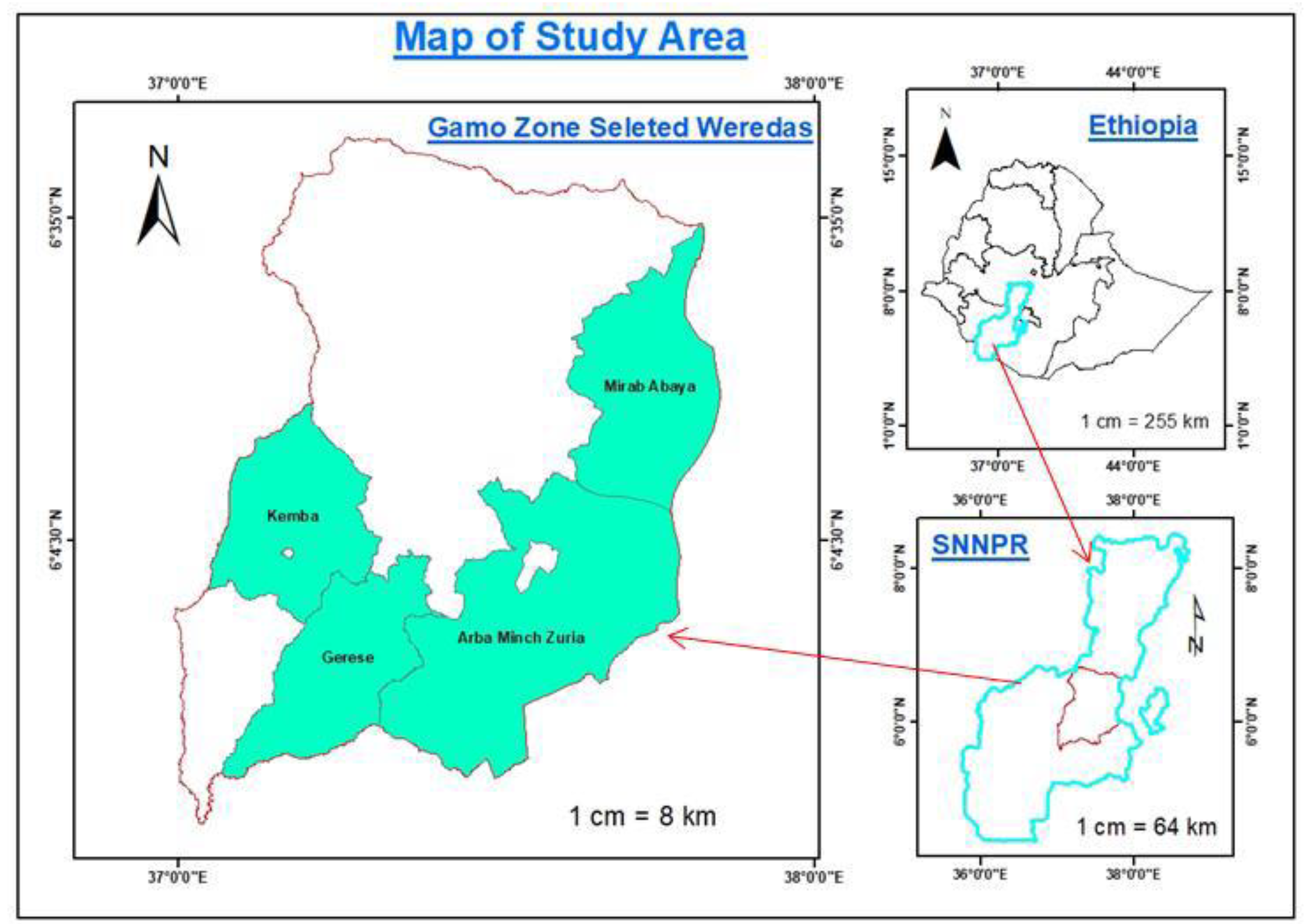
The research was conducted in Ethiopia's Gamo zone, which is located in the southern part of the country and is one of the country's most humid regions. Gamo zone is located about 445 km southwestern of the country capital Addis-Ababa. It roughly lies between 5’570 – 6’710 North, latitude, and 36037’- 37098’ East, longitude. Geographically, it is bordered by Amaro woreda to the southeast, Derashe woreda to the south, South Omo Zone to the southwest, Gofa Zone to the west, Wolyita and Dawuro Zone to the north, and Oromiya Region to the northeast across Lake Abaya. The elevation in the Gamo zone ranged between 501- 4207m above sea level, which is the reason for a varied climate and agroecosystems that produced wide biodiversity. Gamo zone is characterized by bimodal rainfall with the mean annual rainfall ranging from 801 – 2000mm and the annual mean temperature range from 10.1 – 27.50c. The terrain has an undulating feature that favors the existence of different agro-climatic zones in close proximity ranging from dry lowland to wet highland (Dires et al., 2021).
Figure 1.
The map of the study districts in Gamo landscape.
Farmers’ preference scoring and sample collection of ILFTS
Following a purposive sampling procedure, sixty experienced and acquainted farmers (20 in each agro-ecological zone) that were participating in the management and utilization of ILFTS were chosen for preference scoring. Focus group discussions (FGD) with ten farmers were held in each agro-ecological zone to explore the desired tree characteristics and perceived benefits of ILFTS, which were the foundations to set the benchmarks for preference scoring. As a result, feed value, growth rate, biomass yield, compatibility, and multifunctionality were established as benchmarks for preference scoring of ILFTS. The nutritional preference score was determined based on criteria such as palatability, improvement of body condition, growth and milk production, improvement of straw diet intake, and improvement in animal health, while the preference score for growth and regrowth potential was determined by criteria such as growth rate after establishment and re-growth potential after frequent cutting or looping. Farmer’s preference for compatibility was primarily based on the absence of crop competition for available soil nutrients and moisture, which improves soil fertility and improves the growth of annual and perennial crops below the canopy. Timber, poles, and other local constructions, as well as fuel wood, fences, medicinal values, shade trees, honey sources, soil stabilization, and farm implements, were incorporated to create multifunctionality indices. The rating of the ILFTS species was done using a preference score sheet. In each agroecological zone, preference scoring was carried out for ILFTS species on a point scale ranging from 1 (not preferred) to 4 (highly preferred) (Kuntashula and Mafongoya, 2005). Respondent farmers completed the ranking exercise on an individual basis. In each agroecological zone, samples of ILFTS, leaves, fruits, and pods were collected and sent to the lab for analysis. Five to ten individual plants per species were sampled and pooled to obtain a representative sample for each species in each agroecological zone. The samples were air-dried before being taken to the lab for testing.
Evaluation of nutritional quality of ILFTS
Chemical analyses of ILFTS
The dry matter (DM) content was determined by oven drying the feed samples at 55°C for 72 hours for the constant weight (AOAC, 2006). Oven-dried feed samples were ground using a Wiley mill to pass through a 1 mm sieve for chemical analyses. Contents of DM, organic matter (OM), total ash, and crude protein (CP) were analyzed following the standard methods of (AOAC, 2006). The method of (Van Soest et al., 1991) was used to determine neutral detergent fiber (NDF) and acid detergent fiber (ADF). Accordingly, the NDF and ADF analyses were followed sequentially. The residual ash was included in the NDF and ADF values. By solubilizing cellulose with 72% H2SO4, lignin (ADL) was determined (Van Soest and Robertson, 1985). The difference between the percentages of NDF and ADF was used to calculate the hemicellulose (% HC). Total condensed tannins (CT) were determined using a butanol-HCl reagent and 2 percent ferric ammonium sulfate in 2N HCl catalyst (Makkar, 2000). Three plants per species were used for laboratory work. All chemical analyses were carried out in duplicate.
In-vitro dry matter digestibility potential of ILFTS
The two-stage technique was implemented to determine the in vitro dry matter digestibility of leaf and pod samples (Tilley and Terry, 1963) as modified by (Van Soest and Robertson, 1985). The rumen liquor was collected from three rumen cannulated steers before the morning feeding that was fed natural pasture hay (5-6%CP) ad libitum supplemented with about 2kg of concentrate (69% wheat bran, 30% noug seed cake and 1% salt) mixture per steer/day. The liquor from three steers was mixed on a volume basis and filtered through cheesecloth. The incubation inoculum was prepared by diluting the rumen liquor with a buffer solution (NaHCO3 + Na2HPO4 + KCl + NaCl + MgS04. 7H2O + CaCl2.2H2O) (1:2 v/v) in a 1:4 (v/v) ratio (Tilley and Terry, 1963). The mixed inoculum was stirred in a water bath at 390C with purging CO2 until its use (10 - 15 min later). About 0.5g (1 mm ground) of each sample was placed into 50-ml sterile tubes, and 20 ml of the incubation inoculum was added. The tube was stoppered with a Bunsen valve and incubated for 48h at 390C. Tubes were gently swirled by hand every 8h. Each sample was incubated in three replicates. At the end of 48h of the incubation period, the tube contents were acidified using 6M HCL to reach a final pH of 1.3 - 1.5. After a few seconds, when the foam subsided, the pepsin powder was added to the final concentration of 0.2% (w/v). Then, the sample was reincubated for 48hr again. The undigested portion of the sample (residue) was transferred into the crucible, and the liquid was filtered out via a sacking machine. The pellets were dried in a forced-air oven at 1050C for 24h to determine the residual DM weight. Then, to determine the ash content, the residues were kept at 5500C for 8h to estimate organic matter (OM). The in vitro DM and OM digestibility was determined as the DM and OM which disappeared from the initial weight inserted into the tube and using the following equation.
Digestible organic matter in total dry matter (DOMD) was calculated as 0.95 IVDMD (%) - 2 (AOAC, 1990). Metabolisable energy (ME) was estimated from DOMD (McDonald et al., 2010) using the equation indicated below:
Where: DOMD = Digestible Organic Matter in the Dry matter.
Statistical analysis
Data on the farmers’ assessment of ILFTS, feed preference score, chemical composition including total CT, IVDMD, DOMD, and ME values were subjected to the analysis of variance (ANOVA). Tukey HSD tests were used for mean separation. Mean differences were considered significant at P<0.05. The analyses were performed using an aov package of R (4-0-2 version) statistical software following the model indicated below:
Where,
: Response variable; µ: overall mean effect;: the effect of plant species; dj, the jth effect of agroecology and is the random error.
Pearson correlation coefficient was done to analyze the relationships that exist, if any, between farmers’ feed value preference scores of ILFTS with the relative assessment derived from laboratory-based indicators of feed quality.
Result
Socioeconomic characteristics’ of farmers
Socioeconomic characteristics’ of the respondents’ exhibited a wide variation among categories (Table 1). The sex and marital status of the respondents’ indicated that the majority were male (91.7%) of which 95% were married and the remaining was widowed. There was a variation in age category, with the majority of respondents aged 41 - 50 years, followed by 31 - 40 years, with only 1.67% of respondents below 30 years of age. The educational level of the respondents varied widely, with the majority attending grades 5 - 8 (28.3%) followed by basic education (25%), where those attending above grade 12 were the least. The land holdings of the majority of the respondents were 0.51 - 1ha (36.67%) and 0.26 – 0.5ha (30%), respectively. However, 10% of the respondents had less than 0.25ha. The purposive sampling procedure intended to select the most knowledgeable respondents might favor the older and male group. On the other hand, the limited education facilities in the area, which is a common occurrence in most rural parts of the country, might explain the low educational level of the respondents.
Farmers’ preference of ILFTS
The study indicated that farmers used multiple criteria to evaluate the ILFTS and the mean score for all evaluation parameters except comparability and the overall mean in the highlands showed a significant difference (p<0.05) with species in agroecological zones (Table 2). For instance, the feed value score of the ILFTS revealed a significant difference (p<0.05) with species in the lowland where five species, namely, Acacia Senegal, Acacia mellifera, Acacia brevispica, Acacia albida, and Acacia seyal exhibited the highest followed by Acacia tortilis and Acacia sieberiana however Acacia nilotica unveiled the least. Likewise, in the midland, Albizia Schimperiana and Erythrina brucei exhibited a significantly high (p<0.05) feed value score, followed by Acacia abyssinica, and Piliostigma thonningii although Acacia lahai revealed the least. In the highlands, two species, namely, Albizia Schimperiana and Erythrina brucei, exhibited significantly high (p<0.05) feed value scores against Millettia ferruginea.
Likewise, the preference score for the parameters of tree characteristics such as growth rate, biomass yield, compatibility, and multifunctionality exhibited a significant difference (p<0.05) with species in agroecological zones. For instance, the growth rate score of the ILFTS revealed a significant difference (p<0.05) with species Acacia polyacantha in the lowland, Erythrina brucei and Erythrina abyssinica in the midland, and Albizia Schimperiana and Erythrina brucei in the highland exhibited the highest although Acacia seyal, Acacia alibida and Acacia sieberiana (lowland), Piliostigma thonningii (midland) and Millettia ferruginea (highland) the least (Table 1). Similarly, Tamarindus Indica in the lowland, Erythrina brucei and Erythrina abyssinica in the midland, and Millettia ferruginea in the highlands revealed the highest significant (p<0.05) score for biomass yield, whereas Acacia albida in the lowland (3.92) and Albizia Schimperiana midland (3.74) scored the highest significant compatibility score although no significance difference was observed among the highland species. Respondents stated Acacia albida (lowland) and Albizia Schimperiana (midland), and the highland species were superior in improving soil fertility and stability and increasing crop yield, hence more preferred in the farmlands. Of course, all ILFTS species are likely to enhance crop yield via improved soil fertility and stability due to their ability to fix atmospheric nitrogen (Chimphango et al., 2020; Hadgu et al., 2009). Likewise, Acacia nilotica (lowland) and all midland species except Erythrina and Millettia ferruginea (highland) achieved significantly high scores (p<0.05) for multifunctionality, as the study revealed. ILFTS have been used for multiple functions such as local construction, firewood, charcoal, tool handlers, local furniture, traditional medicine, bee forage, and fencing were among those mentioned by the respondents. Moreover, the overall mean score of the ILFTS unveiled significant differences (p<0.05) in the lowland and midland where four ILFTS species, namely, Acacia albida, Tamarindus Indica, Acacia mellifera, and Acacia Senegal in the lowland, and two species namely Albizia Schimperiana and Erythrina brucei in midland exhibited the highest score, even though the highland species exhibited no significant difference.
Nutritional value parameters
Wide variations in nutritive values were observed among the ILFTS species (Table 3). As an example, the DM content of the ILFTS species ranged from 838.3 - 948.4 g/kg with Acacia brevispica exhibiting the highest content followed by Erythrina brucei (M) (midland) and Millettia ferruginea (H) (highland) respectively; Acacia hockii exhibited the lowest. The difference in ash content among the ILFTS was more than fivefold ranging from 25.9 - 134.2 g/kg DM, where Acacia albida fruit revealed the highest followed by Erythrina brucei (M) (midland) and Acacia tortilis respectively, however, Acacia sieberiana unveiled the smallest amount. Similar tendency was observed in the variation of CP content among the ILFTS which spanned from 81.8 - 314 g/kg DM where Erythrina brucei (M) (midland) exhibited the top, succeeded by the highland Millettia ferruginea (H) and Erythrina brucei (H) in that order, although Acacia albida fruit revealed the least.
The HC and ADL components had the most variance, ranging from 47.2 to 327 and 53.4 to 220.1 g/kg of DM, respectively, tracked by ADF and NDF. The NDF value of the ILFTS ranged from 300.6 to 618.1 g/kg DM, with P. thonningii revealing the most, followed by A. albida fruit and midland A. schimperiana (M), but A. lahai revealing the least. The ADF value of the ILFTS ranged from 111.7 to 317.5, with E. abyssinica having the greatest value, followed by A. tortilis pod and P. thonningii, and A. senegal having the lowest. P. thonningii had the highest HC, followed by A. Schimperiana (M) (midland) and A. elaphroxylon; however, A. abyssinica (midland) had the lowest HC. A. nilotica has the highest ADL value, followed by A. hockii and Acacia lahai, respectively, with A. mellifera having the lowest.
The variation of the IVDMD and ME was more than twofold, which ranged from 303.6 - 740.5g/kg DM and 4.55 – 10.5 MJ/kg DM respectively. In terms of decreasing order of IVDMD, the ranking for the five ILFTS species were Piliostigma thonningii >Aeschynomene, elaphroxylon > Acacia Senegal> Tamarindus Indica> Acacia mellifera respectively, however, Acacia nilotica was showing the least. Piliostigma thonningii unveiled the highest ME followed by Aeschynomene, elaphroxylon and Tamarindus indica, respectively; although Acacia nilotica exhibited the least.
The correlation among nutrients and farmers feed value scoress
The nutritive parameters of the ILFTS, such as DM (r = 0.615), OM (r = 0.458), CP (r = 0.768), IVDMD (r = 0.6), IVOMD (r = 0.565), ME (r = 0.6), and DOMD (r = 0.6), had a positive significant correlation with the farmers feed value score, unlike the ADL (r = -0.702) and CT (r = -0.543) which exhibited negative significant correlation(Table 5). Naturally, additional ILFTS fiber components such NDF (r = -0.314), ADF (r = -0.332), and HC (r = -0.19) had a negative non-significant connection with the farmers' feed value score. However, the largest positive and negative Pearson correlation coefficients with farmers' feed value assessments were found in CP (r = 0.768) and ADL (r =- 0.702).
The CP of the ILFTS had a substantial positive connection with DM (r = 0.685), OM (r = 0.507), IVDMD (r = 0.403), DOMD (r = 0.403), and ME (r = 0.402), but a significant negative correlation with NDF (r = -0.434). The IVDMD had a substantial positive connection with DM (r = 0.509) and CP (r = 0.403), whereas the ADL had a significant negative correlation (r = -0.838). The IVOMD showed a positive significant link with DM (r = 0.455) and ash, in contrast to HC (r = 0.361) and ADL (r = -0.838), which showed a negative significant correlation. The ME showed a positive significant association with DM (r = 0.509), IVDMD (r = 1.0), IVOMD (r = 0.984), and DOMD (r = 1.0), but a negative significant link with ADL (r = -0.702).
The ADL had negative significant correlation with DM (r=-0.781), OM (r=-0.589), IVDMD (r=-0.838), IVOMD (r=-0.774), and DOMD (r=-0.984); however, it revealed positive non-significant correlation with the fiber components such as NDF (r=0.323), ADF (r=0.372) and HC (0.174).
The CT had a negative non-significant correlation with DM (r=-0.385), Ash (r=-0.087), and OM (r=-0.236) unlike the CP (r=-0.648) which revealed a negative significant correlation. CT exhibited negative significant correlation with IVDMD (r=-0.445), IVOMD (r=-0.422), DOMD (r=-0.445), and ME (r=-0.444) unlike the ADL (r=0.526) which displayed positive significant correlation, though it showed positive non-significant correlation with NDF (r=0.126), ADF (r=0.095) and HC (r=0.105).
Discussion
Farmers’ preference of ILFTS
The study indicated that farmers used multiple criteria such as feed value, multifunctionality, growth rate, biomass yield, and compatibility to evaluate the ILFTS which marked the farmers' preference measures for the ILFTS as multifaceted (Table 2). In agreement with the current study, various studies in Ethiopia have unveiled multiple criteria employed by farmers to evaluate fodder trees (Ayenew et al., 2021; Mekoya et al., 2008); however, some emphasized certain criteria. For instance, availability and feed value were the major criteria to evaluate fodder trees in northwestern Ethiopia (Ayenew et al., 2021) and southern Ethiopia (Mitiku, 2018) due to critical feed shortages during the dry season. Some of the evaluation criteria used for the farmers' preferential treatment of the ILFTS in the study are similar to those employed in other studies conducted in Ethiopia (Ayenew et al., 2021; Yisehak and Janssens, 2013), possibly because of the sociocultural practices and farming system similarities.
The preference score was the farmer's relative appraisal of one species over another on a given parameter. Distinct species of ILFTS inhabited the lowlands and highland, even though the midland featured the intermediate species of both agro-ecological zones, according to the study. The ILFTS species that inhabited the lowland, midland, and highland were 13, 7, and 3, respectively, in the study, and hence the higher the species diversity across the agroecological zones, the higher the variation in the perception which in turn affects the preference rating and vice versa. Various research conducted in Ethiopia, in concurrence with the current study, showed that farmers' choices for fodder trees varied significantly with species and evaluation criteria across the agro-ecological zones (Ayenew et al., 2021; Yisehak and Janssens, 2013).
The ILFTS species superior for feed value in the lowland (Acacia tortilis, Acacia seyal, Acacia albida, Acacia Senegal, Acacia mellifera, and Acacia brevispica), midland and highland (Erythrina brucei and Albizia Schimperiana) were due to their high palatability, CP and energy content which enhances the performances of the ruminants as the study unveiled. Fodder trees are rich in CP, energy, and minerals (Balehegn and Hintsa, 2015; Shenkute et al., 2012), adding to ruminants fed low quality fiber-based diets enhanced their performance (Franzel et al., 2014; Makau et al., 2020). The higher performance of ruminants fed fodder trees and shrubs could potentially be attributed to reduced gastrointestinal distress and effective protein and energy use, because smaller quantities of secondary metabolites, particularly condensed tannins, are susceptible to such activities (reducing methane emission and enhancing bypass protein). The relevance of small quantities of CT to ruminant nutrition was substantiated by the negative significant correlation between CT and farmers' feed value scores revealed in the study. Various studies have discovered that fodder plants and shrubs contain anthelmintic (Assefa et al., 2018; Birhan et al., 2020) and anti-methane emission constituents (Adejoro, 2019; Cardoso-Gutierrez et al., 2021). A high feed value score was observed for the Acacia species in Lay-Armachuho as well as the Millettia and Acacia species in Sidama (Mekoya et al., 2008).
Acacia polyacantha (lowland), Erythrina brucei and Erythrina abyssinica (midland), and Erythrina brucei and Albizia Schimperiana (highland) excelled in growth rate due to their easily established nature and high growth potential that allowed rich harvests (exploitation) early, making them valuable to farmers. Likewise, the ample and sustainable leaf yield of Tamarindus Indica (lowland), Erythrina brucei and Erythrina abyssinica (midland), and Erythrina brucei and Albizia Schimperiana (highland) might justify their preeminence for biomass yield score. However, in a study conducted in southwestern Ethiopia (Yisehak and Janssens, 2013), E. abyssinica had a low growth rate score, which was most likely owing to the study's scope of plant species.
The ability of A. albida (lowland), Albizia Schimperiana (midland), and highland species to enrich the soil and boost crop output growing below the canopy may explain why they are more compatible. Mekoya et al. (2008) revealed the supremacy of the Acacia species for compatibility score in northern regions and southern semihumid lands, even though A. abyssynica in southwestern Ethiopia (Yisehak and Janssens, 2013) exhibited significantly lower compatibility scores. In the current study, A. nilotica (lowland) and M. ferruginea (midland and highland) excelled for multifunctionality, likely due to their multiple functions such as poles or posts for construction, firewood, charcoal, farm implements, bee forage, and shade, in contrast to Acacia and Millettia species in northern dry midlands and Sidama (Mekoya et al., 2008), which scored slightly lower. Several studies substantiated that fodder trees and shrubs are an integral component of the farming system in the tropics and subtropics and provide multiple functions (Abraham et al., 2022; Balehegn, 2017).
Nutritional value parameters
The study found that there is a large difference in nutritive value among the browse species, which is most likely due to the species' inherent nature. Genetic and environmental factors influence plant chemical composition, resulting in variances in chemical composition and polysaccharide properties among forage species, as well as differences in lignin, cellulose, and hemicellulose (Arigbede et al., 2012; Lee, 2018; Li, 2021). According to (Grant et al., 2014; Ray et al., 2015) regional and inter-annual climate variability causes fluctuations in forage nutritive values. The study also found that the leaves are more nutritious than the pods and fruits probably due to plants usually store their food in the leaves during photosynthesis and translocate it into other parts during the stress period (Gebrehiwot et al., 2017; Shenkute et al., 2012). The CT content of the lowland species exhibited a high numerical value, probably as a result of climate and other factors that trigger its biosynthesis. (Yang et al., 2018) described that phytochemical production and buildup in plants are influenced by genetic, ontogenic, morphogenetic, and ecological factors. Temperature, light intensity, soil water, soil salinity, and soil fertility are among the environmental factors that affect the level of plant secondary metabolites (Uleberg et al., 2012). The nutritional parameters among browse species revealed significant variation across altitude, which partially agrees with the present finding (Yisehak and Janssens, 2013).
The ash values of most of the ILFTS species reported in the study are within the ranges reported for most native African browse species (Mekonnen et al., 2009; Shenkute et al., 2012). Piliostigma thonningii and Acacia sieberiana recorded the highest and lowest ash value, respectively, among the ILFTS in the study, likely implying their most and least mineral contents, respectively. The ash values of Tamarindus Indica, Acacia nilotica, and Acacia tortilis in the study were greater than the values observed in eastern Ethiopia (Derero and Kitaw, 2018). Likewise, the ash values reported for Acacia polyacantha in Tanzania are higher than the values found in the current study, yet Acacia tortilis, Acacia nilotica, and Dichrostachys species recorded lower amounts (Rubanza et al., 2003). The variation of the ash value of the ILFTS in the study compared to other studies is probably due to the soil fertility disparity, the season of harvest, harvesting stage, and the maturity stage of the fodder trees and shrubs (Arigbede et al., 2012; Balehegn and Hintsa, 2015).
The CP values of most of the ILFTS species reported in the study are within the ranges found for most native African browse tree and shrub species (Mohameed et al., 2020; Shenkute et al., 2012). While the CP value of Tamarindus indica leaves reported in the present study was similar to that observed in eastern Ethiopia; however, Acacia tortilis and Acacia nilotica leaves in eastern Ethiopia were higher and lower, respectively, than those in the current study (Derero and Kitaw, 2018). The study conducted in western Ethiopia reported 178 and 240 g/kg DM of CP for Acacia abyssinica and Erythrina abyssyinica, respectively (Yisehak and Janssens, 2013) which is lower and higher than the values found in the current study. The CP value of Acacia polyacantha recorded in Tanzania agrees with the present study; however, Acacia tortilis, Acacia nilotica, and Dichrostachys species recorded lower values (Rubanza et al., 2003). The study revealed the minimum CP content of the ILFTS in the study was 81.8g/kg DM, which was above the CP requirement (70 g/kg DM (McDonald et al., 2002)) for normal rumen microbial function in ruminant livestock. The study substantiates that fodder trees and shrubs have the potential to complement the CP and mineral deficiency commonly observed in poor-quality pastures and crop residues, particularly during dry periods (Enri et al., 2020; Gebremedhin et al., 2020).
The IVDMD values of most of the ILFTS reported in the study are within the range reported for some of the fodder trees and shrub species in Ethiopia and other tropical countries (Datt et al., 2008; Mekonnen et al., 2009). The IVDMD of Piliostigma thonningii is the highest in the study, suggesting that it contains the maximum available nutrients among the ILFTS. The fiber of fodder trees and shrubs is more digestible than grass due to its less lignin content (Yayneshet et al., 2009).
The NDF, ADF, and ADL values of some of the ILFTS species reported in the study are within the range reported for some other fodder tree and shrub species in Ethiopia and other African countries though there are inconstancies (Derero and Kitaw, 2018; Shenkute et al., 2012). For instance, the lignin value reported for Tamarindus Indica and Acacia tortilis in the study was less than the value found in eastern Ethiopia (Derero and Kitaw, 2018) however the value for Acacia nilotica was greater in the current study. High lignin value among some fodder trees was found in eastern Ethiopia (Derero and Kitaw, 2018) which is in agreement with the present study probably due to the similarity of the agro-climate. The values of hemicellulose reported in the study were far lower than the values reported in eastern Ethiopia (Derero and Kitaw, 2018) probably due to the season and harvesting stage. Various studies indicated that the chemical composition of the fodder trees varied with the phonological stage (Balehegn and Hintsa, 2015) and harvesting season (Abebe et al., 2012; Adjorlolo et al., 2014; Yayneshet et al., 2009). The NDF and ADF values reported for Acacia abyssinica and Erythrina abyssyinica in the study were lower and higher, respectively, than the values found in western Ethiopia (Yisehak and Janssens, 2013), unlike their ADL values. The NDF value of Acacia polyacantha reported in Tanzania (Rubanza et al., 2003) is higher than the values reported in the current study, however the ADF and ADL values are in agreement with the amount recorded in the current study. The NDF, ADF, and ADL values of Dichrostachys species and Acacia nilotica observed in Tanzania are lower than the values obtained in the present study (Rubanza et al., 2003) probably due to the season of harvesting and stage of maturity of the browse trees (Balehegn and Hintsa, 2015). Piliostigma thonningii recorded the highest NDF value in the study implying its highest energy value unlike Acacia nilotica which showed relatively high NDF (520.7 g/kg DM) yet its ME value was the least due to its high ADL value. ADL is most likely to determine the nutritional value of plant fiber by interfering with the digestion of cell-wall polysaccharides via acting as a physical barrier. (Li, 2021; Moore and Jung, 2001; Yayneshet et al., 2009) stated that lignin is the single most important cell wall constituent that impacts digestibility, which substantiates the present study. NDF, ADF, and ADL are plant cell wall structures linked and packed together in tight configurations to resist degradation, and hence their nutritional value to animals varies substantially, depending on the composition, structure, and degradability (Li, 2021).
The correlation between nutrients and farmers feed value score
The farmers' feed value preference score had a positive significant correlation with the nutritive value indicators (DM (r=0.615 ), OM (r=0.458 ), CP (r=0.768 ), IVDMD (r=0.600 ), IVOMD (r=0.565), DOMD (r=0.600) and ME (r=0.600)), implying that farmers' indigenous knowledge is relevant in judging the protein, energy, and digestibility values of browse species based on the perceived benefits associated with the animals' performance measures. The greater the impact of feeding a certain browse species on animal performance, the higher the nutritional value, and hence the higher the grade. ADL (r=-0.702) and CT (r=-0.543) had a negative significant correlation with farmers' feed preference score, indicating their impact on digestibility either through denying access or inhibiting microbial activity against cell wall components. Farmers used several indigenous criteria to judge the nutritional quality of available feed resources, according to (Lumu et al., 2013), including perceived effects on disease resistance, feed intake, growth/body condition, hair coat appearance, fecal output and texture, and level of production, among others. (Mekoya et al., 2008; Yisehak and Janssens, 2013) found a significant positive correlation of the farmers' feed value score with the CP value of fodder trees and shrubs which partly agrees with the current study. The CP and IVDMD were positively correlated with the feed value score of the farmers in the highlands in the study conducted in northwestern Ethiopia (Ayenew et al., 2021), which agrees with the present study.
Because of its role in rumen microbial activity, CP showed a positive significant connection with IVDMD, DOMD, and ME. The ILFTS in the study had moderate to high CP values, which improved digestibility by increasing microbial activity. The high CP value of the ILFTS in the study suggests they could be used to supplement the N deficiency observed in ruminants feeding poor quality pastures and crop residues as a basal diet (Balehegn, 2017; Bouazza et al., 2012).
Unlike ADF, which revealed a negative non-significant association with IVDMD, IVOMD, DOMD, and ME, ADL showed a strong negative significant link with IVDMD, IVOMD, DOMD, and ME. Both the IVDMD and IVOMD were depressed by the high ADL value of some of the indigenous browses in the research. The complex structure of plant cell walls, particularly the physical protection afforded by lignin, covalent connections between lignin and phenolic chemicals, and cell wall polysaccharides, impedes rumen digestion of fibrous plant components (Yu et al., 2005). (Moore and Jung, 2001) discovered that lignin has a strong inhibitory influence on cell-wall digestibility.
CT showed a negative significant connection with CP, IVDMD, IVOMD, and DOMD, showing that it has a digestive inhibitory impact via suppressing microbial activity. Several investigations have revealed that CT is a secondary metabolite that binds the available CP in the rumen (Bueno et al., 2020; Naumann et al., 2017) and hence lowers rumen microbial activity, affecting DM degradability. The CT and ADL have a positive connection, implying that they have a complimentary function in lowering digestibility by suppressing and barricading rumen microbial activity, respectively.
Conclusion
In the study, the ILFTS had a CP value over 8.1%, confirming that it can be used to supplement ruminant diets that are deficient in N. In spite of this, there is a wide variation in nutritive quality among indigenous browse trees, probably because of the differences between species which impact farmers' preferences. The farmer's evaluation of ILFTS species was multidimensional, which encompasses the perceived benefits associated with the animal performance measures and desired characteristics of a tree as they have been used for multiple purposes. Yet, the mean score for all evaluation parameters varied significantly with species in agroecological zones. The nutrients in ILFTS exhibited various interactions among themselves and with feed preference scores depending on their biochemical function. For instance, CT exhibited a positive correlation with ADL, suggesting that they each play a complementary role in hampering digestibility by inhibiting and blocking microbial activity on cell wall components. Additionally, CP, CT, and ADL values of the ILFTS had significant correlations with digestibility, thereby affecting the energy and protein supply of the ILFTS forage, as well as its feed value as demonstrated by the animals' performance measures. Thus, farmers' indigenous knowledge of feed value may be relevant to some extent for evaluating the nutritional quality of ILFTS forage by envisaging its nutrient content as well as its interaction with other nutrients, and may be used to complement scientific indicators.
References
- Abebe, A.; Tolera, A.; Holand, Ø.; Ådnøy, T.; Eik, L.O. Seasonal variation in nutritive value of some browse and grass species in Borana rangeland, southern Ethiopia. Trop. Subtrop. Agroecosystems 2012, 15, 261–271. [Google Scholar]
- Abraham, G.; Kechero, Y.; Andualem, D. Nutritional Quality of Indigenous Legume Browse in the Southern Ethiopia: Farmers’ Preference and Correlation of Local Valuation of Feed Value with Scientific Indicators. 2023. [CrossRef]
- Abraham, G.; Kechero, Y.; Andualem, D.; Dingamo, T. Indigenous legume fodder trees and shrubs with emphasis on land use and agroecological zones: Identification, diversity, and distribution in semi-humid condition of southern Ethiopia. Vet. Med. Sci. 2022, 8, 2126–2137. [Google Scholar] [CrossRef] [PubMed]
- Adejoro, F.A. The use of condensed tannins and nitrate to reduce enteric methane emission and enhance utilization of high forage diets in sheep (Doctorial desertation). University of Pretoria, Pretoria, South Africa. 2019.
- Adjorlolo, L.K.; Adogla-Bessa, T.; Amaning-Kwarteng, K.; Ahunu, B.K. Effect of season on the quality of forages selected by sheep in citrus plantations in Ghana. Trop. Grassl.-Forrajes Trop. 2014, 2, 271–277. [Google Scholar] [CrossRef]
- Andualem, D.; Gelgele, M.; Bayssa, M. In vitro gas production kinetics of selected multipurpose tree browses in Gelana rangelands. Livest. Res. Rural Dev. 2021, 33, 18. [Google Scholar]
- AOAC, 2006. Official Methods of Analysis of AOAC International, 18th Edition. ed. AOAC International, USA.
- AOAC, 1990. Official method of analysis of the association of official analytical chemists, 15th edition. ed. Association of official analytical chemists,inc, USA.
- Arigbede, O.M.; Anele, U.Y.; Südekum, K.-H.; Hummel, J.; Oni, A.O.; Olanite, J.A.; Isah, A.O. Effects of species and season on chemical composition and ruminal crude protein and organic matter degradability of some multi-purpose tree species by West African dwarf rams: Chemical composition and degradability of browse trees. J. Anim. Physiol. Anim. Nutr. 2012, 96, 250–259. [Google Scholar] [CrossRef]
- Assefa, A.; Kechero, Y.; Tolemariam, T.; Kebede, A.; Shumi, E. Anthelmintic effects of indigenous multipurpose fodder tree extracts against Haemonchus contortus. Trop. Anim. Health Prod. 2018, 50, 727–732. [Google Scholar] [CrossRef]
- Ayenew, A.; Tolera, A.; Nurfeta, A.; Assefa, G. Farmers’ preference and knowledge on indigenous multipurpose browse species towards their feed value in north western Ethiopia. Trop. Subtrop. Agroecosystems 2021, 24. [Google Scholar] [CrossRef]
- Balehegn, M. 2017. Silvopasture Using Indigenous Fodder Trees and Shrubs: The Underexploited Synergy Between Climate Change Adaptation and Mitigation in the Livestock Sector, in: Leal Filho, W., Belay, S., Kalangu, J., Menas, W., Munishi, P., Musiyiwa, K. (Eds.), Climate Change Adaptation in Africa, Climate Change Management. pp. 493–510. [CrossRef]
- Balehegn, M.; Hintsa, K. Effect of maturity on chemical composition of edible parts of Ficus thonningii Blume (Moraceae): An indigenous multipurpose fodder tree in Ethiopia. Livest. Res. Rural Dev. 2015, 27, 233. [Google Scholar]
- Birhan, M.; Gesses, T.; Kenubih, A.; Dejene, H.; Yayeh, M. Evaluation of Anthelminthic Activity of Tropical Taniferous Plant Extracts Against Haemonchus contortus. Vet. Med. Res. Rep. 2020, 11, 109–117. [Google Scholar] [CrossRef]
- Boogaard, B.K.; Oosting, S.J.; Bock, B.B. Elements of societal perception of farm animal welfare: A quantitative study in The Netherlands. Livest. Sci. 2006, 104, 13–22. [Google Scholar] [CrossRef]
- Bouazza, L.; Bodas, R.; Boufennara, S.; Bousseboua, H.; López, S. Nutritive evaluation of foliage from fodder trees and shrubs characteristic of Algerian arid and semi-arid areas. J. Anim. Feed Sci. 2012, 21, 521–536. [Google Scholar] [CrossRef]
- Brown, D.; Ng’ambi, J.W.; Norris, D. Effect of tanniniferous Acacia karroo leaf meal inclusion level on feed intake, digestibility and live weight gain of goats fed a Setaria verticillata grass hay-based diet. J. Appl. Anim. Res. 2018, 46, 248–253. [Google Scholar] [CrossRef]
- Bueno, I.C.S.; Brandi, R.A.; Fagundes, G.M.; Benetel, G.; Muir, J.P. The Role of Condensed Tannins in the In Vitro Rumen Fermentation Kinetics in Ruminant Species: Feeding Type Involved? Anim. Open Access J. MDPI 2020, 10. [Google Scholar] [CrossRef] [PubMed]
- Cardoso-Gutierrez, E.; Aranda-Aguirre, E.; Robles-Jimenez, L.E.; Castelán-Ortega, O.A.; Chay-Canul, A.J.; Foggi, G.; Angeles-Hernandez, J.C.; Vargas-Bello-Pérez, E.; González-Ronquillo, M. Effect of tannins from tropical plants on methane production from ruminants: A systematic review. Vet. Anim. Sci. 2021, 14, 100214. [Google Scholar] [CrossRef]
- Chimphango, S.B.M.; Gallant, L.H.; Poulsen, Z.C.; Samuels, M.I.; Hattas, D.; Curtis, O.E.; Muasya, A.M.; Cupido, C.; Boatwright, J.S.; Howieson, J. Native legume species as potential fodder crops in the mediterranean renosterveld shrubland, South Africa. J. Arid Environ. 2020, 173, 104015. [Google Scholar] [CrossRef]
- Datt, C.; Datta, M.; Singh, N.P. Assessment of fodder quality of leaves of multipurpose trees in subtropical humid climate of India. J. For. Res. 2008, 19, 209–214. [Google Scholar] [CrossRef]
- Derero, A.; Kitaw, G. Nutritive values of seven high priority indigenous fodder tree species in pastoral and agro-pastoral areas in Eastern Ethiopia. Agric. Food Secur. 2018, 7, 68. [Google Scholar] [CrossRef]
- Dida, M.F.; Challi, D.G.; Gangasahay, K.Y. Effect of feeding different proportions of pigeon pea (Cajanus cajan) and neem (Azadirachta indica) leaves on feed intake, digestibility, body weight gain and carcass characteristics of goats. Vet. Anim. Sci. 2019, 8, 100079. [Google Scholar] [CrossRef] [PubMed]
- Dires, A.; Asefa, M.; Ashenafi, A.; Wasihun, W. 2021. Discover the land of paradize: Gamo zone travel guide, 2nd edition. ed. Gamo zone culture tourism and sport department, Arba-Minch, Ethiopia.
- Enri, S.R.; Probo, M.; Renna, M.; Caro, E.; Lussiana, C.; Battaglini, L.M.; Lombardi, G.; Lonati, M.; Enri, S.R.; Probo, M.; et al. Temporal variations in leaf traits, chemical composition and in vitro true digestibility of four temperate fodder tree species. Anim. Prod. Sci. 2020, 60, 643–658. [Google Scholar] [CrossRef]
- FAO, 2018. Ethiopia: Report on feed inventory and feed balance (2018). Food and Agriculture Organization of the United Nations, Rome, Italy.
- Franzel, S.; Carsan, S.; Lukuyu, B.; Sinja, J.; Wambugu, C. Fodder trees for improving livestock productivity and smallholder livelihoods in Africa. Curr. Opin. Environ. Sustain. 2014, 6, 98–103. [Google Scholar] [CrossRef]
- Gebrehiwot, G.; Negesse, T.; Abebe, A. Effect of Feeding Leucaena leucocephala Leaves and Pods on Feed Intake, Digestibility, body Weight Change and Carcass Characteristic of Central-Highland Sheep Fed basal Diet Wheat bran and Natural Pasture Hay in tigray, Ethiopia. Int. J. Agric. Environ. Biotechnol. 2017, 10, 367. [Google Scholar] [CrossRef]
- Gebremedhin, A.T.; Gedo, A.H.; Edo, G.Y.; Haile, S.T. Evaluation of multi-functional fodder tree and shrub species in mid-altitudes of South Omo Zone, Southern Ethiopia. J. Hortic. For. 2020, 12, 27–34. [Google Scholar] [CrossRef]
- Grant, K.; Kreyling, J.; Dienstbach, L.F.H.; Beierkuhnlein, C.; Jentsch, A. Water stress due to increased intra-annual precipitation variability reduced forage yield but raised forage quality of a temperate grassland. Agric. Ecosyst. Amp Environ. 2014, 186, 11–22. [Google Scholar] [CrossRef]
- Hadgu, K.M.; Kooistra, L.; AH Rossing, W.; van Bruggen, A.H.C. Assessing the effect of Faidherbia albida based land use systems on barley yield at field and regional scale in the highlands of Tigray, Northern Ethiopia. Food Sec 2009, 1, 337–350. [Google Scholar] [CrossRef]
- Haugerud, A.; Collinson, M.P. Plants, genes and people: Improving the relevance of plant breeding in Africa. ExplAgric 1990, 26, 341–362. [Google Scholar] [CrossRef]
- Kuntashula, E.; Mafongoya, P.L. Farmer participatory evaluation of agroforestry trees in eastern Zambia. Agric. Syst. 2005, 85, 39–53. [Google Scholar] [CrossRef]
- Lee, M.A. A global comparison of the nutritive values of forage plants grown in contrasting environments. J. Plant Res. 2018, 131, 641–654. [Google Scholar] [CrossRef] [PubMed]
- Lelamo, L. A review on the indigenous multipurpose agroforestry tree species in Ethiopia: Management, their productive and service roles and constraints. Heliyon 2021, 7, e07874. [Google Scholar] [CrossRef]
- Li, X. Plant cell wall chemistry: Implications for ruminant utilisation. J. Appl. Anim. Nutr. 2021, 9, 31–56. [Google Scholar] [CrossRef]
- Lumu, R.; Katongole, C.B.; Nambi-Kasozi, J.; Bareeba, F.; Presto, M.; Ivarsson, E.; Lindberg, J.E. Indigenous knowledge on the nutritional quality of urban and peri-urban livestock feed resources in Kampala, Uganda. Trop. Anim. Health Prod. 2013, 45, 1571–1578. [Google Scholar] [CrossRef]
- Makau, D.N.; VanLeeuwen, J.A.; Gitau, G.K.; McKenna, S.L.; Walton, C.; Muraya, J.; Wichtel, J.J. Effects of Calliandra and Sesbania on Daily Milk Production in Dairy Cows on Commercial Smallholder Farms in Kenya. Vet. Med. Int. 2020, 2020, 1–15. [Google Scholar] [CrossRef] [PubMed]
- Makkar, H.P.S. 2000. Quantification of Tannins in Tree Foliage.
- McDonald, P.; Edwards, R.A.; Greenhalgh, J.F.D.; Morgan, C.A. 2002. Animal Nutrition, 6th ed. Prentice Hall, Essex, UK.
- Meijer, S.S.; Catacutan, D.; Ajayi, O.C.; Sileshi, G.W.; Nieuwenhuis, M. The role of knowledge, attitudes and perceptions in the uptake of agricultural and agroforestry innovations among smallholder farmers in sub-Saharan Africa. Int. J. Agric. Sustain. 2015, 13, 40–54. [Google Scholar] [CrossRef]
- Mekonnen, K.; Glatzel, G.; Sieghardt, M. Assessments of Fodder Values of 3 Indigenous and 1 Exotic Woody Plant Species in the Highlands of Central Ethiopia. Mt. Res. Dev. 2009, 29, 135–142. [Google Scholar] [CrossRef]
- Mekoya, A.; Oosting, S.J.; Fernandez-Rivera, S.; Van der Zijpp, A.J. Multipurpose fodder trees in the Ethiopian highlands: Farmers’ preference and relationship of indigenous knowledge of feed value with laboratory indicators. Agric. Syst. 2008, 96, 184–194. [Google Scholar] [CrossRef]
- Mitiku, B. Evaluation and Demonstration of Indigenous Fodder Trees and Shrubs in Alicho-wriro District, Siltie Zone. J. Nat. Sci. Res. 2018, 8. [Google Scholar]
- Mohameed, A.; Kassahun, G.; Ayantu, M. Identification and Nutritional Evaluation of Potential Indigenous Browse Species in Guba Lafto District, North Wollo, Ethiopia. J. Anim. Sci. Res. 2020, 4. [Google Scholar] [CrossRef]
- Moore, K.J.; Jung, H.-J.G. Lignin and fiber digestion. J. RANGE Manag. 2001, 54, 420–430. [Google Scholar] [CrossRef]
- Naumann, H.D.; Tedeschi, L.O.; Zeller, W.E.; Huntley, N.F. The role of condensed tannins in ruminant animal production: Advances, limitations and future directions. Rev. Bras. Zootec. 2017, 46, 929–949. [Google Scholar] [CrossRef]
- Ray, D.K.; Gerber, J.S.; MacDonald, G.K.; West, P.C. Climate variation explains a third of global crop yield variability. Nat. Commun. 2015, 6, 5989. [Google Scholar] [CrossRef]
- Rubanza, C.D.K.; Shem, M.N.; Otsyina, R.; Ichinohe, T.; Fujihara, T. Nutritive Evaluation of Some Browse Tree Legume Foliages Native to Semi-arid Areas in Western Tanzania. Asian-Australas. J. Anim. Sci. 2003, 16, 1429–1437. [Google Scholar] [CrossRef]
- Shenkute, B.; Hassen, A.; Assafa, T.; Amen, N.; Ebro, A. Identification and nutritive value of potential fodder trees and shrubs in the mid rift valley of Ethiopia. J. Anim. Plant Sci. 2012, 22, 1126–1132. [Google Scholar]
- Tilley, J.M.A.; Terry, R.A. A Two-Stage Technique for the in Vitro Digestion of Forage Crops. Grass Forage Sci. 1963, 18, 104–111. [Google Scholar] [CrossRef]
- Uleberg, E.; Rohloff, J.; Jaakola, L.; Trôst, K.; Junttila, O.; Häggman, H.; Martinussen, I. Effects of temperature and photoperiod on yield and chemical composition of northern and southern clones of bilberry (Vaccinium myrtillus L.). J. Agric. Food Chem. 2012, 60, 10406–10414. [Google Scholar] [CrossRef] [PubMed]
- Van Soest, P.J.; Robertson, J.B. 1985. Analysis of Forages and Fibrous Foods: A Laboratory Manual for Animal Science. Cornell University, Ithaca, NY (USA).
- Van Soest, P.J.; Robertson, J.B.; Lewis, B.A. Methods for Dietary Fiber, Neutral Detergent Fiber, and Nonstarch Polysaccharides in Relation to Animal Nutrition. J. Dairy Sci. 1991, 74, 3583–3597. [Google Scholar] [CrossRef] [PubMed]
- Yang, L.; Wen, K.-S.; Ruan, X.; Zhao, Y.-X.; Wei, F.; Wang, Q. Response of Plant Secondary Metabolites to Environmental Factors. Mol. J. Synth. Chem. Nat. Prod. Chem. 2018, 23, 762. [Google Scholar] [CrossRef] [PubMed]
- Yayneshet, T.; Eik, L.O.; Moe, S.R. Seasonal variations in the chemical composition and dry matter degradability of exclosure forages in the semi-arid region of northern Ethiopia. Anim. Feed Sci. Technol. 2009, 148, 12–33. [Google Scholar] [CrossRef]
- Yisehak, K.; Janssens, G.P.J. Evaluation of nutritive value of leaves of tropical tanniferous trees and shrubs. Livest. Res. Rural Dev. 2013, 25, 28. [Google Scholar]
- Yu, P.; McKinnon, J.J.; Christensen, D.A. Hydroxycinnamic acids and ferulic acid esterase in relation to biodegradation of complex plant cell walls. Can. J. Anim. Sci. 2005, 85, 255–267. [Google Scholar] [CrossRef]

Table 1.
The socioeconomic characteristics’ of the respondents’ (N=60).
| Parameter | Category | Agroecological zone | Total | ||
|---|---|---|---|---|---|
| Lowland | Midland | Highland | |||
| Sex of the respondents’ | Male | 18 | 17 | 20 | 55 (91.7%) |
| Female | 2 | 3 | 0 | 5 (8.3 %) | |
| Age category of the respondents’ | 21 – 30 years | 1 | 0 | 0 | 1 (1.67%) |
| 31 – 40 years | 6 | 7 | 6 | 19 (31.67%) | |
| 41 – 50 years | 7 | 8 | 10 | 25 (41.57%) | |
| Above 51 years | 6 | 5 | 4 | 15 (25%) | |
| Marital status of the respondents’ | Married | 19 | 18 | 20 | 57 (95%) |
| Widowed | 1 | 2 | 0 | 3 (5%) | |
| Educational level of the respondents’ | Illiterate | 1 | 4 | 8 | 13 (21.67%) |
| Basic education | 5 | 8 | 2 | 15 (25%) | |
| Grade 1 - 4 | 3 | 2 | 3 | 8 (13.33%) | |
| Grade 5 – 8 | 7 | 6 | 4 | 17 (28.33%) | |
| Grade 9 – 12 | 3 | 0 | 2 | 5 (8.3%) | |
| Above 12 | 1 | 0 | 1 | 2 (3.33%) | |
| Position of the respondent in the community | Locality admin | 4 | 1 | 1 | 6 (10%) |
| Spiritual leader | 1 | 2 | 2 | 5 (8.3%) | |
| Elder | 6 | 0 | 3 | 9 (15%) | |
| Ordinary farmer | 9 | 17 | 14 | 40 (66.7%) | |
| Land holdings | <0.25 ha | 0 | 3 | 3 | 6 (10%) |
| 0.26 – 0.5 ha | 4 | 9 | 5 | 18 (30%) | |
| 0.51 – 1 ha | 9 | 6 | 7 | 22 (36.67%) | |
| >1ha | 7 | 2 | 5 | 14 (23.3%) | |
| Total | 20 | 20 | 20 | 60 (100%) | |
Table 2.
Farmer preference score of ILFTS with species and evaluation parameters (N=60).
| Species/ agro-ecology | Feed value | Growth rate | Biomass yield | Compatibility | Multifunctionality | Overall mean |
|---|---|---|---|---|---|---|
| Lowland | ||||||
| Acacia tortilis | 3.53ab | 2.1ef | 2.73cd | 2.60f | 3.23bcd | 2.84bc |
| Acacia seyal | 3.63a | 2.00f | 2.78c | 2.53f | 3.17bcd | 2.82bcd |
| Acacia albida | 3.57a | 2.00f | 2.7cd | 3.92a | 3.28bc | 3.09a |
| Tamarindus Indica | 3.07de | 2.48c | 3.55a | 3.17bc | 3.22bcd | 3.1a |
| Aeschynomene elaphroxylon | 3.25cd | 2.9a | 2.9c | 2.97cde | 1.93f | 2.79bcd |
| Acacia polyacantha | 3.22cde | 2.9a | 2.95c | 3.25b | 3.08d | 3.08a |
| Acacia Senegal | 3.68a | 2.65b | 2.88c | 2.87de | 3.29bc | 3.07a |
| Acacia hockii | 2.98e | 2.28d | 2.7cd | 2.75ef | 3.19bcd | 2.78cd |
| dichrostachys cinerea | 2.72f | 2.23de | 2.5d | 3.05bcd | 3.09cd | 2.72d |
| Acacia mellifera | 3.68a | 2.35cd | 2.95c | 3.23b | 3.25abc | 3.1a |
| Acacia nilotica | 2.6f | 2.63b | 2.78c | 2.97cde | 3.4a | 2.87bc |
| Acacia brevispica | 3.61a | 2.38cd | 2.5d | 3.05bcd | 2.68e | 2.84bc |
| Acacia sieberiana | 3.32bc | 2.05f | 3.25b | 3.23b | 2.59e | 2.89b |
| Mean + SD | 3.29+0.4 | 2.38+0.38 | 2.86+0.4 | 3.04+0.39 | 3.03+0.4 | 2.92+0.19 |
| Significance level | *** | *** | *** | *** | *** | *** |
| Midland | ||||||
| Acacia lahai | 2.98d | 2.8bc | 2.7d | 2.95b | 3.38a | 2.97d |
| Acacia abyssinica | 3.70ab | 2.8bc | 3.00c | 3.05b | 3.38a | 3.2ab |
| Piliostigma thonningii | 3.52bc | 2.73c | 3.25b | 3.00b | 3.40a | 3.18ab |
| Millettia ferruginea | 2.88d | 2.83bc | 3.23bc | 3.08b | 3.50a | 3.1c |
| Albizia Schimperiana | 3.75a | 3.00b | 3.15bc | 3.74a | 3.41a | 3.4a |
| Erythrina brucei | 3.71a | 3.78a | 3.63a | 3.12b | 2.69b | 3.38a |
| Erythrina abyssinica | 3.34c | 3.63a | 3.50a | 3.10b | 2.68b | 3.23b |
| Mean + SD | 3.41+0.39 | 3.08+0.48 | 3.21+0.37 | 3.14+0.4 | 3.21+0.34 | 3.21+0.17 |
| Significance level | *** | *** | *** | *** | *** | *** |
| Highland | ||||||
| Millettia ferruginea | 3.55b | 3.33b | 3.0a | 3.19 | 3.54a | 3.44 |
| Erythrina brucei | 3.81a | 3.95a | 3.5ab | 3.28 | 2.68c | 3.44 |
| Albizia Schimperiana | 3.83a | 3.88a | 3.4b | 3.33 | 2.79b | 3.45 |
| Mean + SD | 3.73+0.24 | 3.72+0.38 | 3.5+0.27 | 3.27+0.2 | 3.0+0.37 | 3.44+0.1 |
| Significance level | *** | *** | *** | NS | *** | NS |
Key: a,b,c,d: the same column bearing different superscripts differ significantly; ***: significant at 0.001 level;.
Table 3.
Chemical composition and IVDMD of the leaves, fruits, and pods of ILFTS (g/kg DM) by species and agroecosystems .
Table 3.
Chemical composition and IVDMD of the leaves, fruits, and pods of ILFTS (g/kg DM) by species and agroecosystems .
| ILFTS | DM | Ash | CP | NDF | ADF | HC | ADL | IVDMD | ME (KJ/DM) |
CT (mg/g) |
| Lowland | ||||||||||
| Acacia tortilis lf | 902 | 98.7 | 202.0 | 329.0 | 123.0 | 206.0 | 95.1 | 591.0 | 8.87 | 5.17 |
| Acacia seyal lf | 906 | 63.1 | 220.4 | 282.2 | 158.1 | 124.1 | 68.6 | 575.1 | 6.63 | 1.65 |
| Acacia albida lf | 919.2 | 40.7 | 202.8 | 272.4 | 130.5 | 141.9 | 82.4 | 520.6 | 7.81 | 7.09 |
| Tamarindus indica lf | 905.7 | 81.8 | 158.7 | 447.2 | 189.5 | 257.7 | 72.3 | 673.5 | 10.1 | 1.94 |
| Aeschynomeneelaphroxylon lf | 895.7 | 58.9 | 170.4 | 414.2 | 146.6 | 267.6 | 57.8 | 699.3 | 10.5 | 2.2 |
| Acacia polyacantha lf | 913.7 | 88.5 | 195.8 | 334.6 | 133.0 | 201.6 | 108.2 | 490.5 | 7.35 | 4.48 |
| Acacia Senegal lf | 924.5 | 55.5 | 259.7 | 271.7 | 111.7 | 160.0 | 55.4 | 683.8 | 10.3 | 2.21 |
| Acacia hockii lf | 838.3 | 75.2 | 131.3 | 441.3 | 246.4 | 194.9 | 204.7 | 394.1 | 5.9 | 6.03 |
| DichrostachysCinerea lf | 877.2 | 44.8 | 101.1 | 446.5 | 188.4 | 258.1 | 155.8 | 470.4 | 7.1 | 6.78 |
| Acacia mellifera lf | 923.6 | 51.5 | 240.9 | 305.2 | 126.6 | 178.6 | 53.4 | 669.5 | 10.0 | 2.67 |
| Acacia nilotica lf | 839.6 | 77.8 | 100.4 | 501.7 | 257.1 | 244.6 | 220.1 | 303.6 | 4.55 | 5.27 |
| Acacia brevispica lf | 948.4 | 67.2 | 271.6 | 406.5 | 161.3 | 245.2 | 88.8 | 601.3 | 9.02 | 3.87 |
| Acacia sieberiana lf | 919.9 | 25.9 | 204.4 | 211.7 | 164.5 | 47.2 | 89.6 | 538.9 | 8.08 | 3.57 |
| Acacia albida fruit | 924.7 | 110.8 | 81.8 | 551.9 | 224.9 | 327.0 | 93.3 | 656.7 | 9.85 | 7.08 |
| Acacia tortilis pod | 912.6 | 37.2 | 118.6 | 421.0 | 260.3 | 160.7 | 100.6 | 529.7 | 7.95 | 6.79 |
| PiliostigmaThonningii lf | 888.8 | 134.2 | 169.9 | 618.1 | 259.3 | 358.8 | 85.9 | 740.5 | 11.1 | 2.54 |
| Midland | ||||||||||
| Acacia lahai lf | 871.1 | 60.7 | 137.0 | 406.9 | 167.8 | 239.1 | 136.8 | 469.7 | 7.04 | 3.78 |
| Acacia abyssinica lf | 919.5 | 53.9 | 229.5 | 224.6 | 139.6 | 85.0 | 87.5 | 543.2 | 8.15 | 1.95 |
| Millettia ferruginea lf (M) | 936.8 | 60.1 | 206.3 | 437.0 | 238.7 | 198.3 | 100.3 | 526.0 | 7.89 | 2.91 |
| Albizia schimperiana lf (M) | 877.7 | 50.1 | 152.9 | 520.7 | 210.8 | 309.9 | 115.7 | 540.0 | 8.1 | 2.36 |
| Erythrina brucei lf (M) | 942.4 | 106.5 | 314.0 | 439.0 | 208.1 | 230.9 | 70.0 | 609.9 | 9.15 | 1.45 |
| Erythrina abyssinica lf (M) | 941.1 | 71.7 | 155.9 | 427.2 | 317.5 | 109.7 | 83.1 | 486.1 | 7.29 | 2.65 |
| Highland | ||||||||||
| Albizia schimperiana lf(H) | 939.3 | 40.9 | 247.9 | 300.6 | 152.6 | 148.0 | 90.5 | 580.2 | 8.7 | 1.7 |
| Erythrina brucei lf(H) | 939.9 | 82.8 | 276.3 | 453.0 | 225.4 | 227.6 | 80.1 | 601.0 | 9.01 | 1.91 |
| Millettia ferruginea lf (H) | 941.6 | 89.0 | 272.9 | 444.9 | 228.7 | 216.2 | 83.8 | 589.6 | 8.84 | 1.8 |
Key: DM: dry matter; CP: crude protein; NDF: neutral detergent fiber; ADF: acid detergent fiber; ADL: acid detergent lignin; IVDMD: in-vitro dry matter digestibility; IVOMD: in-vitro organic matter digestibility; DOMD: digestible organic matter in dry matter; ME: metabolizable energy; lf: leaf.
Table 4.
The mean nutritional quality of ILFTS species across agroecological zones.
| Nutritive value of ILFTS (g/kg DM) | Agroecological zones (Mean+SD) |
|||
|---|---|---|---|---|
| Lowland | Midland | Highland | Mean | |
| DM | 903+30.6 | 911+31.2 | 940+119.3 | 909.9+30.5 |
| OM | 838+41.2 | 834+41.2 | 869+25.3 | 840.9+40.2 |
| Ash | 65.2+23.8 | 76.7+23.8 | 70.9+26.2 | 69.1+25.8 |
| CP | 177.3+60.2b | 195.1+61.6ab | 265.7+15.5a | 192.9+62.4 |
| NDF | 375.8+97.0 | 439.1+119.6 | 399.5+85.7 | 396.3+102.4 |
| ADF | 174.8+50.8 | 220.3+58.9 | 202.2+43.0 | 190.8+54.4 |
| HC | 201+69.5 | 218.8+98.9 | 197.3+43.0 | 205.5+74.1 |
| ADL | 103.1+51.2 | 97+22.7 | 84.8+5.3 | 99.2+41.2 |
| IVDMD | 559.9+113.7 | 559.3+91.8 | 590.3+10.4 | 563.4+98.8 |
| IVOMD | 603.6+124.3 | 614.7+127.5 | 638.9+28.3 | 610.9+115.3 |
| DOMD | 524.9+106.6 | 524.4+86.0 | 553.4+9.8 | 528.2+92.6 |
| ME(MJ/KG) | 8.4+1.7 | 8.39+1.7 | 8.85+1.55 | 8.45+1.48 |
| CT(mg/g) | 4.45+2.02a | 2.52+0.74ab | 1.80+0.11b | 3.59+1.93 |
Key: DM: dry matter; CP: crude protein; NDF: neutral detergent fiber; ADF: acid detergent fiber; ADL: acid detergent lignin; IVDMD: in-vitro dry matter digestibility; IVOMD: in-vitro organic matter digestibility; DOMD: digestible organic matter in dry matter; ME: metabolizable energy;.
Table 5.
Pearson correlation between the nutrients and indigenous knowledge of feed value of the ILFTS in Gamo landscape.
Table 5.
Pearson correlation between the nutrients and indigenous knowledge of feed value of the ILFTS in Gamo landscape.
| Ash | OM | CP | NDF | ADF | HC | ADL | IVDMD | IVOMD | DOMD | ME (MJ/kg) |
CT | Feed value |
|
| DM | -0.015 | 0.768*** | 0.685*** | -0.296 | -0.139 | -0.306 | -0.781*** | 0.509** | 0.455* | 0.509** | 0.509** | -0.385 | 0.615** |
| Ash | -0.652*** | 0.019 | 0.612** | 0.318 | 0.612** | -0.005 | 0.286 | 0.447* | 0.286 | 0.285 | -0.087 | 0.028 | |
| OM | 0.507** | -0.616** | -0.309 | -0.624** | -0.589** | 0.203 | 0.059 | 0.202 | 0.203 | -0.236 | 0.458* | ||
| CP | -0.434 | -0.388 | -0.315 | -0.594** | 0.403* | 0.364 | 0.403* | 0.402* | -0.648*** | 0.768*** | |||
| NDF | 0.714*** | 0.858*** | 0.323 | 0.031 | 0.149 | 0.031 | 0.031 | 0.126 | -0.314 | ||||
| ADF | 0.252 | 0.372 | -0.297 | -0.212 | -0.297 | -0.297 | 0.095 | -0.332 | |||||
| HC | 0.174 | 0.261 | 0.361 | 0.261 | 0.261 | 0.105 | -0.190 | ||||||
| ADL | -0.838*** | -0.774*** | -0.838*** | -0.838*** | 0.526** | -0.702** | |||||||
| IVDMD | 0.984*** | 1.000*** | 1.000*** | -0.445* | 0.600** | ||||||||
| IVOMD | 0.984*** | 0.984*** | -0.422* | 0.565** | |||||||||
| DOMD | 1.000*** | -0.4458 | 0.600** | ||||||||||
| ME(MJ/Kg) | -0.444* | 0.600** | |||||||||||
| CT | -0.543** |
Key: DM: dry matter; CP: crude protein; NDF: neutral detergent fiber; ADF: acid detergent fiber; ADL: acid detergent lignin; IVDMD: in-vitro dry matter digestibility; IVOMD: in-vitro organic matter digestibility; DOMD: digestible organic matter in dry matter; ME: metabolizable energy; CT: condensed tannin; NS: not significance; a,b: the same column bearing different superscript differ significantly; *: significant at 0.05 level, **: significant at 0.01 level, ***: significant at 0.001 level; r: Pearson correlation coefficient.
Disclaimer/Publisher’s Note: The statements, opinions and data contained in all publications are solely those of the individual author(s) and contributor(s) and not of MDPI and/or the editor(s). MDPI and/or the editor(s) disclaim responsibility for any injury to people or property resulting from any ideas, methods, instructions or products referred to in the content. |
© 2023 by the authors. Licensee MDPI, Basel, Switzerland. This article is an open access article distributed under the terms and conditions of the Creative Commons Attribution (CC BY) license (http://creativecommons.org/licenses/by/4.0/).
Copyright: This open access article is published under a Creative Commons CC BY 4.0 license, which permit the free download, distribution, and reuse, provided that the author and preprint are cited in any reuse.


