
Submitted:
29 January 2023
Posted:
30 January 2023
You are already at the latest version
Abstract
The output of non-ferrous metal smelters is 450,000 tons (3.1% of world output), and copper ranks 10th in the world for health impact evaluation. According to the latest information from smelters, the overall average concentration in 2020 was 8.2 ppb each of SO2, NO2, O3, PM10, and PM2.5. 7.5 ppb, 30.8 ppb, 21.3 μg/m3, and 13.2 μg/m3, and the maximum concentrations were 390 ppb, 50 ppb, 167 ppb, 148 μg/m3, and 107 μg/m3. Art Corporation, A2C (Atmosphere to CFD) model was used to investigate the resident health follow-up management (cohort study) study (SAS Enterprise Guide) as the basis for the source of diffuse pollution in the area. The average concentration of PAHs (polynuclear aromatic hydrocarbons) among carcinogens in the air by survey site was the highest in Seokpo 4-ri (60.7 ng/m3), followed by Seokpo 1-ri (48.6 ng/m3) and Seokpo. Among the respiratory diseases, the disease (Acute upper respiratory tract disease(J00-J06), Other upper respiratory tract diseases (J32-J39), Acute lower respiratory tract infection (excluding pneumonia) (J20-J22), Chronic lower respiratory disease (persons) (excluding J40-J47, J45-J46), Asthma (J45-J46), Rhinitis (J30-J31), Respiratory disease (J00-J99), Cough (R05)) that has a correlation between the exposed area and the control area is as follows.
Keywords:
Pollution
; Art Corporation
; Polynuclear Aromatic Hydrocarbons
; CFD model
; SAS Enterprise Guide
1. Introduction
As a single business site in Korea, it was confirmed that it was a business site that was discharged for a long time, and it was confirmed that it had a bad effect on the environment to local residents. According to recent data, the production of non-ferrous metal smelters is 450,000 tons (3.1% of global production), which ranks 10th in the world for copper, 191,000 tons (3.1% of global production) for Pb, 11th, and 430,000 tons (430,000 tons) for Zn. It ranks fourth in the world with 5.1% of global production. As of 2012, the company has the capacity to produce 350,000 tons of zinc ingot, 600,000 tons of sulfuric acid, and 30 tons of indium. According to the latest information from smelters, the overall average concentration in 2020 was 8.2 ppb each of SO2, NO2, O3, PM10, and PM2.5. 7.5 ppb, 30.8 ppb, 21.3 μg/m3, and 13.2 μg/m3, and the maximum concentrations were 390 ppb, 50 ppb, 167 ppb, 148 μg/m3, and 107 μg/m3. The hourly average concentrations of SO2 and PM10 exceeded the air quality standard, but there was no day when the daily average air quality standard was exceeded. O3 and PM2.5 were observed 6 times and 1 time, respectively, on days exceeding the daily average air quality standards [1,2,3]. It was confirmed that NO2 did not exceed the air quality standards for both hourly and daily averages. In the past, many studies have been conducted on Seokpo-myeon, and the degree of contamination was analyzed by investigating soil contamination, water pollution, and forest damage in the surrounding area of Seokpo-myeon [4,5]. As a result, contamination by heavy metals such as mercury, chromium, cadmium, nickel, lead, zinc, and arsenic was found in the soil and vegetation in the surrounding area, and several plans were established to restore it [6,7,8]. Among the major substances generated in smelting plants, cadmium has both non-carcinogenic toxicity and carcinogenic toxicity. Osteomalacia and renal tract dysfunction are typical of non-carcinogenic toxicity, and in addition, dyspnea and chest tenderness may occur [9,10]. Cadmium is a Group 1 (human carcinogen) designated by the International Agency for Research on Cancer (IARC) and a B1 (possible human carcinogen) designated by the US Environmental Protection Agency. Occupational inhalation exposure has suggested the possibility of cancer in humans, and chronic inhalation exposure in animals has induced lung cancer. Zinc only exists as non-carcinogenic toxicity and is an essential nutrient, but excessive intake inhibits the activity of SOD (Superoxide dismutase) in red blood cells and synovial fluid [11,12]. According to recent data, when a request for a health impact survey petition becomes visible to residents suffering from health damage and the surrounding environment, measures continue to be taken after the fact. The Ministry of Environment plans to preemptively supplement the measures to prevent damage, and furthermore, in promoting environmental health policies, it is considered necessary to supplement with follow-up research due to the preparation of plans for resident health impact surveys in areas prone to environmental damage nationwide [13]. In order to generate a three-dimensional weather field reflecting meteorological characteristics within the modeling area when predicting the impact of air pollutants, a predictive weather model, WRF (Weather Research and Forecasting), was performed and applied as the initial weather field. Since 2005, the WRF model has been used as a working model by the National Centers for Environmental Prediction (NCEP), an agency affiliated with the US NOAA (National Oceanic and Atmospheric Administration), and uses the 3-dimensional Runge-Kutta split-explicit time integration method. It is a model that preserves mass, momentum, entropy, and scalar quantities by applying the central difference method and using a flux-type diagnostic equation [14,15,16]. Under the above conditions, it is widely used as a technique for tracking sources such as industrial complexes and smelters. Accordingly, the WPS (WRF Preprocessing System) through the results of many studies defines a grid as a preprocessor to provide input data to the WRF model, It creates a base map and provides elevation and terrain information [17,18]. In addition, it was conducted under the same conditions as the results of the study to investigate the effect on health by taking the actual measurement and forecast data of other models and tracking the emission source. Unlike other projects, this study is the result of an epidemiological investigation based on subjects who have lived for more than 10 years in the long term according to the characteristics of analyzing the components of heavy metals. In the study, WRF-Var is considered to be of value as a good data based on cases where research for assimilating observational data as the initial condition of the model was not performed [19].
2. Materials and methods
2.1. Automatic weather monitoring equipment, AWS (Automated Weather Station)
Automatic weather observation equipment is equipment that enables automatic weather observation through a computer. The place where this equipment is installed is called an automatic weather station, and this equipment is installed in a place that is difficult for people to access or in an area without a weather station. In the case of automatic weather observation equipment operated by the Korea Meteorological Administration, basic meteorological observation elements such as temperature, precipitation and presence of precipitation, wind direction, and wind speed are mainly observed. Recently, hygrometers are attached to major automatic weather monitoring equipment in cities and counties nationwide to observe humidity, and some equipment also monitors air pressure at sea level. Centered on three measurement points (2-18, Seokpo-ro 2-gil, 53-11, Seokpo-ro 1-gil and 237-14, Seokpo-ro, Seokpo-myeon, Bonghwa-gun, Gyeongsangbuk-do) It was used based on the collected data. For quality control of AWS measurement data, gap detection, limit test, and step test based on the standard method of the World Meteorological Organization were performed [20].
2.2. Wind Rose
The wind rose is a radial graph showing the frequency of occurrence of wind direction for each direction for a certain period of time at the observation point, and the percentage (%) of the frequency of occurrence is expressed as the length of the direction line on the direction plate corresponding to each wind direction. However, the frequency of occurrence of calm (calm, wind speed less than 0.4m/s) is indicated in the center of the graph. The bar indicates the direction from which the wind blows, and also shows the frequency of each wind speed class for each wind direction.
2.3. Art Corporation, A2C (Atmosphere to CFD)
Modeling suitable for the study was performed on the multiple effects of buildings and complex topography on the transport and diffusion of pollutants under stable atmospheric conditions. It mainly shows the effect of complex topography on the overall wind field. As a result of numerical analysis and tank experiment together, the topography is highly suitable for the characteristics of the smelter. It is a decisive factor for the structure of the wind field and affects the transport and diffusion process of pollutants in the entire simulation area, but the building based on the terrain changes the wind structure microscopically. The stopping effect of ocean current, the continuous effect of ocean current and the vertical transport of pollutants, and the stagnation time of pollutants become more than 1 hour in a local area of a building, resulting in high concentration and dose in the place. Comparable analyzes of numerical simulations and tank experiments indicate that the multiple influences of buildings and complex topography on pollutant transport and dispersal further complicate dynamic effects [21]. The A2Cflow / A2Ct&d (HOTMAC / RAPTAD) program was selected to model the movement and diffusion of air pollutants by mountain valley winds (Figure 1).
2.4. Methodology of PAHs among sampling methods for each air pollutant
By applying the air pollution process test method (ES 01115.1), the flow rate (1040 LPM) was collected continuously for 5 days, and the total dust by season was collected to collect particulate PAHs [23-24]. A high volume air sampler equipped with a quartz fiber filter 8″ × 10″ (QMA filter, Whatman Inc., UK) is used to increase the reliability of PAHs measurement data. Of Environ PAHs 24 Mix), surrogate standard (SS), and internal standard (IS) provided by Cambridge (Cambridge Isotope Laboratories, Inc., USA)) was performed. Substitute standard materials (SS) contain 5 types, including Naphthalene-d8, Acenaphthene-d10, Phenanthrene-d10, Chrysene-d12, and Perylene-d12, and internal standard materials (IS) include Benzo(a)pyrene-d12, Pyrene- It contains two species such as d10 [25,26]. Quality control is to evaluate the linearity of the calibration curve and the reproducibility of retention time, detection limits [device detection limit (IDL), method detection limit (MDL)], sample pretreatment recovery factor evaluation, standard material (24 mix) An evaluation of the recovery factor of the used preprocessor and a blank test were performed. In the analysis, the linearity of the calibration curve and the reproducibility evaluation of the retention time (RT) are shown for each material for 24 representative PAHs. The correlation coefficient (R2) for most PAHs is 0.99 or higher, showing good correlation with the linear line. Results were shown. Domestic air pollution process test standards stipulate that R2 = 0.98 or more. Retention time (RT) was time fair to a total of 24 hours, all consistently representing collection reproducibility (n = 5) evaluation [27-28].
2.5. Utilization of research data on resident health follow-up management
SAS Enterprise Guide is an integrated software suite for advanced analytics, business intelligence, data management and predictive analytics with statistical methods. SAS software can be used through a graphical interface and SAS programming language or Base SAS, and the Health Insurance Corporation analyzed using this (SAS Enterprise Guide) program. This allowed access to data in virtually any format, including Microsoft Excel tables and database files [29,30]. Based on the cohort investigation based on the occurrence of chronic diseases continuous observation was possible in the survey area and control area, and the period of residence was analyzed based on accumulated data [31,32]. Among the methods, a retrospective cohort was constructed with respiratory diseases as environmental diseases. The target area was analyzed by first grouping into exposure and control areas. In order to calculate the applied results, a Cox proportional hazard model was used as a statistical analysis method, and the hazard ratio of living in the survey area to living in the control area was calculated by applying the methodology of the past (national industrial complex and damage relief, etc.) It was calculated from cohorts of 23 diseases and 24 cancer diseases. The Cox proportional hazard model is a predictive regression model between time and event. The application of the statistical method is the data of the Corporation where the observation point is available, and it is possible to apply a customized DB, so statistical modeling of the risk of chronic disease and cancer disease is basic. (crude) model, age, gender, and income were applied as an adjusted model and analyzed, and cases with very low incidence of chronic diseases were excluded from the analysis. Finally, for the period of residence of the subjects, analysis was conducted as dropouts except for those who had lived for more than 10 years.
3. Results
3.1. A2C modeling design results
The A2Cflow / A2Ct&d modeling program was used to simulate the characteristics of mountain valley winds in Seokpo-myeon, and the seasons (spring, summer, autumn, winter) were confirmed. The A2C model focuses on topography and land use characteristics to simulate a meteorological field, and the highest resolution topographical data supported by the A2C model is the USGS (U.S. Geological Survey) Worldwide 30 seconds composed of about 800 m intervals. It was performed using For land use data, the 2019 Land Cover data with 100 m resolution provided by Copernicus Global Land Service (CGLS) of the EU was used. The QGIS program, a geographic information system program, was used to match the land cover data of 100 m resolution to the A2C resolution (30 seconds), which is the performance model of this study (Figure 2).
The domain for meteorological field simulation was set large enough to include the entire mountain valley wind passing through Seokpo-myeon, 55 km wide and 45 km long. The entire domain was set to 1 area with 1 km resolution, and 2 grids were set to 500 m resolution (Figure 3). In addition to topography and land use data, additionally required meteorological information such as humidity, atmospheric pressure, and surface temperature was obtained from the 2020 Disaster Prevention Meteorological Observation Site at Seokpo, provided by the Korea Meteorological Administration's Meteorological Data Open Portal.
3.2. Seokpo-myeon mountain valley wind simulation results
The A2C modeling program was used to simulate mountain valley winds that could occur in Seokpo-myeon and to analyze their characteristics by season. Meteorological fields for a total of 28 days were simulated for one week by season (Spring-April, Summer-July, Fall-October, Winter-January). In order to analyze the characteristics of mountain valley winds by the topography and land use around Seokpo-myeon, the meteorological field was simulated by setting a narrow domain of 10 km horizontally and vertically around Seokpo-myeon. As a result, it was simulated that the mountain wind was most developed at 5:00 am and the valley wind was most developed at 3:00 pm in Seokpo-myeon due to the difference in specific heat according to topography and land use. As mountain valley winds developed, in Seokpo-myeon, the topography below the basin, the wind appeared in the form of gathering from the nighttime to the morning, and the form of blowing from the daytime to the afternoon was simulated. This is the result of simulating the seasonal meteorological field to analyze the characteristics of mountain valley wind generation by season, as the valley wind development pattern is also different because the temperature in the valley and mountain top is different for each season (Figure 4).
As a result of analyzing the characteristics of mountain wind generation by season, the time zone when mountain winds are most developed by season was around 5:00 am, which was all similar, and the wind speed was also simulated as 1.2 ~ 1.5 m/s. The time of day when grain wind developed the most and the degree of it were all different by season. In spring and autumn, it was most strongly developed at 1:00 pm, and in summer and winter, it was most developed around 3:00 pm. In addition, the season in which valley winds occur most strongly was summer, and winds of about 3.2 to 3.6 m/s were formed along the mountain slopes. Conversely, in winter, valley winds occurred the weakest, and the wind speed was about 1.4 ~ 1.9 m/s. The reason for such a difference by season is the temperature difference between the terrain below the basin and the top of the mountain, and the temperature difference between the two regions was smaller in winter than in summer (Figure 5).
3.3. Concentration results of PAHs (polynuclear aromatic hydrocarbons) among carcinogens by survey site
The average concentration of PAHs (polynuclear aromatic hydrocarbons) among carcinogens in the air by survey site was the highest in Seokpo 4-ri (60.7 ng/m3), followed by Seokpo 1-ri (48.6 ng/m3) and Seokpo. It was followed by 3-ri (40.3 ng/m3) and Seokpo 2-ri (31.0 ng/m3). As a result of comparing the concentrations of the maximum number of measurement points, it is impossible to apply various variables such as seasonal characteristics and operation rate of concentration, and Indeno [1,2,3-cd] pyrene was identified as the highest, and the percentage (%) contribution of 10 or more on average was identified in the order of Chrysene, Benz[A] pyrene, and Dibenz[a, h] anthracene. In addition, Benz[A] anthracene, Fluoranthene, Pyrene, Benz[g, h, i] perylene, Benz[b] fluoranthene, and Benz[E] pyrene were identified as important substances consistent with other studies at 5% or more (Figure 6).
The result of measuring the characteristics of pollutants generated in workplaces is the result of excluding Staff Apartment from the total of 5 points. The emission source exposure results of the main measurement points consistently confirmed a high tendency in proximity to the workplace, and since November is the time when the operation rate and measurement results of the workplace are high during the year, the measurement results were confirmed with concentration. For the total of 5 days, 10 to 12 samples were collected per point for 24 hours, and the concentration of PAHs (polynuclear aromatic hydrocarbons) among carcinogens was analyzed (Figure 7).
Lastly, this is the result of a comparative evaluation of characteristics centered on workplaces in Korea. Among the total substances, Benzo[A] pyrene, which is mainly generated at the workplace, is Seokpo 1-ri 2.84 (ng/m3), Seokpo 4-ri 1.47 (ng/m3), Seokpo 2-ri 0.46 (ng/m3), Gwangyang (steelworks) 0.45 (ng/m3), Yeosu (chemical complex) 0.44 (ng/m3), and so on. And Seokpo 3-ri, Yeocheon (small business establishments), and Sinjeong (small business establishments) were identified in that order. And in Indeno[1,2,3-cd] pyrene, Seokpo 1ri 2.81 (ng/m3), Seokpo 4ri 1.36 (ng/m3), Seokpo 2ri 0.92 (ng/m3), Seokpo 3ri 0.87 (ng/m3) m3) and so on. And Gwangyang (steelworks), Yeosu (chemical complex), Yeocheon (small business establishments), and Sinjeong (small business establishments) were identified in that order. Finally, in Dibenz[a, h] anthracene, Seokpo 1ri 2.27 (ng/m3), Seokpo 4ri 1.12 (ng/m3), Seokpo 2ri 0.90 (ng/m3), Seokpo 3ri 0.31 (ng/m3), etc. confirmed in the order of And Gwangyang (steelworks), Yeosu (chemical complex), Sinjeong (small-scale workplace), and Yeocheon (small-scale workplace) were confirmed in that order (Figure 8).
3.4. Result of epidemiological survey of residents around the smelter
This study analyzed 402 people in the exposed area and 3,841,050 people in the control area, targeting residents near the Seokpo refinery in Seokpo-myeon, Bonghwa-gun, Gyeongsangbuk-do. This is the result of confirming the subject of residence registration for one time in the exposed and control areas in 2002, and as a proposal to track residence in the past, using data from the Health Insurance Corporation of the Ministry of Health and Welfare before 2002, focusing on hospital treatment Environmental diseases were analyzed. As a result, the gender distribution was centered on the history of residence in Seokpo-myeon (402 people (4.9%)) and Daejo area (Bonghwa-gun 1315 people (23.3%). Gyeongsangbuk-do 108,317 people (24.2%). Nationwide (13.4%): 3,841,050 people). 187 males (46.52%) and 215 females (53.48%) in the exposed area (402 people), considering residence and incubation period of environmental diseases for 5 years, and 54,601 males (50.41%) in 108,317 people in the control area (Gyeongsangbuk-do)), 53,716 females (49.59%), 623 males (47.38%) and 692 females (52.62%) from 1315 in the control region (Bonghwa-gun), and 1,935,090 males (50.38%) from 3,841,050 in the control region (nationwide), 1,905,960 persons (49.62%), respectively, the result of analysis excluding overlapping subjects. In the case of distribution according to the average observation period (years) centered on chronic diseases, 2.21±3.87 years in the exposed area, 2.23±3.54 years in the control area (Bonghwa-gun), 1.60±3.93 years in the control area (Gyeongsangbuk-do), 0.54± 3.93 years in the control area (nationwide) 3.39 years old (P=<0.001). Among the exposed areas, it was the most common in those under the age of 20, and the population distribution was different depending on the area (P=0.0001). According to the criteria for health insurance premiums according to family income, the highest in the 4th quin tile (the 20th quin tile for health insurance premiums), 131 (32.75%), 342 (26.57%), and 31,713 (30.20%) and 1,082,974 (28.79%), there was a difference in income quin tile composition between exposure and control (P=0.0001). However, among the control regions, Bonghwa-gun showed the highest level in the 1st quin tile (the 20th quin tile for health insurance premiums in the 4th quin tile) (Table 1).
The current status of chronic diseases in cohort subjects in the vicinity of the smelting factory was analyzed. In the case of respiratory-related diseases, the exposure area (Seokpo-myeon) and the control area (Bonghwa-gun) were compared. Among respiratory disease outbreaks, the incidence of acute upper respiratory tract disease was significantly higher at 26.55% in the exposed area compared to 21.51%, 14.15%, and 8.95% in the control area (Bonghwa-gun, Gyeongsangbuk-do, nationwide) (p=<0.001). The incidence of other upper respiratory diseases was 6.29% and 4.28% in the control area (Gyeongsangbuk-do, nationwide), but it was significantly higher in the exposed area (6.95%) (p=<0.001). In acute lower respiratory tract diseases (excluding pneumonia), the control area (Bonghwa-gun, Gyeongsangbuk-do, nationwide) was 16.98%, 14.61%, and 9.05%, but the exposure area was significantly higher at 17.50% (p=<0.001). The incidence of chronic lower respiratory disease was 8.85%, 5.79%, and 3.32% in the control area (Bonghwa-gun, Gyeongsangbuk-do, nationwide), but was statistically significantly higher at 9.85% in the exposed area (p=<0.001). The incidence of asthma was significantly higher in the exposed area (4.06%) compared to 3.34% and 1.90% in the control area (Gyeongsangbuk-do, nationwide) (p=<0.001) (Table 2).
The incidence of other respiratory diseases was compared in the exposed area (Seokpo-myeon) and the control area (Bonghwa-gun, Gyeongsangbuk-do, nationwide). In rhinitis, the exposed area (15.31%) was significantly higher than the control area (Gyeongsangbuk-do (14.09%), nationwide (8.74%)) (p=<0.001). In respiratory disease, the exposed area (28.07%) was significantly higher (p=<0.001) compared to the control area (Gyeongsangbuk-do (18.29%), nationwide (11.37%)). Cough was significantly higher in the exposed area (2.54%) compared to the control area (Bonghwa-gun (1.27%), Gyeongsangbuk-do (1.45%), and nationwide (0.68%)) (p=0.0001) (Table 3).
4. Discussion
Established in 1970, the smelter is located at the top of the Nakdonggang River, equipped with non-ferrous metal smelting and chemical production facilities. According to recent data, the production of non-ferrous metal smelters is 450,000 tons of copper (3.1% of global production), which ranks 10th in the world, and Pb, which ranks 11th with 191,000 tons (3.1% of global production) and zinc, which is 430,000 tons (3.1% of global production). It ranks fourth in the world with 5.1% of global production. As of 2012, the company has the capacity to produce 350,000 tons of zinc ingot, 600,000 tons of sulfuric acid, and 30 tons of indium. According to the latest information from smelters, the overall average concentration in 2020 was 8.2 ppb each of SO2, NO2, O3, PM10, and PM2.5. 7.5 ppb, 30.8 ppb, 21.3 μg/m3, and 13.2 μg/m3, and the maximum concentrations were 390 ppb, 50 ppb, 167 ppb, 148 μg/m3, and 107 μg/m3. O3 and PM2.5 were observed 6 times and 1 time, respectively, on days exceeding the daily average air quality standards. In the past, many studies have been conducted on Seokpo-myeon, and the degree of contamination was analyzed by investigating soil contamination, water pollution, and forest damage in the surrounding area of Seokpo-myeon. As a result, contamination by heavy metals such as mercury, chromium, cadmium, nickel, lead, zinc, and arsenic was found in the soil and vegetation in the surrounding area, and several plans were established to restore it [33-34]. The average concentration of PAHs (polynuclear aromatic hydrocarbons) among carcinogens in the air by survey site was the highest in Seokpo 4-ri (60.7 ng/m3), followed by Seokpo 1-ri (48.6 ng/m3) and Seokpo. It was followed by 3-ri (40.3 ng/m3) and Seokpo 2-ri (31.0 ng/m3). It is impossible to apply various variables such as seasonal characteristics and operation rate of concentration, and Indeno [1,2,3-cd] pyrene was identified as the highest, and the percentage (%) contribution of 10 or more on average was identified in the order of Chrysene, Benz[A] pyrene, and Dibenz[a, h] anthracene. Among the total substances, Benzo[A] pyrene, which is mainly generated at the workplace, is Seokpo 1-ri 2.84 (ng/m3), Seokpo 4-ri 1.47 (ng/m3), Seokpo 2-ri 0.46 (ng/m3), Gwangyang (steelworks) 0.45 (ng/m3), Yeosu (chemical complex) 0.44 (ng/m3), and so on. And in Indeno[1,2,3-cd] pyrene, Seokpo 1ri 2.81 (ng/m3), Seokpo 4ri 1.36 (ng/m3), Seokpo 2ri 0.92 (ng/m3), Seokpo 3ri 0.87 (ng/m3) m3) and so on. Finally, in Dibenz[a, h] anthracene, Seokpo 1ri 2.27 (ng/m3), Seokpo 4ri 1.12 (ng/m3), Seokpo 2ri 0.90 (ng/m3), Seokpo 3ri 0.31 (ng/m3), etc. confirmed in the order of And Gwangyang (steelworks), Yeosu (chemical complex), Sinjeong (small-scale workplace), and Yeocheon (small-scale workplace) were confirmed in that order. According to recent data, when a request for a health impact survey petition becomes visible to residents suffering from health damage and the surrounding environment, it continues to be followed up. The Ministry of Environment plans to make supplements preemptively to prevent this, and furthermore, in promoting environmental health policies, it is thought that it is necessary to supplement with follow-up research due to the preparation of measures for resident health impact surveys in areas prone to environmental damage nationwide ('19). Since the 1970s, Korea has focused on securing national competitiveness by establishing industrial complexes in Yeocheon, Gwangyang, and Ulsan under the value of economic development to secure bases for industrialization [35-36]. Although the development of these industrial complexes played an important role in the economic development of Korea, they emit odors, air pollution, soil pollution, heavy metals, etc. to the surrounding areas, giving local communities concerns about damage caused by environmental pollution. In order to generate a three-dimensional weather field reflecting meteorological characteristics within the modeling area when predicting the impact of air pollutants, a predictive weather model, WRF (Weather Research and Forecasting), was performed and applied as an initial meteorological field. WRF-VAR is a part of assimilation of observation data as an initial condition of the model [37-38]. It was set as a 1 km resolution area for the 27 km resolution area, 9 km resolution area for the Korean peninsula, and the area near the upstream of the 3 km final Andong Dam for the Gyeongbuk area. The criteria for residence, departure and migration around the workplace have been established three times. In 2002, by utilizing the Ministry of Health and Welfare's Health Insurance Corporation data, at least five years of resident of residential (respiratory disease during environmental disease) was used to use the period of recent residential areas. This is the result of the analysis. This is a technique that utilizes BIG data in the epidemiological surveys of Korea's workplaces and industrial complexes, and 23 chronic diseases are legally identified. The statistical analysis method was used to calculate the application results. Among respiratory disease outbreaks, the incidence of acute upper respiratory tract disease was significantly higher at 26.55% in the exposed area compared to 21.51%, 14.15%, and 8.95% in the control area (Bonghwa-gun, Gyeongsangbuk-do, nationwide). The incidence of chronic lower respiratory disease was 8.85%, 5.79%, and 3.32% in the control area (Bonghwa-gun, Gyeongsangbuk-do, nationwide), but was statistically significantly higher at 9.85% in the exposed area (p=<0.001). Among the respiratory diseases, the disease (Acute upper respiratory tract disease(J00-J06), Other upper respiratory tract diseases (J32-J39), Acute lower respiratory tract infection (excluding pneumonia) (J20-J22), Chronic lower respiratory disease (persons) (excluding J40-J47, J45-J46), Asthma (J45-J46), Rhinitis (J30-J31), Respiratory disease (J00-J99), Cough (R05)) that has a correlation between the exposed area and the control area is as follows. It is thought to be a preliminary results for precise investigation. In conclusion, the analysis of the Health Insurance Corporation's data was identified as a hyperthyroid disorder, conjunctivitis, rhinitis, and atopic dermatitis. It is necessary to analyze 100% of the subjects (workers, local residents) for regional surveys, and as a limit to extracting about 20% of data as a result of analyzing the national level of this study According to the recent 2018 data, it was confirmed to be very high. The increase and decrease were continuously made, but as a result, the change in concentration and the subject of treatment may affect the diagnosis of treatment due to continuous exposure even at low concentrations and long-term exposure to chemicals is important.
5. Conclusions
Seokpo-myeon recognized the importance of the environment through past data, but the characteristics of identifying the health and epidemiology of local residents showed differences by season. In addition to a detailed investigation through the characteristics of air pollutants emitted from the relatively distant spread, epidemiological investigations were completed, focusing on seasonal comparisons and sensitive periods to fine dust and heavy metals. It was confirmed that mountain valley winds in winter, when the reliability of the model was high, were generated as a relatively weakening factor compared to other seasons. As a result, the generation of emission sources and emission pollutants stays in the air for a long time, such as management and analysis of emission sources (chemical substances, heavy metals), etc. for various detailed investigations, and has a great impact on local air quality and recognition of the expanding part of plants. You need to check the impact. The phenomenon that pollutants discharged during the day rise along the mountain slope due to the mountain valley winds that circulate every day in all four seasons and move to the area below the basin due to the downdraft generated at night and stay there is due to the influence of the model. As a result, respiratory diseases were continuously observed as a deteriorating factor in health. Therefore, it is necessary to check the factors affecting the four seasons and the health of the local residents of respiratory and skin diseases, so it is necessary to check the diseases that fit the characteristics of workers, not the environmental diseases that occur in the characteristics of Gyeongsangbuk-do. Therefore, it will be necessary to compare these meteorological phenomena with the measurement results of pollutants generated inside when preparing air quality improvement measures at workplaces. Concentration of environmental pollution must be taken into consideration, and residents' inconveniences due to noise and scattering dust caused by transportation vehicles are frequent, so it is necessary to check the life of the questionnaire centered on residents and workers.
Author Contributions
Conceptualization, K.Y.; methodology, K.Y.; software, K.Y.; validation, K.Y.; formal analysis, K.Y.; investigation, K.Y.; resources, K.Y.; data curation, K.Y.; writing—original draft preparation, K.Y.; writing—review and editing, K.Y.; visualization, K.Y.; supervision, K.Y.; project administration, K.Y.; funding acquisition, K.Y. All authors have read and agreed to the published version of the manuscript.
Funding
The Mental Health Technology Project of the Korea Environmental Industry & Technology Institute(KEITI), with funding from the Ministry of Environment (Grant No. 2021003320007).
Institutional Review Board Statement
This study was conducted using air pollution measurement data in Korea and data from the Clinical Cancer Information Center. In addition, the “National Health Insurance Sharing Service” was used without IRB committee approval.
Acknowledgments
This work was supported by Korea Environment Industry & Technology Institute(KEITI) through Core Technology Development Project for Environmental Diseases Prevention and Management Program, funded by Korea Ministry of Environment(MOE) (2021003320007).
Conflicts of Interest
The authors declare no conflict of interest.
References
- Song, I.G.; Kang, Y.G.; Kim, J.H.; Yoon, H.k.; Um, W.Y.; Chang, Y.S. Assessment of sulfidated nanoscale zerovalent iron for in-situ remediation of cadmium-contaminated acidic groundwater at a zinc smelter. J. Hazard. Mater. 2023, 441, 129915. [Google Scholar] [CrossRef] [PubMed]
- Kim, A.R.; Lim, B.S.; Seol, J.W.; Lim, C.H.; You, Y.H.; Lee, W.S.; Lee, C.S. Diagnostic Assessment and Restoration Plan for Damaged Forest around the Seokpo Zinc Smelter, Central Eastern Korea. Forests 2021, 12, 663. [Google Scholar] [CrossRef]
- Calderon, B.; Fullana, A. Heavy metal release due to aging effect during zero valent iron nanoparticles remediation. Water Res. 2015, 83, 1–9. [Google Scholar] [CrossRef]
- Hong, C.O.; Gutierrez, J.; Yun, S.W.; Lee, Y.B.; Yu, C.; Kim, P.J. Heavy metal contamination of arable soil and corn plant in the cicinity of a zinc smelting factory and stabilization by liming. Arch. Environ. Contam. Toxicol. 2009, 56, 190–200. [Google Scholar] [CrossRef] [PubMed]
- Jeong, S.K.; An, J.; Kim, Y.J.; Kim, G.H.; Choi, S.I.; Nam, K.P. Study on Heavy Metal Contamination Characteristics and Plant Bioavailability for Soils in the Janghang Smelter Area. J. Soil Groundw. Environ. 2011, 16, 42–50. [Google Scholar] [CrossRef]
- Lv, D.; Zhou, X.; Zhou, J.; Liu, Y.; Li, Y.; Yang, K.; Lou, Z.; Baig, S.A.; Wu, D.; Xu, X. Design and characterization of sulfide-modified nanoscale zerovalent iron for cadmium(II) removal from aqueous solutions. Appl. Surf. Sci. 2018, 442, 114–123. [Google Scholar] [CrossRef]
- Thomas, L.D.K.; Hodgson, S.; Nieuwenhuiljsen, M.; Jarup, L. Early kidney damage in a population exposed to cadmium and other heavy metals. Environ. Health Perspect. 2009, 117, 181–184. [Google Scholar] [CrossRef]
- Vítkova, M.; Puschenreiter, M.; Komarek, M. Effect of nano zero-valent iron application on As, Cd, Pb, and Zn availability in the rhizosphere of metal(loid) contaminated soils. Chemosphere 2018, 200, 217–226. [Google Scholar] [CrossRef]
- Jo, H.J.; Kim, G.B.; Chang, J.Y.; Lee, K.; Lee, C.W.; Lee, B.E. Chronic exposure to lead and cadmium in residents living near a zinc smelter. Int. J. Environ. Res. Public Health 2021, 18, 1731. [Google Scholar] [CrossRef]
- Park, J.D.; Park, C.B.; Choi, B.S.; Kang, E.Y.; Hong, Y.P.; Chang, I.W.; Chun, B.Y.; Yeh, M.H. A study on urinary cadmium concentration and renal indices of inhabitant in an abandoned mine area. J. Prev. Med. Public Health 1998, 31, 424–439. [Google Scholar]
- Mordukhovich, I.; Wright, R.O.; Hu, H.; Amarasiriwardena, C.; Baccarelli, A.; Litonjua, A.; Sparrow, D.; Vokonas, P.; Schwartz, J. Associations of toenail arsenic, cadmium, mercury, manganese, and lead with blood pressure in the normative aging study. Environ. Health Perspect. 2012, 120, 98–104. [Google Scholar] [CrossRef] [PubMed]
- Lim, Y.R.; Gan, S.Y.; Bae, H.J. A Study on the Spatiotemporal Characteristics of Chemical Discharges and Quantified Hazard-Based Result Scores Using Pollutant Release and Transfer Register Data. J. Environ. Health Sci. 2022, 48, 272–281. [Google Scholar] [CrossRef]
- Vahter, M.; Gochfeld, M.; Casati, B.; Thiruchelvam, M.; Falk-Filippson, A.; Kavlock, R.; Marafante, E.; Cory-Slechta, D. Implications of gender differences for human health risk assessment and toxicology. Environ. Res. 2007, 104, 70–84. [Google Scholar] [CrossRef] [PubMed]
- Ha, M.j.; Lee, T.k.; Lee, I.H.; Jeon, E.C. Analysis about CO Diffusion Change Caused by Climate Change Using CALPUFF. J. Clim. Change Res. 2017, 8, 81–89. [Google Scholar] [CrossRef]
- Han, J.h.; Kim, Y.h. Comparative Analysis of the CALPUFF and AERMOD Atmospheric Dispersion Models for Ready-Mixed Concrete Manufacturing Facilities Generating Particulate Matter. J. Environ. Health Sci. 2021, 47, 267–278. [Google Scholar] [CrossRef]
- Levy, J.I.; Spengler, J.D.; Hlinka, D.; Sullivan, D.; Moon, D. Using CALPUFF to evaluate the impacts of power plant emissions in Illinois: model sensitivity and implications. Atmos. Environ. 2002, 36, 1063–1075. [Google Scholar] [CrossRef]
- Jeong, M.j.; Kim, W.J.; Heo, J.b.; Kim, S.Y. Exploration of the Spatial and Temporal Patterns of Surface Ozone Concentrations for Development of Ozone Prediction Model in South Korea. J. Korean Soc. Atmos. Environ. 2022, 38, 100–125. [Google Scholar] [CrossRef]
- Yahya, K.; He, J.; Zhang, Y. Multiyear applications of WRF/Chem over continental US: Model evaluation, variation trend, and impacts of boundary conditions. J. Geophys. Res. Atmos. 2015, 120, 12748–12777. [Google Scholar] [CrossRef]
- Jeong, J.H.; Lo, S.y.; Song, S.K.; Kim, Y.K. The Application of Wind Profiler Data and Its Effects on Wind Distributions in Two Different Coastal Areas. J. Environ. Sci. 2010, 19, 689–701. [Google Scholar]
- Hong, J.W.; Hong, J.k.; Lee, S.E. Spatial distribution of urban heat island based on local climate zone of automatic weather station in Seoul metropolitan area. Atmosphere 2013, 23, 413–424. [Google Scholar] [CrossRef]
- Lee, S.H. A Numerical Study on the Characteristics of High Resolution Wind Resource in Mountainous Areas Using Computational Fluid Dynamic Analysis. J. Korean Earth Sci. Soc. 2011, 32, 46–56. [Google Scholar] [CrossRef]
- Huang, X.D.; Yousef, E.A.; Penrose, D.M.; Glick, B.R.; Greenberg, B.M. A multi-process phytoremediation system for removal of polycyclic aromatic hydrocarbons from contaminated soils. Environ. Pollut. 2004, 130, 465–476. [Google Scholar] [CrossRef] [PubMed]
- Kalf, D.F.; Crommentuijn, T.; Plassche, E.J. Environmental Quality Objectives for 10 Polycyclic Aromatic Hydrocarbons (PAHs). Ecotoxicol. Environ. Saf. 1997, 36, 89–97. [Google Scholar] [CrossRef] [PubMed]
- Conesa, J.A.; Ortuño, N.; Abad, E.; Joan, R.A. Emissions of PCDD/Fs, PBDD/Fs, dioxin like-PCBs and PAHs from a cement plant using a long-term monitoring system. Sci. Total Environ. 2016, 571, 435–443. [Google Scholar] [CrossRef] [PubMed]
- Hu, N.j.; Huang, P.; Liu, J.h.; Ma, D.y.; Shi, X.f.; Mao, J.; Liu, Y. Characterization and source apportionment of polycyclic aromatic hydrocarbons (PAHs) in sediments in the Yellow River Estuary, China. Environ. Earth Sci. 2014, 71, 873–883. [Google Scholar] [CrossRef]
- Papageorgoulou, A.; Manoli, E.; Touloumi, E.; Samara, C. Polycyclic aromatic hydrocarbons in the ambient air of Greek towns in relation to other atmospheric pollutants. Chemosphere 1999, 39, 2183–2199. [Google Scholar] [CrossRef] [PubMed]
- Orecchio, S. PAHs associated with the leaves of Quercus ilex L.: Extraction, GC–MS analysis, distribution and sources: Assessment of air quality in the Palermo (Italy) area. Atmos. Environ. 2007, 41, 8669–8680. [Google Scholar] [CrossRef]
- Szyszkowicz, M.; Schoen, S.; Angelis, N. Air pollution and Emergency Department visits for Disease of the Genitourinary System. Environ. Health Insights 2021, 15, 11786302211025360. [Google Scholar] [CrossRef] [PubMed]
- Benjamin, B.; Yan, X.; Yan, Y.; Hong, X.; Ziyad, A.A. Diabetes minimally mediated the association between PM2. 5 air pollution and kidney outcomes. Sci. Rep. 2020, 10, 1–9. [Google Scholar] [CrossRef]
- Kim, W.J. Environment and lung diseases. J. Korean Med. Assoc. 2021, 64, 240–242. [Google Scholar] [CrossRef]
- Han, Y.; Heo, Y.; Hong, Y.; Kwon, S.O.; Kim, W.J. Correlation between physical activity and lung function in dusty areas: results from the chronic obstructive pulmonary disease in dusty areas (CODA) Cohort. Tuberc. Respir. Dis. 2019, 82, 311. [Google Scholar] [CrossRef] [PubMed]
- Ren, Z.L.; Tella, M.; Bravin, M.N.; Comans, R.N.J.; Dai, J.; Garnier, J.M.; Sivry, Y.; Doelsch, E.; Straathof, A.; Benedetti, M.F. Effect of dissolved organic matter composition on metal speciation in soil solutions. Chem. Geol. 2015, 398, 61–69. [Google Scholar] [CrossRef]
- Chung, J.H.; Kang, P.S.; Kim, C.Y.; Lee, K.S.; Hwang, T.Y.; Kim, G.T.; Park, J.S.; Park, S.Y.; Kim, D.S.; Lim, O.T.; et al. Blood Pb, Urine Cd and Health Assessment of Residents in the Vicinity of Abandoned Mines in Gyeongsangbuk-do. Korean J. Occup. Environ. Med. 2005, 17, 225–237. [Google Scholar] [CrossRef]
- Lee, K.; Lim, H.S.; Kim, M.G.; Min, Y.S.; Lee, Y.H.; Kim, S.W.; Choi, H.S.; Ahn, Y.S.; Sakong, J.; Yu, S.d.; et al. A Study on the Results of Questionnaire Survey and Health Examination for Respiratory Disease among Residents in Briquette Fuel Complex in Ansim, Daegu. J. Korean Soc. Occup. Environ. Hyg. 2015, 25, 355–365. [Google Scholar] [CrossRef]
- Choi, B.S.; Park, S.Y.; Lee, J.O. Current status of pneumoconiosis patients in Korea. J. Korean Med. Sci. 2010, 25, S13–S19. [Google Scholar] [CrossRef]
- Na, Y.g.; Kim, J.W.; Lim, E.H.; Lee, K.S.; Choi, D.G.; Choi, J.M. Comparison of Air Pollution Emission Data for Asia. Clim. Res. 2013, 8, 105–115. [Google Scholar] [CrossRef]
- Moon, Y.S.; Lim, Y.K.; Lee, K.Y. An Estimation of Concentration of Asian Dust (PM10) Using WRF-SMOKE-CMAQ (MADRID) During Springtime in the Korean Peninsula. J. Korean Earth Sci. Soc. 2011, 32, 276–293. [Google Scholar] [CrossRef]
Figure 1.
A2Cflow / A2Ct&d program schematic diagram.
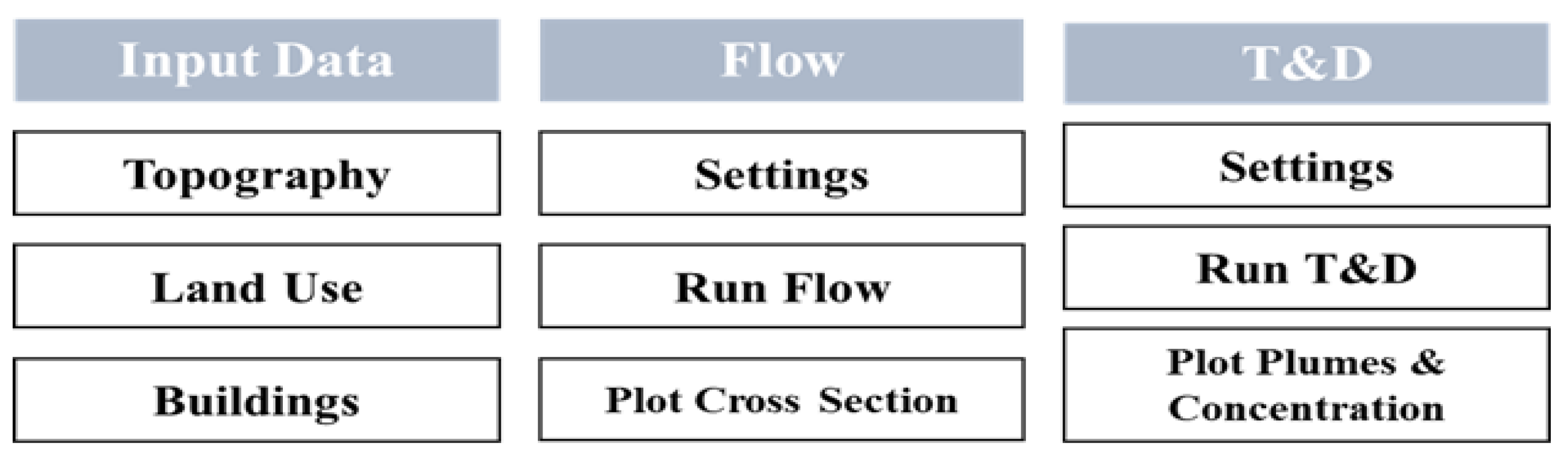
Figure 2.
The relationship between the number of chemical air emissions in Ansan and emissions (kg/year).
Figure 2.
The relationship between the number of chemical air emissions in Ansan and emissions (kg/year).
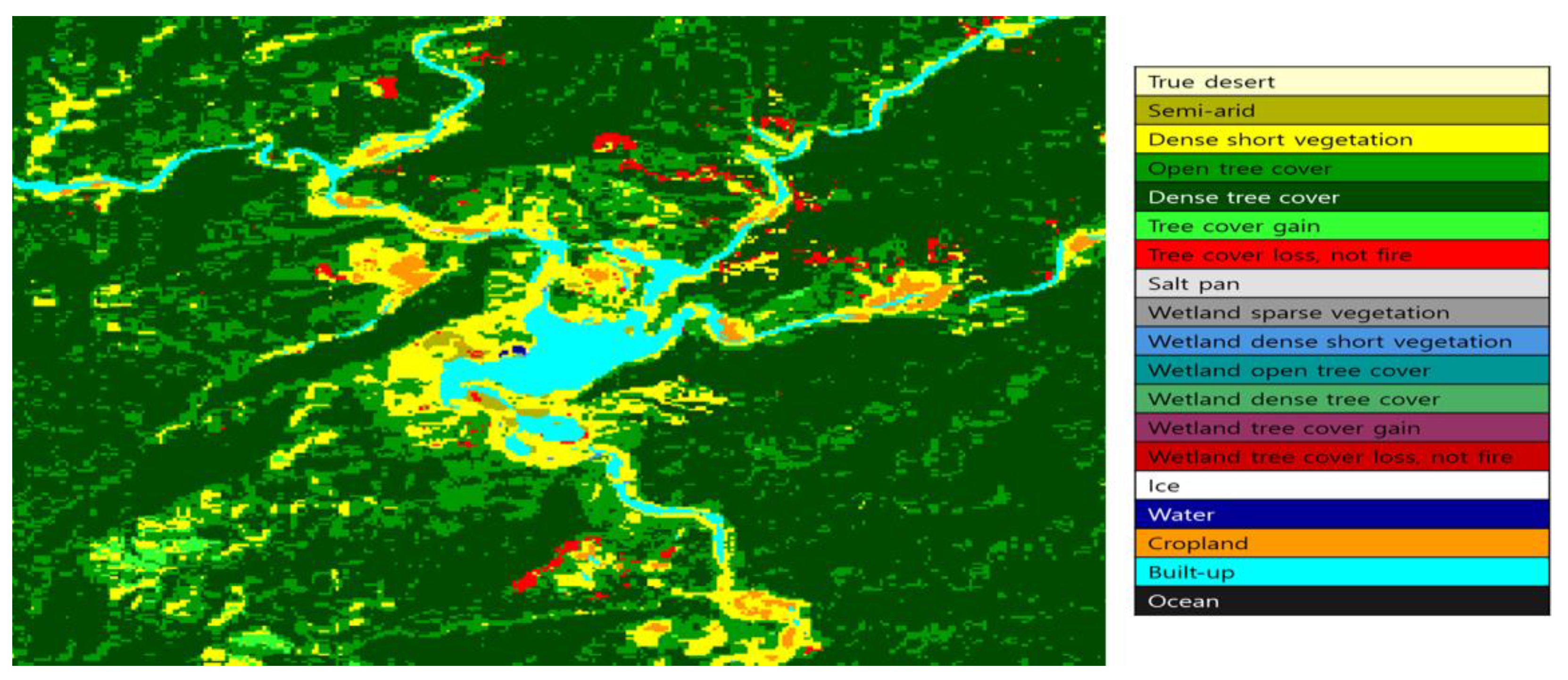
Figure 3.
A2C modeling domain.
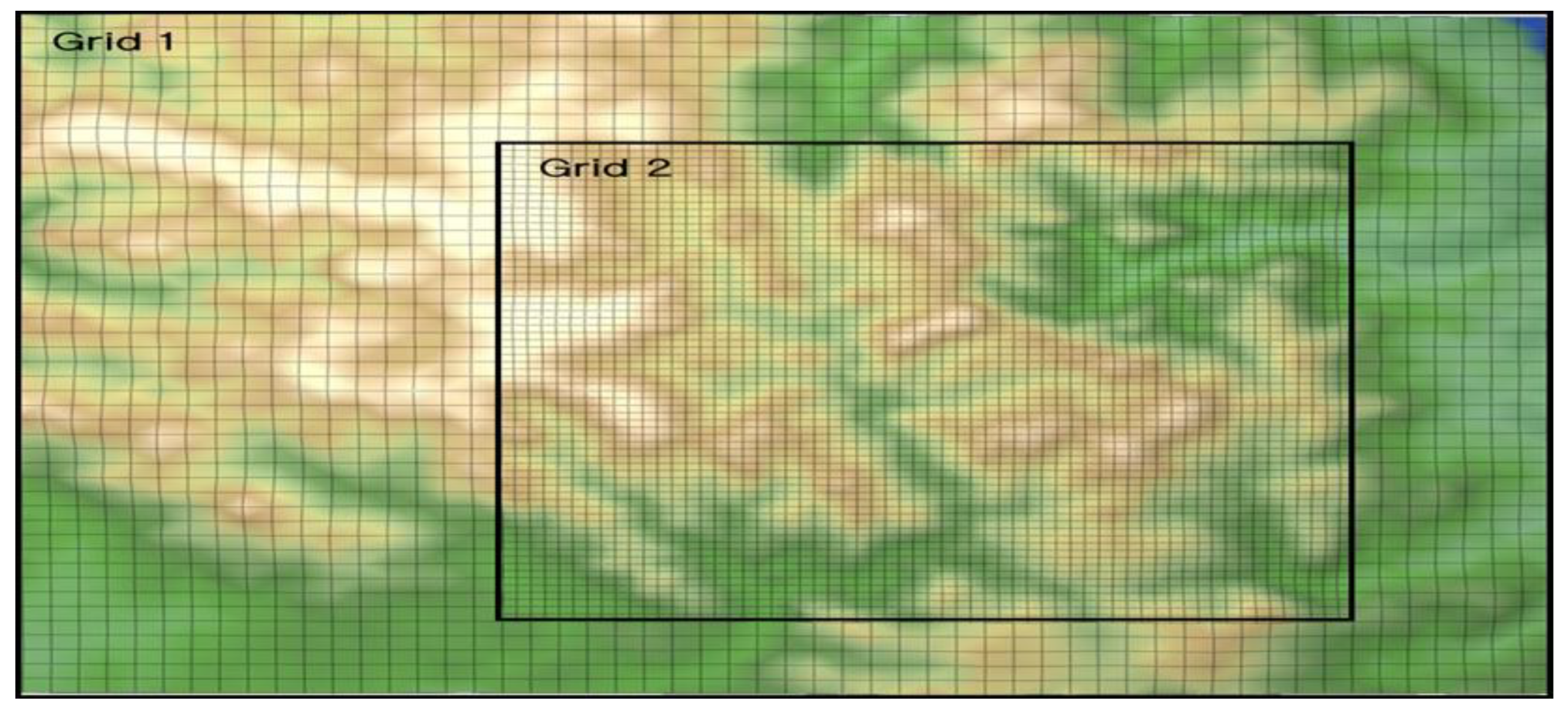
Figure 4.
Seasonal mountain valley wind generation characteristics through A2Cflow modeling.
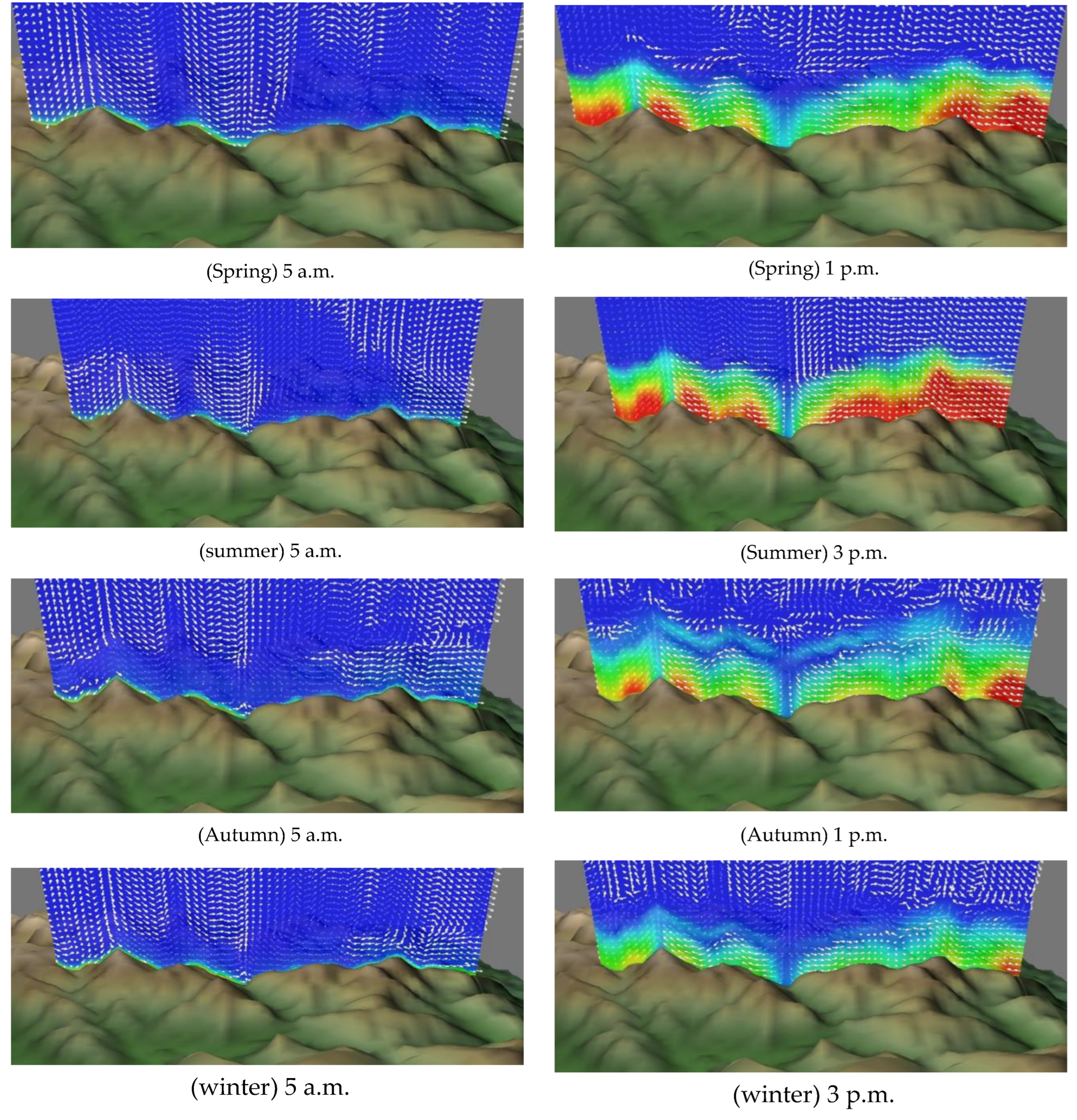
Figure 5.
Seokpo-myeon HOTMAC meteorological field analysis result. (a: wind rose, b: Average wind speed by hour).
Figure 5.
Seokpo-myeon HOTMAC meteorological field analysis result. (a: wind rose, b: Average wind speed by hour).
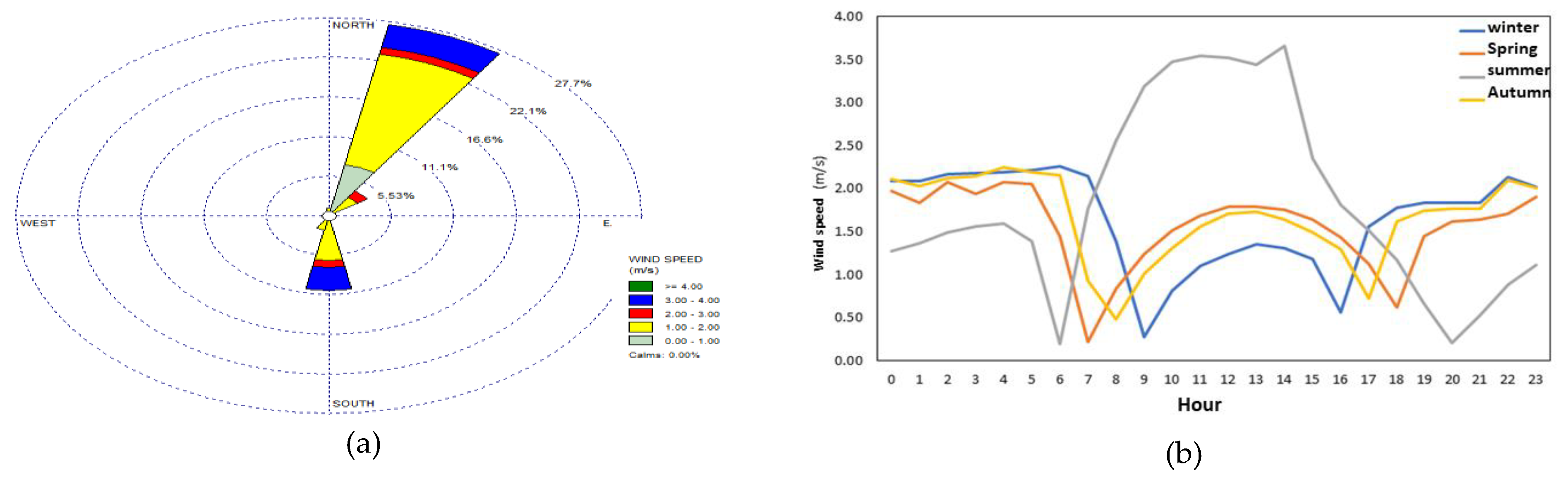
Figure 6.
Average estimates of concentrations of heavy metals (PAHs) in the atmosphere at specific locations and points (a: Measurement location by distance of terrain, b: Average concentration of particulate PAHs by 4 survey points).
Figure 6.
Average estimates of concentrations of heavy metals (PAHs) in the atmosphere at specific locations and points (a: Measurement location by distance of terrain, b: Average concentration of particulate PAHs by 4 survey points).
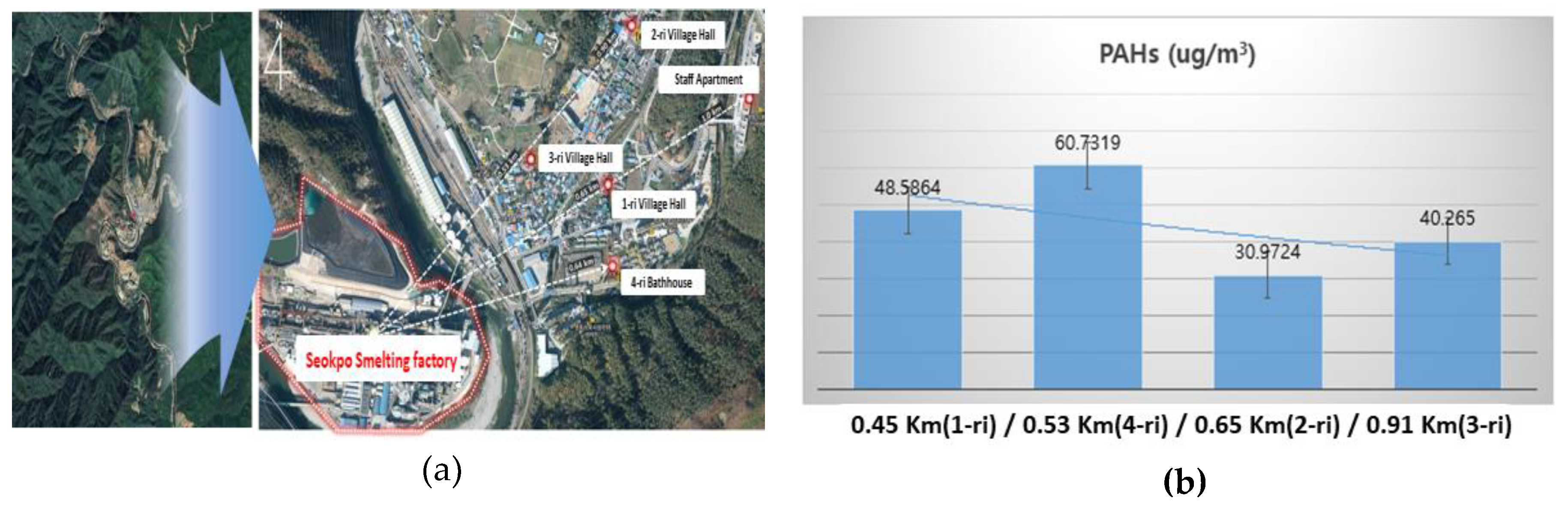
Figure 7.
Concentrations of particulate PAHs by substance and region (overall average values).
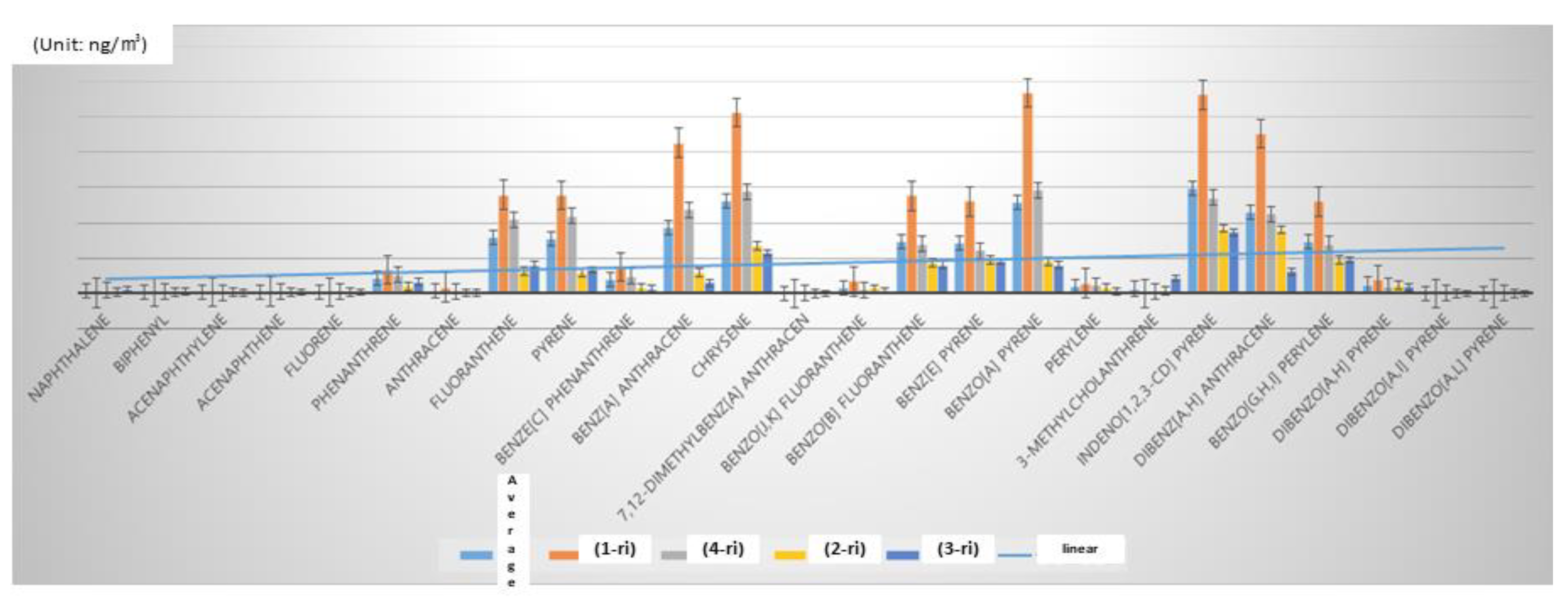
Figure 8.
Comparison of PAHs concentrations in major particulate heavy metals with results from smelters and other industrial complexes in November.
Figure 8.
Comparison of PAHs concentrations in major particulate heavy metals with results from smelters and other industrial complexes in November.
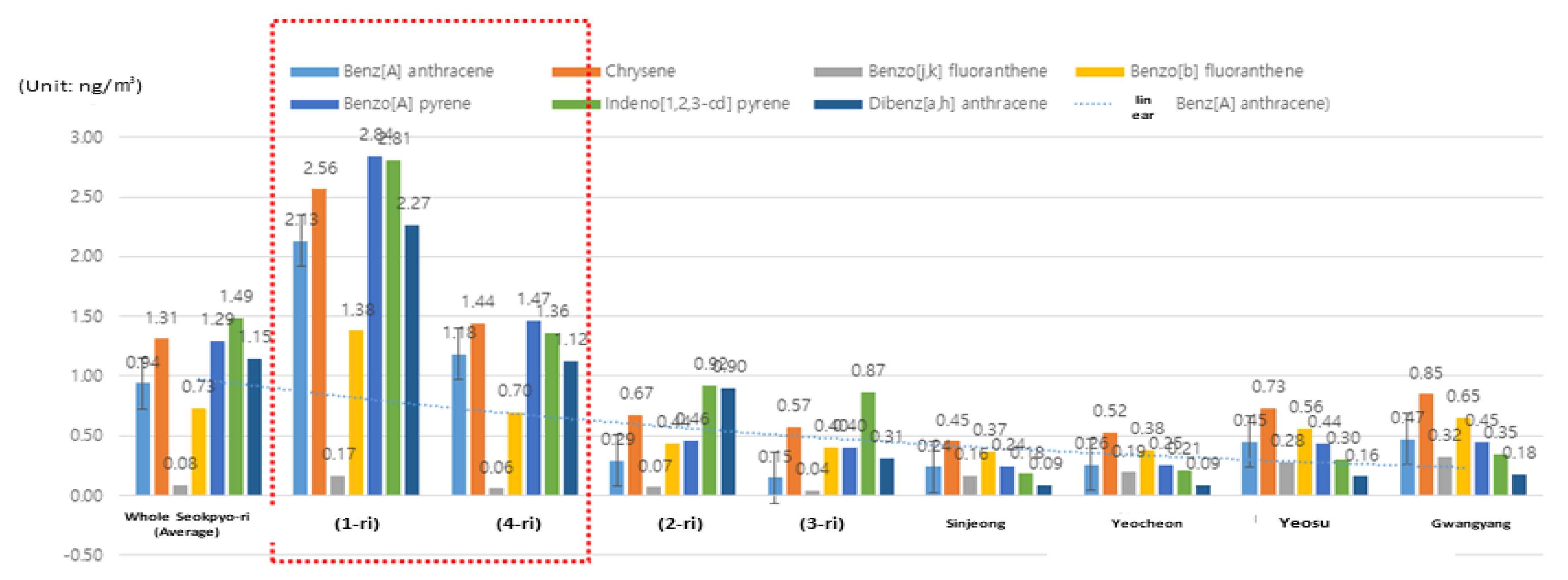

Table 1.
General characteristics of all subjects according to exposure and control areas around the smelting factory (Unit, No. (%)).
Table 1.
General characteristics of all subjects according to exposure and control areas around the smelting factory (Unit, No. (%)).
| - | Exposure area | Control area1) | Control area2) | Control area3) | p-value* | |
|---|---|---|---|---|---|---|
| Total (persons) | 402 | 1315 | 108,317 | 3,841,050 | ||
| Gender | Male | 187(46.52) | 623(47.38) | 54,601(50.41) | 1,935,090(50.38) | 0.0288 |
| Formal | 215(53.48) | 692(52.62) | 53,716(49.59) | 1,905,960(49.62) | ||
| Age (years) | 37.30±24.01 | 42.86±23.83 | 35.60±21.95 | 32.79±20.08 | 0.0001 | |
| <20 | 115(28.61) | 263(20.00) | 30,233(27.91) | 1,109,574(28.89) | 0.0001 | |
| 20-40 | 105(26.12) | 327(24.87) | 32,870(30.35) | 1,343,251(34.97) | ||
| 40-65 | 110(27.36) | 398(30.27) | 31,441(29.03) | 1,097,712(28.58) | ||
| ≥65 | 72(17.91) | 327(24.87) | 13,773(12.72) | 290,513(7.56) | ||
| Income** | 1st quartile | 99(24.75) | 350(27.20) | 23,784(22.65) | 778,915(20.71) | 0.0001 |
| 2st quartile | 86(21.50) | 284(22.07) | 21,274(20.26) | 859,641(22.85) | ||
| 3st quartile | 84(21.00) | 311(24.16) | 28,240(26.89) | 1,040,122(27.65) | ||
| 4st quartile | 131(32.75) | 342(26.57) | 31,713(30.20) | 1,082,974(28.79) | ||
| Average observation period (years) | 2.21±3.87 | 2.23±3.54 | 1.60±3.93 | 0.54±3.39 | <0.001 | |
| Total Observed Years (years) | 861.17 | 2,826.35 | 169,139.60 | 2,049,619.34 | - | |
*Chi-square test.; **Income decile: Health insurance premium 20 deciles divided into quartiles.; Exposure area: Seokpo-myeon. 1) Control area (Bonghwa-gun), 2) Control area (Gyeongsangbuk-do), 3) Control area (Nationwide).
Table 2.
Results of the causal relationship of respiratory diseases among chronic diseases (Unit, No. (%)).
Table 2.
Results of the causal relationship of respiratory diseases among chronic diseases (Unit, No. (%)).
| - | Exposure area | Control area1) | Control area2) | Control area3) | p-value* | |
|---|---|---|---|---|---|---|
| Acute upper respiratory tract disease(J00-J06) | ||||||
| Number of subjects (persons) | 113 | 465 | 28,893 | 1,068,470 | <0.0001 | |
| Result of occurrence | Yes | 83(73.45) | 365(78.49) | 24,805(85.85) | 972,851(91.05) | |
| No | 30(26.55) | 100(21.51) | 4,088(14.15) | 95,619(8.95) | ||
| Other upper respiratory tract diseases (J32-J39) | ||||||
| Number of subjects (persons) | 331 | 1,118 | 83,009 | 2,849,233 | <0.0001 | |
| Result of occurrence | Yes | 308(93.05) | 1,034(92.49) | 77,789(93.71) | 2,727,319(95.72) | |
| No | 23(6.95) | 84(7.51) | 5,220(6.29) | 121,914 (4.28) | ||
| Acute lower respiratory tract infection (excluding pneumonia) (J20-J22) | ||||||
| Number of subjects (persons) | 200 | 795 | 51,368 | 1,817,289 | ||
| Result of occurrence | Yes | 165(82.50) | 660(83.02) | 43,863(85.39) | 1,652,786(90.95) | <0.0001 |
| No | 35(17.50) | 135(16.98) | 7,505(14.61) | 164,503(9.05) | ||
| Chronic lower respiratory disease (persons) (excluding J40-J47, J45-J46) | ||||||
| Number of subjects (persons) | 325 | 1,028 | 92,126 | 3,325,184 | <0.0001 | |
| Result of occurrence | Yes | 293(90.15) | 937(91.15) | 86,790(94.21) | 3,214,715(96.68) | |
| No | 32(9.85) | 91(8.85) | 5,336(5.79) | 110,469(3.32) | ||
| Asthma (J45-J46) | ||||||
| Number of subjects (persons) | 320 | 1,127 | 89,039 | 3,201,079 | ||
| Result of occurrence | Yes | 307(95.94) | 1,081(95.92) | 86,064(96.66) | 3,140,296(98.10) | <0.0001 |
| No | 13(4.06) | 46(4.08) | 2,975(3.34) | 60,783(1.90) | ||
*Chi-square test; **Income decile: Health insurance premium 20 deciles divided into quartile; Exposure area: Seokpo-myeon. 1) Control area (Bonghwa-gun), 2) Control area (Gyeongsangbuk-do), 3) Control area (Nationwide).
Table 3.
Results of the causal relationship of other respiratory diseases among chronic diseases (Unit, No. (%)).
Table 3.
Results of the causal relationship of other respiratory diseases among chronic diseases (Unit, No. (%)).
| - | Exposure area | Control area1) | Control area2) | Control area3) | p-value* | ||
|---|---|---|---|---|---|---|---|
| Rhinitis (J30-J31) | |||||||
| Number of subjects (persons) | 196 | 763 | 55,957 | 1,901,156 | <0.001 | ||
| Result of occurrence | Yes | 166(84.69) | 641(84.01) | 48,071(85.91) | 1,734,936(91.26) | ||
| No | 30(15.31) | 122(15.99) | 7,886(14.09) | 166,220(8.74) | |||
| Respiratory disease (J00-J99) | |||||||
| Number of subjects (persons) | 57 | 236 | 15,972 | 676,765 | <0.001 | ||
| Result of occurrence | Yes | 41(71.93) | 168(71.19) | 13,050(81.71) | 599,803(88.63) | ||
| No | 16(28.07) | 68(28.81) | 2,922(18.29) | 76,962(11.37) | |||
| Cough (R05) | |||||||
| Number of subjects (persons) | 394 | 1,260 | 105,026 | 3,745,433 | 0.0133 | ||
| Result of occurrence | Yes | 384(97.46) | 1,244(98.73) | 103,500(98.55) | 3,719,974(99.32) | ||
| No | 10(2.54) | 16(1.27) | 1,526(1.45) | 25,459(0.68) | |||
*Chi-square test; **Income decile: Health insurance premium 20 deciles divided into quartiles; Exposure area: Seokpo-myeon. 1) Control area (Bonghwa-gun), 2) Control area (Gyeongsangbuk-do), 3) Control area (Nationwide).
Disclaimer/Publisher’s Note: The statements, opinions and data contained in all publications are solely those of the individual author(s) and contributor(s) and not of MDPI and/or the editor(s). MDPI and/or the editor(s) disclaim responsibility for any injury to people or property resulting from any ideas, methods, instructions or products referred to in the content. |
© 2023 by the authors. Licensee MDPI, Basel, Switzerland. This article is an open access article distributed under the terms and conditions of the Creative Commons Attribution (CC BY) license (http://creativecommons.org/licenses/by/4.0/).
Copyright: This open access article is published under a Creative Commons CC BY 4.0 license, which permit the free download, distribution, and reuse, provided that the author and preprint are cited in any reuse.


