
Submitted:
15 September 2021
Posted:
16 September 2021
You are already at the latest version
Abstract
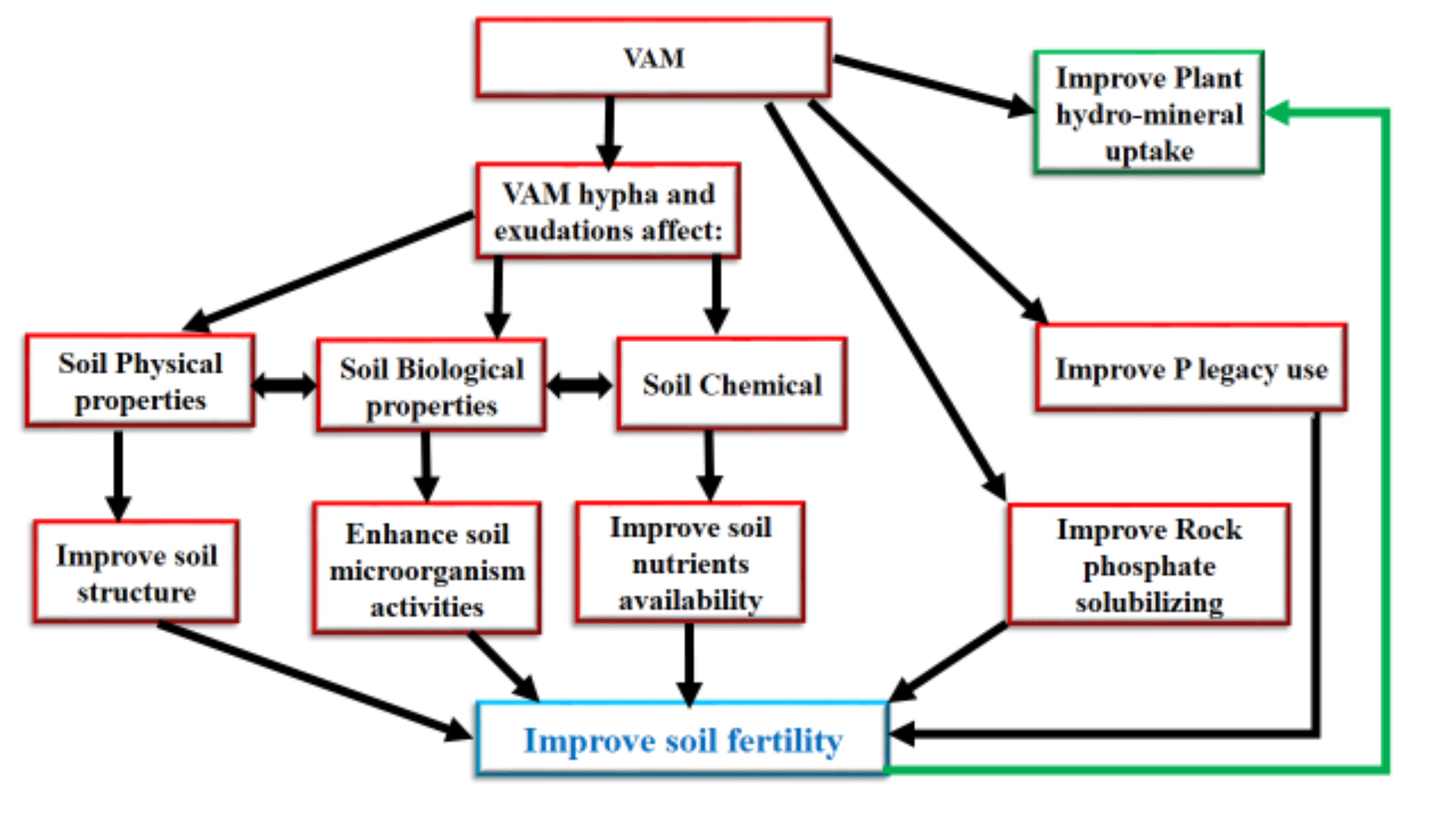
A single paragraph Arbuscular mycorrhizal fungi (AMF) establish symbiotic relationships with many crops. These soil microbiotas improve the soil fertility through the soil physical, chemical and biological properties. extending the root absorbing area. In return, the symbiont receives plant carbohydrates for the completion of its life cycle. AMF also helps plants to cope with biotic and abiotic stresses such as extreme temperature, heavy metal, diseases, and pathogens. For soil physical properties, the mechanisms used by AMF are the production of a glycoprotein, glomalin, which creates a high quality of soil macro-aggregations. These macro-aggregations control soil erosion, nutrients and organic matter losses. For soil chemical properties, AMF produce acids and an enzyme called phosphatase. This enzyme hydrolyzes the inorganic phosphorus and the rock phosphate (RP) hence making P available in the soil for plant uptake. AMF also are involved in soil nitrogen, carbon and trace element cycling. Regarding the biological component of the soil, AMF influence the composition, diversity and activity of microbial communities in the hydrosphere. They also work in synergy with others soil microorganisms to improve soil fertility, plant growth and resistance against some diseases. In this review, we present the contribution of AMF on soil fertility and importance in polluted soils.
Keywords:
Microorganisms
; Macro-aggregation
; Rock phosphate
; Glomalin
Copyright: This open access article is published under a Creative Commons CC BY 4.0 license, which permit the free download, distribution, and reuse, provided that the author and preprint are cited in any reuse.


