

Submitted:
11 June 2026
Posted:
12 June 2026
You are already at the latest version
Abstract
The leaching of chalcopyrite in sulfate or chloride media has been proposed to occur through a combined non-oxidative/oxidative mechanism, where H2S forms an intermediary species, concurrently with direct oxidative leaching. Some studies have noted that elevated concentrations of Cu(II) improve chalcopyrite leaching in sulfate media. In this study, the role of Cu(II) was investigated in the non-oxidative/oxidative process through electrochemical tests on a chalcopyrite electrode, supported by bulk leach tests. The results of the electrochemical tests are consistent with the formation of H2S through non-oxidative leaching of chalcopyrite. The H2S subsequently reacts with Cu(II) to form intermediate cuprous sulfide species, which can be readily oxidized by dissolved oxygen. The bulk leach tests point to a synergy between Cu(II) and O2, further confirming the catalytic role of Cu(II). The findings support the feasibility of running heap leaching of chalcopyrite-rich ores at elevated copper concentrations in either chloride or sulfate systems.
Keywords:
chalcopyrite
; leaching
; sulfate
; copper
; electrochemistry
1. Introduction
Unlike in chloride systems, Cu(II) is generally not considered an oxidant in the leaching of chalcopyrite in sulfate systems. This is due to the lack of stability of Cu(I) in sulfate media. However, some studies [1,2,3,4] observed that Cu(II) had an enhancing effect on chalcopyrite dissolution in sulfate media. Hiroyoshi et al. [2] proposed a two-step process in which chalcopyrite is first reduced to chalcocite by Fe(II) in the presence of Cu(II) (Eq. 1). Subsequently, chalcocite is oxidized by Fe(III) to Cu(II) and S (Eq. 2). Notably, Hiroyoshi et al. [2] observed the enhancing effect of Cu(II) only in presence of both Fe(II) and Fe(III). However, they did not show direct evidence of chalcocite formation [1,2].
CuFeS2 + 3 Cu2+ + 3 Fe2+ → 2 Cu2S + 4Fe3+
2 Cu2S + 8 Fe3+ → 4 Cu2+ + 2 S + 8 Fe2+
The mechanism by Hiroyoshi et al. [2] was refuted by Nicol and Lázaro [5] who proposed a different, two-step mechanism in which the first step is the non-oxidative dissolution of chalcopyrite (Eq. 3), followed by the oxidation of H2S by Fe(III) (Eq. 4). Nicol and Lázaro [5] referred to this mechanism as a “non-oxidative/oxidative” reaction mechanism. According to these authors, this non-oxidative/oxidative mechanism could occur in parallel with the direct oxidative dissolution (Eq. 5).
CuFeS2 + 4 H+ → Cu2+ + Fe2+ + 2 H2S
H2S + 2 Fe3+ → S + 2 H+ + 2 Fe2+
CuFeS2 + 4Fe3+ → Cu2+ + 5 Fe2+ + 2 S
While both mechanisms could explain chalcopyrite dissolution at low potentials, Nicol and Lázaro [5] argue that, based on thermodynamic principles, the first step of the mechanism proposed by Hiroyoshi et al. [2] (Eq. 1) was unlikely. Also, Nicol et al. [6] pointed out that in the model suggested by Hiroyoshi and co-workers[2], chalcopyrite reduction (Eq. 1) was proposed at potentials in which the process is unlikely to occur from both a kinetic and thermodynamic standpoint. Lu et al. [7] agreed to the possibility of the formation of H2S and CuS intermediates. Although they calculated a very low K value, they rationalized it by stating that this was feasible at low concentrations of H2S.
The non-oxidative/oxidative mechanism [5] was further extended to chloride media by Nicol et al. (2010). The authors observed that Cu(II) catalyzed the oxidation of H2S in the chloride system. They postulated the formation of covellite by non-oxidative acidic attack of chalcopyrite (Eq. 6) as the first step of the overall dissolution of chalcopyrite in chloride media at potentials below 600 mV. H2S formed during this step can form a Cu(II)-HS complex (Eq. 7), which is subject to further oxidation by oxygen (Eq. 8). The authors argued that the oxidation of this complex by oxygen would be faster than the direct oxidation of H2S (Eq. 9).
CuFeS2 + 2 H+ → CuS + Fe2+ + H2S
Cu2+ + H2S → Cu(HS)+ + H+
Cu(HS)+ + ½ O2 + H+ → H2O + S + Cu2+
H2S + ½ O2 → H2O + S
Thus, the study of H2S oxidation in acidic media is of interest in the leaching of chalcopyrite, especially when considered in the context of its applicability in heap leaching. It is worth highlighting that although Nicol and Lázaro [5] pointed out that the oxidation of H2S is a necessary subsequent step for the non-oxidative dissolution process to occur, the authors did not speak directly to the effect of Cu(II) in the process. In sulfate system, it would be important to understand better the H2S oxidation by Fe(III) which is the most common oxidant. Likewise, Cu(II) was shown to catalyze H2S oxidation by O2 in chloride media, but this catalytic effect of Cu(II) has still to be observed in sulfate media, particularly with Fe(III) as the oxidant.
Although not always studied in the context of chalcopyrite leaching, the oxidation of dissolved hydrogen sulfide (H2S) by Fe(III) according to the reaction (4) is fairly well-known. The addition of Fe(III) salt is used as a method to control sulfide in wastewater (Nielsen et al., 2008). Sulfur precipitates as S (Eq. (4)), and Fe(II) readily reacts with either H2S or HS- (formed through H2S dissociation, Eq 10, pka= 6.9) to form pyrrhotite (FeS) (Eqs. 11 and 12) or other Fe(II) sulfides such as pyrite and marcasite (FeS2) [8,9].
Thus, the study of H2S oxidation in acidic media is of interest in the leaching of chalcopyrite, especially when considered in the context of its applicability in heap leaching. It is worth highlighting that although Nicol and Lázaro [5] pointed out that the oxidation of H2S is a necessary subsequent step for the non-oxidative dissolution process to occur, the authors did not speak directly to the effect of Cu(II) in the process. In sulfate system, it would be important to understand better the H2S oxidation by Fe(III) which is the most common oxidant. Likewise, Cu(II) was shown to catalyze H2S oxidation by O2 in chloride media, but this catalytic effect of Cu(II) has still to be observed in sulfate media, particularly with Fe(III) as the oxidant.
Although not always studied in the context of chalcopyrite leaching, the oxidation of dissolved hydrogen sulfide (H2S) by Fe(III) according to the reaction (4) is fairly well-known. The addition of Fe(III) salt is used as a method to control sulfide in wastewater (Nielsen et al., 2008). Sulfur precipitates as S (Eq. (4)), and Fe(II) readily reacts with either H2S or HS- (formed through H2S dissociation, Eq 10, pka= 6.9) to form pyrrhotite (FeS) (Eqs. 11 and 12) or other Fe(II) sulfides such as pyrite and marcasite (FeS2) [8,9].
H2S → HS- + H+
Fe2+ + H2S → FeS + 2 H+
Fe2+ + HS- → FeS + H+
In this work, the role of Cu(II) in the leaching of chalcopyrite in sulfate media was studied through electrochemical methods and controlled leach tests aimed at investigating some aspects of the non-oxidative leaching of chalcopyrite and the oxidation of H2S. This investigation aimed to obtain a better understanding of the overall dissolution of chalcopyrite, particularly through a pathway that may involve the formation and further reaction of H2S in acidic sulfate media which do not contain complexing agents of Cu(II) and Cu(I).
In this work, the role of Cu(II) in the leaching of chalcopyrite in sulfate media was studied through electrochemical methods and controlled leach tests aimed at investigating some aspects of the non-oxidative leaching of chalcopyrite and the oxidation of H2S. This investigation aimed to obtain a better understanding of the overall dissolution of chalcopyrite, particularly through a pathway that may involve the formation and further reaction of H2S in acidic sulfate media which do not contain complexing agents of Cu(II) and Cu(I).
2. Materials and Methods
2.1. Material
The chalcopyrite electrode was made from a mineral sample from Durango, Mexico, supplied by Wards Natural Science. The Certificate of Analysis reported 32% Cu, 29.5% Fe, 34.3% S, 2.8% Si, 0.26% Zn and 0.62% Ca. An XRD analysis of the sample reported 97.8 % purity. The sample used in the leaching tests also originated from Durango, Mexico, and was also supplied by Wards Natural Sciences. Its chemical elemental analyses by ICP-OES reported: Cu 30.4%; Fe, 30.3%; S 37.9%; Zn 1.0% and Ca 1.3%. XRD analysis reported 93 % purity. The sample was micronized to obtain 80% passing 630 µm for the leaching experiments. Analytical grade reagents, NaSH, CuSO4·5H2O, Fe2(SO4)3·xH2O, 97-99% H2SO4 and 70 % HClO4 supplied by Merck were used as received to prepare solutions with de-ionized water.
2.2. Electrochemical Tests
2.2.1. Apparatus
Electrochemical experiments were carried out in a three-electrode electrochemical cell setup using an 80 mL thermostatic electrochemical cell. The temperature was set at 25 °C. The setup included a 3.5 M Ag/AgCl electrode reference electrode, and the working electrode was either a chalcopyrite disk electrode (area 0.560 cm2) or a Pt disk electrode (area 0.196 cm2). The chalcopyrite electrode was used as the working electrode in the leaching tests held at the minerals rest potential and in the first part of the anodic stripping tests (see below), while the Pt disk electrode was used in the second part of the anodic stripping tests, as well as in all the other linear and cyclic voltammetry tests. Unless stated otherwise, both the Pt and CuFeS2 electrodes were rotated at 500 rpm. The chalcopyrite electrode was kept stationary in tests where it was not potentiostatically monitored. All electrochemical tests were conducted using a Gamry 1010E potentiostat and recorded using the Gamry software. The solution was deoxygenated by bubbling nitrogen for 10 minutes before the start of each test. To prevent further oxygen intrusion, a blanket of nitrogen was maintained at the top of the solution.
2.2.2. Measurement Techniques
a) Open Circuit Potential (OCP) measurements
Open circuit potential (OCP) measurement refers to the potential measured in the absence of any external current. It measures the potential difference between the reference electrode and the working electrode immersed in solution. It is related to the tendency of the electrode surface to oxidize in a specific environment. Monitoring the potential over time provides information on changes occurring on the surface. The use of a Pt disk electrode as the working electrode enables a more accurate examination of the electrochemical behavior of species in solution due to the electrode stability and inertness.
b) Voltammetry
In voltammetry experiments, the potential is set to change at a constant rate while the resulting current is measured. The experiment is carried out within a potential range (i.e., between a lower limit and an upper limit). In linear sweep voltammetry (LSV), the potential is swept in a single direction (i.e., either from the lower limit to the upper limit or from the upper to the lower limit). In cyclic voltammetry (CV), the potential is first swept through one direction from a starting potential to a limit potential. Upon reaching the limit, the direction of the sweep is reversed until the initial potential is reached again. The complete cycle of a CV experiment is carried out, like an LSV experiment, within a potential range. Both cyclic and linear voltammetry are useful to understand the kinetics of the system. They can also be used for qualitative analytical purposes. In this case, higher scan rates are preferred. In all the tests, the scan range was from 205 to 1105 mV vs SHE, at a scan rate of 100 mV/s.
2.2.3. Experimental Program
a) Measure of open circuit potential with chalcopyrite electrode
The open circuit potential was measured during leaching at rest potential, with the electrode rotating at 500 rpm.
b) Measure of open circuit potential with platinum disk electrode
This experiment served to evaluate the effect of the addition of some ions, like Cu(II) and Fe(III), on the solution potential of a system initially deprived of them. 63 or 70 mL of solution was added to the electrochemical cell. HClO4 was used to control solution pH. The potential was measured for 10 minutes. Then Fe(III) and Cu(II) were added, individually or in combination, by diluting the stock solution to desired concentrations.
c) Normal linear sweep voltammetry
LSV experiments were carried out on a Pt wire electrode with a second Pt wire electrode serving as the counter electrode. It was conducted either in a solution already containing H2S and Cu(II) or immediately after 14 to 20 hours of leaching of the chalcopyrite electrode at rest potential in sulfuric acid solutions (without prior addition of H2S and Cu(II). The tests served as a method to confirm the presence of H2S, since the low concentrations produced during the non-oxidative dissolution could not be measured directly. This was achieved by comparing the voltammograms generated in solutions already containing H2S and Cu(II) to those obtained subsequent to leaching a chalcopyrite working electrode at rest potential. The results were reported in terms of currents (and not current densities).
d) Anodic stripping
This experiment was a linear voltammetry experiment carried out after deposition at the Pt disk electrode. It was carried out with the Pt disk electrode as the working electrode, while the Pt wire electrode served as the counter electrode. Cu(II), originating from the non-oxidative leaching of chalcopyrite or already present in solution, was first deposited on a Pt counter electrode and subsequently stripped during the linear voltammetry measurement.
In the first case, the chalcopyrite electrode (rotated at 500 rpm) was leached at rest potential for 14 or 20 hours in a sulfuric acid solution that had been deoxygenated by bubbling nitrogen. During this leaching at rest potential, the Pt disk electrode, placed next to the chalcopyrite electrode, was maintained at -0.6 V in order to allow for the deposition of Cu from Cu(II) that would have resulted from the non-oxidative leaching of chalcopyrite.
In the second case, the Pt electrode disk was maintained at -0.6 V for 20 minutes in sulfuric acid solution already containing Cu(II) and H2S with the same goal of allowing Cu deposition.
After the deposition step, a linear sweep voltammetry test was run to strip the deposited Cu and eventually favor its reaction with H2.S. The comparison of voltammograms for the two cases allowed to identify similar reactions taking place.
e) Cyclic voltammetry
CV tests were carried out using the Pt disk electrode as the working electrode, while the Pt wire electrode served as the counter electrode. The tests were run in a H2S solution, initially in the absence of Cu(II) and Fe(III). 40 mL of H2S solution was bubbled with nitrogen for 10 minutes, and thereafter a blanket of nitrogen was maintained at the top of the solution. An equal volume of Fe(III) sulfate solution (in the presence or absence of Cu(II)) was added. Cyclic voltammetry scans were run immediately after the mixing as well as at 1, 2, 3, 5, and 10 minutes thereafter. The pH was controlled either by HClO4 or H2SO4, as specified. Control tests were carried out with only Cu(II) in absence of HS-/H2S.
2.3. Leaching Tests
Leach tests were conducted in thermostated stirred tank reactors. They were carried out under a nitrogen atmosphere or passive aeration. Magnetic stirrers were used for agitation and the temperature was set at 20°C. A solid to liquid ratio of 1% was utilized at 0.5 M H2SO4 concentration. Three agitation rates were used: no agitation or 0 rpm, 250 rpm, and 700 rpm. Cu and Fe concentrations were measured using ICP-OES and then converted to their respective extractions. The parameters for the tests are presented in Table 1.
2.4. Scaning Electron Microscopy Coupled with Energy Dispersive X-Ray Spectroscpopy (SEM_EDS)
The technique was used to analyze the precipitates observed when NaSH was added to highly concentrated acid solutions.
3. Results
3.1. Formation of H2S During Non-Oxidative Leaching
The presence of H2S in sulfate media containing Cu(II) during non-oxidative chalcopyrite leaching was tested by linear voltammetry, since the direct measurement of H2S can be challenging owing to the very low expected concentrations. Figure 1 shows the results of the anodic stripping for a 0.1 M acid concentration. Anodic stripping commenced after the chalcopyrite electrode had been leached under nitrogen for 14 hours at open circuit potential at 40°C. A peak was observed around 420 mV (experiment 1). A similar peak but less intense was also observed for the solution initially containing 3µM of both Cu(II) and H2S after prior deposition at 25°C (experiment 2). This peak was accompanied by another at around 550 mV, both forming almost a single band. However, when the temperature for the deposition was increased to 40 °C (experiment 3), a single broad peak ranging from 200 to 1000 mV and with a maximum around 730mV was observed. It was more intense than the peak observed after the leaching of the chalcopyrite electrode at the same temperature. The similarity of the curves after the completion of experiments 1 and 2 suggests the presence of similar compounds in solution for both experiments. This confirms that both Cu(II) and H2S were formed during the leaching of the chalcopyrite electrode at open circuit at 40 °C. The intensity of these peaks may be an indication of both Cu(II) and H2S concentrations. This is in agreement with Nicol and Lazaro [5] who used the same method, albeit with a more positive deposition potential and a different setup (ring-disk electrode), and came to the same conclusions. They attributed the peak they observed at 400 mV to the oxidation of Cu2S formed by the reduction of Cu(II) in presence of H2S (Eq. 13) on the platinum ring after open-circuit dissolution for the chalcopyrite disk.
2 Cu2+ + H2S +2 e- → Cu2S +2 H+
Similar results were observed with direct linear sweep voltammetry experiments without prior deposition (Figure 2). For the acid concentration of 0.1 M (Figure 2.A), after 20 hours of leaching at 25 °C, a small peak was observed around 700 mV. When the leaching temperature was raised to 50°C, the peak became more intense and was shifted to the left, appearing at 550 mV. The peak appeared at almost the same position, around 600 mV, for the solution already containing both H2S and Cu(II) but was less intense than after the non-oxidative leaching at 50°C. The peak observed in all these conditions is likely due to the oxidation of a Cu-S compound containing Cu at +1 oxidation state and may be formed by reaction (13). The comparison of current responses obtained after non-oxidative leaching at 0.1 and 0.5 M acid concentration (Figure 2. c) shows the peak was more intense and shifted to lower potentials at high acid strength. The difference of intensities suggests that the non-oxidative dissolution of chalcopyrite was promoted by high acid concentration. This is in agreement with the kinetics proposed by Nicol and Lazaro [5] in which the maximum rate of dissolution is proportional to the initial concentration of H+. The non-oxidative dissolution of chalcopyrite also seems to be promoted by temperature.
3.2. Rest Potentials
The initial solution was saturated with 0.5 M H2S. Fe(III) and Cu(II) were added as Fe2(SO4)3·xH2O and CuSO4·5H2O respectively individually or in combination to achieve final concentrations of 10 mM and 1.75 mM, respectively. In these tests, HClO4 was added to control the pH, it was present at the same concentration in both the initial and added solutions. At pH 2, the addition of Fe(III) (Figure 3.a), Cu(II) (Figure 3.c) or both (Figure 3.C) led to a step increase in potential. After the initial step increase, the potential remained stable in the case of Fe(III) addition (Figure 3.a) and showed a slight decrease but quickly stabilized in case of simultaneous addition of Cu(II) and Fe(III) (Figure 3.c). However, the addition of Cu(II) alone (Figure 3.b) showed a slow but noteworthy gradual decrease of the potential after the initial step increase. This decrease in potential suggests possible formation of oxidizable species, possibly the likes of Cu2S, at the electrode surface or in the solution. At pH 0 (Figure 4), similar results were observed except in the case of simultaneous addition of Cu(II) and Fe(III), which led to a potential decrease after the initial step increase at pH 2 but not at pH 0.
3.3. Cyclic Voltammetry
The results observed over time when Fe(III), Cu(II) or both ions were added in acidic solution of H2S at pH 2, with HClO4 controlling the pH, are shown in Figure 5. With the addition of Fe(III) (5mM) (Figure 5.A), currents were negative below 800 mV during the cathodic sweep, likely due to Fe(III) reduction, and no peak was observed; rather the curves plateaued suggesting mass transfer limited transport of Fe(III) to the mineral surface. With the addition of Cu(II) (1.75 mM) (Figure 5.B), a peak appeared around 400 to 500 mV when the electrode was scanned from 205 to 1105 mV. This peak was accompanied by a much smaller peak appearing during the reverse scan. The intensity of both peaks increased as time progressed. This peak was likely due to the oxidation of Cu(I) species which must have formed in solution. The increase of its intensity as time progressed suggests the increase in concentration of surface compounds on the electrode. The peak observed during the reverse scan at around 300 to 400 mV is related to Cu(II) reduction, most likely to Cu(I). With the addition of both Cu(II) and Fe(III) (Figure 11.C), the current densities were below 800 mV in the cathodic sweep and the peak at 400-500 mV shifted toward increasingly less negative current density values, indicating a competing anodic reaction over and above the contribution of Fe(III) reduction currents. Even in this case, there was a local maximum that mirrored the peaks observed when Cu(II) was added alone, both in terms of peak location and trend, as the time progressed. This indicates that the Cu(I) species responsible for the peak still forms and may remain metastable despite the presence of Fe(III).
The current responses observed between 900 and 1050 mV (Figure 5) are due to H2S oxidation [11,12,13]. Their intensity decreased with time and thus pointed to a decrease in H2S solution concentration, due to its oxidation by Fe(III). Nevertheless, above 800 mV, the presence of Cu(II) did not result in observable impacts on the current densities. This established that Cu(II) did not catalyze H2S oxidation by Fe(III).
The same results were observed at pH 0 and 1 with HClO4 and at pH 0 with H2SO4 (respectively Figure 6 and Figure 7 and Figure 8) with either 1.75 mM or 8.75 mM Cu(II) concentration. The only exception was for the addition of both Fe(III) and Cu(II) (8.75 mM) at pH 0 with HClO4 where the peak intensity after 5 minutes was higher than when Cu(II) was added alone. Also, the peak intensity after 5 minutes was higher than after 10 minutes.
In the absence of both H2S and the acids, no peak was observed with a solution containing 3.5 mM of initial Cu(II) (Figure 9.a.). Similarly, the addition of Cu(II) at an even higher concentration (8.75 mM) to an aqueous solution without H2S and acids led to a barely noticeable peak around 500 to 600 mV and its intensity did not significantly change as time progressed (Figure 9.b). This subtle peak may be noise or the re-oxidation of Cu(0) back to Cu(II). The area under the peak after 10 minutes corresponded to a charge of 188 µC. In comparison, in Figure 7.b, the corresponding charge was approximately 600 µC after 2 min and in Figure 7.C, it attained a value of 430 µC after two minutes. Importantly, in Figure 9.b., there was no corresponding cathodic peak during the reverse sweep. Therefore, it is reasonable to infer that the peak observed during the reverse sweep after the addition of Cu(II) in the presence of H2S was related to the formation of a Cu(I) sulfide.
The addition of Cu(II) (8.75 mM) to the acid solution (1 M HClO4, pH 0) in the absence of H2S resulted in no observable peak in the range 400 to 600 mV (Figure 10.), confirming the peak observed earlier was due to the presence of a Cu and S compound. However, an intense peak whose intensity decreased with time was observed between 300 to 400 mV, which was confirmed in a repeat experiment. Based on literature [14,15,16,17,18], this peak can be attributed to the anodic dissolution of hydrogen (Eq. 13) adsorbed on the surface of the Pt electrode through an underpotential deposition process (UPD) (Eq. 14). It was accompanied by a small peak appearing at 400 to 500 mV that became more apparent after 5 minutes. This peak is likely associated with the oxidation of Cu(I). The absence of the UPD-related peak when H2S was in solution can be explained by the higher affinity of sulfur compounds for platinum. This may favor the adsorption of H2S over H+ on the electrode surface.
3.4. Role of Cu(II) in the Non-Oxidative/Oxidative Mechanism of Chalcopyrite in Sulfate Media
So far, results from this study have shown that H2S formed through non-oxidative leaching of chalcopyrite can react with Cu(II) to form a Cu(I) sulfide species in sulfate and perchlorate media and in the absence of Cu(I) complexing agents. This is consistent with the mechanism proposed by Nicol et al. [6] in chloride media (Eq. 7 and 8). While a Cu(HS)+ complex was not directly observed during the experiments, the Cu(I) sulfide species observed could be Cu(H2S)+ or alike. This Cu(I) complex can be oxidized by O2 (Eq.15) and thus act as an intermediary in chalcopyrite leaching through the so-called non-oxidative/oxidative mechanism in sulfate media. This explanation can help better understand the positive effect of Cu(II) on chalcopyrite leaching in sulfate system media reported by previous studies [1,2,3,4].
Cu2+ + H2S → Cu(HS)+ + H+
Cu(HS)+ + ½ O2 + H+ → H2O + S + Cu2+
2 Cu(H2S)+ + 3/2 O2 + 2 H+ → 3 H2O +2 S + 2 Cu2+
3.5. Oxidation of H2S by the Acids
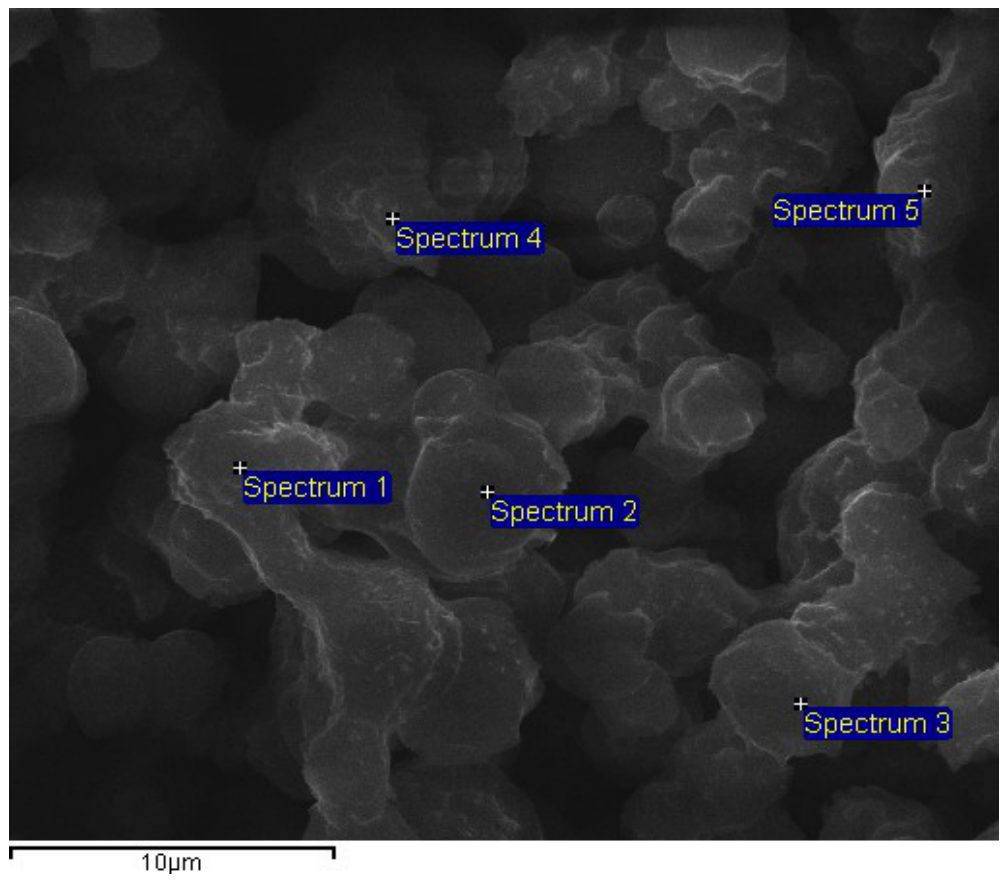
Nicol and Lazaro [5] proposed that H2S formed during the non-oxidative step could be later oxidized by Fe(III). Nicol et al. [6] proposed that oxygen can oxidize H2S at an even faster rate than Cu(II) in the chloride system. However, in the current study, evidence showed that under strongly acidic conditions, either H2SO4 or HClO4 could fulfil the role of the oxidant for H2S even at ambient temperature. The mixing of either acid (0.99M H2SO4 or 1 M HClO4 to have pH 0) with NaSH (0.025 M) resulted in the solution becoming cloudy and white (experiments whose results are reported in Figs 6 and 8). Over time, a yellow precipitate formed. The precipitate was further analyzed by SEM-EDS. The results (Figure 11 and Table 2) showed it was composed entirely of sulfur. This was most likely elemental sulfur formed by the oxidation of H2S by the acids (more accurately by chlorate and sulfate anions, as per Eqs.16 and 17).
ClO4- + H2S → ClO3- + S +H2O
SO42- + 2H+ + H2S → S +SO2 + 2 H2O
Figure 11.
SEM image of the yellow precipitate formed after dissolving H2S (0.025 M) in sulfuric acid solution (0.99 M) at room temperature.
Figure 11.
SEM image of the yellow precipitate formed after dissolving H2S (0.025 M) in sulfuric acid solution (0.99 M) at room temperature.
Equations 18 to 20 [18] show that both ClO4- and SO42- can oxidize H2S but SO42- is a much weaker oxidant. Zhang et al. [20] reported that H2S can be oxidized by H2SO4. The reaction was studied at 120 °C, but in their thermodynamics study the reaction was shown to be possible at even lower temperatures (50°C) for an equimolar ratio of H2S and H2SO4. Therefore, at a much larger excess of H2SO4 and HClO4 as the one used in the above-mentioned experiment (about 40 times), it should not be surprising that H2S undergoes oxidation even at room temperature.
ClO4- + 2H+ + 2e → ClO3- + H2O E°= 1.189 V
SO42- + 4 H++ 2e → H2SO3 + H2O E°= 0.172 V
S + 2H+ + 2e → H2S E°= 0.142 V
Therefore, in sulfate and perchlorate media, oxidation of H2S formed on the surface of chalcopyrite by SO42- (Eq.15) cannot be excluded.
3.6. Leaching Tests
The Cu and Fe extractions observed under passive aeration and with 0.23 g/L (3.6 mM) initial Cu (II) at different agitation rates are presented in Figs. 12 and 13. Under nitrogen, Cu extraction was insignificant, below 1% in the absence of initial Cu [21]. Notably, in tests where initial copper was present, concentrations declined, suggesting copper precipitation. Similarly, very little Fe was dissolved under both N2 and passive aeration, with less than 1% extracted in each of the tests. Importantly, even though the concentrations were low, even under N2 conditions, Fe was detected in solution, in contrast to Cu under similar conditions. Overall, some dissolution appeared to be taking place under both N2 and passive aeration, albeit to an extremely low extent. The detection of Fe in solutions that showed a regression in Cu below what was in the initial solutions (solutions with 0.23 and 0.5 g/L initial Cu under nitrogen) further suggests that CuFeS2 was dissolving while Cu(II) was removed from the solution. Also, the observation of this dissolution under N2 points to some form of non-oxidative dissolution mechanism of CuFeS2. Furthermore, mass transfer appears to be a factor due to effect of agitation speed on Cu extraction.
Under passive aeration through surface aspiration, Cu extractions (Figure 12) were highest at 250 rpm in the presence and absence of initial Cu(II). This indicates that the dissolution of chalcopyrite is positively affected by the presence of oxygen. A possible explanation would be that oxygen likely enabled the oxidative dissolution of chalcopyrite. The decline of copper concentration observed in the presence of initial Cu(II) but absence of agitation points towards the formation of Cu precipitates regardless of the presence of oxygen.
The lack of agitation likely limited oxygen migration to the mineral surface, which, combined with its poor solubility in water, resulted in the system behaving similarly to conditions under nitrogen. Agitation improved the mass transfer of oxygen or other solution species to the mineral surface resulting in higher Cu and Fe extractions in the presence of oxygen, while under nitrogen this results only in higher Fe extractions but increased Cu precipitation. Therefore, excessive agitation rate does not necessarily translate into better Cu extractions.
Figure 13.
Leaching curves showing Fe extraction as function of time in absence and in presence of Cu(II) under passive aeration. Solid/liquid ratio 1%, 20°C, 0.5 M H2SO4.
Figure 13.
Leaching curves showing Fe extraction as function of time in absence and in presence of Cu(II) under passive aeration. Solid/liquid ratio 1%, 20°C, 0.5 M H2SO4.
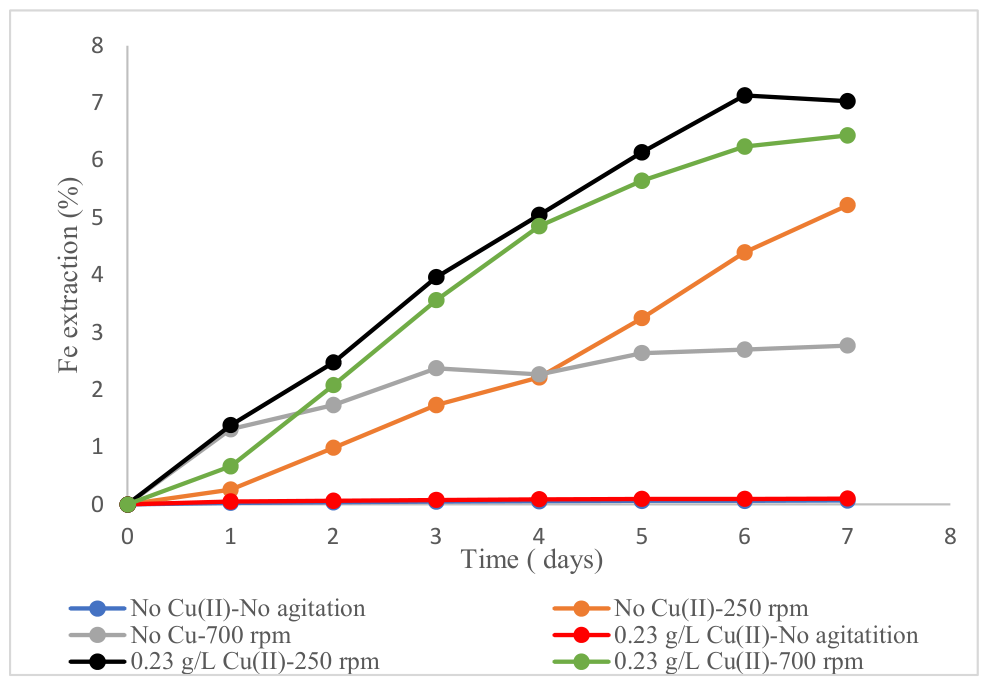
The effect on initial Cu(II) concentration was studied in the presence of oxygen at an agitation rate of 250 rpm at 0 g/L Cu(II), at 0.23 g/L Cu(II) and 0.5 g/L Cu(II). The results are shown in Figure 14 for Cu extractions and Figure 15 for Fe extractions.
The lowest Cu extractions were measured with 0.5 g/L initial Cu(II). A decline in Cu copper concentration in solution, representing about 10 % of the initial Cu input, was observed on the first day, resulting in the “negative” extraction. There was no such decline observed at 0.23 g/L initial Cu. Higher extraction was shown for the solution with 0.23 g/L initial Cu from the 3rd day onwards, but by the 7th day, the curve overlapped with that of the Cu(II) free solution.
The highest Fe extractions were observed in the tests that had 0.23 g/L initial Cu(II) compared to the systems with 0.5 g/L initial Cu(II) and no initial Cu(II). The extraction appeared to taper off on day 6 in the 0.23 g/L initial Cu(II) and on day 5 in the 0.5 g/L initial Cu(II). This may suggest that the chalcopyrite dissolution reaction had reached its equilibrium, or the mineral surface may have become inhibited through surface precipitation.
In absence of initial Cu(II), Cu and Fe extraction trends were fairly similar but with Fe extractions exceeding Cu. This suggests that the presence of initial Cu(II) in leach solutions had a positive impact on chalcopyrite dissolution. However, there seemed to exist an optimum initial Cu(II) concentration, as the highest initial Cu(II) concentration did not lead to enhanced dissolution of the mineral. Similar results were reported by Nicol et al. [6] in chloride media; albeit in the chloride system the Cu(II)/Cu(I) redox couple is thermodynamically stable.
3.7. Insight into the Mechanism
Evidence from both the linear and cyclic voltammetry suggests the formation of H2S by the non-oxidative acid attack on chalcopyrite observed under nitrogen conditions, (Eq. 5), as established by Nicol and Lazaro (2003). H2S formed by the acid non-oxidative leaching of chalcopyrite can be oxidized by Fe(III) in sulfate media to form elemental sulfur (Eq. 4) [5]Nicol et al.[6] show that O2 does not directly oxidize H2S in chloride media. Rather, H2S is oxidized by Cu(II), forming Cu(I), which is later oxidized by O2. Another possible route for the oxidation of H2S in a highly acidic sulfuric acid solution would be through the reaction with SO42- (Eq. 17).
H2S + 2 Fe3+ → S + 2 H+ + 2 Fe2+
CuFeS2 + 4 H+ → Cu2+ + Fe2+ + 2 H2S
SO42- + 2H+ + H2S → S +SO2 + 2 H2O
The leaching results show that Cu(II) is likely to have a catalytic effect on the dissolution of chalcopyrite in the presence of O2. At the same time, cyclic voltammetry results clearly show that Cu(II) does not catalyze the oxidation of H2S by Fe(III). This calls for an explanation involving a more direct role of O2. Such an explanation was proposed by Nicol et al. [6] for the chloride media. Following the proposed mechanism, Cu(II) forms a complex with HS- (Eq. 9), which would react faster with O2 (Eq. 10) than uncomplexed Cu(II).
Cu2+ + H2S → Cu(HS)+ + H+
Cu(HS)+ + ½ O2 + H+ → H2O + S + Cu2+
This complex Cu(HS)+ could not be inferred from the experimental data. However, a Cu(I) species that could be Cu(H2S)+ or alike was observed. This complex may be the Cu intermediary, explaining its catalytic activity rather than by Cu(II), at least in sulfate media. As in the mechanism proposed by Nicol et al; [6], the oxidation of Cu(HS)+ by O2 (Eq. 21) would be faster than its oxidation by Fe(III) (Eq. 22). Its oxidation by Fe(III) would be of similar or slower rate in comparison with the oxidation of H2S by Fe(III) (Eq. 4). These hypotheses would explain both the positive effect of Cu(II) observed in the leaching tests under free-surface aspiration and in the absence of Cu(II) catalytic effect on H2S oxidation by Fe(III) shown in cyclic voltammetry tests.
2 Cu(H2S)+ + 3/2 O2 + 2 H+ → 3 H2O +2 S + 2 Cu2+
Cu(H2S)+ +3 Fe3+ → 2 H+ + S + 3 Fe2+ + Cu2+
Cu(II)-catalysis of sulfur species oxidation has been reported in other studies. These include the catalysis of thiosulfate oxidation by oxygen in ammoniacal solutions [22], in gold leaching [23] and in acid solutions of sulfuric acid [24]. Cu(H2S)+ may be the precursor to Cu precipitates like Cu2S and CuHS via reactions (23) and (24) and even CuS. Many authors have indeed argued and shown that even in CuS, either as an amorphous precipitate [25] or as covellite [26,27], Cu is found in the +1 oxidation state. The results of the leaching study suggest the formation of Cu precipitates, particularly under nitrogen. The precipitation of Cu from the reaction between soluble Cu(II) and H2S produced by acid non-oxidative leaching has been reported by Maley et al. [28]. Although in their study, H2S resulted from non-oxidative leaching of pyrrhotite, H2S produced by non-oxidative leaching of chalcopyrite can act the same way. Cu precipitation as covellite also occurs in chloride media in the absence of oxygen [29]. This not only supports the likelihood of formation of Cu precipitates but also agrees with the leaching results.
2 Cu(H2S)+ → Cu2S + 2 H+ + H2S
2 Cu(H2S)+ → CuHS + H+
The non-oxidative/oxidative mechanism (non-oxidative dissolution of chalcopyrite followed by oxidation of H2S) (Figure 16) could then also exist in sulfate system in parallel with the “direct” oxidative dissolution of chalcopyrite. The non-oxidative/oxidative mechanism may play an important role in the early stages of the leaching process of chalcopyrite, particularly in a solution devoid of initial Fe(III) or even poor in Fe(III). The existence of an optimum Cu(II) concentration is likely related to Cu precipitation.
4. Conclusions
H2S that formed through the non-oxidative step of chalcopyrite leaching in sulfate media can react with Cu(II) to yield a Cu(I) sulfide species. The latter can act as an intermediary of H2S oxidation by O2, making Cu(II) a catalyst in the dissolution of chalcopyrite in sulfate media through non oxidative/oxidative mechanism. This mechanism, however, still needs further investigation to better understand the role of the possible Cu(I) sulfide intermediate. Nevertheless, the results of the present study support running heap leaching of chalcopyrite at relatively high initial Cu(II) concentration in acidic media.
Author Contributions
Conceptualization, Jordy Dinga and Jochen Petersen .; methodology, Jordy Dinga., Thandazile Moyo-Mahlangu and Jochen Petersen.; validation, Jordy Dinga.; investigation, Jordy Dinga.; resources, Kathija Shaik.; data curation, Jordy Dinga., Thandazile Moyo-Mahlangu and Jochen Petersen.; writing—original draft preparation, Jordy Dinga .; writing—review and editing, Kathija Shaik, Thandazile Moyo-Mahlangu and Jochen Petersen.; visualization, Jordy Dinga .; supervision, Thandazile Moyo-Mahlangu and Jochen Petersen.; project administration, Jochen Petersen.; funding acquisition, Jochen Petersen. All authors have read and agreed to the published version of the manuscript.”.
Funding
the National Research Foundation of South Africa supported this research through the SARChI Chair: Mineral Beneficiation (Grant UID 64829) and The APC was funded by the same organism.
Data Availability Statement
The research data can be found in the Zenodo publication depository at https://zenodo.org/records/20417972.
Acknowledgments
Dr. Dinga would like to express his gratitude to the BEBUC scholarship for its support in postgraduate studies.
Conflicts of Interest
The authors declare no conflicts of interest. The funders had no role in the design of the study; in the collection, analyses, or interpretation of data; in the writing of the manuscript; or in the decision to publish the results. This article is a revised and expanded version of a paper entitled Catalytic Effect of Cu(II) on the Oxidation of H2S in the Context of Leaching Chalcopyrite in Sulfuric Acidic Media which was presented at the 12th edition of the Copper International Conference, Phoenix, Arizona, USA, 16-20 November.
References
- Hiroyoshi, N., Miki, H., Hirajima, T., & Tsunekawa, M. (2000). A model for ferrous-promoted chalcopyrite leaching. In Hydrometallurgy (Vol. 57). www.elsevier.nlrlocaterhydromet.
- Hiroyoshi, N., Miki, H., Hirajima, T., & Tsunekawa, M. (2001). Enhancement of chalcopyrite leaching by ferrous ions in acidic ferric sulfate solutions. In Hydrometallurgy (Vol. 60). www.elsevier.nlrlocaterhydromet.
- O’Malley G., and Nikoloski A. (2023). Acidic Ferric Sulfate Leaching of Primary Copper Sulfides Under Recycle Solution Conditions Observed in Heap Leaching: Effect of Major Species. Proceedings of Copper Cobalt Africa 2023, 223–237.
- Yang, C. ren, Jiao, F., & Qin, W. qing. (2018). Leaching of chalcopyrite: An emphasis on effect of copper and iron ions. Journal of Central South University, 25(10), 2380–2386. [CrossRef]
- Nicol, M. J., & Lázaro, I. (2003). The role of non-oxidative processes in the leaching of chalcopyrite. In Riveros, P., Dixon, D. , Dreisinger, D., Menacho J., (Eds.), Copper 2003 (1st ed., pp. 383–394). The Canadian Institute of Mining, Metallurgy and Petroleum.
- Nicol, M., Miki, H., & Velásquez-Yévenes, L. (2010). The dissolution of chalcopyrite in chloride solutions: Part 3. Mechanisms. Hydrometallurgy, 103(1–4), 86–95. [CrossRef]
- Lu, D.; Wang, W.; Chang, Y.; Xie, F.; Jiang, K. Thermodynamic Analysis of Possible Chalcopyrite Dissolution Mechanism in Sulfuric Acidic Aqueous Solution. Metals 2016, 6, 303. [CrossRef]
- Nielsen, A. H., Hvitved-Jacobsen, T., & Vollertsen, J. (2008). Effects of pH and Iron Concentrations on Sulfide Precipitation in Wastewater Collection Systems. Water Environment Research, 80(4), 380–384. [CrossRef]
- Regenspurg, S., Iannotta, J., Feldbusch, E., Zimmermann, F. J., & Eichinger, F. (2020). Hydrogen sulfide removal from geothermal fluids by Fe(III)-based additives. Geothermal Energy, 8(1). [CrossRef]
- Dinga, J., Petersen, J., Moyo, T., Shaik., K. 2025. Catalytic Effect of Cu(II) on the Oxidation of H2S in the Context of Leaching Chalcopyrite in Sulfuric Acidic Media. Paper presented at the 12th edition of the Copper International Conference, Phoenix, Arizona, USA, 16-20 November.
- Kelsall, G. H., & Thompson, I. (1993). Redox chemistry of H2S oxidation by the British Gas Stretford Process Part. II: Electrochemical behaviour of aqueous hydrosulfide (HS-) solutions. In JOURNAL OF APPLIED ELECTROCHEMISTRY (Vol. 23).
- Lopes, T., Paganin, V. A., & Gonzalez, E. R. (2011). The effects of hydrogen sulfide on the polymer electrolyte membrane fuel cell anode catalyst: H2S-Pt/C interaction products. Journal of Power Sources, 196(15), 6256–6263. [CrossRef]
- Sanli, A. E., Canan, B., & AytaÇ, A. (2015). Use of the Blacksea Water Containing Hydrogen Sulfide (H 2 s) as a Fuel Cell Fuel . ECS Transactions, 65(1), 51–58. [CrossRef]
- Dubouis, N., & Grimaud, A. (2019). The hydrogen evolution reaction: From material to interfacial descriptors. Chemical Science, 10(40), 9165–9181. [CrossRef]
- Kuczyński, M., Łuba, M., Mikołajczyk, T., & Pierożyński, B. (2022). The Effect of Resorcinol on the Kinetics of Underpotentially Deposited Hydrogen and the Oxygen Evolution Reaction, Studied on Polycrystalline Pt in a 0.5 M H2SO4 Solution. Energies, 15(3). [CrossRef]
- Mueller, J. E., Krtil, P., Kibler, L. A., & Jacob, T. (2014). Bimetallic alloys in action: Dynamic atomistic motifs for electrochemistry and catalysis. In Physical Chemistry Chemical Physics (Vol. 16, Issue 29, pp. 15029–15042). Royal Society of Chemistry. [CrossRef]
- Prass, S., St-Pierre, J., Klingele, M., Friedrich, K., & Zamel, N. (2021). Hydrogen oxidation artifact during platinum oxide reduction in cyclic voltammetry analysis of low-loaded PEMFC electrodes. Electrocatalysis, 12, 45–55. [CrossRef]
- Ren, F., Hong, M., Mannaerts, J. P., -, al, Lee, J., Lee, N., Hur, S., Zecevic, S. K., Wainright, J. S., Litt, M. H., Zolfaghari, A., Chayer, M., & Jerkiewicz, G. (1997). Energetics of the Underpotential Deposition of Hydrogen on Platinum Electrodes: I. Absence of Coadsorbed Species. J. Electrochem. Soc, 144, 3034–3041.
- Vanýsek, P. (2016). Electrochemical series. In W. Haynes (Ed.), RC Handbook of Chemistry and Physics. (97th ed). CRC Press.
- Zhang, Q., Lana I., Chuang K., Wang, H. (2000). Reactions between Hydrogen Sulfide and Sulfuric Acid: A Novel Process for Sulfur Removal and Recovery. Industrial and Engineering Chemistry Research, 7, 2505- 2509. [CrossRef]
- Dinga, T. J. (2023). Mechanistic study of the effect of alcohols in the leaching of chalcopyrite in sulfate media. [PhD Thesis]. University of Cape Town.
- Byerley, J., Fouda, S., Rempel, G. (1973). Kinetics and mechanism of the oxidation of thiosulphate ions by copper(II) ions in aqueous ammonia solution. Journal of the Chemical Society, Dalton Transactions, 8.
- Breuer, P. L., & Jeffrey, M. I. (2003). Copper catalysed oxidation of thiosulfate by oxygen in gold leach solutions. Minerals Engineering, 16, 21–30. www.elsevier.com/locate/mineng.
- Lara, J. M. G., Cardona, F. P., Vallmajor, A. R., & Cadevall, M. C. (2019). Oxidation of thiosulfate with oxygen using copper (II) as a catalyst. Metals, 9(4). [CrossRef]
- Patrick, R. ., Mosselmans, J., Charnock, J., England, K., Helz, G., Garner, C. D., & Vaughan, D. J. (1997). The structure of amorphous copper sulfide precipitates- An X-ray absorption study. Geochimica and Cosmochimica Acta, 61(10), 2023–2036.
- Goh, S. W., Buckley, A. N., & Lamb, R. N. (2006). Copper(II) sulfide? Minerals Engineering, 19(2), 204–208. [CrossRef]
- Goh, S. W., Buckley, A. N., Lamb, R. N., Rosenberg, R. A., & Moran, D. (2006). The oxidation states of copper and iron in mineral sulfides, and the oxides formed on initial exposure of chalcopyrite and bornite to air. Geochimica et Cosmochimica Acta, 70(9), 2210–2228. [CrossRef]
- Maley, M. van Bronswijk, W., Watling H. (2009). Leaching of a low-grade, copper-nickel sulfide ore. 3. Interactions of Cu with selected sulfide minerals. Hydrometallurgy, 98 (1-2), 73-80. [CrossRef]
- Lundström, M., Liipo, J., Taskinen, P., & Aromaa, J. (2016). Copper precipitation during leaching of various copper sulfide concentrates with cupric chloride in acidic solutions. Hydrometallurgy, 166, 136–142. [CrossRef]
Figure 1.
Voltammograms of the platinum wire electrode either after leaching of a chalcopyrite electrode at rest potential for 14 hours or for a solution prepared from Cu(II) and H2S with 20 minutes prior deposition compared to the initial leaching solution. 0.1. M H2SO4.
Figure 1.
Voltammograms of the platinum wire electrode either after leaching of a chalcopyrite electrode at rest potential for 14 hours or for a solution prepared from Cu(II) and H2S with 20 minutes prior deposition compared to the initial leaching solution. 0.1. M H2SO4.
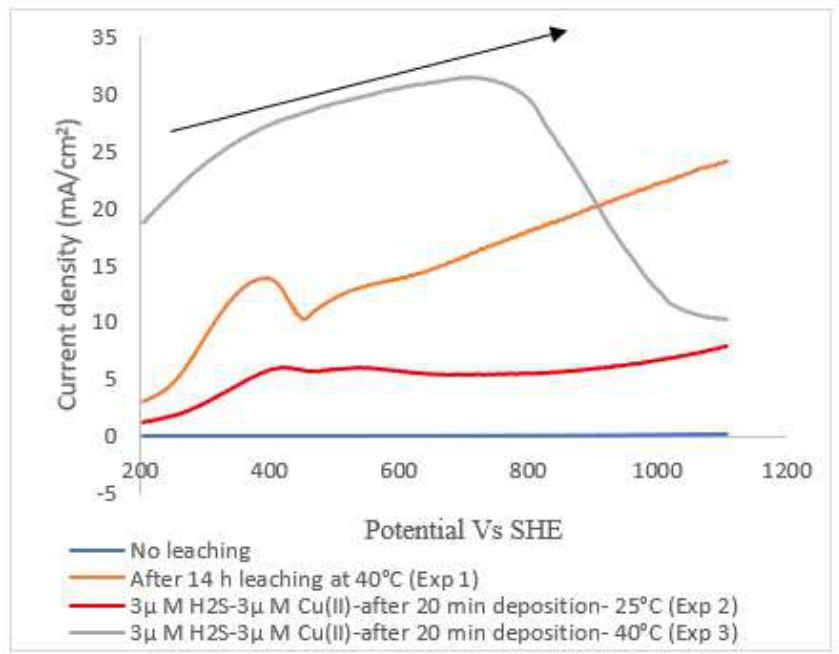
Figure 2.
Voltammograms of a platinum wire electrode. (a) Either after leaching of a chalcopyrite electrode rest potential or for a solution prepared from Cu(II) and H2S. 0.1 M H2SO4. (b) After leaching of a chalcopyrite electrode rest potential in 0.1 M and 0.5 M H2SO4.
Figure 2.
Voltammograms of a platinum wire electrode. (a) Either after leaching of a chalcopyrite electrode rest potential or for a solution prepared from Cu(II) and H2S. 0.1 M H2SO4. (b) After leaching of a chalcopyrite electrode rest potential in 0.1 M and 0.5 M H2SO4.
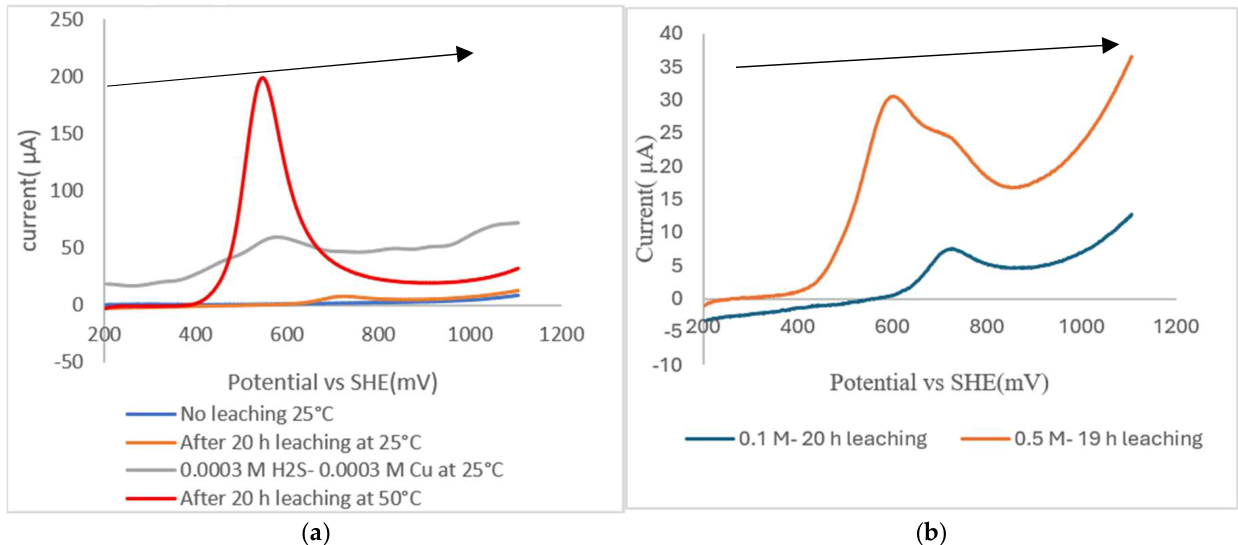
Figure 3.
Potential vs time curve showing the effect of Fe(III) and Cu(II) addition on H2S solution (saturated, prepared to have 0.5 M) at pH 2: (a) Addition of Fe(III) (0. 05 M ) alone. (b) Addition of Cu (II) (0.00175 M ) alone . (c) Addition of both of Fe(III) (0. 05 M) and Cu (II) (0.00175 M). Pt disk electrode.
Figure 3.
Potential vs time curve showing the effect of Fe(III) and Cu(II) addition on H2S solution (saturated, prepared to have 0.5 M) at pH 2: (a) Addition of Fe(III) (0. 05 M ) alone. (b) Addition of Cu (II) (0.00175 M ) alone . (c) Addition of both of Fe(III) (0. 05 M) and Cu (II) (0.00175 M). Pt disk electrode.
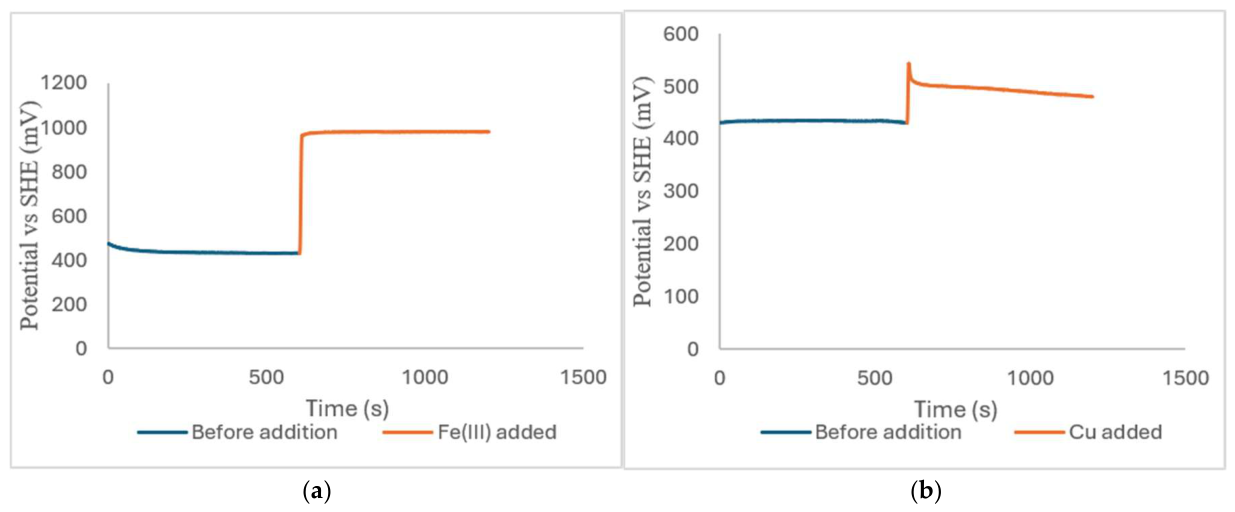
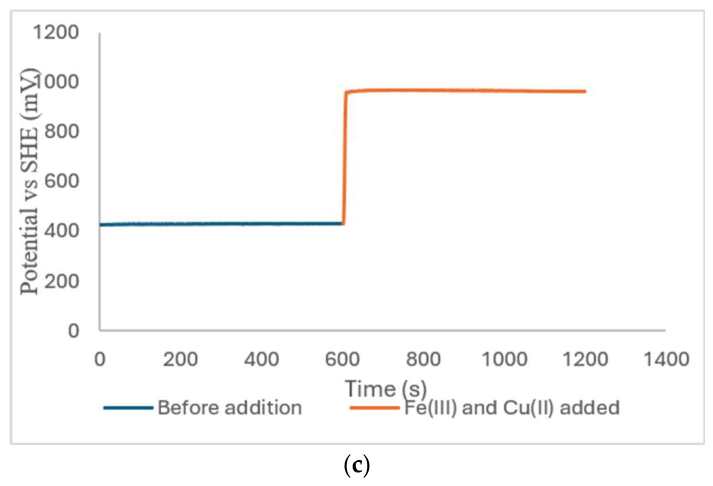
Figure 4.
Potential vs time curve showing the effect Fe(III) and Cu(II) addition on H2S solution (saturated, prepared to have 0.5 M) at pH 0: (a) Addition of Fe(III) (0. 05 M ) alone. (b) Addition of Cu (II) (0.00175 M ) alone. (c) Addition of both of Fe(III) (0. 05 M) and Cu (II) (0.00175 M). Pt disk electrode.
Figure 4.
Potential vs time curve showing the effect Fe(III) and Cu(II) addition on H2S solution (saturated, prepared to have 0.5 M) at pH 0: (a) Addition of Fe(III) (0. 05 M ) alone. (b) Addition of Cu (II) (0.00175 M ) alone. (c) Addition of both of Fe(III) (0. 05 M) and Cu (II) (0.00175 M). Pt disk electrode.
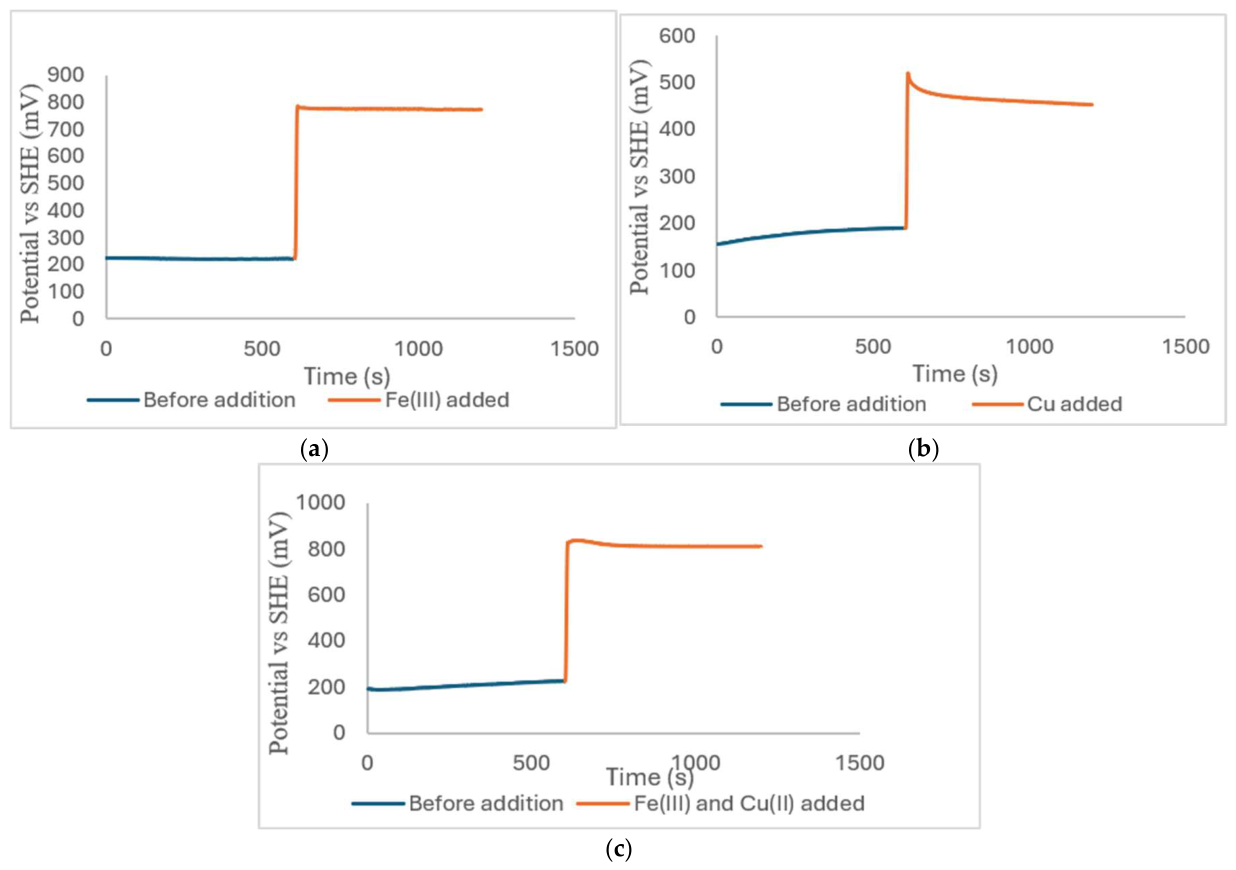
Figure 5.
Cyclic voltammograms of HClO4-H2S solution (0.025 M) recorded within the first 10 minutes at pH=2. (a) After adding Fe(III) (0.005 M). (b) After adding Cu(II) (0.000175M). (c) After adding Fe(III) (0.005 M) and Cu(II) (0.00175M). The times indicated refer to the time measured after addition. Pt disk electrode (adapted with permission from [10].
Figure 5.
Cyclic voltammograms of HClO4-H2S solution (0.025 M) recorded within the first 10 minutes at pH=2. (a) After adding Fe(III) (0.005 M). (b) After adding Cu(II) (0.000175M). (c) After adding Fe(III) (0.005 M) and Cu(II) (0.00175M). The times indicated refer to the time measured after addition. Pt disk electrode (adapted with permission from [10].
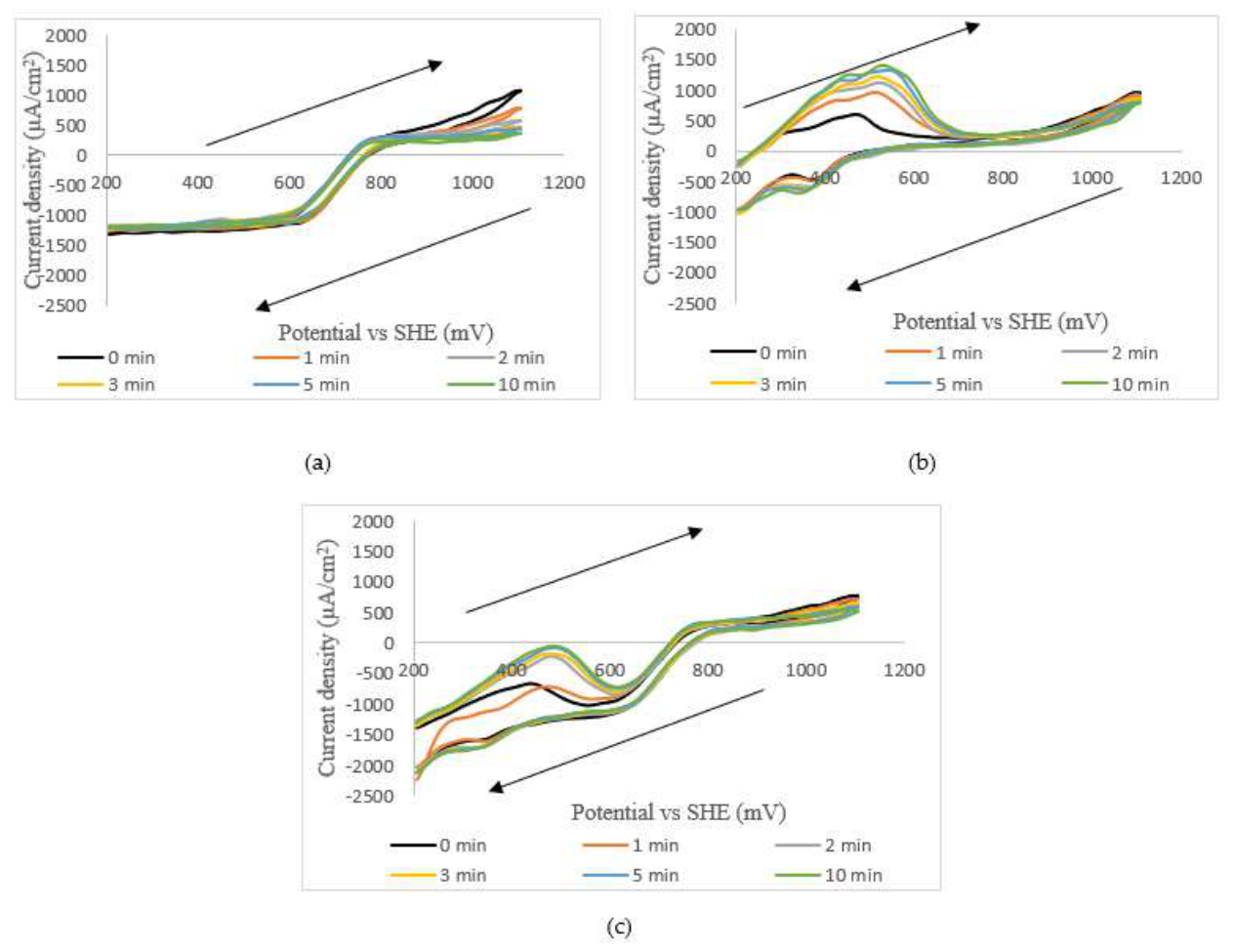
Figure 6.
Cyclic voltammograms of HClO4-H2S solution (0.025 M) recorded within the first 10 minutes at pH=0. (a) After adding Fe(III) (0.005 M). (b) After adding Cu(II) (0.00875M). (c) After adding Fe(III) (0.005 M) and Cu(II) (0.00875M). The times indicated refer to the time measured after addition. Pt disk electrode.
Figure 6.
Cyclic voltammograms of HClO4-H2S solution (0.025 M) recorded within the first 10 minutes at pH=0. (a) After adding Fe(III) (0.005 M). (b) After adding Cu(II) (0.00875M). (c) After adding Fe(III) (0.005 M) and Cu(II) (0.00875M). The times indicated refer to the time measured after addition. Pt disk electrode.
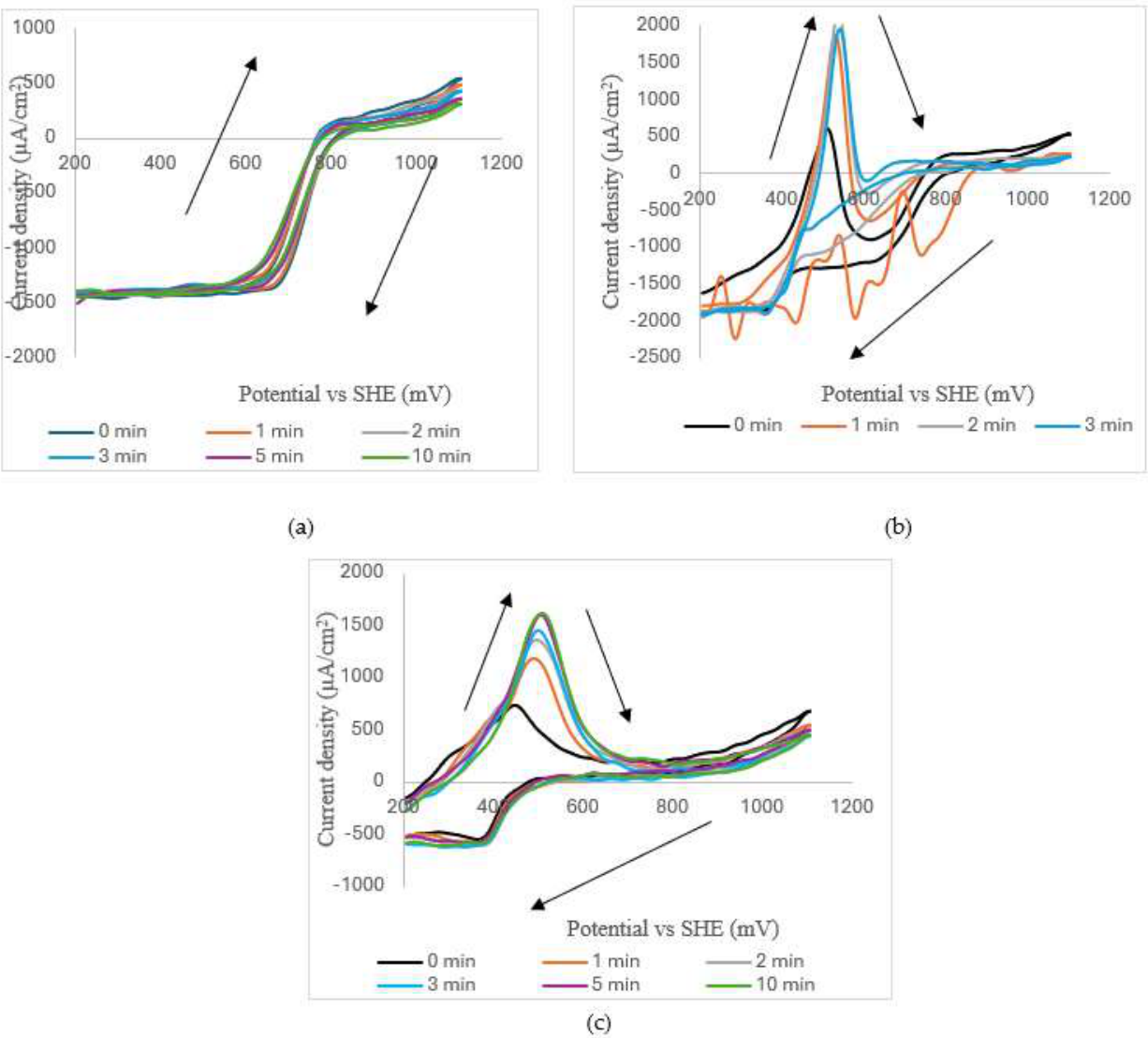
Figure 7.
Cyclic voltammograms of HClO4-H2S solution (0.025 M) recorded within the first 10 minutes at pH=0. (a) After adding Fe(III) (0.005 M). (b) After adding Cu(II) (0.00875M). (c) After adding Fe(III) (0.005 M) and Cu(II) (0.00875M). The times indicated refer to the time measured after addition. Pt disk electrode.
Figure 7.
Cyclic voltammograms of HClO4-H2S solution (0.025 M) recorded within the first 10 minutes at pH=0. (a) After adding Fe(III) (0.005 M). (b) After adding Cu(II) (0.00875M). (c) After adding Fe(III) (0.005 M) and Cu(II) (0.00875M). The times indicated refer to the time measured after addition. Pt disk electrode.
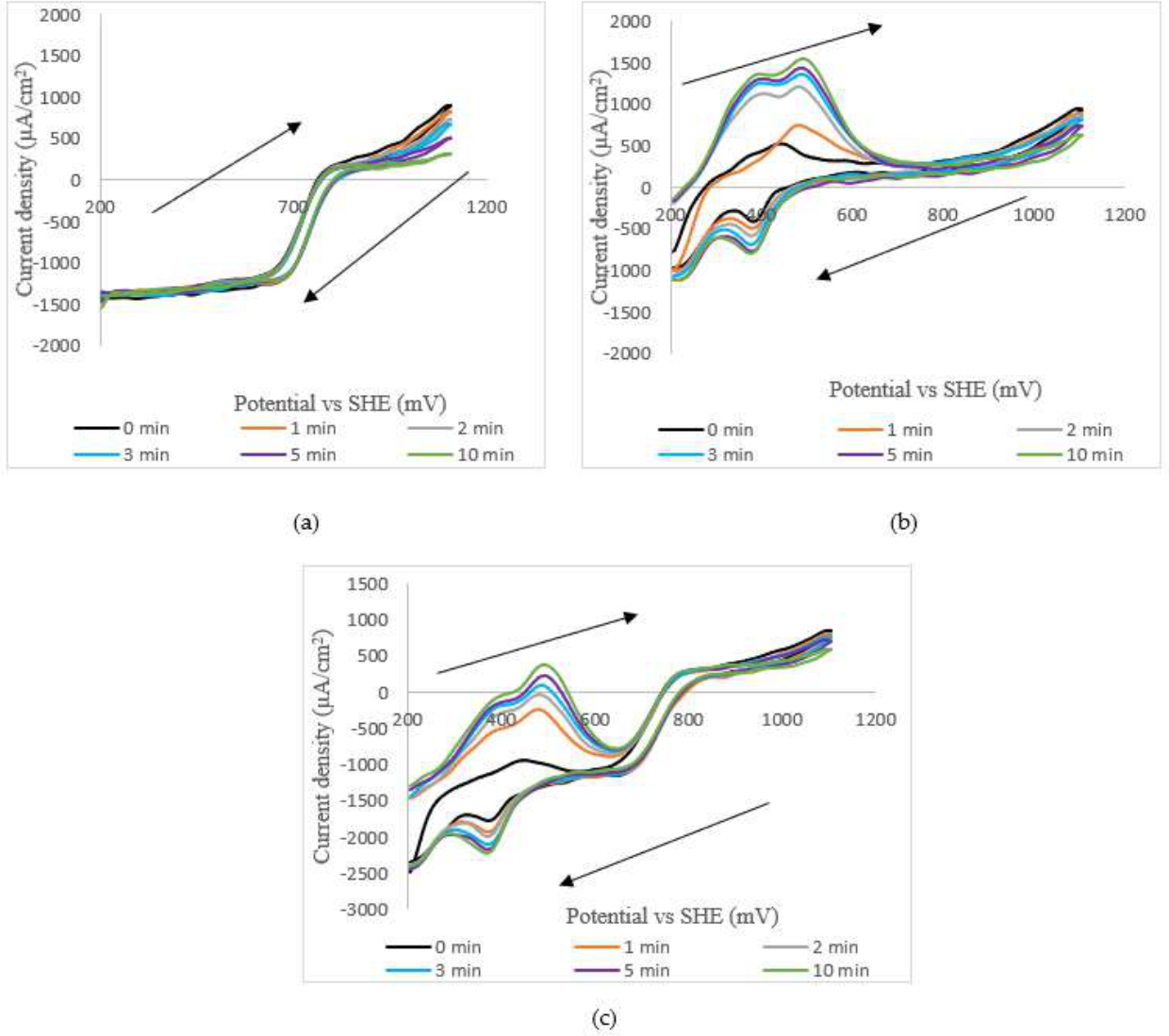
Figure 8.
Cyclic voltammograms of H2SO4-H2S solution (0.025 M) recorded within the first 10 minutes at pH=0. (a) After adding Fe(III) (0.005 M). (b) After adding Cu(II) (0.00875M). (c) After adding Fe(III) (0.005 M) and Cu(II) (0.00875M). The times indicated refer to the time measured after addition. Pt disk electrode.
Figure 8.
Cyclic voltammograms of H2SO4-H2S solution (0.025 M) recorded within the first 10 minutes at pH=0. (a) After adding Fe(III) (0.005 M). (b) After adding Cu(II) (0.00875M). (c) After adding Fe(III) (0.005 M) and Cu(II) (0.00875M). The times indicated refer to the time measured after addition. Pt disk electrode.
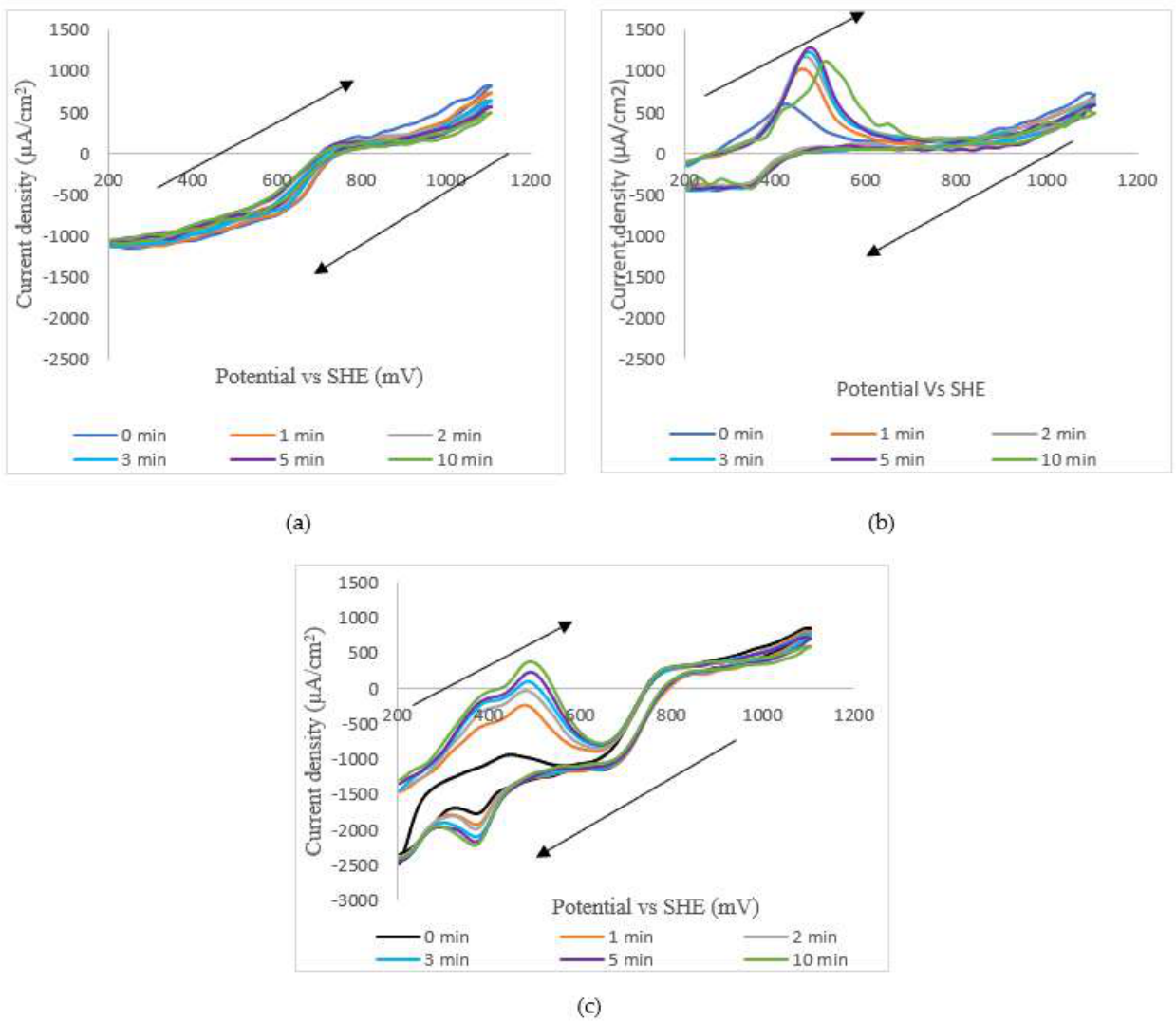
Figure 9.
(a) Cyclic voltammogram of aqueous Cu solution. 0.0035 M Cu. (b) Cyclic voltammogram of aqueous recorded within the first 10 minutes after adding Cu(II) (0.00875 M). Pt disk electrode.
Figure 9.
(a) Cyclic voltammogram of aqueous Cu solution. 0.0035 M Cu. (b) Cyclic voltammogram of aqueous recorded within the first 10 minutes after adding Cu(II) (0.00875 M). Pt disk electrode.
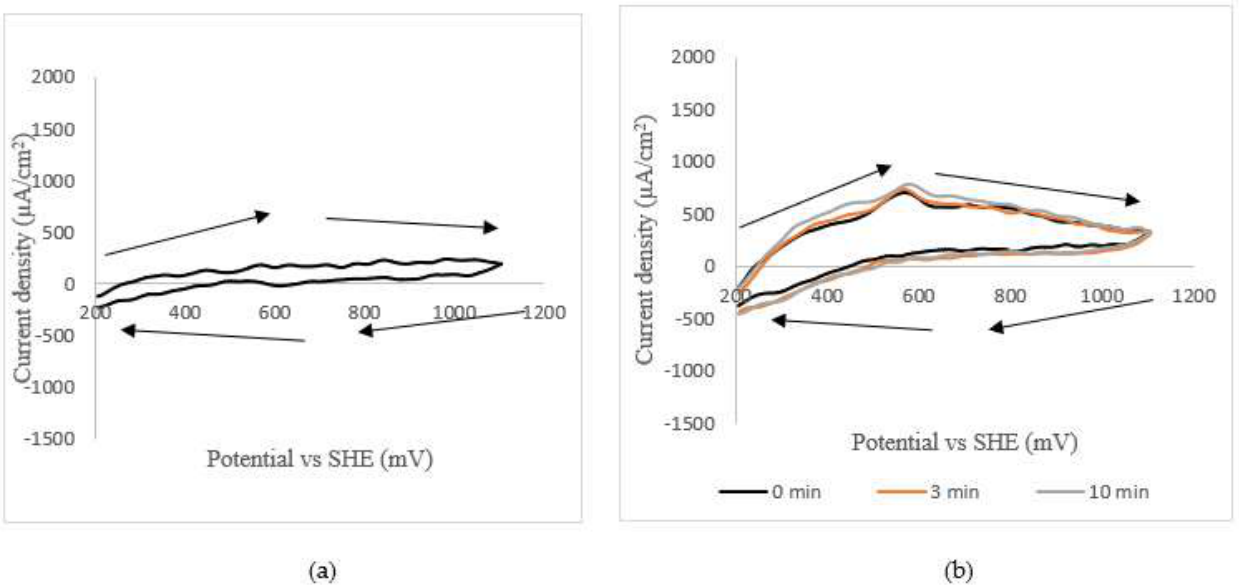
Figure 10.
(a) Cyclic voltammogram of acidic Cu solution recorded within the first 5 minutes after adding Cu(II) (0.00875 M). 1 M HClO4. pH=0. (b) Cyclic voltammogram A Zoomed. Pt disk electrode.
Figure 10.
(a) Cyclic voltammogram of acidic Cu solution recorded within the first 5 minutes after adding Cu(II) (0.00875 M). 1 M HClO4. pH=0. (b) Cyclic voltammogram A Zoomed. Pt disk electrode.
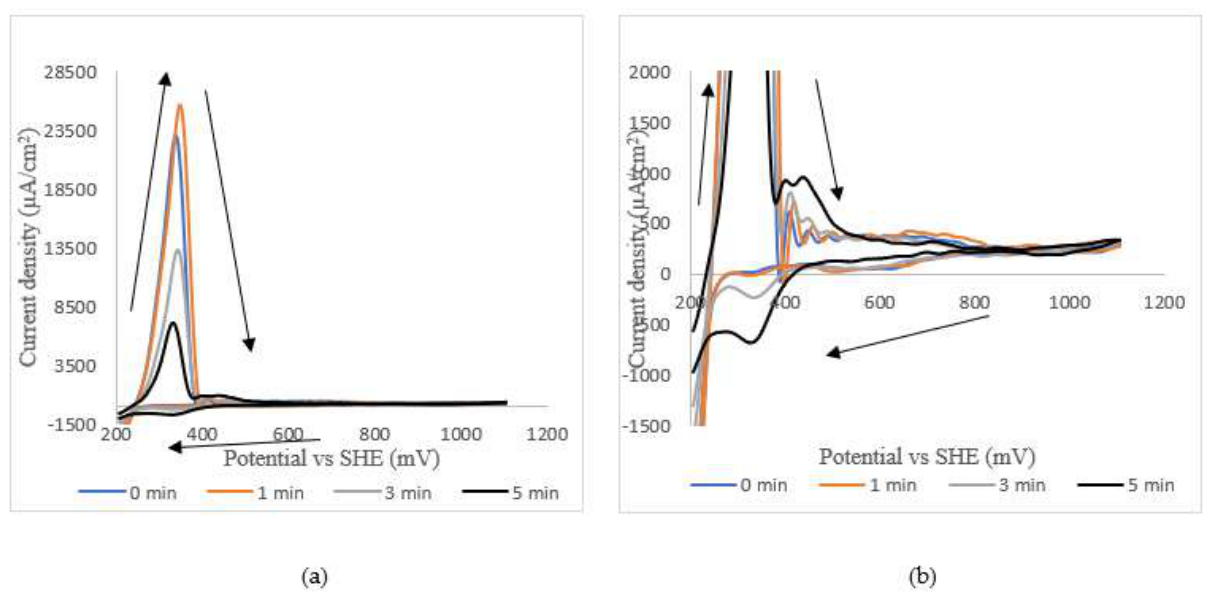
Figure 12.
Leaching curves showing Cu extraction from chalcopyrite as function of time in absence and in presence of Cu(II) under passive aeration. Solid/liquid ratio 1%, 20°C, 0.5 M H2SO4. Negative extractions mean that Cu concentration decreased relative to the initial Cu concentration.
Figure 12.
Leaching curves showing Cu extraction from chalcopyrite as function of time in absence and in presence of Cu(II) under passive aeration. Solid/liquid ratio 1%, 20°C, 0.5 M H2SO4. Negative extractions mean that Cu concentration decreased relative to the initial Cu concentration.
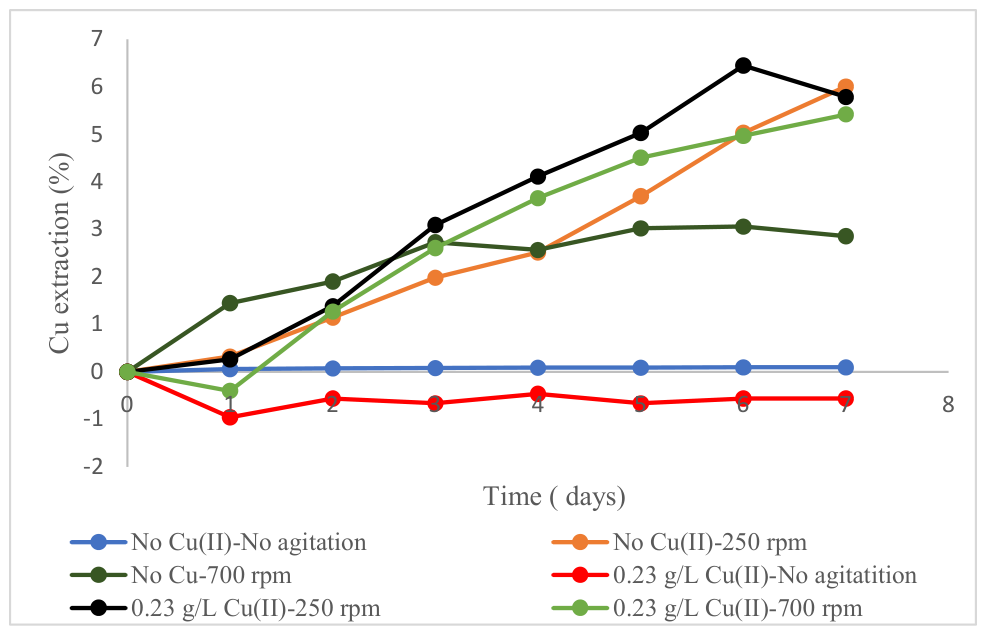
Figure 14.
Leaching curves showing Cu extraction as function of time at different initial Cu(II) concentration. Solid/liquid ratio 1%, 20°C, 0.5 M H2SO4. Stirred tanks reactors. 250 rpm. Free surface aspiration.
Figure 14.
Leaching curves showing Cu extraction as function of time at different initial Cu(II) concentration. Solid/liquid ratio 1%, 20°C, 0.5 M H2SO4. Stirred tanks reactors. 250 rpm. Free surface aspiration.
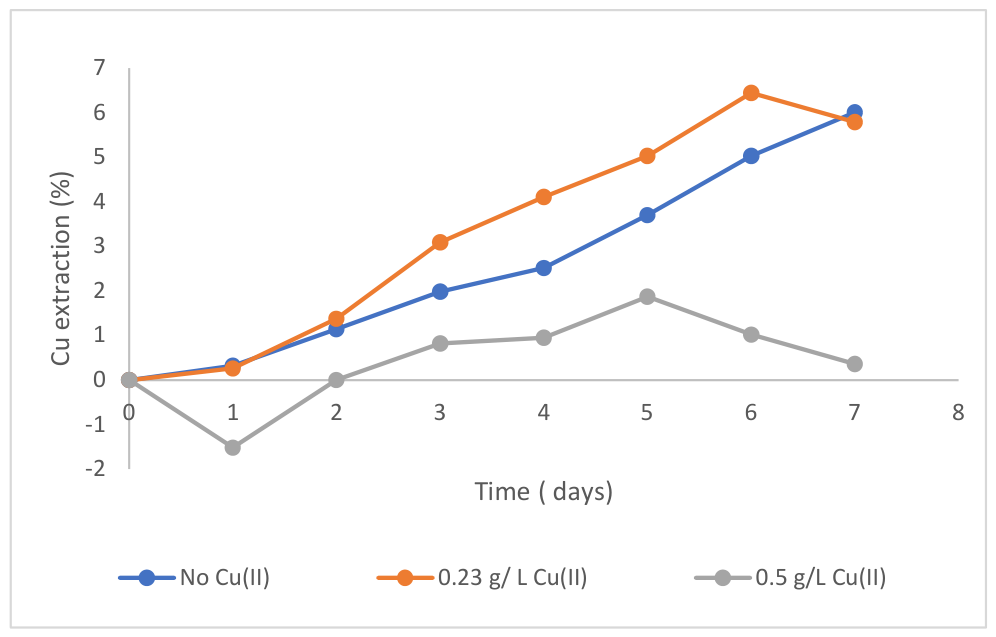
Figure 15.
Leaching curves showing Fe extraction as function of time at different initial Cu(II) concentration. Solid/liquid ratio 1%, 20°C, 0.5 M H2SO4. Stirred tanks reactors. 250 rpm. Free surface aspiration.
Figure 15.
Leaching curves showing Fe extraction as function of time at different initial Cu(II) concentration. Solid/liquid ratio 1%, 20°C, 0.5 M H2SO4. Stirred tanks reactors. 250 rpm. Free surface aspiration.
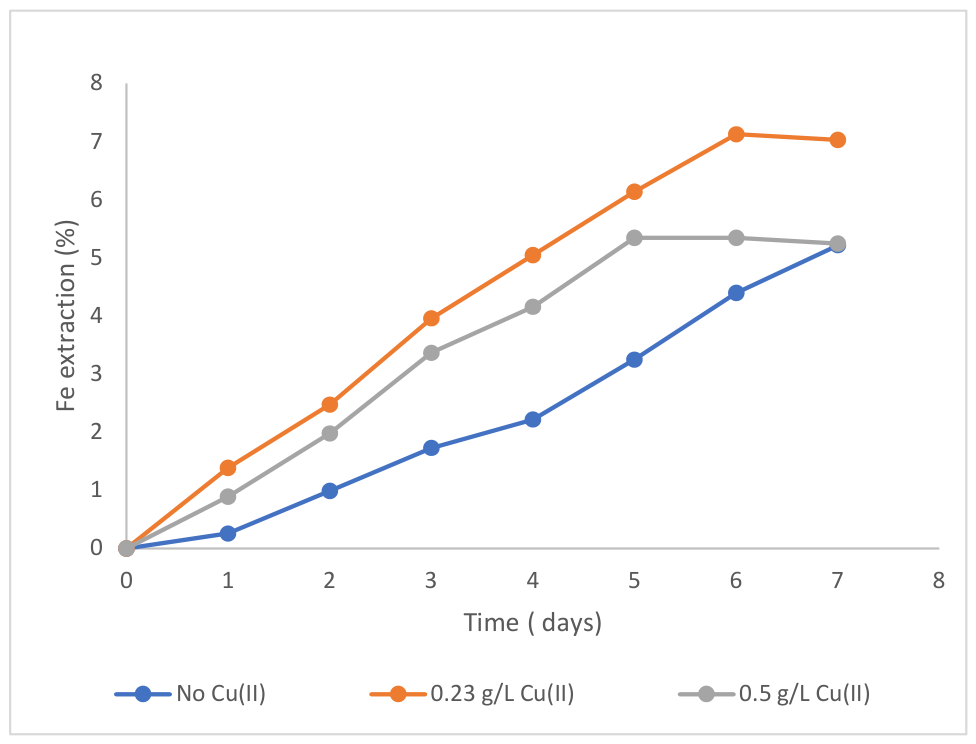
Figure 16.
Schematic representation of the likely non-oxidative/oxidative mechanism with the assumption that Cu(H2S)+is the intermediate Cu(I) species and it forms by reaction between Cu(II) and H2S.
Figure 16.
Schematic representation of the likely non-oxidative/oxidative mechanism with the assumption that Cu(H2S)+is the intermediate Cu(I) species and it forms by reaction between Cu(II) and H2S.
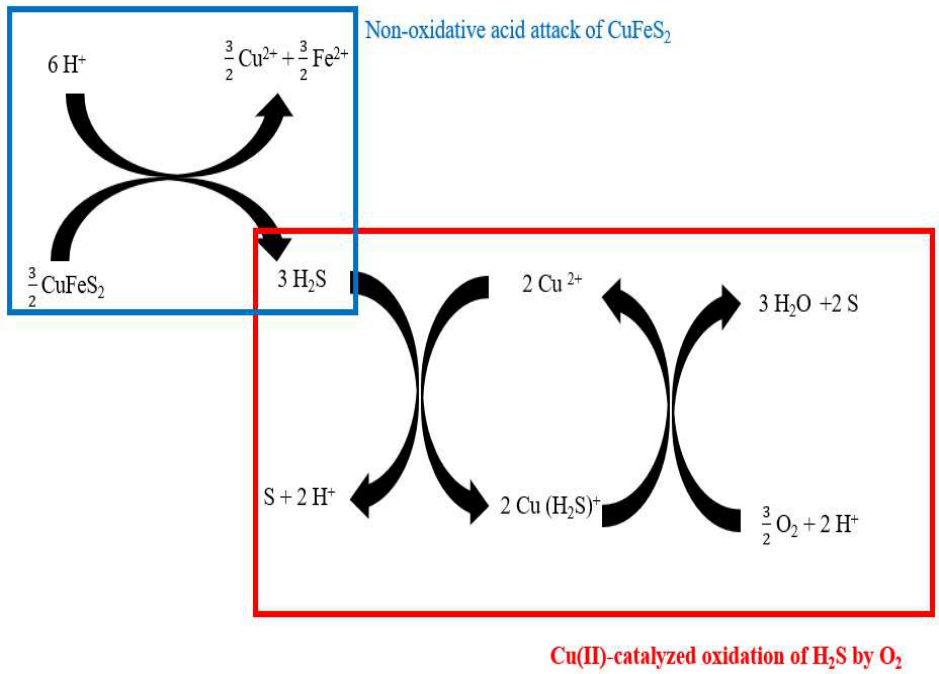

Table 1.
Parameters for leaching tests.
| Absence of Cu(II | Presence of Cu(II) | ||||||
|---|---|---|---|---|---|---|---|
| Nitrogen atmosphere |
Temperature 20°C. Liquid/solid 1% H2SO4 0.5 M |
No Agitation |
250 rpm |
700 rpm |
No Agitation |
250 rpm |
700 rpm |
| Passive aeration |
No Agitation |
250 rpm |
700 rpm |
No Agitation |
250 rpm |
700 rpm |
|
Table 1.
Result of the SEM-EDS analysis of the yellow precipitate formed after dissolving H2S (0.01 M) in sulfuric acid solution (0.99 M) (Figure 11).
Table 1.
Result of the SEM-EDS analysis of the yellow precipitate formed after dissolving H2S (0.01 M) in sulfuric acid solution (0.99 M) (Figure 11).
| Spectrum | S mole percentage |
|---|---|
| 1 | 100 |
| 2 | 100 |
| 3 | 100 |
| 4 | 100 |
| 5 | 100 |
Disclaimer/Publisher’s Note: The statements, opinions and data contained in all publications are solely those of the individual author(s) and contributor(s) and not of MDPI and/or the editor(s). MDPI and/or the editor(s) disclaim responsibility for any injury to people or property resulting from any ideas, methods, instructions or products referred to in the content. |
© 2026 by the authors. Licensee MDPI, Basel, Switzerland. This article is an open access article distributed under the terms and conditions of the Creative Commons Attribution (CC BY) license (http://creativecommons.org/licenses/by/4.0/).
Copyright: This open access article is published under a Creative Commons CC BY 4.0 license, which permit the free download, distribution, and reuse, provided that the author and preprint are cited in any reuse.


