
Submitted:
08 June 2026
Posted:
09 June 2026
You are already at the latest version
Abstract
The Yellow-legged Gull (Larus michahellis) is one of the most frequently admitted seabirds to wildlife rehabilitation centers in the Mediterranean and Atlantic regions. Despite its clinical relevance, detailed computed tomographic references of the coelomic cavity are lacking. The aim of this study was to describe the normal cross-sectional anatomy and computed tomographic appearance of the coelomic cavity in this species and to develop an anatomical atlas to facilitate diagnostic image interpretation. Eight adult Yellow-legged Gull carcasses were examined. Six specimens underwent computed tomography using a 16-slice helical scanner, followed by frozen transverse sectioning, while two specimens were dissected to provide detailed anatomical correlation. CT datasets were evaluated using bone, soft tissue, and pulmonary window settings, and three-dimensional volume-rendered reconstructions were generated. Anatomical dissections, cross-sectional slices, and CT images enabled identification and characterization of the principal structures of the respiratory, cardiovascular, digestive, urinary, and reproductive systems, as well as their spatial relationships within the coelomic cavity. The combined evaluation of gross anatomy and CT imaging allowed accurate recognition of major organs, air sacs, large vessels, and skeletal landmarks throughout the examined sections. The atlas provides a comprehensive reference for normal coelomic anatomy in L. michahellis and establishes a baseline for the interpretation of CT examinations in clinical, rehabilitation, and research settings. These findings may improve diagnostic accuracy and support future investigations of coelomic disorders in this species.
Keywords:
coelomic cavity
; computed tomography
; anatomical sections
; seabirds
; yellow-legged gull
1. Introduction
Yellow-legged gulls (Larus michahellis) are among the most frequently encountered free-ranging seabirds in Mediterranean–Atlantic veterinary practice and are common patients in wildlife rehabilitation centers. In a long-term Gran Canaria series, Yellow-legged Gulls represented 46.52% of admitted seabirds, with light pollution, intoxication, and trauma among the leading causes of morbidity [1]. This sustained clinical exposure gives clear practical relevance to diagnostic imaging in Laridae, particularly when external examination underestimates intracoelomic disease or multisystem involvement in debilitated seabirds. Moreover, gulls occupy a synanthropic ecological niche at the interface of marine, urban, and waste-associated environments, which heightens the importance of precise diagnosis in both clinical and epidemiological terms [1,2].
In birds, the thoracic and abdominal viscera are not completely separated as in mammals; instead, most major organs are contained within a single coelomic cavity, whose spatial organization is closely linked to fixed lungs, extensive air sacs, and highly compact visceral packing [3]. This anatomical arrangement means that even relatively subtle abnormalities, including organomegaly, displacement, effusion, granulomatous change, foreign bodies, or masses, may alter multiple organ relationships and compromise respiration, gastrointestinal transit, or renal function. Radiography remains the most accessible first-line imaging modality in avian medicine, but interpretation of the coelom is often limited by superimposition and variable serosal detail. Ultrasonography is useful for selected fluid-filled or peripherally accessible structures, yet its reach is inherently partial in birds. By contrast, computed tomography (CT) provides cross-sectional and multiplanar assessment without superimposition and, in modern avian atlases, can also provide attenuation data in Hounsfield units and morphometric reference values, thereby strengthening anatomical interpretation and lesion localization [4,5,6,7]
Despite these advances, the avian CT literature remains taxonomically uneven. Species-specific coelomic CT studies are available for pet parrots, market-age Pekin ducks, juvenile Atlantic puffins, and juvenile Cory’s shearwaters [3,4,7,8]. In contrast, CT publications in the Yellow-legged Gull appear, at present, to be restricted to a nasal cavity study with anatomical correlation and an isolated shoulder trauma case report [9,10]. Accordingly, the coelomic cavity of L. michahellis remains insufficiently documented in the indexed veterinary imaging literature reviewed for this manuscript. This gap is not trivial, because extrapolation from psittacines, domestic waterfowl, or even other seabirds may be anatomically useful but not fully species-appropriate for Laridae [10,11].
Against this background, the aim of this study was to describe the normal coelomic anatomy of the Yellow-legged Gull (Larus michahellis) through anatomical dissections, transverse cross-sections, and computed tomography imaging, and to develop a species-specific anatomical atlas for CT interpretation. Particular emphasis was placed on the identification of major coelomic organs and their anatomical relationships to facilitate the interpretation of diagnostic images. In addition to filling an important gap in species-specific anatomical knowledge, this atlas may serve as a reference for clinical, anatomical, and comparative studies involving gulls and other marine avian species.
2. Materials and Methods
2.1. Animals
Eight Yellow-legged gulls (Larus michahellis) were included in this study. The specimens had a mean body mass of 0.7451 kg (range: 0.6139 to 0.9574 kg) and a mean body length of 43.75 cm, measured from the tip of the beak to the base of the tail (range: 39.5 to 54.5 cm). Table 1 summarizes these data (weight and body length) of all animals. All birds were provided by the Consejería del Área de Medio Ambiente, Clima, Energía y Conocimiento, Cabildo de Gran Canaria (Spain), following a coastal stranding event associated with disorientation caused by light pollution.
Six carcasses were frozen shortly after death and stored for four days prior to computed tomography (CT) examination. The remaining two specimens were dissected immediately post-mortem to expose the coelomic cavity and directly assess organ topography. These dissections allowed precise anatomical identification and supported the interpretation and correlation of the CT images.
2.2. CT Study
For CT evaluation, the specimens were thawed at room temperature for 12 h prior to scanning. Transverse sequential images were acquired using a 16-slice helical CT scanner (Astelion, Canon Medical Systems®, Tokyo, Japan). The birds were positioned symmetrically in dorsal recumbency on the scanning table, with a craniocaudal acquisition direction.
A standardized protocol was applied with the following parameters: 120 kVp, 80 mA, a 512 × 512 acquisition matrix, a field of view of 1809 × 858, a pitch of 0.94, and a gantry rotation time of 1.5 s. Images were reconstructed with a slice thickness of 0.6 mm. To optimize the visualization of anatomical structures, different window settings were applied by adjusting window width (WW) and window level (WL), including bone (WW = 1500; WL = 300), soft tissue (WW = 248; WL = 123), and lung (WW = 1400; WL = −500) windows. No relevant differences in CT attenuation or anatomical appearance were observed within the coelomic cavity among specimens. In addition, the acquired datasets were used to generate three-dimensional volume-rendered reconstructions in standard DICOM format using OsiriX MD software (Pixmeo SARL, Geneva, Switzerland).
2.3. Anatomical Sections
Following the CT examination, the carcasses were frozen at −80 °C for 72 h. Subsequently, the specimens were sectioned using an electric band saw to obtain parallel slices approximately 1 cm thick. The resulting sections were gently rinsed with water to remove artifacts, such as feathers, which were carefully extracted using Adson forceps. Each section was then anatomically identified and photographed from both sides.
2.4. Anatomical Evaluation
For the identification and labeling of cross-sectional anatomy in correlation with the corresponding CT images, reference materials including specialized textbooks and peer-reviewed articles on avian anatomy were consulted [14,15,16,17].
In addition, anatomical specimens provided by the Department of Morphology were examined to support a detailed interpretation of coelomic structures. These materials contributed to improving the accuracy of anatomical identification and to a better understanding of the spatial organization of the coelomic cavity.
3. Results
A detailed set of figures (Figures 1–23) illustrates the anatomical organization of the coelomic cavity in gulls, constituting a structured atlas based on combined dissection, anatomical cross-sections and imaging approaches. These illustrations integrate multiple dissection views, providing adequate anatomical references for the main structures within the cavity. In particular, Figures 1 and 2 compile different dissection perspectives to present an overall view of the principal components and their spatial relationships. Importantly, this atlas-based approach facilitates direct correlation with CT images, enhancing the interpretation of imaging findings and supporting a more accurate understanding of three-dimensional anatomical organization.
Figure 1.
Gross dissection image of the coelomic cavity of the Larus michahellis (A), and images of the cardiovascular (B) and digestive (C) structures. abas: abdominal air sac; ad: ascending duodenum; bctl: left brachiocephalic trunk; bctr: right brachiocephalic trunk; cb: coracoid bone; clo: cloaca; ctas: cranial thoracic air sac; dd: descending duodenum; gb: gallbladder; ht: heart; in: intestine; l: lung; lcca: left common carotid artery; lcvc: left cranial vena cava; lhl: left hepatic lobe; ljv: left jugular vein; lpb: left primary bronchus; lsv: left subclavian vein; mlv: M. longus colli ventralis; o: oesophagus; p: pancreas; pthg: parathyroid gland; rcvc: right cranial vena cava; rhl: right hepatic lobe; rjv: right jugular vein; rpb: right primary bronchus; rsv: right subclavian vein; stm: sternotracheal muscle; sx: syrinx; tc: trachea; thg: thyroid gland; vn: ventriculus.
Figure 1.
Gross dissection image of the coelomic cavity of the Larus michahellis (A), and images of the cardiovascular (B) and digestive (C) structures. abas: abdominal air sac; ad: ascending duodenum; bctl: left brachiocephalic trunk; bctr: right brachiocephalic trunk; cb: coracoid bone; clo: cloaca; ctas: cranial thoracic air sac; dd: descending duodenum; gb: gallbladder; ht: heart; in: intestine; l: lung; lcca: left common carotid artery; lcvc: left cranial vena cava; lhl: left hepatic lobe; ljv: left jugular vein; lpb: left primary bronchus; lsv: left subclavian vein; mlv: M. longus colli ventralis; o: oesophagus; p: pancreas; pthg: parathyroid gland; rcvc: right cranial vena cava; rhl: right hepatic lobe; rjv: right jugular vein; rpb: right primary bronchus; rsv: right subclavian vein; stm: sternotracheal muscle; sx: syrinx; tc: trachea; thg: thyroid gland; vn: ventriculus.
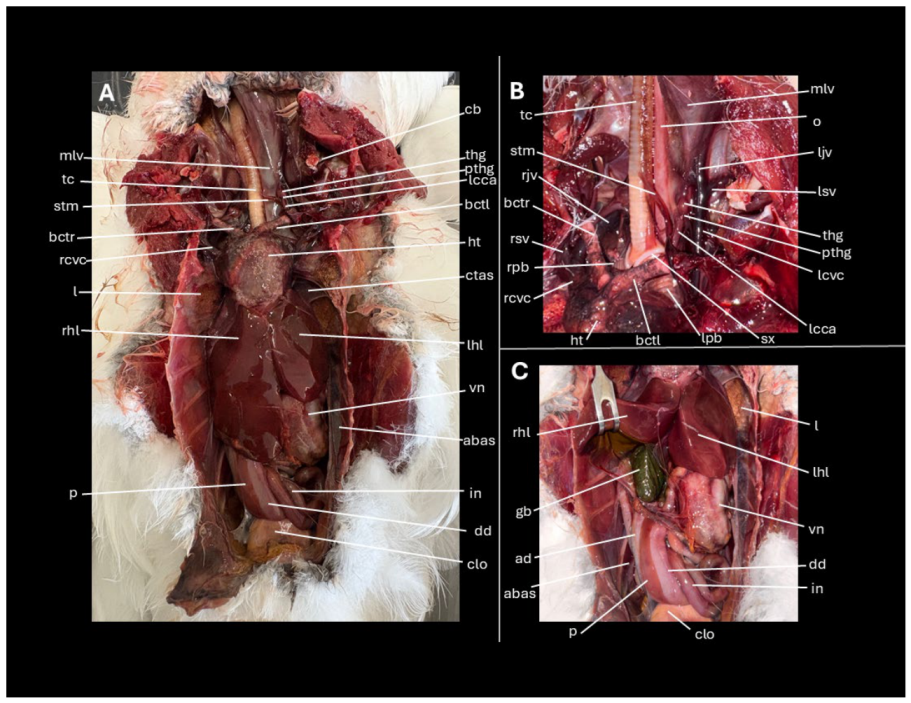
Figure 2.
Anatomical dissection illustrates the coelomic cavity of the Larus michahellis after removing the liver (A), and magnified images showing the parietal (B) and visceral (C) surfaces of the liver. abas: abdominal air sac; ad: ascending duodenum; ca: caecums; card: caudal renal division; clo: cloaca; crd: cranial renal division; dd: descending duodenum; gb: gallbladder; hpl: hepatopericardial ligament; ht: heart; iiv: internal iliac vessels; isq: isquion; l: lung; lhl: left hepatic lobe; lu: left ureter; mrd: middle renal division; od: oviduct; ov: ovary; p: pancreas; pb: pubis; pvn: proventriculus; r: rectum; rhl: right hepatic lobe; ru: right ureter; spl: spleen; vn: ventriculus.
Figure 2.
Anatomical dissection illustrates the coelomic cavity of the Larus michahellis after removing the liver (A), and magnified images showing the parietal (B) and visceral (C) surfaces of the liver. abas: abdominal air sac; ad: ascending duodenum; ca: caecums; card: caudal renal division; clo: cloaca; crd: cranial renal division; dd: descending duodenum; gb: gallbladder; hpl: hepatopericardial ligament; ht: heart; iiv: internal iliac vessels; isq: isquion; l: lung; lhl: left hepatic lobe; lu: left ureter; mrd: middle renal division; od: oviduct; ov: ovary; p: pancreas; pb: pubis; pvn: proventriculus; r: rectum; rhl: right hepatic lobe; ru: right ureter; spl: spleen; vn: ventriculus.
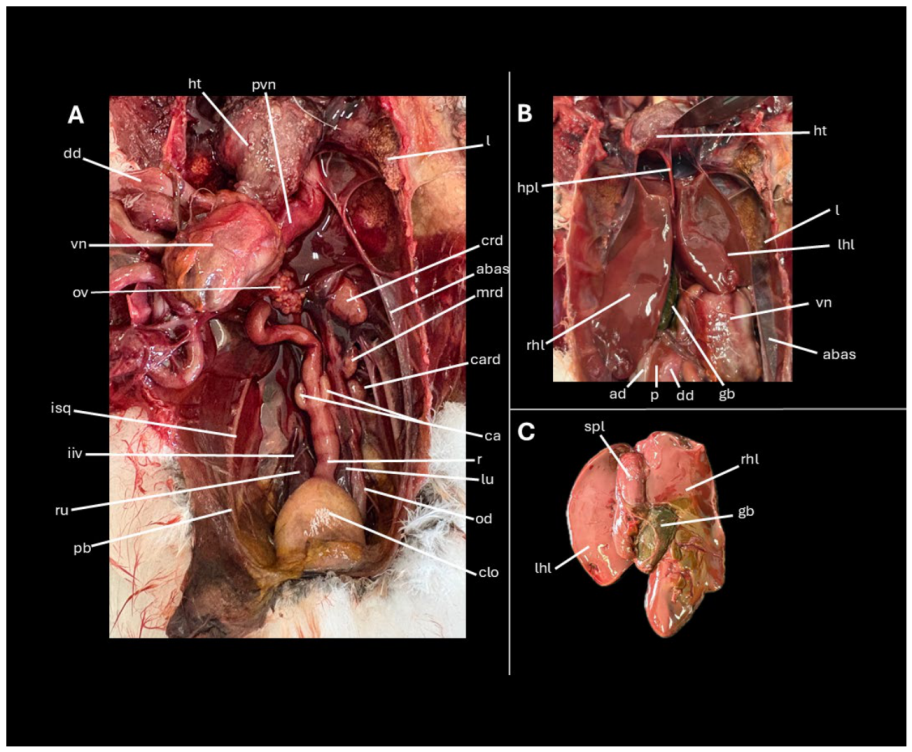
Figure 3.
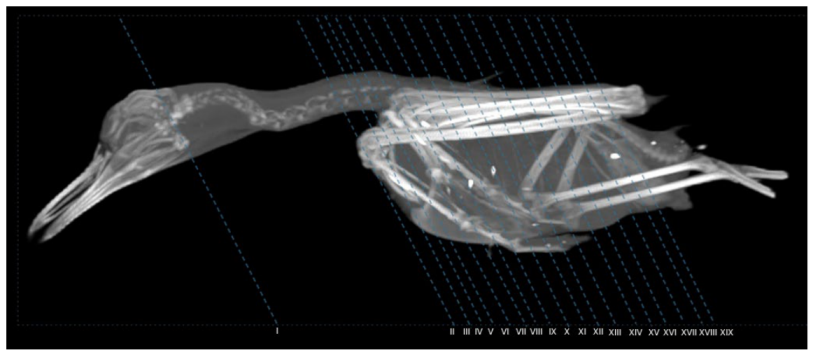
Sagital MPR volume rendering image of the body of an Yellow-legged Gull. The lines and numbers (I–XIX) represent the approximate level of the following transverse cross-sections and CT images.
Figure 3.
Sagital MPR volume rendering image of the body of an Yellow-legged Gull. The lines and numbers (I–XIX) represent the approximate level of the following transverse cross-sections and CT images.
3.1. Anatomical Dissections and Cross Sections
Anatomical dissections (Figures 1A–C, 2A–C and 23A) and transverse sections (Figures 4A-22A) of the coelomic cavity in gulls are shown. These images allow the identification of different components of the respiratory, cardiovascular, digestive, female genital and urinary systems within this cavity. The observations reveal the anatomical organization of the coelomic cavity, highlighting the spatial relationships among the contained organs.
Within this cavity, the thyroid glands were identified as round structures located at the base of the neck, positioned bilaterally to the trachea (Figures 1A,B and 23A). Each gland was closely associated with the common carotid arteries. The parathyroid glands were also observed at the caudal pole of the thyroid glands. The trachea followed a median course into the coelomic cavity, where it bifurcated into the right and left primary bronchi, a feature evident in the transverse sections (Figures 1A,B, 4A–9A and 23A). The syrinx was identified in selected anatomical preparations (Figures 1B and 9A). Additional structures associated with the trachea included the cervical portion of the oesophagus, the longissimus colli muscle, and the sternotracheal muscle (Figures 1B and 4A-9A).
Both lungs occupied a craniodorsal position, ventral to the thoracic vertebrae and adjacent to the ribs (Figures 1A,C, 2A,B, 8A-10A and 23A). The combined analysis of dissections and cross-sections also allowed the identification of the wall of the cervical, clavicular, interclavicular, cranial and caudal thoracic, and abdominal air sacs (Figures 1A,C, 2A,B and 5A–20A). The heart appeared as an ovoid structure with a pointed apex, centrally located within the coelomic cavity and positioned cranial to the liver (Figures 1A,B, 2A,B, 9A-12A and 23A). Major vascular structures, including the brachiocephalic trunks, the left and right subclavian veins, the left and right jugular veins, and the left and right cranial venae cavae, were also recognized (Figures 1A,B, 2A, 4A-9A and 23A). Caudal to the heart, the liver was divided into left and right hepatic lobes, with the gallbladder located on the visceral surface of the right hepatic lobe (Figures 1A,C, 2B,C and 10A-17A). Closely associated with the visceral hepatic surface, the spleen appeared as an elongated and narrow structure (Figure 2C).
More caudally, several components of the digestive tract could be distinguished. The proventriculus was located on the left side of the coelomic cavity at the junction between the oesophagus and the ventriculus (Figures 2A ,10A and 23A). The ventriculus, corresponding to the muscular portion of the stomach, was closely associated with the visceral surface of the left hepatic lobe and exhibited a markedly thick muscular wall, making it readily identifiable in these cross-sections. (Figures 1A,C, 2A,B, 11A-19A and 23A). The duodenum was more clearly appreciated in the dissected views caudal to the liver (Figures 1A,C, 2A,B and 23A), where it formed a U-shaped ansa duodeni composed of descending (pars descendens) and ascending (pars ascendens) segments. Between these segments, the pancreas was identified within the mesoduodenum and showed a characteristic red-dish-brown appearance (Figures 1A,C, 2B and 23A). Jejunoileal loops occupied the mid and right caudal regions of the coelomic cavity. Regarding the large intestine, two small and poorly developed ceca were observed together with the rectum, which extended caudally towards the cloaca (Figure 2A and 23A). The cloaca appeared as a large caudomedian cavity located ventral to the terminal rectum and receiving the distal portion of the left oviduct. This structure was surrounded by well-developed cloacal musculature, which facilitates cloacal distension and allows substantial enlargement during physiological processes such as oviposition, copulation, and defecation (Figures 1A,C, 2A and 21A-23A).
The urinary system was more clearly distinguished following liver removal in the dis-sected specimens. Transverse sections enabled the recognition of paired kidneys posi-tioned laterally to the vertebral column, dorsally embedded within the synsacral fossae and closely associated with the abdominal air sacs. Three renal divisions, namely cranial, middle, and caudal divisions, were differentiated (Figures 2A, 10A-18A and 23A).
Finally, the dissected and transverse images facilitated the identification of the female re-productive tract. The ovary, containing multiple follicles, was located adjacent to the ven-tral aspect of the renal divisions (Figures 2A, 13A-19A and 23A). In addition, the oviduct occupied the left and caudal portion of the coelomic cavity within the intestinal peritoneal cavity and extended caudally towards the cloaca (Figure 2A and 23A).
3.2. Computed Tomography Images
Computed tomography images corresponding to the dissections and anatomical trans-verse sections were selected for comparative evaluation (Figures 4B-D-22B-D and 23C,D). These tomographic images provided complementary morphological and topographic in-formation of the coelomic structures, allowing a more detailed visualization of their spa-tial arrangement and tissue characteristics when compared with the corresponding anatomical sections.
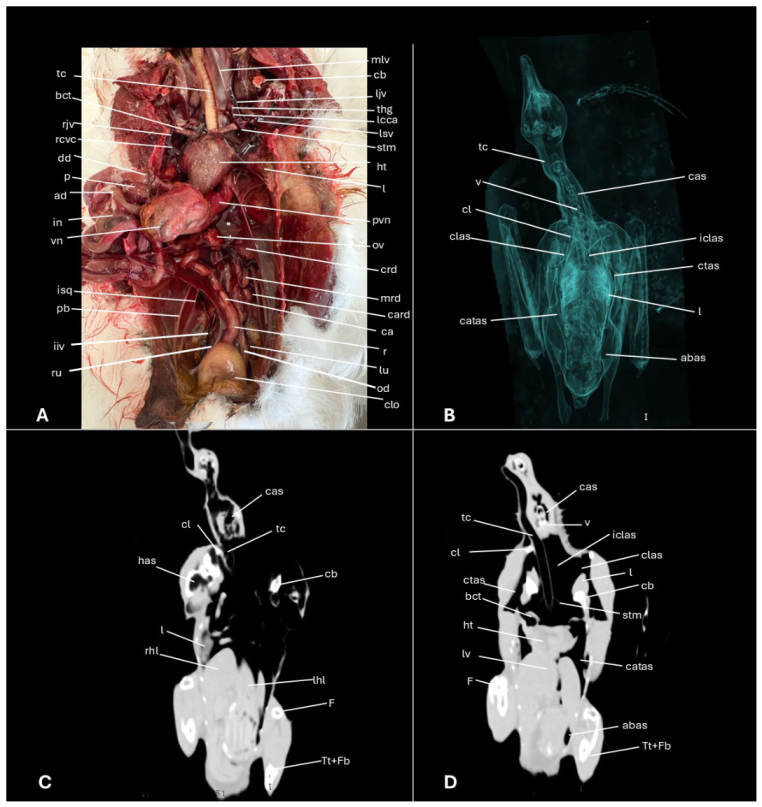
Notably, CT images obtained with the pulmonary window setting (Figures 4B-22B and 23C,D) showed remarkable visualization of different bones, related muscles, and soft tissues. These results were like those obtained with the soft tissue and bone window settings. As a result, we differentiated between several skeletal formations, which included the clavicle, ulna, scapulla, thoracic vertebrae, sternum, humerus and femur. In addition, we examined a variety of muscles connected to these skeletal elements, such as the sternotracheal, scapulohumeralis, scapulohumeral caudal, longissimus colli, longissimus dorsi, pectoral and intercostal muscles (Figures 4B-13B and 23D). More precisely, this window facilitated the identification of the trachea and the lung parenchyma (Figures 4B-10B and 23B,C,D). This window also proved useful for identifying intrathoracic formations, including the heart and vessels, such as the brachiocephalic trunks, were also identified (Figure 6B-10B and 23D). Additionally, the walls of some air sacs, such as those of the cervical, clavicular, thoracic and abdominal air sacs, could be distinguished (Figures 4B-20B and 23B,C,D). Regarding the digestive components, this particular CT window clearly delineated the oesophagus, crop, hepatic lobes, glandular and muscular stomach components, various intestinal segments, and the cloaca (Figures 5B -22B and 23C,D). In addition, this technology allowed to clarify structures from the genitourinary system. The three cranial divisions were clearly distinguished following a dorsal position in the coelomic cavity (Figures 11B-19B). Lateroventrally to these divisions, the ovary was appreciable (Figures 13B-19B).
CT images acquired using the bone window and soft tissue settings (Figures 4C,D-22C,D) demonstrated a remarkable distinction between bones and soft tissues. Interestingly, the different heart chambers and several vessels could be distinguished with these windows (Figure 6C,D-7C,D and 10C,D). Moreover, various digestive structures, such as the oesophagus, the right and left hepatic lobes, different intestinal segments, as well as the glandular and muscular portions of the gull’s stomach, and the cloaca were also displayed (Figures 5C,D-22C,D). These windows were helpful in the visualization of the cervical, clavicular, thoracic and abdominal air sacs which were joined by connective tissue with adjacent organs or muscles (Figures 4C,D-20C,D). In addition, this technology allowed to clarify structures from the genitourinary system. The three cranial divisions were clearly distinguished following a dorsal position in the coelomic cavity (Figures 11C,D-19C,D). Lateroventrally to these divisions, the ovary was appreciable (Figures 13C,D-19C,D).
Finally, through tomographic studies carried out on the coelomic cavity of gulls, 3D reconstruction models were developed using 3D MIP applications. MIP reconstruction techniques allowed us to clearly visualize the course of the trachea, and the different disposition of the gull air sacs (Figure 23B).
Figure 4.
Transverse cross-sectional image (A), and pulmonary (B), bone (C) and soft tissue (D) CT images of the coelomic cavity of the Larus michahellis corresponding to line I in Figure 3. cas: cervical air sac; mi: M. intertransversarii; mld: M. longus colli dorsalis; mlv: M. longus colli ventralis; o: oesophagus; rjv: right jugular vein; sc: spinal cord; tc: trachea; v: vertebrae.
Figure 4.
Transverse cross-sectional image (A), and pulmonary (B), bone (C) and soft tissue (D) CT images of the coelomic cavity of the Larus michahellis corresponding to line I in Figure 3. cas: cervical air sac; mi: M. intertransversarii; mld: M. longus colli dorsalis; mlv: M. longus colli ventralis; o: oesophagus; rjv: right jugular vein; sc: spinal cord; tc: trachea; v: vertebrae.
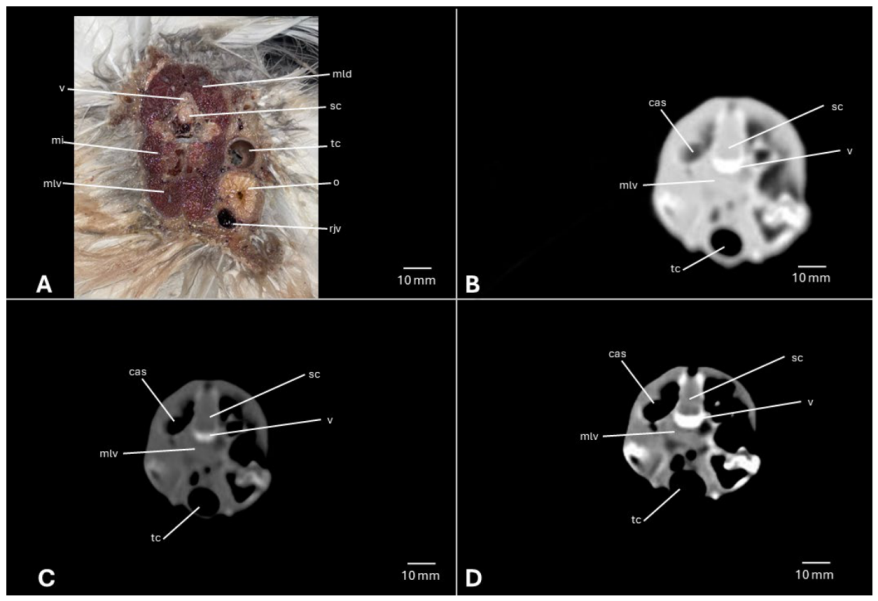
Figure 5.
Transverse cross-sectional image (A), and pulmonary (B), bone (C) and soft tissue (D) CT images of the coelomic cavity of the Larus michahellis corresponding to line II in Figure 3. c: crop; cas: cervical air sac; cb: coracoid bone; clas: clavicular air sac; H: humerus; mld: M. longus colli dorsalis; mlv: M. longus colli ventralis; rjv: right jugular vein; sc: spinal cord; tc: trachea; v: vertebrae.
Figure 5.
Transverse cross-sectional image (A), and pulmonary (B), bone (C) and soft tissue (D) CT images of the coelomic cavity of the Larus michahellis corresponding to line II in Figure 3. c: crop; cas: cervical air sac; cb: coracoid bone; clas: clavicular air sac; H: humerus; mld: M. longus colli dorsalis; mlv: M. longus colli ventralis; rjv: right jugular vein; sc: spinal cord; tc: trachea; v: vertebrae.
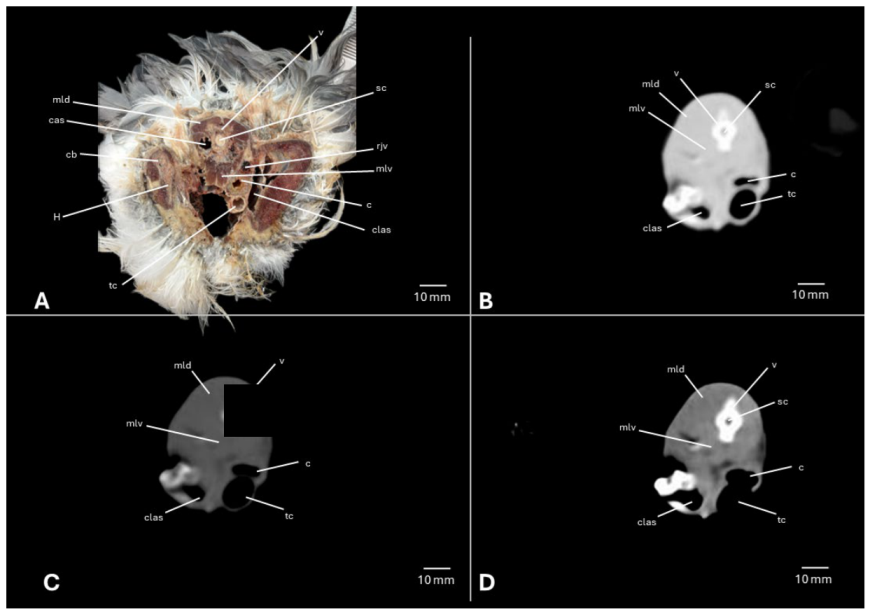
Figure 6.
Transverse cross-sectional image (A), and pulmonary (B), bone (C) and soft tissue (D) CT images of the coelomic cavity of the Larus michahellis corresponding to line III in Figure 3. amb: alular metacarpal bone; cas: cervical air sac; cb: coracoid bone; cl: clavicle; clas: clavicular air sac; dcas: intrathoracic diverticula of clavicular air sac; H: humerus; has: humeral air sac; mld: M. longus colli dorsalis; mlv: M. longus colli ventralis; mmb: major metacarpal bone; mimb: minor metacarpal bone; o: oesophagus; ra: radius; rjv: right jugular vein; sc: spinal cord; Scp: scapulla; tc: trachea; ul: ulna; v: vertebrae.
Figure 6.
Transverse cross-sectional image (A), and pulmonary (B), bone (C) and soft tissue (D) CT images of the coelomic cavity of the Larus michahellis corresponding to line III in Figure 3. amb: alular metacarpal bone; cas: cervical air sac; cb: coracoid bone; cl: clavicle; clas: clavicular air sac; dcas: intrathoracic diverticula of clavicular air sac; H: humerus; has: humeral air sac; mld: M. longus colli dorsalis; mlv: M. longus colli ventralis; mmb: major metacarpal bone; mimb: minor metacarpal bone; o: oesophagus; ra: radius; rjv: right jugular vein; sc: spinal cord; Scp: scapulla; tc: trachea; ul: ulna; v: vertebrae.
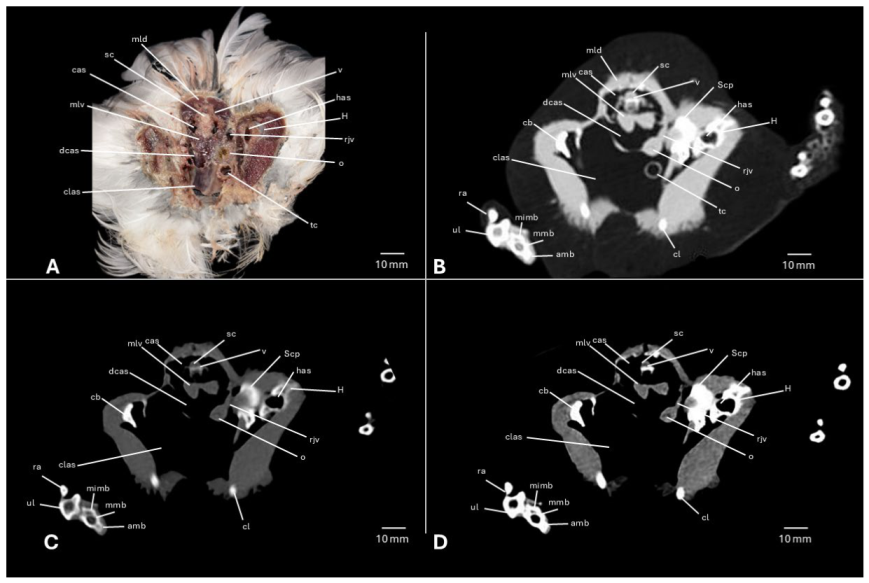
Figure 7.
Transverse cross-sectional image (A), and pulmonary (B), bone (C) and soft tissue (D) CT images of the coelomic cavity of the Larus michahellis corresponding to line IV in Figure 3. cas: cervical air sac; cb: coracoid bone; cl: clavicle; clas: clavicular air sac; dcas: intrathoracic diverticula of clavicular air sac; H: humerus; M. longus colli dorsalis; mlv: M. longus colli ventralis; mmb: major metacarpal bone; mimb: minor metacarpal bone; o: oesophagus; pad: phalanx of alular digit; pm: pectoral muscle; ra: radius; rjv: right jugular vein; sc: spinal cord; Scp: scapulla; scm: supracoracoid muscle; tc: trachea; ul: ulna; v: vertebrae.
Figure 7.
Transverse cross-sectional image (A), and pulmonary (B), bone (C) and soft tissue (D) CT images of the coelomic cavity of the Larus michahellis corresponding to line IV in Figure 3. cas: cervical air sac; cb: coracoid bone; cl: clavicle; clas: clavicular air sac; dcas: intrathoracic diverticula of clavicular air sac; H: humerus; M. longus colli dorsalis; mlv: M. longus colli ventralis; mmb: major metacarpal bone; mimb: minor metacarpal bone; o: oesophagus; pad: phalanx of alular digit; pm: pectoral muscle; ra: radius; rjv: right jugular vein; sc: spinal cord; Scp: scapulla; scm: supracoracoid muscle; tc: trachea; ul: ulna; v: vertebrae.
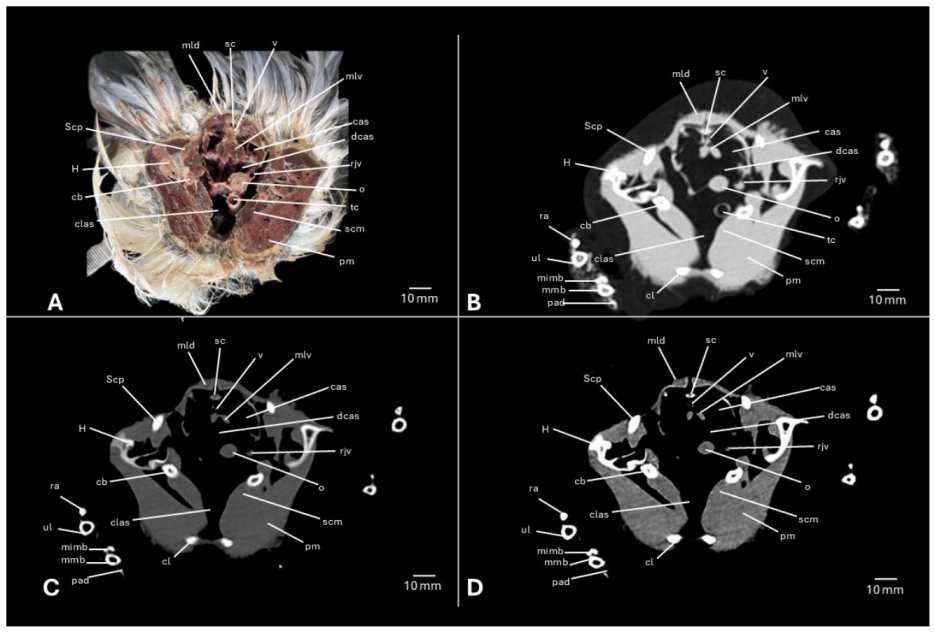
Figure 8.
Transverse cross-sectional image (A), and pulmonary (B), bone (C) and soft tissue (D) CT images of the coelomic cavity of the Larus michahellis corresponding to line V in Figure 3. bctl: left brachiocephalic trunk; bctr: right brachiocephalic trunk; H: humerus; has: humeral air sac; iclas: interclavicular air sac; l: lung; mmb: major metacarpal bone; mimb: minor metacarpal bone; mlv: M. longus colli ventralis; ra: radius; sc: spinal cord; scm: supracoracoid muscle; Scp: scapulla; ST: sternum; stm: sternotracheal muscle; tc: trachea; o: oesophagus; pm: pectoral muscle; ul: ulna; v: vertebrae.
Figure 8.
Transverse cross-sectional image (A), and pulmonary (B), bone (C) and soft tissue (D) CT images of the coelomic cavity of the Larus michahellis corresponding to line V in Figure 3. bctl: left brachiocephalic trunk; bctr: right brachiocephalic trunk; H: humerus; has: humeral air sac; iclas: interclavicular air sac; l: lung; mmb: major metacarpal bone; mimb: minor metacarpal bone; mlv: M. longus colli ventralis; ra: radius; sc: spinal cord; scm: supracoracoid muscle; Scp: scapulla; ST: sternum; stm: sternotracheal muscle; tc: trachea; o: oesophagus; pm: pectoral muscle; ul: ulna; v: vertebrae.
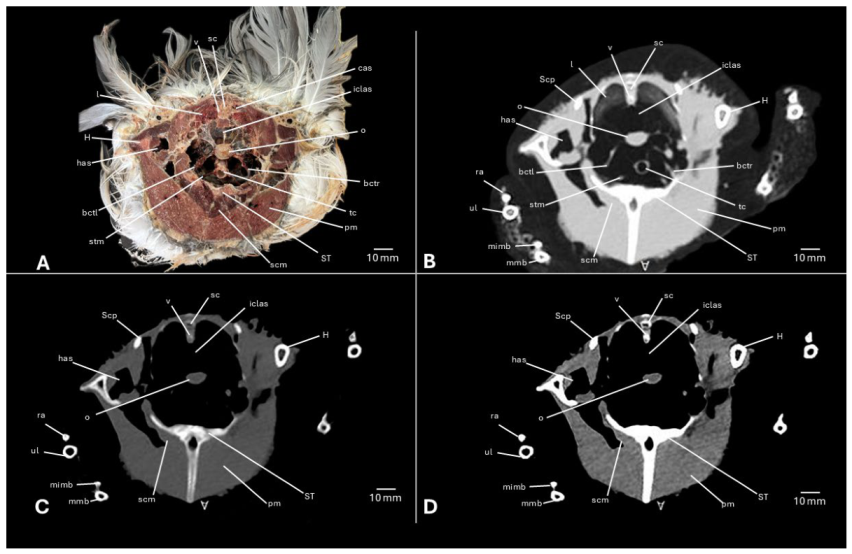
Figure 9.
Transverse cross-sectional image (A), and pulmonary (B), bone (C) and soft tissue (D) CT images of the coelomic cavity of the Larus michahellis corresponding to line VI in Figure 3. bctl: left brachiocephalic trunk; bctr: right brachiocephalic trunk; clas: clavicular air sac; ctas: cranial thoracic air sac; H: humerus; ht: heart; iclas: interclavicular air sac; icm: intercostal muscle; l: lung; mmb: major metacarpal bone; mimb: minor metacarpal bone; o: oesophagus; pm: pectoral muscle; ra: radius; sc: spinal cord; scm: supracoracoid muscle; Scp: scapulla; sm: scapulohumeral caudal muscle; ST: sternum; sx: syrinx; tc: trachea; ul: ulna; v: vertebrae.
Figure 9.
Transverse cross-sectional image (A), and pulmonary (B), bone (C) and soft tissue (D) CT images of the coelomic cavity of the Larus michahellis corresponding to line VI in Figure 3. bctl: left brachiocephalic trunk; bctr: right brachiocephalic trunk; clas: clavicular air sac; ctas: cranial thoracic air sac; H: humerus; ht: heart; iclas: interclavicular air sac; icm: intercostal muscle; l: lung; mmb: major metacarpal bone; mimb: minor metacarpal bone; o: oesophagus; pm: pectoral muscle; ra: radius; sc: spinal cord; scm: supracoracoid muscle; Scp: scapulla; sm: scapulohumeral caudal muscle; ST: sternum; sx: syrinx; tc: trachea; ul: ulna; v: vertebrae.
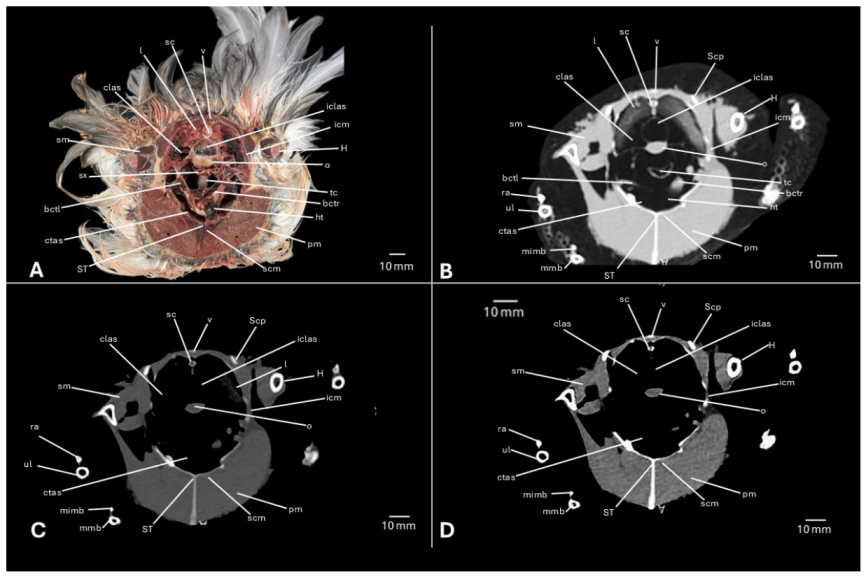
Figure 10.
Transverse cross-sectional image (A), and pulmonary (B), bone (C) and soft tissue (D) CT images of the coelomic cavity of the Larus michahellis corresponding to line VII in Figure 3. abas: abdominal air sac; catas: caudal thoracic air sac; ctas: cranial thoracic air sac; crd: cranial renal division; da: descending aorta; F: femur; H: humerus; ht: heart; l: lung; ldm: M. latissimus dorsi; lhl: left hepatic lobe; pm: pectoral muscle; pvn: proventriculus; ra: radius; rhl: right hepatic lobe; sc: spinal cord; ST: sternum; Tb+Fb: tibiotarsus + fibula; ul: ulna; v: vertebrae.
Figure 10.
Transverse cross-sectional image (A), and pulmonary (B), bone (C) and soft tissue (D) CT images of the coelomic cavity of the Larus michahellis corresponding to line VII in Figure 3. abas: abdominal air sac; catas: caudal thoracic air sac; ctas: cranial thoracic air sac; crd: cranial renal division; da: descending aorta; F: femur; H: humerus; ht: heart; l: lung; ldm: M. latissimus dorsi; lhl: left hepatic lobe; pm: pectoral muscle; pvn: proventriculus; ra: radius; rhl: right hepatic lobe; sc: spinal cord; ST: sternum; Tb+Fb: tibiotarsus + fibula; ul: ulna; v: vertebrae.
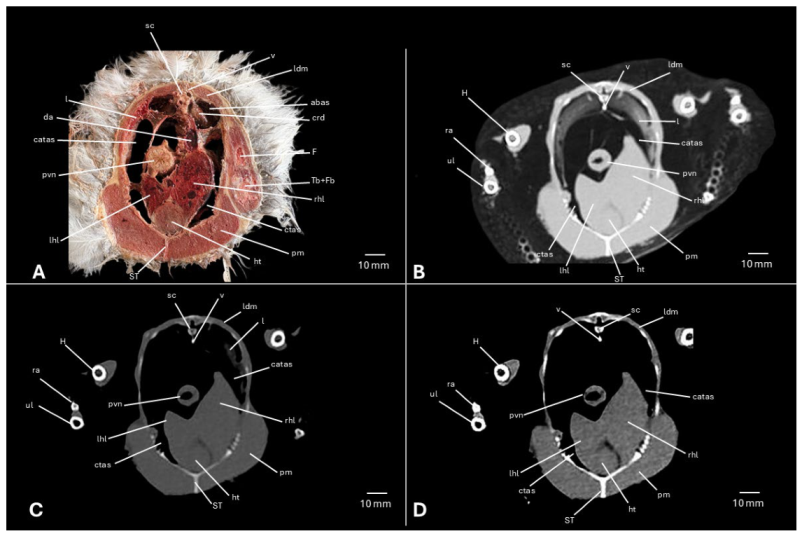
Figure 11.
Transverse cross-sectional image (A), and pulmonary (B), bone (C) and soft tissue (D) CT images of the coelomic cavity of the Larus michahellis corresponding to line VIII in Figure 3. abas: abdominal air sac; catas: caudal thoracic air sac; ctas: cranial thoracic air sac; crd: cranial renal division; da: descending aorta; F: femur; H: humerus; ht: heart; in: intestines; ldm: M. latissimus dorsi; lhl: left hepatic lobe; pm: pectoral muscle; ra: radius; rhl: right hepatic lobe; sc: spinal cord; ST: sternum; Tb+Fb: tibiotarsus + fibula; ul: ulna; vn: ventriculus; v: vertebrae.
Figure 11.
Transverse cross-sectional image (A), and pulmonary (B), bone (C) and soft tissue (D) CT images of the coelomic cavity of the Larus michahellis corresponding to line VIII in Figure 3. abas: abdominal air sac; catas: caudal thoracic air sac; ctas: cranial thoracic air sac; crd: cranial renal division; da: descending aorta; F: femur; H: humerus; ht: heart; in: intestines; ldm: M. latissimus dorsi; lhl: left hepatic lobe; pm: pectoral muscle; ra: radius; rhl: right hepatic lobe; sc: spinal cord; ST: sternum; Tb+Fb: tibiotarsus + fibula; ul: ulna; vn: ventriculus; v: vertebrae.
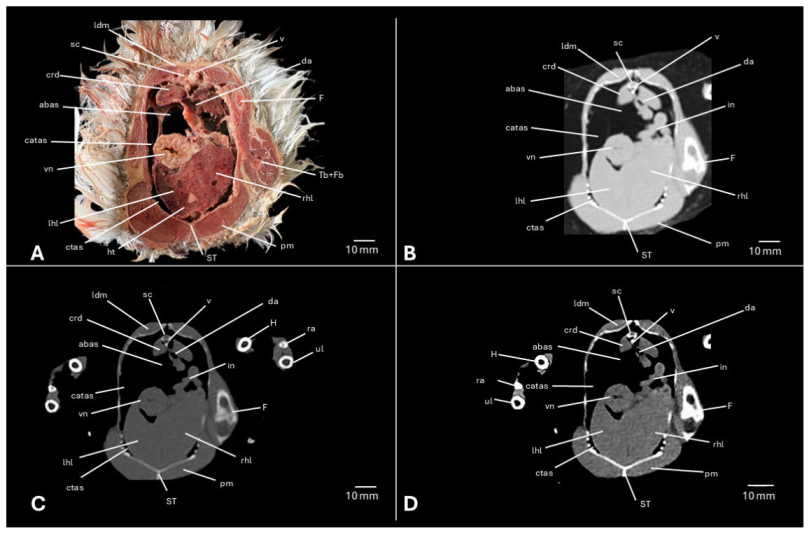
Figure 12.
Transverse cross-sectional image (A), and pulmonary (B), bone (C) and soft tissue (D) CT images of the coelomic cavity of the Larus michahellis corresponding to line IX in Figure 3. abas: abdominal air sac; catas: caudal thoracic air sac; crd: cranial renal division;F: femur; H: humerus; in: intestines; ldm: M. latissimus dorsi; lhl: left hepatic lobe; pm: pectoral muscle; ra: radius; rhl: right hepatic lobe; sc: spinal cord; ST: sternum ; Tt+Fb: tibiotarsus and fibula;ul: ulna; vn: ventriculus; v: vertebrae.
Figure 12.
Transverse cross-sectional image (A), and pulmonary (B), bone (C) and soft tissue (D) CT images of the coelomic cavity of the Larus michahellis corresponding to line IX in Figure 3. abas: abdominal air sac; catas: caudal thoracic air sac; crd: cranial renal division;F: femur; H: humerus; in: intestines; ldm: M. latissimus dorsi; lhl: left hepatic lobe; pm: pectoral muscle; ra: radius; rhl: right hepatic lobe; sc: spinal cord; ST: sternum ; Tt+Fb: tibiotarsus and fibula;ul: ulna; vn: ventriculus; v: vertebrae.
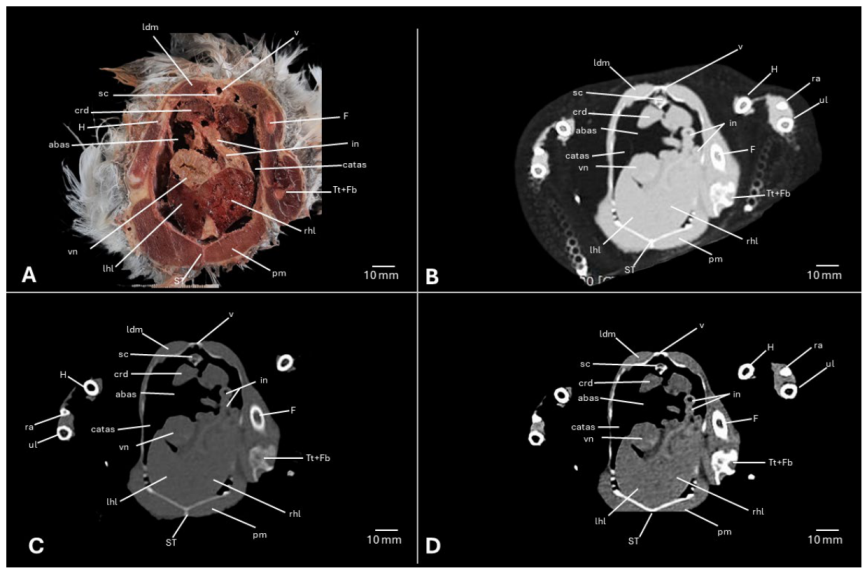
Figure 13.
Transverse cross-sectional image (A), and pulmonary (B), bone (C) and soft tissue (D) CT images of the coelomic cavity of the Larus michahellis corresponding to line X in Figure 3. abas: abdominal air sac; F: femur gb: gallbladder; H: humerus; jil: jejunoileal loops; lhl: left hepatic lobe; mdr: middle renal division; ov: ovary; pm: pectoral muscle; rhl: right hepatic lobe; ra: radius; sc: spinal cord; spl: spleen; ST: sternum; Tt+Fb: tibiotarsus and fibula; ul: ulna; v: vertebrae; vn: ventriculus.
Figure 13.
Transverse cross-sectional image (A), and pulmonary (B), bone (C) and soft tissue (D) CT images of the coelomic cavity of the Larus michahellis corresponding to line X in Figure 3. abas: abdominal air sac; F: femur gb: gallbladder; H: humerus; jil: jejunoileal loops; lhl: left hepatic lobe; mdr: middle renal division; ov: ovary; pm: pectoral muscle; rhl: right hepatic lobe; ra: radius; sc: spinal cord; spl: spleen; ST: sternum; Tt+Fb: tibiotarsus and fibula; ul: ulna; v: vertebrae; vn: ventriculus.
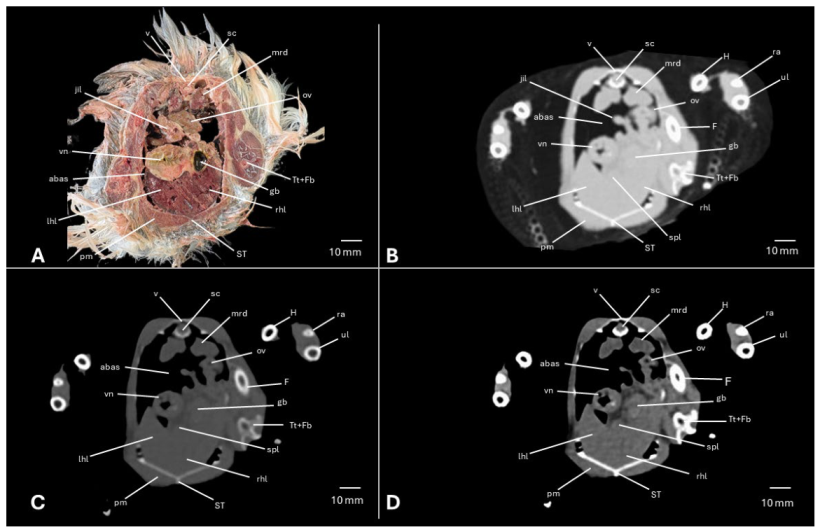
Figure 14.
Transverse cross-sectional image (A), and pulmonary (B), bone (C) and soft tissue (D) CT images of the coelomic cavity of the Larus michahellis corresponding to line XI in Figure 3. abas: abdominal air sac; F: femur; gb: gallbladder; H: humerus; in: intestines; lhl: left hepatic lobe; mrd: median renal division; ov: ovary; ra: radius; rhl: right hepatic lobe; sc: spinal cord; Tt+ Fb: tibiotarsus and fibula ; ul: ulna; v: vertebrae; vn: ventriculus.
Figure 14.
Transverse cross-sectional image (A), and pulmonary (B), bone (C) and soft tissue (D) CT images of the coelomic cavity of the Larus michahellis corresponding to line XI in Figure 3. abas: abdominal air sac; F: femur; gb: gallbladder; H: humerus; in: intestines; lhl: left hepatic lobe; mrd: median renal division; ov: ovary; ra: radius; rhl: right hepatic lobe; sc: spinal cord; Tt+ Fb: tibiotarsus and fibula ; ul: ulna; v: vertebrae; vn: ventriculus.
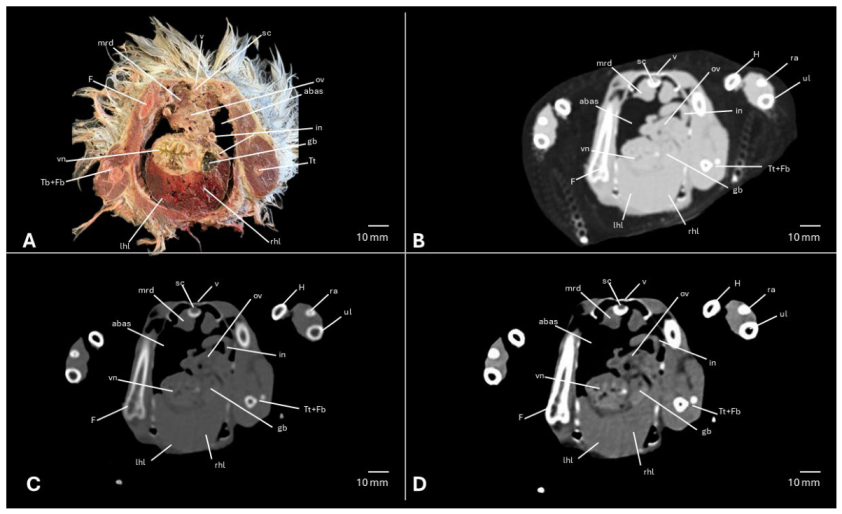
Figure 15.
Transverse cross-sectional image (A), and pulmonary (B), bone (C) and soft tissue (D) CT images of the coelomic cavity of the Larus michahellis corresponding to line XII in Figure 3. abas: abdominal air sac; card: caudal renal division; H: humerus; gb: gallbladder; in: intestine; lhl: left hepatic lobe; ov: ovary; rhl: right hepatic lobe; ra: radius; sc: spinal cord; Tt+ Fb:tibiotarsus and fibula ; ul: ulna; v: vertebrae; vn: ventriculus.
Figure 15.
Transverse cross-sectional image (A), and pulmonary (B), bone (C) and soft tissue (D) CT images of the coelomic cavity of the Larus michahellis corresponding to line XII in Figure 3. abas: abdominal air sac; card: caudal renal division; H: humerus; gb: gallbladder; in: intestine; lhl: left hepatic lobe; ov: ovary; rhl: right hepatic lobe; ra: radius; sc: spinal cord; Tt+ Fb:tibiotarsus and fibula ; ul: ulna; v: vertebrae; vn: ventriculus.
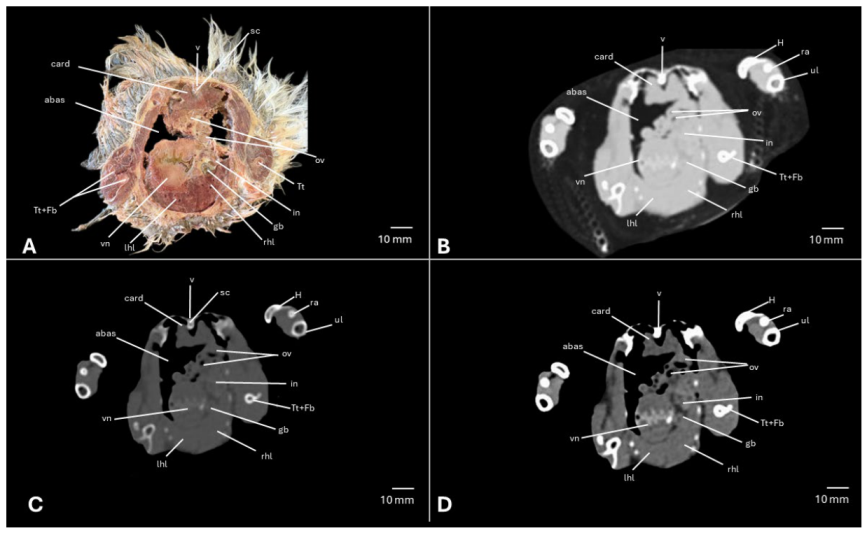
Figure 16.
Transverse cross-sectional image (A), and pulmonary (B), bone (C) and soft tissue (D) CT images of the coelomic cavity of the Larus michahellis corresponding to line XIII in Figure 3. abas: abdominal air sac; card: caudal renal division; H: humerus; in: intestines; ov: ovary; ra: radius; rhl: right hepatic lobe; Tt+ Fb: tibiotarsus and fibula; ul: ulna; v: vertebrae; vn: ventriculus.
Figure 16.
Transverse cross-sectional image (A), and pulmonary (B), bone (C) and soft tissue (D) CT images of the coelomic cavity of the Larus michahellis corresponding to line XIII in Figure 3. abas: abdominal air sac; card: caudal renal division; H: humerus; in: intestines; ov: ovary; ra: radius; rhl: right hepatic lobe; Tt+ Fb: tibiotarsus and fibula; ul: ulna; v: vertebrae; vn: ventriculus.
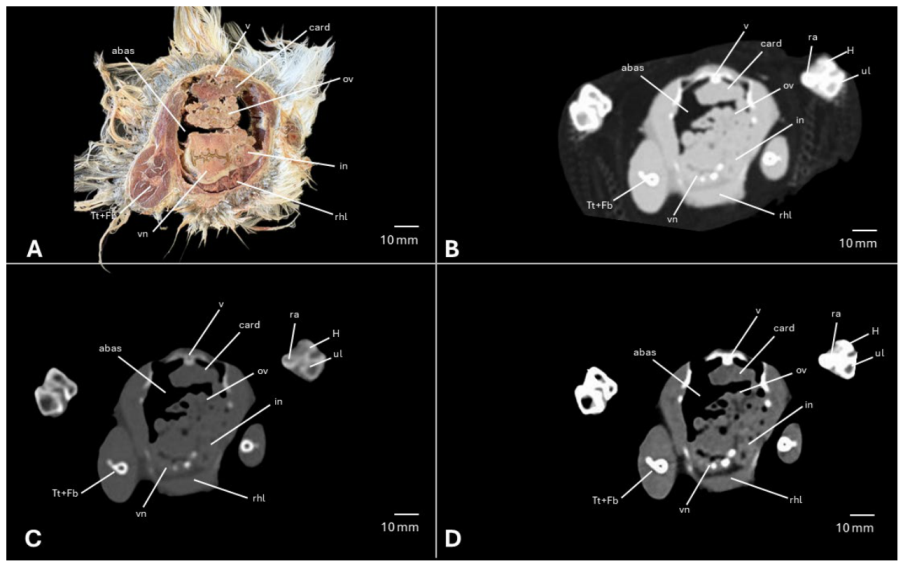
Figure 17.
Transverse cross-sectional image (A), and pulmonary (B), bone (C) and soft tissue (D) CT images of the coelomic cavity of the Larus michahellis corresponding to line XIV in Figure 3. abas: abdominal air; card: caudal renal division; in: intestines; ov: ovary; rhl: right hepatic lobe; Tt+ Fb:tibiotarsus and fibula v: vertebrae; vn: ventriculus;.
Figure 17.
Transverse cross-sectional image (A), and pulmonary (B), bone (C) and soft tissue (D) CT images of the coelomic cavity of the Larus michahellis corresponding to line XIV in Figure 3. abas: abdominal air; card: caudal renal division; in: intestines; ov: ovary; rhl: right hepatic lobe; Tt+ Fb:tibiotarsus and fibula v: vertebrae; vn: ventriculus;.
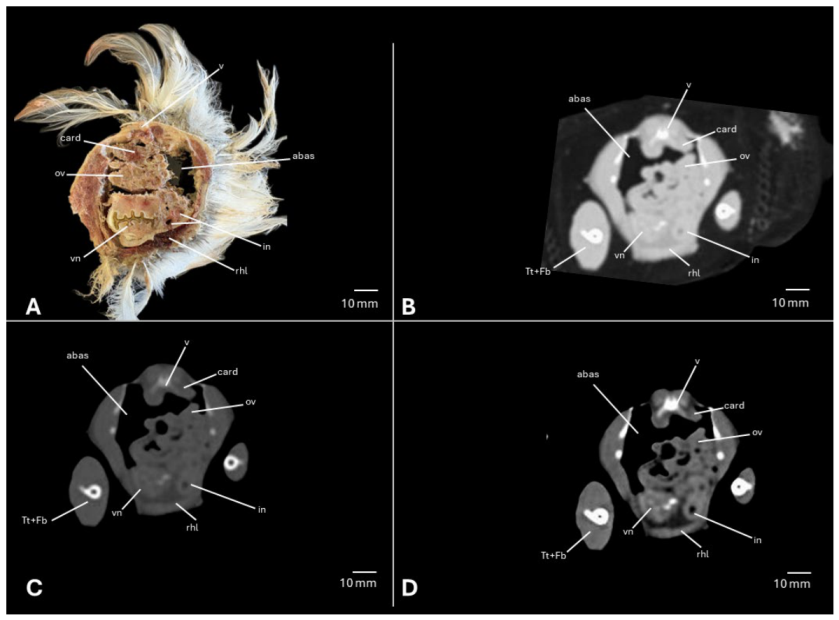
Figure 18.
Transverse cross-sectional image (A), and pulmonary (B), bone (C) and soft tissue (D) CT images of the coelomic cavity of the Larus michahellis corresponding to line XV in Figure 3. abas: abdominal air sac; card: caudal renal division; in: intestine; ipc: intestinal peritoneal cavity with fat; ov: ovary; Tt+ Fb: tibiotarsus and fibula; vn: ventriculus; v: vertebrae.
Figure 18.
Transverse cross-sectional image (A), and pulmonary (B), bone (C) and soft tissue (D) CT images of the coelomic cavity of the Larus michahellis corresponding to line XV in Figure 3. abas: abdominal air sac; card: caudal renal division; in: intestine; ipc: intestinal peritoneal cavity with fat; ov: ovary; Tt+ Fb: tibiotarsus and fibula; vn: ventriculus; v: vertebrae.
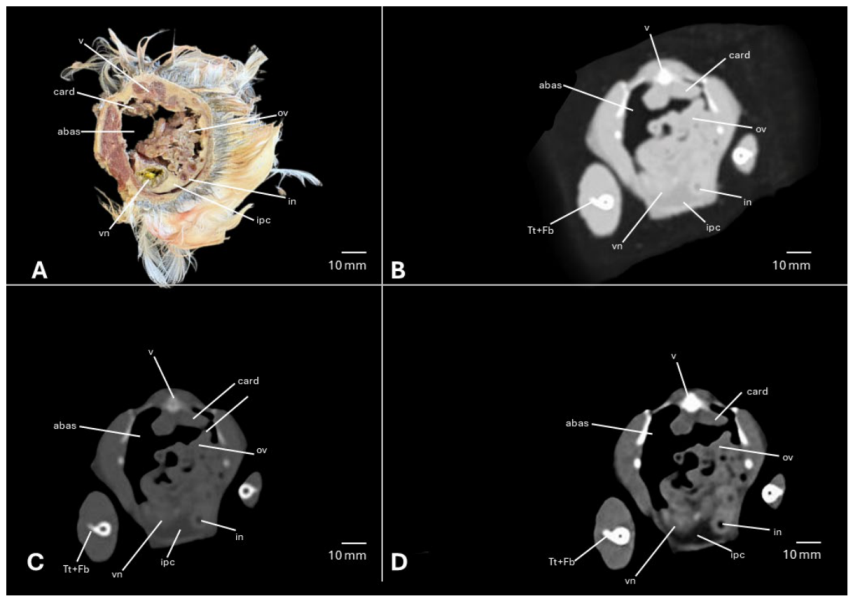
Figure 19.
Transverse cross-sectional image (A), and pulmonary (B), bone (C) and soft tissue (D) CT images of the coelomic cavity of the Larus michahellis corresponding to line XVI in Figure 3. abas: abdominal air sac; card: caudal renal division; in: intestines; ipc: intestinal peritoneal cavity with fat; ov: ovary; sc: spinal cord; Tt+ Fb: tibiotarsus and fibula; vn: ventriculus; v: vertebrae.
Figure 19.
Transverse cross-sectional image (A), and pulmonary (B), bone (C) and soft tissue (D) CT images of the coelomic cavity of the Larus michahellis corresponding to line XVI in Figure 3. abas: abdominal air sac; card: caudal renal division; in: intestines; ipc: intestinal peritoneal cavity with fat; ov: ovary; sc: spinal cord; Tt+ Fb: tibiotarsus and fibula; vn: ventriculus; v: vertebrae.
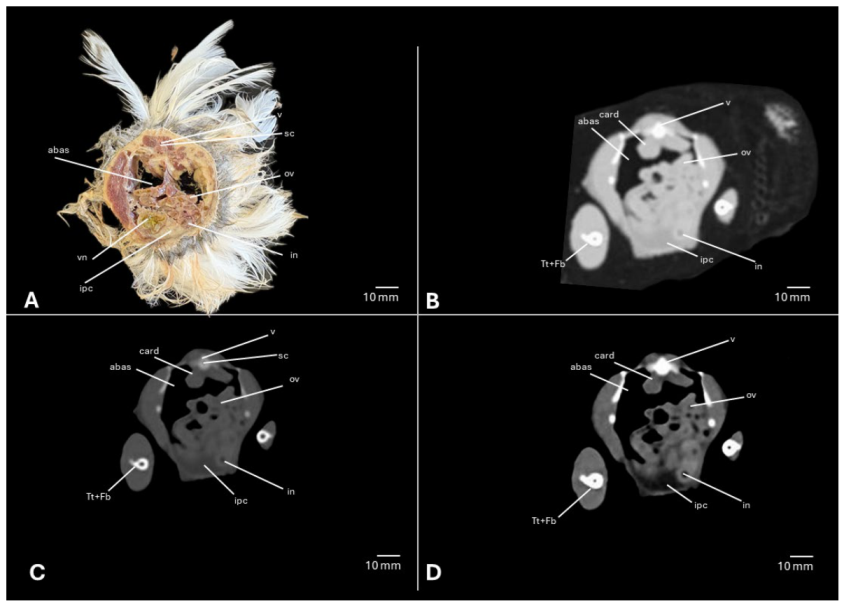
Figure 20.
Transverse cross-sectional image (A), and pulmonary (B), bone (C) and soft tissue (D) CT images of the coelomic cavity of the Larus michahellis corresponding to line XVII in Figure 3. abas: abdominal air sac; in: intestines; syn: synsacrum; Tt+Fb :tibiotarsus and fibula; u: uterus; ug: uropygial gland.
Figure 20.
Transverse cross-sectional image (A), and pulmonary (B), bone (C) and soft tissue (D) CT images of the coelomic cavity of the Larus michahellis corresponding to line XVII in Figure 3. abas: abdominal air sac; in: intestines; syn: synsacrum; Tt+Fb :tibiotarsus and fibula; u: uterus; ug: uropygial gland.
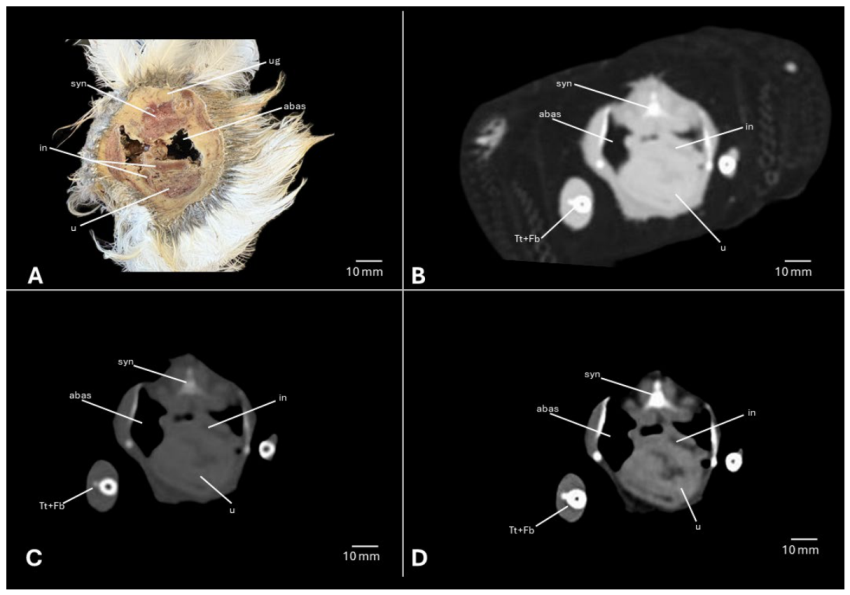
Figure 21.
Transverse cross-sectional image (A), and pulmonary (B), bone (C) and soft tissue (D) CT images of the coelomic cavity of the Larus michahellis corresponding to line XVIII in Figure 3. clo: cloaca; ipc: intestinal peritoneal cavity with fat; r: rectum; syn: synsacrum; Tt: tibiotarsus; u: uterus; ug: uropygial gland;.
Figure 21.
Transverse cross-sectional image (A), and pulmonary (B), bone (C) and soft tissue (D) CT images of the coelomic cavity of the Larus michahellis corresponding to line XVIII in Figure 3. clo: cloaca; ipc: intestinal peritoneal cavity with fat; r: rectum; syn: synsacrum; Tt: tibiotarsus; u: uterus; ug: uropygial gland;.
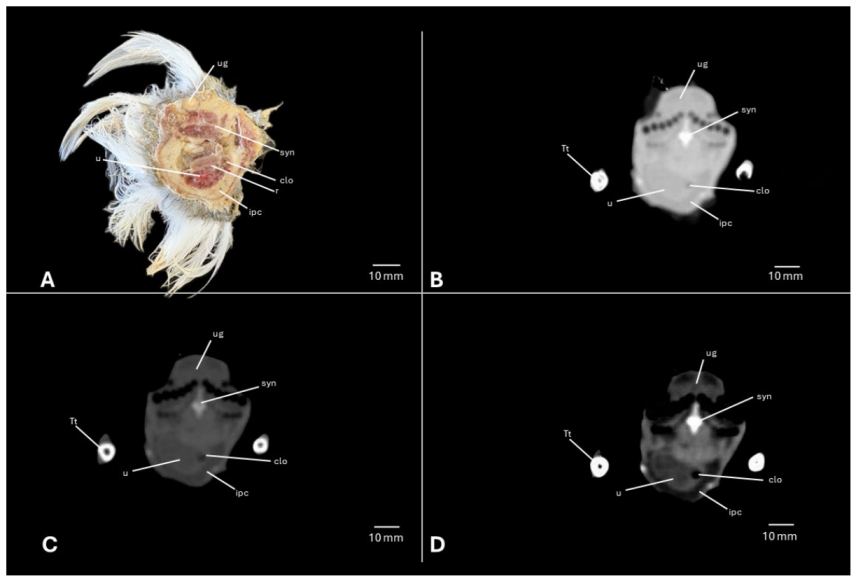
Figure 22.
Transverse cross-sectional image (A), and pulmonary (B), bone (C) and soft tissue (D) CT images of the coelomic cavity of the Larus michahellis corresponding to line XIX in Figure 3. clo: cloaca; clm: cloacal muscles; ipc: intestinal peritoneal cavity with fat; r: rectum (terminal part); syn: synsacrum; Tt: tibiotarsus; ug: uropygial gland;.
Figure 22.
Transverse cross-sectional image (A), and pulmonary (B), bone (C) and soft tissue (D) CT images of the coelomic cavity of the Larus michahellis corresponding to line XIX in Figure 3. clo: cloaca; clm: cloacal muscles; ipc: intestinal peritoneal cavity with fat; r: rectum (terminal part); syn: synsacrum; Tt: tibiotarsus; ug: uropygial gland;.
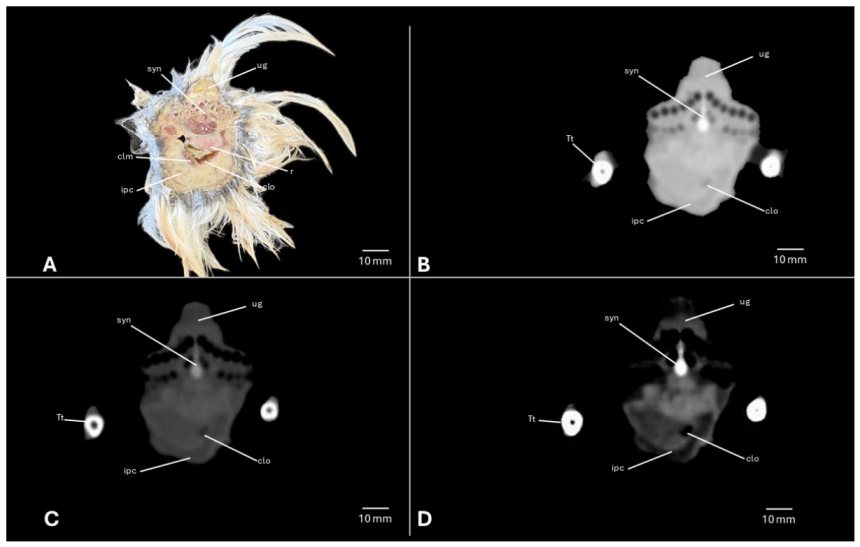
Figure 23.
Anatomical dissection illustrates the coelomic cavity of the Larus michahellis after removing the liver, gallbladder and spleen (A), OsiriX MIP reconstruction image (B) and dorsal MPR images in pulmonary CT window of the coelomic cavity at level of liver (C) and heart (D). abas: abdominal air sac; ad: ascending duodenum; bct: brachiocephalic trunk; ca: caecums; card: caudal renal division; cas: cervical air sac; catas: caudal thoracic air sac; ctas: cranial thoracic air sac; cb: coracoid bone; cl: clavicle; clas: clavicular air sac; clo: cloaca; crd: cranial renal division; dd: descending duodenum; F: femur; has: humeral air sac; ht: heart; iclas: interclavicular air sac; iiv: internal iliac vessels; in: intestine; isq: ischium; l: lung; lcca: left common carotid artery; ljv: left jugular vein; lhl: left hepatic lobe; lsv: left subclavian vein; lu: left uréter; lv: liver; mlv: M. longus colli ventralis; mrd: middle renal division; od: oviduct; ov: ovary; p: pancreas; pb: pubis; pvn: proventriculus; r: rectum; rcvc: right cranial vena cava; rhl: right hepatic lobe; rjv: right jugular vein; ru: right ureter; stm: sternotracheal muscle; tc: trachea; thg: thyroid gland; Tt+Fb: tibiotarsus and fibula; v: vertebrae; vn: ventriculus.
Figure 23.
Anatomical dissection illustrates the coelomic cavity of the Larus michahellis after removing the liver, gallbladder and spleen (A), OsiriX MIP reconstruction image (B) and dorsal MPR images in pulmonary CT window of the coelomic cavity at level of liver (C) and heart (D). abas: abdominal air sac; ad: ascending duodenum; bct: brachiocephalic trunk; ca: caecums; card: caudal renal division; cas: cervical air sac; catas: caudal thoracic air sac; ctas: cranial thoracic air sac; cb: coracoid bone; cl: clavicle; clas: clavicular air sac; clo: cloaca; crd: cranial renal division; dd: descending duodenum; F: femur; has: humeral air sac; ht: heart; iclas: interclavicular air sac; iiv: internal iliac vessels; in: intestine; isq: ischium; l: lung; lcca: left common carotid artery; ljv: left jugular vein; lhl: left hepatic lobe; lsv: left subclavian vein; lu: left uréter; lv: liver; mlv: M. longus colli ventralis; mrd: middle renal division; od: oviduct; ov: ovary; p: pancreas; pb: pubis; pvn: proventriculus; r: rectum; rcvc: right cranial vena cava; rhl: right hepatic lobe; rjv: right jugular vein; ru: right ureter; stm: sternotracheal muscle; tc: trachea; thg: thyroid gland; Tt+Fb: tibiotarsus and fibula; v: vertebrae; vn: ventriculus.
4. Discussion
Gulls, like other avian species, exhibit a highly specialized anatomical organization that differs markedly from that of mammals. In these birds, the absence of a distinct anatomical separation between the thoracic and abdominal compartments results in the formation of a single coelomic cavity containing the organs of the cardiovascular, respiratory, digestive, urinary, and reproductive systems [4,10,16,17,18,19]. The present study expands the currently limited anatomical information available for gulls by providing a detailed cross-sectional and computed tomography characterization of the coelomic cavity. To the authors’ knowledge, there are currently no published CT-based anatomical descriptions of the coelomic cavity in gull species. Nevertheless, similar imaging approaches have previously been applied to several avian species commonly encountered in zoological and clinical medicine, including the domestic pigeon, the toco toucan, and the grey parrot [5,20,21].
Within this anatomical context, these findings may also contribute to a broader understanding of the morphological organization of marine birds. Seabirds may show anatomical features related to flight, body mass distribution, and the organization of the respiratory system, many of which are reflected in the organization of the coelomic cavity and air sac system. Comparable anatomical patterns have been previously described in species such as the Atlantic puffin [3] and Cory’s shearwater [8], supporting the existence of several shared anatomical characteristics among marine avian taxa.
Conventionally, diagnostic evaluation in avian medicine has relied primarily on imaging modalities such as conventional radiography and ultrasonography [22]. Although radiography remains the most widely used first-line imaging technique because of its rapid acquisition, accessibility, and usefulness in the assessment of skeletal trauma, foreign bodies, and major coelomic alterations, the marked superimposition of anatomical structures and the limited serosal contrast characteristic of avian anatomy considerably restrict accurate evaluation of the coelomic cavity [5]. Ultrasonography may provide additional information regarding soft tissue structures, coelomic effusions, and image-guided procedures; however, its diagnostic applicability in birds is frequently limited by the extensive air sac system, restricted acoustic windows, and operator dependency [6,22]. In contrast, CT imaging allowed detailed visualization of the spatial organization and anatomical relationships of the coelomic organs in the present study, facilitating a more comprehensive evaluation of the avian coelomic cavity. Nonetheless, it also presents several important limitations, including the high cost of the equipment, the elevated procedural expenses, and the frequent requirement for sedation or physical restraint in avian patients. Consequently, the use of CT is generally reserved for selected clinical indications or for birds of particularly high individual value, such as breeding or falconry birds [4,5]. Owing to these practical constraints, conventional imaging techniques continue to represent the most employed diagnostic tools in routine avian practice because of their rapid execution, lower cost, and widespread accessibility.
In the present study, anatomical dissections and transverse sections were essential for the interpretation of the corresponding CT images. This combined approach improved the recognition of small or poorly contrasted structures and provided a more reliable topographic framework for assessing the anatomical relationships among the coelomic organs. The dissected specimens were particularly useful for identifying structures that may be difficult to distinguish on CT alone. As reported in other seabirds, including the puffin and the Cory’s Shearwater [3,8], the liver was well identified with the CT. However, anatomical dissection was particularly useful for confirming differences in hepatic lobe size. In contrast, we did not observe the division of the left hepatic lobe in caudodorsal and caudoventral subdivisions as presented in other birds [16]. In the yellow-legged gull, the spleen was observed in close association with the visceral surface of the liver and was positioned medial to the ventriculus. This topographic arrangement differs from that reported in some other avian species, in which the spleen shows different relationships with the proventriculus, ventriculus, or adjacent digestive structures [4,16]. In addition, the spleen displayed a predominantly fusiform morphology, rather than the flattened triangular shape previously described in anatomical studies of seabirds [16]. These findings emphasize the importance of species-specific anatomical references when interpreting coelomic CT images in birds. The anatomical preparations also facilitated the identification of selected endocrine structures, including the thyroid and parathyroid glands. The thyroid glands were located bilaterally at the thoracic inlet, in close association with the common carotid arteries and adjacent major vessels. At their caudal aspect, small, spherical, consistently dark structures were identified as the parathyroid glands. These glands appeared fewer in number than those described in other avian species [16]. Recognition of these endocrine structures also helped identify related vascular structures, including the jugular and subclavian veins, as well as the cranial venae cavae. However, some small or thin-walled structures were not consistently visible in the transverse or dorsal CT reconstructions, probably because of their reduced size, limited intrinsic contrast, and the slice interval used in the anatomical sections. Thus, some relevant components of the digestive system including the caeca were only discernible in the dissected images, which as happens in pigeons, where short and rudimentary [16,17]. Similar anatomical imaging studies in birds have shown that the correlation between gross anatomical preparations, sectional anatomy, and CT images is particularly valuable for interpreting complex body cavities and establishing species-specific anatomical references. A similar approach has been successfully applied in psittacines, toco toucans, parrots, Atlantic puffins, and Cory’s shearwaters [3,4,5,20,23,24]. In this context, the present study provides a species-specific anatomical reference that may support both comparative anatomical studies and the interpretation of diagnostic CT examinations in gulls.
In the present study, transverse and dorsal CT images of the coelomic cavity were evaluated using pulmonary, bone and soft tissue window settings. In addition to the anatomical correlation, the use of different CT window settings further improved image interpretation. The pulmonary window was particularly useful for differentiating the respiratory tract and for delineating air-containing structures and adjacent anatomical boundaries. It allowed clearer visualization of the lung parenchyma, primary bronchi, and air sacs, as well as improved delineation of aerated regions within the coelomic cavity. In contrast, the soft tissue window provided better contrast for the identification of parenchymal organs, including the liver, spleen, gastrointestinal tract, kidneys, and reproductive structures. The bone window was mainly valuable for assessing the osseous limits of the coelomic cavity, including the vertebrae, ribs, sternum, and pelvic girdle, and for clarifying the spatial relationship between skeletal landmarks and adjacent soft tissue structures. Overall, the combined use of different CT window settings enhanced anatomical interpretation by optimizing the visualization of tissues with different radiological densities. In addition, OsiriX MIP reconstruction of the gull’s coelomic cavity allowed adequate distinction of the different air sinuses, including the cervical, clavicular, interclavicular, cranial and caudal thoracic air sacs, as well as the abdominal air sacs. It is particularly relevant since they are a substantial for infection or compromise by husbandry-related processes [16]. This technique has already been used to evaluate the extension of paranasal sinuses in dogs and felids [25,26,27], improving the diagnosis of pathologies affecting these sinuses.
The present study has several limitations that should be considered when interpreting the findings. First, the number of specimens examined was relatively small, which may not fully represent the anatomical variability present within the species. Second, all examinations were performed on cadaveric specimens, preventing the assessment of physiological factors such as organ perfusion, respiratory dynamics, and normal variation associated with cardiac and respiratory cycles. In addition, six specimens were frozen and subsequently thawed before CT acquisition, which may have introduced minor alterations in tissue characteristics and attenuation values compared with those observed in live animals. Third, contrast-enhanced CT studies were not performed, limiting the visualization and characterization of vascular structures and reducing the distinction between some adjacent soft tissues. Potential anatomical differences related to sex, age, body condition, or reproductive status were also not specifically evaluated. Finally, the atlas was developed using clinically normal adult individuals and therefore does not address the appearance of pathological conditions that may modify the topographic relationships of coelomic organs. Despite these limitations, the combined use of gross anatomy, transverse sections, and CT imaging provides a comprehensive anatomical reference that may facilitate image interpretation and support future clinical and comparative studies in seabirds.
5. Conclusions
This study characterizes the spatial arrangement of organs within the coelomic cavity of gulls through the combined use of CT imaging, anatomical cross-sections, and detailed dissections. The results highlight the utility of CT for examining avian anatomy using pulmonary, soft tissue, and bone windows without the need for contrast agents. In this context, the extensive set of dissection images provides a robust anatomical reference, offering complementary information that enhances the interpretation of imaging findings and facilitates a more accurate understanding of three-dimensional anatomical relationships. The number and variety of dissection images included in this study further strengthen its value as a comprehensive anatomical atlas for adult gulls. Nevertheless, further studies including a larger number of adult specimens are warranted to investigate potential anatomical variability and to support the broader application of these techniques.
Author Contributions
Conceptualization, J.R.J., and A.M.E.; methodology, J.R.J., P.P.-O., A.R., Y.R., M.C.-F. and A.M.E.; investigation, J.R.J., P.P.-O., A.R., Y.R., M.C.-F. and A.M.E.; resources, C.C.; writing—original draft preparation, , J.R.J., A.R., Y.R.; writing—review and editing, J.R.J., P.P.-O., A.R., Y.R., M.C.-F., C.C., and A.M.E.. All authors have read and agreed to the published version of the manuscript.
Funding
This research received no external funding.
Institutional Review Board Statement
Ethical review and approval were not required for this study because all examinations were performed on carcasses of Yellow-legged Gulls that had died prior to inclusion and were submitted to the Veterinary Hospital for diagnostic purposes. The specimens were provided and their use for research was authorized by the Consejería de Medio Ambiente, Clima, Energía y Conocimiento, Cabildo de Gran Canaria (Spain). No animals were euthanized or handled specifically for the purposes of this study.
Informed Consent Statement
Authorization for the use of the carcasses and publication of the resulting data was granted by the Consejería de Medio Ambiente, Clima, Energía y Conocimiento, Cabildo de Gran Canaria (Spain).
Data Availability Statement
The information is available at https://accedacris.ulpgc.es.
Acknowledgments
In loving memory of Alvaro Domingo Rodriguez Garcia. We also thank Con cepción Mingot, Carmen Mingot, Emilia Mingot, Nicolas Aquino, Ayesh Mohamad, Marisa Mohamad and Jamal Jaber for their support and constructive comments. Moreover, we also thank the Consejeria de Área de Medio Ambiente, Clima, Energía y Conocimiento of the Cabildo Insular de Gran Canaria for providing the animals of this study.
Conflicts of Interest
Author Alejandro Morales Espino was employed by the company IVC Evidensia Los Tarahales. The remaining authors declare that the research was conducted in the absence of any commercial or financial relationships that could be construed as a potential conflict of interest.
References
- Montesdeoca, N.; Calabuig, P.; Corbera, J.A.; Orós, J. A long-term retrospective study on rehabilitation of seabirds in Gran Canaria Island, Spain (2003–2013). PLoS ONE 2017, 12, e0177366. [Google Scholar] [CrossRef]
- Zeballos-Gross, D.; Rojas-Sereno, Z.; Salgado-Caxito, M.; Poeta, P.; Torres, C.; Benavides, J.A. The role of gulls as reservoirs of antibiotic resistance in aquatic environments: A scoping review. Front. Microbiol. 2021, 12, 703886. [Google Scholar] [CrossRef]
- Jaber, J.R.; Fumero-Hernández, M.; Corbera, J.A.; Morales, I.; Amador, M.; Ramírez Zarzosa, G.; Encinoso, M. Cross-sectional anatomy and computed tomography of the coelomic cavity in juvenile Atlantic puffins (Aves, Alcidae, Fratercula arctica). Animals 2023, 13, 2933. [Google Scholar] [CrossRef]
- Veladiano, I. A.; Banzato, T.; Bellini, L.; Montani, A.; Catania, S.; Zotti, A. Normal computed tomographic features and reference values for the coelomic cavity in pet parrots. BMC Vet. Res. 2016, 12, 182. [Google Scholar] [CrossRef] [PubMed]
- da Silva, J. P.; Rahal, S. C.; Castiglioni, M. C. R.; Baldissera Gonçalves, R. A.; Doiche, D. P.; Moresco, A.; Mamprim, M. J.; Vulcano, L. C. Radiography and computed tomography of the heart and lower respiratory tract in toco toucans (Ramphastos toco). Anat. Histol. Embryol. 2020, 49(4), 541–549. [Google Scholar] [CrossRef]
- Krautwald-Junghanns, M.-E.; Konicek, C. Diagnostic imaging of the avian urinary tract. Vet. Clin. N. Am. Exot. Anim. Pract. 2020, 23(1), 59–74. [Google Scholar] [CrossRef]
- Abraham, M. E.; Wakamatsu, N.; Lossie, G. A.; Karcher, D. M.; Heng, H. G.; Murakami, M. Computed tomographic and magnetic resonance imaging anatomy of the coelomic cavity in market-age commercial Pekin ducks (Anas platyrhynchos domesticus). Anat. Histol. Embryol. 2023, 52(6), 843–861. [Google Scholar] [CrossRef]
- Morales-Espino, A.; Déniz, S.; Paz-Oliva, P.; Roldán-Medina, N.; Encinoso, M.; Suarez-Cabrera, F.; Jaber, J. R. Cory’s Shearwater (Calonectris borealis): Exploring Normal Head Anatomy through Cross-Sectional Anatomy, Computed Tomography and Magnetic Resonance Imaging. Animals 2024, 14(13), 1962. [Google Scholar] [CrossRef]
- Özsemir, K. G.; Pervaz Altunyuva, D. The diagnosis of scapulohumeral luxation and avulsion fracture with 3-dimensional computed tomography in a Yellow-legged Gull (Larus michahellis). Turk. Vet. J. 2021, 3(1), 1–3. [Google Scholar] [CrossRef]
- Jaber, J. R.; Morales, M.; Ros, A.; Paz-Oliva, P.; Roldán-Medina, N.; Morales-Espino, A.; Arencibia, A.; Déniz, S. Study of the nasal cavity of the cadaveric Yellow-legged Gull (Larus michahellis atlantis) through anatomical cross-sections and computed tomography. Animals 2025, 15(21), 3114. [Google Scholar] [CrossRef] [PubMed]
- Morales-Espino, A.; Déniz, S.; Fumero-Hernández, M.; Encinoso, M.; Calabuig, P.; Conde-Felipe, M.; Jaber, J. R. A cadaveric study using anatomical cross-section and computed tomography for the coelomic cavity in juvenile Cory’s Shearwater (Aves, Procellariidae, Calonectris borealis). Animals 2024, 14(6), 858. [Google Scholar] [CrossRef]
- Russo, T. P.; Pace, A.; Varriale, L.; Borrelli, L.; Gargiulo, A.; Pompameo, M.; Fioretti, A.; Dipineto, L. Prevalence and antimicrobial resistance of enteropathogenic bacteria in Yellow-legged Gulls (Larus michahellis) in Southern Italy. Animals 2021, 11(2), 275. [Google Scholar] [CrossRef]
- Cagnoli, G.; Bertelloni, F.; Ceccherelli, R.; Ebani, V. V. Antimicrobial resistance and pathotypes of Escherichia coli isolates from Yellow-legged Seagulls (Larus michahellis) in Central Italy. Animals 2024, 14(21), 3048. [Google Scholar] [CrossRef]
- Sandoval, J. Anatomía Veterinaria; Imprenta Moderna: Logroño, Spain, 2003. [Google Scholar]
- Dyce, K.M.; Aja Guardiola, S.; Morales Saavedra, J.L.; Palacios Martínez, J.R.; Wensing, C.J.G.; Sack, W.O. Anatomía Veterinaria. Available online: https://books.google.com/books/about/Anatom%C3%ADa_veterinaria.html?hl=es&id=0AwwCgAAQBAJ (accessed on 10 April 2026).
- König, H.E.; Korbel, R.; Liebich, H.G.; Bragulla, H.; Klupiec, C. Avian Anatomy: Textbook and Colour Atlas; 5m Publishing: Sheffield, UK, 2016; 340p. [Google Scholar]
- MacLelland, J. Atlas en Color de Anatomía de las Aves. 1992. Available online: https://dialnet.unirioja.es/servlet/libro?codigo=157364 (accessed on 7 January 2026).
- Orosz, S.E.; Toal, R.L. Tomographic anatomy of the golden eagle (Aquila chrysaetos). J. Zoo Wildl. Med. 1992, 23, 39–46. [Google Scholar]
- Sisson, S.; Getty, R.; Grossman, J.D. Anatomía de los Animales Domésticos, 5th ed.; Elsevier Masson: Issy les Moulineaux, France, 1982. [Google Scholar]
- Pepperberg, I.M.; Howell, K.S.; Banta, P.A.; Patterson, D.K.; Meister, M. Measurement of Grey Parrot (Psittacus erithacus) Trachea via Magnetic Resonance Imaging, Dissection, and Electron Beam Computed Tomography. J. Morphol. 1998, 238, 81–91. [Google Scholar] [CrossRef]
- Romagnano, A.; Shiroma, J.T.; Heard, D.J.; Johnson, R.D.; Schiering, M.R.; Mladinich, C.R.J. Magnetic resonance imaging of thebrain and coelomic cavity of the domestic pigeon (Columba livia domestica). Vet. Radiol. Ultrasound 1996, 37, 431–440. [Google Scholar] [CrossRef]
- Krautwald-Junghanns, M.-E.; Moerke-Schindler, T.; Vorbrüggen, S.; Cramer, K. Radiography and ultrasonography in the backyard poultry and waterfowl patient. J. Avian Med. Surgery. 2017, 31, 189–197. [Google Scholar] [CrossRef] [PubMed]
- Fumero-Hernández, M.; Encinoso, M.; Melian, A.; Nuez, H.A.; Salman, D.; Jaber, J.R. Cross Sectional Anatomy and Magnetic Resonance Imaging of the Juvenile Atlantic Puffin Head (Aves, Alcidae, Fratercula arctica). Animals 2023, 13, 3434. [Google Scholar] [CrossRef]
- dosSantos, G.J.; da Silva, J.P.; Hippólito, A.G.; Ferro, B.S.; Oliveira, E.L.R.; Okamoto, P.T.C.G.; Lourenço, M.L.G.; de Vasconcelos Machado, V.M.; Rahal, S.C.; Teixeira, C.R.; et al. Computed tomographic and radiographic morphometric study of cardiac and coelomic dimensions in captive blue-fronted Amazon parrots (Amazona aestiva, Linnaeus, 1758) with varying body condition scores. Anat. Histol. Embryol. 2020, 49, 299–306. [Google Scholar] [CrossRef]
- Weeden, A.M.; Degner, D.A. Surgical approaches to the nasal cavity and sinuses. Vet. Clin. North Am. Small Anim. Pract. 2016, 46, 719–733. [Google Scholar]
- Pownder, S.; Rose, M.; Crawford, J. Radiographic techniques of the nasal cavity and sinuses. Clin. Tech. Small Anim. Pract. 2006, 21, 46–54. [Google Scholar] [CrossRef]
- Díaz Martínez, E.; Arencibia Espinosa, A.; Soler Laguía, M.; Ayala Florenciano, M.D.; Kilroy, D.; García García, M.I.; Martínez Gomariz, F.; Sánchez Collado, C.; Gil Cano, F.; Jaber, J.R.; et al. The Bony Nasal Cavity and Paranasal Sinuses of Big Felids and Domestic Cat: A Study Using Anatomical Techniques, Computed Tomographic Images Reconstructed in Maximum-Intensity Projection, Volume Rendering and 3D Printing Models. Animals 2024, 14, 2609. [Google Scholar] [CrossRef]

Table 1.
Weight and body measurements of the 8 yellow-legged gulls.
| Animal | Weight (g) | Body Length (cm) |
|---|---|---|
| 1 | 957.4 | 54.5 |
| 2 | 663.3 | 46.5 |
| 3 | 776.9 | 40 |
| 4 | 785.1 | 41.3 |
| 5 | 631.9 | 40.2 |
| 6 | 673.5 | 43.5 |
| 7 | 807.2 | 44.5 |
| 8 | 665.4 | 39.5 |
Disclaimer/Publisher’s Note: The statements, opinions and data contained in all publications are solely those of the individual author(s) and contributor(s) and not of MDPI and/or the editor(s). MDPI and/or the editor(s) disclaim responsibility for any injury to people or property resulting from any ideas, methods, instructions or products referred to in the content. |
© 2026 by the authors. Licensee MDPI, Basel, Switzerland. This article is an open access article distributed under the terms and conditions of the Creative Commons Attribution (CC BY) license (http://creativecommons.org/licenses/by/4.0/).
Copyright: This open access article is published under a Creative Commons CC BY 4.0 license, which permit the free download, distribution, and reuse, provided that the author and preprint are cited in any reuse.


