
Submitted:
04 June 2026
Posted:
05 June 2026
You are already at the latest version
Abstract
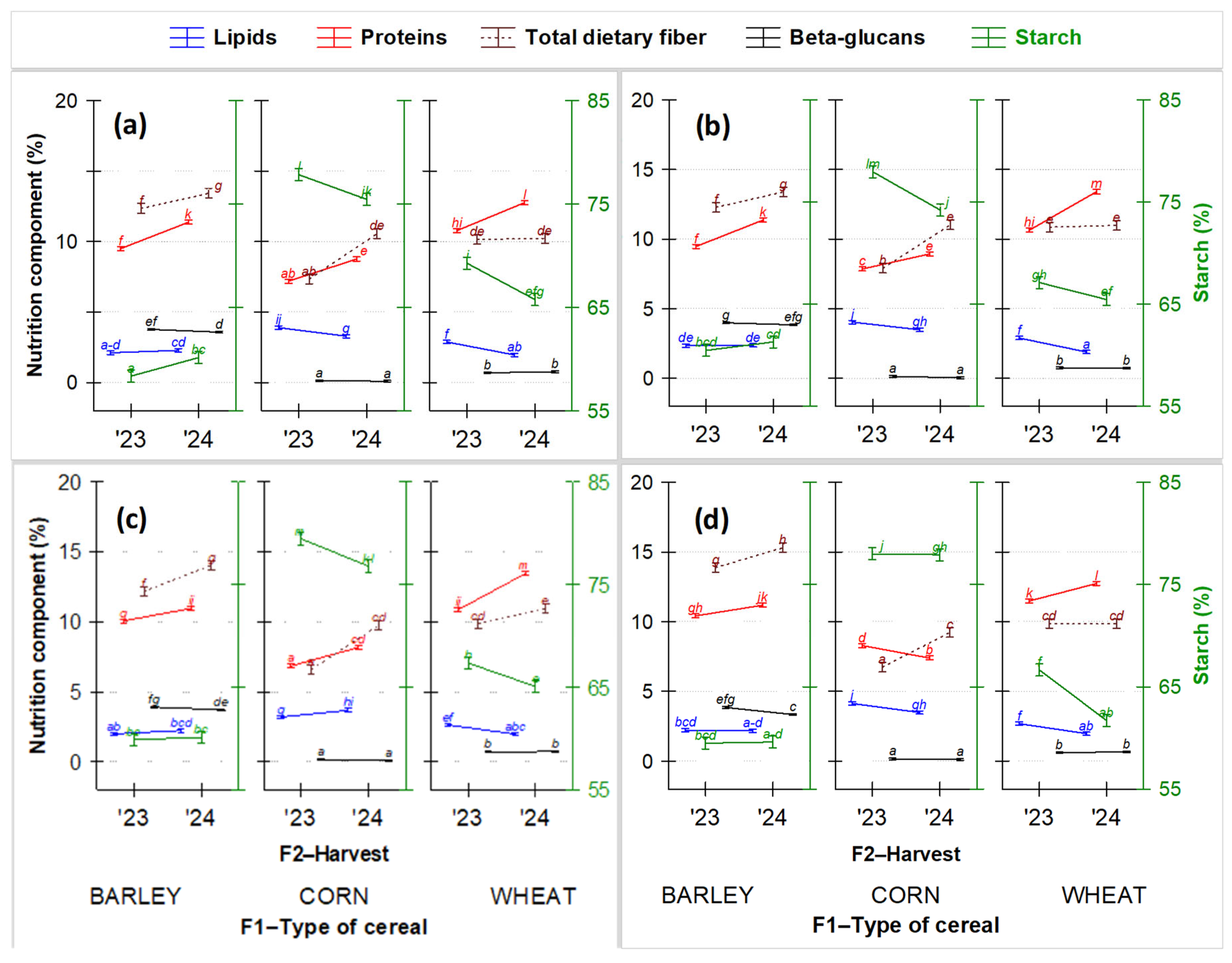
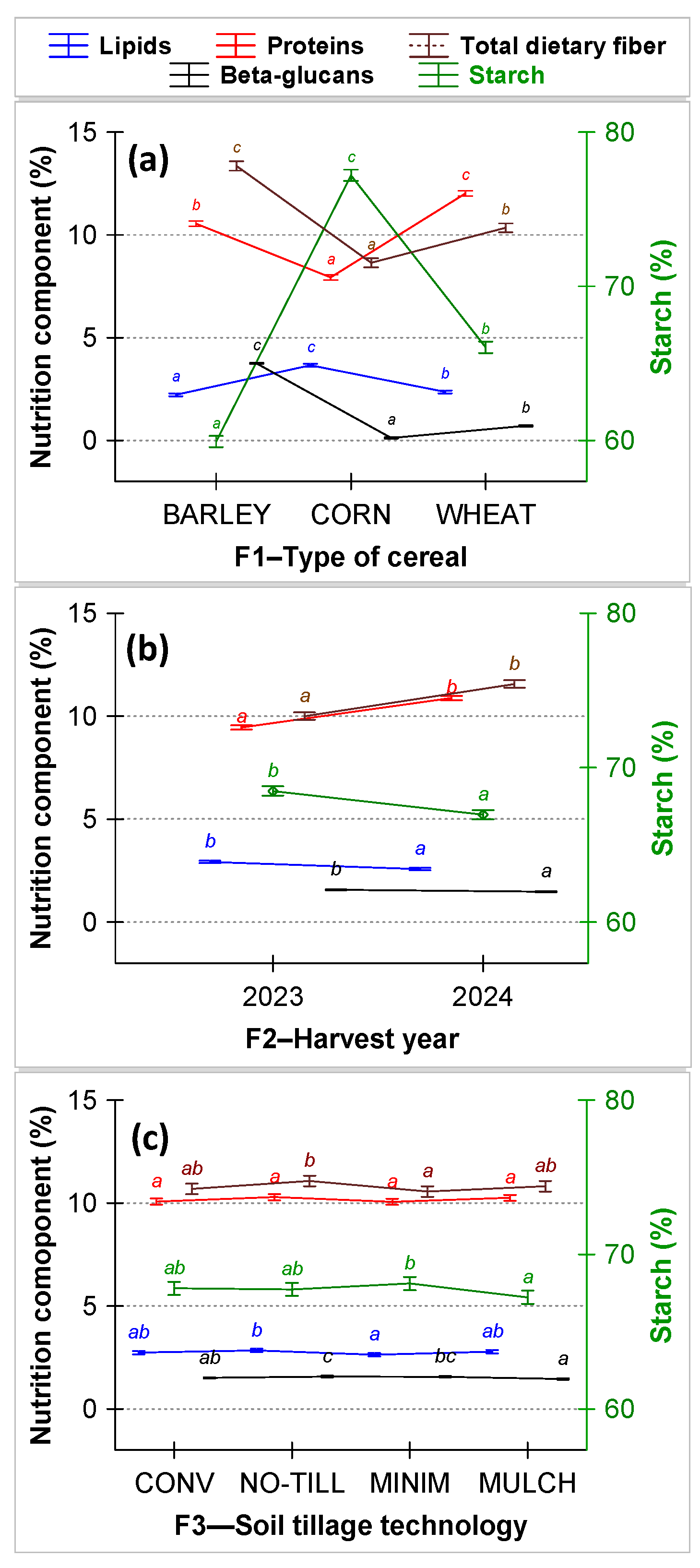
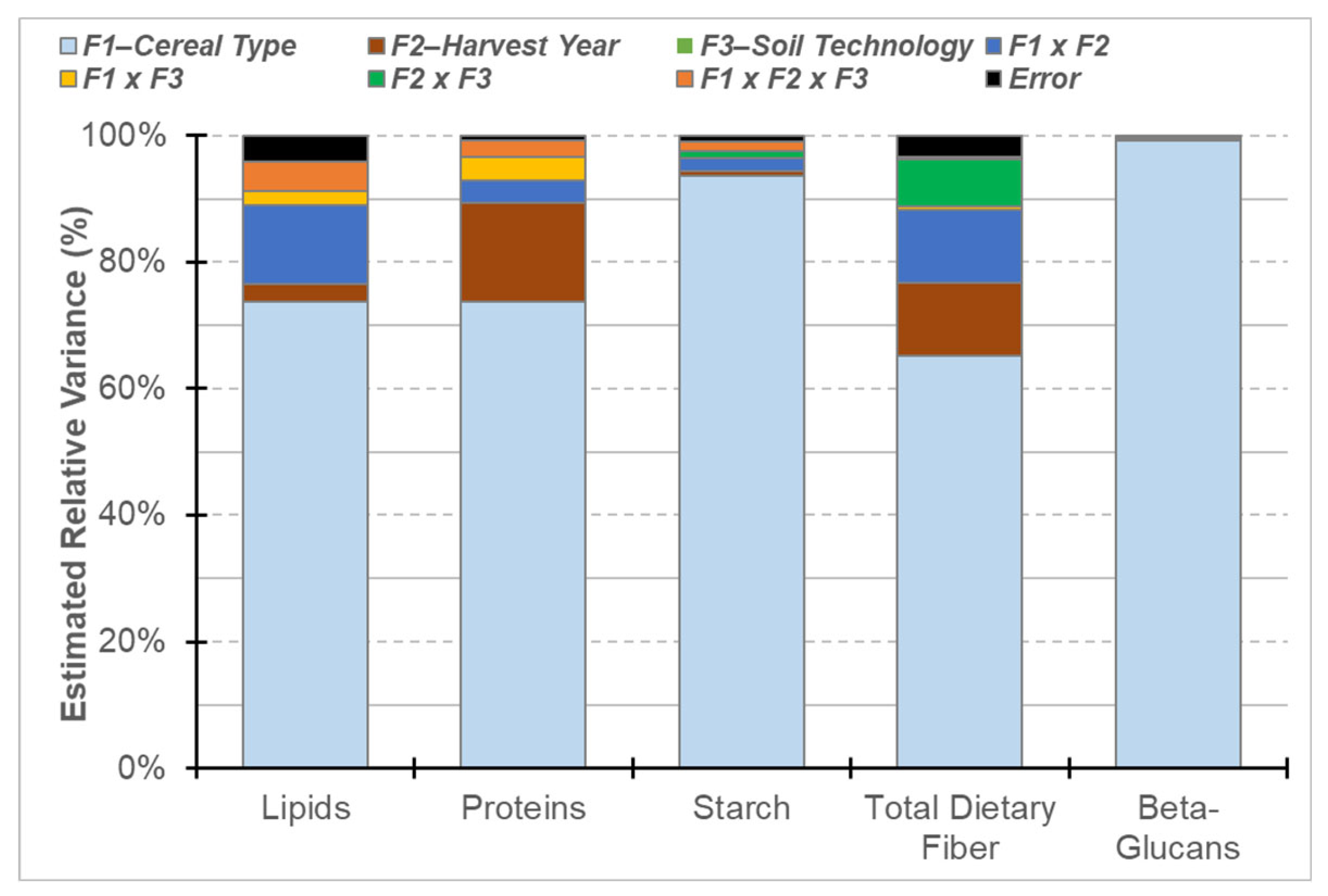
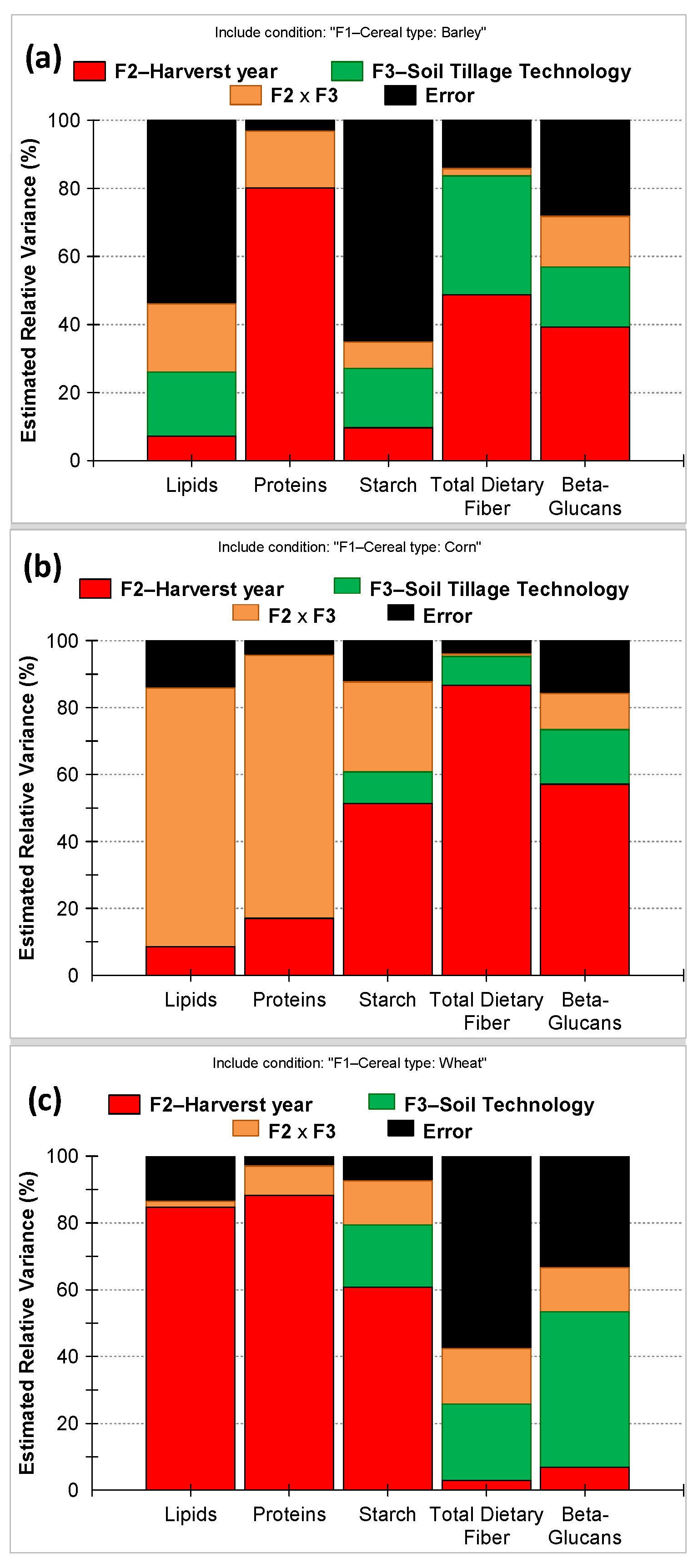
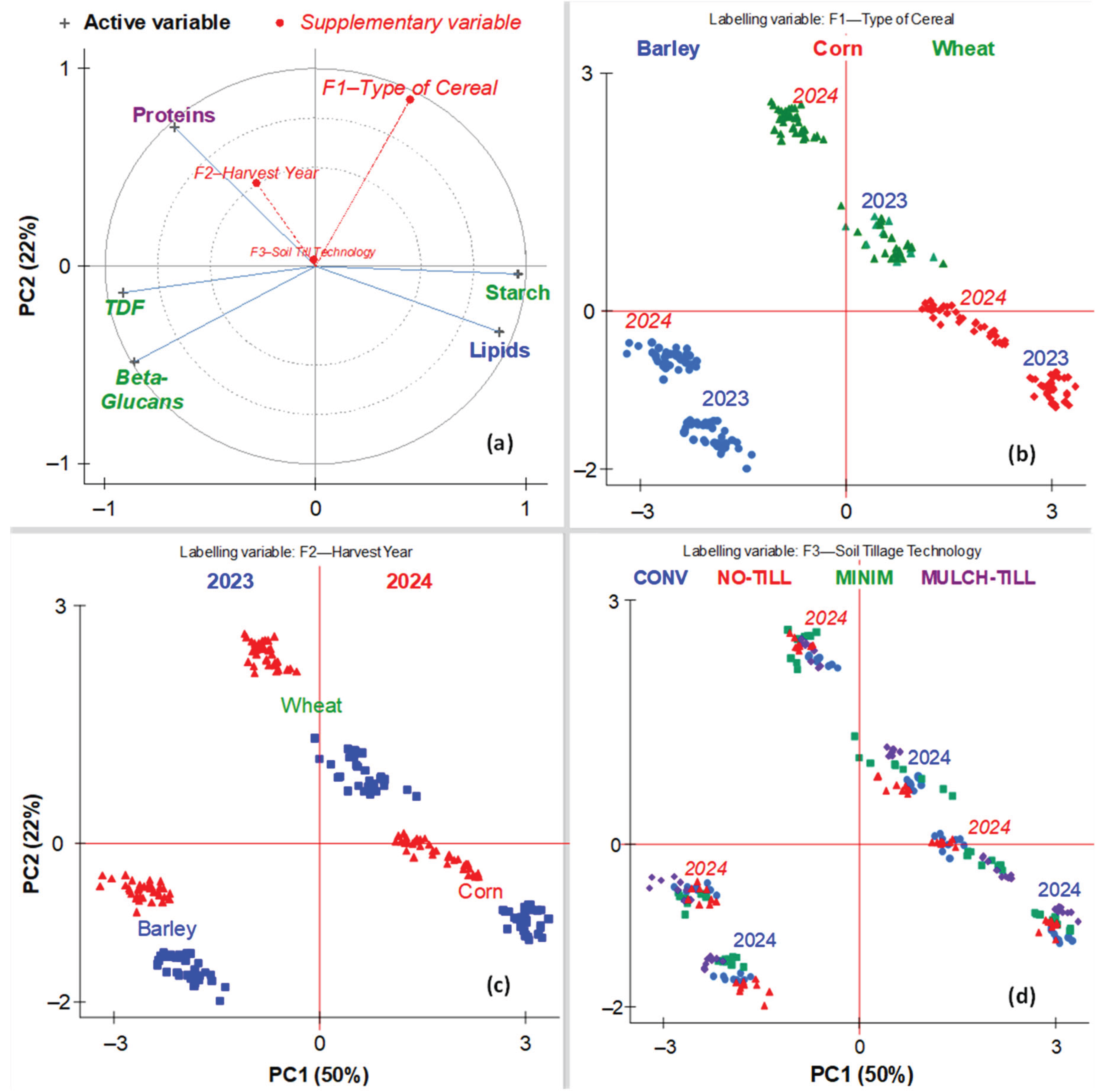
Sustainable agriculture has become a major priority in modern agricultural research and practice due to increasing concerns regarding climate change, soil degradation, biodiversity loss, and long-term food security. In this context, soil-conserving cultivation systems, such as no-till and reduced tillage technologies, are increasingly promoted because they improve soil structure, enhance water retention and organic matter accumulation, reduce erosion, and contribute to more environmentally sustainable crop production systems. This study evaluated the effects of selected sustainable agricultural technologies, including no-till, minimum tillage, and mulch-till soil tillage systems, on the nutritional composition of grains of spring barley (Hordeum vulgare L.), winter wheat (Triticum aestivum L.), and corn (Zea mays L.). The contents of starch, total dietary fibre, beta-glucans, proteins, and lipids were analysed in mature grains during two years of cultivation. The type of cereal was the dominant factor determining grain composition. Corn showed the highest starch (77.20%) and lipid (3.66%) contents, wheat accumulated the highest protein concentration (12.02%), and barley was characterized by the highest total dietary fibre (13.36%) and beta-glucans (3.75%) contents. Significant negative correlations were detected between starch and dietary fibre (r = −0.823) and between starch and beta-glucans (r = −0.827), indicating metabolic trade-offs between storage and structural compounds. Harvest year significantly influenced proteins, total dietary fibre, and lipids, whereas soil tillage exerted a weaker and metabolite-specific effect. No-till tillage technology generally promoted higher total dietary fibre, beta-glucans, and lipid contents. Principal component analysis confirmed cereal species as the major source of variability, followed by harvest year, while soil tillage showed comparatively limited effects. The results demonstrate that cereal grain nutritional quality is governed primarily by genotype, with environmental and agronomic factors acting as secondary modifiers.
Keywords:
1. Introduction
2. Materials and Methods
2.1. Field Experiment and Site Characteristics
2.2. Soil Characteristics
2.3. Plant Material and Crop Management
- (i) spring barley: 120 kg·ha⁻¹ N, 30 kg·ha⁻¹ P, 80 kg·ha⁻¹ K,.
- (ii) corn: 189 kg·ha⁻¹ N, 44 kg·ha⁻¹ P, 146 kg·ha⁻¹ K, and
- (iii) winter wheat: 163 kg·ha⁻¹ N, 34 kg·ha⁻¹ P, 105 kg·ha⁻¹ K.
2.4. Sample Preparation and Grain Quality Analysis
2.5. Determination of Beta-Glucan Content
2.6. Determination of Starch Content
2.7. Determination of Total Dietary Fibre
2.8. Determination of Protein Content
2.9. Determination of Lipid Content
2.10. Statistical Evaluation
3. Results
3.1. Nutritional Composition of Cereal Grains Tested
3.2. Comparison of the Soil Tillage Technologies Applied
3.3. Data Exploration by Principal Component Analysis
4. Discussion
5. Conclusions
Author Contributions
Funding
Institutional Review Board Statement
Data Availability Statement
Acknowledgments
Conflicts of Interest
Abbreviations
| AACC | American Association of Cereal Chemists |
| ANOVA | Analysis of Variance |
| AOAC | Association of Official Agricultural Chemists |
| BG | Beta-Glucan |
| DW | Dry Weight |
| GPS | Global Positioning System |
| HSD | Honestly Significant Difference |
| ICC | Inorganic Chemistry Communications |
| ISO | International Organization for Standardization |
| ISO EN | International standard officially adopted as a European Standard |
| LTA | Long-Term Average |
| NAFC | National Agricultural and Food Centre |
| PCA | Principal Component Analyses |
| RPM | Revolutions Per Minute |
| TDF | Total Dietary Fibre |
References
- Aćin, V.; Mirosavljević, M.; Zivancev, D.; Jockovic, B.; Brbaklic, L.; Jacimovic, G. Field Management Practices to Produce Nutritional and Healthier Main Crops; 2023; pp. 137–173. ISBN 978-0-323-90566-4. [Google Scholar]
- Medeiros, A.; Maia, S.; Santos, T.; Gomes, T. Soil Carbon Losses in Conventional Farming Systems Due to Land-Use Change in the Brazilian Semi-Arid Region. Agric. Ecosyst. Environ. 2020, 287, 106690. [Google Scholar] [CrossRef]
- Zhao, T.; Kubota, H.; Hernandez-Ramirez, G. Contrasting Soil Organic Carbon Concentrations and Mass Storage Between Conventional Farming and Organic Farming: A Meta-Analysis. Sustainability 2024, 16. [Google Scholar] [CrossRef]
- Navarro-Noya, Y.; Gomez, S.; Montoya-Ciriaco, N.; Rojas-Valdez, A.; Suárez-Arriaga, M.; Valenzuela-Encinas, C.; Jiménez-Bueno, N.; Verhulst, N.; Govaerts, B.; Dendooven, L. Relative Impacts of Tillage, Residue Management and Crop-Rotation on Soil Bacterial Communities in a Semi-Arid Agroecosystem. Soil Biol. Biochem. 2013, 65, 86–95. [Google Scholar] [CrossRef]
- Suarez-Fernandez, M.; Ferreira, J.J.; Campa, A. Impact of Farming System on Soil Microbial Communities Associated with Common Bean in a Region of Northern Spain. Plants 2025, 14. [Google Scholar] [CrossRef] [PubMed]
- Curtin, D.; Wang, H.; Selles, F.; McConkey, B.G.; Campbell, C.A. Tillage Effects on Carbon Fluxes in Continuous Wheat and Fallow–Wheat Rotations. Soil Sci. Soc. Am. J. 2000, 64, 2080–2086. [Google Scholar] [CrossRef]
- Chen, H.; Marhan, S.; Billen, N.; Stahr, K. Soil Organic-carbon and Total Nitrogen Stocks as Affected by Different Land Uses in Baden-Württemberg (Southwest Germany). J. Plant Nutr. Soil Sci. 2009, 172, 32–42. [Google Scholar] [CrossRef]
- Turmel, M.; Speratti, A.; Baudron, F.; Verhulst, N.; Govaerts, B. Crop Residue Management and Soil Health: A Systems Analysis. Agric. Syst. 2014, 134. [Google Scholar] [CrossRef]
- Clark, K.; Staples, J.; Easterby, S.; Reinbott, T.; Kremer, R.; Kitchen, N.; Veum, K. Crop Yield and Soil Organic Carbon in Conventional and No-till Organic Systems on a Claypan Soil. Agron. J. 2017, 109, 588–599. [Google Scholar] [CrossRef]
- Santellanez-Arreola, K.; Martínez-Gamiño, M.Á.; Constante-García, V.; Arreola-Ávila, J.; la Peña, C.G.-D.; Siller-Rodríguez, Q.K.; Trejo-Calzada, R.; Nava-Reyna, E. Beyond Soil Health: The Microbial Implications of Conservation Agriculture. Diversity 2025, 17. [Google Scholar] [CrossRef]
- Garutti, M.; Nevola, G.; Mazzeo, R.; Cucciniello, L.; Totaro, F.; Bertuzzi, C.A.; Caccialanza, R.; Pedrazzoli, P.; Puglisi, F. The Impact of Cereal Grain Composition on the Health and Disease Outcomes. Front. Nutr. 2022, 9. [Google Scholar] [CrossRef]
- Korge, M.; Alaru, M.; Keres, I.; Khaleghdoust, B.; Möll, K.; Altosaar, I.; Loit, E. The Influence of Cropping System, Weather Conditions and Genotype on Arabinoxylan Content in Wheat and Barley Grains. J. Cereal Sci. 2023, 110, 103650. [Google Scholar] [CrossRef]
- Khaleghdoust, B.; Alaru, M.; Korge, M.; Esmaeilzadeh Salestani, K.; Loit-Harro, E. Can Intercropping Alter Cereal Grains Dietary Fiber Composition? 2024, 569.03 KB. [Google Scholar] [CrossRef]
- Habiyaremye, C.; Schroeder, K.L.; Reganold, J.P.; White, D.; Packer, D.; Murphy, K.M. Effect of Nitrogen and Seeding Rate on β-Glucan, Protein, and Grain Yield of Naked Food Barley in No-Till Cropping Systems in the Palouse Region of the Pacific Northwest. Front. Sustain. Food Syst. 2021, 5. [Google Scholar] [CrossRef]
- Menkovska, M.; DAMJANOVSKI, D.; Levkov, V.; Gjorgovska, N.; Knezevic, D.; Nikolova, N.; Stanoev, V. Content of Β–Glucan in Cereals Grown by Organic and Conventional Farming. Banat. J. Biotechnol. 2017, VIII. [Google Scholar] [CrossRef] [PubMed]
- Bohoussou, Y.N.; Kou, Y.-H.; Yu, W.-B.; Lin, B.-J.; Virk, A.L.; Zhao, X.; Dang, Y.P.; Zhang, H.-L. Impacts of the Components of Conservation Agriculture on Soil Organic Carbon and Total Nitrogen Storage: A Global Meta-Analysis. Sci. Total Env. 2022, 842, 156822. [Google Scholar] [CrossRef]
- Breil, N.; Lamaze, T.; Bustillo, V.; Marcato-Romain, C.-E.; Coudert, B.; Queguiner, S.; Jarosz-Pellé, N. Combined Impact of No-Tillage and Cover Crops on Soil Carbon Stocks and Fluxes in Maize Crops. Soil Tillage Res. 2023, 233, 105782. [Google Scholar] [CrossRef]
- Li, P.; Ying, D.; Li, J.; Deng, J.; Li, C.; Tian, S.; Zhao, G.; Wu, C.; Jiao, J.; Jiang, M.; et al. Global-Scale No-Tillage Impacts on Soil Aggregates and Associated Carbon and Nitrogen Concentrations in Croplands: A Meta-Analysis. Sci. Total Env. 2023, 881, 163570. [Google Scholar] [CrossRef]
- Singh, A.; Hidangmayum, A.; Tiwari, P.; Kumar, V.; Singh, B.; Dwivedi, P. How the Soil Nitrogen Nutrient Promotes Plant Growth—a Critical Assessment; 2022; pp. 99–118. ISBN 978-0-323-85581-5. [Google Scholar]
- Grigoras, M.; Popescu, A.; Pamfil, D.; Has, I.; Gidea, M. Influence of No-Tillage Agriculture System and Fertilization on Wheat Yield and Grain Protein and Gluten Contents. J. Food Agric. Environ. 2012, 10, 532–539. [Google Scholar]
- lv, L.; Gao, Z.; Liao, K.; Zhu, Q.; Zhu, J. Impact of Conservation Tillage on the Distribution of Soil Nutrients with Depth. Soil Tillage Res. 2023, 225, 105527. [Google Scholar] [CrossRef]
- Takač, V.; Tóth, V.; Rakszegi, M.; Mikó, P.; Mikić, S.; Mirosavljević, M. The Influence of Farming Systems, Genotype and Their Interaction on Bioactive Compound, Protein and Starch Content of Bread and Spelt Wheat. Foods 2022, 11. [Google Scholar] [CrossRef]
- Zörb, C.; Niehaus, K.; Barsch, A.; Betsche, T.; Langenkämper, G. Levels of Compounds and Metabolites in Wheat Ears and Grains in Organic and Conventional Agriculture. J. Agric. Food Chem. 2009, 57, 9555–9562. [Google Scholar] [CrossRef]
- AOAC International Official Method 925.10: Total Moisture Determination - Air Oven Method. AOAC International: Rockville, MD, USA, 2023.
- Cereals & Grains Association AACC Approved Method 32-23. 01: Beta-Glucan Content of Barley and Oats - Rapid Enzymatic Procedure; AACC International: St. Paul, MN, USA, 2023. [Google Scholar]
- AOAC International Official Method 995. 16: β-D-Glucan in Barley and Oats — Streamlined Enzymatic Method; AOAC International: Rockville, MD, USA, 1995. [Google Scholar]
- International Association for Cereal Science and Technology. ICC Standard No. 166: Determination of β-Glucan in Barley, Oat and Rye; International Association for Cereal Science and Technology: Vienna, Austria, 1998. [Google Scholar]
- International Organization for Standardization. ISO 10520:1997; Native Starch - Determination of Starch Content - Ewers Polarimetric Method. International Organization for Standardization: Geneva, Switzerland, 1997.
- International Association for Cereal Science and Technology. ICC Standard No. 123/1 - Determination of Starch Content by Hydrochloric Acid Dissolution; International Association for Cereal Science and Technology. Vienna, Austria, 1994.
- Cereals & Grains Association AACC Approved Method 46-30: Crude Protein - Combustion Method; AACC International: St. Paul, MN, USA, 2023.
- Cereals & Grains Association AACC Approved Method 08-01. 01: Ash - Basic Method; AACC International: St. Paul, MN, USA, 1999. [Google Scholar]
- International Association for Cereal Science and Technology. ICC Standard No. 105/2: Determination of Crude Protein in Cereals and Cereal Products for Food and for Feed; International Association for Cereal Science and Technology. Vienna, Austria, 1994.
- Zhang, R.; Ma, S.; Li, L.; Zhang, M.; Tian, S.; Wang, D.; Liu, K.; Liu, H.; Zhu, W.; Wang, X. Comprehensive Utilization of Corn Starch Processing By-Products: A Review. Grain Oil Sci. Technol. 2021, 4, 89–107. [Google Scholar] [CrossRef]
- Sokan-Adeaga, A.A.; Salami, S.A.; Bolade, D.O.; Aledeh, M.; Sokan-Adeaga, M.A.; Amubieya, O.E.; Kehinde, S.A.; Farzadkia, M.; Ashraf, G.M.; Hoseinzadeh, E. Utilization of Local Corn (Zea Mays) Wastes for Bioethanol Production by Separate Hydrolysis and Fermentation. J. Hazard. Mater. Adv. 2024, 15, 100447. [Google Scholar] [CrossRef]
- Zhang, X.; Liang, X.; Zhang, Y. Advancements in the Research and Application of Whole-Plant Maize Silage for Feeding Purposes. Animals 2025, 15, 1922. [Google Scholar] [CrossRef]
- Wang, Y.; Harding, S.V.; Thandapilly, S.J.; Tosh, S.M.; Jones, P.J.H.; Ames, N.P. Barley β-Glucan Reduces Blood Cholesterol Levels via Interrupting Bile Acid Metabolism. Br. J. Nutr. 2017, 118, 822–829. [Google Scholar] [CrossRef]
- Malunga, L.N.; Ames, N.; Zhouyao, H.; Blewett, H.; Thandapilly, S.J. Beta-Glucan From Barley Attenuates Post-Prandial Glycemic Response by Inhibiting the Activities of Glucose Transporters but Not Intestinal Brush Border Enzymes and Amylolysis of Starch. Front Nutr. 2021, 8, 628571. [Google Scholar] [CrossRef]
- Wang, Y.; Ames, N.P.; Tun, H.M.; Tosh, S.M.; Jones, P.J.; Khafipour, E. High Molecular Weight Barley β-Glucan Alters Gut Microbiota Toward Reduced Cardiovascular Disease Risk. Front. Microbiol. 2016, 7. [Google Scholar] [CrossRef] [PubMed]
- Telle-Hansen, V.H.; Gaundal, L.; Høgvard, B.; Ulven, S.M.; Holven, K.B.; Byfuglien, M.G.; Måge, I.; Knutsen, S.H.; Ballance, S.; Rieder, A.; et al. A Three-Day Intervention With Granola Containing Cereal Beta-Glucan Improves Glycemic Response and Changes the Gut Microbiota in Healthy Individuals: A Crossover Study. Front Nutr. 2022, 9, 796362. [Google Scholar] [CrossRef]
- Drakos, A.; Andrioti-Petropoulou, L.; Evageliou, V.; Mandala, I. Physical and Textural Properties of Biscuits Containing Jet Milled Rye and Barley Flour. J. Food Sci. Technol. 2019, 56, 367–375. [Google Scholar] [CrossRef]
- Nakov, G.; Jukić, M.; Šimić, G.; Šumanovac, F.; Komlenić, D.K.; Lukinac, J. Effect of the Addition of Hulless Barley Flour on the Quality of Short-Dough Cookies. Foods 2022, 11. [Google Scholar] [CrossRef]
- Aly, A.A.; Abusharha, A.; Shafique, H.; El-Deeb, F.E.; Abdelazeem, A.A. Effects of Adding Whole Barley Flour to Bread and Its Impact on Anti-Obesity Action of Female Rats Fed a High-Fat Diet. Arab J. Chem. 2024, 17. [Google Scholar] [CrossRef]
- Barak, S.; Mudgil, D.; Khatkar, B.S. Influence of Gliadin and Glutenin Fractions on Rheological, Pasting, and Textural Properties of Dough. Int. J. Food Prop. 2014, 17, 1428–1438. [Google Scholar] [CrossRef]
- Kłosok, K.; Welc, R.; Fornal, E.; Nawrocka, A. Effects of Physical and Chemical Factors on the Structure of Gluten, Gliadins and Glutenins as Studied with Spectroscopic Methods. Molecules 2021, 26, 508. [Google Scholar] [CrossRef]
- Miner, G.L.; Stewart, C.E.; Delgado, J.A.; Ippolito, J.A.; Mason, R.E.; Haley, S.D.; Guttieri, M.J.; Ainsworth, E.A.; McGrath, J.M.; Beebout, S.J. Global Change Impacts on Mineral Nutritional Quality of Cereal Grains: Coordinated Datasets and Analyses to Advance a Systems-Based Understanding. Field Crops Res. 2024, 310, 109338. [Google Scholar] [CrossRef]
- Williams, R.M.; O’Brien, L.; Eagles, H.A.; Solah, V.A.; Jayasena, V. The Influences of Genotype, Environment, and Genotype x Environment Interaction on Wheat Quality. Aust. J. Agric. Res. 2008, 59, 95–111. [Google Scholar] [CrossRef]
- Sehgal, A.; Sita, K.; Siddique, K.H.M.; Kumar, R.; Bhogireddy, S.; Varshney, R.K.; HanumanthaRao, B.; Nair, R.M.; Prasad, P.V.V.; Nayyar, H. Drought or/and Heat-Stress Effects on Seed Filling in Food Crops: Impacts on Functional Biochemistry, Seed Yields, and Nutritional Quality. Front Plant Sci. 2018, 9, 1705. [Google Scholar] [CrossRef]
- Yang, H.; Gu, X.; Ding, M.; Lu, W.; Lu, D. Heat Stress during Grain Filling Affects Activities of Enzymes Involved in Grain Protein and Starch Synthesis in Waxy Maize. Sci. Rep. 2018, 8, 15665. [Google Scholar] [CrossRef] [PubMed]
- Panahabadi, R.; Ahmadikhah, A.; McKee, L.S.; Ingvarsson, P.K.; Farrokhi, N. Genome-Wide Association Mapping of Mixed Linkage (1,3;1,4)-β-Glucan and Starch Contents in Rice Whole Grain. Front Plant Sci. 2021, 12, 665745. [Google Scholar] [CrossRef]
- Henrion, M.; Francey, C.; Lê, K.-A.; Lamothe, L. Cereal B-Glucans: The Impact of Processing and How It Affects Physiological Responses. Nutrients 2019, 11. [Google Scholar] [CrossRef] [PubMed]
- Li, Y.; Song, D.; Liang, S.; Dang, P.; Qin, X.; Liao, Y.; Siddique, K.H.M. Effect of No-Tillage on Soil Bacterial and Fungal Community Diversity: A Meta-Analysis. Soil Tillage Res. 2020, 204, 104721. [Google Scholar] [CrossRef]
- Savari, M.; Yazdanpanah, M.; Rouzaneh, D. Applying Conservation Agriculture Practices as a Strategy to Control Soil Erosion and Carbon Sequestration. Results Eng. 2025, 26, 104854. [Google Scholar] [CrossRef]
- Aziz, I.; Mahmood, T.; Islam, K.R. Effect of Long Term No-till and Conventional Tillage Practices on Soil Quality. Soil Tillage Res. 2013, 131, 28–35. [Google Scholar] [CrossRef]
- Pittelkow, C.M.; Linquist, B.A.; Lundy, M.E.; Liang, X.; van Groenigen, K.J.; Lee, J.; van Gestel, N.; Six, J.; Venterea, R.T.; van Kessel, C. When Does No-till Yield More? A Global Meta-Analysis. Field Crops Res. 2015, 183, 156–168. [Google Scholar] [CrossRef]
- Martínez, I.; Chervet, A.; Weisskopf, P.; Sturny, W.G.; Etana, A.; Stettler, M.; Forkman, J.; Keller, T. Two Decades of No-till in the Oberacker Long-Term Field Experiment: Part I. Crop Yield, Soil Organic Carbon and Nutrient Distribution in the Soil Profile. Soil Tillage Res. 2016, 163, 141–151. [Google Scholar] [CrossRef]
- Rocco, S.; Munkholm, L.J.; Jensen, J.L. Long-Term Soil Quality and C Stock Effects of Tillage and Cover Cropping in a Conservation Agriculture System. Soil Tillage Res. 2024, 241, 106129. [Google Scholar] [CrossRef]
- Studnicki, M.; Wijata, M.; Sobczyński, G.; Samborski, S.; Gozdowski, D.; Rozbicki, J. Effect of Genotype, Environment and Crop Management on Yield and Quality Traits in Spring Wheat. J. Cereal Sci. 2016, 72, 30–37. [Google Scholar] [CrossRef]
- Martínez-Peña, R.; Rezzouk, F.Z.; Díez-Fraile, M. del C.; Nieto-Taladriz, M.T.; Araus, J.L.; Aparicio, N.; Vicente, R. Genotype-by-Environment Interaction for Grain Yield and Quality Traits in Durum Wheat: Identification of Ideotypes Adapted to the Spanish Region of Castile and León. Eur. J. Agron. 2023, 151, 126951. [Google Scholar] [CrossRef]

| Months | VIII. | IX. | X. | XI. | XII. | I. | II. | III. | IV. | V. | VI. | VII. | VIII. | IX. | X. | XI. | XII. |
| Temperature (°C) | 22.21 | 13.40 | 11.17 | 5.13 | 0.49 | 1.89 | 1.43 | 5.77 | 8.07 | 14.28 | 18.90 | 22.14 | 21.09 | 18.77 | 12.60 | 4.62 | 0.78 |
| – LTA (°C) | 18.40 | 14.50 | 9.60 | 4.60 | -0.30 | -1.80 | 0.20 | 4.20 | 9.40 | 14.10 | 17.10 | 18.90 | 18.40 | 14.50 | 9.60 | 4.60 | -0.30 |
| Precipitation (mm) | 52 | 74 | 14 | 17 | 65 | 57 | 35 | 15 | 45 | 64 | 61 | 44 | 92 | 54 | 66 | 93 | 64 |
| – LTA (mm) | 68 | 38 | 42 | 51 | 46 | 32 | 33 | 32 | 43 | 54 | 80 | 76 | 68 | 38 | 42 | 51 | 46 |
| Months | I. | II. | III. | IV. | V. | VI. | VII. | VIII. | IX. | X. | XI. | XII. |
| Temperature (°C) | 0.04 | 6.70 | 7.94 | 11.65 | 17.76 | 21.06 | 24.30 | 23.86 | 17.88 | 11.86 | 4.14 | 2.24 |
| – LTA (°C) | -1.80 | 0.20 | 4.20 | 9.40 | 14.10 | 17.10 | 18.90 | 18.40 | 14.50 | 9.60 | 4.60 | -0.30 |
| Precipitation (mm) | 60 | 30 | 22 | 42 | 60 | 111 | 41 | 20 | 180 | 42 | 20 | 28 |
| – LTA (mm) | 32 | 33 | 32 | 43 | 54 | 80 | 76 | 68 | 38 | 42 | 51 | 46 |
| Year |
N [% DW] |
C [% DW] |
Humus [%] |
P [mg·kg⁻¹ DW] |
pH [1] |
NH4+N [mg·kg⁻¹ DW] |
NO3-N [mg·kg⁻¹ DW] |
| 2023 | 0.14 | 1.27 | 2.19 | 133.28 | 6.77 | 3.25 | 9.51 |
| 2024 | 0.13 | 1.27 | 2.19 | 124.51 | 6.86 | 2.65 | 7.22 |
| Year | Crop | Hybrid/Variety | Sowing date | Harvest date |
| 2023 | Spring barley | IS Maltigo | 28.3.2023 | 17.7.2023 |
| Corn | DKc 4391 | 5.5.2023 | 25.11.2023 | |
| Winter wheat | PS Luana | 11.10.2022 | 16.7.2023 | |
| 2024 | Spring barley | IS Maltigo | 22.3.2024 | 17.7.2024 |
| Corn | DKc 4391 | 29.4.2024 | 20.10.2024 | |
| Winter wheat | PS Luana | 16.10.2023 | 17.7.2024 |
| ANOVA factors1 | Lipids (%) |
Proteins (%) |
Starch (%) |
TDF2 (%) |
BG3 (%) |
|||||||
| F2 – HY | F3 – STT | F1 – TC | ||||||||||
| 2023 | conventional | barley | 2.12 | abcd | 9.51 | f | 58.35 | a | 12.36 | f | 3.78 | ef |
| corn | 3.90 | ij | 7.20 | ab | 77.84 | l | 7.34 | ab | 0.13 | a | ||
| wheat | 2.89 | f | 10.78 | hi | 69.27 | i | 10.16 | de | 0.70 | b | ||
| minimum | barley | 2.01 | abc | 10.07 | g | 59.91 | bc | 12.17 | f | 3.91 | fg | |
| corn | 3.21 | g | 6.85 | a | 79.46 | m | 6.59 | a | 0.17 | a | ||
| wheat | 2.65 | ef | 10.87 | ij | 67.36 | h | 9.86 | cd | 0.71 | b | ||
| no-till | barley | 2.36 | de | 9.48 | f | 60.46 | bcd | 12.28 | f | 3.99 | g | |
| corn | 4.03 | j | 7.86 | c | 77.95 | lm | 7.91 | b | 0.13 | a | ||
| wheat | 2.89 | f | 10.65 | hi | 67.11 | gh | 10.86 | e | 0.75 | b | ||
| mulch-till | barley | 2.22 | bcd | 10.42 | gh | 59.49 | ab | 13.89 | g | 3.85 | efg | |
| corn | 4.14 | j | 8.29 | d | 77.99 | lm | 6.75 | a | 0.16 | a | ||
| wheat | 2.69 | f | 11.48 | k | 66.65 | fgh | 9.87 | cd | 0.62 | b | ||
| 2024 | conventional | barley | 2.28 | cd | 11.38 | k | 60.15 | bc | 13.44 | g | 3.58 | d |
| corn | 3.29 | g | 8.77 | e | 75.45 | jk | 10.57 | de | 0.10 | a | ||
| wheat | 1.96 | ab | 12.77 | l | 65.77 | efg | 10.23 | de | 0.76 | b | ||
| minimum | barley | 2.24 | bcd | 10.96 | ij | 60.11 | bc | 14.05 | g | 3.72 | de | |
| corn | 3.70 | hi | 8.17 | cd | 76.79 | kl | 9.76 | cd | 0.11 | a | ||
| wheat | 1.98 | abc | 13.45 | m | 65.07 | e | 10.95 | e | 0.75 | b | ||
| no-till | barley | 2.37 | de | 11.37 | k | 61.29 | cd | 13.38 | g | 3.84 | efg | |
| corn | 3.49 | gh | 8.95 | e | 74.21 | j | 11.02 | e | 0.04 | a | ||
| wheat | 1.89 | a | 13.41 | m | 65.44 | ef | 10.99 | e | 0.73 | b | ||
| mulch-till | barley | 2.18 | abcd | 11.19 | jk | 59.60 | ab | 15.30 | h | 3.35 | c | |
| corn | 3.49 | gh | 7.40 | b | 77.92 | l | 9.22 | c | 0.12 | a | ||
| wheat | 1.97 | ab | 12.74 | l | 61.71 | d | 9.86 | cd | 0.66 | b | ||
| Variable | ANOVA factors1 | Grain nutrition component | ||||||
| F1–TC | F2–HY | F3–STT | Lipids | Proteins | Starch | TDF2 | BG3 | |
| Lipids | 0.079 ns |
-0.240 *** |
-0.014 ns |
— | -0.797 *** |
0.874 *** |
-0.66 5*** |
-0.606 *** |
| Proteins | 0.314 *** |
0.372 *** |
0.019 ns |
-0.797 *** |
— | -0.699 *** |
0.492 *** |
0.260 *** |
| Starch | 0.339 *** |
-0.104 ns |
-0.021 ns |
0.874 *** |
-0.699 *** |
— | -0.823 *** |
-0.827 *** |
| TDF2 | -0.533 *** |
0.338 *** |
-0.006 ns |
-0.66 5*** |
0.492 *** |
-0.823 *** |
—– | 0.804 *** |
| BG3 | -0.777 *** |
-0.029 ns |
-0.012 ns |
-0.606 *** |
0.260 *** |
-0.827 *** |
0.804 *** |
— |
Disclaimer/Publisher’s Note: The statements, opinions and data contained in all publications are solely those of the individual author(s) and contributor(s) and not of MDPI and/or the editor(s). MDPI and/or the editor(s) disclaim responsibility for any injury to people or property resulting from any ideas, methods, instructions or products referred to in the content. |
© 2026 by the authors. Licensee MDPI, Basel, Switzerland. This article is an open access article distributed under the terms and conditions of the Creative Commons Attribution (CC BY) license (http://creativecommons.org/licenses/by/4.0/).


