

Submitted:
29 May 2026
Posted:
02 June 2026
You are already at the latest version
Abstract
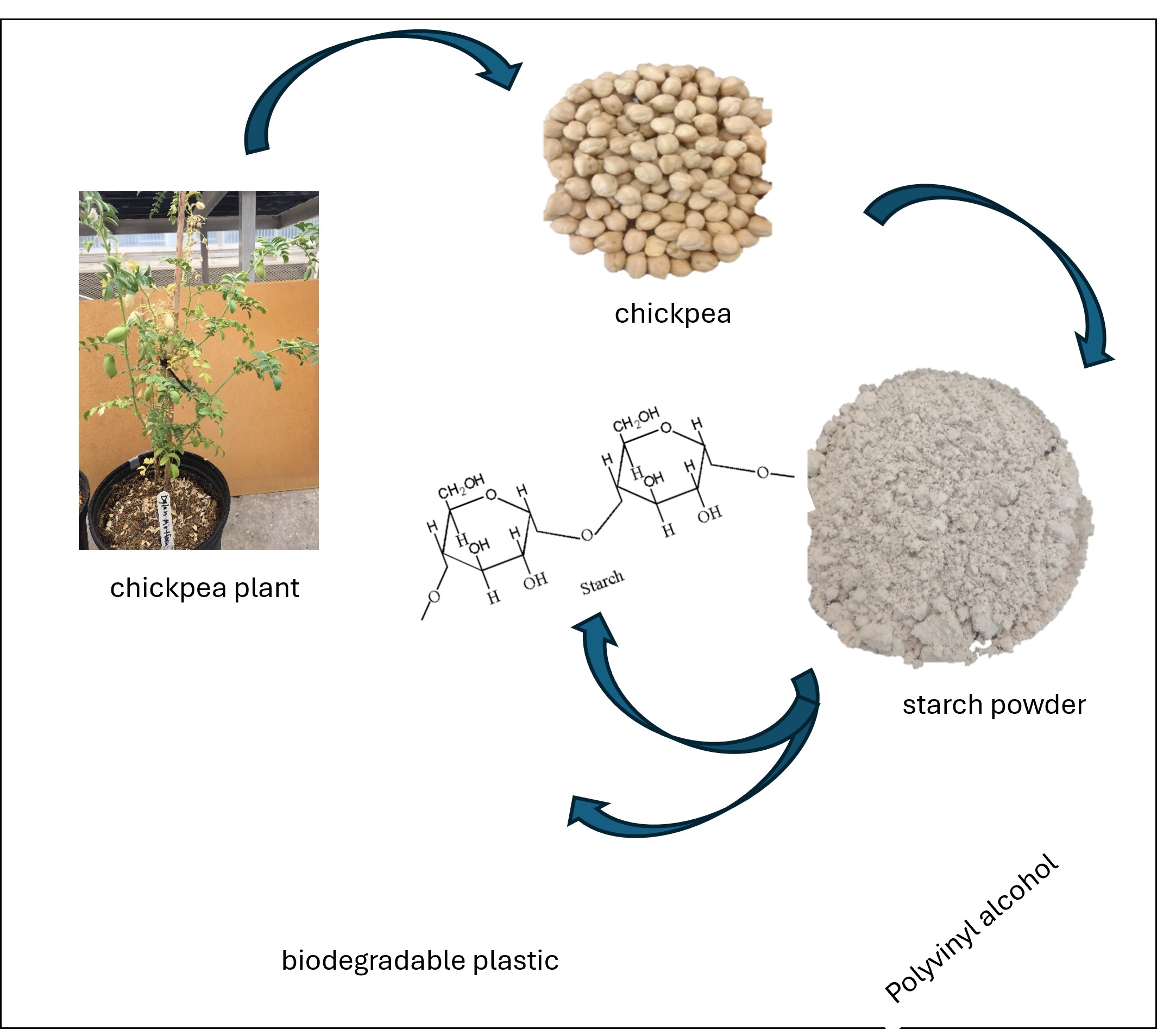
Currently, plastic pollution is a growing global issue due to its non-biodegradability, increasing demand for eco-friendly alternatives such as bioplastics. This study explores the development of bioplastic films from chickpea starch using a three-step molding process. In the first step, starch is extracted from chickpeas. The second step involves hydrolysis and plasticization of starch with glycerol in different ratios. In the final step, the modified starch is blended with polyvinyl alcohol (PVA) in varying ratios to produce the bioplastic films. The optimal formulation, CPS 1:2:2, exhibited strong performance (3.63 MPa TS, 623% EA, and 70.1° WCA). The bioplastic showed good physicochemical characteristics, confirmed by FTIR analyses, mechanical performance, and water contact angle, and demonstrated biodegradability, as confirmed by FTIR and SEM morphology.
Keywords:
bioplastic
; chickpea
; starch
; physico-mechanical properties
; biodegradation
1. Introduction
The widespread use of conventional plastics has drawn significant criticism due to inadequate recycling infrastructure, their dependence on non-renewable resources, limited biodegradability, and the presence of potentially harmful additives. These environmental and sustainability concerns have accelerated the search for eco-friendly alternatives derived from renewable biomass. Recent advances in plant-based materials, including protein-derived products, biopolymers, and polysaccharide-based systems, highlight the growing potential of biomass valorization for sustainable applications [1]. In this context, materials such as starch, plant-based biochar, and arabinoxylan-based polymer, and more have gained increasing attention due to their biodegradability, tunable properties, and compatibility with green processing approaches [2,3]. Consequently, the development of biodegradable plastics is steadily increasing, driven by the expanding availability of sustainable raw materials and innovative material design strategies [4].
Starch is a naturally occurring carbohydrate that is viewed as a promising biodegradable material because of its abundance, low cost, recyclability, and ability to fully decompose into carbon dioxide and water in the environment [5]. These benefits make it a strong candidate for sustainable material development. In recent years, starch-based degradable materials have attracted growing interest in the scientific community, becoming a key focus in the global effort to find environmentally friendly alternatives [6].
Despite its advantages, native starch has significant limitations that restrict its direct use in commercial applications. Its high water affinity and poor mechanical strength greatly reduce its practicality in many real-world settings. To address these issues, starch is often combined with other polymers, such as polyvinyl alcohol (PVA), polylactic acid (PLA), poly(ε-caprolactone) (PCL), and polybutylene adipate terephthalate (PBAT) to improve its overall performance [7,8].
Nevertheless, blends of starch with PLA, PCL, or PBAT usually show subpar mechanical properties. This is primarily due to the natural incompatibility between starch's hydrophilicity and the hydrophobicity of these synthetic polymers, which limits interfacial adhesion. On the other hand, PVA, a polar polymer rich in hydroxyl groups, can form strong hydrogen bonds with starch [9]. This interaction enhances compatibility and improves the physical properties of the resulting starch-based materials, making PVA a promising partner for creating advanced biodegradable composites [10]. In this experiment, starch was extracted from chickpea, and PVA was used as a polymer blend.
Chickpea (Cicer arietinum L.) ranks as the third most important pulse crop globally, covering 14.84 million hectares of cultivated land and producing 15.08 million tons, with an average yield of 1.01 tons per hectare in 2020 [11]. Chickpeas (Cicer arietinum) are widely consumed across various parts of the world, largely due to their rich nutritional value. The composition of chickpea seeds includes carbohydrates (50–58%), protein (15–22%), moisture (7–8%), fat (3.8–10.20%), and a small number of micronutrients (less than 1%) [12]. Therefore, chickpea serves as an excellent source of starch, which can be extracted and plasticized to produce bioplastic. Meanwhile, the remaining fiber and protein after extraction can be utilized as food ingredients. This study focuses on utilizing starch extracted from chickpea to develop eco-friendly bioplastics and evaluate their physico-mechanical properties, aiming to reduce the use of commercially available synthetic plastic.
Evaluating the physico-mechanical characteristics of bioplastics is critical for determining their viability as eco-friendly substitutes for traditional petroleum-based plastics. Key parameters such as tensile strength, elongation at break, Young’s modulus, thermal and chemical resistance, and water solubility play a vital role in defining the material’s performance across various applications, including food packaging, agricultural films, and medical devices [13]. Tensile strength and elongation at break, for instance, are direct indicators of a material’s mechanical durability and flexibility, both of which are essential for packaging that must endure stress or deformation during use. Similarly, properties like water resistance and thermal stability are important when bioplastics are exposed to environmental or operational extremes [14].
To analyze these properties comprehensively, several advanced techniques are used. Fourier-Transform Infrared Spectroscopy (FTIR) is employed to identify chemical bonds and functional groups present in the material. Scanning Electron Microscopy (SEM) provides detailed insights into surface morphology and structural features, while Universal Testing Machines (UTM) are used to perform tensile testing and quantify mechanical strength. Additionally, Water Contact Angle (WCA) measurements are conducted to evaluate surface wettability, which indicates the hydrophilic or hydrophobic nature of the bioplastic [15].
Together, these analytical tools enable a deeper understanding of the bioplastics' structural and functional qualities and are fundamental in guiding the formulation and enhancement of next-generation biodegradable plastics.
We hypothesize that starch extracted from chickpea (Cicer arietinum L.), when blended with polyvinyl alcohol (PVA), will form a compatibilized biodegradable bioplastic through strong intermolecular hydrogen bonding, resulting in significantly improved mechanical strength, flexibility, and surface properties compared to native chickpea starch-based films. Specifically, the incorporation of PVA is expected to reduce starch hydrophilicity, enhance interfacial adhesion, and produce a homogeneous microstructure, thereby yielding physico-mechanical properties suitable for practical biodegradable packaging applications.
2. Materials and Methods
2.1. Chemicals and Reagents
Glycerol, utilized as a plasticizer, was purchased from Thermo Scientific, USA. Polyvinyl alcohol (PVA) was obtained from Thermo Scientific, USA. Potassium hydroxide (KOH) was obtained from Fisher Chemicals, Belgium, while Fisher Chemical, USA, supplied sulfuric acid (H2SO4). Copper (II) sulfate pentahydrate (CuSO4·5H2O), commonly known as blue vitriol, was acquired from Fisher Scientific, Waltham, MA, USA.
2.2. Procedures
2.2.1. Chickpea Collection and Starch Extraction
Chickpea seeds were obtained from the local market. The collected chickpea was sun-dried for one day and then ground into a fine powder, and a fine mesh stainless steel strainer was obtained from a local supermarket. Starch extraction was carried out by using a slightly modified method described by Marichelvam [16]. Twenty grams of ground chickpea were added to 200 mL of distilled water and stirred at room temperature for 3 hours. The solution was then allowed to settle at 4 °C overnight. The top layer of the starch was collected and dried at 50 °C in an oven overnight, and the remaining residue was subjected to the same procedure to extract additional starch, leaving the fiber behind. Using this repeated extraction process, an overall starch yield of approximately 30% was obtained.
2.2.2. Bioplastic Film Formulation
Bioplastic was formulated using a modified three-step protocol adapted from Mendes et al. [17]. The process began with the extraction of starch from chickpeas. Next, the extracted starch was subject to hydrolysis and plasticization. Starch was dissolved in distilled water and heated to 80 °C for 20 minutes. Following this, glycerol was incorporated in a certain ratio as a plasticizer to improve flexibility and processability. In the final step, polyvinyl alcohol (PVA) was introduced in particular ratios, and the entire mixture was stirred continuously at 80 °C for two hours until it formed a gel-like slurry. This slurry was then poured into petri dishes and dried at 60 °C overnight using a Thermo Scientific Heratherm OGS60 oven (Germany). Once dried, the resulting bioplastic films were cooled to ambient temperature and molded into sheets. Formulations used various ratios of chickpea extracted starch (CPS0, PVA, and glycerol, as shown in Table 1.
2.3. Characterization Techniques
2.3.1. Fourier Transform Infrared Spectroscopy (FT-IR)
FT-IR analysis was used to identify functional groups and track chemical changes before and after soil burial degradation. FT-IR data were recorded for chickpea extracted starch, biofilm made with starch, and biofilm after 2 months of burial. The experiment was conducted using a Thermo Scientific NICOLET iS5 spectrometer (USA) at the University of North Dakota [18]. Scans were collected over the 4000–650 cm−1 range, with a 2 mm sampling area, 45° incidence angle, 0.8 cm−1 resolution, and 0.06 cm−1 spacing. The degree of cationization was calculated using Equation (1).
where I1648 and I1495 represent the peak intensities at 1648 cm−1 and 1495 cm−1, respectively
2.3.2. Mechanical Properties Analysis
Tensile properties, including tensile strength (TS) and elongation at break (EAB), were measured using an Instron 5542 (USA) per ASTM D412 [19]. Samples were 2.7 mm in width and had a gauge length of 50 mm. The crosshead speed was maintained at 20 mm/min during testing.
2.3.3. Scanning Electron Microscopy (SEM)Analysis
Surface structure and morphology were investigated by Scanning Electron Microscopy (SEM) analysis. In this experiment, a JEOL JSM-6490LV scanning electron microscope was used at North Dakota State University. Bioplastic specimens were cut and mounted on aluminum stubs with silver paint and sputter-coated with gold using a Cressington 108Auto coater. Imaging was conducted at an accelerating voltage of 15 kV.
2.3.4. Biofilm’s Thickness Analysis
Film thickness was measured using a digital micrometer with 0.01 mm sensitivity. Measurements were taken at five random locations per sample, and the average value was used for further evaluations.
2.3.5. Biofilm’s Transparency Analysis
Transparency of the synthesized biofilm was measured following a modified method by Mulyono et al. [20]. Films (1 × 3 cm) were affixed to cuvettes, and absorbance was measured at 800 nm using a Thermo Scientific GENESYS 10S UV-VIS spectrophotometer at Mayville State University. Polyethylene film was used as the control. Transparency was calculated using Equations (2) and (3).
And transparency was calculated by using the following formula
where T is the transmittance at 800 nm, and b is the thickness of the bioplastic film in millimeters.
2.3.6. General Appearance of the Biofilm
The general appearance of each film, including surface smoothness, uniformity, color, and defects like bubbles or cracks, was visually inspected. Standard lighting, neutral backgrounds, and fixed camera settings were used to take photographs of the sample for consistent documentation and comparison.
2.3.7. Water Contact Angle (WCA)
The interaction between water and a material's surface is typically characterized by two fundamental behaviors: hydrophilicity (water-attracting behavior) and hydrophobicity (water-repelling behavior). One of the most widely used methods for measuring this interaction is the water contact angle (WCA), which serves as a reliable indicator of a surface's wettability. This technique has been extensively applied in material science to analyze and interpret surface characteristics [21,22,23,24,25].
In this study, the WCA was measured to assess the surface wettability and wearability of the synthesized bioplastic films. In this experiment, a USB 2.0 Digital Microscope (purchased from Amazon.com) was used to measure the water contact angle of the bioplastic film. A droplet of 5 µL was placed on the synthesized bioplastic film, and other reference surfaces were placed, and an image was taken by the digital camera. A Ziploc bag and a plastic bag (LDPE) from a local Walmart store, and wheat bran arabinoxylan-based biofilms from our previous research were used as reference samples.
The measurements were carried out at room temperature (23 °C), using a needle with a diameter of 0.525 mm to dispense 5 µL water droplets. Contact angle values were calculated using ImageJ software [26,27]. Multiple images were taken for each film, and the clearest image was chosen for precise analysis.
2.3.8. Water Absorption Analysis
Water Absorption Percentage is defined as the amount of water a material can absorb relative to its original dry weight, expressed as a percentage. It is a key parameter in evaluating the hydrophilic or hydrophobic nature of materials, for example, bioplastics, packaging films, and construction materials, etc., where water resistance affects performance, durability, and usability [28].
The experiment was conducted by the modified method described by Saberi et al [29]. All bioplastic film samples were shaped into uniform dimensions of 2 cm × 2 cm and pre-dried in an oven at 60 °C for 24 hours to eliminate moisture. The initial dry weight (M0) of each sample was recorded using a precision balance. Subsequently, each film was submerged in 50 mL of distilled water and left to soak at room temperature for 24 hours. After soaking, the samples were carefully removed, and surface water was gently blotted using a paper towel (Pacific Blue Select Multifold Premium 2-Ply Paper Towels, GP PRO, Georgia-Pacific). The final wet mass (M1) was then measured. The percentage of water absorption was calculated using the following equation (4).
where, Mo = the initial (dry) mass of the film, and M1 = the water immersion mass of the film,
2.3.9. Acid Resistance Analysis
This analysis is conducted to evaluate the acid resistance or chemical stability of the bioplastic film when exposed to corrosive conditions. It helps to determine the biofilm’s durability, potential degradation rate, and suitability for applications where acidic exposure is possible. For example: food packaging, agriculture, medical use, etc. This analysis was carried out by the method outlined by Mostafa et al. [30]. Precisely measured samples (~1.0 g) of the synthesized chickpea extracted starch-based bioplastics were submerged in sulfuric acid (H2SO4) solutions at varying concentrations of 10%, 20%, 30%, and 40%. For 10 days, the samples were repeatedly dried and reweighed to monitor weight loss as an indicator of acid degradation. At each data collection point, photographic documentation was performed to visually capture any changes in the samples. A high-precision electronic balance was used for weight measurement. (Denver Instruments XE-100, USA; Serial No: NO111601; Max capacity: 100 g; readability: 0.0001 g).
2.3.10. Alkali Resistance Analysis
Alkali resistance describes a material’s ability to resist chemical degradation or loss of structural integrity when exposed to alkaline environments, such as concentrated solutions of sodium hydroxide (NaOH) or potassium hydroxide (KOH). It serves as an indicator of how well a material maintains its weight, mechanical properties, and appearance over time under basic conditions. High alkali resistance implies minimal weight loss, stable performance, and surface integrity even after prolonged exposure, while low alkali resistance suggests susceptibility to hydrolysis, strength reduction, swelling, or surface erosion [31]. This experiment was carried out by the method outlined by Mostafa et al. [30]. Accurately weighed bioplastic samples (~1.0 g each) were measured and then immersed in potassium hydroxide (KOH) solutions with concentrations of 10%, 20%, 30%, and 40% to assess their alkali resistance. Weight loss was measured every two days over ten days, with each sample being dried and reweighed before recording. Additionally, photographic documentation was taken at each time point to visually track physical changes and degradation in the samples due to alkaline exposure.
2.3.11. Biodegradability Analysis
The biodegradability of the synthesized bioplastic films was evaluated following a modified version of the methods described by previous researchers [30,32]. Initially, the bioplastic samples were oven-dried at 45 °C for two hours and accurately weighed using a high-precision electronic balance. The pre-weighed specimens were then buried in natural soil, collected from farmland adjacent to Mayville State University, to simulate environmental degradation under controlled conditions. Throughout the experiment, soil moisture and ambient temperature were consistently monitored to ensure stable environmental factors. At four-week intervals, the samples were exhumed, gently cleaned, dried, and reweighed to calculate weight loss percentage, serving as a metric for biodegradation. Photographs were taken at each interval to visually document surface changes and physical deterioration.
For the final evaluation, the bioplastic film was analyzed by Scanning Electron Microscopy (SEM) to assess microstructural alterations and Fourier Transform Infrared (FT-IR) Spectroscopy to identify chemical changes. These analytical techniques, combined with weight loss data and visual observations, provided a comprehensive understanding of the degradation behavior of the synthesized bioplastics.
3. Results
3.1. Physicochemical Characterization of Chickpea-Extracted Starch
Fourier Transform Infrared (FTIR) spectroscopy was used to investigate functional groups and intermolecular interactions in extracted chickpea starch and the corresponding starch-based bioplastic. Figure 1(a) shows the FTIR spectrum of chickpea starch. In Figure 1(a), the broad absorption band at 3254 cm−1 corresponds to O–H stretching vibrations arising from intermolecular and intramolecular hydrogen bonding within the starch structure. The peak at 2906 cm−1 is attributed to C–H stretching of aliphatic –CH and –CH2 groups, and the band at 991 cm−1 represents C–O and C–O–C stretching vibrations of glycosidic linkages, confirming successful extraction and structural integrity of the starch.
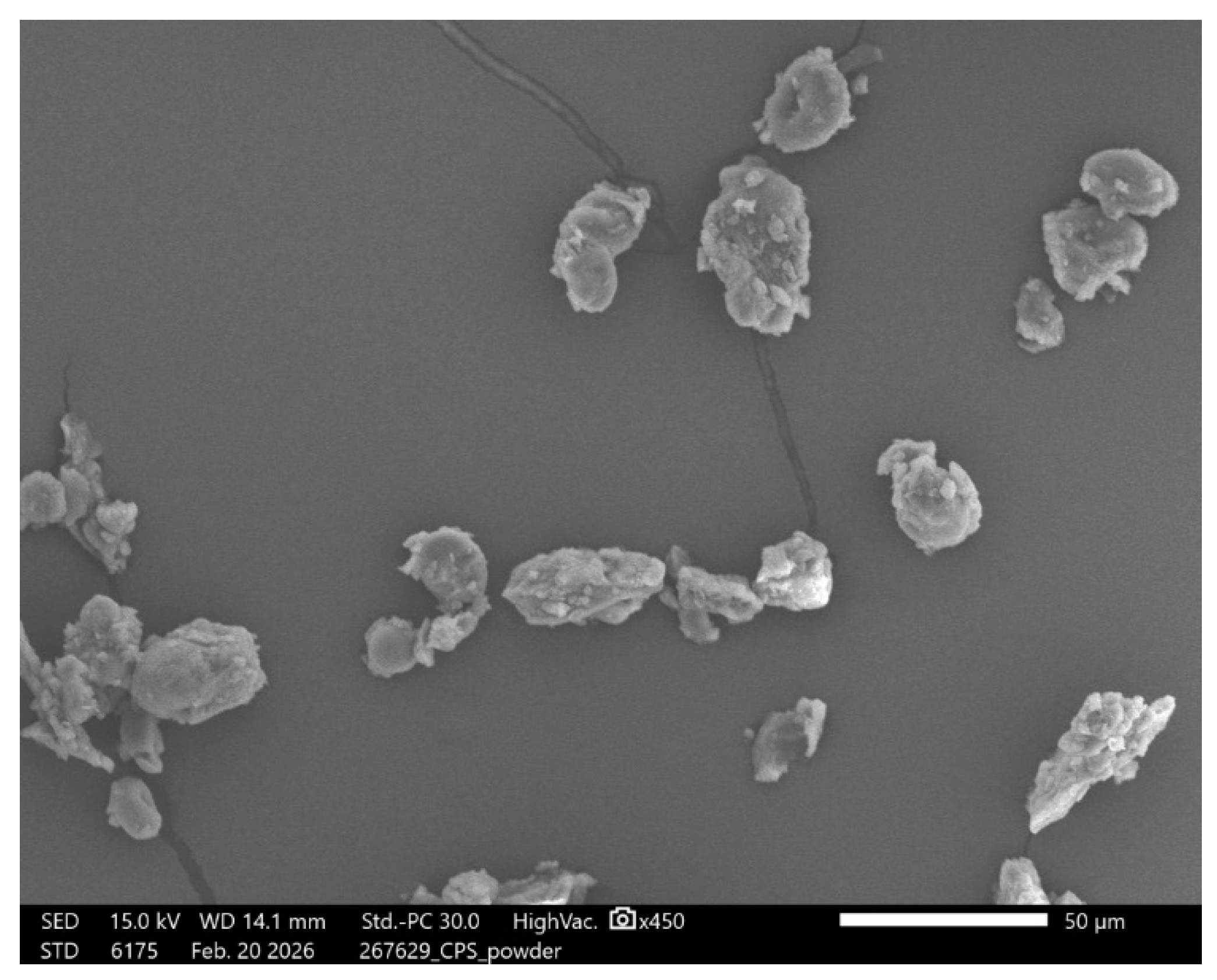
The SEM micrograph of chickpea-derived starch is shown in Figure 1(b), which reveals irregularly shaped and aggregated granules with a heterogeneous size distribution. Like typical native starches, the granules exhibit spherical or oval morphology of about 10 μm, though they appear as fragmented and fused structures with rough and uneven surfaces [33]. Several particles show signs of deformation and partial collapse, likely resulting from the extraction or drying process. The presence of clustered aggregates suggests inter-particle adhesion, forming larger compact domains. Surface textures range from relatively smooth regions to highly corrugated and flaky structures, indicating disruption of the native granular architecture. Overall, the micrograph suggests that the starch is well defined morphology, though it has undergone structural modification, leading to loss of intact granule morphology and formation of irregular, aggregated particles.
Figure 1.
(b). SEM image of Starch extracted from chickpea.
3.2. Fourier Transform Infrared Spectroscopy (FT-IR)
The FTIR spectrum of bioplastic (Figure 2) exhibits similar characteristic starch peaks, with notable shifts and intensity changes, indicating strong intermolecular interactions within the blended system. The broad O–H stretching band at 3258 cm−1 is broader and more intense than in the native starch, reflecting enhanced hydrogen bonding among hydroxyl groups of starch, glycerol, and poly (vinyl alcohol) (PVA). The peak at 2937 cm−1 corresponds to C–H stretching vibrations of the polymer backbone. The absorption band near 1642 cm−1 is assigned to H–O–H bending vibrations of absorbed or bound water, commonly observed in hydrophilic polysaccharide-based systems [34]. The peaks at 1412 cm−1 and 1036 cm−1 are attributed to C–H bending and C–O stretching vibrations, respectively, further supporting the presence of starch and PVA in the bioplastic matrix. The spectral region below 1000 cm−1 reflects complex skeletal vibrations associated with polysaccharide chains, confirming the formation of a physically cross-linked network primarily stabilized through hydrogen bonding rather than covalent chemical bonding.
3.3. Mechanical Performance
The mechanical behavior of starch-based bioplastic films was evaluated by measuring tensile strength (TS), elongation at break (EAB), and Young’s modulus (YM), which are critical parameters for assessing resistance to deformation, flexibility, and stiffness. Tensile testing was performed according to ASTM D882, and all measurements were obtained from five independent specimens (n = 5) per formulation. Results are reported as mean ± standard deviation, and error bars representing standard deviations are shown in Figure 3 to indicate data variability and reproducibility.
The chickpea starch-based bioplastic films with varying CPS: PVA: glycerol ratios exhibited TS values ranging from 1.5 ± 0.2 MPa to 3.63 ± 0.18 MPa, while EAB values ranged from 163 ± 21% to 623 ± 34%. Young’s modulus values varied between 45 ± 6 MPa and 112 ± 9 MPa, indicating formulation-dependent stiffness. The increase in tensile strength and modulus in selected formulations is attributed to enhanced intermolecular hydrogen bonding among hydroxyl groups of starch and PVA, leading to improved stress transfer and cohesive film structure. Glycerol acted primarily as a plasticizer, increasing chain mobility and elongation, while also contributing to stress distribution within the polymer matrix at optimized concentrations.
Among all tested formulations, the CPS 1:2:2:2 composition exhibited the most balanced mechanical performance, with a tensile strength of 3.34 ± 0.15 MPa, an elongation at break of 623 ± 34%, and a Young’s modulus of 78 ± 7 MPa. While the tensile strength of the developed bioplastic films is lower than that of conventional low-density polyethylene (LDPE, 10–30 MPa), the exceptionally high elongation at break indicates superior flexibility compared to many starch-based and biodegradable polymer films reported in the literature. Such a combination of moderate tensile strength and high ductility makes the CPS-based films suitable for flexible packaging, disposable films, and short-life applications, where high extensibility is prioritized over overload-bearing capacity [15,30,35].
3.4. Surface Morphology by Scanning Electron Microscope (SEM) Analysis
The surface morphology of the CPS 1:2:2 bioplastic was examined using SEM at two different magnifications (Figure 4). The images indicate a generally uniform and continuous surface with no obvious cracks or large voids. While the surface appears relatively smooth, a detailed quantitative analysis, such as pore size distribution, surface roughness, or phase separation, was not conducted, and minor microscale heterogeneities cannot be ruled out. The observed morphology suggests that glycerol was reasonably well-dispersed within the polymer matrix and that the gelatinization process facilitated integration of the starch, PVA, and glycerol components. These features are consistent with cohesive film formation and indicate potential for strong intermolecular interactions among the constituents. This observation is comparable to that observed in high-performance synthetic polymers and elastic polyethylene-based materials, as reported by Gere et al [36]. However, future work could include quantitative surface roughness measurements or image-based pore analysis to support these observations and provide a more rigorous evaluation of the film microstructure.
3.5. Transparency of the Biofilm
From the experimental data, the bioplastic films developed in this study showed lower transparency compared to traditional synthetic polyethylene films. This reduced transparency is probably due to the presence of fillers and the inherent thickness of the bioplastic materials, both of which can scatter light and decrease clarity. Despite this, the PVA-based bioplastic films produced here demonstrated significantly better transparency than those reported in several earlier studies. For example, Mulyono et al. documented a maximum transparency value of 3.13 for tapioca starch-based films [20], while the bioplastics developed in this study achieved a lower transparency index of 1.52, indicating improved optical clarity. This suggests that the formulation used in this study resulted in better light transmittance and potentially more desirable qualities for applications such as biodegradable packaging. Table 2 indicates the comparison of transparency for several synthetic and bioplastics.
3.6. Water Contact Angle (WCA)
In this section, the water contact angle (WCA) of the bioplastic films is listed along with corresponding images of water droplets on the film surfaces. Table 3 and Figure 5 summarize the WCA values for the CPS bioplastic film, WBAX bioplastic film, and a commercial synthetic plastic bag, and comparative values from relevant literature [15,37].
The results indicate that the CPS-based bioplastic film exhibits a WCA comparable to that of market-available plastic, suggesting similar surface wettability behavior. However, the measured WCA remains below 90°, which means the surface does not meet the criteria for true hydrophobicity. Materials are generally considered hydrophobic if their WCA exceeds 90°, indicating a strong tendency to repel water.
Therefore, although the CPS film shows lower water affinity than many conventional bioplastics, it still demonstrates moderate water absorption potential. This suggests that while the film is not fully water-repellent, it may be suitable for applications requiring partial moisture resistance, such as short-term packaging or disposable agricultural films.
3.7. Effect of Mineral Acid Treatment
The concentration of sulfuric acid significantly influences the degradation behavior of the bioplastic synthesized from chickpea-derived starch. As described in Figure 6 (a), the weight loss of the bioplastic increased as the acid concentration rose from 10% to 20%, indicating a direct relationship between acid strength and degradation rate.
At elevated concentrations of 30% and 40%, the bioplastic underwent rapid and near-complete dissolution, with substantial disintegration occurring within just two days. Even at 20% concentration, the material showed almost complete breakdown within four days. However, in all cases, a gelatinous residue remained, resulting in a thicker, slurry-like solution, as illustrated in Figure 6 (b). This suggests that while bulk dissolution occurred, some insoluble or partially degraded fragments stayed.
These findings suggest that higher acid concentrations induce more aggressive hydrolytic reactions, likely leading to the cleavage of glycosidic bonds in starch and disruption of the polymeric network, ultimately compromising the structural integrity of the bioplastic.
The bioplastics developed from chickpea-extracted starch demonstrated notable resistance to acidic conditions, particularly at lower acid concentrations. Their performance under acid exposure was found to be slightly superior to that of commercial cellulose acetate (CA), a widely used biodegradable polymer known to possess an environmental resistance factor of 3 against strong acids, which is classified as "good resistance."
This comparative resilience indicates that chickpea starch-based bioplastics not only serve as a sustainable alternative to conventional biopolymers but also exhibit enhanced durability in chemically aggressive environments. Such properties expand their potential applicability in areas requiring exposure to mild to moderate acidic conditions, such as food packaging, agricultural films, and biomedical materials
3.8. Effect of Alkali Treatment
The weight loss behavior of the CPS 1:2:2 bioplastic, derived from chickpea starch, under different concentrations of potassium hydroxide (KOH) is illustrated in Figure 7. After ten days of treatment, the bioplastic exposed to 10% KOH exhibited the highest weight loss, reaching 52%. Surprisingly, when the concentration increased to 40% KOH, the weight loss decreased to 31%, suggesting that alkali degradation may not scale proportionally with concentration.
This pattern implies a complex interaction between the biopolymer and alkaline medium, where higher concentrations might lead to surface hardening or limited diffusion, thereby reducing further degradation. Despite prolonged exposure, the bioplastic maintained a high degree of structural integrity, demonstrating strong alkali resistance.
When compared to commercial cellulose acetate (CA), which possesses a resistance factor of 3 against strong alkalis [30], the synthesized bioplastic performs on par or better, reinforcing its potential for use in chemically challenging environments, particularly where alkaline exposure is a factor.
3.9. Water Absorption Behavior
As illustrated in Figure 8 (a), bioplastic films show a changeable water absorption pattern, which reflects the hydrophilic nature of their components. The inclusion of polyvinyl alcohol (PVA), a water-attracting polymer, contributes significantly to the higher water uptake observed in some film compositions. In particular, the 1:1:2 ratio film demonstrated the highest water solubility, likely due to its greater PVA and glycerol content, which promote water diffusion into the matrix.
In contrast, other films exhibited lower water absorption, suggesting stronger intermolecular forces and denser cross-linking that restrict water interaction. Among all tested samples, the 1:2:2 bioplastic film showed a moderate level of solubility, balancing hydrophilicity and matrix stability.
Figure 8 (b) further highlights this trend, showing that the 1:1:2 film had the lowest water absorption, with solubility remaining below 40%. On the other hand, the 1:1:2 formulation reached a solubility of nearly 60%, confirming its greater susceptibility to water. These observations indicate that film composition plays a crucial role in determining water resistance and the potential application of bioplastics in moisture-sensitive environments.
3.10. Biodegradability Test
To evaluate the biodegradability of the CPS bioplastic film, a soil burial test was conducted over two months, followed by chemical and structural analyses using Fourier Transform Infrared Spectroscopy (FT-IR) and Scanning Electron Microscopy (SEM).
As shown in Figure 9, FT-IR analysis revealed notable chemical changes in the film’s molecular structure after soil exposure. The comparison of spectra before and after burial displayed a reduction in peak intensities, indicating the breakdown of specific functional groups. In particular, the disappearance of absorption peaks below 1000 cm−1, associated with hydrogen bonding in the polymer blend, provides strong evidence of molecular degradation. These changes confirm the disruption of intermolecular bonds due to microbial and environmental activity in the soil.
Further support for degradation was observed through SEM imaging, presented in Figure 10 (a,b). The surface morphology of the undegraded film appeared smooth and uniform, whereas the buried samples exhibited cracks, voids, and erosion, all characteristic of biodegradation effects. These physical changes indicate that soil microbes and moisture contributed to the deterioration of the polymer matrix, weakening its structure over time.
The development of micro-voids suggests that degradation likely initiated via localized enzymatic activity, which gradually led to fragmentation and structural disintegration. Visual differences in film appearance before and after degradation are also documented in Figure 10 (c,d).
It should be noted that quantitative degradation kinetics, including precise mass-loss rates, reproducibility across multiple samples, and long-term stability under different environmental conditions, were not fully established in this study. Future experiments will focus on detailed time-course degradation assays with replicates and proper controls to provide statistically robust kinetic data and confirm the reproducibility of biodegradation behavior.
4. Discussion
The chickpea starch (CPS)-based bioplastic film developed in this study offers a sustainable alternative to conventional petroleum-based plastics such as low-density polyethylene (LDPE). Its biodegradability and moderate water resistance provide an environmental advantage, making it particularly suitable for short-term packaging and agricultural applications where plastic waste reduction is a growing concern [38].
Water solubility testing indicated that the CPS film absorbed moisture up to 40%, which reflects its partial water resistance and biodegradable nature. In comparison, LDPE remains highly water-resistant and non-biodegradable, contributing to long-term environmental persistence [39]. The soil burial test, along with SEM and FT-IR analyses, confirmed the degradation behavior of CPS films over time, emphasizing their compatibility with composting and natural decomposition.
Surface wettability, evaluated through water contact angle (WCA) measurements, revealed a value of 70.1° for CPS films, lower than LDPE’s WCA of over 95°, but still within a range that indicates moderate hydrophilicity [40]. While CPS does not meet the criteria for being hydrophobic (>90°), the relatively low affinity to water suggests it is suitable for applications with controlled moisture exposure, such as dry food packaging or single-use materials.
Chemical resistance tests further highlighted the durability of CPS bioplastics. The films demonstrated notable resistance in alkaline environments (up to 40% KOH) and maintained their structure in mild acidic conditions. Compared to commercial cellulose acetate, which has a resistance factor of 3, CPS bioplastics showed comparable or better performance, making them viable for use in chemically variable settings like agriculture or food storage.
Mechanically, the CPS-based films exhibited a tensile strength of 3.63 MPa and an elongation at break of 623%. While the strength is lower than that of commercial LDPE (10–30 MPa), the elongation falls comfortably within LDPE’s typical range of 100–650%, indicating the film’s excellent flexibility [41]. These characteristics support its potential in applications requiring moderate load-bearing capacity with high ductility, such as wrapping films or light packaging.

Table 4.
Comparison of the physical and mechanical characteristics of synthetic plastics and bioplastics.
Table 4.
Comparison of the physical and mechanical characteristics of synthetic plastics and bioplastics.
| Property | CPS Bioplastic | LDPE (Synthetic Plastic) |
| Tensile Strength (MPa) | 3.63 | 10–30 |
| Elongation at Break (%) | 623 | 100–600 |
| Water Contact Angle (°) | 70.1 | >95 |
| Water Solubility (%) | ~40 | <1 |
| Biodegradability | Yes | No |
| Acid Resistance | Low concentration | Moderate |
| Alkali Resistance | High concentration | Moderate |
| Transparency | Yes | Yes |
5. Conclusions
The CPS bioplastic films developed in this study demonstrate promising potential as sustainable alternatives to conventional synthetic plastics. Among the formulations tested, the CPS 1:2:2 matrix exhibited the most favorable combination of properties, with a tensile strength of 3.63 MPa and elongation at break of 623%, indicating adequate flexibility for applications such as short-term packaging. Water contact angle analysis (WCA = 70.1°) suggests a moderately hydrophilic surface, providing limited water resistance appropriate for controlled-moisture environments. Chemical resistance tests showed that the films can tolerate alkaline conditions up to 40% KOH and mild acidic environments, highlighting their potential use in chemically variable settings. Water solubility (40%) and biodegradability assessments confirm that the films can partially resist moisture while still undergoing environmentally relevant degradation, unlike conventional persistent plastics such as LDPE.
It should be noted that comparative claims regarding commercial plastics are based on literature values rather than side-by-side testing; direct experimental comparisons are recommended in future work. The observed mechanical and chemical behavior correlates with the dense, homogeneous polymer network formed through starch–alginate–glycerol interactions, as revealed by SEM and FTIR analyses. Overall, CPS bioplastic films exhibit a balanced combination of flexibility, chemical durability, moderate water affinity, and biodegradability, making them a viable candidate for eco-friendly packaging. Future work could focus on enhancing hydrophobicity and tensile strength to expand applicability in more demanding industrial and commercial environments.
6. Limitations and Future Perspectives
Despite the promising properties of CPS-based bioplastic films, several limitations remain that may restrict broader industrial application. The relatively low tensile strength (3.63 MPa), compared with conventional polymers such as LDPE, indicates limited suitability for high-load-bearing applications. Additionally, moderate water solubility (~40%) and hydrophilic nature (WCA = 70.1°) may compromise performance under high-moisture or humid conditions, limiting use in packaging applications requiring strong moisture barriers. Although the films exhibited notable chemical resistance in alkaline environments, long-term stability under diverse environmental conditions, including varying temperature and humidity, was not fully evaluated. Furthermore, the comparative analysis with commercial plastics relied on literature values rather than direct experimental benchmarking, which may introduce variability in interpretation.
Future research should focus on enhancing the mechanical strength and water resistance of CPS bioplastics through material modification strategies such as chemical crosslinking, incorporating hydrophobic additives, or reinforcing nanofillers. Optimizing formulation ratios and processing conditions may further improve film uniformity and performance consistency. Expanding biodegradation studies to include controlled composting and real-environment assessments will also be critical to establishing environmental impact and degradation kinetics. Collectively, these improvements could significantly broaden the applicability of CPS-based bioplastics in industrial and commercial sectors.
Author Contributions
The experiment was performed, and the manuscript was prepared by M.A.R.B.The project was done under the supervision of K.H., M.K., and C. U. The manuscript was reviewed by them. All authors have read and agreed to the published version of the manuscript.
Funding
This research was conducted at Mayville State University, Mayville, ND, with partial support from the NSF ND EPSCoR ND-ACES program (OIA #1946202). .
Acknowledgments
The author gratefully acknowledges the support and facilities provided by the NDSU Electron Microscopy Core, which significantly contributed to the characterization aspects of this research. This material is based upon work supported by the National Science Foundation under Grant No. 0619098. We acknowledge the Department of Chemistry, UND, and the Mechanical Engineering department at NDSU for their contribution to the characterization aspect of this research.
Conflicts of Interest
The authors declare no conflicts of interest.
Abbreviations
The following abbreviations are used in this manuscript:
| CPS | Chickpea Extracted Starch |
| EAB | Elongation at break |
| FT-IR | Fourier Transform Infrared Spectroscopy |
| LDPE | Low-density polyethylene |
| PVA | Polyvinyl alcohol |
| SEM | Scanning Electron Microscope |
| TS | Tensile strength |
| WCA | Water contact angle |
| WBAX | Wheat bran Arabinoxylan |
References
- Rana, Z. H.; Mahmud, M. S.; Alam, M. K. Is Plant Protein-Based Meat the Future? Exploring Recent Advances, Opportunities, and Challenges. Food Bioprocess Technol. 2025, 19(2). [Google Scholar] [CrossRef]
- Sarker, N. C.; Rahim, A.; Hillukka, G.; Holter, B.; Kjelland, M.; Hossain, K. Pyrolyzed Biochar from Agricultural Byproducts: Synthesis, Characterization, and Application in Water Pollutants Removal. Processes 2025, 13(5), 1358–1358. [Google Scholar] [CrossRef]
- Hossain, A. R.; Mahmud, M. S.; Koistinen, K.; Davisson, G.; Roeges, B.; Boechler, H.; Rahim, A.; Hasan, R.; Kjelland, M.; Fereydoonpour, Dorsa; Quadir, M.; Mallik, S.; Hossain, K. Wheat Bran Polymer Scaffolds: Supporting Triple-Negative Breast Cancer Cell Growth and Development. Bioengineering 2025, 12(6), 568–568. [Google Scholar] [CrossRef]
- Plastic Materials | Free Online Database for Plastic Industry. Omnexus.com. Available online: http://www.omnexus.com/resources/ (accessed on 2025-06-30).
- Jiang, T.; Duan, Q.; Zhu, J.; Liu, H.; Yu, L. Starch-Based Biodegradable Materials: Challenges and Opportunities. Adv. Ind. Eng. Polym. Res. 2019, 3(1). [Google Scholar] [CrossRef]
- Wang, W.; Zhang, H.; Jia, R.; Dai, Y.; Dong, H.; Hou, H.; Guo, Q. High Performance Extrusion Blown Starch/Polyvinyl Alcohol/Clay Nanocomposite Films. 2017, 79, 534–543. [Google Scholar] [CrossRef]
- Zhou, X.-Y.; Jia, D.-M.; Cui, Y.-F.; Xie, D. Kinetics Analysis of Thermal Degradation Reaction of PVA and PVA/Starch Blends. J. Reinf. Plast. Compos. 2008, 28(22), 2771–2780. [Google Scholar] [CrossRef]
- Cheng, H.; Chen, L.; McClements, D. J.; Yang, T.; Zhang, Z.; Ren, F.; Miao, M.; Tian, Y.; Jin, Z. Starch-Based Biodegradable Packaging Materials: A Review of Their Preparation, Characterization and Diverse Applications in the Food Industry. Trends Food Sci. Technol. 2021, 114, 70–82. [Google Scholar] [CrossRef]
- Rahmat, A. R.; Rahman, W. A. W. A.; Sin, L. T.; Yussuf, A. A. Approaches to Improve Compatibility of Starch Filled Polymer System: A Review. Mater. Sci. Eng. C 2009, 29(8), 2370–2377. [Google Scholar] [CrossRef]
- Sin, L. T.; Rahman, W. A. W. A.; Rahmat, A. R.; Khan, M. I. Detection of Synergistic Interactions of Polyvinyl Alcohol–Cassava Starch Blends through DSC. Carbohydr. Polym. 2010, 79(1), 224–226. [Google Scholar] [CrossRef]
- FAOSTAT. Fao.org. Available online: https://www.fao.org/faostat/es/#data/QCL (accessed on 2025-06-30).
- Madurapperumage, A.; Tang, L.; Thavarajah, P.; Bridges, W.; Shipe, E.; Vandemark, G.; Thavarajah, D. Chickpea (Cicer Arietinum L.) as a Source of Essential Fatty Acids - a Biofortification Approach. Front. Plant Sci. 2021, 12, 734980. [Google Scholar] [CrossRef] [PubMed]
- Attallah, O. A.; Mojicevic, M.; Garcia, E. L.; Azeem, M.; Chen, Y.; Asmawi, S.; Brenan Fournet, M. Macro and Micro Routes to High Performance Bioplastics: Bioplastic Biodegradability and Mechanical and Barrier Properties. Polymers 2021, 13(13), 2155. [Google Scholar] [CrossRef]
- Avérous, Luc; Pollet, E. Environmental Silicate Nano-Biocomposites; London Springer London, 2012. [Google Scholar]
- Rahim, A.; Kjelland, M.; Ulven, C.; Hossain, K. Arabinoxylan-Based Bioplastic from Wheat Bran: A Promising Replacement for Synthetic Plastics. Polymers 2025, 17(18), 2488–2488. [Google Scholar] [CrossRef]
- Marichelvam, M. K.; Jawaid, M.; Asim, M. Corn and Rice Starch-Based Bio-Plastics as Alternative Packaging Materials. Fibers 2019, 7(4), 32. [Google Scholar] [CrossRef]
- Mendes, J. F.; Norcino, Laís Bruno; Manrich, Anny; Carla, A.; Oliveira, J. E.; Luiz. Development, Physical-Chemical Properties, and Photodegradation of Pectin Film Reinforced with Malt Bagasse Fibers by Continuous Casting. J. Appl. Polym. Sci. 2020, 137(39). [Google Scholar] [CrossRef]
- Mahmud, M. S.; Zhao, J.; Kubatova, A.; Pierce, D.; Hossain, K. Enhancing Resin Composite Using Nanoparticle Embedded Jute Fiber and Exploring Plant Polymer for Biomedical Applications. In theses; University of North Dakota, 2023. [Google Scholar]
- Azmi, Nurul Nadiah; Mohd; Noor, S.; Mahmud, J. Testing Standards Assessment for Silicone Rubber. International Symposium on Technology Management and Emerging Technologies, 2014. [Google Scholar] [CrossRef]
- Mulyono, N.; Suhartono, M.T.; Angelina, S. Development of Bioplastic Based on Cassava Flour and Its Starch Derivatives for Food Packaging. J. Harmon. Res. Appl. Sci. 2015, 3(2), 125–3. [Google Scholar]
- Wang, B.; Duan, Y.; Xin, Z.; Yao, X.; Abliz, D.; Ziegmann, G. Fabrication of an Enriched Graphene Surface Protection of Carbon Fiber/Epoxy Composites for Lightning Strike via a Percolating-Assisted Resin Film Infusion Method. Compos. Sci. Technol. 2018, 158, 51–60. [Google Scholar] [CrossRef]
- Baba, E. M.; Cansoy, C. E.; Zayim, E. O. Optical and Wettability Properties of Polymers with Varying Surface Energies. Appl. Surf. Sci. 2015, 350, 115–120. [Google Scholar] [CrossRef]
- Deng, R.; Shen, T.; Chen, H.; Lu, J.; Yang, H.-C.; Li, W. Slippery Liquid-Infused Porous Surfaces (SLIPSs): A Perfect Solution to Both Marine Fouling and Corrosion? J. Mater. Chem. A 2020, 8(16), 7536–7547. [Google Scholar] [CrossRef]
- Kumar, M.; Bhardwaj, R. Wetting Characteristics of Colocasia Esculenta (Taro) Leaf and a Bioinspired Surface Thereof. Sci. Rep. 2020, 10(1). [Google Scholar] [CrossRef]
- Ali, M. E. A.; Ahmed, F.; Ersan, M. S. The Interplay between Per- and Polyfluoroalkyl Substances Removal and Flux in Direct Contact Membrane Distillation. Desalination 2026, 619, 119578. [Google Scholar] [CrossRef]
- Liu, D.; Chen, P.; Mu, J.; Yu, Q.; Lu, C. Improvement and Mechanism of Interfacial Adhesion in PBO Fiber/Bismaleimide Composite by Oxygen Plasma Treatment. Appl. Surf. Sci. 2011, 257(15), 6935–6940. [Google Scholar] [CrossRef]
- Rasband, W. S. ImageJ. Nih.gov. 2019. Available online: https://imagej.nih.gov/ij/.
- Water Absorption ASTM D570. Intertek.com. Available online: https://www.intertek.com/polymers-plastics/testlopedia/water-absorption-astm-d570 (accessed on 2025-10-24).
- Saberi, B.; Chockchaisawasdee, S.; Golding, J. B.; Scarlett, C. J.; Stathopoulos, C. E. Physical and Mechanical Properties of a New Edible Film Made of Pea Starch and Guar Gum as Affected by Glycols, Sugars and Polyols. Int. J. Biol. Macromol. 2017, 104, 345–359. [Google Scholar] [CrossRef]
- Mostafa, N. A.; Farag, A. A.; Abo-dief, H. M.; Tayeb, A. M. Production of Biodegradable Plastic from Agricultural Wastes. Arab. J. Chem. 2018, 11(4), 546–553. [Google Scholar] [CrossRef]
- Fu, F.; Wang, Q. Removal of Heavy Metal Ions from Wastewaters: A Review. J. Environ. Manag. 2011, 92(3), 407–418. [Google Scholar] [CrossRef] [PubMed]
- Müller, R. Biodegradability of Polymers: Regulations and Methods for Testing. Biopolymers Online. 2002. [CrossRef]
- Ramos, A. H.; Rockenbach, B. A.; Ferreira, C. D.; Gutkoski, L. C.; de Oliveira, M. Characteristics of Flour and Starch Isolated from Red Rice Subjected to Different Drying Conditions. Starch-Stärke 2019, 71(7-8), 1800257. [Google Scholar] [CrossRef]
- Harunsyah; Yunus, M.; Fauzan, R. Mechanical Properties of Bioplastics Cassava Starch Film with Zinc Oxide Nanofiller as Reinforcement. IOP Conf. Ser. Mater. Sci. Eng. 2017, 210, 012015. [Google Scholar] [CrossRef]
- Rumi, S. S.; Liyanage, S.; Abidi, N. Conversion of Low-Quality Cotton to Bioplastics. In Cellulose; 2021. [Google Scholar] [CrossRef]
- Edhirej, A.; Sapuan, S. M.; Jawaid, M.; Zahari, N. I. Effect of Various Plasticizers and Concentration on the Physical, Thermal, Mechanical, and Structural Properties of Cassava-Starch-Based Films. Starch-Stärke 2016, 69(1-2), 1500366. [Google Scholar] [CrossRef]
- Sena, J.; Johannissen, L. O.; Blaker, J. J.; Hay, S. A Machine Learning Model for the Prediction of Water Contact Angles on Solid Polymers. J. Phys. Chem. B 2025. [Google Scholar] [CrossRef]
- Marsh, K.; Bugusu, B. Food Packaging - Roles, Materials, and Environmental Issues. J. Food Sci. 2007, 72(3), R39–R55. [Google Scholar] [CrossRef] [PubMed]
- Hopewell, J.; Dvorak, R.; Kosior, E. Plastics Recycling: Challenges and Opportunities. Philos. Trans. R. Soc. B Biol. Sci. 2009, 364(1526), 2115–2126. [Google Scholar] [CrossRef]
- Bodas, D.; Khan-Malek, C. Hydrophilization and Hydrophobic Recovery of PDMS by Oxygen Plasma and Chemical Treatment—an SEM Investigation. Sens. Actuators B Chem. 2007, 123(1), 368–373. [Google Scholar] [CrossRef]
- Andrady, A. L.; Neal, M. A. Applications and Societal Benefits of Plastics. Philos. Trans. R. Soc. B Biol. Sci. 2009, 364(1526), 1977–1984. [Google Scholar] [CrossRef]
Figure 1.
(a). FT-IR of Chickpea extracted starch (CPS).
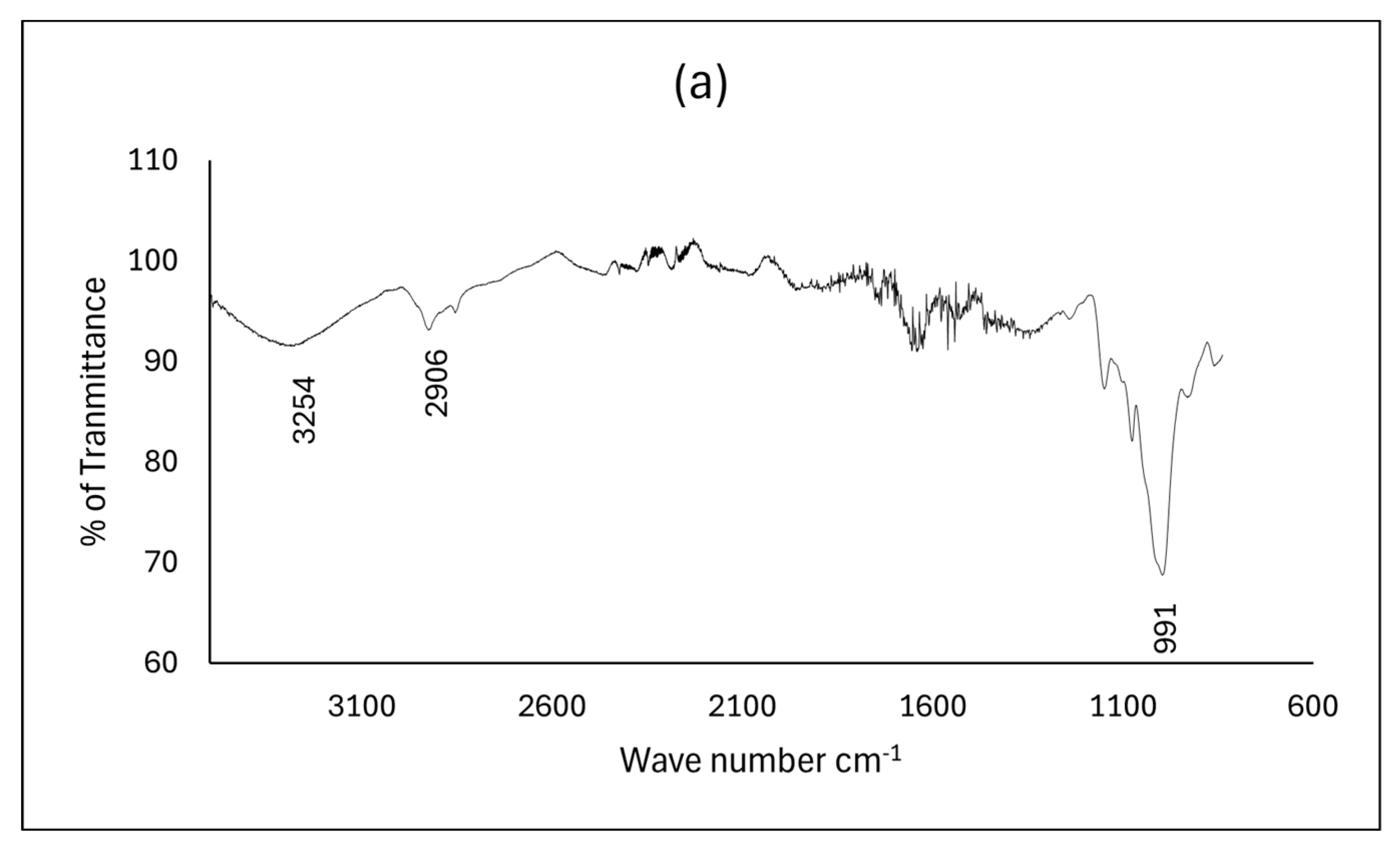
Figure 2.
FT-IR of CPS 1:2:2 bioplastic.
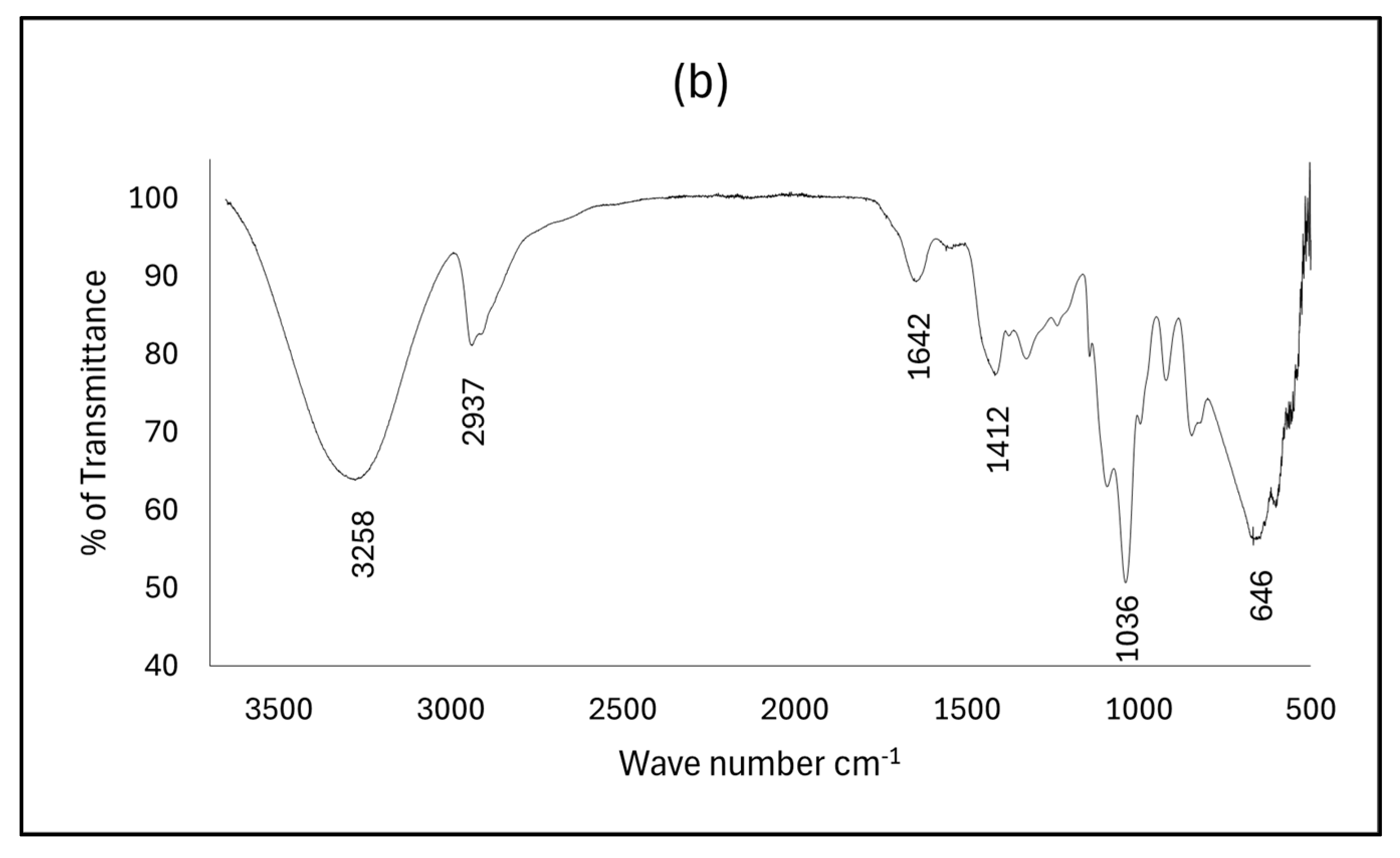
Figure 3.
(a) Mechanical properties of CPS bioplastic at different ratios; (b) elongation at break of CPS bioplastic at different ratios.
Figure 3.
(a) Mechanical properties of CPS bioplastic at different ratios; (b) elongation at break of CPS bioplastic at different ratios.
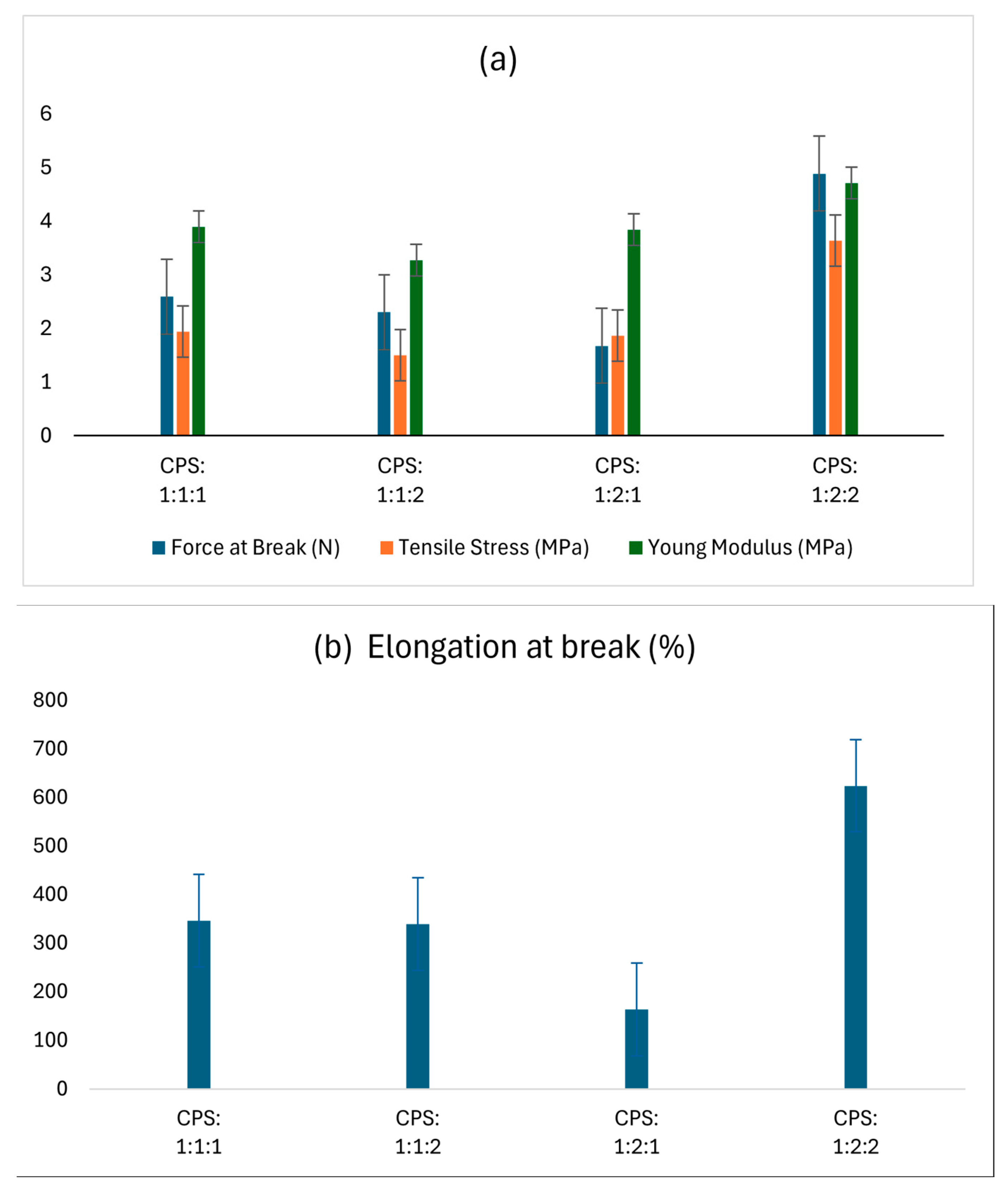
Figure 4.
SEM image of (a) CPS 1:2:2 bioplastic at 50x resolution, (b) CPS 1:2:2 bioplastic at 5,000x resolution.
Figure 4.
SEM image of (a) CPS 1:2:2 bioplastic at 50x resolution, (b) CPS 1:2:2 bioplastic at 5,000x resolution.
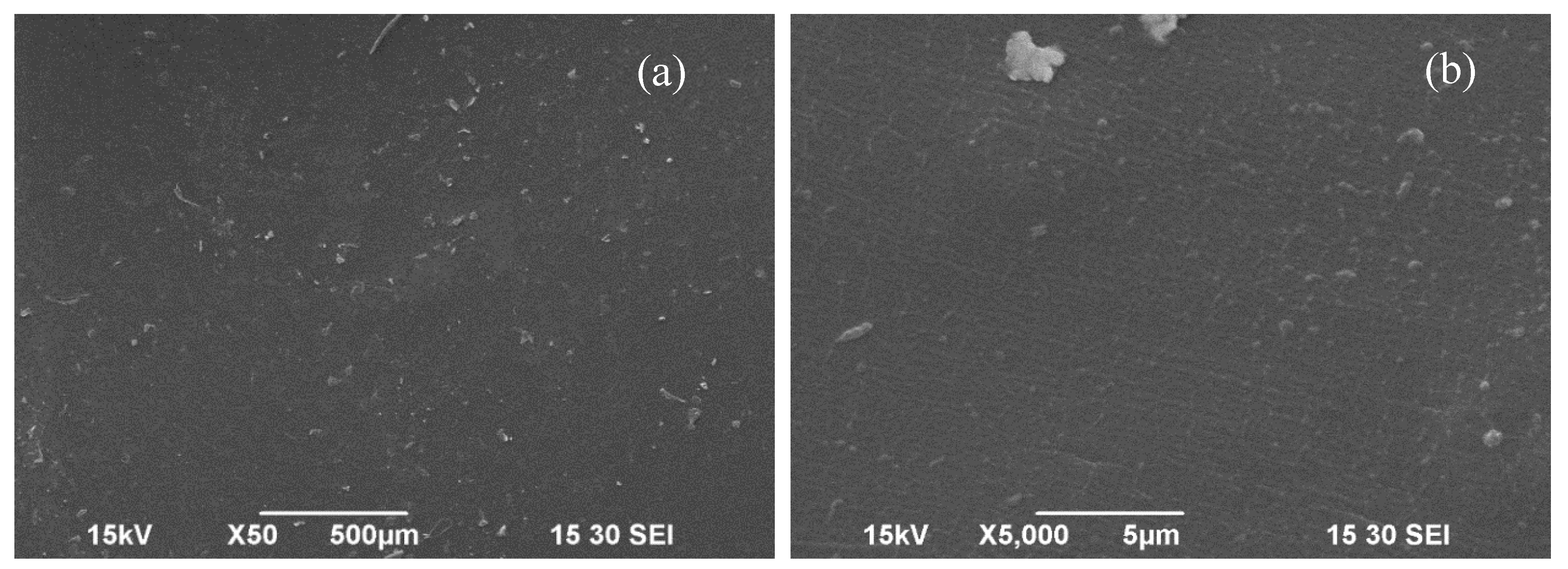
Figure 5.
Water Contact Angle of (a) CPS 1:2:2 bioplastic; (b) WBAX bioplastic; (c) Walmart plastic bag; (d) Ziploc plastic bag.
Figure 5.
Water Contact Angle of (a) CPS 1:2:2 bioplastic; (b) WBAX bioplastic; (c) Walmart plastic bag; (d) Ziploc plastic bag.
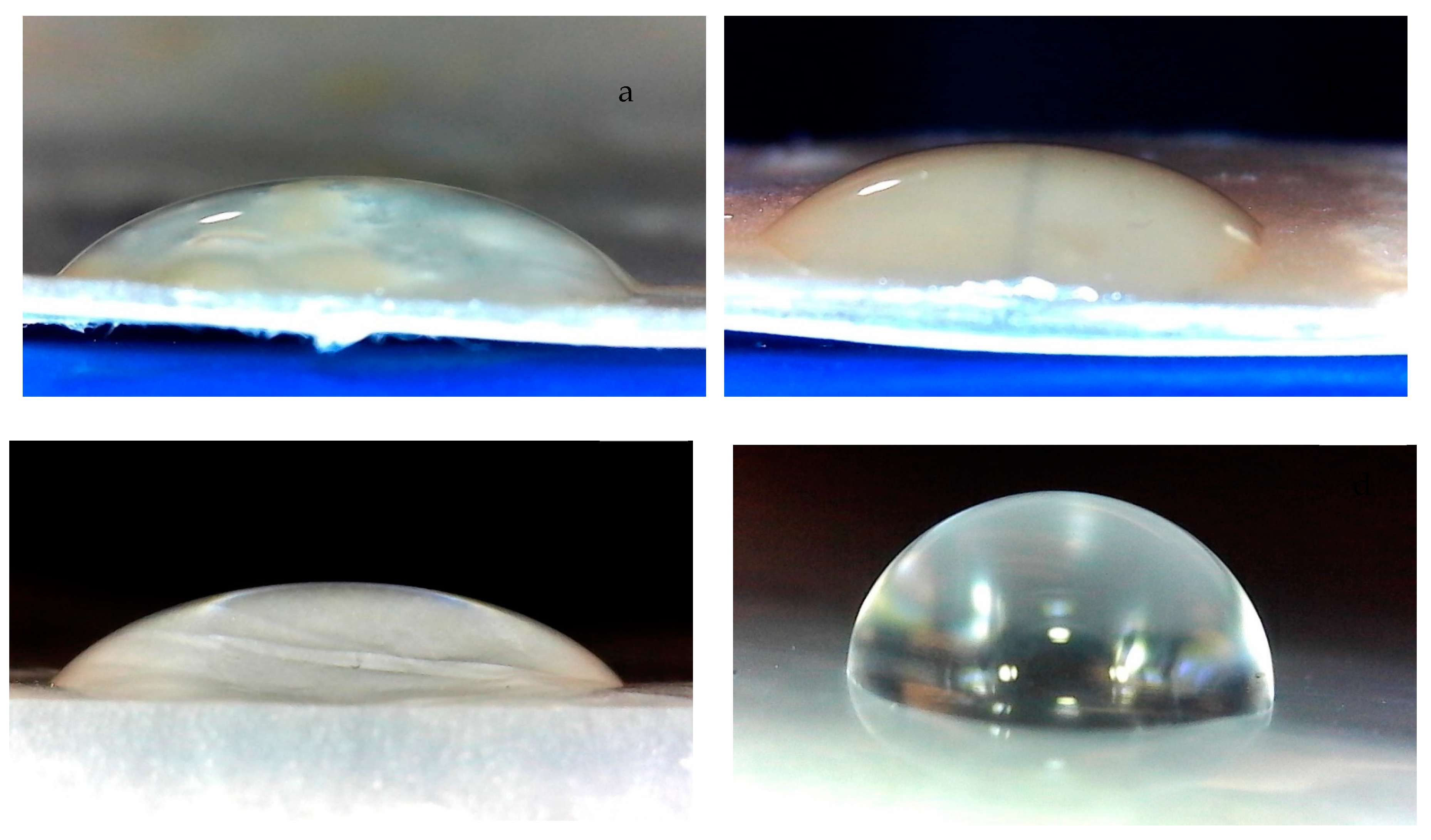
Figure 6.
(a) Effect of acid concentration and treatment duration on weight loss, (b) the thicker and slurry solution after 2 days of dissolution (right side), 40% acid solution (left side).
Figure 6.
(a) Effect of acid concentration and treatment duration on weight loss, (b) the thicker and slurry solution after 2 days of dissolution (right side), 40% acid solution (left side).
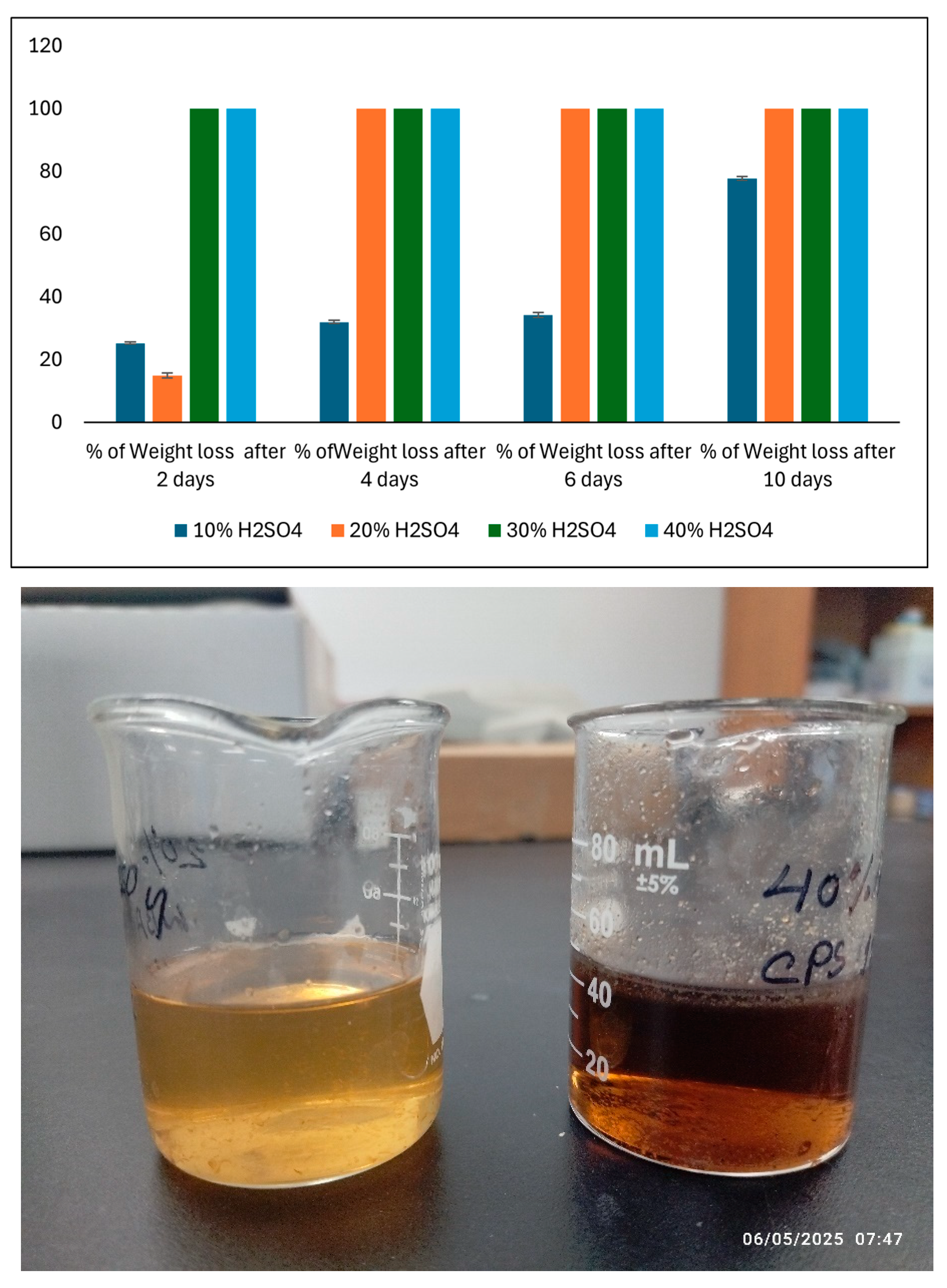
Figure 7.
Effect of alkali concentration and treatment duration on weight loss.
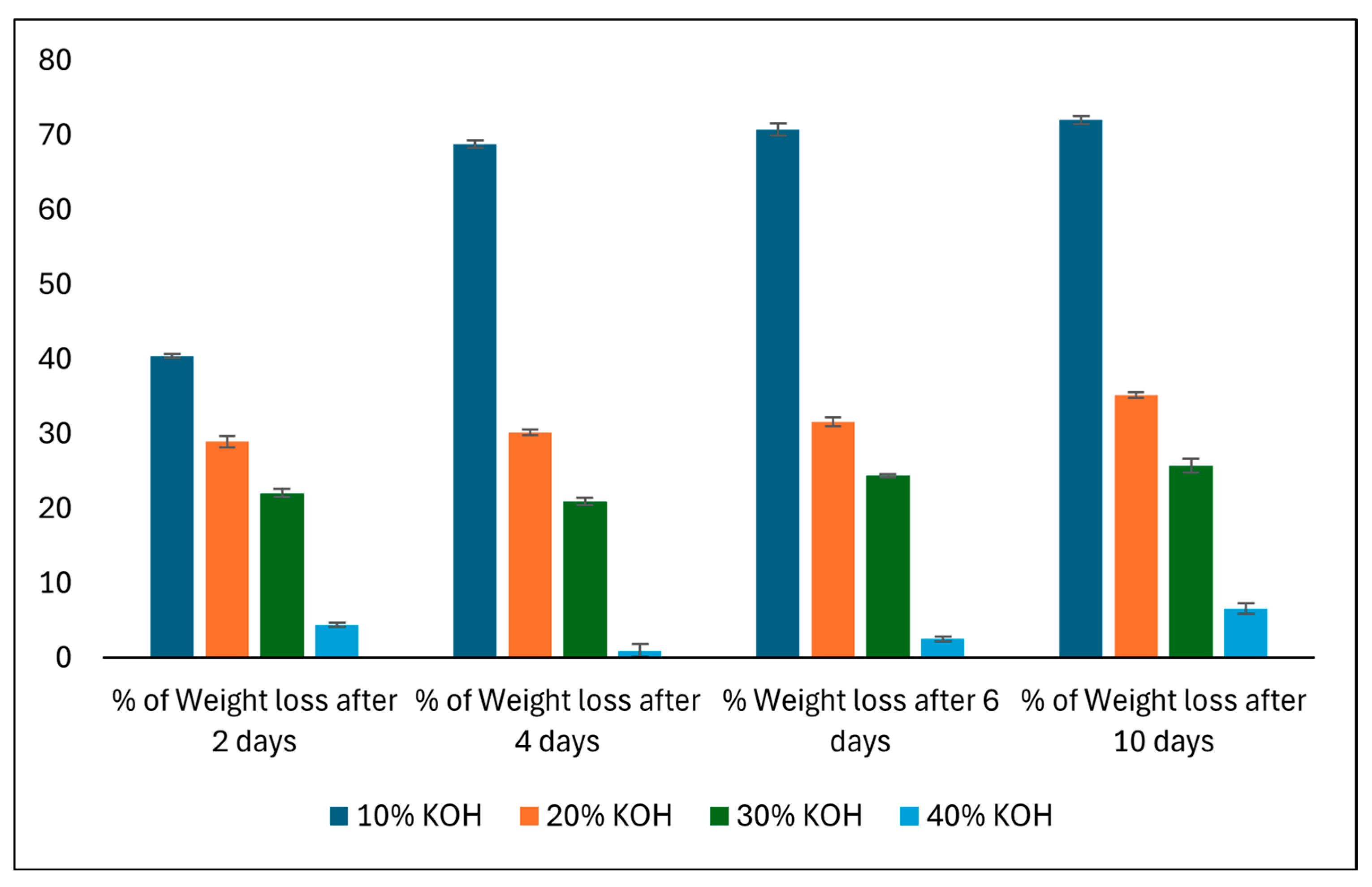
Figure 8.
Water Absorption property of CPS bioplastics (a) % of water absorbability; (b) % of water solubility.
Figure 8.
Water Absorption property of CPS bioplastics (a) % of water absorbability; (b) % of water solubility.
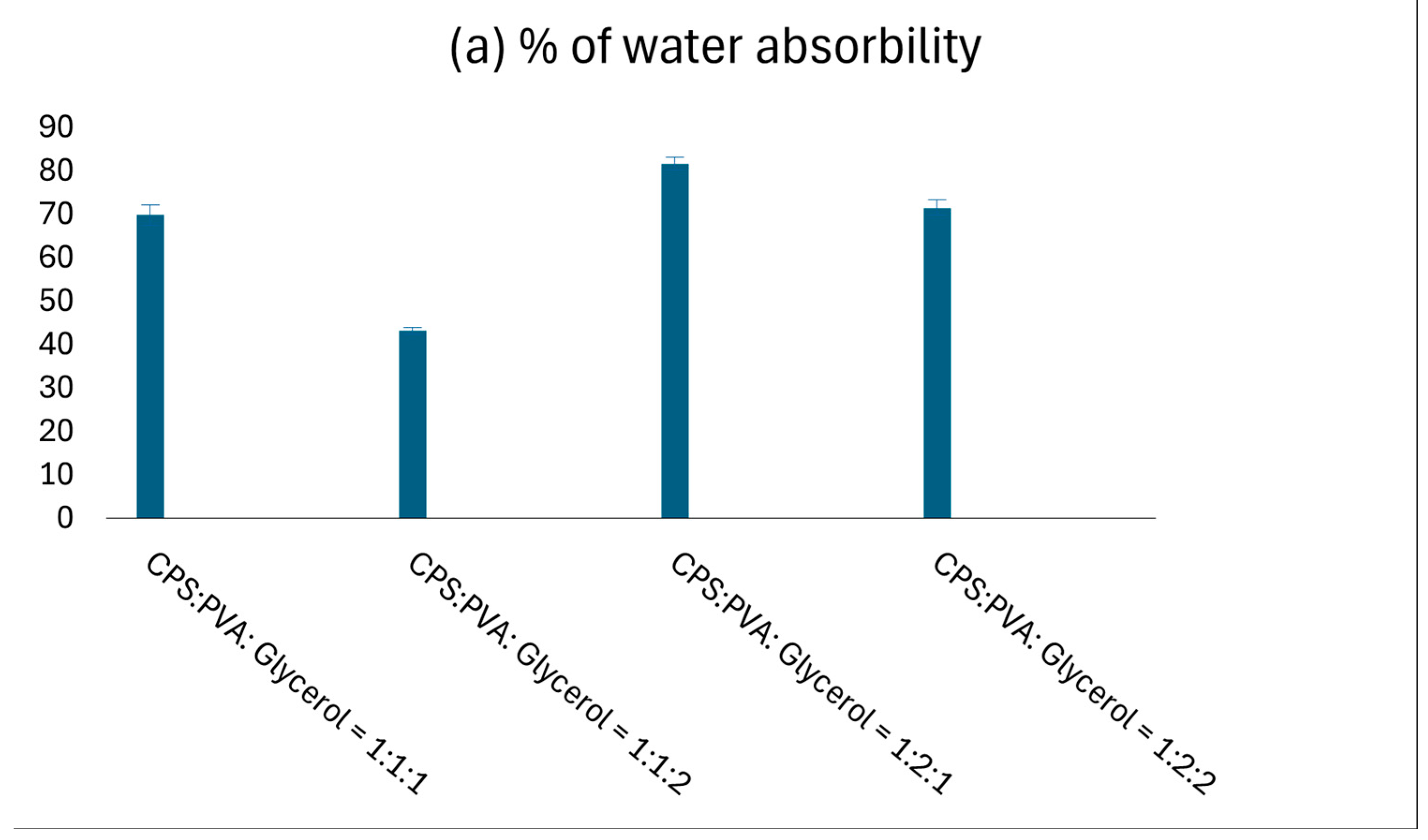
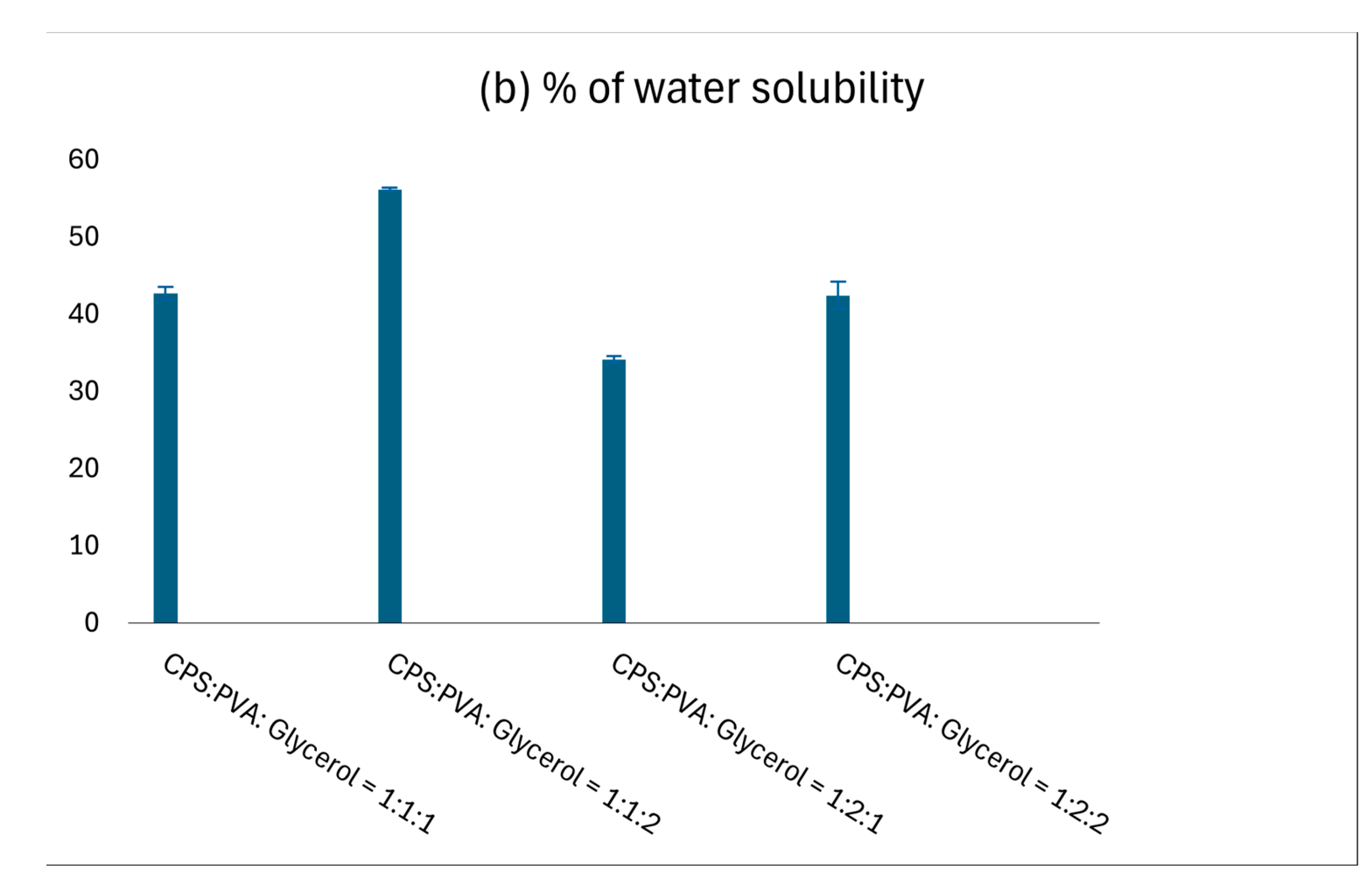
Figure 9.
FT-IR spectra of (a) CPS 1:2:2 bioplastic after 2 months of degradation; (b) CPS 1:2:2 bioplastic before degradation.
Figure 9.
FT-IR spectra of (a) CPS 1:2:2 bioplastic after 2 months of degradation; (b) CPS 1:2:2 bioplastic before degradation.
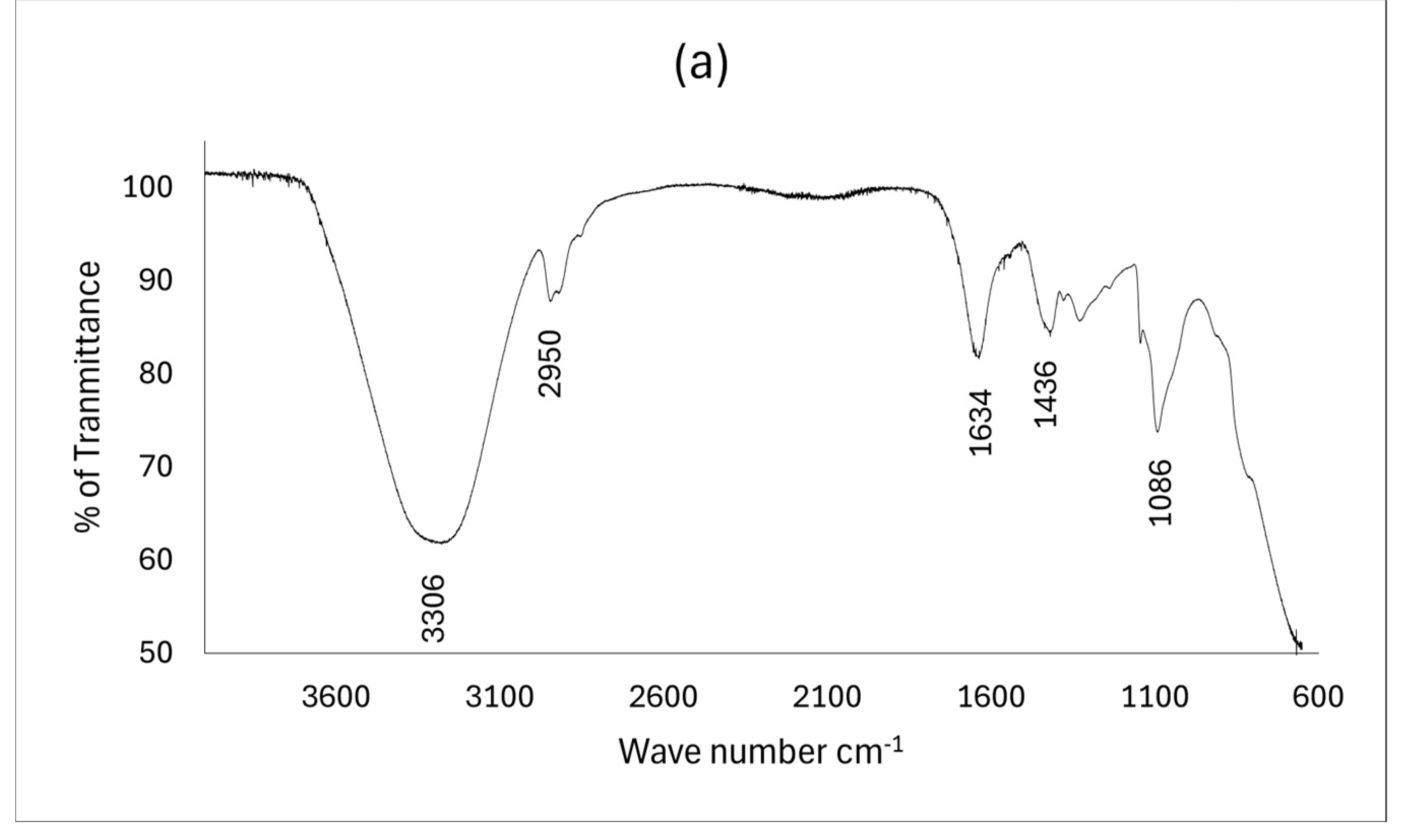
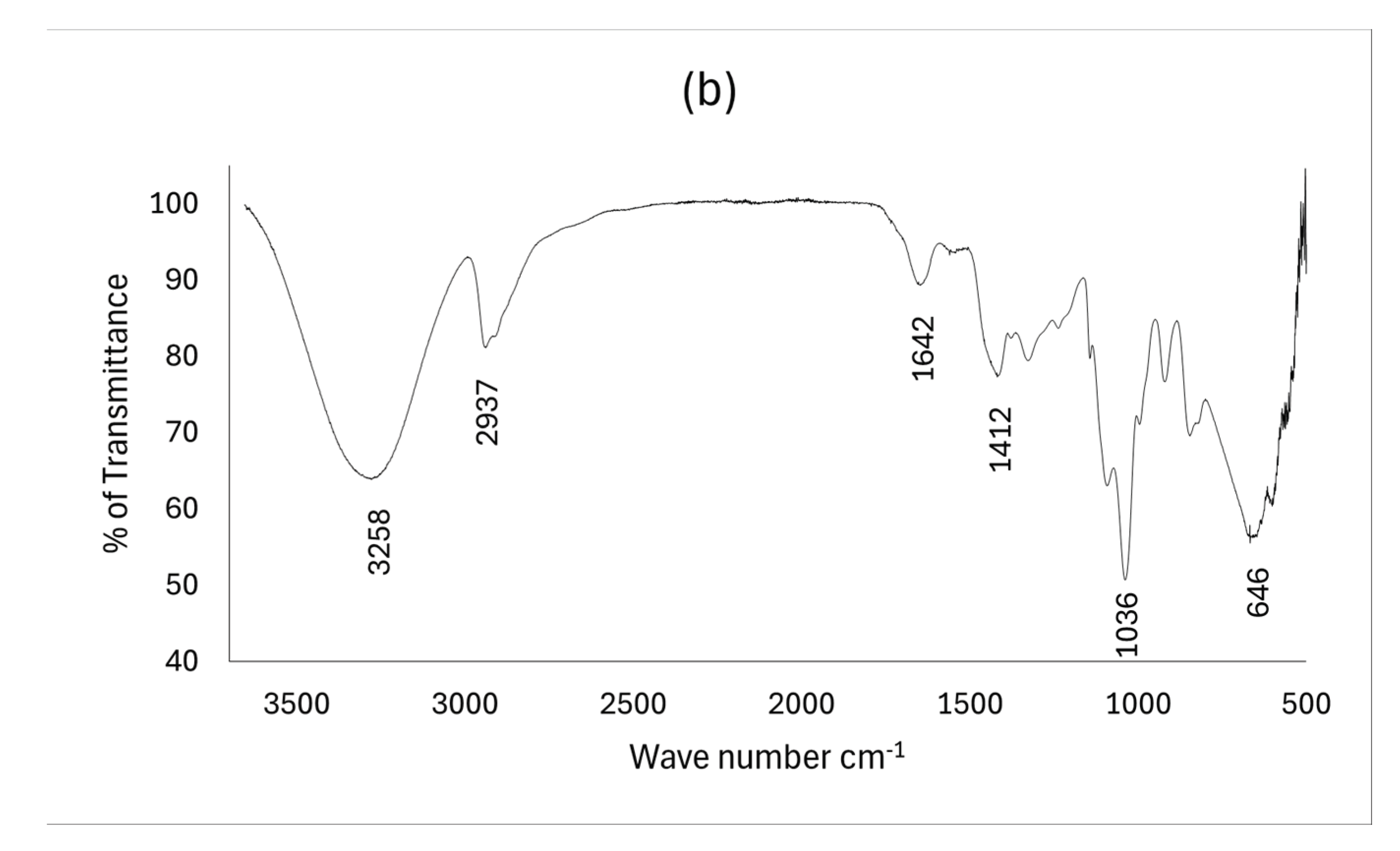
Figure 10.
SEM image of (a) CPS 1:2:2 after 2 months of natural degradation at 50x resolution; (b) CPS 1:2:2 after 2 months of natural degradation at 500x resolution; (c) physical appearance of CPS 1:2:2 before degradation; (d) physical appearance of CPS 1:2:2 after degradation.
Figure 10.
SEM image of (a) CPS 1:2:2 after 2 months of natural degradation at 50x resolution; (b) CPS 1:2:2 after 2 months of natural degradation at 500x resolution; (c) physical appearance of CPS 1:2:2 before degradation; (d) physical appearance of CPS 1:2:2 after degradation.
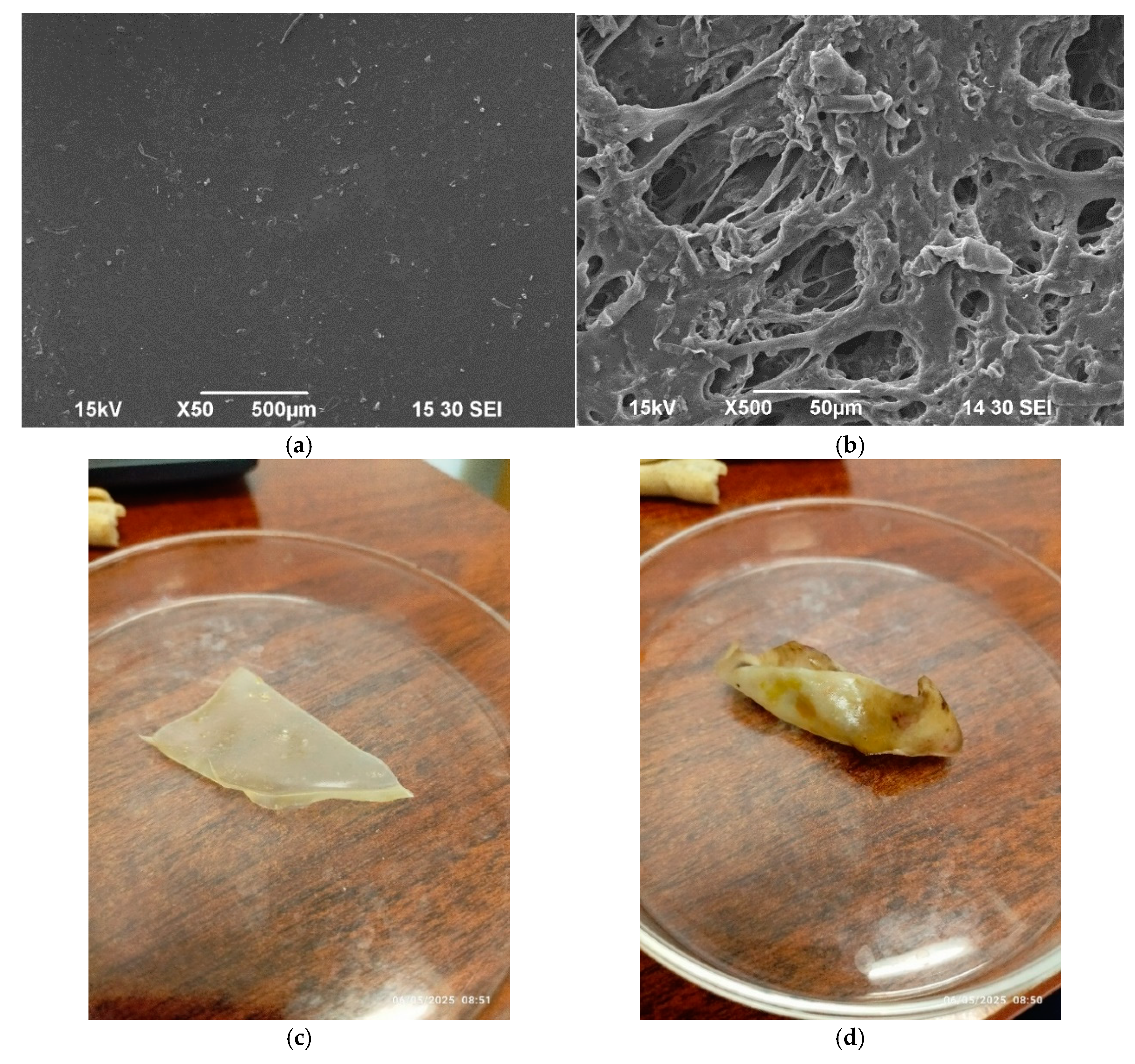
Table 1.
The composition ratio of the bioplastic blend.
| Title | Chickpea extracted starch (CPS) | Polyvinyl alcohol (PVA) | Glycerol |
|---|---|---|---|
| CPS 1:1:1 | 1 | 1 | 1 |
| CPS 1:1:2 | 1 | 1 | 2 |
| CPS 1:2:1 | 1 | 2 | 1 |
| CPS 1:2:2 | 1 | 2 | 2 |
Table 2.
Transparency of bioplastics and synthetic plastics.
| Film type | Absorbance | Transmission% | Thickness | Transparency |
| CPS bioplastic film | 1.25 | 5.60 | 0.17 | 1.52 |
| WBAX bioplastic film | 1.23 | 5.92 | 0.19 | 1.50 |
| Ziploc plastic bag | 0.05 | 89.23 | 0.02 | 3.57 |
| Walmart plastic bag | - | - | - | 3.78 |
| tapioca-based films, | - | - | - | 3.13 |
Table 3.
Water Contact Angle (WCA) of plastics.
| Film Type | Water Contact Angle (degree) |
| CPS bioplastic film | 70.1 |
| WBAX bioplastic film | 75.80 |
| Ziploc plastic bag | 124.83 |
| Walmart plastic bag | 76.78 |
| PLA/starch/lecithin film | 59.250 |
Disclaimer/Publisher’s Note: The statements, opinions and data contained in all publications are solely those of the individual author(s) and contributor(s) and not of MDPI and/or the editor(s). MDPI and/or the editor(s) disclaim responsibility for any injury to people or property resulting from any ideas, methods, instructions or products referred to in the content. |
© 2026 by the authors. Licensee MDPI, Basel, Switzerland. This article is an open access article distributed under the terms and conditions of the Creative Commons Attribution (CC BY) license.
Copyright: This open access article is published under a Creative Commons CC BY 4.0 license, which permit the free download, distribution, and reuse, provided that the author and preprint are cited in any reuse.


