

Submitted:
28 May 2026
Posted:
29 May 2026
You are already at the latest version
Abstract
Background: Metabolic syndrome (MeS) is a multifactorial metabolic disorder characterized by obesity, dyslipidemia, insulin resistance, and hypertension, and is strongly associated with an increased risk of cardiovascular diseases (CVDs) and type-2 diabetes mellitus (T2DM)-related complications. Chronic low-grade inflammation and immune dysregulation are increasingly recognized as central contributors to metabolic and cardiovascular pathogenesis. However, the molecular mechanisms linking MeS-related etiologies to coronary artery disease (CAD) remain incompletely understood. The present study aimed to identify shared inflammatory and immuno-metabolic transcriptional signatures associated with MeS and its cardiovascular complications using an integrative bioinformatics approach. Methods: Three publicly available peripheral blood mononuclear cell (PBMC) microarray datasets from the Gene Expression Omnibus (GEO) database, including metabolic syndrome (GSE98895), recent-onset type 1 diabetes (GSE193273), and diabetes mellitus with coronary artery disease (GSE250283), were analyzed using R-based bioinformatics pipelines. Differentially expressed genes (DEGs) were identified using the limma package, followed by Gene Set Enrichment Analysis (GSEA) using MSigDB Gene Ontology Biological Process C5 gene sets. Shared DEGs were subjected to protein-protein interaction (PPI) network construction using STRING and Cytoscape http://www.cytoscape.org/. Hub genes were identified using the CytoHubba MCC algorithm, and associated miRNAs were predicted using miRNet. Functional enrichment analysis of candidate miRNAs was performed using TAM 2.0. Results: GSEA demonstrated prominent enrichment of inflammatory, immune-regulatory, cytokine-mediated, oxidative stress, and metabolic pathways across the datasets. T1D samples exhibited enrichment of interferon-mediated signaling, cytokine responses, and proliferative cellular programs. MeS samples showed activation of adaptive immune responses, leukocyte-mediated immunity, and inflammatory signaling pathways. DMCAD samples demonstrated strong enrichment of inflammatory cytokine production, oxidative phosphorylation, mitochondrial metabolism, reactive oxygen species pathways, and leukocyte activation. Comparative analysis identified 19 shared DEGs between MeS and DMCAD, including CXCL16, CCR1, FPR1, C5AR1, CD86, and TNFRSF21, which formed a significantly interconnected inflammatory interaction network. Functional enrichment analyses revealed enrichment of chemotaxis, complement signaling, immune receptor activity, interferon gamma response, inflammatory response, and IL6-JAK-STAT3 signaling pathways. miRNA interaction analysis identified candidate regulatory miRNAs, including miR-146a-5p, miR-21-5p, miR-155-5p, and members of the miR-17-92 cluster, which were enriched in inflammatory, cardiovascular, and metabolic disease-associated pathways. Conclusions: The present integrative bioinformatics analysis demonstrates that MeS and DMCAD share common inflammatory and immuno-metabolic transcriptional programs characterized by immune activation, cytokine signaling, oxidative stress, and vascular-inflammatory regulatory networks. The identified hub genes and candidate miRNAs may represent potential biomarkers and therapeutic targets associated with inflammation-driven cardiovascular complications in metabolic disorders.
Keywords:
metabolic syndrome
; inflammation
; type-2 diabetes mellitus
; cardiovascular diseases
; coronary artery disease
; system’s biology
1. Introduction
Metabolic syndrome (MeS) represents a complex and multifactorial metabolic disorder characterized by following conditions:
- Hypertension (consistently elevated blood pressure),
- Insulin resistance,
- Central obesity characterized by abnormal accumulation of fat in the abdominal region),
- Dyslipidemia with low HDL cholesterol and high triglycerides, and
- Impaired glucose homeostasis.
The prevalence of MeS has increased substantially worldwide and is closely associated with an increased risk of type 2 diabetes mellitus (T2DM), cardiovascular disease (CVD), and premature mortality. Increasing evidence suggests that chronic low-grade inflammation, immune dysregulation, oxidative stress, and altered metabolic signaling are central to development of T2DM and CVD [1]. Chronic inflammation is recognized as a major pathogenic component in several diseases, including obesity, autoimmune disorders, cardiovascular diseases, neurodegenerative disorders, and diabetes-associated complications. Recent advances in bioinformatics and systems biology have enabled integrative analysis of publicly available transcriptomic datasets to identify disease-associated genes, pathways, and regulatory networks [2]. Gene Set Enrichment Analysis (GSEA), Differential expression gene analysis (DEGs), protein-protein interaction (PPI) network analysis, and miRNA interaction studies provide powerful approaches for identifying coordinated molecular programs and regulatory mechanisms underlying disease progression. In particular, the integration of differential expression analysis with pathway-level and network-based approaches can improve the identification of biologically relevant inflammatory and immuno-metabolic signatures [3,4].
Peripheral blood mononuclear cells (PBMCs) provide an accessible systemic representation of immune-associated transcriptional alterations occurring during chronic metabolic and inflammatory disorders. Transcriptomic profiling of PBMCs has increasingly been utilized to investigate immune-metabolic reprogramming associated with metabolic syndrome, diabetes, and cardiovascular disease progression [5]. However, despite extensive evidence supporting the contribution of inflammation to cardiometabolic diseases, the shared molecular mechanisms linking MeS with cardiovascular complications remain incompletely characterized.
In the current study, we did an integrative bioinformatics analysis of PBMC microarray datasets associated with metabolic syndrome, recent-onset type 1 diabetes (T1D), and diabetic coronary artery disease (DMCAD). Although T1D is an autoimmune disease distinct from MeS, it was included due to its well-established inflammatory and immune-mediated pathogenesis, thereby serving as an additional inflammation-associated reference condition. One of the main CVDs affecting people worldwide is coronary artery disease (CAD), and the comorbidity of DMCAD makes our integrated study extremely pertinent to MeS. DEG analysis, GSEA, functional enrichment analysis, PPI interaction network construction, hub gene identification, and miRNA regulatory analysis were performed to identify shared inflammatory and immuno-metabolic mechanisms associated with MeS and cardiovascular complications. The study aimed to characterize inflammation-centred transcriptional alterations and identify candidate molecular regulators potentially involved in the progression of metabolic dysfunction toward coronary artery disease.
2. Methods
2.1. Microarray Data
Gene Expression Omnibus (GEO) database https://www.ncbi.nlm.nih.gov/geo/ was used to download Expression profiling datasets for metabolic syndrome (MeS), type 1 diabetes (T1D), and diabetes mellitus with coronary artery disease (DM-CAD). The search terms utilized were “metabolic syndrome”, “type 1 diabetes”, “inflammation” and “Homo sapiens”, while applying the “expression profiling by array” filter. The inclusion criteria required datasets containing RNA expression profiles generated from peripheral blood mononuclear cells (PBMCs).
Figure 1.
Identification of DEGs from GEO datasets, construction of PPI networks, enrichment analysis, and integration of miRNA functional data associated with cervical cancer. Each microarray was analyzed independently, and a common pattern of gene expression was selected for the subsequent analysis following this consideration (adj. p < 0.05, |logFC| > 0.5).
Figure 1.
Identification of DEGs from GEO datasets, construction of PPI networks, enrichment analysis, and integration of miRNA functional data associated with cervical cancer. Each microarray was analyzed independently, and a common pattern of gene expression was selected for the subsequent analysis following this consideration (adj. p < 0.05, |logFC| > 0.5).
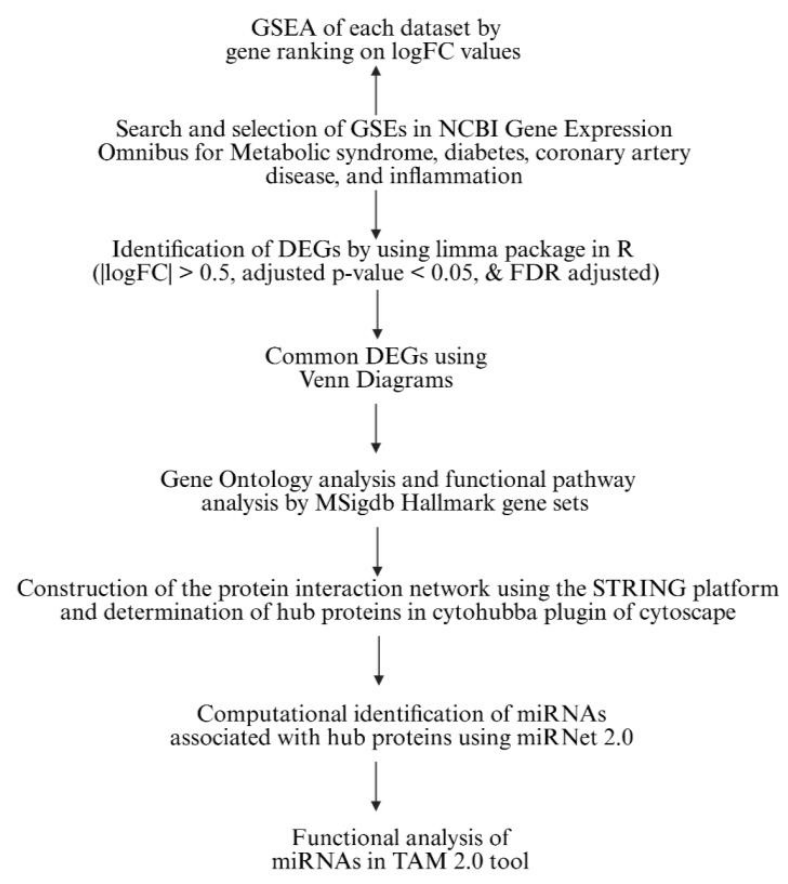
GSE98895 was submitted in 2017 by the IRCCS Ospedale Oncologico di Bari and contains PBMC gene expression profiles from healthy controls and patients with metabolic syndrome, aimed at identifying transcriptomic alterations associated with the disease. The sample selection used for analysis included healthy controls (n = 20) and MeS cases (n = 20).
GSE193273 was submitted in 2022 by INSERM-U1090 and includes whole-genome expression profiles of PBMCs from Brazilian individuals with recent-onset type 1 diabetes and healthy controls, generated using the GPL20844 Agilent-072363 SurePrint G3 Human GE v3 8x60K Microarray platform. The dataset was designed to investigate inflammatory and immunotolerance pathways associated with early-stage T1D. The sample selection used for analysis included healthy controls (n = 20) and recent-onset T1D cases (n = 20).
GSE250283 was submitted in 2023 by the National Institutes of Health Philippines and includes whole-transcriptome PBMC profiles from Filipino individuals with T2DM, with and without coronary artery disease (CAD), generated using Illumina and Affymetrix microarray platforms. For this study, the GPL28098 platform containing Illumina HumanHT-12 V4.0 expression data was selected for analysis. The sample selection used for analysis included DMnoCAD (n = 21) and DMCAD (n = 20) groups. In addition, healthy controls (n = 15) present in the dataset were used to identify DEGs in comparison with both disease groups.
2.2. GSEA
GSEA was performed using the Molecular Signatures Database (MSigDB) human collections, first- hallmark gene sets were utilised, which comprise coherently expressed gene signatures derived by aggregating multiple MSigDB gene sets to represent well-defined biological states and processes. However, this analysis yielded a limited number of significantly enriched pathways across the datasets denoting progression from healthy to diseased condition- GSE98895 and GSE193273 (data not shown). Thus, GSEA was performed using the C5 Gene Ontology (GO) gene set collection from the MSigDB, specifically the Biological Process (BP) category, to investigate pathway-level alterations across the three datasets. A ranked gene list containing all genes from the differential expression analysis was generated based on log fold change (logFC) values obtained using the limma package in R, where genes were ordered from the highest positive to the lowest negative logFC values. The clusterProfiler package in R was used to perform GSEA [6]. Enrichment score (ES), nominal p-value, normalized enrichment score (NES), q-value, adjusted p-value, leading-edge statistics, and core enrichment genes were computed for every gene collection. The Benjamini-Hochberg FDR approach was used for multiple testing correction, and pathways with an adjusted p-value < 0.05 were considered significantly enriched. Additionally, the subset of genes most strongly contributing to the enrichment signal within considerably enriched biological processes was identified using cutting-edge methodology.
2.3. DEG Identification and Intersection Analysis
DEG analysis was performed using R software (R version 4.5.3). For microarray datasets, probe-level expression matrices were first annotated by mapping probe identifiers to symbols of genes based on the corresponding platform annotation files. Probes without annotated gene symbols were excluded, and when multiple probes corresponded to a single gene, their expression values were averaged to obtain a unique gene-level expression value. Using the limma package, the resulting gene expression matrices were then subjected to differential expression analysis. Linear models were fitted, FDR correction was performed, and we selected DEGs with the criteria of both p-value < 0.05 and |log2fold change (FC)| ≥ 0.5. Considering that these three datasets represented an inflammatory continuum of disease progression, differential expression analysis was performed separately for each dataset. Subsequently, Venn analyses were conducted to identify both the DEGs common across all three conditions and those shared between pairs of conditions. The intersection of DEGs results were constructed using Venn diagrams. To standardize expression values for visualization, z-score normalization was applied to the gene expression matrix using z = x - μσz = \frac{x - \mu}{\sigma}z = σx − μ, ensuring each gene had a mean of 0 and unit variance across samples. In R, row-wise scaling was performed using: heatmap_scaled <- t(scale(t(heatmap_matrix))). The resulting scaled matrix was used for heatmap construction in pheatmap, with sample group information included as column annotations for clear visual comparison across conditions https://cran.r-project/org/web/packages/pheatmap/index.html. For integrative analysis across datasets, shared DEGs were identified by intersecting gene lists using Venn diagram approaches, and these common DEGs were utilized for further functional enrichment and network analyses.
2.4. Network Construction Using PPI and Identification of Hub Gene
The DEG lists common to MeS and DMCAD were uploaded into the Search Tool for the Retrieval of Interacting Genes/Proteins (STRING database), version 12.0, to construct PPI networks and predict functional molecular interactions among the obtained proteins https://string-db.org/. The medium confidence score of 0.400 was utilised as the minimum required interaction score, and the network was generated using only the query proteins without adding additional interactors. For network visualization and topological analysis, the created PPI network was imported into Cytoscape (version 3.10.4). The CytoHubba plugin in Cytoscape, which ranks nodes according to their topological significance within the interaction network, was used to identify hub proteins. Among the 11 available algorithms, Maximal Clique Centrality (MCC) was selected due to its reported superior sensitivity and reliability in identifying essential proteins within densely interconnected biological subnetworks. The top 10 ranked proteins based on MCC scores were selected as hub proteins for downstream analyses.
2.5. DEGs Annotation and Their Functional Analyses
The biological significance of the DEGs and hub genes associated with metabolic syndrome was investigated through functional enrichment analyses. Enrichment analysis using Gene Ontology (GO) terms, including Molecular Function (MF), Biological Process (BP), and Cellular Component (CC) categories, was performed in R using appropriate bioinformatics packages (clusterProfiler, Human gene annotation database, enrichplot, AnnotationDbi). Statistically significant terms were those with adjusted p-values (adj. p) < 0.05. Using the Hallmark gene set collection from the Molecular Signatures Database (MSigDB) in R (msigdbr), pathway enrichment analysis was carried out. Hallmark gene sets, which consist of coherently expressed gene signatures produced by computationally integrating overlapping MSigDB gene sets, summarize and reflect particular well-defined biological states or biological processes. Hallmark pathways that were significantly enriched and had adjusted p-values (adj. p) less than 0.05 were deemed significant.
2.6. Computational Identification of miRNAs Associated with MeS and DMCAD
The miRNet platform (https://www.mirnet.ca/ (accessed on May 18, 2026)) was used to identify the miRNAs linked to the hub genes of the DEGs-MeS/DMCAD vs healthy/DMnoCAD network [109]. This database, which incorporates data from multiple database sources, including TarBase v8.0, miRTarBase v8.0, and miRecords v1.0, provides information on interactions between miRNAs and their target gene [110,111]. The miRNAs with at least two interactions with hub genes were retained for additional examination in the network analysis.
2.7. Functional Analysis of miRNAs
Using the TAM 2.0 server, a manually curated database developed for miRNA set enrichment analysis, functional enrichment analysis was performed for the identified candidate miRNAs [7]. The server integrates experimentally supported miRNA-function and miRNA-disease associations from published literature. The selected miRNAs obtained from the miRNet Gene2miRNA interaction network were subjected to overrepresentation analysis to identify significantly enriched biological functions and disease associations. Terms with an FDR-adjusted p-value < 0.05 were considered statistically significant. Bubble plots generated in R were used to depict enrichment results specific to inflammation.
3. Result
3.1. GSEA and DEGs Analysis
3.1.1. T1D Dataset
Differential gene expression analysis between recent-onset T1D and healthy controls (Supplementary Table 1) identified a unique transcriptional signature characterized by both upregulated and downregulated genes. The volcano plot demonstrated significant differential expression patterns, with several genes exhibiting marked fold changes and statistical significance (Figure 2A). Upregulated genes included inflammatory and immune-associated transcripts such as LTF, DEFA4, DEFA3, and CTSG, whereas several long non-coding RNAs and regulatory transcripts, including DDIT4 and RNU4ATAC, were downregulated in T1D samples relative to controls. Overall, the volcano plot indicated an enrichment of immune-related transcriptional perturbations in T1D.
Hierarchical clustering heatmap of the top 30 DEGs further demonstrated distinct expression profiles between T1D and healthy samples (Figure 2B). Several genes associated with inflammatory signaling, immune regulation, and cellular stress responses displayed coordinated dysregulation in T1D. Notably, NEAT1 is implicated in inflammasome activation and innate immune regulation, while IFI30 participates in antigen processing and interferon-mediated immune responses. BCL6 corepressor-associated pathways represented by BCOR-related transcripts are involved in transcriptional immune regulation Huynh KD, Fischle W, Verdin E, Bardwell VJ. BCoR, a novel corepressor involved in BCL-6 repression. Genes Dev. 2000 Jul 15;14(14):1810-23. PMID: 10898795; PMCID: PMC316791. , whereas ASAP1-IT1 and multiple long non-coding RNAs may contribute to inflammatory modulation and immune-cell activation.
GSEA resulted in significant enrichment of pathways related to cell cycle progression, mitotic spindle organization, chromosome segregation, DNA replication, and proliferative signaling in T1D samples (Figure 2C). Enriched pathways included regulation of chromosome organization, nuclear division, mitotic cell cycle phase transition, spindle assembly, and DNA replication-associated processes, collectively indicating an enhanced proliferative cellular environment. In parallel, immune and inflammatory pathways including interferon-mediated signaling, cytokine signaling, defense response to virus, and regulation of immune responses were significantly enriched, suggesting the presence of an inflammatory immune milieu in recent-onset T1D. Together, these findings indicate that recent-onset T1D is characterized by coordinated activation of proliferative and inflammatory transcriptional programs.
3.1.2. MeS Dataset
Differential gene expression analysis between metabolic syndrome (MeS) and healthy controls identified distinct transcriptional alterations characterized by both upregulated and downregulated genes (Supplementary Table 1). Volcano plot (Figure 3A) and hierarchical clustering heatmap (Figure 3B) of the top DEGs demonstrated substantial immune and metabolic perturbations in MeS (Figures A and B). Several dysregulated genes, including SP140, KLF6, MAP4K1, PLEKHG3, and LZTFL1, are associated with inflammatory signaling, immune-cell activation, and metabolic dysfunction. The heatmap further revealed coordinated expression patterns between MeS and healthy samples, although partial intermixing was observed, reflecting biological heterogeneity and transcriptomic variability among individuals.
GSEA demonstrated significant enrichment of pathways associated with adaptive immunity, leukocyte-mediated immunity, antigen receptor-mediated signaling, B-cell activation, and B-cell receptor signaling in MeS samples (Figure 3C). Additional enrichment of pathways related to innate inflammatory responses and metabolic regulation further indicated substantial immune-metabolic reprogramming in MeS. In contrast, pathways associated with translational machinery, ribosome biogenesis, cytoplasmic translation, and structural remodeling exhibited relatively lower normalized enrichment scores. Collectively, these findings suggest that MeS is characterized by coordinated activation of inflammatory and immune-regulatory transcriptional programs accompanied by alterations in metabolic and cellular homeostatic pathways.
3.1.3. DMCAD Dataset
Differential gene expression analysis among diabetic coronary artery disease (DMCAD), diabetes without coronary artery disease (DMnoCAD), and healthy controls identified distinct transcriptional alterations characterized by both upregulated and downregulated genes (Supplementary Table 1). Volcano plot and hierarchical clustering heatmap of the top DEGs (Figure 4A) demonstrated substantial immune-inflammatory and metabolic perturbations in DMCAD (Figure 4B). Several dysregulated genes, including TNFRSF21, TNFSF9, CFD, FCAR, PILRA, OSCAR, and C5AR1, are associated with inflammatory signaling, immune-cell activation, cytokine production, complement activation, and myeloid leukocyte responses. Additional genes such as SLC11A1, LGALS3, and CFD further suggest enhanced innate immune and inflammatory activity in DMCAD samples.
GSEA further yielded significant enrichment of pathways associated with mitochondrial ATP synthesis, oxidative phosphorylation, aerobic electron transport chain activity, reactive oxygen species metabolism, antigen presentation via MHC class II, TNF superfamily cytokine production, IL-6 and IL-8 production, leukocyte activation involved in inflammatory responses, and regulation of inflammatory signaling pathways (Figure 4C,D). Network-based enrichment analysis additionally highlighted interconnected inflammatory modules involving myeloid leukocyte activation, tumor necrosis factor production, and regulation of inflammatory responses. Collectively, these findings indicate that DMCAD is characterized by coordinated activation of inflammatory, immune-regulatory, oxidative stress, and mitochondrial metabolic pathways, supporting the presence of a pronounced inflammatory and immuno-metabolic milieu associated with coronary complications in diabetes.
3.2. Functional Pathway Analysis of Common DEGs- GO Terms and Hallmark Pathway Analysis
Comparative analysis of DEGs among DMCAD, metabolic syndrome (MeS), and type 1 diabetes (T1D) datasets demonstrated limited overlap across all three conditions. No common DEG was identified among all datasets simultaneously (Figure 5A). Pairwise comparison revealed only two overlapping DEGs between DMCAD and T1D, whereas MeS and T1D shared 13 DEGs; however, STRING protein-protein interaction (PPI) analysis of these 13 genes generated only a single interaction edge, indicating the absence of a biologically significant interaction network.
In contrast, comparison between MeS and DMCAD identified 19 shared DEGs, including RASSF6, AUTS2, LRFN3, RBHDL2, RASSF1, RYK, MCM6, ACYP1, ITM2B, EPB41L3, MAFB, CD86, CD33, CXCL16, TNFRSF21, CKAP4, C5AR1, CCR1, and FPR1. STRING analysis demonstrated a significantly interconnected network among these genes, with prominent immune- and inflammation-associated nodes including CD86, CXCL16, C5AR1, CCR1, and FPR1. Network topology suggested enrichment of chemotactic and innate immune signaling pathways (Figure 5B,C).
GO BP enrichment analysis resulted in significant enrichment of pathways associated with taxis, chemotaxis, complement receptor-mediated signaling, immune response-regulating cell surface receptor signaling, and regulation of cytosolic calcium ion concentration. GO cellular component enrichment demonstrated localization within secretory granule membranes, azurophil granules, lysosomal compartments, and the external side of the plasma membrane, supporting involvement in immune-cell activation and degranulation processes. Molecular function analysis further highlighted enrichment of G protein-coupled receptor binding, immune receptor activity, co-receptor activity, and complement receptor activity (Figure 5C).
MSigDB Hallmark pathway analysis demonstrated significant enrichment of inflammatory and immune-associated pathways, including HALLMARK_INTERFERON_GAMMA_RESPONSE, HALLMARK_IL2_STAT5_SIGNALING, HALLMARK_KRAS_SIGNALING_UP, HALLMARK_INFLAMMATORY_RESPONSE, and HALLMARK_IL6_JAK_STAT3_SIGNALING (Figure 5C).
Additional enrichment of allograft rejection and immune activation signatures further supported the presence of a pro-inflammatory transcriptional milieu shared between MeS and DMCAD.
The 19 common DEGs were then analysed using the cytohubba plugin in Cytoscape to identify the top 10 hub genes: RASSF6, RASSF1, RYK, CKAP4, CD86, CD33, CXCL16, C5AR1, CCR1, and FPR1 (Figure_5D)
3.3. Identification of Candidate miRNAs Associated with Hub Genes
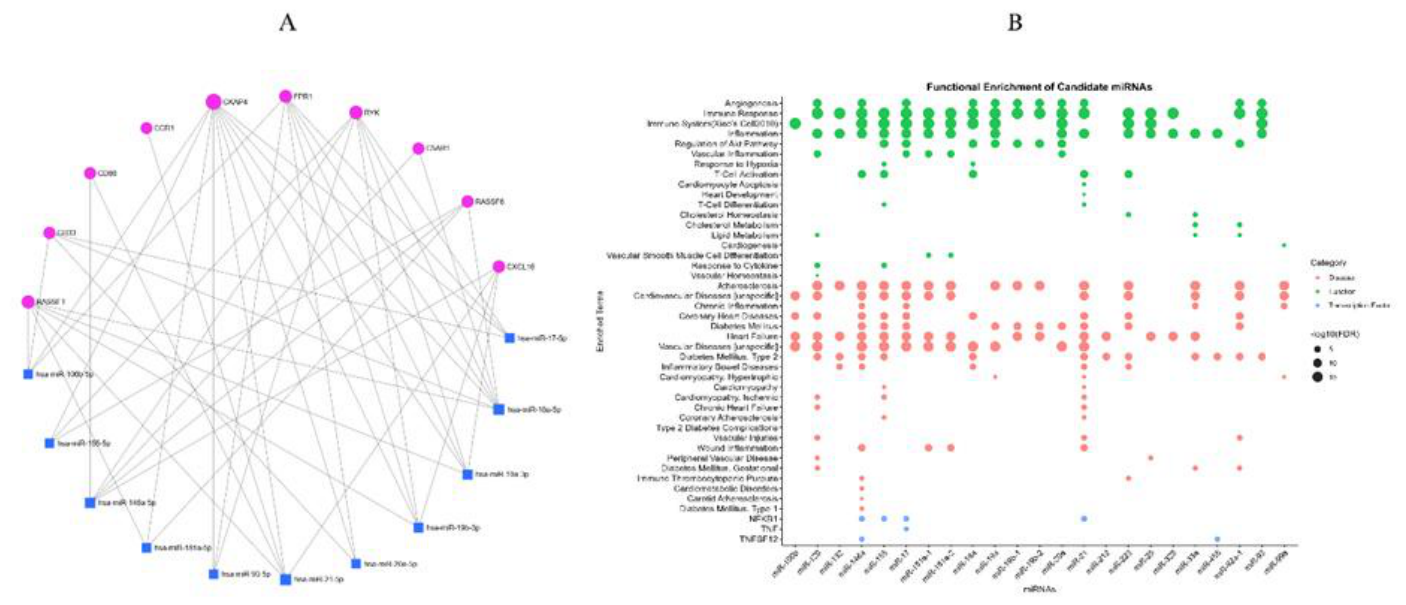
To identify post-transcriptional regulatory mechanisms associated with the shared inflammatory signatures between MeS and DMCAD, hub gene-associated miRNAs were explored using the miRNet platform. A degree cutoff ≥ 2 was applied to retain miRNAs interacting with at least two hub genes or two miRNAs, thereby enriching for biologically relevant regulatory interactions (Figure 6A).
The Gene2miRNA interaction network identified 24 candidate miRNAs interacting with the hub genes, indicating an extensive post-transcriptional regulatory landscape associated with inflammatory and cardiovascular dysfunction. Several miRNAs demonstrated interactions with multiple hub genes, suggesting their central role in coordinating immune and vascular responses. Among these, miR-21-5p, miR-146a-5p, miR-17-5p, miR-155-5p, miR-20a-5p, and miR-19 family members exhibited dense interaction patterns within the network, indicating their potential regulatory significance in disease progression.
The interaction network further revealed that hub genes such as CXCL16, FPR1, C5AR1, CD33, CD86, CCR1, CKAP4, and RYK were targeted by multiple candidate miRNAs, supporting the involvement of coordinated inflammatory and immune-regulatory signaling pathways in MeS and DMCAD.
3.4. Functional Enrichment Analysis of Candidate miRNAs
To study the biological significance of the identified miRNAs, functional enrichment analysis was performed using the TAM 2.0 server. Overrepresentation analysis demonstrated that the candidate miRNAs enriched in multiple inflammation-, immune-, and cardiovascular-related biological processes and disease conditions (FDR-adjusted p < 0.05) with statistical significance.
Function-related enrichment analysis showed strong associations with immune response, angiogenesis, vascular inflammation, regulation of Akt signaling, T-cell activation, apoptosis, cholesterol homeostasis, lipid metabolism, and cardiovascular development. Enrichment of vascular smooth muscle cell differentiation and response to cytokines further highlighted the involvement of these miRNAs in vascular remodeling and chronic inflammatory responses (Figure 6B).
Disease enrichment analysis revealed significant associations with atherosclerosis, coronary artery disease, ischemic cardiomyopathy, chronic inflammation, diabetes mellitus, vascular injuries, peripheral vascular disease, heart failure, and cardiovascular diseases. Several enriched terms were directly related to inflammatory bowel disease and immune thrombocytopenic purpura, indicating a broader immune-inflammatory regulatory profile of the identified miRNA set.
Additionally, transcription factor enrichment analysis identified significant associations with NFκB1, TNF, and TNFSF12-related signaling pathways, suggesting that the candidate miRNAs may modulate inflammatory transcriptional networks central to endothelial dysfunction and cardiometabolic disease progression.
Collectively, these findings suggest that the identified miRNAs participate in interconnected inflammatory, immune, metabolic, and vascular signaling pathways underlying the shared molecular mechanisms between MeS and DMCAD.
4. Discussion
The GSEA and DEG findings collectively suggest the presence of inflammation-associated transcriptional alterations across T1D, MeS, and DMCAD, although the dominant inflammatory features differed among the conditions. Early-onset T1D, an autoimmune disorder characterized by immune dysregulation, demonstrated enrichment of interferon-mediated signaling, cytokine-associated pathways, immune response regulation, and proliferative cellular programs. These findings are consistent with systemic immune activation and inflammatory responses commonly associated with autoimmune disease onset [8,9].
MeS similarly exhibited enrichment of pathways related to adaptive immunity, leukocyte-mediated immunity, B-cell activation, antigen receptor signaling, and inflammatory responses. Since MeS is recognized as a low-grade chronic inflammatory condition associated with metabolic imbalance, hypertension, dyslipidemia, and altered glucose homeostasis, the observed immune and inflammatory enrichment patterns support the involvement of persistent inflammatory activation in metabolic dysfunction. The DEG and GSEA profiles together indicate substantial immune-associated transcriptional alterations within PBMCs in MeS [10,11].
In contrast, DMCAD demonstrated enrichment of pathways associated with leukocyte activation, oxidative stress [12], inflammatory cytokine production, reactive oxygen species metabolism, mitochondrial activity, and inflammatory signaling pathways, including IL-6, IL-8, and TNF-related responses. The DEG profiles additionally highlighted inflammatory and innate immune-associated genes [13], supporting the presence of a pronounced inflammatory milieu in diabetic coronary artery disease. Compared with T1D and MeS, the inflammatory signatures observed in DMCAD appeared more strongly associated with oxidative stress and chronic inflammatory activation [14].
Importantly, all three datasets were derived from PBMC samples, allowing assessment of systemic immune-associated transcriptional changes across different disease conditions. Overall, the DEG and GSEA findings consistently support inflammation-centred molecular alterations in T1D, MeS, and DMCAD, with each condition exhibiting distinct inflammatory and immune-related pathway enrichment patterns.
The present analysis identified a stronger transcriptomic overlap between MeS and DMCAD compared with T1D-associated datasets, suggesting that metabolic syndrome and diabetic coronary artery disease may share common inflammatory and immune-regulatory mechanisms. The absence of common DEGs across all three datasets and the weak interaction networks observed for T1D-associated overlaps indicate substantial molecular heterogeneity among these metabolic and cardiovascular conditions. The 19 shared DEGs identified between MeS and DMCAD demonstrated significant network connectivity centered around immune and chemotactic regulators such as CXCL16 [15], CCR1 [16], and FPR1 [17]. These genes are known to participate in leukocyte recruitment, complement activation, innate immune signaling, and macrophage-mediated inflammatory responses, supporting the contribution of chronic low-grade inflammation to both metabolic dysfunction and coronary artery disease progression. The identification of CCR1 as a hub gene is particularly noteworthy, as CCR1 has been associated with neuroinflammatory and stress-responsive immune pathways. This raises the possibility that CCR1-driven inflammatory signaling could act as a molecular interface linking metabolic syndrome, chronic stress-associated inflammation, and cardiovascular complications.
The heatmap visualization demonstrated clear clustering patterns among samples based on their transcriptional profiles, indicating distinct gene expression signatures between diseased and healthy states. In the T1D dataset, the most recent-onset T1D samples clustered together and exhibited expression patterns distinct from those of healthy controls. However, two exceptions were observed: GSM5781126, a healthy control sample, clustered within the diseased group, while GSM5781117, a T1D sample, grouped with healthy controls. Similarly, in the MeS dataset, healthy control samples GSM2627141 to GSM2627145 clustered within the MeS sample group. These outlier samples displayed comparatively lower expression levels, which may reflect sample heterogeneity, technical variability such as low RNA quality or quantity, or patient-specific transcriptional differences.
In the DMCAD dataset, the heatmap incorporated all three sample groups, namely healthy controls, DMnoCAD, and DMCAD samples. Healthy and DMnoCAD samples showed relatively closer clustering patterns, whereas DMCAD samples exhibited a more distinct expression profile, reflecting the transcriptional alterations associated with the comorbid diabetic coronary artery disease condition. Overall, the heatmap analysis supports the presence of disease-specific molecular signatures while also highlighting potential biological and technical variability among certain samples.
GO enrichment analyses further reinforced the inflammatory nature of the shared transcriptomic signature. Enrichment of chemotaxis, immune receptor signaling, complement receptor activity, and granule-associated cellular components suggests enhanced activation of myeloid and innate immune pathways. The localization of enriched genes within secretory granules and azurophilic granules additionally points toward neutrophil and macrophage activation, processes known to contribute to endothelial dysfunction, plaque instability, and metabolic inflammation.
Importantly, Hallmark enrichment analysis demonstrated significant activation of IL2-STAT5 signaling, inflammatory response, interferon gamma response, and IL6-JAK-STAT3 signaling pathways. These pathways collectively represent central mediators of chronic inflammation, cytokine signaling, immune-cell proliferation, and macrophage activation. Enrichment of KRAS signaling further suggests potential metabolic and proliferative reprogramming associated with inflammatory stress responses. Together, these findings support the presence of a shared pro-inflammatory and immune-activated molecular environment between MeS and DMCAD, potentially contributing to the progression of metabolic and cardiovascular pathology [18].
MicroRNAs are important post-transcriptional regulators involved in inflammation, metabolic dysfunction, endothelial injury, and cardiovascular remodeling. In the present study, miRNA-hub gene interaction analysis identified several candidate miRNAs potentially involved in the shared pathogenic mechanisms between MeS and DMCAD.
Among the identified miRNAs, miR-146a-5p and miR-155-5p are well-established regulators of innate immune signaling and inflammatory responses. These miRNAs are known to modulate Toll-like receptor and NF-κB signaling pathways, thereby regulating cytokine production and chronic inflammatory activation [19]. Their association with multiple hub genes in the present network suggests persistent inflammatory dysregulation in MeS and DMCAD. Similarly, miR-21-5p has been widely associated with vascular inflammation, fibrosis, endothelial dysfunction, and cardiac remodeling [20]. Its enrichment in cardiovascular disease-related pathways supports its role in vascular injury and progression of coronary pathology. The identification of miR-17-5p, miR-18a-5p, miR-20a-5p, and miR-19 family members further indicates activation of proliferative and inflammatory signaling networks, as these miRNAs are components of the miR-17-92 cluster known to regulate angiogenesis, immune activation, and metabolic homeostasis [21,22]. Functional enrichment analysis demonstrated strong involvement of pathways associated with angiogenesis, vascular inflammation, lipid metabolism, cholesterol homeostasis, and immune response. These findings are biologically relevant because chronic low-grade inflammation and dysregulated lipid metabolism are central mechanisms contributing to endothelial dysfunction and atherosclerotic progression in both metabolic syndrome and diabetic coronary artery disease.
The enrichment of coronary artery disease, atherosclerosis, ischemic cardiomyopathy, and heart failure terms further supports the cardiovascular relevance of the identified miRNA set. Moreover, enrichment of NFκB1 and TNF-associated transcriptional programs suggests that inflammatory cytokine-mediated signaling may represent a major regulatory axis linking metabolic dysfunction with vascular injury [23].
Interestingly, several identified miRNAs have previously been implicated in diabetes-associated vascular complications, supporting the hypothesis that shared inflammatory regulatory networks contribute to both metabolic and cardiovascular pathogenesis. The simultaneous enrichment of immune and metabolic pathways highlights the complex interplay between chronic inflammation, immune activation, and endothelial dysfunction in disease progression.
Overall, the integrated miRNA-hub gene analysis suggests that these candidate miRNAs may serve as potential biomarkers and regulatory mediators associated with inflammation-driven mechanisms in MeS and DMCAD. However, experimental validation in independent cohorts and functional studies is required to confirm their mechanistic roles and clinical utility.
5. Conclusion
The present integrative bioinformatics study identified substantial inflammation-associated and immuno-metabolic transcriptional alterations across MeS, T1D, and DMCAD datasets. Comparative analyses demonstrated that MeS and DMCAD shared a more prominent inflammatory and immune-regulatory molecular overlap compared with T1D-associated datasets, supporting the contribution of chronic low-grade inflammation to cardiometabolic disease progression.
Functional enrichment analyses revealed coordinated activation of pathways associated with leukocyte activation, cytokine signaling, chemotaxis, interferon responses, oxidative stress, complement activation, and immune-metabolic dysregulation. Shared hub genes, including CXCL16, CCR1, FPR1, C5AR1, CD86, and TNFRSF21, highlighted the importance of innate immune signaling and inflammatory cell recruitment in the progression from metabolic dysfunction toward cardiovascular complications. Furthermore, miRNA interaction analysis identified several inflammation-associated candidate miRNAs, including miR-146a-5p, miR-21-5p, and miR-155-5p, which may participate in coordinated regulation of immune and vascular inflammatory pathways [24].
Collectively, these findings support the presence of interconnected inflammatory, immune-regulatory, oxidative stress, and metabolic signaling networks underlying MeS and DMCAD. The identified hub genes and miRNAs may serve as potential biomarkers or therapeutic targets associated with inflammation-driven cardiometabolic disease progression. Nevertheless, additional experimental validation and longitudinal clinical studies are required to confirm the mechanistic and translational relevance of these findings.
Supplementary Materials
The following supporting information can be downloaded at the website of this paper posted on Preprints.org.
References
- Masenga, S.K.; Kabwe, L.S.; Chakulya, M.; Kirabo, A. Mechanisms of Oxidative Stress in Metabolic Syndrome. Int. J. Mol. Sci. 2023, 24(9), 7898. [Google Scholar] [CrossRef] [PubMed]
- Dhondge, R.H.; Agrawal, S.; Patil, R.; Kadu, A.; Kothari, M. A Comprehensive Review of Metabolic Syndrome and Its Role in Cardiovascular Disease and Type 2 Diabetes Mellitus: Mechanisms, Risk Factors, and Management. Cureus 2024. [Google Scholar] [CrossRef]
- Yin, H.; Duo, H.; Li, S.; Qin, D.; Xie, L.; Xiao, Y.; et al. Unlocking biological insights from differentially expressed genes: Concepts, methods, and future perspectives. J. Adv. Res. 2025, 76, 135–57. [Google Scholar] [CrossRef]
- Cheng, J.; Fang, W.; Tan, H.; Zhan, X.; Zhu, X. Comprehensive analysis of the potential effect and mechanism of pyroptosis-related genes in treatment-related myeloid tumors. PLOS One 2026, 21(2), e0343525. [Google Scholar] [CrossRef]
- Costa, A.; Van Der Stelt, I.; Reynés, B.; Konieczna, J.; Fiol, M.; Keijer, J.; et al. Whole-Genome Transcriptomics of PBMC to Identify Biomarkers of Early Metabolic Risk in Apparently Healthy People with Overweight-Obesity and in Normal-Weight Subjects. Mol. Nutr. Food Res. 2023, 67(4), 2200503. [Google Scholar] [CrossRef]
- Tsafnat, G.; Jasch, D.; Misra, A.; Choong, M.K.; Lin, F.P.Y.; Coiera, E. Gene–disease association with literature based enrichment. J. BioMed Inform. 2014, 49, 221–6. [Google Scholar] [CrossRef]
- Li, J.; Han, X.; Wan, Y.; Zhang, S.; Zhao, Y.; Fan, R.; et al. TAM 2.0: tool for MicroRNA set analysis. Nucleic Acids Res. 2018, 46(W1), W180–5. [Google Scholar] [CrossRef]
- Obeagu, E.I. Unraveling the connection: Inflammatory markers and diabetes mellitus pathogenesis. Medicine 2026, 105(4), e47338. [Google Scholar] [CrossRef] [PubMed]
- Beatty, C.; Richardson, K.P.; Tran, P.M.H.; Satter, K.B.; Hopkins, D.; Gardiner, M.; et al. Multiplex analysis of inflammatory proteins associated with risk of coronary artery disease in type-1 diabetes patients. Clin. Cardiol. 2024, 47(1), e24143. [Google Scholar] [CrossRef] [PubMed]
- Jang, K.; Tong, T.; Lee, J.; Park, T.; Lee, H. Altered Gene Expression Profiles in Peripheral Blood Mononuclear Cells in Obese Subjects. Obes. Facts 2020, 13(3), 375–85. [Google Scholar] [CrossRef]
- Lago, S.G.; Tomasik, J.; Van Rees, G.F.; Rubey, M.; Gonzalez-Vioque, E.; Ramsey, J.M.; et al. Exploring cellular markers of metabolic syndrome in peripheral blood mononuclear cells across the neuropsychiatric spectrum. Brain Behav. Immun. 2021, 91, 673–82. [Google Scholar] [CrossRef] [PubMed]
- Dawi, J.; Misakyan, Y.; Affa, S.; Kades, S.; Narasimhan, A.; Hajjar, F.; et al. Oxidative Stress, Glutathione Insufficiency, and Inflammatory Pathways in Type 2 Diabetes Mellitus: Implications for Therapeutic Interventions. Biomedicines 2024, 13(1), 18. [Google Scholar] [CrossRef]
- Johny, E.; Bhaskar, P.; Alam, M.J.; Kuladhipati, I.; Das, R.; Adela, R. Platelet Mediated Inflammation in Coronary Artery Disease with Type 2 Diabetes Patients. J. Inflamm. Res. 2021, Volume 14, 5131–47. [Google Scholar] [CrossRef] [PubMed]
- Mahmoud, F.; Al-Ozairi, E. Inflammatory Cytokines and the Risk of Cardiovascular Complications in Type 2 Diabetes. Dis. Markers 2013, 35, 235–41. [Google Scholar] [CrossRef] [PubMed]
- Liu, Y.; Tian, X.; Jia, C.; Cheng, X.; Cui, C.; Li, C.; et al. The role of CXCL16 in atherosclerosis: from mechanisms to therapy. Front Immunol. 2025, 16, 1555438. [Google Scholar] [CrossRef]
- Yan, J.; Zuo, G.; Sherchan, P.; Huang, L.; Ocak, U.; Xu, W.; et al. CCR1 Activation Promotes Neuroinflammation Through CCR1/TPR1/ERK1/2 Signaling Pathway After Intracerebral Hemorrhage in Mice. Neurotherapeutics 2020, 17(3), 1170–83. [Google Scholar] [CrossRef]
- Nafiz, T.N.; Sankar, P.; Mishra, L.K.; Rousseau, R.P.; Saqib, M.; Subbian, S.; et al. Differential requirement of formyl peptide receptor 1 in macrophages and neutrophils in the host defense against Mycobacterium tuberculosis Infection. Sci. Rep. 2024, 14(1), 23595. [Google Scholar] [CrossRef]
- Dawi, J.; Misakyan, Y.; Affa, S.; Kades, S.; Narasimhan, A.; Hajjar, F.; et al. Oxidative Stress, Glutathione Insufficiency, and Inflammatory Pathways in Type 2 Diabetes Mellitus: Implications for Therapeutic Interventions. Biomedicines 2024, 13(1), 18. [Google Scholar] [CrossRef]
- Testa, U.; Pelosi, E.; Castelli, G.; Labbaye, C. miR-146 and miR-155: Two Key Modulators of Immune Response and Tumor Development. Non-Coding RNA 2017, 3(3), 22. [Google Scholar] [CrossRef]
- Torres-Paz, Y.E.; Gamboa, R.; Fuentevilla-Álvarez, G.; Soto, M.E.; González-Moyotl, N.; Martínez-Alvarado, R.; et al. Overexpression of microRNA-21-5p and microRNA-221-5p in Monocytes Increases the Risk of Developing Coronary Artery Disease. Int. J. Mol. Sci. 2023, 24(10), 8641. [Google Scholar] [CrossRef]
- Braicu, C.; Molnar, M.; Isachesku, E.; Pană, A.; Mureșanu, D.; Strilciuc, S. The Complex Role of the miR-17-92 Cluster in Stroke: Mechanistic Insights and Biomarker Potential. Genes 2025, 16(6), 665. [Google Scholar] [CrossRef] [PubMed]
- Akhtar, N.; Singh, A.K.; Ahmed, S. MicroRNA-17 Suppresses TNF-α Signaling by Interfering with TRAF2 and cIAP2 Association in Rheumatoid Arthritis Synovial Fibroblasts. J. Immunol. 2016, 197(6), 2219–28. [Google Scholar] [CrossRef] [PubMed]
- Al Madhoun, A.; Haddad, D.; Kochumon, S.; Thomas, R.; Miranda, L.; George, P.; et al. TNF-α/NF-κB mediated upregulation of Dectin-1 in hyperglycemic obesity: implications for metabolic inflammation and diabetes. J. Transl. Med. 2025, 23(1), 462. [Google Scholar] [CrossRef] [PubMed]
- Xing, J.; Liu, Y.; Chen, T. Correlations of chemokine CXCL16 and TNF-α with coronary atherosclerotic heart disease. Exp. Ther. Med. 2017. [Google Scholar] [CrossRef]
Figure 2.
Differential expression and pathway enrichment analysis of recent-onset type 1 diabetes (T1D) in the GSE193273 dataset. (A) Volcano plot showing DEGs between recent-onset T1D and healthy controls. Red dots represent significantly upregulated genes, blue dots represent significantly downregulated genes, and gray dots indicate non-significant genes based on thresholds of adjusted p-value < 0.05 and |log2 fold change| > 0.5. (B) Heatmap of the top 30 DEGs between T1D and healthy control samples in the GSE193273 dataset. Rows represent genes and columns represent individual samples. Gene expression values were normalized using row-wise z-score transformation prior to hierarchical clustering. The color scale represents relative expression levels, where red indicates higher expression, blue indicates lower expression, and white indicates average expression for each gene. Values ranging from −3 to +3 correspond to standardized z-scores. Samples were grouped according to disease status as indicated in the annotation bar. (C) Gene Set Enrichment Analysis (GSEA) of the GSE193273 dataset using the MSigDB C5 Gene Ontology (GO) Biological Process (BP) collection. Enrichment plots demonstrate significant activation of pathways associated with inflammatory signaling, immune responses, cell cycle progression, mitotic spindle organization, chromosome segregation, and proliferative cellular programs in recent-onset T1D. Genes were ranked according to log fold change values obtained from differential expression analysis using the limma package in R.
Figure 2.
Differential expression and pathway enrichment analysis of recent-onset type 1 diabetes (T1D) in the GSE193273 dataset. (A) Volcano plot showing DEGs between recent-onset T1D and healthy controls. Red dots represent significantly upregulated genes, blue dots represent significantly downregulated genes, and gray dots indicate non-significant genes based on thresholds of adjusted p-value < 0.05 and |log2 fold change| > 0.5. (B) Heatmap of the top 30 DEGs between T1D and healthy control samples in the GSE193273 dataset. Rows represent genes and columns represent individual samples. Gene expression values were normalized using row-wise z-score transformation prior to hierarchical clustering. The color scale represents relative expression levels, where red indicates higher expression, blue indicates lower expression, and white indicates average expression for each gene. Values ranging from −3 to +3 correspond to standardized z-scores. Samples were grouped according to disease status as indicated in the annotation bar. (C) Gene Set Enrichment Analysis (GSEA) of the GSE193273 dataset using the MSigDB C5 Gene Ontology (GO) Biological Process (BP) collection. Enrichment plots demonstrate significant activation of pathways associated with inflammatory signaling, immune responses, cell cycle progression, mitotic spindle organization, chromosome segregation, and proliferative cellular programs in recent-onset T1D. Genes were ranked according to log fold change values obtained from differential expression analysis using the limma package in R.
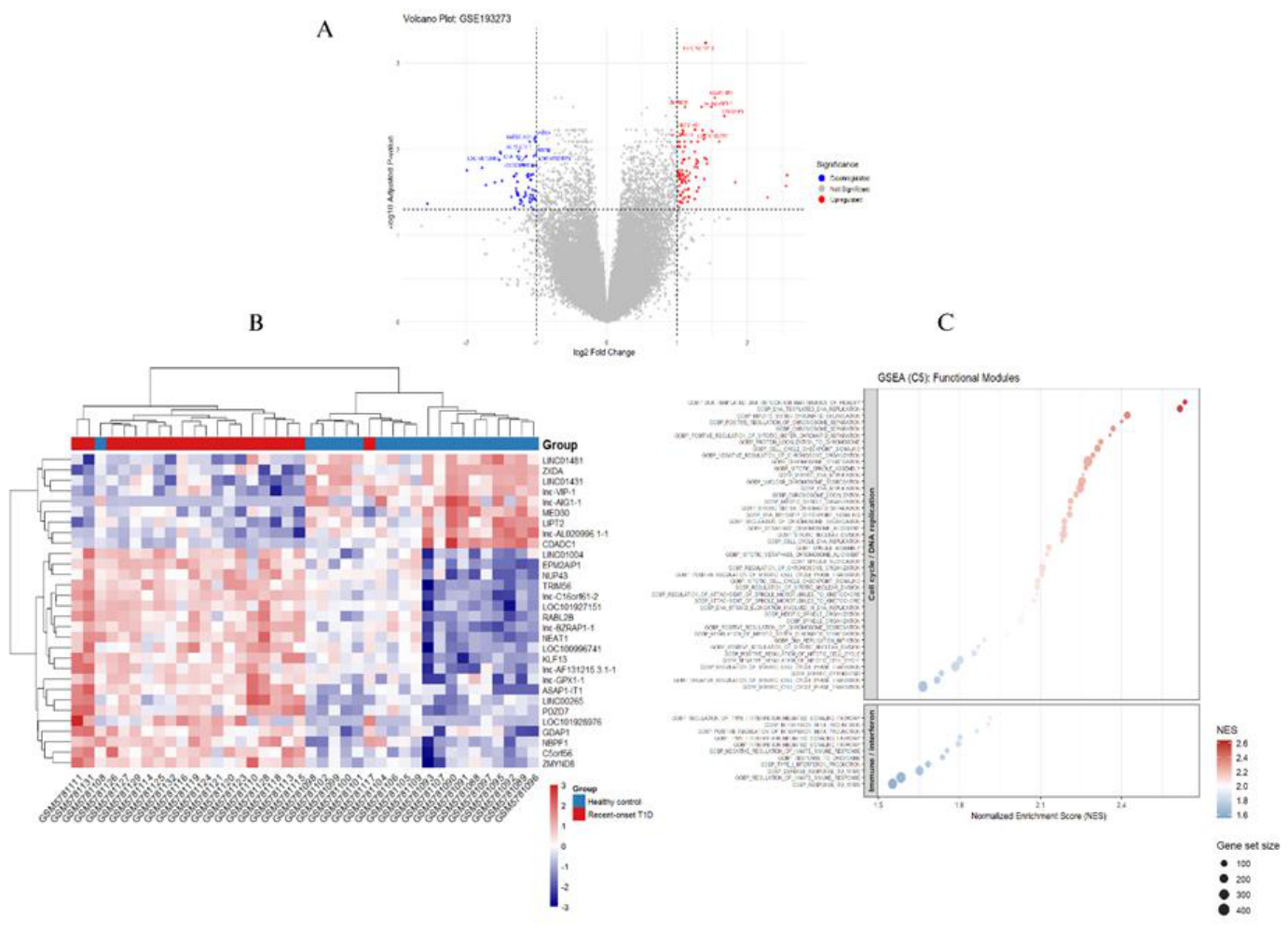
Figure 3.
Differential expression and pathway enrichment analysis of metabolic syndrome (MeS) in the GSE98895 dataset. (A) Volcano plot showing DEGs between metabolic syndrome (MeS) and healthy controls. Red dots indicate significantly upregulated genes, blue dots indicate significantly downregulated genes, and gray dots represent non-significant genes based on adjusted p-value < 0.05 and |log2 fold change| > 0.5. (B) Heatmap of the top 30 DEGs between MeS and healthy control samples in the GSE98895 dataset. Rows correspond to genes and columns correspond to individual samples. Gene expression values were standardized using row-wise z-score normalization before hierarchical clustering. Red indicates relatively higher expression, blue indicates lower expression, and white indicates average expression levels. The annotation bar indicates disease status of each sample. (C) Gene Set Enrichment Analysis (GSEA) of the GSE98895 dataset using the MSigDB C5 GO Biological Process collection. Significantly enriched pathways included adaptive immune responses, leukocyte-mediated immunity, antigen receptor-mediated signaling, B-cell activation, inflammatory signaling, and metabolic regulatory processes, indicating coordinated immune-metabolic dysregulation in MeS.
Figure 3.
Differential expression and pathway enrichment analysis of metabolic syndrome (MeS) in the GSE98895 dataset. (A) Volcano plot showing DEGs between metabolic syndrome (MeS) and healthy controls. Red dots indicate significantly upregulated genes, blue dots indicate significantly downregulated genes, and gray dots represent non-significant genes based on adjusted p-value < 0.05 and |log2 fold change| > 0.5. (B) Heatmap of the top 30 DEGs between MeS and healthy control samples in the GSE98895 dataset. Rows correspond to genes and columns correspond to individual samples. Gene expression values were standardized using row-wise z-score normalization before hierarchical clustering. Red indicates relatively higher expression, blue indicates lower expression, and white indicates average expression levels. The annotation bar indicates disease status of each sample. (C) Gene Set Enrichment Analysis (GSEA) of the GSE98895 dataset using the MSigDB C5 GO Biological Process collection. Significantly enriched pathways included adaptive immune responses, leukocyte-mediated immunity, antigen receptor-mediated signaling, B-cell activation, inflammatory signaling, and metabolic regulatory processes, indicating coordinated immune-metabolic dysregulation in MeS.
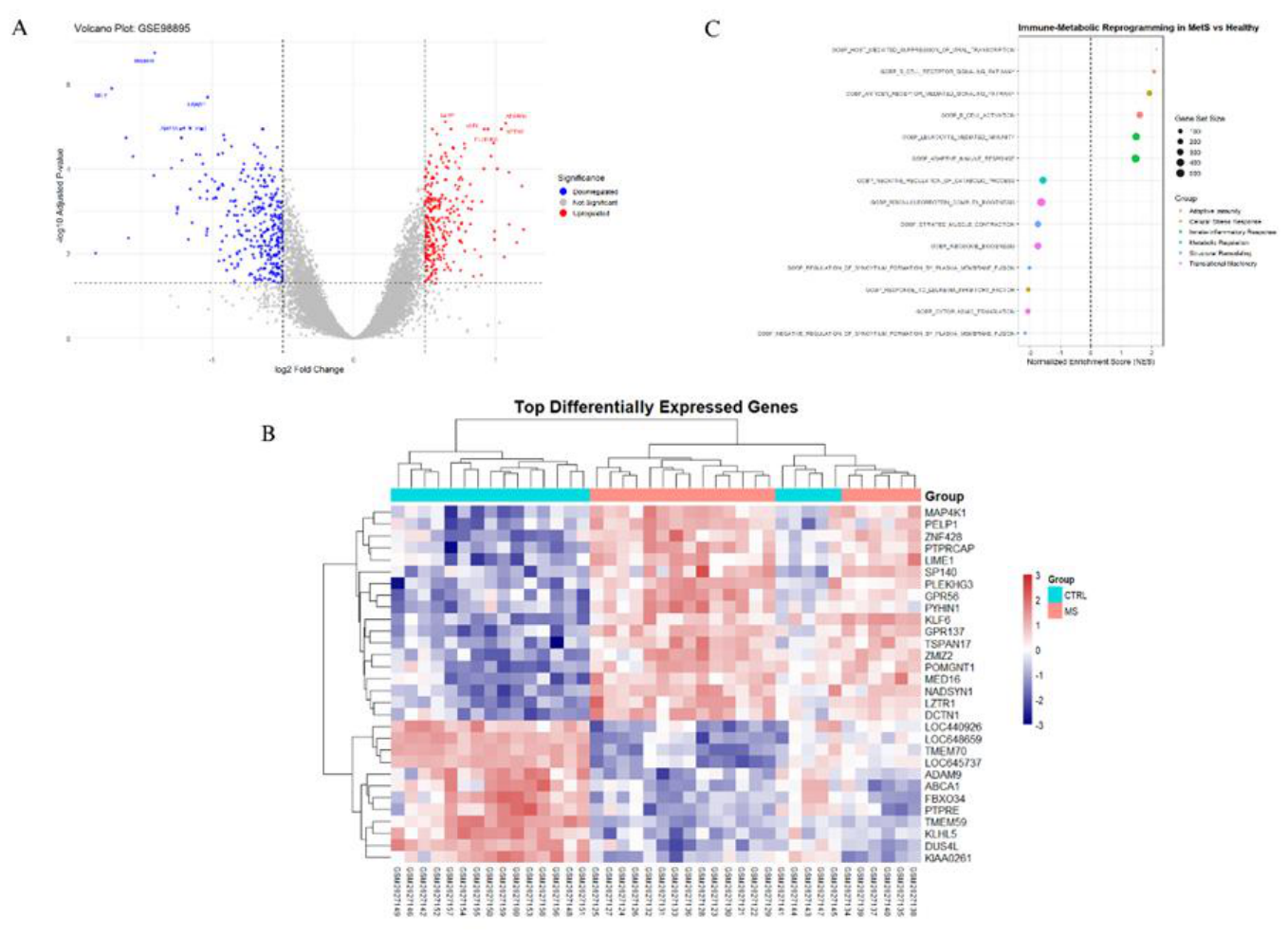
Figure 4.
Differential expression and pathway enrichment analysis of diabetic coronary artery disease (DMCAD) in the GSE250283 dataset. (A) Volcano plot showing DEGs between DMCAD and comparison groups. Red dots indicate significantly upregulated genes, blue dots indicate significantly downregulated genes, and gray dots represent genes without significant differential expression using thresholds of adjusted p-value < 0.05 and |log2 fold change| > 0.5. (B) Heatmap of the top 30 DEGs in the GSE250283 dataset. Rows represent genes and columns represent individual samples. Gene expression values were normalized by row-wise z-score transformation prior to hierarchical clustering. Red indicates relatively increased expression, blue indicates reduced expression, and white indicates mean expression levels. Samples were grouped according to disease status. (C) Gene Set Enrichment Analysis (GSEA) using the MSigDB C5 GO Biological Process collection. Significantly enriched pathways included oxidative phosphorylation, mitochondrial ATP synthesis, reactive oxygen species metabolism, leukocyte activation, cytokine production, inflammatory signaling, antigen presentation, and immune-regulatory processes associated with DMCAD progression. (D) Gene-concept network (cnet plot) illustrating the relationships between significantly enriched Gene Ontology Biological Process (GO-BP) terms and core enrichment genes identified in the GSEA analysis. Nodes representing biological processes are connected to genes contributing to pathway enrichment. The size of pathway nodes reflects enrichment significance, while gene nodes shared among multiple pathways highlight key contributors involved in inflammatory, immune, and metabolic regulatory mechanisms associated with DMCAD.
Figure 4.
Differential expression and pathway enrichment analysis of diabetic coronary artery disease (DMCAD) in the GSE250283 dataset. (A) Volcano plot showing DEGs between DMCAD and comparison groups. Red dots indicate significantly upregulated genes, blue dots indicate significantly downregulated genes, and gray dots represent genes without significant differential expression using thresholds of adjusted p-value < 0.05 and |log2 fold change| > 0.5. (B) Heatmap of the top 30 DEGs in the GSE250283 dataset. Rows represent genes and columns represent individual samples. Gene expression values were normalized by row-wise z-score transformation prior to hierarchical clustering. Red indicates relatively increased expression, blue indicates reduced expression, and white indicates mean expression levels. Samples were grouped according to disease status. (C) Gene Set Enrichment Analysis (GSEA) using the MSigDB C5 GO Biological Process collection. Significantly enriched pathways included oxidative phosphorylation, mitochondrial ATP synthesis, reactive oxygen species metabolism, leukocyte activation, cytokine production, inflammatory signaling, antigen presentation, and immune-regulatory processes associated with DMCAD progression. (D) Gene-concept network (cnet plot) illustrating the relationships between significantly enriched Gene Ontology Biological Process (GO-BP) terms and core enrichment genes identified in the GSEA analysis. Nodes representing biological processes are connected to genes contributing to pathway enrichment. The size of pathway nodes reflects enrichment significance, while gene nodes shared among multiple pathways highlight key contributors involved in inflammatory, immune, and metabolic regulatory mechanisms associated with DMCAD.
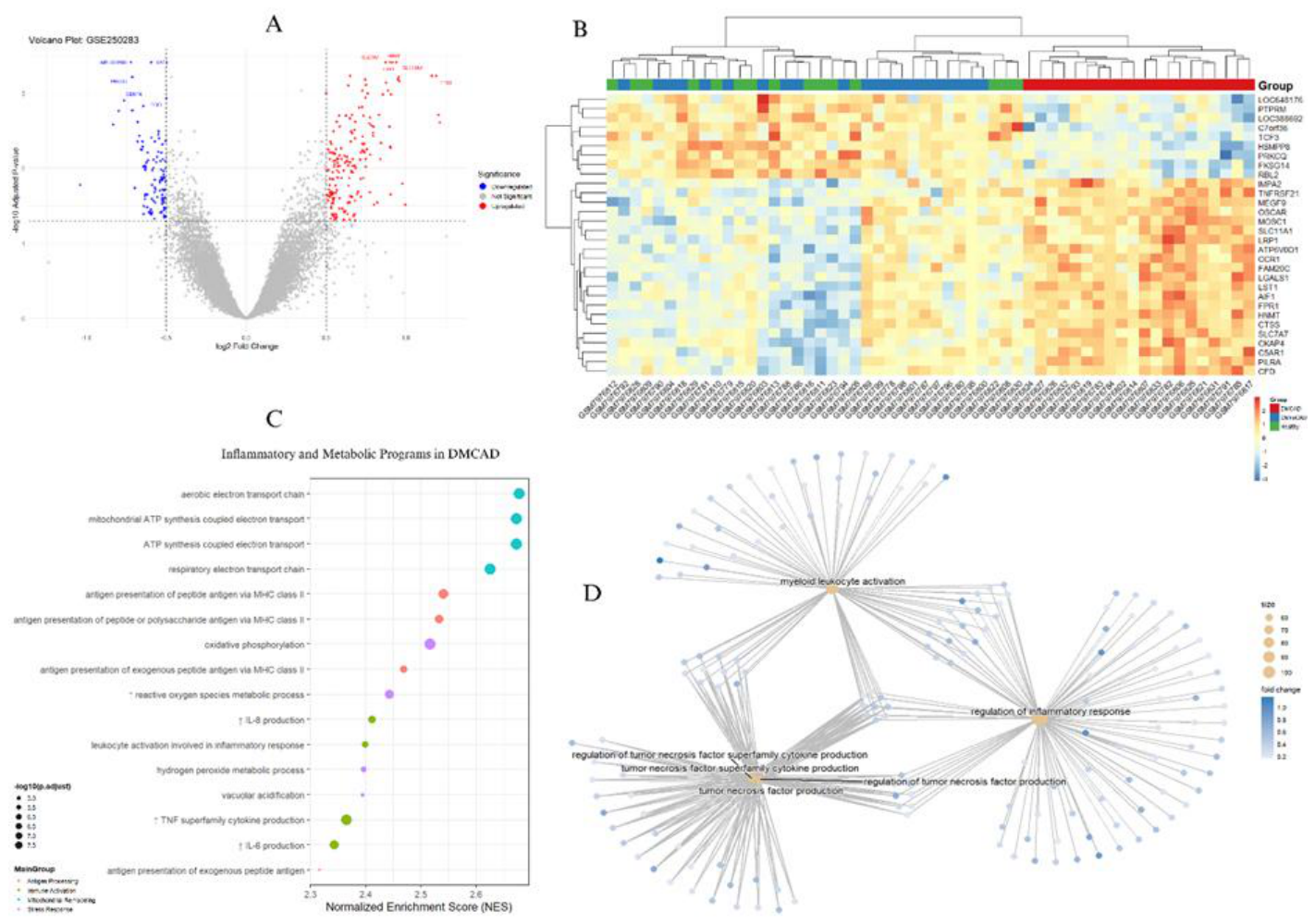
Figure 5.
Integrative network and functional enrichment analysis of shared DEGs between MeS and DMCAD datasets. (A) Venn diagram showing the overlap of DEGs among T1D, MeS, and DMCAD datasets. Nineteen shared DEGs common between MeS and DMCAD were identified and selected for downstream analyses. (B) Cytoscape visualization of the shared DEG interaction network used for topological and hub gene analyses. (C) Functional enrichment analyses of the 19 shared DEGs between MeS and DMCAD. Bubble plots representing Gene Ontology Biological Process (GO-BP), Cellular Component (GO-CC), Molecular Function (GO-MF), and MSigDB Hallmark pathway enrichment analyses are shown in panels. In all bubble plots, bubble size corresponds to gene count, while bubble color represents statistical significance based on adjusted p-values. (D) Identification of hub genes using the Maximal Clique Centrality (MCC) algorithm implemented in the CytoHubba plugin of Cytoscape. Genes with higher MCC scores represent highly interconnected and potentially biologically important regulatory nodes within the network.
Figure 5.
Integrative network and functional enrichment analysis of shared DEGs between MeS and DMCAD datasets. (A) Venn diagram showing the overlap of DEGs among T1D, MeS, and DMCAD datasets. Nineteen shared DEGs common between MeS and DMCAD were identified and selected for downstream analyses. (B) Cytoscape visualization of the shared DEG interaction network used for topological and hub gene analyses. (C) Functional enrichment analyses of the 19 shared DEGs between MeS and DMCAD. Bubble plots representing Gene Ontology Biological Process (GO-BP), Cellular Component (GO-CC), Molecular Function (GO-MF), and MSigDB Hallmark pathway enrichment analyses are shown in panels. In all bubble plots, bubble size corresponds to gene count, while bubble color represents statistical significance based on adjusted p-values. (D) Identification of hub genes using the Maximal Clique Centrality (MCC) algorithm implemented in the CytoHubba plugin of Cytoscape. Genes with higher MCC scores represent highly interconnected and potentially biologically important regulatory nodes within the network.
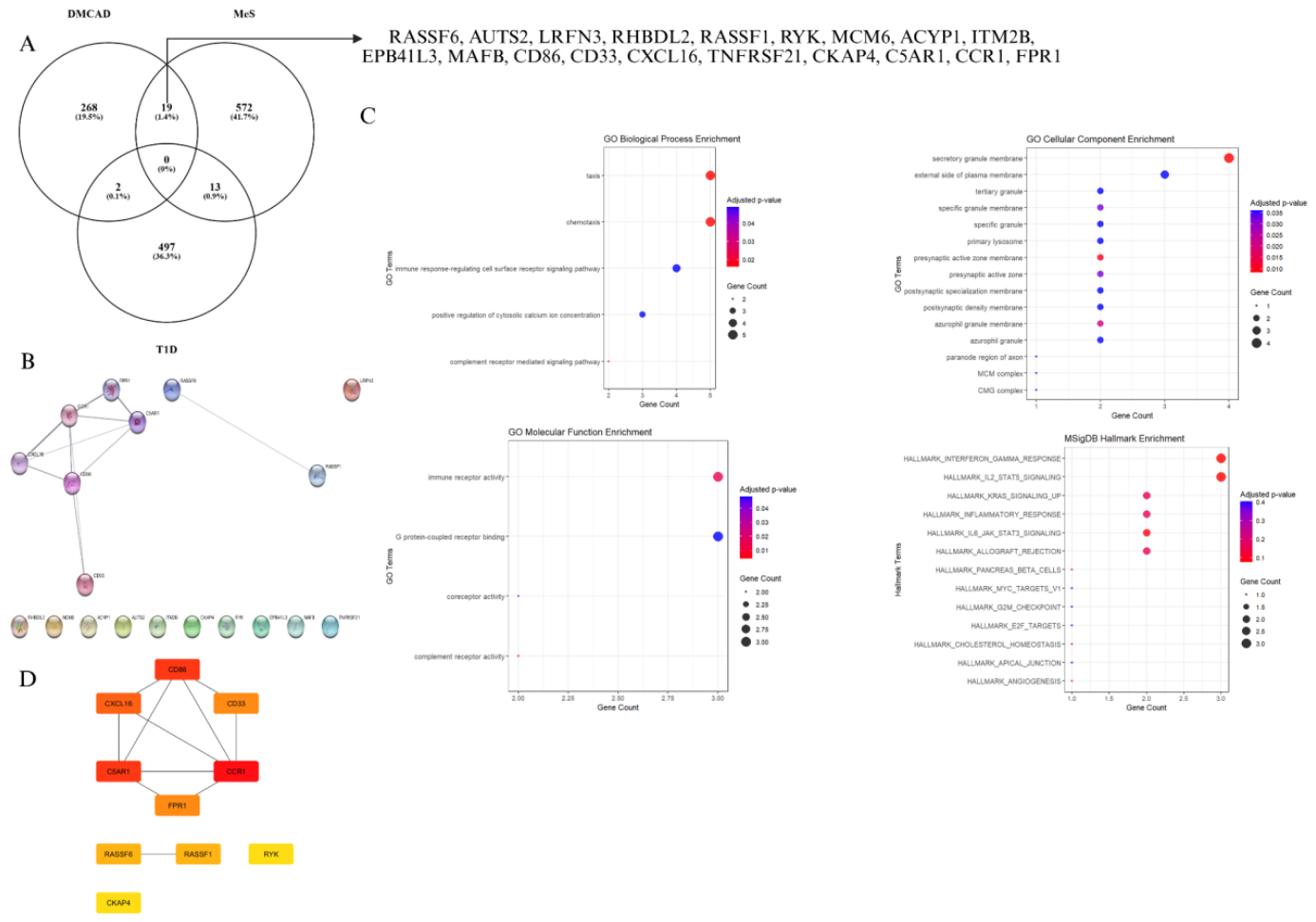
Figure 6.
miRNA interaction network and functional enrichment analysis of hub gene-associated miRNAs. (A) Gene2miRNA interaction network generated using the miRNet platform. Pink circular nodes represent hub genes derived from the shared MeS-DMCAD network, while blue square nodes represent interacting miRNAs. Only miRNAs with a degree cutoff ≥ 2 were retained for analysis, indicating interactions with at least two hub genes or regulatory nodes. Dense interaction patterns suggest coordinated post-transcriptional regulation of inflammatory and immune-associated pathways. (B) Bubble plot representing functional enrichment analysis of candidate miRNAs generated using the TAM 2.0 server. Bubble size corresponds to the number of enriched miRNAs associated with each functional or disease term, while bubble color represents statistical significance based on FDR-adjusted p-values. Enriched terms were primarily associated with inflammation, immune responses, angiogenesis, lipid metabolism, cardiovascular diseases, atherosclerosis, diabetes mellitus, cytokine signaling, and vascular dysfunction.
Figure 6.
miRNA interaction network and functional enrichment analysis of hub gene-associated miRNAs. (A) Gene2miRNA interaction network generated using the miRNet platform. Pink circular nodes represent hub genes derived from the shared MeS-DMCAD network, while blue square nodes represent interacting miRNAs. Only miRNAs with a degree cutoff ≥ 2 were retained for analysis, indicating interactions with at least two hub genes or regulatory nodes. Dense interaction patterns suggest coordinated post-transcriptional regulation of inflammatory and immune-associated pathways. (B) Bubble plot representing functional enrichment analysis of candidate miRNAs generated using the TAM 2.0 server. Bubble size corresponds to the number of enriched miRNAs associated with each functional or disease term, while bubble color represents statistical significance based on FDR-adjusted p-values. Enriched terms were primarily associated with inflammation, immune responses, angiogenesis, lipid metabolism, cardiovascular diseases, atherosclerosis, diabetes mellitus, cytokine signaling, and vascular dysfunction.
Disclaimer/Publisher’s Note: The statements, opinions and data contained in all publications are solely those of the individual author(s) and contributor(s) and not of MDPI and/or the editor(s). MDPI and/or the editor(s) disclaim responsibility for any injury to people or property resulting from any ideas, methods, instructions or products referred to in the content. |
© 2026 by the authors. Licensee MDPI, Basel, Switzerland. This article is an open access article distributed under the terms and conditions of the Creative Commons Attribution (CC BY) license (http://creativecommons.org/licenses/by/4.0/).
Copyright: This open access article is published under a Creative Commons CC BY 4.0 license, which permit the free download, distribution, and reuse, provided that the author and preprint are cited in any reuse.


