

Submitted:
27 May 2026
Posted:
28 May 2026
You are already at the latest version
Abstract
There is a rapidly rising demand for cosmeceutical solutions of skin lightening/brightening, due to the growing need for dermatologic applications and consumers' preference to enhance the brightness of skin. Traditionally, the main ingredients for developing dermatological products were the potentially harmful and controversial hydroquinone compounds; however, in recent years, the research field experienced a transition towards safer antioxidant-based agents. The present review analyzes the application and use of antioxidants in modern cosmetics as an innovative approach, and the chemical and biological mechanisms of their functions that could revolutionize the industrial applications. The most effective ones include competitive inhibition of tyrosinase enzyme, pheomelanin switch through the help of glutathione, protection from reactive oxygen species (ROS) in order to inhibit UV-stimulated production of melanin, as well as prevention of the migration of melanosomes using niacinamide. The review identifies and analyzes several components used as ingredients, such as vitamins C, Niacinamide, vitamin E, licorice root, and other natural compounds, such as EGCG or resveratrol, among many more. In spite of their high efficiency, there are numerous problems associated with the instability, dermal irritation, and absorption of pure antioxidants. Therefore, various pharmaceutical methods to improve their properties, e.g., encapsulation and structural modification into tetrahexyldecyl ascorbate, are analyzed. Finally, the legal framework developed by the FDA and EU, potential risks like pro-oxidation damage, and future perspectives such as personalized skincare via machine learning and artificial intelligence (AI) are discussed.
Keywords:
antioxidants
; vitamin C
; brightening
; whitening
; glutathione
; hydroquinone
; extracts
; niacinamide
; vitamin E
; methods
1. Introduction
There is currently an unparalleled increase in the demand for skin-lightening procedures within the modern cosmetic industry. This has been driven by a diverse set of consumers who are seeking to solve hyperpigmentation, lentigines, and post-inflammatory hyperpigmentation (PIH) conditions, as well as achieve a brighter complexion [1,2]. In history, the phrase “skin brightener” has been a general term that included several different treatment approaches focused on blocking melanin production, facilitating skin shedding, and enhancing the skin barrier to external stressors [3]. Yet, the emergence of this industry has been surrounded by controversies. Ethical considerations related to traditional formulas used in skin-lightening cream production have been compared with the presence of harmful ingredients in these products for many years now [4]. In order to address this problem, recent studies in the field of dermatology are focusing on developing antioxidants, which are environmentally friendly and safe at the same time. Antioxidants are classified according to their ability to safeguard cells from oxidative stress caused by free radicals, i.e., unstable molecules produced as a result of ultraviolet radiation, exposure to toxins, or metabolic reactions [5]. Considering the process of melanogenesis, the use of antioxidants is not limited solely to scavenging free radicals but goes further to include additional processes, such as the inhibition of melanin synthesis and stimulation of skin repair and collagen production [6]. This wide range of biological effects supports that antioxidants have great potential to be used topically in the long run, as they will provide increased safety and better cosmetic activity [7]. There are various ways in which antioxidants promote skin brightening. One common mechanism involves the inhibition of tyrosinase, an enzyme responsible for the production of melanin from L-tyrosine. Vitamin C, which is otherwise referred to as L-ascorbic acid, remains one of the most studied inhibitors of tyrosinase; the efficacy of the compound is usually improved when it is combined with other active ingredients [8]. In the same way, glutathione, a tripeptide thiol, has been proposed to redirect the melanin synthesis pathway from the synthesis of the darker eumelanin to the synthesis of the lighter pheomelanin [9,10]. In addition, polyphenols extracted from licorice root and green tea have proved to be effective inhibitors of tyrosinase, as these natural compounds do not exhibit any cytotoxicity seen in some of the chemical precursors [11]. Besides acting as inhibitors to enzymes, antioxidants offer a vital protective mechanism against harmful light rays. The continued presence of ultraviolet (UV) rays triggers a series of oxidative stresses that contribute to premature aging, as well as an imbalance in skin coloration. In turn, antioxidants act as suppressors of reactive oxygen species (ROS) in order to avoid melanocyte activation, leading to inflammation [12]. Current research emphasizes the importance of substances like resveratrol and vitamin C in terms of supporting skin structure integrity. Indeed, as a result of collagen inhibition, the process of its degradation is suppressed, while new collagen synthesis is stimulated. This leads to skin tone improvement, which is the major factor affecting overall skin brightness [13]. Despite their substantial benefits, however, the successful use of antioxidants in the formulations proves a considerable challenge due to the issues related to the instability of the antioxidant molecule, its reaction to different pH levels, skin irritation, and its dermal penetration rate. One of the main examples of unstable molecules is pure L-ascorbic acid, which tends to be oxidized quite easily, thus reducing its efficiency [14]. This can be solved by using more stable antioxidants, such as ascorbyl glucoside and magnesium ascorbyl phosphate, as well as modern technologies, such as liposomal and nanoencapsulation [15,16]. Besides, the pH level, type of packaging, and storage conditions of the cosmetics prove crucial for preserving their antioxidant capacities.
As mentioned above, the safety and tolerability of any preparation are substantially affected by its concentration, since too high a content of active ingredient may provoke some skin's sensitivity, such as redness and/or irritation [17]. Due to the increased consumer interest in avoiding side effects of the depigmenting cosmetics based on harsh chemicals, like hydroquinone, there is a growing need for gentle but still highly efficient antioxidant products. Even though hydroquinone still serves as a reference point for depigmentation cosmetics, the possible toxicity and risk of developing ochronosis have led to searching for more natural alternatives among vitamins and plant extracts [18]. While the medical applications of antioxidants have already been extensively studied, this review provides a new take on antioxidants compared to previous literature reviews in this area. For instance, some recent systematic reviews have mostly focused on the effectiveness of these molecules in certain pathologies, like melasma, or both the effects of antioxidants on vitiligo and melasma [19]. Even though these systematic reviews produce interesting meta-analysis results (MASI scores, for example), there is no consideration of cosmeceutical technology necessary for molecule stabilization. The significance of antioxidants is further proven by the results obtained from the meta-analysis carried out by Speeckaert et al. in 2023. The authors indicate that the use of topical vitamin C is significantly associated with decreased MASI scores. The researchers emphasize that the inhibition of tyrosinase activity is still the main way by which antioxidants exert their influence on skin depigmentation; conversely, anti-inflammatory action and MED are typical features of vitiligo treatment. The analysis demonstrates that multifunctional compounds, such as niacinamide and vitamin E, should be utilized to block melanosome transfer and protect against photodamage [20].
The present study discusses the use of antioxidants for skin whitening from a multidimensional perspective. This review gives an elaborate account of the role of antioxidants in modern skin-whitening products. The study starts by describing the physicochemical properties of active ingredients like antioxidants, including vitamins C and E, glutathione, niacinamide, epigallocatechin-3-gallate, licorice root extract, resveratrol, hydroquinone, arbutin, azelaic acid, and kojic acid. Next, it evaluates the role of certain molecular pathways involved in skin whitening and ultraviolet (UV) protection. This review highlights the main problems that arise during the development of stable skin-whitening products containing antioxidants.
2. Method
A database search was done using relevant scientific literature available on PubMed, Google Scholar, and Web of Science. The following keywords and/or MeSH terms were used to retrieve information on this topic: antioxidants, skin whitening, skin brightening, melanogenesis, cosmeceuticals, tyrosinase inhibition, and hyperpigmentation. Articles that met the inclusion criteria included research studies and systematic reviews published until February 2026, with a focus on recent developments in cosmeceutical skin whitening/brightening.
- 2.
- Dermal matrix integrity and its skin luminosity and topography in cosmeceutical science
Integrity and optical properties of skin are interlinked with the biological activity of dermal fibroblasts and the formation of the extracellular matrix (ECM). The key role in the production of the main structural proteins, specifically collagen types I and III and elastin, belongs to fibroblasts. Biosynthesis and assembly of collagen fibrils involve several complex biochemical steps, during which bio-stimulants such as L-ascorbic acid act as obligatory co-factors in the activities of prolyl- and lysyl-hydroxylase enzymes. Specifically, prolyl- and lysyl-hydroxylases catalyze the hydroxylation of proline and lysine residues, thereby promoting the formation of collagen molecules' triple helices, which are later cross-linked into strong protein fibers. At the same time, tropoelastin, formed by fibroblasts, forms elastic fibers, ensuring the recoil properties of the skin [21]. However, the balance between formation and degradation of ECM is an intricate equilibrium under constant threat from matrix metalloproteinases (MMPs), which are zinc-dependent (Zn2+) proteolytic enzymes comprising MMP-1 (collagenase) and MMP-9 (gelatinase). In normal conditions, the activities of these enzymes are strictly controlled by tissue inhibitors of metalloproteinases (TIMPs). It maintains the optimal MMP/TIMP balance required for tissue remodeling; however, under the conditions of increased oxidative stress and inflammation, an imbalance between MMPs and TIMPs may develop when proteolytic enzymes become activated in larger amounts than those inhibited by endogenous substances. As a consequence, disorganization of the matrix occurs, leading to the appearance of wrinkles and decreased ability to reflect light [22]. Cosmeceutical agents currently employed to solve this problem focus on the regulation of MMP/TIMP balance by antioxidants like niacinamide and polyphenols. As a result, not only does the content of MMPs decrease, but TIMPs' activities are restored, resulting in the restoration of the ECM and skin's integrity. Consequently, skin becomes denser and more reflective due to the smoothing of its surface [23].
3. Synthesis and Extraction of Antioxidants
Antioxidants and their exact synthesis and isolation are now critical components of cosmeceutical science. With antioxidants becoming more prevalent as key ingredients for cosmetic products, the importance of purity and efficiency of antioxidants cannot be understated.
3.1. Natural Extraction and Green Chemistry
The synthesis and extraction of antioxidants have received increased attention in recent times due to their wide applications in various cosmetics. Different techniques have been utilized to achieve purity, maximum efficacy, and optimum stability. In natural antioxidants, the sources are mostly plants, fruits, vegetables, and botanicals whose raw materials undergo rigorous extraction processes to ensure the exact identification of the active components without changing their molecular structures. Some of the common methods used to obtain pure antioxidants are solvent extraction, supercritical fluid extraction, microwave-assisted extraction, and ultrasound-assisted extraction [24,25]. These techniques differ in terms of efficiency and selectivity, among others, and thus choosing the right process is influenced by the type of antioxidants and the nature of the material. Supercritical fluid extraction (SFEx) using supercritical carbon dioxide has been demonstrated to be very useful in extracting heat-sensitive antioxidants from plant materials at lower temperatures [26]. thereby avoiding their oxidative reactions and degrading activities. It is applicable in obtaining polyphenolic antioxidants from green tea, grapes, and other botanical sources [27].
because it provides selectivity, high yields with minimal solvent residues, and it is sustainable within the principles of green chemistry. Most natural antioxidants come from plants, including fruits, vegetables, and medicinal plants. Extraction process in such plant matrices requires proper techniques that avoid the decomposition of sensitive components due to heating or oxidation reactions. One of the commonly used methods for the extraction of active antioxidants is the traditional solvent extraction (Soxhlet) [28]. However, solvent choice is an important factor, and ethanol is often preferred for cosmetic production because of its good safety properties and low toxicity levels [29]. These are primarily the steps: maceration, filtration, and usually solvent recovery, which contribute to an overall yield and quality of the extraction [30]. Notwithstanding the prevalent adoption, traditional maceration is widely regarded as having high solvent usage and lengthy processing time, thus driving the shift towards the Green Chemistry approach [31]. The methods of extraction that have been advanced include supercritical fluid extraction (SFE), microwave-assisted extraction (MAE), and ultrasound-assisted extraction (UAE) [24,25]. Supercritical fluid extraction (SFE), using carbon dioxide (CO2), is an effective technique in obtaining heat-sensitive polyphenols, including green tea and grape seeds. The reason is that CO2 reaches its supercritical phase at relatively low temperatures and does not leave any hazardous substances after the process [26]. In addition to this, another way is adopted by the UAE, whereby they utilize acoustic cavitation, which is basically defined as the process where bubbles are formed and burst, creating fluctuations in the localized pressure and causing damage to the cell walls of the plants [32]. MAE makes its contribution through using electromagnetic energy that is used to cause dipolar rotation inside the matrix of the plants, and thus causes quick heating, leading to the liberation of bioactives present inside [33]. Both are energy-saving methods with reduced solvent usage, hence in line with the interest in sustainable extraction technologies.
3.2. Chemical Synthesis and Structural Optimization
While inconsistencies have been seen in the production of natural extracts, chemical synthesis provides more uniformity and offers a way to purposefully manipulate the characteristics of specific chemicals. With the use of the synthesis process, there can be manipulation of the chemistry in antioxidants in order to improve solubility, skin penetration, and environmental stability. One well-known product from chemical synthesis is ascorbyl palmitate. With the reaction between L-ascorbic acid and palmitic acid, vitamin C lipophilic is produced to retain the antioxidizing capability of the compound while making it capable of penetrating through the stratum corneum. This manipulation has greatly aided in reducing fast oxidation normally seen in vitamin C [34,35,36,37]. Such progress is also seen in the chemical synthesis of glutathione analogs. In these cases, molecular protection is provided to avoid any enzyme activity that would decrease the lifespan of the analogs [38]. Thus, chemical synthesis provides formulators with consistent purity and stability, both useful in cosmetic products. Some examples of synthetically derived antioxidants are ascorbyl palmitate, which has been created to be stable with a higher lipophilicity and less prone to oxidation than vitamin C [39]. Bioengineered antioxidants represent one frontier in cosmeceutical innovation that is capable of producing highly potent compounds that could replicate the properties of naturally occurring antioxidants or even surpass them by linking synthetic chemistry with biotechnology [40]. Bioengineering techniques allow the large-scale production of certain antioxidants that are difficult or resource-consuming to obtain from natural sources through microbial fermentation and enzymatic synthesis. For example, polyphenol resveratrol, originally sourced from grapes, has been produced by microbial fermentation of yeast or bacterial strains cost-effectively and sustainably [41,42]. In enzymatic synthesis, bioconversion using specific enzymes will produce the target antioxidants from precursor molecules with higher yields and fewer by-products. This is particularly valuable in the production of polyphenolic compounds and carotenoids, which possess very complex structures, hard to get conventionally [43]. Bioengineered antioxidants will also ensure, besides solving the problems related to natural variability, more environmentally friendly production modes due to the diminished demand for intensive agricultural practices. Antioxidants in cosmetic product manufacture can be either of natural or synthetic origin, depending on various issues related to their stability, bioavailability, and status regarding regulatory approval and safety to the environment. Natural antioxidants have been popularly perceived to be inherently safe and sustainable; however, most ingredients are variably concentrated and frequently face stability problems in relation to seasonal, geographical, and environmental factors [44]. However, their synthetic and bioengineered counterparts offer standardized formulations that are easier to regulate and more aptly integrated into high-performance products, thus assuring the homogeneity of batches. In the modern industry, many cosmetic products contain hybrid formulations, where natural antioxidants are combined with synthetic or bioengineered components to make the formulation more effective. Thus, the formulator will be able to combine the best of two worlds use the organic features preferred by consumers of natural extracts and increase stability and performance through the addition of synthetic or engineered components [45]. Moreover, encapsulation of natural, synthetic, and bioengineered antioxidants can be used as another option to provide better stability and bioavailability, especially in formulations designed for controlled release. Several different encapsulation techniques, such as liposomal, nanoemulsion, and polymeric micelle, can protect antioxidants from oxidative degradation through isolation from oxygen, light, and moisture [46,47]. The liposomal technique involves encapsulation of antioxidants in the phospholipid bilayer of the liposome, thus mimicking the natural skin lipidic environment and facilitating better penetration [48]. In the case of nanoemulsions, antioxidants are delivered into the target site in the form of fine-dispersed oil droplets created due to the action of emulsifiers [49]. In turn, nanoemulsions serve as a carrier that increases the interfacial area of antioxidants, resulting in increased bioavailability when applied topically. These delivery systems help to increase stability and enable controlled release, allowing prolonged antioxidant activity during photoprotection and skin brightening treatment. Depending on the characteristics of antioxidants and the desired function of the product, the formulator chooses a particular encapsulation technique, with controlled release becoming necessary depending on the specific application of the product [46,47]. Thus, the process of synthesis and extraction of natural, synthetic, and bioengineered antioxidants can differ, with many attempts made to optimize the stability and purity of the final product. Regardless of the origin, it is essential to apply a careful production process to ensure the preservation of antioxidant activity and desired effects on the skin.
4. Mechanisms of Antioxidants in Skin Whitening and Brightening
4.1. Free Radical Neutralization
The primary way in which antioxidants bring about skin bleaching is by scavenging reactive species that activate melanin biosynthesis. Reactive species include Reactive Oxygen Species (ROS), Reactive Nitrogen Species (RNS), and Reactive Sulfur Species (RSS). The ROS comprise the superoxide anion, hydroxyl radical, and other non-radical oxidants such as hydrogen peroxide and singlet oxygen, and they form the major source of skin damage. Similarly, the RNS are produced due to the reaction between nitric oxide and superoxide to produce peroxynitrite, a strong oxidizing agent. Moreover, RSS develops when sulfhydryl groups react with the ROS, which are the primary drivers of α-MSH (α-melanocyte-stimulating hormone) activation, resulting in reactive intermediate compounds that interfere with biological processes (Figure 1). While these radicals can be naturally formed during routine physiological reactions involving bond dissociation and electron transfer, their levels are substantially increased upon exposure to external factors such as ultraviolet light, pollution, and toxic chemicals [36]. These radicals are constitutively produced in vivo, play a role in cellular processes, and if their levels are not reduced by antioxidant defenses, they can certainly contribute to the process of oxidative stress and tissue damage. These are highly unstable molecules produced in response to exposure to UV radiation, pollution, and some metabolic processes in the body [7]. Where the skin’s natural antioxidative system becomes exhausted, oxidative stress will occur, leading to the destruction of fats, proteins, and DNA in the cells. Such cellular destruction plays a key role in triggering melanocyte action, and in other words, excess melanin production becomes a defense mechanism against the cellular destruction, despite being aesthetically unpleasant. This oxidative stress, when occurring for an extended period, causes skin hyperpigmentation, uneven coloration, and lack of luminosity [50]. These substances act as electron donors and eliminate extremely reactive radicals, thus preventing their oxidation reactions with other molecules [51]. Through the inclusion of effective bioactive agents like resveratrol and green tea polyphenols in their compositions, scientists are able to protect melanocytes against oxidative stress [52]. Resveratrol is a stilbene compound mainly extracted from grapes, and it is highly effective at blocking signaling pathways involved in melanin production [53]. Epigallocatechin Gallate (EGCG), which is the main component of green tea, works as an advanced photo-protection element that minimizes UV-pigmentation through radical scavenging from the source [54]. Moreover, the benefits of radical neutralization are related to the maintenance of the dermis matrix since antioxidant compounds prevent collagen breakdown through free radicals [55]. In addition to counteracting the effects of these environmental aggressors, the combined activity of these systems provides ongoing benefits to the skin by supporting its luster and health. Current studies are continuing to examine the potential for combining various antioxidants to maximize their effectiveness in eliminating free radicals.
4.2. Inhibition of Melanin Synthesis
Melanogenesis refers to a complicated biochemical process taking place in the melanosomes of melanocytes that involves oxidative reactions where tyrosinase plays a key role. Through genetic factors, UV exposure, and inflammation, melanocytes will promote the production of melanin, which is the major pigment involved in photoprotection and pigmentation of skin. Though the compound is critical for physiological purposes, excessive production results in various clinical disorders like melasma, solar lentigines, and post-inflammatory hyperpigmentation [56]. The significance of antioxidants in treating the mentioned disorders can be credited to the fact that these compounds are capable of interfering in the rate-limiting steps in the biosynthesis pathway [57]. In terms of Vitamin C (L-ascorbic acid, as derivatives like Sodium Ascorbyl Phosphate (SAP) are stable at pH 6.0–7.0.), its significance is well acknowledged. Contrary to being a competitive inhibitor, ascorbate is known to oxidize through the binding of copper ions with tyrosinase enzymes. Through this mechanism, the enzyme is temporarily rendered inactive, leading to the non-formation of L-DOPA from L-tyrosine. The vitamin may also act by reducing the dopaquinone back into L-DOPA and thus preventing the process of melanin production [58]. These antioxidant actions are usually used in combination with other brightening products to enhance their efficacy and produce a synergetic impact on pigment production at different physiological levels [45]. Glutathione, a universal intracellular tripeptide, represents a unique and efficient tool for regulating the biosynthesis of melanin. Apart from its antioxidant properties, glutathione affects melanogenesis through changes in the chemical balance within the biochemical pathway (Figure 2). It favors the formation of cysteinyldopa from dopaquinone, which results in an increase in the synthesis of pheomelanin (yellow-red pigment) at the expense of the black-brown eumelanin [9]. Several recent findings have pointed out the importance of the antioxidative approach to the reduction in the activity of the Microphthalmia-associated transcription factor (MITF). As the key transcriptional regulator of tyrosinase and tyrosinase-related protein (TRP-1 and TRP-2), MITF regulates the synthesis of enzymes involved in melanin production. By blocking MITF-related signal transduction pathways, antioxidants exert a more profound effect than merely inhibiting enzymatic activity. This approach stands in contrast to the effects of more invasive compounds, such as hydroquinone, although the latter remains effective. However, there is a risk of developing severe adverse effects, including exogenous ochronosis [59]. However, preparations with antioxidant ingredients serve as biological regulators. Gradually, they perfect the process of coloring, making sure that skin luminosity is achieved physiologically, not structurally, thus making them the better choice for dermatological use.
4.3. Stimulation of Skin Repair and Collagen Production
Apart from the direct impact on the pigment production process, the brightness of the skin is also greatly affected by the physical state of the skin itself. The structural matrix of the skin, which is mainly constituted by proteins such as collagen and elastin, controls the light-reflecting ability of the skin. As time passes, the production of Type I and Type III collagens decreases, and the skin becomes lax, creased, and increasingly opaque [60]. Antioxidants act as key bio-stimulants in the regeneration process, reducing structural insufficiencies that cause loss of luminosity. Ascorbic acid (vitamin C) becomes a key player in the above discussion as it plays an important role in the activity of the enzymes prolyl hydroxylase and lysyl hydroxylase, which play a crucial role in the process of hydroxylation of proline and lysine residues in collagen molecules. This becomes an important step toward the formation of a stable collagen triple helix structure and its further cross-linking. Thus, vitamin C stimulates the proliferation of fibroblasts and improves skin elasticity, which results in a more radiant appearance and pore concealment [61,62]. Additionally, modern formulas utilize antioxidants that act against the upregulation of Matrix Metalloproteinases (MMP) enzymes, which have been known to degrade the skin matrix proteins due to excessive oxidative stress. Since antioxidants neutralize the reactive species that activate MMPs, they help maintain the integrity of the existing collagen matrix in the skin (Figure 3). The introduction of anti-inflammatory antioxidants such as niacinamide (vitamin B3) and polyphenols isolated from Camellia sinensis further improves the depigmenting efficacy. The first mechanism works on the principle of increasing ceramide and structural protein formation in the epidermis to enhance smoothness and reflectance. The combination of anti-inflammation and strengthening of dermal structure is especially relevant in photoaged or aged skin, as the presence of excessive skin irregularity may aggravate pigmentation [18]. Modern developments in cosmeceuticals focus on the interplay between antioxidants, peptides, and growth factors. The new hybrid system aims at enhancing repair processes in an attempt to solve the problem of hyperpigmentation not only from a biological perspective but also in terms of the skin matrix for a comprehensive effect [63].
4.4. Inhibition of Melanosome Transfer
Tyrosinase suppression involves the process of melanin formation; nonetheless, the apparent darkening effect depends on the successful delivery of melanin granules, melanosomes, from the melanocytes to their neighboring keratinocytes. Melanosome transfer takes place through dendrites and is the limiting factor in the pigmentation pathway. Various antioxidants and other phytochemicals, especially niacinamide or vitamin B3 and certain plant extracts, have been reported to possess brightening properties due to their ability to interfere with this process. While niacinamide significantly lowers the number of melanosomes transferred to the skin surface through the regulation of signaling pathways between the two cell types. Through melanosome entrapment within the melanocyte, they ensure that keratinocytes will not become crowded, the cause of darkening of the skin. The method is highly regarded for therapeutic applications because of its independence from enzyme inhibition, thus allowing strong complementation with the typical antioxidants, like Vitamin C [64].
4.5. Modulation of Inflammatory Mediators and PIH
Post-inflammatory hyperpigmentation (PIH) remains a major dermatological issue, which stems from local inflammation caused by various diseases like acne, physical injuries, and UV rays, and subsequently stimulates increased activity of melanocytes. This occurs due to a complicated interplay of inflammatory mediators, such as PGE2, leukotrienes, and cytokines, for example, IL-1 alpha. Strong antioxidants, like ferulic acid, silymarin, and other polyphenolic agents, demonstrate effective anti-inflammatory activity by suppressing NF-kB pathway signaling. Through blocking mediator secretion, antioxidants stop the attraction and activation of melanocytes in the area. It is a vital measure in ensuring homogeneity in skin pigmentation by eliminating the root cause of pigment production and not the result itself – melanin synthesis. Moreover, the antioxidative protection of cells' membranes from arachidonic acid leakage acts as an additional barrier against erythematous blood-related causes [65].
4.6. Genomic Protection and DNA Repair Mechanisms
Although some antioxidants have additional roles other than neutralizing free radicals, others, like extremophile antioxidants or photolyases, activate the body’s own DNA repair mechanisms in the skin. UV damage to DNA, specifically the creation of cyclobutane pyrimidine dimers (CPDs), acts as an important signaling mechanism that triggers the process of melanin production or tanning in the skin. Some antioxidants, like alpha lipoic acid, and other polyphenols derived from the sea, have shown increased ability in enhancing the Nucleotide Excision Repair (NER) process, whereby the UV damage is repaired before inducing the melanogenic stimulus. This ensures that the skin cells do not remain chronically in a state of ‘hyperpigmentation.’ This approach exemplifies modern photoprotection through shifting focus from radical scavenging to actual DNA repair, considered necessary in preventing photoaging and pigmentation in the skin [66].
5. Key Antioxidant Ingredients in Skin-Brightening Products
5.1. Vitamin C (Ascorbic Acid)
The L-ascorbic acid represents an important water-soluble nutrient that is considered one of the best-studied antioxidants in the field of dermatology. While most animals have the ability to synthesize vitamin C internally from glucose due to the presence of the enzyme L-gulono-gamma-lactone oxidase in their metabolic pathways, man does not have this ability due to a mutation at some point in his evolution. Hence, man is totally dependent on external sources, such as citrus fruits, Phyllanthus emblica, and cruciferous vegetables. While the intake of vitamins internally helps in preventing scurvy and maintaining systemic health, its impact on the skin cannot be maximized owing to the saturation of active carriers present in the body's gastrointestinal tract. It is therefore more preferable to apply the antioxidant externally, where the 'reservoir effect' allows it to retain its efficacy in the skin for up to three days [67]. With regard to skin whitening products, vitamin C is considered one of the multifunctional active components. This compound acts as an effective inhibitor of tyrosinase through reduction of the copper ion in the catalytic site of the enzyme, hence blocking the melanin synthesis process (Table 1) [68,69]. Aside from its inhibitory activity on enzymes, Vitamin C also has the potential to revert oxidized forms of melanin precursors, like dopaquinone, into L-DOPA. Melanogenesis essentially gets inhibited before the skin begins to darken. All the characteristics mentioned above are responsible for making it one of the key ingredients in the treatment of difficult disorders such as melasma and post-inflammatory hyperpigmentation [70]. In addition, it plays an important role in keeping skin luminous because, as a necessary cofactor for the prolyl and lysyl hydroxylase enzymes, it stabilizes the collagen triple helix, providing a firm dermal matrix for uniform light scattering [62]. However, one major drawback associated with L-ascorbic acid involves the high level of instability of this substance in nature. L-ascorbic acid is very vulnerable to oxidation when exposed to oxygen and light. It is sensitive to temperature and high alkalinity, resulting in dehydroascorbic acid formation [71]. Nevertheless, with the development of new techniques within pharmaceutics, there have been attempts to solve this problem with two approaches. First, it is possible to change the carrier, i.e., provide the compound with a more appropriate delivery method by incorporating 10%-20% solution of L-ascorbic acid under an acidic environment of a pH lower than 3.5, ensuring that the substance stays ionized. Second, stable derivatives of this compound can be made (Table 2). [72]. Among stable derivatives, Tetrahexyldecyl Ascorbate (THDA) is the current primary active ingredient in superior cosmetic formulations. The latter represents an innovative solution to the two critical disadvantages associated with pure L-ascorbic acid: rapid oxidizability and irritation due to its very acidic pH. Different from regular L-ascorbic acid, which requires a pH lower than 3.5 in order not to be ionized (hence, able to pass into skin) but causing erythema and stinging sensation due to the low acidity, THDA represents a lipophilic precursor and does not contain any acidity. THDA is characterized by its ability to penetrate the skin without affecting the skin's protective layer and its pH-neutral nature, meaning it can be integrated into lipid bilayers of the stratum corneum for better and deeper absorption. It is also crucial to note that THDA is characterized by chemical stability at neutral pH (5.5-7.0). Thus, THDA is recommended for use in whitening products intended for patients with sensitive skin and damaged skin barriers, who cannot tolerate the low pH levels of vitamin C serum. After passing through the upper layers of skin, THDA turns into the free L-ascorbic acid within the cells, hence performing two functions: stimulating fibroblasts and stimulating collagen synthesis, and inhibiting tyrosinase activity, hence decreasing melanogenesis. According to research studies, THDA shows the ability to penetrate into the dermis faster than L-ascorbic acid [73]. In addition to this, there are delivery techniques like liposomes and nanoemulsions that will shield the drug from the environment and ensure controlled release of the drug molecule [46,47]. The effectiveness of Vitamin C is highly improved when it is used within antioxidant synergies. One such synergy that is well known is the use of Vitamin C along with Vitamin E (alpha-tocopherol) and ferulic acid, where it forms a redox recycling synergy, where ferulic acid protects both vitamins, increasing the photoprotection effect of the mixture. The use of Vitamin C in this way not only prevents the production of new chromophores but also helps to repair the damage already done by photoaging, making it an important component of skin renewal programs [74,75].
5.2. Glutathione
Glutathione is considered one of the major antioxidants in biological systems. It is an L-peptide made up of three amino acids: glutamine, cysteine, and glycine [76]. Glutathione refers to a ubiquitous tripeptide molecule containing thiols, which are common in the bodies of eukaryotes, acting as major components of the natural antioxidant response mechanism against oxidative and electrophilic toxicities. Glutathione has also been recognized in recent times as a potent inhibitor of melanin synthesis through inhibition and regulation of the melanogenesis pathways [77]. The glutathione mechanism as a skin lightening agent is complicated and involves several actions. While other antioxidant compounds act through neutralization of free radicals, glutathione acts in the biosynthesis of melanin. Glutathione is a good nucleophile, and it can combine with the oxidized form of tyrosine, i.e., dopaquinone, to produce cysteinyl-dopa. As a result, the pathway becomes diverted away from producing eumelanin (dark black/brown color) to the pheomelanin pigment (reddish/yellow color). This effect has resulted in a general skin-lightening action that looks more radiant [78]. Moreover, glutathione directly inhibits the tyrosinase enzyme by forming complexes with copper ions present in the tyrosinase enzyme’s active site, thus making it catalytically inactive (Table 1). The application of glutathione for skin bleaching has been a topic of intense debate both clinically and in terms of regulation. For instance, in certain regions, high doses of intravenous glutathione have been used for systemic skin lightening. However, the use of intravenous glutathione is highly controversial due to the lack of long-term safety information and official warnings from health authorities such as the FDA against systemic toxicity and dermal complications [10]. As such, efforts are being made to develop more environmentally-friendly and minimally invasive modes of delivery, including oral and topical drug delivery systems. While traditional glutathione may often face limitations in terms of absorption due to enzymatic degradation in the GI tract, new prodrug forms like S-acetyl glutathione and liposomal delivery systems are showing promise in overcoming these hurdles [79]. In cosmeceuticals, the main problem that still exists is that the polarity and high molecular weight of the molecule make it difficult to penetrate the skin barrier (Table 2). To overcome this problem, scientists have started using nano-emulsions and phospholipid vesicles [80]. For the effectiveness of glutathione, it is frequently used in combination with Vitamin C. This is a scientifically sound basis because Vitamin C helps glutathione to maintain its reduced and biologically active state (GSH) instead of the oxidized state (GSSG). As more studies advance in stabilizing and making this tripeptide penetrate the skin better, it is expected that glutathione will continue to be a key, but strictly controlled ingredient in the formulation of an all-encompassing and delicate skin lightening protocol [81,82].
5.3. Vitamin E (Tocopherol and Tocotrienols)
Vitamin E refers to a set of eight fat-soluble molecules, including four tocopherols and four tocotrienols, with alpha-tocopherol being regarded as the most biologically active and common form present in human skin. As opposed to Vitamin C, which acts as the main antioxidant in the aqueous environment, Vitamin E serves as the fundamental lipophilic protector, residing in the phospholipid bilayer of cell membranes and the stratum corneum. In skin brightening products, Vitamin E rarely acts as a stand-alone component; the importance of this ingredient is in its pronounced synergism with other antioxidants and its ability to block the oxidative triggers causing skin dyspigmentation [83]. The key feature of the effect of Vitamin E on skin “brightness” is its involvement in the “Antioxidant Network”. After reacting with a lipid peroxyl radical, one of the major by-products of UV radiation stress, Vitamin E transforms into a tocopheroxyl radical. In this state, the molecule remains inactive until it is recycled back to its active form through reactions involving either Vitamin C or glutathione. Such a synergistic reaction is often described as the GSH-ascorbate-tocopherol cycle. Through the activation of such a process, skin can maintain a high redox potential and thus inhibit the oxidative cascades resulting in melanocytes' hyperfunction and further production of melanin. Apart from its interaction in the redox cycle, Vitamin E has a direct impact on skin “luminosity”. One of the key causes of the development of a dull or yellowish skin tone is the oxidation of surface sebum and epidermis lipids. Vitamin E prevents these oxidative processes, thus maintaining optical skin clarity and blocking the appearance of lipofuscin-like pigments (Table 1). Also, Vitamin E possesses significant anti-inflammatory properties since it blocks the biosynthesis of pro-inflammatory cytokines such as prostaglandin E2 (PGE2) and nitric oxide. Such inhibition is crucial in preventing the development of post-inflammatory hyperpigmentation (PIH), especially for patients with phototype IV skin, in whom even minor inflammation might trigger chronic pigment deposition. When it comes to choosing the formulator of Vitamin E, the issue requires a special approach. As opposed to tocopheryl acetate, which is widely used due to its stability and non-oxidizable nature, free tocopherol readily provides its antioxidative effect but is extremely sensitive to both light and oxygen. Therefore, in the case of high-performance brightening serums, Vitamin E is often combined with Vitamin C and ferulic acid. This specific combination was scientifically proven to increase photoprotection by eightfold, thus establishing a biological screen that stops the early steps of DNA damage and oxidative stress involved in tanning and age spot production [84].
Despite decades of extensive study on alpha-tocopherol, new findings now point to the significant superiority of tocotrienols, the unsaturated versions of vitamin E, when it comes to photoprotection and skin whitening. Tocotrienols have been characterized as having a structure different from tocopherols in terms of having an unsaturated farnesyl tail with three double bonds. The structural difference allows tocotrienols to easily be accommodated within the lipid-rich membranes of both keratinocytes and melanocytes, hence, providing radical scavenging capacity up to 40-60 times stronger, especially for lipid peroxyl radicals [85]. With respect to depigmentation, tocotrienols show strong inhibitory activity in terms of downregulating tyrosinase expression. It was found that tocotrienols are more effective in modulating the MITF (Microphthalmia-associated transcription factor) signaling pathway that leads to inhibition of the early genetic signaling process necessary for melanin production. In addition, the ability of tocotrienols to decrease melanin pigment content is also unique to its superior ability to penetrate the highly lipid-packed melanosome membrane. By including tocotrienols together with tocopherols in a full spectrum of vitamin E formulation, one can create a synergic defense mechanism against the harmful effects of UV radiation in the form of reduced oxidative damage, which in turn helps to minimize inflammatory responses leading to hyperpigmentation [86].
5.4. Niacinamide (Vitamin B3)
The active form of vitamin B3, known as niacinamide, has achieved essentiality due to its various functional aspects in cosmeceuticals. The primary reason behind the extensive use of this compound in skin lighteners is mainly because of its stability and unique way of controlling pigmentation. Unlike traditional tyrosinase inhibitors like hydroquinone and kojic acid, which work by inhibiting tyrosinase in melanocytes, the action of niacinamide takes place on the cellular level, where it interferes with cell-to-cell communication between keratinocytes and melanocytes [87,88]. This particular property makes it ideal for treating post-inflammatory hyperpigmentation (PIH) and melasma [89]. Unlike other skin-whitening agents that interfere with cellular processes, the action of niacinamide comes out to be just gentle yet effective, thus suitable for long-term use even on sensitive or reactive skin types [90]. In addition to its superior pigment-modifying properties, niacinamide serves as an important precursor in the formation of nicotinamide adenine dinucleotide (NAD+) and its phosphate analog NADP+, both of which play key roles in energy metabolism and repair of DNA. With increased levels of these nucleotides inside the cells, niacinamide helps in the production of sphingolipids like ceramides and proteins like filaggrin and involucrin within the skin [87,88]. This enhances the epidermal barrier, resulting in a significant reduction in trans-epidermal water loss (TEWL), in addition to providing greater resistance against external irritants that attack the skin barrier. Additionally, the anti-inflammatory effects of niacinamide play a vital role in ensuring a complete brightening effect by reducing inflammation through the inhibition of the production of pro-inflammatory cytokines [91]. Formulation-wise, niacinamide displays great flexibility. The compound maintains its stability across a wide pH range (optimal stability at pH 6.0) and is highly compatible with other skin brighteners. Niacinamide may be paired with either Vitamin C or retinoids to reduce potential irritation as well as offer further benefits in firmness, pore size reduction, and glow (Table 2) [92,93]. Niacinamide’s multiple approaches to skin issues, such as reducing inflammation, improving hydration, and lightening pigmentation, emphasize its importance in modern-day dermatology.
5.5. Green Tea Polyphenols (Epigallocatechin-3-Gallate )
The green tea extract from Camellia sinensis is considered one of the most powerful herbal ingredients for skin whitening agents owing to its extremely rich level of catechins. In cosmeceuticals, one catechin called epigallocatechin-3-gallate or EGCG is known for both its ability to counteract free radicals as well as its role as a modulator. The mechanism by which EGCG acts as a powerful anti-melanogenic compound involves the regulation of the transcription factor, microphthalmia-associated transcription factor (MITF), which is considered the main genetic factor for melanogenesis [94,95]. In addition to regulating melanin production directly, EGCG also plays a vital role through structural support by acting as a strong inhibitor of matrix metalloproteinases (MMPs), Table 1. UV rays stimulate the secretion of MMPs, such as collagenase (MMP-1) and gelatinase (MMP-9), which cause dermal extracellular matrix degradation and produce a lackluster and less elastic appearance of the skin. Through ROS scavenging and the inhibition of the NF-κB signaling pathway, EGCG prevents the degradation of collagen and maintains skin translucency [96]. Through recent research, a novel compound known as Glucosylated EGCG (EGCG-G1) has been developed, which is meant to combat the problem of oxidative instability inherent in pure catechins. It has been found in clinical trials that EGCG-G1 increases epidermal permeability significantly, and even outperforms standards like Vitamin C in achieving skin uniformity and reducing solar lentigines [97]. Furthermore, studies show the importance of epigallocatechin gallate (EGCG) as a molecule for influencing skin microflora composition. The latest findings have proved that EGCG can stimulate the growth of certain strains of probiotic bacteria like Lactobacillus, whose microbial metabolites produce brightening effects on the skin by giving it an even color. The biological pathways of skin lightening represent a new area in cosmetic research, going beyond conventional chemical methods to include skin microenvironment regulation [98]. The synergistic application of EGCG polyphenols along with niacinamide and vitamin C confers multiple protective effects against the oxidative and inflammatory conditions that lead to hyperpigmentation. Such a unique composition, which offers genomic, structural, and microbiome protection, is what makes EGCG an indispensable component of modern scientific whitening products.
5.6. Licorice Root Extract
Extract from the root of the perennial plant Glycyrrhiza glabra is considered one of the most investigated natural sources used in the treatment of hyperpigmentation disorders. Besides being anti-inflammatory and demulcent, licorice is widely known as an excellent cosmeceutical due to its polyphenols' biological activities, which help control the melanogenesis process. Glycyrrhiza glabra is characterized by the presence of glabridin, which is a polyphenolic isoflavone responsible for the remarkable reduction in tyrosinase activity with no impact on keratinocyte or melanocyte cytotoxicity. Research suggests that glabridin effectively suppresses both tyrosinase isozymes (TYR1 and TYR3), showing better results than hydroquinone without the risk of melanocyte damage [99,100], Table 1. Licorice root extract reduces the production of melanin while keeping melanocytes alive; therefore, it can be called a rather gentle skin brightening agent [101]. In combination with liquiritin, another compound contained in licorice extract, which functions differently from enzyme inhibitors, licorice can produce a synergetic effect on hyperpigmented areas. Liquiritin does not prevent melanin production but accelerates its metabolism and helps spread existing epidermal pigments, achieving a faster brightening effect than enzyme inhibitors. The dispersing property makes licorice extract an excellent ingredient for multipurpose treatments addressing both existing hyperpigmentation and the prevention of future skin discoloration [100]. Another compound, isoliquiritigenin, provides additional enzyme inhibition of monophenolase and diphenolase, thus interrupting the melanin biosynthetic process completely.
Besides the ability to interfere with skin chromophores, licorice extract possesses strong anti-inflammatory activities caused by scavenging superoxide anions and suppressing cyclooxygenase activities associated with post-inflammatory hyperpigmentation [102]. Thus, licorice extract helps not only manage hyperpigmentation but also eliminate erythema. This characteristic of licorice makes it an excellent choice for use in individuals with sensitive skin who are prone to having blemishes and cannot tolerate other chemical exfoliating agents. Formulary-wise, licorice extract shows good compatibility with other antioxidants, such as vitamin C and niacinamide. Current studies focus on the development of improved delivery systems for licorice flavonoids, which are lipophilic compounds [103].
5.7. Resveratrol
One of the important polyphenolic stilbenoids that exists in grapes and berries, as well as commercially extracted from P. cuspidatum, is resveratrol. This compound has received a lot of interest in the field of dermatology due to its multifunctional activity. Being a strong phytoalexin, resveratrol not only acts as a radical scavenger, but it also works as a biological signal modifier, targeting the factors contributing to photoaging and dyspigmentation. In particular, regarding skin lightening, resveratrol works using a complex approach that goes beyond just tyrosinase inhibition [104,105]. With respect to skin lightening, a mechanism underlying this effect is multifunctional and is not limited only to the inhibition of tyrosinase activity. One of the features of resveratrol is its ability to activate natural protective mechanisms of the epidermis through the action on the Nrf2-Keap1 pathway. In particular, resveratrol activates Nrf2, which causes the elevation of levels of antioxidant response elements (ARE) and stimulates the production of superoxide dismutase and glutathione peroxidase. This, in turn, leads to decreased production of ROS, responsible for inflammation and melanogenesis. However, current high-quality research demonstrates that even though resveratrol shows good results in activating SIRT1 and anti-aging effects, its depigmenting abilities are connected exclusively with the activation of FOXO3a. Activation of FOXO3a results in reduced transcription of MITF, thus inhibiting the production of tyrosinase, TRP-1, and TRP-2 [106], Table 1. Though resveratrol proves to be efficient at the level of biological activity, some limitations of the substance appear when it comes to clinical applications because of the photosensitivity and poor aqueous solubility. In cosmeceuticals, resveratrol can occur in both active trans form and inactive cis form. UV light and heat quickly cause trans → cis transformation of the substance [107]. This problem is resolved through the use of anhydrous (absence of water) bases or high-tech delivery methods like nano-emulsions or liposomal delivery in modern pharmaceutical science to safeguard the trans isomer from adverse changes caused by the environment. Resveratrol, on its own, can work effectively as a synergist if introduced to an antioxidant system. In particular, resveratrol mixed with 0.5% ferulic acid or combined with another set of polyphenols such as baicalin, proved efficient in increasing the resistance of the mixture [108]. The resveratrol compound plays a pivotal role in developing an advanced formulation for skin whitening through its capacity to hinder the process of melanin formation, repair damaged DNA, and protect the skin’s extracellular matrix from proteases. The compound is essential in resolving problems such as skin pigmentation and inflammation associated with aging. Among the strategies for the efficient application of resveratrol in dermatology are the optimal synchronization of the treatment with the circadian rhythm of the skin. Although daytime formulations focus on the neutralization of reactive oxygen species created through exogenous exposure to ultraviolet radiation, the nighttime regimen implies that this is the period of high intensity of DNA repair, mitochondrial homeostasis, and cellular turnover [109]. Resveratrol is an excellent candidate for evening application owing to the effectiveness of its activation of the sirtuin-1 (SIRT1) and forkhead box O3 (FOXO3a) pathways in preparation for the DNA repair processes that take place at night. Thanks to this stimulation of the deacetylation of repair enzymes, the elimination of cyclobutane pyrimidine dimers (CPD) and other damage done to the genome during UV exposure can be achieved efficiently without the subsequent induction of facultative melanogenesis or 'tanning' response [110].
In addition, it should be taken into account that, due to the increased permeability of the skin barrier caused by the increased level of transepidermal water loss and vascular flow, transdermal administration of the lipophilic molecule in question is especially effective during the night [111]. Thus, it allows penetrating deeper and achieving a more profound suppression of tyrosinase enzyme activity and, therefore, melanin production. As a result, apart from its anti-inflammatory action that helps mitigate hyperpigmentation, resveratrol contributes to dermal rejuvenation via neo-collagen synthesis [112].
5.8. Hydroquinone (Benzene-1,4-diol)
The mechanism of hydroquinone involves binding to the active site of the enzyme, blocking L-3,4-dihydroxyphenylalanine (L-DOPA), and suppressing melanogenesis (Table 1). Besides enzymatic action, hydroquinone has a unique feature called selective melanotoxicity, which leads to disruption of melanocyte metabolism. Melanocytes respond to alpha-melanocyte-stimulating hormone (alpha-MSH) by destroying melanosomes structurally (Table 2) [113,114]. Though hydroquinone is proven highly effective in treating hyperpigmentation, its safety has been under intense regulatory monitoring. Long-term, uncontrolled use may cause exogenous ochronosis, which is a rare refractory disease characterized by black-blue pigment and skin thickening. This condition arises from blocking homogentisic acid oxidase, resulting in pigmented compound accumulation in the dermis layer [115,116]. Therefore, taking into account safety risks and mutagenicity in animals, the EU has banned the use of hydroquinone in cosmetics since 2001[115]. The regulatory landscape of the U.S. has drastically changed in the post-CARES Act era. By 2026, the FDA had recognized hydroquinone-containing topical preparations as “unapproved new drugs” and limited them to prescriptions only [117,118]. To achieve maximum efficacy while limiting adverse effects, doctors widely use the triple combination therapy (TCT), or Kligman's formula, consisting of 4% hydroquinone, 0.05% tretinoin, and 0.01% fluocinolone acetonide. Tretinoin increases the penetrability of hydroquinone in the epidermis and speeds up the turnover of epidermal cells, while the anti-inflammatory effect of the corticosteroid counteracts the side effects caused by phenolic substances [119,120]. Moreover, modern formulations also contain antioxidant compounds like ascorbic acid (vitamin C) or tocopherol (vitamin E), which help protect hydroquinone from atmospheric oxidation, since this compound readily reacts with oxygen from air. The development of safer products, in particular, for extended use in the medical community has made the compound arbutin, a beta-D-glucopyranoside of hydroquinone found in nature, popular. This compound acts as a prodrug and slowly releases hydroquinone in amounts sufficient to produce the whitening effect while preventing melanocyte injury [121]. However, for cases where more serious or refractory pigmentation problems arise, hydroquinone still holds the status of a gold-standard agent as long as its use is confined to a short pulsed course with necessary gaps in the treatment schedule.
5.9. Arbutin
It is a natural beta-D-glucopyranoside of hydroquinone isolated from bearberry, pear, and wheat plants. As for Q1 cosmetics, arbutin belongs to the class of depigmenting agents referred to as “controlled-release”. It consists of two isomeric structures, the naturally synthesized beta-arbutin and alpha-arbutin obtained via enzyme action. While both isomers have proven skin-brightening efficacy, alpha-arbutin has gained popularity for its high chemical stability and superior tyrosinase-inhibiting potential, about ten times stronger than that of beta-arbutin. Arbutin works mainly through the competitive inhibition of the tyrosinase enzyme responsible for the rate-limiting step of melanin synthesis (Table 1). Hydroquinone is known for its cytotoxic activity against melanocytes, leading to permanent damage, while arbutin reversibly binds to the enzyme active site and blocks the oxidative modification of L-tyrosine and L-DOPA without damaging cells' integrity [122]. Moreover, it is often called a “hydroquinone pro-drug”. After entering the dermal layers via skin barrier penetration, arbutin undergoes slow enzymatic hydrolysis by microflora bacteria and intracellular β-glucosidases. This process results in the formation of hydroquinone at a sub-toxic concentration. Thus, a continuous release of hydroquinone enables an ongoing depigmenting effect while reducing potential irritant side effects and minimizing the risk of exogenous ochronosis associated with unmodified phenols [123]. To address the problem of high hydrophilicity and thus low transdermal permeability, several methods for alpha-arbutin delivery have been designed. Micellar system and lipid-core nanocapsule technologies have been proposed to improve arbutin's penetration into epidermis (4.1). Esters have also shown the ability to improve lipophilicity and resistance to degradation. Regarding regulations, SCCS's latest (2025) final opinion suggests that up to 2% concentration of alpha-arbutin and up to 0.5% of beta-arbutin is safe to use in body lotions, while up to 7% of beta-arbutin is acceptable for facial creams (3.1) [124]. Arbutin is often used in combination with vitamins such as C or niacinamide. Vitamin C prevents further oxidation, while niacinamide inhibits the transfer of melanosomes within keratinocytes (3.3). Thus, such a combination works at multiple levels and improves arbutin efficacy while ensuring an excellent safety profile, making arbutin indispensable in the treatment of solar lentigos and skin whitening for patients with photosensitive skin types [125].
5.10. Azelaic Acid
Azelaic acid is a naturally produced saturated dicarboxylic acid made by the Malassezia furfur fungus and extracted from cereal grains such as wheat, rye, and barley. Compared with other skin-brightening substances, azelaic acid has a remarkable degree of selectivity and broad-spectrum anti-inflammatory action. In contrast with harsh phenolic compounds, azelaic acid tends to preferentially affect overactive and abnormally functioning melanocytes without any significant effect on normally pigmented skin. This high level of selectivity is explained by the ability of azelaic acid to inhibit mitochondria and DNA replication in abnormal cells (Table 1). Furthermore, it exerts inhibiting action on tyrosinase, preventing the conversion of L-tyrosine to L-3,4-dihydroxyphenylalanine (L-DOPA) and thus preventing the initiation of the melanogenesis cascade [126]. A major advantage of azelaic acid is the ability to strongly impact cutaneous inflammatory mediators. Azelaic acid activates peroxisome proliferator-activated receptor gamma (PPAR-γ), which leads to inhibition of MAPK p38 phosphorylation, preventing NF-κB from entering the nucleus and resulting in suppressed transcription of IL-1β and TNF-α genes involved in the hyperactivation of melanocytes. Hence, azelaic acid serves as the primary method for PIH and melasma treatment in patients with co-existing inflammation, such as in cases of acne vulgaris and rosacea [127]. As indicated by clinical meta-analyses performed in 2025, 20% azelaic acid can be considered as effective as and even superior to 2-4% hydroquinone with regard to MASI score reduction. More importantly, azelaic acid demonstrates a more favorable safety profile than other depigmenting agents [128]. Despite its effectiveness, one of the downsides of conventional azelaic acid was its high melting point and poor solubility, which led to unpleasant feelings and gritty consistency of early formulations (Table 2). To counteract these effects, the current trend within the skincare industry entails applying delivery technologies such as nanoparticle and ethosomal carriers for increased penetration into follicles [129]. Also, today, azelaic acid is combined with vitamin C and niacinamide as a part of the “triple-antioxidant” approach. Specifically, this composition provides a triple mechanism of action against pigmentation due to stabilization of redox balance (vitamin C), inhibition of melanosomes transfer (niacinamide), and selective destruction of hyperactive melanocytes (azelaic acid). Given the low teratogenic potential and good tolerability, azelaic acid remains the main depigmenting substance for sensitive skin types and pregnant women [130].
5.11. Kojic Acid (5-Hydroxy-2-hydroxymethyl-4-pyrone)
Kojic acid is a natural hydrophilic metabolite produced by certain species of fungi, Aspergillus and Penicillium, particularly during the process of malting rice to be used for sake. Among depigmenting actives, it is important to highlight that kojic acid is characterized by its ability to serve as a strong bidentate metal ion chelator. Its chemical structure with a gamma-pyrone ring makes it capable of effectively chelating copper (II) ions that are the components of the binuclear copper center in tyrosinase enzyme (Table 1). Thus, by interfering with this crucial cofactor, it blocks tyrosine-to-melanin transformation, leading to a visible skin lightening effect [131]. Despite its effectiveness, high-performance formulations based on pure kojic acid are limited by its chemical instability. The agent is sensitive to UV radiation and high temperatures and is often oxidized, causing brown color changes in the cosmetic composition. To solve the issue, manufacturers utilize more stable alternatives, mainly kojic acid dipalmitate (KAD). Compared to the parent compound, KAD represents a lipophilic ester that possesses superior stability to pH and light and promotes improved stratum corneum penetration due to its physicochemical characteristics. Once inside the skin, it undergoes hydrolysis by enzymes to generate active kojic acid [132]. The recent safety guidelines concerning kojic acid are more rigorous than before. Even though the substance is effective, it is known to induce contact dermatitis due to its ability to cause skin irritation (Table 2). Moreover, the Scientific Committee on Consumer Safety (SCCS) made a clear statement in 2022 (revised in 2023) about possible risks associated with the systemic exposure of kojic acid and its endocrine-disrupting properties. Currently, the concentration of this active in face and hand products is limited to no more than 1 percent by EU legislation [133]. In order to maximize its benefits, kojic acid is included in “antioxidant cocktails” alongside other actives, such as Vitamin C or hydroquinone, etc. The latter is scientifically justified since the application of such combinations allows using reduced amounts of kojic acid. For example, glycolic acid helps in deeper kojic acid skin penetration by decreasing corneocyte cohesion, while vitamin C acts as a radical scavenger. Thus, combining these agents provides increased skin whitening efficiency and minimizes side effects, including sensitization.
5.12. Ferulic Acid
Ferulic acid (FA) is a prevalent phytochemical and hydroxycinnamic acid analogue that is regarded as a primary ingredient in modern whitening and anti-aging cosmeceuticals. Indeed, its ability to exert a profound effect on the human epidermis is based on two main functions: its ability to act as a strong antioxidant as well as a blocker for the process of melanogenesis. As far as the structure of FA is concerned, its phenolic core and a long side-chain allow it to have great hydrogen donor properties, thus ensuring effective neutralization of free radicals (reactive oxygen species), which induce the oxidative stress reaction leading to melanogenesis triggered by UV radiation [134,135], Table 1. As opposed to a simple sacrificial action on ROS, ferulic acid acts as a sophisticated whitening agent since it prevents melanogenesis by means of competitive inhibition of tyrosinase, an enzyme crucial for this process. In this context, the structural analogy between FA and tyrosine makes FA capable of bonding with an enzyme and blocking the process of L-DOPA oxidation and subsequent eumelanin formation. Finally, the whitening properties of FA are enhanced when combined with certain substances (bioactives); specifically, a combination known as “Duke Trio” (vitamin C + vitamin E + ferulic acid) allows delaying the rapid destruction of L-ascorbic acid, providing enough brightening substances deep into the epidermis [84,136]. Apart from this, FA offers a protective property by inhibiting inflammation: it blocks pro-inflammatory cytokine secretion and metalloproteinase activities, thus reducing the risk of developing post-inflammatory hyperpigmentation and destroying the extracellular matrix. Being a highly hydrophilic compound vulnerable to oxidation, nowadays the pharmaceutical industry pays attention to encapsulation approaches (niosome or nanoemulsion-based) to overcome the stratum corneum barrier and deliver FA deep down into basal-layer melanocytes [137].

Table 1.
Key antioxidants in skin whitening and brightening products - mechanisms, benefits, formulation challenges, recommended concentrations, and notes.
Table 1.
Key antioxidants in skin whitening and brightening products - mechanisms, benefits, formulation challenges, recommended concentrations, and notes.
| Antioxidant | Chemical Structure | Mechanisms of Action | Primary Benefits | Formulation Challenges | Recommended Concentrations | Notes | References |
| Vitamin C (Ascorbic Acid) | Water-soluble micronutrient | Inhibits tyrosinase; neutralizes ROS; stimulates collagen synthesis. | Reduces hyperpigmentation; anti-aging; improves radiance. | Highly unstable; prone to oxidation; requires pH < 3.5. | 5% – 20%. | Derivatives like MAP are used at lower concentrations for stability. | [68,69] |
| Glutathione | Tripeptide thiol (glutamine, cysteine, glycine) | Inhibits tyrosinase; converts eumelanin to pheomelanin. | Effective brightening; detoxifies skin; synergistic with Vitamin C. | Low bioavailability; requires advanced delivery (liposomes). | 0.5% – 2%. | IV use is controversial due to safety concerns and FDA warnings. | [81,82] |
| Niacinamide (Vitamin B3) | Active form of Vitamin B3 | Inhibits melanosome transfer; increases ceramide production. | Reduces PIH; enhances hydration/barrier; suitable for sensitive skin. | pH-sensitive when formulated with Vitamin C. | 2% – 10%. | Gentler than enzyme inhibitors; suitable for long-term use. | [88,92,93] |
| Green Tea (EGCG) | Polyphenolic catechin | Inhibits melanin synthesis; neutralizes UV-induced ROS. | Photoprotection reduces sun-induced pigmentation; anti-inflammatory. | Moderate stability; limited solubility. | 1% – 5% (standardized). | Glucosylated EGCG (EGCG-G1) offers better stability. | [94,95] |
| Licorice Root (Glabridin) | Polyphenolic isoflavone | Tyrosinase inhibitor; disperses existing melanin (liquiritin). | Gentle brightening; calms skin; manages erythema. | Loss of efficacy if exposed to air/light. | 0.5% – 1%. | Does not impact keratinocyte or melanocyte cytotoxicity. | [99,100] |
| Resveratrol | Polyphenolic stilbenoid | Neutralizes radicals; activates FOXO3a/SIRT1 pathways. | Reduces signs of photoaging; DNA repair support. | Highly sensitive to light; poor aqueous solubility. | 0.5% – 1%. | Best for nighttime use to align with skin’s repair rhythm. | [104,105] |
| Hydroquinone | Benzene-1,4-diol | Blocks L-DOPA; selective melanotoxicity. | Rapid reduction of dark spots and melasma. | Risk of ochronosis; highly prone to atmospheric oxidation. | 2% max (OTC US); banned in EU cosmetics. | Considered a “gold standard” but restricted for short-term use. | [119,120] |
| Arbutin | Hydroquinone beta-D-glucopyranoside | Competitive tyrosinase inhibition; acts as a prodrug. | Ongoing depigmenting effect with lower irritation. | High hydrophilicity; low transdermal permeability. | 2% (Alpha); 0.5%–7% (Beta). | Alpha-arbutin is 10x more potent than beta-arbutin. | [122] |
| Azelaic Acid | Saturated dicarboxylic acid | Inhibits mitochondria in abnormal cells; anti-inflammatory. | Selectively targets hyperactive melanocytes; safe for pregnancy. | High melting point; gritty consistency in early formulas. | 20% (clinical efficacy). | Primary treatment for PIH and melasma with acne/rosacea. | [126] |
| Kojic Acid | Hydrophilic fungal metabolite | Chelates copper (II) ions in the tyrosinase active site. | Visible skin lightening. | Chemically unstable (UV/heat sensitive); irritating. | 1% maximum in EU. | Can cause contact dermatitis; KAD ester used for better stability. | [131] |
| Vitamin E (Tocopherols) | Fat-soluble alpha-tocopherol | Lipophilic protector; prevents sebum oxidation. | Maintains optical skin clarity; blocks lipofuscin-like pigments. | Free tocopherol is extremely sensitive to light/oxygen. | Not specified | Part of the “Antioxidant Network” with Vit C and GSH. | [84] |
| Ferulic Acid | Polyphenolic agent | Suppresses NF-kB pathway; stabilizes Vit C and E. | Anti-inflammatory; doubles photoprotection when paired. | Typically used as a synergist. | Not specified | Helps prevent DNA damage and oxidative stress in tanning. | [134,135] |
6. Benefits of Antioxidants in Skin Whitening and Brightening Products
6.1. Enhanced Skin Tone and Uniformity
Skin pigmentation regulation involves the action of antioxidants, whose mode of action involves dealing with the factors responsible for uneven skin pigmentation. This action happens at a cellular level by inhibiting the production of melanin, hence lowering the rate of creation of pigments and eventually lightening skin areas affected by the darkened pigment. The fundamental mechanism involved here entails the elimination of ROS and hence interrupting the melanogenesis process caused by oxidative stress [138]. In the same way, ascorbic acid and glutathione inhibit the action of enzymes such as tyrosinase, which is involved in melanin production [139]. Antioxidants also act against photoaging caused by UV radiation, considered a primary cause of pigmentary disorders, by exerting photoprotective effects that protect skin cells against injury mediated by UV radiation [140]. Antioxidants, such as resveratrol and green tea polyphenols, absorb UV radiation and/or inhibit melanin production to promote homogeneity in skin tone [141]. The overall reduction in melanin formation is an important factor in the management of common skin hyperpigmentation disorders like melasma, sunburns, and post-inflammatory hyperpigmentation [68]. The chronic application of antioxidant formulations would gradually improve skin tone, mainly by preventing and correcting the pigmentation. Skin tone stabilization by antioxidants forms a basis for other brightening treatments, whose synergistic action maximizes aesthetic and functional outcomes for users in pursuit of a balanced, radiant complexion.
6.2. Anti-Aging Effects and Support for Collagen Integrity
Antioxidants play an important role in the fight against the phenomenon of visible aging, which frequently intersects with problems of skin tone and pigmentation. Skin aging, as well as photo-induced aging, includes degradation of structural components, which is manifested as laxity and the appearance of fine lines and irregular texture [23]. Antioxidants like vitamin C and resveratrol help in collagen production and stabilization, both of which are crucial for the structural integrity of the skin. Vitamin C acts as an important cofactor in collagen synthesis by forming stable collagen fibrils that are responsible not only for skin firmness, but also for its luminosity and smooth appearance, which gives out a consistent reflection [62]. Antioxidants also inhibit the activity of matrix metalloproteinases that are known to break down collagen under oxidative stress. In doing so, antioxidants prevent further degradation of collagen from taking place [142]. Antioxidants help protect structural proteins that give skin its smoothness, firmness, and elasticity from damage due to their action of neutralizing ROS. Since preservation of collagen integrity helps reduce fine lines and wrinkles caused by photoaging, antioxidants play an important role in skin care formulations targeted towards both anti-aging and skin brightening properties. In addition to preserving collagen integrity, antioxidants also inhibit pathways involving melanin formation [59,65].
6.3. Photoprotection and Defense Against Environmental Stressors
Antioxidants have photoprotective properties that make them extremely useful in protecting skin against environmental stressors, especially UV radiation, as a principal cause for the development of pigmentation and premature aging. In contrast to traditional processes of sunscreens that block or absorb UV radiation, antioxidants neutralize the free radicals formed through UV exposure and thus prevent oxidative damage to skin cells [143]. The properties of resveratrol, green tea polyphenols, and ferulic acid have been highly valued for their effective free radical-scavenging actions, hence acting as a second line of protection in combination with sun-protective agents [144]. Antioxidants work by minimizing oxidative stress at the cellular level, thus decreasing the potential for photodamage-induced pigmentation, such as that commonly encountered in disorders like solar lentigines and melasma. Moreover, antioxidants provide protection against pollutants and other environmental toxins that also result in skin irritation and inflammation, and lead to uneven pigmentation. Generally, pollutants accelerate the degradation process of lipids in the stratum corneum, which compromises the skin barrier and predisposes it to be more vulnerable to external aggressions and eventually skin pigmentation. Antioxidants strengthen this barrier by stabilizing the skin's lipid matrix, which reduces trans-epidermal water loss and preserves moisture necessary for maintaining even skin tone [145]. Antioxidants also help to maintain general skin health by preventing the summation of environmental insult and, therefore, prevent pigmentation. This broad protection underlines the multi-dimensional purpose that antioxidants serve in skin brightening products, qualifying them as something more than mere skin brighteners but an integral part of active skin defense.
6.4. Long-Term Skin Health and Resilience
Antioxidants aid in maintaining the health of skin cells over a prolonged period of time because they enable cellular repair processes that counteract everyday oxidative stress. Repeated usage of antioxidants in skincare products strengthens the body's response to environmental triggers through enhanced intracellular protection, which results in skin that gradually becomes healthier and more radiant [145]. Ingredients such as niacinamide and green tea not only aid in lightening but also stimulate the synthesis of ceramides that form a natural skin barrier, thus reducing transepidermal water loss [146]. New studies show that antioxidants also affect skin longevity by regulating inflammatory responses involved in skin conditions like hyperpigmentation [7]. Chronic low-level inflammation disrupts proper cell functioning, causes premature breakdown of collagen fibers, and contributes to discolorations and uneven skin tone. The antioxidants found in licorice root extract, vitamin C, and vitamin E reduce inflammation and, therefore, alleviate the oxidative burden and excessive activity of melanocytes, resulting in the formation of additional melanin [147,148]. Anti-inflammatory properties are another way in which antioxidants aid in achieving radiant skin from the inside out, helping to solve both internal and external triggers of discoloration and irregular skin tone.
7. Potential Risks and Safety Concerns
7.1. Skin Sensitivity and Irritation
Though photoprotectors and inhibitors of melanogenesis, antioxidants have been associated with some specific issues in terms of skin compatibility [149]. The primary concern regarding antioxidants used topically relates to the possibility of skin irritation caused by the irritation of active substances in a high concentration or with an acidic pH of a product. For instance, ascorbic acid has a low pH level and is unstable itself; therefore, more irritating compared to other compounds. Ascorbic acid has been used as an inhibitor of melanogenesis and a stimulator of collagen synthesis; thus, it can be found in many skin lightening products. However, the use of buffers is necessary to adjust pH levels as they decrease irritation, yet increase effectiveness. Some antioxidants demonstrate pro-oxidant activity, which depends on specific conditions, including exposure to light and oxygen. It means that unstable variants of vitamin C, for instance, increase oxidative stress, thus irritating the skin and causing more damage to cells. Stabilized antioxidants, namely ascorbyl glucoside and tetrahexyldecyl ascorbate, have been used instead, although their effectiveness compared to ascorbic acid is being studied now. An understanding of an oxidation process that takes place when using antioxidants, optimal pH level, and concentration are crucial for both dermatologists and cosmetic specialists. Formulation strategies must be properly planned in order to include antioxidants in products and avoid irritation. Encapsulation and gradual-release strategies can be used to achieve this goal. In addition, people with sensitive skin may experience side effects as a result of using the product containing antioxidants. Personalization of the skin care routine based on people's sensitivities is required. Patch testing and stepwise introduction of antioxidants in clinical settings are efficient measures to prevent unwanted side effects [150,151].
7.2. Photosensitivity and Pro-Oxidative Potential
It should be noted that antioxidants are classified based on their ability to counteract oxidative stress. However, some antioxidants are light-sensitive or have a pro-oxidant effect in particular circumstances. Such antioxidants may include less stable forms, which degrade when exposed to UV radiation. In particular, ascorbic acid is very vulnerable to light and easily decomposes when applied to the skin. Unstable substances may oxidize during the topical application, creating free radicals that cause further damage to the skin and increase the likelihood of pigment problems. Such factors are crucial for cosmetic product design because they necessitate the addition of stabilizers and special packages that protect the product from oxidation before and after the application process. Vitamin C is especially sensitive to UV rays, and its pro-oxidant effects may damage the skin barrier and make the body more susceptible to UV-related injuries. Therefore, it is recommended to combine antioxidants with sunscreens, but few people choose this strategy despite its potential effectiveness. Such decisions have significant consequences, as people are not aware of the photoreactivity risks and may expose themselves to additional oxidative stress [152]. Moreover, some antioxidants may affect the natural redox state of the skin and cause negative side effects if used in high doses or combined with other chemicals. For example, too much alpha-lipoic acid may disrupt the redox state of cells and enhance oxidative damage instead of preventing it. Further research will help find an ideal range of antioxidant concentrations and develop time-release formulas. These approaches may reduce the risk of unwanted side effects and ensure that the antioxidant performs the desired action effectively without causing pro-oxidant reactions or altering the redox state [153].
7.3. Stability Concerns and Formulation Challenges
One of the most significant issues for antioxidants used in skincare is their stability. Antioxidants are unstable in the environment because they break down under the influence of air, light, and heat. As a result, their ability to function is reduced, or even side effects can be created. Thus, ascorbic acid deteriorates quickly, losing its effectiveness. Moreover, ascorbic acid oxidation forms substances that cause allergic reactions. Not only will antioxidants lose their beneficial properties in this way, but they will also provoke irritation. Stability issues related to antioxidants should be addressed using various formulation strategies, such as the use of derivatives, encapsulation, and delivery technology. One possible solution to increase stability is the creation of encapsulation, which entails putting antioxidants into liposomes, nanoparticles, and other carriers. Such an approach ensures protection against environmental factors and provides additional opportunities for controlled delivery [154,155].
The encapsulation of vitamin C in liposomes allows for preserving its stability and delivering it deeper into the skin. However, despite improving the stability of vitamins, their encapsulation creates additional difficulties in compatibility and increasing costs of production, which may hinder further widespread use. Furthermore, some antioxidants have specific pH and solubility conditions. If pH values differ from what is necessary, then it is impossible to preserve the active substance, and consequently, the product becomes less stable. Thus, for example, for vitamin C to work most effectively, its environment should be acidic. On the contrary, there is one more popular antioxidant, niacinamide, that works optimally at mid to slightly acidic pH. Combining both antioxidants requires additional technologies for effective formulation and preserving stability. Packaging is also essential for maintaining stability because antioxidants are sensitive to light and air. Airless pump, opaque packaging, and dark glass are the preferred packaging for antioxidants [71,156].
7.4. Long-Term Use and Lack of Standardization
There is, however, potential for concern when using powerful antioxidant skincare products for long periods. Long-term exposure to such products does not have known results. As shown in various scientific studies, high-activity antioxidant skincare products can brighten skin and offer photoprotection, but there are very few studies on the effects of long-term application. Regular application of external antioxidants may lead to dependency of the body's natural mechanisms, reducing its ability to produce internal antioxidants and consequently increasing the risk of oxidative stress. Moreover, it has been found that cosmetic companies do not have a standardized approach to using antioxidants in their products; thus, there is a great difference between the concentration of active ingredients in the same products, ranging from less than 5% to 20%. Furthermore, it is not clear what the optimal amount of such products is needed by different skin types [21,156,157]. Therefore, it is important to use the right products while making a recommendation and paying attention to their composition and concentration of active substances, since there are currently no standardized parameters for these values. Thanks to recent research, there is a chance to develop safe and efficient antioxidants. At the moment, there are various strategies for combining different antioxidants and the development of sustained delivery systems, which increases the safety of long-term exposure to such substances. Nevertheless, clinical studies will be necessary to create long-term guidelines for the use of antioxidants. Thus, clinicians need to be responsible enough to develop usage guidelines and recommendations for the patients regarding rotating antioxidant-containing products and evaluating their sensitivity to such drugs [158,159].
8. Regulatory Standards and Guidelines for the Use of Antioxidants in Cosmetics
Regulatory authorities like the US FDA, EU, and WHO have set out unique regulatory standards governing the use of antioxidants in cosmetic products. These guidelines seek to ensure safety, effectiveness, and transparency regarding cosmetics with antioxidants. Key areas addressed include concentrations of permitted antioxidants, labeling, and claims about the benefits of antioxidant-containing cosmetics. In the US, the Federal Food, Drug, and Cosmetic Act (FD&C Act) and the Fair Packaging and Labeling Act (FPLA) govern the regulation of cosmetics. Even though cosmetic products do not need pre-market approval before entering the market, their manufacturers are responsible for ensuring product safety and proper labeling, the two main issues related to marketing antioxidants in cosmetics for skin-brightening or anti-aging purposes. None of the products claiming to be antioxidants can make statements such as “treats hyperpigmentation” or “prevents aging,” which should be the case after extensive testing as OTC drugs. Some antioxidants are controlled by the FDA, such as hydroquinone, which cannot exceed 2% concentration in OTC formulations because of their possible adverse effects. Other antioxidants that lack significant evidence of safety are subjected to safety assessment, with manufacturers encouraged to follow the FDA's guidelines [160,161].
On the other hand, cosmetics in the EU are subjected to stricter regulations compared to the US, especially concerning safety assessment and registration required by EC No. 1223/2009 on cosmetic products. Antioxidants and other active cosmetic ingredients are assumed to be assessed in terms of safety by designated experts in relation to their dermal absorption levels. For instance, the use of hydroquinone in OTC cosmetics is forbidden in the EU. Other antioxidants, such as ascorbic acid, are strictly regulated concerning their labeling and concentrations to protect consumers. Besides, claims made in EU legislation demand proof of the effectiveness of antioxidants in protecting consumers from oxidative stress and/or free radicals, among other benefits advertised in marketing materials. Moreover, EU legislation mandates the declaration of the percentage concentration of active antioxidants in marketing campaigns to create transparency [160,162].
WHO offers international guidance in promoting harmonized international standards for cosmetics and the International Nomenclature of Cosmetic Ingredients. Good manufacturing practices are important for the safety and quality assurance of antioxidant-based cosmetic products, which are susceptible to oxidation. In addition, WHO guidelines encourage manufacturers to declare the range of concentrations of antioxidants on labels. The WHO recommends conducting further studies on natural antioxidants in order to create harmonized safety data and promote sustainable sources of antioxidant ingredients, mostly in countries where botanical antioxidants have wide applications in cosmetics. Manufacturers are recommended to conduct adequate safety assessments in line with labeling guidance for antioxidant-based cosmetics to promote product safety and avoid health risks. Compliance with FDA, EU, and WHO guidelines guarantees the safety as well as the integrity of cosmetic products [163,164].
9. Future Directions
New developments in formulation technology, ingredient synergy, and personalized skincare are going to continue shaping the future of antioxidant-based skin-brightening formulations. In this regard, optimization of delivery systems for improved stability, permeation, and bioavailability of antioxidants has one of the most promising areas of research. Properties like labile vitamin C or the inefficient skin penetration of larger molecules, such as glutathione, can be modulated by encapsulation techniques. Techniques like nanotechnology, liposomes, and even polymer-based carriers are tools to modulate such properties. Thus, encapsulation collocates these sensitive compounds into a stable condition and favors their sustained release, enhancing effectiveness with reduced potential for irritation, especially in sensitive skin types. Further research is constantly needed into biocompatible and environmentally friendly encapsulation materials to meet consumer demand and regulatory standards in terms of both safety and environmental responsibility. Along with advances in delivery systems, the trend for multifunctional formulation is foreseen to decide the future course of development. Antioxidants can be combined in a formula with active ingredients such as peptides, retinoids, or hyaluronic acid for synergistic effects, enhancing skin brightening, anti-aging, and hydration all at once. A combination of vitamin C with ferulic acid and vitamin E has shown that photoprotective and antioxidative effects are enhanced and can extend the benefits into a broader spectrum within one formulation. This also addresses the desire of the modern client for simplification in home care regimens and maximizes the effectiveness of antioxidants in therapy. Since increasingly complex multi-active component formulations are being developed, compatibility, stability, and optimal ratios for each ingredient will be rigorously researched to achieve high-performance products with no sacrifice in skin tolerance. Other areas of investigation involve the use of AI and big data in developing personalized treatments with antioxidants. Such interest in personalized skin care arises from a recognition that the needs for each individual can be very different depending on such factors as genetics, environment, and lifestyle. AI can assess skin type, age, and environmental exposure to formulate customized antioxidant regimens targeting specific pigmentation issues or skin sensitivities. By combining AI with clinical dermatological data, cosmetic companies can develop products that give users more specific formulations and concentrations of antioxidants suitable for each individual's skin. This would greatly alter the efficacy and safety profiles of skin-brightening products, with customized formulations that minimize the risk of irritation and maximize the therapeutic outcome. Additionally, the use of in silico models represents a paradigm change in the pre-formulation stage, since artificial intelligence can be used to forecast the oxidative stability of antioxidants as well as the exact physical interactions between the antioxidants and the epidermis’ lipid bilayer before starting the expensive experimental process in the laboratory [165]. In addition, the relegation of plant-derived and bioengineered antioxidants shows new frontiers in cosmetics. This also includes turmeric and pomegranate extracts for their high antioxidant content with anti-inflammatory and melanin-inhibiting properties; however, this is faced by the challenge of sustainable sourcing and consistency in quality. Bioengineering thus offers an innovative solution by allowing for the production of plant-based active compounds, such as antioxidants, in controlled environments with purity and consistency on a sustainable basis. This trend is in good alignment with the growing consumer demand for natural and nature-compatible ingredients, which can be developed into a variety of skin brightening products that source their ingredients ethically and feature high efficacy. Finally, future studies need to be conducted to establish the chronic use of antioxidants in terms of long-term safety and efficacy. Due to the increasing utilization of antioxidant-based skin care, especially by consumers using these products on a daily basis, its cumulative impact on the skin natural defense systems should be understood. Longitudinal clinical studies will be of paramount importance in setting safe usage guidelines, optimizing ingredient concentrations, and further refining the technology of formulation. All in all, the prospects for antioxidant-based brightening are promising for the future, since further directions will generate more efficient and personalized products in alignment with sustainability principles, hence setting new standards within the field of cosmeceuticals.
Table 2.
Potential risks, safety concerns, and future directions for antioxidant-based skin brightening products.
Table 2.
Potential risks, safety concerns, and future directions for antioxidant-based skin brightening products.
| Aspect | Potential Risks & Safety Concerns | Solution and Future Directions |
| 1. Skin Sensitivity and Irritation | • Vitamin C (L-ascorbic acid): Requires a low pH (<3.5), which can cause erythema, stinging, and redness [166]. • Kojic Acid: Known to induce contact dermatitis and general skin irritation [131]. • Niacinamide: High concentrations can provoke sensitivity, redness, or irritation [92]. • Hydroquinone: Associated with selective melanotoxicity and risks of exogenous ochronosis [167]. • Azelaic Acid: Early formulations were associated with an unpleasant, gritty skin feeling [126]. |
• Improved encapsulation techniques (liposomes, nanoparticles) to allow for gradual release and minimize “acidic shock”. • Personalized skincare recommendations based on individual skin type and sensitivity. |
| 2. Photosensitivity and Pro-Oxidative Potential | • Unstable Antioxidants (e.g., Vitamin C): Can become pro-oxidative under UV light, increasing oxidative stress and cellular damage [166]. • Resveratrol: Highly sensitive to light and heat, which causes the active trans-isomer to transform into the ineffective cis-isomer [104]. • Alpha-Lipoic Acid: Excessive doses may disrupt the cellular redox state, potentially enhancing oxidative damage [66]. |
• Co-formulation with sunscreen agents to counter photo-reactivity. • Enhanced consumer education regarding application timing (e.g., nighttime for Resveratrol). • Development of non-reactive derivatives to ensure stability. |
| 3. Stability Concerns and Formulation Challenges | • L-ascorbic acid: Highly unstable and vulnerable to oxidation by air, light, temperature, and alkalinity [163,166]. • Glutathione: Faces penetration hurdles due to high polarity and molecular weight [81]. • Vitamin E (Free Tocopherol): Extremely sensitive to light and oxygen [83]. • Ferulic Acid: Highly hydrophilic and vulnerable to rapid oxidation [134]. |
• Advanced encapsulation (e.g., niosomes, nanoemulsions, polymeric micelles) to protect sensitive compounds. • Use of sustainable, biocompatible materials for encapsulation. • Use of specialized packaging like airless pumps and dark glass. |
| 4. Long-Term Use and Lack of Standardization | • General: Limited research on the cumulative effects of high-potency antioxidant use and the potential dependency of natural defence mechanisms [168,169]. • Glutathione: Intravenous use is controversial due to systemic toxicity risks and lack of long-term data [10]. • Industry-wide: Absence of standardized concentration and labeling guidelines [157]. |
• Longitudinal clinical studies to evaluate chronic effects. • Establishment of regulatory standards to ensure consistent potency across products. |
| 5. Multi-Functional Formulation | • Incompatibility: Potential for ingredient conflict (e.g., acidic Vitamin C vs. mid-pH Niacinamide) leading to reduced efficacy or sensitivity [92]. • Complexity: High difficulty in maintaining stability of multiple actives in one product [84]. |
• Exploration of synergistic blends like the “Duke Trio” (Vitamins C + E + Ferulic Acid). • Research into optimal concentration ratios to maintain stability. |
| 6. Personalized Skincare and AI Integration | • Individual Variability: Limited understanding of antioxidant needs based on specific genetics, environment, and lifestyle [145]. • Misuse Risk: Risk of adverse reactions due to lack of personalized professional guidance [151]. |
• Use of AI and big data to formulate customized regimens for specific pigmentation or sensitivity. • Development of adaptive solutions that adjust levels based on real-time skin assessments. |
| 7. Bioengineered and Sustainable Ingredients | • Natural Variability: Variability in sourcing, potency, and quality of botanical antioxidants [44]. • Sustainability: Environmental impact concerns regarding intensive agricultural practices for natural ingredients [41]. |
• Bioengineering (microbial fermentation or enzymatic synthesis) to ensure consistent, sustainable, and pure active compounds. • Focus on ethical, renewable sourcing. |
10. Conclusion
Antioxidants have become an essential part of skin brightening and whitening formulations due to the unique benefits they provide in inhibiting melanin production, offering photoprotection, and anti-aging improvement. It is furthermore an antioxidant that bestows multi-dimensional ways of realizing an even and radiant skin tone by improving overall skin health through mechanisms that include tyrosinase inhibition, neutralization of free radicals, and stimulation of collagen. These active key ingredients include vitamin C, glutathione, niacinamide, green tea polyphenols, and resveratrol, which present various capabilities in skincare formulation to enable targeted treatment of pigmentation and fine lines, combined with massive oxidative damage. Antioxidants have a number of drawbacks compared to their benefits in applications to skin care. Stability, photosensitivity, and skin compatibility are crucial factors that may affect both efficacy and safety of products. Certain antioxidants, like ascorbic acid, need a complex formulation to resist degradation and maintain activity, whereas some compounds may exhibit pro-oxidant behavior if their formulation is poorly processed, or the influence of light is too long. These disadvantages outline the need for high-quality formulation research and cautious product development to get the right balance between potency and skin tolerance. This has been driven by an increasingly greater consumer demand for safer, more natural alternatives to conventional skin lighteners. However, this field in itself needs some standardization on the guidelines concerning ingredient concentrations, stability parameters, and claims for better consumer confidence and helping dermatologists and formulators make informed choices. With technologies like AI, personalized skincare solutions will get increasingly more effective, with antioxidants targeted at individual skin needs. Antioxidants have huge potential in skin brightening and whitening treatment preparation with safer, multifunctional solutions against common dermatological complaints. Further research into the study of delivery systems, multifunctional formulations, and personalized skin care will continue to improve their effectiveness, while advancements in ingredient sourcing and bioengineering will meet sustainability goals. Antioxidants may be thought of as brighteners, protectors of skin integrity; thus, they are also a forward-looking cosmeceutical approach that will meet both the growing demands of consumers and recent, more stringent requirements of dermatology.
Acknowledgments
This work was supported by the Research Management Centre of Management and Science University (MSU), which provided the funding for the article processing fees. The authors express their sincere appreciation for this assistance.
Conflicts of Interest
The authors declare no conflicts of interest.
Abbreviation
The following abbreviations are used in this manuscript:
| Abbreviation | Full Term |
| ARE | Antioxidant Response Element |
| CO2 | Carbon Dioxide |
| CPDs | Cyclobutane Pyrimidine Dimers |
| ECM | Extracellular Matrix |
| EGCG | Epigallocatechin-3-Gallate |
| EGCG-G1 | Glucosylated Epigallocatechin-3-Gallate |
| EU | European Union |
| FA | Ferulic Acid |
| FDA | Food and Drug Administration (US) |
| FD&C Act | Federal Food, Drug, and Cosmetic Act |
| FOXO3a | Forkhead box O3 |
| FPLA | Fair Packaging and Labeling Act |
| GSH | Glutathione (Reduced form) |
| GSSG | Glutathione (Oxidized form) |
| IL-1-α/ß | Interleukin-1 α/ß |
| KAD | Kojic Acid Dipalmitate |
| L-DOPA | L-3,4-dihydroxyphenylalanine |
| MAE | Microwave-Assisted Extraction |
| MAP | Magnesium Ascorbyl Phosphate |
| MAPK | Mitogen-Activated Protein Kinase |
| MASI | Melasma Area and Severity Index |
| MITF | Microphthalmia-associated Transcription Factor |
| MMPs | Matrix Metalloproteinases |
| MMP-1 | Matrix Metalloproteinase-1 (Collagenase) |
| MMP-9 | Matrix Metalloproteinase-9 (Gelatinase) |
| NAD+ | Nicotinamide Adenine Dinucleotide |
| NADP+ | Nicotinamide Adenine Dinucleotide Phosphate |
| NER | Nucleotide Excision Repair |
| NF-κB | Nuclear Factor-kappa B |
| Nrf2-Keap1 | Nuclear factor erythroid 2-related factor 2 - Kelch-like ECH-associated protein 1 |
| OTC | Over-the-counter |
| PGE2 | Prostaglandin E2 |
| pH | Potential of Hydrogen |
| PIH | Post-Inflammatory Hyperpigmentation |
| PPAR-γ | Peroxisome Proliferator-Activated Receptor gamma |
| RNS | Reactive Nitrogen Species |
| ROS | Reactive Oxygen Species |
| RSS | Reactive Sulfur Species |
| SCCS | Scientific Committee on Consumer Safety (EU) |
| SFEx / SFE | Supercritical Fluid Extraction |
| SIRT1 | Sirtuin-1 |
| TCT | Triple Combination Therapy |
| TEWL | Trans-Epidermal Water Loss |
| THDA | Tetrahexyldecyl Ascorbate |
| TIMPs | Tissue Inhibitors of Metalloproteinases |
| TNF-α | Tumor Necrosis Factor alpha |
| TRP-1 / TRP-2 | Tyrosinase-Related Protein 1 / 2 |
| UAE | Ultrasound-Assisted Extraction |
| UV | Ultraviolet |
| WHO | World Health Organization |
| Zn2+ | Zinc (ion) |
References
- Al-Sarraf A. Skin lightening as an image enhancing phenomenon: investigating risks, motivations, and underlying psychological factors. 2022.
- Nautiyal A, Wairkar S. Management of hyperpigmentation: Current treatments and emerging therapies. Pigment Cell Melanoma Res. 2021;34(6):1000–14.
- Thomas LM. Beneath the surface: A transnational history of skin lighteners. Duke University Press; 2020.
- Pollock S, Taylor S, Oyerinde O, Nurmohamed S, Dlova N, Sarkar R, et al. The dark side of skin lightening: An international collaboration and review of a public health issue affecting dermatology. Int J women’s dermatology. 2021;7(2):158–64. [CrossRef]
- Hanafi ISC, Saravanan C, Mydin RBSMN. Oxidative Stress: Insights into Nutrition, Psychological Stress, Environmental Exposure, and Antioxidants Roles. J Angiother. 2024;8(3):1–5. [CrossRef]
- Fu W, Wu Z, Zheng R, Yin N, Han F, Zhao Z, et al. Inhibition mechanism of melanin formation based on antioxidant scavenging of reactive oxygen species. Analyst. 2022;147(12):2703–11. [CrossRef]
- Pourzand C, Albieri-Borges A, Raczek NN. Shedding a new light on skin aging, iron-and redox-homeostasis and emerging natural antioxidants. Antioxidants. 2022;11(3):471. [PubMed]
- Pouchieu C, Pourtau L, Gaudout D, Gille I, Chalothorn K, Perin F. Effect of an Oral Formulation on Skin Lightening: Results from In Vitro Tyrosinase Inhibition to a Double-Blind Randomized Placebo-Controlled Clinical Study in Healthy Asian Participants. Cosmetics. 2023;10(5):143. [CrossRef]
- Duperray J, Sergheraert R, Chalothorn K, Tachalerdmanee P, Perin F. The effects of the oral supplementation of L-Cystine associated with reduced L-Glutathione-GSH on human skin pigmentation: a randomized, double-blinded, benchmark-and placebo-controlled clinical trial. J Cosmet Dermatol. 2022;21(2):802–13. [CrossRef]
- Sitohang IBS, Ninditya S. Systemic glutathione as a skin-whitening agent in adult. Dermatol Res Pract. 2020;2020(1):8547960. [CrossRef]
- Popaniya HS, Vaja PN, Tank CJ. Tyrosinase Inhibition: A Potent Mechanism of Action of Plants used in Treatment of Melasma. Asian J Pharm Res. 2024;14(3):289–94. [CrossRef]
- Michalak M. Plant-derived antioxidants: Significance in skin health and the ageing process. Int J Mol Sci. 2022;23(2):585. [CrossRef] [PubMed]
- Chan SA, Whitehead S, de Bacq Rose D, Parys A, Wong V. The Skin. In: Decision Making in Aesthetic Practice. CRC Press; 2021. p. 11–38.
- Yan B, Davachi SM, Ravanfar R, Dadmohammadi Y, Deisenroth TW, Van Pho T, et al. Improvement of vitamin C stability in vitamin gummies by encapsulation in casein gel. Food Hydrocoll. 2021;113:106414. [CrossRef]
- Stolić Jovanović A, Tadić VM, Martinović M, Žugić A, Nešić I, Blagojević S, et al. Liposomal Encapsulation of Ascorbyl Palmitate: Influence on Skin Performance. Pharmaceutics. 2024;16(7):962. [CrossRef]
- Butwong N, Kunawong T, Luong JHT. Simultaneous analysis of hydroquinone, arbutin, and ascorbyl glucoside using a nanocomposite of Ag@ AgCl nanoparticles, Ag2S nanoparticles, multiwall carbon nanotubes, and chitosan. Nanomaterials. 2020;10(8):1583. [CrossRef]
- Markiewicz-Tomczyk A, Budzisz E, Erkiert-Polguj A. Clinical evaluation of anti-aging effects of combined therapy—Azelaic acid, phytic acid, and vitamin C applied layer by layer in females with Fitzpatrick skin types II and III. J Cosmet Dermatol. 2022;21(12):6830–9. [CrossRef]
- Hoang HT, Moon JY, Lee YC. Natural antioxidants from plant extracts in skincare cosmetics: Recent applications, challenges and perspectives. Cosmetics. 2021;8(4):106. [CrossRef]
- Sarkar R, Sahu A. Role of Antioxidants in Melasma: A Systematic Review. Indian J Dermatol. 2025;70(3):125–34. [CrossRef]
- Speeckaert R, Bulat V, Speeckaert MM, van Geel N. The impact of antioxidants on vitiligo and melasma: a scoping review and meta-analysis. Antioxidants. 2023;12(12):2082. [CrossRef]
- Pullar JM, Carr AC, Vissers M. The roles of vitamin C in skin health. Nutrients. 2017;9(8):866. [CrossRef] [PubMed]
- Pittayapruek P, Meephansan J, Prapapan O, Komine M, Ohtsuki M. Role of matrix metalloproteinases in photoaging and photocarcinogenesis. Int J Mol Sci. 2016;17(6):868. [CrossRef] [PubMed]
- Mohiuddin AK. Skin aging & modern age anti-aging strategies. Int J Clin Dermatol Res. 2019;7:209–40. [CrossRef]
- Selvamuthukumaran M, Shi J. Recent advances in extraction of antioxidants from plant by-products processing industries. Food Qual Saf. 2017;1(1):61–81. [CrossRef]
- Shi L, Zhao W, Yang Z, Subbiah V, Suleria HAR. Extraction and characterization of phenolic compounds and their potential antioxidant activities. Environ Sci Pollut Res. 2022;29(54):81112–29. [CrossRef] [PubMed]
- Soh SH, Jain A, Lee LY, Jayaraman S. Optimized extraction of patchouli essential oil from Pogostemon cablin Benth. with supercritical carbon dioxide. J Appl Res Med Aromat Plants. 2020;19:100272. [CrossRef]
- Dutta S, Priyadarshini SR, Moses JA, Anandharamakrishnan C. Supercritical Fluid and Ultrasound-assisted Green Extraction Technologies for Catechin Recovery. ChemBioEng Rev. 2021;8(6):654–64. [CrossRef]
- Vieira SF, Ferreira H, Neves NM. Antioxidant and anti-inflammatory activities of cytocompatible Salvia officinalis extracts: A comparison between traditional and Soxhlet extraction. Antioxidants. 2020;9(11):1157. [CrossRef]
- Chemat F, Abert Vian M, Ravi HK, Khadhraoui B, Hilali S, Perino S, et al. Review of alternative solvents for green extraction of food and natural products: Panorama, principles, applications and prospects. Molecules. 2019;24(16):3007. [CrossRef]
- Lezoul NEH, Belkadi M, Habibi F, Guillén F. Extraction processes with several solvents on total bioactive compounds in different organs of three medicinal plants. Molecules. 2020;25(20):4672. [CrossRef] [PubMed]
- Chemat F, Abert-Vian M, Fabiano-Tixier AS, Strube J, Uhlenbrock L, Gunjevic V, et al. Green extraction of natural products. Origins, current status, and future challenges. TrAC Trends Anal Chem. 2019;118:248–63. [CrossRef]
- Wen C, Zhang J, Zhang H, Dzah CS, Zandile M, Duan Y, et al. Advances in ultrasound assisted extraction of bioactive compounds from cash crops–A review. Ultrason Sonochem. 2018;48:538–49. [CrossRef]
- Destandau E, Michel T. Microwave-assisted extraction. 2022.
- Hussain HH, Babic G, Durst T, Wright JS, Flueraru M, Chichirau A, et al. Development of novel antioxidants: design, synthesis, and reactivity. J Org Chem. 2003;68(18):7023–32. [CrossRef]
- Augustyniak A, Bartosz G, Čipak A, Duburs G, Horáková L, Łuczaj W, et al. Natural and synthetic antioxidants: an updated overview. Free Radic Res. 2010;44(10):1216–62. [CrossRef]
- Atta EM, Mohamed NH, Abdelgawad AAM. Antioxidants: An overview on the natural and synthetic types. Eur Chem Bull. 2017;6(8):365–75. [CrossRef]
- Humeau C, Girardin M, Rovel B, Miclo A. Enzymatic synthesis of fatty acid ascorbyl esters. J Mol Catal B Enzym. 1998;5(1–4):19–23. [CrossRef]
- Imran M, Titilayo B, Adil M, Mehmood Q, Mustafa SH, Shen Q. Ascorbyl palmitate: A comprehensive review on its characteristics, synthesis, encapsulation and applications. Process Biochem. 2024. [CrossRef]
- Hellou J, Ross NW, Moon TW. Glutathione, glutathione S-transferase, and glutathione conjugates, complementary markers of oxidative stress in aquatic biota. Environ Sci Pollut Res. 2012;19:2007–23. [CrossRef] [PubMed]
- Griffin DM, Bitner BR, Criss Ii Z, Marcano D, Berlin JM, Kent TA, et al. Use of a bioengineered antioxidant in mouse models of metabolic syndrome. Expert Opin Investig Drugs. 2020;29(2):209–19. [CrossRef]
- Ibrahim GG, Yan J, Xu L, Yang M, Yan Y. Resveratrol production in yeast hosts: current status and perspectives. Biomolecules. 2021;11(6):830. [CrossRef] [PubMed]
- Braga A, Ferreira P, Oliveira J, Rocha I, Faria N. Heterologous production of resveratrol in bacterial hosts: current status and perspectives. World J Microbiol Biotechnol. 2018;34:1–11. [CrossRef]
- Sarkar P, Abedin MM, Singh SP, Pandey A, Rai AK. Microbial production and transformation of polyphenols. In: Current developments in biotechnology and bioengineering. Elsevier; 2022. p. 189–208.
- Anwar H, Hussain G, Mustafa I. Antioxidants from natural sources. Antioxidants foods its Appl. 2018;3.
- Doert M, Jaworska K, Moersel JT, Kroh LW. Synergistic effect of lecithins for tocopherols: lecithin-based regeneration of α-tocopherol. Eur Food Res Technol. 2012;235:915–28. [CrossRef]
- Maqsoudlou A, Assadpour E, Mohebodini H, Jafari SM. Improving the efficiency of natural antioxidant compounds via different nanocarriers. Adv Colloid Interface Sci. 2020;278:102122. [CrossRef]
- Pulit-Prociak J, Kabat M, Węgrzyn E, Zielina M, Banach M. Encapsulation of antioxidant compounds in biopolymer micelles. Chem Eng Commun. 2020;207(3):393–412. [CrossRef]
- Van Tran V, Moon JY, Lee YC. Liposomes for delivery of antioxidants in cosmeceuticals: Challenges and development strategies. J Control Release. 2019;300:114–40. [CrossRef]
- Nikolić I, Gledović A, Tamburić S, Major T, Savić S. Nanoemulsions as carriers for natural antioxidants: Formulation development and optimisation. Emuls Encapsulation Antioxidants Des Perform. 2020;149–95.
- Cho H, Yang J, Kang JY, Kim KE. Inhibitory Effects of Fermented Sprouted Oat Extracts on Oxidative Stress and Melanin Overproduction. Antioxidants. 2024;13(5):544. [CrossRef] [PubMed]
- Sisein EA. Biochemistry of free radicals and antioxidants. Sch Acad J Biosci. 2014;2(2):110–8.
- Bharadvaja N, Gautam S, Singh H. Natural polyphenols: A promising bioactive compounds for skin care and cosmetics. Mol Biol Rep. 2023;50(2):1817–28. [CrossRef]
- Na JI, Shin JW, Choi HR, Kwon SH, Park KC. Resveratrol as a multifunctional topical hypopigmenting agent. Int J Mol Sci. 2019;20(4):956. [CrossRef] [PubMed]
- Frasheri L, Schielein MC, Tizek L, Mikschl P, Biedermann T, Zink A. Great green tea ingredient? A narrative literature review on epigallocatechin gallate and its biophysical properties for topical use in dermatology. Phyther Res. 2020;34(9):2170–9. [CrossRef]
- Martín-Martínez A, Sánchez-Marzo N, Martínez-Casanova D, Abarquero-Cerezo M, Herranz-López M, Barrajón-Catalán E, et al. High global antioxidant protection and stimulation of the collagen synthesis of new anti-aging product containing an optimized active mix. J Cosmet Dermatol. 2022;21(9):3993–4000. [CrossRef]
- Wang F, Ma W, Fan D, Hu J, An X, Wang Z. The biochemistry of melanogenesis: an insight into the function and mechanism of melanogenesis-related proteins. Front Mol Biosci. 2024;11:1440187. [CrossRef]
- Solano F. Photoprotection and skin pigmentation: Melanin-related molecules and some other new agents obtained from natural sources. Molecules. 2020;25(7):1537. [CrossRef]
- Obaid RJ, Mughal EU, Naeem N, Sadiq A, Alsantali RI, Jassas RS, et al. Natural and synthetic flavonoid derivatives as new potential tyrosinase inhibitors: A systematic review. RSC Adv. 2021;11(36):22159–98. [CrossRef]
- Obagi ZE. The art of skin health restoration and rejuvenation. 2014.
- Shenoy M, Abdul NS, Qamar Z, Al Bahri BM, Al Ghalayini KZK, Kakti A. Collagen structure, synthesis, and its applications: A systematic review. Cureus. 2022;14(5). [CrossRef]
- Tokudome Y, Nakamura K, Kage M, Todo H, Sugibayashi K, Hashimoto F. Effects of soybean peptide and collagen peptide on collagen synthesis in normal human dermal fibroblasts. Int J Food Sci Nutr. 2012;63(6):689–95. [CrossRef]
- Boo YC. Ascorbic acid (vitamin C) as a cosmeceutical to increase dermal collagen for skin antiaging purposes: emerging combination therapies. Antioxidants. 2022;11(9):1663. [CrossRef] [PubMed]
- Choi HY, Lee YJ, Kim CM, Lee YM. Revolutionizing Cosmetic Ingredients: Harnessing the Power of Antioxidants, Probiotics, Plant Extracts, and Peptides in Personal and Skin Care Products. Cosmetics. 2024;11(5):157. [CrossRef]
- Hakozaki T, Minwalla L, Zhuang J, Chhoa M, Matsubara A, Miyamoto K, et al. The effect of niacinamide on reducing cutaneous pigmentation and suppression of melanosome transfer. Br J Dermatol. 2002;147(1):20–31. [CrossRef] [PubMed]
- Masaki H. Role of antioxidants in the skin: anti-aging effects. J Dermatol Sci. 2010;58(2):85–90. [CrossRef] [PubMed]
- Bickers DR, Athar M. Oxidative stress in the pathogenesis of skin disease. J Invest Dermatol. 2006;126(12):2565–75. [CrossRef]
- Farris PK. Cosmeceutical vitamins: vitamin C. Cosmeceuticals E-b Proced Cosmet Dermatology Ser. 2014;37:11–31.
- Mohiuddin AK. Skin lightening & management of hyperpigmentation. Pharma Sci Anal Res J. 2019;2:180020–68.
- Kim HD, Choi H, Abekura F, Park JY, Yang WS, Yang SH, et al. Naturally-occurring tyrosinase inhibitors classified by enzyme kinetics and copper chelation. Int J Mol Sci. 2023;24(9):8226. [CrossRef]
- Lyebyedyeva T, Poticha N, Kiełtyka-Dadasiewicz A. Removal of hyperpigmentation. Evaluation of the efficacy of treatments with tranexamic acid and vitamin C-case report. Arch Physiother Glob Res. 2019;23(2).
- Sheraz MA, Khan MF, Ahmed S, Kazi SH, Ahmad I. Stability and stabilization of ascorbic acid. Househ Pers Care Today. 2015;10:22–5.
- Sasidharan O, Gholap A, Rastogi R. A Review of Clinical Efficacy of Topical Vitamin C and Its Derivatives. Sci Technol. 2023;7(2):20–6. [CrossRef]
- Swindell WR, Randhawa M, Quijas G, Bojanowski K, Chaudhuri RK. Tetrahexyldecyl ascorbate (THDC) degrades rapidly under oxidative stress but can be stabilized by acetyl zingerone to enhance collagen production and antioxidant effects. Int J Mol Sci. 2021;22(16):8756. [CrossRef] [PubMed]
- Burke KE. Interaction of vitamins C and E as better cosmeceuticals. Dermatol Ther. 2007;20(5):314–21. [CrossRef]
- Caritá AC, Fonseca-Santos B, Shultz JD, Michniak-Kohn B, Chorilli M, Leonardi GR. Vitamin C: One compound, several uses. Advances for delivery, efficiency and stability. Nanomedicine Nanotechnology, Biol Med. 2020;24:102117. [CrossRef] [PubMed]
- Dabaibeh R. Study and analysis of L-methionine and L-cysteine complexes. J Med Pharm Chem Res. 2024;6(11):1683–92.
- Black B, da Silva LBR, Hu G, Qu X, Smith DFQ, Magaña AA, et al. Glutathione-mediated redox regulation in Cryptococcus neoformans impacts virulence. Nat Microbiol. 2024;9(8):2084–98. [CrossRef]
- Ding Q, Luo L, Yu L, Huang S lu, Wang X qin, Zhang B. The critical role of glutathione redox homeostasis towards oxidation in ermanin-induced melanogenesis. Free Radic Biol Med. 2021;176:392–405. [CrossRef]
- Gandhi G, Malhotra SK, Kaur T, Tyagi S, Bassan RL. Glutathione: The master antioxidant–Beyond skin lightening agent. Pigment Int. 2021;8(3):144–52. [CrossRef]
- Sarkar R, Yadav V, Yadav T, P J, Mandal I. Glutathione as a skin-lightening agent and in melasma: a systematic review. Int J Dermatol. [CrossRef]
- Sonthalia S, Daulatabad D, Sarkar R. Glutathione as a skin whitening agent: Facts, myths, evidence and controversies. Indian J Dermatol Venereol Leprol. 2016;82:262. [CrossRef]
- Sitohang IBS, Anwar AI, Jusuf NK, Arimuko A, Norawati L, Veronica S. Evaluating oral glutathione plus ascorbic acid, alpha-lipoic acid, and zinc aspartate as a skin-lightening agent: an Indonesian multicenter, randomized, controlled trial. J Clin Aesthet Dermatol. 2021;14(7):E53.
- Thiele JJ, Ekanayake-Mudiyanselage S. Vitamin E in human skin: organ-specific physiology and considerations for its use in dermatology. Mol Aspects Med. 2007;28(5–6):646–67. [CrossRef]
- Lin FH, Lin JY, Gupta RD, Tournas JA, Burch JA, Selim MA, et al. Ferulic acid stabilizes a solution of vitamins C and E and doubles its photoprotection of skin. J Invest Dermatol. 2005;125(4):826–32. [CrossRef]
- Yap WN, Chang PN, Han HY, Lee DTW, Ling MT, Wong YC, et al. γ-Tocotrienol suppresses prostate cancer cell proliferation and invasion through multiple-signalling pathways. Br J Cancer. 2008;99(11):1832–41. [CrossRef]
- Ghazali NI, Mohd Rais RZ, Makpol S, Chin KY, Yap WN, Goon JA. Effects of tocotrienol on aging skin: A systematic review. Front Pharmacol. 2022;13:1006198. [CrossRef]
- Ong RR, Goh CF. Niacinamide: a review on dermal delivery strategies and clinical evidence. Drug Deliv Transl Res. 2024;1–37.
- Bissett DL, Oblong JE, Berge CA. Niacinamide: AB vitamin that improves aging facial skin appearance. Dermatologic Surg. 2005;31:860–6. [CrossRef]
- Damodaran A, Nair N. Skin Pigmentation and Cosmetic Considerations for Even Skin Tone. In: Pigmentation Disorders-Etiology and Recent Advances in Treatments. IntechOpen; 2022.
- Madaan P, Sikka P, Malik DS. Cosmeceutical aptitudes of niacinamide: a review. Recent Adv Anti-Infective Drug Discov Former Recent Patents Anti-Infective Drug Discov. 2021;16(3):196–208. [CrossRef]
- Permatasari NJ, Tan ST. Efficacy of Topical Niacinamide on Skin Hydration of Adolescents with Acne Vulgaris: An Experimental Study on the Adolescent Community in Jakarta, Indonesia. Biosci Med J Biomed Transl Res. 2024;8(9):4987–95.
- Shariff R, Du Y, Dutta M, Kumar S, Thimmaiah S, Doraiswamy C, et al. Superior even skin tone and anti-ageing benefit of a combination of 4-hexylresorcinol and niacinamide. Int J Cosmet Sci. 2022;44(1):103–17. [CrossRef]
- Reti Hindritiani FN, Octavia N, Rizqandaru T, Puspitosari D, Ruchiatan K. A Split-Face Comparative Study in Efficacy and Safety between the Combination of 4% Niacinamide and 4% Kojic Acid Cream versus 4% Hydroquinone Cream for Epidermal Melasma. 2023. [CrossRef]
- Zhang X, Li J, Li Y, Liu Z, Lin Y, Huang J an. Anti-melanogenic effects of epigallocatechin-3-gallate (EGCG), epicatechin-3-gallate (ECG) and gallocatechin-3-gallate (GCG) via down-regulation of cAMP/CREB/MITF signaling pathway in B16F10 melanoma cells. Fitoterapia. 2020;145:104634. [CrossRef]
- Wang W, Di T, Wang W, Jiang H. EGCG, GCG, TFDG, or TSA inhibiting melanin synthesis by downregulating MC1R expression. Int J Mol Sci. 2023;24(13):11017. [CrossRef]
- Lio PA, Patel T, Peters NT, Kasprowicz S. Handbook of integrative dermatology: an evidence-based approach. Springer; 2015.
- Jeong GH, Kim DH, Jo C, Park S, Kim SB, Kim TH. Efficient dimerization of (−)-epigallocatechin gallate using nonthermal plasma as potent melanogenesis inhibitors. J Phys D Appl Phys. 2020;53(27):274005. [CrossRef]
- Kothapalli L, Bhosale K, Thomas A, Sawant P. Potential of Herbal Extracts as Sunscreens and Antihyperpigmentation Treatment. Curr Drug ther. 2023;18(5):377–90. [CrossRef]
- Sharma D, Namdeo P, Singh P. Phytochemistry & pharmacological studies of glycyrrhiza glabra: A medicinal plant review. Int J Pharm Sci Rev Res. 2021;67(1):187–94.
- Cerulli A, Masullo M, Montoro P, Piacente S. Licorice (Glycyrrhiza glabra, G. uralensis, and G. inflata) and their constituents as active cosmeceutical ingredients. Cosmetics. 2022;9(1):7. [CrossRef]
- Du Q, Liu Q. ROS-responsive hollow mesoporous silica nanoparticles loaded with Glabridin for anti-pigmentation properties. Microporous Mesoporous Mater. 2021;327:111429. [CrossRef]
- Yang R, Yuan BC, Ma YS, Zhou S, Liu Y. The anti-inflammatory activity of licorice, a widely used Chinese herb. Pharm Biol. 2017;55(1):5–18. [CrossRef]
- Noor SU, Faridah F, Michico M. Formulation of liquorice root extract (Glycyrrhiza glabra L.) as skin whitening cream. Indones J Plant Med. 2016;9(2):93–9.
- Ispiryan A, Kraujutiene I, Viskelis J. Retaining Resveratrol Content in Berries and Berry Products with Agricultural and Processing Techniques. Processes. 2024;12(6):1216. [CrossRef]
- Monmai C, Kim JS, Baek SH. Resveratrol-Enriched Rice Callus Extract Inhibits Oxidative and Cellular Melanogenic Activities in Melan-A Cells. Antioxidants 2024, 13, 625. 2024. [CrossRef]
- Mascarenhas-Melo F, Araújo ARTS, Rodrigues M, Mathur A, Gonçalves MBS, Tanwar K, et al. Dermatological bioactivities of resveratrol and nanotechnology strategies to boost its efficacy—An updated review. Cosmetics. 2023;10(3):68. [CrossRef]
- Cui B, Wang Y, Jin J, Yang Z, Guo R, Li X, et al. Resveratrol treats UVB-induced photoaging by anti-MMP expression, through anti-inflammatory, antioxidant, and antiapoptotic properties, and treats photoaging by upregulating VEGF-B expression. Oxid Med Cell Longev. 2022;2022(1):6037303. [CrossRef]
- Turcov D, Barna S, Profire L, Iacob AT, Lisa G, Puitel A, et al. Physico-chemical characterization of the antioxidant mixture resveratrol-ferulic acid for applications in dermato-cosmetic products. Farmacia. 2022;70(3). [CrossRef]
- Lyons AB, Moy L, Moy R, Tung R. Circadian rhythm and the skin: a review of the literature. J Clin Aesthet Dermatol. 2019;12(9):42.
- Ndiaye M, Philippe C, Mukhtar H, Ahmad N. The grape antioxidant resveratrol for skin disorders: promise, prospects, and challenges. Arch Biochem Biophys. 2011;508(2):164–70. [CrossRef]
- Le Fur I, Reinberg A, Lopez S, Morizot F, Mechkouri M, Tschachler E. Analysis of circadian and ultradian rhythms of skin surface properties of face and forearm of healthy women. J Invest Dermatol. 2001;117(3):718–24. [CrossRef]
- Sarma A, Yim S. LB1044 Investigating the effect of blue light on circadian genes in epidermal keratinocytes and its impact on skin health. J Invest Dermatol. 2024;144(8):S186. [CrossRef]
- Owolabi JO, Fabiyi OS, Adelakin LA, Ekwerike MC. Effects of skin lightening cream agents–hydroquinone and kojic acid, on the skin of adult female experimental rats. Clin Cosmet Investig Dermatol. 2020;283–9. [CrossRef]
- Charoo NA. Hyperpigmentation: Looking beyond hydroquinone. J Cosmet Dermatol. 2022;21(10):4133–45. [CrossRef]
- Irfan M, Shafeeq A, Siddiq U, Bashir F, Ahmad T, Athar M, et al. A mechanistic approach for toxicity and risk assessment of heavy metals, hydroquinone and microorganisms in cosmetic creams. J Hazard Mater. 2022;433:128806. [CrossRef]
- Sunkara HP, Kilaru KR, Kumar AP, Ramineni HB, Krishna PR. A case report on hydroquinone induced exogenous ochronosis. Int J Adv Med. 2020;7(2):337. [CrossRef]
- Administration USF and D. FDA works to protect consumers from potentially harmful OTC skin lightening products [Internet]. 2022 [cited 2024 Dec 3]. Available from: https://www.fda.gov/drugs/drug-safety-and-availability/fda-works-protect-consumers-potentially-harmful-otc-skin-lightening-products?utm_source=chatgpt.com.
- FDA U. Over-the-Counter (OTC) Drug Review | OTC Monograph Reform in the CARES Act [Internet]. [cited 2026 Apr 12]. Available from: https://www.fda.gov/drugs/over-counter-otc-nonprescription-drugs/over-counter-otc-drug-review-otc-monograph-reform-cares-act.
- Kalasho BD, Minokadeh A, Zhang-Nunes S, Zoumalan RA, Shemirani NL, Waldman AR, et al. Evaluating the safety and efficacy of a topical formulation containing epidermal growth factor, tranexamic acid, vitamin C, arbutin, niacinamide and other ingredients as hydroquinone 4% alternatives to improve hyperpigmentation: a prospective, randomized,. J Cosmet Sci. 2020;71(5).
- Khairy MA, Hamad A, Hamed M, Locatelli M, Mansour FR. A stability indicating RP-HPLC-UV assay method for the simultaneous determination of hydroquinone, tretinoin, hydrocortisone, butylated hydroxytoluene and parabens in pharmaceutical creams. J Pharm Biomed Anal. 2024;242:116021. [CrossRef]
- CHANDORKAR N, TAMBE S, AMIN P, MADANKAR CS. Alpha Arbutin as a Skin Lightening Agent: A Review. Int J Pharm Res. 2021;13(2). [CrossRef]
- Boo YC. Arbutin as a skin depigmenting agent with antimelanogenic and antioxidant properties. Antioxidants. 2021;10(7):1129. [CrossRef]
- Shu P, Wang Y, Zhang L. The effect of α-arbutin on UVB-induced damage and its underlying mechanism. Molecules. 2024;29(9):1921. [CrossRef]
- Bernauer U, Bodin L, Chaudhry Q, Coenraads PJ, Dusinska M, Ezendam J, et al. SCCS OPINION on the safety of alpha-arbutin and beta-arbutin in cosmetic products-SCCS/1642/22–Final Opinion. European commission; 2023.
- Aung NN, Aung NN, OPANASOPIT P. Development of alpha-arbutin and resveratrol-loaded dissolving microneedles for skin depigmentation. Silpakorn University; 2021.
- Schulte BC, Wu W, Rosen T. Azelaic acid: evidence-based update on mechanism of action and clinical application. J drugs dermatology JDD. 2015;14(9):964–8.
- Feng X, Shang J, Gu Z, Gong J, Chen Y, Liu Y. Azelaic acid: mechanisms of action and clinical applications. Clin Cosmet Investig Dermatol. 2024;2359–71. [CrossRef]
- Albzea W, AlRashidi R, Alkandari D, Sadan M, Alkandari A, Alkanderi JJ, et al. Azelaic acid versus hydroquinone for managing patients with melasma: systematic review and meta-analysis of randomized controlled trials. Cureus. 2023;15(7):e41796. [CrossRef]
- Nautiyal A, Wairkar S. A reduced dose of Azelaic acid-loaded solid lipid nanoparticles for treatment of hyperpigmentation: In vitro characterization and cell line studies. J Drug Deliv Sci Technol. 2023;80:104158. [CrossRef]
- Mistry A, Ravikumar P. Development and evaluation of azelaic acid based ethosomes for topical delivery for the treatment of acne. Indian J Pharm Educ Res. 2016;50(3s):S232–43. [CrossRef]
- Saeedi M, Eslamifar M, Khezri K. Kojic acid applications in cosmetic and pharmaceutical preparations. Biomed Pharmacother. 2019;110:582–93. [CrossRef]
- Lajis AFB, Hamid M, Ariff AB. Depigmenting effect of kojic acid esters in hyperpigmented B16F1 melanoma cells. Biomed Res Int. 2012;2012(1):952452. [CrossRef]
- Bernauer U, Bodin L, Chaudhry Q, Coenraads PJ, Dusinska M, Ezendam J, et al. SCCS Opinion on Kojic Acid–SCCS/1637/21–Final version and Corrigendum. Scientific Committee for Consumer Safety (European Commission); 2023.
- Srinivasan M, Sudheer AR, Menon VP. Ferulic acid: therapeutic potential through its antioxidant property. J Clin Biochem Nutr. 2007;40(2):92–100. [CrossRef]
- Zduńska K, Dana A, Kolodziejczak A, Rotsztejn H. Antioxidant properties of ferulic acid and its possible application. Skin Pharmacol Physiol. 2018;31(6):332–6. [CrossRef]
- Saija A, Tomaino A, Trombetta D, De Pasquale A, Uccella N, Barbuzzi T, et al. In vitro and in vivo evaluation of caffeic and ferulic acids as topical photoprotective agents. Int J Pharm. 2000;199(1):39–47. [CrossRef]
- Montenegro L. Nanocarriers for skin delivery of cosmetic antioxidants. J Pharm Pharmacogn Res. 2014;2(4):73–92. [CrossRef]
- Panich U. Antioxidant defense and UV-induced melanogenesis: implications for melanoma prevention. Curr Manag Malig Melanoma. 2011.
- Nappi AJ, Vass E. Chromatographic analyses of the effects of glutathione, cysteine and ascorbic acid on the monophenol and diphenol oxidase activities of tyrosinase. J Liq Chromatogr Relat Technol. 1994;17(4):793–815. [CrossRef]
- Petruk G, Del Giudice R, Rigano MM, Monti DM. Antioxidants from plants protect against skin photoaging. Oxid Med Cell Longev. 2018;2018(1):1454936. [CrossRef]
- Menaa F, Menaa A, Tréton J. Polyphenols against skin aging. In: Polyphenols in human health and disease. Elsevier; 2014. p. 819–30.
- Crascì L, Lauro MR, Puglisi G, Panico A. Natural antioxidant polyphenols on inflammation management: Anti-glycation activity vs metalloproteinases inhibition. Crit Rev Food Sci Nutr. 2018;58(6):893–904. [CrossRef]
- Devasagayam TPA, Tilak JC, Boloor KK, Sane KS, Ghaskadbi SS, Lele RD. Free radicals and antioxidants in human health: current status and future prospects. Japi. 2004;52(794804):4.
- Chen HY, Yen GC. Antioxidant activity and free radical-scavenging capacity of extracts from guava (Psidium guajava L.) leaves. Food Chem. 2007;101(2):686–94. [CrossRef]
- Burke KE. Mechanisms of aging and development—A new understanding of environmental damage to the skin and prevention with topical antioxidants. Mech Ageing Dev. 2018;172:123–30. [CrossRef]
- Lorencini M, Brohem CA, Dieamant GC, Zanchin NIT, Maibach HI. Active ingredients against human epidermal aging. Ageing Res Rev. 2014;15:100–15. [CrossRef]
- Raoufinejad K, Rajabi M, Sarafian G. Licorice in the treatment of acne vulgaris and Postinflammatory hyperpigmentation: a review. J Pharm Care. 2020;186–95. [CrossRef]
- Rattanawiwatpong P, Wanitphakdeedecha R, Bumrungpert A, Maiprasert M. Anti-aging and brightening effects of a topical treatment containing vitamin C, vitamin E, and raspberry leaf cell culture extract: A split-face, randomized controlled trial. J Cosmet Dermatol. 2020;19(3):671–6. [CrossRef]
- Oresajo C, Pillai S, Manco M, Yatskayer M, McDaniel D. Antioxidants and the skin: understanding formulation and efficacy. Dermatol Ther. 2012;25(3):252–9. [CrossRef]
- Al-Niaimi F, Chiang NYZ. Topical vitamin C and the skin: mechanisms of action and clinical applications. J Clin Aesthet Dermatol. 2017;10(7):14.
- Duarte I, Silveira JEPS, Hafner M de FS, Toyota R, Pedroso DMM. Sensitive skin: review of an ascending concept. An Bras Dermatol. 2017;92:521–5. [CrossRef]
- Frantz M, Rozot R, Marrot L. NRF2 in dermo-cosmetic: From scientific knowledge to skin care products. BioFactors. 2023;49(1):32–61. [CrossRef]
- Vasile C, Baican M. Progresses in food packaging, food quality, and safety—controlled-release antioxidant and/or antimicrobial packaging. Molecules. 2021;26(5):1263. [CrossRef]
- Yin X, Chen K, Cheng H, Chen X, Feng S, Song Y, et al. Chemical stability of ascorbic acid integrated into commercial products: A review on bioactivity and delivery technology. Antioxidants. 2022;11(1):153. [CrossRef]
- Zazuli Z, Hartati R, Rowa CR, Asyarie S, Satrialdi. The potential application of nanocarriers in delivering topical antioxidants. Pharmaceuticals. 2025;18(1):56. [CrossRef] [PubMed]
- Pinnell SR, Yang H, Omar M, Riviere NM, Debuys H V, Walker LC, et al. Topical L-ascorbic acid: percutaneous absorption studies. Dermatologic Surg. 2001;27(2):137–42. [CrossRef]
- Addor FAS. Antioxidants in dermatology. An Bras Dermatol. 2017;92:356–62. [CrossRef]
- Salehi B, Mishra AP, Nigam M, Sener B, Kilic M, Sharifi-Rad M, et al. Resveratrol: A double-edged sword in health benefits. Biomedicines. 2018;6(3):91. [CrossRef]
- Bates M. The role of the skin microbiome in health and disease. IEEE Pulse. 2022;13(4):8–13. [CrossRef] [PubMed]
- Ferreira M, Matos A, Couras A, Marto J, Ribeiro H. Overview of cosmetic regulatory frameworks around the world. Cosmetics. 2022;9(4):72. [CrossRef]
- Lionetti N, Rigano L. Labeling of cosmetic products. Cosmetics. 2018;5(1):22. [CrossRef]
- Writer CIR. Safety Assessment of Ascorbic Acid and Ascorbates as Used in Cosmetics. 2024.
- Mawazi SM, Ann TJ, Widodo RT. Application of Niosomes in Cosmetics: A Systematic Review. Cosmetics. 2022;9(6):127. [CrossRef]
- Organization WH. WHO guidelines on good manufacturing practices (GMP) for herbal medicines. World Health Organization; 2007.
- Wu R, Yang M, Wu T, Li R, Wang Y, Xu X. Using deep learning to predict tyrosinase inhibitors for treating hyperpigmentation disorders. PeerJ. 2026;14:e20845. [CrossRef]
- Oliveira AC de, Morocho-Jacome AL, Martins TEA, Pinto CAS de O, Baby AR, Velasco MVR. New discoveries of the action of L-ascorbic acid (vitamin C)-Enhanced efficacy in formulations. Brazilian J Pharm Sci. 2025;61:e24274. [CrossRef]
- Kalasho BD, Minokadeh A, Zhang-Nunes S, Zoumalan RA, Shemirani NL, Waldman AR, et al. Evaluating the safety and efficacy of a topical formulation containing epidermal growth factor, tranexamic acid, Vitamin C, Arbutin, Niacinamide and Other Ingredients as Hydroquinone 4% Alternatives to Improve Hyperpigmentation: a prospective, randomized, controlled split face study. J Cosmet Sci. 2020;71(5).
- Mawazi SM, Ann J, Othman N, Khan J, Alolayan SO, Al thagfan SS, et al. A review of moisturizers; history, preparation, characterization and applications. Cosmetics. 2022;9(3):61. [CrossRef]
- Mawazi SM, Azreen Redzal NAB, Othman N, Alolayan SO. Lipsticks History, Formulations, and Production: A Narrative Review. Cosmetics. 2022;9(1):25. [CrossRef]
Figure 1.
Free Radical Neutralization mechanism and antioxidants effect.
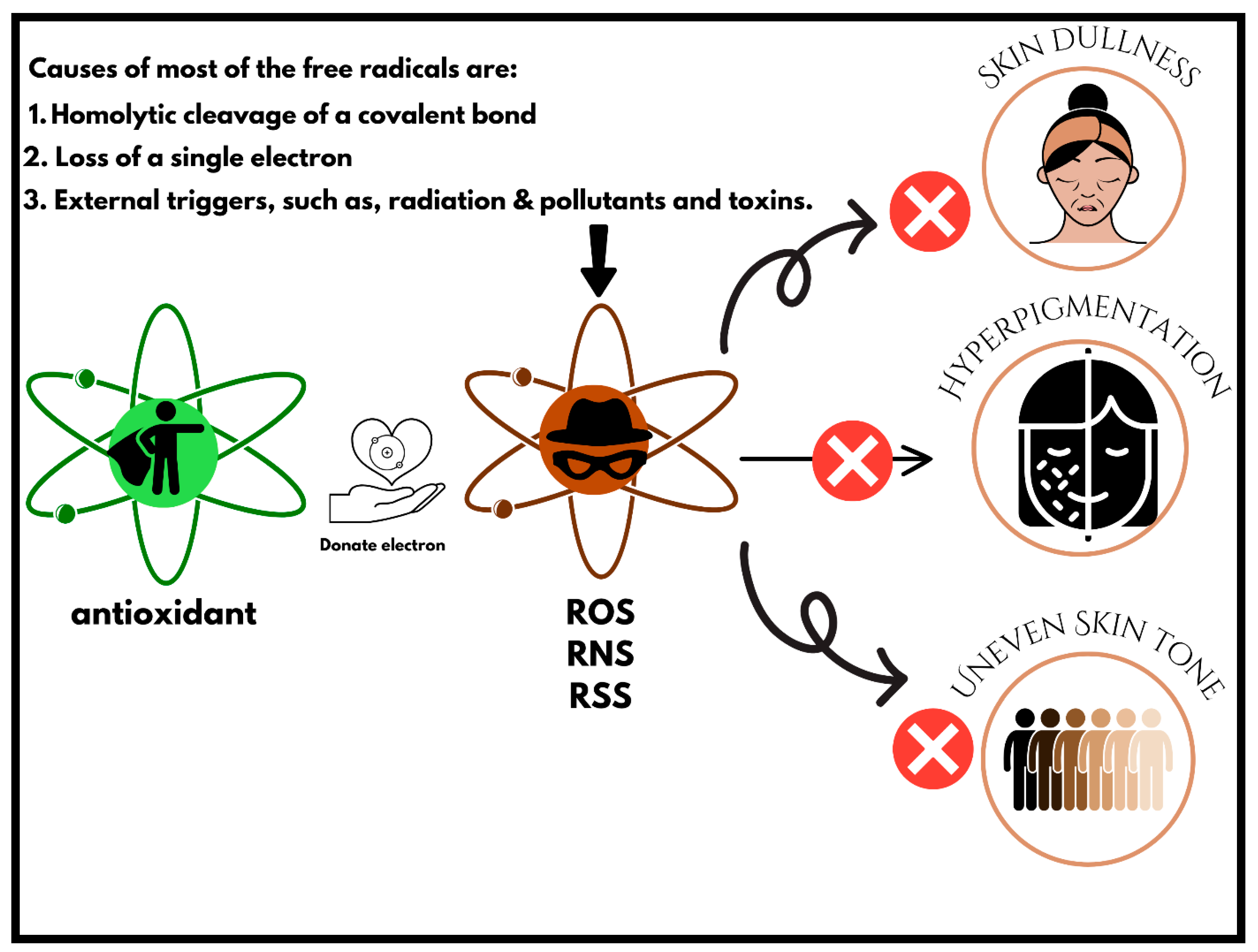
Figure 2.
The effect of antioxidants on the mechanism of melanin synthesis inhibition.
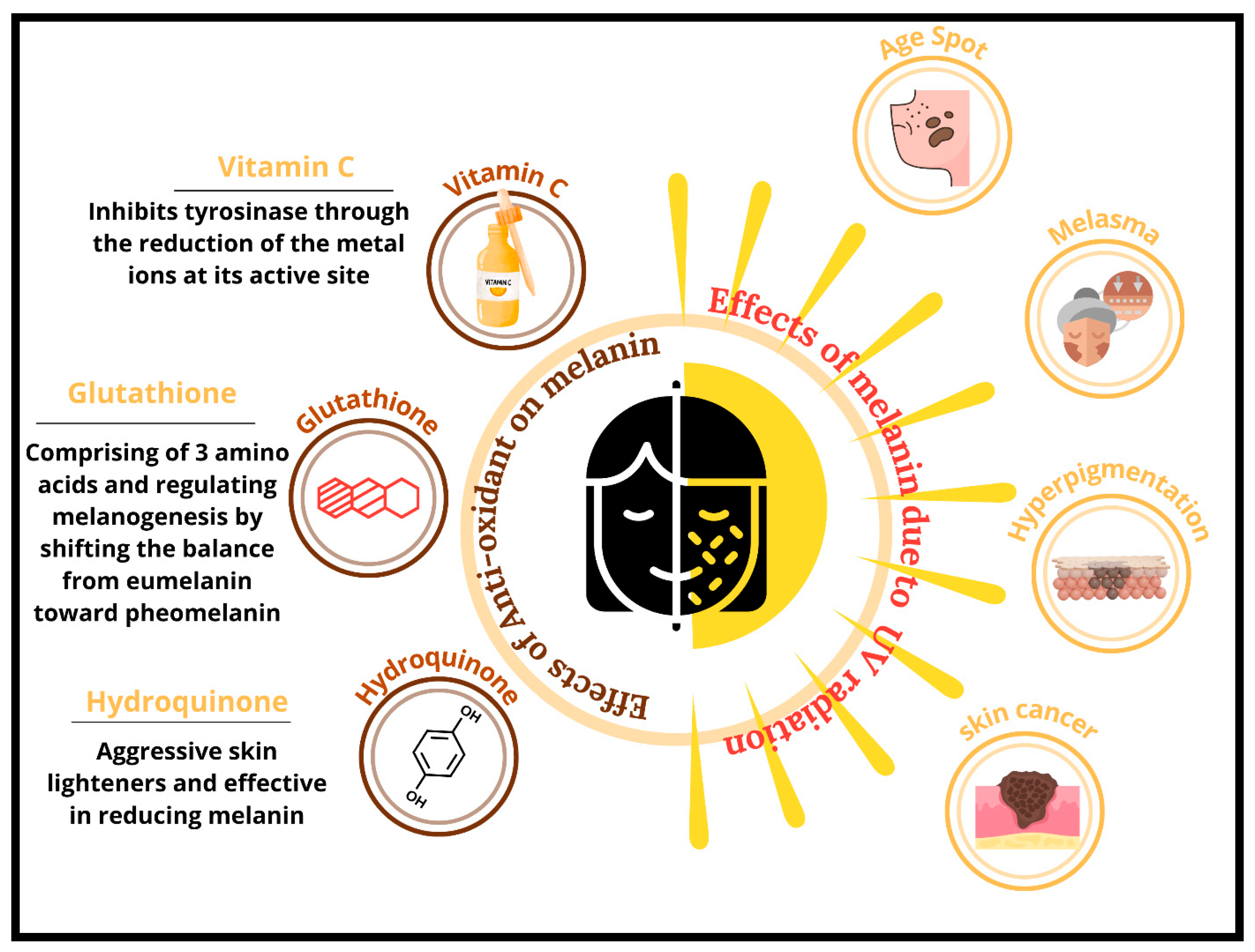
Figure 3.
Stimulation of skin repair and collagen production mechanism.
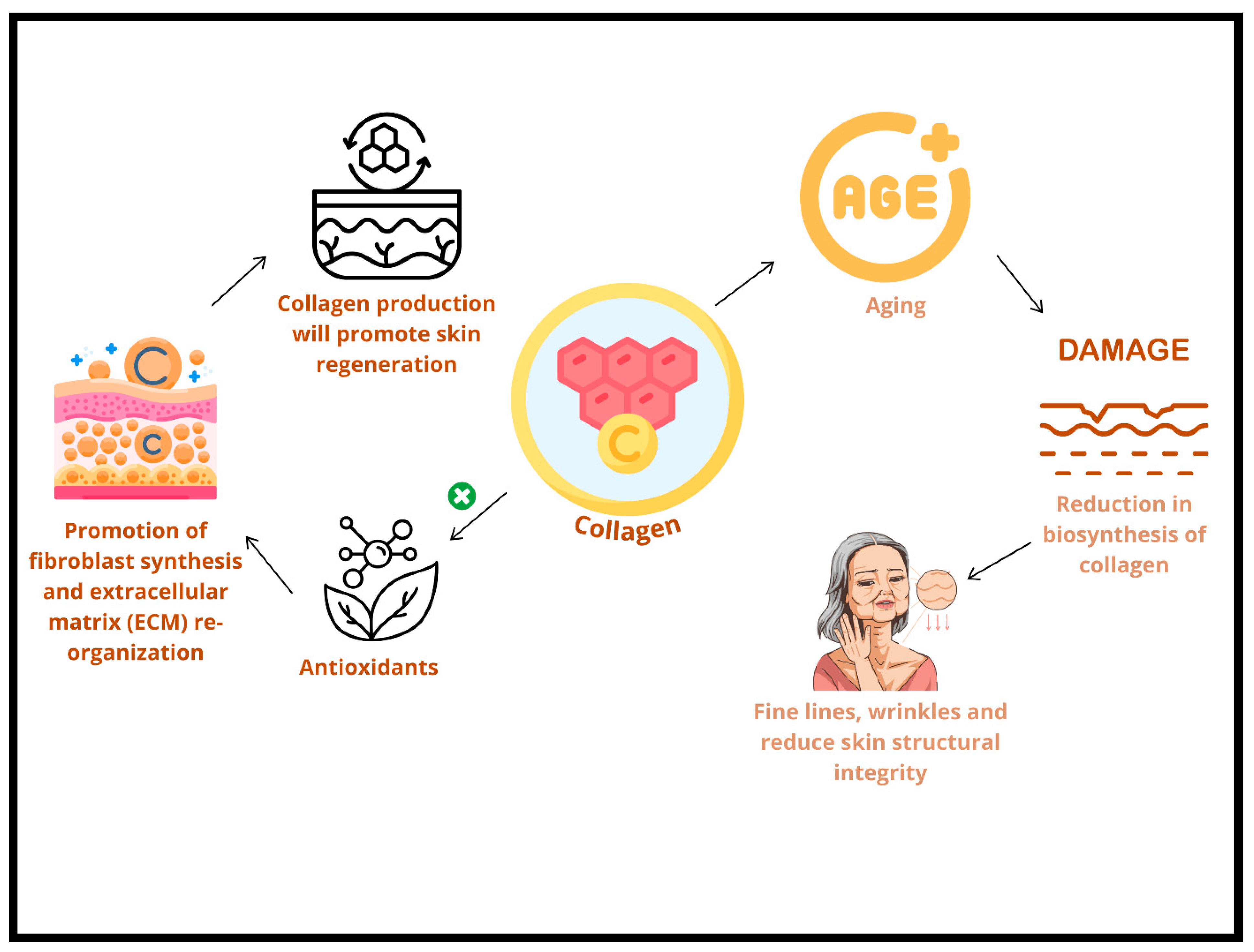
Disclaimer/Publisher’s Note: The statements, opinions and data contained in all publications are solely those of the individual author(s) and contributor(s) and not of MDPI and/or the editor(s). MDPI and/or the editor(s) disclaim responsibility for any injury to people or property resulting from any ideas, methods, instructions or products referred to in the content. |
© 2026 by the authors. Licensee MDPI, Basel, Switzerland. This article is an open access article distributed under the terms and conditions of the Creative Commons Attribution (CC BY) license (http://creativecommons.org/licenses/by/4.0/).
Copyright: This open access article is published under a Creative Commons CC BY 4.0 license, which permit the free download, distribution, and reuse, provided that the author and preprint are cited in any reuse.


