

Submitted:
25 May 2026
Posted:
28 May 2026
You are already at the latest version
Abstract
Road tunnel ventilation systems have traditionally been designed to dilute vehicle-generated pollutants and also control smoke during fires. However, the thermal environment including temperature and humidity is not the variable taken into consideration. Despite the operation of its ventilation system, Boryeong Subsea Tunnel (6.9 km), the longest subsea road tunnel in Korea, has experienced severe condensation since its opening in December 2021. As hot, humid ambient air enters the tunnel and meets wall surfaces cooled by seawater and the surrounding ground, condensation and fog may form, reducing visibility. To investigate the causes of condensation and develop a decision-making tool for prediction, a variety of tasks had been carried out : (1) field measurements of temperature, humidity, tunnel wall temperature, and tunnel air velocity; (2) development of a 1D model for condensation rate quantification; and (3) 3D CFD simulations. Condensation occurred mainly from June to September, with the most severe conditions in July and August. Both the 1D model analysis and the CFD simulations showed good agreement with field measurement data, with wall temperature errors within 7.3%. Under current traffic conditions (peak approximately 250 veh/h), the annual condensation volume was estimated at approximately 12,415 ton/year. Under the design traffic volume (1,550 veh/h), heat from vehicles was found to effectively suppress condensation. The Condensation Contour Map (CCM) was developed as a decision-support tool to predict the likelihood and quantity of condensation based on tunnel air temperature and humidity conditions. The results of this study clearly imply that condensation should be explicitly considered in the design and operation of long subsea road tunnels.
Keywords:
subsea tunnel
; condensation
; dew-point temperature
; moist air analysis
; CFD simulation
; field measurement
; Boryeong tunnel
; ventilation
; Condensation Contour Map (CCM)
1. Introduction
Ventilation and fire-safety systems in road tunnels have traditionally been designed to dilute or remove pollutants (CO, NOx, particulate matter, etc.) emitted by vehicles and to control smoke in the event of a fire. In general, road tunnels are therefore designed with a primary focus on air quality and fire safety rather than on thermal environment control. These design assumptions are reasonable for conventional mountain and urban tunnels, where humidity-related operational problems are usually secondary. However, the construction and operation of subsea tunnels present fundamentally different environmental challenges. While ground temperature remains relatively stable in mountain tunnels, subsea tunnels pass beneath the sea where water temperature varies seasonally, resulting in different tunnel wall temperature conditions. More importantly, influenced by maritime climate, hot, humid air is induced into the subsea tunnel, particularly during summer. When this hot, humid ambient air comes into contact with the tunnel walls cooled by seawater and surrounding ground, the water vapor in the airflow becomes saturated depending on the thermal environment, condensation can be observed.
Condensation in subsea tunnels is not a problem unique to the Boryeong Subsea Tunnel but similar phenomena have been reported at major long subsea tunnels worldwide. In the Channel Tunnel (50.5 km), high humidity and condensation have been recognized as persistent operational challenges since its opening. Bradbury et al. (1997) reported problems in the Channel tunnel such as equipment corrosion, electrical insulation failure, and reduced visibility due to internal humidity and condensation. They analyzed the physical mechanisms for moisture transport and enthalpy changes, and also discussed the humidity control strategies [3]. This study demonstrated that condensation in long subsea tunnels can directly affect equipment reliability and safety beyond mere environmental discomfort.
The Seikan Tunnel in Japan (53.85 km, with a 23.3 km subsea section), the longest railroad tunnel in the world, reportedly maintains an internal temperature of approximately 20 °C year-round with relative humidity of 80–90% [4]. This high-humidity environment caused condensation problems on train car bodies. During the design of the Hokkaido Shinkansen H5 series vehicles, which commenced service in 2016, condensation, snow accretion, and icing were identified as three key design challenges [5]. The condensation issues in the Seikan Tunnel clearly illustrate the impact of the constant high-humidity environment in subsea tunnels on vehicles and equipment.
Norway possesses the world's largest number of subsea road tunnels (approximately 40) and has the most extensive operational experiences. In the Nordkapp Subsea Tunnel (6.8 km, maximum depth 212 m below sea level), fog formation has been reported near the lowest point [6], attributed to condensation phenomena resulting from thermal interaction between the cold walls at the deepest section and the moist air within the tunnel. The Ryfast tunnel (14.4 km, maximum depth 292 m), currently the world's longest and deepest subsea road tunnel, also faces similar humidity management challenges. Even more severe condensation conditions are anticipated in the Rogfast tunnel (26.7 km, maximum depth 392 m), which is scheduled to open in 2033 [7]. Lervåg (2005) of SINTEF investigated factors affecting condensation formation in Norwegian subsea tunnels [8], indicating that condensation phenomena are common problems prevalent in Northern European regions.
In China, condensation phenomena in railroad tunnels in hot, humid regions have been systematically studied. Yan et al. (2017) conducted field measurements of tunnel wall temperature, air temperature, and relative humidity distributions in eight railroad tunnels and performed fluid–solid coupled numerical analysis using ABAQUS [9]. Their results showed that the temperature and humidity distributions in long tunnels can be divided into three zones: a quick-change region, a smooth transitional region, and a constant region, with wall condensation in hot, humid areas primarily caused by the temperature difference between the inside and outside of the tunnel, along with high humidity.
Under the research program of the Swiss Federal Roads Office (ASTRA), Bopp and Peter (2006) systematically investigated windshield fogging phenomena in road tunnels [10]. They conducted surveys, theoretical studies, model calculations, and field measurements in three problematic tunnels, revealing that windshield fogging can pose serious safety risks in bidirectional tunnels longer than 1,400 m. They proposed an excess moisture content of 1.5 g/m³ as the critical threshold for fogging onset and reported that dew-point control through intermediate exhaust ventilation systems is an effective mitigation measure. This study demonstrated that condensation phenomena in road tunnels constitute a serious issue directly affecting driving safety, extending beyond structural concerns.
Yang et al. (2022) conducted a comprehensive review of ventilation and environmental control in underground spaces [11], identifying condensation as a major cause of equipment deterioration and reduced operational efficiency in underground structures.
Research on condensation in utility tunnels has been relatively active. Park et al. (2022) utilized CFD for air conditioning system design to reduce condensation in underground utility tunnels, reporting through field experiments that condensation occurs at relative humidity levels above 95% during summer [12]. Tai et al. (2020) conducted field measurements of temperature and humidity and analyzed condensation phenomena inside utility tunnels [13], while You et al. (2017) studied condensation on building interior surfaces in high-humidity environments [14]. Ryu et al. (2017) [15], Seong et al. (2018) [16], and Yoon et al. (2014) [17] conducted studies on thermal characteristics, temperature/humidity distributions, and condensation identification in underground utility tunnels in Korea. While these studies provide useful insights into condensation mechanisms in enclosed or semi-enclosed underground structures, the environmental conditions differ from those in road tunnels where traffic-induced ventilation and vehicle heat generation are present.
Regarding fundamental research on tunnel thermal environments, Peavy (1961) performed a theoretical analysis of heating and cooling of air flowing through underground tunnels [18], and Li et al. (2015) reported long-term continuous monitoring results of tunnel lining surface temperature in cold regions [19]. Liu et al. (2004) conducted CFD prediction and experimental validation of condensation on wall surfaces, confirming the feasibility of predicting condensation phenomena through CFD [20]. As fundamental theoretical studies on evaporation and condensation, Jodat (2012) [21] and Aldarabseh (2020) [22] investigated water evaporation rate prediction under various convective conditions and free water surface evaporation rates, respectively. Kim (2022) [23] published a basic study of the causes of road-tunnel condensation and possible countermeasures.
Generally, the findings mentioned above show that condensation in subsea tunnels is a recurring operational challenge in major tunnels worldwide. However, most of the existing relevant studies have mainly focused on (a) qualitative observations in railroad tunnels, (b) CFD-based analyses in utility tunnels, and (c) windshield fogging in road tunnels. There is a lack of comprehensive research for long subsea road tunnels, integrating field measurements, theoretical quantitative analysis, and three-dimensional CFD simulation.
This study aims to analyze the severe condensation issues experienced at the Boryeong Subsea Tunnel(6.9 km), Korea's longest subsea tunnel, and to develop an engineering tool for condensation prediction. The ultimate goal is to eliminate the condensation problem and to optimize the design and operation of long subsea tunnels in similar environments anticipated for future construction.
This study applies three approaches to analyze the condensation phenomena in the Boryeong Subsea Tunnel: (1) field measurements to characterize the thermal environment inside and outside the tunnel, together with wall-temperature change; (2) development of a 1D model for condensation rate quantification along the tunnel axis taking into account moist-air thermodynamics, heat transfer through the tunnel wall, vehicle heat generation, exhaust water-vapor emissions, and wall-surface evaporation; (3) 3D CFD simulations to evaluate the 1D model and resolve detailed spatial distributions. Based on these results, the Condensation Contour Map (CCM) was developed for a practical condensation rate prediction tool.
2. Tunnel Overview
2.1. Tunnel Specifications and Ventilation System
The Boryeong Subsea Tunnel consists of twin two-lane tunnels with lengths of 6,916 m (Boryeong-bound) and 6,927 m (Taean-bound). Both tunnels feature an inner cross-sectional area of 60.47 m² and a hydraulic diameter of 7.77 m. The longitudinal gradient follows a V-shape profile; for the Boryeong-bound tunnel, this includes a 1,810 m descent at −4.95%, a 3,080 m section at +0.5%, and a 2,027 m ascent at +4.85%.
2.2. Climate Conditions and Condensation Observations
The Boryeong Subsea Tunnel is located in a coastal area influenced by a maritime climate, characterized by typically hot, humid summer conditions. Analysis of meteorological observations at the nearby Daecheonhang Automated Weather Station (AWS) shows that the monthly average outdoor air temperature() and relative humidity(RH) during July–August exceed 25 °C (with peaks above 34 °C) and 85%, respectively. Relative humidity is typically even higher than 90% during nighttime. Table 2 summarizes the monthly average meteorological modeling input data and dew-point temperature analysis results. Condensation is predicted to occur from May to September when the dew-point temperature( exceeds the ground temperature(). The maximum difference(-) of 11.34 °C was observed in July.
Condensation was first observed approximately five months after opening, in May 2022. Initially, only the lower portion of sidewalls and the nearby road were wet, but by July, condensation had developed on sidewalls, floors, and utility ducts throughout the tunnel, as shown in Figure 2.
The CCTV footage at this time clearly shows the situation when condensation occurs. Condensation occurred predominantly during nighttime and early morning hours (21:00–06:00) when outdoor humidity reached maximum levels and traffic volume was minimal, with alleviation observed during daytime hours when solar heating reduced outdoor relative humidity. In the most severe cases, fog formed inside the tunnel, significantly reducing visibility, and tunnel users raised safety concerns, misidentifying the condensation as structural water leakage. Condensation occurrence by time period based on CCTV monitoring is presented in Figure 3.
3. Methodology
3.1. Field Measurements
Field measurements were conducted over August 14–15, 2023, in the Boryeong-bound tunnel. Measurement items included external meteorological conditions (atmospheric pressure, temperature and humidity, wind direction and velocity) and variables affecting the thermal environment inside the tunnel (traffic volume, atmospheric pressure, tunnel airflow direction, air velocity, air temperature, humidity, wall temperature, vehicle speed and vehicle type). Measurements were made at vehicle evacuation passages #5 and #3, located approximately 4.0 km and 5.3 km from the Taean-bound tunnel, respectively, as shown in Figure 4.
Measurement data shows that the ambient air temperature at the Taean-bound tunnel ranged from 26.4 to 34.7 °C, relative humidity from 68.7 to 94.0%, and atmospheric pressure from 100.5 to 100.7 kPa, while inside the tunnel, air temperature ranged from 22.5 to 24.2 °C, relative humidity from 87.8 to 94.1%, and air velocity from 0.2 to 4.5 m/s. Traffic volume was in the range of 3 to 522 vehicles/h. Ventilation jet fans were operated from 13:40 to 17:10 on August 14, and tunnel air velocity increased from approximately 2.5 m/s to 4.5 m/s after fan operation.
3.2. One-Dimensional Thermodynamic Model
Where,
: Reference tunnel length (m)
P : Perimeter of the tunnel inner wall surface (m)
:Pressure, Temperature, Relative humidity and Absolute humidity at Node i and j (Pa, ℃, %, kg/kg)
: Area of the tunnel inner wall surface ()
: Moist area ()
: Moisture transmission rate from a vehicle exhaust outlet (kg/s)
: Moisture transmission rate from a moist area (kg/s)
: Convective evaporation rate (kg/s)
: Thermal conductivity of the air (W/m∙K)
(or ): Equivalent thermal conductivity of the composite wall (W/m∙K)
Equivalent thickness of the composite wall (m)
: Total tunnel wall heat flux (W)
: Total vehicle heat release rate (W)
: Total latent heat of evaporation (W)
: Latent heat of evaporation from vehicle exhaust (W)
: Latent heat of evaporation from moist wall (W)
The 1D condensation quantification model developed in this study is basically a numerical 1D model, which discretizes the tunnel axis into equally spaced nodes, and calculate air temperature, humidity (relative and absolute), dew-point temperature, wall temperature, condensation volume, and evaporation from wet surfaces at each node, as shown in Figure 5, the conceptual diagram.
The energy balance equation used for the model incorporates four heat transfer mechanisms: (i) air-to-wall convective heat transfer; (ii) heat gain from vehicles, modeled as a distributed source proportional to traffic intensity; (iii) latent heat exchange from wet surfaces and vehicle moisture; and (iv) conductive heat transfer through the tunnel wall to the surrounding ground.
The thermal conductivity characteristics of the tunnel wall surface is a critical parameter in the mechanism for the air-to-wall convective transfer. Generally, the tunnel wall consists of three composite layers: lining (concrete), waterproof membrane (mainly HDPE sheet), and shotcrete. Table 3 shows the thermal properties of individual and composite layers; the equivalent thermal conductivity of the composite layer(k) is 1.705 W/m·K, the equivalent thickness(δ) of 0.602 m, and the overall thermal transmittance (U-value) of 2.832 W/m²·K. Vehicle heat generation is modeled as a distributed source using calorific values of 30.4 MJ/L for gasoline and 35.2 MJ/L for diesel (Korean Energy Act). Exhaust water vapor output from vehicles is assumed to be 1.1 L water per 1 L fuel (Kibble, 1978) [25].
Where,
: Temperature of the tunnel wall surface (°C)
Rth = 1/h + δ/kcond = D/(kconv·Nu)
: Temperature of the inside tunnel air (°C)
: Ground temperature, assumed to be a constant at 15 °C
: Total thermal resistance (m2∙K/W)
h: Forced-convective heat transfer coefficient (W/m2∙K)
D: Hydraulic diameter of the tunnel (m)
Nu: Nusselt number, determined using the Gnielinski correlation [26].
Condensation is assumed to occur when dew-point temperature() exceeds temperature of the tunnel wall surface(). The tunnel wall surface temperature is calculated as shown in Equation (1). The condensation rate(condensate volume) can be estimated based on the measurement data of atmospheric pressure, ambient air dry and wet temperature, inside air temperature, tunnel wall temperature and tunnel air velocity, as follows:
Where,
: absolute humidity (kg/kg(DA))
(Tw): Saturated absolute humidity() at wall temperature() ((kg/kg(DA))
: Condensation mass rate(/s)
Patm: Atmospheric pressure(Pa)
: Saturated vapor pressure(Pa)
: Curve-fitting coefficient
V: Tunnel longitudinal air velocity(m/s)
A: Tunnel inner cross-sectional area (m²)
3.3. Three-Dimensional CFD Simulation
Three-dimensional CFD simulations were performed using OpenFOAM, an open-source computational fluid dynamics (CFD) software package used for simulating fluid flow, heat transfer, and related physical processes. The computational domain represented the entire tunnel length of 6.9 km using the actual cross-sectional geometry. Because the tunnel cross-section is approximately symmetric, only a half-section was analyzed and the results were mirrored about the symmetry plane for presentation. The CFD model and computational grid are shown in Figure 6.
The Reynolds-averaged Navier–Stokes (RANS) equations for continuity, momentum, energy, and humidity transport were solved in steady-state mode. Turbulence was modeled using the standard k–ε model [27], which provides robust and computationally efficient predictions of mean-flow and heat-transfer characteristics in large-scale internal flows. Pressure–velocity coupling was handled by the SIMPLE (Semi-Implicit Method for Pressure-Linked Equations) algorithm [28]. Convective terms were discretized using a second-order upwind scheme, while diffusive terms were treated with central differencing to ensure numerical accuracy.
The discretized computational grid consisted of approximately 74 million polyhedral cells (74,073,710), generated as elongated cylindrical elements along the tunnel axis. The convergence time is defined as the computational time required for the residuals to fall below the prescribed tolerance and for the variations in the primary physical quantities to become sufficiently small throughout the iterative solution process. All simulations were conducted on a computer with Intel® Xeon®. 2.1 GHz, 2CPU, 16 Core specifications. The initial baseline case for the simulation analysis reached convergence in approximately 14 days. And subsequent computations, which utilized the converged baseline as an initial solution, required between 72 and 120 hours to reach steady-state convergence. Convergence was monitored using the residuals of all governing equations, with thresholds of 10−4 for continuity and momentum and 10−6 for energy and humidity transport.
The boundary conditions for the CFD model were prescribed as follows: a uniform velocity, temperature, and humidity profile at the inlet, and a pressure-outlet condition at the tunnel exit. For the external wall, a depth-dependent temperature profile was implemented, originating from a ambient temperature of 25 °C. The temperature was assumed to decrease at a rate of 0.08 °C/m in the landward sections, while this gradient was doubled to 0.16 °C/m within the subsea portion, resulting in a minimum outer-wall temperature of 11.54 °C at the tunnel’s lowest elevation. The thermal conductivity of the composite wall and the lining thickness were set to 1.7 W/m·K and 0.5 m, respectively. The baseline simulation scenario for July was analyzed with inlet temperature of 28.27 °C, relative humidity of 90.37%, and inflow velocity of 2.5 m/s.
4. Results and Discussion
4.1. Field Measurement Results
Field measurement results showed wall temperatures of 22.1–23.6 °C at the #5 location (4.0 km from the Taean-bound tunnel) and 20.7–22.4 °C at the #3 location (5.3 km from the Taean-bound tunnel). The tunnel wall temperature decrease rate in the flow direction was approximately 0.97 °C/km, and the air–wall temperature difference remained nearly constant at approximately 1.5 °C throughout the measurement period. The effect of jet fan operation was clearly observed; after fan activation at 13:40, tunnel air velocity increased from 2.58 to 4.41 m/s. The absolute humidity at the measurement locations increased during fan operation, which is interpreted as the result of enhanced evaporation phenomenon from upstream wet-wall surfaces, leading to increased moisture inside the tunnel. After jet fan shutdown, absolute humidity decreased rapidly, confirming a quick return to net condensation conditions. This indicates that while jet fan operation can shift the condensation front downstream, it cannot completely eliminate condensation when the incoming air is already near saturation. The measurement results of air velocity, temperature, and humidity before and after jet fan operation are presented in Figure 7.
4.2. Validation of the 1D Model Against Field Data
The accuracy of the 1D model was verified against field measurements at 13:00 (before jet fan operation) and 15:00 (after operation) on August 14, 2023. The boundary conditions for the case of 13:00 were ambient temperature of 34.14 °C, relative humidity of 72.81%, and tunnel air velocity of 2.58 m/s; at 15:00, 34.70 °C, 68.71%, and 4.41 m/s, respectively. As shown in Table 4, the inside air temperature errors ranged from 3.0 to 7.3% (≤1.67 °C), and the wall temperature errors ranged from 0.8 to 7.3% (≤1.58 °C), demonstrating good agreement between the model and the measurements. The comparison between the measured and predicted results is shown in Figure 8.
Quantitative validation was derived from the eight measurement-prediction pairs listed in Table 4. The root mean square error (RMSE) was 1.24 °C for inside air temperature and 1.16 °C for wall temperature. The mean absolute error (MAE) was 1.10 °C and 1.02 °C, respectively. The coefficient of determination (R²) exceeded 0.92 for both parameters, confirming that the 1D model reproduces the longitudinal temperature gradients with acceptable accuracy for engineering applications.
4.3. Comparison of 1D Model and CFD Results
To further access the reliability of the 1D model, the results were compared with the CFD results under same boundary conditions, specifically uniform outer wall temperature of 15.12 °C and wall thermal conductivity of 1.7 W/m·K. The distributions of inside air temperature, wall temperature and condensation volume along the tunnel axis showed very good agreement between the two approaches. In case of the 3D CFD results, under the baseline conditions (28.27 °C, 90.37% RH, 2.5 m/s), the relative humidity reached 100% at approximately 2.0 km from the Taean-bound tunnel, and supersaturated conditions developed farther downstream. The comparison of condensation volume between the 1D analysis and the 3D CFD analysis under zero-traffic conditions is shown in Figure 9.
4.4. Condensation Volume Analysis
The monthly condensation-onset locations (distance from the inlet portal of Taean-bound tunnel) and daily condensation volumes under varying traffic conditions are summarized in Table 5. At a inside air velocity of 2.65 m/s, increasing traffic volume shifts the condensation-onset point farther downstream and reduces the condensation volume. Under the design traffic capacity of 1,550 veh/h, no condensation is predicted.
4.5. Annual Condensation Volume Estimation and Traffic Volume Effect
Annual condensation volumes were analyzed as a function of hourly traffic volume at inside air velocity of 2.65 m/s using full-year meteorological data, as summarized in Table 6. As traffic volume increases from 0 to 250 veh/h, the annual condensation volume decreases by approximately 26%; at 1,000 veh/h, it decreases by approximately 96% to only 628 ton/year. At the design traffic capacity of 1,550 veh/h, the wall temperature remains above the dew-point because of vehicle heat generation, and condensation is completely suppressed.
Using monthly average meteorological data and the current traffic volume - peaking at approximately 250 veh/h, roughly 16% of the design traffic capacity - as inputs to the 1D model, the annual condensation volume was estimated to be approximately 12,415 ton/year, with the highest level of 143 ton/day. Condensation occurs from May to September, and approximately 85% of the annual total is concentrated in July and August. The monthly condensation-volume trends for different traffic levels are shown in Figure 10.
4.6. Condensation Contour Map (CCM)
The Condensation Contour Map (CCM) in Figure 11 was developed as a practical decision-support tool for design and operation. The CCM illustrates the predicted contour lines for condensation volume (ton/day) in black and the maximum relative humidity at tunnel outlet portal (%) in red; on the diagram, inlet dry-bulb temperature() on the horizontal axis and inlet relative humidity on the vertical axis, for various air velocity and traffic volume.
The CCM shows that, under current traffic conditions (peaking at 250 veh/h) and air velocity of 2.65 m/s, condensation occurs when ambient temperature and relative humidity exceed 24 °C and 80%, respectively. As traffic volume increases, the condensation boundary shifts toward higher temperature and humidity conditions, confirming the beneficial effect of vehicle heat generation. At the design traffic capacity of 1,550 veh/h, condensation occurs only under extreme conditions of Td > 30 °C and RH > 95%, implying that the condensation problem will naturally diminish as traffic volume increases.
The contour map in Figure 11(a) for N = 0 shows that substantial condensation volumes are predicted across a wide range of ambient conditions when there is no traffic. Under zero-traffic conditions (N = 0), the condensation boundary starts at a inlet dry-bulb temperature as low as approximately 18 °C at RH ≈ 70%, indicating that condensation can occur even under moderate ambient humidity conditions. Without the heat inflow from vehicles, the temperature is governed exclusively by the surrounding seawater and ground, leading to the widest condensation-prone region. This scenario corresponds to periods of nighttime, early morning, or maintenance closures, during which the tunnel is most vulnerable to condensation.
Figure 11(b) shows the condensation boundary contours (RH = 100%) as a function of inlet dry-bulb temperature and relative humidity for five traffic volumes (N = 0, 250, 500, 1,000 and 1,550 veh/h) at V = 2.65 m/s, with a wall moisture rate of 10%. The area above each curve represents the condensation zone where the wall temperature falls below the dew-point temperature of the tunnel air.
As the traffic volume increases to N = 500 veh/h, vehicle exhaust heat raises the tunnel air and wall temperatures, and the condensation boundary shifts markedly to the right; condensation begins only when the inlet dry-bulb temperature exceeds approximately 20 °C at RH = 100%. At N = 1,000 veh/h, the boundary moves further to the right, with condensation initiating only above a inlet dry-bulb temperature of approximately 25.5 °C at RH = 100%, meaning that only high-temperature, high-humidity summer conditions can trigger condensation. At the design traffic capacity of N = 1,550 veh/h, the boundary is pushed almost entirely off the chart, the typical operational range. Only a marginal region persists at the extreme upper-right corner of the diagram (Td > 31.5 °C, RH ≈ 100%), confirming that condensation is virtually eliminated under standard climatic conditions. The progressive rightward shift of the boundary from N = 0 to N = 1,550 quantitatively demonstrates that vehicle heat generation serves as a natural and highly effective suppression mechanism against condensation.
The result show that even with 145 dehumidifiers currently installed in the tunnel — offering a total capacity of 24.4 tons/day at an 80% utilization rate— only 7.2% of the estimated peak condensation load (roughly 340 tons/day for both directions combined under the 250 veh/h scenario) can be treated. This result underscore that mechanical dehumidification, in its current configuration and scale, is insufficient to provide a standalone solution for moisture mitigation.
5. Conclusions
The goal of this study is to analyze the severe condensation phenomena experienced at Korea's longest subsea tunnel (6.9 km), and to develop an engineering tool for condensation prediction. On-site measurements, one-dimensional thermodynamic model development and analysis, and three-dimensional CFD simulations were employed in this study and the results are summarized as follows:
(1) Condensation in the Boryeong Subsea Tunnel results from the combined effect of a hot, humid maritime climate at the portals and low wall temperatures caused by the surrounding seawater and ground. The condensation phenomena occurred at the tunnel differs fundamentally from structural water leakage commonly addressed in tunnel engineering and therefore necessitates a specialized analytical approach and tailored operational strategies.
(2) The developed 1D model showed high predictive accuracy, with air and wall temperature discrepancies within 7.3% relative to the field measurements. It also showed excellent agreement with the 3D CFD results, validating its efficacy as an efficient engineering tool for rapid parametric analysis. The mutual consistency among the field data and the results of thermodynamic analysis based on 1D and 3D models provides a rigorous basis for comprehensive cross-validation.
(3) Under high-humidity conditions, increasing air velocity in the tunnel by jet fan operation was found to aggravate condensation. Accordingly, operating at lower ventilation rates during high-humidity periods, especially on summer nights, may help reduce condensation, whereas jet fan operation during lower-humidity daytime periods may promote evaporation of existing condensate.
(4) Vehicle-induced heat generation is the most effective natural mechanism for condensation suppression. Although condensation is almost entirely eliminated at the design traffic volume of 1,550 veh/h, the current traffic volume peaking at approximately 250 veh/h remains insufficient, indicating the need for supplementary countermeasures during the present operational stage.
(5) The proposed Condensation Contour Map (CCM) provides a practical engineering basis for designers and tunnel operators to predict condensation as a function of ambient air conditions and traffic volume and to make rational decisions regarding jet fan operation and dehumidification strategies.
(6) Current ventilation and environmental-control systems for subsea tunnels still focus primarily on pollutant control and fire safety, with limited explicit consideration of condensation. The results of this study suggest that future long subsea tunnel design should explicitly consider condensation from the design stage onward, together with mitigation measures such as enhanced wall insulation, rational dehumidification-capacity planning, dew-point-aware ventilation strategies, and driver warning systems. They also suggest that tunnel ventilation standards and guidelines should clearly address condensation in long subsea tunnels, particularly those located in humid climate regions.
Author Contributions
H. Kim conducted the study conceptualization, field experiments, and numerical analysis and CCM construction, while C. Lee jointly performed the overall data validation and English manuscript preparation.
Funding
This research received no external funding.
Data Availability Statement
The data presented in this study are available on request from the corresponding author. The data are not publicly available due to restrictions imposed by the tunnel operating authority.
Conflicts of Interest
The author declares no conflicts of interest.
Declaration of AI Use
AI tools were used solely for language translation purposes. No AI was used in the design, data collection, analysis, or interpretation of this study.
References
- Ministry of Land; Infrastructure and Transport. Guidelines for Installation and Management of Road Tunnel Fire Safety and Ventilation Facilities; MOLIT: Sejong, Republic of Korea, 2025. [Google Scholar]
- PIARC. Road Tunnels: Vehicle Emissions and Air Demand for Ventilation; World Road Association: Paris, France, 2019. [Google Scholar]
- Bradbury, W.M.S.; Gill, M.E.; LeCorronc, S. Humidity and Condensation in the Channel Tunnel. In Proceedings of the Channel Tunnel Experience: Lessons for the Future, London, UK, 1997; pp. 37–47. [Google Scholar]
- Ikuma, M. Maintenance of the Undersea Section of the Seikan Tunnel. Tunn. Undergr. Space Technol. 2005, 20, 143–149. [Google Scholar] [CrossRef]
- Kawasaki Heavy Industries. The Opening of Hokkaido Shinkansen: Series H5 Design Challenges—Condensation, Snow, and Icing; Kawasaki Technical Report: Kobe, Japan, 2016. [Google Scholar]
- Roads, Dangerous. North Cape Tunnel—A Subsea Road Tunnel. Available online: https://www.dangerousroads.org (accessed on 1 January 2024).
- Norwegian Public Roads Administration. Rogfast—World's Longest and Deepest Subsea Road Tunnel; NPRA: Rogaland, Norway, 2024. [Google Scholar]
- Lervåg, L.E. Kartlegging av Faktorer som kan ha Betydning for Kondensdannelse i Tunneler; SINTEF Report: Trondheim, Norway, 2005. [Google Scholar]
- Yan, Q.; Zhang, C.; Lin, G.; Wang, B. Temperature and Moisture Distributions of Long Tunnels and Analysis of Condensation on Tunnel Walls in Hot and Humid Areas. J. Railw. Eng. Soc. 2017, 34, 65–71. [Google Scholar]
- Bopp, R.; Peter, A. Windshield Fogging in Road Tunnels—Final Results. In Proceedings of the 3rd International Conference on Tunnel Safety and Ventilation, Graz, Austria, 2006; pp. 213–220. [Google Scholar]
- Yang, B.; Yao, H.; Wang, F. A Review of Ventilation and Environmental Control of Underground Spaces. Energies 2022, 15, 409. [Google Scholar] [CrossRef]
- Park, S.-J.; Kim, J.-H.; Lee, S.-H. Air Conditioning System Design to Reduce Condensation in an Underground Utility Tunnel Using CFD. IEEE Access 2022, 10, 78200–78212. [Google Scholar] [CrossRef]
- Tai, C.; Tian, G.; Lei, W.; Wang, J. A Field Measurement of Temperature and Humidity in a Utility Tunnel and a Brief Analysis of the Exhaust Heat Recovery System. Indoor Built Environ. 2020, 30, 1403–1415. [Google Scholar] [CrossRef]
- You, S.; Li, W.; Ye, T.; Hu, F.; Zheng, W. Study on Moisture Condensation on the Interior Surface of Buildings in High Humidity Climate. Build. Environ. 2017, 125, 39–48. [Google Scholar] [CrossRef]
- Ryu, J.; Kim, J.; Ra, K. Numerical Study on Thermal Characteristics According to Wind Speed Changes in Underground Utility Tunnels. J. Korean Tunn. Undergr. Space Assoc. 2017, 19, 29–39. [Google Scholar]
- Seong, N.; Kim, J.; Choi, K. Analysis of Temperature and Relative Humidity Distribution According to Internal Airflow Changes in Underground Utility Tunnels Using CFD. J. KIAEBS 2018, 12, 245–256. [Google Scholar]
- Yoon, D.; Seong, N.; Shin, D. A Study on Condensation Identification Through Internal Environment Measurement of Underground Utility Tunnels. J. Korean Soc. Living Environ. 2014, 21, 903–910. [Google Scholar]
- Peavy, B.A. Heating and Cooling of Air Flowing Through an Underground Tunnel. J. Res. Natl. Bur. Stand. Sect. C 1961, 65, 151–160. [Google Scholar] [CrossRef]
- Li, W.; Wu, Y.; Fu, H.; Zhang, J. Long-Term Continuous In-Situ Monitoring of Tunnel Lining Surface Temperature in Cold Region and Its Application. Int. J. Heat. Technol. 2015, 33, 39–44. [Google Scholar] [CrossRef]
- Liu, J.; Aizawa, H.; Yoshino, H. CFD Prediction of Surface Condensation on Walls and Its Experimental Validation. Build. Environ. 2004, 39, 905–911. [Google Scholar] [CrossRef]
- Jodat, A. An Experimental Study of Ability of Similarity Theory to Predict Water Evaporation Rate for Different Convection Regimes. Int. J. Multidiscip. Sci. Eng. 2012, 3, 20–25. [Google Scholar] [CrossRef]
- Aldarabseh, S.M. Evaporation Rate from Free Water Surface. Master's Thesis, Western Michigan University, Kalamazoo, MI, USA, 2020. [Google Scholar]
- Kim, Y.J. Causes and Countermeasures of Condensation in Road Tunnels. J. Korean Tunn. Undergr. Space Assoc. 2022, 24, 341–352. [Google Scholar]
- Tang, W. Analytical Model for Thermal-Hydraulic Prediction of Tunnel Environments. Tunn. Undergr. Space Technol. 2004, 19, 79–83. [Google Scholar]
- Mor, L. An Investigation of the Ambient Temperature Field and Thermal Response of the Calgary Airport Trail Tunnel. Master's Thesis, University of Alberta, Edmonton, AB, Canada, 2016. [Google Scholar]
- Kim, H.G.; Lee, D.M.; Ryu, J.O. Tunnel Fire Protection Engineering for Design of Tunnel Ventilation and Disaster Prevention Systems; Donghwa Technology: Seoul, Republic of Korea, 2026; ISBN 978-89-425-9756-7. [Google Scholar]
- Launder, B.E.; Spalding, D.B. The Numerical Computation of Turbulent Flows. Comput. Methods Appl. Mech. Eng. 1974, 3, 269–289. [Google Scholar] [CrossRef]
- Patankar, S.V. Numerical Heat Transfer and Fluid Flow; Hemisphere Publishing: Washington, DC, USA, 1980. [Google Scholar]
Figure 1.
Major Facility Installation Overview and Longitudinal Profile in Boryeong Subsea Tunnel.
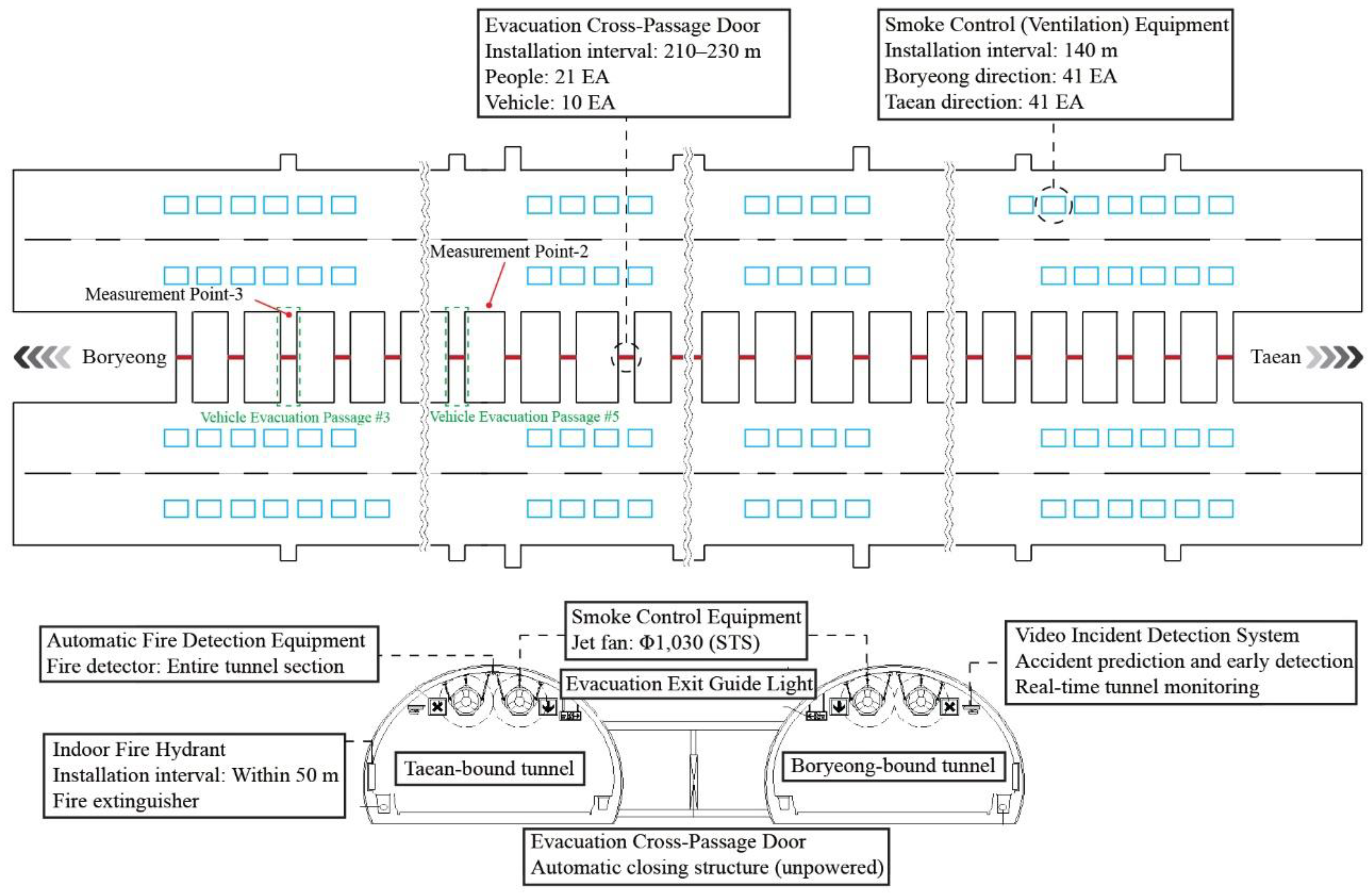
Figure 2.
Condensation in Three Different Situations.
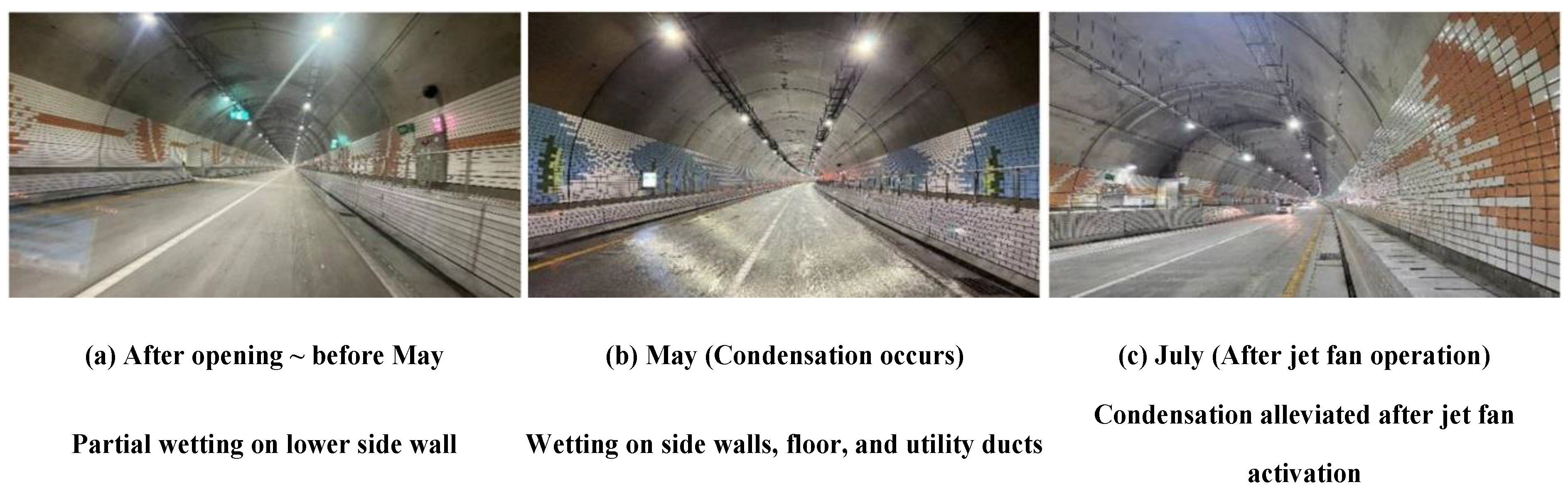
Figure 3.
Photos of Condensation by Time Period in the Boryeong Subsea Tunnel.
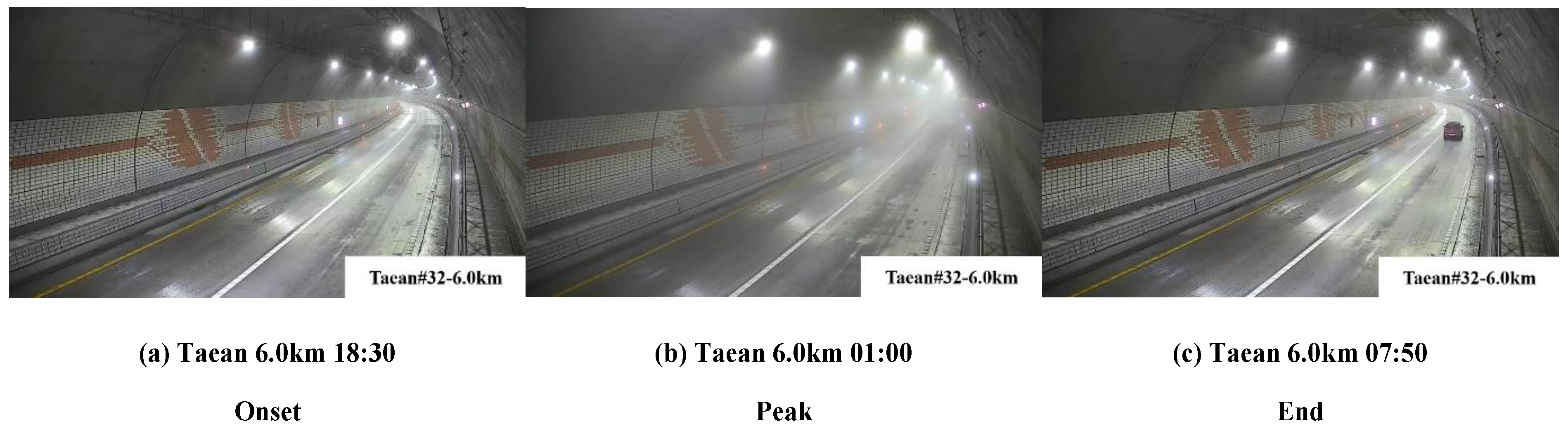
Figure 4.
Field Measurement Overview.
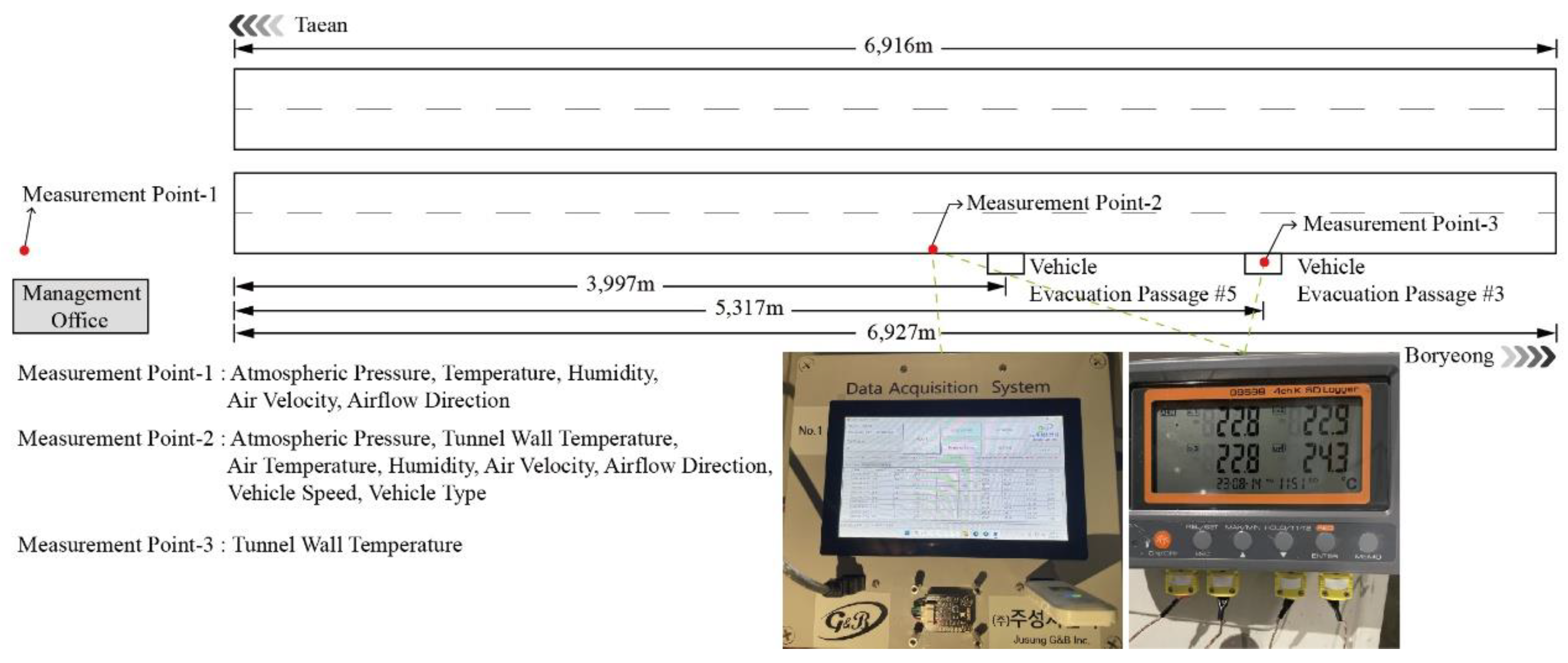
Figure 5.
Conceptual diagram of heat transfer and moisture transmission within the analysis section.
Figure 5.
Conceptual diagram of heat transfer and moisture transmission within the analysis section.
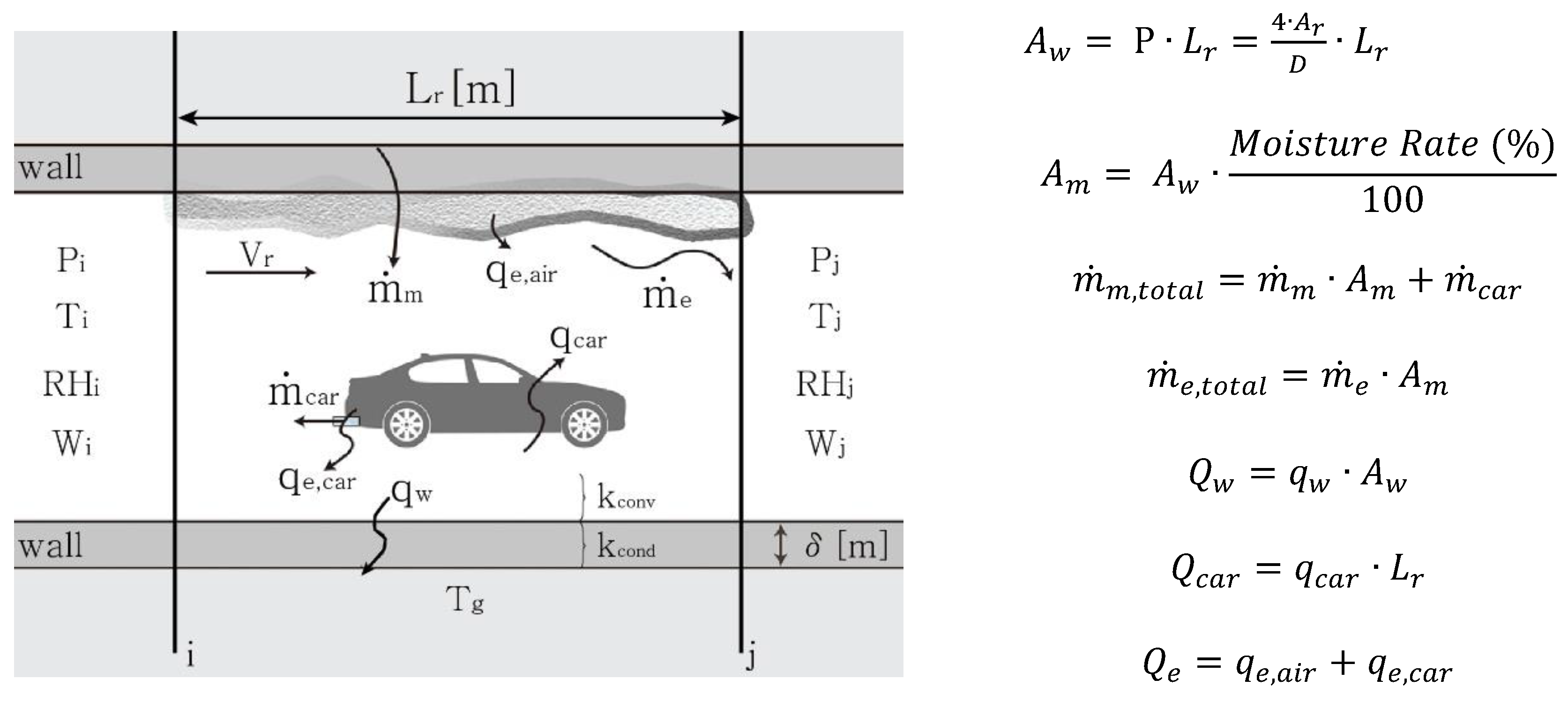
Figure 6.
3D CFD Analysis Model and Grid.
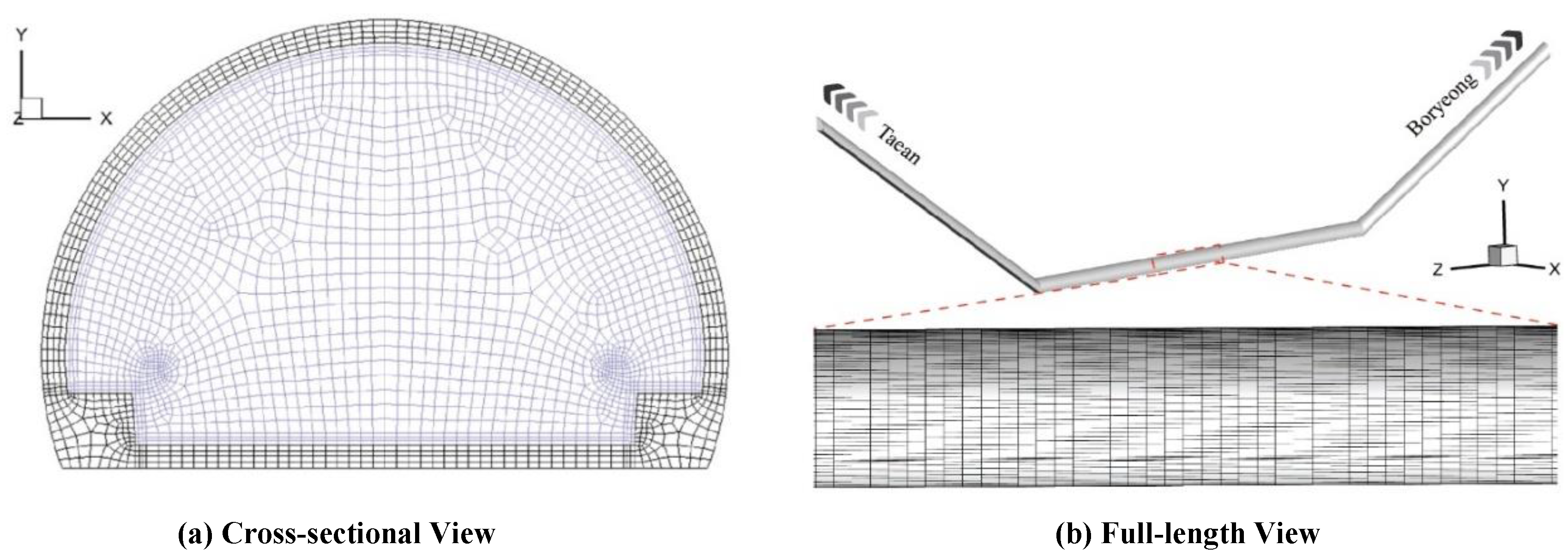
Figure 7.
Measurement Profiles of Air Velocity, Temperature, and Humidity Before and After Jet Fan Operation.
Figure 7.
Measurement Profiles of Air Velocity, Temperature, and Humidity Before and After Jet Fan Operation.
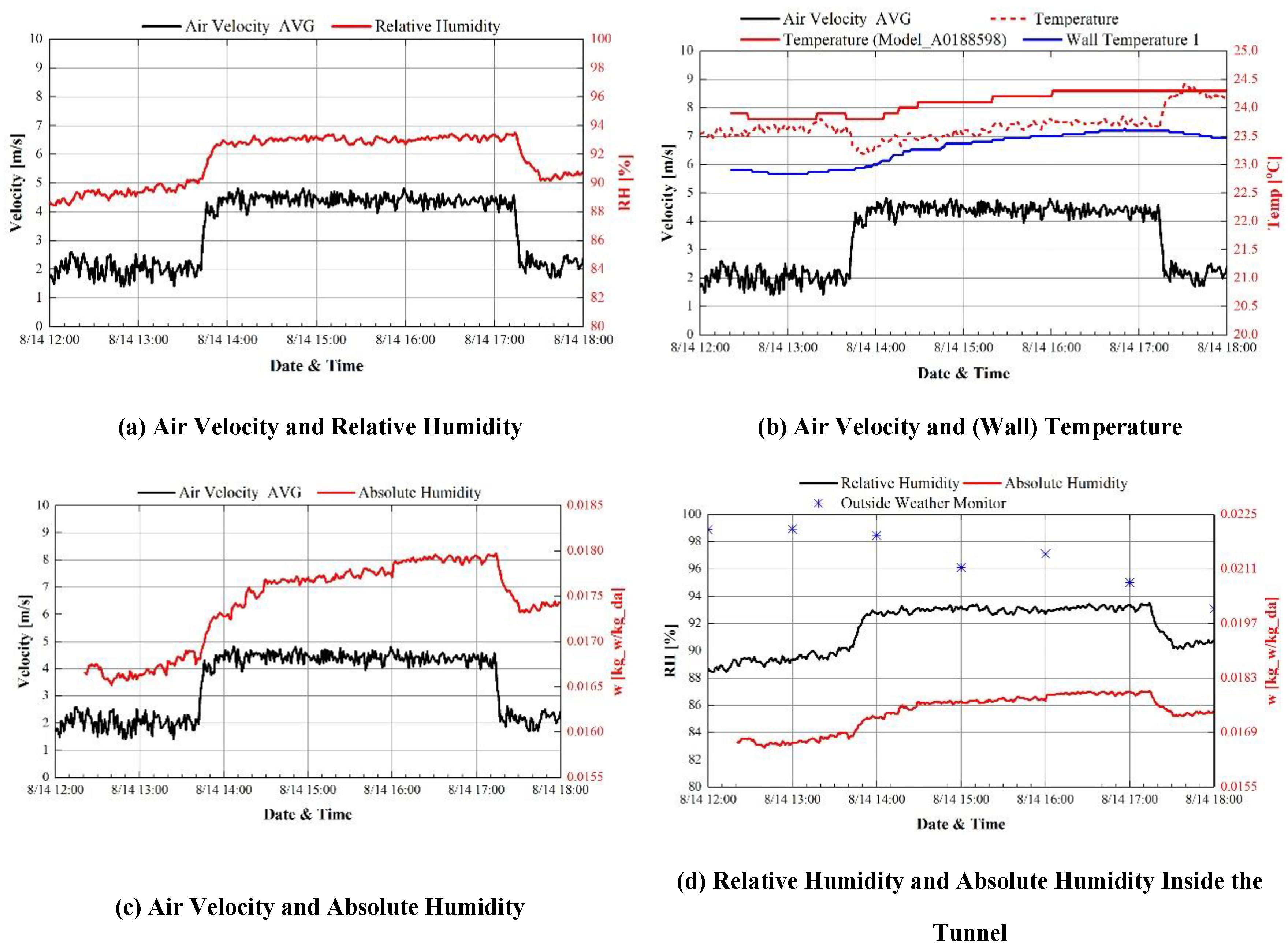
Figure 8.
Comparison of Measured Profiles and 1D Analytical Results ( (a) Inside Air Temperature, (b) Wall Temperature).
Figure 8.
Comparison of Measured Profiles and 1D Analytical Results ( (a) Inside Air Temperature, (b) Wall Temperature).
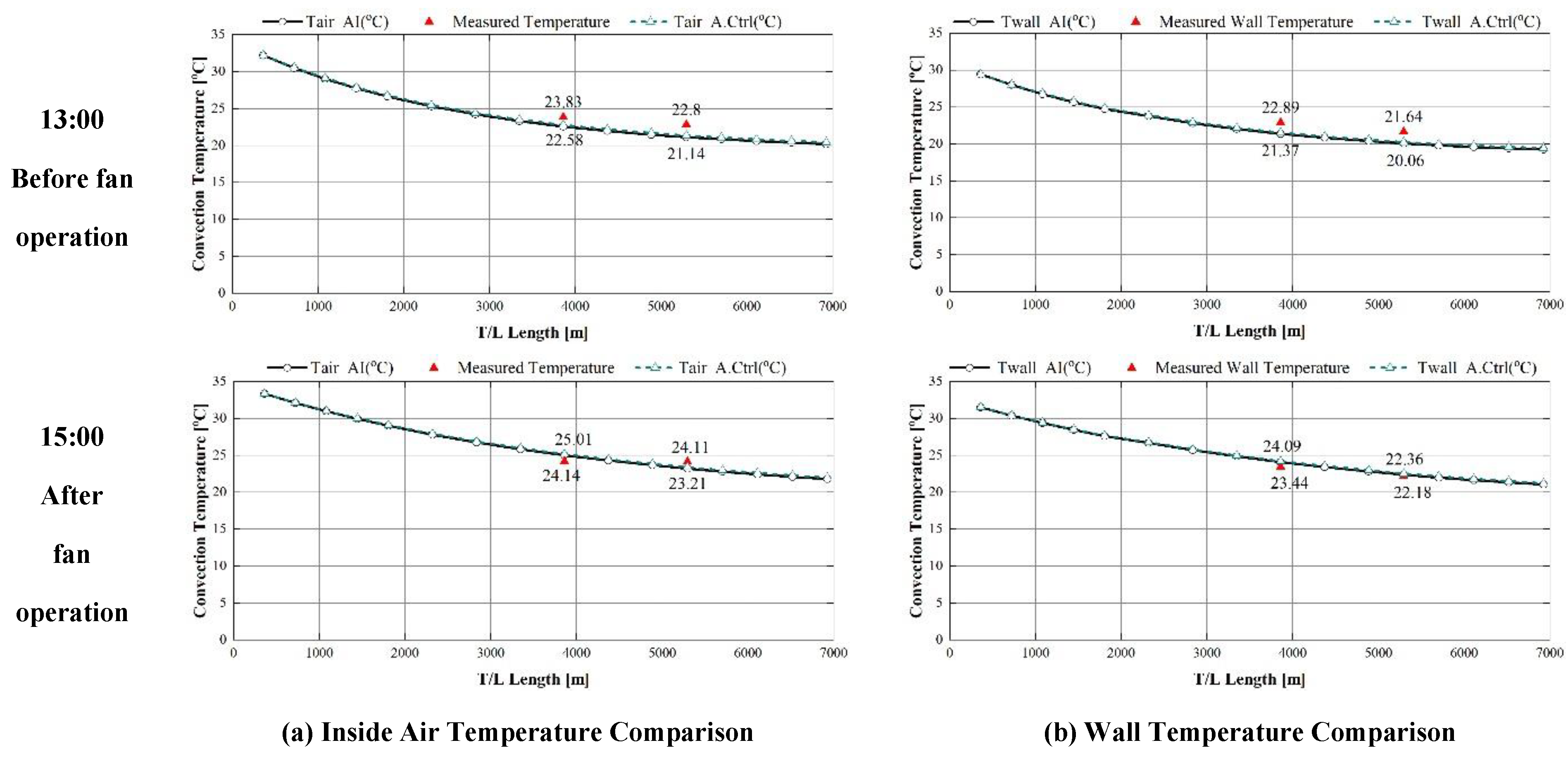
Figure 9.
Comparison of Condensation Water Volume Between 1D Analysis and 3D CFD Analysis by Relative Humidity.
Figure 9.
Comparison of Condensation Water Volume Between 1D Analysis and 3D CFD Analysis by Relative Humidity.
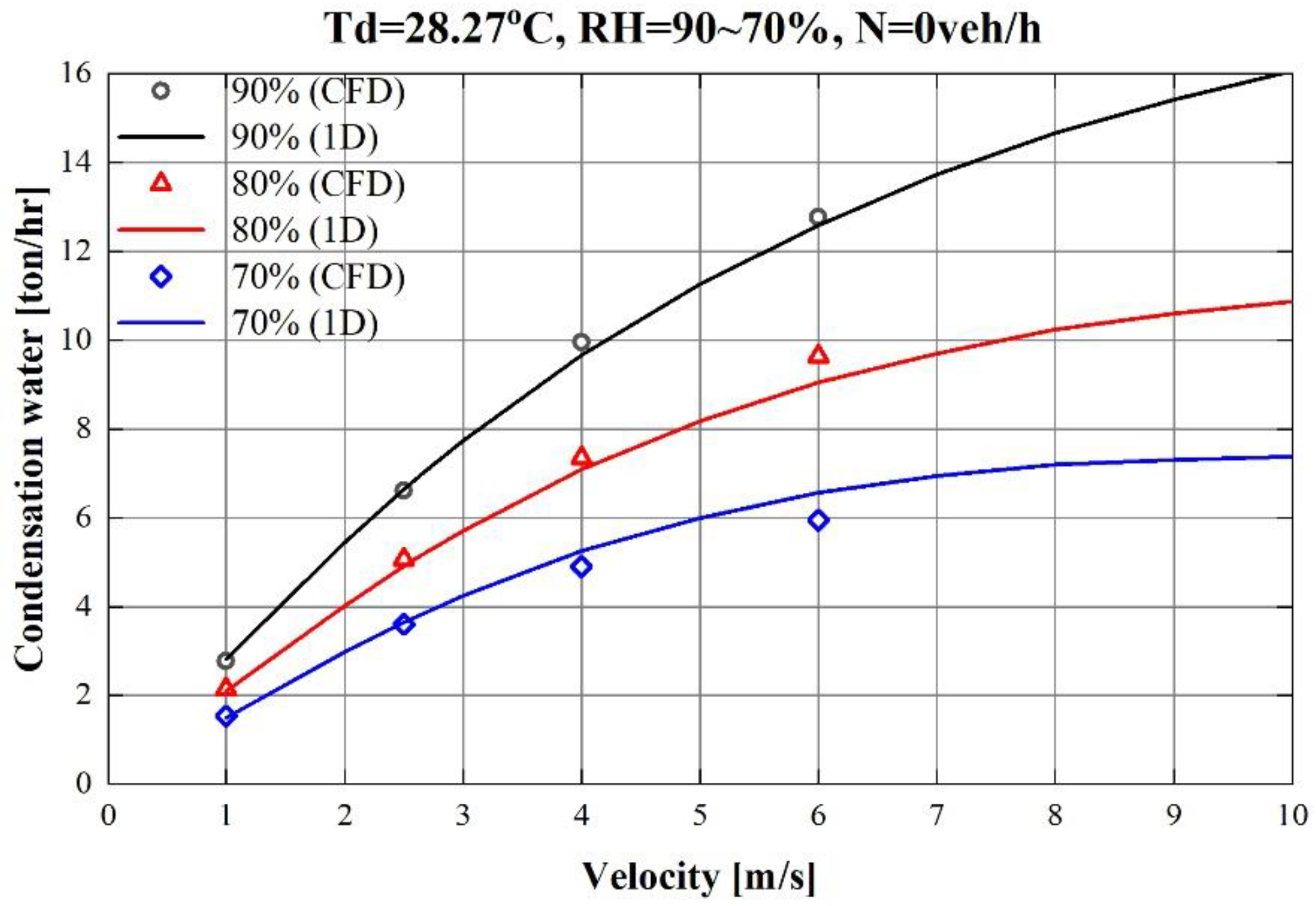
Figure 10.
Monthly Condensation Volume by Traffic Volume.
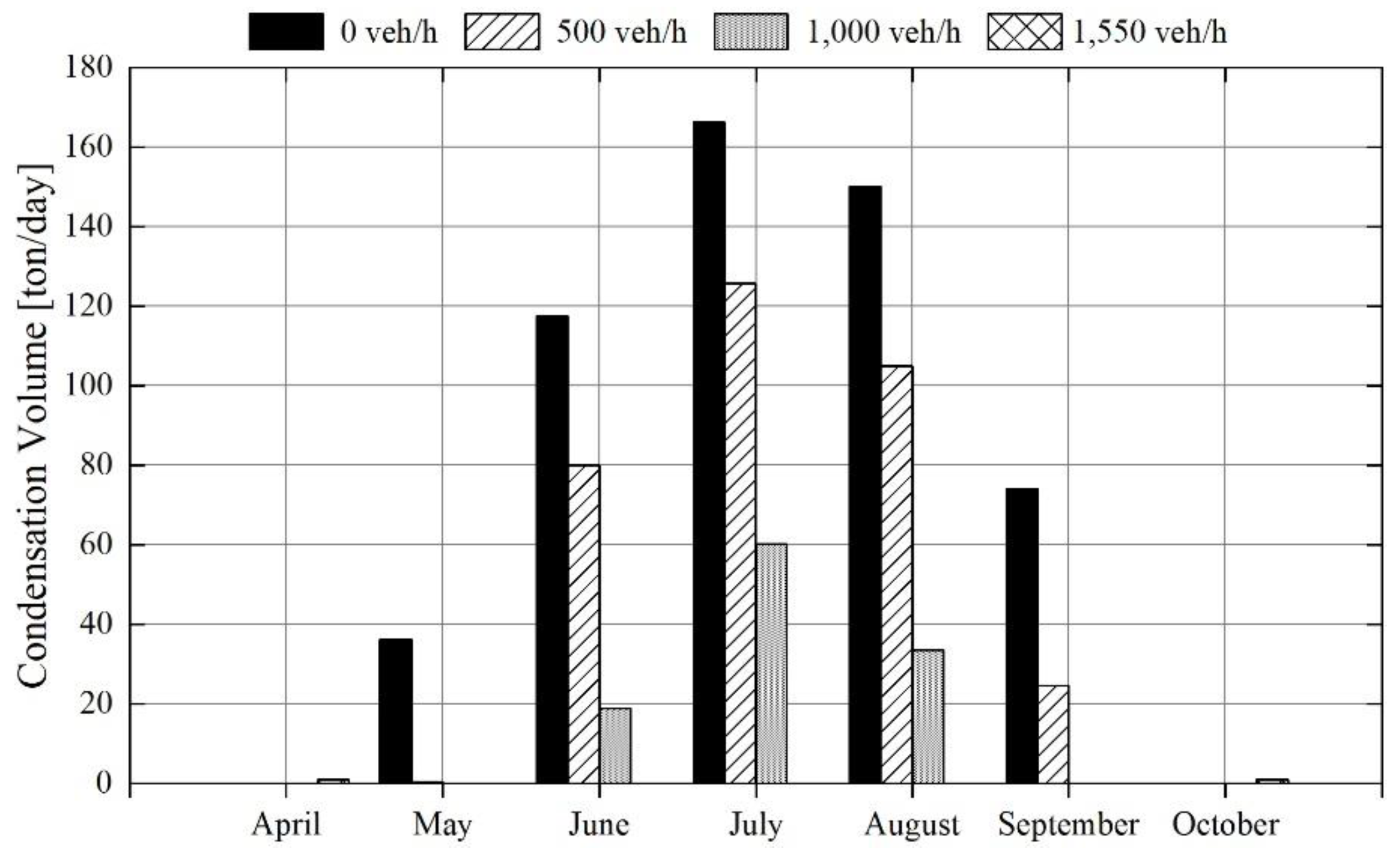
Figure 11.
Condensation Contour Map (CCM): (a) contour maps of condensation volume and maximum outlet relative humidity for N = 0 under dry-wall and wet-wall conditions; (b) condensation boundary (RH = 100% line) for varying traffic volumes at V = 2.65 m/s.
Figure 11.
Condensation Contour Map (CCM): (a) contour maps of condensation volume and maximum outlet relative humidity for N = 0 under dry-wall and wet-wall conditions; (b) condensation boundary (RH = 100% line) for varying traffic volumes at V = 2.65 m/s.
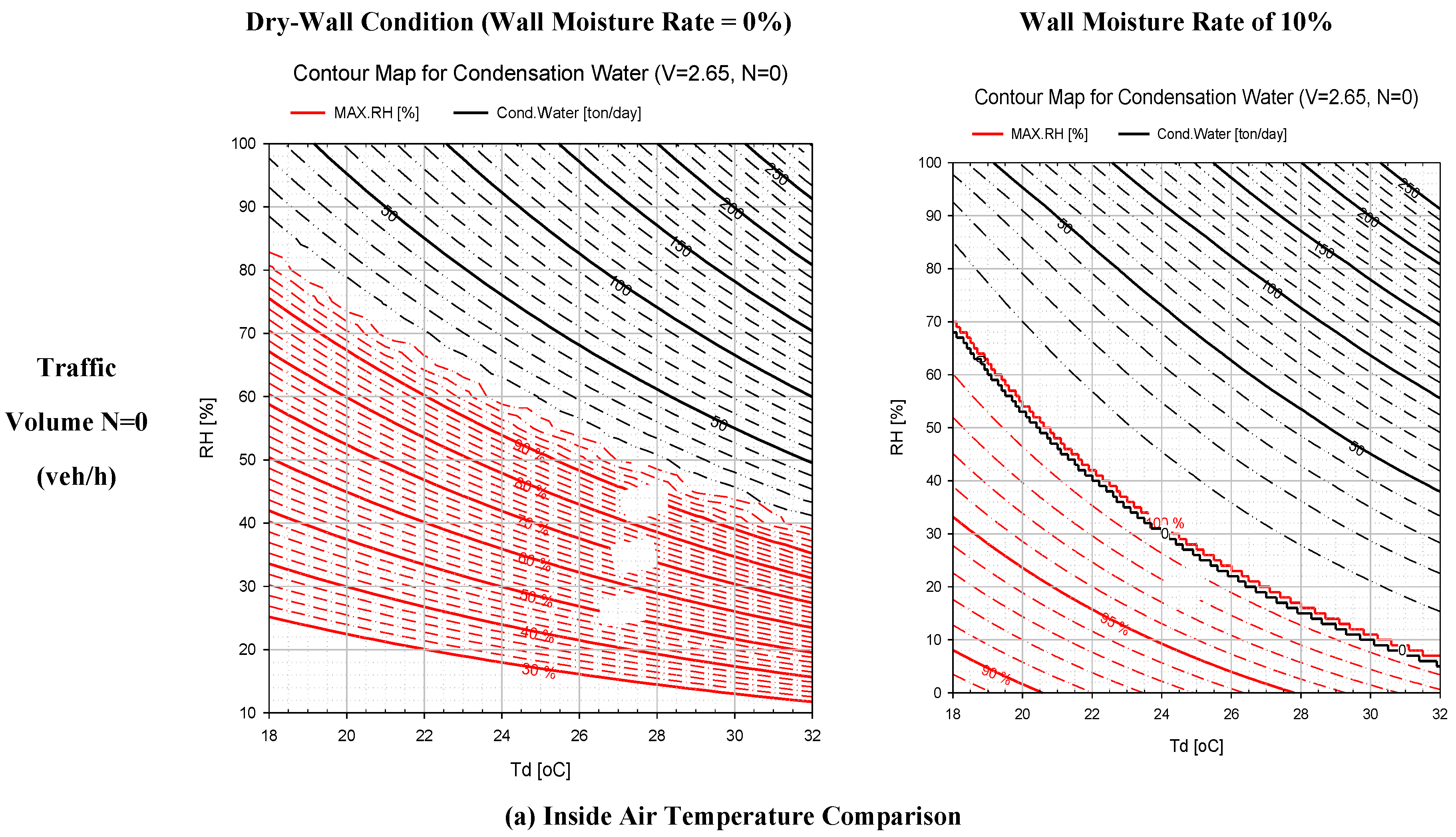
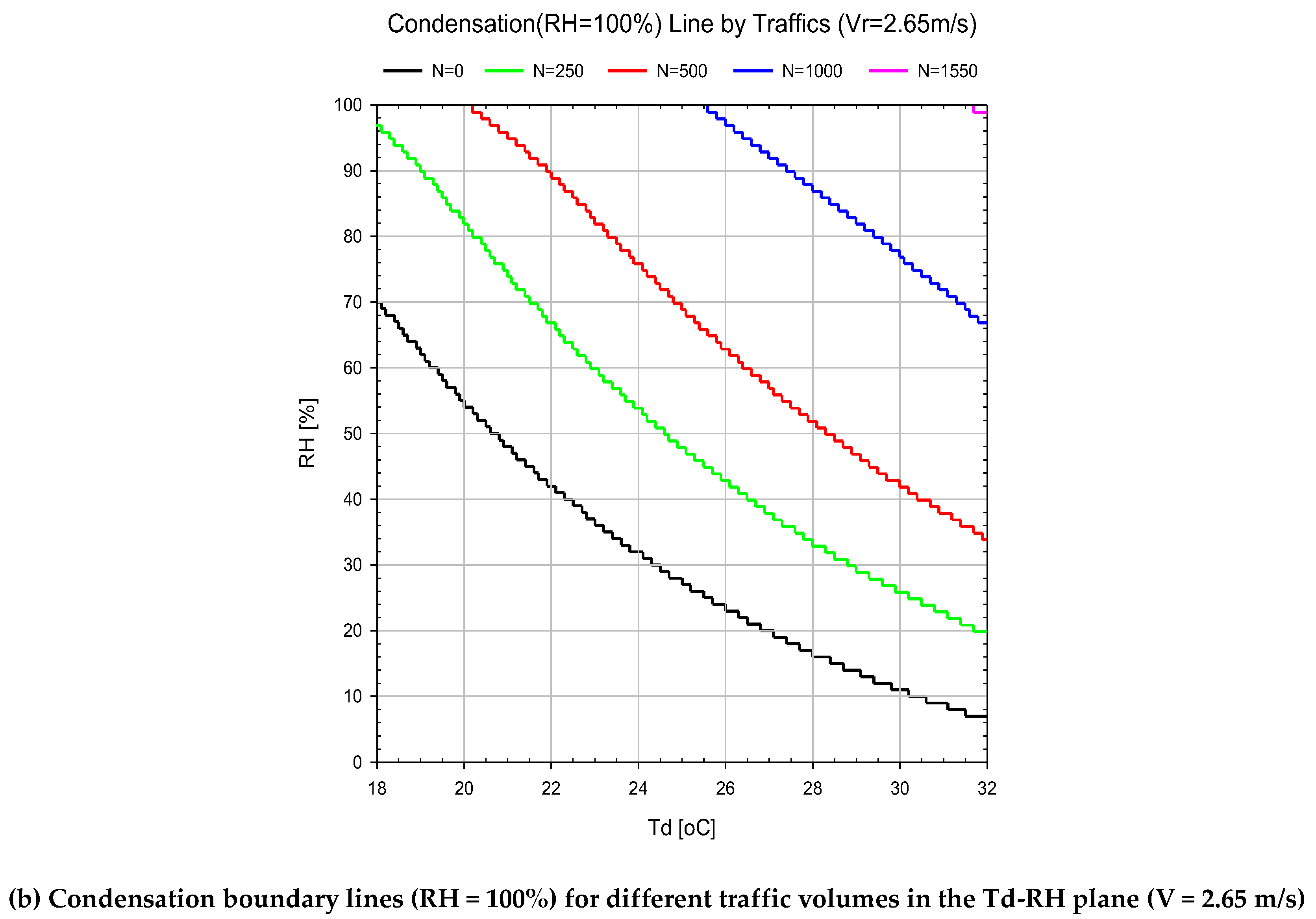

Table 1.
Summary of Boryeong Subsea Tunnel Specifications.
| Item | Boryeong Direction | Taean Direction |
|---|---|---|
| Length (m) | 6,916 | 6,927 |
| Inner cross-sectional area (m²) | 60.47 | 60.47 |
| Hydraulic diameter (m) | 7.77 | 7.77 |
| Longitudinal gradient (%) | −4.95/+0.5/+4.85 | −4.85/−0.5/+4.95 |
| Traffic type | One-way, 2 lanes | One-way, 2 lanes |
| Design traffic volume (in 2037) | 12,903 veh/day | 12,903 veh/day |
| Jet fan installation | Φ1,030 × 41 units | Φ1,030 × 41 units |
Table 2.
Monthly average meteorological inputs and assessment of condensation conditions.
| Month | T (°C) | RH (%) | Tg (°C) | Critical Wind Speed (m/s) |
Traffic Volume (veh/h) |
|---|---|---|---|---|---|
| January | −0.8 | 61.3 | 16.7 | -8.47 | -25.17 |
| February | 2.16 | 64.26 | 15.58 | -4.91 | -20.49 |
| March | 7.41 | 69.51 | 14.54 | 1.44 | -13.10 |
| April | 13.92 | 76.02 | 13.87 | 9.40 | -4.47 |
| May | 20.39 | 82.49 | 13.74 | 17.24 | 3.50 |
| June | 25.52 | 87.62 | 14.20 | 23.36 | 9.16 |
| July | 28.27 | 90.37 | 15.12 | 26.46 | 11.34 |
| August | 28.11 | 90.21 | 16.25 | 25.88 | 9.63 |
| September | 25.05 | 87.15 | 17.28 | 21.76 | 4.48 |
| October | 19.72 | 81.82 | 17.93 | 14.96 | -2.97 |
| November | 13.18 | 75.28 | 18.03 | 6.90 | -11.13 |
| December | 6.74 | 68.84 | 17.55 | -0.65 | -18.20 |
Table 3.
Thermophysical properties and thermal transmittance of the tunnel wall structure.
| Wall Composition | Thermal Conductivity (W/m·K) |
Thickness (m) |
Thermal Resistance (m²·K/W) |
Remarks |
|---|---|---|---|---|
| Lining (Concrete) | 2.50 | 0.45 | 0.180 | Inside waterproof layer |
| Waterproof membrane | 0.024 | 0.002 | 0.083 | HDPE type |
| Shotcrete | 1.67 | 0.15 | 0.090 | NATM support |
| Composite total | 1.705 | 0.602 | 0.353 | — |
| Overall thermal transmittance (U-value) | — | — | — | 2.832 W/m²·K |
Table 4.
Comparison of Measured Values and 1D Analytical Values.
| Time | Location | Item | Measured (°C) | Analytical (°C) | Error (%) |
|---|---|---|---|---|---|
| 13:00 | 4.0 km | Inside Air Temperature | 23.83 | 22.58 | 5.2 |
| 13:00 | 5.3 km | Inside Air Temperature | 22.80 | 21.14 | 7.3 |
| 13:00 | 4.0 km | Wall Temperature |
22.89 | 21.37 | 6.6 |
| 13:00 | 5.3 km | Wall Temperature |
21.64 | 20.06 | 7.3 |
| 15:00 | 4.0 km | Inside Air Temperature | 24.17 | 25.01 | 3.5 |
| 15:00 | 5.3 km | Inside Air Temperature | 24.11 | 23.21 | 3.7 |
| 15:00 | 4.0 km | Wall Temperature |
23.44 | 24.09 | 2.8 |
| 15:00 | 5.3 km | Wall Temperature |
22.18 | 22.36 | 0.8 |
Table 5.
Condensation Location and Volume by Traffic Conditions (V = 2.65 m/s).
| Month | 0 veh/h | 500 veh/h | 1,000 veh/h | 1,550 veh/h | ||||
|---|---|---|---|---|---|---|---|---|
| km | tons/day | km | tons/day | km | tons/day | km | tons/day | |
| May | 1.8 | 36.3 | 6.9 | 0.4 | — | — | — | — |
| June | 0.7 | 117.5 | 1.0 | 80.1 | 4.3 | 18.8 | — | — |
| July | 0.7 | 166.4 | 0.7 | 125.8 | 1.8 | 60.2 | — | — |
| August | 0.5 | 150.1 | 1.0 | 105.0 | 3.3 | 33.5 | — | — |
| September | 1.0 | 74.2 | 3.3 | 24.6 | — | — | — | — |
Table 6.
Annual Condensation Volume by Hourly Traffic Volume (V = 2.65 m/s).
| Traffic Volume (veh/h) |
Annual Volume (tons/yr) |
Max Daily (tons/day) |
Reduction vs Baseline (%) |
Condensation Period |
|---|---|---|---|---|
| 0 | 16,846 | 172.1 | (Baseline) | May–Sep |
| 250 | 12,415 | 143.2 | 26.3 | May–Sep |
| 500 | 7,978 | 108.9 | 52.6 | May–Sep |
| 1,000 | 628 | 20.9 | 96.3 | Jun–Aug |
| 1,550 (Design) | 0 | 0 | 100.0 | None |
Disclaimer/Publisher’s Note: The statements, opinions and data contained in all publications are solely those of the individual author(s) and contributor(s) and not of MDPI and/or the editor(s). MDPI and/or the editor(s) disclaim responsibility for any injury to people or property resulting from any ideas, methods, instructions or products referred to in the content. |
© 2026 by the authors. Licensee MDPI, Basel, Switzerland. This article is an open access article distributed under the terms and conditions of the Creative Commons Attribution (CC BY) license (http://creativecommons.org/licenses/by/4.0/).
Copyright: This open access article is published under a Creative Commons CC BY 4.0 license, which permit the free download, distribution, and reuse, provided that the author and preprint are cited in any reuse.


