

Submitted:
25 May 2026
Posted:
26 May 2026
You are already at the latest version
Abstract
The development of support for the immobilization of enzymes and yeasts is an important step in hydrolysis and fermentative processes, aiming to recover and reuse biocatalysts, thereby making the process of bioethanol production economically viable. In this study, we propose a core/shell support made of nanomagnets armed with Saccharomyces cerevisiae cells as a nanobiocatalyst for fermentative processes. We use orange biomass, a common waste in Brazil, for bioethanol production. The produced nanomagnets had a zeta potential of +28.0 ± 0.5 mV, were efficiently covered by silica and armed with -NH2 groups, and were duly characterized by infrared spectroscopy. The biomass after acid hydrolysis presented 10 ± 0.6 g L-1 of reducing sugars, which were quantified using the colorimetric method. An evaluation of fermentation conditions was carried out by varying temperature and pH. In the first condition, the achieved ethanol yield was 35-46% after 48 h of fermentation, while in the second condition, we obtained 48-90% ethanol, and in the third condition, 50-69.2%. The produced bioethanol was quantified through a chemical oxidation reaction. The immobilization process proved to be satisfactory with a reaction yield of around 25-30%.
Keywords:
yeast immobilization
; magnetic nanoparticles
; Saccharomyces cerevisiae
; bioethanol
1. Introduction
The reduction in the use of fossil fuels faces global regulatory barriers, despite the proven viability of biofuels. The transition to renewable energy sources can reduce costs and mitigate greenhouse gas emissions [1,2,3,4,5]. Faced with these challenges, it is imperative to seek new, low-carbon, alternative energy sources in order to sustain a high standard of sustainable development. In this context, it is crucial to develop innovative methods for efficient energy use [6,7,8,9]. These methods, in turn, must provide energy from renewable and clean sources, while reducing environmental pollution and not compromising food security [10,11]. Biofuels, which are fuels generated from renewable raw materials [12], are generally classified into different types, such as first (1G), second (2G), third (3G), and fourth (4G) generation biofuels [13]. First-generation biofuels use edible biomass such as starch and sugar [8,10]. While those of the second generation (2G) are based on the use of the most efficient renewable alternatives, using non-edible lignocellulosic biomass for human consumption, Third-generation (3G) biofuels are derived from marine biomass, particularly algae. In contrast, fourth-generation (4G) biofuels employ genetically engineered microorganisms capable of fixing high concentrations of CO2 [9,10]. Ethanol is an example of a biofuel produced on a large scale in Brazil, which is produced mainly from sugar cane [14]. Ethanol is the main representative source of bioenergy [15]. Over the past 10 years, global ethanol production has seen consistent growth, with an average annual increase of 3.8%. In 2023, this growth reached a notable peak, reaching the impressive mark of 115 billion liters of this biofuel [16]. Despite the high yield of first-generation ethanol, there is a strong dependence on food crops such as corn and sugarcane, where production technologies are more consolidated. However, this type of ethanol faces competition challenges with food supply and land use [10,17]. 2G ethanol was developed to solve the limitations presented by 1G bioethanol, using mainly inedible cellulosic biomass [8,18]. Among the plant sources used for the production of second-generation ethanol (2G ethanol), a variety of agricultural residues stand out [19,20,21]. These include corn straw and other cereals, husks, and bagasse from various crops, such as sugar cane, orange, eucalyptus, soybeans, and corn, which are also used in the production of 2G ethanol [21,22]. Lignocellulosic biomass has significant potential to become a highly competitive raw material in the generation of renewable energy or in the production of value-added biomolecules [23]. The use of biomass as an energy source has several advantages, such as the reduction of CO2 emissions, and it contributes to mitigating the effects of climate change [24]. Regarding its constitution, lignocellulosic biomass is mainly composed of two types of carbohydrate polymers, cellulose and hemicellulose, and a non-carbohydrate phenolic compound called lignin [25,26]. Biomass generated from the processing of citrus fruits is a viable alternative to lignocellulosic biomass for the production of 2G ethanol, since Brazil is the largest exporter of orange juice, which means that a large part of the fruits produced are industrially processed for juice production. Orange biomass differs from others, since the main polysaccharide present is pectin (between 30-35% on a dry basis), while cellulose and hemicelluloses are present in smaller quantities, and lignin is a minor component. Currently, 80% of the oranges produced in Brazil are destined for the production of juice and juice concentrate, which means that the amount of waste generated by orange processing is huge. In fact, the forecast for processed oranges in Brazil was around 69% of total production in 2020, which impacts the environment [27,28]. The residue that is generated from juice processing is normally called orange peel waste (OPW), and it consists of peels, seeds, and pulp. OPW is generally transformed into “pellets”, which can be used for animal feed [29,30]. Another possibility for OPW, in addition to being used as animal feed, consists of its use to produce 2G ethanol [22]. Once hydrolyzed, polysaccharides present in OPW biomass are easily fermented by yeast, producing this biofuel. This innovative use of orange peel not only takes advantage of a common waste product from the orange juice industry but also contributes to the production of renewable biofuels, reducing dependence on fossil energy sources and promoting a more sustainable economy [31]. The processing of OPW to obtain alcohol has been increasingly adopted as a lignocellulose raw material subjected to simultaneous saccharification and fermentation (SSF) for the production of bioethanol [32,33,34]. The S. cerevisiae is the yeast widely used in several areas such as the ethanol industry, baking, beer making, and winemaking [35,36], due to its inherent ability to produce high amounts of ethanol, tolerance to low pH, high concentrations of sugar and ethanol, and resistance to some inhibitors released from lignocellulosic hydrolysates [22,37,38]. During the alcoholic fermentation process, some factors such as increased temperature, change in pH, osmotic stress, and ethanol concentration can cause stress in S. cerevisiae, which, in turn, will affect ethanol production [39]. A range between 20–35 °C is acceptable for S. cerevisiae with an optimal growth temperature of 30 °C, while an increase to approximately 40 °C induces the biosynthesis of stress response factors such as heat shock proteins, this is why it is essential to maintain temperature control [40]. One of the most significant challenges in fermentation is the inhibition of yeast cell growth due to ethanol accumulation. The development of an immobilization technology to separate and reuse yeast cells from the fermentation medium can be considered a promising method to mitigate toxicity and cell mortality [41]. A viable alternative to control the morphological structure of these microorganisms is cell immobilization (CI). This technique aims to maintain the necessary catalytic activity, being applicable in both laboratory and industrial environments [42]. The use of immobilization techniques is an effective strategy to solve problems associated with enzymes and free yeast in terms of improving the efficiency, stability, and yield of the process [37,41,43]. An alternative used in fermentation processes is the immobilization of yeast in materials such as DEAE-cellulose, calcium alginate, calcium pectate, or sintered glass. Immobilization increases the biomass per unit of reactor volume in a shorter time [44]; however, the selection of a suitable matrix for cell immobilization is crucial to obtain the desired product, being a specific decision for each microorganism and metabolite under study [45,46]. The main limitation of this method is the possibility of cell separation due to the low intensity of stabilization forces [47,48]. A promising alternative to this problem consists of the use of magnetic nanoparticles coated with silica, as they facilitate the separation of the reaction medium through the use of magnets, when it is necessary to regenerate the bioreactor substrate, while silanes have ordered pore diameters, whose size can be targeted to adequately protect target yeasts and enzymes [41,49,50]. The immobilization of microbial cells on solid supports depends on molecular forces such as electrostatic, ionic, van der Waals, hydrogen bonding, hydrophilic, and hydrophobic interactions. However, due to the reversible nature of these interactions, cell detachment is a significant disadvantage of this method. To avoid desorption of microorganisms from the matrix, it is crucial to promote strong adsorption between cells and support. This can be achieved by tuning the support characteristics (such as particle size, porosity, specific area, charge), chemically modifying the support surface to increase favorable interactions (e.g., introducing reactive groups such as –NH2,—OH, –COOH, –SH), or by the use of combined materials [51,52].
Magnetic iron nanoparticles are widely used in the area of biotechnology, mainly as a support for the immobilization of enzymes and yeast, offering the opportunity to reduce working time, process cost, and the possibility of reuse, and can be used in continuous systems [41,53]. In the M-IONPs family of magnetic nanoparticles, the three most common types are magnetite (Fe3O4), maghemite (γ-Fe2O3). and hematite (α-α-Fe2O3). Hematite (α-Fe2O3) is known for its high chemical stability when exposed to air for prolonged periods [54].
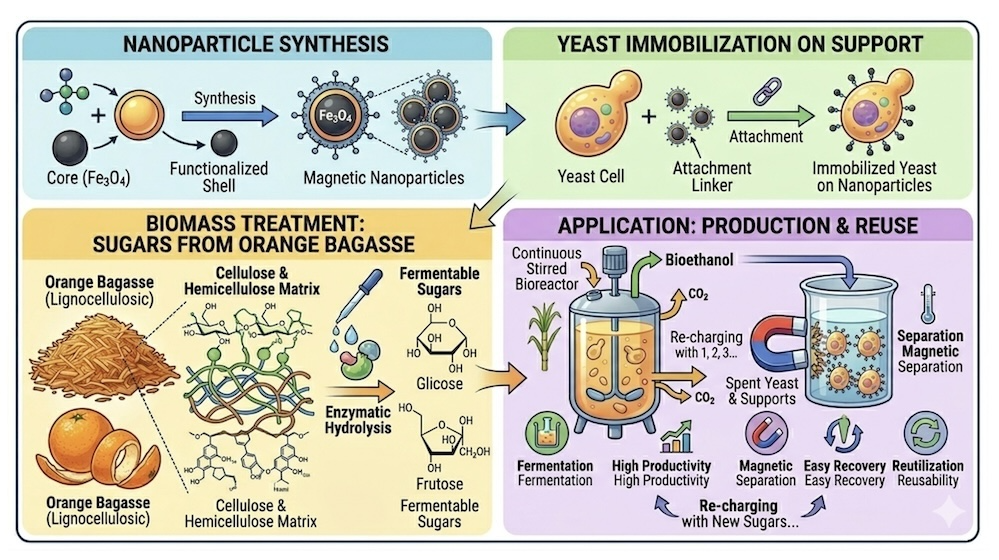
The focus of this article is the optimization of fermentation bioprocess, where hydrolyzed sugars from OPW are converted into ethanol through the action of the yeast S. cerevisiae, It is proposed to evaluate the potential of Fe3O4 magnetic iron nanoparticles, coated with inert material, and functionalized for the immobilization of S. cerevisiae yeast cells during the ethanol production process using orange pomace as a source of sugars and, as an alternative acid hydrolysis. Figure 1 illustrates the complete process from the synthesis of the magnetic nanoparticles (MNP), cellular immobilization, and application in fermentation processes.
2. Materials and Methods
2.1. Synthesis of Fe3O4 Nanoparticles
The procedure for MNP synthesis was adapted from the methodology described by Oberacker et al. [55] and carried out in our research laboratory with some adaptations. The coprecipitation method was used. To this end, an aqueous solution of Fe2+/Fe3+ was prepared in a 1:2 molar ratio. The salts used were FeSO4 · 7H2O and FeCl3 · 6H2O. Then, they were slowly dripped into the flask containing 100 mL of an alkaline sodium hydroxide solution (NaOH 2 mol L-1) heated between 70 and 80 °C, under stirring (400 to 500 rpm). The nanoparticles were magnetically separated after cooling to room temperature, then repeatedly purified with ethanol (2x) and water (2x) and stored at room temperature under vacuum. The synthesis was carried out in triplicate, until the MNP were obtained under the same working conditions after synthesis, the pH of the nanoparticles was around 11, washing allowed the pH to be 7. Then, gravimetry was carried out to determine the quantity obtained. The MNPs were stored in an evacuated desiccator until the next stage.
2.2. Surface Modification with TEOS and APTES
Fe3O4 MNP coating was adapted from Oberacker et al., 2019 [55]. 2.5 g of Fe3O4 MNP was mixed with 200 mL of ethanol. The suspension was dispersed in an ultrasonic bath for 30 min. A solution containing 2 g tetraethyl orthosilicate (TEOS), 50 mL ethanol, and 6 mL ammonia (NH3, 25% v/v) was added. Vigorous stirring was maintained in a 25 °C water bath for 4 h. The Fe3O4@SiO2 were washed with water (3–4 times), twice with ethanol, and dried under vacuum at room temperature. For the amino functionalization, 150 mg of Fe3O4@SiO2 were suspended in 30 mL of water, and 0.6 mL of 3-aminopropyltriethoxysilane (APTES) was added. The suspension was maintained at 70 °C for 16 h under vigorous stirring. The Fe3O4@SiO2 –NH2 was washed with water (3–4 times), twice with ethanol, and dried under vacuum.
2.3. Nanoparticles Characterisation
The zeta potential (ζ) and hydrodynamic radius were measured using 0.01 mg mL−1 water suspensions in a DST1070 folded cuvette in a Zetasizer Nano-ZS (Malvern). Size and shape were determined by Transmission Electron Microscopy in a Carl Zeiss CEM-902 with 80 keV using copper grids and parlodium film. The microscope was equipped with a Castaing-Henry-Ottensmeyer filter spectrometer used for the electron energy loss spectrometry (EELS). The crystal structure was determined by X-ray Diffraction (XRD) using a D2-Phaser Bruker from IFGW—DEQ-l 108 (UNICAMP), operating with 30 kV, current: 10 mA, radiation: Cu 1.54184 angs., continuous scanning mode, time per step: 0.4 s, range (2 theta) : 5°–80°, increment of 0.02°; linear detector (LYNXEYETM); usage time: 1.5 h. Surface functionalization was investigated by Infrared Spectroscopy equipped with Attenuated Total Reflectance (ATR-FT-IR) using an Agilent Cary 630. X-Ray Photoelectron spectra were obtained using a SPECS system (SPECS GmbH) equipped with X-ray XR-50 with radiation Al Kα (hν = 1486.6 eV) and Phoibos 100 analyser with MCD-9 detector at the CCS Nano laboratory (Centro de Componentes Semicondutores, UNICAMP).
2.4. Chemical Composition of Orange Peel Waste (OPW)
Moisture of the dry OPW samples was determined based on the US National Renewable Energy Laboratory (NREL)’s standard procedure [56]. The ash content was determined using AOAC methods (AOAC, 2016) [57]. Pectin was extracted and analyzed according to the literature [7]. Acid detergent fiber (ADF), neutral detergent fiber (NDF), and acid detergent lignin (ADL) were determined with ANKOM Technology Methods [58]. All analyses were performed in triplicate.
2.5. Acid Hydrolysis of Orange Pomace and Sugar Quantification
250 mL Erlenmeyer flasks containing 17.0 g of orange pomace residue were prepared, then distilled water and sulfuric acid (98%) were added, reaching a concentration of 0.5% (m/v) at a final volume of 100 mL. Then, the samples were heated in an autoclave at 120 °C (15 or 30 min). The hydrolysates were analyzed for reducing sugars using 3,5-dinitrosalicylic acid (DNS). The treatment allowed us to obtain hydrolysates with a higher sugar content, which were then stored and used in the fermentation experiment. All experiments were performed in triplicate. The sugars were quantified using a calibration curve, as shown in the attachment in Supplementary Table S1.
2.6. Microorganism and Culture Media
Commercial yeast (S. cerevisiae brand Fleischmann), purchased from the local market, was prepared in sterilized Erlenmeyer flasks (250 mL) in a medium containing Yeast Extract-Peptone-Dextrose 2% (YPD), 10.8 g L-1 of yeast extract, 15 g L-1 of peptone, and 20 g L-1 of dextrose (D-Glucose), and chloramphenicol (30 ug mL-1) was added. The vials were incubated at 30 °C for 24 h in a shaker shaking at 120 rpm. The inoculum was transferred to sterile Erlenmeyer flasks (250 mL) containing 100 mL of YPD medium with 30 ug mL-1 of chloramphenicol.
2.7. Yeast Immobilization on Magnetic Nanoparticles
For the immobilization process, the magnetic nanoparticles were dispersed in a sodium phosphate solution (pH 4.5) and stored for 12 h at room temperature. Then, fresh yeast cells were washed three times with 0.9% NaCl saline to remove the culture medium. The cells were then mixed with an equal volume of MNP and shaken in a shaker incubator for 24 h at 35 °C to allow the nanoparticles to adhere to the surface of the cells. The immobilized cells were then transferred to the fermentation medium. The immobilization efficiency was examined by exposing the immobilized cells to a magnetic field. After 5, 10, 15, 20, and 25 min, the supernatants were collected and inoculated onto the LB agar plates. The resulting colonies were counted after 24 h of incubation at 30 °C, and the immobilization efficiency was calculated based on Equation (1).
where Ei is the immobilization efficiency and CFUt0 and CFUt1 are the number of colonies obtained before and after exposure to the magnetic field, respectively
2.8. Fermentation Process
The fermentation process illustration is shown in Figure 2.
2.9. Quantification of Ethanol Using the Colorimetric Method
Ethanol quantification was performed using a standard curve with ethyl alcohol (PA, Dinâmica). Standard ethanol solutions were prepared in the range of 1.6–12.8 mg mL-1. 5 mL of sodium dichromate solution (40 mg mL-1) was added, and 15 mL of standard solution was added. Then, 25 mL of H2SO4 solution. The pH of the solution was maintained by 0.2 mol L-1 of acetate buffer with a pH value of 4.3. Then, the mixture was stirred for 1 min and incubated for 2 h. After this, a green product was observed, the absorbance of the solutions was taken at 578 nm, and based on the readings, the standard curve was constructed. The experimental samples were treated in the same way, followed by absorbance measurement, and the ethanol concentration was determined from the standard curve according to Supplementary Table S2.
3. Results
3.1. Synthesis and Characterization of Nanoparticles
The synthesis of MNPs—magnetic nanoparticles (Fe3O4) was performed using the co-precipitation method, which can be described by Equation (2).
Fe2+ + 2Fe3+ + 8OH− → Fe3O4 + 4H2O
The synthesized nanoparticles exhibited strong magnetic responsiveness in the presence of a permanent magnet (Figure 3).
Elemental analysis (CHN) revealed a progressive increase in carbon, hydrogen, and nitrogen content after each modification step, confirming the successful coating and functionalization of the nanoparticles (Table 1).
The average hydrodynamic diameter increased from 244.4 ± 1.0 nm for Fe3O4 to 368.0 ± 0.4 nm for Fe3O4@SiO2 and 399.0 ± 0.5 nm for Fe3O4@SiO2@NH2 (Table 2). Correspondingly, zeta potential values changed from +22.0 ± 0.8 mV to −28.0 ± 0.5 mV after silica coating and to +35.0 ± 0.2 mV after APTES functionalization.
Transmission electron microscopy (TEM) images (Figure 4) showed average particle diameters of 27.00 ± 0.01 nm for Fe3O4, 35.00 ± 3.21 nm for Fe3O4@SiO2, and 115.00 ± 7.52 nm for Fe3O4@SiO2@NH2.
FT-IR spectra (Figure 5) confirmed the formation of Fe3O4 by characteristic bands at 440 and 568 cm−1. Additional bands at 1058 and 960 cm−1 verified the presence of silica, while bands at 1490 and 690 cm−1 confirmed the successful incorporation of amine groups after APTES functionalization.
3.2. Composition of Orange Peel Waste (OPW)
OPW presented a moisture content of 80.48 ± 2.30% and an ash content of 5.74 ± 0.06%. The lignocellulosic fraction consisted of 15.88 ± 1.68% hemicellulose, 19.73 ± 0.70% cellulose, and 5.96 ± 0.68% lignin. Additionally, the material contained 19.52 ± 2.30% total solids, 13.94 ± 0.78% ADF, and 29.24 ± 2.24% NDF.
3.3. Efficiency of Cell Immobilization
Figure 6 shows the interaction between Fe3O4@SiO2@NH2 nanoparticles and Saccharomyces cerevisiae cells, resulting in a visible darkening of the yeast suspension, indicating nanoparticle attachment.
3.4. Hydrolysis and Fermentation with Free Yeast
The hydrolysis of orange bagasse generated fermentable sugars that were subsequently converted to ethanol by free S. cerevisiae. At pH 4.0 and 28 °C, ethanol production increased up to 48 h, reaching a maximum yield of 56%. At pH 4.5 and 30 °C, the highest fermentation performance was observed, with a maximum ethanol yield of 90% after 48 h. At pH 5.0 and 35 °C, despite substantial glucose consumption, ethanol production was lower and decreased after 72 h (Figure 7)
3.5. Hydrolysis and Fermentation with Yeast Immobilized on Magnetic Iron Nanoparticles
Immobilized yeast on magnetic nanoparticles maintained stable performance over six consecutive fermentation cycles (Figure 8). After 24 h, ethanol yields were approximately 9.2–9.8%. At 48 h, yields increased to 29–31.4%. After 72 h, yields decreased to 22–24%. These results demonstrate the operational stability and reusability of the Yeast@MNP system.
4. Discussion
The co-precipitation method was selected due to its operational simplicity, high efficiency, good reproducibility, and economic viability. Furthermore, it is a fast and direct approach for obtaining nanoparticles, which can be conducted under relatively mild temperature conditions (generally around 70 °C), which favors the control of particle size and properties [55,59]. Figure 2 illustrates the nanoparticles in the presence of a permanent magnet.
The progressive increase in CHN content confirms the successful incorporation of silica and aminosilane layers, consistent with previous findings reported by our research group (2021) [60].
The increase in hydrodynamic diameter after each modification step, together with the inversion of zeta potential, provides strong evidence of effective surface engineering. The negative surface charge after silica coating is attributed to deprotonated silanol groups, whereas the positive charge observed after APTES functionalization reflects protonated amino groups [49,60,61,62].
The high cellulose and hemicellulose contents demonstrate the suitability of OPW as a renewable feedstock for second-generation bioethanol production. The relatively low lignin content is advantageous because it reduces biomass recalcitrance and facilitates hydrolysis and fermentation.
The rapid immobilization kinetics, with 98% attachment within 25 min, indicate a strong interaction between positively charged amino-functionalized nanoparticles and negatively charged yeast cell surfaces.
This result is superior to that reported by Firoozi et al. (2022) [41], who obtained 91% immobilization after 20 min.
The results confirm the critical influence of pH and temperature on ethanol production. The best performance at pH 4.5 and 30 °C agrees with the optimal growth conditions commonly reported for S. cerevisiae [12,63,64,65]. Reduced ethanol production at 35 °C likely reflects thermal stress and enhanced formation of byproducts.
The gradual increase in ethanol yield from 24 to 48 h suggests adaptation of immobilized cells and improved metabolic activity.
The decrease observed after 72 h may be attributed to substrate depletion, ethanol accumulation, and diffusional limitations. Compared with traditional supports such as calcium alginate [66], MNP offers several advantages, including easier recovery, lower mass-transfer resistance, and improved process control.
The stability observed over six fermentation cycles confirms the potential of magnetic immobilization for industrial-scale bioethanol production.
5. Conclusions
Fe3O4 magnetic nanoparticles were successfully synthesized by co-precipitation, subsequently coated with SiO2 and functionalized with amine groups, enabling the immobilization of S. cerevisiae. Characterization confirmed the formation and functionalization of the material, evidenced by the positive zeta potential and characteristic spectral bands of Fe3O4, SiO2, and –NH2 groups. Orange bagasse proved to be a promising biomass for obtaining fermentable sugars, achieving conversions of up to 90% in 48 h under conditions of pH 4.5 and 30 °C. The application of magnetic nanoparticles as a support allowed the reuse of the yeast for up to six fermentation cycles, with consistent performance, especially at 72 h. Although the ethanol yield with immobilized yeast was lower than that obtained with free yeast, it is important to highlight that studies exploring the use of functionalized magnetic nanoparticles as a support for cell immobilization in fermentation processes are still scarce. In this context, this approach represents an innovative strategy with high technological potential, offering advantages such as easy recovery and reuse of the biocatalyst. Thus, the main objective of this study was to demonstrate the viability of using this technology, which was successfully achieved, evidenced by the ability of the MNP@yeast system to perform fermentation and produce ethanol. The results indicate that this technology constitutes a promising alternative, which can be further explored and optimized, especially through adjustments in operating conditions, such as pH and temperature, aiming to maximize process yield.
Supplementary Materials
The following supporting information can be downloaded at the website of this paper posted on Preprints.org.
Author Contributions
Neidelênio Baltazar Soares: investigation, writing—original draft & editing. Symone Costa de Castro: investigation and analysis. João Guilherme M. Pontes: writing, investigation, and analysis. Ljubica Tasic: science advisor, writing, and review.
Funding
This work was supported by the Coordination for the Improvement of Higher Education Personnel (CAPES) for financial support and the granting of scholarships during the master’s degree (Process no. 88882.329146/2010-01—UNICAMP—CHEMISTRY).
Data Availability Statement
The data presented in this study are available on request from the corresponding author.
Acknowledgments
The authors thank the Coordination for the Improvement of Higher Education Personnel (CAPES) for the financial support and granting of scholarships during the master’s degree, and the São Paulo Research Foundation (FAPESP) for the funding (Grants #2014/50867-3 and #2022/02992-0) and encouragement of scientific development and infrastructure.
Conflicts of Interest
The authors declare that there is no conflict of interest regarding the publication of this paper.
Abbreviations
The following abbreviations are used in this manuscript:
| ADF | Acid detergent fiber |
| APTES | 3-aminopropyltriethoxysilane |
| CFU | Colony-forming units |
| FT-IR | Fourier transform infrared spectroscopy |
| MNPs | Magnetic nanoparticles |
| NDF | Neutral detergent fiber |
| OPW | Orange peel waste |
| TEOS | Tetraethyl orthosilicate |
| YPD | Yeast Extract-Peptone-Dextrose |
References
- Sales, M.B.; Borges, P.T.; Filho, M.N.R.; Silva, L.R.M.; Castro, A.P.; Lopes, A.A.S.; Lima, R.K.C.; Rios, M.A.S.; Santos, J.C.S. Sustainable feedstocks and challenges in biodiesel production: an advanced bibliometric analysis. Bioengineering 2022, 9(10), 539. [Google Scholar] [CrossRef]
- Banco Nacional do Desenvolvimento (BNDES). Available online: https://web.bndes.gov.br/bib/jspui/bitstream/1408/2527/1/BS%2025%20Etanol%2C%20Alcoolqu%C3%ADmica%20e%20Biorrefinarias_P.pdf (accessed on April 2026).
- Tiba, S. Revisiting and revising the energy-growth nexus: A non-linear modeling analysis. Energy 2019, 178, 667. [Google Scholar] [CrossRef]
- Opeyemi, B.M. Path to sustainable energy consumption: The possibility of substituting renewable energy for non-renewable energy. Energy 2021, 228, 120519. [Google Scholar] [CrossRef]
- Bezerra, M.G.; Brandão, M.V.O.R.; Fonseca, E.C.J.; Lima, V.J.A.; Brandão, M.P.; Junior, C.E.A.; Machado, V.; Oliveira, C.S.; Coelho, R.S.; Alves, C.T. Enhancing second-generation ethanol production through acid hydrolysis and Saccharomyces cerevisiae fermentation: a sustainable approach using Cassava peel and Manipueira biomass. Chem. Eng. Trans. 2024, 110, 145. [Google Scholar] [CrossRef]
- Li, Y.; Sun, H.; Zhang, Y.; Wang, X.; Gao, M.; Sun, X.; Wang, Q. Research progress for co-production ethanol and biobased products. Ind. Crop Prod. 2024, 212, 118351. [Google Scholar] [CrossRef]
- Tsukamoto, J.; Durán, N.; Tasic, L. Nanocellulose and bioethanol production from orange waste using isolated microorganisms. J. Braz. Chem. Soc. 2013, 24(9), 1537–1543. [Google Scholar] [CrossRef]
- Alalwan, H.A.; Alminshid, A.H.; Aljaafari, H.A.S. Promising evolution of biofuel generations. Subject review. Renew. Energy Focus 2019, 28, 127–139. [Google Scholar] [CrossRef]
- Patel, A.; Shah, A.R. Integrated lignocellulosic biorefinery: Gateway for production of second generation ethanol and value added products. J. Bioresour. Bioprod. 2021, 6, 108–128. [Google Scholar] [CrossRef]
- Jarunglumlert, T.; Prommuak, C. Net energy analysis and techno-economic assessment of co-production of bioethanol and biogas from cellulosic biomass. Fermentation 2021, 7(4), 229. [Google Scholar] [CrossRef]
- Chen, J.; Zhang, B.; Luo, L.; Zhang, F.; Yi, Y.; Shan, Y.; Liu, B.; Zhou, Y.; Wang, X.; Lü, X. A review on recycling techniques for bioethanol production from lignocellulosic biomass. Renew. Sustain. Energy Rev. 2021, 149, 111370. [Google Scholar] [CrossRef]
- Hawaz, E.; Tafesse, M.; Tesfaye, A.; Kiros, S.; Beyene, D.; Kebede, G.; Boekhout, T.; Groenwald, M.; Theelen, B.; Degefe, A.; et al. Bioethanol production from sugarcane molasses by co-fermentation of Saccharomyces cerevisiae isolate TA2 and Wickerhamomyces anomalus isolate HCJ2F-19. Ann. Microbiol. 2024, 74, 13. [Google Scholar] [CrossRef]
- Baudry, G.; Delrue, F.; Legrand, J.; Pruvost, J.; Vallée, T. The challenge of measuring biofuel sustainability: A stakeholder-driven approach applied to the French case. Renew. Sustain. Energy Rev. 2017, 69, 933–947. [Google Scholar] [CrossRef]
- Joshi, J.; Dhungana, P.; Prajapati, B.; Maharjan, R.; Poudyal, P.; Yadav, M.; Mainali, M.; Yadav, A.P.; Bhattarai, T.; Sreerama, L. Enhancement of ethanol production in electrochemical cell by Saccharomyces cerevisiae (CDBT2) and Wickerhamomyces anomalus (CDBT7). Front. Energy Res. 2019, 7, 70. [Google Scholar] [CrossRef]
- Göktaş, M.; Balki, M.K.; Sayin, C.; Canakci, M. An evaluation of the use of alcohol fuels in SI engines in terms of performance, emission and combustion characteristics: A review. Fuel 2021, 286(2), 119425. [Google Scholar] [CrossRef]
- US-Departament Energy. Available online: https://afdc.energy.gov/data/10331 (accessed on April 2026).
- Zhuang, X.; Wang, H.; Jiang, S.; Hu, X.; Su, T.; Zhang, X.; Ma, L. A review on the chemo-catalytic conversion of cellulose to bio-ethanol. Green. Chem. Eng. 2023, 5, 276–289. [Google Scholar] [CrossRef]
- Rulli, M.C.; Bellomi, D.; Cazzoli, A.; De Carolis, G.; D’Odorico, P. The water-land-food nexus of first-generation biofuels. Sci. Rep. 2016, 6, 22521. [Google Scholar] [CrossRef] [PubMed]
- Santos, N.K.; Pasquini, D.; Baffi, M.A. Factors that influence the enzymatic hydrolysis of agricultural wastes for ethanol production: a review. J. Eng. Exact. Sci. 2022, 8(11), 15137. [Google Scholar] [CrossRef]
- Sharma, B.; Larroche, C.; Dussap, C.G. Comprehensive assessment of 2G bioethanol production. Bioresour. Technol. 2020, 313, 123630. [Google Scholar] [CrossRef] [PubMed]
- Kordala, N.; Walter, M.; Brzozowski, B.; Lewandowska, M. 2G-biofuel ethanol: an overview of crucial operations, advances and limitations. Biomass Conv. Bioref. 2024, 14, 2983–3006. [Google Scholar] [CrossRef]
- Cypriano, D.Z.; Silva, L.L.; Tasic, L. High value-added products from the orange juice industry waste. Waste Manag. 2018, 79, 71–78. [Google Scholar] [CrossRef]
- Magalhães, A.I.; Carvalho, J.C.; Pereira, G.V.M.; Karp, S.G.; Câmara, M.C.; Medina, J.D.C.; Soccol, C.R. Lignocellulosic biomass from agro-industrial residues in South America: current developments and perspectives. Biofuels Bioprod. Biorefin. 2019, 13(6), 1505–1519. [Google Scholar] [CrossRef]
- Panwar, N.L.; Kaushik, S.C.; Kothari, S. Role of renewable energy sources in environmental protection: A review. Renew. Sustain. Energy Rev. 2011, 15(3), 1513–1524. [Google Scholar] [CrossRef]
- Zoghlami, A.; Paes, G. Lignocellulosic biomass: Understanding recalcitrance and predicting hydrolysis. Front. Chem. 2019, 7, 874. [Google Scholar] [CrossRef]
- Mujtaba, M.; Fraceto, L.F.; Fazeli, M.; Mukherjee, S.; Savassa, S.M.; Medeiros, G.A.; Pereira, A.E.S.; Mancini, S.D.; Lipponen, J.; Vilaplana, F. Lignocellulosic biomass from agricultural waste to the circular economy: a review with focus on biofuels, biocomposites and bioplastics. J. Clean. Prod. 2023, 402, 136815. [Google Scholar] [CrossRef]
- Suri, S.; Singh, A.; Nema, P.K. Current applications of citrus fruit processing waste: A scientific outlook. Appl. Food Res. 2022, 2(1), 100050. [Google Scholar] [CrossRef]
- Food and Agriculture Organization of the United Nations. Available online: https://www.fao.org/3/cb6492en/cb6492en.pdf (accessed on April 2026).
- Yafetto, L.; Odamtten, G.T.; Wiafe-Kwagyan, M. Valorization of agro-industrial wastes into animal feed through microbial fermentation: A review of the global and Ghanaian case. Heliyon 2023, 9, e14814. [Google Scholar] [CrossRef]
- Nieto, G.; Fernández-López, J.; Pérez-Álvarez, J.A.; Peñalver, R.; Ros-Berruezo, G.; Viuda-Martos, M. Valorization of citrus co-products: Recovery of bioactive compounds and application in meat and meat products. Plants 2021, 10(6), 1069. [Google Scholar] [CrossRef]
- Tasic, L.; Tsukamoto, J.; Awan, A.T.; Durán, N. BR Patent, BR1020130325856, 2013, Processo de obtenção de bioetanol, esperidina e nanocelulose a partir do bagaço de laranja; Instituto Nacional da Propriedade Industrial (INPI), 2013. [Google Scholar]
- Venkateswarulu, T.C.; Bodaiah, B.; Babu, D.J.; Naraya, A.V.; Evangelin, Y. Bioethanol production by yeast fermentation using pomace waste. Res. J. Pharm. Technol. 2015, 8(7), 841–844. [Google Scholar] [CrossRef]
- Musa, U.; Garba, M.U.; Mohammed, I.A.; Munir, S.M.; Abdulhamid, A.F.; Eduk, E.P. Solid state fermentation of orange pomace for bioethanol production. Cov. J. Eng. Technol. 2018, 1(2), 19–27. [Google Scholar]
- Patsalou, M.; Samanides, C.G.; Protopapa, E.; Stavrinou, S.; Vyrides, I.; Koutinas, M. A citrus peel waste biorefinery for ethanol and methane production. Molecules 2019, 24(13), 2451. [Google Scholar] [CrossRef] [PubMed]
- Lahue, C.; Madden, A.A.; Dunn, R.R.; Smukowski Heil, C. History and domestication of Saccharomyces cerevisiae in bread baking. Front. Genet. 2020, 11, 584718. [Google Scholar] [CrossRef]
- Parapouli, M.; Vasileiadis, A.; Afendra, A.S.; Hatziloukas, E. Saccharomyces cerevisiae and its industrial applications. AIMS Microbiol. 2020, 6(1), 1–31. [Google Scholar] [CrossRef]
- Sharma, J.; Kumar, V.; Prasad, R.; Gur, N.A. Engineering of Saccharomy cerevisiae as a consolidated bioprocessing host to produce cellulosic ethanol: Recent advancements and current challenges. Biotechnol. Adv. 2022, 56, 107925. [Google Scholar] [CrossRef] [PubMed]
- Samantaray, B.; Mohapatra, S.; Mishra, R.R.; Behera, B.C.; Thatoi, H. Bioethanol production from agro-wastes: a comprehensive review with a focus on pretreatment, enzymatic hydrolysis, and fermentation. Int. J. Green. Energy 2024, 21(6), 1398–1424. [Google Scholar] [CrossRef]
- Tse, T.J.; Wiens, D.J.; Reaney, M.J.T. Production of bioethanol—A review of factors affecting ethanol yield. Fermentation 2021, 7, 268. [Google Scholar] [CrossRef]
- Dashko, S.; Zhou, N.; Compagno, C.; Piškur, J. Why, when, and how did yeast evolve alcoholic fermentation? FEMS Yeast Res. 2014, 14(6), 826–832. [Google Scholar] [CrossRef] [PubMed]
- Firoozi, F.R.; Raee, M.J.; Lal, N.; Ebrahiminezhad, A.; Teshnizi, S.H.; Berenjian, A.; Ghasemi, Y. Application of magnetic immobilization for ethanol biosynthesis using Saccharomyces cerevisiae. Sep. Sci. Technol. 2022, 57, 777–787. [Google Scholar] [CrossRef]
- Mohammadi, Z.B.; Zhang, F.; Kharazmi, M.S.; Jafari, S.M. Nano-biocatalysts for food applications; immobilized enzymes within different nanostructures. Crit. Rev. Food Sci. Nutr. 2023, 63(32), 11351–11369. [Google Scholar] [CrossRef]
- Arana-Peña, S.; Carballares, D.; Morellon-Sterlling, R.; Berenguer-Murcia, Á.; Alcántara, A.R.; Rodrigues, R.C.; Fernandez-Lafuente, R. Enzyme co-immobilization: Always the biocatalyst designers’ choice…or not? Biotechnol. Adv. 2021, 51, 107584. [Google Scholar] [CrossRef] [PubMed]
- Muller, C.; Neves, L.E.; Gomes, L.; Guimarães, M.; Ghesti, G. Processes for alcohol-free beer production: a review. Food Sci. Tech. 2020, 40(2), 273–281. [Google Scholar] [CrossRef]
- Woo, W.X.; Tan, J.W.; Tan, J.P.; Luthfi, A.A.I.; Abdul, P.M.; Manaf, S.F.A.; Yeap, S.K. An insight into enzymatic immobilization techniques on the saccharification of lignocellulosic biomass. Ind. Eng. Chem. Res. 2022, 61(30), 10603–10615. [Google Scholar] [CrossRef]
- Ebrahiminezhad, A.; Taghizadeh, S. M.; Ghasemi, Y.; Berenjian, A. Immobilization of cells by magnetic nanoparticles. In Immobilization of Enzymes and Cells: Methods and Protocols; Guisan, J.M., Bolivar, J.M., López-Gallego, F., Rocha-Martín, J., Eds.; Springer Nature, 2020; pp. 427–435. [Google Scholar] [CrossRef]
- Dandan, H.; Weiting, Y.; Demeng, Z.; Lili, Z.; Xiudong, L.; Xiaojun, M. Culture of yeast cells immobilized by alginate-chitosan microcapsules in aqueous-organic solvent biphasic system. J. Oceanol. Limnol. 2019, 37(3), 863–870. [Google Scholar] [CrossRef]
- Kourkoutas, Y.; Bekatorou, A.; Banat, I.M.; Marchant, R.; Koutinas, A.A. Immobilization technologies and support materials suitable in alcohol beverages production: a review. Food Microbiol. 2004, 21(4), 377–397. [Google Scholar] [CrossRef]
- Mariño, M.A.; Fulaz, S.; Tasic, L. Magnetic nanomaterials as biocatalyst carriers for biomass processing: immobilization strategies, reusability, and applications. Magnetochemistry 2021, 7(10), 133. [Google Scholar] [CrossRef]
- Tessarolli, B.O.; Silva, P.V.; Gallardo, E.C.; Magdalena, A.G. Synthesis and characterization of the Fe3O4@SiO2 nanoparticles. Rev. Mater. 2019, 24(4), 1–6. [Google Scholar] [CrossRef]
- Mariño, M.A.; Moretti, P.; Tasic, L. Immobilized commercial cellulases onto amino-functionalized magnetic beads for biomass hydrolysis: enhanced stability by non-polar silanization. Biomass Convers. Biorefin. 2023, 13, 9265–9275. [Google Scholar] [CrossRef]
- Bouabidi, Z.B.; El-Naas, M.H.; Zhang, Z. Immobilization of microbial cells for the biotreatment of wastewater: A review. Environ. Chem. Lett. 2019, 17, 241–257. [Google Scholar] [CrossRef]
- Cheng, G.; Xing, J.; Pi, Z.; Liu, S.; Liu, Z.; Song, F. α-Glucosidase immobilization on functionalized Fe3O4 magnetic nanoparticles for screening of enzyme inhibitors. Chin. Chem. Lett. 2019, 30(3), 656–659. [Google Scholar] [CrossRef]
- Sajjad, A.; Hussain, S.; Jaffari, G.H.; Hanif, S.; Qureshi, M.N.; Zia, M. Fabrication of Hematite (α-Fe2O3) nanoparticles under different spectral lights transforms physio chemical, biological, and nanozymatic properties. Nano Trends 2023, 2, 100010. [Google Scholar] [CrossRef]
- Oberacker, P.; Stepper, P.; Bond, D.M.; Höhn, S.; Focken, J.; Meyer, V.; Schelle, L.; Sugrue, V.J.; Jeunen, G.J.; Moser, T.; et al. Bio-on-magnetic-beads (BOMB): open platform for high-throughput nucleic acid extraction and manipulation. PLoS Biol. 2019, 17(1), e3000107. [Google Scholar] [CrossRef]
- National Renewable Energy Laboratory. Available online: https://docs.nrel.gov/docs/gen/fy13/42618.pdf (accessed on April 2026).
- Association of Official Analytical Chemists (AOAC). Available online: https://www.aoac.org/wp-content/uploads/2019/08/app_f.pdf (accessed on April 2026).
- ANKOM technology Methods. Available online: https://www.ankom.com/sites/default/files/document-files/Method_8_Lignin_in_beakers.pdf?srsltid=AfmBOoozfwE-TKa-oeCUiWx8XaA9OyOUF3ykevfpqAnpyvMuWek__g4I (accessed on April 2026).
- Li, W.; Xiao, F.; Bai, X.; Xu, H. Magnetic nanoparticles for food hazard factors sensing: synthesis, modification and application. Chem. Eng. J. 2023, 465, 142816. [Google Scholar] [CrossRef]
- Fulaz, S.; Scachetti, C.; Tasic, L. Enzyme-functionalised, core/shell magnetic nanoparticles for selective pH-triggered sucrose capture. RSC Adv. 2021, 11(8), 4701–4712. [Google Scholar] [CrossRef] [PubMed]
- da Silva, A.S.; dos Santos, J.H.Z. Stöber method and its nuances over the years. Adv. Colloid Interface Sci. 2023, 314, 102888. [Google Scholar] [CrossRef]
- Ding, H.L.; Zhang, Y.X.; Wang, S.; Xu, J.M.; Xu, S.C.; Li, G.H. Fe3O4@SiO2 core/shell nanoparticles: The silica coating regulations with a single core for different core sizes and shell thicknesses. Chem. Mater. 2012, 24(23), 4572–4580. [Google Scholar] [CrossRef]
- Vamvakas, S.S.; Kapolos, J. Factors affecting yeast ethanol tolerance and fermentation efficiency. World J. Microbiol. Biotechnol. 2020, 36(8), 114. [Google Scholar] [CrossRef]
- Vasconcelos, J.; Lopes, C.; França, F. Continuous ethanol production using yeast immobilized on sugar-cane stalks. Braz. J. Chem. Eng. 2004, 21(3), 357–365. [Google Scholar] [CrossRef]
- Lin, Y.; Zhang, W.; Li, C.; Sakakibara, K.; Tanaka, S.; Kong, H. Factors affecting ethanol fermentation using Saccharomyces cerevisiae BY4742. Biomass Bioenergy 2012, 47, 395–401. [Google Scholar] [CrossRef]
- Queiroz, E.L.; Almeida, T.B.; Silva, A.K.C.; Annunciation, A.S.; Souza, S.M.A.; Martinez, E.A. Optimization of the fermentation process for mead production: a review. Cuad. De Educ. Y Desarro. 2024, 16(1), 3103–3133. [Google Scholar] [CrossRef]
Figure 1.
Illustration of steps of MNP synthesis, cellular immobilization, and application in fermentation. Figure generated in AI Gemini.
Figure 1.
Illustration of steps of MNP synthesis, cellular immobilization, and application in fermentation. Figure generated in AI Gemini.
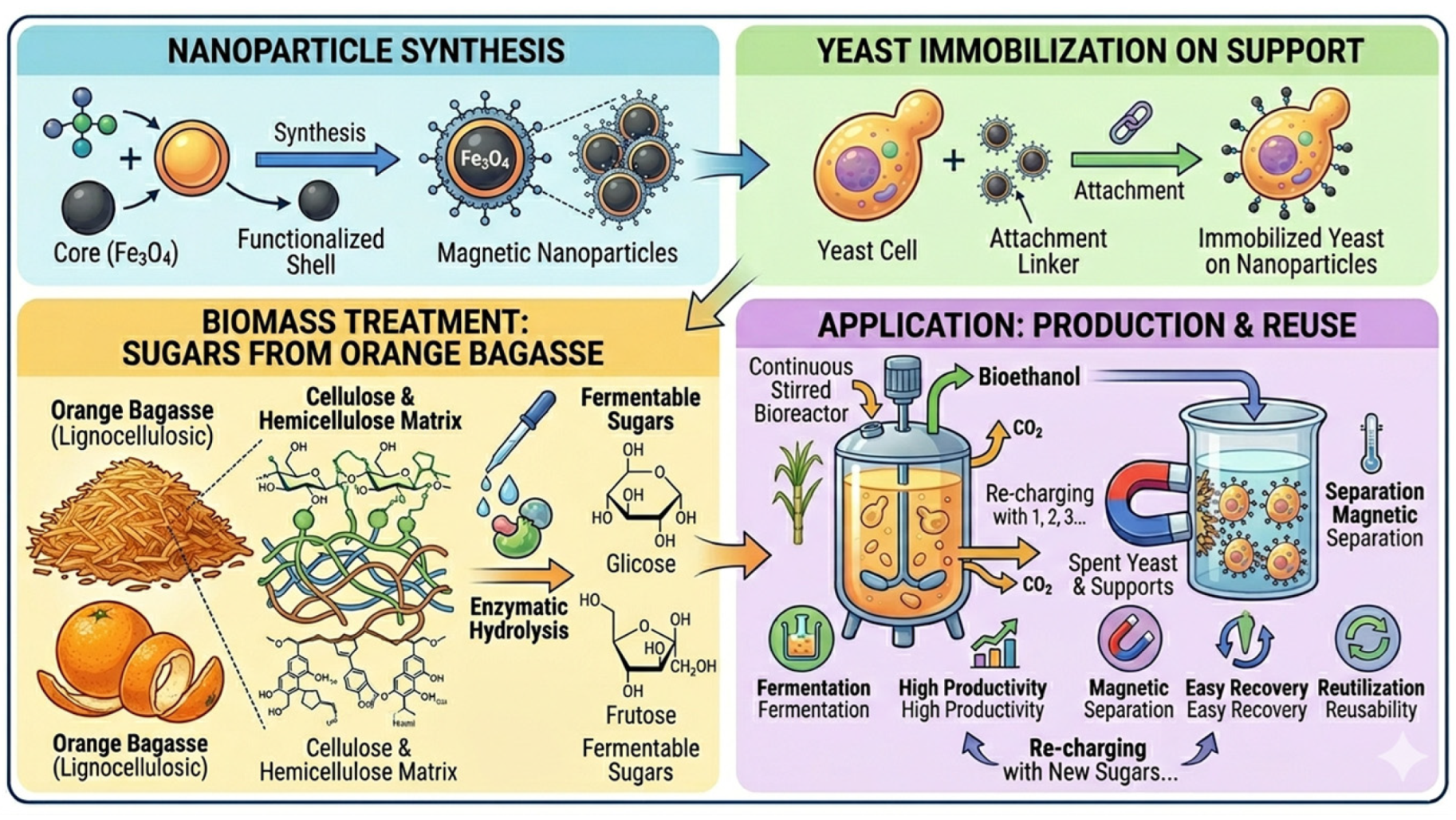
Figure 2.
Summary of the protocol of the fermentation process of S. cerevisiae.
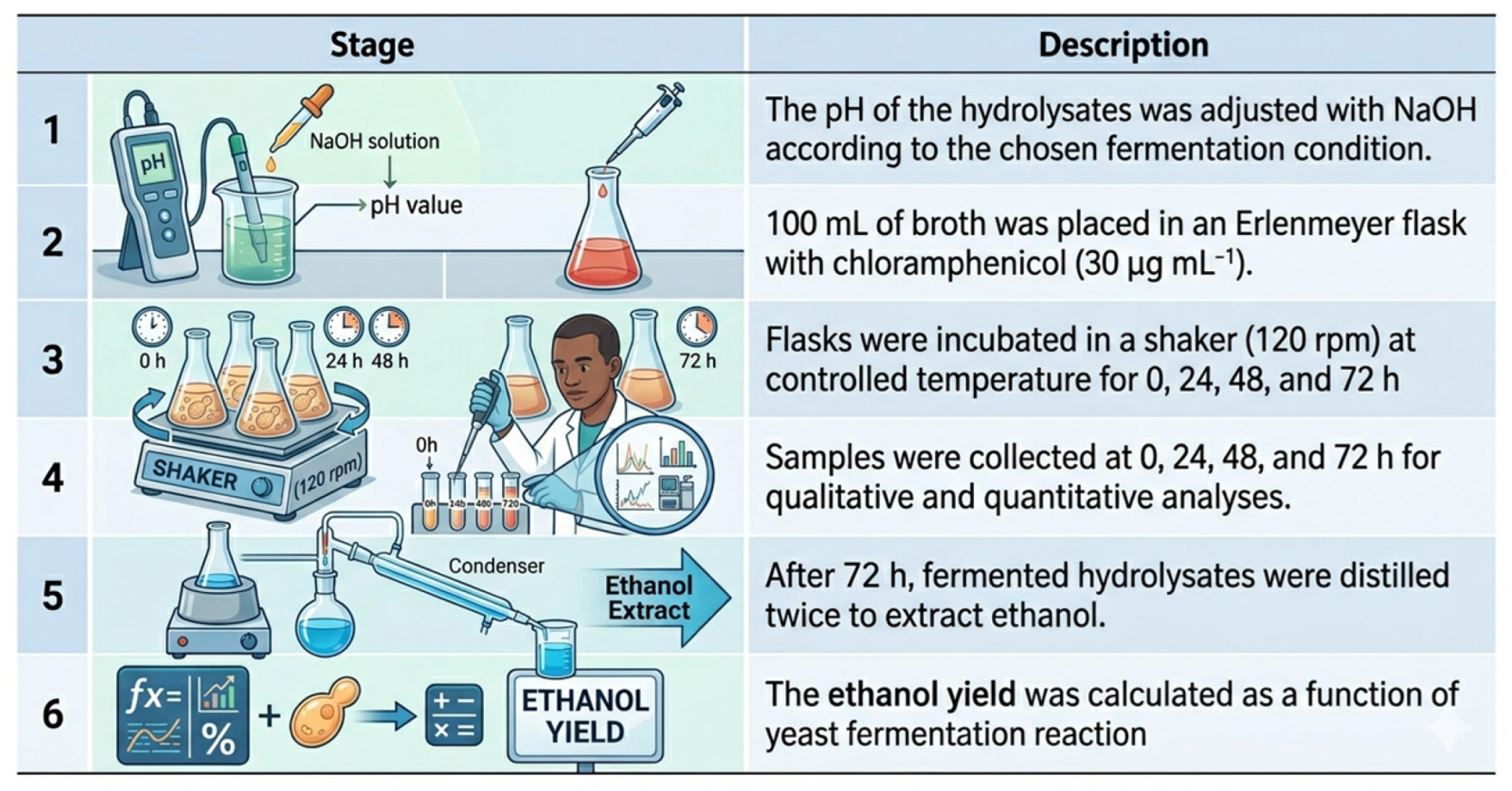
Figure 3.
Magnetic nanoparticles in the presence of a permanent magnet.
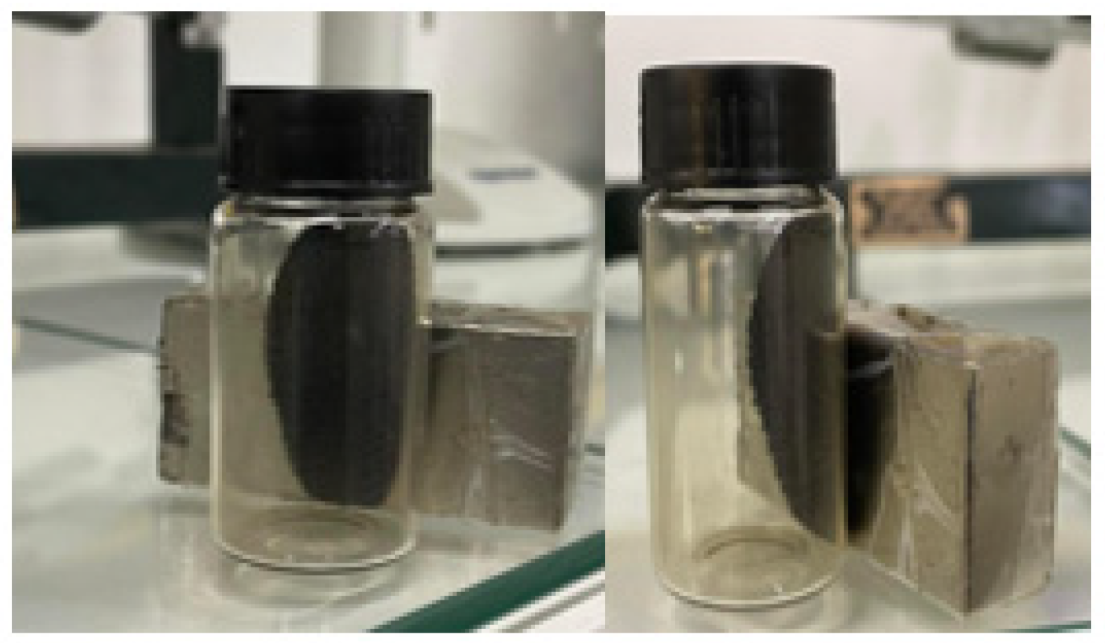
Figure 4.
TEM images illustrating the structural and morphological evolution of nanoparticles during the synthesis process: (A) Fe3O4, (B) Fe3O4@SiO2, and (C) Fe3O4@SiO2–NH2. The particle size distribution histograms (bottom) confirm mean diameters of 27 ± 0.01 nm, 35 ± 3.21 nm, and 115 ± 7.52 nm, respectively.
Figure 4.
TEM images illustrating the structural and morphological evolution of nanoparticles during the synthesis process: (A) Fe3O4, (B) Fe3O4@SiO2, and (C) Fe3O4@SiO2–NH2. The particle size distribution histograms (bottom) confirm mean diameters of 27 ± 0.01 nm, 35 ± 3.21 nm, and 115 ± 7.52 nm, respectively.
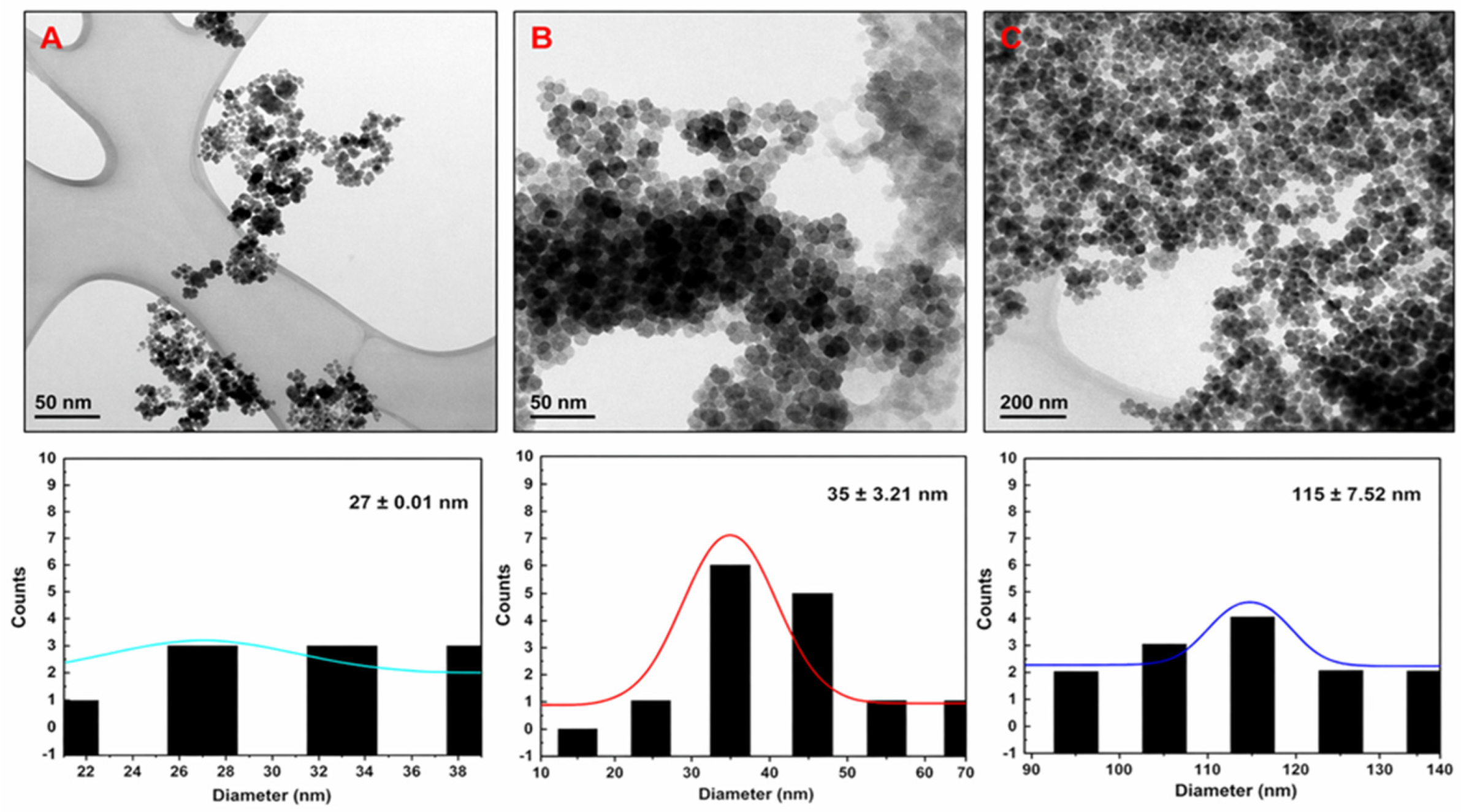
Figure 5.
FT-IR spectra of solid samples of magnetic nanoparticles of: Fe3O4 (in black), Fe3O4@SiO2 (in red), Fe3O4@SiO2-NH2 (in blue).
Figure 5.
FT-IR spectra of solid samples of magnetic nanoparticles of: Fe3O4 (in black), Fe3O4@SiO2 (in red), Fe3O4@SiO2-NH2 (in blue).
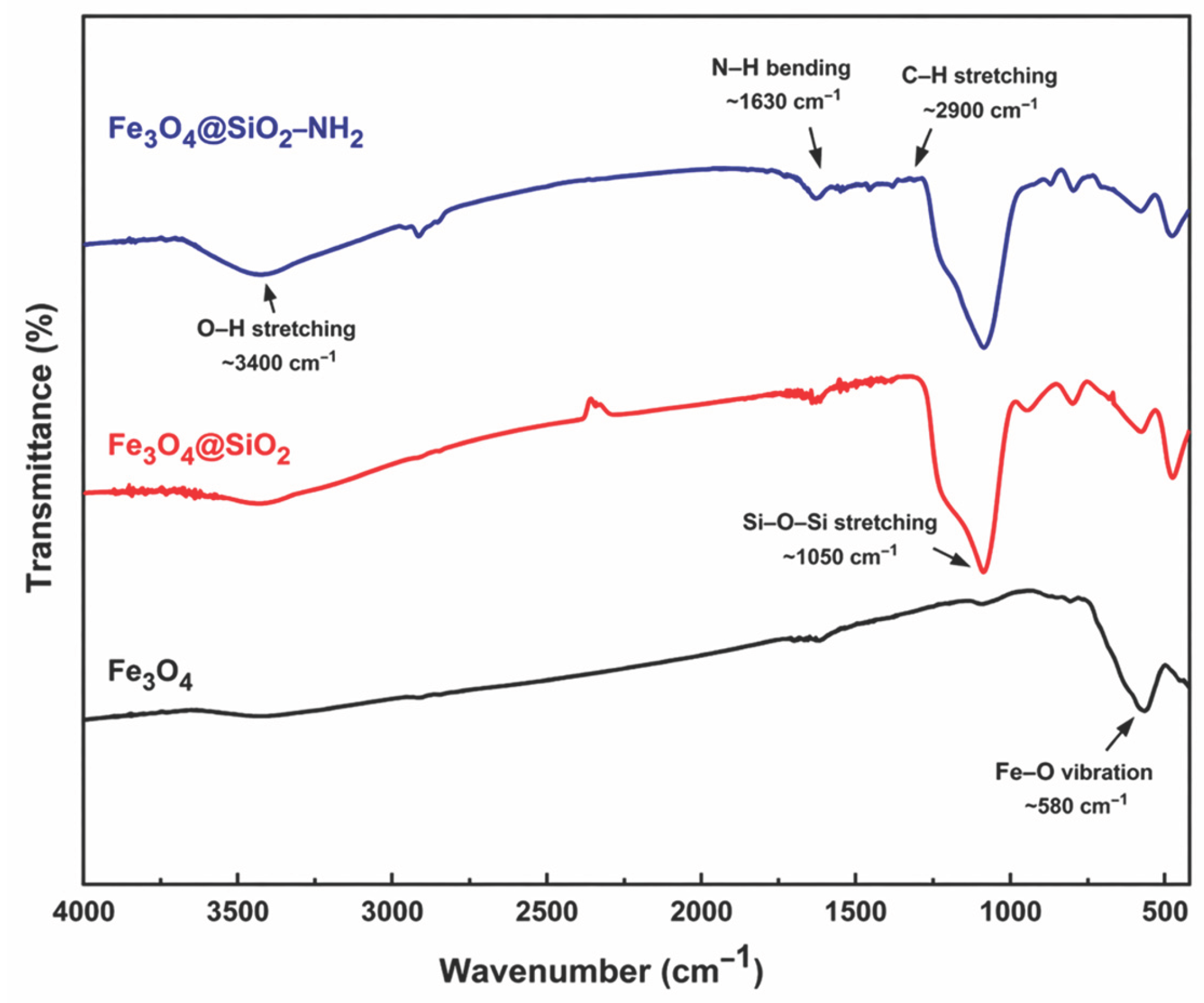
Figure 6.
Time-dependent profile of yeast immobilization efficiency (%) onto magnetic nanoparticles, showing a gradual increase in immobilization yield from 5 to 25 min. Data are expressed as mean ± standard deviation.
Figure 6.
Time-dependent profile of yeast immobilization efficiency (%) onto magnetic nanoparticles, showing a gradual increase in immobilization yield from 5 to 25 min. Data are expressed as mean ± standard deviation.
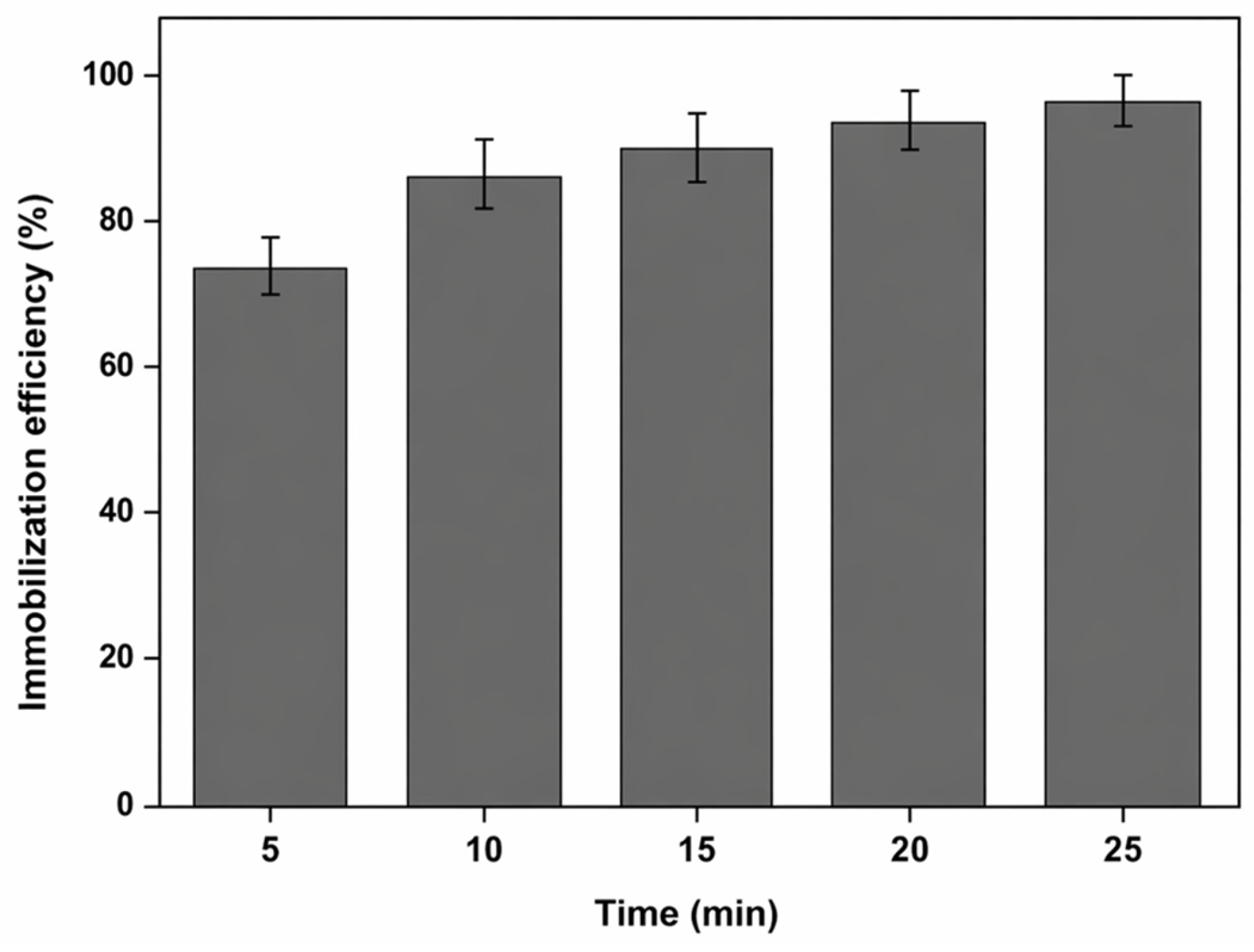
Figure 7.
Comparative fermentation kinetics showing glucose consumption (mg L−1), ethanol production (mg L−1), and yield (%) over time using free S. cerevisiae at (a) pH 4.0 (28 °C), (b) pH 4.5 (30 °C), and (c) pH 5.0 (35 °C), monitored over 72 h.
Figure 7.
Comparative fermentation kinetics showing glucose consumption (mg L−1), ethanol production (mg L−1), and yield (%) over time using free S. cerevisiae at (a) pH 4.0 (28 °C), (b) pH 4.5 (30 °C), and (c) pH 5.0 (35 °C), monitored over 72 h.
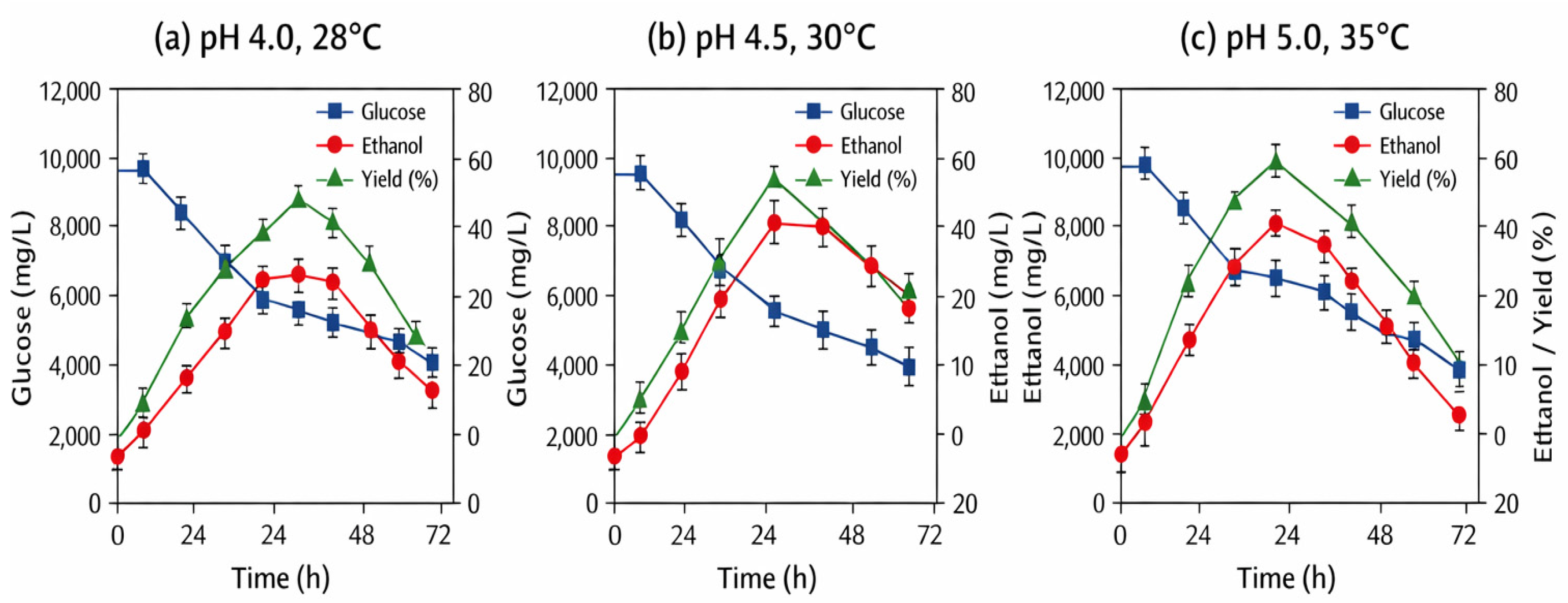
Figure 8.
Ethanol production performance of immobilized S. cerevisiae on magnetic nanoparticles over six (6) consecutive fermentation cycles. (A) Ethanol yields (%) after 24, 48, and 72 h of fermentation. (B) Glucose concentration (mg L−1, solid lines) and ethanol concentration (mg L−1, dashed lines) during the reuse cycles.
Figure 8.
Ethanol production performance of immobilized S. cerevisiae on magnetic nanoparticles over six (6) consecutive fermentation cycles. (A) Ethanol yields (%) after 24, 48, and 72 h of fermentation. (B) Glucose concentration (mg L−1, solid lines) and ethanol concentration (mg L−1, dashed lines) during the reuse cycles.
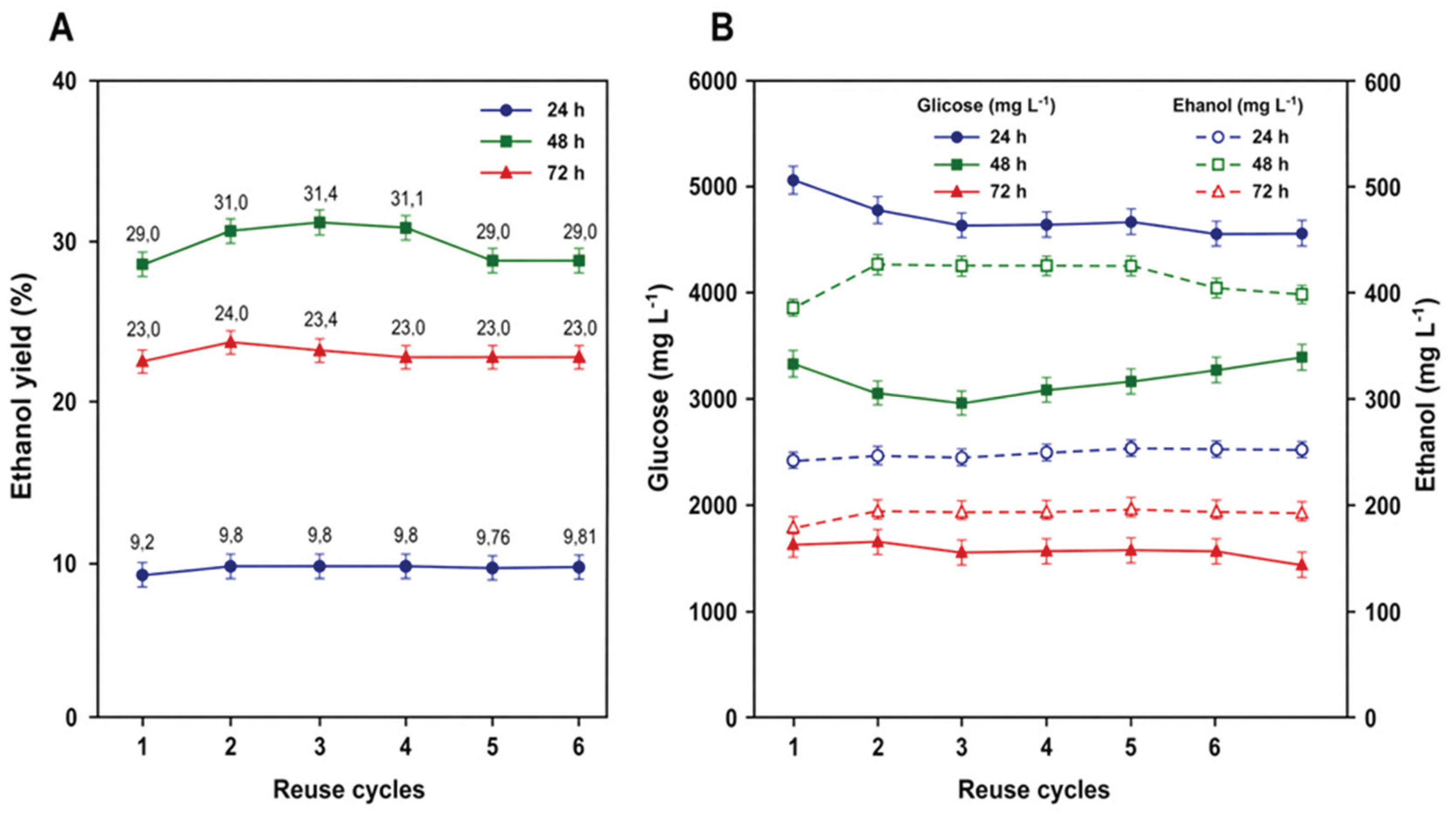

Table 1.
Elemental analysis of magnetic nanoparticles (MNPs).
| Samples | % Carbon | % Hydrogen | % Nitrogen |
|---|---|---|---|
| Fe3O4 | 0.17 | 0.37 | 0.00 |
| Fe3O4@SiO2 | 0.26 | 0.37 | 0.17 |
| Fe3O4@SiO2@NH2 | 6.31 | 2.12 | 1.44 |
Table 2.
Size of magnetic nanoparticles (MNPs) and zeta potential.
| Samples | Average Diameter (nm) |
Zeta Potential (mV) |
|---|---|---|
| Fe3O4 | 244.4 ± 1.0 | +22.0 ± 0.8 |
| Fe3O4@SiO2 | 368.0 ± 0.4 | -28.0 ± 0.5 |
| Fe3O4@SiO2@NH2 | 399.0 ± 0.5 | +35.0 ± 0.2 |
Disclaimer/Publisher’s Note: The statements, opinions and data contained in all publications are solely those of the individual author(s) and contributor(s) and not of MDPI and/or the editor(s). MDPI and/or the editor(s) disclaim responsibility for any injury to people or property resulting from any ideas, methods, instructions or products referred to in the content. |
© 2026 by the authors. Licensee MDPI, Basel, Switzerland. This article is an open access article distributed under the terms and conditions of the Creative Commons Attribution (CC BY) license.
Copyright: This open access article is published under a Creative Commons CC BY 4.0 license, which permit the free download, distribution, and reuse, provided that the author and preprint are cited in any reuse.


