

Submitted:
19 May 2026
Posted:
22 May 2026
You are already at the latest version
Abstract
Background/Objectives: MXenes (transition metal carbides, nitrides, and carbonitrides) are promising 2D nanomaterials for biomedical applications due to their high conductivity, mechanical strength, and hydrophilicity. This study investigated the concentration-dependent effects of Ti₃C₂Tₓ MXenes on the viability, mineralization, and odontogenic differentiation of human dental pulp stem cells (DPSCs). Methods: Ti₃C₂Tₓ MXenes were synthesized and characterized by SEM/EDX, DLS, zeta potential, UV-Vis, and conductivity analysis. DPSCs were exposed to 10, 50, and 100 µg/mL MXenes. Cell viability was assessed by MTT assay. Mineralization was evaluated by Alizarin Red S staining. Odontogenic differentiation was assessed by qPCR for DSPP, RUNX2, and OCN. Results: Characterization confirmed successful MXene synthesis with a zeta potential of -22 mV and conductivity of 6110 S/cm. MXenes at 10 and 50 µg/mL maintained viability above 100%, while 100 µg/mL reduced viability to 65.6% at day 14 (p < 0.01). Mineralization was enhanced at 10 and 50 µg/mL (p < 0.05 and p < 0.01) but reduced at 100 µg/mL (p < 0.01). Gene expression of DSPP, RUNX2, and OCN was upregulated 2–3 fold at 10–50 µg/mL but suppressed at 100 µg/mL (p < 0.01). Conclusions: Ti₃C₂Tₓ MXenes exert concentration-dependent effects on DPSCs. Moderate concentrations (10–50 µg/mL) promote odontogenic differentiation, while high concentrations (100 µg/mL) are cytotoxic. These findings support the therapeutic potential of MXenes in regenerative dentistry.
Keywords:
MXenes
; dental pulp stem cells
; odontogenic differentiation
; DSPP
; RUNX2
; osteocalcin
1. Introduction
Nanotechnology, the manipulation of matter at atomic and molecular scales, creates characteristics not found in bulk materials [1]. This engineering at the molecular scale has been central to technological advancement during the last twenty years, enabling advances with higher performance and precision in the fields of electronics, energy storage, and medicine [2]. In this regard, a new class of 2D materials, collectively called MXenes (transition metal carbides, nitrides, and carbonitrides) has emerged as extremely diverse systems. They are characterized by high electrical conductivity, mechanical strength, and hydrophilicity, which together enable versatility for applications that have always been used in the industrial and biomedical fields [3].
MXene-based electrodes are promising for charge-discharge kinetics and cycling stability in supercapacitors and lithium/sodium-ion batteries [3,4] in energy storage. The inherent mechanical flexibility of these materials has also been harnessed for several applications such as printed electronics, soft anodes, and electromagnetic interference shielding devices [1,2]. Apart from electronics, MXenes have emerged as promising materials in biomedicine, enabling a multifunctional nanoplatform for a variety of applications, including biosensing, drug delivery, photothermal therapy, and regenerative tissue engineering [1,2]. In addition, their large surface area and adsorption capacity also make them suitable for use in environmental remediation applications (wastewater treatment, adsorbent to remove species polluted) [5,6].
MXene integration has further helped other fields such as analytical chemistry. They have shown great promise as ultra-sensitive electrochemical sensors for biotoxins and heavy metals due to their high conductivity and tunable surface chemistry [7,8]. MXenes are also used in solid-phase extraction for forensic toxicology, allowing the selective extraction of drugs and poisons from complicated biological matrices [9]. Their use in forensic odontology, however, is largely untapped. The literature report on MXene-based systems in terms of detecting trace chemical markers in dental tissues remains scant and needs to be further investigated [10].
The one-of-a-kind surface chemistry and mechanical strength of MXenes seem favourable for biological components and a possible capability in promoting mineralization and bone regeneration in the continuum of regenerative dentistry. These features support the use of MXenes in dental pulp stem cell models to elucidate their mechanism of action and to establish safe concentration ranges for translation into pre-clinical/clinical applications [11,12,13].
Here, we explore the application of MXenes in this area as promising materials for development towards dental pulp stem cell–based regenerative applications specifically bone defect repair. In this study we have two primary aims: (1) to provide a mechanistic insight for the MXenes interaction with DPSCs in vitro; (2) to assess their cytotoxicity and biocompatibility profile to establish concentration ranges that support viability and odontogenic differentiation and thus are movable to clinical translation.
2. Materials and Methods
2.1. Study Design
An in vitro controlled experiment was performed to investigate how varying MXene concentrations affect the behavior of dental pulp stem cells (DPSCs) under odontogenic induction conditions. Cells were exposed to three different MXene concentrations: 10 µg/mL (low dose), 50 µg/mL (moderate dose), and 100 µg/mL (high dose). This setup resulted in four groups: untreated control group, DPSCs exposed to 10 µg/mL MXene, DPSCs exposed to 50 µg/mL MXene, and DPSCs exposed to 100 µg/mL MXene. The study examined cell viability, mineralization, and expression of odontogenic markers. All experiments were performed with three independent biological replicates (n = 3), each consisting of three technical replicates. Data are presented as mean ± standard deviation (SD). Statistical analysis assessed how MXene concentration influenced DPSC responses.
The concentrations of 10, 50, and 100 µg/mL were selected based on the established thresholds by Jang and Lee, who demonstrated that Ti3C2 MXene concentrations below 20 μg/mL promoted osteogenic differentiation, concentrations exceeding 50 μg/mL induced significant cytotoxicity, and the 50 μg/mL level served as a transitional ‘slightly cytotoxic’ threshold [14].
2.2. Ethical Approval
This study was approved by the Scientific Research Ethics Committee of the Faculty of Dentistry, Al-Azhar University (Cairo Boys), under reference number 1451/5318. The ethics committee waived the requirement for individual informed consent as all samples were de-identified and would otherwise have been discarded.
2.3. Materials
Titanium carbide (TiC, 99.5%, Cat# 12382), Aluminum (Al, 99.5%, Cat# 10555), and Titanium (Ti, 99.5%, Cat# 14062) powders were purchased from Alfa Aesar (Haverhill, MA, USA). Hydrofluoric acid (HF, 48%, Cat# 202846) and hydrochloric acid (HCl, 37%, Cat# 202920) were supplied from Acros Organics (Geel, Belgium). Deionized water (Cat# W4502) was used in all experiments. All chemicals were used directly without further purification.
Human third molars were collected by the authors from orthodontic clinics under sterile conditions. These teeth were transferred to the Stem Cells Center, Ain Shams Dental College (Cairo, Egypt), where dental pulp stem cells (DPSCs) were isolated and expanded. The cultured DPSCs were then provided to the authors for all experiments. For cell culture, Dulbecco’s Modified Eagle Medium (DMEM, Cat# 11965092) was purchased from Gibco (Thermo Fisher Scientific, Waltham, MA, USA) and supplemented with fetal bovine serum (FBS, Cat# F2442, Sigma-Aldrich, St. Louis, MO, USA) and penicillin-streptomycin (Cat# 17-602E, Lonza, Basel, Switzerland). Routine subculture procedures employed trypsin-EDTA (Cat# 25200072, Gibco, Thermo Fisher Scientific, Waltham, MA, USA).
For Fixation of cells was performed with paraformaldehyde (Cat# P6148, Merck, Darmstadt, Germany). Phosphate-buffered saline (PBS, Cat# 10010023) was purchased from Gibco (Thermo Fisher Scientific, Waltham, MA, USA).
Cell viability was assessed using MTT reagent (Cat# M5655, Sigma-Aldrich, St. Louis, MO, USA). Mineralization assays employed Alizarin Red S (Cat# A5533, Sigma-Aldrich, St. Louis, MO, USA), with cetylpyridinium chloride (Cat# C0732, Sigma-Aldrich, St. Louis, MO, USA) used for dye quantification.
For molecular analyses, RNA extraction was carried out using TRIzol reagent (Cat# 15596026, Invitrogen, Thermo Fisher Scientific, Waltham, MA, USA). Quantitative real-time PCR was performed with SYBR Green Master Mix (Cat# 4367659, Applied Biosystems, Waltham, MA, USA), employing primers specific for dentin sialophosphoprotein (DSPP), Runt-related transcription factor 2 (RUNX2), osteocalcin (OCN), and glyceraldehyde-3-phosphate dehydrogenase (GAPDH) as the internal reference. All primers were synthesized by Integrated DNA Technologies, Inc. (Coralville, IA, USA) (Table 1).
2.4. Methodology
2.4.1. Preparation of MXenes
Ti3AlC2 MXene was prepared by high-temperature annealing of TiC, Al, and Ti powders. An atomic ratio of 2:1:1 TiC:Ti:Al was used. The powders were mechanically activated via ball milling [15] at 60 rpm for 18 h with zirconia balls at a 2:1 ball-to-powder weight ratio of 2:1. The milled powders were placed in a tube furnace with Ar flowing continuously through the tube at 200 cm3/min. The samples were heated to 1400 °C for 2 h at a heating and cooling rate of 3 °C/min. One gram of the Ti3AlC2 was gradually added over 5 minutes into a 60 mL polypropylene solution bottle or Teflon container containing 10 milliliters composed of 1 milliliter of a 29 M solution, which was 48 weight percent. %) HF, 3 mL deionized H2O, and 6 mL 12 M HCl [16,17]. The reaction was allowed to continue for 18-24 h with stirring at 500 rpm at 35 °C. Once the reaction was complete, both mixtures were washed with deionized water by centrifugation at 3500 rpm for 5 min to settle the powder and decant the clear supernatant. The washing cycles were repeated until the supernatants reached neutral pH (~6-7), and 14 ml of dimethyl sulfoxide (DMSO) was mixed into the material. The reaction was continued in DMSO solution under stirring at 240 rpm for 18 h. Then, DMSO was washed several times with distilled water at 9000 rpm. The synthesized material was kept in a vacuum with activated silica to dry for 24 h. MXene (0.25g) was collected as a powder, and the remaining amount was dispersed in a dimethyl sulfoxide and mixed water solution (Figure 1).
The prepared MXenes were then characterized by using scanning electron microscope with energy dispersive X-ray (SEM/EDX) to visualize the surface morphology of the prepared nanosheets and the elemental analysis, dynamic light scattering (DLS) to determine both the size and the distribution of MXenes particles, ultraviolet- vixible spectroscopy (UV-Vis) in order to conform the optical absorbance of the material profile and zeta potential for assessing the surface charge of the material which is related to collidal stability.
2.4.2. Cell Isolation and Culture
DPSCs were isolated and expanded by the Stem Cells Center, Ain Shams Dental College, from the collected third molars. Upon receipt by the authors, cells were thawed and cultured in Dulbecco’s Modified Eagle Medium (DMEM) supplemented with 10% fetal bovine serum (FBS), 1% penicillin-streptomycin, and 2 mM L-glutamine. Cells were maintained at 37 °C in a humidified 5% CO2 atmosphere, with medium changes every 2–3 days. At 70–80% confluence, cells were subcultured using 0.25% trypsin-EDTA. All experiments were performed using passage 3 cells [18].
2.5. Experimental Groups
Dental pulp stem cells (DPSCs) were divided into four experimental groups to evaluate the effects of MXenes on cell viability and behavior. Group 1 served as the untreated control, with DPSCs maintained in the odontogenic culture medium. Group 2 consisted of DPSCs exposed to MXenes at a concentration of 10 µg/mL, while Group 3 received MXenes at 50 µg/mL. Group 4 was treated with the highest concentration, 100 µg/mL MXenes. This grouping allowed for a systematic comparison between untreated cells and those exposed to increasing MXene concentrations, thereby enabling assessment of dose-dependent cellular responses.
2.6. Assessment Methods
2.6.1. MTT Assay
Cell viability of dental pulp stem cells (DPSCs) exposed to different concentrations of MXenes was evaluated using the MTT assay (Figure 2). Cell viability was assessed at days 1, 7, and 14. At each time point, MTT solution (0.5 mg/mL) was added to each well and incubated for 4 h at 37 °C to allow the formation of formazan crystals. The crystals were dissolved in dimethyl sulfoxide (DMSO), and absorbance was measured at 570 nm using a microplate reader. Optical density values were normalized to vehicle controls, and cell viability was expressed as a percentage relative to the untreated control group [18].
2.6.2. Alizarin Red Staining
Mineralization was assessed after 21 days of odontogenic induction using Alizarin Red S staining. After an additional PBS wash, mineral deposition was assessed by incubating the cells with a 1% (w/v) Alizarin Red S solution for 30 minutes. Excess dye was removed by washing with deionised water. For quantitative analysis, bound stain was released using a destaining solution consisting of 5% perchloric acid in deionised water for 30 minutes. Triplicate 100 μL aliquots from each well were transferred into a clear 96-well plate, and absorbance was measured at 405 nm using a microplate reader. Data were normalised against DNA content and vehicle-treated controls (0 μg/mL) [19].
2.6.3. Quantitative RT-PCR
The extraction of total RNA from DPSCs on day 21 was performed using TRIzol reagent (Invitrogen, Thermo Fisher Scientific, Waltham, MA, USA) according to the instructions provided by the manufacturer. Briefly, DPSCs were lysed with TRIzol, and the RNA was isolated through phase separation with chloroform, followed by precipitation with isopropanol, washing with ethanol, and finally, the RNA was suspended in RNase-free water. The quality and concentration of RNA were determined spectrophotometrically. Samples were digested with DNase I to eliminate any genomic DNA contamination. Complementary DNA (cDNA) was reverse transcribed from total RNA, ranging from 500 ng to 1 µg, by employing random hexamer priming. Quantitative real-time PCR reactions were performed using SYBR Green Master Mix (Applied Biosystems, Waltham, MA, USA) and gene-specific primers for dentin sialophosphoprotein (DSPP), Runt-related transcription factor 2 (RUNX2), and osteocalcin (OCN); GAPDH was employed as an internal reference control (Table 1). Real-time PCR reactions underwent the following cycling steps: initial denaturation at 95 °C, followed by 40 cycles of 95 °C for 15 s and 60 °C for 30 s. The product specificity was confirmed by melt-curve analysis. Gene expression data were analyzed based on the ΔΔCt method and normalized to the endogenous control gene GAPDH and compared to the non-treated group [20].
2.7. Statistical Analysis
All data are presented as mean ± standard deviation (SD). Experiments were performed in triplicate. Statistical comparisons between groups were conducted using one-way analysis of variance (ANOVA) followed by Tukey’s post-hoc test for multiple comparisons. Differences were considered statistically significant at a p-value < 0.05. All statistical analyses were performed using GraphPad Prism software (version 9.0).
3. Results
3.1. Characterization of MXenes
3.1.1. SEM/EDX
The 2D Ti3C2Tₓ microcomposite was examined by SEM. The SEM micrograph clearly shows the characteristic two-dimensional, few-layered MXene structure arranged in an accordion-like morphology (Figure 3). The MXene sheets are tightly stacked, one atop another, as a result of van der Waals interactions and hydrogen bonding between surface terminations (Figure 3a).
To validate the chemical composition of the MXene Ti3C2Tx microcomposite, namely the components carbon (C), aluminum (Al), oxygen (O), and titanium (Ti), SEM-EDX analysis was conducted on the layered structure of the MXene, as illustrated in Figure 3. The EDX spectra of the MXene, along with the corresponding weight % and atomic % compositions. The spectra reveal the presence of Ti, C, and O elements, which are characteristic of the main components of MXene. Additionally, a very low presence of Al is detected, with weight and atomic percentages of only 0.04% and 0.02%, respectively. This minimal Al content confirms the effective etching of the MAX phase and successful formation of the MXene. Overall, these results thoroughly validate the morphological transformation of Ti3C2Tx from the pre-etched precursor to the etched MXene material (Figure 3b).
3.1.2. DLS and Zeta Potential
The lateral dimension of the Ti3C2Tₓ microcomposite, measured by SEM, averaged 0.054 ± 0.008 µm (540 ± 8 nm), whereas dynamic light scattering (DLS) yielded a mean hydrodynamic diameter of 1879.66 ± 228.45 nm (Figure 4). The discrepancy likely arises because the ultrasonic treatment applied before SEM imaging further reduced the particle size relative to the static size measured by DLS.
DLS is routinely employed to estimate the mean hydrodynamic size of nanomaterials such as Ti3C2Tₓ MXene and serves as an alternative to transmission electron microscopy (TEM) (Figure 4a). Zeta-potential measurements were also performed to assess the solution stability and surface charge of the MXene. DLS analysis revealed a peak zeta potential of -22 mV for the Ti3C2Tₓ microcomposite, indicating that the MXene dispersion is reasonably stable and that the MXene surfaces bear a negative charge (Figure 4b).
3.1.3. UV-Vis
For the investigation of the optical extinction of Ti3C2Tx dispersion, the UV–Visible spectroscopy method was employed in order to study both the absorption and scattering properties of the studied sample. Generally speaking, the optoelectronic properties of MXenes depend on the concentration of the MXenes dispersion, flake dimensions, and surface termination type. Figure 5 displays the absorption spectrum of the investigated MXene colloidal solution in the 200–1100 nm range. The Ti3C2Tx MXene dispersion (1 mg mL−1) was filtered using a 0.22 μm membrane before being subjected to analysis. The absorption spectrum shows high transmission in the visible light, significant absorbance at around 350 nm, which relates to –OH and –O surface terminations after etching, as well as a prominent absorption in the near-infrared region at 795 nm due to the localized surface plasmon resonance effect [21,22]. The analysis results also provide information about the concentration of the dispersion, according to the Lambert–Beer’s law A/l = Cα, where the absorption constant α = 29.2 mL mg−1 cm−1 [23], resulting in 0.10 mg mL−1 concentration. The conductivity of Ti3C2Tx MXene microcomposite was measured using a four-point probe method; the batch resulted with a conductivity of 6110± 150 S/cm.
3.2. MTT Analysis
The MTT assay revealed a concentration-dependent relationship between MXene concentration and dental pulp stem cell viability at each studied time point. The control group demonstrated steady viability throughout the experiment and served as a benchmark. Cells exposed to low doses of MXenes (10 µg/mL) exhibited higher viability than the control, reaching 107.8% after one day and remaining above 106% at days 7 and 14. This suggests that low-dose MXenes may enhance cellular metabolic activity. Similarly, cells treated with medium doses of MXenes (50 µg/mL) maintained viability levels between 103.4% and 105.5% across all time points. In contrast, the high concentration (100 µg/mL) led to a marked reduction in viability, declining from 84.9% at day 1 to 79.7% at day 7 and further to 65.6% at day 14. These observations indicate that elevated MXene concentrations exert cytotoxic effects, confirming that beneficial effects are only achieved within a defined safety range. Statistical analysis confirmed significant reductions in viability at the highest concentration (p < 0.05, p < 0.01, p < 0.001) (Table 2).
3.3. Alizarin Red Analysis
Assessment of the mineralization capacity of DPSCs in the presence of MXenes was performed using Alizarin Red S staining after 21 days of odontogenic induction. The absorbance results obtained from quantifying the samples revealed a significant dose-dependent effect. Treatment of DPSCs with MXenes at concentrations of 10 µg/mL and 50 µg/mL showed a significant increase in mineral deposition compared to the control group (p < 0.05). Among these, the 50 µg/mL concentration exhibited the highest absorbance values, indicating the greatest level of mineralization. In contrast, DPSCs treated with 100 µg/mL MXenes showed a significant decrease in staining (p < 0.01), indicating poor mineralization at this concentration. Although residual red staining was visible in Figure 6d, the quantitative absorbance was significantly reduced at 100 µg/mL (Table 3, Figure 7), suggesting that non-specific dye retention, rather than true mineralization, may account for this observation. This suppression correlates with the cytotoxicity observed in the MTT assay (Figure 6 and Figure 7; Table 3).
3.4. PCR Analysis
Gene expression profiling after 21 days demonstrated that MXenes significantly influence the odontogenic differentiation of dental pulp stem cells (DPSCs). At lower concentrations, MXenes facilitated differentiation, with DSPP expression increasing by 2.4-fold in the 10 µg/mL group (p < 0.05) and by 3.1-fold in the 50 µg/mL group (p < 0.01). Similarly, RUNX2 expression increased by 2.1-fold and 2.8-fold at 10 and 50 µg/mL, respectively, while OCN expression increased by 1.9-fold and 2.6-fold, respectively. These results reflect a strong stimulatory effect of MXenes on odontogenesis. In contrast, the highest concentration (100 µg/mL) led to marked reductions in gene expression: DSPP decreased to 0.45-fold, RUNX2 to 0.55-fold, and OCN to 0.60-fold relative to the control (p < 0.01 for all), indicating impaired differentiation. This decrease correlates with the cytotoxic effects and reduced mineralization observed at this concentration. Overall, these data demonstrate that MXenes promote odontogenic differentiation at non-toxic doses but inhibit it at toxic concentrations (Table 4).
4. Discussion
Recently, the investigation of 2D nanomaterials, specifically, MXenes, for biomedical purposes, including regenerative medicine, has gained prominence as a result of their unique physicochemical characteristics, namely high conductivity, hydrophilicity, and controllable surface functionality [24]. These materials’ ability to regulate the behavior of stem cells can make them effective options in regenerative dentistry, especially for DPSCs responsible for the regeneration of the dentin–pulp complex.
4.1. MXene Characterization
Scanning electron microscopy showed that the prepared Ti3C2Tₓ MXenes possessed the expected accordion-like layered morphology, whereas energy-dispersive X-ray spectroscopy confirmed that they consisted of Ti, C, and O elements with trace amounts of residual Al, proving the efficient etching of the MAX phase. Dynamic light scattering suggested the hydrodynamic diameters were higher compared to the SEM lateral sizes due to the formation of hydration layers. The zeta potential was relatively low, meaning the material’s surface was charged through –OH and –O groups. The obtained ultraviolet–visible spectrum contained sharp absorption peaks in the ultraviolet region and broad near-infrared spectra attributed to plasmonic resonance. Conductivity tests proved high electrical properties of the examined material.
Similar to the present study, scanning electron microscopy (SEM) and energy-dispersive X-ray spectroscopy (EDX) have remained indispensable tools for MXenes characterization. It have demonstrated that Ti3C2Tx nanosheets exhibit an accordion-like structure, characterized by layers of stacked nanomaterials. Further EDX analysis indicated that Ti, C, and O are major elements, whereas traces of aluminum were found. These findings strongly validate the previous studies and highlight the importance of morphology and purity of MXene elements [25].
Consistent with the current results, dynamic light scattering (DLS) has been widely used for analyzing MXenes’ dispersions. It was reported that the hydrodynamic diameters of Ti3C2Tx suspensions are significantly greater than lateral dimensions found through SEM analysis due to hydration layering and aggregation in aqueous medium. Thus, the DLS findings are well-supported by the literature and emphasize the significance of this technique [26].
UV–Vis spectroscopy has similarly been used to validate the optical properties of MXenes. For instance, it was descriped that strong peaks of UV absorption and wide NIR bands linked to plasmon resonance [27], while another study associated the peaks of UV absorption to –OH and –O terminations created through the etching process [28]. Such findings correlate well with our results, suggesting that optical analysis plays an important role in assessing the quality of exfoliation and photothermal behavior.
Following a similar trend as ours, zeta potential analysis has been recognized as an effective test for assessing the stability of MXenes. For example, a zeta potential value was given close to –20 mV for the Ti3C2Tₓ dispersion indicating modest stability of MXenes in aqueous solution and negative surface charges [29]. Our study reveals similar results, indicating the importance of surface charges in determining dispersion stability.
Echoing our conductivity results, A study was performed on MXene/sPS nanocomposites and observed increased electrical conductivity [30], whereas another modeled tunneling conductivities of MXene composites [31]. In combination with the above, it confirms the electroactive properties of the Ti3C2Tₓ MXenes we have synthesized, which makes them appropriate for biosensors and regeneration scaffolds.
4.2. Cell Viability and Cytotoxicity
Alizarin Red staining carried out at day 21 post-odontogenic differentiation indicated the ability of MXenes to promote mineralization at 10 µg/mL and 50 µg/mL, where the latter was the most effective one. This result is in agreement with other studies which have established the ability of nanomaterials to induce mineralization through favorable physiological and chemical cues [32]. The decreased stain intensity in 100 µg/mL corresponds to the data on cytotoxicity and indicates that higher concentration of MXenes disrupts cellular balance.
4.3. Odontogenic Differentiation (DSPP, RUNX2, and OCN)
The results obtained from DSPP gene expression analysis confirm the positive influence of MXenes on odontogenesis at concentrations that are not toxic, considering the 2.4-fold and 3.1-fold increases at 10 μg/mL and 50 μg/mL concentrations, respectively. This data is consistent with previous studies showing the presence of a stage-specific regulation of mineralization by DPSCs, DSPP being an important marker of odontogenesis [32,33].
Regarding RUNX2 and OCN expression, our findings demonstrate that MXene treatment at 10 µg/mL and 50 µg/mL significantly upregulated both RUNX2 (2.1-fold and 2.8-fold) and OCN (1.9-fold and 2.6-fold) expression. These results are consistent with another study which reported that Ti3C2 MXene particles promoted osteogenic differentiation of human mesenchymal stem cells with increased expression of RUNX2 and osteocalcin at concentrations below 20 μg/mL [14]. Similarly, it demonstrated that Ti3C2Tₓ MXene nanosheets enhanced osteogenic differentiation of bone marrow mesenchymal stem cells via activation of the MAPK signaling pathway, with significant upregulation of RUNX2 and OCN [34]. Furthermore, it was reported that two-dimensional MXene promotes osteogenic differentiation of dental pulp stem cells through BMP2/Smad signaling, leading to increased RUNX2 and OCN expression [35].
The 0.45-fold decrease of DSPP gene expression found at a concentration of 100 μg/mL provides additional proof of the idea that cytotoxicity affects the odontogenic signaling pathway. Similarly, RUNX2 and OCN expression decreased to 0.55-fold and 0.60-fold, respectively, at the highest concentration, consistent with reports that high doses of MXenes induce oxidative stress and mitochondrial dysfunction [36].
4.4. Proposed Mechanisms of Action
The effects of MXenes’ stimulation on odontogenic activity at lower concentrations can be explained by their ability to regulate redox state and bioenergetics of cells, factors known for regulating stem cell differentiation [37]. The surface characteristics of MXenes allow adsorbing proteins involved in stimulating the formation of odontogenesis through BMP and Wnt pathways [33]. At the same time, high concentrations of MXenes result in oxidative stress and mitochondrial dysfunction leading to the inhibition of stem cell differentiation and viability [36].
Like bioactive cements and scaffolds, whose effect on enhancing the expression and mineralization of DSPP occurs at an optimal dose and becomes toxic at higher doses, MXenes show this dual nature depending upon the dose. This study is presenting new findings about how MXenes can directly influence the odontogenic differentiation in DPSCs, including the upregulation of RUNX2 and OCN, making them suitable bioactive materials.
5. Conclusion
This study demonstrates that MXenes exert concentration-dependent effects on the odontogenic differentiation of DPSCs. At moderate concentrations (10–50 µg/mL), MXenes significantly enhance mineral deposition and upregulate odontogenic markers including DSPP, RUNX2, and OCN, supporting their role as promising bioactive nanomaterials for dentin regeneration. However, at higher concentrations (100 µg/mL), MXenes induce cytotoxicity, suppressing both mineralization and odontogenic gene expression. These findings highlight the therapeutic potential of MXenes in regenerative dentistry, provided that concentration thresholds are carefully controlled.
6. Recommendations
MXenes show promise for regenerative dental applications when used within the 10–50 µg/mL concentration range, which balances efficacy with safety. The 50 µg/mL dose is particularly significant, as it produced the strongest DSPP expression and mineral deposition, making it a priority for animal model studies in bone defect repair and pulp capping. In contrast, 100 µg/mL caused marked cytotoxicity and impaired differentiation, underscoring the need for dose optimization and long-term biosafety evaluation before clinical translation.
Future research should also investigate surface functionalization with biomolecules or growth factors to enhance regenerative selectivity. Additionally, as MXenes possess a dark color, further studies are required to determine the optimal concentration that avoids undesirable color changes, particularly when used in restorative materials or in esthetically sensitive areas. This is essential to ensure patient acceptance and clinical applicability in visible regions of the oral cavity.
Finally, establishing standardized synthesis, sterilization, and characterization protocols for polymer–MXene nanocomposites is essential to ensure reproducibility, safety, and eventual clinical adoption.
Author Contributions
Conceptualization, M.M. and R.A.; methodology, M.S, A.O and N,R.; software, N.R;formal analysis, R.A, M.S, A.O and N.R.; writing-original draft preparation, M.M and N.R.; writing-review and editing.; visualization, N.R and A.O. supervision, M.S and R.A; funding acquisition, R.A. All authors have read and agreed to the published version of the manuscript.
Funding
This research received no external funding.
Institutional Review Board Statement
This study was approved by the Scientific Research Ethics Committee of the Faculty of Dentistry, Al-Azhar University (Cairo Boys) under reference number 1451/5318.
Informed Consent Statement
Individual informed consent was waived by the ethics committee because all samples (extracted third molars) were de-identified discarded tissue obtained from orthodontic clinics.
Data Availability Statement
The raw data supporting the conclusions of this article will be made available by the authors on request.
Conflicts of Interest
The authors declare no conflicts of interest.
References
- Kumar, S.; Kumari, N.; Suranto, C.A.; Mehdi, S.M.Z. 2D MXenes for biomedical applications-recent advances, challenges, and future perspectives. J. Mater. Sci. 2025, 60, 18595–18637. [Google Scholar] [CrossRef]
- Babar, Z.U.D.; Iannotti, V.; Rosati, G.; Zaheer, A.; Velotta, R.; Della Ventura, B.; et al. MXenes in healthcare: synthesis, fundamentals and applications. Chem. Soc. Rev. 2025. [Google Scholar] [CrossRef] [PubMed]
- Yu, F.; Wang, Y.; Zhang, K.; Shen, H.; Zhang, Y.; Yang, Z.; et al. High entropy MXenes in energy storage: structural design, characterization, and applications. J. Mater. Chem. A 2025, 13(35), 28699–28717. [Google Scholar] [CrossRef]
- Bhat, M.Y.; Adeosun, W.A.; Prenger, K.; Samad, Y.A.; Liao, K.; Naguib, M.; et al. Frontiers of MXenes-based hybrid materials for energy storage and conversion applications. Adv. Compos Hybrid. Mater. 2024, 8, 52. [Google Scholar] [CrossRef]
- Verma, S.; Yadav, D.; Yadav, A.; Ahmad, Z.; Rautela, I.; Ballal, S.; et al. MXenes as emerging catalytic materials for environmental sustainability: synthesis, characterization, and applications. Top. Catal. 2026, 69(4), 598–612. [Google Scholar] [CrossRef]
- Amani, A.M.; Kamyab, H.; Vafa, E.; Jahanbin, A.; Abbasi, M.; Vaez, A.; et al. Multifunctional MXenes nanocomposite platforms for biosensing and wearable sensor technologies. Adv. Compos Hybrid. Mater. 2025, 8(1), 63. [Google Scholar] [CrossRef]
- Khan, R.; Andreescu, S. MXenes-based bioanalytical sensors: design, characterization, and applications. Sensors 2020, 20(18), 5434. [Google Scholar] [CrossRef]
- Arjun, A.M.; Ankitha, M.; Mathew, M.; Sharma, S.; Rasheed, P.A. Recent advances in MXene-based self-powered electrochemical sensors. J. Mater. Chem. A 2025. [Google Scholar] [CrossRef]
- Fayyaz, S.; Khalid, A.; Khan, S.U.; Islam, A.; Mannan, A.; Zia, S.; et al. Toxicology, stability, and environmental impacts of MXenes and its composites. In Handbook of Functionalized Nanostructured MXenes; Springer: Cham, 2023; pp. 357–375. [Google Scholar]
- Vasyukova, I.A.; Zakharova, O.V.; Kuznetsov, D.V.; Gusev, A.A. Synthesis, toxicity assessment, environmental and biomedical applications of MXenes: a review. Nanomaterials 2022, 12(11), 1797. [Google Scholar] [CrossRef]
- Lee, I.C.; Li, Y.C.E.; Thomas, J.L.; Lee, M.H.; Lin, H.Y. Recent advances using MXenes in biomedical applications. Mater. Horiz. 2024, 11(4), 876–902. [Google Scholar] [CrossRef]
- Kang, Y.; Park, H.; Shim, S.; Karima, G.; Lee, S.; Yang, K.; et al. MXene nanoparticles: orchestrating spheroidogenesis for targeted osteogenic and neurogenic differentiation. Adv. Nanobiomed Res. 2025, 5(3), 2400100. [Google Scholar] [CrossRef]
- Garg, R.; Vitale, F. Latest advances on MXenes in biomedical research and health care. MRS Bull. 2023, 48(3), 283–290. [Google Scholar] [CrossRef] [PubMed]
- Jang, J.H.; Lee, E.J. Influence of MXene particles with a stacked-lamellar structure on osteogenic differentiation of human mesenchymal stem cells. Materials 2021, 14(16), 4453. [Google Scholar] [CrossRef] [PubMed]
- Driscoll, N.; Richardson, A.G.; Maleski, K.; Anasori, B.; Adewole, O.; Lelyukh, P.; et al. Two-dimensional Ti3C2 MXene for high-resolution neural interfaces. ACS Nano 2018, 12(10), 10419–10429. [Google Scholar] [CrossRef]
- Yegin, M.; Çelik, A.; Halisdemir, U.; Hasar, H. Synthesis and detailed physicochemical characterization of Ti3C2Tx MXene via optimized HF-based etching of Ti3AlC2. J. Inorg. Organomet. Polym. Mater. 2025, 1–17. [Google Scholar] [CrossRef]
- Zhang, X.; Zhang, W.; Zhao, H. Comparative study on fabrication and energy storage performance of Ti3C2Tx MXene by using hydrofluoric acid and in situ forming of hydrofluoric acid-based approaches. Int. J. Energy Res. 2022, 46(11), 15559–15570. [Google Scholar] [CrossRef]
- Iravani, S.; Varma, R.S. MXenes and MXene-based materials for tissue engineering and regenerative medicine: recent advances. Mater. Adv. 2021, 2(9), 2906–2917. [Google Scholar] [CrossRef]
- Gupta, D.; Grant, D.M.; Zakir Hossain, K.M.; Ahmed, I.; Sottile, V. Role of geometrical cues in bone marrow-derived mesenchymal stem cell survival, growth and osteogenic differentiation. J. Biomater. Appl. 2018, 32(7), 906–919. [Google Scholar] [CrossRef]
- Li, M.; Wang, Y.; Xue, J.; Xu, Q.; Zhang, Y.; Liu, J.; et al. Baicalin can enhance odonto/osteogenic differentiation of inflammatory dental pulp stem cells by inhibiting the NF-κB and β-catenin/Wnt signaling pathways. Mol. Biol. Rep. 2023, 50(5), 4435–4446. [Google Scholar] [CrossRef]
- Alhabeb, M.; Maleski, K.; Anasori, B.; Lelyukh, P.; Clark, L.; Sin, S.; et al. Guidelines for synthesis and processing of two-dimensional titanium carbide (Ti3C2Tx MXene). Chem. Mater. 2017, 29(18), 7633–7644. [Google Scholar] [CrossRef]
- Furchner, A.; Petit, T.; Parker, T.; Mauchamp, V.; Hurand, S.; Plaickner, J.; et al. Ti3C2Tx MXene thin films and intercalated species characterized by IR-to-UV broadband ellipsometry. J. Phys. Chem. C. 2025, 129, 500–507. [Google Scholar] [CrossRef] [PubMed]
- Xu, H.; Ren, A.; Wu, J.; Wang, Z. Recent advances in 2D MXenes for photodetection. Adv. Funct. Mater. 2020, 30(24), 2000907. [Google Scholar] [CrossRef]
- Sagadevan, S.; Oh, W.C. Comprehensive utilization and biomedical application of MXenes: a systematic review of cytotoxicity and biocompatibility. J. Drug Deliv. Sci. Technol. 2023, 85, 104569. [Google Scholar] [CrossRef]
- Jothiramalingam, R.; Radhika, T.; Kavitha, N.P.; Al-Lohedan, H.; Aldhayan, D.M.; Karnan, M. Synthesis, morphology and electrical property characteristics of MXene based titanium carbide (Ti3C2Tx) coating on non-woven cotton paper. Dig. J. Nanomater Biostruct 2024, 19(1). [Google Scholar] [CrossRef]
- Heckler, J.E.; Neher, G.R.; Mehmood, F.; Lioi, D.B.; Pachter, R.; Vaia, R.; et al. Surface functionalization of Ti3C2Tx MXene nanosheets with catechols: implication for colloidal processing. Langmuir 2021, 37(18), 5447–5456. [Google Scholar] [CrossRef]
- Aliqab, K.; Agravat, R.; Agravat, D.; Patel, S.K.; Alsharari, M.; Armghan, A. Ultra-broadband polarization-insensitive MXene-based surface plasmon resonance solar absorber for solar thermal application. Plasmonics 2025, 20(2), 879–890. [Google Scholar] [CrossRef]
- Chaudhuri, K.; Wang, Z.; Alhabeb, M.; Maleski, K.; Gogotsi, Y.; Shalaev, V.; et al. Optical properties of MXenes. In 2D Metal Carbides and Nitrides (MXenes): Structure, Properties and Applications; Springer: Cham, 2019; pp. 327–346. [Google Scholar]
- Natu, V.; Sokol, M.; Verger, L.; Barsoum, M.W. Effect of edge charges on stability and aggregation of Ti3C2Tz MXene colloidal suspensions. J. Phys. Chem. C. 2018, 122(48), 27745–27753. [Google Scholar] [CrossRef]
- Zhang, T.; Wang, S.; Qiu, R.; Yang, X.; Zhu, F. MXene/sPS nanocomposites: rheological, electrical conductivity, polymorphism, mechanical, thermal, and flammability properties. RSC Adv. 2024, 14(35), 25793–25801. [Google Scholar] [CrossRef]
- Hadi, Z.; Yeganeh, J.K.; Munir, M.T.; Zare, Y.; Rhee, K.Y. An innovative model for electrical conductivity of MXene polymer nanocomposites by interphase and tunneling characteristics. Compos Part A Appl. Sci. Manuf. 2024, 186, 108422. [Google Scholar] [CrossRef]
- Tang, J. Stage-specific transcriptomic dynamics in dental pulp cells during mineralization. Int. Dent. J. 2025, 75(S1), 104791. [Google Scholar] [CrossRef]
- Kornsuthisopon, C.; Nowwarote, N.; Srisuwan, T.; Dissanayaka, W.L.; Osathanon, T. Regulatory pathways governing odonto/osteogenic differentiation in dental pulp stem cells. Int. Endod. J. 2026, 59(3), 372–395. [Google Scholar] [CrossRef] [PubMed]
- Chen, K.; Zheng, Y.; Rao, J.; et al. Ti3C2Tx MXene nanosheets enhance osteogenic differentiation of bone marrow mesenchymal stem cells via the MAPK signaling pathway. Biomater. Sci. 2023, 11(5), 1789–1802. [Google Scholar]
- Li, Z.; Zhang, X.; Wang, H.; et al. Two-dimensional MXene promotes osteogenic differentiation of dental pulp stem cells through BMP2/Smad signaling. J. Nanobiotechnology 2024, 22(1), 45. [Google Scholar]
- Wu, X.; Gong, J.; Zhang, H.; Wang, Y.; Tan, F. Cellular uptake and cytotoxicity of PEGylated MXene nanomaterials mediated by protein corona. Sci. Total Environ. 2024, 912, 169227. [Google Scholar] [CrossRef] [PubMed]
- Agriesti, F.; Landini, F.; Tamma, M.; Pacelli, C.; Mazzoccoli, C.; Calice, G.; et al. Bioenergetic profile and redox tone modulate in vitro osteogenesis of human dental pulp stem cells: new perspectives for bone regeneration and repair. Stem Cell Res. Ther. 2023, 14(1), 215. [Google Scholar] [CrossRef] [PubMed]
Figure 1.
Illustration of the precursor Ti3AlC2 MAX used in synthesis of the MXene Ti3C2Tx (a few-layer dispersion of MXene, 10 mg/mL).
Figure 1.
Illustration of the precursor Ti3AlC2 MAX used in synthesis of the MXene Ti3C2Tx (a few-layer dispersion of MXene, 10 mg/mL).
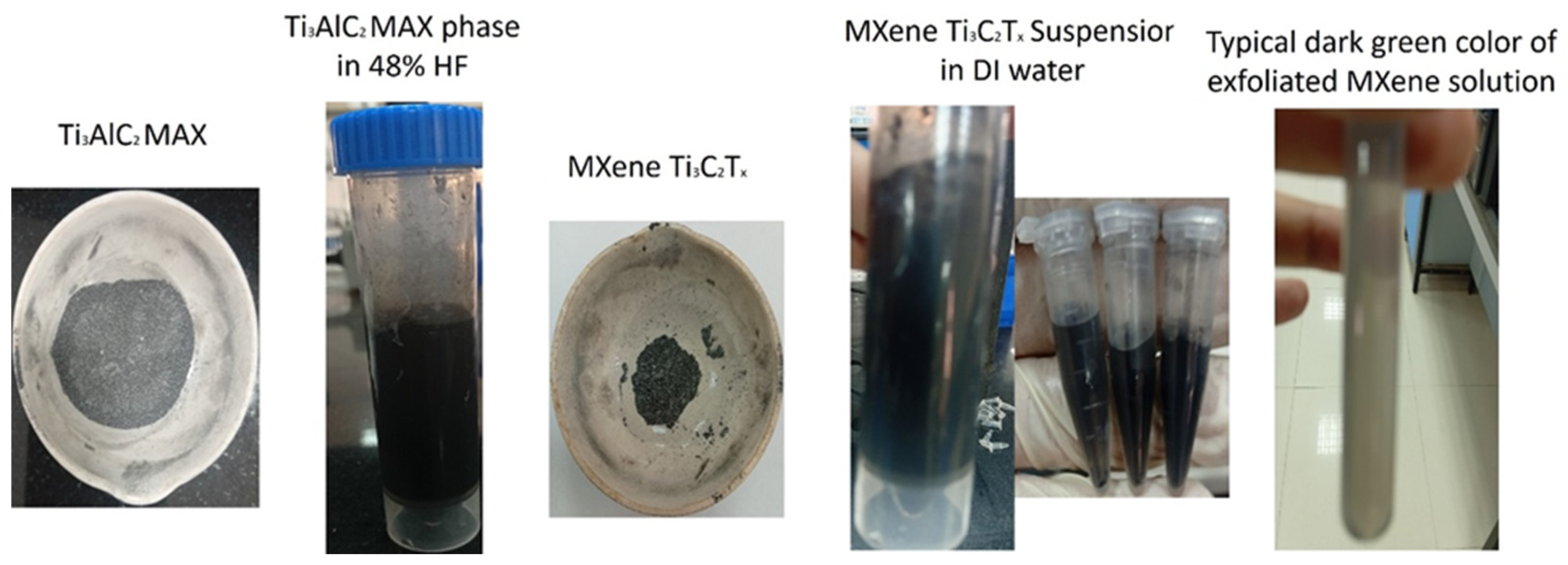
Figure 2.
MTT cell viability test.
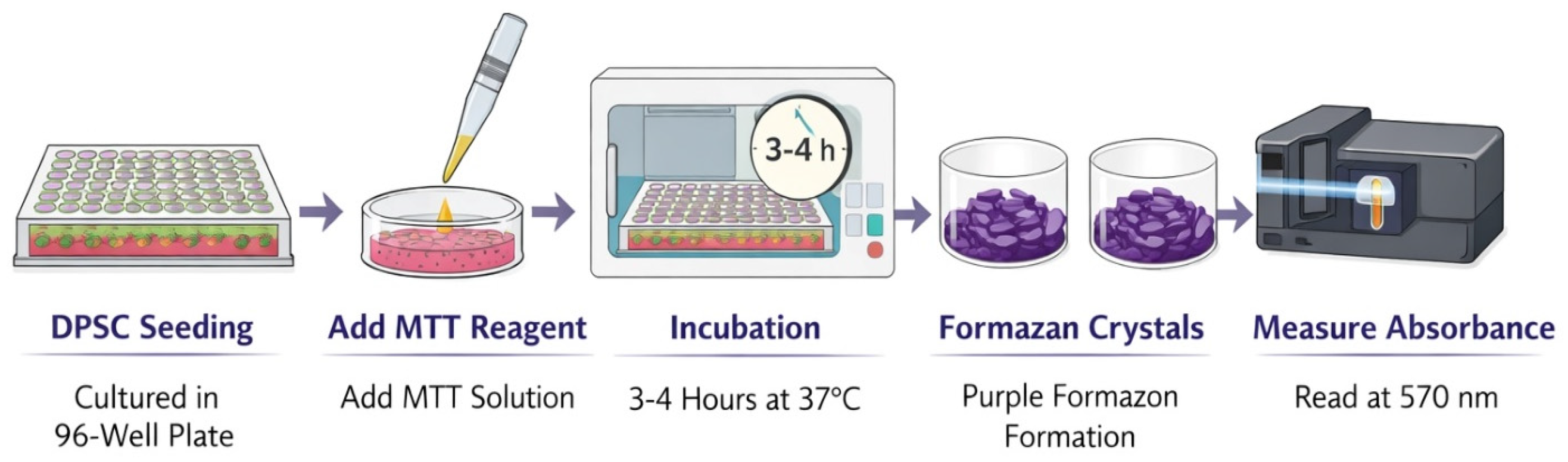
Figure 3.
(a) SEM images of Ti3C2Tx micro composite, (b) Energy-dispersive X-ray spectroscopy elemental of Ti3C2Tx micro composite.
Figure 3.
(a) SEM images of Ti3C2Tx micro composite, (b) Energy-dispersive X-ray spectroscopy elemental of Ti3C2Tx micro composite.
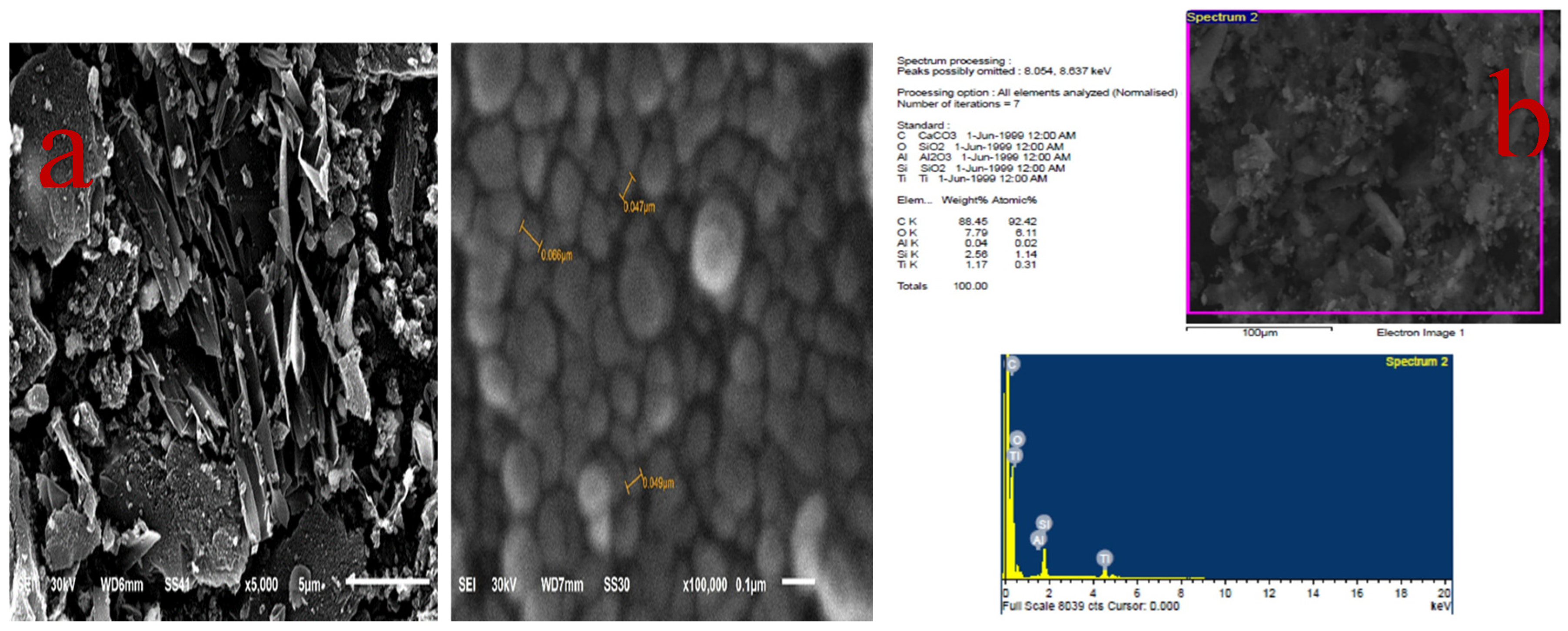
Figure 4.
(a) DLS lateral size distribution of Ti3C2TX solution by intensity, (b) Zeta potential of Ti3C2TX solution by total counts.
Figure 4.
(a) DLS lateral size distribution of Ti3C2TX solution by intensity, (b) Zeta potential of Ti3C2TX solution by total counts.
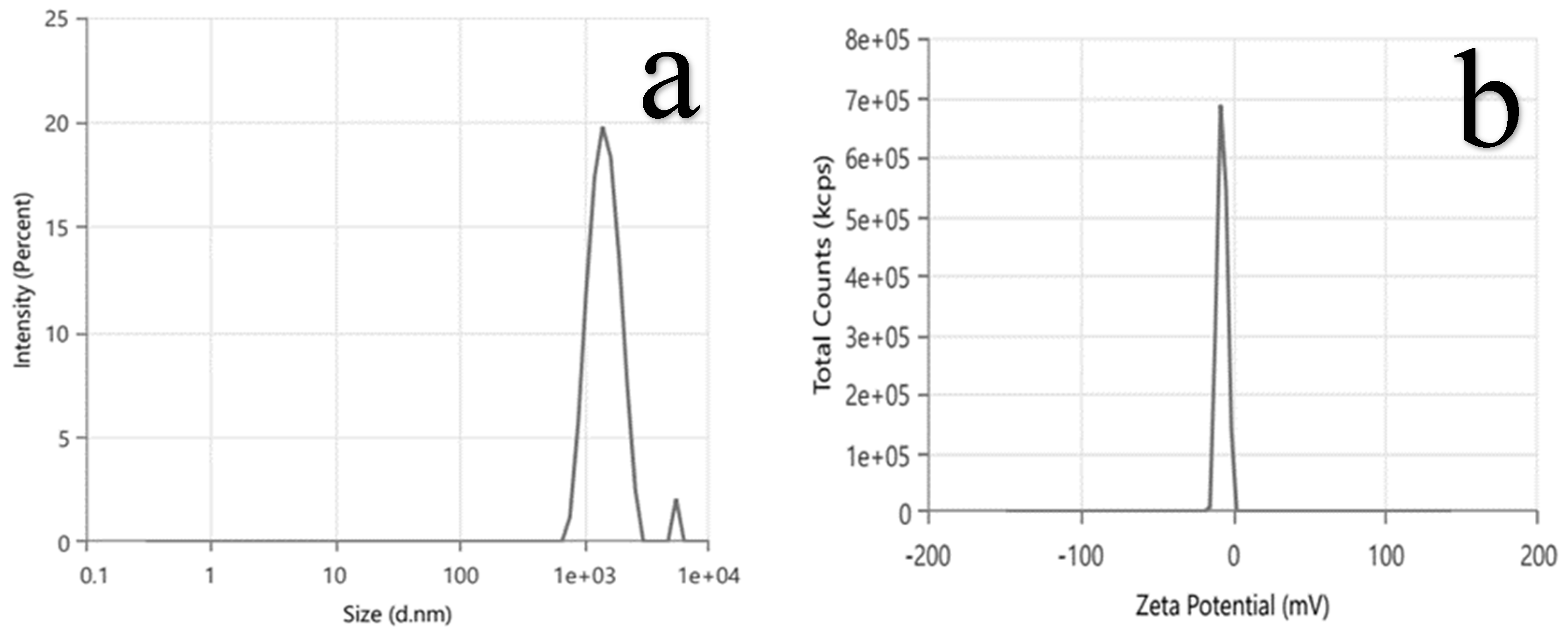
Figure 5.
UV-visible spectra of MXene colloidal solution showing absorbance peak in the INR region.
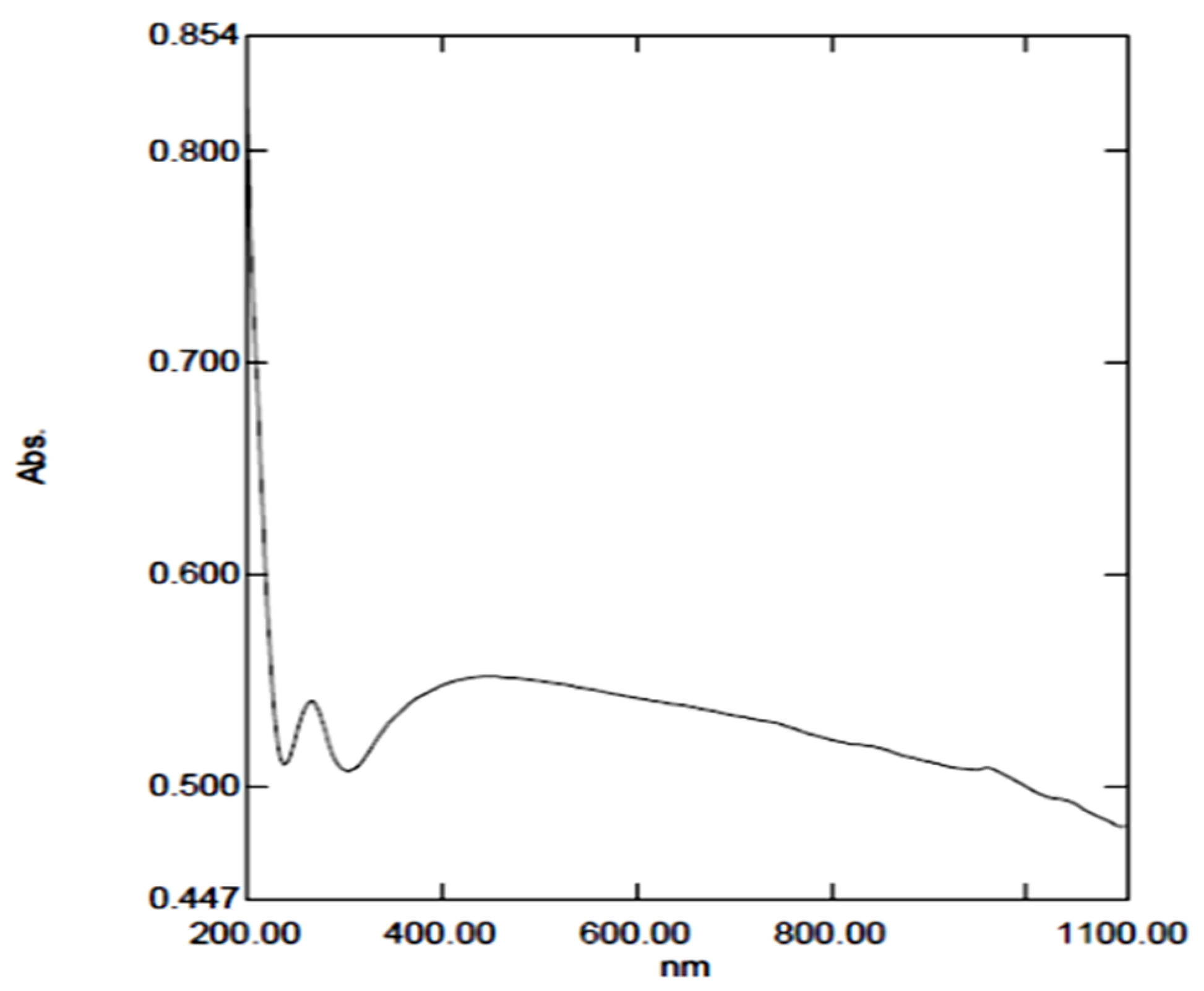
Figure 6.
(a) Control group (0 µg/mL MXene) showing baseline calcium deposition. (b) 10 µg/mL MXene group displaying increased red-stained mineralized nodules. (c) 50 µg/mL MXene group with the most intense and extensive staining. (d) 100 µg/mL MXene group showing faint and sparse mineralization. Scale bar: 100 µm.
Figure 6.
(a) Control group (0 µg/mL MXene) showing baseline calcium deposition. (b) 10 µg/mL MXene group displaying increased red-stained mineralized nodules. (c) 50 µg/mL MXene group with the most intense and extensive staining. (d) 100 µg/mL MXene group showing faint and sparse mineralization. Scale bar: 100 µm.
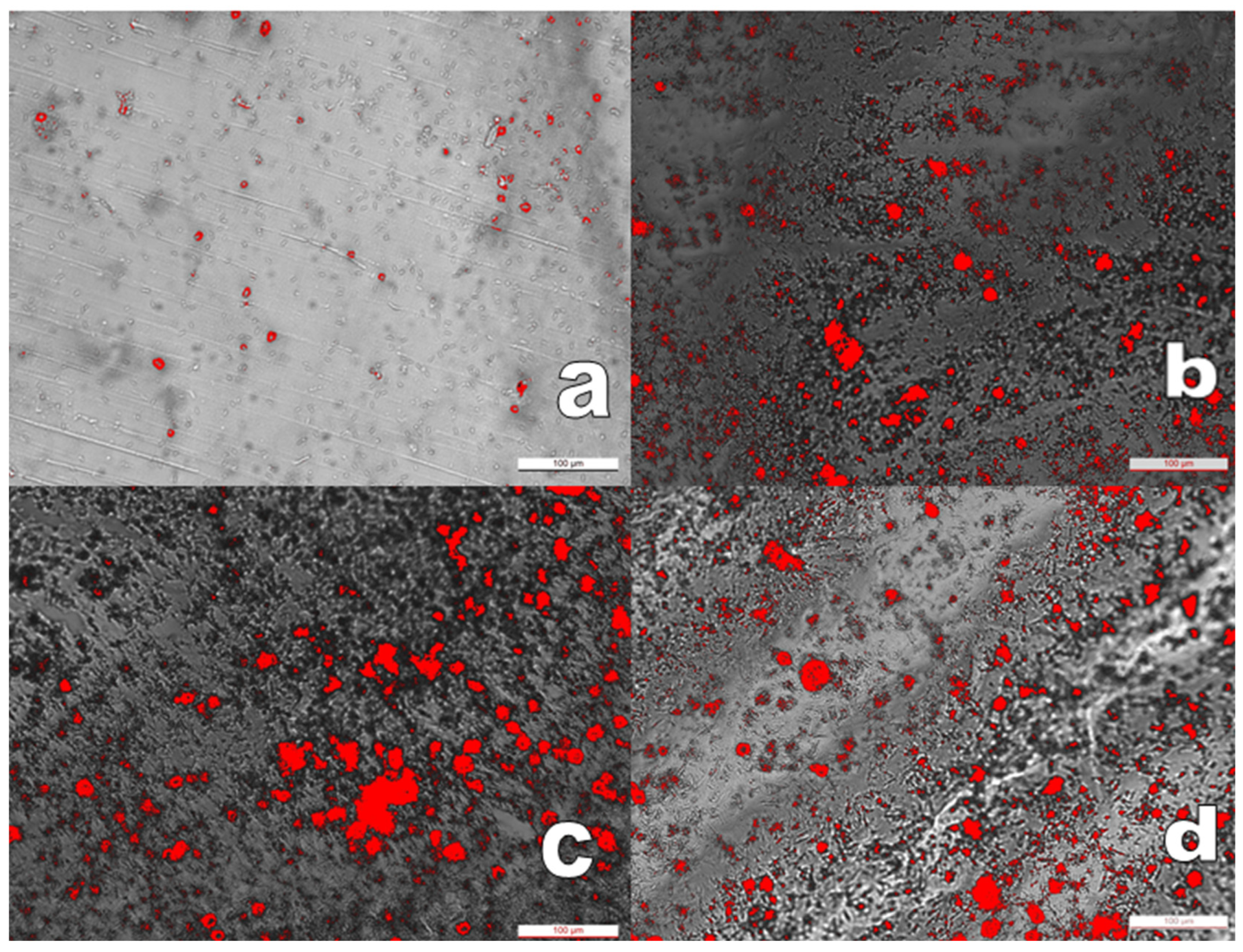
Figure 7.
Quantitative assessment of calcium mineral deposition via Alizarin Red S (ARS) staining.
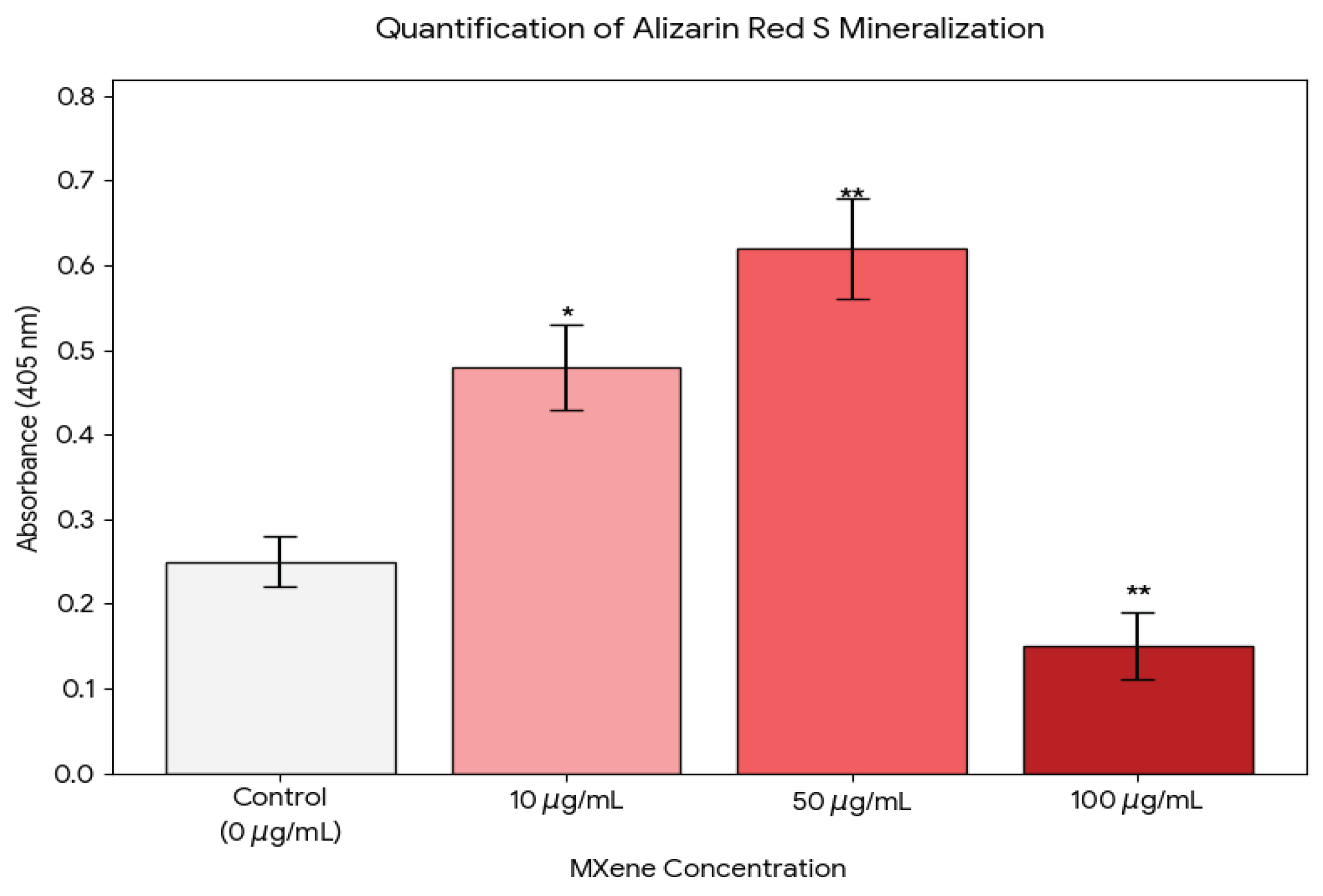

Table 1.
Primers used in the study.
| Gene | Forward Primer | Reverse Primer |
|---|---|---|
| DSPP | 5′-CAACCATAGAGAAAGCAAACGCG-3′ | 5′-TTTCTGTTGCCACTGCTGGGAC-3′ |
| RUNX2 | 5′-CCCAGCCACCTTTACCTACA-3′ | 5′-TTCCTGTCTGTGCCTTCTGG-3′ |
| OCN | 5′-CACTCCTCGCCCTATTGGCC-3′ | 5′-CCCTCCTGCTTGGACACAAA-3′ |
| GAPDH | 5′-AGCCACATCGCTCAGACAC-3′ | 5′-GCCCAATACGACCAAATCC-3′ |
Table 2.
Long-term Cytotoxicity and Cell Viability.
| Group | MXene Concentration | Day 1 Avg. Viability (%) | Day 7 Avg. Viability (%) | Day 14 Avg. Viability (%) |
|---|---|---|---|---|
| Control | 0 µg/mL | 100.0 ± 2.1 | 100.0 ± 2.8 | 100.0 ± 2.5 |
| Low Dose | 10 µg/mL | 107.8 ± 3.1 | 106.8 ± 3.3 | 106.7 ± 3.6 |
| Medium Dose | 50 µg/mL | 105.5 ± 2.9 | 103.4 ± 2.7 | 104.1 ± 3.0 |
| High Dose | 100 µg/mL | 84.9 ± 4.2 | 79.7 ± 4.5 | 65.6 ± 5.1 |
Table 3.
Mineralization Potential (Alizarin Red S).
| Group (MXene Concentration) | Absorbance (405 nm) Mean ± SD | p-value (vs. Control) |
|---|---|---|
| Control (0 µg/mL) | 0.25 ± 0.03 | – |
| 10 µg/mL | 0.48 ± 0.05 | < 0.05 |
| 50 µg/mL | 0.62 ± 0.06 | < 0.01 |
| 100 µg/mL | 0.15 ± 0.04 | < 0.01 |
Table 4.
Molecular Odontogenic Markers Expression.
| Group (MXene Concentration) | DSPP Expression | RUNX2 Expression | OCN Expression |
|---|---|---|---|
| Control (0 µg/mL) | 1.00 ± 0.12 | 1.00 ± 0.10 | 1.00 ± 0.11 |
| 10 µg/mL | 2.40 ± 0.28* | 2.10 ± 0.25* | 1.90 ± 0.22* |
| 50 µg/mL | 3.10 ± 0.35** | 2.80 ± 0.30** | 2.60 ± 0.28** |
| 100 µg/mL | 0.45 ± 0.10** | 0.55 ± 0.12** | 0.60 ± 0.11** |
*p < 0.05, *p < 0.01 compared to control.
Disclaimer/Publisher’s Note: The statements, opinions and data contained in all publications are solely those of the individual author(s) and contributor(s) and not of MDPI and/or the editor(s). MDPI and/or the editor(s) disclaim responsibility for any injury to people or property resulting from any ideas, methods, instructions or products referred to in the content. |
© 2026 by the authors. Licensee MDPI, Basel, Switzerland. This article is an open access article distributed under the terms and conditions of the Creative Commons Attribution (CC BY) license.
Copyright: This open access article is published under a Creative Commons CC BY 4.0 license, which permit the free download, distribution, and reuse, provided that the author and preprint are cited in any reuse.


