
Submitted:
19 May 2026
Posted:
20 May 2026
You are already at the latest version
Abstract
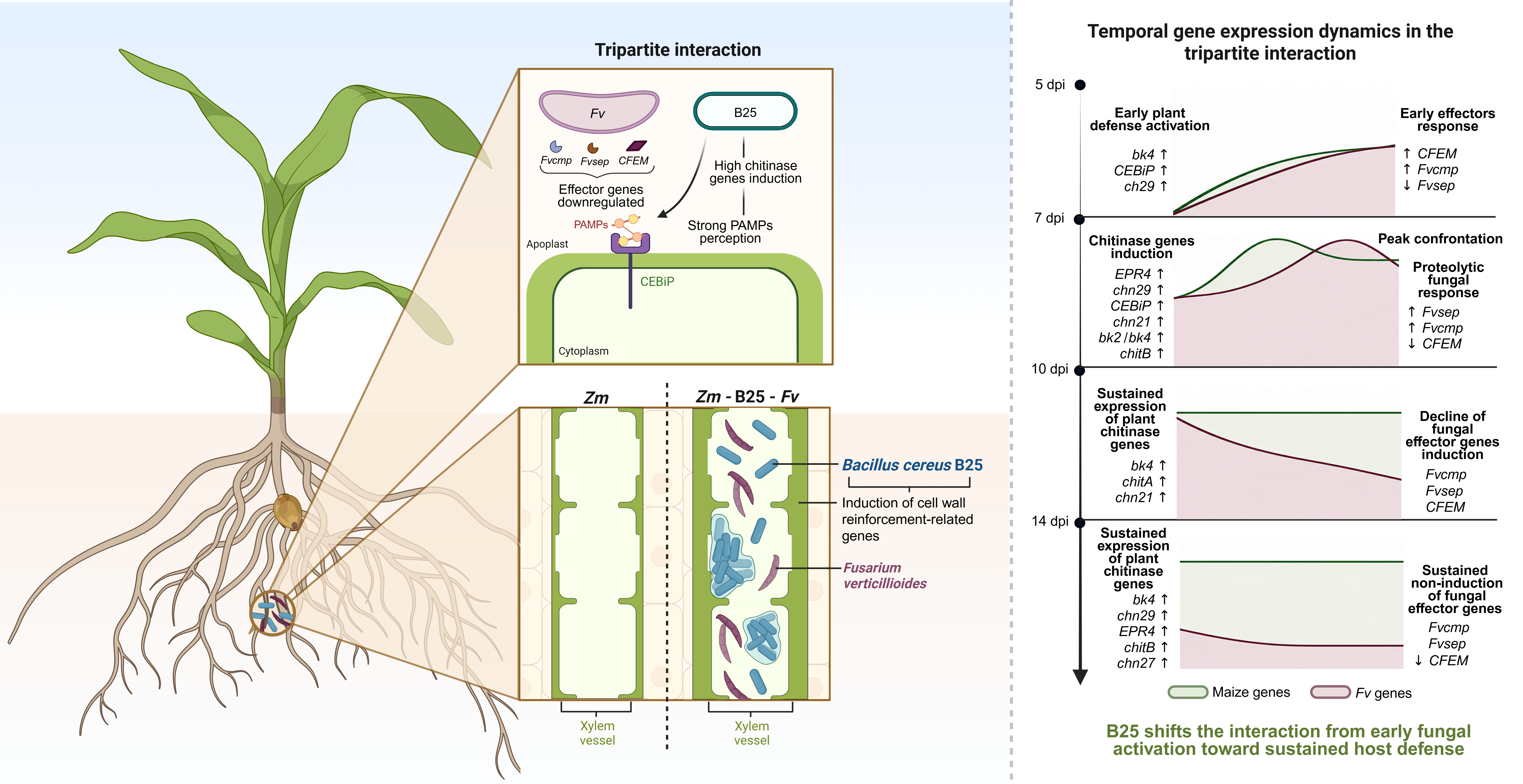
Maize is a major global crop; however, its production is affected by Fusarium verticillioides (Fv), which causes stalk, ear, and root rot (SERR). Bacillus cereus B25 is a maize bacterium that antagonizes Fv, likely through antifungal compounds and possibly by inducing of maize chitinase genes. Fv effectively infects maize by producing a chitinase-modifying protein (Cmp) that disrupts maize chitinases, preventing fungal cell wall degradation and evasion of plant immune responses triggered by PAMPs. The aim of this work was to analyze maize, B25, and Fv gene expression during bipartite and tripartite interactions at early stages (5, 7, 10, and 14 days post-inoculation). Physiological results showed increased root and shoot growth in maize seedlings under the tripartite interactions compared to Fv alone. B25 was demonstrated to grow endophytically and coexist with Fv in maize roots. Maize extracellular chitinase genes were induced, possibly due to chitin fragments released from the fungal cell wall, while Fv genes were also upregulated in response. Furthermore, the chitinase gene Zm00001eb317090 (bk4) may contribute to cell wall strengthening, as suggested by in silico co-expression analyses. Overall, these results support a coordinated interaction between maize and B25 that contributes to controlling Fv infection.
Keywords:
chitinase
; expression
; maize
; fungus
; bacteria
Copyright: This open access article is published under a Creative Commons CC BY 4.0 license, which permit the free download, distribution, and reuse, provided that the author and preprint are cited in any reuse.


