

Submitted:
14 May 2026
Posted:
21 May 2026
You are already at the latest version
Abstract
Background: The therapeutic effect of neurodynamic mobilization (NM) of the median nerve in mild to moderate carpal tunnel syndrome (CTS) remains inconclusive based on subjective reports and nerve conduction studies. Sonographic measurement of cross-sectional area (CSA) of the median nerve provides an objective method to evaluate treatment outcomes. Objective: To compare the effect of carpal bones and flexor retinaculum mobilization (CBFRM) vs. NM using various subjective outcome measures and a single objective measure: sonographic measurement of the median nerve CSA. Methods: Fifty-one individuals with mild to moderate CTS were randomly assigned to three groups:(1) CBFRM (n=17) (2) NM (n= 17) and (3) a control group awaiting surgery (n=17). Outcomes were assessed pre and post intervention and consisted of included median nerve CSA, pain severity rating using a visual analogue scale (VAS) and functional status using the Disability of the Arm, Shoulder, and Hand (DASH) questionnaire. Pain improvement was also evaluated using the Pain Relief Scale (PRS). The intervention consisted of eight sessions over four weeks. Results: Both NM and CBFRB interventions significantly reduced pain and improved function compared with the control group. While both groups showed reduced median nerve CSA, post-hoc analysis revealed that this reduction was primarily driven by the NM group, with the CBFRB group not differing significantly from either condition. Conclusions: NM appears to be an effective conservative intervention for patients with mild to moderate CTS, demonstrating meaningful clinical and functional improvements. In addition, sonographic assessment of median nerve CSA may serve as a valuable complementary objective measure for evaluating treatment response and monitoring clinical status.
Keywords:
carpal bones
; manual therapy
; flexor retinaculum
; physiotherapy
; sonography
Introduction
Carpal tunnel syndrome (CTS) is the most frequently diagnosed peripheral neuropathy and is characterized by sensory and motor symptoms resulting from compression of the median nerve by the surrounding anatomical structures (1).
Surgical intervention is the standard treatment for severe CTS (2-4). In mild to moderate CTS, manual therapy intervention incorporating neurodynamic mobilization (NM) have shown promising results compared with surgery (5).
Historically, most studies have added NM to existing conservative interventions; therefore, the observed positive effect could not be attributed exclusively this intervention (6-11), while in some cases the results were inconclusive (12-15).
Tal-Akabi and Rushton (2000) were the first to compare treatment targeting the interfacing structures surrounding the median nerve, namely carpal bones mobilization and stretching of the palmar aponeurosis (CBFRM) with NM of the median nerve. They reported improved function and reduced pain following both interventions compared to a control group (16). However, their conclusions were based solely on subjective outcome measures. Later, Wolny and colleagues (2017, 2018) demonstrated that these interventions were superior to sham therapy and electrophysical therapy based on electromyographic (EMG) diagnostics, including increased sensory and motor nerve conduction and decreased motor latency, as well as subjective reports (17, 18). In 2022, Sheereen and others indicated that NM, when combined with tendon gliding exercises (TGE), significantly improve nerve conduction velocity and functional hand status compared to CBFRM, while both NM and CBFRM are equally effective for pain reduction and grip strength (19).
These evolving insights likely explain the exclusion of NM from the 2019 clinical practice guidelines for physical therapy (20) and its subsequent inclusion in the revised 2026 version, reflecting a shift toward evidence-based inclusion of NM in CTS (21).
The reliance on subjective reports of improvement is a major limitation, as access to EMG diagnostics is not always readily available for most physical therapists.
Over the past three decades, sonographic measurement of median nerve cross sectional area (CSA) at the wrist inlet has emerged as a complementary diagnostic tool, demonstrating a sensitivity of 82%-89% and specificity of 83%-97% (22-25) enabling the detection of structural abnormalities in the median nerve (26). It has gained recognition as a valuable modality for evaluating peripheral nerve compression by measuring the nerve’s cross-sectional area (CSA) (27-29). Incorporating CSA as an objective outcome measure may help validate the subjective outcome measures previously reported by patients diagnosed with mild to moderate CTS.
Therefore, the objective of the current study was to systematically compare the effect of CBFRM vs. NM in patients diagnosed with mild to moderate CTS.
Methods
Study Sample
The study included 14 participants with bilateral CTS and 23 participants with unilateral CTS, yielding a total of 51 hand-cases. To account for potential confounding, randomization was performed within each subgroup (bilateral or unilateral CTS) to prevent potential interactions between interventions. Consequently, three groups were formed, with 17 cases in each group: (1) CBFRM, i.e., manual therapy applied to the interfacing structures surrounding the median nerve, i.e., carpal bones and flexor retinaculum (5 bilateral + 7 unilateral); (2) NM of the median nerve (5 bilateral + 7 unilateral); and (3) a control group of individuals awaiting surgery with no intervention (4 bilateral + 11 unilateral).
Participants were included if they had a clinical diagnosis of CTS made by a hand surgeon, based on complaints of pain, tingling, numbness along the median nerve distribution corresponding to the Katz pain diagram scores (30), and a positive Tinel’s sign and/or a positive Phalen’s sign. Additionally, participants were required to have at least one positive electrodiagnostic finding including distal motor latency (ML) greater than 4.2 ms or a median sensory nerve conduction velocity exceeding 35 m/s (31-33). A positive sonographic test was also required, defined as a median nerve CSA greater than 9mm² and transverse diameter greater than 4.8 mm (31-33). Finally, surgical intervention was recommended to all participants (34).
Participants were excluded if they had any of the following: diabetes, herpes zoster, rheumatoid arthritis, pregnancy, hyperthyroidism, known congenital nervous system abnormalities, signs of complex regional pain syndrome, musculoskeletal disorders of the upper quadrant in the past six months, unresolved motor vehicle accident claims requiring medical or legal attention, or a history of steroid injection to the carpal tunnel in the past six months.
Participants were required to have sufficient proficiency in Hebrew or English to complete the Disability of the Arm, Shoulder, and Hand (DASH) questionnaire (35, 36) and the modified Pain Relief Scale (PRS) (16).
Pain relief post-intervention was assessed using the modified PRS, which comprises six discrete levels. Patients were instructed to select the one level that best reflected their experience (Box 1) (16).
| Box 1: modified pain relief scale (16) Please mark on the scale below your experience of symptom relief following the treatment, you have received. Please choose one of the following scores: 0 - I have not experienced any relief of my symptoms 1 - The symptoms relief can be described as poor 2 - Moderate symptom relief 3 - I have a good amount of symptom relief 4 - I have excellent symptom relief but still not complete 5 - I have complete symptom relief |
All subjects signed an informed consent following a detailed explanation regarding the research protocol and its objectives while being told they could terminate their participation in the study at any point in time without infringing on their rights as patients. This study was approved by the XXXXXX IRB and the research committee of the health care provider (No. 13; 27.01.2004).
Power Analysis
A sensitivity power analysis was conducted using G*Power (version 3.1.9.4) for a repeated-measures ANOVA (within–between interaction). Given an alpha level of .05, statistical power of .80, a total sample size of 17, three groups, and two repeated measurements, the analysis indicated that the minimum detectable effect size was
f = 0.177. This corresponds to a small-to-medium effect size, suggesting that the study was sufficiently powered to detect moderate interaction effects, but may have been underpowered to detect small effects.
Experimental Procedure and Assessment
The study was conducted at three outpatient physiotherapy clinics. Both the initial and follow-up clinical examinations were performed by the same experienced hand therapist (ES), while all sonographic examinations were conducted by the same technician. Both examiners had more than 10 years of experience.
Outcome measures included pain perception assessed using the Visual Analogue Scale (VAS) (37), functional status assessed using the Hebrew or English version of the DASH questionnaire (35, 36), pain perception (VAS) and symptom provocation during the median nerve neurodynamic test. Finally. median nerve CSA measured using sonography. All outcome measures were obtained at the initial assessment (time 1; T1) and at the final session (time 2; T2). In addition, the degree of symptom relief was evaluated at T2 using the PRS to strengthen the assessment of pain (38).
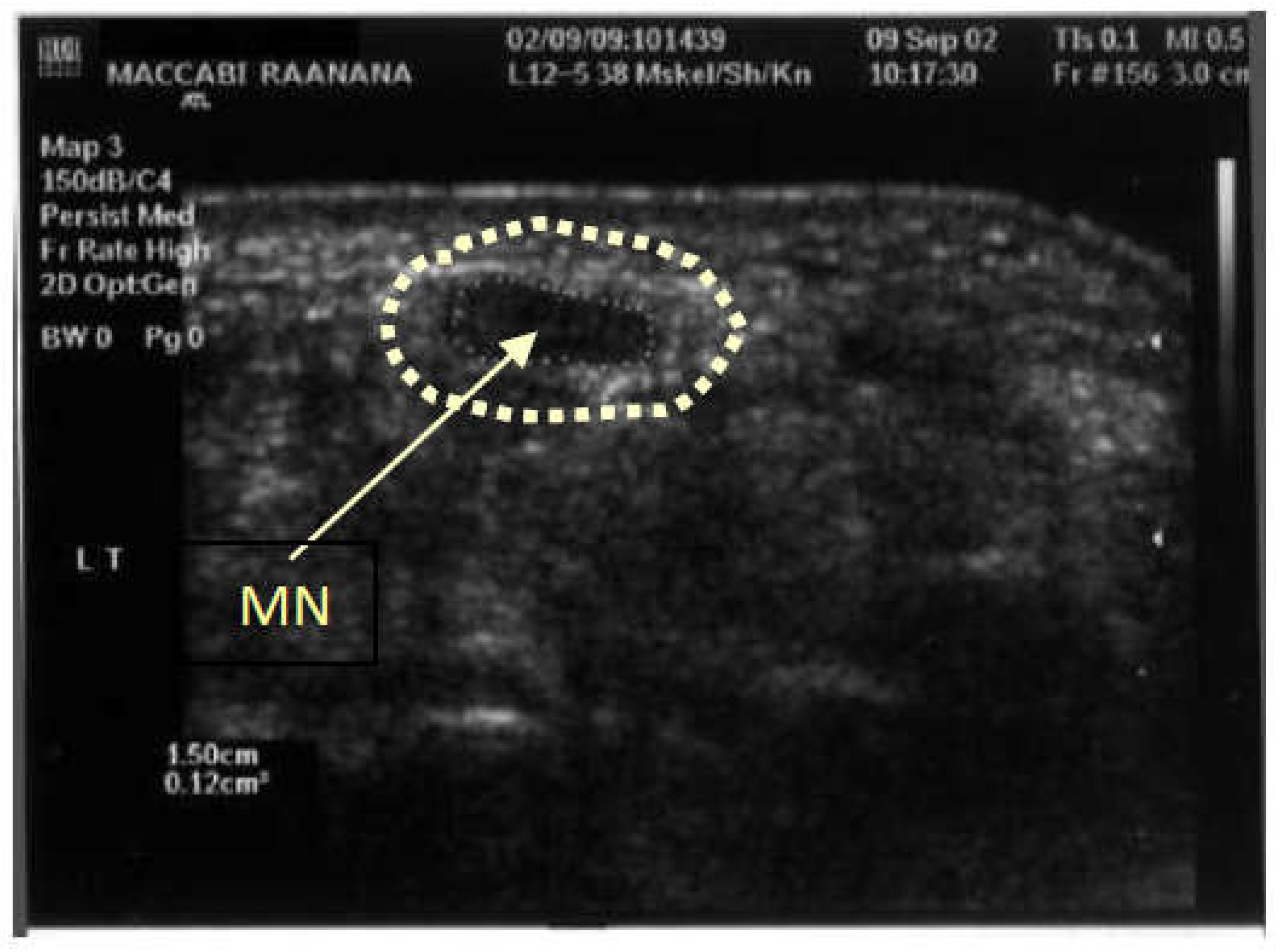
The sonographic examination was performed using an ultrasound device (Philips HDI ATL 5000, Bothell, Washington, United States) (39). The CSA of the median nerve was assessed at the proximal region of the carpal tunnel, corresponding to the level of the pisiform bone, where maximal nerve swelling is typically observed (23, 34, 40, 41). The CSA was calculated directly by the ultrasound device following manual tracing of the nerves’ echogenic boundaries (Figure 2) (23).
The median nerve neurodynamic test was performed according to the protocol described by Butler and Gifford (1989) (42), following a standardized sequence: shoulder girdle depression (Figure 1a)-1, shoulder abduction (Figure 1b)-2, forearm supination-3, wrist and finger extension-4, shoulder external rotation-5, and elbow extension (Figure 1c)-6. This six-stage sequence was quantitatively evaluated by assigning a score of 1–6 based on the stage at which the subject first reported symptom onset, at which point pain intensity was immediately recorded using a Visual Analogue Scale (VAS).
During the final session (T2), all participants rated their level of pain relief using the modified PRS scale (16).
Figure 2.
Median nerve (MN) cross-sectional area (CSA) measurement based on Sonography.
Intervention
Participants in group one –CBFRM - were treated with mobilizations of the carpal bones and stretching to the flexor retinaculum (Figure 3) which are considered as the interfacing structures at the wrist level (42, 43). Participants in group two – NM - were treated with NM of the median nerve, (i.e., upper limb tension test (ULTT1) as described by Butler & Gifford (1989)(42) and Wolny et al (2017) (17). The ULTT1 consists of six components that apply load and tension to the median nerve. Treatment progression was guided by these components and adjusted based on the location where symptoms first appeared or intensified. Participants in the control group (group 3) received no therapeutic intervention.
Participants in the two intervention groups were treated three times per week for four weeks, totaling 12 sessions.
Statistical Analysis
Statistical analyses were conducted using IBM SPSS Statistics version 29 (IBM Corp., Armonk, NY, USA). Prior to analysis, data were checked for accuracy, missing values, and compliance with statistical assumptions. Normality of the dependent variables was assessed by examining skewness and kurtosis, with values within ±2 considered acceptable.
Baseline differences among the three groups were assessed using one-way analysis of variance (ANOVA). When significant effects were found, pairwise comparisons were performed using Tukey’s honestly significant difference (HSD) test.
Changes over time and between-group differences were analyzed using a two-way mixed-design repeated-measures ANOVA, with time (pre-intervention, post-intervention) as the within-subjects factor and group (three levels) as the between-subjects factor. This analysis was applied to all outcome measures (CSA, VAS, DASH, ULTT and ULTT-VAS). Significant main or interaction effects were followed by Bonferroni-adjusted post hoc comparisons.
When baseline differences between groups were identified, analyses of covariance (ANCOVA) were conducted, controlling for baseline values of the relevant outcome.
Change scores (Δ = post − pre) were calculated for each outcome, with higher values indicating improvement where appropriate. Between-group differences in change scores were examined using one-way ANOVA, followed by Tukey HSD post hoc tests when applicable.
Statistical significance was set at p < .05. Effect sizes were reported as partial eta squared (η²p).
Results
Baseline Comparisons Between Groups
At baseline, one-way ANOVAs were conducted to assess differences among the three groups prior to the intervention. Significant group differences were found for VAS, DASH, and VAS during ULTT, whereas no significant differences were observed for CSA, ULTT, or age. Descriptive and inferential baseline data are presented in Table 1.
Post hoc comparisons showed that the control group had significantly lower baseline VAS scores than both intervention groups. The CBFRM group demonstrated higher DASH scores than both the NM and control groups. For VAS during ULTT, the control group also had lower baseline scores than the intervention groups.
Mixed-Design Repeated-Measures ANOVAs
A series of two-way mixed-design repeated-measures ANOVAs were conducted, with time as the within-subjects factor and group as the between-subjects factor. Descriptive statistics are presented in Table 2, and inferential results are presented in Table 3. As only two time points were included, the assumption of sphericity was not applicable.
Across all outcome measures, significant main effects of time were observed, indicating overall improvement from pre- to post-intervention. Importantly, all variables showed significant time × group interactions, suggesting that the magnitude of change differed between groups.
For VAS, both intervention groups demonstrated substantial reductions in pain, whereas the control group showed minimal change. Similarly, DASH scores decreased markedly in both intervention groups, indicating improved function, while the control group remained largely unchanged. Provoked pain during ULTT (VAS-ULTT) decreased in both intervention groups, with little to no improvement in the control group. For ULTT, both intervention groups showed greater improvement compared to the control group. For CSA, although the interaction effect was smaller, it remained significant, indicating differential changes across groups.
ANCOVA for outcome measures with baseline differences
Because significant baseline differences were identified for VAS, DASH, and VAS-ULTT, additional analyses of covariance (ANCOVA) were conducted for these outcomes. Baseline values were included as covariates, and post-intervention scores served as the dependent variables. Adjusted post-intervention means are presented in Table 4.
After controlling for baseline values, significant group effects remained for all three outcomes. Adjusted post hoc comparisons indicated that both intervention groups achieved significantly better post-intervention outcomes than the control group, with no significant differences between the CBFRM and NM groups. These findings suggest that the observed effects were not attributable to baseline group differences.
Magnitude of Change (Δ): Between-Group Differences
To further characterize the magnitude of change, delta (Δ) was calculated (post− pre). Negative values indicate reductions in VAS, DASH, CSA, and VAS-ULTT, whereas positive values for ULTT indicate improvement. Group differences in change scores are presented in Table 5.
The analyses revealed significant between-group differences for all outcome measures. For VAS, DASH, VAS-ULTT, and ULTT, both intervention groups demonstrated significantly greater improvements than the control group. For CSA, a smaller but significant group effect was observed.
Overall, these findings are consistent with the interaction effects identified in the repeated-measures analyses, indicating that both intervention groups improved substantially more than the control group, while showing comparable magnitudes of change to each other.
Between-Group Difference in CSA Change: ANOVA Followed by Tukey Post-Hoc Comparisons
The overall change in CSA differed significantly between groups, but the post-hoc analysis showed that this difference was driven only by the greater CSA reduction in NM compared with Control.
Pain Relief Scale (PRS)
PRS scores did not differ significantly between the two intervention groups (Table 7).
Integrated interpretation
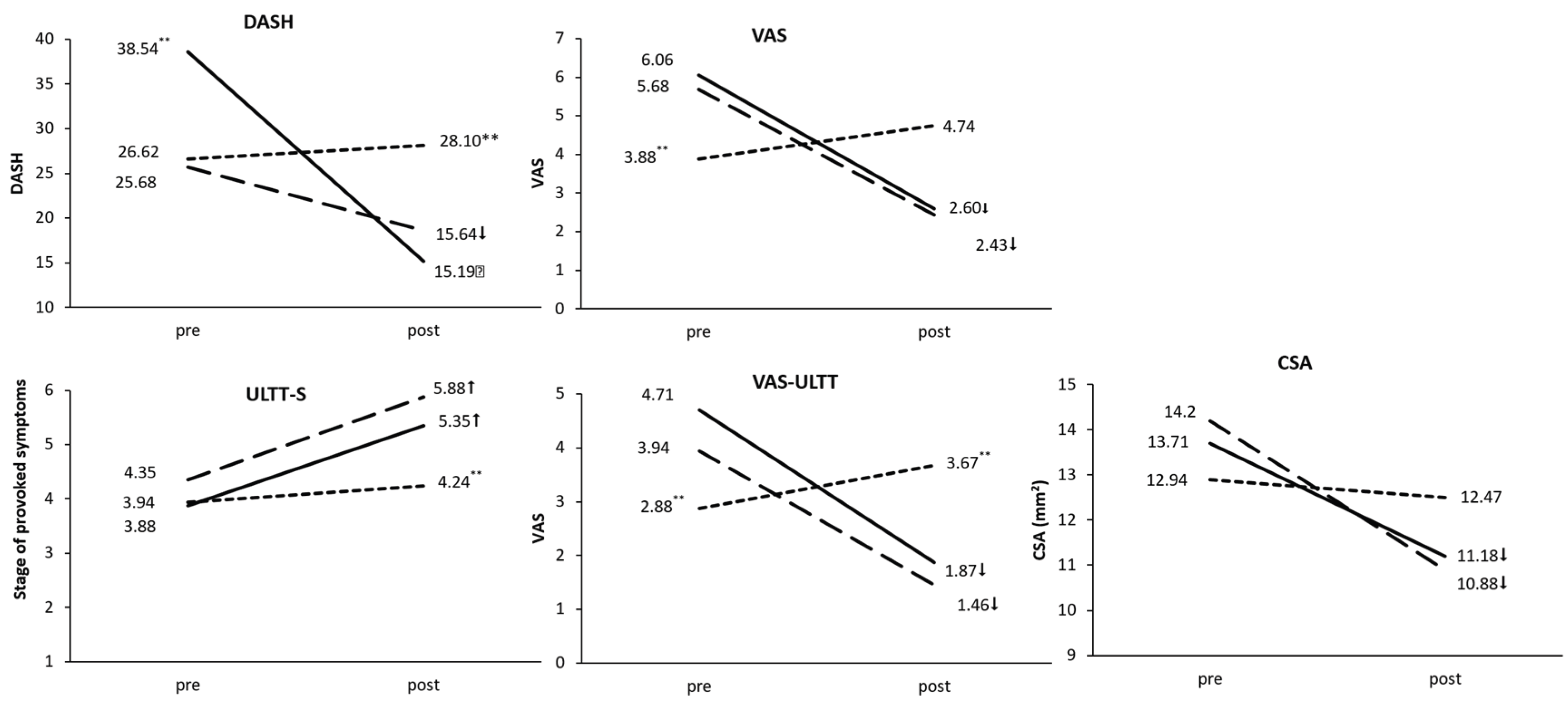
The two treatment interventions (CBFRB and NM) demonstrated comparable magnitudes of improvement across most outcome measures, suggesting similar overall effectiveness relative to the control condition (Figure 4). However, ΔCSA differed significantly between groups. Post-hoc analysis revealed that this difference was driven specifically by a greater reduction in CSA in the NM group compared with the control group, whereas the CBFRB group did not differ significantly from either group (Table 6).

Table 6.
Between-group comparisons of ΔCSA (ANOVA with Tukey Post Hoc Analysis).
| Comparison | Difference in ΔCSA | p | Interpretation |
| NM vs Control | -0.028 | 0.031 | NM improved significantly more than Control |
| CBFRM vs Control | -0.021 | 0.147 | Not significant |
| NM vs CBFRM | -0.008 | 0.759 | Not significant |
Overall ANOVA: F = 3.67, p = 0.033, η²p = 0.133. Index: CBFRM –carpal bone flexor retinaculum mobilization, NM- neurodynamic mobilization, pre- before intervention, Post – after intervention, ΔCSA – cross sectional area of the median nerve difference (post-pre). .
Table 7.
Pain relief scale (PRS) scores following the intervention by group (Mann-Whitney test, p<0.05).
Table 7.
Pain relief scale (PRS) scores following the intervention by group (Mann-Whitney test, p<0.05).
| Group | Mean | SD | P |
| CBFRM | 2.59 | 1.278 | 0.568 |
| NM | 2.88 | 1.054 |
Index: CBFRM –carpal bone flexor retinaculum mobilization, NM- neurodynamic mobilization.
Figure 4.
Summary of the pre and post DASH adjusted scores* (A), VAS adjusted scores* (B), VAS-ULTT scores (C), ULTT-S stage of provoked symptoms (D) and CSA of the median nerve (E). Index: CBFRM –carpal bone flexor retinaculum mobilization, CSA – cross sectional area of the median nerve, DASH– Disabilities of the Arm, Shoulder and Hand questionnaire, NM- neurodynamic mobilization, PRE - before intervention, POST – after intervention, ULTT-S – upper limb tension test stage of provoked symptoms, VAS - visual analogue scale of pain, VAS-ULTT - visual analogue scale provoked pain during upper limb tension test. *Adjusted mean scores controlling for baseline values. **Significant difference between control and intervention groups. ↓ Significant decrease within group. ↑ Significant increase within group.
Figure 4.
Summary of the pre and post DASH adjusted scores* (A), VAS adjusted scores* (B), VAS-ULTT scores (C), ULTT-S stage of provoked symptoms (D) and CSA of the median nerve (E). Index: CBFRM –carpal bone flexor retinaculum mobilization, CSA – cross sectional area of the median nerve, DASH– Disabilities of the Arm, Shoulder and Hand questionnaire, NM- neurodynamic mobilization, PRE - before intervention, POST – after intervention, ULTT-S – upper limb tension test stage of provoked symptoms, VAS - visual analogue scale of pain, VAS-ULTT - visual analogue scale provoked pain during upper limb tension test. *Adjusted mean scores controlling for baseline values. **Significant difference between control and intervention groups. ↓ Significant decrease within group. ↑ Significant increase within group.
Discussion
This study evaluated the effectiveness of two treatment protocols; mobilization to the carpal bones with flexor retinaculum stretching (CBFRM) and neurodynamic mobilization (NM) of the median nerve, compared with a control group in individuals with mild to moderate CTS. Pain intensity (VAS), functional status (DASH), symptom provocation during the median nerve neurodynamic test (S-ULTT) and pain intensity during upper limb tension test (VAS-ULTT) served as subjective outcome measures. Additionally, median nerve CSA served as an objective outcome measure. Inasmuch as we know, this is the first study to compare the effectiveness of these two interventions using an additional anatomical measure - the CSA of the median nerve.
Our results demonstrated that both intervention groups experienced significant reductions in pain levels and improvements in functional outcomes compared with the control group. These findings are consistent with previous studies reporting improvements following manual therapy targeting the mechanical interface (44-47), as well as studies demonstrating the benefits from NM (17, 18, 48). Moreover, our results align with those of Tal-Akabi and Rushton (2000), who reported improved function and pain reduction following either manual therapy of the interfacing structures or NM (16, 19). Together, these findings support the integration of both intervention approaches as effective treatment strategies for patients with mild to moderate CTS.
Furthermore, both intervention groups exhibited a reduction in provoked pain intensity (VAS-ULTT), accompanied by a shift in symptom onset to a later stage within the testing sequence(S-ULTT). This delay in symptom provocation suggests an improvement in the mechanical threshold and physiological tolerance of the median nerve to tension, reflecting the clinical efficacy of the interventions in modulating neural mechano-sensitivity (9).
Although previous systematic reviews and meta-analyses evaluating mixed interventions (e.g., exercise or manual therapy) reported limited effectiveness of NM (49, 50), more targeted studies suggest that, when applied by a physiotherapist as a manual therapy technique, NM may be superior to sham or other conservative treatments (51, 52).
Importantly, a significant reduction in median nerve CSA was observed in patients receiving both NM and CBFRB compared with no intervention. However, post-hoc analysis adjusting for baseline differences in CSA between the intervention groups demonstrated that the overall between-group difference was primarily driven by a greater reduction in CSA in the NM group compared with the control group, whereas the CBFRB group did not differ significantly from either group. This highlights the novelty and clinical relevance of including CSA as an objective measure: while both interventions resulted in subjective improvements, only NM was associated with measurable structural changes in the median nerve. These findings are consistent with previous studies employing nerve conduction testing (17, 18, 44, 47, 53). Specifically, Wolny et al., (2017, 2018) demonstrated that NM was more effective than both laser and sham therapy in improving sensory conduction velocity and decreasing motor latency (17, 18). Similarly, Sheereen et al. conducted a direct comparison between NM and CBFRM, as in the present study, and reported superior outcomes for NM (19).
Research evaluating conservative treatment in CTS has utilized a variety of subjective and objective outcome measures (e.g., (17, 54)). Nerve conduction studies remain as the closest “gold standard” objective tool for the diagnosis of CTS (55, 56).
However, compared with nerve conduction studies, sonography is relatively inexpensive, noninvasive, widely accessible (57) and can be performed by trained musculoskeletal professionals (e.g., consultant PT in the UK) (58). Based on an electrodiagnostic confirmation of CTS, our findings support the supplementary role of sonographic CSA assessment as an objective tool for evaluating clinical status and treatment outcome of patients with mild and moderate CTS.
This recommendation is further supported by previous literature establishing a correlation between sonographic findings and electromyography (EMG) across all levels of CTS severity. Specifically, CSA measurements demonstrate high diagnostic accuracy and strong correlation (r=0.762-0.830) with nerve conduction study (NCS) standards, confirming its reliability as a clinical supportive diagnostic modality (24, 29). Furthermore, a recent systematic review high lightened the finding that median nerve CSA measured at the carpal tunnel inlet was the most effective evidence-based sonographic metric (59). Of note, current evidence suggests that ultrasonography offers high sensitivity, performing comparably to NCS and EMG in the diagnostic assessment of CTS (60).
Limitations of the Study
This study has several limitations. First, the therapeutic effect was assessed only at the end of the intervention, with no long-term follow-up. Second, the study included only patients with mild to moderate CTS, limiting the generalizability of the findings to more severe cases. Third, the sample size was relatively small, limiting the scope of the conclusions. Further research is needed to validate these preliminary findings, with emphasis on long-term outcomes, larger sample sizes, and inclusion of patients with severe CTS.
Conclusions and Clinical Implications
Neurodynamic mobilization appears to be an effective conservative intervention for patients with mild to moderate CTS, demonstrating meaningful clinical and functional improvements. In addition, sonographic assessment of median nerve CSA may serve as a valuable complementary objective measure for evaluating treatment response and monitoring clinical status. When integrated with clinical examination and electrodiagnostic assessment, CSA measurement may further enhance the evaluation and follow-up of patients with CTS. The incorporation of ultrasound-based CSA assessment into clinical practice therefore offers a practical and objective approach for monitoring the effectiveness of conservative interventions, particularly neurodynamic mobilization of the median nerve.
Funding
This research did not receive any specific grant from funding agencies in the public, commercial, or for-profit sectors.
Ethical approval and informed consent statements
This study was conducted according to the Declaration of Helsinki after explaining fully the purpose of the study and the experimental methods to the participants in advance, obtaining their written consent, and receiving approval from Maccabi Health Services Clinical Research Unit (Approval No. 13; 27.01.2004).
Consent for publication
All authors (ES, HP, ZD, RPK and SP) give their consent for publication.
Data Availability Statement
The datasets used and/or analyzed during the current study are available from the corresponding author on reasonable request.
Acknowledgments
The Authors thank the clinical research unit and Physical Therapy Department in “Macabi Health HMO Services”, Israel for their support of this important project. We also thank Dr. Michal Arnon for her assistance with the statistical analysis. This article is dedicated to the memory of Dr. Hagar Patish (1955-2015), Former Head of Hand Surgery Unit (2007- 2015), Barzilai Medical Center, Ashkelon, Israel. Dr. Patish was a role model for generations of medical and health professions students and practitioners. Above all, she was a devoted clinician and surgeon, focusing on the best treatment that could be delivered to the patient.
Declaration of conflicting interest
The authors declared no potential conflicts of interest with respect to the research, authorship, and/or publication of this article.
List of abbreviations:
CBFRM - carpal bones and flexor retinaculum mobilization.
CSA – cross sectional area.
CTS – carpal tunnel syndrome.
NM – neurodynamic mobilization.
References
- Genova, A.; Dix, O.; Saefan, A.; Thakur, M.; Hassan, A. Carpal Tunnel Syndrome: A Review of Literature. Cureus 2020, 12(3), e7333. [Google Scholar] [CrossRef]
- Huisstede, B.M.; Randsdorp, M.S.; Coert, J.H.; Glerum, S.; van Middelkoop, M.; Koes, B.W. Carpal tunnel syndrome. Part II: effectiveness of surgical treatments--a systematic review. Arch. Phys. Med. Rehabil. 2010, 91(7), 1005–24. [Google Scholar] [CrossRef]
- Huisstede, B.M.; van den Brink, J.; Randsdorp, M.S.; Geelen, S.J.; Koes, B.W. Effectiveness of Surgical and Postsurgical Interventions for Carpal Tunnel Syndrome-A Systematic Review. Arch. Phys. Med. Rehabil. 2018, 99(8), 1660–80 e21. [Google Scholar] [CrossRef]
- Karjalanen, T.; Raatikainen, S.; Jaatinen, K.; Lusa, V. Update on Efficacy of Conservative Treatments for Carpal Tunnel Syndrome. J. Clin. Med. 2022, 11(4). [Google Scholar] [CrossRef]
- Fernandez-de-Las-Penas, C.; Cleland, J.; Palacios-Cena, M.; Fuensalida-Novo, S.; Alonso-Blanco, C.; Pareja, J.A.; et al. Effectiveness of manual therapy versus surgery in pain processing due to carpal tunnel syndrome: A randomized clinical trial. Eur. J. Pain. 2017, 21(7), 1266–76. [Google Scholar] [CrossRef]
- Pinar, L.; Enhos, A.; Ada, S.; Gungor, N. Can we use nerve gliding exercises in women with carpal tunnel syndrome? Adv. Ther. 2005, 22(5), 467–75. [Google Scholar] [CrossRef]
- Oskouei, A.E.; Talebi, G.A.; Shakouri, S.K.; Ghabili, K. Effects of neuromobilization maneuver on clinical and electrophysiological measures of patients with carpal tunnel syndrome. J. Phys. Ther. Sci. 2014, 26(7), 1017–22. [Google Scholar] [CrossRef] [PubMed]
- Madenci, E.; Altindag, O.; Koca, I.; Yilmaz, M.; Gur, A. Reliability and efficacy of the new massage technique on the treatment in the patients with carpal tunnel syndrome. Rheumatol. Int. 2012, 32(10), 3171–9. [Google Scholar] [CrossRef]
- Horng, Y.S.; Hsieh, S.F.; Tu, Y.K.; Lin, M.C.; Horng, Y.S.; Wang, J.D. The comparative effectiveness of tendon and nerve gliding exercises in patients with carpal tunnel syndrome: a randomized trial. Am. J. Phys. Med. Rehabil. 2011, 90(6), 435–42. [Google Scholar] [CrossRef] [PubMed]
- Brininger, T.L.; Rogers, J.C.; Holm, M.B.; Baker, N.A.; Li, Z.M.; Goitz, R.J. Efficacy of a fabricated customized splint and tendon and nerve gliding exercises for the treatment of carpal tunnel syndrome: a randomized controlled trial. Arch. Phys. Med. Rehabil. 2007, 88(11), 1429–35. [Google Scholar] [CrossRef] [PubMed]
- Baysal, O.; Altay, Z.; Ozcan, C.; Ertem, K.; Yologlu, S.; Kayhan, A. Comparison of three conservative treatment protocols in carpal tunnel syndrome. Int. J. Clin. Pract. 2006, 60(7), 820–8. [Google Scholar] [CrossRef]
- Akalin, E.; El, O.; Peker, O.; Senocak, O.; Tamci, S.; Gulbahar, S.; et al. Treatment of carpal tunnel syndrome with nerve and tendon gliding exercises. Am. J. Phys. Med. Rehabil. 2002, 81(2), 108–13. [Google Scholar] [CrossRef] [PubMed]
- Bardak, A.N.; Alp, M.; Erhan, B.; Paker, N.; Kaya, B.; Onal, A.E. Evaluation of the clinical efficacy of conservative treatment in the management of carpal tunnel syndrome. Adv. Ther. 2009, 26(1), 107–16. [Google Scholar] [CrossRef]
- Heebner, M.L.; Roddey, T.S. The effects of neural mobilization in addition to standard care in persons with carpal tunnel syndrome from a community hospital. J. Hand Ther. 2008, 21(3), 229–40; quiz 41. [Google Scholar] [CrossRef] [PubMed]
- Rozmaryn, L.M.; Dovelle, S.; Rothman, E.R.; Gorman, K.; Olvey, K.M.; Bartko, J.J. Nerve and tendon gliding exercises and the conservative management of carpal tunnel syndrome. J. Hand Ther. 1998, 11(3), 171–9. [Google Scholar] [CrossRef]
- Tal-Akabi, A.; Rushton, A. An investigation to compare the effectiveness of carpal bone mobilisation and neurodynamic mobilisation as methods of treatment for carpal tunnel syndrome. Man. Ther. 2000, 5(4), 214–22. [Google Scholar] [CrossRef]
- Wolny, T.; Saulicz, E.; Linek, P.; Shacklock, M.; Mysliwiec, A. Efficacy of Manual Therapy Including Neurodynamic Techniques for the Treatment of Carpal Tunnel Syndrome: A Randomized Controlled Trial. J. Manip. Physiol. Ther. 2017, 40(4), 263–72. [Google Scholar] [CrossRef]
- Wolny, T.; Linek, P. Neurodynamic Techniques Versus “Sham” Therapy in the Treatment of Carpal Tunnel Syndrome: A Randomized Placebo-Controlled Trial. Arch. Phys. Med. Rehabil. 2018, 99(5), 843–54. [Google Scholar] [CrossRef] [PubMed]
- Sheereen, F.J.; Sarkar, B.; Sahay, P.; Shaphe, M.A.; Alghadir, A.H.; Iqbal, A.; et al. Comparison of Two Manual Therapy Programs, including Tendon Gliding Exercises as a Common Adjunct, While Managing the Participants with Chronic Carpal Tunnel Syndrome. Pain Res. Manag 2022, 2022, 1975803. [Google Scholar] [CrossRef]
- Carpal Tunnel Syndrome: A Summary of Clinical Practice Guideline Recommendations-Using the Evidence to Guide Physical Therapist Practice. J. Orthop. Sports Phys. Ther. 2019, 49(5), 359–60. [CrossRef]
- Erickson, M.; Lawrence, M.; Lazinski, M.J.; Scott, K.; Martin, R.L. Hand Pain and Sensory Deficits: Carpal Tunnel Syndrome: Revision 2026. J. Orthop. Sports Phys. Ther. 2026, 56(4), CPG1–CPG79. [Google Scholar] [CrossRef]
- Fowler, J.R.; Gaughan, J.P.; Ilyas, A.M. The sensitivity and specificity of ultrasound for the diagnosis of carpal tunnel syndrome: a meta-analysis. Clin. Orthop. Relat. Res. 2011, 469(4), 1089–94. [Google Scholar] [CrossRef]
- Duncan, I.; Sullivan, P.; Lomas, F. Sonography in the diagnosis of carpal tunnel syndrome. AJR Am. J. Roentgenol. 1999, 173(3), 681–4. [Google Scholar] [CrossRef] [PubMed]
- Lee, D.; van Holsbeeck, M.T.; Janevski, P.K.; Ganos, D.L.; Ditmars, D.M.; Darian, V.B. Diagnosis of carpal tunnel syndrome. Ultrasound versus electromyography. Radiol. Clin. North Am. 1999, 37(4), 859–72, x. [Google Scholar] [CrossRef]
- Wong, S.M.; Griffith, J.F.; Hui, A.C.; Tang, A.; Wong, K.S. Discriminatory sonographic criteria for the diagnosis of carpal tunnel syndrome. Arthritis Rheum. 2002, 46(7), 1914–21. [Google Scholar] [CrossRef]
- Cartwright, M.S.; Hobson-Webb, L.D.; Boon, A.J.; Alter, K.E.; Hunt, C.H.; Flores, V.H.; et al. Evidence-based guideline: neuromuscular ultrasound for the diagnosis of carpal tunnel syndrome. Muscle Nerve 2012, 46(2), 287–93. [Google Scholar] [CrossRef] [PubMed]
- Mhoon, J.T.; Juel, V.C.; Hobson-Webb, L.D. Median nerve ultrasound as a screening tool in carpal tunnel syndrome: correlation of cross-sectional area measures with electrodiagnostic abnormality. Muscle Nerve 2012, 46(6), 871–8. [Google Scholar] [CrossRef]
- Ratasvuori, M.; Sormaala, M.; Kinnunen, A.; Lindfors, N. Ultrasonography for the diagnosis of carpal tunnel syndrome: correlation of clinical symptoms, cross-sectional areas and electroneuromyography. J. Hand Surg. Eur. 2022, Vol. 47(4), 369–74. [Google Scholar] [CrossRef]
- Kaya, O.; Gurbuz, A.; Batur, O. C.; Tas, N. P.; Yildirim, M.; Senel, A. Comparison of ultrasonography, electromyography, and clinical findings of patients with carpal tunnel syndrome. Med. Sci. 2023, 12(4), 1107–11. [Google Scholar] [CrossRef]
- Katz, J.N.; Larson, M.G.; Sabra, A.; Krarup, C.; Stirrat, C.R.; Sethi, R.; et al. The carpal tunnel syndrome: diagnostic utility of the history and physical examination findings. Ann. Intern Med. 1990, 112(5), 321–7. [Google Scholar] [CrossRef]
- Buchberger, W.; Judmaier, W.; Birbamer, G.; Lener, M.; Schmidauer, C. Carpal tunnel syndrome: diagnosis with high-resolution sonography. AJR Am. J. Roentgenol. 1992, 159(4), 793–8. [Google Scholar] [CrossRef]
- De Kleermaeker, F.; Meulstee, J.; Verhagen, W.I.M. The controversy of the normal values of ultrasonography in carpal tunnel syndrome: diagnostic accuracy of wrist-dependent CSA revisited. Neurol. Sci. 2019, 40(5), 1041–7. [Google Scholar] [CrossRef] [PubMed]
- Duncan, K.H.; Lewis, R.C., Jr.; Foreman, K.A.; Nordyke, M.D. Treatment of carpal tunnel syndrome by members of the American Society for Surgery of the Hand: results of a questionnaire. J. Hand Surg. Am. 1987, 12(3), 384–91. [Google Scholar] [CrossRef] [PubMed]
- Harrington, J.M.; Carter, J.T.; Birrell, L.; Gompertz, D. Surveillance case definitions for work related upper limb pain syndromes. Occup. Env. Med. 1998, 55(4), 264–71. [Google Scholar] [CrossRef]
- Ziv, E. S.E.; Kaufman, Y.; Patish, H. The DASH outcome measure - Hebrew translation. Hand Surgery Unit, Barzilai Medical Center: Ashkelon, Israel, 2006. Available online: https://dash.iwh.on.ca/hebrew-translation.
- Jester, A.; Harth, A.; Wind, G.; Germann, G.; Sauerbier, M. Disabilities of the arm, shoulder and hand (DASH) questionnaire: Determining functional activity profiles in patients with upper extremity disorders. J. Hand Surg. Br. 2005, 30(1), 23–8. [Google Scholar] [CrossRef]
- Price, D.D.; McGrath, P.A.; Rafii, A.; Buckingham, B. The validation of visual analogue scales as ratio scale measures for chronic and experimental pain. Pain. 1983, 17(1), 45–56. [Google Scholar] [CrossRef]
- Lee, J.J.; Lee, M.K.; Kim, J.E.; Kim, H.Z.; Park, S.H.; Tae, J.H.; et al. Pain relief scale is more highly correlated with numerical rating scale than with visual analogue scale in chronic pain patients. Pain Physician 2015, 18(2), E195-200. [Google Scholar]
- Chen, P.; Maklad, N.; Redwine, M.; Zelitt, D. Dynamic high-resolution sonography of the carpal tunnel. AJR Am. J. Roentgenol. 1997, 168(2), 533–7. [Google Scholar] [CrossRef]
- Buchberger, W. Radiologic imaging of the carpal tunnel. Eur. J. Radiol. 1997, 25(2), 112–7. [Google Scholar] [CrossRef]
- Tatar, I.G.; Kurt, A.; Yavasoglu, N.G.; Hekimoglu, B. Carpal tunnel syndrome: elastosonographic strain ratio and cross-sectional area evaluation for the diagnosis and disease severity. Med. Ultrason. 2016, 18(3), 305–11. [Google Scholar] [CrossRef] [PubMed]
- Butler, D.; Gifford, L. The concept of adverse mechanical tension in the nervous system part 2: Examination and treatment. Physiotherapy 1989, 75(11), 629–36. [Google Scholar] [CrossRef]
- Shacklock, M. Neurodynamics. Physiotherapy 1995, 81(1), 9–16. [Google Scholar] [CrossRef]
- Burke, J.; Buchberger, D.J.; Carey-Loghmani, M.T.; Dougherty, P.E.; Greco, D.S.; Dishman, J.D. A pilot study comparing two manual therapy interventions for carpal tunnel syndrome. J. Manip. Physiol. Ther. 2007, 30(1), 50–61. [Google Scholar] [CrossRef]
- Jimenez Del Barrio, S.; Estebanez de Miguel, E.; Bueno Gracia, E.; Haddad Garay, M.; Tricas Moreno, J.M.; Hidalgo Garcia, C. Effects of diacutaneous fibrolysis in patients with mild to moderate symptomatic carpal tunnel syndrome: a randomized controlled trial. Clin. Rehabil. 2018, 32(12), 1645–55. [Google Scholar] [CrossRef]
- Pratelli, E.; Pintucci, M.; Cultrera, P.; Baldini, E.; Stecco, A.; Petrocelli, A.; et al. Conservative treatment of carpal tunnel syndrome: comparison between laser therapy and Fascial Manipulation((R)). J. Bodyw. Mov. Ther. 2015, 19(1), 113–8. [Google Scholar] [CrossRef]
- Shem, K.; Wong, J.; Dirlikov, B. Effective self-stretching of carpal ligament for the treatment of carpal tunnel syndrome: A double-blinded randomized controlled study. J. Hand Ther. 2020, 33(3), 272–80. [Google Scholar] [CrossRef]
- Bialosky, J.E.; Bishop, M.D.; Price, D.D.; Robinson, M.E.; Vincent, K.R.; George, S.Z. A randomized sham-controlled trial of a neurodynamic technique in the treatment of carpal tunnel syndrome. J. Orthop. Sports Phys. Ther. 2009, 39(10), 709–23. [Google Scholar] [CrossRef] [PubMed]
- Ballestero-Perez, R.; Plaza-Manzano, G.; Urraca-Gesto, A.; Romo-Romo, F.; Atin-Arratibel, M.L.A.; Pecos-Martin, D.; et al. Effectiveness of Nerve Gliding Exercises on Carpal Tunnel Syndrome: A Systematic Review. J. Manip. Physiol. Ther. 2017, 40(1), 50–9. [Google Scholar] [CrossRef]
- Basson, A.; Olivier, B.; Ellis, R.; Coppieters, M.; Stewart, A.; Mudzi, W. The Effectiveness of Neural Mobilization for Neuromusculoskeletal Conditions: A Systematic Review and Meta-analysis. J. Orthop. Sports Phys. Ther. 2017, 47(9), 593–615. [Google Scholar] [CrossRef] [PubMed]
- Jimenez-Del-Barrio, S.; Cadellans-Arroniz, A.; Ceballos-Laita, L.; Estebanez-de-Miguel, E.; Lopez-de-Celis, C.; Bueno-Gracia, E.; et al. The effectiveness of manual therapy on pain, physical function, and nerve conduction studies in carpal tunnel syndrome patients: a systematic review and meta-analysis. Int. Orthop. 2022, 46(2), 301–12. [Google Scholar] [CrossRef]
- Du, J.; Yuan, Q.; Wang, X.Y.; Qian, J.H.; An, J.; Dai, Q.; et al. Manual Therapy and Related Interventions for Carpal Tunnel Syndrome: A Systematic Review and Meta-Analysis. J. Integr. Complement Med. 2022, 28(12), 919–26. [Google Scholar] [CrossRef]
- Maddali Bongi, S.; Signorini, M.; Bassetti, M.; Del Rosso, A.; Orlandi, M.; De Scisciolo, G. A manual therapy intervention improves symptoms in patients with carpal tunnel syndrome: a pilot study. Rheumatol. Int. 2013, 33(5), 1233–41. [Google Scholar] [CrossRef]
- MacDermid, J.C.; Wessel, J. Clinical diagnosis of carpal tunnel syndrome: a systematic review. J. Hand Ther. 2004, 17(2), 309–19. [Google Scholar] [CrossRef]
- Kleggetveit, I.P.; Jorum, E. Diagnosis of carpal tunnel syndrome. Scand. J. Pain 2018, 18(3), 333–7. [Google Scholar] [CrossRef] [PubMed]
- Bland, J.D. Do nerve conduction studies predict the outcome of carpal tunnel decompression? Muscle Nerve 2001, 24(7), 935–40. [Google Scholar] [CrossRef] [PubMed]
- Roll, S.C.; Evans, K. Feasibility of using a hand-carried sonographic unit for investigating median nerve pathology. J. Diagn. Med. Sonogr. 2009, 25(5), 241–9. [Google Scholar] [CrossRef]
- Mabry, L.M.; Boyles, R.E.; Brismee, J.M.; Agustsson, H.; Smoliga, J.M. Physical therapy musculoskeletal imaging authority: A survey of the World Confederation for Physical Therapy Nations. Physiother. Res. Int. 2020, 25(2), e1822. [Google Scholar] [CrossRef]
- Erickson, M.; Lawrence, M.; Lucado, A. The role of diagnostic ultrasound in the examination of carpal tunnel syndrome: an update and systematic review. J. Hand Ther. 2022, 35(2), 215–25. [Google Scholar] [CrossRef]
- Zaki, H.A.; Shaban, E.; Salem, W.; Bilal, F.; Fayed, M.; Hendy, M.; et al. A Comparative Analysis Between Ultrasound and Electromyographic and Nerve Conduction Studies in Diagnosing Carpal Tunnel Syndrome (CTS): A Systematic Review and Meta-Analysis. Cureus 2022, 14(10), e30476. [Google Scholar] [CrossRef]
Figure 1.
Neurodynamic mobilization and test [(Butler and Gifford (1989)] (42);. a) test start position, b) mid-position, c) test end position.
Figure 1.
Neurodynamic mobilization and test [(Butler and Gifford (1989)] (42);. a) test start position, b) mid-position, c) test end position.
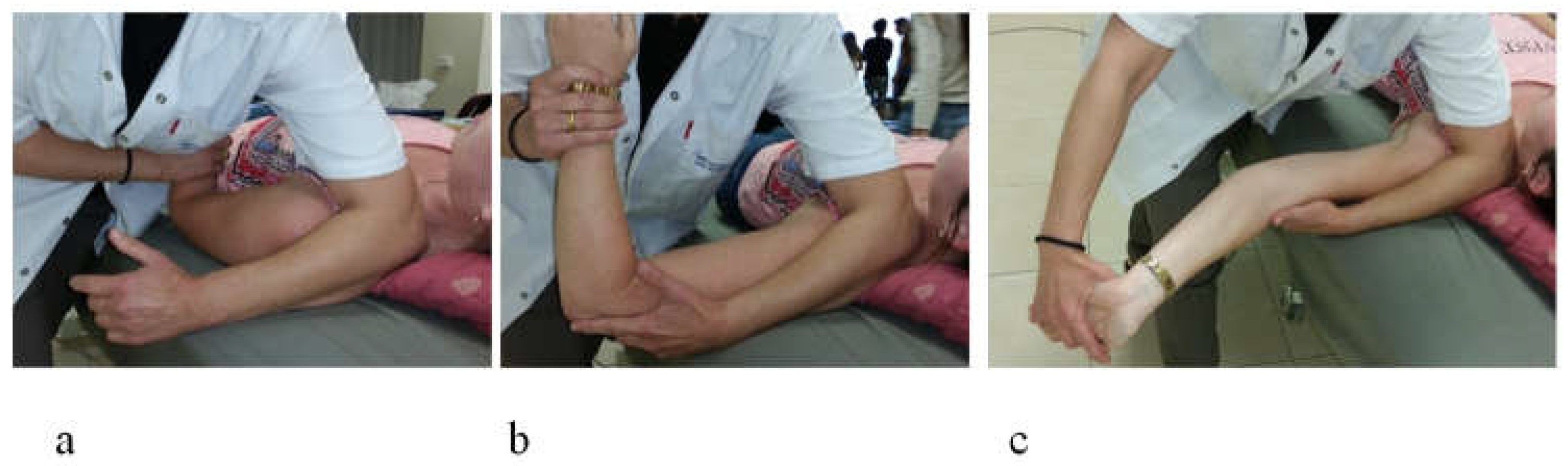
Figure 3.
Manual therapy of the interfacing structures surrounding the median nerve: carpal bone mobilization (a), and flexor retinaculum stretching (b).
Figure 3.
Manual therapy of the interfacing structures surrounding the median nerve: carpal bone mobilization (a), and flexor retinaculum stretching (b).
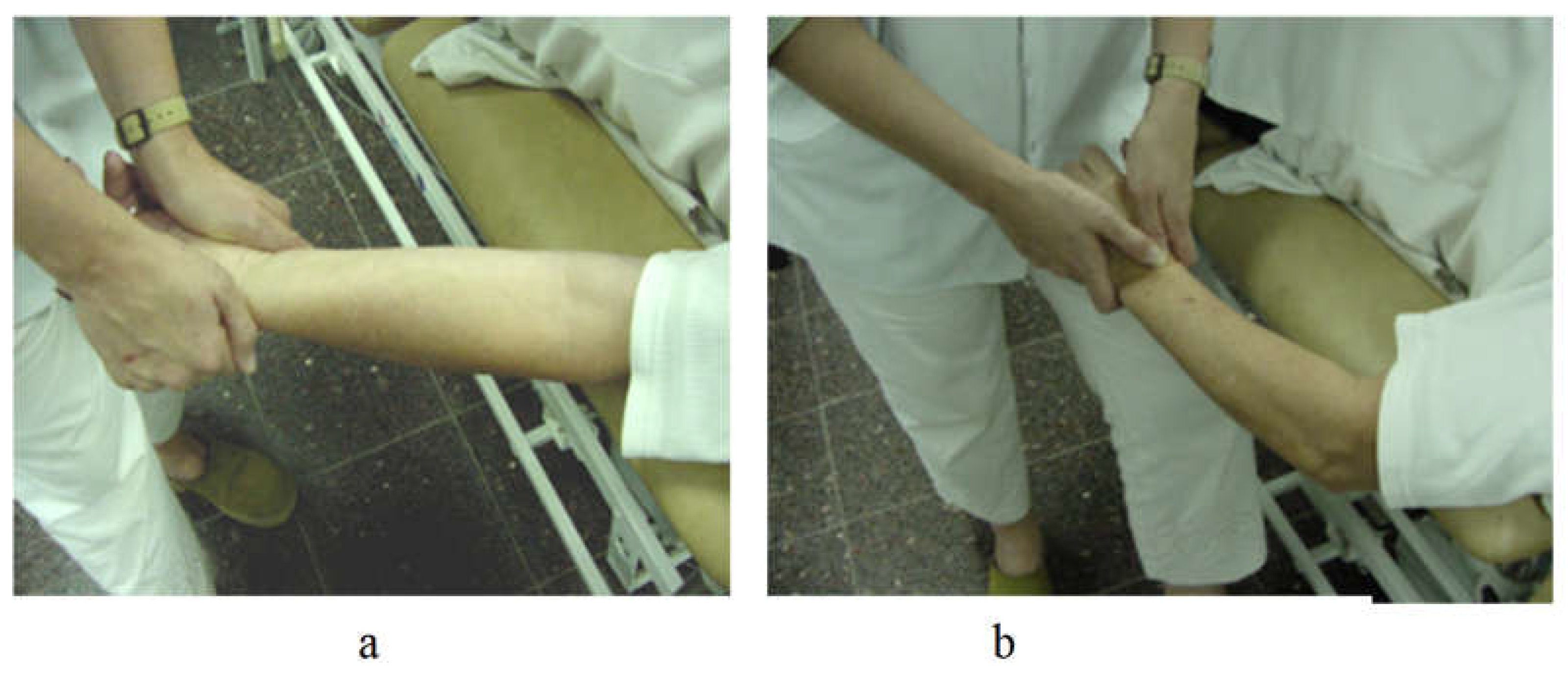
Table 1.
Baseline comparisons between groups (one way ANOVA).
| Variable |
CBFRM (N=17) |
NM (N=17) |
Control (N=17) |
F (2, 48) |
p | η²p |
| Age | 50.41 ± 9.39 | 49.71 ± 13.43 | 49.94 ± 10.58 | 0.02 | 0.983 | 0.001 |
| VAS | 6.06 ± 1.52 | 5.68 ± 1.42 | 3.88 ± 1.84 | 8.91 | 0.001 | 0.271 |
| DASH | 38.54 ± 11.62 | 25.68 ± 11.64 | 26.62 ± 11.33 | 6.57 | 0.003 | 0.215 |
| CSA (mm2) | 13.7 ± 3.8 | 14.2 ± 3.8 | 12.9 ± 3.5 | 0.48 | 0.62 | 0.02 |
| ULTT | 3.88 ± 1.05 | 4.35 ± 0.93 | 3.94 ± 0.83 | 1.26 | 0.293 | 0.05 |
| VAS-ULTT | 4.71 ± 0.99 | 3.94 ± 1.20 | 2.88 ± 1.54 | 8.98 | <.001 | 0.272 |
Index: CBFRM–carpal bone and flexor retinaculum mobilization, NM- neurodynamic mobilization, VAS – visual analogue scale, DASH – Disabilities of the Arm, Shoulder and Hand questionnaire, CSA – cross sectional area of the median nerve, ULTT – upper limb tension test, VAS-ULTT - visual analogue scale during upper limb tension test.
Table 2.
Descriptive statistics and mixed ANOVA results.
| Variable | CBFRM (N=17) | NM (N=17) | Control (N=17) | |||
| Pre | Post | Pre | Post | Pre | Post | |
| VAS | 6.06 ± 1.52 | 3.21 ± 1.82 | 5.68 ± 1.42 | 2.76 ± 1.43 | 3.88 ± 1.84 | 3.79 ± 2.35 |
| DASH | 38.54 ± 11.62 | 20.54 ± 10.35 | 25.68 ± 11.64 | 12.66 ± 7.94 | 26.62 ± 11.33 | 25.73 ± 12.84 |
| CSA (mm2) | 13.7 ± 3.8 | 11.2 ± 4.3 | 14.2 ± 3.8 | 10.9 ± 3.4 | 12.9 ± 3.5 | 12.5 ± 0.4 |
| VAS-ULTT | 4.71 ± 0.99 | 2.53 ± 1.66 | 3.94 ± 1.20 | 1.53 ± 0.94 | 2.88 ± 1.54 | 2.94 ± 1.64 |
| ULTT | 3.88 ± 1.05 | 5.35 ± 0.79 | 4.35 ± 0.93 | 5.88 ± 0.33 | 3.94 ± 0.83 | 4.24 ± 0.90 |
Index: CBFRM–carpal bone mobilization, NM- neurodynamic mobilization, VAS – visual analogue scale, DASH – Disabilities of the Arm, Shoulder and Hand questionnaire, CSA – cross sectional area of the median nerve, ULTT – upper limb tension test, VAS-ULTT - visual analogue scale during upper limb tension test.
Table 3.
Mixed ANOVA results.
| Variable | Time | Group | Time × Group |
| F(1,48), p, η²p | F(2,48), p, η²p | F(2,48), p, η²p | |
| VAS | 77.25, <0.001, .617 | 1.09, .346, .043 | 17.61, <0.001, .423 |
| DASH | 79.61, <0.001, .624 | 4.57, .015, .160 | 18.15, <0.001, .431 |
| CSA (mm2) | 22.73, <0.001, .321 | 0.03, .976, .001 | 3.67, .033, .133 |
| VAS-ULTT | 90.69, <0.001, .654 | 2.42, .100, .092 | 24.66, <0.001, .507 |
| ULTT-S | 86.81, <.001, .644 | 8.60, .001, .264 | 11.65, <.001, .327 |
Index: VAS – visual analogue scale, DASH – Disabilities of the Arm, Shoulder and Hand questionnaire, CSA – cross sectional area of the median nerve, ULTT – upper limb tension test, VAS-ULTT - visual analogue scale during upper limb tension test.
Table 4.
ANCOVA results controlling for baseline values.
| Outcome | Covariate effect, F(1,47) p, η²p | Group effect, F(2,47) p, η²p | Adjusted average | ||
| CBFRM (N = 17) |
NM (N = 17) |
Control (N = 17) |
|||
| VAS post | 26.83, <0.001, 0.363 | 8.92, 0.001, 0.275 | 2.6 | 2.43 | 4.74 |
| DASH post | 46.84, <0.001, 0.499 | 15.21, <0.001, 0.393 | 15.19 | 15.64 | 28.1 |
| VAS-ULTT post | 36.33, <0.001, 0.436 | 15.85, <0.001, 0.403 | 1.87 | 1.46 | 3.67 |
Index: CBFRM –carpal bone flexor retinaculum mobilization, NM- neurodynamic mobilization, VAS post – visual analogue scale (post treatment), DASH post– Disabilities of the Arm, Shoulder and Hand questionnaire difference (post treatment), VAS-ULTT post- visual analogue scale provoked pain during upper limb tension test (post treatment).
Table 5.
Group differences in change scores.
| Variable |
CBFRM (N = 17) |
NM (N = 17) |
Control (N = 17) |
F(2,48) | p | η²p |
| ΔVAS | -2.85 ± 2.11 | -2.91 ± 1.24 | -0.09 ± 1.24 | 17.61 | <0.001 | 0.423 |
| ΔDASH | -18.00 ± 11.28 | -13.01 ± 8.50 | -0.89 ± 4.24 | 18.15 | <0.001 | 0.431 |
| ΔCSA | -2.47 ± 4.72 | -0.88 ± 4.40 | 2.29 ± 6.73 | 3.45 | 0.04 | 0.126 |
| ΔULTT | 1.47 ± 0.80 | 1.53 ± 0.87 | 0.29 ± 0.85 | 11.65 | <0.001 | 0.327 |
| ΔVAS-ULTT | -2.18 ± 1.29 | -2.41 ± 1.33 | 0.06 ± 0.66 | 24.66 | <0.001 | 0.507 |
Index: CBFRM –carpal bone flexor retinaculum mobilization, NM- neurodynamic mobilization, ΔVAS – visual analogue scale difference (post-pre), ΔDASH– Disabilities of the Arm, Shoulder and Hand questionnaire difference (post-pre), ΔCSA – cross sectional area of the median nerve difference (post-pre), ΔULTT – upper limb tension test difference (post-pre), ΔVAS-ULTT - visual analogue scale provoked pain during upper limb tension test difference (post-pre).
Disclaimer/Publisher’s Note: The statements, opinions and data contained in all publications are solely those of the individual author(s) and contributor(s) and not of MDPI and/or the editor(s). MDPI and/or the editor(s) disclaim responsibility for any injury to people or property resulting from any ideas, methods, instructions or products referred to in the content. |
© 2026 by the authors. Licensee MDPI, Basel, Switzerland. This article is an open access article distributed under the terms and conditions of the Creative Commons Attribution (CC BY) license (http://creativecommons.org/licenses/by/4.0/).
Copyright: This open access article is published under a Creative Commons CC BY 4.0 license, which permit the free download, distribution, and reuse, provided that the author and preprint are cited in any reuse.


