

Submitted:
28 April 2026
Posted:
04 May 2026
You are already at the latest version
Abstract
German chamomile (Matricaria recutita L.) is an important medicinal and aromatic crop in Ukraine, where it’s dried flower heads (Chamomillae anthodium) are officially registered and standardized according to the European Pharmacopoeia. Despite its economic relevance, information on population-level variability in essential oil yield and chemical composition remains limited. This study evaluated twenty wild chamomile populations distributed across major agroclimatic regions of Ukraine to identify valuable chemotypes for cultivation, breeding, and commercial standardization. Clus-ter analysis revealed a partial relationship between flower head mass and both qualitative and quantitative essential oil traits, while environmental conditions showed only weak influence. Over all, Ukrainian wild chamomile predominantly belonged to Type B chemotype (/-/-α-bisabolol oxide A > /-/-α-bisabolol > /-/-α-bisabololoxide B). Southern populations with medium-sized flower heads and moderate oil content were dominated by the phytotherapeutic valuable /-/-α-bisabolol chemotype. These findings provide a scientific basis for chemotype-based selection, region-specific cultivation, and improvement of commercial chamomile quality and its products. In the conditions of special agricultural production in Ukraine, the technology of growing medicinal chamomile is not sufficiently developed. New agrotechnical issues are being studied in accordance with adaptive varieties, which are the domestic Perlyna Lisostepu, Azulena and the foreign: Bodegold (Germany), Zloty Lan (Poland). However, these are chamomile varieties with an average content of essential oil, which has a high content of bisabololoxides. However, the needs for technologies for harvesting and processing chamomile drugs are currently not sufficiently resolved. These facts affect the low visual and herbal quality of teas in the consumer network, which are produced by the Ukrainian companies.
Keywords:
Matricaria recutita
; chemotype diversity
; content of essential oil
; large-scale cultivation
; chamomile teas
; Ukraine
1. Introduction
German Chamomile, рoмашка лікарська, (Matricaria recutita L.), is one of the most popular and culturally significant flowering plants in Ukraine. Its importance in everyday life is reflected in numerous songs, poems, proverbs, legends, and even fairy tales for children, indicating its deep-rooted presence in folk tradition and knowledges [1].
Historical sources indicate that as early as the period of Kyivan Rus (9th–11th centuries), chamomile flowers were widely used for medicinal purposes. The flower heads were valued as analgesic, anti-inflammatory, calming, and relaxing agents, and were traditionally applied to reduce fear and promote restful sleep. The inflorescences were treated with particular respect, and unlike many medicinal plants whose vernacular names have changed or disappeared over time, chamomile has retained its original name for centuries and continues to be known by numerous folk names across different regions of Ukraine [2,3].
In traditional Ukrainian practice, chamomile was used throughout all stages of human life. Newborn babies were bathed in decoctions prepared from chamomile flower heads to ensure healthy development and to protect delicate infant skin. During adolescence, chamomile infusions were commonly used to treat acne, a multifactorial inflammatory disorder of the sebaceous glands and hair follicles. In older age, the plant was considered a rejuvenating remedy and was widely applied for maintaining skin health and overall well-being [4].
According to Ukrainian folk medicine, chamomile flowers were often mixed with wine and consumed internally. Such preparations were believed to stimulate urination and aid in flushing stones from the urinary bladder. A specific combination of chamomile flowers with light white wine was traditionally used to cleanse the spleen, while ground chamomile tops mixed with honey and prepared as a decoction were recommended for the treatment of jaundice and liver disorders [5].
For external applications, the flowering parts of chamomile were boiled with butter and allowed to cool, forming a cream that was applied to dry facial skin, musculoskeletal discomfort, and muscle pain in the trunk. This preparation was also used to smooth wrinkles around the eyes. In addition, heated olive oil infused with dried tubular flowers was traditionally applied to eczema, abrasions, and various skin wounds [6].
Traditional preparations of chamomile remain diverse. An infusion is prepared by pouring boiling water over one tablespoon of dried flowers and allowing it to steep for approximately 15 minutes; this extract is commonly consumed with honey. A decoction is made by boiling one tablespoon of flowers in 0.3 L of water for 5–7 minutes and is used for washing wounds, burns, abrasions, and other external injuries. Chamomile tincture is prepared by macerating dried plant material in 40% alcohol at a ratio of 10:1 for one week in a dark place; after filtration, 20–30 drops are taken three times daily after meals. An ointment is prepared by infusing ground chamomile raw material in boiling sunflower or olive oil and allowing it to stand for 24 h in a warm place, after which it is used externally for eczema, abrasions, and wounds [7].
The aim of the present and highly topical research is to study and monitor the occurrence and distribution of chamomile habitats across the Ukraine territory. In recent years, natural populations of this medicinal plant have declined considerably, mainly due to intensive pesticide use in large-scale agricultural systems and private farming. At the same time, chamomile flower heads serve as raw material for numerous mass-produced products in the pharmaceutical, cosmetic, and food industries. Therefore, the development of sustainable, large-scale cultivation practices for this valuable medicinal crop represents an important priority in Ukraine.
2. Materials and Methods
2.1. Plant Material
Samples of chamomile flower heads were collected from 20 locations across Ukraine (Table 1; Figure 1) during the years 2018–2020. Table 1 provides detailed information on all sampling sites, including districts (rayons), geographic coordinates (latitude and longitude), altitude, site exposure, and slope inclination.
German Chamomile, Matricaria recutita L. (synonyms: Chamomilla chamomilla (L.) Rydb., Chamomilla recutita (L.) Rauschert, Matricaria matricarioides (Less.) Porter, Matricaria suaveolens L., Matricaria chamomilla L.) is an annual species belonging to the family Asteraceae. Chamomile populations were predominantly found in secondary herbaceous vegetation communities. These plant communities also have practical importance, particularly in erosion control on sloping field roads, as well as in maintaining hygienic conditions in residential areas and contributing to recreational and aesthetic functions in gardens, parks, and surroundings of settlements.
Chamomile commonly occurs in weed communities associated with both cereal and root crop agroecosystems. It typically germinates early in spring, completes its life cycle alongside cultivated crops, and overwinters mainly in the form of seeds. Phytosociologically, M. recutita is associated with the orders Aperetalia spicae-venti (forest and forest-steppe zones, including the Ukrainian Carpathians), Papaveretalia rhoeadis (= Secalietalia) typical of steppe regions, and Sisymbrietalia sophiae, characteristic of the Black Sea region.
Within these communities, chamomile acts as a diagnostic species of the association Chamomillo recutitae–Malvetum mauritianae, belonging to the alliance Hordeion murini. It typically occurs on anthropogenically disturbed and compacted soils near human settlements. Its synanthropic nature is further confirmed by its frequent occurrence in vegetation inventories of major Ukrainian cities such as Simferopol, Zaporizhzhia, and Zhytomyr [8].
2.2. Preparation of Plant Samples and Hydrodistillation
The collected samples were cleaned, and other plant parts were removed. The material was sorted into groups and dried at 38 °C for 6 hours in a laboratory dryer. Flower heads were allowed to have short stems up to 10 mm in length, according to quality assessment standards. Drying removed excess moisture, resulting in a final plant material moisture content of approximately 12 % for further processing.
Subsequently, the weight of 100 pieces (pcs) of chamomile flower heads was determined; this measurement was repeated six times. Weighing was performed using a Sartorius CPA analytical balance.
For essential oil isolation and qualitative and quantitative evaluation of phytotherapeutically active components, 10 g of dried plant material from each specific location was used. Essential oil was isolated by hydro-distillation using a Clevenger-type apparatus according to Cocking and Middleton, one of the classical methods for isolating essential oils from herbal drugs. After distillation, the essential oil was dried over anhydrous potassium sulphate. The solvent (n-hexane) was evaporated using a vacuum rotary evaporator, yielding pure essential oil of oily consistency (European Pharmacopoeia, 2018). The obtained oil was weighed using a Sartorius CPA analytical balance, and the yield was expressed as a percentage (%) and converted to mg·100 g⁻¹ of dry plant material.
2.3. GC/MS -GC/FID
The main components of the essential oil were determined using a GC–MSD system (Varian 3090 GC coupled with a Saturn 2100T MS detector) equipped with a split/splitless injector. Separation was performed on an RX-5MS column (30 m × 0.25 mm i.d., film thickness 0.25 μm). Helium was used as the carrier gas at a pressure of 21 p.s.i. and a flow rate of 1.50 mL·min⁻¹. Additionally, a BPX-5 column (50 m × 0.25 mm i.d., film thickness 0.25 μm) was used for GC/FID analysis.
The temperature program was as follows: 50 °C (0 min), increased at 3 °C·min⁻¹ to 250 °C, and held at 250 °C for 15 min.
Identification of individual essential oil components was based on comparison of retention times with 40 authentic standards (Extrasynthese, Merck, Fluka, Sigma-Aldrich), calculation of Kovats retention indices using C5–C22 n-alkanes, and comparison with spectra from the NIST 98 mass spectral library. Mass spectra were further compared with literature data [9].
2.4. Statistical Analysis
Several statistical methods and biometric parameters were applied to analyse the obtained data, including arithmetic means, standard deviations, and Student’s t-test at a significance level of p ≤ 0.05 (n = 6). Results were graphically represented using box plots [10]. In some cases, data were expressed as percentages for clarity.
Cluster analysis was performed using IBM SPSS Statistics Version 23 [11]. The analysis followed the guidelines provided in the IBM SPSS Statistics Command Syntax Reference, Version 25 (Release 0, Modification 0), available online (accessed on 17 November 2024).
3. Results
The European Pharmacopoeia [12] includes chamomile raw material—Matricariae flos (Matricaria flower), defined as the dried capitula of Matricaria recutita L. (syn. Chamomilla recutita (L.) Rauschert). The required content is: blue essential oil not less than 4 mL/kg (dried drug) and total apigenin-7-glucoside not less than 0.25% (dried drug). Its composition includes chamazulene, bornyl acetate, en-in-dicycloethers, and α-bisabolol.
This Pharmacopoeia also includes Matricariae extractum fluidum (Matricaria liquid extract) and Matricariae aetheroleum (Matricaria oil). The liquid extract is produced from Matricariae flos and contains not less than 0.30% of blue residual oil. Matricaria oil is a blue essential oil obtained by steam distillation from the fresh or dried flower heads or flowering tops of chamomile plants. Two oil types are distinguished: one rich in /-/-α-bisabololoxides A and B (green-yellow) and the other rich in /-/-α-bisabolol (blue).
According to the State Pharmacopoeia of Ukraine [12], chamomile medicinal plant raw material (Chamomilla recutita (L.) Rauschert; Matricaria chamomilla L.; Matricaria suaveolens L.) consists of dried inflorescences (Matricariae flos). The content of blue essential oil must be not less than 4 mL/kg, calculated on a dry basis, and apigenin-7-glucoside must be not less than 0.25 %, calculated on a dry basis.
In the national monograph Matricariae flosN [13], the raw material consists of dried whole capitula or capitula with partially fallen flowers, without peduncles or with peduncles not longer than 30 mm, obtained from chamomile wild or cultivated, collected at the beginning of flowering. The essential oil content must be not less than 3 mL/kg, calculated on a dry basis, and includes guaiazulene, /-/-α-bisabolol, bornylacetate, and may also contain en-in-dicycloethers. In addition to essential oil, flavonoids are present, the total content of which must be not less than 1.0 %, calculated as luteolin-7-glucoside on a dry basis.
3.1. Weight of Dry Flower Heads
Chamomile flower heads are reliably identified by a set of three basic characteristics: the presence of white marginal ligulate flowers, a hollow receptacle, and a pleasant, characteristic fragrance. Similar to the high variability observed in the morphological appearance of plants, significant differences were also recorded in the total number of collected flower heads and, particularly, in their dry weight (Table 2). These observations confirm that the entire spectrum of abiotic and biotic factors related to soil and climatic conditions strongly influences the ontogenetic development of chamomile plants and their populations at individual locations in Ukraine and Slovakia.
The measured values indicated that the highest biomass of flower heads was recorded in samples collected from Perechin, Tsvitna, and Chernihiv, where the weights ranged from 3.12 ± 0.27 g·100 pcs⁻¹ to 3.65 ± 0.11 g·100 pcs⁻¹ of flower heads. In contrast, the lowest biomass values were observed at the Oleksandrivka and Zhytomyr sites, originating from autochthonous populations as well as from large-scale cultivation. At these locations, the biomass ranged from 1.48 ± 0.42 g·100 pcs⁻¹ to 1.84 ± 0.42 g·100 pcs⁻¹ of flower heads.
3.2. Essential Oil Content
A substantial part of the biological activity of this medicinal plant is determined by its essential oil content (0.20–1.5 %), with specially cultivated polyploid varieties reaching up to 1.5 %. The essential oil is characterized by the presence of blue chamazulene, which is formed from its precursor during distillation or other processing of the drug. The essential oil content isolated from all samples of dried flower heads ranged from 0.20 ± 0.05 % to 0.85 ± 0.10 % (Table 3).
The measured values showed that the highest essential oil contents were recorded in samples collected from Volchytsi, Khmelnytskyi, and Chernihiv, ranging from 0.60 ± 0.05 % to 0.85 ± 0.05 %. The lowest essential oil contents, from 0.20 ± 0.05 % to 0.25 ± 0.05 %, were found in flower heads collected at the Kherson, Ivanivka, Velyka Bakta, Zaporizhzhia, and Zhytomyr sites in Ukraine, and Michalovce in Eastern Slovakia. The extractability of substances using 60% ethanol ranged from 21 ± 1% (Velyka Bakta site) to 42 ± 1% (Chernihiv site).
3.3. Dependence of Essential Oil Content on the Weight of Chamomile Inflorescences
For the assessment of medicinal plant raw material quality, the quantitative content and qualitative composition of essential oil are important parameters, as they depend on the weight of the flower heads. Based on cluster analysis, the studied populations were divided into four groups according to the relationship between essential oil content and the weight of 100 inflorescences. For ease of comparison, all values were expressed as percentages of the maximum value of the respective parameter.
Cluster analysis identified three clusters among the selected samples at an approximate distance level of 15–17. The first cluster included plants characterized by a high mass of 100 inflorescences (79–100 %) and a high essential oil content (82–100 %). This most valuable group, combining high biomass with high essential oil accumulation, was represented by populations from northern Chernihiv (sample 7), western Khmelnytskyi (sample 8), and Volchytsi (sample 9) in the Precarpathian region (Table 4, Figure 2).
The qualitative and quantitative characteristics of essential oil obtained from plant populations occurring in a limited number of Ukrainian localities are distinguished by a high content of the therapeutically most active component, /-/-α-bisabolol ranging from 33.0 ± 2.78 % to 55.2 ± 2.01 % (Table 5, Figure 3). The highest concentrations of this sesquiterpene were detected in samples collected from Katerynopil, Horodets, Simferopol, and Kherson. Notably, the highest chamazulene content (20.2 ± 1.41 %; up to 34 %) was recorded in the Crimean locality of Simferopol. In the remaining samples, this important component responsible for the characteristic blue colour of the essential oil was detected only in trace amounts or did not exceed 1 %.
The second cluster corresponds to the chemotype of all bisabololoxides. The relative proportions of /-/-α-bisabolol, /-/-α-bisabololoxide A, and /-/-α-bisabolol oxide B (Table 5,6,7; Figure 3) are balanced, with moderate levels of these constituents and a relatively high content of chamazulene. This central cluster, characterized by mixed parameters, includes populations from Zhytomyr, Malyi Tulchyn, Chernihiv, Khmelnytskyi, and Volchytsi, representing northern and western regions of Ukraine. These populations show low-to-medium and medium values: /-/-α-bisabololoxide A (29-39 %), /-/-α- bisabololoxide B (20–28 %), /-/-α-bisabolol (15–33 %), cis-trans-dicycloethers (22–53 %), chamazulene (12–19 %), and tran-β-farnesene (9–17 %).
The second large cluster, closely related to the previous one, consisted of plants collected from populations located in warmer climatic regions: southern Kherson (sample 4), the southern part of the central Poltava region—Tsvitne (sample 13), Transcarpathia—Perechyn (sample 11), and south-western Michalovce (sample 20, Slovakia). These populations are characterized by large flower heads (75–100% of maximum mass) but relatively low essential oil content (24–41%).
The third cluster, comprising samples 1, 2, 3, 5, 6, 10, 12, 15, 16, 17, 18, and 19, is characterized predominantly by medium flower head mass (50–80 %) and moderate essential oil content (29–59 %). This represents the principal group of samples with average characteristics. Within this cluster, two subgroups were distinguished.
The first subgroup includes samples with medium biomass (54–79 %) and medium essential oil content (41–65 %). These populations originate mainly from northern Katerynopil, Horodets, Malyi Tulchyn, Oleksandrivka, and the western region of Lviv in Ukraine, characterized by a temperate climate. An exception within this subgroup is Simferopol (Autonomous Republic of Crimea, Ukraine), which has a subtropical climate.
The second subgroup is characterized by slightly lower flower head mass (41–64 %) and significantly lower essential oil content (24–35 %). These plants originate mainly from temperate regions, including Zhytomyr (samples 5 and 19), Lubny (sample 17), Ivanivka (sample 14), Transcarpathia—Velyka Bakta (sample 10), and Kireshi (sample 12), as well as southern Zaporizhzhia (sample 18) (Table 4, Figure 2).
Cluster analysis revealed a relationship between flower head mass and essential oil content: larger inflorescences generally contained higher amounts of essential oil and were predominantly collected from western populations located in temperate climatic zones. Samples with medium biomass formed a broad group characterized by variable essential oil content. A distinct group (cluster 2) consisted of large but “inefficient” inflorescences, characterized by high biomass but low essential oil content. Overall, the results indicate that the temperature regime significantly influences essential oil accumulation.
3.4. Chamomile Chemotypes in Ukraine
Based on cluster analysis of chamomile populations growing in Ukraine and Slovakia, three chemotypes were identified according to the qualitative composition of essential oil (Figure 3): Chemotype 1: /-/-α-bisabolol; Chemotype 2: /-/α-bisabolol + /-/-α-bisabololoxide A + /-/-α-bisabololoxide B; Chemotype 3: /-/-α-bisabololoxide A.
The first cluster corresponds to chemotype /-/-α-bisabolol (Table 5) and is characteristic of populations from Katerynopil, Horodets, Kherson, and Simferopol, predominantly located in southern Ukraine. The plants with Katerynopil and Horodets are characterized by a very high content of α-bisabolol (90–92 %) and a relatively high content (35–55 %) of cis-, trans-en-in-dicycloethers, while other constituents of essential oil are present in low amounts. This cluster represents the most compact group with minimal internal variation on the dendrogram (Figure 3). Plants from Simferopol and Kherson also belong to this group, showing a high average content of /-/-α-bisabolol (55–68 %), lower average contents of /-/α-bisabololoxide A and B (12–37 %), and a high proportion of cis-, trans-en-in-dicycloethers (approximately 55 %). Plants from Simferopol had a high content of chamazulene (20%), while plants from other growing locations lacked it.
Numerous experimental studies demonstrated pharmacological properties of α-Bisabolol including anticancer, antinociceptive, neuroprotective, cardioprotective, and antimicrobial. Given the polypharmacological effects and pleiotropic properties, along with favorable pharmacokinetics, and dietary availability and safety, α-Bisabolol can be used as a dietary agent, nutraceutical or phytopharmaceutical agent or as an adjuvant with currently available modern medicines [14]. The present study investigated the effects of α-bisabolol on DOX-induced testicular damage in rats. Based on the findings of the present study, α-bisabolol could be suggested for use as an agent or adjuvant with chemotherapeutic drugs to attenuate their deleterious effects of DOX on many organs including the testis [15].
The second major group of chamomile collection sites comprised locations where statistically comparable amounts of three principal essential oil constituents were detected: /-/-α-bisabolol; /-/-α-bisabololoxide A and B (Table 6, Figure 3). The highest content of /-/-α-bisabolol (20.0 ± 2.21 %; up to 33 %) was recorded at the Zhytomyr site (wild population). The highest content of /−/-α-bisabolol oxide A was found at Malyi Tulchyn (23.2 ± 2.52 %) and Volchytsi (23.2 ± 1.95 %), representing approximately 39% of the total essential oil content in each case. The highest proportion of /-/-α-bisabololoxide B was detected at Khmelnytskyi and Zhytomyr (17.0 ± 1.32 % and 16.2 ± 2.12 %, respectively), accounting for 27–28 % of the total essential oil content.
Compared with the previous group, the chamazulene content in the essential oil increased significantly, ranging from 7.1 ± 1.12 % to 11.3 ± 1.96 % (12–19 %). However, the dried flower heads contain matricin, a sesquiterpene lactone that serves as a precursor of chamazulene. The amount of matricin, and consequently the phytotherapeutic activity, is determined in chamomile extracts. The conversion of matricin to chamazulene occurs during distillation. Chamazulene carboxylic acid has been identified as an intermediate product of this transformation [16,17]. Extraction methods can affect the yield of the essential oil, its composition and bioactivity. The sesquiterpene lactone matricin is quite unstable and decomposes to chamazulene by distillation, it can be extracted using solvents or hot water [18]. Chamazulene is an intensely blue molecule with a wealth of biological properties. In cosmetics, chamazulene is exploited as a natural coloring and soothing agent. Chamazulene is unstable and tends to spontaneously degrade, accelerated by light. Seven degradation products of chamazulene were identified after exposure to intense (70 mW/cm² UV-A) irradiation of a chamazulene solution for 3 hours, corresponding to a color change from blue to green. After 6 hours of irradiation, discoloration to yellow occurs. This knowledge is relevant in cosmetics, where chamazulene is gaining importance as a natural colorant [19]. Plants from Simferopol are unique due to their high chamazulene content, which, according to the European Pharmacopoeia, represents one of the most important constituents of chamomile essential oil.
The third cluster represents a chemotype characterized by the highest content of /-/-α-bisabololoxide A (Table 7, Figure 3) and is the largest group, comprising populations 10–20. Within this cluster, two subgroups can be distinguished. The first subgroup includes samples from Lubny (18), Zaporizhzhia (19), and Zhytomyr (20), which are closely positioned on the dendrogram. These samples are characterized by a very high proportion of /−/-α-bisabololoxide A (100 %, and 77%, respectively) and low contents (8–23 %) of other essential oil constituents, including trans-β-farnesene, /-/-α-bisabolol, chamazulene, /-/-α-bisabololoxide B and cis-, trans-en-in-dicycloethers. This chemotype, characterized by a very high content of /-/-α-bisabololoxide A, is considered pharmaceutically valuable.
The second subcluster of the third cluster is characterized by the chemotype /-/-α-bisabololoxide A + trans-β-farnesene + chamazulene. This group includes populations mainly from central regions (Kirovohrad, Poltava), southern Zaporizhzhia, and Zakarpattia (Table 7). It is characterized by high contents of /-/-α-bisabololoxide A (58–83 %, relatively low contents of /-/-α-bisabololoxide B (6–37 %) and /-/-α-bisabolol (5–22 %), and moderate levels of cis-, trans-en-in-dicycloethers (17–37 %). This group also shows the highest contents of trans-β-farnesene 4–18 % and relatively high levels of chamazulene (4–27 %).
The highest content of /-/-α-bisabololoxide A was quantitatively determined in 11 chamomile samples from Ukraine and Slovakia. In general, /-/-α-bisabololoxides A, B are oxides of sesquiterpene alcohols, which exhibit lower anti-inflammatory and spasmolytic activity compared with /-/-α-bisabolol. The /-/-α-bisabololoxide A itself is a ketone with relatively lower pharmacological activity [20] As an oxygenated derivative of α-bisabolol, bisabolol oxide A contributes to the characteristic aroma and therapeutic properties of chamomile oil. In recent years, bisabolol oxide A has attracted considerable interest in the scientific community due to its diverse pharmacological activities: anti-inflammatory, anticancer, and antimicrobial properties [21,22].
The highest contents of /-/-α-bisabololoxide A (60.2 ± 2.53 % and 60.1 ± 2.23 %) were determined in chamomile samples from Lubny and large-scale cultivated populations in Zhytomyr. Slightly lower values were recorded at Krasnogorsk (52.2 ± 2.44 %, cultivated), Perechyn (50.1 ± 1.45 %), Tsvitne (43.3 ± 2.22 %), Ivanivka (42.0 ± 2.48 %), and other locations. The lowest content within this group was recorded in samples from Michalovce, Slovakia (33.8 ± 3.21 %).
Other essential oil constituents, such as trans-β-farnesene, /-/-α-bisabololoxide B, and cis-, trans-en-in-dicycloethers are less important for chemotype classification of chamomile populations in Ukraine. The content of /-/-α-bisabololoxide B ranged from 3.5 ± 0.59 % (Tsvitne) to 22.0 ± 2.73 % (Kireshi). Chamazulene, an important biologically active component, varied from 1.0 ± 0.29 % (Zaporizhzhia) to 16.2 ± 1.43 % (Lviv). Polyacetylenes, including cis- and trans-en-in-dicycloethers, have demonstrated spasmolytic activity, particularly cis-en-in-dicycloethers [23]. Their quantitative content ranged from 5.5 ± 0.51 % (Velyka Bakta) to 22.0 ± 2.2 % (Tsvitne).
Within chemotype /-/-α-bisabololoxide A – two subtypes were distinguished. The first subtype is characterized by very high levels of /-/-α-bisabololoxide A and low levels of other essential oil components. The second subtype shows above-average levels of /-/-α-bisabololoxide A, lower contents of /-/-α-bisabololoxide B, /-/-α-bisabolol and trans-en-in-dicycloethers. On the other hand the highest levels of trans-β-farnesene (up to 18 %) and chamazulene (7–27 %) are presented. This subtype is mainly characteristic of central regions (Kirovohrad, Poltava), southern Zaporizhzhia, and Zakarpatia.
The content of the most important components - α-bisabolol and chamazulene - in the essential oil depends on many factors: part of the plant, origin and quality of the raw material, genetic and environmental factors. The yield of extraction of essential oils, their composition and bioactivity are influenced by the harvest season and extraction methods The harvest season can affect the composition of essential oils, and differences are observed not only between essential oils from different countries, but also between oils from different regions of the same country, which is caused by environmental conditions. [18].
Cluster analysis showed the influence of environmental conditions on the content of essential oils in chamomile. Southern populations were dominated by the pharmacopoeially valuable α-bisabolol chemotype. In contrast, populations from northern and western regions were characterized by the mixed α-bisabolol + α-bisabolol oxide A + α-bisabolol oxide B chemotype. The most widespread chemotype nationwide (11 of 20 populations) was dominated by α-bisabolol oxide A. Overall, Ukrainian wild chamomile predominantly belonged to Type B chemotype (α-bisabolol oxide A > α-bisabolol > α-bisabolol oxide B).
Table 5, Table 6 and Table 7 clearly demonstrate that the contents of /-/-α-bisabolol and its oxides vary considerably depending on the geographical origin and chemotypic affiliation of chamomile plant populations. Long-term observations indicate that chemotypes with high /-/-α-bisabolol content typically have low levels of its oxides, whereas chemotypes rich in both bisabololoxides generally exhibit lower concentrations of /-/-α-bisabolol.
3.5. Chamomile Large-Scale Cultivation
In Ukraine, with the transition to adaptive crop production under conditions of global climate change, the impact of drought on plants has been reduced due to the widespread use of moisture-saving technologies, preservation of biological diversity and environmental quality, the use of resistant varieties and hybrids tolerant to abiotic and biotic stress factors, and research focused on adaptive cultivation and the introduction of medicinal plants [24].
Agrotechnical practices effectively influence the realization of the biological potential of chamomile. Autumn sowing provides favourable conditions for plant development, allowing efficient use of environmental resources. Spring sowing also creates suitable conditions for plant growth, enabling optimal utilization of available environmental factors. Under these conditions, plants overwinter in the rosette phase and resume active growth in spring. It has been established that in the area of chamomile cultivation, the provision of crops with heat and moisture during the autumn vegetation period is an important factor that affects the growth and development of plants, the passage of organogenesis phases and contributes to their hardening. With autumn sowing, the intensity of growth and development continued until the second half of June, which made it possible to carry out up to three cuts during the vegetation period [25].
Due to its intensive growth and short ontogenetic cycle, chamomile can suppress the development of annual weeds when sufficient soil moisture and nutrient availability are present. However, the crop generally exhibits low competitiveness against perennial weeds. Therefore, their negative impact must be minimized through effective pre-sowing soil preparation and proper regulation of weed populations at different sowing times and during the early stages of plant development [18,24].
Studies with samples of chamomile plants were conducted in the research field of IE "Prudyvus" branch of the Department of Plant Breeding and Forage Production of Podilsky State Agrarian. The highest content of essential oil was 7.88 ml/kg in Perlyna Lisostepu in the autumn sowing period with a seeding rate of 6 kg/ha, and the lowest (4.02 ml/kg) was in Bodegold in the summer sowing period with a sowing rate of 8 kg/ha. The content of flavonoids in dehydrated raw materials ranged from 1.23 to 2.37%. We found that in the solution of essential oil of chamomile flowers of the medicinal varieties Perlyna Lisostepu and Bodegold, the presence of - (-) ɑ-bisabolol, en-yn-dicycloether, borneol, bornyl acetate, chamazulene, and guaiazulene was identified, and another non-enolizable aldehyde was found. The obtained results indicate that during the autumn sowing period with a seeding rate of 6 kg/ha, the maximum yield of 2.10 t/ha with the highest essential oil content of 7.88 ml/kg was provided Perlyna Lisostepu variety considering cultivation conditions [26].
Chamomile varieties ‘Perlyna Lisostepu’ and ‘Złoty Łan’ are tetraploid and high-yielding cultivars. The yield of raw material (inflorescences) ranges from 0.76 to 2.1 t·ha⁻¹, and seed yield is approximately 200.0 kg·ha⁻¹. The essential oil content in the raw material is about 0.7 %, with chamazulene accounting for approximately 12.3 % of the essential oil, along with related derivatives [27].
In Ukraine, in addition to the main chamomile varieties, cultivars such as ‘Azulena’ (1981) and ‘Kupava’ (2002) are also grown. However, these varieties are less popular among growers due to their lower essential oil content and less stable yields. Compared with newer and more productive cultivars, such as ‘Perlyna Lisostepu’, they show lower raw material quality and reduced adaptability to changing climatic conditions, which limits their wider use in commercial cultivation.
It was found that the biopreparation Bio-algeen S90 had a significant positive effect on the biometric characteristics and yield of chamomile, while Effective Microorganisms (EM Farming) had a positive effect on the content of essential oils and chlorophyll. The variety "Zoloty Lan" was characterized by more favorable biometric characteristics and a higher total yield of plant raw materials, and also had a more favorable chemical composition of plant raw materials compared to the variety "Mastar". The wider row spacing of chamomile (40 cm) promoted higher yields (about 18%) compared to 30 cm. The narrower spacing (30 cm), however, contributed to better quality characteristics of herbal raw material [28].
Chamomile is harvested for seed production when approximately 70 % of the inflorescences exhibit a narrow conical shape and the marginal flowers bend downward. Seed yield ranges from 1.0 to 1.5 kg. ha⁻¹.
Regulatory requirements of the European Pharmacopoeia X (2022) [12] impose strict quality standards on chamomile raw material, requiring intact flower heads. Such quality can be achieved primarily through manual harvesting; however, this significantly increases labour intensity and reduces overall profitability (Figure 4). Labour costs associated with harvesting account for approximately 40–80% of total production expenses [29].
In Ukraine, there is currently no domestically produced machine for harvesting chamomile. As a result, the high labour intensity and lack of appropriate technical equipment negatively affect the development of the medicinal plant cultivation industry. Therefore, studies have focused on analysing chamomile harvesting methods and evaluating the effectiveness of a mechanized harvesting device for inflorescences developed by the L’viv branch of the Ukrainian Research Institute of Plant Industry, using two different sowing methods.
The manual method of harvesting chamomile inflorescences involves the use of a shovel comb. However, a major disadvantage of this method is that most harvested inflorescences have peduncles longer than 50 mm. Consequently, flower heads that do not meet raw material quality standards must be further processed manually by removing the excess peduncle length. The labour intensity of this trimming process is significantly higher than that of harvesting itself, as up to thirty inflorescences can be collected in a single movement, while the excess peduncles must be cut individually.
An alternative harvesting method involves the use of a comb in combination with garden shears. This method allows the harvesting process to be carried out with quality indicators that meet the required standards and ensures the production of properly processed raw material. Manual harvesting with scissors reduces labour requirements associated with removing excess stem parts; however, it is less productive compared with harvesting using a shovel comb alone [30]. Overall, manual harvesting methods are relatively low in productivity and are therefore suitable primarily for small-scale cultivation areas.
3.6. Herbal Teas
Currently, most health stores, pharmacies, and grocery outlets offer a wide range of chamomile teas produced by various manufacturers. The chamomile raw material used in these products originates from different geographical regions and sources, raising important questions regarding the quality and compliance of these herbal teas with the standards specified in the European Pharmacopoeia.
The present study investigated the qualitative and quantitative characteristics of chamomile raw material used in herbal teas commonly available in retail stores and commercial distribution chains in Ukraine (Figure 5).
As shown in Table 8, the highest essential oil content was detected in the herbal tea Romashka Kvitky (Matricariae flos, Viola Co., Zaporizhzhia, Ukraine), reaching 0.36± 0.05 %, originating from the southern region. In contrast, the lowest essential oil contents, ranging from 0.08± 0.02 % to 0.30± 0.05 %, were found in teas produced in regions with temperate climates, including Romashka Kvitky (Chamomillae flos, Keys of Health Ltd., Kharkiv, Ukraine), Romashka Caj (Chamomile Tea, Galka-Caj Co., Lviv, Ukraine), and Dietna Dobavka Romashka (Dietary Supplement, Ronfarm Ltd., Kyiv, Ukraine).
In these teas, it was found that the largest amount in the composition of essential oil is /-/α-Bisabolonoxide A (BoA) and BoB – /-/-α-Bisabololoxide B (BoB) (Table 9). /-/-α-Bisabolonoxide A dominated in teas from the companies Romashka Kvitky/Lubipharm, Co; Romashka Kvitky/Viola, Co, and Dietna Dobavka Romashka/Ronfarm, Ltd (45.0±3.43 - 53.0±5.4%). In other manufacturers, the content was significantly lower - from 9.0±0.50 to 29.2±2.32. Tea Romashka Caj/Galka-Caj, Co had the highest content of /-/-α-Bisabolonoxide B (34.50±4.86 %), lower /-/-α-Bisabolonoxide A (29.2±2.32%), and lowest /-/-α-Bisabolol content. Tea Romashka Kvitky (Chamomile Flower Tea/ Lubipharm, Co., Lubny, UA) had a high content of essential oils (0.36± 0.05 %) and the highest content of /-/-α-Bisabolonoxide A (53.0±4.8 %). In contrast, all the other supplying company’s chamomile herb teas used a lower quality raw material as measured by the quantity of essential oil and the oil constituents, but without the corresponding contents of curative valuable: / / bisabolol and chamazulene.
4. Discussion
The phytochemical composition of essential oils and extracts of M. chamomilla has been extensively analyzed, showing that the plant contains over 120 components. It has been established that the composition of M. chamomilla extract includes volatile terpenoids (essential oils) (α-bisabolol, bisabolol oxide A and B, β-trans-farnesene and chamazulene), sesquiterpene lactones (matrixin) and phenolic compounds (flavonoids, coumarins and phenolic acids) [18]. M. chamomilla has demonstrated antioxidant, antibacterial, antifungal, antiparasitic, insecticidal, antidiabetic, anticancer, and anti-inflammatory properties, as well as antidepressant, antipyretic, antiallergic, and analgesic activities. This activity allows M. chamomilla to be used in the medical and veterinary fields, for food preservation, phytosanitary control, and as a surfactant and anticorrosive agent. Finally, encapsulation of essential oils or extracts of M. chamomilla allows for enhanced biological activity and improved applications [31]. Chamomile baskets showed significant protective and beneficial effects on diabetic complications and glycemic control. The tested chamomile essential oil extracts showed the highest inhibitory activity, comparable to standard acarbose. Inhibition of α-glucosidase may be a significant mechanism of action contributing to the antidiabetic effects of chamomile [32].
In studies on the intraspecific variability of chamomile (Matricaria recutita L.), with particular emphasis on essential oil composition, Prof. Dr. Schilcher (1973) identified four basic chemical types for this species (Table 10) [33]. With the advancement and application of improved chemical and analytical techniques, a total of six chamomile chemotypes are currently recognized. These include chemical types A, B, C, and D, as well as the bisabolone A-type, characterized by elevated bisabolone A content and typical of Turkish chamomile, and a chemotype containing free matricin, characteristic of chamomile populations from Egypt, Yemen and Turkey [34,35].
The global market for medicinal plants comprises chamomile raw materials sourced from diverse geographical regions, resulting in substantial variability in therapeutic quality [36,37]. With the advancement and refinement of analytical techniques for the isolation and identification of essential oil components, along with improved pharmacological testing methods, greater emphasis has been placed on the biological importance of another key constituent, namely α-bisabolol.[38,39].
The first monitoring of the main essential oil constituents, including their qualitative and quantitative characteristics, was conducted in eastern Slovakia between 1995 and 1998 [40]. The Eastern Slovak Lowland is characterized by high heterogeneity in geological, geographical, climatic, hydrological, and soil conditions. Chamomile is a typical component of weed communities associated with cultivated agricultural crops. The essential oil content in chamomiles ranged from 0.30 % to 0.97 %. The essential oil of chamomile growing in natural habitats was characterized by a high content of /-/-α-bisabololoxide A, reaching 43.2 % in 1997. This was followed by cis-, trans-en-in-dicycloethers (over 22.4 % in 1998), /-/-α-bisabololoxide B (18.5 % in 1998), and /-/α-bisabolol (3.7 % in 1998). Chamazulene content remained below 12% in 1998, while the therapeutically most important constituent, α-bisabolol, showed an average representation of only about 6%. These findings indicate that chamomile populations occurring in the Eastern Slovak Lowland are typically characterized by a high content of the less pharmacologically active both bisabololoxides, corresponding to chemical type B [41].
The variability in the content of components in chamomile flowers in eastern Slovakia was first monitored in 1974 and 1976. This research focused on flavonoid content, which represents an important group of bioactive compounds but is not part of the essential oil fraction. The results demonstrated that ecological factors significantly influence the variability of flavonoid content in chamomile populations [40].
Chamomile is believed to have originated in the regions of the Far East, Southern Europe, and Eastern Europe, but today it is widely distributed throughout most of Europe. Its northern distribution limit extends through Belarus to Finland, while the eastern boundary reaches the steppe regions of Ukraine and Moldova, continuing through Crimea and the Northern Caucasus to southern Siberia. Due to its high adaptability to diverse soil and ecological conditions, chamomile has also spread to other continents. It occurs in North Africa (Egypt, Ethiopia, Sudan, Tanzania), Asia (Turkey, Iran, Iraq, Afghanistan, Pakistan, India, Nepal), North and South America (Montana and Oregon, USA; Saskatchewan, Canada; Cuba; Paraná, Brazil; Chile; Argentina), and has been introduced into Australia (Queensland, New South Wales, Tasmania) and New Zealand, mainly through grain contamination. Vertically, its distribution ranges from lowland regions to elevations of approximately 2,300 m, such as in the Alps. With its gradual geographical expansion, chamomile cultivation has been established in several countries worldwide [42,43].
Given these facts, monitoring chamomile populations, collecting flower head samples, isolating essential oils and extracts, and determining the qualitative and quantitative composition of their constituents, as well as their phytotherapeutic properties, is of great scientific and practical importance.
One of the largest producers and exporters of chamomile raw material is Egypt, where cultivation is concentrated in regions such as El-Faiyum, Beni-Suef, El-Minya, and Aswan. Seeds are not sown directly in the field but are first germinated in boxes. Under conditions of sufficient irrigation and high daytime temperatures, rapid germination occurs, and plants develop into small rosettes. These seedlings are then transplanted into field plots of approximately 0.1 ha. The first official harvesting of flower heads begins at the end of January and is repeated six to seven times during the growing season. Harvesting is mainly performed manually, and the collected raw material is dried in the shade and stored in bamboo pallets [44].
Through scientific collaboration with the National Research Center in Cairo, several visits to these production sites were conducted. Analysis of chamomile flower heads collected directly from large-capacity dryers revealed a bisabolol oxide chemotype. The essential oil content reached up to 0.75%, with the following composition: trans-β-farnesene (18.2 %), /-/-α-bisabololoxide B (4.9 %), /-/-α-bisabolol (5.5 %), chamazulene (2.0 %), /-/-α-bisabololoxide A (40.1%), and cis-, trans-dicycloethers (9.7%) [45].
Expeditions conducted in Iran enabled the monitoring, collection, and conservation of chamomile plants from autochthonous populations across several geomorphologically diverse regions of the country. Field studies were carried out at sites near Tehran, Isfahan, Shiraz, Kerman, Gachsaran, Baba Meydan, Noor Abad, Behbahan, and Larestan. Chemical–analytical investigations confirmed the presence of both bisabolol and bisabololoxide chemotypes. Chamomile populations from southern regions near the Arabian Gulf were characterized by a bisabolol chemotype, with /-/-α-bisabolol content ranging from 55 % to 58 % in the essential oil. In contrast, populations near Tehran and Isfahan showed the bisabololoxide chemotype, with /-/-α-bisabololoxide A content ranging from 50 % to 60 %. Subsequent studies on chamomile biodiversity and chemotypic variation in Iran confirmed similar results and conclusions [46].
Between 2015 and 2018, collecting expeditions were also conducted in central Albania, covering 29 chamomile localities [47]. The essential oil content of dried flower heads ranged from 0.04 % to 0.75 %, demonstrating significant variability among populations. Gas chromatography analysis identified the main constituents of the essential oil, including trans-β-farnesene, /-/-α-bisabololoxide B, /-/-α-bisabololoxide A, /-/-α-bisabolol, chamazulene, cis- and trans-dicycloethers, and caryophyllene. Evaluation of the quantitative composition revealed the following sequence of major components, in decreasing order: /-/-α-bisabololoxide B > /-/-α-bisabololoxide A > /-/α-bisabolol. These findings indicate that chamomile chemotype A is characteristic of this region of Europe.
In the Hungarian town of Soroksár, eight chamomile populations of different origins were studied both in their natural habitats and under cultivated field conditions. The essential oil content in chamomile raw material showed only minor differences between natural populations (0.55–0.66 g·100 g⁻¹) and cultivated plants (0.56–0.69 g·100 g⁻¹). However, these values were approximately half of those recorded in populations from the Hortobágy region (0.29–0.33 g·100 g⁻¹). Based on the chemical composition of the essential oil, the populations were classified into two chemotypes: the /-/-α-bisabolol chemotype, in which this component accounted for 45–58 %, and the /-/-α-bisabololoxide A chemotype, with proportions ranging from 34 % to 43 % [48].
A study of the chemical polymorphism of chamomile in Bulgaria confirmed significant variability in the qualitative and quantitative composition of the essential oil. Three chemotypes—C, A, and D—were identified. Chemotype C, characterized by a high content of α-bisabolol (up to 39%), was predominant and widely distributed in northern, southwestern, and southern regions of the country. Certain populations from southern Bulgaria showed exceptionally high /-/-α-bisabolol content, reaching up to 59 %, and were characterized by green to brown-green essential oil with very low chamazulene content. Chemotype A, with a high proportion of /-/-α-bisabololoxide A (approximately 34 %), was identified in central and northern regions. Chemotype D, characterized by approximately equal proportions of /-/-α-bisabolol, /-/α-bisabololoxide A, and /-/-α-bisabolol oxide B, was found only near the town of Kyustendil [49].
Papazoglou et al. (1998) [50] reported a study on essential oil isolated from the inflorescences and disc florets of wild chamomile populations in Attica, Greece. Chemical–analytical methods identified 21 constituents, with the main components being β-farnesene (5.6–21.2%) and α-bisabolol oxide A (9.0–16.0%). Further research on 11 additional chamomile populations, focusing on the determination of α-bisabolol and chamazulene content, reported values of up to 32.6% for α-bisabolol and 15.3% for chamazulene. Based on these findings, selected populations were recommended for cultivation, as the essential oil quality exceeded that of many commercial cultivars [51].
The compounds of the oil from tubular and ligulate florets and from the receptacle of Ch. recutita, growing in Italya, were analyzed by GC and GC/MS. The major compounds were (E)-β-farnesene (14.4–17.1%), spathulenol (4.4–12.6%), α-bisabolone oxide A (9.2–11.2%), chamazulene (8.4–13.7%), α-bisabolol oxide A (4.9–11.6%) and cis-en-yn-bicycloether (2.7–13.4%) [52]
Chamomile cultivation is also well established in the Baltic region, including Estonia, Lithuania, and Belarus, which are important producers and exporters of chamomile raw material [53]. Essential oil from cultivated chamomile in Estonia was analyzed using GC/FID and GC/MS, resulting in the identification of 37 components. The main constituents were /-/-α-bisabololoxide A (20–33 %), /-/-α-bisabololoxide B (8–12 %), /-/-α-bisabolol (7–14 %), (E)-β-farnesene (4–13 %), chamazulene (5–7 %), and en-in-dicycloethers (17–22 %). Sesquiterpenoid compounds represented approximately 70 % of the total secondary metabolite content, indicating their dominant role in the essential oil composition [54].
The results of large-scale cultivation of chamomile in Ukraine for individual varieties have shown that the yield of the crop depends on the timing of sowing, fertilization and agroecological growing conditions. Meteorological indicators during sowing and the formation of generative organs of chamomile plants are more favourable during autumn sowing (September), when there is enough heat and moisture [55]. The yield of fresh flower matter varies depending on the fertilization variant from 0.7 to 1.4 t/ha and dry matter from 0.3 to 0.7 t/ha. On average over three years of research with spring sowing, the maximum yield of fresh chamomile flowers is 1.3 t/ha and dry matter is 0.65 t/ha [56].
Chamomile tea with its delicate flavour with fruity aroma reminiscent of apples has a place at the family tables. Long has been one of the most popular herb teas in Europe. Of course, the flavour of chamomile tea depends mainly upon its elusive aromas, which dependent on the quantity and composition of essential oil [57]. Today in Ukraine, health stores, pharmacies and groceries offer a wide variety of chamomile teas, which are produced by various tea companies. Chamomile raw material for a processing of these teas is originated from different localities and sources [58].
The tested chamomile teas, representing selections from 13 processing companies located in 9 countries, were available regarding the essential oil contents and their substance compositions. Essential oil levels in the tea samples ranged from 0.17 % to 0.60 % dry weight. In all cases, except for chamomile produced by Slovakian Slovakofarma, a.s. Hlohovec and Polish town Poznaň (source: Frape Slovensko, s.r.o. Banská Bystrica) the essential oil contents was very low [59].
Proportional content of the essential oil of cultivated chamomile would be expected to be over 0.50 % [60]. Several research studies [61,62] confirmed considerable differences in the qualitative-quantitative composition of the chamomile essential oil with different herb teas.
In another study testing the quality of chamomile teas, the maximum levels of essential oil constituents in the chamomile drug were associated with the chamomile tea supplied by Slovakofarma, a.s., Hlohovec, Slovakia, whose contents of /-/-α-bisabolol was 17.91 % and chamuzalene 9.32 %. The lowest curative characteristics were determined in the herb tea marked as “Heřmánkový čaj” produced by German company OTG-International in Seevetale and Lipton Camomila, Brussels, Belgium. In this case the content of /-/-α-bisabolol content were 3.71 % and 2.78 % and chamuzalene 3.68 % and 3.73 % [60].
5. Conclusions
The main objective of this study was characterized the ecological diversity of essential oil content and its composition in chamomile (Matricaria recutita L.), growing in natural habitats across Ukraine.
The distribution of chamomile chemotypes in relation to the geomorphological and soil-climatic conditions of the country is illustrated in Figure 6. Populations characterized by a high content of /-/-α-bisabolol (type C, blue marking) are distributed mainly along the Dnieper River valley. They extend from northern Belarus to the southern lowlands and Crimea. In contrast, populations belonging to the α-bisabololoxide chemotypes (type B, yellow and green markings) are distributed mainly in hilly areas, elevated terrain and mountain valleys. The Carpathian Mountains represent an important geomorphological barrier, including its highest peaks up to an altitude of 2,061 m. This mountain system separates the Potiska Lowland, which extends into Hungary and Slovakia (East Slovakian Lowland), where chamomile populations occur in which was determined a high content of /-/-α-bisabololoxide A. Selection of new chamomile varieties, the characteristics of which would be established for high yields of dry flower drug, an abundance of essential oil and its composition with a high content of /-/-α-bisabolol and chamazulene. Selection of new chamomile varieties with high yields of dry flower drug, sufficient essential oil and its composition with a high content of /-/-α-bisabolol and chamazulene must come from these chamomile populations.
Chamomile represents one of the most important medicinal plants in global trade, with annual consumption reaching several thousand tons. This demand is primarily met through large-scale cultivation, which also represents a significant economic opportunity. Chamomile plants were picked by hand only in the stage of developed anthodia or using various simple harvesters or cutting machines. Sorting the chamomile biomass is not performed by machines. Drying is provided mostly on imperfect on hot-air driers. Chamomile drug (Matricariae flos) are widely used in the preparation of herbal teas. The commercially available Ukrainian teas in the retail network, which are a low phytotherapy quality for the consumers.
Author Contributions
I.S.; conceptualisation, investigation, I.S., M.H., A.G. and R.F.; methodology, R.F.; software, M.H., A.G. and R.F.; validation, I.S., M.H. and R.F.; investigation, I.S.; writing—original draft preparation, M.H. and A.G.; writing—review and editing, M.H. and R.F.; visualisation, I.S.; supervision. All authors have read and agreed to the published version of the manuscript.
Funding
In the prices of chemical-analytical analyses, this study was supported by the laboratories of the company Calendula, Co. in Nova Lubovna, Slovakia, with its head, Ing. Veronika Palatasova.
Institutional Review Board Statement
Not applicable.
Informed Consent Statement
Not applicable.
Data Availability Statement
The report on the analysis of the samples mentioned in the article can be found in the database of the Department of Ecology, Faculty of Humanities and Natural Sciences, University of Presov, Slovakia.
Acknowledgments
This comprehensive study on various aspects of R&D of chamomile in Ukraine was made possible with the help of Ukrainian students Anton Bubnov and Nazar Kuzmenko, who studied at the University of Presov, Slovakia.
Conflicts of Interest
The authors declare no conflicts of interest.
References
- McKay, D. L.; Blumberg, J. B. A review of the bioactivity and potential health benefits of chamomile tea (Matricaria recutita L.). Phyther. Res. 2006, 20(7), 519–530. [Google Scholar] [CrossRef]
- El Mihyaoui, A.; Esteves da Silva, J. C. G.; Charfi, S.; Candela Castillo, M. E.; Lamarti, A.; Arnao, M. B. Chamomile (Matricaria chamomilla L.): A review of ethnomedicinal use, phytochemistry and pharmacological uses. Life 2022, 12(4), 479. [Google Scholar] [CrossRef] [PubMed]
- Koshovyi, O.; Sepp, J.; Jakštas, V.; Žvikas, V.; Kireyev, I.; Karpun, Y.; Odyntsova, V.; Heinämäki, J.; Raal, A. German chamomile (Matricaria chamomilla L.) flower extract, its amino acid preparations and 3D-printed dosage forms: Phytochemical, pharmacological, technological, and molecular docking study. Int. J. Mol. Sci. 2024, 25(15), 8292. [Google Scholar] [CrossRef] [PubMed]
- Kozlowska, W.; Wagner, C.; Moore, E. M.; Matkowski, A.; Komarnytsky, S. Botanical provenance of traditional medicines from Carpathian Mountains at the Ukrainian-Polish border. Front. Pharmacol. 2018, 9, 295. [Google Scholar] [CrossRef]
- Sõukand, R.; Kalle, R.; Pieroni, A. Plants used for making recreational tea in Europe: a review based on specific research sites. J. Ethnobiol. Ethnomedicine 2013, 9, 58. [Google Scholar] [CrossRef]
- Srivastava, J. K.; Shankar, E.; Gupta, S. Chamomile: A herbal medicine of the past with a bright future. Mol. Med. Rep. 2010, 3(6), 895–901. [Google Scholar] [CrossRef]
- Lososová, Z.; Chytrý, M.; Cimalová, Š.; Otýpková, Z.; Pyšek, P.; Tichý, L. Classification of weed vegetation of arable land in the Czech Republic and Slovakia. Folia Geobot. 2006, 41(3), 259–273. [Google Scholar] [CrossRef]
- Lososová, Z.; Chytrý, M.; Kühn, I.; Hájek, O.; Horáková, V.; Pyšek, P.; Tichý, L. Plant trait patterns in annual vegetation of Central European human-made habitats. Perspect. Plant Ecol. Evol. Syst. 2006, 8(2), 69–81. [Google Scholar] [CrossRef]
- Adams, R.P. Identification of Essential Oil Components by Gas Chromatography/Mass Spectrometry, 4th ed.; Allured Publishing Corporation: Carol Stream, IL, 2007. [Google Scholar]
- Palaniswamy, U. R.; Palaniswamy, K. M. Handbook of statistics for teaching and research in plant and crop science, 1st ed.; Food Products Press/The Haworth Reference Press, 2006; ISBN 978-1-56022-293-4. [Google Scholar]
- IBM Corp. IBM SPSS Statistics 25 Command Syntax Reference. IBM Corporation, Armonk, NY, USA. 2017. Available online: https://knowledgezone.home.blog/wp-content/uploads/2019/05/wp-1558033893715.pdf.
- European Directorate for the Quality of Medicines; HealthCare (EDQM). European Pharmacopoeia (Ph. Eur.), 10th ed.; Council of Europe: Strasbourg, France, 2022; p. 3856 pp. [Google Scholar]
- State Enterprise Ukrainian Scientific Pharmacopoeia Center for the Quality of Medicinal Products. State Pharmacopoeia of Ukraine, 2nd ed.; Ukrainian Scientific Pharmacopoeia Center for the Quality of Medicinal Products: Kharkiv, Ukraine, 2014; Vol. 3. [Google Scholar]
- Ramazani, E.; Akaberi, M.; Emami, S. A.; Tayarani-Najaran, Z. Pharmacological and biological effects of alpha-bisabolol: An updated review of the molecular mechanisms. Life Sci. 2022, 304, 120728. [Google Scholar] [CrossRef]
- Arunachalam, S.; Nagoor Meeran, M. F.; Azimullah, S.; Kumar Jha, N.; Saraswathiamma, D.; Albawardi, A.; Beiram, R.; Ojha, S. α-Bisabolol Attenuates NF-κB/MAPK Signaling Activation and ER-Stress-Mediated Apoptosis by Invoking Nrf2-Mediated Antioxidant Defense Systems against Doxorubicin-Induced Testicular Toxicity in Rats. Nutrients 2022, 14(21), 4648. [Google Scholar] [CrossRef]
- Herbal drugs and phytopharmaceuticals: a handbook for practice on a scientific basis; Wichtl, M., Ed.; CRC press, 2004; p. 370 p. Available online: https://books.google.com.ua/books?hl=uk&lr=&id=7PRyMWo5e28C&oi=fnd&pg=PR5&ots=iT2VbrzvSw&sig=cP35Dd5IfZhMu1YjtVWO83Ppv0Y&redir_esc=y#v=onepage&q&f=false.
- Ramadan, Mai; Goeters, Susanne; Watzer, Bernhard; Krause, Eva; Lohmann, Klaus; Bauer, Rudolf; Hempel, Bernd; Imming, Peter. Chamazulene Carboxylic Acid and Matricin: A Natural Profen and Its Natural Prodrug, Identified through Similarity to Synthetic Drug Substances. J. Nat. Prod. 2006, 69, 1041–5. [Google Scholar] [CrossRef]
- Sharifi-Rad, M.; Nazaruk, J.; Polito, L.; Morais-Braga, M. F. B.; Rocha, J. E.; Coutinho, H. D. M.; Sharifi-Rad, J. Matricaria genus as a source of antimicrobial agents: From farm to pharmacy and food applications. Microbiol. Res. 2018, 215, 76–88. [Google Scholar] [CrossRef]
- Gabbanini, S.; Neba, J. N.; Matera, R.; Valgimigli, L. Photochemical and Oxidative Degradation of Chamazulene Contained in Artemisia, Matricaria and Achillea. Essential Oils and Setup of Protection Strategies. Molecules 2024, 29(11), 2604. [Google Scholar] [CrossRef]
- Isaac, O. Pharmacological investigations with compounds of chamomile: I. On the pharmacology of (-)-α-bisabolol and bisabolol oxides. Planta Medica 1979, 35(02), 118–124. Available online: https://scispace.com/pdf/pharmacological-investigations-with-compounds-of-chamomile-i-2zpmbp1fro.pdf. [CrossRef]
- BenchChem. literature review on the biological activities of bisabolol oxide A. BenchChem. 2026. Available online: https://www.benchchem.com/product/b1251270#literature-review-on-the-biologicalactivities-of-bisabolol-oxide-a.
- Ogata-Ikeda, I.; Seo, H.; Kawanai, T.; Hashimoto, E.; Oyama, Y. Cytotoxic action of bisabololoxide A of German chamomile on human leukemia K562 cells in combination with 5-fluorouracil. Phytomed. Int. J. Phyther. Phytopharm. 2011, 18(5), 362–365. [Google Scholar] [CrossRef]
- Achterrath-Tuckermann, U.; Kunde, R.; Flaskamp, E.; Isaac, O.; Thiemer, K. Thiemer Pharmakologische Untersuchungen von Kamillen-Inhaltsstoffen. Planta Med. 1980, 39(5), 38–50. [Google Scholar] [CrossRef] [PubMed]
- Petrychenko, V. F.; Lykhochvor, V. V. Plantation New technologies for growing field crops: a textbook, 5th ed.; Lviv. Ukrainian Technologies Fund, 2021; p. 808. [Google Scholar] [CrossRef]
- Padalko, T.O.; Ovcharuk, V.I. Features of growth and development of Matricaria chamomilla L. plants depending on the autumn sowing period in the conditions of the Right-Bank Forest-Steppe of Ukraine. Foothill Mt. Agric. Stock. 2023, 75(1), 100–111. [Google Scholar] [CrossRef] [PubMed]
- Padalko, T.O.; Bakhmat, M.I.; Ovcharuk, O.V.; Horodyska, O.P. Quality of raw materials from camomile inflorescences depending on technological factors. Ukr. J. Ecol. 2021, 11(1), 234–240. Available online: https://www.ujecology.com/articles/quality-of-raw-material-from-camomile-inflorescences-depending-on-technological-factors.pdf. [CrossRef]
- Hendawy, S. F.; Khalid, K. A. Effect of chemical and organic fertilizers on yield and essential oil of chamomile flower heads. Med. Aromat. Plant Sci. Biotechnol. 2011, 5(1), 43–48. [Google Scholar]
- Kwiatkowski, C. A.; Harasim, E.; Feledyn-Szewczyk, B.; Stalenga, J.; Jańczak-Pieniążek, M.; Buczek, J.; Nnolim, A. Productivity and Quality of Chamomile (Chamomilla recutita (L.) Rausch.) Grown in an Organic System Depending on Foliar Biopreparations and Row Spacing. Agriculture 2022, 12(10), 1534. [Google Scholar] [CrossRef]
- Chamomile: Industrial profiles; Franke, R., Schilcher, H., Eds.; CRC Press, 2005. [Google Scholar] [CrossRef]
- Eapen, A. S.; Bhosale, Y. K.; Roy, S. A Review on Novel Techniques Used for Drying Medicinal Plants and Its Applications. Int. J. Biomater. 2025, 2025, 4533070. [Google Scholar] [CrossRef]
- Eddin, L. B.; Jha, N. K.; Goyal, S. N.; Agrawal, Y. O.; Subramanya, S. B.; Bastaki, S. M. A.; Ojha, S. Health Benefits, Pharmacological Effects, Molecular Mechanisms, and Therapeutic Potential of α-Bisabolol. Nutrients 2022, 14(7), 1370. [Google Scholar] [CrossRef] [PubMed]
- Şahin, Hasan; TUNÇ, Ramazan; Şekerciler, Fatoş. Chamazulene Content and Hypoglycemic Potential of Matricaria chamomilla L. Samples Collected from Six Different Localities of Diyarbakır/Türkiye. Commagene J. Biol. 2023, 7, 107–112. [Google Scholar] [CrossRef]
- Schilcher, H. Neuere Erkenntnisse bei der Qualitätsbeurteilung von Kamillenblüten bzw. Kamillenöl. 2. Qualitative Beurteilung des ätherischen Oles in flores chamomillae. Aufteilung der Handelskammillen in view bzw. fünf chemische Typen [Recent knowledge in quality evaluation of camomile blossoms respectively camomile oil. 2. Quality evaluation of the volatile oil in Flores Chamomillae. Grading of commercial camomiles into 4 respectively 5 chemical types]. Planta Medica 1973, 23(2), 132–144. [Google Scholar] [CrossRef] [PubMed]
- Circella, G.; De Mastro, G.; D'Andrea, L.; Nano, G.M. Comparison of Chamomile biotypes (Chamomilla recutita (L.) Rauschert). Acta Hortic. 1993, 330, 209–210. [Google Scholar] [CrossRef]
- Esmail, A.; Hassan, A.; Almuntaser, K.; Alashari, N.; Alkadry, N.; Alnahi, R.; Alhagwa, H.; Hamza, R.; Alhubaishy, N.; Al-Farga, A.; Alnuzaili, T. Phytochemical composition and antimicrobial activity of Matricaria chamomilla ethanolic extracts against clinical bacterial isolates in Ibb City, Yemen. Sci. Rep. 2026, 16(1), 7098. [Google Scholar] [CrossRef]
- Salamon, I. Production of Chamomile, Chamomilla recutita (L.) Rauschert, in Slovakia. J. Herbs Spices Med. Plants 1992, 1(1–2), 37–45. [Google Scholar] [CrossRef]
- Hameed, I. H.; Mohammed, G. J.; Kamal, S. A. A Review: Uses and Pharmacological Activity of Matricaria chamomilla. Indian J. Public Health Res. Dev. 2018, 9(3), 200–205. [Google Scholar] [CrossRef]
- Prasher, P.; Sharma, M.; Fatima, R.; Setzer, W. N.; Sharifi-Rad, J. Bisabolol as a natural anticancer agent: molecular insights and therapeutic potential in oncology. Med. Oncol. 2025, 42(11), 485. [Google Scholar] [CrossRef] [PubMed]
- Šalamon, I. Slovak chamomile varieties and their comparison of natural components. Curr. Perspect. Med. Aromat. Plants (CUPMAP) 2019, 2(2), 59–65. [Google Scholar] [CrossRef]
- Šalamon, I. The Slovak gene pool of German chamomile (Matricaria recutita L.) and comparison in its parameters. Hortic. Sci. 2004, 31(2), 70–75. [Google Scholar] [CrossRef]
- Šalamon, I. Chamomile biodiversity of the essential oil qualitative-quantitative characteristics. In Innovations in Chemical Biology; Şener, B., Ed.; Springer: Dordrecht, 2009; pp. 83–90. [Google Scholar] [CrossRef]
- Orav, A.; Raal, A.; Arak, E. Content and composition of the essential oil of Chamomilla recutita (L.) Rauschert from some European countries. Nat. Product. Res. 2010, 24(1), 48–55. [Google Scholar] [CrossRef] [PubMed]
- Singh, O.; Khanam, Z.; Misra, N.; Srivastava, M.K. Chamomile (Matricaria chamomilla L.): An overview. Pharmacogn. Rev. 2011, 5(9), 82–95. [Google Scholar] [CrossRef]
- Shalaby, A. S.; Hendawy, S. F.; Khalil, M. Y. Evaluation of Some Chamomile Cultivars Introduced and Adapted in Egypt. J. Essent. Oil Bear. Plants 2010, 13(6), 655–669. [Google Scholar] [CrossRef]
- Salamon, I.; Ghanavati, M.; Khazaei, H. Chamomile biodiversity and essential oil qualitative-quantitative characteristics in Egyptian production and Iranian landraces. Emir. J. Food Agric. 2010, 22(1), 59–64. [Google Scholar] [CrossRef]
- Farhoudi, R. Chemical Constituents and Antioxidant Properties of Matricaria recutita and Chamaemelum nobile Essential Oil Growing Wild in the South West of Iran. J. Essent. Oil Bear. Plants 2013, 16(4), 531–537. [Google Scholar] [CrossRef]
- Salamon, I.; Ibraliu, A.; Kryvtsova, M. Essential Oil Content and Composition of the Chamomile Inflorescences (Matricaria recutita L.) Belonging to Central Albania. Horticulturae 2023, 9(1), 47. [Google Scholar] [CrossRef]
- Gosztola, B.; Sárosi, S.; Németh, E. Variability of the essential oil content and composition of chamomile (Matricaria recutita L.) affected by weather conditions. Nat. Product. Commun. 2010, 5(3), 465–470. [Google Scholar] [CrossRef]
- Nikolova, A. M.; Jankulov, J. K.; Kozhuharova, K. S. Chemical composition of chamomile populations in Bulgaria. Int. J. Appl. Eng. Res. 2011, 6(16), 1961–1967. Available online: https://www.researchgate.net/publication/287857706_Chemical_composition_of_chamomile_populations_in_Bulgaria.
- Papazoglou, V.; Anastassaki, T.; Demetzos, C.; Loukis, A. Composition of the Essential Oils of Wild Chamomilla recutita (L.) Rausch. Grown in Greece. J. Essent. Oil Res. 1998, 10(6), 635–636. Available online: https://pergamos.lib.uoa.gr/en/item/uoadl:3027364. [CrossRef]
- Tsivelika, N.; Sarrou, E.; Gusheva, K.; Pankou, C.; Koutsos, T.; Chatzopoulou, P.; Mavromatis, A. Phenotypic variation of wild chamomile (Matricaria chamomilla L.) populations and their evaluation for medicinally important essential oil. Biochem. Syst. Ecol. 2018, 80, 21–28. [Google Scholar] [CrossRef]
- Tirillini, B.; Pagiotti, R.; Menghini, L.; Pintore, G. Essential Oil Composition of Ligulate and Tubular Flowers and Receptacle from Wild Chamomilla recutita (L.) Rausch. Grown in Italy. J. Essent. Oil Res. 2006, 18(1), 42–45. [Google Scholar] [CrossRef]
- Barene, I.; Daberte, I.; Zvirgzdina, L.; Iriste, V. The complex technology on products of German chamomile. Medicina 2003, 39 (Suppl 2), 127–131. Available online: https://pubmed.ncbi.nlm.nih.gov/14617873/. [PubMed]
- Orav, A.; Kailas, T.; Ivask, K. Volatile constituents of Matricaria recutita L. from Estonia. Proc. Est. Acad. Sci. Chem. 2001, 50(1), 39–45. [Google Scholar] [CrossRef]
- Kniaziuk, O. V.; Kreshun, R. A. The influence of sowing dates and row spacing on the formation of productivity of medicinal chamomile (Matricaria chamomilla L.) plants. Agrobiology 2015, 2, 107–110. Available online: https://agrobiologiya.btsau.edu.ua/sites/default/files/visnyky/agrobiologiya/agrobiology_2_121_2015.pdf.
- Zhuravel, S.; Trembitska, O.; Klymenko, T.; Kropyvnytskyi, R.; Stoliar, S.; Nigorodova, S.; Diachenko, M.; Kravchuk, M.; Polishchuk, V. Innovative technologies of cultivating medicinal plants; Polissia National University, 2023. [Google Scholar]
- Stevens, N. C. Chamomile. Eighty 2024, 12, 35–44. Available online: https://rami-tea.com/products/eighty-degrees-tea-magazine-issue-12.
- Lupak, O. M. Potentiometric determination of the integral antioxidant activity of inflorescences of Matricaria recutita L. plants under different cultivation condition. Sci. Biol. Sci. 2018, 2(11), 16–19. [Google Scholar] [CrossRef]
- Salamon, I.; Sudimakova, I. Qualitaty of chamomile teas – essential oil content and its composition. Acta Hortic. 2007, 749, 181–186. [Google Scholar] [CrossRef]
- Salamon, I.; Kryvtsova, M.; Stricik, M.; Otepka, P. Significance of medicinal plants in Medzibodrozie Region, East-southern Slovakia, for the socio-economic stability of rural areas. In Medicinal Plants, Sustainable Development and Biodiversity; Ekiert, H. M., et al., Eds.; Springer Nature Switzerland AG, 2021; Volume 28, pp. 849–868. [Google Scholar] [CrossRef]
- Dai, Y. L.; Li, Y.; Wang, Q.; Niu, F. J.; Li, K. W.; Wang, Y. Y.; Wang, J.; Zhou, C. Z.; Gao, L. N. Chamomile: A Review of Its Traditional Uses, Chemical Constituents, Pharmacological Activities and Quality Control Studies. Molecules 2022, 28(1), 133. [Google Scholar] [CrossRef] [PubMed]
- El-Waki; Elgharieb, A.; Abdrabouh, A. Chamomile tea as a supplement therapy relieves thinner induced-lung injury in rats through inhibition inflammation, oxidative stress and P53-dependant apoptotic pathways. Beni-Suef Univ. J. Basic Appl. Sci. 2025, 14, 127–132. [Google Scholar] [CrossRef]
Figure 1.
Chamomile population habitats and their placements on the Ukraine map. Legend: 1. Katerinopolsk, 2. Gorodec, 3. Simferopol, 4. Kherson, 5. Zhytomyr, 6. Maly Tulchyn, 7. Chernihiv, 8. Khmelnytskyi, 9. Volchytsi, 10. Velyka Bakta, 11. Perechyn, 12. Kireshi, 13. Tsvitne, 14. Ivanivka, 15. Lviv, 16. Oleksandrivka, 17. Lubny, 18. Zaporizhzhia, 19. Zhytomyr, 20. Michalovce.
Figure 1.
Chamomile population habitats and their placements on the Ukraine map. Legend: 1. Katerinopolsk, 2. Gorodec, 3. Simferopol, 4. Kherson, 5. Zhytomyr, 6. Maly Tulchyn, 7. Chernihiv, 8. Khmelnytskyi, 9. Volchytsi, 10. Velyka Bakta, 11. Perechyn, 12. Kireshi, 13. Tsvitne, 14. Ivanivka, 15. Lviv, 16. Oleksandrivka, 17. Lubny, 18. Zaporizhzhia, 19. Zhytomyr, 20. Michalovce.
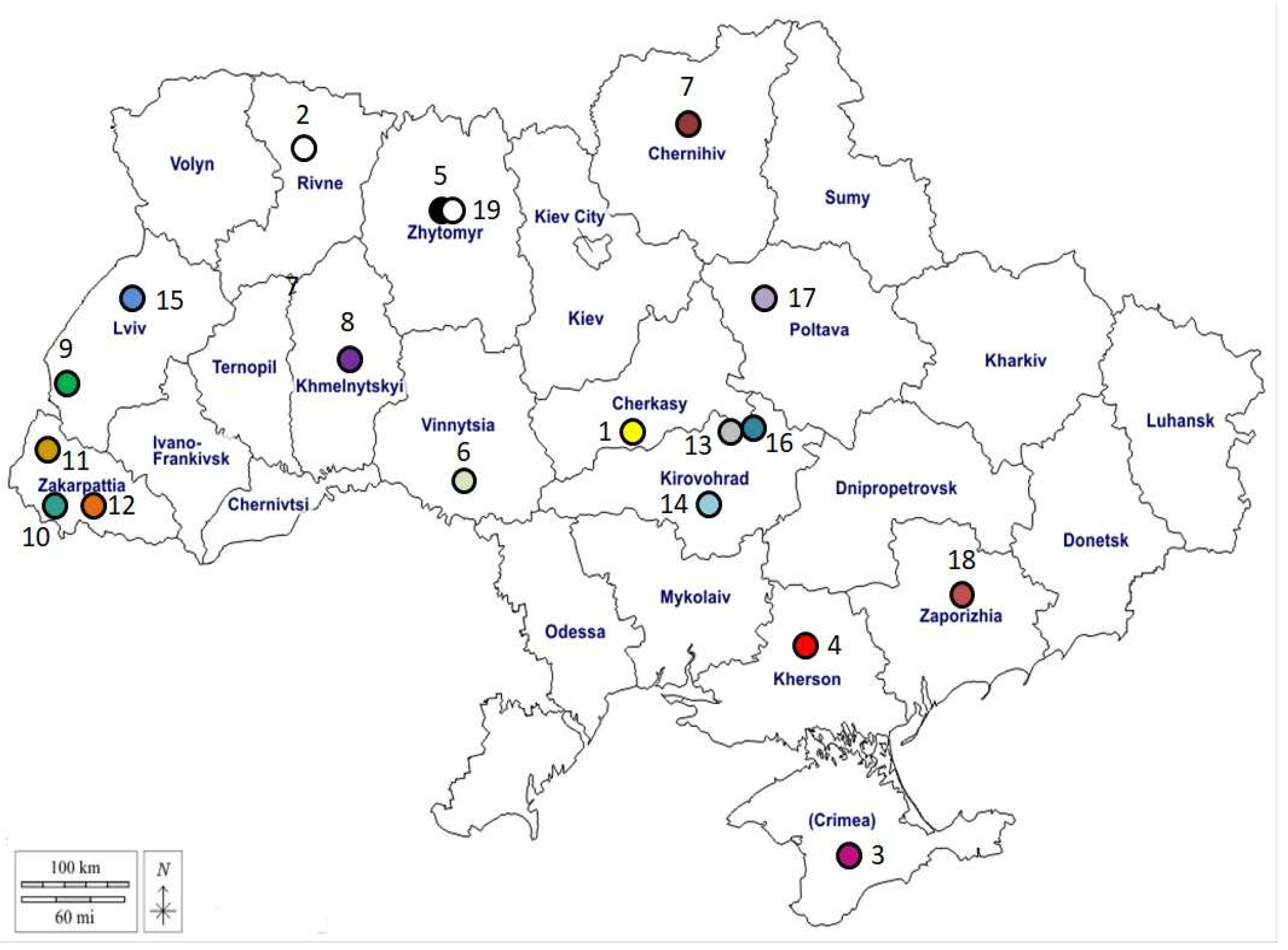
Figure 2.
Dendrogram of cluster analysis of chamomile populations from different habitats based on the weight of 100 chamomile flower heads and their essential oil content. The results are reduced to percentages of the highest value in the sample.
Figure 2.
Dendrogram of cluster analysis of chamomile populations from different habitats based on the weight of 100 chamomile flower heads and their essential oil content. The results are reduced to percentages of the highest value in the sample.
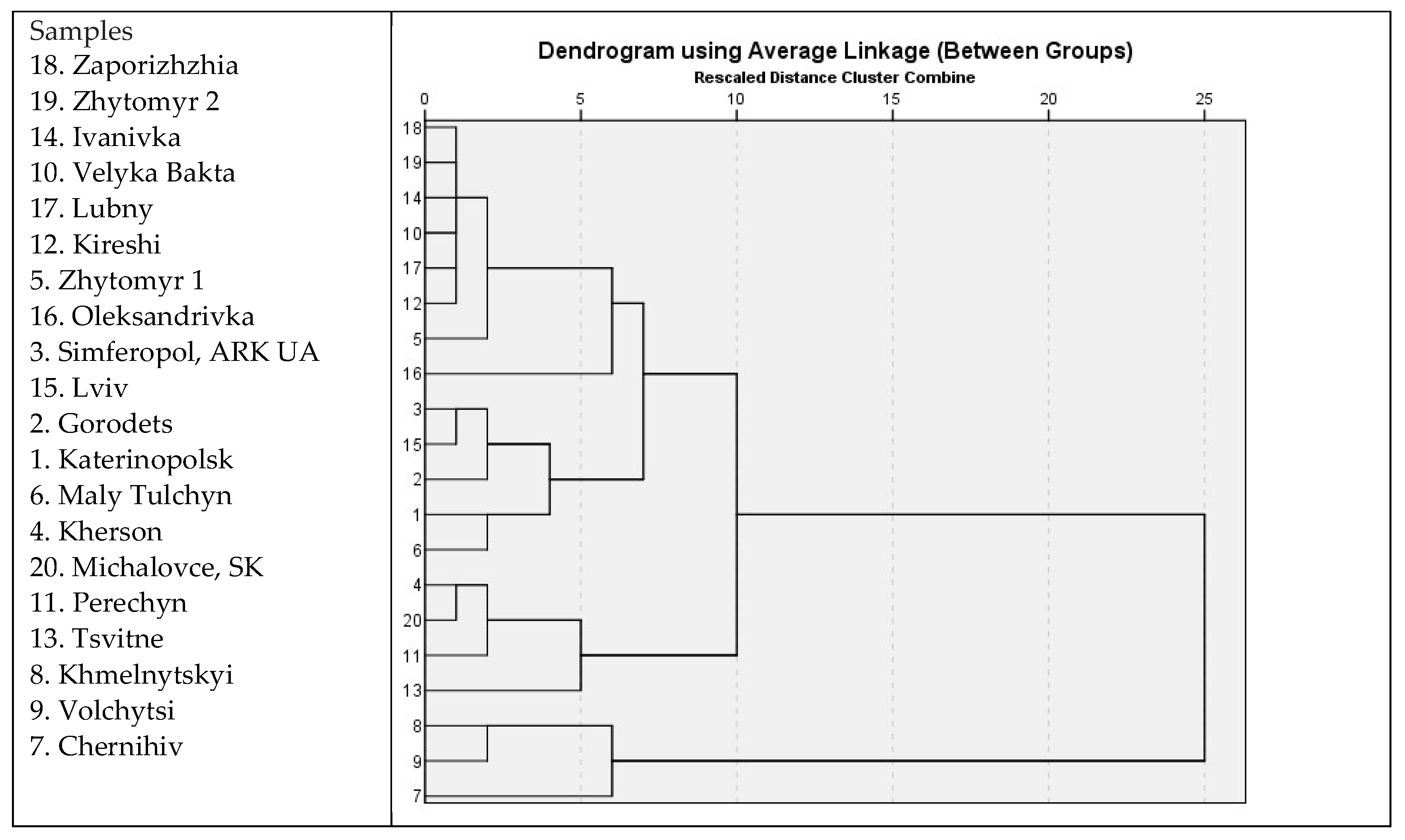
Figure 3.
Dendrogram of cluster analysis of the component composition of essential oils depending on the growth location of chamomile.
Figure 3.
Dendrogram of cluster analysis of the component composition of essential oils depending on the growth location of chamomile.
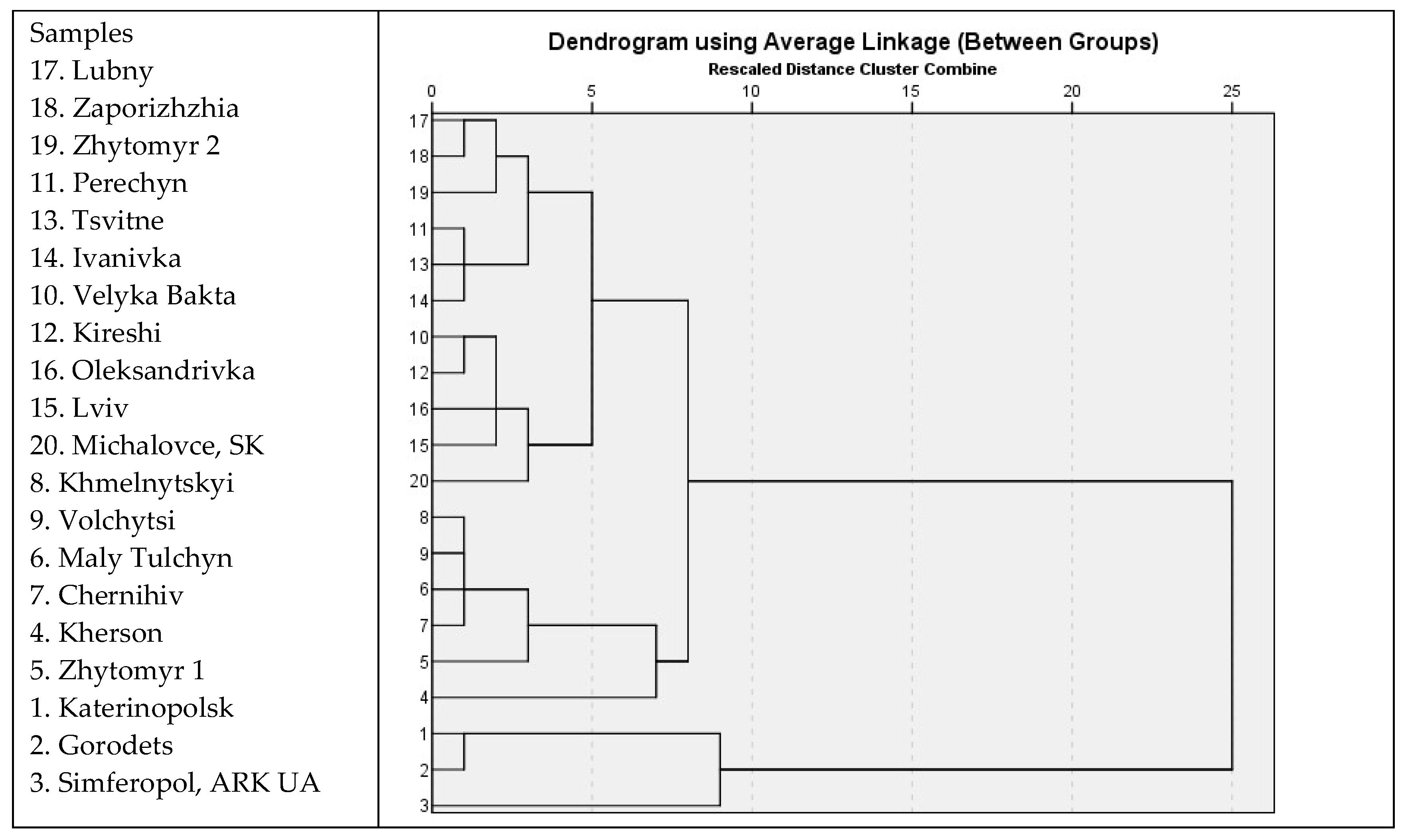
Figure 4.
Hand-harvesting chamomile heads in large-scale cultivation and drying them.
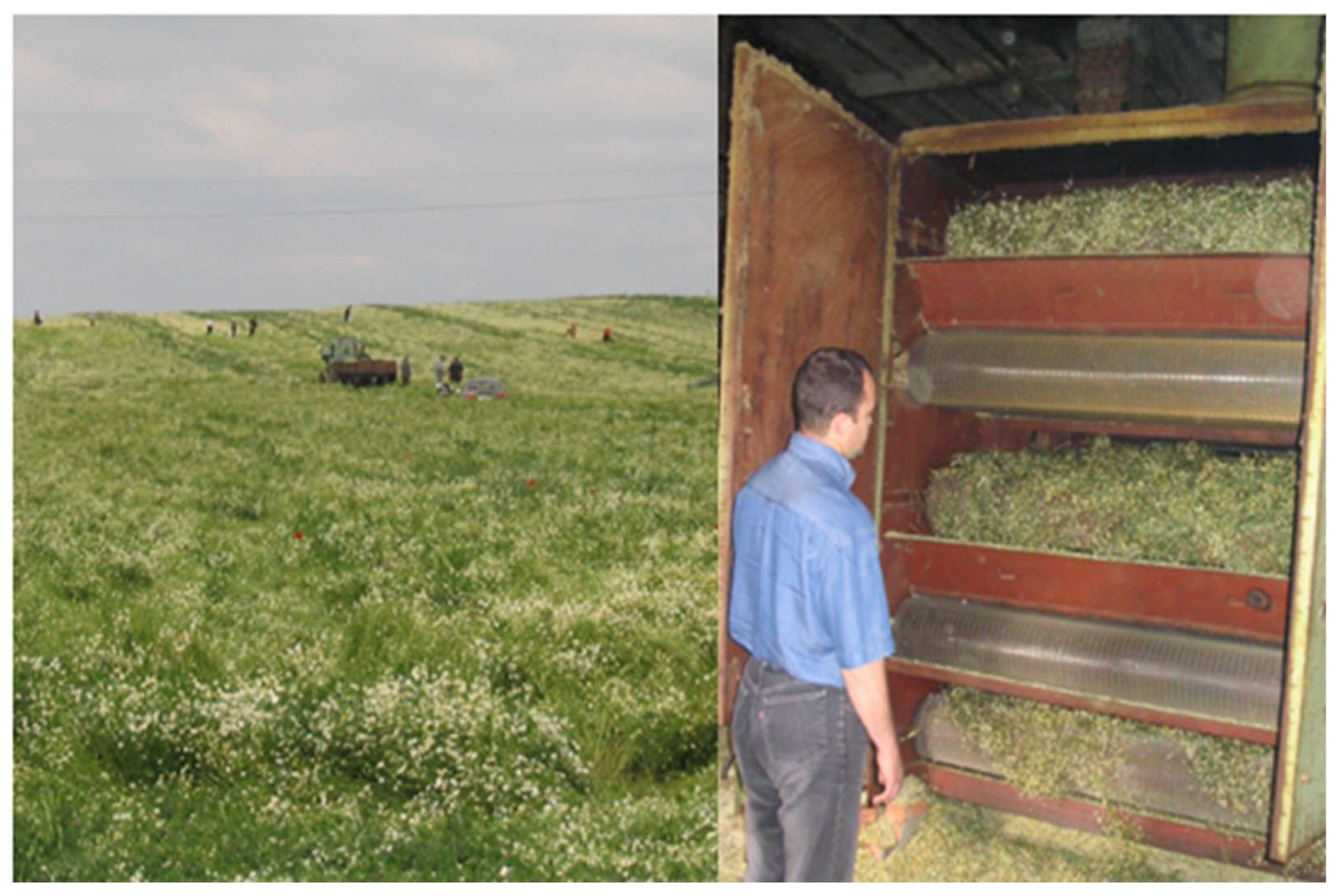
Figure 5.
Chamomile teas sold in grocery stores using domestic herbal raw-material in Ukraine.
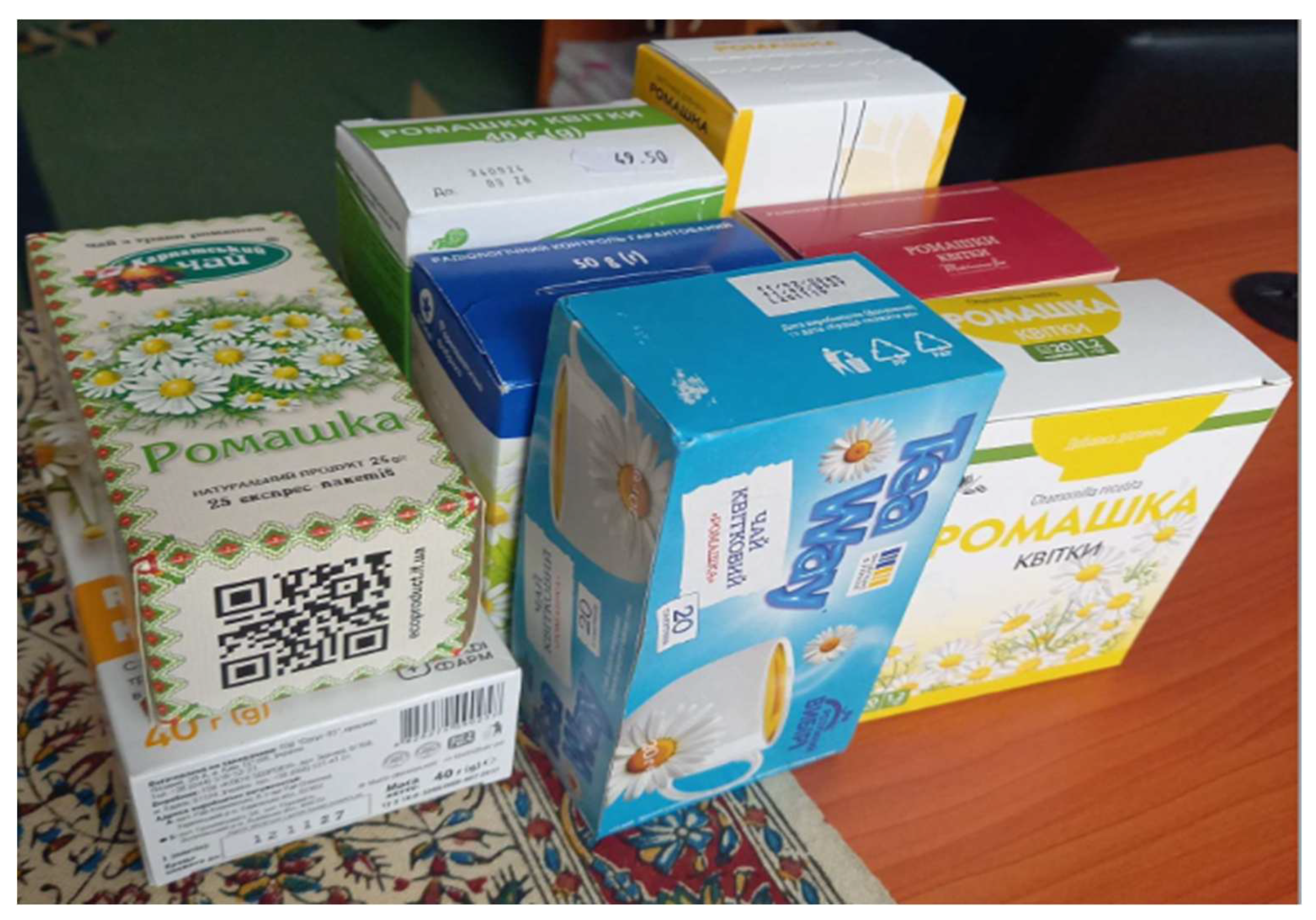
Figure 6.
Ukraine – expansion of chemotypes of Chamomile populations. Legend: (blue: high content of /-/-α-bisabolol, green: relative presence of /-/-α-bisabololoxide B and /-/-α-bisabololoxide A., yellow: highest content of /-/-α-bisabololoxide A).
Figure 6.
Ukraine – expansion of chemotypes of Chamomile populations. Legend: (blue: high content of /-/-α-bisabolol, green: relative presence of /-/-α-bisabololoxide B and /-/-α-bisabololoxide A., yellow: highest content of /-/-α-bisabololoxide A).
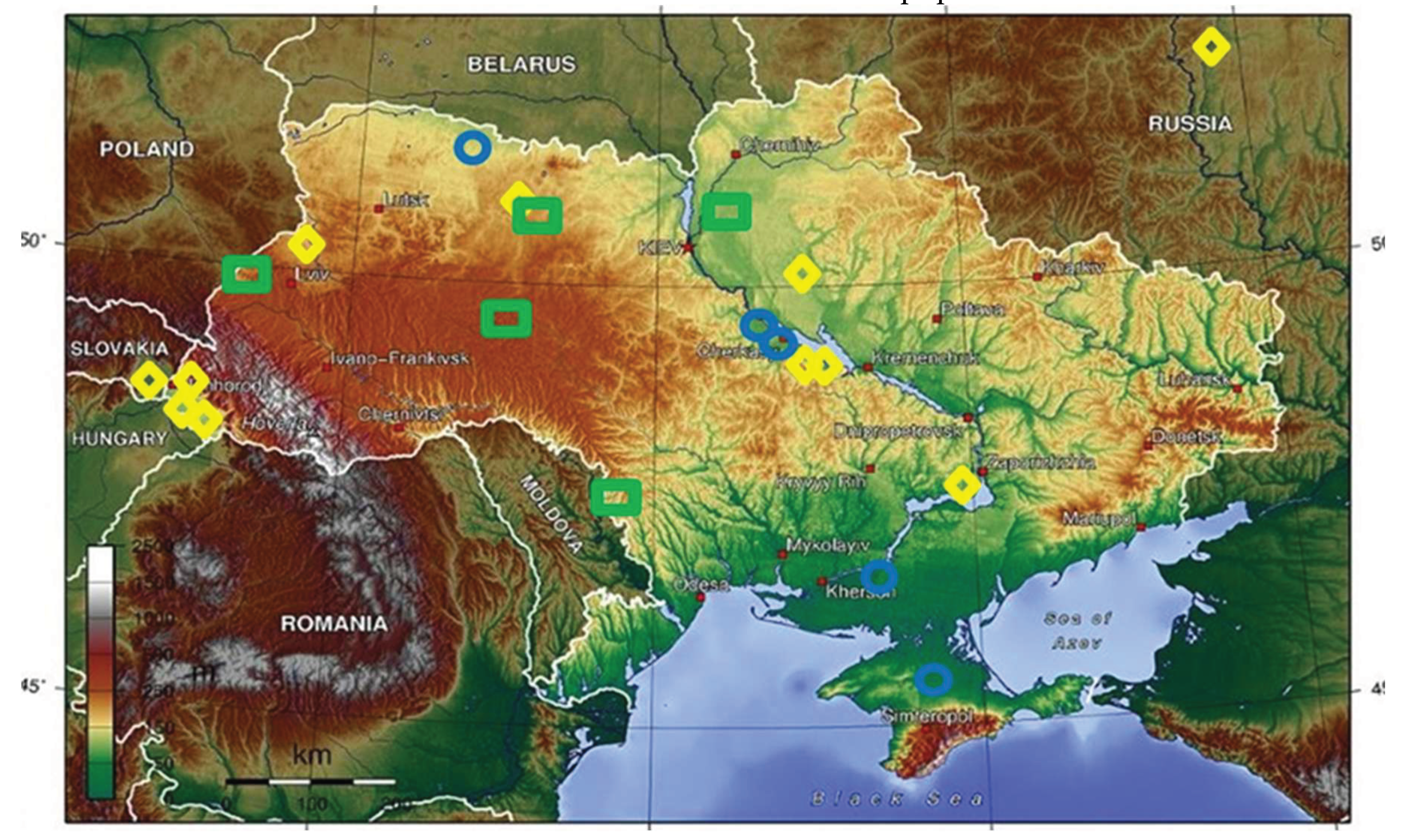

Table 1.
Basic characteristics of localities in Ukraine according to the occurrence of chamomile populations.
Table 1.
Basic characteristics of localities in Ukraine according to the occurrence of chamomile populations.
| Location | Latitude | Longitude | Altitude [m] | Exposure | ||
| 01 | Katerinopolsk, CHERKASY, ChR UA | N 48o56ʹ06" | E 0o54ʹ40" | 139 | center | 15° |
| 02 | Gorodets, RIVNE, RR UA | N 51°16'50" | E 26o20ʹ00" | 160 | north-west | 10° |
| 03 | Simferopol, CRIMEA, ARK UA | N 44°56'53" | E 34°06'15" | 350 | south | 5° |
| 04 | Kherson, KHERSON, CR, UA | N 46o38ʹ01" | E 32o36ʹ01" | 47 | south | 5° |
| 05 | Zhytomyr 1, ZHYTOMYR, ŽR, UA | N 50°15′16" | E 28°39′28" | 221 | north-west | 2° |
| 06 | Maly Tulchyn, VINNYTSIA, VR, UA | N 48o40ʹ28" | E 28o50ʹ59" | 208 | north-west | 12° |
| 07 | Chernihiv, CHERNIHIV, CheR UA | N 51o30ʹ00" | E 31o18ʹ00" | 124 | north | 5° |
| 08 | Khmelnytskyi, KHMELNYTSKYI, KhR, UA | N 49o25ʹ12" | E 27o00ʹ00" | 295 | west | 0° |
| 09 | Volchytsi, LVIV, LR, UA | N 49o12ʹ40" | E 22o54ʹ34" | 564 | west | 16° |
| 10 | Velyka Bakta, ZAKARPATTIA, ZR, UA | N 48°09'39" | E 22°39'50" | 118 | west | 10° |
| 11 | Perechyn, ZAKARPATTIA, ZR, UA | N 29°27'13" | E 30°34'51" | 176 | north | 0° |
| 12 | Kireshi, ZAKARPATTIA, ZR, UA | N 48°11'20" | E 23°21'09" | 164 | west | 16° |
| 13 | Tsvitne, KIROVOHRAD, KhR, UA | N 48o57ʹ32" | E 32 o30ʹ00" | 221 | center | 4° |
| 14 | Ivanivka, KIROVOHRAD, KhR, UA | N 48°11'36" | E 32°52'07" | 104 | center | 1° |
| 15 | Lviv, LVIV, LR, UA | N 49°50'00" | E 24°00'00" | 289 | west | 11° |
| 16 | Oleksandrivka, KIROVOHRAD, KR, UA | N 48°43'35" | E 33°18'08" | 133 | center | 7° |
| 17 | Lubny, POLTAVA, PR, UA | N 50°01'07" | E 32°59'13" | 158 | north | 3° |
| 18 | Zaporizhzhia, ZAPORIZHZHIA, ZR, UA | N 47°50'16" | E 35°08'18" | 105 | south-east | 13° |
| 19 | Zhytomyr 2, ZHYTOMYR, ZR UA | N 50°15'16" | E 28°39'28" | 221 | north-west | 2° |
| 20 | Michalovce, KOSICE, KSK, SK | N 39o10ʹ49" | E 22o45ʹ38" | 115 | south-east | 24° |
Table 2.
Comparison of the dry weight of 100 chamomile inflorescences in Ukraine.
| № | Location | Region |
[g] |
σ |
[g] |
Sample weight [g] | |
| 1 | Katerinopolsk | ČO, UA | 2,567 | 0,043 | 0,017 | 2,57± 0,12 | 42,00 |
| 2 | Gorodec | RO, UA | 1,958 | 0,014 | 0,006 | 1,96 ± 0,04 | 45,91 |
| 3 | Simferopol | ARK, UA | 2,384 | 0,300 | 0,124 | 2,39± 0,80 | 38,50 |
| 4 | Kherson | CO, UA | 2,989 | 0,022 | 0,008 | 2,99± 0,06 | 38,05 |
| 5 | Zhytomyr | ŽO, UA | 1,701 | 0,078 | 0,032 | 1,70± 0,20 | 48,70 |
| 6 | Maly Tulchyn | VO, UA | 2,890 | 0,035 | 0,014 | 2,89± 0,10 | 32,20 |
| 7 | Chernihiv | ČeO, UA | 3,484 | 0,056 | 0,023 | 3,48± 0,17 | 30,10 |
| 8 | Khmelnitsk | KO, UA | 2,870 | 0,048 | 0,019 | 2,87± 0,13 | 34,52 |
| 9 | Volchytsi | LO, UA | 3,310 | 0,086 | 0,035 | 3,31± 0,24 | 54,23 |
| 10 | Velyka Bakta | ZO, UA | 2,182 | 0,407 | 0,166 | 2,19± 1,10 | 40,00 |
| 11 | Perechyn | ZO, UA | 3,116 | 0,092 | 0,037 | 3,12± 0,27 | 54,10 |
| 12 | Kireshi | ZO, UA | 2,328 | 0,076 | 0,076 | 2,33± 0,21 | 57,00 |
| 13 | Tsvitne | KO, UA | 3,642 | 0,045 | 0,018 | 3,65± 0,11 | 40,23 |
| 14 | Ivanivka | KO, UA | 1,989 | 0,057 | 0,023 | 1,99± 0,16 | 40,30 |
| 15 | Lviv | LO, UA | 2,293 | 0,124 | 0,124 | 2,30± 0,38 | 48,30 |
| 16 | Oleksandrivka | KO, UA | 1,479 | 0,161 | 0.066 | 1,48± 0,42 | 56,10 |
| 17 | Lubny | PO, UA | 2,022 | 0,138 | 0,056 | 2,03± 0,38 | 45,23 |
| 18 | Zaporizhzhia | ZO, UA | 2,021 | 0,100 | 0,041 | 2,02± 0,29 | 42,50 |
| 19 | Zhytomyr | ŽO, UA | 1,847 | 0,104 | 0,042 | 1,85± 0,30 | 64,00 |
| 20 | Michalovce | KSK, SK | 2,733 | 0,051 | 0,021 | 2,74± 0,13 | 40,00 |
Legend: x: average, σ: standard deviation, x ± t × se: confidence interval p ˂ 0.05.
Table 3.
Essential oil yield from chamomile flower heads in %.
| № | Location/Sample | Extractable substances with 60% ethanol [ % ] | Essential oil yield [ % ] (v/w, expressed on a dry weight basis) |
| 01 | Katerinopolsk, ChR UA | 33± 1 | 0,35± 0,05 |
| 02 | Gorodets, RR UA | 38± 1 | 0,55± 0,05 |
| 03 | Simferopol, ARK UA | 38± 1 | 0,45± 0,05 |
| 04 | Kherson, CR, UA | 35± 1 | 0,20± 0,05 |
| 05 | Zhytomyr 1, ŽR, UA | 35± 1 | 0,30± 0,05 |
| 06 | Maly Tulchyn, VR, UA | 27± 1 | 0,45± 0,05 |
| 07 | Chernihiv, CheR UA | 42± 1 | 0,85± 0,10 |
| 08 | Khmelnytskyi, KhR, UA | 30± 1 | 0,70± 0,05 |
| 09 | Volchytsi, LR, UA | 34± 1 | 0,60± 0,05 |
| 10 | Velyka Bakta, ZR, UA | 21± 1 | 0,25± 0,02 |
| 11 | Perechyn, ZR, UA | 23± 1 | 0,30± 0,05 |
| 12 | Kireshi, ZR, UA | 33± 1 | 0,30± 0,05 |
| 13 | Tsvitne, KR, UA | 37± 1 | 0,35± 0,05 |
| 14 | Ivanivka, KhR, UA | 28± 1 | 0,20± 0,05 |
| 15 | Lviv, LR, UA | 34± 1 | 0,50± 0,05 |
| 16 | Oleksandrivka, KhR, UA | 38± 1 | 0,45± 0,05 |
| 17 | Lubny, PR, UA | 25± 1 | 0,30± 0,05 |
| 18 | Zaporizhzhia, ZR, UA | 27± 1 | 0,25± 0,05 |
| 19 | Zhytomyr 2, ZR UA | 30± 1 | 0,25± 0,05 |
| 20 | Michalovce, KSK, SK | 25± 1 | 0,25± 0,05 |
Table 4.
Groups identified by essential oil content and mass of 100 inflorescences (in %) depending on geographical location.
Table 4.
Groups identified by essential oil content and mass of 100 inflorescences (in %) depending on geographical location.
| Location | Samples [№] |
[g] | Inflorescence mass, % | Essential oil yield [%] |
Essential oil content [%] |
Altitude [m] | Exposure | |
| High mass and high essential oil content | ||||||||
| Chernihiv, CheR UA | 7 | 3,48± 0,17 | 96 | 0,85± 0,10 | 100 | 124 | north | 5° |
| Khmelnytskyi, KhR, UA | 8 | 2,87± 0,13 | 79 | 0,70± 0,05 | 82 | 295 | west | 0° |
| Volchytsi, LR, UA | 9 | 3,31± 0,24 | 91 | 0,60± 0,05 | 71 | 564 | west | 16° |
| High mass and low essential oil content | ||||||||
| Kherson, CR, UA | 4 | 2,99± 0,06 | 82 | 0,20± 0,05 | 24 | 47 | south | 5° |
| Perechyn, ZR, UA | 11 | 3,12± 0,27 | 86 | 0,30± 0,05 | 35 | 176 | west | 0° |
| Tsvitne, KR, UA | 13 | 3,65± 0,11 | 100 | 0,35± 0,05 | 41 | 221 | centre | 4° |
| Michalovce, KSK, SK | 20 | 2,74± 0,13 | 75 | 0,25± 0,05 | 29 | 115 | south- west |
24° |
| Medium mass and medium essential oil content | ||||||||
| Katerinopolsk, ChR UA | 1 | 2,57± 0,12 | 70 | 0,35± 0,05 | 41 | 139 | centre | 15° |
| Gorodets, RR UA | 2 | 1,96 ± 0,04 | 54 | 0,55± 0,05 | 65 | 160 | north-west | 10° |
| Simferopol, ARK UA | 3 | 2,39± 0,80 | 65 | 0,45± 0,05 | 53 | 350 | south | 5° |
| Lviv, LR, UA | 15 | 2,30± 0,38 | 63 | 0,50± 0,05 | 59 | 289 | west | 11° |
| Maly Tulchyn, VR, UA | 6 | 2,89± 0,10 | 79 | 0,45± 0,05 | 53 | 208 | north-west | 12° |
| Low mass and low essential oil content | ||||||||
| Oleksandrivka, KhR, UA | 16 | 1,48± 0,42 | 41 | 0,45± 0,05 | 53 | 133 | centre-east | 7° |
| Zhytomyr 1, ŽR, UA | 5 | 1,70± 0,20 | 47 | 0,30± 0,05 | 35 | 221 | north-west | 2° |
| Zaporizhzhia, ZR, UA | 18 | 2,02± 0,29 | 55 | 0,25± 0,05 | 29 | 105 | south | 13° |
| Zhytomyr 2, ZR UA | 19 | 1,85± 0,30 | 51 | 0,25± 0,05 | 29 | 221 | north- west |
2° |
| Ivanivka, KhR, UA | 14 | 1,99± 0,16 | 55 | 0,20± 0,05 | 24 | 104 | centre | 1° |
| Velyka Bakta, ZR, UA | 10 | 2,19± 1,10 | 60 | 0,25± 0,02 | 29 | 118 | west | 10° |
| Lubny, PR, UA | 17 | 2,03± 0,38 | 56 | 0,30± 0,05 | 35 | 158 | north | 3° |
| Kireshi, ZR, UA | 12 | 2,33± 0,21 | 64 | 0,30± 0,05 | 35 | 164 | west | 16° |
Table 5.
Selected chamomile habitats in Ukraine and their chamomile chemotype with the high /-/-α-bisabolol content in essential oil identified based on cluster analysis.
Table 5.
Selected chamomile habitats in Ukraine and their chamomile chemotype with the high /-/-α-bisabolol content in essential oil identified based on cluster analysis.
| Samples [№] | Location | Basic composition of chamomile essential oil in % | |||||||||||
| Fa * | Bo | Ch | BoA | BoB | c-.t-Dc | ||||||||
| ** | *** | ||||||||||||
| 1 | Katerinopolsk, ChR | 8,0±0.61 | 13 | 55,2±2,01 | 92 | trace | 0 | 1,8±0,26 | 3 | 2,5±0,53 | 4 | 21,1±2,41 | 35 |
| 2 | Gorodets, RR | 10,3±0,87 | 17 | 54,0±2,22 | 90 | trace | 0 | 5,2±1,22 | 9 | 2,1±0,41 | 3 | 21,0±2,29 | 35 |
| 3 | Simferopol, ARK, UA | 4,4±0,24 | 7 | 41,0±1,87 | 68 | 20,2±1,41 | 34 | 11,0±1,32 | 18 | 9,3±1,21 | 15 | 4,1±0,67 | 7 |
| 4 | Kherson, ChR | 7,1±0,64 | 12 | 33,0±2,78 | 55 | 0,8±0,22 | 1 | 22,0±2,81 | 37 | 2,5±0,54 | 12 | 18,1±1,67 | 55 |
Legend: * - Fa – trans-β- farnezene; Bo – /-/α-bisabolol; Ch – chamazulene; BoA – /-/-α-bisabololoxid A; BoB –/-/-α-bisabololoxide B; c-,t-Dc – cis-, trans-en-in-dicycloethers. ** - content of a certain essential oil in a plant from a specific population (%). *** - total content of a certain essential oil in plants from all studied populations (%).
Table 6.
Composition of essential oil with similar α-bisabolol, α-bisabolol oxide A contents from flower head collections at selected sites identified based on cluster analysis.
Table 6.
Composition of essential oil with similar α-bisabolol, α-bisabolol oxide A contents from flower head collections at selected sites identified based on cluster analysis.
| Samples [№] |
Location | Basic composition of chamomile essential oil in % | |||||||||||
| Fa * ** *** |
Bo | Ch | BoA | BoB | c-.t-Dc | ||||||||
| 8 | Khmelnytskyi, KhR | 8,1 ± 1,56 | 13 | 10,1 ± 1,98 | 17 | 9,4 ± 1,76 | 16 | 22,6 ± 2,78 | 38 | 17,0 ± 1,32 | 28 | 25,2 ± 2,11 | 42 |
| 9 | Volchytsi, LR | 8,2 ± 1,61 | 14 | 9,3 ± 1,42 | 15 | 10,0 ± 1,88 | 17 | 23,2 ± 1,95 | 39 | 15,1 ± 1,79 | 25 | 26,1 ± 1,92 | 43 |
| 6 | Maly Tulchyn, VR | 10,1 ± 1,98 | 17 | 11,1 ± 1,78 | 18 | 7,1 ± 1,12 | 12 | 23,2 ± 2,52 | 39 | 12,1 ± 1,32 | 20 | 28,1 ± 2,77 | 47 |
| 7 | Chernihiv, CheR | 5,2 ± 1,32 | 9 | 10,2 ± 1,76 | 17 | 11,3 ± 1,96 | 19 | 22,1 ± 2,21 | 37 | 12,4 ± 1,61 | 21 | 32,1 ± 2,98 | 53 |
| 5 | Zhytomyr 1, ZR | 8,1 ± 1,67 | 13 | 20,0 ± 2,21 | 33 | 9,3 ± 1,42 | 15 | 17,6 ± 1,65 | 29 | 16,2 ± 2,12 | 27 | 13,1 ± 1,43 | 22 |
Legend: * - Fa – trans-β- farnezene; Bo – α-bisabolol; Ch – chamazulene; BoA – α-bisabololoxide A; BoB – α-bisabololoxide B; c-,t-Dc – cis-, trans-en-in-dicykloethers ** - content of a certain essential oil in a plant from a specific population (%). *** - total content of a certain essential oil in plants from all studied populations (%).
Table 7.
Chamomile chemotype with the high α-bisabololoxid A content from flower collections in most Ukrainian locations, identified based on cluster analysis.
Table 7.
Chamomile chemotype with the high α-bisabololoxid A content from flower collections in most Ukrainian locations, identified based on cluster analysis.
| Samples [№] |
Location | Basic composition of chamomile essential oil in % | |||||||||||
| Fa * ** *** |
Bo | Ch | BoA | BoB | c-.t-Dc | ||||||||
| 17 | Lubny, PR | 5,4 ± 1,76 | 9 | 7,3 ± 1,78 | 12 | 1,5 ± 0,23 | 2 | 60,2 ± 2,53 | 100 | 9,2 ± 1,23 | 15 | 12,2 ± 1,2 | 20 |
| 18 | Zhytomyr 2, ŽR | 5,6 ± 1,78 | 9 | 7,5 ± 1,76 | 12 | 1,0 ± 0,29 | 2 | 60,1 ± 2,23 | 100 | 9,0 ± 1,32 | 15 | 13,6 ± 1,4 | 23 |
| 19 | Zaporizhzhia, ZR | 5,1 ± 1,45 | 8 | 10,2 ± 1,71 | 17 | 6,0 ± 1,54 | 1 | 46,2 ± 2,12 | 77 | 14,1 ± 2,22 | 23 | 12,2 ± 1,2 | 20 |
| 10 | Velyka Bakta, ZR | 10,3 ± 1,23 | 17 | 11,0 ± 1,37 | 18 | 10,8 ± 1,45 | 18 | 39,0 ± 1,21 | 65 | 16,4 ± 1,78 | 27 | 5,5 ± 0,51 | 9 |
| 11 | Perechyn, ZR | 6,5 ± 1,89 | 11 | 6,1 ± 1,67 | 10 | 4,8 ± 1,25 | 8 | 50,1 ± 1,45 | 83 | 5,61 ± 1,78 | 9 | 21,1 ± 1,9 | 35 |
| 12 | Kireshi, ZR | 5,5 ± 1,69 | 9 | 13,4 ± 1,98 | 22 | 7,1 ± 1,45 | 12 | 34,7 ± 1,41 | 58 | 22,0 ± 2,73 | 37 | 10,1 ± 1,5 | 17 |
| 13 | Tsvitne, KR | 10,9 ± 2,06 | 18 | 5,2 ± 1,98 | 9 | 4,0 ± 1,65 | 7 | 43,3 ± 2,22 | 72 | 3,5 ± 0,59 | 6 | 22,0 ± 2,2 | 37 |
| 14 | Ivanivka, KhR | 2,5 ± 0,55 | 4 | 4,5 ± 0,59 | 7 | 2,5 ± 0,55 | 4 | 42,0 ± 2,48 | 70 | 5,0 ± 1,78 | 8 | 20,1 ± 2,4 | 33 |
| 15 | Lviv, LR | 10,3 ± 1,98 | 17 | 7,3 ± 1,65 | 12 | 16,2 ± 1,43 | 27 | 38,0 ± 2,32 | 63 | 9,1 ± 1,67 | 15 | 14,0 ± 1,2 | 23 |
| 16 | Oleksandrivka, KhR | 8,9 ± 1,94 | 15 | 3,0 ± 0,54 | 5 | 7,3 ± 1,51 | 12 | 40,0 ± 2,32 | 66 | 20,4 ± 2,86 | 34 | 12,1 ± 1,4 | 20 |
| 20 | Michalovce, KSK, SK | 0,4 ± 0,01 | 1 | 12,4 ± 0,57 | 21 | 15,6 ± 0,51 | 15 | 33,8 ± 3,21 | 56 | 17,2 ± 0,51 | 29 | 20,1 ± 0,5 | 33 |
Legend: * - Fa – trans-β- farnezene; Bo – /-/-α-bisabolol; Ch – chamazulene; BoA – /-/-α-bisabololoxide A; BoB – /-/-α-bisabololoxide B; c-,t-Dc – cis-, trans-en- in-dicykloethers ** - content of a certain essential oil in a plant from a specific population (%). *** - total content of a certain essential oil in plants from all studied populations (%).
Table 8.
Essential oil content in raw material from chamomile tea bags (mg. g-1, v/w, expressed as dry weight).
Table 8.
Essential oil content in raw material from chamomile tea bags (mg. g-1, v/w, expressed as dry weight).
| Tea/Producer – company name and its production location |
Extractable substances with 60% ethanol |
Essential oil content |
||
| [ % ] | mg. g-1 | [ % ] | ||
| 01 | Romack Kvitky (Chamomile Flower Tea/ Lubipharm, Co., Lubny, UA) | 30 ± 1 | 2.5 ± 0.5 | 0.25 ± 0.05 |
| 02 | Romashka Kvitky (Matricariae Flos/ Viola, Co., Zaporozie, UA) | 39 ± 1 | 3.6 ± 0.5 | 0.36 ± 0.05 |
| 03 | Dietna Dobavka Romashka (Dietary Supplement, Ronfarm, Ltd., Kyev, UA) | 21 ± 1 | 1.0 ± 0.5 | 0.10 ± 0.02 |
| 04 | Karpatskyj Caj – Romashka (Karpatian Tea – Chamomile, Ecoprodukt, Ltd., Ivano-Frankivsk, UA) |
21 ± 1 | 0.8 ± 0.2 | 0.08 ± 0.02 |
| 05 | Romashka Kvitky (Chamomile Flower Tea/Keys of Health, Ltd., Kharkov, UA) | 29 ± 1 | 3.0 ± 0.5 | 0.30 ± 0.05 |
| 06 | Romashka Kvitky (Chamomilae Flos/Keys of Health, Ltd., Kharkov, UA) | 23 ± 1 | 2.0 ± 0.2 | 0.20 ± 0.02 |
| 07 | Romashka Caj (Chamomile Tea/ Galka-Caj, Co., Lviv, UA) | 24 ± 1 | 1.7 ± 0.2 | 0.17 ± 0.15 |
Table 9.
Composition of essential oil (sesquiterpenes) from chamomile herbal teas.
| Tea/Manufacturer | The basic composition of chamomile essential oil in % | ||||||
| Fa | Bo | Ch | BoA | BoB | c-,t-Dc | ||
| 01 | Romashka Kvitky/ Lubipharm, Co. |
7.1±1.23 | 7.0±1.20 | 0.9±0.10 | 53.0±4.8 | 10.0±1,58 | 8.0±1,10 |
| 02 | Romashka Kvitky/ Viola, Co. |
5.3±0.5 | 7.0±0.50 | 0.7±0.21 | 53.0±5.4 | 9.0±1,27 | 11.0±1.6 |
| 03 | Dietna Dobavka Romashka/ Ronfarm, Ltd. |
9.0±1.78 | 9.0±1.2 | 1.0±0.15 | 45.0±3.43 | 10.0±2.2 | 7.0±0.92 |
| 04 | Karpatskyj Čaj – Romashka/ Ecoprodukt, Ltd. |
6.6±0.50 | 11.0±1.70 | 4.1±0.20 | 23.0±2.05 | 18.0±1.0 | 11.0±1.0 |
| 05 | Romashka Kvitky/ Keys of Health, Ltd. |
15.0±2,55 | 14.1±1,55 | 10.0±1.05 | 15.0±1.88 | 22.0±2.7 | 11.0±1.2 |
| 06 | Romashka Kvitky/ Keys of Health |
19.0±1,98 | 11.1±1.6 | 7.3±0.5 | 9.0±0.50 | 19.1±1,90 | 11.0±1.5 |
| 07 | Romashka Caj/ Galka-Caj, Co. |
1.0±0.32 | 1.6±0.3 | 16.3±3.51 | 29.2±2.32 | 34.50±4.86 | 2.5±0.91 |
Legend:Fa – trans-β-Farnesene, Bo – /-/-α-Bisabolol, Ch – chamazulene, BoA – /-/α-Bisabolonoxide A, BoB – /-/α-Bisabololoxide B, c-, t-Dc – cis-, trans-en-in-dicyloethers.
Table 10.
Four basic chemical types [in %] of the chamomile essential oil.
| Essential oil | type A | type B | type C | type D |
| /-/α-bisabololoxide A | 4,74-15,68 | 31,07-52,25 | 2,13-18,50 | 9,62-25,83 |
| /-/-α-bisabolol | 4,37-15,41 | 8,81-12,92 | 24,18-77.21 | 8,49-19,58 |
| /-/-α-bisabololoxide B | 22,43-58,85 | 5,27-8,79 | 3,17-34,46 | 10,43-24,20 |
| en-in-dicycloethers | 2,61-11,27 | 4,08-9,90 | 1,92-12,00 | 5,51-10,68 |
| chamazulene | 2,70-17,69 | 5,40-7,95 | 1,45-14,90 | 1,91-7,89 |
Disclaimer/Publisher’s Note: The statements, opinions and data contained in all publications are solely those of the individual author(s) and contributor(s) and not of MDPI and/or the editor(s). MDPI and/or the editor(s) disclaim responsibility for any injury to people or property resulting from any ideas, methods, instructions or products referred to in the content. |
© 2026 by the authors. Licensee MDPI, Basel, Switzerland. This article is an open access article distributed under the terms and conditions of the Creative Commons Attribution (CC BY) license.
Copyright: This open access article is published under a Creative Commons CC BY 4.0 license, which permit the free download, distribution, and reuse, provided that the author and preprint are cited in any reuse.