
Submitted:
29 April 2026
Posted:
04 May 2026
You are already at the latest version
Abstract
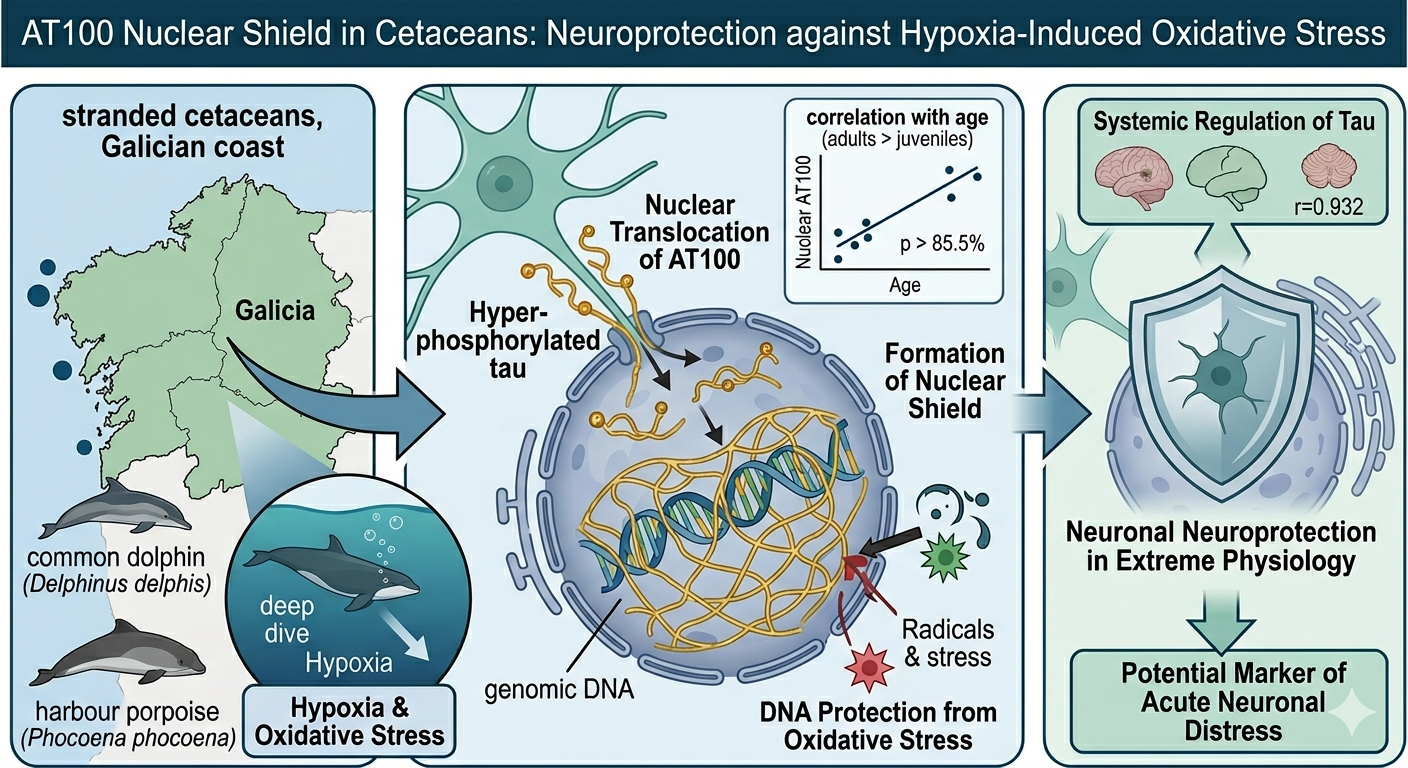
This study investigates the nuclear distribution of phosphorylated tau (AT100) in the frontal cortex and cerebellum of 12 cetaceans stranded along the Galician coast (NW Spain). Using Bayesian beta regression, we identified a strong positive correlation between aging and tau phosphorylation, with posterior probabilities of 85.5% in the cortex and 89.5% in the cerebellum. This age-associated increase suggests a systemic and coordinated regulation of tau as the brain matures. We propose that the translocation of tau to the nucleus could act as a nuclear shield against cumulative oxidative stress, a process potentially intensified by the intermittent hypoxia characteristic of diving in these mammals. Furthermore, the elevated AT100 levels observed in adults and in a case of cerebral necrosis reinforce its protective role and its potential as a marker for neuronal distress. While this exploratory pilot study is limited by sample size (n=12), the Bayesian analysis confirms biological consistency across the species analyzed. These findings establish a baseline for understanding neuroprotection in cetaceans, suggesting that tau phosphorylation is a key evolutionary mechanism for preserving neuronal genomic integrity under extreme physiological conditions.
Keywords:
cetaceans
; tau protein
; AT100
; brain aging
; nuclear translocation
; oxidative stress
; bayesian analysis
; neuroprotection
Copyright: This open access article is published under a Creative Commons CC BY 4.0 license, which permit the free download, distribution, and reuse, provided that the author and preprint are cited in any reuse.


