

Submitted:
30 April 2026
Posted:
30 April 2026
You are already at the latest version
Abstract
During the continuous casting of high-titanium steel, traditional fluorine-containing mold fluxes are prone to causing fluoride contamination, equipment corrosion, and intensified slag-metal interface reactions. There is an urgent need to develop highly adaptable fluorine-free mold flux systems. In this study, titanium-containing blast furnace slag was used as the primary base material, while borax, soda ash, and witherite were selected as fluoride-substituting mineral raw materials. The effects of these mineral raw materials on the melting properties, crystallization behavior, crystalline phases, and microstructure of fluorine-free mold fluxes were systematically investigated, and an optimized mold flux design suitable for continuous casting of high-titanium steel was further developed. The results indicate that borax significantly reduces the melting temperature and viscosity and markedly suppresses the growth of crystalline phases such as calcium borosilicate, nepheline, and perovskite by weakening the polymerization degree of the silicate network, thereby substantially decreasing the crystallization ability of the mold flux. Soda ash primarily acts as a strong fluxing and network-depolymerizing agent, promoting the formation of low-polymerized structural units. It also enhances the tendency toward ordered atomic arrangement, thereby markedly increasing nepheline precipitation and the overall crystallization ratio. Witherite exerts a relatively mild effect on slag structure and phase evolution; its moderate addition helps synergistically reduce the melting point, viscosity, and crystallization ratio, thereby supporting performance stability. The optimized fluorine-free mold flux, designed on the basis of these findings, maintains a suitable initial crystallization temperature and critical crystallization cooling rate while exhibiting lower melting temperature, viscosity, and crystallization ratio than conventional fluorine-bearing flux. Moreover, the introduction of TiO2 reduces the chemical potential difference between Ti in the molten steel and the fluorine-free mold flux, thereby slowing down the rate of slag-metal interface reactions and improving compositional stability. The research results provide a theoretical basis for the industrial design of environmentally friendly mold fluxes for high-titanium steel and for improving billet quality.
Keywords:
fluorine-free mold flux
; mineral raw materials
; melting properties
; crystallization properties
; microstructure
; high-titanium steel
1. Introduction
Due to their excellent comprehensive mechanical properties and service adaptability, high-titanium steels demonstrate significant application value in fields such as marine engineering, energy equipment, and high-end structural materials [1,2,3,4]. As the requirements for billet surface quality, internal uniformity, and production stability in special steels continue to rise, the performance compatibility of mold flux during the continuous casting process has become a critical factor influencing billet quality [5,6,7].In fact, compared to ordinary steel grades, the continuous casting process for high-titanium steel imposes stricter requirements on mold flux. This is primarily because, when the properties of the mold flux are mismatched with the continuous casting process, the Ti in the molten steel is highly prone to violent interfacial reactions with the mold flux. This leads to insufficient lubrication, uneven heat flux distribution, and instability in the growth of the slab skin, ultimately resulting in casting defects such as longitudinal cracks and concavities [8,9,10,11,12].
To design compatible mold fluxes that improve the quality of high-titanium steel ingots, numerous researchers have investigated the regulatory role of fluorides such as CaF2, in traditional continuous casting mold fluxes. By lowering the melting temperature, optimizing fluidity, and promoting the rational precipitation of crystalline phases, they have achieved synergistic control over lubrication and heat transfer [13,14,15,16,17]. However, fluoride-containing mold fluxes are prone to fluoride volatilization at high temperatures, leading to environmental pollution, equipment corrosion, and fluctuations in slag composition [18,19,20,21]. With the increasing demands for green metallurgy and clean production, the development of fluorine-free mold fluxes has become a key direction. Therefore, the development of a fluorine-free mold flux system suitable for the continuous casting of high-titanium steel holds significant engineering and practical value. However, current research on mold fluxes for continuous casting of high-titanium steel still has shortcomings: on the one hand, no breakthrough progress has been made in achieving comprehensive performance of fluorine-free mold fluxes that surpasses that of traditional fluoride-containing slags through multi-component synergistic regulation, while completely eliminating fluorides, and effectively reducing the reactivity at the slag-metal interface;on the other hand, the raw material systems used in existing studies are disconnected from industrial reality. Most literature employs chemically pure reagents to prepare mold fluxes; while these materials have simple compositions, low impurity levels, and minimal fluctuations—facilitating the identification of fundamental principles—they fail to accurately reflect the compositional fluctuations and impurity interference caused by the complex interactions between industrial-grade mineral raw materials and solid waste resources in mold fluxes, and thus cannot directly guide industrial slag production [22,23,24,25,26].
Based on this, the study designed a corresponding fluorine-free mold flux formulation scheme that meets the compositional and performance requirements of mold fluxes for the continuous casting of high-titanium steel. Using titanium-containing blast furnace slag as the primary base material, we selected fluoride-substituting mineral raw materials, including borax, soda ash, and monazite. We systematically investigated the mechanisms by which mineral raw materials influence the melting and crystallization behavior as well as the microstructure of fluorine-free mold flux under conditions lacking fluoride regulation. The research results provide a crucial basis for designing environmentally friendly mold fluxes suitable for the continuous casting of high-titanium steel.
2. Experimental Section
2.1. Sample Preparation
Considering the demand for low-cost mold fluxes with broad raw-material availability, as well as the service requirements of mold fluxes for continuous casting of high-titanium steel, titanium-bearing blast furnace slag, an industrial solid waste, was selected as the main base material in this study at a proportion of 40 wt%. Limestone (28-31 wt%) and quartz sand (11-12 wt%) were used to adjust the basicity to 1.3. The contents of borax (4-12 wt%), soda ash (5-13 wt%) and witherite (1-5 wt%) were then varied independently while the contents of the other mineral raw materials were kept constant, thereby establishing single-factor flux-blending schemes with different mineral additions (Figure 1). The chemical compositions of the flux-blending raw materials are listed in Table 1. The raw materials were sequentially mixed, melted, water-quenched, dried, and ground to obtain experimental mold flux powders with particle sizes below 0.074 mm, providing samples for subsequent testing of melting and crystallization properties.
2.2. Methods for Testing Melting Properties
A melting point tester (KFMP-1600A, Kefeng Metallurgical New Materials Co., Ltd., Luoyang, China) was used to observe the high-temperature melting process of the mold flux samples in situ. The testing method followed the Chinese Industrial Standard GB/T 40404-2021.The sample was heated at a rate of 10 ℃/min, and the temperatures were recorded when the sample height decreased to 3/4, 2/4, and 1/4 of its initial height, which were defined as the softening temperature, hemispherical temperature (melting point), and flow temperature, respectively.
A high-temperature viscometer (RTW-13, Northeastern University, Shenyang, China) was used to measure the viscosity changes of the mold flux during cooling, and a viscosity-temperature curve was plotted, following the Chinese Industrial Standard YB/T 185-2017. Additionally, the viscosity at 1300 ℃ was measured to characterize the mold flux’s viscosity performance.
2.3. Methods for Testing Crystallization Properties
A high-temperature in-situ thermal analyzer (S/DHTT-TA-III, Chongqing University, Chongqing, China) was used to observe the crystallization process of mold flux samples under different cooling rates and target temperatures.
Based on in situ images collected during crystallization, the temperature-time points corresponding to the onset and completion of crystallization were determined. The time-temperature-transformation (TTT) curves and continuous-cooling-transformation (CCT) curves of the mold fluxes were then constructed, from which the initial crystallization temperature and the critical crystallization cooling rate were obtained.
A portion of the crystallized mold flux samples was ground to a thickness of 0.03 mm along the thickness direction and polished to produce thin sections for microscopic examination. These thin sections were observed using a polarizing microscope (Axio Scope A1 pol, Carl Zeiss AG, Oberkochen, Germany). Simultaneously, another portion of the crystalline samples was thoroughly ground to a particle size of 0.074 mm. This powder was analyzed using an X-ray diffractometer (D8 Advance, Bruker AXS, Bremen, Germany) over a 10°to 80° diffraction angle range,ultimately identifying and characterizing the composition and content of crystalline phases, crystallization ratio, and microstructure.
2.4. Methods for Analyzing Microstructure
A high-resolution micro-Raman spectrometer (LabRAM HR Evolution, HORIBA, Longjumeau, France) was used to test the vitreous samples of mold flux that had undergone high-temperature water quenching. The test conditions were set as follows: 532 nm laser, 100 mW laser power, 10 cm⁻¹ measurement threshold, and a Raman shift scanning range of 100-1600 cm-1. By analyzing the peak-fitting results of the Raman spectra, the distribution of structural units Qn was obtained, thereby enabling analysis of the variation patterns in the microstructural characteristics of the mold flux.
3. Results and Discussion
3.1. Effect of Mineral Raw Materials on Melting Temperature of Fluorine-Free Mold Flux
Mold flux is a mixture without a fixed melting point. The melting process is typically described using softening temperature, hemispherical temperature, and flow temperature; the temperature at which the molten flux forms a hemispherical shape is defined as the melting point using the hemispherical point method [27,28]. A melting-point measuring instrument was used to observe the in situ high-temperature melting of fluorine-free mold flux samples, and the softening temperature, hemispherical temperature, and flow temperature were recorded, as shown in Figure 2. Fluorine-free mold fluxes with different mineral raw material contents exhibit distinct melting temperatures and melting temperature ranges. As the borax content increases, the melting temperature exhibits a segmented decline: a decrease, a plateau, and another decrease. When the borax content is 6-10%, it remains in the plateau zone, with a melting point of approximately 1170℃. The melting temperature range of the mold flux first widens and then narrows, increasing from 45 °C to 103 °C and then decreasing to 30℃. As the soda ash content increases, the melting temperature shows a linear, gradual decrease, dropping from 1184 °C to 1137℃, while the melting temperature range decreases from 68 °C to 43℃. Compared with borax and soda ash, increasing the arsenopyrite content results in significantly smaller overall changes in melting temperature and melting temperature range; at 3%, the lowest melting temperature is 1169℃.
3.2. Effect of Mineral Raw Materials on the Viscosity of Fluorine-Free Mold Flux
Viscosity is one of the key indices characterizing the fluidity and lubricating performance of mold flux. It is directly related to the behavior of liquid flux in the meniscus region of the mold and to the lubrication of the slab [29,30]. The viscosity evolution of fluorine-free mold fluxes varied markedly with mineral raw-material content, as shown in Figure 3. With increasing borax content, the viscosity of the fluorine-free mold flux first decreased sharply and then stabilized. When the borax content exceeded 8%, the viscosity remained at approximately 0.137 Pa·s, indicating strong fluidity of the molten flux. As the soda ash content increased from 5 mass% to 13 mass%, the viscosity of the fluorine-free mold flux decreased slightly. With increasing witherite addition, the viscosity first decreased and then increased, reaching a minimum value of 0.138 Pa·s at a witherite content of 3 mass%. The influence of different mineral raw materials on the viscosity of fluorine-free mold flux varied in magnitude. Borax exhibited the strongest ability to regulate mold flux fluidity in the gap between the mold wall and the solidifying shell, followed by witherite and soda ash.
3.3. Effect of Mineral Raw Materials on the Initial Crystallization Temperature of Fluorine-Free Mold Flux
The TTT curves in Figure 4 show the temperature and time at which crystallization of fluorine-free mold flux begins under different target temperatures. The maximum temperature at which crystals begin to precipitate is the initial crystallization temperature of the flux and is used to characterize the nucleation ability of a fluorine-free mold flux under isothermal conditions. The results show that variations in mineral raw-material content caused the initial crystallization temperature of the fluorine-free mold flux to range from 1250 to 1370℃. As the temperature gradually decreased, the crystallization incubation time of the mold fluxes containing different mineral raw materials first shortened and then lengthened. With increasing borax content, the initial crystallization temperature of the fluorine-free mold flux first increased and then decreased, reaching a maximum of 1370℃at 8%. When the soda ash content increased from 5% to 9%, the initial crystallization temperature remained stable at 1370℃; however, when the content exceeded 11%, the initial crystallization temperature decreased, and the crystallization incubation time was significantly prolonged. Increasing the witherite content first increased and then decreased the initial crystallization temperature, while the crystallization incubation time gradually shortened. These results indicate that appropriate additions of borax and witherite enhance the nucleation ability of fluorine-free mold flux under isothermal conditions, whereas soda ash stabilizes and potentially suppresses nucleation.
3.4. Effect of Mineral Raw Materials on the Critical Crystallization Cooling Rate of Fluorine-Free Mold Flux
When comparing the nucleation ability of different mold fluxes, analysis is usually conducted under defined cooling conditions. The CCT curves of fluorine-free mold fluxes, constructed from hot-thermocouple crystallization experiments and shown in Figure 5, display the temperature and time at which crystallization begins under different cooling rates. The maximum cooling rate on the CCT curve is defined as the critical crystallization cooling rate of the mold flux and is used to characterize its crystallization tendency and nucleation ability [31,32]. The CCT curves in Figure 5 indicate that changes in the content of each mineral raw material significantly affect the critical crystallization cooling rate. With increasing borax, soda ash, and witherite content, the critical cooling rate of the fluorine-free mold flux first increased and then decreased, reaching a maximum of 50℃/s and a minimum of 10℃/s. When the contents of borax, soda ash, and witherite were within the ranges of 6-10%, 9-11%, and 2-4%, respectively, the critical cooling rate exceeded 30℃/s, indicating that the fluorine-free mold flux possessed strong nucleation ability and was less sensitive to changes in cooling-rate conditions.
3.5. Effect of Mineral Raw Materials on Crystalline Phases and Crystallization Ratio of Fluorine-Free Mold Flux
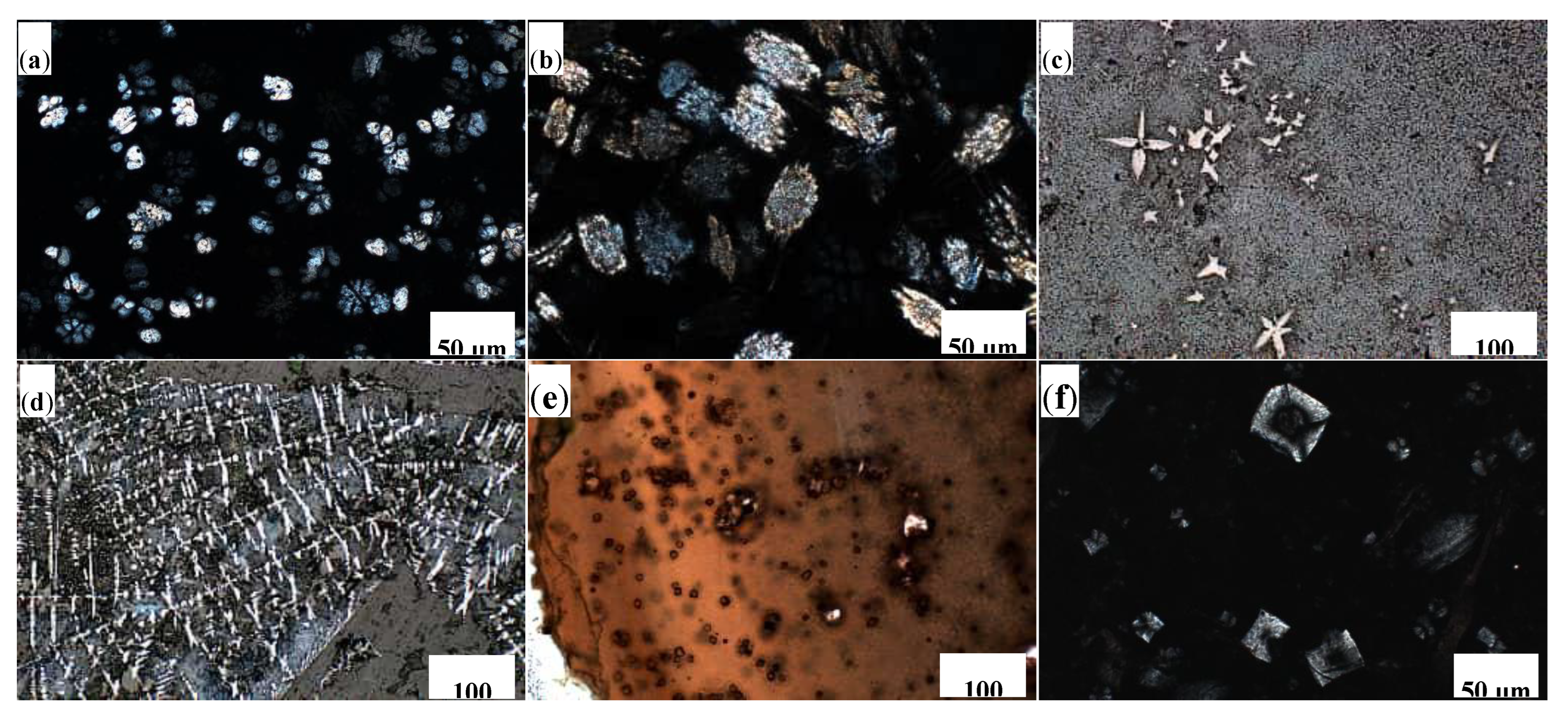
After continuous casting, mold flux flows into the gap between the mold wall and the solidifying shell, the crystalline phase structure formed during solidification is also a key factor determining heat-transfer uniformity and the incidence of slab cracking [33,34,35,36]. In this study, polarizing microscopy combined with X-ray diffraction was used to identify and statistically analyze the crystalline phase composition, phase content, crystallization ratio, and microstructural characteristics of all fluorine-free mold fluxes. The results are shown in Figure 6, Figure 7 and Figure 8.
The analysis shows that the crystallization ratio of fluorine-free mold fluxes was generally within 25-65%, with only a few samples exhibiting excessively high or low crystallinity. The main crystalline minerals were calcium borosilicate, nepheline, and perovskite. Calcium borosilicate mostly appeared as columnar-platy or irregular granular crystals; perovskite primarily occurred as dendritic aggregates, cross-shaped crystals, or granular crystals; and nepheline appeared as square euhedral crystals or granular embryonic crystals. Changes in mineral raw material addition significantly altered the microstructural features of the crystalline phases. Specifically, with increasing borax addition, the crystallization ratio of the mold flux decreased sharply from 90% to 5%, and the contents of calcium borosilicate, nepheline, and perovskite all decreased. When the borax content exceeded 6%, its inhibitory effect on crystal growth and development became increasingly pronounced. With increasing soda ash addition, the crystallization ratio increased from 25% to 67%, and crystal development was enhanced accordingly. In particular, nepheline precipitation increased markedly, whereas calcium borosilicate precipitation increased only slightly. When the soda ash content was lower than 11%, the mold flux was more favorable for lubrication. As witherite content, the crystallization ratio first decreased and then increased. Compared with borax and soda ash, witherite produced much smaller variations, with the maximum difference in overall crystallization ratio being only 14%. Meanwhile, the contents of crystalline mineral phases changed only slightly, indicating that crystal growth was weakly affected by witherite content and that the lubrication function of the mold flux tended to remain stable.
Figure 6.
XRD patterns of crystalline phases in fluorine-free mold flux.
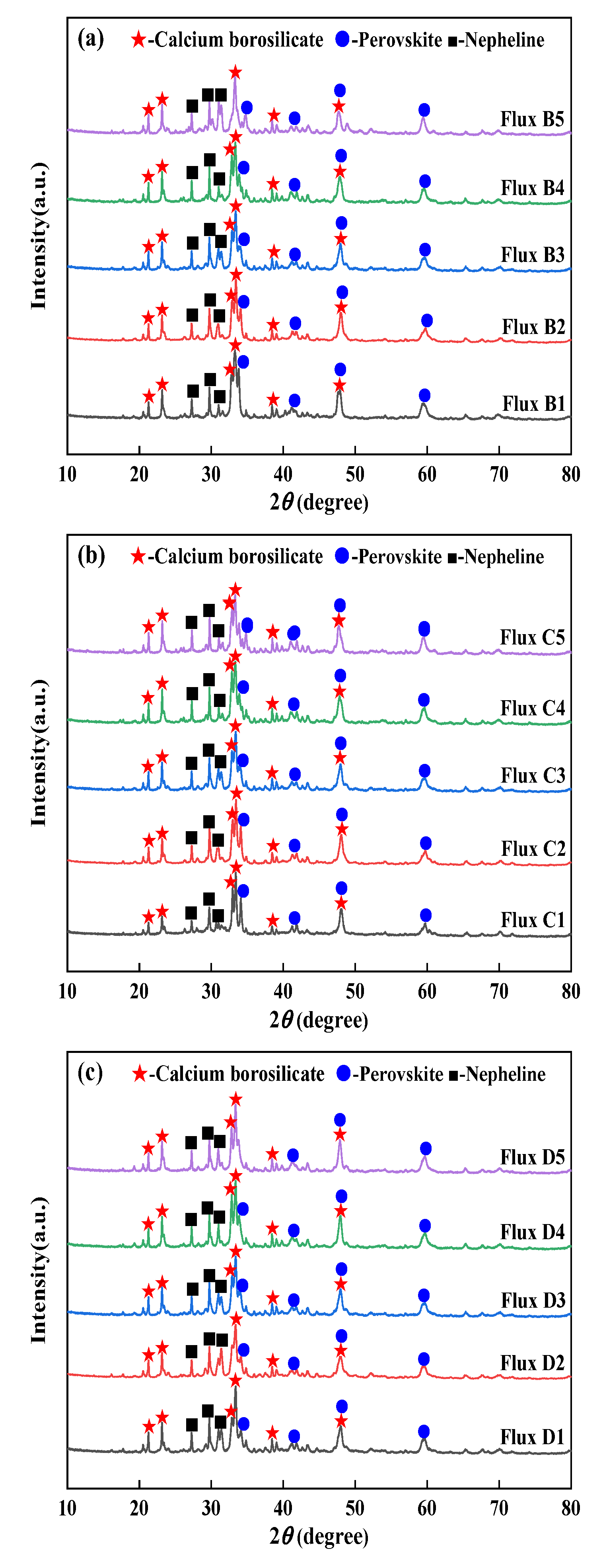
Figure 7.
Crystalline phases and crystallization ratios of fluorine-free mold flux: (a), (b), and (c) CCT curves; (d) relationship between mineral raw materials and crystallization ratio.
Figure 7.
Crystalline phases and crystallization ratios of fluorine-free mold flux: (a), (b), and (c) CCT curves; (d) relationship between mineral raw materials and crystallization ratio.
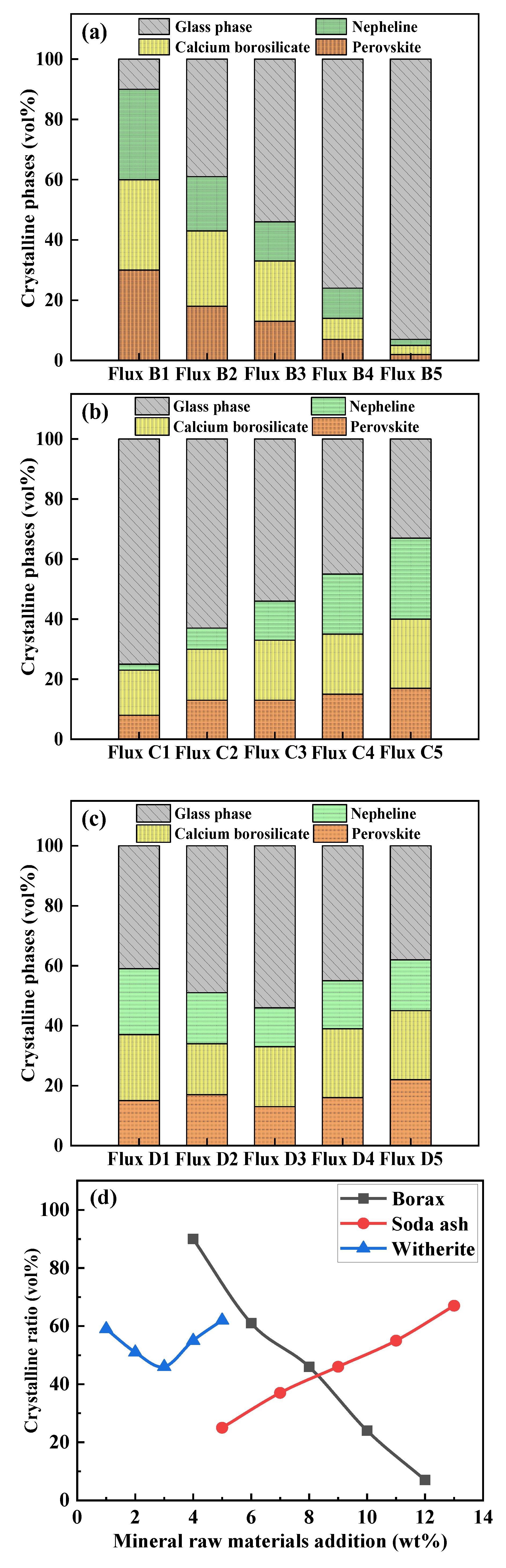
Figure 8.
Microstructures of crystalline phases in fluorine-free mold flux: (a) irregular granular calcium borosilicate under transmitted cross-polarized light; (b) platy calcium borosilicate under transmitted cross-polarized light; (c) irregular granular and cross-shaped perovskite under reflected plane-polarized light; (d) dendritic aggregate perovskite under reflected plane-polarized light; (e) granular embryonic nepheline crystals under transmitted plane-polarized light; (f) square euhedral nepheline crystals under transmitted cross-polarized light.
Figure 8.
Microstructures of crystalline phases in fluorine-free mold flux: (a) irregular granular calcium borosilicate under transmitted cross-polarized light; (b) platy calcium borosilicate under transmitted cross-polarized light; (c) irregular granular and cross-shaped perovskite under reflected plane-polarized light; (d) dendritic aggregate perovskite under reflected plane-polarized light; (e) granular embryonic nepheline crystals under transmitted plane-polarized light; (f) square euhedral nepheline crystals under transmitted cross-polarized light.
3.6. Effect of Mineral Raw Materials on the Microstructure of Fluorine-Free Mold Flux
Raman spectroscopy can characterize the distribution of structural units and chemical-bonding features in mold flux by analyzing molecular and lattice vibrations. It is an important method for quantitatively evaluating the degree of polymerization of network structures, clarifying the influence mechanisms of network formers or modifiers on the melt structure, and elucidating the nature of crystallization phase transformations and property evolution [37,38]. Figure 9 shows the peak-deconvolution fitting results of Raman spectra in the shift range of 750-1100 cm-1 for fluorine-free mold fluxes containing different amounts of mineral raw materials.
The results show that, with increasing borax content, the peak area of Q0 changed only slightly, the peak areas of Q1 and Q2 gradually decreased, and the peak area of the highly polymerized Q3 structural units first increased and then decreased. Consequently, the overall polymerization degree of the molten flux decreased, resulting in reduced viscosity and a significant increase in ionic mobility. These changes were unfavorable for the stable arrangement of atoms and promoted the vitrification tendency of the mold flux. Meanwhile, although the B-O structural peak area decreased, the magnitude of reduction was small, and its influence on the crystallization tendency of calcium borosilicate was correspondingly limited. With increasing soda ash content, the B-O structural peak area in the molten flux changed little, whereas the highly polymerized Q2 and Q3 units tended to transform into less-polymerized Q1 and Q0 units. This transformation reduced melt viscosity and enhanced ion diffusion, thereby facilitating ordered atomic arrangement and strengthening the crystallization tendency of nepheline. With increasing witherite content, the B-O structural peak area first increased and then decreased; Q0, Q1, and Q2 structural units showed no significant variation, and the highly polymerized Q3 units fluctuated only slightly. Overall, the complexity of the molten flux structure changed little, indicating that witherite contributed, to a certain extent, to the stability of the mold flux structure and properties.
3.7. Optimized Design of Mold Flux for High-Titanium Steel Continuous Casting
Shougang Jingtang United Iron & Steel Co., Ltd., China, produces an ultra-high-strength high-titanium steel using a slab continuous caster. The conventional fluorine-bearing mold flux used during continuous casting presents risks of functional failure induced by slag-steel interfacial reactions, as well as fluoride pollution. In this study, an on-site investigation of high-titanium steel continuous casting was conducted. fluorine-bearing mold flux samples and their corresponding crystallized flux film samples were collected from the production site, and the physical properties and crystalline phases of the industrial fluorine-bearing mold flux were systematically examined. On this basis, the experimental findings for the fluorine-free mold fluxes were applied to the optimized design of mold flux for high-titanium steel continuous casting. Key performance parameters, including melting point, viscosity, initial crystallization temperature, critical crystallization cooling rate, and crystallization ratio, were compared between the original fluorine-bearing flux and the optimized fluorine-free flux (Figure 10). In addition, FactSage 8.2 was used to simulate changes in composition at the slag-metal interface reactions for the two mold fluxes (Figure 11).
The optimized fluorine-free mold flux exhibits comprehensive characteristics more suitable for continuous casting of high-titanium steel, particularly for melting and crystallization regulation. Compared with the fluorine-bearing mold flux, the fluorine-free flux shows significantly lower melting point and viscosity, suggesting that it can provide superior lubrication by promoting the rapid spreading and uniform flow of liquid flux, thereby alleviating lubrication deficiency caused by slag-steel reactions during high-titanium steel continuous casting. Meanwhile, the initial crystallization temperature and critical crystallization cooling rate of the fluorine-free flux are close to, or essentially comparable with, those of the fluorine-bearing flux. This demonstrates that, through the synergistic regulation of fluoride-substituting raw materials, the fluorine-free flux can still maintain strong crystallization tendency and heat-flux control capability. In addition, the crystallization ratio of the fluorine-free flux decreases from 70vol% for the fluorine-bearing flux to 46vol%, which is particularly beneficial for high-titanium steel continuous casting, because an appropriately reduced crystallization ratio can prevent nonuniform heat transfer caused by an excessively thick crystalline layer. Further analysis of compositional changes at the slag-steel interface indicates that the fluorine-bearing flux undergoes more pronounced compositional fluctuations after reacting with high-titanium steel. By contrast, the introduction of TiO2 into the fluorine-free flux system reduces the chemical potential difference between Ti in molten steel and the mold flux, thereby weakening the intensity of interfacial reactions and improving compositional stability during service. Overall, while maintaining appropriate crystallization properties, the optimized fluorine-free mold flux achieves lower melting point, lower viscosity, lower crystallization ratio, milder slag-steel interfacial reactions, and improved environmental friendliness. Its comprehensive performance is superior to that of conventional fluorine-bearing fluxes and effectively ensures stable continuous casting and improved slab surface quality for high-titanium steel.
4. Conclusions
In this study, titanium-bearing blast furnace slag was used as the main base material, and the effects of mineral raw materials, including borax, soda ash, and witherite, on the melting properties, crystallization behavior, and microstructure of fluorine-free mold flux for continuous casting of high-titanium steel were systematically investigated. On this basis, a fluorine-free mold flux suitable for high-titanium steel continuous casting was optimized and designed. The main conclusions are as follows:
(1) With increasing borax addition (4-12wt%), the melting temperature of the fluorine-free mold flux decreased in a segmented manner, and the viscosity first decreased sharply and then tended to stabilize. Both the initial crystallization temperature and the critical crystallization cooling rate first increased and then decreased. The crystallization ratio decreased markedly from 90vol% to 5vol%, and the growth and development of crystalline phases such as calcium borosilicate, nepheline, and perovskite were strongly inhibited.
(2) With increasing soda ash addition (5-13wt%), the melting temperature of the fluorine-free mold flux decreased linearly, while the viscosity decreased slightly. The initial crystallization temperature first remained stable at 1370℃ and then decreased significantly, and the critical crystallization cooling rate first increased and then decreased. The crystallization ratio increased markedly, and nepheline precipitation was significantly promoted.
(3) With increasing witherite addition (1-5wt%), the property variations of the fluorine-free mold flux were relatively moderate. At a witherite addition of 3wt%, the lowest melting point, viscosity, and crystallization ratio were simultaneously obtained. Both the initial crystallization temperature and the critical crystallization cooling rate first increased and then decreased. Variations in witherite content had little influence on the precipitation behavior of crystalline phases.
(4) Raman spectroscopic analysis shows that increasing borax content decreases the proportion of highly polymerized Q3 structural units, reduces the overall polymerization degree of the molten flux, enhances ion migration ability, and suppresses crystallization tendency. Increasing the soda ash content promotes the transformation of Q2 and Q3 units into Q1 and Q0 units, thereby favoring an ordered atomic arrangement and significantly promoting crystallization. Increasing witherite content has only a slight effect on structural units, and the polymerization degree of the molten flux remains generally stable, confirming the stabilizing effect of witherite on mold flux properties.
(5) Compared with the fluorine-bearing mold flux, the optimized fluorine-free mold flux maintains a suitable initial crystallization temperature and critical crystallization cooling rate while exhibiting a lower melting point, viscosity, and crystallization ratio. The introduction of TiO2 reduces the chemical potential difference between Ti in molten steel and the mold flux, effectively mitigating slag-steel interfacial reactions, and improving the compositional stability of the mold flux.
Author Contributions
Conceptualization, D.Z. and X.H.; methodology, formal analysis, D.Z. and L.L.; investigation, Z.L. and Z.Z.; resources, Z.L. and Y.Y.; data curation, D.Z. and L.W.; writing—original draft preparation, D.Z.; writing—review and editing, D.Z. and X.H.; visualization, D.Z. and L.L.; supervision, X.H.; project administration, D.Z. and X.H. All authors have read and agreed to the published version of the manuscript.
Funding
This research was funded by the Natural Science Foundation of Hebei Province (No. E2024209062), and the Tangshan Science and Technology Plan Funding Project (No. 24130206C).
Institutional Review Board Statement
Not applicable.
Informed Consent Statement
Not applicable.
Data Availability Statement
The original contributions presented in this study are included in the article. Further inquiries can be directed to the corresponding author.
Conflicts of Interest
The authors declare no conflict of interest.
References
- Wang, S.; Gao, Z.; Wu, G.; Mao, X. Titanium microalloying of steel: A review of its effects on processing, microstructure and mechanical properties. Int. J. Miner. Metall. Mater. 2022, 29, 645. [Google Scholar] [CrossRef]
- Yang, P. H.; Yang, J. L.; Xu, J. L.; La, P.; Pan, G.; Cheng, J.; Huang, L.; Fu, H. Investigation of the microstructure and properties on high titanium wear-resistant steels. J. Mater. Res. Technol. 2025, 35, 1926–1940. [Google Scholar] [CrossRef]
- Gao, W.; Wang, S.; Zhang, H.; Wang, Q.; Liu, H.; Yu, H.; Sun, D. Low-Cost Application Strategies of Marine Titanium Alloys and Ti/Fe Dissimilar Materials. Metals 2025, 15, 1205. [Google Scholar] [CrossRef]
- Li, X.; Li, F.; Cui, Y.; Xiao, B.; Wang, J. The effect of manganese content on mechanical properties of high titanium microalloyed steels. Mater. Sci. Eng. A 2016, 677, 340. [Google Scholar] [CrossRef]
- Mills, K. C.; Fox, A. B. The role of mould fluxes in continuous casting—so simple yet so complex. ISIJ Int. 2003, 43, 1479. [Google Scholar] [CrossRef]
- Liu, L.; Han, X.L.; Li, M.D.; Zhang, D. Influence of Mineralogical Structure of Mold Flux Film on Heat Transfer and Longitudinal Cracks of Slabs. Materials 2022, 15, 2980. [Google Scholar]
- Wang, W. L.; Blazek, K.; Cramb, A. A study of the crystallization behavior of a new mold flux used in the casting of transformation-induced-plasticity steels. Metall. Mater. Trans. B 2008, 39, 66. [Google Scholar] [CrossRef]
- Mo, R. Z.; Ren, Y.; Zhang, L. F. Dynamics of mold flux composition in high-titanium steel continuous casting: modeling and prediction. J. Iron Steel Res. Int. 2025, 32, 4240. [Google Scholar] [CrossRef]
- Yan, W.; Hao, Z.Q.; Chen, W.Q.; Li, J. Mixing effect of slag compositions and additives on crystallization of mold flux for high-Ti steel continuous casting. J. Mater. Res. Technol. 2020, 10, 882. [Google Scholar] [CrossRef]
- Wang, W. L.; Cai, D.; Zhang, L.; et al. Effect of TiO2 and TiN on the viscosity, fluidity, and crystallization of fluorine-free mold fluxes for casting Ti-bearing steels. Steel Res. Int. 2021, 92, 2000314. [Google Scholar] [CrossRef]
- Geng, X.; Li, B.Y.; Jiang, Z.H. Effect of TiO₂ on viscosity and structure for CaO–SiO₂–Al₂O₃-based mold flux. Ceram. Int. 2023, 81, 102545. [Google Scholar]
- Wang, X.J.; Jin, H.B.; Zhu, L.G.; Xu, Y.; Liu, R.; Piao, Z.L.; Qu, S. Effect of CaF₂ on the viscosity and microstructure of CaO–SiO₂–Al₂O₃ based continuous casting mold flux. Metals 2019, 9, 871. [Google Scholar]
- Yang, J.; Zhang, J.Q.; Ostrovski, O.; Zhang, C.; Cai, D.X. Effects of fluorine on solidification, viscosity, structure, and heat transfer of CaO–Al₂O₃-based mold fluxes. Metall. Mater. Trans. B 2019, 50, 1694. [Google Scholar]
- Nakada, H.; Nagata, K. Crystallization of CaO–SiO₂–CaF₂ slag as a candidate for mold flux. ISIJ Int. 2006, 46, 441. [Google Scholar] [CrossRef]
- Park, J.Y.; Ko, E.Y.; Choi, J.; Sohn, N. Characteristics of medium carbon steel solidification and mold flux crystallization using the multi-mold simulator. Met. Mater. Int. 2014, 20, 1103. [Google Scholar] [CrossRef]
- Zhang, J.Y.; Zhang, J.Q.; Ostrovski, O.; Sun, S.Y. Qualitative and mechanism research of volatiles in the most commonly used CaO-SiO₂-CaF₂-Na₂O slag during casting process. ISIJ Int. 2013, 53, 1784. [Google Scholar]
- Schulz, T.; Lychatz, B.; Haustein, N.; Janke, D. Structurally based assessment of the influence of fluorides on the characteristics of continuous casting powder slags[J]. Metall. Mater. Trans. B 2013, 44, 317. [Google Scholar] [CrossRef]
- Tiwari, K.K.; Raghav, R.; Pandey, R. Recent advancements in fluoride impact on human health: A critical review. Environ. Sustain. Indic. 2023, 20, 100305. [Google Scholar] [CrossRef]
- Makete, N.; Rizzu, M.; Seddaiu, G.; Gohole, L.; Otinga, A. Fluoride toxicity in cropping systems: mitigation, adaptation strategies and related mechanisms. A review. Sci. Total Environ. 2022, 833, 155129. [Google Scholar] [CrossRef]
- Zhang,L. Xie, X.F.; He,S.P.; Zhang,X.B.; Wang,Q.Q. Influence of TiO2/SiO2 and BaO/CaO ratios on viscosity, crystallization and structure of high-TiO2 mold slags for casting of high-Ti steel. Ceram. Int. 2024, 50, 27188. [CrossRef]
- Zhang,J.J.; Chen, Z.; Du,W. Zhou,J.; Qiang Li. Kinetics of nonisothermal crystallization of SiO2–TiO2–CaO–BaO–Al2O3-based fluorine-free mold flux for high-Ti steel. J. Am. Ceram. Soc. 2025, 109, 70396. [CrossRef]
- Chen, Z.; Zhang, J.J.; Li, X.T.; Du, W.T.; Ma, J.C.; Yang, J. A critical review of the challenges of developing continuous casting mold fluxes for high-Ti steels. Int. J. Miner. Metall. Mater. 2026, 33, 35. [Google Scholar] [CrossRef]
- Mo, R.; Zhang, X.; Ren, Y.; Hu, J.; Zhang, L. Influence of substituting B2O3 with Li2O on the viscosity, structure and crystalline phase of low-reactivity mold flux. Int. J. Miner. Metall. Mater. 2023, 30, 1320. [Google Scholar] [CrossRef]
- Gu, S.; Wen, G.; Ding, Z.; Tang, P.; Liu, Q. Effect of Shear Stress on Isothermal Crystallization Behavior of CaO-Al2O3-SiO2-Na2O-CaF2 Slags. Materials 2018, 11, 1085. [Google Scholar] [CrossRef]
- Zhang, D. Han, X.L.; Liu, L.; Guo, J.J.; Yang,Y.; Wu,L. Physical Properties of Mold Flux and Mineralogical Characteristics of Flux Film for Low-alloy Peritectic Steel Continuous Casting. Materials 2025, 18, 4298. [CrossRef]
- Chen, Z.; Zhang, J. J.; Li, X. T.; et al. A critical review of the challenges of developing continuous casting mold fluxes for high-Ti steels. Int. J. Miner. Metall. Mater. 2026, 33, 35. [Google Scholar] [CrossRef]
- Yan, W.; Zhang, G.H.; Li, Jing. Viscosity and structure evolution of CaO–SiO2-based mold fluxes with involvement of CaO–Al2O3-based tundish fluxes[J]. Ceram. Int. 2020, 46, 14078. [Google Scholar] [CrossRef]
- Geng, X.; Tao, X.R.; Jiang, Z.H.; Zhen, P.L.; Liu, F.B.; Li, H.B. Effect of B2O3 on ESR Slag Viscosity for Remelting 9CrMoCoB Steel. ISIJ Int. 2022, 62, 1070. [Google Scholar] [CrossRef]
- Mo, R. Z.; He, W. Y.; Li, Z. T.; Ren, Y.; Zhang, L.F. Influence of BaO and MgO on viscosity, crystalline phase, and structure of CaO-Al2O3-10%SiO2-20%CaF2-based system[J]. Ceram. Int. 2023, 49, 27311. [Google Scholar] [CrossRef]
- Kashiwaya, Y.; Cicutti, C. E.; Cramb, A. W.; Ishii, K. Development of Double and Single Hot Thermocouple Technique for in Situ Observation and Measurement of Mold Slag Crystallization. ISIJ Int. 1998, 38, 348. [Google Scholar] [CrossRef]
- Lei, Y.; Xie, B.; Ma, W.H. Analysis of crystallization behavior of mold fluxes containing TiO2 using single hot thermocouple technique. J. Iron Steel Res. Int. 2016, 23, 322. [Google Scholar] [CrossRef]
- Wang, Q.; Yang, J.; Zhang, J. Q.; Ostrovski, O.; Zhang, C.; Cai, D.X. Effect of Na2O on properties, structure, and crystallization of CaO-Al2O3-based mold fluxes[J]. Steel Res. Int. 2022, 93, 2100193. [Google Scholar] [CrossRef]
- Chen, Y.; Li, M.; Wang, S. S.; Zhu, L. L.; Zhang, X. B.; He, S. P.; Wang, Q. Q. Effect of MgO on solidification and crystallization properties of ultrahigh-basicity mold flux. Mater. Chem. Phys. 2022, 276, 125403. [Google Scholar] [CrossRef]
- Maldonado, Y. G.; Humberto; Castillejos, E. A. A new method for estimating the isothermal devitrification and crystallization of mold powder slags from non-isothermal DSC data. Mater. Des. 2015, 83, 728. [Google Scholar] [CrossRef]
- Wang, Z.; Shu, Q. F.; Chou, K. C. Crystallization kinetics and structure of mold fluxes with SiO2 being substituted by TiO2 for casting of titanium-stabilized stainless steel. Metall. Mater. Trans. B 2013, 44, 606. [Google Scholar] [CrossRef]
- Zhao, F. H.; Xin, W. B.; Deng, Y. H.; Zhang, Jing.; Cao, Z. J.; Peng, J. Viscosity, structure, and crystallization behavior of CaO-SiO2-CeO2-La2O3-P2O5-CaF2 slag with different Al2O3 contents. Ceram. Int. 2026, 52, 6633. [Google Scholar] [CrossRef]
- Jiang, L. J.; Chou, K.C.; Shu, Q.F. Structure and viscosity of CaO-Al2O3-B2O3 based mould fluxes with varying CaO/Al2O3 ratio. ISIJ Int. 2020, 60, 51. [Google Scholar]
- Mahinroosta, M.; Allahverdi, A. Hazardous aluminum dross characterization and recycling strategies: A critical review. J. Environ. Manag. 2018, 223, 452. [Google Scholar] [CrossRef]
Figure 1.
Single-factor design scheme for flux-blending experiments using mineral raw materials.
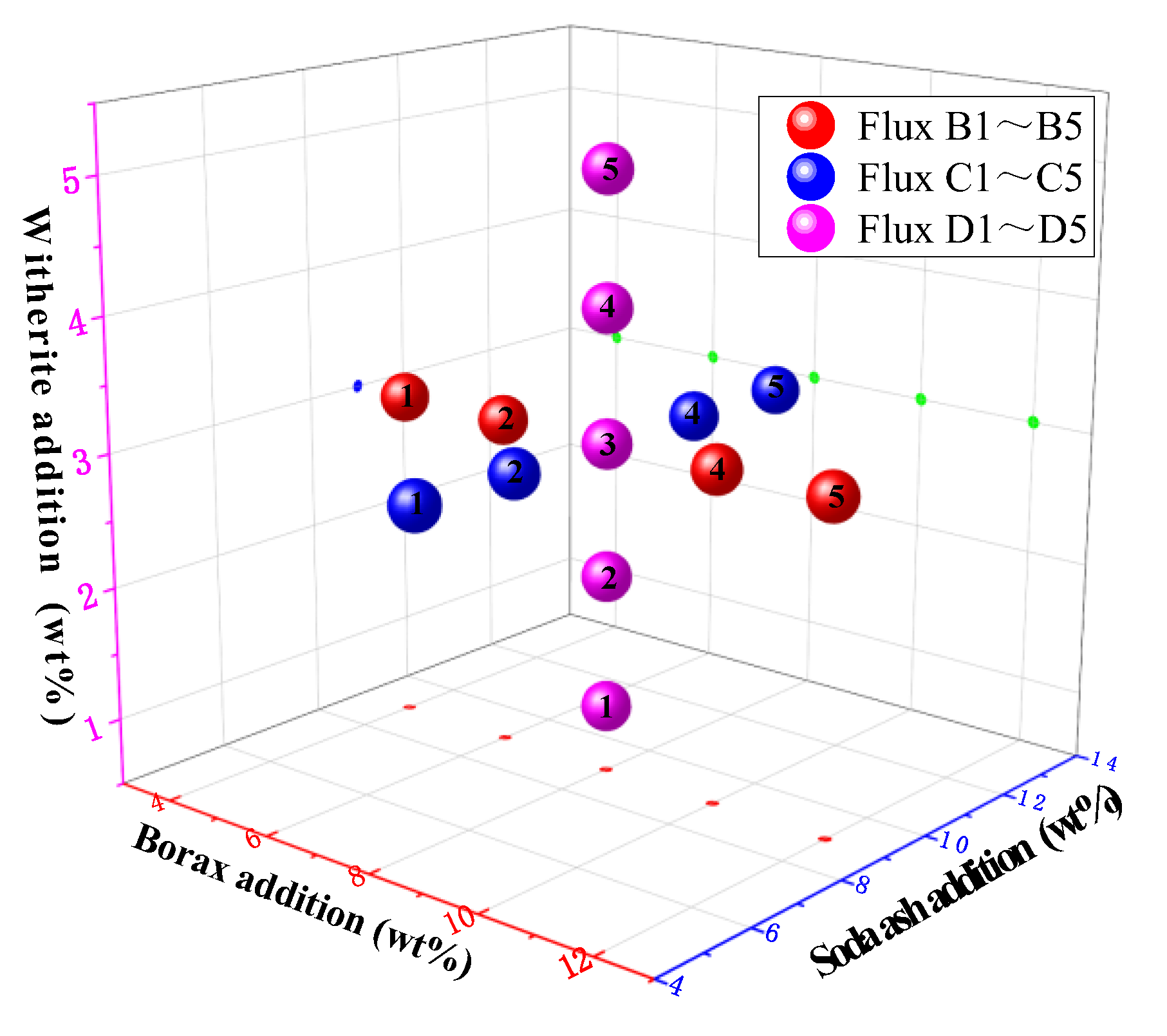
Figure 2.
Melting temperatures of fluorine-free mold flux: (a) relationship between borax and melting temperature; (b) relationship between soda ash and melting temperature; (c) relationship between witherite and melting temperature.
Figure 2.
Melting temperatures of fluorine-free mold flux: (a) relationship between borax and melting temperature; (b) relationship between soda ash and melting temperature; (c) relationship between witherite and melting temperature.
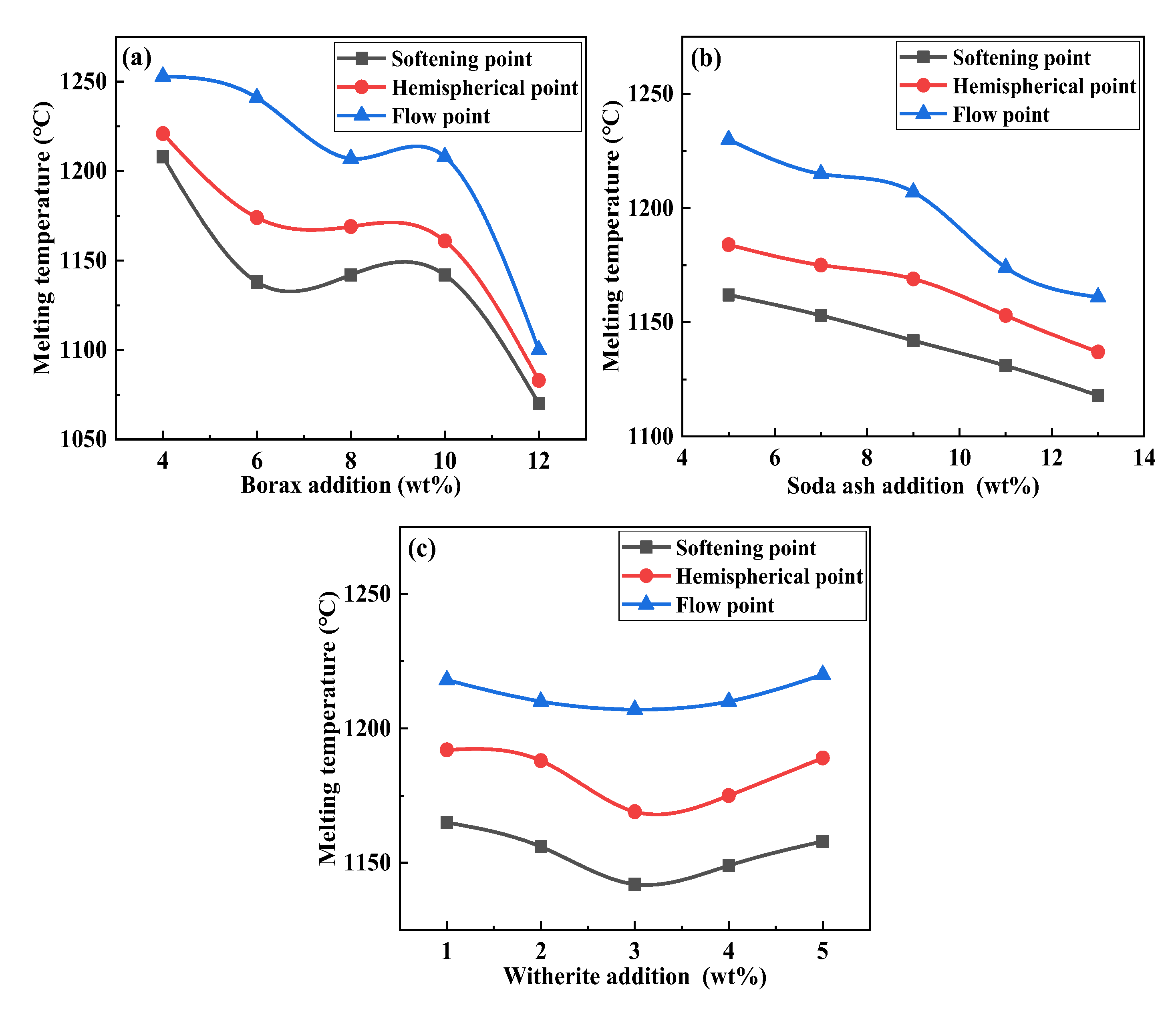
Figure 3.
Viscosity properties of fluorine-free mold flux: (a), (b), and (c) viscosity-temperature curves; (d) relationship between mineral raw materials and viscosity.
Figure 3.
Viscosity properties of fluorine-free mold flux: (a), (b), and (c) viscosity-temperature curves; (d) relationship between mineral raw materials and viscosity.
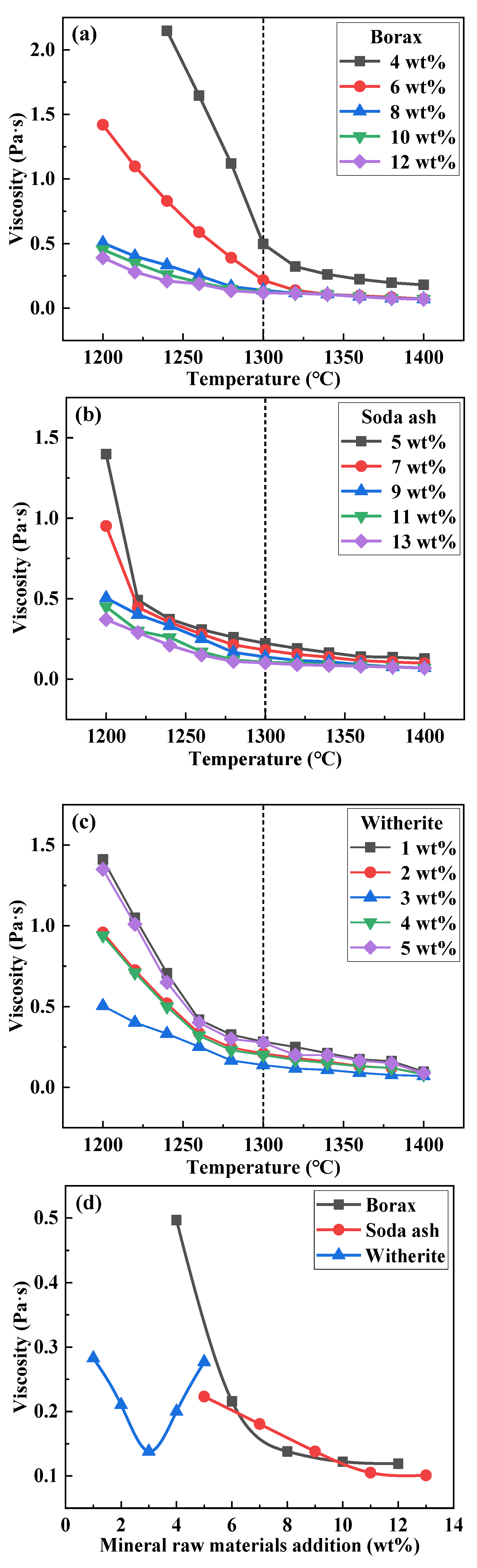
Figure 4.
Initial crystallization temperatures of fluorine-free mold flux: (a), (b), and (c) TTT curves; (d) relationship between mineral raw materials and initial crystallization temperature.
Figure 4.
Initial crystallization temperatures of fluorine-free mold flux: (a), (b), and (c) TTT curves; (d) relationship between mineral raw materials and initial crystallization temperature.
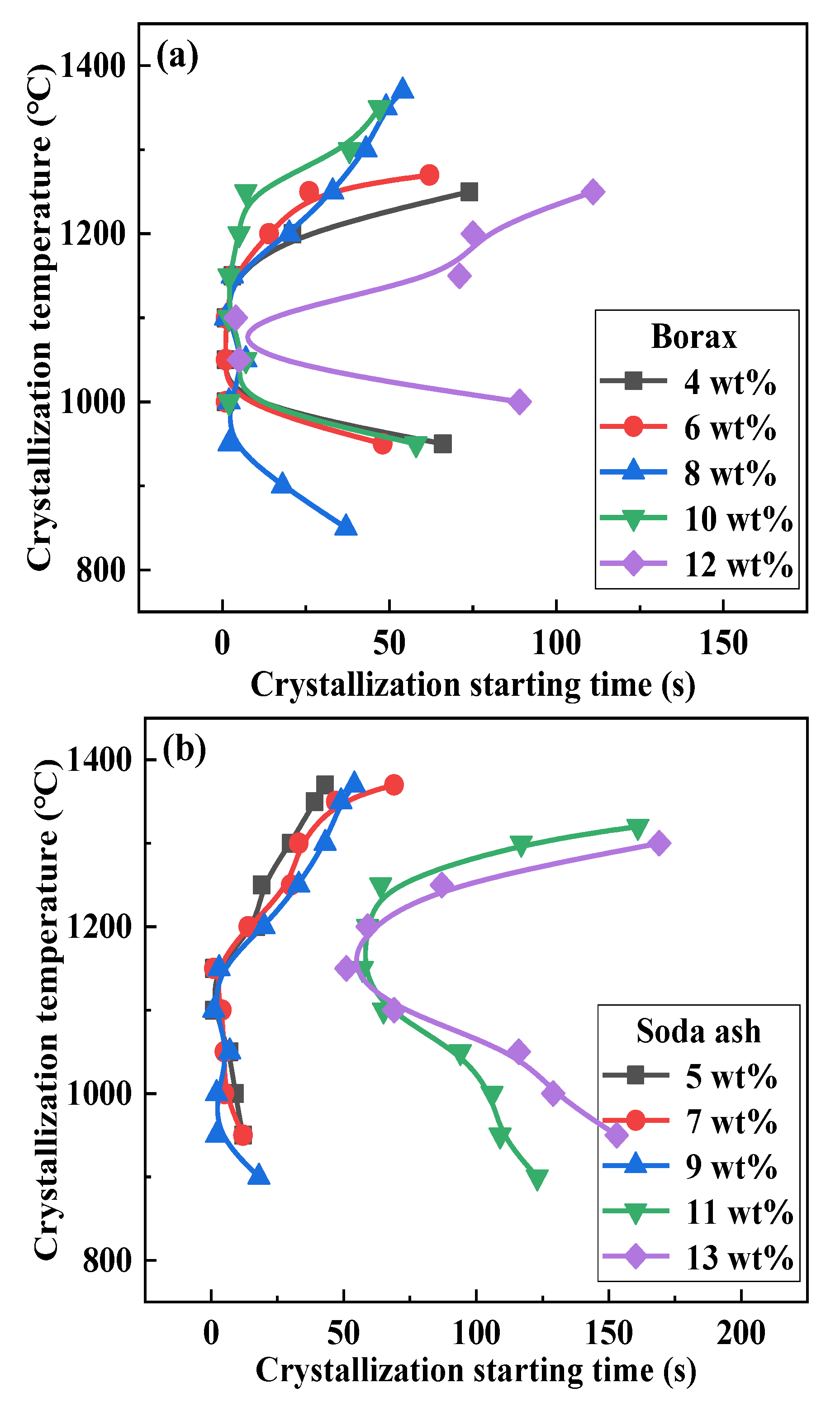
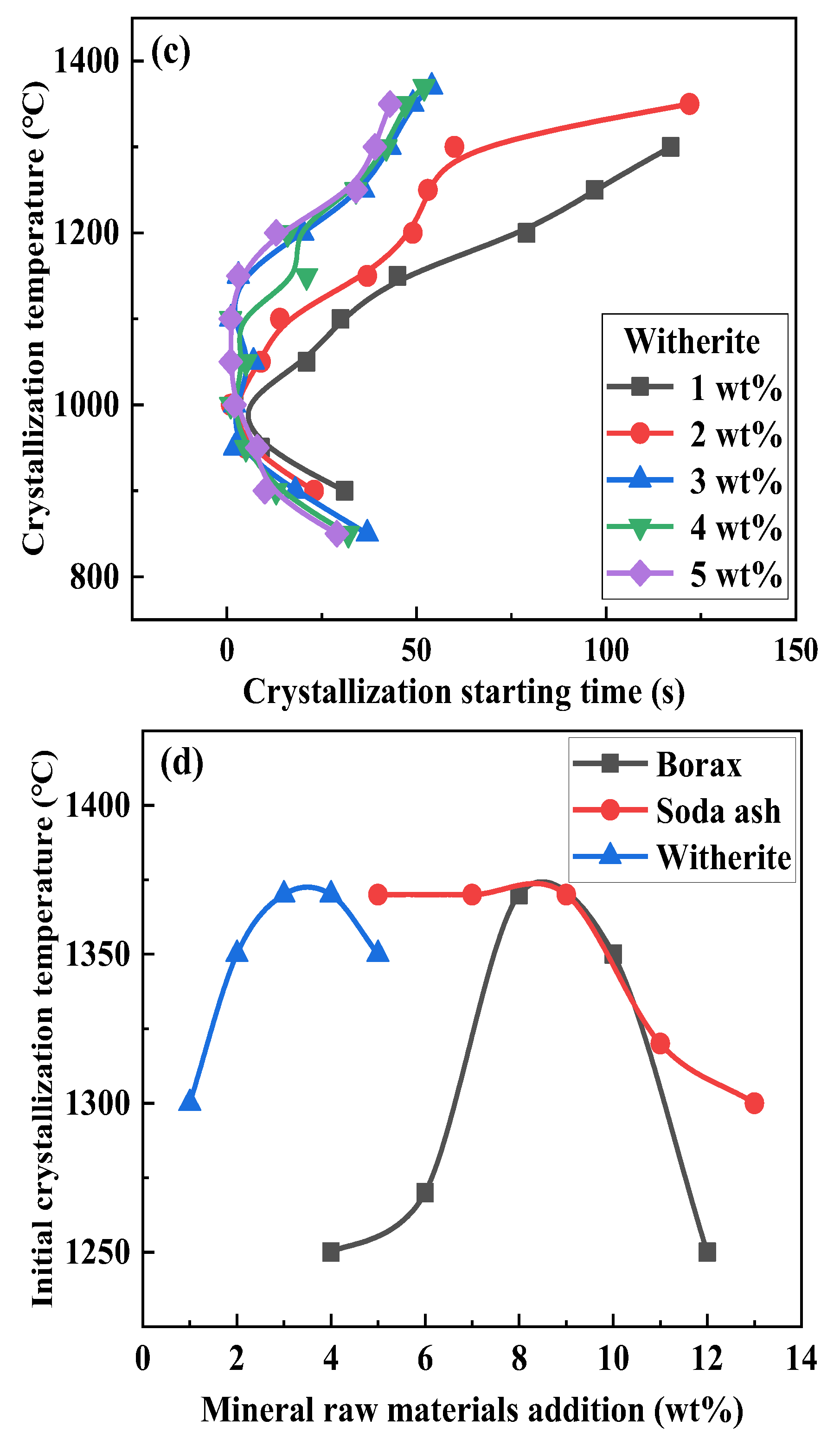
Figure 5.
Critical crystallization cooling rate of fluorine-free mold flux: (a), (b), and (c) CCT curves; (d) relationship between mineral raw materials and critical crystallization cooling rate.
Figure 5.
Critical crystallization cooling rate of fluorine-free mold flux: (a), (b), and (c) CCT curves; (d) relationship between mineral raw materials and critical crystallization cooling rate.
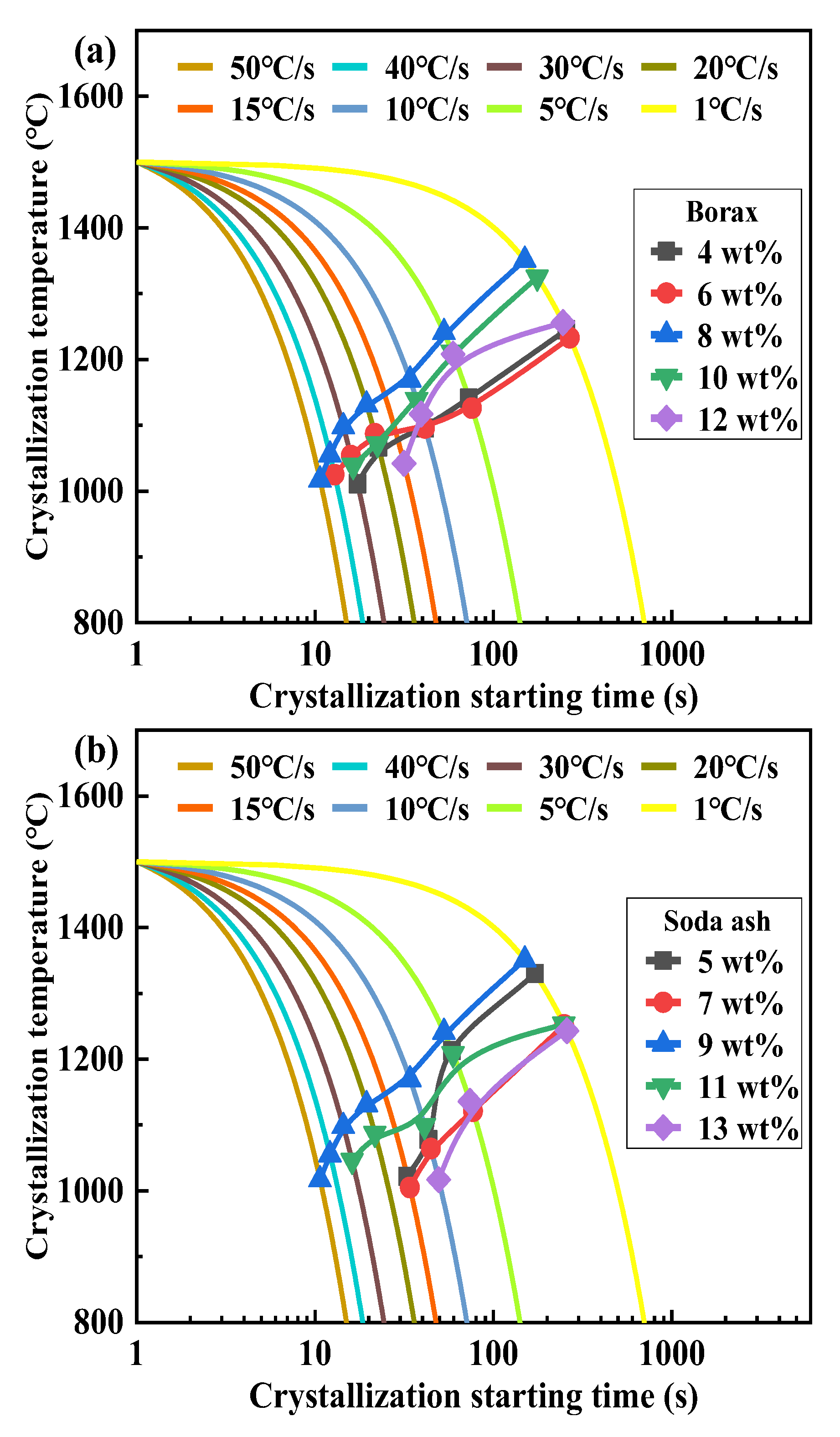
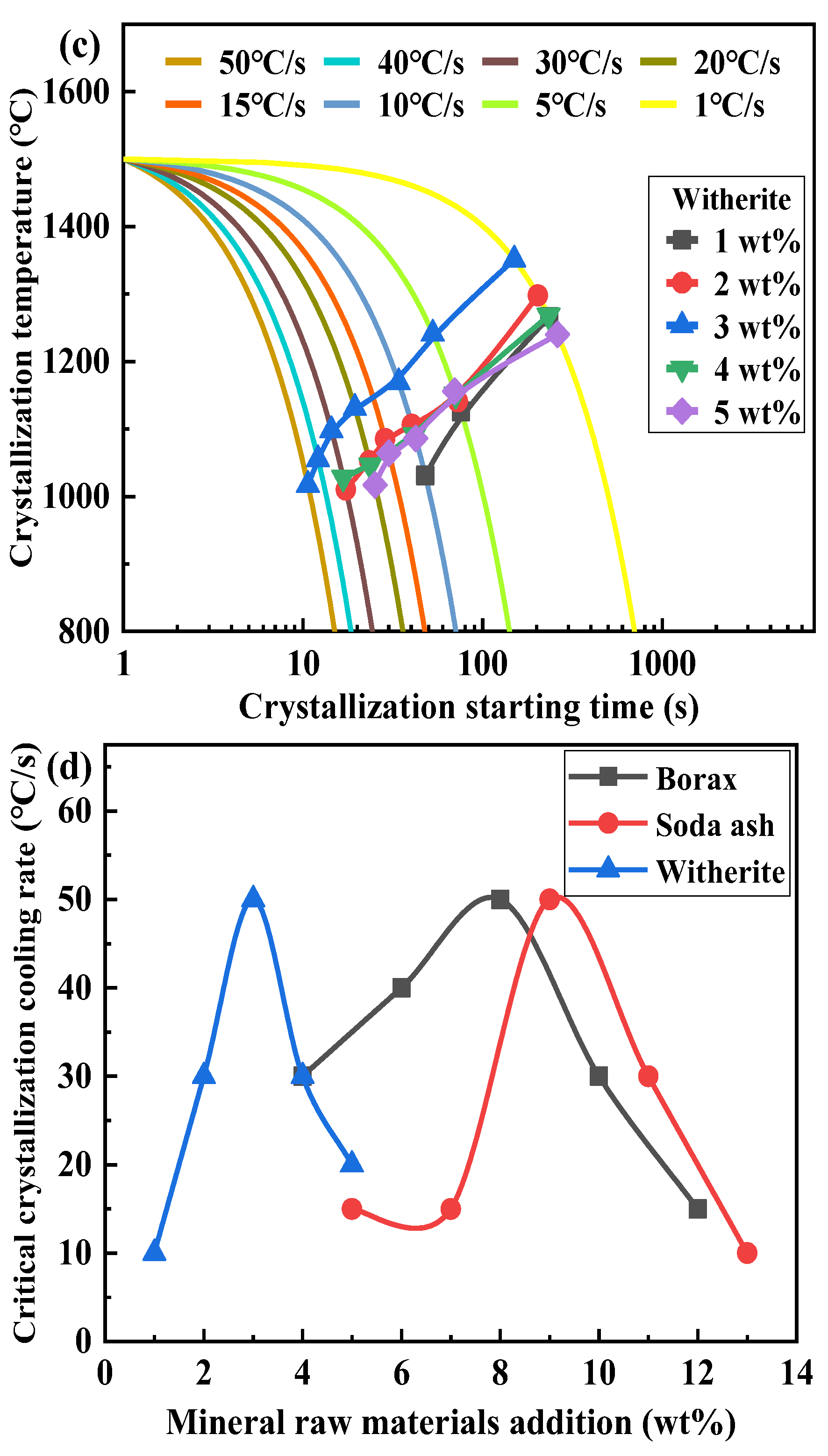
Figure 9.
Raman spectra of the microstructure of fluorine-free mold fluxes.
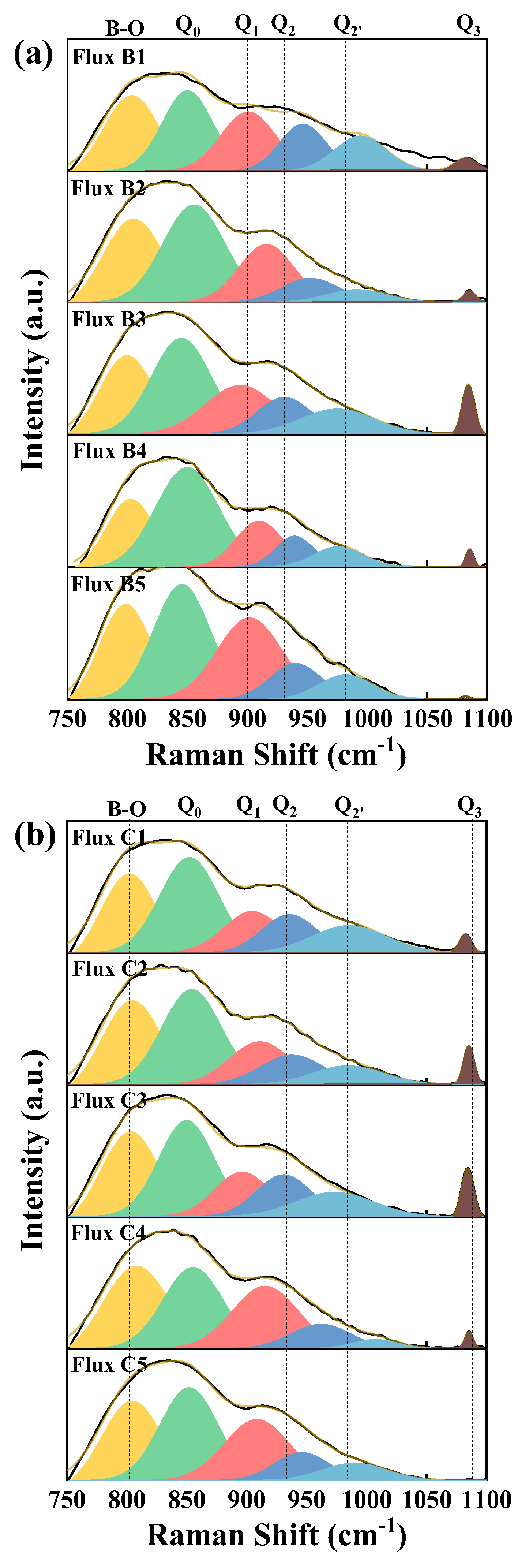
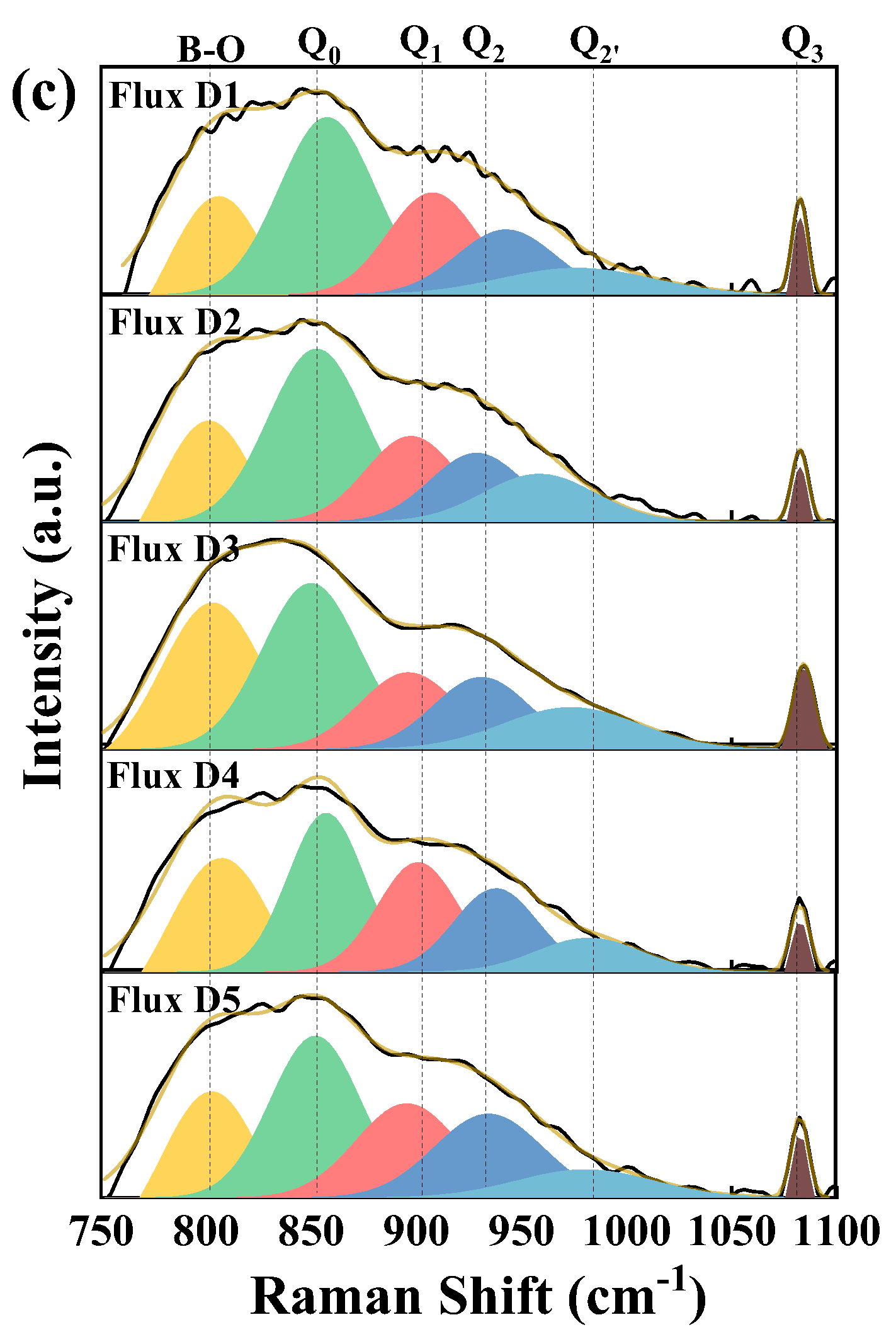
Figure 10.
Key performance parameters between fluorine-bearing and fluorine-free mold fluxes.
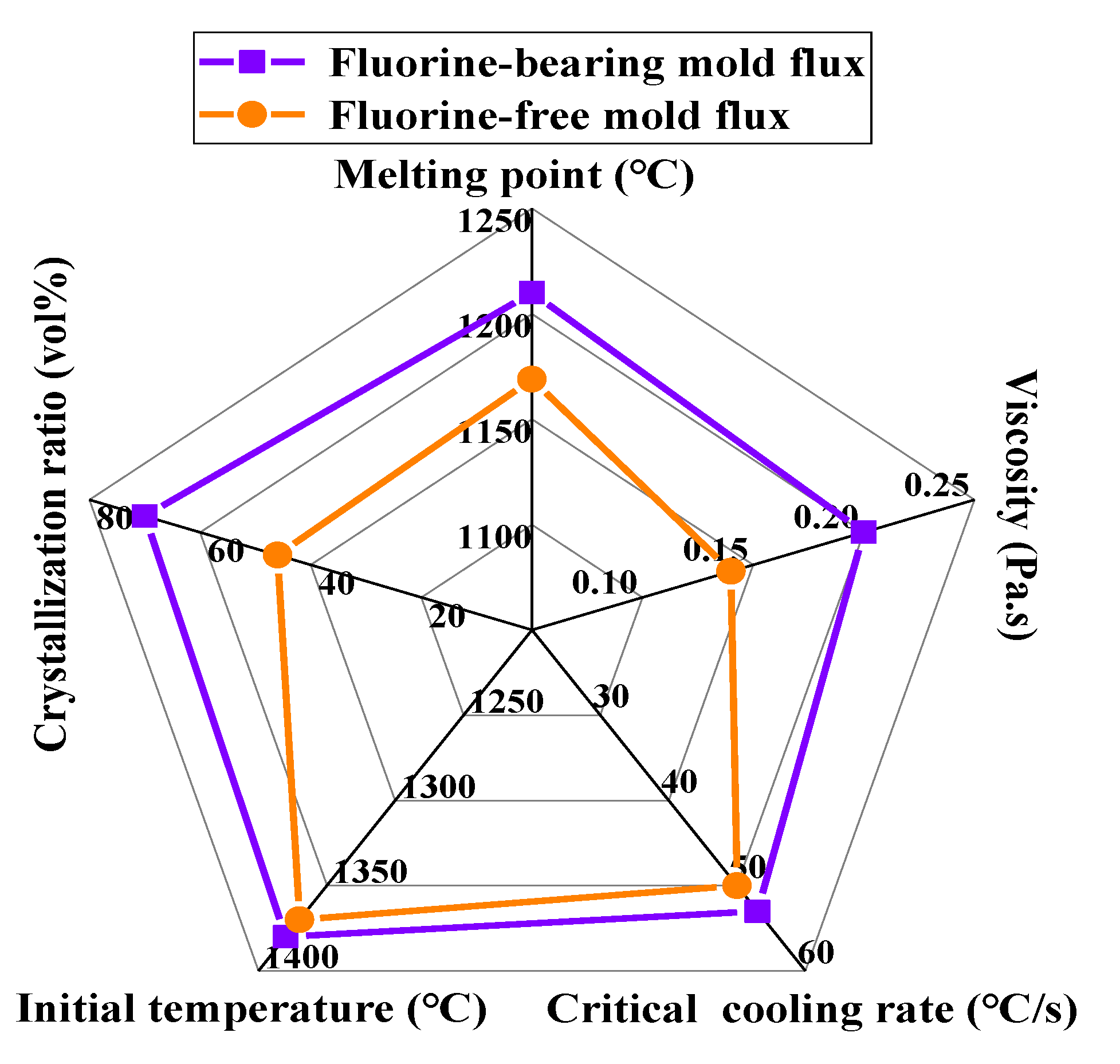
Figure 11.
Compositional changes during slag-metal interfacial reactions between fluorine-bearing and fluorine-free mold fluxes.
Figure 11.
Compositional changes during slag-metal interfacial reactions between fluorine-bearing and fluorine-free mold fluxes.
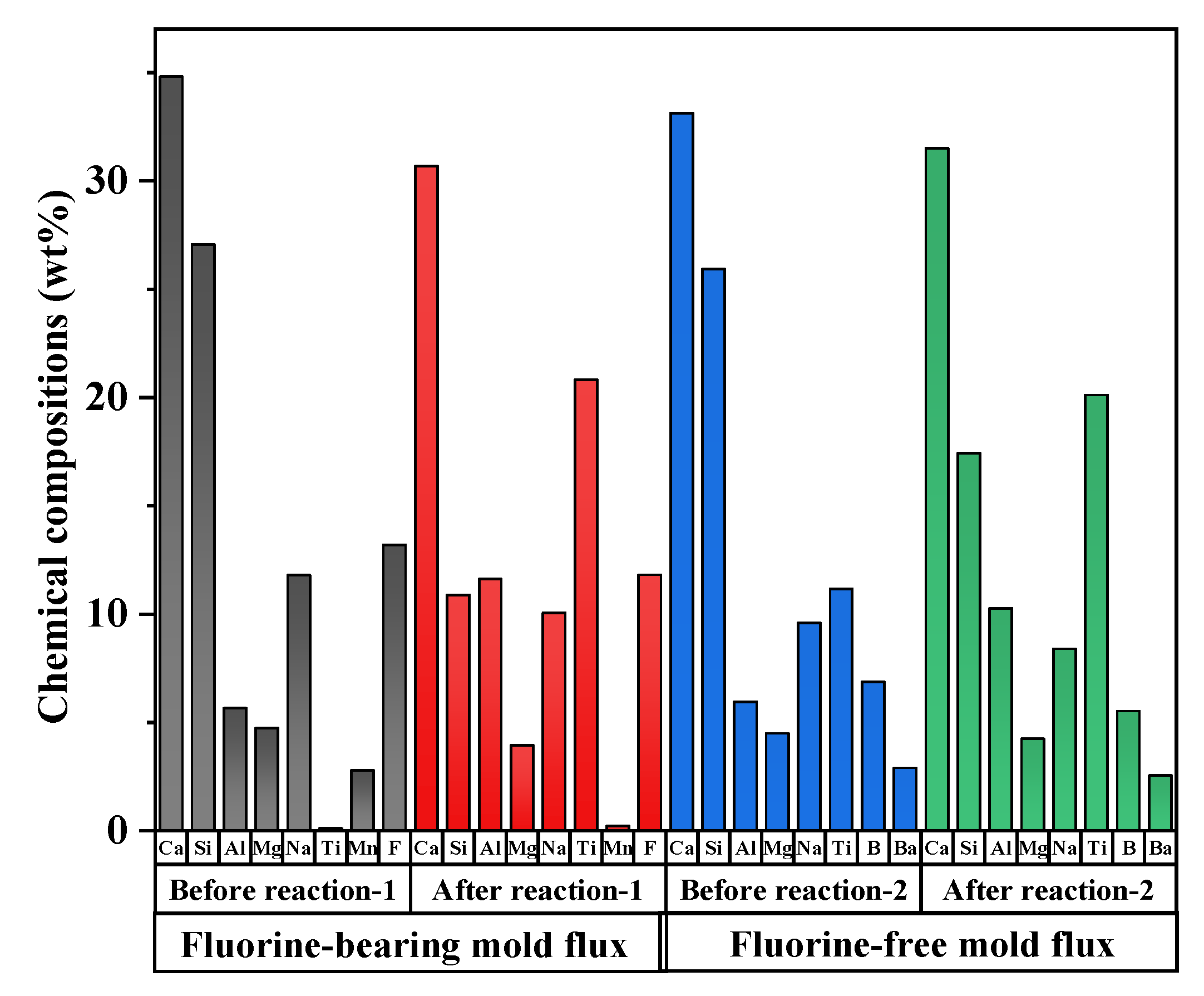

Table 1.
Chemical compositions of raw materials for mold flux (wt%).
| Raw materials | CaO | SiO2 | Al2O3 | MgO | TiO2 | Na2O | B2O3 | CaCO3 | Na2CO3 | BaCO3 |
|---|---|---|---|---|---|---|---|---|---|---|
| Blast furnace slag | 26.71 | 24.74 | 11.87 | 8.96 | 22.31 | |||||
| quartz sand | 98.32 | |||||||||
| Limestone | >98 | |||||||||
| Borax | 30.49 | 68.51 | ||||||||
| Soda ash | >99 | |||||||||
| Witherite | >99 |
Disclaimer/Publisher’s Note: The statements, opinions and data contained in all publications are solely those of the individual author(s) and contributor(s) and not of MDPI and/or the editor(s). MDPI and/or the editor(s) disclaim responsibility for any injury to people or property resulting from any ideas, methods, instructions or products referred to in the content. |
© 2026 by the authors. Licensee MDPI, Basel, Switzerland. This article is an open access article distributed under the terms and conditions of the Creative Commons Attribution (CC BY) license.
Copyright: This open access article is published under a Creative Commons CC BY 4.0 license, which permit the free download, distribution, and reuse, provided that the author and preprint are cited in any reuse.