

Submitted:
30 April 2026
Posted:
30 April 2026
You are already at the latest version
Abstract
Seed enhancement technologies play a crucial role in improving germination performance and early seedling establishment of forest tree species. This study evaluated the effects of seed priming, microbial inoculation, and polymer coating on the germination behavior and seedling quality of Falcataria falcata. Fifteen treatments, including hydropriming (HP), plant growth regulators (GA₃), beneficial microorganisms, and polymer-based coatings, were assessed under controlled conditions. Results revealed that all seed enhancement treatments significantly improved germination and seedling growth parameters compared to the untreated control (p < 0.01). Hydropriming alone increased germination from 49.5% to over 93%, while combined treatments (HP + microbial inoculants + GA₃ + coating) achieved up to 97.5% germination and significantly enhanced germination index, vigor indices, root development, and nodulation. The highest seedling vigor (Vigor Index I = 2055.57) and root–shoot ratio (0.60) were observed in integrated treatments, indicating improved biomass allocation and stress adaptation potential. Principal Component Analysis explained over 90% of the variability in germination traits and 75% in seedling growth, clearly distinguishing superior treatments. The findings demonstrate that integrated seed enhancement strategies synergistically improve physiological performance, nutrient acquisition, and early growth dynamics. These results highlight the potential of combining priming, bioinoculants, and coating technologies to optimize seedling production and establishment of tree plantations and agroforestry ecosystems.
Keywords:
Falcataria falcata
; seed priming
; microbial inoculants
; hydropriming
; seedling vigor
; tree plantations
; agroforestry
; PCA
1. Introduction
The increasing global demand for sustainable wood resources and ecosystem restoration has intensified the need for high-quality planting materials in tropical forestry systems. Falcataria falcata (L.) Greuter & R. Rankin is among the most important fast-growing tree species widely cultivated in Southeast Asia, particularly in the Philippines and Indonesia. It is a preferred species for veneer, plywood, pallets, fruit boxes, and light construction materials due to its rapid growth, short rotation cycle, and favorable wood characteristics. Moreover, its nitrogen-fixing capacity and adaptability to marginal soils make it highly suitable for agroforestry systems and for the rehabilitation of degraded land.
Recent forestry studies further highlight the ecological and silvicultural importance of falcata (syn. Falcataria moluccana) in plantation and agroforestry systems. For instance, its integration with agricultural crops improves land productivity, although competition for nutrients and light can influence growth dynamics [1]. Additionally, nutrient management strategies, such as slow-release fertilizers, have been shown to enhance germination and early growth performance, underscoring the importance of optimizing early developmental stages during plantation establishment [2]. Root development studies further indicate that falcata exhibits complex belowground interactions influenced by soil fertility and management practices, which directly affect seedling establishment and long-term productivity [3].
Despite its advantages, falcata plantation success is often constrained by inconsistent germination and poor seedling vigor. Seed dormancy, primarily due to impermeable seed coats, remains a major limitation, resulting in delayed and uneven germination. Recent work confirms that pre-sowing treatments such as hot water significantly enhance germination percentage, underscoring the need for effective seed enhancement technologies [4]. Furthermore, seedling production systems are exposed to multiple risks, including storage conditions, pest and disease incidence, and environmental variability, all of which can compromise seedling quality and plantation success [5].
Seed enhancement technologies, particularly seed priming and coating, have emerged as effective strategies to overcome these constraints. Seed priming, defined as controlled hydration followed by drying, activates pre-germinative metabolic processes, including enzyme activation, DNA repair, and reserve mobilization, thereby improving germination speed, uniformity, and seedling vigor. Recent studies confirm that priming significantly reduces mean germination time and enhances root and shoot development, even under suboptimal environmental conditions (e.g., temperature stress and seed aging) [6].
Recently, the concept of seed biopriming, which involves integrating beneficial microorganisms into priming treatments, has gained increasing attention in both agriculture and forestry. Beneficial microbes such as Rhizobium, Trichoderma, and arbuscular mycorrhizal fungi (AMF) enhance nutrient acquisition, stimulate root growth, and improve plant tolerance to abiotic and biotic stresses. Forestry-specific studies demonstrate that mycorrhizal inoculation significantly improves early growth performance and disease resistance in falcata seedlings, highlighting the importance of symbiotic interactions during early establishment [7].
In parallel with priming, seed coating and pelleting technologies have evolved into advanced delivery systems capable of incorporating nutrients, growth regulators, and microbial inoculants into the seed microenvironment. Modern seed coatings function not only as physical protectants but also as biologically active interfaces that regulate water uptake, protect against pathogens, and facilitate controlled release of beneficial compounds. Emerging research conceptualizes coated seeds as “engineered microhabitats,” supporting microbial colonization and enhancing rhizosphere interactions during early plant growth. These innovations are particularly relevant for forestry applications where seeds are often sown under stressful environmental conditions.
Several studies have demonstrated that microbial consortia used in seed treatments can simultaneously enhance germination, suppress pathogens, and improve physiological performance under stress conditions [8,9,10]. Additionally, biopolymer-based coatings enriched with beneficial fungi such as Trichoderma have been shown to improve germination rates, plant growth, and disease resistance [11]. These developments align with global efforts to reduce reliance on chemical inputs and promote sustainable forestry practices.
Despite these advances, the application of integrated seed enhancement technologies in tropical tree species, particularly falcata, remains limited. Most existing studies focus on agricultural crops, with relatively few addressing tree seed physiology, microbial interactions, and early growth dynamics under nursery and field conditions. Employing multivariate analytical approaches, such as principal component analysis (PCA), is useful to elucidate the complex relationships among germination traits, seedling vigor, and biomass allocation.
Given the increasing importance of falcata in tree plantation and agroforestry programs in the Philippines and other tropical regions, there is a critical need to develop efficient, science-based seed enhancement strategies. Therefore, this study aims to evaluate the effects of seed priming and coating, combined with microbial inoculants and growth regulators, on the germination and early seedling performance of F. falcata. Specifically, it aims to (1) improve germination efficiency and uniformity, (2) enhance seedling vigor and root development, and (3) analyze the relationships among growth parameters using multivariate techniques.
2. Materials and Methods
2.1. Study Site and Environmental Conditions
The germination trials and early seedling growth assessments of F. falcata were conducted at the Seed Laboratory and Germplasm Testing Facility of the Mindanao Forest Tree Seed Center (MFTSC), under the Forest and Wetland Research, Development and Extension Center (FWRDEC) of the Ecosystems Research and Development Bureau (ERDB), Department of Environment and Natural Resources (DENR), located in Bislig City, Surigao del Sur, Philippines. The facility provides controlled environmental conditions suitable for standardized seed testing, ensuring consistency in temperature, humidity, and light regimes necessary for reliable physiological evaluation. Such controlled conditions are critical for minimizing environmental variability and improving the reproducibility of germination and seedling performance data.
2.2. Biological and Chemical Materials Sourcing
Certified seed lots of F. falcata were obtained from MFTSC-accredited sources, validated in accordance with DENR Administrative Order (DAO) No. 2010-11, ensuring genetic quality and traceability.
Biological inoculants such as Trichoderma species were sourced from the Regional Crop Protection Center (RCPC) of the Department of Agriculture - Region 10; and the endomycorrhizal fungi (Hi-Q VAM) from DENR- ERDB. The Rhizobium species, on the other hand, were isolated from the active nodules of Acacia mangium seedlings raised at the FWRDEC nursery, following the standard of microbiological isolation procedures to ensure viability and symbiotic efficiency.
Chemical inputs consisted of hydroxypropyl methylcellulose (HPMC; 10 g per 500 mL) as a polymer coating agent, gibberellic acid (GA₃) at 50 mg L⁻¹ as a plant growth regulator, a commercial liquid nutrient formulation, and protective agents including cypermethrin (insecticide) and a broad-spectrum fungicide (Mancozeb) were all prepared according to manufacturer’s recommended specifications.
2.3. Seed Pre-Treatment and Enhancement Protocol
To break physical dormancy, the seeds were subjected to a hot-water treatment by boiling at 100 °C for 3 seconds. This method is widely used for leguminous tree species with hard seed coats. Following this treatment, seeds were soaked (hydroprimed) in distilled water for 12 hours and subsequently air-dried for 20 minutes under ambient laboratory conditions.
Seed enhancement treatments were applied through a sequential soaking protocol such soaking the seeds first in each treatment biological (Rhizobium, Trichoderma, and endomycorrhiza) and/or chemical (GA₃, polymer coating, nutrients, insecticide and fungicide) solutions for 5 minutes. This is being followed by 20 minutes of air-drying between applications to ensure uniform coating and absorption. The treatments consisted of combinations of hydropriming, biological inoculants and chemical treatments.
A total of fifteen treatments (T1–T15) were evaluated, ranging from untreated control (T1) to integrated treatments combining priming, microbial inoculation, polymer coating, and chemical protection (T15). A total of fifteen treatments were evaluated, progressing from an untreated control (T1) to a fully integrated fortification system (T15) that combined physiological priming, hormonal activation (GA₃), microbial inoculation (Rhizobium, Trichoderma, and Endomycorrhiza), and chemical protection. This gradient of treatments enabled the assessment of the individual and combined effects of seed enhancement technologies on germination behavior and seedling vigor. The specific treatment combinations are detailed below;
T1- Control
T2- Hydro Priming (Water)
T3- Hydro Priming (Water) + Rhizobium sp
T4- Hydro Priming (Water) + Trichoderma sp
T5- Hydro Priming (Water) + Endomycorrhiza
T6- Hydro Priming (Water) + GA3 + Rhizobium sp
T7- Hydro Priming (Water) + GA3
T8- Hydro Priming (Water) + GA3 + Endomycorrhiza sp
T9- Hydro Priming (Water) + GA 3 + Endomycorrhiza + Trichoderma sp
T10- Hydro Priming (Water) + GA 3 + Endomycorrhiza + Trichoderma sp + Rhizobium sp
T11- Hydro Priming (Water) + GA 3 + Endomycorrhiza sp+ Trichoderma sp + Rhizobium sp + Polymer coat + Insecticide
T12- Hydro Priming + GA 3 + Endomycorrhiza sp + Trichoderma sp + Rhizobium sp + Polymer coat + Nutrients (Commercial)
T13- Hydro Priming (Water) + GA 3 + Rhizobium sp + Polymer coat + Nutrients + Fungicide
T14- Hydro Priming (Water) + GA 3 + Rhizobium sp + Polymer coat + Fungicide
T15- Hydro Priming (Water) + GA 3 (Liquid) + Rhizobium sp + Polymer coat + Fungicide + Insecticide + Nutrients (Commercial)
2.4. Data Analysis
2.4.1. Experimental Design and Statistical Analysis
The experiment was arranged in a Completely Randomized Design (CRD) with fifteen treatments. Each treatment consists of four replicates with 50 seeds per replicate. ) . Germination and growth data were subjected to analysis of variance (ANOVA) using the R statistical software environment. Mean comparisons were performed using appropriate post hoc tests at a significance level of p ≤ 0.05.
To explain relationships among germination parameters and seedling growth traits, Principal Component Analysis (PCA) was conducted. PCA enabled the identification of dominant variables that contributed to variation across treatments and facilitated multivariate pattern recognition and clustering of treatment responses, thereby providing a comprehensive understanding of seed performance dynamics. This allowed for the visualization of variance (PC1 and PC2) across treatment groups [12].
2.5. Seed Germination and Seedling Vigor Analysis
Germination was monitored daily, with germination defined as radicle emergence of at least 2 mm. The following indices were computed to quantify germination performance:
Time to 50% Germination (T50)= t + [(N/2-ni) (tj -ti) ]/(nj - ni) [15]
where:
N = The final number of germinations
ni, nj = Cumulative number of seeds germinated by i j adjacent counts at times when ni <N/2< nj
Mean Germination Time (MGT) = Dn/n [15]
where:
n = The number of seeds that were germinated on day D
D = The number of days counted from the beginning of germination.
Germination Index (GI) = No. germinated seeds/days of the first count
+. . .+ No. germinated seeds/Days of the final count [15]
Germination Energy (GE) = number of germinated seeds on 4th day/ total number of seeds x 100 [16]
2.6. Seedling Morphological and Biomass Assessment
Seedling growth performance was evaluated through morphological and biomass measurements. Seedling length (root and shoot) was measured using a calibrated ruler, while root number and nodule formation were manually counted to assess early symbiotic establishment. For biomass determination, 30 randomly selected seedlings per replicate were oven-dried at 90 °C for 24 hours until constant weight was achieved, following International Seed Testing Association [17] protocols. Dry biomass data were used to compute root-to-shoot ratios, providing insights into biomass allocation patterns and potential stress adaptation strategies. Furthermore, the root-to-shoot ratio was calculated to evaluate biomass allocation patterns and potential stress tolerance [18]. This evaluation of seedling morphology serves as a direct indicator of early vigor and physiological robustness [19,20]. Seedling vigor was further quantified using the following indices:
Vigor index I = (Seedling length) x (Germination %) [21]
Vigor index II = (Germination %) x (Seedling dry weight) [22]
3. Results and Discussion
The effects of seed priming and coating treatments on F. falcata revealed substantial improvements in seedling performance across several parameters, including germination rates, root and shoot development, microbial interactions and seedling vigor as shown in Table 1.
The results indicate that hydropriming (HP), combined with microbial inoculants such as Rhizobium, Trichoderma, and Endomycorrhiza, significantly improved germination rates compared with the control group. For instance, Rhizobium (T3) and Endomycorrhiza (T5) treatments resulted in germination rates exceeding 96%, compared to just 49.5% in the control. Hydro priming, which involves soaking seeds in water before sowing, stimulates metabolic processes within the seed without triggering sprouting. This process helps break dormancy and shortens the time required for germination. Previous studies have shown that hydro priming enhances seedling emergence by activating enzymes, increasing moisture uptake, and accelerating metabolic processes. Additionally, hydropriming helps seeds withstand stress, thereby improving seed vigor and resilience under adverse conditions [23,24].
Figure 1.
Effects of seed priming and coating in seed germination of Falcata; a.Germination (%), b. Germination @50%, c. Mean Germination, d. Germination Index and e. Germination Energy.
Figure 1.
Effects of seed priming and coating in seed germination of Falcata; a.Germination (%), b. Germination @50%, c. Mean Germination, d. Germination Index and e. Germination Energy.
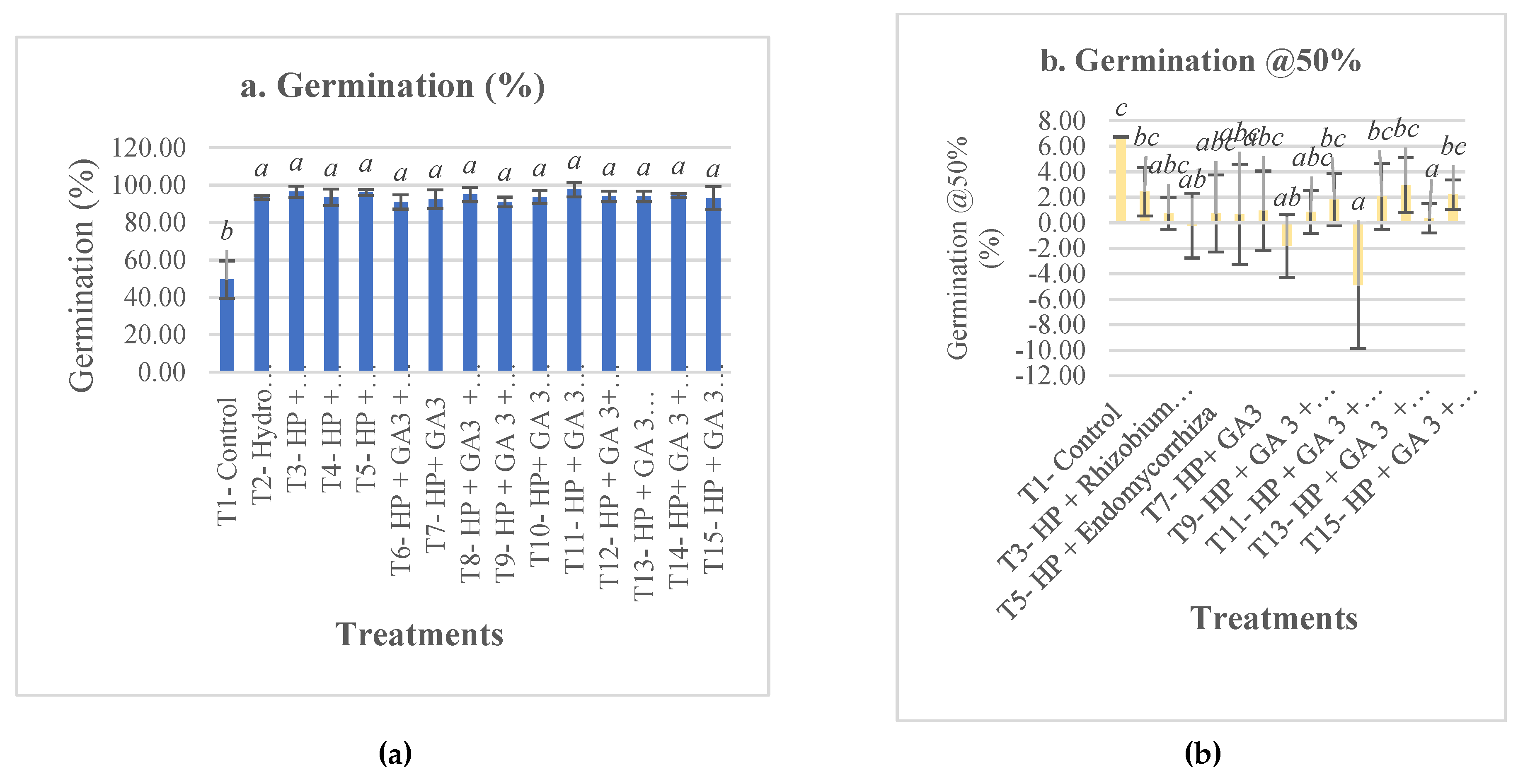
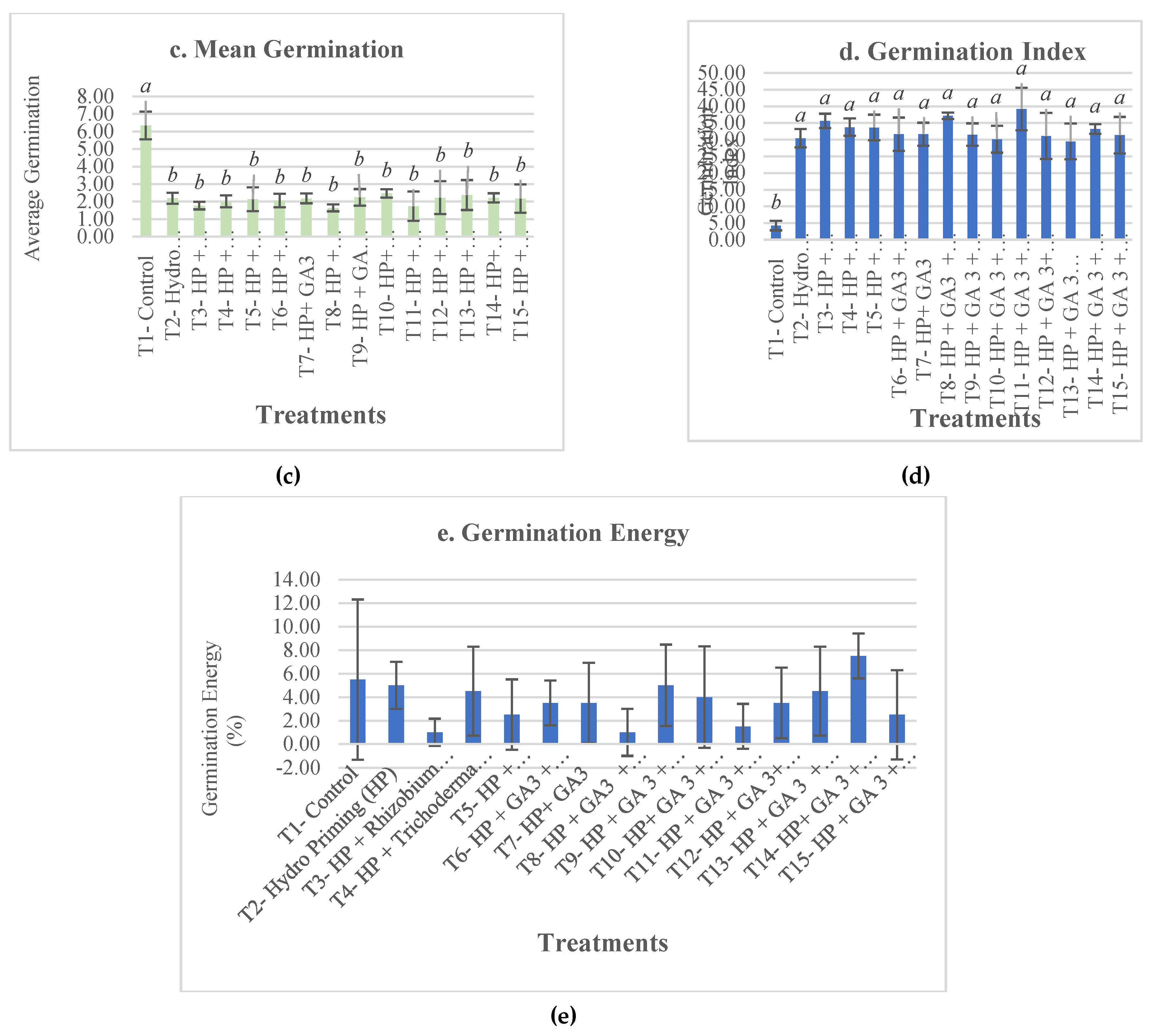
Figure 2.
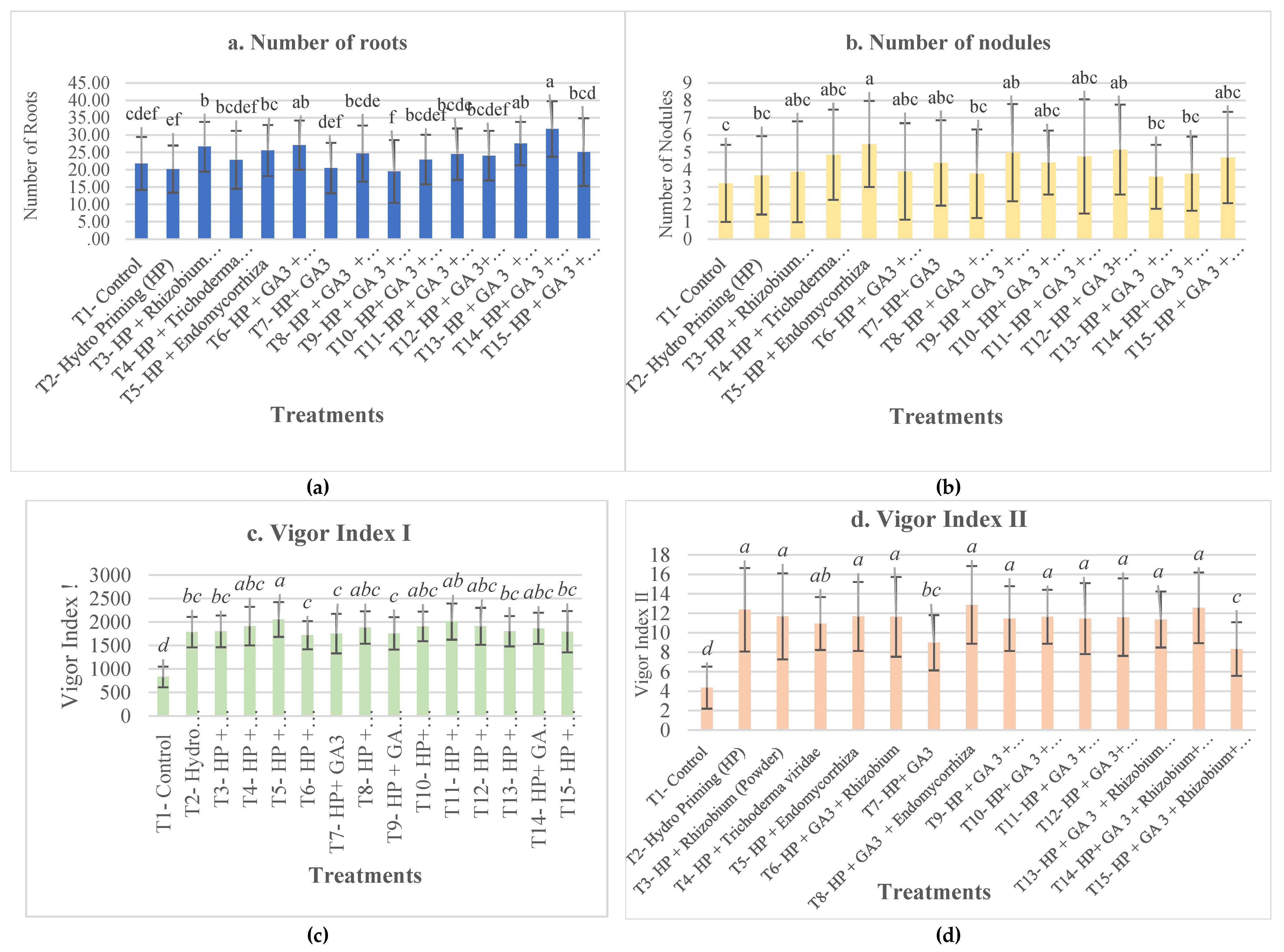
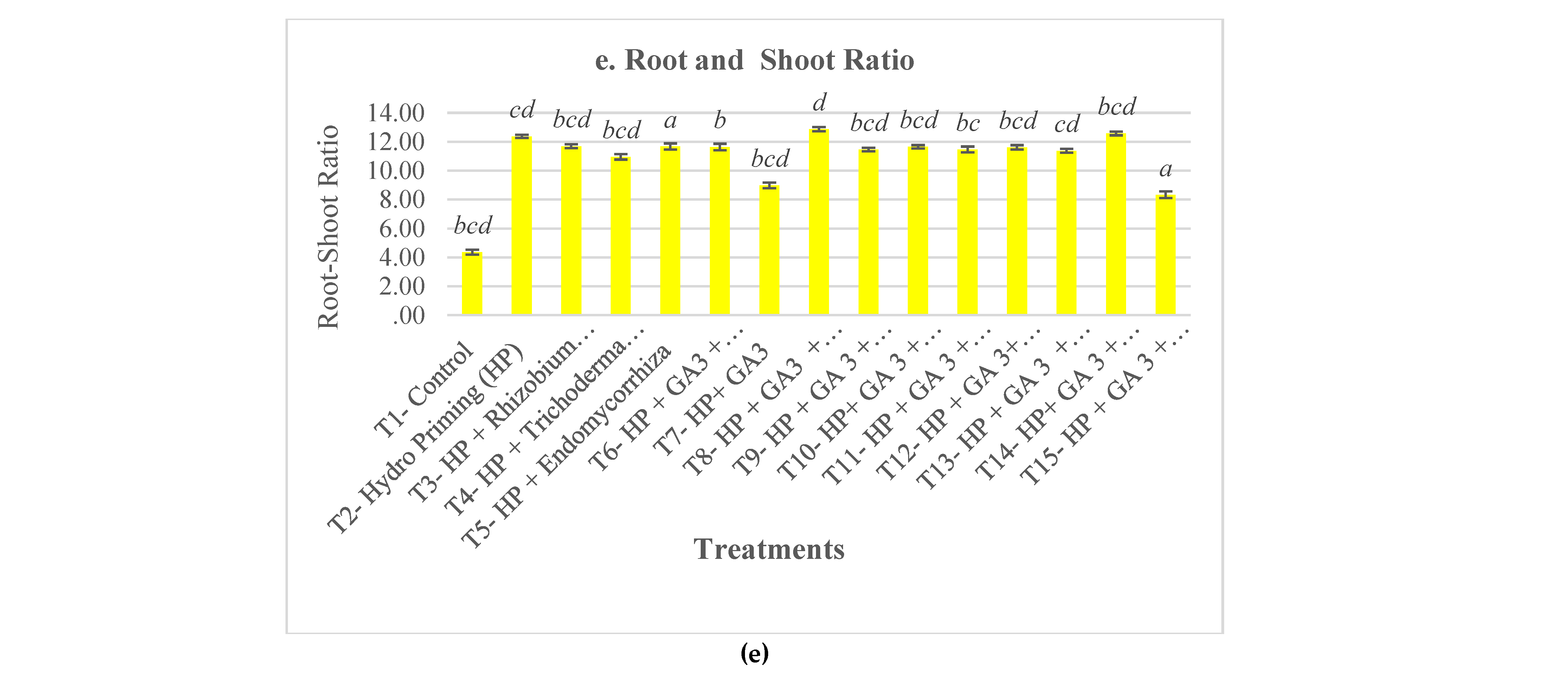
Effects of seed priming and coating in seedling quality of Falcata; a. Number of roots, b. Number of nodules, c. Vigor Index I, d. Vigor Index II, e. Root and Shoot Ratio.
Figure 2.
Effects of seed priming and coating in seedling quality of Falcata; a. Number of roots, b. Number of nodules, c. Vigor Index I, d. Vigor Index II, e. Root and Shoot Ratio.
Microbial inoculants like Rhizobium and Trichoderma further enhance seedling establishment in multiple ways. Rhizobium promotes nitrogen fixation in leguminous plants, increasing nutrient availability for germinating seeds. Rhizobium boosts germination and enhances seedling vigor by fixing atmospheric nitrogen, a critical nutrient for plant growth [25]. Trichoderma, a beneficial fungus, promotes seed germination and early plant growth by producing growth regulators, including auxins and cytokinins [26]. It also acts as a biological control agent, suppressing root pathogens and protecting against diseases that could hinder germination.
The Germination Index (GI), a key indicator of the speed and uniformity of germination, was higher for treatments such as HP + Rhizobium sp. (T3), with a GI of 35.61. This highlights the efficiency of these treatments in accelerating germination and ensuring uniform seedling development, which is particularly beneficial for consistent crop establishment. Uniform germination is essential for tree plantation, reforestation, and agroforestry applications.
Root number and nodulation are critical indicators of seedling development, particularly in legumes like F. falcata. Root development directly affects nutrient and water uptake, while nodulation supports nitrogen fixation, which is vital for growth in nitrogen-poor soils. Rhizobium sp inoculation significantly increased both root and nodule numbers. For example, HP + Rhizobium sp (T3) resulted in 26.68 roots and 3.89 nodules, illustrating how Rhizobium enhances root growth and nitrogen fixation for early plant growth. This is consistent with Glick’s findings that Rhizobium inoculation improves legumes’ root development and nitrogen fixation [25]. Similarly, Endomycorrhiza (T5) boosted root development with 25.57 roots and 5.49 nodules, highlighting its role in enhancing nutrient absorption, particularly phosphorus and water. Mycorrhizal fungi form mutualistic relationships with plant roots, extending the root system and improving nutrient uptake [25].
The balance between root and shoot growth is a key indicator of a seedling’s overall health. A higher root-to-shoot ratio is often associated with improved drought tolerance, as well-developed roots can access deeper water reserves in the soil [18]. In this study, the combination of hydropriming and Endomycorrhiza (T5) produced the highest root-to-shoot ratio among the enhanced groups. This suggests the treatment prioritizes root expansion, which helps the plant reach deeper water and better survive dry conditions—a critical advantage for trees planted in the field. This trait is particularly valuable in agroforestry and tree plantation efforts, where water availability can be inconsistent during the dry season.
Interestingly, the untreated control (T1) showed an even higher ratio (0.46±0.17bcd) compared to some enhanced treatments. This is likely a “stress response” where the plant desperately stretches its roots to find food because no extra nutrients were provided. This aligns with optimal resource allocation theory where plants strategically invest in organs that maximize growth under prevailing environmental conditions, prioritizing root development in nutrient-poor substrates for enhanced foraging [27,28]. This increased root-to-shoot ratio under nutrient limitation, is a well-documented plant survival strategy [29,30,31].
On the other hand, fully fortified seeds like T15 showed a more balanced growth ( 0.6 + 0.23a), indicating that because they had plenty of nutrients and helpful microbes, they could grow their leaves and roots at the same time more efficiently. Under conditions of ample nutrient availability, plants tend to allocate more biomass to shoots to maximize photosynthetic capacity [32] .
The Vigor Index, which combines data on germination and growth parameters, showed high values in treatments such as HP + Endomycorrhiza (T5) and HP + Trichoderma sp. (T4), indicating vigorous, healthy seedlings with excellent survival and growth potential. Mycorrhizal inoculation significantly boosts seedling vigor by promoting stronger root systems and enhancing nutrient absorption in low-fertility soils [18].
Principal Component Analysis (PCA) was employed to explore multivariate patterns in seed germination and seedling growth across fifteen seed enhancement treatments (T1–T15; Figure 3). For seed germination, the first two components explained 93.03% of total variance (PC1 = 77.30%, PC2 = 15.73%) as shown in Figure 1a. PC1 reflected cumulative germination performance, including germination percentage, mean germination time, and germination index, while PC2 captured early germination vigor, particularly germination energy. The strong positive correlation between germination percentage and germination index suggests that treatments that enhance final germination also improve the rate and uniformity of germination. Treatments T1, T9, and T14 were associated with superior cumulative and early germination, whereas T3, T8, and T11 exhibited lower performance. These findings align with recent studies demonstrating differential effects of seed priming and fortification on leguminous and forestry species [33,34].
PCA of seedling growth traits explained 75.26% of variance (PC1 = 43.83%, PC2 = 31.43%) as shown in Figure 1b. PC1 captured variation in root development, root–shoot ratio, and Vigor II, whereas PC2 represented nodulation and early vigor (Vigor I). Strong alignment of root and Vigor II vectors indicates that robust root development underpins sustained seedling vigor and nutrient uptake, while the root–shoot ratio highlights treatments that promote belowground allocation, a trait linked to stress tolerance [35,36,37]. Treatments T5 and T15 enhanced nodulation and early vigor, reflecting the importance of symbiotic interactions for early growth independent of total biomass accumulation [34,38].
An integration of germination and seedling growth PCA (as shown in Figure 1c) revealed coherent patterns: treatments promoting early germination vigor (T9, T14) also supported improved early seedling growth, while treatments maximizing cumulative germination (T1) enhanced overall root and shoot development. Conversely, treatments with limited germination performance (T3, T8, T11) consistently exhibited reduced seedling vigor. These results emphasize the predictive value of PCA for identifying effective seed enhancement strategies, providing a rapid multivariate framework for assessing integrated germination and seedling traits [6,12].
Overall, seed fortification and priming treatments differentially enhanced germination, early vigor, root development, and nodulation. Treatments T1, T5, T9, T14, and T15 were most effective in promoting seedling performance, demonstrating that combining hydropriming, growth regulators, and microbial inoculants can synergistically optimize seed and seedling quality. PCA provided a clear visualization of complex trait relationships, supporting informed selection of treatments to maximize establishment, growth, and resilience in forestry and agroforestry nurseries [39,40].
4. Conclusions
This study demonstrates that integrated seed enhancement approaches significantly improve germination performance and seedling quality of F. falcata. Hydropriming effectively initiated metabolic activation, resulting in substantial increases in germination percentage and uniformity, while the addition of microbial inoculants further enhanced physiological and biochemical processes critical for early growth. Treatments combining hydropriming, GA₃, beneficial microorganisms, and polymer coating consistently produced superior outcomes across multiple parameters, including germination index, root development, nodulation, and vigor indices.
The observed improvements in root architecture and root-to-shoot ratio indicate enhanced adaptive capacity, particularly under nutrient-limited or stress-prone environments typical of tree plantation and agroforestry sites. The significant increase in nodulation highlights the role of symbiotic interactions in promoting nitrogen fixation and overall plant productivity. Moreover, polymer coating contributed to improved seed protection and controlled input delivery, reinforcing its value in modern seed technology.
Multivariate analysis using Principal Component Analysis provided strong evidence of synergistic effects of combined treatments and enabled the clear identification of the most effective seed enhancement strategies. Treatments that integrate biological, physiological, and physical mechanisms (particularly T5, T11–T15) are recommended for large-scale nursery applications.
Overall, this study underscores the importance of multi-functional seed technologies in forestry. The integration of priming, microbial inoculation, and coating offers a promising, scalable approach to enhancing seedling production, improving plantation success, and supporting sustainable tree plantations and agroforestry ecosystems.
Author Contributions
Conceptualization, writing—original draft, methodology, formal analysis and investigation, data curation, writing—review and editing, Resources—DMG. methodology, project administration and Supervision—MTB &JSG. Methodology and writing—review and editing—MOO &JSG. Authors of the work agree that DMG.’s contribution to the work is 60%, MTB.’s MOO’s &JSG’s and A.B.’s contribution is 40%. All authors have read and agreed to the published version of the manuscript.
Funding
This research was funded by the Philippine Council for Agriculture, Aquatic, and Natural Resources Research and Development (PCAARRD) under the Department of Science and Technology (DOST).
Data Availability Statement
The original contributions presented in this study are included in the article/Supplementary Materials. Further inquiries can be directed to the corresponding author.
Acknowledgments
We would like to express our deep appreciation to the Philippine Council for Agriculture, Aquatic, and Natural Resources Research and Development (PCAARRD) under the Department of Science and Technology (DOST) for their unwavering support and generous funding, which made this research possible. We also want to extend our gratitude to the FWRDEC - ERDB technical staff, research assistants, and everyone who made this work possible.
Conflicts of Interest
The authors declare no conflicts of interest.
References
- Nurheni Wijayanto, S.H.T. Evaluation of an Agroforestry System: The Growth of 14-Month-Old Solomon Sengon (Falcataria moluccana) and Rice (Oryza sativa). J. Sylva Lestari 2022, 10, 254–266. [Google Scholar] [CrossRef]
- Naufal Madani, H.; Wijayanto, N.; Hartoyo, A.; Solikhin, A. Slow-release Fertilizer Application on Silk (Falcataria moluccana Miq.) and Rice (Oryza sativa L.) Plant Growth and Yield in Agroforestry System. HAYATI J. Biosci. 2024, 31, 750–767. [Google Scholar] [CrossRef]
- Ambas, A.; Khatta, A.; Julius, K.; Kamu, A.; Chiang, L.; Terhem, R.; Awang Besar, N.; Hassan, A. Falcataria moluccana (Miq.) root distribution seedlings in response to nitrogen concentrations and tillage. Folia Oecol. 2024, 51, 47–55. [Google Scholar] [CrossRef]
- Paquit, J.C.L.-T.; Coritico, A. J. M.F. P. Hot water pre-treatment improves germination of Falcataria falcata. Bangladesh J. Bot. 2024, 53. [Google Scholar] [CrossRef]
- Yodfiatfinda, Y.; Fathiya Azzahra, P.; Rukavina, B. Risk Analysis of Sengon (Falcataria moluccana Miq.) Seedling Production Using Fault Tree Method. J. Ilmu Kehutan. 2023, 17. [Google Scholar] [CrossRef]
- Zhang, Y.; Du, Jianjun; Huang, Guanmin; Zhao, Yue; Man, Peng; Song, Anran; Zhao, Yanxin; Men, Qingmei; Wang, Chuanyu; Guo, Minkun; Guo, Xinyu; Zhao, Chunjiang. Integrating AI in seed science: Toward an intelligent design paradigm. Plant Commun. 2026, 7. [Google Scholar] [CrossRef]
- Baskorowati, L.; Wirabuana, P.Y.A.P.; Hendrati, R.L.; Nurtjahjaningsih, I.L.G.; Setiadi, D.; Mashudi, M.; Susanto, M.; Pudjiono, S.; Sumardi, S.; Santoso Sulistiadi, H.B.; et al. Early boosting of genetically improved Falcataria moluccana with mycorrhiza for better growth and disease tolerance. For. Sci. Technol. 2024, 20, 124–135. [Google Scholar] [CrossRef]
- Singh, P.; Vaishnav, A.; Liu, H.; Xiong, C.; Singh, H.B.; Singh, B.K. Seed biopriming for sustainable agriculture and ecosystem restoration. Microb. Biotechnol. 2023, 16, 2212–2222. [Google Scholar] [CrossRef]
- Miljaković, D.; Marinković, J.; Tamindžić, G.; Milošević, D.; Ignjatov, M.; Karačić, V.; Jakšić, S. Bio-Priming with Bacillus Isolates Suppresses Seed Infection and Improves the Germination of Garden Peas in the Presence of Fusarium Strains. J. Fungi 2024, 10, 358. [Google Scholar] [CrossRef]
- dos Reis, G.A.; Martínez-Burgos, W.J.; Pozzan, R.; Pastrana Puche, Y.; Ocán-Torres, D.; de Queiroz Fonseca Mota, P.; Rodrigues, C.; Lima Serra, J.; Scapini, T.; Karp, S.G.; et al. Comprehensive Review of Microbial Inoculants: Agricultural Applications, Technology Trends in Patents, and Regulatory Frameworks. Sustainability 2024, 16, 8720. [Google Scholar] [CrossRef]
- Chandrika, K.S.V.P.; Prasad, R.D.; Prasanna, S.L.; Shrey, B.; Kavya, M. Impact of biopolymer-based Trichoderma harzianum seed coating on disease incidence and yield in oilseed crops. Heliyon 2024, 10. [Google Scholar] [CrossRef]
- Adebisi, M. A.; Ajala, O.F.S.; Kehinde, M. O.; Daniel, T. O.; Ajani, I. O.O. O. Evaluation of Variations in Seed Vigour Characters of West African Rice (Oryza sativa L.) Genotypes Using Multivariate Technique. Am. J. Plant Sci. 2013, 4, 356–363. [Google Scholar] [CrossRef]
- Niang-Diop, F.; Sambou, B.; Lykke, A.M. Contraintes de régénération naturelle de Prosopis africana: facteurs affectant la germination des graines. Int. J. Biol. Chem. Sci. 2010, 4. [Google Scholar] [CrossRef]
- Nkemnkeng, F.J.M.; Tacham, G. A.W. N. Effects of seed pre-treatments on the germination and early growth of Echinops giganteus C.D Adam. J. Hortic. For. 2018, 10. [Google Scholar] [CrossRef]
- Salehzade, H.; Shishvan, M.I.; Ghiyasi, M.; Forouzin, F.; Siyahjani, A.A. Effect of seed priming on germination and seedling growth of wheat (Triticum aestivum L.). Res. J. Biol. Sci. 2009, 4, 629–631. [Google Scholar]
- Zhang, T.; Fan, S.; Xiang, Y.; Zhang, S.; Wang, J.; Sun, Q. Non-destructive analysis of germination percentage, germination energy and simple vigour index on wheat seeds during storage by Vis/NIR and SWIR hyperspectral imaging. Spectrochim. Acta Part A Mol. Biomol. Spectrosc. 2020, 239, 118488. [Google Scholar] [CrossRef]
- Association, I.S.T. International rules for seed testing. Seed Sci. Technol. 1999. [Google Scholar]
- Smith; Read, S.D.J. Mycorrhizal Symbiosisthird; 2008. [Google Scholar]
- Khan, M.; Hussain, F. Palatability and animal preferences of plants in Tehsil Takht-e-Nasrati, District Karak, Pakistan. Afr. J. Agric. Res. 2012, 7, 5858–5872. [Google Scholar] [CrossRef]
- Silva, J.M.; Pereira, C.V.; Mano, F.; Silva, E.; Castro, V.n.I.; Sá-Nogueira, I.; Reis, R.L.; Paiva, A.; Matias, A.A.; Duarte, A.R.C. Therapeutic role of deep eutectic solvents based on menthol and saturated fatty acids on wound healing. ACS Appl. Bio Mater. 2019, 2, 4346–4355. [Google Scholar] [CrossRef] [PubMed]
- Kulkarni, M.G.; Ascough, G.D.; Van Staden, J. Effects of Foliar Applications of Smoke-Water and a Smoke-isolated Butenolide on Seedling Growth of Okra and Tomato. HortScience 2007, 42, 179–182. [Google Scholar] [CrossRef]
- Kalsa, K.K.; Abebie, B. Influence of seed priming on seed germination and vigor traits of Vicia villosa ssp. dasycarpa (Ten.). Afr. J. Agric. Res. 2012, 7, 3202–3208. [Google Scholar] [CrossRef]
- Hameed, A.; Hussain, S.; Nisar, F.; Rasheed, A.; Shah, S.Z. Seed Priming as an Effective Technique for Enhancing Salinity Tolerance in Plants: Mechanistic Insights and Prospects for Saline Agriculture with a Special Emphasis on Halophytes. Seeds 2025, 4, 14. [Google Scholar] [CrossRef]
- Baskin, C.C.; Baskin, J.M. Seeds: ecology, biogeography, and, evolution of dormancy and germination; Academic press, 2000. [Google Scholar]
- Glick, B.R. Plant growth-promoting bacteria: mechanisms and applications. Scientifica 2012, 2012, 963401. [Google Scholar] [CrossRef] [PubMed]
- Harman, G.E.; Howell, C.R.; Viterbo, A.; Chet, I.; Lorito, M. Trichoderma species — opportunistic, avirulent plant symbionts. Nat. Rev. Microbiol. 2004, 2, 43–56. [Google Scholar] [CrossRef]
- Kumar, A.; van Duijnen, R.; Delory, B.M.; Reichel, R.; Brüggemann, N.; Temperton, V.M. Barley shoot biomass responds strongly to N:P stoichiometry and intraspecific competition, whereas roots only alter their foraging. Plant Soil. 2020, 453, 515–528. [Google Scholar] [CrossRef]
- Mašková, T.; Herben, T. Root: shoot ratio in developing seedlings: How seedlings change their allocation in response to seed mass and ambient nutrient supply. Ecol. Evol. 2018, 8, 7143–7150. [Google Scholar] [CrossRef]
- Hikosaka, K.T.; Kabeya, T.; Hirose, D.; Kamata, T.N. Biomass Allocation and Leaf Chemical Defence in Defoliated Seedlings of Quercus serrata with Respect to Carbon–Nitrogen Balance. Ann. Bot. 2005, 95, 1025–1032. [Google Scholar] [CrossRef]
- Qi, X.; Li, Z.; Akami, M.; Mansour, A.; Niu, C. Fermented crop straws by Trichoderma viride and Saccharomyces cerevisiae enhanced the bioconversion rate of Musca domestica (Diptera: Muscidae). Environ. Sci. Pollut. Res. 2019, 26, 29388–29396. [Google Scholar] [CrossRef]
- Wang, X.; Pan, Q.; Chen, F.; Yan, X.; Liao, H. Effects of co-inoculation with arbuscular mycorrhizal fungi and rhizobia on soybean growth as related to root architecture and availability of N and P. Mycorrhiza 2011, 21, 173–181. [Google Scholar] [CrossRef]
- Poorter, H.; Nagel, O. The role of biomass allocation in the growth response of plants to different levels of light, CO 2, nutrients and water: a quantitative review. Aust. J. Plant Physiol. 2000, 27, 595–607. [Google Scholar] [CrossRef]
- Janah, I.; Elhasnaoui, A.; Laouane, R. B.; Ait-El-Mokhtar, M.; Anli, M. Exploring seed priming as a strategy for enhancing abiotic stress tolerance in cereal crops. Stresses 2025, 5, 39. [Google Scholar] [CrossRef]
- Magsayo, B.M.T.; Aggangan, Nelly S; Gilbero, Dennis M; Amparado, Ruben F., Jr. Evaluating microbial biofertilizers for root colonization potential in narra (Pterocarpus indicus Willd.) and their efficacy in heavy metal remediation. Forests 2024, 15, 180. [Google Scholar] [CrossRef]
- de Dorlodot, S.; Forster, B.; Pagès, L.; Price, A.; Tuberosa, R.; Draye, X. Root system architecture: opportunities and constraints for genetic improvement of crops. Trends Plant Sci. 2007, 12, 474–481. [Google Scholar] [CrossRef] [PubMed]
- Comas, L.; Becker, S.; Cruz, V.M.V.; Byrne, P.F.; Dierig, D.A. Root traits contributing to plant productivity under drought. Front. Plant Sci. 2013, 4–2013. [Google Scholar] [CrossRef]
- Wang, J.X.; Zhenzhu. Plant response to and recovery from drought. Curr. Biol. 2026, 36, R343–R362. [Google Scholar] [CrossRef]
- Xue, D.Y.; Chen, W. F.; Yang, G. P.; Li, Y. G.; Zhang, J. J. Screening and application of highly efficient rhizobia for leguminous green manure Astragalus sinicus in lyophilized inoculants and seed coating. Plants 2025, 14, 2431. [Google Scholar] [CrossRef]
- Yadav, A.; Yadav, S.; Choudhary, R.; M K, S.; Anumantharaj, A.; Bharadwaj, R.; Yadav, R.; Yashpal; Saini, N.; Adhikari, S.; et al. Insights from multivariate analysis of seed vigor traits in rapeseed and mustard (Brassica spp.) genotypes. Turk. J. Agric. For. 2025, 49, 651–660. [Google Scholar] [CrossRef]
- Maji, A.S.A.A. Application of principal component analysis for rice germplasm characterization and evaluation. J. Plant Breed. Crop Sci. 2012, 4, 87–93. [Google Scholar] [CrossRef]
Figure 3.
Principal Component Analysis (PCA) biplot of seed germination (a.), Seedling growth performance (b.), and seed germination Seedling growth performance (c) across fifteen treatments (T1–T15).
Figure 3.
Principal Component Analysis (PCA) biplot of seed germination (a.), Seedling growth performance (b.), and seed germination Seedling growth performance (c) across fifteen treatments (T1–T15).
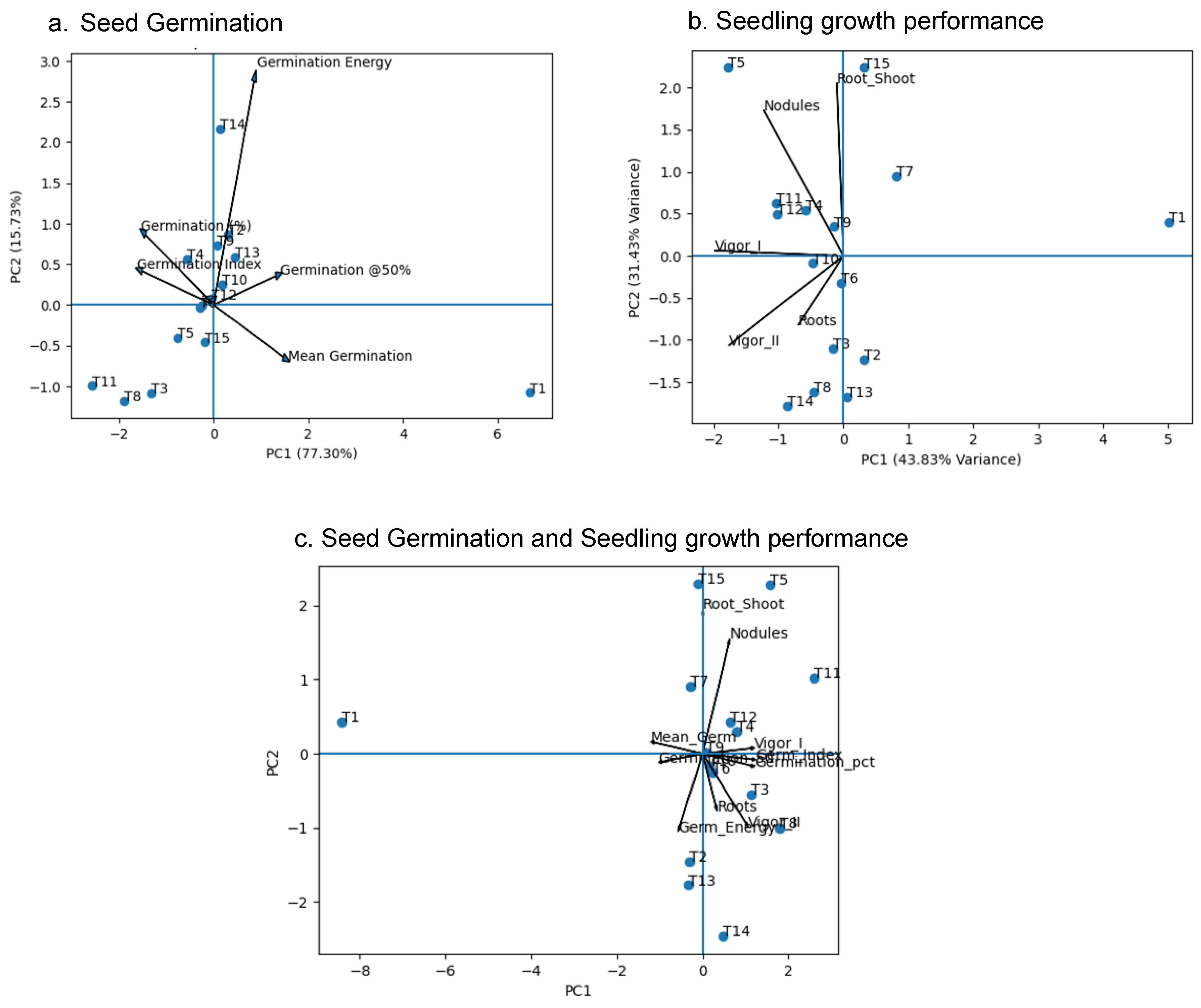

Table 1.
Effect of Seed Priming and Coating on Seed Germination and Seedling Quality of F. falcata.
| Treatment | Seed Germination |
Seedling Growth Performance |
||||||||
| Germination (%) | Germination @50% | Mean Germination | Germination Index | Germination Energy | no. of roots | No. of nodules | Root: Shoot Ratio | Vigor Index I | Vigor Index II | |
| T1- Control | 49.5±9.98b | 6.73±0.05c | 6.34±0.79a | 4.23±1.42b | 5.5±6.81 | 21.83±7.63cdef | 3.22±2.22c | 0.46±0.17bcd | 832.48±219.09d | 4.36±2.16d |
| T2- Hydro Priming (HP) | 93.5±1a | 2.43±1.91bc | 2.19±0.31b | 30.43±2.77a | 5±2 | 20.2±6.81ef | 3.68±2.26bc | 0.37±0.11cd | 1784.7±325.32bc | 12.37±4.29a |
| T3- HP + Rhizobium sp | 96.5±3a | 0.73±1.23abc | 1.77±0.22b | 35.61±2.15a | 1±1.15 | 26.68±7.16b | 3.89±2.91abc | 0.41±0.13bcd | 1802.01±337.52bc | 11.69±4.42a |
| T4- HP + Trichoderma sp | 93.5±4.43a | -0.22±2.54ab | 2.01±0.34b | 33.73±2.6a | 4.5±3.79 | 22.88±8.36bcdef | 4.87±2.6abc | 0.44±0.18bcd | 1913.38±409.32abc | 10.95±2.72ab |
| T5- HP + Endomycorrhiza sp | 96±1.63a | 0.73±3.03abc | 2.13±0.68b | 33.62±3.83a | 2.5±3 | 25.57±7.37bc | 5.49±2.48a | 0.59±0.21a | 2055.57±370.84a | 11.67±3.55a |
| T6- HP + GA3 + Rhizobium sp | 91±3.83a | 0.66±3.94abc | 2.06±0.38b | 31.61±4.99a | 3.5±1.91 | 27.13±7.08ab | 3.91±2.78abc | 0.49±0.22b | 1720.86±299.59c | 11.64±4.1a |
| T7- HP+ GA3 | 92.5±5a | 0.94±3.12abc | 2.18±0.28b | 31.61±3.43a | 3.5±3.42 | 20.5±7.27def | 4.4±2.46abc | 0.47±0.19bcd | 1754.59±421.59c | 8.98±2.84bc |
| T8- HP + GA3 + Endomycorrhiza | 95±3.83a | -1.81±2.48ab | 1.64±0.2b | 37.15±0.97a | 1±2 | 24.69±8.12bcde | 3.78±2.55bc | 0.37±0.14d | 1883.81±343.54abc | 12.87±4a |
| T9- HP + GA 3 + Endomycorrhiza + Trichoderma sp | 91±2.58a | 0.84±1.67abc | 2.24±0.47b | 31.5±3.37a | 5±3.46 | 19.5±9.07f | 4.99±2.8ab | 0.39±0.12bcd | 1758.6±346.25c | 11.46±3.32a |
| T10- HP+ GA 3 + Endomycorrhiza+ Trichoderma sp + Rhizobium sp | 93.5±3.42a | 1.84±2.05bc | 2.46±0.24b | 30.1±4.02a | 4±4.32 | 22.96±7.13bcdef | 4.42±1.84abc | 0.43±0.11bcd | 1907.27±316.46abc | 11.65±2.78a |
| T11- HP + GA 3 + Endomycorrhiza sp+ Trichoderma sp + Rhizobium sp + Polymer coat + Insecticide | 97.5±3.79a | -4.91±4.94a | 1.73±0.84b | 39.14±6.39a | 1.5±1.91 | 24.51±7.41bcde | 4.77±3.3abc | 0.48±0.2bc | 2011.09±385.59ab | 11.46±3.65a |
| T12- HP + GA 3+ Endomycorrhiza + Trichoderma sp + Rhizobium + Polymer coat + Nutrients | 94±2.83a | 2.06±2.6bc | 2.22±0.94b | 31.09±6.91a | 3.5±3 | 24.08±7.14bcdef | 5.17±2.59ab | 0.43±0.15bcd | 1909.51±393.55abc | 11.61±3.98a |
| T13- HP + GA 3 + Rhizobium sp+ Polymer coat + Nutrients + Fungicide | 94±2.83a | 2.96±2.14bc | 2.37±0.85b | 29.45±5.36a | 4.5±3.79 | 27.58±6.24ab | 3.6±1.85bc | 0.38±0.14cd | 1805.77±323.68bc | 11.37±2.88a |
| T14- HP+ GA 3 + Rhizobium sp+ Polymer coat + Fungicide | 94.5±1a | 0.35±1.16abc | 2.21±0.26b | 33.17±1.43a | 7.5±1.91 | 31.75±8.02a | 3.78±2.14bc | 0.41±0.13bcd | 1866.14±331.61abc | 12.57±3.63a |
| T15- HP + GA 3 + Rhizobium sp+ Polymer coat + Fungicide + Insecticide+ Nutrients | 93±6.22a | 2.21±1.15bc | 2.17±0.81b | 31.33±5.47a | 2.5±3.79 | 25.09±9.76bcd | 4.71±2.63abc | 0.6±0.23a | 1792.73±440.09bc | 8.33±2.75c |
| p-value | ** | ** | ** | ** | ns | ** | ** | ** | ** | ** |
Disclaimer/Publisher’s Note: The statements, opinions and data contained in all publications are solely those of the individual author(s) and contributor(s) and not of MDPI and/or the editor(s). MDPI and/or the editor(s) disclaim responsibility for any injury to people or property resulting from any ideas, methods, instructions or products referred to in the content. |
© 2026 by the authors. Licensee MDPI, Basel, Switzerland. This article is an open access article distributed under the terms and conditions of the Creative Commons Attribution (CC BY) license.
Copyright: This open access article is published under a Creative Commons CC BY 4.0 license, which permit the free download, distribution, and reuse, provided that the author and preprint are cited in any reuse.


