

Submitted:
24 April 2026
Posted:
27 April 2026
You are already at the latest version
Abstract
This study supports the use of human skin explants as a versatile and translational model for evaluating pharmacologic skin responses and topical bioactivity. The approach allows mechanistic insight beyond single biomarkers and may serve as a scalable pharmacologic platform for efficacy testing, particularly when expanded to include multiple donors and broader readouts.
Keywords:
ex vivo model
; pharmacological evaluation
; skin pharmacology
; natural product pharmacology
; inflammatory response
; topical delivery
; preclinical evaluation
; drug screening platform
1. Introduction
Human skin is continuously exposed to environmental stressors, including ultraviolet (UV) radiation, airborne pollutants, and other components of the cutaneous exposome. These factors contribute significantly to skin aging and tissue dysfunction through complex biological mechanisms involving oxidative stress, inflammation, extracellular matrix remodeling, and alterations of epidermal homeostasis. Rather than being driven by a single molecular pathway, skin aging and tissue deterioration result from the cumulative imbalance between environmental insults and intrinsic cellular defense and repair mechanisms [1].
Among environmental stressors, solar radiation and air pollution represent two of the most important contributors to extrinsic skin aging. Ultraviolet radiation, particularly UV-A wavelengths, penetrates deeply into the dermis and induces the generation of reactive oxygen species (ROS), which activate signaling pathways that promote matrix metalloproteinase (MMP) expression and collagen degradation [4,19]. These processes contribute to the progressive breakdown of dermal structural integrity and to the development of photoaging features such as wrinkles and loss of elasticity [1,3,14,15]. This phenomenon, referred to as “photo-pollution”, has been described in recent exposome-based frameworks [18].
Airborne particulate matter, including fine dust and particles containing polycyclic aromatic hydrocarbons (PAHs), also exerts deleterious effects on skin biology. Exposure to particulate matter has been shown to induce oxidative stress, inflammatory responses, and cellular damage in skin cells, ultimately contributing to barrier dysfunction and accelerated skin aging [7,20,21,44]. Importantly, increasing evidence suggests that environmental pollutants and ultraviolet radiation can act synergistically, amplifying oxidative and inflammatory damage to skin tissues. Epidemiological studies have demonstrated that individuals exposed to higher levels of traffic-related air pollution show increased prevalence of pigmentary changes and other clinical signs of extrinsic aging, particularly when combined with chronic UV exposure [8,23,24,25].
Understanding how skin responds to such complex environmental stressors requires experimental models that maintain physiological tissue organization while allowing controlled exposure to defined stimuli. Conventional in vitro systems based on isolated cell cultures provide valuable mechanistic insights but fail to reproduce the architectural complexity and cell–cell interactions of intact skin. Conversely, in vivo studies capture physiological responses but are limited by ethical constraints and reduced experimental controllability. In this context, ex vivo human skin explant culture represents an attractive intermediate model that preserves the native epidermal–dermal architecture and the diversity of resident cell populations while enabling controlled exposure to environmental challenges and topical interventions [2].
In this perspective, the utility of the model lies in its ability to provide a controlled yet physiologically integrated context in which externally induced perturbations and treatment-associated effects can be evaluated across multiple biological endpoints.
Oxidative stress represented by an excessive ROS generation activates stress-sensitive pathways such as MAPK and AP-1 [9], including age-associated alterations in ERK and JNK signaling [10] which promote matrix metalloproteinase expression and impair collagen synthesis through downregulation of TGF-β/Smad signaling pathways [12,13,45]. Protein oxidation is a hallmark of photoaged skin [11] and these molecular events ultimately lead to extracellular matrix degradation and structural deterioration of the dermis [14,15].
Moreover, oxidative stress is tightly linked to ‘inflammaging’, associated to low-grade chronic inflammation. Stressed or senescent skin cells (fibroblasts and keratinocytes) secrete pro-inflammatory cytokines like interleukin-1α (IL-1α), IL-6, and IL-8, as part of the senescence-associated secretory phenotype (SASP). These cytokines create an inflammatory microenvironment that further accelerates aging by enhancing protease activity and impairing cellular functions [22]. Likewise, UV-induced damage prompts keratinocytes and immune cells in skin to release IL-1α, a key “alarm” cytokine that drives local inflammation and matrix remodeling [2]. Over time, the cycle of oxidative damage and cytokine-mediated inflammation leads to cumulative structural degeneration (wrinkling, loss of elasticity) and cellular dysfunction (impaired healing and barrier function). Elevated IL-6 is strongly associated with age-related collagen loss and wrinkle formation [13,16].
Extracellular matrix (ECM) remodeling represents a central hallmark of skin aging and stress-induced tissue alteration. One of the most detrimental consequences of chronic oxidative and inflammatory stress in skin is the progressive degradation of the dermal ECM [14,15]. The dermis is rich in structural proteins, including collagens and elastin, as well as glycosaminoglycans that collectively maintain skin tensile strength, elasticity, and structural integrity. During aging, particularly photoaging, the balance between matrix synthesis and degradation becomes disrupted, resulting in net ECM loss and architectural disorganization [3,14,15]. Elastin remodeling and elastosis are also key features of photoaged dermis [17].
Reactive oxygen species generated by environmental stressors such as ultraviolet radiation and pollution activate signaling pathways that promote the expression of matrix metalloproteinases (MMPs), notably MMP-1, a collagenase responsible for the degradation of type I collagen [19]. At the same time, oxidative stress and inflammatory mediators, including cytokines such as IL-1 and IL-6, impair collagen synthesis through alterations in fibroblast function and downregulation of collagen gene expression [12,13]. These combined mechanisms contribute to the progressive decline of dermal structural integrity and the appearance of clinical features associated with skin aging.
Collagen type I is the predominant structural protein in the dermis and plays a critical role in maintaining skin tensile strength. Its fragmentation and reduced synthesis represent key molecular events underlying wrinkle formation and reduced skin firmness. In parallel, alterations in elastic fibers further contribute to dermal structural deterioration. Photoaged skin is characterized by elastosis, a condition marked by the accumulation of abnormal and disorganized elastin within the dermis, reflecting profound remodeling of the elastic fiber network [17].
Alterations in cell–matrix interactions are an important component of skin responses to environmental stress. CD44, a principal receptor for hyaluronan, is involved in epidermal homeostasis, keratinocyte proliferation, intercellular signaling, and barrier repair. Changes in CD44 expression and hyaluronan organization have been associated with UV exposure and stress-related tissue remodeling [5,6], indicating that this axis is closely linked to the maintenance of skin structural and functional integrity. Together with alterations in collagen and elastic fiber networks, perturbation of CD44/hyaluronan biology reflects broader disruption of cutaneous homeostasis and provides a useful set of endpoints for evaluating stress responses and treatment-associated modulation in ex vivo skin models.
Pigmentation pathways represent another important dimension of skin responses to environmental stress. Melanin synthesis in melanocytes, primarily regulated by the enzyme tyrosinase, can be modulated by oxidative stress and inflammatory mediators generated following exposure to environmental factors such as ultraviolet radiation and air pollution. Organ culture studies have demonstrated that pigmentation endpoints, including melanin production and tyrosinase activity, can be reliably monitored in human skin explants, supporting their use as functional indicators of tissue responses to environmental stimuli [18,41].
Epidemiological and experimental evidence further supports the relevance of pigmentation as a readout of environmental stress exposure. Large population-based studies have shown that chronic exposure to traffic-related air pollution is associated with increased prevalence of facial pigmentary changes, particularly when combined with cumulative ultraviolet exposure [25]. These observations have led to the concept of “photo-pollution”, whereby ultraviolet radiation and airborne pollutants interact to amplify oxidative stress and pigmentary alterations in the skin.
Beyond structural and pigmentary alterations, environmental stress can also influence the skin’s innate immune barrier. The cutaneous innate immune system acts as a frontline defense against microbial and environmental challenges and operates in close coordination with the physical barrier of the stratum corneum. Antimicrobial peptides (AMPs) are central components of this defense system, forming a biochemical shield on the skin surface while also modulating inflammatory and immune responses [26,27,28].
Keratinocytes constitutively produce low levels of AMPs, and their expression can increase rapidly in response to injury, microbial signals, or inflammatory stimuli. Among the most relevant AMPs in skin are the β-defensins and the S100A8/A9 protein complex (calprotectin) [29,30,31]. β-defensin-2 (hBD-2) is a small cationic peptide with broad antimicrobial activity.
The S100A8/A9 complex (calprotectin) represents another important mediator of innate immune responses in skin. This calcium-binding heterodimer, released by keratinocytes and immune cells, functions also as an antimicrobial factor, through sequestration of essential metal ions, and as a stress-associated inflammatory mediator capable of activating immune pathways [32,33]. These molecules provide informative biomarkers for monitoring changes in epidermal immune status contributing to host defense and skin homeostasis.
The objective of the present study was therefore to establish a multi-parameter ex vivo human skin explant platform for investigating skin responses to environmental stressors and for assessing the biological activity of topical treatments preventing skin aging and promoting tissue maintenance (“skin longevity”). In this model, skin explants were exposed to representative environmental challenges, including particulate matter (PM10) and UV-A irradiation, while a topical active mixture (1-LGVTY) was used as a pharmacological tool to explore response patterns across an integrated biomarker panel encompassing inflammation, oxidative stress–associated pathways, extracellular matrix remodeling, CD44/hyaluronan biology, pigmentation, and epidermal immune defense mechanisms.
The selection of the five-component mixture 1-LGVTY was grounded in the documented activities of each compound on biological pathways directly associated with our targeted biomarkers. Baicalin, a flavonoid from Scutellaria root, exhibits anti-inflammatory effects via chemokine modulation [35], downregulation of eotaxin in dermal fibroblasts [37], and protection against UVA-induced photoaging through antioxidant mechanisms [43]. Chlorogenic acid contributes both to ROS scavenging [38], inhibition of protein carbonylation [39], and regulation of melanogenesis [41], supporting its relevance for oxidative damage and pigmentation endpoints. Sodium carboxymethyl β-glucan is known to support innate skin immunity, while the inulin/α-glucan oligosaccharide blend (8:2 ratio) serves as a prebiotic matrix supporting epidermal barrier and AMP regulation, consistent with our data on β-defensin-2 and S100A8/A9. Collectively, this composition was rationally selected to span multiple biological axes including oxidative stress, inflammation, pigmentation, ECM maintenance and immune defense, in alignment with our explant biomarker panel.
2. Materials and Methods
2.1. Study Design Overview
This is an exploratory ex vivo study designed to evaluate feasibility and directionality of biomarker modulation in survival human skin explants. The primary outcome is the ability of the model to generate interpretable signals across the pre-specified biomarker domains under defined culture conditions.
2.2. Human Skin Source and Ethics
Human skin was obtained as residual tissue from elective surgery (e.g., abdominoplasty), in accordance with applicable institutional and local requirements for secondary use of human tissue. Skin explants were obtained with the informed consent form of a female Caucasian donor (25 years old, phototype II/III), distributed in 4 experimental groups (n=3) and kept alive in CO2-humid incubator as reported previously [34].
2.3. Explant Preparation and Culture Conditions
Full-thickness skin was processed to remove excess subcutaneous fat while preserving dermis. Explants were incubated at 37 °C, 5% CO₂, in a classical medium. After stabilization, a solution containing 1-LGVTY was topically applied once per day (30 µL/cm2) for 3 consecutive days then followed (or not) by stress exposure. Explants were then topically treated with urban dust (PM10-like; Ref. ERM-CZ100; certified European Reference Material; 0,375µg/cm2; for 30 minutes of contact), then disposed into 2 mL of Hank's Balanced Salt Solution (HBSS) and irradiated with UV-A (LED source, emission peak at λ=365 nm; 6 J/cm2) using the OxiProteomics® irradiation system. The control group did not receive any treatment or stress exposure. Two (2) and 24 hours after the irradiation, each explant for each lot was sampled, transferred in OCT for cryopreservation and snap-frozen in liquid nitrogen and conserved at -80°C until analysis.
2.4. Topical Treatments with 1-LGVTY
Aqueous composition of 5 active ingredients (called 1-LGVTY) comprising baicalin (0.25% by mass), chlorogenic acid (1% by mass), sodium carboxymethyl beta-glucan (0.25% by mass) and a mixture of inulin and alpha glucan oligosaccharide (2.55% by mass) with a mass ratio of inulin/alpha glucan oligosaccharide of 8:2. [35,36,37,38,39,40,41,42,43]. For topical treatment, 1-LGVTY was applied to the surface of skin explants at concentrations of 0.1% and 1.25%. These concentrations were selected to represent low and high exposure levels based on previous cytotoxicity studies. For each biomarker, the results shown correspond to the condition that provided the most informative response.
2.5. Biomarkers Panel and Analytical Methods
Explant sections of 5 μm of thickness were obtained and fixed within a solution containing ethanol (95%v-v) and acetic acid (5% v-v).
Explant integrity was assessed by histological review (H&E) and predefined acceptance criteria.
Oxidatively damaged (carbonylated) proteins were labelled using a fluorescent probe (Ex = 647 nm / Em = 650 nm) functionalized to specifically bind to carbonyl moieties. 4’,6-diamidino-2- phenylindole (DAPI) was used for nuclear labelling in a Phosphate Buffered Saline (PBS) solution.
Fontana-Masson staining (Sigma-Aldrich) was performed following provider instructions and protocols for melanin staining.
For immunolabeling of other biomarkers, a saturating step of the non-specific sites was carried out with a PBS solution containing 3% (m-v) of BS. Skin sections were then incubated with previously validated antibodies for biomarker detection in the dermis: collagen 1 (Abcam ab 34710), collagen 4 (Abcam ab7046), collagen 17 (Abcam ab186415), elastin (Santa Cruz 166543), CD44 (Abcam 254530) or epidermis and stratum corneum : tyrosinase (Abcam 170905), IL-1α (16765-1-AP), IL-6 (Thermo Ficher Scientific M620), S100A8/A9 (Abcam 22506), β-DEF2 (Abcam 63982) The excess of primary antibodies was eliminated with washing steps with a PBS containing 0.1% Tween (PBS-T) solution, then explants were then incubated for 1 hour with the corresponding secondary fluorescent conjugated antibody (Thermo Ficher Scientific A21235 or A21244). The cellular nuclei were labeled using 4',6-diamidino-2-phenylindole (DAPI) (Thermo Ficher Scientific). Antibody and DAPI excess were removed with a sequence of washing steps with PBS-T.
2.6. Image Acquisition and Quantification
Bright-field and fluorescence images were acquired with an epi-fluorescence microscope (Thermo Fisher Scientific; EVOS M5000 or EVOS M7000 Imaging System) using a 40× objective. Within each acquisition series, imaging parameters were kept constant across all samples, including exposure time, illumination settings, and image resolution, to ensure reliable comparison for quantitative analysis. Quantitative image analysis was performed using standardized image processing procedures to measure staining intensity or positive signal area, depending on the biomarker analyzed. Images were processed under identical analysis parameters within each experiment to allow consistent comparison between conditions.
2.7. Statistical Analysis (Exploratory)
Quantitative data were analyzed using descriptive statistical approaches. Where applicable, results are presented as mean values derived from explants replicates per condition. Statistical analyses were performed using standard data analysis software GraphPad Prism (Version 10).
3. Results
3.1. Environmental Stress Challenge Induces Measurable Responses in Ex Vivo Skin Explants
To evaluate the capacity of the ex vivo skin explant system to capture environmentally induced stress responses, explants were exposed to particulate matter (PM10) and UV-A irradiation under controlled culture conditions. These challenges produced measurable changes across multiple biomarker domains associated with skin homeostasis, including inflammatory signalling, extracellular matrix remodelling, pigmentation pathways, and innate immune responses.
3.2. Oxidative Stress Responses in Skin Explants Exposed to Environmental Stressors
Oxidative stress represents a key mechanism underlying environmentally induced skin damage. To assess oxidative alterations in the explant model, protein carbonylation levels were evaluated as a marker of oxidative protein modification.
In situ detection of protein carbonylation was performed on skin cryosections using a fluorogenic labeling approach and analyzed by epifluorescence microscopy (Figure 1). Exposure of skin explants to combined environmental stressors (PM10 and UV-A irradiation) resulted in increased carbonylation levels compared with control conditions. Topical treatment with the mixture 1-LGVTY (0.1%) was associated with a reduction in stress-induced carbonylation levels, suggesting attenuation of oxidative protein damage under these experimental conditions.
These observations indicate that the ex vivo skin explant system can capture oxidative stress responses induced by environmental challenges and detecting modulation of these responses following topical treatment.
3.3. Modulation of Inflammatory Biomarkers
To investigate the inflammatory response induced by environmental challenge, IL-1α and IL-6 were evaluated in skin explants exposed to combined PM10 and UV-A stress, with or without topical treatment with 1-LGVTY. Both cytokines are closely associated with cutaneous stress and inflammatory activation.
As shown in Figure 2, exposure to PM10 and UV-A increased the expression of both IL-1α and IL-6 compared with unstressed control explants. Pre-treatment with 1-LGVTY (1.25%) before stress exposure was associated with attenuation of this response, with cytokine levels remaining closer to those observed under control conditions. For IL-1α, a qualitative trend toward lower signal intensity was observed across explants following treatment; however, because of inter-explant variability and limited assay robustness, this effect was interpreted primarily qualitatively. In contrast, the reduction in IL-6 was more consistently detected under the experimental conditions used.
Together, these findings indicate that the ex vivo skin explant model can detect inflammatory responses induced by combined environmental stress and their modulation following topical treatment.
3.4. Extracellular Matrix Remodelling Markers
Environmental stress exposure was associated with alterations in extracellular matrix-related markers within the dermal compartment. To assess these effects, the expression of collagen I and CD44, two proteins involved in dermal structural integrity and matrix–cell interactions, was evaluated in skin explants following combined PM10 and UV-A exposure.
As shown in Figure 3, environmental stress was associated with reduced collagen I and CD44 signals compared with unstressed control explants. Topical pre-treatment with 1-LGVTY (1.25%) was associated with attenuation of these stress-related changes, with signal intensities remaining closer to those observed under control conditions. Because CD44 staining may be influenced by both technical parameters and biological context, observations for this marker were interpreted primarily on a qualitative basis. Nevertheless, consistent directional trends were observed across explants under the experimental conditions tested.
These findings support the ability of the ex vivo skin explant model to detect stress-associated changes in extracellular matrix-related biomarkers and their modulation following topical treatment.
3.5. Pigmentation-Related Endpoints
Pigmentation-related responses were assessed in the ex vivo skin explant model following exposure to combined PM10 and UV-A stress. Tyrosinase, the rate-limiting enzyme in melanogenesis, together with melanin accumulation in the epidermis, was evaluated as a functional readout of stress-induced pigmentation.
As shown in Figure 4, environmental stress exposure increased both tyrosinase expression (Figure 4A) and melanin content (Figure 4B) relative to unstressed control explants. Topical pre-treatment with 1-LGVTY (1.25%) was associated with a marked attenuation of these stress-induced pigmentation changes, with both endpoints remaining closer to control levels.
These findings support the ability of the ex vivo skin explant model to detect pigmentation-related responses induced by environmental stress and their modulation following topical treatment.
3.6. Skin Innate Immune Barrier Under Basal Conditions
The expression of two key antimicrobial peptides, S100A8/A9 and β-defensin-2, was also evaluated in human skin explants under basal, non-stressed conditions to determine whether topical treatment alone could modulate these immune-related skin responses. These antimicrobial peptides are important components of the epidermal innate immune barrier and contribute to host defense and skin homeostasis.
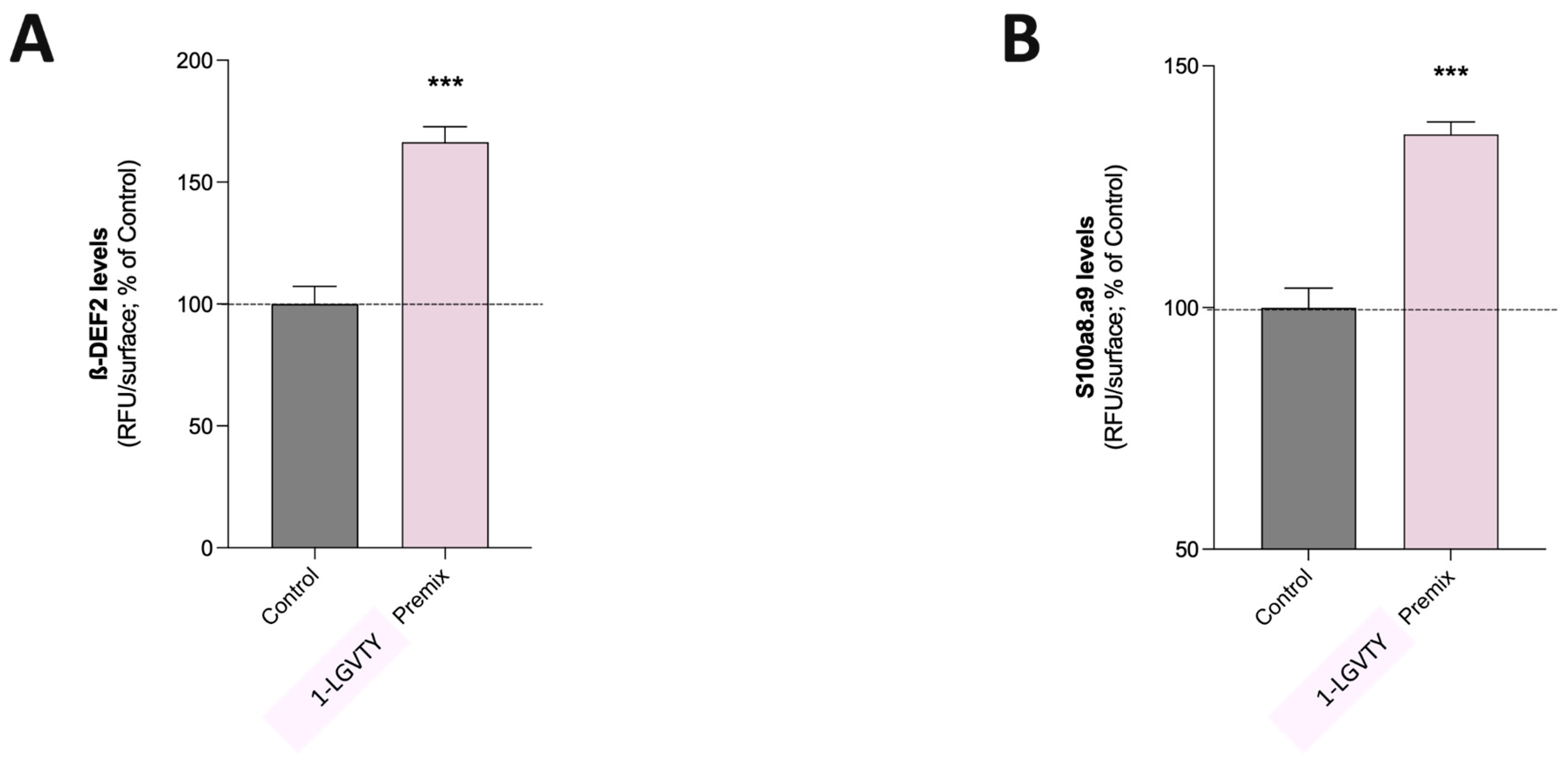
As shown in Figure 5, topical treatment with 1-LGVTY (1.25%) under basal conditions was associated with increased expression of both β-defensin-2 and S100A8/A9 compared with untreated control explants. This response was observed in the absence of applied environmental or inflammatory stress, indicating that the treatment was able to modulate innate immune-related markers under resting conditions.
These results suggest that the ex vivo skin explant model can also be used to monitor basal modulation of epidermal immune defense markers in response to topical treatment.
4. Discussion
The present study explored the use of an ex vivo human skin explant survival model as a multi-parameter platform to investigate tissue responses to environmental stressors and to evaluate the biological modulation induced by topical intervention. In this experimental framework, skin explants were exposed to a combination of urban particulate matter (PM10) and UV-A irradiation, two key environmental stressors implicated in extrinsic skin aging and cutaneous tissue damage. A defined mixture of active ingredients (1-LGVTY) was used as a topical treatment tool to assess whether stress-associated biomarker responses could be modulated across multiple biological domains.
One of the most consistent responses observed in the model was the increase in protein carbonylation following exposure to PM10 and UV-A irradiation. Protein carbonylation represents a well-established marker of oxidative protein damage and reflects the accumulation of irreversible oxidative modifications affecting structural and functional proteins. The attenuation of carbonylation observed in treated explants suggests that the topical intervention (1-LGVTY) was able to limit oxidative protein damage under these stress conditions. More broadly, this result illustrates the capacity of the explant model to capture oxidative stress responses induced by environmental challenges and to detect treatment-associated modulation of these processes.
Inflammatory signaling represents another important component of environmentally induced skin stress responses. In the present study, IL-1α and IL-6 were evaluated as markers of cutaneous inflammatory activation. Both cytokines are known to respond rapidly to oxidative stress and environmental insults. The observed modulation of these cytokines following treatment suggests that the model can detect early inflammatory responses triggered by combined pollution and UV exposure. The cytokine readouts in this model can be interpreted primarily as stress-sensitive indicators. Environmental stress also influenced biomarkers associated with extracellular matrix homeostasis. Collagen I and CD44, two markers linked to dermal structural integrity and matrix–cell interactions, showed changes consistent with stress-associated tissue remodeling following exposure to PM10 and UV-A. Such responses are biologically plausible given that oxidative stress and inflammatory signaling can stimulate protease activity and matrix degradation. Within the context of the explant platform, these biomarkers are best interpreted as indicators of remodeling pressure and matrix integrity rather than direct evidence of specific pathway modulation.
Pigmentation-related endpoints further illustrated the responsiveness of the model to environmental stress. Combined exposure to PM10 and UV-A increased both tyrosinase expression and melanin accumulation in the epidermis, consistent with the known stimulation of melanogenesis by oxidative and inflammatory pathways. The attenuation of these responses following topical treatment suggests that pigmentation markers can serve as functional readouts of environmentally induced skin alterations in ex vivo tissue systems.
Beyond stress-induced responses, the study also assessed the expression of antimicrobial peptides under basal conditions of treatment with 1-LGVTY. Increased expression of β-defensin-2 and S100A8/A9 following treatment suggests that the explant model can capture modulation of epidermal innate immune defense markers in the absence of environmental challenge but modulated by topical a treatment. Because antimicrobial peptides contribute to host defense and epidermal barrier function, these endpoints may provide additional insight into how topical treatments influence skin resilience and immune readiness.
Taken together, the results show that the ex vivo human skin explant model can capture biologically relevant responses across multiple domains of skin physiology, including oxidative stress, inflammation, extracellular matrix remodeling, pigmentation, and innate immune defense. The ability to monitor these processes simultaneously highlights the value of the explant system as an integrated experimental platform for investigating how environmental stressors affect skin tissue and how topical interventions may modulate these responses.
In the present study, 1-LGVTY served as a tool to illustrate the potential of the ex vivo skin explant platform for multi-parameter evaluation of treatment-associated responses, while highlighting its capacity to reveal the benefits of topical intervention in attenuating stress-induced alterations across multiple biological domains, notably oxidative damage, inflammatory responses, extracellular matrix remodelling, cell–matrix interaction pathways, pigmentation processes, and epidermal innate immune defence. This strategy opens the way to broader applications involving explants from multiple donors, which will be important for assessing inter-individual variability and strengthening translational relevance. It also provides opportunities to extend the biomarker panel and further investigate the biological pathways involved in skin responses to environmental stress and topical treatment, thereby refining both efficacy assessment and mechanistic understanding. The inclusion of well-characterized reference treatments would further strengthen this approach by providing valuable comparators for response benchmarking and biological interpretation.
5. Conclusions
Ex vivo human skin explants maintained under survival culture conditions represent a practical and physiologically relevant platform for monitoring a multi-domain biomarker panel, including inflammatory markers (IL-1α and IL-6), extracellular matrix-related endpoints, cell–matrix interaction markers, pigmentation-related readouts (melanin and tyrosinase), and epidermal innate immune markers such as S100A8/A9 and β-defensin-2. In the present study, this model enabled integrated assessment of skin responses to environmental stressors together with treatment-associated modulation across multiple biological compartments.
As such, this approach may contribute to the development of more translational ex vivo strategies for both mechanistic skin research and the efficacy evaluation of topical products.
More broadly, this platform provides opportunities to investigate complex environmental exposure scenarios that more closely reflect real-world skin stress. Combined exposure models involving pollution, ultraviolet radiation, and additional components of the cutaneous exposome may further improve understanding of how multiple stressors interact to influence skin physiology and how topical interventions may modulate these responses.
Author Contributions
Conceptualization, M.Baraibar, J.Demaude, A.Cavagnino and R.Aknin.; methodology, O.Gouin and M.Campeaux; software O.Gouin and A.Cavagnino.; validation, J.Demaude, A.Cavagnino, M.Baraibar and R.Aknin; formal analysis, J.Demaude, A.Cavagnino, M.Baraibar and R.Aknin; investigation, J.Aknin, M.Amsallag, M.Baraibar and J.Demaude; resources, O.Gouin, M.Campeaux, A.Cavagnino, M.Baraibar and J.Demaude; data curation, O.Gouin, A.Cavagnino and J.Demaude; writing—original draft preparation, J.Demaude, A.Cavagnino, M.Campeaux; writing—review and editing, J.Demaude, M.Baraibar, J.Aknin, M.Amsallag and R.Aknin; visualization, J.Demaude and A.Cavagnino; supervision, M.Baraibar, R.Aknin and J.Demaude; project administration, J.Demaude, M.Campeaux and A.Cavagnino; funding acquisition, J.Aknin and R.Aknin. All authors have read and agreed to the published version of the manuscript.
Funding
This research received no external funding.
Institutional Review Board Statement
Human skin explants were obtained from surgical residues of aesthetic procedures with prior written informed consent from donors. All samples were fully anonymized prior to use. The study did not involve any intervention on human subjects. In accordance with applicable national regulations and institutional policies, the use of anonymized human tissue for research purposes does not require formal ethical committee approval.
Informed Consent Statement
Informed consent was obtained from all donors undergoing surgical procedures for the use of their discarded tissue for research purposes. All samples were fully anonymized prior to analysis, and no data allowing identification of donors were collected.
Data Availability Statement
The data supporting the findings of this study are available from the corresponding author upon reasonable request. These include histological images, quantitative analyses, and experimental datasets generated during the study. Public deposition is not applicable due to the nature of the data and ethical considerations related to human tissue use.
Acknowledgments
The authors would like to acknowledge the technical support provided for skin explant preparation, histological analysis, and data acquisition. We also thank all contributors involved in sample handling and experimental execution.
Conflicts of Interest
The author declares professional activities in the field of dermatology and cosmetic science. These activities had no influence on the design of the study; in the collection, analyses, or interpretation of data; in the writing of the manuscript; or in the decision to publish the results.
Abbreviations
The following abbreviations are used in this manuscript:
| 1-LGVTY | One Longevity Ingredient Combination |
| PM10 | Particulate Matter 10 |
| UV-A | Ultraviolet A |
| IL-1α | Interleukine 1α |
| IL-6 | Interleukine 6 |
| ECM | Extra Cellular Matrix |
| ROS | Reactive Oxidative Species |
| MMPs | Matrix Metallo Proteinases |
| HA | Hyaluronic Acid |
| AMPs | Anti-Microbial Peptides |
| PAH | Polycyclic Aromatic Hydrocarbons |
References
- Fisher, G.J.; Wang, Z.Q.; Datta, S.C.; Varani, J.; Kang, S.; Voorhees, J.J. Pathophysiology of premature skin aging induced by ultraviolet light. N Engl. J. Med. 1997, 337(20), 1419–28. [Google Scholar] [CrossRef]
- Zhou, H.M.; Slominski, R.M.; Seymour, L.J.; Bell, M.C.; Dave, P.; Atumonye, J.; Wright W3rd Dawes, A.; Griesenauer, B.; Paczesny, S.; Kaplan, M.H.; Spandau, D.F.; Turner, M.J. Ex vivo culture of mouse skin activates an interleukin 1 alpha-dependent inflammatory response. Exp. Dermatol. 2020, 29(1), 102–106. [Google Scholar] [CrossRef] [PubMed] [PubMed Central]
- Pittayapruek, P.; Meephansan, J.; Prapapan, O.; Komine, M.; Ohtsuki, M. Role of Matrix Metalloproteinases in Photoaging and Photocarcinogenesis. Int. J. Mol. Sci. 2016, 17(6), 868. [Google Scholar] [CrossRef] [PubMed] [PubMed Central]
- Rittié, L.; Fisher, G.J. UV-light-induced signal cascades and skin aging. Ageing Res. Rev. 2002, 1(4), 705–20. [Google Scholar] [CrossRef] [PubMed]
- Calikoglu, E.; Sorg, O.; Tran, C.; Grand, D.; Carraux, P.; Saurat, J.H.; Kaya, G. UVA and UVB decrease the expression of CD44 and hyaluronate in mouse epidermis, which is counteracted by topical retinoids. Photochem Photobiol. 2006, 82(5), 1342–7. [Google Scholar] [CrossRef]
- Siiskonen, H.; Törrönen, K.; Kumlin, T.; Rilla, K.; Tammi, M.I.; Tammi, R.H. Chronic UVR causes increased immunostaining of CD44 and accumulation of hyaluronan in mouse epidermis. J. Histochem Cytochem. 2011, 59(10), 908–17. [Google Scholar] [CrossRef] [PubMed]
- Park, S.Y.; Byun, E.J.; Lee, J.D.; Kim, S.; Kim, H.S. Air Pollution, Autophagy, and Skin Aging: Impact of Particulate Matter (PM10) on Human Dermal Fibroblasts. Int. J. Mol. Sci. 2018, 19(9), 2727. [Google Scholar] [CrossRef]
- Puri, P.; Nandar, S.K.; Kathuria, S.; Ramesh, V. Effects of air pollution on the skin: A review. Indian J. Dermatol. Venereol. Leprol. 2017, 83(4), 415–423. [Google Scholar] [CrossRef]
- Chung, J.H.; Kang, S.; Varani, J.; Lin, J.; Fisher, G.J.; Voorhees, J.J. Decreased extracellular-signal-regulated kinase and increased stress-activated MAP kinase activities in aged human skin in vivo. J. Investig. Dermatol. 2000, 115(2), 177–182. [Google Scholar] [CrossRef] [PubMed]
- Sander, C. S.; Chang, H.; Salzmann, S.; Müller, C. S.; Ekanayake-Mudiyanselage, S.; Elsner, P.; Thiele, J. J. Photoaging is associated with protein oxidation in human skin in vivo. J. Investig. Dermatol. 2002, 119(2), 536–543. [Google Scholar] [CrossRef]
- Gniadecka, M.; Wessel, S.; Heidenheim, M.; Wulf, H.C.; Nielsen, O.F.; Christensen, D.H. Water and protein structure in photoaged and chronically aged skin. J. Investig. Dermatol. 1998, 111(6), 1129–1133. [Google Scholar] [CrossRef]
- Quan, T.; He, T.; Kang, S.; Voorhees, J.J.; Fisher, G.J. Solar ultraviolet irradiation reduces collagen in photoaged human skin by blocking transforming growth factor-β type II receptor/Smad signaling. Am. J. Pathol. 2004, 165(3), 741–751. [Google Scholar] [CrossRef] [PubMed]
- Varani, J.; Damek-Poprawa, M.; Fligiel, S. E.; Wise, J. A.; Kang, S.; Fisher, G. J.; Voorhees, J. J. Decreased collagen production in chronologically aged skin: roles of age-associated alterations in fibroblast function and TGF-β signaling. Am. J. Pathol. 2006, 168(5), 1861–1868. [Google Scholar] [CrossRef]
- Bernstein, E.F.; Chen, Y.Q.; Kopp, J.B.; Fisher, L.; Brown, D.B.; Hahn, P.J.; Robey, F.A.; Lakkakorpi, J.; Uitto, J. Long-term sun exposure alters the collagen of the papillary dermis: Comparison of sun-protected and photoaged skin by Northern analysis, immunohistochemical staining, and confocal laser scanning microscopy. J. Am. Acad. Dermatol. 1996, 34(2), 209–218. [Google Scholar] [CrossRef]
- Naylor, E.C.; Watson, R.E.; Sherratt, M.J. Molecular aspects of skin ageing. Maturitas 2011, 69(3), 249–256. [Google Scholar] [CrossRef]
- Fisher, G. J.; Varani, J.; Voorhees, J. J. Looking older: fibroblast collapse and therapeutic implications. Arch. Dermatol. 2008, 144(5), 666–672. [Google Scholar] [CrossRef] [PubMed]
- Heinz, A. Elastic fibers during aging and disease. Ageing Res. Rev. 2021, 66, 101255. [Google Scholar] [CrossRef] [PubMed]
- Santamaria, J.; Gilaberte, Y.; Prudkin, L.; Piquero-Casals, J. Pollution, a Relevant Exposome Factor in Skin Aging and the Role of Multi-benefit Photoprotection. Actas Dermosifiliogr. 2025, S0001-7310(25)00100-0. [Google Scholar] [CrossRef]
- Bernerd, F.; Passeron, T.; Castiel, I.; Marionnet, C. The Damaging Effects of Long UVA (UVA1) Rays: A Major Challenge to Preserve Skin Health and Integrity. Int. J. Mol. Sci. 2022, 23(15), 8243. [Google Scholar] [CrossRef]
- Magnani, N.D.; Muresan, X.M.; Belmonte, G.; Cervellati, F.; Sticozzi, C.; Pecorelli, A.; Miracco, C.; Marchini, T.; Evelson, P.; Valacchi, G. Skin Damage Mechanisms Related to Airborne Particulate Matter Exposure. Toxicol. Sci. 2016, 149(1), 227–36. [Google Scholar] [CrossRef]
- Jadwiga, R.; Ruzgas, T.; Engblom, J.; Holefors, A. The impact of pollution on skin and proper efficacy testing for anti-pollution claims. Cosmetics 2018, 5(no. 1), 4. [Google Scholar] [CrossRef]
- Pillai, S.; Oresajo, C.; Hayward, J. Ultraviolet radiation and skin aging: roles of reactive oxygen species, inflammation and protease activation, and strategies for prevention of inflammation-induced matrix degradation - a review. Int. J. Cosmet. Sci. 2005, 27(1), 17–34. [Google Scholar] [CrossRef]
- Krutmann, J.; Bouloc, A.; Sore, G.; Bernard, B.A.; Passeron, T. The skin aging exposome. J. Dermatol. Sci. 2017, 85(3), 152–161. [Google Scholar] [CrossRef] [PubMed]
- Vierkötter, A.; Schikowski, T.; Ranft, U.; Sugiri, D.; Matsui, M.; Krämer, U.; Krutmann, J. Airborne particle exposure and extrinsic skin aging. J. Investig. Dermatol. 2010, 130(12), 2719–2726. [Google Scholar] [CrossRef]
- Hüls, A.; Vierkötter, A.; Gao, W.; Krämer, U.; Yang, Y.; Ding, A.; Stolz, S.; Matsui, M.; Kan, H.; Wang, S.; Jin, L.I. Traffic-related air pollution contributes to development of facial lentigines: further epidemiological evidence from Caucasians and Asians. J. Investig. Dermatol. 2016, 136(5), 1053–1056. [Google Scholar] [CrossRef]
- Schauber, J.; Gallo, R.L. Antimicrobial peptides and the skin immune defense system. J. Allergy Clin. Immunol. 2008, 122(2), 261–6. [Google Scholar] [CrossRef]
- Braff, M.H.; Bardan, A.; Nizet, V.; Gallo, R.L. Cutaneous defense mechanisms by antimicrobial peptides. J. Investig. Dermatol. 2005, 125(1), 9–13. [Google Scholar] [CrossRef]
- Murakami, M.; Ohtake, T.; Dorschner, R.A.; Gallo, R.L.; Schittek, B.; Garbe, C. Cathelicidin antimicrobial peptide expression in sweat, an innate defense system for the skin. J. Investig. Dermatol. 2002, 119(5), 1090–1095. [Google Scholar] [CrossRef] [PubMed]
- Braff, M.H.; Gallo, R.L. Antimicrobial peptides: an essential component of the skin defensive barrier. In Antimicrobial Peptides and Human Disease; 2006; pp. 91–110. [Google Scholar] [CrossRef]
- Coates, M.; Blanchard, S.; MacLeod, A.S. Innate antimicrobial immunity in the skin: A protective barrier against bacteria, viruses, and fungi. PLoS Pathog. 2018, 14(12), e1007353. [Google Scholar] [CrossRef]
- Inciarte-Mundo, J.; Frade-Sosa, B.; Sanmartí, R. From bench to bedside: Calprotectin (S100A8/S100A9) as a biomarker in rheumatoid arthritis. Front Immunol. 2022, 13, 1001025. [Google Scholar] [CrossRef] [PubMed]
- Abtin, A.; Eckhart, L.; Gläser, R.; Gmeiner, R.; Mildner, M.; Tschachler, E. The antimicrobial heterodimer S100A8/S100A9 (calprotectin) is upregulated by bacterial flagellin in human epidermal keratinocytes. J. Invest Dermatol. 2010, 130(10), 2423–30. [Google Scholar] [CrossRef]
- Johnstone, K.F.; Wei, Y.; Bittner-Eddy, P.D.; Vreeman, G.W.; Stone, I.A.; Clayton, J.B.; Reilly, C.S.; Walbon, T.B.; Wright, E.N.; Hoops, S.L.; Boyle, W.S.; Costalonga, M.; Herzberg, M.C. Calprotectin (S100A8/A9) Is an Innate Immune Effector in Experimental Periodontitis. Infect. Immun89 2021. [Google Scholar] [CrossRef]
- Lavigne, E.G.; Cavagnino, A.; Steinschneider, R.; Breton, L.; Baraibar, M.A.; Jäger, S. Oxidative damage prevention in human skin and sensory neurons by a salicylic acid derivative. Free Radic. Biol. Med. 2022, 181, 98–104. [Google Scholar] [CrossRef] [PubMed]
- Li, B.Q.; Fu, T.; Gong, W.H.; Dunlop, N.; Kung, H.; Yan, Y.; Kang, J.; Wang, J.M. The flavonoid baicalin exhibits anti-inflammatory activity by binding to chemokines. Immunopharmacology 2000, 49, 295–306. [Google Scholar] [CrossRef]
- Gao, Z.; Huang, K.; Yang, X.; Xu, H. Free radical scavenging and antioxidant activities of flavonoids extracted from the radix. Biochim Biophys. Acta 1472, 643–50. [CrossRef]
- Nakajima, T.; Imanishi, M.; Yamamoto, K.; Cyong, J.C.; Hirai, K. Inhibitory effect of baicalein, a flavonoid in scutellaria root, on eotaxin production by human dermal fibroblasts. Plan. Med. 2001, 67(2), 132–5. [Google Scholar] [CrossRef] [PubMed]
- Kono, Y.; Shibata, H.; Kodama, Y.; Sawa, Y. The suppression of the N-nitrosating reaction by chlorogenic acid. Biochem J. 1995, 312 Pt 3, 947–53. [Google Scholar] [CrossRef]
- Salvi, A.; Carrupt, P.A.; Tillement, J.P.; Testa, B. Structural damage to proteins caused by free radicals: assessment, protection by antioxidants, and influence of protein binding. Biochem. Pharmacol. 2001, 61:10, 1237–1242. [Google Scholar] [CrossRef]
- Bouzoud, D.; Peno-Mazzarino, L.; Arnold, F.; Lati, E.; Luu, M.T.; Mercier, M. Prevention of Skin Aging by Plant Extracts Acting on the Glycation Process Ex-Vivo. Poster presented at The Society of Cosmetic Chemists - Annual Scientific Meeting, New York, 2010. [Google Scholar]
- Li, H.R.; Habasi, M.; Xie, L.Z.; Aisa, H.A. Effect of Chlorogenic Acid on Melanogenesis of B16 Melanoma Cells. Molecules 2014, 19(9), 12940–12948. [Google Scholar] [CrossRef] [PubMed]
- Chen, W.C.; Liou, S.S.; Tzeng, T.F.; Lee, S.L.; Liu, I.M. Effect of Topical Application of Chlorogenic Acid on Excision Wound Healing in Rats. Plan. Medica 2013, 79(8). [Google Scholar] [CrossRef]
- Min, W.; Liu, X.; Qian, Q.; Lin, B.; Wu, D.; Wang, M.; Ahmad, I.; Yusuf, N.; Luo, D. Effects of baicalin against UVA-induced photoaging in skin fibroblasts. Am. J. Chin. Med. 2014, 42(3), 709–27. [Google Scholar] [CrossRef] [PubMed]
- Morita, A.; Torii, K.; Maeda, A.; Yamaguchi, Y. Molecular basis of tobacco smoke-induced premature skin aging. J. Investig. Dermatol. Symp. Proc. 2009, 14(1), 53–5. [Google Scholar] [CrossRef] [PubMed]
- Quan, T.; He, T.; Kang, S.; Voorhees, J.J.; Fisher, G.J. Connective tissue growth factor: expression in human skin in vivo and inhibition by ultraviolet irradiation. J. Invest Dermatol. 2002, 118(3), 402–8. [Google Scholar] [CrossRef] [PubMed]
Figure 1.
Human skin protection from environmental-induced oxidative damage. 1-LGVTY was applied topically (0.01%) on the skin explant surface and left in contact for 2 days prior to apply particulate matter (PM) and UV-A exposure. Protein carbonylation was labeled on skin cryosections (5µm) by using a specific fluorophore. A) The carbonylation levels in the skin were visualized (in red, representative images), and B) quantified by image analysis on the whole skin. Carbonylation levels (RFU/surface) were expressed as a percentage of control (vehicle) and reported as histograms of the mean ± SD (standard deviation). Comparative statistical analyses were obtained by binary t-test comparisons. ***p < 0.01.
Figure 1.
Human skin protection from environmental-induced oxidative damage. 1-LGVTY was applied topically (0.01%) on the skin explant surface and left in contact for 2 days prior to apply particulate matter (PM) and UV-A exposure. Protein carbonylation was labeled on skin cryosections (5µm) by using a specific fluorophore. A) The carbonylation levels in the skin were visualized (in red, representative images), and B) quantified by image analysis on the whole skin. Carbonylation levels (RFU/surface) were expressed as a percentage of control (vehicle) and reported as histograms of the mean ± SD (standard deviation). Comparative statistical analyses were obtained by binary t-test comparisons. ***p < 0.01.
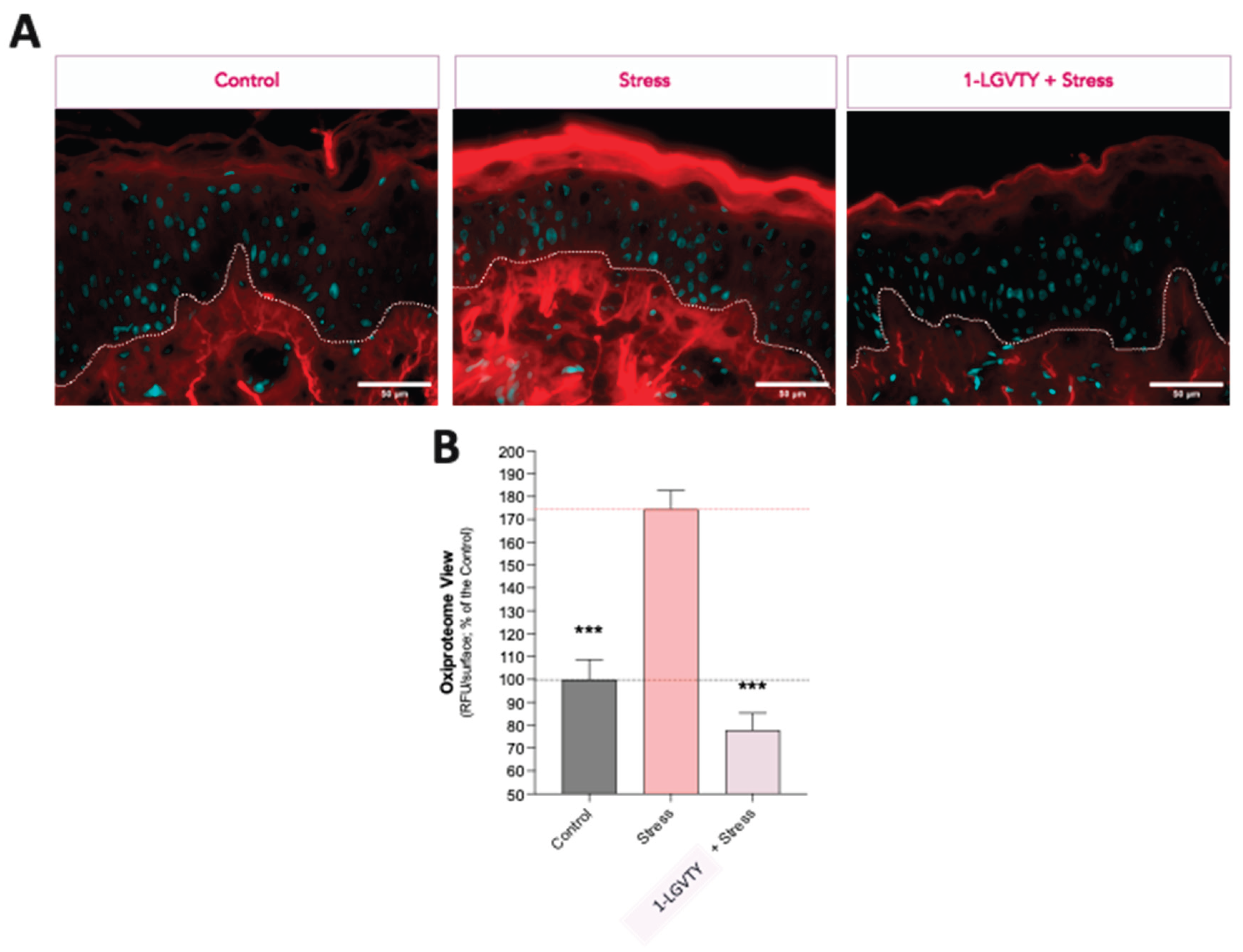
Figure 2.
Preventive effect of 1-LGVTY mixture on pro-inflammatory cytokine expression in human skin explants exposed to PM10 and UV-A. Quantification of IL-1α (A) and IL-6 (B) expression levels in human skin explants pre-treated for 3 days with 1-LGVTY mixture, followed by exposure to urban pollution (PM10, 100 µg/mL) and UV-A irradiation (6 J/cm²). Cytokine levels were assessed by epifluorescence microscopy and normalized to untreated, unstressed explants (control). The combined PM10 + UV-A stress markedly increased IL-1α and IL-6 levels, whereas pre-treatment with 1.25% 1-LGVTY effectively prevented this inflammatory response, maintaining cytokine levels close to baseline. Data are expressed as mean ± SD (n = X), with statistical significance indicated (***p < 0.01) vs. stressed condition.
Figure 2.
Preventive effect of 1-LGVTY mixture on pro-inflammatory cytokine expression in human skin explants exposed to PM10 and UV-A. Quantification of IL-1α (A) and IL-6 (B) expression levels in human skin explants pre-treated for 3 days with 1-LGVTY mixture, followed by exposure to urban pollution (PM10, 100 µg/mL) and UV-A irradiation (6 J/cm²). Cytokine levels were assessed by epifluorescence microscopy and normalized to untreated, unstressed explants (control). The combined PM10 + UV-A stress markedly increased IL-1α and IL-6 levels, whereas pre-treatment with 1.25% 1-LGVTY effectively prevented this inflammatory response, maintaining cytokine levels close to baseline. Data are expressed as mean ± SD (n = X), with statistical significance indicated (***p < 0.01) vs. stressed condition.
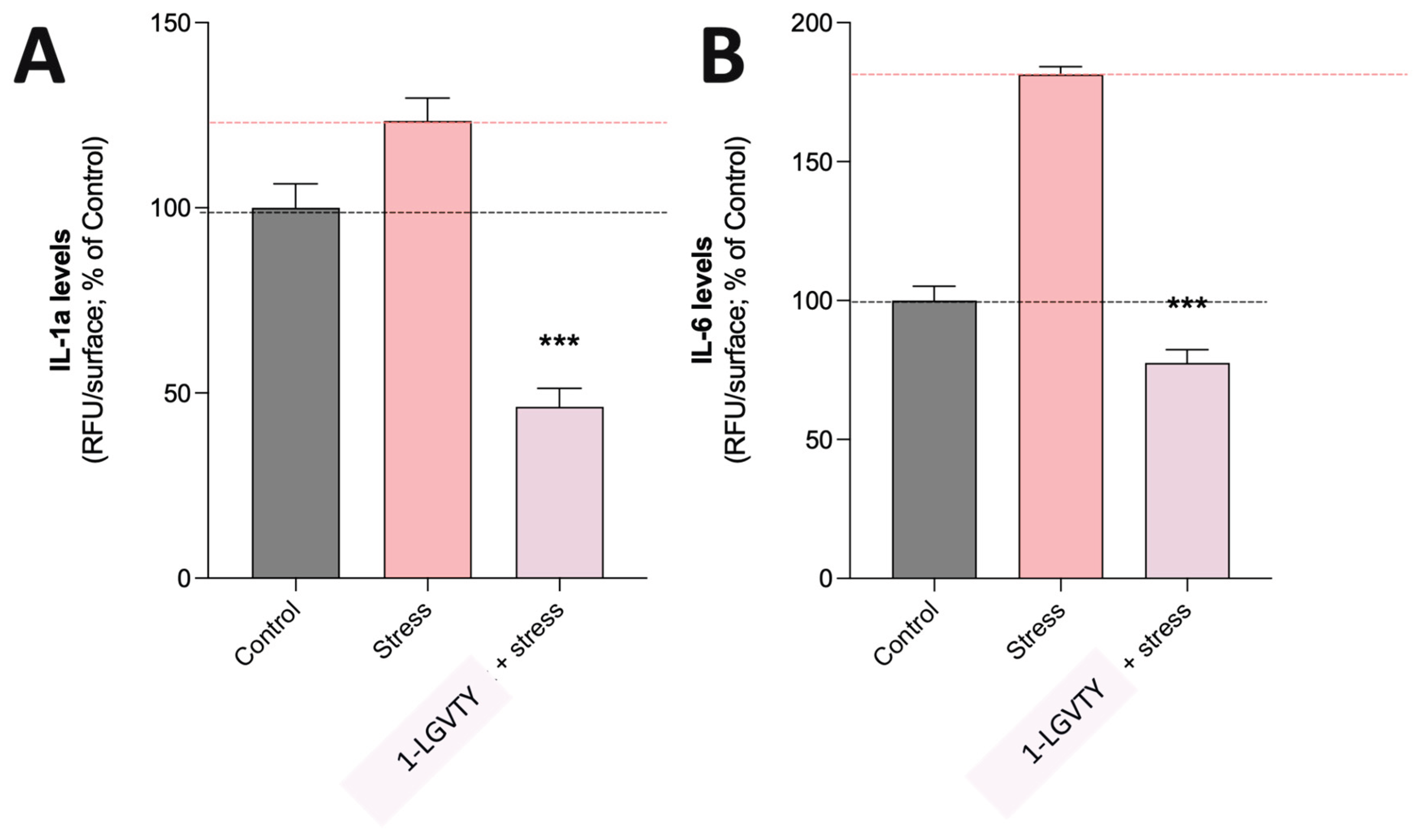
Figure 3.
Protective effect of 1-LGVTY mixture on key dermal proteins in human skin explants under environmental stress. Epifluorescence microscopy and quantitative analysis of (A) Collagen I, and (B) CD44 expression in the dermis of human skin explants. Explants were pre-treated for 3 days with 1-LGVTY (1.25%), then exposed to PM10 (100 µg/mL) and UV-A (6 J/cm²). Untreated, unstressed explants served as negative controls, and stressed, untreated explants as positive controls of stress impact. Representative epifluorescence images are shown alongside quantification of fluorescence signal intensity, normalized to control levels. Data are presented as mean ± SD (n = 3). Statistical significance is indicated (***p < 0.01) vs. stressed, untreated condition.
Figure 3.
Protective effect of 1-LGVTY mixture on key dermal proteins in human skin explants under environmental stress. Epifluorescence microscopy and quantitative analysis of (A) Collagen I, and (B) CD44 expression in the dermis of human skin explants. Explants were pre-treated for 3 days with 1-LGVTY (1.25%), then exposed to PM10 (100 µg/mL) and UV-A (6 J/cm²). Untreated, unstressed explants served as negative controls, and stressed, untreated explants as positive controls of stress impact. Representative epifluorescence images are shown alongside quantification of fluorescence signal intensity, normalized to control levels. Data are presented as mean ± SD (n = 3). Statistical significance is indicated (***p < 0.01) vs. stressed, untreated condition.
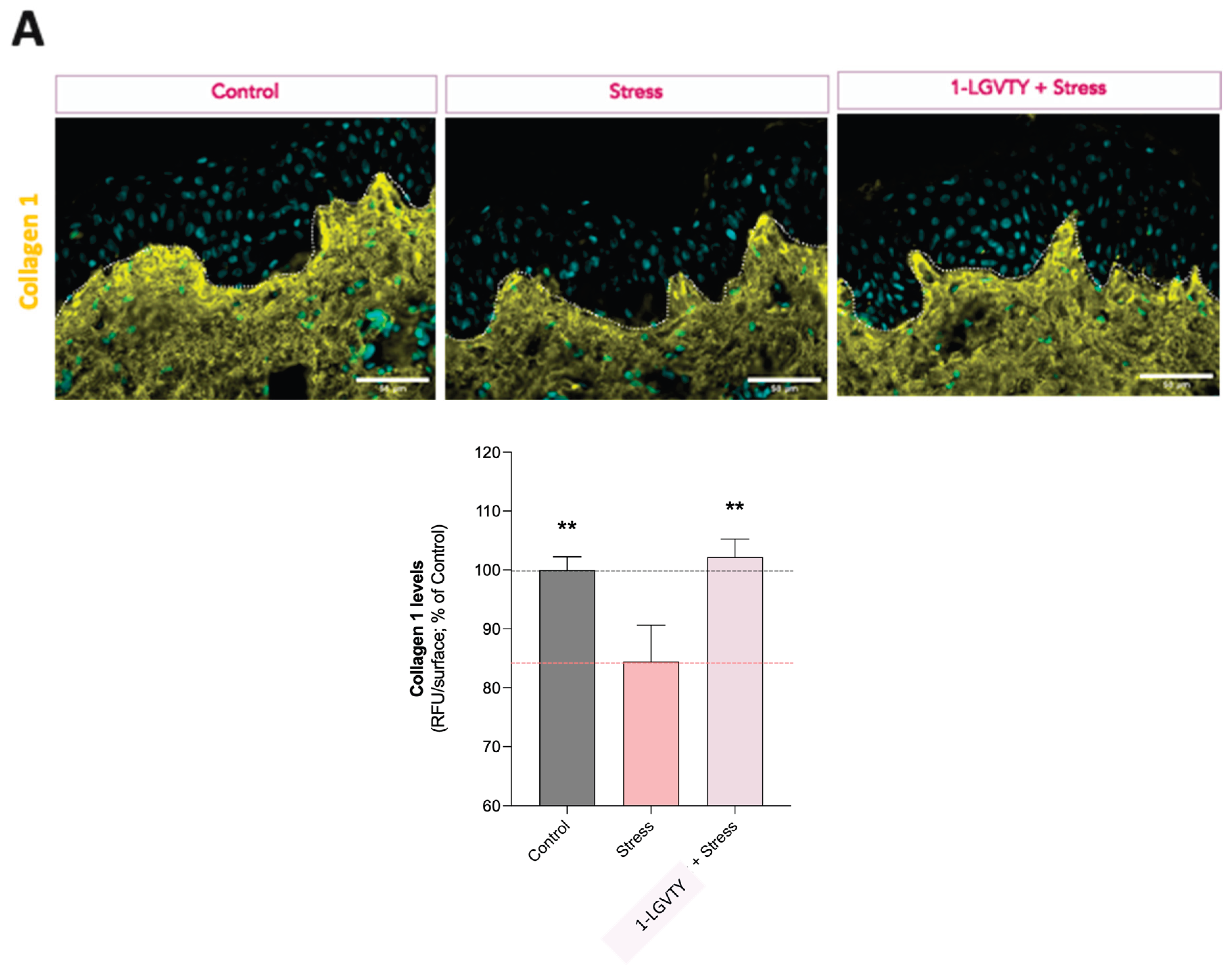
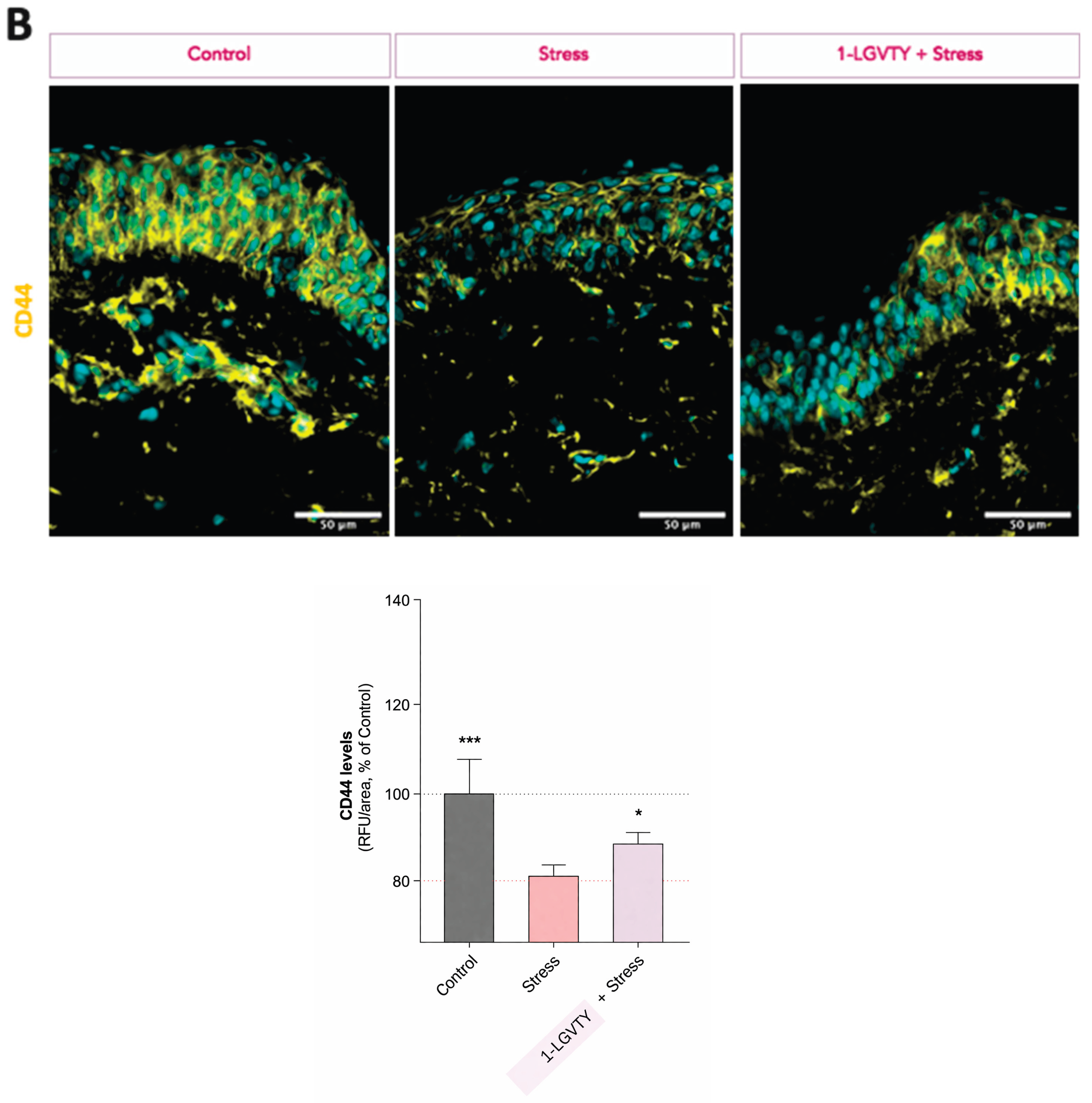
Figure 4.
Environmentally induced pigmentation in the epidermis. Epifluorescence imaging and quantitative analysis of (A) melanin content and (B) tyrosinase expression in the epidermis of human skin explants pre-treated with 1-LGVTY (1.25%) for 3 days prior to exposure to PM10 (100 µg/mL) and UV-A irradiation (6 J/cm²). Untreated, unstressed explants served as negative controls; stressed, untreated explants served as positive controls. Quantitative fluorescence values are expressed as mean ± SD (n = X3). Statistical significance is indicated (***p < 0.01) vs. stressed, untreated condition).
Figure 4.
Environmentally induced pigmentation in the epidermis. Epifluorescence imaging and quantitative analysis of (A) melanin content and (B) tyrosinase expression in the epidermis of human skin explants pre-treated with 1-LGVTY (1.25%) for 3 days prior to exposure to PM10 (100 µg/mL) and UV-A irradiation (6 J/cm²). Untreated, unstressed explants served as negative controls; stressed, untreated explants served as positive controls. Quantitative fluorescence values are expressed as mean ± SD (n = X3). Statistical significance is indicated (***p < 0.01) vs. stressed, untreated condition).
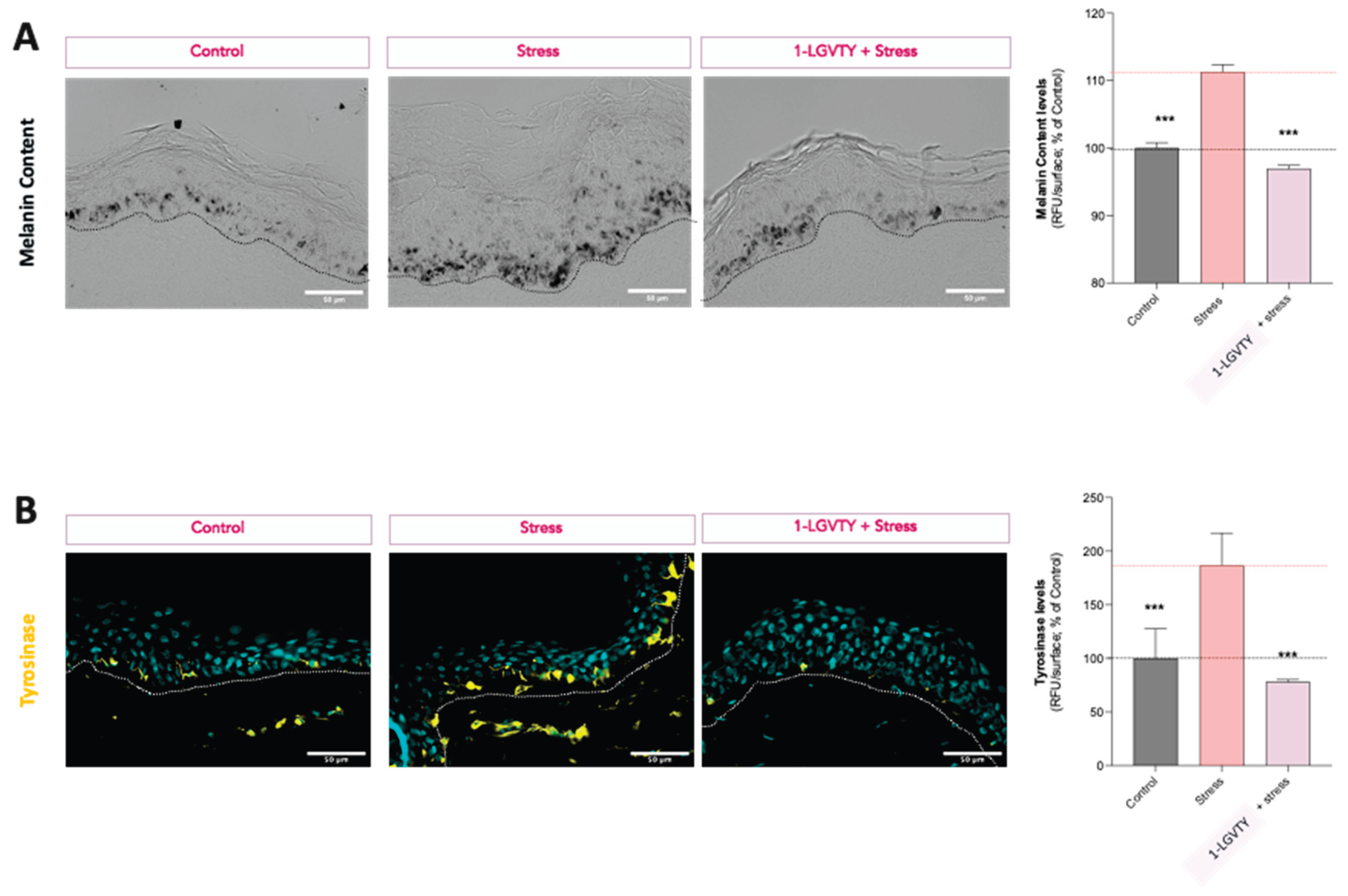
Figure 5.
Expression of key antimicrobial peptides under basal conditions. Quantitative analysis of (A) β-defensin-2 and (B) S100A8/A9 expression levels in human skin explants cultured under basal (non-stressed) conditions and treated for 3 days with 1-LGVTY (1.25%). Epifluorescence microscopy was used to assess AMP expression, with fluorescence intensities normalized to untreated control explants. Data are presented as mean ± SD (n = 3). Statistical significance is indicated (p < 0.01) vs. untreated control).
Figure 5.
Expression of key antimicrobial peptides under basal conditions. Quantitative analysis of (A) β-defensin-2 and (B) S100A8/A9 expression levels in human skin explants cultured under basal (non-stressed) conditions and treated for 3 days with 1-LGVTY (1.25%). Epifluorescence microscopy was used to assess AMP expression, with fluorescence intensities normalized to untreated control explants. Data are presented as mean ± SD (n = 3). Statistical significance is indicated (p < 0.01) vs. untreated control).
Disclaimer/Publisher’s Note: The statements, opinions and data contained in all publications are solely those of the individual author(s) and contributor(s) and not of MDPI and/or the editor(s). MDPI and/or the editor(s) disclaim responsibility for any injury to people or property resulting from any ideas, methods, instructions or products referred to in the content. |
© 2026 by the authors. Licensee MDPI, Basel, Switzerland. This article is an open access article distributed under the terms and conditions of the Creative Commons Attribution (CC BY) license (http://creativecommons.org/licenses/by/4.0/).
Copyright: This open access article is published under a Creative Commons CC BY 4.0 license, which permit the free download, distribution, and reuse, provided that the author and preprint are cited in any reuse.


