
Submitted:
24 April 2026
Posted:
27 April 2026
You are already at the latest version
Abstract
Accurate prediction of nitrogen oxide (NOx) emissions from marine medium-speed four-stroke diesel engines is crucial for meeting increasingly stringent environmental standards. This paper focuses on optimizing the first and most significant reaction of the extended Zeldovich mechanism for the formation of nitric oxide (NO). A numerical engine model was developed and validated against experimental measurements of combustion pressure, power, and emissions at 81.95% of the Maximum Continuous Rating (MCR). The research analyzes the influence of various chemical reaction rate constants (k1,f) on the accuracy of NO concentration predictions. The results demonstrate that by carefully selecting the kinetic parameters, the deviation of the numerical model can be reduced to only -0.93%. Utilizing the optimized constant for the primary Zeldovich reaction k1,f = 1.8*1014 *e(-38300/T), significantly improves the reliability of combustion and emission formation simulations.
Keywords:
fuel combustion
; chemical kinetics
; Zeldovich mechanism
; nitric oxide
; marine diesel engines
1. Introduction
The maritime industry is currently facing unprecedented pressure to reduce its environmental impact, driven by the International Maritime Organization (IMO) Tier III regulations. In addition to traditional engine tuning, the emergence of digital twin frameworks for marine propulsion systems has intensified the need for high-fidelity combustion models [1]. Nitrogen oxides (NOx) remain the most critical pollutant from marine diesel engines due to their role in acid rain and ozone depletion [2,3]. While new technologies such as dual combustion of ammonia and diesel [4] and biofuels [5] show promise, the medium-speed four-stroke diesel engine remains the main driver of global shipping, requiring highly accurate numerical models to optimize its emissions performance [6,7,8].
The formation of nitric oxide (NO) in diesel engines is predominantly governed by the thermal mechanism proposed by Zeldovich [9]. This mechanism, often extended to include a third reaction involving the hydroxyl radical (OH), is very sensitive to the local temperature and concentration of chemical species in the combustion chamber [10,11]. Recent studies have highlighted that, although the pre-exponential multiplier ARC1 (Arrhenius Pre-exponential Factor) is crucial at high loads, the exponential multiplier AERC1 (Arrhenius Activation Energy Factor) maintains a significant influence throughout the operating range, which requires precise calibration for robust emission modeling [6,12]. For medium-speed direct injection engines, zero-dimensional and quasi-dimensional multi-zone models are often used to predict NO formation due to their computational efficiency compared to complex 3D-CFD approaches [12,13]. However, accurate prediction depends largely on the precision of the top-line release rate (HRR) estimation [6,14,15] and the modeling of fuel dispersion and mixture formation [16,17].
At the core of the Zeldovich mechanism (Equation 1) lies the first and rate-limiting reaction:
The reaction rate constant (k1,f) effectively determines the overall rate of NO production [18,19]. Despite its importance, there is no universal consensus on the optimal value of (k1,f) for the specific thermodynamic conditions found in marine diesel engines. Different sources suggest variations in the pre-exponential factor and activation energy, which can lead to significant deviations in emission predictions [20]. Comparative analyses of different reaction rate constants (k1,f) suggest that deviations in NO predictions can exceed 10% depending on the kinetic set chosen, especially under conditions outside the design limits or at high loads [6,7,21].
This work focuses on determining the most efficient rate constant (k1,f) for a medium-speed marine four-stroke diesel engine. By comparing experimental data obtained at 81.9% MCR with a developed numerical model, this study evaluates various kinetic parameters to identify the configuration that provides the highest predictive accuracy. The goal is to improve the reliability of NOx formation simulations, providing a robust tool for engine development engineers to meet future environmental standards.
2. Legal Restrictions on Nitrogen Oxide Emissions
Air pollution is regulated by international and regional regulations on the control of emissions of harmful substances into the atmosphere. In addition to the framework provisions of the Convention on the Law of the Sea, atmospheric pollution from emissions from ships is specifically addressed by the MARPOL 73/78 Convention. Annex VI of MARPOL entered into force on 19 May 2005, but is applied retroactively to marine engines and ships from 1 January 2000. On 10 October 2008, Resolution MEPC.176 (58). Amendments to the Annex to the Protocol of 1997 to amend the International Convention for the Prevention of Pollution from Ships was adopted. The resolution entered into force on 1 July 2010. The amendment to Annex VI to MARPOL 1973/78 with regard to nitrogen oxides (NOx) emissions consists of introducing two additional classes in addition to the existing restrictions in force since 19 May 2005, as shown in Table 1 for medium-speed diesel engines. The table shows that Tier II required a reduction in NOx emissions of about 15% compared to Tier I, and Tier III required a reduction in NOx emissions of about 80% compared to Tier I.
he requirements for the control of nitrogen oxide (NOx) emissions apply to every marine diesel engine of more than 130 kW installed on a ship, and to every marine diesel engine of more than 130 kW that has undergone a significant modification on or after 1 January 2000, unless it is demonstrated to the satisfaction of the Maritime Administration that such engine is an identical replacement for the engine it is replacing. These requirements do not apply to marine diesel engines intended for emergency use [6,7,22]. Table 1 shows the permissible NOx emissions for the engine tested, a Sulzer NSD 6L26, 1650 kW @ 1000 rpm. The engine was tested in April 2000.
At the 66th session of the IMO MEPC held in 2014, new amendments regarding the reduction of exhaust gas emissions were adopted. One of the amendments refers to the already existing regulations in MARPOL Annex VI, Rule 13. According to IMO resolution MEPC.271(69), ships entering or leaving the protected areas of North America or the Caribbean Sea, and whose keel is installed on or after January 1, 2016, must have an engine or engines with certified compliance with Tier III requirements. This decision entered into force on January 1, 2017. The more the IMO expands the navigation areas with stricter regulations regarding emissions of exhaust gases from ships, so the latest regulation adopted at MEPC 82 and which entered into force on March 1, 2026, the Canadian Arctic and the Norwegian Sea were declared new Emission Control Areas (ECA) Figure 1 [23].
From 1 May 2025, the Mediterranean Sea is an Emission Control Area (ECA) for sulphur oxides (SOx), according to Regulation 14 of Annex VI of MARPOL. This means that from then on, when operating in the Mediterranean Sea, the sulphur content of the fuel used on board may not exceed 0.10%, unless an exhaust gas cleaning system (EGCS) is used that ensures an equivalent level of SOx emissions. This will significantly reduce air pollution levels in the Mediterranean Sea and in the Mediterranean coastal states, providing benefits to human health and the environment. It is expected that the Mediterranean Sea will soon also become an ECA for NOx emissions. For smaller vessels, diesel fuel (MGO), i.e. a type of fuel that meets the 0.10% sulphur limit, is also an option for smaller vessels operating on short voyages within the ECA zone, i.e. the Mediterranean Sea. Alternative fuels such as LNG, methanol, biofuels and hydrogen are also emerging on the market on certain new-build vessels [25]. Figure 2 shows the ECA zone of the Mediterranean Sea.
In contrast to similar ECA zones in the North and Baltic Seas, as well as the newly agreed zones in the North Atlantic, the Mediterranean zone currently does not include limits for emissions of nitrogen oxides (NOx). However, further tightening of these rules is still expected [25].
3. Simulation Model and Validation Procedure
A previously published scientific paper [7] provides a comprehensive analysis of the kinematics of the piston mechanism, and the calculation of the effective engine power from the recorded pressures in operation in order to determine the concentration of NOx in the exhaust emissions.
The simulation model for NOx emissions, implemented in MS Excel VBA, uses experimental pressure data obtained through the MarPrime Ultra system, using fuel characteristics for stoichiometric calculations [7,27]. The analysis establishes a 0D/phenomenological model based on cylinder pressure, which requires precise determination of combustion temperatures and air-fuel ratios for accurate prediction of NOx [6,7].
It is necessary to enter the design characteristics of the engine and the chemical analysis values of the fuel used into the program, in order to calculate the stoichiometric amount of air required for the combustion of the injected fuel, since excess combustion air produces NOx.
The fuel used by the engine during the pressure recording has the characteristics shown in Table 2.
An earlier published scientific article [7] provides a comprehensive analysis of the kinematics of the stepping mechanism, and the calculation of the effective power of the engine from the recorded pressures in operation in order to be able to determine the concentration of NOx in the emission of exhaust gases.
Oxygen from the air is used for normal combustion processes in diesel engines, as well as for the formation of NOx. Since it is present in air at 23.2% by mass or 21% by volume, the minimum amount of air required for combustion, according to expressions (2) and (3), is
Combustion pressures were experimentally obtained using the MarPrime Ultra device from Maridis GmbH (Figure 3) [26], which also provided insight into the development of pressures in the engine cylinder for every 0.5 crankshaft degrees, and Figure 4 shows p-α diagrams recorded on all cylinders.
For the sake of simplicity in displaying pressures and calculating NOx, the arithmetic mean of all combustion pressures in all engine cylinders was taken, and such a p-α diagram is shown in Figure 5.
One of the most common ways to obtain the necessary information regarding the working process is to record the indicated combustion pressures of the working cycle of a diesel engine. Even in the absence of a calculation of the pressure development, the recorded indicator diagram provides important information about the combustion, such as peak pressure and temperature and their position, the rate of pressure increase, etc. The indicated engine power is calculated from expression (4), for one cylinder, it is calculated on the basis of the mean indicated pressure pi (5) and the mean piston speed vm according to expression (6) [6,7].
When expressing effective power and effective mean indicated pressure, the mechanical efficiency of the engine (ηm) must be taken into account because emissions are expressed in g/kWh effective power.
To calculate the mean indicated pressure, it is also necessary to know the excess or surplus air λair that is supplied to the engine for the most complete combustion of fuel in the engine cylinder, which is represented by the expression (7)
In addition to the excess air that is not used for fuel combustion in the engine cylinder, the key role in the formation of NOx is played by the temperature development in the engine cylinder, especially the peak combustion temperatures [6,7]. In internal combustion engines, before the start of combustion, there is only clean air in the cylinder, and the gas constant has a value of 287 J/kgK. When calculating the temperature, the moment of fuel injection must be taken into account because then the engine cylinder is talking about combustion products, i.e. a mixture of gases, and not clean air, and the calculation of temperatures is represented by expressions (8) and (9).
The gas constant of the combusted mixture depends on the composition of the mixture. In the case of using standard diesel fuels, the differences due to the composition are very small and can be neglected. The gas constant of the combustion products can be calculated with satisfactory accuracy according to expression (10) [14,15]
4. Modeling of NOx Emissions in Exhaust Gases of Marine Four-Stroke Medium-Speed Engines
Pollutants in exhaust gases of marine four-stroke medium-speed diesel engines occur as a result of the combustion process. The content of exhaust emissions is determined by the quality of the fuel used, the amount of excess air that did not participate in combustion of fuel oil and of course the peak combustion temperature. Engine speed has been shown to be one of the main factors determining the amount of nitrogen oxides (NOx) in exhaust emissions, as shown in Table 1.
4.1. Nitrogen Oxides
Due to the characteristics of the combustion process in four-stroke medium-speed diesel engines using diesel fuels, the world's maritime fleet emits a significant amount of nitrogen oxides NOx.
Nitrogen oxides (NOx) are the collective name for all nitrogen oxides in exhaust emissions, which are mainly represented by nitrogen monoxide NO and nitrogen dioxide NO2. In diesel engine exhaust emissions, NO is the most common nitrogen oxide and accounts for 70-90% of the total NOx by volume, nitrogen dioxide (NO2) accounts for 5 to 10% by volume, while nitrous oxide (N2O), nitrous trioxide (N2O3) and nitrous pentoxide (N2O5) occur in traces. Nitrogen dioxide causes severe inflammation of the respiratory tract in humans, coughing and difficulty breathing, asthma attacks, and increased susceptibility to respiratory infections. Nitrogen dioxide also contributes significantly to the formation of smog. Nitrogen monoxide (NO) produced by combustion in an engine cylinder is unstable and easily converts to nitrogen dioxide (NO2). In sunlight, where the wavelength of light is λs < 429 nm, nitrogen dioxide (NO2) is photoelectrically converted back to nitrogen monoxide (NO) and the oxygen radical (O). When measuring NOx on a test bench to determine whether an engine meets international standards, only nitrogen dioxide (NO2) is measured and adopted as the NOx emission. The formation of NOx is highly dependent on temperature, the amount of unused oxygen in the combustion process, and the duration of the combustion process [6,7]. In the combustion process, nitric oxide (NO) can be formed as thermal nitric oxide, as fast, i.e. prompt nitric oxide, as nitric oxide (NO) from nitrous oxide (N2O), and as nitric oxide (NO) from fuel [7,12,20,26,27]. Although various formation pathways have been considered, in this paper the emphasis is on the thermal NO mechanism because it dominates at high temperatures characteristic of medium-speed engines.
4.1.1. Thermal Nitrogen Monoxide (NO) Generation
The three right chemical reactions represented by expressions (11), (12) and (13) are responsible for the formation of nitrogen monoxide. The first two are based on Zeldovichich mechanism [9,10,17,28].
Under diesel engine combustion conditions, the reactions of the extended Zeldovich mechanism proceed slowly compared to hydrocarbon combustion reactions. Therefore, they are said to proceed kinetically. This means that under the conditions prevailing in diesel engine combustion (at local temperatures and local air overshoots, as well as at short residence times during combustion), chemical equilibrium for the concentration of nitrogen oxides will not be reached [13]. Since the formation of thermal nitrogen monoxide (NO) is very sensitive to the combustion temperature, reducing the maximum flame temperature is the main mechanism for reducing the amount of nitrogen monoxide (NO) formed. At combustion temperatures above 1800 K, reducing the combustion temperature by about 70 K can reduce the formation of nitrogen monoxide (NO) by half of the total concentration. The kinetic rate coefficient (k1,f) of the first chemical reaction of the Zeldovich mechanism is of crucial importance in the formation of nitrogen monoxide, and it again depends, as already mentioned, exclusively on the temperature, the amount of excess air and the reaction time.
The formation of the concentration of nitrogen monoxide is represented by the expression (14)
The concentration of molecular nitrogen (N2) can be calculated according to expression (15), where xN2 represents the mole fraction of nitrogen, i.e. the volume fraction of nitrogen in the air.
In expression (14) O represents the concentration of oxygen atoms and can be calculated in several ways. According to [28] atomic oxygen can be calculated according to expression (16)
Concentration constant (KC), oxygen molecule (O2) and equilibrium gas constant (KP) can be calculated from expressions (17), (18), (19)
According to [28], if expression (20) is used for the concentration constant (Kc), even more accurate results can be obtained.
According to [29], the oxygen atom can also be calculated according to expression (21)
The formation of nitrogen monoxide is expressed in ppm by measuring devices, as is the case with the device used. According to [30], the concentration of NO in exhaust gas emissions, expressed in ppm, can be determined according to the expression (22)
4.2. Conducting an Experiment
For the application of data in the developed simulation model, a four-stroke medium-speed diesel engine Wartsila NSD 6L26A was used with the following characteristics:
- Type: four-stroke medium-speed diesel engine with direct injection;
- Number of cylinders: 6, in-line engine;
- Cylinder diameter: 260 mm;
- Piston stroke: 320 mm;
- Firing order: 1-5-3-6-2-4;
- Maximum continuous power MCR: 1669 kW;
- Maximum continuous speed: 999 rpm;
- Fuel injection time: 14 before top dead center;
- Maximum mean indicated pressure: 19.7 bar;
- Maximum combustion pressure: 164 bar;
- Brake specific fuel consumption BSFC: 199.5 g/kWh @ 100% MCR;
- Compression ratio: 17.5;
- Crankshaft radius to connecting rod length ratio: 0.2461.
Measurements were performed under the following environmental conditions:
- Ambient temperature: 13 °C;
- Atmospheric pressure: 750 mmHg / 9999.15 mbar;
- Relative humidity: 35%.
The NOx concentration in the exhaust gas emissions was measured with a Testo 350 Maritime device immediately downstream of the turbocharger, which is shown in Figure 5.
The testo 350 MARITIME exhaust gas analyzer is certified by the classification societies Det Norske Veritas (DNV) and Nippon Kaiji Kyokai (NK), and is specially designed for marine diesel engines. It allows emissions to be measured in accordance with MARPOL Annex VI and the NOx Technical Code 2008, ensuring that vessels meet international regulations.
The measured NOx value is shown in Figure 7.
The measurements were carried out to validate the model and select the most appropriate kinetic rate (k1,f). Ultimately, the measurements can also be used to estimate the co-efficient, i.e. the state of the observed diesel engine.
Table 3 shows the first progressive kinetic rates of the Zeldovich mechanism for NO formation used in the program.
In order to determine the most accurate value of the constant k1,f, the numerical model was run iteratively thirteen times. In each simulation run, only the value of the Arrhenius equation for the first reaction of the Zeldovich mechanism (expression 11) was changed, using parameters from different authors listed in Table 3. The other thermodynamic parameters, obtained from the p-α diagram (Figure 5) and equations (8-10), remained constant. The goal of this sensitivity analysis was to correlate the calculated NO values with the experimentally measured value of 889 ppm, (10.61 g/kWh).
Table 3 shows that the model was successfully validated with an extremely low deviation of only -0.93%, indicating high numerical precision and reliability of the simulation. It is particularly significant that these results correlate with the assumptions of Hanson and Salimian [32], which represent the gold standard in the field of chemical kinetics. Confirmation of their theory in the specific and complex environment of a marine engine further strengthens the validity of the model, proving that the kinetic mechanisms are correctly interpreted even under extreme pressure and temperature conditions characteristic of such systems. In the future, it is planned to perform several more four-stroke medium-speed engines of the same or similar nominal speeds, as well as on a two-stroke slow-speed engine in order to further validate the model and to test whether the same rates of the advancing chemical reaction (k1,f) can be used for two-stroke slow-speed and four-stroke medium-speed engines.
5. Conclusion
In this paper, the influence of the rate constant of the first chemical reaction of the extended Zeldovich mechanism on the accuracy of NO emission prediction in a marine four-stroke medium-speed diesel engine was investigated. Based on the obtained results, the following conclusion can be drawn that the developed zero-dimensional numerical model showed a high level of agreement with experimental data collected in real exploitation conditions at a load of 81.9% of the MCR.
By analyzing thirteen different kinetic sets, it was found that the application of the rate constant according to the source [32] gives the most accurate results with a minimum deviation of only -0.93%. This confirms that the selection of specific kinetic parameters is critical for reliable modeling in high pressure and temperature conditions.
The established methodology provides engineers and researchers with a more precise tool for optimizing the combustion process in order to meet the stricter IMO Tier III standards and operations within the newly established ECA zones.
The research provides a solid basis for further application of the model. Future work will focus on the validation of the identified reaction rates on two-stroke slow-motion engines in order to test the universality of the chosen constant in different thermodynamic cycles.
Abbreviations
| MCR IMO ACR AERC 3D-CFD MARPOL MEPC ECA EGCS MGO DNV NK |
Maximum Continuous Rating International Maritime Organization Arrhenius Pre-exponential Factor Arrhenius Activation Energy Factor 3D Computational Fluid Dynamics Međunarodnu konvenciju o sprječavanju onečišćenja s brodova Marine Environment Protection Committee Emission Control Areas Exhaust Gas Cleaning System Marine Gas Oil Det Norske Veritas Nippon Kaiji Kyokai |
Latin Symbols
| NOx NO k1,f MCR IMO ACR AERC 3D-CFD NO2 O N n rpm AO C H S O Pi pi dc cm p vm s mair,deliv mair,stoich T V vair R Rcp N2O N2O3 N2O5 k2,f k3,f N2 x N2 x O2 KC KP xNO xN2 xO2 |
Nitrogen oxide emission concentration, g/kWh Nitrogen monoxide, g/kWh; ppm Forvard rate constant of the first Zeldovich reaction, cm3/mol s Maximum Continuous Rating International Maritime Organization Arrhenius Pre-exponential Factor Arrhenius Activation Energy Factor 3D Computational Fluid Dynamics Nitrogen dioxide Oxygen Nitrogen Revolution Revolution per minute, 1/min Stoichiometric amount of air, kgair/kgfuel Carbon Hydrogen Sulfur Oxygen Indicated engine power, kW Mean indicated pressure, bar Cylinder diameter, m Mean piston speed, m/s Pressure, bar Mean piston speed, m/s Piston stroke, m Mass of delivered air, kg/kWh Mass of air required for stoichiometric combustion, kg/kWh Temperature, K Cylinder volume, m3 Scavenging air mass delivered Universal gas constant, J/kmolK Gas constant of combustion products, J/kmolK Nitrous oxide Dinitrogen trioxide Dinitrogen pentoxide Forvard rate constant of the second Zeldovich reaction, cm3/mol s Forvard rate constant of the third Zeldovich reaction, cm3/mol s molecular nitrogen (elemental nitrogen) Mole fraction of nitrogen Mole fraction of oxygen Equilibrium concentration constant Equilibrium gas constant Nitrogen monoxide content Nitrogen content Oxygen content |
Greek symbols
| τ λm α αair |
Number of strokes per engine cycle (for two-stroke cycle 2, for four-stroke cycle 4 Ratio of crank radius to the connecting rod length Crankshaft angle, °CA Excess air ratio |
| λs | Wavelength of light, nm |
| TLA | Three letter acronyms |
| LD | Linear dichroism |
References
- Tsitsilonis E., Theotokatos G. A digital twin framework for marine diesel engines health assessment. Elsevier, Ap-plied Soft Computing, Vol 121, 2022. [CrossRef]
- Hebbar G. S. NOx from diesel engine emission and control strategies - a review. International Journal of Mechanical Engineering Robotics Research, Vol. 3, No.4, str. 471-482 October 2014.
- Wang, F.; Zhao, J.; Li, T.; Guan, P.; Liu, S.;Wei, H.; Zhou, L. Research on NOx Emissions Testing and Optimization Strategies for Diesel Engines Under Low-Load Cycles. Atmosphere. 2025, 16, 190. [CrossRef]
- Xiao, H.; Ying,W.; Chen, A.; Chen, G.; Liu, Y.; Lyu, Z.; Qiao, Z.; Li, J.; Zhou, Z.; Deng, X. Study on the Impact of Ammonia–Diesel Dual-Fuel Combustion on Performance of a Medium-Speed Diesel Engine. J. Mar. Sci. Eng. 2024, 12, 806. (accessed on 01 March 2026). [CrossRef]
- Jo K.S.; Kong K.J.; Han S.H. Comparative Analysis of Combustion Characteristics and Emission Formation in Marine Diesel Engines Using Biofuels: Chemical Mechanism Analysis and Computational Fluid Dynamics Simulation. J. Mar. Sci. Eng. 2025, 13, 1098. (accessed on 05 February 2026). [CrossRef]
- Lalić, B. Low Speed Marine Diesel Engine Modeling for NOx Prediction in Exhaust Gases. Ph.D. Thesis, Faculty of Electrical Engineering, Mechanical Engineering and Naval Architecture, University of Split, Split, Croatia, 2020.
- Lalić B.; Poljak A.; Radica G.; Mišura A. Low-Speed Marine Diesel Engine Modeling for NOx Prediction in Exhaust Gases. Energies. 2021, 14, 4442. (accessed on 15 February 2026). [CrossRef]
- M. Tadros, Boulougouris E. Calibration Procedures for NOx Emissions Model of a High-Speed Marine Diesel Engine Using Optimization Procedures. J. Mar. Sci. Eng. 2025, 13, 1585. (accessed on 16 February 2026). [CrossRef]
- Zeldovich, Y.B. Oxidation of Nitrogen in Combustion and Explosions. Acta Physicochim. URSS 1946, 21, 577–628.
- Bowman C. T. Kinetics of Pollutant Formation and Destruction on Combustion. Progress in Energy and Combustion Science, Volume 1, Issue 1, Pages 33-45, 1975.
- Zajemska M.; Poskart A.; Musiai D. The kinetics of nitrogen oxides formation in the flame gas. Czestochowa University of Technology, Poland, Economic and Environmental Studies EES, Vol. 15, No. 4, str. 445-460, 2015.
- Merker G.P.; Hohlbaum B.; Rauscher M. Two-Zone Model for Calculation of Nitrogen-Oxide Formation in Direct Injection Diesel Engines. SAE 1993 Trans. 1993, 2043–2050.
- G. A. Weisser. Modelling of Combustion and Nitric Oxide Formation for Medium-Speed DI Diesel Engines: A Comparative Evaluation of Zero and Thre-Dimensional Approaches. Doctoral Thesis, ETH Swiss Federal Institute of Technology, Zürich, 2001.
- Tomić M.; Z. Jovanović Z.; Knežević D.; Masončić Z.; Dragutinović S. The Simple Method for IC Engine Heat Release Evaluation from Cylinder Pressure Record. 2015 International Conference on Advance in Software, Control and Mechanical Engineering (ICSCME'2015), Antalya, Turkey, Sept. 7-8, str. 1-8.
- Petrović S.; Jankov R.; Tomić M.; Filipi Z.; Pusonja M.; Jovanović Z. Combustion Modelling in SI engines. Faculty of. Mech. Eng. University of Belgrade, Belgrade, 1995.
- Isenburg, R.; Creping, J.; Beer, A. Diesel-Speichereinspritzsystem Common-Rail; Bosch: Stuttgart, Germany, 1998.
- Krugler C. Validierungeines 1D-Spraymodells zur Simulation der Gemischbildung in direkteinspritzenden Dieselmotoren. Dissertation, Technischen Hochschule Aachen, 2001.
- Hanson, R.K.; Salimian, S. Survey of Rate Constants in the N/H/O System in Combustion Chemistry, Chapter 6. Springer: New York, NY, USA, pp. 361–421, 1984.
- Wang, Z.; Yang, X. NOx Formation Mechanism and Emission Prediction in Turbulent Combustion: A Review. Appl. Sci. 14, 6104, 2024. (accessed on 26 February 2026). [CrossRef]
- Zajemska, M.; Poskart, A.; Musial, D. The kinetics of nitrogen oxides formation in the flame gas. J. Econ. Environmental Studies EES, 15, 445–460, 2015.
- Wysocki O.; Witkowski K. Determining the NOx emission from an auxiliary marine engine in the conditions of changing engine load and speed. Scientific Journals of the Maritime University of Szczecin, Vol. 73 (145), page, 45–53, 2023. [CrossRef]
- American LUNG Association-Nitrogen Dioxide. https://www.lung.org/our-initiatives/healthy-air/outdoor/air-pollution/nitrogen-dioxide.html.
- https://www.lr.org/en/knowledge/class-news/05-25/ (accessed on 27 February 2026).
- https://wwwcdn.imo.org/localresources/en/OurWork/Environment/Documents/annex/resolution%20MEPC%20361(79).pdf (accessed on 05 March 2026).
- https://public.axsmarine.com/blog/navigating-the-mediterranean-sea-eca (accessed on 20 March 2026).
- Škifić N. Analiza utjecajnih parametara opreme na značajke dizelskog motora. Ph.D. Thesis, University of Rijeka, Faculty of Engineering, Rijeka, 2003.
- Hebbar G.S. NOx from diesel engine emission and control strategies - a review. International Jurnal of Mechanical Engineering Robotics Research, Vol. 3, No.4, str. 471-482, October 2014.
- McAllister S.; Chen J.; Fernandez-Pello A.C. Fundamentals of Combustion Processes. Springer Science+Business Media, ISBN 978-1-4419-7942-1. 2011. [CrossRef]
- Murić K. Modeling of NOx formation in heavy duty engines. Department of Automatic Control Lund University, ISSN 0280-5316, September 2011.
- Turns S.R. An introduction to combustion: concepts and applications 2nd edition. McGraw-Hill series in mechanical engineering, ISBN 0-07-116910-5, 1996.
- https://www.maridis.de/en/mobile-devices/marprime-marprime-ultra.html.
- Merker G.P.; Schwarz C.; Stiesch G.; Otto F. Simulation of combustion and pollutant formation for engine-development. Springer, 2004., ISBN 10 3-540-25161-8.
- Mellor A.M.; Mello J.P.; Duffy K.P.; Easley W.L.; Faulkner J.C. Skeletal Mechanism for NOx Chemistry in Diesel Engines, International Spring Fuels and Lubricants Meeting and Exposition. SAE Technical paper series 981450, 1998.
- Psota M.A.; Mellor A.M. Dynamic Application of a Skeletal Mechanism for DI Diesel NOx Emissions. SAE Technical Paper Series 2001-01-1984. 10.42712001-01-1984.
- Warnatz J.; Maas U.; Dibble R.W. Combustion, Physical and Chemical Fundamentals, Modeling and Simulation, Experiments, Pollutant Formation, 4th Edition. Springer-Verlag Berlin Heidelberg, ISBN-13978-3-540-25992-3, 2006.
- https://web.eng.ucsd.edu/mae/groups/combustion/mechanism.html.
- Bowman C.T. NOx Formation and Models, Encyclopedia of Automotive Engineering. John Wiley & Sons, Ltd. 2014. [CrossRef]
- Bowman C.T. Investigation of Nitric Oxide Formation Kinetics in Combustion Processes: The Hydrogen-Oxygen-Nitrogen Reaction. Combustion Science and Technology, 3:1, 37-45, 2007. (accessed on 05 February 2023). [CrossRef]
- Goswami M.; Volkov E.N.; Konnov A.A.; Bastiaans R.J.M; Goey L.P.H. Updated Kinetic Mechanism for NOx Prediction and Hydrogen Combustion. Energy-2008-6-clean coal technologies, Mechanical Engineering Technische Universiteit Eindhoven Eindhoven, The Netherlands, 2008.
Figure 1.
Emission Control Areas (ECAs) (a) Canadian Arctic (NOx and SOx); (b) Norwegian Sea (NOx and SOx).
Figure 1.
Emission Control Areas (ECAs) (a) Canadian Arctic (NOx and SOx); (b) Norwegian Sea (NOx and SOx).
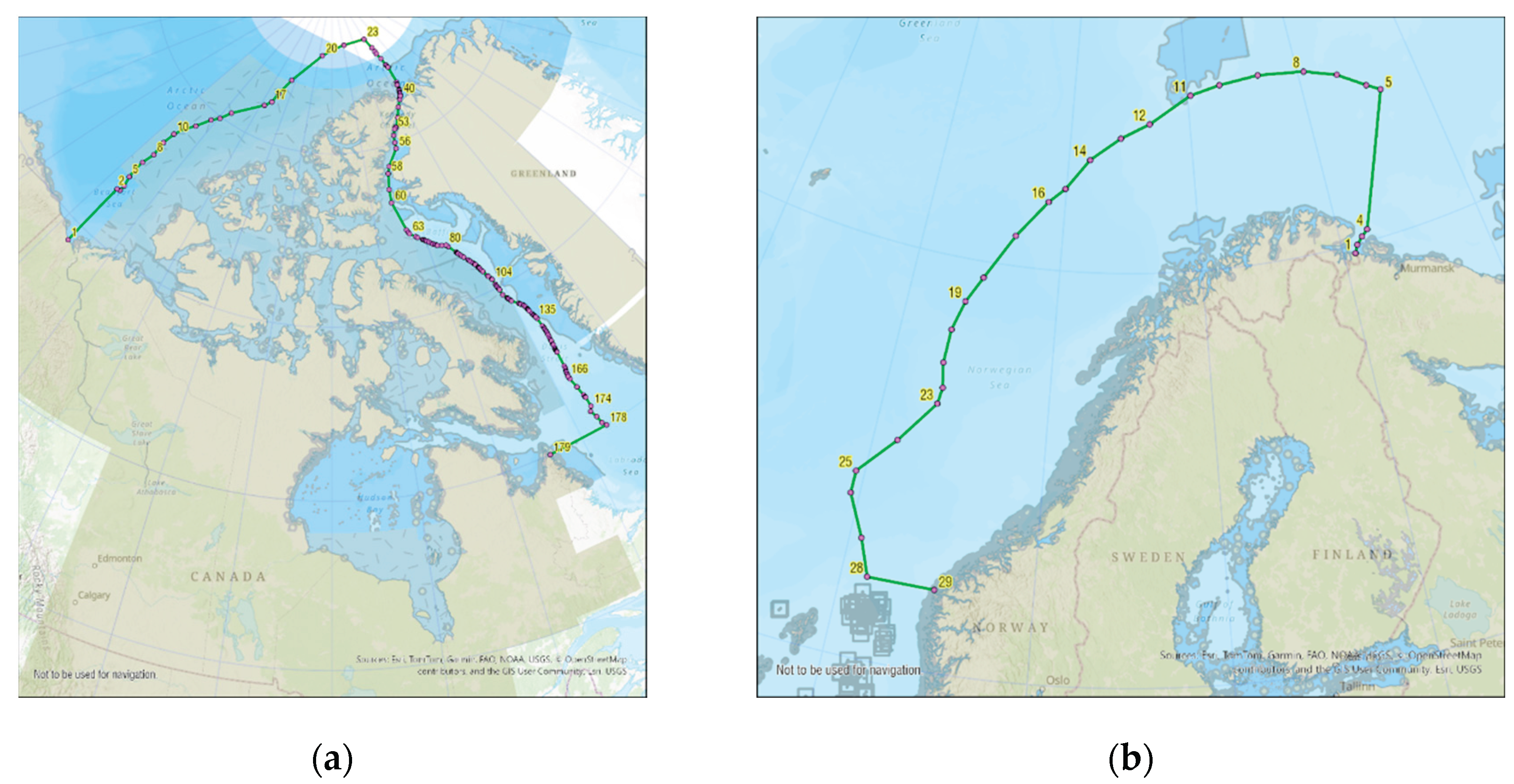
Figure 2.
The Mediterranean Sea as an emission control area (ECA) for sulfur oxides (SOx).
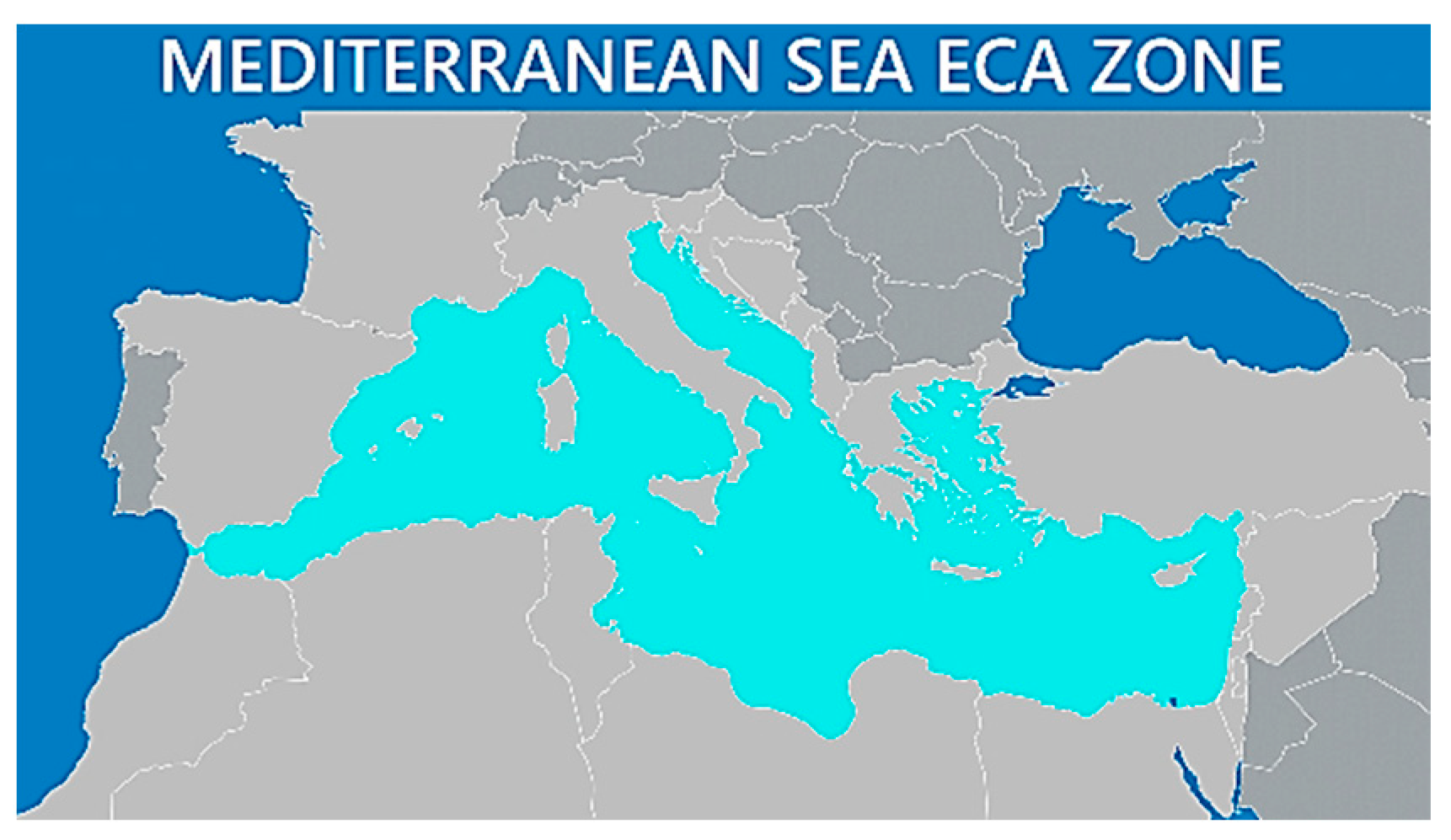
Figure 3.
MarPrime Ultra: Device for recording combustion pressures, determining injection and valve opening times, and valve leakage with an ultrasonic sensor.
Figure 3.
MarPrime Ultra: Device for recording combustion pressures, determining injection and valve opening times, and valve leakage with an ultrasonic sensor.
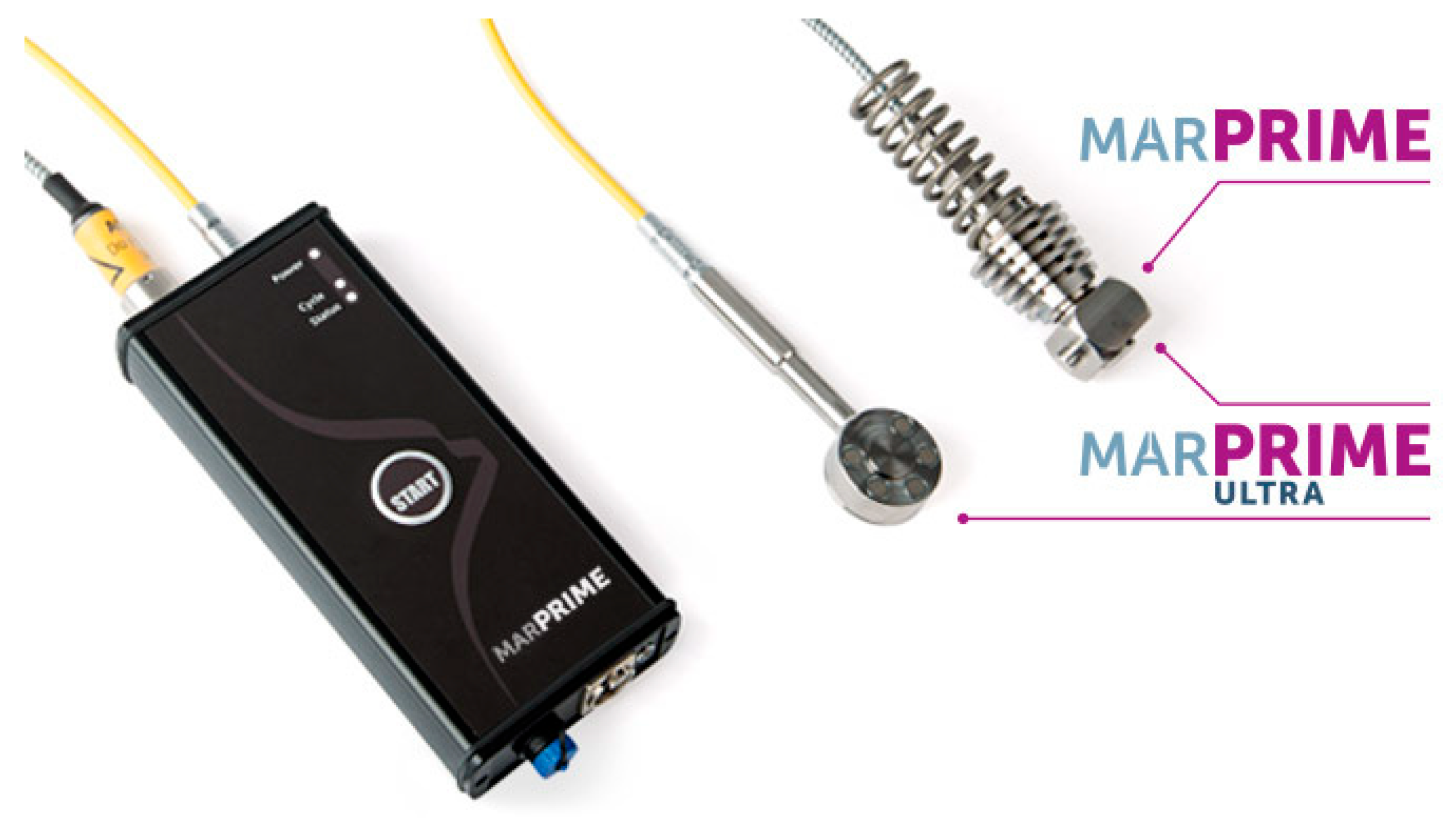
Figure 4.
Display of combustion pressures on the observed engine in the p-α diagram.
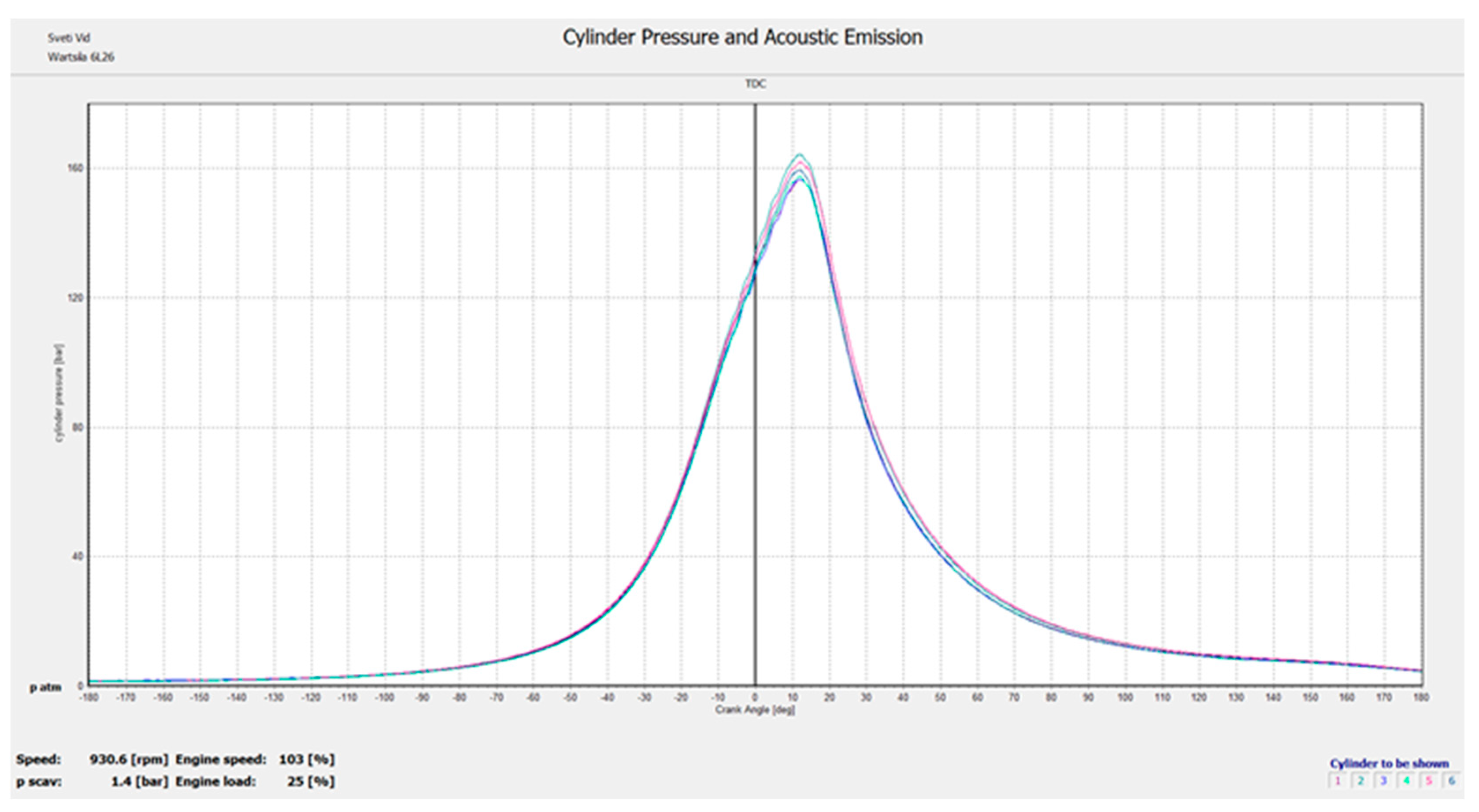
Figure 5.
Display of the development of all combustion pressures as an arithmetic mean in the p-α diagram.
Figure 5.
Display of the development of all combustion pressures as an arithmetic mean in the p-α diagram.
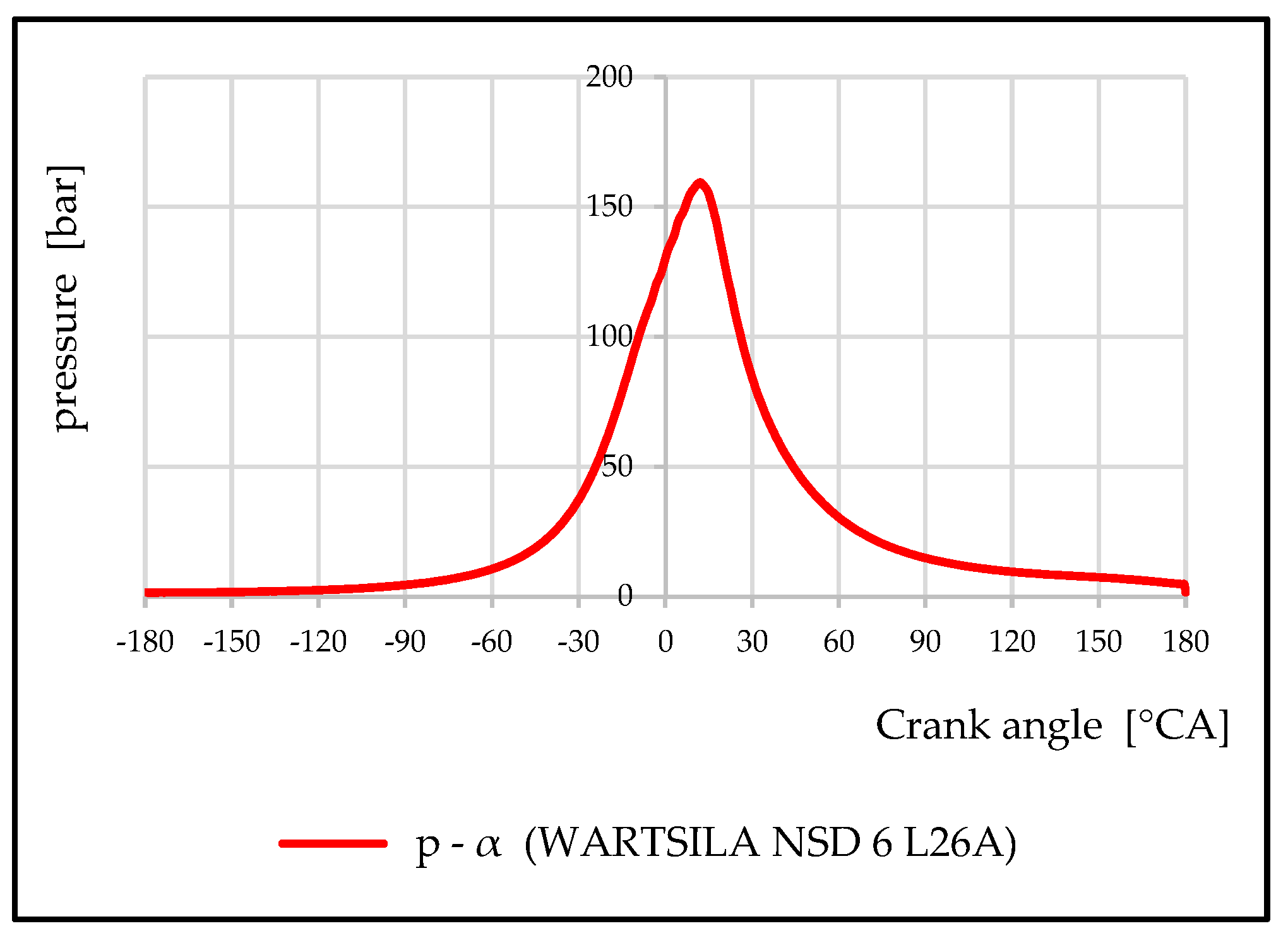
Figure 6.
Testo 350 MARITIME - Exhaust gas analyzer for marine diesel engines [31].
Figure 6.
Testo 350 MARITIME - Exhaust gas analyzer for marine diesel engines [31].
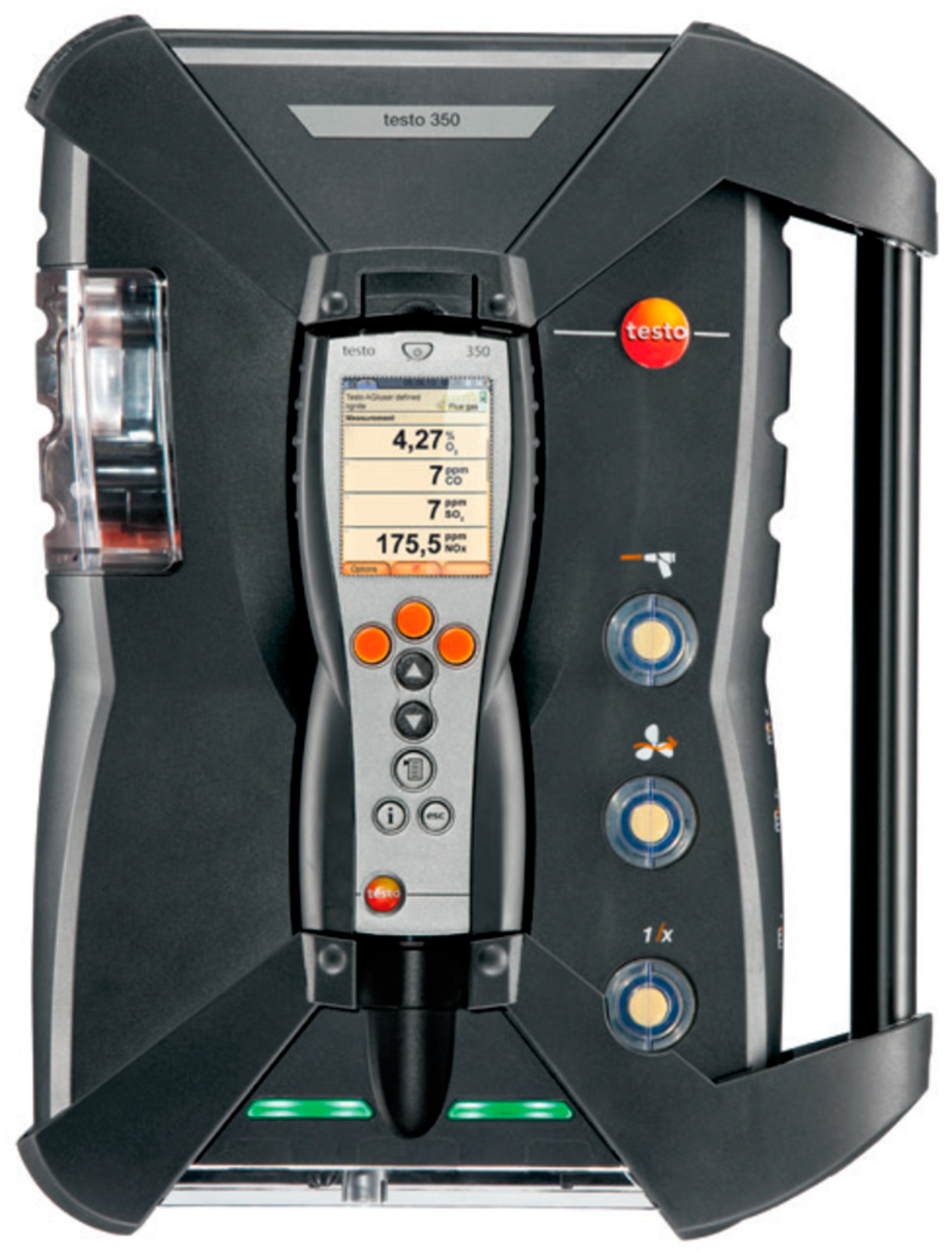
Figure 7.
Display of measured NOx concentration values with the testo 350 Control Unit.
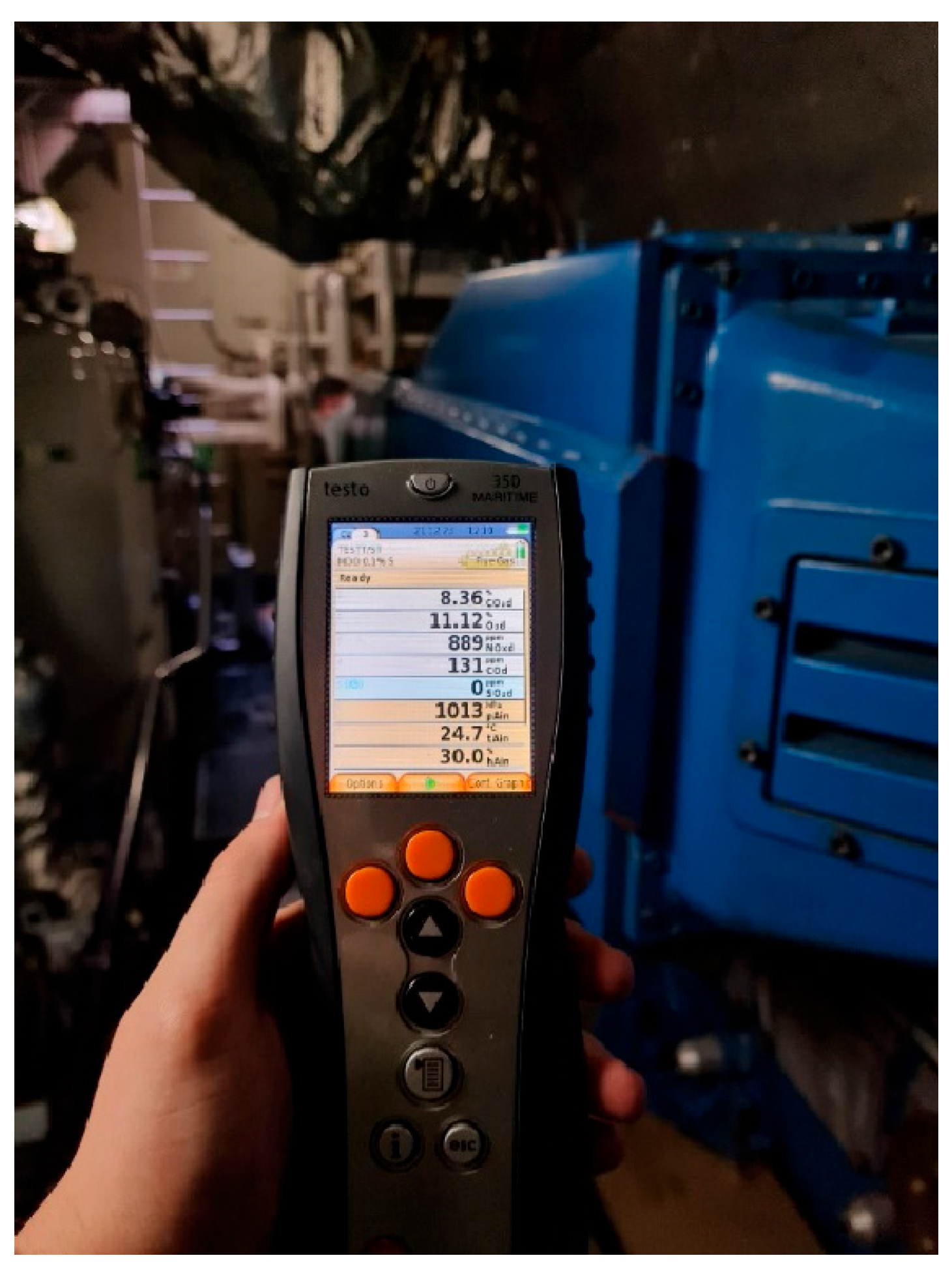

Table 1.
Different Tiers of control apply based on the ship construction date for four stroke medium-speed diesel engine.
Table 1.
Different Tiers of control apply based on the ship construction date for four stroke medium-speed diesel engine.
| Tier | Ship construction date on or after | 130 < n < 2000 |
|---|---|---|
| I | 1 January 2000 | 45 · n-0,2, e.g. 1000 rpm= 11,3 g/kWh |
| II | 1 January 2011 | 44 · n-0,23, e.g. 1000 rpm = 8,98 g/kWh |
| III | 1 January 2016 | 9 · n-0,2, e.g. 1000 rpm = 2,26 g/kWh |
Table 2.
Engine fuel-oil specification.
| Characteristic values | Unit | ISO-F-DMA |
| Kinematic viscosity @ 50° C | mm2/s | 2,913 |
| Density | kg/m3 | 834,3 |
| Net specific energy | kJ/kg | 42940 |
| Carbon | m/m | 85,86 |
| Hydrogen | m/m | 13,78 |
| Sulphur | m/m | 0,033 |
| Nitrogen | m/m | 0,0019 |
| Oxygen | m/m | 0,32 |
| Water | m/m | 0,0 |
Table 3.
Presentation of the advancing kinetic rates (k1,f) of the first chemical reaction of the Zeldovich mechanism, which were used in the mathematical model and their deviation from the measured value of the NO concentration in the exhaust gas emission.
Table 3.
Presentation of the advancing kinetic rates (k1,f) of the first chemical reaction of the Zeldovich mechanism, which were used in the mathematical model and their deviation from the measured value of the NO concentration in the exhaust gas emission.
| No. |
k1,f (mol/cm3s) |
NO (g/kWh) |
NO (ppm) |
Error (%) |
Ref. |
|---|---|---|---|---|---|
| 1 | 12,21 | 1013,59 | 14,01 | [9] | |
| 2 | 11,17 | 927,26 | +4,3 | [13] | |
| 3 | 10,38 | 864,68 | -3,07 | [18] | |
| 4 | 10,15 | 842,58 | -5,22 | [18] | |
| 5 | 10,38 | 861,68 | -3,07 | [28] | |
| 6 | 10,61 | 880,77 | -0,93 | [32] | |
| 7 | 10,57 | 877,45 | -1,30 | [33] | |
| 8 | 10,56 | 876,62 | +1,39 | [34] | |
| 9 | 10,88 | 903,18 | +1,60 | [35] | |
| 10 | 10,50 | 871,64 | +1,95 | [36] | |
| 11 | 10,18 | 845,07 | -4,94 | [37] | |
| 12 | 9,95 | 825,98 | -7,09 | [38] | |
| 13 | 10,15 | 842,58 | -5,22 | [39] |
Disclaimer/Publisher’s Note: The statements, opinions and data contained in all publications are solely those of the individual author(s) and contributor(s) and not of MDPI and/or the editor(s). MDPI and/or the editor(s) disclaim responsibility for any injury to people or property resulting from any ideas, methods, instructions or products referred to in the content. |
© 2026 by the authors. Licensee MDPI, Basel, Switzerland. This article is an open access article distributed under the terms and conditions of the Creative Commons Attribution (CC BY) license (http://creativecommons.org/licenses/by/4.0/).
Copyright: This open access article is published under a Creative Commons CC BY 4.0 license, which permit the free download, distribution, and reuse, provided that the author and preprint are cited in any reuse.


