
Submitted:
24 April 2026
Posted:
27 April 2026
You are already at the latest version
Abstract
Banana Fusarium wilt caused by Fusarium oxysporum f. sp. cubense tropical race 4 (Foc TR4) severely threatens global banana production. An endophytic Streptomyces strain 7‑1, isolated from the roots of Peliosanthes macrostegia, exhibited strong antifungal activity against Foc TR4 (inhibition rate: 79.75%) and broad-spectrum activity against 12 plant pathogenic fungi. The crude extract of strain 7‑1 inhibited Foc TR4 mycelial growth in a dose-dependent manner (EC50 = 69.20 μg·mL⁻¹) by disrupting cell wall/membrane integrity, inducing mycelial damage, spore apoptosis, nucleic acid leakage and membrane lipid peroxidation. Pot experiments showed strain 7‑1 achieved 63.15% biocontrol efficacy against banana Fusarium wilt, promoted banana growth, enhanced root defense enzyme activities (POD, PPO, PAL), and regulated rhizosphere microflora by enriching beneficial microbes (Bacillus) and reducing Fusarium abundance. Metabolomic analysis identified natamycin as the major active metabolite (EC50 = 8.58 μg·mL⁻¹), which exhibited similar inhibitory effects to the crude extract. Hydroponic experiments confirmed natamycin controlled banana Fusarium wilt with 34.91% efficacy at 1 × EC50. In conclusion, Streptomyces sp. 7‑1 is an environmentally friendly biocontrol strain inhibiting Foc TR4 via direct pathogen damage and indirect regulation of plant defense/rhizosphere microflora. Natamycin has potential as an agricultural fungicide, providing a new candidate and theoretical basis for sustainable control of banana Fusarium wilt.
Keywords:
Streptomyces
; banana fusarium wilt
; biological control
; metabolomics
; microbiome
1. Introduction
Bananas represent a critical fruit crop and dietary staple worldwide. The global epidemic of banana Fusarium wilt has resulted in severe economic losses, profoundly threatening agricultural stability and the livelihoods of farmers in major banana-producing countries. Caused by Fusarium oxysporum f. sp. cubense (Foc), banana Fusarium wilt constitutes a devastating threat to the global banana industry[1,2]. Among all Foc races, tropical race 4 (Foc TR4) is particularly destructive, infecting nearly all commercially cultivated banana varieties. Infected plants exhibit foliar yellowing, progressive wilting, and eventual death[3,4]. As Foc inoculum persists and accumulates in soil, making disease management exceptionally challenging. Although banana wilt disease can be controlled through fungicides and optimized cultivation measures, its effectiveness is limited. In addition, the use of chemical pesticides poses environmental risks. Therefore, developing innovative and sustainable control measures against Foc TR4 has become an urgent priority for the banana industry.
As an eco-friendly and sustainable approach, biological control has attracted extensive attention in modern agricultural disease management[5]. Biological control minimizes environmental pollution and human health risks while providing durable and sustainable disease suppression[6,7]. Functional microorganisms are widely applied in agriculture and play pivotal roles in promoting nutrient acquisition, plant growth, and stress tolerance[8]. These beneficial microbes enhance plant health through multifaceted mechanisms, including the induction of systemic physiological and biochemical responses that activate broad-spectrum disease resistance[9]. By reducing dependence on chemical fertilizers and pesticides, functional microorganisms contribute significantly to the development of sustainable agriculture. Thus, fully exploring and utilizing beneficial microorganisms provides a solid foundation for green agricultural development and ecological stability[10,11].
Actinomycetes are key components of soil microbial communities and exhibit outstanding agricultural value due to their versatile metabolic pathways and structurally diverse secondary metabolites. Notably, members of the genus Streptomyces produce a wealth of antibacterial, antifungal, and antiviral metabolites[12]. Antibiotics such as streptomycin and erythromycin derived from Streptomyces exhibit broad-spectrum activity against numerous plant pathogens and effectively suppress fungal diseases including gray mold and root rot. Some Streptomyces strains also enhance root development, improve water and nutrient uptake, accelerate plant growth, and strengthen tolerance to abiotic stresses[13]. Furthermore, actinomycetes contribute to soil health by decomposing organic matter, optimizing soil structure, and improving soil aeration and water-holding capacity[14,15,16]. Accumulating evidence indicates that Streptomyces species hold considerable potential as biocontrol agents against Fusarium wilt of banana. For example, Streptomyces sp. H4 significantly inhibited pathogen growth and induced resistance against Foc TR4 in banana plants. Similarly, Streptomyces sp. Y1-14 produced bioactive metabolites with strong antagonistic activity toward Foc TR4[16,17]. Although numerous antagonistic actinomycetes have been characterized, the understanding of the antibacterial mechanism of Streptomyces is still incomplete, especially in terms of metabolite function, molecular mechanism, and field ecological performance, which lack in-depth research[19].
In this study, endophytic Streptomyces strains were isolated from the roots of the medicinal plant Peliosanthes macrostegia to screen for potential biocontrol agents against Foc TR4. Their physiological and biochemical properties were systematically evaluated. Strain 7-1, which displayed strong and broad-spectrum antifungal activity, was selected for in-depth investigation. We assessed the effects of strain 7-1 on the disease index of banana Fusarium wilt. Additionally, the impacts of its crude extract on mycelial growth, morphological characteristics, physiological indices, and sporangial ultrastructure of Foc TR4 were examined. Integrated metabolomic analysis was further performed to identify the major antifungal constituents in the extract, and the underlying biocontrol mechanism was preliminarily elucidated. This study aims to develop stable, high-efficiency, multifunctional Streptomyces strains for sustainable management of banana Fusarium wilt.
2. Materials and Methods
2.1. Isolation of Actinomycetes
Plant samples consisted of healthy roots of Peliosanthes macrostegia. Root tissues were thoroughly rinsed with distilled water, blotted dry, and cut into 0.5-cm segments. Surface sterilization was performed by immersing segments in 75% ethanol for 1 min, followed by three rinses with sterile water. The segments were then soaked in 2%–5% sodium hypochlorite solution for 5 min and rinsed 3–5 times with sterile water. Subsequently, the sterilized root segments were transferred to a sterile mortar and ground into a homogenate with a small volume of sterile phosphate-buffered saline (PBS). The homogenate was transferred to sterile centrifuge tubes and serially diluted with sterile water to concentrations of 10⁰, 10⁻¹, and 10⁻².Aliquots (0.1–0.2 mL) of each dilution were spread evenly onto ISP2 agar plates supplemented with nystatin and penicillin. Plates were incubated at 28°C for 7 days. Colonies were observed, and single colonies were picked and inoculated onto fresh Gao’s No. 1 agar plates, followed by incubation at 28°C for 7 days. The single-colony isolation procedure was repeated 2–3 times until pure cultures were obtained. All operations were conducted in a laminar flow hood under strict aseptic conditions[20].
2.2. Screening of Antifungal Actinomycetes
The antagonistic activity of the isolated streptomycetes was screened against Fusarium oxysporum f. sp. cubense tropical race 4 (Foc TR4) using the conventional dot-inoculation method. Potato dextrose agar (PDA) plates were prepared. A mycelial disc (5 mm in diameter) of Foc TR4 was placed at the center of each plate. Each isolate was inoculated at four equidistant points on the plate, 2.5 cm away from the center. Plates were incubated at 28°C for 7 days, and a non-inoculated treatment served as the control. The diameter of Foc TR4 colonies was measured after incubation. Antagonistic activity was calculated as the percent inhibition rate using the following formula: Inhibition rate (%) = [(A − B) / (A − 1)] × 100 where A and B represent the mean colony diameters (cm) of Foc TR4 in the control and treatment groups, respectively. All experiments were performed in triplicate[21].
2.3. Identification of Antifungal Actinomycetes
The selected isolates were cultured on Gao’s No. 1, ISP2, ISP3, ISP4, ISP5, ISP6, ISP7 (Qingdao Hope Bio-Technology Co., Ltd., Qingdao, China) and PDA media at 28 °C for 7–10 days. Cultural and morphological characteristics, including mycelial morphology, spore structure, and aerial mycelium color, were recorded. Physiological and biochemical analyses were also performed, including pH and NaCl tolerance, soluble pigment production, H₂S production, urease activity, and carbon and nitrogen utilization[22,23].
2.4. Assay of Abroad-Spectrum Antifungal Activity of Strain 7-1
To evaluate the broad-spectrum antifungal activity of strain 7-1 and its extracts, 12 fungal phytopathogens were used, including Colletotrichum gloeosporioides, Botrytis cinerea, Fusarium oxysporum f. sp. cubense race 1, Cryphonectria parasitica (Murr.) marr, Colletotrichum acutatum, Colletotrichum fragariae, Colletotrichum higginsianum Sacc, Fusarium graminearum Schwabe, Fusarium oxysporum f. sp. Cucumerinum, Fusarium oxysporum f. sp. lycopersici Snyder et Hansen, Curvularia lunata and Alternaria tenuissima. All strains were provided by the Key Laboratory of Biology and Genetic Resources of Tropical Crops, Ministry of Agriculture and Rural Affairs; Institute of Tropical Bioscience and Biotechnology, Chinese Academy of Tropical Agricultural Sciences, Haikou, China. Antifungal activity was determined using the conventional spot inoculation method. All experiments were performed in triplicate.
2.5. Preparation of Ethanol Extracts
Strain 7-1 was inoculated into 1 L of sterilized soybean liquid medium (SLM; containing 15 g soybean flour, 20 g soluble starch, 5 g yeast extract, 4 g peptone, 4 g NaCl, and 4 g CaCO₃; pH 7.2–7.4) and incubated at 28 °C with shaking at 180 rpm for 7 days. The culture filtrate was extracted with 95% ethanol at a 1:1 (v/v) ratio. The mixture was filtered through qualitative filter paper (Whatman No. 1). The filtrate was concentrated using a rotary vacuum evaporator (EYELA, N-1300, Tokyo, Japan). The crude extract was loaded onto a silica gel column (10.0 cm inner diameter, 100 cm length) and eluted with a linear gradient starting with methanol: deionized water (100:0). The extract was dissolved in deionized water to a final concentration of 100.0 mg·mL-1, filter-sterilized using a 0.22 μm sterile filter (Millipore, Bedford, MA, USA), and stored at 4 °C.
2.6. Inhibition Percentage of Strain 7-1 Extracts on Mycelial Growth
The inhibitory effects of strain 7-1 extracts on mycelial growth of Foc TR4 were evaluated. Extracts were added to sterilized PDA medium to final concentrations of 0, 3.12, 6.25, 12.5, 25, 50, 100, 200, and 400 mg L⁻¹. A 5-mm-diameter mycelial disc of Foc TR4 was placed at the center of each plate. The colony diameter of Foc TR4 was measured after incubation at 28 °C for 7 days. All experiments were performed in triplicate. The half-maximal effective concentration (EC₅₀) value was calculated using SPSS v25.0 software.
2.7. Effects of Strain 7-1 Extracts on the Activity of Foc TR4
Foc TR4 expressing the green fluorescent protein gene (GFP-Foc TR4) was provided by the Institute of Environment and Plant Protection, Chinese Academy of Tropical Agricultural Sciences (Haikou, China). Mycelial discs (5 mm) of Foc TR4 and GFP-Foc TR4 were inoculated onto PDA plates, respectively. Sterile coverslips (2 cm × 2 cm) were placed adjacent to the discs, and the plates were incubated at 28 °C in darkness for 7 days until mycelia covered the coverslips. Sterile crude extracts at concentrations of 1×EC₅₀ and 3×EC₅₀ were applied dropwise onto the coverslips, followed by incubation at 28 °C for 12 h. An equal volume of sterile water served as the control. The fluorescence intensity of GFP-Foc TR4 was observed using a laser scanning confocal microscope (Zeiss, LSM800).
2.8. Effects of Strain 7-1 Extracts on Ultrastructure of Foc TR4
A 5-mm mycelial disc of Foc TR4 was inoculated onto PDA plates amended with strain 7-1 extracts at a concentration of 1 × EC₅₀. Samples (1 cm² in area, 3 mm thick) were excised from the leading edge of Foc TR4 colonies. An equivalent volume of sterile water served as the control. Samples were fixed in 2.5% (v/v) glutaraldehyde for 4 h and rinsed four times with phosphate-buffered saline (PBS) for 20 min per wash. Dehydration was performed using a graded ethanol series (30%, 50%, 70%, 90%, and 100%). Dehydrated samples were immersed in tert-butyl alcohol for 15 min, dried using critical point drying with liquid CO₂, sputter-coated with gold, and observed using scanning electron microscopy (SEM). For transmission electron microscopy (TEM), treated samples were embedded in Epon 812 resin and polymerized at 37 °C for 12 h, 45 °C for 12 h, and 60 °C for 24 h, respectively. Ultrathin sections were prepared using an ultramicrotome (EM UC6, Leica, Wetzlar, Germany) and stained with uranyl acetate and lead citrate. Mycelial ultrastructure was examined using a transmission electron microscope (HT7700, Hitachi, Ibaraki, Japan).
2.9. Effects of Crude Extracts on Foc TR4 Conidia
A spore suspension of Foc TR4 was prepared at 1 × 10⁶ CFU/mL and mixed with an equal volume of crude extract at 3 × EC₅₀. A 10 μL aliquot of the mixture was placed on a glass slide, and an equivalent volume of sterile water served as the control. After incubation for 24 h, samples were prepared for scanning electron microscopy (SEM), and spore morphological alterations were observed using a scanning electron microscope (Sigma 500/VP; Zeiss, Oberkochen, Germany). Meanwhile, two groups were established: a control group (Foc TR4 spore suspension alone) and a treatment group (spore suspension mixed with an equal volume of crude extract at 3 × EC₅₀). Following incubation at 28 °C for 12 h, a 10 μL aliquot of each suspension was placed onto glass slides, and spore germination was observed using light microscopy. Foc TR4 spores from different treatments were stained using an Annexin V-FITC/PI Apoptosis Detection Kit (Vazyme Biotech Co., Ltd., Nanjing, China), and staining patterns were observed under a laser scanning confocal microscope.
2.10. Effect of Crude Extracts on Foc TR4 Cell Membranes
A 1-mL aliquot of Foc TR4 spore suspension (1.0 × 10⁵ CFU/mL) was inoculated into 100 mL of potato dextrose broth (PDB) medium and incubated at 28 °C with shaking at 180 rpm for 3 days. Sterile crude extract was then added to final concentrations of 1 ×, 3 ×, 6 ×, 9 ×, and 12 × EC₅₀. An equivalent volume of sterile deionized water served as the control. All treatments were performed in triplicate. After incubation at 28 °C and 180 rpm for a further 3 days, samples were harvested and centrifuged at 7000 rpm and 4 °C for 5 min. The supernatant was collected and re-centrifuged at 8000 rpm and 4 °C for 20 min. A 10-mL aliquot of each supernatant was transferred to clean test tubes, and the extracellular conductivity of Foc TR4 mycelia was measured using a conductivity meter (INESA, Shanghai, China). A 200-μL aliquot of each supernatant was transferred to a 96-well quartz microplate, and the absorbance at 260 nm was determined to quantify nucleic acid leakage. The resulting mycelial pellets were frozen at −80 °C for 1 day, lyophilized, and weighed to determine mycelial biomass. Peroxidase (POD) activity and malondialdehyde (MDA) content in mycelial samples were determined using commercial assay kits (Beijing Solarbio Science & Technology Co., Ltd., Beijing, China). All biochemical assays were performed in triplicate.
2.11. Metabolic Changes During Co-Culture of Strain 7-1 and Foc TR4
Three treatments were established: T1, Foc TR4 cultured alone; T2, strain 7-1 cultured alone; and T3, co-culture of strain 7-1 and Foc TR4 (inhibition rate = 79.75%). Secondary metabolites in T1, T2, and T3 were identified using liquid chromatography tandem mass spectrometry (LC MS/MS), with three biological replicates per group. Raw data were processed using Progenesis QI software for baseline correction, peak detection, and integration, followed by metabolite annotation via matching against standard metabolic databases. Processed data were uploaded to the Majorbio Cloud Platform for further analysis. After normalization, principal component analysis (PCA) was performed using the ropls package in R software. Differentially accumulated metabolites (DAMs) were screened based on VIP > 1, p < 0.05, and fold change (FC) > 1
2.12. Functional Verification of Key Bioactive Metabolites
Combined with VIP scores and Log₂FC values, the following authentic standards were purchased: natamycin, isoeugenol, artemisinin, cedrol, and paeonol. Antifungal activity was determined using the agar diffusion method as described in Section 2.6. All treatments were performed in triplicate. Colony diameters were measured, and the inhibition rate was calculated accordingly.
2.13. Efficacy of Strain 7-1 in the Control of Banana Seedling Blight
Banana seedlings (Musa acuminata L. AAA genotype cv. Cavendish) with a height of 8–10 cm were transplanted into plastic pots (12 cm × 12 cm) containing 1000 g of soil. Plants were maintained in a greenhouse at 28 °C with 70%–80% relative humidity. Three treatments were established as follows: (1) Blank control (sterile water); (2) Positive control (inoculated with GFP-Foc TR4); (3) Treatment 1 (fermentation broth of strain 7-1 at 1.0 × 10⁷ CFU/mL); and (4) Treatment 2 (mixed suspension of strain 7-1 at 1.0 × 10⁷ CFU/mL and GFP-Foc TR4 at 1.0 × 10⁷ CFU/mL). A 100-mL aliquot of each suspension was applied to the roots of banana seedlings (Jing et al., 2020). Treatments were applied at 7-day intervals. Root samples were collected at 60 days post-inoculation (dpi), and hand sections were prepared (Jing et al., 2020). GFP-Foc TR4 colonization was observed using a laser scanning confocal microscope (Zeiss, LSM800, Germany). The maximum photochemical efficiency, relative chlorophyll content, leaf area, leaf thickness, stem diameter, plant height, and fresh weight were also determined.
2.14. Analysis of Inter-Root Microbial Communities
Rhizosphere soil samples were collected and subjected to third-generation high-throughput sequencing and bioinformatic analysis using the Meggie BioCloud platform at Majorbio Bio-Pharm Technology Co., Ltd. (Shanghai, China).
2.15. Effect of Streptomyces 7-1 on Root Defense Enzymes in Banana Seedlings
The root systems of banana seedlings from the above experiments were collected, and root systems with a fresh weight of 1 g were placed in a grinding bowl and ground by adding liquid nitrogen. These ground root powders were used as materials to determine the root vigor of banana seedlings and the enzyme activities of peroxidase (POD), phenylalanine ammonia-lyase (PAL), and polyphenol oxidase (PPO) in the roots according to a commercial kit (Jiangsu Addison Biotechnology Co., Ltd., Nanjing, China), and all the experiments were repeated three times.
2.16. Preliminary Study on the Antifungal Mechanism of Key Bioactive Metabolites
The effects of key bioactive metabolites on the cell membrane of Foc TR4 were determined in accordance with the protocols described in Section 2.10. All experiments were performed in triplicate to compare the differential effects between the crude extract of strain 7-1 and the selected key bioactive metabolites.
2.17. Effects of Key Bioactive Metabolites on the Infectivity of Foc TR4 to Banana
Banana seedlings (Musa acuminata L. AAA genotype, cv. Cavendish) with a height of 8–10 cm were transplanted into plastic hydroponic boxes (32 cm × 22 cm × 18 cm) containing 5 L of purified water. Plants were grown in a greenhouse at 28 ℃.Three treatments were set up: (1) Blank control (sterile water); (2) Positive control (inoculated with 1.0 × 10⁷ CFU/mL GFP-Foc TR4); (3) Treatment group (3 × EC₅₀ key bioactive metabolites + 1.0 × 10⁷ CFU/mL GFP-Foc TR4). Each treatment included 30 banana seedlings. The solution was replaced every 7 days, and the pathogen and key bioactive metabolites were re-applied. After 8 weeks, the disease index of each treatment was calculated.
2.18. Data Statistics and Analysis
Experimental data were subjected to one way analysis of variance (ANOVA) using SPSS software (Version 25.0). All data are presented as mean ± standard deviation (SD). Differences were considered statistically significant at p < 0.05.
3. Results
3.1. Streptomyces Strain 7-1 Exhibits Antifungal Activities Against Various Phytopathogenic Fungi
An actinomycete strain exhibiting antagonistic activity against Foc TR4 was isolated from the roots of Peliosanthes macrostegia and designated as strain 7-1. This strain achieved a mycelial growth inhibition rate of 79.75% against Foc TR4 (Figure 1a). To assess the broad-spectrum antifungal potential of Streptomyces strain 7-1, its antagonistic effects against 12 phytopathogenic fungi were evaluated using the conventional spot inoculation method. The results demonstrated that strain 7-1 could effectively suppress the mycelial growth of diverse pathogenic fungi, with inhibition rates ranging from 61.3% to 89.3%. Among all tested pathogens, this isolate displayed the strongest inhibitory activity against Cryphonectria parasitica (Murr.) Marr, while its inhibitory effect against Alternaria tenuissima was the weakest observed (Figure 1c and Figure 1d).
Strain 7-1 appeared yellow on ISP5 medium and pale yellow on the other tested media (Figure 1b). No diffusible pigments were produced on any of the media examined (Table A1). The optimal pH for its growth was 7, and the strain grew well at NaCl concentrations below 7%.Strain 7-1 produced urease, lipase, chitinase, and β-1,3-glucanase. It was capable of hydrolyzing starch, reducing nitrate, and liquefying gelatin, but exhibited no cellulose-hydrolyzing activity (Table A2).Strain 7-1 could effectively utilize carbon sources including galactose, D-fructose, and D-xylose, and efficiently assimilate nitrogen sources such as asparagine, glycine, and potassium nitrate (Table A2). It was sensitive to antibiotics including erythromycin, kanamycin, and gentamicin, but resistant to penicillin, minocycline, and tetracycline (Table A3).
Morphological characteristics of strain 7-1 were observed by scanning electron microscopy. The hyphae were extensively interwoven, forming an irregular dendritic and cord-like three-dimensional network. Hyphal diameters varied, and hyphae overlapped to constitute a dense three-dimensional mycelial cluster, consistent with the typical morphology of the genus Streptomyces (Figure 1e).Based on its physiological and biochemical characteristics combined with scanning electron microscopic observations, strain 7-1 was identified as a member of the genus Streptomyces.
3.2. Streptomyces Strain 7-1 Extract Exhibits Antifungal Activity Against Foc TR4
All tested concentrations of the crude extract exerted a dose-dependent inhibitory effect on the mycelial growth of Foc TR4. Specifically, when the crude extract of Streptomyces sp. 7-1 was applied at concentrations of 3.12, 6.25, 12.50, 25, 50, 100, and 200 μg·mL⁻¹, the corresponding inhibition rates against Foc TR4 mycelial growth were 9.46%, 10.81%, 12.16%, 25.00%, 35.81%, 68.11%, and 82.58%, respectively (Figure 2a). The half-maximal effective concentration (EC₅₀) of the crude extract against Foc TR4 mycelial growth was calculated to be 69.20 μg·mL⁻¹.
3.3. Streptomyces Strain 7-1 Inhibited the Growth of Spores and Hyphae of Foc TR4
Laser confocal microscopy observations revealed that the crude extract of Streptomyces sp. 7-1 induced lysis of the cytoplasmic membrane of Foc TR4, leading to the disappearance of fluorescence signals in GFP-overexpressing Foc TR4 (GFP-Foc TR4) (Figure 2b). The effects of the crude extract at 3 × EC₅₀ concentration on the morphology of Foc TR4 spores and mycelia were observed using scanning electron microscopy (SEM) and transmission electron microscopy (TEM).
TEM results demonstrated the response of Foc TR4 mycelia to the 3 × EC₅₀ crude extract. In the control group, the cell walls, cell membranes, and vesicular structures of the mycelia were intact and clearly distinguishable. In contrast, treatment with the crude extract resulted in disorganization, dislocation, vacuolization, matrix blurring, and organelle lysis in Foc TR4 cells, accompanied by disruption of the integrity of cell walls and cell membranes (Figure 2c).
Under scanning electron microscopy (SEM), spores in the control group displayed intact and plump structures. In contrast, spores treated with the crude extract at 3 × EC₅₀ exhibited severe morphological abnormalities and structural damage, which were characterized by distortion, rupture, and lysis (Figure 2d). These observations indicated that the crude extract could impair the cellular integrity of Foc TR4 spores. Following staining with propidium iodide (PI) and Annexin dyes, the crude extract-treated spores emitted fluorescence under laser confocal microscopy (Figure 2e), suggesting that the crude extract could induce apoptosis in Foc TR4 spores. Additionally, the spore germination rate was significantly reduced after exposure to the crude extract (Figure 2f), which further confirmed the damaging effect of the crude extract on Foc TR4 spores.
3.4. Physiological Mechanism Underlying Foc TR4 Inhibition by Streptomyces sp. 7-1 Crude Extract
To further elucidate the physiological mechanism by which the Streptomyces sp. 7-1 extract inhibits Foc TR4, the integrity of the fungal mycelial cell membrane was evaluated by determining mycelial biomass, soluble sugar content, soluble protein content, nucleic acid leakage, and malondialdehyde (MDA) content. The results showed that with increasing extract concentration (expressed as multiples of EC₅₀), the dry weight of Foc TR4 mycelia gradually decreased, while nucleic acid leakage and MDA content increased; in contrast, soluble sugar and soluble protein contents exhibited a decreasing trend (Figure 2gFigures –Figure 2k).
After treatment with the Streptomyces sp. 7-1 crude extract, the mycelial dry weights in the 6 × EC₅₀, 3 × EC₅₀, and 1 × EC₅₀ groups were 0.209, 0.267, and 0.342 g, respectively—all significantly lower than that of the control group (0.403 g)( Figure 2g). This confirmed that the Streptomyces sp. 7-1 crude extract exerted a significant inhibitory effect on Foc TR4 mycelial growth. The soluble protein contents of Foc TR4 in the 1 × EC₅₀, 3 × EC₅₀, and 6 × EC₅₀ groups were 41.12, 31.10, and 22.17 mg·g⁻¹, respectively (Figure 2h), which were all significantly lower than that of the control group (62.65 μg·g⁻¹). The soluble sugar content in the control group was 14.63 mg·g⁻¹, while those in the 1 × EC₅₀, 3 × EC₅₀, and 6 × EC₅₀ treatment groups were 13.16, 10.36, and 5.23 mg·g⁻¹, respectively, showing a marked downward trend with increasing extract concentration (Figure 2i).
As shown in Figure 2j, the Streptomyces sp. 7-1 crude extract induced increased nucleic acid leakage from Foc TR4 mycelia. Compared with the control group, the absorbance of the supernatant at 260 nm was significantly increased in all treatment groups. MDA content is a key indicator for evaluating cell membrane integrity, as cell membrane damage leads to the release of MDA. The results demonstrated that Foc TR4 underwent cell membrane disintegration accompanied by elevated MDA content after treatment with the Streptomyces sp. 7-1 crude extract (Figure 2k). The control group exhibited the lowest MDA content (16.31 nmol·g⁻¹); as the extract concentration increased to 1 × EC₅₀, 3 × EC₅₀, and 6 × EC₅₀, the MDA contents increased to 33.51, 37.99, and 73.92 nmol·g⁻¹, respectively. Collectively, the results of spore morphology, mycelial ultrastructure, and cell membrane damage analyses confirmed that the crude extract significantly disrupted the integrity of the mycelial ultrastructure, leading to the degradation of Foc TR4 cell walls and fibrous digestion of the outer cell wall.
3.5. Streptomyces sp. 7-1 Improve the Plant Resistance Against Foc TR4
At 60 days post-inoculation (dpi), banana plants treated with Foc TR4 alone exhibited severe leaf wilting and necrosis, with a disease index of 63.87% (Figure 3a). In contrast, most banana leaves in the Streptomyces sp. 7-1 + Foc TR4 treatment group remained green and healthy, with a disease index of 23.54%. Banana leaves in the blank control group and the Streptomyces sp. 7-1-only treatment group remained green without any yellowing symptoms. Longitudinal sectioning of banana corms showed extensive black discoloration in the Foc TR4-only group, indicating severe Foc TR4 infection. In contrast, the Streptomyces sp. 7-1 + Foc TR4 group exhibited very mild symptoms. Treatment with Streptomyces sp. 7-1 significantly reduced Foc TR4 infection, achieving a biocontrol efficacy of 63.15% (Table 1).
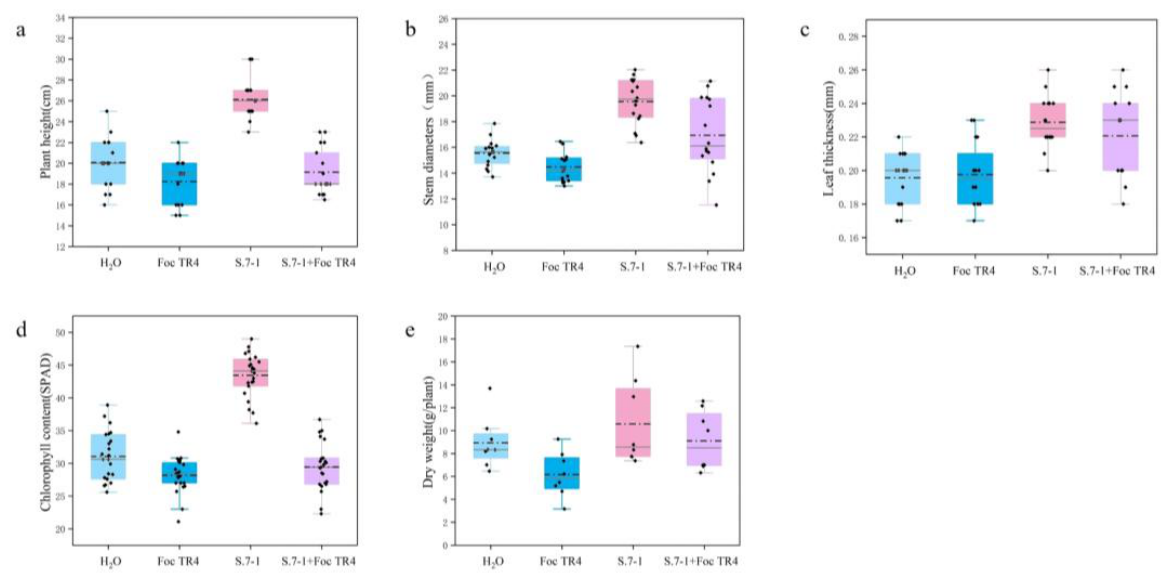
Compared with the Foc TR4-stressed group and the control group, banana seedlings treated with Streptomyces sp. 7-1 showed better growth performance. After inoculation with Foc TR4 and Streptomyces sp. 7-1, significant changes were observed in banana growth indices including plant height, stem diameter, chlorophyll content, leaf area, and leaf thickness (Figure A1a-1e).
Compared with the Foc TR4-only inoculation group, treatment with Streptomyces sp. 7-1 increased plant height by 43.19% (Figure A1a), stem diameter by 35.09% (Figure A1b), leaf thickness by 15.82% (Figure A1c), chlorophyll content by 54.38% (Figure A1d), and dry weight by 71.90% (Figure A1a). Notably, several growth indices of banana in the Streptomyces sp. 7-1 + Foc TR4 group were significantly superior to those in the Foc TR4-only group, although the effect was slightly weaker than in the Streptomyces sp. 7-1-only group. In conclusion, the antagonistic strain Streptomyces sp. 7-1 can alleviate growth inhibition caused by Foc TR4 and promote plant growth to a certain extent.
3.6. Strain 7-1 Extracts Activates Defense Response and Secondary Metabolite Biosynthesis in Banana
Treatment with Streptomyces sp. 7-1 enhanced the intrinsic defense response of banana plants against Foc TR4. The results demonstrated that inoculation with Foc TR4 significantly inhibited root activity and the activities of phenylalanine ammonia-lyase (PAL), peroxidase (POD), and polyphenol oxidase (PPO) in banana roots, whereas treatment with Streptomyces sp. 7-1 effectively increased these defensive enzyme activities. Root activity values in the blank control group, Streptomyces sp. 7-1-only group, Streptomyces sp. 7-1 + Foc TR4 group, and Foc TR4-only group were 22.78, 27.28, 24.19, and 4.33 μg·h⁻¹·g⁻¹, respectively (Figure 3b). These results indicated that inoculation with Foc TR4 significantly reduced banana root activity, while Streptomyces sp. 7-1 treatment alleviated the Foc TR4-induced damage to root activity.
Among all treatment groups, the Streptomyces sp. 7-1-only group exhibited the highest POD activity (3421.17 U·g⁻¹), which was significantly higher than that in the other treatment groups (Figure 3c). The POD activity in the Streptomyces sp. 7-1 + Foc TR4 group was 2800.67 U·g⁻¹, which was 1.60 times higher than that in the Foc TR4-only group (1750.33 U·g⁻¹). The PPO activity in the Foc TR4-only group (441.67 U·g⁻¹) was significantly lower than that in the blank control group (540.67 U·g⁻¹). In contrast, the PPO activities in the Streptomyces sp. 7-1-only group and Streptomyces sp. 7-1 + Foc TR4 group were 2321.03 and 2503.70 U·g⁻¹, respectively—5.26 and 5.67 times higher than that in the Foc TR4-only group (Figure 3d). The PAL activities in the Streptomyces sp. 7-1-only group and Streptomyces sp. 7-1 + Foc TR4 group were 104.21 and 104.99 U·g⁻¹, respectively, both of which were significantly higher than that in the Foc TR4-only group (Figure 3e).
3.7. Streptomyces sp. 7-1 Enriches Beneficial Rhizosphere Microbiota
Analysis of bacterial community composition at the genus level showed that, compared with the blank control group, plants inoculated with Foc TR4 alone exhibited severe disease symptoms, accompanied by significant perturbations in the rhizosphere microbial community structure. The relative abundance of typical beneficial genera (e.g., Bacillus) was significantly decreased, whereas the abundance of various potentially pathogenic taxa was remarkably enriched. In the group inoculated with Streptomyces sp. 7-1 alone, plant growth-promoting rhizobacteria (PGPR), including Bacillus and Sphingomonas, were significantly enriched, leading to a stable and healthy rhizosphere bacterial community structure[24,25]. In the Streptomyces sp. 7-1 + Foc TR4 group, the abundance of Bacillus recovered sharply and was highly enriched, while the abundance of harmful taxa induced by Foc TR4 was markedly reduced. Consequently, the rhizosphere bacterial community structure was restored to a healthy state, and plant disease symptoms were effectively alleviated (Figure 3f).
Analysis of fungal community composition at the genus level revealed that the background relative abundance of Fusarium (the causal agent of banana Fusarium wilt used in this study) was low in the blank control group. In the Foc TR4-only inoculation group, the relative abundance of Fusarium increased drastically and became the dominant fungal genus, which was consistent with the severe disease phenotype observed in this group. Inoculation with Streptomyces sp. 7-1 alone maintained a low relative abundance of Fusarium in the rhizosphere. Compared with the Foc TR4-only group, the relative abundance of the pathogenic genus Fusarium was significantly suppressed in the Streptomyces sp. 7-1 + Foc TR4 group. Meanwhile, the fungal community composition became more stable, and the Foc TR4-induced perturbation of the fungal community was notably restored (Figure 3g).
3.8. Identification of Key Active Metabolites of Streptomyces sp. 7-1 Inhibiting Foc TR4 Growth
To identify the key active metabolites of antagonistic strain 7-1 that inhibit the growth of Foc TR4, a comparative metabolomic analysis was conducted between strain 7-1 co-cultured with Foc TR4 under confrontation conditions and strain 7-1 cultured alone (control group, CK). Results from principal component analysis (PCA) and sample correlation analysis demonstrated good biological reproducibility among replicates in each group, as well as significant differences in the metabolic profiles of strain 7-1 under different culture conditions (Figure 4a). Specifically, pathogen confrontation stress markedly reshaped the overall metabolic characteristics of strain 7-1, resulting in a clear separation of its metabolic pattern from that of the pure culture control group.
Screening of differentially accumulated metabolites (DAMs) revealed that, compared with the pure culture state, a large number of significantly upregulated DAMs were induced in strain 7-1 under interactive confrontation with Foc TR4 (Figure 4b). Kyoto Encyclopedia of Genes and Genomes (KEGG) pathway enrichment analysis indicated that these DAMs were mainly enriched in metabolic pathways closely associated with microbial antimicrobial activity, including the biosynthesis of secondary metabolites, biosynthesis of antibiotics, and amino acid metabolism (Figure 4c).
Therefore, secondary metabolites and antibiotics produced by strain 7-1 were further screened. Considering metabolite availability and cost-effectiveness, secondary metabolites (i.e., paeonol, cedrol, isoeugenol, and ferulic acid) and antibiotics (i.e., artemisinin, geldanamycin, natamycin, and gentamicin) were selected to determine their antifungal activity against Foc TR4. Among these tested metabolites, natamycin exhibited strong antifungal inhibitory activity, with an EC₅₀ value of 8.58 μg·mL⁻¹ (Figure 4d).
Meanwhile, referring to the experimental protocols described in Section 2.10, the effects of natamycin on Foc TR4 were determined. The results demonstrated that natamycin inhibited Foc TR4 mycelial growth (Figure 4e) and induced nucleic acid leakage in Foc TR4 (Figure 4f) in a concentration-dependent manner. The effects of natamycin on Foc TR4 were highly consistent with those of the crude extract of Streptomyces sp. 7-1, suggesting that natamycin is the major active substance produced by strain 7-1 against Foc TR4 and holds potential for application in plant disease control research.
3.9. Effects of Key Active Metabolites on Foc TR4 Infection in Banana
In the banana hydroponic experiment, natamycin was applied to achieve a concentration of 1 × EC₅₀ (8.58 μg·mL⁻¹) in the hydroponic solution. The results showed that adding natamycin after inoculation with Foc TR4 spore suspension effectively reduced the disease index of banana, with a biocontrol efficacy of 34.91% (Table 2). After treatment with natamycin, the yellowing symptoms of banana leaves were alleviated (Figure 4G). Longitudinal sectioning of corms showed no blackening in the natamycin-treated group, indicating that natamycin could inhibit the infection of banana by Foc TR4 to a certain extent and has potential in the control of plant diseases.
4. Discussion
Previous studies have demonstrated that endophytes play a crucial role in the control of soil-borne diseases and can enhance plant disease resistance through multiple mechanisms, including promoting plant growth, producing antimicrobial substances, and inducing systemic resistance. For instance, some endophytic fungi, which act as antagonists of root rot pathogens, not only inhibit pathogen growth but also improve plant nutrient uptake and physiological status. Additionally, interactions between endophytic fungi and host plants can promote root health and reduce the abundance of pathogenic microorganisms in the soil. In the present study, pot experiments were conducted to evaluate the biocontrol potential of strain 7-1, and the results showed that this strain exhibited favorable control efficacy against banana Fusarium wilt[26]. Notably, strain 7-1 also promoted banana plant growth: its application significantly increased banana leaf area, plant dry weight, and the activities of several defense-related enzymes in roots. These findings indicate that the biocontrol mechanism of strain 7-1 against banana Fusarium wilt involves not only direct inhibition of Foc TR4 but also promotion of plant growth and induction of elevated defense-related enzyme activities in roots to resist pathogen infection, thereby reducing disease occurrence. Therefore, as an endophytic Streptomyces strain, Streptomyces sp. 7-1 holds broad application prospects in promoting plant growth and maintaining plant health[27].
Biological control is more environmentally friendly than chemical control, and Streptomycetes exhibit remarkable potential in the biological control of soil-borne diseases by producing antibiotics, enzymes, and other antimicrobial substances to inhibit pathogenic microorganisms[28]. For example, Streptomycetes can effectively suppress root rot pathogens and promote plant health. Previous studies have also shown that actinomycetes can improve soil microbial community structure and enhance plant disease resistance. Thus, the use of actinomycetes for the biological control of soil-borne diseases can reduce chemical pesticide application and help maintain ecological balance[29]. In this study, Streptomyces sp. 7-1 was isolated from the roots of medicinal plants and applied to control banana Fusarium wilt. Extracts of this strain inhibited Foc TR4 growth and disrupted the cell and nuclear membrane structures of the pathogen. Natural products produced by Streptomycetes are widely used as antibiotics, antitumor agents, antioxidants, pesticides, and plant growth-promoting agents; approximately two-thirds of clinically used antibiotics are derived from Streptomycetes, including streptomycin, neomycin, kanamycin, rapamycin, chloramphenicol, and vancomycin. Metabolomic analysis revealed that Streptomyces sp. 7-1 can produce antibiotics (e.g., natamycin and penicillin) to inhibit pathogenic fungi, as well as chitinase and β-1,3-glucanase to degrade fungal cell walls, demonstrating broad-spectrum antifungal activity and highlighting its potential as a promising biocontrol Streptomyces strain[27].
Recent studies have found that some fungicides can not only directly inhibit pathogen growth but also induce apoptosis, providing new strategies for disease management. In the present study, extracts of strain 7-1 induced apoptosis in Foc TR4 spore cells. Apoptosis is typically regulated by a series of complex signaling pathways; previous studies have reported that certain fungicides, such as some organophosphorus and carbamate pesticides, can induce pathogen death by activating intracellular apoptotic pathways[30]. This process not only reduces pathogen viability but also induces the production of intracellular reactive oxygen species (ROS), causing damage to pathogen cell membranes and DNA, which further activates apoptosis-related genes and forms a vicious cycle that enhances the fungicidal effect[31]. After treatment with strain 7-1 extracts, the malondialdehyde (MDA) content in Foc TR4 increased, indicating that the extracts induced membrane lipid peroxidation and superoxide anion production, thereby exacerbating apoptosis of pathogen spore cells. Therefore, extracts of strain 7-1 can effectively control plant diseases by inducing pathogen apoptosis, offering a new research direction for disease management[32].
This study demonstrated that extracts of Streptomyces sp. 7-1 disrupt Foc TR4 cell membranes, leading to cytoplasmic leakage and subsequent pathogen inhibition. However, the crude extract contains multiple active components, and the key inhibitory substances remained unclear prior to this study. Thus, a metabolomic approach was employed to screen for key antifungal metabolites. The results showed that natamycin effectively inhibited Foc TR4, with an EC₅₀ as low as 8.58 μg·mL⁻¹, exhibiting significantly stronger antifungal activity than the crude Streptomyces extract. Natamycin possesses broad-spectrum antifungal activity, primarily by binding to sterols in fungal cell membranes, increasing membrane permeability, and ultimately causing leakage of intracellular contents and cell death, with its mechanism mainly targeting the fungal biofilm structure. Interestingly, this study found that natamycin disrupted the cell membrane of Foc TR4, similarly reducing pathogen biomass and causing nucleic acid leakage. It is therefore inferred that natamycin is one of the key antifungal components in the extract of Streptomyces sp. 7-1.
Natamycin is a widely used antifungal agent, commonly employed to treat candidal infections such as oral candidiasis and esophageal candidiasis[33]. Additionally, natamycin significantly reduces the incidence of fungal infections in some immunosuppressed patients[34]. In recent years, natamycin has been increasingly studied for its application in fruit and vegetable preservation to extend shelf life and reduce the risk of fungal contamination. Studies have shown that natamycin effectively inhibits the growth of molds and yeasts on fruit and vegetable surfaces, thereby reducing decay rates; for example, in citrus preservation studies, natamycin treatment significantly reduced mold incidence. Furthermore, natamycin exhibits strong inhibitory activity against a wide range of fungi in food production, serving as a safe natural preservative. Therefore, natamycin shows favorable clinical efficacy and safety, with great potential in food preservation. However, research on the application of natamycin as a pesticide for controlling soil-borne diseases remains limited[35,36]. To address this gap, natamycin at 1×EC₅₀ was directly applied to the hydroponic solution in this study to evaluate its disease control efficacy. Hydroponic experiments showed that natamycin effectively reduced the incidence of banana Fusarium wilt, suggesting that natamycin has the potential to be developed as an agricultural fungicide, in addition to its existing applications as a food preservative and human antifungal drug[37].
By utilizing the inhibitory effects of natural microorganisms on pathogens, biocontrol agents can reduce chemical pesticide application, thereby mitigating negative impacts on ecosystems. However, the application of microbial inoculants in agricultural production may pose environmental pollution risks. For instance, the use of microbial preparations containing antibiotic resistance genes may alter soil microbial community structure, thereby affecting soil ecological functions[38,39,40]. Therefore, ensuring the safety and efficacy of applied microbial agents and avoiding potential environmental pollution risks are crucial. The results of microbial diversity analysis in this study showed that the application of Streptomyces sp. 7-1 effectively reduced the relative abundance of pathogens in the soil and increased the abundance of beneficial microorganisms such as Bacillus, forming a healthy microbial symbiotic network[41]. Notably, the application of Streptomyces sp. 7-1 did not significantly increase the abundance of Streptomycetes in the soil but instead promoted the growth of beneficial indigenous soil microorganisms. This indicates that the application of this strain to soil does not disrupt the original soil microbial structure but rather drives the soil microbial community toward a healthier state, suggesting that Streptomyces sp. 7-1 is an environmentally friendly biocontrol agent that can play an important role in promoting green agricultural production.
5. Conclusions
This study isolated, identified and evaluated the biocontrol potential of endophytic Streptomyces sp. 7-1 against Foc TR4, clarifying its mechanism and key active metabolites. The main conclusions are as follows: Strain 7-1 exhibited antagonistic activity against 12 plant pathogenic fungi, with an inhibition rate of 79.75% against Foc TR4; Direct inhibitory mechanism: Strain 7-1 crude extract (EC₅₀ = 69.20 μg·mL⁻¹) inhibited Foc TR4 by damaging cell integrity, inducing mycelial/spore damage and membrane lipid peroxidation; Indirect biocontrol mechanism: Strain 7-1 improved banana resistance via growth promotion, enhanced defense enzyme activities, and regulated rhizosphere microflora to a healthy state; Key active metabolite: Natamycin (EC₅₀ = 8.58 μg·mL⁻¹) was the major active metabolite, effectively controlling banana Fusarium wilt in hydroponic experiments. Environmental safety: Strain 7-1 is environmentally friendly, as it does not disrupt soil microbial structure but promotes beneficial indigenous microbes. Streptomyces sp. 7-1 has excellent biocontrol potential against banana Fusarium wilt with dual mechanisms. Natamycin provides a new option for green fungicide development, enriching biocontrol Streptomyces resources and supporting sustainable disease management.
Author Contributions
Conceptualization, Tianyu Li and Tianyan Yun; methodology, Xiaoping Zang; software, Tao Jing; validation, Tianyu Li and Wenjing Ge; formal analysis, Ziyong Zi; investigation, Yihan Zhang; resources, Tianyan Yun; data curation, Tianyu Li; writ-ing—original draft preparation, Tianyu Li; writing—review and editing, Tianyan Yun; visualization, Tianyu Li; supervision, Tianyan Yun; project administration, Tianyan Yun; funding acquisition, Tianyan Yun. All authors have read and agreed to the pub-lished version of the manuscript.
Funding
This work was supported by the Project of Sanya Yazhou Bay Science and Tech-nology City (Grant No: SKJC-JYRC-2025-69) and the Key Research and Development Project of Hainan Province (Grant No. ZDYF2025GXJS137).
Acknowledgments
The authors are grateful to the editors and reviewers for their constructive com-ments and suggestions, which greatly improved the quality of this manuscript. The authors also thank all colleagues for their technical support and kind assistance throughout the experiments.
Conflicts of Interest
The authors declare no conflicts of interest.
Appendix A
Appendix A.1

Table A1.
Growth status of strain 7-1 on different media.
| Medium type | Substrate mycelium | Aerial mycelium | Soluble pigment | Growth status |
| Gao’s No. 1 | pale yellow | white | None | +++ |
| ISP2 | pale yellow | white | None | +++ |
| ISP3 | pale yellow | white | None | +++ |
| ISP4 | pale yellow | white | None | +++ |
| ISP5 | yellow | white | None | ++ |
| ISP6 | pale yellow | white | None | +++ |
| ISP7 | pale yellow | white | None | +++ |
| PDA | pale yellow | white | None | ++ |
Table A2.
Carbon and nitrogen source utilization and physiological and biochemical characteristics of strain 7-1.
Table A2.
Carbon and nitrogen source utilization and physiological and biochemical characteristics of strain 7-1.
| Carbon sources | Results | Nitrogen sources | Results | Indicator Name | Results |
| Sucrose | ++ | Tryptophan | + | Catalase | + |
| Rhamnose | + | Tyrosine | + | Oxidase | - |
| Mannose | + | Histidine | +++ | MR (Methyl Red) | - |
| Raffinose | - | Asparagine | +++ | VP (Voges-Proskauer) | - |
| Glucose | + | Phenylalanine | ++ | Nitrate reduction | + |
| Arabinose | - | Anhydrous Creatine | - | Gelatin liquefaction | + |
| Mannitol | - | Glutamic Acid | - | Starch hydrolysis | + |
| α-Lactose | - | Valine | - | Urease | + |
| D-Fructose | +++ | Methionine | - | Tryptophan | + |
| Maltose | - | L-Hydroxyproline | + | Lipase-20 | + |
| Inositol | ++ | Glycine | +++ | Lipase-40 | + |
| Galactose | +++ | Arginine | ++ | Lipase-80 | + |
| Sorbose | - | Cysteine | + | Chitinase | + |
| Sorbitol | +++ | Potassium Nitrate | +++ | β-1,3-Glucanase | + |
| D-Cellobiose | +++ | Peptone | +++ | Hydrogen sulfide (H₂S) | - |
| D-Xylose | +++ | Urea | + | Cellulose hydrolysis | - |
| D-Ribose | - | Ammonium Sulfate | ++ | NaCl tolerance | <7% |
| Xylan | + | Proteose Peptone | +++ | Optimum pH | 7 |
| Trehalose | +++ | Yeast Extract | +++ | ||
| Melezitose | - | Casein | +++ |
Table A3.
Sensitivity of strain 7-1 to different antibiotics.
| Antibiotic susceptibility | Content (µg/tablet) | Result | Antibiotic susceptibility | Content (µg/tablet) | Result |
| Penicillin | 100 | R | Ampicillin | 10 | R |
| Erythromycin | 15 | S | Oxacillin | 1 | R |
| Minocycline | 30 | R | Piperacillin | 100 | R |
| Kanamycin | 30 | S | Cefradine | 30 | R |
| Gentamicin | 10 | S | Cefuroxime | 30 | R |
| Cefoperazone | 75 | R | Amikacin | 30 | S |
| Ceftriaxone | 30 | R | Neomycin | 30 | S |
| Ceftazidime | 30 | R | Tetracycline | 30 | R |
| Cefazolin | 30 | R | Doxycycline | 30 | R |
| Cephalexin | 30 | R | Midecamycin | 30 | S |
| Carbenicillin | 100 | S | Ofloxacin | 50 | R |
* “−” denotes no growth, “+” denotes growth, “++” denotes favorable growth, “+++” denotes abundant growth. “S” represents susceptible, and “R” represents resistant.
Appendix B
Figure A1.
Growth indices of plants under different treatments. (a) Differences in plant height among different treatment groups; (b) Differences in stem diameter among different treatment groups; (c) Differences in leaf thickness among different treatment groups; (d) Differences in chlorophyll content among different treatments; (e)Differences in chlorophyll content among different treatments.
Figure A1.
Growth indices of plants under different treatments. (a) Differences in plant height among different treatment groups; (b) Differences in stem diameter among different treatment groups; (c) Differences in leaf thickness among different treatment groups; (d) Differences in chlorophyll content among different treatments; (e)Differences in chlorophyll content among different treatments.
References
- Cheng, C.; Wu, S.; Deng, G.; Sheng, O.; Yi, G.; Yang, Q. Recent Advances and Future Directions in Banana Molecular Biology and Breeding. Mol. Hortic. 2024, 4, 42. [CrossRef]
- Chen, Y.; Zhou, D.; Qi, D.; Gao, Z.; Xie, J.; Luo, Y. Growth Promotion and Disease Suppression Ability of a Streptomyces sp. CB-75 from Banana Rhizosphere Soil. Front. Microbiol. 2018, 8, 2704. [CrossRef]
- Jing, T.; Zhou, D.; Zhang, M.; Yun, T.; Qi, D.; Wei, Y.; et al. Newly Isolated Streptomyces sp. JBS5-6 as a Potential Biocontrol Agent to Control Banana Fusarium Wilt: Genome Sequencing and Secondary Metabolite Cluster Profiles. Front. Microbiol. 2020, 11, 602591. [CrossRef]
- Tao, C.; Wang, Z.; Liu, S.; Lv, N.; Deng, X.; Xiong, W.; et al. Additive Fungal Interactions Drive Biocontrol of Fusarium Wilt Disease. New Phytol. 2023, 238, 1198–1214. [CrossRef]
- Hong, S.; Jv, H.; Lu, M.; Wang, B.; Ruan, Y. Significant Decline in Banana Fusarium Wilt Disease Is Associated with Soil Microbiome Reconstruction under Chilli Pepper-Banana Rotation. Eur. J. Soil Biol. 2020, 97, 103154. [CrossRef]
- Tripathi, L.; Ntui, V.O.; Tripathi, J.N. CRISPR/Cas9-Based Genome Editing of Banana for Disease Resistance. Curr. Opin. Plant Biol. 2020, 56, 118–126. [CrossRef]
- Zapata-Sarmiento, D.H.; Palacios-Pala, E.F.; Rodríguez-Hernández, A.A.; Melchor, D.L.M.; Rodríguez-Monroy, M.; Sepúlveda-Jiménez, G. Trichoderma asperellum, a Potential Biological Control Agent of Stemphylium vesicarium on Onion (Allium cepa L.). Biol. Control 2019, 140, 104105. [CrossRef]
- Bubici, G.; Kaushal, M.; Prigigallo, M.I.; Gómez-Lama Cabanás, C.; Mercado-Blanco, J. Biological Control Agents against Fusarium Wilt of Banana. Front. Microbiol. 2019, 10, 616. [CrossRef]
- Thangavelu, R.; Gopi, M. Combined Application of Native Trichoderma Isolates Possessing Multiple Functions for the Control of Fusarium Wilt Disease in Banana cv. Grand Naine. Biocontrol Sci. Technol. 2015, 25, 1147–1164. [CrossRef]
- Li, C.; Cheng, P.; Zheng, L.; Li, Y.; Yu, G. Comparative Genomics Analysis of Two Banana Fusarium Wilt Biocontrol Endophytes Bacillus subtilis R31 and TR21 Provides Insights into Their Differences on Phytobeneficial Trait. Genomics 2021, 113, 900–909. [CrossRef]
- Xu, Z.; Wang, M.; Du, J.; Huang, T.; Chen, Y. Isolation of Burkholderia sp. HQB-1, a Promising Biocontrol Bacteria to Protect Banana against Fusarium Wilt through Phenazine-1-Carboxylic Acid Secretion. Front. Microbiol. 2020, 11, 605152. [CrossRef]
- Chen, Y.; Li, X.; Zhou, D.; Wei, Y.; Feng, J.; Cai, B.; et al. Streptomyces-Secreted Fluvirucin B6 as a Potential Bio-Fungicide for Managing Banana Fusarium Wilt and Mycotoxins and Modulating the Soil Microbial Community Structure. J. Agric. Food Chem. 2024, 72, 17890–17902. [CrossRef]
- AbdElgawad, H.; Abuelsoud, W.; Madany, M.M.Y.; Selim, S.; Zinta, G.; Mousa, A.S.M.; et al. Actinomycetes Enrich the Soil Rhizosphere and Improve Seed Quality as Well as Productivity of Legumes by Boosting Nitrogen Availability and Metabolism. Biomolecules 2020, 10, 1675. [CrossRef]
- Bhatti, A.A.; Haq, S.; Bhat, R.A. Actinomycetes Benefaction Role in Soil and Plant Health. Microb. Pathog. 2017, 111, 458–467. [CrossRef]
- Bu, Q.T.; Li, Y.P.; Xie, H.; Li, J.F.; Li, Y.Q. Rational Engineering Strategies for Achieving High-Yield, High-Quality and High-Stability of Natural Product Production in Actinomycetes. Metab. Eng. 2021, 67, 198–215. [CrossRef]
- Dede, A.; Güven, K.; Ahn, N. Isolation, Plant Growth-Promoting Traits, Antagonistic Effects on Clinical and Plant Pathogenic Organisms and Identification of Actinomycetes from Olive Rhizosphere. Microb. Pathog. 2020, 143, 104134. [CrossRef]
- Li, X.; Li, K.; Zhou, D.; Zhang, M.; Qi, D.; Jing, T.; Zang, X.; Qi, C.; Wang, W.; Xie, J. Biological Control of Banana Wilt Disease Caused by Fusarium oxysporum f. sp. Cubense Using Streptomyces sp. H4. Biol. Control 2021, 155, 104524. [CrossRef]
- Cao, M.; Cheng, Q.; Cai, B.; Chen, Y.; Wei, Y.; Qi, D.; Li, Y.; Yan, L.; Li, X.; Long, W.; Liu, Q.; Xie, J.; Wang, W. Antifungal Mechanism of Metabolites from Newly Isolated Streptomyces sp. Y1-14 against Banana Fusarium Wilt Disease Using Metabolomics. J. Fungi, 2022, 8(12), 1291. [CrossRef]
- Ou, Y.; Penton, C.R.; Geisen, S.; Shen, Z.; Shen, Q. Deciphering Underlying Drivers of Disease Suppressiveness Against Pathogenic Fusarium oxysporum. Front. Microbiol. 2019, 10, 2535. [CrossRef]
- Hnamte, L.; Vanlallawmzuali; Kumar, A.; Yadav, M.K.; Zothanpuia; Singh, P.K. An Updated View of Bacterial Endophytes as Antimicrobial Agents Against Plant and Human Pathogens. Curr. Res. Microbial Sci. 2024, 7, 100241. [CrossRef]
- Zou, N.; Zhou, D.; Chen, Y.; Lin, P.; Chen, Y.; Wang, W.; Xie, J.; Wang, M. A Novel Antifungal Actinomycete Streptomyces sp. Strain H3-2 Effectively Controls Banana Fusarium Wilt. Front. Microbiol. 2021, 12, 706647. [CrossRef]
- Wang, J.; Cai, B.; Li, K.; Zhao, Y.; Li, C.; Liu, S.; Xiang, D.; Zhang, L.; Xie, J.; Wang, W. Biological Control of Fusarium oxysporum f. sp. cubense Tropical Race 4 in Banana Plantlets Using Newly Isolated Streptomyces sp. WHL7 from Marine Soft Coral. Plant Dis. 2022, 106, 254–259. [CrossRef]
- Ahmad, M.S.; El-Gendy, A.O.; Ahmed, R.R.; Hassan, H.M.; El-Kabbany, H.M.; Merdash, A.G. Exploring the Antimicrobial and Antitumor Potentials of Streptomyces sp. AGM12-1 Isolated from Egyptian Soil. Front. Microbiol. 2017, 8, 438. [CrossRef]
- Patani, A.; Patel, M.; Islam, S.; Yadav, V.K.; Prajapati, D.; Yadav, A.N.; Sahoo, D.K.; Patel, A. Recent Advances in Bacillus-Mediated Plant Growth Enhancement: A Paradigm Shift in Redefining Crop Resilience. World J. Microbiol. Biotechnol. 2024, 40, 77. [CrossRef]
- Vimal, S.R.; Singh, J.S.; Kumar, A.; Prasad, S.M. The Plant Endomicrobiome: Structure and Strategies to Produce Stress Resilient Future Crop. Curr. Res. Microbial Sci. 2024, 6, 100236. [CrossRef]
- Liu-Xu, L.; González-Hernández, A.I.; Camañes, G.; Vicedo, B.; Scalschi, L.; Llorens, E. Harnessing Green Helpers: Nitrogen-Fixing Bacteria and Other Beneficial Microorganisms in Plant–Microbe Interactions for Sustainable Agriculture. Horticulturae 2024, 10, 621. [CrossRef]
- Li, J.; Zhang, L.; Yao, G.; Zhu, L.; Lin, J.; Wang, C.; Du, B.; Ding, Y.; Mei, X. Synergistic Effect of Co-Culture Rhizosphere Streptomyces: A Promising Strategy to Enhance Antimicrobial Activity and Plant Growth-Promoting Function. Front. Microbiol. 2022, 13, 976484. [CrossRef]
- Pang, F.; Solanki, M.K.; Wang, Z. Streptomyces Can Be an Excellent Plant Growth Manager. World J. Microbiol. Biotechnol. 2022, 38, 209. [CrossRef]
- Sousa, J.A.d.J.; Olivares, F.L. Plant Growth Promotion by Streptomycetes: Ecophysiology, Mechanisms and Applications. Chem. Biol. Technol. Agric. 2016, 3, 22. [CrossRef]
- Liu, Z.; Zhang, J.; Fan, C.; Sun, S.; An, X.; Sun, Y.; et al. Influence of Bacillus subtilis strain Z-14 on microbial ecology of cucumber rhizospheric vermiculite infested with Fusarium oxysporum f. sp. cucumerinum. Pestic. Biochem. Physiol. 2024, 201, 105875. [CrossRef]
- Li, X.; Li, K.; Zhou, D.; Zhang, M.; Qi, D.; Jing, T.; et al. Biological control of banana wilt disease caused by Fusarium oxysporum f. sp. cubense using Streptomyces sp. H4. Biol. Control 2021, 155, 104524. [CrossRef]
- Lu, J.; Huang, Y.; Liu, R.; Liang, Y.; Zhang, H.; Shen, N.; et al. Antimicrobial mechanisms and antifungal activity of compounds generated by banana rhizosphere Pseudomonas aeruginosa Gxun-2 against Fusarium oxysporum f. sp. cubense. Front. Microbiol. 2024, 15, 1456847. [CrossRef]
- Cao, Y.; Zhang, X.; Song, X.; Li, W.; Ren, Z.; Feng, J.; Ma, Z.; Liu, X.; Wang, Y. Efficacy and toxic action of the natural product natamycin against Sclerotinia sclerotiorum. Pest Manage. Sci. 2023, 80, 1981–1990. [CrossRef]
- Juneja, V.K.; Dwivedi, H.P.; Yan, X. Novel Natural Food Antimicrobials. Annu. Rev. Food Sci. Technol. 2012, 3, 381–403. [CrossRef]
- Pan, H.; Zhong, C.; Xia, L.; Li, W.; Wang, Z.; Deng, L.; Li, L.; Long, C. Antifungal activity of natamycin against kiwifruit soft rot caused by Botryosphaeria dothidea and potential mechanisms. Scientia Hortic. 2022, 305, 111344. [CrossRef]
- Wang, F.; Saito, S.; Michailides, T.J.; Xiao, C.-L. Postharvest use of natamycin to control Alternaria rot on blueberry fruit caused by Alternaria alternata and A. arborescens. Postharvest Biol. Technol. 2021, 172, 111383. [CrossRef]
- Streekstra, H.; Verkennis, A.E.E.; Jacobs, R.; Dekker, A.; Stark, J.; Dijksterhuis, J. Fungal Strains and the Development of Tolerance against Natamycin. Int. J. Food Microbiol. 2016, 238, 15–22. [CrossRef]
- Gong, M.; Wang, J.D.; Zhang, J.; Yang, H.; Lu, X.F.; Pei, Y.; et al. Study of the antifungal ability of Bacillus subtilis strain PY-1 in vitro and identification of its antifungal substance (iturin A). Acta Biochim. Biophys. Sin. 2006, 38, 233–240. [CrossRef]
- Gu, S.; Wei, Z.; Shao, Z.; Friman, V.P.; Cao, K.; Yang, T.; et al. Competition for iron drives phytopathogen control by natural rhizosphere microbiomes. Nat. Microbiol. 2020, 5, 1002–1010. [CrossRef]
- Yun, T.; Zhang, M.; Zhou, D.; Jing, T.; Zang, X.; Qi, D.; et al. Anti-Foc RT4 Activity of a Newly Isolated Streptomyces sp. 5-10 from a Medicinal Plant (Curculigo capitulata). Front. Microbiol. 2021, 11, 610698. [CrossRef]
- Juraschek, L.M.; Kappenberg, A.; Amelung, W. Mycotoxins in Soil and Environment. Sci. Total Environ. 2022, 814, 152425. [CrossRef]
Figure 1.
Isolation and identification of strain 7-1 with strong antifungal activity against Foc TR4. (a) Strain 7-1 inhibiting mycelial growth of Foc TR4; (b) Growth morphology of strain 7-1 on different media; (c) Inhibitory effects of strain 7 1 on the selected 12 phytopathogenic fungi; (d) Mycelial inhibition rate (%) after treatment with strain 7 1; (e) Morphology of aerial mycelia and spores of strain 7-1 observed under scanning electron microscopy.
Figure 1.
Isolation and identification of strain 7-1 with strong antifungal activity against Foc TR4. (a) Strain 7-1 inhibiting mycelial growth of Foc TR4; (b) Growth morphology of strain 7-1 on different media; (c) Inhibitory effects of strain 7 1 on the selected 12 phytopathogenic fungi; (d) Mycelial inhibition rate (%) after treatment with strain 7 1; (e) Morphology of aerial mycelia and spores of strain 7-1 observed under scanning electron microscopy.
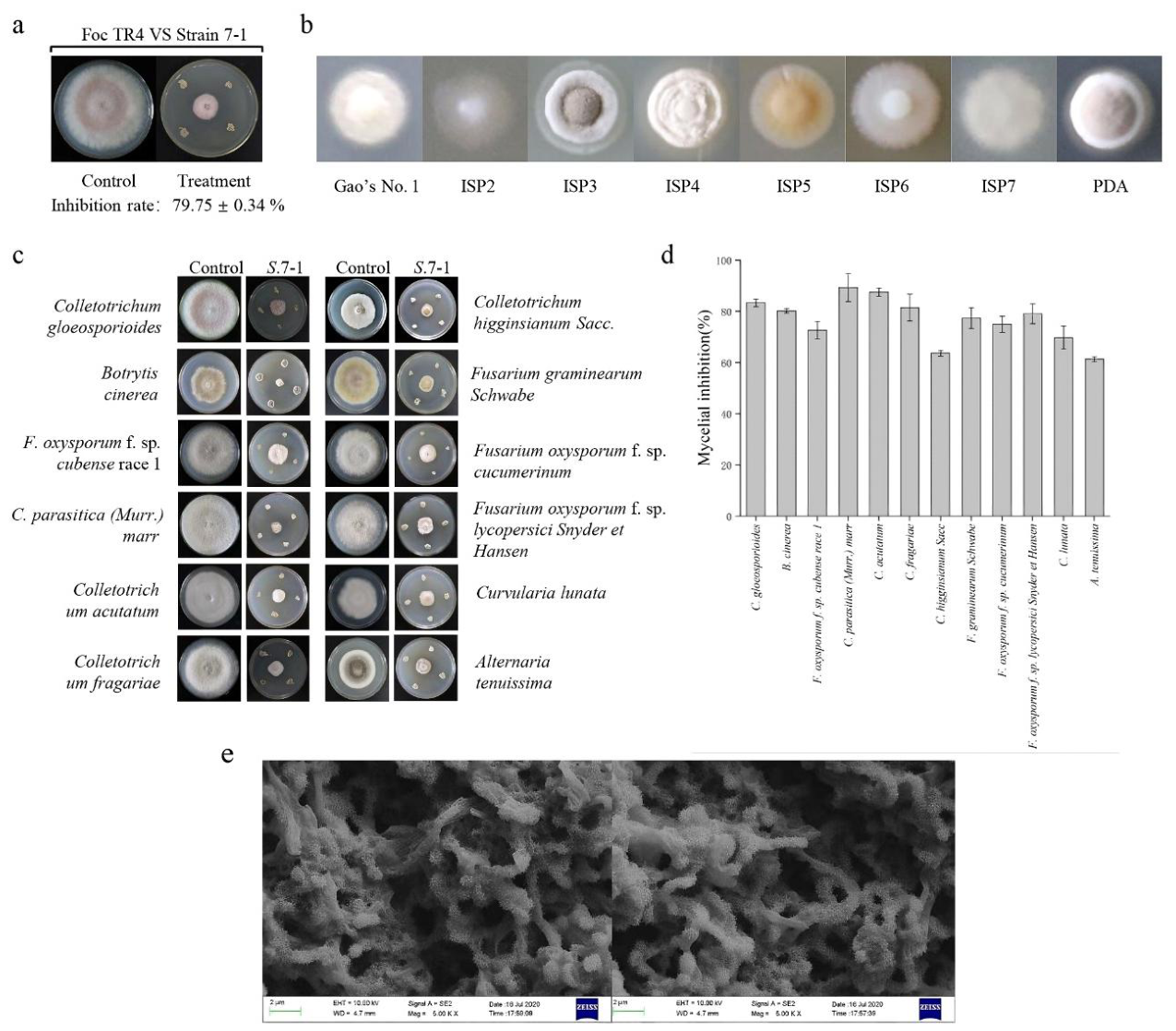
Figure 2.
Effects of the crude extract of Streptomyces sp. 7-1. (a) Effect of the crude extract on the mycelial growth of Foc TR4. Different lowercase letters indicate significant differences according to Duncan’s multiple range test (p < 0.05); (b) Morphology of Foc TR4 mycelia observed under fluorescence microscopy; (c) Effect of the crude extract on mycelial ultrastructure under transmission electron microscopy (TEM); (d) Effect of the crude extract on the spore morphology of Foc TR4 under scanning electron microscopy (SEM). *: Thickened and irregular cell walls; VL: Vacuolization; CWL: Cell wall lysis; CMD: Cell membrane damage. (e) Effect of the crude extract on spore apoptosis. (f) Effect of the crude extract on spore germination; (g) Effect of the crude extract on the dry weight of Foc TR4 mycelia; (h–k) Cell membrane integrity of Foc TR4 after crude extract treatment was characterized by soluble protein content (h), soluble sugar content (i), nucleic acid leakage (j), and malondialdehyde (MDA) content (k). Control: Foc TR4 treated with sterile water; 1 × EC₅₀: Foc TR4 treated with 69.20 μg·mL⁻¹ extract; 3 × EC₅₀: Foc TR4 treated with 207.6 μg·mL⁻¹ extract. 6 × EC₅₀: Foc TR4 treated with 415.20 μg·mL⁻¹ extract. Different lowercase letters indicate significant differences (p < 0.05).
Figure 2.
Effects of the crude extract of Streptomyces sp. 7-1. (a) Effect of the crude extract on the mycelial growth of Foc TR4. Different lowercase letters indicate significant differences according to Duncan’s multiple range test (p < 0.05); (b) Morphology of Foc TR4 mycelia observed under fluorescence microscopy; (c) Effect of the crude extract on mycelial ultrastructure under transmission electron microscopy (TEM); (d) Effect of the crude extract on the spore morphology of Foc TR4 under scanning electron microscopy (SEM). *: Thickened and irregular cell walls; VL: Vacuolization; CWL: Cell wall lysis; CMD: Cell membrane damage. (e) Effect of the crude extract on spore apoptosis. (f) Effect of the crude extract on spore germination; (g) Effect of the crude extract on the dry weight of Foc TR4 mycelia; (h–k) Cell membrane integrity of Foc TR4 after crude extract treatment was characterized by soluble protein content (h), soluble sugar content (i), nucleic acid leakage (j), and malondialdehyde (MDA) content (k). Control: Foc TR4 treated with sterile water; 1 × EC₅₀: Foc TR4 treated with 69.20 μg·mL⁻¹ extract; 3 × EC₅₀: Foc TR4 treated with 207.6 μg·mL⁻¹ extract. 6 × EC₅₀: Foc TR4 treated with 415.20 μg·mL⁻¹ extract. Different lowercase letters indicate significant differences (p < 0.05).
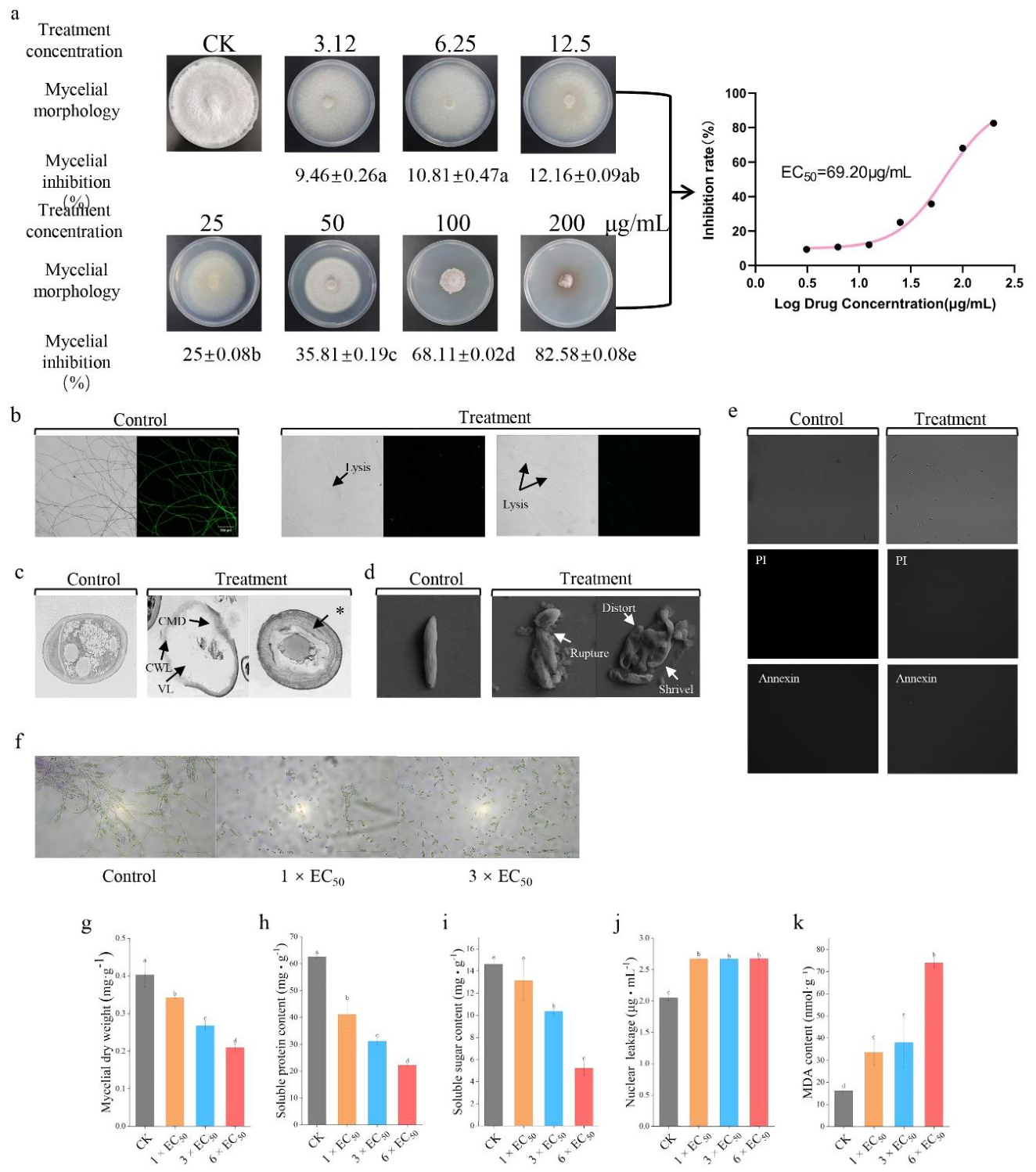
Figure 3.
Effects of Streptomyces sp. 7-1 on the control of banana Fusarium wilt, related defense responses, and soil microorganisms. (a) Biocontrol efficacy of strain 7-1 against banana Fusarium wilt; (B–E) Activities of defense-related enzymes in banana roots: root activity characterized by dehydrogenase activity (b), peroxidase (POD, c), polyphenol oxidase (PPO, d), and phenylalanine ammonia-lyase (PAL, e); Values are presented as means (bars) and standard errors (error bars). Different lowercase letters indicate significant differences at p ≤ 0.05; (f) Effect of strain 7-1 on soil bacterial community at the genus level; (g) Effect of strain 7-1 on soil fungal community at the genus level. The abscissa represents treatment groups, and the ordinate represents the relative abundance of species in each group. Columns of different colors represent different taxa, and the column height indicates the relative abundance of each taxon.
Figure 3.
Effects of Streptomyces sp. 7-1 on the control of banana Fusarium wilt, related defense responses, and soil microorganisms. (a) Biocontrol efficacy of strain 7-1 against banana Fusarium wilt; (B–E) Activities of defense-related enzymes in banana roots: root activity characterized by dehydrogenase activity (b), peroxidase (POD, c), polyphenol oxidase (PPO, d), and phenylalanine ammonia-lyase (PAL, e); Values are presented as means (bars) and standard errors (error bars). Different lowercase letters indicate significant differences at p ≤ 0.05; (f) Effect of strain 7-1 on soil bacterial community at the genus level; (g) Effect of strain 7-1 on soil fungal community at the genus level. The abscissa represents treatment groups, and the ordinate represents the relative abundance of species in each group. Columns of different colors represent different taxa, and the column height indicates the relative abundance of each taxon.
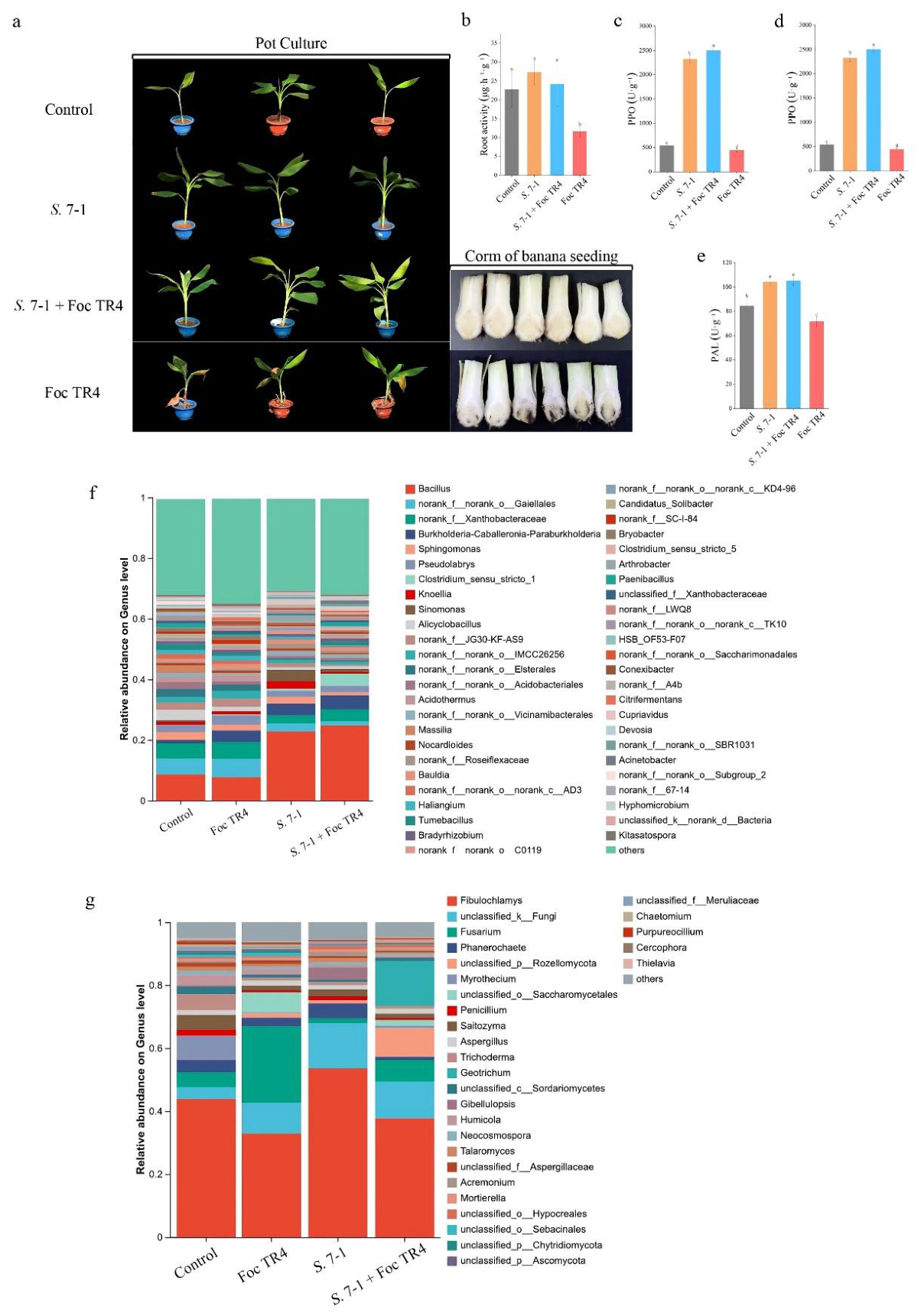
Figure 4.
Antifungal Activity of Key Active Metabolites against Foc TR4 and Verification of Their Biocontrol Efficacy. (a) Principal component analysis (PCA) score scatter plot (PC1 explained 57.50% and PC2 explained 21.60% of the total sample variation); (b) Volcano plot of differentially expressed genes/metabolites between S. 7-1 and the blank control group (red: significantly upregulated; blue: significantly downregulated; gray: no significant difference); (c) Bubble plot of KEGG pathway enrichment analysis for differential molecules; (d) Determination of natamycin plate antifungal activity and EC₅₀ virulence; (e) Changes in mycelial dry weight biomass; (f) Detection of nucleic acid leakage damage in the pathogenic cell membrane; (g) Phenotypic verification of plant disease resistance in hydroponic pot experiments.
Figure 4.
Antifungal Activity of Key Active Metabolites against Foc TR4 and Verification of Their Biocontrol Efficacy. (a) Principal component analysis (PCA) score scatter plot (PC1 explained 57.50% and PC2 explained 21.60% of the total sample variation); (b) Volcano plot of differentially expressed genes/metabolites between S. 7-1 and the blank control group (red: significantly upregulated; blue: significantly downregulated; gray: no significant difference); (c) Bubble plot of KEGG pathway enrichment analysis for differential molecules; (d) Determination of natamycin plate antifungal activity and EC₅₀ virulence; (e) Changes in mycelial dry weight biomass; (f) Detection of nucleic acid leakage damage in the pathogenic cell membrane; (g) Phenotypic verification of plant disease resistance in hydroponic pot experiments.
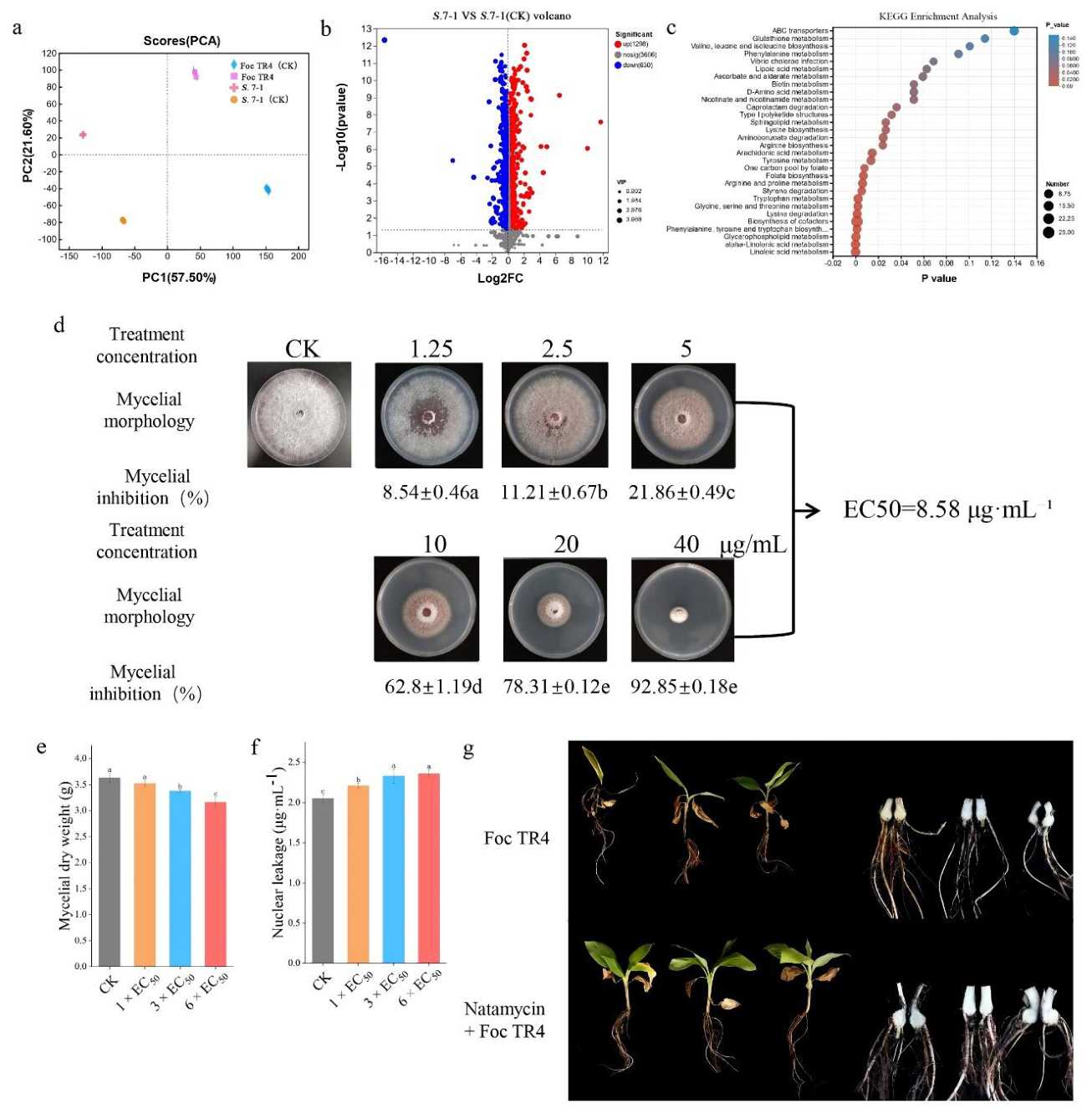
Table 1.
Control effect of S. 7-1 on FWB.
| Treatment | Foc TR4 | S. 7-1 + Foc TR4 |
| Disease index (%) | 63.87 | 23.54 |
| Control effect (%) | - | 63.15 |
Note: Each treatment contained 30 banana seedlings. All experiments were repeated in triplicate.
Table 1.
Control effect of natamycin on FWB.
| Treatment | Foc TR4 | Natamycin + Foc TR4 |
| Disease index (%) | 84.50 | 55.00 |
| Control effect (%) | - | 34.91 |
Note: Each treatment contained 12 banana seedlings. All experiments were repeated in triplicate.
Disclaimer/Publisher’s Note: The statements, opinions and data contained in all publications are solely those of the individual author(s) and contributor(s) and not of MDPI and/or the editor(s). MDPI and/or the editor(s) disclaim responsibility for any injury to people or property resulting from any ideas, methods, instructions or products referred to in the content. |
© 2026 by the authors. Licensee MDPI, Basel, Switzerland. This article is an open access article distributed under the terms and conditions of the Creative Commons Attribution (CC BY) license.
Copyright: This open access article is published under a Creative Commons CC BY 4.0 license, which permit the free download, distribution, and reuse, provided that the author and preprint are cited in any reuse.


