

Submitted:
20 April 2026
Posted:
22 April 2026
You are already at the latest version
Abstract
The effects of biostimulants on raspberry remain insufficiently understood, particularly in relation to cultivar-specific responses and the potential of remote sensing for treatment evaluation. The aim of this study was to assess the impact of foliar-applied biostimulants on yield and physiological responses of two floricane raspberry cultivars, Glen Ample and Przehyba, using UAV-based multispectral imaging under field conditions. Five treatment variants were tested, including a control and four biostimulant formulations based on animal-derived amino acids, plant-derived amino acids, seaweed extract, and seaweed extract combined with animal-derived amino acids. Biostimulant application significantly affected yield and fruit number per plant, whereas fruit weight remained unchanged. The highest yield values were generally associated with treatments based on plant-derived amino acids and seaweed-containing formulations, while the lowest values were recorded in the control and after the application of animal-derived amino acids. Multispectral analysis revealed treatment-dependent temporal changes in vegetation indices, with clearer trends emerging after aggregation of relative percentage changes across measurement intervals. These results indicate that biostimulant effectiveness in floricane raspberry is strongly dependent on cultivar, formulation type, and temporal context. UAV-based multispectral imaging proved to be a promising non-destructive tool for tracking physiological responses to biostimulation under field conditions.
Keywords:
biostimulation
; seaweed
; amino acid
; Rubus
; UAV
; multispectral imaging
1. Introduction
Agricultural production constitutes the basis of global food security; however, its long-term sustainability has become a major concern across scientific, socioeconomic, and policy-related domains. The transition toward sustainable agriculture extends beyond sectoral reform and represents a critical component in achieving the United Nations Sustainable Development Goals, as well as in fostering resilient and inclusive societies. In the context of rapid population growth and intensifying climate change, the need for sustainable agricultural development has become increasingly urgent [1]. Although policy frameworks clearly emphasize sustainability, the effective implementation of integrated, science-based solutions in agriculture still requires substantial progress [2]. The shift toward sustainable agricultural systems is constrained by multiple challenges, including rising food demand, food insecurity, climate variability, biodiversity loss, and food waste [3]. The strong reliance of agriculture on synthetic fertilizers and pesticides has intensified concerns regarding its long-term sustainability. Biostimulants offer a more environmentally compatible strategy for improving crop yields [4]. Biostimulants have only recently gained increased attention in agricultural research, and their potential contribution to enhancing the sustainability of production systems remains insufficiently understood. Moreover, from an applied research perspective, there is a clear need to generate robust evidence regarding their effects across various aspects of agricultural systems [5]. Although biostimulants were originally developed as supportive tools primarily for organic farming, they are currently applied across all cropping systems, including organic, conventional, and integrated production, in both open-field and protected cultivation [6]. Biostimulants derived from natural sources are typically formulated using materials such as seaweed extracts, microorganisms, humic compounds, and protein hydrolysates [7,8]. The application of plant biostimulants, especially seaweed extracts and protein hydrolysates, has expanded in recent years, owing to their demonstrated ability to enhance crop productivity under both optimal and suboptimal environmental conditions [9,10]. However, this also introduces an additional challenge, as the effective application of a given biostimulant requires a thorough evaluation of its effects on plants, ideally considering both the species and the specific cultivar. The growing diversity of biostimulants entering crop production increases the demand for rapid research approaches, while still ensuring the collection of comprehensive data necessary for reliable assessment of their performance.
The integration of automation with advanced technologies, including artificial intelligence, drones, robotics, and data-driven approaches, supports the development of modern agriculture, enabling site-specific management and contributing to the sustainability of agricultural systems [11]. Digital agriculture depends on the effective acquisition, processing, storage, and analysis of data, as well as on the practical implementation of derived insights to support optimal decision-making in farming systems [12]. The application of remote sensing technologies has reshaped contemporary agriculture by enabling the acquisition of timely and accurate data at scale, thereby improving decision-making processes in crop production systems [13]. Despite these advantages, the implementation of remote sensing technologies in agriculture is constrained by several limitations, including restricted spatial and temporal coverage, frequent cloud interference, and variability in data quality [14]. Spectral imaging is a technique that enables the acquisition and analysis of light spectra reflected, transmitted, or emitted by an object. It integrates imaging and spectroscopic methods within a single system, providing both spatial and spectral information about the investigated material. The distinction between multispectral and hyperspectral imaging is primarily determined by the number of spectral bands captured [15]. A multispectral image consists of several co-registered image layers representing the same scene, each captured within a specific spectral wavelength band [16]. Multispectral imaging typically involves the acquisition of images across 3 to 8 distinct spectral bands [17]. In this context, the development of efficient and scalable methods for evaluating plant responses to biostimulants becomes increasingly important. The integration of remote sensing technologies with advanced data analysis enables high-throughput, non-destructive monitoring of plant performance, offering a promising approach for assessing treatment effects under field conditions. Such approaches may help overcome the limitations of conventional experimental methods by providing detailed spatial and temporal information on crop responses.
Current raspberry and blackberry production systems are challenged by rising climatic instability, more demanding quality requirements, and increasing restrictions on conventional agrochemicals. Plant growth regulators and biostimulants may serve as complementary tools to address these limitations [18].
The application of UAV-based remote sensing in raspberry production remains at a relatively early stage of implementation. At the same time, biostimulant use is gaining importance in modern raspberry cultivation, with the growing availability of commercial products requiring continuous optimization of their application strategies. In this context, the objective of this study was to investigate the effects of foliar biostimulation in floricane cultivars of Rubus idaeus L. and to evaluate the usefulness of drone-acquired multispectral data for monitoring plant responses.
2. Materials and Methods
2.1. Overview of the Research Area
The study was carried out on a raspberry plantation located in eastern Poland within the Lublin Upland macroregion (51°11′ N, 21°49′ E), established in May 2023 using plug plants. The experimental site was characterized by soil classified as class IIIa according to the Polish soil valuation system. Two floricane raspberry cultivars were evaluated (Table 1). The selection was based on their importance in commercial production systems in Poland and their suitability for both fresh consumption and processing.
Plants were cultivated in rows aligned along the east–west direction, with a spacing of 3.0 m between rows (Figure 1). Experimental treatments were assigned within rows to the respective cultivars. Cane number was standardized at four per shrub across all combinations.
Each treatment combination included 18 plants organized into three replicates of six plants each. Plants were spaced at 0.40 m within the row, corresponding to a density of 8000 plants ha⁻¹. Yield measurements were conducted at the replicate level, which served as the experimental unit. In commercial raspberry production, plants are grown in hedgerow systems that form a continuous canopy across adjacent individuals. This structural arrangement limits the possibility of isolating yield components at the level of single plants or canes without interfering with canopy integrity. Therefore, yield assessment was performed on groups of plants rather than individual units, allowing the preservation of natural canopy structure and providing results representative of field conditions. This approach ensured that treatment effects were evaluated without introducing artefacts associated with canopy manipulation. Irrigation was provided using a drip system consisting of two lines equipped with emitters delivering 1 L h⁻¹ at 20 cm spacing. This system ensured stable soil moisture conditions, particularly during periods of reduced rainfall.
Air temperature was recorded at the experimental site using a sensor (AGRONETPRO Sp. z o.o., Dęblin, Poland) installed at a height of 1 m above ground level. During the 2025 growing season, thermal conditions showed marked variability, particularly in the early developmental stages. The winter period was characterized by alternating warm and cold phases, with frequent episodes of sub-zero temperatures, indicating a potential risk of cold stress. This period was followed by a gradual increase in temperature and moderate daily fluctuations. In contrast, the summer months were relatively stable, with only occasional exceedance of 30 °C. Overall, the season can be described as having a variable early phase followed by a more stable thermal regime during the main period of plant development, which may have influenced plant growth and phenological responses. A detailed overview of daily minimum, maximum, and mean air temperatures is presented in Figure 2, where shaded areas indicate temperature extremes and the solid line represents mean values. Threshold levels of 0 °C and 30 °C are marked with dashed lines, and monthly averages are included for reference.
2.2. Biostimulation
Five treatment variants were applied for each cultivar, including a control without biostimulation and four foliar biostimulant applications. The tested products represented different categories of biostimulants, namely animal-derived amino acids (NaturalCrop SL), plant-derived amino acids (Kaishi), seaweed extract (Valkiria Power Alg), and a combined formulation of seaweed extract and animal-derived amino acids (Phylgreen Kuma). Control plants were treated with water only. The applied products differed in origin and production process. NaturalCrop SL consists of amino acids obtained from collagen through enzymatic hydrolysis, whereas Kaishi is based on plant protein hydrolysates. Valkiria Power Alg is derived from seaweed extracts, while Phylgreen Kuma combines extracts of Ascophyllum nodosum L. produced using a low-temperature extraction process with animal-derived amino acids obtained via acid hydrolysis.
Application rates were selected based on the upper range of the manufacturers’ recommendations, excluding intervention doses, and were calculated for a spray volume of 500 L ha⁻¹ (Table 2).
The selected biostimulants represent the principal groups used in horticultural practice, including plant- and animal-derived protein hydrolysates as well as seaweed extracts commonly applied in fruit production. To isolate biostimulatory effects, products with high concentrations of macroelements such as potassium, phosphorus, magnesium, calcium, and sulfur, as well as micronutrients acting as foliar fertilizers, were deliberately excluded. This approach minimized the contribution of direct nutrient supply and enabled a clearer evaluation of biostimulant activity. Nevertheless, it should be acknowledged that biostimulants derived from biological raw materials may inherently contain trace amounts of mineral components and relatively high levels of organic nitrogen.
Biostimulant applications were carried out in the evening under conditions without rainfall or strong wind to minimize the influence of weather on treatment efficiency. Rainwater was used for the preparation of spray solutions. Treatments were applied using a motorized backpack mist blower (Hortmash 3WF-600, HORTMASZ Sp. z o.o., Skierniewice, Poland) to approximate application conditions typical of tractor-mounted air-blast sprayers used in fruit production. Each cultivar received four applications during the growing season. The first treatment was performed at the leaf development stage. Subsequent applications were carried out at the onset of inflorescence development, during flowering, and at the fruit development stage. Phenological stages were determined according to the BBCH scale for fruit crops [19]. This application schedule ensured coverage of key developmental phases of raspberry plants. To reduce spray drift between adjacent experimental plots, temporary protective barriers (2 m in height and 1 m in width) were installed along plot boundaries during treatment application.
2.3. Measurements
2.3.1. Yield
The response of yield to biostimulant application was evaluated during the 2025 growing season. Harvesting was conducted at intervals of one to three days, depending on fruit ripening and prevailing weather conditions. Fruit mass was determined with an accuracy of 0.1 g using an electronic scale (Steinberg Systems SBS-LW-600, Expondo Polska sp. z o.o. sp.k, Zielona Góra, Poland). In addition, fruit number was recorded to calculate mean fruit weight.
2.3.2. Multispectral Imaging
Multispectral data acquisition was carried out during the 2025 growing season using a DJI Mavic 3 Multispectral unmanned aerial vehicle (SZ DJI Technology Co., Ltd., Shenzhen, China) (Figure 3). The platform integrates an RGB imaging system (4/3-inch CMOS, 20 MP; 5280 × 3956 pixels) with a multispectral sensor (1/2.8-inch CMOS, 5 MP; 2592 × 1944 pixels). Reflectance was recorded in four spectral regions, including near-infrared (860 ± 26 nm), red edge (730 ± 16 nm), red (650 ± 16 nm), and green (560 ± 16 nm). Accurate georeferencing was achieved using an onboard real-time kinematic positioning system, which ensured precise spatial alignment of the acquired imagery [20]. Incoming solar radiation was continuously monitored by an onboard light sensor, and the recorded values were stored as metadata. These data were subsequently used for radiometric correction during image processing, contributing to improved consistency of the multispectral dataset.
Multispectral imagery was collected under two flight scenarios designed to provide different spatial resolutions. The flights were performed at altitudes of approximately 30.4 m and 49.9 m above the take-off point, resulting in orthomosaic ground sampling distances of 1.40 cm and 2.30 cm per pixel, respectively. Identical flight conditions were maintained for both scenarios, including consistent image overlap, a fixed flight path, and speed adapted to altitude. Precise georeferencing of the imagery was ensured by real-time kinematic positioning. Images were acquired with automatic white balance, and no geometric correction was applied to retain the native image geometry. The full set of flight parameters for each configuration is presented in Table 3.
Multispectral acquisitions were performed on the day of biostimulant application and during the following three days. Flights were conducted around midday (11:00–13:00) under stable illumination conditions, which minimized shading effects within the canopy. Data were processed at the level of entire experimental plots without further subdivision. Plot boundaries were identified using concrete support posts, which served as reference points during spatial data verification. The dataset comprised RGB and multispectral imagery (G, R, RE, and NIR) for all combinations. Representative images of the study area are presented in Figure 4.
Radiometric calibration was carried out before each flight using a calibrated reflectance panel (MicaSense, Inc., Seattle, USA). Calibration images were acquired with both RGB and multispectral sensors (G, R, RE, and NIR), with the panel positioned at heights of 0.6 m and 1.0 m above the take-off point. During calibration, the reflectance panel and the onboard light sensor were maintained under direct illumination to avoid shading effects. This procedure supported the accuracy and consistency of radiometric correction applied during image processing.
2.4. Analysis of Results
2.4.1. Statistical Analysis
Statistical analyses were conducted in RStudio (Posit PBC, Boston, USA). Treatment effects on growth and yield variables were examined using one-way analysis of variance (ANOVA), with growing season considered as a source of variation. Prior to analysis, model assumptions were evaluated. Residual normality was tested using the Shapiro–Wilk test, while variance homogeneity was assessed with Levene’s test. The assumptions were met for all analyzed variables. Mean separation was performed using Tukey’s honestly significant difference test. Results are expressed as homogeneous groups indicated by letters, where identical letters denote the absence of significant differences. Lowercase letters correspond to comparisons within columns. F-test p-values are reported for each analysis, and statistical significance was defined at p ≤ 0.05. Yield results were presented using line and bar plots generated in PyCharm (JetBrains s.r.o., Amsterdam, Netherlands). Details of the software environment, programming languages, and associated libraries used for data processing and visualization are summarized in Table 4.
2.4.2. Multispectral Data Analysis
Multispectral datasets were processed using Pix4Dfields software (Pix4D S.A., Lausanne, Switzerland; version 2.12.0) with the Accurate processing workflow. This procedure enabled the generation of high-resolution orthomosaics and surface models, improving spatial consistency and limiting geometric distortions, particularly under variable terrain conditions [21]. Radiometric calibration was based on measurements obtained from a calibrated reflectance panel and incorporated sensor calibration parameters together with illumination data, including incident solar radiation and sun position recorded by the onboard DLS sensor. GPU acceleration was applied to increase computational performance. Detailed processing settings are provided in Table 5.
A key limitation in multispectral studies of biostimulation is the variability of atmospheric conditions during data acquisition. While treatment applications are performed under controlled and optimal conditions aligned with plant developmental stages, measurement campaigns are often subject to less stable environmental conditions. For this reason, radiometric calibration is critical to ensure data comparability. Processing workflows therefore included adjustments accounting for atmospheric conditions during each acquisition, categorized as clear or overcast. The specific configurations applied for individual measurements are summarized in Table 6.
Pix4Dfields provides multiple annotation options for multispectral image analysis. In this study, methods were selected based on their ability to balance efficient labeling with high data reliability under hedgerow raspberry production conditions. Two annotation strategies were considered. The first approach focused on a confined central section of the hedgerow using a bounded rectangular area, which reduced the influence of soil background but excluded portions of cane tips extending beyond the canopy. The second approach covered the full hedgerow width, ensuring complete inclusion of plant material at the expense of increased background signal. Annotation was initially defined using imagery from the first measurement campaign. For each measurement date, the same masks were applied across datasets corresponding to different ground sampling distances, with only positional adjustments required. Due to slight misalignment of imported masks in subsequent datasets, manual repositioning was performed for each measurement. Annotations were further updated over time to reflect changes in canopy structure resulting from plant growth, cane displacement, and fruit load. Although it is possible to artificially standardize hedgerow geometry, such modification would not represent commercial production conditions, where adequate light penetration and air circulation are essential for fruit quality. The applied annotation approaches are illustrated in Figure 5.
Multispectral data were interpreted using vegetation indices derived from spectral reflectance values (Table 7). The selected indices are commonly applied in remote sensing studies and were calculated according to their standard mathematical expressions. In these formulations, NIR, R, G, and RE correspond to reflectance in the near-infrared, red, green, and red-edge spectral bands, respectively. The layers generated during multispectral data processing in Pix4Dfields are shown in Figure 6.
For each measurement campaign, datasets were structured according to cultivar, ground sampling distance, and annotation method. To assess data consistency, the standard deviation (SD) and coefficient of variation (CV) of vegetation index values were calculated for all possible data configurations, irrespective of measurement date and treatment combination. It should be noted that the conducted analysis did not allow for a clear determination of which ground sampling distance (GSD) and annotation method provided the most stable results in terms of SD and CV. Therefore, a ground sampling distance of 1.40 cm per pixel was adopted for further analysis, together with the bounded annotation method, which reduces the influence of background on vegetation index values.
For the multispectral measurement series, relative percentage changes in vegetation index values between consecutive measurement dates were calculated. The parameters D12, D23, and D34 represent the relative change between the first and second, second and third, and third and fourth measurements, respectively, for each biostimulant treatment. Positive and negative changes were analyzed separately and denoted as D12+, D12-, D23+, D23-, D34+, and D34-. Positive values indicate an increase in vegetation index values, whereas negative values reflect a decrease between consecutive measurement dates.
Relative percentage changes in vegetation index values between consecutive measurement dates were used to assess temporal plant responses. These changes were subsequently analyzed and visualized in two complementary ways: as detailed responses for each individual measurement interval and treatment, and as aggregated values obtained by summing changes within each measurement interval across all treatments. This approach enabled the identification of both fine-scale dynamics and general patterns of variation across treatments, cultivars, and time. In the case of the aggregation approach heatmap values represent the cumulative sum of increases or decreases across all application dates for each cultivar and treatment combination. Within each column, rankings were assigned to facilitate comparison between combinations and to highlight dominant response patterns. dThis approach enabled simultaneous evaluation of both the magnitude and direction of temporal changes following biostimulant application. Expressing changes relative to the previous measurement reduced the influence of differences in baseline index levels among treatments. Observed variability reflects both structural heterogeneity of the canopy, including differences in cane orientation and inclination, and physiological responses of plants to biostimulant treatments. The separation and aggregation of positive and negative changes allowed for a more integrated interpretation of temporal dynamics rather than reliance on individual measurement values.
The methodology used for the analysis of results obtained in Pix4Dfields was based on an approach described in previous studies [22,23]. Due to the large number of data combinations, defined as cultivar × treatment combination × vegetation index × GSD × annotation method, the complete dataset was not included in the main manuscript. Instead, only selected, representative, and aggregated results are presented, while the full dataset for all analyzed configurations is available in a publicly accessible repository [24].
3. Results
3.1. Yield Parameters
Table 8 presents yield parameters for the Glen Ample and Przehyba cultivars. In Glen Ample, a significant effect of the applied biostimulants on mean yield per plant and the number of fruits per plant was observed. The highest yield was obtained in the combination based on plant-derived amino acids, whereas the lowest values of this parameter were recorded in the control and after the application of animal-derived amino acids. The number of fruits per plant was lowest in the control and in the combination based on animal-derived amino acids, whereas the remaining combinations were characterized by significantly higher values of this parameter and did not differ significantly from one another. Mean fruit weight was not significantly differentiated among combinations in either year of the study.
In Przehyba, biostimulant application significantly affected mean yield per plant and the number of fruits per plant. The highest values of both parameters were obtained in the combination based on plant-derived amino acids, whereas the lowest yield and the smallest number of fruits were recorded in the control and after the application of animal-derived amino acids. Mean fruit weight was not significantly differentiated among the analyzed combinations in this year.
Figure 7 shows the yield per 1 ha. In Przehyba, the highest yield per hectare was obtained following the application of a biostimulant based on plant-derived amino acids, whereas the lowest yield was recorded for the combination with animal-derived amino acids, with a difference of 1595.44 kg·ha⁻¹. For Glen Ample, the highest yield was achieved in the combination with seaweed extract combined with animal-derived amino acids, while the lowest value was observed in the control, with a difference of 2622.64 kg·ha⁻¹.
Figure 8 presents yield parameters depending on the harvest date. In both cultivars, despite observable periodic differences among the combinations for all analyzed parameters, the course of changes was primarily driven by the harvest date. The temporal pattern of yield, fruit number, and mean fruit weight remained consistent across treatments, with differences between combinations mainly reflected in the magnitude rather than the overall trend of the curves.
Table 9 shows the main factorial effects on yield parameters. Glen Ample was characterized by a significantly higher yield per plant and number of fruits per plant, whereas a significantly greater mean fruit weight was observed in Przehyba.
Regarding the effect of combinations, the highest yield was recorded for treatments based on plant-derived amino acids and seaweed extract combined with animal-derived amino acids, while the lowest yield was observed in the control. In terms of fruit number, the highest value was obtained following the application of plant-derived amino acids, whereas the lowest values were recorded in the control and in the treatment based on animal-derived amino acids. No significant differences were found among combinations for mean fruit weight.
A significant interaction between cultivar and combination was observed only for the number of fruits per plant.
3.1. Vegetation Indices
The Figure 9, Figure 10, Figure 11, Figure 12, Figure 13, Figure 14, Figure 15 and Figure 16 represent the relative percentage changes in vegetation index values between consecutive measurement dates (D12, D23, and D34), shown separately for each treatment date (T1–T4), cultivar, and biostimulant combination. The bar length represents the magnitude of change, while the background color indicates its direction, distinguishing positive and negative responses. This graphical approach enables simultaneous comparison of treatment-dependent responses across cultivars and temporal intervals, highlighting both the intensity and direction of physiological changes following biostimulant application. The presented results indicate a highly variable response in relative percentage changes between consecutive measurements, dependent not only on the measurement interval but also on treatment, cultivar, and vegetation index.
Figure 17 presents relative percentage changes in the LCI vegetation index. In Glen Ample, the highest increases in D12+ were observed in combinations based on animal-derived and plant-derived amino acids, intermediate values were recorded in the control, whereas the lowest increases occurred in combinations involving seaweed extract. In D23+, the highest increases were observed in the combination based on seaweed extract, while lower values were recorded in the remaining treatments. For D34+, clearly higher increases were observed in all biostimulant treatments compared with the control.
For negative changes, the largest decreases in D12− were recorded in combinations based on seaweed extract and plant-derived amino acids, whereas the smallest decrease was observed in the control. In D23−, no decreases were recorded. In D34−, the smallest decreases were observed in the control and in combinations based on animal-derived amino acids.
In Przehyba, similar trends were observed for all positive changes as well as for negative changes in D12− and D23−. In D34−, the smallest decreases were recorded in the control and in combinations based on animal-derived amino acids.
Figure 18 presents relative percentage changes in the NDRE vegetation index. In Glen Ample, the highest increases in D12+ were observed in combinations based on animal-derived and plant-derived amino acids, intermediate values were recorded in the control, whereas the lowest increases occurred in combinations involving seaweed extract. In D23+, the highest increases were observed in the combination based on seaweed extract, while lower values were recorded in the remaining treatments. For D34+, clearly higher increases were observed in all biostimulant treatments compared with the control. For negative changes, the largest decreases in D12− were recorded in combinations based on seaweed extract and plant-derived amino acids, whereas the smallest decrease was observed in the control, with intermediate values for animal-derived amino acids. In D23−, no decreases were recorded. In D34−, the smallest decreases were observed in the control and in combinations based on animal-derived amino acids, while clearly greater decreases were recorded for plant-derived amino acids and seaweed extract.
In Przehyba, similar trends were observed for all positive changes as well as for negative changes in D12− and D23−. In D34−, the smallest decreases were recorded in combinations based on plant-derived amino acids and seaweed extract combined with animal-derived amino acids.
Figure 19 presents relative percentage changes in the NDVI vegetation index. For Glen Ample in D12+, the highest increases were associated with combinations based on seaweed extract, intermediate values were observed for treatments based on plant-derived and animal-derived amino acids, whereas the lowest increases occurred in the control. In D23+, the highest increases were recorded for seaweed extract and plant-derived amino acids, intermediate values were observed for the combination of seaweed extract with animal-derived amino acids, while the lowest values were associated with the control and animal-derived amino acids. In D34+, the pattern shifted, with the lowest increases observed in the combination based on seaweed extract combined with animal-derived amino acids, whereas the highest values were recorded in the control.
For negative changes, in D12− the largest decrease was observed in the control, while the smallest decrease was associated with animal-derived amino acids, with intermediate values for the remaining treatments. In D23−, the most pronounced decreases were observed in combinations based on plant-derived amino acids and seaweed extract, whereas the smallest decreases were recorded for animal-derived amino acids and the control. In D34−, clearly greater decreases were observed in combinations based on plant-derived amino acids, while the remaining treatments showed comparable values.
In Przehyba, in D12+ the lowest increases were recorded in the control, with relatively similar values observed in the remaining treatments. In D23+ and D34+, the observed patterns were consistent with those recorded in Glen Ample.
For negative changes, in D12− the largest decreases were observed in the control and in the combination based on seaweed extract combined with animal-derived amino acids, whereas the smallest decreases were recorded in treatments based on plant-derived and animal-derived amino acids. In D23−, the largest decrease was associated with plant-derived amino acids, while the smallest was observed for animal-derived amino acids. In D34−, a pattern similar to that observed in Glen Ample was maintained.
Figure 20 presents relative percentage changes in the GNDVI vegetation index. For Glen Ample in D12+, the highest increases were associated with combinations based on seaweed extract, whereas the lowest values were recorded in the control. In D23+, the highest increases were observed for seaweed extract and the control, intermediate values were recorded for plant-derived amino acids, while the lowest values were associated with animal-derived amino acids. In D34+, the pattern shifted, with the highest increase recorded in the control, while the remaining treatments showed relatively similar values.
For negative changes, in D12− the largest decreases were observed in the control and in the combination based on seaweed extract combined with animal-derived amino acids, intermediate values were recorded for seaweed extract, whereas the smallest decreases were associated with plant-derived and animal-derived amino acids. In D23−, no decrease was observed for the combination based on seaweed extract combined with animal-derived amino acids, while the largest decrease was recorded for plant-derived amino acids. In D34−, the most pronounced decreases were observed in combinations based on plant-derived amino acids and seaweed extract.
In Przehyba, similar patterns were observed in D12+ and D34+. In D23+, the highest increase was recorded in the combination based on seaweed extract combined with animal-derived amino acids, while the remaining treatments showed comparable values.
For negative changes, in D12− the largest decreases were observed in combinations involving seaweed extract, whereas the smallest decreases were associated with animal-derived amino acids, with intermediate values for the remaining treatments. In D23− and D34−, patterns similar to those observed in Glen Ample were maintained.
Figure 21 presents relative percentage changes in the MCARI vegetation index. For Glen Ample in D12+, the highest values were clearly associated with the combination based on seaweed extract combined with animal-derived amino acids, intermediate values were observed for plant-derived amino acids and seaweed extract, whereas the lowest values occurred in the control and in the treatment based on animal-derived amino acids. A similar pattern was observed in D23+, with the highest increase recorded for the same combination, lower values for the control and animal-derived amino acids, and negligible or marginal responses for plant-derived amino acids and seaweed extract. In D34+, the pattern shifted, with the highest increases observed in the control and in combinations based on animal-derived and plant-derived amino acids.
For negative changes, values in D12− were relatively similar across treatments, with slightly smaller decreases observed for seaweed extract. In D23−, the smallest decrease was recorded in the combination based on seaweed extract combined with animal-derived amino acids, while the remaining treatments showed comparable values. In D34−, clearly greater decreases were observed in the control and in the combination based on animal-derived amino acids.
In Przehyba, similar trends were observed in D12+. In D23+, the highest value was recorded in the control, with lower increases in treatments based on animal-derived amino acids, while the remaining combinations showed marginal responses. In D34+, the highest increases were observed in the control and in combinations based on animal-derived and plant-derived amino acids.
For negative changes, the largest decreases in D12− and D23− were consistently recorded in the control. A similar pattern was observed in D34−, where the control and the combination based on animal-derived amino acids showed the most pronounced decreases.
Figure 22 presents relative percentage changes in the MCARI2 vegetation index. In Glen Ample, the highest increases in D12+ were observed in combinations based on seaweed extract, intermediate values were recorded for plant-derived amino acids, whereas the lowest increases were observed for animal-derived amino acids and the control. In D23+, the same pattern was maintained. In D34+, this trend was reversed, with the highest increases recorded in the control and in combinations based on animal-derived and plant-derived amino acids, while the lowest values were observed in treatments involving seaweed extract. For negative changes, no decreases were recorded in D12−. In D23−, clearly greater decreases were observed in combinations based on plant-derived amino acids and seaweed extract. In D34−, the largest decreases were recorded in the control and in combinations based on animal-derived amino acids.
In Przehyba, the highest increases in D12+ were observed in combinations based on seaweed extract and plant-derived amino acids, whereas the lowest values were recorded in the control and in combinations based on animal-derived amino acids. In D23+, clearly higher increases were observed in the control compared with biostimulant treatments. In D34+, the lowest increases were observed in combinations involving seaweed extract, while the remaining treatments showed higher values. For negative changes, the observed patterns were consistent with those recorded in Glen Ample.
Figure 23 presents relative percentage changes in the OSAVI vegetation index. For Glen Ample in D12+, the highest increases were associated with combinations based on seaweed extract, whereas the lowest values were recorded in the control and in treatments based on animal-derived amino acids, with intermediate values observed for plant-derived amino acids. A similar pattern was maintained in D23+. In D34+, the pattern was partially reversed, with the lowest increases observed in combinations involving seaweed extract, while the highest values were recorded in the control.
For negative changes, no decreases were recorded in D12−. In D23−, the largest decreases were observed in combinations based on plant-derived amino acids and seaweed extract, whereas the remaining treatments showed comparable values. In D34−, the most pronounced decreases were recorded in the control and in combinations based on animal-derived amino acids, while the other treatments showed similar responses.
In Przehyba, similar patterns were observed across all positive and negative changes, with no major deviations from the trends recorded in Glen Ample.
Figure 24 presents relative percentage changes in the SIPI2 vegetation index. In Glen Ample, higher increases in D12+ were observed in all biostimulant treatments compared with the control. In D23+, the highest increases were recorded in the control and in the combination based on seaweed extract combined with animal-derived amino acids, intermediate values were observed for seaweed extract, whereas the lowest values were recorded for combinations based on animal-derived and plant-derived amino acids. The same pattern was observed in D34+. For negative changes, the smallest decreases in D12− were recorded in the control and in combinations based on animal-derived amino acids, whereas the largest decreases were observed in treatments involving seaweed extract. In D23−, greater decreases were observed in biostimulant treatments compared with the control. In D34−, the smallest decreases were recorded in combinations based on plant-derived and animal-derived amino acids, whereas the largest decreases were observed in treatments involving seaweed extract.
In Przehyba, the highest increases in D12+ were observed in all biostimulant treatments compared with the control. In D23+, the lowest increase was recorded for plant-derived amino acids, whereas a clearly higher increase was observed for the combination based on seaweed extract combined with animal-derived amino acids. In D34+, the lowest increases were observed in treatments involving seaweed extract, while the highest values were recorded in the control. For negative changes, greater decreases in D12− were observed in biostimulant treatments compared with the control. In D23−, the largest decrease was recorded in the combination based on seaweed extract, whereas the remaining treatments showed smaller and similar values. In D34−, the smallest decreases were observed in combinations based on plant-derived and animal-derived amino acids, while greater decreases were recorded in the remaining treatments.
4. Discussion
A significant effect of biostimulant application on yield and fruit number per plant was observed in both Glen Ample and Przehyba. In both cultivars, the highest values of these parameters were consistently associated with biostimulants treatments based on plant-derived amino acids and containing seaweed extract, whereas the lowest values were recorded in the control and in combinations based on animal-derived amino acids. In contrast, fruit weight remained unaffected by biostimulant application across all combinations. Across both cultivars, the yield response was expressed primarily through fruit number rather than fruit weight, suggesting that biostimulant action was more closely associated with the regulation of reproductive intensity than with fruit enlargement itself. At the same time, the dominant role of harvest timing and cultivar confirms that biostimulants do not override the intrinsic developmental program of the crop, but rather modulate its expression within biologically defined limits.
The analysis of main effects showed that cultivar was the primary determinant of yield components, with Glen Ample producing higher yield and fruit number, while Przehyba exhibited greater fruit weight. Regardless of the combination, the highest yield was achieved for plant-derived amino acids and seaweed extract combined with animal-derived amino acids. A significant interaction between cultivar and combination was only demonstrated for fruit quantity. Taken together, these results indicate that the effects of foliar biostimulant application in floricane raspberry are not uniform, but emerge from the interaction between formulation type, cultivar-specific developmental strategy, and temporal context.
A positive effect of using biostimulants containing amino acids and seaweed extract on the yield was also noted in the case of fruit species such as raspberries [23,25], apples [26,27,28], strawberries [29,30,31], blueberries [32,33,34], vines [35,36,37], cherries [38,39,40].
The response to foliar biostimulant treatments was also observed in relative percentage changes between individual multispectral imaging measurements. A detailed analysis of relative percentage changes revealed considerable variability in responses, influenced not only by cultivar, vegetation index and combination, but also by specific time intervals and individual measurement points. However, an analytical approach based on the aggregation of relative percentage changes separately for positive and negative values across all treatments within each measurement interval revealed more distinct trends. The obtained results indicate patterns that were particularly evident in positive changes. However, these patterns were strongly dependent on the vegetation index and, despite partially similar trends, also on the cultivar. In most cases, the combinations were grouped into two or three main clusters. The first group generally included the control and animal-derived amino acids, while the second comprised plant-derived amino acids and biostimulants based on seaweed extract, including those combined with animal-derived amino acids.
When one group exhibited higher values in the initial measurement intervals, this trend was typically reversed in the final interval, where the same group showed the lowest values. In contrast, for negative changes, the patterns were less pronounced and considerably less structured. This may be explained by the greater sensitivity of decreases in index values to short-term environmental fluctuations, whereas increases are more closely linked to coordinated physiological responses induced by biostimulant application [23]. The emergence of recurring treatment clusters across indices suggests that biostimulant responses may converge at the level of coordinated physiological regulation, even when individual measurement points remain highly variable. In this sense, the observed spectral patterns can be viewed as the canopy-scale expression of treatment-induced changes in plant physiological status.
These patterns can be interpreted as the optical manifestation of underlying physiological changes induced by biostimulant application. Biostimulants are known to may affect key processes such as chlorophyll synthesis, photosynthetic activity and pigment balance. As plant responses alter the multidirectional interaction of tissues with electromagnetic radiation, including its absorption, reflection, and scattering, corresponding shifts may emerge in vegetation index values. Because vegetation indices are calculated from combinations of między innymi these spectral bands (green, red, red-edge, and near-infrared), even subtle physiological and structural changes at the leaf level may be expressed as detectable differences at the canopy scale. Consequently, the observed variability and emerging patterns in vegetation indices likely reflect dynamic, treatment-dependent shifts in photosynthetic efficiency and canopy structure, which are indirectly captured through changes in spectral reflectance.
Research on the use of multispectral imaging as a tool to support the analysis of the effects of biostimulation on plants is still very limited. Research on the use of multispectral imaging as a tool to support the analysis of the effects of biostimulation on plants is still very limited. However, the results obtained indicate the enormous potential of this technology in this regard. This is especially important considering that spectral imaging is not limited to UAV platforms, but can also be conducted using ground-based and satellite systems. Furthermore, hyperspectral imaging may provide additional advantages due to the greater number of recorded bands. This may be particularly important in the context of the rapidly expanding biostimulant market, which demands more efficient and faster approaches for evaluating their effects on plant systems.
An important aspect is also the further development of remote sensing data analysis, in which vegetation indices, despite their concise mathematical form and clear interpretation, represent a powerful tool for vegetation monitoring [41].
Moreover, realizing the full potential of biostimulants requires coordinated efforts across the sector, including robust and transparent scientific research, targeted education for growers and agronomists, and the development of regulatory frameworks that classify products according to their biological function [42]. Although biostimulants have considerable potential to support the development of sustainable agriculture by promoting plant growth, improving nutrient use efficiency, and enhancing tolerance to environmental stresses. However, their broader adoption remains limited due to challenges such as variability in product formulations, inconsistencies in regulatory frameworks, and an incomplete understanding of their mechanisms of action [43]. The future success of biostimulant research, particularly for commercial products, will depend fundamentally on greater transparency in formulation composition. Such transparency would enable a more mechanistic understanding of product action and support the rational matching of formulations to specific agronomic objectives, climatic contexts, crop species, and even cultivars. In the longer term, this could open the way to crop-specific and potentially cultivar-tailored biostimulant programs. Equally important will be the continued development not only of remote sensing technologies themselves, but also of the analytical approaches required to interpret their outputs, so that their full scientific and agronomic potential can be realized. Looking ahead, the integration of various types of remote sensing systems may help transform biostimulant evaluation from a largely empirical practice into a predictive and biologically informed framework. Such a transition would not only improve the precision of product assessment, but could also accelerate the development of crop-specific, context-adapted biostimulant strategies for sustainable agriculture.
5. Conclusions
Beyond the immediate scope of raspberry cultivation, these findings point to a broader conceptual shift in how biostimulants may be studied and ultimately deployed. Rather than being evaluated solely through endpoint agronomic traits, their action may increasingly be understood as a temporally structured physiological process that can be tracked through non-destructive optical signals. This perspective is particularly relevant in the context of the rapidly expanding biostimulant market, where faster, more mechanistically informed, and more scalable methods of assessment are urgently needed. The results therefore suggest that multispectral sensing has the potential to become more than a supplementary analytical tool. When combined with robust physiological interpretation and advanced data integration, it may provide the basis for a new generation of biostimulant research, linking crop performance with real-time functional plant status. Realizing this potential, however, will require progress on several fronts simultaneously: more transparent and functionally defined product characterization, stronger integration between remote sensing and physiological phenotyping, and a more strategic alignment of research, regulation, and agronomic practice. Under such a framework, biostimulants should no longer be viewed simply as auxiliary inputs, but as responsive components of data-driven crop management systems designed to improve resilience, efficiency, and sustainability under increasingly complex production conditions.
Author Contributions
Conceptualization, K.B., M.K.; methodology, K.B., M.K.; software, K.B.; validation K.B., M.K.; formal analysis, K.B., M.K.; investigation, K.B., M.K.; resources, K.B., M.K; data curation, K.B.; writing— original draft preparation, K.B.; writing—review and editing, K.B., M.K.; visualization, K.B.; supervision, K.B., M.K.; project administration, K.B., M.K.; funding acquisition, K.B., M.K.
Funding
This research received no external funding.
Data Availability Statement
The multispectral data and full results are available in a public repository: https://github.com/kamilczynski/Impact-of-Biostimulation-on-Floricane-Raspberries-Assessed-Using-Drone-Based-Remote-Sensing (accesed on 19 April 2026).
Conflicts of Interest
The authors declare no conflicts of interest.
References
- Chen, B.; Zou, C.; Zhang, Y.; Gou, C.; Li, J. The Current Status, Opportunities, Challenges and Coping Strategies of Sustainable Agriculture. Discov Sustain 2025, 6, 1282. [Google Scholar] [CrossRef]
- Boix-Fayos, C.; De Vente, J. Challenges and Potential Pathways towards Sustainable Agriculture within the European Green Deal. Agricultural Systems 2023, 207, 103634. [Google Scholar] [CrossRef]
- Terán-Samaniego, K.; Robles-Parra, J.M.; Vargas-Arispuro, I.; Martínez-Téllez, M.Á; Garza-Lagler, M.C.; Félix-Gurrlola, D.; Maycotte-de La Peña, M.L.; Tafolla-Arellano, J.C.; García-Figueroa, J.A.; Espinoza-López, P.C. Agroecology and Sustainable Agriculture: Conceptual Challenges and Opportunities—A Systematic Literature Review. Sustainability 2025, 17, 1805. [Google Scholar] [CrossRef]
- Izquierdo, J.; Arriagada, O.; García-Pintos, G.; Ortiz, R.; García-Pintos, M.; García-Pintos, M. Humic Field Biostimulation as a Sustainable Agricultural Practice to Increase Yield of Main Grains: Evidence from on-Farm Trials. Front. Plant Sci. 2025, 16, 1709876. [Google Scholar] [CrossRef]
- Meena, D.C.; Birthal, P.S.; Kumara, T.M.K. Biostimulants for Sustainable Development of Agriculture: A Bibliometric Content Analysis. Discov Agric 2025, 3, 2. [Google Scholar] [CrossRef]
- Ruzzi, M.; Colla, G.; Rouphael, Y. Editorial: Biostimulants in Agriculture II: Towards a Sustainable Future. Front. Plant Sci. 2024, 15, 1427283. [Google Scholar] [CrossRef]
- Yakhin, O.I.; Lubyanov, A.A.; Yakhin, I.A.; Brown, P.H. Biostimulants in Plant Science: A Global Perspective. Front. Plant Sci. 2017, 7. [Google Scholar] [CrossRef]
- Rouphael, Y.; Colla, G. Synergistic Biostimulatory Action: Designing the Next Generation of Plant Biostimulants for Sustainable Agriculture. Front. Plant Sci. 2018, 9, 1655. [Google Scholar] [CrossRef] [PubMed]
- Rouphael, Y.; Carillo, P.; Garcia-Perez, P.; Cardarelli, M.; Senizza, B.; Miras-Moreno, B.; Colla, G.; Lucini, L. Plant Biostimulants from Seaweeds or Vegetal Proteins Enhance the Salinity Tolerance in Greenhouse Lettuce by Modulating Plant Metabolism in a Distinctive Manner. Scientia Horticulturae 2022, 305, 111368. [Google Scholar] [CrossRef]
- Mironenko, G.A.; Zagorskii, I.A.; Bystrova, N.A.; Kochetkov, K.A. The Effect of a Biostimulant Based on a Protein Hydrolysate of Rainbow Trout (Oncorhynchus Mykiss) on the Growth and Yield of Wheat (Triticum Aestivum L.). Molecules 2022, 27, 6663. [Google Scholar] [CrossRef]
- Delgado, J.A.; Short, N.M.; Roberts, D.P.; Vandenberg, B. Big Data Analysis for Sustainable Agriculture on a Geospatial Cloud Framework. Front. Sustain. Food Syst. 2019, 3, 54. [Google Scholar] [CrossRef]
- Chergui, N.; Kechadi, M.T. Data Analytics for Crop Management: A Big Data View. J Big Data 2022, 9, 123. [Google Scholar] [CrossRef]
- Ahmad, W.; Jamil, M.; Jabbar, B.; Ahmad, F.; Bukhari, S.L.; Jabeen, S. The Potential of Remote Sensing in Modern Agriculture. In Artificial Intelligence and Data Sciences for Precision Agriculture; Fiaz, S., Nadeem, M.A., Baloch, F.S., Chung, Y.S., Eds.; Springer Nature Switzerland: Cham, 2026; pp. 275–297. ISBN 978-3-032-12769-3. [Google Scholar]
- Victor, N.; Maddikunta, P.K.R.; Mary, D.R.K.; Murugan, R.; Chengoden, R.; Gadekallu, T.R.; Rakesh, N.; Zhu, Y.; Paek, J. Remote Sensing for Agriculture in the Era of Industry 5.0—A Survey. IEEE J. Sel. Top. Appl. Earth Observations Remote Sensing 2024, 17, 5920–5945. [Google Scholar] [CrossRef]
- Tsoulias, N.; Zhao, M.; Paraforos, D.S.; Argyropoulos, D. Hyper- and Multi-Spectral Imaging Technologies. In Encyclopedia of Smart Agriculture Technologies; Zhang, Q., Ed.; Springer International Publishing: Cham, 2023; pp. 1–11. ISBN 978-3-030-89123-7. [Google Scholar]
- Nicolis, O.; Gonzalez, C. Wavelet-Based Fractal and Multifractal Analysis for Detecting Mineral Deposits Using Multispectral Images Taken by Drones. In Methods and Applications in Petroleum and Mineral Exploration and Engineering Geology; Elsevier, 2021; pp. 295–307. ISBN 978-0-323-85617-1. [Google Scholar]
- The Future of Imaging Technology; Kheiralipour, K., Ed.; Mechanical engineering theory and applications; Nova Science Publishers: New York, 2024; ISBN 979-8-89113-987-9. [Google Scholar]
- Handoko, R.N.S.; Lin, S.-Y. Integrating Plant Growth Regulators and Biostimulants to Enhance Resilient and Sustainable Raspberry and Blackberry Production. Scientia Horticulturae 2025, 350, 114296. [Google Scholar] [CrossRef]
- Adamczewski, K.; Matysiak, K. Klucz Do Określania Faz Rozwojowych Roślin Jedno- i Dwuliściennych w Skali BBCH; Instytut Ochrony Roślin, 2011; ISBN 978-83-89867-66-7. [Google Scholar]
- DJI Agriculture. Available online: https://ag.dji.com/mavic-3-m (accessed on 20 October 2025).
- Processing Options Pix4Dfields. Available online: https://support.pix4d.com/hc/en-us/articles/360028421272#label7 (accessed on 20 November 2025).
- Kamilczynski. GitHub Repository 2026. Available online: https://github.com/kamilczynski/Foliar-Biostimulation-Primocane-Raspberry-Assessed-Using-UAV-Based-Multispectral-Imaging (accessed on 10 April 2026).
- Buczyński, K.; Kapłan, M.; Jarosz, Z. Impact of Foliar Biostimulant Applications on Primocane Raspberry Assessed by UAV-Based Multispectral Imaging. Agriculture 2026, 16, 835. [Google Scholar] [CrossRef]
- Kamilczynski. GitHub Repository 2026. Available online: https://github.com/kamilczynski/Impact-of-Biostimulation-on-Floricane-Raspberries-Assessed-Using-Drone-Based-Remote-Sensing (accessed on 19 April 2026).
- Kazakov, P.; Alseekh, S.; Ivanova, V.; Gechev, T. Biostimulant-Based Molecular Priming Improves Crop Quality and Enhances Yield of Raspberry and Strawberry Fruits. Metabolites 2024, 14, 594. [Google Scholar] [CrossRef]
- Kapłan, M.; Klimek, K.; Buczyński, K.; Stój, A.; Krupa, T.; Borkowska, A. Evaluation of the Effect of Biostimulation on the Yielding of Golden Delicious Apple Trees. Applied Sciences 2023, 13, 9389. [Google Scholar] [CrossRef]
- Mousavi, S.M.; Jafari, A.; Shirmardi, M. The Effect of Seaweed Foliar Application on Yield and Quality of Apple Cv. ‘Golden Delicious. Scientia Horticulturae 2024, 323, 112529. [Google Scholar] [CrossRef]
- Di-Vaio, C.; Cirillo, A.; Cice, D.; El-Nakhel, C.; Rouphael, Y. Biostimulant Application Improves Yield Parameters and Accentuates Fruit Color of Annurca Apples. Agronomy 2021, 11, 715. [Google Scholar] [CrossRef]
- Rana, V.S.; Lingwal, K.; Sharma, S.; Rana, N.; Pawar, R.; Kumar, V.; Sharma, U. Biostimulatory Effect of Seaweed Extract on the Fruiting and Runner Production of Strawberry. ELSR 2022, 08, 132–141. [Google Scholar] [CrossRef]
- Mattner, S.W.; Villalta, O.N.; McFarlane, D.J.; Islam, M.T.; Arioli, T.; Cahill, D.M. The Biostimulant Effect of an Extract from Durvillaea Potatorum and Ascophyllum Nodosum Is Associated with the Priming of Reactive Oxygen Species in Strawberry in South-Eastern Australia. J Appl Phycol 2023, 35, 1789–1800. [Google Scholar] [CrossRef]
- Zydlik, Piotr; Zydlik, Zofia; Wieczorek, Robert. The Effectiveness of Using a Preparation Containing Amino Acids in the Cultivation of Strawberries under Thermal Stress Conditions. 2021. [Google Scholar] [CrossRef]
- Lenart, A.; Wrona, D.; Klimek, K.; Kapłan, M.; Krupa, T. Assessment of the Impact of Innovative Fertilization Methods Compared to Traditional Fertilization in the Cultivation of Highbush Blueberry. PLoS ONE 2022, 17, e0271383. [Google Scholar] [CrossRef]
- Lopes, T.; Silva, A.P.; Ribeiro, C.; Carvalho, R.; Aires, A.; Vicente, A.A.; Gonçalves, B. Ecklonia Maxima and Glycine–Betaine-Based Biostimulants Improve Blueberry Yield and Quality. Horticulturae 2024, 10, 920. [Google Scholar] [CrossRef]
- Pérez-León, M.I.; González-Fuentes, J.A.; Valdez-Aguilar, L.A.; Benavides-Mendoza, A.; Alvarado-Camarillo, D.; Castillo-Chacón, C.E. Effect of Glutamic Acid and 6-Benzylaminopurine on Flower Bud Biostimulation, Fruit Quality and Antioxidant Activity in Blueberry. Plants 2023, 12, 2363. [Google Scholar] [CrossRef]
- Saleh, Y.M.; Agha, B.S.; Alalam, A.T.S.; Alalaf, A.H.; Adil, A.M.; Al-Ma’athedi, A.F.; Mohamed, M.M.; Abobatta, W.F.; El-hanafy Fekry, W.M.; Mohammed, A.; et al. The Effects of Seaweed Extract and Amino Acid Fertilizers on Growth and Productivity of Two Grape (Vitis Vinifera L.) Cultivars. Sci Rep 2026. [Google Scholar] [CrossRef]
- Arioli, T.; Mattner, S.W.; Hepworth, G.; McClintock, D.; McClinock, R. Effect of Seaweed Extract Application on Wine Grape Yield in Australia. J Appl Phycol 2021, 33, 1883–1891. [Google Scholar] [CrossRef]
- Taskos, D.; Stamatiadis, S.; Yvin, J.-C.; Jamois, F. Effects of an Ascophyllum Nodosum (L.) Le Jol. Extract on Grapevine Yield and Berry Composition of a Merlot Vineyard. Scientia Horticulturae 2019, 250, 27–32. [Google Scholar] [CrossRef]
- Santos, M.; Maia, C.; Meireles, I.; Pereira, S.; Egea-Cortines, M.; Sousa, J.R.; Raimundo, F.; Matos, M.; Gonçalves, B. Effects of Calcium- and Seaweed-Based Biostimulants on Sweet Cherry Profitability and Quality. In Proceedings of the The 3rd International Electronic Conference on Agronomy; MDPI, January 9 2024; p. 45.
- García-Cano, C.; Ferrández-Gómez, B.; Sánchez-Sánchez, A.; Jordá, J.D.; Cerdán, M. Enhancing of Quality, Yield and Aromatic Profile of Sweet Cherries: Comparison between Organic and Conventional Biostimulant Systems. BMC Plant Biol 2025, 25, 869. [Google Scholar] [CrossRef] [PubMed]
- Zhi, H.; Dong, Y. Seaweed-Based Biostimulants Improves Quality Traits, Postharvest Disorders, and Antioxidant Properties of Sweet Cherry Fruit and in Response to Gibberellic Acid Treatment. Scientia Horticulturae 2024, 336, 113454. [Google Scholar] [CrossRef]
- Yan, K.; Gao, S.; Yan, G.; Ma, X.; Chen, X.; Zhu, P.; Li, J.; Gao, S.; Gastellu-Etchegorry, J.-P.; Myneni, R.B.; et al. A Global Systematic Review of the Remote Sensing Vegetation Indices. International Journal of Applied Earth Observation and Geoinformation 2025, 139, 104560. [Google Scholar] [CrossRef]
- Arinaitwe, U.; Yabwalo, D.N.; Hangamaisho, A. Unlocking the Potential of Biostimulants: A Review of Classification, Mode of Action, Formulations, Efficacy, Mechanisms, and Recommendations for Sustainable Intensification. IJPB 2025, 16, 122. [Google Scholar] [CrossRef]
- Khoulati, A.; Ouahhoud, S.; Taibi, M.; Ezrari, S.; Mamri, S.; Merah, O.; Hakkou, A.; Addi, M.; Maleb, A.; Saalaoui, E. Harnessing Biostimulants for Sustainable Agriculture: Innovations, Challenges, and Future Prospects. Discov Agric 2025, 3, 56. [Google Scholar] [CrossRef]
Figure 1.
Experimental plantation.
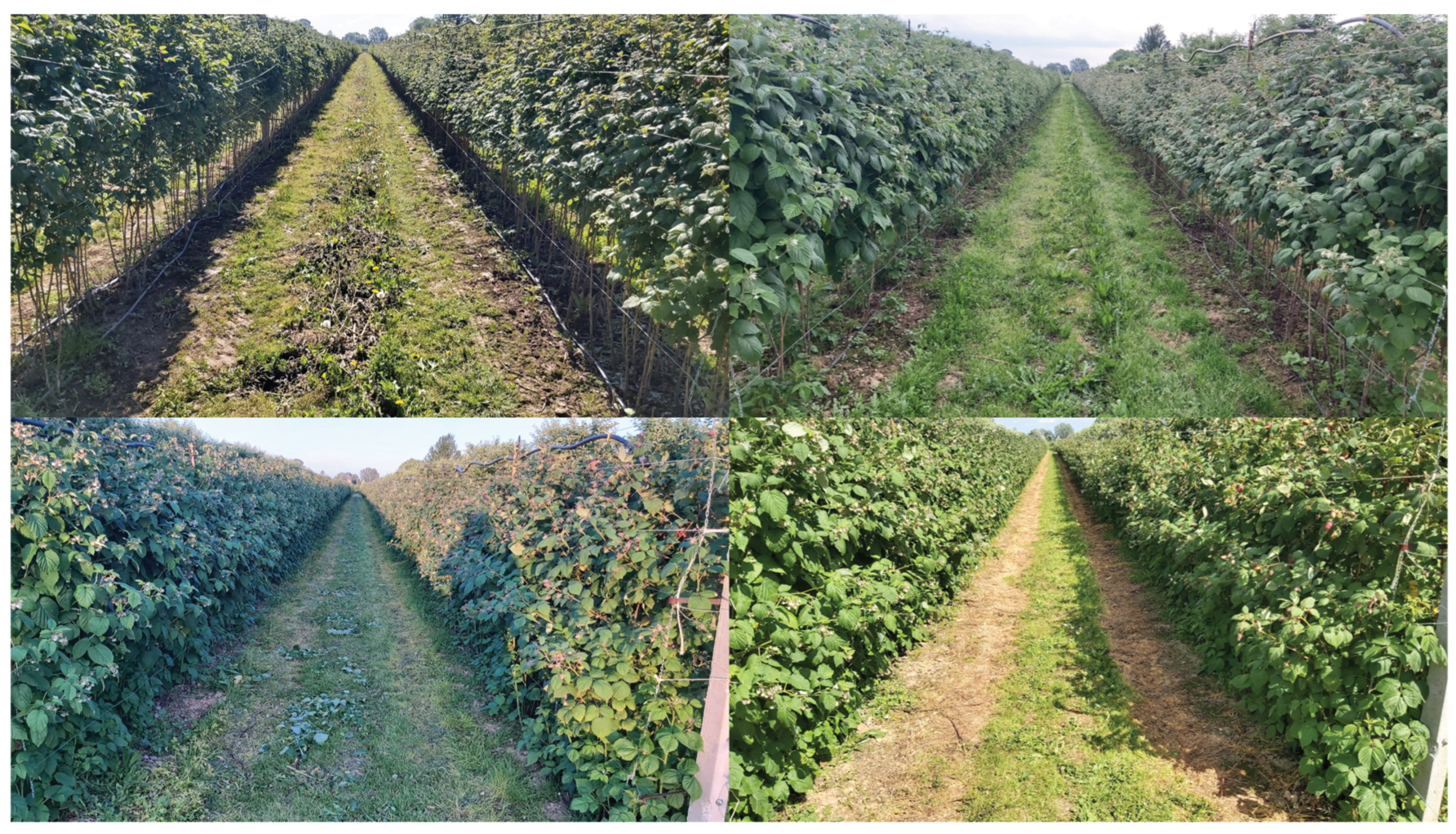
Figure 2.
Temperature.
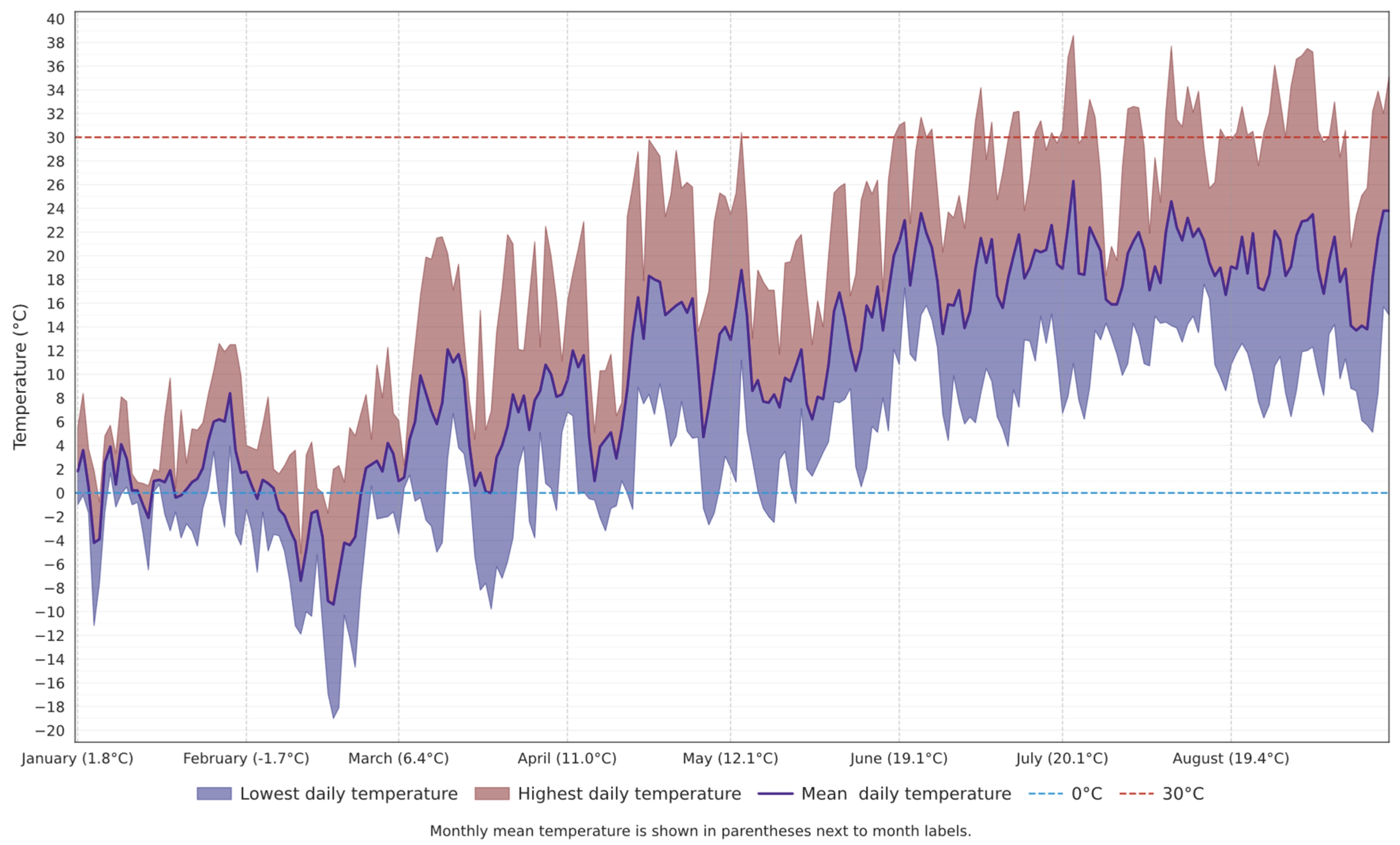
Figure 3.
DJI Mavic 3 Multispectral.

Figure 4.
Remote sensing imagery of the experimental research area: (a) RGB; (b) G; (c) NIR; (d) R; (e) RE.
Figure 4.
Remote sensing imagery of the experimental research area: (a) RGB; (b) G; (c) NIR; (d) R; (e) RE.
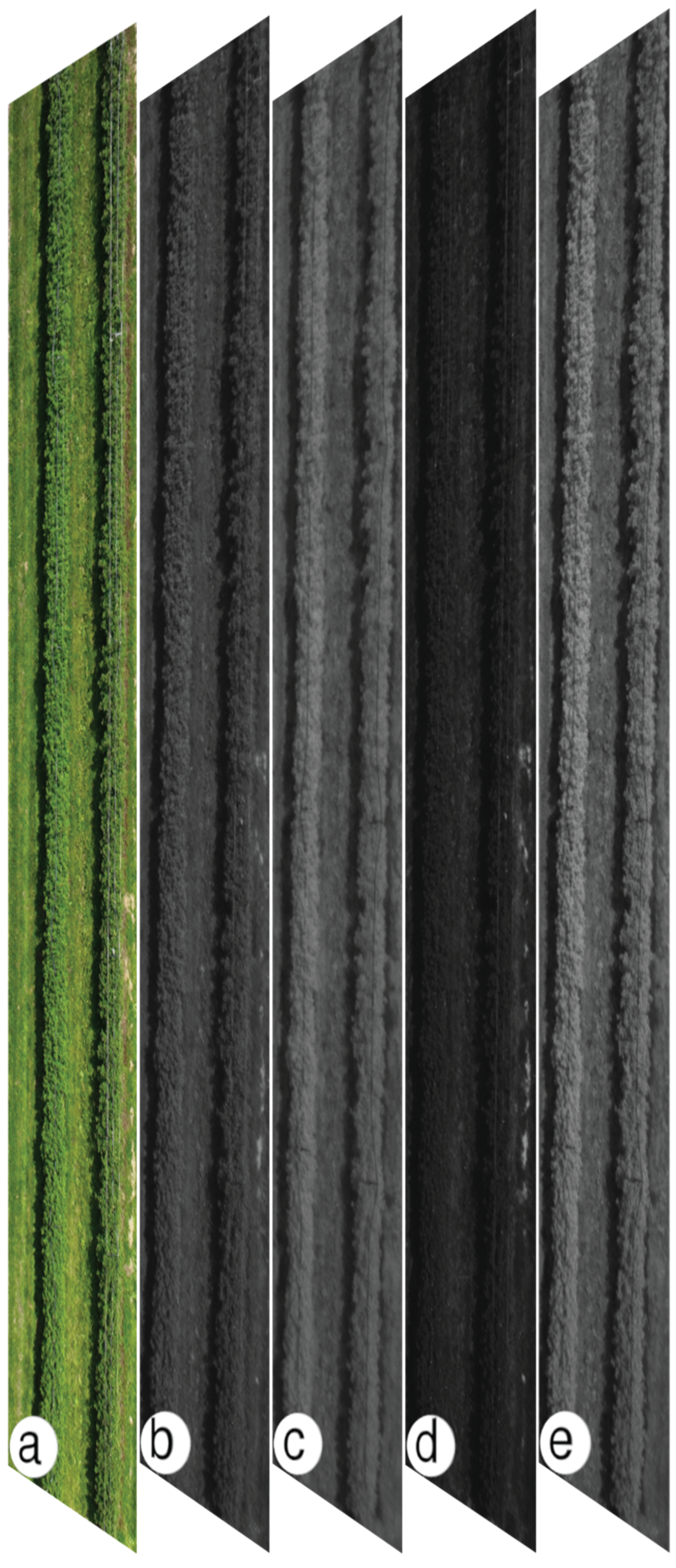
Figure 5.
Annotation Methods: (a) Rectangle bounded; (b) Rectangle on the edges; (c) Comparison of Rectangle bounded and Rectangle on the edges.
Figure 5.
Annotation Methods: (a) Rectangle bounded; (b) Rectangle on the edges; (c) Comparison of Rectangle bounded and Rectangle on the edges.

Figure 6.
Layers: (a) Orthomosaic; (b) NDRE; (c); OSAVI; (d) GNDVI; (e) MCARI2; (f) SIPI2; (g) LCI; (h) NDVI; (i) MCARI.
Figure 6.
Layers: (a) Orthomosaic; (b) NDRE; (c); OSAVI; (d) GNDVI; (e) MCARI2; (f) SIPI2; (g) LCI; (h) NDVI; (i) MCARI.
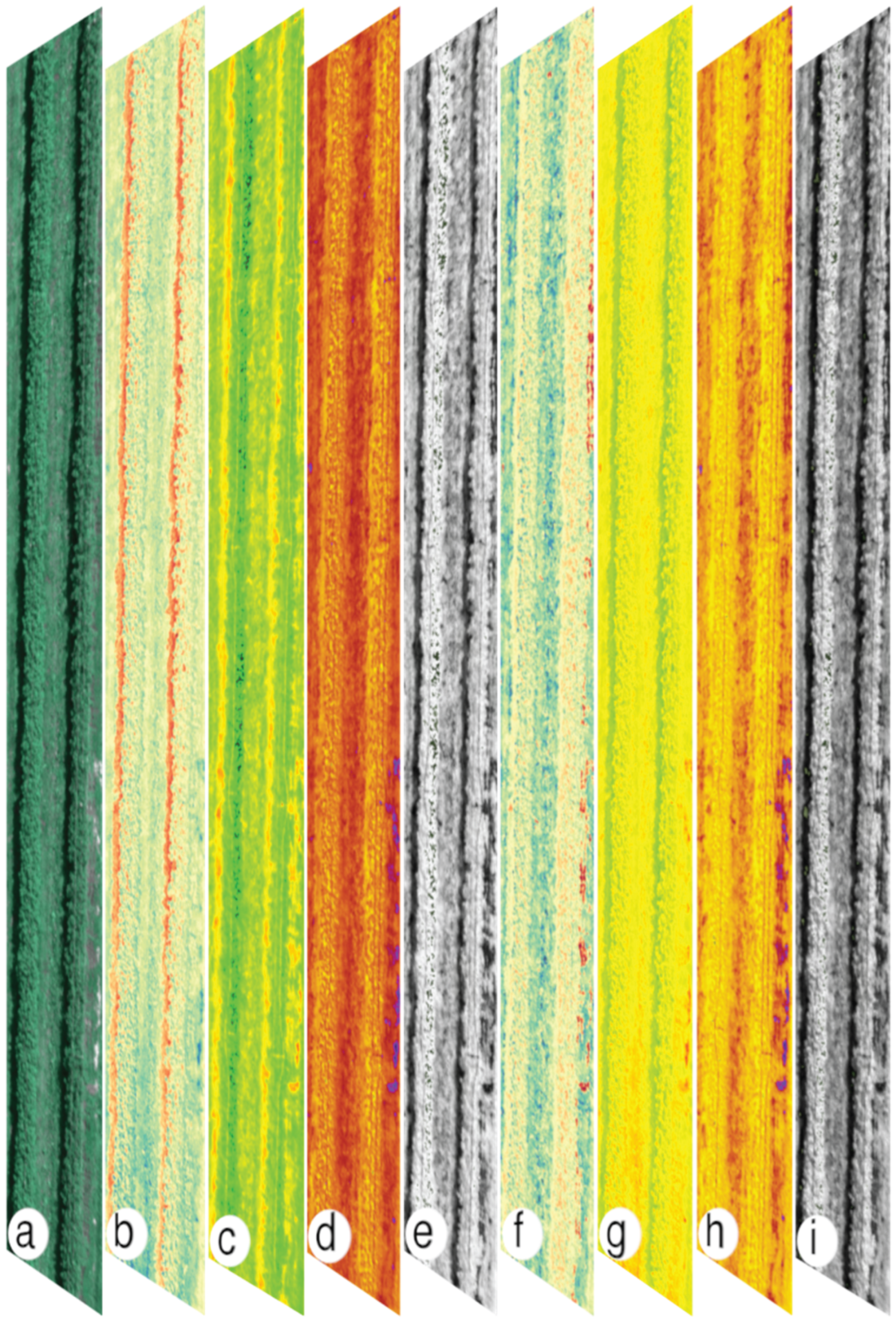
Figure 7.
Yield per hectare.
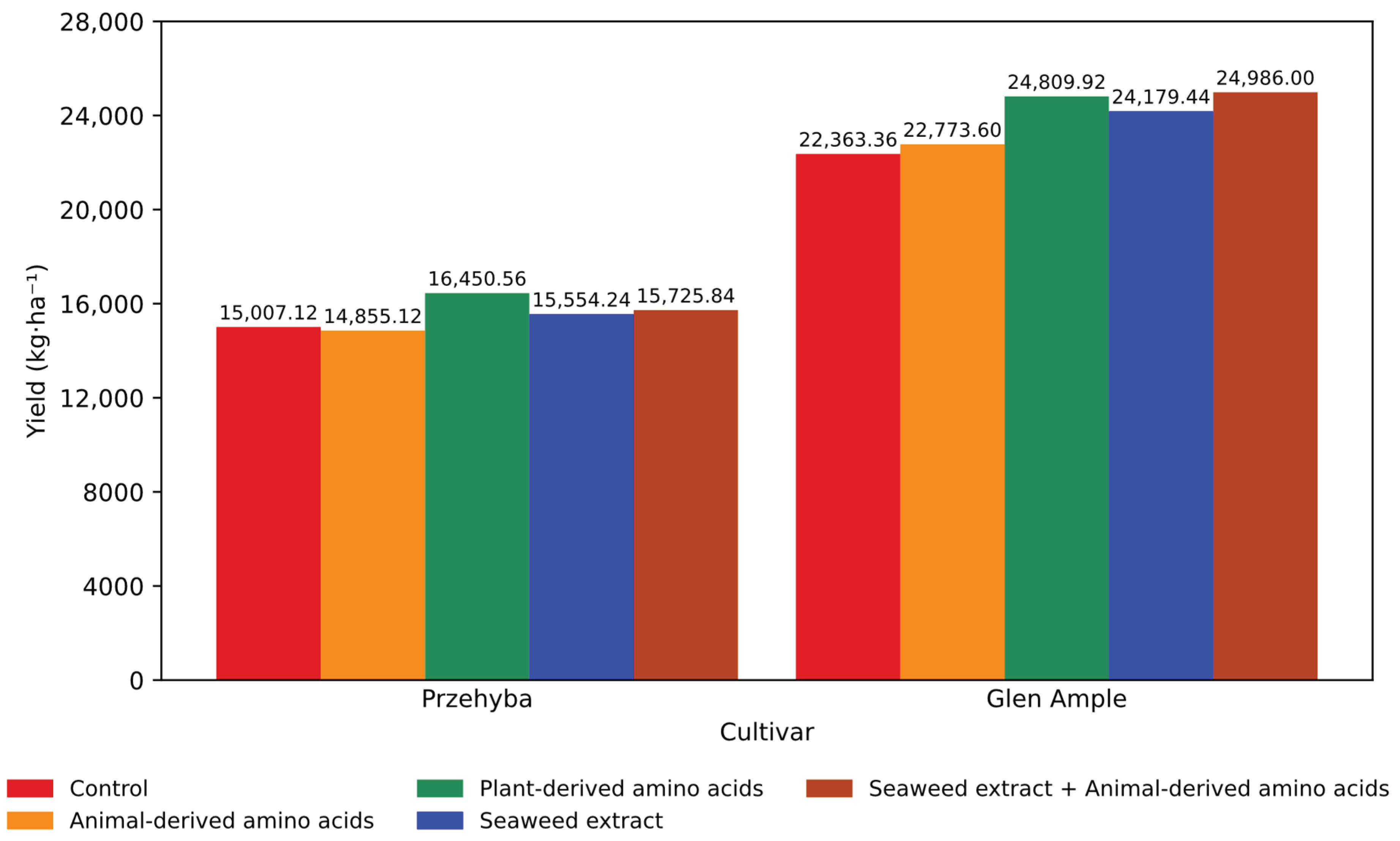
Figure 8.
Yield parameters depends on harvest.
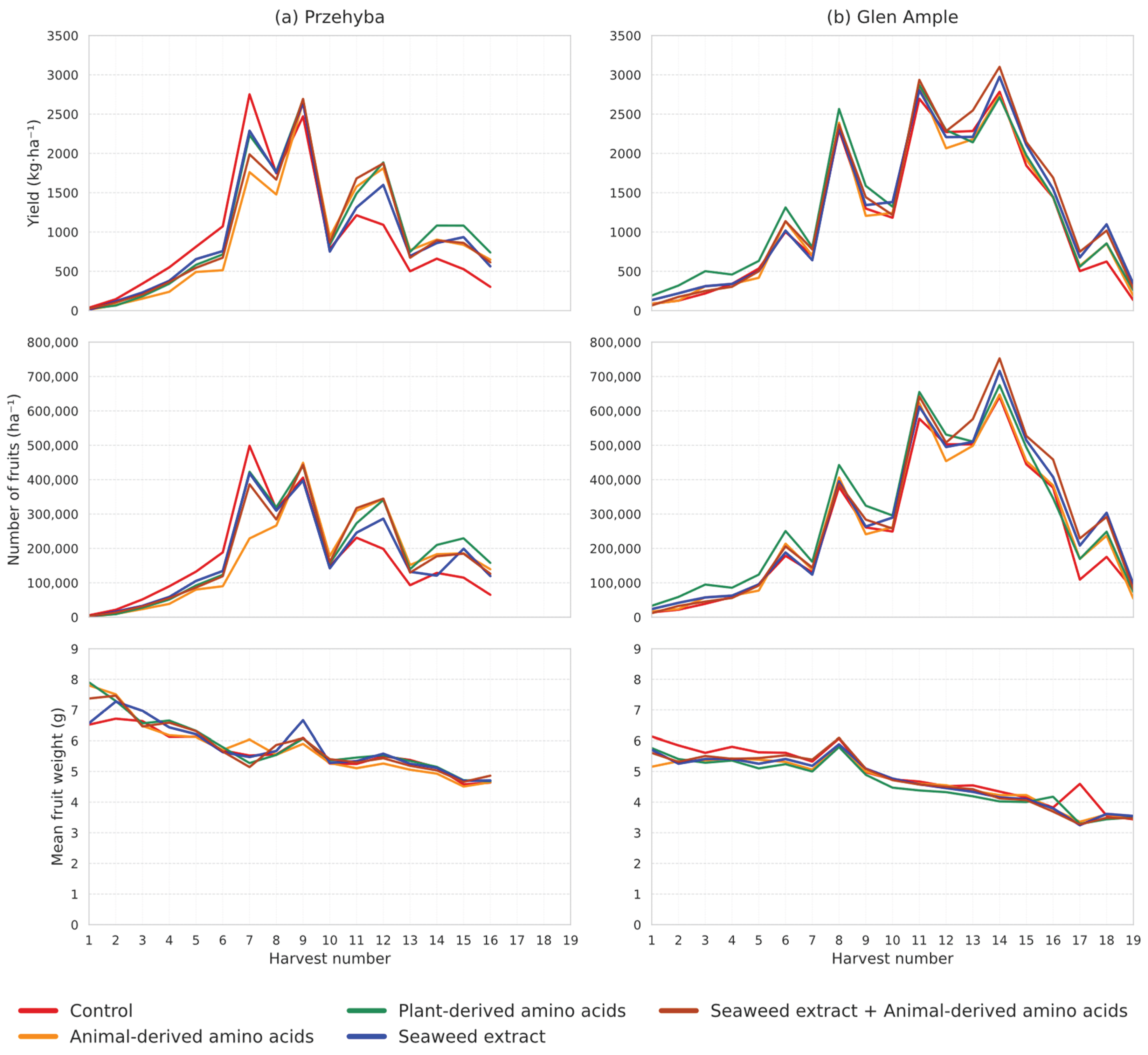
Figure 9.
Detailed relative changes (%) of the LCI index.
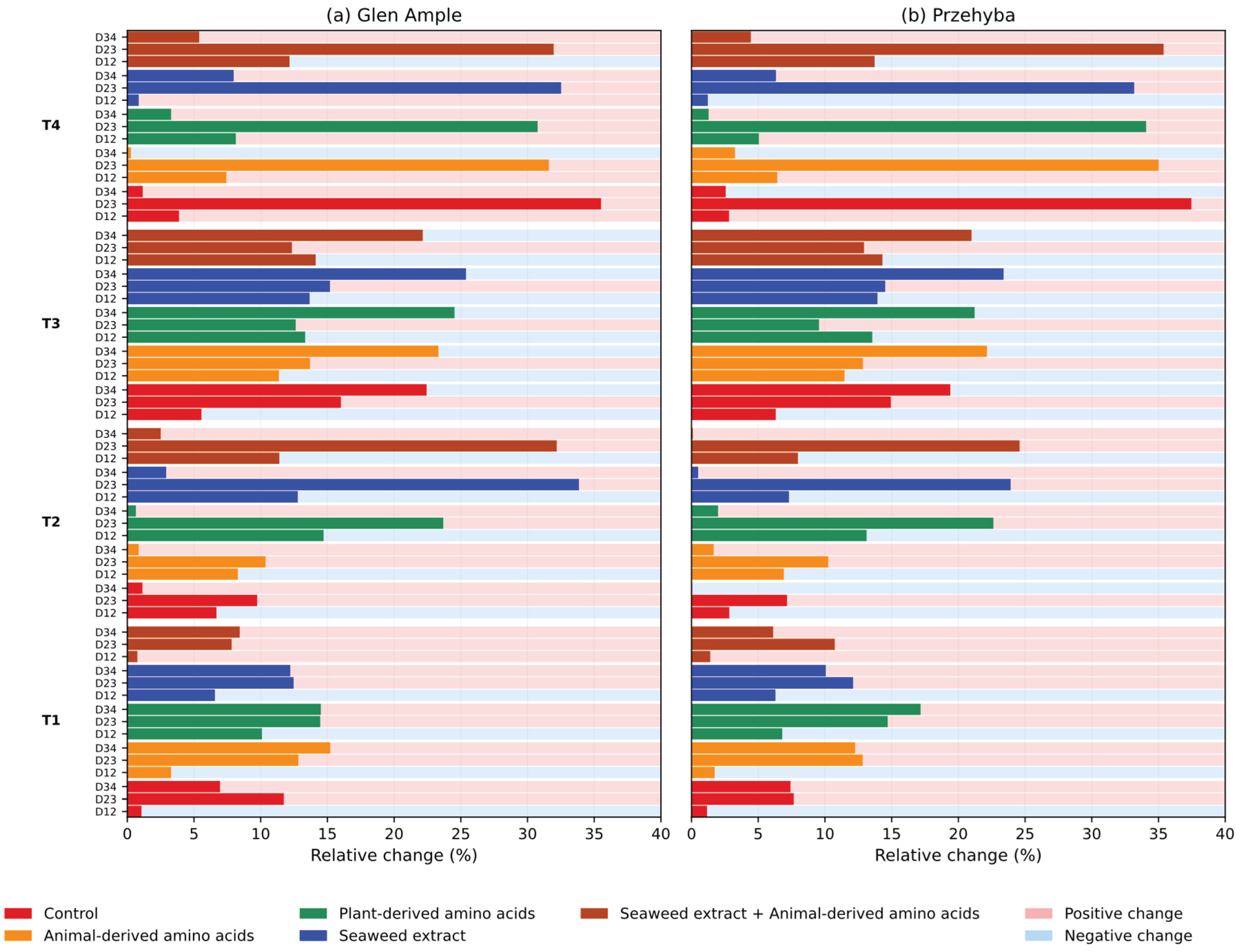
Figure 10.
Detailed relative changes (%) of the NDRE index.
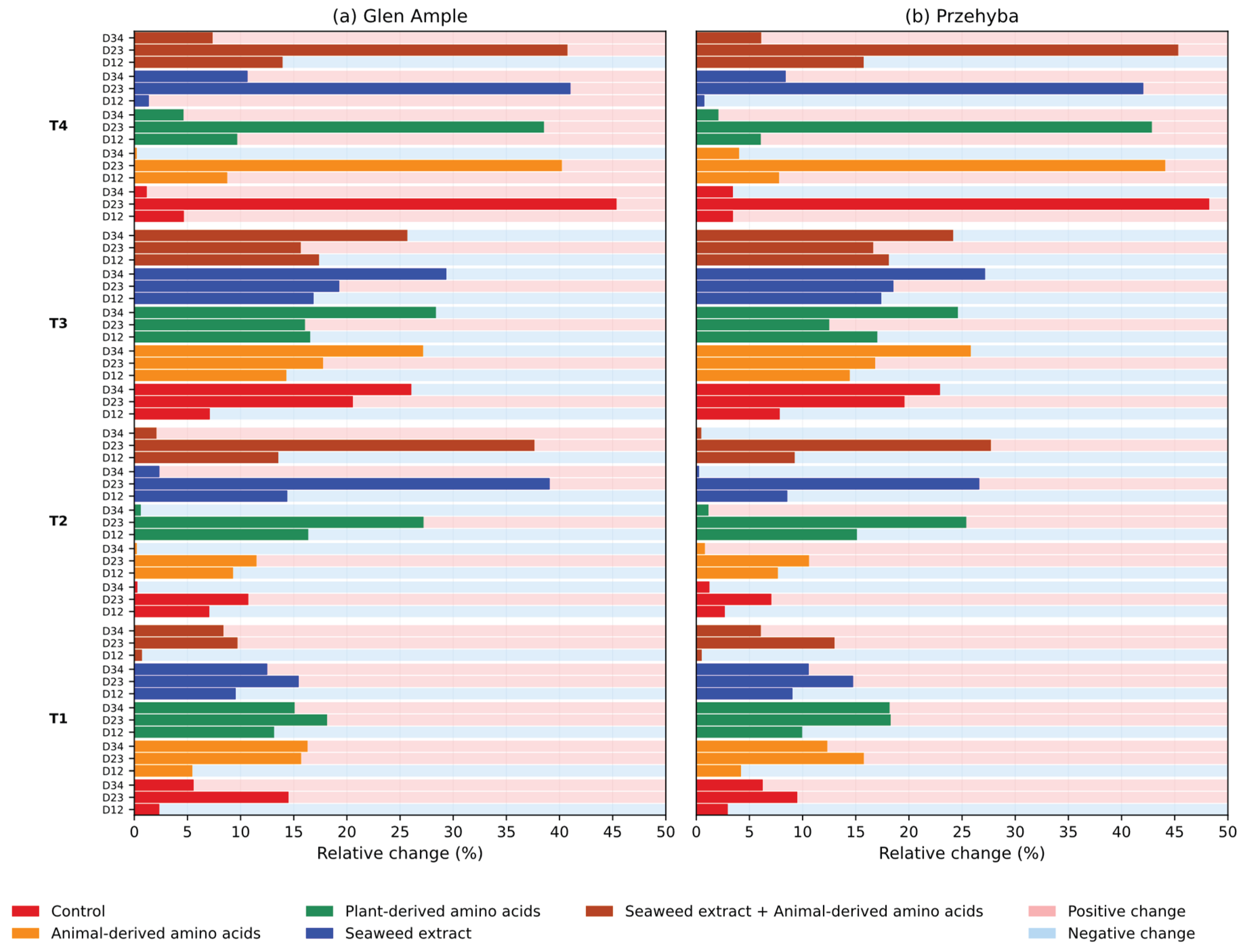
Figure 11.
Detailed relative changes (%) of the NDVI index.
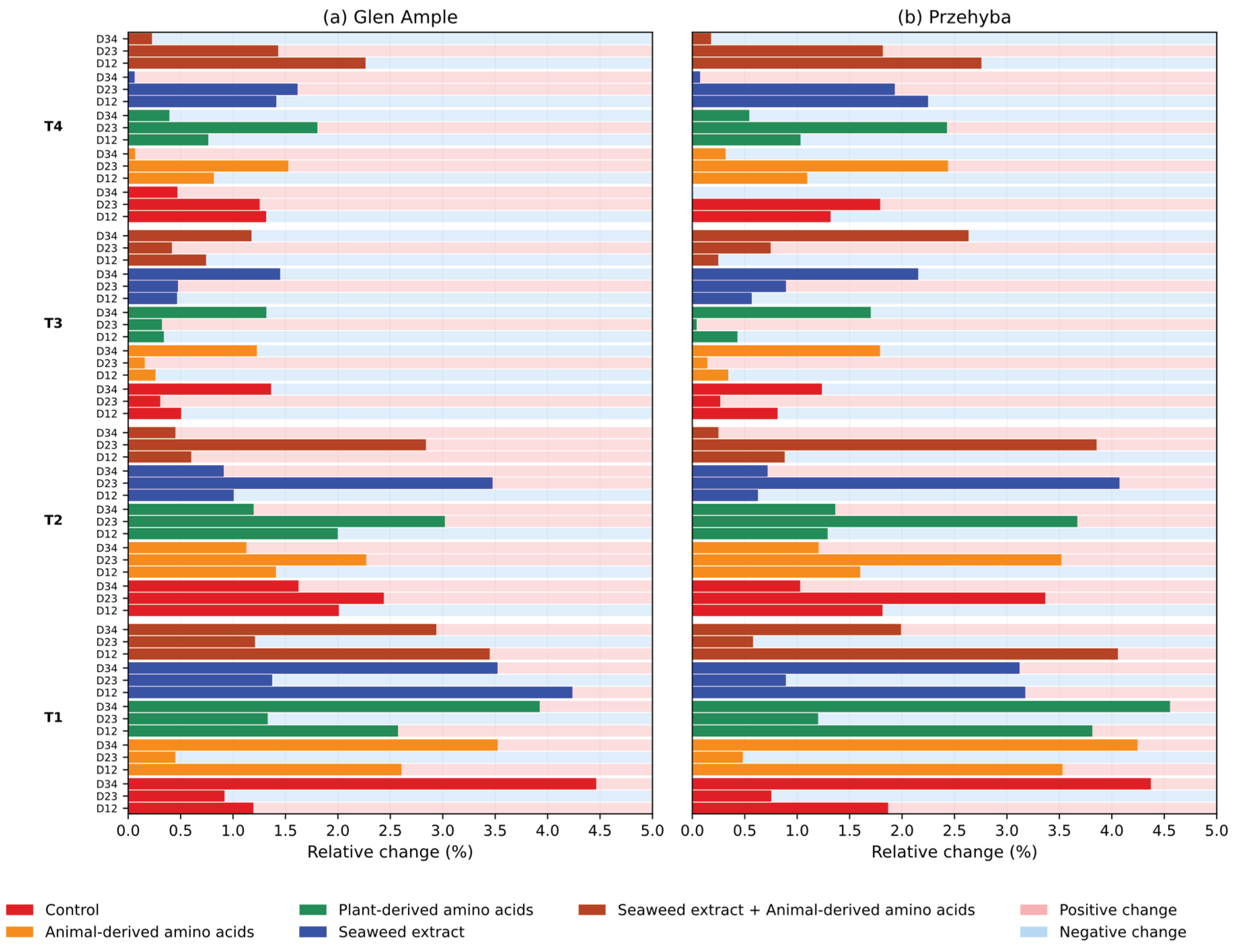
Figure 12.
Detailed relative changes (%) of the GNDVI index.
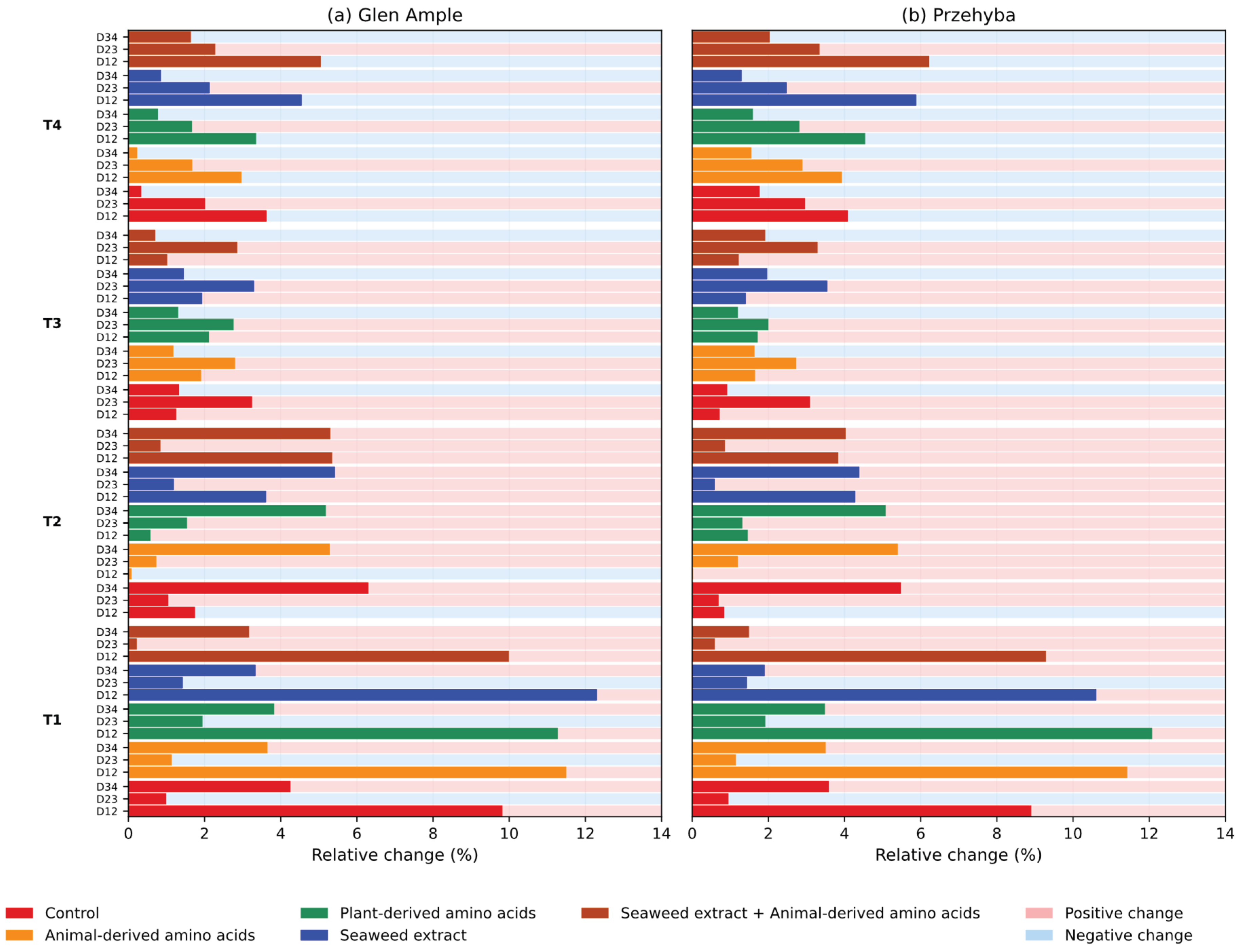
Figure 13.
Detailed relative changes (%) of the MCARI index.
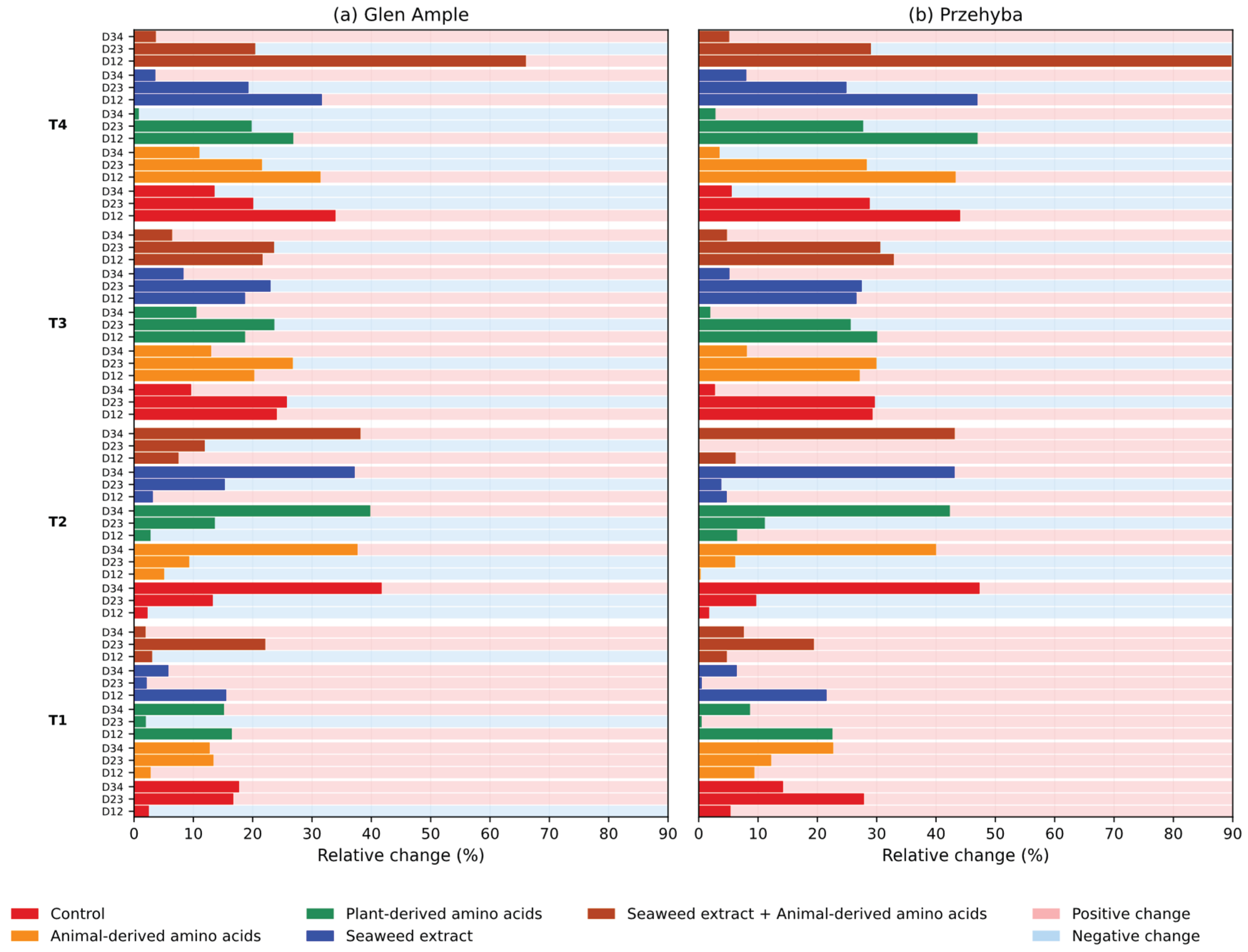
Figure 14.
Detailed relative changes (%) of the MCARI2 index.
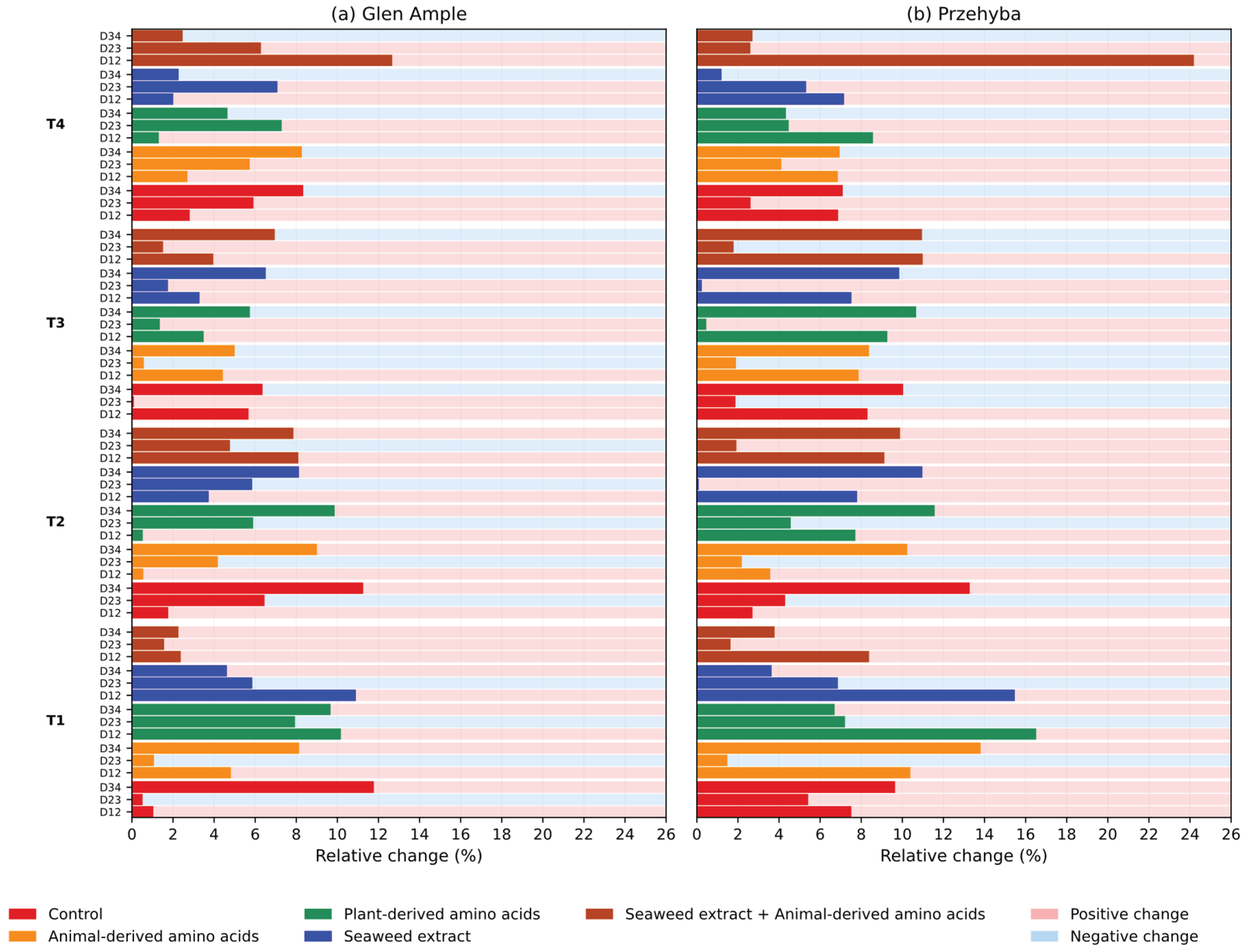
Figure 15.
Detailed relative changes (%) of the OSAVI index.
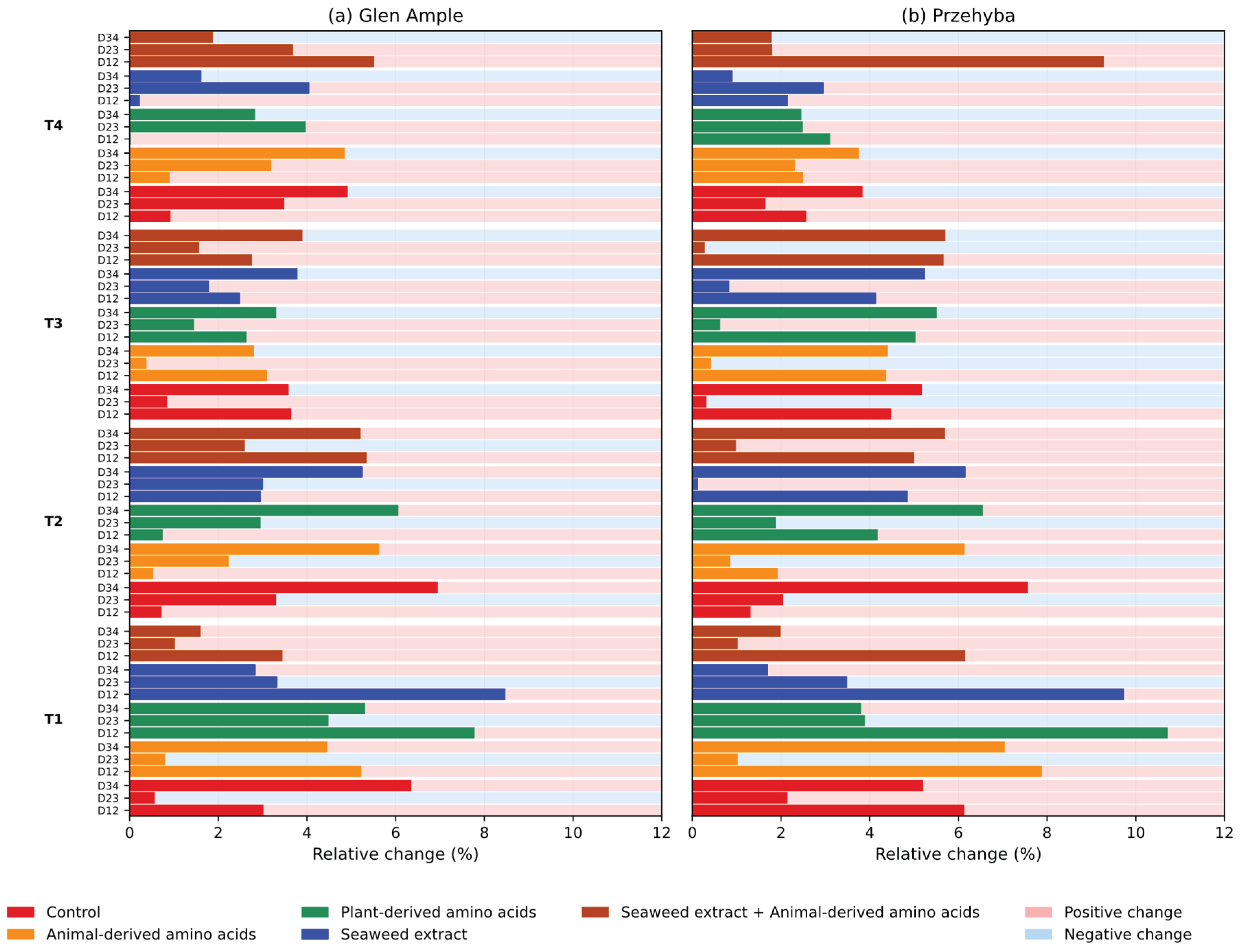
Figure 16.
Detailed relative changes (%) of the SIPI2 index.
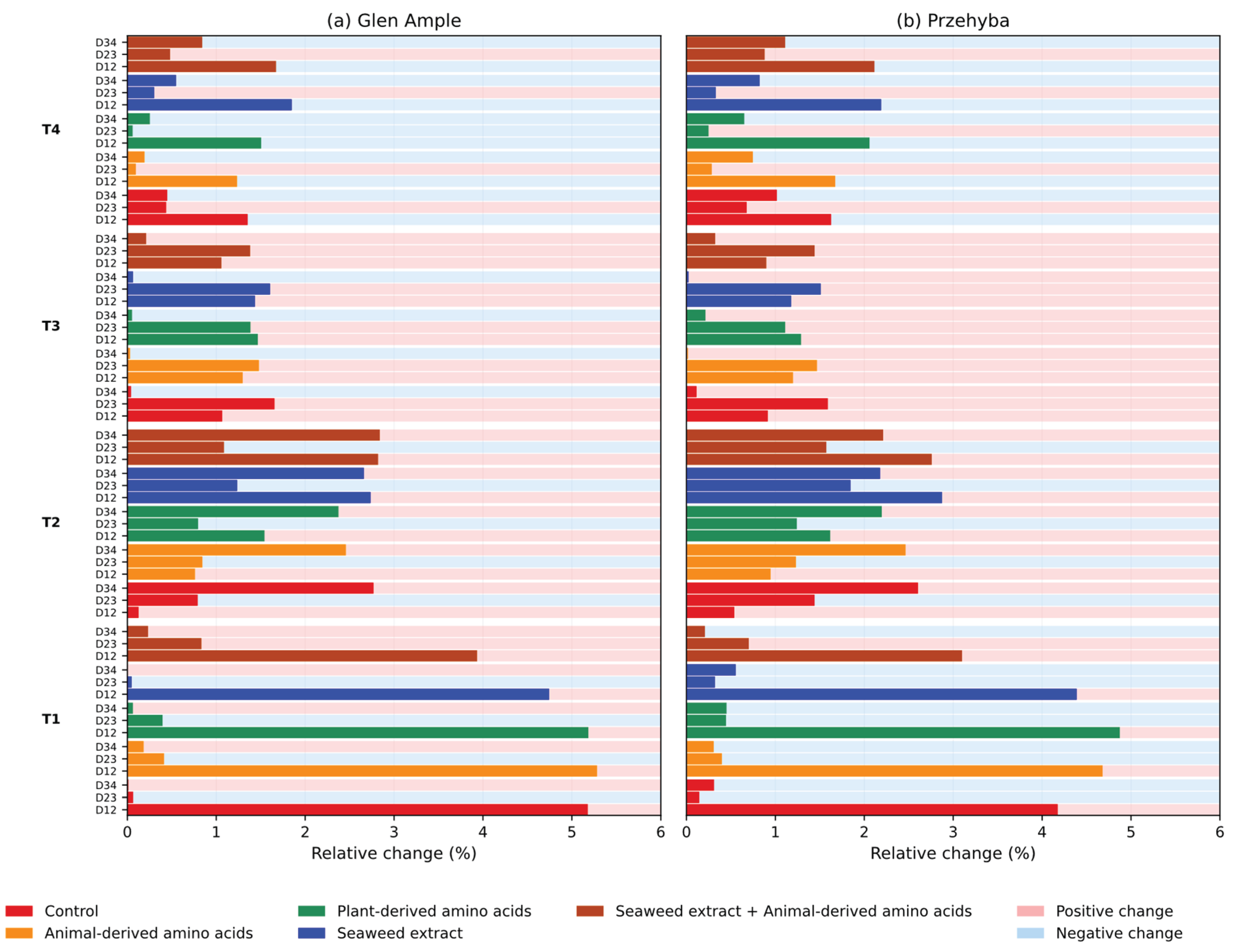
Figure 17.
Relative changes (%) of the LCI index. Control (CT); Animal-derived amino acids (AAA); Plant-derived amino acids (PAA); Seaweed extract (SW); Seaweed extract + Animal-derived amino acids (SW+AAA).
Figure 17.
Relative changes (%) of the LCI index. Control (CT); Animal-derived amino acids (AAA); Plant-derived amino acids (PAA); Seaweed extract (SW); Seaweed extract + Animal-derived amino acids (SW+AAA).
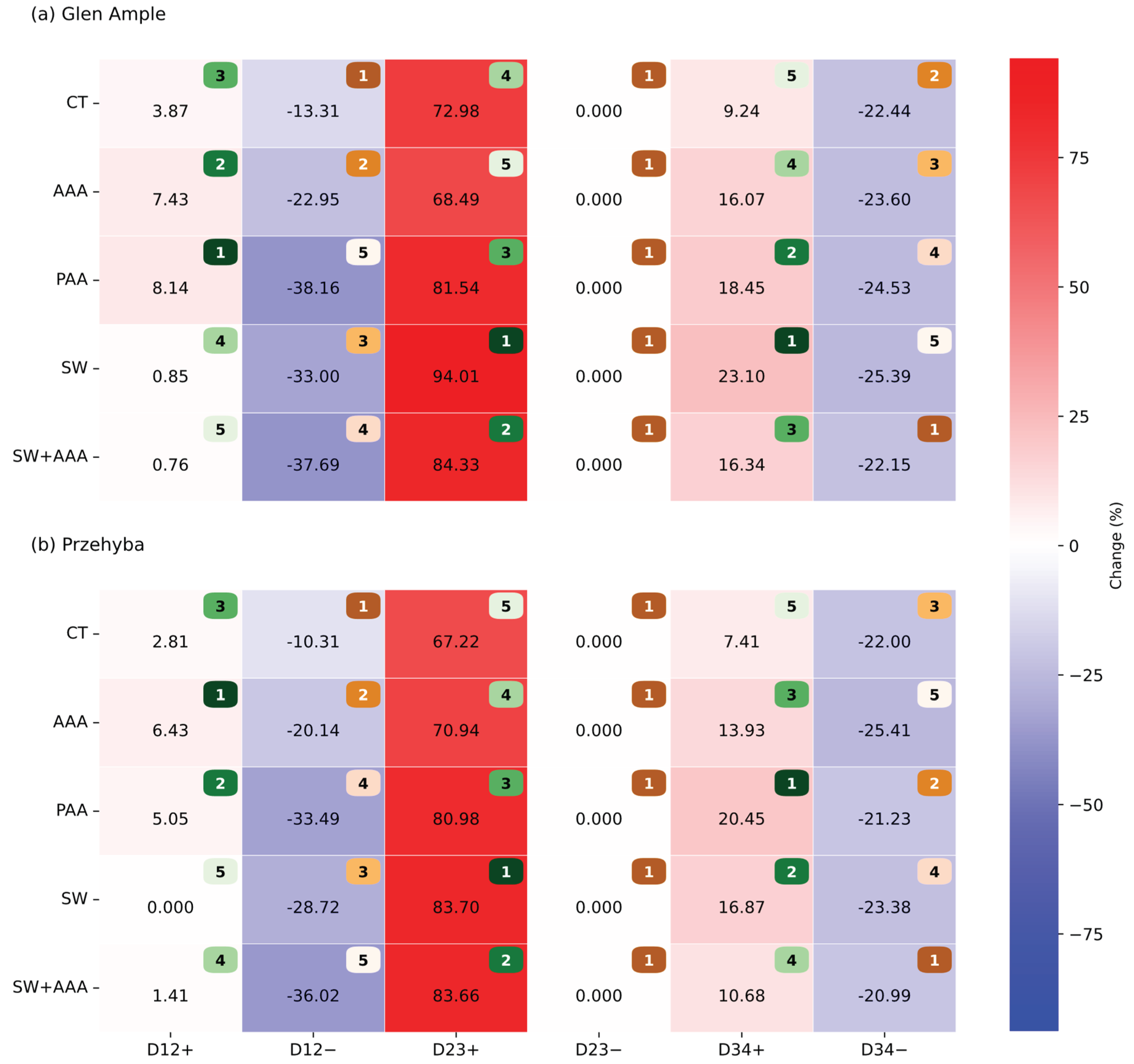
Figure 18.
Relative changes (%) of the NDRE index. Control (CT); Animal-derived amino acids (AAA); Plant-derived amino acids (PAA); Seaweed extract (SW); Seaweed extract + Animal-derived amino acids (SW+AAA).
Figure 18.
Relative changes (%) of the NDRE index. Control (CT); Animal-derived amino acids (AAA); Plant-derived amino acids (PAA); Seaweed extract (SW); Seaweed extract + Animal-derived amino acids (SW+AAA).
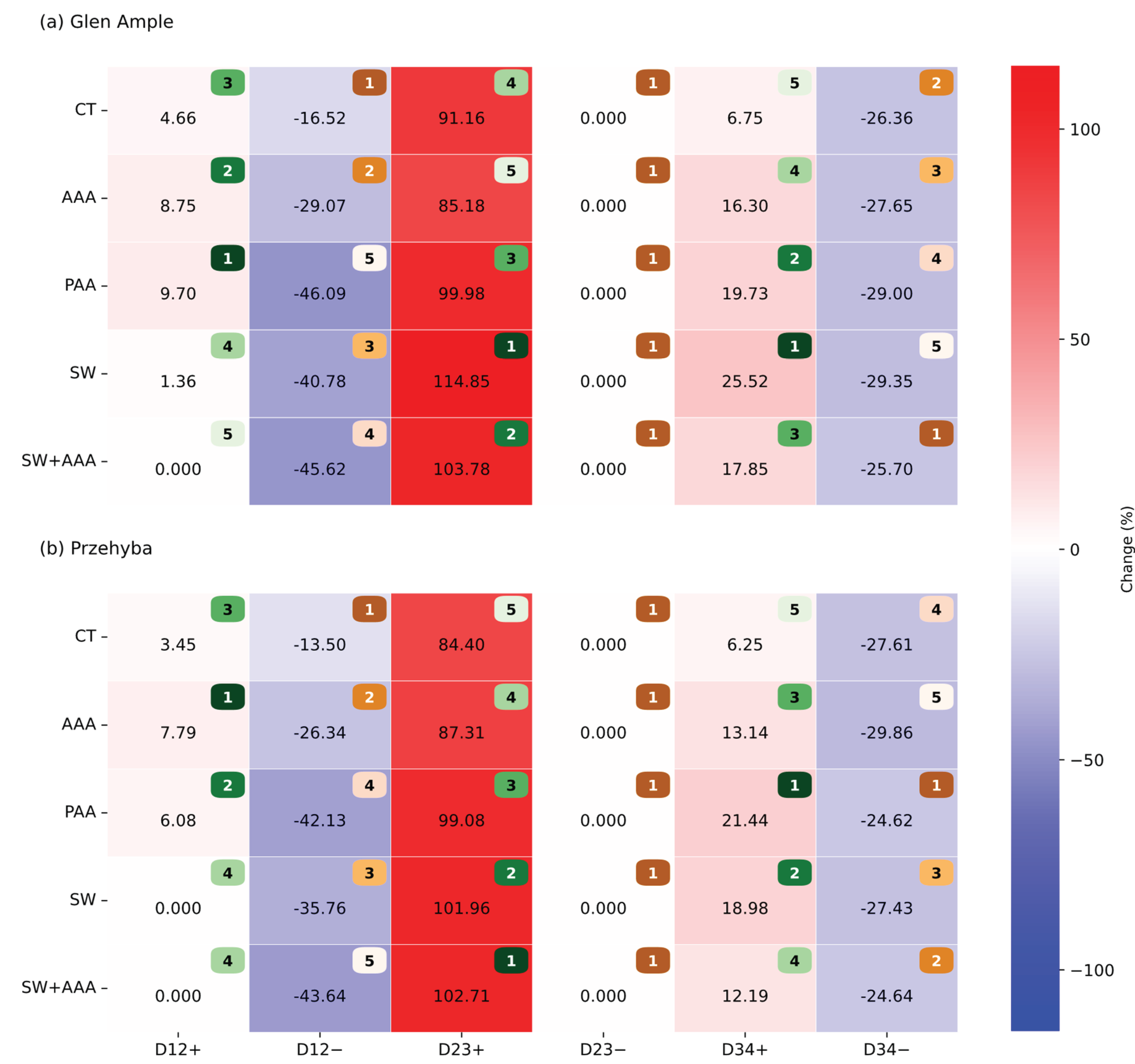
Figure 19.
Relative changes (%) of the NDVI index. Control (CT); Animal-derived amino acids (AAA); Plant-derived amino acids (PAA); Seaweed extract (SW); Seaweed extract + Animal-derived amino acids (SW+AAA).
Figure 19.
Relative changes (%) of the NDVI index. Control (CT); Animal-derived amino acids (AAA); Plant-derived amino acids (PAA); Seaweed extract (SW); Seaweed extract + Animal-derived amino acids (SW+AAA).
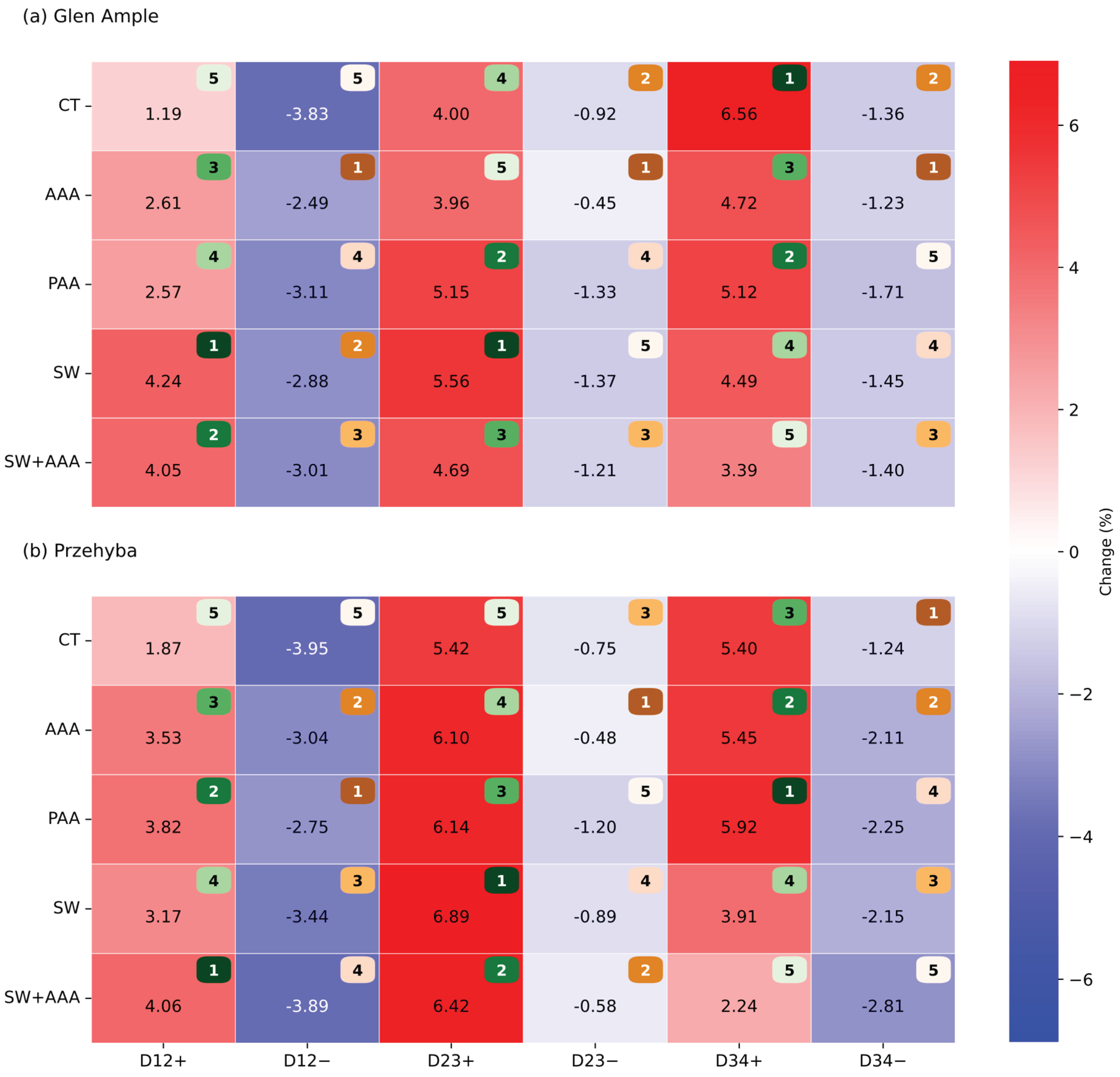
Figure 20.
Relative changes (%) of the GNDVI index. Control (CT); Animal-derived amino acids (AAA); Plant-derived amino acids (PAA); Seaweed extract (SW); Seaweed extract + Animal-derived amino acids (SW+AAA).
Figure 20.
Relative changes (%) of the GNDVI index. Control (CT); Animal-derived amino acids (AAA); Plant-derived amino acids (PAA); Seaweed extract (SW); Seaweed extract + Animal-derived amino acids (SW+AAA).
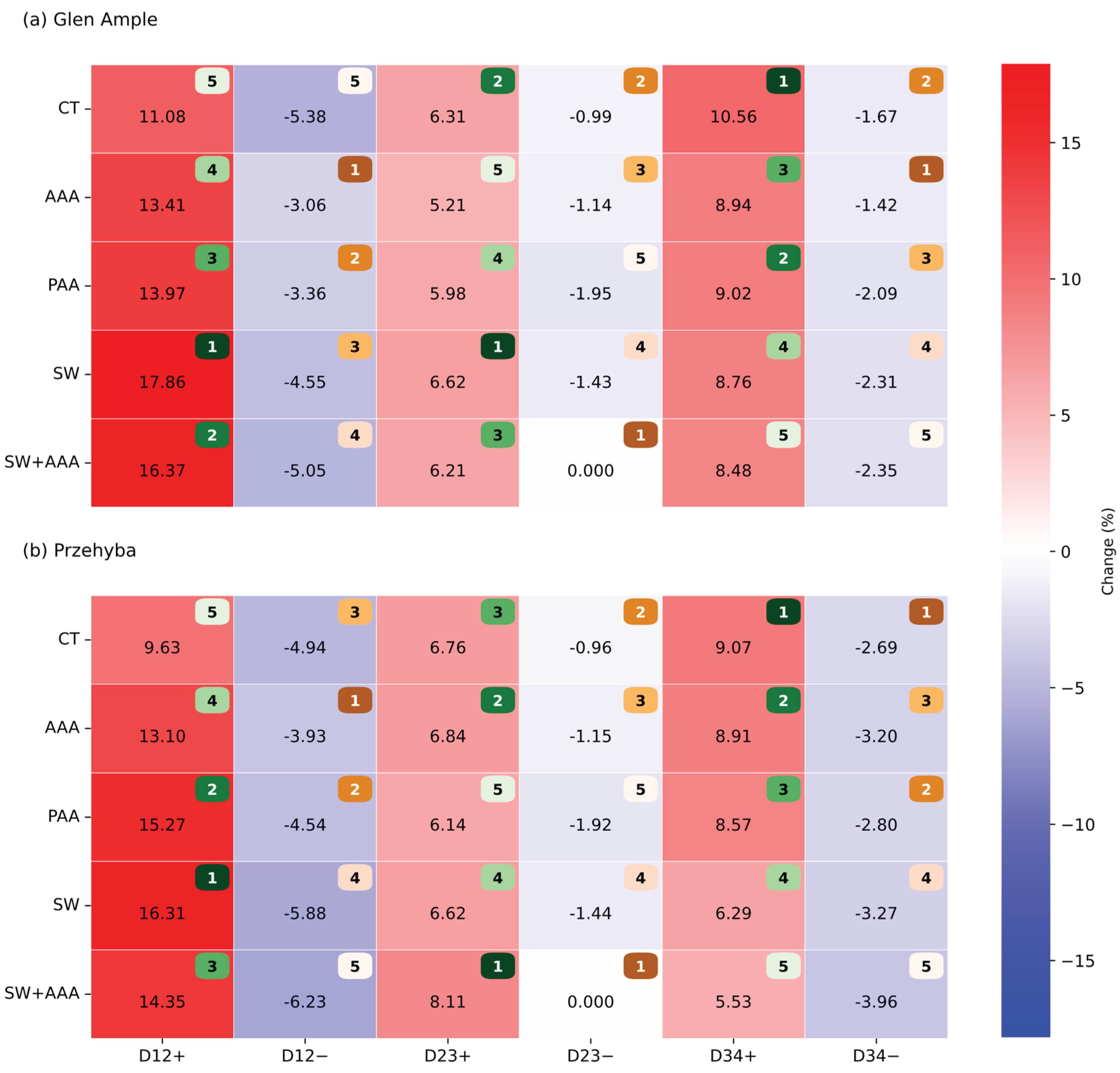
Figure 21.
Relative changes (%) of the MCARI index. Control (CT); Animal-derived amino acids (AAA); Plant-derived amino acids (PAA); Seaweed extract (SW); Seaweed extract + Animal-derived amino acids (SW+AAA).
Figure 21.
Relative changes (%) of the MCARI index. Control (CT); Animal-derived amino acids (AAA); Plant-derived amino acids (PAA); Seaweed extract (SW); Seaweed extract + Animal-derived amino acids (SW+AAA).
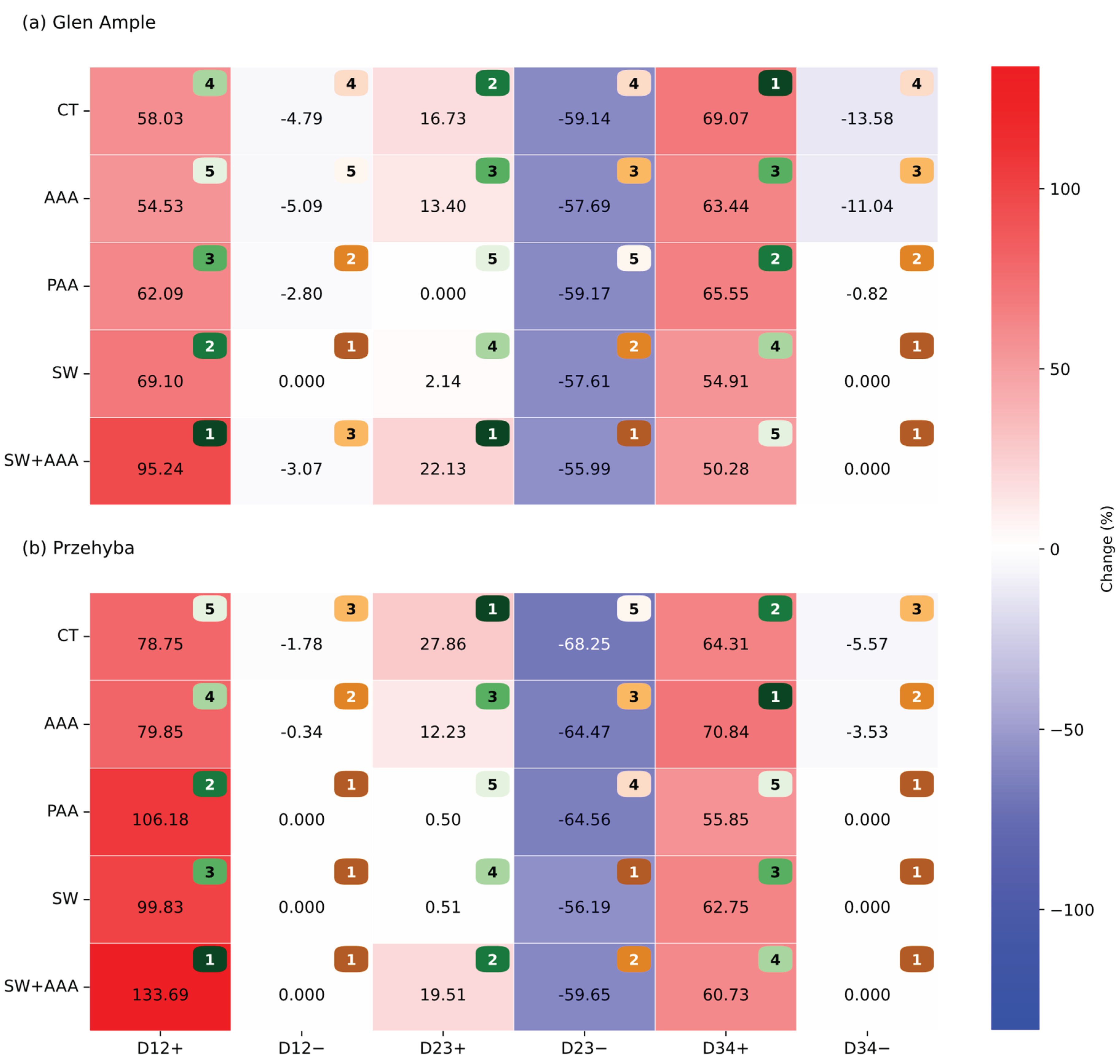
Figure 22.
Relative changes (%) of the MCARI2 index. Control (CT); Animal-derived amino acids (AAA); Plant-derived amino acids (PAA); Seaweed extract (SW); Seaweed extract + Animal-derived amino acids (SW+AAA).
Figure 22.
Relative changes (%) of the MCARI2 index. Control (CT); Animal-derived amino acids (AAA); Plant-derived amino acids (PAA); Seaweed extract (SW); Seaweed extract + Animal-derived amino acids (SW+AAA).
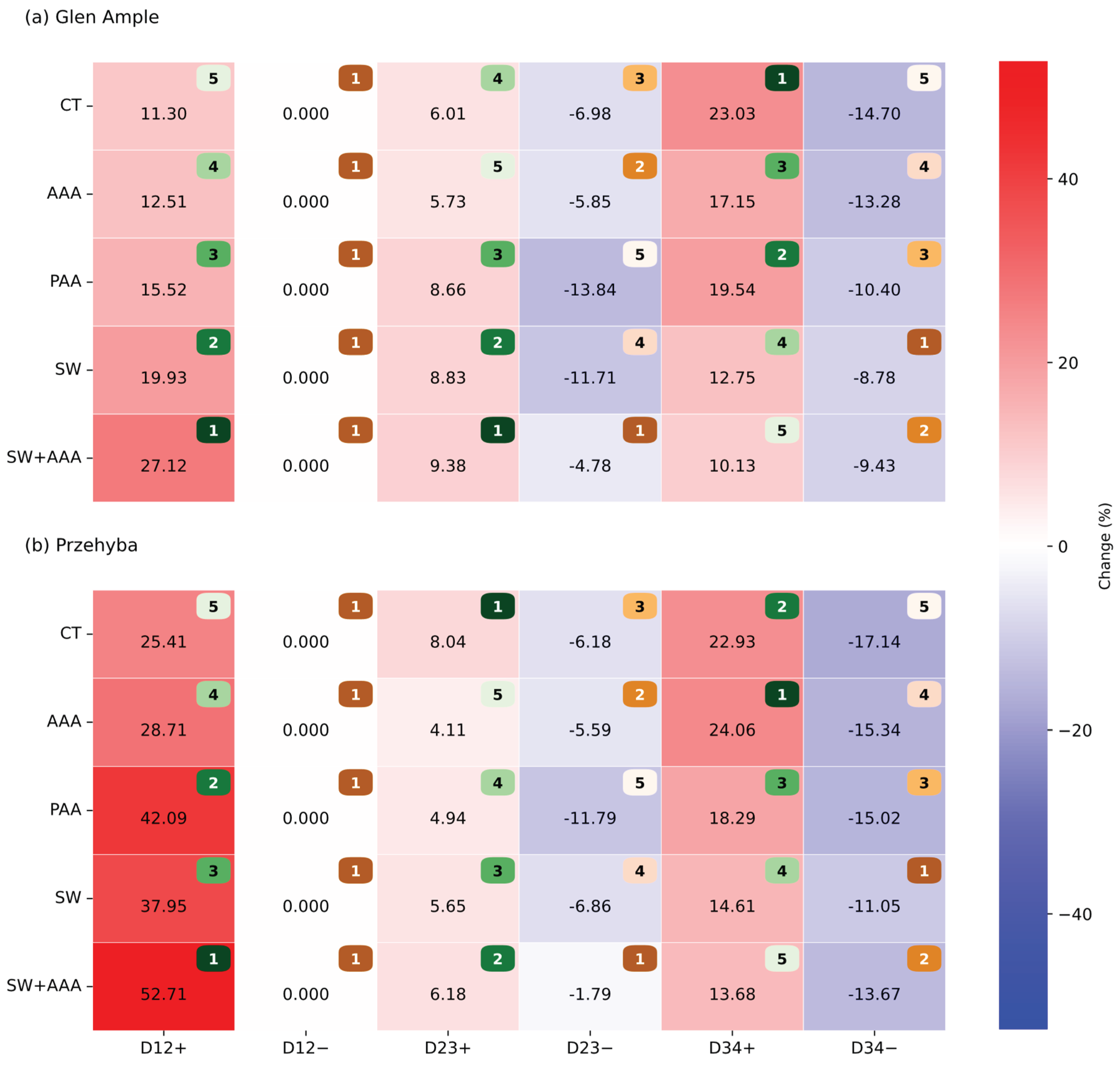
Figure 23.
Relative changes (%) of the OSAVI index. Control (CT); Animal-derived amino acids (AAA); Plant-derived amino acids (PAA); Seaweed extract (SW); Seaweed extract + Animal-derived amino acids (SW+AAA).
Figure 23.
Relative changes (%) of the OSAVI index. Control (CT); Animal-derived amino acids (AAA); Plant-derived amino acids (PAA); Seaweed extract (SW); Seaweed extract + Animal-derived amino acids (SW+AAA).
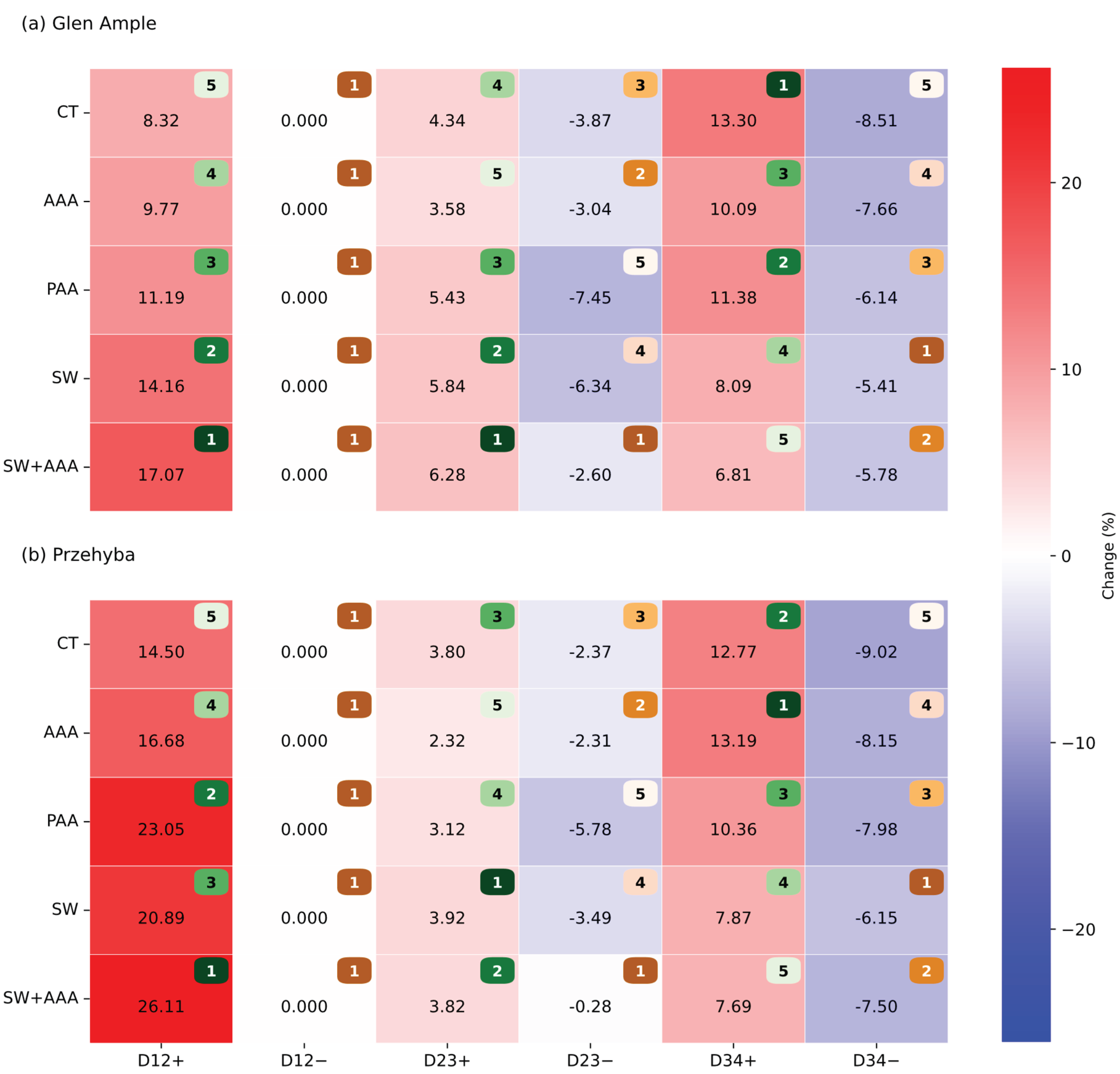
Figure 24.
Relative changes (%) of the SIPI2 index. Control (CT); Animal-derived amino acids (AAA); Plant-derived amino acids (PAA); Seaweed extract (SW); Seaweed extract + Animal-derived amino acids (SW+AAA).
Figure 24.
Relative changes (%) of the SIPI2 index. Control (CT); Animal-derived amino acids (AAA); Plant-derived amino acids (PAA); Seaweed extract (SW); Seaweed extract + Animal-derived amino acids (SW+AAA).
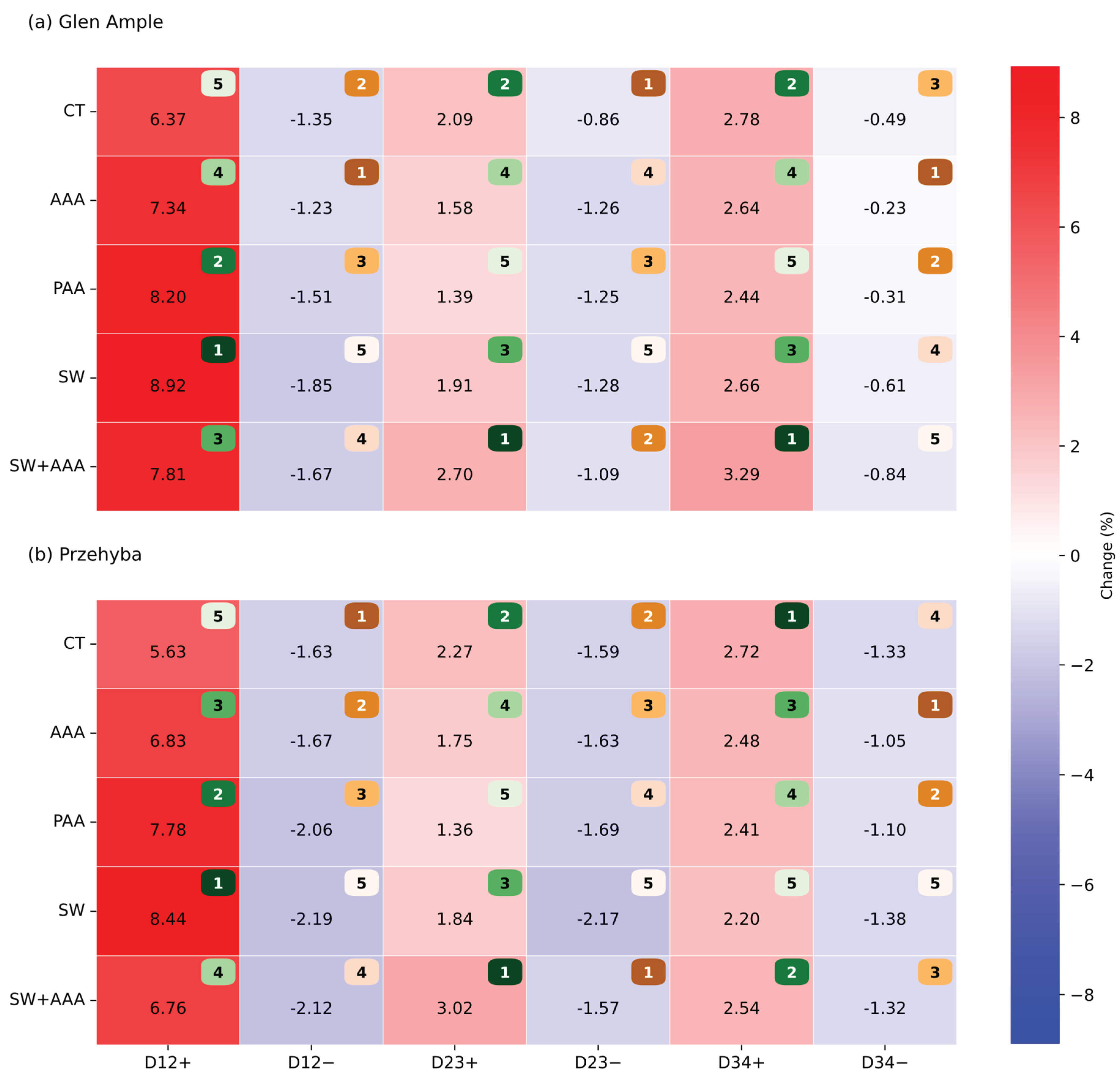

Table 1.
Raspberry cultivars.
| Cultivar | Country of origin | Breeding program |
| Przehyba | Poland | Sadowniczy Zakład Doświadczalny Brzezna |
| Glen Ample | Scotland | James Hutton Institute |
Table 2.
Biostimulants.
| Biostimulant Type | Trade Name | Application Dose (l/ha) |
| Animal-derived amino acids | NaturalCrop SL | 1.5 |
| Plant-derived amino acids | Kaishi | 2.0 |
| Seaweed extract | Valkiria Power Alg | 2.0 |
| Seaweed extract + Animal-derived amino acids | Phylgreen Kuma | 3.0 |
Table 3.
Multispectral imaging mission parameters.
| Ortho GSD (cm/pixel) | 1.40 | 2.30 |
| Route altitude (m) | 30.4 | 49.9 |
| Course angle (°) | 111 | 111 |
| Speed (m/s) | 1.3 | 2 |
| Frontal overlap ratio (%) | 90 | 90 |
| Side overlap ratio (%) | 70 | 70 |
| RTK | On | On |
| White balance | Auto | Auto |
| Dewarping | Off | Off |
Table 4.
Software.
| Programming language R (4.4.0) | |
| Integrated development environment | Rstudio (2025.9.2.418) |
| Packages | Readxl (1.4.5), Dplyr (1.1.4), Emmeans (2.0.1), Multcomp (1.4.29), MultcompView (0.1.10), ComplexHeatmap (2.22.0), Circlize (0.4.17) |
| Programming language Python (3.12.0) | |
| Integrated development environment | PyCharm (2025.3.2.1) |
| Libraries | Pandas (2.2.3), Seaborn (0.13.2), Matplotlib (3.9.2), NumPy (2.2.0) |
Table 5.
Data processing settings.
| Parameter | Setting |
| Processing pipeline | Accurate |
| reflectanceTargetUsed | True |
| enableRadiometry | True |
| enableGPU | True |
| orhtoMinGsd | 0 |
| orthoMaxSizeMPixels | 0 |
| enablePanSharpening | False |
| enableOrthoMinGsd | False |
| enableOrthoMaxSizeMPixels | False |
Table 6.
Weather conditions during measurements.
| Treatment | Measurement | Processing settings |
| 1 | 1 | clear sky |
| 2 | overcast | |
| 3 | overcast | |
| 4 | overcast | |
| 2 | 1 | clear sky |
| 2 | clear sky | |
| 3 | clear sky | |
| 4 | overcast | |
| 3 | 1 | clearsky |
| 2 | overcast | |
| 3 | clearsky | |
| 4 | clearsky | |
| 4 | 1 | clear sky |
| 2 | overcast | |
| 3 | clear sky | |
| 4 | clear sky |
Table 7.
Formulas of vegetation indices.
| Vegetation index | Formula | |
| Leaf Chlorophyll Index | LCI | |
| Normalized Difference Red Edge | NDRE | |
| Normalized Difference Vegetation Index | NDVI | |
| Green Normalized Difference Vegetation Index | GNDVI | |
| Modified Chlorophyll Absorption in Reflective Index | MCARI | |
| Modified Chlorophyll Absorption in Reflective Index 2 | MCARI2 | |
| Optimized Soil Adjusted Vegetation Index | OSAVI | |
| Structure Intensive Pigment Index 2 |
SIPI2 | |
Table 8.
Yield.
| Cultivar | Combination | Yield per Plant (g) |
Number of Fruits per Plant (pcs.) |
Fruit Weight (g) |
| Glen Ample | CT | 2,795.42 b | 604.54 b | 4.62 a |
| AAA | 2,846.70 b | 627.53 b | 4.54 a | |
| PAA | 3,101.24 a | 696.82 a | 4.45 a | |
| SW | 3,022.43 ab | 675.64 a | 4.47 a | |
| SW+AAA | 3,123.25 a | 698.00 a | 4.48 a | |
| p-value | 0.004 | < 0.001 | 0.353 | |
| Przehyba | CT | 1,875.89 b | 336.22 b | 5.58 a |
| AAA | 1,856.89 b | 335.05 b | 5.54 a | |
| PAA | 2,056.32 a | 374.79 a | 5.51 a | |
| SW | 1,944.28 ab | 340.18 b | 5.72 a | |
| SW+AAA | 1,965.73 ab | 358.10 ab | 5.49 a | |
| p-value | 0.018 | 0.002 | 0.289 |
Control (CT); Animal-derived amino acids (AAA); Plant-derived amino acids (PAA); Seaweed extract (SW); Seaweed extract + Animal-derived amino acids (SW + AAA).
Table 9.
Main factorial effects on yield parameters.
| Yield per Plant (g) |
Number of Fruits per Plant (pcs.) |
Fruit Weight (g) | ||
| Cultivar (A) | Przehyba | 1939.82 b | 348.87 b | 5.56 a |
| Glen Ample | 2977.81 a | 660.51 a | 4.51 b | |
| p-value | < 0.001 | < 0.001 | < 0.001 | |
| Combination (B) | CT | 2335.66 b | 470.38 c | 5.10 a |
| AAA | 2351.80 bc | 481.29 c | 5.04 a | |
| PAA | 2578.78 a | 535.80 a | 4.97 a | |
| SW | 2483.36 ac | 507.91 b | 5.09 a | |
| SW+AAA | 2544.49 a | 528.05 ab | 4.98 a | |
| p-value | < 0.001 | < 0.001 | 0.265 | |
| A*B | p-value | 0.162 | < 0.001 | 0.362 |
Control (CT); Animal-derived amino acids (AAA); Plant-derived amino acids (PAA); Seaweed extract (SW); Seaweed extract + Animal-derived amino acids (SW + AAA).
Disclaimer/Publisher’s Note: The statements, opinions and data contained in all publications are solely those of the individual author(s) and contributor(s) and not of MDPI and/or the editor(s). MDPI and/or the editor(s) disclaim responsibility for any injury to people or property resulting from any ideas, methods, instructions or products referred to in the content. |
© 2026 by the authors. Licensee MDPI, Basel, Switzerland. This article is an open access article distributed under the terms and conditions of the Creative Commons Attribution (CC BY) license (http://creativecommons.org/licenses/by/4.0/).
Copyright: This open access article is published under a Creative Commons CC BY 4.0 license, which permit the free download, distribution, and reuse, provided that the author and preprint are cited in any reuse.


