

Submitted:
17 April 2026
Posted:
20 April 2026
You are already at the latest version
Abstract
Zoroastrianism is one of the earliest religions, originating in ancient Iran. There is a debate about its place of origin, but it is generally believed to have originated in West Azerbaijan or Baluchistan (north-west and south-east of modern Iran, respectively) and has influenced many subsequent religions over the centuries (including northern Buddhism, Judaism, Christianity, and Islam). From the 6th to the 7th century AD, Zoroastrianism was the state religion of Iran, and most Iranians practised it. Zoroastrianism existed in Iran during the Median era (approximately 678-550 BC) and the Achaemenid Empire (550-330 BC); however, Alexander’s invasion of Persia in 331 BC and the subsequent establishment of the Seleucid Dynasty (312-63 BC) greatly reduced its influence and number of followers. Many priests, teachers and lawyers who orally transmitted the ancient teachings were executed, and many Zoroastrian holy temples (Fire Temples) were destroyed. The Parthians (247-224 CE) ruled Persia after the Seleucids, but little is known of the status of Zoroastrianism during their time. When the Sassanid Dynasty came into power in 224 CE, they aggressively promoted Zoroastrianism and rebuilt fire temples to promote their religion. During the Sasanian Empire (224-651 CE), Zoroastrianism became the official state religion and was deeply intertwined with imperial power and centralised authority. The Sasanians standardised the faith, compiled the religious text, the Avesta, and established a strong, hereditary clerical system, resulting in a highly ritualised, influential, and often oppressive religious institution. Following the Arab invasion of Persia in the 7th century, which is known as a period of oppression, misery and massacre, Zoroastrianism experienced a long, gradual decline from the official Persian state religion to a persecuted minority faith. Zoroastrians faced systemic discrimination, heavy taxes (jizya), and destruction of fire temples, leading many to convert or migrate to remote and inaccessible areas of Iran or India (so-called Indian Parsis) to escape persecution. Recent genetic studies show that the Zoroastrians in Iran and India possess unique genetic profiles, characterised by a genetic bottleneck due to isolation, high levels of endogamy (marriage within the community), and distinct ancestry that sets them apart from other Persian ethnic groups. In this research, we have explored and compared the genetic diversity of Zoroastrians with that of other Iranian ethnic groups and populations.
Keywords:
Zoroastrianism
; Zoroastrian
; Parsis
; genetics
; population genetic
; bottleneck
; genetic diversity
1. Introduction
1.1. Iranian Population and the Zoroastrians as an Ethnic and Religious Minority
According to the World Health Organisation, the current population of Iran is 90,608,707 [1]. Iran is a very diverse, multi-ethnic country primarily composed of Persian-speaking groups (~ 51-61%), followed by Azeris (~16-24%), Kurds (~7–10%), and Lurs (~6%), alongside smaller communities of Gilakis, Mazandaranis, Baloch, Arabs, and Turkmen [2,3]. While over 99% of Iranians are Muslim (roughly 90% Shia, 9% Sunni), there are several officially recognised minority religions (less than 1%), such as Christians (Armenians and Assyrians ~117,000), Jews (~16,000), and Zoroastrians (~35,000) living in different areas of the country [4].
The global Zoroastrian population is estimated at ~120,000-130,000, with the largest group residing in India (known as Parsis, ~50,000-60,000), followed by Iran, North America, and smaller, dispersed communities in Pakistan, the UK, Canada, and Australia. Currently, Iranian Zoroastrians reside primarily in the provinces of Yazd, Kerman, and Tehran [2,5,6]. From the 10th century onward, groups of Zoroastrians emigrated to Pakistan and mainly to India, where they found asylum in Karachi and Gujarat. Although Zoroastrians successfully integrated into Indian and Pakistani societies, and their connection with their coreligionists (ancestors) in Iran had been almost entirely severed by the end of the 15th century, they have retained their ethnicity and distinct cultural practices over the centuries [5,7,8].
Zoroastrians, as followers of one of the world’s oldest faiths, still face social and legal restrictions as a minority in an Islamic republic (Figure 1). Zoroastrians are often wrongly labelled as fire-worshippers and have at times suffered persecution as a result. The fire in their faith represents pure creation by Ahura Mazdā (meaning the “Wise Lord”) and is a symbol of their religion, much like a cross is to Christians and the crescent moon and star to Muslims [5,9].
During the last 1500 years, major demographic events have considerably affected the Iranian people particularly the Zoroastrian community, including the invasion of the Arabs (between 637 and 651 CE), invasion/migration of Seljuk Turks (a major branch of the Oghuz Turks and a dynasty that ruled parts of Central Asia and the Middle East from the 11th to 14th centuries CE) and the invasion of the Mongols in 1220 CE [10,11]. According to The Circle of Ancient Iranian Studies, the history of Zoroastrians of Iran after the Arab conquest can be summarised as oppression, misery and massacre [5,12]. The Mongol invasion of Iran disrupted the country’s continuous settlement, leaving isolated cities mainly in the central, north-eastern and north-western parts of the country. Between 1220 and 1258 CE, half of the Iranian population was killed, and the country failed to return to pre-Mongol invasion population levels until the twentieth century AD [13,14].
1.2. Iran and Its Diverse Geography
The word Iran is derived from the mythological ruling ethnic group of the country, the Aryans [13]. Until 1935, Iran was referred to as “Persia”, the name of one of the provinces in central Iran, when Reza Shah Pahlavi (King of Iran between 1925 and 1941) decided that the rest of the world should use the local name for the country, symbolised by the Aryan race and the ancient Iranian god [16]. Iran, in the heart of the Middle East, is the sixteenth-largest country in the world, with an area of 1,648,195 km2, and is one of the world’s most mountainous countries, being dominated by three mountain ranges including the volcanic fertile Sabalan-Talesh range in the north-west, Zagros range in the west and the Alborz range to the north of the capital city, Tehran. The great Iranian deserts, the “Kavir Desert”, which covers more than 200,000 km2, and the “Lūt Desert”, which covers over 166,000 km2, occupy most of the northeast and east of the central plain [17].
The mountain ranges of Iran, as well as its great deserts, have moulded the country’s population and its political and economic history for many centuries, and have provided sanctuaries for many ethnic communities seeking to hide and escape political and religious persecution by the country’s rulers [17,18]. Iran, with its geographic position between the Levant and Mesopotamia and the vast expanses of Asia, is a key region for many questions concerning the evolution and settlement of modern humans [19,20,21,22].
1.3. Genetic Studies
Tracing the origin and evolutionary history of modern humans can be approached through several different disciplines, such as archaeology, palaeontology, linguistics and anthropology. Within the last 30 years, genetics has joined this list of disciplines [10,23,24,25]. Recent advances in human genome sequencing using Next-Generation Sequencing (NGS) technologies have offered ultra-high-throughput, rapid, and accurate DNA/RNA sequencing, enabling comprehensive genome analysis, personalised medicine, and oncology diagnostics [26,27,28]. Despite the tremendous advances in the characterisation of variation in the human genome, a considerable body of work in human population genetics focuses on genetic variation on the Y chromosome and mitochondrial DNA (mtDNA) [29,30,31,32,33]. The Y chromosome and mtDNA are characterised by relatively high mutation rates and are inherited through the paternal and maternal lines, respectively. Uniparental inheritance precludes genetic recombination. This greatly simplifies the reconstruction of the history of the population analysed by tracing divergent sequences back to a common ancestor [34,35,36].
Genetic data from Zoroastrians living in Iran and Southeast Asia mainly come from a few studies of the Zoroastrian community living in Iran and the Parsi communities in Pakistan and India [37,38,39,40,41]. Unfortunately, the other Zoroastrian communities living in America and Europe have not yet been studied independently. In one of the first genetic studies of Parsis, researchers studied 18 binary polymorphisms and 16 multiallelic short tandem repeat (STR) loci on the non-recombining portion of the Y chromosome in 718 male subjects from 12 ethnic groups in Pakistan, including 90 Parsis from Karachi. They showed that Parsis’ Y chromosomes are very similar to the Iranian Y chromosome gene pool, leading to an admixture estimate (using three estimates of mρ, mR and Long’s Weighted Least Squares) from Iran of 100% [8]. This study confirmed that the Y chromosomes of Parsis from Pakistan and India have an exclusively Iranian origin [8].
Another study on the origin of mitochondrial DNA showed that, in stark contrast, about 60% of the Parsi maternal mtDNA gene pool originated from South Asian haplogroups, which make up only 7% of the Iranian population, including Iranian Zoroastrians [42]. In this study, 44 Parsis from Pakistan were found to have a very high frequency of haplogroup M (~55%), like that in Indian populations and much higher than in a combined Iranian sample (1.7%). The dominance of haplogroup M among Parsis indicates their close affinity with India, and the mtDNA data indicate an estimated 100% Indian admixture. At the time, given the limited data available on the Y chromosome and mtDNA, different hypotheses about the origin of the Parsi community could be formulated [7,8,42].
According to the first hypothesis, only males of the Iranian ancestors of the present-day Parsi population in India and Pakistan have migrated out of the country, where they married local females. Based on the second hypothesis, an alternative explanation was the directional mating between Zoroastrian males and local women in Gujarat, which, over time, has led to the loss of Iranian mtDNA heritage [42]. The geneticists favoured the first hypothesis, considering the high diversity of both the Y chromosome and mtDNA within the Parsis, which makes a strong drift effect unlikely. However, the historical data do not support this hypothesis and suggest a large-scale migration of wealthy Iranian Zoroastrians, including both males and females, to India during the 10th century [43].
In a study of Y-chromosome diversity among Iranian religious communities, 14 Y-chromosome biallelic markers were investigated in 130 male subjects from Assyrian, Armenian, and Zoroastrian groups to analyse the different paternal components of the Iranian gene pool, and the results were compared with 208 males from three Iranian Muslim groups, including the Uromian, Kermanian and Shirazian [44]. The results showed that among the three Iranian Muslim groups, the Uromian people (living in the north-west of the country, in West-Azerbaijan province) had a particularly close genetic relationship to the Armenians, which might be explained by their close geographical proximity. On the other hand, the Zoroastrian group differed from the Uromian group and showed a closer genetic relationship to the other two Muslim groups from Shiraz and Kerman (two cities in the south-central and eastern parts of the country, respectively). This genetic study confirmed a close relationship between Armenian and Assyrian groups in Iran and a clear distinction between them and the Zoroastrians. The results of this study could indicate either Eurasian gene flow (from Armenia) or the enforced relocations and expulsions of conquered people of different origins within the Assyrian population. Another possibility could be genetic drift due to a small population size and endogamy resulting from religious barriers [44].
In another interesting study of human skeletal remains from the archaeological site of Sanjan in Gujarat (which, based on historical records, is known to be the first town in India with a large Parsi settlement), researchers examined changes in the frequencies of dental morphological traits between the ancestral remains and modern Parsis [45]. In this study, 11 discrete dental traits were selected and scored to compare trait frequencies and phenetic affinity between Parsi remains from Sanjan and extant Parsi samples, revealing significant differences in incisor morphology, Carabelli cusp, and Hypocone development. The results indicated that the extant Parsis and Sanjan samples are distantly separated. Researchers suggested that genetic drift, accentuated by their small numbers and strict endogamy, has likely led to divergence among Parsi groups. At the same time, their convergence with Maharashtran people indicates admixture of Parsis with local groups, as supported by earlier mtDNA studies [42,45].
In a study, researchers analysed Indian and Pakistani Parsi populations using high-resolution genetic variation data from autosomal and uniparental loci in Y-chromosomal and mitochondrial DNA. They also used mitochondrial DNA polymorphisms among ancient Parsi DNA samples excavated from Sanjan, in Gujarat. Results of this analysis showed that among current Indian populations, the Parsis are genetically closest to Iranian and Caucasian groups and not to their South Asian neighbours. Parsis share the highest number of haplotypes with Iranian groups, and they estimate that the admixture with Indian populations occurred ~1,200 years ago. They also suggested that enriched homozygosity in the Parsi group reveals their recent isolation and inbreeding. Interestingly, they show that modern Parsis are genetically closer to Neolithic Iranians than to modern Iranians [6].
In another study, using genome-wide autosomal, Y-chromosome, and mitochondrial DNA data from Iranian and Indian Parsis and neighbouring modern-day Indian and Iranian populations, researchers found that Iranian Zoroastrians and Parsis have greater genetic homogeneity than other groups in their own countries, which is consistent with the Zoroastrians current practices of endogamy [38]. They found that Iranian Zoroastrian ancestry was maintained primarily through the male line and that the admixture in the ancestors of Iranian Zoroastrians (between 570 BCE and 746 CE) is older than that observed in other Iranian groups, consistent with a long-standing isolation of Zoroastrians from outside groups.
2. Materials and Methods
In this study, blood samples from 134 male Zoroastrians (from Yazd and Kerman provinces) were collected, and their Y-chromosome and mtDNA data were analysed and compared with those of 1911 other Iranian male samples from different Iranian ethnic groups [2]. During sampling, all available demographic information for individuals was collected, and the Zoroastrians were divided into two groups based on their location in Iran: 74 from Yazd (ZAR-Y) and 60 from Kerman (ZAR-K).
To investigate the maternal history of the individuals, the genetic variations and genetic diversity of the mtDNA were studied by both direct sequencing of the D-loop and single-nucleotide polymorphism analysis of the coding region using the Restriction fragment length polymorphism (RFLP) screening [2,46,47,48,49].
A total of 26 Y-chromosomal short tandem repeat (STR) loci were also amplified in all samples using two PCR multiplexes, including Butler’s Y-STR 20Plex (including DYS19, DYS385a/b, DYS388, DYS389I, DYS389II, DYS390, DYS391, DYS392, DYS393, DYS426, DYS437, DYS438, DYS439, DYS447, DYS448, DYS460, YCAIIa/b and Y-GATA-H4) and Parkin’s Y-STR 14Plex (targeting six additional Y-STRs markers and amelogenin locus (including DYS425, DYS434, DYS435, DYS436, DYS461, DYS462) [2,50,51].
For a subset of 378 Iranians, another series of Y chromosome genetic markers were additionally amplified (15 SNPs and three additional binary Y chromosome markers (including 92R7, M9, SRY-2627, SRY-1532, DYS-271, SRY-8299, Apt, SRY+465, LLY22g, Tat, M17, M20, M11, RPS4Y, M48, Alu insertion (YAP), LINE1 insertion and DYS11)). The 378 individuals selected for additional genotyping include: 39 Zoroastrians from Yazd, 56 Zoroastrians from Kerman, 34 non-Zoroastrians from Yazd (FA9), 59 non-Zoroastrians from Kerman (FA10), together with 32 individuals from West Azerbaijan (AZW), 63 from East Azerbaijan (AZE), and 94 from Kurdistan (KOR)[2].
3. Results
Following a comprehensive analysis, biallelic and microsatellite profiles were obtained for the two Zoroastrian subpopulations from Iran (ZAR-Y and ZAR-K), and the data were compared with those of three other Iranian populations and with the available data on the Parsi population from Pakistan [8]. The maximum parsimony tree of the 10 haplogroups found in Zoroastrians is shown in Figure 2. Figure 3 illustrates the phylogenetic tree of Zoroastrian Y-STR data based on the nomenclature of the Y-chromosome Consortium [52].
Principal component analysis (PCA) was performed using the SPSS package. Figure 4 shows the results of a PC analysis of the Iranian mtDNA data, with populations labelled. PC1 and PC2 were plotted against each other (Figure 4a), and together they summarise 76.84% of the variance. PC1 and PC3 are plotted against each other (Figure 4b), and PC3 incorporates an additional 10.21% of variance (total of 87.05%). The major division is between the Zoroastrian group (both ZAR-Y and ZAR-K) and the rest of the Iranian population. This is not surprising given their distinct religious and cultural differences from other Iranian populations, and this represents the most striking example of a genetic bottleneck and religious isolation in the country. Their isolation appears to be reflected in the PC analysis, in which they are separated from other populations.
4. Discussion
Following the determination of Y-chromosome haplogroups (groups or families of Y-chromosomes related by descent), we found that the three most common haplogroups (HGs) were J2, P, and R1a1, accounting for 79% of the total (35.5%, 30.4%, and 13.1%, respectively) [53]. The remaining biallelic HGs were DE, N, F1, N3, E, R1b8 and L, and were found at frequencies of 9%, 1.4%, 5.5%, 0.8%, 7.1%, 9.8%, 1% and 9.7%, respectively. A summary of HG frequencies for ZAR and three other Iranian populations is shown in Table 1. The data show that Zoroastrian Y-chromosome HGs are similar in frequency to those of other Iranian populations.
Haplogroups J2 and P are the most common among Iranian populations, with the highest prevalence of 38.3% in FA9 and FA10 and the lowest of 28.4% in ZAR-Y. The data from this study are consistent with previous studies [7]. As shown in Table 1, the HG pattern for the ZAR-Y and ZAR-K groups and the Parsi population appeared somewhat similar. The two most frequent HGs in both populations were also J2 and P. The only considerable difference observed between these two groups was haplogroup L, which was present in 17.7% of Parsi samples and only 9.7% of the Iranian Zoroastrian samples.
This difference might be due to the higher frequency of the J2 lineage among Iranian Zoroastrians (an average of 35%) compared with about 18-22% elsewhere in Iran. Their closest neighbours in the PC analysis are not the geographically close Arab and Baluchistan populations, who live in the southwest and southeast of Iran, respectively. In this context, the ARB and BAL populations are not grouped with the other Iranian populations.
The Y-chromosome results of this study show a common ancestry of the Zoroastrian and Parsi male lineages and support previous statements regarding the origin and migration of the Parsi community to India [42]. They suggested a male-mediated migration of the ancestors of the Parsi group from Iran to India, where they married local females (mostly carrying the mtDNA haplogroup of M), or directional mating of male Parsis with local Gujarati females after a second migration of Parsis from India to Pakistan. Y-chromosome data in this study leave these options open for future investigations, including a high-resolution mtDNA pool of Indian and Gujarati populations.
Beyond lineage-based markers, long-standing population isolation and endogamy may also affect functionally critical reproductive genes. One example is TSGA10, an evolutionarily conserved, testis-specific protein that plays a pivotal role in spermatogenesis and sperm structural integrity. Pathogenic variants in TSGA10 have been reported to result in severe spermatogenic defects, including acephalic spermatozoa syndrome (ASS) and male infertility. In genetically isolated populations such as Iranian Zoroastrians and related communities, studying highly constrained reproductive genes may provide additional insight into the interactions among population history, genetic drift, and reproductive fitness. Future population-genetic and functional studies integrating lineage markers with biologically relevant genes may therefore help clarify the broader evolutionary and clinical implications of long-term isolation [54,55].
5. Conclusion
Historical records indicate that Zoroastrians, followers of the prophet Zoroaster, have been a very isolated group among Iranians, and their population size has steadily declined over time following a major bottleneck early after the Arab invasion of Iran. Due to government and religious pressures, they used to marry within the community, and many have emigrated from Iran over the centuries. Y STR data from Zoroastrians demonstrate that their gene pool is essentially of western Eurasian origin, but with a different haplotype composition than that of other Iranian populations. Haplogroup J2 is the most common Y-chromosome haplogroup among Iranian Zoroastrian groups and is about 10% more common than in other Iranian populations. The difference observed for J2 can only be explained by partial isolation of Zoroastrian males and drift due to a very strong religious barrier that has separated Zoroastrians from the rest of the Iranian populations (mainly Muslims) for the last fourteen centuries.
References
- Organization, W.H. Health data overview for the Islamic Republic of Iran. Available online: https://data.who.int/countries/364 (accessed on.
- Ashrafian-Bonab, M.; Lawson Handley, L.J.; Balloux, F. Is urbanization scrambling the genetic structure of human populations? A case study. Heredity 2007, 98, 151-156. [CrossRef]
- Behnam, B.; Zakeri, M. Genetics and genomic medicine in Iran. Mol Genet Genomic Med 2019, 7, e00606. [CrossRef]
- State, U.S.D.o. IRAN 2022 INTERNATIONAL RELIGIOUS FREEDOM REPORT. Available online: https://www.state.gov/reports/2022-report-on-international-religious-freedom/iran (accessed on.
- Jahanian, D. The History of Zoroastrians after Arab Invasion; Alien in Their Homeland. Available online: https://www.cais-soas.com/CAIS/History/Post-Sasanian/zoroastrians_after_arab_invasion.htm (accessed on.
- Chaubey, G.; Ayub, Q.; Rai, N.; Prakash, S.; Mushrif-Tripathy, V.; Mezzavilla, M.; Pathak, A.K.; Tamang, R.; Firasat, S.; Reidla, M.; et al. “Like sugar in milk”: reconstructing the genetic history of the Parsi population. Genome Biol 2017, 18, 110. [CrossRef]
- Quintana-Murci, L.; Krausz, C.; Zerjal, T.; Sayar, S.H.; Hammer, M.F.; Mehdi, S.Q.; Ayub, Q.; Qamar, R.; Mohyuddin, A.; Radhakrishna, U.; et al. Y-chromosome lineages trace diffusion of people and languages in southwestern Asia. Am J Hum Genet 2001, 68, 537-542. [CrossRef]
- Qamar, R.; Ayub, Q.; Mohyuddin, A.; Helgason, A.; Mazhar, K.; Mansoor, A.; Zerjal, T.; Tyler-Smith, C.; Mehdi, S.Q. Y-Chromosomal DNA Variation in Pakistan. The American Journal of Human Genetics 2002, 70, 1107-1124. [CrossRef]
- Dhalla, M.N. History of Zoroastrianism; AMS Press: 1977.
- Cavalli-Sforza, L.L.; Menozzi, P.; Piazza, A. The history and geography of human genes; Princeton university press: 1994.
- Shah, B. Rise and fall of Ottoman Empire-Seljuk Turks of central Asia. 2015.
- Blair, J.B.a.S. Islam: A Thousand Years of Faith and Power 1st ed.; Yale University Press: 2002; p. 304.
- Daryaee, T. The Oxford Handbook of Iranian History, 1st ed.; Oxford University Press: UK, 2012; p. 436.
- Bosworth, C.E. The Ghaznavids: Their Empire in Afghanistan and Eastern Iran; Hassell Street Press: 2021; p. 352.
- V, J. Zoroaster, Zarathushtra. Available online: https://www.hinduwebsite.com/zoroastrianism/zoroaster.asp (accessed on 02/01/2026).
- Fisher, W.B. The Cambridge History of Iran: The Land of Iran: Volume 1; Cambridge University Press: United Kingdom, 1968; p. 804.
- Soucek, V.V.B.a.S. An Historical Geography of Iran; Princeton University Press: USA, 2017; p. 310.
- POLK, W.R. Understanding Iran: Everything You Need to Know, from Persia to the Islamic Republic, from Cyrus to Ahmadinejad; Griffin: 2011; p. 288.
- Khoshsirat, Z. Toward a Linguistic Anthropology of Iran: Essays on Language, Culture, and Society; Springer: 2026; p. 273.
- Wellman, B. History of Iran: An Enthralling Overview of Iranian History, Starting from the Ancient Persians through the Persian Empire to Modern Iran; Billy Wellman: 2023; p. 160.
- Speth, J.D. Modern human origins: Do we know what we’re looking for? Quaternary Environments and Humans 2026, 4, 100102. [CrossRef]
- Gomes, C.L. Chapter 20 - Archaeogenetics of human history. In DNA in Health, Identity, and Ancestry, Edinur, H.A., Kofi, A.E., Lahiri, D., Eds.; Academic Press: 2026; pp. 333-355.
- Ammerman, A.J.; Cavalli-Sforza, L.L. The Neolithic transition and the genetics of populations in Europe. 2014.
- Ruffo, P.; Traynor, B.J.; Conforti, F.L. Unveiling the regulatory potential of the non-coding genome: Insights from the human genome project to precision medicine. Genes & Diseases 2025, 12, 101652. [CrossRef]
- Achilli, A.; Rengo, C.; Battaglia, V.; Pala, M.; Olivieri, A.; Fornarino, S.; Magri, C.; Scozzari, R.; Babudri, N.; Santachiara-Benerecetti, A.S.; et al. Saami and Berbers--an unexpected mitochondrial DNA link. Am J Hum Genet 2005, 76, 883-886. [CrossRef]
- Katara, A.; Chand, S.; Chaudhary, H.; Chaudhry, V.; Chandra, H.; Dubey, R.C. Evolution and applications of Next Generation Sequencing and its intricate relations with chromatographic and spectrometric techniques in modern day sciences. Journal of Chromatography Open 2024, 5, 100121. [CrossRef]
- Luo, H.; Wang, Y.; Hou, H.; Yang, J.; Liu, Y.-X. Advances and applications in sequencing-based pathogen surveillance. aBIOTECH 2026, 7, 100004. [CrossRef]
- Jiménez-Arroyo, C.; Molinero, N.; del Campo, R.; Delgado, S.; Moreno-Arribas, M.V. Human gut microbiome study through metagenomics: Recent advances and challenges for clinical implementation. Enfermedades infecciosas y microbiologia clinica (English ed.) 2025, 43, 698-708. [CrossRef]
- Tyler-Smith, C.; Zerjal, T.; Xue, Y.; Wells, R.S.; Bao, W.; Zhu, S.; Qamar, R.; Ayub, Q.; Mohyuddin, A.; Fu, S.; et al. Y-chromosomal DNA variation and human population history. International Congress Series 2003, 1239, 281-282. [CrossRef]
- Soh, P.X.Y.; Adams, A.; Bornman, M.S.R.; Jiang, J.; Stricker, P.D.; Mutambirwa, S.B.A.; Jaratlerdsiri, W.; Hayes, V.M. Y chromosome variation and prostate cancer ancestral disparities. iScience 2025, 28, 112437. [CrossRef]
- Hashiyada, M.; Umetsu, K.; Yuasa, I.; Tamura, A.; Matsusue, A.; Suzuki, K.; Kashimura, S.; Funayama, M. Population genetics of 17 Y-chromosomal STR loci in Japanese. Forensic Science International: Genetics 2008, 2, e69-e70. [CrossRef]
- Livni, J.; Skorecki, K. Distinguishing between founder and host population mtDNA lineages in the Ashkenazi population. Human Gene 2025, 45, 201445. [CrossRef]
- Castillo, A.; Gomes, V.; Ossa, H.; Ribeiro, B.; Prata, M.J.; Rondón, F.; Simão, F.; Gusmão, L. An overview of the mtDNA diversity across the Colombian Andean region. Forensic Science International: Genetics 2025, 78, 103288. [CrossRef]
- Colucci, M.; Wetton, J.H.; Rolf, B.; Sheehan, N.; Jobling, M.A. Evaluating genome-wide and targeted forensic sequencing approaches to kinship determination. Forensic Science International: Genetics 2025, 76, 103228. [CrossRef]
- Jobling, M.A. The impact of recent events on human genetic diversity. Philosophical Transactions of the Royal Society B: Biological Sciences 2012, 367, 793-799. [CrossRef]
- Al-Zahery, N.; Semino, O.; Benuzzi, G.; Magri, C.; Passarino, G.; Torroni, A.; Santachiara-Benerecetti, A.S. Y-chromosome and mtDNA polymorphisms in Iraq, a crossroad of the early human dispersal and of post-Neolithic migrations. Mol Phylogenet Evol 2003, 28, 458-472. [CrossRef]
- Kumar, L.; Ahlawat, B.; Kumar, S.; Mushrif-Tripathy, V.; Rai, N. Maternal ancestry of first Parsi settlers of India using ancient mitogenome. Mitochondrion 2023, 71, 104-111. [CrossRef]
- López, S.; Thomas, M.G.; van Dorp, L.; Ansari-Pour, N.; Stewart, S.; Jones, A.L.; Jelinek, E.; Chikhi, L.; Parfitt, T.; Bradman, N.; et al. The Genetic Legacy of Zoroastrianism in Iran and India: Insights into Population Structure, Gene Flow, and Selection. The American Journal of Human Genetics 2017, 101, 353-368. [CrossRef]
- Ahlawat, B.; Dwivedi, A.; Konar, S.; Gupta, S.; Rai, N. Chapter 12 - Applications of genetics in archaeological investigations: exploring human migration and genetic evolution in Indian subcontinent. In Investigative and Predictive DNA Testing, Dash, H.R., Ed.; Academic Press: 2026; pp. 173-188.
- Morawala-Patell, V.; Pasha, N.; Krishnasamy, K.; Mittal, B.; Gopalakrishnan, C.; Mugasimangalam, R.; Sharma, N.; Khanna-Gupta, A.; Bhote-Patell, P.; Rao, S.; Jain, R. The first complete Zoroastrian-Parsi mitochondrial reference genome and genetic signatures of an endogamous non-smoking population. Meta Gene 2021, 28, 100882. [CrossRef]
- Suarez-Trujillo, F.; Amirzargar, A.; Hadinedoushan, H.; Juarez, I.; Nikbin, B.; Gil-Martin, R.; Vaquero-Yuste, C.; Arnaiz-Villena, A. HLA study in Iranian desert Yazd province inhabitants. Human Immunology 2023, 84, 311-312. [CrossRef]
- Quintana-Murci, L.; Chaix, R.; Wells, R.S.; Behar, D.M.; Sayar, H.; Scozzari, R.; Rengo, C.; Al-Zahery, N.; Semino, O.; Santachiara-Benerecetti, A.S.; et al. Where West Meets East: The Complex mtDNA Landscape of the Southwest and Central Asian Corridor. The American Journal of Human Genetics 2004, 74, 827-845. [CrossRef]
- Stausberg, M. From Power to Powerlessness: Zoroastrianism in Iranian History. 2012; pp. 171-193.
- Lashgary, Z.; Khodadadi, A.; Singh, Y.; Houshmand, S.M.; Mahjoubi, F.; Sharma, P.; Singh, S.; Seyedin, M.; Srivastava, A.; Ataei, M.; et al. Y chromosome diversity among the Iranian religious groups: A reservoir of genetic variation. Annals of Human Biology 2011, 38, 364-371. [CrossRef]
- Jonnalagadda, M., Ozarkar, S. and Mushrif-Tripathy, V. . Population affinities of Parsis in the Indian subcontinent. International Journal of Osteoarchaeology 2011, 103-110. [CrossRef]
- Torroni, A.; Bandelt, H.J.; Macaulay, V.; Richards, M.; Cruciani, F.; Rengo, C.; Martinez-Cabrera, V.; Villems, R.; Kivisild, T.; Metspalu, E.; et al. A signal, from human mtDNA, of postglacial recolonization in Europe. Am J Hum Genet 2001, 69, 844-852. [CrossRef]
- Syndercombe Court, D. Mitochondrial DNA in forensic use. Emerg Top Life Sci 2021, 5, 415-426. [CrossRef]
- Salas, A.; Bandelt, H.J.; Macaulay, V.; Richards, M.B. Phylogeographic investigations: the role of trees in forensic genetics. Forensic Sci Int 2007, 168, 1-13. [CrossRef]
- Yoshizawa, N.; Saigo, T.; Suzuki, T. A novel restriction fragment length polymorphism (RFLP) -based method for rapid genotyping of bovine coronaviruses. J Virol Methods 2025, 337, 115188. [CrossRef]
- Butler, J.M.; Schoske, R.; Vallone, P.M.; Kline, M.C.; Redd, A.J.; Hammer, M.F. A novel multiplex for simultaneous amplification of 20 Y chromosome STR markers. Forensic Sci Int 2002, 129, 10-24. [CrossRef]
- Parkin, E.J.; Kraayenbrink, T.; van Driem, G.L.; Tshering Of Gaselô, K.; de Knijff, P.; Jobling, M.A. 26-Locus Y-STR typing in a Bhutanese population sample. Forensic Sci Int 2006, 161, 1-7. [CrossRef]
- Consortium, T.Y.C. The Human Y Chromosomal Haplogroup Tree. Available online: https://web.archive.org/web/20120716130221/http://ycc.biosci.arizona.edu/ (accessed on.
- Emmerova, B.; Ehler, E.; Comas, D.; Votrubova, J.; Vanek, D. Comparison of Y-chromosomal haplogroup predictors. Forensic Science International: Genetics Supplement Series 2017, 6, e145-e147. [CrossRef]
- Behnam, B.; Modarressi, M.H.; Conti, V.; Taylor, K.E.; Puliti, A.; Wolfe, J. Expression of Tsga10 sperm tail protein in embryogenesis and neural development: from cilium to cell division. Biochem Biophys Res Commun 2006, 344, 1102-1110. [CrossRef]
- Xiang, M.; Wang, Y.; Xu, W.; Zheng, N.; Zhang, J.; Duan, Z.; Zha, X.; Shi, X.; Wang, F.; Cao, Y.; Zhu, F. Pathogenesis of acephalic spermatozoa syndrome caused by splicing mutation and de novo deletion in TSGA10. J Assist Reprod Genet 2021, 38, 2791-2799. [CrossRef]
Figure 1.
(a) Prophet Zoroaster (Zarathushtra, Zartosht or Zardosht); (b) A Zoroastrian fire temple in Yazd city, Iran [15].
Figure 1.
(a) Prophet Zoroaster (Zarathushtra, Zartosht or Zardosht); (b) A Zoroastrian fire temple in Yazd city, Iran [15].
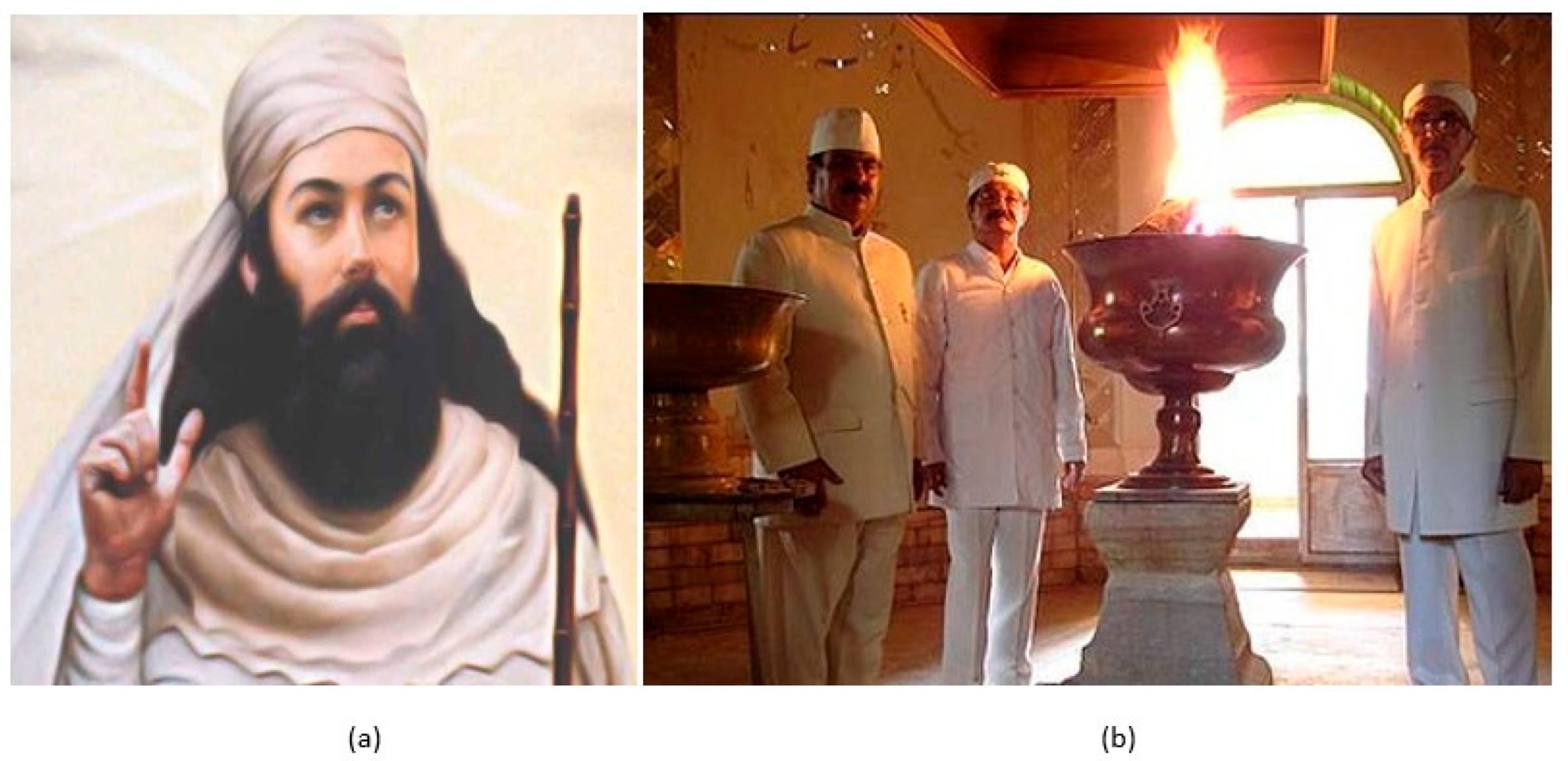
Figure 2.
Maximum parsimony tree of Y chromosome haplogroups (shown as circles) found amongst the Iranian Zoroastrian samples. The area of the circles is proportional to the number of males.
Figure 2.
Maximum parsimony tree of Y chromosome haplogroups (shown as circles) found amongst the Iranian Zoroastrian samples. The area of the circles is proportional to the number of males.
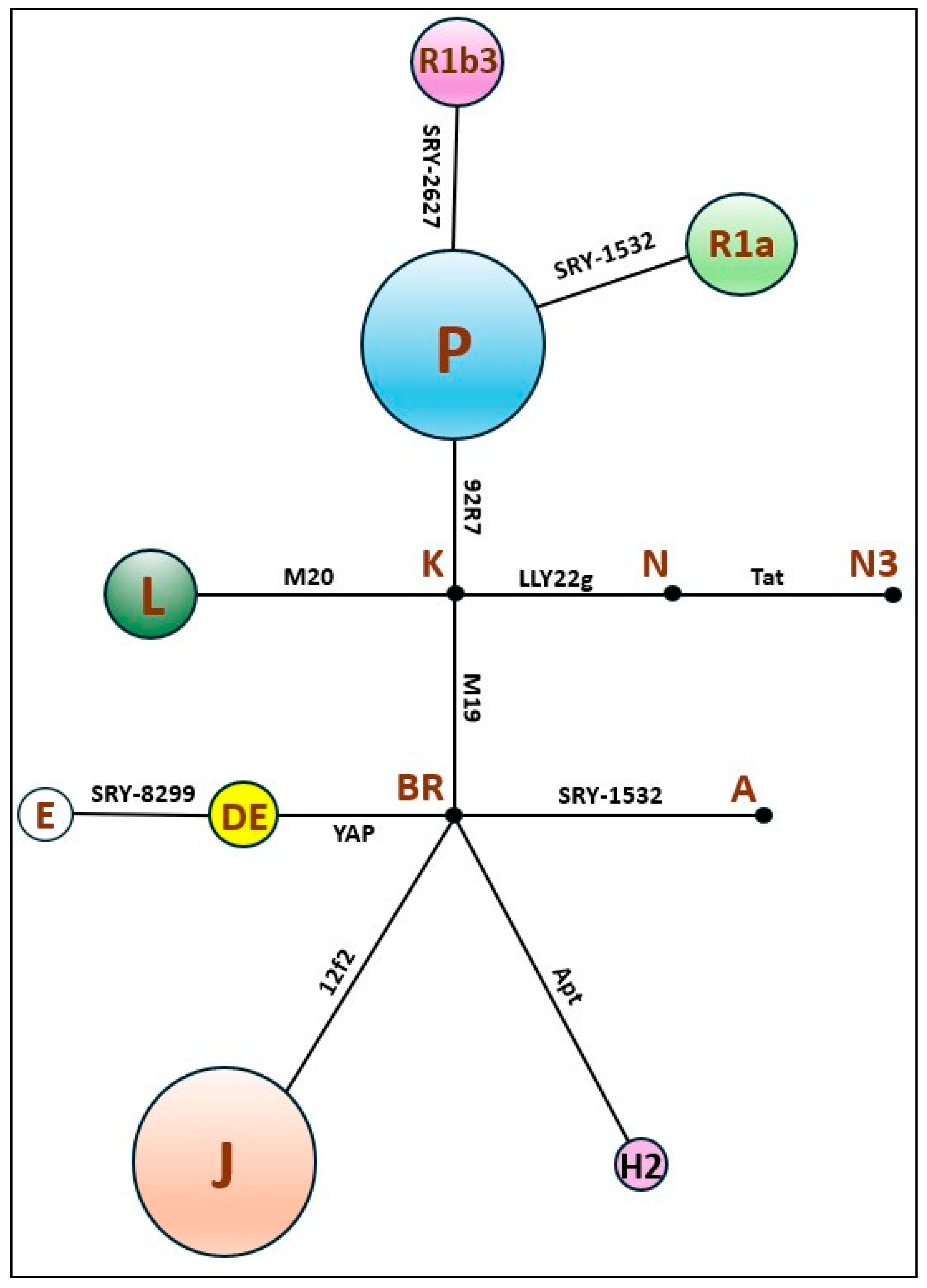
Figure 3.
The phylogenetic tree for Zoroastrian Y-STR data based on the nomenclature of the Y chromosome Consortium [52].
Figure 3.
The phylogenetic tree for Zoroastrian Y-STR data based on the nomenclature of the Y chromosome Consortium [52].
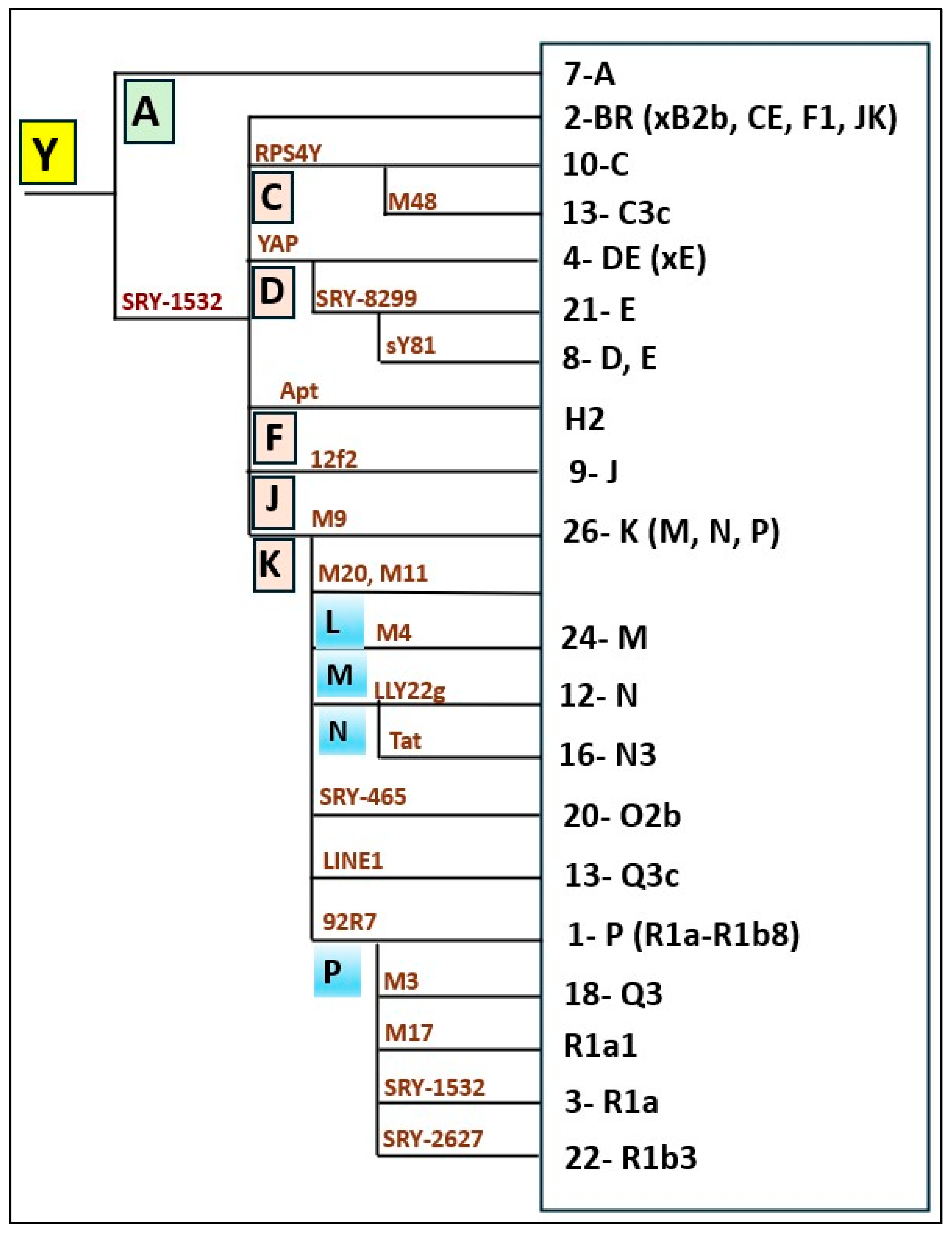
Figure 4.
PC analysis of population pairwise FST values based on Y chromosome microsatellite haplotypes; (a) PC1 against PC2, and (b) PC1 against PC3. The abbreviation in PC analysis covers the following Iranian groups: the Farsi-speaking group from Tehran and Qazvin (FA1), the Farsi-speaking group from Markaz province and Arak city (FA2), the Farsi-speaking group from Semnan and Damghan, the Farsi-speaking group from Isfahan province (FA4), the Farsi-speaking group from Fars province (FA5), the Farsi-speaking group from Khuzestan province (FA6), the Farsi-speaking group from North Khorasan province (FA7), the Farsi-speaking group from South Khorasan province (FA8), the Farsi-speaking group from Yazd province (FA9), the Farsi-speaking group from Kerman province (FA10), the Arabic-speaking group from Khuzestan province (ARB), the Azeri-speaking group from East Azerbaijan and Ardabil provinces (AZE), the Azeri-speaking group from West Azerbaijan provinces and Uromia (AZW), the Turkic-speaking group from Golestan province (TOR), the Azeri-speaking group from Zanjan provinces (ZAN), the Farsi-speaking group from Gilan province (GIL), the Farsi-speaking group from Mazandaran province (MAZ), the Farsi-speaking group from Sistan & Baluchistan province (SIS), the Zoroastrian group from Yazd province (ZAR-Y) and the Zoroastrian group from Kerman province (ZAR-K).
Figure 4.
PC analysis of population pairwise FST values based on Y chromosome microsatellite haplotypes; (a) PC1 against PC2, and (b) PC1 against PC3. The abbreviation in PC analysis covers the following Iranian groups: the Farsi-speaking group from Tehran and Qazvin (FA1), the Farsi-speaking group from Markaz province and Arak city (FA2), the Farsi-speaking group from Semnan and Damghan, the Farsi-speaking group from Isfahan province (FA4), the Farsi-speaking group from Fars province (FA5), the Farsi-speaking group from Khuzestan province (FA6), the Farsi-speaking group from North Khorasan province (FA7), the Farsi-speaking group from South Khorasan province (FA8), the Farsi-speaking group from Yazd province (FA9), the Farsi-speaking group from Kerman province (FA10), the Arabic-speaking group from Khuzestan province (ARB), the Azeri-speaking group from East Azerbaijan and Ardabil provinces (AZE), the Azeri-speaking group from West Azerbaijan provinces and Uromia (AZW), the Turkic-speaking group from Golestan province (TOR), the Azeri-speaking group from Zanjan provinces (ZAN), the Farsi-speaking group from Gilan province (GIL), the Farsi-speaking group from Mazandaran province (MAZ), the Farsi-speaking group from Sistan & Baluchistan province (SIS), the Zoroastrian group from Yazd province (ZAR-Y) and the Zoroastrian group from Kerman province (ZAR-K).
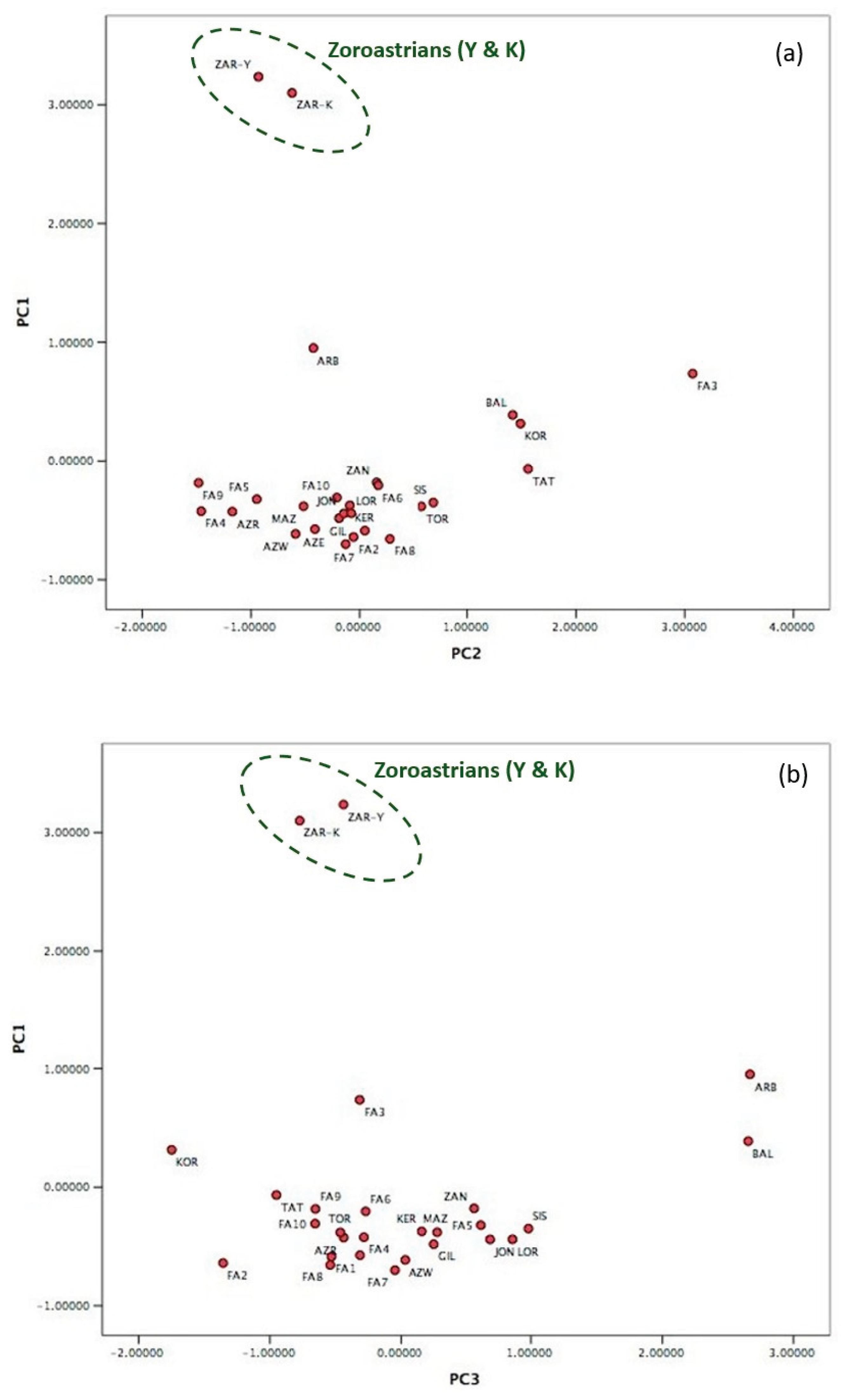

Table 1.
Y chromosome biallelic haplogroup frequencies in Iranian populations; data from previous studies are included for comparison.
Table 1.
Y chromosome biallelic haplogroup frequencies in Iranian populations; data from previous studies are included for comparison.
| Haplogroups | Derived state at | FA9 & FA10 | ZAR-Y | ZAR-K | AZE & AZW | KOR | Parsi mean (Qamar et al., 2002) | Pakistani mean (Qamar et al., 2002) | Iranian mean (Quintana-Murci et al., 2001) | European mean (Rosser et al., 2000) |
| No. | 94 | 40 | 54 | 94 | 94 | 90 | 628 | 401 | 3677 | |
| P (xR1b8, R1a, Q3) | 92R7 | 38.3 | 28.4 | 32.2 | 33.4 | 29.2 | 26 | 14.7 | - | 38 |
| BR-xB2b, CE, F1, H and JK | SRY10831a | - | - | - | - | - | 3.3 | 10.9 | - | 22 |
| R1a1 | M17 | 16.9 | 12.9 | 13.2 | 16.3 | 17.9 | 7.7 | 35.9 | 14.6 | 14 |
| DE (xE) | YAP | 7.2 | 8.8 | 9.1 | 9.2 | 18.4 | - | - | - | 0 |
| E3a | M2 | - | - | - | - | - | 0 | 1.2 | - | 0.2 |
| J2 | 12f2 | 21 | 34.8 | 36.1 | 27 | 28.3 | 38.8 | 15.4 | 43 | 8 |
| N | LLY22g | 3.1 | 1.2 | 1.4 | 2.1 | 0 | 0 | 1.5 | - | 0.8 |
| O3c | LINE1 | 0 | 0 | 0 | 0 | 0.2 | 0 | 1.5 | - | - |
| F1 | Apt | 4.8 | 5.2 | 5.7 | 7.1 | 4.8 | - | - | - | - |
| N3 | Tat | 1.6 | 0.8 | 0.8 | 0.2 | 0 | - | - | - | 6 |
| O2b | SRY+465 | 0 | 0 | 0 | 0.4 | 0 | - | - | - | - |
| E | SRY4064 | 5.2 | 6.4 | 7.2 | 8.5 | 14.8 | 5.5 | 1.9 | - | 9 |
| R1b8 | SRY-2627 | 14.4 | 10.2 | 9.4 | 9.3 | 3.8 | - | - | - | 23 |
| M | M4 | 0 | 0 | 0 | 0 | 0 | - | - | - | - |
| K | M9 | 2.7 | 0.9 | 1.1 | 3.1 | 5.1 | 0 | 1.9 | - | 1.5 |
| L | M20 | 9.2 | 9.6 | 9.8 | 4.2 | 2.3 | 17.7 | 12.8 | - | - |
Disclaimer/Publisher’s Note: The statements, opinions and data contained in all publications are solely those of the individual author(s) and contributor(s) and not of MDPI and/or the editor(s). MDPI and/or the editor(s) disclaim responsibility for any injury to people or property resulting from any ideas, methods, instructions or products referred to in the content. |
© 2026 by the authors. Licensee MDPI, Basel, Switzerland. This article is an open access article distributed under the terms and conditions of the Creative Commons Attribution (CC BY) license (http://creativecommons.org/licenses/by/4.0/).
Copyright: This open access article is published under a Creative Commons CC BY 4.0 license, which permit the free download, distribution, and reuse, provided that the author and preprint are cited in any reuse.


