

Submitted:
15 April 2026
Posted:
17 April 2026
You are already at the latest version
Abstract
Background: Hypoxic-ischaemic brain injury, (HIBI), is a major contributor to neurological deficits following stroke. Understanding what happens to the smallest functional and structural unit of the central nervous system in the face of oxygen and nutrient deprivation is essential to fully comprehend the pathogenesis of diseases and disorders that are associated with HIBI, as well as serve as a tool for initial screening of potential therapeutics and identification of diagnostic markers. Aim: The aim of this study was to develop a robust in vitro model for mechanistic investigation of the effect of HIBI on neurons. Method: This study details and validates a comprehensive protocol for modelling HIBI using differentiated SH-SY5Y neuroblastoma cells (Neuron-Like Cells, NLCs). First, we optimized the differentiation process and confirmed the maturity and purity of NLCs via standard molecular markers. The NLCs exhibited functional excitotoxicity, demonstrating a graded cell death response to N-methyl-D-aspartate (NMDA), validating their functional utility. To simulate HIBI, we initially optimized the oxygen-glucose deprivation (OGD) component using graded concentrations of CoCl2 (0.125mM to 2mM) in glucose-free media. The validated NLCs were then subjected to the refined OGD protocol (1mM CoCl2 in glucose-free media) for 3 hours, followed by various periods of reoxygenation (1h, 3h, 6h, 12h, 18h, and 24h). Result: Bulk RNA-sequencing analysis revealed a critical temporal pattern in the transcriptional response to injury. Specifically, majority of the injury-related gene expression, including heat shock proteins, stress markers, and cell death were significantly (p<0.05) upgraded at the third hour of reoxygenation, peaked dramatically at the 6th hour, and then rapidly subsided to levels often higher than the baseline at 24 hours. Surprisingly, RNAseq revealed the emergence of transforming growth factor-beta 1 (TGF-β1), a known regulator of glia-scarring, as an upstream regulator after 6 h of reoxygenation. Analysis of the supernatant revealed a corresponding translational pattern, where cell death was most significant after 24 h reoxygenation, whereas the secretion inflammatory cytokine TNF-α, and neuroprotective biomolecules, β-NGF, BDNF, and VEGF increased as reoxygenation time increased. Conclusion: This study reveals the existence of a narrow transient transcriptional cascade, highlighting a critical window for initial damage and cellular response. It also establishes a highly reproducible NLC-based HIBI model and provides a comprehensive transcriptomic blueprint of the immediate and sub-acute neuronal response, pointing toward known and novel upstream regulators of the injury cascade for future therapeutic targeting.
Keywords:
neuronal injury differentiated SH‐SY5Y cells
; hypoxia
; ischaemia
; hypoxic‐ischaemic injury
Introduction
For decades, in vitro disease models have been indispensable for unravelling the complexities of neurological disorders, offering critical insights into their aetiology, progression, and potential treatments. However, the sophisticated nature of these diseases demands increasingly robust preclinical models to accurately capture the nuances of CNS damage. The in vitro techniques have evolved over time—from simple 2D monolayer cultures, cocultures, organoids and now organ-on-a-chip [1,2,3] Figure 1. With the evolution comes better understanding of diseases and increased human relevance. Paradoxically, advancements often come with escalating costs and complexity [4,5,6], creating significant barriers to access, particularly for research institutions in emerging economies [7]. This disparity inhibits global research potential and can lead to inefficient resource allocation in the broader neuroscience community.
Neuroscience research relies heavily on the use of immortalised cell lines derived from both rodent and humans. PC12 from rats, and human NT2, SH-SY5Y are some of the go-to cell lines. The neuroblastoma SH-SY5Y cells is more commonly employed for brain-related studies because of its robustness, scalability, and human origin [8,9]. Several laboratories have modelled hypoxic-ischaemic injury using SH-SY5Y cells. These studies, however, utilise mostly the undifferentiated SH-SH5Y cells or are silent about the differentiation state of the cells [10]. This is a critical flaw, as differentiated SH-SY5Y cells more accurately model mature post-mitotic neurons, which are the primary cell type susceptible to excitotoxic and apoptotic injury following hypoxic-ischaemic events. Our work addresses this critical gap by leveraging SH-SY5Y neuroblastoma cells—a cell line that offers a compelling balance of relevance and practicality. Unlike primary neuronal cultures, which are often very expensive and labour-intensive to procure and maintain, SH-SY5Y cells are immortalized, cost-effective, and remarkably versatile. Their widespread use is supported by numerous established protocols for neuronal differentiation, providing a reliable foundation for diverse neurological studies. We specifically adapted the protocol by Dravid et al.[11], incorporating subtle, yet crucial, modifications to suit our objectives.
A major hurdle in modelling neurological insults like hypoxia and ischaemia in vitro is achieving stable, reproducible oxygen deprivation [12]. Conventional hypoxia chambers often struggle with consistency, while advanced hypoxia stations, though more reliable, are expensive and difficult to integrate with common, high-resolution live cell microscopy setups and other high-throughput automated screening platforms [13]. This inability to easily integrate hypoxic insult with dynamic imaging limits the detailed investigation of subcellular and temporal events which often precede gene-level changes. Our approach, in contrast, utilizes the chemical hypoxia-mimetic cobalt chloride (CoCl2) to achieve a stable and controllable hypoxic environment [14]. This compound mimics hypoxia by preventing the degradation of hypoxia-inducible factor-1α (HIF-1α) through the inhibition of prolyl hydroxylase domain enzymes (PHDs) [15], thus offering a direct route to study the molecular pathways activated or repressed following the OGDRs.
Our work introduces what we believe is the first standardized, publicly available protocol detailing the simulation of hypoxic-ischemic damage on differentiated SH-SY5Y cells using the cost-effective chemical hypoxia mimetic, CoCl2. This novel method offers basic neuroscientists a robust and economical platform to explore the cellular and molecular consequences of HIBI, particularly as it impacts neurons. While we understand that a 2D neuronal monoculture cannot fully replicate the in vivo complexity, this model provides an invaluable, accessible entry point for mechanistic studies, paving the way for more advanced, yet equally affordable, modelling approaches that prioritize resource efficiency without compromising scientific rigor.
Method
SH-SY5Y Cells Expansion
The neuroblastoma cell line, SH-SY5Y cells (Merk Life Science, UK; RRID of CVCL_0019; Cat. # 94030304-1VL) were obtained at seventh passage (P7) from the manufacturer. The cells were seeded and expanded subsequently in T75 flasks until needed. Expansion was done in high glucose Dulbecco Modified Eagle’s Media (DMEM, Gibco, UK) supplemented with 10% foetal bovine serum (FBS, Gibco, UK) and 1% streptomycin (1000ug/ml)-penicillin (100IU). The media will be referred to as complete DMEM (cDMEM) from here on. Once about 80% confluent, the cells are passaged to maintain a healthy population.
SH-SH5Y Differentiation
The protocol by Dravid et al. (2024) [11] was adopted with slight modifications. Briefly, T75 flasks were coated with 10% Matrigel (Corning, UK). The Matrigel-containing flasks are then incubated at 37 °C and 5% CO2 for an hour. Thereafter, approximately 6 x 10⁵ SH-SH5Y cells in cDMEM are seeded into the flask and incubated at 37 °C and 5% CO2 for 24 h. Thereafter, the media is replaced with stage I media (refer to table one for a full list of media composition) and incubated at the same temperature and CO2 condition for 5 days. By the end of this incubation period, cells are visibly dispersed with emerging neurite outgrowth. The stage I media is then replaced with stage II media (see Table 1) and incubated similarly for 5 days. By this time, the cells were fully differentiated and were maintained in stage II media. Note that in each experiment where retinoic acid is a component of the media, this is usually prepared fresh and added at the time of the experiments. Differentiated cells were subsequently referred to as neuron-like cells (NLCs).
Assessment of NLCs Maturity, Purity, and Functional Integrity
Neuronal Purity and Maturity
To determine the maturity of the differentiated NLCs, immunocytochemistry was performed to investigate the expression of markers of mature neurons such as β-III tubulin, microtubule-associated protein 2 (MAP2), synaptophysin (SYN), neuronal nuclei (NeuN), and the absence of glial fibrillary acidic protein (GFAP) to confirm the purity of the cells.
Functional Assay: Assessment of NLCs Response to NMDA-Induced Excitotoxicity
NLCs at P0 to P1 were seeded in Matrigel-coated 96-well plates (Corning, UK) at density of 3 x 10⁴ cells/well. Once the neurite outgrowth was well established, the cells were treated with graded concentrations (31.25 to 500µM) of NMDA (Tocris, UK) for 3 h. Thereafter, the supernatant was collected to measure cell death (using LDH assay), while cell viability was assessed by treating the cells with 3-(4,5-dimethylthiazol-2-yl)-2,5-diphenyltetrazolium bromide solution (MTT). (See “LDH Assay” and “MTT Assay” for details).
The above experiments were done on three (3) biological replicates.
Modelling Hypoxic-Ischaemic Injury on NLCs
Phase I: Identifying Optimal Hypoxia-Inducing Concentration of Cobalt Chloride
NLCs at P0 to P2 were seeded in Matrigel-coated 24-well plates at density of ~5.8× 10³ cells/cm2. Once the neurite outgrowth was well established, the cells were treated with OGD media (see Table 1) with graded concentrations (0.125 to 2mM) of cobalt chloride (Sigma-Aldrich, France). The cells were then incubated at 37 °C and 5% CO2 for 3 h. At the end of the incubation period, the media was aspirated out and replaced with stage II media for 24 h. Thereafter, supernatants were collected to assess cell death, inflammation, and hypoxia by measuring LDH, chemokine ligand 2 (CCL2), and vascular endothelial growth factor (VEGF), respectively. This experiment was repeated three (3) more times.
Phase II: Investigating Time-Course of Reoxygenation-Induced Neuronal Injury
Following result analysis, 1mM cobalt chloride was selected as the optimal concentration for the induction of hypoxia in NLCs. Hence, NLCs at P1 to P2 were seeded at density of ~8×10³ cells/cm2 or 3×10⁴ cells/well in Matrigel-coated 24-well and 96-well plates, respectively. The cells were treated with OGD media containing 1mM CoCl2 for 3h at 37 °C and 5% CO2. This is then followed by replacing with reoxygenation media (OGD/R media, see “Table 1”) for various time, 1h, 3h, 6h, 12h, 18h, and 24h. At the end of reoxygenation, culture supernatants were collected and assayed for cell death, neuroinflammation (by measuring tumour necrosis factor-alpha, TNF-α, and CCL2), intrinsic repair attempt/neurogenesis (measuring brain-derived neurotrophic factor BDNF, β- nerve growth factor β-NGF, and VEGF). RNA was extracted from the cells and used for bulk RNA sequencing. The experiment was repeated four (4) more times, and RNA sequencing was done using RNA extracted from cells in the 2nd and 4th repeat experiments.
Immunocytochemistry
For all the immunocytochemistry work, NLCs were fixed sequentially in graded concentrations of paraformaldehyde (PFA)—first in 1% PFA for 5 min, then in 2% PFA for a similar time, and finally in 4% PFA for 10 minutes. Thereafter, the cells were washed briefly (~1 min) with phosphate-buffered saline (PBS) and then permeabilized with 0.2% PBS-Triton X (PBST) for 10 min. This was then followed by a 1h block with 2% bovine serum albumin, BSA (Sigma-Aldrich, UK) in 0.2% PBST. At the end of the 1 h incubation, the cells were washed with wash buffer (0.1% PBS-Tween20) thrice for a total of 5 min. The cells were then treated with primary antibodies (see “Table 2”) diluted in 2% BSA for 1 h. Thereafter, the wash cycle was repeated, and cells were treated with secondary antibodies (see “Table 2”) and 0.1µg/ml DAPI (1in 20 dilution).
Lactate Dehydrogenase Assay
The degree of neuronal death following different experiments was analysed using an LDH assay kit (Promega, UK) according to the manufacturer’s instructions. Briefly, culture media, supernatants from both treated and untreated cells were collected and mixed with assay buffer at room temperature for 30 min, protected from light. LDH was measured at a wavelength of 492 nm, and optical densities were normalized to 100% cell death control. The measured LDH concentrations were compared with control values (untreated cells). The release of LDH is directly proportional to cell death.
MTT Assay
The viability of NLCs following treatment with NMDA or exposure to OGD/R was measured using the MTT assay. This involved adding 2.5mg/ml of MTT solution to the cells and incubating in the dark at 37 °C and 5% CO2 for 3 h. This was followed by carefully removing the solution and then dissolving the purple formazan with 200 μL MTT solvent per well. The absorbance was then read at 590nm, and optical densities were normalized to 100% viable control (untreated NLCs). Cell viability is directly proportional to the measured optical density.
Enzyme-Linked Immunosorbent Assay
Levels of human BDNF, β-NGF, VEGF, TNF-α and CCL2 in NLCs culture supernatants were quantified by ELISA using DuoSet® kits (R&D Systems, UK) according to the manufacturer’s instructions. Detection limits were 31.2 pg/ml for β-NGF, 15.6 pg/ml for TNF-α, CCL2, and VEGF, and 23.4 pg/ml for BDNF. For each assay, samples were diluted as needed, and protein levels were calculated against a four-parameter logistic (4-PL) curve fit on CLARIOstar® microplate reader software.
RNA Extraction
At the end of OGD/R supernatants were collected while total RNA was extracted from the cells using PureLink™ RNA extraction minikit (Invitrogen, USA) according to manufacturer’s instruction. The extracted RNA from all experimental groups was quantified using Nanodrop 1000 spectrophotometer (Thermo Scientific).
RNA-seq Library Preparation and Sequencing
Total RNA from two independent experiments was submitted to the Genomic Technologies Core Facility (GTCF), University of Manchester. Quality and integrity of the RNA samples were assessed using a 4200 TapeStation (Agilent Technologies) and then libraries generated using the Illumina® Stranded mRNA Prep. Ligation kit (Illumina, Inc.) according to the manufacturer’s protocol. Briefly, total RNA (typically 0.025-1ug) was used as input material from which polyadenylated mRNA was purified using poly-T, oligo-attached, magnetic beads. Next, the mRNA was fragmented under elevated temperature and then reverse transcribed into first strand cDNA using random hexamer primers and in the presence of Actinomycin D (thus improving strand specificity whilst mitigating spurious DNA-dependent synthesis). Following removal of the template RNA, second strand cDNA was then synthesized to yield blunt-ended, double-stranded cDNA fragments. Strand specificity was maintained by the incorporation of deoxyuridine triphosphate (dUTP) in place of dTTP to quench the second strand during subsequent amplification. Following a single adenine (A) base addition, adapters with a corresponding, complementary thymine (T) overhang were ligated to the cDNA fragments. Pre-index anchors were then ligated to the ends of the double-stranded cDNA fragments to prepare them for dual indexing. A subsequent PCR amplification step was then used to add the index adapter sequences to create the final cDNA library. The adapter indices enabled the multiplexing of the libraries, which were pooled prior to loading on to the appropriate flow-cell. This was then paired-end sequenced (59 + 59 cycles, plus indices) on an Illumina NovaSeq6000 instrument. Finally, the output data was demultiplexed and BCL-to-Fastq conversion performed using Illumina’s bcl2fastq software, version 2.20.0.422.
RNA-seq Data Analysis
The stranded paired-end RNA-seq reads were quality assessed using FastQC (v0.12.1; ref1) and FastQ Screen (v0.15.3; ref2), followed by adapter and low-quality base trimming with BBDuk from the BBMap suite (v38.96; ref3). Trimmed reads were mapped against the human reference genome (GRCh38) and gene annotation from Gencode (v49) using STAR (v2.7.10a; ref4). The “--quantMode GeneCounts” option was used to obtain read counts per gene from STAR.
Differential gene expression analysis was performed using the Bioconductor package DESeq2 (v1.26.0; ref5) with alpha = 0.05. Additionally, the lfcShrink function (with apeglm method) was applied to generate a more accurate log2 fold change estimates. Normalised counts were obtained using the counts function (with normalized = TRUE) where the raw counts were normalised using the median-of-ratios method as described in ref6. Data transformation was performed using the rlog function to obtain regularised logarithm stabilizing transformation expression values. The transformed values were used to perform principal component analysis using the prcomp function from the built-in R package stats.
Statistical Analysis
Statistical analysis and graph designs were performed using GraphPad Prism software version 9.3.1 for Windows (CA, USA). Data distribution and homogeneity of variance were assessed using Shapiro-Wilk and Levene’s tests, respectively. Normally distributed data with homogeneous variance were analysed using parametric one-way ANOVA. Where there was a significant difference between mean values (p < 0.05), the Tukey post hoc test was performed to determine where the difference lies. All values are expressed as mean ± standard error of the mean (SEM). Unless stated otherwise, experiments were performed on at least four independent culture/biological replicates, which may or may not be of the same passage numbers
Results
Differentiated SH-SY5Y Cells Have Neuron-Like Characteristics and Express Functional NMDA Receptors
Differentiated NLCs expressed various markers of neuronal maturity—NeuN, SYN, MAP2, βIII tubulin, and did not test positive for staining for GFAP antibody. Treatment of these cells with graded concentrations of NMDA resulted in a statistically significant (p<0.05) concentration-dependent reduction and increase in cell viability and cell death, respectively. Figure 2.
Exposure of NLCs to Glucose Deprivation in the Presence of 1mM CoCl2 Caused Significant Hypoxic Injury
Exposing NLCs to OGD for 3 hours using graded concentrations of CoCl2 in glucose-free Neurobasal-A media resulted in the release of TNF-α and VEGF. Compared to uninjured cells and cells deprived only of glucose, 1mM concentration of CoCl2 caused a significant (p<0.05) ~3-fold increase in the secretion of TNF-α (Figure 3a) and stimulated VEGF synthesis and release into the culture supernatant (Figure 3b). Treatment of NLCs with hypoxia-mimetic during glucose deprivation did not significantly impact the release of the chemokine, CCL2, except at the highest concentration of CoCl2 where the release of this molecule was significantly suppressed (Figure 3c). While the 3 h OGD caused increasing cell death from ≥0.5mM CoCl2 concentration, only 2mM concentration resulted in significant neuronal death (Figure 3d).
Chemical Hypoxia Accelerates Neuronal Death and Interferes with the Functional and Structural Integrity of Neuron-Like Cells
Depriving NLCs of glucose and oxygen resulted in significant cell death that was worsened, in a dose-dependent manner, by increasing levels of hypoxic stress (Figure 4). Compared to unstressed NLCs which expressed high density of healthy, uniform-shaped viable cells (Figure 4, panel A), NLCs that were exposed to glucose deprivation only (GD) or in addition to oxygen deprivation exhibited clear changes in nuclei number and morphology. In NLCs exposed to GD (Figure 4, panel B), although green stain (βIII tubulin) remains relatively strong, there was mild reduction in cell viability with visibly diminished staining intensity and number of NeuN. The lowest concentration of hypoxia resulted in a further decrease in nuclei number that appear condensed with corresponding decrease in NeuN staining intensity and NeuN-positive cells (Figure 4, panel C). βIII tubulin also appeared to be less dense with lower intensity compared to panel B. As the severity of hypoxic insult increased, cell density appeared to be decreasing. Increasing CoCl2 from 0.5mM to 2mM (Figure 4, panel D to F) resulted in diminishing nuclear staining intensity. Similarly, NeuN and βIII tubulin staining went from being sparse and weak (Figure 4, panel D) to becoming almost undetectable (Figure 4, panel E) and completely lost (Figure 4, panel F).
Reoxygenation Following 3 h OGD Resulted in a Temporal Change in Proinflammatory Chemokine and Angiogenesis Factor, VEGF
Compared to the unstressed NLCs, the proinflammatory chemokine, CCL2, reduced significantly during OGD, and increased gradually during reoxygenation, peaking to a level like the unstressed cells after 24 h of reoxygenation. This level was statistically significantly higher (p<0.05) than the OGD levels (Figure 5a). Similarly, 3 h OGD resulted in a significant drop in VEGF levels compared to unstressed control, followed by steady and significant rise with reoxygenation time (Figure 5b). Compared to the secretion of VEGF by NLCs exposed to OGD without reoxygenation, reoxygenation for 3, 6, 12, and 24 h resulted in ~2.7-fold, 4-fold, 5-fold, and 5.5-fold increase in VEGF secretion, respectively (Figure 5b). However, reoxygenation did not seem to have any major influence on the release of TNF-α (Supplementary Figure 1a), BDNF ((Supplementary Figure 1b), and β-NGF ((Supplementary Figure 1c) as their levels were comparable across all reoxygenation time points.
NLCs Undergo Sequential, Multi-Pathway Response Following a 24 h Time-Course OGD/R
Ingenuity pathway analysis (IPA) of the RNAseq data using the log2 fold change values of the gene counts revealed several upstream regulators (URs) in NLCs with changing activation state (Figure 6). Compared to unstressed cells, the major transcriptional URs of NLCs exposed to OGD without reoxygenation were interleukin-1β (IL-1β), TNF-α, and HIF-1α, all in activated state. As soon as NLCs were reoxygenated, HIF-1α regulation was lost, while IL-1β and TNF-α became inhibited. With increasing reoxygenation for 3 h, TNF-α was reactivated alongside a new regulator, β-oestradiol. In addition to TNF-α and β-oestradiol, there was activated TGF-β1 and neurotrophic tyrosine kinase receptor Type 1 (NTRK1) as main URs after 6 h of reoxygenation. Starting from the twelfth hour to the 24th hour of reoxygenation, these four URs went from being silent to becoming inhibited.
Canonical pathway (CP) activation also passed through various phases during OGD and throughout the reoxygenation periods. Before reoxygenation, the exposure of NLCs to OGD awakened the Bmal1:Clock, NPAS2 activated circadian rhythm in gene expression alongside the activation of HIF-1α, IL-4 and IL-13 signalling. More importantly, the binding of metals (mostly zinc) to metallothionein was the most activated CP (Figure 7a). Reoxygenation of NLCs following OGD diminished HIF-1α signalling, activated Zn homeostasis signalling pathway and “specification of the neural plate border”. Although IL-4 and IL-13 signalling remained among the top CP, its signal intensity diminished (Figure 7b). The neuroinflammation signalling pathway and DNA methylation kickstarted after reoxygenation for 3 h (Figure 7c). IL-4/IL-13 signalling reoccupied the top activated CP as reoxygenation increased to 6 h. Additionally, S100 family and NFI Ras signalling pathways were also activated at this point (Figure 7d). The later time points saw the emergence of CREB signalling in neurons and axonal guidance signalling pathway, both of which intensified as reoxygenation progressed from 12 h to 24 h (Figure 7e–7g). There was also the reactivation of the S100 family signalling pathway starting from the 18th hour of reoxygenation to the 24th hour (Figure 7f and Figure 6g).
Volcano plots revealed a triphasic expression pattern of the top 15 genes in each group when compared to the unstressed cells. This response was typically characterised by an initial downregulation, followed by a peak in expression, and a subsequent return to near baseline levels (Figure 8). During OGD, genes involved in vascular repair/angiogenesis (VEGFA, adrenomedullin, ADM), metabolic adaptation/hypoxia response (PFKFB3, hexokinase 2, BHLHE40, and DDIT4), ion homeostasis (SLC30A1 and MT1X/MT2A) and stress response (HSPA1A/1B) were all significantly (p<0.05) upregulated, whereas the anti-angiogenic gene ADAMTS1 and pro-synaptic plasticity gene PLK2 were significantly (p<0.05) downregulated compared to unstressed cells (Figure 8a). This observation took almost a complete reverse trend when the stressed cells were reoxygenated for 1 h, with the additional downregulation of NEUROG1 (Figure 8b). Increasing the reoxygenation time to 3 h saw a significant upregulation of major stress genes—the heat shock proteins, in addition to the activation of a stress-sensor gene SENS2 (sestrin 2). No major gene downregulation was observed (Figure 8c). As reoxygenation progressed to 6 h, in addition to the upregulation of more heat shock proteins and SENS2, a long non-coding RNA MIR22HG also became significantly upregulated with corresponding downregulation of pro-repair and peri-repair genes DKK2, ENC1, TNS3, and ZNF608 (Figure 8d). From the 12th to the 24th hour of reoxygenation, the upregulation of all heat shock proteins (except for HSPA6) and stress-sensor genes vanished (Figure 8e–8f). Significant downregulation of neurotoxic genes (such as ASIC1, GAB2, and CHRND3), genes involved in synaptic plasticity and brain rewiring (ELAVL4, NCAM1, TENM4, CELF3, and AGRN), maintenance of vascular integrity and BBB (RGS5, PTPRM, ADD3), and structural scaffold and growth (TRIM46, DCHS1, AGAPS, CCND1, and SORL1) began after 12 h of reoxygenation (Figure 8e) and continued to be suppressed up to 24 h of reoxygenation.
Discussion
The present study introduces a standardized and cost-effective protocol for simulating hypoxic-ischaemic damage in differentiated human SH-SY5Y neuroblastoma cells. By leveraging the chemical hypoxia-mimetic cobalt chloride, we addressed the common hurdles of reproducibility and high costs associated with conventional hypoxia chambers. Our findings demonstrate that differentiated SH-SY5Y cells, referred to here as neuron-like cells (NLCs), provide a more biologically relevant and susceptible model for studying the mechanisms of mature post-mitotic neuronal injury compared to undifferentiated cells.
A critical aspect of our model is the successful differentiation of SH-SY5Y cells into mature NLCs. The expression of neuronal markers, including β-III tubulin, MAP2, SYN, and NeuN [16], along with the absence of the glial marker GFAP, confirms the neuronal purity and maturity of these cells. The functional integrity of these NLCs was further validated through their concentration-dependent response to NMDA-induced excitotoxicity, a hallmark of neuronal injury [17]. This differentiation is essential, as mature neurons are the primary targets of excitotoxic and apoptotic damage during hypoxic-ischaemic events [18].
Our results identify 1mM CoCl2 as the optimal concentration for inducing significant hypoxic stress without immediate massive cell death, allowing for the study of temporal cellular changes. CoCl2 effectively mimics hypoxia by inhibiting prolyl hydroxylase domain enzymes (PHDs), which prevents the degradation of hypoxia-inducible factor-1α (HIF-1α). This was corroborated by our observation of increased VEGF secretion, a downstream target of HIF-1α, in cells treated with CoCl2 during glucose deprivation [19]. Furthermore, the model captured the inflammatory response characteristic of HIBI, evidenced by a ~3-fold increase in the pro-inflammatory cytokine TNF-α.
Our whole-transcriptome analysis at 0 hours (OGD without reoxygenation) revealed the simultaneous activation of HIF-1α, TNF-α, and IL-1β. While this observation is often seen in immune cells like microglia, studies have shown that neurons also undergo similar changes during ischaemic injury [20]. Thus, precisely models the severe, acute phase of cerebral ischaemia, where oxygen deprivation (HIF-1α activation) immediately triggers a maximal, destructive neuroinflammatory response (TNF-α and IL-1β activation) [21]. This acute phase is likely responsible for significant cell death observed in our assays. The concurrent activation of the Bmal1:clock pathway at this time suggests that the ischaemic insult immediately disrupts fundamental cellular circadian programs, adding another layer of metabolic vulnerability. Bmal1 is a natural clock is known to protect against focal ischaemia via various mechanism including the reduction of oxidative stress and regulation of metabolism [22,23]. its early emergence in our model identifies a potential ‘chronotherapeutic’ window, where the timing of intervention could be as critical as the treatment itself.
Shortly after reoxygenation (3h), the acute inflammatory driver, IL-1β, was inhibited, while TNF-α and the potent systemic hormone, β-oestradiol, were reactivated. β-oestradiol is known for its neuroprotective and anti-inflammatory properties following stroke, suggesting the NLCs initiate a powerful endogenous mechanism to limit secondary injury [24]. The subsequent phase (6h) sees the emergence of activated TGF-β and NTRK1 as main upstream regulators, followed by the activation of CREB signalling and axonal guidance signalling in the late reoxygenation phase (12h-24h). A notable finding here is the significant downregulation of genes traditionally associated with synaptic plasticity and vascular integrity, such as NCAM1, ELAVL4, and RGS5. While this phase saw the activation of CREB and axonal guidance pathways, the simultaneous suppression of these structural and synaptic genes may reflect a ‘metabolic conservation’ strategy. Following the exhaustion of the heat shock response (HSPs) by the 12th hour, the neurons may undergo a period of ‘synaptic stripping’ or functional dormancy to prioritize basic survival over energy-intensive dendritic remodelling. This suggests a critical window where the cell is transitioning between attempted repair and potential delayed degeneration. NTRK1 (the TrkA receptor) is a core component of neurotrophic support and survival. The most intriguing finding is the activation of TGF-β1 at the 6-hour mark, a regulator universally recognized as the central mediator of fibrosis and glial scarring by activating astrocytes in vivo [25]. Since this work was performed in a pure neuronal monoculture, the activation of TGF-β1 provides compelling evidence of a non-canonical, intrinsic scarring or structural remodelling program within the differentiated SH-SY5Y cells. This suggests that, in the absence of surrounding glia, the injured neuronal cells activate a similar molecular pathway—either by autocrine secretion and response, or by a developmental memory from their neural crest/neuroblastoma lineage [26]—to structurally stabilize the damaged area. This finding presents the differentiated SH-SY5Y model as a valuable tool for dissecting the intrinsic capacity of neurons to initiate structural repair signalling following HIBI.
Lastly, this model offers a robust and economical platform for neuroscientists, particularly in resource-limited settings, to investigate the cellular and molecular consequences of HIBI. While we acknowledge that a 2D monoculture cannot fully replicate the complex environment of the human brain especially with respect to the interaction between neurons and glial cells, it serves as an invaluable and accessible entry point for mechanistic studies and high-throughput screening.
Conclusions and Future Directions
Our robust, cost-effective model successfully mapped the time-dependent transcriptional consequences of HII. The sequential regulatory cascade provides a molecular roadmap for therapeutic intervention, particularly during the critical transition phase defined by the activation of TGF-β1, NTRK1, and β-oestradiol. We recommend that future work focus on validating the protein expression of these key regulators (especially TGF-β1) and using this accessible platform to screen small molecules capable of disrupting the transition to the potentially detrimental “scarring” phase.
Author Contributions
MAS was responsible for lab experimentation, collection and assembly of data, data analysis and interpretation, and manuscript writing. SA and EP conceptualized and designed the experiments and revised the manuscript. All authors read and approved the final manuscript.
Funding
This research is funded by the University of Manchester President’s Doctoral Scholarship scheme and Ahmadu Bello University Doctoral Fellowship.
Data Availability Statement
RNA-seq data have been deposited in the ArrayExpress database at EMBL-EBI under accession number E-MTAB-16459 (https://www.ebi.ac.uk/biostudies/arrayexpress/studies/E-MTAB-16459). Raw data for all other experiments can be found in University of Manchester repository, Figshare via the DOI: 10.48420/30915899.
Acknowledgments
The authors would like to acknowledge the assistance of Dr. James Bagnall of the University of Mancheaster (UoM) bioimaging facility, Dr. Claire Morrisoe of UoM Genomic Technology Core Facility (GTCF) and Dr. I-Hsuan Lin of the Bioinformatics Core Facility. Special thanks to Prof. Simon O’Carroll of the University of Auckland, New Zealand, for the guidance and tips he provided with respect to SH-SY5Y cell differentiation.
Conflicts of Interest
The authors declare that they have no competing interests.
References
- Pampaloni, F.; Reynaud, E.G.; Stelzer, E.H.K. The third dimension bridges the gap between cell culture and live tissue. Nat. Rev. Mol. Cell Biol. 2007, 8, 839–845. [Google Scholar] [CrossRef] [PubMed]
- Breslin, S.; O’Driscoll, L. Three-dimensional cell culture: the missing link in drug discovery. Drug Discovery Today 2013, 18, 240–249. [Google Scholar] [CrossRef]
- Park, S.; Sharma, H.; Kim, W.; Gwon, Y.; Kim, H.; Choung, Y.-H.; Kim, J. Microengineered organoids: reconstituting organ-level functions in vitro. Organoid 2023, 3. [Google Scholar] [CrossRef]
- Clevers, H. Modeling Development and Disease with Organoids. Cell 2016, 165, 1586–1597. [Google Scholar] [CrossRef] [PubMed]
- Nikolakopoulou, P.; Rauti, R.; Voulgaris, D.; Shlomy, I.; Maoz, B.M.; Herland, A. Recent progress in translational engineered in vitro models of the central nervous system. Brain 2020, 143, 3181–3213. [Google Scholar] [CrossRef]
- Ingber, D.E. Human organs-on-chips for disease modelling, drug development and personalized medicine. Nat. Rev. Genet. 2022, 23, 467–491. [Google Scholar] [CrossRef]
- van Helden, P. The cost of research in developing countries. The EMBO Reports 2012, 13, 395–395. [Google Scholar] [CrossRef]
- Lopez-Suarez, L.; Al Awabdh, S.; Coumoul, X.; Chauvet, C. The SH-SY5Y human neuroblastoma cell line, a relevant in vitro cell model for investigating neurotoxicology in human: Focus on organic pollutants. NeuroToxicology 2022, 92, 131–155. [Google Scholar] [CrossRef]
- Xie, H.-R.; Hu, L.-S.; Li, G.-Y. SH-SY5Y human neuroblastoma cell line: in vitro cell model of dopaminergic neurons in Parkinson's disease. Chin. Med, J. 2010, 123, 1086–92. [Google Scholar]
- Liu, Y.; Eaton, E.D.; Wills, T.E.; McCann, S.K.; Antonic, A.; Howells, D.W. Human Ischaemic Cascade Studies Using SH-SY5Y Cells: a Systematic Review and Meta-Analysis. Transl. Stroke Res. 2018, 9, 564–574. [Google Scholar] [CrossRef]
- Dravid, A.; Raos, B.; Svirskis, D.; O’Carroll, S.J. Optimised techniques for high-throughput screening of differentiated SH-SY5Y cells and application for neurite outgrowth assays. Sci. Rep. 2021, 11, 1–15. [Google Scholar] [CrossRef] [PubMed]
- Bakmiwewa, S.M.; Heng, B.; Guillemin, G.J.; Ball, H.J.; Hunt, N.H. An Effective, Low-cost Method for Achieving and Maintaining Hypoxia During Cell Culture Studies. BioTechniques 2015, 59, 223–229. [Google Scholar] [CrossRef] [PubMed]
- Wang, R.; Jin, F.; Zhong, H. A novel experimental hypoxia chamber for cell culture. Am. J. Cancer Res. 2014, 4, 53–60. [Google Scholar]
- Rovetta, F.; Stacchiotti, A.; Faggi, F.; Catalani, S.; Apostoli, P.; Fanzani, A.; Aleo, M.F. Cobalt triggers necrotic cell death and atrophy in skeletal C2C12 myotubes. Toxicol. Appl. Pharmacol. 2013, 271, 196–205. [Google Scholar] [CrossRef] [PubMed]
- Muñoz-Sánchez, J.; Chánez-Cárdenas, M.E. The use of cobalt chloride as a chemical hypoxia model. J. Appl. Toxicol. 2019, 39, 556–570. [Google Scholar] [CrossRef]
- Yuan, X.; Li, W.; Yan, Q.; Ou, Y.; Long, Q.; Zhang, P. Biomarkers of mature neuronal differentiation and related diseases. Futur. Sci. OA 2024, 10, 2410146. [Google Scholar] [CrossRef]
- Ankarcrona, M.; Dypbukt, J.M.; Bonfoco, E.; Zhivotovsky, B.; Orrenius, S.; Lipton, S.A.; Nicotera, P. Glutamate-induced neuronal death: A succession of necrosis or apoptosis depending on mitochondrial function. Neuron 1995, 15, 961–973. [Google Scholar] [CrossRef]
- Sims, N.R.; Zaidan, E. Biochemical changes associated with selective neuronal death following short-term cerebral ischaemia. Int J Biochem Cell Biol 1995, 27, 531–50. [Google Scholar] [CrossRef]
- Sun, Y.; Jin, K.; Xie, L.; Childs, J.; Mao, X.O.; Logvinova, A.; Greenberg, D.A. VEGF-induced neuroprotection, neurogenesis, and angiogenesis after focal cerebral ischemia. J. Clin. Investig. 2003, 111, 1843–1851. [Google Scholar] [CrossRef]
- Wu, D.-M.; Liu, J.-P.; Liu, J.; Ge, W.-H.; Wu, S.-Z.; Zeng, C.-J.; Liang, J.; Liu, K.; Lin, Q.; Hong, X.-W.; et al. Immune pathway activation in neurons triggers neural damage after stroke. Cell Rep. 2023, 42, 113368. [Google Scholar] [CrossRef]
- Masoud, G.N.; Li, W. HIF-1α pathway: role, regulation and intervention for cancer therapy. Acta Pharm Sin B 2015, 5, 378–89. [Google Scholar] [CrossRef]
- Beker, M.C.; Evren, E.S.; Özbay, E.; Balaban, B.; Dogan, E.; Yelkenci, H.E.; Ates, N.; Caglayan, A.B.; Doeppner, T.R.; Hermann, D.M.; et al. Circadian clock protein Bmal1 protects against transient focal cerebral ischemia in mice by regulating master signals controlling cell survival and metabolism. Exp. Neurol. 2025, 395, 115481. [Google Scholar] [CrossRef]
- Dong, C.; Li, J.; Tang, Q.; Wang, Y.; Zeng, C.; Du, L.; Sun, Q. Denervation aggravates renal ischemia reperfusion injury via BMAL1-mediated Nrf2/ARE pathway. Arch. Biochem. Biophys. 2023, 746, 109736. [Google Scholar] [CrossRef]
- Zhou, R.; Leng, T.; Yang, T.; Chen, F.; Hu, W.; Xiong, Z.-G. β-Estradiol Protects Against Acidosis-Mediated and Ischemic Neuronal Injury by Promoting ASIC1a (Acid-Sensing Ion Channel 1a) Protein Degradation. Stroke 2019, 50, 2902–2911. [Google Scholar] [CrossRef]
- Schachtrup, C.; Ryu, J.K.; Helmrick, M.J.; Vagena, E.; Galanakis, D.K.; Degen, J.L.; Margolis, R.U.; Akassoglou, K. Fibrinogen Triggers Astrocyte Scar Formation by Promoting the Availability of Active TGF-β after Vascular Damage. J. Neurosci. 2010, 30, 5843–5854. [Google Scholar] [CrossRef]
- Tomolonis, J.A.; Agarwal, S.; Shohet, J.M. Neuroblastoma pathogenesis: Deregulation of embryonic neural crest development. Cell Tissue Res. 2018, 372, 245–262. [Google Scholar] [CrossRef]
Figure 1.
The Evolution of In Vitro Disease Models. Various in vitro disease models exist, and with increasing understanding and technological advancement, these models have evolved from simple 2D-monolayer cultures to highly complex and sophisticated organ-on-chips. Each generation of model offers peculiar advantages and limitations and have all been invaluable to understanding the pathophysiology of diseases, drug discovery, and disease diagnosis.
Figure 1.
The Evolution of In Vitro Disease Models. Various in vitro disease models exist, and with increasing understanding and technological advancement, these models have evolved from simple 2D-monolayer cultures to highly complex and sophisticated organ-on-chips. Each generation of model offers peculiar advantages and limitations and have all been invaluable to understanding the pathophysiology of diseases, drug discovery, and disease diagnosis.
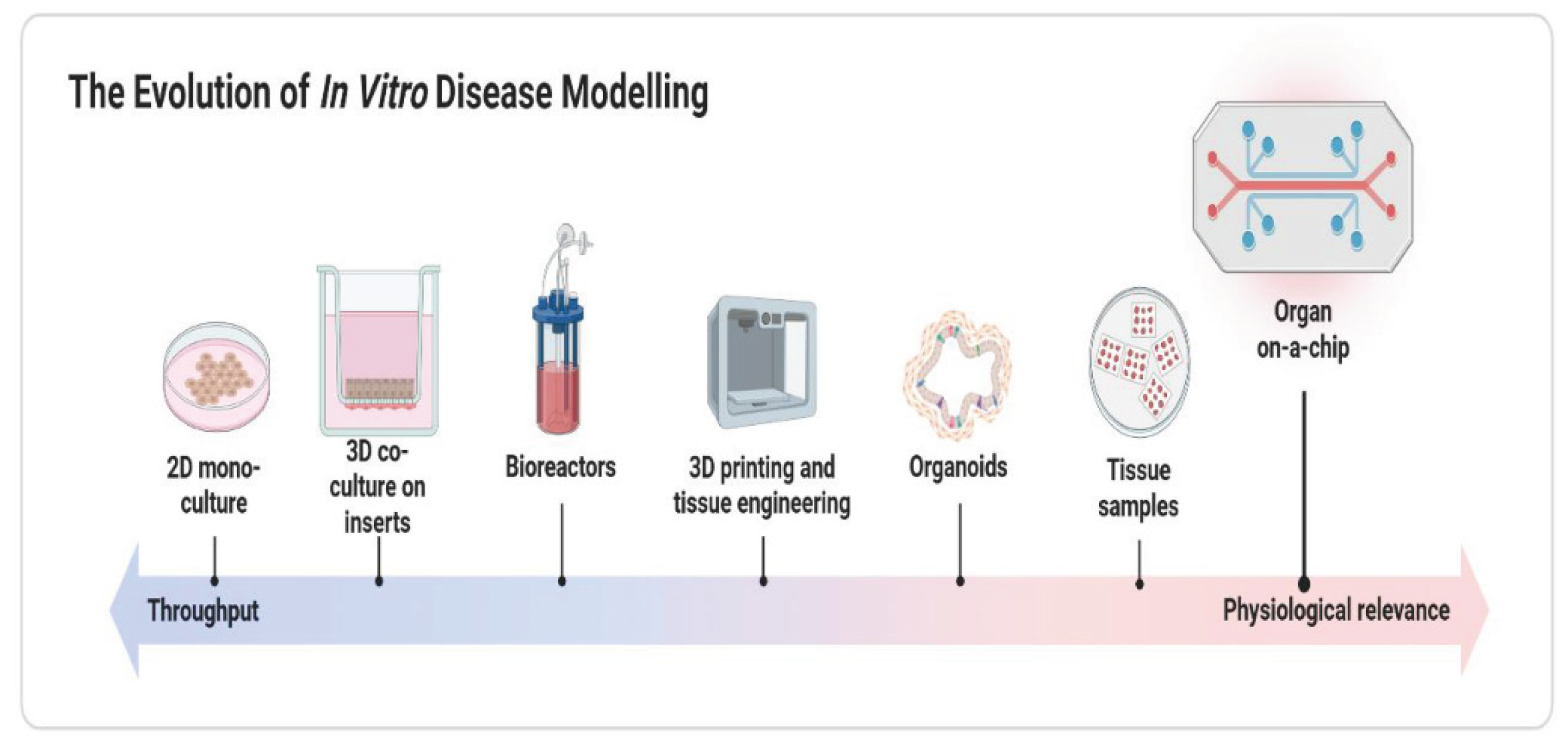
Figure 2.
Differentiated SH-SY5Y cells Express Markers of Matured Neurons and were Susceptible to NMDA-induced Excitotoxicity. SH-SY5Y cells were differentiated into NLCs using RA and BDNF over a 10-day period. The differentiated cells stained positively for markers of mature neurons such as βIII tubulin, NeuN, SYN, and MAP2. The NLCs also displayed a concentration-dependent degree of cell viability (2a) and cell death (2b) when treated with graded concentrations of NMDA for 3 h. Images were captured using Nikon Eclipse High end widefield microscope at ×20 magnification using DAPI, FITC, and Texas Red filters. Scale Bar: 50µM. NMDA data were analysed using one-way ANOVA followed by Tukey post-hoc test. Results are presented as Mean ± S.E.M. Key: N = 4, NLCs = Neuron-like cells; NeuN = Neuronal nuclei, SYN = Synaptophysin, MAP2 = Microtubule associated protein 2, NMDA = N-methyl-D-Aspartate, RA = trans-Retinoic acid, BDNF = Brain-derived neurotrophic factor, ANOVA = Analysis of variance, S.E.M = Standard error of mean, N = 4 experimental repeats.
Figure 2.
Differentiated SH-SY5Y cells Express Markers of Matured Neurons and were Susceptible to NMDA-induced Excitotoxicity. SH-SY5Y cells were differentiated into NLCs using RA and BDNF over a 10-day period. The differentiated cells stained positively for markers of mature neurons such as βIII tubulin, NeuN, SYN, and MAP2. The NLCs also displayed a concentration-dependent degree of cell viability (2a) and cell death (2b) when treated with graded concentrations of NMDA for 3 h. Images were captured using Nikon Eclipse High end widefield microscope at ×20 magnification using DAPI, FITC, and Texas Red filters. Scale Bar: 50µM. NMDA data were analysed using one-way ANOVA followed by Tukey post-hoc test. Results are presented as Mean ± S.E.M. Key: N = 4, NLCs = Neuron-like cells; NeuN = Neuronal nuclei, SYN = Synaptophysin, MAP2 = Microtubule associated protein 2, NMDA = N-methyl-D-Aspartate, RA = trans-Retinoic acid, BDNF = Brain-derived neurotrophic factor, ANOVA = Analysis of variance, S.E.M = Standard error of mean, N = 4 experimental repeats.
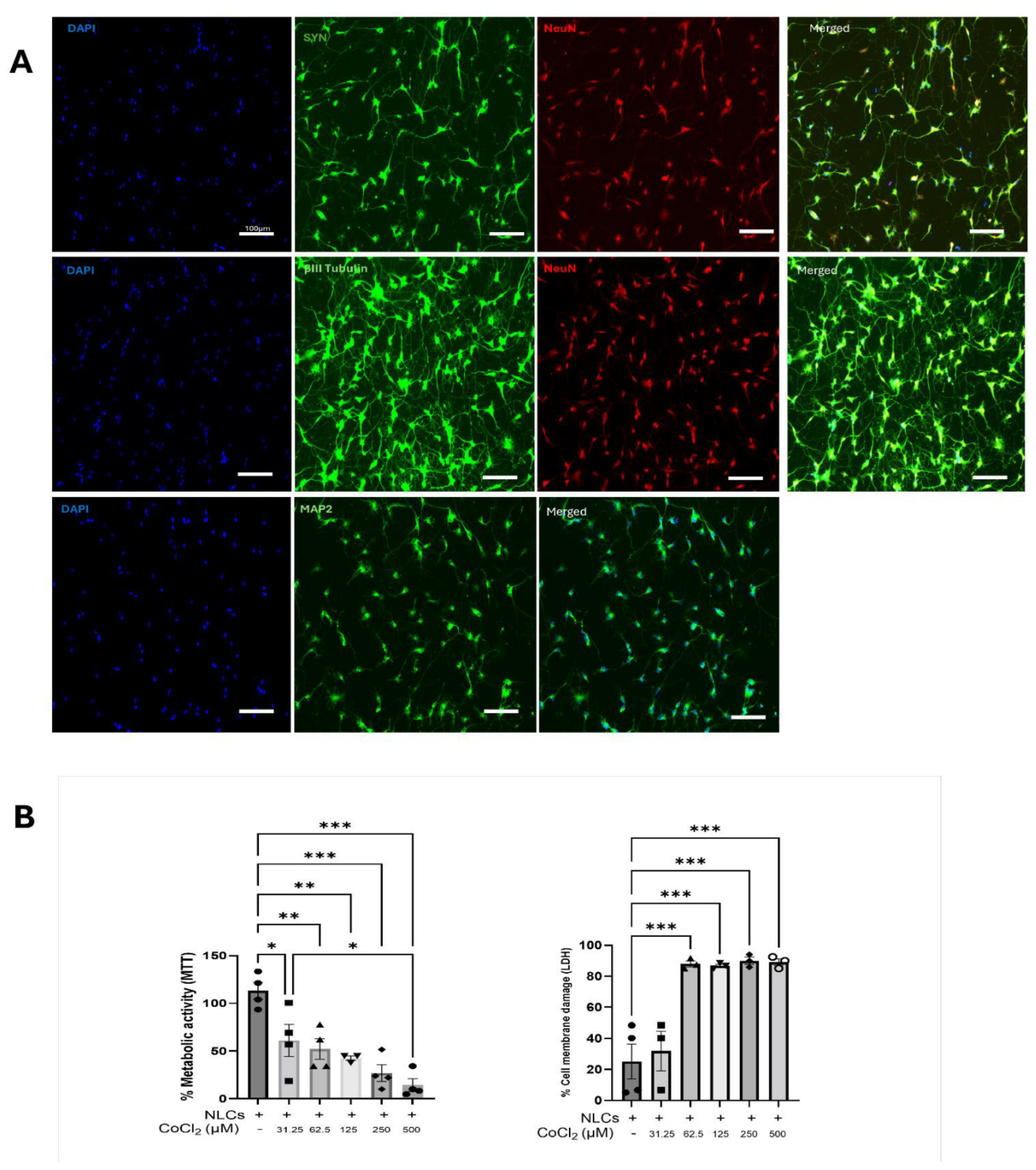
Figure 3.
1mM Cobalt Chloride in Glucose-free Neurobasal Media induced Significant Neuroinflammation with Moderate Cell Death. Differentiated SH-SY5Y cells were treated with antibiotics and KCl-supplemented glucose-free Neurobasal media in the presence of graded-concentrations of cobalt chloride for 3 h to simulate OGD. Thereafter, the supernatants were assayed for inflammation (by measuring TNF-α and CCL2), hypoxia (via VEGF secretion), and cell death. Compared to untreated control, NLCs exposed to OGD produced significant amount of TNF-α (3a) and VEGF (3b) with increasing concentration of CoCl2 in the media. The secretion of CCL2 was only significantly affected when the concentration of CoCl2 in the media increased to 2mM (3c). Neuronal death was comparable to that in untreated control when CoCl2 was <0.5mM but increased significantly at 2mM concentration of CoCl2 in the media. Data were analysed using one-way ANOVA followed by Tukey post-hoc test. Results are presented as Mean ± S.E.M. Key: N = 4, KCl = Potassium chloride, OGD = Oxygen-glucose deprivation, TNF-α = Tumour necrosis factor- alpha, CCL2 = Chemokine ligand 2, VEGF = Vascular endothelial growth factor, NLCs = Neuron-like cells, CoCl2 = Cobalt chloride, ANOVA = Analysis of variance, S.E.M = Standard error of mean, N = 4 experimental repeats.
Figure 3.
1mM Cobalt Chloride in Glucose-free Neurobasal Media induced Significant Neuroinflammation with Moderate Cell Death. Differentiated SH-SY5Y cells were treated with antibiotics and KCl-supplemented glucose-free Neurobasal media in the presence of graded-concentrations of cobalt chloride for 3 h to simulate OGD. Thereafter, the supernatants were assayed for inflammation (by measuring TNF-α and CCL2), hypoxia (via VEGF secretion), and cell death. Compared to untreated control, NLCs exposed to OGD produced significant amount of TNF-α (3a) and VEGF (3b) with increasing concentration of CoCl2 in the media. The secretion of CCL2 was only significantly affected when the concentration of CoCl2 in the media increased to 2mM (3c). Neuronal death was comparable to that in untreated control when CoCl2 was <0.5mM but increased significantly at 2mM concentration of CoCl2 in the media. Data were analysed using one-way ANOVA followed by Tukey post-hoc test. Results are presented as Mean ± S.E.M. Key: N = 4, KCl = Potassium chloride, OGD = Oxygen-glucose deprivation, TNF-α = Tumour necrosis factor- alpha, CCL2 = Chemokine ligand 2, VEGF = Vascular endothelial growth factor, NLCs = Neuron-like cells, CoCl2 = Cobalt chloride, ANOVA = Analysis of variance, S.E.M = Standard error of mean, N = 4 experimental repeats.
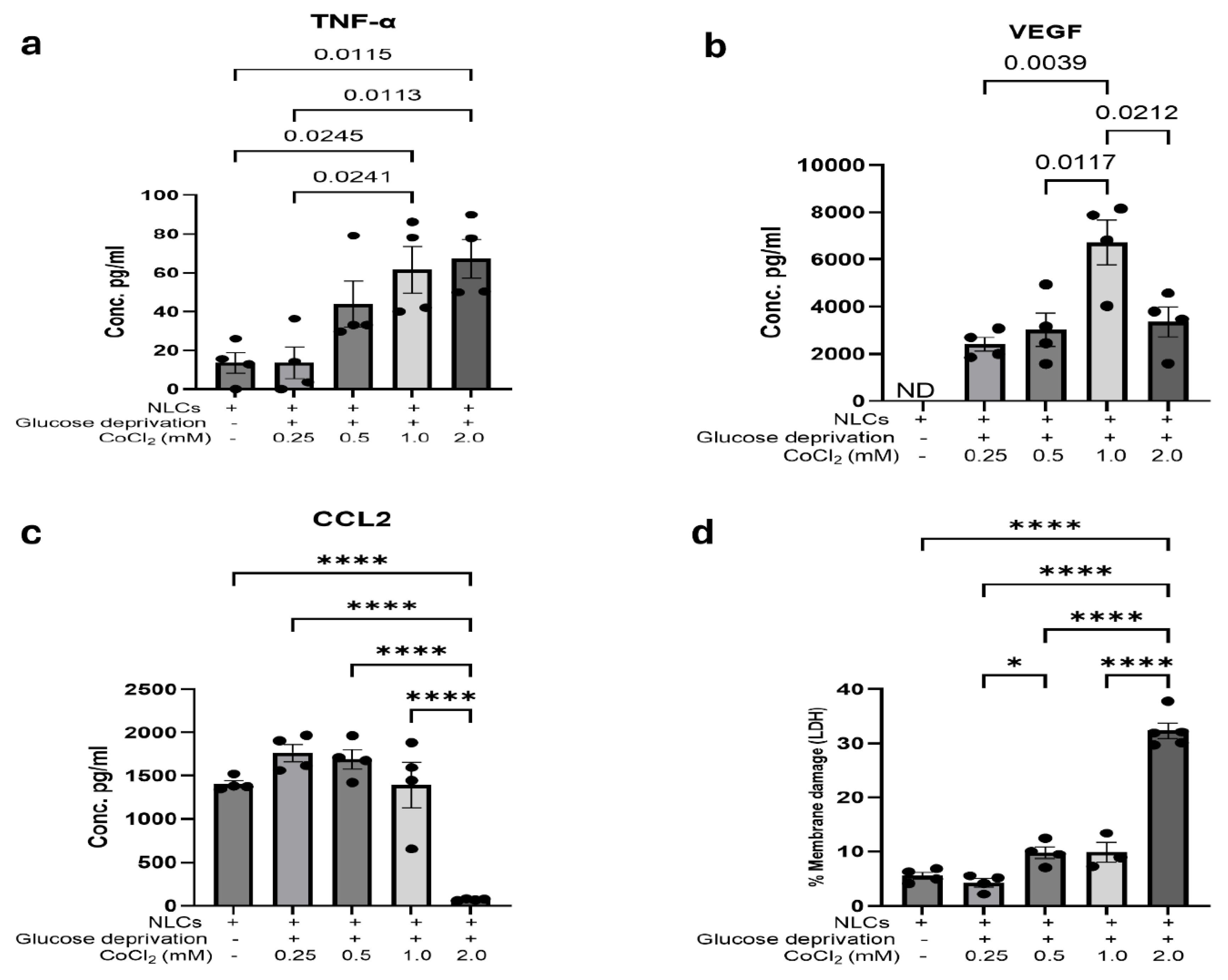
Figure 4.
Effect of OGD Modelled by CoCl2 on the Expression of Mature Neuronal Markers. Fluorescent micrographs illustrating the dose-dependent cytotoxic effects of OGD, modelled by combining glucose-free media (GD) with increasing concentrations of the hypoxia-mimetic (CoCl2), on neuron-like cells. Nuclei were stained with DAPI (blue), the mature neuronal nuclear marker NeuN was stained red, and the neuronal cytoskeletal marker β III Tubulin was stained green. Panel A shows neuron-like cells (NLC) having high cell density and robust co-expression of NeuN and βIIIT, representing a viable, mature neuronal population. Panel B shows NLCs exposed to glucose deprivation only (GD) with the cells exhibiting a slight reduction in cell density and NeuN intensity compared to NLC, indicating mild stress from glucose deprivation alone. Panels C-F represents NLCs that were exposed to oxygen and glucose deprivation in the presence of increasing concentrations of CoCl2. Panel C shows a significant decrease in NeuN/βIII tubulin positive cells and overall cell survival. Cells in panel D represents a critical dose causing severe cytotoxicity, with only sparse surviving cells and minimal expression of neuronal markers. Panels E and F demonstrate near-complete cell death and a total absence of detectable NeuN and βIII tubulin staining, confirming maximal OGD-induced neuronal toxicity at these concentrations. Scale Bar: 50µM. Images were captured using Nikon eclipse high end widefield microscope.
Figure 4.
Effect of OGD Modelled by CoCl2 on the Expression of Mature Neuronal Markers. Fluorescent micrographs illustrating the dose-dependent cytotoxic effects of OGD, modelled by combining glucose-free media (GD) with increasing concentrations of the hypoxia-mimetic (CoCl2), on neuron-like cells. Nuclei were stained with DAPI (blue), the mature neuronal nuclear marker NeuN was stained red, and the neuronal cytoskeletal marker β III Tubulin was stained green. Panel A shows neuron-like cells (NLC) having high cell density and robust co-expression of NeuN and βIIIT, representing a viable, mature neuronal population. Panel B shows NLCs exposed to glucose deprivation only (GD) with the cells exhibiting a slight reduction in cell density and NeuN intensity compared to NLC, indicating mild stress from glucose deprivation alone. Panels C-F represents NLCs that were exposed to oxygen and glucose deprivation in the presence of increasing concentrations of CoCl2. Panel C shows a significant decrease in NeuN/βIII tubulin positive cells and overall cell survival. Cells in panel D represents a critical dose causing severe cytotoxicity, with only sparse surviving cells and minimal expression of neuronal markers. Panels E and F demonstrate near-complete cell death and a total absence of detectable NeuN and βIII tubulin staining, confirming maximal OGD-induced neuronal toxicity at these concentrations. Scale Bar: 50µM. Images were captured using Nikon eclipse high end widefield microscope.
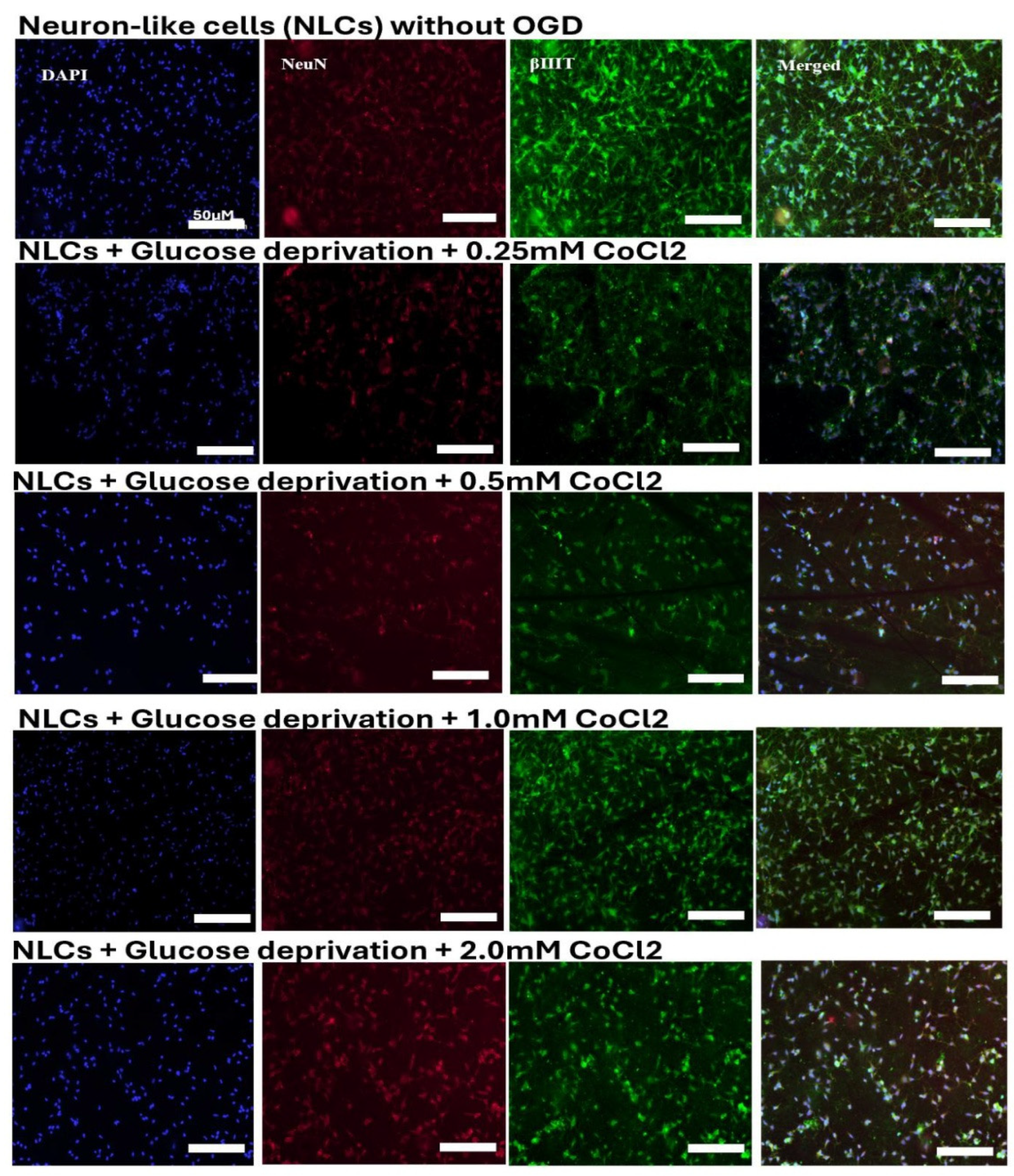
Figure 5.
Translational Effect of OGD on CCL2 and VEGF was most Prominent at 24 h Reoxygenation Period. Compared to NLCs that were exposed to OGD only, the reoxygenation of NLCs from 3 h to 12 h after OGD caused a remarkable (p<0.05) drop in CCL2 production. This trend was completely and significantly (p<0.05) reversed when reoxygenation extended to 24 h (Figure 5a). On the other hand, reoxygenation resulted in significant (p<0.05) and time-dependent increase in the secretion of VEGF (Figure 5b). Data were analysed using one-way ANOVA followed by Tukey post-hoc test. Results are presented as Mean ± S.E.M. Key: N= 5, OGD = Oxygen-glucose deprivation, CCL2 = Chemokine ligand 2, VEGF = Vascular endothelial growth factor, NLCs = Neuron-like cells, CoCl2 = Cobalt chloride, ANOVA = Analysis of variance, S.E.M = Standard error of mean, N = 5 experimental repeats.
Figure 5.
Translational Effect of OGD on CCL2 and VEGF was most Prominent at 24 h Reoxygenation Period. Compared to NLCs that were exposed to OGD only, the reoxygenation of NLCs from 3 h to 12 h after OGD caused a remarkable (p<0.05) drop in CCL2 production. This trend was completely and significantly (p<0.05) reversed when reoxygenation extended to 24 h (Figure 5a). On the other hand, reoxygenation resulted in significant (p<0.05) and time-dependent increase in the secretion of VEGF (Figure 5b). Data were analysed using one-way ANOVA followed by Tukey post-hoc test. Results are presented as Mean ± S.E.M. Key: N= 5, OGD = Oxygen-glucose deprivation, CCL2 = Chemokine ligand 2, VEGF = Vascular endothelial growth factor, NLCs = Neuron-like cells, CoCl2 = Cobalt chloride, ANOVA = Analysis of variance, S.E.M = Standard error of mean, N = 5 experimental repeats.
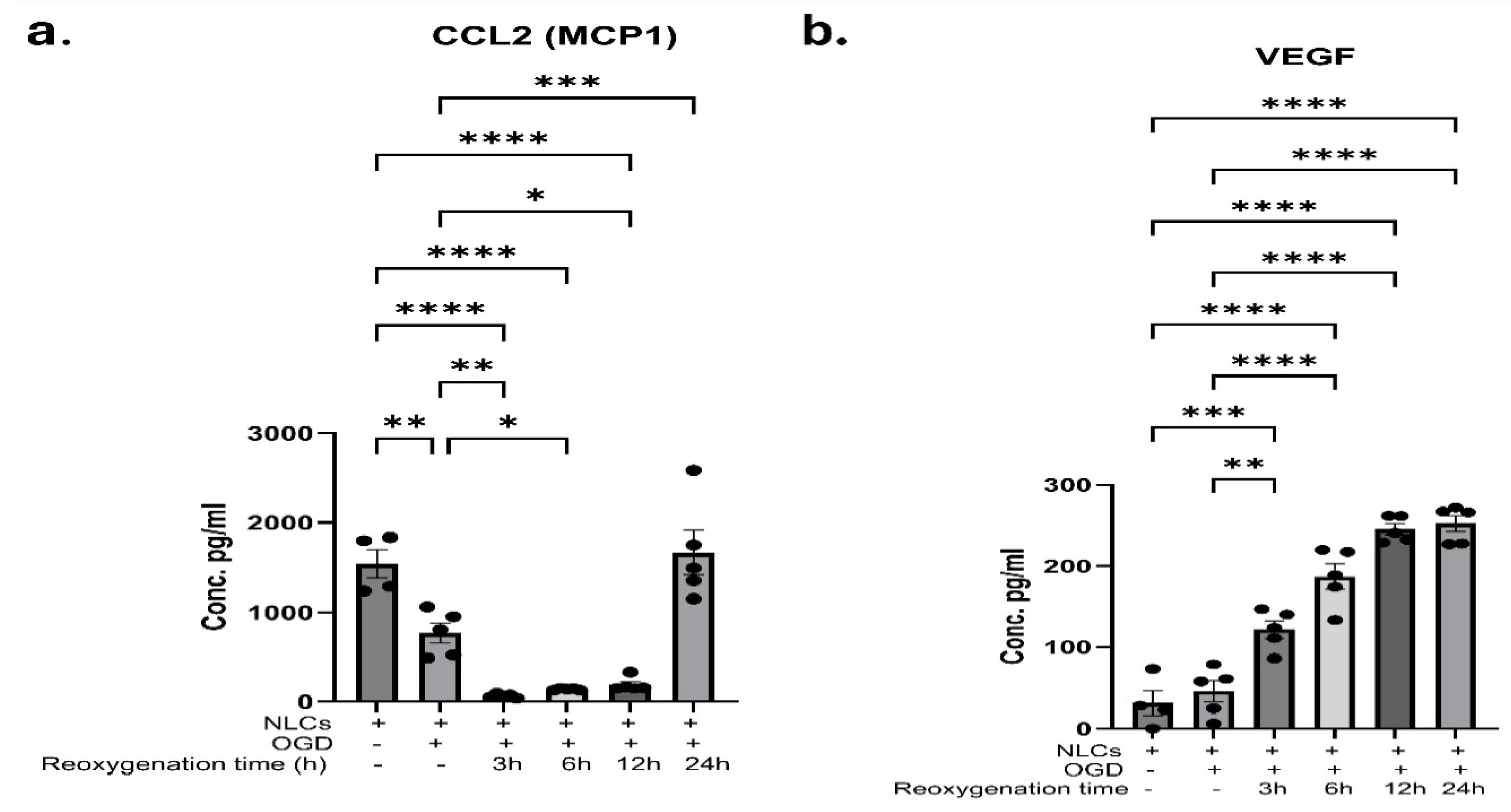
Figure 6.
Comparative Analysis of Transcriptional Activity and Cellular Dynamics in NLCs following OGD/R with Focus on the Canonical Pathways. The heatmap reveals clear variation in the activation of some stroke-relevant canonical pathways. OGD alone resulted in the activation of pathways involved in Zn homeostasis, senescence, and HIF-1α. Main reoxygenation injury started from 3 h of reoxygenation via the activation of various signalling pathways including neuroinflammation, necroptosis, and wound healing. As reoxygenation progressed more deleterious pathways (death receptor, pyroptosis) are activated with corresponding deactivation of beneficial signals such as the CREB signalling in neurons, TGF-, NTRK, and wound healing signals.
Figure 6.
Comparative Analysis of Transcriptional Activity and Cellular Dynamics in NLCs following OGD/R with Focus on the Canonical Pathways. The heatmap reveals clear variation in the activation of some stroke-relevant canonical pathways. OGD alone resulted in the activation of pathways involved in Zn homeostasis, senescence, and HIF-1α. Main reoxygenation injury started from 3 h of reoxygenation via the activation of various signalling pathways including neuroinflammation, necroptosis, and wound healing. As reoxygenation progressed more deleterious pathways (death receptor, pyroptosis) are activated with corresponding deactivation of beneficial signals such as the CREB signalling in neurons, TGF-, NTRK, and wound healing signals.
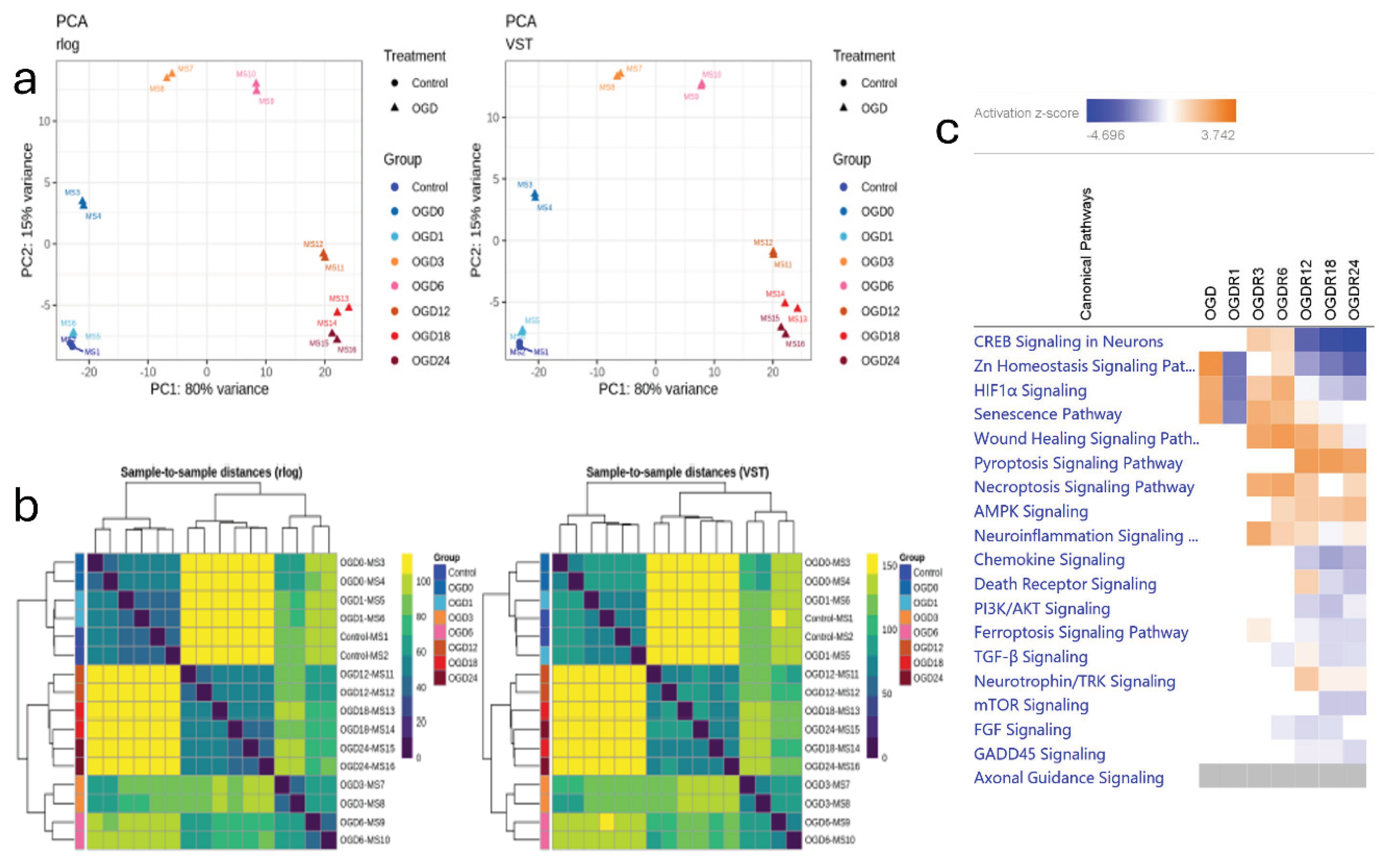
Figure 7.
Comparative Analysis of Transcriptional Activity and Cellular Dynamics in NLCs following OGD/R with Focus on the Upstream Regulators.
Figure 7.
Comparative Analysis of Transcriptional Activity and Cellular Dynamics in NLCs following OGD/R with Focus on the Upstream Regulators.
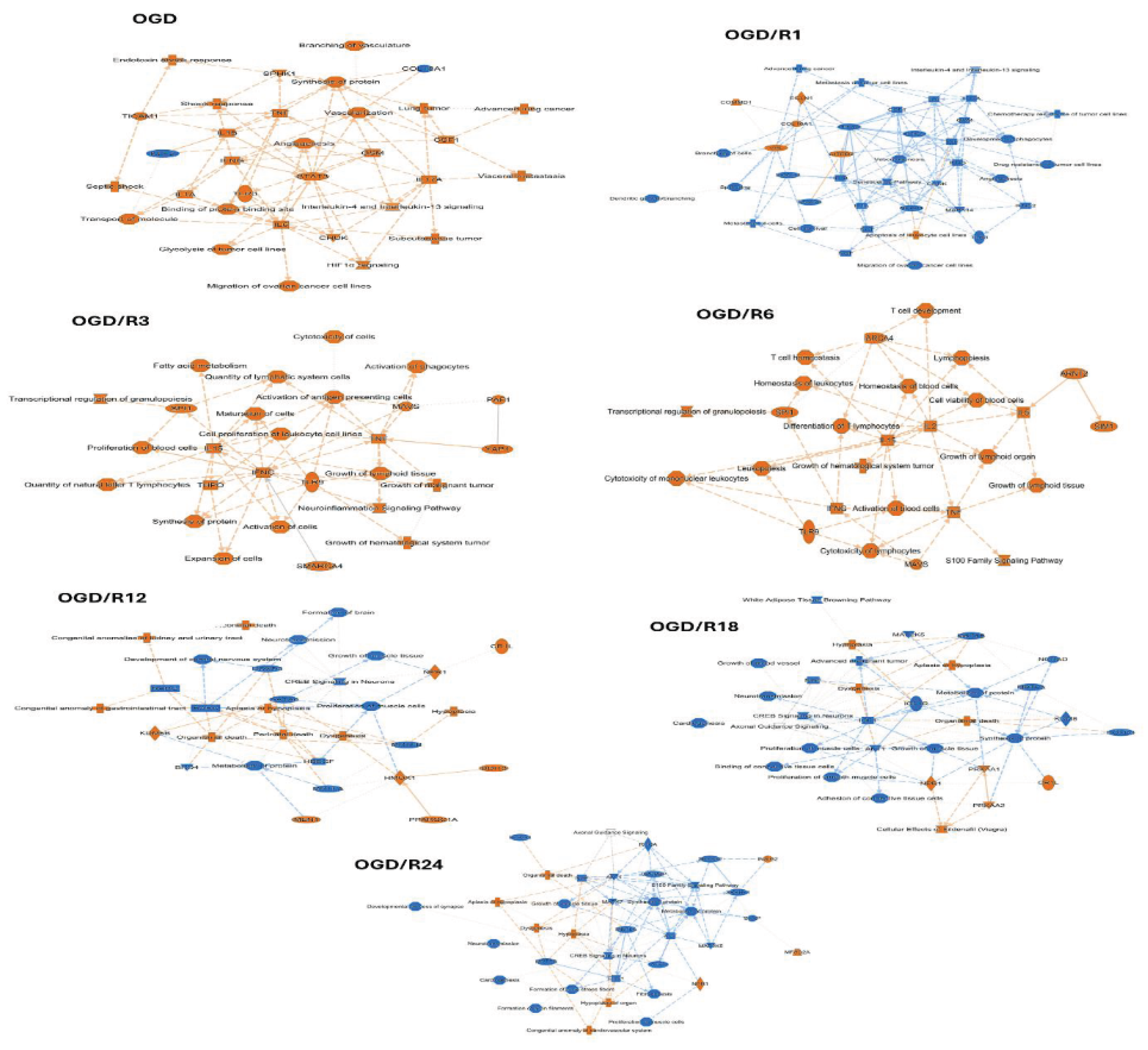
Figure 8.
Comparative Analysis of Transcriptional Activity and Cellular Dynamics in NLCs following OGD/R with Focus on Top 15 Differentially Expressed Genes.
Figure 8.
Comparative Analysis of Transcriptional Activity and Cellular Dynamics in NLCs following OGD/R with Focus on Top 15 Differentially Expressed Genes.
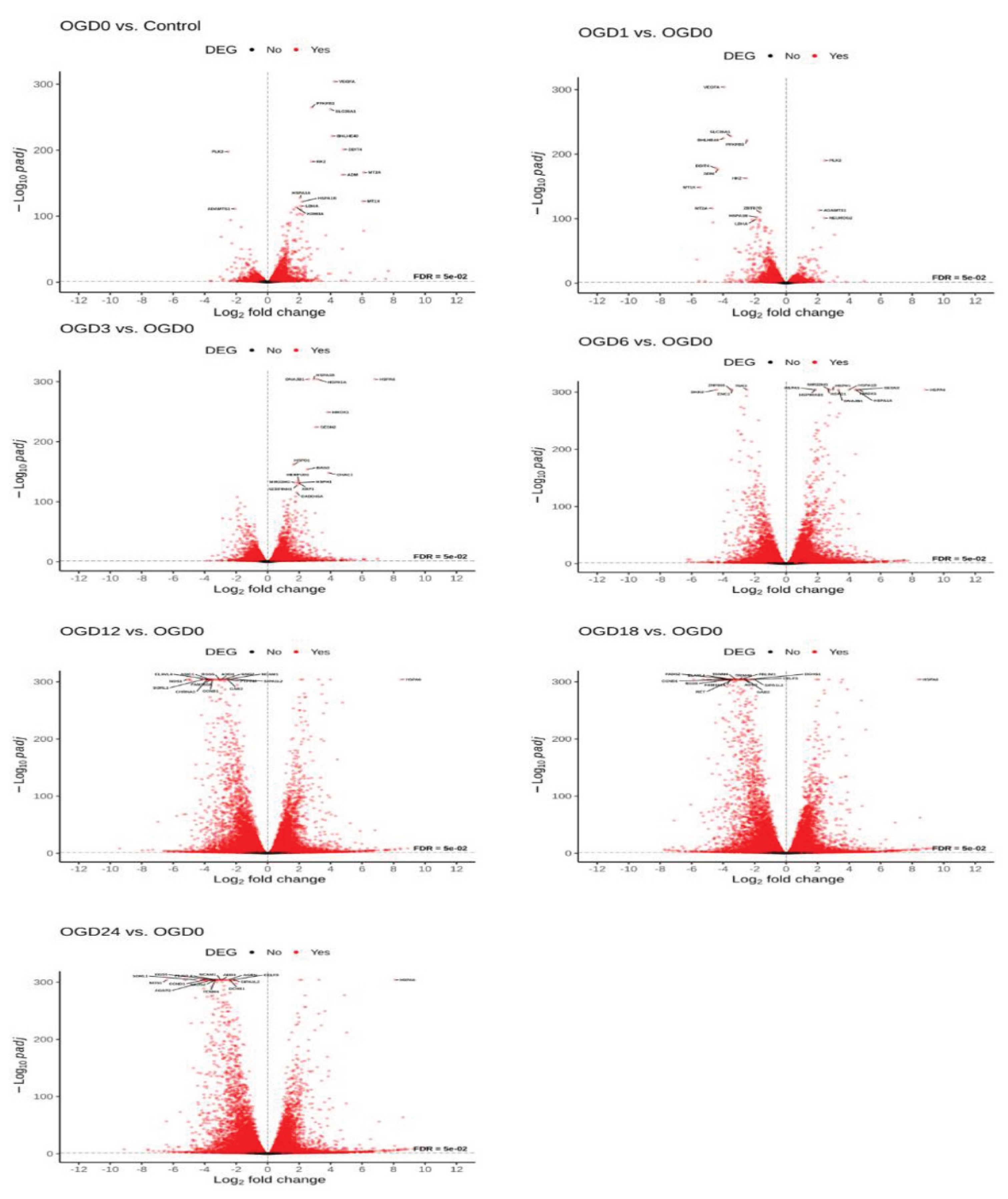

Table 1.
Various culture media for the differentiation of SH-SY5Y cells and induction of hypoxic-ischaemic injury in neuron-like cells.
Table 1.
Various culture media for the differentiation of SH-SY5Y cells and induction of hypoxic-ischaemic injury in neuron-like cells.
| Type of Media | Composition | Note |
|---|---|---|
| Stage I | For every 500ml of high glucose DMEM, add
|
Always add the RA fresh (just before use). Because of its poor aqueous solubility, prepare stocks of 2mM in DMSO (Sigma) and use in the absence of light (Turn off the hood light at the time of use) |
| Stage II |
|
|
| OGD Media |
|
BDNF and B-27 were not included in the media |
| OGD/R Media | 500mL Neurobasal-A media (Gibco 10888-022)
|
BDNF and B-27 were not included in the media |
Table 2.
List of various primary and secondary antibodies used to assess the maturity and purity of neuron-like cells.
Table 2.
List of various primary and secondary antibodies used to assess the maturity and purity of neuron-like cells.
| Antibodies | Dilutions | Hosts | Manufacturer | |
|---|---|---|---|---|
| Primary Antibodies | β III Tubulin | 1:100 | Mouse | Abcam (Ab78078) |
| Neuronal Nuclei (NeuN) | 1:100 | Rabbit | Proteintech (26975-1-AP) | |
| Growth associated protein 43 (GAP43) | 1:500 | Chicken | Invitrogen (PA5-95660) | |
| Synaptophysin (SYN) | 1:150 | Mouse | Abcam (Ab8049) | |
| Microtubule associated protein 2 (MAP2) | 1:100 | Goat | ||
| Glial fibrillary acidic protein (GFAP)_ | 1:1000 | Chicken | Antibodies (A85307)) | |
| Secondary Antibodies | Alexa 647 | 1:2000 | Chicken | Life technologies (A21449) |
| Alexa 647 | Rabbit | Invitrogen (A31573) | ||
| Alexa 488 | Mouse | Invitrogen (A11001) | ||
| Alexa 488 | Chicken | Invitrogen (A78948) | ||
| Alexa 647 | Anti-mouse | Invitrogen (A31571) | ||
| Alexa 647 | Anti-goat | Invitrogen (A21447) |
Disclaimer/Publisher’s Note: The statements, opinions and data contained in all publications are solely those of the individual author(s) and contributor(s) and not of MDPI and/or the editor(s). MDPI and/or the editor(s) disclaim responsibility for any injury to people or property resulting from any ideas, methods, instructions or products referred to in the content. |
© 2026 by the authors. Licensee MDPI, Basel, Switzerland. This article is an open access article distributed under the terms and conditions of the Creative Commons Attribution (CC BY) license (http://creativecommons.org/licenses/by/4.0/).
Copyright: This open access article is published under a Creative Commons CC BY 4.0 license, which permit the free download, distribution, and reuse, provided that the author and preprint are cited in any reuse.


